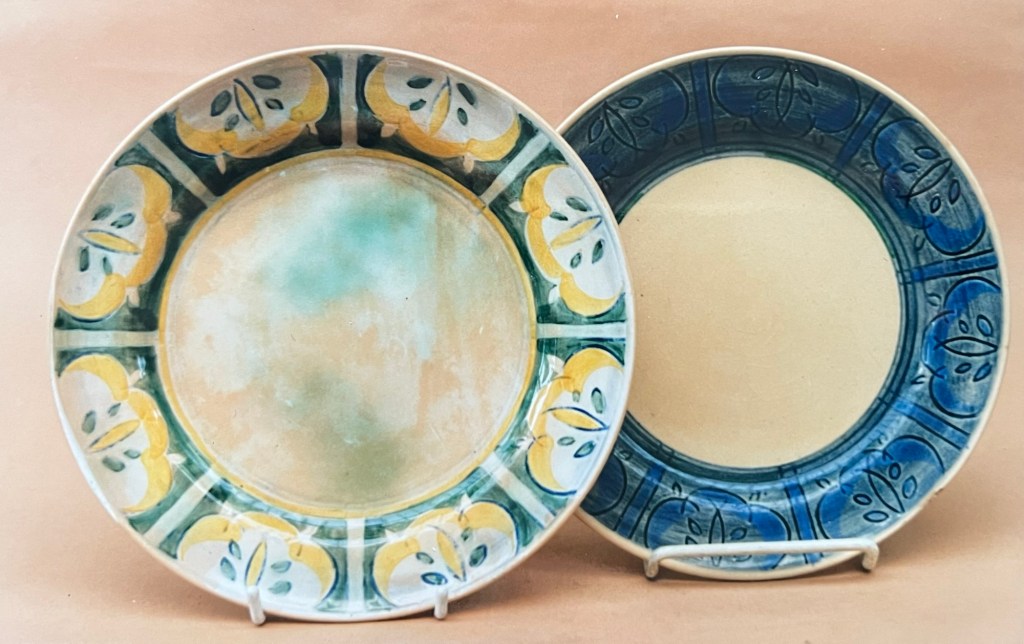
Charles Noke, Royal Doulton’s legendary Art Director, was always a man ahead of his time, constantly on the search for something new and thus Doulton approached Frank Brangwyn R. A. to design a range of tableware.
Two dinner plates in Brangwyn Harvest designs
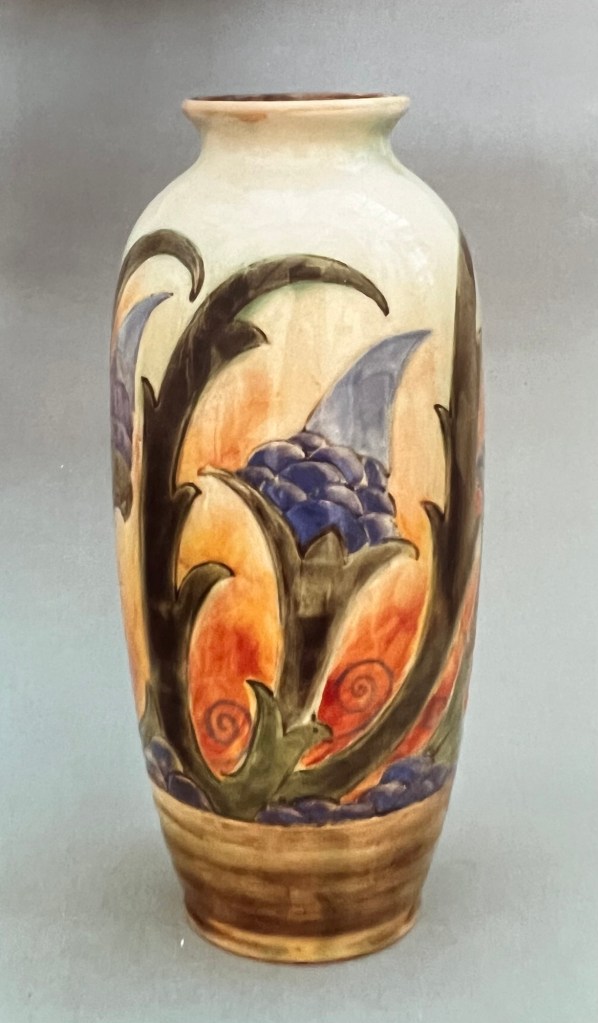
Originally intended to offer to the masses at a reasonable cost, the designs proved unpopular at the time and as always the rarity of this ware has meant that it has become very collectable since then. In addition to tableware designs, Brangwyn’sdesigns can also be found on various vases which are equally popular today.
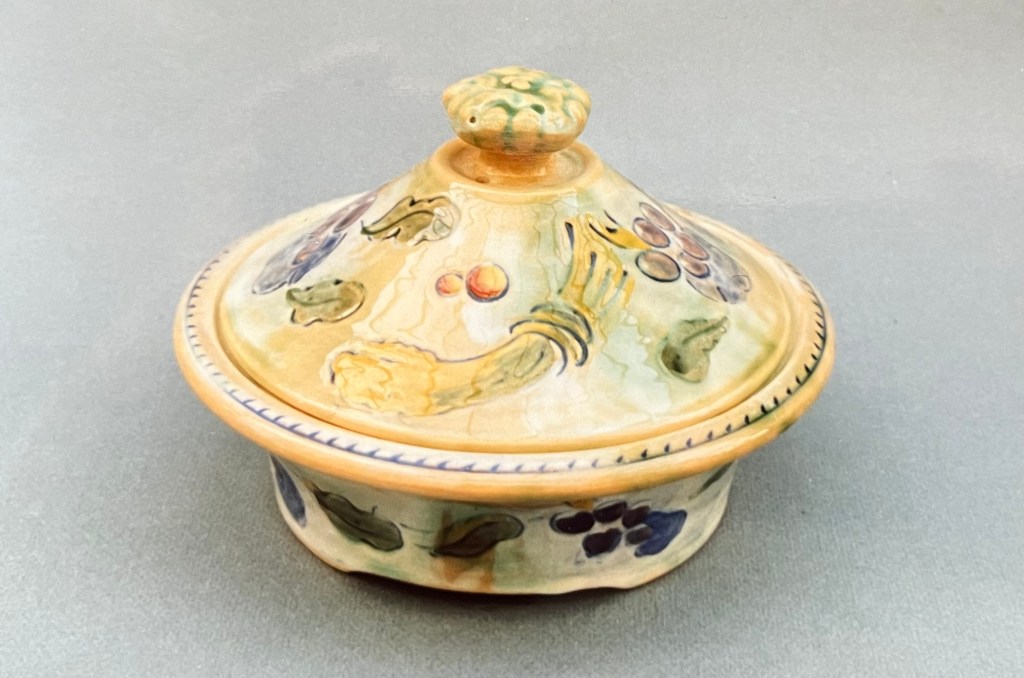
An unusual small size tureen.
This ware carries one of two backstamps, the first ‘Designed by Frank Brangwyn’ and also ‘Brangwynware’ a Doulton pastiche.
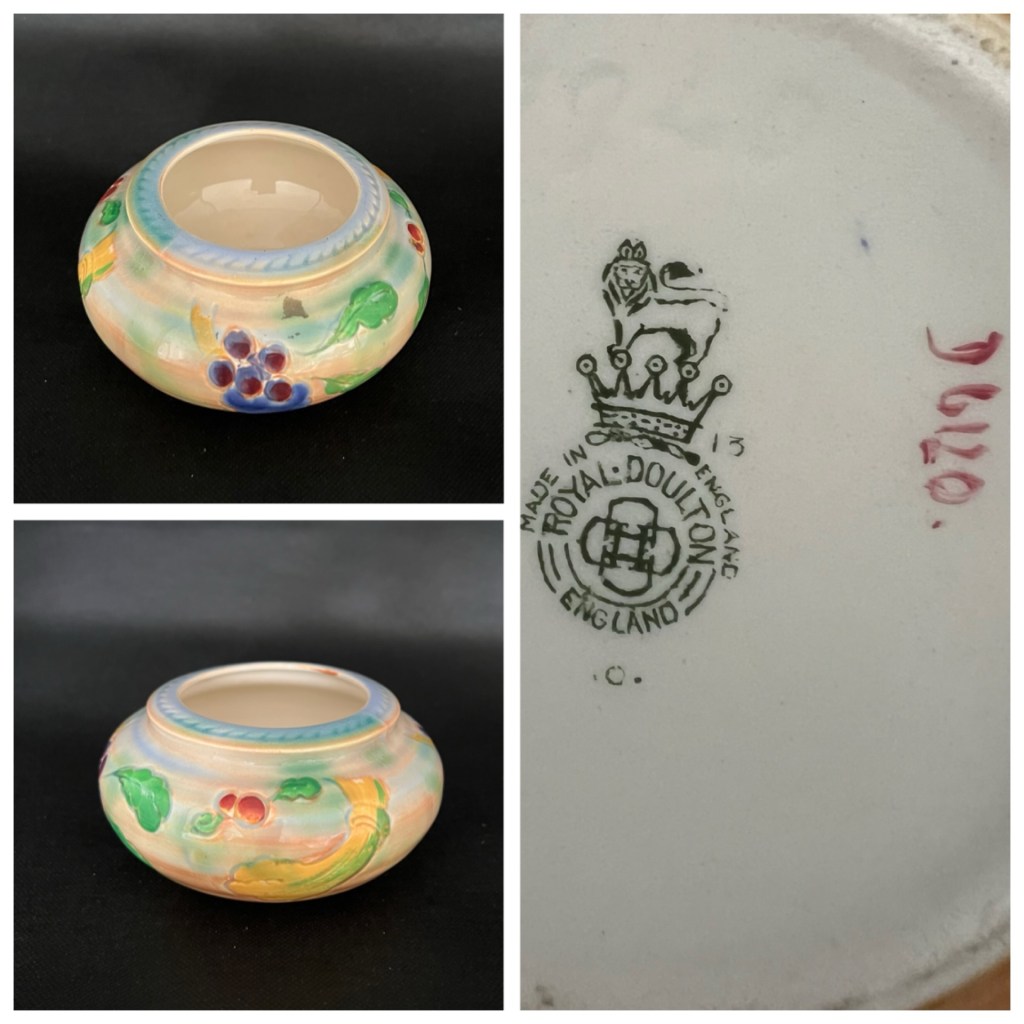
A small squat vase carrying a D number and dated 1940.
In addition, once again Doulton’s in-house designers produced similar designs to the official Brangwyndesigns and these carry a D number.
When it comes to Royal Doulton I always say expect the unexpected. Over the last few years several of these finials have appeared on the market.
My first memory of these most unusual items I recall – a Dragon with wings open – in the hallway for many years peering out from under a table.
These remarkable works of art are so not just due to their size but also what they represent.
Although Doulton had long working relations with many well-known sculptors including Richard Garbe and Frederick Roth, it is the partnership with Gilbert Bayes that would prove the most fruitful and longlasting. Indeed it was the untimely death of Bayes in 1953 that ended their nearly 30 year partnership.
Readers will be familiar with the Bayes plaque ‘Pottery through the Ages’ which once adorned the façade of the former Doulton House on the banks of the Thames and which now resides in the V&A in Kensington.
During the 1930’s, Gilbert Bayes worked on a community art project for the St. Pancras Housing Association Improvement Society as part of a slum clearance scheme at Sidney Street in Somerstown, north of Euston station, and at other sites across London. The aim was the provision of high-quality homes for the poorest tenants. The society’s architect was Ian B. M. Hamilton, and he designed all the new flats to stand on the cleared land. Since Bayes believed that art should be available to all people, this commission was very close to his heart. He produced relief model lunettes of fairy tale characters, as well as ceramic sculptures and post finials for the washing line posts. The finials were inspired by animals and plants, nursery rhymes, Christmas cards, or the lives of the saints.
All the post finials and relief panels were made by Royal Doulton between 1931 and 1938 and as well as at Somerstown the Society commissioned these embellishments by Bayes at their other London projects. Bayes’ duck finials for example were used at the Athlone Estate (1933-7) in Kentish Town and the dragons, rose and thistle finials were made for the York Rise Estate (1937-8) near Highgate Hill. All the original post finials from the project have now been removed, although some original relief plaques and ornaments remain at Sidney Street, which collectors can visit.
With special thanks to Louise Irvine, Lyon & Turnbull and Lion & Unicorn Auctioneers for images and reference materials.
Royal Doulton is famed for the sheer range of its wares produced first of all in London and then in The Potteries.
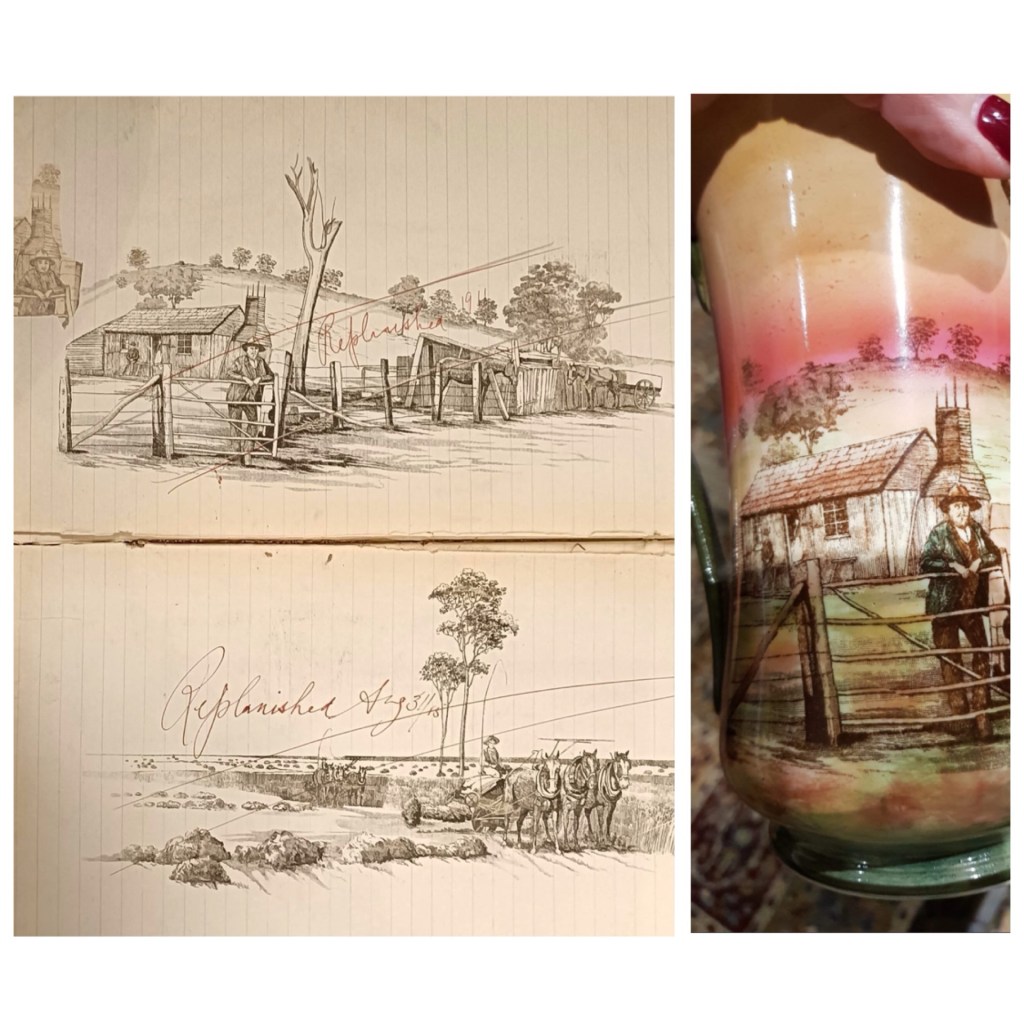
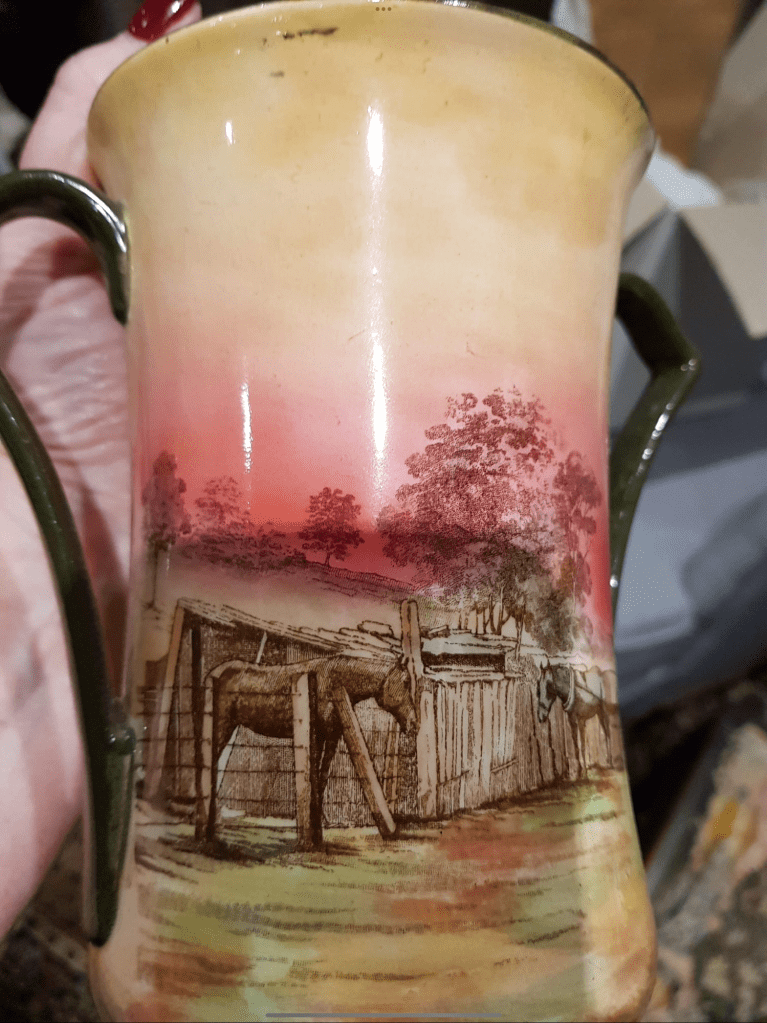
Mirror scenes from a copper plate book and the finished article seen on a vase. The colour palette too suggests Australia.
Of all the wares produced, their seriesware designs still provide a wealth of new discoveries as hitherto unknown designs and variations emerge.
One such design is the New World Series Oceana, introduced in the early 20th century and withdrawn sometime around the end of WWI in 1918.
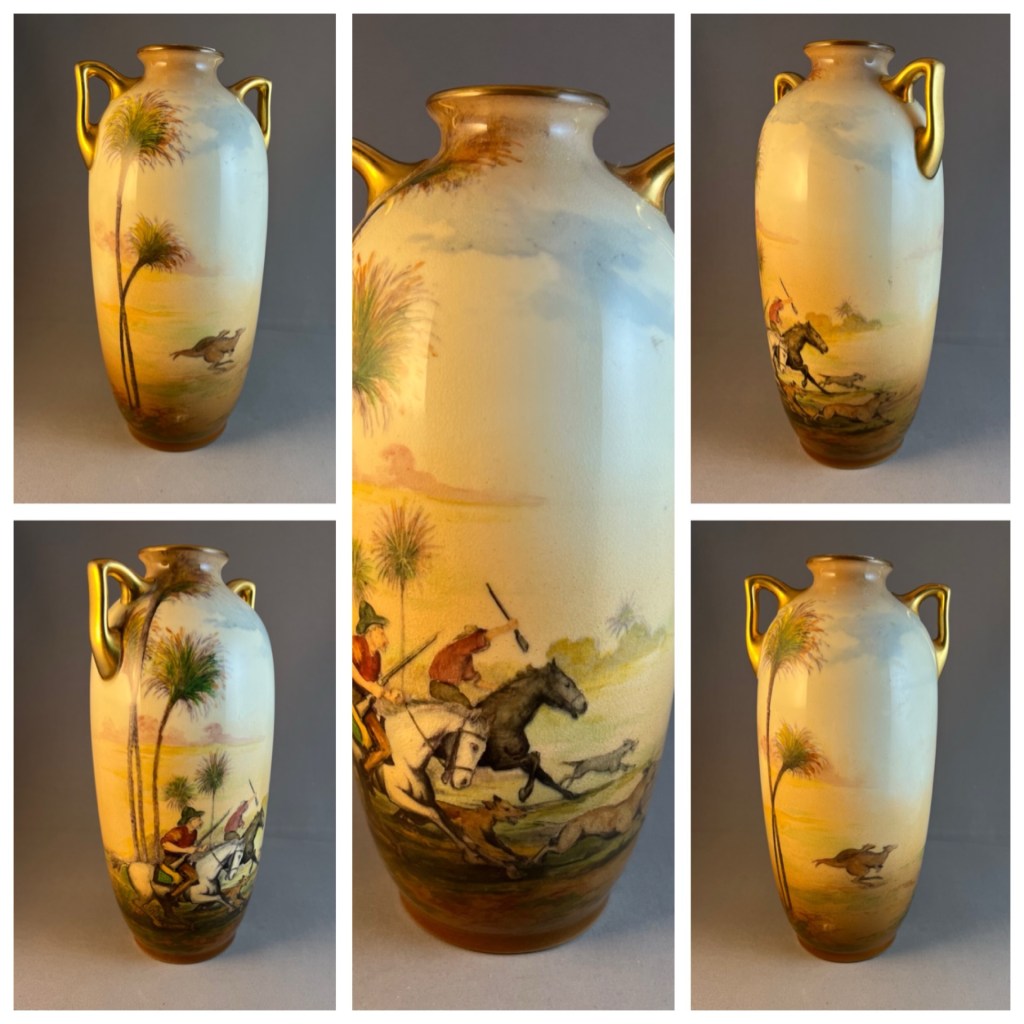
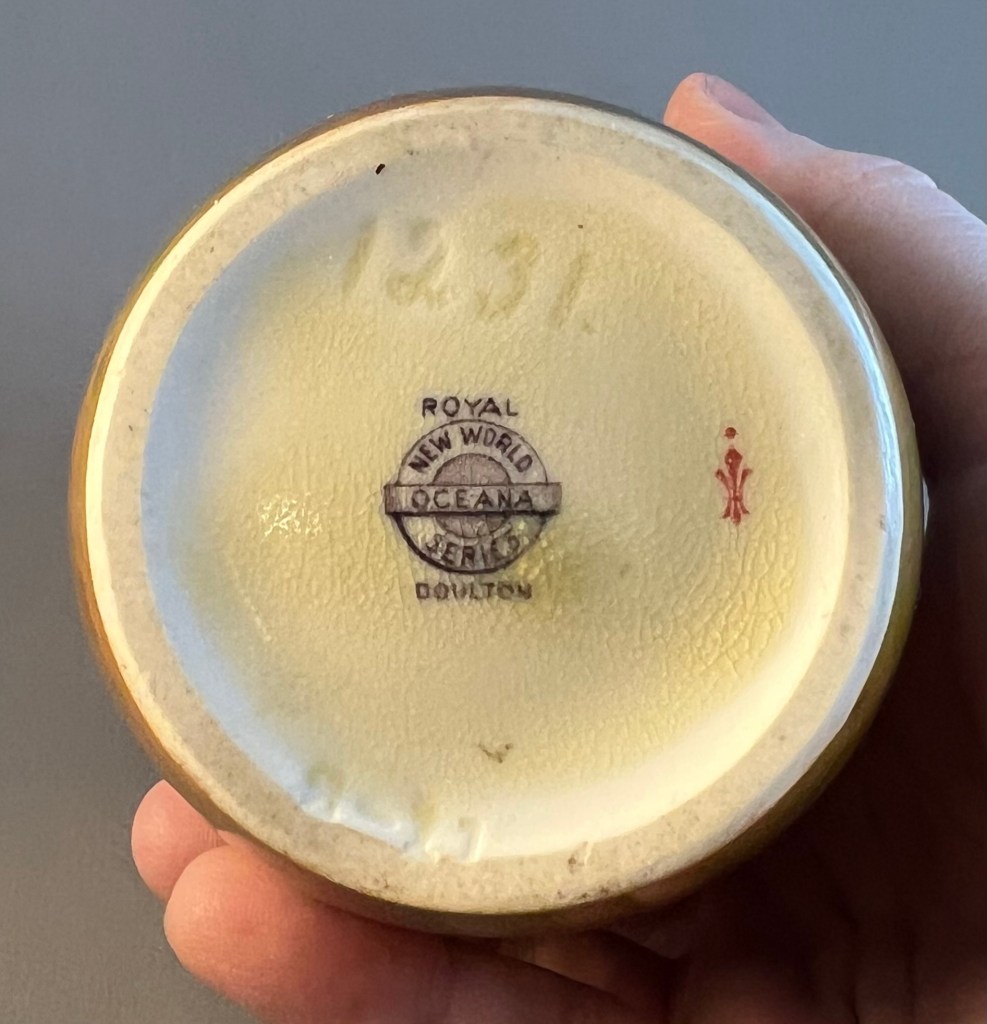
A rare Royal Doulton New World Series vase with gilded decoration. On the base there is a pink cypher differentiation it from more Transfer printed examples. Note the pink cypher at 3 o’clock in the above image. You can clearly also make out the vase shape number 1231 and the impressed date of manufacture for August 1911.
The scarcity of items discovered in this remote outback design is hard to fathom given the popularity of seriesware designs the world over; the sole explanation I can put forward is the subject matters‘ appeal was originally aimed at Australian collectors. Yet, even there so few examples have been discovered this design truly remains a rarity.
Note the typical Royal Doulton green used on the handles, rim and base as opposed to the gilded decoration on the other example illustrated.
Fortunately the Royal Doulton design books shed much light on the products and ranges produced by the company, although one has to piece together some information as it is recorded in several ways from studio design books to copper plate design books etc… such was the case with the rediscovery of these images belonging to the New World Series Oceana.
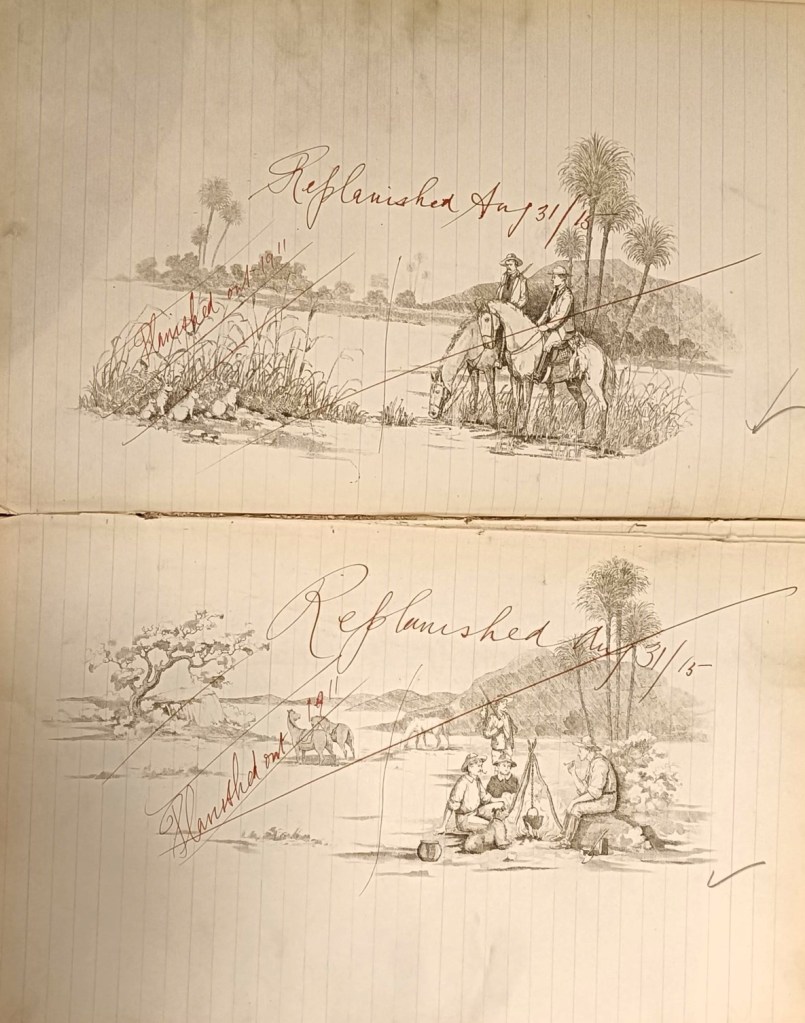
A further image from a copper plate book illustrating two further scenes in the series. You can clearly see the comment Replanished (flattened out) and the date August 31 1915.
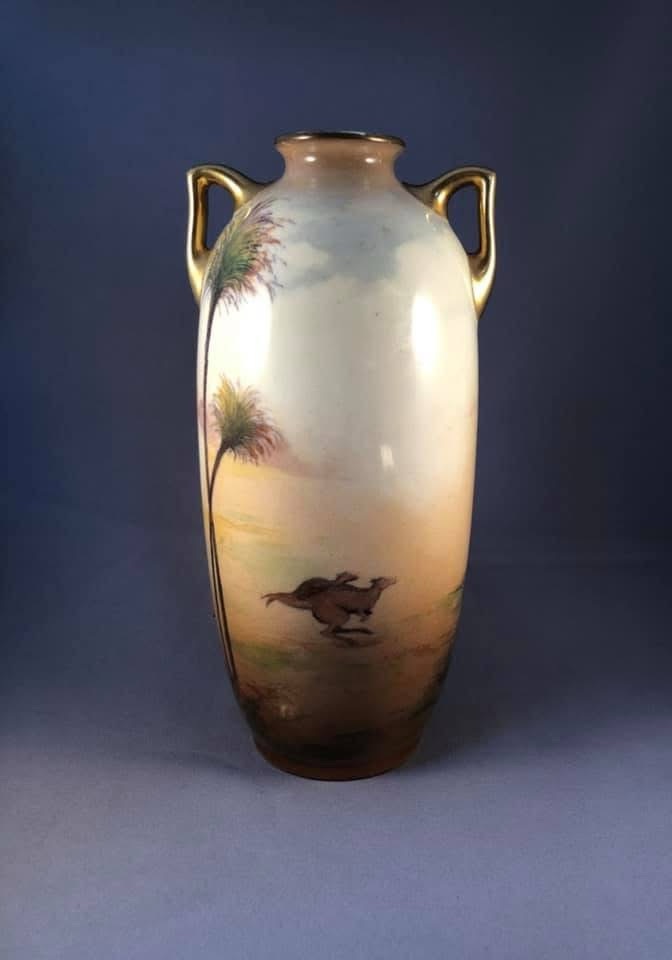
It is indeed strange to associate camels with Australia but if you are unfamiliar with the history of this great country, camels were brought to Australia in 1840 to work in the arid regions. The unexpected subject matter may explain why so few examples in this design have been discovered, as we have simply not recognised the subject matter illustrated. Perhaps a more typical scene is on the other vase that features kangaroos being hunted.
In total there are 11 scenes that appear to belong to the New World Series Oceana and as is typical more that one scene can appear on an item e.g. the front and back of a vase.
As with all such rarities the search continues… what will be discovered next?
Kangaroos fleeing hunters from the New World Series Oceana range.
 doultoncollectorsclub