Souter’s Kateroo for Royal Doulton

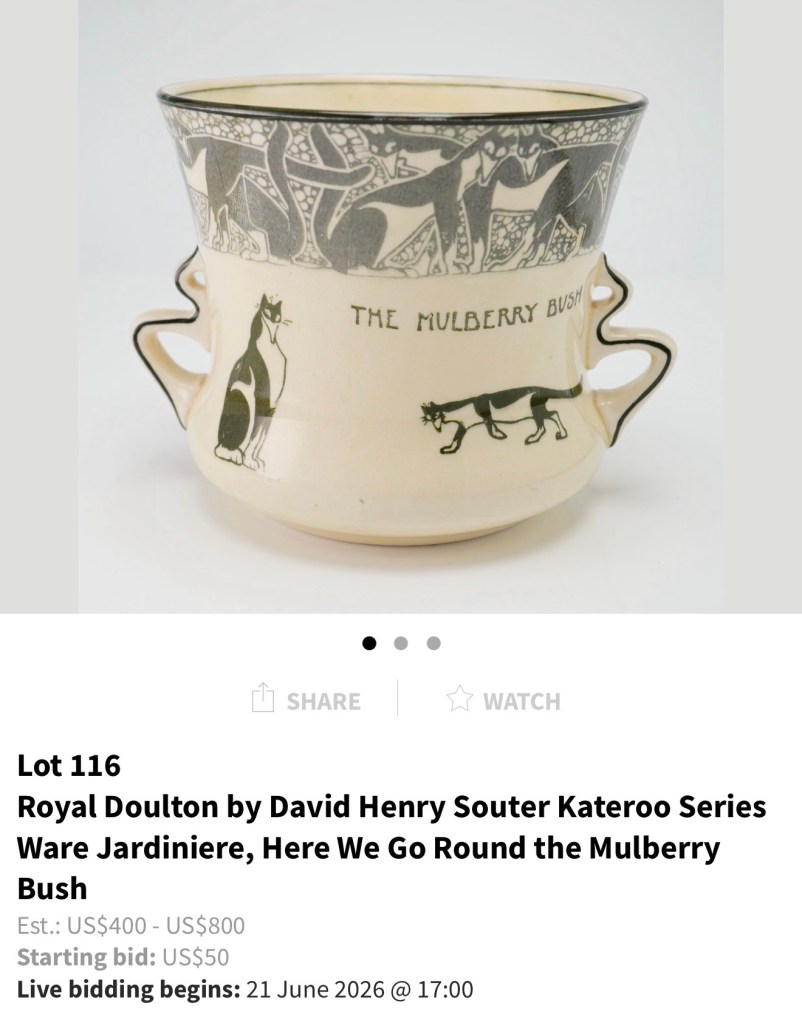
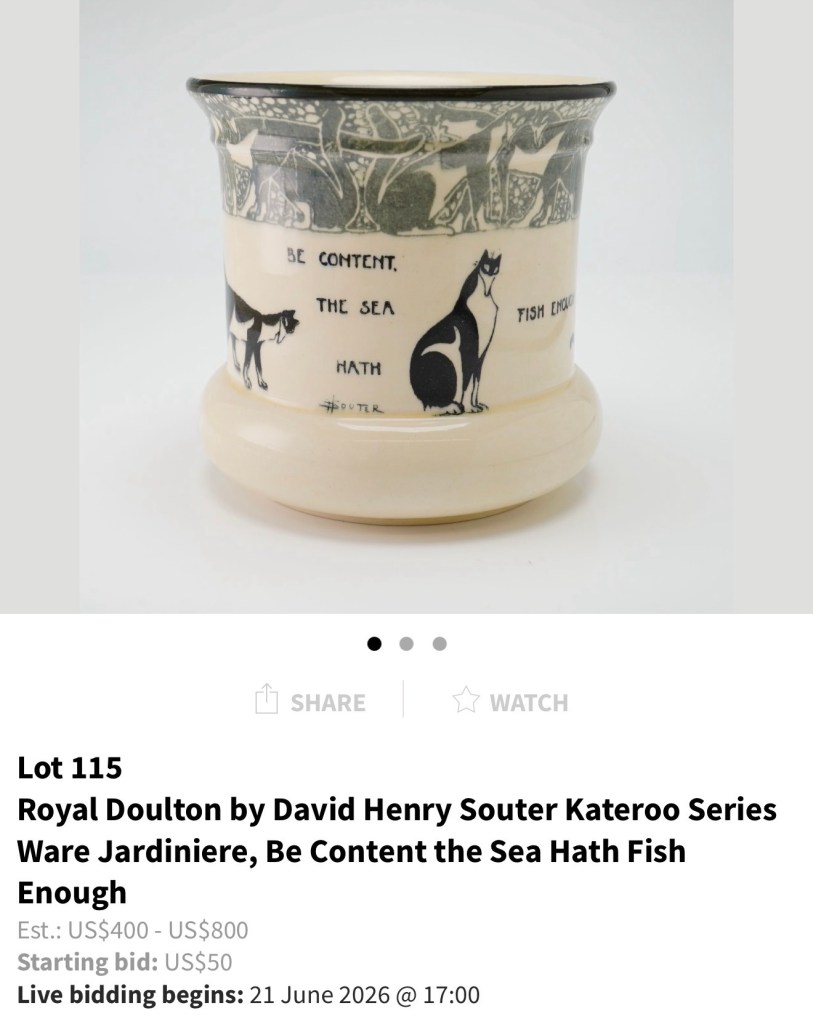
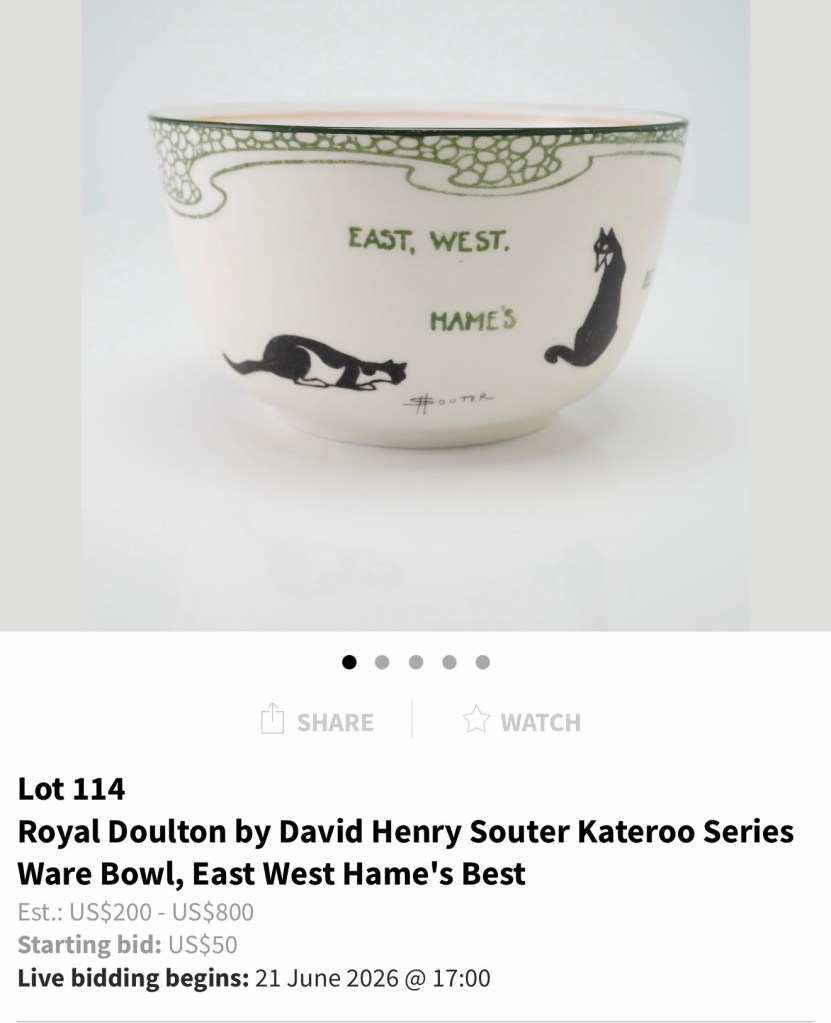
David Henry Souter’s cat Kateroo featured on many Doultonproducts from the first decades of the 20th Century. There was a large size model of Kateroo HN514 in typical black and white, which was also made in a bright yellow or alternatively a bronze colouring. 

Perhaps the most easily found items featuring this unusual cat are the two pin trays each featuring the saying ‘God bless the cat that breaks the crocks in pieces very small, for things like that are good for trade and benefit us all’. Naturally these pin trays, available in a circular or rectangular shape were produced for the trade and available between 1906 and 1939.

Very popular today are the series of six rack plates featuring Souter’s Kateroo, and reflecting his life as a bachelor, then during courtship, then marriage and finally family life. In 1937 the series re-emerged with different cartoons on various tablewares and there are several variations that occasionally turn up.

Vases, jardinières and other objects can also be occasionally found featuring early scenes and some feature dead mice hanging by their tails around the top of the object. This gruesome image remains nevertheless humorous due to Souter’s witty interpretation and often sarcastic titling of the scene.

Souter himself enjoyed a long and varied career. Hailing from Scotland he would move to Australia and his Kateroo was especially popular there.

Thanks to @ Lion and Unicorn Auctions for use of their photos.

All items featured are up for auction today 26.06.26 @lionandunicorn auctions !

Doulton’s First Lady artist – Hannah Barlow

In 1871 Doulton exhibited their first another at the International Exhibition at South Kensington and whilst the majority of the art wares were by their first artist, George Tinworth, a selection were also by a young artist by the name of Hannah Barlow, then a student at Spark’s Lambeth Art School. 

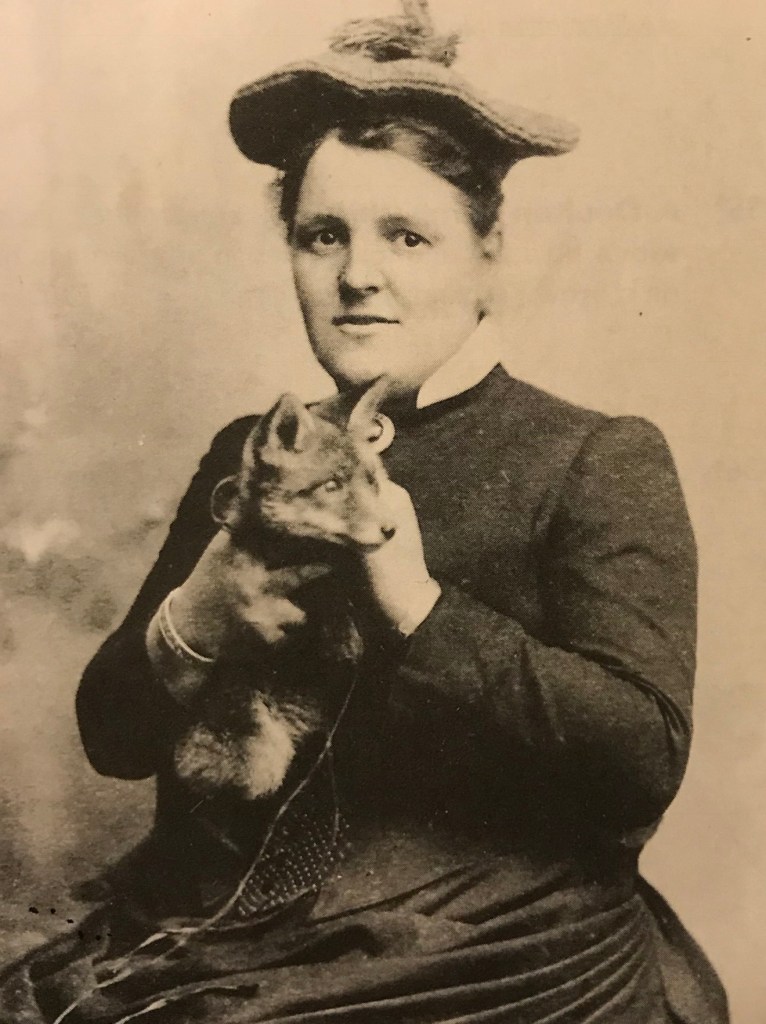
Anything Hannah Barlow with her pet fox.

The new art wares attracted even the attention of Queen Victoria who ordered examples to be shown to her at Windsor afterwards. 

Within two years of working at the Lambeth factor, Hannah was joined by a small group of other young ladies. Interestingly among the ladies were her two sisters Florence and Lucy, together with their brother Arthur. 

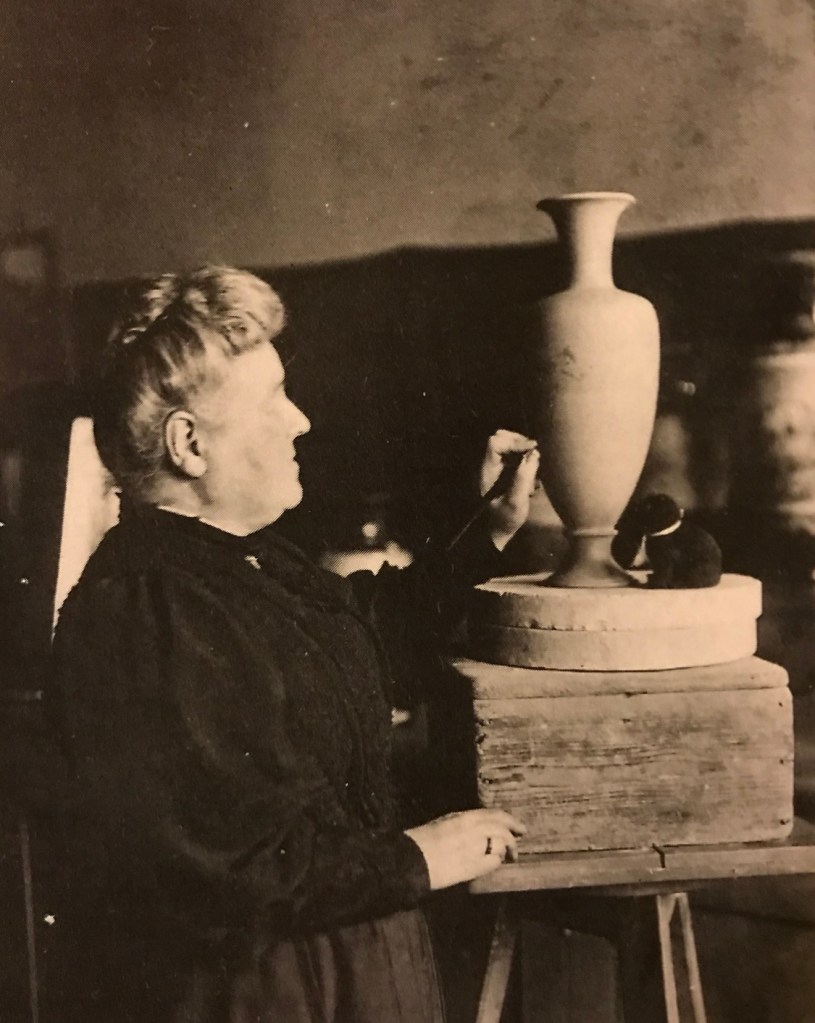
An accomplished Hannah later in her time at Doulton’s Lambeth art studio.

Over the decades Hannah worked at the Lambeth factory, she developed her own individual style making her work immediately identifiable to collectors, with her incised animal decoration. Hannah remains perhaps the most collected Doulton Lambeth artist in no small part due to her output sometimes reaching around 1000 pieces per year over a 40 year period.

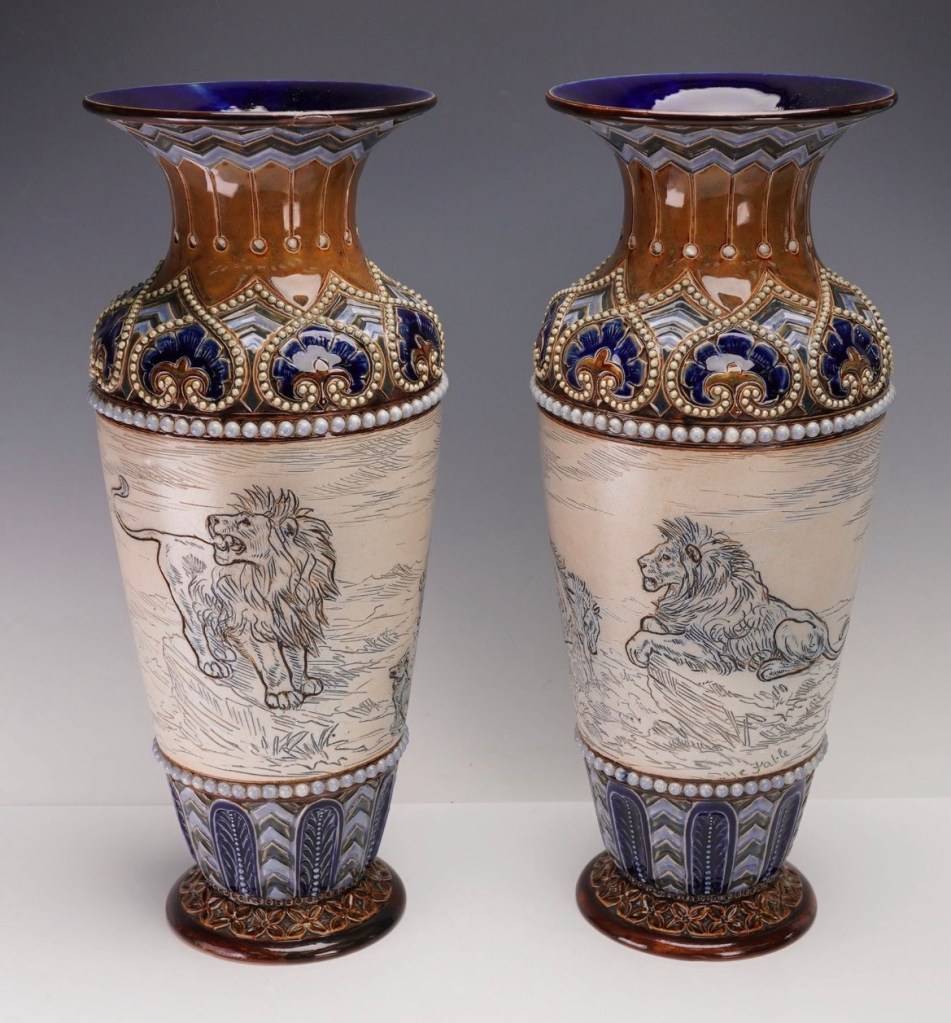
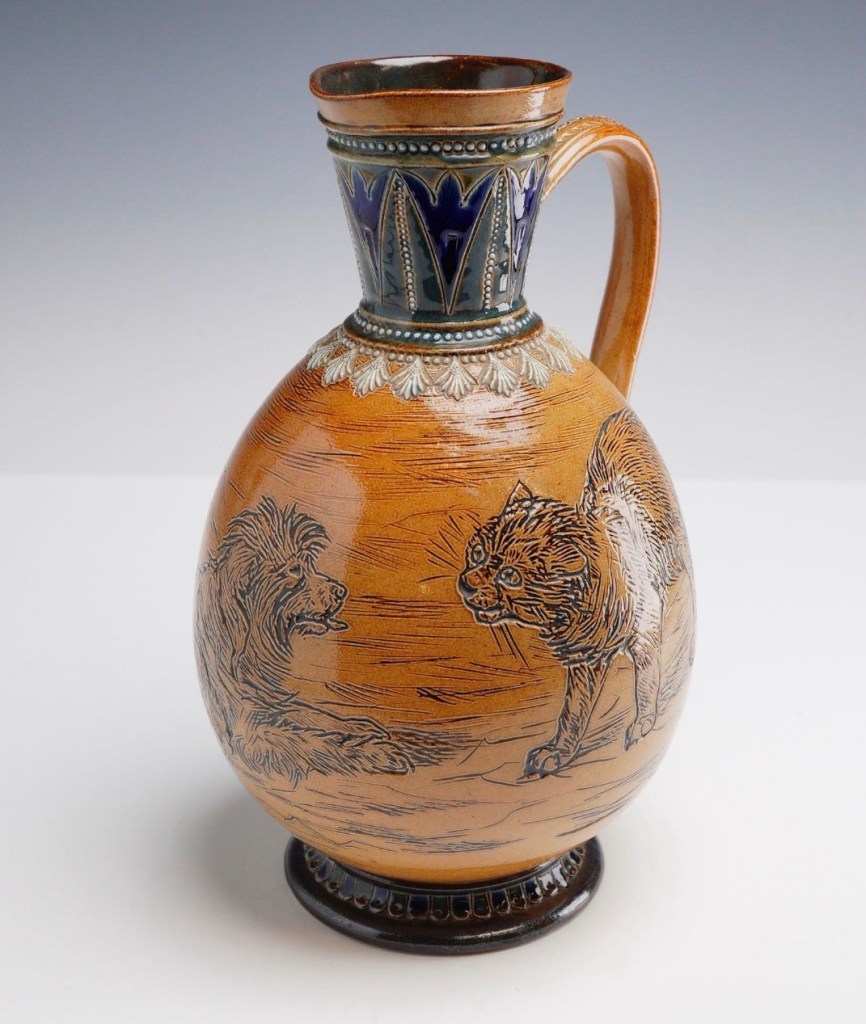
A most unusual pair of Hannah Barlow vases with lions.
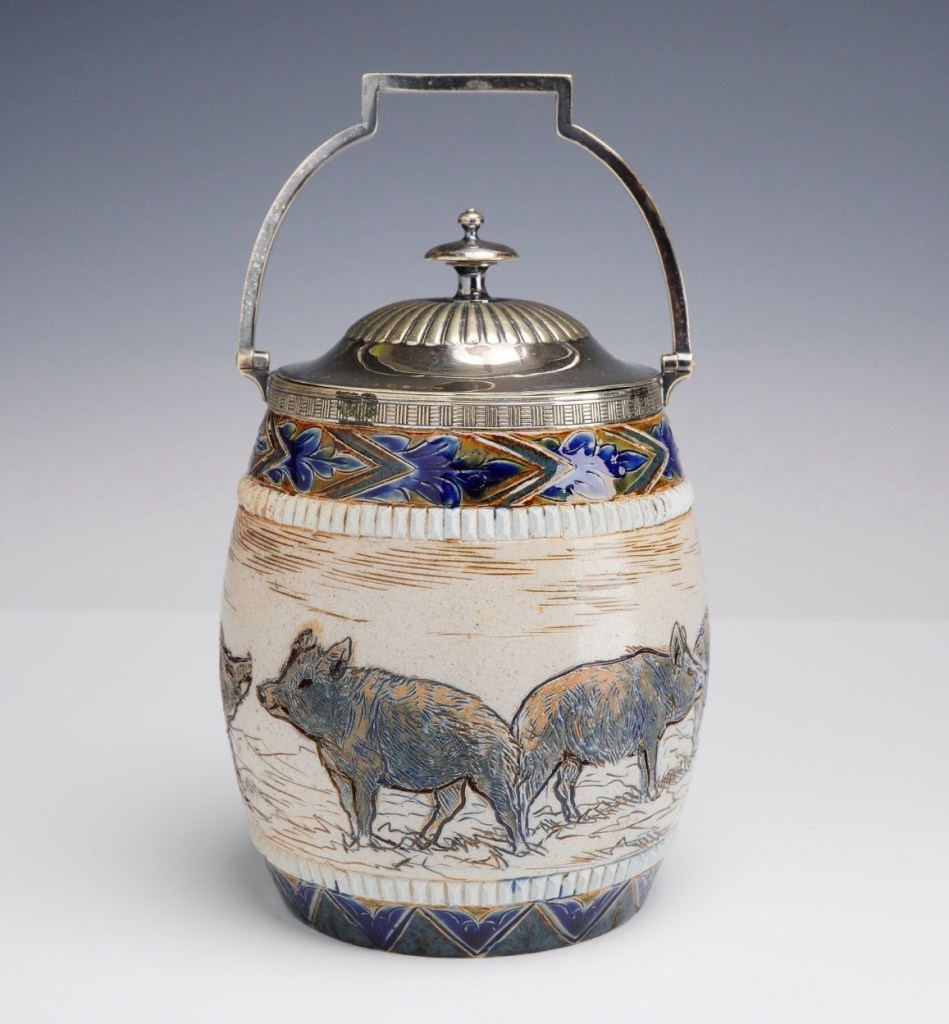
An HBB pig biscuit jar.
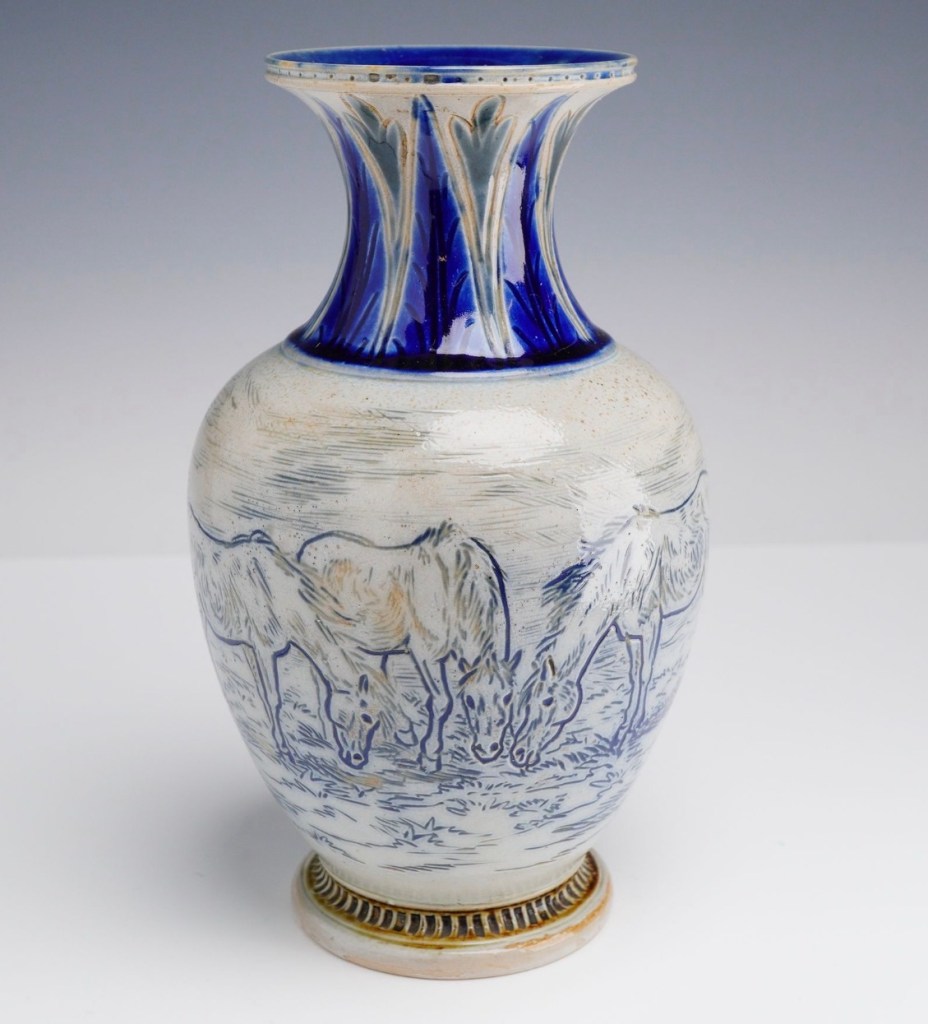
A more traditional Barlow scene with horses.

Even today her work gets top billing at auctions and events around the world. Which leads us into today where you can see this wonderful selection at Lion and Unicorn Auctions, Florida today Sunday 21st June 2026! For more information visit their socials or http://www.lionandunicorn.com


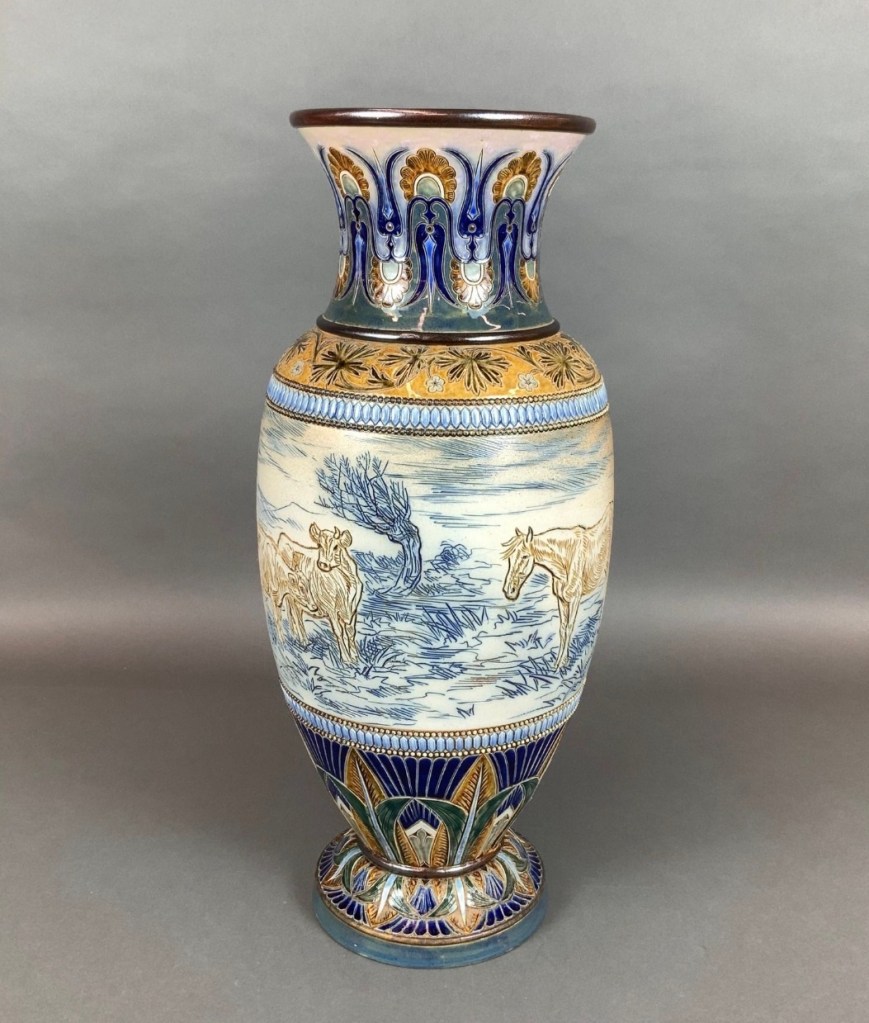
A large Barlow vase by HBB
An unusual jug with cats and dog coming up today (21.06.26) at Lion and Unicorn Auctions

http://www.lionandunicorn.com

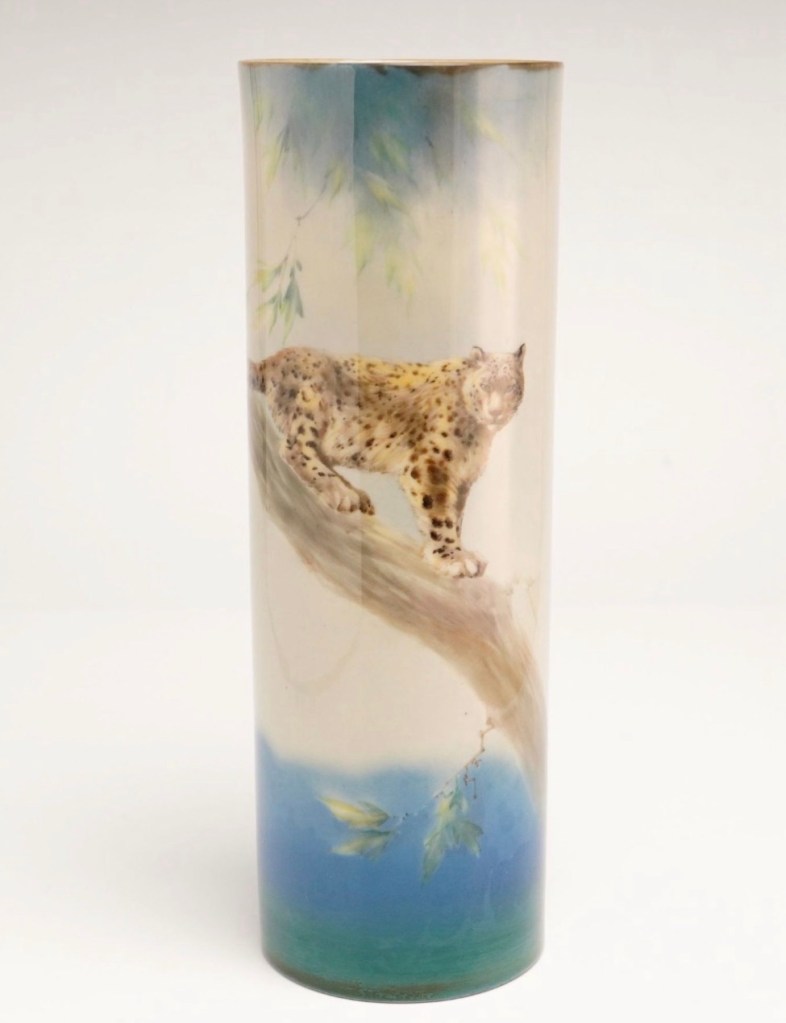
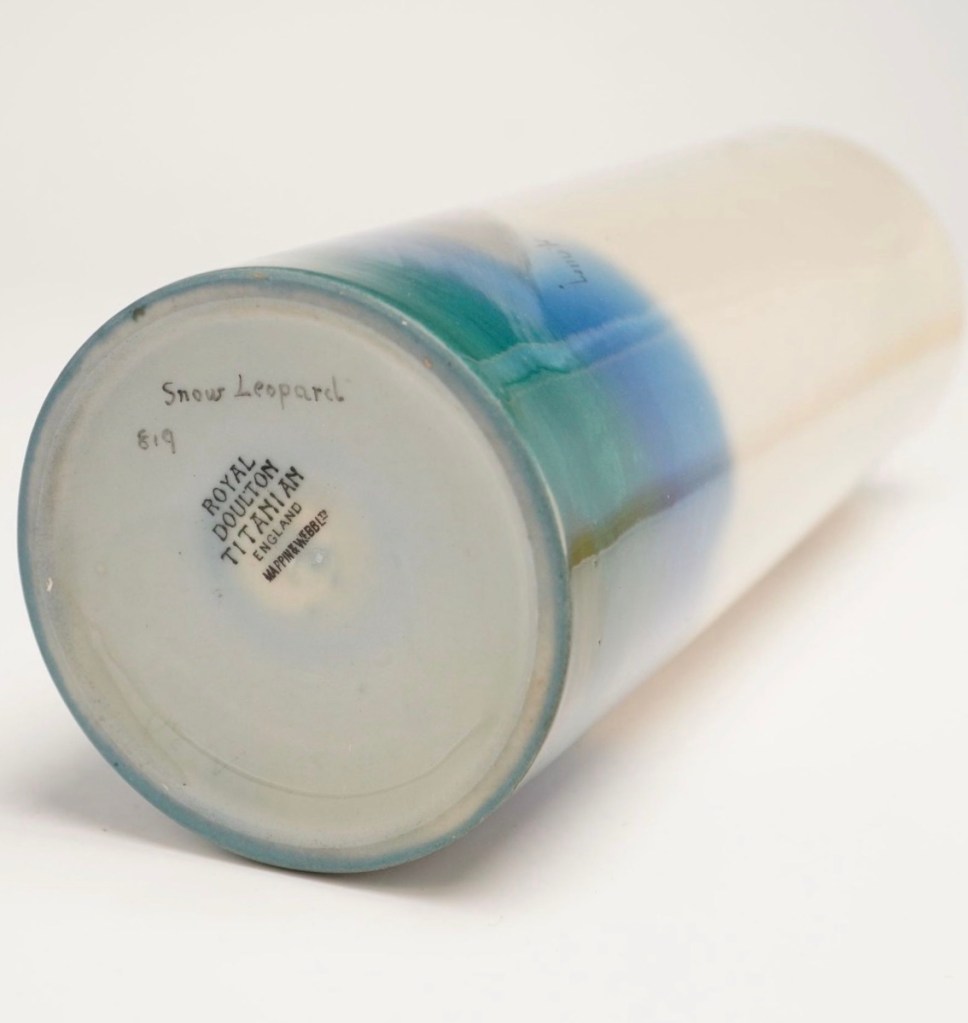
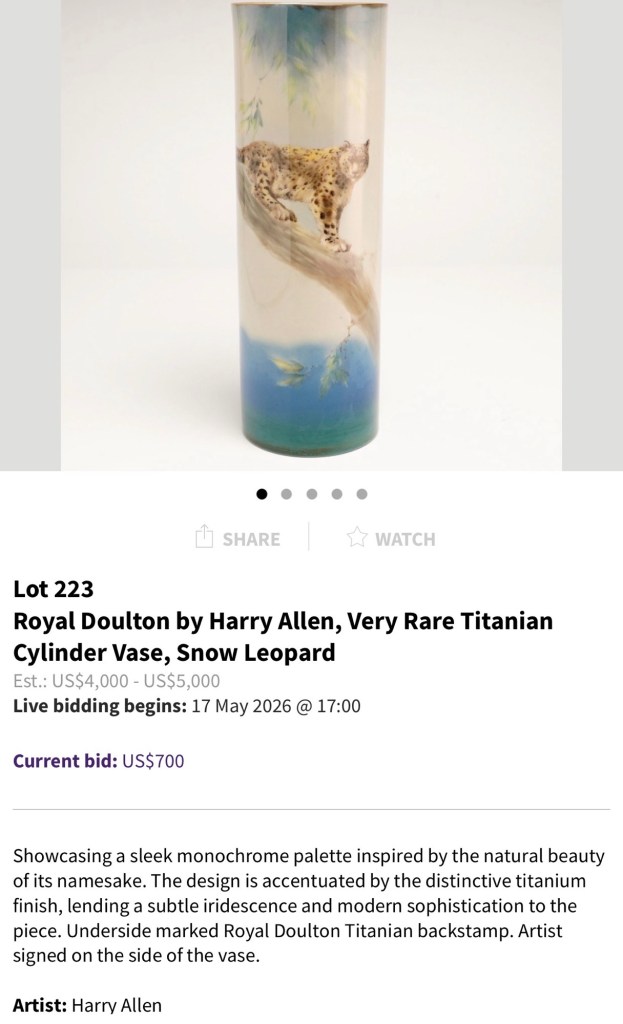
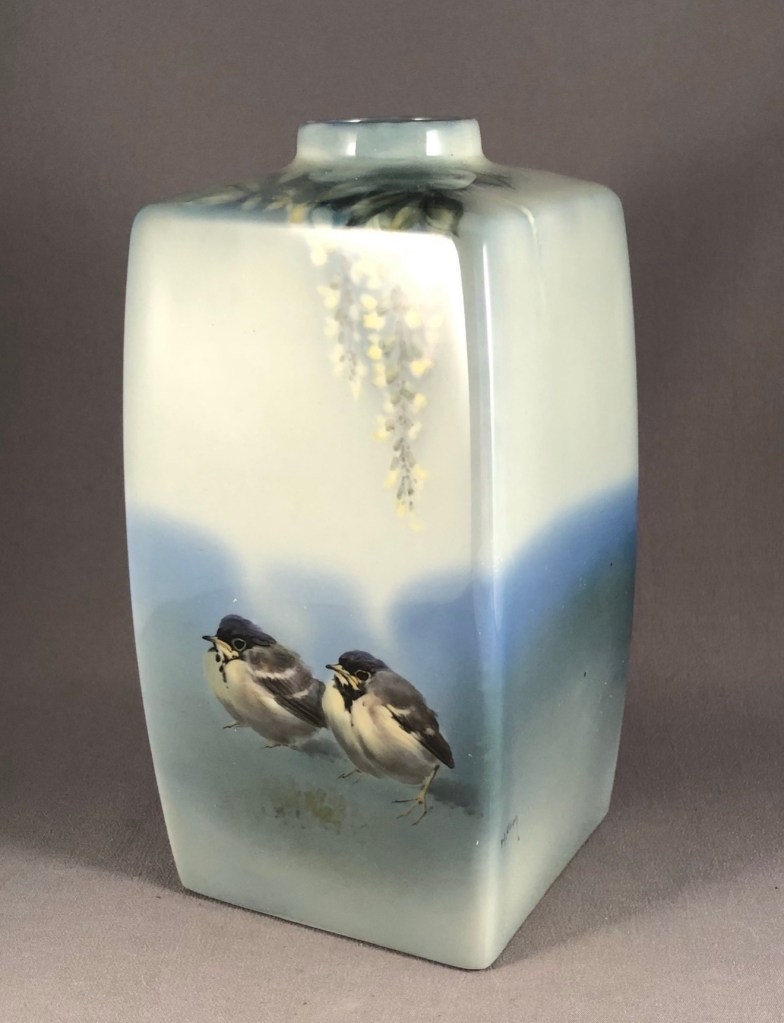
A rare example of Royal Doulton’s Titanian ware with a Snow Leopard!

In Burslem, where figure production had been revived, Doulton’s Art Director, C. J. Noke was simultaneously keen to establish and indeed re-discover many of the ancient Chinese transmutation glazes of yesteryear. He had already re-discovered, introduced to the public in 1904 at the St. Louis Exhibition and by the 1920’s firmly established the world famous Doulton Flambé glazes but Noke together with his team of assistants continued experimenting with glazes and bodies so that today we have other glaze wares including Chang, Chinese Jade and of course Titanian to collect. 

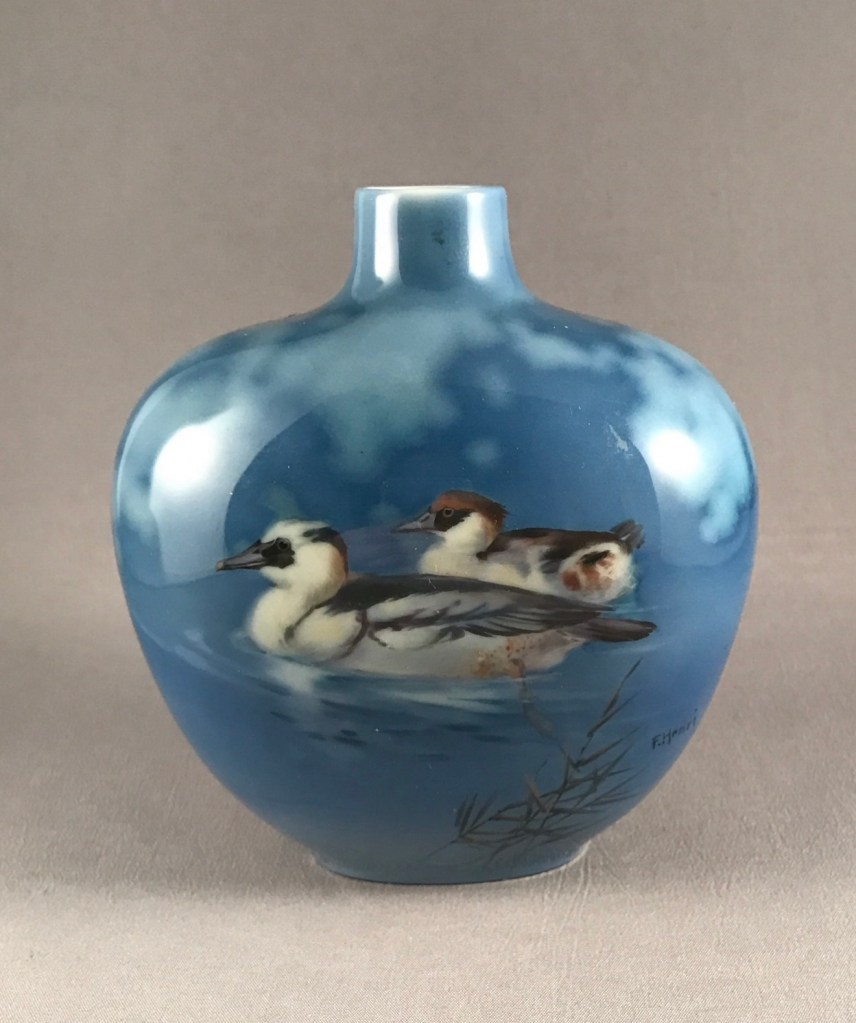
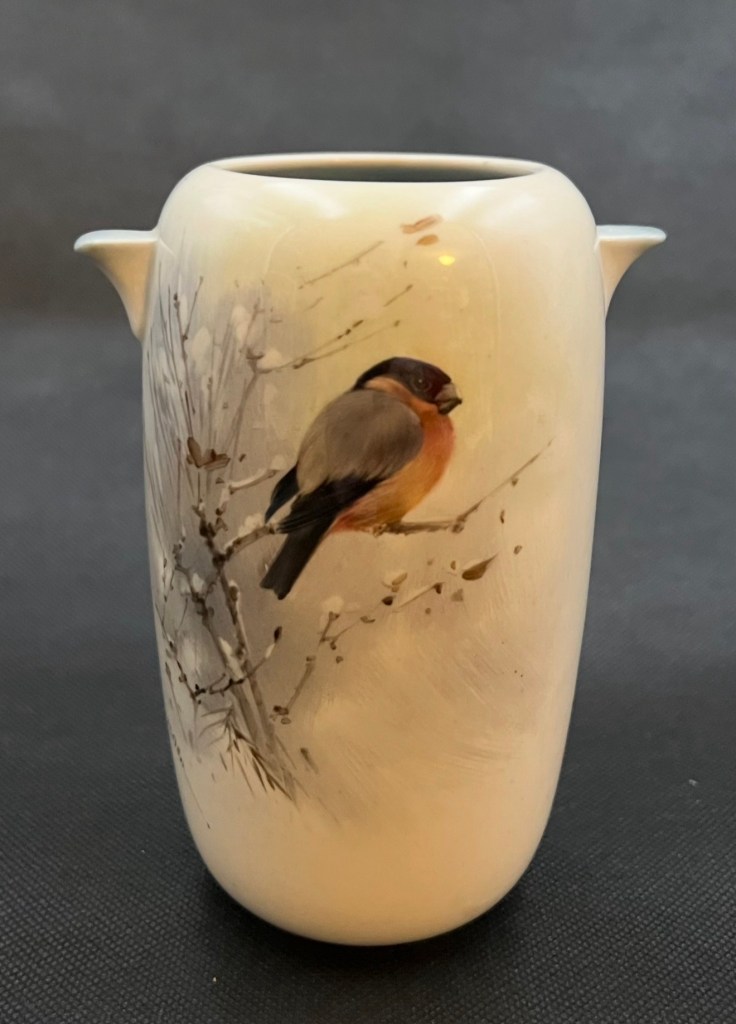
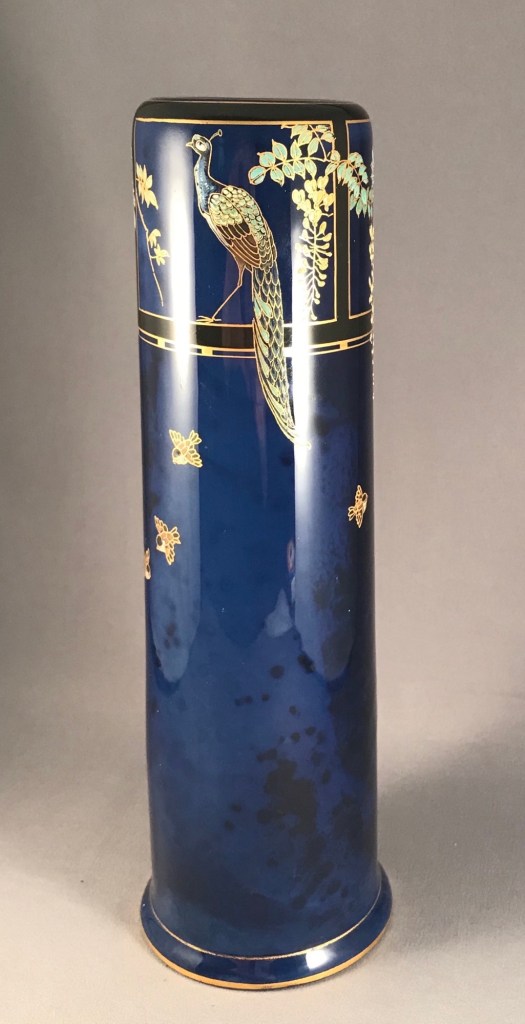
The unique Titanian glaze uses a titanium oxide which results in a bluey colour and pieces of Titanian ware can vary from white to dark blue glazes. It was often used as the background to Doulton’s fine porcelain wares that were painted with typically birds but also oriental figures and flowers by leading artists including Harry Allen, F. Henri and Harry Tittensor. 

Doulton’s seriesware was also in some instances given a Titanian glaze including the Sunset with Poplars range and of course the Tutankhamen set commemorating the opening of the Egyptian King’s tomb in the early 1920’s. 

Figures too were given the Titanian treatment and three of the rarest figures today are commonly found in Titanian when they occasionally do turn up, namely the Australian and New Zealand Digger figures and their British counterpart Blighty – all issued at the end of the first world war. Interestingly a closer examination of the Doukton figure painting books, illustrates that several early figures were produced in a Titanian body, to enhance their decoration, no doubt!

The body of Titanian pieces can vary immensely from an egg-shell like porcelain to a heavy earthenware. This diversity in body is reflected in the price range for these wares, but this in turn allows varied scope for collectors today.

Thanks to Lion and Unicorn auctions for use of their images.

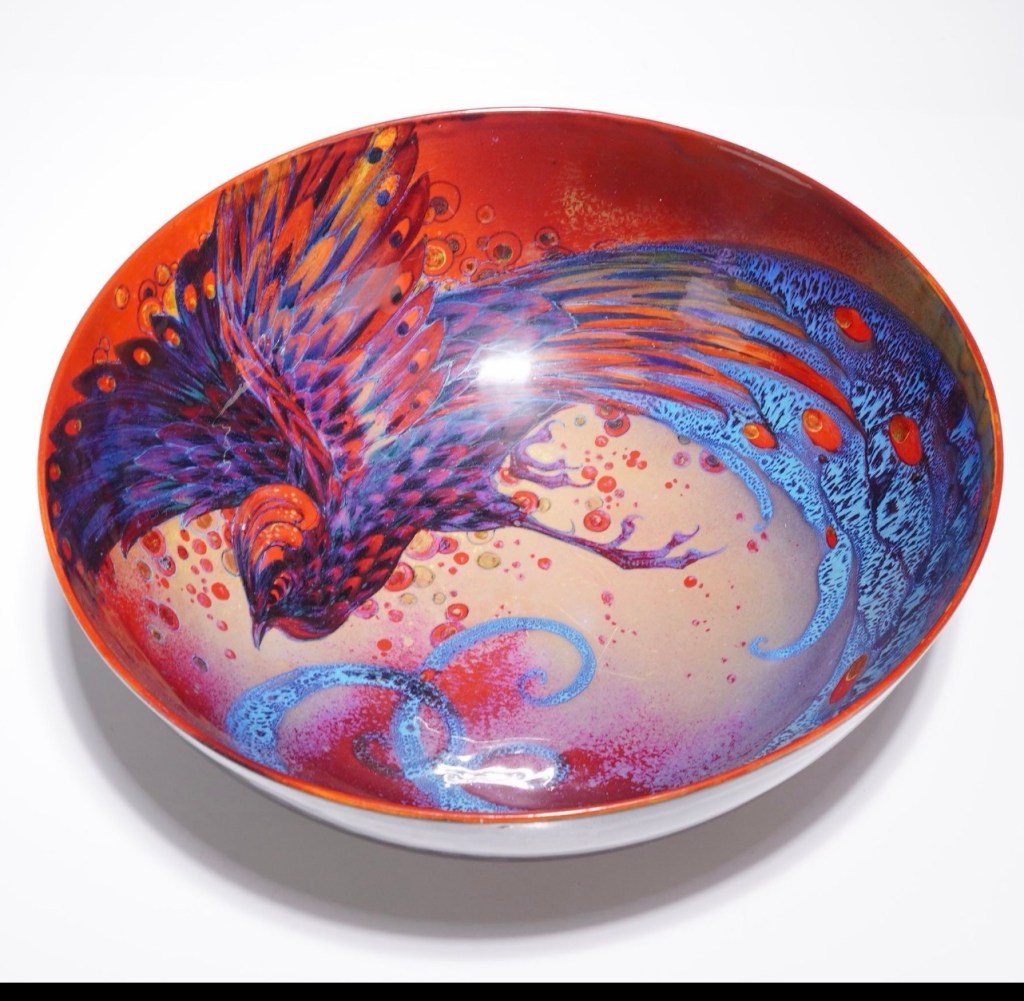
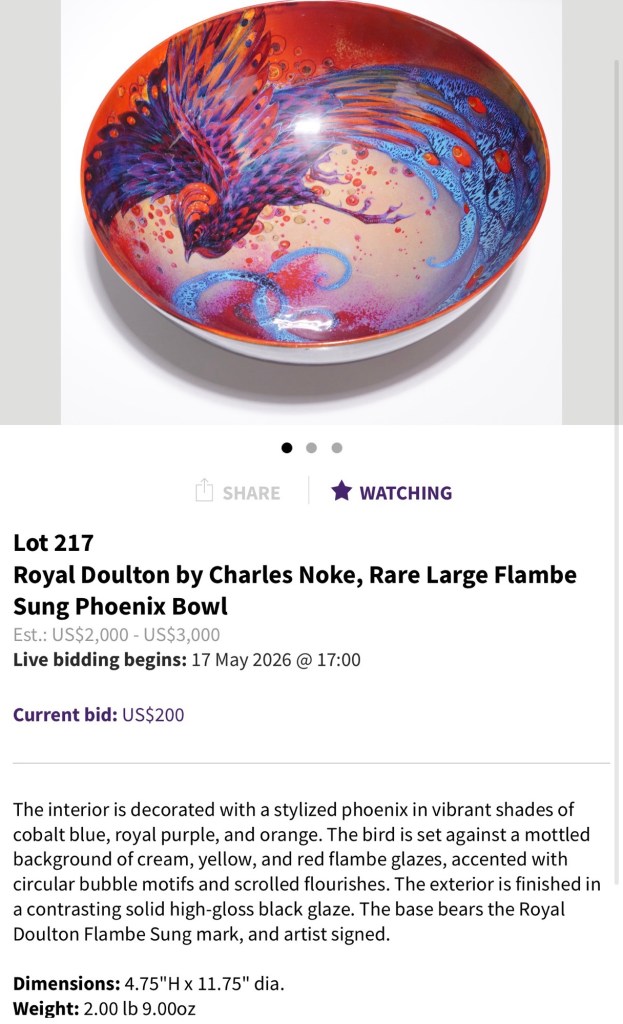
Royal Doulton’s Sung and birds of paradise!

Most collectors today are familiar with the name Noke, although perhaps not so familiar with the personalities behind the name. The signature Noke appears on many flambé, Sung and other Burslem art wares from the early to mid 20th Century and was used in fact by both father and son, the latter would replace his father as Art Director at Burslem in the 1930’s.

The late Peggy Davies told us that “old man Noke” was considered a rather tyrannical figure within the Doulton factory. A man of high standards and principles; someone who had the vision to make the Burslem‘venture’ a success for the Doulton company. Under his directorship many of the most popular lines with collectors today were introduced – figures, character jugs, animal studies, serieswares, art wares…the list could go on! 

Charles Noke continued to experiment with glazes long after the departure of Cuthbert Bailey with whom he had perfected the Flambé glaze in the early 1900’s. And so in 1920 Sung was introduced, whereby painted decoration, colour and gilt are fused with the a flambé glaze. I am sure you will agree that from this photograph the pieces are magnificent. However, it is in the flesh that these pieces must be enjoyed to full effect as in this slide. Vases, large and small were decorated with exotic birds, pixies in woodlands, fish in seascapes along with many other subjects. These pieces were painted principally by Harry Nixon, Arthur Eaton and Fred Moore.

Sung glazes can be found on Buddhas, as seen here in this advert from the 1920’s, a handful of suitable early figures from the HN range such as A Spook HN?, as well as animals, in particular elephants, a favourite of Charles Noke.

My thanks to Lion and Unicorn auctions for use of this image. This spectacular bowl is up for auction Sunday 17th May 2026.

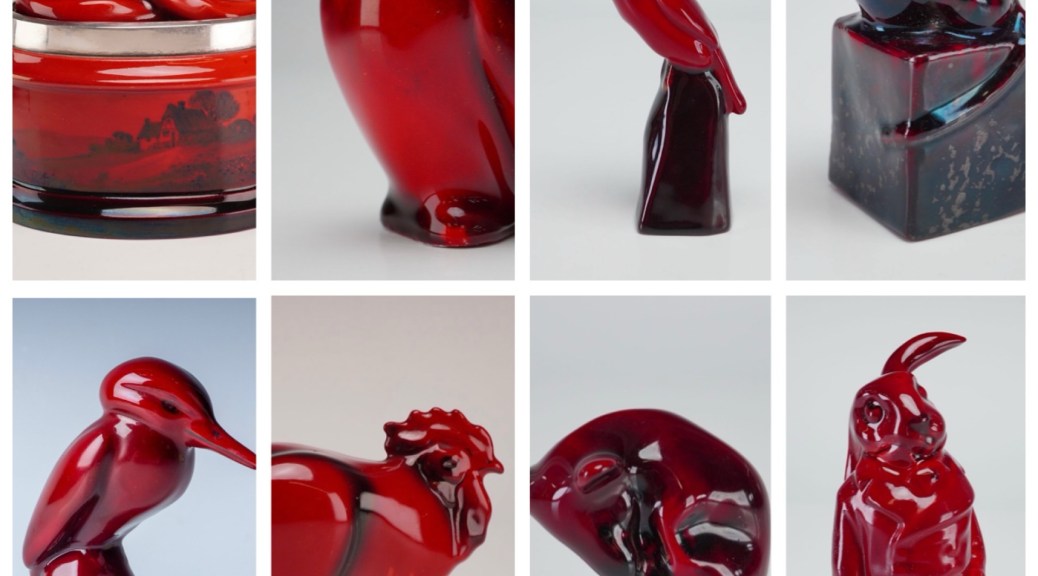
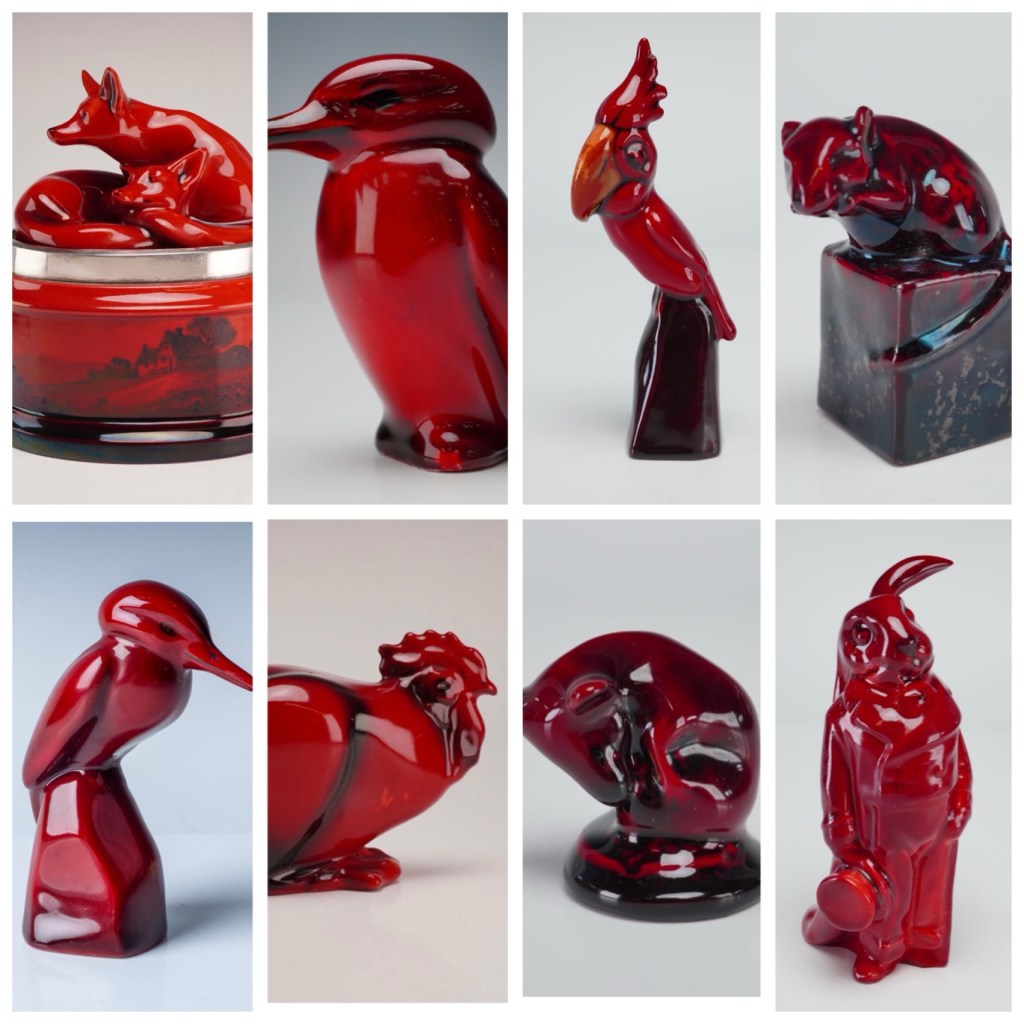
Royal Doulton Flambé Animals

There were two great Doulton art factories in the early twentieth century, with others both in the UK and in Europe too where more utilitarian goods such as Doulton drainpipes and sanitary ware were produced.

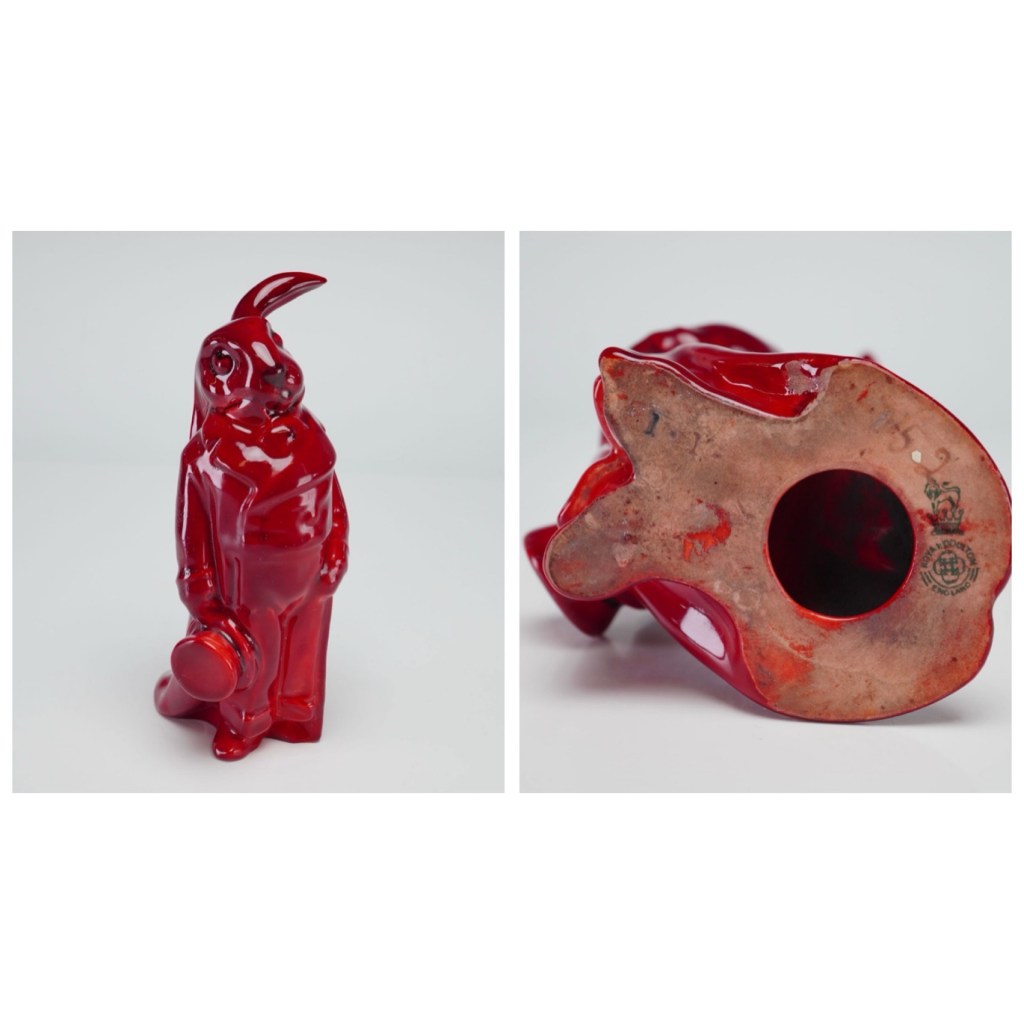
In Burslem, where figure production had been revived, Charles Noke, art director, was simultaneously keen to establish and indeed re-discover many of the ancient Chinese transmutation glazes of yesteryear.

A super rare flambé example of Noke’s rabbit in hunting dress coming up at Lion and Unicorn auctions Sunday 26 April 2026.

With great input from the legendary studio potter Bernard Moore, he had already re-discovered, introduced to the public in 1904 at the St. Louis Ehibition and by the 1920’s firmly established the world famous Doulton Flambé glaze.

A selection of rare flambé and also Sung glaze animals coming up at Lion and Unicorn auctions Sunday 26 April 2026.

Noke together with his team of assistants continued experimenting with glazes into the 1920s and beyond and so that today we have a myriad of glaze wares to collect and enjoy!

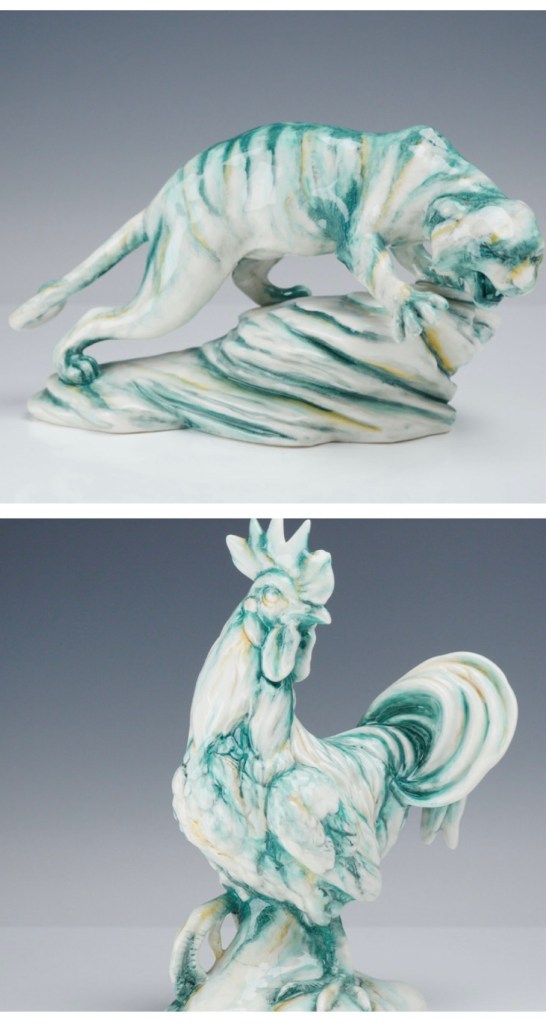
Even in the relatively recent past (well the late 1990s) Doultons continued to explore glaze wares and looked to earlier styles for inspiration. Thus a new series of Jade ware was trialled on the suggestion of Michael Doulton who saw its potential in Asia in particular. Sadly, the series never moved beyond the prototype stage but here are two examples from a select range that was trialled but never produced.

Two prototype Jade animals coming up at Lion and Unicorn auctions Sunday 26 April 2026.

Royal Doulton’s The Palio by the legendary Peggy Davies.

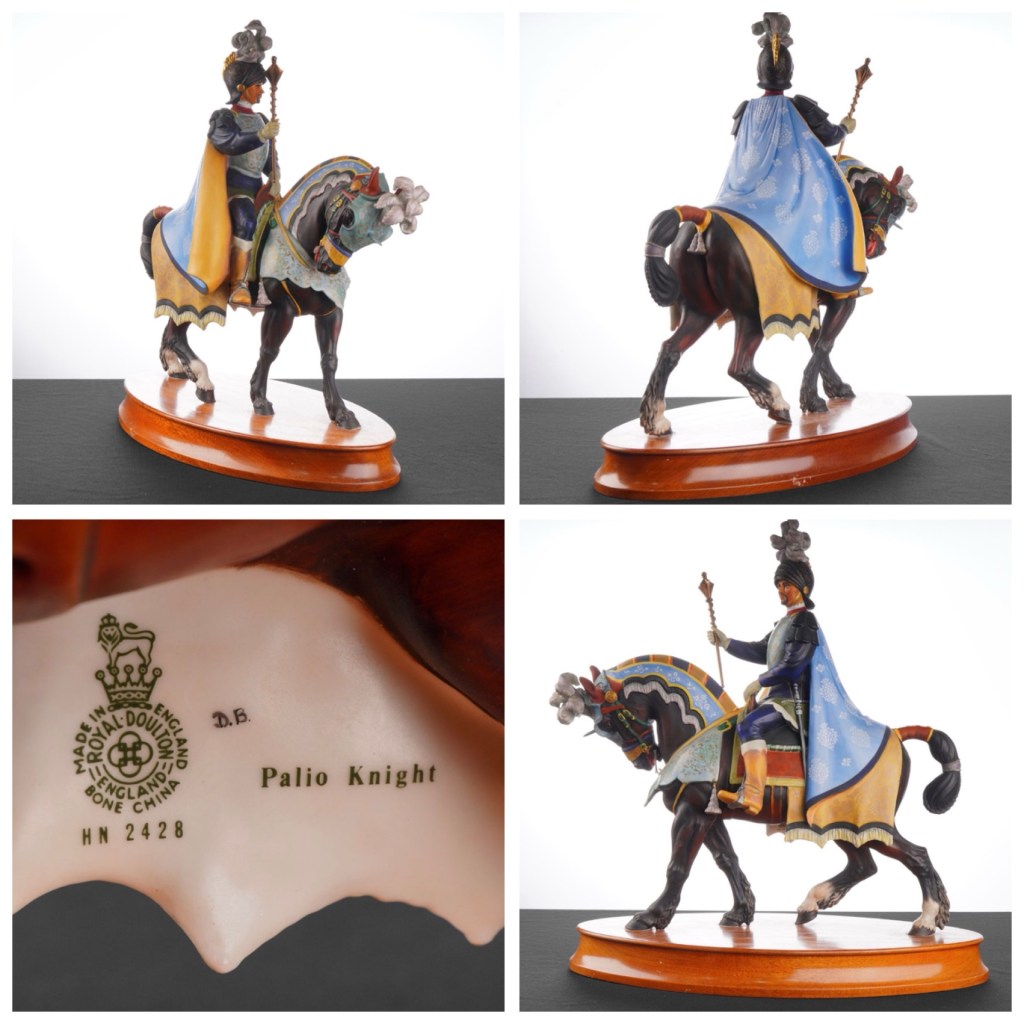
The Palio HN 2428 modelled by Peggy Davies introduced in 1971. 

The Palio held in Sienna, Italy in June and August each year is one of the country’s most exhilarating festivals. The festival includes a flag procession, mounted warriors representing the colourful life of the ancient republic of Sienna and of course the famous horse race around the Campo, the winner of which is awarded the Palio. 

Our figure here is the result of former art director at Burslem, Jo Ledger’s desire to create a suitable tribute to Italy. Originally seen as a successor to Matador and Bull and Indian Brave, Peggy Davies was called upon to convey the spirit of the festival into pottery.

The Palio is portrayed with a gold emblazoned chest plate, carrying his mace, he is the commander riding through the Sienna streets in the opening parade by the clans.

This prestige figure is painted in fine matte finish requiring as many as ten firings to perfect the paint colour choices. Each piece is numbered as he was a limited edition of 500, however, far fewer were ever produced. 

The artist modeller Peggy Davies will be familiar to almost all Royal Doulton  figure collectors.

For some 40 years Peggy worked for Royal Doulton on a freelance basis sending in her creations for approval. Then in 1984 she severed her links with Doulton and set about projects she had long wanted to do including setting up one of her sons in the pottery business. This last project allowed her the independence from commercial production that she often longed for and she provided many studies for reproduction before her untimely death in 1989.

This lot is coming up at Lion and Unicorn Auctions 29th March 2026.

An A-Z of Collecting Royal Doulton – Royal Doulton’s Titanian wares.

There were two great Doulton art factories in the 1920’s, with others factories both in the UK and in Europe too where more utilitarian goods such as Doulton drainpipes and sanitarywarewere produced.

In Burslem, where figure production had been revived, Doulton’s Art Director, C. J. Noke was simultaneously keen to establish and indeed re-discover many of the ancient Chinese transmutation glazes of yesteryear. He had already re-discovered, introduced to the public in 1904 at the St. Louis Exhibition and by the 1920’s firmly established the world famous Doulton Flambé glazes but Noke together with his team of assistants continued experimenting with glazes and bodies so that today we have other glaze wares including Chang, Chinese Jade and of course Titanian to collect. 

The unique Titanian glaze uses a titanium oxide which results in a bluey colour and pieces of Titanian ware can vary from white to dark blue glazes. It was often used as the background to Doulton’s fine porcelain wares that were painted with typically birds but also oriental figures and flowers by leading artists including Harry Allen, F. Henri and Harry Tittensor. 

Doulton’s seriesware was also in some instances given a Titanian glaze including the Sunset with Poplars range and of course the Tutankhamen set commemorating the opening of the Egyptian King’s tomb in the early 1920’s. Figures too were given the Titanian treatment and three of the rarest figures today are commonly found in Titanian when they occasionally do turn up, namely the Australian and New Zealand Digger figures and their British counterpart Blighty – all issued at the end of the first world war. The body of Titanian pieces can vary immensely from an egg-shell like porcelain to a heavy earthenware. This diversity in body is reflected in the price range for these wares, but this in turn allows varied scope for collectors today.

An A-Z of Collecting Royal Doulton – Peggy Davies

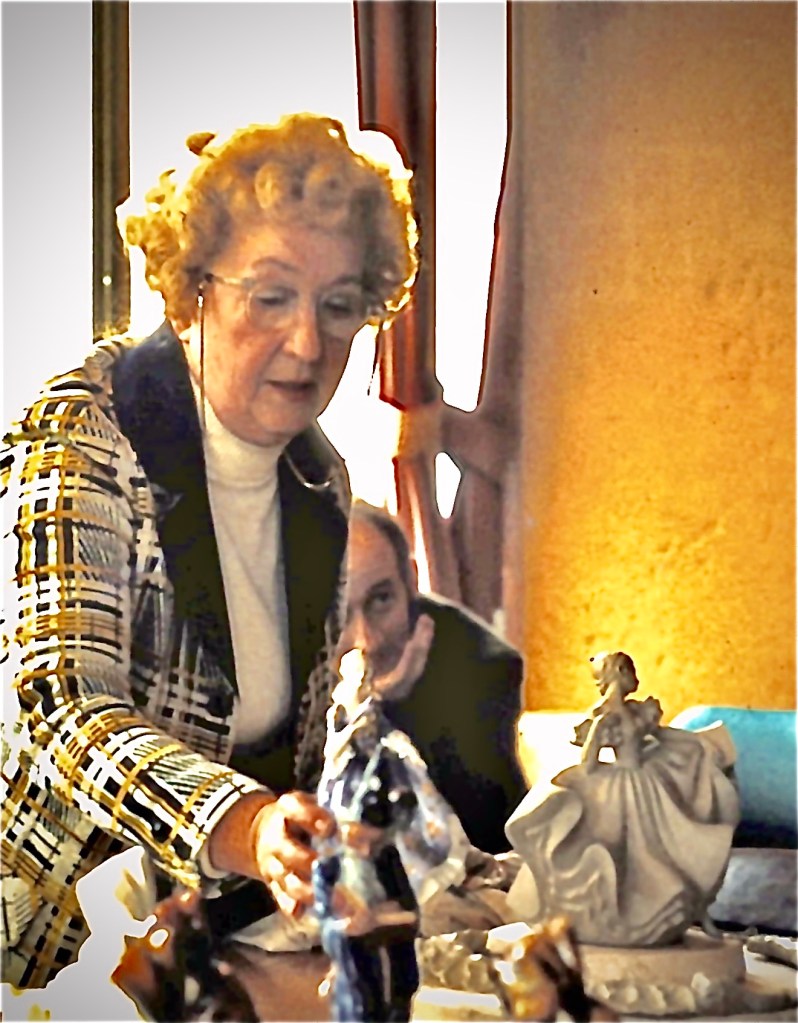
Peggy discussing her models with a group of collectors (with Paul Atterbury seated behind her).

Peggy Davies is often credited as taking over the mantle of figure modelling from Leslie Harradine, but in labelling her as such we miss a quintessential part of her, namely her love of life. It is this love of life that epitomises so many of her figures and when considering what makes a classic Peggy Davies figure we must really consider the time when the piece was modelled, as her style changed dramatically over the years. In part this change can be explained as personal but it can also be accounted for by the restrictions that were placed on her by the managers of Royal Doulton over their years of association, as they strove to create an instantly recognisable house style. Many collectors can instantly recognise a Harradine figure from one of Peggy’s, and some say that she lacks the skill of Harradine. However, I would simply argue that she worked in a different time, not only in relation to the fashions of that time but also the strict restrictions placed upon her regarding, for example, the number of parts a figure could have.

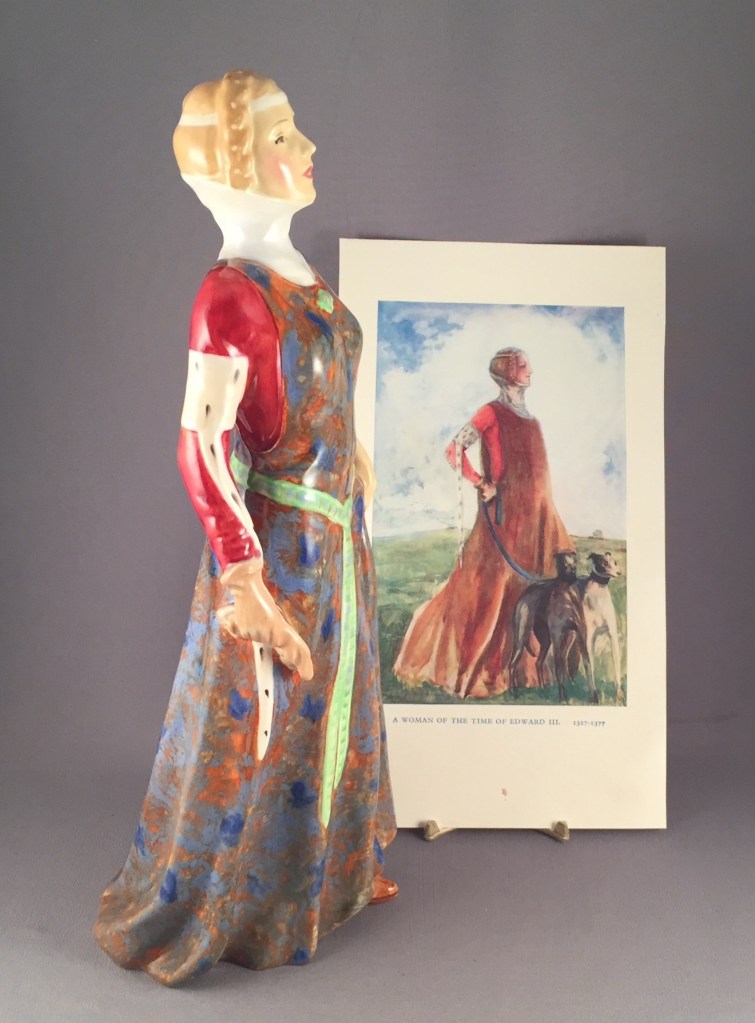
Peggy’s early model of Philippa of Hainault and her inspiration.

Peggy’s first introductions to the HN range really did follow on in Harradine’s footsteps as can be seen by her Bernice HN2071, however her style was to quickly evolve as she brought a simplicity of line and form to the HN collection. Her Gay Morning HN2135 really illustrates this point perfectly. Peggy also planned her figures so it is no surprise to find pairs of figures entering the range, take for example Delphine HN2136 and Lilac Time HN2137.

The prolific output from Peggy means that collectors very often have to specialise when it comes to her figures and whilst there are some obvious themes such as character studies and child figures, other themes have emerged directly from the styles of figures typical of her. Consider dancing ladies, a particular favourite amongst collectors and two of the most popular being Alexandra HN2398 and Elaine HN2791. Both unique in their modelling they display perfectly together and one can add to the

A prototype by Peggy.

display with the many other dancing ladies she created.

Movement was something Peggy was particularly famed for and some prime examples of this as Jacqueline HN2333 and Melissa HN2467, both of whom are perfectly poised whilst their skirts twirl around them. Fashion too was an important part of Peggy’s work and her historical models are credited as being true to life. Similarly her ladies of fashion such as Julia HN2706 or Jane HN2806, both holding their summer parasols, we can imagine in any Victorian summer garden. The garden suggests another theme, where many of Peggy’s models can be pictured. Consider Camellia HN2222 holding her flower or Elyse HN2791 reclining in the shade on a hot summer’s day.

A further prototype by Peggy of a young aunt of hers as she imagined her boarding a ship for a new life in Canada.

‘Readers’ as they are termed are another phenomenon directly created by Peggy who lovingly modelled many figures either holding or reading books. Her Solitude HN2810 is seen quietly reclining, engrossed by her book. This theme can be added to by figures from other modellers both past and present.

An A-Z of Collecting Royal Doulton – Dewars commissions.

Dewars

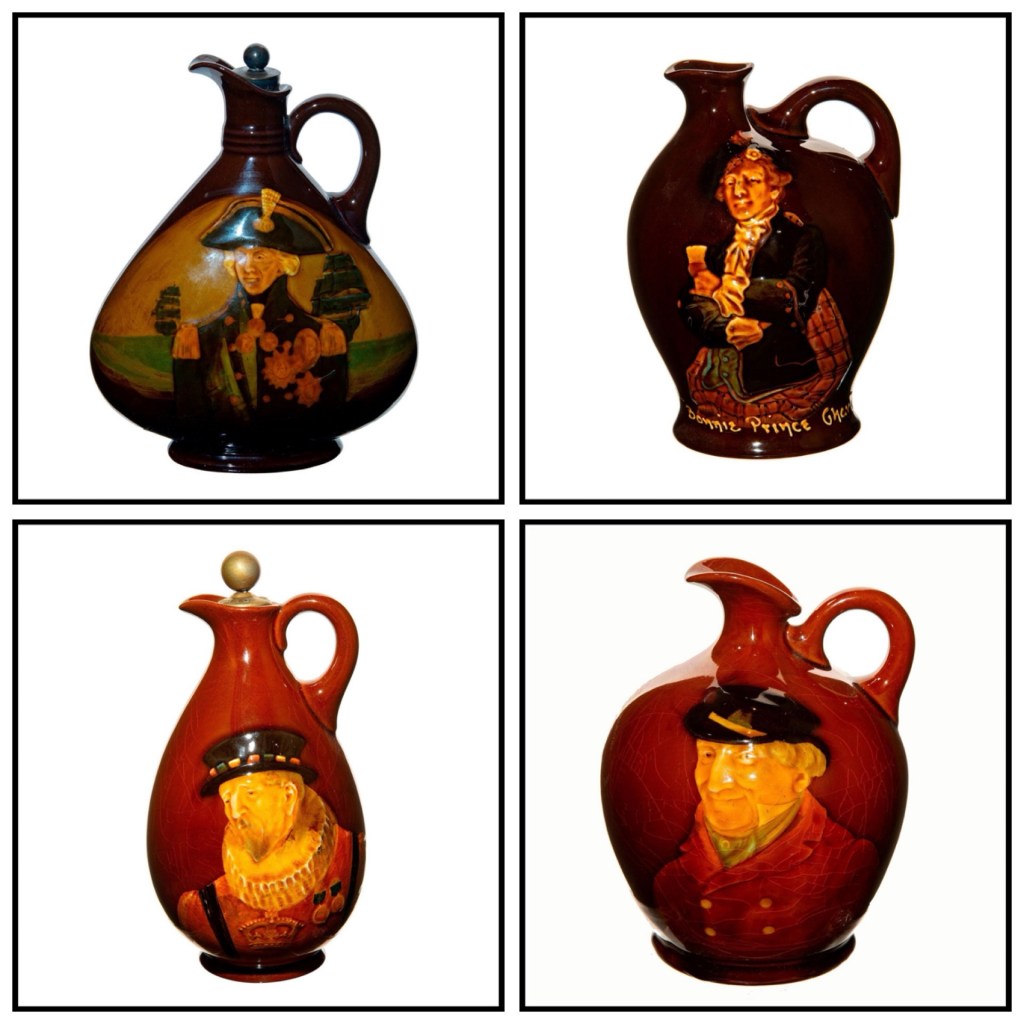
A large number of Doulton containers were made for Dewars (John Dewar and Sons) of Perth, Scotland. Dewars used Doulton’s stoneware vessels extensively for advertising purposes and many of Doulton’s Kingsware designs were exclusive to Dewars, although some were adapted for use with other firms.

A selection of flasks covering the Dewars contract’s years of output.

Apparently the Doulton contract with Dewars stated that there would be no increase in price to Dewars during the issue of a design even over many years, which explains why later examples of Kingsware flasks have the Dewars name stamped on the base rather than picked out in applied lettering on the reverse of the flask. 

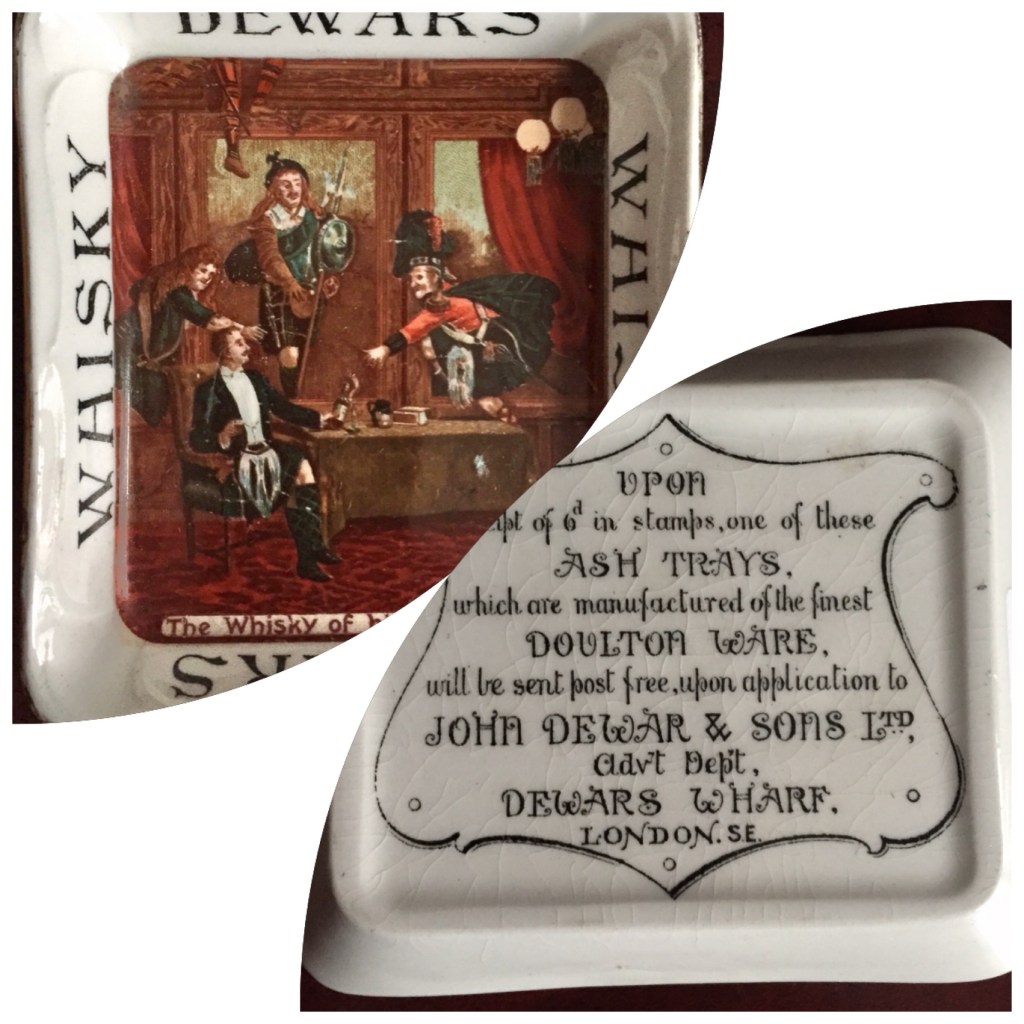
Here is an interesting pin dish for Dewars, which could be claimed after collecting tokens from the purchase of their products!

An A-Z of Collecting Royal Doulton – Alter pieces.

Reredos at York Minster by George Tinworth.

George Tinworth, the first Doulton artist, is perhaps the best place to start this short exposé on Doulton’s Church art wares.

A selection of alter vases produced at Doulton Lambeth, sold by Lion & Unicorn auctions.

An ex student of the Lambeth School of Art, Tinworth worked at Doulton’s Lambeth factory from 1867 to his death in 1913. Most of his work was sculptural and can still be be seen today in parks and churches around the world.

Tinworth in his studio at Lambeth working on a Good Shepherd statue.

In the 19c respectability was especially prized, and Tinworth’s religious work brought great acclaim to the Lambeth factory. Whist it is perhaps his amusing mice and other animal sculptures that are most prized today, this change is a true reflection of changing attitudes in modern times.

Plaque by Tinworth from a New York church

Returning to Tinworth his work can be found today in churches and cathedrals up and down the UK. Above you can see his magnificent reredos located in York Minster.

A contemporary image of the York Minster reredos.

Not forgetting the marvellous Doulton flambé alter piece that resides in Coventry cathedral, after its post WWII reconstruction.

A further Tinworth reredos, this time located in Copenhagen.

A place to share enthusiasm for all things Royal Doulton! All original content ©Christopher Evans 2014 unless otherwise credited. No unauthorised reproduction permitted.