There were two great Doulton art factories in the 1920’s, with others factories both in the UK and in Europe too where more utilitarian goods such as Doulton drainpipes and sanitarywarewere produced.
In Burslem, where figure production had been revived, Doulton’s Art Director, C. J. Noke was simultaneously keen to establish and indeed re-discover many of the ancient Chinese transmutation glazes of yesteryear. He had already re-discovered, introduced to the public in 1904 at the St. Louis Exhibition and by the 1920’s firmly established the world famous Doulton Flambé glazes but Noke together with his team of assistants continued experimenting with glazes and bodies so that today we have other glaze wares including Chang, Chinese Jade and of course Titanian to collect.
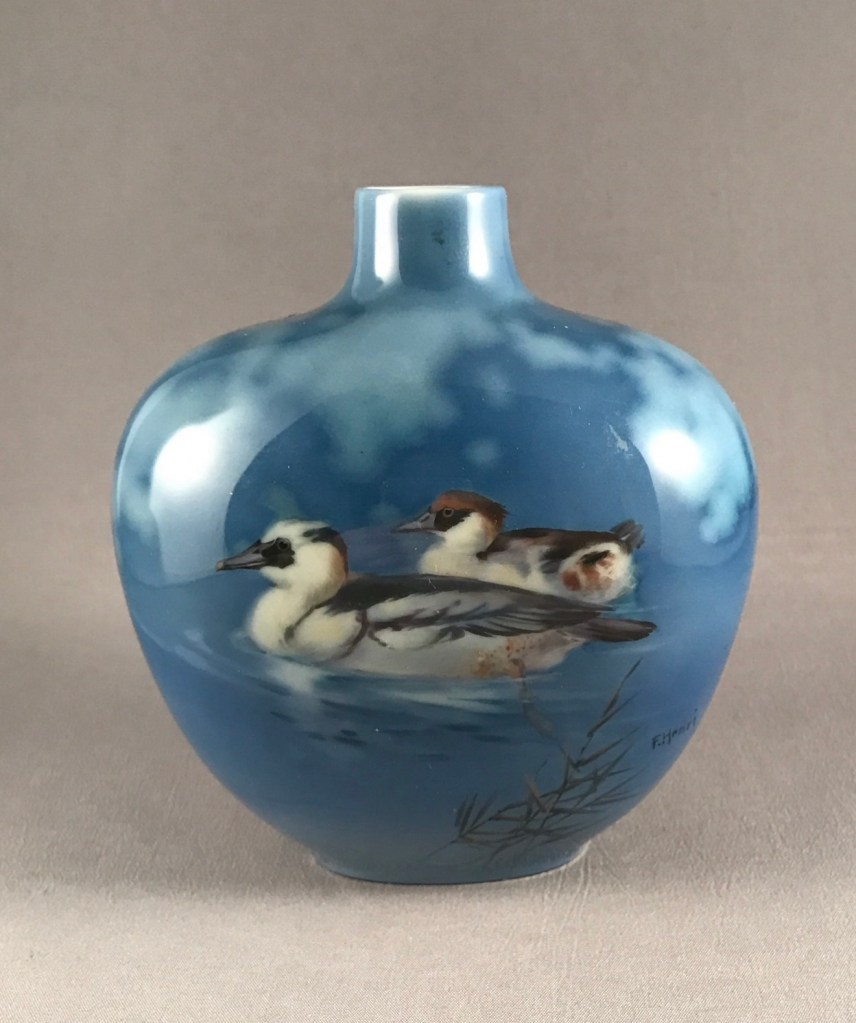
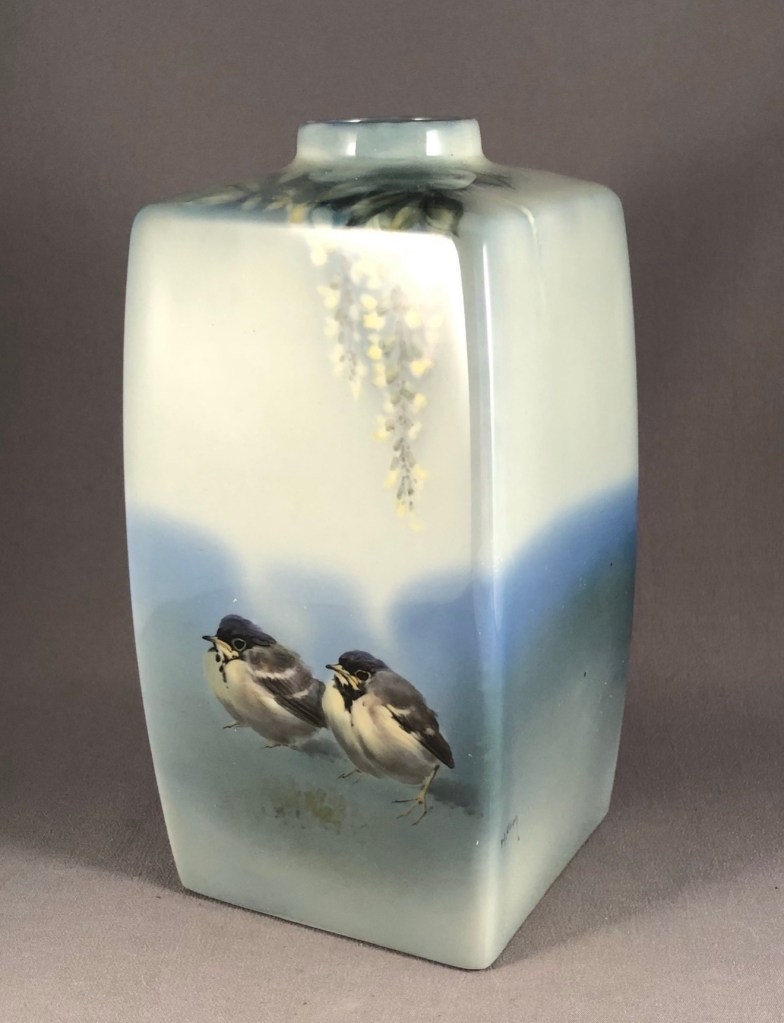
The unique Titanian glaze uses a titanium oxide which results in a bluey colour and pieces of Titanian ware can vary from white to dark blue glazes. It was often used as the background to Doulton’s fine porcelain wares that were painted with typically birds but also oriental figures and flowers by leading artists including Harry Allen, F. Henri and Harry Tittensor.
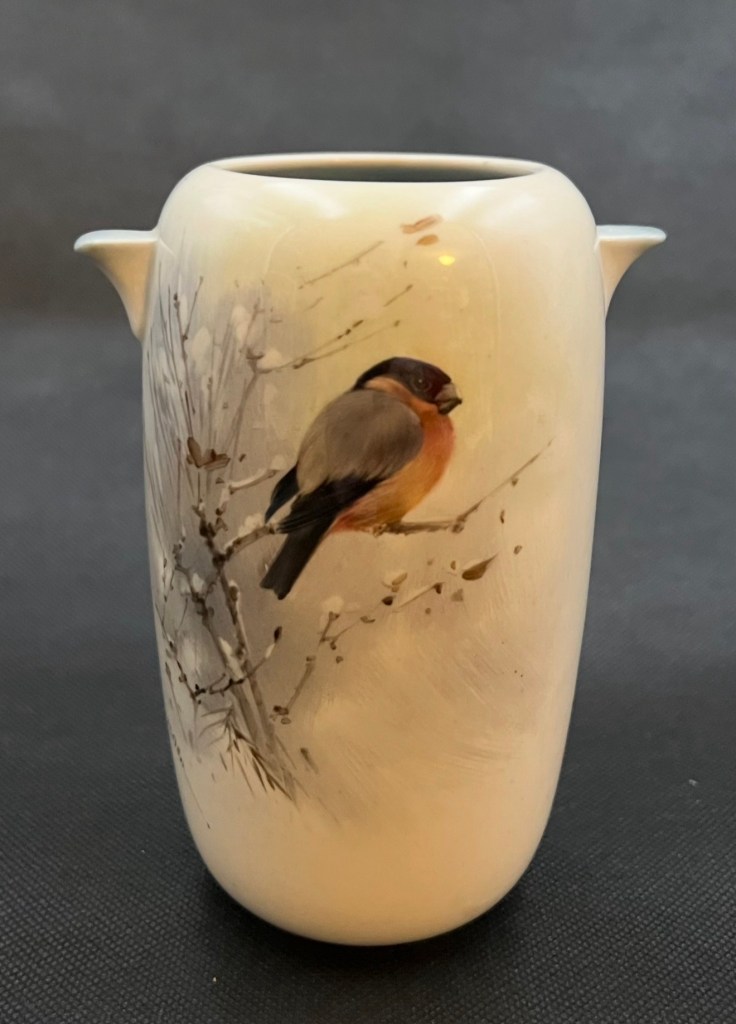
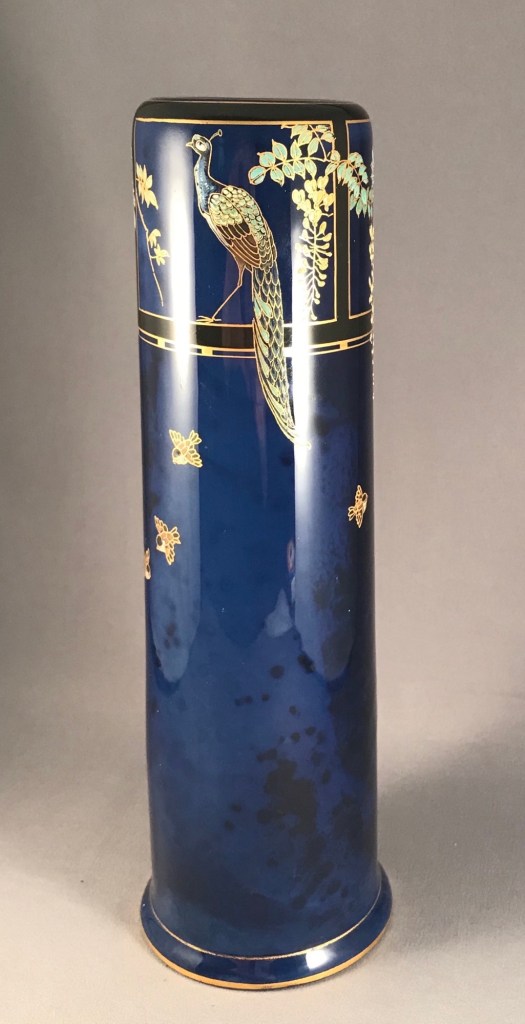
Doulton’s seriesware was also in some instances given a Titanian glaze including the Sunset with Poplars range and of course the Tutankhamen set commemorating the opening of the Egyptian King’s tomb in the early 1920’s. Figures too were given the Titanian treatment and three of the rarest figures today are commonly found in Titanian when they occasionally do turn up, namely the Australian and New Zealand Digger figures and their British counterpart Blighty – all issued at the end of the first world war. The body of Titanian pieces can vary immensely from an egg-shell like porcelain to a heavy earthenware. This diversity in body is reflected in the price range for these wares, but this in turn allows varied scope for collectors today.
 doultoncollectorsclub