All posts by doultonchristopher1

Doulton’s Burns Night specials! 

With Burns Night about to be celebrated around the world, I decided it was time to look at Doulton’s commemoratives to Scotland’s national hero.


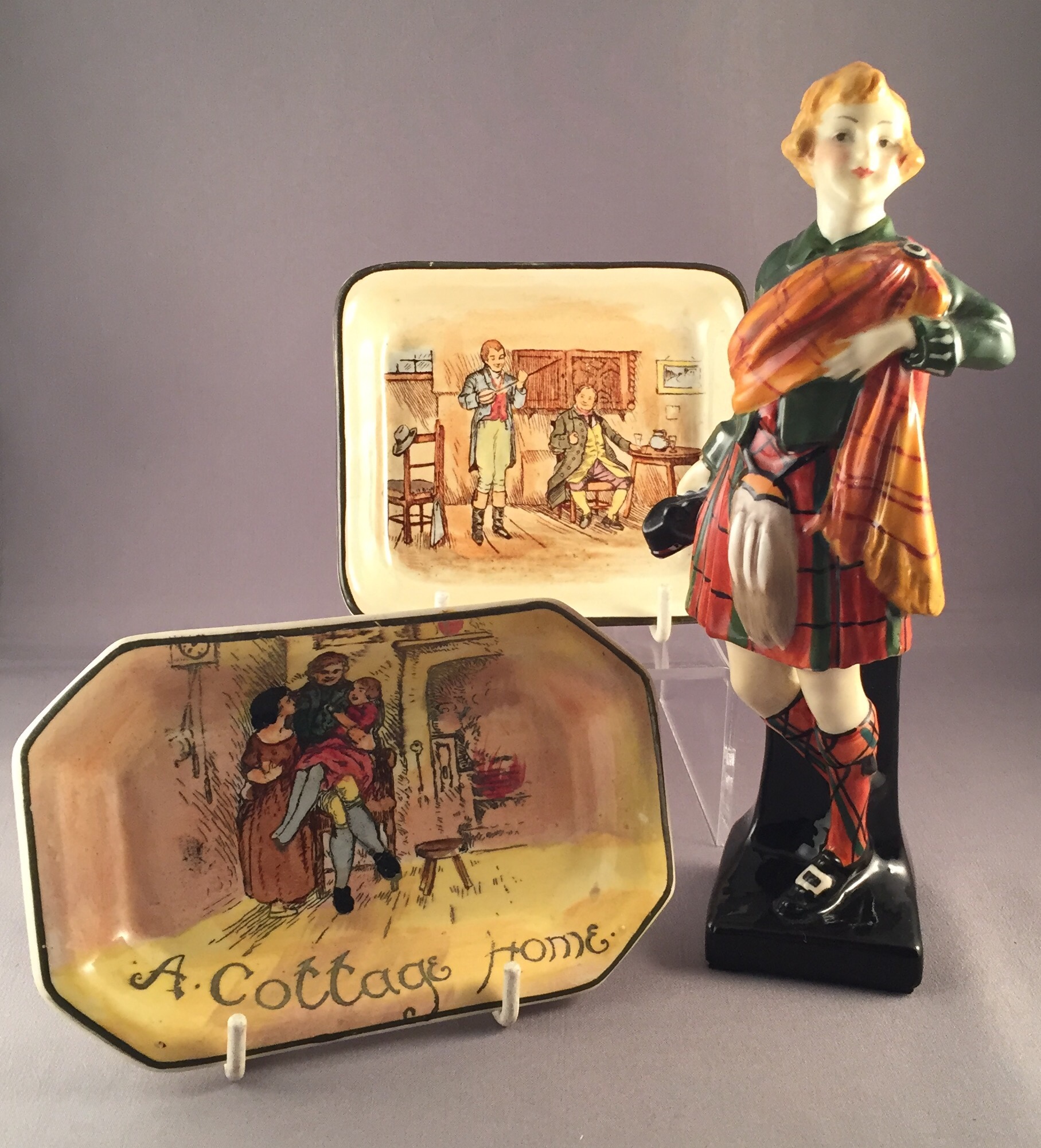
Robert Burns scenes 2 & 3, with Scotch Girl HN 1269.

A Burns supper is a celebration of the life and poetry of the Scottish poet Robert Burns. Burns suppers are usually held on or near the poet’s birthday, 25 January and the occasion is more commonly known as Burns Night.
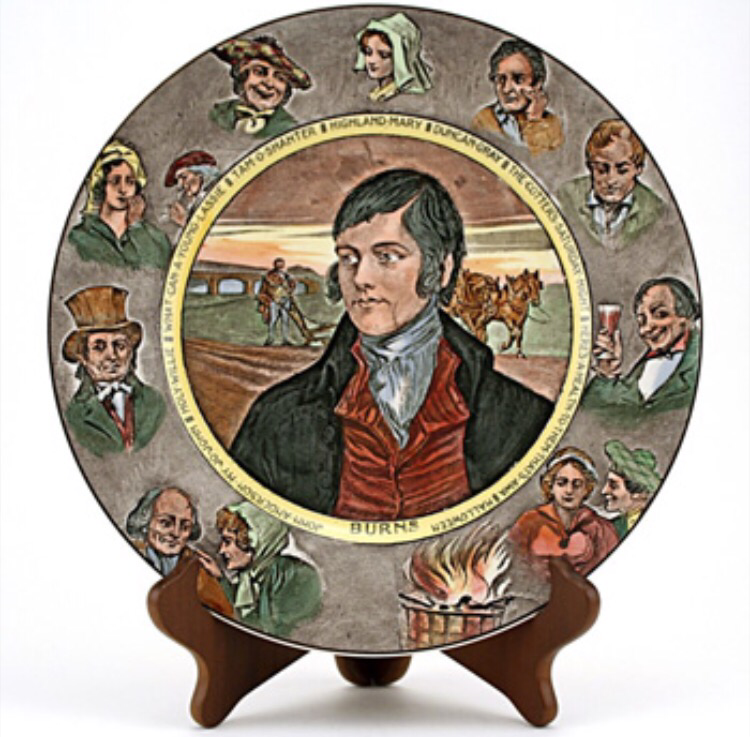
 Burns seriesware plate Pattern C.

A piper generally greets the guests and everyone stands as the main course is brought in – haggis.  
Pattern A scene 1.

Doulton’s love of all things Scotch is apparent from the number of Scottish scenes featured on their famous hand painted wares by leading artists; the Figures in their HN collection in national dress and of course the many Scottish themed series in their series ware collection.


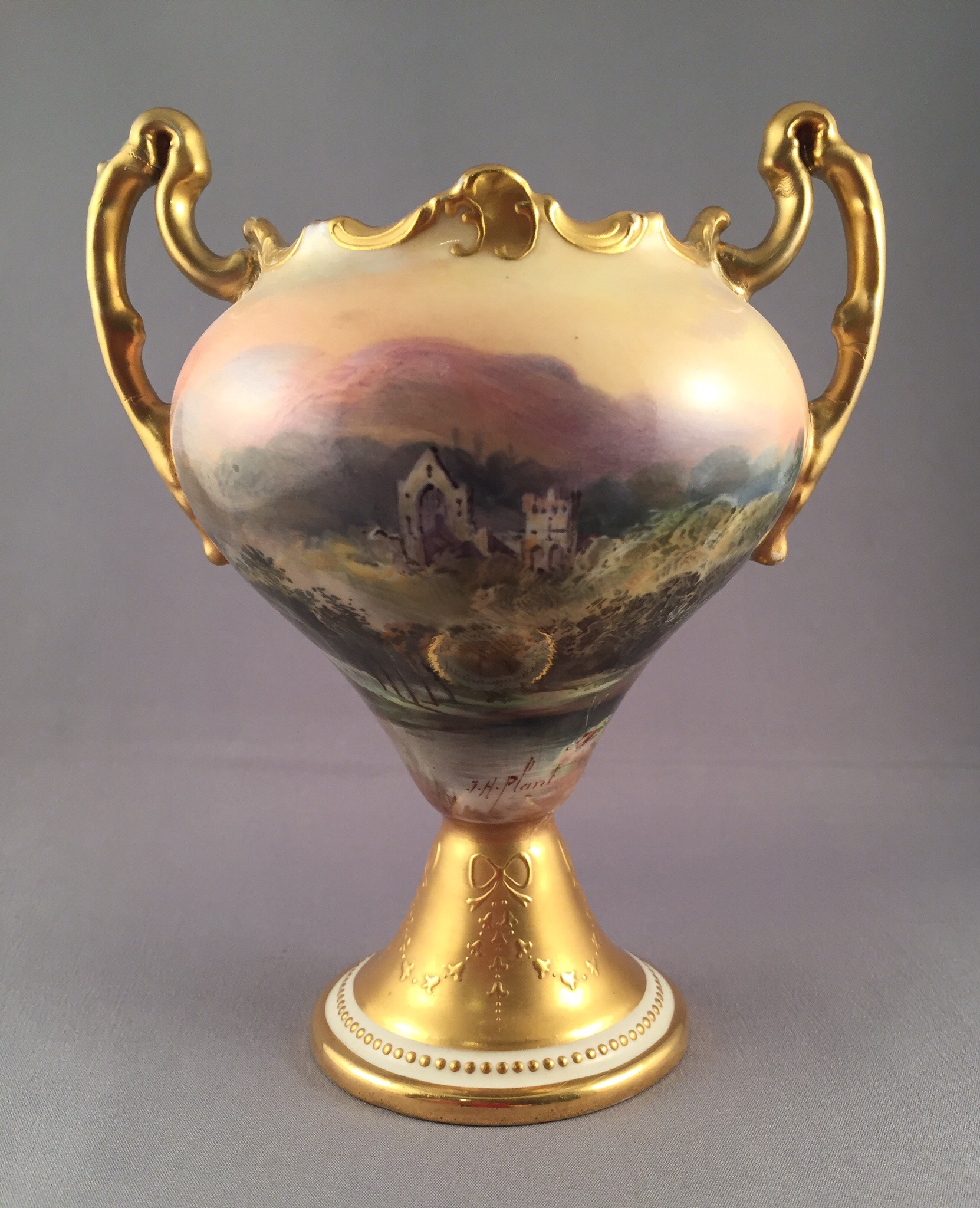
Handpainted vase with Dryburgh Abbey in the Borders by Plant. 
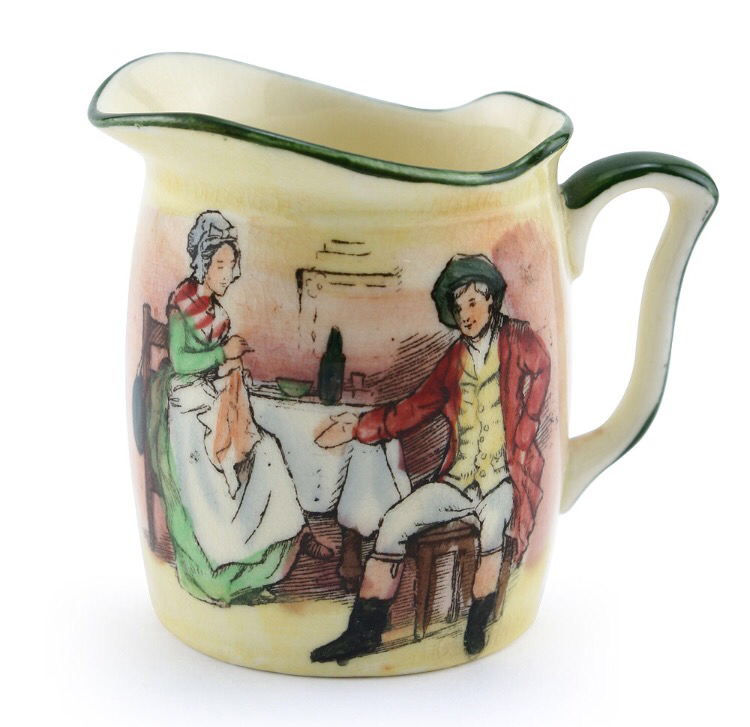
 Miniature Burns seriesware pattern B jug.

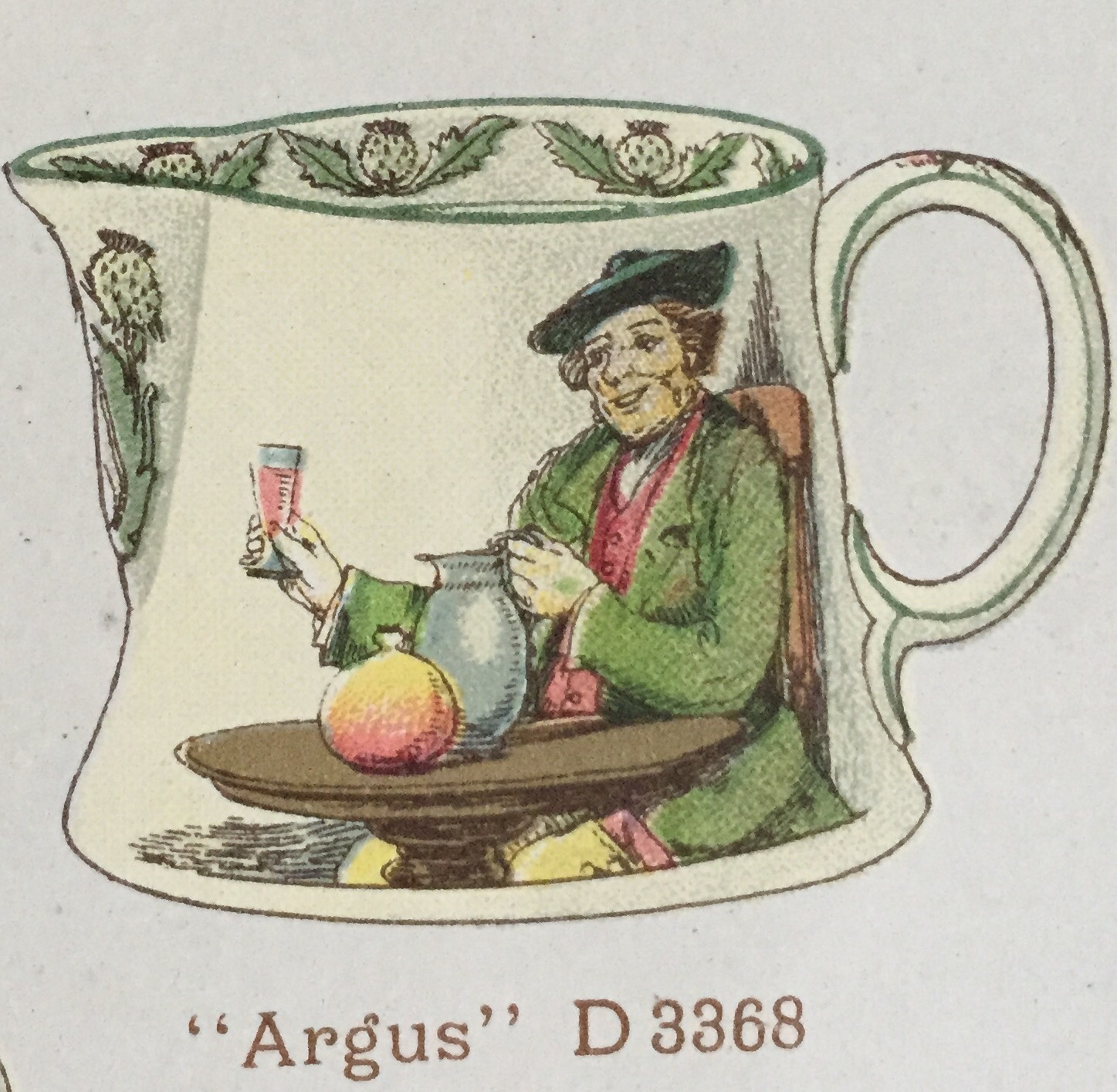
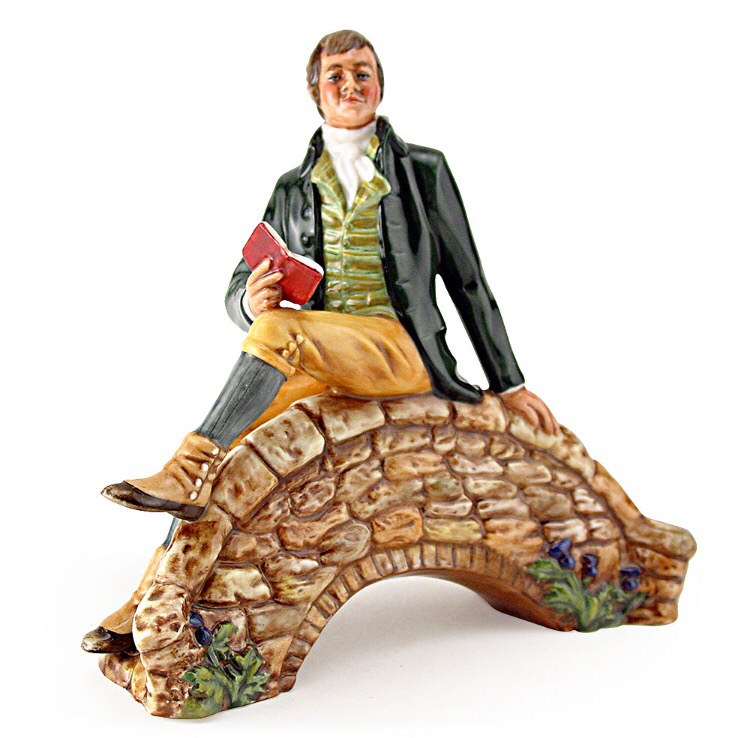
Burns can himself be found immortalised in the HN collection and also tributes to him are plentiful in the series ware range with three different patterns.


Robert Burns HN 3641.

From boys to men – collecting Royal Doulton’s male figures! 

Whenever people mention Doulton figures, damsels in large crinolines are what most non-collectors think of. Of course collectors know this not to be the case, but a simple look through the collectors’ bible ‘Royal Doulton Figures’ illustrates exactly how many male characters were produced over the years!
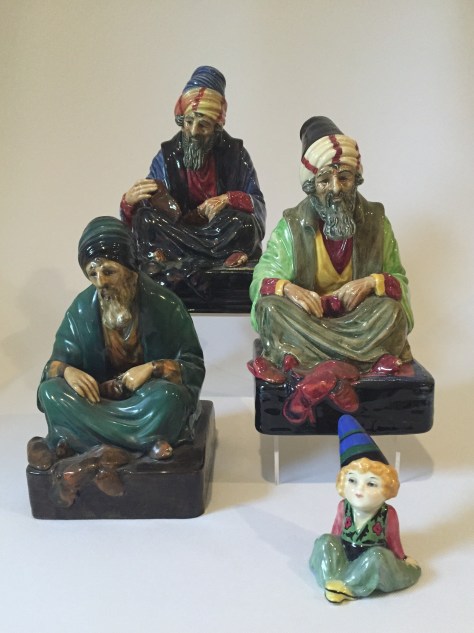
  
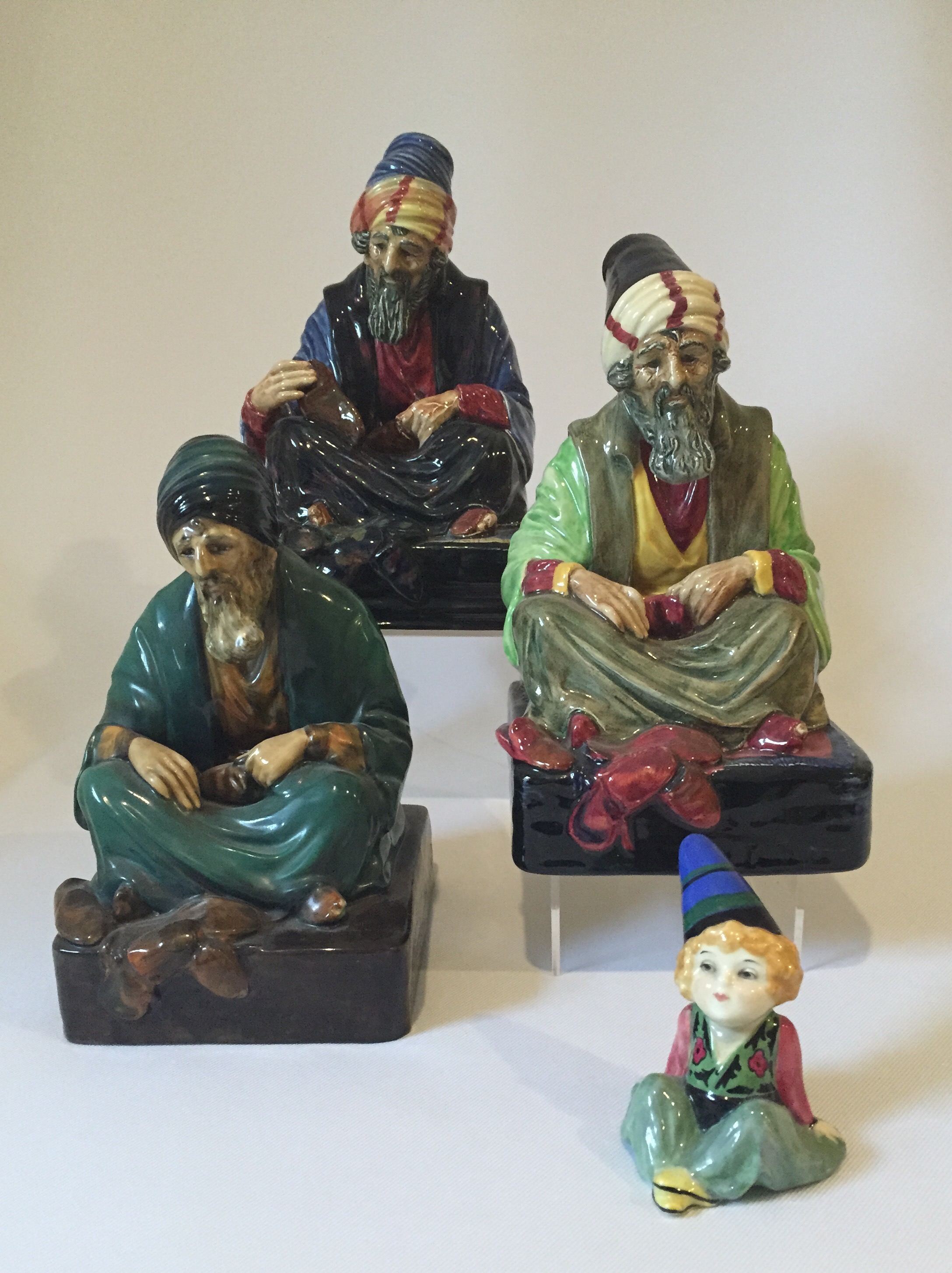
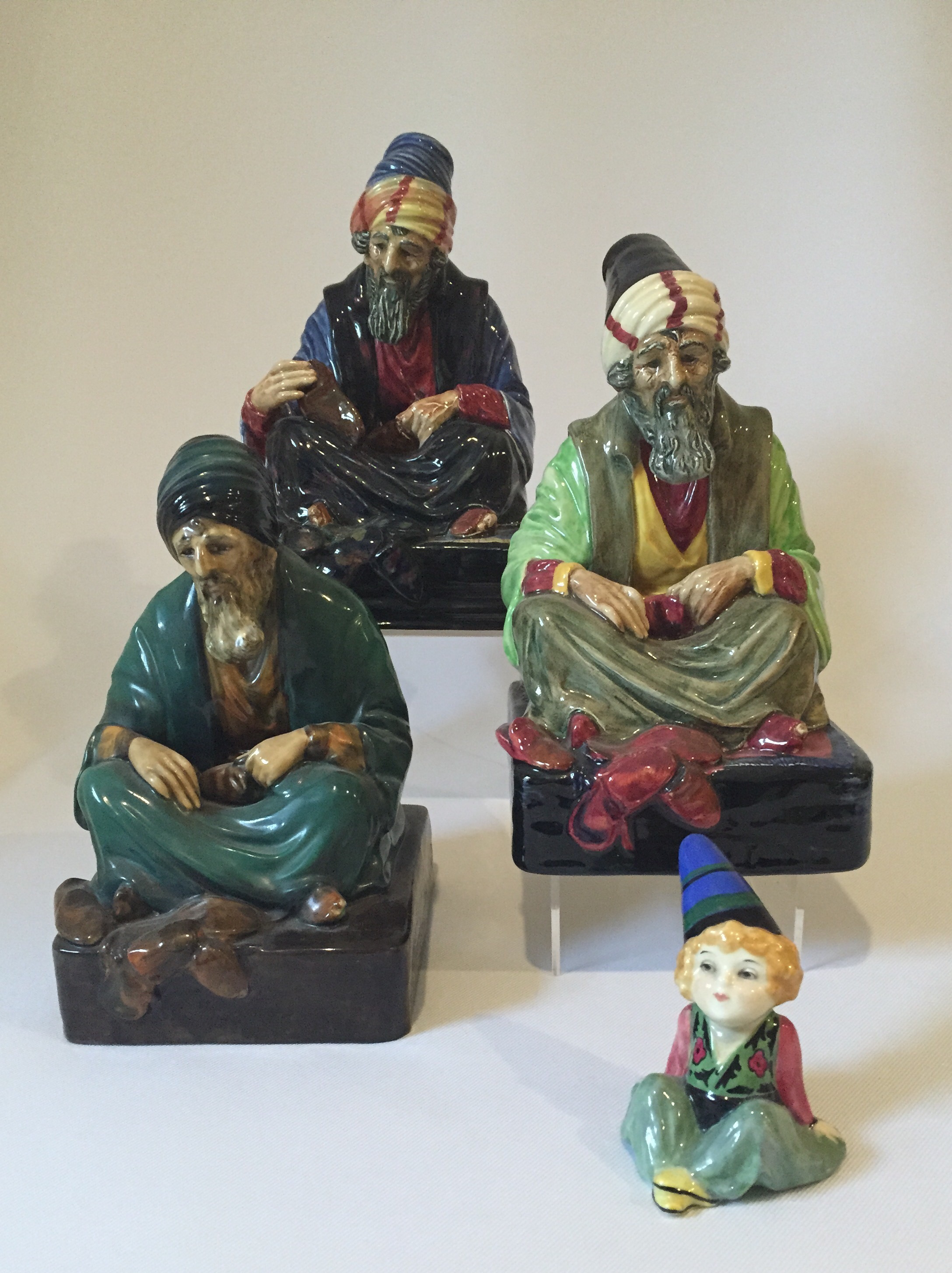
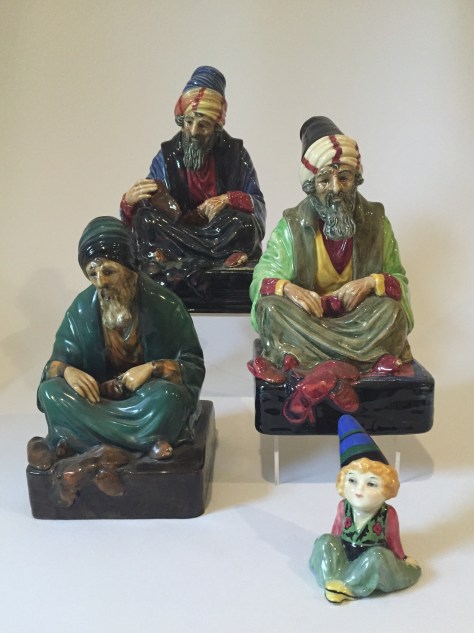
Three versions of Noke’s The Cobbler from the musical Chu-Chin-Chow which ran for a once record number of 2000 performances after opening in 1916, together with Cassim.

When the HN collection was launched in 1913 Charles Noke, Art Director, incorporated a handful of his own earlier Vellum figure studies including jesters and eastern musicians into his new collection. In addition to his own designs, he drew on other sculptors to build up interest and prestige for Doulton’s new venture. 

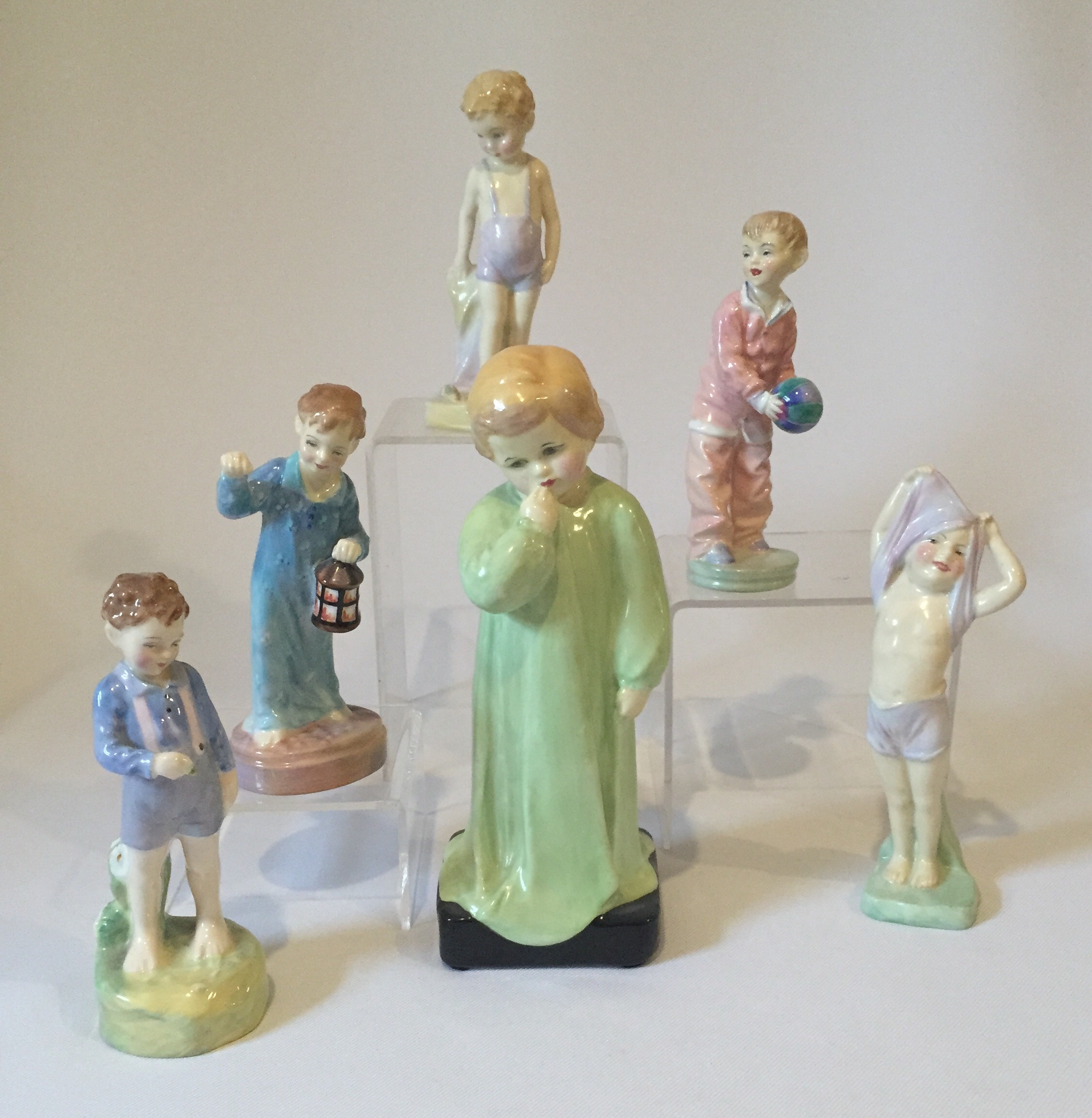
Where else do we need to begin than with HN 1 Darling by the renowned potter Charles Vyse, which started a popular theme of child figures into the range that has continued right up to today!
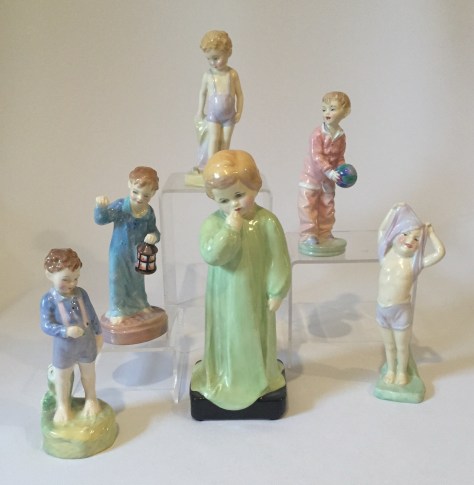
  
Darling (HN 1371 after the original HN 1) surrounded by later 1930’s and 1940’s boy figures. 

We have already mentioned eastern characters and there were a slew of them introduced into the early HN collection, reflecting popular interest at the time and also a love of the theatre – another major theme in the HN collection. 

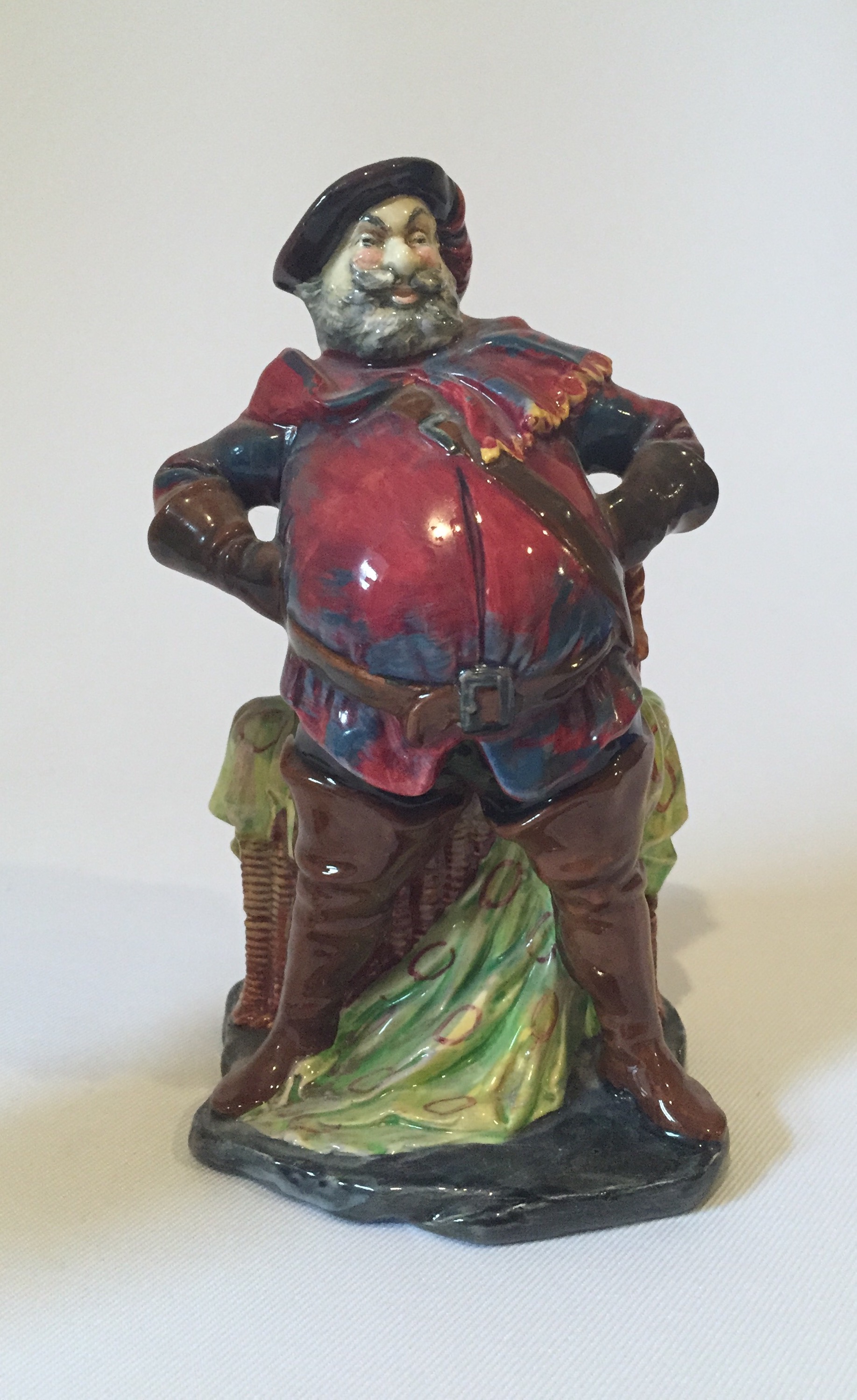
Characters from literature can also be found including Shakespeare’s Falstaff and Cassim from 1001 Arabian Nights, which also influenced other introductions such as Baba and Abdullah. 
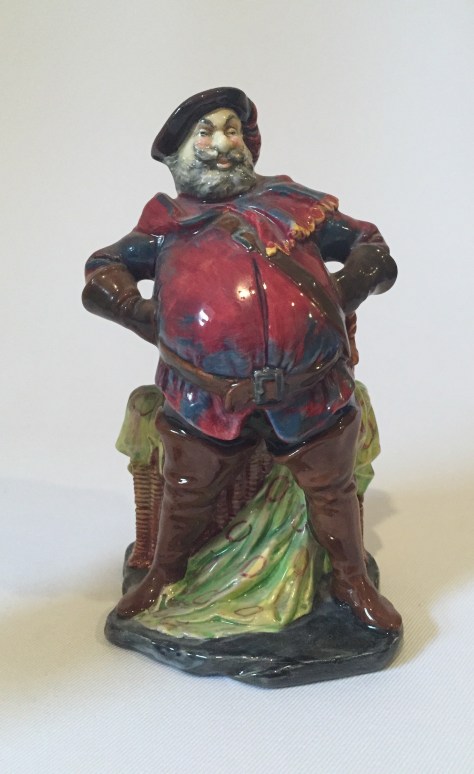
 

Falstaff HN 1606 (1st version). 
Doulton’s famous street sellers also feature many male characters from the familiar Balloon Man HN 1954 to the more modern Punch and Judy Man HN 2765.

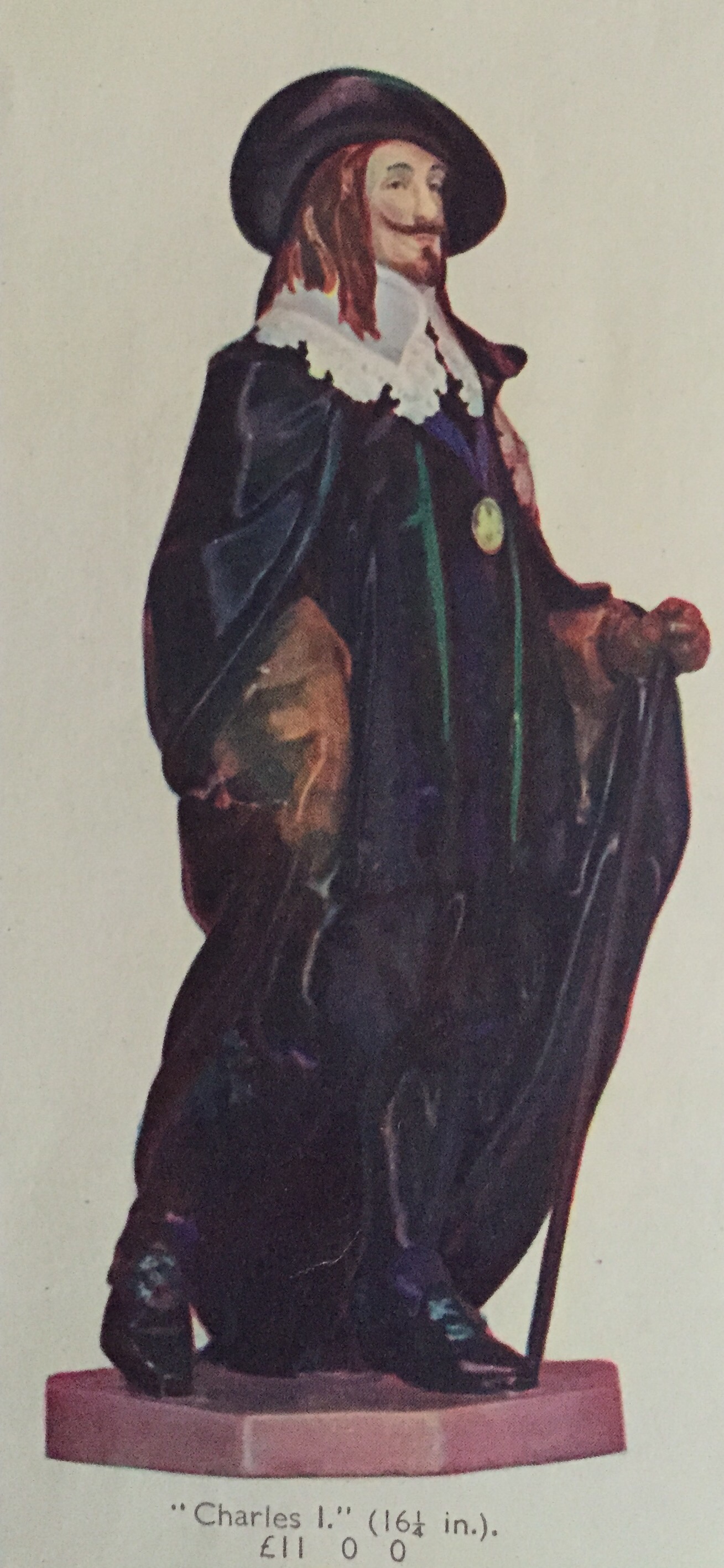
Royal Doulton’s “Prestige” range contained many male subjects from Jack Point to King Charles, all of which were re-introductions with simplified decoration from the early HN Collection. 
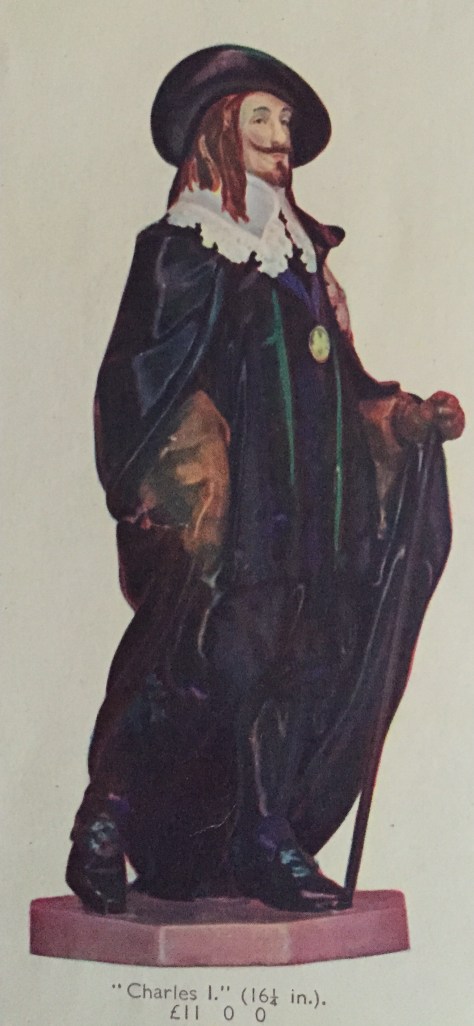
  
Illustration from an early catalogue showing his original price too!

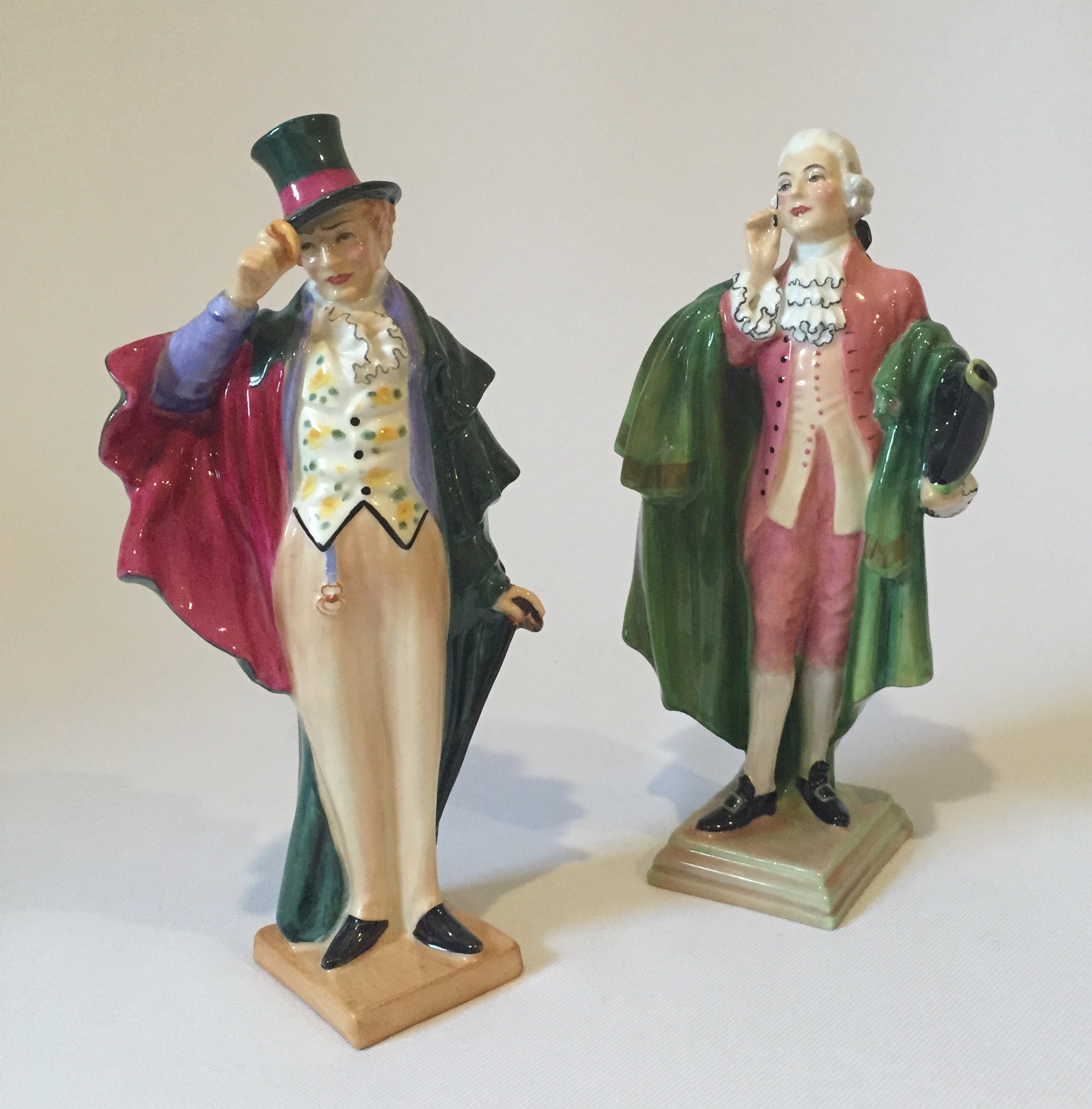
Men also feature in many of the early double figures such as The Rustic Swain, Tête-à-tête and The Court Shoemaker. Just as WWII was beginning a new handful of male figures emerged including the rare duo of The Corinthian and Regency Beau, which although attributed to Harry Fenton, it has been suggested that they may have been the idea of the great Leslie Harradine. 
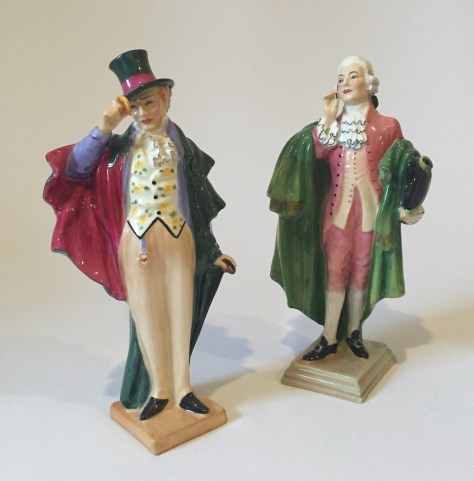
  
The rare duo The Corinthian and Regency Beau. 

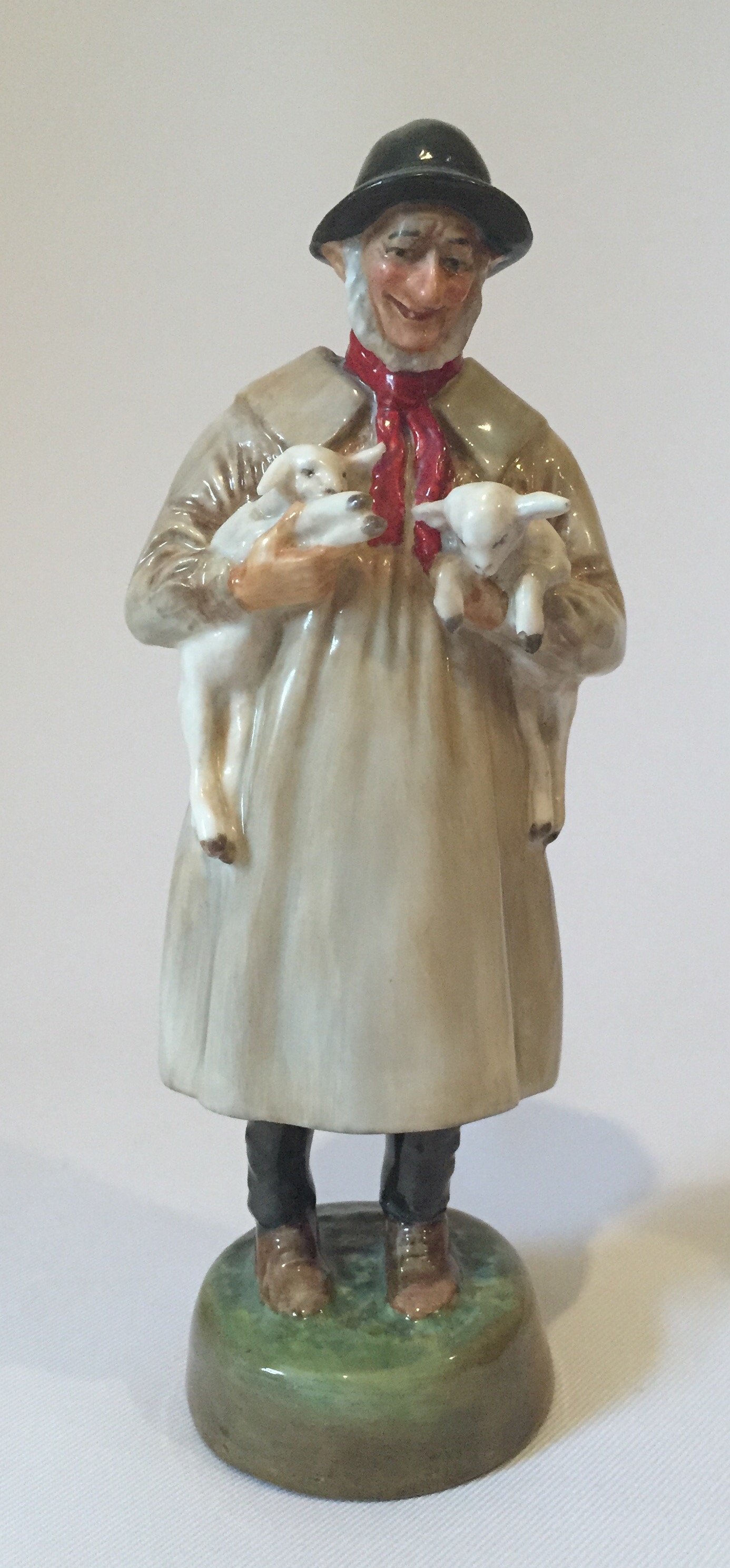
Male figures can be found across the HN range and also in the later M series when the many miniature Dickens figures were added to it too. Plus, just as with Doulton’s ladies, colourways and variations do crop up including this bone china version of Lambing Time dated 1938 and painted by Harry Allen’s expert hand. 
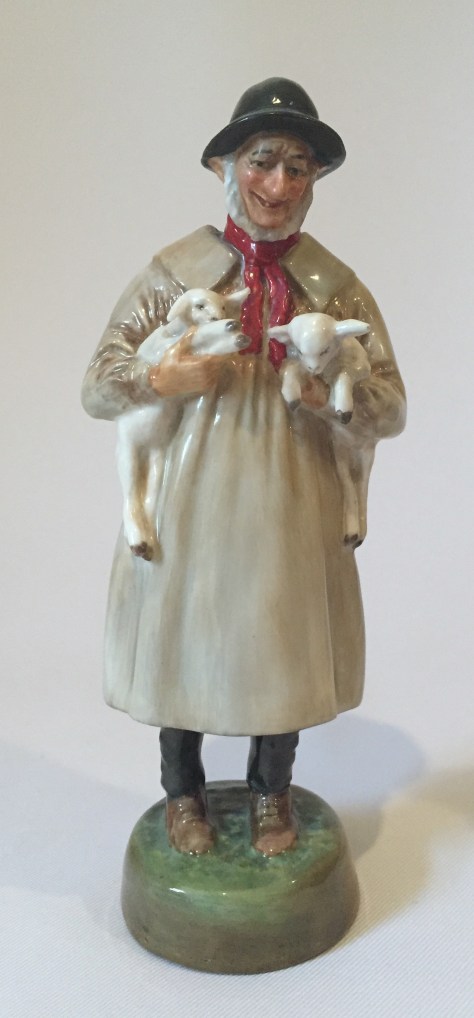
  
A bone china colourway of Lambing Time dated 1938.

 Once again whatever your particular interest there is sure to be something by Royal Doulton to satisfy your collecting habit! 
 

Collecting Doulton’s nursery rhyme series ware pattern ‘G’!

Nurseryware was and remains something of a speciality for Doulton with the enduring popularity of their Bunnykins range, which babies around the world receive in early childhood in the form of bowls and cups, together with a host of other items and of course the famous Bunnykins figures.

  
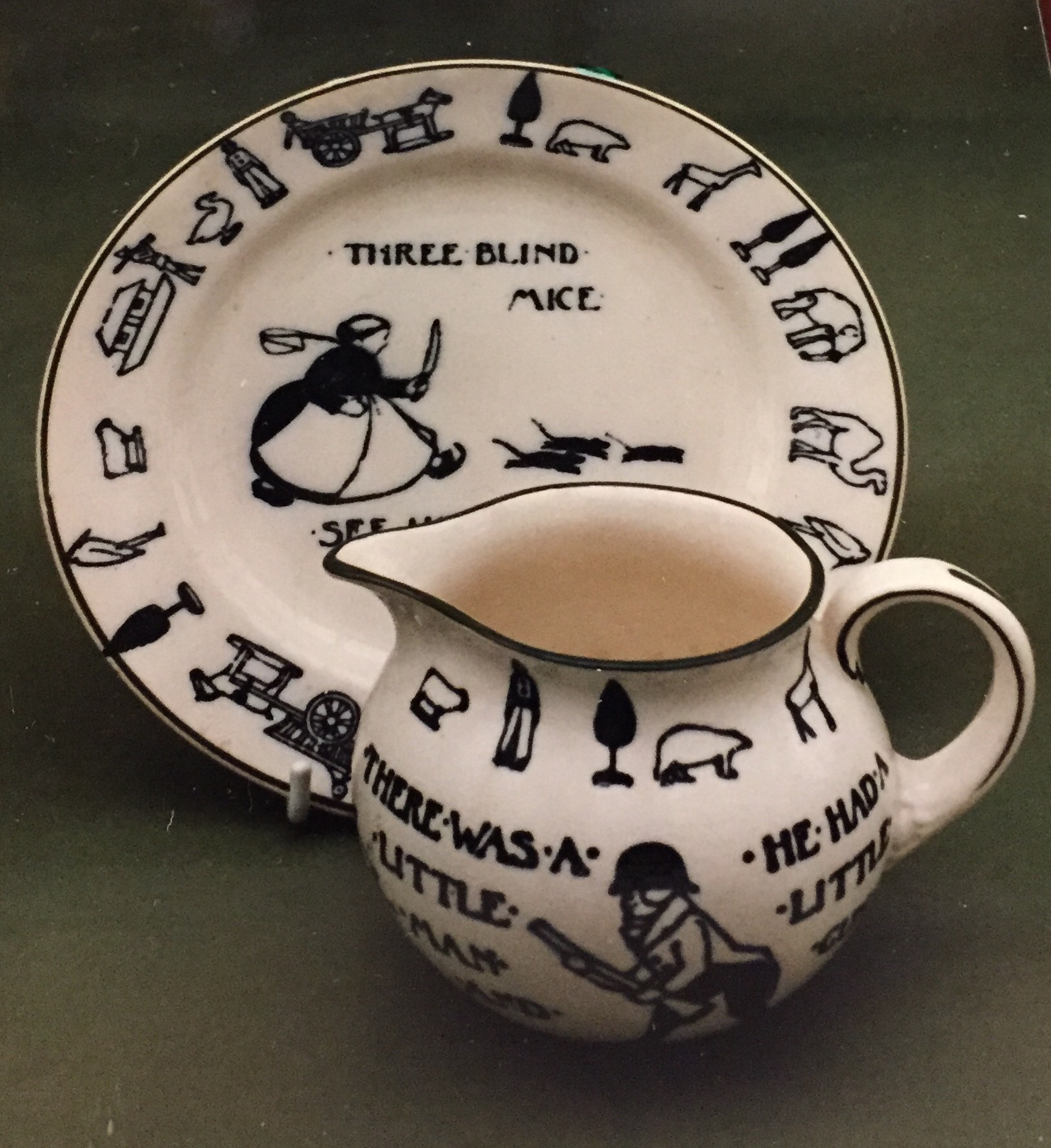
Back in the early 20th century many different nursery ware scenes were produced including this charming silhouette design. Introduced in 1907 and withdrawn by the mid-1930’s examples of this series are hard to find today, no doubt due to the fact that they were used for raising baby back in the day. Two D numbers can be found relating to this pattern D2833 & D4016.

This pattern features a central scene relating to a saying on the piece ; taken from famous rhymes such as Three Blind Mice and Rock-a-bye baby that are still taught to young children. In all there are only four designs which include the two titles above and Little Miss Muffet and There was a Little Man… 

Items typically found with this pattern include baby bowls, cereal bowls, mugs, jugs and small plates.

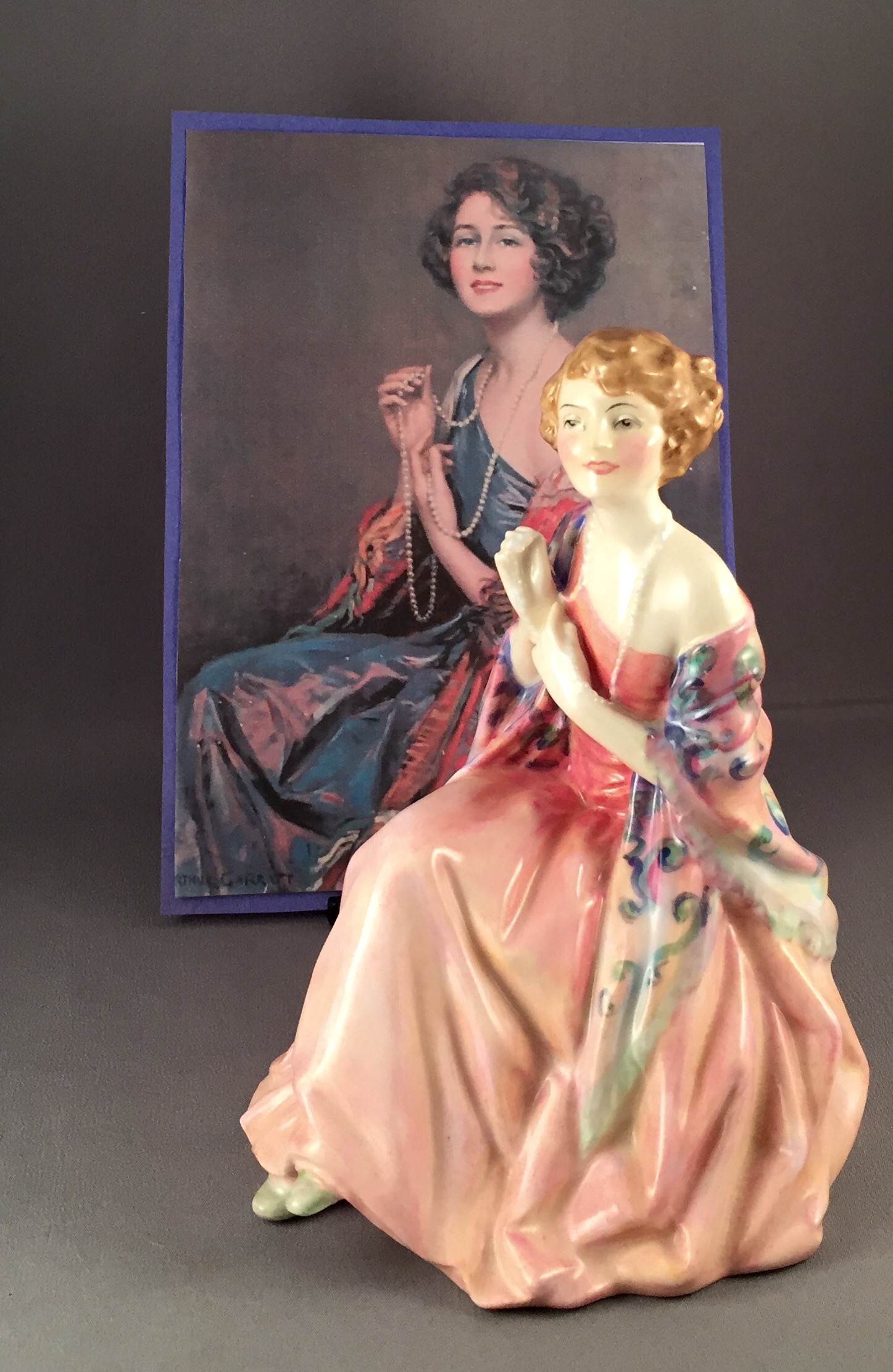
The influence behind Royal Doulton’s Classic 1930’s figurines Rosabell and Aileen.

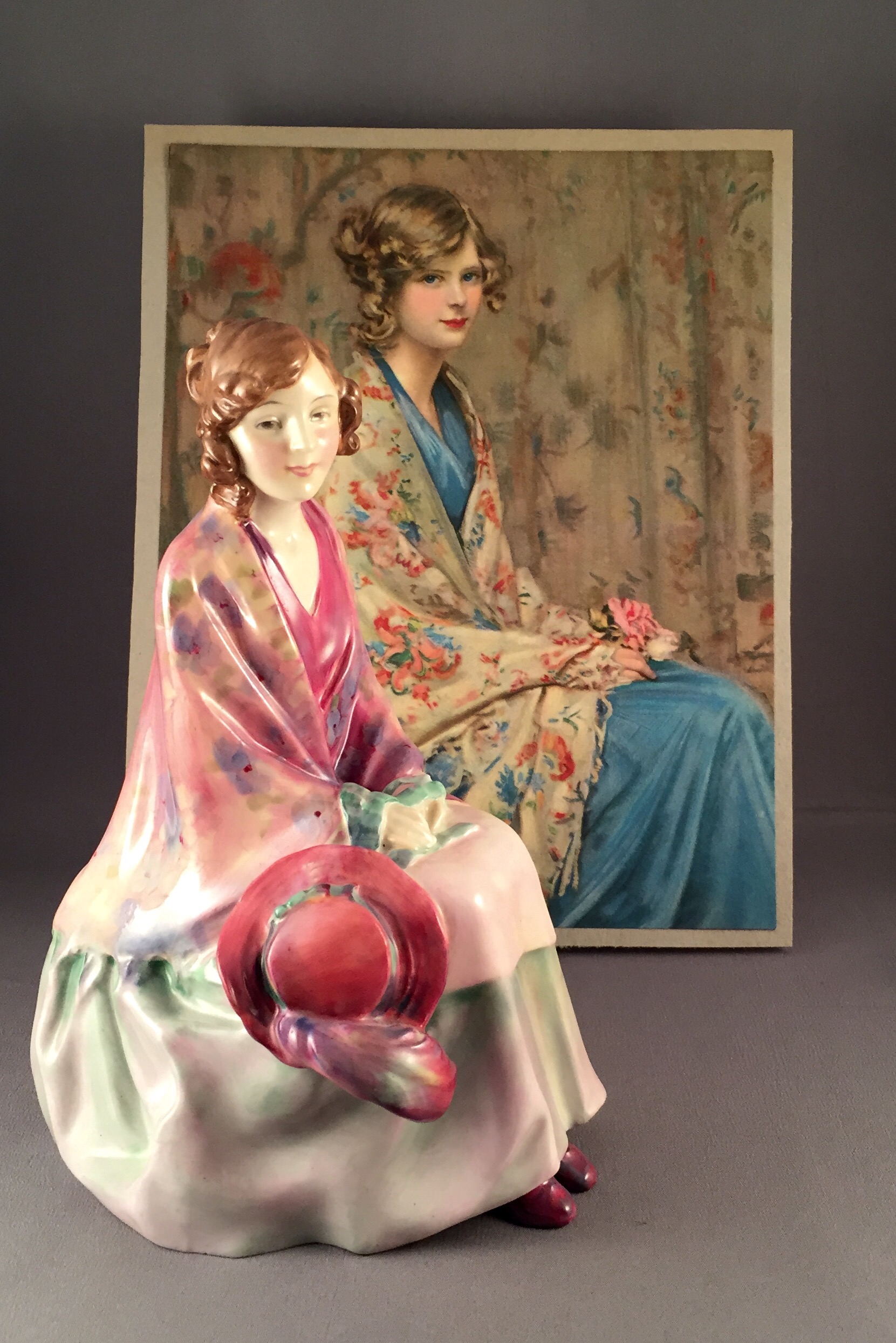
Arthur Garratt (1873 – 1955)With works in National Collections in UK, you might expect to find more pictures of his here, however, to date there are just two. The first is Aileen HN1645 (1934 LH) and the Garratt picture ‘A sweet heart of mine’. 

  
The second is Rosabel HN1620 (1934 LH) and ‘Alice Blue Gown’, the title coming from two separate sources ; firstly the popular music hall song of the same name; and the second Alice Roosevelt Longworth, daughter of the former American President. This second link here is not only in the title, the dress in the picture being Longworth’s signature colour but the picture also bears a strong resemblance to Longworth. Her exploits earned her the title ‘Alice in Plunderland’ during a trip to Asia and interestingly she would also wear a costly string of pearls a gift from the Cuban government for the rest of her life. 

  
Many of Garratts’ pictures feature a young lady sporting a shawl; an image which Doulton too seem to have favoured during the early Twentieth Century.

The best Doulton present of all….

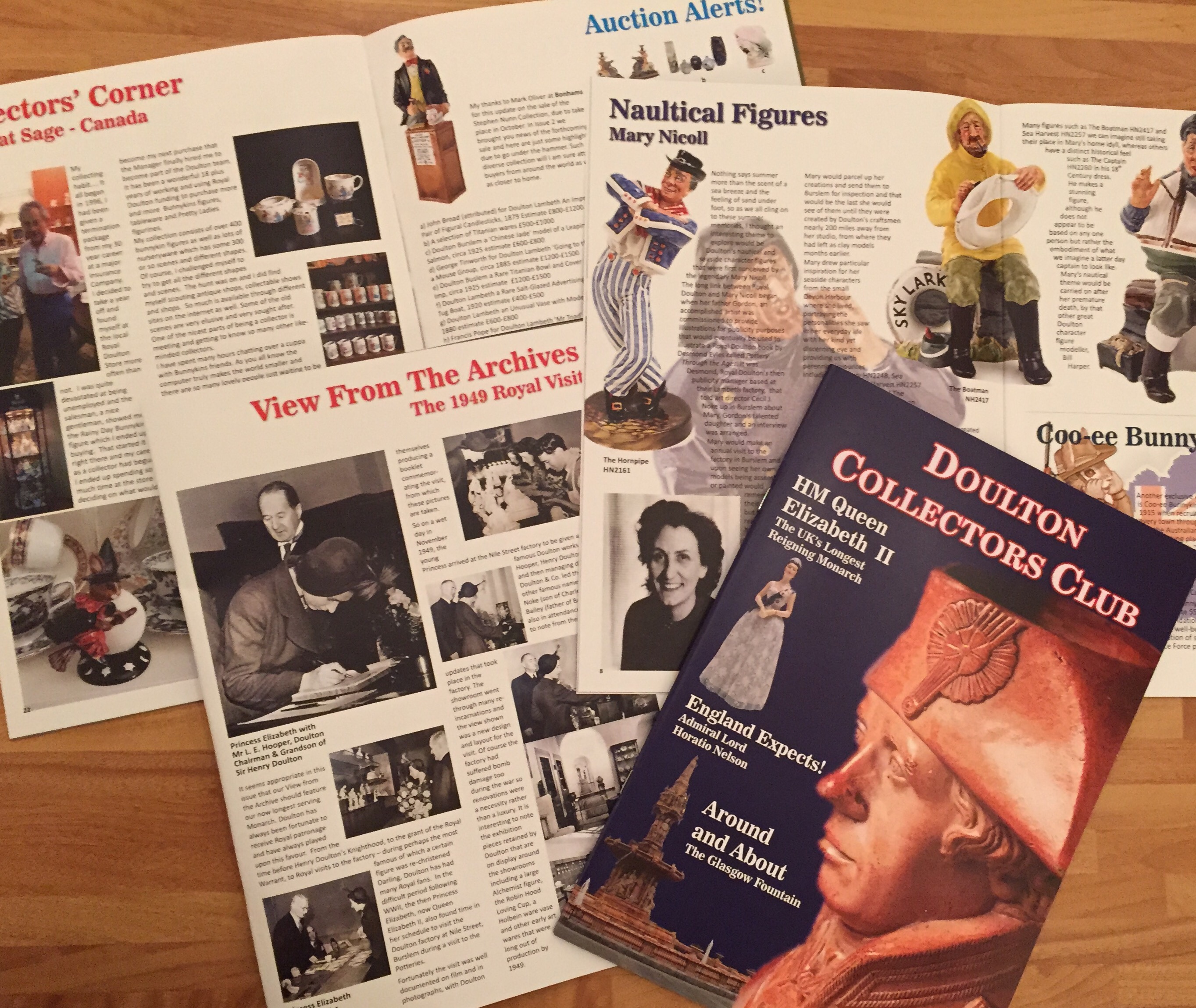
Starting to think ahead, here’s the perfect gift for Doulton lovers – a subscription to our magazine! If you haven’t yet subscribed to the Doulton Collectors Club magazine, here’s a glimpse inside Issue 3. 

  
Issue 4 is about to go out around the world, so watch this space for a glimpse of the cover and to see what is in the next issue! 

To subscribe simply visit: http://www.paulwebsterantiques.co.uk

and register there by clicking on the Club tab. Alternatively you may subscribe via Seaway China!

Collecting Doulton Brangwyn ware. 

Brangwyn ware 1930-40Both Nokes, Charles and then Cecil, were men ahead of their time, constantly on the search for something new and thus Doulton approached Frank Brangwyn R. A. to design a range of tableware and other designs for them. 

  
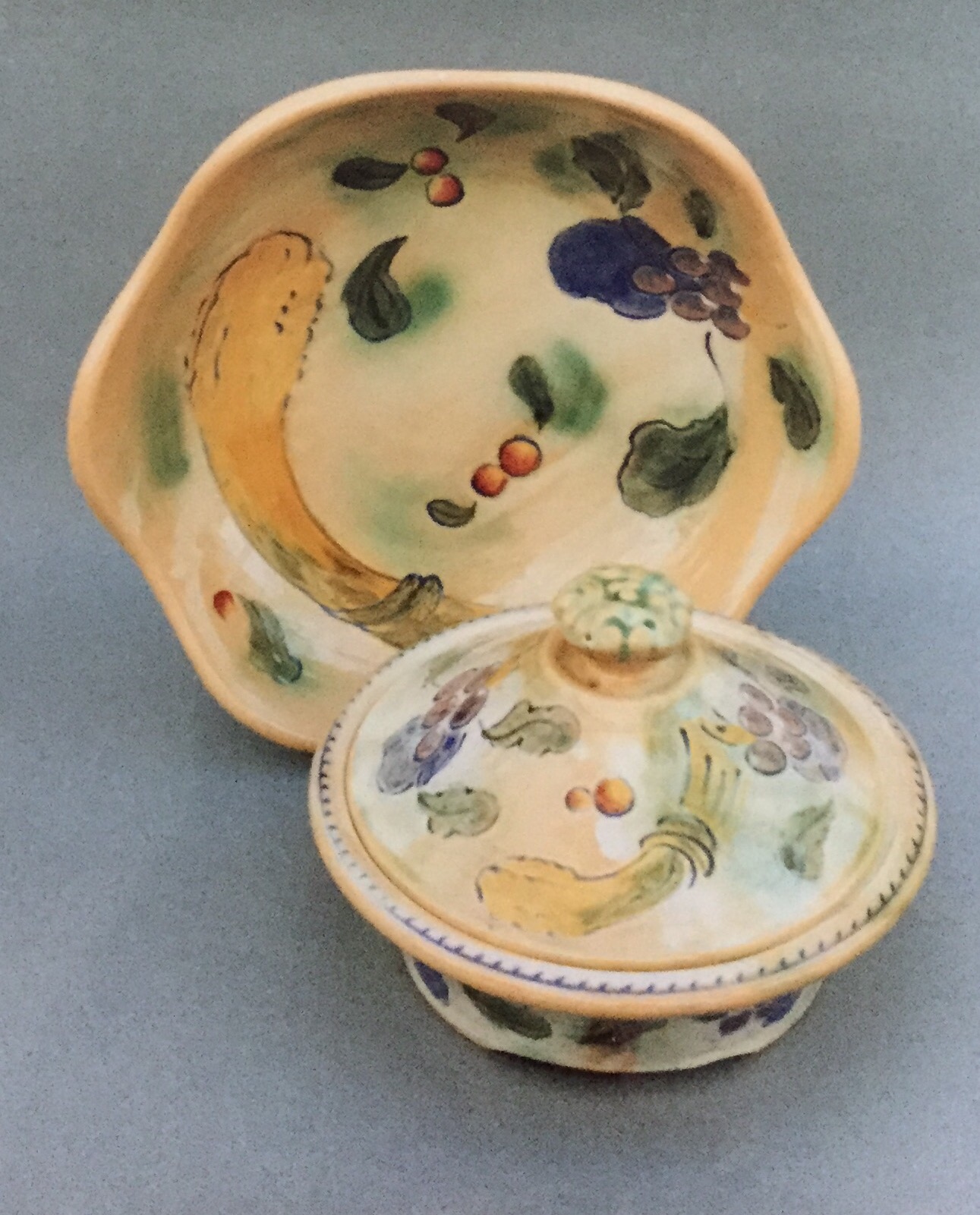
Fruit bowl and soap dish with Brangwyn designs.

Originally intended to offer to the masses quality china at a reasonable price, the designs proved unpopular at the time among the buying public and as always the rarity of this ware has meant that it has become very collectable since then. Interestingly critics of the time hailed Doulton’s new ware as the pinnacle of ceramic ‘mass’ production. 

  
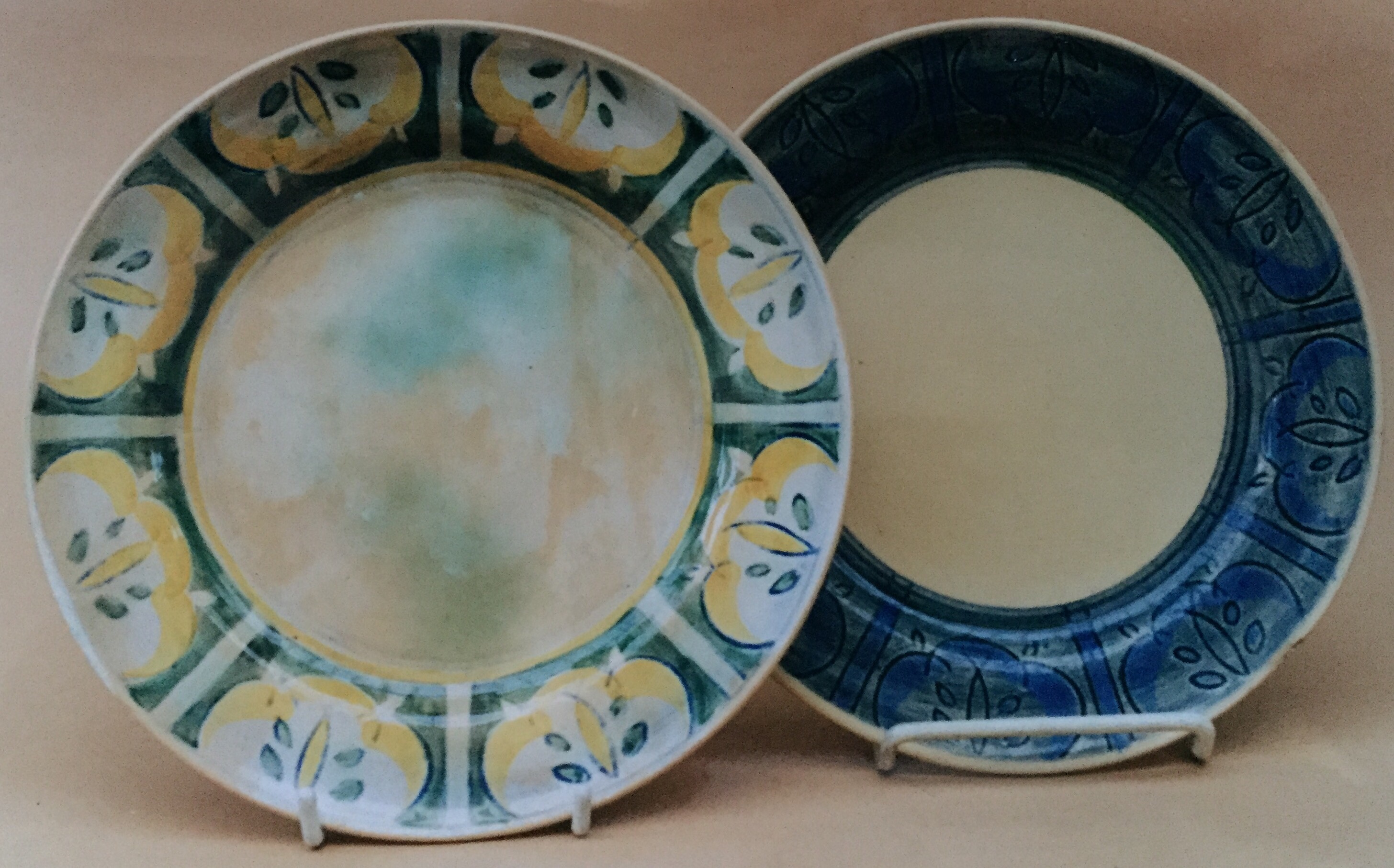
Two colourings of dinner plates available l is D5033 and r is D5221.

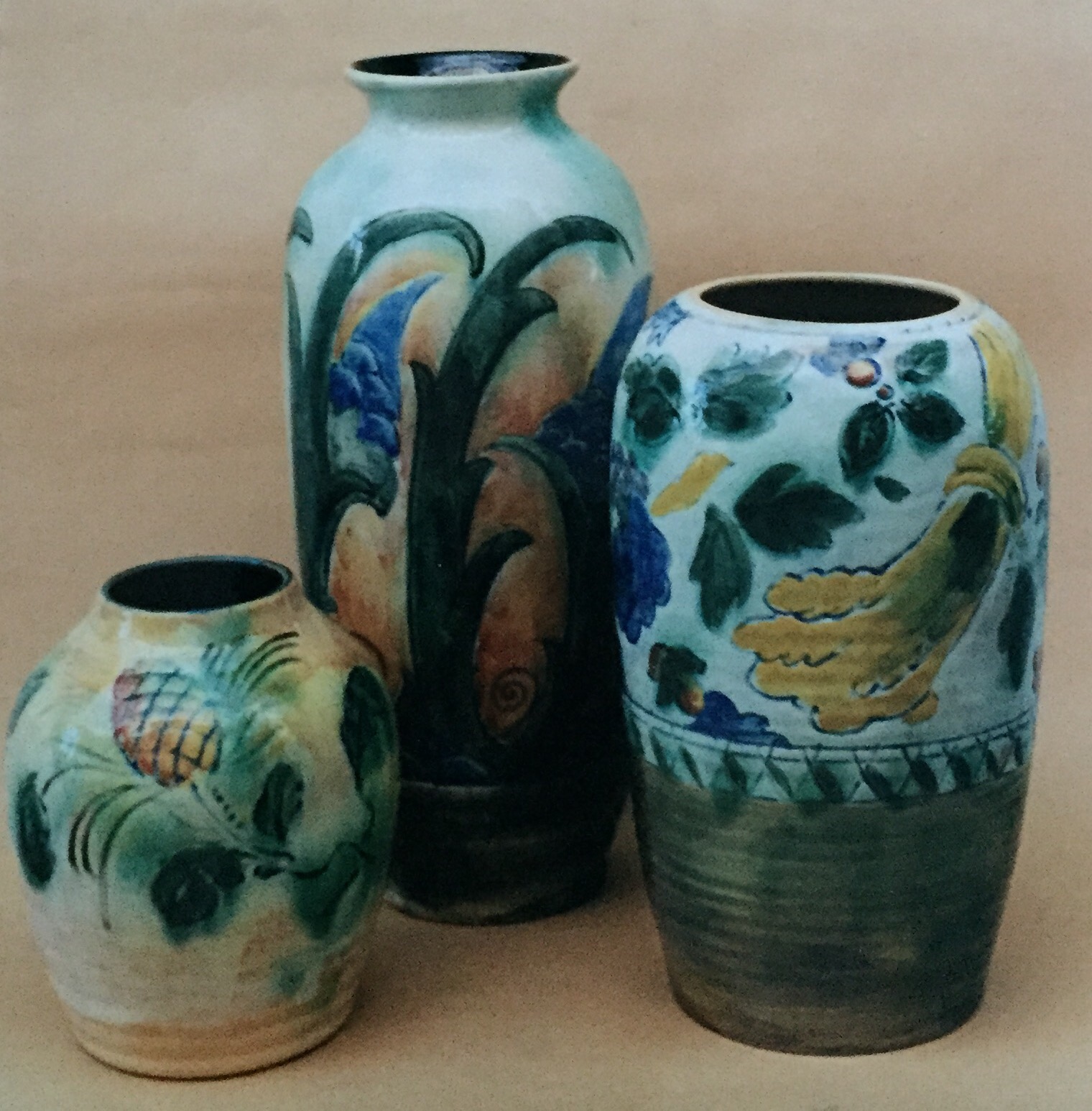
In addition to tableware designs, Brangwyn’s designs can also be found on various vases which are equally popular today. This ware carries one of two backstamps, the first ‘Designed by Frank Brangwyn’ and also ‘Brangwynware’ a Doulton pastiche. 

  
Three classic Brangwynware vases. Tallest is 12″.

In addition, once again Doulton’s in-house designers produced similar designs to the official Brangwyn designs and these carry a D number.

Collecting Royal Doulton’s Kate Greenaway child figures. 

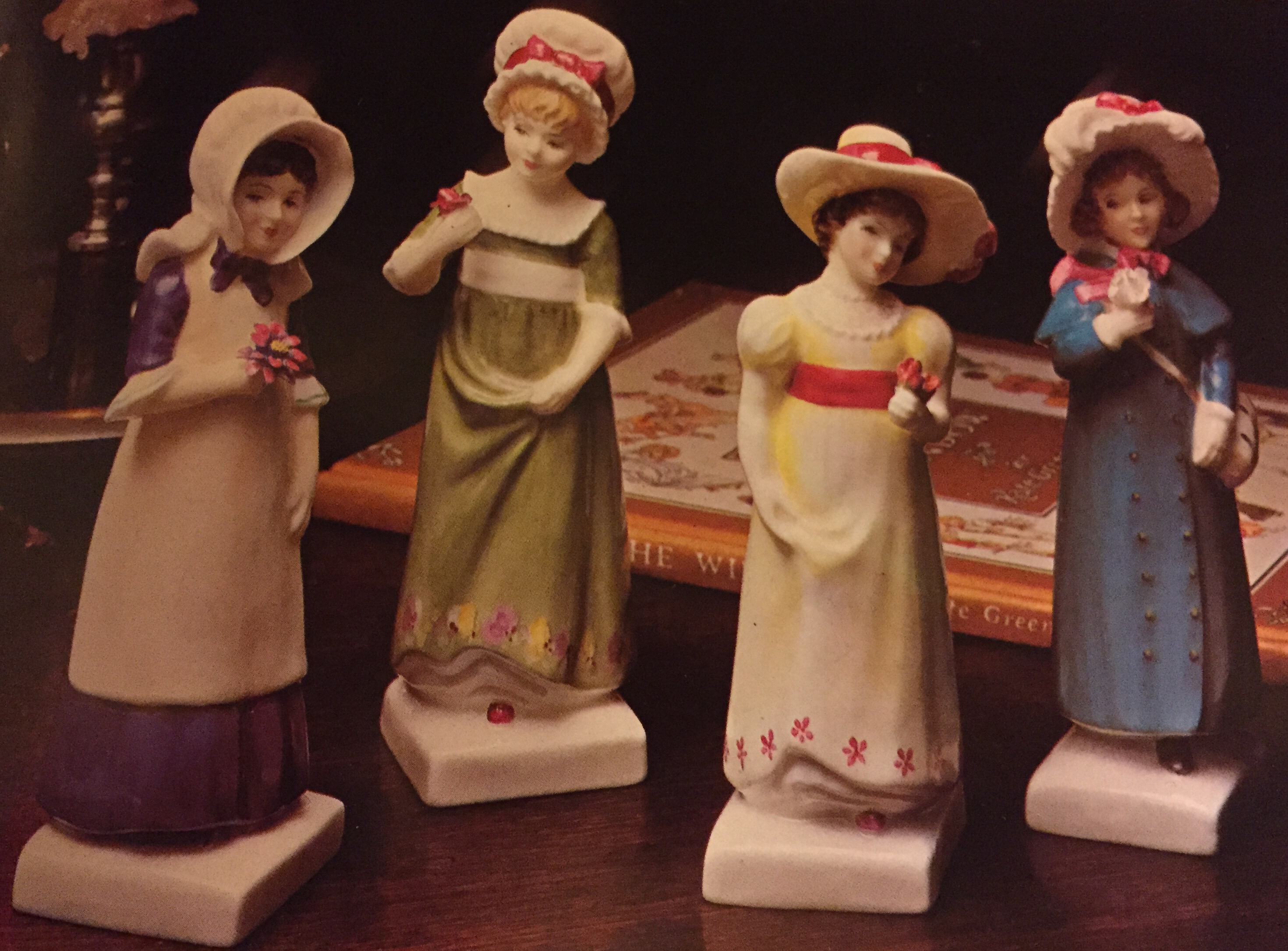
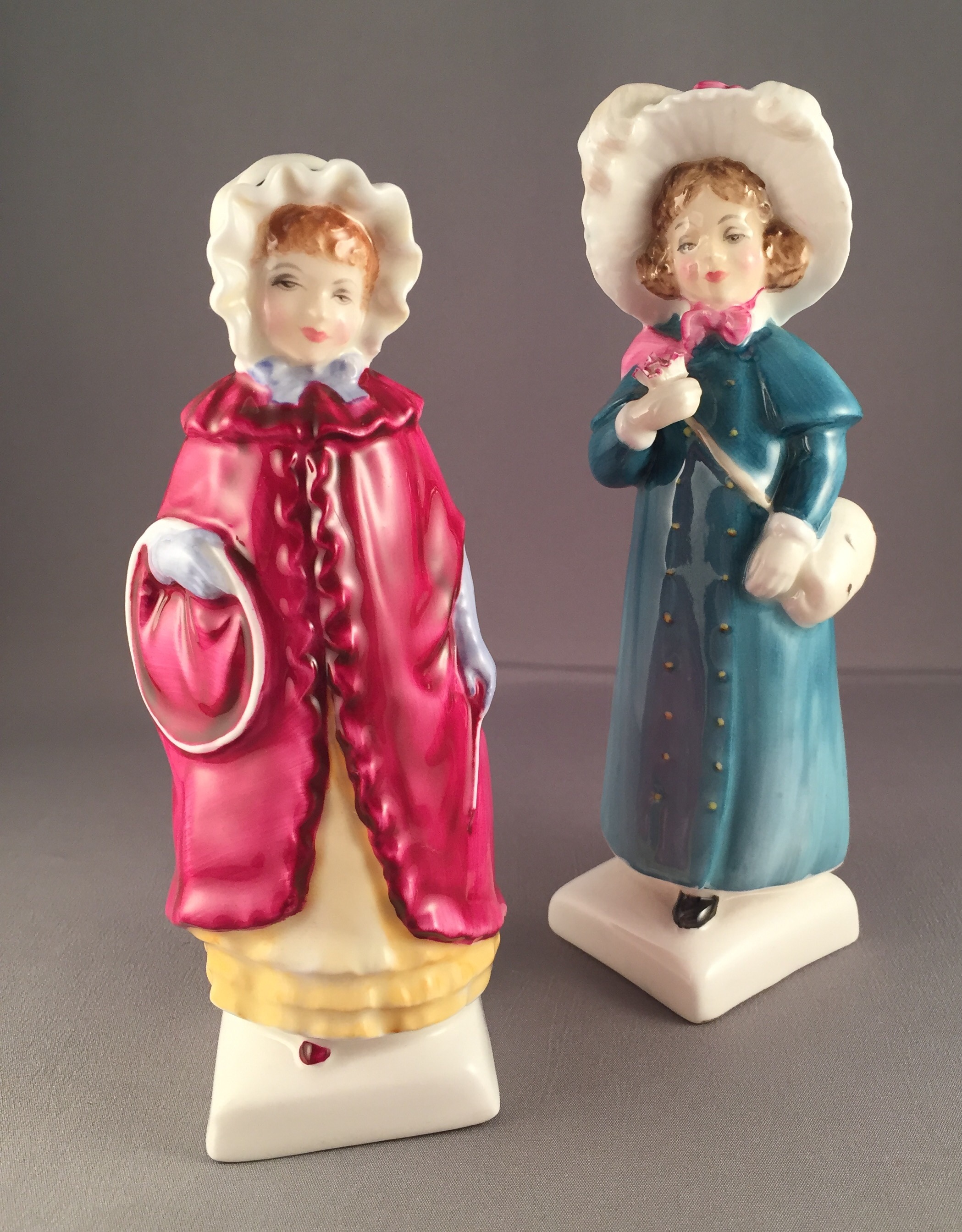
Even today we are all aware of the work of Kate Greenaway be it as a book illustrator or artist. First introduced in 1976 with the figures Ruth, Carrie, Lori and Anna, and all skilfully  modelled by the great Peggy Davies, the children in Royal Doulton’s Kate Greenaway Collection are based upon illustrations by Kate that she in turn based upon her own Victorian childhood and upbringing. 

  
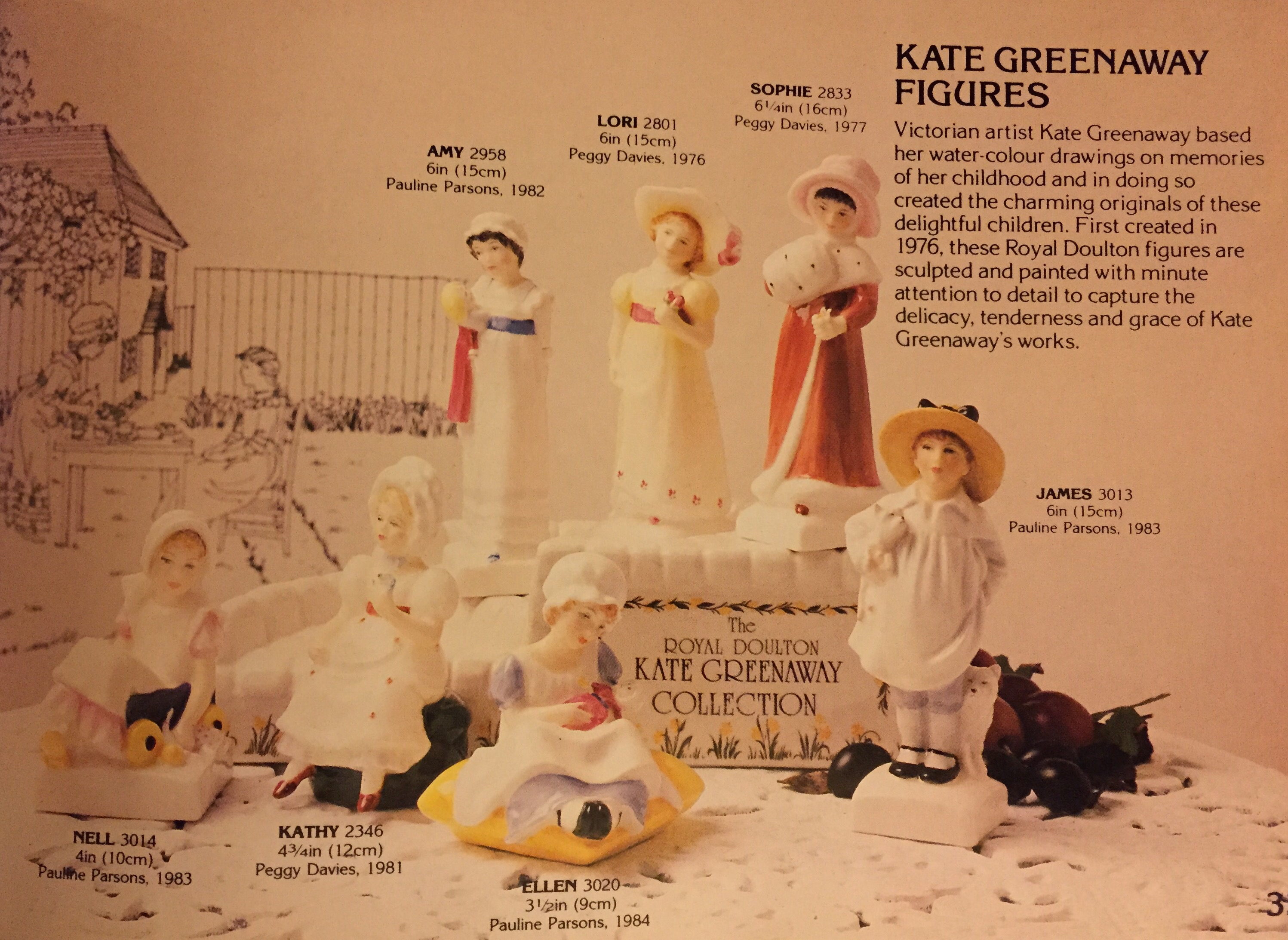
Illustration from Doulton’s 1979 catalogue.

Born in 1846, Kate first came to the public’s attention with her illustrations for Christmas cards. Then following a series of successful water colour exhibitions, she wrote and illustrated her Under the Window children’s book.

  
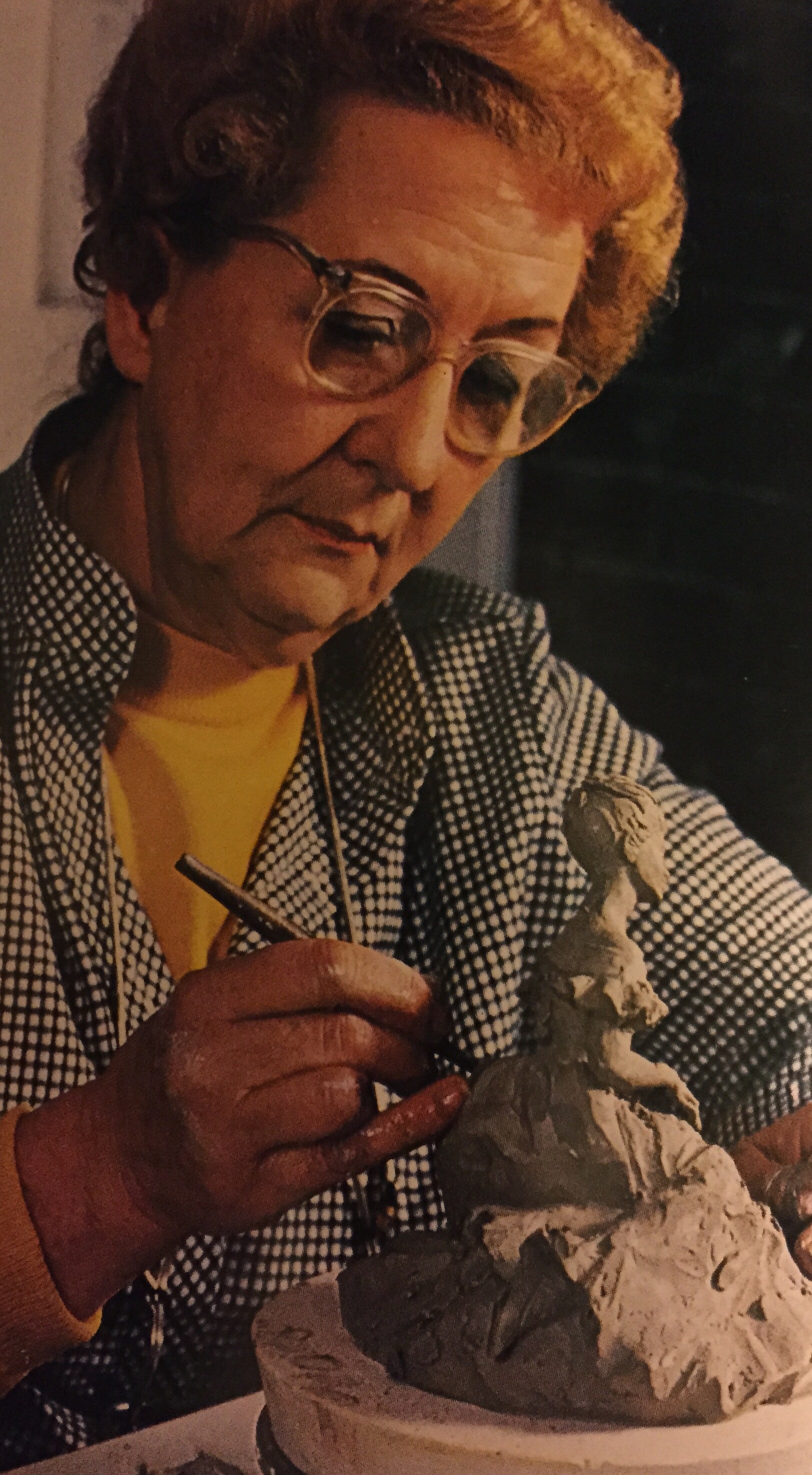
The legendary Peggy Davies at work.

The 18 children created by Doulton express the popularity she gave to bonnets, mop caps and high waisted children’s dresses with which she illustrated such famous books as The Birthday Book and Little Ann. Moreover, it was said at the time that she “dressed the children of two continents.” Reflecting her worldwide appeal. 

  
Illustration from Doulton’s 1987 catalogue including the display stand. 

Whilst the first 13 figures were modelled by Peggy between 1976-81 with annual introductions between these dates, it would be Pauline Parsons who completed the set between 1982-4 with five more children. The series was finally withdrawn at the end of 1987, three years after the last introduction of a new figure in 1984 with Pauline’s Ellen HN 3020. 

  
Two classic Kate Greenaway figures Georgina HN 2377 and Carrie HN 2800. 

In producing these charming child studies Doulton sought to recreate in china the ‘delicacy, tenderness and grace of Kate’s work.’ This attention to detail explains their enduring popularity among collectors to this day and naturally those with shorter production runs including Tom, Ellen and James are the most keenly sought after and carry the usual price premiums. Also popular with collectors is the display stand seen in the above catalogue illustration. 

Doulton Artist Profile – Max Henk.

  
Henk joined Royal Doulton in 1949 working under the direction of Cecil Jack Noke at first working on tableware patterns. Henk was to continue to develop the Character Jug range after Harry Fenton and his first jug was Long John Silver, with which he appeared in a promotional film about pottery in the 1950’s, that was shot in a studio set up at the Lambeth factory. Henk’s ancestors were from Germany and his great, great Grandfather came to the UK to work at Mintons. Henk was fond of literary characters and his character jugs reflect this interest and in fact it was he who first made a feature of the character jug handle.

A rare image of Henk purportedly modelling Harradine’s figure Regency in the mid 1930s.

Collecting Royal Doulton’s Hiawatha seriesware design.

It is not surprising to find this series at the start of the 20th Century as at this time there were tours by Native Americans to Europe and there was much interest in them and their way of life. Doulton’s series was introduced in 1908 and withdrawn in 1949, and whilst it is a long production period examples of this pattern are hard to find today, with rack plates the most easily found. In 1938 the border designs were given additional colouring, thus revamping the series. 

  
The fictional character Hiawatha from Longfellow’s poem The Song of Hiawatha is the tale of a Native American hero, although originally he was to be called Manabozho. Longfellow’s character was a medicine man, defender of and beacon for his people.

The name is taken from Hiawatha (Born: 1525 – Died: 1595) who was an early pre-colonial Native American leader and depending on differing sources, was a leader of the Onondaga, or the Mohawk or perhaps even both. 

  
As well as rack plates, chargers, tankards, tobacco jars and dressing table sets have been found featuring the five recorded designs that make up the range, all with appropriate Longfellow quotations often referring to Haiwatha’s wisdom or else his famous belt. The borders are typically elaborate for early designs and feature wigwams.