Dickens Doultonised

doultonchristopher1's avatardoultoncollectorsclub

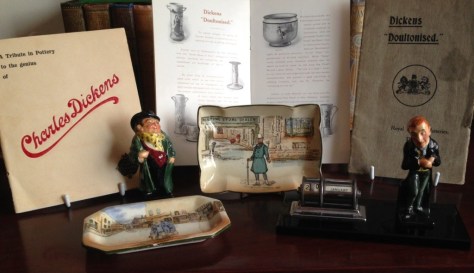
20140426-150659.jpgSome early Doulton advertising booklets for Dickensware ca. 1912 – the Centenary of Dickens’ birth, together with  2 seriesware trays a calendar with a Dickens figure and an early Tony Weller
When it comes to the works of Dickens, Charles Noke, Doulton’s art director at Burslem was blatantly a fan if not obsessed by all things Dickens.

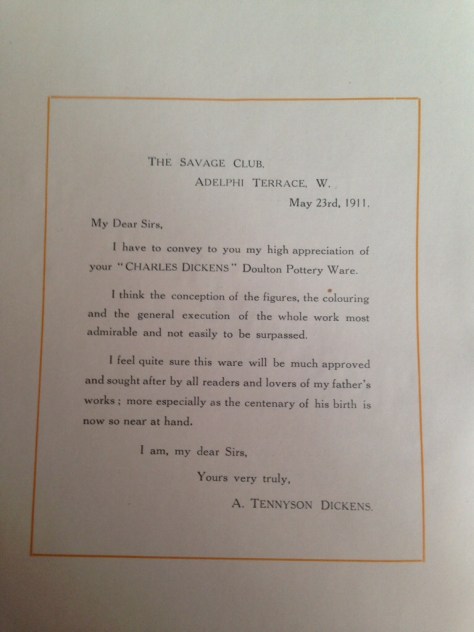
20140426-150742.jpgA facsimile of a letter from Dickens’ son to Doulton & Co. expressing his pleasure at their Dickens range
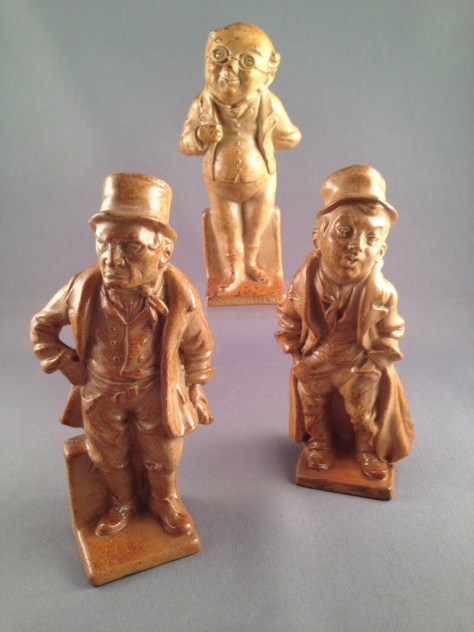
From the early 20th century and throughout his time as art director and even after, Doulton have produced a wide variety of wares to commemorate Dickens’ works.

20140426-150751.jpgThree of Leslie Harradine’s original models for the miniature Doulton Dickens figures
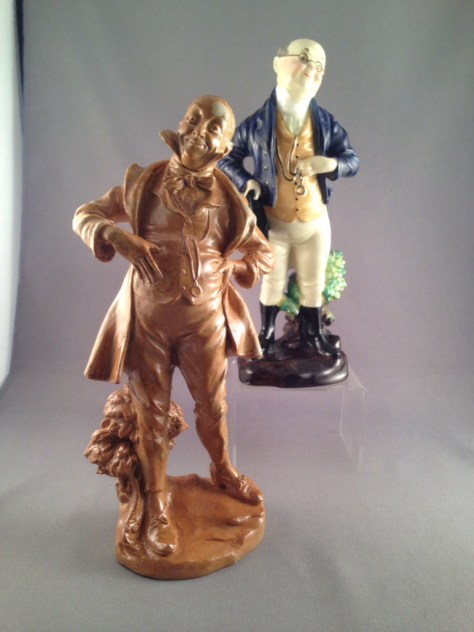
The lengthy of time these many wares were produced mean that there is something for every collector, old and new and something for every pocket size too!

20140426-150802.jpgAnother of Harradine’s Prototypes, this time the full…
View original post 119 more words

Collecting Doulton Lambeth’s famous sporting reliefs.

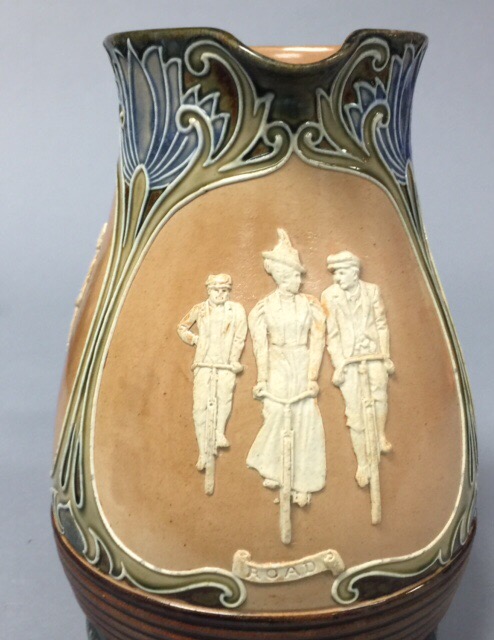
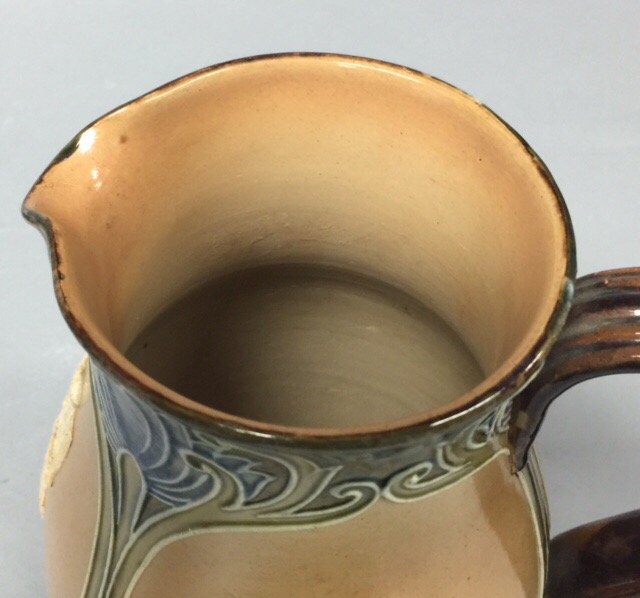
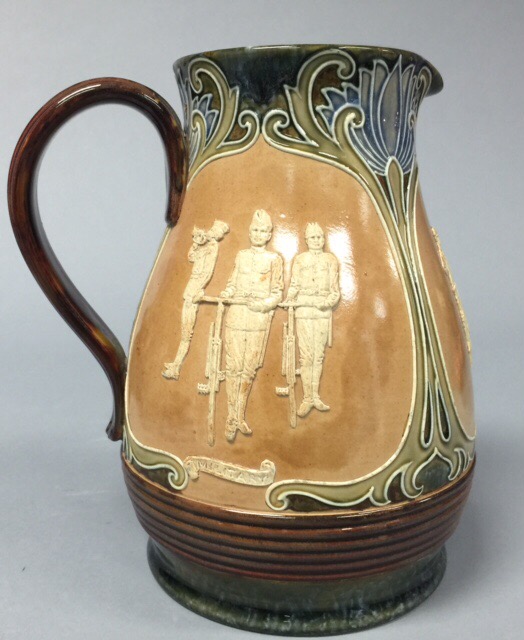
  Images of sports including cricket, cycling, shooting, running, football, long jump, rugby, soccer, horse racing and golf can be found decorating Lambethware. These items remain as popular today as they did during the time they were produced from the 1880’s to the outbreak of World War I. Typically decorated in the art nouveau taste in addition to the sporting motifs, these unusual pieces of Lambethware remain as stylish today as they did when first introduced! 
  Originally designed by John Broad, sporting relief items can be found with silver mounts, befitting their status as trophies and commemoratives and enabling personalised inscriptions to be given to the silver mounts. 


The most popular remain the golfing, cycling and cricket subjects and items of Doultonware featuring these sporting themes regularly crop up at specialist sporting auctions and consistently command among the highest prices in such sales. 

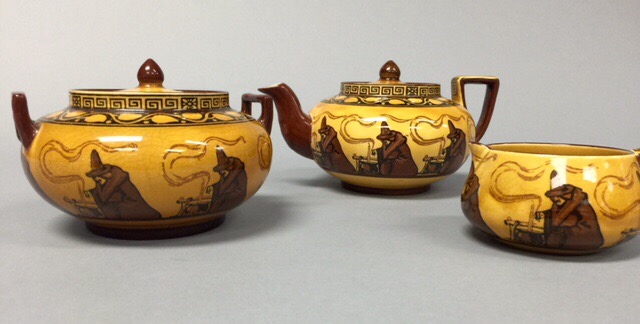
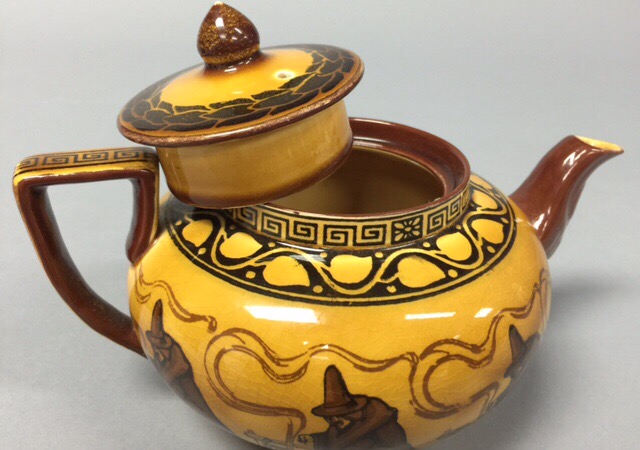
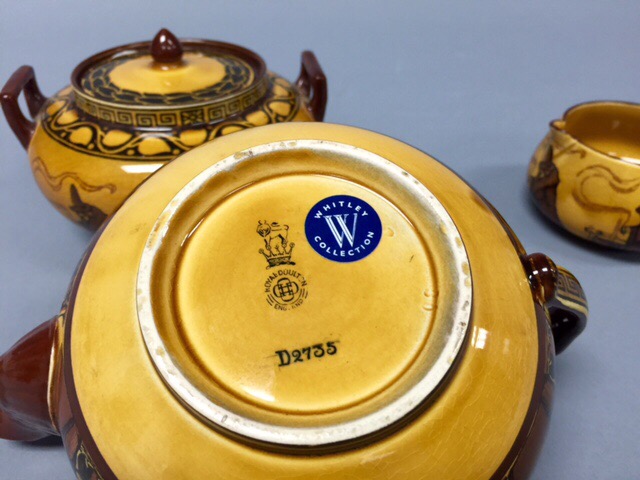
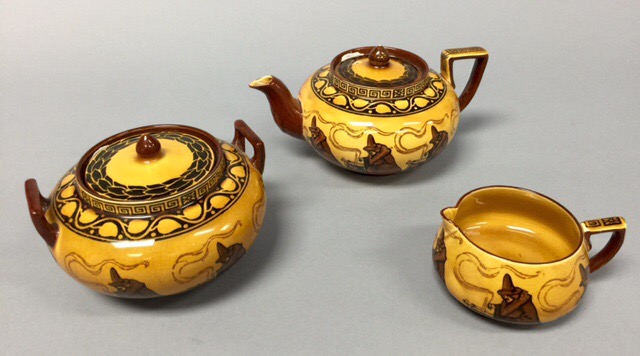
Royal Doulton’s famous ‘Witches’ pattern.

Thanks to the team at Seaway China for the images used here. 

  
When it comes to hard to find seriesware patterns, Doulton’s ‘Witches’ series is one of the most difficult to find today! 

  
Here is a rare three piece teaset including teapot, milk and sugar – all in wonderful original condition that is even more unusual!

  
Introduced in 1906 examples of this series ware pattern are among the hardest to trace today. It’s precise date of withdrawal is unknown but I can imagine the ‘by 1928’ is simply a guesstimate and in reality production would have been much more limited given its scarcity today.

  
As with all seriesware patterns a collection of one theme makes a real statement and the pleasure of collecting and searching out that rare item is what drives collectors to continue! 

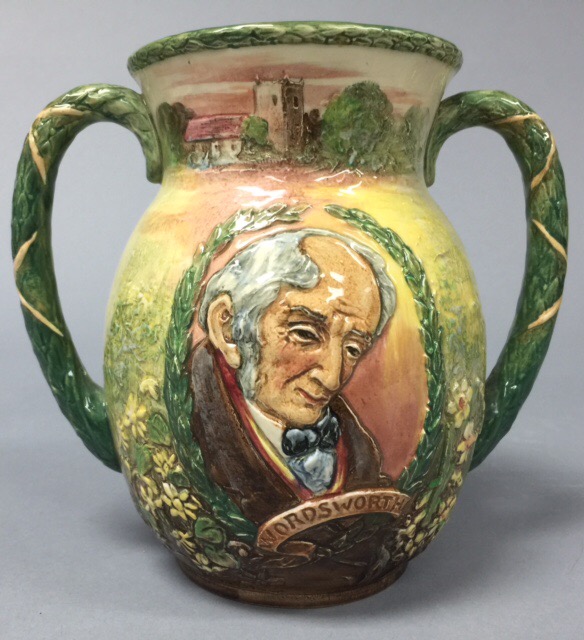
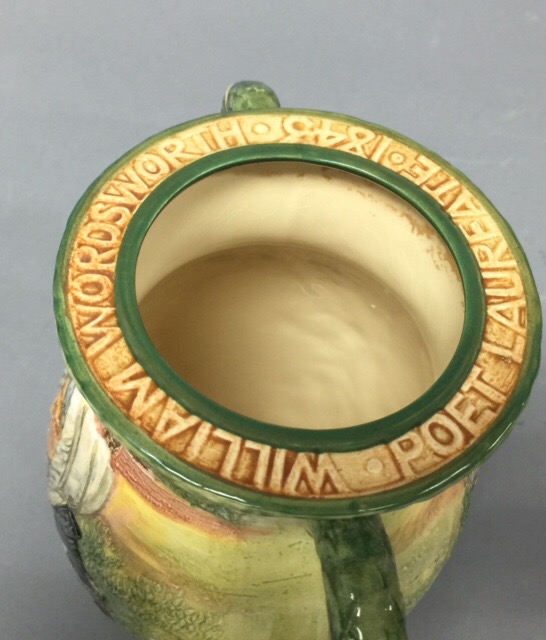
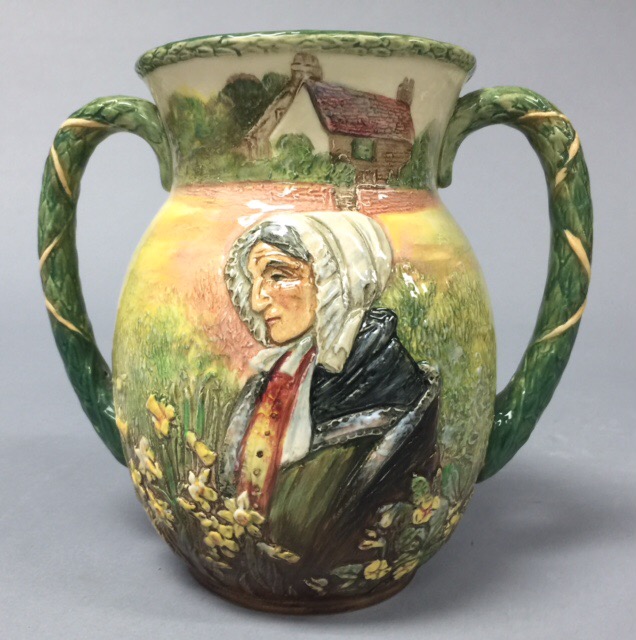
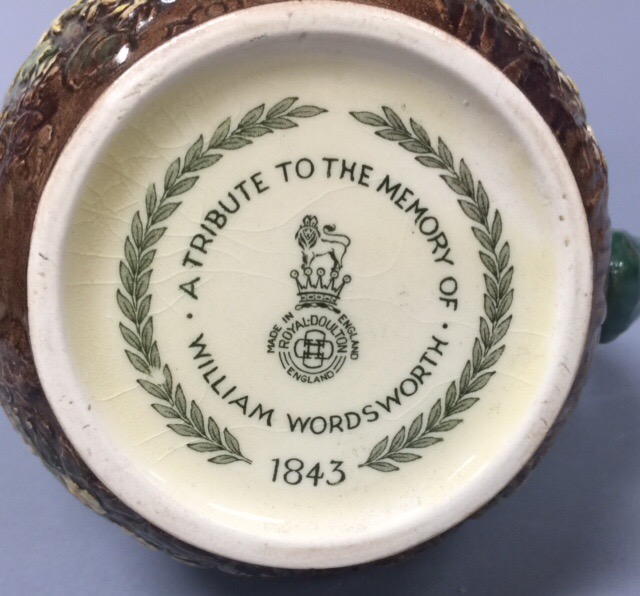
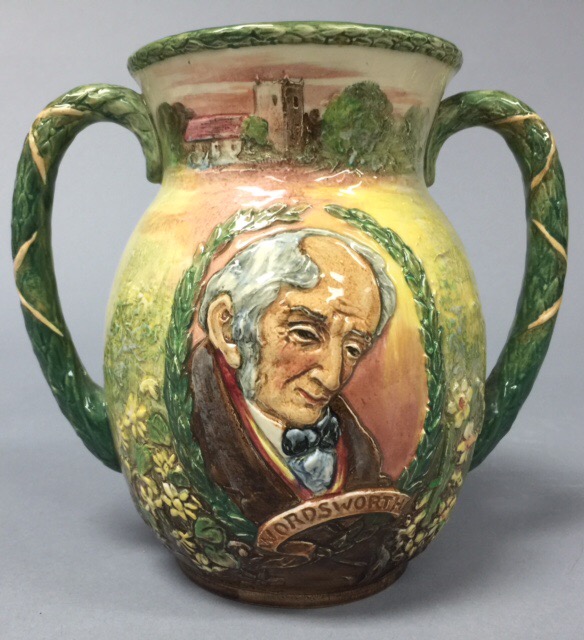
Royal Doulton’s William Wordsworth Loving Cup! 

  Doulton’s 1933 tribute to William Wordsworth (1770-1850), produced to commemorate his being made poet laureate, is among the most rare of the Loving Cups and Jugs first produced by Doulton in the 1930’s. The range of Loving Cups and Jugs was the brainchild of Charles Noke, Doulton’s famous Art Director at their Nile Street studios.


The enduring popularity of Doulton’s Limited Edition Loving Cups and Jugs lies in the quality and decoration afforded to each by Doulton’s leading artists. No attention to detail was spared and even the bases of these jugs are an art work in themselves! 

  
The Wordsworth Loving Cup was modelled by Noke himself and it bears his signature to the body. The cup features a portrait of the poet below a view of Grasmere Church, his final resting place, around the rim and on the other side a portrait of his sister Dorothy below Dove cottage, her home that he once shared. Both locations can be found in Grasmere in the Lake District in the UK. 

  
Wordsworth is forever remembered for his beautiful poetry and among his admirers was one Henry Doulton, who after meeting Wordsworth commented that the latter was the most ‘…potent force in the poetry of the 19th Century…’.


Doulton’s Burns Night specials! 

With Burns Night about to be celebrated around the world, I decided it was time to look at Doulton’s commemoratives to Scotland’s national hero.


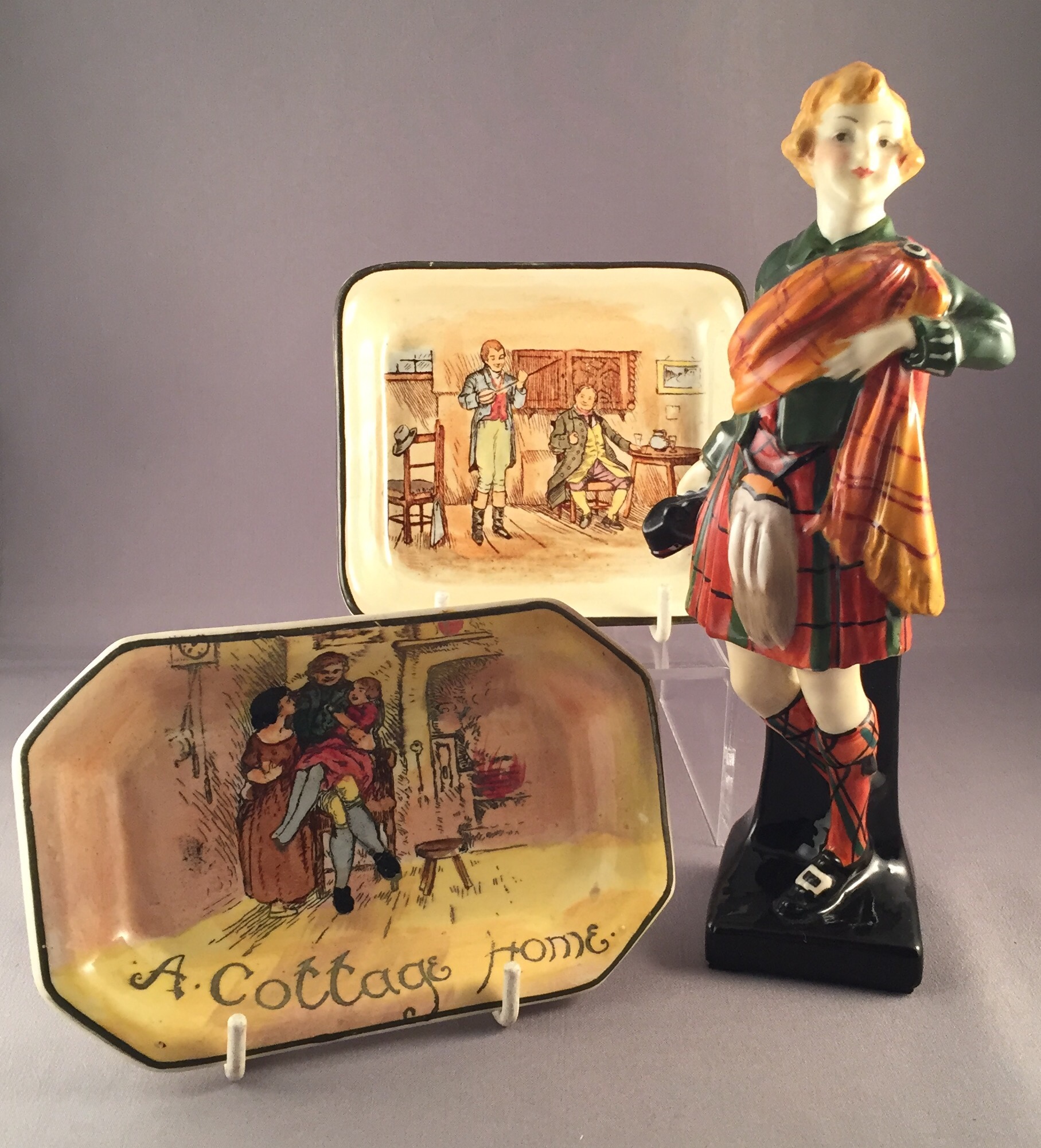
Robert Burns scenes 2 & 3, with Scotch Girl HN 1269.

A Burns supper is a celebration of the life and poetry of the Scottish poet Robert Burns. Burns suppers are usually held on or near the poet’s birthday, 25 January and the occasion is more commonly known as Burns Night.
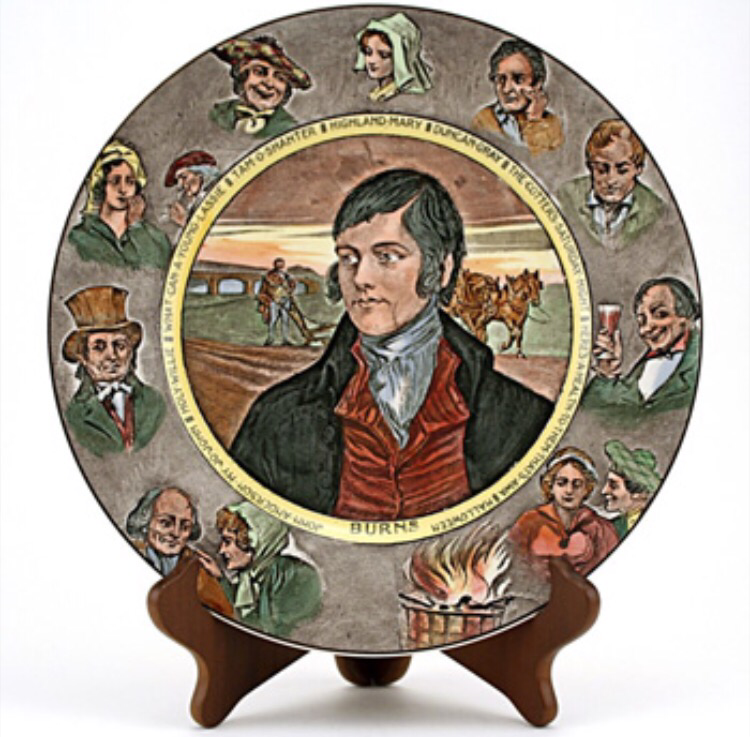
 Burns seriesware plate Pattern C.

A piper generally greets the guests and everyone stands as the main course is brought in – haggis.  
Pattern A scene 1.

Doulton’s love of all things Scotch is apparent from the number of Scottish scenes featured on their famous hand painted wares by leading artists; the Figures in their HN collection in national dress and of course the many Scottish themed series in their series ware collection.


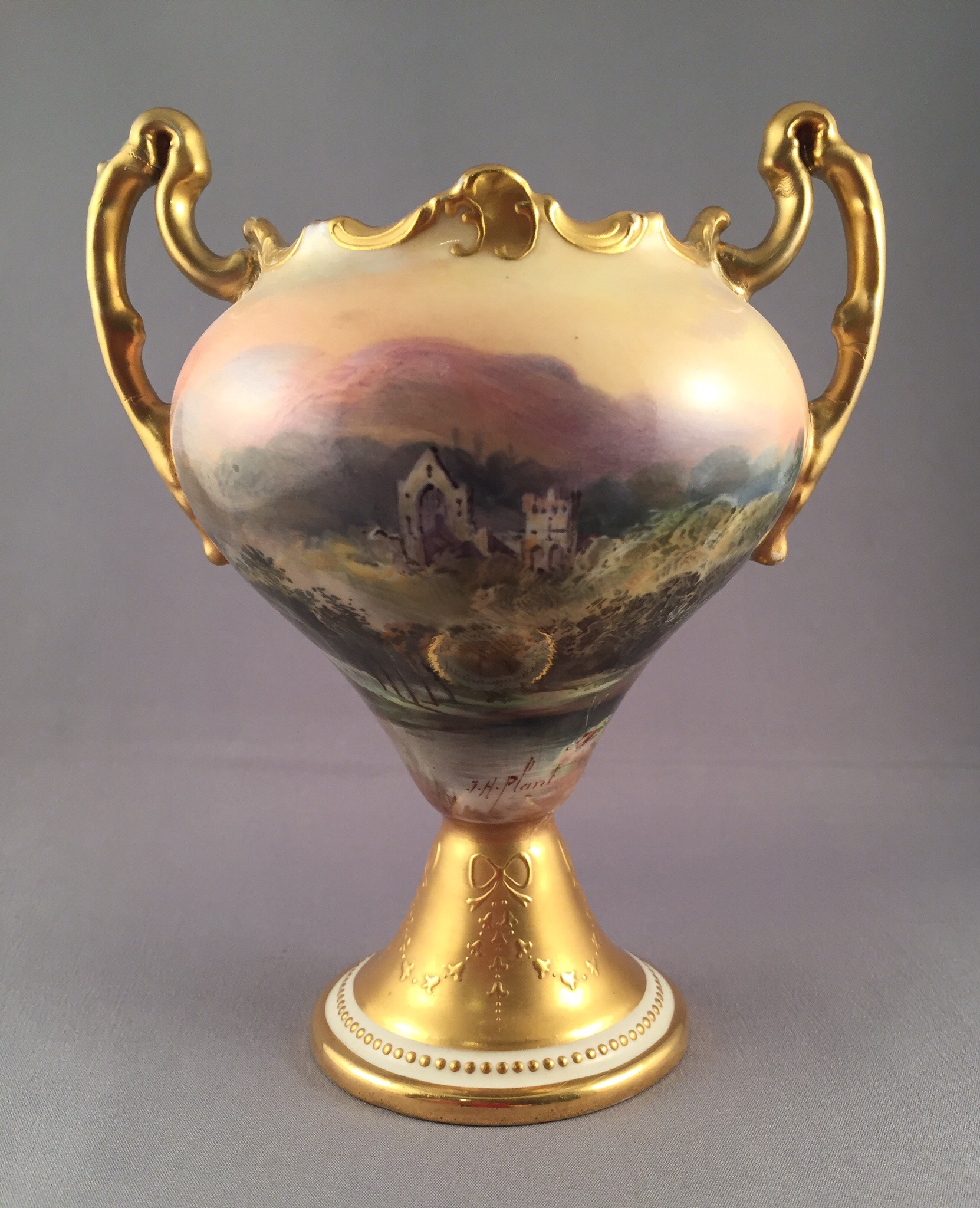
Handpainted vase with Dryburgh Abbey in the Borders by Plant. 
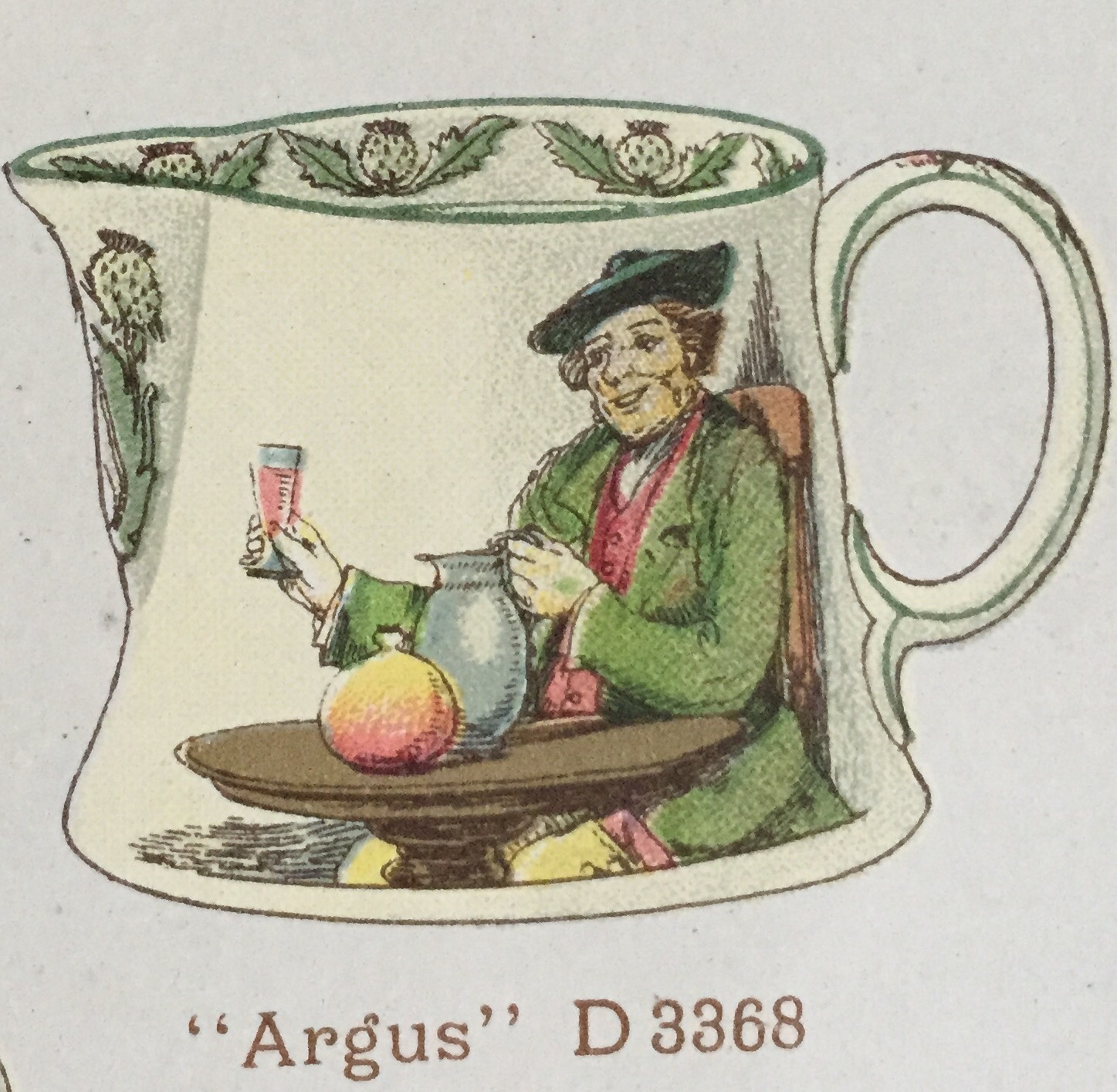
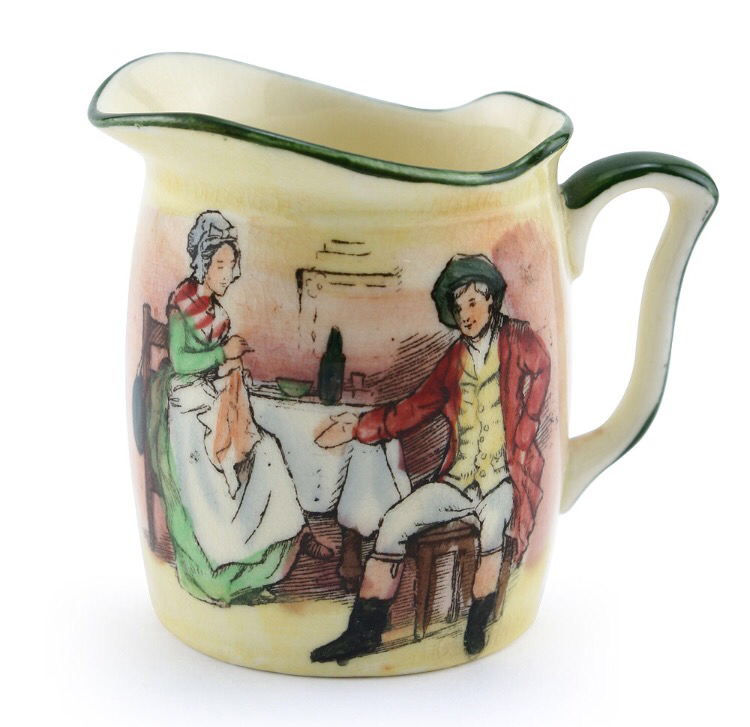
 Miniature Burns seriesware pattern B jug.

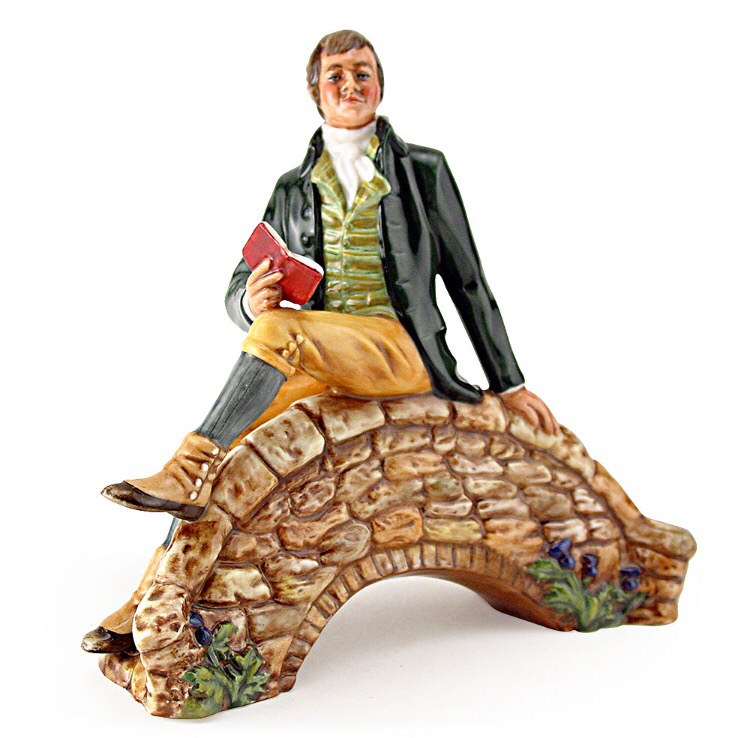
Burns can himself be found immortalised in the HN collection and also tributes to him are plentiful in the series ware range with three different patterns.


Robert Burns HN 3641.

From boys to men – collecting Royal Doulton’s male figures! 

Whenever people mention Doulton figures, damsels in large crinolines are what most non-collectors think of. Of course collectors know this not to be the case, but a simple look through the collectors’ bible ‘Royal Doulton Figures’ illustrates exactly how many male characters were produced over the years!

  
Three versions of Noke’s The Cobbler from the musical Chu-Chin-Chow which ran for a once record number of 2000 performances after opening in 1916, together with Cassim.

When the HN collection was launched in 1913 Charles Noke, Art Director, incorporated a handful of his own earlier Vellum figure studies including jesters and eastern musicians into his new collection. In addition to his own designs, he drew on other sculptors to build up interest and prestige for Doulton’s new venture. 

Where else do we need to begin than with HN 1 Darling by the renowned potter Charles Vyse, which started a popular theme of child figures into the range that has continued right up to today!

  
Darling (HN 1371 after the original HN 1) surrounded by later 1930’s and 1940’s boy figures. 

We have already mentioned eastern characters and there were a slew of them introduced into the early HN collection, reflecting popular interest at the time and also a love of the theatre – another major theme in the HN collection. 

Characters from literature can also be found including Shakespeare’s Falstaff and Cassim from 1001 Arabian Nights, which also influenced other introductions such as Baba and Abdullah. 


Falstaff HN 1606 (1st version). 
Doulton’s famous street sellers also feature many male characters from the familiar Balloon Man HN 1954 to the more modern Punch and Judy Man HN 2765.

Royal Doulton’s “Prestige” range contained many male subjects from Jack Point to King Charles, all of which were re-introductions with simplified decoration from the early HN Collection. 

  
Illustration from an early catalogue showing his original price too!

Men also feature in many of the early double figures such as The Rustic Swain, Tête-à-tête and The Court Shoemaker. Just as WWII was beginning a new handful of male figures emerged including the rare duo of The Corinthian and Regency Beau, which although attributed to Harry Fenton, it has been suggested that they may have been the idea of the great Leslie Harradine. 

  
The rare duo The Corinthian and Regency Beau. 

Male figures can be found across the HN range and also in the later M series when the many miniature Dickens figures were added to it too. Plus, just as with Doulton’s ladies, colourways and variations do crop up including this bone china version of Lambing Time dated 1938 and painted by Harry Allen’s expert hand. 

  
A bone china colourway of Lambing Time dated 1938.

 Once again whatever your particular interest there is sure to be something by Royal Doulton to satisfy your collecting habit! 


Collecting Doulton’s nursery rhyme series ware pattern ‘G’!

Nurseryware was and remains something of a speciality for Doulton with the enduring popularity of their Bunnykins range, which babies around the world receive in early childhood in the form of bowls and cups, together with a host of other items and of course the famous Bunnykins figures.

  
Back in the early 20th century many different nursery ware scenes were produced including this charming silhouette design. Introduced in 1907 and withdrawn by the mid-1930’s examples of this series are hard to find today, no doubt due to the fact that they were used for raising baby back in the day. Two D numbers can be found relating to this pattern D2833 & D4016.

This pattern features a central scene relating to a saying on the piece ; taken from famous rhymes such as Three Blind Mice and Rock-a-bye baby that are still taught to young children. In all there are only four designs which include the two titles above and Little Miss Muffet and There was a Little Man… 

Items typically found with this pattern include baby bowls, cereal bowls, mugs, jugs and small plates.

The influence behind Royal Doulton’s Classic 1930’s figurines Rosabell and Aileen.

Arthur Garratt (1873 – 1955)With works in National Collections in UK, you might expect to find more pictures of his here, however, to date there are just two. The first is Aileen HN1645 (1934 LH) and the Garratt picture ‘A sweet heart of mine’. 

  
The second is Rosabel HN1620 (1934 LH) and ‘Alice Blue Gown’, the title coming from two separate sources ; firstly the popular music hall song of the same name; and the second Alice Roosevelt Longworth, daughter of the former American President. This second link here is not only in the title, the dress in the picture being Longworth’s signature colour but the picture also bears a strong resemblance to Longworth. Her exploits earned her the title ‘Alice in Plunderland’ during a trip to Asia and interestingly she would also wear a costly string of pearls a gift from the Cuban government for the rest of her life. 

  
Many of Garratts’ pictures feature a young lady sporting a shawl; an image which Doulton too seem to have favoured during the early Twentieth Century.

A place to share enthusiasm for all things Royal Doulton! All original content ©Christopher Evans 2014 unless otherwise credited. No unauthorised reproduction permitted.