Category Archives: Art deco

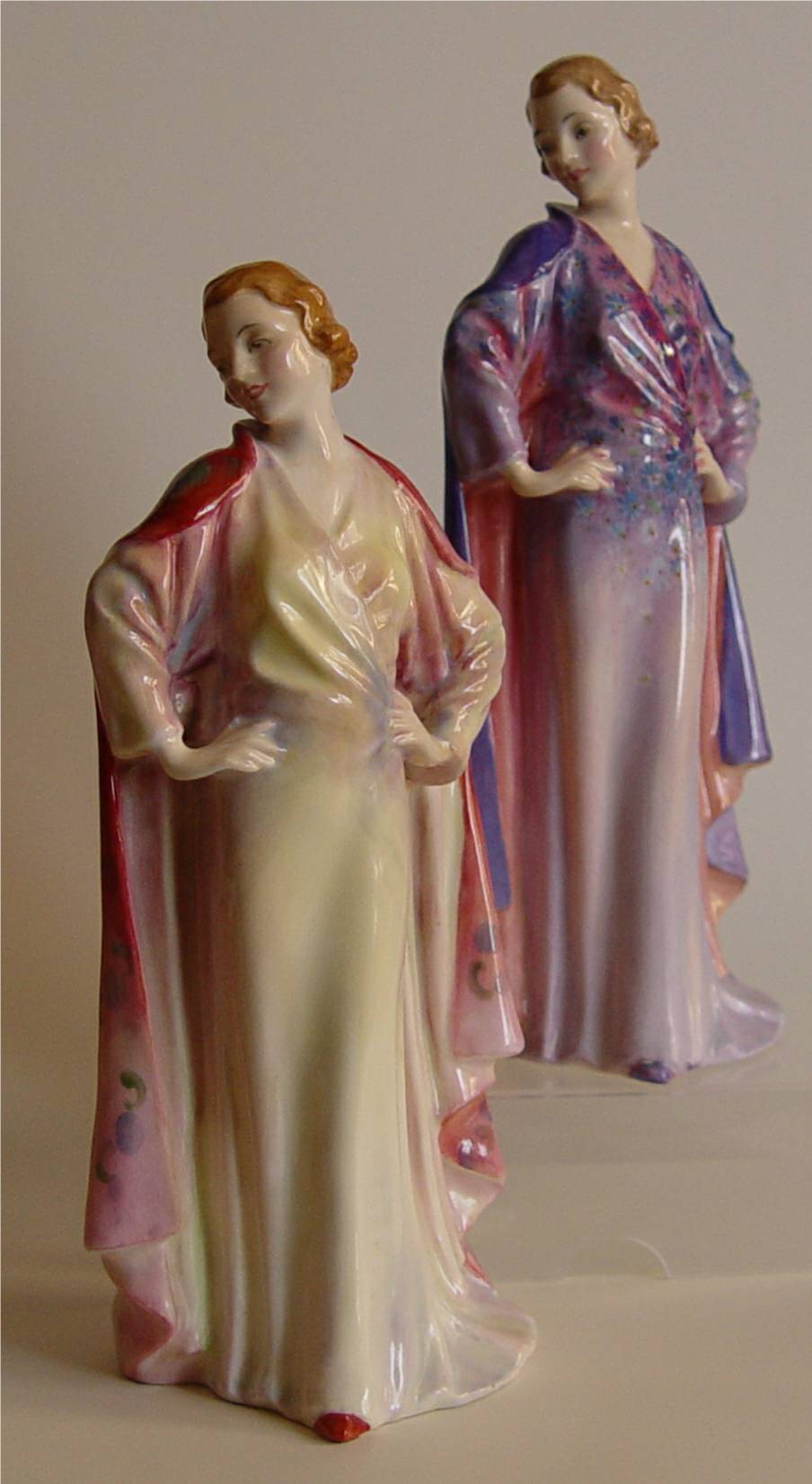
Speaking of colourways of Doulton figures….here are a few more examples to enjoy!

Just a few more colourways, prototypes and rare figures to share with you all! Thanks once again to Seaway China for the use of their pictures too!
Image

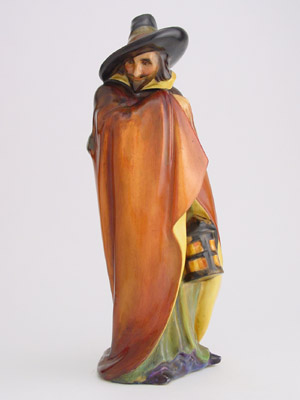
An unusual Guy Fawkes

Image


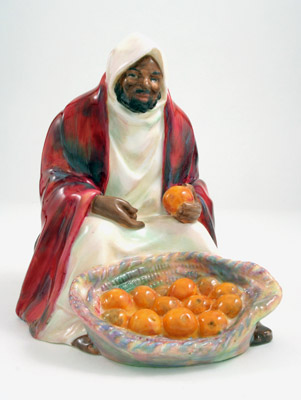
A very different Orange Vendor

Image

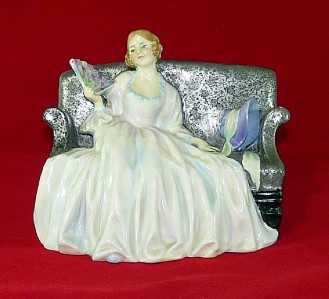
The rare HN1563 version of Sweet and Twenty
Image

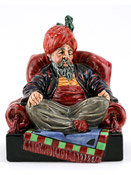
Abdullah in red

Image

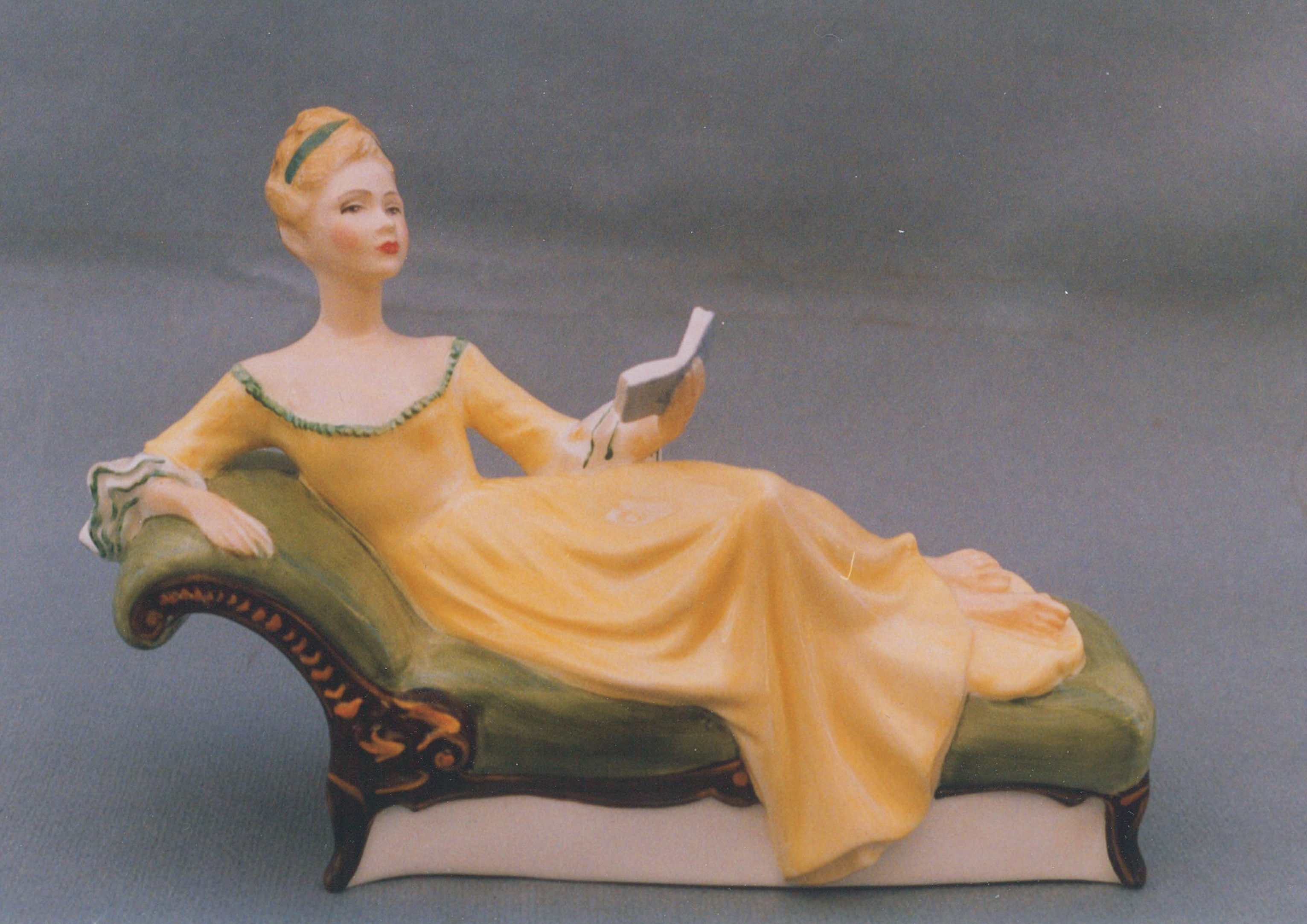
A nice version of Repose in yellow

Image

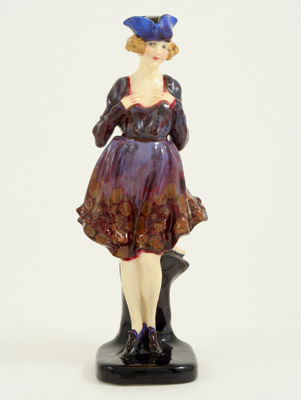
Mam’selle in a typical 1920’s colouring
Image

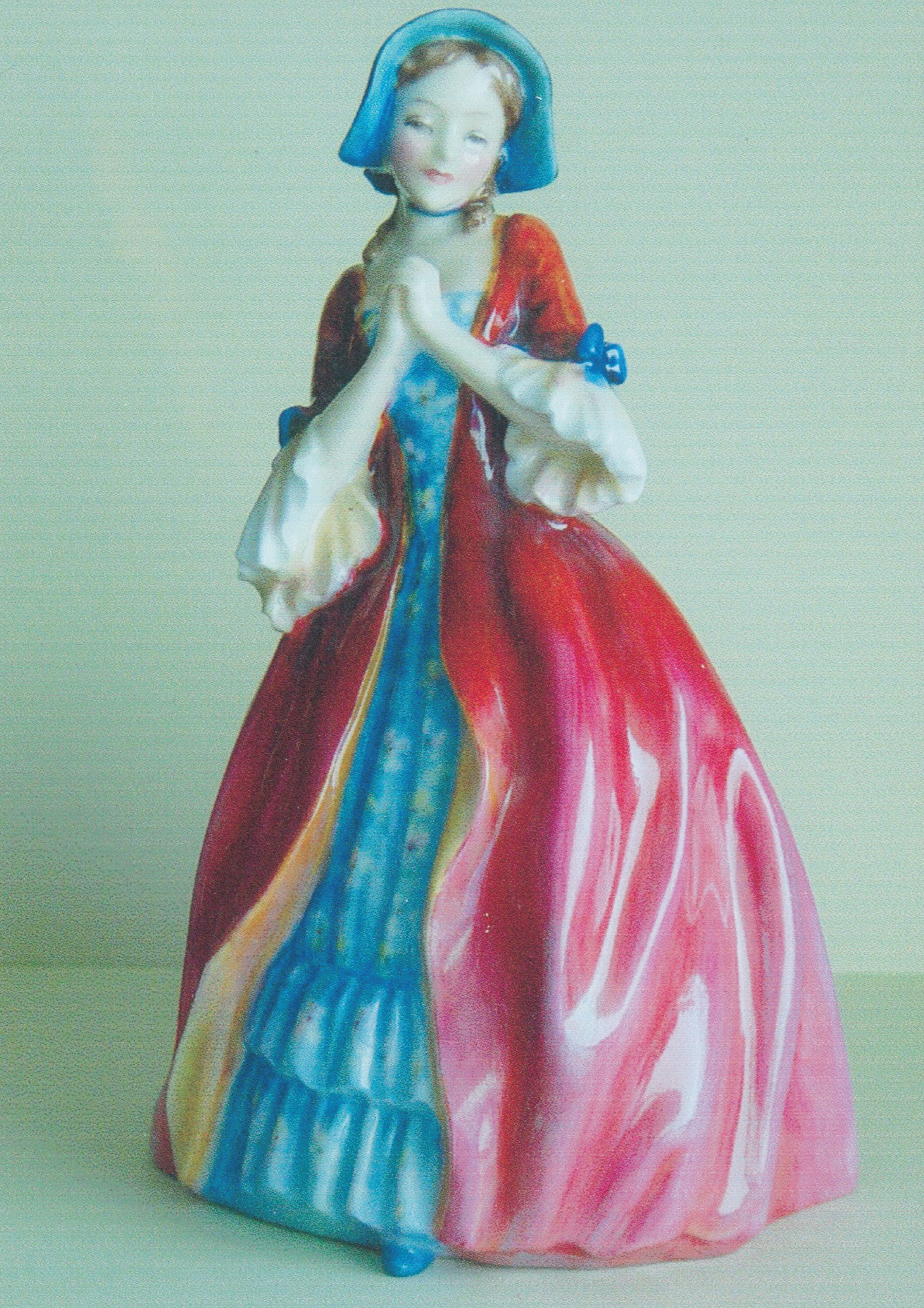
A nice Deirdre dated 1947 that I once had
Image

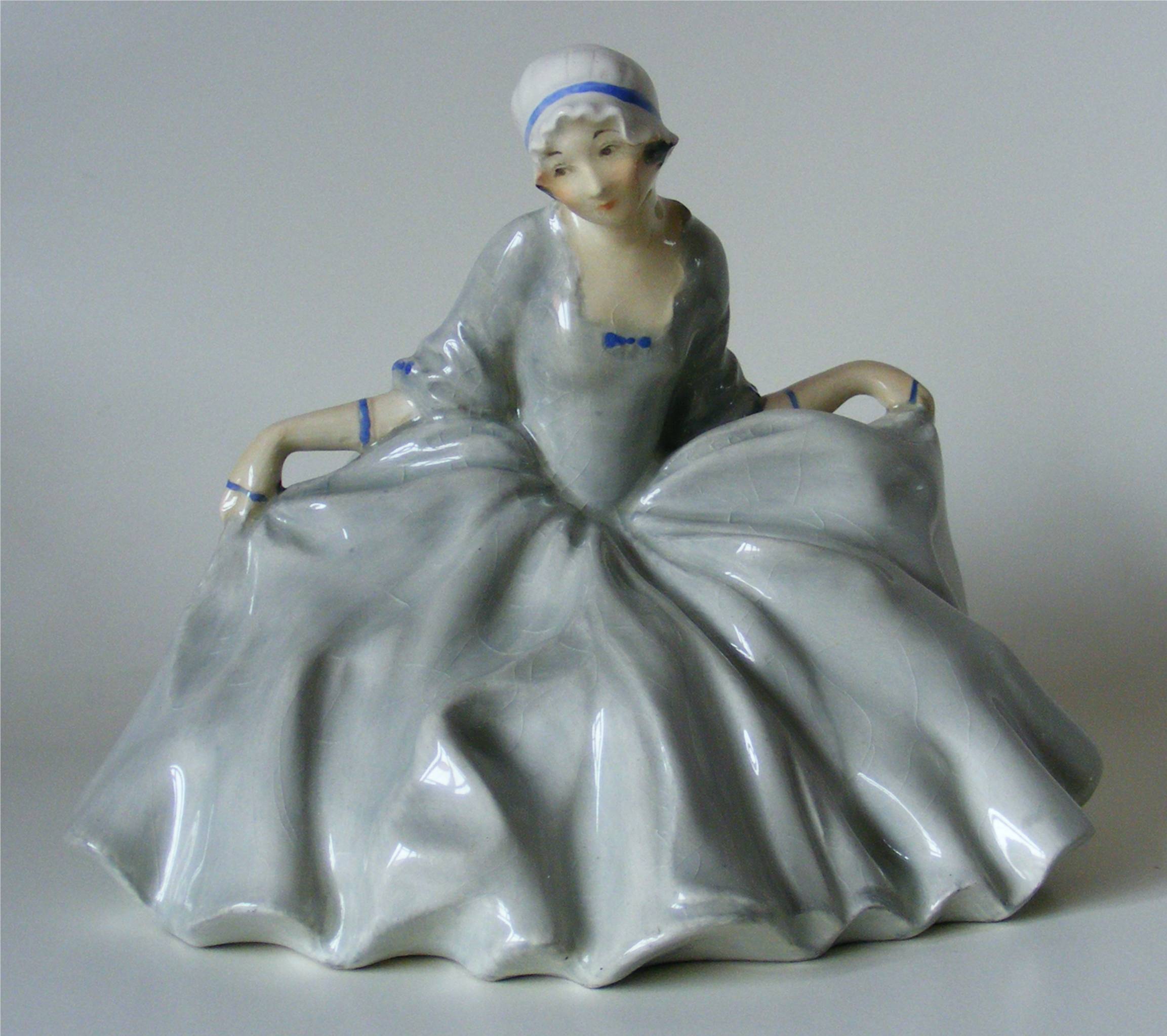
Polly Peachum in grey

Image

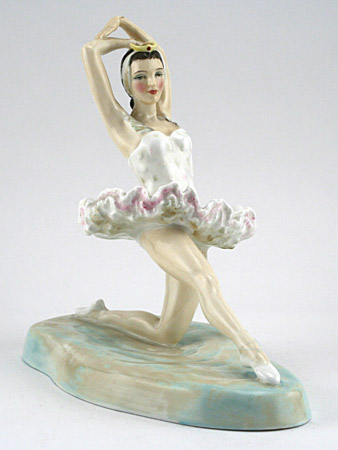
A charming Ballerina prototype from the 1960’s
Image

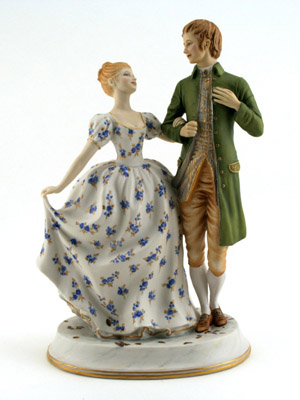
An elaborately painted Young Love


And that’s all for colourways and prototypes for today!! Enjoy and keep hunting!

C
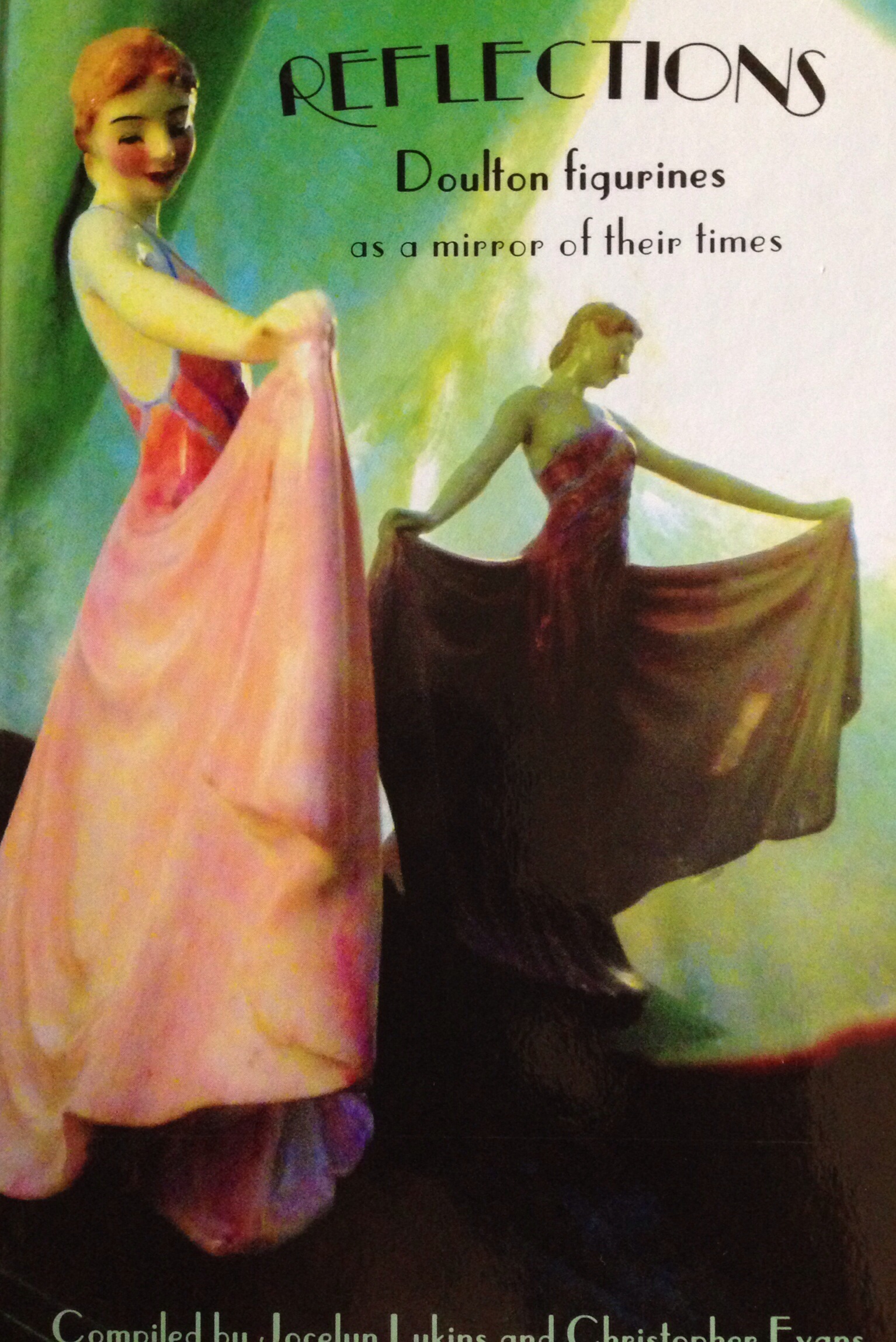
A short video to advertise my book Reflection – Royal Doulton figures as a reflection of their times

Follow this link for a sample of pages and a brief explanation of the book!

20140427-181720.jpg

Key Burslem Dates Part II

Part II : 1900-1929

1900       Cuthert Bailey, a Chemist joined Doulton & Co.

Ivory Body introduced

Hyperion and Morrisian wares introduced

1901       Gibson Girl designs introduced

1902       Lion and Crown Backstamp used for Royal Doulton

1904       Flambé – experimental wares begun

1905       Mandarin and Crested wares introduced, together with Christmas miniatures

1906       Seriesware introduced

1907       Crystalline introduced

1908       Flambé aninals first seen and Dickensware introduced

1911       First attempts at a new figure range begun

1913       Famous visit to Burslem by King George and Queen Mary to Doulton at Nile St.

HN Figures and animals launched

1914       John Slater Art Director at Burselm retires. Charles J. Noke takes up the reins

1915       Titanian wares introduced

1916       Reco Capey lustre and flambé designs introduced

1919       John Slater purchases the Slater Collection

1920       Barbotine, Chinese Jade and Sung launched

1924       Shagreen and Maori wares introduced

1925       Chang launched

1929       Classic Doulton figure ‘Old Balloon Seller’ introduced

Image

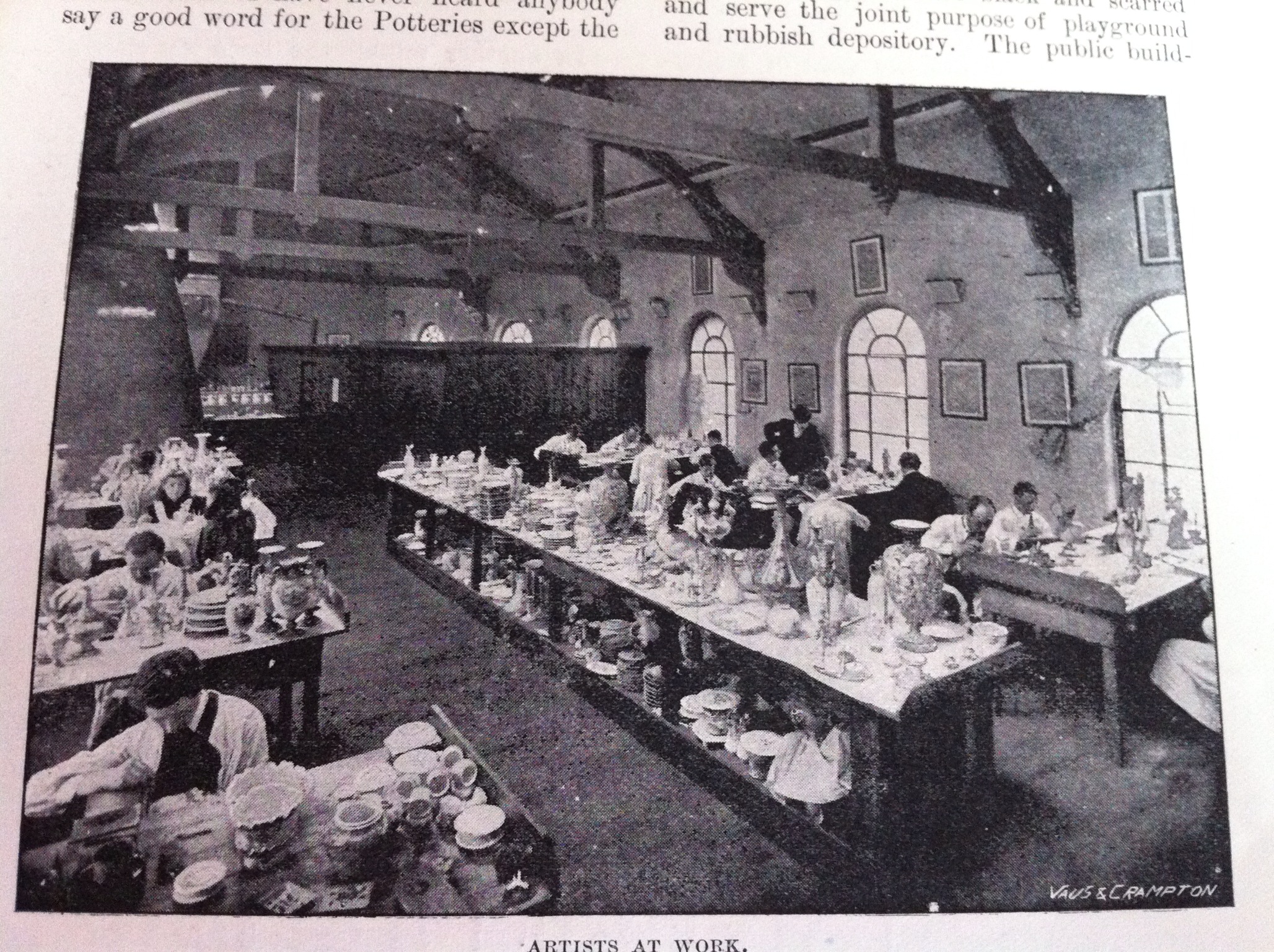
An early view of the Doulton studio ca. 1910

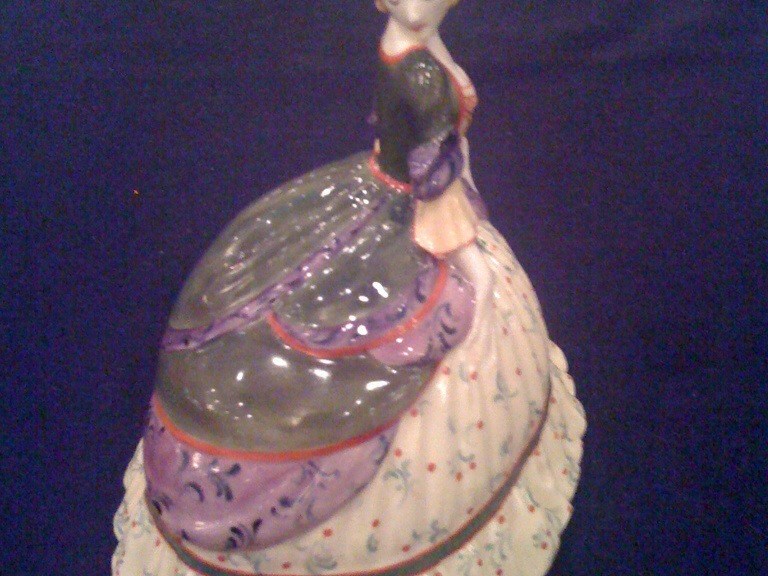
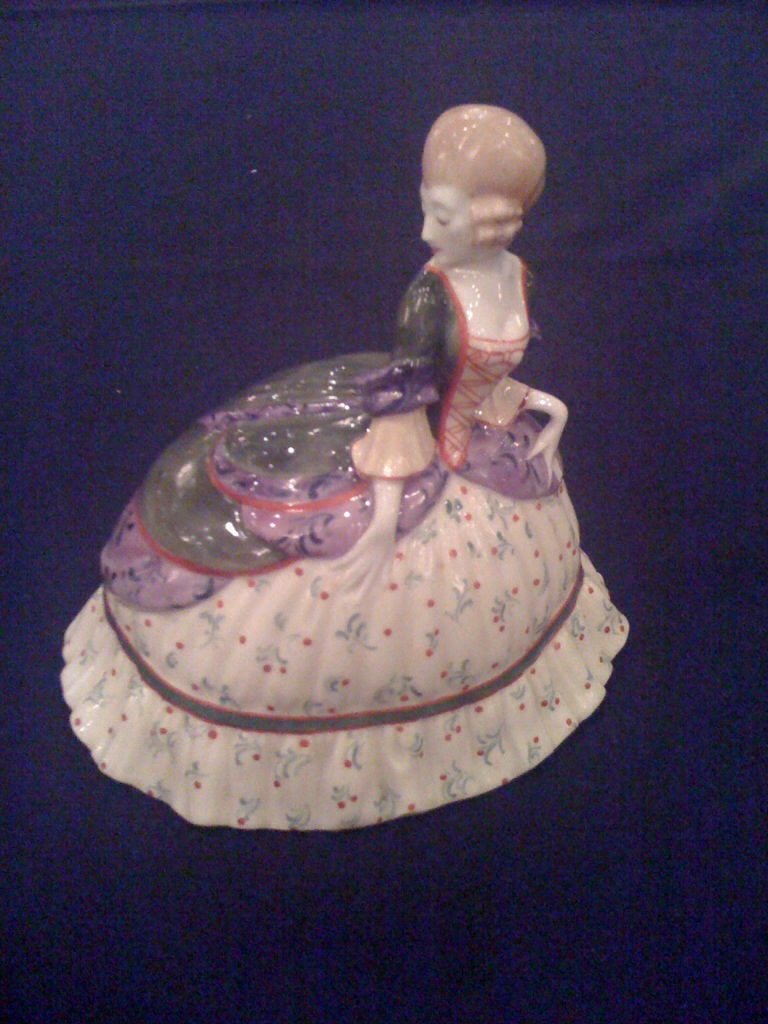
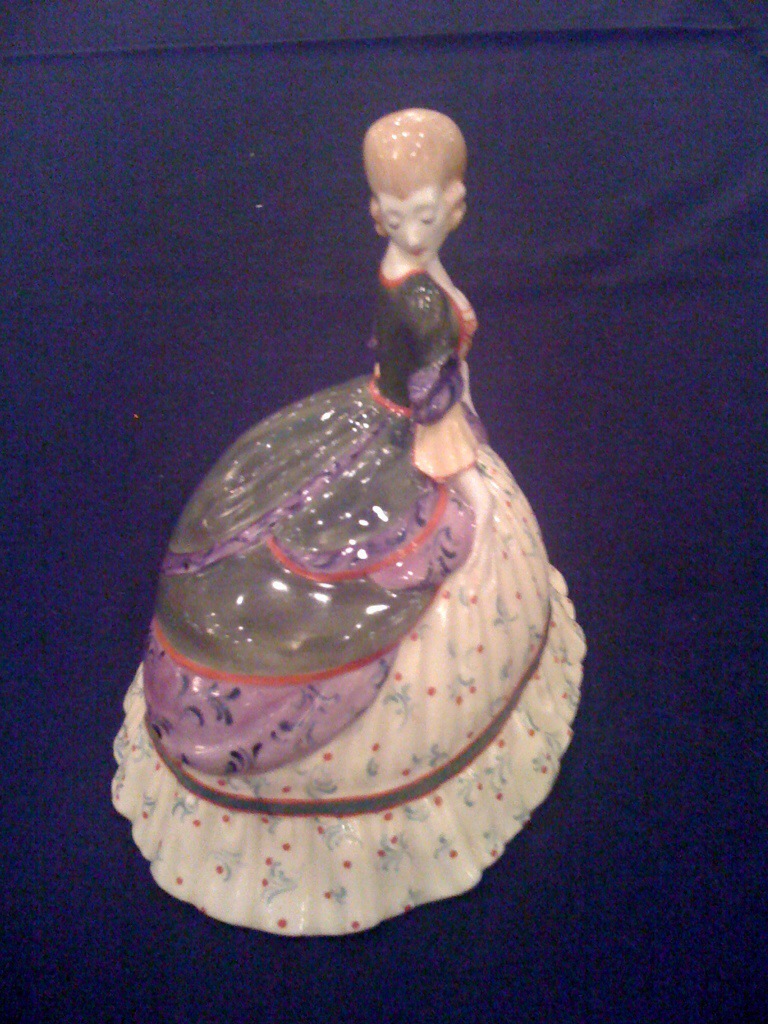
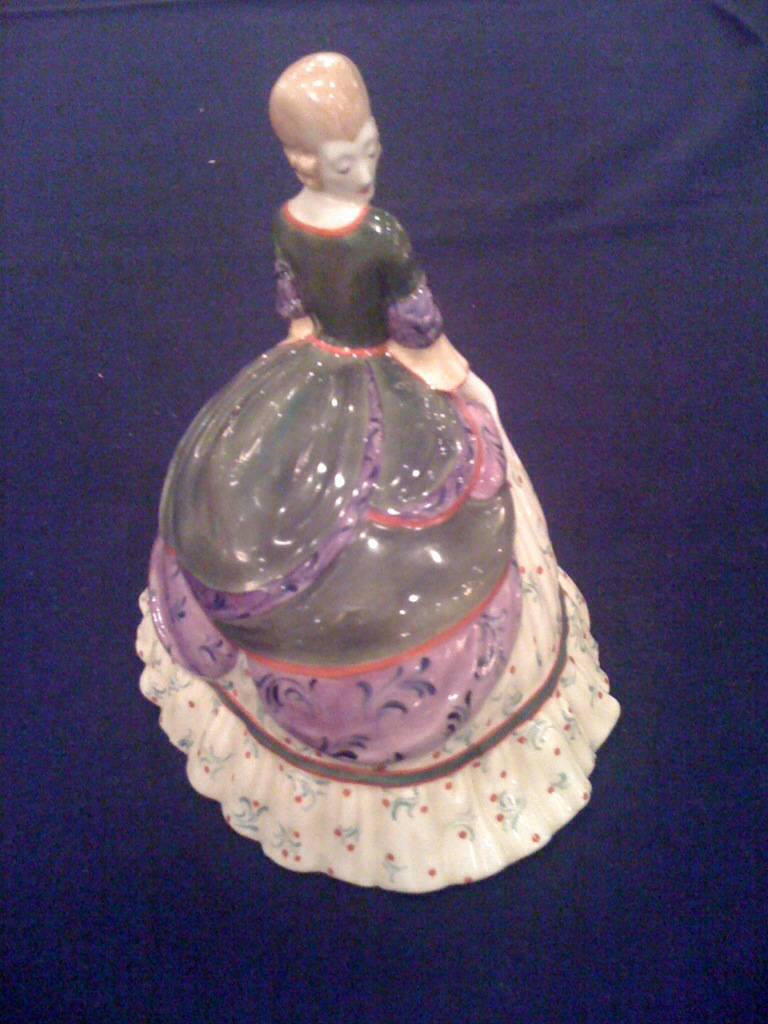
An unusual colourway of Puff and Powder

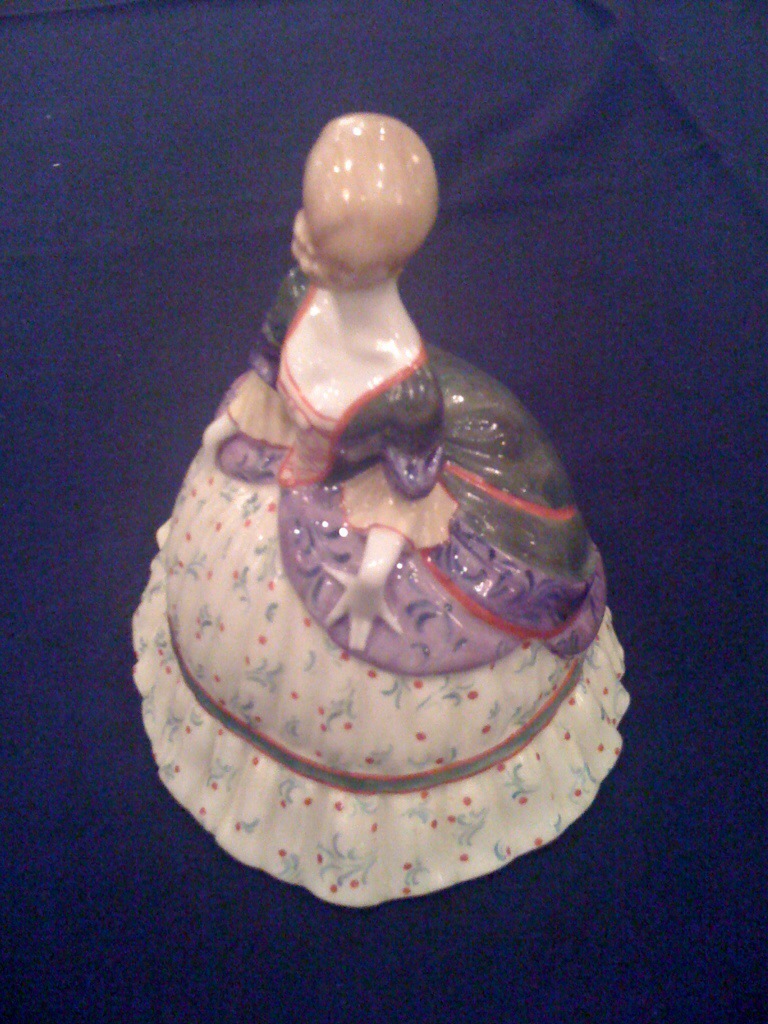
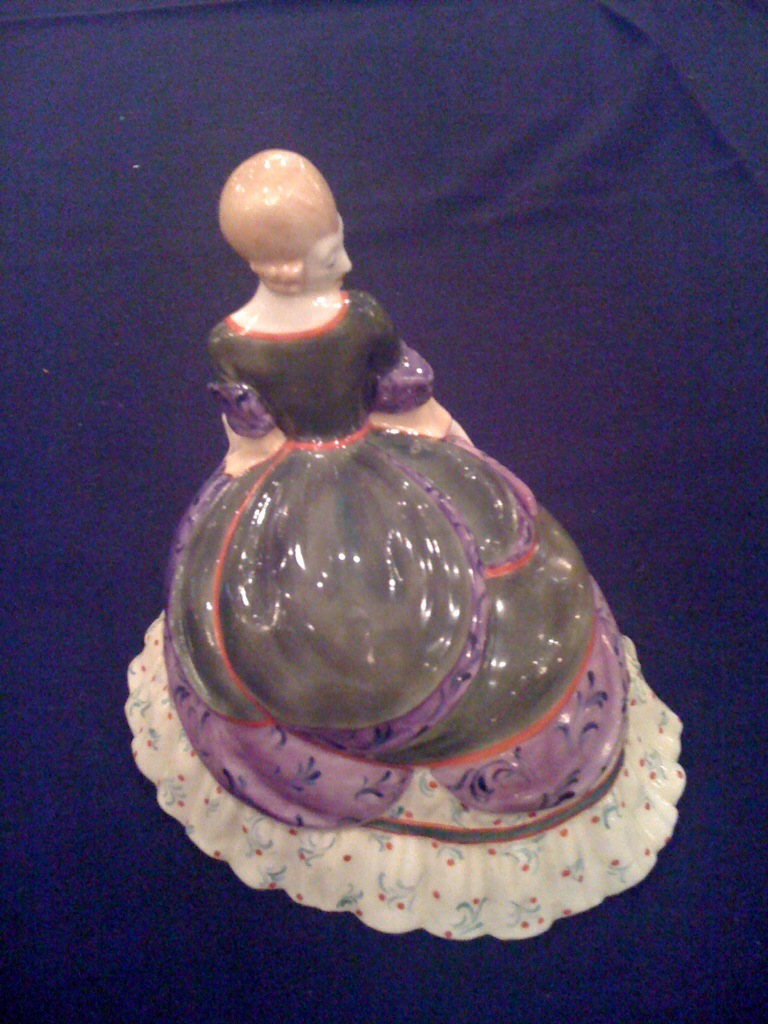
Here are some pictures of an unusual Puff and Powder I once came across from Seaway China. She is decorated in the Bakst style like several of Harradine’s early figures of the 1920’s. Leon Bakst’s designs for the Ballet Russe were distinctive because of the use of contrasting fabrics placed together; something you can clearly see from this figure. Interestingly the piece is taken from a Raphael Tuck picture by Stanislaus Longley, an artist whose work Harradine regularly used as inspiration for figures but who is only credited with inspiring a handful of figures from the mid to late 1930’s rather than the 1920’s.
Here are the pictures to enjoy!

20140426-220742.jpg

20140426-220804.jpg

20140426-220829.jpg

20140426-220859.jpg

20140426-220926.jpg

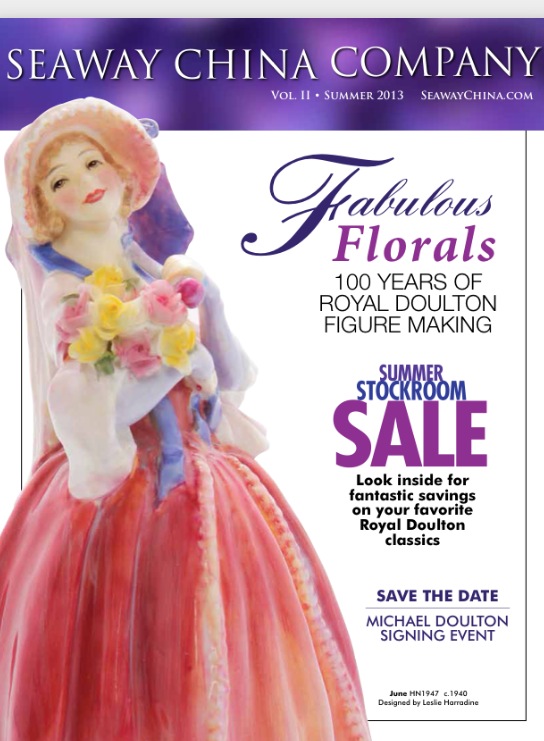
Part 2 of my celebration of 100 Years of Doulton’s HN Collection for Seaway China

Here is another link, this time to part 2 of my account of the first 100 years of Doulton’s HN collection of figures, published naturally by Seaway China.

photo(3)


Click to access 2013-Summer-Catalog-cover-and-features.pdf

100 Years of Doulton figures

Check out this link for a look at the first chapter in the 100 years of Doulton figures by me and published by Seaway China.

Image

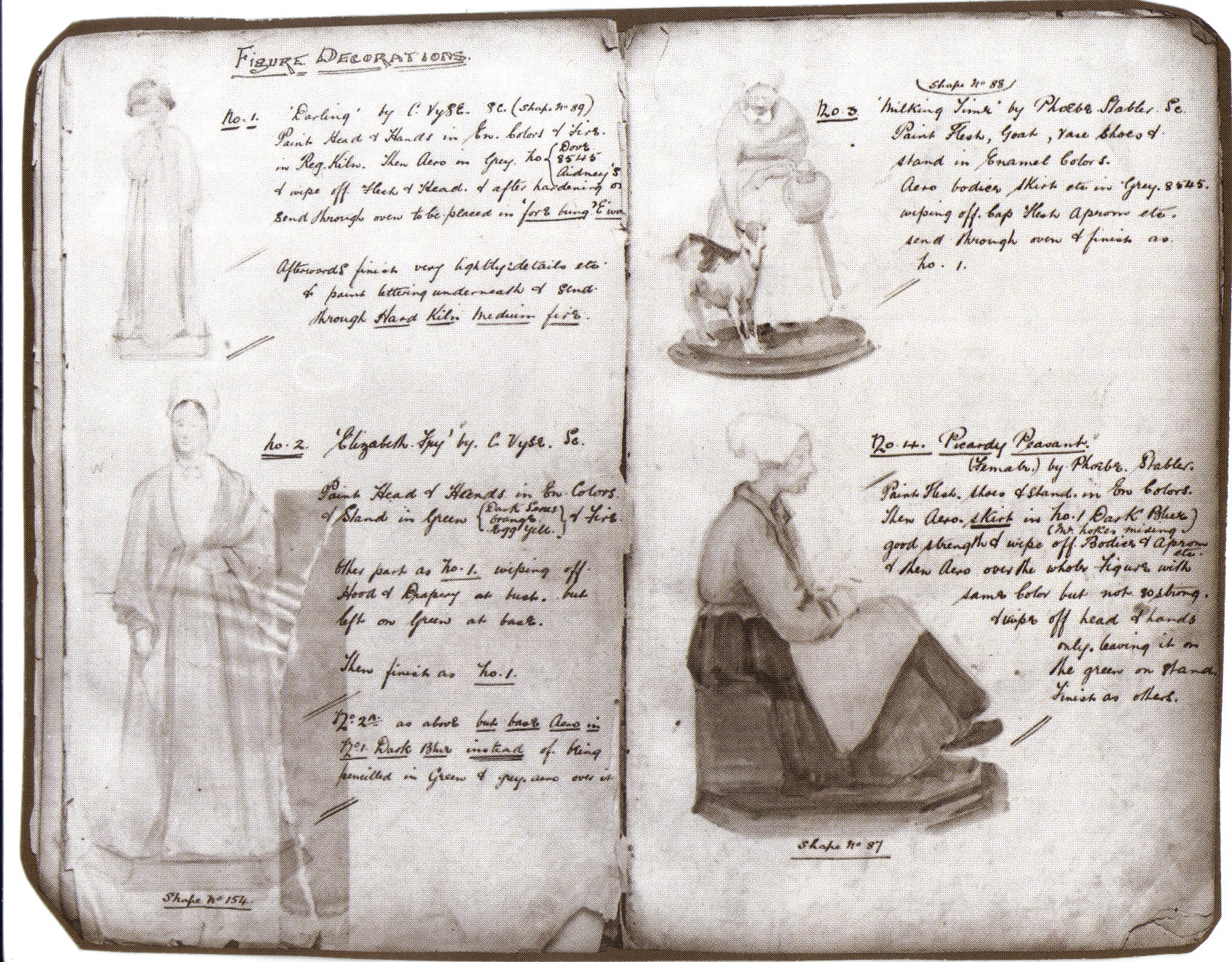
Here is the first page of the HN figure decoration book

Click to access 1-11_cover-doulton-insight.pdf


Here is a sample:

Few people in 1913 would have imagined that this article would be being written to celebrate the 100th anniversary of Royal Doulton’s HN Collection. It was not after all Doulton’s first attempt at a introducing a figure range and many other famous factories had attempted and failed at this ambition. In 1893 at the World Columbian Exhibition in Chicago, a handful of figurative models by one of Doulton’s newest recruits Charles J. Noke were among their exhibits. These minimally decorated figures, now commonly referred to as Vellum Figures, met with a mixed reception from the buying public and Noke’s ambition of reviving the once famous, Staffordshire figure production was put on hold as his attention was drawn away by other projects including the introduction of Kingsware, Rembrandtware, Holbeinware, Hyperionware, the famous flambé glazes and the introduction of Doulton’s Series Ware with patterns such as the popular Dickens series. The range of Vellum Figures was very much influenced by the products of the Worcester factory where Noke had worked for some sixteen years until leaving to join Doulton in Burslem in his early 30’s. He would later comment that he joined Doulton ‘not for the money but for the freedom’ as Henry Doulton famously allowed his artists free rein.

A timely visit to the Doulton Burslem factory in April 1913 by England’s then King George V and Queen Mary provided a re-newed impetus to Noke’s desire to launch a new range of figures. In the years preceding this visit Noke had been approaching a carefully selected group of artists to provide models for Royal Doulton to reproduce in ceramic. It is reported that the new range of figures was completed in late 1912 but the launch of the range was held back to coincide with the Royal visit, and what a good decision this proved to be as Queen Mary would become a fan of the range making many purchases over the coming decades. In Royal Doulton’s brochures from the 1920’s and 1930’s they even pin pointed the figures Her Majesty had purchased – it undoubtedly proved very useful to have the most famous lady in the land favouring their figures.


Leslie Harradine Part 2 – A change of allegiance

Image

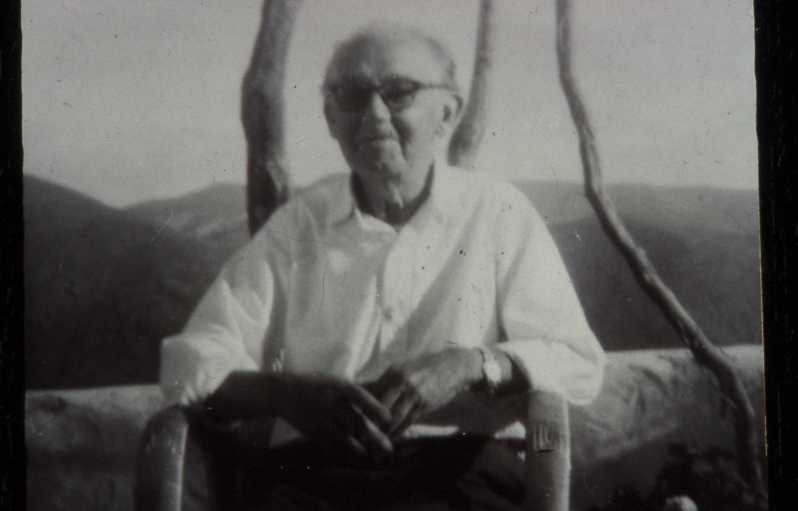
A rare photograph of Leslie Harradine

The next chapter of Harradine’s association with Doulton begins in 1919. Noke, Art Director at Doulton’s Burslem factory recognised Harradine’s talent for figure making and attempted to recruit him. Noke had been particularly impressed by the set of six Dickens figures Harradine had modelled for Lambeth.

Image

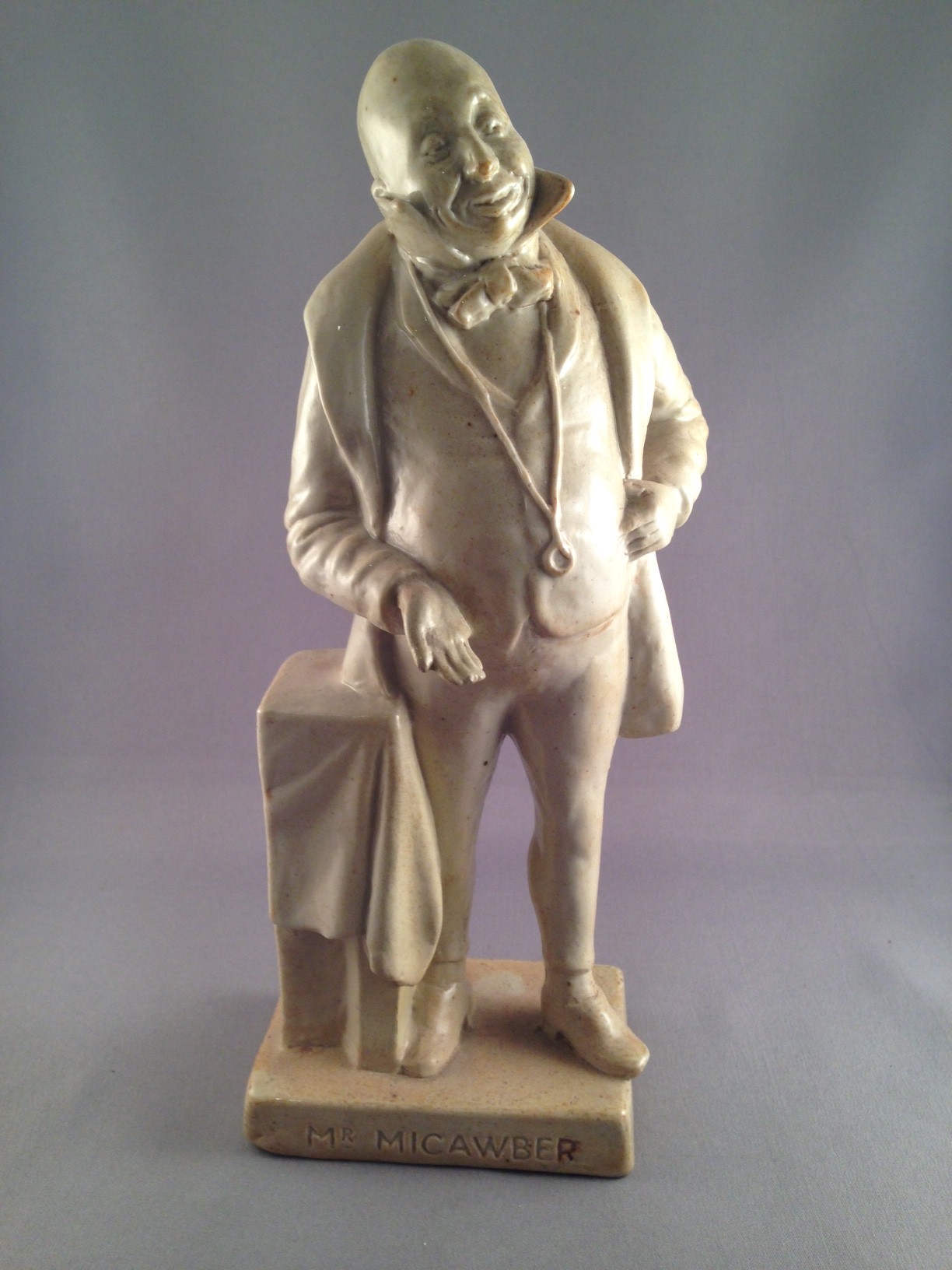
One of Harradine’s six Dickens figures made for Lambeth – Mr Micawber

However, not under any circumstances would Harradine consider working at Burslem, but via Lambeth’s Art Director Joseph Mott’s intervention, a meeting between Noke and Harradine was arranged whereby Noke travelled to London to meet with Harradine. The result of this meeting was of course that arrangement that has become legend amongst Doulton figure collectors. Thus Noke and Harradine came to an arrangement, whereby Harradine would send a succession of models to Burslem for Noke’s approval and a change of allegiance to Doulton’s of Burslem. This was an arrangement that lasted almost 40 years and would continue when Noke’s son succeeded him as Art Director in 1936 at Burslem. Harradine modelled in his preferred medium – salt glaze stoneware and sent one or two models per month wrapped in brown paper, and whose arrival would cause something of a stir when they arrived in Burslem.

Image

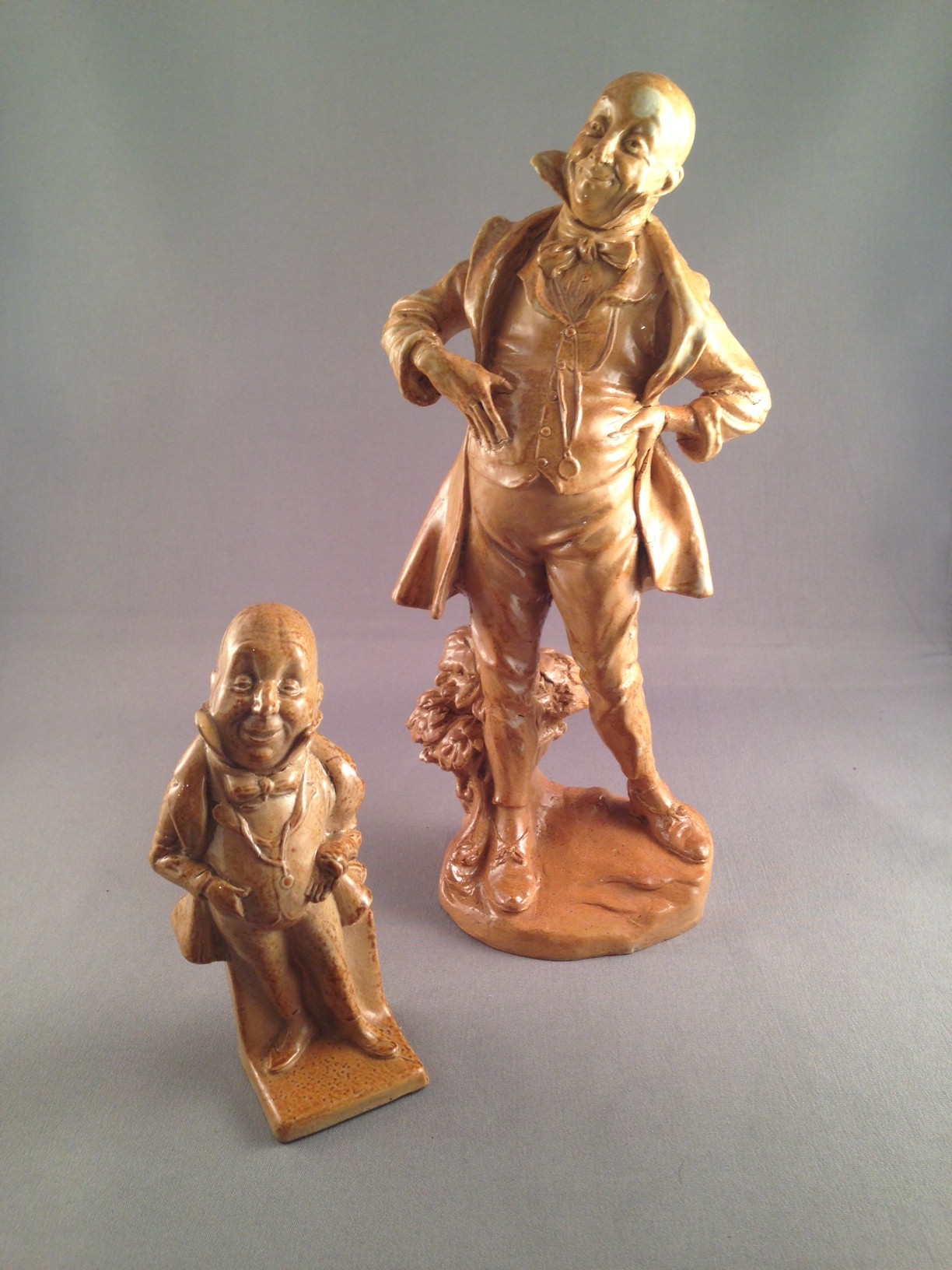
Here are two of Harradine’s original models for Burslem figures, both of Mr Micawber (first and second versions)

His models would deliver the popular success that the HN range had hitherto not achieved, representing fashions and interests from their own era. Harradine modelled women, men and children with equal skill. His figures entered the HN range in 1920 with The Princess HN391 until 1956, when his last ‘new’ model was introduced, Dimity HN2169, although many of his studies remained in production decades after this.

Image

The very stylish Clothilde in two colourways

At last Noke had found a modeller who could tap into the so-called ‘moment’ whatever it was, whether it is flapper girls, Victorian ladies, children or group studies. All were executed with precision and subtle style. Harradine remained something of a nomad yet he continued sending in models from addresses in England, the Channel Islands and Spain until the end of this great partnership.

In our final part to the Harradine story, we will look at Leslie Harradine, the family man.

How to recognise a prototype…

One of the most heart stopping moments for any collector is the moment they hope that they have spotted a prototype figure. The hunt for prototypes is, however, a real mine field as there are always unscrupulous people out there wanting to cash in on our desire for that one special piece for our collections. That is why my advice is always to buy from a reputable dealer with a proven track record for discovering and supplying the unusual!

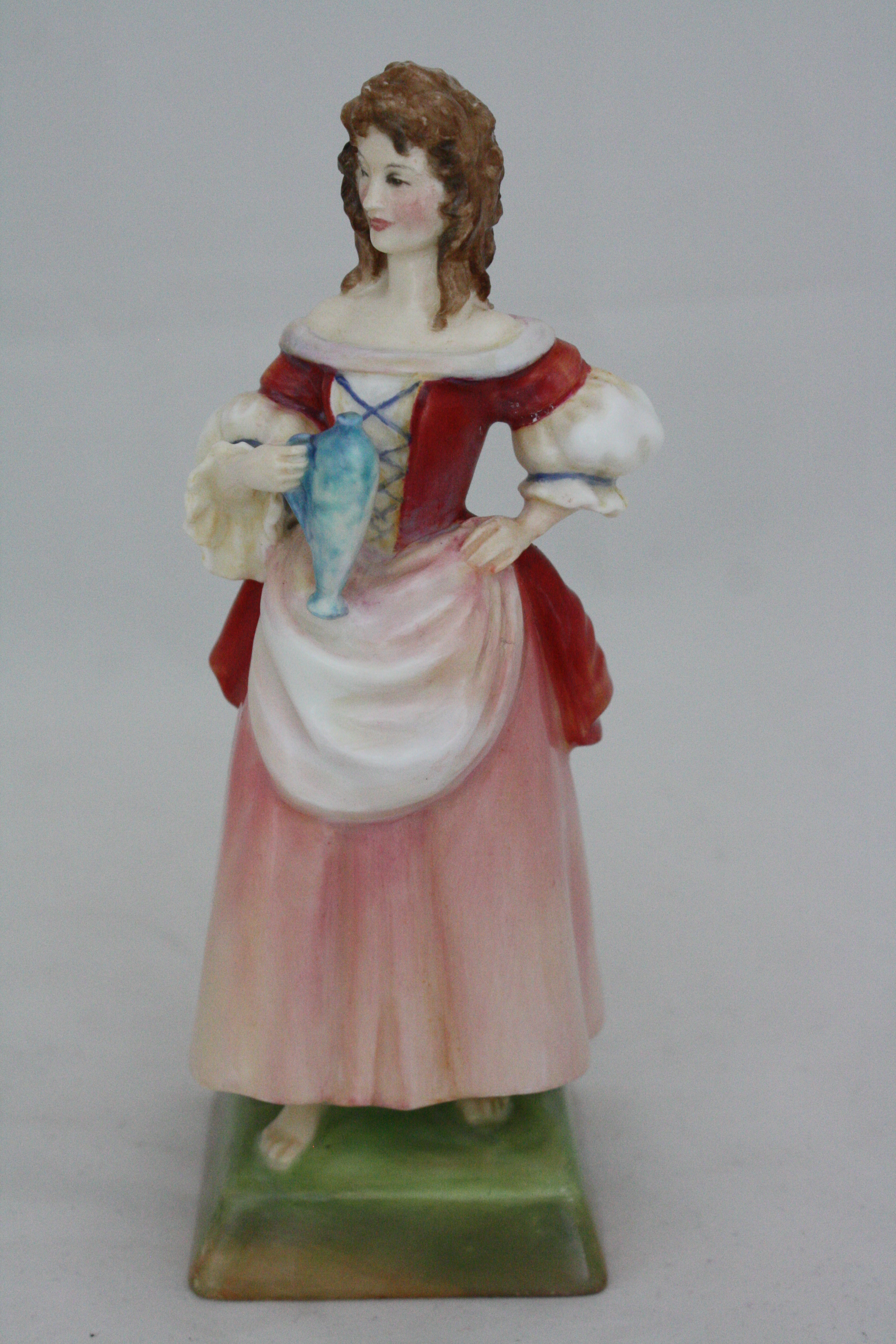
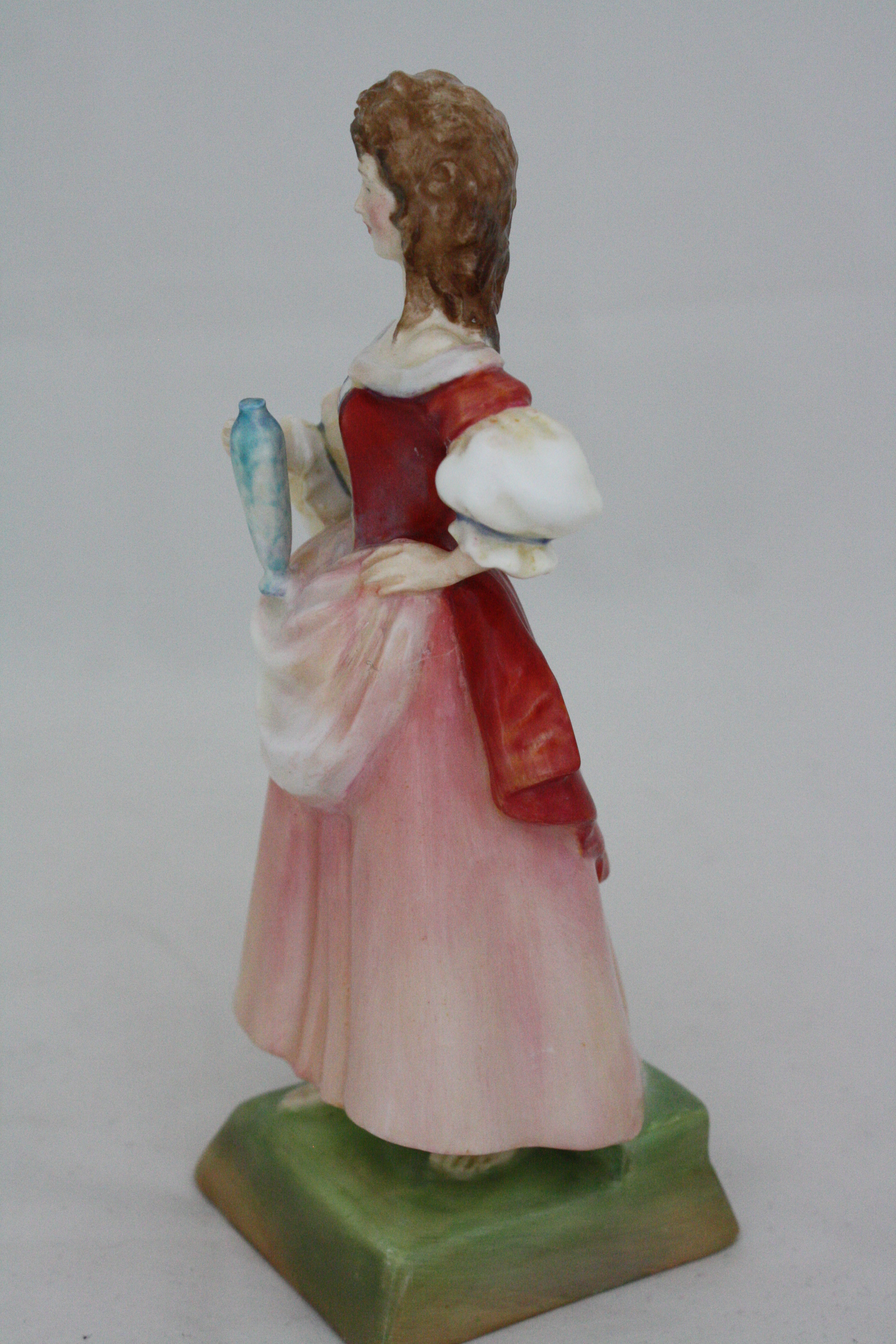
I have recently been asked for advice from Karyn and Gordon Harvey on the figure below from their collection, purchased recently and something they hope is a prototype. Here are the pictures they sent in.

Image

IMG_1323 IMG_1326


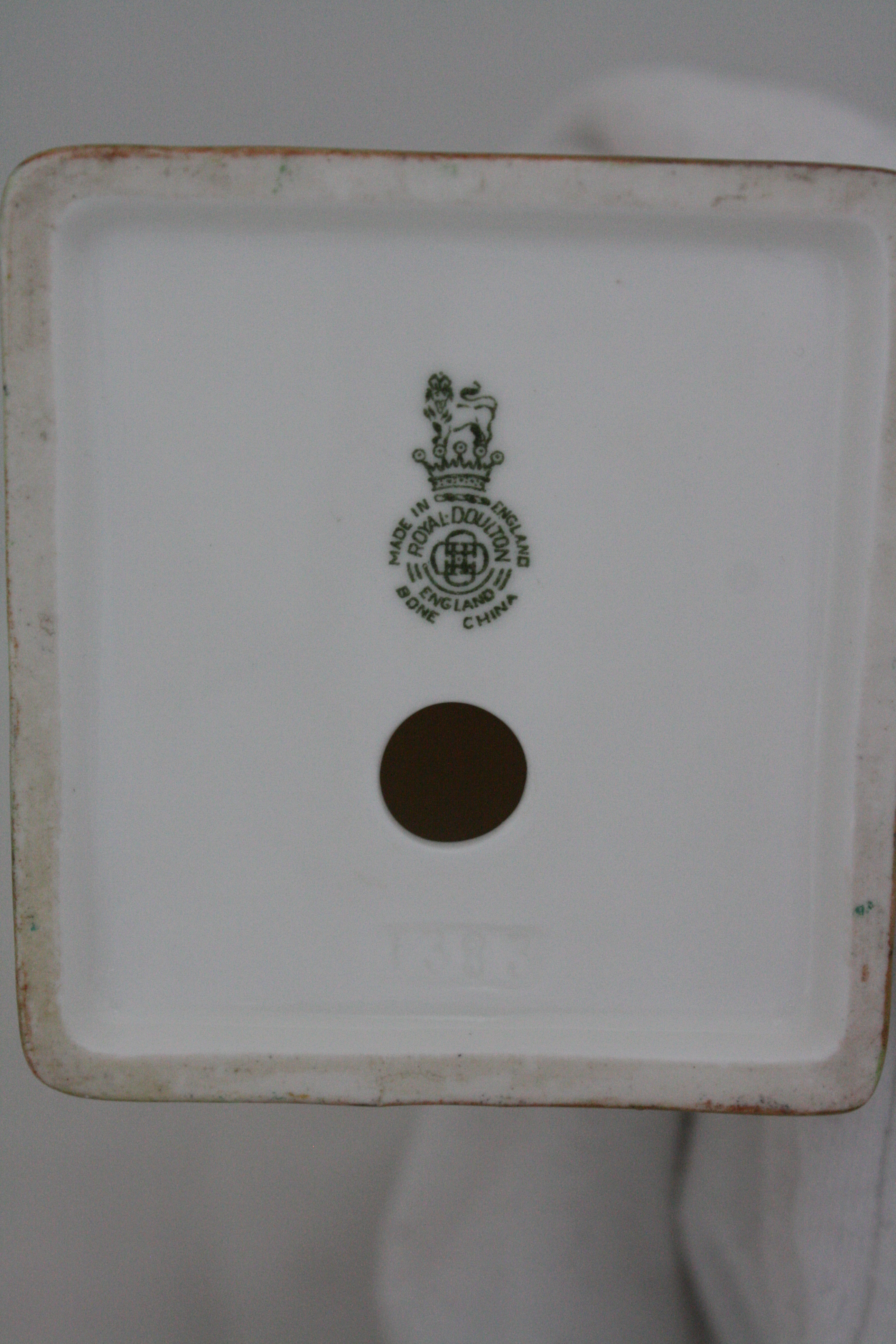
My initial thoughts were that it was clearly a Peggy Davies figure; note the style of the head and the hair and also the detailed modelling. At this time I think she really was trying to imitate Harradine, before developing her own individual style. The head and hair are very reminicent to her figures The Leisure Hour and also Promenade.  One give away to any unknown figure is always the face – I once heard that only after 10 years in the figure department would a painter be allowed to paint faces! Here we can see a very typical Doulton face of the 1950’s. Then we look at the base, and whilst there is a Doulton stamp – this cannot be taken in isolation to say for definite that it is a Doulton figure. However, here you can clearly see an impressed model number. Alas the shape books and design books are no longer available for us to consult, but through my own research I have put together a numbering sequence which leads me to believe that the model dates from the early 1950’s, and specificially to ca. 1953 and I am confident in saying that it is a Doulton piece.

Many prototypes from this time appear to be the work of Peggy Davies, a time when Doulton themselves were trying to rationalise production but also manage the cost effective production of their famous figures. No doubt this particular piece was deemed too expensive to reproduce due to the detailed modelling.

Earlier prototypes and colourways often carry the artist who painted them’s initials. In my experience there are two names which crop up time and again here, and they are RB for Reginald Brown and HA for Harry Allen. This practice seems to have stopped in the 1950’s however when the painter’s initials began to be omitted.

In recent times I have noticed a whole hoard of so-called colourways and prototypes coming on to the market – and all I can do is re-iterate my belief that it is always best to buy from a reputable dealer as we would all hate to loose out on a fake!

My thanks to Karyn and Gordon Harvey for their pictures.