Category Archives: Art deco

Royal Doulton’s Helen, her origins and her successor! 

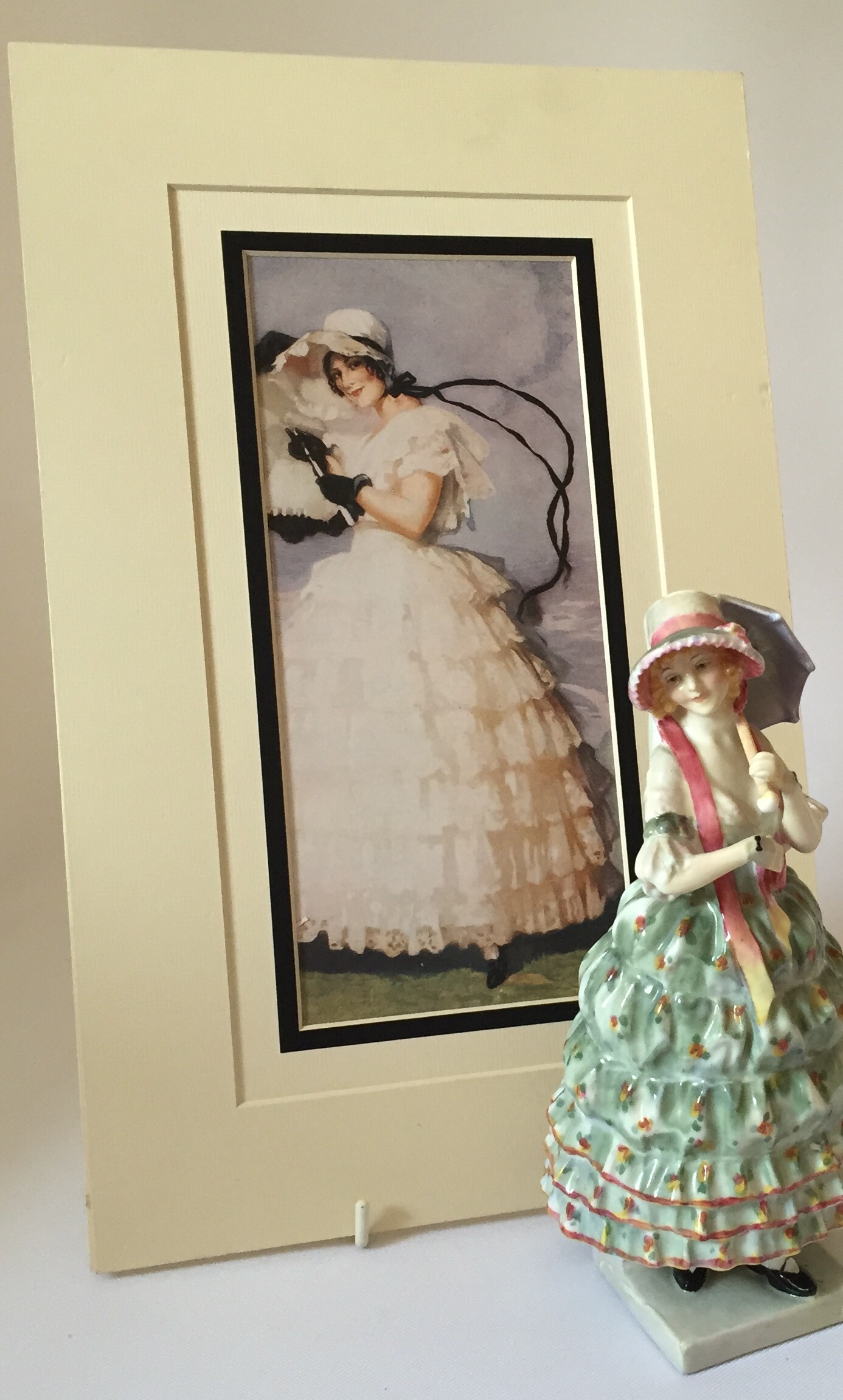
The inspiration behind many of Doulton’s earliest figures comes from contemporary paintings and such is the case with Harradine’s Helen introduced in 1932.
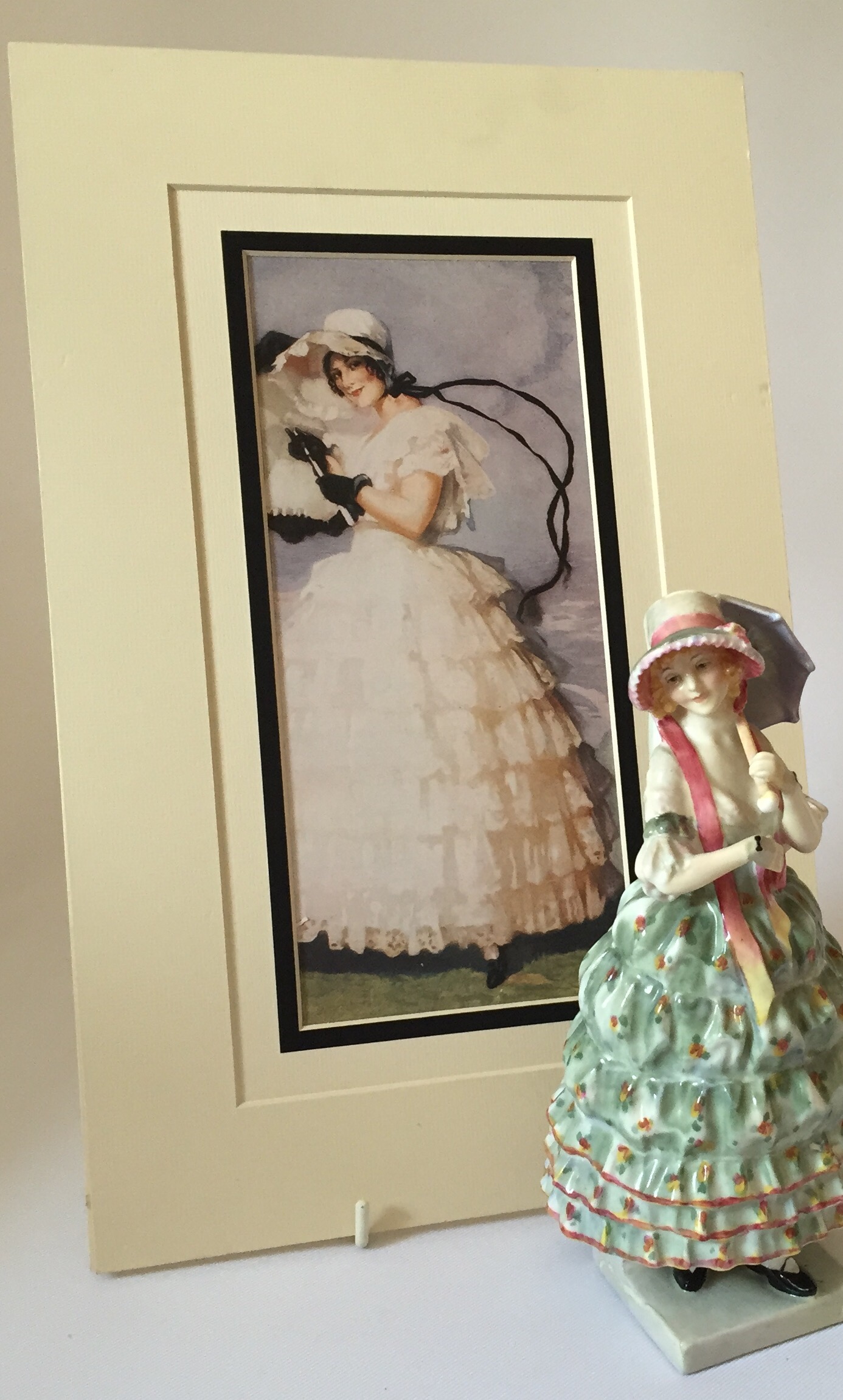
  
Helen HN 1508 with the Webster picture that inspired her.

It was not unusual for complicated figures to be re-modelled after problems arise in their manufacture or because they are too complicated to produced or simply because of market response (Consider Sweet Maid who became Millicent with a fuller skirt). 

  
Helen HN 1572 (1933) and June HN 1947 (1940).

Thus Helen became the popular figure June HN 1690 (1935) with an altered skirt and now holding a bouquet of flowers, which was again re-issued after WWII in slightly more muted tones and simplified flowers and detail to the modelling.
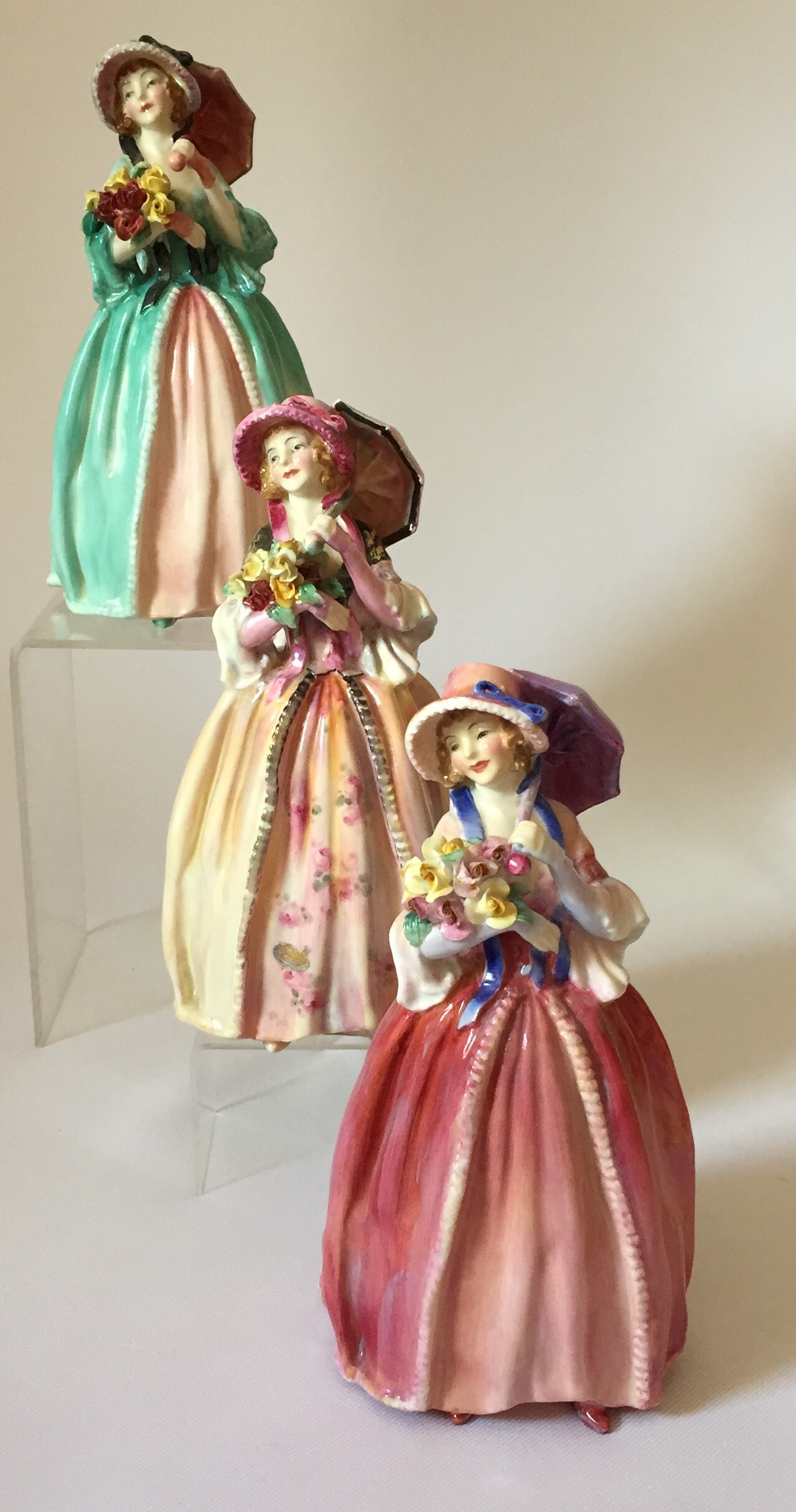
  

The original three: HN 1690, 1691 and 1947.

The withdrawal dates for the figure Helen say ‘by 1938’ but we can presume that the production was actually much shorter based on the fact that June was introduced in 1935 and I certainly haven’t seen any ‘Helens’ dated after 1934 – but perhaps you have? If so, why not share her with us on our facebook page ‘Doulton Collectors Club’! 
  

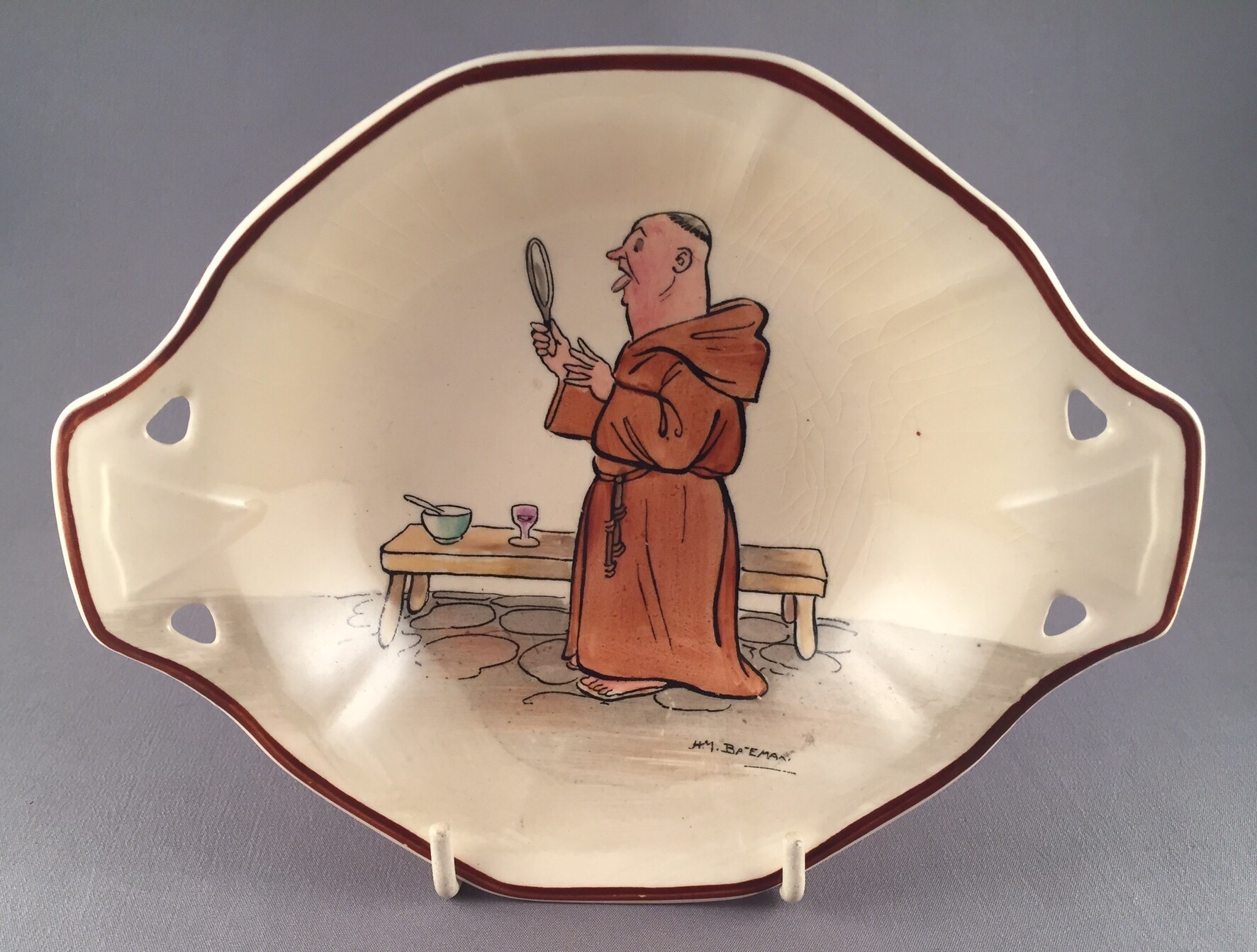
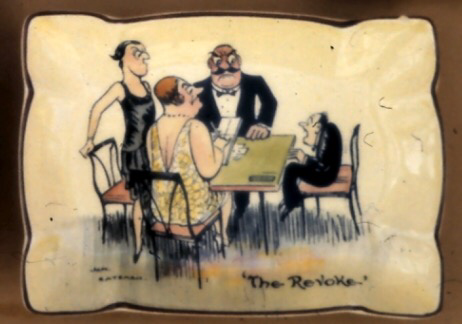
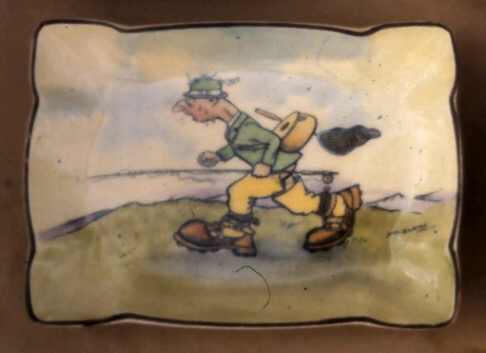
Collecting H. M. Bateman’s illustrations on Doulton seriesware! 

Henry Mayo Bateman was an Australian illustrator, most famous for his cartoons captioned ‘the man who….’. 

 These illustrations featured a haphazard man who continually ‘puts his foot in it’ as we say here in the UK, meaning that he commits the most awkward gaffes! 

  His cartoons were featured in leading magazines of the period including The Tatler and Sketch. 

  Returning to his seriesware illustrations they are termed as rare among collectors who appreciate the humour of his scenes and when they do turn up even on small items they regularly reach three figure sums! His designs on Doultonware feature a facsimile signature and from experience date to 1937-8.

Royal Doulton – all that glitters…

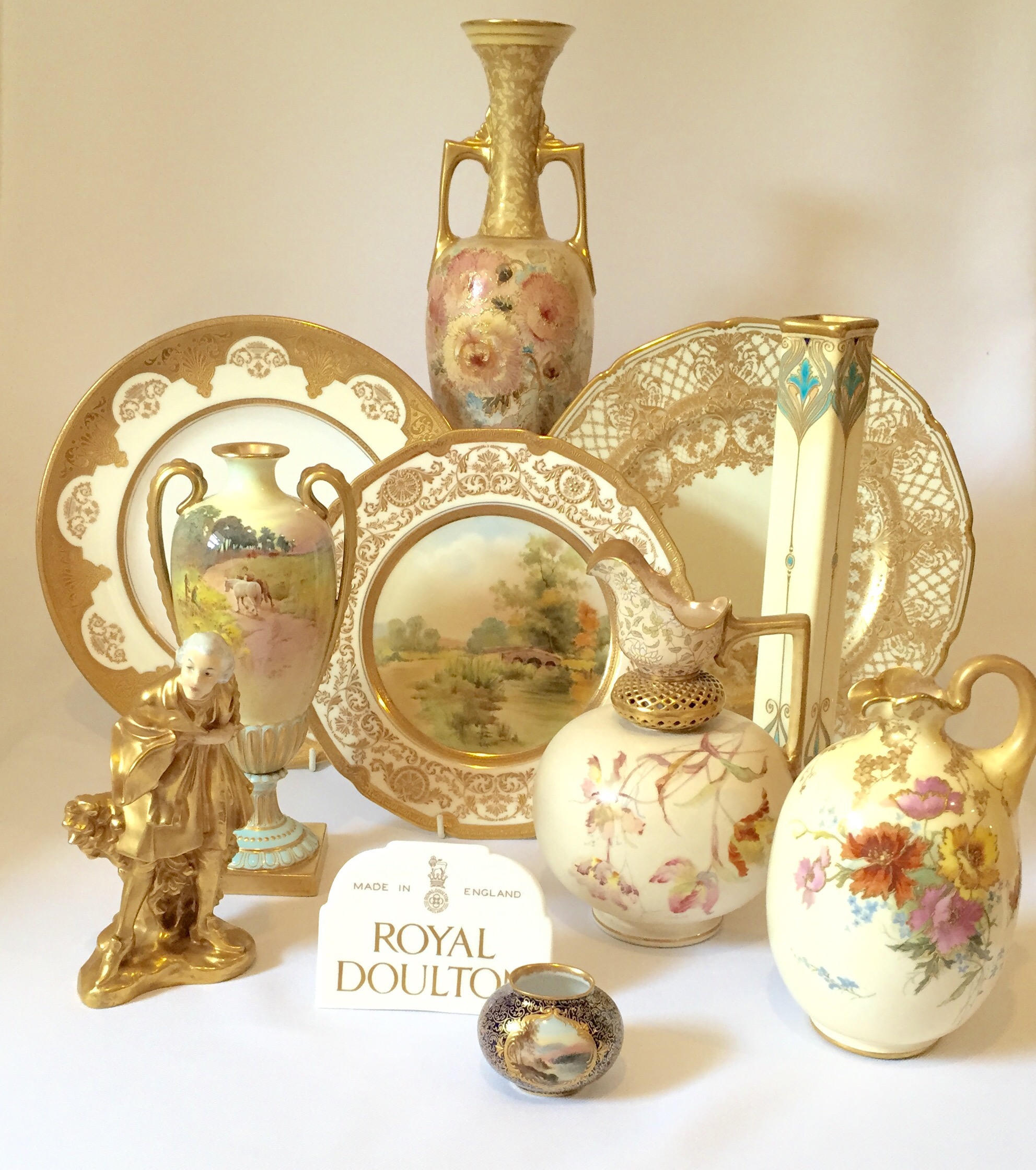
….may not be solid gold, but nevertheless it is gold that is used to decorate many of Doulton’s most extravagant Burslem wares produced during the last two centuries!

  
Whether it be wares including Doulton’s famous Spanishware with its gold tracery or the prestigious acid gold etching that is found on quality exhibition items and tea wares (both of which can be seen in the illustration), or else burnished gold to decorate their famous figures, Doulton has always produced something gold to suit every collector. 

Many of the elaborate gilt design of the 20th Century were designed by Robert Allen, who ran an art department at Burslem and who worked closely with Doulton’s art director CJ Noke on many of their famous lines. Allen’s designs were brought to life by a small band of expert gilders such as Thomas Morton or the Williams Massey and Skinner.

The sheer variety of Doulton’s gilded wares really does mean that there is something for every collector and let us not forget that whilst gilding is not typically associated with their Lambeth wares, it was used on chiné and the gold whorl patterns for decades and can be found on some artist pieces most notable in my experience on the work of Francis C. Pope. 

Collecting Doulton’s mid-size character jugs.

When what we know as Character jugs today, were launched back in 1934 it was very much a time of trial and error in respect of what to introduce and the sizes that appealed most to collectors. What we know as Large jugs today were the first introductions, then with Sairey Gamp in 1935 we saw a small size jug introduced as well as the standard large size. In this same vein Doulton introduced a medium size jug in 1938 with six characters from Dickens’ works. These were all withdrawn by 1948. 

The six characters were:

Buzz Fuzz D5838

Mr Pickwick D5839

Fat Boy D5840

Sam Weller D5841

Cap’n Cuttle D5842

Mr Micawber D5843

To complicate matters these numbers also refer to the small sizes of each of these jugs too and when available as a table lighter, again the same D number applies. 

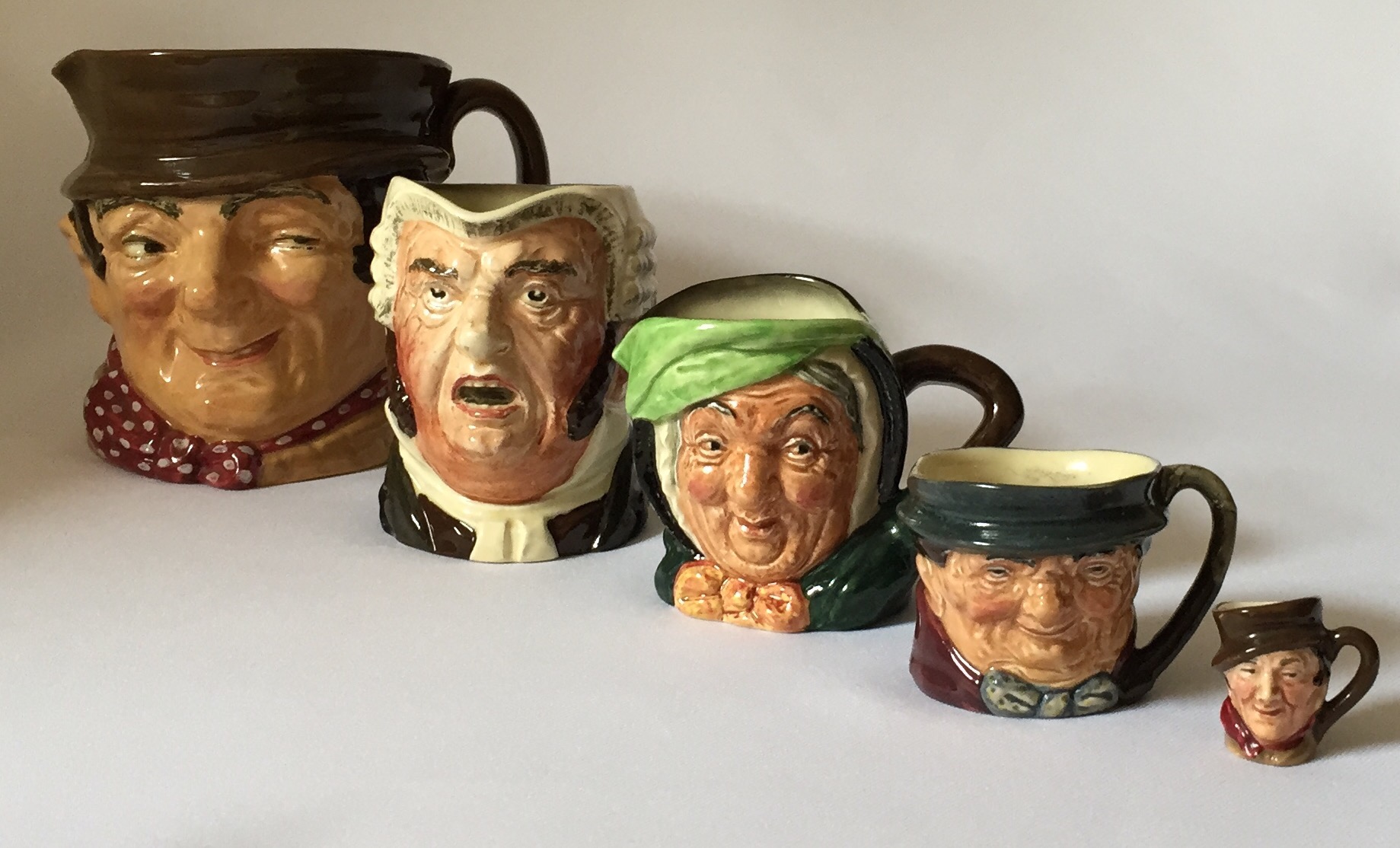
To illustrate the sizes of jugs here are a handful of Dickens’ characters forever immortalised by Doulton! 

  
l-r: large, mid-size, small, mini and tiny.

Collecting Doulton’s ‘Surfing’ seriesware pattern. 

  
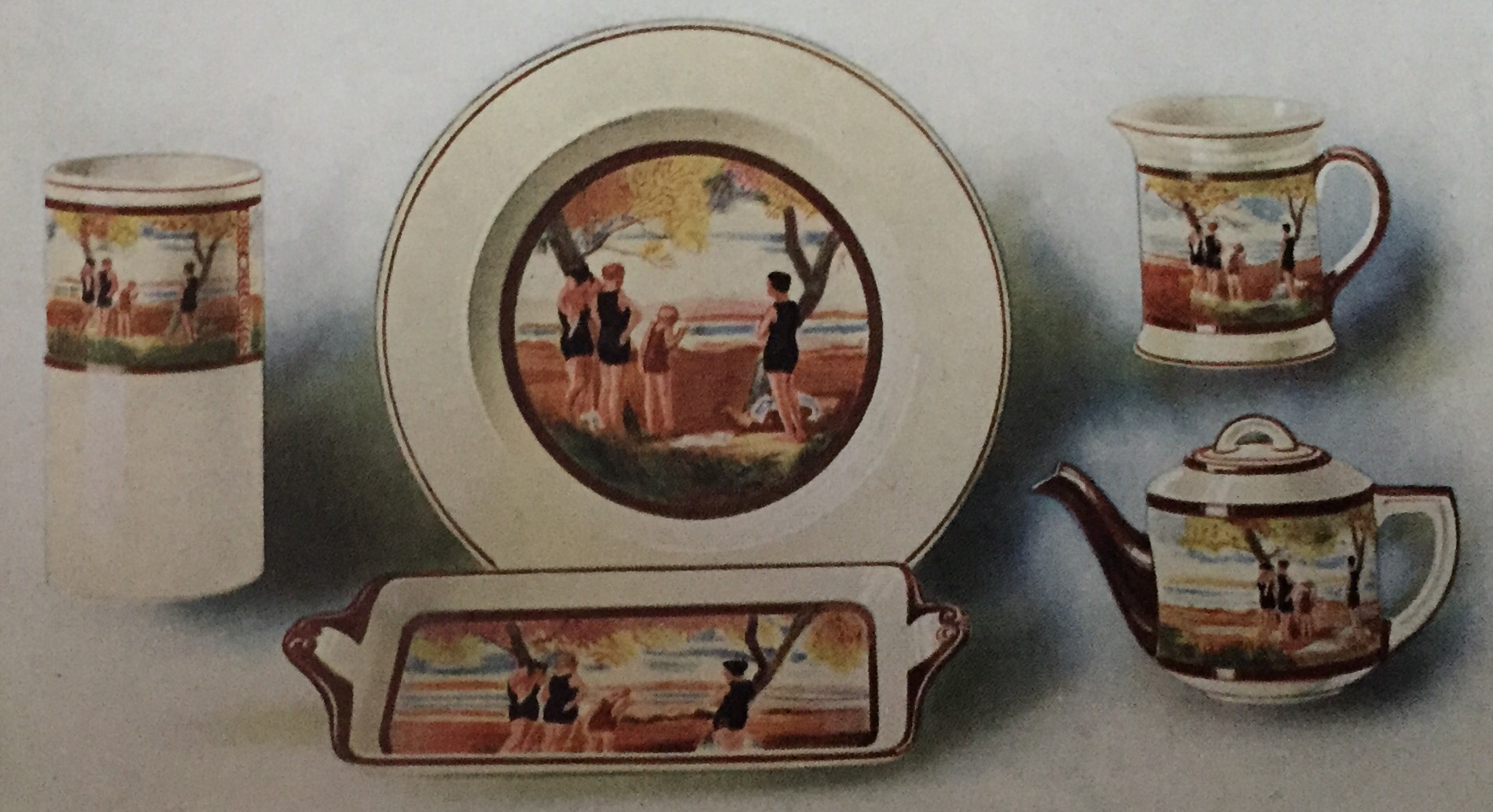
Part of an early catalogue page featuring ‘Surfing’.

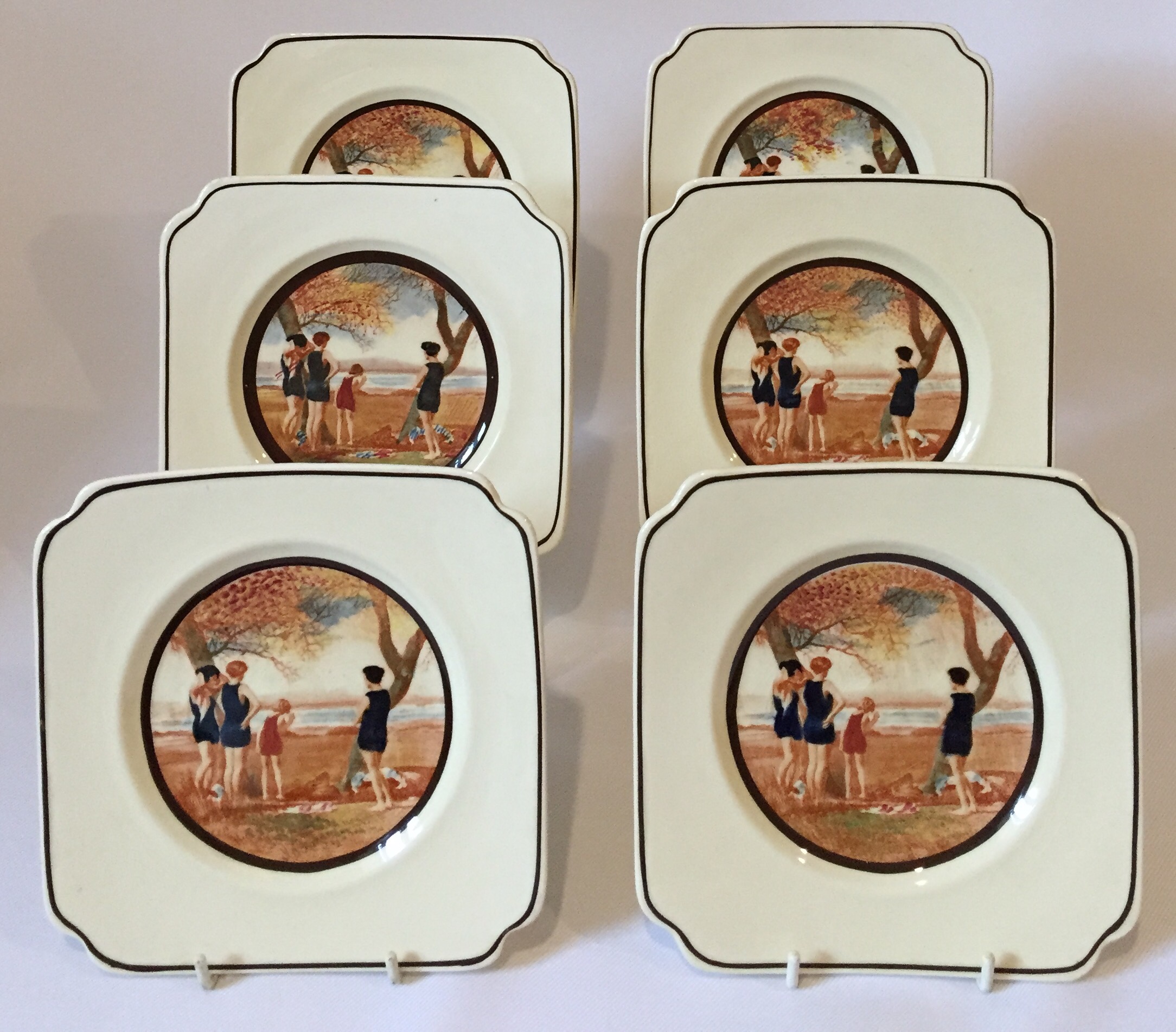
Introduced in 1926 at the height of the roaring 1920’s this truly deco pattern must have been considered too modern to the general buying public of the time as examples rarely appear today. 

  
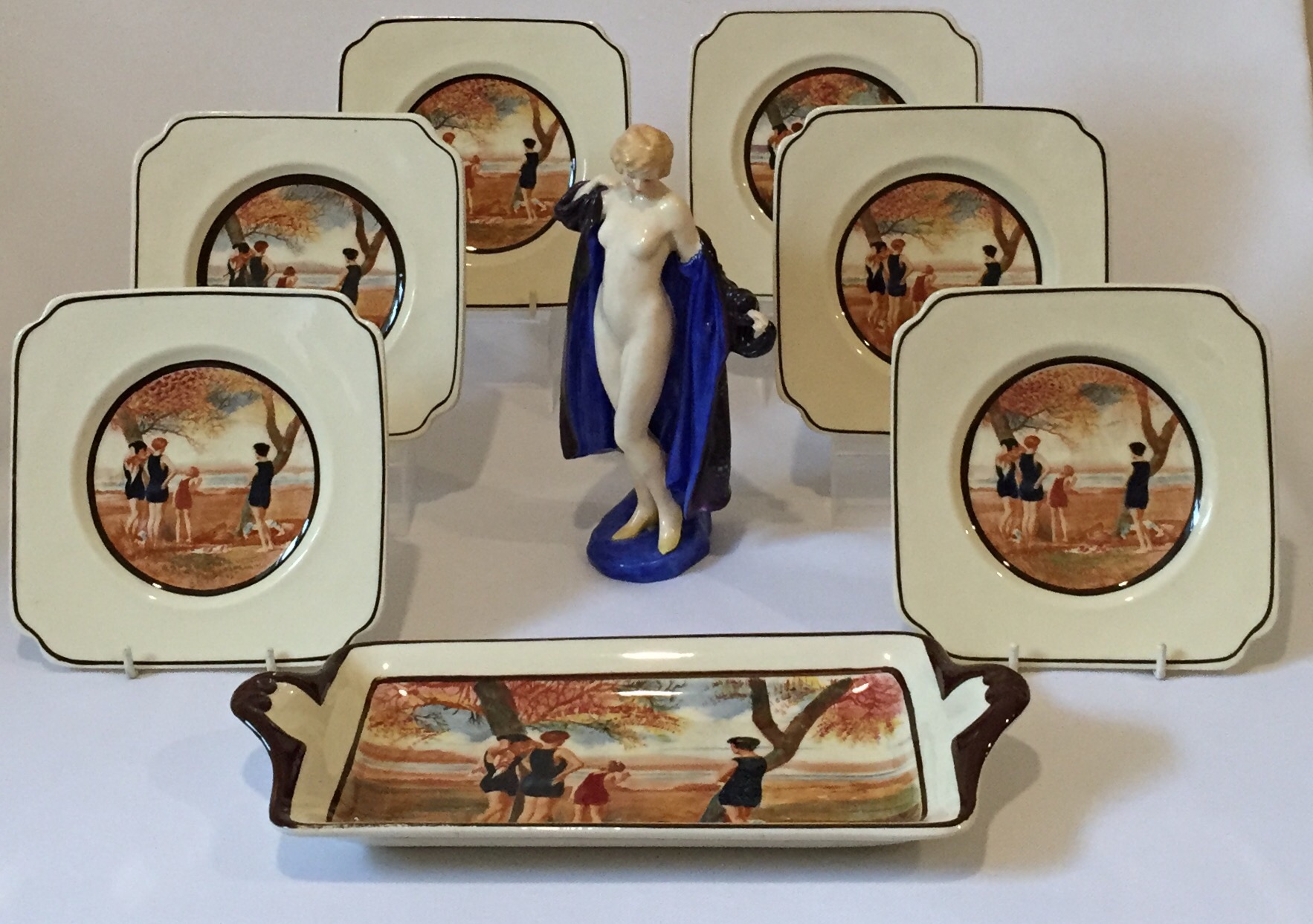
Distinctly Art Deco in style and echoing the handful of.    figures of bathers and swimmers in Doulton’s HN collection, this seriesware pattern is the perfect accompaniment to a display of deco ladies. 

There appears to be only one scene within this pattern, although I have seen it on numerous items, including most recently a pin tray. Although shapes were added to the series in 1928, production will have been very limited given the lack of this pattern appearing on the secondary market and will have been withdrawn long before the suggested ‘by 1942’ that is often suggested.   

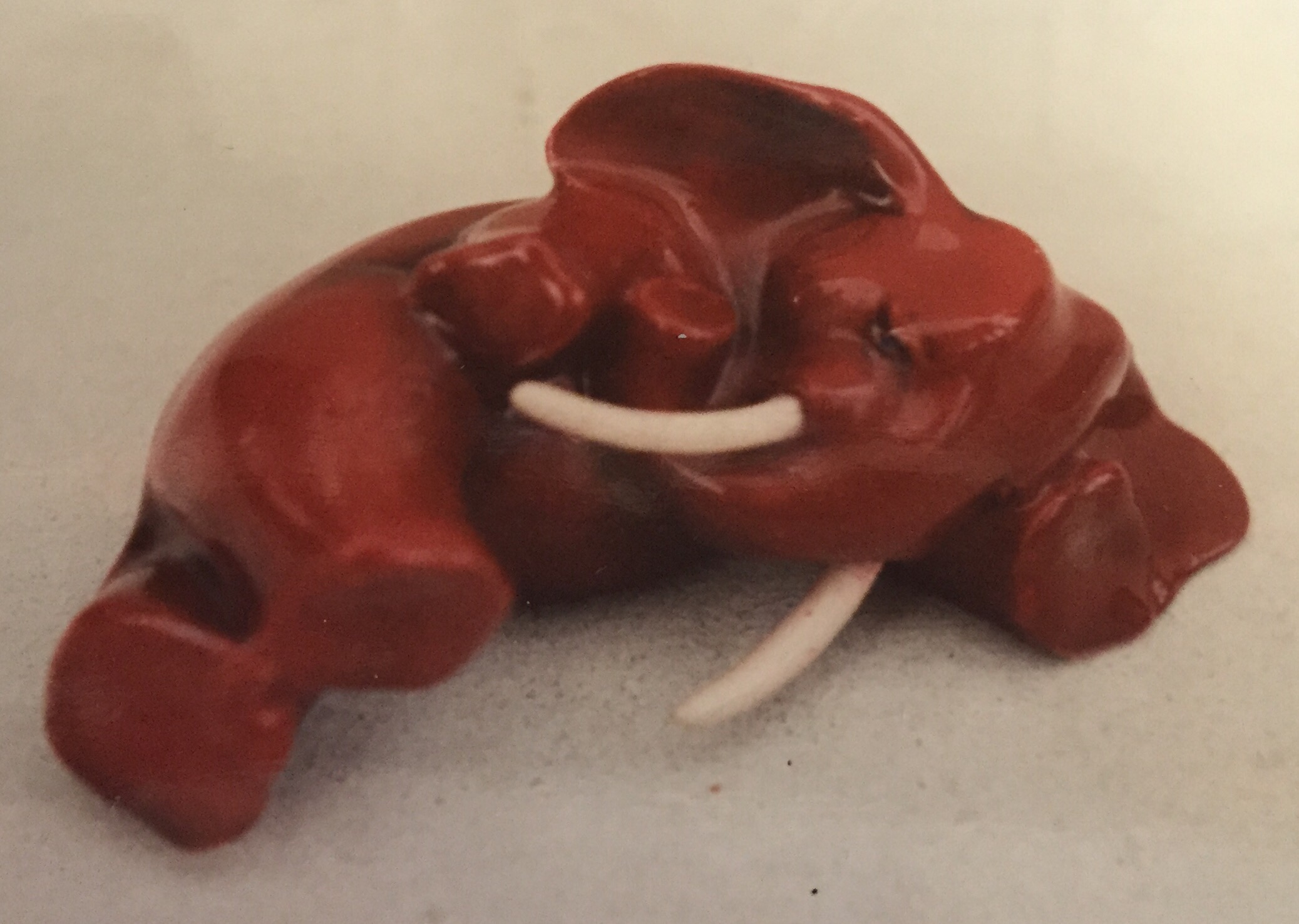
Collecting Doulton flambé elephants. 

With a long history steeped in myth and also religious importance it is no surprise that there are so many elephant studies to be found in flambé and other associated glazes. 

  
Very rare character elephant in flambé.

Asian religion gives particular importance to the elephant and so the marriage with the flambé glaze seems particularly appropriate. 

  
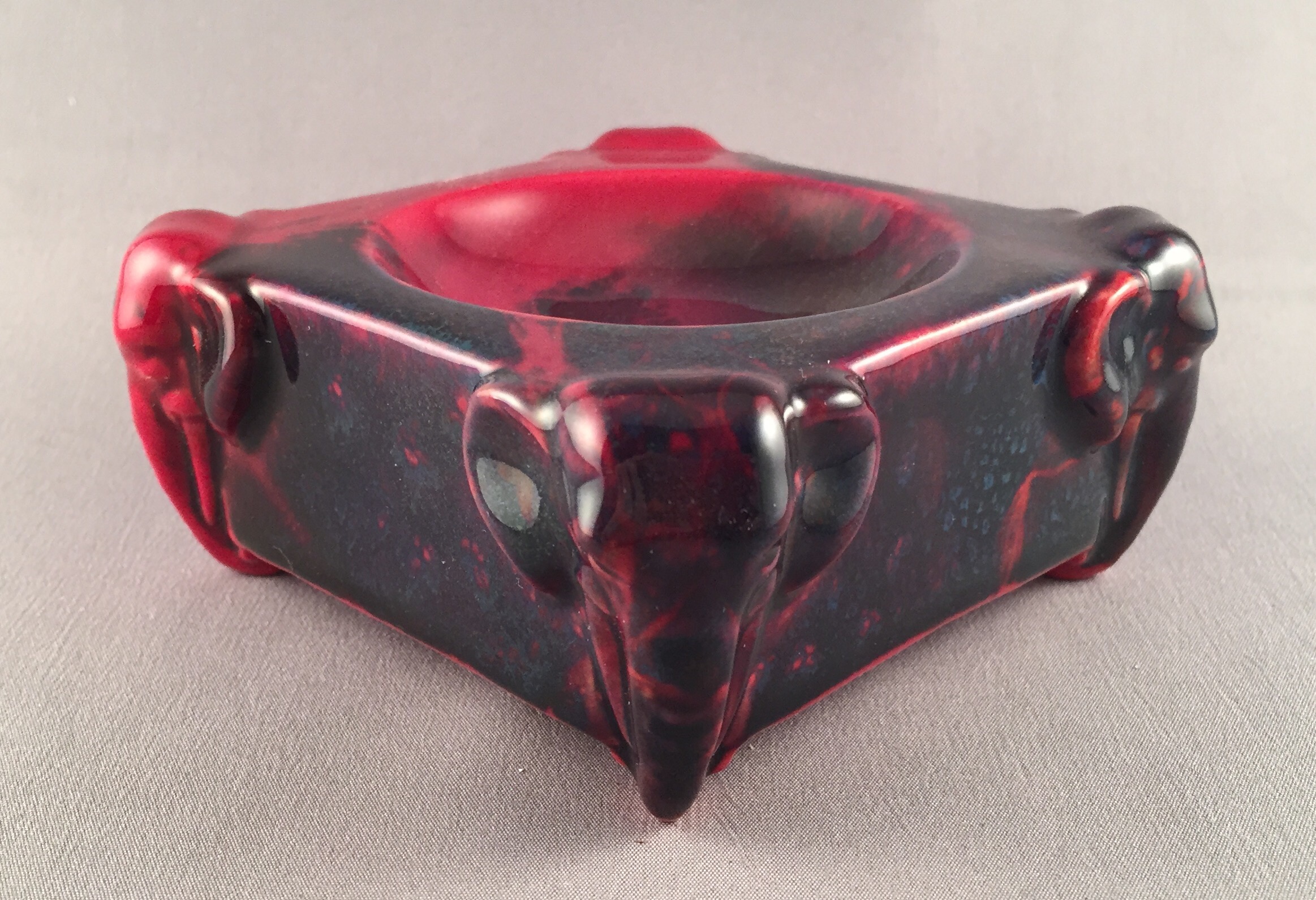
Elephant head ashtray in Sung, discontinued 1961.

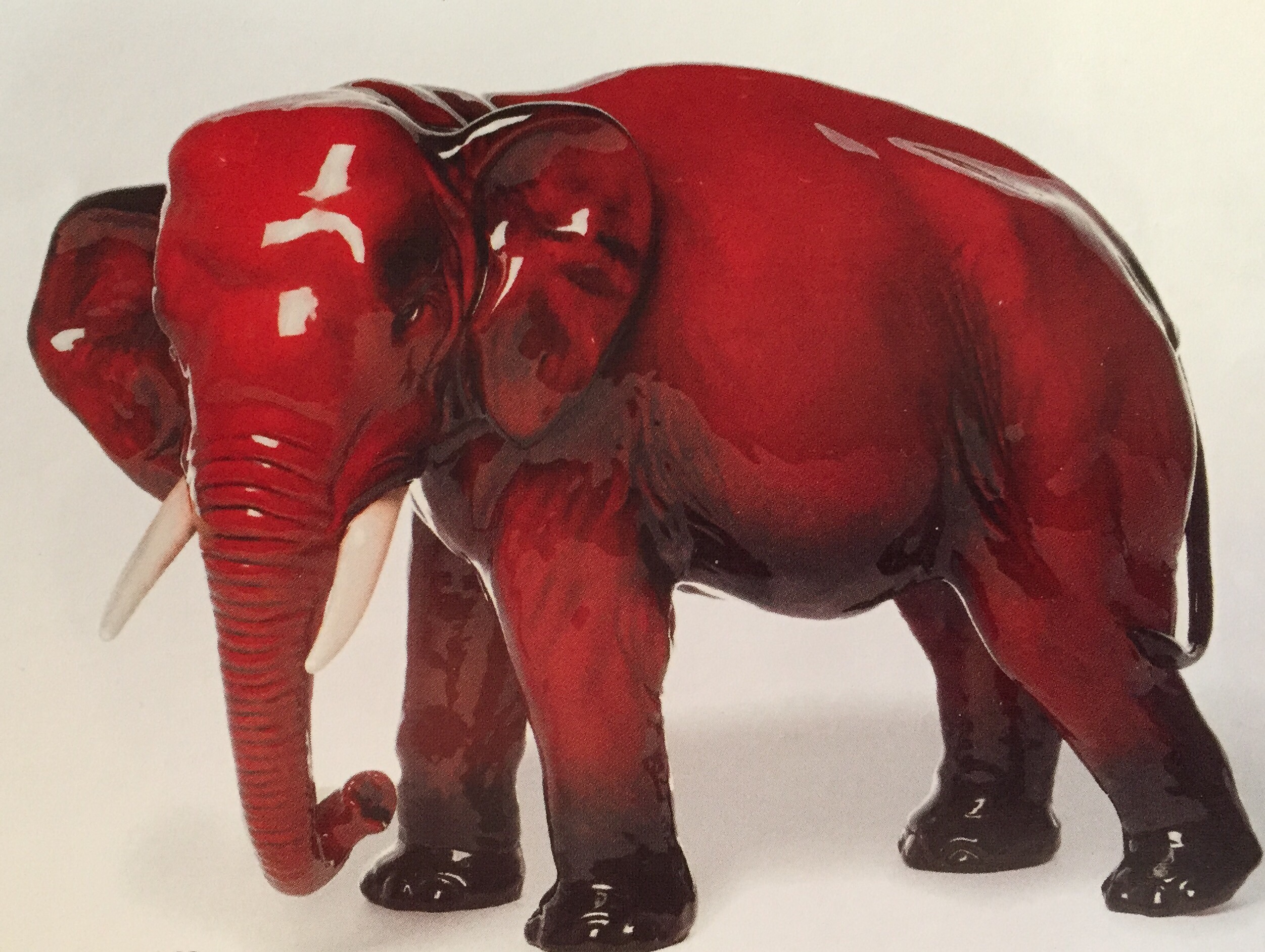
The elephant is a symbol of strength And given the size of some of Doulton’s elephant studies they certainly convert this immense strength. 

  
Large size elephant 47cm long.

The interesting part of collecting this species is that many early models were given additional and different treatments including Sung and Chinese Jade.

Doulton figure painter T. J. Parton.

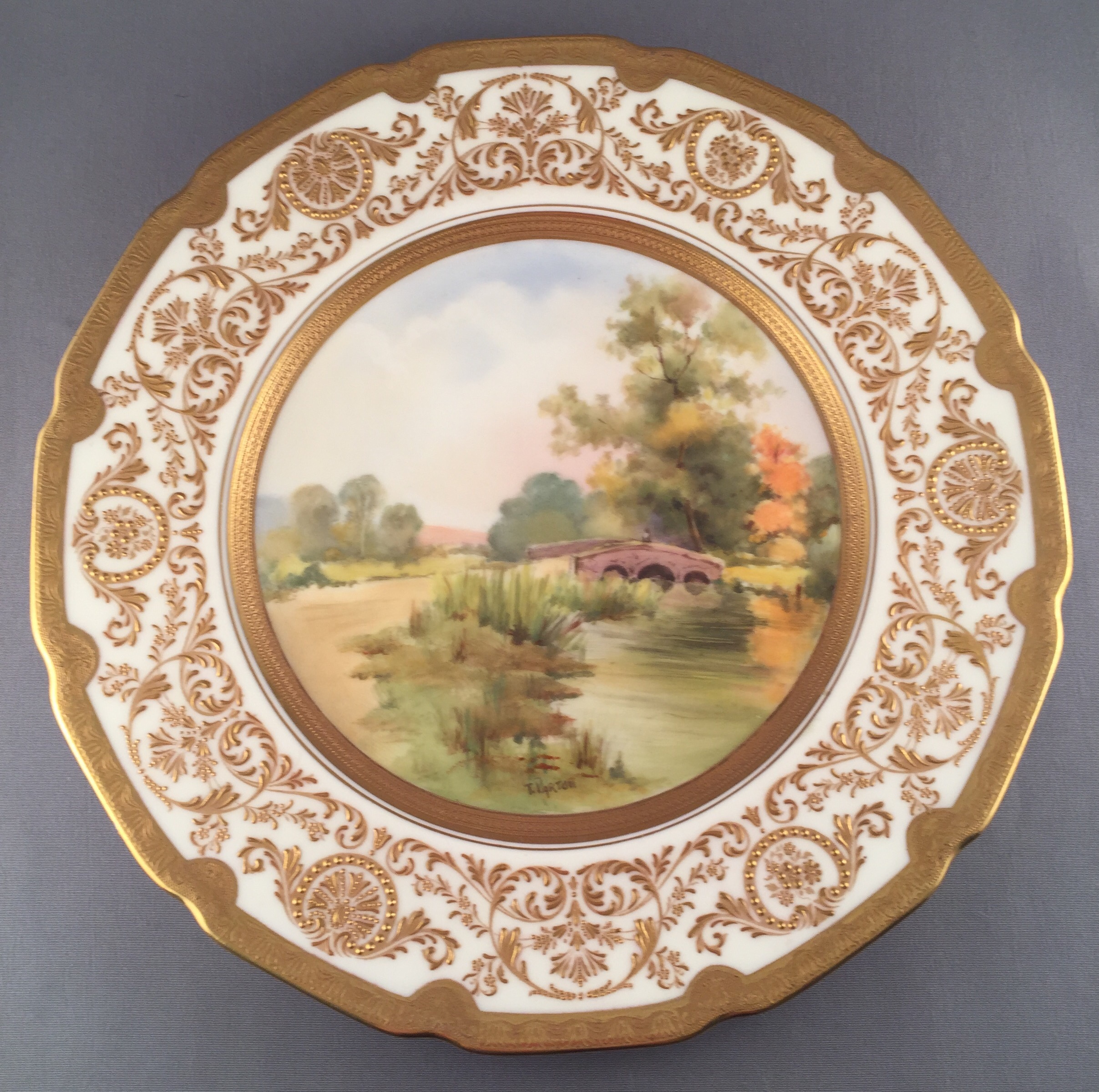
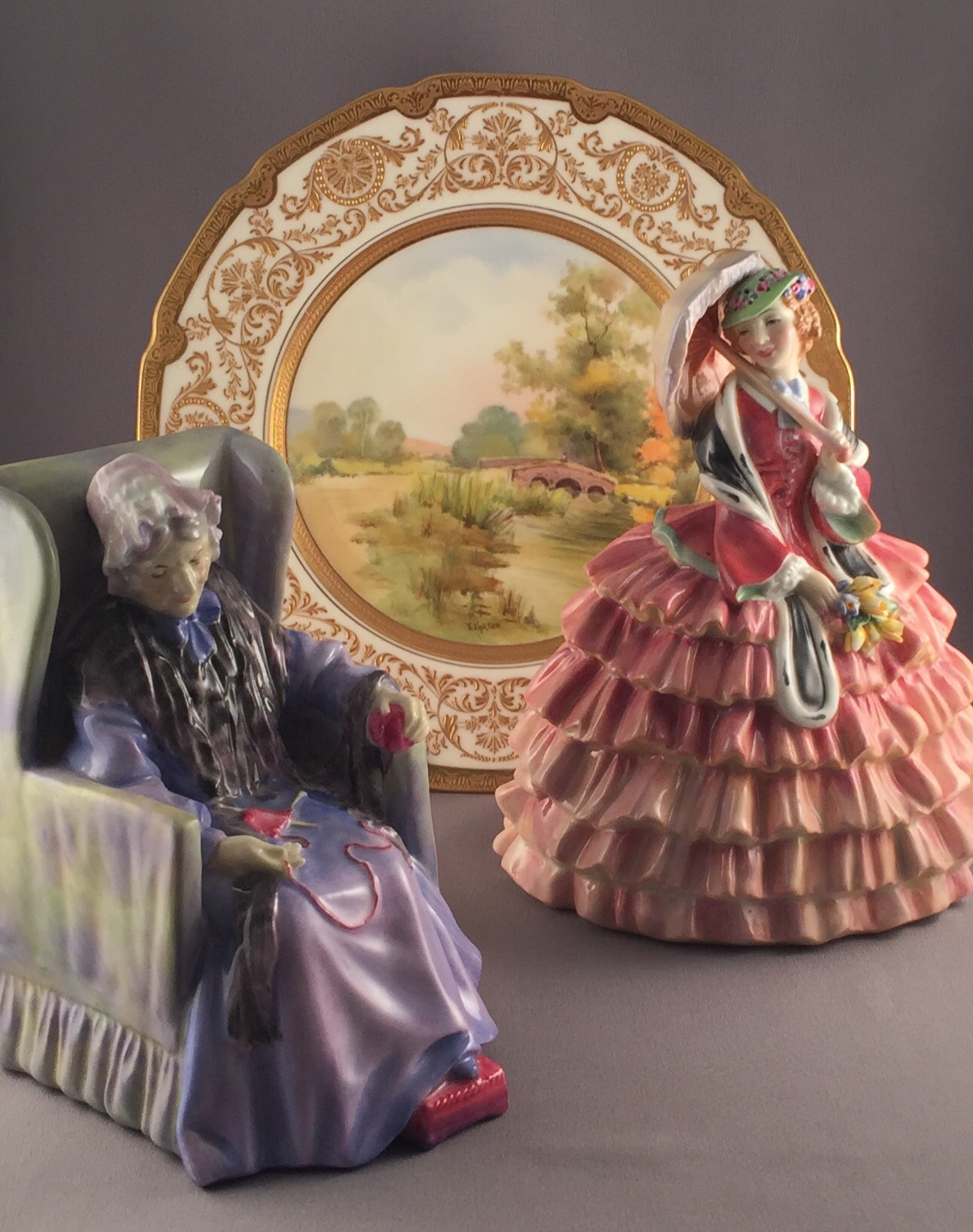
I would like to have called this piece one of our artist profile blogs but details on this particular artist remain sketchy. It was thought that he joined the small team of figure painters at Doulton in or around 1930, but the discovery of the plate below dates his arrival at Nile St to 1928 or earlier.


Handpainted plate by T. Parton dated 5.28.

The artists monogram ‘TJP’ can be found on figures from 1930 through to 1940 but I am sure there are later examples out there. In 1927 there were 10 figure painters recorded at Nile St and Tom, I feel,  must have been one of these early artists. We must remember that even by 1939 there were apparently only 27 painters in the figure department! I recently found a long service record from 1973, which lists Tom with 46 years service as an on-glaze figure painter meaning that he joined in 1927 and was among the easiest figure team of 10! Interestingly there is also a Norman Parton with 42 years service, perhaps a younger brother of Tom’s?


TJP figures Joan (1930) and Toinette (1940). 

It is quite typical to find figure painters showing great versatility and examples of vases and such heavily gilded plates have been found by other early figure painters including Reg Brown and John Pierpoint.

Collecting Doulton exclusives for W.T.Lamb.

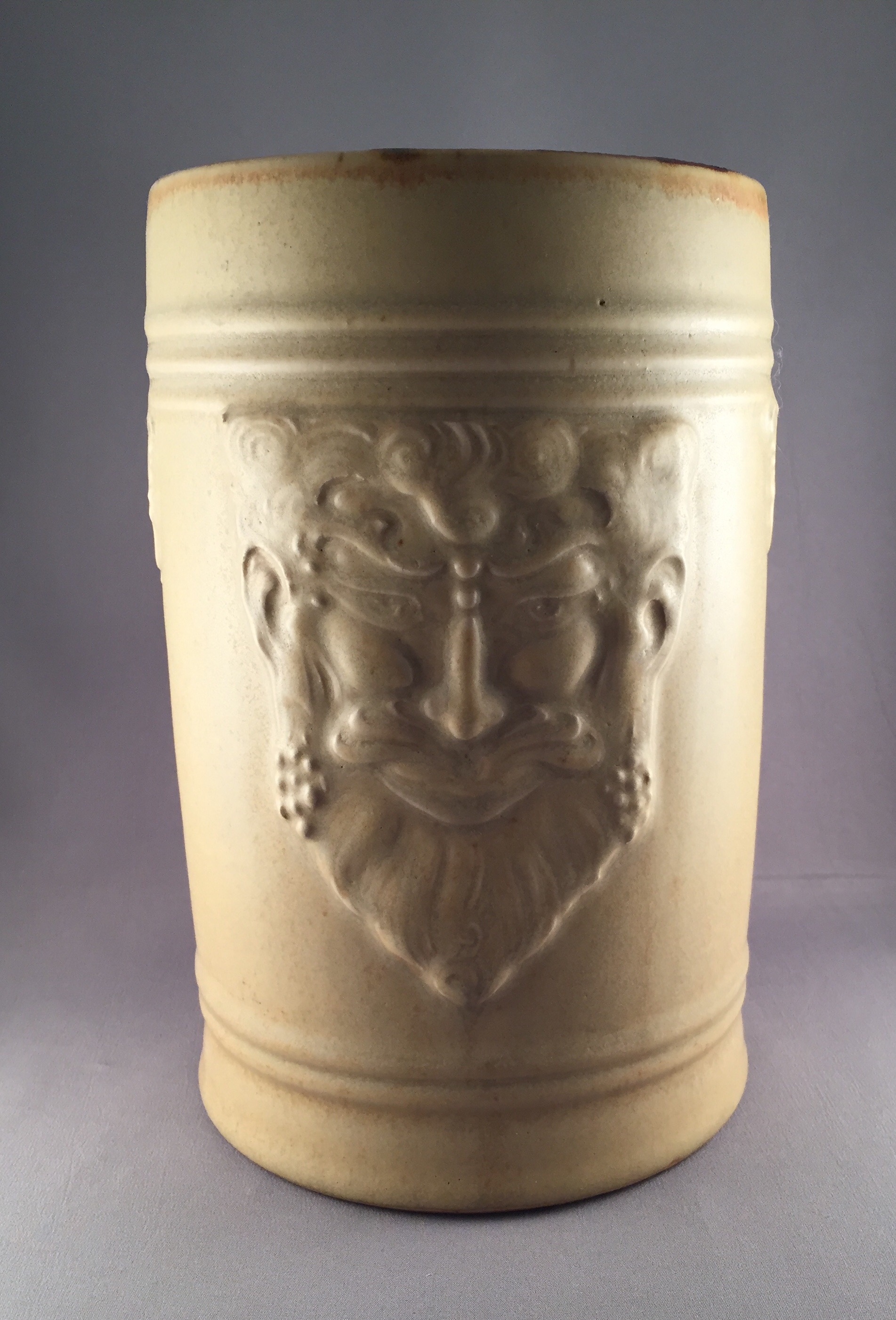
The Distillers W. T. Lamb & sons like many other firms commissioned exclusive designs from Doulton to supply as commemoratives or in the case of Lamb’s as Christmas Presents. 

This large size jug measuring 8.5″ features the head of Bacchus with appropriate vinery decorating the sides and bearing the initials of the company and the date 1929.


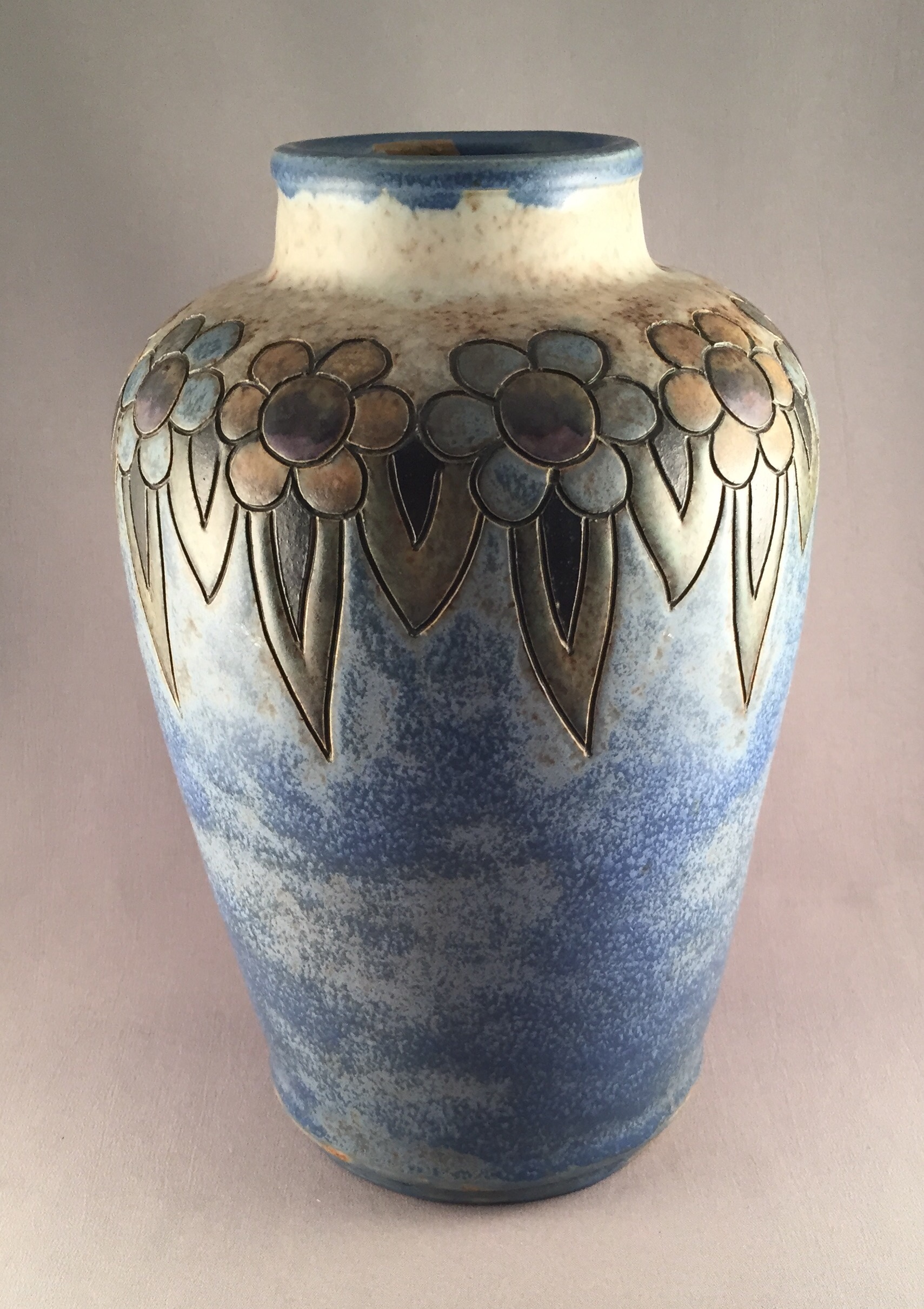
In total there have been 5 Doulton items found that were produced for W. T. Lamb including an early jug, a typical 1920’s comport, the above tankard, a fire-well or well head and this vase, probably a design by Vera Huggins and dated 1928. 

  
 These dated pieces date from 1927 through to Christmas 1931.

Other conpanies to Doulton also produced wares for Lambs including Poole but there are certainly other Doulton items out there to be found! 

Collecting Harry Rowntree’s rare Doulton designs.

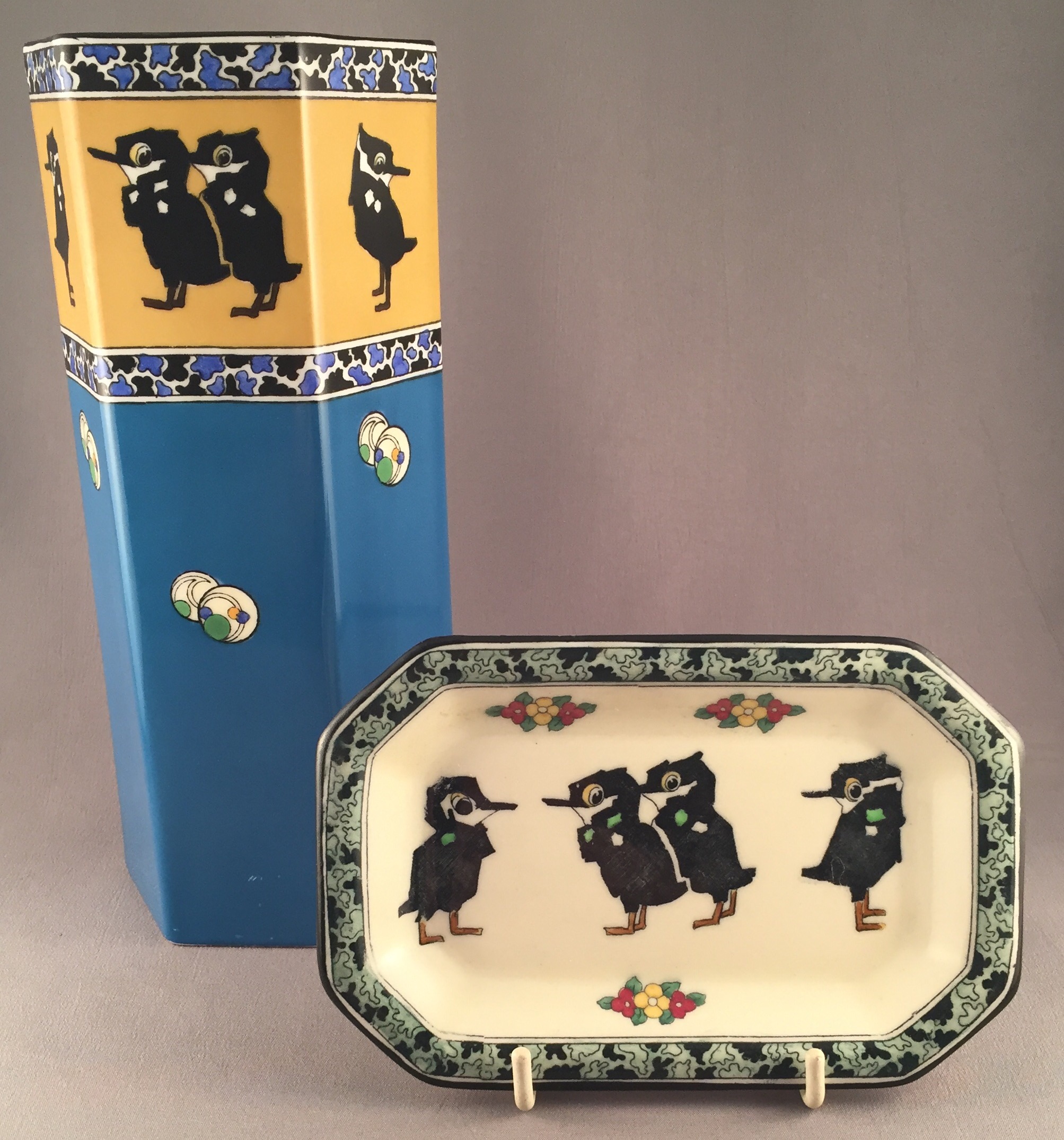
Harry Rowntree,illustrator, hailed from New Zealand where he also trained as a lithographer. Rowntree subsequently moved to England but struggled for a time until commissioned to illustrate a children’s animal book with which he found his forté and of course great success!  


Rowntree’s designs of animals and particularly birds are instantly recognisable and whilst his illustrative work was prolific his Doulton designs are very hard to find! The vase dates to 1921-3 whilst the pin tray is D4430 c.1924. 

Doulton’s craftsmen gilders.

Few Doulton collectors today will be familiar with the names Thomas Morton, William Massey or William Skinner, however, they played an important role in the early 20th Century history of Royal Doulton as its three leading gilders.


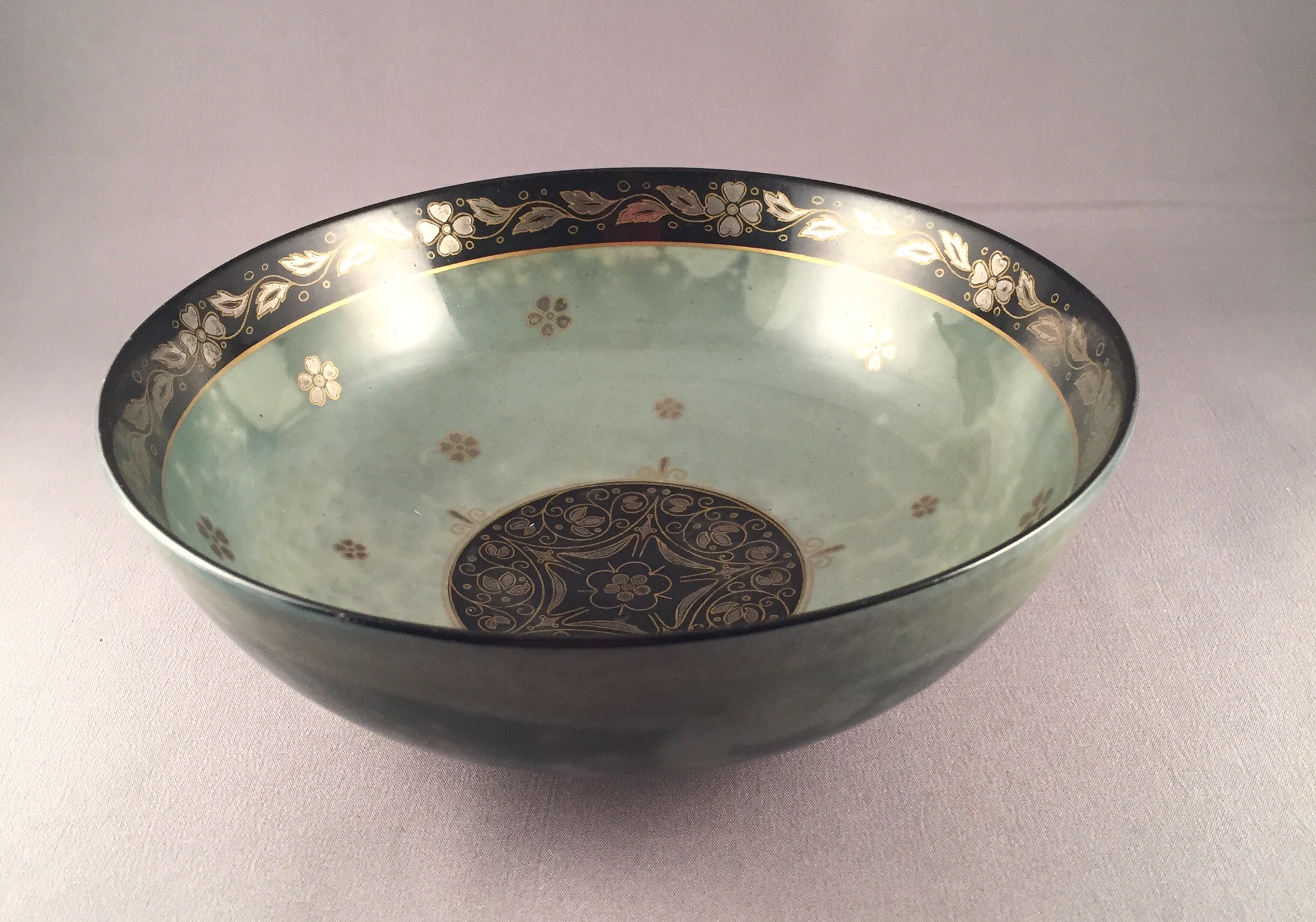
A Titanian bowl with gold and silver gilding.

These three craftsmen worked under the legendary Robert Allen, who led one of Doulton’s Burslem art studios and was father to Harry Allen too. Harry’s name will be forever linked to Titanian wares because of his many finely painted birds and other subjects on this ware.


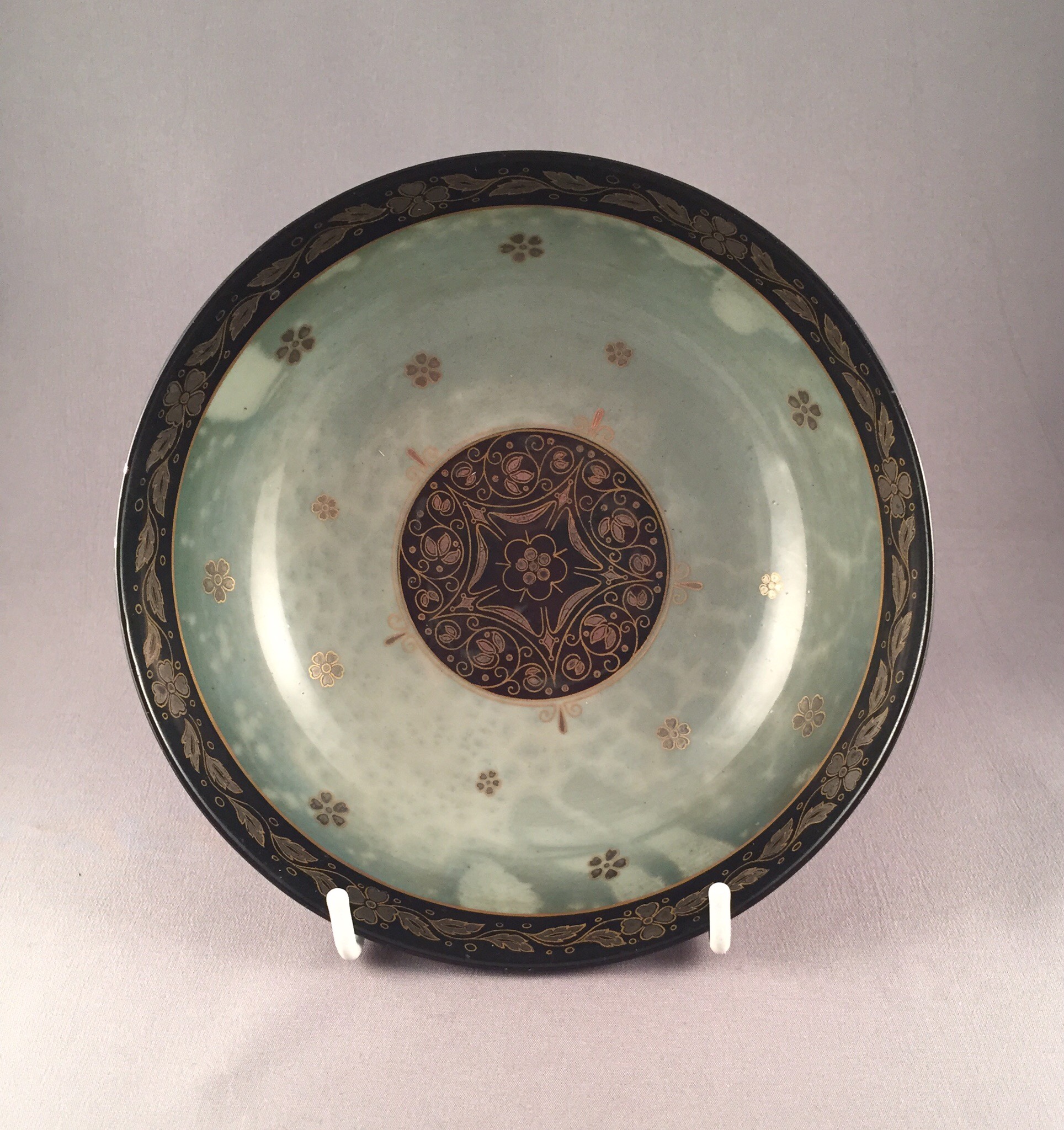
A view of the interior of the bowl.

The bowl illustrated is most unusual due to the use of gold and silver and alas is not signed by the gilder, but fortunately the RA number on the reverse dates it to the period of WWI, right at the start of Doulton’s short production of fine Titanian ware.

These master gilders would typically re-create on china the elaborate designs by Robert Allen, such as the design on this bowl.