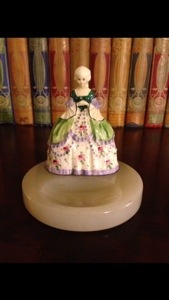
Category Archives: Figure Articles

Royal Doulton figures in pictures

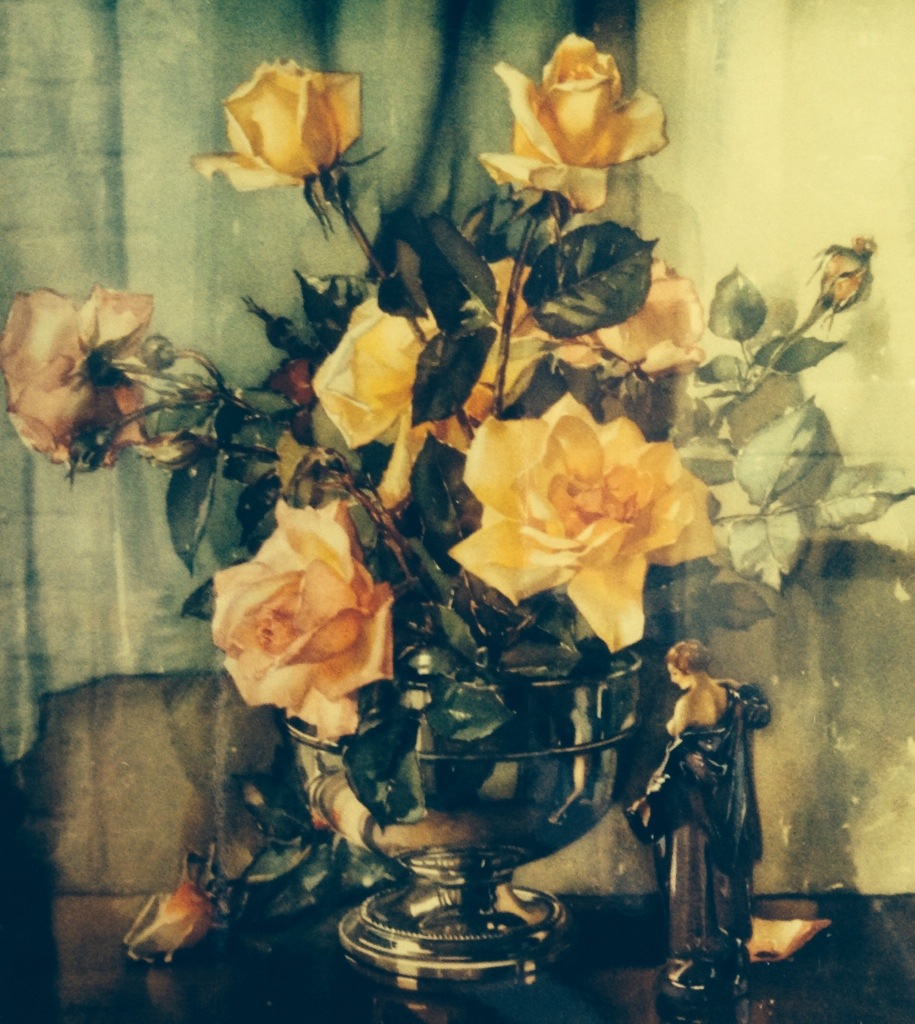
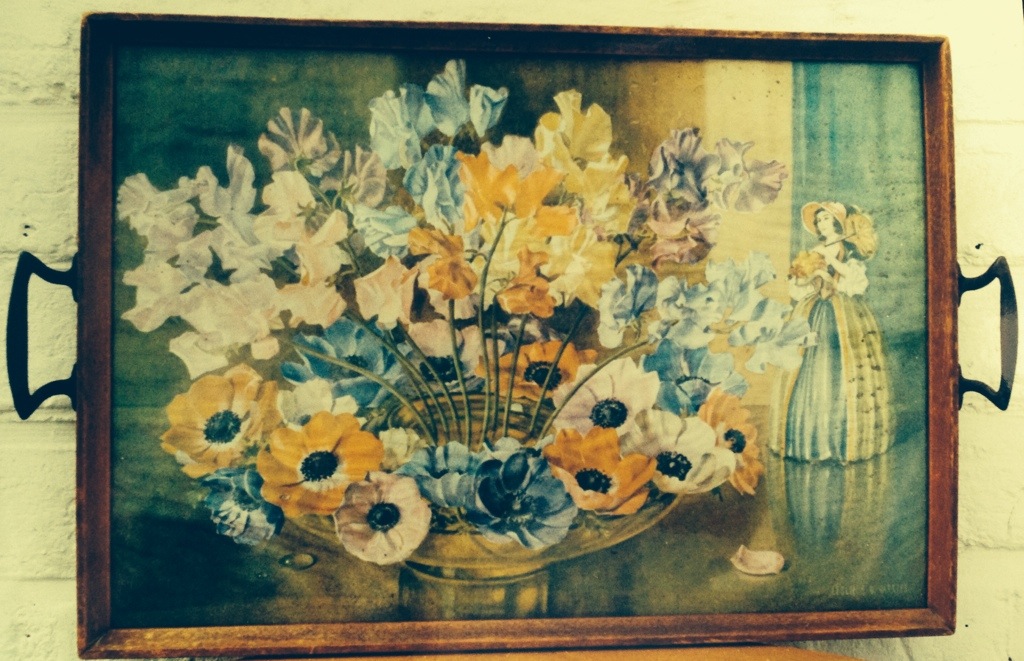
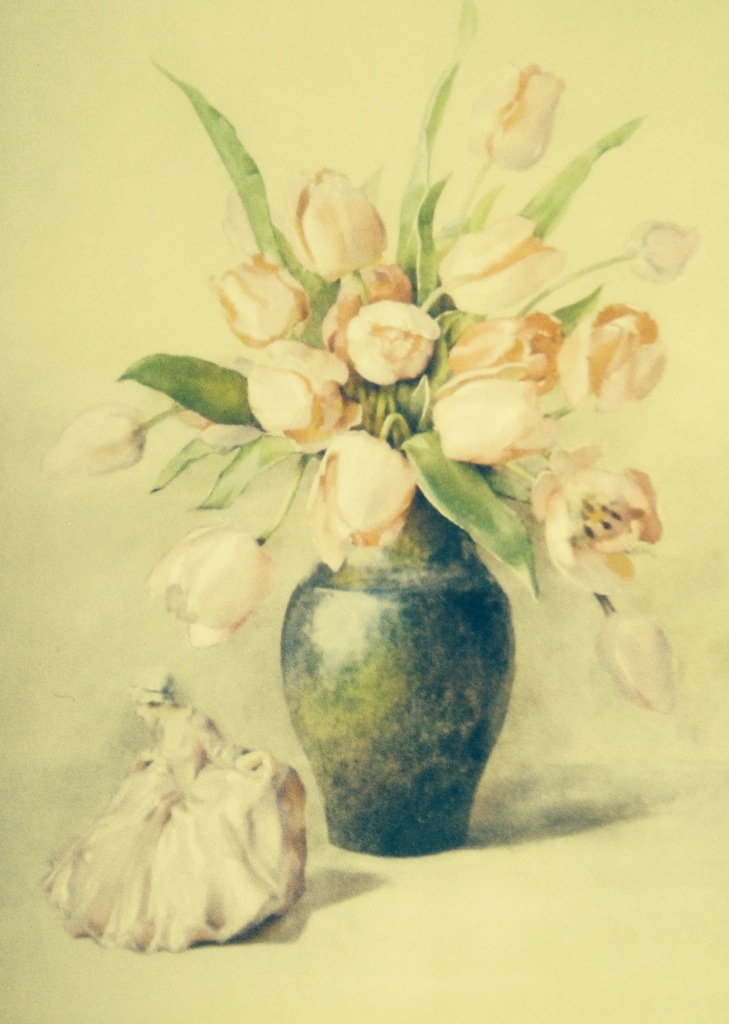
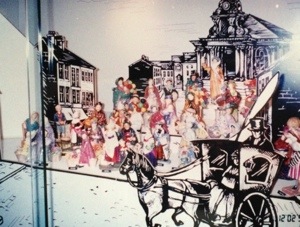
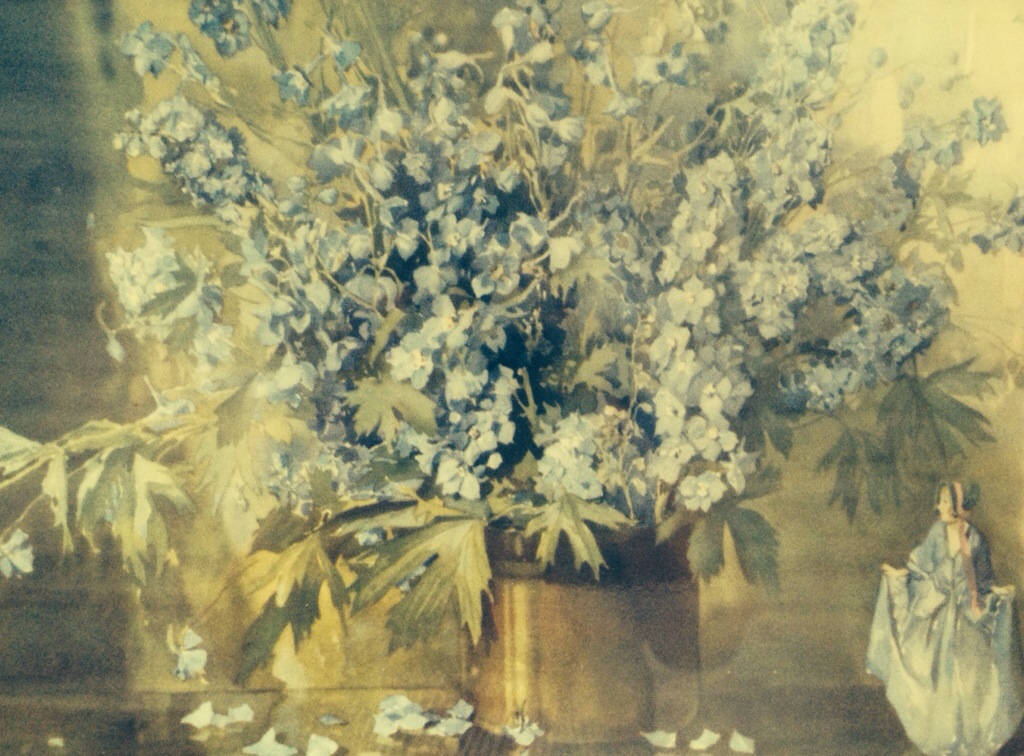
Whilst these pictures below appear a little bizarre or possibly kitsch today, when the originals were painted Doulton’s figures were obviously highly regarded even then to be used in still life pictures. The painters of these pictures remain largely unknown although I have a similar picture with Harradine’s Covent Garden figure with the signature Wood.

There is little left to say other than the majority of these images have turned up as framed prints save the clear exception below that is clearly a tea tray!

20140525-151630-54990519.jpg

Sweet Anne.

20140525-151759-55079060.jpg

The Bather.

20140525-151837-55117280.jpg

June as a tea tray.

20140525-151904-55144924.jpg

Polly Curtsey as she appears to have originally been known.

Perhaps you have other examples you can share with us? If so please go to out Facebook ‘Doulton Collectors Club’ page to do so.
CE.

‘New Lamps for Old’ – Royal Doulton’s figure lamps

‘New Lamps for Old’ so begins Doulton’s own advertising for these lamps. Particular to the 1920’s, 1930’s and possibly into the 1950’s these lamps often cause a little confusion amongst collectors who come across often long forgotten figures still attached to these charming lamp bases.

Image

Image

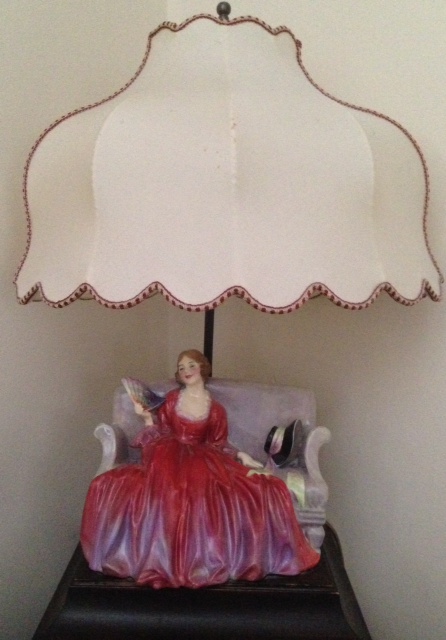
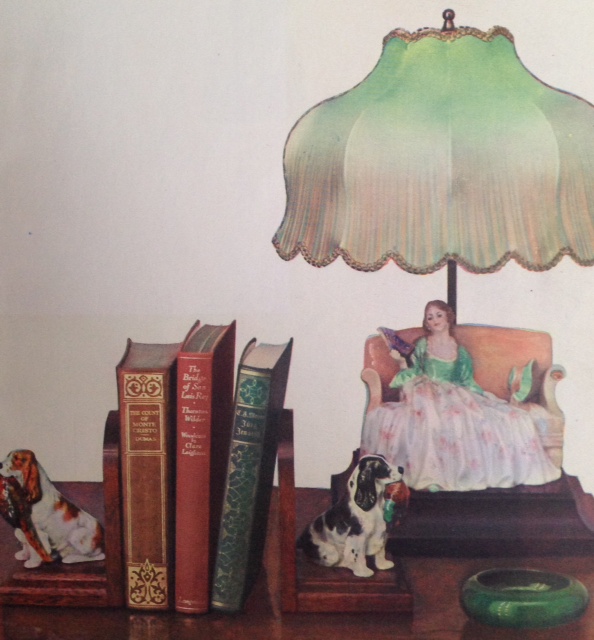
Sweet & Twenty mounted as a lamp and also as she featured in a catalogue from 1935.

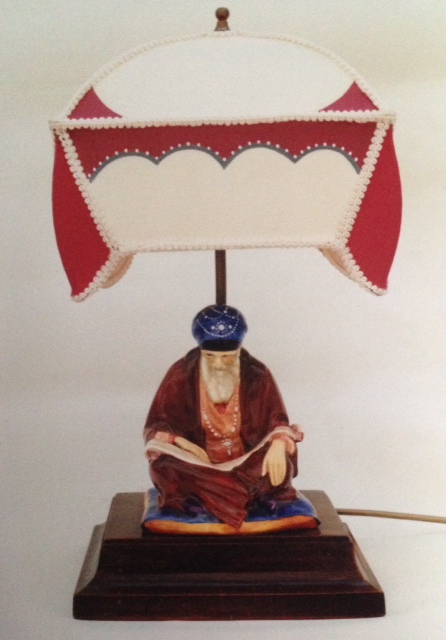
As early as the 1920’s Doulton introduced their by then world famous figures mounted on lamp bases as yet another way to sell this most popular series. Diversity is perhaps the byword for these lamps…no two appear to be the same. The most popular I can find is a lamp with a square base mounted with the ever popular Victorian Lady. If you are lucky enough to find one that has never been removed from the base, you may find one of Doulton’s original paper labels underneath.

Image

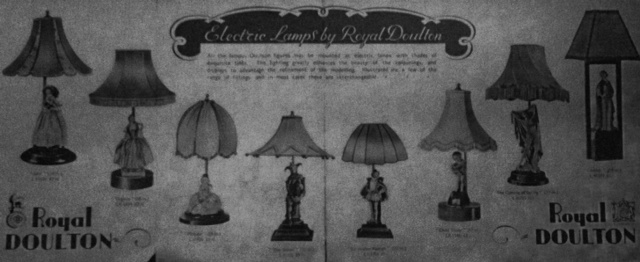
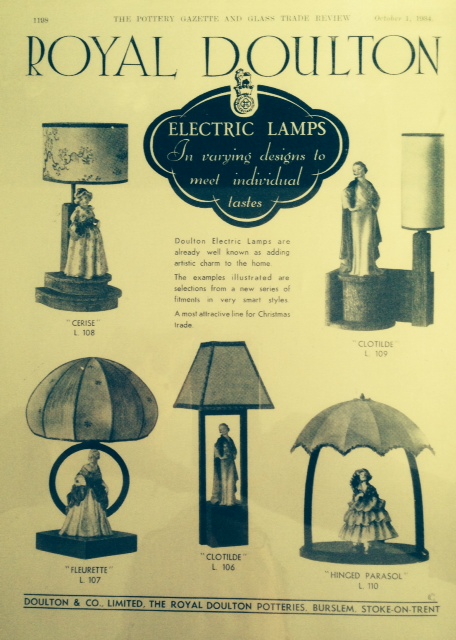
An advert for lamps from 1934.

The style of lamp base, just like the figure itself, is given a number preceded with an L for lamp. There were at least 10 different styles of base, some of which appear to have been used for particular figures. Lamp 6 seems to have been used exclusively for Clothilde, whilst number 8 was used for Cerise and number 10 for the Hinged Parasol. The bases were made of wood – with either a mohogany, oak or ebonised finish – or alabaster. I have one base in my collection that is made from wood used to create Westminster brigde.

Image

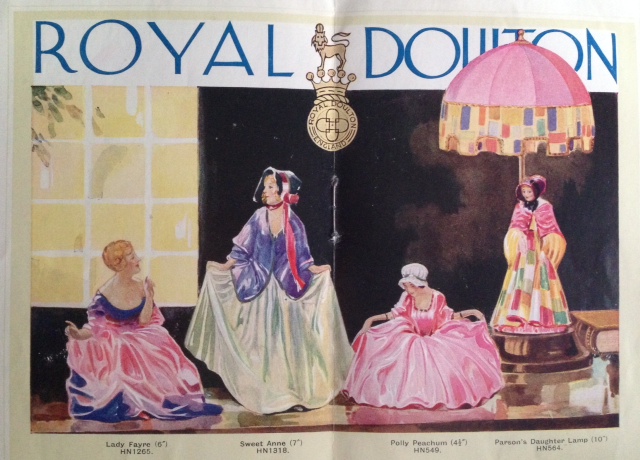
A catalogue page from 1930 showing the Parson’s Daughter as a lamp with matching shade.

The shades too were a work of art in their own right. Tassles, cascading shades, hand finished detailing….all can be expected when you discover one of these lamps. Of course the shades are perhaps the most fragile part of these lamps and the majority have perished over the years. However, if someone has preserved the frame their are specialist lamp shade coverers out these who will re-vitalise these now sad skeleton shades.

Image

An elaborately refurbished shade.

The prices of these complete lamps were often three times the price of the figure alone, yet they were obviously popular as they do turn up. When they do they often need refurbishing as the electric cables should be replaced. This is a relatively easy practice but you need to know what you are doing.

The enduring popularity of these lamps is perhaps best explained by Doulton themselves who advertised these lamps as “enhancing the beauty of colour and the refinement of the models” and that “nothing could be more suitable for a wedding present, for which they are now in great demand”.

All of the Doulton figure catalogues of this period state that any of the figures advertised could be mouted as lamps with “shades in suitable colours.”

Image

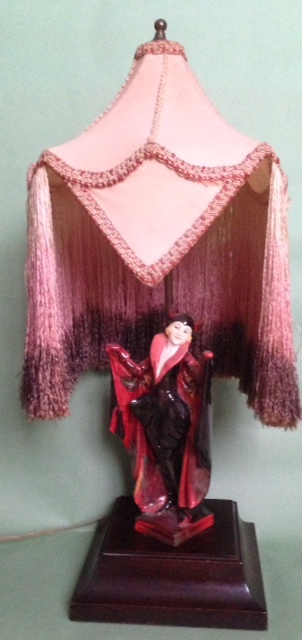
To finish, a personal favourite of mine. Marietta fitted with a shade with tassles to match her costume. Although a little faded it evokes the 1930’s deco style perfectly. This lamp was exhibited at the V&A Doulton Story exhibition in 1978.

Royal Doulton’s wigged ladies (and gents too!)

We all know that Royal Doulton is famous for it’s bonneted ladies, but there is another theme that is popular amongst collectors, namely ladies with powdered white wigs.

English history is the source of many figures in the HN range and as with all figures so-called artistic license was used in abundance. Figure collectors the world over very often focus on one or two areas to focus their collecting and the Regency period offers collectors some of the best examples of Royal Doulton figures.

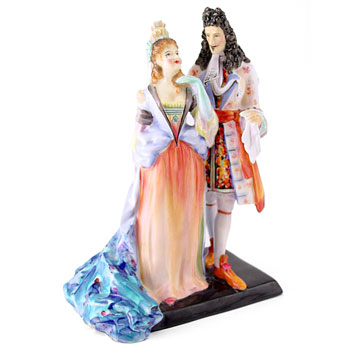
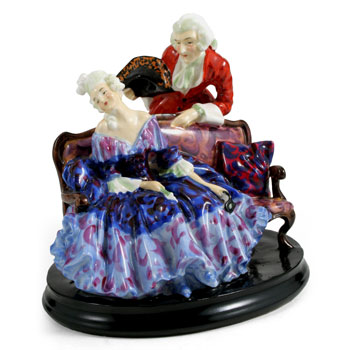
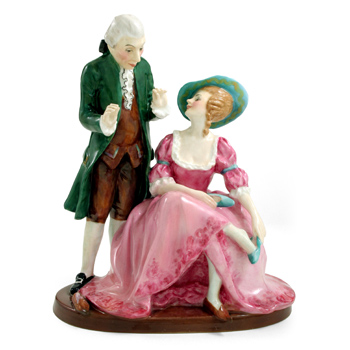
The Regency period in English history is a difficult period to date precisely and when one recalls the towering powdered wigs and cumbersome, elaborate dresses, we are actually thinking of the late Georgian and early Regency Periods. Royal Doulton has paid homage to this period on several occasions since A Lady of Georgian Period HN41 in 1914. Leslie Harradine was one of its greatest champions and his first figure from this period in English History is Tête à Tête HN799 which portrays a gentleman in typically long coat with wide cuffs, powdered wig and heeled shoes. The lady whose attention he is so assiduously seeking is sat wearing a powdered wig and low cut, elaborate dress. The obvious French name of the group, together with the costume, confirm that this and several later pieces were actually based on the French Regency Period.

Image

Tête à Tête.

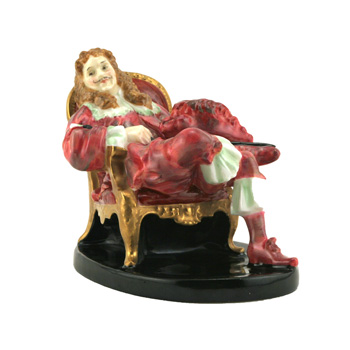
The Courtier HN1338 was the next figure in this style to be introduced and is seen here in his wig and elaborate costume including lace collars, heeled boots and lace tops on his boot hose.

Image

The Courtier.

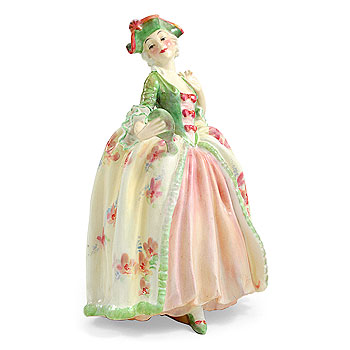
Other figures soon followed including Eugene HN1521 and Lisette HN1524 both seen here in outfits again more reminiscent of the time of Louis XVI of France with their gowns looped up and both holding a fan. Two further French inspired figures followed swiftly as collectors clamoured for this style of figure. Camille HN1586 and Fleurette HN1587 are very much in this style, although Camille is actually based on a Stanislaus Longley picture from the 1930’s.

Image

Camille.

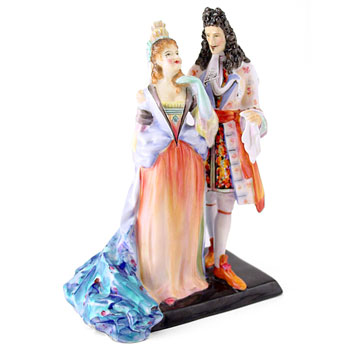
Harradine’s Regency HN1752 is very much true to its name and is a precise reflection of her time, with her stylish riding outfit, riding crop and tricorn hat. In the same year, 1936, The Court Shoemaker HN 1755 was introduced. Whilst the focus of the figure is undoubtedly the lady, we get an accurate glimpse of a servant’s attire in the shoemaker, with his simplified costume.

Image

In the immediate post-war years after 1945 Peggy Davies again presented two figures in this style, namely Hermione HN2068 and Georgiana HN2093, both of whom are elaborate in style and expertly researched and executed as all of Peggy’s figures were. A final piece to mention here is Promenade HN2076. The sheer complexity of this figure must have made this piece particularly difficult to produce and this no doubt accounts for its scarcity today. Once more Peggy’s research is second to none and both figures are presented in costumes from ca. 1700 taken directly from fashion illustrations.

Image

Promenade.

On first glance themes amongst the many figures introduced over the last century are not always apparent, but rest assured others do run through the HN collection and they provide an excellent basis on which to form a collection or even a display.

As always, thank you to Seaway China for the use of their pictures!

Don’t forget if you like my Doulton articles, join our facebook page for more discussion, articles and pictures!

doultonchristopher1's avatardoultoncollectorsclub

Search facebook for: Doulton Collectors Club and ask to join the group!

Image

View original post

What is in a name? Doulton’s love of Patricia!

On the back of a reader’s response on the Doulton Collectors Club Facebook page, I thought it timely to look at how figures are named and also look at one of Doulton’s most famous ladies and how she was produced in a variety of guises over the years!

It is often impossible to determine how a figure came to be named, especially the early ones unless the figure is modelled in the likeness of her namesake such as Pavlova, who if course was named after the famous ballerina Anna Pavlova. The majority we must assume were named because theirs was a popular name, or else after a family member of a Doulton employee or a worker in the factory… today we can but guess. In more recent times Doulton even ran competitions to find appropriate names for figures.

Even after a figure is named, it can be re-named according to tastes, for example The Young a Widow who was swiftly re-named The Young Mother. A further example is the scaled down version of the early figure Doris Keane who became Rosamund. In my own collection I have an Erminie from the M series which is actually titled Christopher to the base, a figure I naturally had to keep.

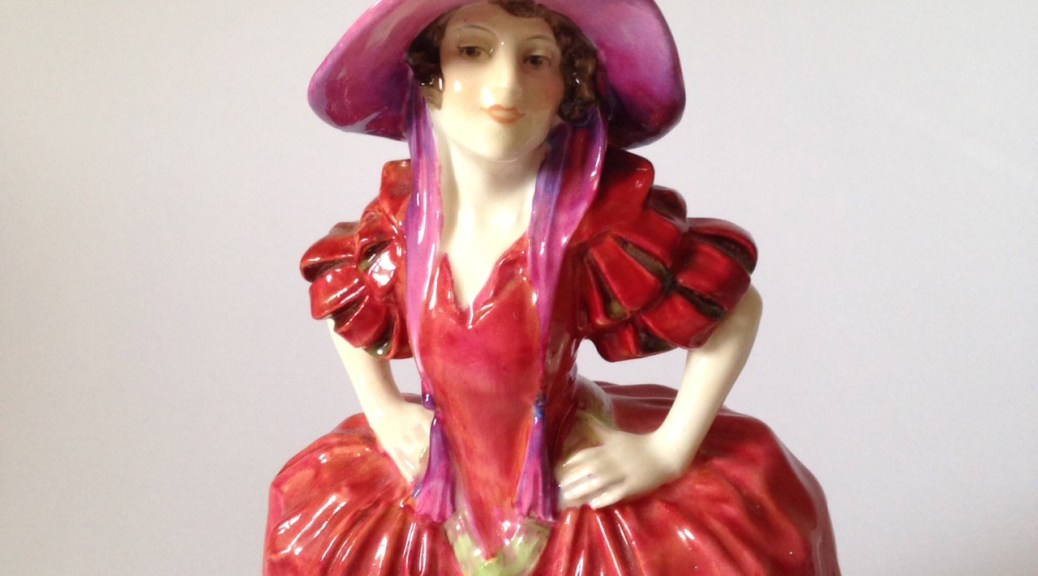
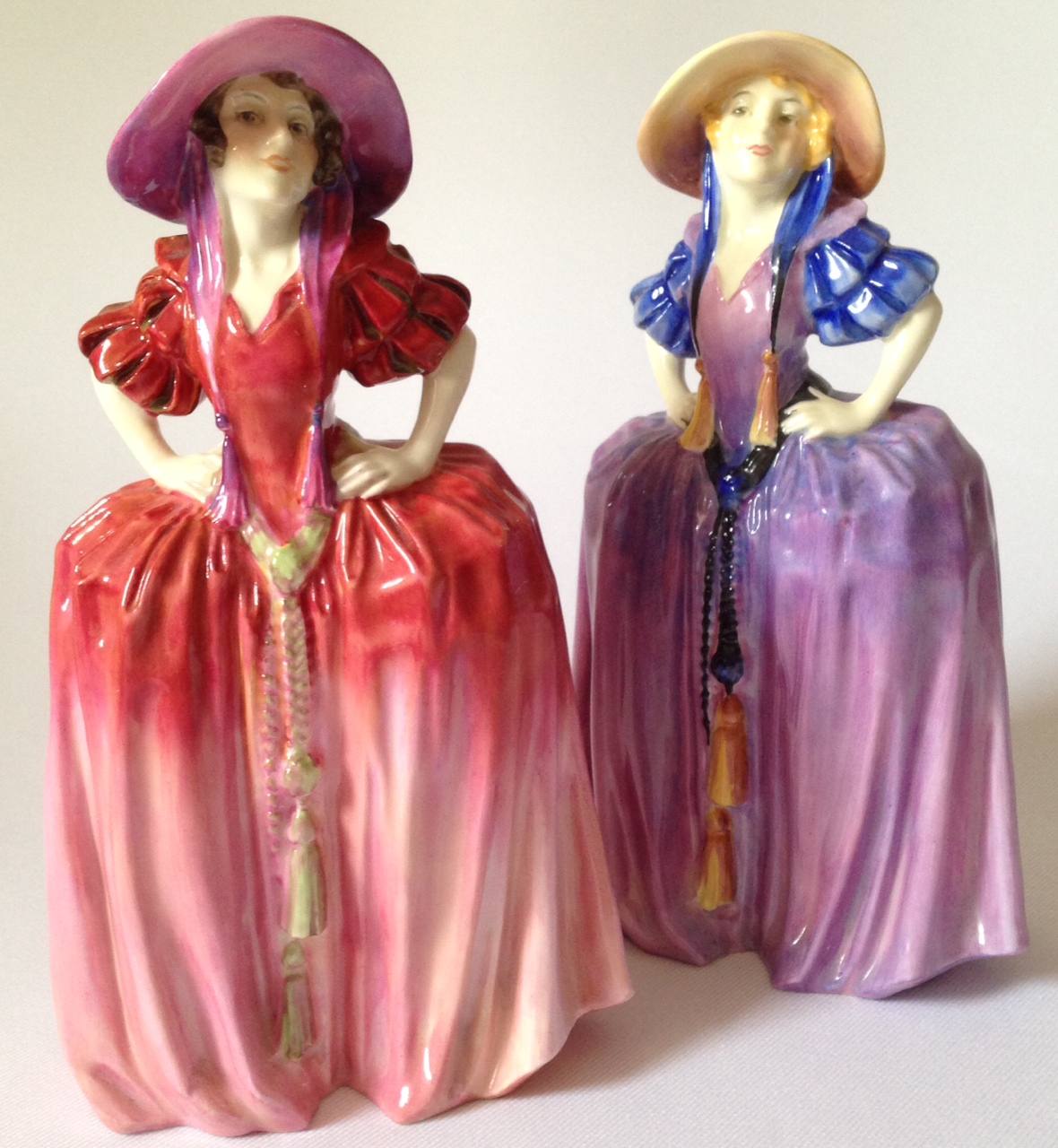
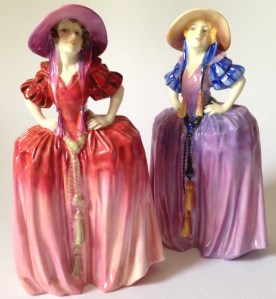
Patricia HN1414 modelled by the legendary Leslie Harradine, was first produced in 1930 and three other colourways were added to the range in 1931 and 1933. Her precise date of withdrawal is unknown but in the ultimate reference book, Royal Doulton Figures, it is given as ‘by1949’. My own personal research leads me to put a date of ‘by 1944’ as a more realistic date.
photo(3)

My personal favourite colourways of Patricia!

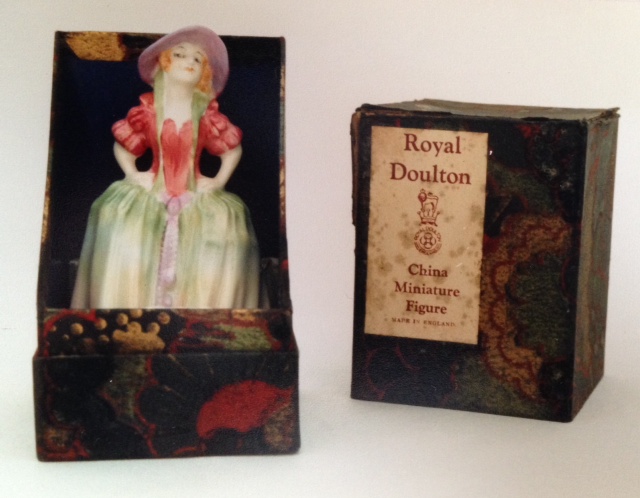
As well as the opportunity to collect this large size, Doulton introduced a miniature version in  1932 with  M7 to compliment her larger counterpart. These original M figures were sold in suitably deco boxes like the one here.
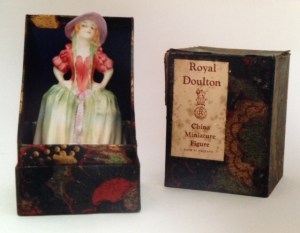
photo 2(4)

Patricia M7 in her original box.

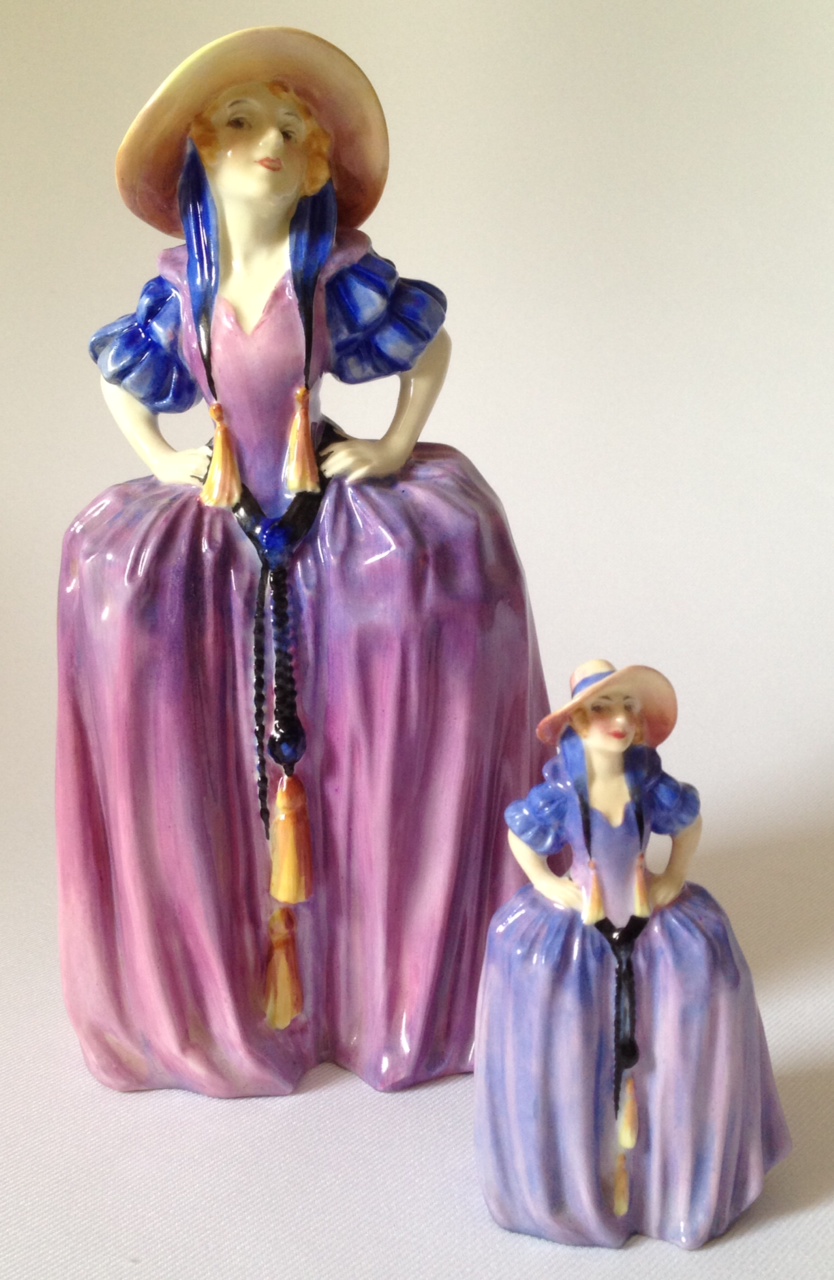
These two sizes were really identical in certain colourways as you can see below.
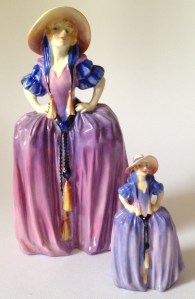
photo 2(3)

Patricia M28 and HN1431.

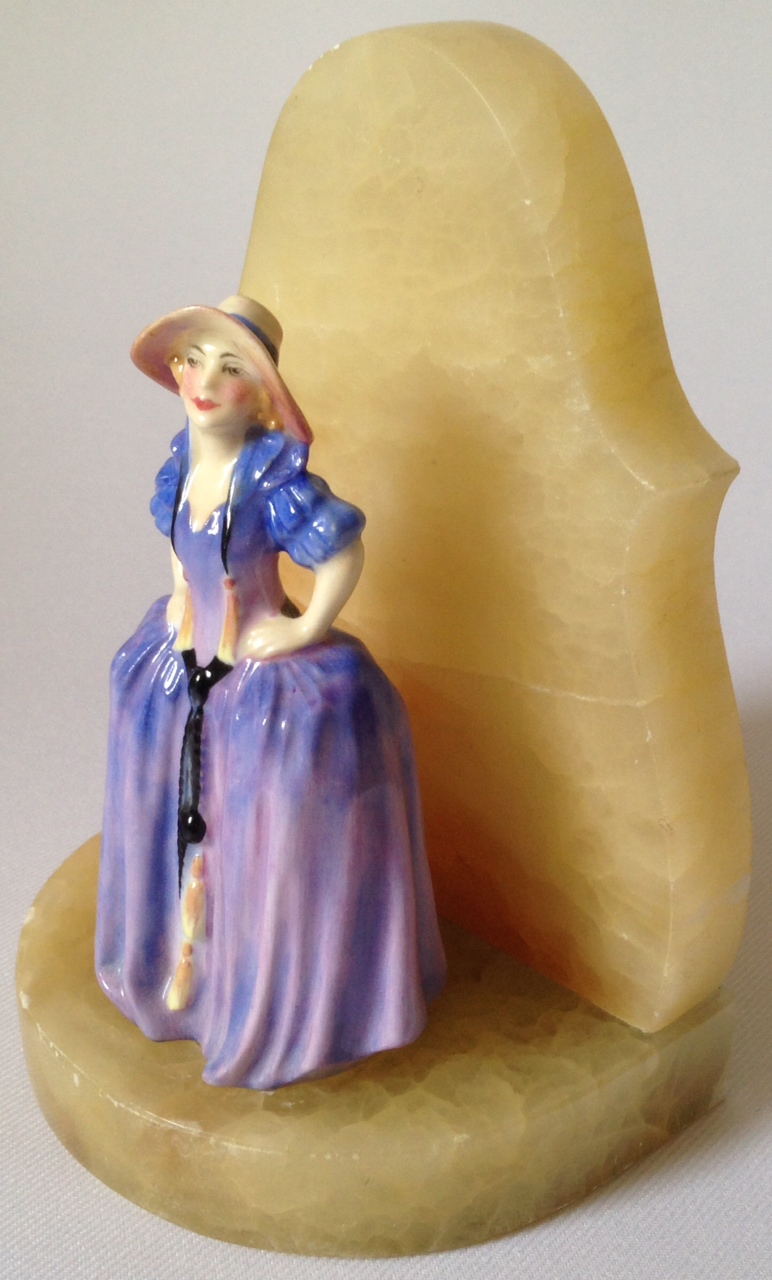
These miniature M Doulton figures can be found mounted on a variety of things from calendars to bookends.
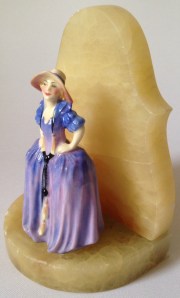
photo 4(4)

A typical Doulton bookend with Patricia M28.

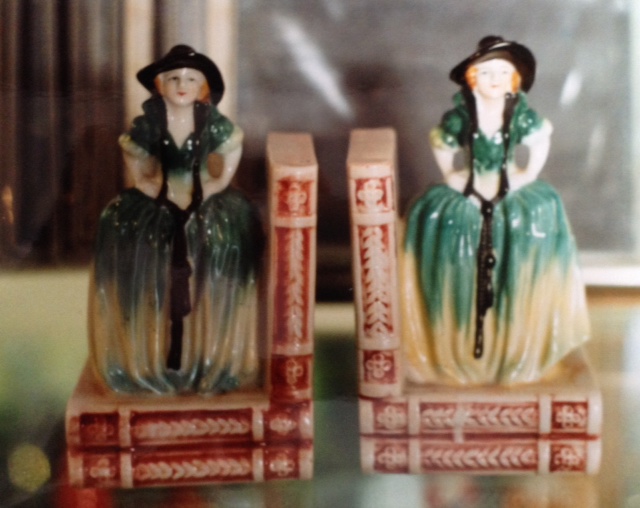
Naturally fakes do appear and Patricia is no exception to the rule.
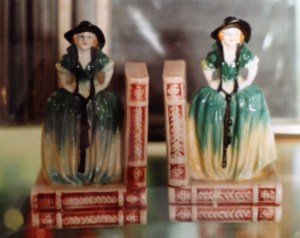
photo 1(5)

A pair of fake Particia bookends.

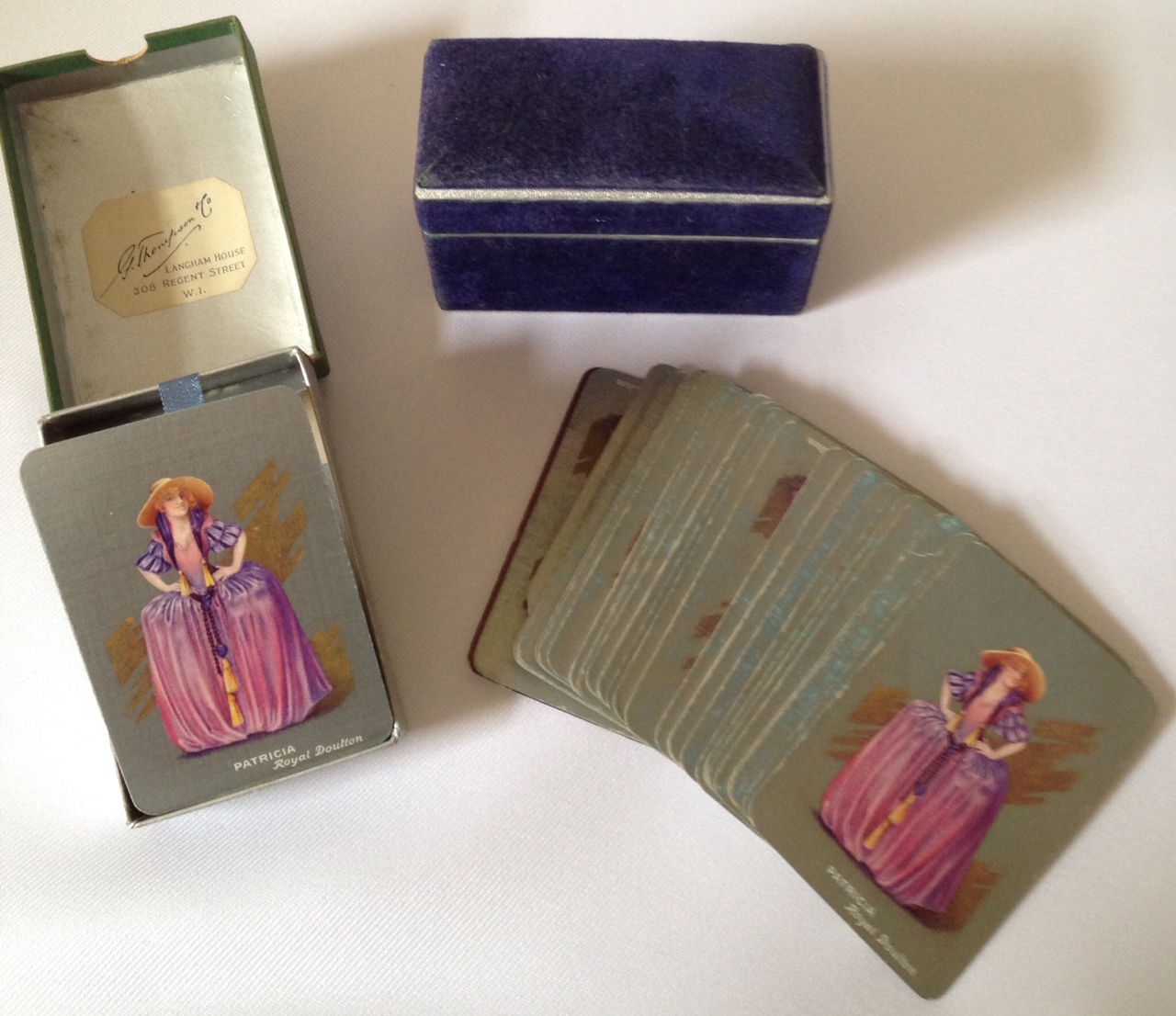
Opportunities to collect Patricia are endless. Here are two contemporary sets of playing cards, both featuring an image of Patricia HN1431. The ones in the blue box were issued by the Financial Times, whilst the other box was retailed in Regent Street, London.
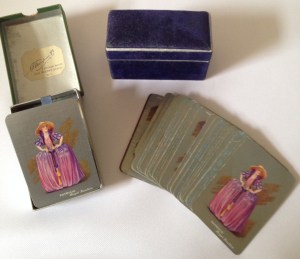
photo 3(3)

Two sets of playing cards featuring Patricia.

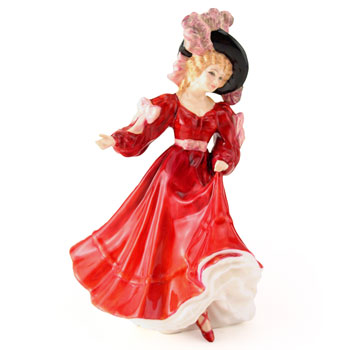
Patricia has remained a popular name for Doulton figures and other versions have been introduced over the succeeding years.
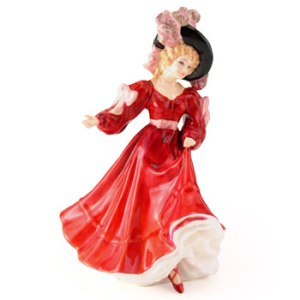
FIG-Patricia-HN3365

Patricia HN3365

FIG-Patricia-HN3907

Patricia HN3907

Patricia HN565

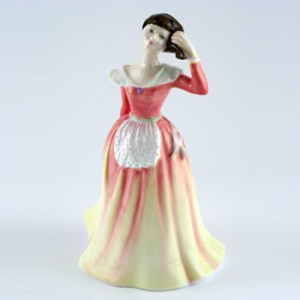
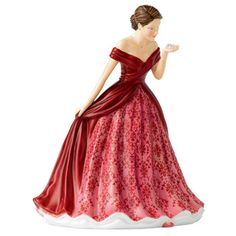
Patricia HN5665

A final thought is that most figure collectors start collecting because of the name of the piece, either to commemorate or celebrate great events in their lives – what a perfect way to collect?

© Christopher Evans 2014
Doulton for the garden

Just when you think the house is full of all things Doulton and where else can you possibly place new bits…let’s take a look at some neat ideas for the garden.

Throughout the world there is famous Doulton statuary recognising the famous, as well as great occasions, but Doulton were keen that everyone should be able to decorate their own gardens with their products.

Thus Doulton produced all manner of garden ornamentation for us to now seek out and fill our own green havens with.

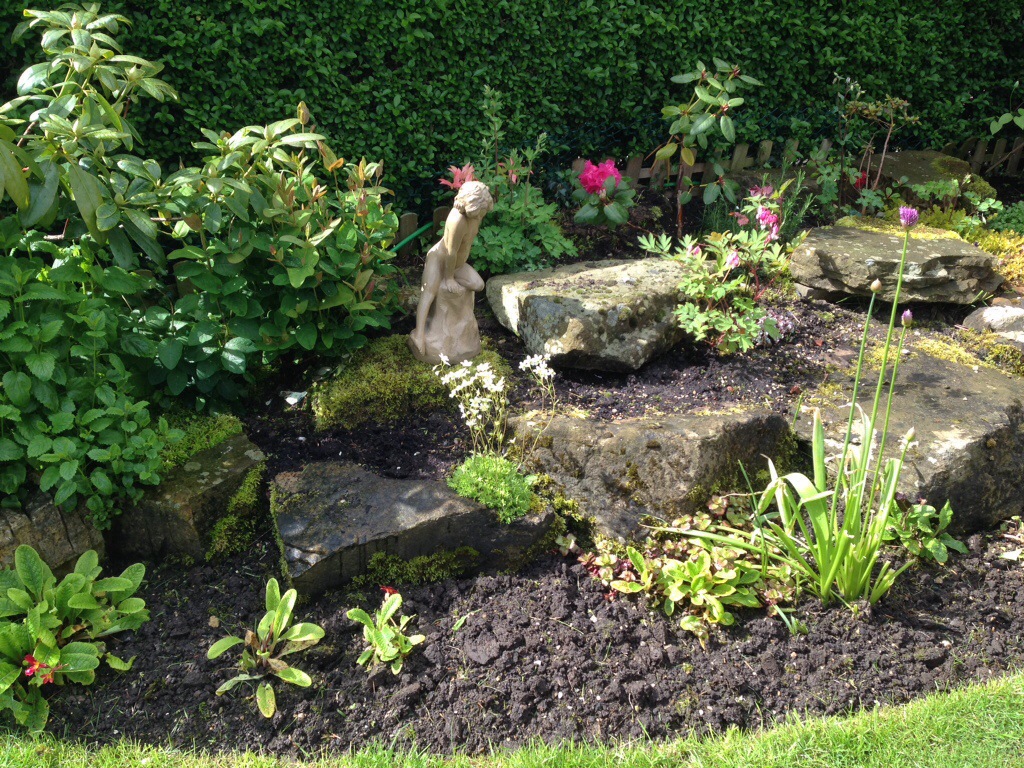
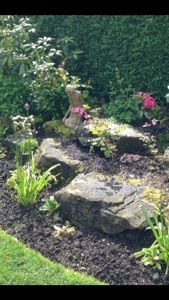
Here is one piece I have called ‘Reflections of Childhood’ but I am sure many of you will instantly recognise it as simply a large version of Leslie Harradine’s ‘Child Study’ HN 603.

20140510-131721.jpg

20140510-131733.jpg

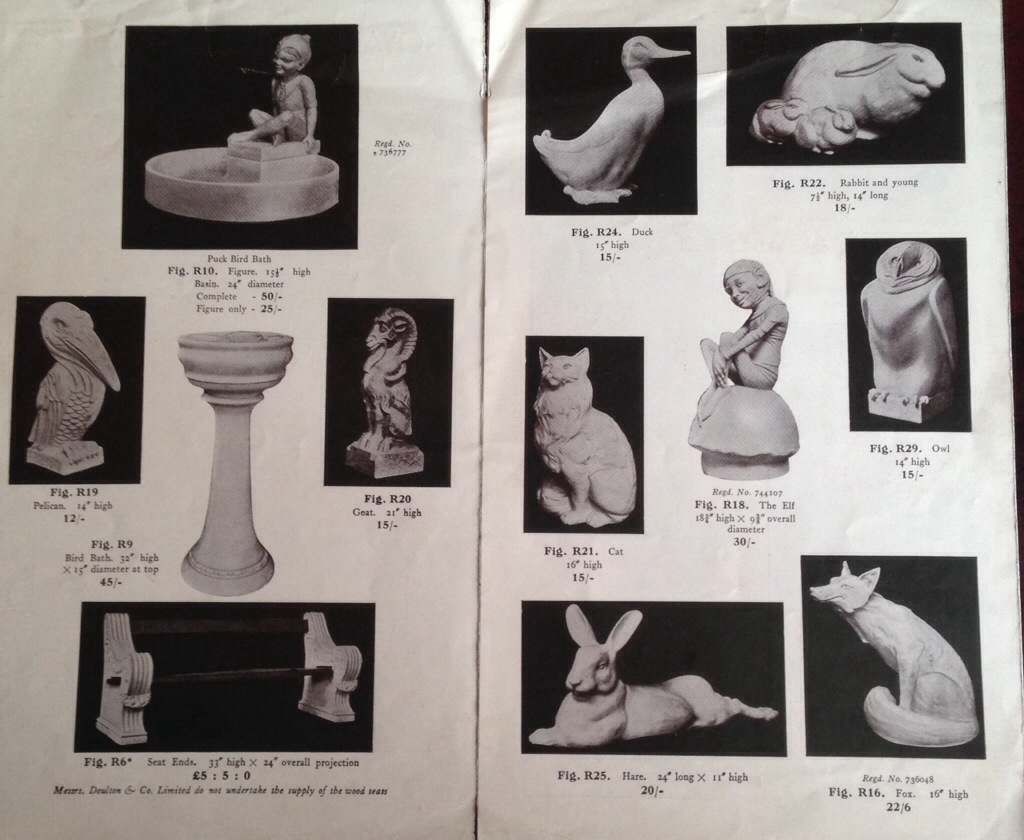
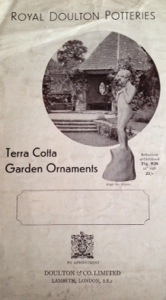
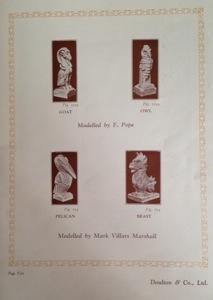
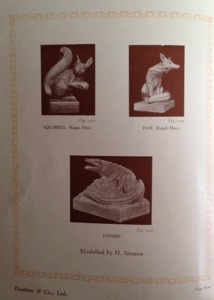
This was a particular traite of the garden ornament selection, as other figures but also animals were re-modelled in larger scale so as to suit a garden setting. Here are a selection of catalogue pages dating from 1928 to the mid 1930’s where you can see other such examples.

20140510-131838.jpg

20140510-131856.jpg

20140510-131908.jpg

20140510-131915.jpg

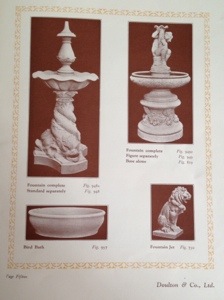
Not surprisingly garden fountains, sundials and all manner of other garden ornamentation were also made and here are a few more examples …

20140510-132123.jpg

What better way to enjoy your Doulton than in the summer sun and here we have another area for us all to collect!

The former Doulton Museum at Nile Street

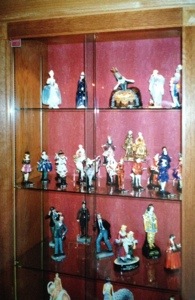
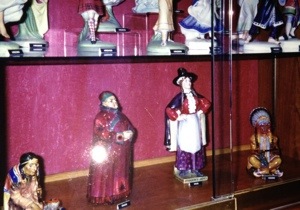
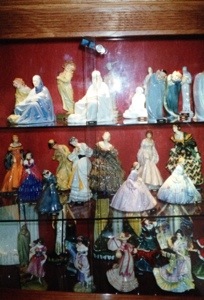
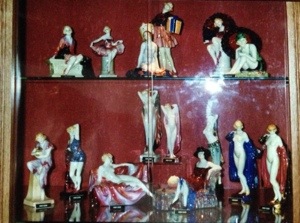
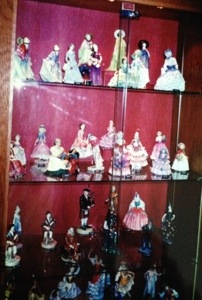
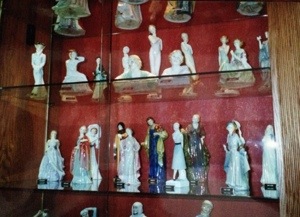
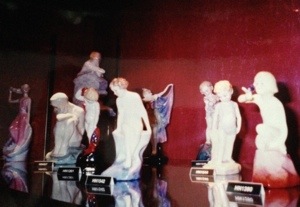
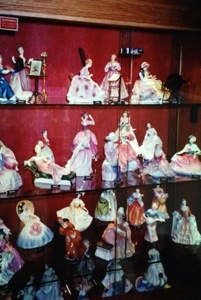
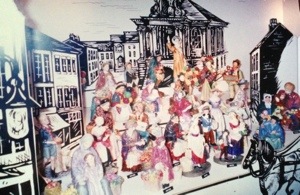
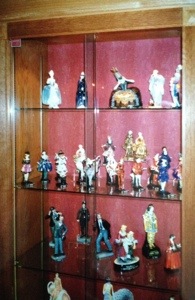
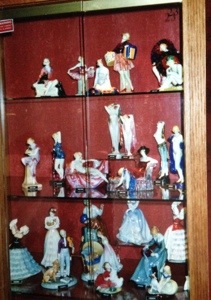
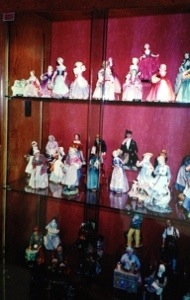
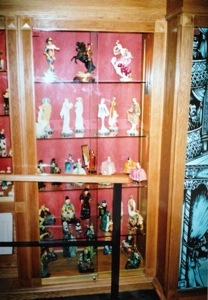
Just a few pictures from the old figure museum on one of the last times I visited ca.2002.
Thank goodness I had the chance to visit many times as sadly it was sold off many years ago now.
Whilst the museum was built up in relatively recent times, the figures in it formed the basis of the original Doulton Figures Book in 1978. They were sought from all corners of the globe by Richard Dennis and his then assistant Jocelyn Lukins before she left to set up on her own.

Anyway, enough chat…here are a handful of pictures! Enjoy…..

20140509-191552.jpg

20140509-191600.jpg

20140509-191608.jpg

20140509-191615.jpg

20140509-191622.jpg

20140509-191630.jpg

20140509-191640.jpg

20140509-191647.jpg

20140509-191656.jpg

20140509-191706.jpg

20140509-191714.jpg

20140509-191721.jpg

20140509-191729.jpg

20140509-191737.jpg

20140509-191743.jpg

20140509-191750.jpg

20140509-191757.jpg

Leslie Harradine Part 3 – the family man

Image

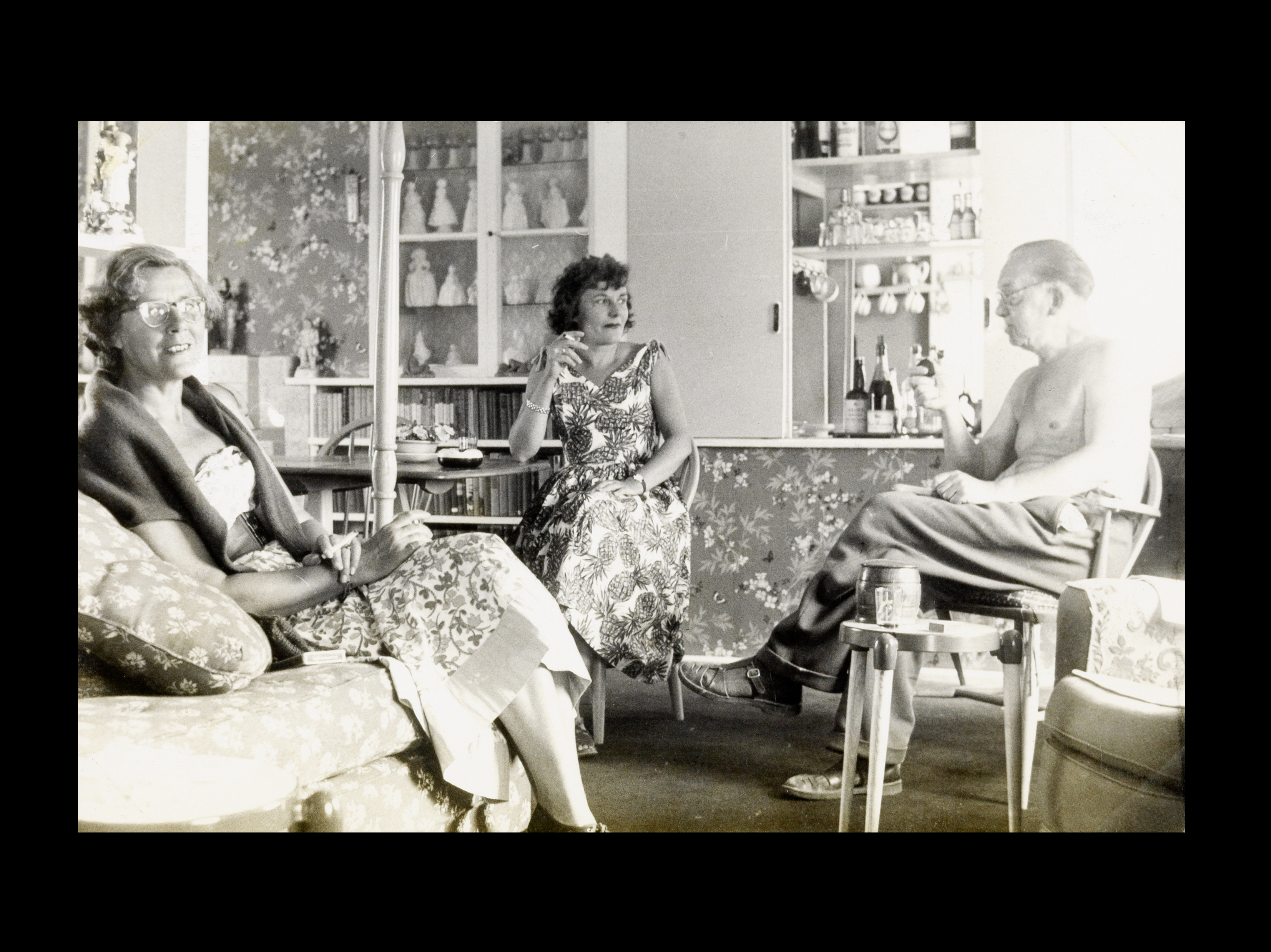
Leslie Harradine relaxing at home in later years. Note the undecorated figures in the cabinet behind his wife, Molly (photo courtesy Seaway China).

In this final part of our series on Leslie Harradine’s life, we will look at him as a family man. Very little is really known about him other than the bare facts that he married three times and had six children and a step-son. Harradine had a habit of marrying his models and all three wives were his muses. From his first marriage Harradine had three daughters, Jessie, Josie and Norma and from his second another two Helen and Diana and a son Richard. The children apparently all knew one another, although Helen once said that she didn’t think Harradine liked children and that he firmly believed in the old adage that ‘children should be seen and not heard’!

Helen also famously said that all his wives loved her father to the end, although he seemingly cast them aside until his third wife Molly.

In recent times a collection of Harradine’s undecorated figures was sold by a London saleroom and purchased by a  friend of mine. The auctioneer believed they had been consigned by Molly’s son. Harradine’s other families seemingly did not have any or many of their father’s work, indeed a grown up Helen and her son purchased a set of his Dickens miniatures from Jocelyn Lukins in the 1980’s.

Two of Leslie Harradine’s undecorated figures sold by a descendant (courtesy of Bonhams).

Very little additional information is known, but some recollections were provided by a close friend of Jocelyn’s whose family had holidayed with the third Harradine family.

Image

A holiday snap of Leslie Harradine taken by a family friend

Leslie Harradine died in a Gibraltar hospital and I remember being told that the hospital had some Doulton architectural tiles, one final link to the maker and factory he helped make so famous the world over!

If you have any additional information on this great man, we would love to hear from you!

Collecting Royal Doulton M series figures

It has been a while since any new light was shed on Doulton’s first set of miniatures, so I thought it time to address this!

20140506-181638.jpg

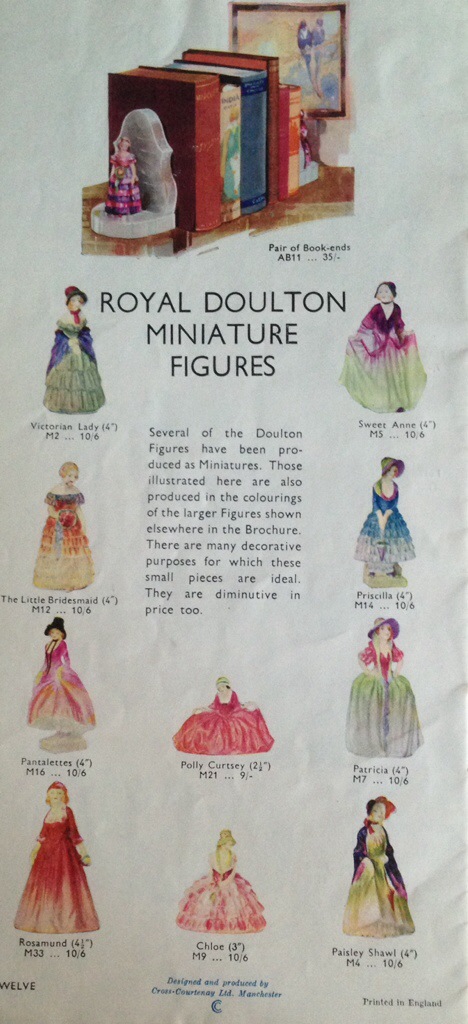
A page from a catalogue from 1933.

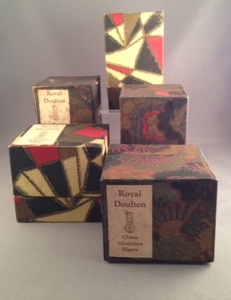
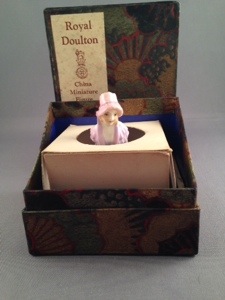
Collectors always looking for the unusual will be pleased to see these original boxes for the M series. They are all typically Art Deco in decoration and there appears to be just three styles of decoration. These little boxes were included in the advertising for the M series as a selling point yet very few exist today, unfortunately!

20140506-181612.jpg

A group of original boxes in two of the three designs used.

20140506-181621.jpg

Chloe sitting in her original packaging within her box.

Whilst miniatures offer collectors the opportunity to collect even more figures due to their size, collectors around the world do specialise in just these figures. Like their larger counterparts occasionally colourways turn up and of course like all figures some are more sought after than others.

20140506-181656.jpg

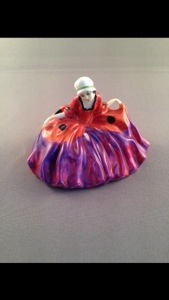
A striking version of the miniature Polly Peachum

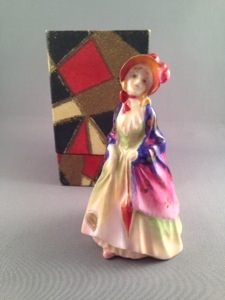
This area of collecting really does offer us bargains as more common figures such as the Paisley Shawl for example are relatively inexpensive at the moment. Yet the quality so typical of Doulton figures is echoed in this range with their miniature faces and exquisite decoration. Even in their hey day Doulton advertised them as being of ‘diminuative’ price too!

20140506-181629.jpg

The Paisley Shawl next to her original box and complete with original sticker.

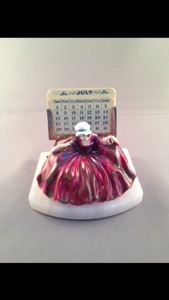
Doulton’s range of M figures were available mounted on calendars, pen holders, pin trays… The list is endless! However, the top London jewellers such as Asprey had them mounted with sterling silver fittings and these top make pieces are the most popular today.

20140506-181647.jpg

A quality desk calendar with another Polly Peachum.

Whatever your tastes and needs, as always Doulton had something for everyone and thus established a strong buying base with collectors around the world. As Henry Doulton once said it was easier to sell something expensive but of better quality than something cheaper and of lesser quality!

20140506-181701.jpg

And finally a recent find, looking very smart the Crinoline Lady atop a pin dish.

So why not start a collection of these charming miniature figures and have fun deciding how to display them yourselves!