Category Archives: Figure Articles

Royal Doulton’s Roadshow figurines.

Between 1992 and 2007, 13 special figures were produced for collectors to purchase exclusively at Doulton’s Roadshow events. The choice for the majority of figures certainly came from those most popular among collectors and which had enjoyed many years of popularity among collectors, in particular the dancing ladies so lovingly created by Peggy Davies. 
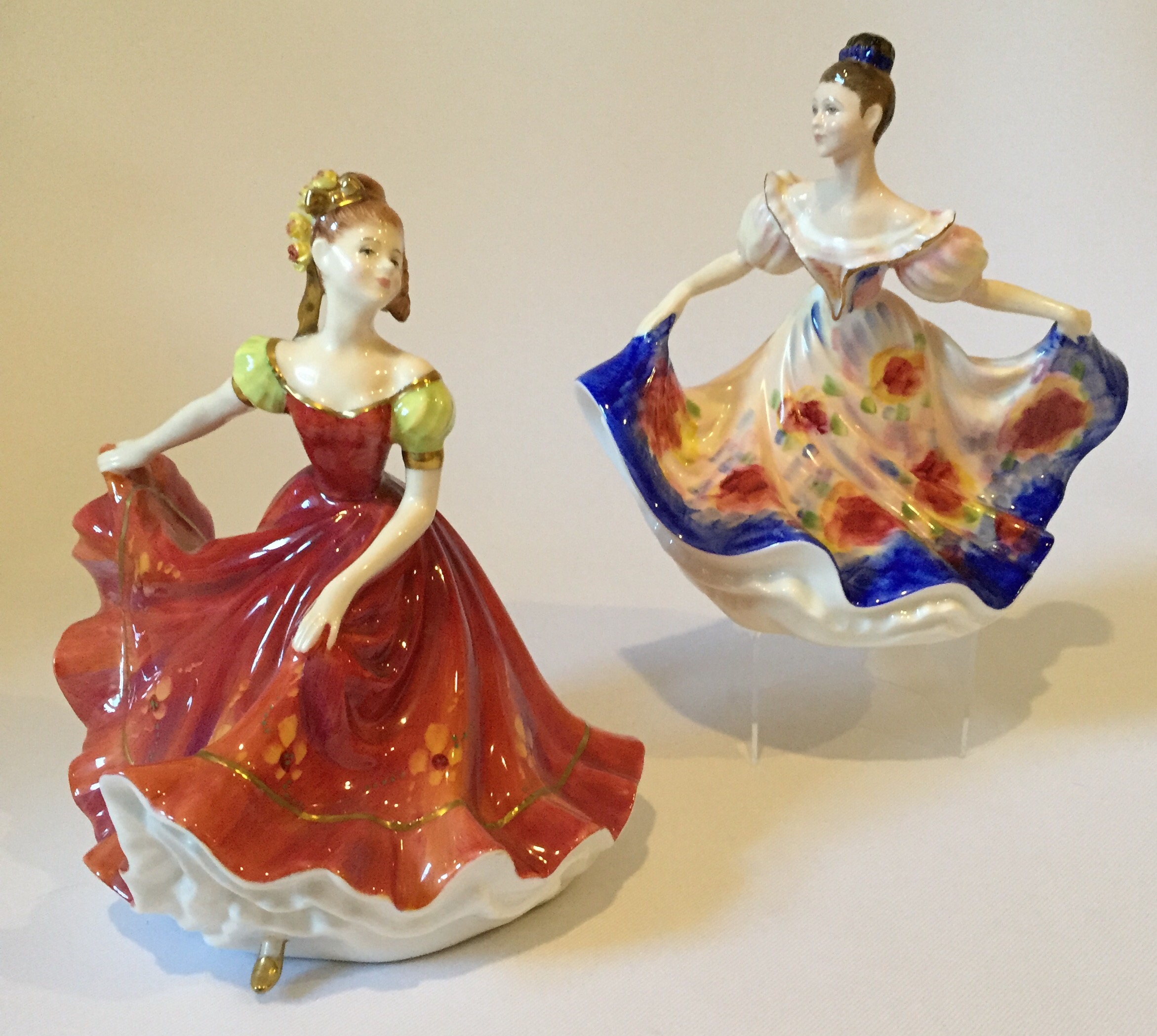
Ninette HN 3417 and Lynne HN 3740.

As well as special backstamps in gold, these figures were issued with certificates of authenticity but otherwise they were issued in Doulton’s standard blue figure boxes of the time. 
 
The figures in the Roadshow series were:

Ninette HN 3417 (1992)

Victoria HN 3416 (1992)

Maria HN 3381 (1993)

Thinking of you HN 3490 (1993)

Pauline HN 3643 (1994)

Elaine HN 3741 (1995)

Jacqueline HN 3689 (1995)

Lynne HN 3740 (1995)

Stephanie HN 3759 (1996)

First Bloom HN 3913 (1997)

Lauren HN 3872 (1997)

Samantha HN 4043 (1998)

Holly HN 5065 (2007)

As you can see there were often multiple figures each year and there was almost a decade’s gap between the penultimate and the last figure. 
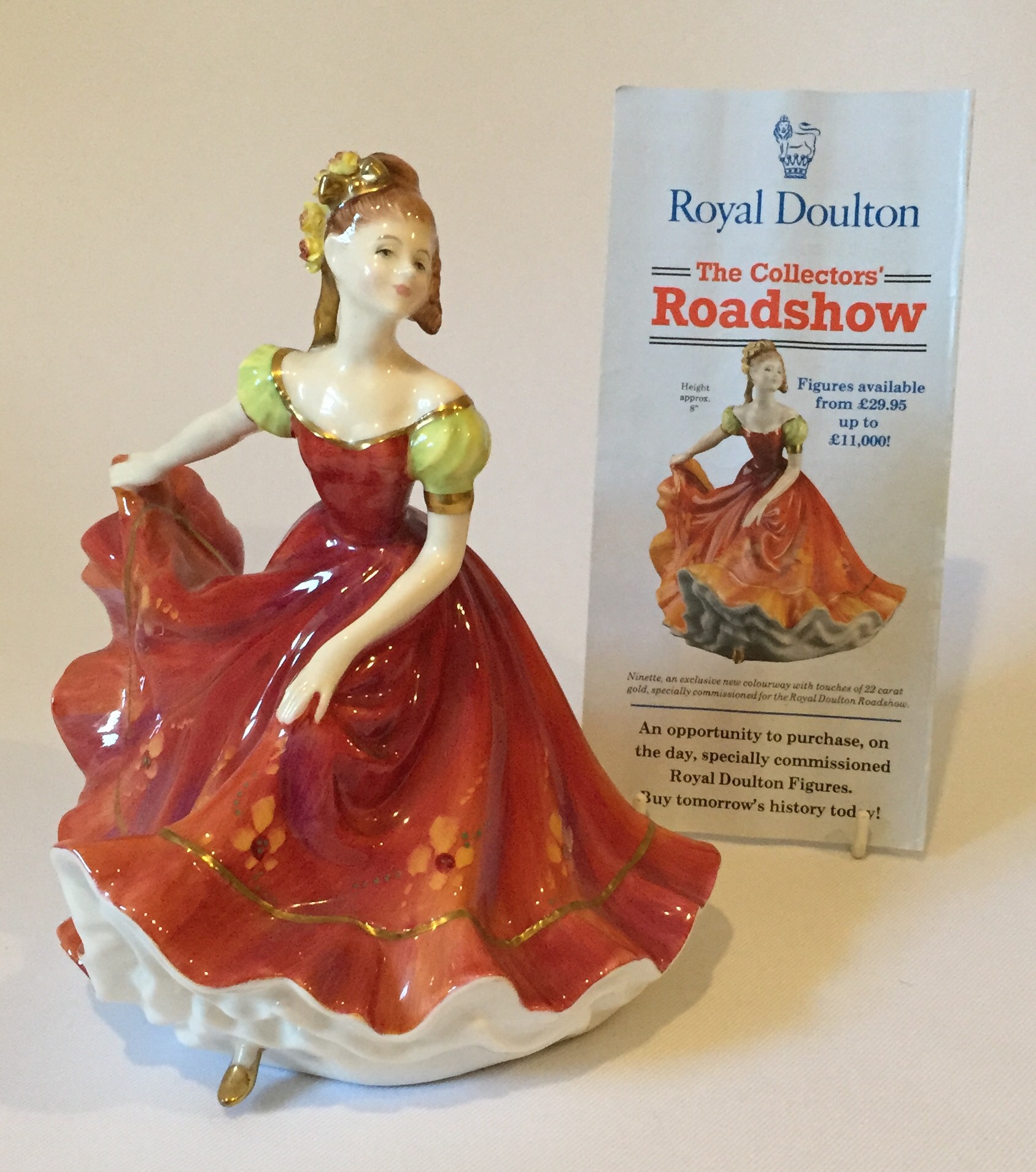
  
 The great thing for collectors about these figures is the added detail in the painting that is so evident in the majority of pieces from Peggy Davies’ classic pretty ladies to the last figure by Valerie Annand and they stand out so well from the crowd in displays! Their time limited production makes them much more unusual than their main HN collection counterparts and some were even limited edition pieces such as Holly who was produced in a tiny number of 100 pieces! 
Royal Doulton’s Helen, her origins and her successor! 

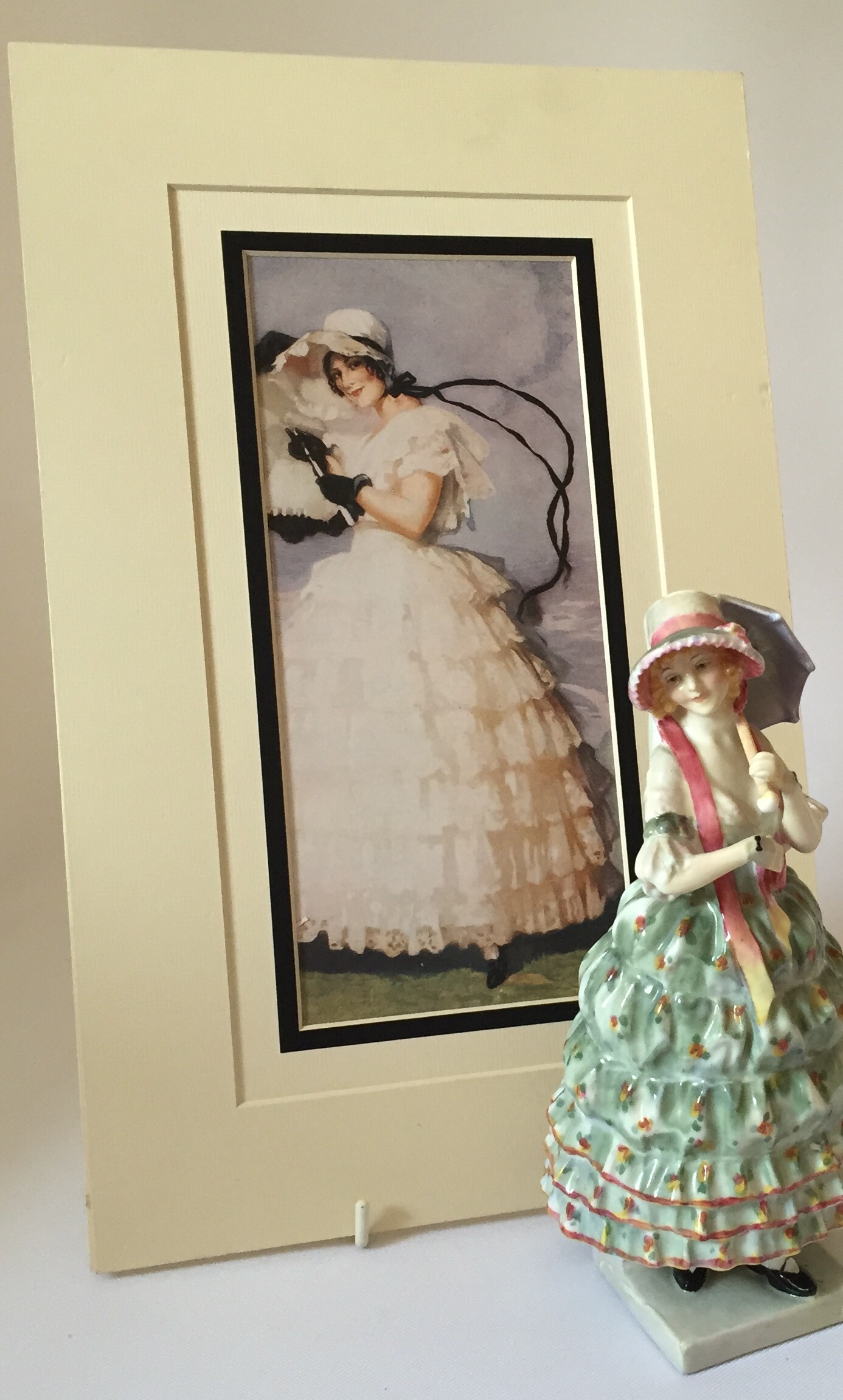
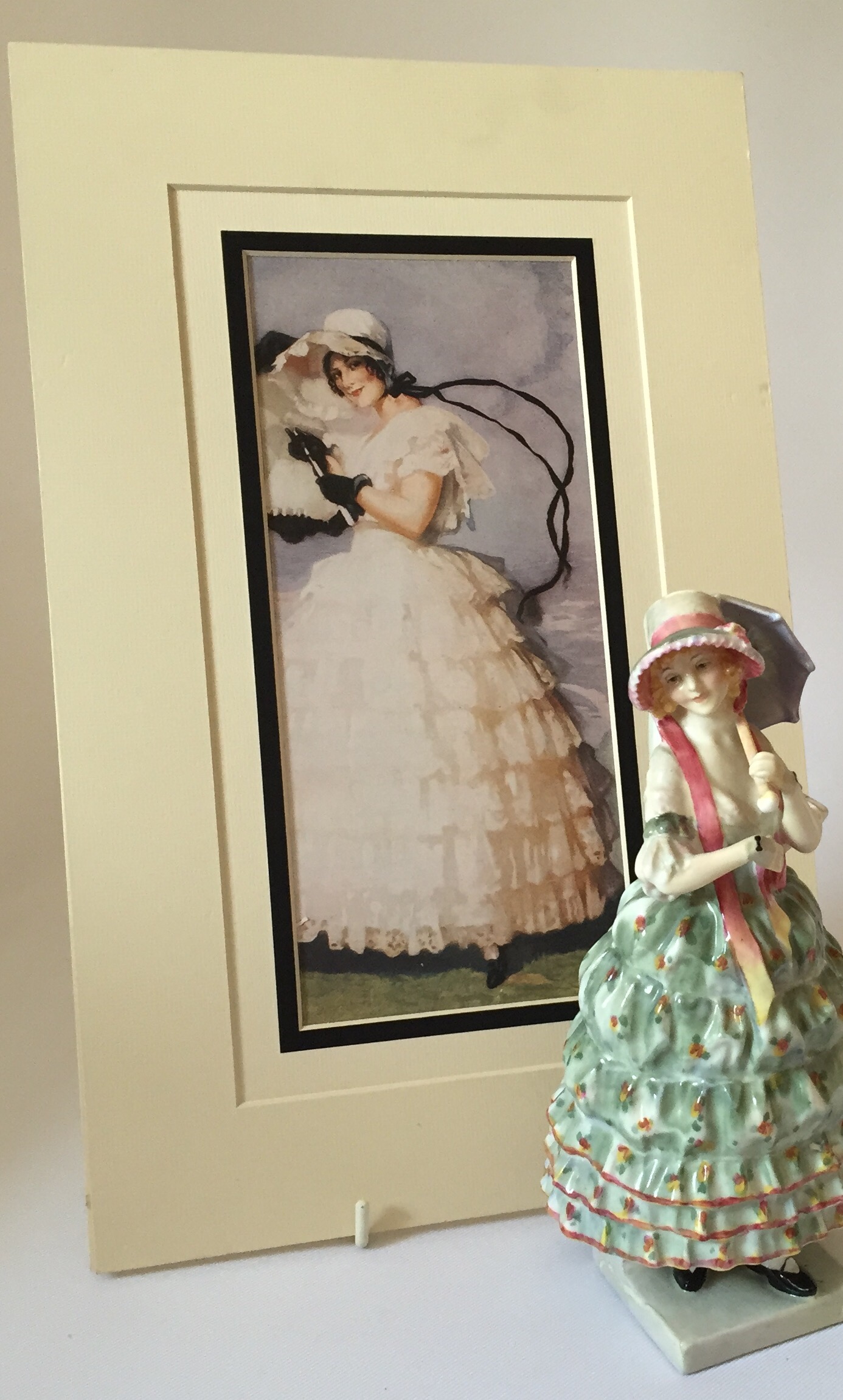
The inspiration behind many of Doulton’s earliest figures comes from contemporary paintings and such is the case with Harradine’s Helen introduced in 1932.

  
Helen HN 1508 with the Webster picture that inspired her.

It was not unusual for complicated figures to be re-modelled after problems arise in their manufacture or because they are too complicated to produced or simply because of market response (Consider Sweet Maid who became Millicent with a fuller skirt). 

  
Helen HN 1572 (1933) and June HN 1947 (1940).

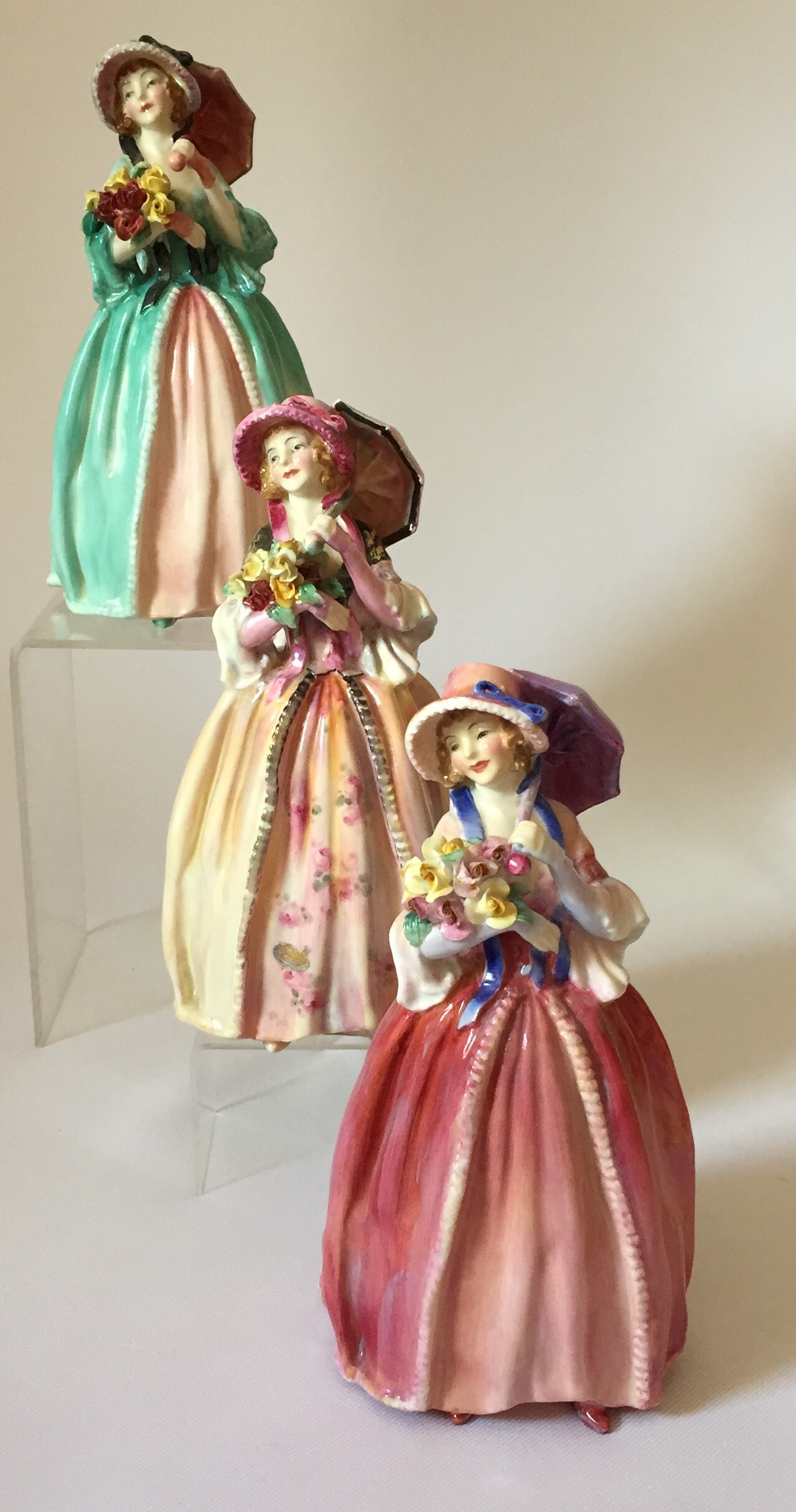
Thus Helen became the popular figure June HN 1690 (1935) with an altered skirt and now holding a bouquet of flowers, which was again re-issued after WWII in slightly more muted tones and simplified flowers and detail to the modelling.


The original three: HN 1690, 1691 and 1947.

The withdrawal dates for the figure Helen say ‘by 1938’ but we can presume that the production was actually much shorter based on the fact that June was introduced in 1935 and I certainly haven’t seen any ‘Helens’ dated after 1934 – but perhaps you have? If so, why not share her with us on our facebook page ‘Doulton Collectors Club’! 


Doulton figure painter T. J. Parton.

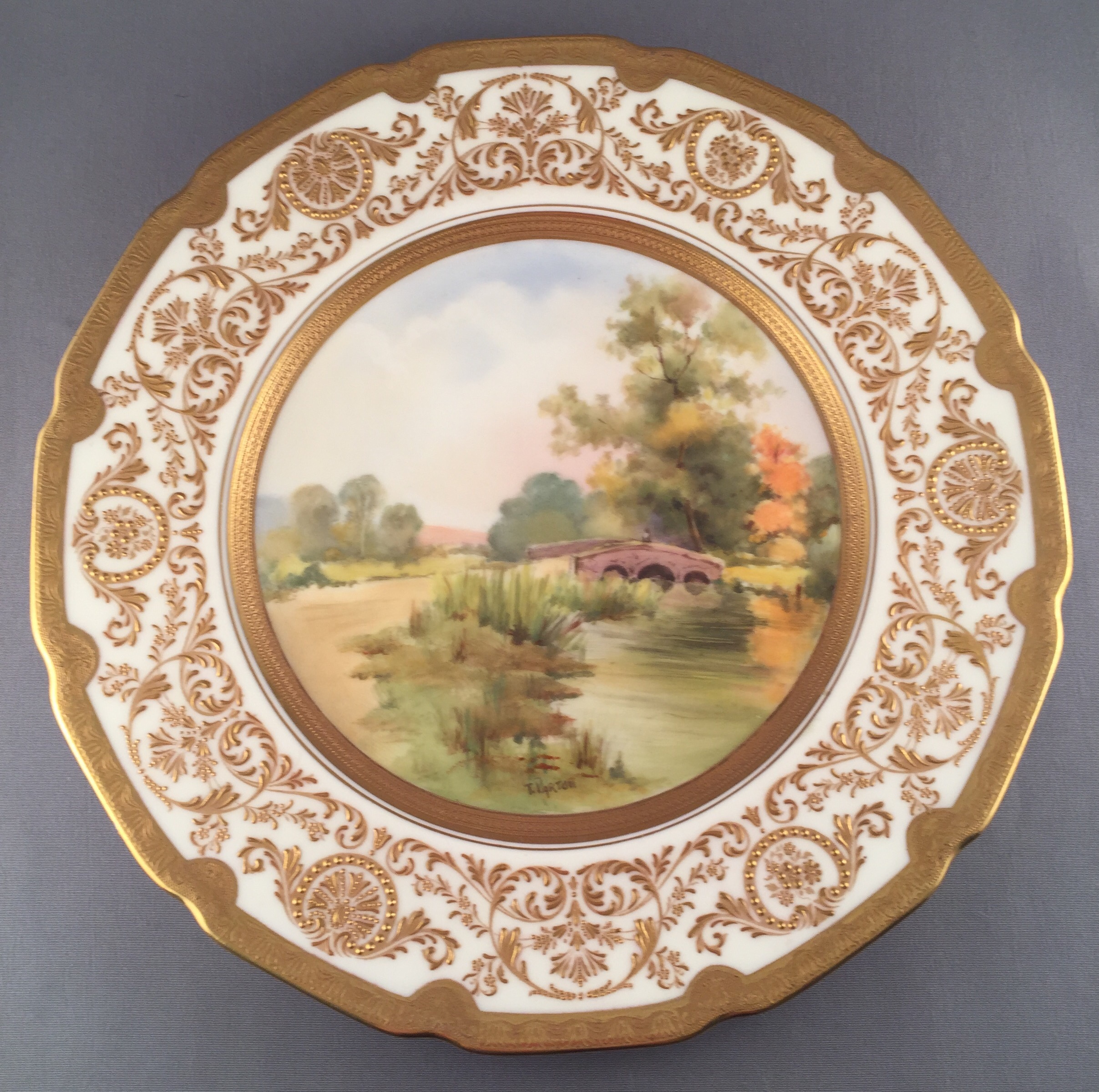
I would like to have called this piece one of our artist profile blogs but details on this particular artist remain sketchy. It was thought that he joined the small team of figure painters at Doulton in or around 1930, but the discovery of the plate below dates his arrival at Nile St to 1928 or earlier.


Handpainted plate by T. Parton dated 5.28.

The artists monogram ‘TJP’ can be found on figures from 1930 through to 1940 but I am sure there are later examples out there. In 1927 there were 10 figure painters recorded at Nile St and Tom, I feel,  must have been one of these early artists. We must remember that even by 1939 there were apparently only 27 painters in the figure department! I recently found a long service record from 1973, which lists Tom with 46 years service as an on-glaze figure painter meaning that he joined in 1927 and was among the easiest figure team of 10! Interestingly there is also a Norman Parton with 42 years service, perhaps a younger brother of Tom’s?


TJP figures Joan (1930) and Toinette (1940). 

It is quite typical to find figure painters showing great versatility and examples of vases and such heavily gilded plates have been found by other early figure painters including Reg Brown and John Pierpoint.

A quick guide to dating Doulton’s Dickens figures! 

Leslie Harradine’s collection of Dickens miniature figures still bring collectors much joy although they have been out of production since the early 1980’s. 

Collectors tend to focus their collecting on either the early bone china models with their thinner bases or else those made in earthenware after 1949 with their deeper bases.

However there are a few tips to dating the early models that I thought I would share. 

  
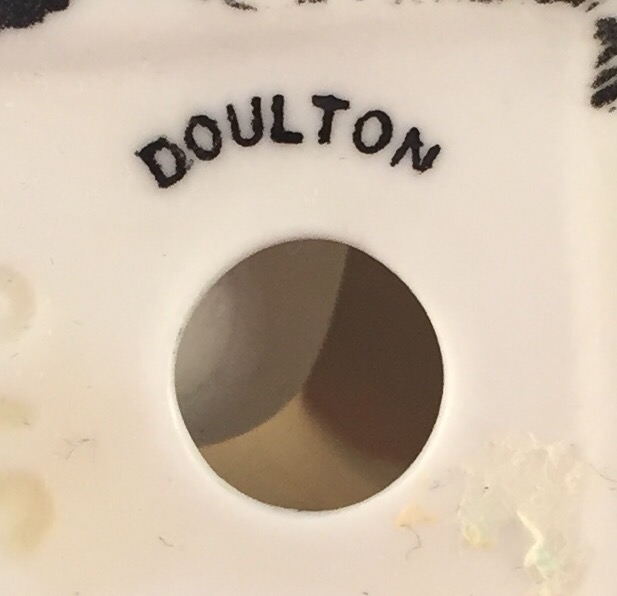
This is the earliest stamp with simply the word Doulton printed in an arc.


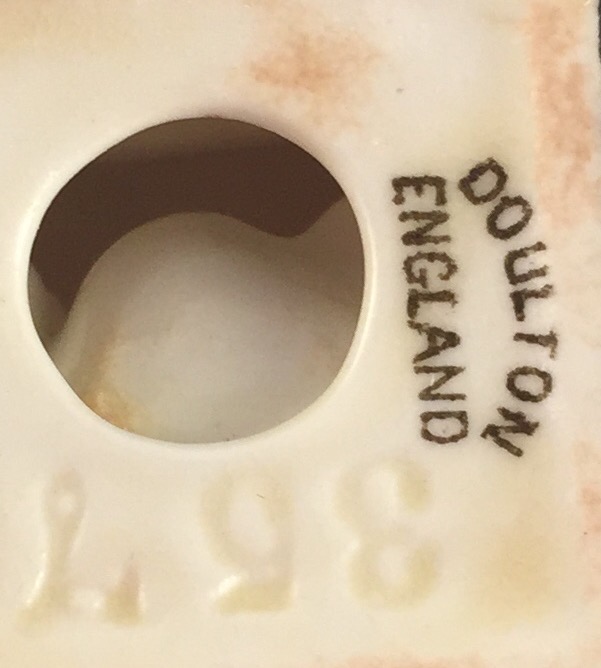
This is the second mark from the late 1920’s. A second version of this can be dated to after 1930 when the names of the figures were also included.


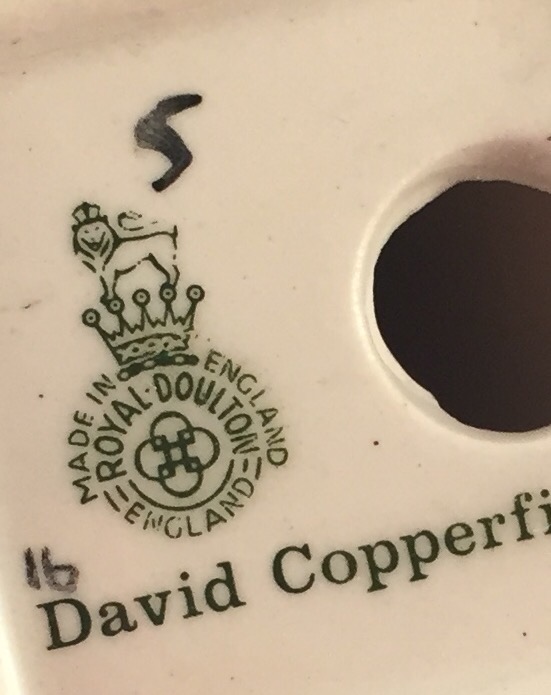
Finally a post 1949 example with standard Doulton mark. 

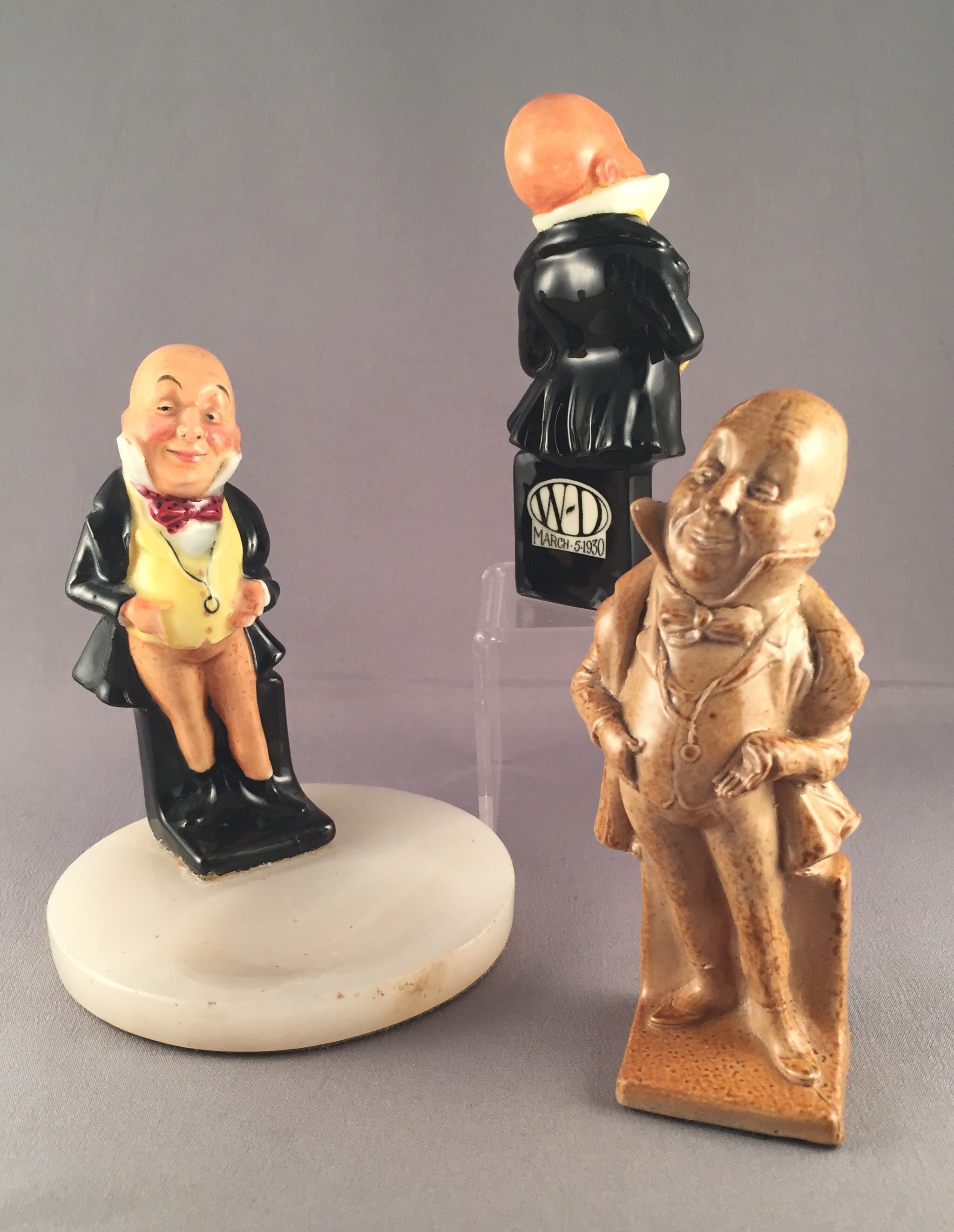
To finish here are three examples of Micawber: an early 1920’s example on a marble tray, the unusual Woodall Duckham commemorative from 1930 and Harradine’s original model for the study. You can see the thickness of the base increasing steadily even between the early 1920 example and the 1930 example. 


Seasonal changes with Doulton figures! 

  
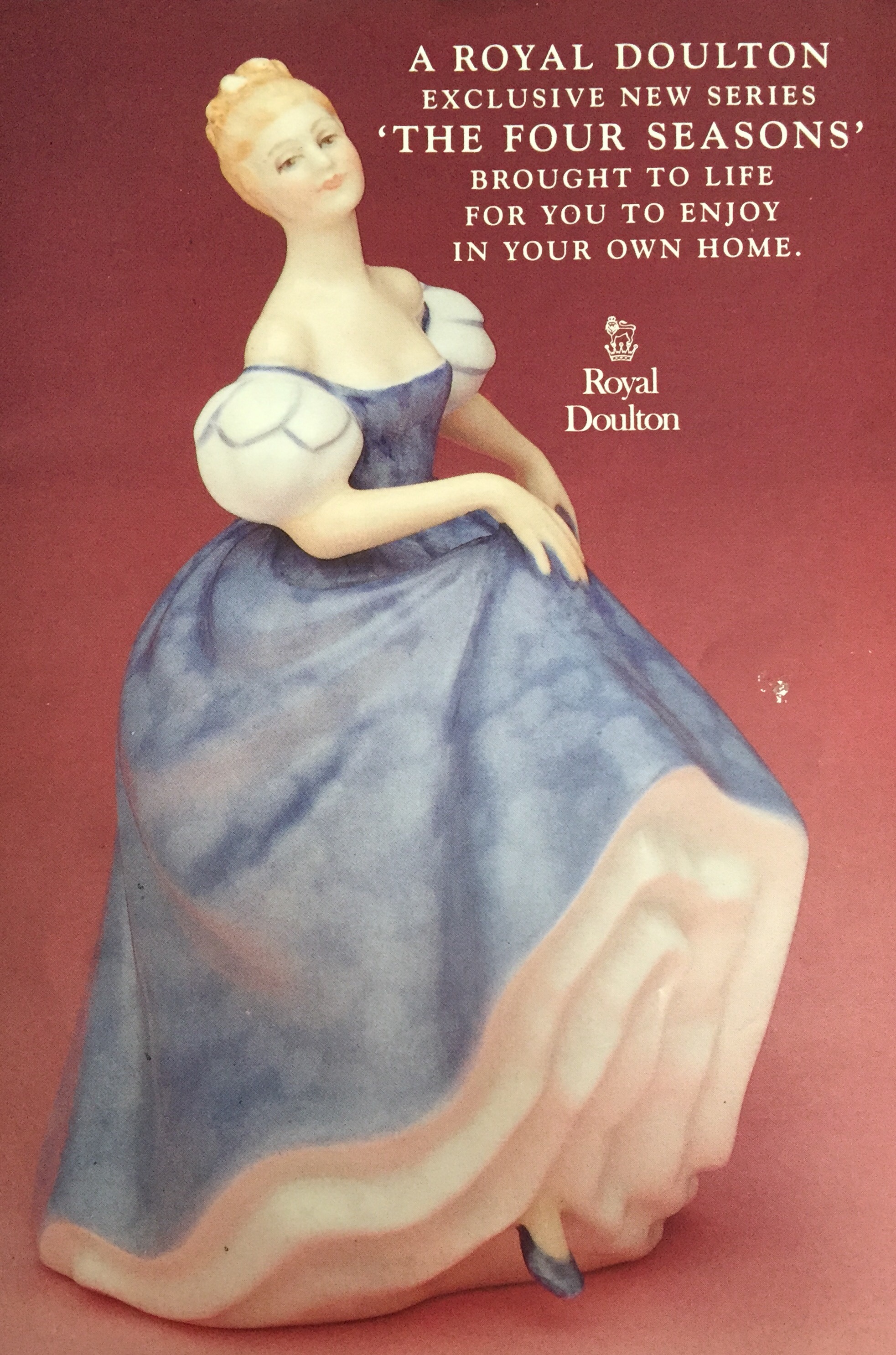
Cover of a catalogue featuring Summer Serenade.

One of several classic sets of four seasons figures produced by Royal Doulton is this set made exclusively for the Guild of China and Glass Retailers to which Doulton belonged. 


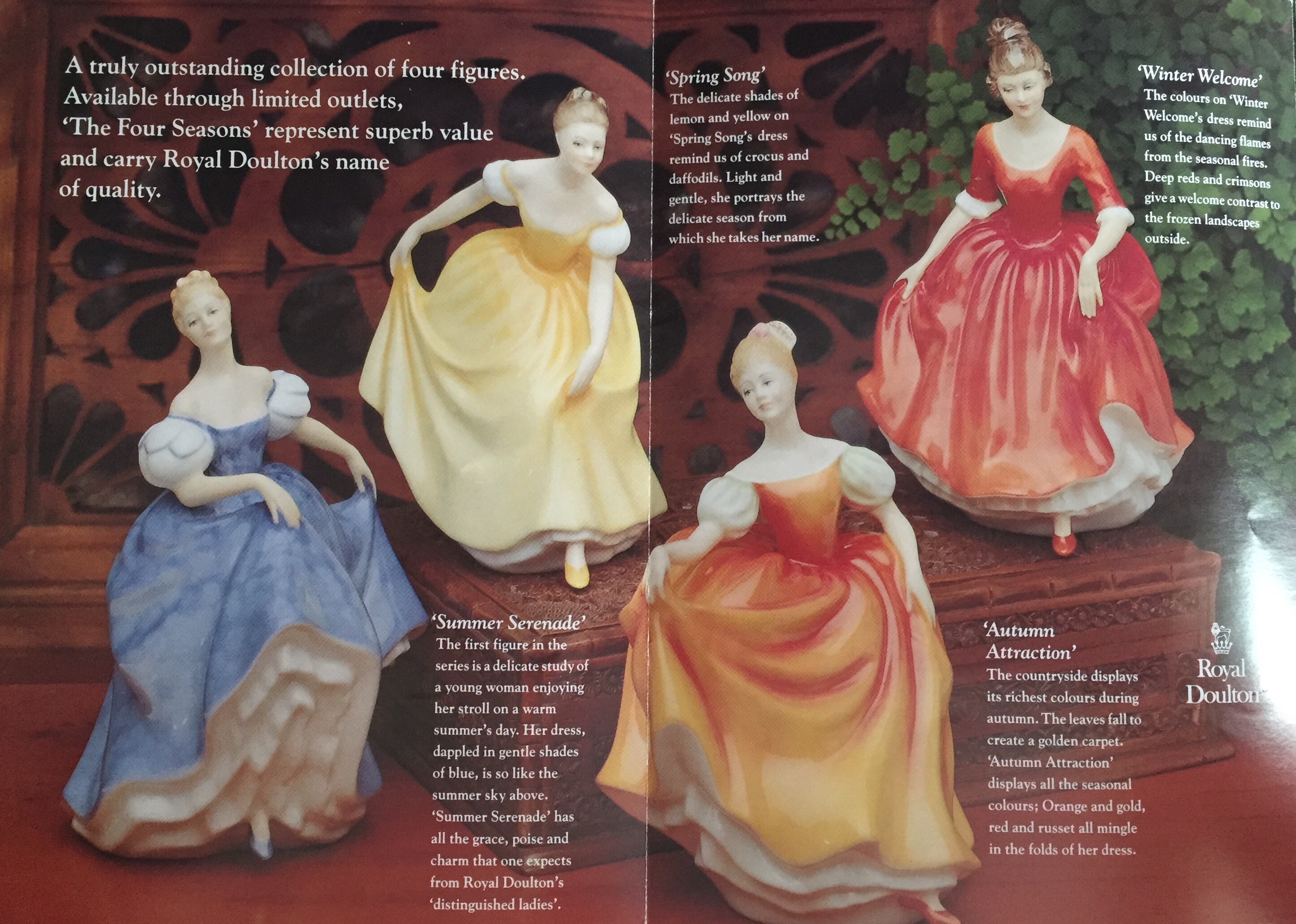
Catalogue page from 1993. 

Three existing models by the legendary Peggy Davies and one model from Peter Gee were given a colourful re-incarnation to become part of this series. 

Thus…

Danielle HN 3001 became Spring Song HN

Beatrice HN 3263 became Summer Serenade HN 3610

Michelle HN 2334 became Autumn Attraction HN 3612

And

Caroline HN 3170 became winter welcome HN 3611.

  
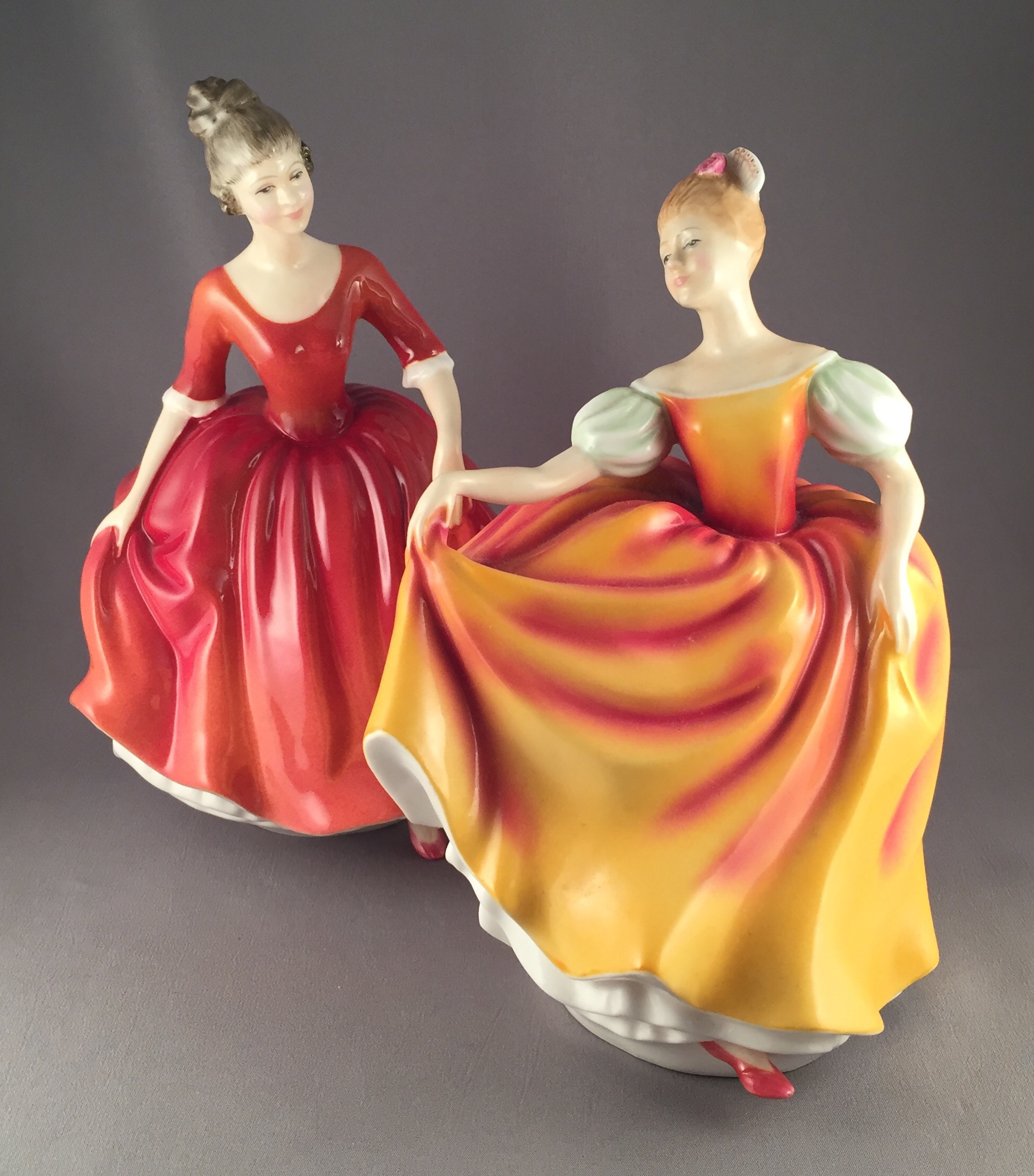
Autumn Attraction and Winter Welcome. 

For collectors it is the Doulton ‘colouring’ of these popular models that set them apart from the originals which were typically very modestly decorated and for me too that makes them instantly more attractive! 

Doulton figures- are you seeing dots? 

Who doesn’t love matching colourways? We’ve looks at matching reds, pinks, blues, greens and even oranges, but here are three other early figures you’ll be dotty about! 

  
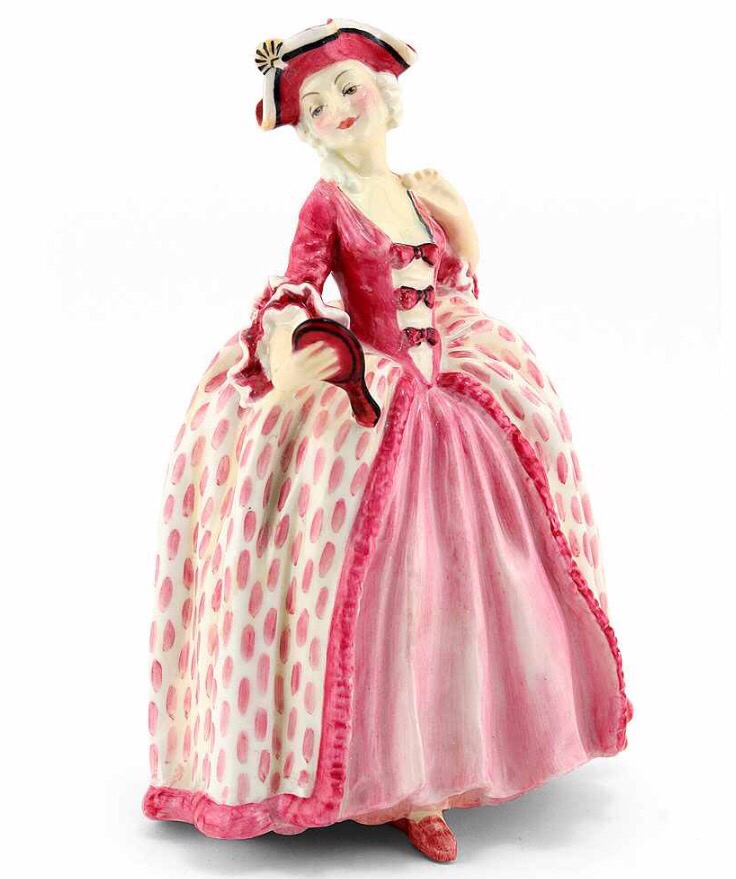
Sibell HN 1735.

After writing the Kate Hardcastle piece on Monday I recalled these spotted beauties and lamented how I’d never managed to find all three at the same time! 

  
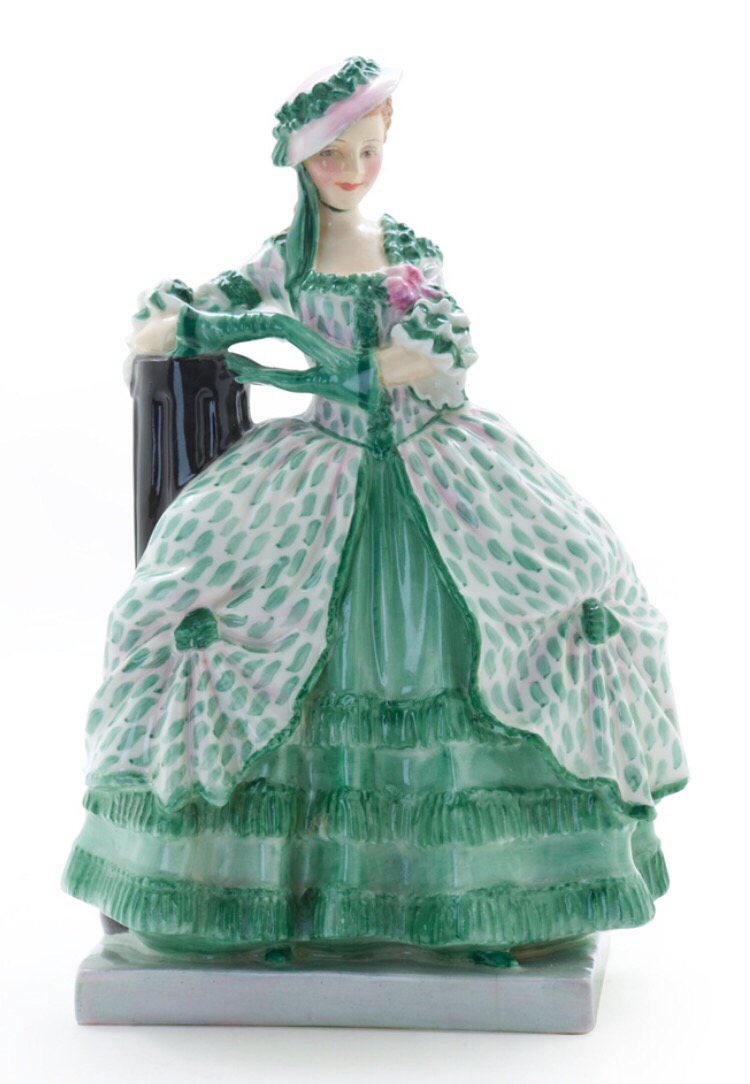
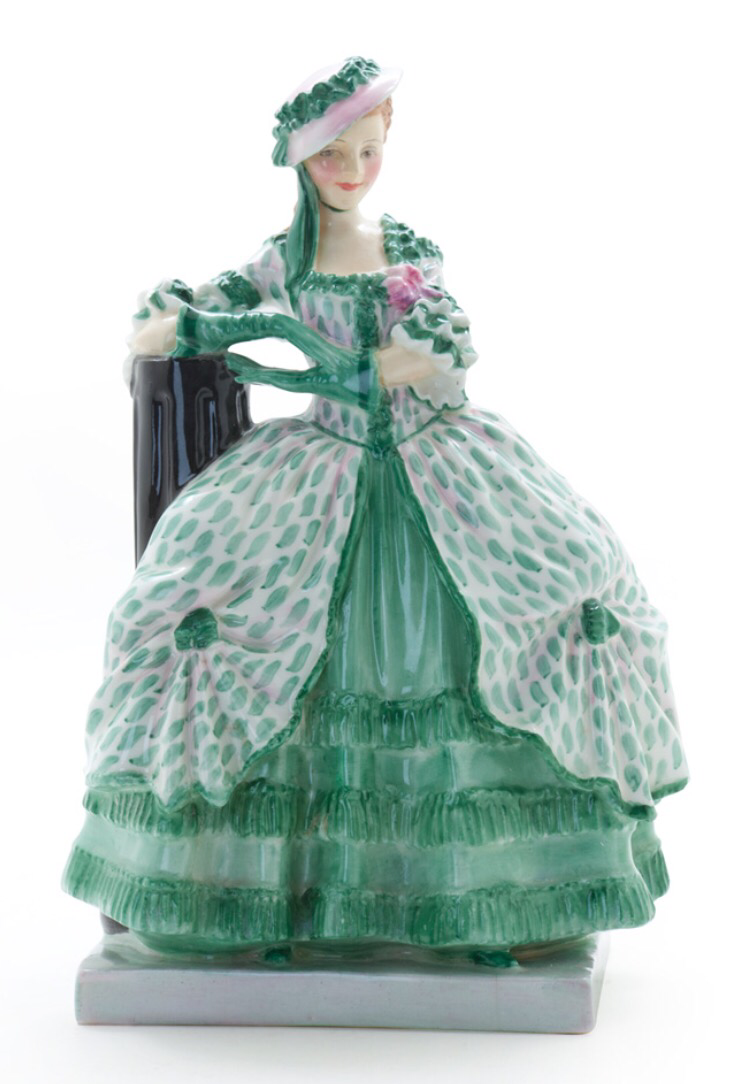
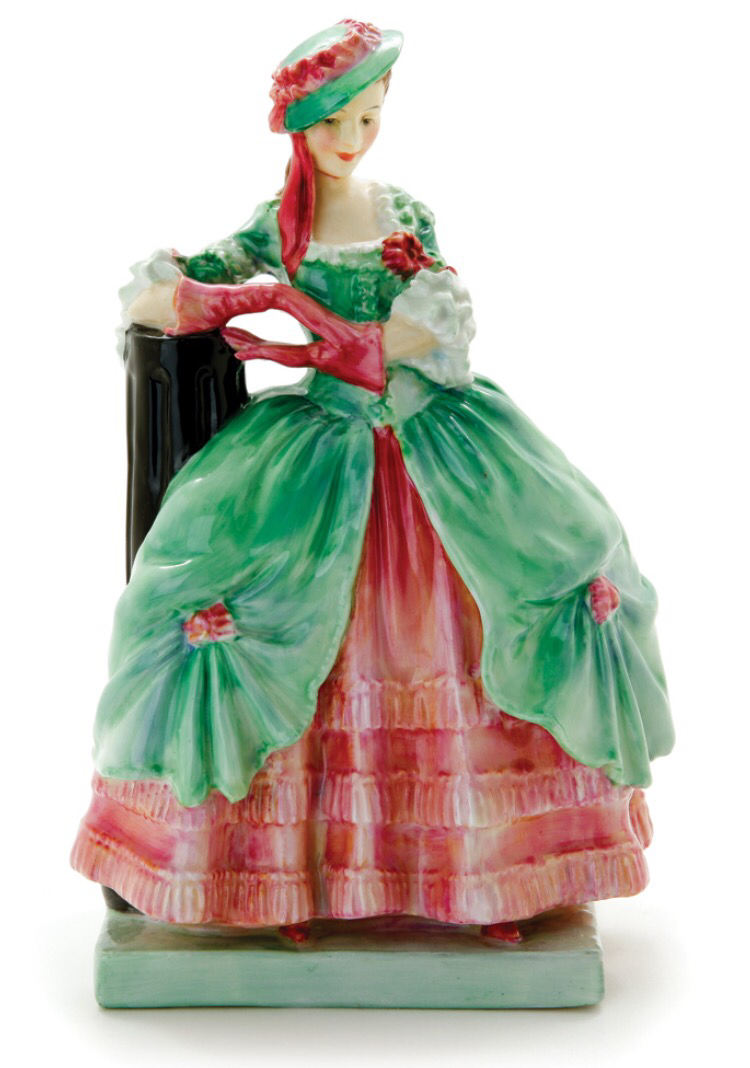
Kate Hardcastle HN 1734.

Just as other groups, their HN numbers are in the same number range, but this time they are chronological if you take a second look!

  
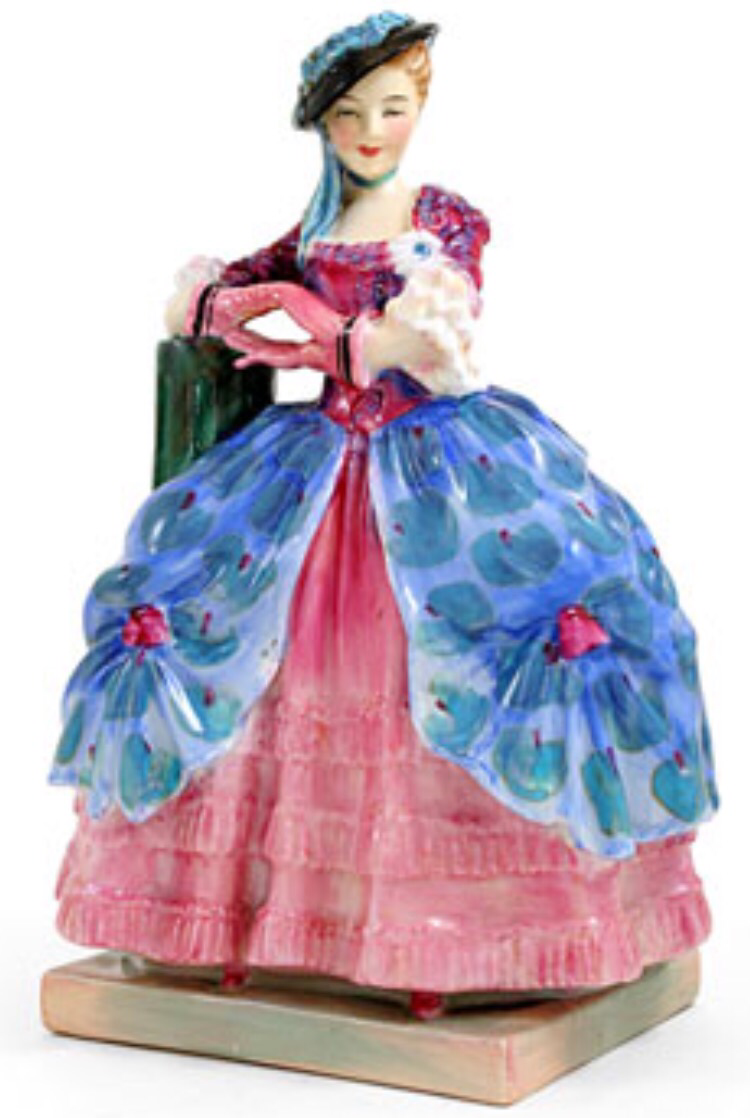
Camille HN1736.

With such vivid colours and an unmistakable design this group may not be to everyone’s taste but they are super rare! 

Royal Doulton’s Kate Hardcastle – the story of a name. 

Royal Doulton’s figurine Kate Hardcastle takes her name from the the heroine of the Anglo-Irish playwright Goldsmith’s comedy ‘She Stoops To Conquer’ first performed in the 18th Century.

  
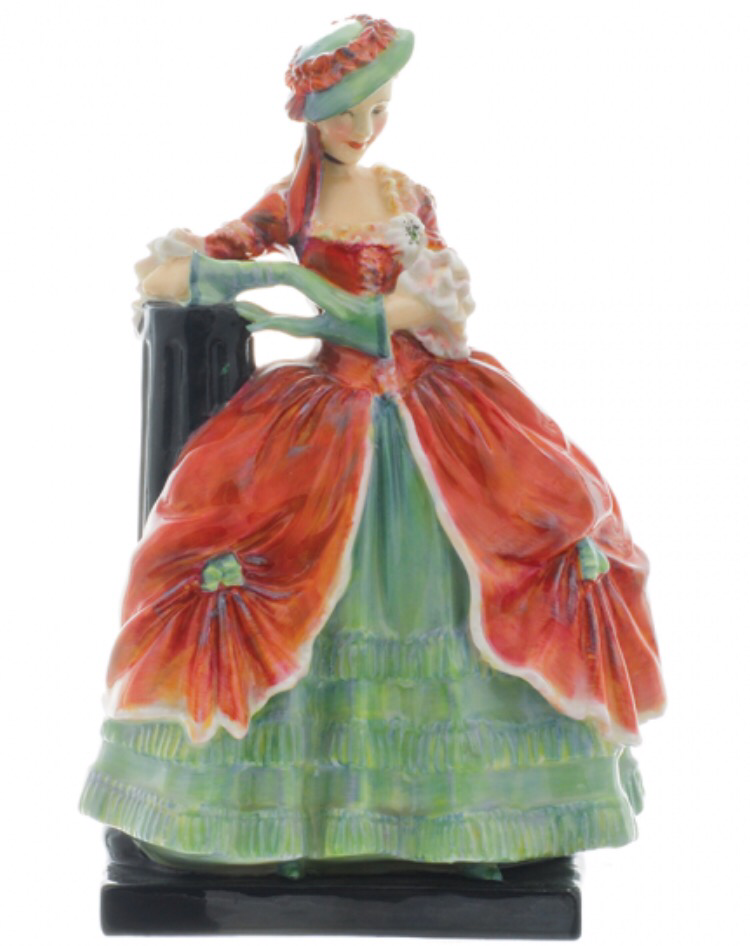
Kate Hardcastle HN1734.

Kate, a spirited young girl pretends to be a barmaid to overcome the shyness of her lover, Charles Marlow, the son of a rich Londoner. Charles’ shyness disappeared around working class girls hence the needed pretence. 

  
Kate Hardcastle HN1861.

Realising what she must do in order for Charles to woo her, Kate pretends to be a barmaid, thus stooping to conquer the young Charles! 

  
Kate Hardcastle HN1719.

Goldsmith’s play has proved perennially popular ever since it was first performed in London in 1773, which explains why in 1935 a figurine was modelled in her contemporary likeness by the great Leslie Harradine. 

  
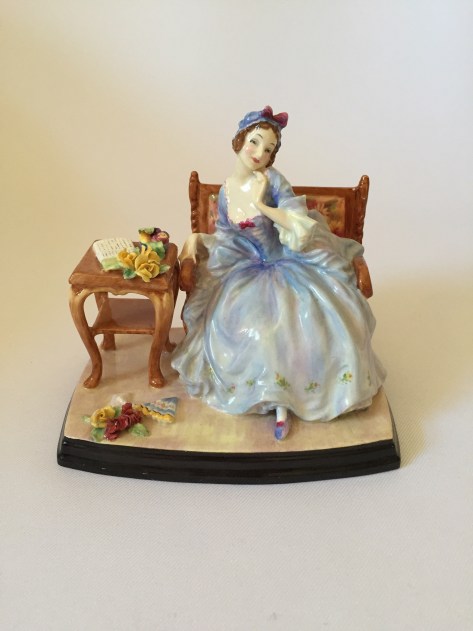
Kate Hardcastle HN1919.

Doulton’s figure Kate Hardcastle proved popular with 5 colourways produced in the 1930’s and post WWII a slightly simplified model of her in somewhat muted colouring similar to HN1719 was introduced as HN2028. The issue with her has always been the base, which as collectors know is a particularly weak point when they are square or rectangular on these early figures, hence why most figures have round bases. 

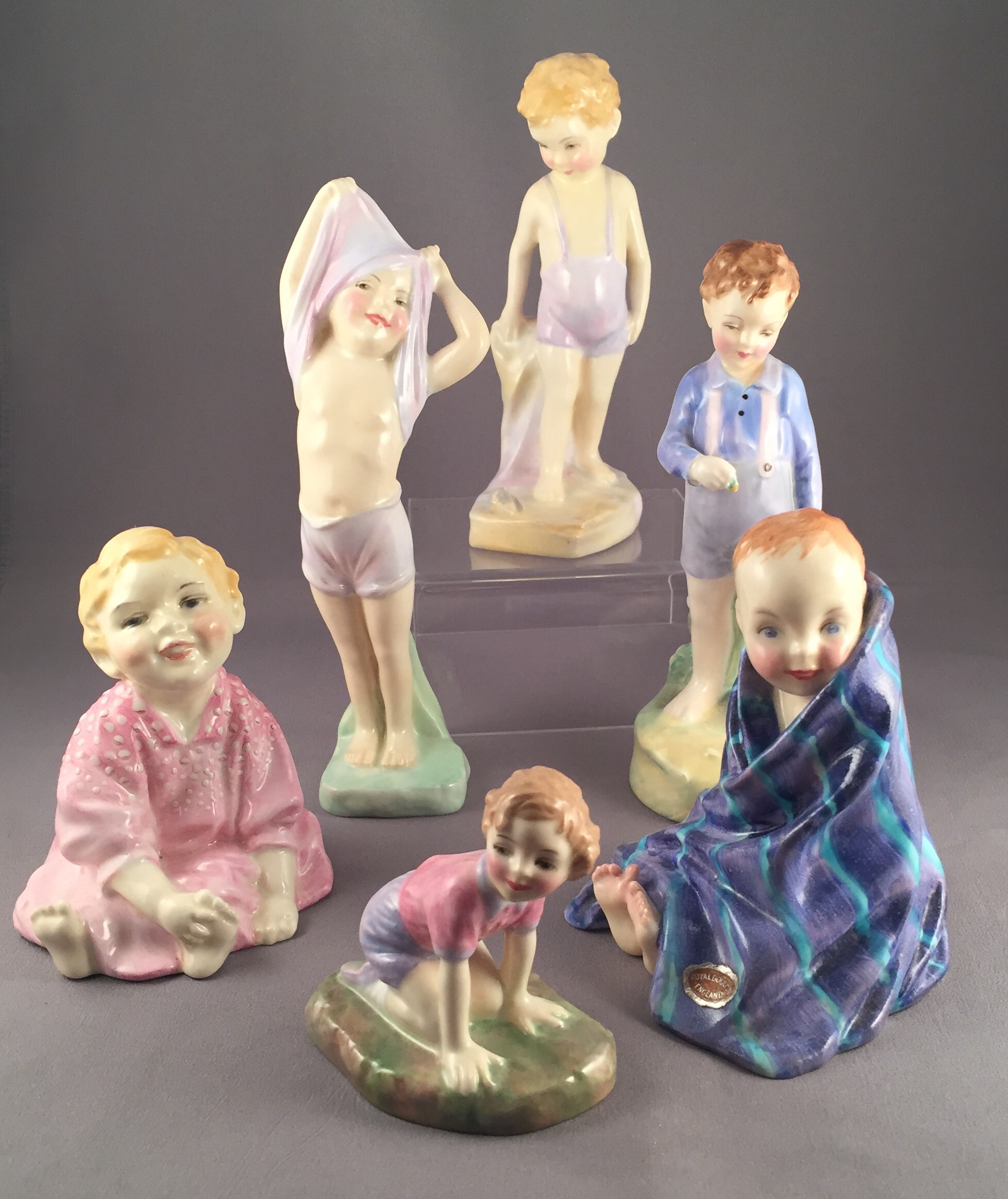
Collecting Royal Doulton child studies.

When we think of Doulton many think immediately of pretty ladies and young girls in crinolines, yet here is another collecting theme although generally much harder to track down.  

These studies of boys by Doulton were the work of Leslie Harradine and date to the late 1920’s through to the 1950’s. Although there are only a handful of male figures, if you have the patience to track them down they make a complimentary display to their female counterparts! 

  
The popularity of child studies has long been a favoured collecting field for Doulton enthusiasts, once again bourne out by the enduring popularity of HN1 Darling – a Charles  Vyse study of a boy in his nightgown modelled after his Chelsea original and introduced in his original size in 1913. 

How adverts influenced Harradine’s figures for Royal Doulton.

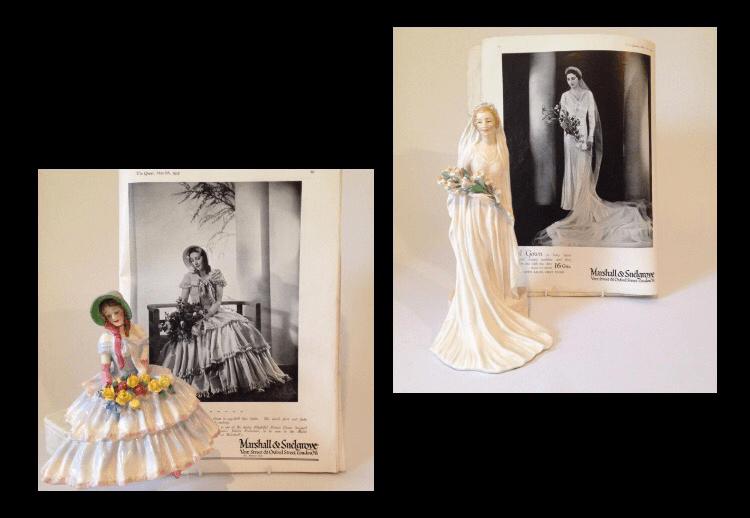
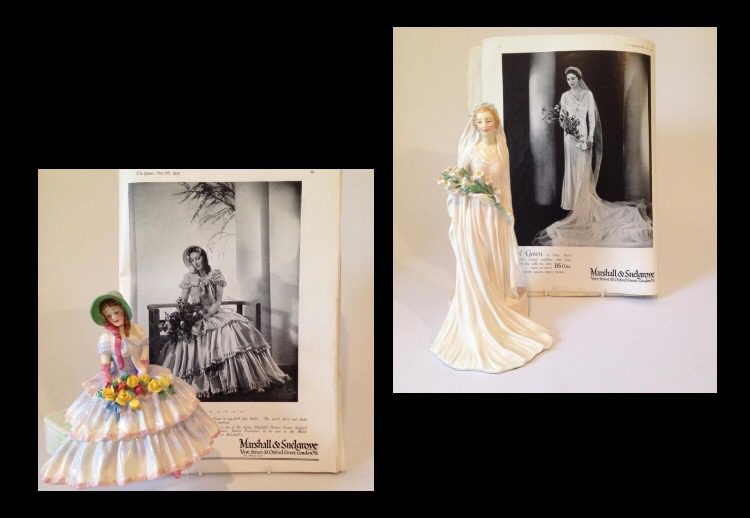
One of the most interesting aspects of collecting Doulton figures is the story behind them. When researching Reflections – a book which discusses this topic – many more illustrations were found than could be published.

Such examples include the many adverts and publicity shots for the once famous department store Marshall & Snellgrove, which since the 1970’s has been part of the company we here in the UK know as Debenhams.

As you can see two iconic figurines – Day Dreams and Wedding Morn are derived from this source but others include Sweeting, Estelle and a host of fashionable ladies based on fashion photographs from the mid-1930’s.


Collecting Doulton’s ‘Ladies of the Fan’.


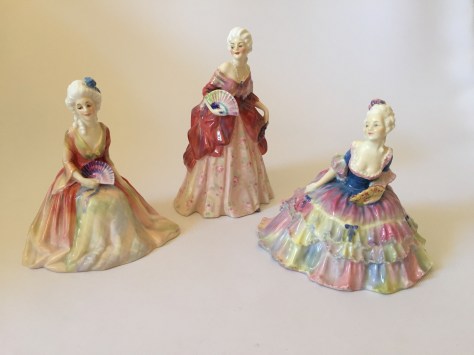
 Eugene HN1521, Fleurette HN1587 and Lisette HN1524.

Whatever you particular interest in Doulton figures you soon realise that themes do occur within collections, such as those ladies with feet popping out under the hems of skirts or those carrying parasols.


Teresa HN1682.

Another theme are the bevy of beauties teasing their admirers with their colourful fans.


Miranda HN1818 and Mariquita HN1837.

With a history stretching back over 3000 years, it is the fans of the 18th and 19th centuries that typically appear on Doulton ladies. First seen here when merchants from Asia returned with them, those appearing on Doulton ladies are the folding type – again a relatively modern adaptation of the traditional fixed type. 


Eleanor HN1754.

Perhaps you collect figures according to a different theme? If so why not share them on our facebook page – Doulton Collectors Club!