Category Archives: Seriesware

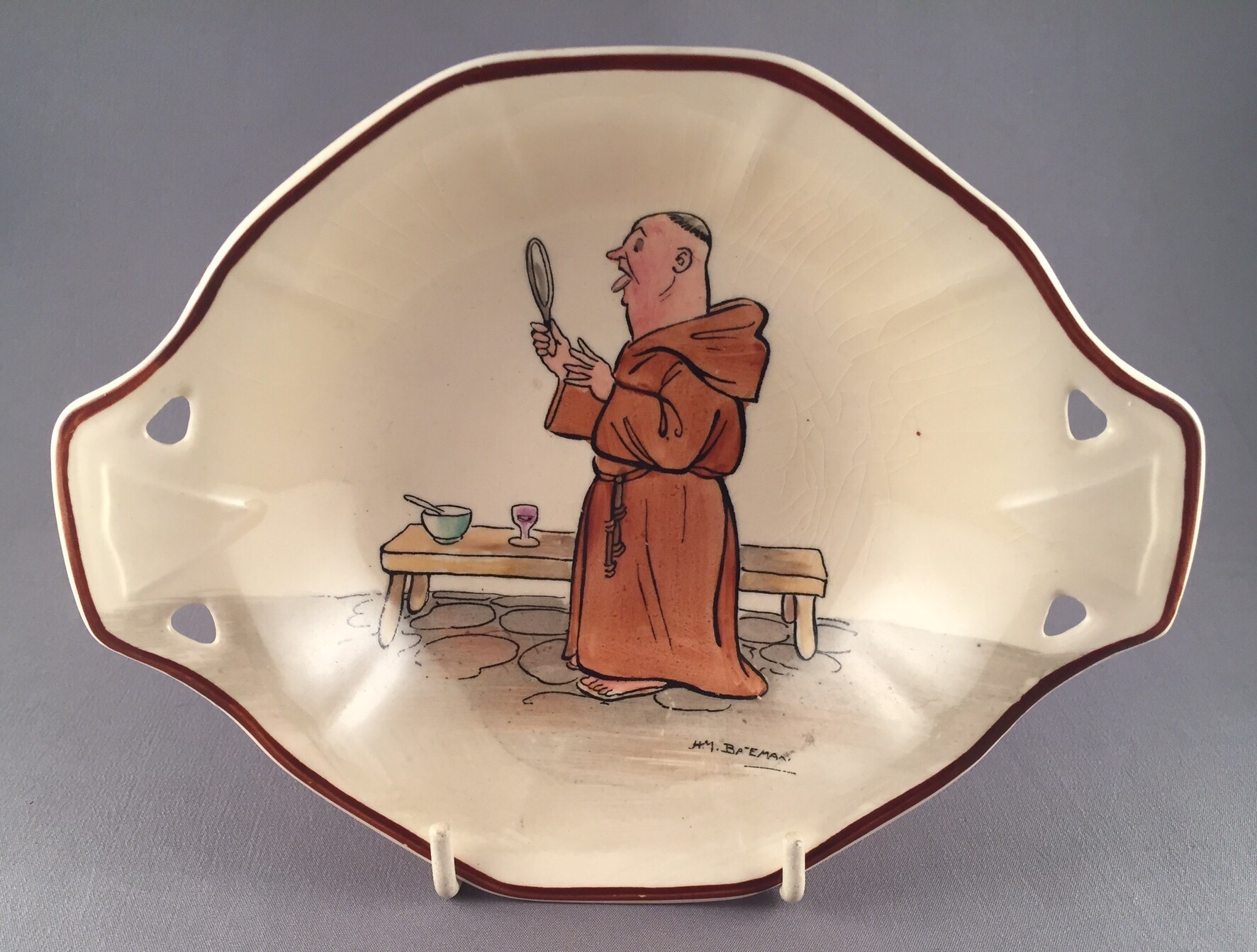
Collecting H. M. Bateman’s illustrations on Doulton seriesware! 

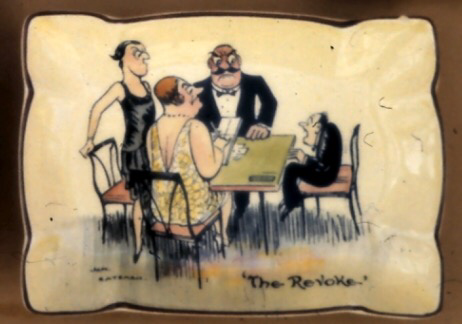
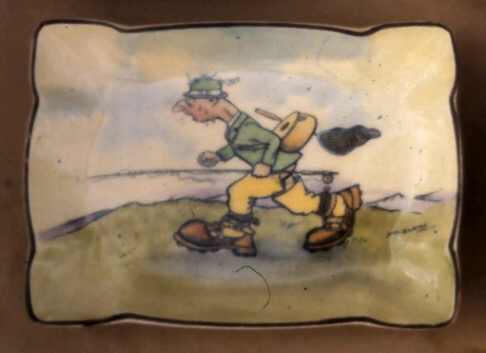
Henry Mayo Bateman was an Australian illustrator, most famous for his cartoons captioned ‘the man who….’. 

 These illustrations featured a haphazard man who continually ‘puts his foot in it’ as we say here in the UK, meaning that he commits the most awkward gaffes! 

  His cartoons were featured in leading magazines of the period including The Tatler and Sketch. 

  Returning to his seriesware illustrations they are termed as rare among collectors who appreciate the humour of his scenes and when they do turn up even on small items they regularly reach three figure sums! His designs on Doultonware feature a facsimile signature and from experience date to 1937-8.

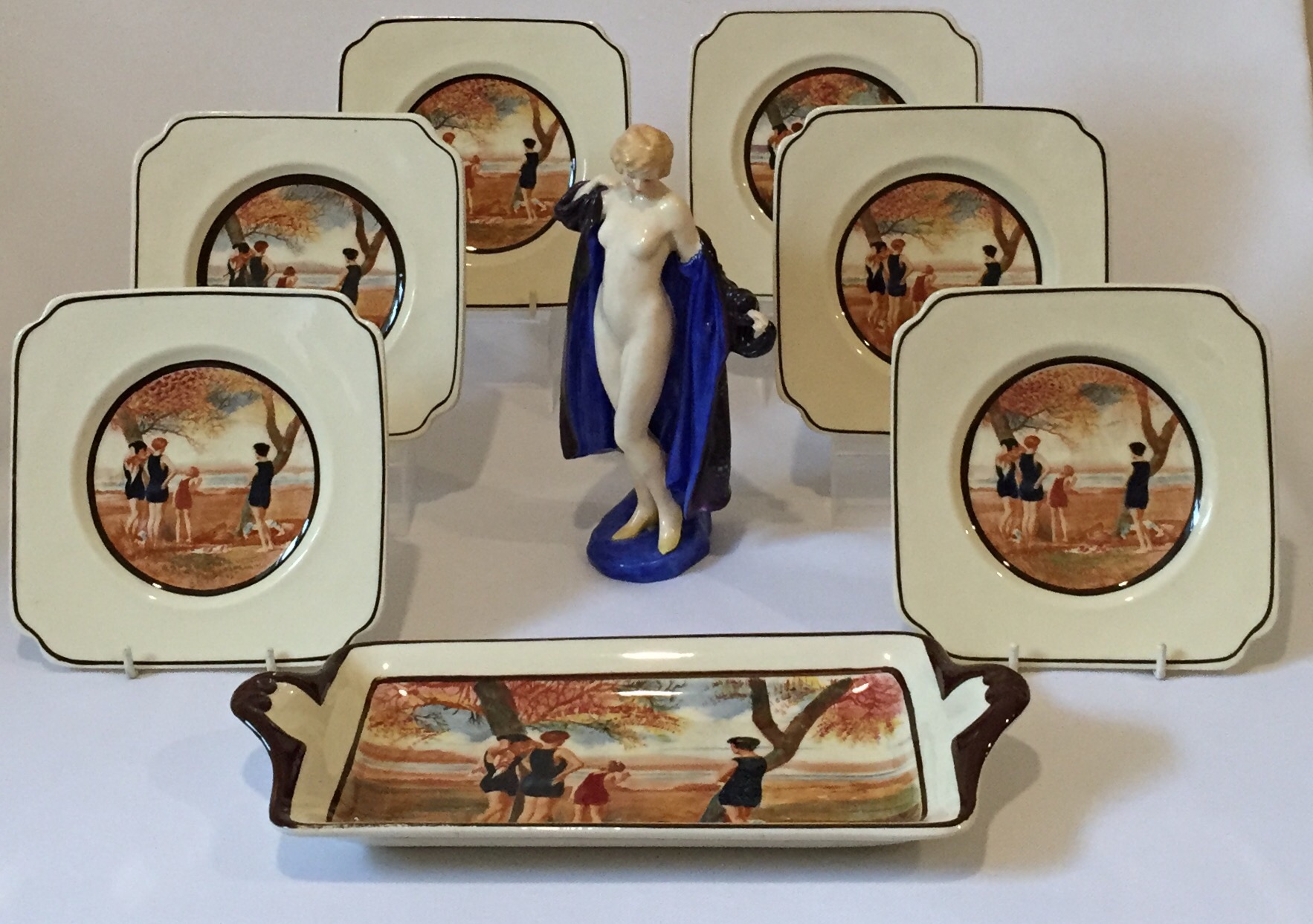
Collecting Doulton’s ‘Surfing’ seriesware pattern. 

  
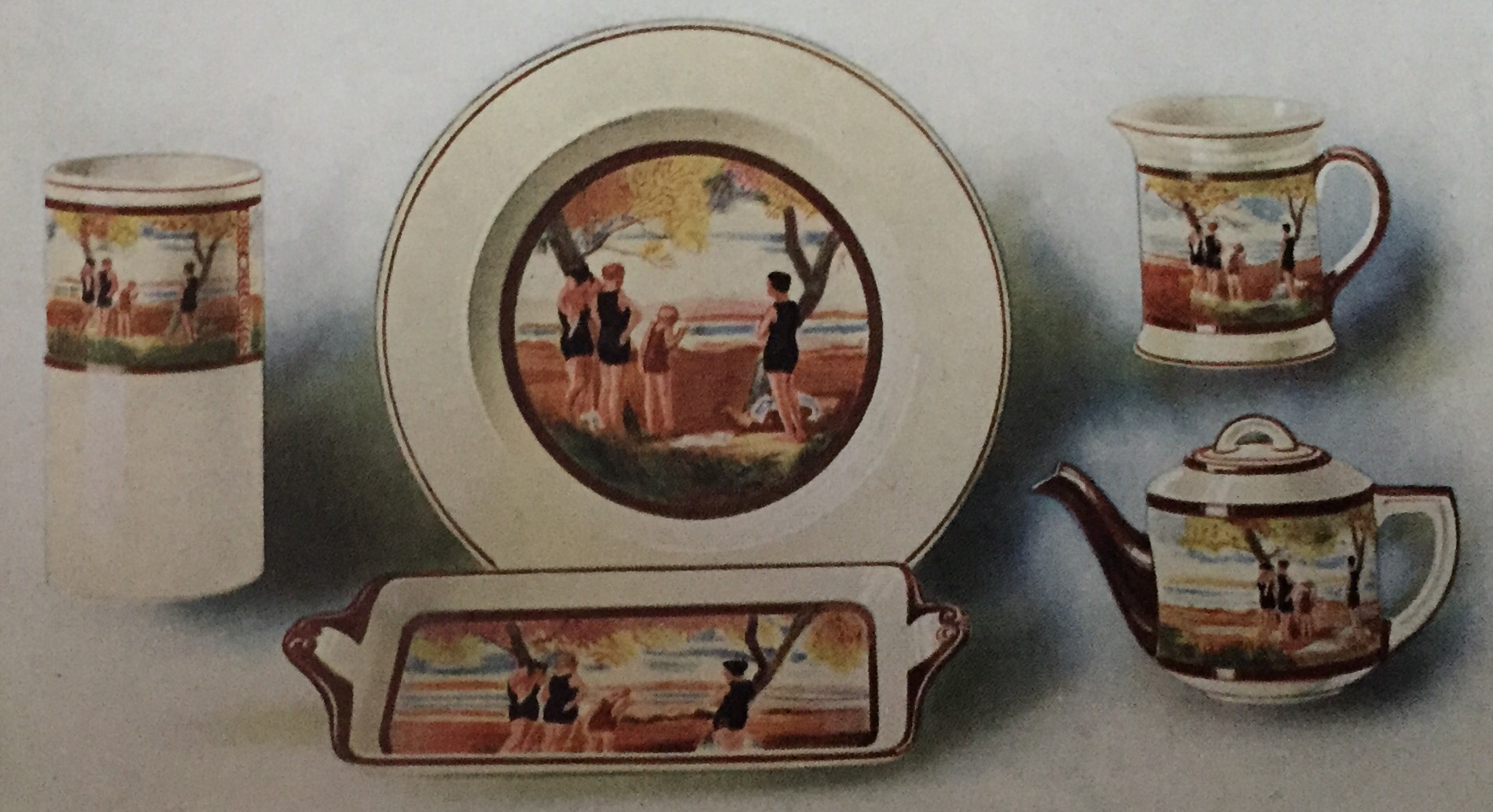
Part of an early catalogue page featuring ‘Surfing’.

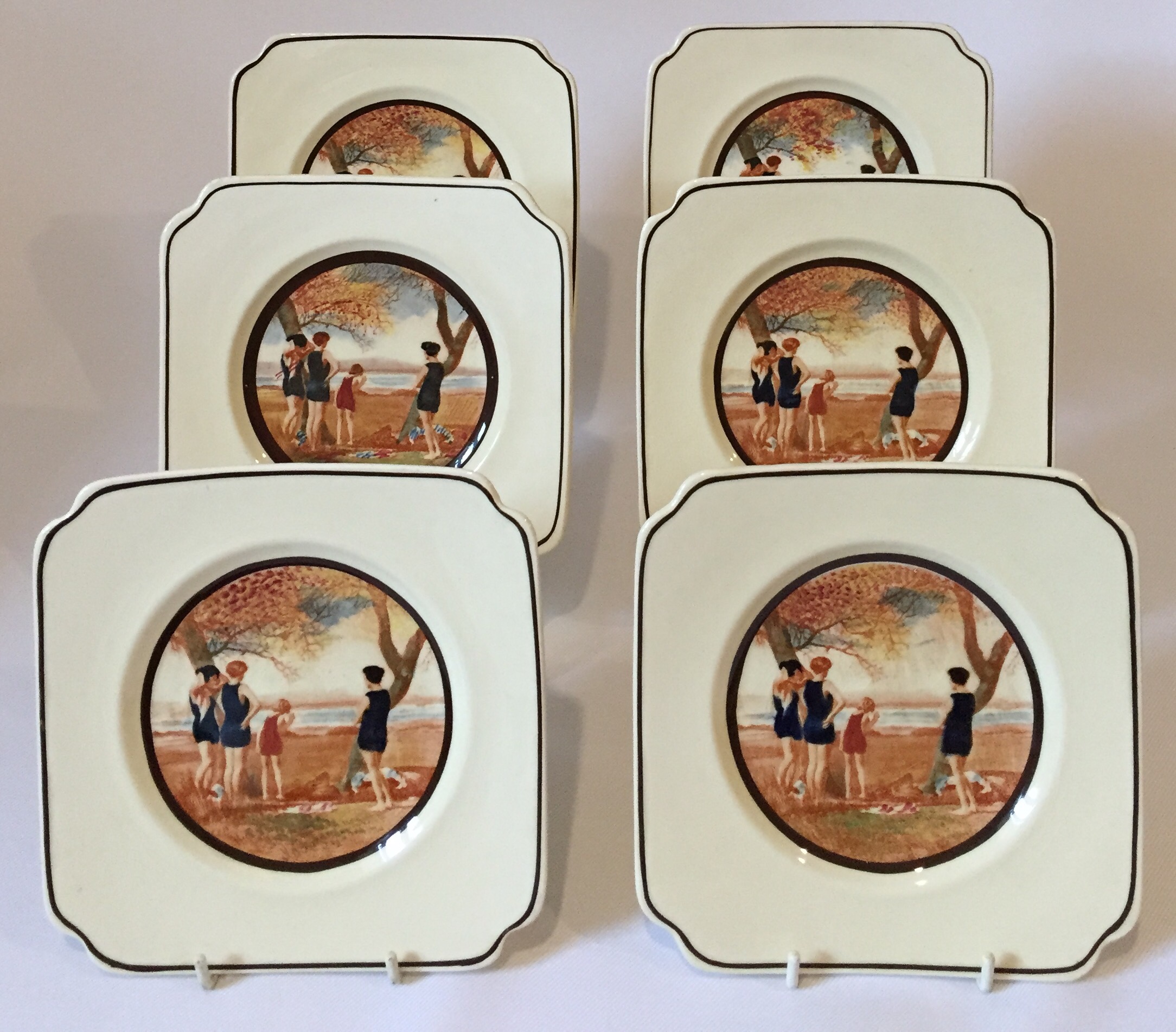
Introduced in 1926 at the height of the roaring 1920’s this truly deco pattern must have been considered too modern to the general buying public of the time as examples rarely appear today. 

  
Distinctly Art Deco in style and echoing the handful of.    figures of bathers and swimmers in Doulton’s HN collection, this seriesware pattern is the perfect accompaniment to a display of deco ladies. 

There appears to be only one scene within this pattern, although I have seen it on numerous items, including most recently a pin tray. Although shapes were added to the series in 1928, production will have been very limited given the lack of this pattern appearing on the secondary market and will have been withdrawn long before the suggested ‘by 1942’ that is often suggested.   

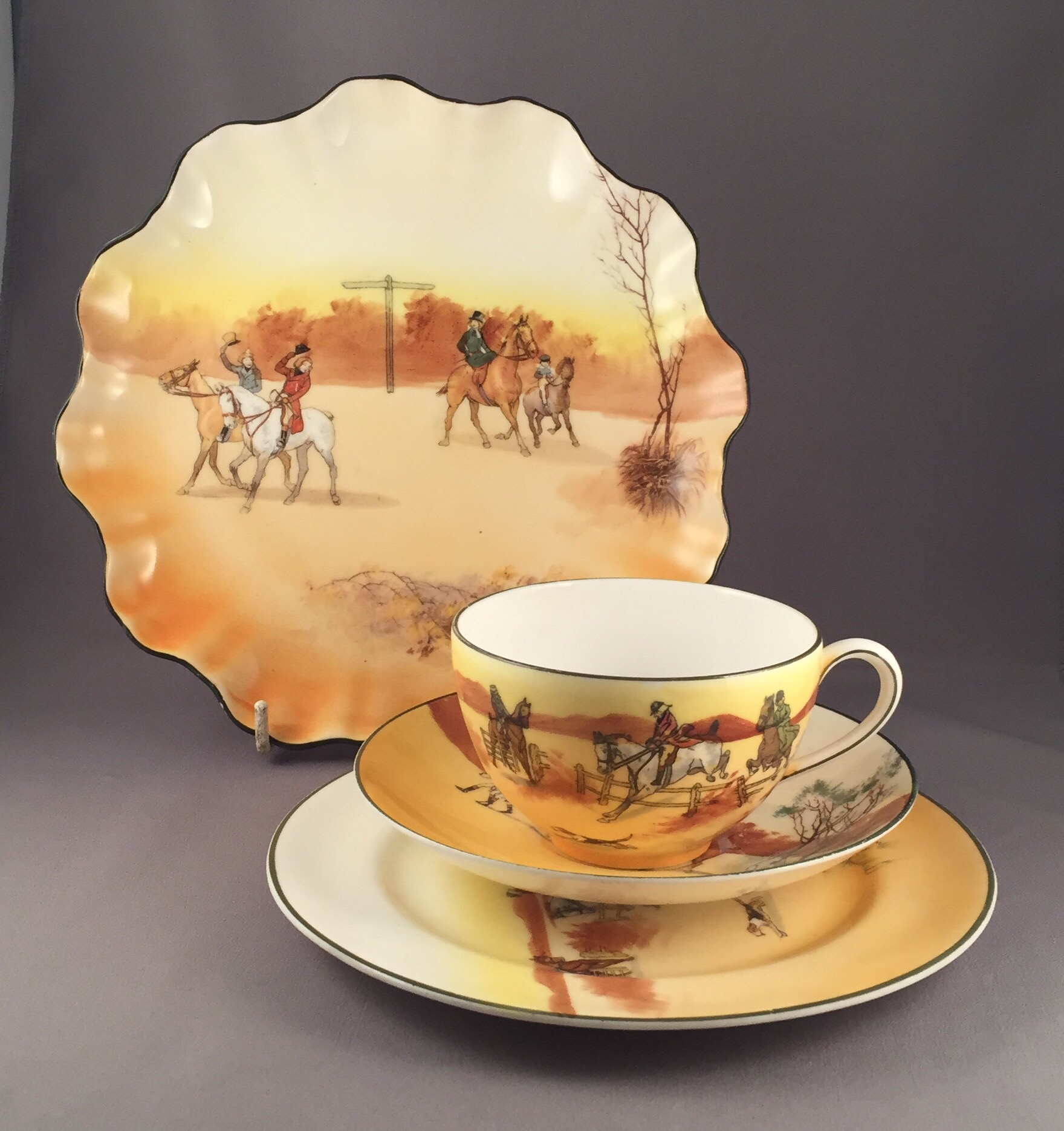
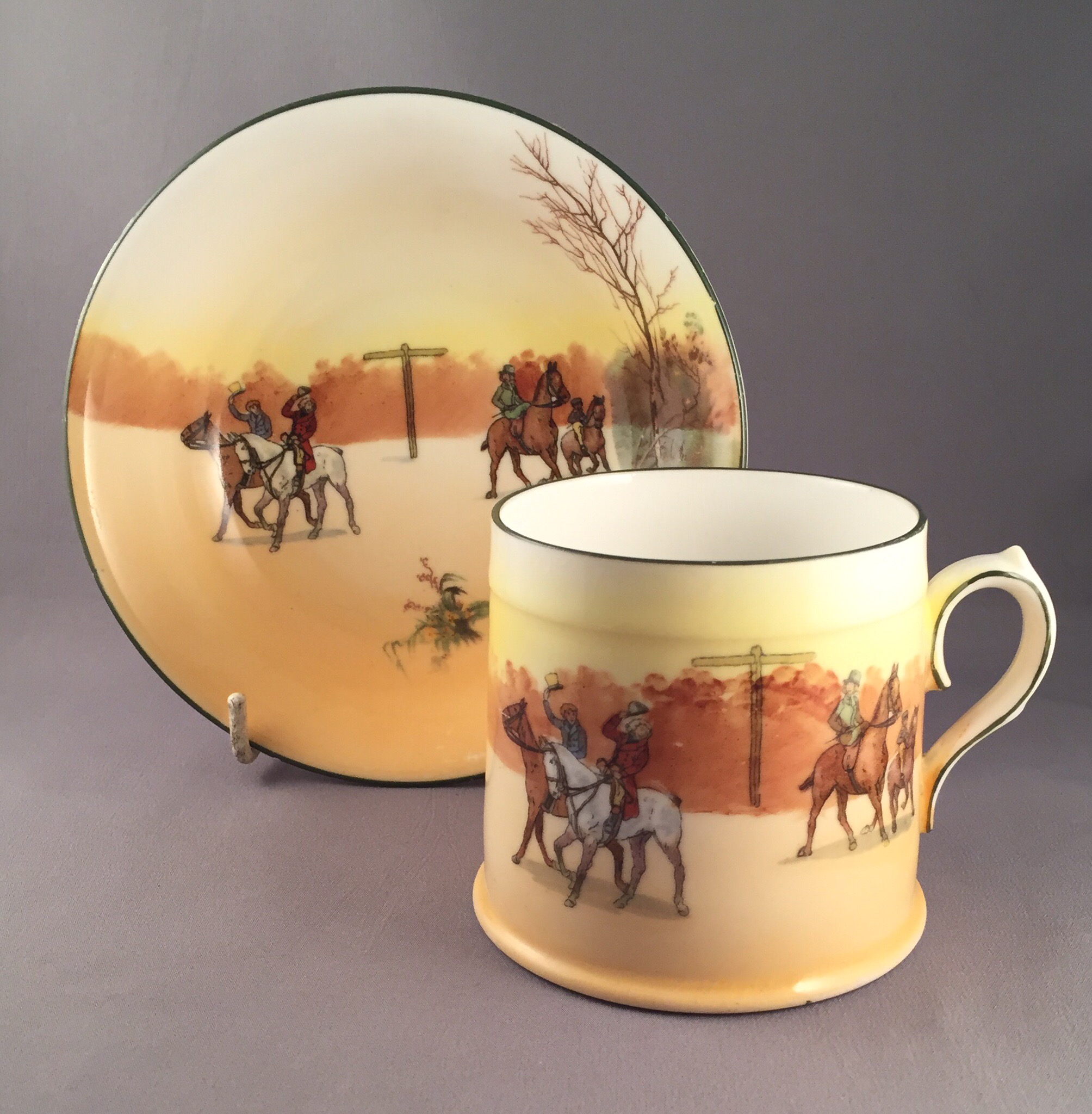
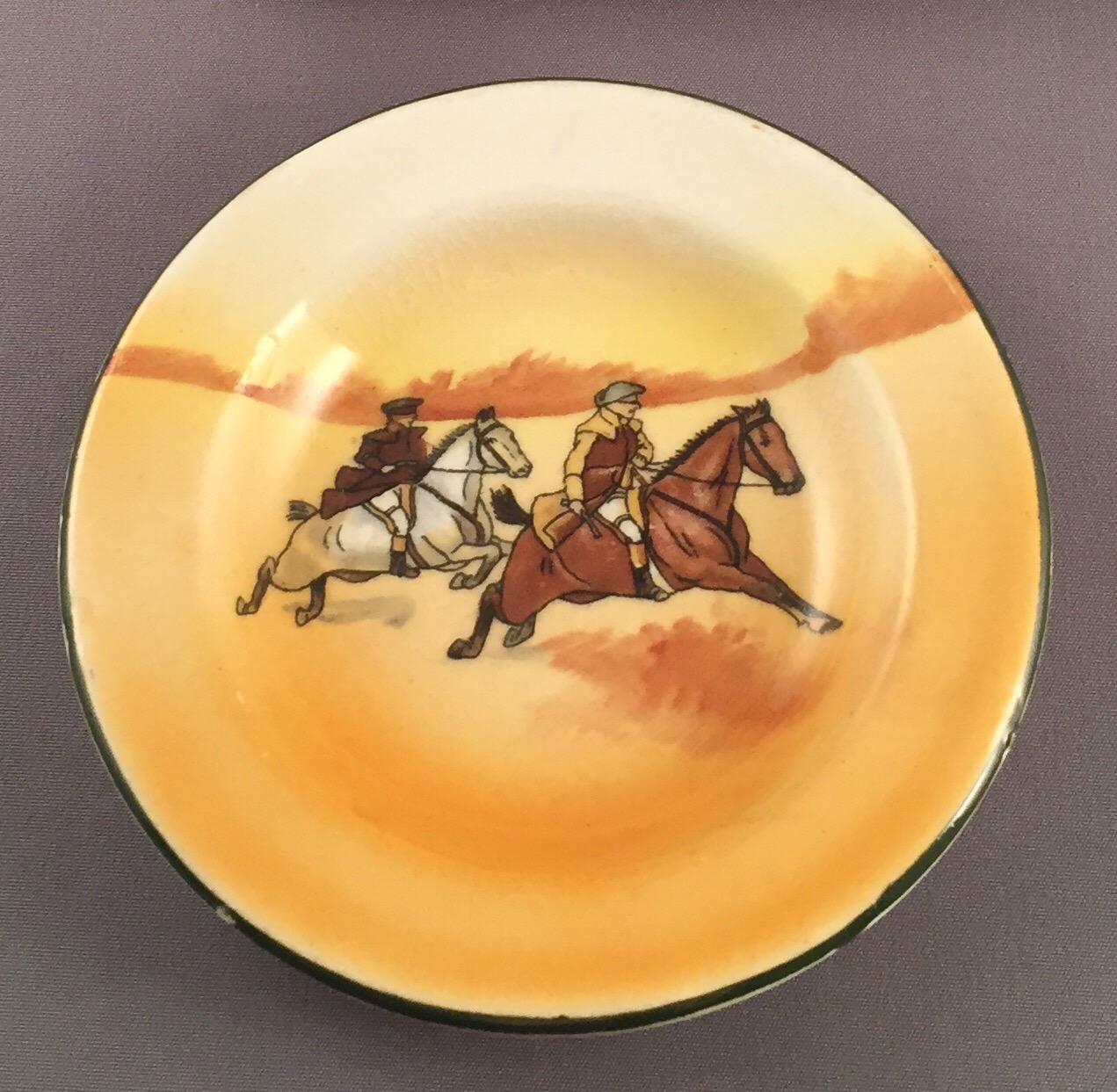
Collecting Doulton’s ‘Hunting – John Peel’ seriesware pattern.

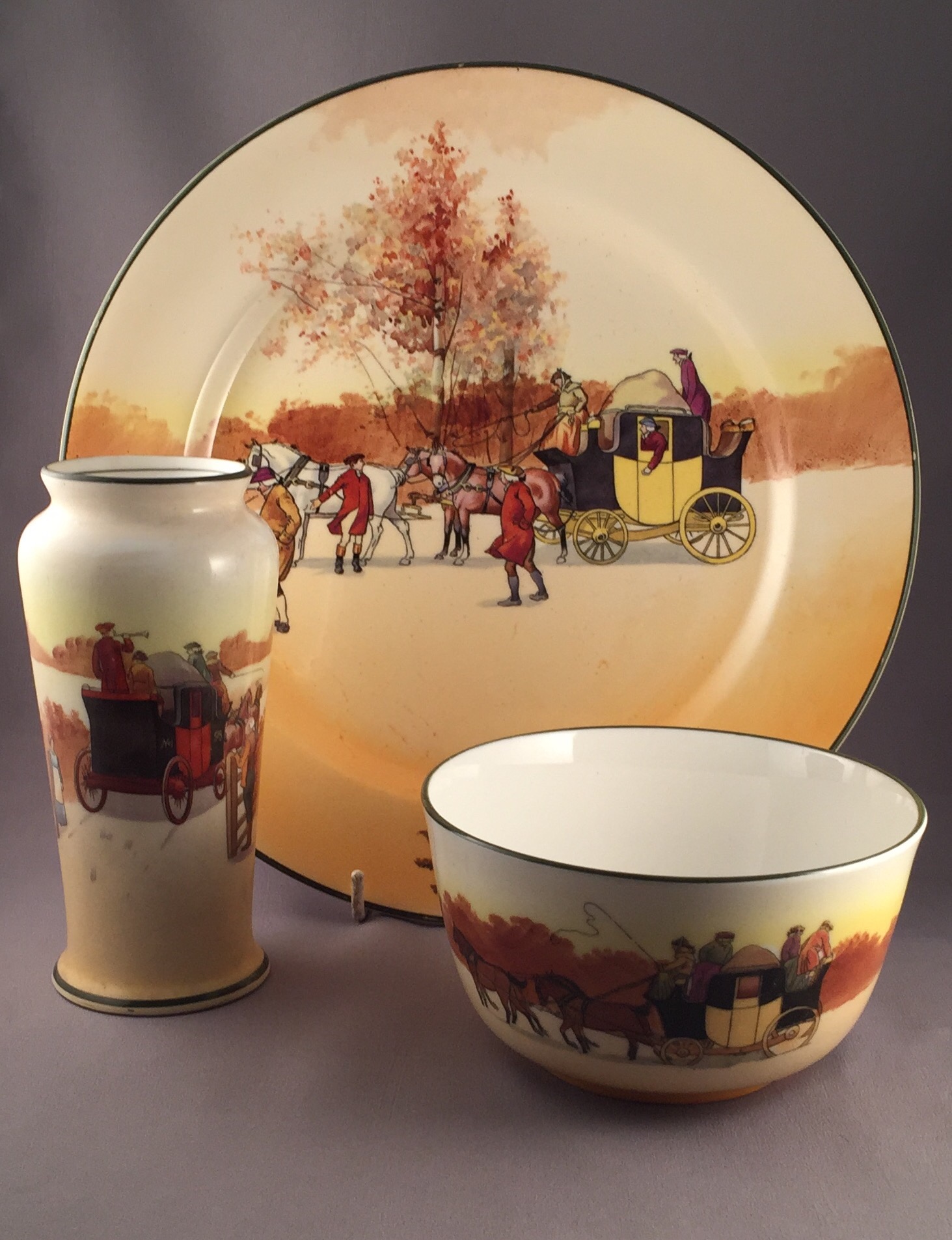
This series together with Coaching Days and Royal Mail are easily mistaken for one another on first glance given their similar palette. There were a handful of other patterns  to Hunting – John Peel all celebrating this once popular pastime, now out of favour. 

  
There are 9 recorded patterns dating from 1924 to an unknown withdrawal date. Some are often found in combination as you can see above and below with scenes 2 & 3. 

  
Interestingly the later designs bear an H number (1947) rather than the traditional D numbers associated with seriesware or the very early patterns that have the earlier E numbers if they were on china.

  
The great thing about seriesware is that the possibilities for making a collection are plentiful! Naturally you can collect one particular pattern, or miniatures, or particular shapes or like me pin dishes and ash trays like the one above! 

Collecting Doulton’s Coaching Days seriesware pattern.

One of Doulton’s most popular seriesware lines remains their Coaching Days series. Introduced in 1905 and finally withdrawn in 1955, examples from this series can be found but earlier shapes and ceramic bodies make certain pieces more sought after! 

  
Earthenware was the typical body but examples can be found on a china body. The series was originally designed by Victor Venner between c.1904-1924, with unknown others contributing designs too. 

  
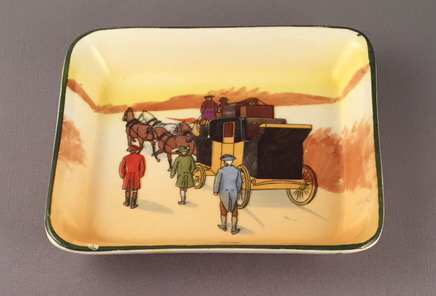
With 20 recorded scenes and a multitude of shapes that the series can be found on, this series provides much scope for collectors to assemble an impressive display. Above is a pin tray from my own collection. 

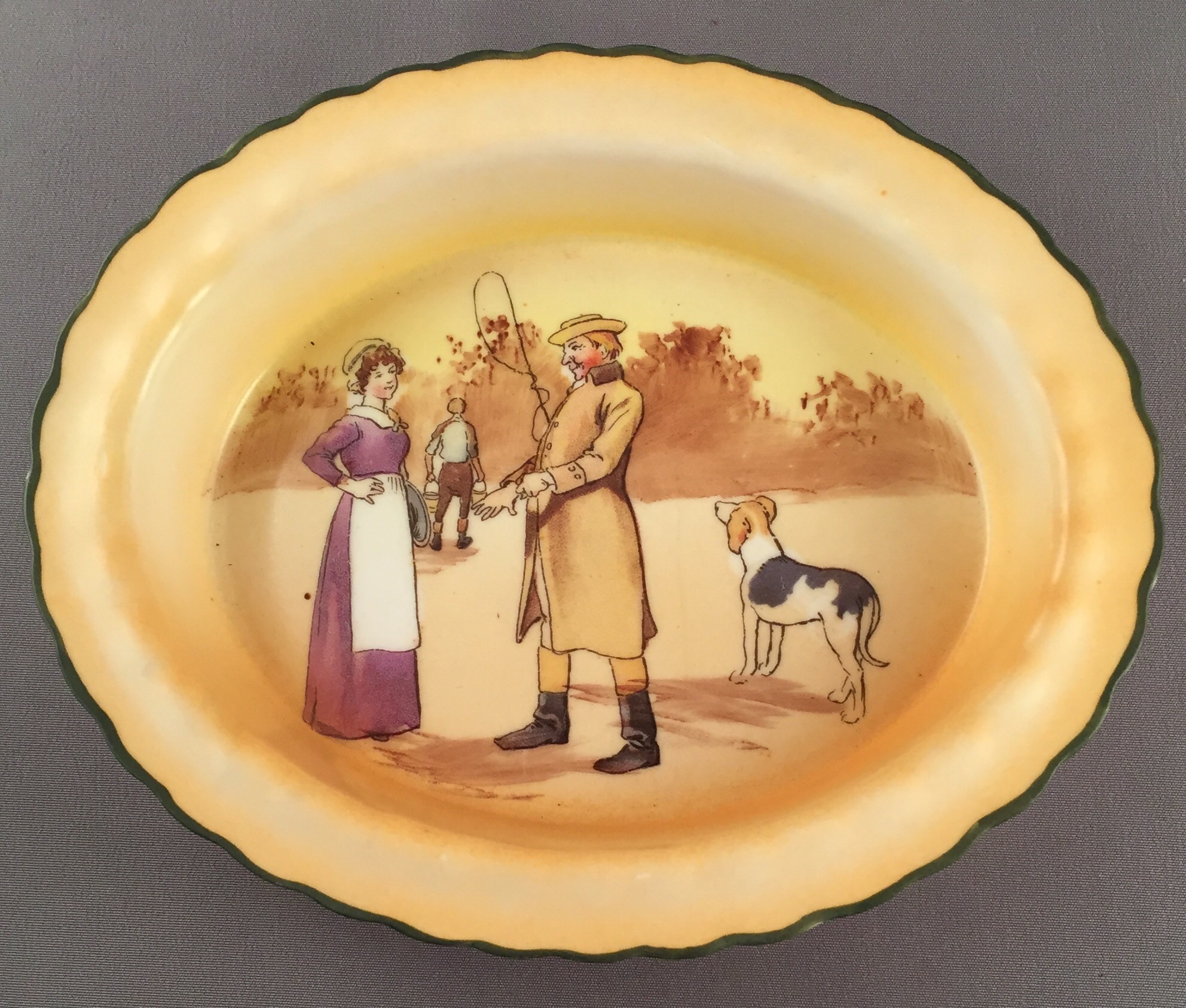
Unusual scenes do turn up such as the one on the small pie crust dish. Labelled as E3804, it is an unusual find and on china too, hence the E number.  


Examples of Coaching Days are easily confused with both ‘Royal Mail’ and ‘Hunting John Peel’ scenes and do display well together! 

Doulton’s Dutch Masterpieces.

We have looked at some popular Dutch themes already, but I love a collecting and indeed display theme so it is time to look at it a new!
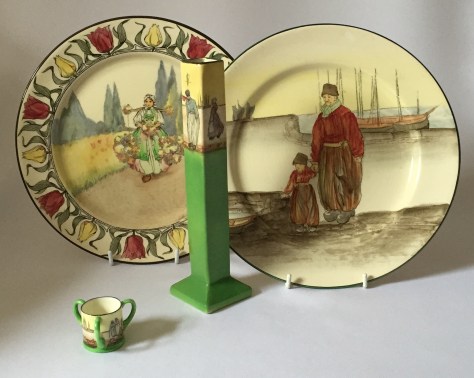
  
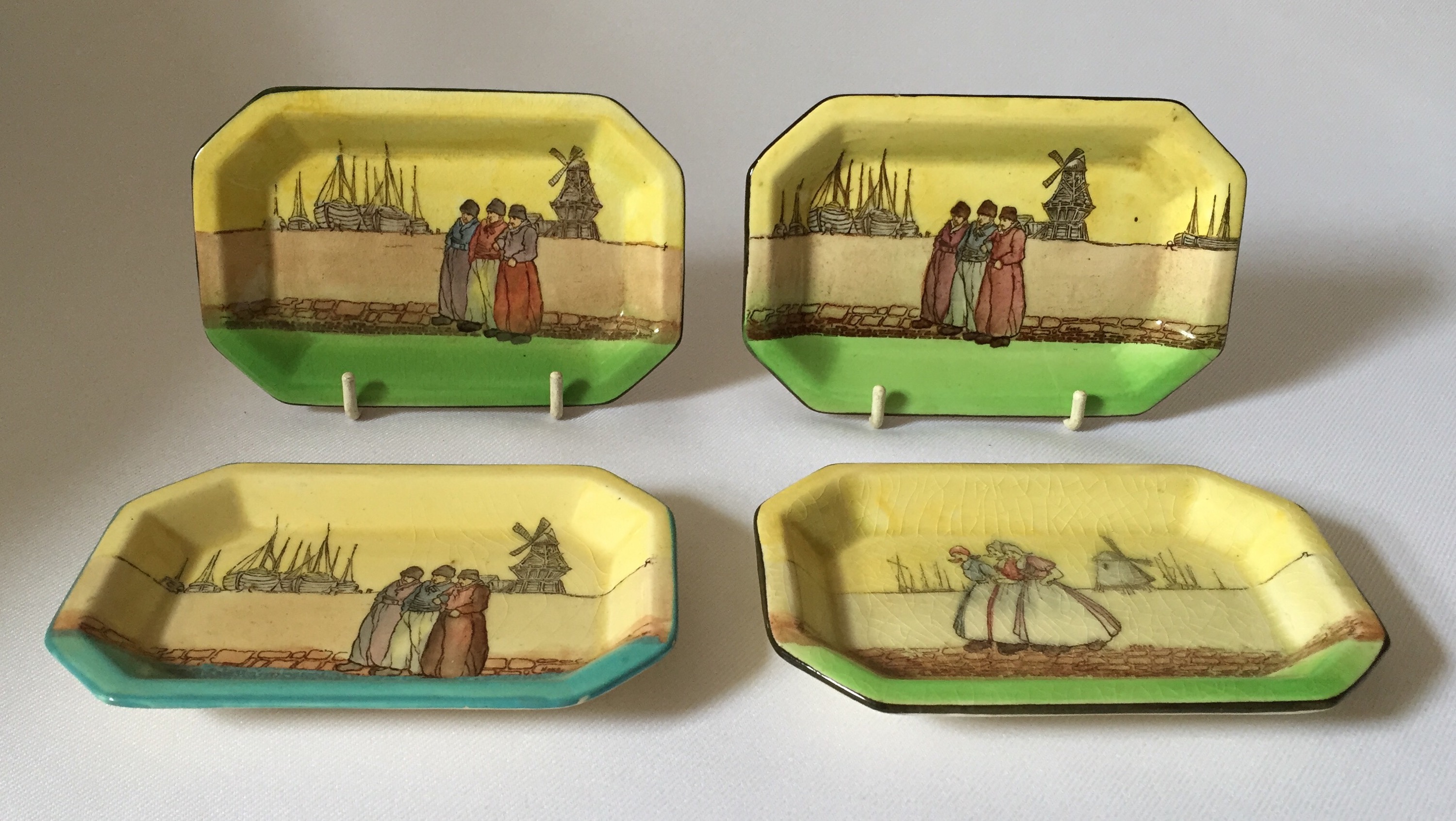
A mixture of the popular and unusual Doulton Dutch Seriesware patterns and shapes. 

The wonder of Seriesware is that it offers something for every collector – for new collectors there are many familiar faces to collect and for the die hard collector you never quite know what will turn up! 
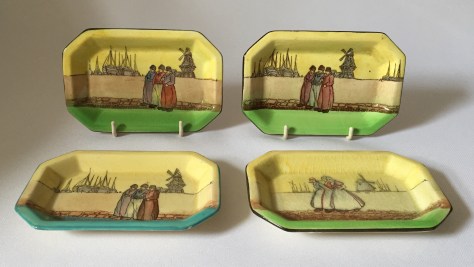
  
Four pin dishes illustrating the variety of seriesware that can be found! 

There was even a version of this popular theme created specially for Liberty of London with a blue sky. 
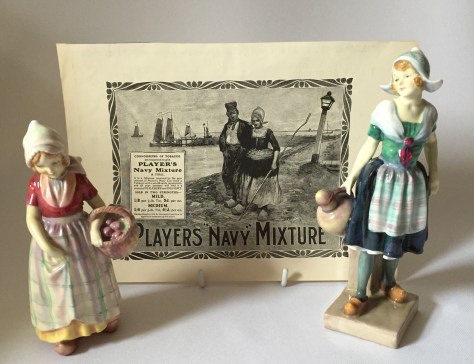
  
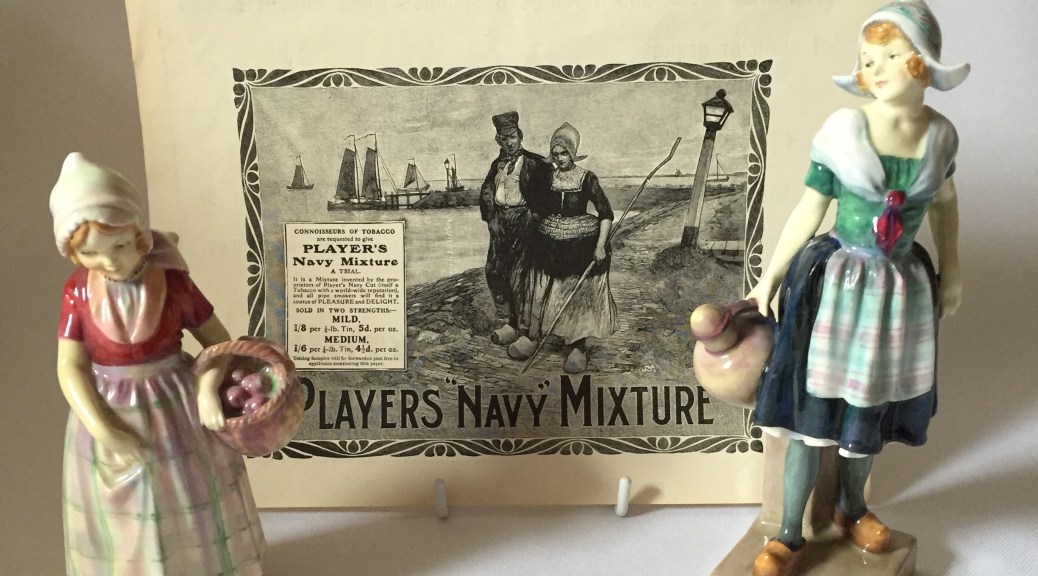
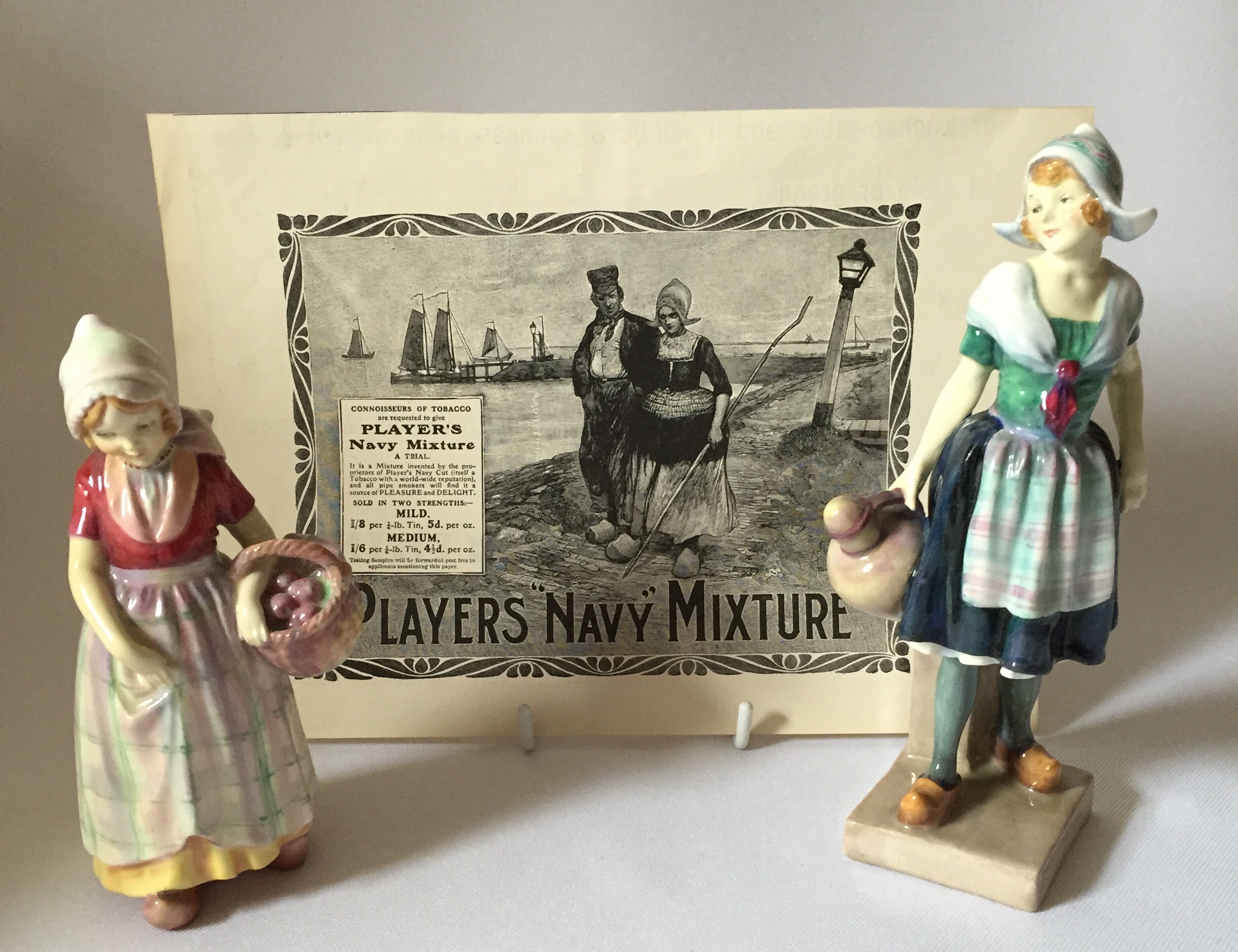
Two colourways of popular 1930’s Dutch figures Annette and Gretchen, and an illustration showing the popularity of all things Dutch in the early 20th Century.

Even well into the 1930’s Doulton were producing their Dutch figures such as Gretchen and Derrick and a glimpse through catalogues and adverts for major stores including Liberty of London, proves the then popularity of all things Dutch with page after page of Dutch inspired decorative items for the home.  
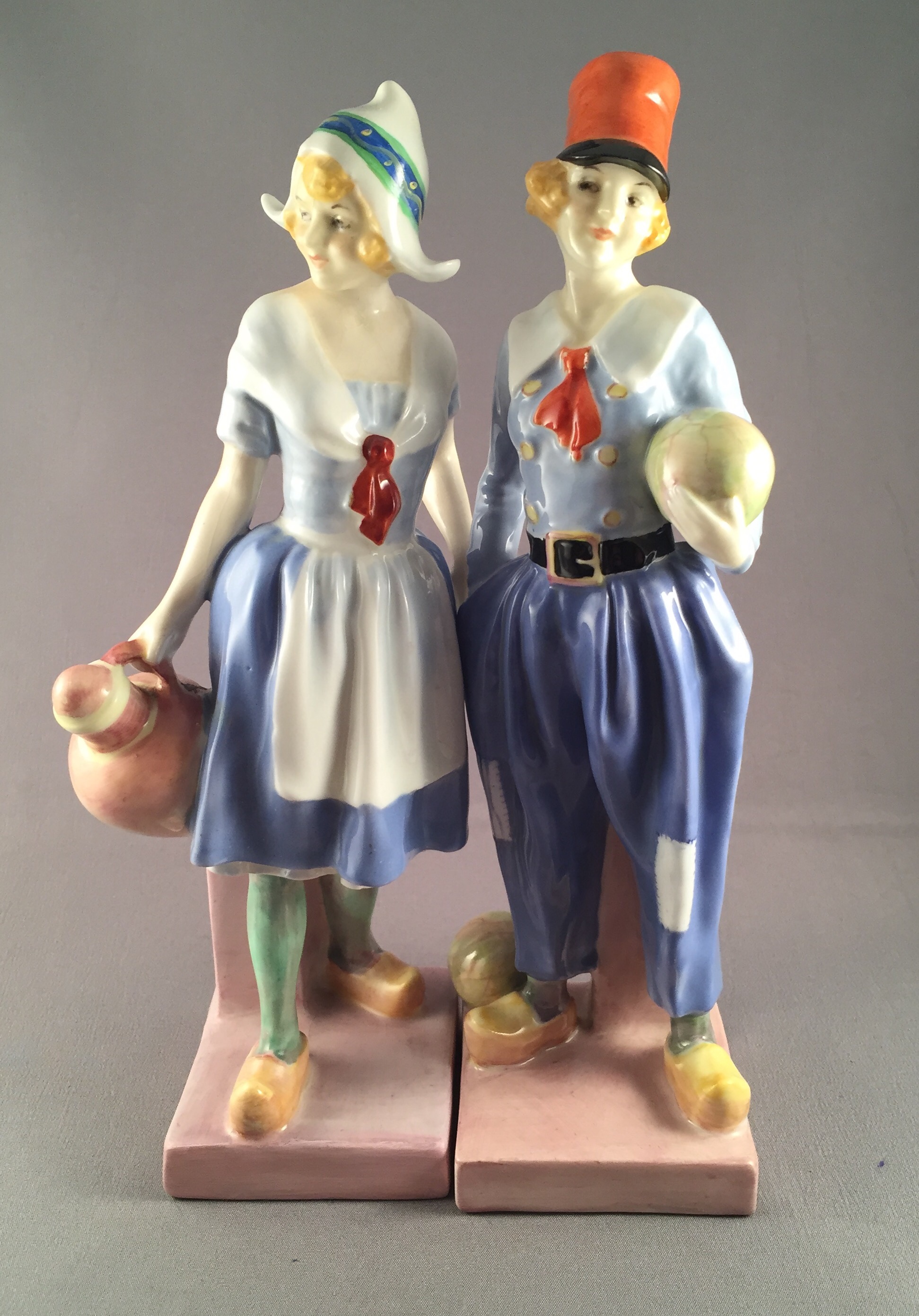
 

The popular pair Gretchen and Derrick.

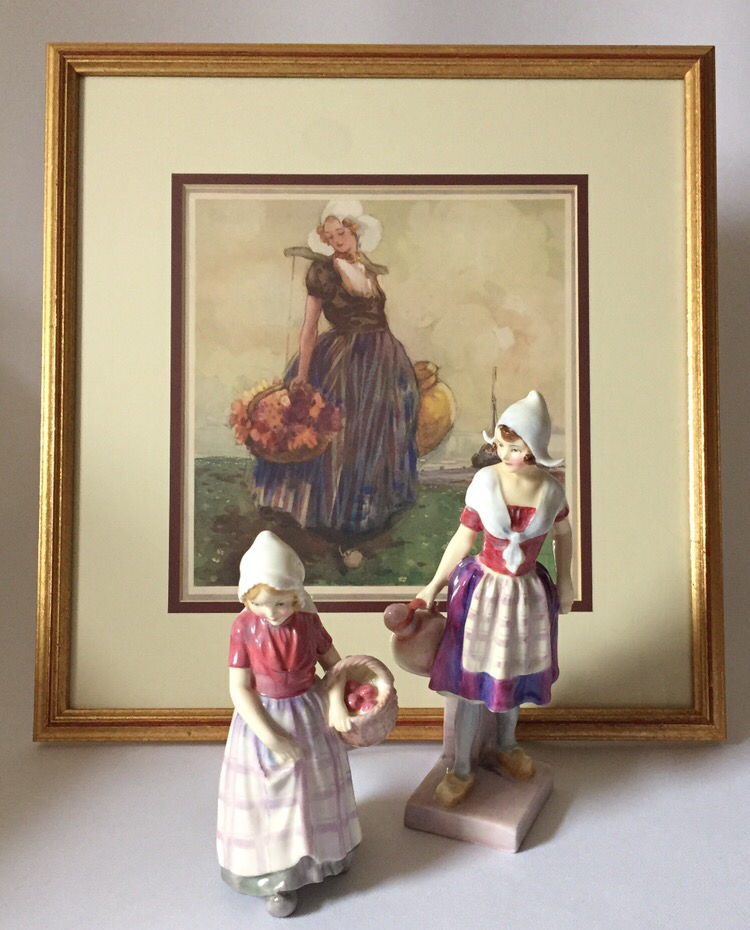
Collectors show great invention when displaying their collections and whilst some mix seriesware and figures excellently, others rely on illustrations to emphasise the theme they are creating, such as the picture below by AK Macdonald, who inspired a small group of Leslie Harradine’s figures in the 1930’s. 
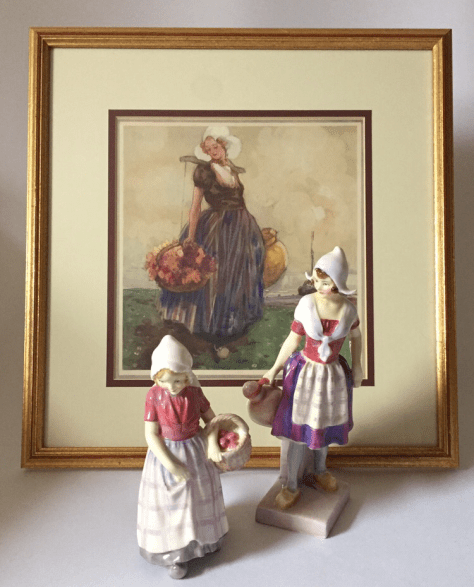
 

Perhaps you arrange your collection in a particular way? If so why not share it with us on our Doulton Collectors Club facebook page! 
Collecting Doulton’s famous Gnomes ‘B’ seriesware.

  
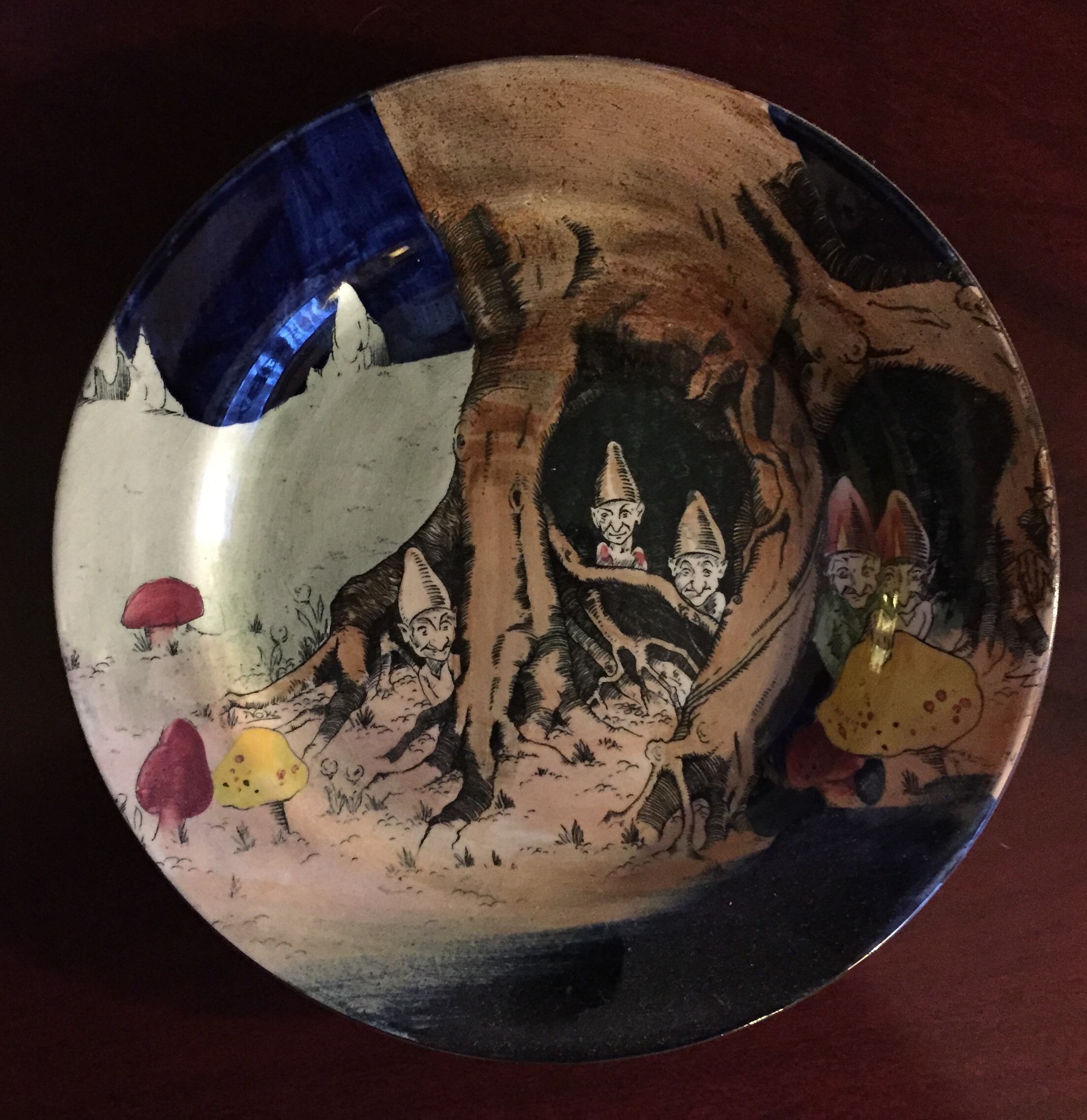
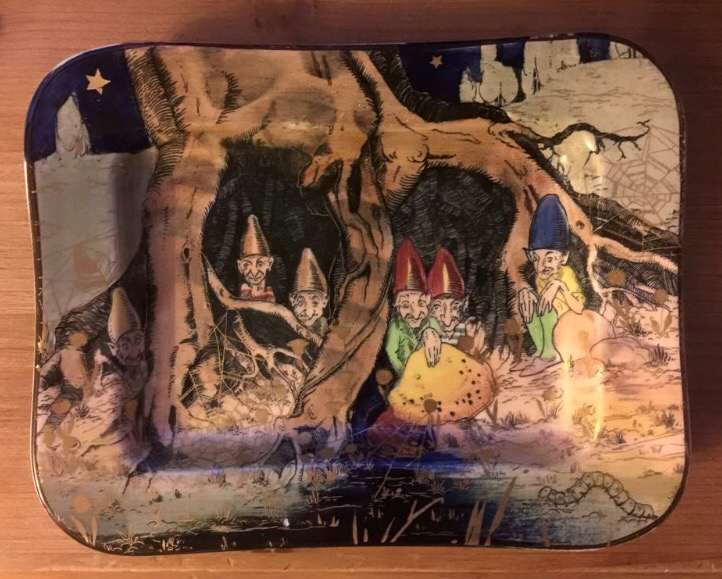
9″ plate D4697.

Often referred to as the Doulton version of Wedgwood’s famous Fairyland Lustreware, the Gnomes pattern illustrated is derived from drawings by the great illustrator Arthur Rackham for Peter Pan in Kensington Gardens, which also provided the inspiration for Doulton’s early figurine Pretty Lady who is based on an illustration for Wendy. The designer of this Doulton pattern is of course Charles Noke, then Art Director at Doulton’s Burslem factory.

  
Unusual rectangular plate.

Introduced c.1925 it is a perennially popular pattern that collectors clamour for when it does turn up at auction or through dealers. Although in production until c.1950 examples of it are hard to find and typically teawares are what do turn up in the form of plates and trios.

 
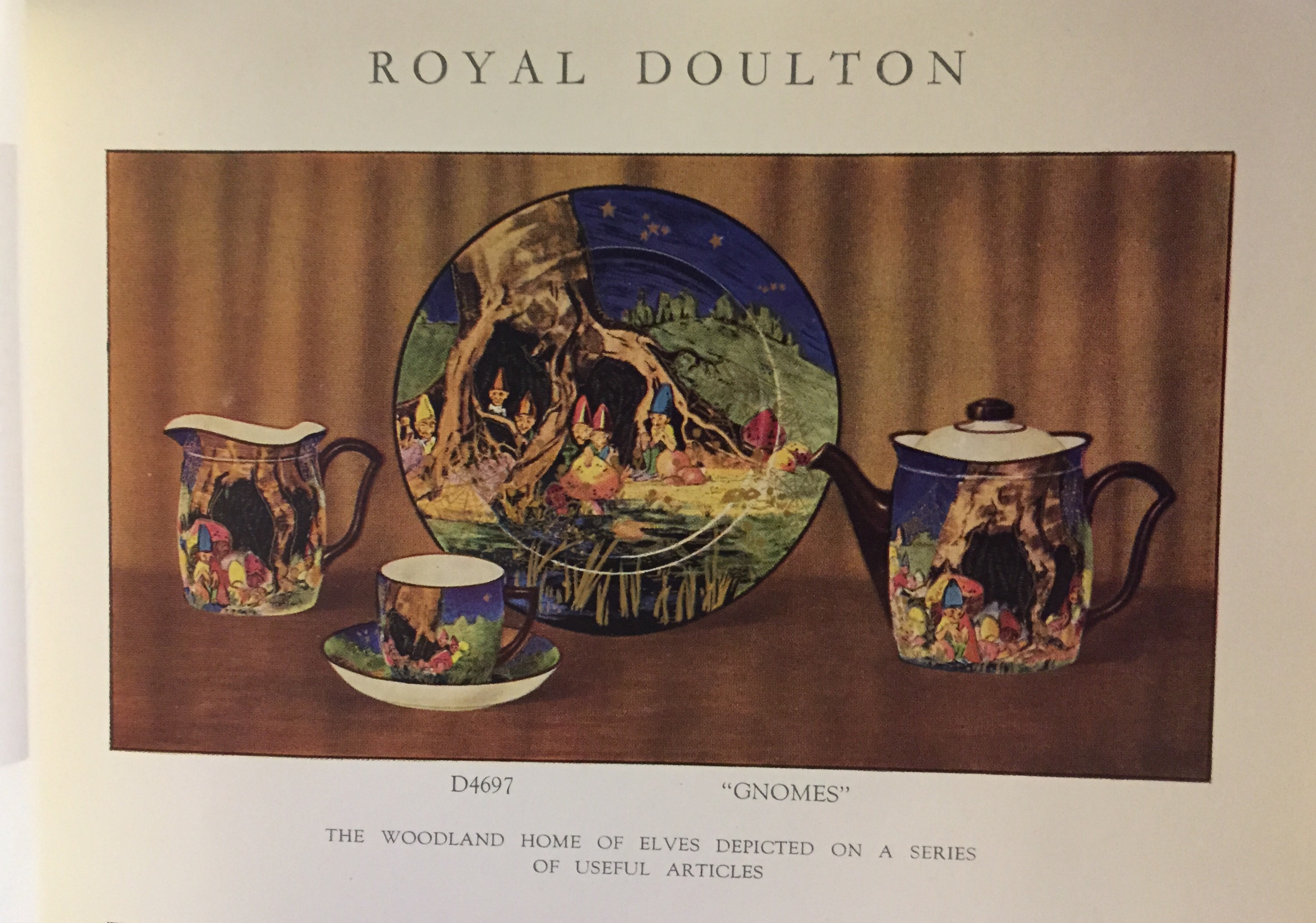
Early catalogue page featuring Gnomes ‘B’. 

There are five recorded scenes as listed by Louise Irvine in her book Series Ware Vol.3, although again it is scene 1 which is the most frequently found, again on plates.

  
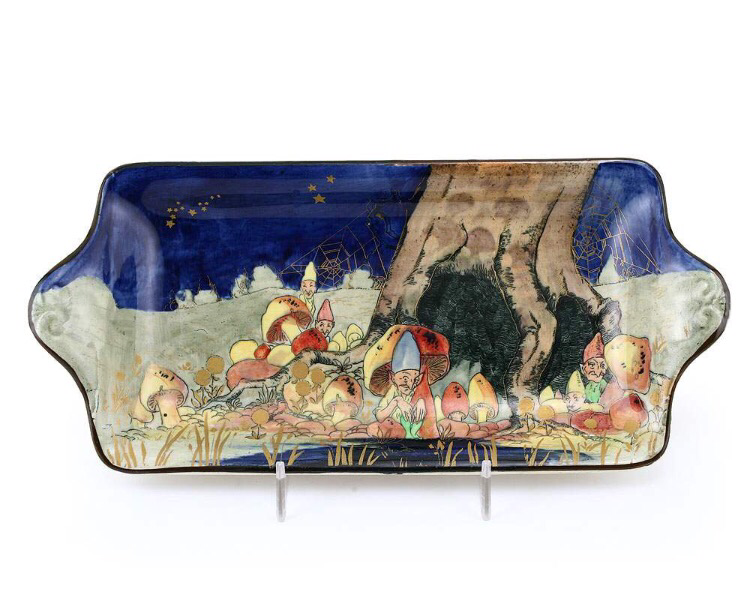
Unusual sandwich tray. 

As with all seriesware patterns, a collection  masterly displayed makes quite a statement in the home! 

  
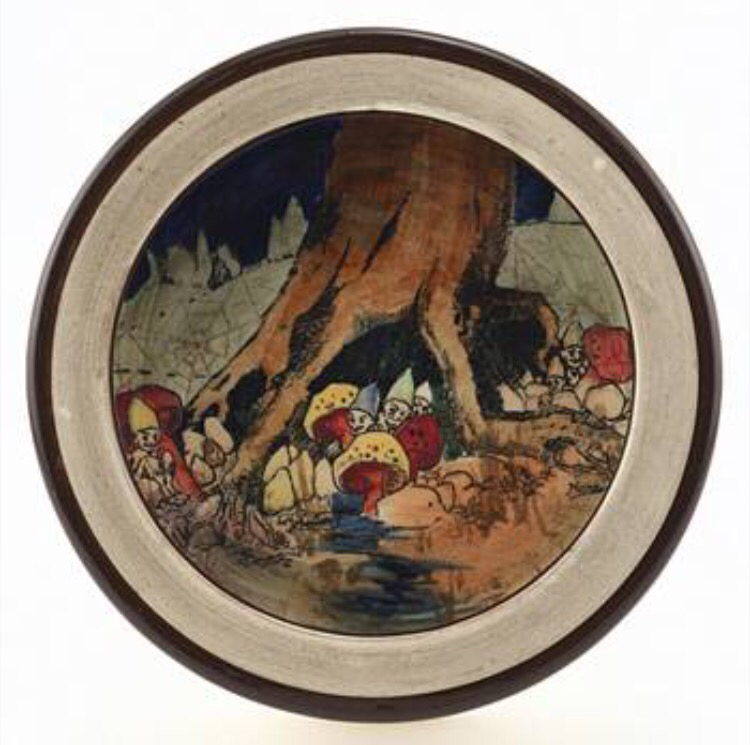
Rare oatmeal bowl with unusual, plain border. 

For reference, there are 3 recorded D numbers for this pattern – D4697, D4899 and D5066 and this ‘B’ pattern is not to be confused with the earlier ‘A’ pattern. Also, in the USA it is referred to as ‘Munchkins’. 

Collecting Doulton seriesware – Sedan Chair.

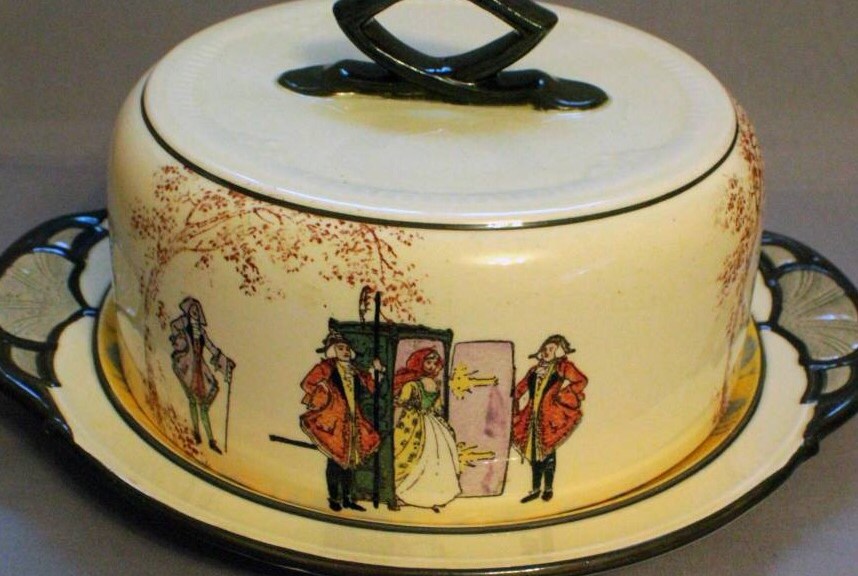
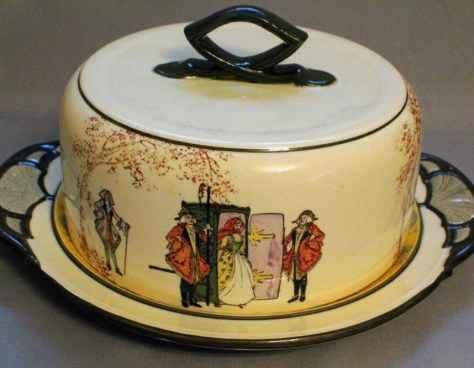
An unusual  Sedan Chair seriesware survival – a Cheese dome. The bases often turn up and are described as bread and butter plates, but here is the full thing! Introduced in 1912 and withdrawn around 1940, examples are not frequently seen suggesting production was much shorter. The art nouveau shape is incongruous to the seriesware pattern but the series is so charming that one doesn’t notice. The scene illustrated is No.2 hitherto not illustrated. 

Seriesware never fails to surprise us even today!

Collecting Doulton Pansies!

Doulton’s Pansies seriesware pattern remains as popular as ever with prices for unusual items always in three figures!

2015/01/img_1419.jpg
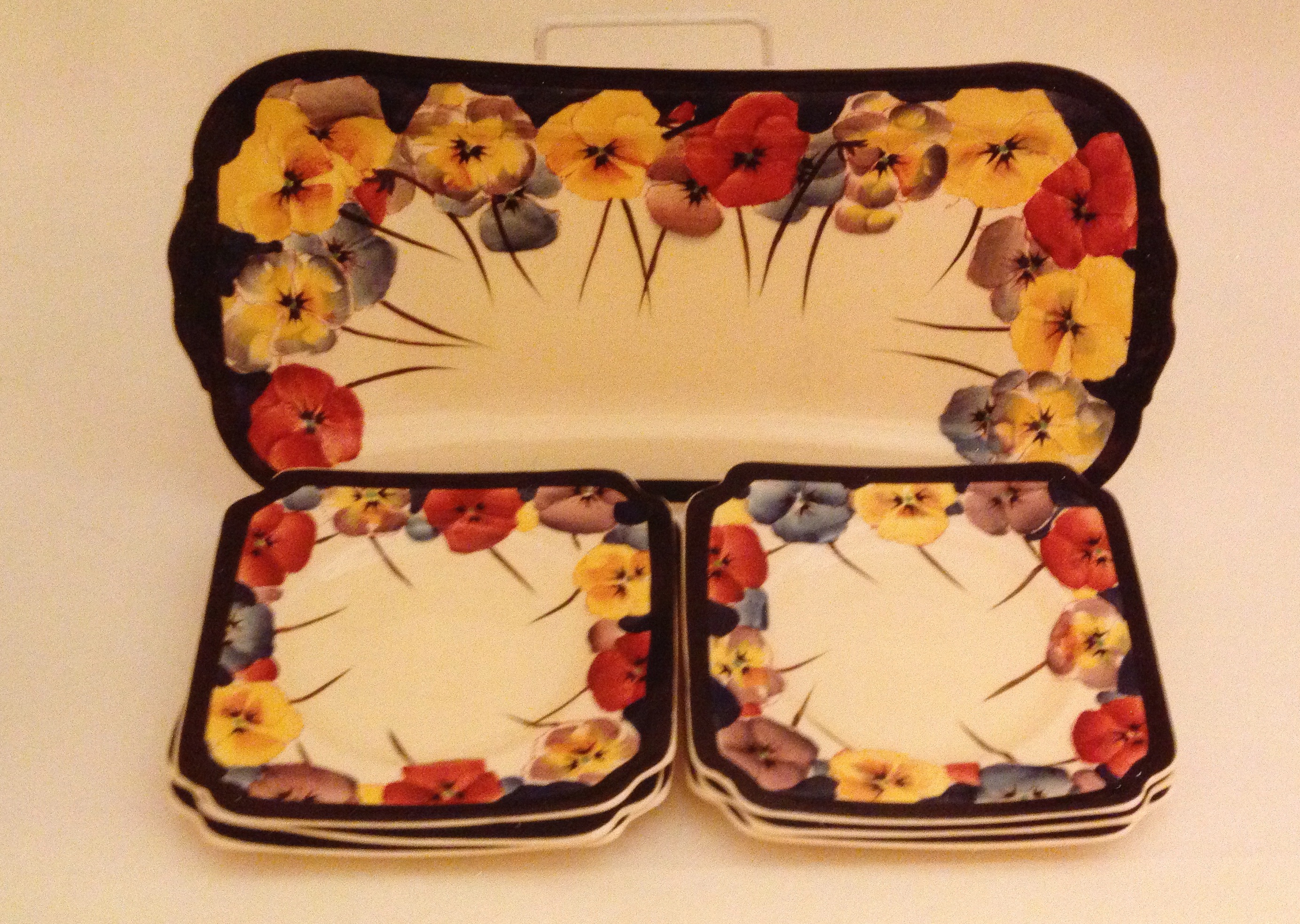
Pansies sandwich set.

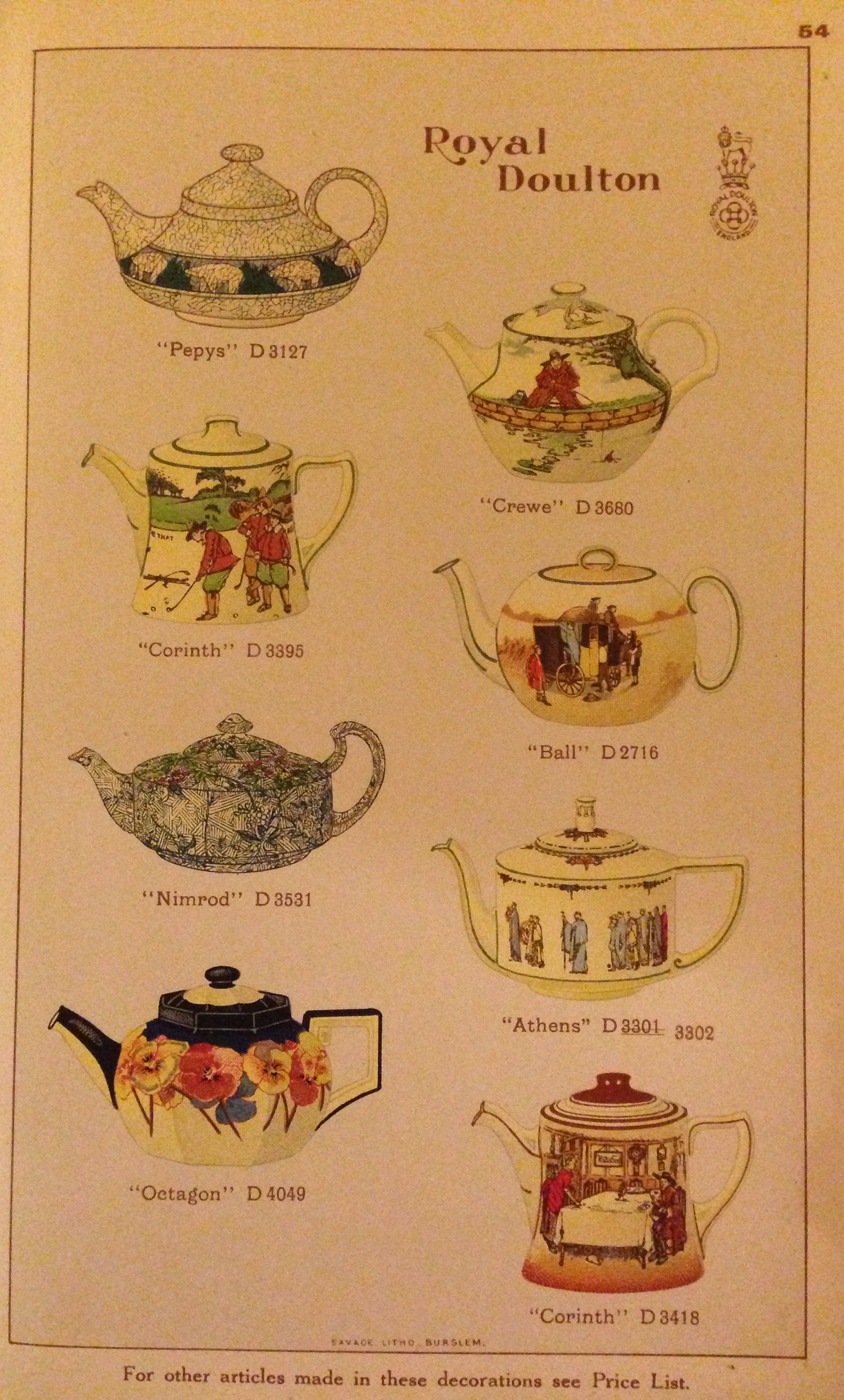
Introduced in 1917, the pattern was withdrawn by 1930. There are two listed ‘D’ numbers for this pattern D4049 and D4264. Items found in this pattern generally revolve around teawares such as plates, jugs, cups and saucers. More unusual items include toilet sets.

2015/01/img_1421.jpg
1920’s catalogue page of teapots featuring Pansies D4049 on the Octagon shape.

There are some fantastic collections of this pattern around and it makes a bright, colourful display!

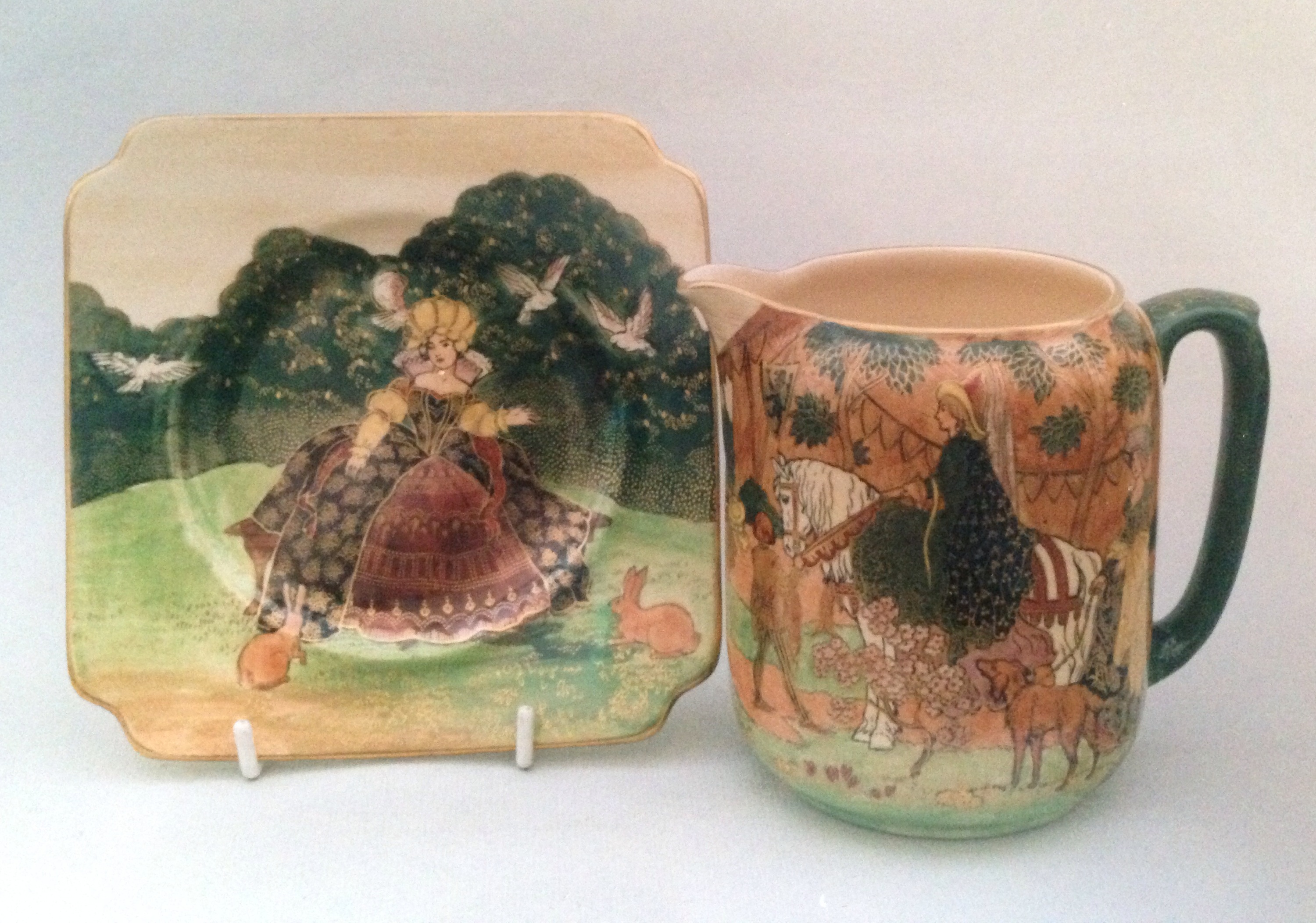
A look back at Doulton’s ‘Chivalry’ seriesware pattern.

2015/01/img_1208.jpg

With six recorded scenes, one would expect to find more examples of this decorative pattern.

In reality production must have been short, which is a real pity as a few examples provide an excellent backdrop to a display of figures. Reputedly designed by Walter Nunn, this design is particularly strong.

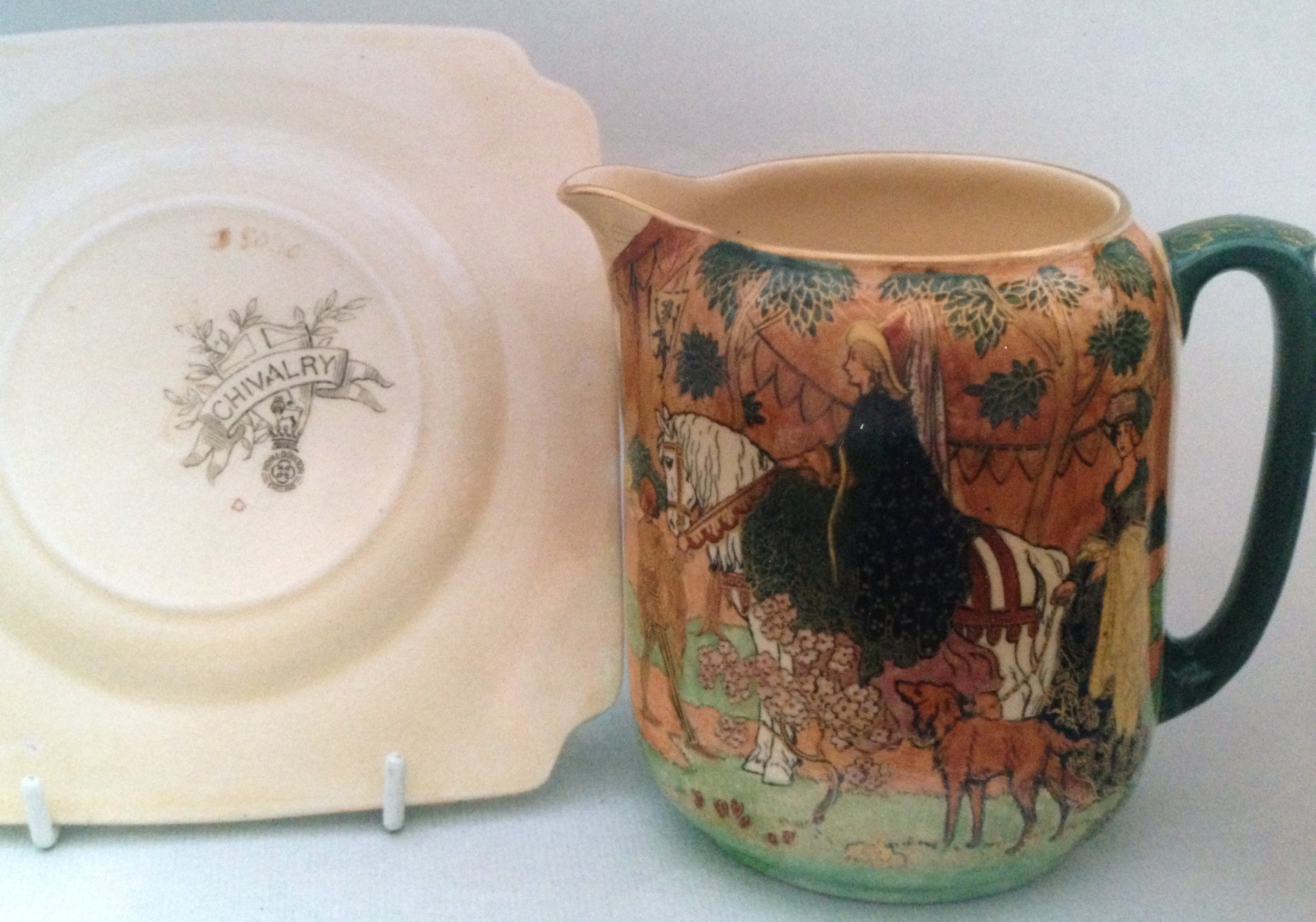
2015/01/img_1209.jpg

Fortunately for collectors, this design carries a special backstamp to help with identification (as above). It can carry one of two ‘D’ numbers – 5030 or 5158. Rack plates, vases, jugs and square tea plates appear to be the most typical items found and I did see a gadrooned serving dish once too.

Perhaps you collect this series? If so why not share it on our Facebook page ‘Doulton Collectors Club’.

Doulton’s Christmas serieswares.

IMG_1027.PNG

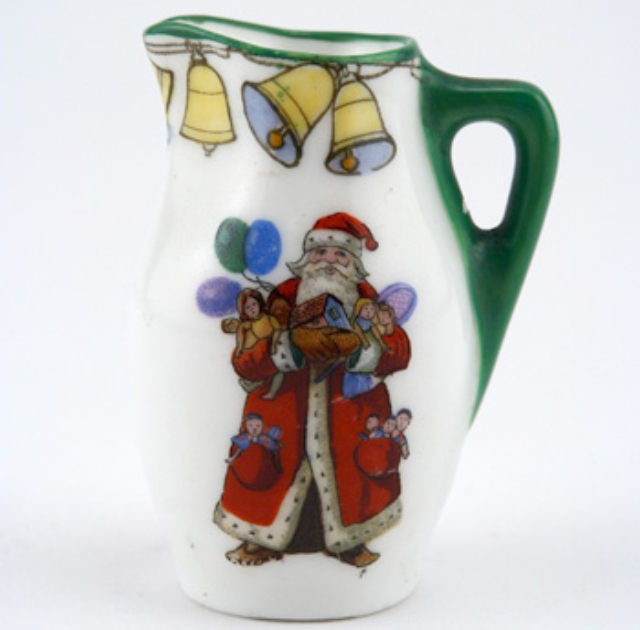
Any seriesware collector will be able to cite immediately the amazingly rare Christmas themed pieces for which they long for.
IMG_1024.JPG

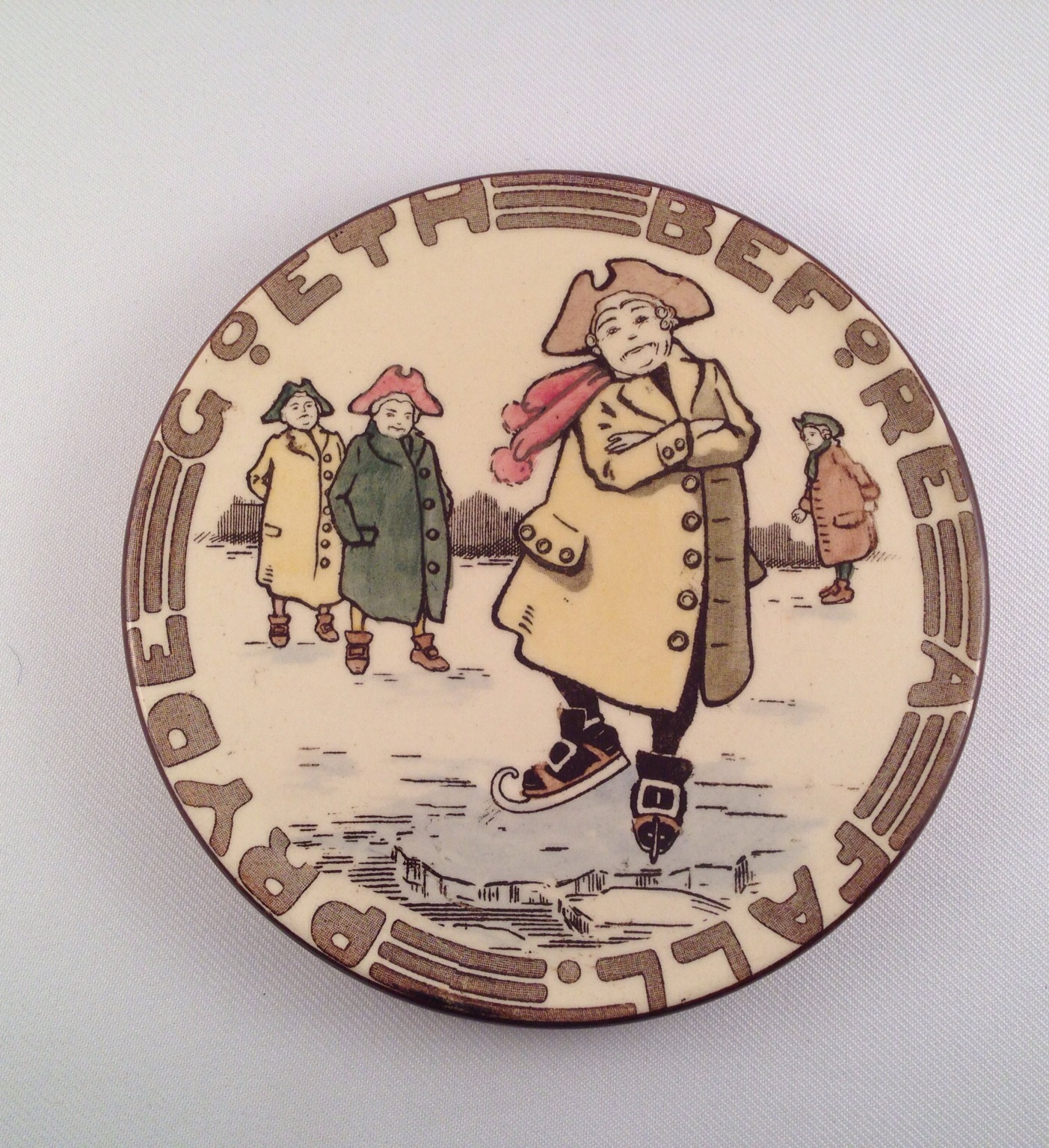
Three particularly sought after patterns found on miniatures are Christmas, Snow Scenes and Ice-Skating and these all command high prices no matter in which season they appear throughout the year.

IMG_1026.PNG

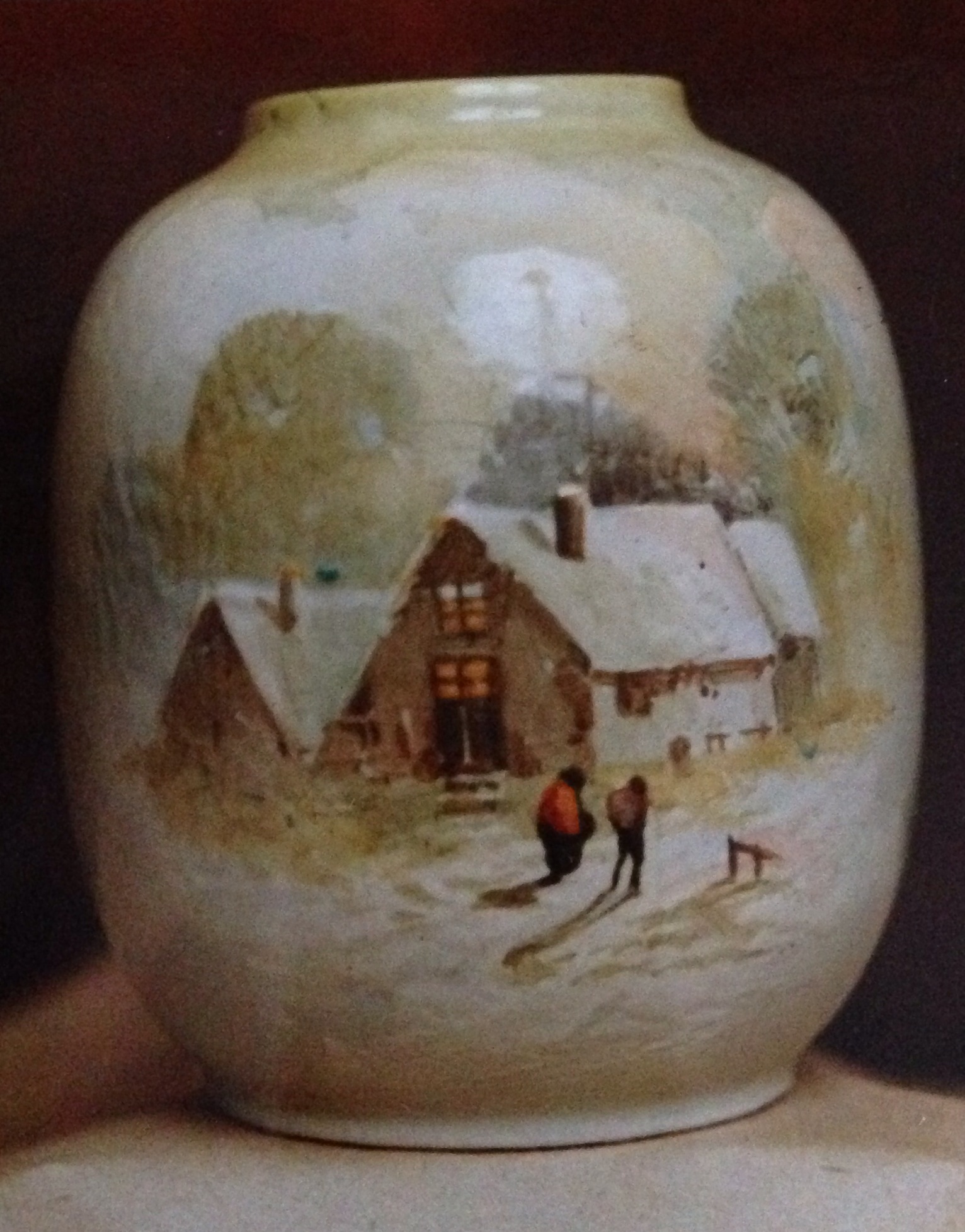
Further patterns to look for include Snowflake, Coaching Days in a winter landscape and the very rare Snowscenes pattern that is decorated in low relief and usually features countryfolk making their way through the snow to their welcoming cottages.

IMG_1029.JPG