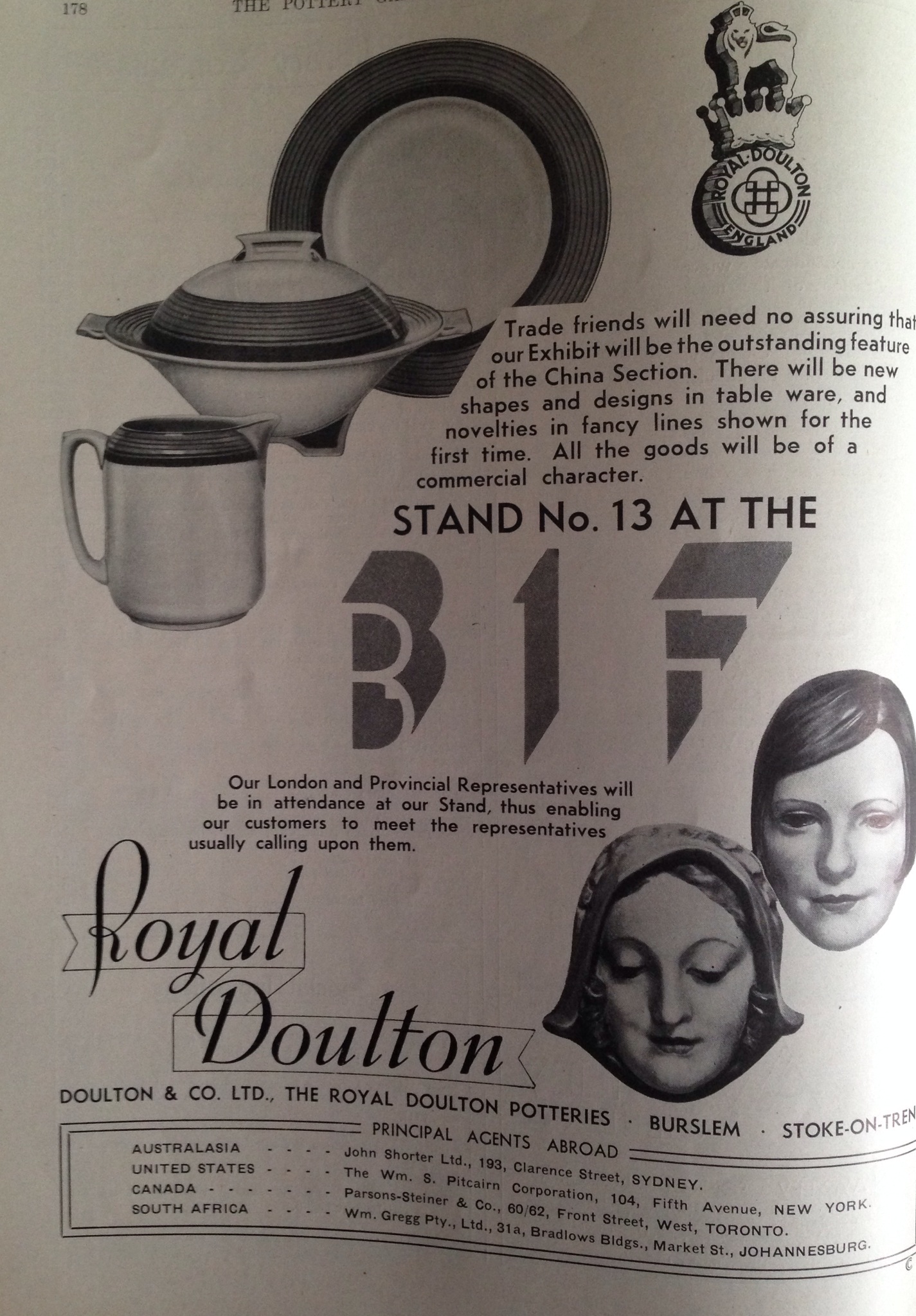
Doulton artist profile – Joseph Birbeck snr.

IMG_0551.JPG

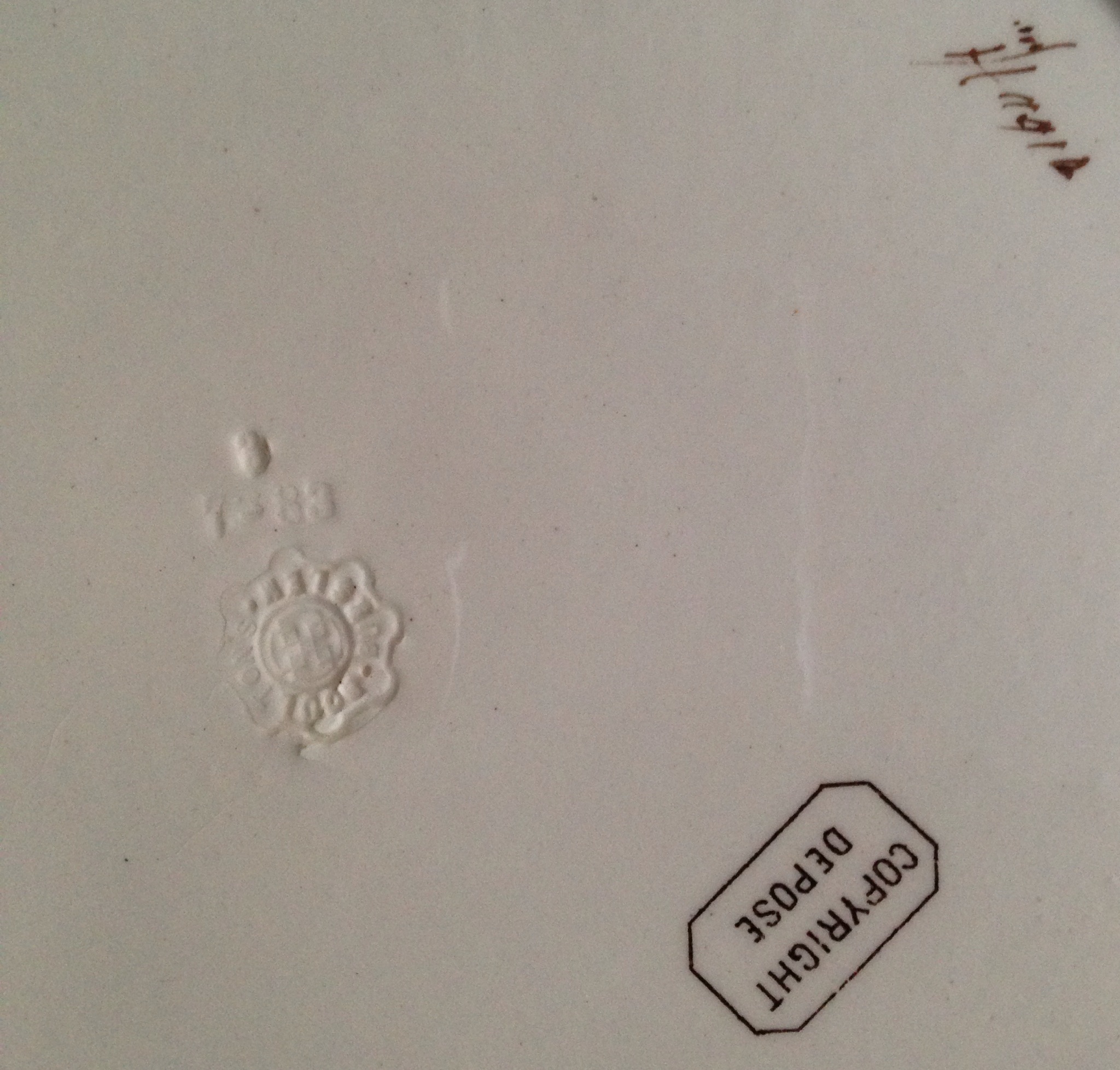
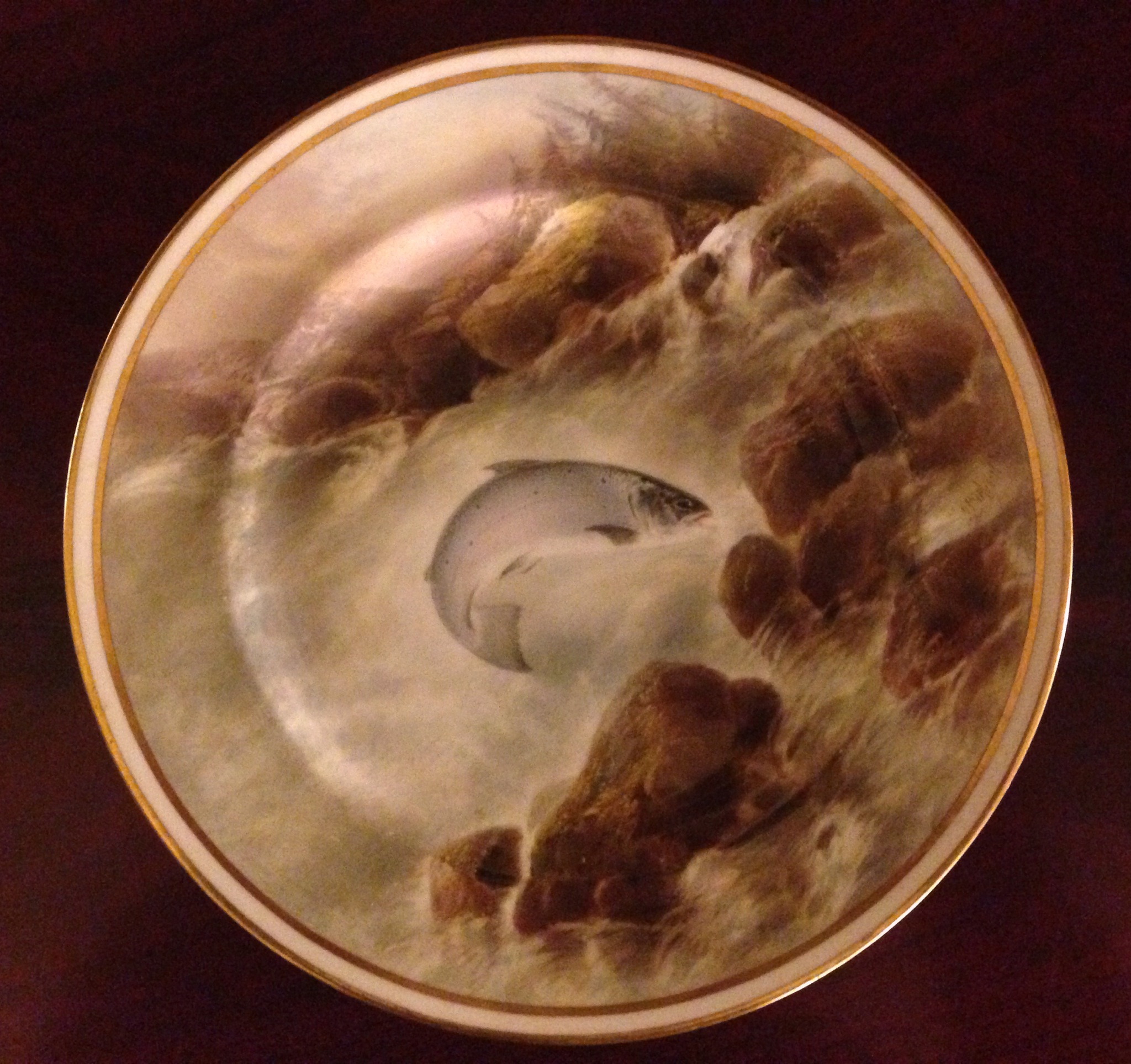
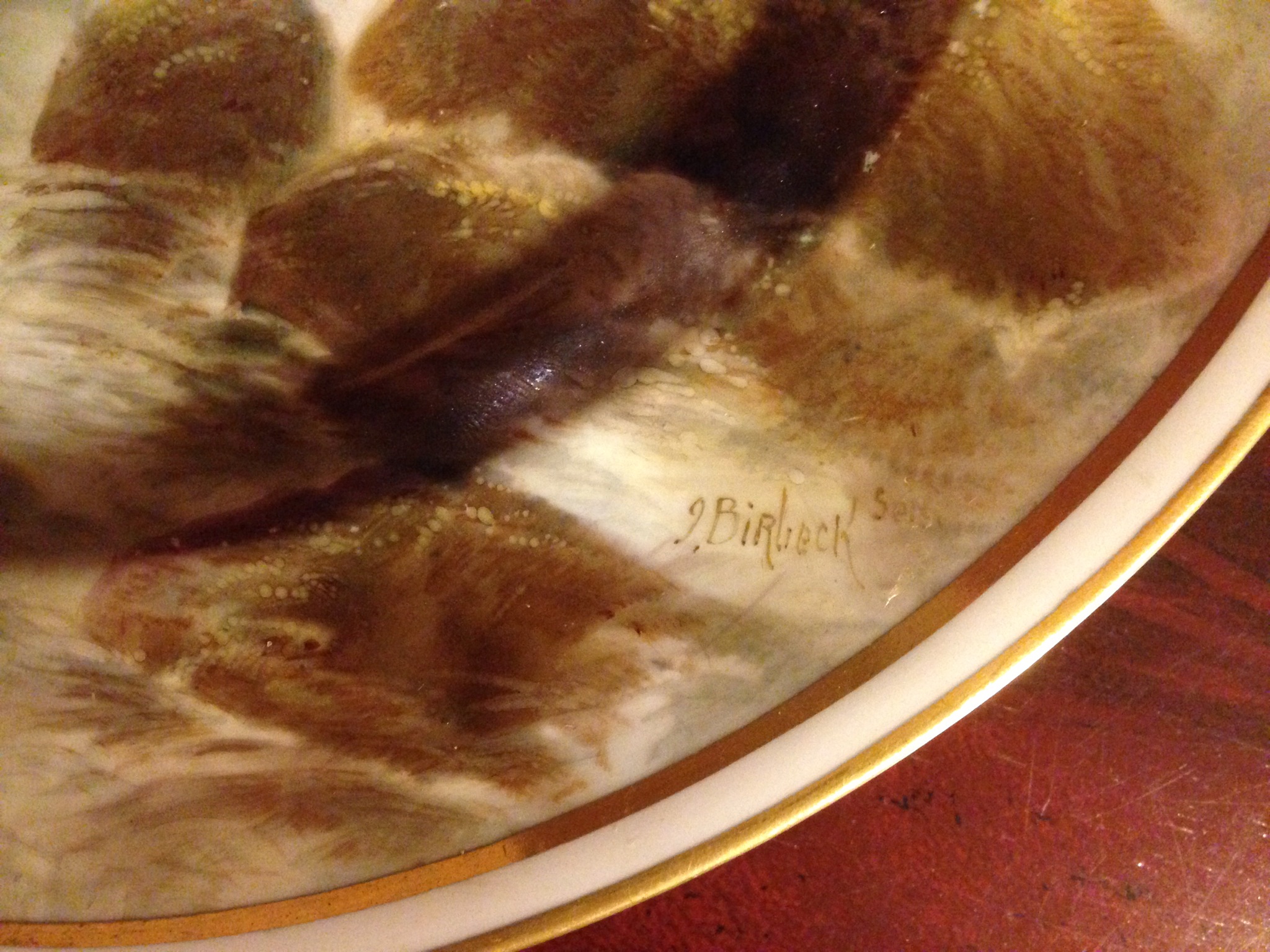
Another sighting recently was this plate from a fish service painted by the celebrated ceramic artist Joseph Birbeck snr, a member of the distinguished family of artists. Famed for his versatile ability, he is perhaps most famous for his game and fish, the latter often portrayed underwater. Here is a plate from 1909 with a view of a leaping salmon.

IMG_0553.JPG

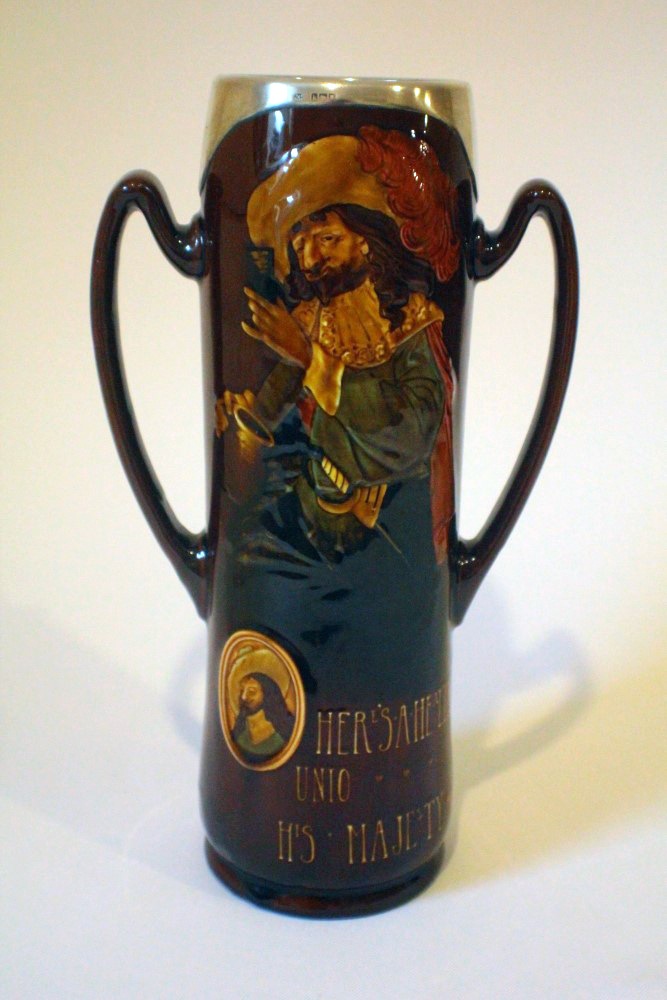
An interesting Kingsware Loving Cup.

IMG_0547.JPG

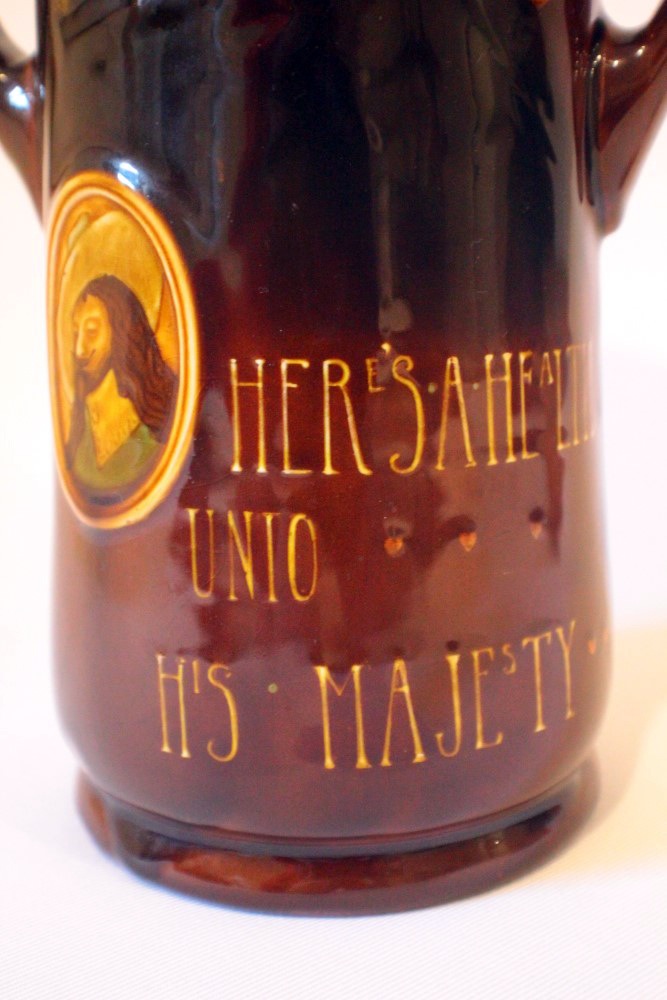
Another chance find- this Kingsware loving cup from 1905 complete with sterling silver mounts and standing an impressive 13″ tall. No doubt made to commemorate England’s new monarch Edward VII, who succeeded his mother Queen Victoria to the throne in 1901. The cup is emblazoned with the motto “Here’s a health unto his Majesty”. The cup was later adapted to a jug in 1936, to commensurate the approaching coronation of Edward VIII, that of course never happened due to his abdication. This flask version was made for Dewars in a limited edition of 600.

IMG_0543.JPG

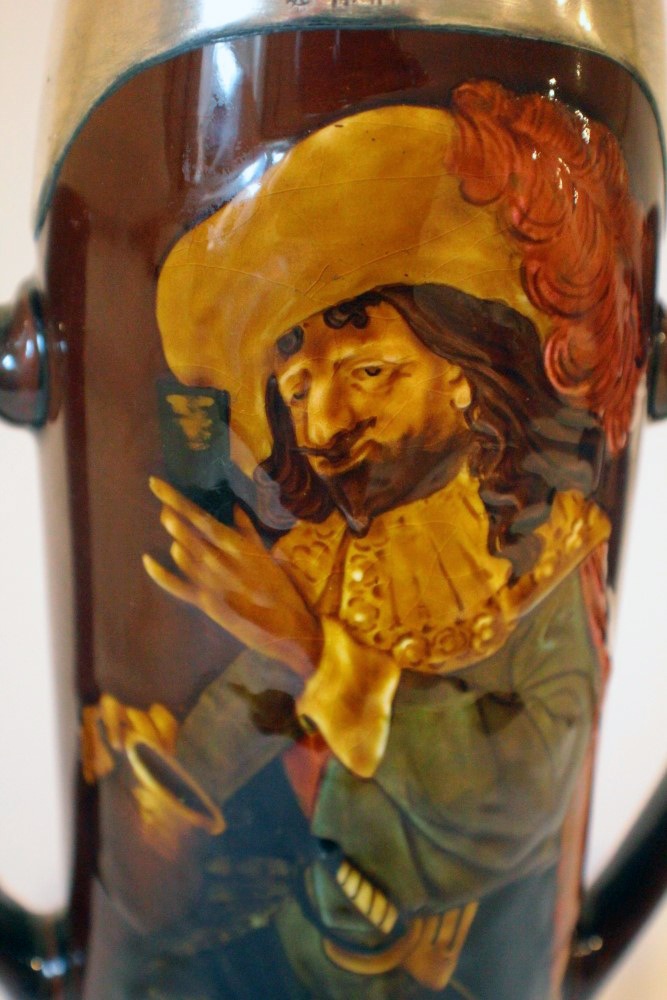
The magnificence of the loving cup has to be seen in the flesh to be appreciated. Certainly the detail is much more vivid than in the later flask, the latter is also missing the cameo image of the Cavalier.

IMG_0545.JPG

Interestingly the sterling silver mounts are stamped G B & S, for George Betjeman & sons, a prestigious London silversmiths, who commissioned many Doulton Burslem pieces including a Kingsware spirit barrel with tavern scene, Kingsware tobacco jars including the large pipe that can be found and smaller Kingsware ash trays – all with sterling silver mounts supplied by them. In addition to Kingsware, they also commissioned Shagreen items from Doulton for their exclusive store too.

An Amazing Adventure – Part 2

IMG_0506-0.JPG

Continuing my look back at last Saturday’s talk, here are a few more choice items from the selection that I took along. The premise of the talk was ‘My Collection’.
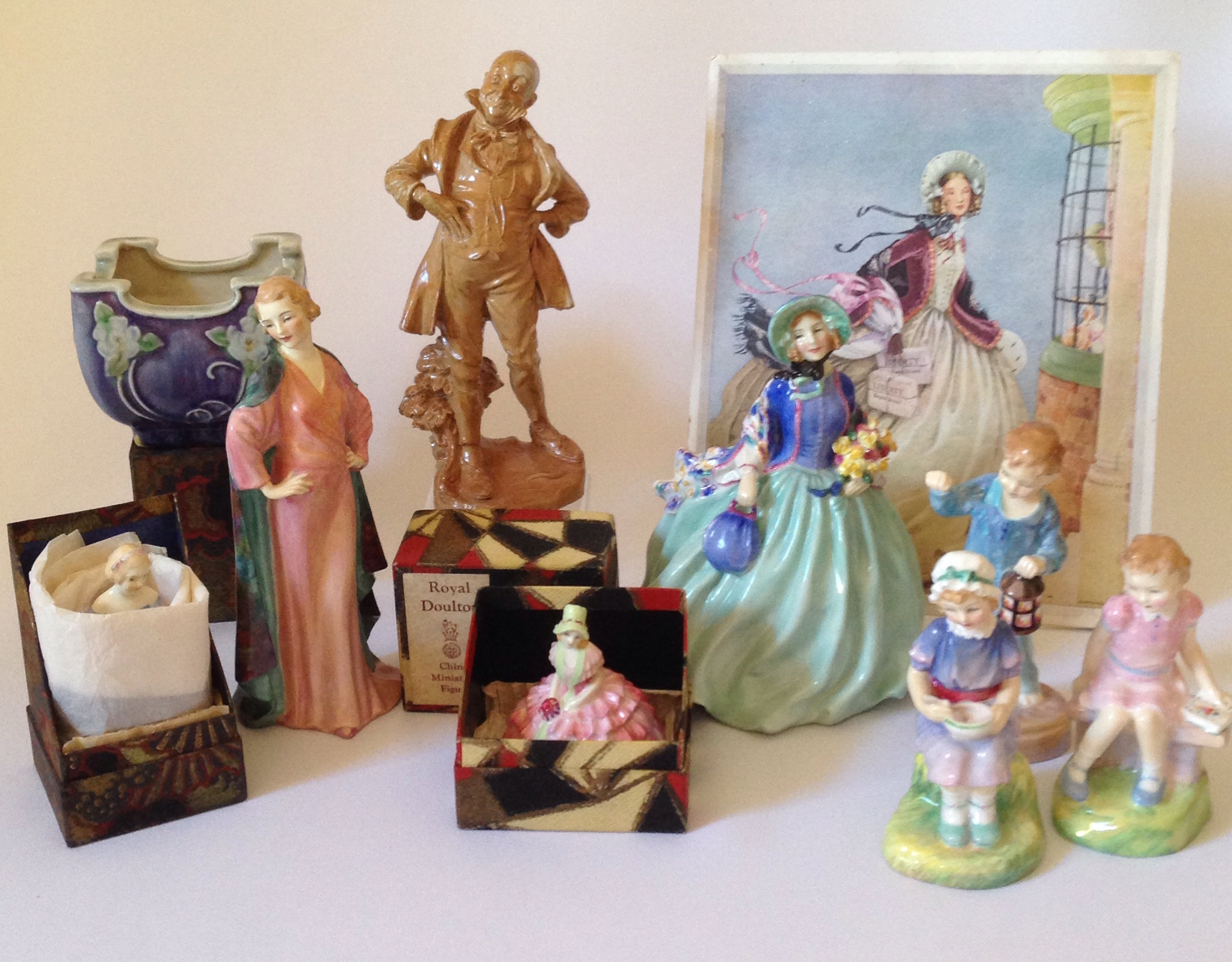
In this section the theme was the development of figures, so I took the art nouveau, square Harradine vase along so as to discuss Harradine’s roll but also the links with Doulton from his time as an apprentice modeller, to the period 1910-14 when he supplied models to Lambeth on a freelance basis and finally how the link with Burslem was established with the introduction of his first figure into the HN Collection in 1920.
The first figure we looked at was Harradine’s original model for Micawber and we discussed the process and arrangement he had with Charles Noke.
Next up were the M series and these original boxes for them. Most of these M figures were of course based on Harradine’s larger models.
A popular theme for all figure collectors has always – well since HN1 – been children so I shared a few favourites from the Nursery figures set including a prototype in my collection.
Honey and her inspiration followed, a typical painting by Stanislaus Longley, who Harradine used repeatedly for inspiration. Interestingly this work was also used by the famous London store Liberty for a Christmas catalogue cover in the 1930’s – and that is also pictured.
This section was completed with a discussion on colourways and I shared a version of Clothilde that I have from 1937.

Next time I’ll share some Burslem art wares that we discussed!

An Amazing Adventure – Part 1

IMG_0503.JPG

Several of you have asked about the talk I gave last Saturday to the group of American collectors who came to the UK on tour with Seaway China.
Thus, I have decided to begin to share a few items I took along from my own collection. Here is part 1 – early Lambeth items.

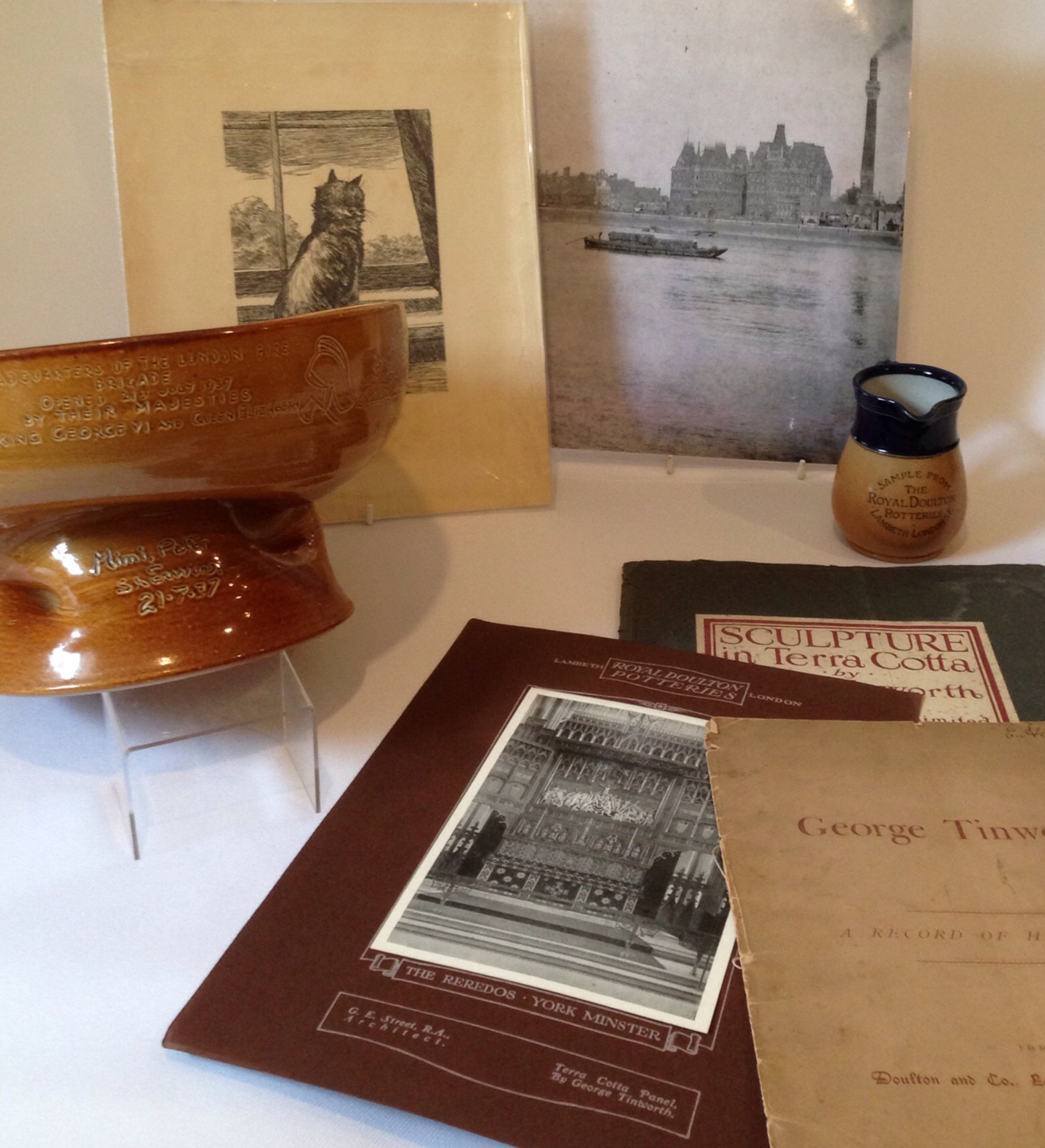
So, I started at Lambeth as a logical starting point focussing on their practical beginnings but then moving on to the Doulton Lambeth art wares and the first artists. George Tinworth was up first in the artists section and I took along two early brochures produced about the great man and his art for everyone to see. The earliest is dated 1887 and it is interesting to see how Doulton really pushed his fame even in these early times. The other is a catalogue of terracotta plaques from 1906.
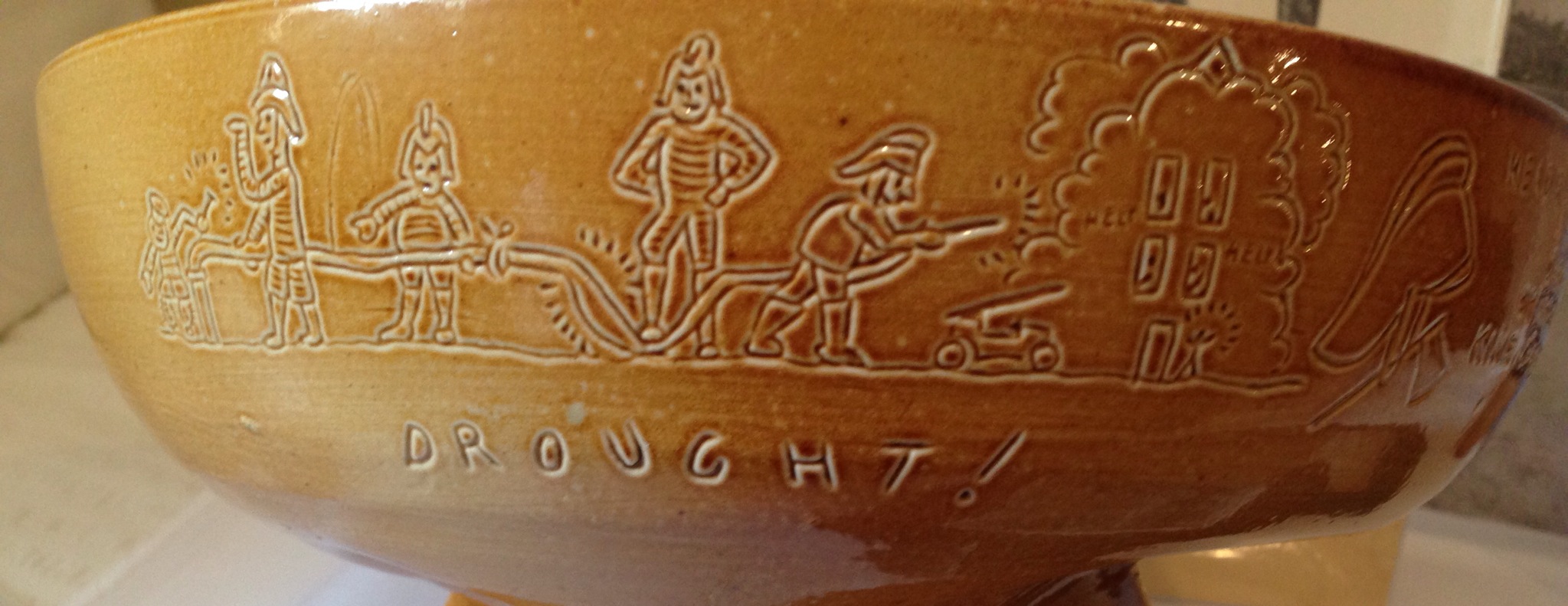
Next came the Hannah Barlow picture of a cat. Her importance as the first female artist and her technique were discussed, together with the picture itself! Then the small advertising jug – this is actually for Doulton themselves but it makes the point that Doulton ware was a popular medium for promoting all types of businesses. I took along a selection of glass slides and also some blown up copies of the same to illustrate Doulton’s importance in London and also to illustrate it’s former magnificence. Lastly is the unusual squash bowl from 1937 made as a wedding bowl but also to commemorate the opening of the Headquarters of the London Fire Brigade in Lambeth on the same day.
The bowl has humorous scenes relating to the fire brigade around it as you can see below.

IMG_0502.JPG

Painting Royal Doulton figures.

IMG_0499.JPG

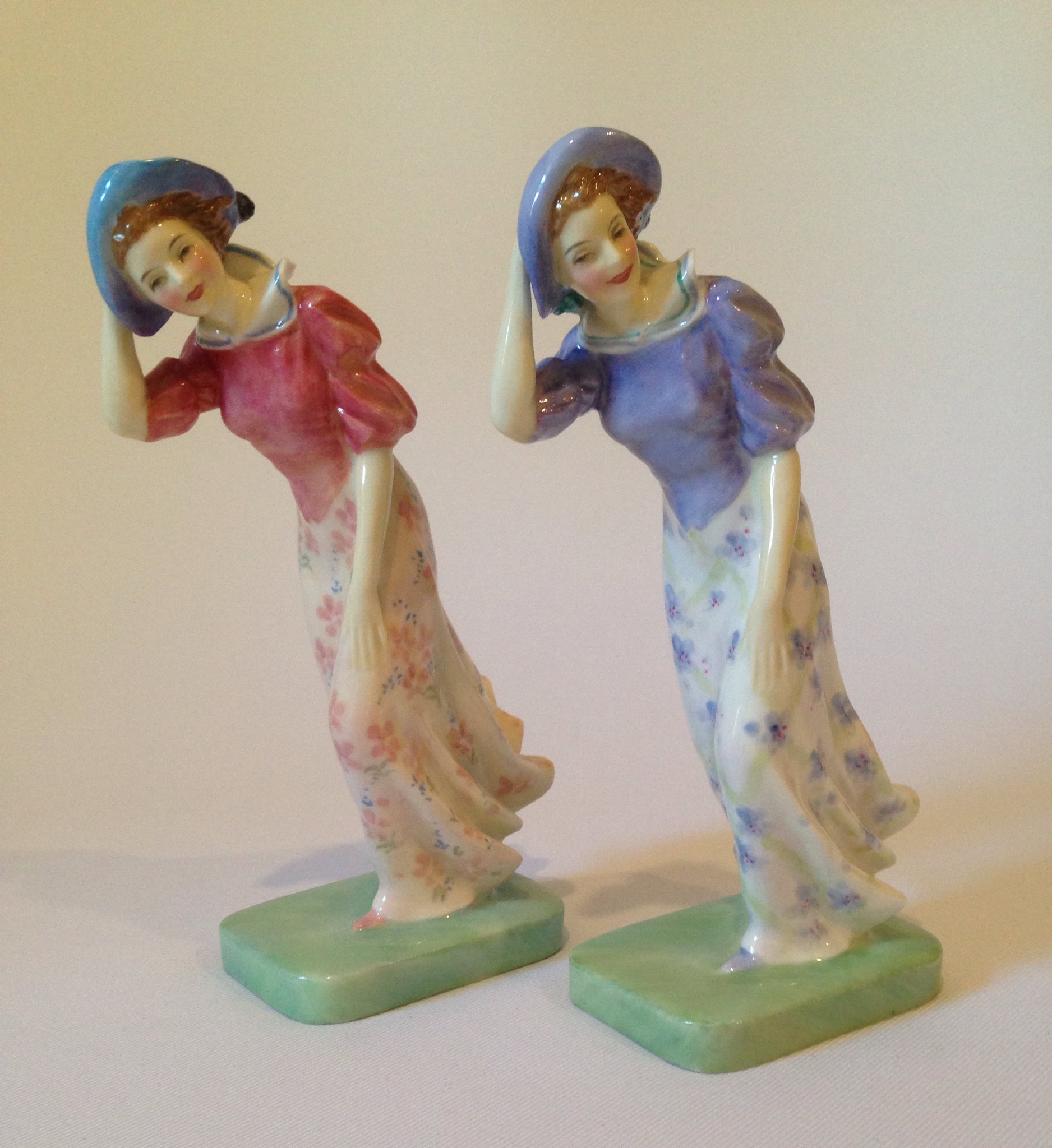
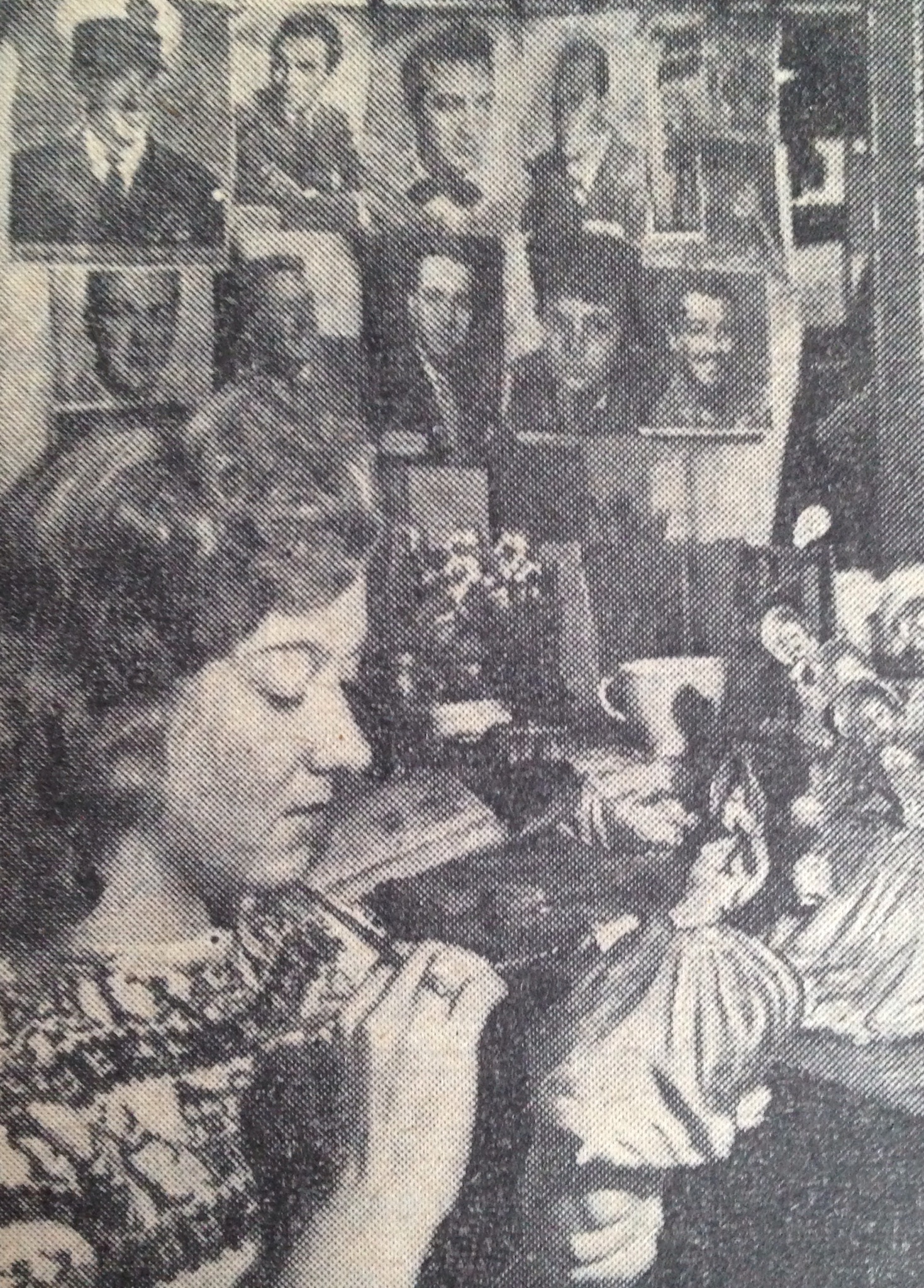
I love finding pictures of Doulton’s artists at work and here is a more recent find, one Hazel Tyrer. I imagine it dates to the early 1950’s for although there is no date, the Autumn Breezes being painted still has two feet, something that was altered by the early to mid 1950’s.
The article with the picture details that only men at the time were allowed to paint the faces of figures, something we today find hard to comprehend. I also know that it took 10 years practice or training, at one time, before artists were allowed to actually paint faces. It is interesting to know these details today, before they are lost forever.

Royal Doulton’s eastern delights!

IMG_0489.JPG
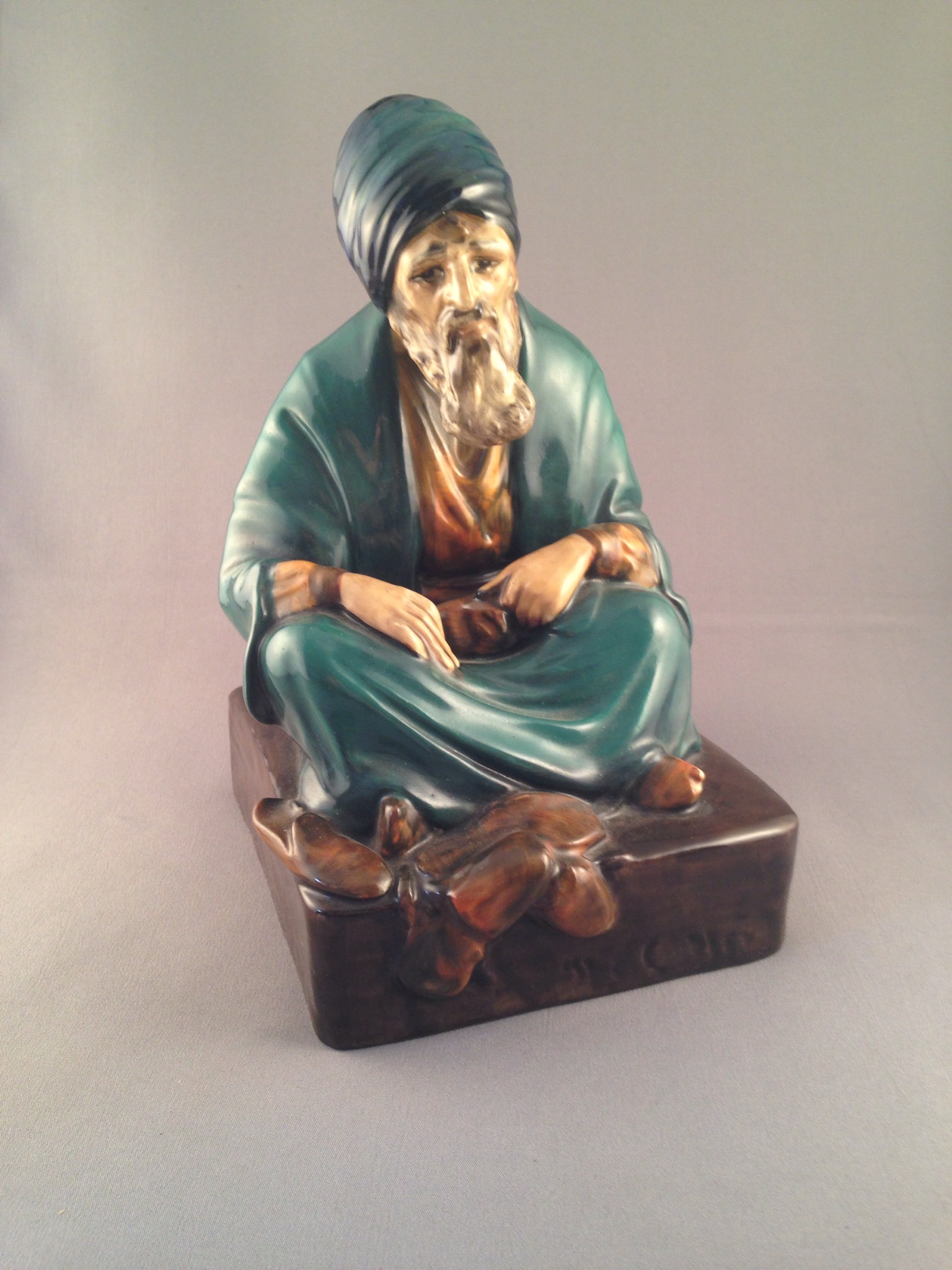
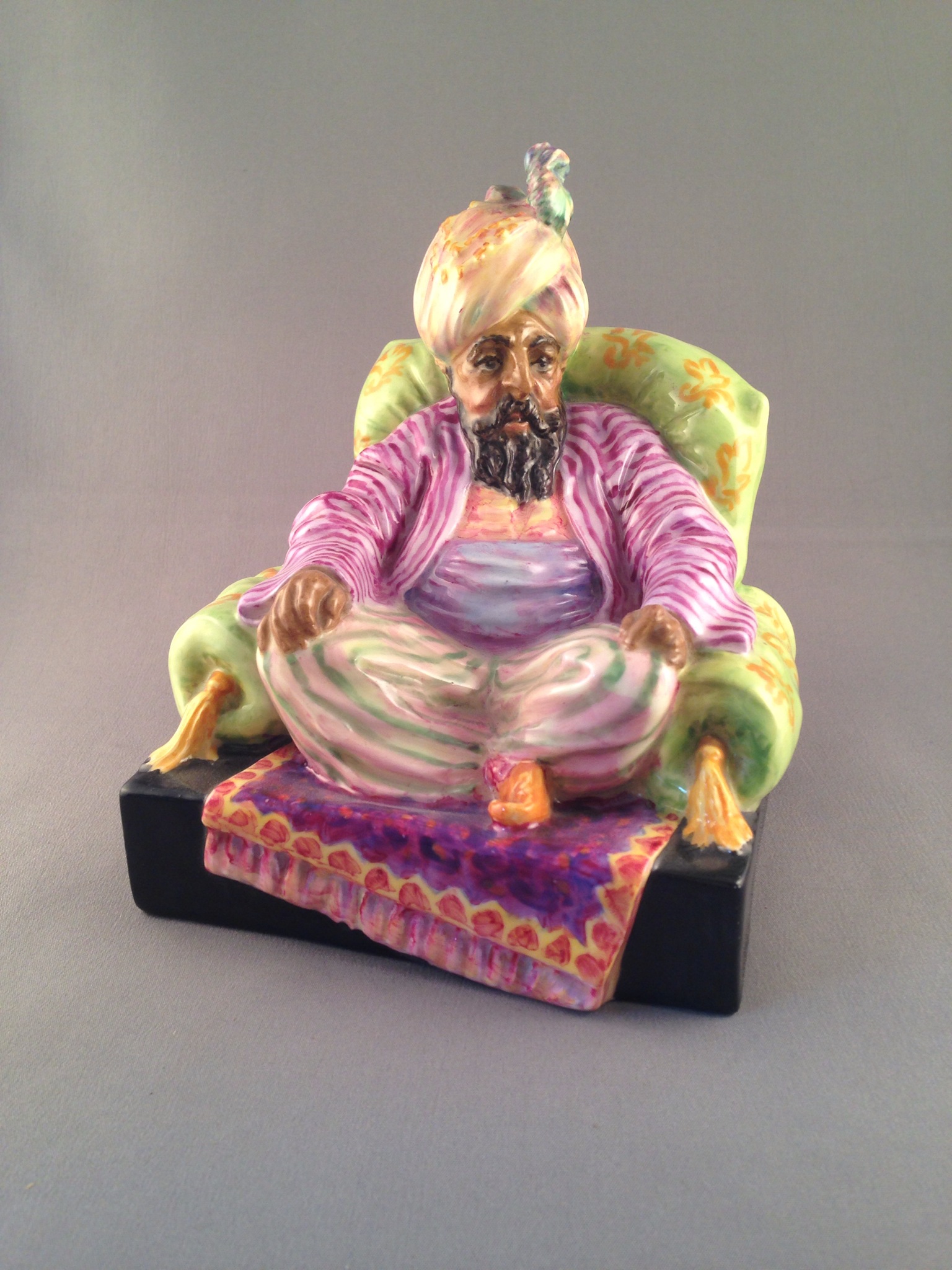
The Cobbler HN542 dated 1925.

Back in the early years of the 20th Century there was great fascination with the ‘exotic East’ most of which had only just entered the consciousness of many people.

IMG_0488.JPG
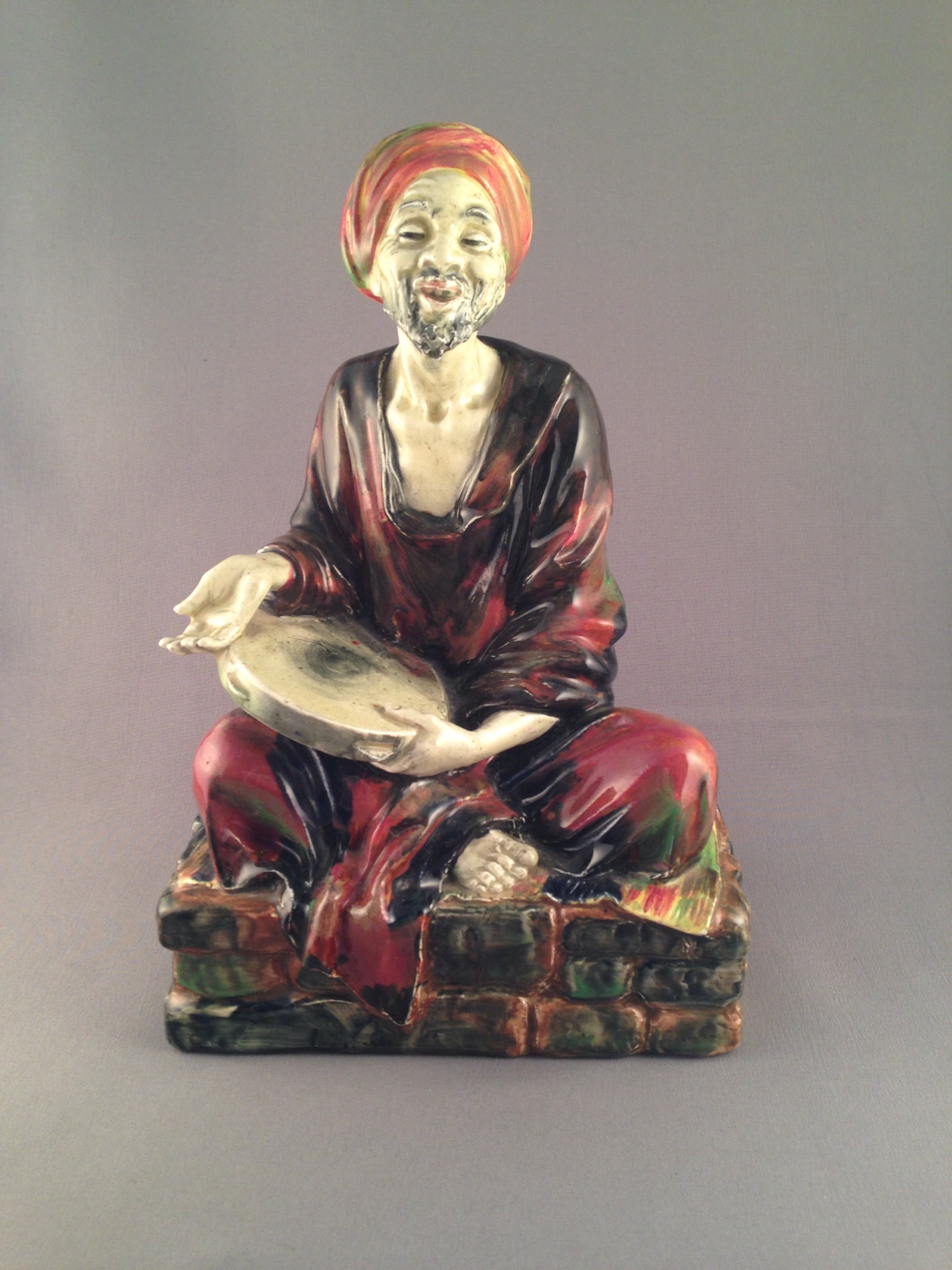
An early colourway of The Mendicant dated 1929.

This fascination by the public en mass no doubt explains the success of the musical play Chu Chin Chow. It opened in 1916 just as the HN Collection too was still being established, thus it is no surprise to find many examples of figures inspired by the east in the collection.

IMG_0490.JPG
A colourway of Abdullah dated 1930.

The main character, The Cobbler, was himself immortalised into the collection by Noke himself!

IMG_0493.JPG
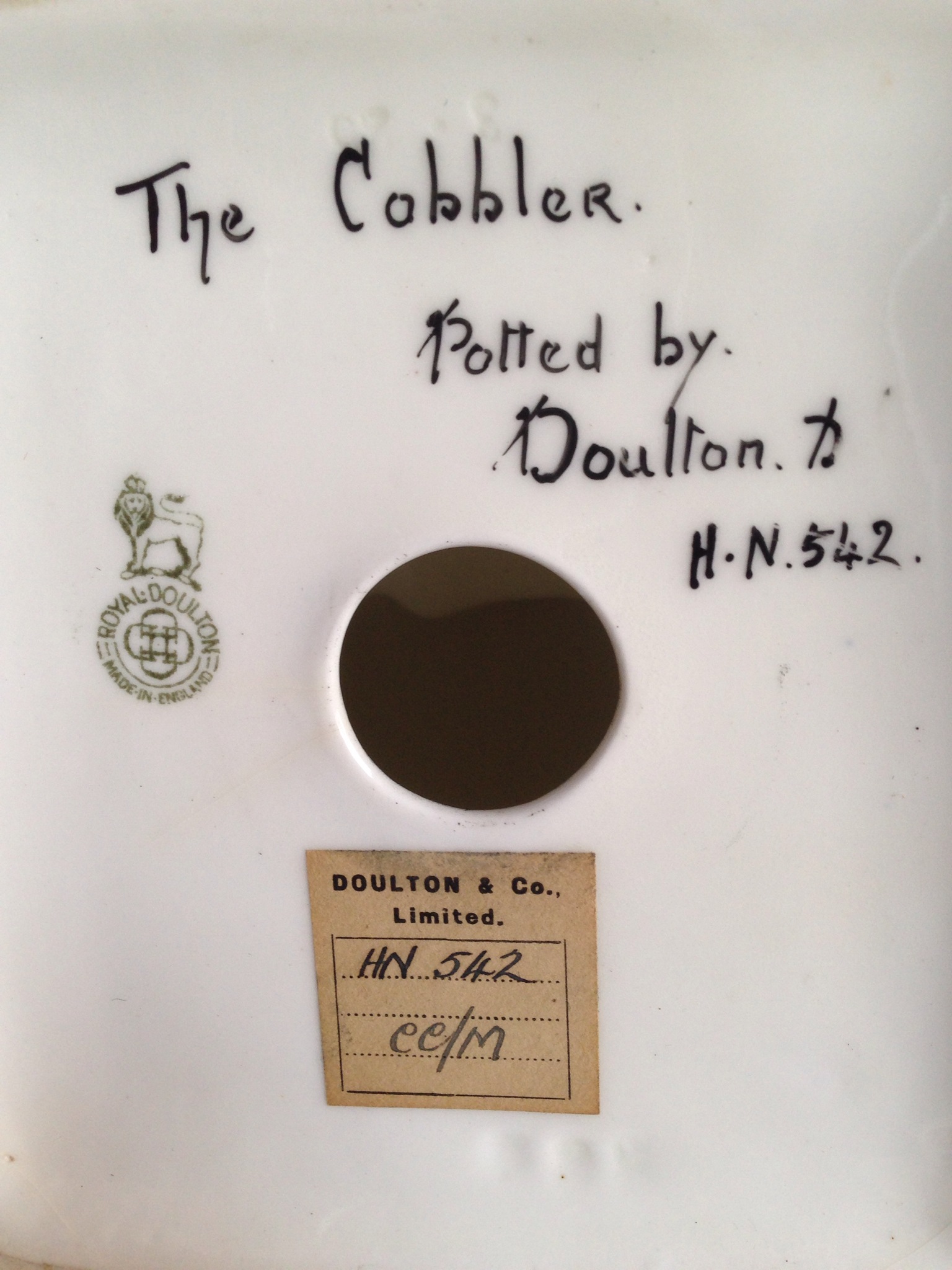
The base of The Cobbler showing his original factory label.

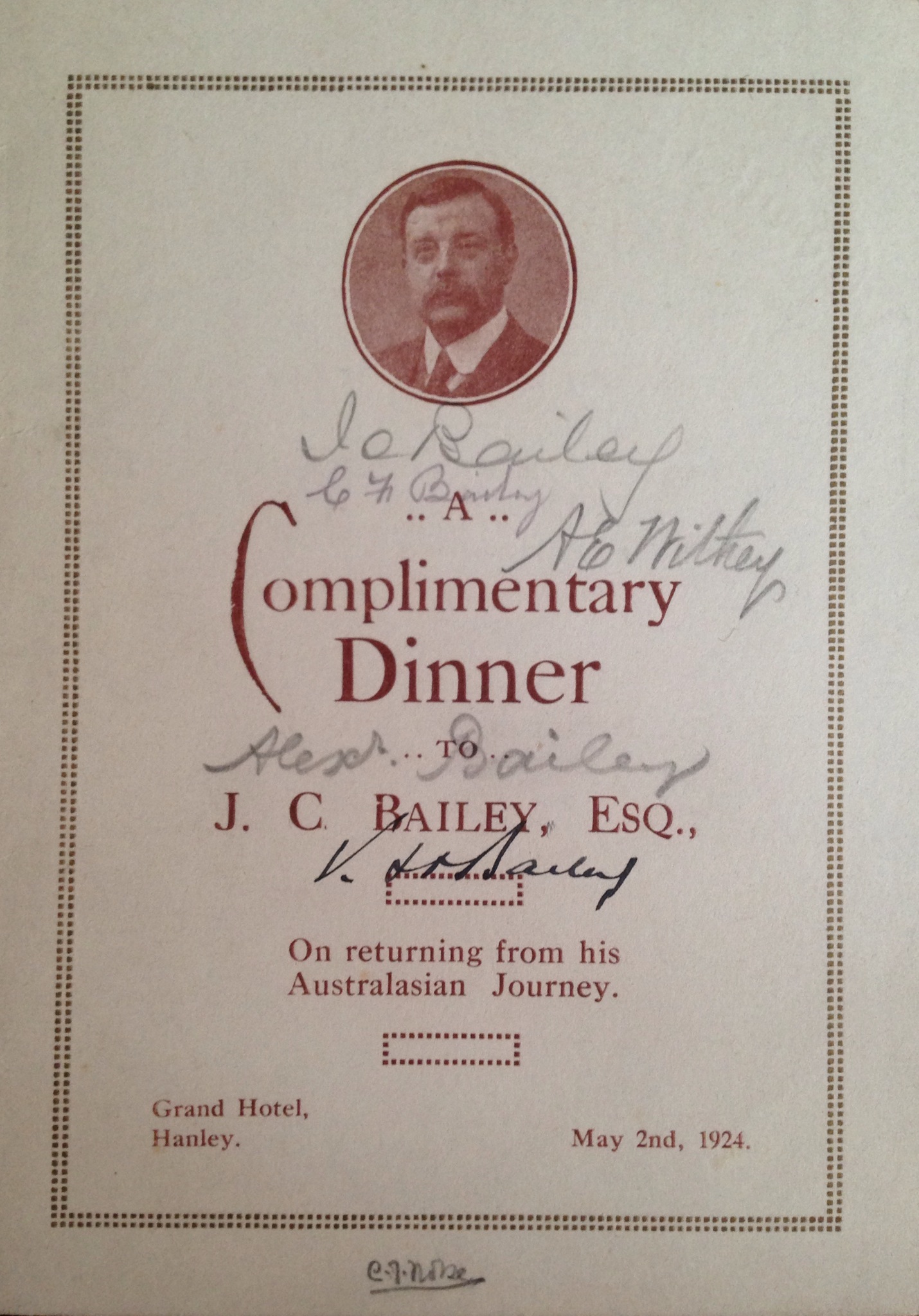
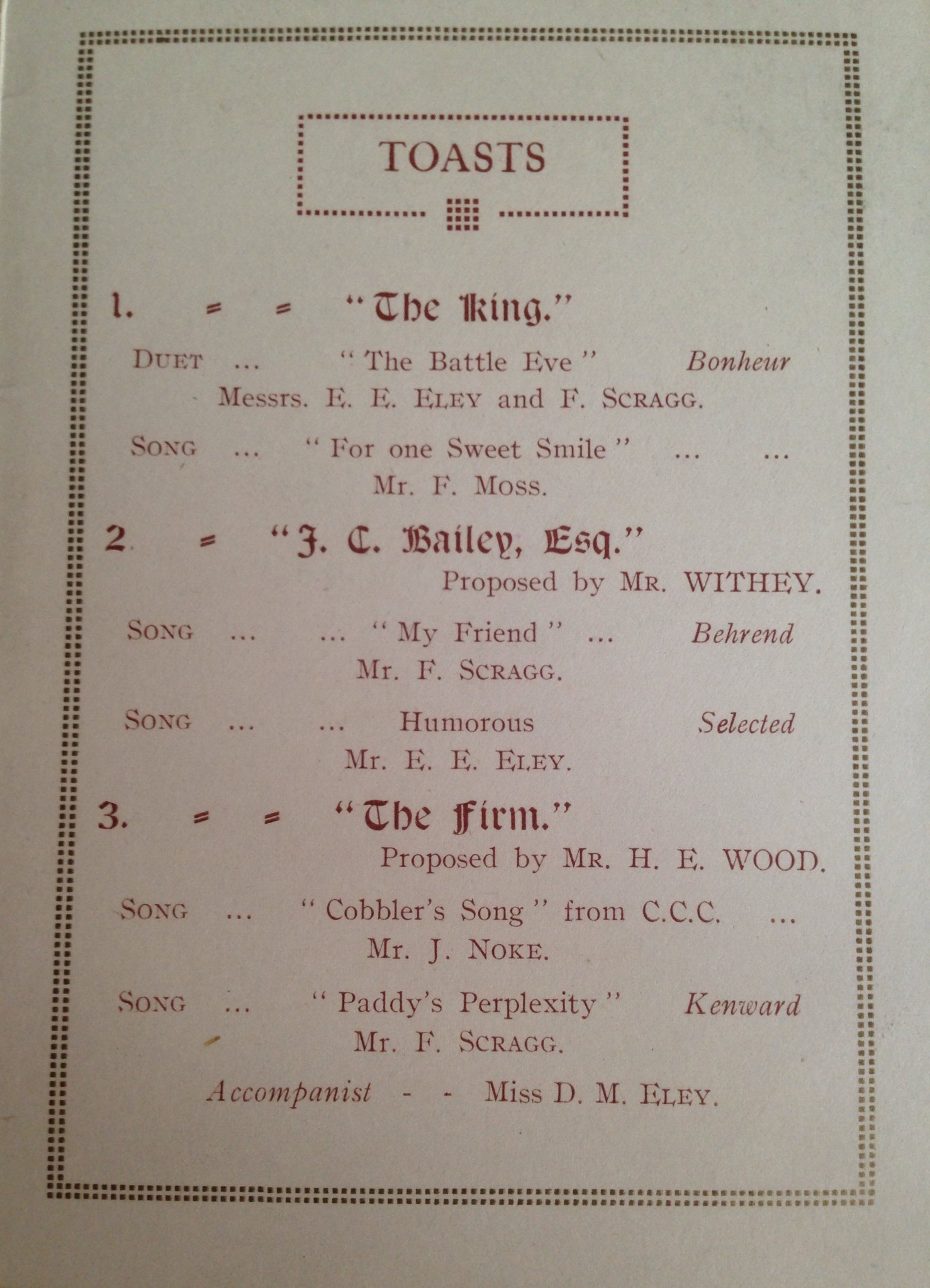
The popularity of Chu Chin Chow is illustrated by this menu card from 1924, which heralded the return of Doulton’s sales manager from his Australasian tour, much like the tours Michael Doulton does today in his role as ambassador for the Doulton brand. In the menu it sets out the toasts to be made, together with songs to be performed during the dinner that included the Cobbler’s Song from Chu Chin Chowperformed by Jack Noke, Charles’ son who would eventually take over as Art Director at Burslem. Interestingly the cover is also signed by various attendees including Charles Noke.

IMG_0491.JPG
Two views of the menu card mentioned.

IMG_0492.JPG

Doulton produced several other eastern inspired figures including The Mendicant, The Potter, The Emir and of course the prestige piece The Moor.

IMG_5307.JPG
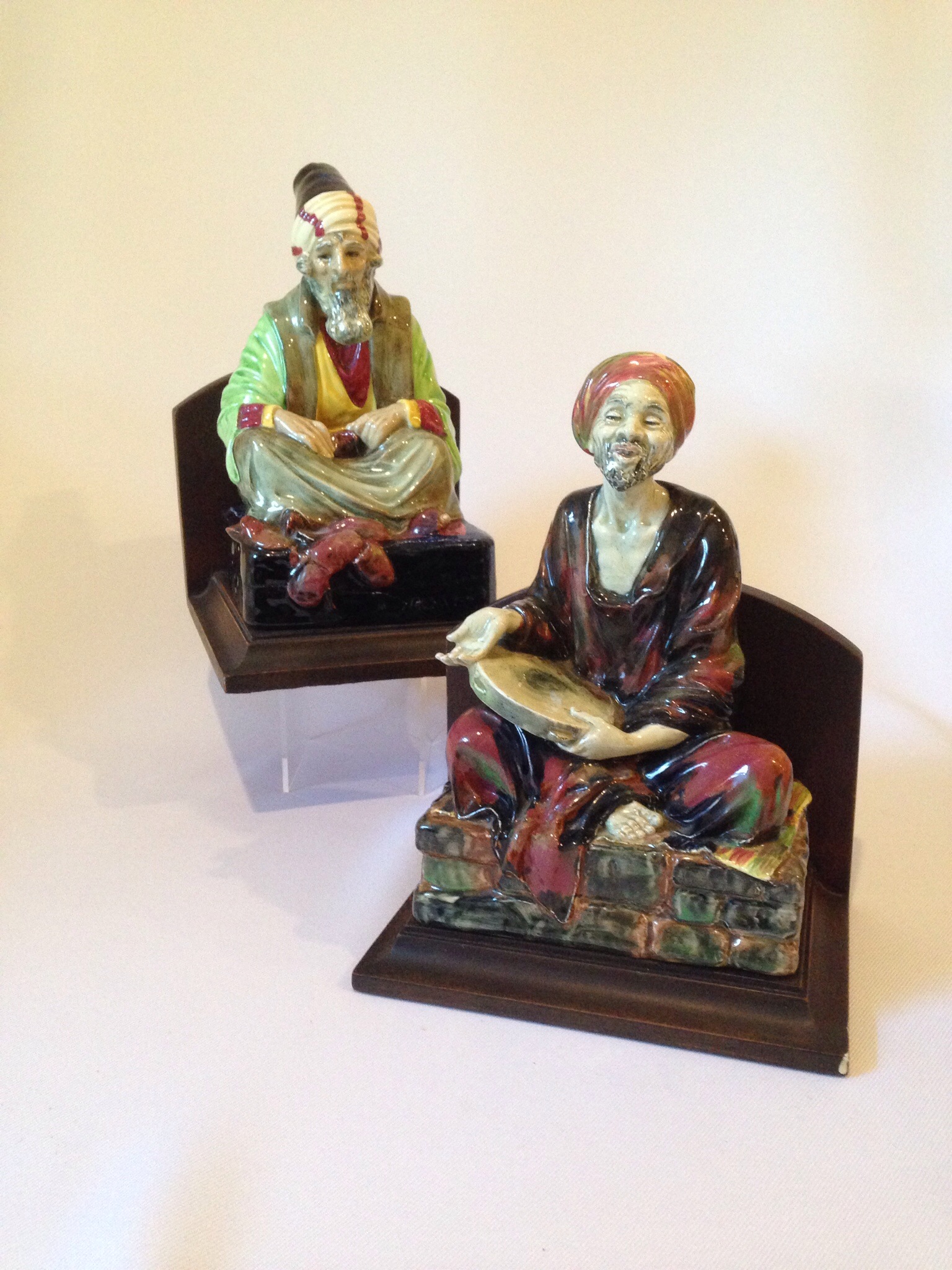
An unusual pair of bookends mounted with The Mendicant colourway (pictured above) and version 2 of Noke’s The Cobbler.

Collecting Doulton wall-masks.

IMG_0444.JPG

For me Doulton’s wall-masks take me right back to the 1930’s when they were the height of vogue. Of course it wasn’t just the Doulton factory who produced them, with continental factories and of course Clarice Cliff here in the UK producing wonderful examples too.
Far from being an easy collection to put together, it is possible to build a large collection of Doulton wall-masks. Naturally some are much rarer than others and some may be said to even be unique. I remember reading in the RDICC magazine about the so-called ‘balding old man’ and another mask by Richard Garbe of a lady made at Lambeth, that remain elusive to this day.

IMG_0446.JPG

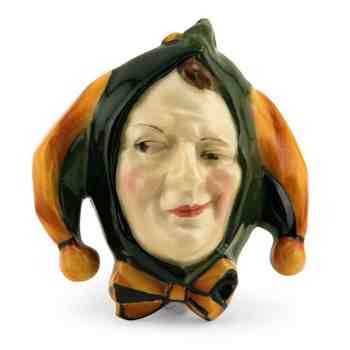
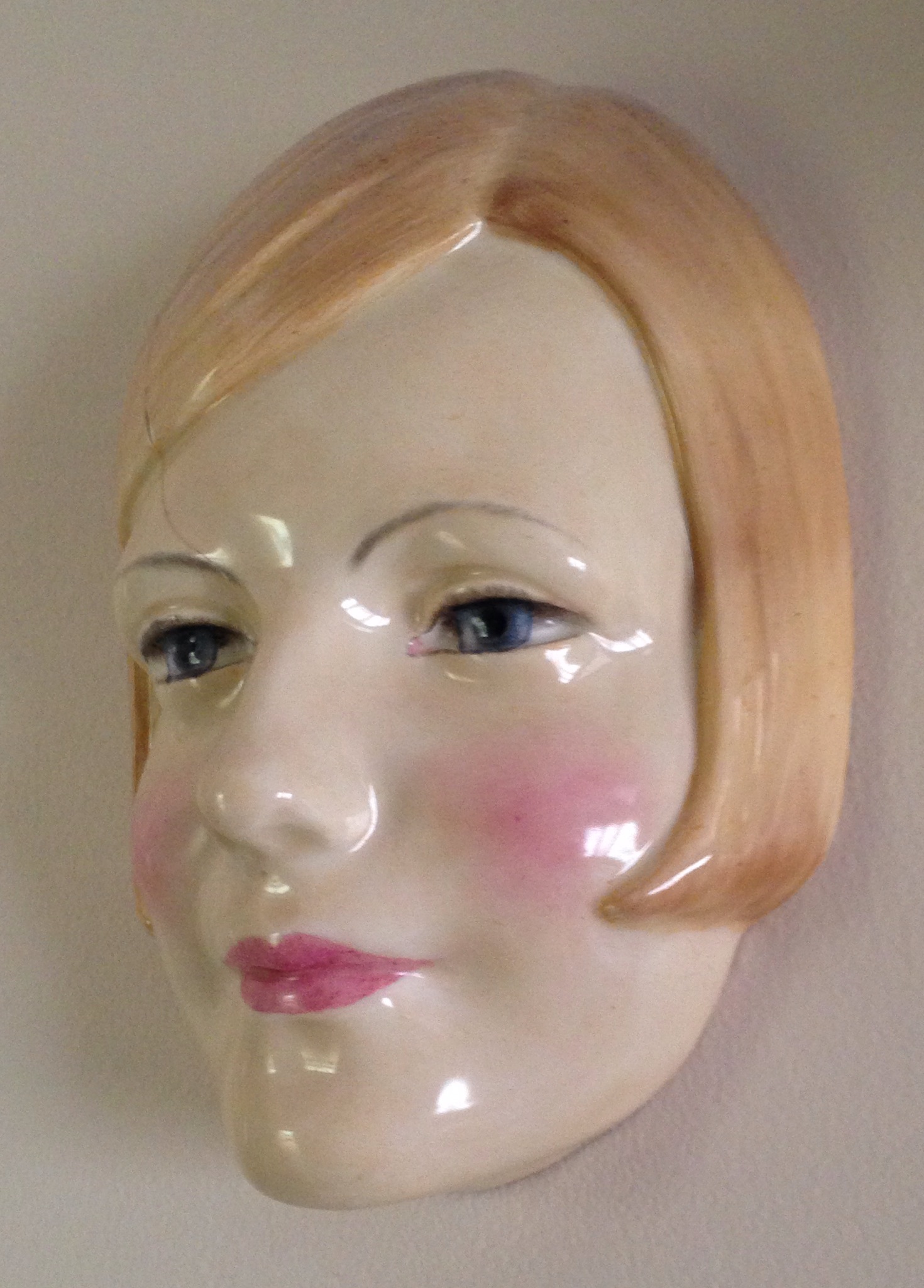
My personal preferences are for the jesters and lady faces. I once came across an example of Lady with Bobbed Hair – Greta Garbo HN1601 with gold rather than orange highlights. As always you can never predict what might turn up in the world of Doulton but remember caveat emptor! If it’s too good to be true, it probably is!
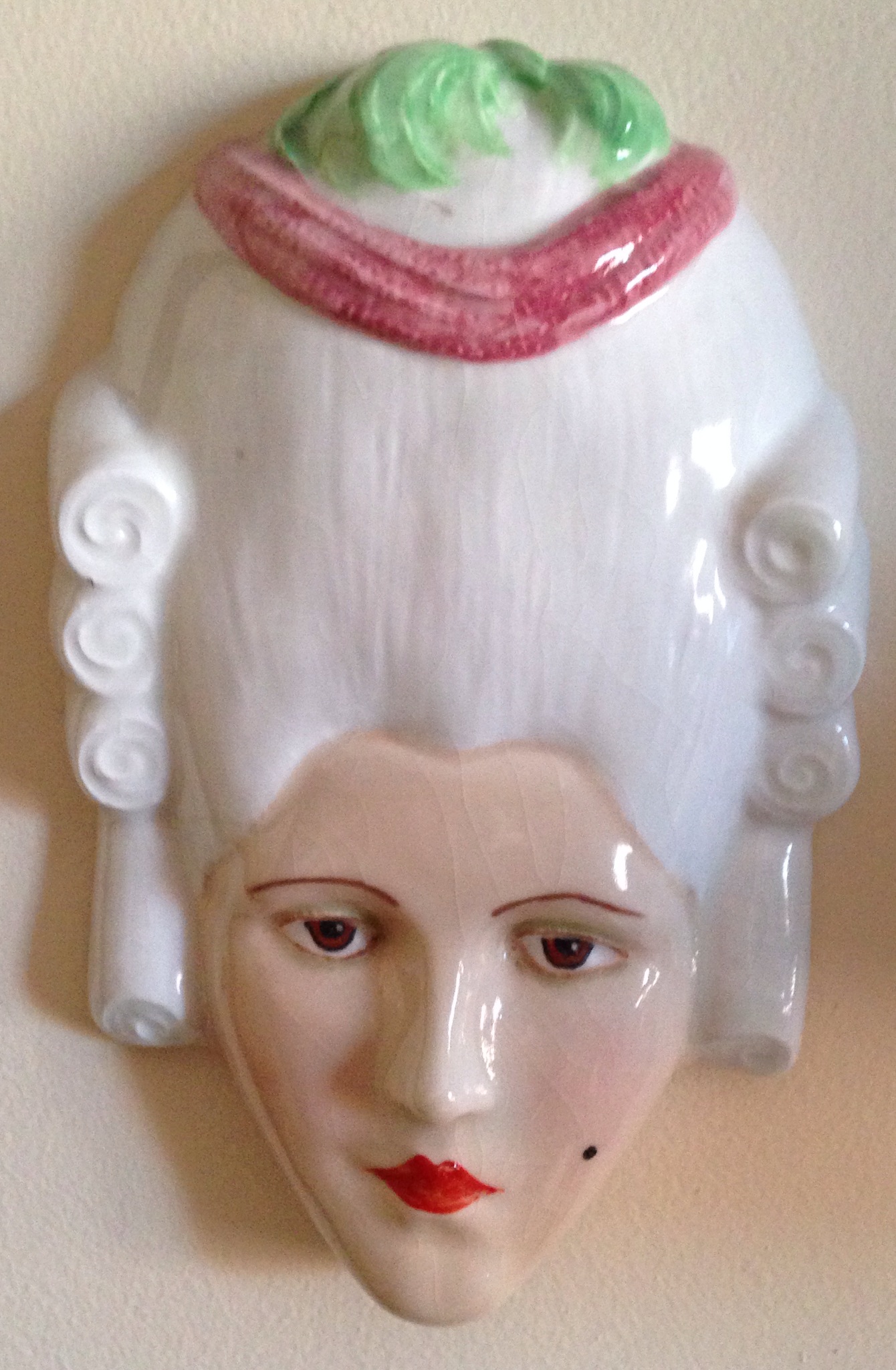
A more recent find of mine was HN1817, Madame Pompadour (above) not actually illustrated in Royal Doulton Figures.

IMG_0445.JPG

Other characters stem not just from film such as Shirley Temple or Marlene Dietrich, but also myth such as the wonderful Friar of Orders Grey.
The artists behind these masks are not altogether certain – the Doulton records being somewhat sketchy and even published materials confuse artists. Leslie Harradine has of course been credited with the Sweet Anne mask because it was he who created the figure of the same name. Yet, a final 3 we must mention are the wonderful creations of Richard Garbe, commissioned by Doulton to produce items for the HN collection in the 1930’s. He provided three rare models: Lion of the East, St. Agnes and Fate. All three are very rare today, however, examples of them in unusual glazes have turned up including a striking, gilt version of Lion of the East.
These wall-masks are a fascinating area to collect and as they had a relatively short production run it will provide much entertainment searching out examples in large, medium and small sizes as many were produced – including the wonderful jesters!

IMG_0336.JPG

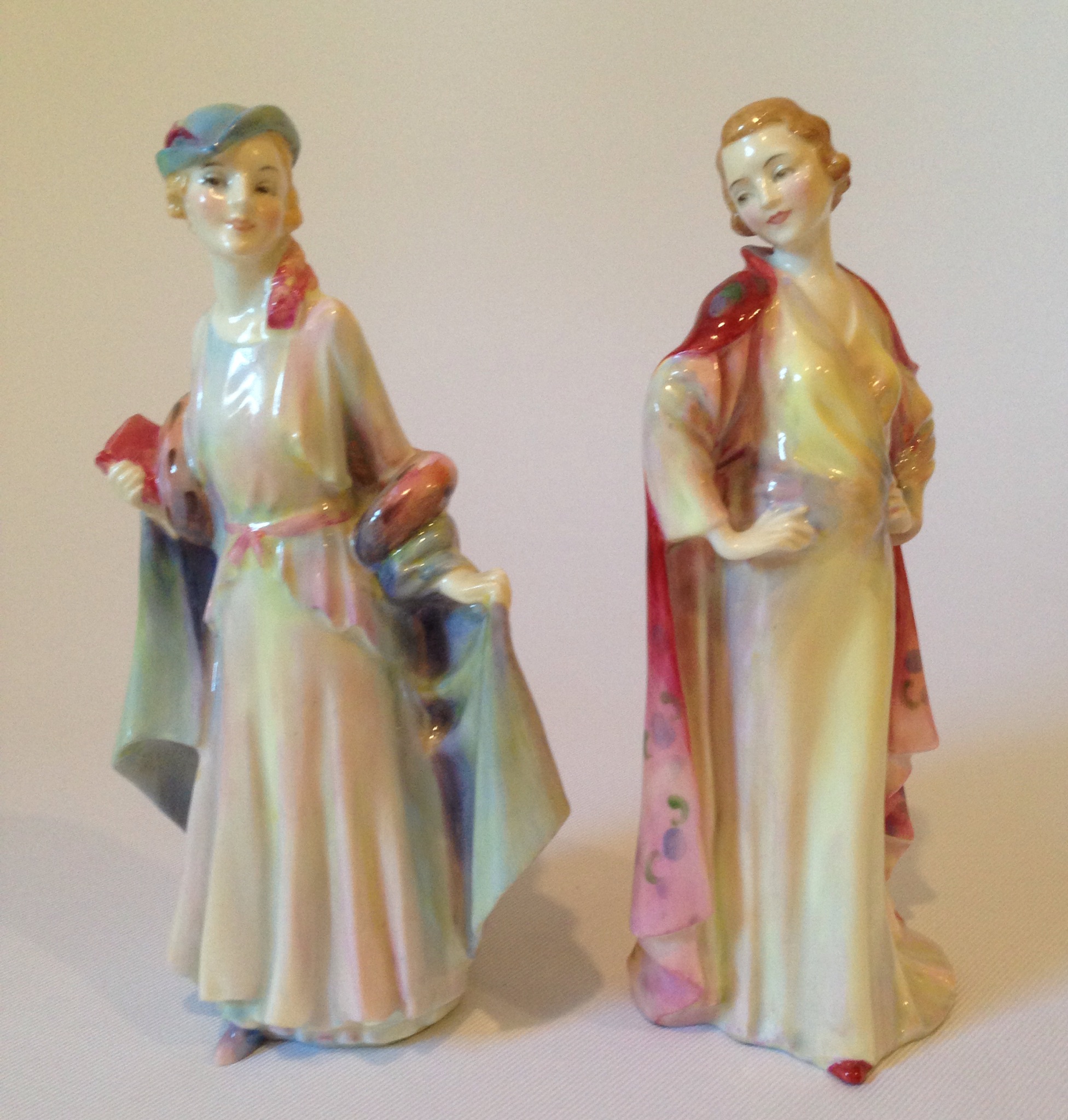
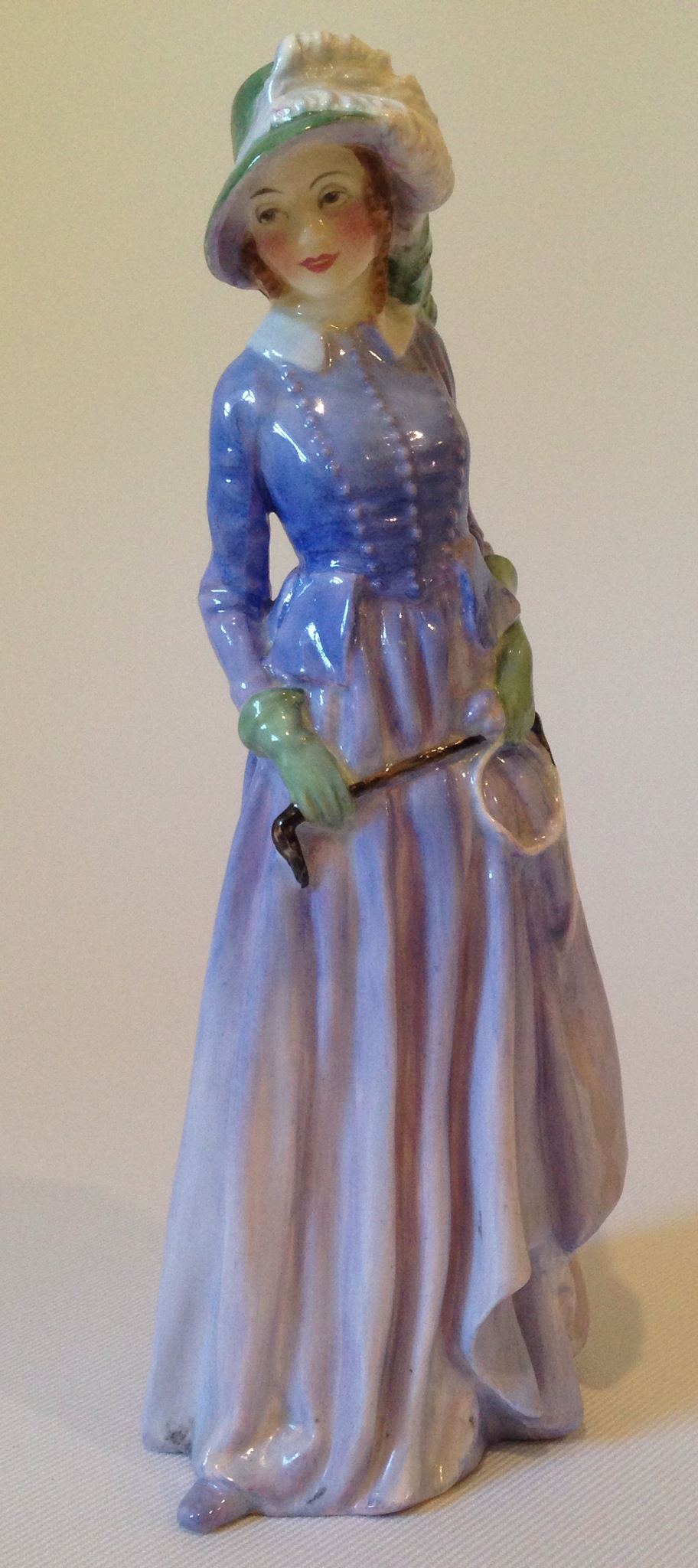
Royal Doulton’s Edwardian ladies.

IMG_0419.JPG
Tulips.

With the turn of the Twentieth Century there came a real change in fashion and also saw the rise of Haute Couture from Paris, France. Notably it also saw the demise of the ‘S’ shape corset for a more graceful and elegant look with straighter lines and raised waistlines.
When Leslie Harradine first began sending his models to Burslem for approval we see not only a great talent but also an artist who is able to tap into popular movements; namely fashion. With Harradine’s involvement, the HN collection really came into its own and at last gained the popularity Charles Noke had hitherto been striving for, for his renaissance in Staffordshire figure production that he had first attempted in the late 19th Century with his Vellum figures. Harradine’s first figure was the elegant The Princess HN391 inspired by costumes by the great costumier Leon Bakst for contemporary ballets. She was followed by a steady stream of other similar ladies including Tulips, also by Harradine, but other ladies including The Necklace and The Bouquet both by George Lambert also reflect this style.

IMG_0417.JPG
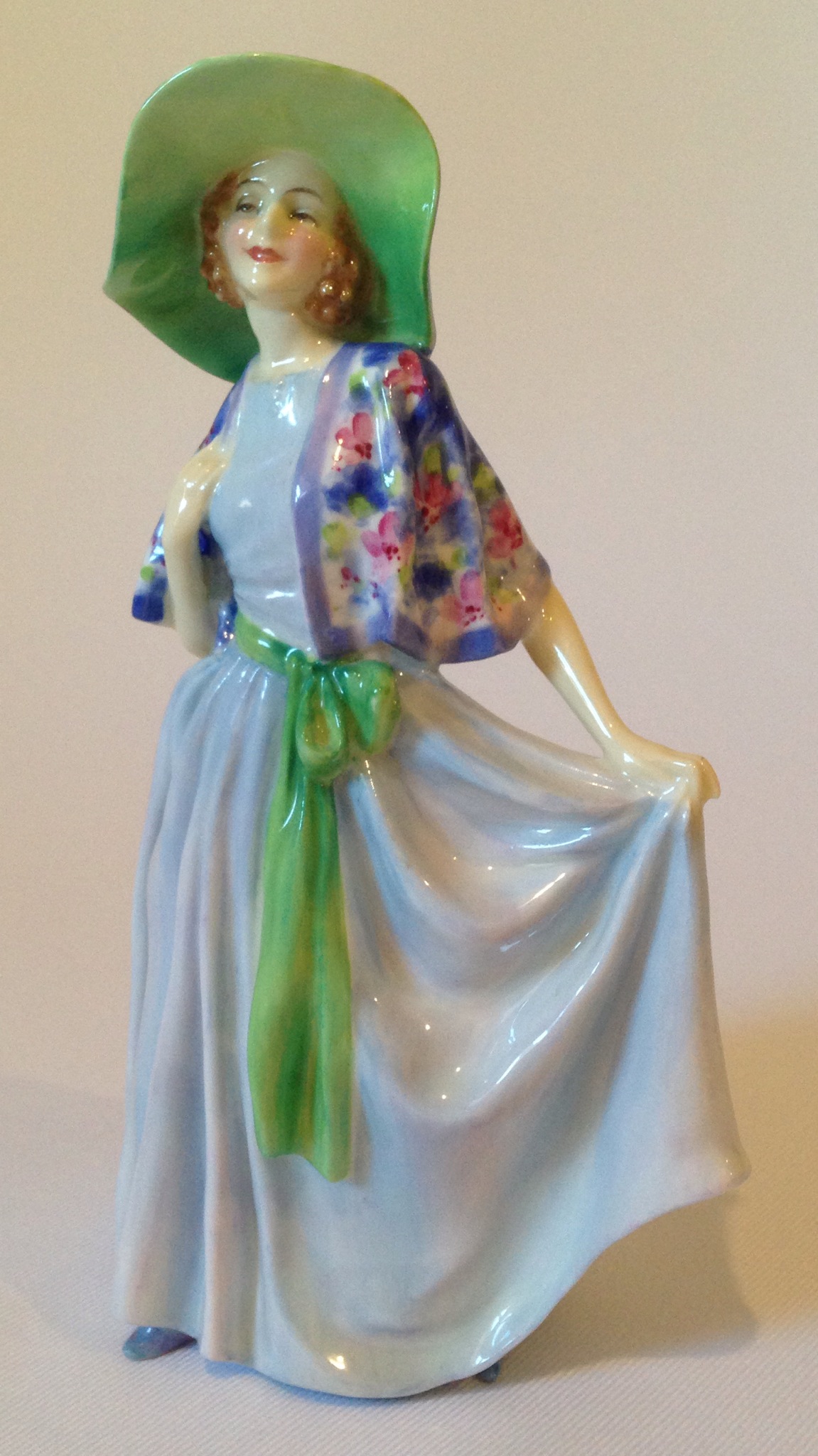
The Gainsborough Hat.

There are earlier examples of this style, namely Tittensor’s Gainsborough Hat introduced in 1915 in 9 different colourways again reflecting not only fashionable styles but also popular fabrics that included many differently patterned fabrics being used together. There were a handful of figures which reflected this mix of fabrics, a favourite of mine is this version of Contentment by Harradine.

IMG_0415-0.JPG
Contentment.

Fashion has always played an important role in the HN collection, perhaps you arrange your displays accordingly? If so why not share some pictures with us on our Facebook page ‘Doulton Collectors Club’!

Royal Doulton’s early horse models.

Doulton’s first horse models for the HN collection all featured riders, however, their first solo horse models introduced in 1940, were the work of William Chance, commissioned to launch a new range by Doulton.

Chance was an established sculptor having exhibited widely including at the Royal Academy. He modelled from real life and his Doulton models proved popular and many were available in large, medium and small sizes, with the last remaining models being deleted in 1966.

The varying sizes of horses available from this first series make it an interesting field to collect and together they make a great display.


Chance also created the special piece Monaveen for our present Queen, when she visited the Doulton factory in 1949 as the then Princess Elizabeth. Monaveen was a steeplechaser owned jointly by the Queen and the late Queen Mother and not produced by Doulton for sale. The piece was expertly painted by Eric Webster, whose long career at Doulton’s we looked at some time ago.

Monaveen (courtesy of WMODA)

Horses continue to be produced by Doulton into recent times with new prestige pieces from Peggy Davies’ The Palio to the more recent Alexander the Great HN4431 as well as those produced in the early 1990’s as part of the DA range of animals.

To finish I thought you might all like to see this advert I found many years ago, stating that the famous French sculptor Gaston d’Illiers was responsible for the very rare study The Winner HN1407. This skilfully created model shows the horse in full gallop and straining every muscle. It is reputedly based on the horse Royal Doulton, owned by the Rousten Brothers of Auckland, New Zealand.

IMG_0410.JPG
The Winner advert from 1930.

Courtesy of WMODA.

Australia’s John Shorter – Doulton’s Australian agent

IMG_0372.JPG
I am sure many of you will be aware of the name Shorter, no matter where in the world you live, especially if you have an interest in all things Doulton. John was Doulton’s original Australian representative in 1889.
I came across an interesting interview with him from 1934 some time ago accompanied by these wonderful shots of his showroom in Clarence St. Sydney which also had a Doulton frontage, a gift from Mr Henry Lewis Doulton. Inside too, there were two magnificent tile panels by William Rowe ‘The Earth’ and ‘The Sea’. One of which you can see in these pictures.
Anyway, you can see for yourselves the wonderful array of Doulton wares available through the Shorters!

IMG_0373.JPG
As well as selling Doulton John Shorter was also a collector and was lucky enough to be offered a 1000 piece collection built up by Doulton’s first Art Director at Burslem, John Slater, after his death. Some of this collection he sold to John Bates of Christchurch and the remainder, was gifted to what is now the Powerhouse Museum in Sydney.

A place to share enthusiasm for all things Royal Doulton! All original content ©Christopher Evans 2014 unless otherwise credited. No unauthorised reproduction permitted.