George Tinworth, the first Doulton artist, is perhaps the best place to start this short exposé on Doulton’s Church art wares.
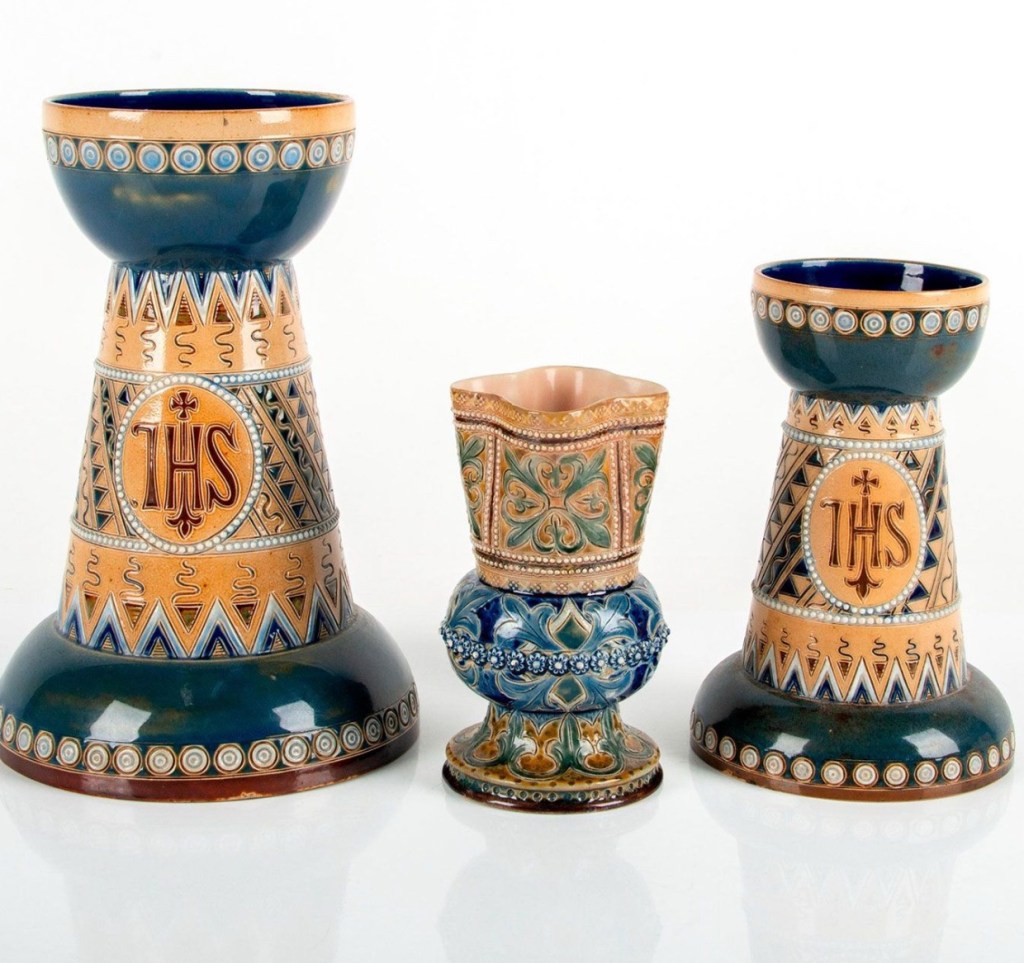
A selection of alter vases produced at Doulton Lambeth, sold by Lion & Unicorn auctions.
An ex student of the Lambeth School of Art, Tinworth worked at Doulton’s Lambeth factory from 1867 to his death in 1913. Most of his work was sculptural and can still be be seen today in parks and churches around the world.
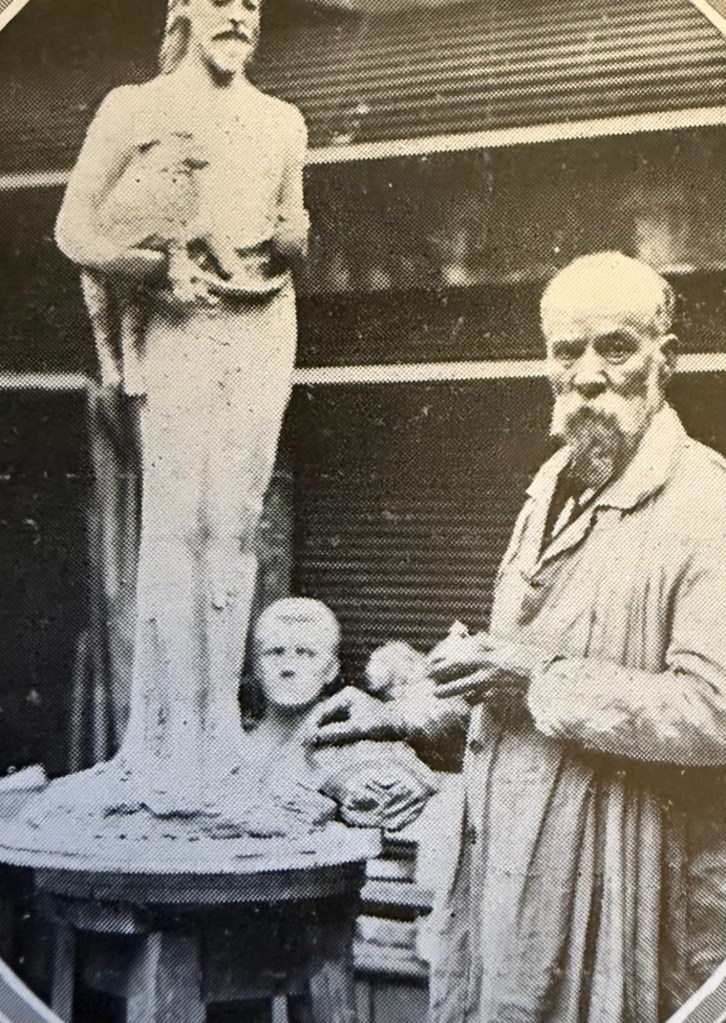
Tinworth in his studio at Lambeth working on a Good Shepherd statue.
In the 19c respectability was especially prized, and Tinworth’s religious work brought great acclaim to the Lambeth factory. Whist it is perhaps his amusing mice and other animal sculptures that are most prized today, this change is a true reflection of changing attitudes in modern times.
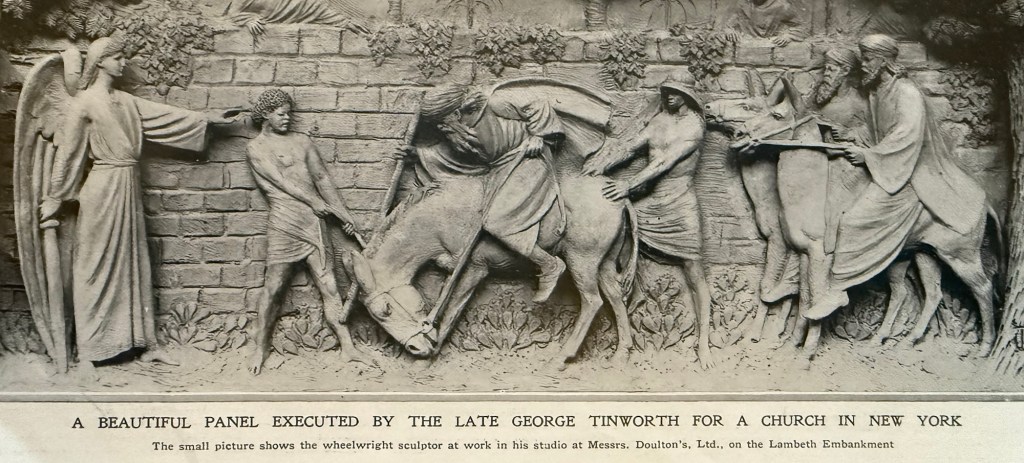
Plaque by Tinworth from a New York church
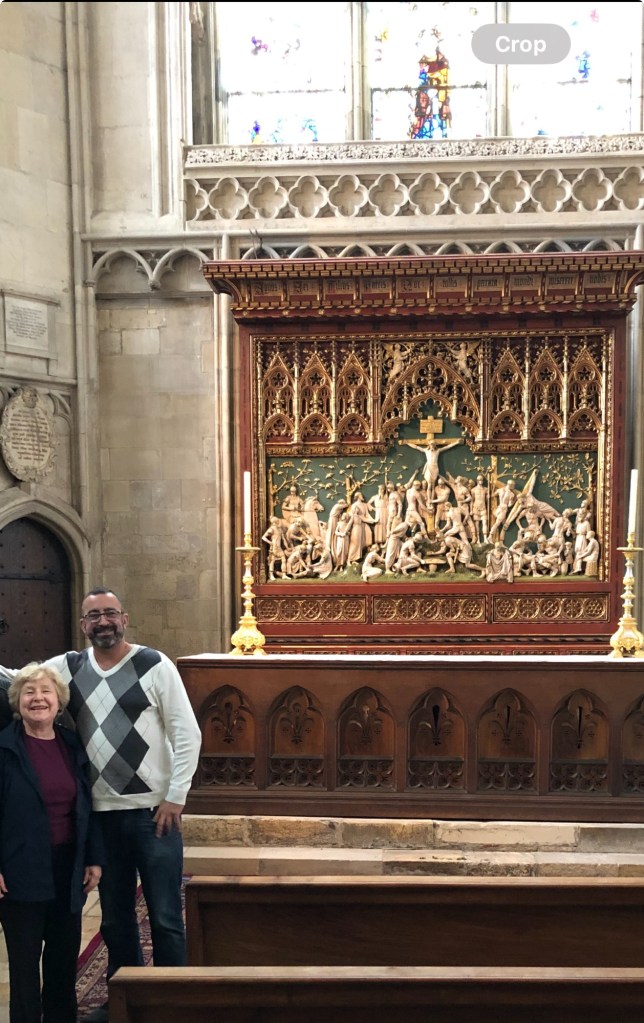
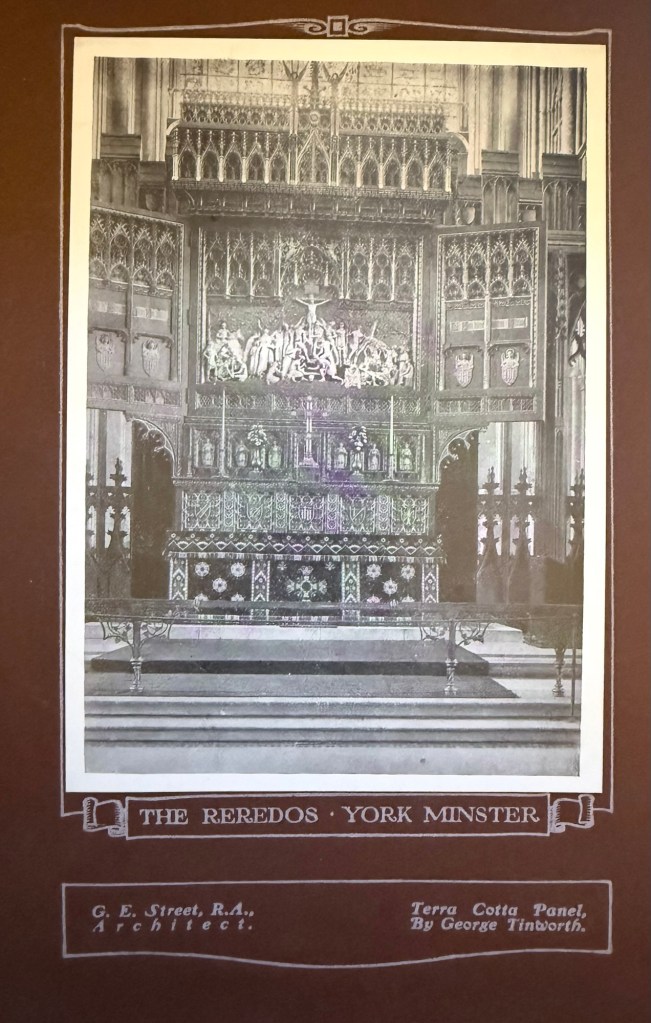
Returning to Tinworth his work can be found today in churches and cathedrals up and down the UK. Above you can see his magnificent reredos located in York Minster.
A contemporary image of the York Minster reredos.
Not forgetting the marvellous Doulton flambé alter piece that resides in Coventry cathedral, after its post WWII reconstruction.
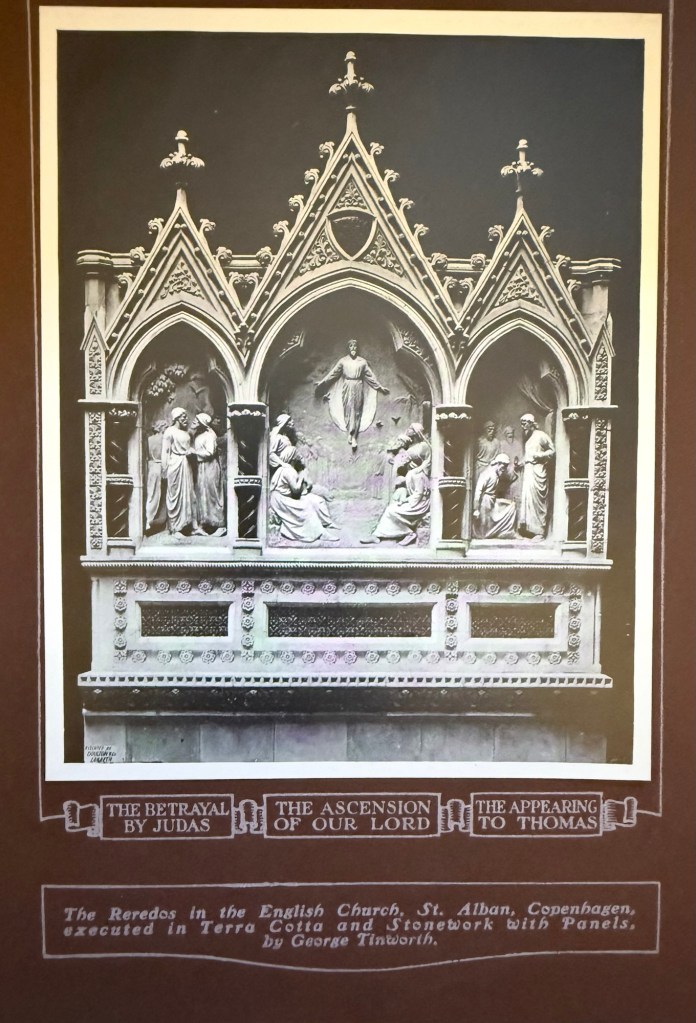
A further Tinworth reredos, this time located in Copenhagen.
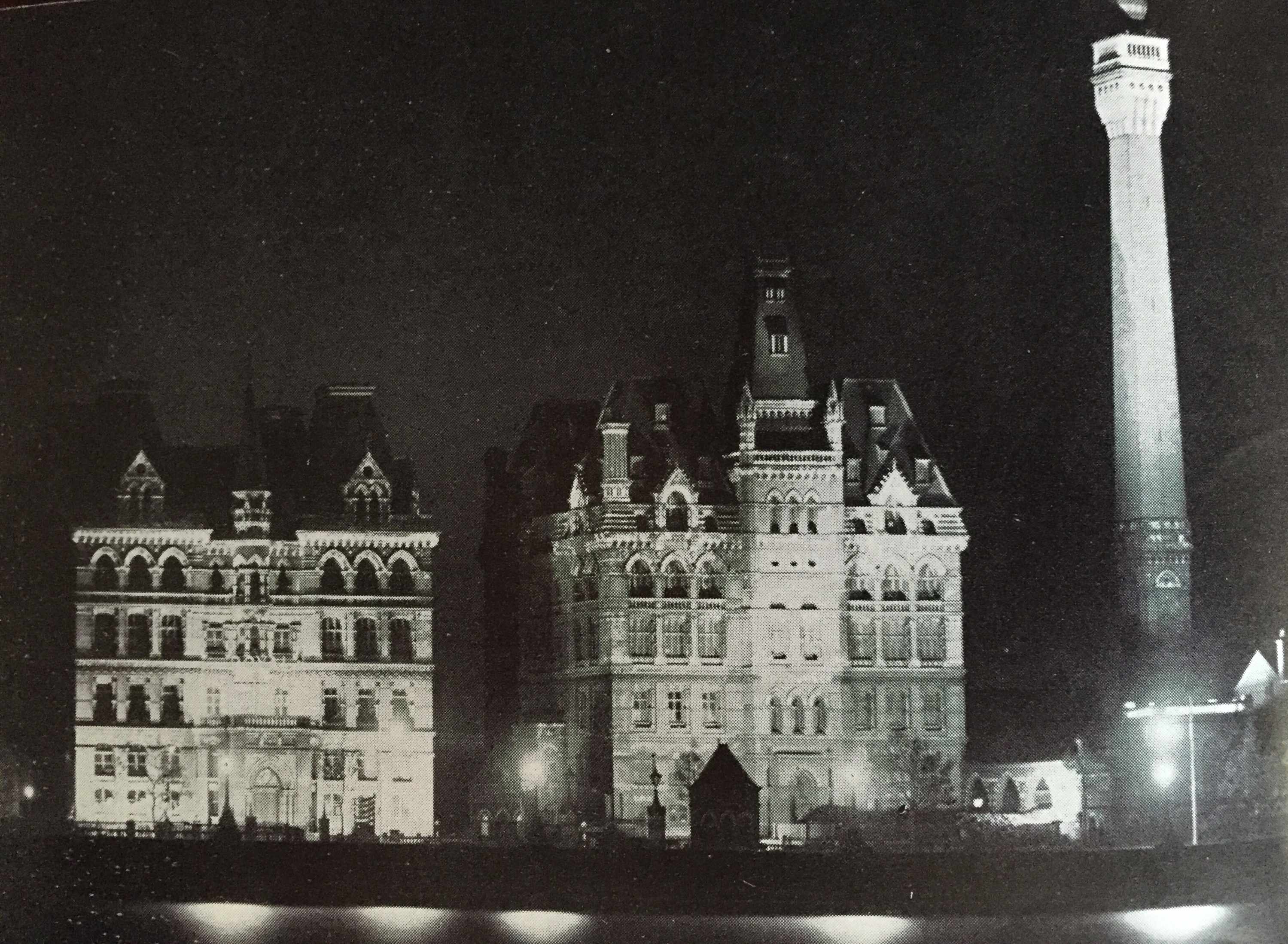
Built in the 1870’s in the gothic style ‘A’ and ‘B’ blocks as they were known and the huge chimeney that stood next to them were a London landmark for 75 years and witnessed many of Doulton’s major accomplishments as well as playing host to many famous visitors from Royalty, to politicians, to latter day celebrities.
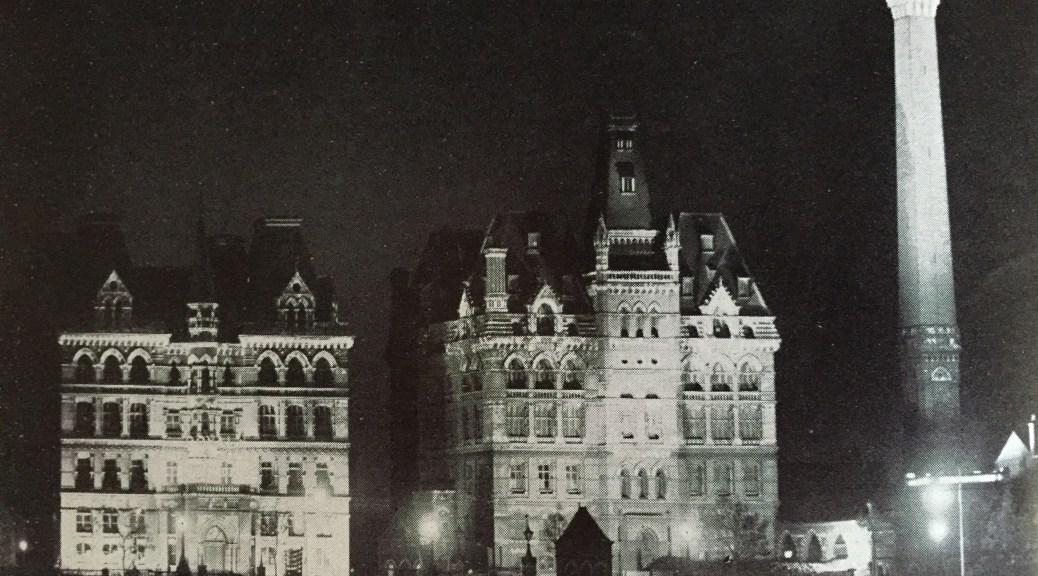
A floodlit view of blocks A and B from 1935 celebrating a Royal jubilee.
Doulton vacated these impressive buildings in early 1940, moving to the newly erected Doulton House, then just a few hundred yards along the Albert Embankment. Lying unoccupied and suffering bomb damage during WWII there was little option left than to demolish these impressive buildings in 1951.
A close up of the showroom and main offices block.
On the left is the former main office and showroom building, on the right a factory block and chimeney.
A drawing of the Albert Embankment by Arthur Pearce showing the extent of the Doulton works in 1924. Note the corner building that still stands today.


 doultoncollectorsclub