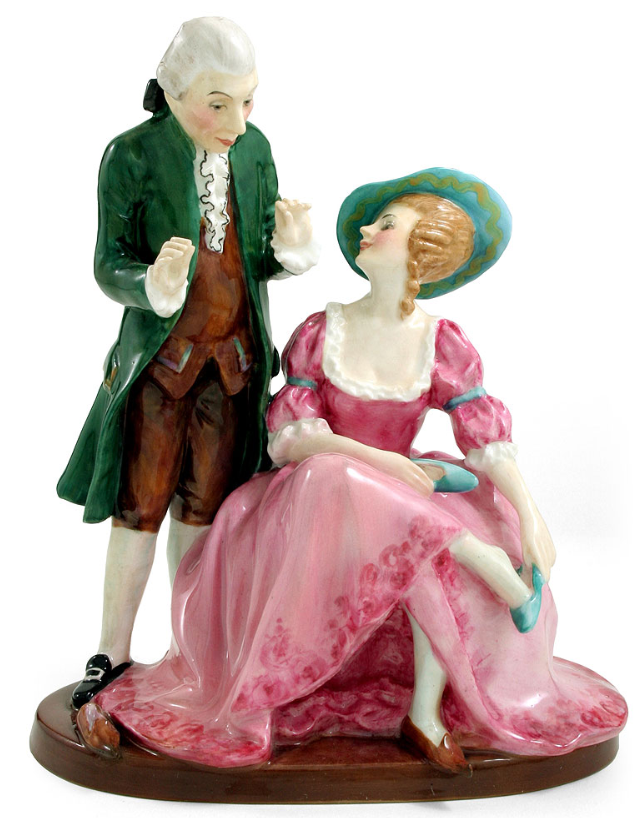
Introduced in 1936, the Court Shoemaker is a typical example of a 1930’s Doulton figure in that the detail in the figure is superb. It is also an example of a double figure popular during this decade. This piece was almost double the price of a standard figure from this period and given the relative scarcity, few can have been made.
An early version of the figure group from 1936.
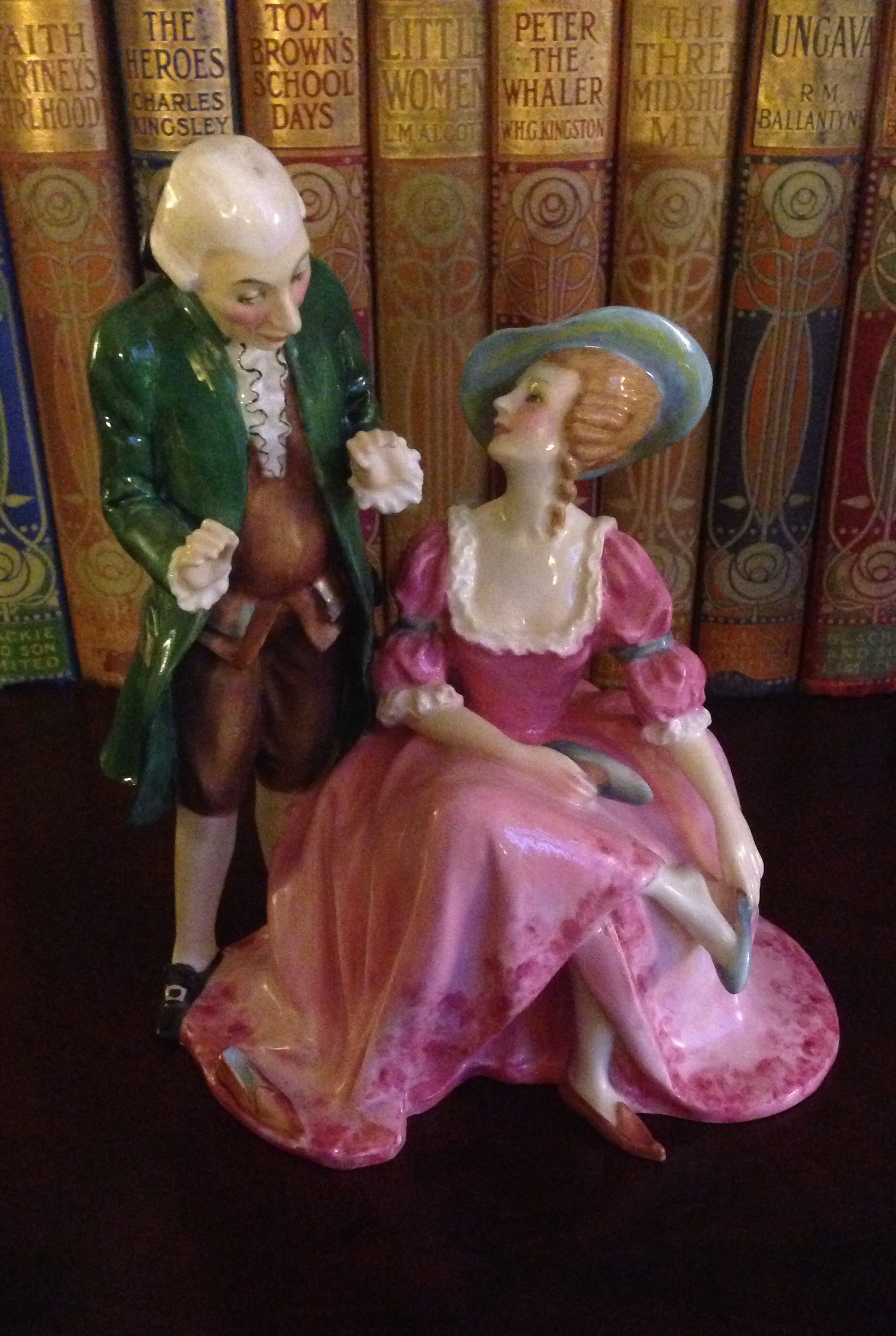
Given this relative scarcity it is always exciting to find slight variations. Directly above is a version I have which must be an example from the original mould due to the impressed date. I am sure you have noticed the absence of the brown base in later models. Clearly the original was just too fragile around the base area without the added base.
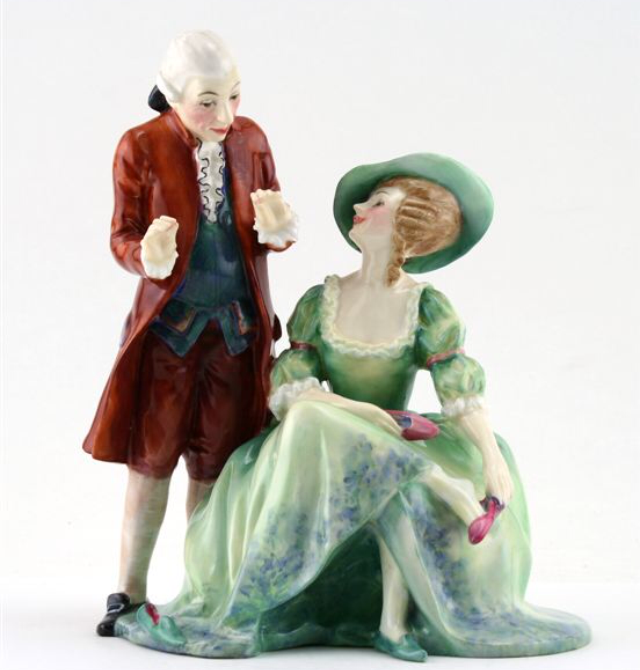
Another sighting from a few years ago was this colourway below, from Seaway China, again with no base telling us it was a pre-production trial.
Perhaps you have a further variation of this rare figure? If so why not share a photograph on our Facebook page ‘ Doutlon Collectors Club’!
When researching the book Reflections with Jocelyn it was an interesting side line to investigate how some of the more unusually named figures arrived with their names.
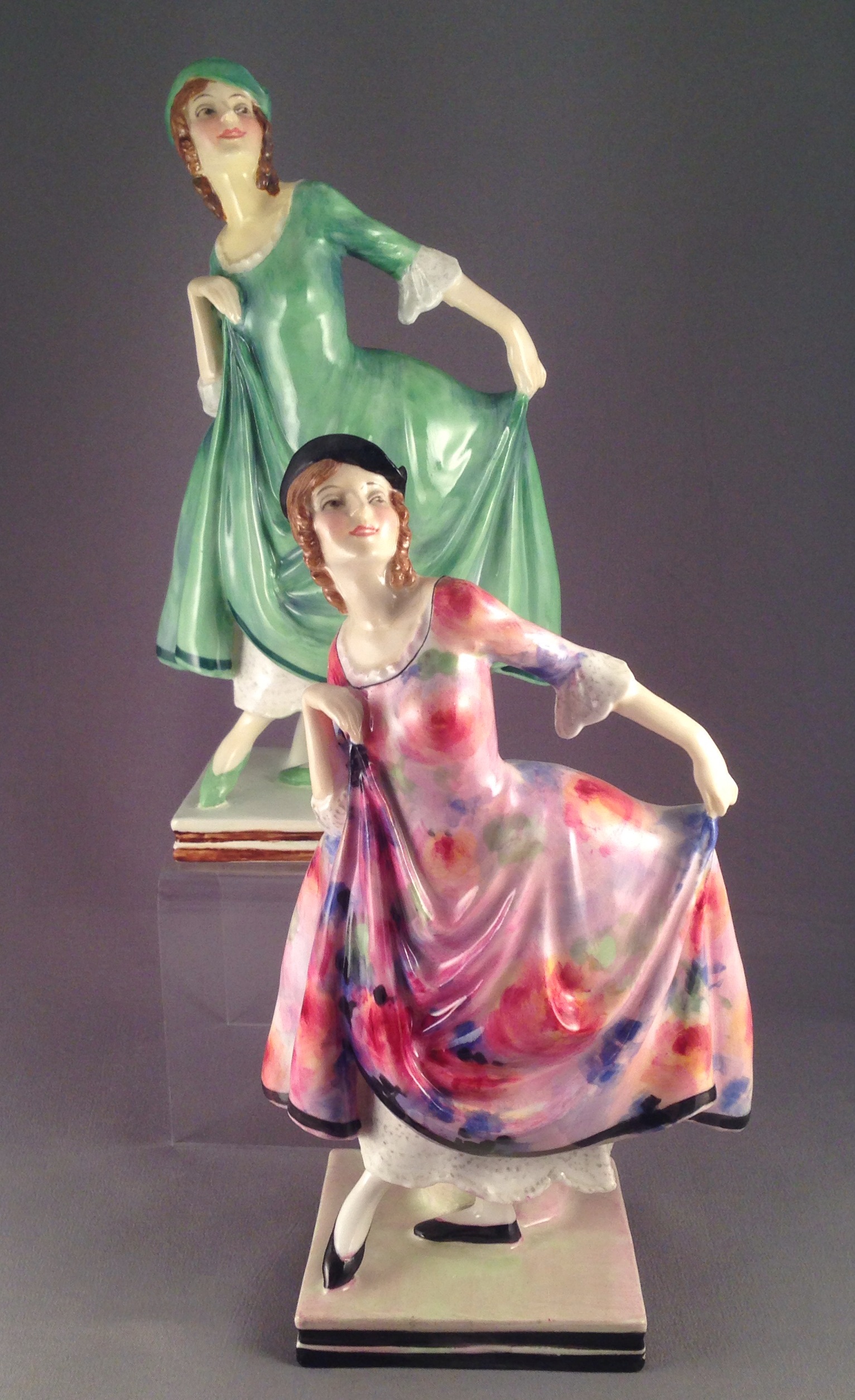
One particularly unusual lady is Frangçon HN1720 and 1721. Both versions were introduced in 1935, but rarely appear suggesting a much shorter production run to the withdrawal date of ‘by 1949’ suggested in Royal Doulton Figures. In my experience a withdrawal date of 1943 would be more accurate for most figures save for a handful of the most popular figures that were available to the US as late as 1944 and production of these resumed soon after the war ended. These include Autumn Breezes, the Orange Lady, Biddy Penny Farthing, Old a Balloon Seller and a few others.
Frangçon HN1721 and 1720.
Returning to the name Frangçon it is certainly named after the once famous theatre actress. Born in 1891, her first performance was in 1911 and she retired only in 1970 after an illustrious career being encouraged by Ellen Terry and supported by Sir a John Gielgud.
 doultoncollectorsclub