All posts by doultonchristopher1

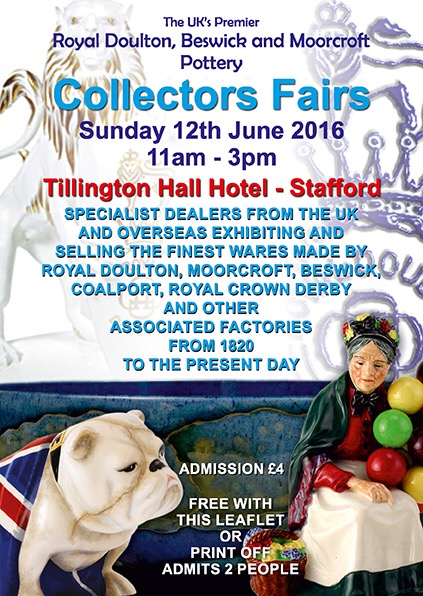
Save the date: the next Royal Doulton, Beswick and Moorcroft Fair is June 12th…

….at Tillington Hall Hotel Stafford.

More, more, more is the strap line for our next collectors fair and first for 2016! 

More exhibitors!

More collectibles!

More space!

Entry is free with a copy or print of of this advert.

With collectibles old and new, plus fair specials what more reason do you need to stop by on the day! 

See you there! 

Questions? Just email them to doultonevents@gmail.com

We look forward to welcoming you there! 


Royal Doulton’s  Nursery Rhymes Series L – a look back…

 
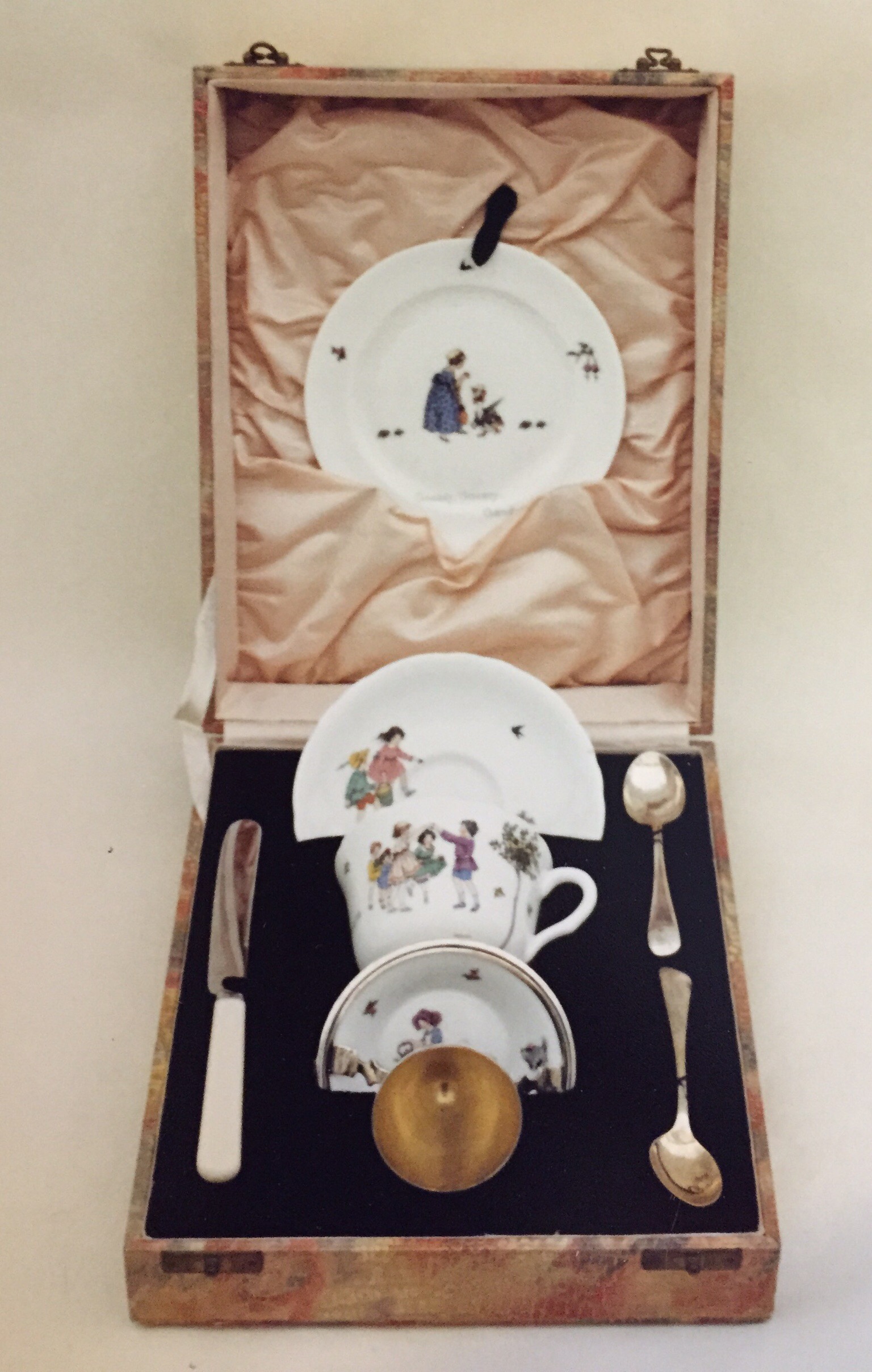
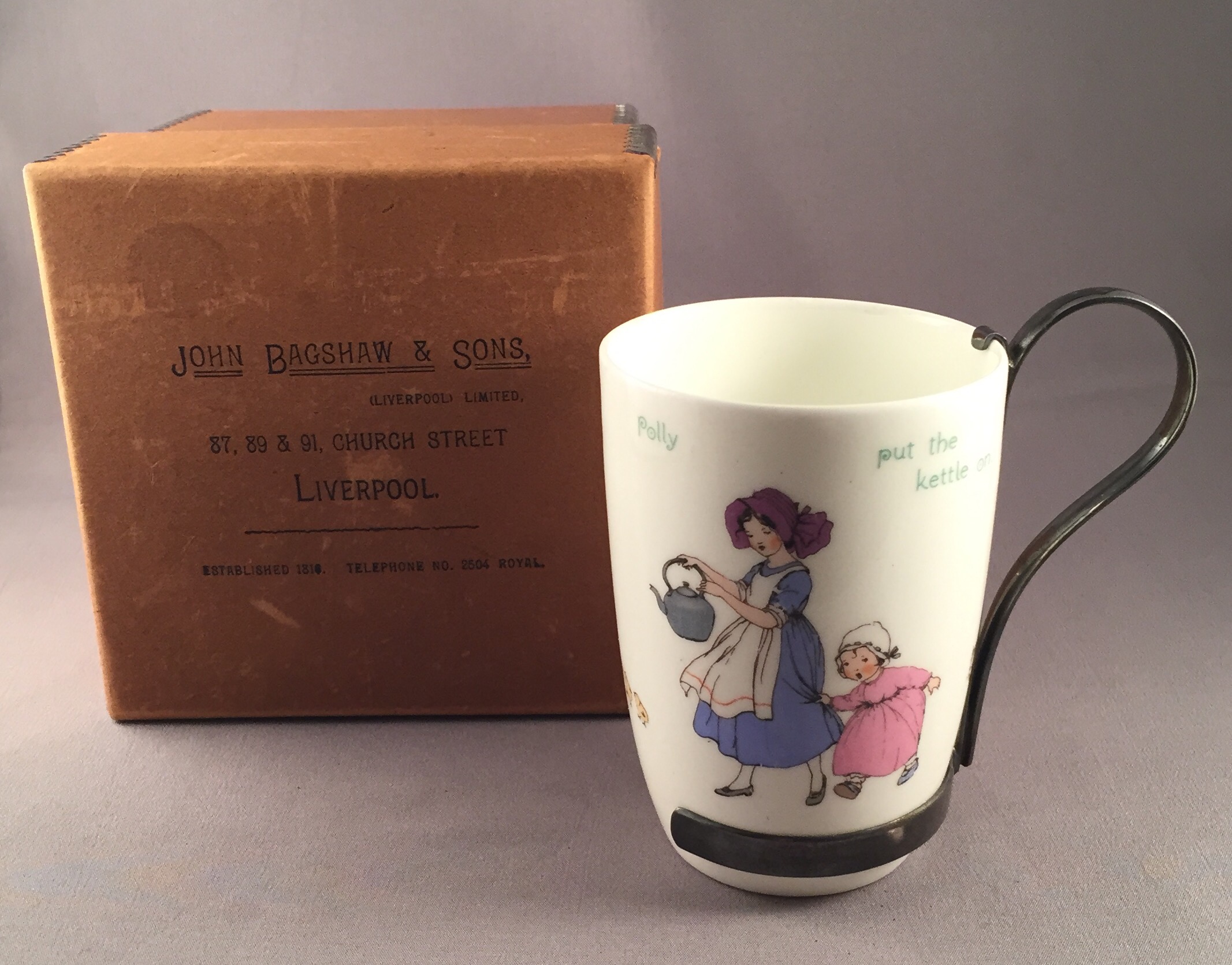
 A smart child’s breakfast set, once popular christening presents. 

Classic nursery rhymes have long provided much inspiration for Doulton’s designers and just like many Seriesware designs the L range was influenced by another artist, Ann Anderson.

  Introduced in 1916 there were 12 different designs produced featuring classic characters such as Little Tommy Tucker, the Queen of Hearts and This Little Pig. 

  
A variation of the boxed set above.

Typically produced in bone china the precise date of withdrawal is unknown, although the outbreak of WWII is given as it is with so many of Doulton’s different lines. The bases of items with these designs can carry H or D numbers for this series ware pattern.

  
Beaker with silver plated handle and original retailer’s box.

As with so many series ware designs hunting down items provides a great challenge and a collection of them makes a great display.

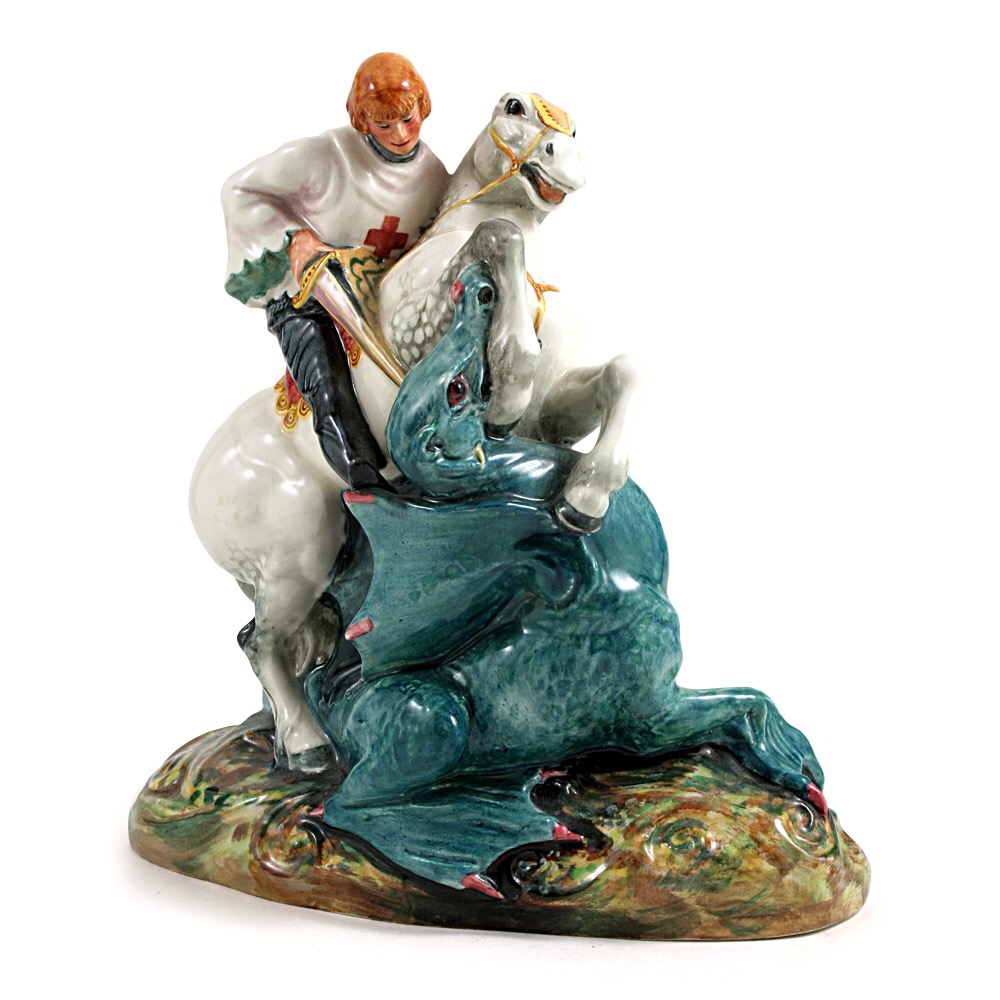
Royal Doulton’s celebration of St George.

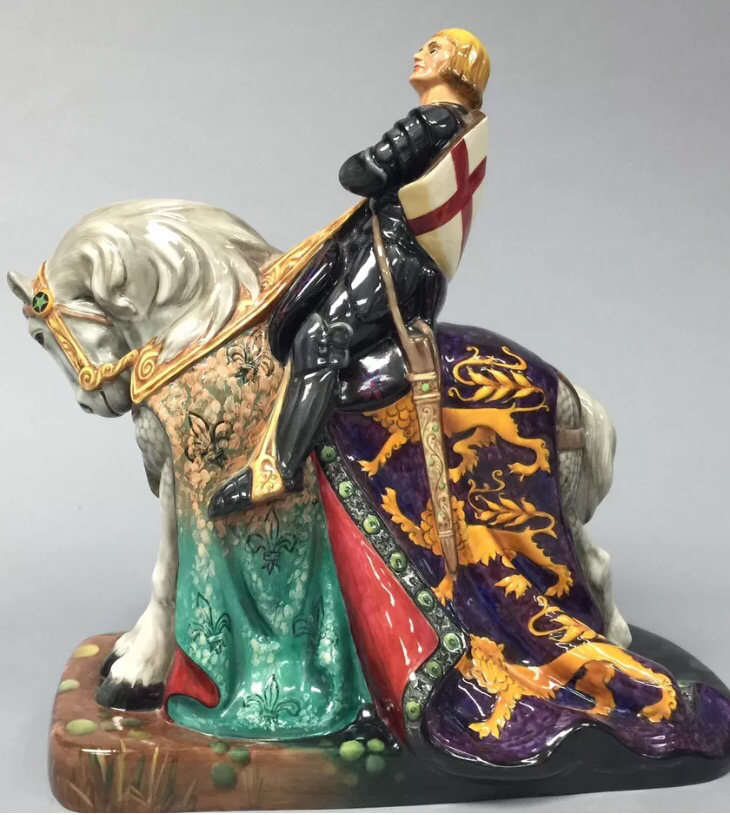
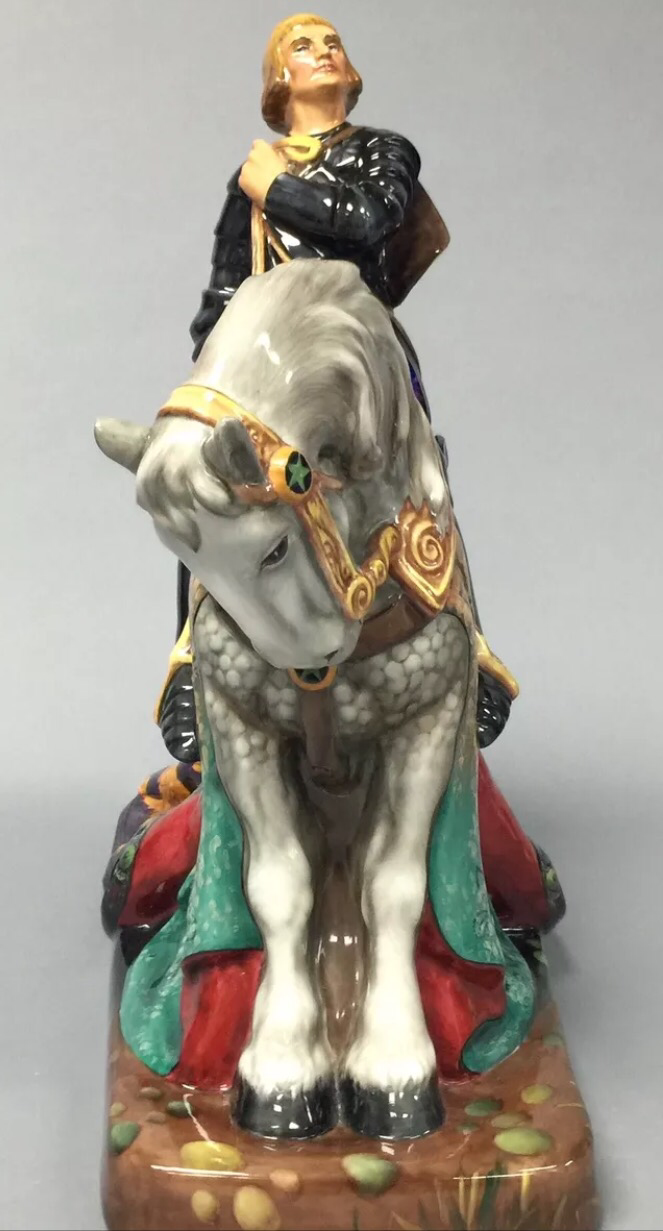
  St George HN 2067.

England’s patron saint is celebrated annually with St George’s Day on the 23rd April. Symbolic references to him and the story of his slaying a dragon can be found throughout Bristish life: his cross forms the national flag of England, also it features within the union flag of the United Kingdom and is also contained with other flags containing the Union Flag such as New Zealand’s and Australia’s.


England’s patron saint can be traced back through history to before the Norman Conquest of 1066 and it is recorded that by the 14thC St George had been declared England’s patron saint and protector of Royalty!
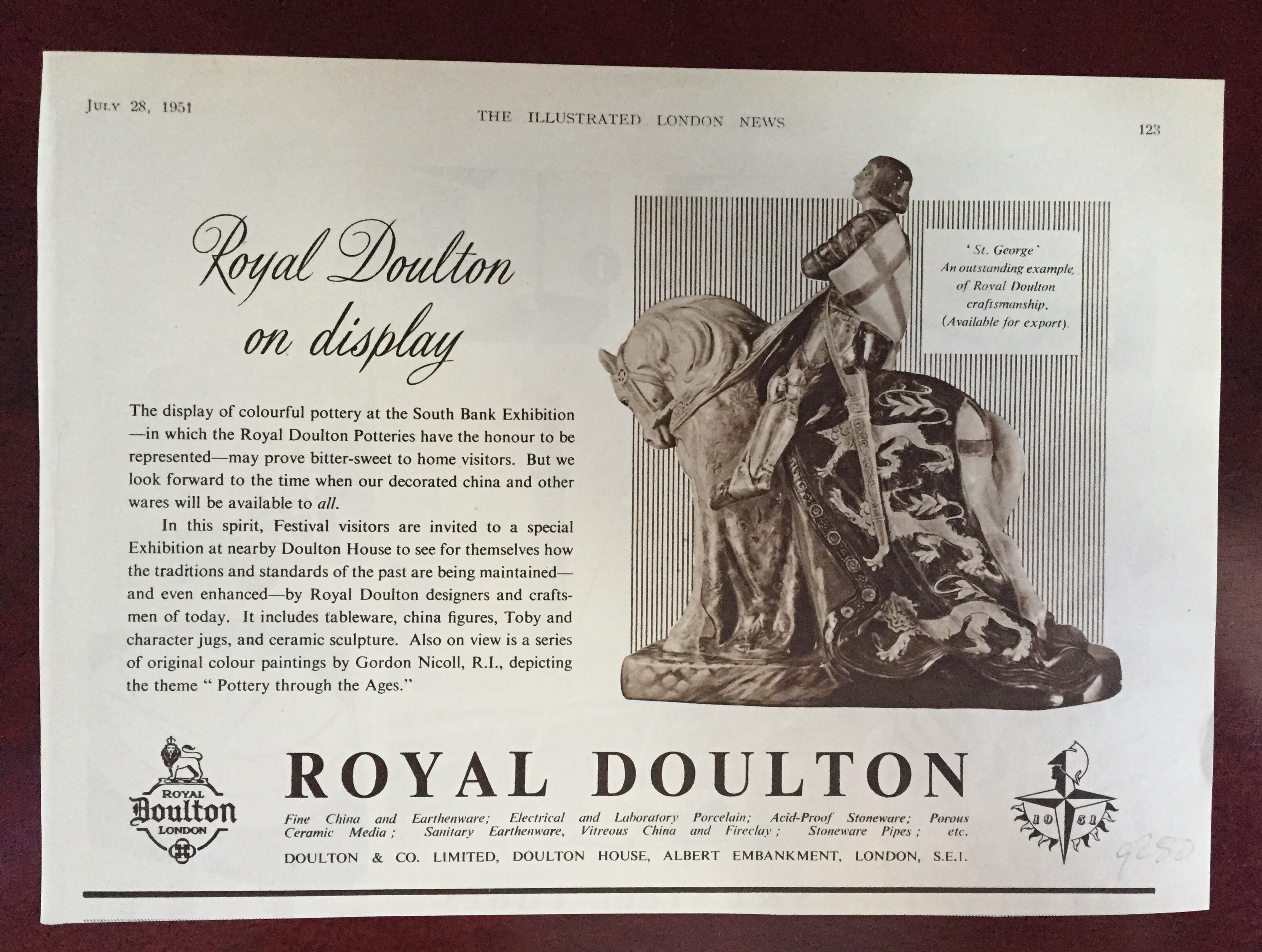
 Doulton advert for their Festival of Britain stand 1951.

 Doulton’s first figure model of St George (above) introduced as HN 385 was by Stanley Thorogood and was based on an earlier study by the artist from 1915.

 
 St George by Peggy Davies 1950-85.
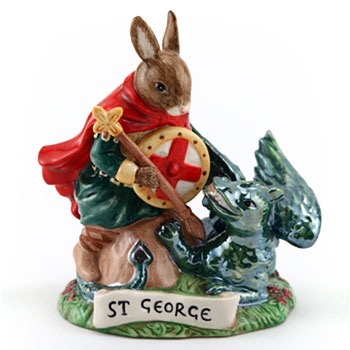
Doulton have produced the figures above as well as featured him in other popular lines produced including their Bunnykins range. 

 
Bunnykins St George.


Royal Doulton’s Beggar’s Opera series.

doultonchristopher1's avatardoultoncollectorsclub

20140725-160540-57940025.jpg
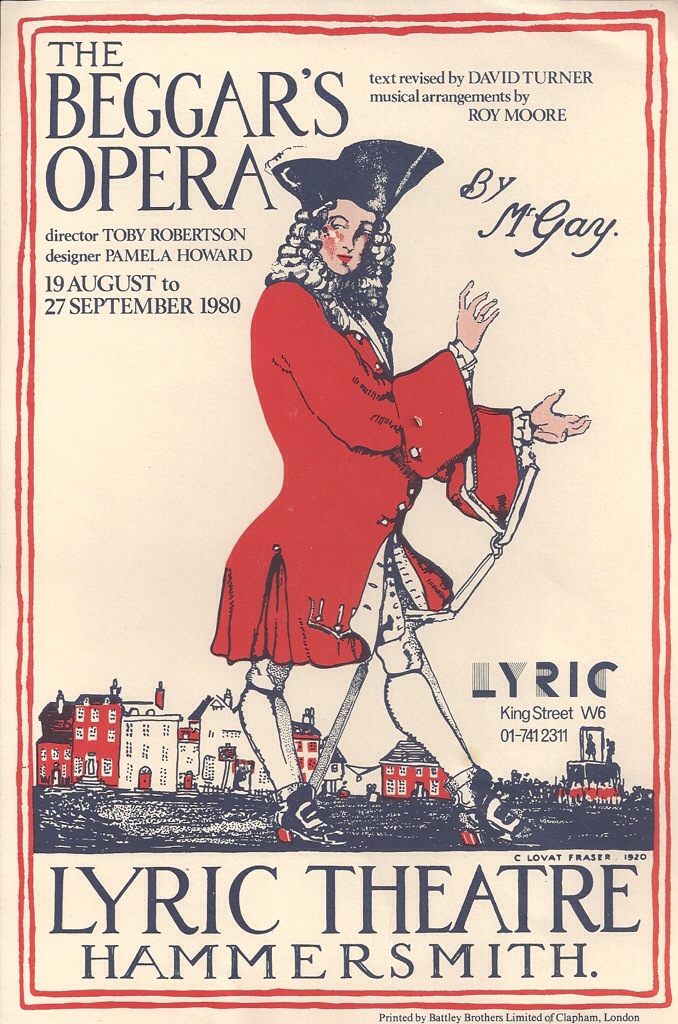
Original poster for the opera.

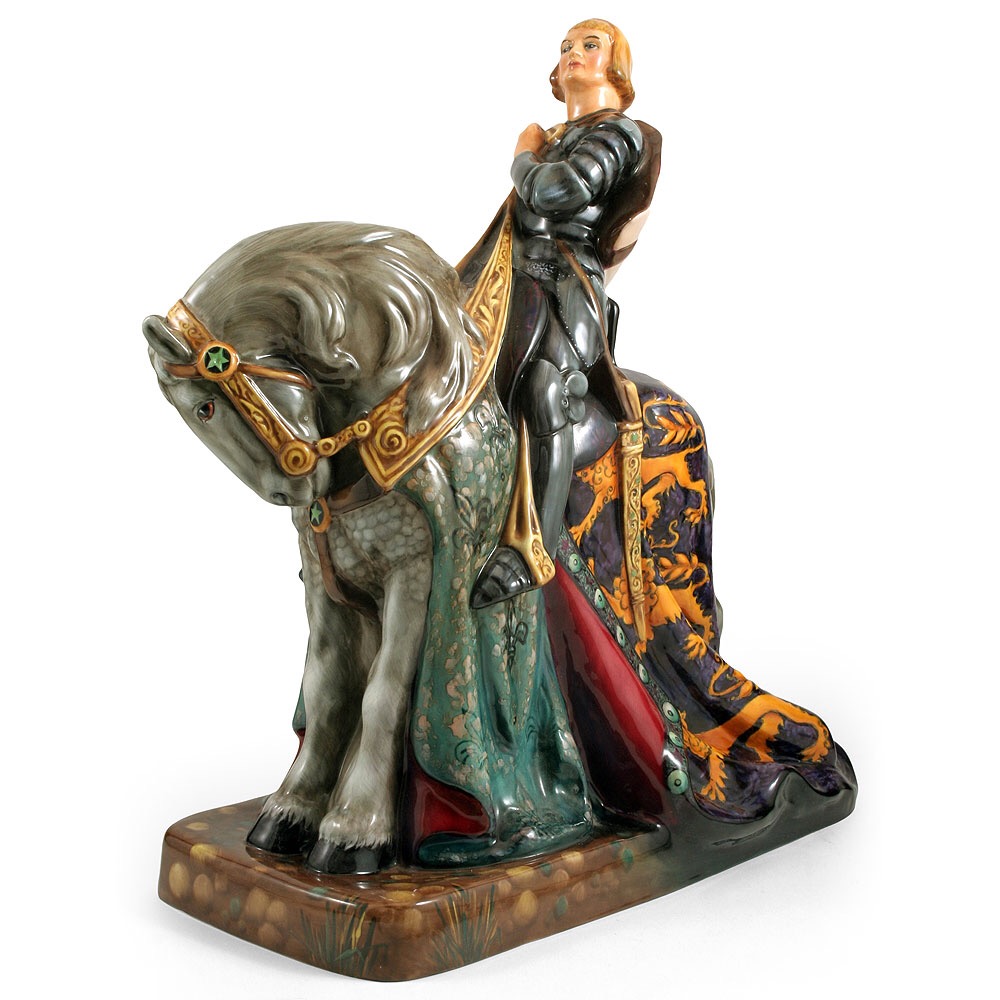
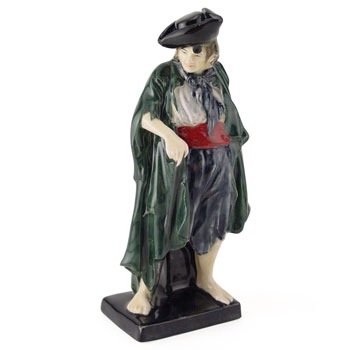
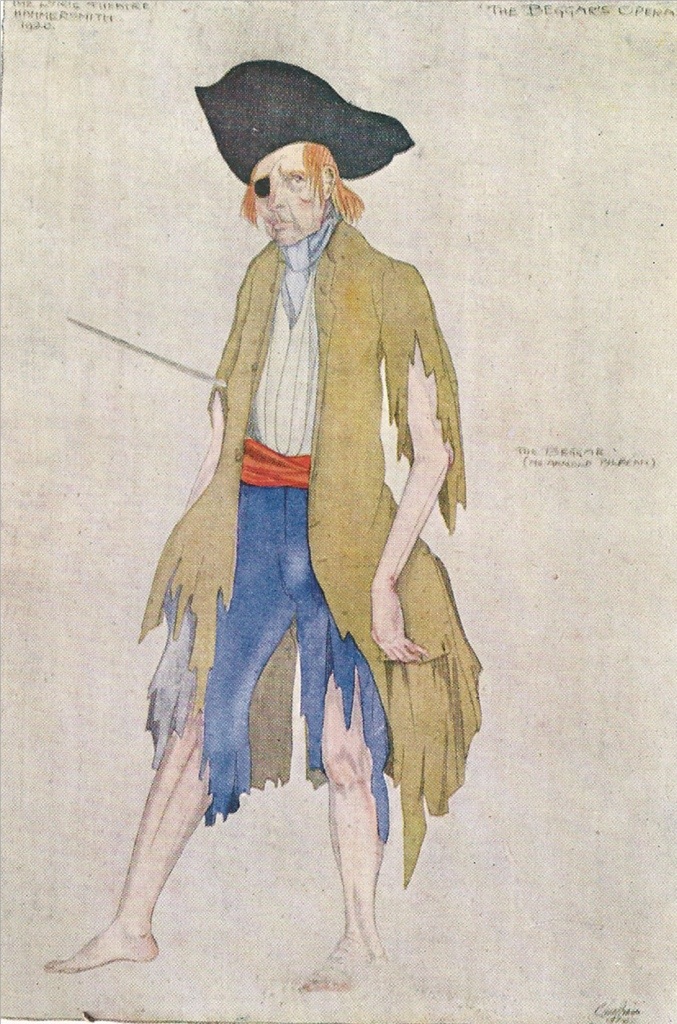
Leslie Harradine as well as establishing a new standard in figure modelling in the early 1920’s, was also responsible for the first set of figures, The Beggar’s Opera Series, inspired by the theatre. Harradine’s figures all closely resemble the costume designs Claude Lovatt Fraser the designer for the revival of this piece at Hammersmith in 1920, as you can see from these pictures in the article.

20140725-160655-58015097.jpg

20140725-160655-58015339.jpg
Harradine’s The Beggar and the original sketch for the stage costume.

Once made up Lovat’s costumes were thrown to the studio floor and walked on, had paint thrown on them, and where necessary as with the Beggar’s costume, were then slashed and dirtied. He reasoned that the characters from the play were from 18th Century London low life and spent much of their time in jail.

Here is the original Captain Macheath figure compared with the original theatre poster…

View original post 137 more words
Collecting Royal Doulton’s seasoned characters! 

Granny’s Heritage HN 1873.
Everyone looks forward to that time in our lives when things slow down a little and we imagine that we will have time to enjoy the finer things in life! This perhaps explains collectors’ fascination with what we might term the ‘older generation’.

The very rare Granny HN 1804.

From the 1920’s Royal Doulton have been producing older characters as part of their famous HN range of figures in recognition of this basic sentiment.


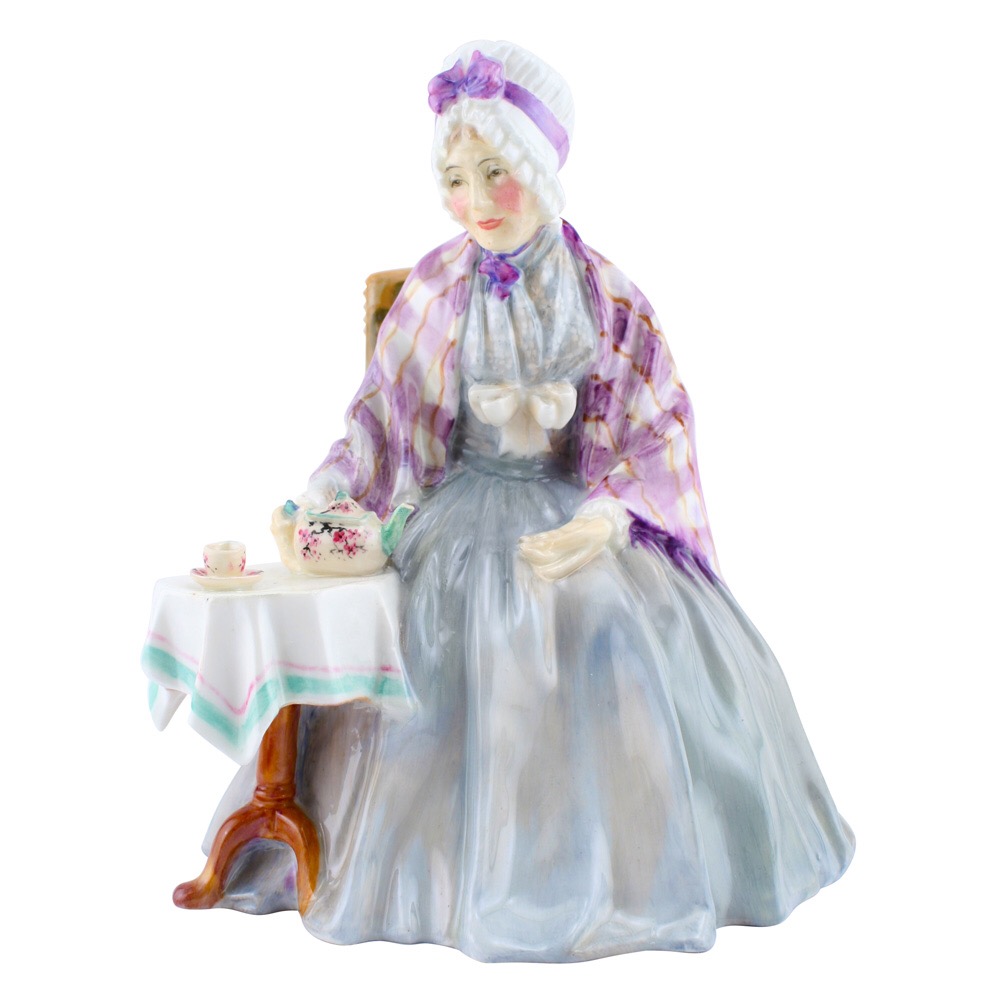
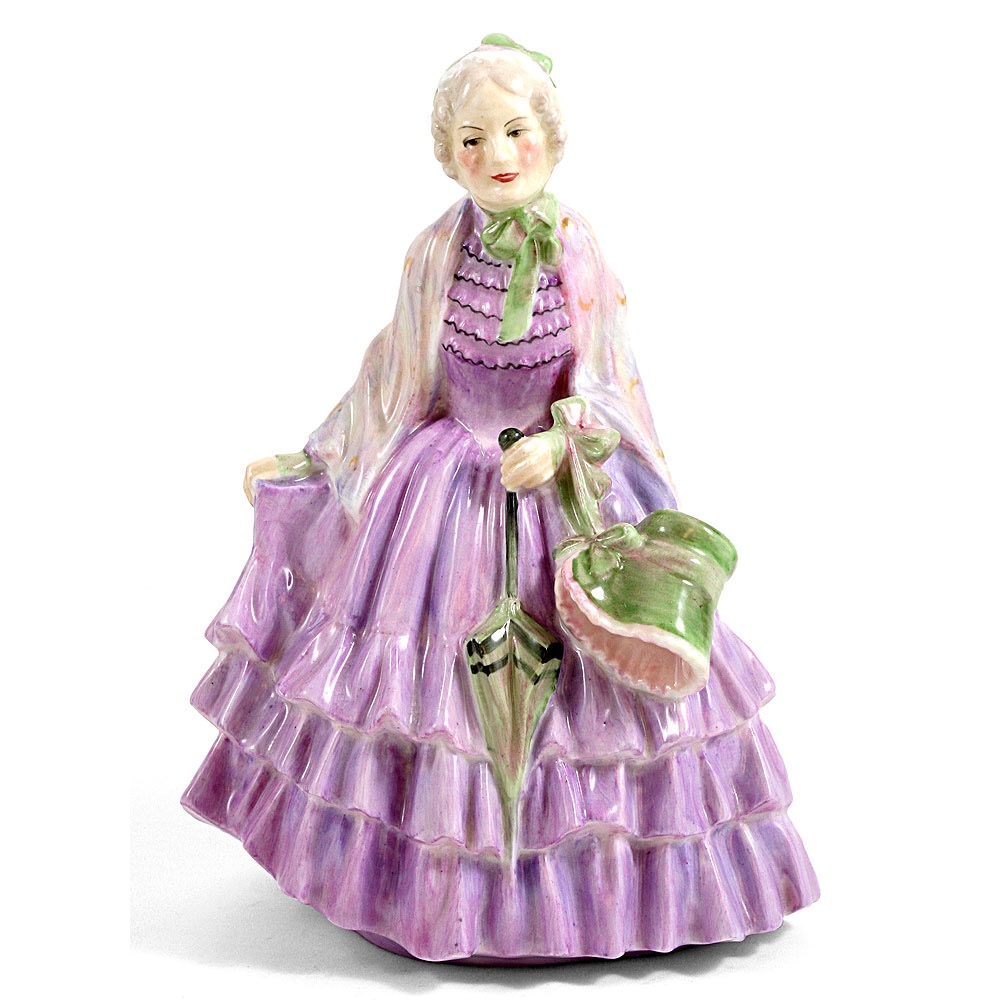
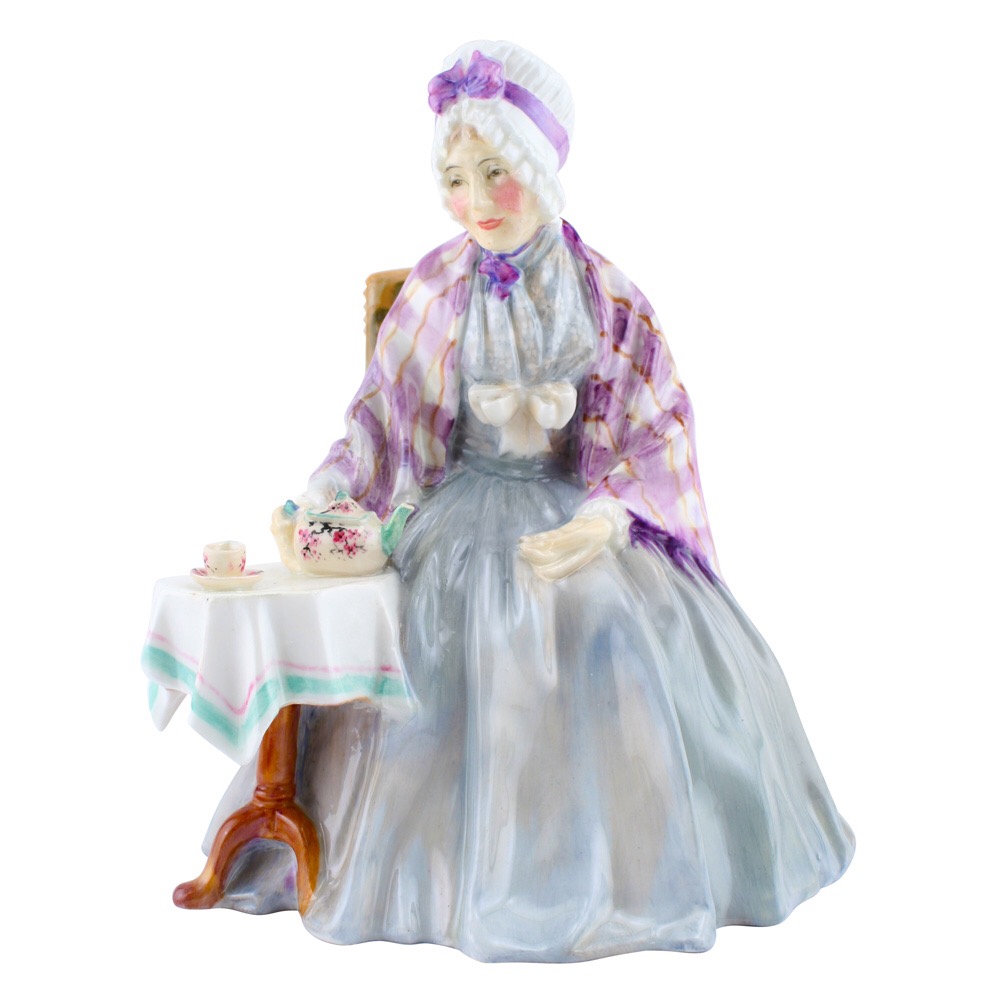
A Gentlewoman HN 1632.

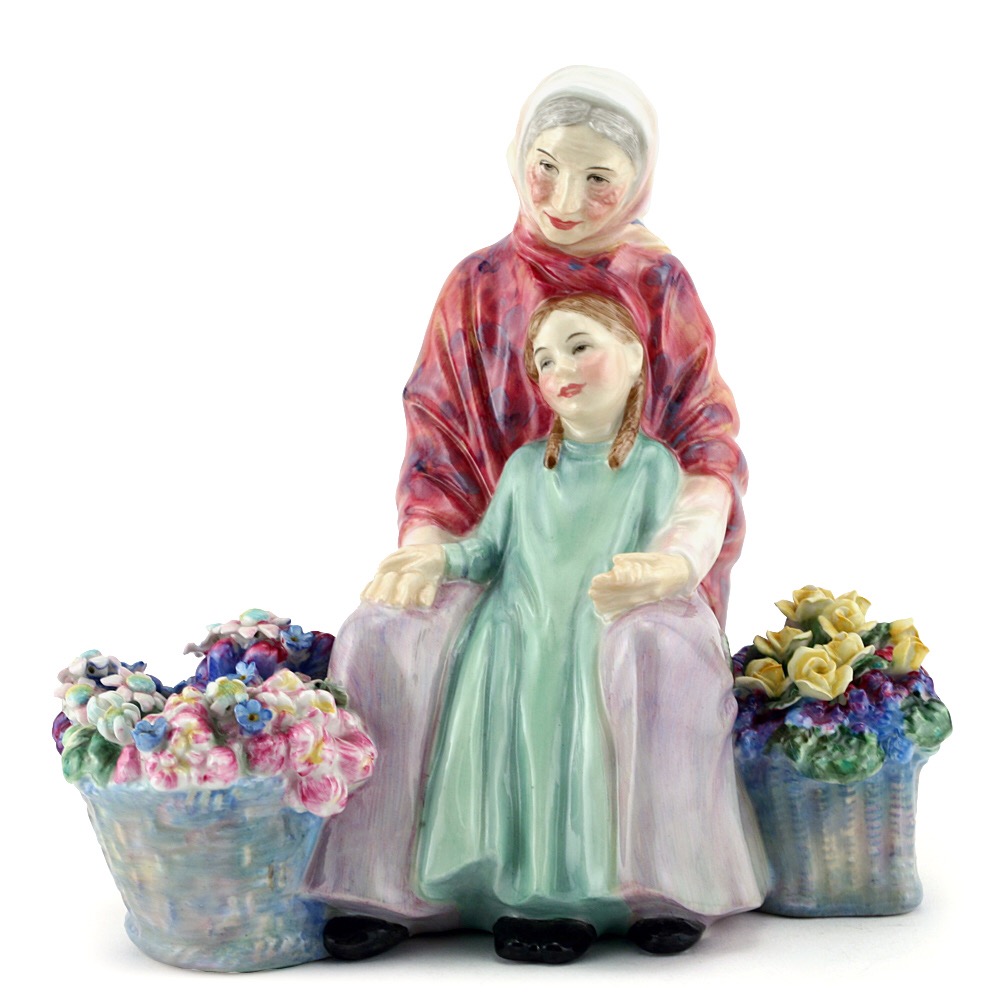
Whether it be the famous impoverished Old Balloon Seller or 1930’s figures such as Darby and Joan, A Gentlewoman or Granny all of whom are portrayed in aged contentment knitting, enjoying some snuff, serving tea or out and about! All the things we imagine that we may have done generations before now.


Gaffer HN 2053.

Respect and affection appear to be the watchwords with these characters with names such as Grandma and Gaffer being used over time. The term Gaffer of course referring to a boss or older man.

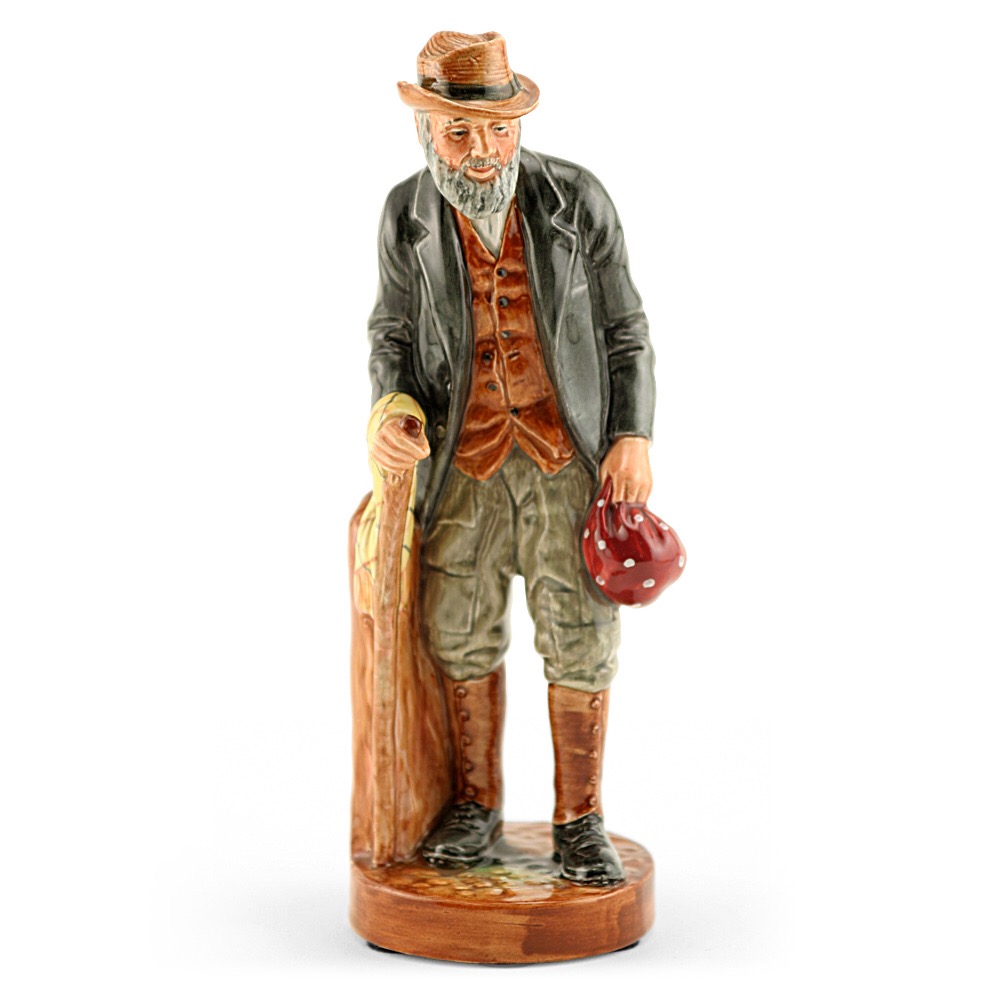
Past Glory HN 2484.

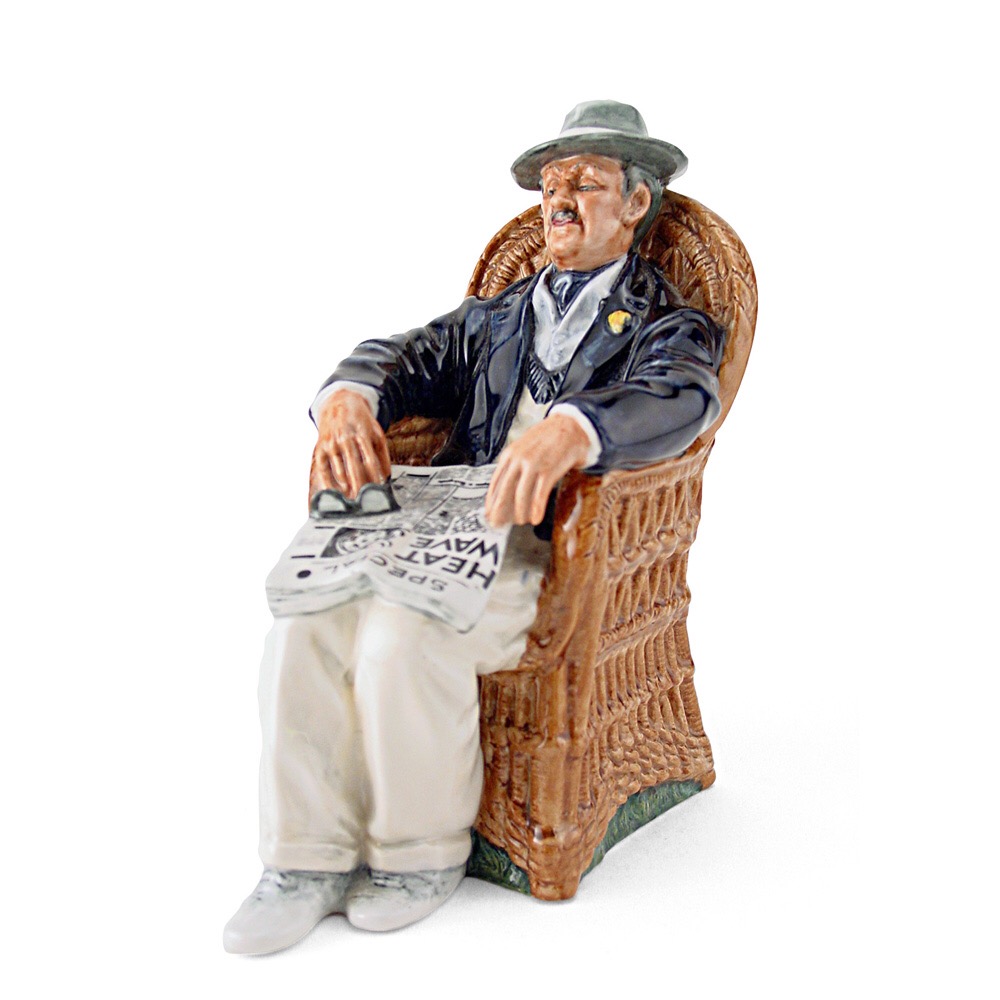
This reverence for the older generation also explains figures such as Past Glory HN 2484, Takings Things Easy HN 2677 and Stitch in Time HN 2352.


Taking Things Easy HN 2677.

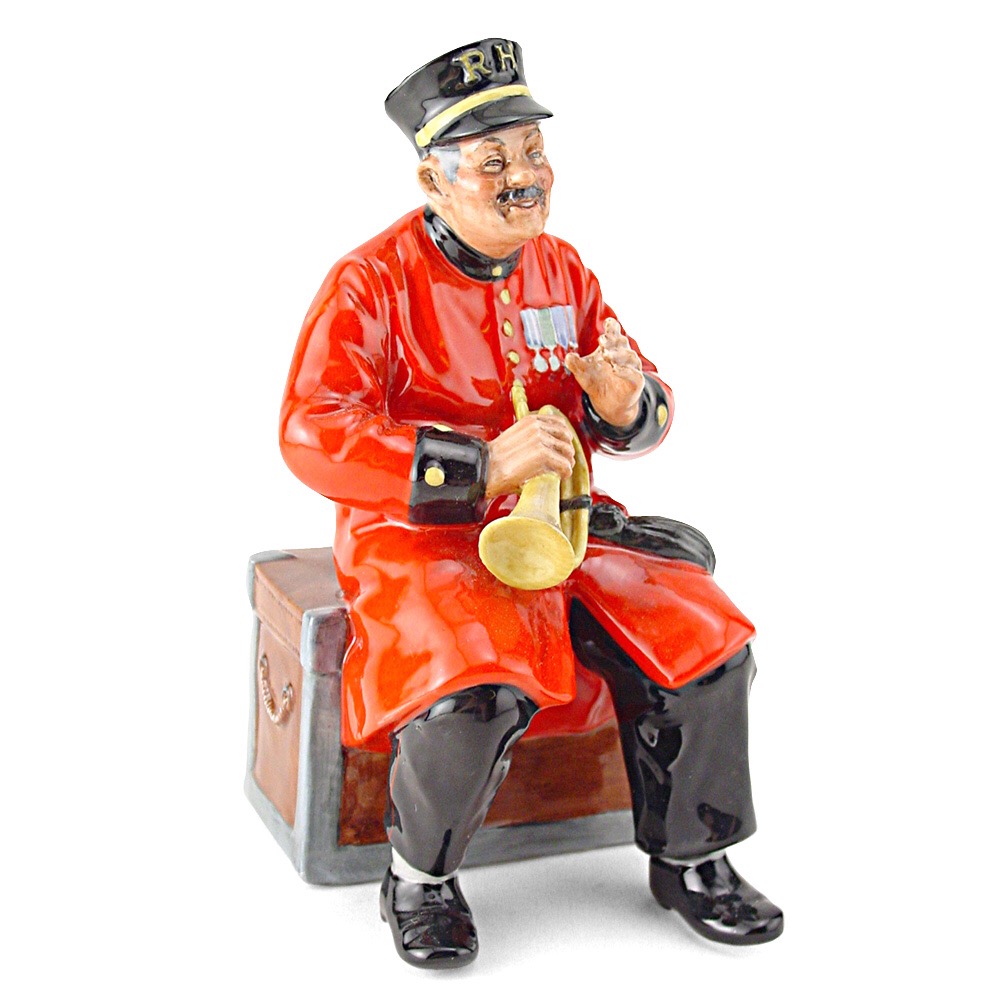
Displayed as part of a group of elder characters or among more typical figures, each tells a tale of its own and it is perhaps for this reason that even today we fill our homes with these gentle characters!


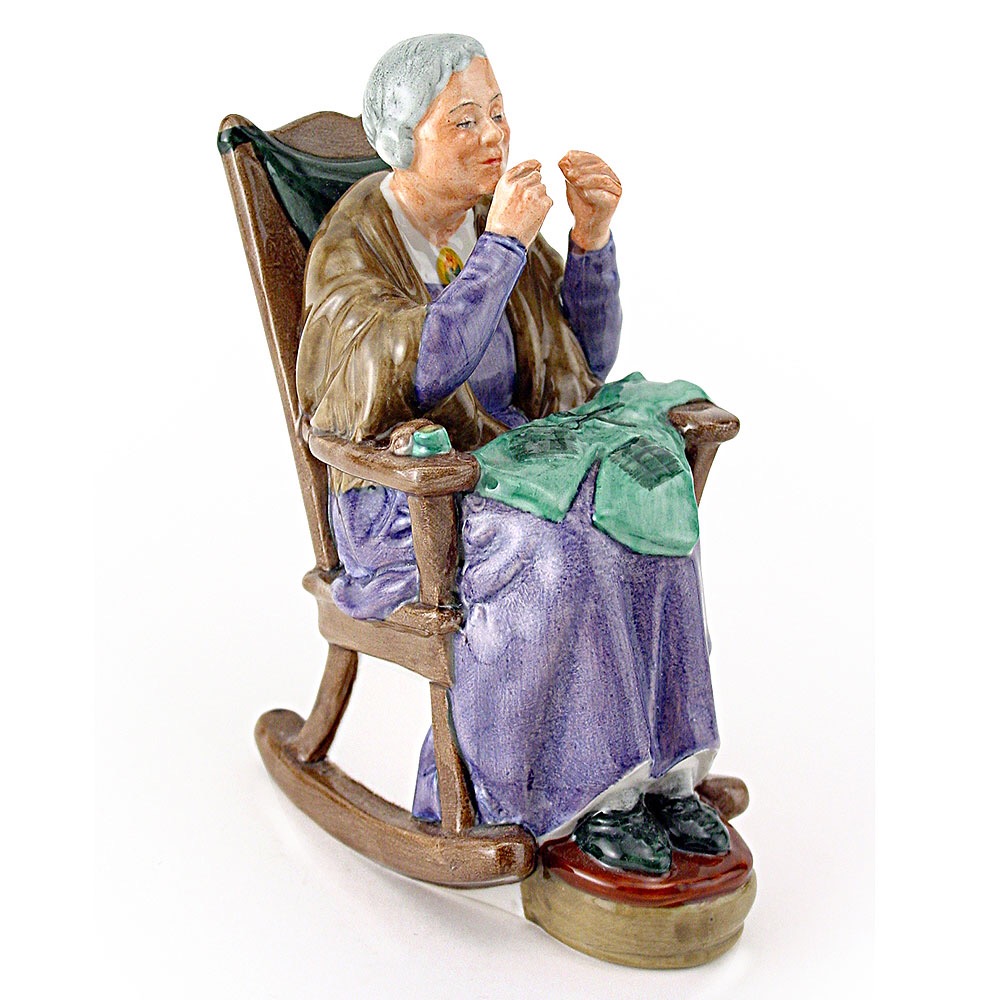
A Stitch in Time HN 2352.

Thanks to Seaway China for the use of their photos.

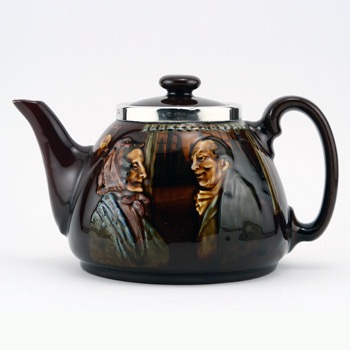
  And finally a rare Kingsware teapot with Darby and Joan to illustrate that it isn’t just figures that feature older characters!

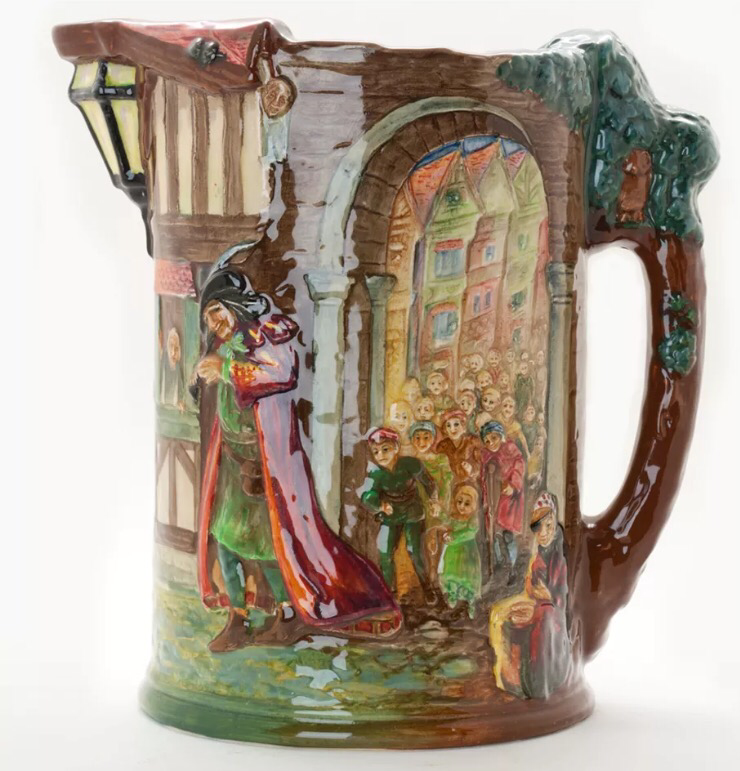
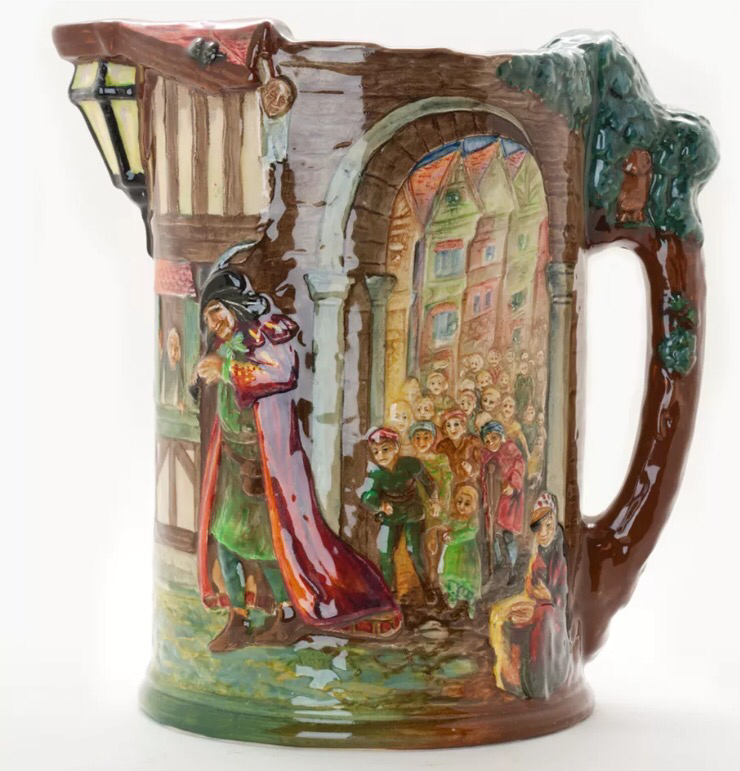
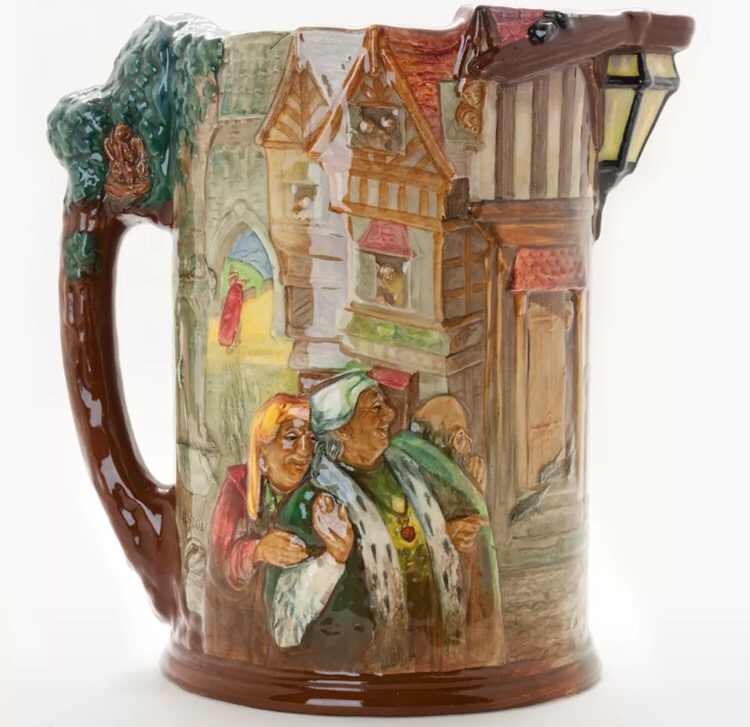
Royal Doulton Spotlight: the Limited Edition “Pied Piper Jug” (1934).

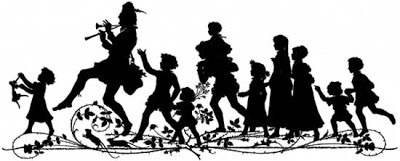
We are all no doubt familiar with the story of the Pied Piper of Hamelin from our own childhoods, the hero who rid the town of its rat problem but who then turned on the town after its residents refused to pay him the agreed sum for his services. 

  
Doulton’s range of limited edition loving cups and jugs are avidly collected around the world and their enduring popularity can be attributed to the fantastic detail and riot of colour present on each of the 30 plus examples first produced in 1930. 

  
Originally the brain child of Charles Noke, he was often assisted by another of Doulton’s most skilled craftsmen, Harry Fenton and both of their signatures can be found on their work.

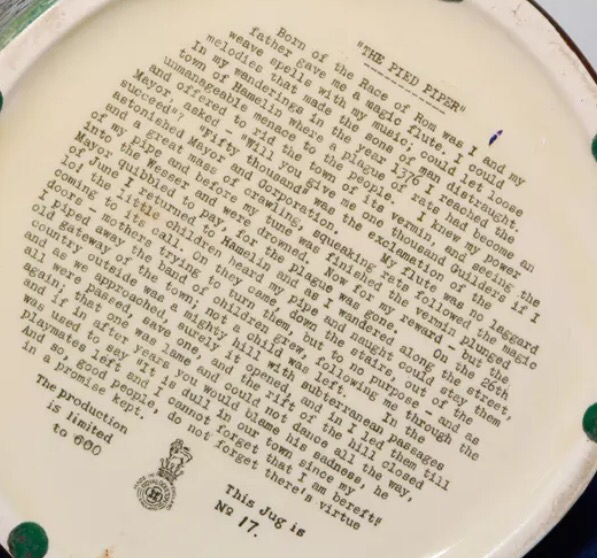
Doulton’s Pied Piper Jug was produced in a limited edition of 600 pieces in 1934 and designed by both Noke and Fenton. Measuring 10″ it depicts the two aspects of the famous take on each side: the removal of the rats watched over by the mayor and then the children leaving after the town’s refusal to pay the Piper his fee. As was typical of these limited edition pieces the base is also of great interest; here there is a version of the tale printed for collectors.

  
Of course the story is actually based on legend although it’s precise origins are not clear. Certainly the town in Germany, Hamelin, exists and plays upon this famous legend. A stained glass window once in the town and dating to 1330 depicted the tale and it is well documented in the Luneburg manuscript (c.1440-50) where the story is recounted in detail.

  
Whether you collect just these limited edition jugs or Royal Doulton generally, this piece will sit perfectly with a collection of similar jugs and there are also a plethora of other Pied Piper related Doulton items from Character Jugs to figures to collect, to make an eye-catching display! 


Doulton’s Natural Foliage ware

doultonchristopher1's avatardoultoncollectorsclub

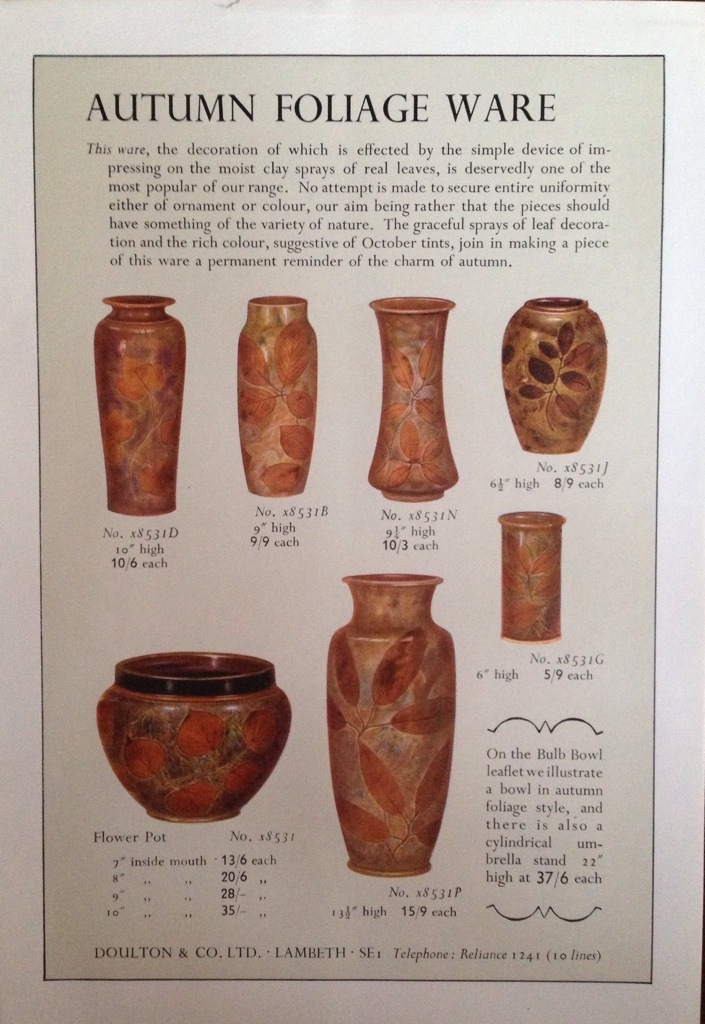
Natural Foliage or Autumn Foliage ware as it was later called, was a uniquely Doulton process whereby actual leaves were pressed into the wet clay and which were of course obliterated during the firing process, leaving the delicate outlines of the individual leaves behind.
These were then hand decorated usually in shades of blue although some with blue decoration also exist. Naturally no two examples are the same.
This Lambeth ware proved very popular and examples regularly turn up at auction and in antiques centres. It was introduced in 1883 and remained in production to some extent until the 1950’s with two gaps co-incising with the two world wars in the 20th Century.

20140626-193313-70393141.jpg

View original post

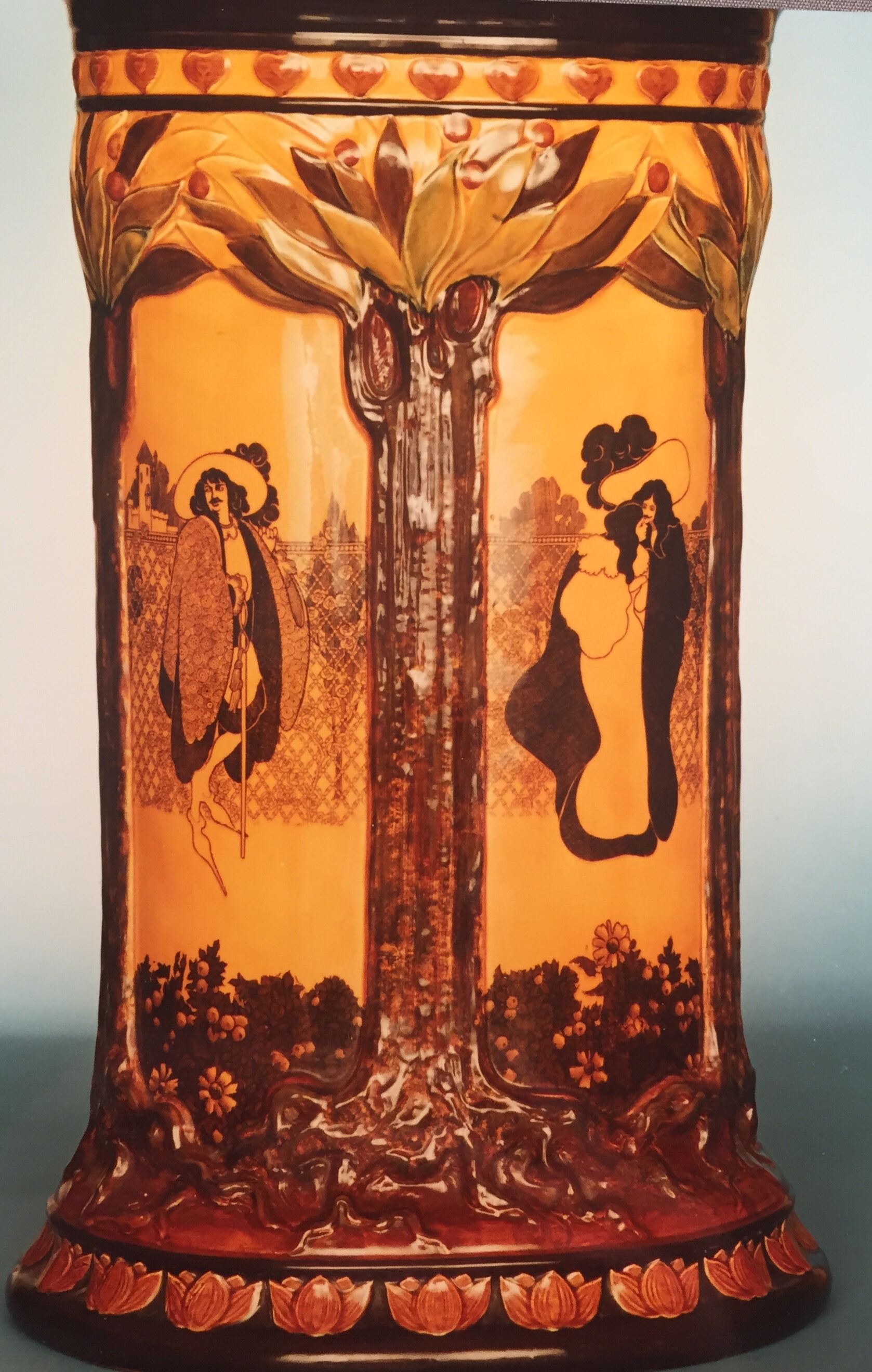
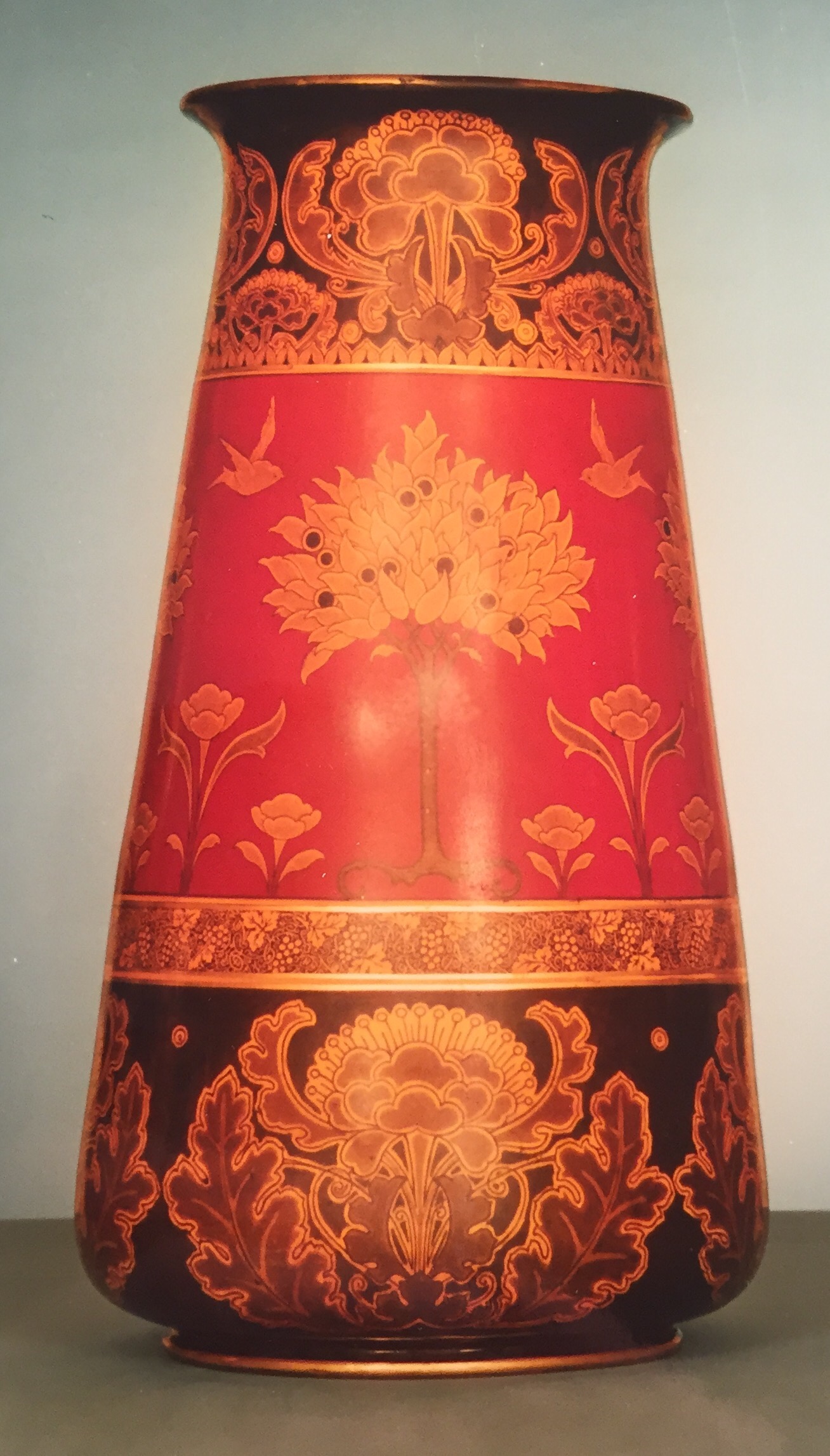
Royal Doulton’s Morissian Ware.

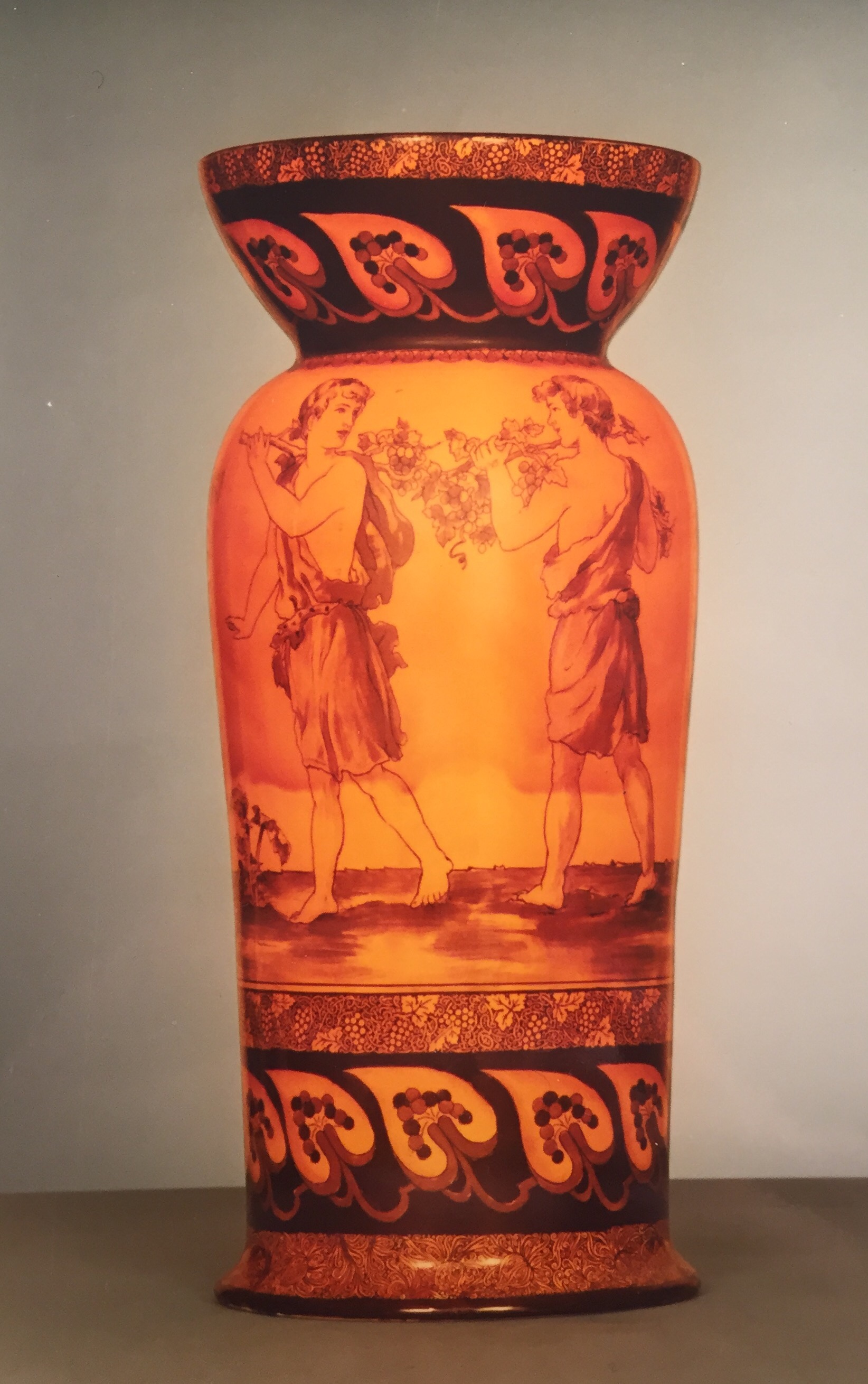
Morrisian ware 1903-1924
Named after William Morris, whose influence is immediately recognisable in the borders and of course in the backstamp often found on this ware. 

  
Close up of a Morrisian umbrella stand.

With endless variations and some which do not always carry the Morrisian backstamp, it does make this type of ware an interesting field to collect as only through experience do we recognise it. 

  
Another umbrella stand, this time showing William Morris’ influence.

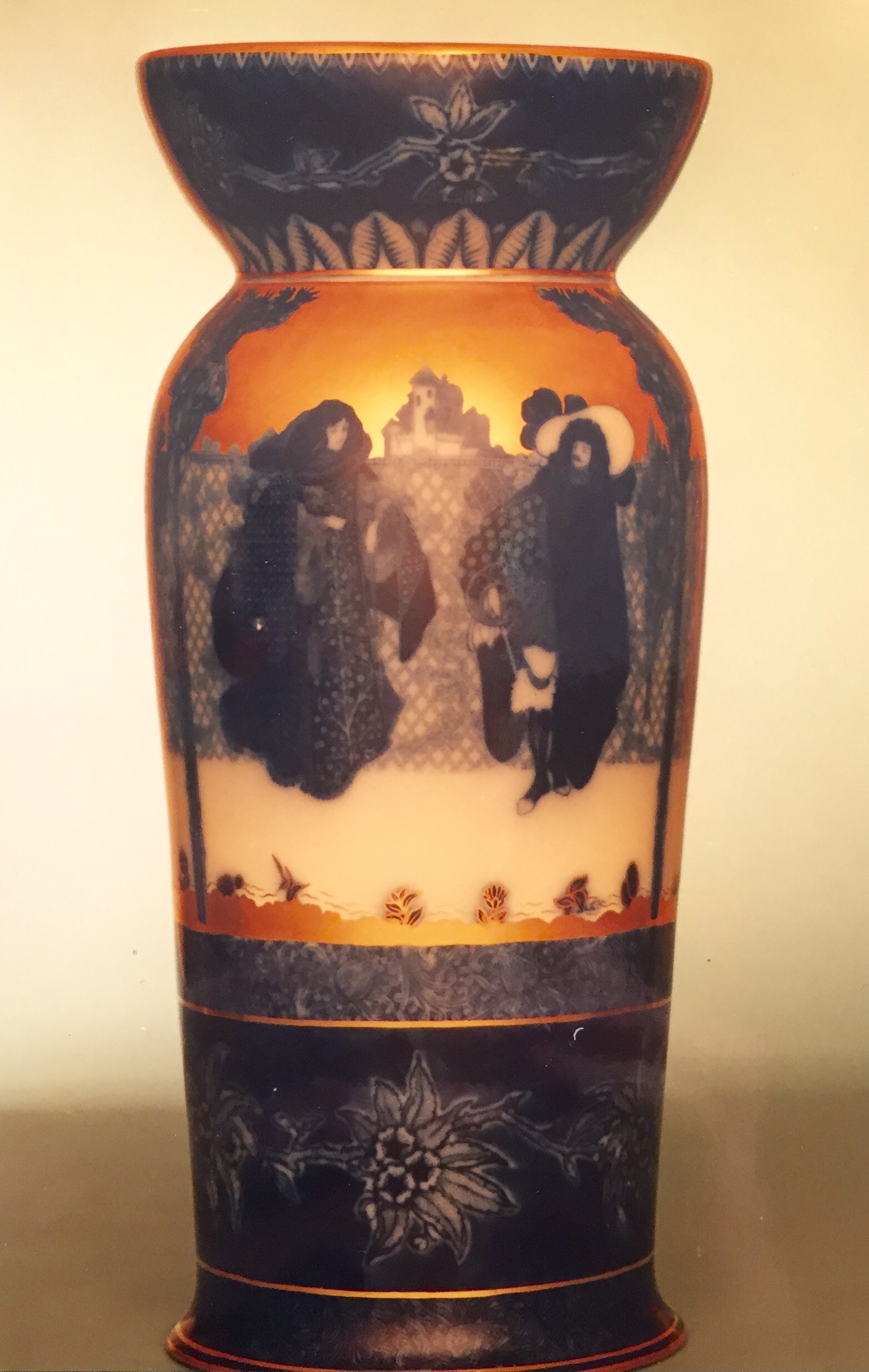
The earthenware body used is decorated in various transfer images, the most desirable of which are those of the American illustrator Will Bradley from “Beauty and the Beast”. Typically pieces of Morrisian Ware are also on the larger size.
 

 A further shape of umbrella stand.

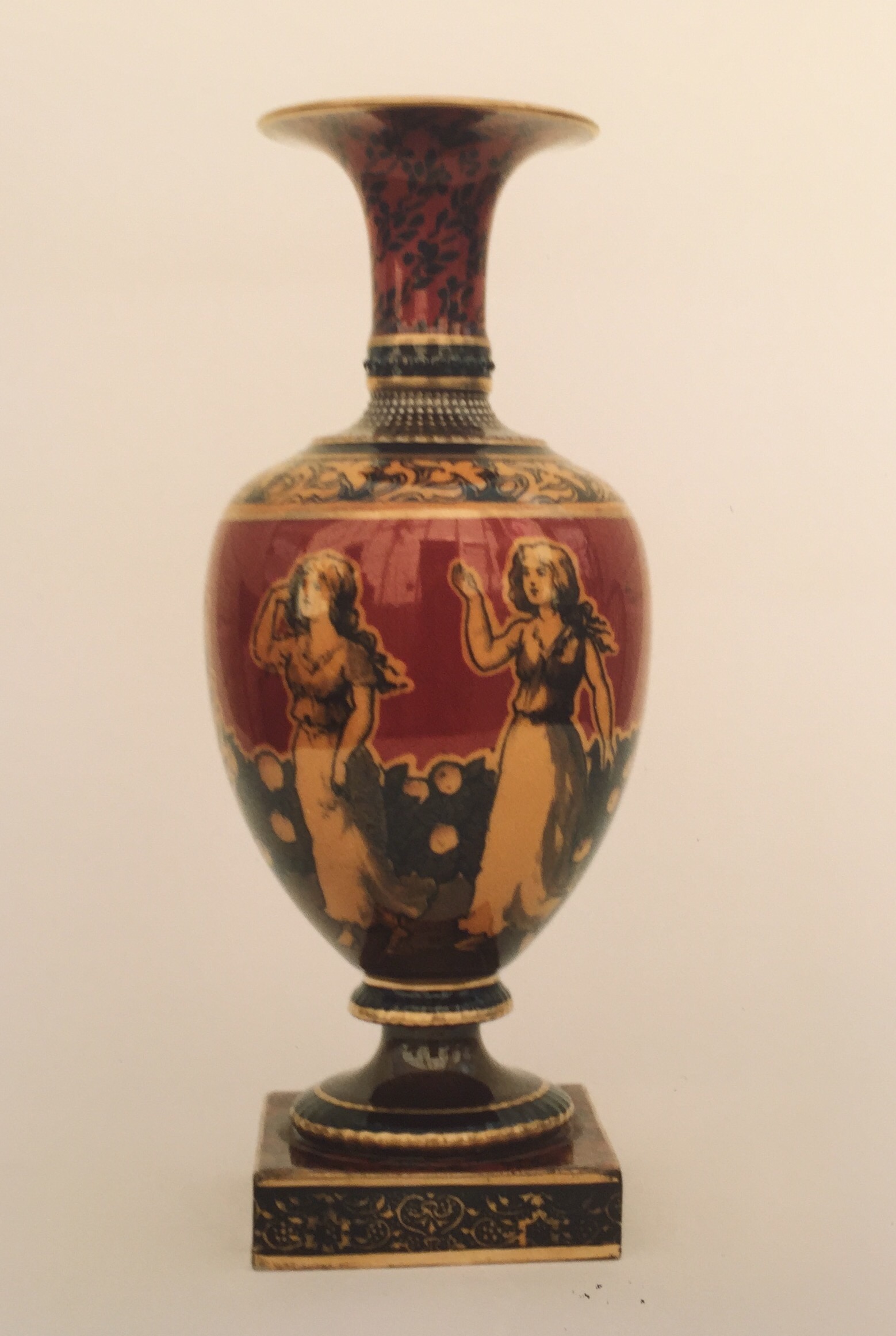
The most typical scenes are those of dancing girls, young boys with garlands, Bradley’s illustrations mentioned above and a series of golfers.


A typical pedestal vase with dancing figures. 
As was typical of Doulton, their in-house artists also did pastiches of Bradley’s designs of golfers and dancing maidens. 

  
A rare blue and white umbrella stand with solid gold decoration.

The three most typical colour schemes are blue and white, black and red and black on yellow. A rare blue with solid gold also turns up occasionally.

Mirror, mirror …who is the fairest Doulton lady of them all? 

Whilst bouquets of splendid flowers, fans and ermine muffs may be what Doulton ladies are typically modelled holding, mirrors too can be found being held aloft by a small selection of figures both old and new.

 Lady Pamela HN 2718.


Camille HN 1586(L) and 1648(R).

Perhaps contrary to traditional views of what is virtuous and what is not, a figure admiring her own beauty was possibly not considered a positive trait and maybe the reason why there are so few ladies holding mirrors?


A prototype from 1940. Another variation of this lady has appeared holding a mask instead of the mirror.

Alternatively, perhaps it is the precariousness of having an arm stretched out holding a mirror that explains why so few ladies have appeared holding mirrors. Certainly when one looks at Harradine’s the Mirror you can see how fragile that little hand help mirror is!


The Mirror HN1852.

Whatever the reason it is something of a shame as the selection shown illustrate how wonderfully stylish these ladies are.