Category Archives: Art deco

A quick guide to dating Doulton’s Dickens figures! 

Leslie Harradine’s collection of Dickens miniature figures still bring collectors much joy although they have been out of production since the early 1980’s. 

Collectors tend to focus their collecting on either the early bone china models with their thinner bases or else those made in earthenware after 1949 with their deeper bases.

However there are a few tips to dating the early models that I thought I would share. 
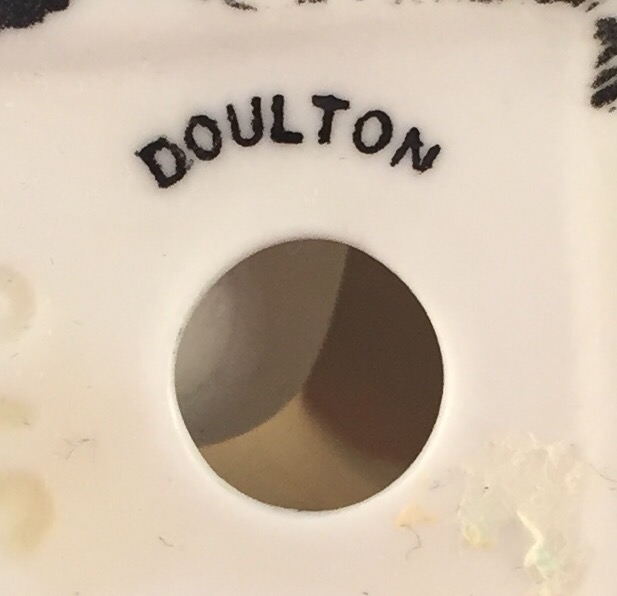
  
This is the earliest stamp with simply the word Doulton printed in an arc.
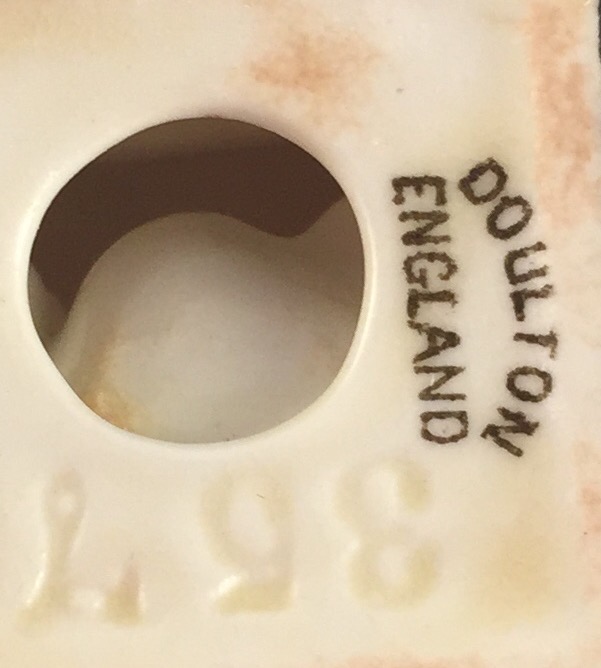
  

This is the second mark from the late 1920’s. A second version of this can be dated to after 1930 when the names of the figures were also included.
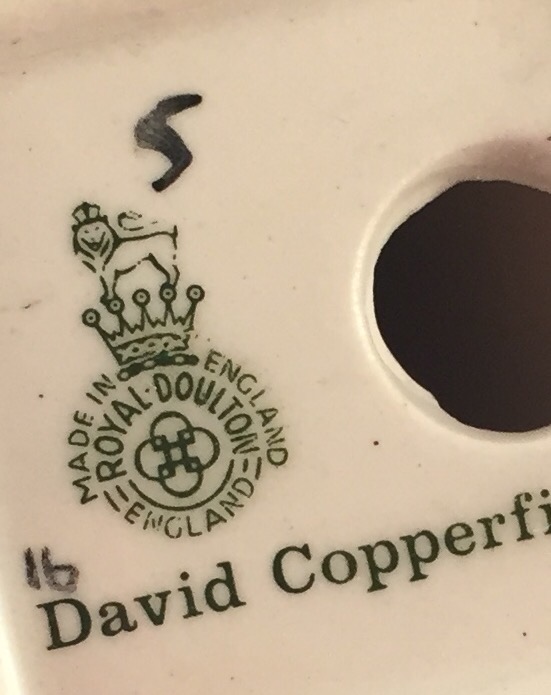
  

Finally a post 1949 example with standard Doulton mark. 

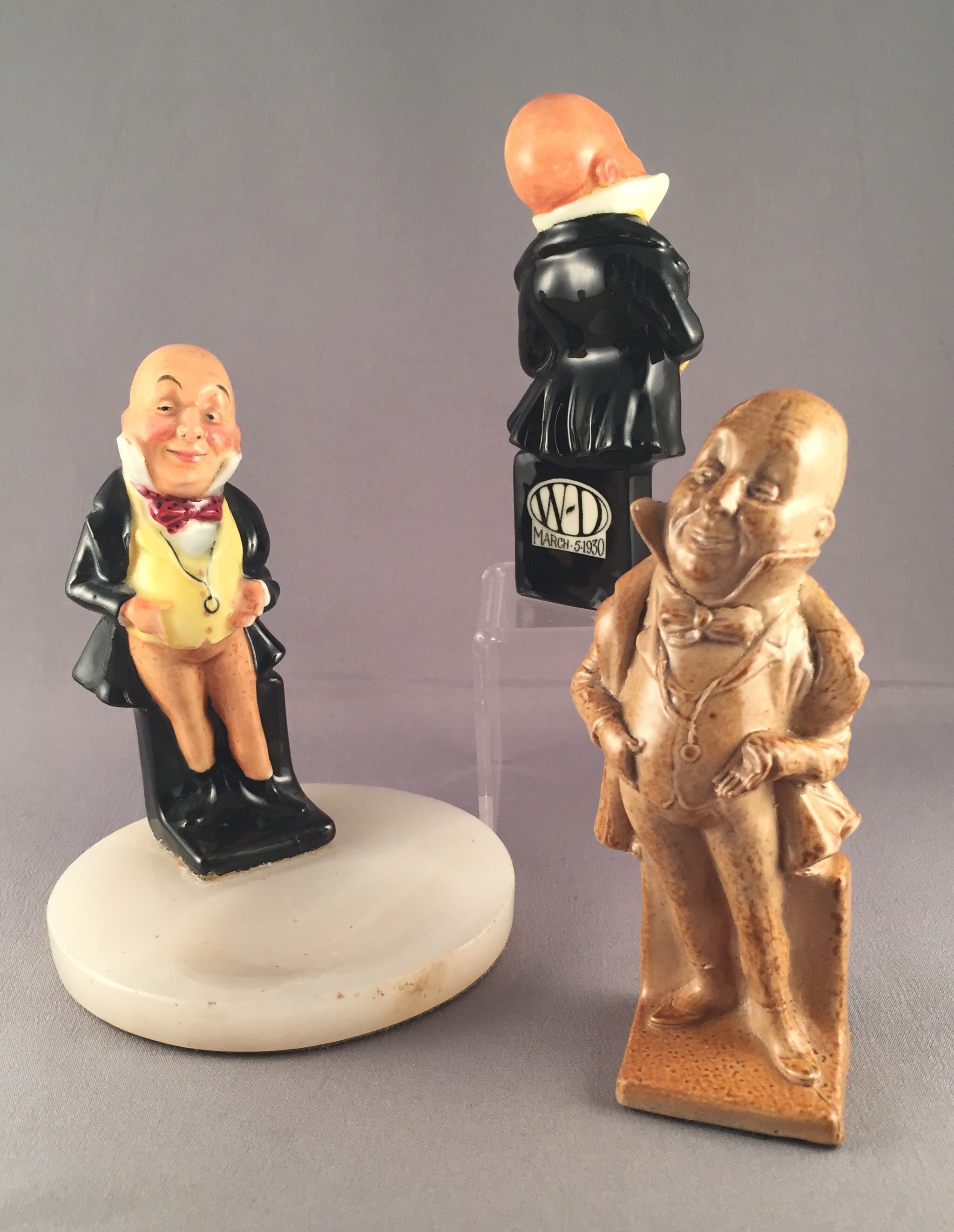
To finish here are three examples of Micawber: an early 1920’s example on a marble tray, the unusual Woodall Duckham commemorative from 1930 and Harradine’s original model for the study. You can see the thickness of the base increasing steadily even between the early 1920 example and the 1930 example. 
 

Collecting Doulton’s early fledglings! 

  
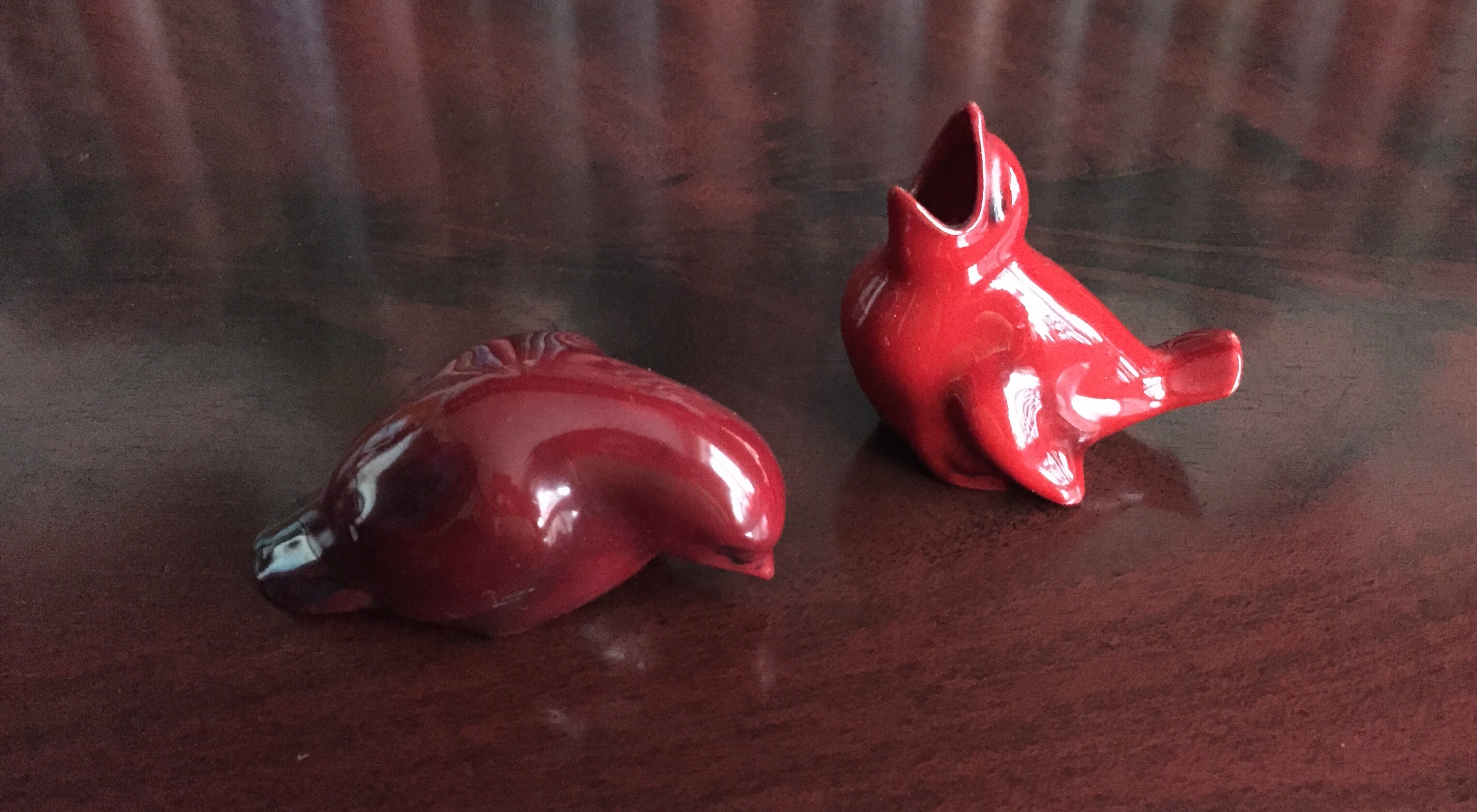
Two flambe fledglings, the darker one on the left dating to c.1913.

Introduced at the start of the HN range apparently just in flambe originally, these sweet baby birds are a super set to collect as variation after variation can be found, creating a colourful collection. 

  
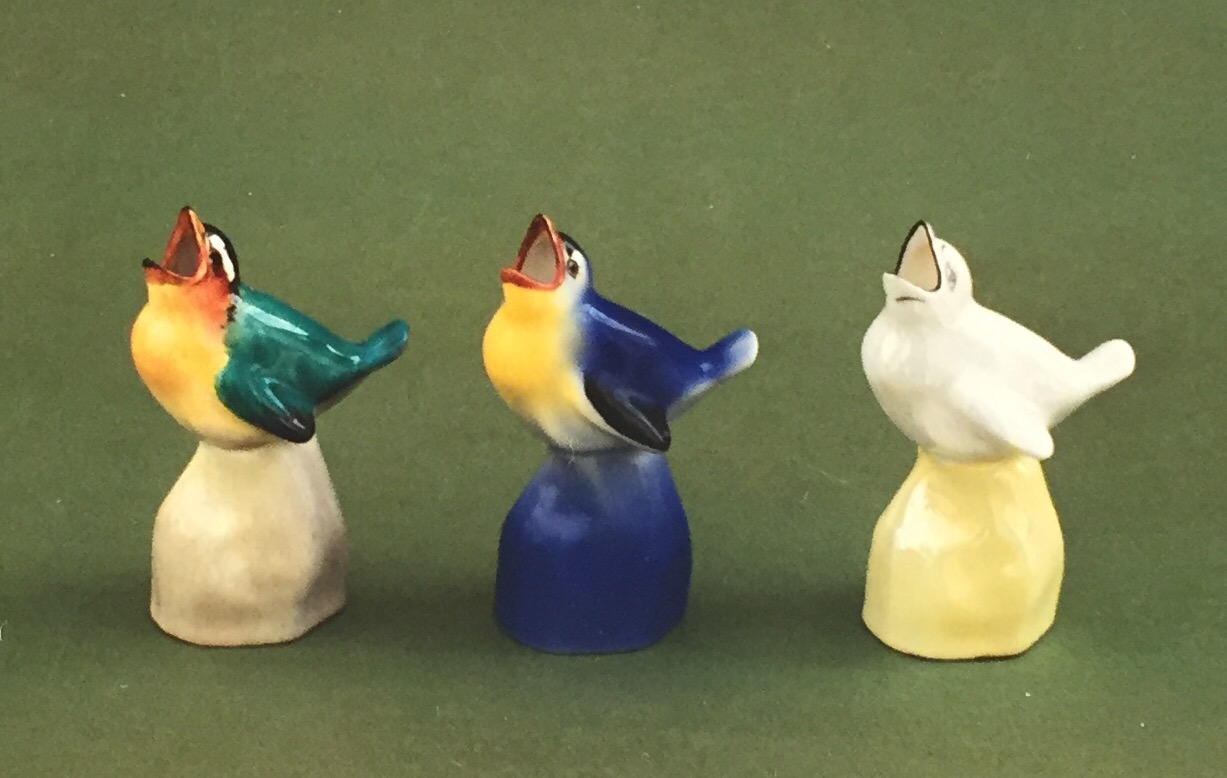
Three characteristically colourful fledglings including the very rare lustre version on the right. 

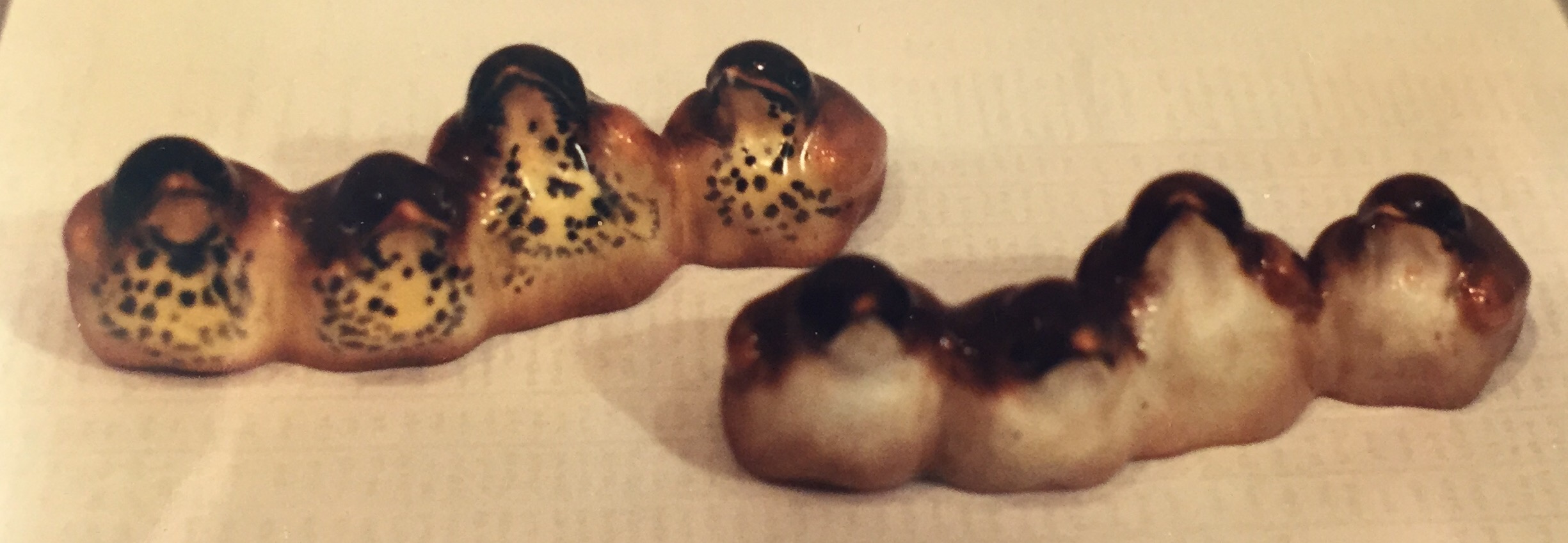
Of course the term fledgling refers to baby birds and here is a group known as Thrushes (on left) and Fledglings on the right.

  
Whilst there are only a handful of models to collect the various colour schemes used mean that you may never finish collecting them all and the hunt could go on and on beyond the recorded versions! 

  
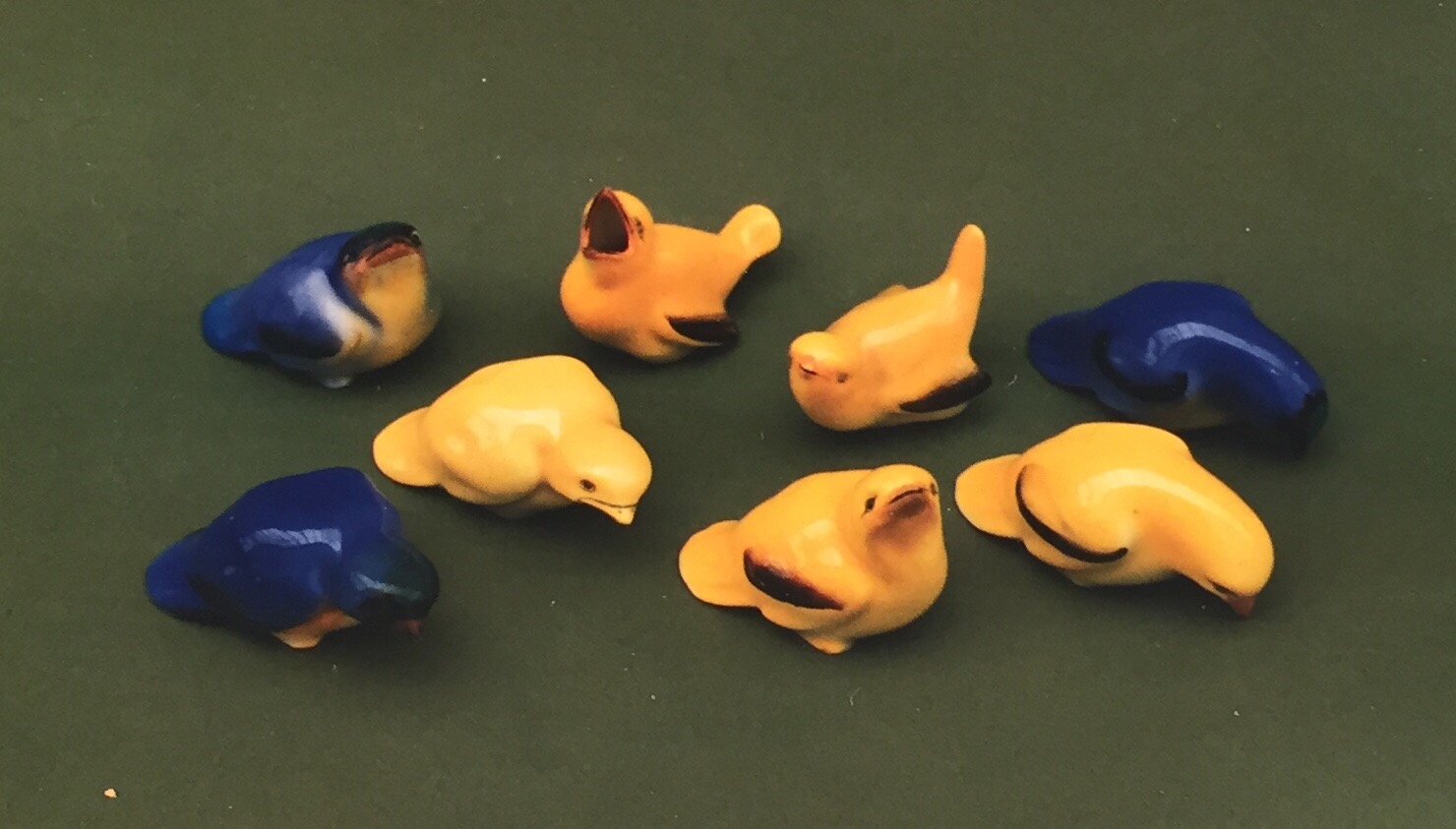
A group illustrating the ‘usual’ colourings : plain yellow, yellow with black highlights and blue and yellow. 

Collecting Doulton’s early ‘Character Birds’.

  
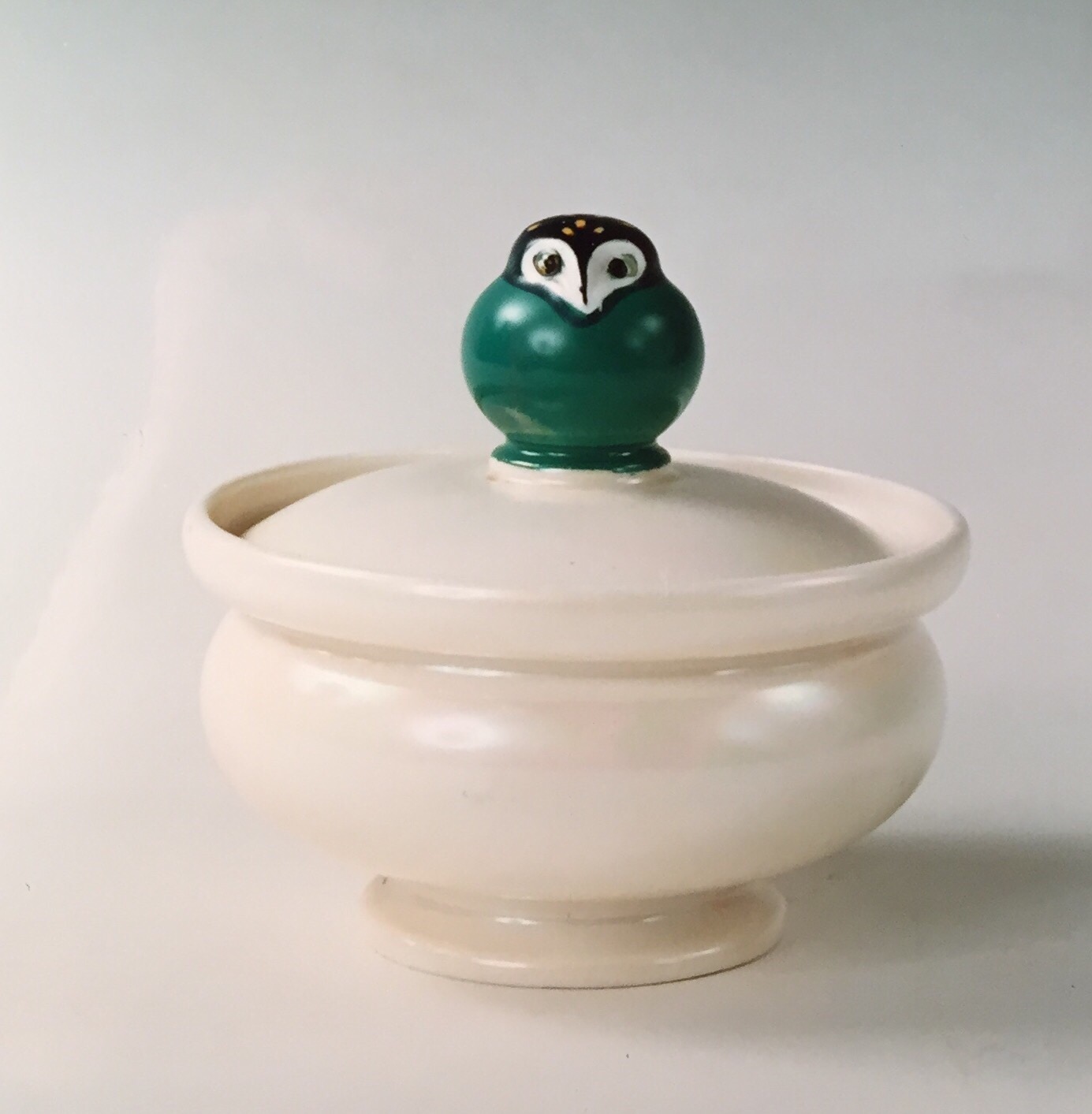
HN 287 mounted on a powder bowl.

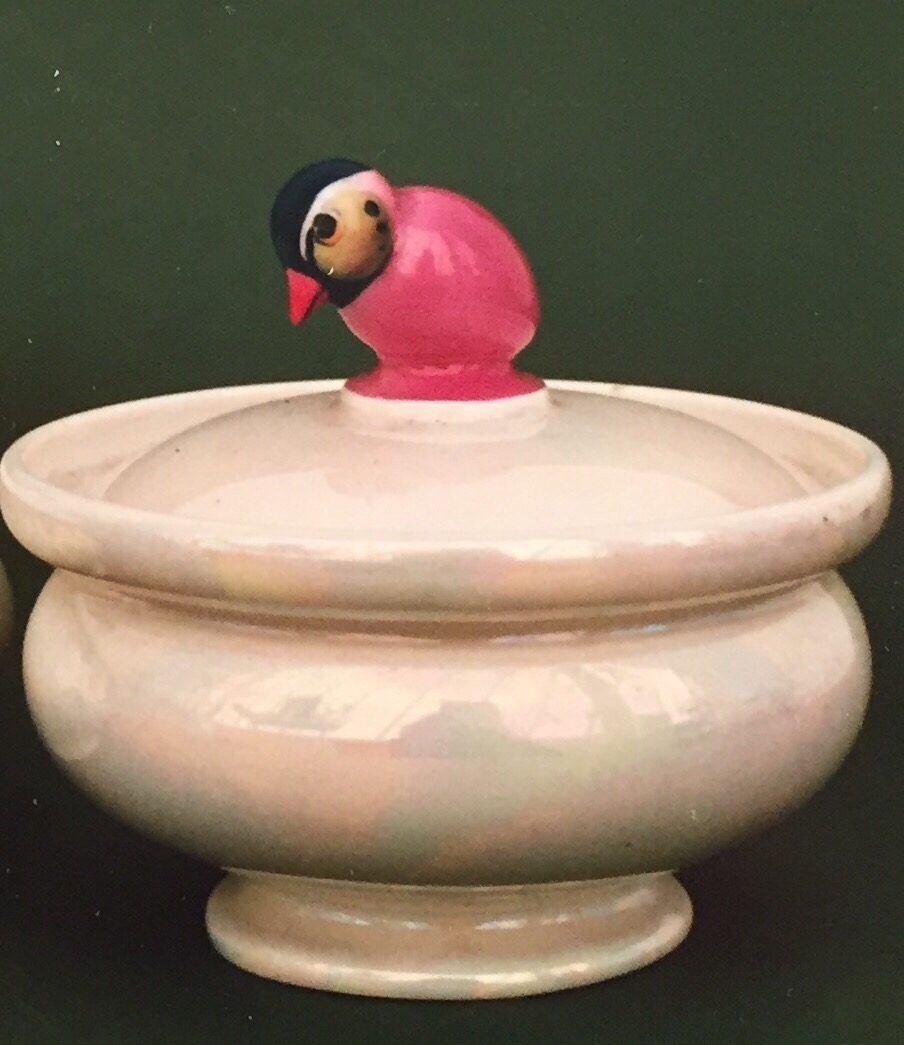
Having recently looked at powder bowls and boxes, you may have noticed some of Doulton’s early character birds used as finials.

  
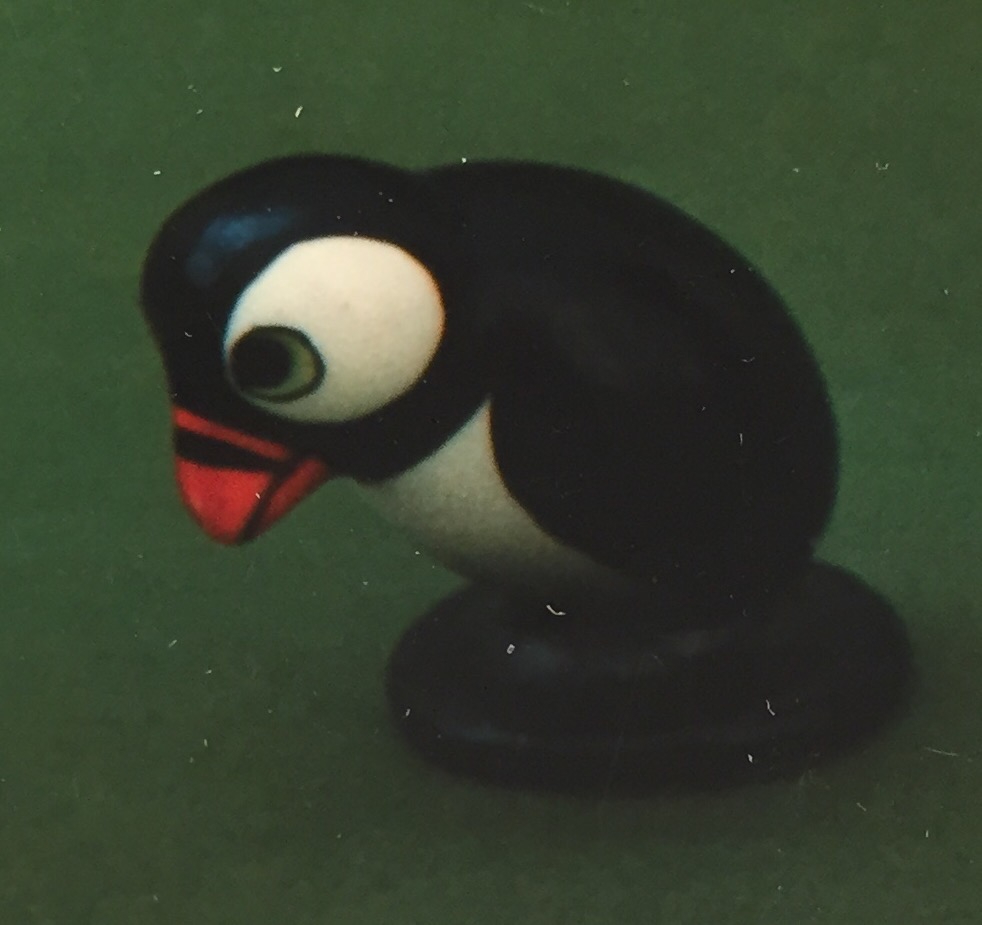
A colour variation of model 338.

Introduced in 1922 and withdrawn by 1946 (although given their rarity today a much earlier withdrawal date is certain), these rare birds do occasionally appear and when try do they are typically found mounted on anything from desk accessories to menu holders and place name holders for the dinner table. 

  
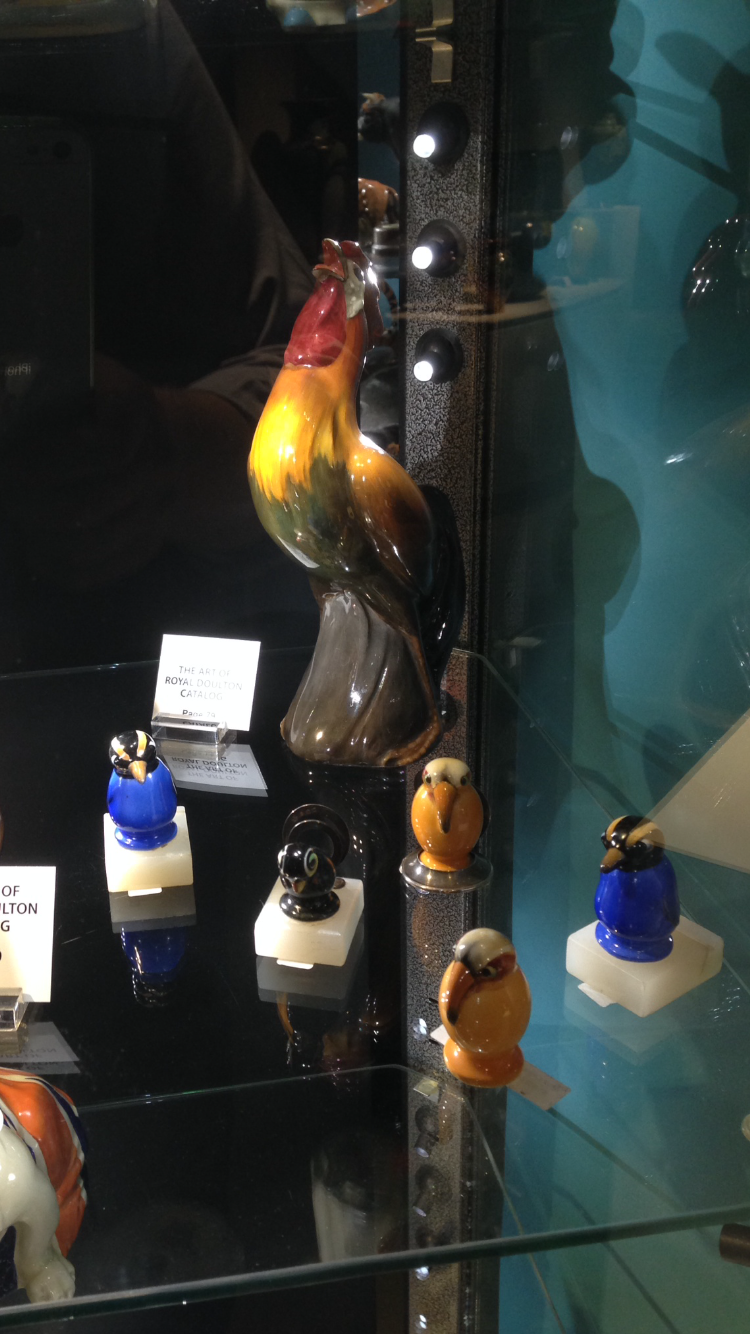
A selection of character birds in the foreground seen at the ‘Gallery of Amazing Things’ in January.

There were some 11 models of birds created and all were available in more than one colourway, providing much scope for collectors. Indeed when they appear mounted on objects you are likely to find an unrecorded colourway of one of these delightful birds! 

  
A delightful version of model 338 – HN 261.

A collection of these characterful birds is acid able but it will take time and dedication to build, together with a rather deep pocket! 

Collecting Doulton Powder Bowls.

It seems hard to believe today that powder boxes and their like we’re once a staple on every well-to-do dressing table. These halcyon times seem a very long ago now, but back in the 1920’s and early 1930’s Doulton were producing such boxes for well-heeled ladies!

  
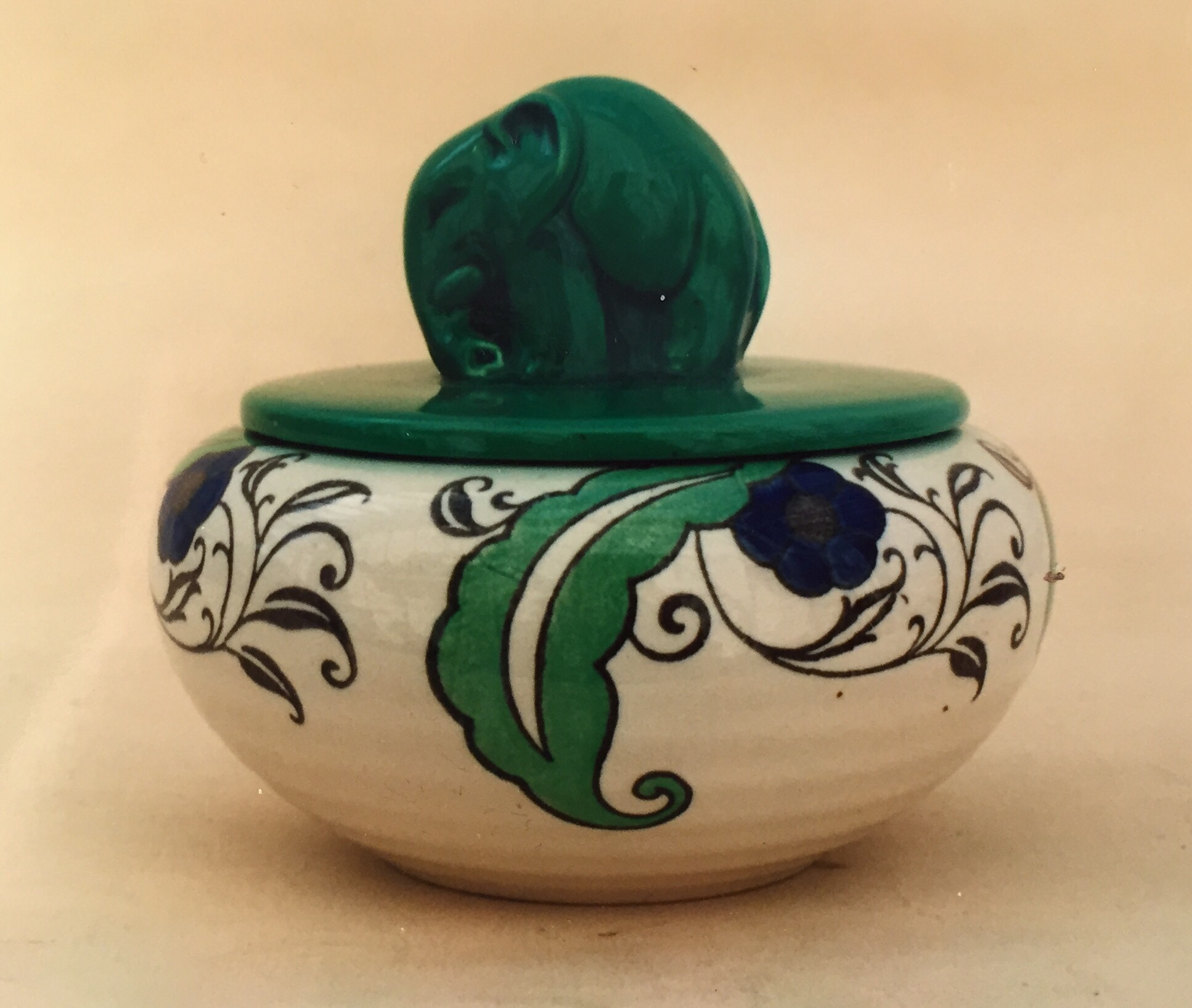
Elephant finial on base featuring the Veridian seriesware pattern. 

Even before the 1920’s a couple of early figures in the HN collection were adapted as powder bowls, typically with the bowl being the lower part of the figure’s skirt. The Flounced Skirt and Lady and Blacksmoor are two such figures that were adapted as powder bowls, with examples of the former turning up bearing the Dubarry name to her base; the famous perfumier and cosmetics manufacturer. The name Dubarry may be familiar to Doulton collectors as Doulton also produced ceramic atomisers and some specifically for Dubarry.

  
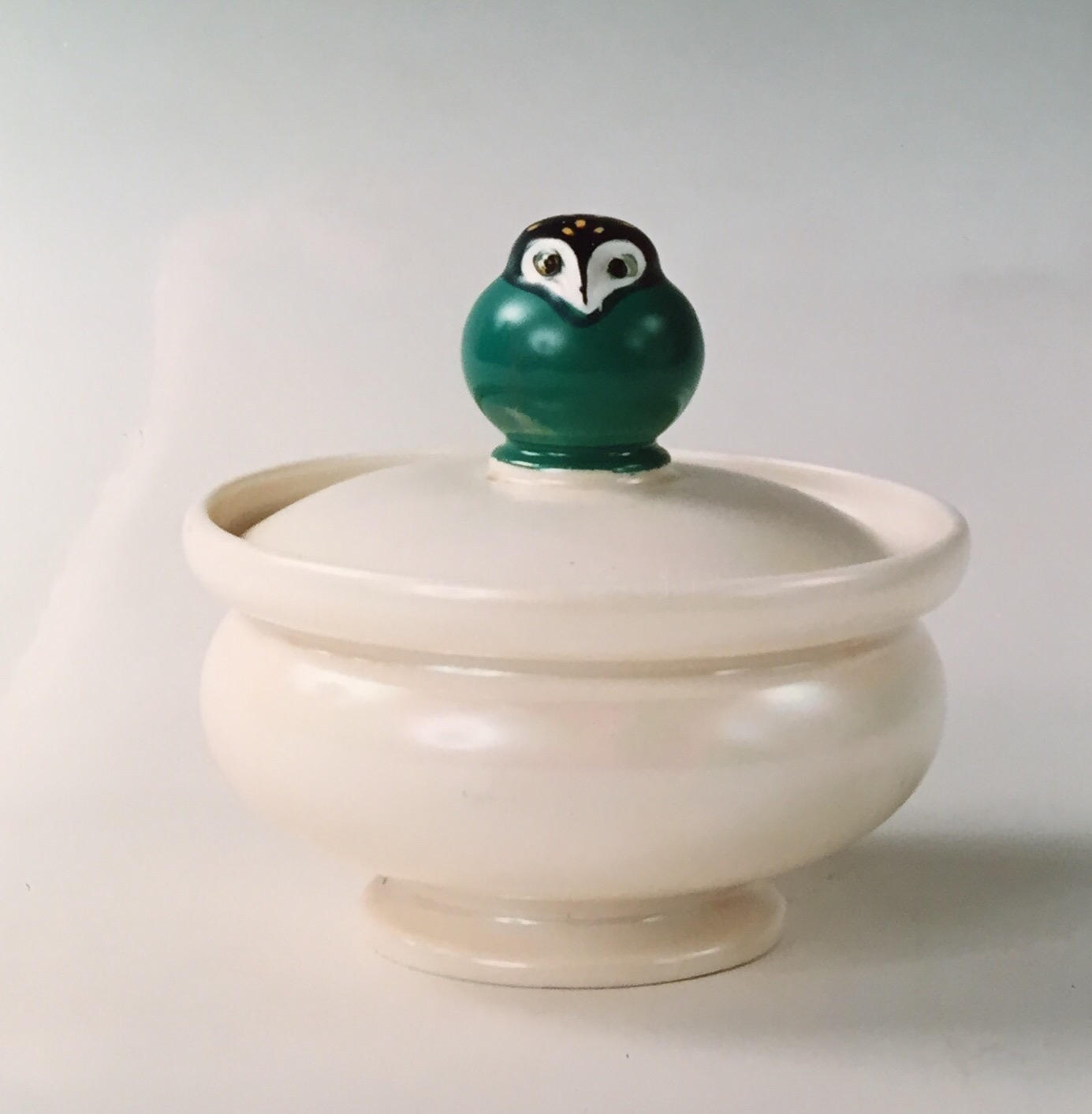
Early character bird on a typical lustre bowl. 

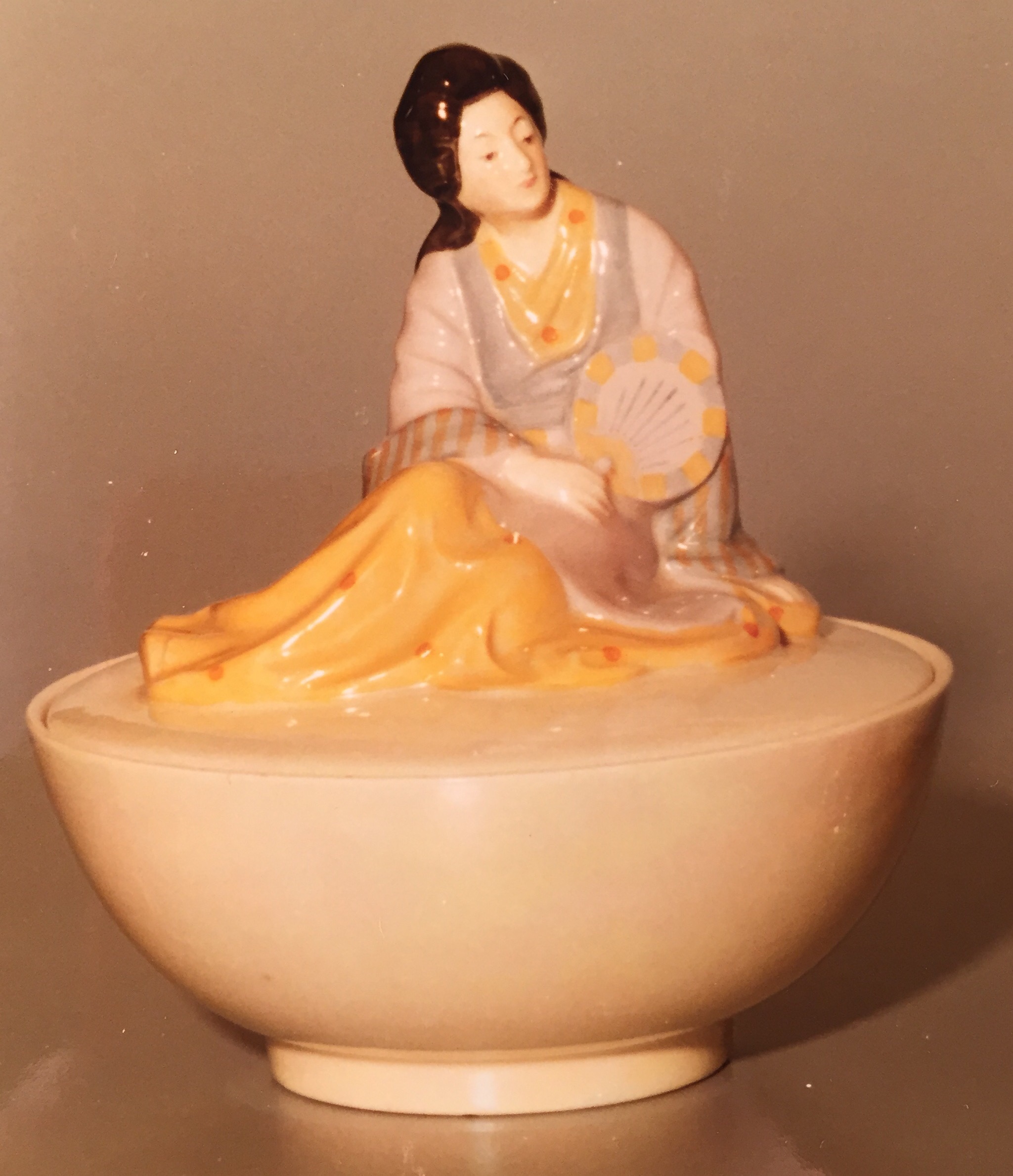
Other powder bowls featured figures simply incorporated into the lid of the piece, such as Cassim or The Japanese Fan. 

  
The Japanese Fan as a powder bowl finial. This figure can be found on a rounded bowl too. 

Still further examples feature early Doulton animals including these charming, rare character birds that lend them perfectly to this purpose and as decoration to many desk accessories and even place setting or menu holders.

  
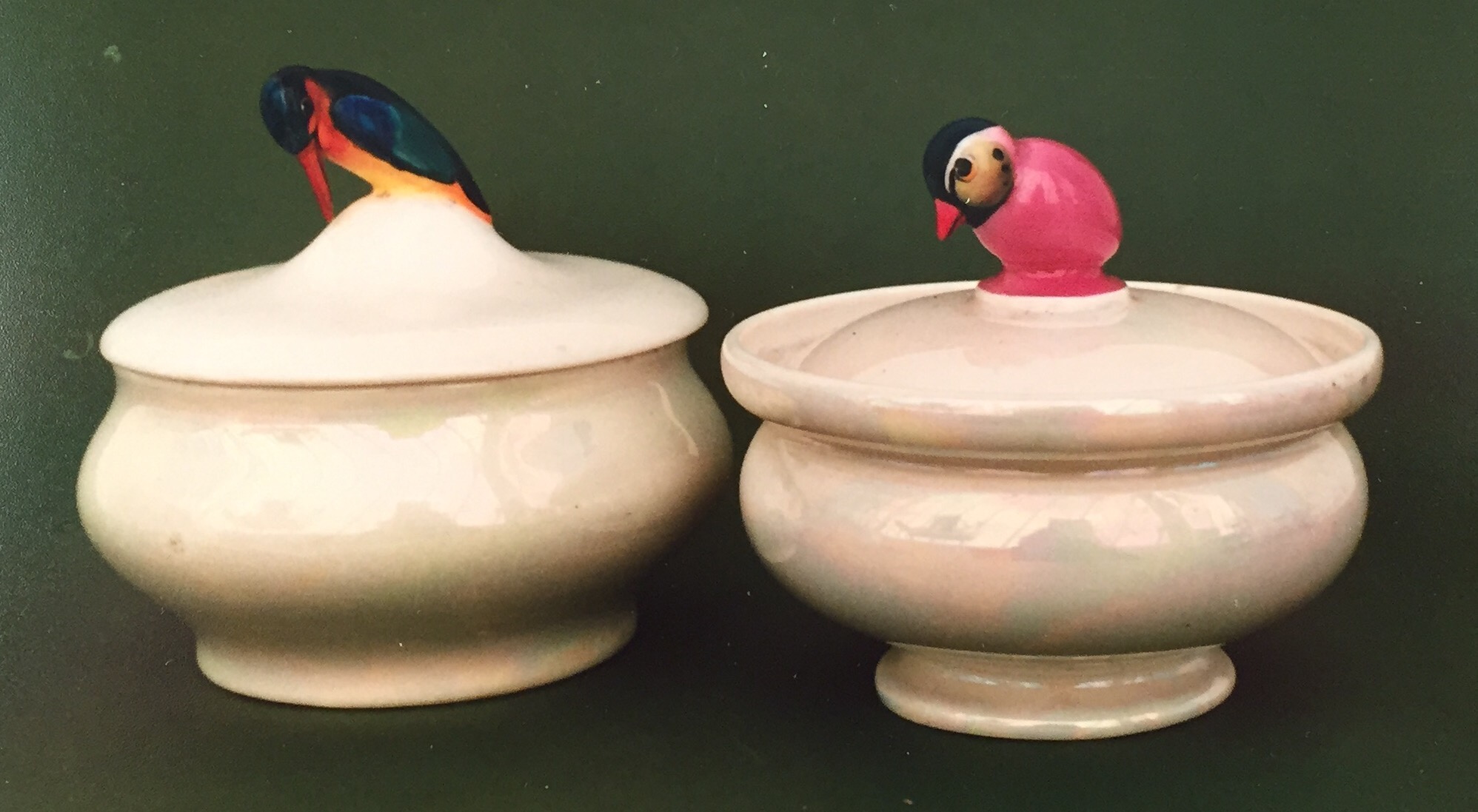
Character Bird and Kingfisher finials.

Doulton figures- are you seeing dots? 

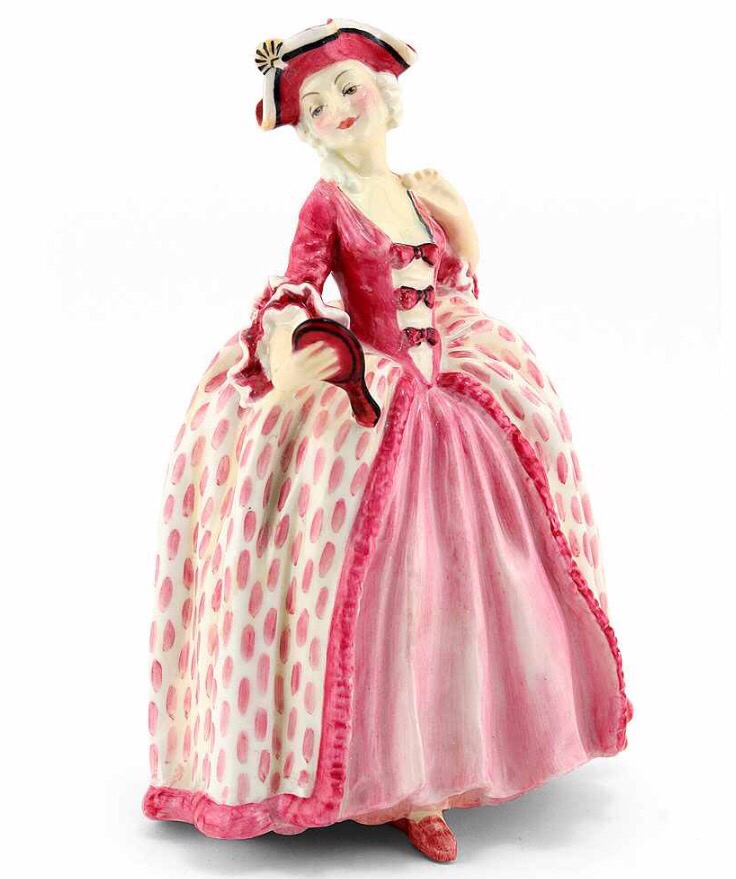
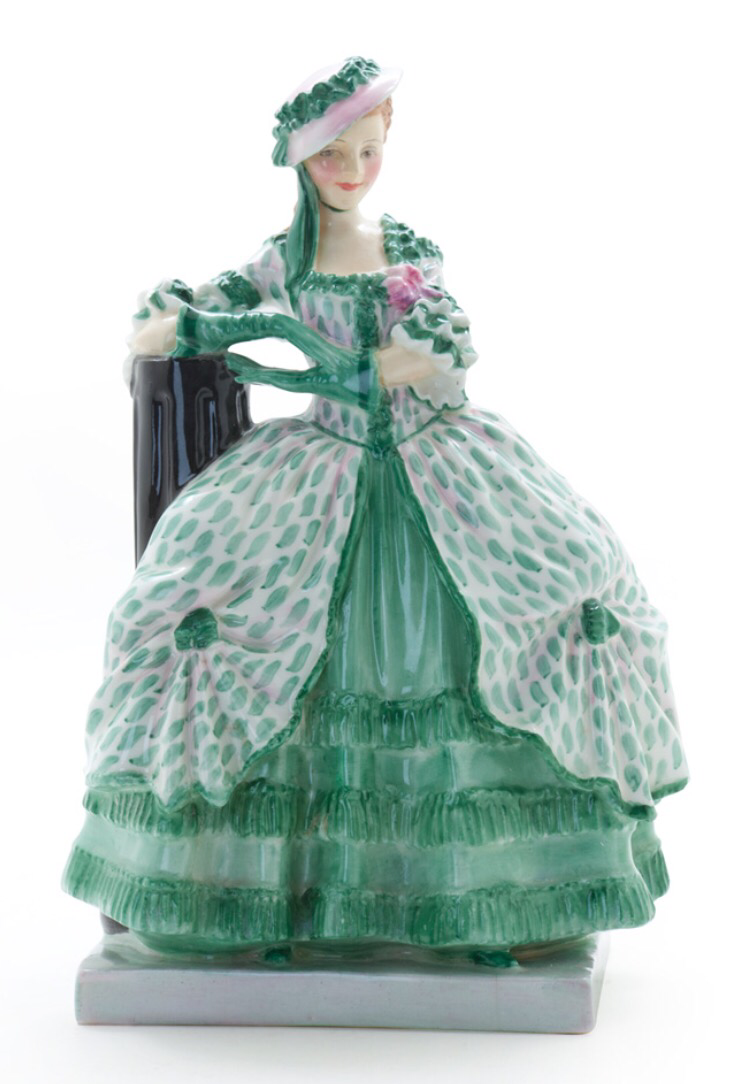
Who doesn’t love matching colourways? We’ve looks at matching reds, pinks, blues, greens and even oranges, but here are three other early figures you’ll be dotty about! 

  
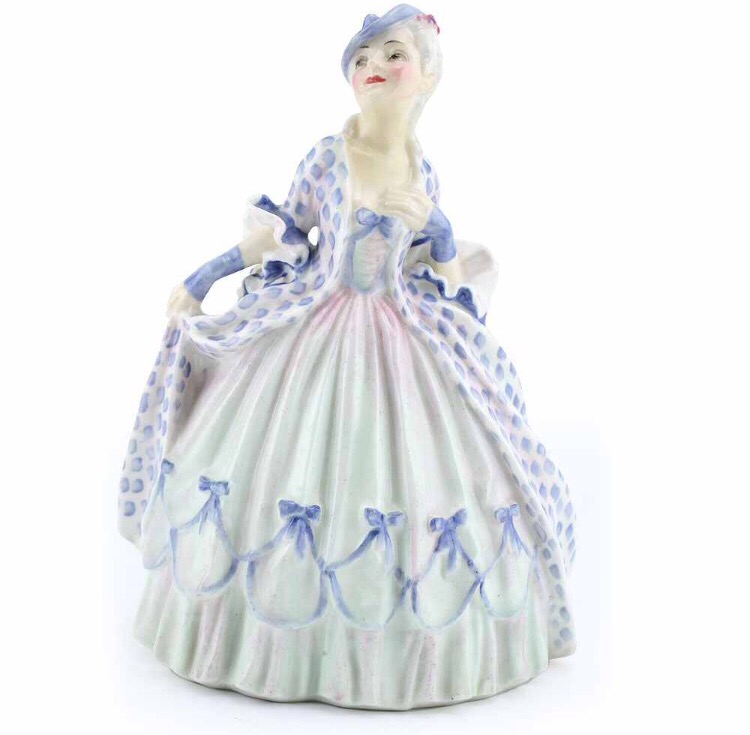
Sibell HN 1735.

After writing the Kate Hardcastle piece on Monday I recalled these spotted beauties and lamented how I’d never managed to find all three at the same time! 

  
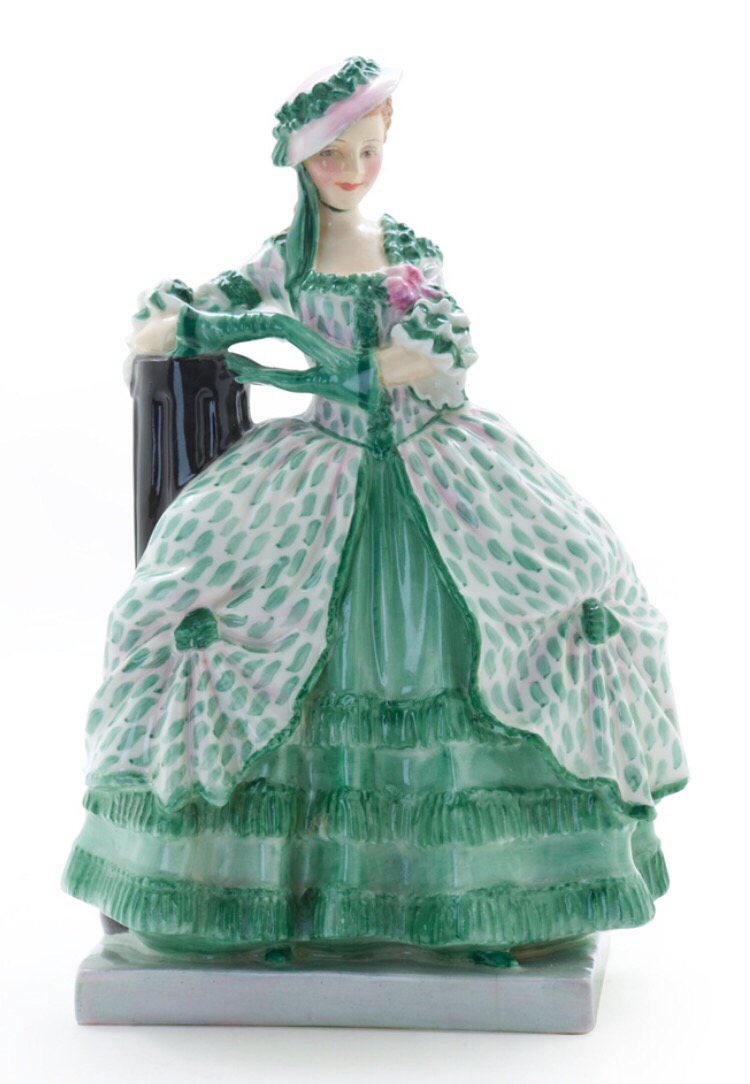
Kate Hardcastle HN 1734.

Just as other groups, their HN numbers are in the same number range, but this time they are chronological if you take a second look!

  
Camille HN1736.

With such vivid colours and an unmistakable design this group may not be to everyone’s taste but they are super rare! 

Collecting Doulton stamp trays. 

  
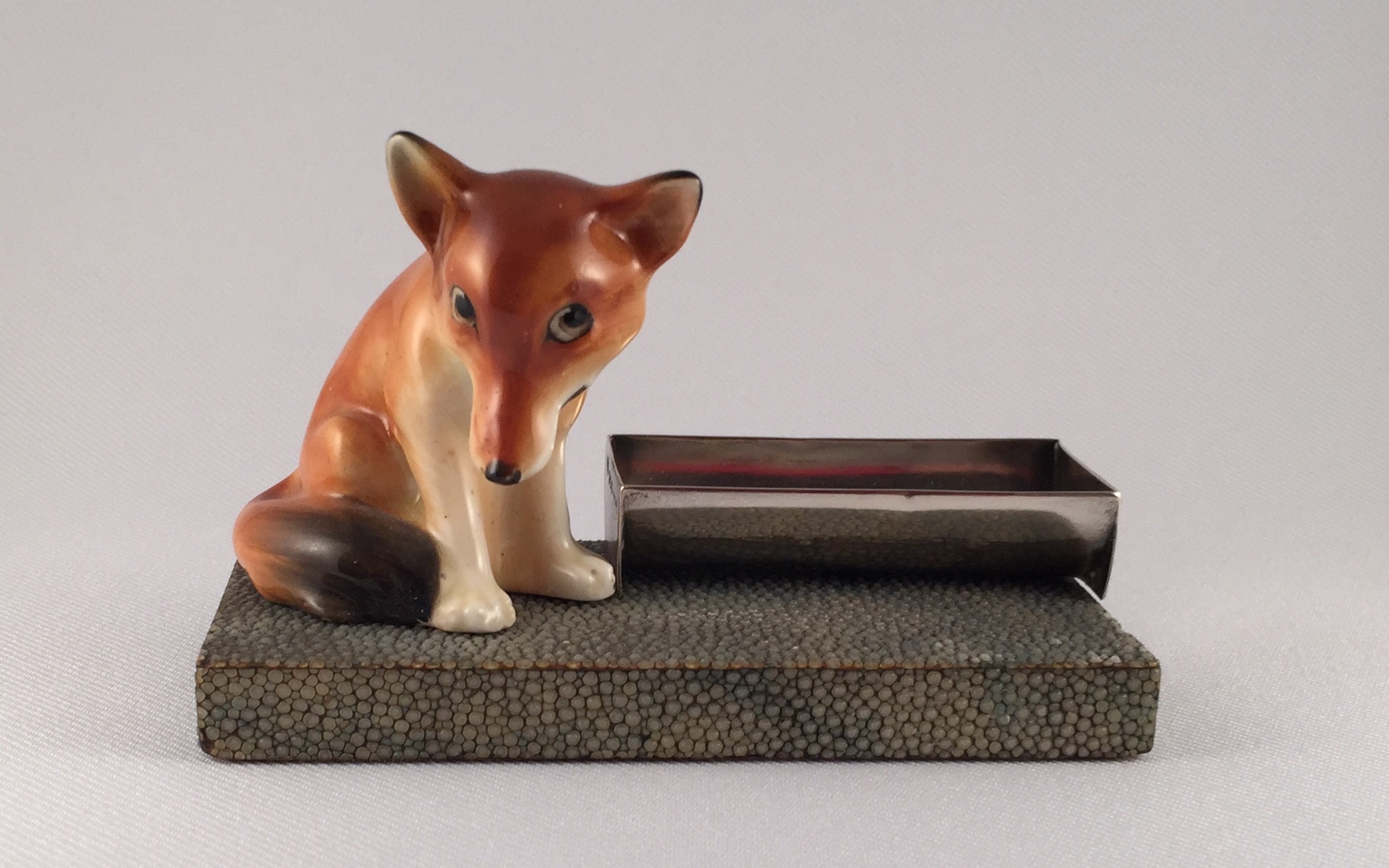
Character fox HN866.

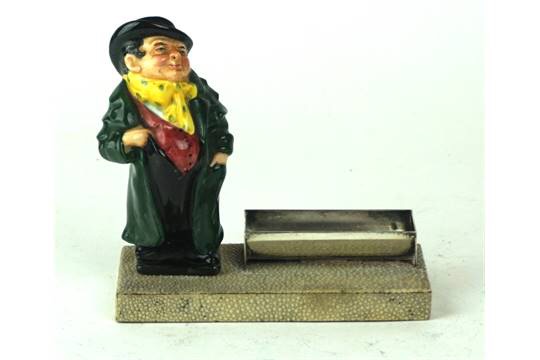
From time to time one spots familiar items mounted with various Doulton wares and such was the case when I recently saw this Dickens miniature of Tony Weller mounted on a genuine Shagreen base together with a sterling silver stamp holder or stamp moistener (the moistener missing), just like mine with the fox above. 

 
Tony Weller HN544.
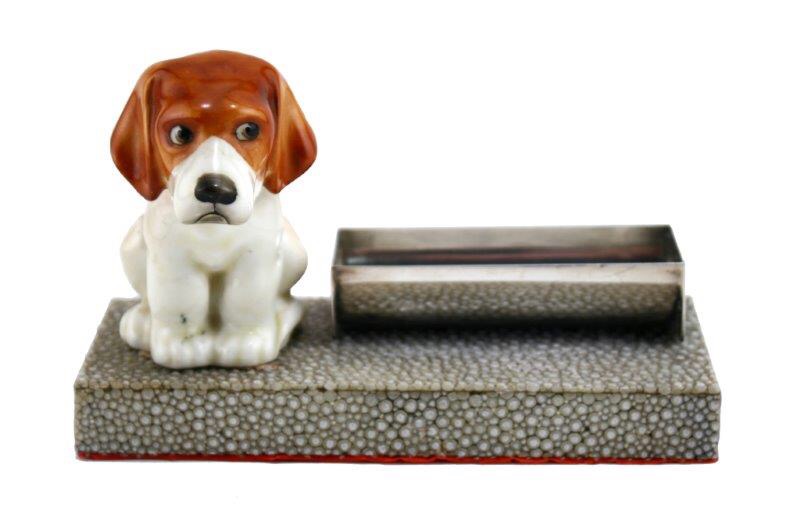
Here is a further example mounted with a very rare character Beagle, a very early Doulton animal currently available from Seaway China. 

 
Character Beagle HN831.

 The sterling silver mark on the stamp holder gives us the year 1923 as the year of production. 

Royal Doulton’s Kate Hardcastle – the story of a name. 

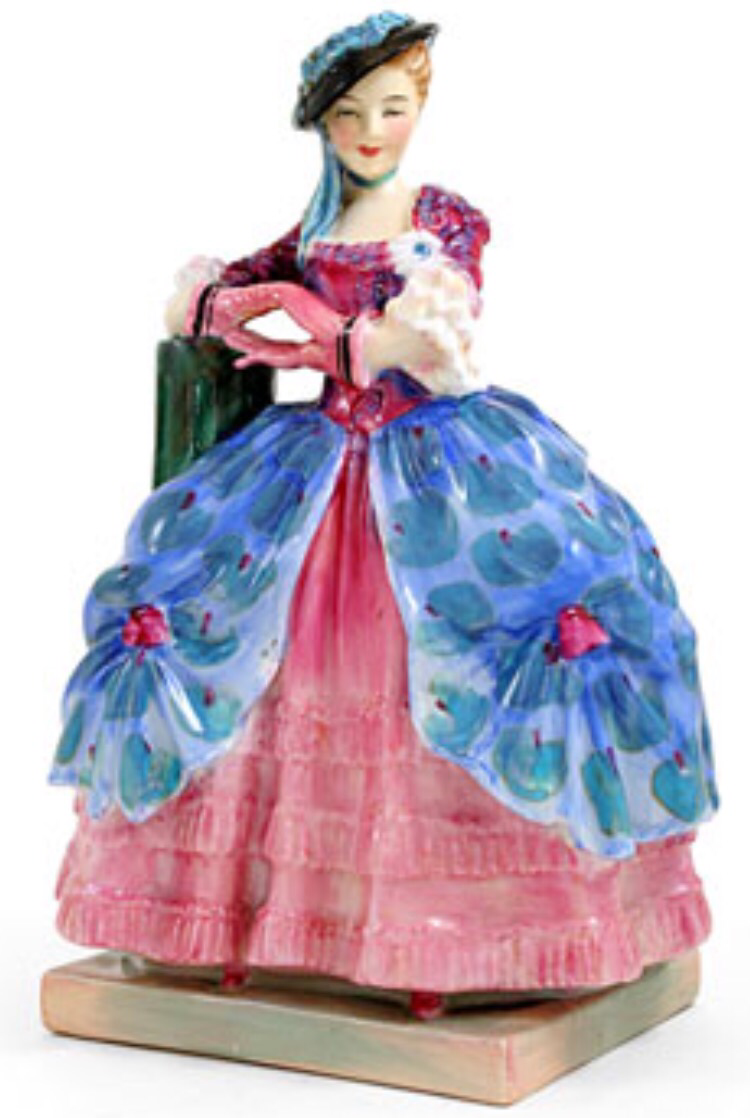
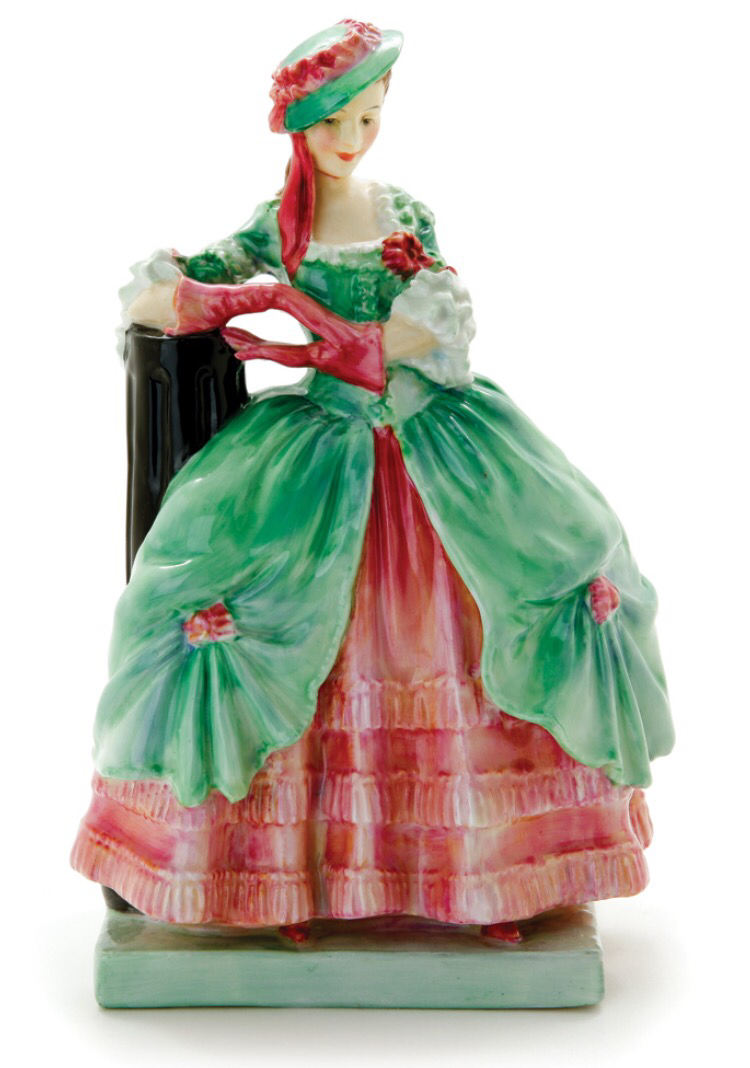
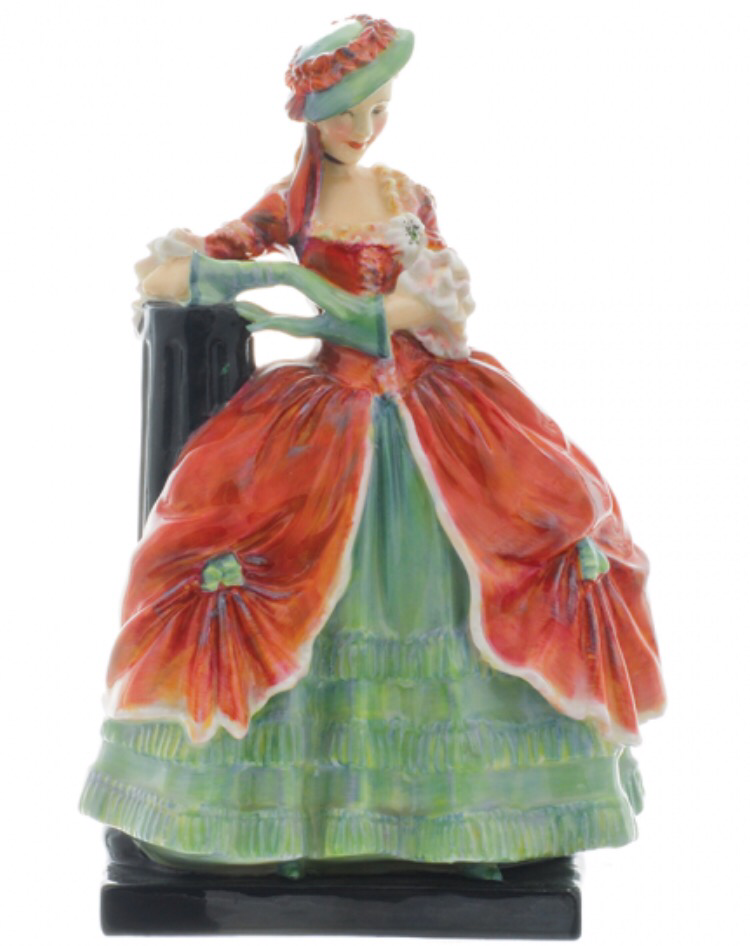
Royal Doulton’s figurine Kate Hardcastle takes her name from the the heroine of the Anglo-Irish playwright Goldsmith’s comedy ‘She Stoops To Conquer’ first performed in the 18th Century.

  
Kate Hardcastle HN1734.

Kate, a spirited young girl pretends to be a barmaid to overcome the shyness of her lover, Charles Marlow, the son of a rich Londoner. Charles’ shyness disappeared around working class girls hence the needed pretence. 

  
Kate Hardcastle HN1861.

Realising what she must do in order for Charles to woo her, Kate pretends to be a barmaid, thus stooping to conquer the young Charles! 

  
Kate Hardcastle HN1719.

Goldsmith’s play has proved perennially popular ever since it was first performed in London in 1773, which explains why in 1935 a figurine was modelled in her contemporary likeness by the great Leslie Harradine. 

  
Kate Hardcastle HN1919.

Doulton’s figure Kate Hardcastle proved popular with 5 colourways produced in the 1930’s and post WWII a slightly simplified model of her in somewhat muted colouring similar to HN1719 was introduced as HN2028. The issue with her has always been the base, which as collectors know is a particularly weak point when they are square or rectangular on these early figures, hence why most figures have round bases. 

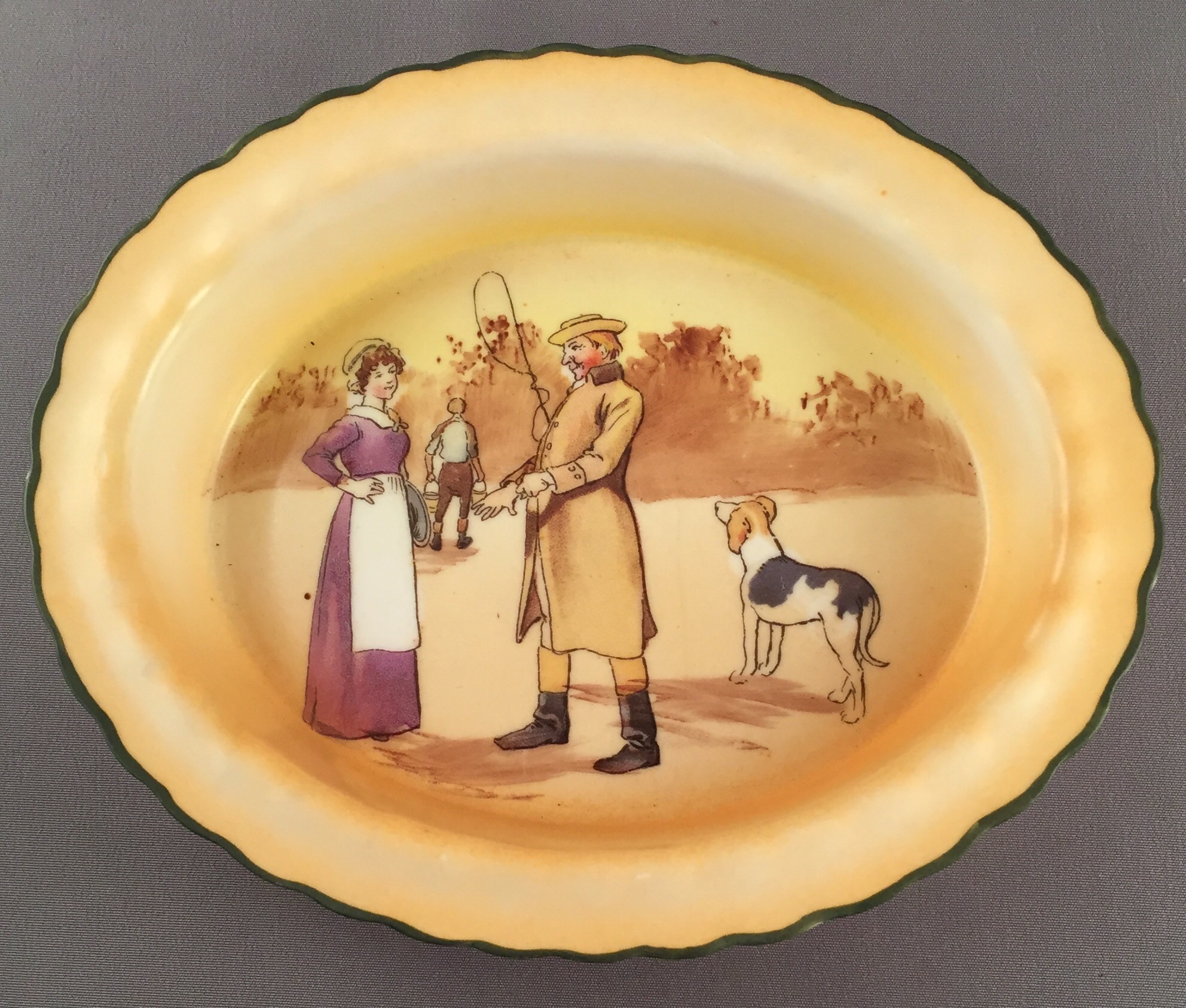
Collecting Doulton’s ‘Hunting – John Peel’ seriesware pattern.

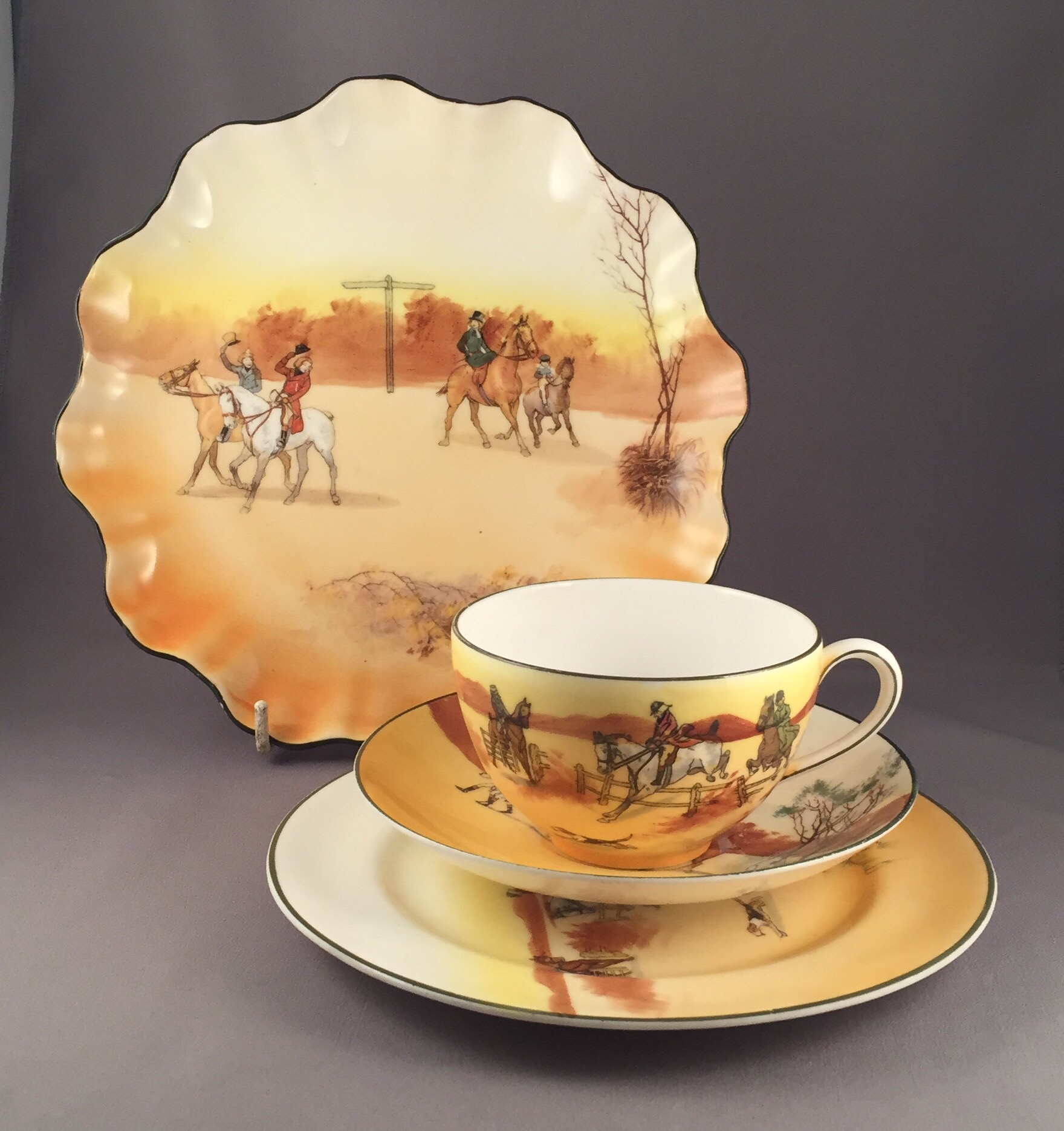
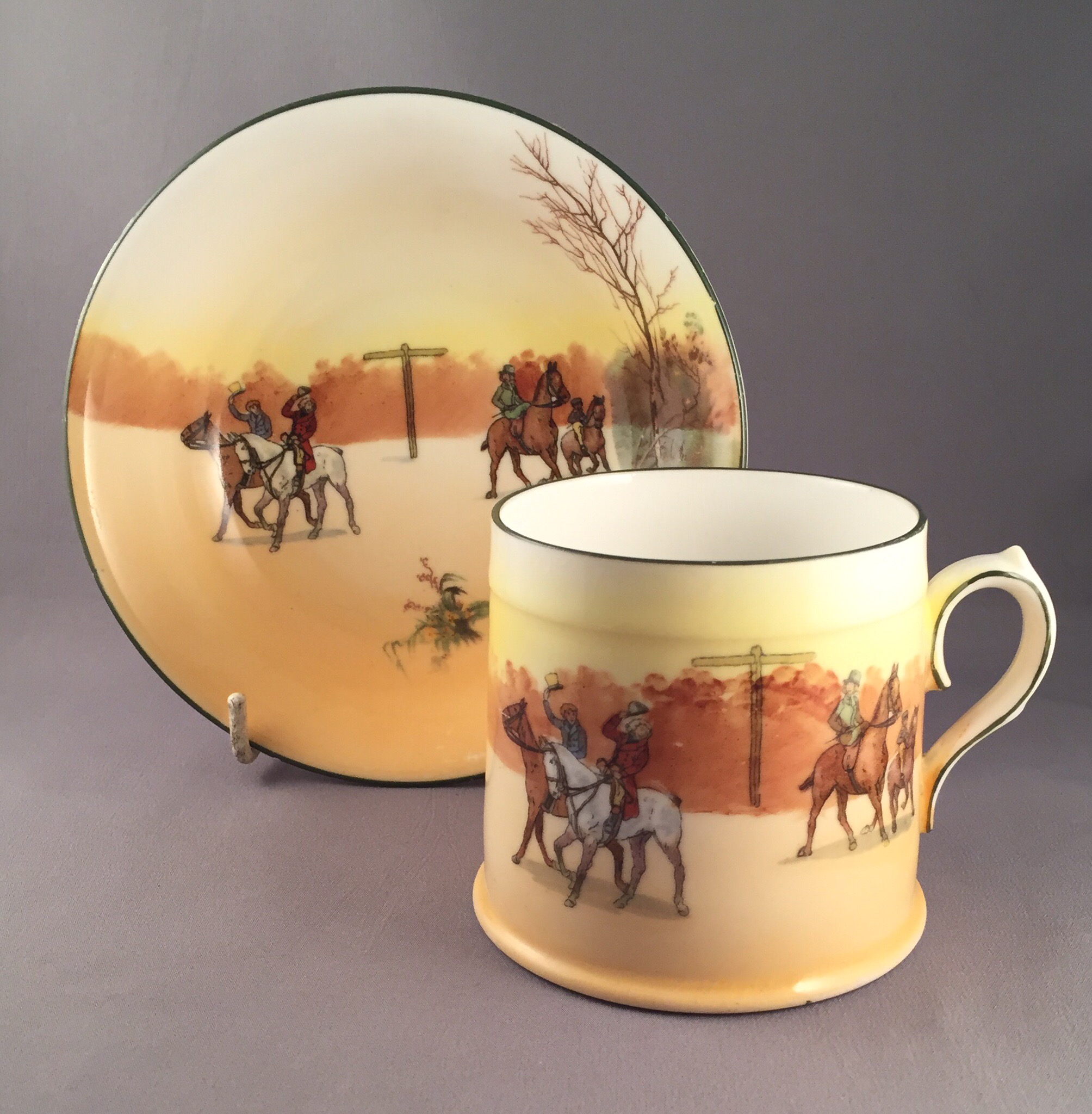
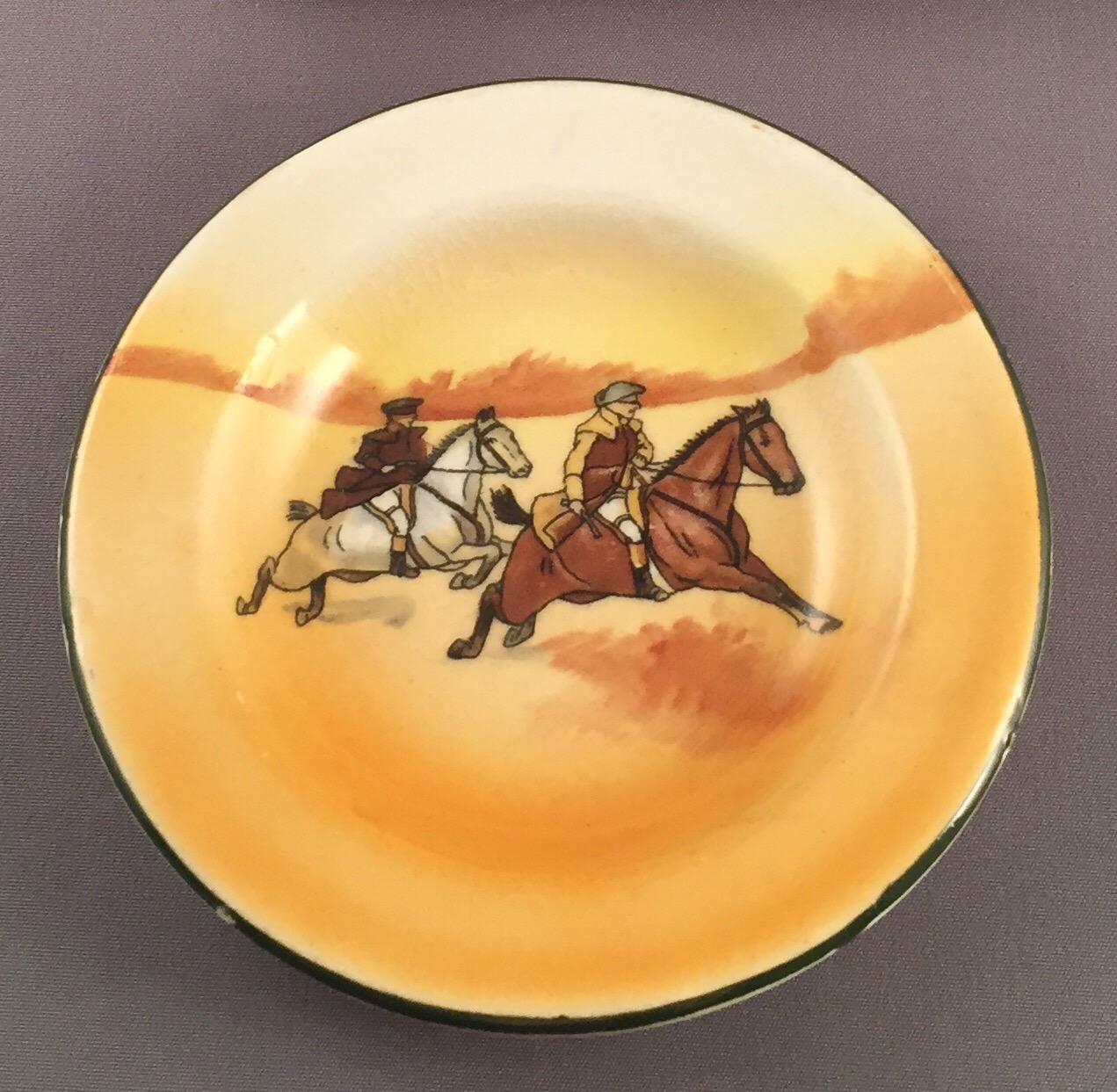
This series together with Coaching Days and Royal Mail are easily mistaken for one another on first glance given their similar palette. There were a handful of other patterns  to Hunting – John Peel all celebrating this once popular pastime, now out of favour. 

  
There are 9 recorded patterns dating from 1924 to an unknown withdrawal date. Some are often found in combination as you can see above and below with scenes 2 & 3. 

  
Interestingly the later designs bear an H number (1947) rather than the traditional D numbers associated with seriesware or the very early patterns that have the earlier E numbers if they were on china.

  
The great thing about seriesware is that the possibilities for making a collection are plentiful! Naturally you can collect one particular pattern, or miniatures, or particular shapes or like me pin dishes and ash trays like the one above! 

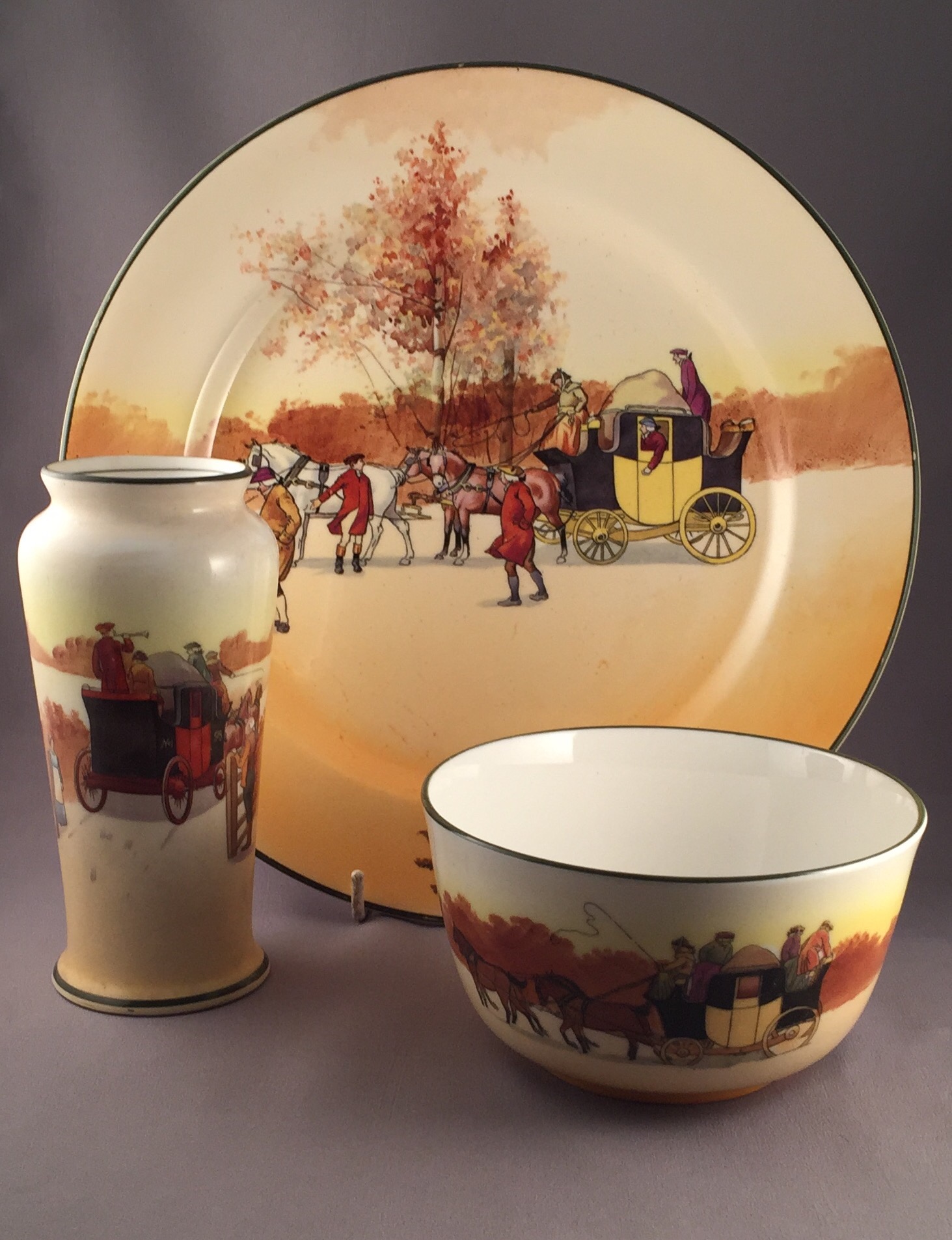
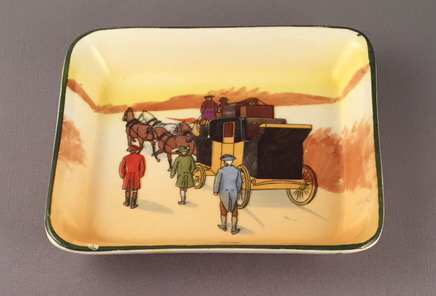
Collecting Doulton’s Coaching Days seriesware pattern.

One of Doulton’s most popular seriesware lines remains their Coaching Days series. Introduced in 1905 and finally withdrawn in 1955, examples from this series can be found but earlier shapes and ceramic bodies make certain pieces more sought after! 

  
Earthenware was the typical body but examples can be found on a china body. The series was originally designed by Victor Venner between c.1904-1924, with unknown others contributing designs too. 

  
With 20 recorded scenes and a multitude of shapes that the series can be found on, this series provides much scope for collectors to assemble an impressive display. Above is a pin tray from my own collection. 

Unusual scenes do turn up such as the one on the small pie crust dish. Labelled as E3804, it is an unusual find and on china too, hence the E number.  


Examples of Coaching Days are easily confused with both ‘Royal Mail’ and ‘Hunting John Peel’ scenes and do display well together!