Category Archives: Artists

Doulton’s craftsmen gilders.

Few Doulton collectors today will be familiar with the names Thomas Morton, William Massey or William Skinner, however, they played an important role in the early 20th Century history of Royal Doulton as its three leading gilders.
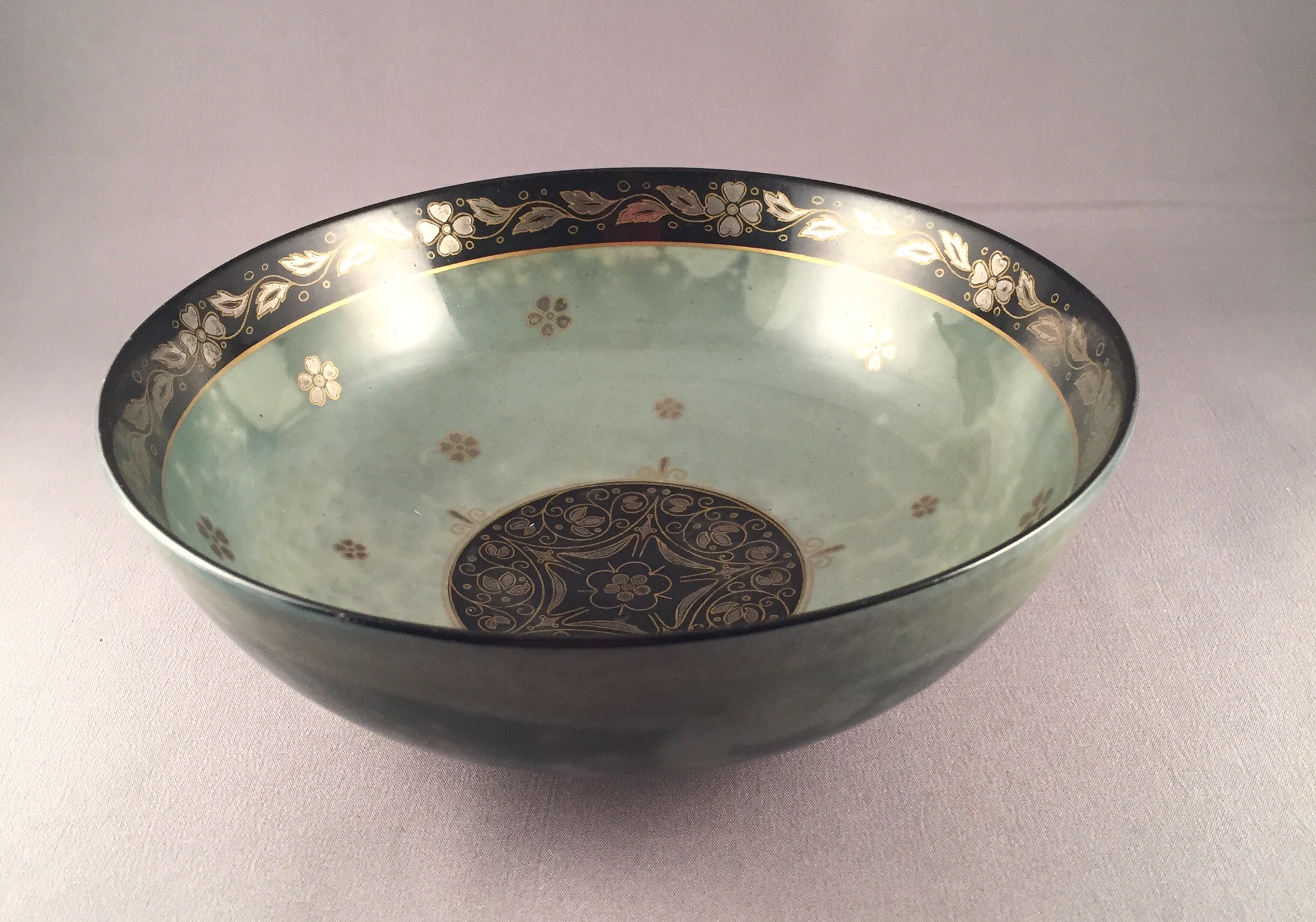

A Titanian bowl with gold and silver gilding.

These three craftsmen worked under the legendary Robert Allen, who led one of Doulton’s Burslem art studios and was father to Harry Allen too. Harry’s name will be forever linked to Titanian wares because of his many finely painted birds and other subjects on this ware.
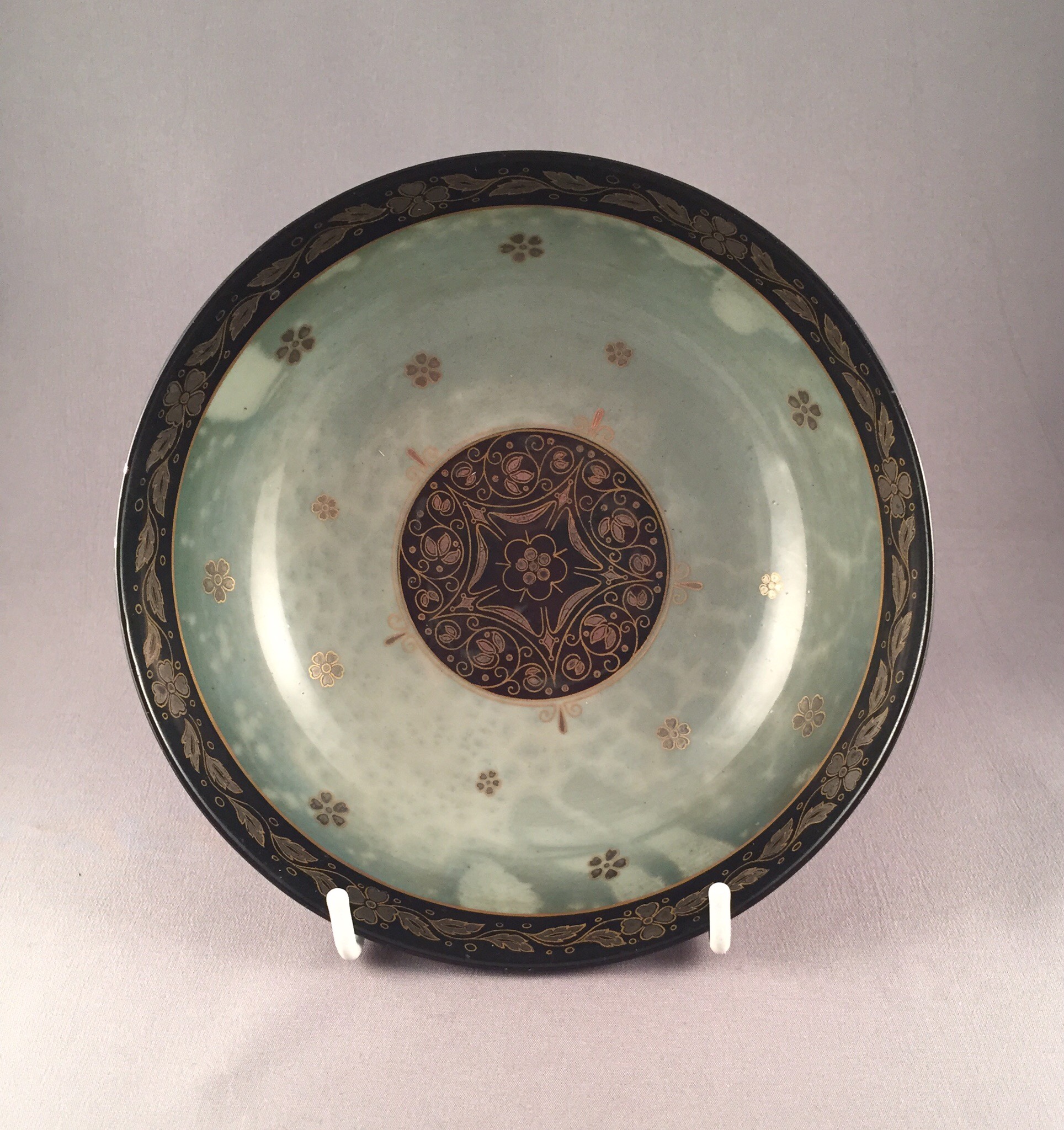

A view of the interior of the bowl.

The bowl illustrated is most unusual due to the use of gold and silver and alas is not signed by the gilder, but fortunately the RA number on the reverse dates it to the period of WWI, right at the start of Doulton’s short production of fine Titanian ware.

These master gilders would typically re-create on china the elaborate designs by Robert Allen, such as the design on this bowl.
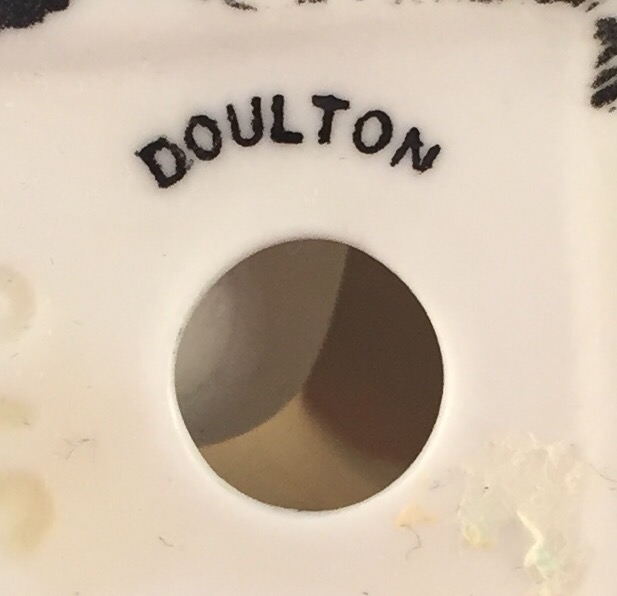
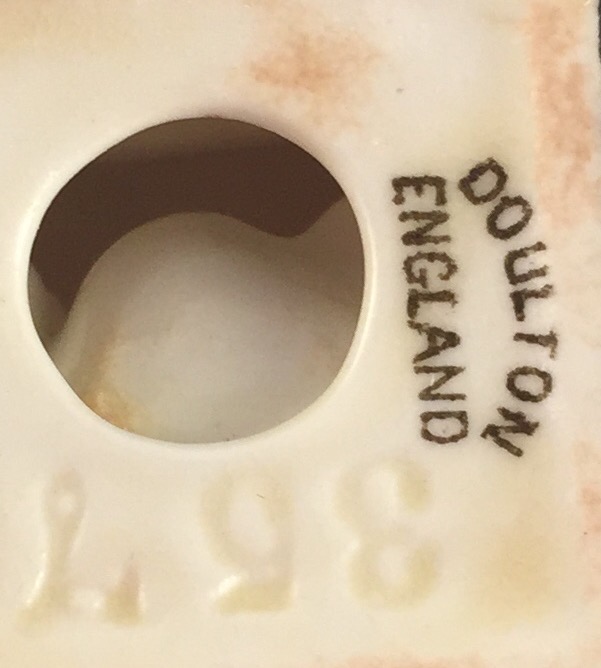
A quick guide to dating Doulton’s Dickens figures! 

Leslie Harradine’s collection of Dickens miniature figures still bring collectors much joy although they have been out of production since the early 1980’s. 

Collectors tend to focus their collecting on either the early bone china models with their thinner bases or else those made in earthenware after 1949 with their deeper bases.

However there are a few tips to dating the early models that I thought I would share. 

  
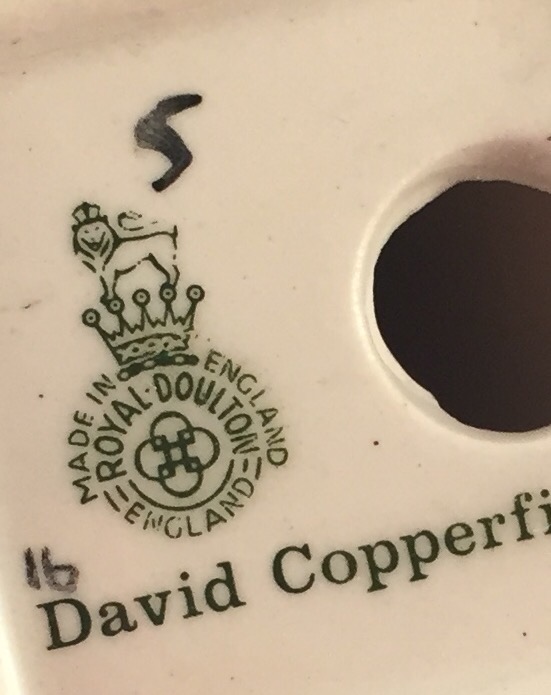
This is the earliest stamp with simply the word Doulton printed in an arc.


This is the second mark from the late 1920’s. A second version of this can be dated to after 1930 when the names of the figures were also included.


Finally a post 1949 example with standard Doulton mark. 

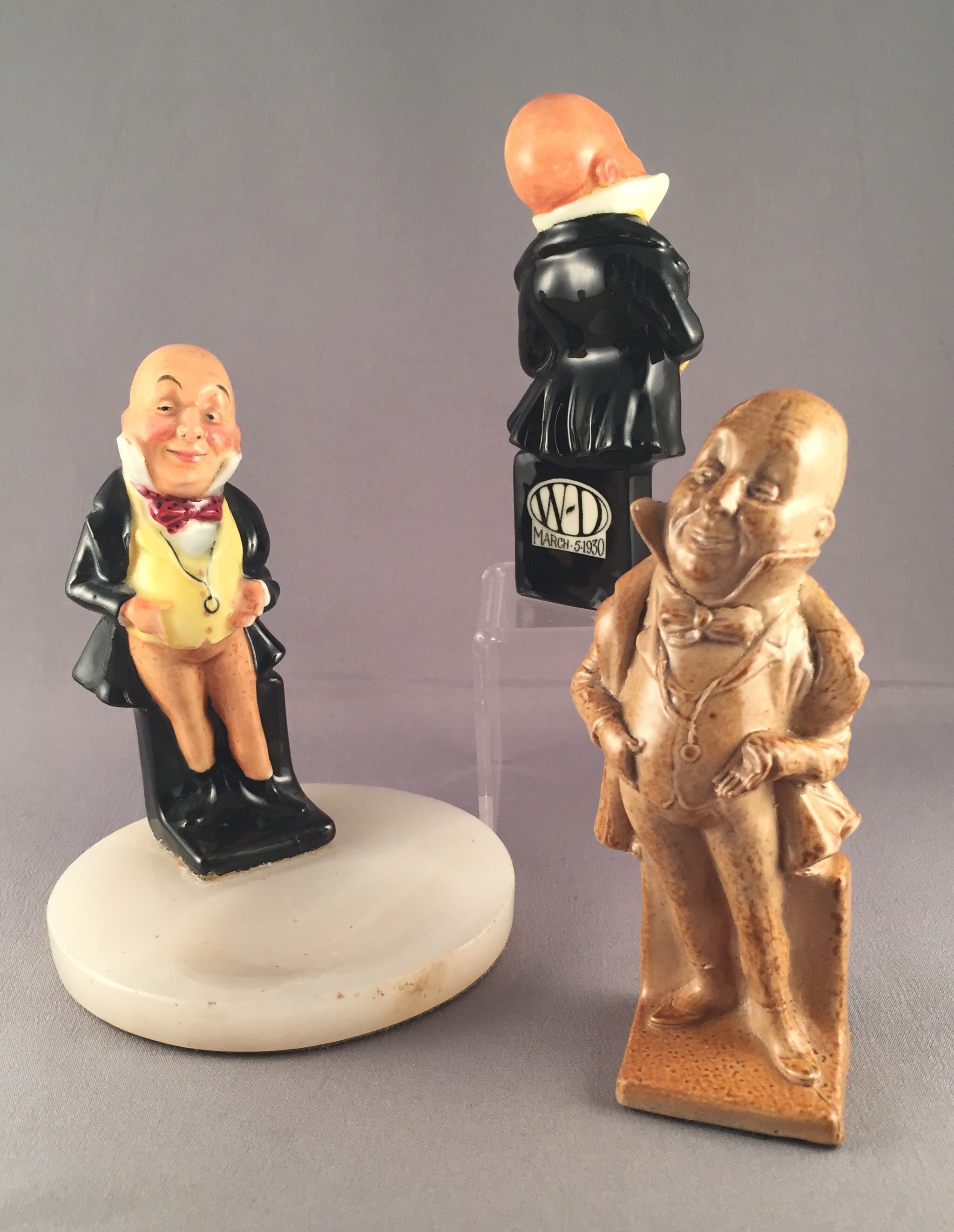
To finish here are three examples of Micawber: an early 1920’s example on a marble tray, the unusual Woodall Duckham commemorative from 1930 and Harradine’s original model for the study. You can see the thickness of the base increasing steadily even between the early 1920 example and the 1930 example. 


Collecting Doulton’s first set of Character Jugs – All for one and one for all! 

  
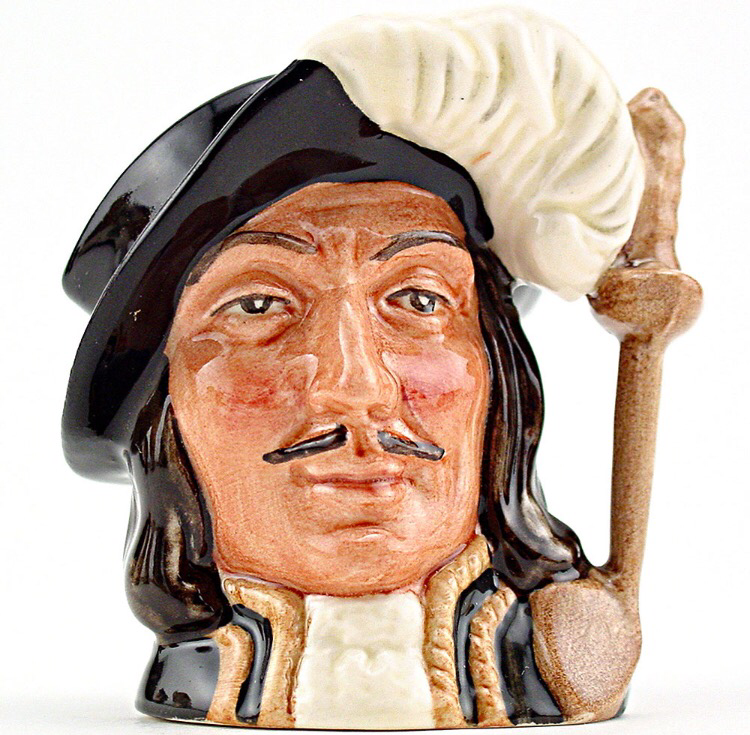
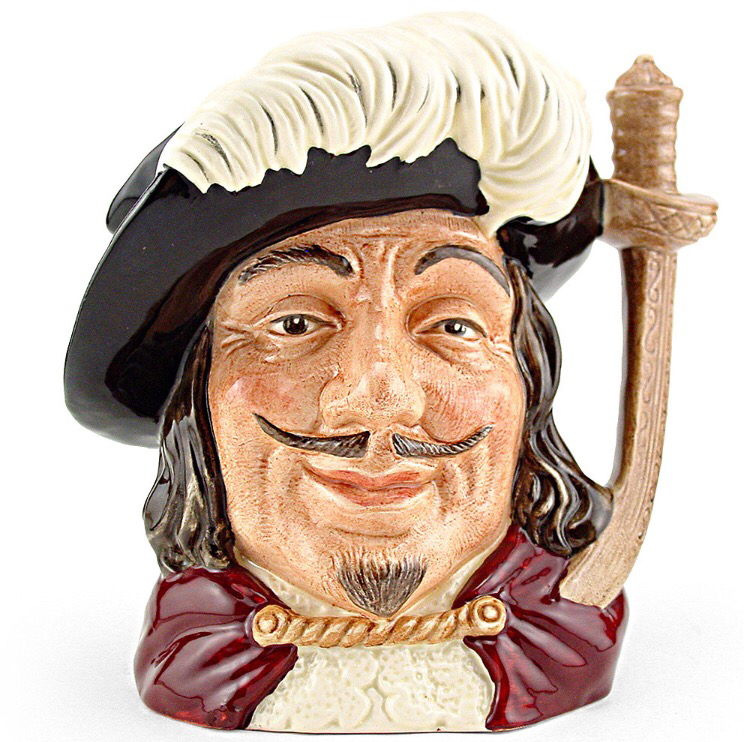
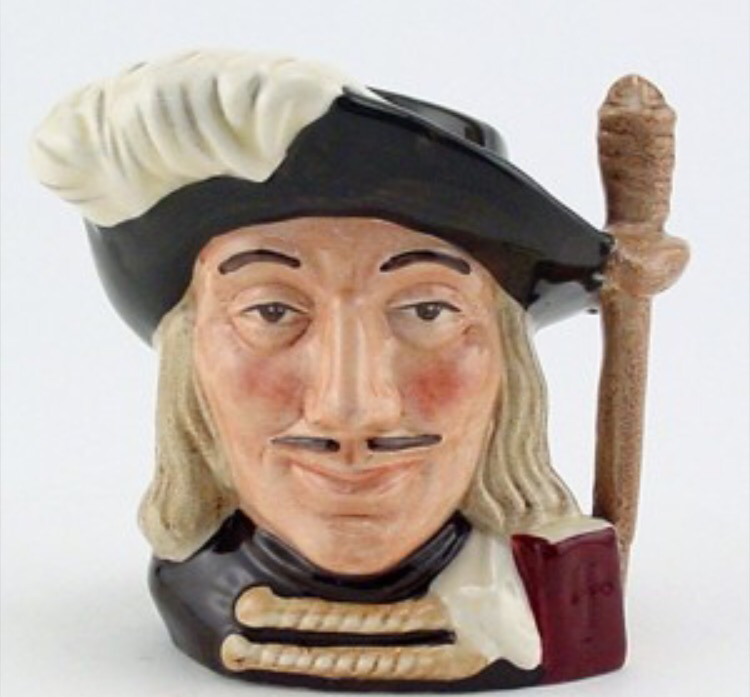
Athos D6439.

1956 saw the first set of Doulton Character Jugs introduced, quite some time after the original Doulton ‘face jugs’ or as they quickly became known character jugs were introduced in 1934. 

  
Porthos D6440.

Today we can hardly imagine a time when sets of jugs weren’t produced given the many themes from Royalty to Dickens that litter Doulton’s Character Jug Collection.


Aramis D6441.

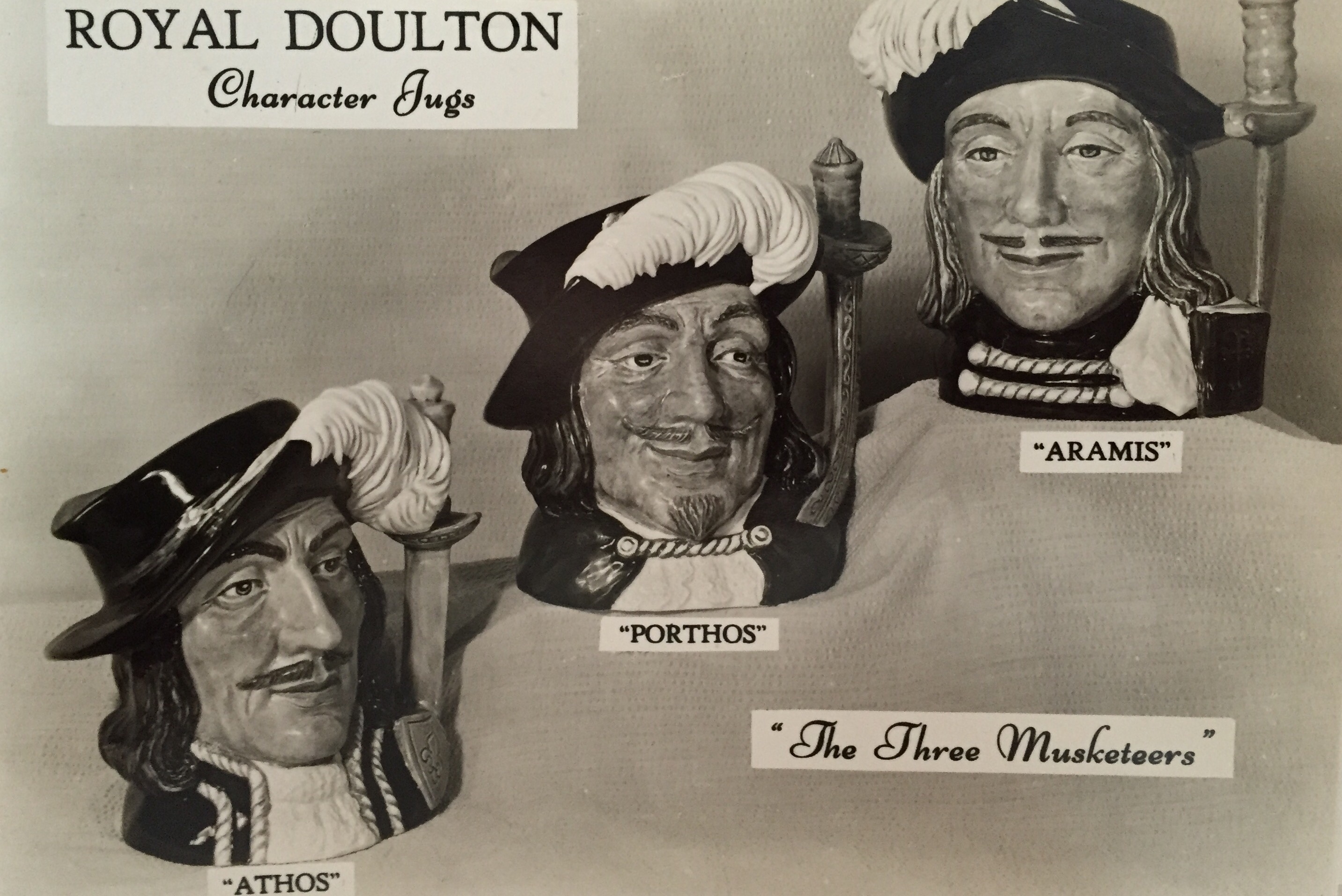
Still Aramis, Porthos and Athos, the three heroes of Alexandre Dumas’ French adventure The Three Musketeers  were the original set. 

  
Original publicity photo for the original characters.

Whilst the original 3 were the creations of the legendary Max Henk, it was Stan Taylor who would eventually add their youthful friend D’Artagnan to the set in 1982 as a large jug and then the small and tiny in 1987. All characters and sizes save the table lighter remained in production until 1991, meaning that the set can be readily assembled by new collectors today and is a perfect example of how Doulton captured the publics imagination with these characters from legend! 

My thanks to Seaway China for the use of their photo library. C.E. 

Seasonal changes with Doulton figures! 

  
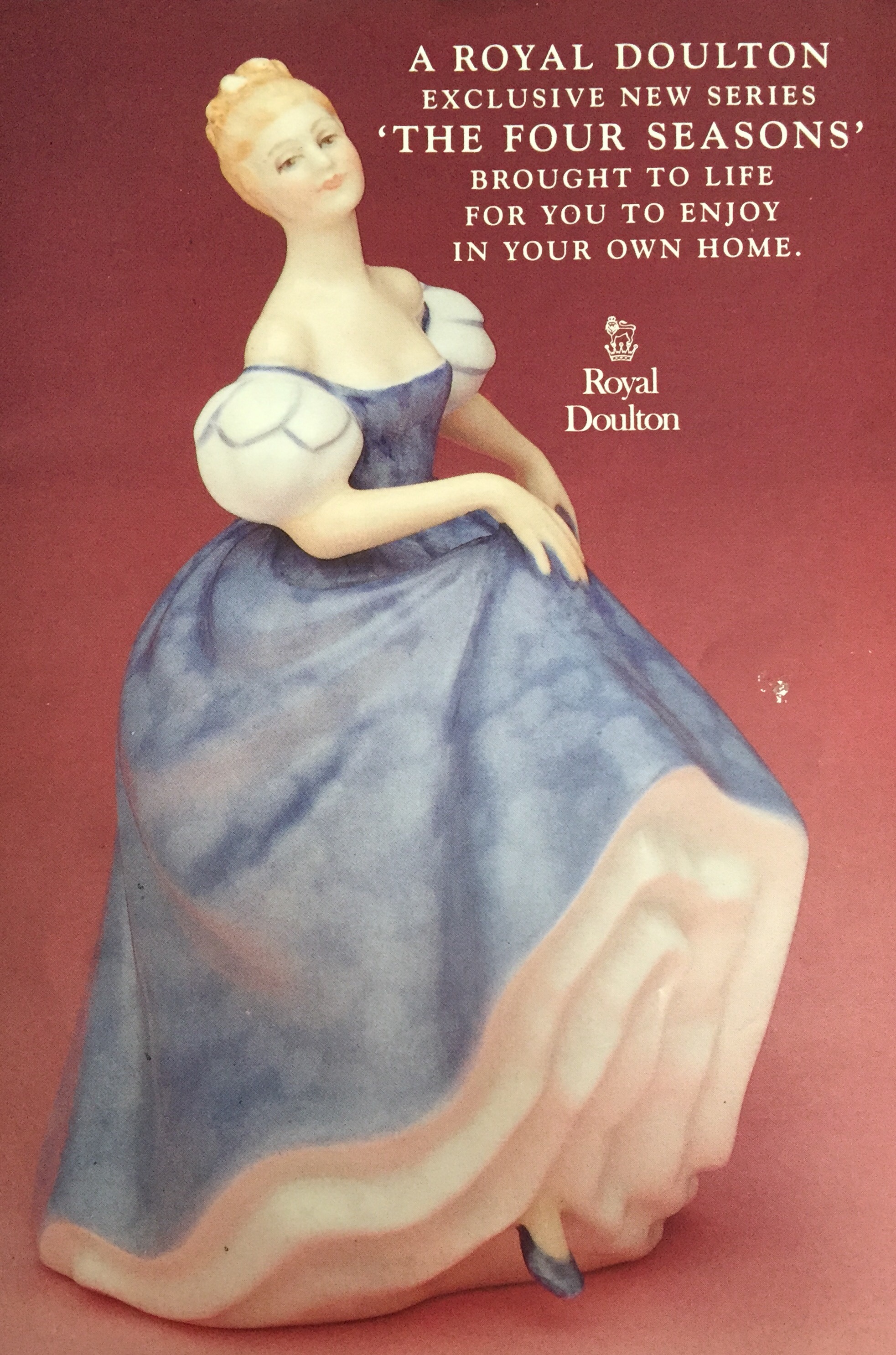
Cover of a catalogue featuring Summer Serenade.

One of several classic sets of four seasons figures produced by Royal Doulton is this set made exclusively for the Guild of China and Glass Retailers to which Doulton belonged. 


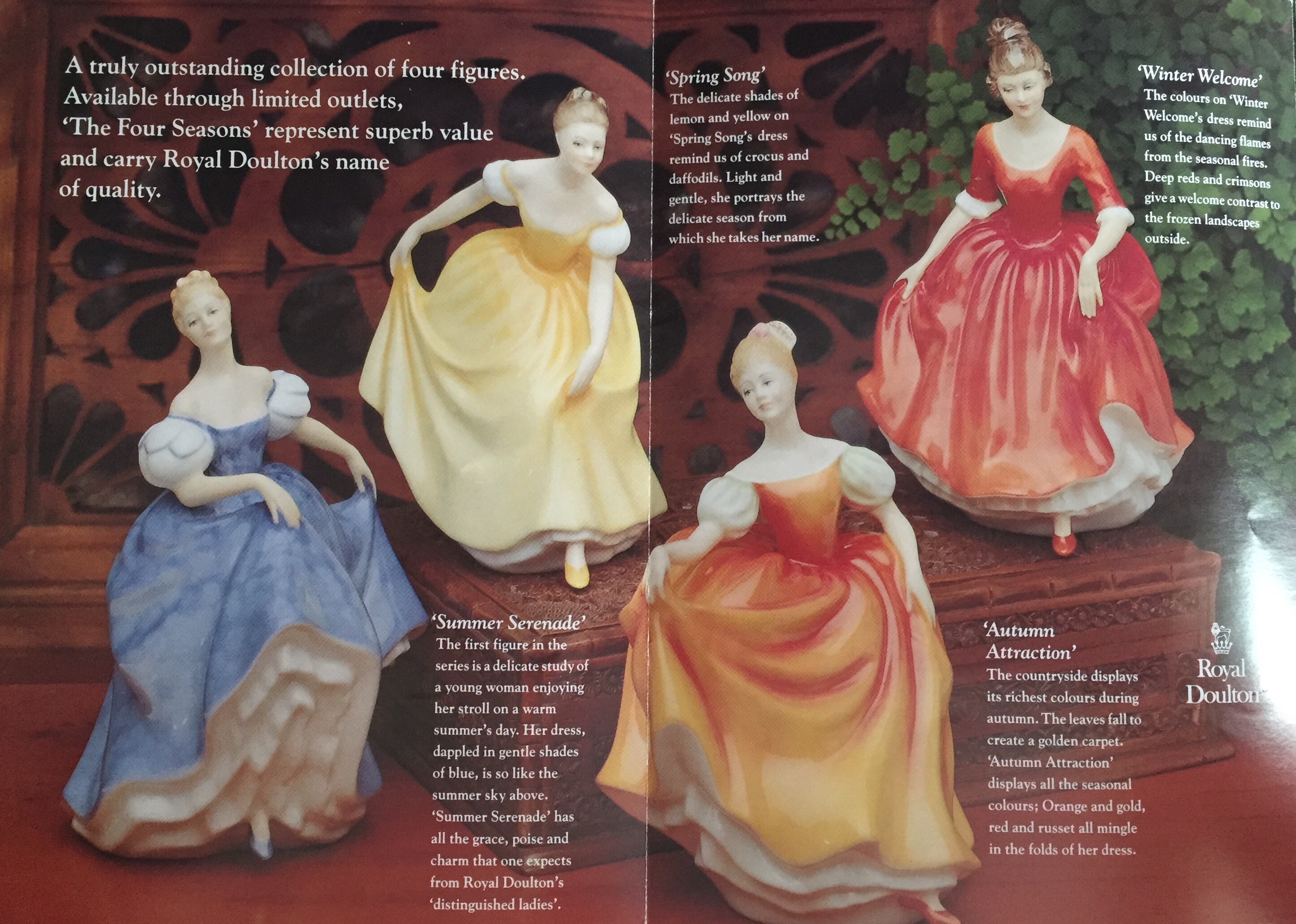
Catalogue page from 1993. 

Three existing models by the legendary Peggy Davies and one model from Peter Gee were given a colourful re-incarnation to become part of this series. 

Thus…

Danielle HN 3001 became Spring Song HN

Beatrice HN 3263 became Summer Serenade HN 3610

Michelle HN 2334 became Autumn Attraction HN 3612

And

Caroline HN 3170 became winter welcome HN 3611.

  
Autumn Attraction and Winter Welcome. 

For collectors it is the Doulton ‘colouring’ of these popular models that set them apart from the originals which were typically very modestly decorated and for me too that makes them instantly more attractive! 

Noke the artist! 

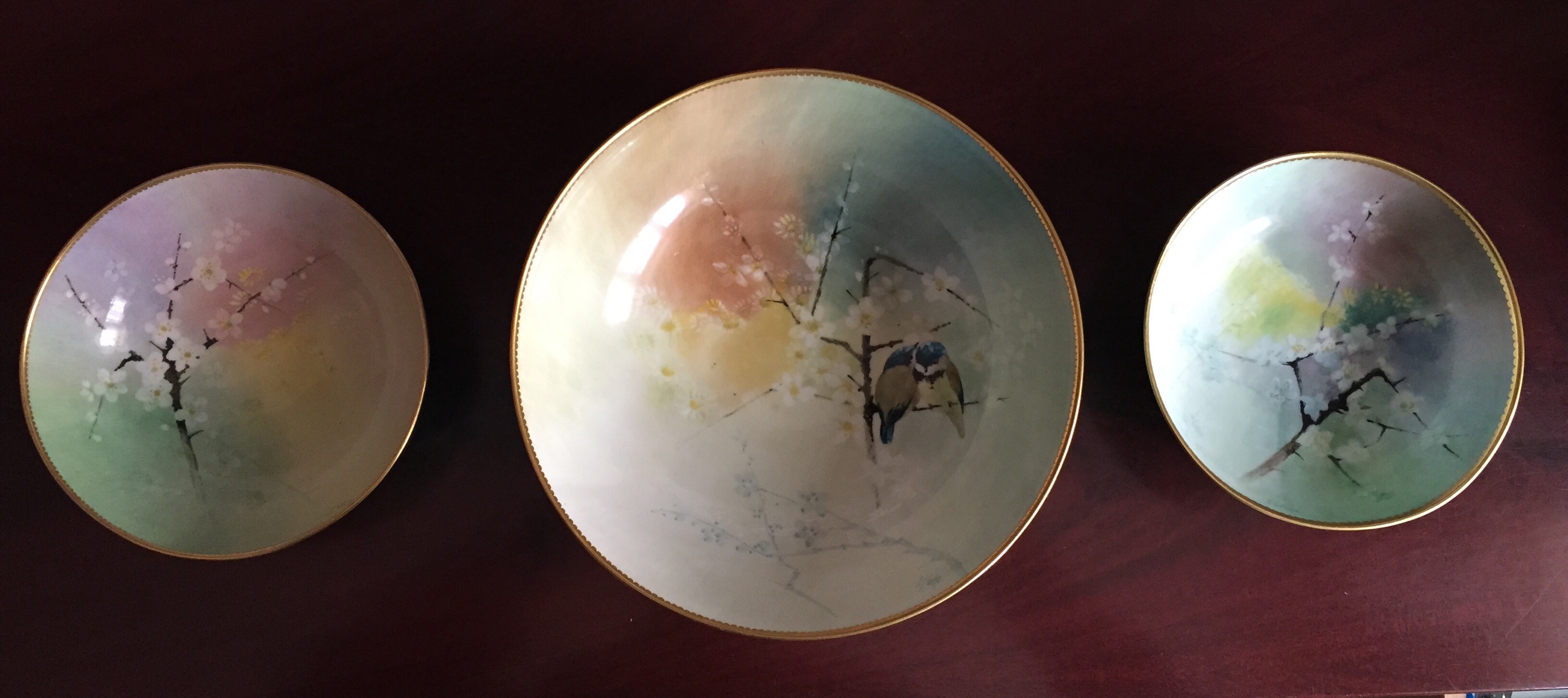
Collectors forget that Noke despite his excellent reputation as a modeller was also an accomplished artist. Signed pieces are hard to come by as is highlighted by the fact that each of these bowls – the largest 23cm diameter – was purchased on separate occasions. 

  
I had previously believed that they could have been the work of Noke junior but the largest piece can be dated to 1918, prior to his commencement and training at Doulton. 

Doulton figures- are you seeing dots? 

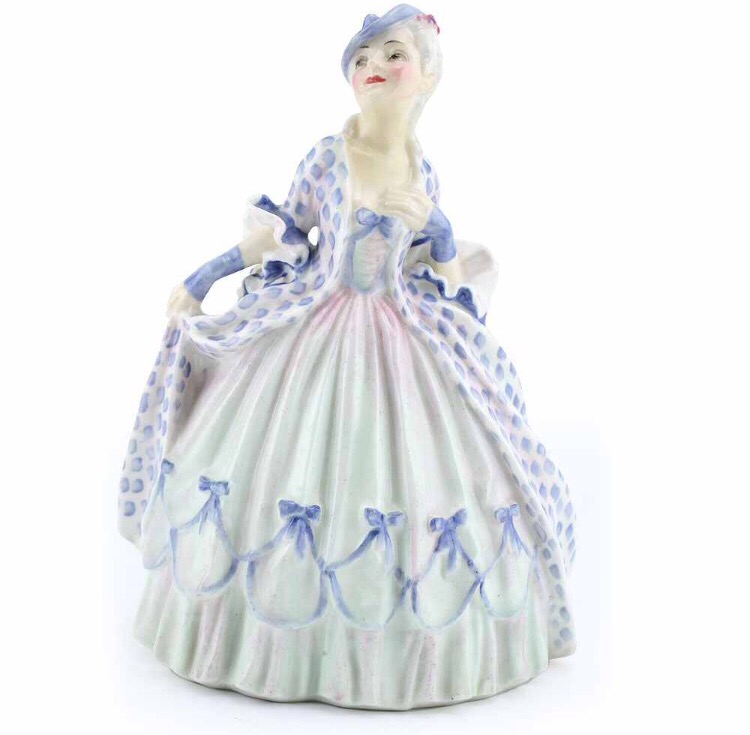
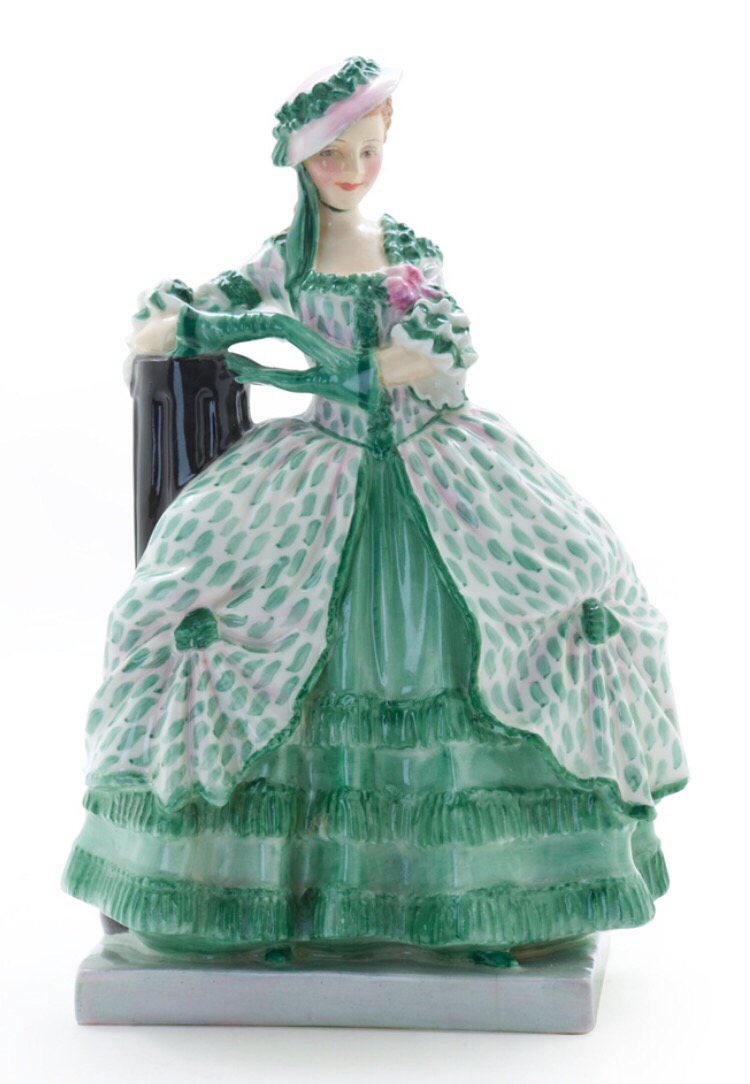
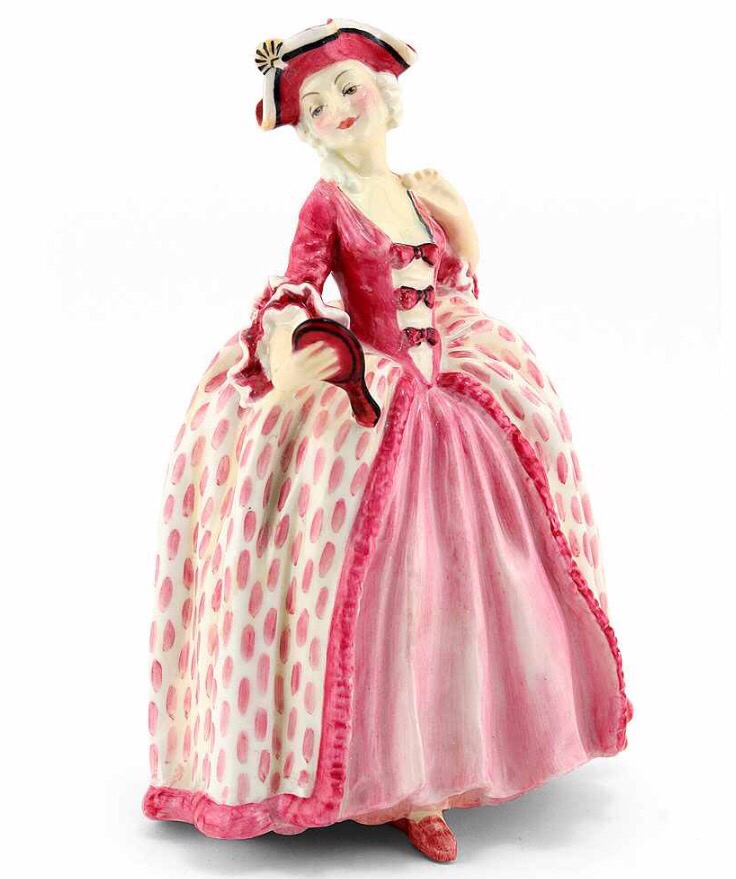
Who doesn’t love matching colourways? We’ve looks at matching reds, pinks, blues, greens and even oranges, but here are three other early figures you’ll be dotty about! 

  
Sibell HN 1735.

After writing the Kate Hardcastle piece on Monday I recalled these spotted beauties and lamented how I’d never managed to find all three at the same time! 

  
Kate Hardcastle HN 1734.

Just as other groups, their HN numbers are in the same number range, but this time they are chronological if you take a second look!

  
Camille HN1736.

With such vivid colours and an unmistakable design this group may not be to everyone’s taste but they are super rare! 

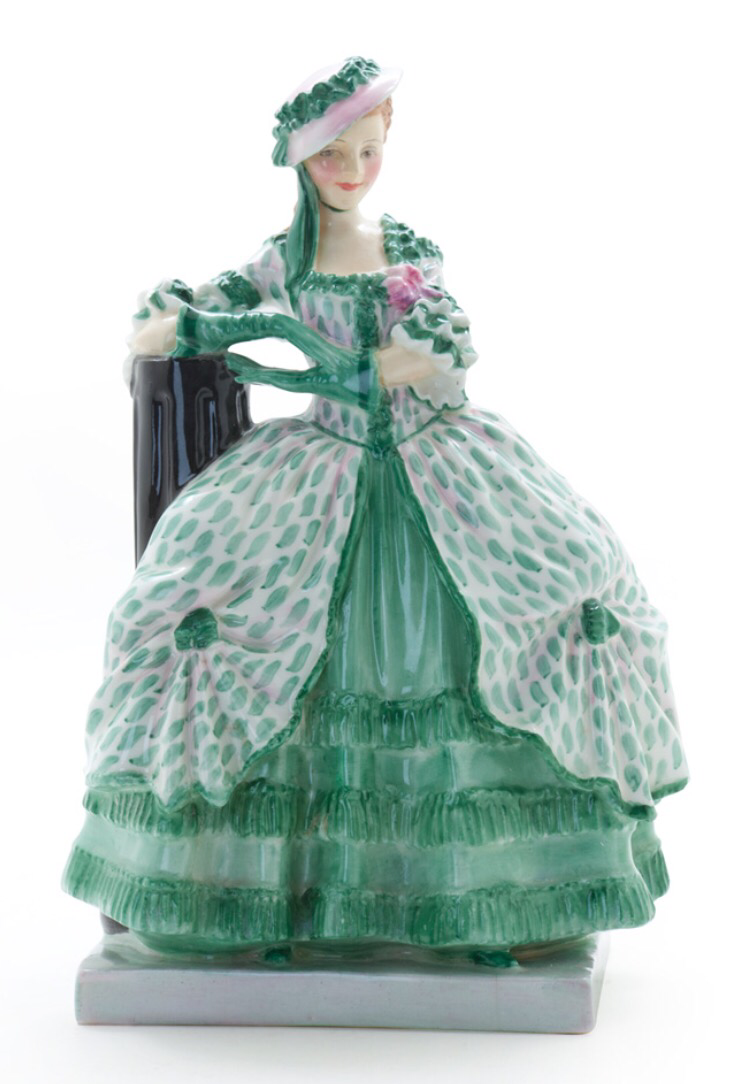
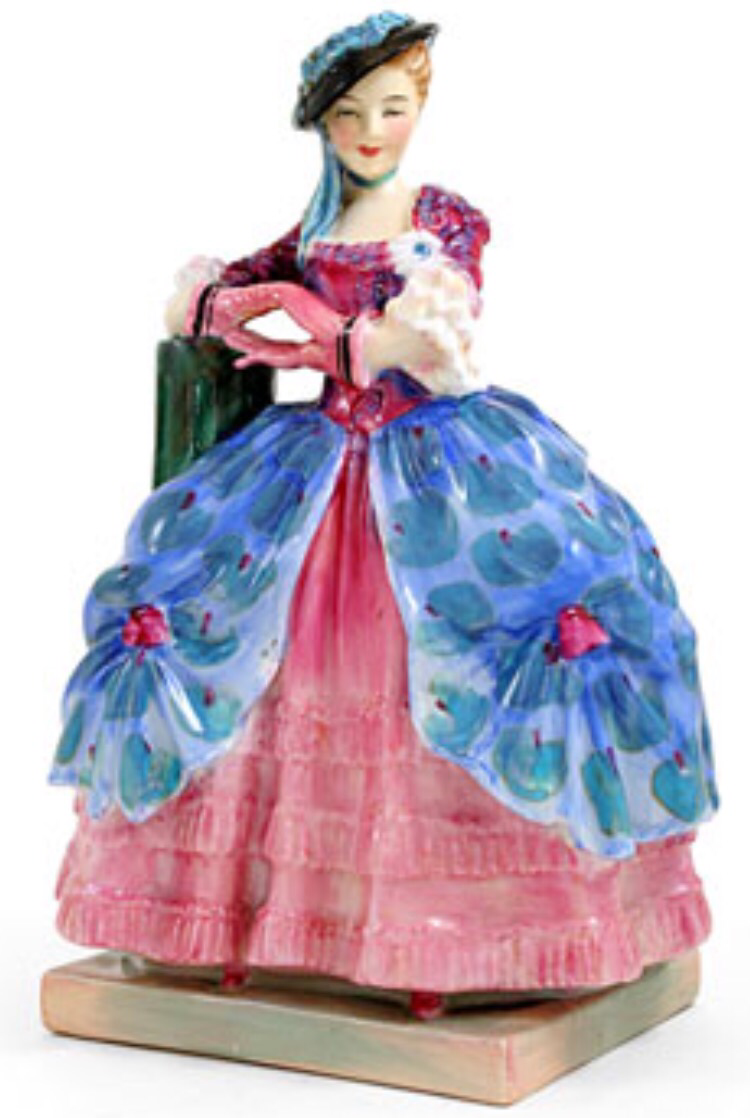
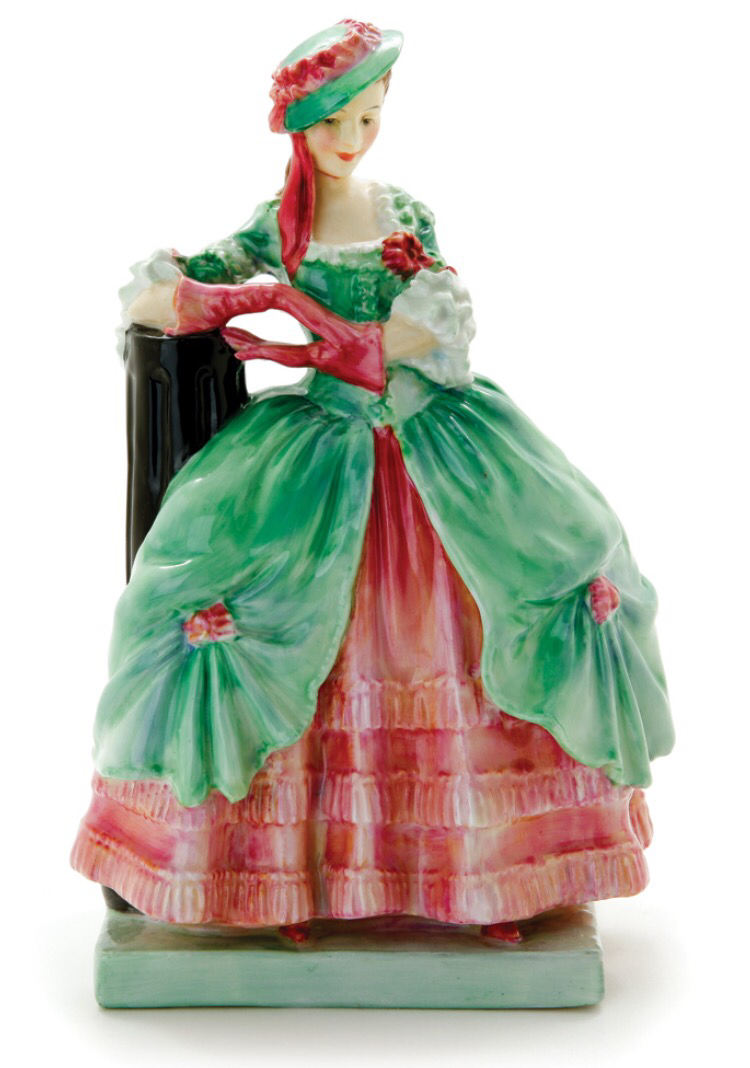
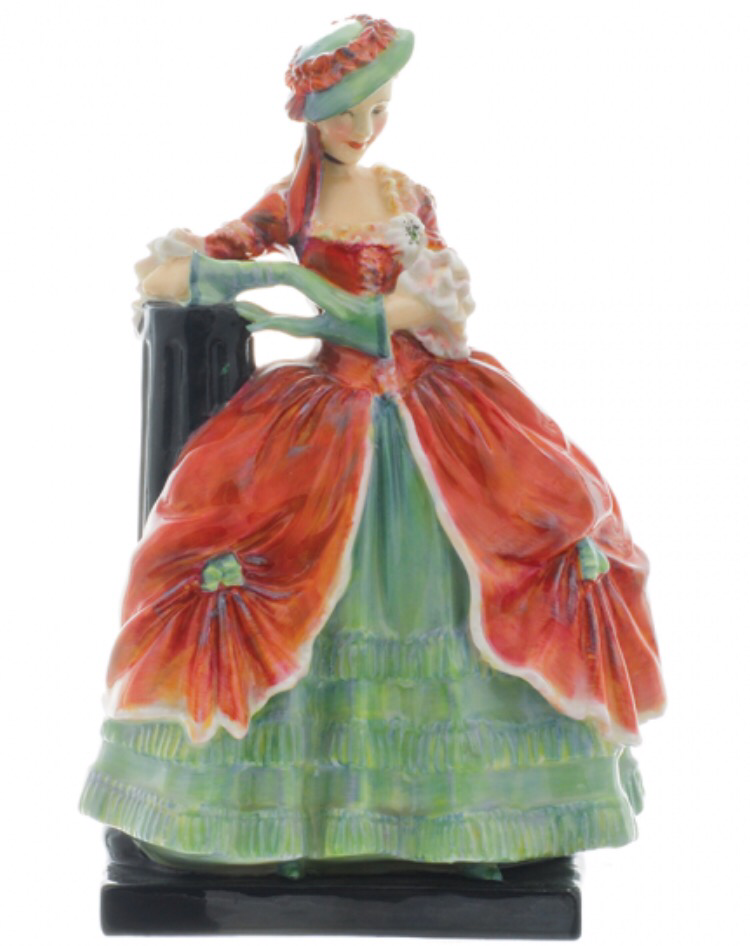
Royal Doulton’s Kate Hardcastle – the story of a name. 

Royal Doulton’s figurine Kate Hardcastle takes her name from the the heroine of the Anglo-Irish playwright Goldsmith’s comedy ‘She Stoops To Conquer’ first performed in the 18th Century.

  
Kate Hardcastle HN1734.

Kate, a spirited young girl pretends to be a barmaid to overcome the shyness of her lover, Charles Marlow, the son of a rich Londoner. Charles’ shyness disappeared around working class girls hence the needed pretence. 

  
Kate Hardcastle HN1861.

Realising what she must do in order for Charles to woo her, Kate pretends to be a barmaid, thus stooping to conquer the young Charles! 

  
Kate Hardcastle HN1719.

Goldsmith’s play has proved perennially popular ever since it was first performed in London in 1773, which explains why in 1935 a figurine was modelled in her contemporary likeness by the great Leslie Harradine. 

  
Kate Hardcastle HN1919.

Doulton’s figure Kate Hardcastle proved popular with 5 colourways produced in the 1930’s and post WWII a slightly simplified model of her in somewhat muted colouring similar to HN1719 was introduced as HN2028. The issue with her has always been the base, which as collectors know is a particularly weak point when they are square or rectangular on these early figures, hence why most figures have round bases. 

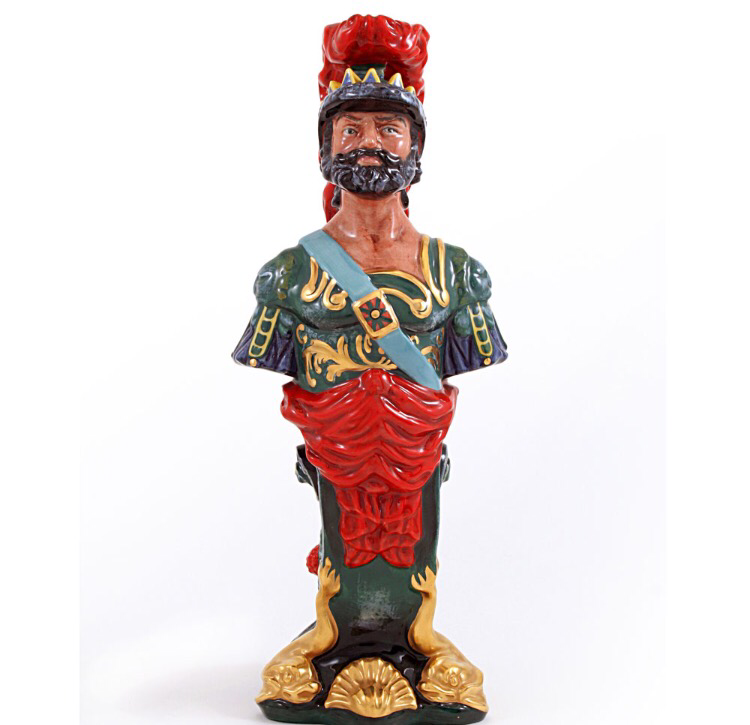
Collecting Doulton’s Ship Figureheads! 

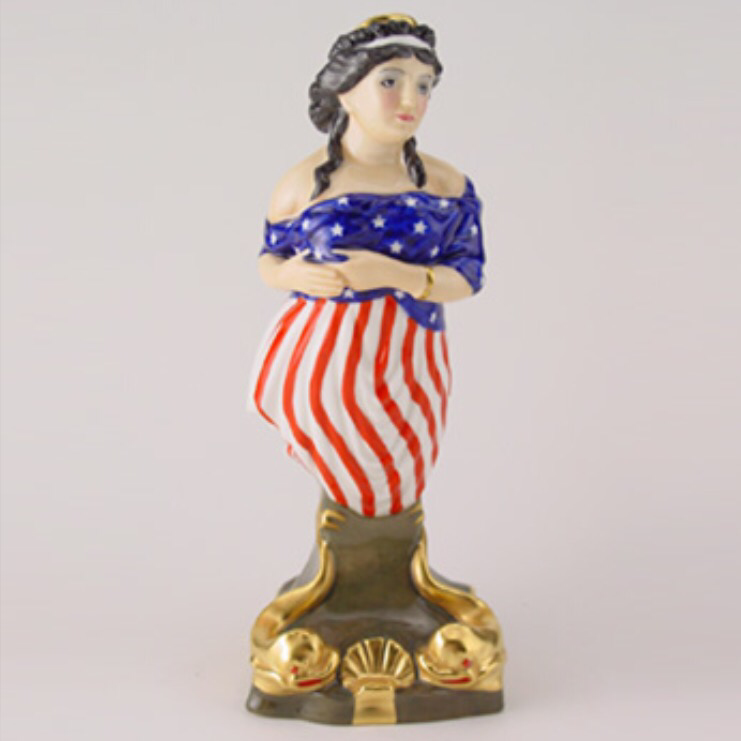
Collectors love a theme to follow and here is one that was produced in relatively recent times and that has proved a sound investment too! Ship Figureheads belong to a bygone age of tall ships and battles, and each piece chosen by Doulton to produce in fine china tells a story all of its own.

  
HMS Ajax HN2908.

Introduced between 1980-83, Doulton’s ‘Ship’s Figureheads’ collection marked a new direction led by Eric Griffiths, Royal Doulton’s then Head of Ceramic Sculpture, who commissioned the freelance artist Sharon Keenan to produce these six models based on her own research in museums and dockyards on both sides of the Atlantic. The six limited edition of 950 pieces were Ajax, Benmore, mary Queen of Scots, Hibernia, Chieftan, Lalla Rookh, Pocahontas and Nelson. Each model came in a presentation box with plinth and certificate.  
HMS Benmore HN2909.

Collecting Doulton’s Coaching Days seriesware pattern.

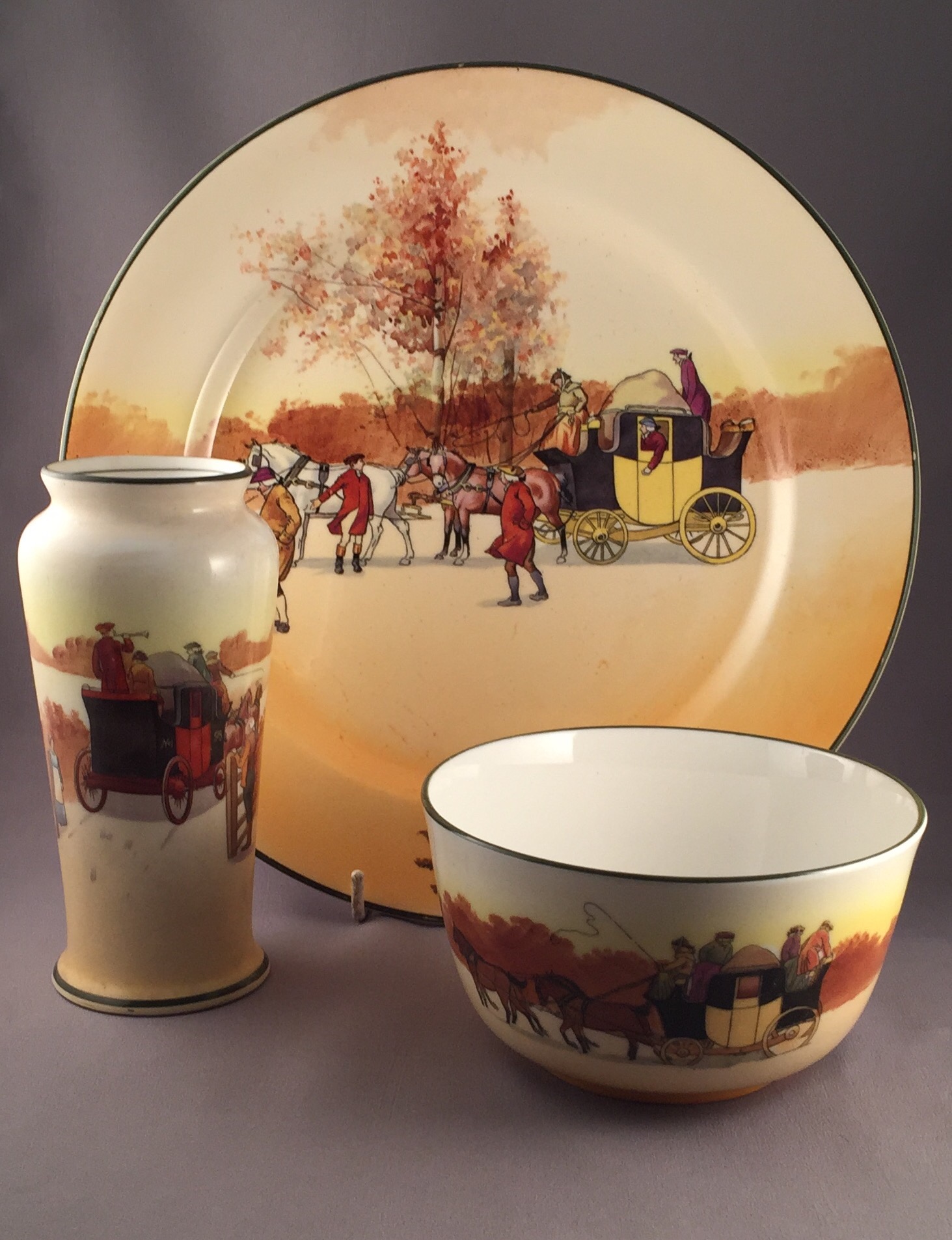
One of Doulton’s most popular seriesware lines remains their Coaching Days series. Introduced in 1905 and finally withdrawn in 1955, examples from this series can be found but earlier shapes and ceramic bodies make certain pieces more sought after! 

  
Earthenware was the typical body but examples can be found on a china body. The series was originally designed by Victor Venner between c.1904-1924, with unknown others contributing designs too. 

  
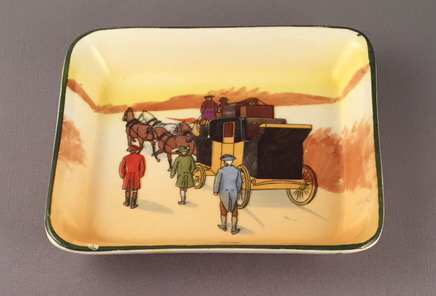
With 20 recorded scenes and a multitude of shapes that the series can be found on, this series provides much scope for collectors to assemble an impressive display. Above is a pin tray from my own collection. 

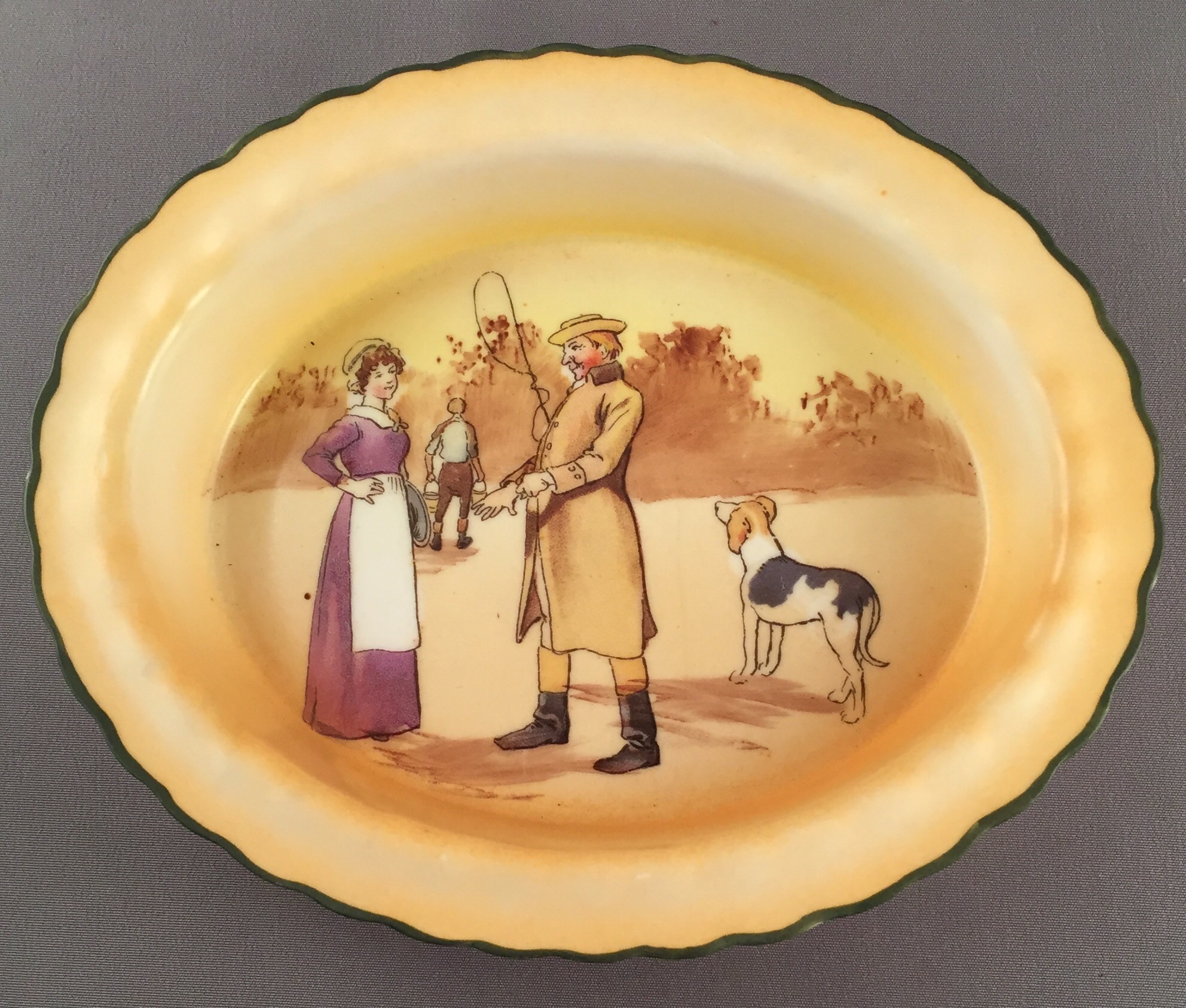
Unusual scenes do turn up such as the one on the small pie crust dish. Labelled as E3804, it is an unusual find and on china too, hence the E number.  


Examples of Coaching Days are easily confused with both ‘Royal Mail’ and ‘Hunting John Peel’ scenes and do display well together!