Category Archives: Artists

Collecting Royal Doulton child studies.

When we think of Doulton many think immediately of pretty ladies and young girls in crinolines, yet here is another collecting theme although generally much harder to track down.  

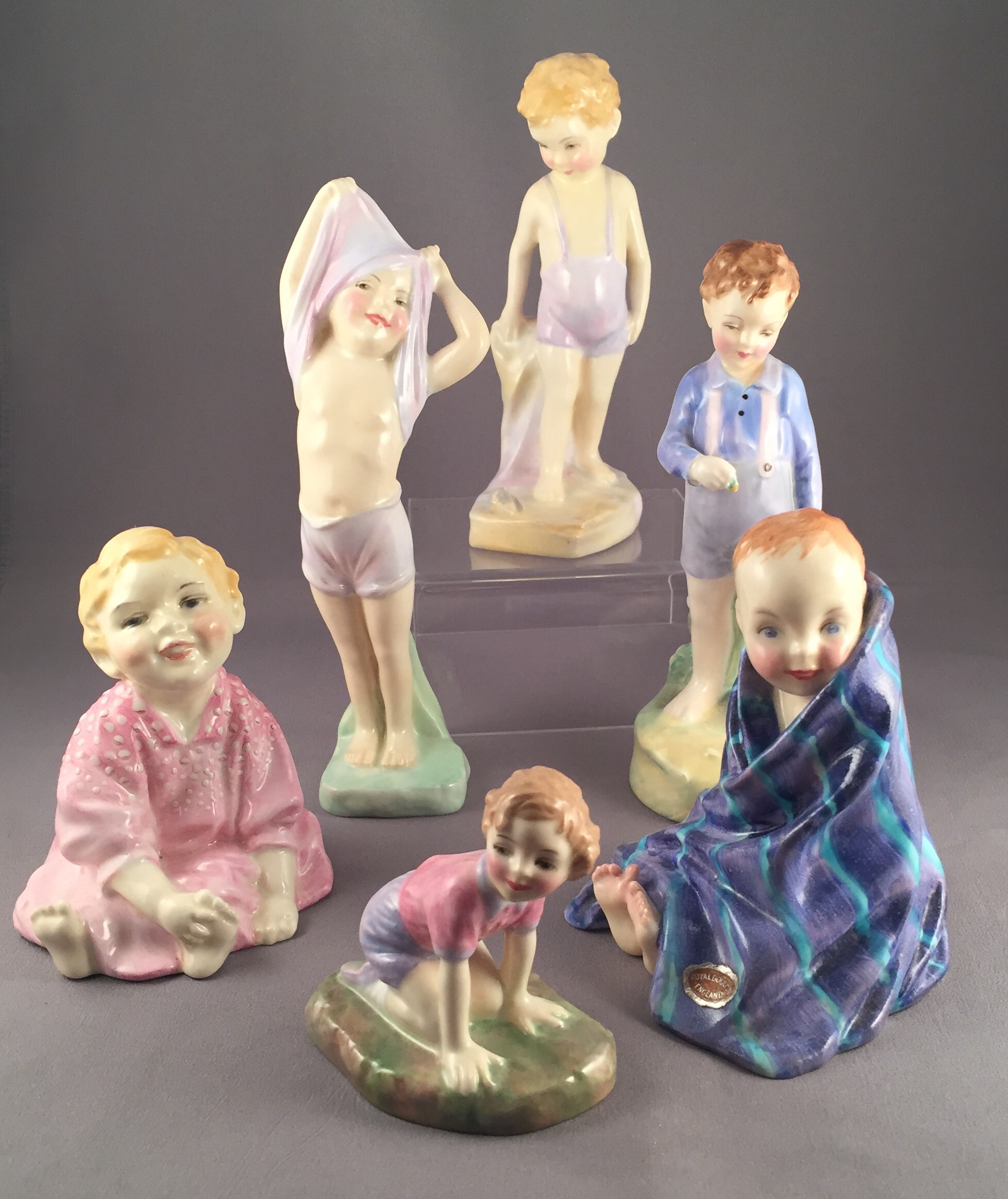
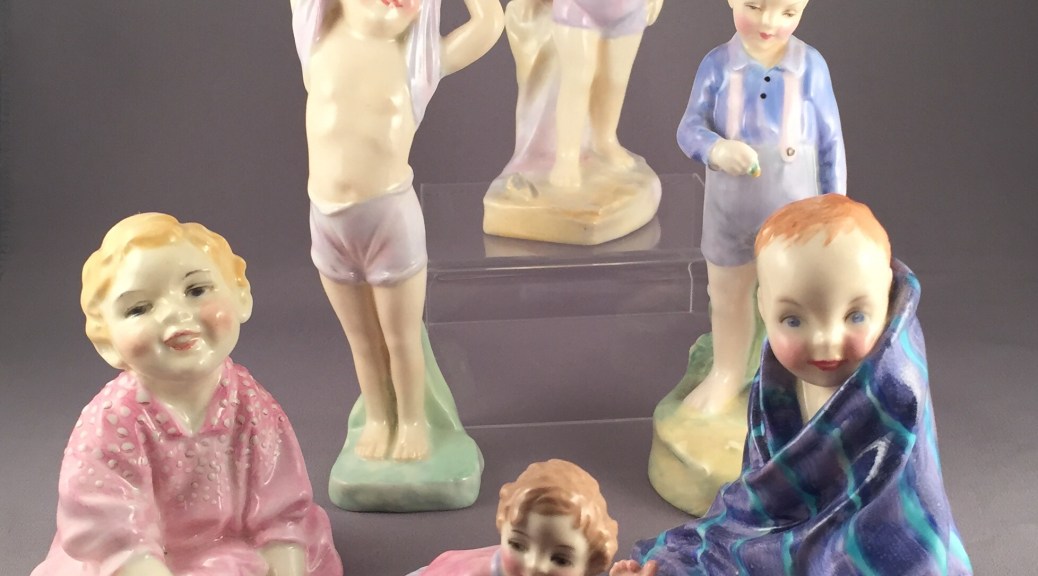
These studies of boys by Doulton were the work of Leslie Harradine and date to the late 1920’s through to the 1950’s. Although there are only a handful of male figures, if you have the patience to track them down they make a complimentary display to their female counterparts! 

  
The popularity of child studies has long been a favoured collecting field for Doulton enthusiasts, once again bourne out by the enduring popularity of HN1 Darling – a Charles  Vyse study of a boy in his nightgown modelled after his Chelsea original and introduced in his original size in 1913. 

The sculptor Raoh Schorr’s work for Royal Doulton. 

  
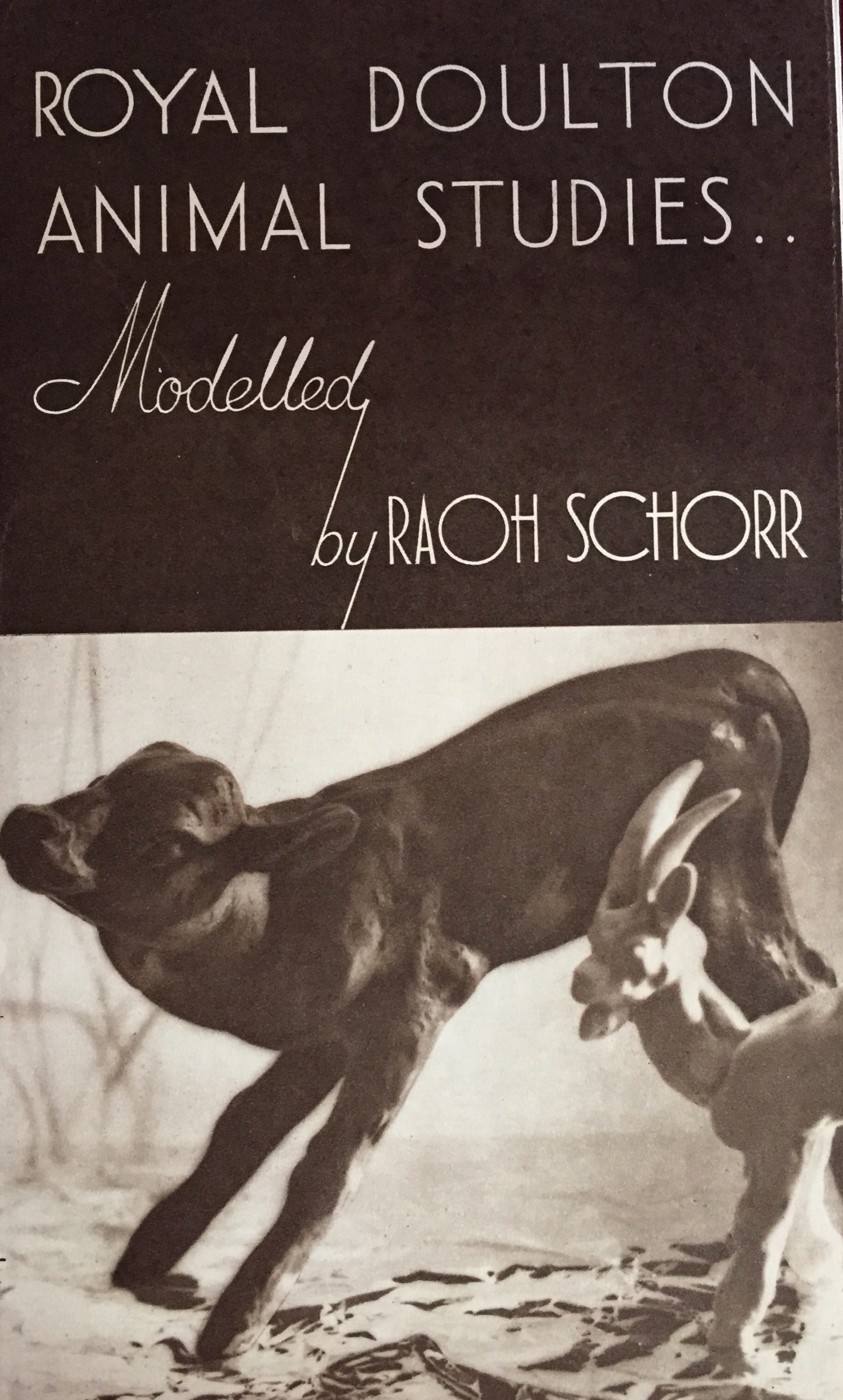
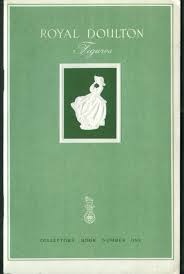
Catalogue cover from 1937.

Schorr was a renowned animal sculptor and Doulton always keen to be ahead of the game, commissioned him to produce a range of Art Sculptures for Royal Doulton in 1936. This series of animals are all rare today and the ones that typically turn up tend to be the more sentimental models such as the Sleeping Calf or Moufflon Lying. There were two size groups produced, a small size ranging from 2-6” and a large size of c. 11”. 

  
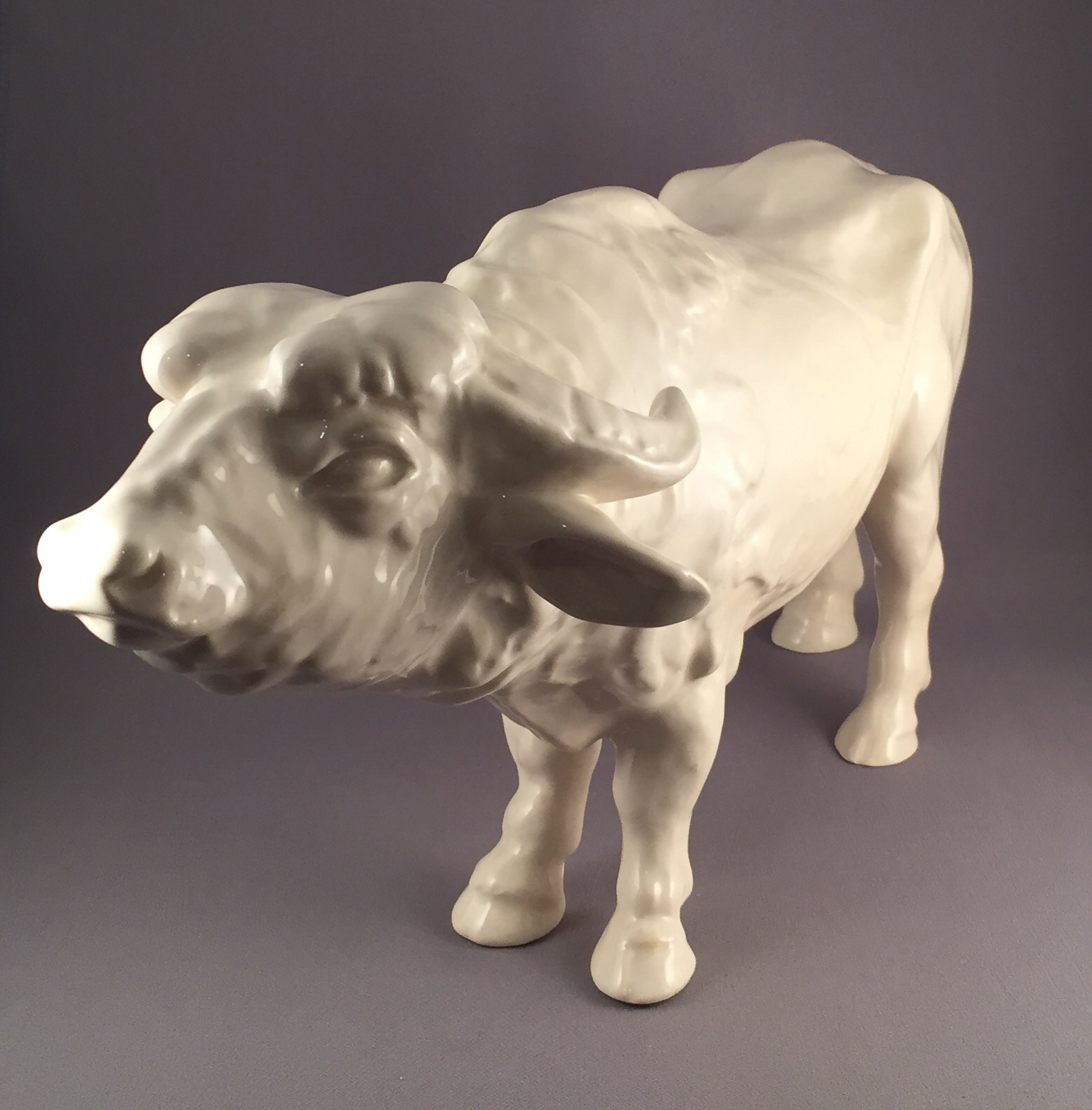
Large size Buffalo.

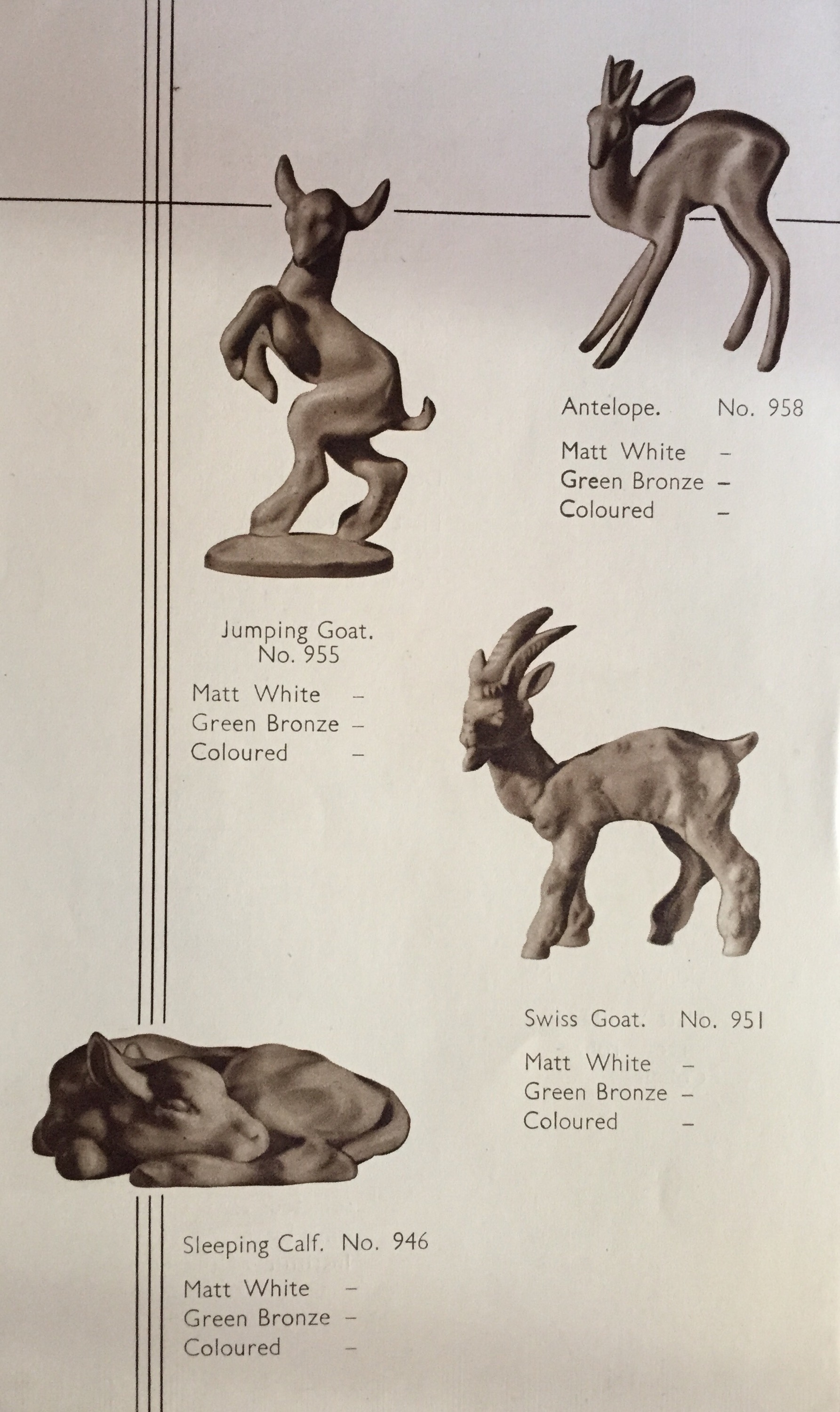
The majority of models were small and it is these which turn up occasionally. Schorr’s models were available in naturalistic colouring, white matt or a green bronze, although I have read that they were also available in black basalt. I have seen only two examples of the large animals, the fox HN1130 both of which painted naturalistically and only once have I seen the large Asiatic Elephant in a green-bronze glaze. Desmond Eyles wrote in The Doulton Burslem Wares that the range “although highly regarded by art critics they did not meet with much public response” and they were swiftly withdrawn, he says in the war years, but I have only seen animals with impressed dates before 1939.

  
Catalogue page illustrating the three finishes available. 

How adverts influenced Harradine’s figures for Royal Doulton.

One of the most interesting aspects of collecting Doulton figures is the story behind them. When researching Reflections – a book which discusses this topic – many more illustrations were found than could be published.

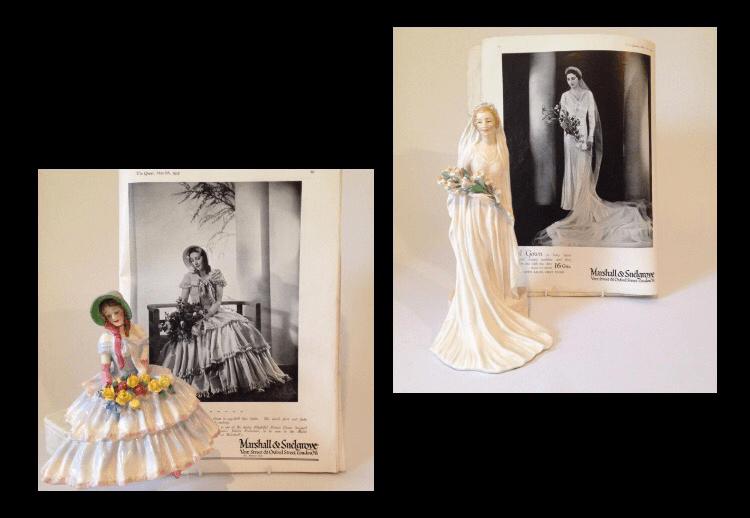
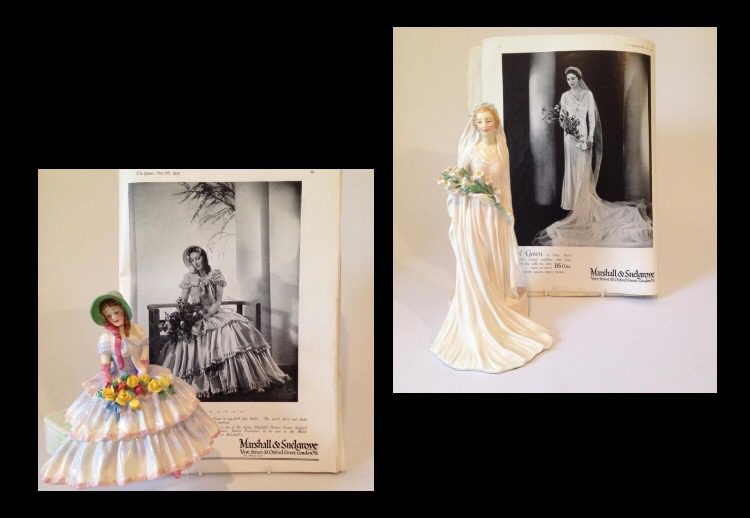
Such examples include the many adverts and publicity shots for the once famous department store Marshall & Snellgrove, which since the 1970’s has been part of the company we here in the UK know as Debenhams.

As you can see two iconic figurines – Day Dreams and Wedding Morn are derived from this source but others include Sweeting, Estelle and a host of fashionable ladies based on fashion photographs from the mid-1930’s.


Doulton’s Dutch Masterpieces.

We have looked at some popular Dutch themes already, but I love a collecting and indeed display theme so it is time to look at it a new!
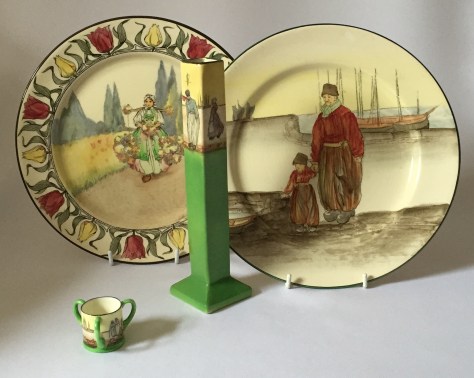
  
A mixture of the popular and unusual Doulton Dutch Seriesware patterns and shapes. 

The wonder of Seriesware is that it offers something for every collector – for new collectors there are many familiar faces to collect and for the die hard collector you never quite know what will turn up! 
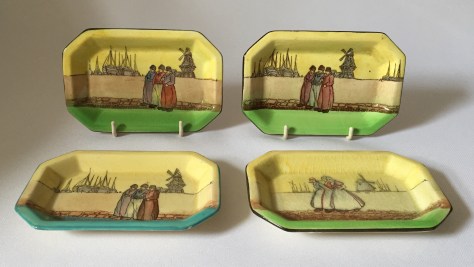
  
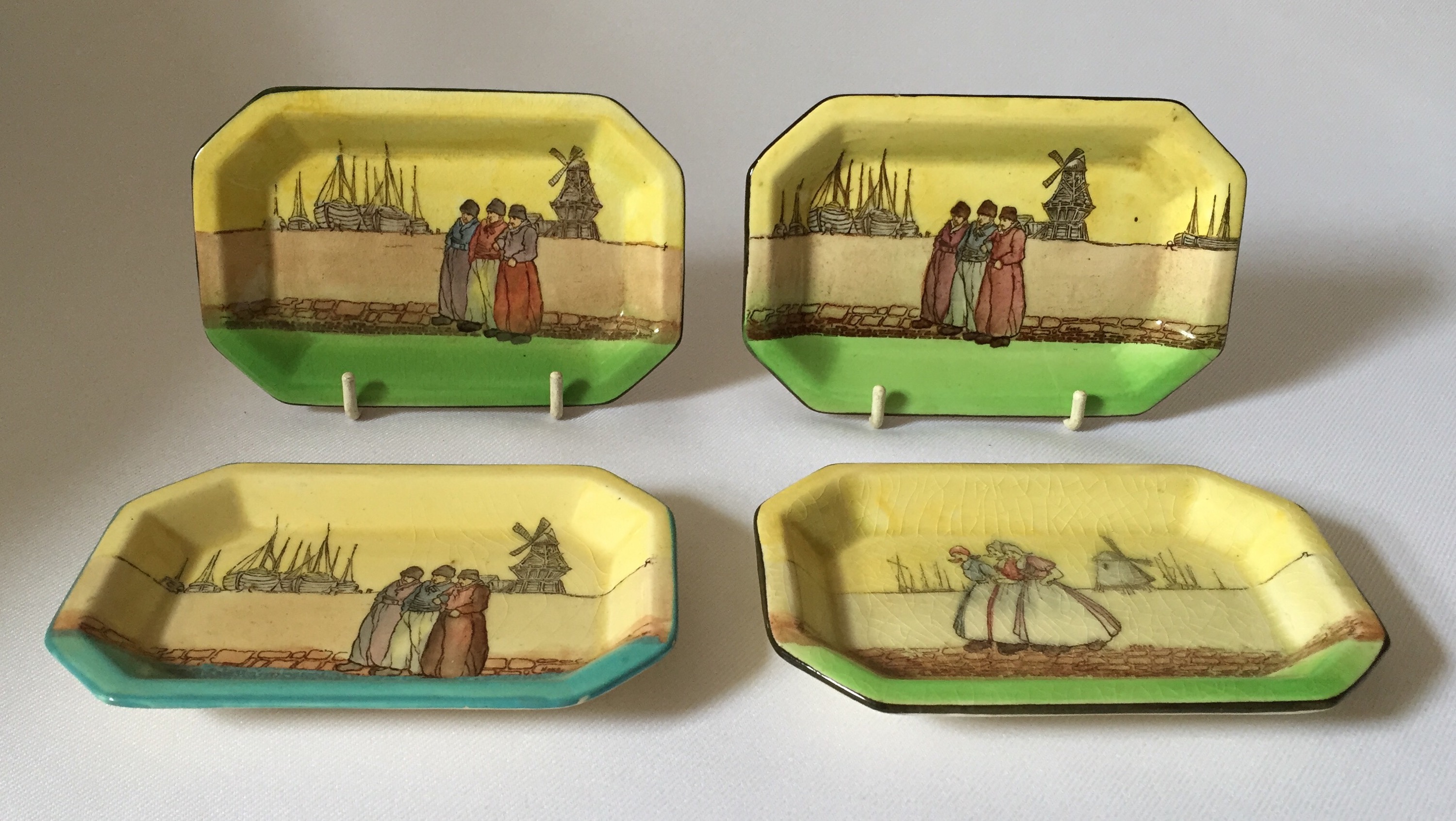
Four pin dishes illustrating the variety of seriesware that can be found! 

There was even a version of this popular theme created specially for Liberty of London with a blue sky. 
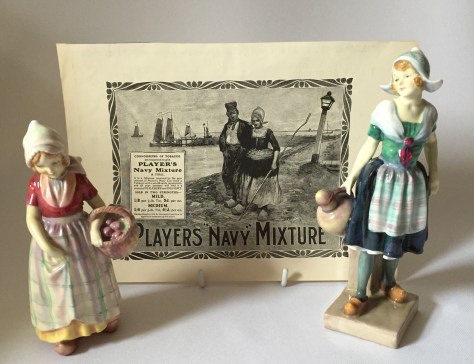
  
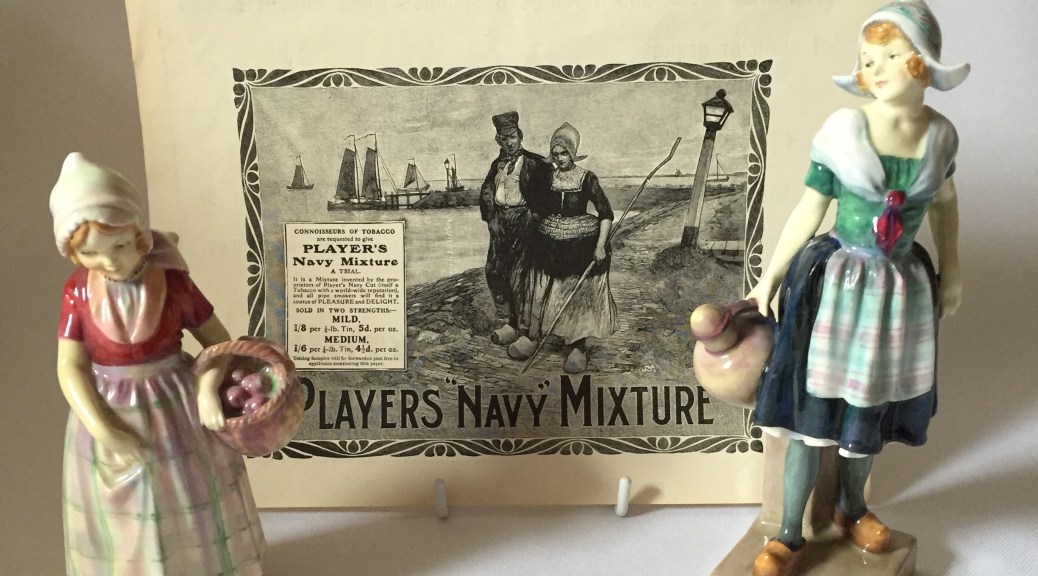
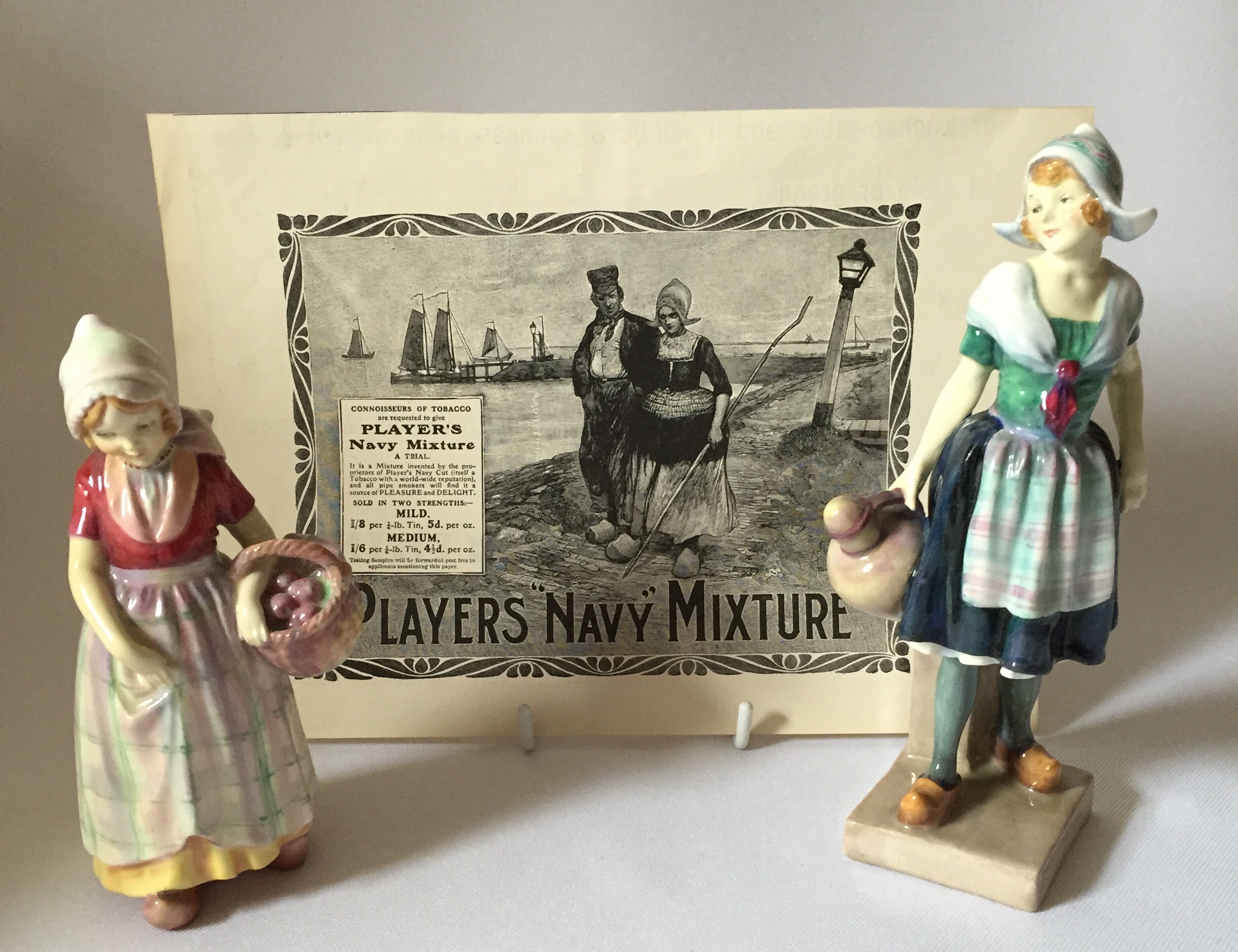
Two colourways of popular 1930’s Dutch figures Annette and Gretchen, and an illustration showing the popularity of all things Dutch in the early 20th Century.

Even well into the 1930’s Doulton were producing their Dutch figures such as Gretchen and Derrick and a glimpse through catalogues and adverts for major stores including Liberty of London, proves the then popularity of all things Dutch with page after page of Dutch inspired decorative items for the home.  
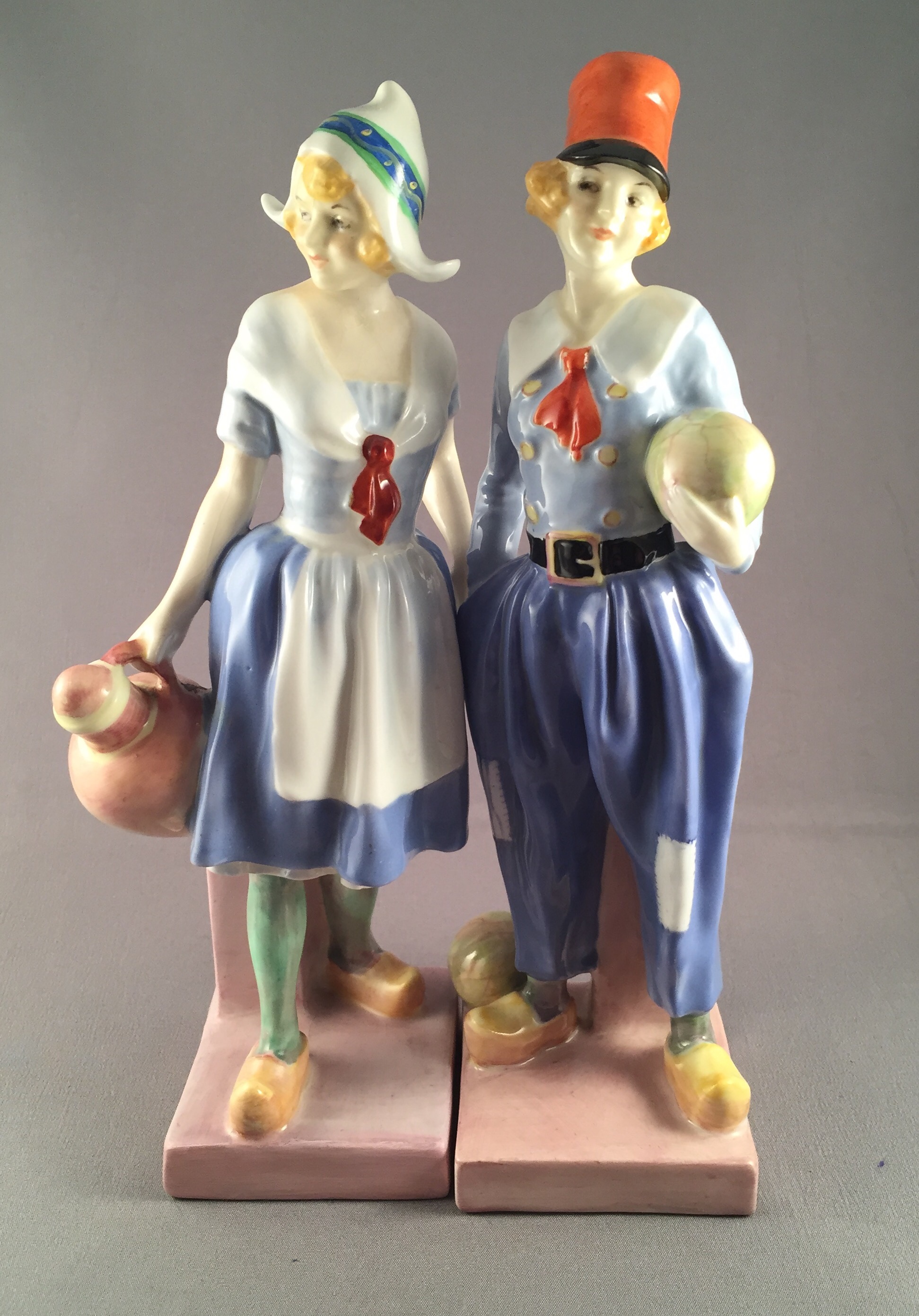
 

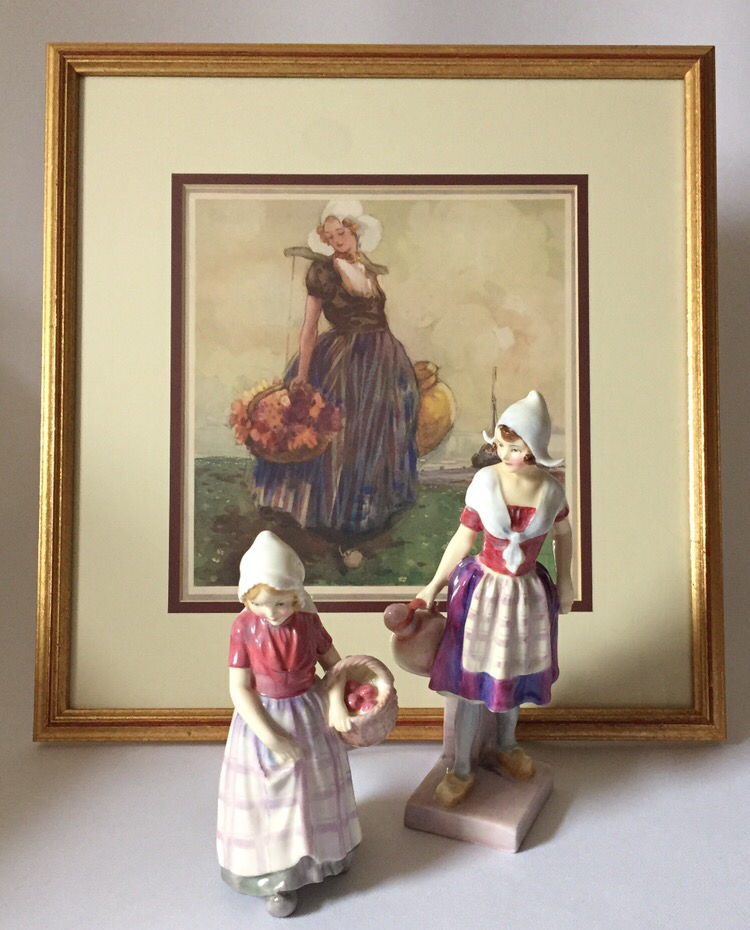
The popular pair Gretchen and Derrick.

Collectors show great invention when displaying their collections and whilst some mix seriesware and figures excellently, others rely on illustrations to emphasise the theme they are creating, such as the picture below by AK Macdonald, who inspired a small group of Leslie Harradine’s figures in the 1930’s. 
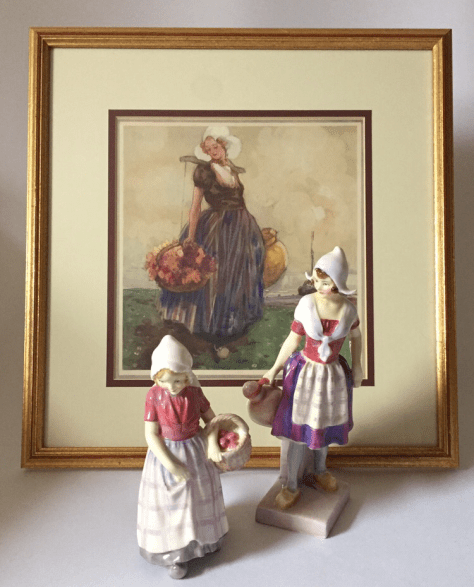
 

Perhaps you arrange your collection in a particular way? If so why not share it with us on our Doulton Collectors Club facebook page! 
Doulton artist profile – Robert Allen.


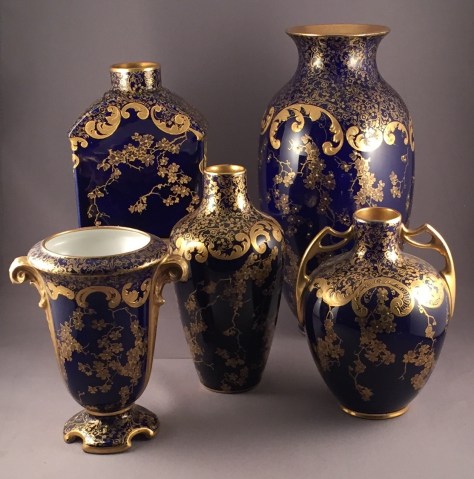
A Robert Allen design carried out by his studio ca.1900.

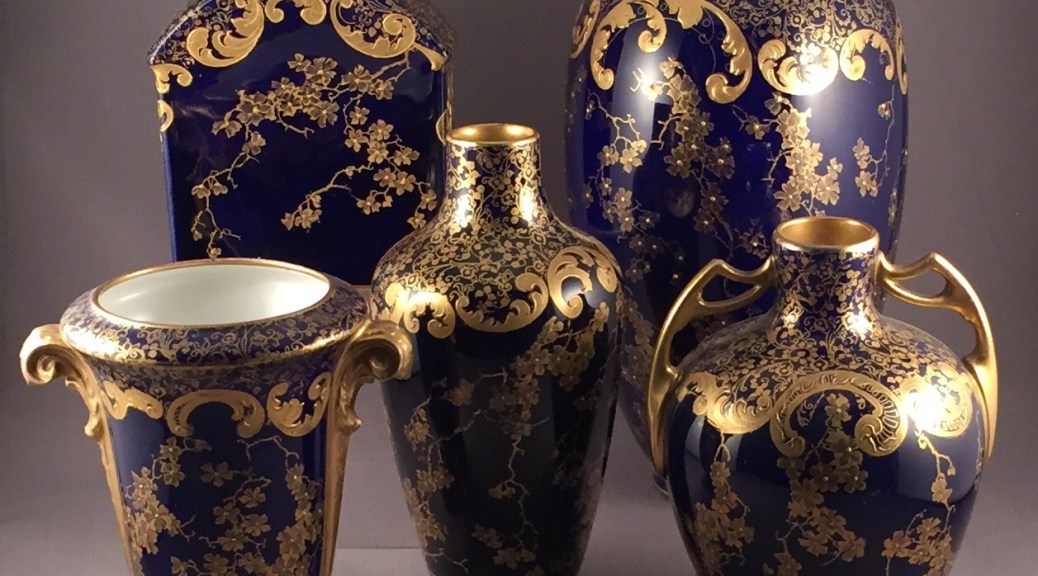
Robert Allen began work at Nile St. when it was still owned by Pinder Bourne, after a brief period at Minton’s as a boy worker. Robert flourished under the guidance of John Slater, then art director, eventually taking over a painting department of his own. Work from his department is denoted by his initials R.A. followed by a number. Robert Allen’s own signed work is however, rare. Yet, he and his department were entrusted with much of the finest and most expensive decoration carried out at Burslem notably for the great exhibitions at which Doulton exhibited from the late 19th century. Robert was notably involved in the early development of Titanian ware too although it is the work of his son Harry in Titanian that is typical.


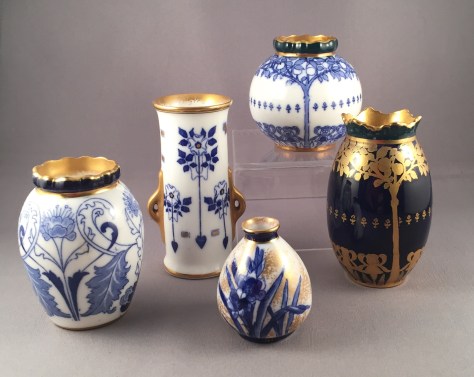
A group of miniatures bearing an RA number from the Robert Allen studio.

Collecting Doulton water filters.

We are all familiar with Doulton’s many advertising flasks for alcohol producers including Dewars, but Doulton also produced some magnificent dispensers for plain old water too!


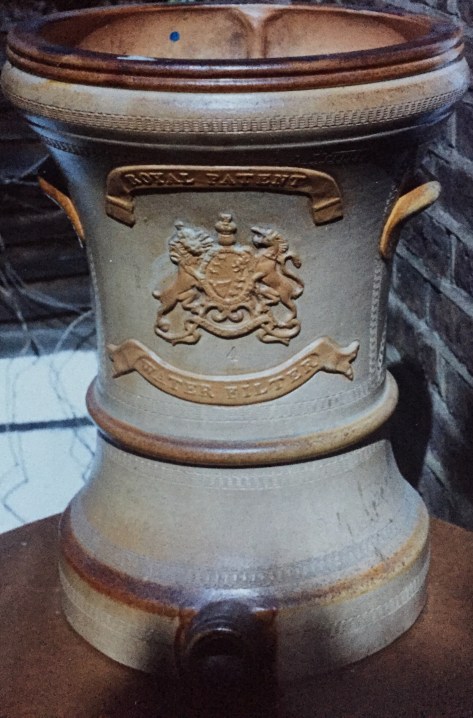
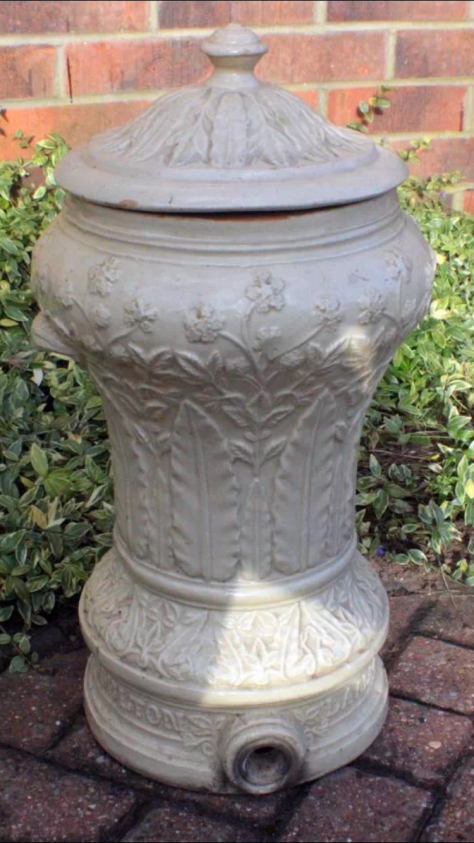
An early filter ca. 1850’s.

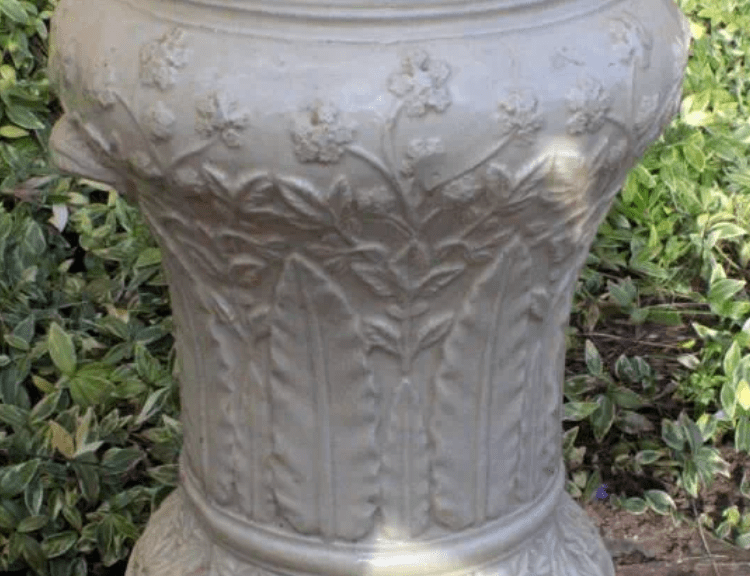
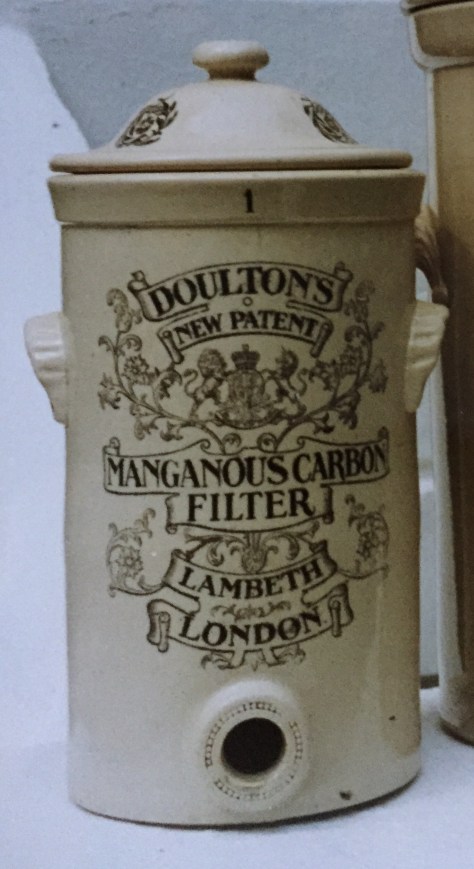
Early Lambeth filters were plainly decorated barrel shapes and can be found with simple coats of arms decoration or lettering. These earliest filters used charcoal and sand to filter the water – a very necessary procedure in 19th Century England. In 1869 a new filtration patent filter was introduced by Doulton and even into the 1950’s water filters were being exported around the world. 


The manganous carbon filter size 1.

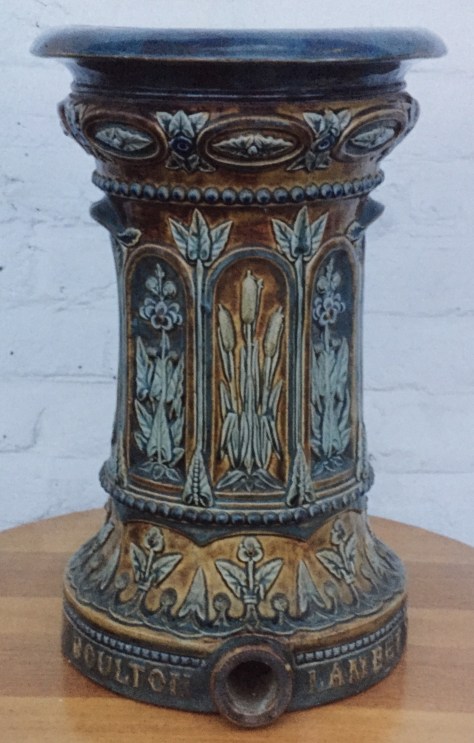
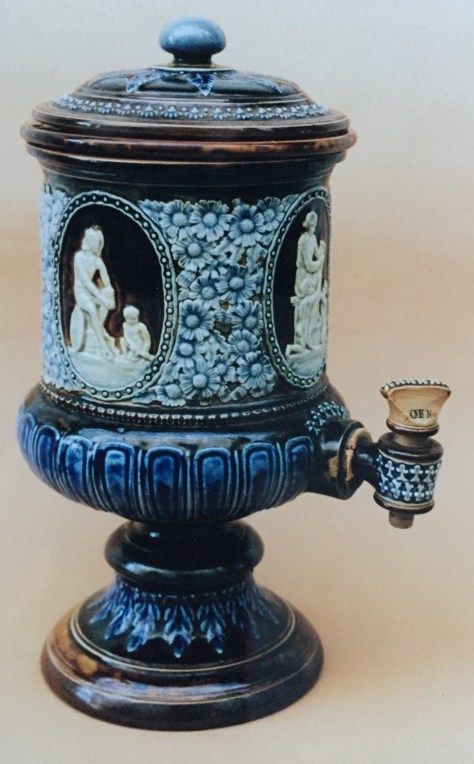
As the popularity of water filters grew in Victorian times, Doulton responded with more elaborately decorated filters by leading artists. Doulton’s first artist George Tinworth provided several designs but most designs found today are simply assistant pieces and often made in Doulton’s Siliconware. 


A recent find – a complete Tiworth designed filter.


A coloured Tinworth design.


An elaborate Victorian/early 20th Century design. 


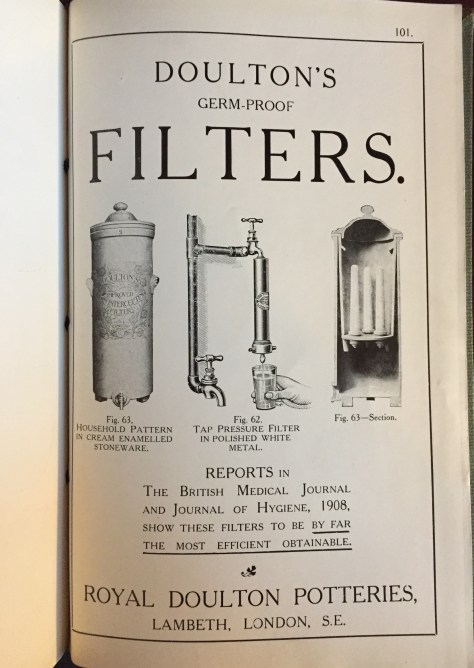
A catalogue page ca.1908.

Harradine’s first models for the HN collection.

No one today can doubt that Leslie Harradine perfected what needed to be perfected in terms of creating commercially popular figures for Royal Doulton.  Until 1920 few figures hitherto introduced can be said to have had the popularity we associate with Doulton figures to this day. Of course there was the ever popular HN1 Darling – the first figure in the collection and the first of many child studies, but there were no what non-Doulton specialists might term ‘pretty ladies’. The female studies introduced before 1920 tended to be sculptural and their differing sizes hindered their grouping to display them as a collection. In short a house style needed to be developed. 

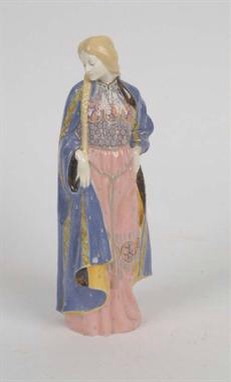
Harradine’s first introduction for the HN collection was The Princess – a dramatically stylish creation that set the tone for his first models for Charles Noke. Note the clear lines and unfussy detail – this is what set him and his models apart. 


A colourway of The Princess.

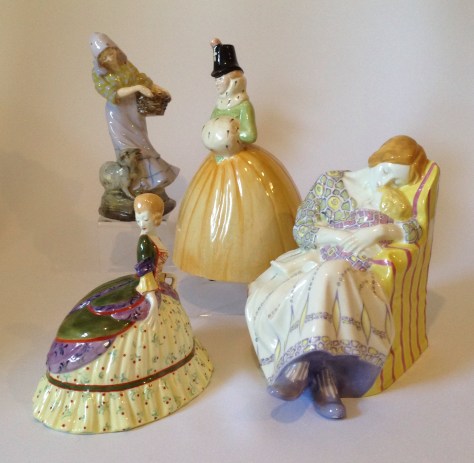
A small group of other non typical Doulton figures were introduced in the following year, 1921 illustrating Harradine’s ability to interpret popular tastes and trends. 


A group of early Harradine models, Fruit Gathering, Puff & Powder, Betty and Contentment.

Size was the most noticeable difference with Harradine’s figures as they diminished in size to what we even today are used to in terms of figure height, and this more standard size allowed collectors to create displays. 


Harradine’s first series of figures from the Beggar’s Opera all illustrate this point and thus a house style was developed –  something that would prove most successful among collectors whose appetite for figures is still going strong over 100 years later.

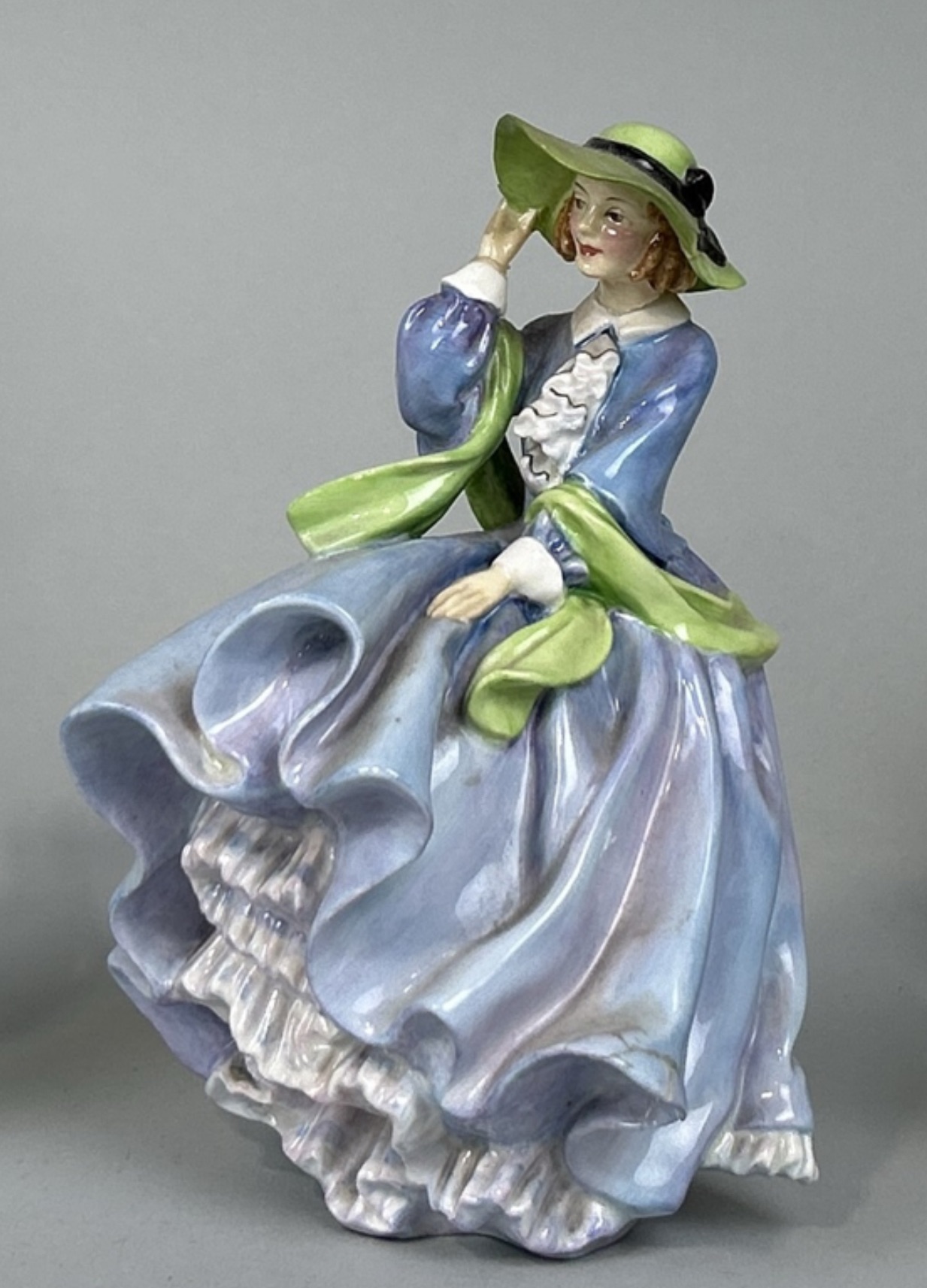
A look back at Royal Doulton’s iconic Top o’ the hill!

An unusually detailed colourway from the 1930s. Note the decoration to the skirt.

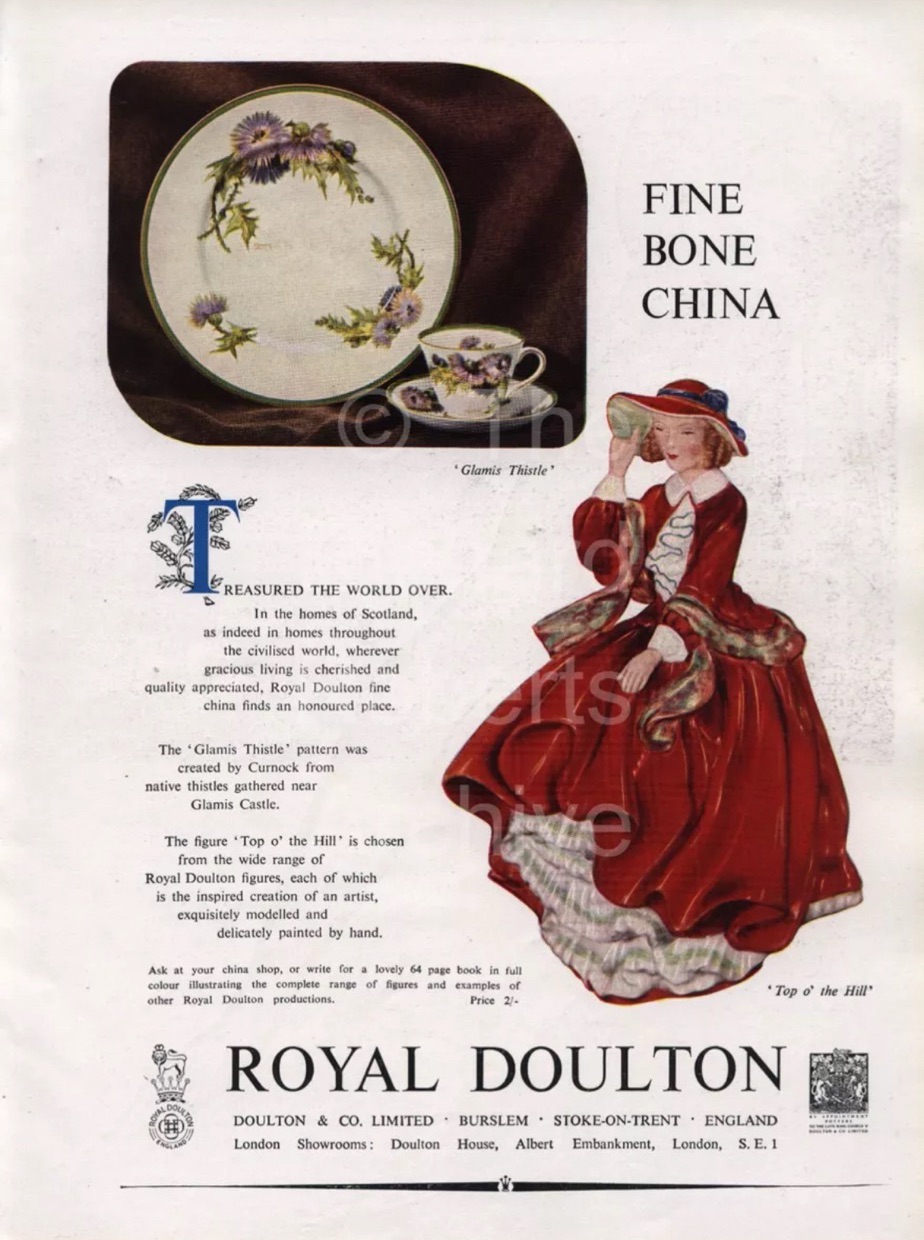
Without doubt Top o’ the hill remains Doulton’s most instantly recognisable figure. Since her introduction in 1937, Leslie Harradine’s ever popular figure has been used as a demonstration piece at exhibitions and events for decades.

Doulton’s iconic figure was based on a picture by Molly Benatar (illustrated) and the sole rights for reproduction in china were bought exclusively by Doulton from the publisher Raphael Tuck. Not a bad investment on Doulton’s part given her popularity and thus her lengthy production.

IMG_1815

Interestingly, from a collector’s point of view are the subtle changes to her over the years. The figures illustrated above all date to 1937 and 1938 and are the original 3 colourways. Changes to her have included a deeper base, less detailed, delicate frills to her underskirt and a thicker brim to her hat – all of which were invariably made in response to collectors’ feedback as these early versions are all somewhat fragile.

A more recent colourway discovery dated 1938.

Another interesting note is the difference that occured in painting during the war years to the red version. HN1834 originally had blue streaks as many red figures from this time did, but when Doulton began producing figures again after the war, she became a solid red. Another change occurred in the 1950’s when she was modelled with an elongated face, no doubt a change to then fashions. This change was later reversed and I doubt people even realised there had been a change!

Above is the cover of the 1949 catalogue when the sequence was begun again post WWII.

In more recent times there have been other colourways of this iconic figure introduced, including a yellow and green one HN2127 for Australia’s Bicentenary in 1988 and a deep blue one HN3735 in 1997. A miniature was also made in a few colourways including the popular red in the late 1980’s and early 1990’s. Most recently a petite size has also been introduced.

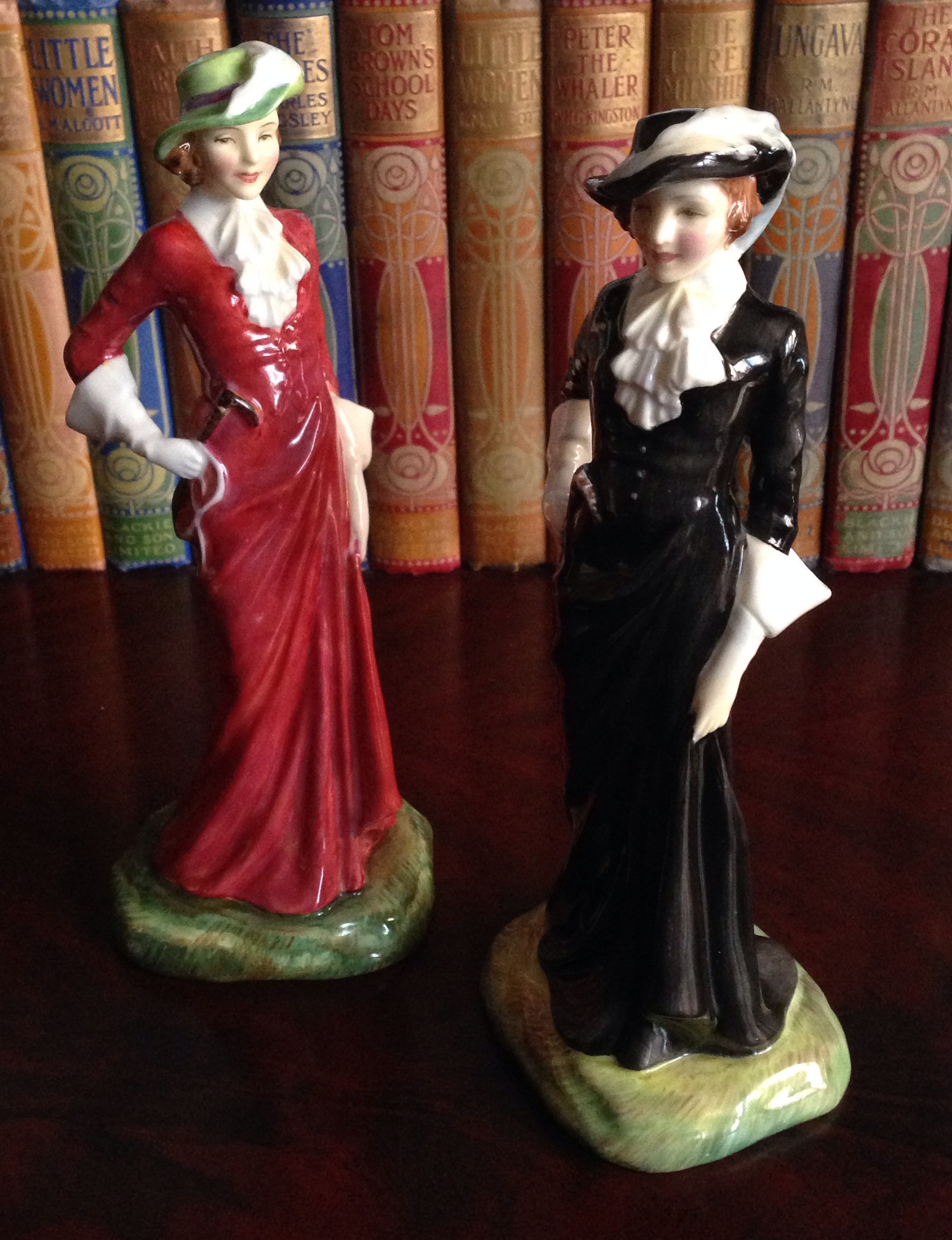
An early colour trial for Harradine’s ‘Karen’.

Always on the look out for the unusual I recently spotted this colour trial for Karen HN1994 that was eventually produced in a red colourway. It is the second time I’ve seen her in black suggesting that this black and white version was a serious consideration and must have done the rounds both sides of the Atlantic to garner her popularity prior to production.

IMG_1459
Like many models introduced just after the war, Doulton held any war time introductions back until the war was over in 1945. The model for Karen (no.1237) dates to ca.1943, whereas the figure produced as HN1994 was introduced in 1947 and withdrawn in 1955.
Another nice feature is the crispness of the modelling in the black and white version, that you can hopefully make out from the picture.

Collecting Doulton’s ‘powder and patch’ ladies!

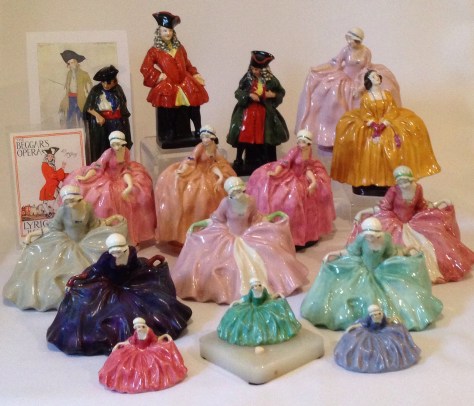
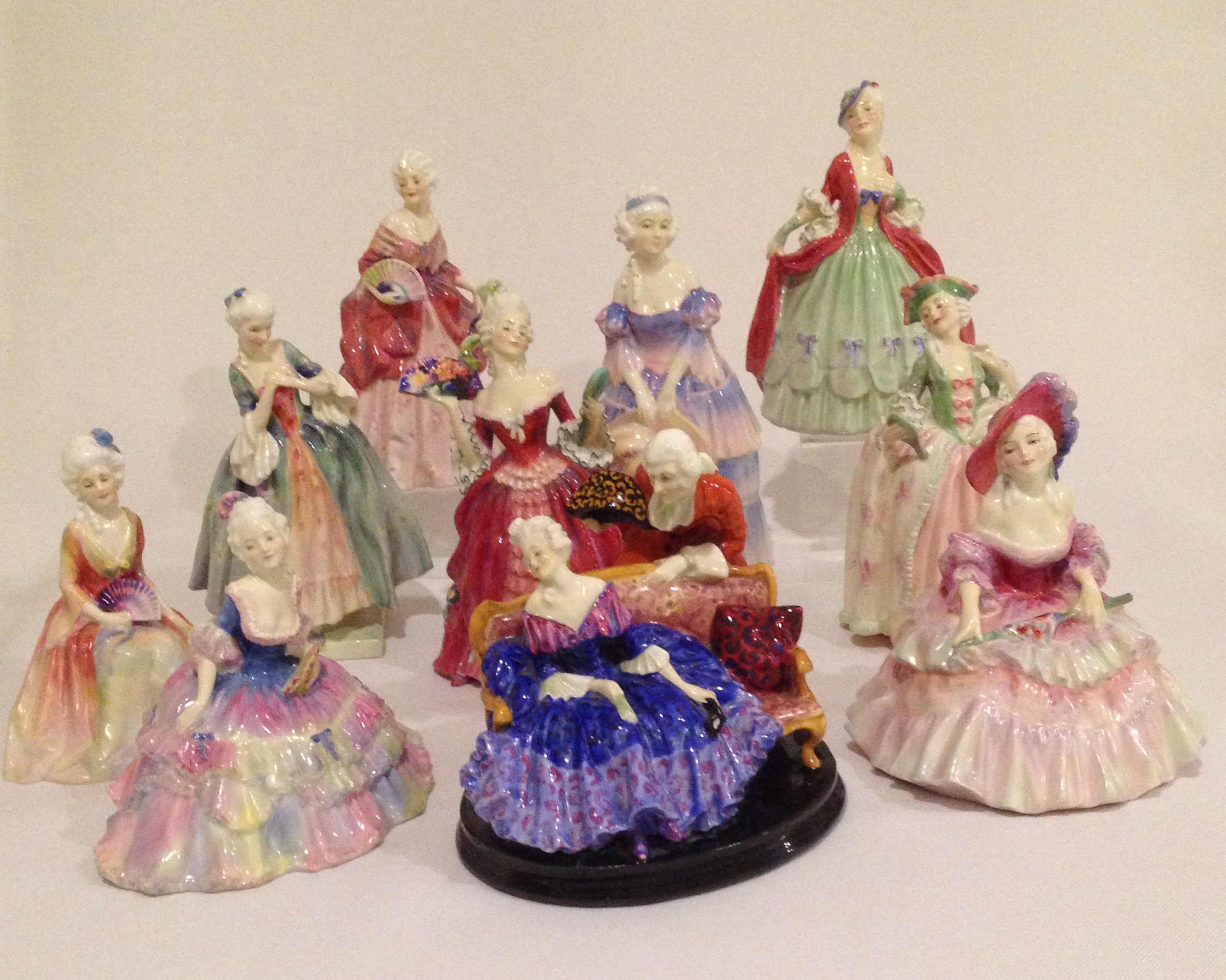
Another collecting them for Doulton figures is the band of figures in elaborate, powdered wigs.

2015/01/img_1465.jpg
With Doulton’s re-newed association with the modeller Leslie Harradine (who was originally apprenticed to Doulton in Lambeth) from 1920, came the commercial success Doulton had sought for the previous decade. Harradine’s versatile style meant that every possible type of china figure was created – from miniature Dickens characters, to deco beauties, to the archetypal Victorian lady, to child studies – to name but a few themes.

However, during the roaring 1920’s with its synonymous flapper girls there was also a vogue for fancy dress balls, which explains why there are so many of these romantic figures wearing 17th and 18th Century costumes in the HN collection, during the 1920’s and 30’s.
These charming figures sit equally well with their contemporaries as they do with other Doulton figures from the deco period!

2015/01/img_1466.png

Perhaps you display your figures according to themes? If so, join our Facebook page ‘Doulton Collectors Club’ to share them with other collectors around the world!