Category Archives: Burslem

Tea time with Royal Doulton! 

If drainpipes were the mainstay and indeed supporter of Doulton’s famous stoneware art wares at Lambeth, then it was their table and teawares that supported the many art ware productions of their Burslem factory, and without whose success we may not have the many collectible wares so cherished around the globe today.

  
A favourite art nouveau trio.

With such a rich history in tableware and teaware production there is a veritable wealth of patterns, shapes and periods to collect from early Spanishware, to Kingsware, seriesware, Bunnykins as well as period styles from the high Edwardian period to the popular deco styles of the 1920’s and 1930’s – once again Doulton more than provided for their clamouring public! 

  
A 1905 catalogue page showing popular blue and white designs.

A visit to any antiques market or fair today illustrates how this once unfashionable area is once again ‘de rigeur’ with trios in particular to be found on most ceramics stalls at such fairs. Indeed the increasing popularity of cookery shows on TV including the ever popular ‘Bake Off’ has helped drive up the popularity of tea parties once more.  

  
Illustration from a 1930’s tableware brochure titled ‘Grace before meat’.

This modern popularity has left the starchiness of high tea behind and what we have today is an eclectic mix of the old and new to suit the 21st C, which is once again making us dig out grannies favourite tea sets and adding new items to our tea tables! 

  
A selection of Doulton trios illustrating shape, period, target market place and varying Doulton lines including Bunnykins and Kingsware. 
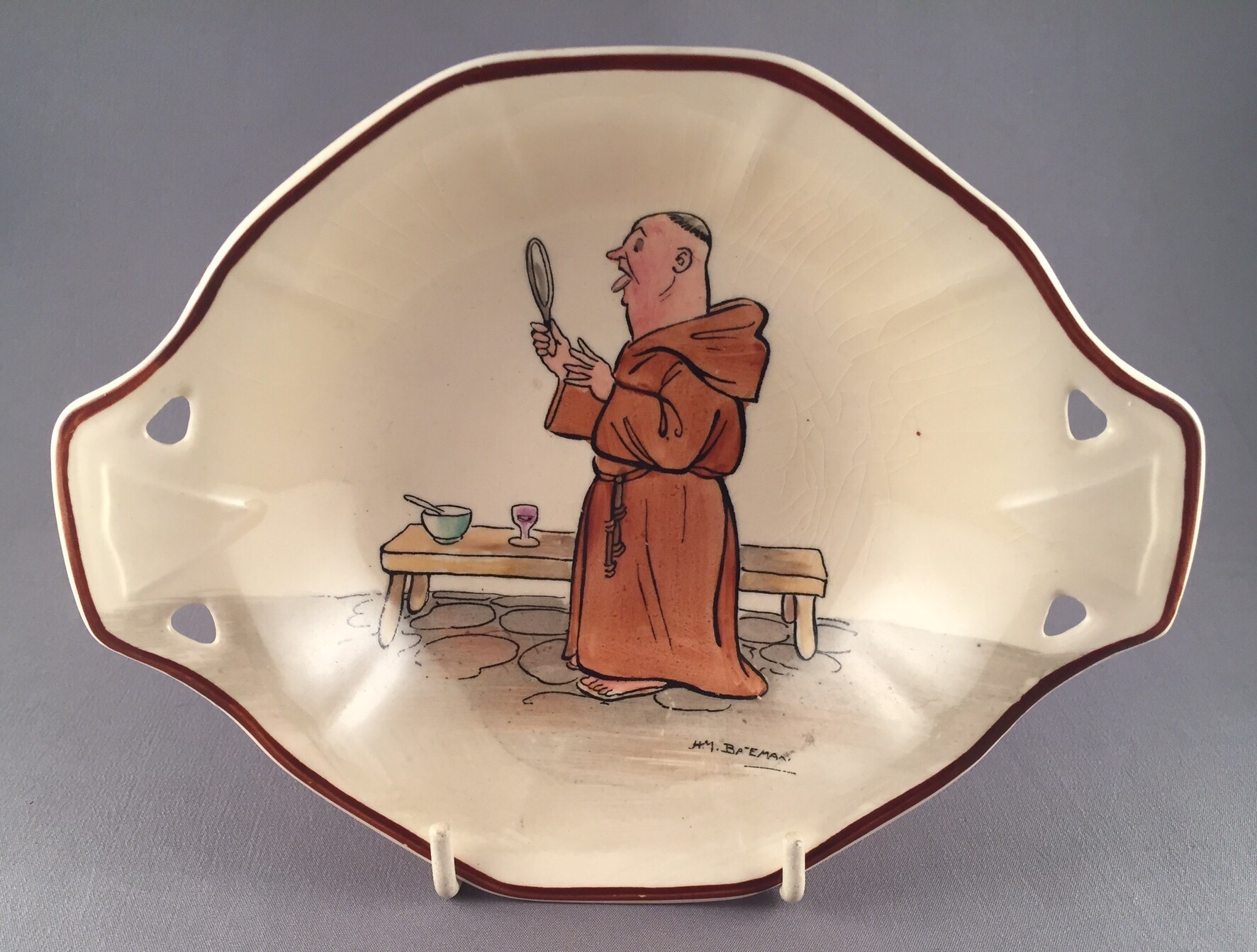
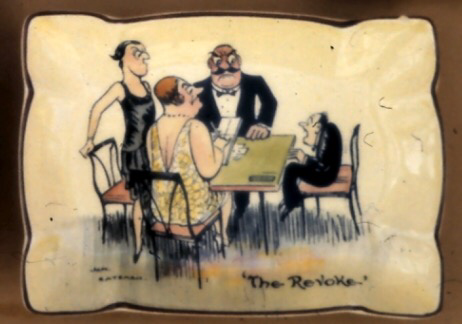
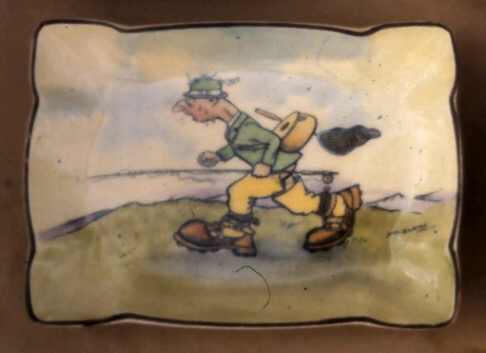
Collecting H. M. Bateman’s illustrations on Doulton seriesware! 

Henry Mayo Bateman was an Australian illustrator, most famous for his cartoons captioned ‘the man who….’. 

 These illustrations featured a haphazard man who continually ‘puts his foot in it’ as we say here in the UK, meaning that he commits the most awkward gaffes! 

  His cartoons were featured in leading magazines of the period including The Tatler and Sketch. 

  Returning to his seriesware illustrations they are termed as rare among collectors who appreciate the humour of his scenes and when they do turn up even on small items they regularly reach three figure sums! His designs on Doultonware feature a facsimile signature and from experience date to 1937-8.

Royal Doulton – all that glitters…

….may not be solid gold, but nevertheless it is gold that is used to decorate many of Doulton’s most extravagant Burslem wares produced during the last two centuries!

  
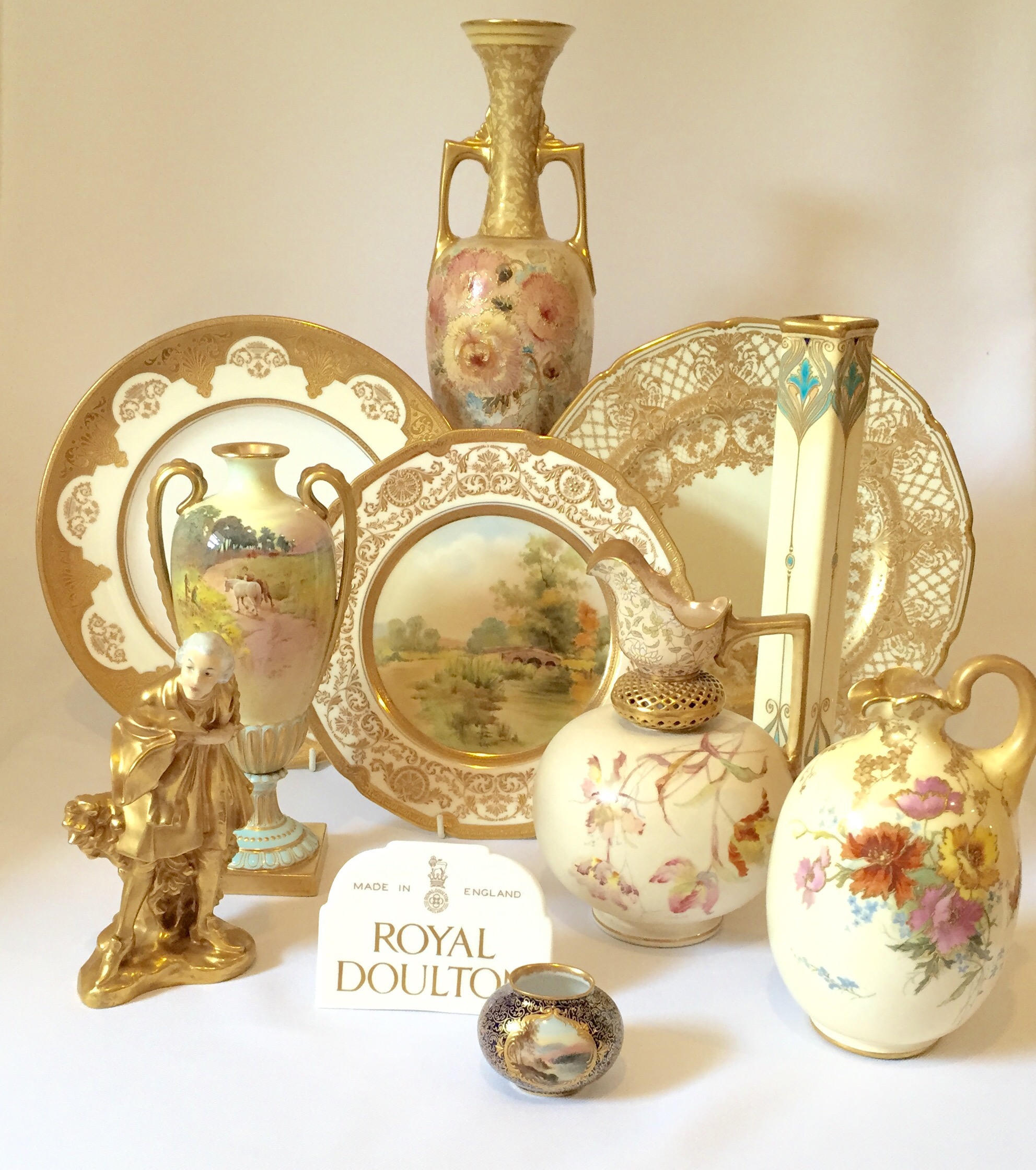
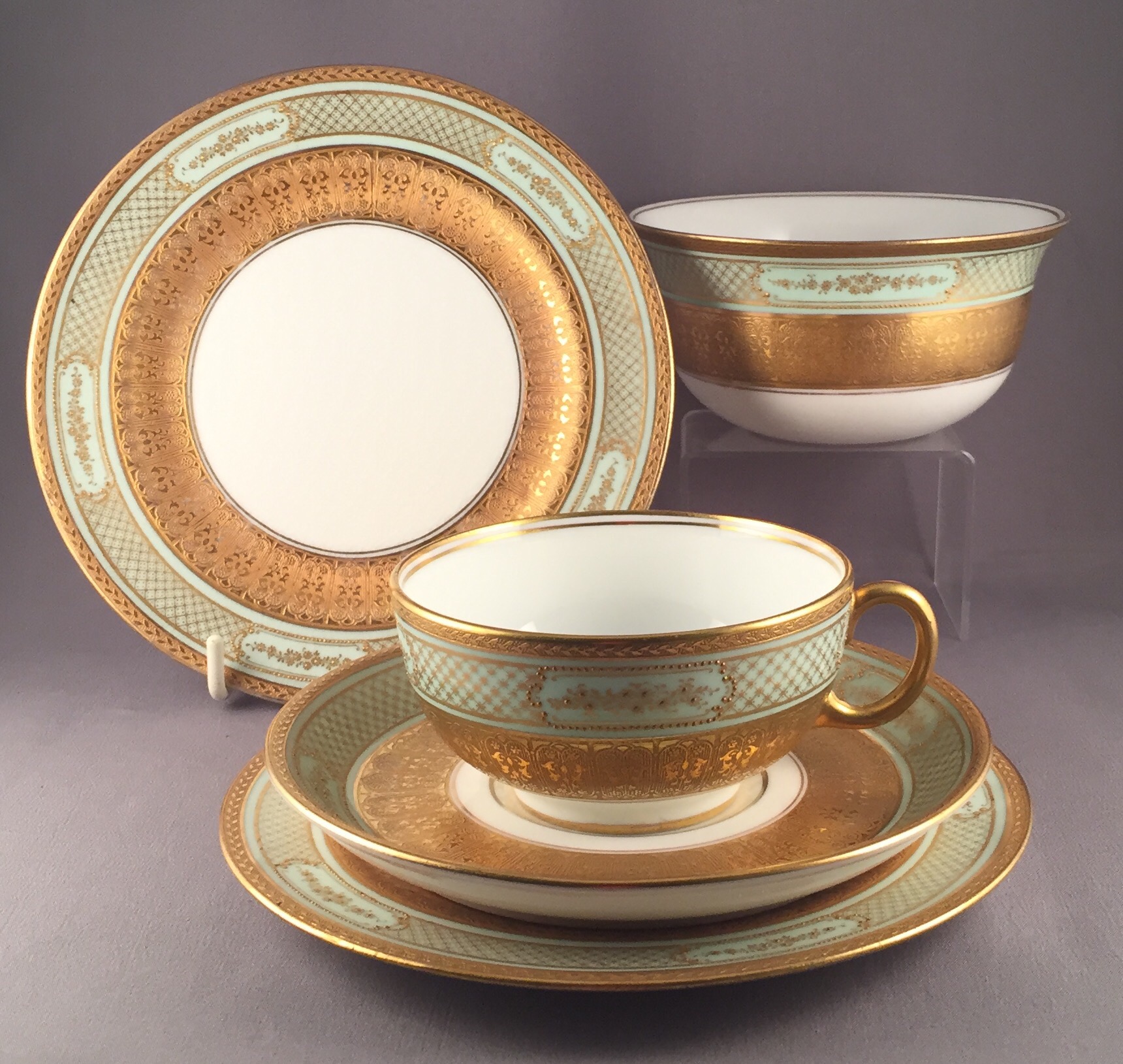
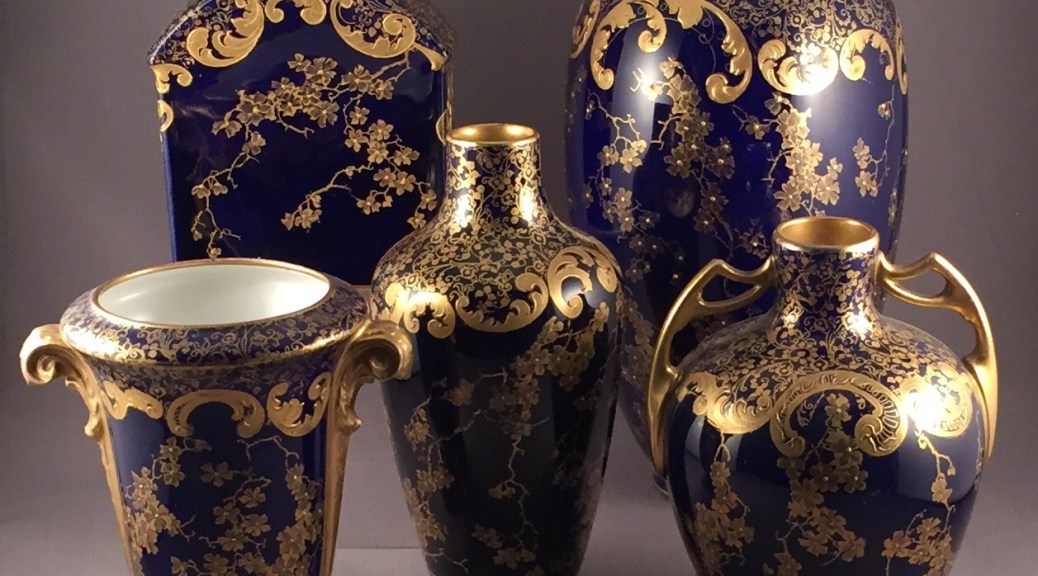
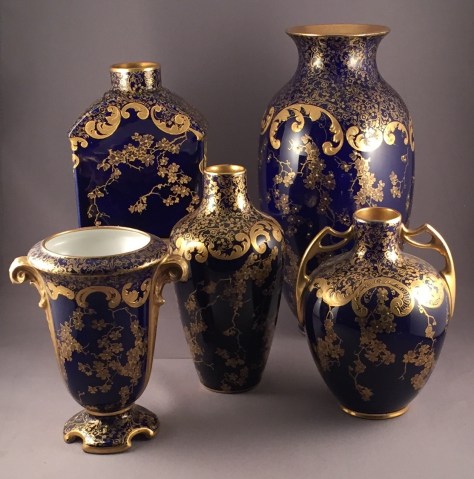
Whether it be wares including Doulton’s famous Spanishware with its gold tracery or the prestigious acid gold etching that is found on quality exhibition items and tea wares (both of which can be seen in the illustration), or else burnished gold to decorate their famous figures, Doulton has always produced something gold to suit every collector. 

Many of the elaborate gilt design of the 20th Century were designed by Robert Allen, who ran an art department at Burslem and who worked closely with Doulton’s art director CJ Noke on many of their famous lines. Allen’s designs were brought to life by a small band of expert gilders such as Thomas Morton or the Williams Massey and Skinner.

The sheer variety of Doulton’s gilded wares really does mean that there is something for every collector and let us not forget that whilst gilding is not typically associated with their Lambeth wares, it was used on chiné and the gold whorl patterns for decades and can be found on some artist pieces most notable in my experience on the work of Francis C. Pope. 

Doulton’s Royal connections! 

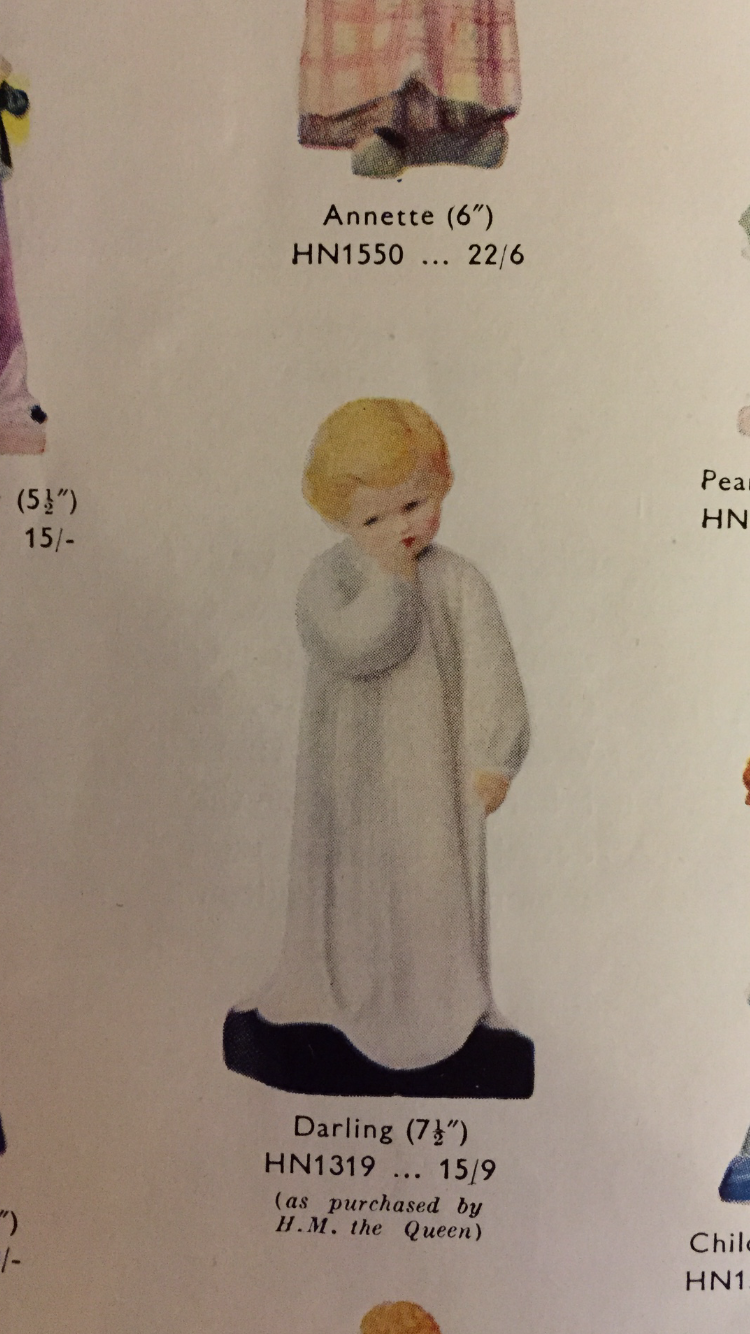
  Collectors are often bemused by early Doulton catalogues which carry the strap line ‘As purchased by HM The Queen’ under their cherished figures.  

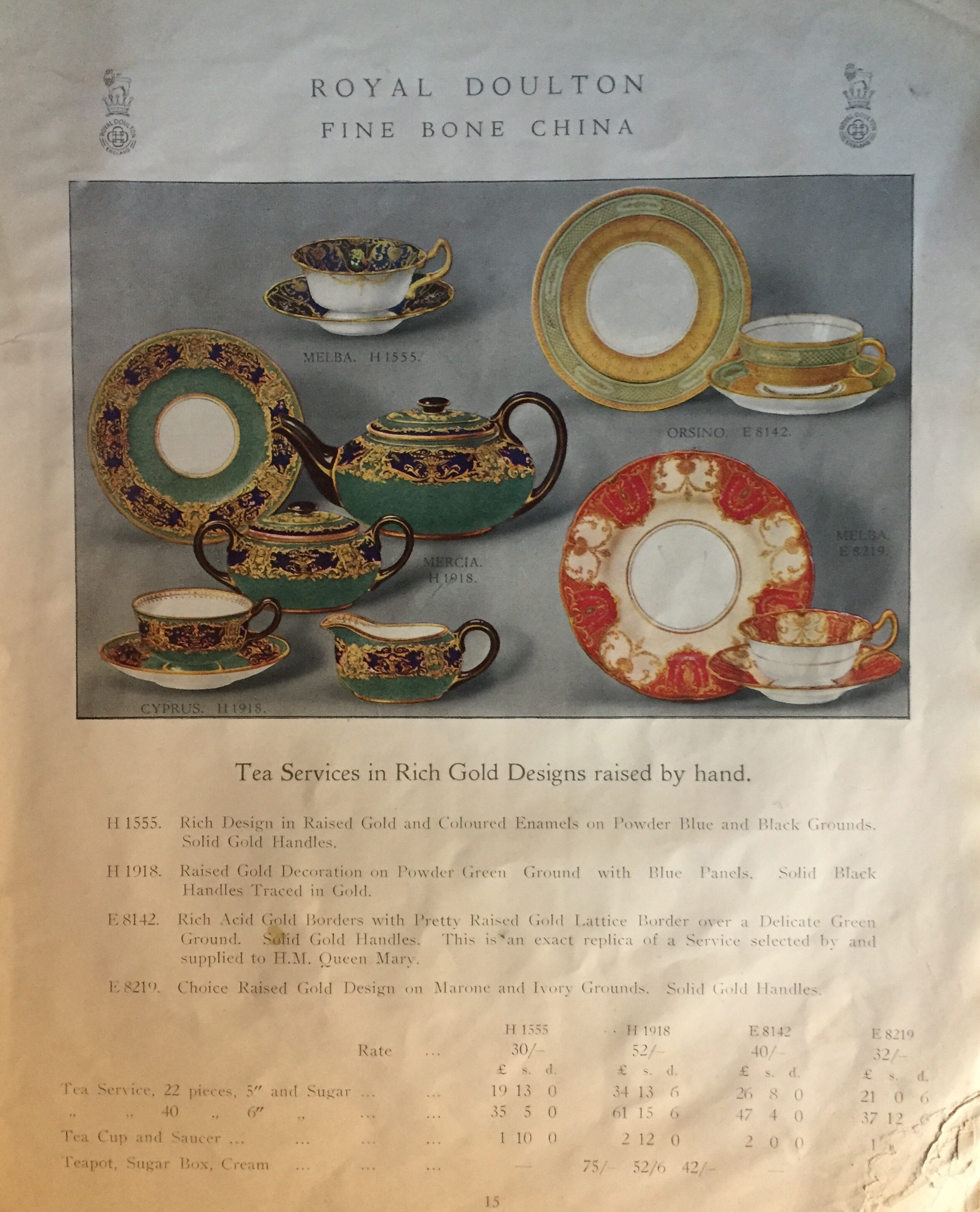
  Original catalogue page featuring the design and highlighting the Royal connection.

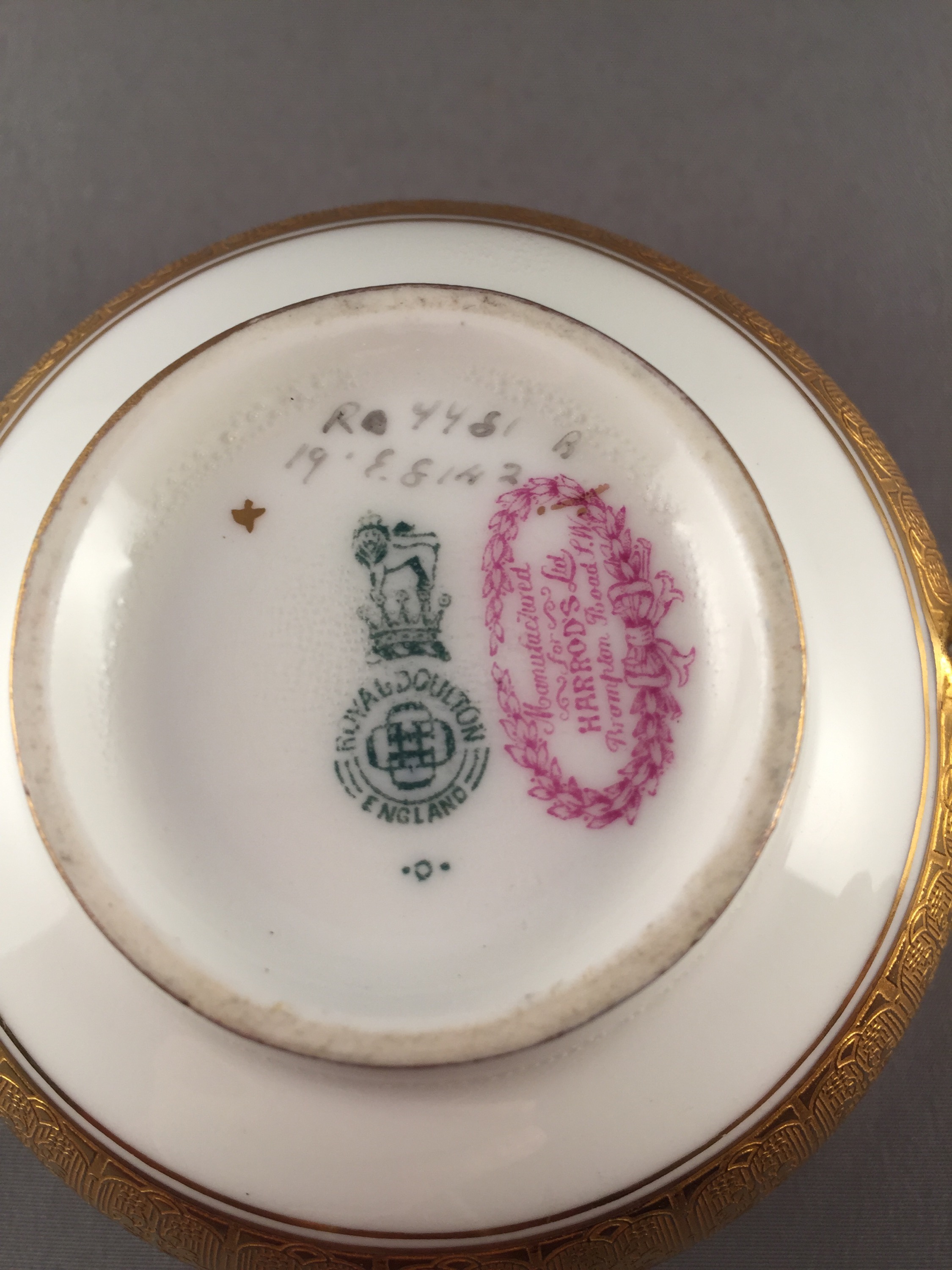
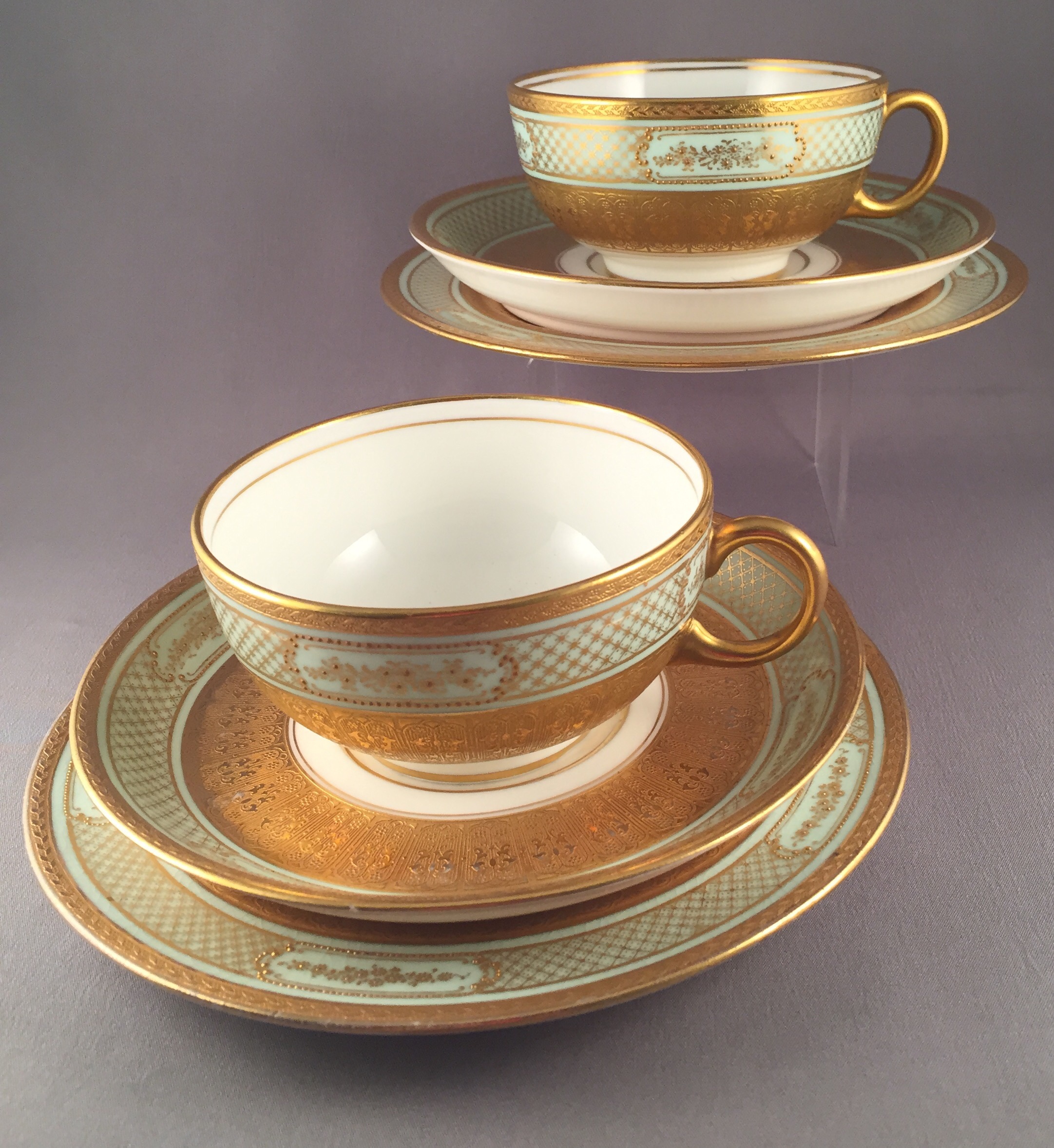
However this sales technique was also used to advertise tablewares such as this heavily gilded tea set, which was supplied to HM Queen Mary in the early 20th Century.   This particular set for 6 people is a replica of the original and was retailed exclusively through Harrods, the exclusive London Department Store which has many famous links to Doulton including its magnificent Doulton terracotta façade and of course the art nouveau tiles in the food halls by Neatby.

 
Once again the set shows that first sight isn’t always the end to a story with Doulton! 


Collecting Royal Doulton’s Royal Commemorative beakers.


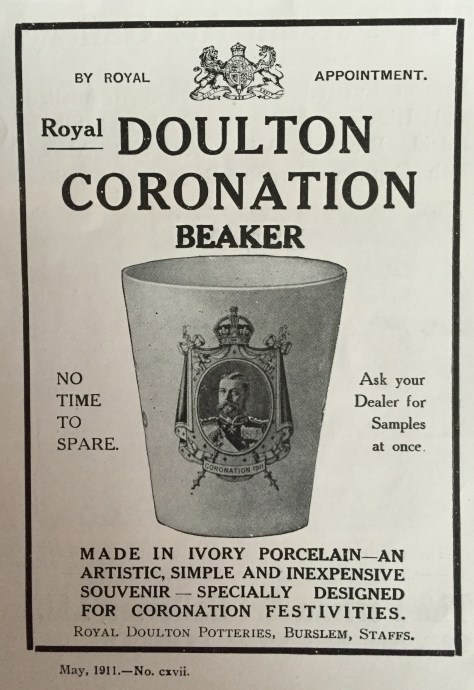
An advert for the 1911 Coronation beaker of King George V and Queen Mary. 


An actual example of the same beaker but with the King’s facsimile signature. 

Royal Doulton have a long history of marking Royal occasions by producing commemorative wares of all types but a field that offers a wide range of items is the many commemorative beakers produced for Royal Coronations. 


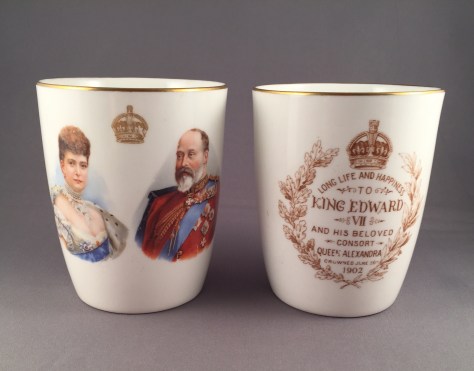
Bone china examples of King Edward VII’s coronation beaker from 1902 – front and reverse.


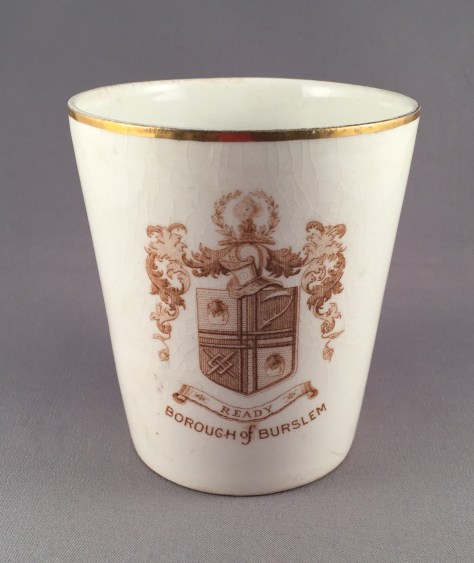
An earthenware example of the same beaker but interestingly bearing the coat of arms for Burslem, the former home of Doulton fine china in the Potteries. 

Since Victorian times each Coronation has resulted in a new commemorative beaker; the most collected of which tend to be the bone china rather than earthenware varieties, although unusual earthenware variations attract much interest too. 


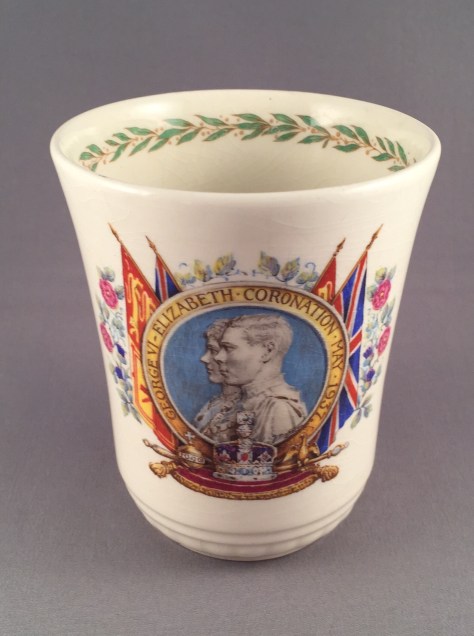
Coronation beaker for the present Queen’s parents, King George VI and his wife Elizabeth in 1937. 

Doulton artist profile – Robert Allen.


A Robert Allen design carried out by his studio ca.1900.

Robert Allen began work at Nile St. when it was still owned by Pinder Bourne, after a brief period at Minton’s as a boy worker. Robert flourished under the guidance of John Slater, then art director, eventually taking over a painting department of his own. Work from his department is denoted by his initials R.A. followed by a number. Robert Allen’s own signed work is however, rare. Yet, he and his department were entrusted with much of the finest and most expensive decoration carried out at Burslem notably for the great exhibitions at which Doulton exhibited from the late 19th century. Robert was notably involved in the early development of Titanian ware too although it is the work of his son Harry in Titanian that is typical.


A group of miniatures bearing an RA number from the Robert Allen studio.

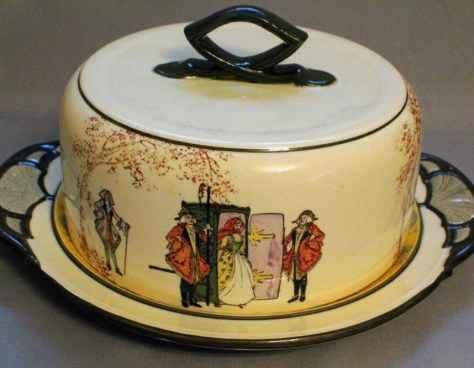
Collecting Doulton seriesware – Sedan Chair.

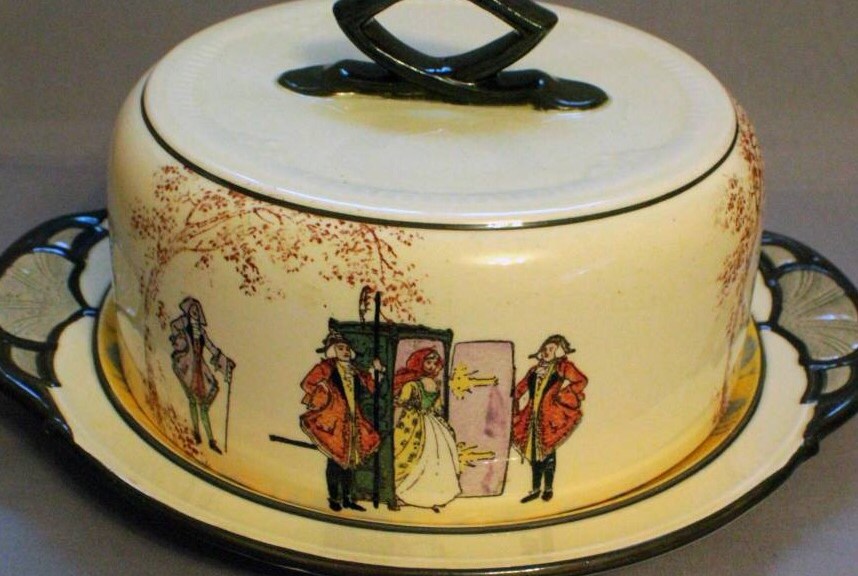
An unusual  Sedan Chair seriesware survival – a Cheese dome. The bases often turn up and are described as bread and butter plates, but here is the full thing! Introduced in 1912 and withdrawn around 1940, examples are not frequently seen suggesting production was much shorter. The art nouveau shape is incongruous to the seriesware pattern but the series is so charming that one doesn’t notice. The scene illustrated is No.2 hitherto not illustrated. 

Seriesware never fails to surprise us even today!

Early Doulton Burslem designs.


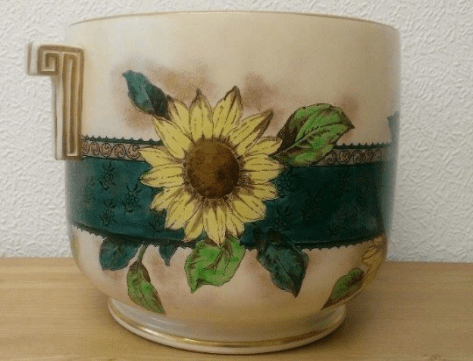
One of our collectors recently asked about the jardinière pictured. It bears a simple, impressed ‘Doulton’ mark that often throws collectors but this method of impressing the Doulton name can be found still in use into the 20th Century too, although later examples are accompanied by the usual lion and crown Doulton mark.

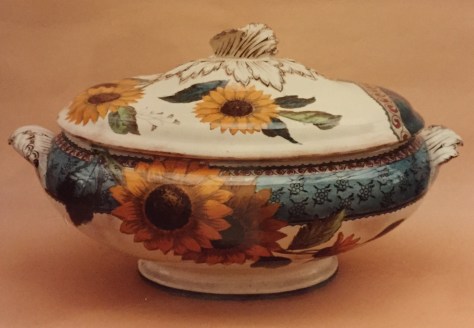
Returning to the pattern of the jardinière, I term it a transitional pattern from the period when Doulton entered into partnership with the Pinder Bourne factory owner in 1877 and the time when Doulton eventually took over the Nile St. enterprise entirely in 1884.  In the aesthetic taste, it is certainly of this period and I have seen plates marked Pinder Bourne but also further examples simply bearing the Doulton brand. Here is a tureen marked thus. 


We would love to hear from other collectors who have examples of this design to compare backstamps. Don’t forget that if you’re interested in Doulton join our facebook page and also visit http://www.paulwebsterantiques.co.uk where you can also subscribe to the brand new Doulton Collectors Club magazine! Isse 1 is out now!   

Collecting Doulton Crested Ware

Crested ware 1905-1914

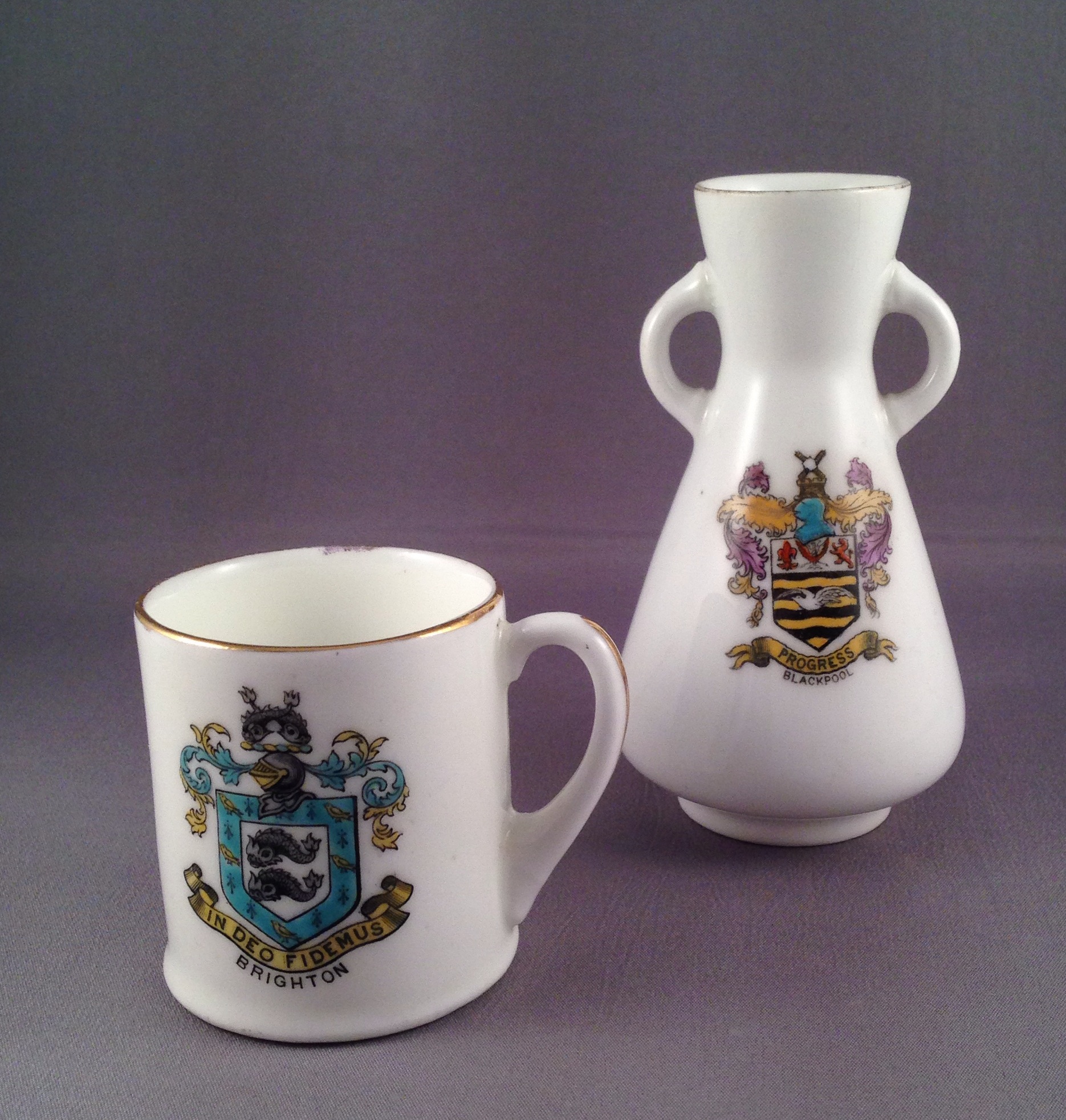
Doulton is not usually associated with manufacturing crested ware where names such as Arcadian and Goss are familiar, and examples are not easy to find owing to its short production run at the start of the 20th Century. The majority of pieces were made for the Australian market but examples of British towns and cities exist too. Here are two unusual British examples!

2015/01/img_1476.jpg
Perhaps you have other examples? If so, why not share them on our Facebook page – Doulton Collectors Group!

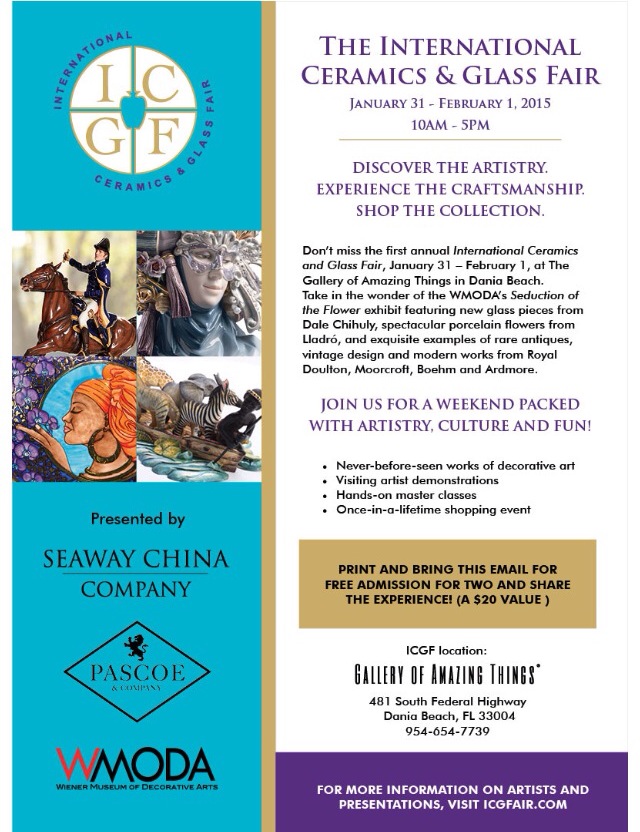
The International Ceramics and Glass Fair and 200 Years of Royal Doulton – an event not to be missed!

Don’t forget the world’s major Doulton extravaganza is just around the corner!

To reserve your tickets visit icgfair.com

And follow this link-
https://www.facebook.com/events/489880474484013/

2015/01/img_1355.jpg