Category Archives: Lambeth

Collecting Doulton Christening Cups.

IMG_0650.JPG
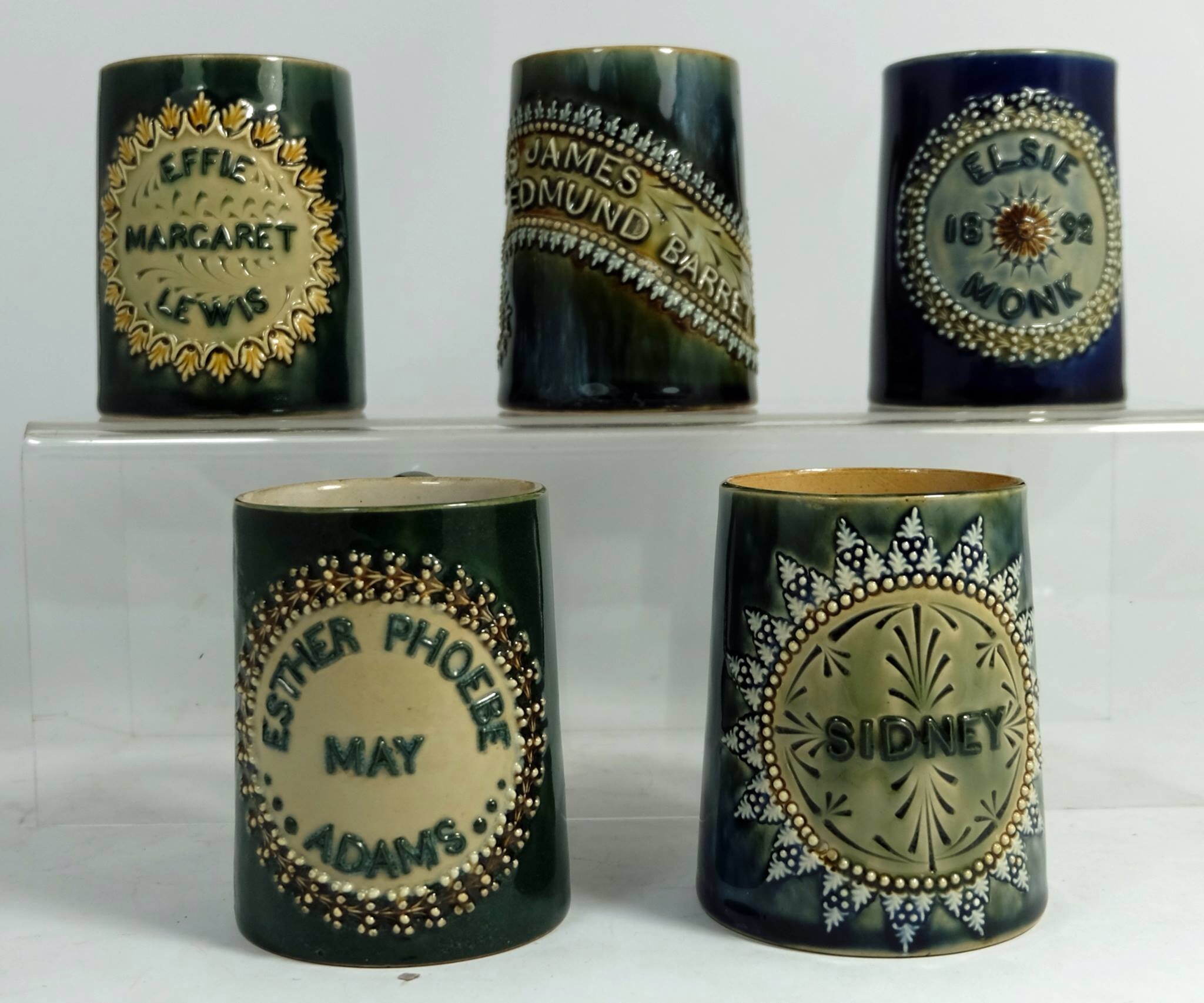
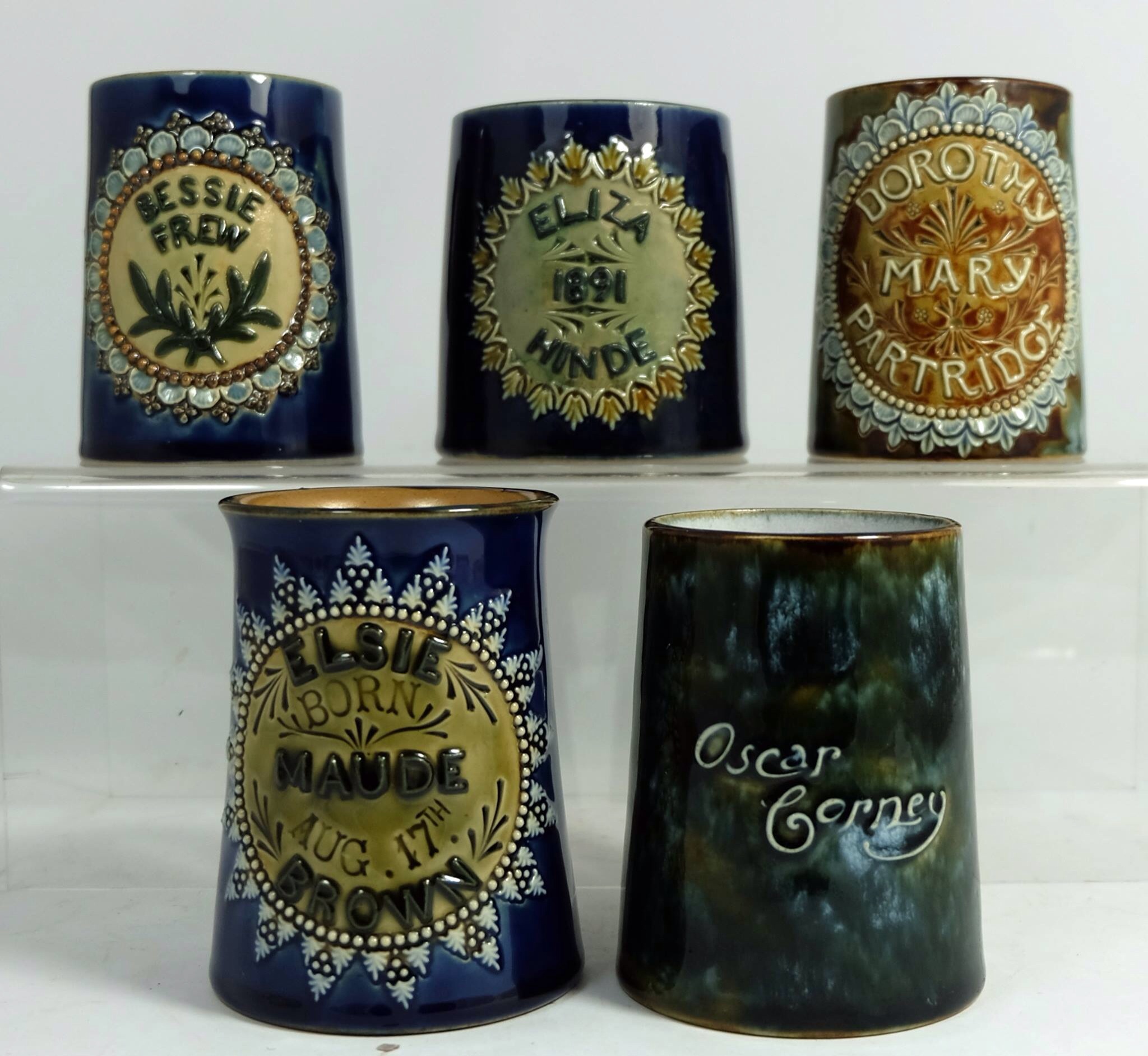
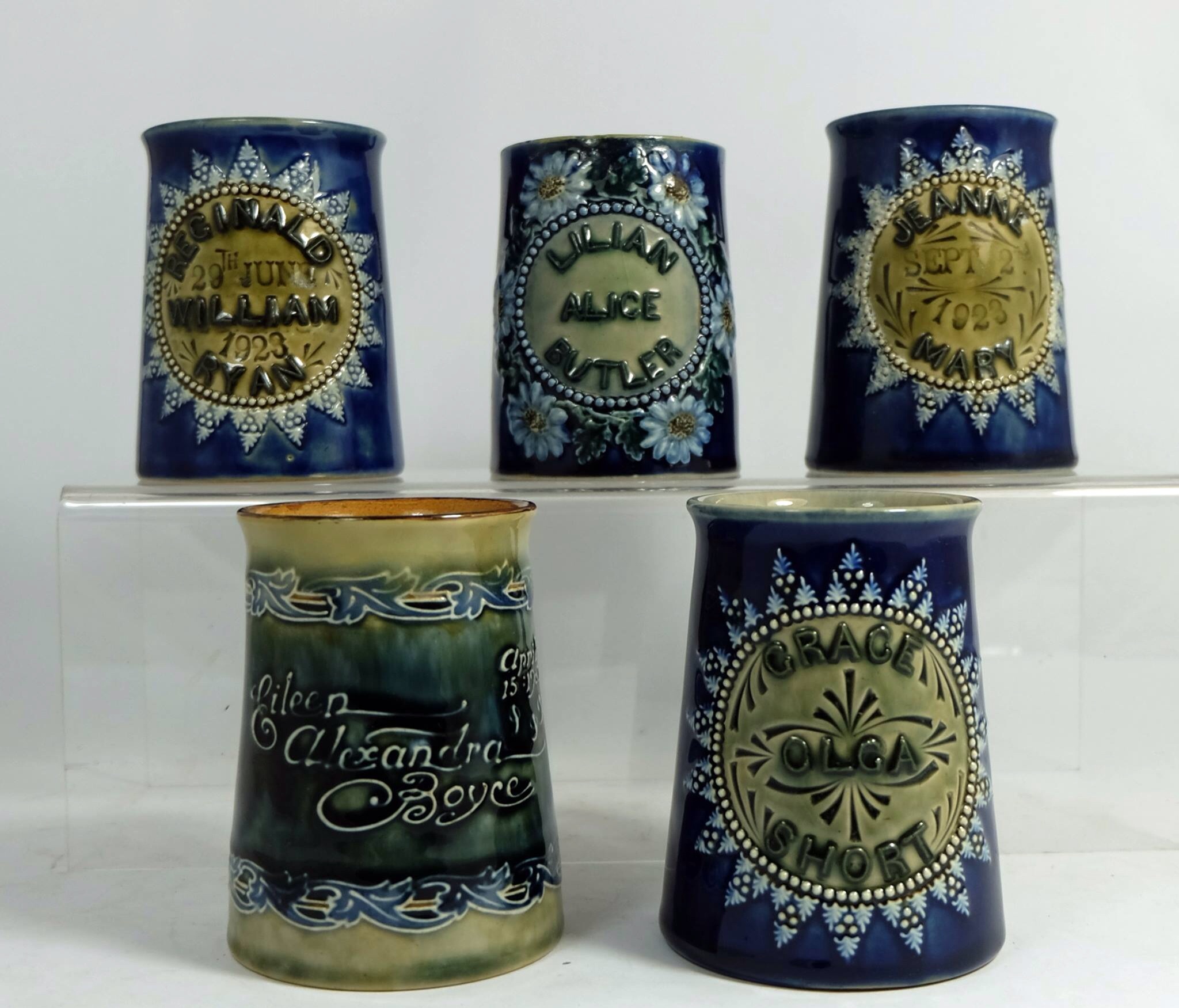
A selection of Christening cups made at Lambeth from the 19th Century – early 20th Century.

When I first saw these cups due to be auctioned this weekend, I was reminded once again of the diversity of Doulton, but also the diversity of collectors too! Here once again is a novel collecting theme!

IMG_0651.JPG

The Christening cup is a typical Christening gift for a baby and whilst more well-to-do families may have chosen silver examples, these personalised stoneware cups were no doubt more modestly priced in comparison. These mini works of art have obviously been cherished over the decades and remain as evidence of their original owners. How wonderful would it be to trace the original owners?

IMG_0652.JPG

Many thanks to the Potteries Auctions for use of these photos from their sale on Sunday 26th October.

Doulton’s Shakespeare ware

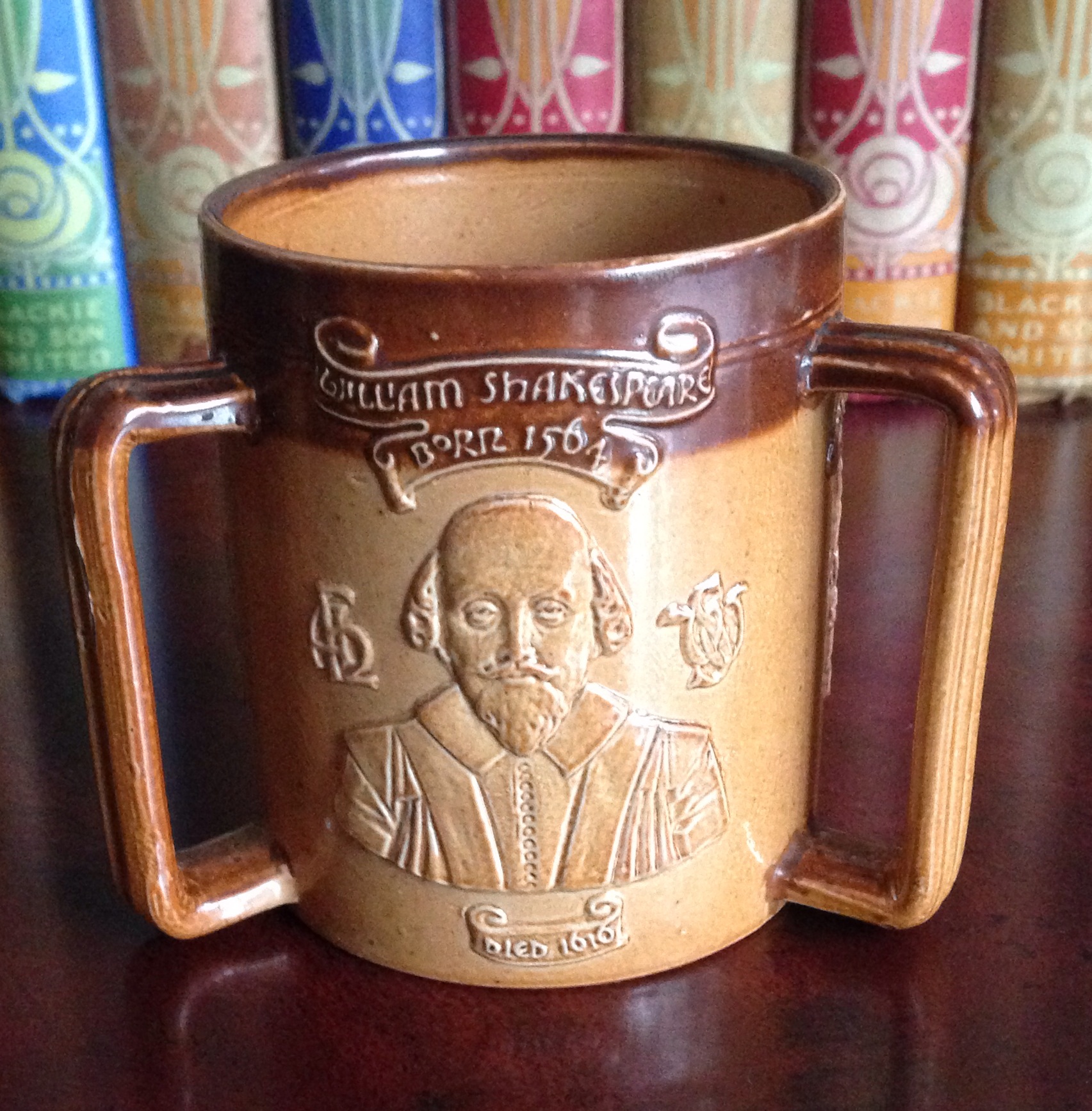
From what I have discovered there appears to be two types of Shakespeare ware. The later pieces with scenes from the famous playwright and poets works, produced to commemorate the 350th anniversary of his birth in 1564. Then there is also this series pictured.

IMG_0582.JPG

This tyg is decorated with a relief portrait of Shakespeare and then his house in Stratford and Ann Hathaway, his wife’s cottage. The tyg dates to 1905 and carries a date letter, as well as a registration number for this period.
A nice commemorative for literature fans!

An Amazing Adventure – Part 1

IMG_0503.JPG

Several of you have asked about the talk I gave last Saturday to the group of American collectors who came to the UK on tour with Seaway China.
Thus, I have decided to begin to share a few items I took along from my own collection. Here is part 1 – early Lambeth items.

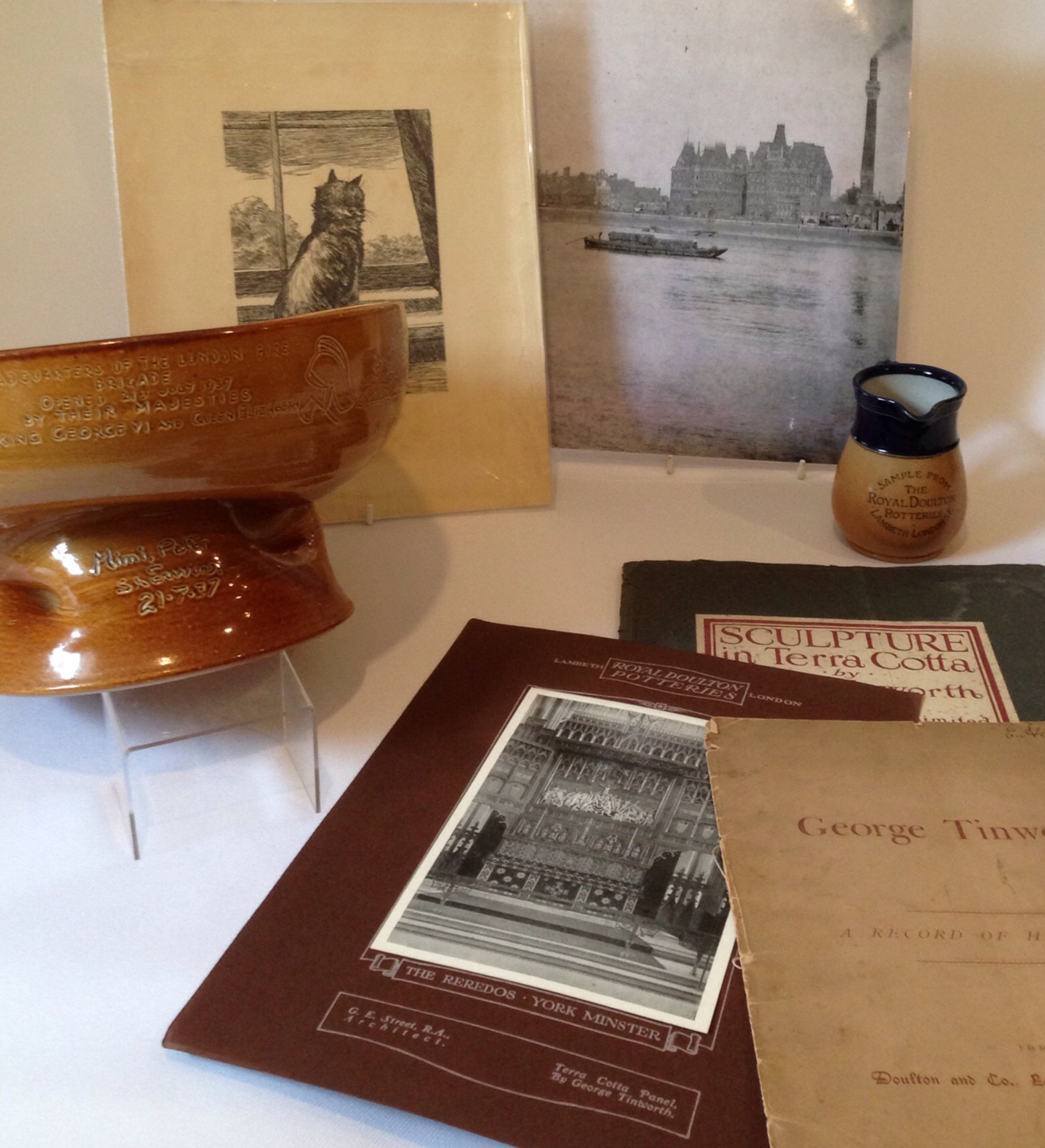
So, I started at Lambeth as a logical starting point focussing on their practical beginnings but then moving on to the Doulton Lambeth art wares and the first artists. George Tinworth was up first in the artists section and I took along two early brochures produced about the great man and his art for everyone to see. The earliest is dated 1887 and it is interesting to see how Doulton really pushed his fame even in these early times. The other is a catalogue of terracotta plaques from 1906.
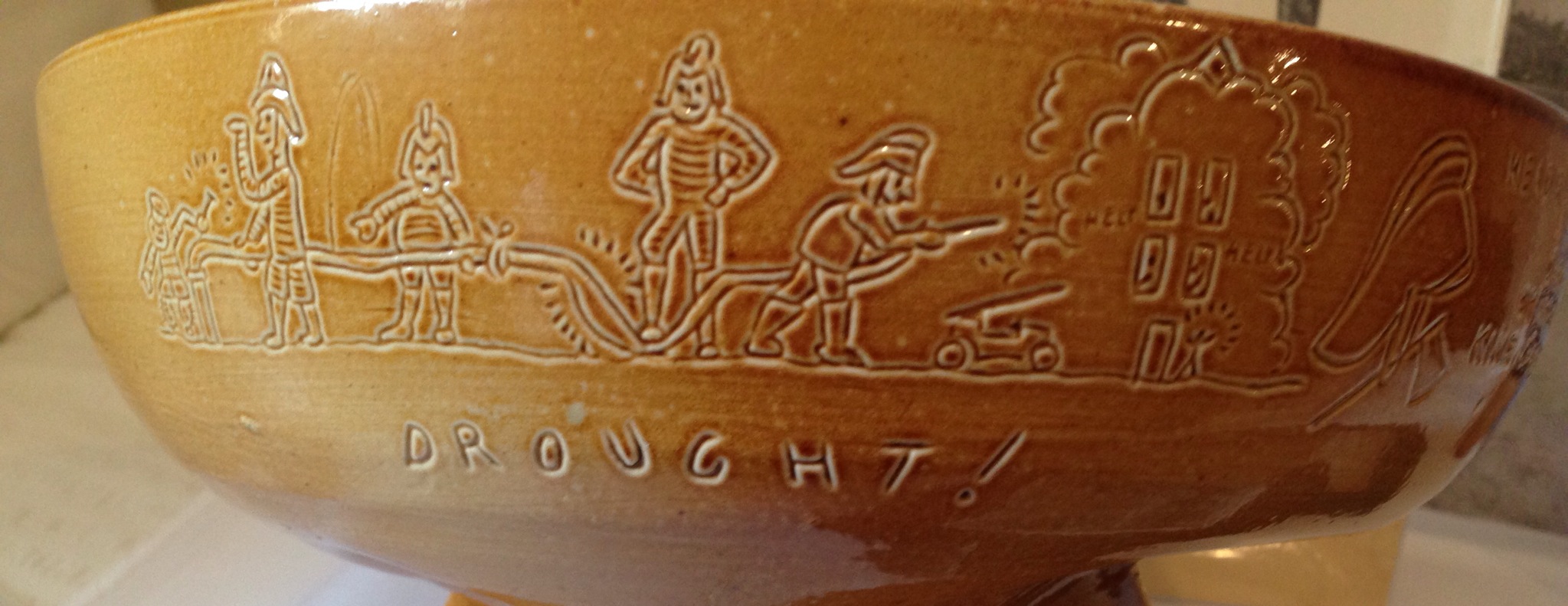
Next came the Hannah Barlow picture of a cat. Her importance as the first female artist and her technique were discussed, together with the picture itself! Then the small advertising jug – this is actually for Doulton themselves but it makes the point that Doulton ware was a popular medium for promoting all types of businesses. I took along a selection of glass slides and also some blown up copies of the same to illustrate Doulton’s importance in London and also to illustrate it’s former magnificence. Lastly is the unusual squash bowl from 1937 made as a wedding bowl but also to commemorate the opening of the Headquarters of the London Fire Brigade in Lambeth on the same day.
The bowl has humorous scenes relating to the fire brigade around it as you can see below.

IMG_0502.JPG

Collecting Doulton Lambeth paperweights

IMG_0118.JPG

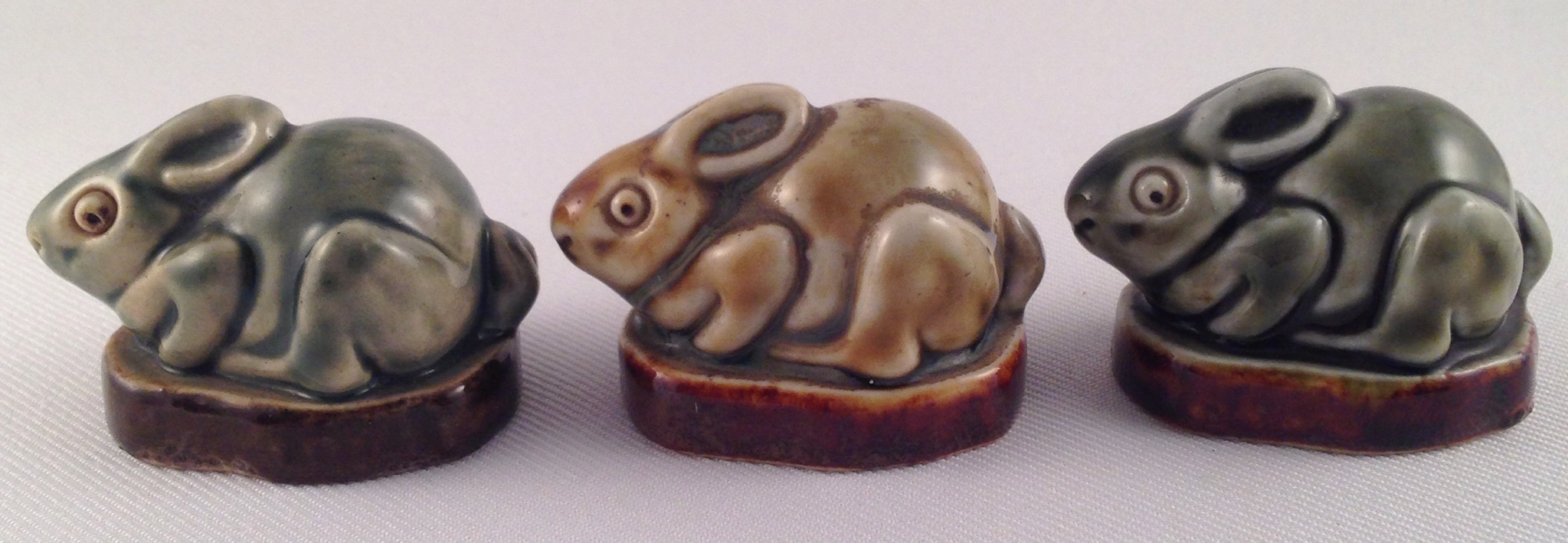
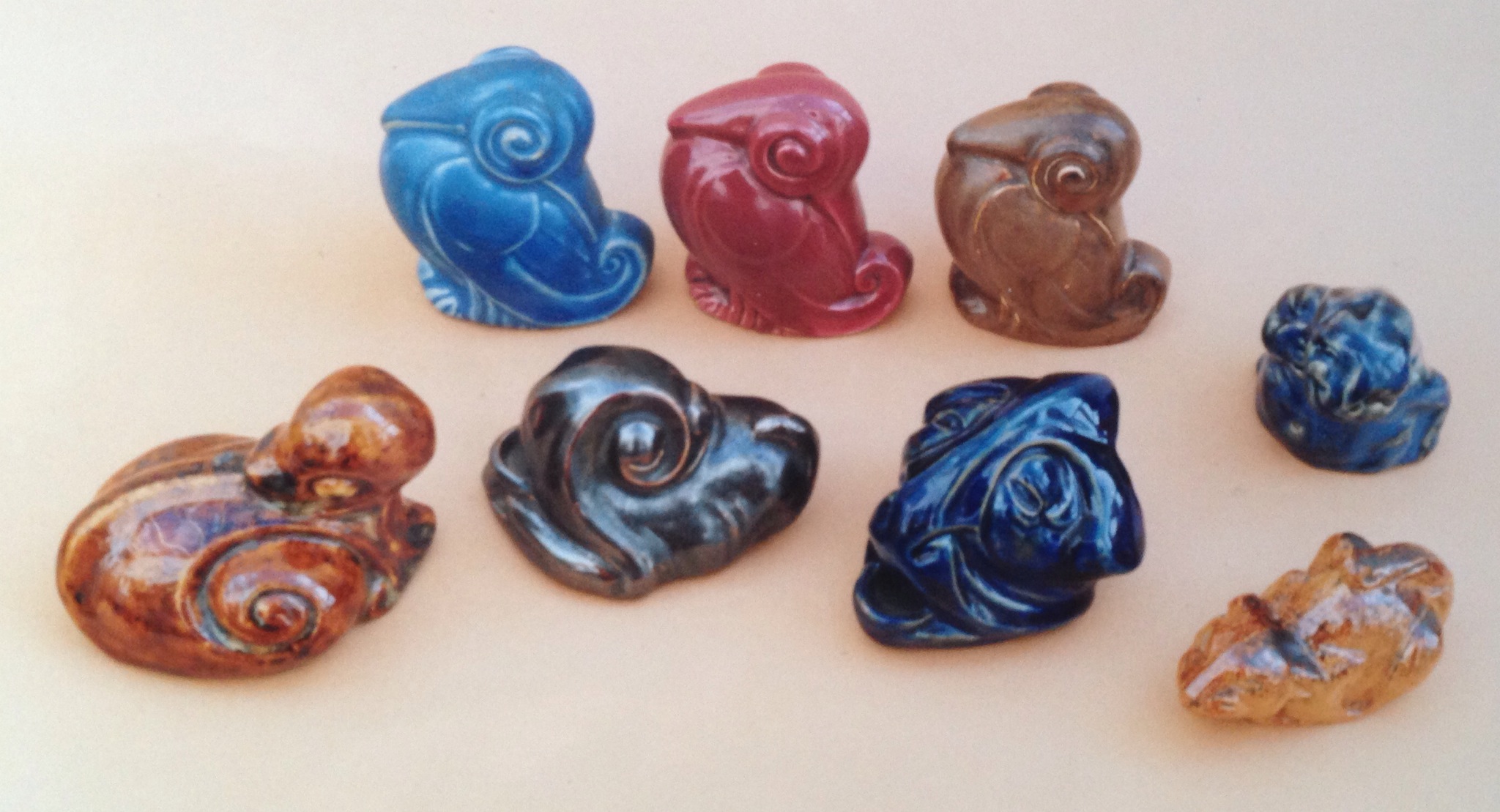
Looking around fairs I am sometimes amused by small curious creations stamped Doulton, the vast majority of which were the creations of Mark V. Marshall. His inspiration for these cannot be put down to one source, but rather he drew from his own imagination and probably Lewis Carroll’s imagination too with his representation of Carroll’s Mock Turtle and Cheshire Cat. In addition to the creations below a more recognisable rabbit can be found together with lizards and other creatures.

IMG_0119.JPG

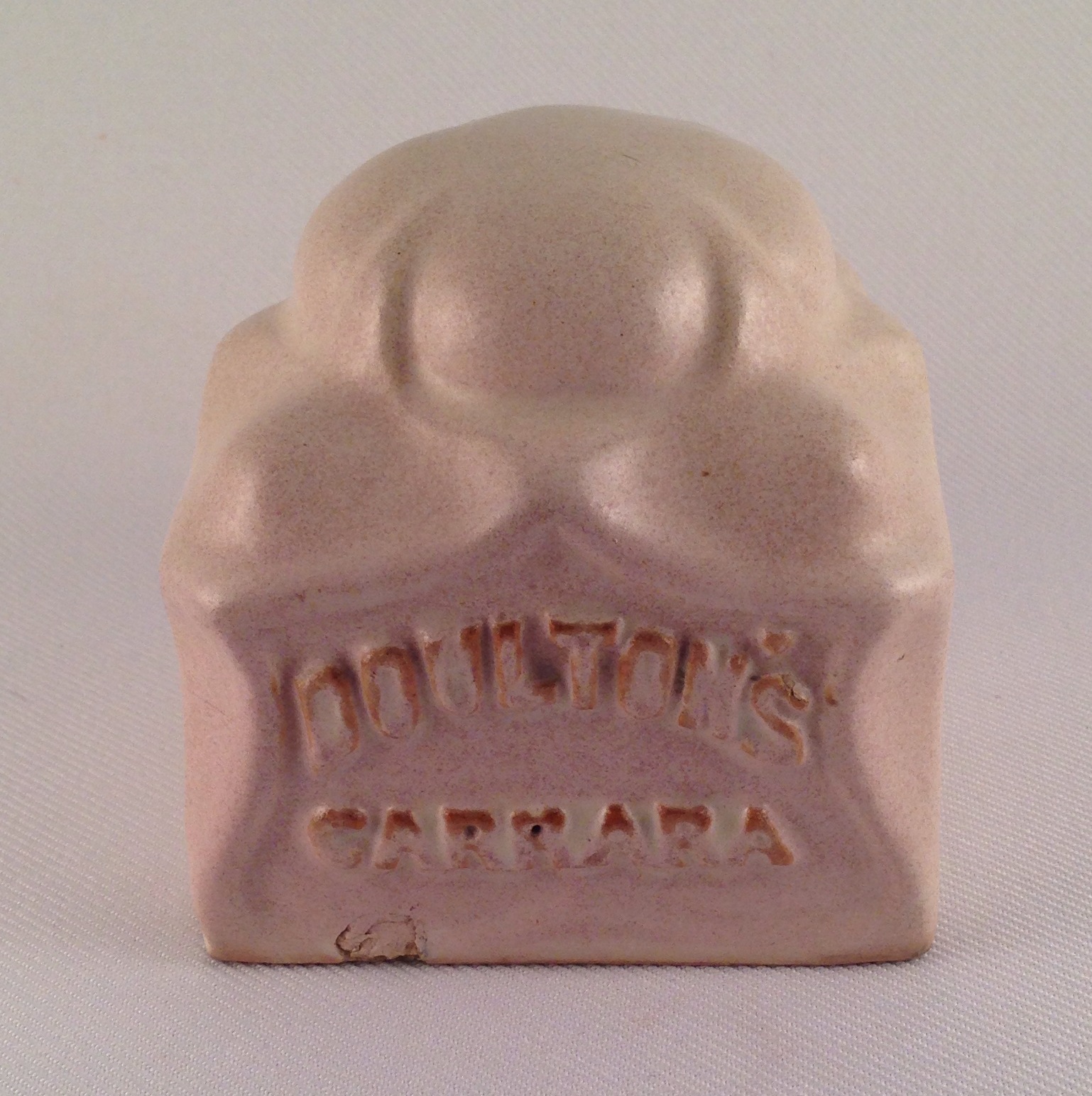
Paperweights and desk accessories were a staple of the Lambeth factory and indeed Tinworth’s mouse on currant bun was so popular it was re-issued in 1913 to mark his death. I have in my own collection a bizarre Cararra advertising paperweight too. The possibilities as we all know with Doulton, are as always endless.

IMG_0117.JPG

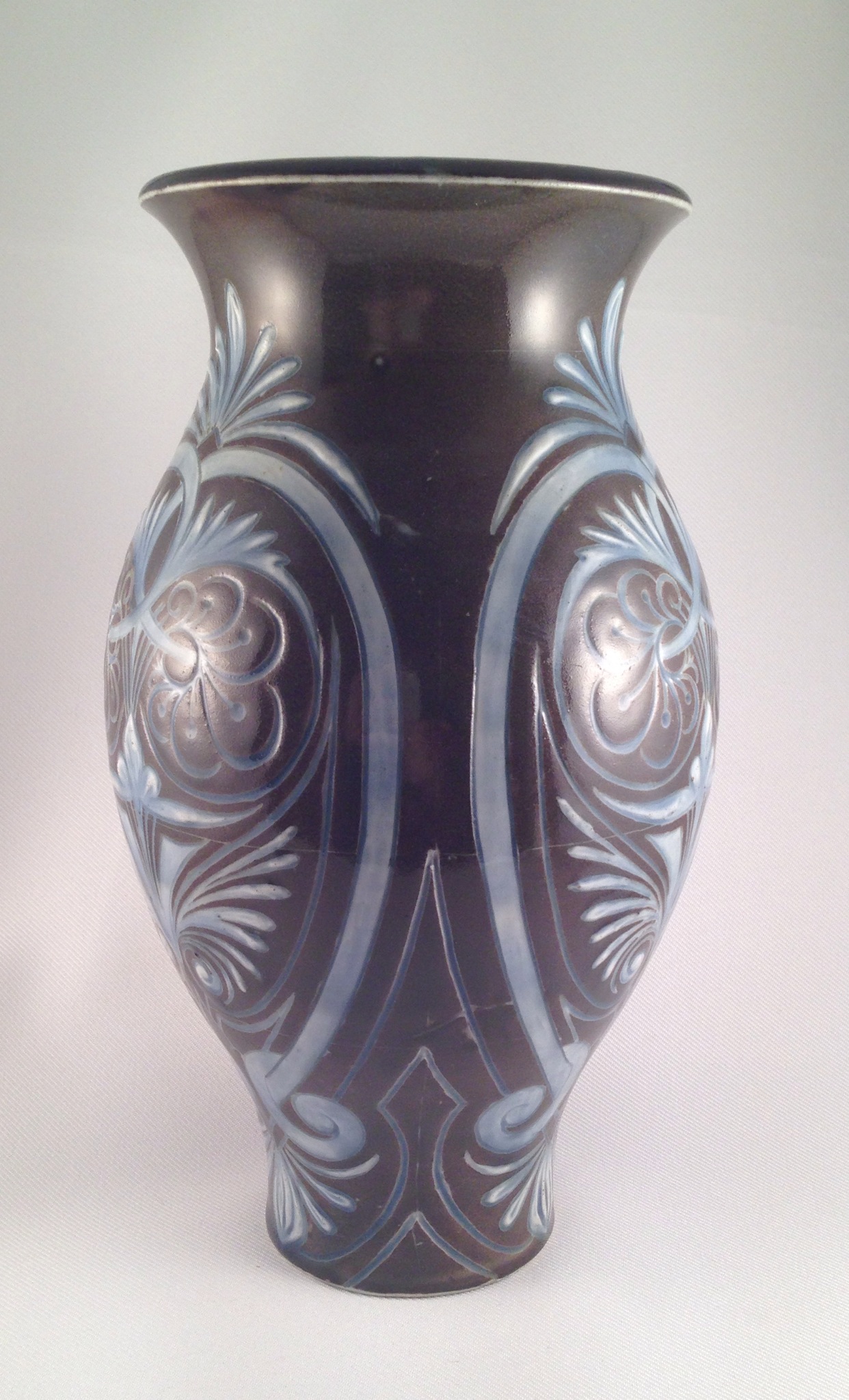
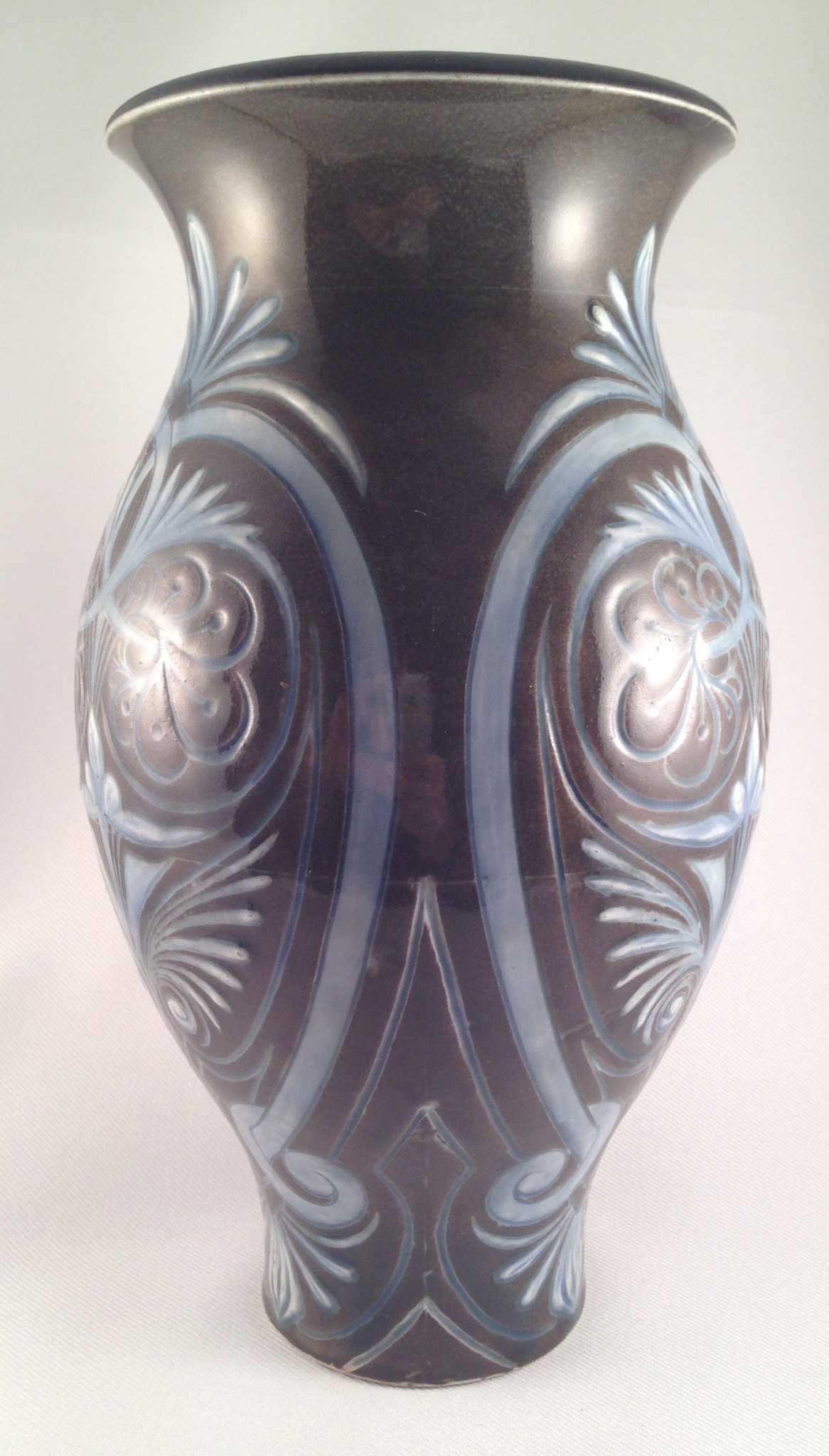
An interesting vase by Edith Lupton that shows how the vase was decorated.

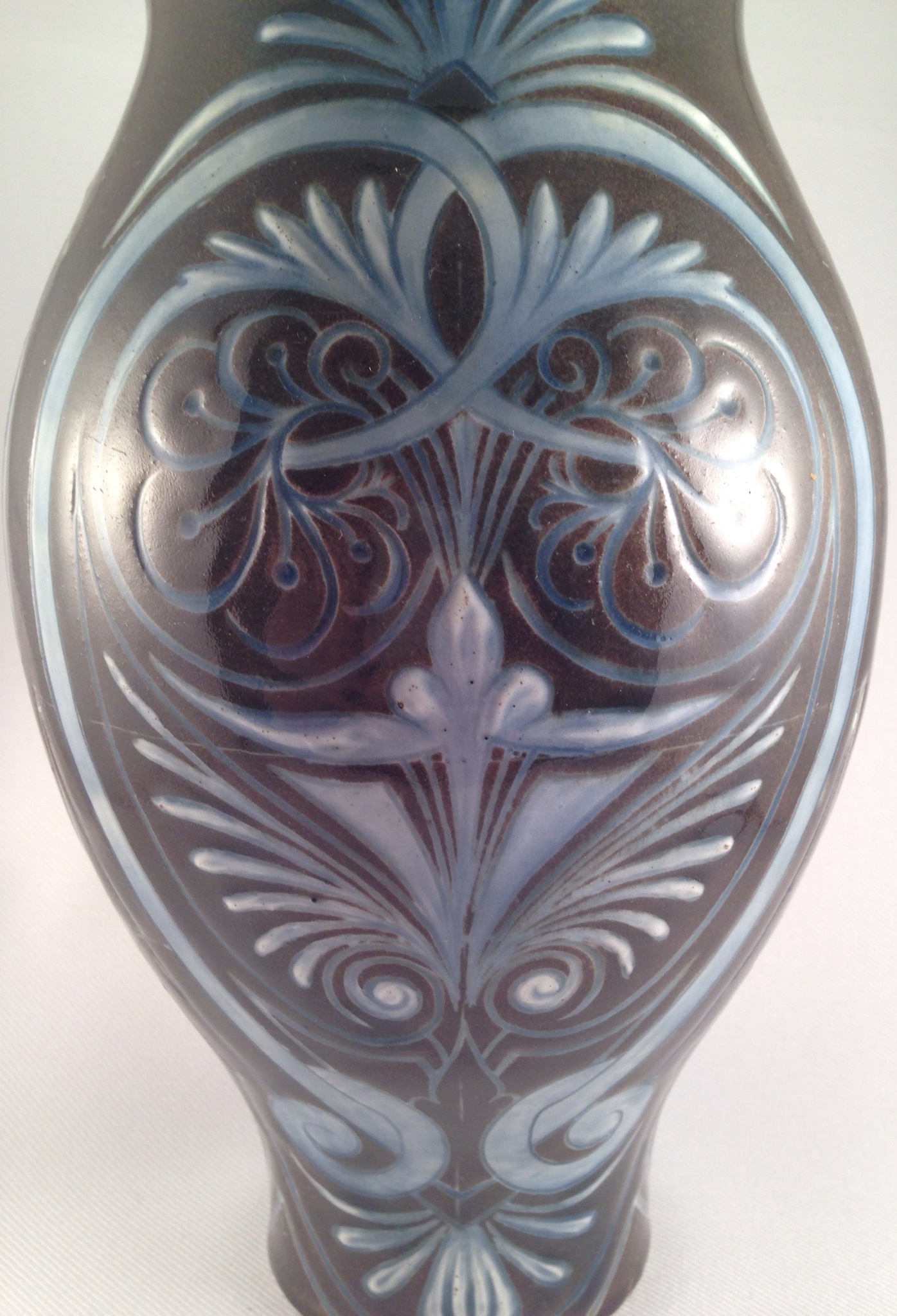
If like me you often look at a piece of stoneware with intricate, repeat decoration and simply marvel at how the artist meticulously recreated a design over the body of the piece, then this Edith Lupton piece that has come my way should illustrate some of her technique perfectly!

IMG_9933.JPG
Lupton’s work is instantly recognisable to her many admirers and collectors and whilst she collaborated with many of the great Lambeth artists, her own pieces are equally praise worthy. I hope you can all make out her feint guide lines showing through the glaze in these pictures of this vase from 1883.

IMG_9934-0.JPG
In addition to Lupton’s monogram there is also the assistant mark for Rosina Brown.

IMG_9935.JPG

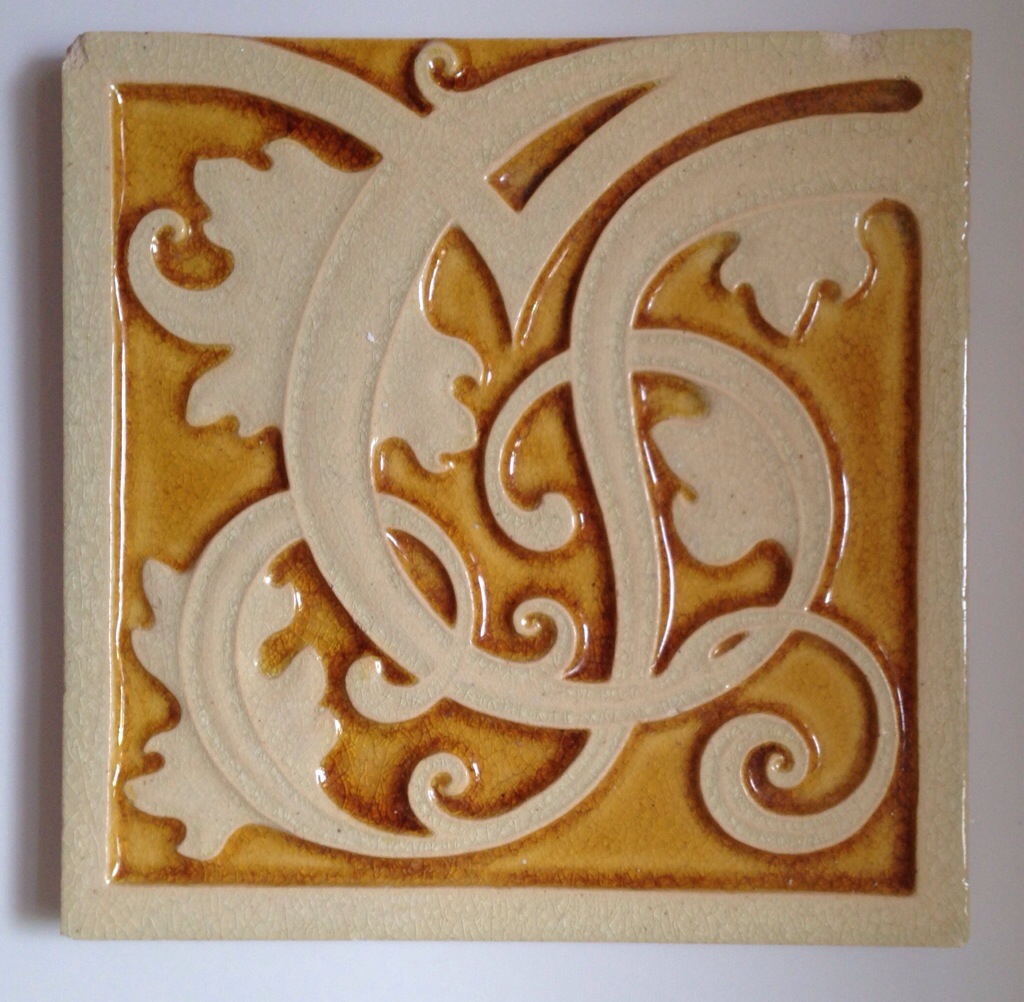
Collecting Doulton tiles

20140712-163610-59770886.jpg
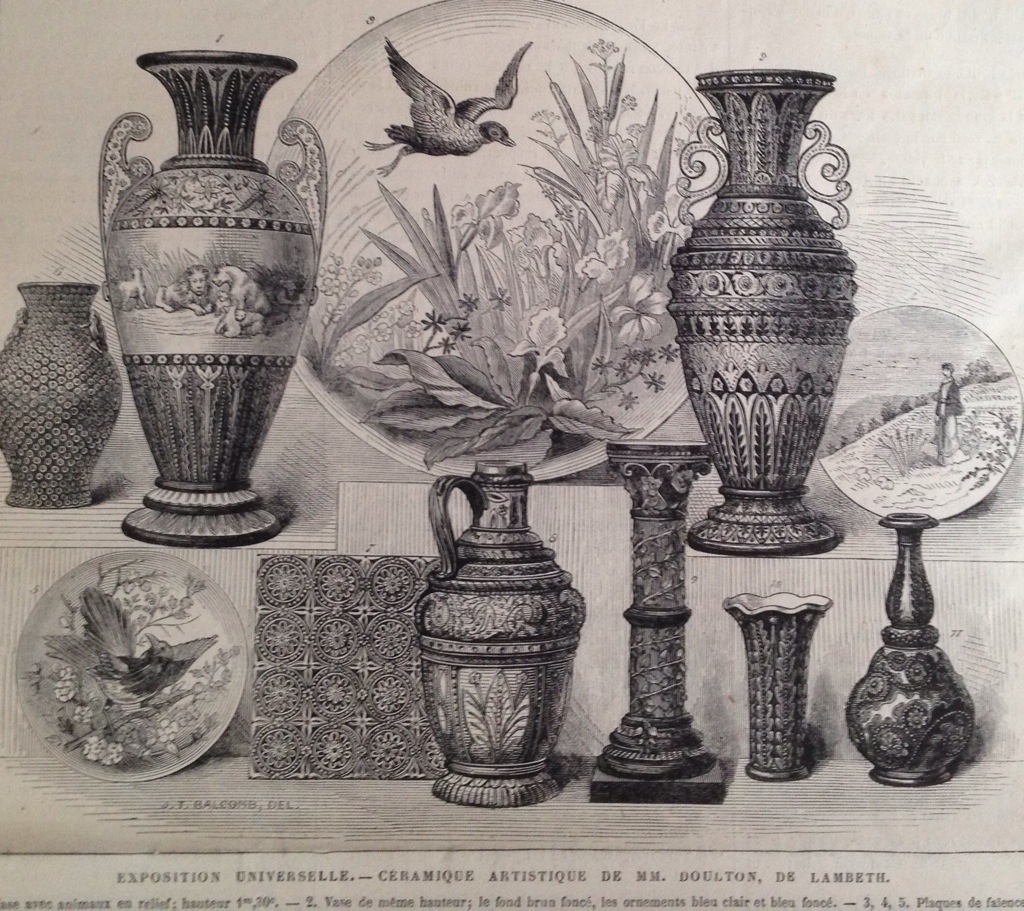
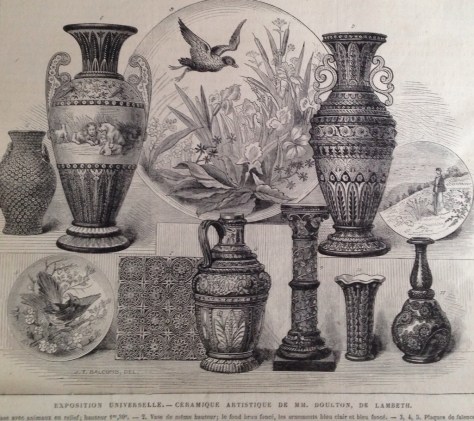
An early advertisement featuring a tile.

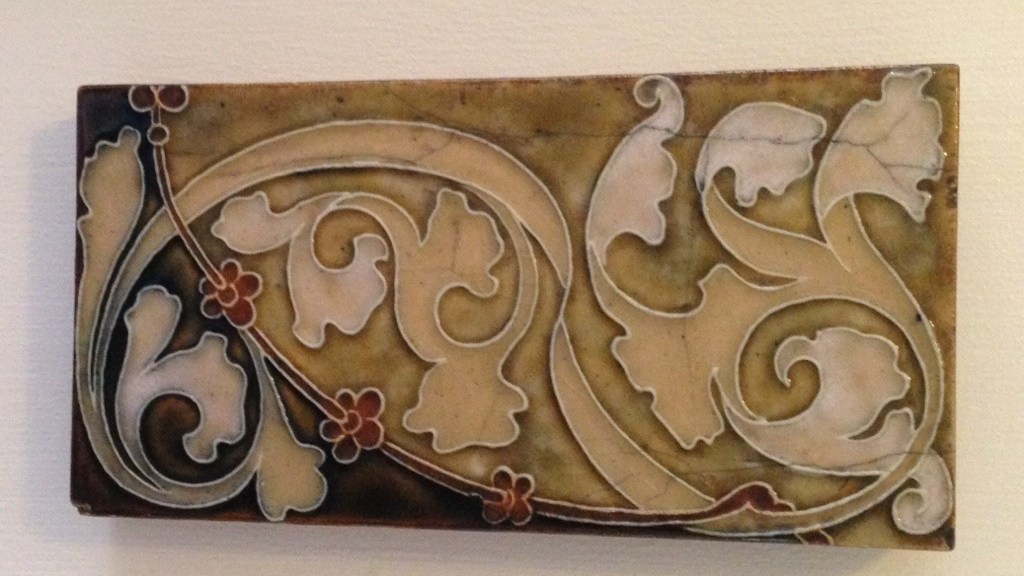
Tiles are another avenue of collecting that many Doulton collectors know very little about. However, if you were to ask tile collectors about Doulton tiles, they would tell you that there are some magnificent examples out there to collect.
20140712-163712-59832288.jpg
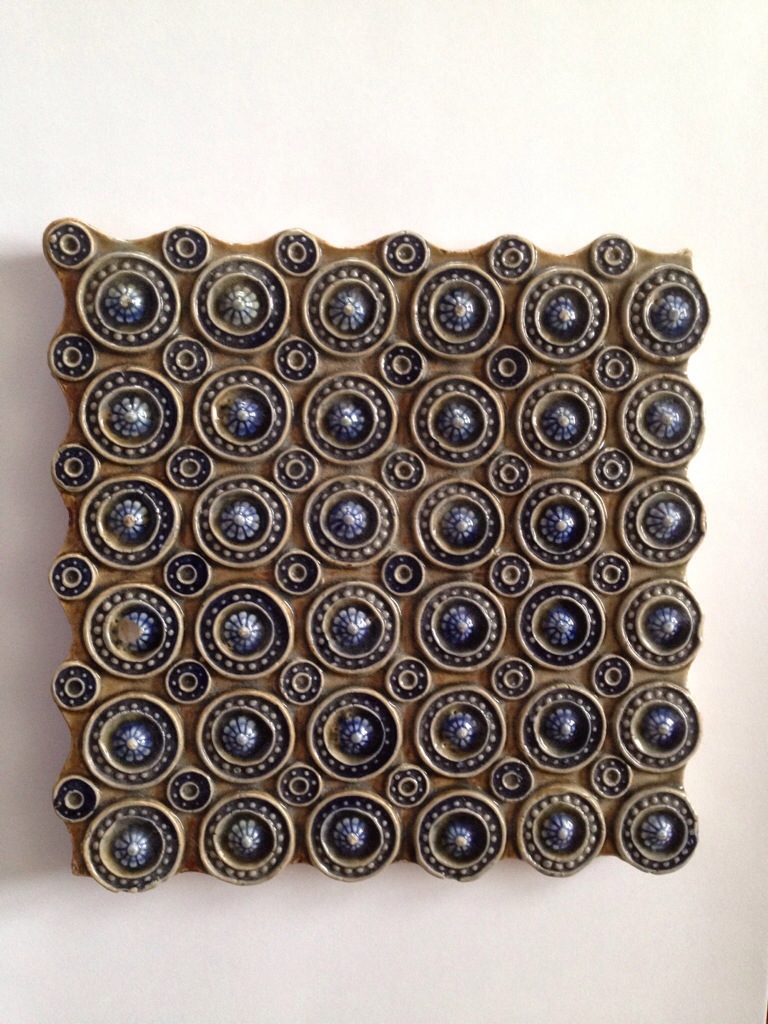
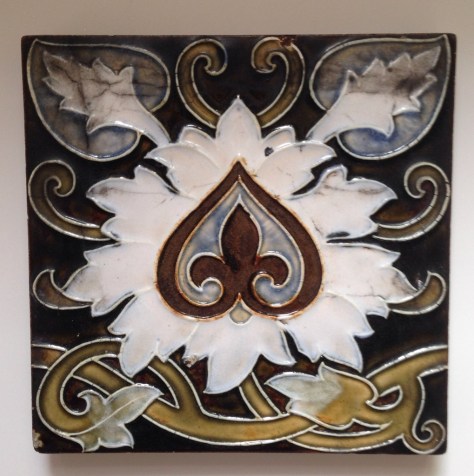
A similar tile to the one in the advert above.

Originally produced in the 19th and early 20th century, the fashion for decorating great portions of buildings, both inside and out, in tiles fell out of fashion during the first half of the last century.
20140712-163811-59891071.jpg
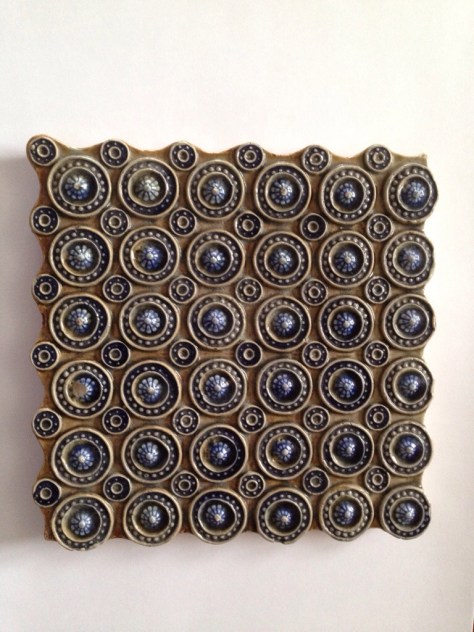
A good example of a tube lined tile.

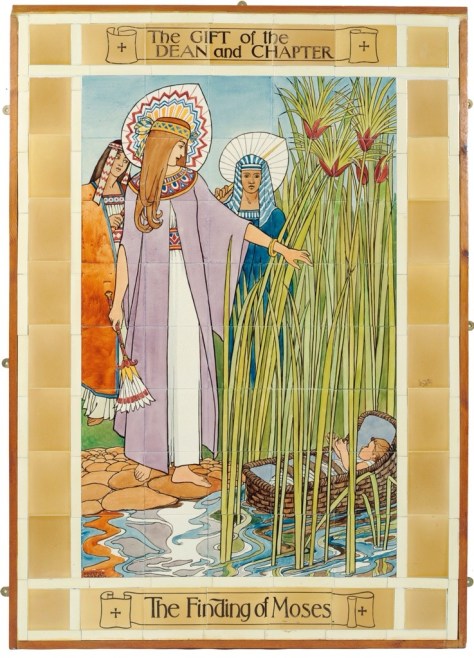
Doulton tiles fall into two camps: architectural and art ware; and again divided into individual tiles and sets or panels.
20140712-163905-59945698.jpg
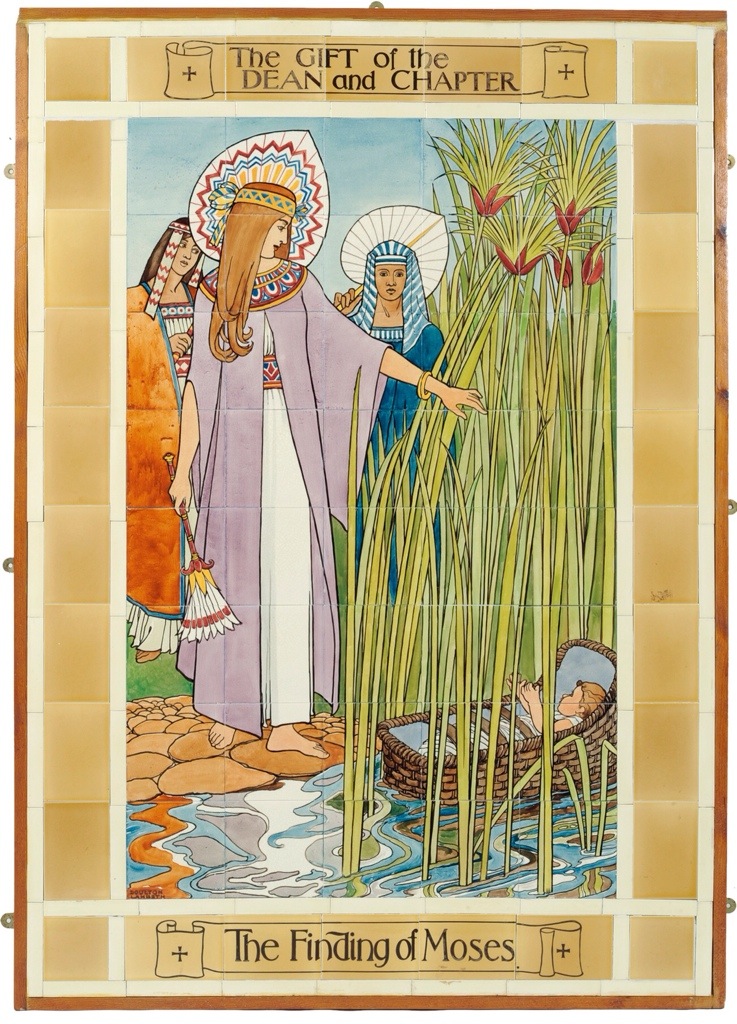
A magnificent panel courtesy of Seaway China.

I am sure many of you will have paid a visit to the food halls of Harrods in London and seen the wonderful art nouveau Doulton tiles by Neatby there or perhaps the wonderful Doulton art nouveau arcade in Norwich, but there are examples outside the UK too in Singapore’s railway station for example and countless hospitals around the world.
20140712-164007-60007460.jpg
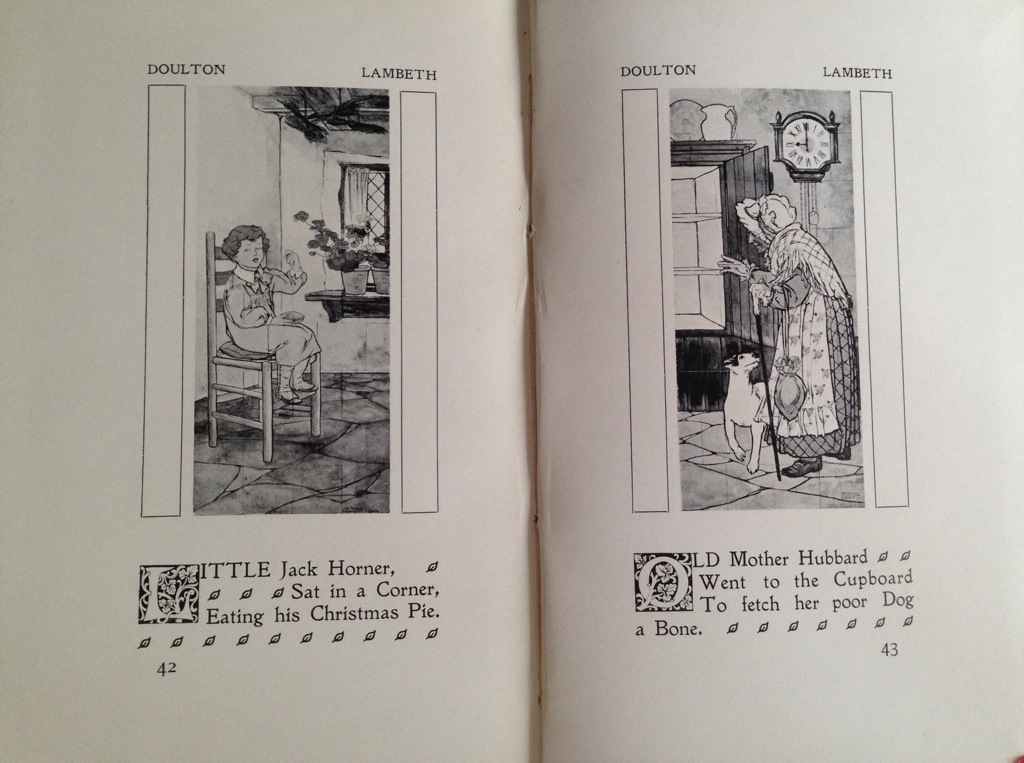
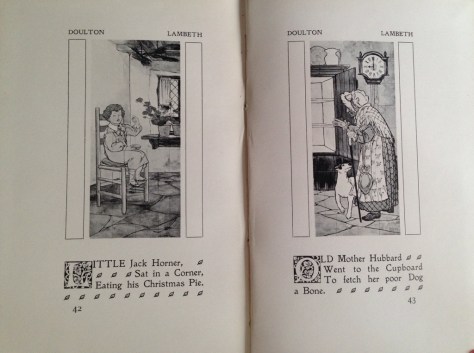
A double page from a book by Doulton from 1904 illustrating some Hospital panels installed by them to date.

As I have already mentioned there are countless tile panels in churches and hospitals around the world too designed by Doulton’s top artists including Margaret Thompson and William Rowe.
20140712-164315-60195383.jpg
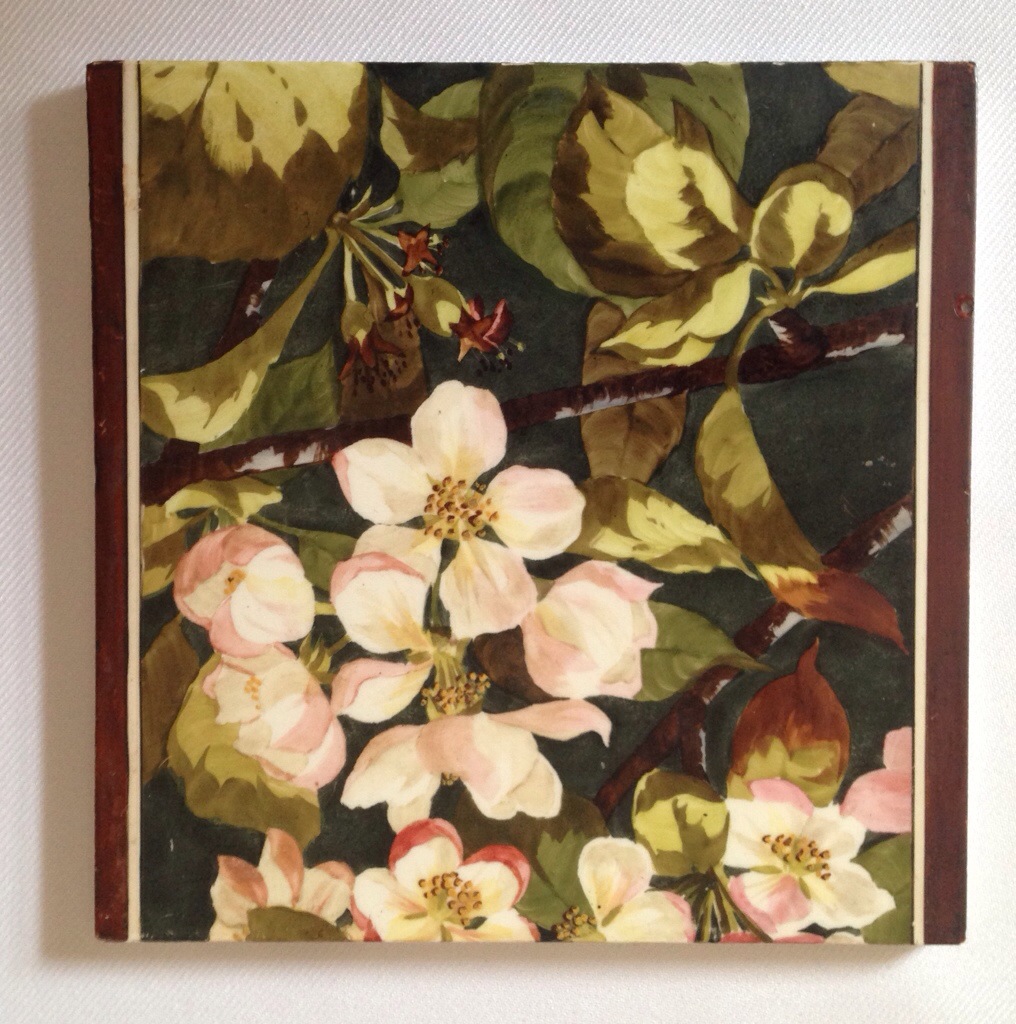
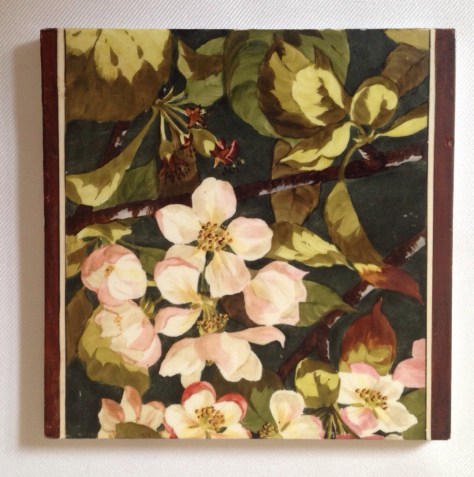
A charming hand-painted tile with Apple blossom.

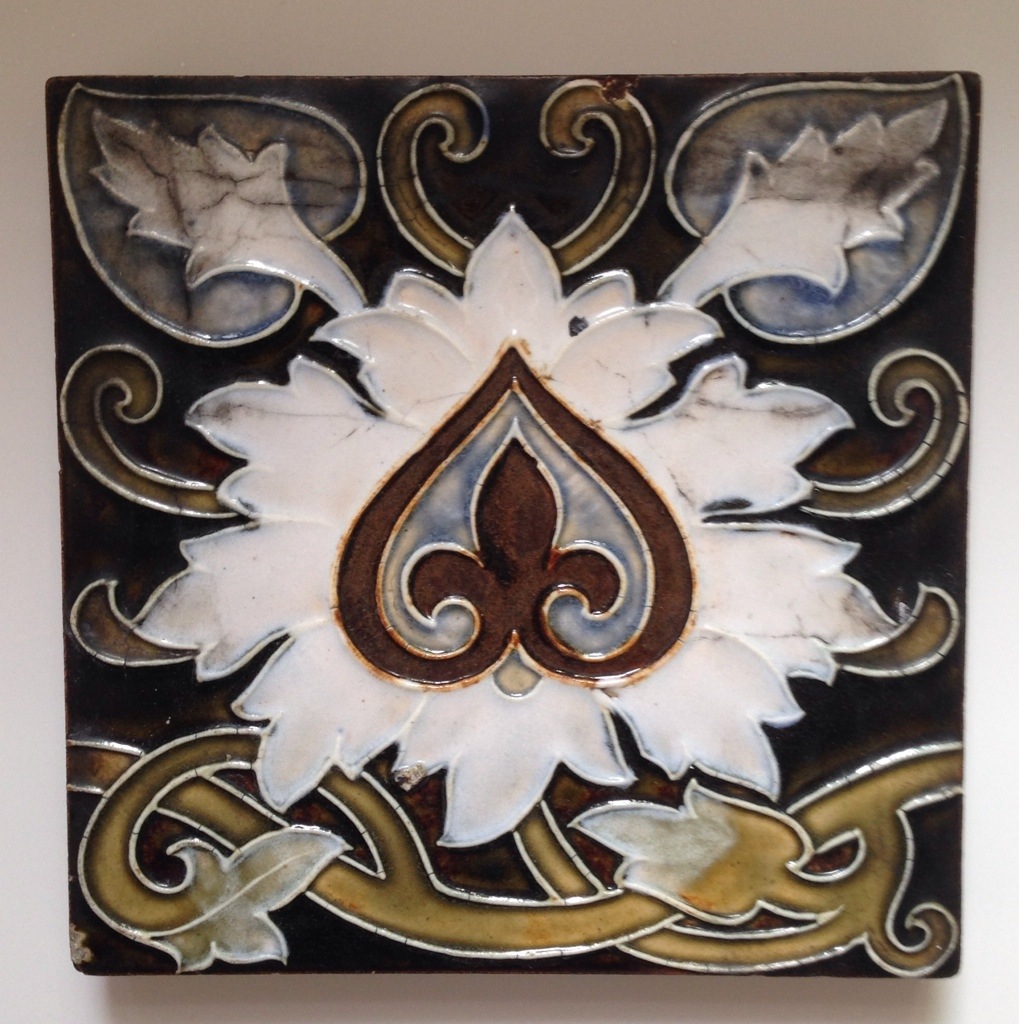
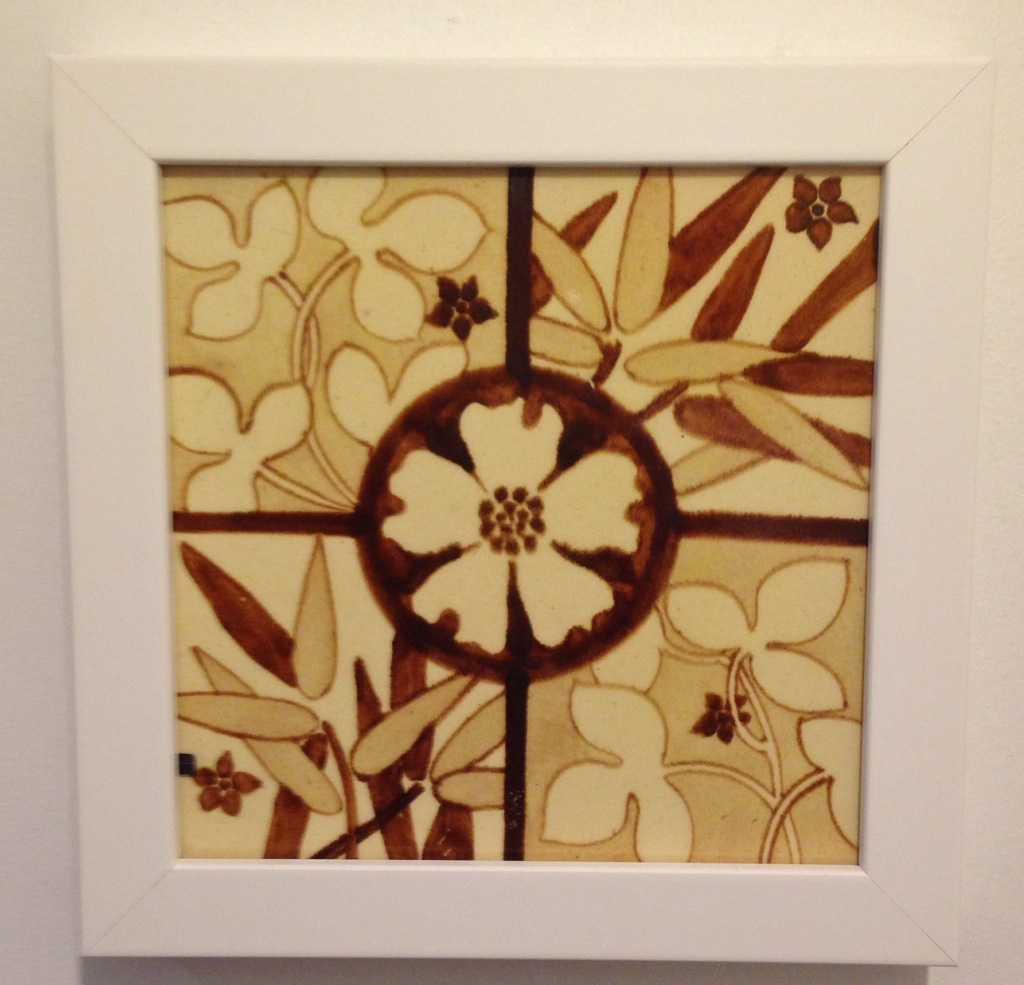
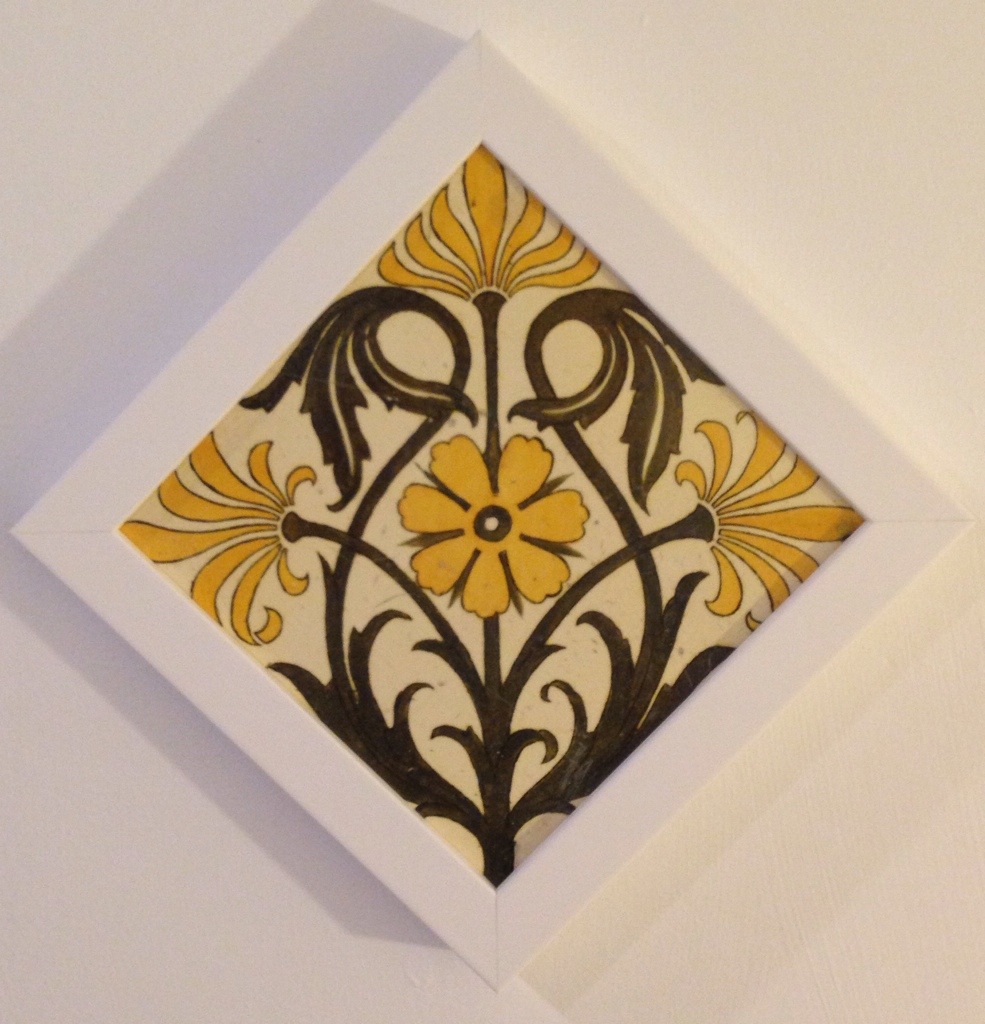
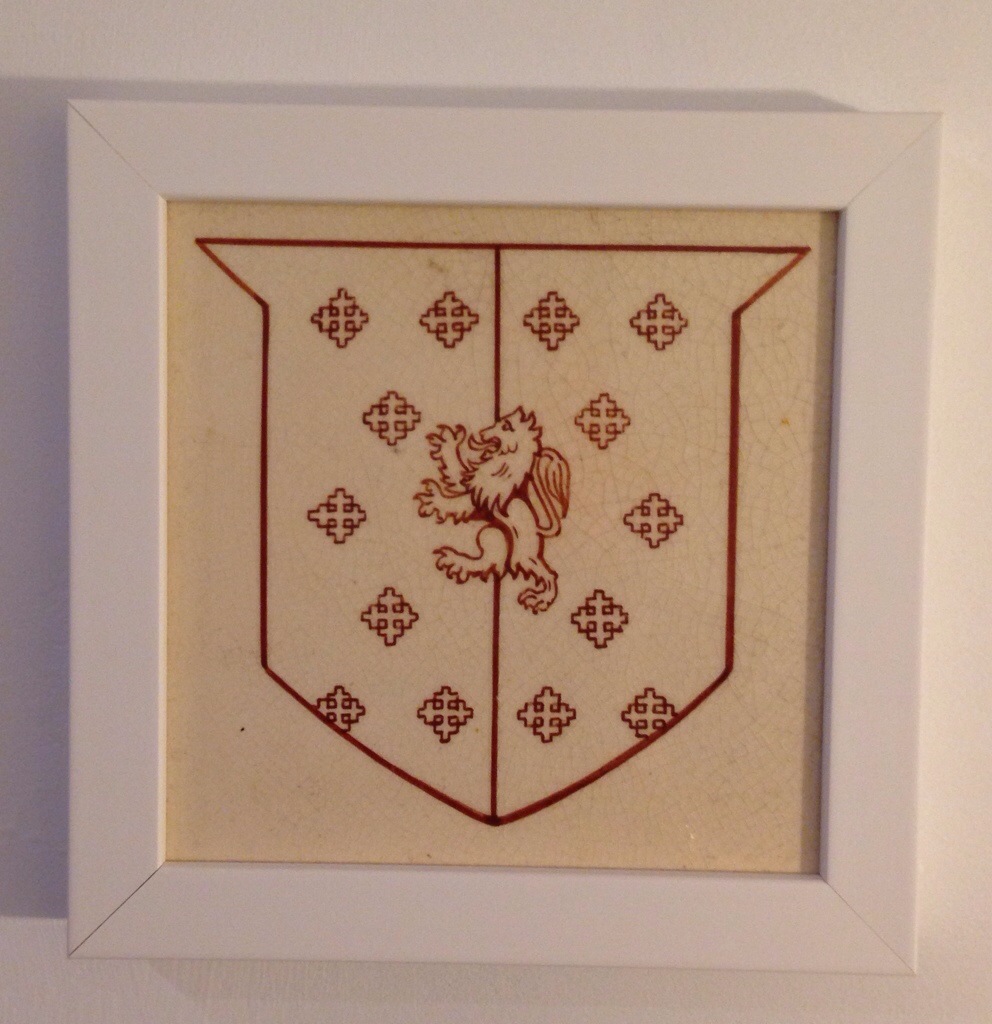
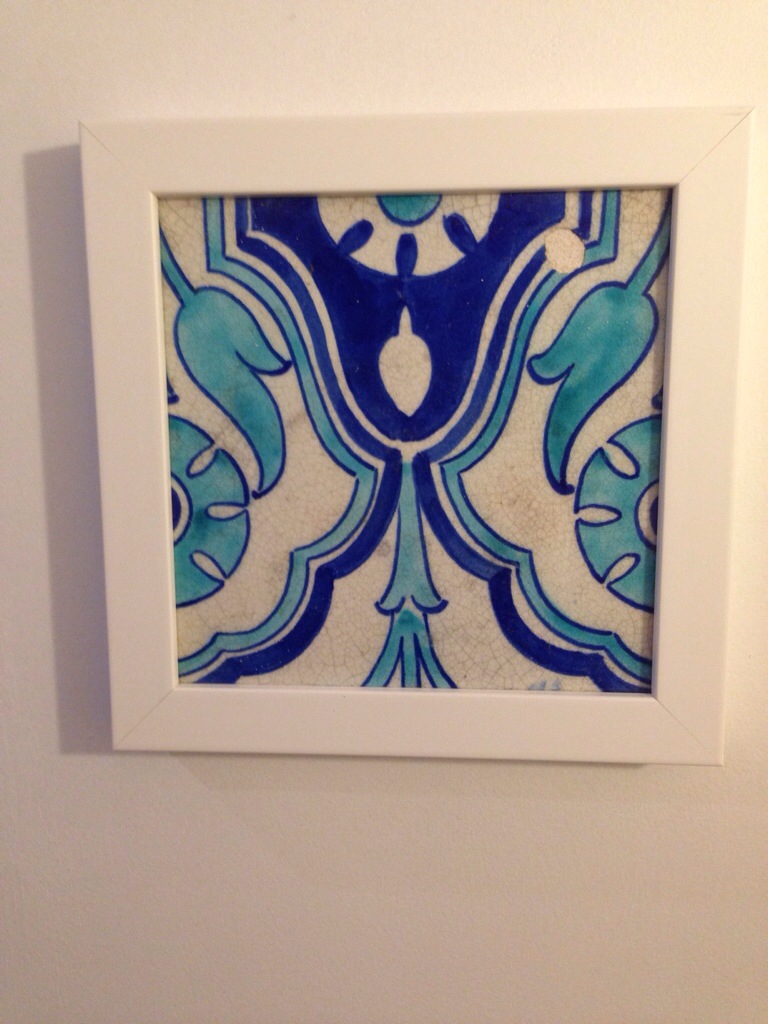
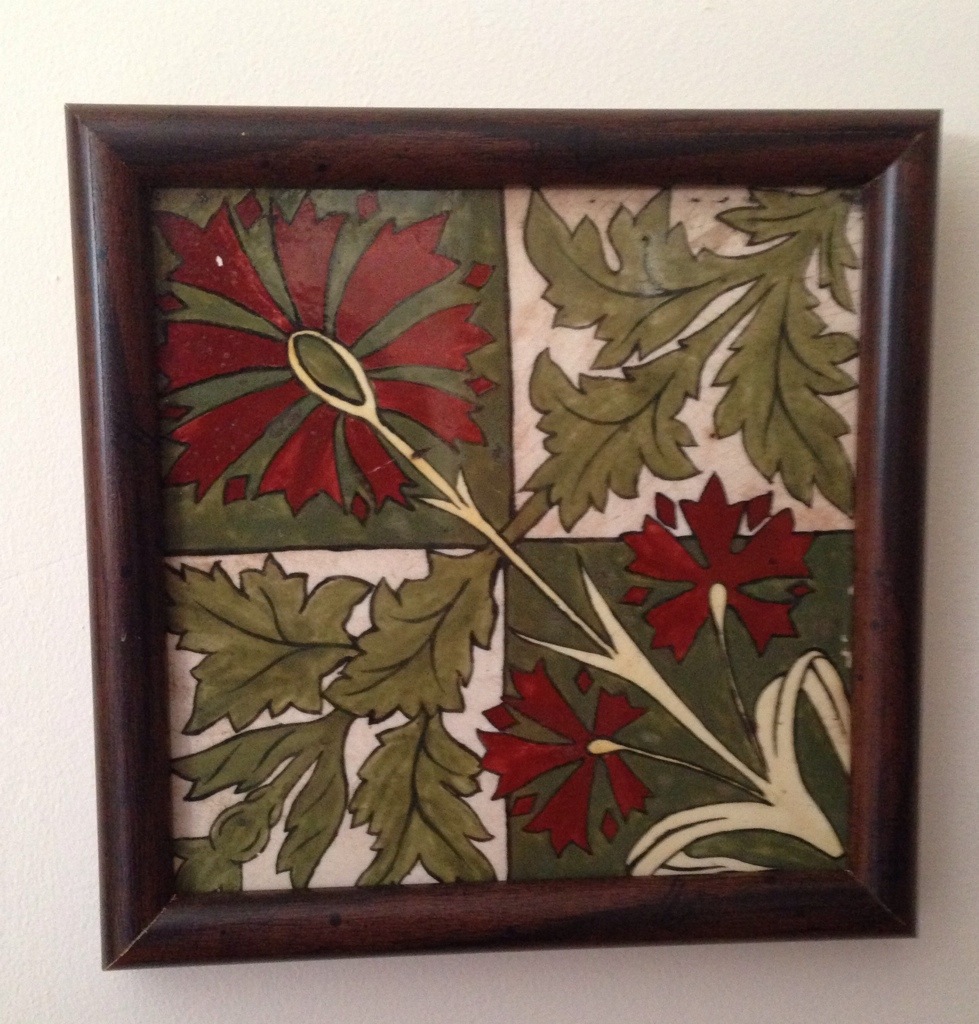
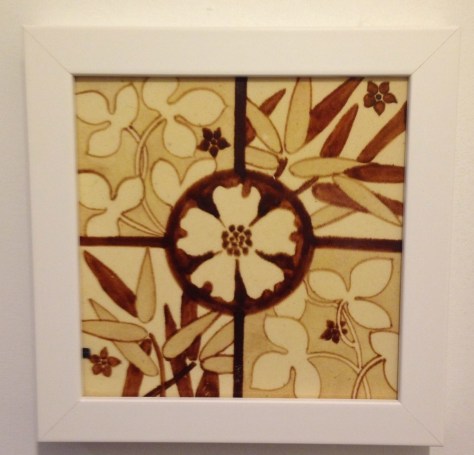
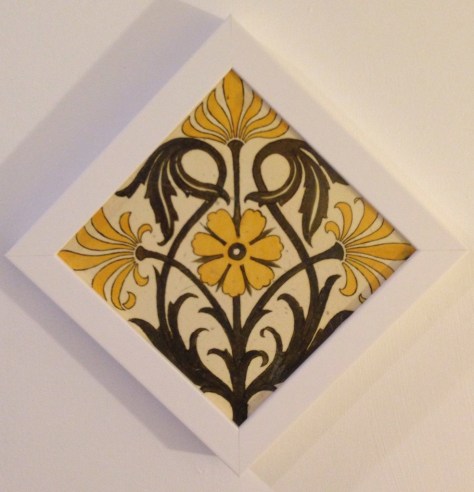
Yet, for collectors there are numerous designs in tiles to collect. Here are some that I have come across over the years, some artist pieces some production pieces. Nevertheless an interesting theme to collect!
20140712-164431-60271538.jpg

20140712-164434-60274110.jpg

20140712-164433-60273272.jpg

20140712-164432-60272359.jpg

20140712-164430-60270548.jpg

20140712-164429-60269734.jpg

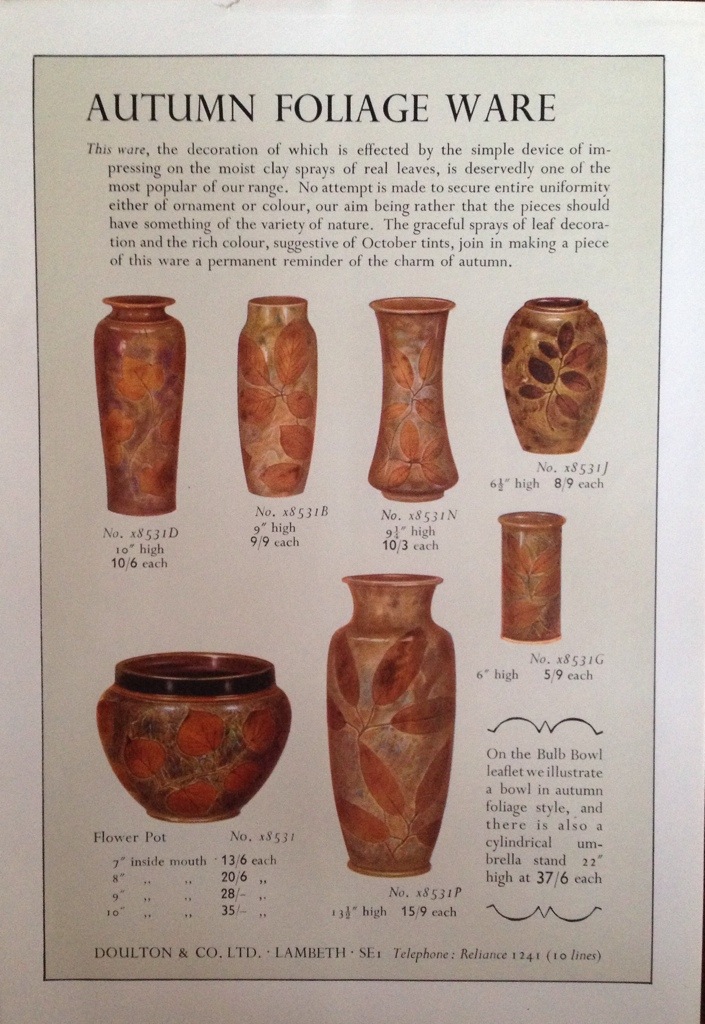
Doulton’s Natural Foliage ware

Natural Foliage or Autumn Foliage ware as it was later called, was a uniquely Doulton process whereby actual leaves were pressed into the wet clay and which were of course obliterated during the firing process, leaving the delicate outlines of the individual leaves behind.
These were then hand decorated usually in shades of blue although some with blue decoration also exist. Naturally no two examples are the same.
This Lambeth ware proved very popular and examples regularly turn up at auction and in antiques centres. It was introduced in 1883 and remained in production to some extent until the 1950’s with two gaps co-incising with the two world wars in the 20th Century.

20140626-193313-70393141.jpg

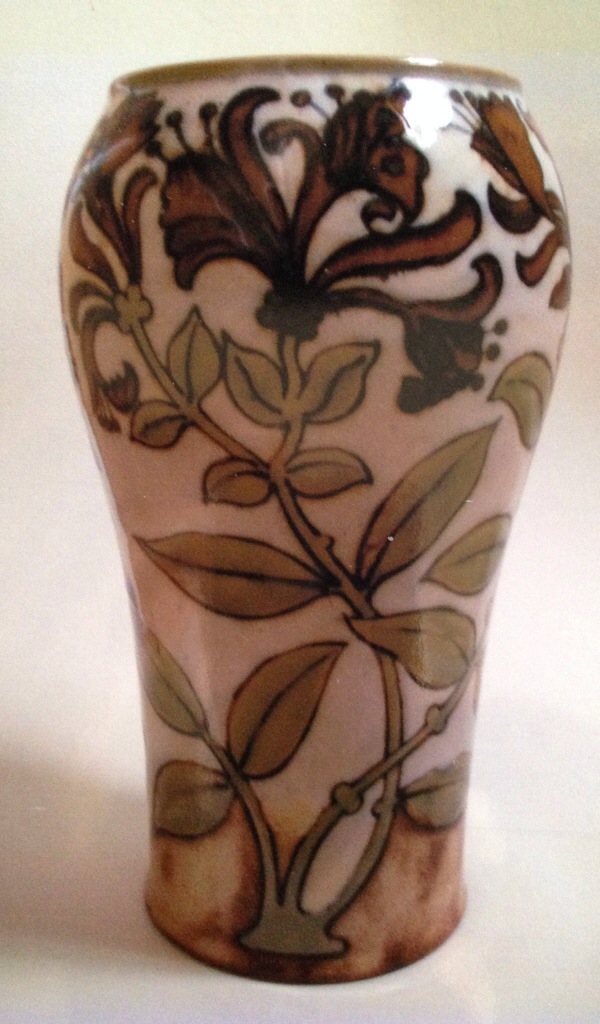
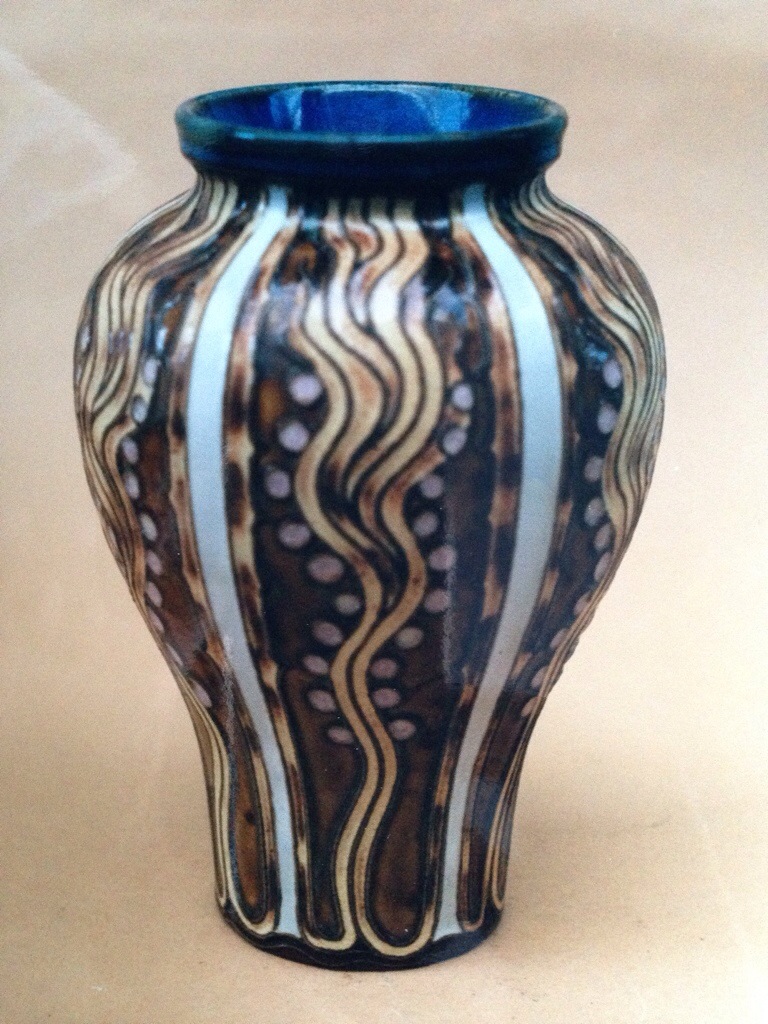
Harry Simeon – a unique Lambeth artist

20140614-171602-62162531.jpg

Simeon was the son of a monumental mason, which perhaps explains his everlasting interest in sculpture. Simeon moved from Huddersfield to London in 1896 when he started work at Doulton in Lambeth and also the year he won a scholarship to the Royal College of Art.

20140614-171702-62222287.jpg

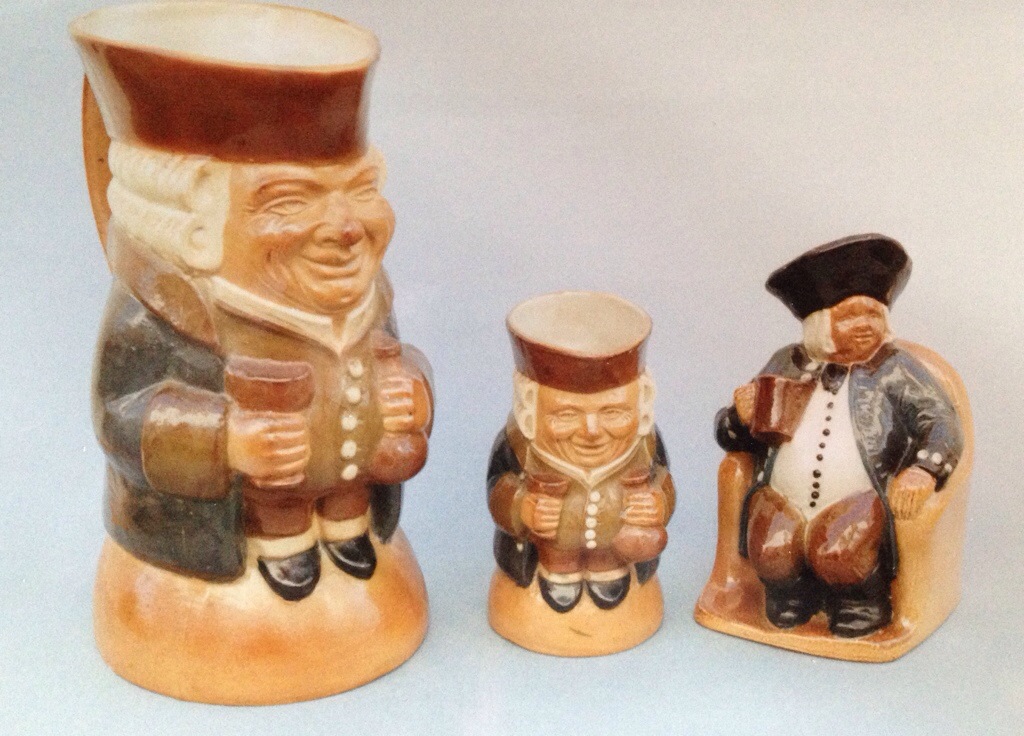
Simeon’s versatility cannot be denied when one looks at the variety of Lambeth wares he produced. Naturally there were many hand designed vases, but there were also late edition vases made between 1910 and 1925, as well as endearing Toby wares that he modelled that we’re introduced in 1925.

20140614-171748-62268340.jpg

When one considers the wares with which his is now associated it is hard to believe that he criticised his own talent, describing it once as overly fussy and preferring the artistry of Mark Marshall’s often simplistic designs.

20140614-172135-62495283.jpg

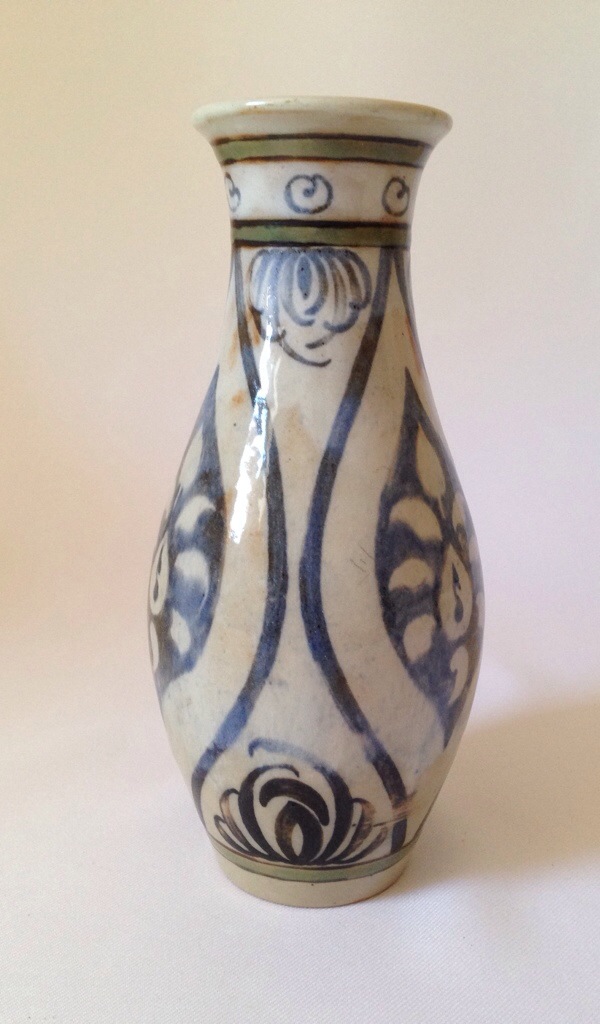
Joseph Mott, Lambeth’s art director in the early 20th Century had a particular interest in pottery of ages gone especially medieval pottery, encouraging Simeon to produce wares in this vein and also pots suitable for the many glaze effects trialled by Mott in the early part of the 20th Century.
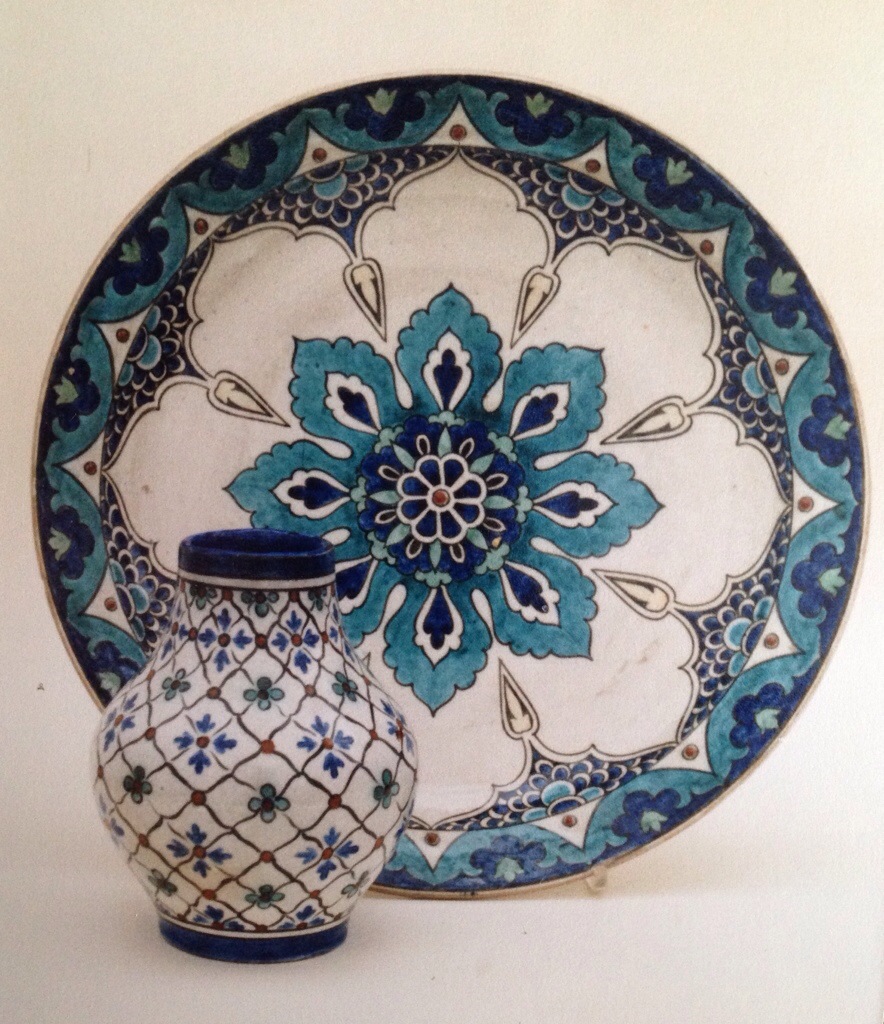
Up until the end of Simeon’s association with Doulton in 1936, his style remained versatile, producing in the 1920’s designs for the Persian ware range and also a myriad of slip ware pieces in a colourful pallet.

.

20140614-172221-62541630.jpg
His signature changed early on from a simple H.S. to his usual monogram pictured in the Doulton reference books.

Unusual Lambeth Glazes to match Burslem’s Sung and Chang

Just as Doulton in Burslem under the direction of Charles Noke were experimenting with glazes in the early 20th Century, so too was his London counterpart Joseph Mott, art Director at Doulton Lambeth.
Mott can truly be said to have seen it all at Doulton as he began working there in the 1880’s when some of Doulton’s most famous artists were in full swing including the Barlows, Mark Marshall etc…
Just as sales at Burslem were on the rise so too began the steady decline of Lambeth wares. However, under Mott’s direction the art department survived for another half century.
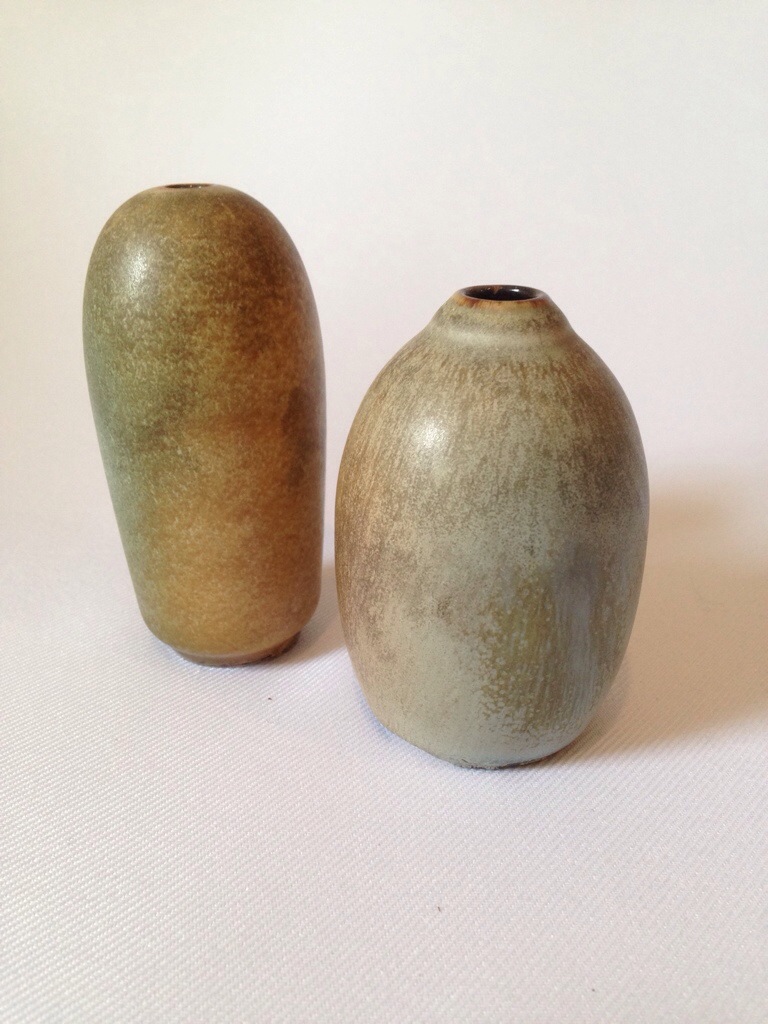
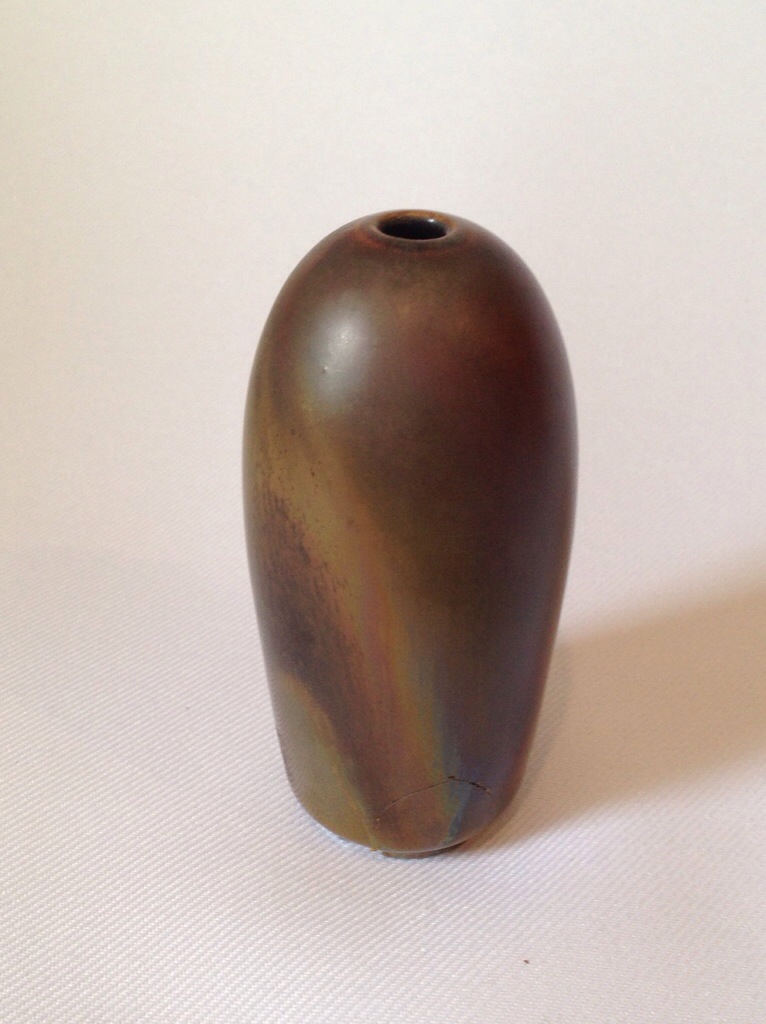
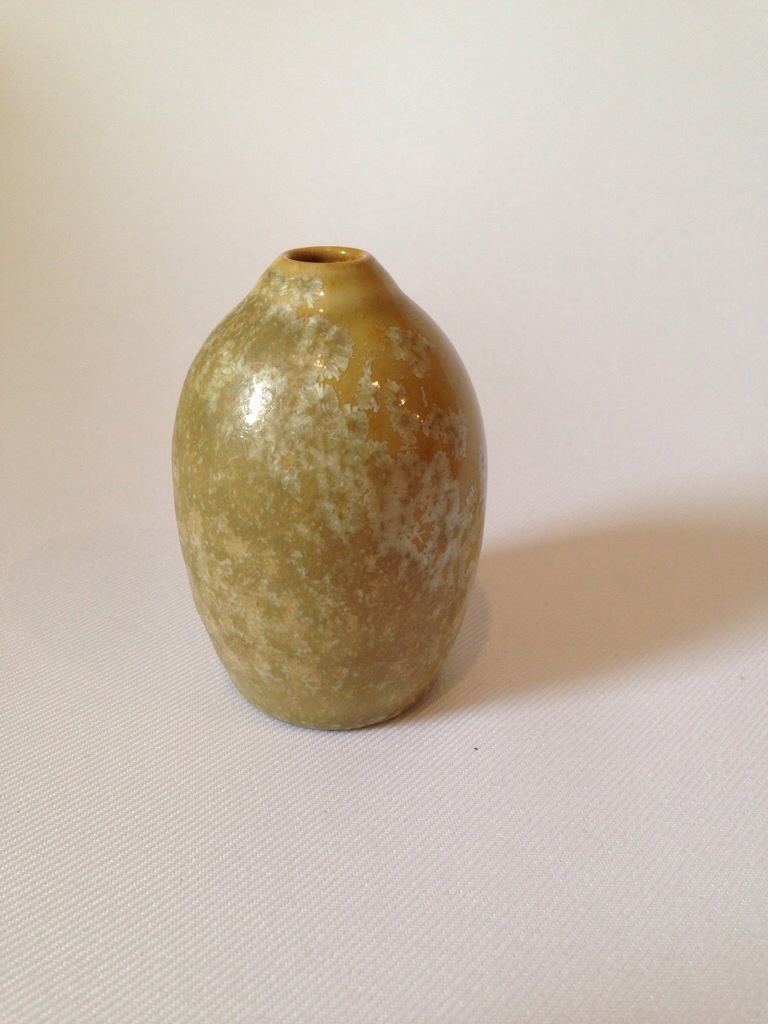
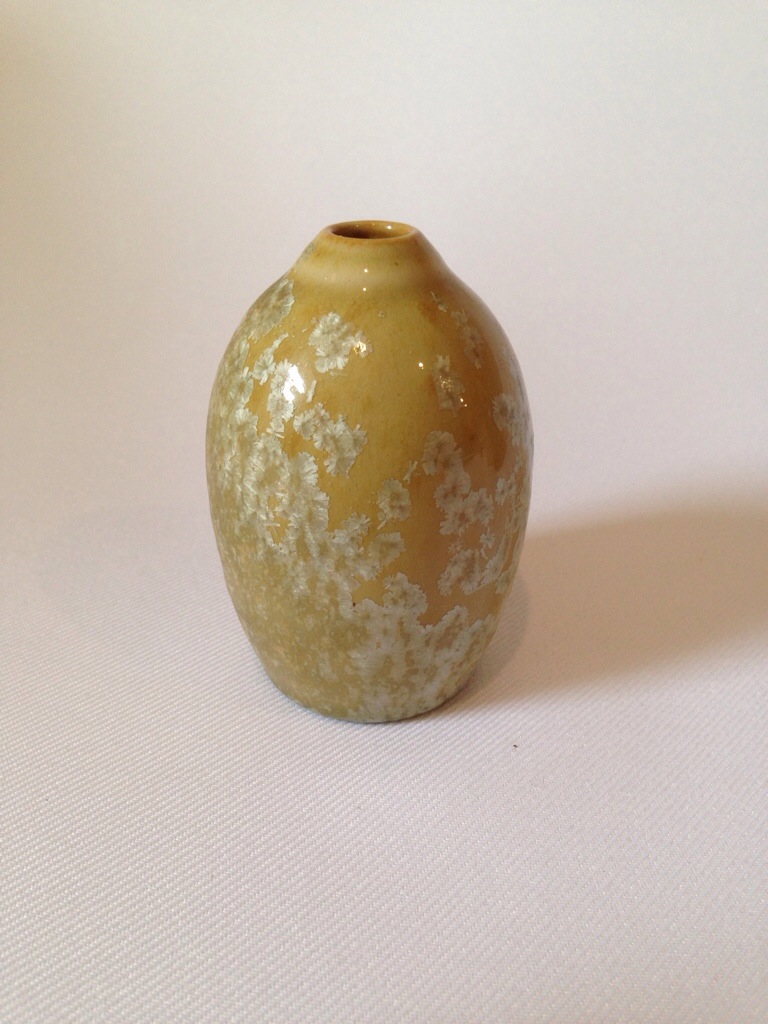
Mott had a chemists background so it is no surprise that the following pieces have turned up, all showing the most wonderful types of glaze and most bearing his initials.

20140608-133202-48722793.jpg
A deep-glazed slender vase.

20140608-133239-48759280.jpg
Two ‘hare’s foot’ glaze vases.

20140608-133319-48799911.jpg
An unusual vase signed by Mott.

20140608-133420-48860390.jpg

20140608-133419-48859216.jpg
Two views of a striking crystalline vase.

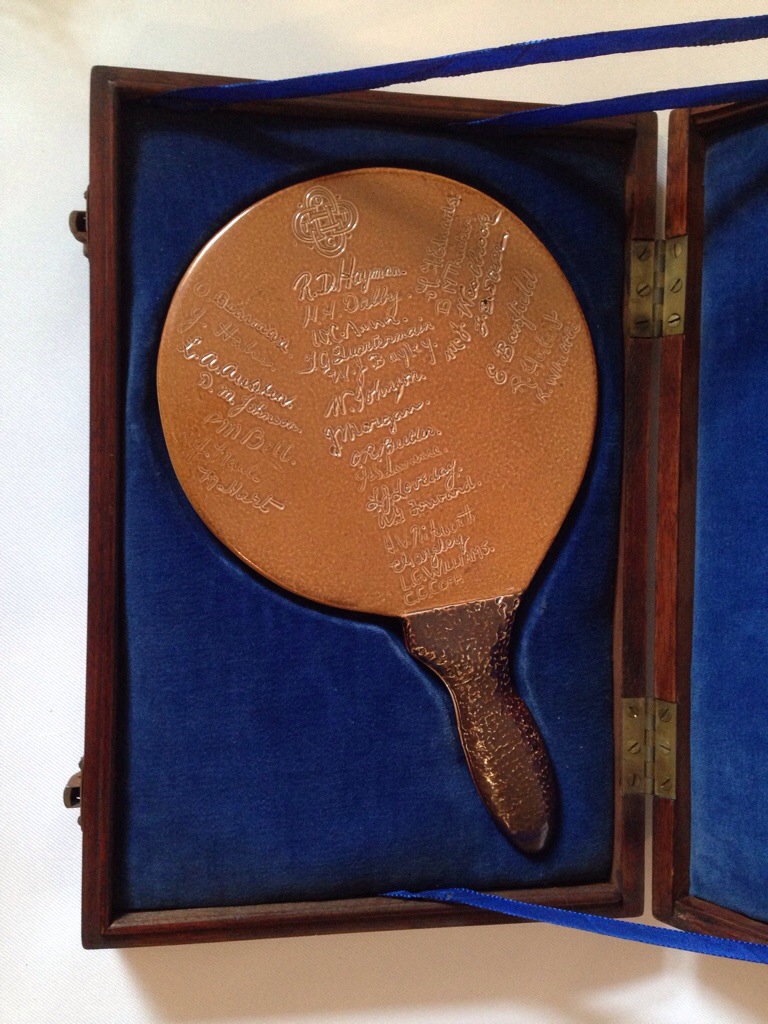
One piece of stoneware I have at home is a fun Doulton stoneware table tennis bat presented by Mott’s fellow players to him in 1935, and signed by them all.

20140608-133515-48915707.jpg

Mott’s contribution to the Lambeth factory goes far beyond glazes but that is the focus of this piece today.

Another personal favourite, Velluma ware

20140528-194709-71229104.jpg
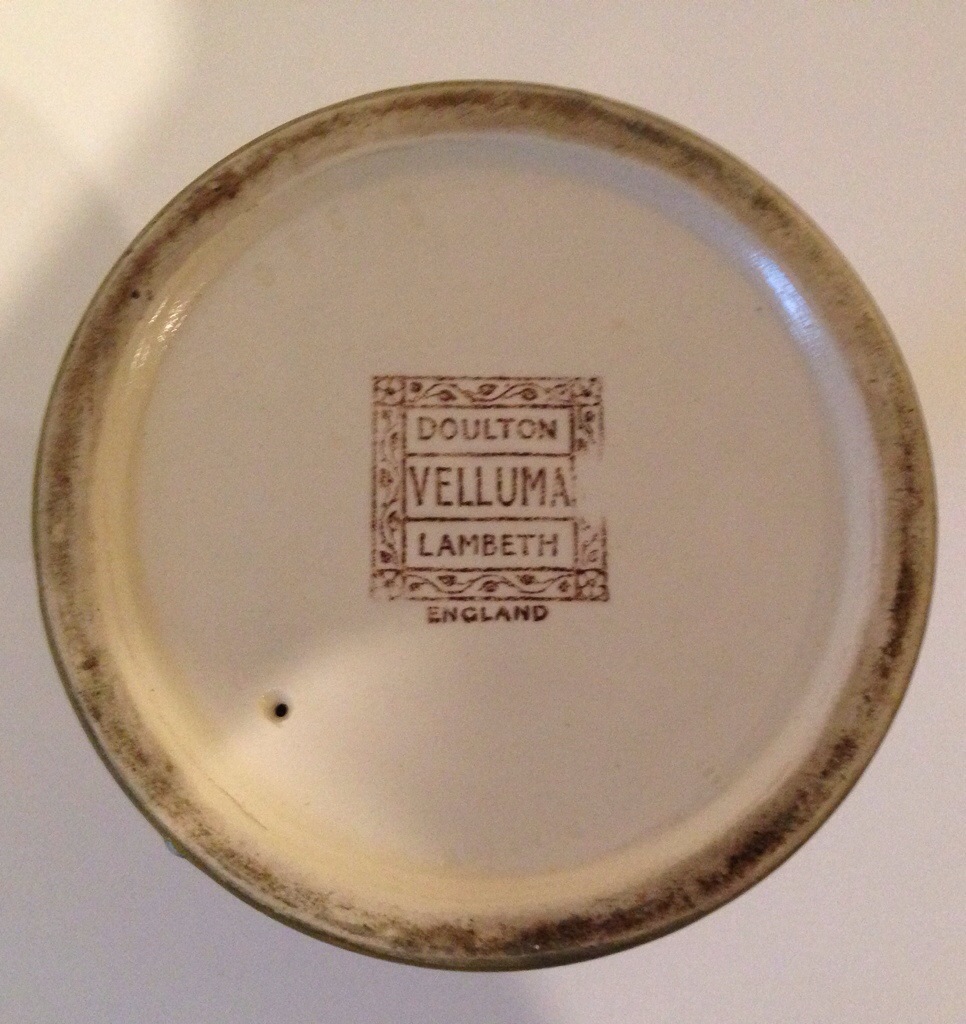
The Velluma backstamp.

Velluma is a particularly rare ware today and pieces rarely turn up. The body has an almost parchment texture to it and the tea wares particularly are prone to damage. The colours are often quite muted, which adds to the vellum feel of this particular ware. These pieces were fired at high temperatures to enhance the soft effect desired.

20140528-194745-71265016.jpg
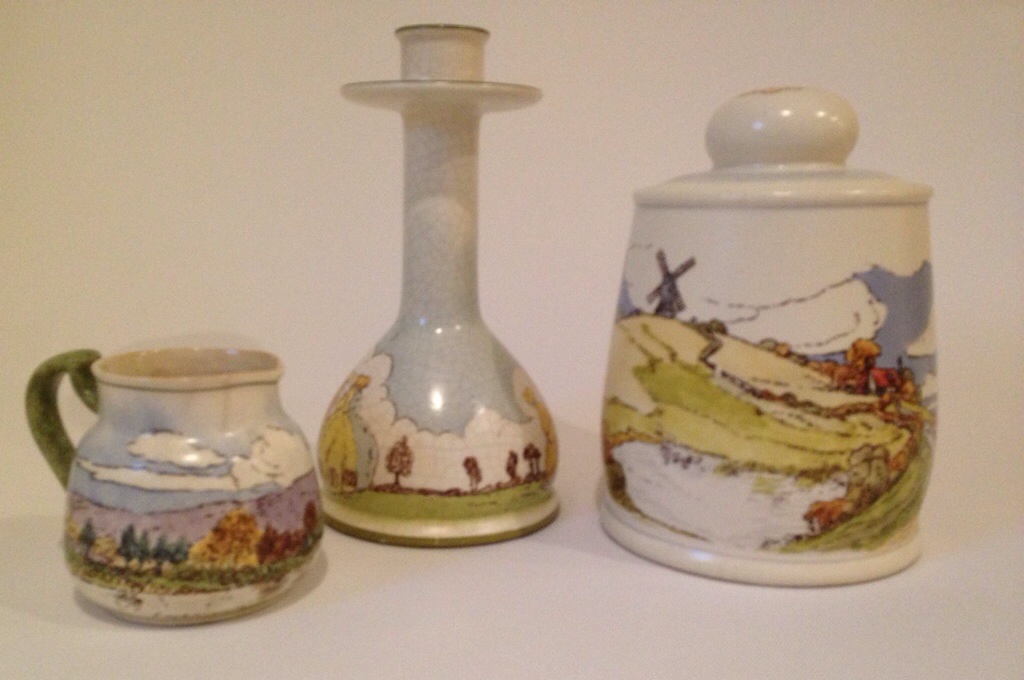
Three items of Velluma ware by the two of the main artists.

Unusually the pots were made at Burslem and then decorated at Lambeth to the designs of Arthur Pearce, William Rowe and Margaret Thompson.

20140528-194823-71303335.jpg
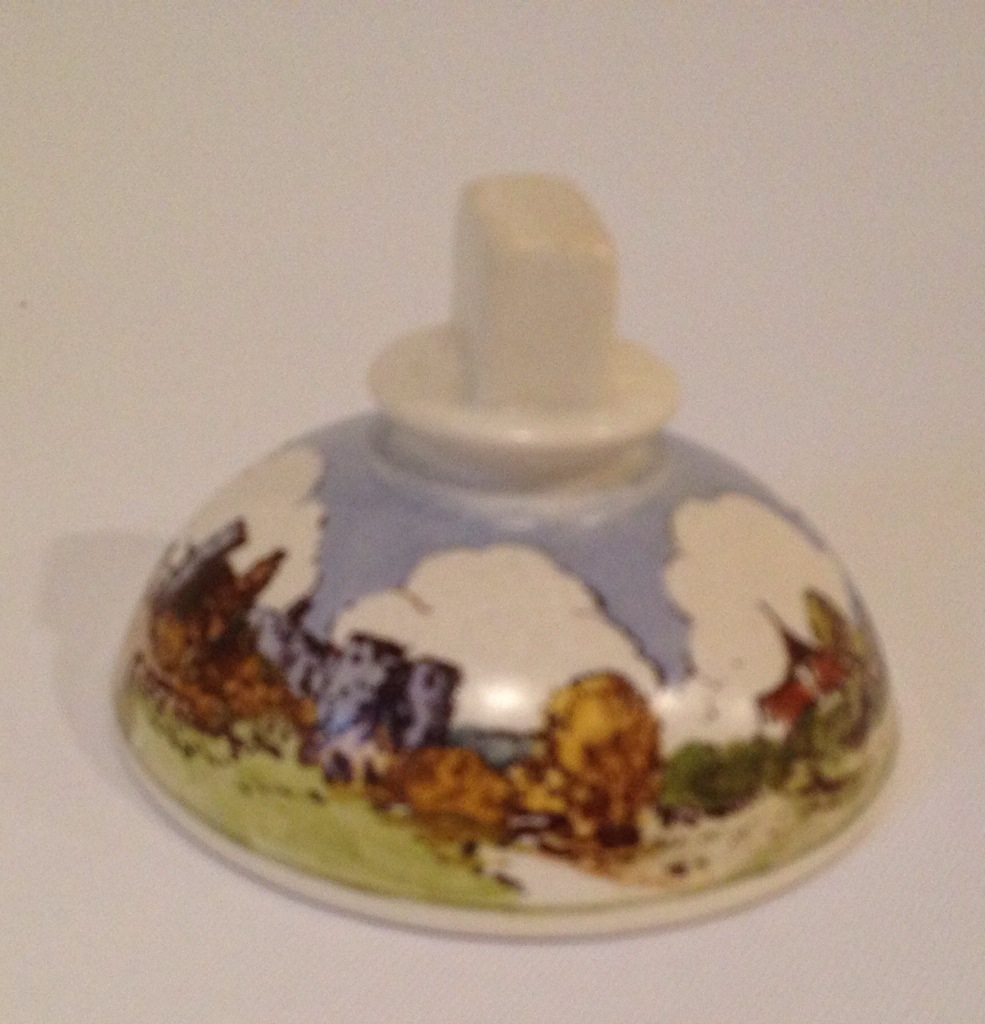
A rare match box stand.

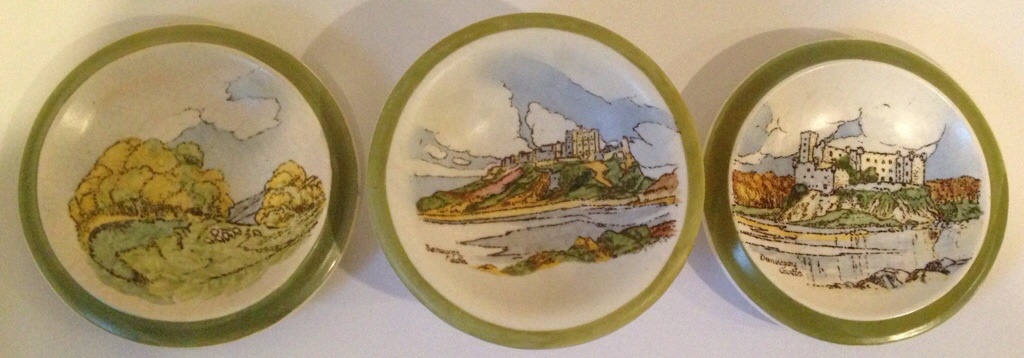
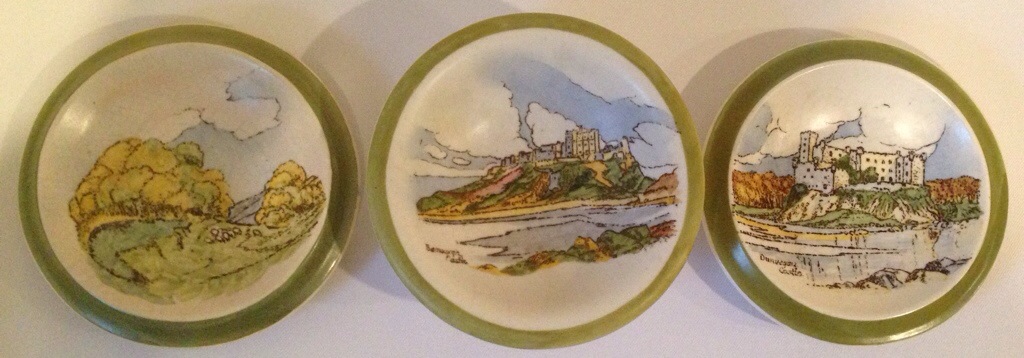
Through deduction it appears that Arthur Pearce was responsible for the castle and topographical scenes, William Rowe the countryside scenes and Margaret Thompson the crinoline ladies and fairies.

20140528-194855-71335617.jpg
Three dishes with countryside or castle designs. Bamburgh Castle seems to have been a popular design as I have seen most items with this design.