Category Archives: Leslie Harradine

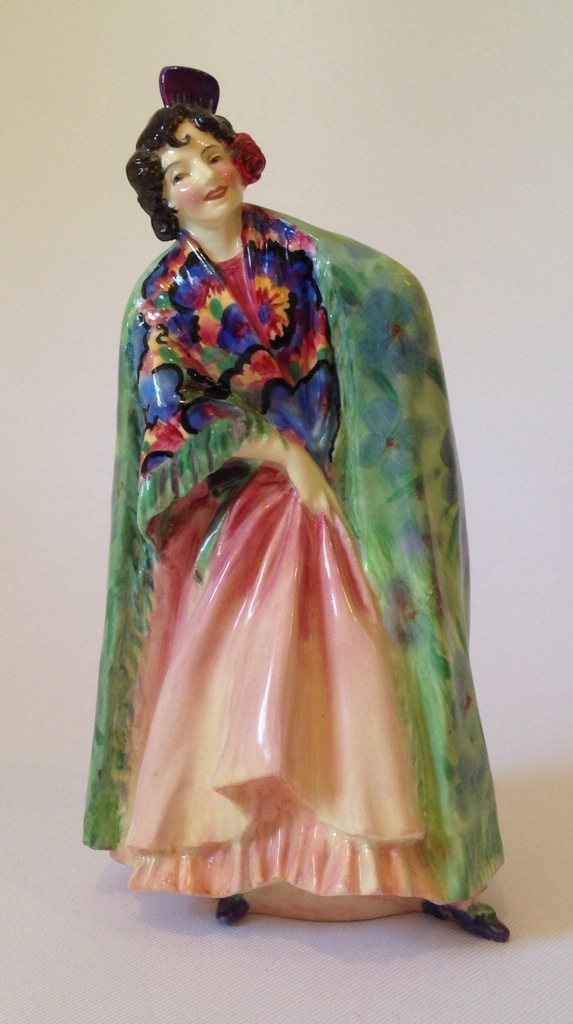
For the love of Chloe!

20140727-113517-41717977.jpg
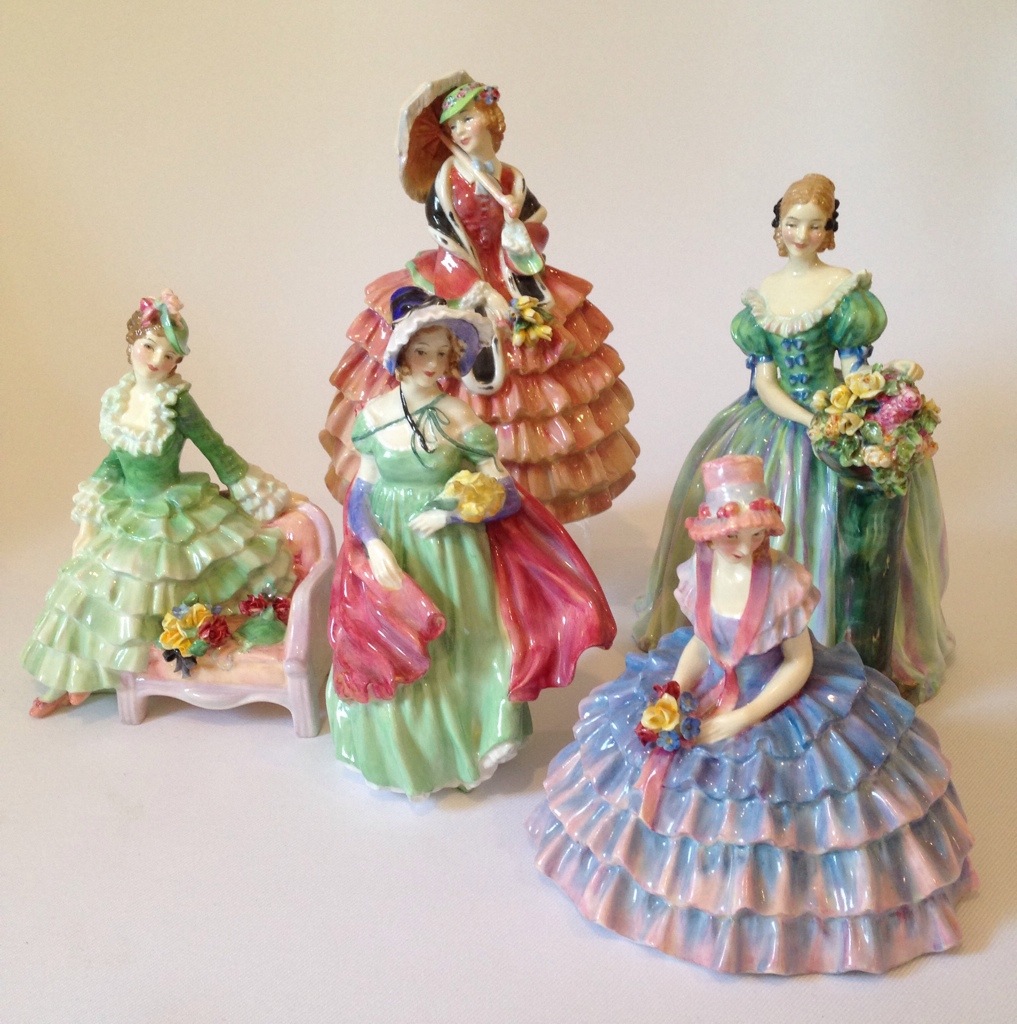
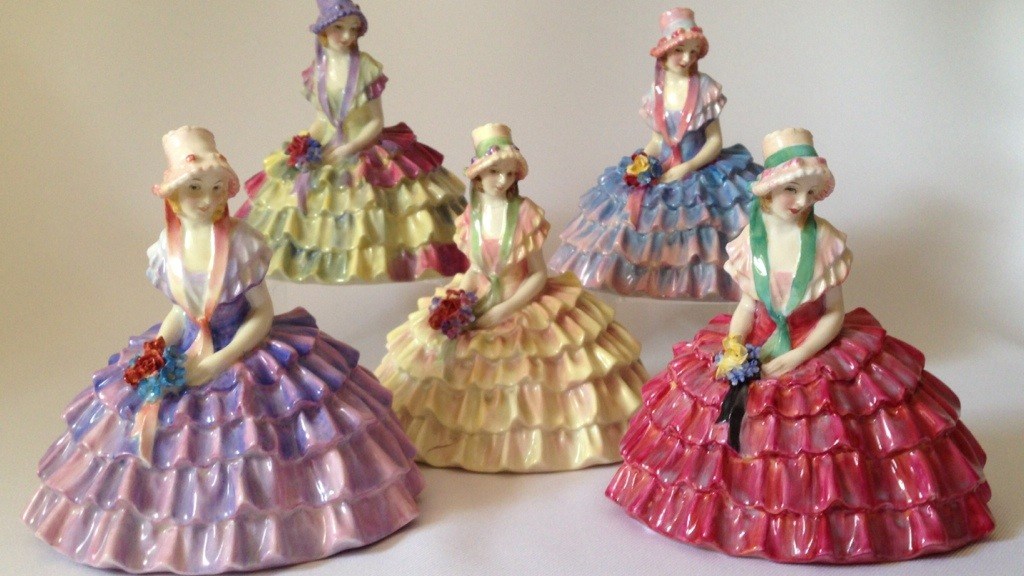
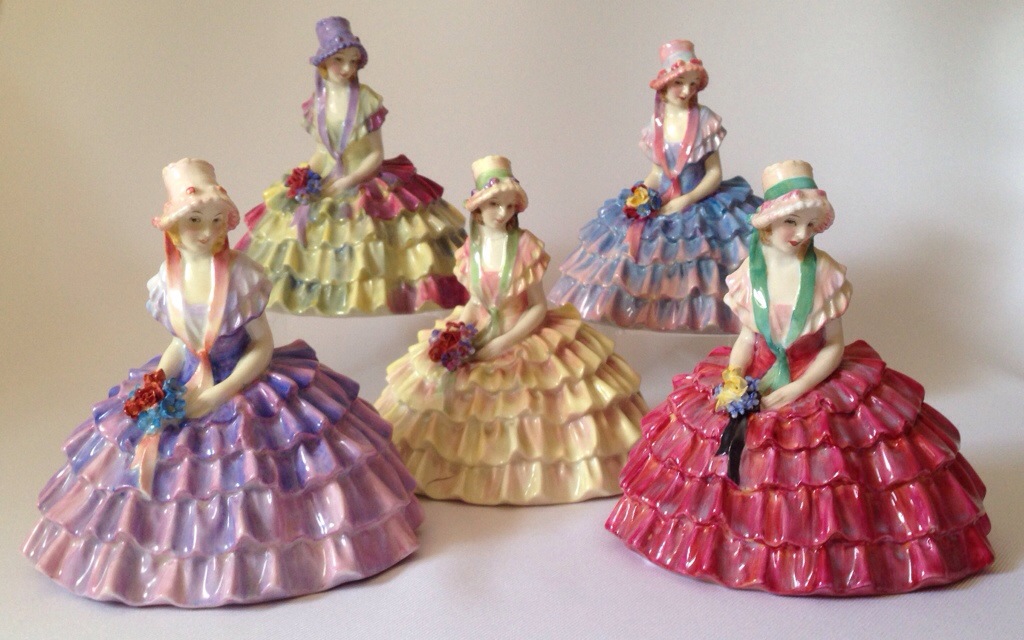
L-R are HN’s 1479, 1470, 1498, 1765 and 1956 (missing HN1476).

Many of you will be familiar with the more frequently found versions of this popular Harradine damsel Chloe, HN1470 and HN1765, but at the time of her production she was such a popular figure that there were 6 different full size versions of her and a further 3 miniature models.

If you refer to the ‘bible’ for figure collectors “Royal Doulton Figures” you will see that 5 of the six are illustrated, the one missing being HN1956, but illustrated here. However, there is another missing colourway. As some of you may have noticed, what is labelled HN1476 in the book is actually a pre-war version of HN1765 – I know this as I bought the figure labelled as 1476 at the first Doulton museum sale.
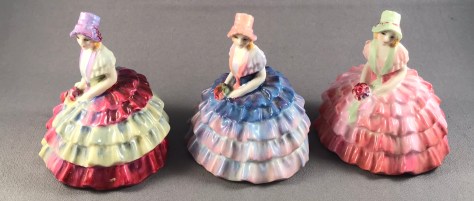
The three M versions of Chloe.

HN1765 was clearly the most popular colourway and production was resumed after WWII. These later models are easily distinguishable as the bouquet is less detailed and indeed smaller, plus the base typically only bares her name as there was no longer a need for her HN number as she was the only Chloe in production at this point. Mistakes do happen and we must remember that the original book was put together using actual figures found at that time.

In my experience and as I have previously mentioned the ‘by 1949’ could really be shortened to ‘by 1944′ as production seems to have been halted for all but the absolutely most popular figures before 1944. This small group includes Paisley Shawl HN1392, the Old Balloon Seller, Biddy Penny Farthing, the Orange Lady and the perennial favourites in red of Autumn Breezes and Top o’ the hill. Production of these appears to have stopped in 1944 before resuming full post war production in 1947.
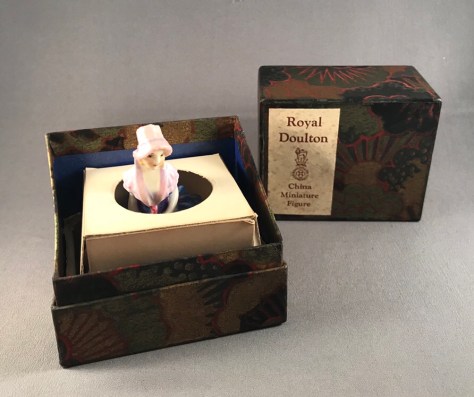
M version of Chloe in her original box and packaging from 1932.

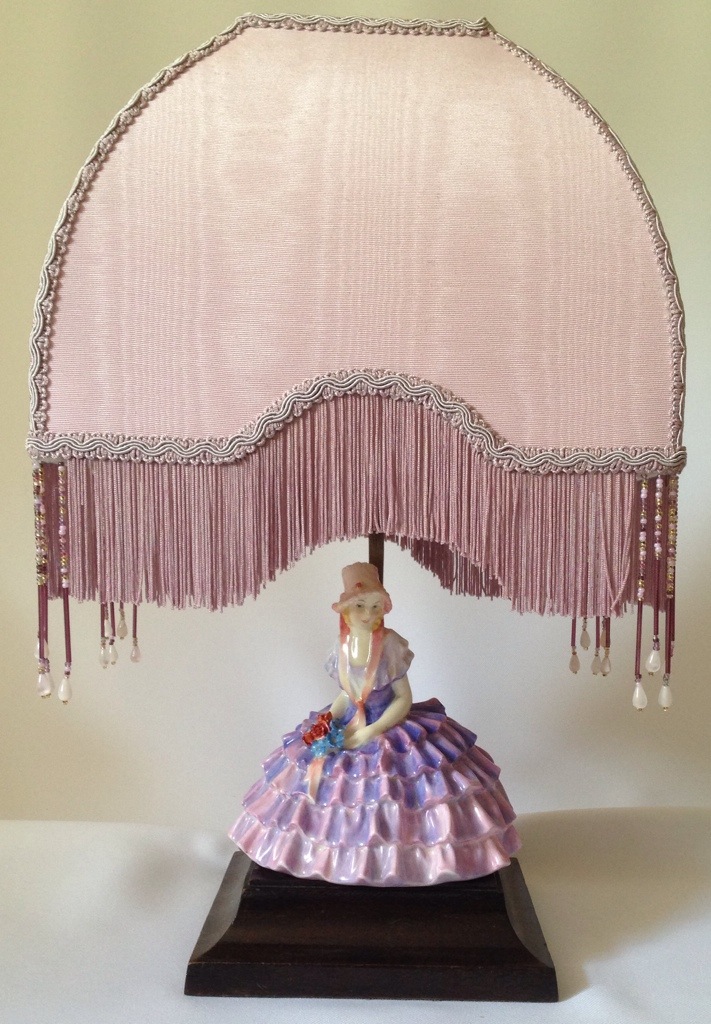
Chloe proved such as popular figure that examples can be found mounted on lamps as below and miniature versions adorn pin trays, calendars and pen holders produced in the 1930’s.
20140727-113641-41801649.jpg

Chloe on original lamp base with replacement shade.
An A-Z of Collection Royal Doulton – the Beggar’s Opera series.

20140725-160540-57940025.jpg
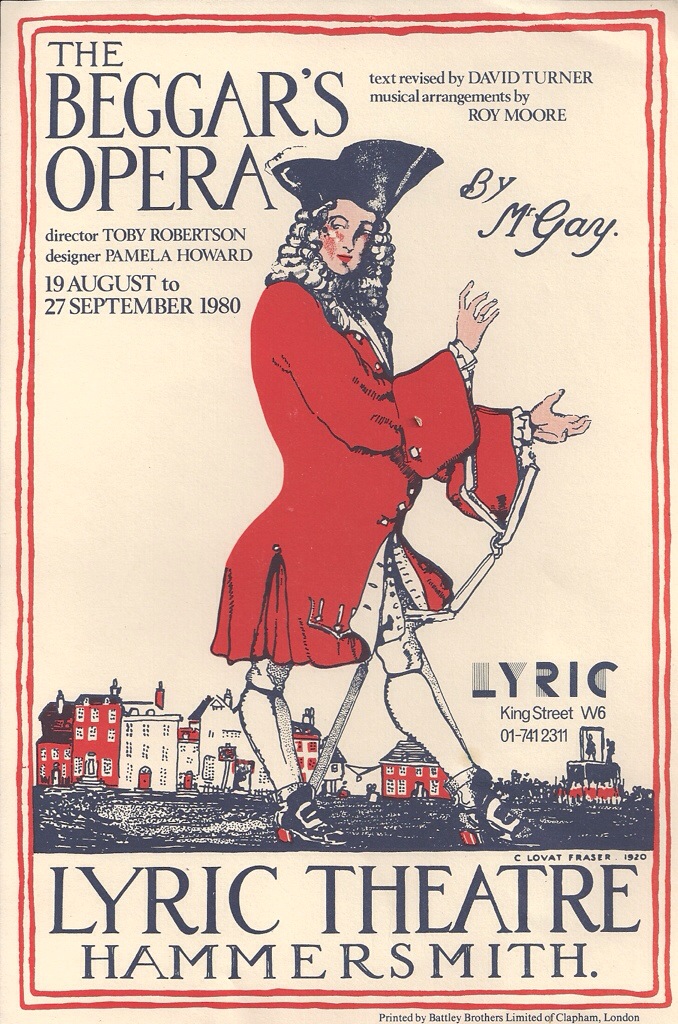
Original poster for the opera.

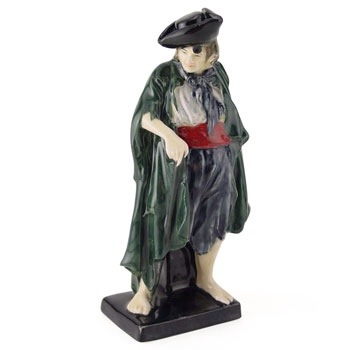
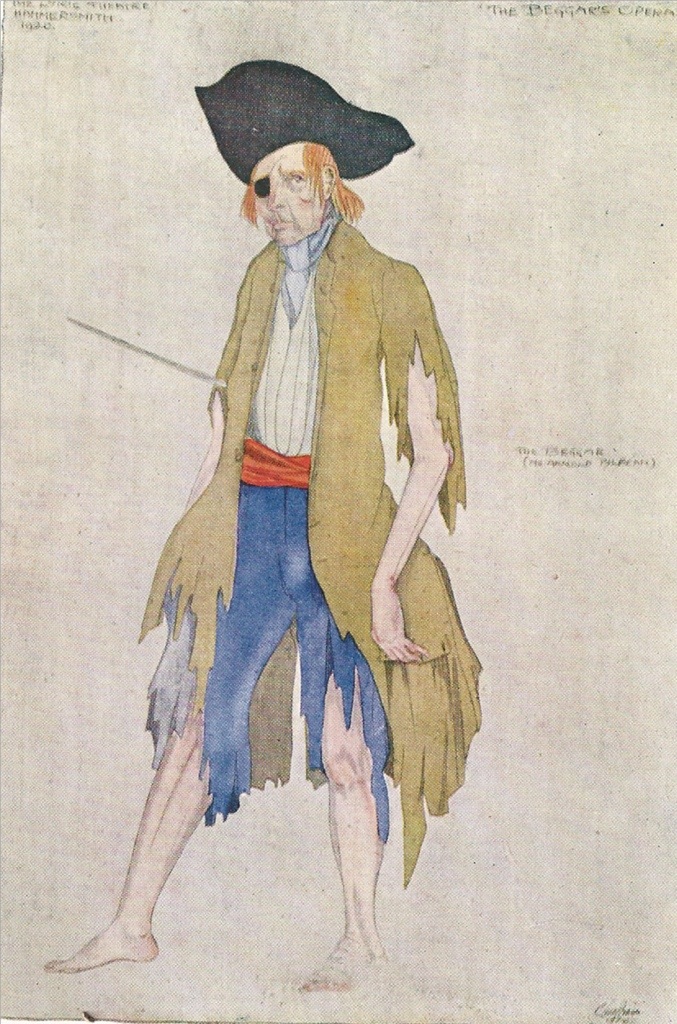
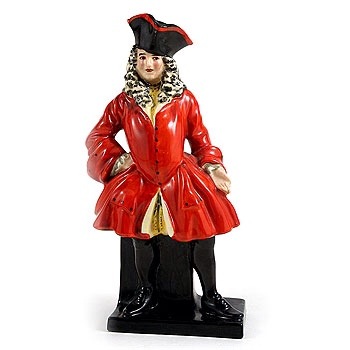
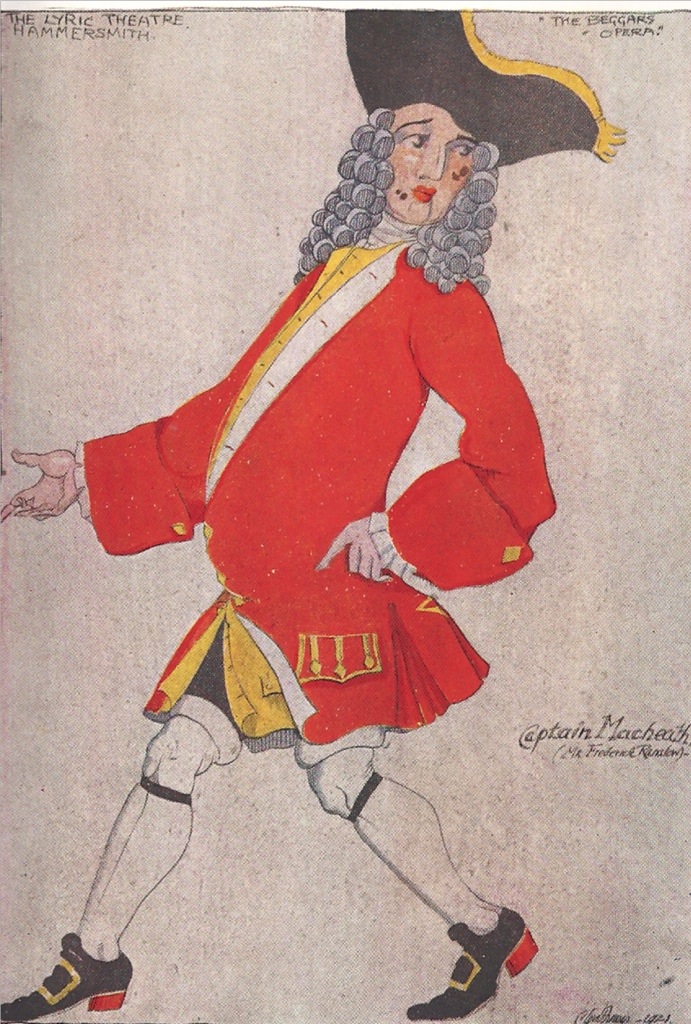
Leslie Harradine as well as establishing a new standard in figure modelling in the early 1920’s, was also responsible for the first set of figures, The Beggar’s Opera Series, inspired by the theatre. Harradine’s figures all closely resemble the costume designs Claude Lovatt Fraser the designer for the revival of this piece at Hammersmith in 1920, as you can see from these pictures in the article.
20140725-160655-58015097.jpg

20140725-160655-58015339.jpg
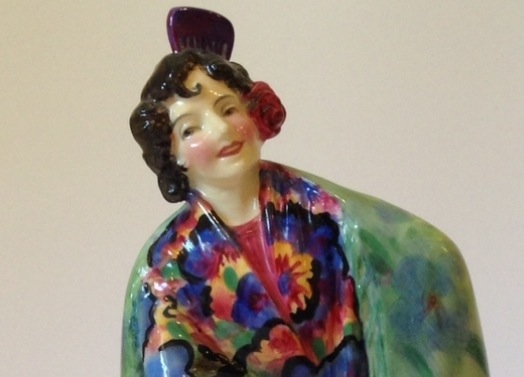
Harradine’s The Beggar and the original sketch for the stage costume.

Once made up Lovat’s costumes were thrown to the studio floor and walked on, had paint thrown on them, and where necessary as with the Beggar’s costume, were then slashed and dirtied. He reasoned that the characters from the play were from 18th Century London low life and spent much of their time in jail.

Here is the original Captain Macheath figure compared with the original theatre poster and Lovat Fraser’s design.

20140725-160752-58072942.jpg

20140725-160752-58072829.jpg
Again the original design and the Doulton figure Captain Macheath.

This first series of figures set the tone for future sets by teaming a popular English theme together with an emerging Doulton house style of decoration.

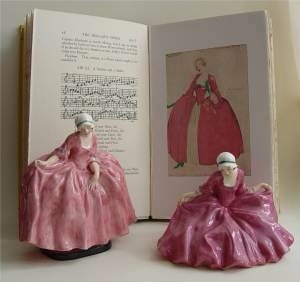
The series proved a huge success and in Doulton’s first official publicity catalogue after WWII, they themselves lament the withdrawal of this popular set! The main female character Polly Peachum is also immortalised in a miniature version, and incidentally more colour variations of this one miniature figure exist than any other!

20140725-161136-58296732.jpg
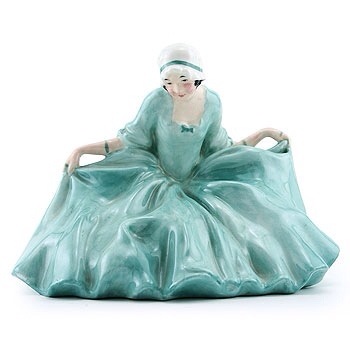
Two versions of Polly Peachum against her original costume design. Incidentally the curtsying Polly was at first called Polly Curtsey.

Whether you collect just individual characters from this series or the whole set, they make an eye-catching display!

20140725-161252-58372251.jpg
A favourite colourway of mine for Polly Peachum.

Royal Doulton’s Nell Gwynne and her inspiration

Leslie Harradine we all know was prolific in his output of figure models for Royal Doulton and he took inspiration from all corners of the world around him.
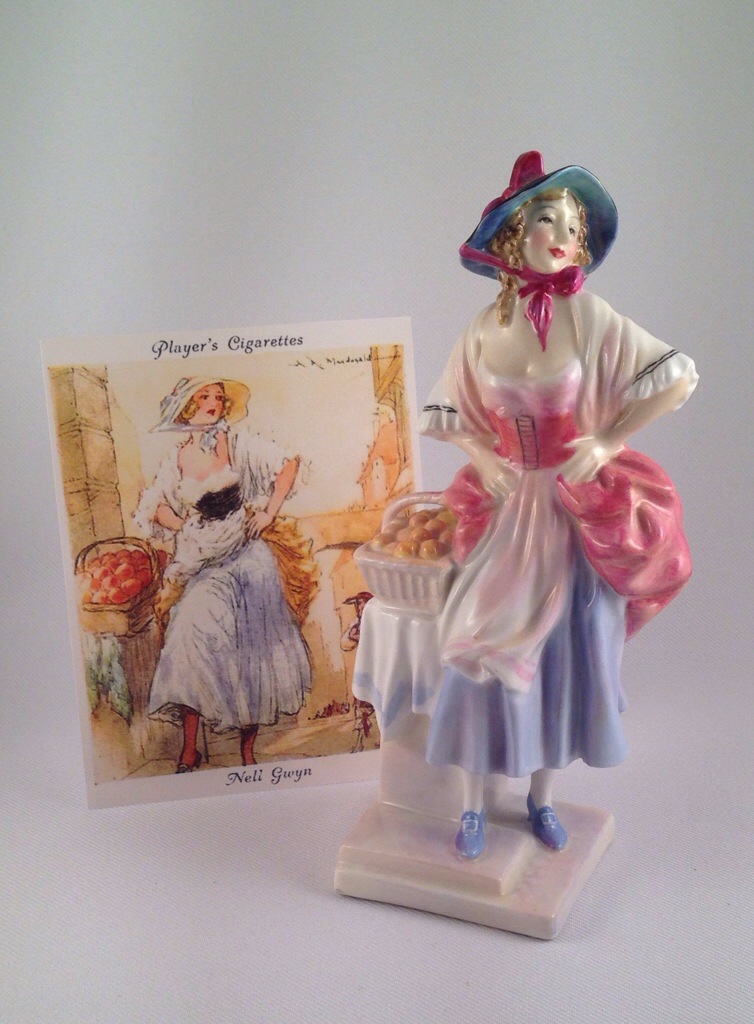
This charming figure of Nell Gwynne is based directly on this Player’s cigarette card from the ‘Famous Beauties’ series dating to the 1930’s.
The card in turn is based on the character of the same name who was the mistress of King Charles II, after she caught his eye selling oranges to the audience at the Drury Lane theatre at a performance he also attended. Nell remained a favourite mistress of the King and bore him two children. On his deathbed he is reputed to have asked “let not poor Nellie starve”.
Royal Doulton’s personification of this character fits in perfectly with the many street sellers they also produced.

20140719-170438-61478404.jpg
Royal Doulton’s Nell Gwynne HN1887 and the illustration that inspired her.

Doulton’s famous flower girls!

20140626-174722-64042832.jpgWhat set Doulton apart from their several counterparts who were also trying to establish a market for figurative studies in the early 1900’s, was the quality and the detail of their studies.20140626-174722-64042832.jpg

20140626-174751-64071350.jpg
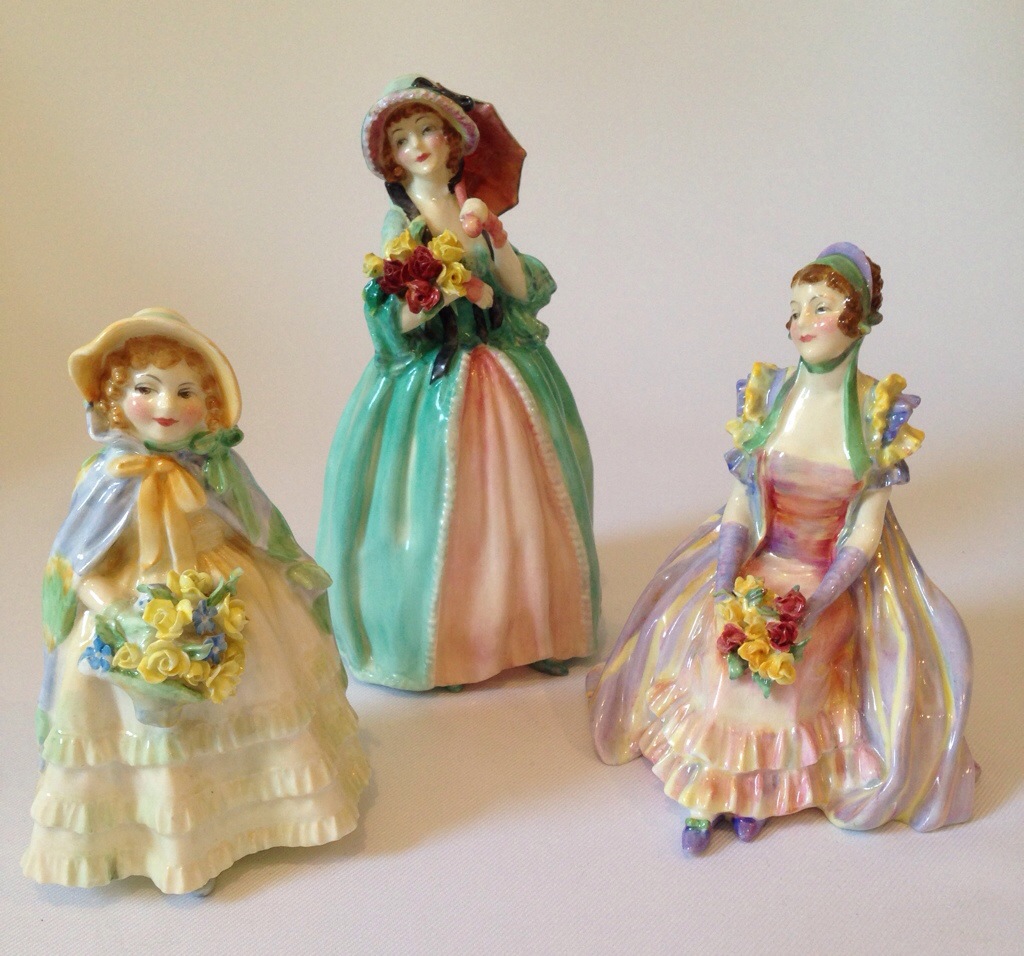
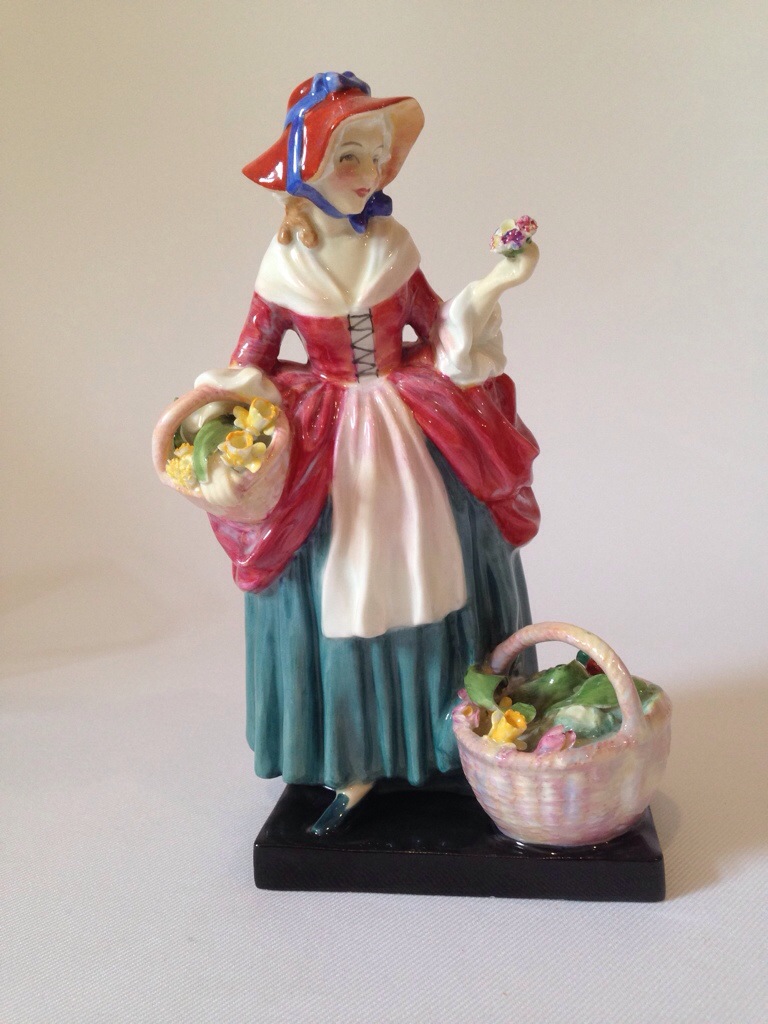
One particular detail which today remains very popular with collectors throughout the world is the addition of hand modelled flowers.
These ranged from moulded tulips, to lilies, to daffodils, to forget-me-nots, to the more typical roses found on many 1930’s Doulton ladies.

20140626-174828-64108624.jpg
This once praised ceramic technique has now all but died out in the potteries but lives on in the many figures produced by Doulton in the first half of the 20th Century.

20140626-174902-64142289.jpg
Some of the most sought after figures today happen to be those with flowers and you can clearly understand their popularity when you see the extra detail, flowers make to these figures. During WWII restrictions figures were often simplified and I have seen versions of Harradine’s Honey carrying entirely moulded flowers!
In the post WWII period the number of flowers was reduced on popular figures including Roseanna and even changed on others including Day Dreams, which incidentally also became ‘Daydreams’ at some point in the late 1940’s.

20140626-174932-64172906.jpg

Royal Doulton’s early Child figures.

Refelctions 6 00004

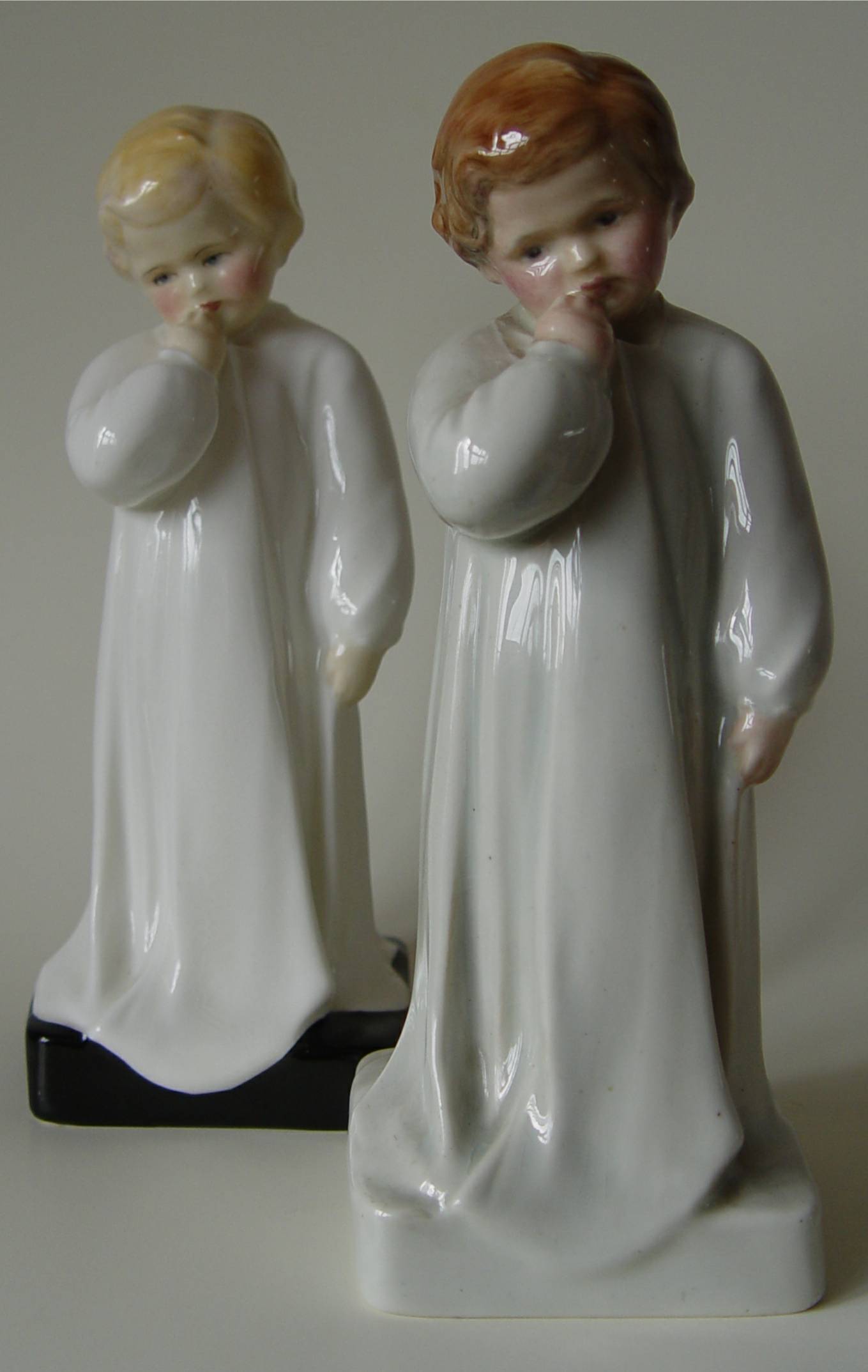
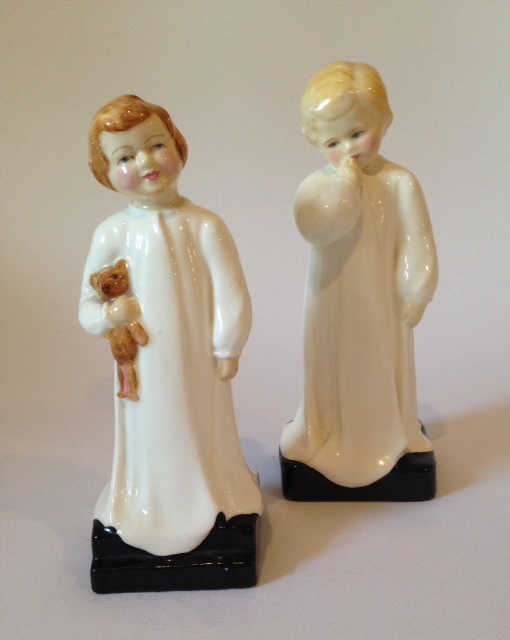
L-R Darling HN1319 and HN1.

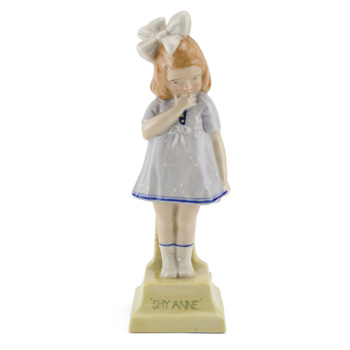
The prominence and popularity of Darling HN1 has proved over the last century that child figures are among the most popular Doulton have produced as part of the HN figure collection. Darling was sculpted by the great Charles Vyse and as was often the case in the first half of the twentieth Century, Charles Noke, Doulton’s art director approached prominent sculptors of the time to provide models for possible inclusion in the collection.  In the first decade of production of the HN collection Darling remained a clear favourite of collectors, it is therefore no surprise to see that many other child studies followed this iconic sculpture. These first studies remained somewhat sculptural, just like Darling, who was succeeded by a line-up of other famous faces including Dolly, Shy Anne HN60, the Coquette HN20 and a handful of Noke’s own studies such as the very rare Boy on Crocodile HN373.

FIG_Shy-Anne-HN65

Shy Anne HN65.

It was not until the 1920’s when a former apprentice modeller from their Lambeth factory, one Leslie Harradine, began to submit models to Doulton in Burslem that the typical figures we all now know as child figures began to emerge.

photo 2 (4)

A group of Harradine children.

Harradine revolutionised the collection from the very start, introducing much slicker lines and also a smaller size in figure.

photo 1 (4)

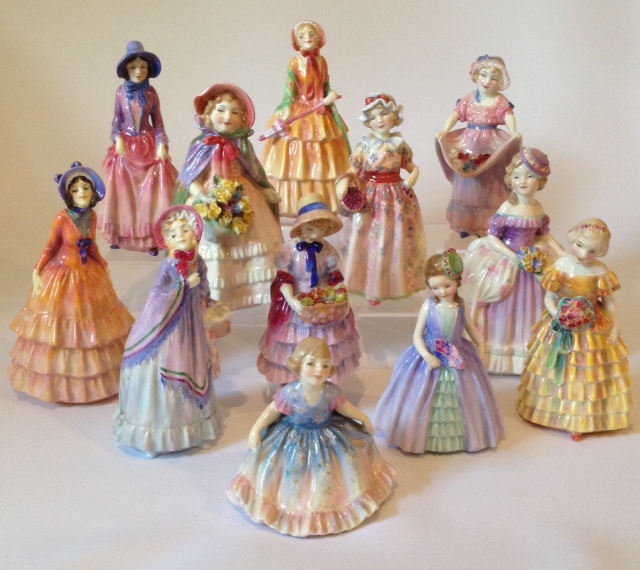
A group of early 1930’s child figures.

Classic Harradine child figures such as Betty HN1404 and Pinkie HN1552 are easily recognisable not only as Doulton but also as the work of Harradine. His ability to interpret moods and trends was unrivalled at the time and I am sure all other factories would have been envious of Doulton’s great in house talent. Ironically no visit by Harradine was ever recorded to Burslem, instead former employees recall the monthly arrival of a parcel from Harradine and the stir it would cause in the factory. It is a tribute to Harradine that so few prototypes from his time as lead figure sculptor have turned up, indicating that the majority of his models actually went into production.

photo 5 (1)

Three deco children: Monica, Pinkie and Rosebud.

Harradine’s ability and versatility brought us a long line of youthful figures including Rose HN1368 and Marie HN1370, an aptly named pairing available in several complimentary colourings, Bo-Peep HN1810 and Cissie HN1808 another pairing and other popular figures such as Diana HN1716, Lily HN1798 and Nana HN.

photo 3 (2)

Rose and Marie in complimentary colourways.

Yet, Harradine did not restrain himself to small size figures and his large size Estelle is still highly sought after by collectors the world over.

photo (2)

Estelle HN1566.

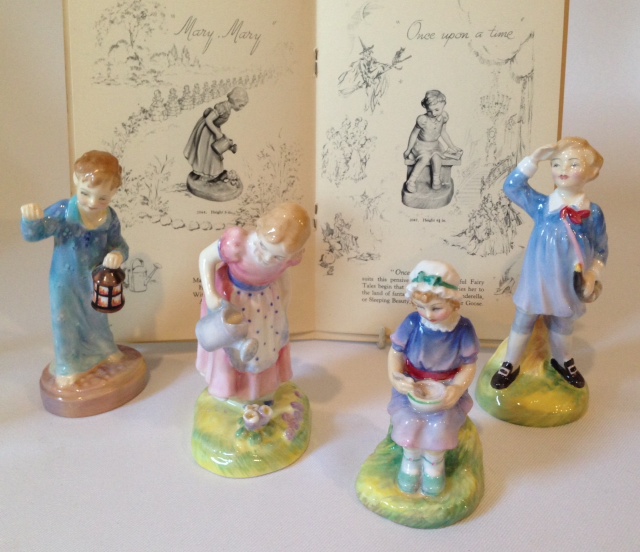
One of the last child study series modelled by Harradine and introduced by Doulton was a set of Nursery Rhyme figures. Harradine, together with a then new but equally talented modeller, Peggy Davies, were set the task of interpreting key figures from popular children’s nursery rhymes for this set. I am sure you will all agree the effectiveness of these models secures both artists reputations as expert modellers as each study is the embodiment of the verse it represents.

photo 4 (2)

Four nursery rhymes characters including a prototype of Little Miss Muffit.

The fact that several of these key figures within the HN collection remained in production until close to the millennium confirms the popular demand the world over for child studies, something that Doulton to this day continues to ‘feed’ with the introduction of new child studies. As seems to always be the case imitation should be construed as flattery and so to finish, here is a version of Darling made by another Staffordshire pottery next to a Doulton version from 1934 – the quality of the Doulton model leaps out.

photo (1)

Doulton’s Darling HN1319 together with an inferior copy


Collecting Royal Doulton’s Maid figures

20140615-183655-67015610.jpg

Thinking of collecting themes, one which is often overlooked is that of Doulton’s group of maids, be they serving girls and women, or alternatively the name once given to young girls.

Of course there are a handful of figures with ‘maid’ in their names such as Sweet Maid HN1505 a classic, bonneted Doulton lady or Sweet Maid HN2092 a bride on her wedding day.

This group of maid figures, however, do not have ‘maid’ in their names, rather they are named after typical serving girl names such as Jane or the French Suzette.

The figure Dorcas appears to be modelled on an advert for Dorcas towels from the 1930’s and also derives her name thus.

Of course arranging figures by colour is always popular. Here are three figures I think go well together.

20140615-183853-67133663.jpg

Another figure that is based upon an illustration is this version of Spring Flowers. For some unknown reason this colourway, which is directly based upon a Wheatley ‘Cries of London’ illustration was not introduced until 1940 whereas the original 1937 version is an entirely made up Doulton colourway. Personally I prefer the red and green version.

20140615-183740-67060154.jpg

Perhaps you arrange your collection in a particular way? If so join our Facebook page ‘Doulton Collectors Club’ to share and also see what other collectors collect and cherish!

Doulton’s deco nudes

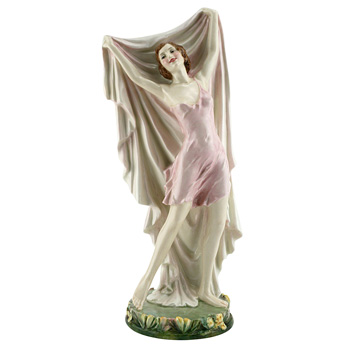
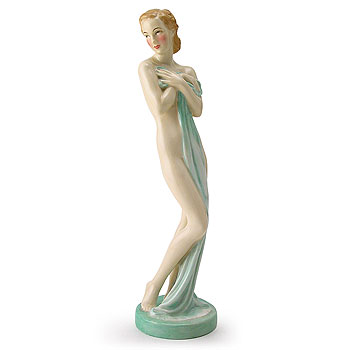
The liberating period of the 1920’s to 1930’s often seems incongruous to non-Doulton figure collectors who associate ladies in ballgowns with Doulton figures, but those in the know, they recall that there are a small group of nude figures produced in the art deco period that encapsulate that movement perfectly. All the figures contained in this small band of lady figures were the brain child of Leslie Harradine, Doulton’s then principal figure modeler.

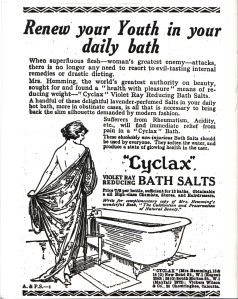
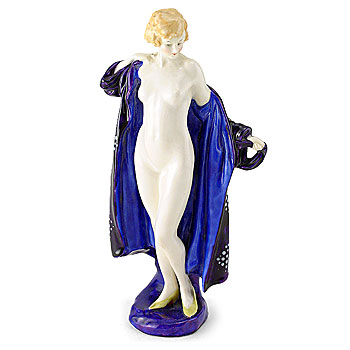
As if to prove their own artistic credentials, Doulton introduced over a 10 year period several nude studies that confirmed their artistic prowess. The first we must all know was Harradine’s The Bather, modeled on this contemporary advert.

endpapers-cyclax-advert

There were six different versions of this popular model, with this colourway proving to be the most popular.

FIG-Bather-HN687

The Bather HN687.

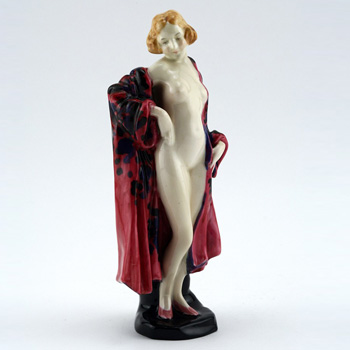
In the succeeding years there was a second version of The Bather introduced, shown here.

FIG-Bather-HN773


The Bather HN773 (second version).

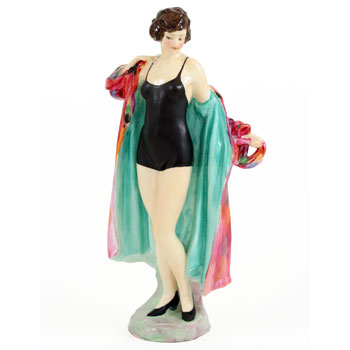
By the mid to late 1930’s tastes had changed and prudery was once more on the rise, and so a last version of this figure was introduced wearing a bathing suit, so reflecting the continued interest in lidos.

FIG-Bather-HN1708


The Bather HN1708.

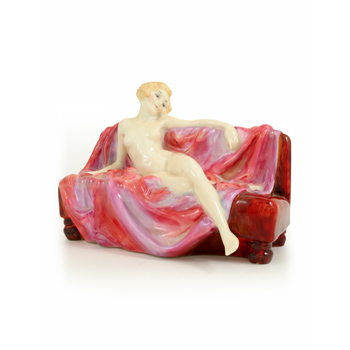
However, there were other nude figures introduced at this time including Siesta shown here reclining on her day sofa.

FIG-Siesta-HN1305


Siesta HN1305.

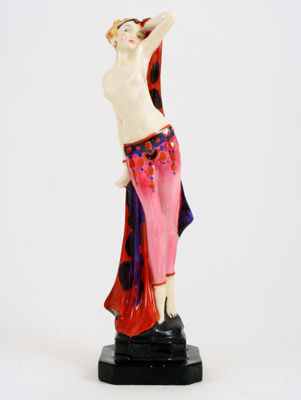
Other partially clad figures also belong to this group of deco delights such as Carnival, Circe and Susanna, a scalled down version of Circe.

carnival_hn1260

Carnival HN1260.

fig_circe20hn1249

Circe HN1249.

FIG-Susanna-HN1233


Susanna HN1233.

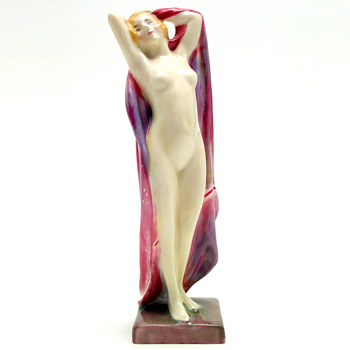
Harradine continued, however, to experiment and push boundaries in figure production. He achieved much acclaim at the British Industries Fair of 1935 for his then two latest productions, The Coming of Spring and Celia. Particular attention was lavished upon the Coming of Spring shown here.

FIG_Coming-of-Spring-HN1722

The Coming of Spring HN1722.

We cannot mention deco nudes without also mentioning that small group of figures commissioned by Noke from Richard Garbe the eminent sculptor. I have in my own collection his Spring HN1774 produced in a limited edition of 100.

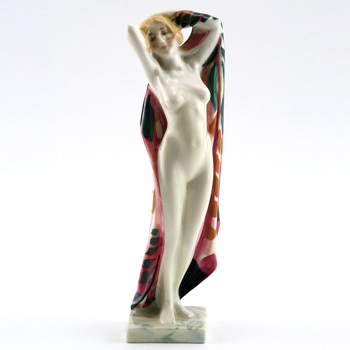
Yet, Harradine as Doulton’s leading modeler continued to produce nude figures up until the late 1930’s with figures such as Dawn and The Awakening.

FIG-Dawn-HN1858A

Dawn HN1858 (without headdress)

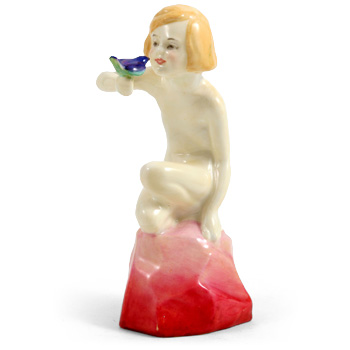
There were also a slew of scantily clad beauties such as Negligée and Lido Lady as well as a few child studies such as Blue Bird.

FIG-Blue-Bird-HN1280

The rare Blue Bird HN1280.

In recent decades there have been new nude introductions, not least in 2000 when Doulton themselves re-modelled four of Harradines most popular figures including The Bather (first version).


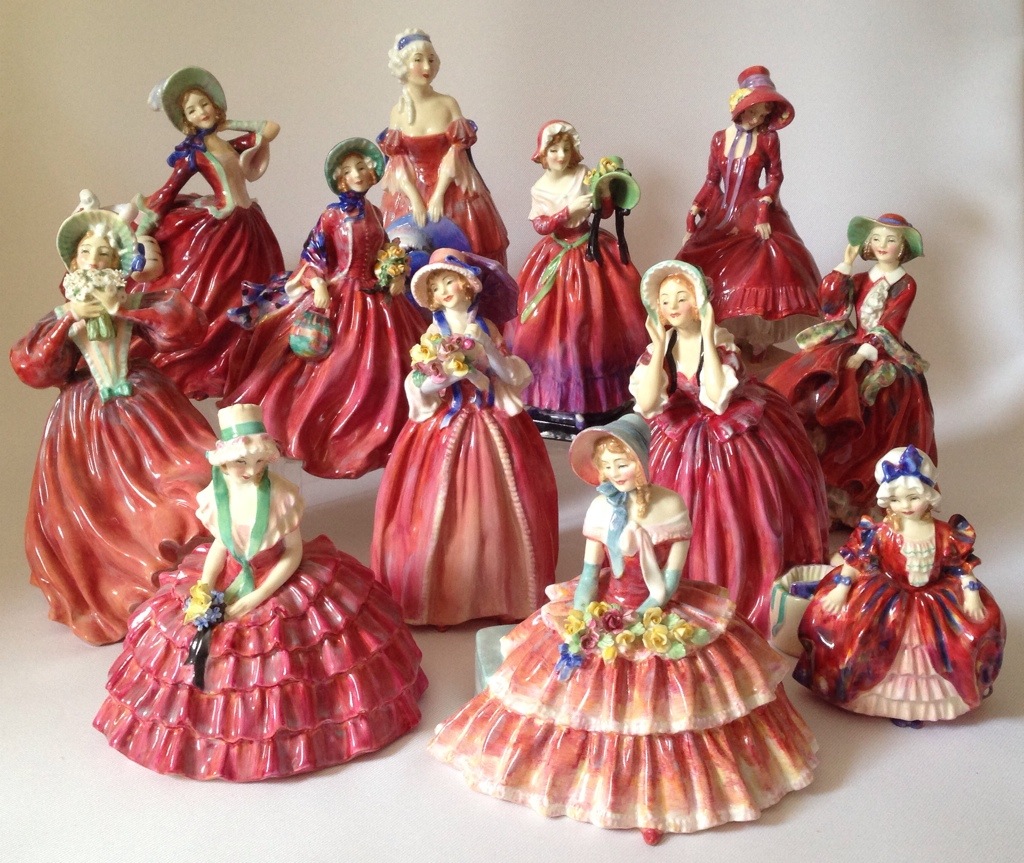
Doulton’s ‘red’ ladies

Red has long been one of the most popular colours amongst figure collectors, but it took almost 20 years for Doulton to cotton on!

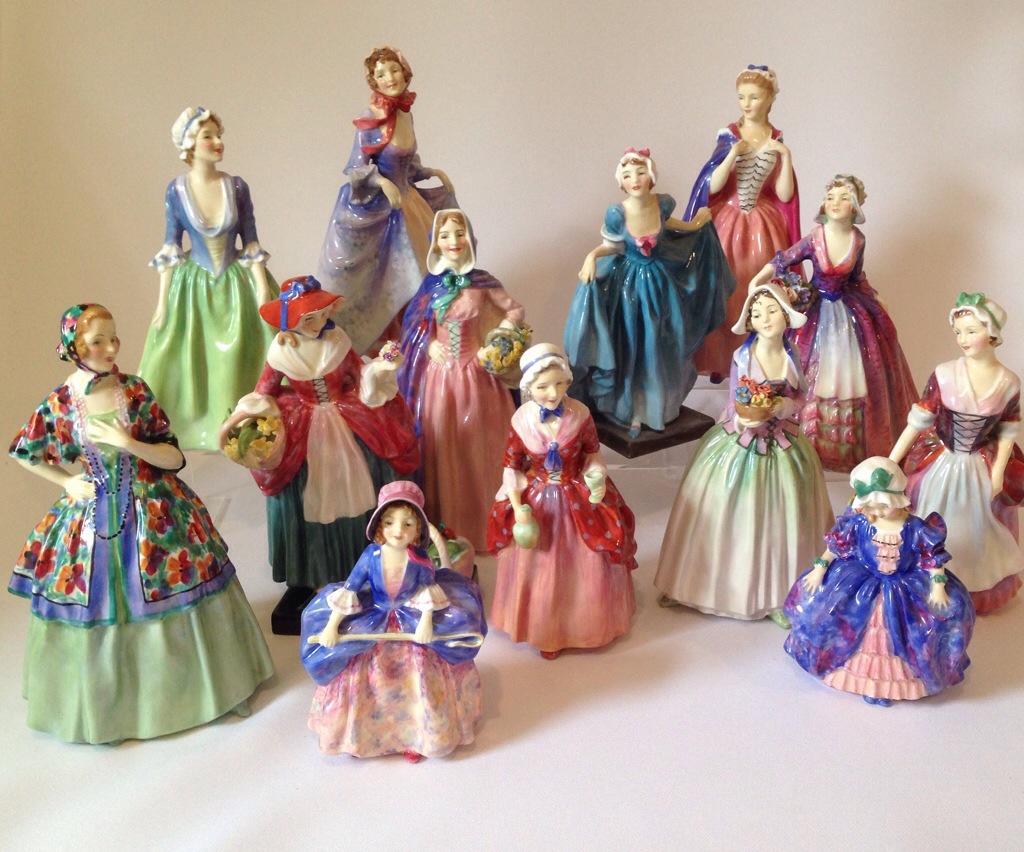
The earliest figures were produced in a rainbow of colours but it wasn’t until the late 1920’s that red colourways of figures began to emerge with the introduction of figures such as Kathleen, Priscilla and Rosina.

Thereafter there has been a parade of other red figures culminating in the late 1930’s and the immediate years after the war with the introduction if three of the most famous Doulton ladies ever: Top o’ the hill, Auntumn Breezes and of course Christmas Morn. The lengthy production of these figures not only stands as popular proof of the model but also the popularity of their colourways!

Here are a selection of my favourite ‘red’ ladies!

20140608-165331-60811943.jpg

Since the introduction of Christmas Morn there have been an array of other ladies in red – perhaps you have them in your collections?

Happy collecting and remember we would love to hear from you on our Doulton Collectors Club Facebook page!

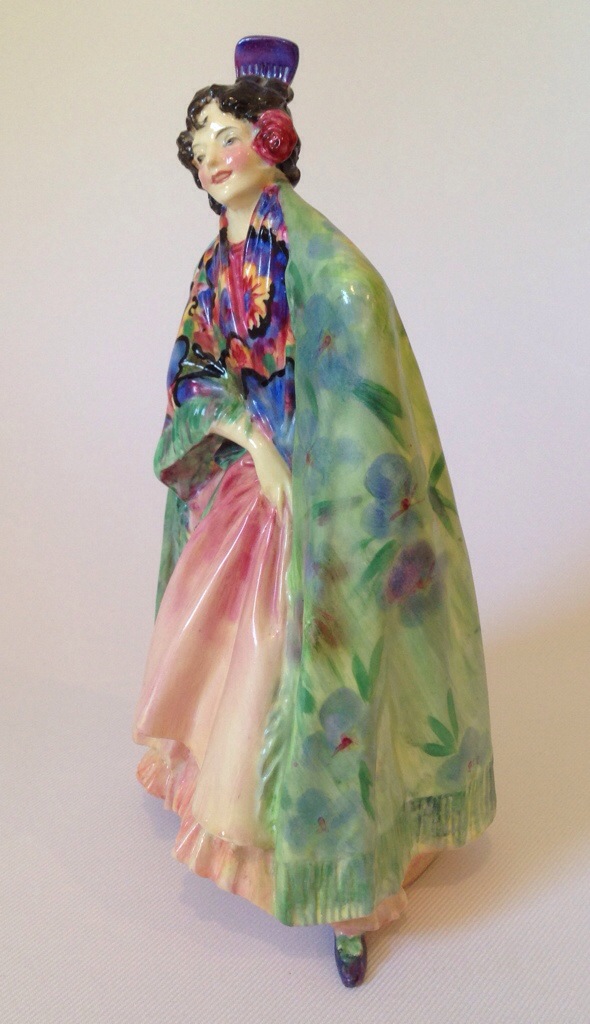
The enchanting Lizana – another one not included in Reflections!

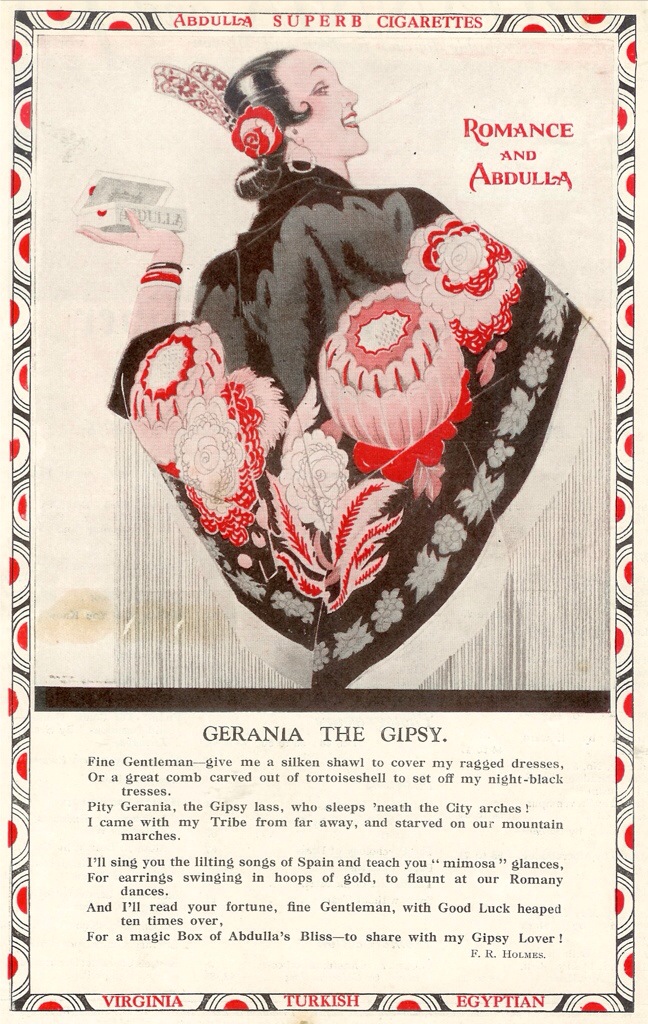
Inspired to share this next piece by a fellow collector who cherishes her Doulton figure Lizana, here is the inspiration behind her – a contemporary cigarette advert! Not quite PC today but the effort and detail put into advertising this brand of Abdulla cigarettes is to be marvelled, especially the rhyme at the bottom!

20140601-113004-41404565.jpg

20140601-113050-41450633.jpg

20140601-113106-41466632.jpg

(C) Christopher Evans 2014

Regency HN1752 finds a home in Doulton’s famous seriesware pattern Historic England!

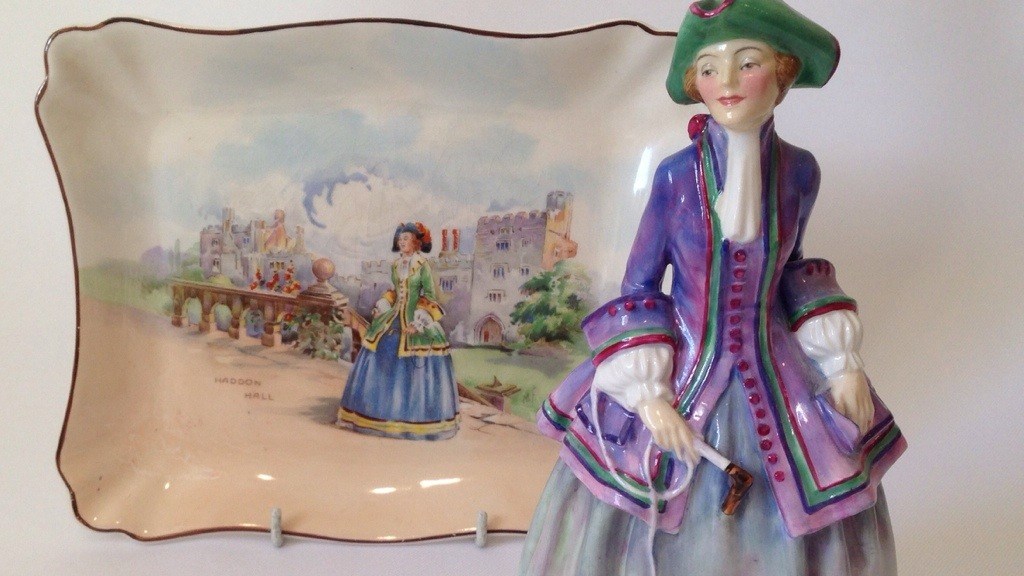
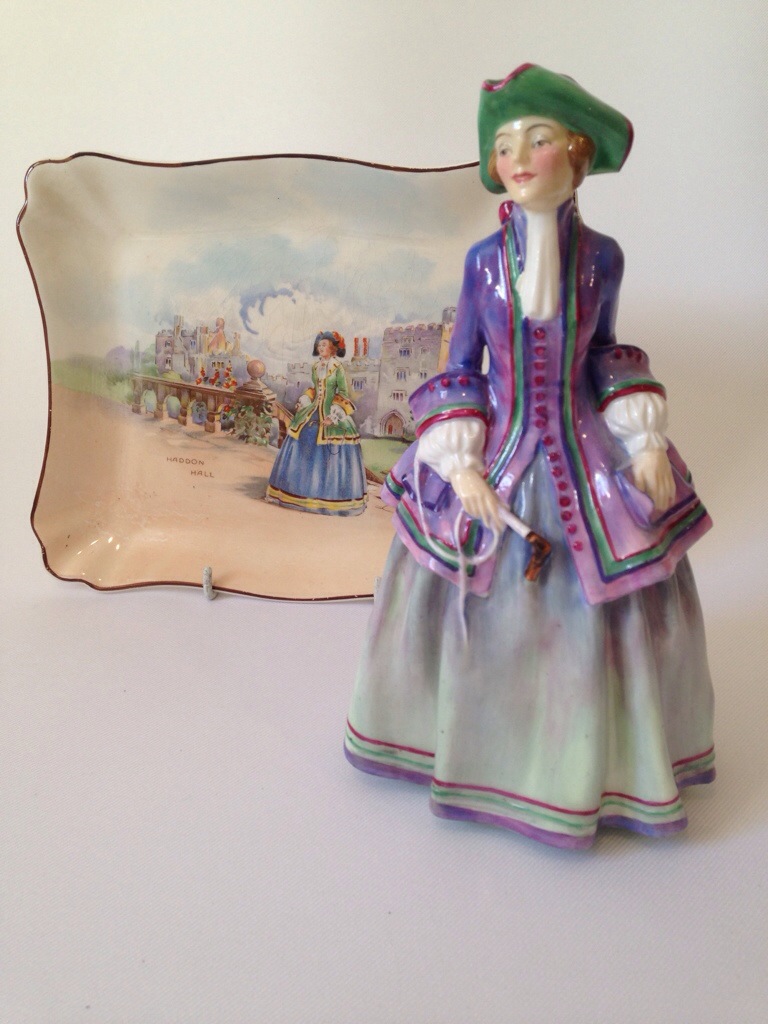
A few years ago I spotted the tray below and instantly recognised my figure Regency as the character in the scene!

20140601-081825-29905039.jpg

The seriesware picture is faithfully copied from Harradine’s figure, save that the riding crop has changed hands and a feather has been added to the tricorn hat!

The story behind the seriesware pattern is that the lady is Dorothy Vernon, daughter of Sir George Vernon who owned Haddon Hall, who runs off with the son of the Earl of Rutland – a union opposed by the parents probably because of religious differences!

The series was introduced in 1938 and withdrawn by the early 1950’s.

20140601-081913-29953347.jpg

Once again Doulton surprises us with this link between the figure range and seriesware!