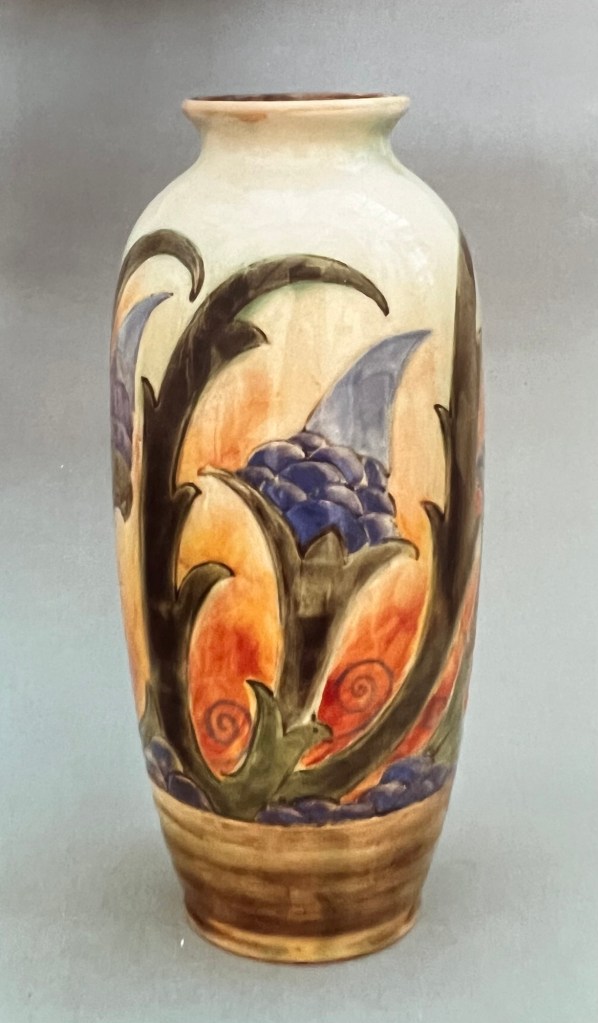
Charles Noke, Royal Doulton’s legendary Art Director, was always a man ahead of his time, constantly on the search for something new and thus Doulton approached Frank Brangwyn R. A. to design a range of tableware.
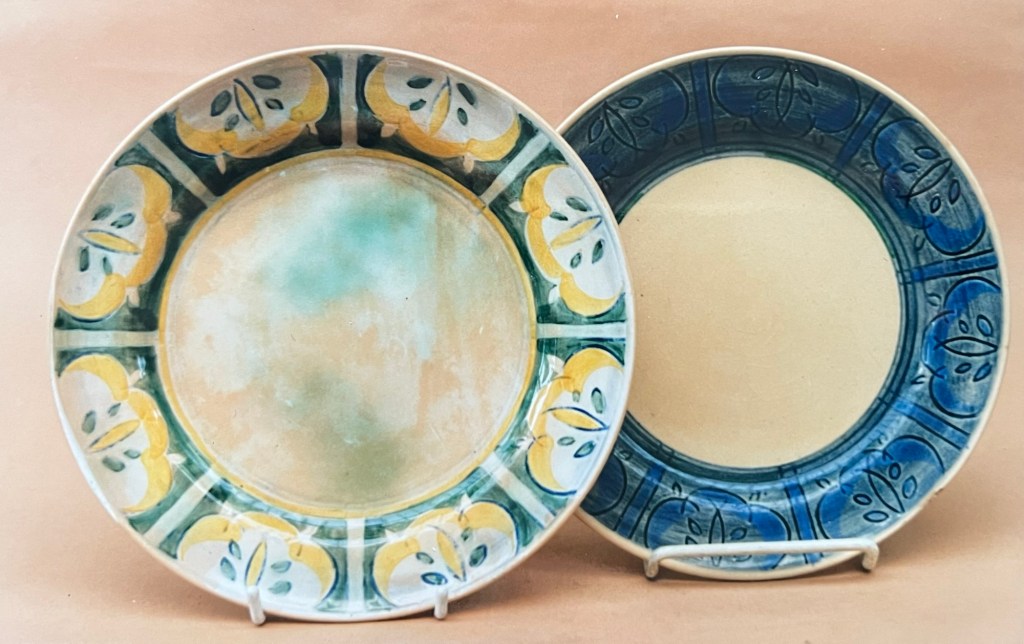
Two dinner plates in Brangwyn Harvest designs
Originally intended to offer to the masses at a reasonable cost, the designs proved unpopular at the time and as always the rarity of this ware has meant that it has become very collectable since then. In addition to tableware designs, Brangwyn’sdesigns can also be found on various vases which are equally popular today.
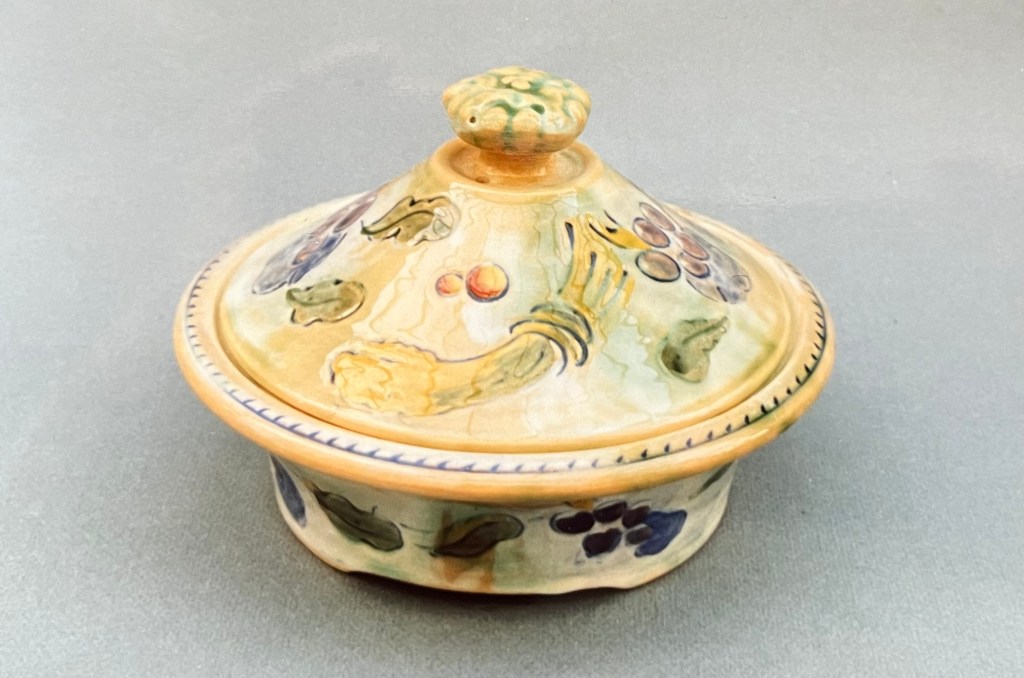
An unusual small size tureen.
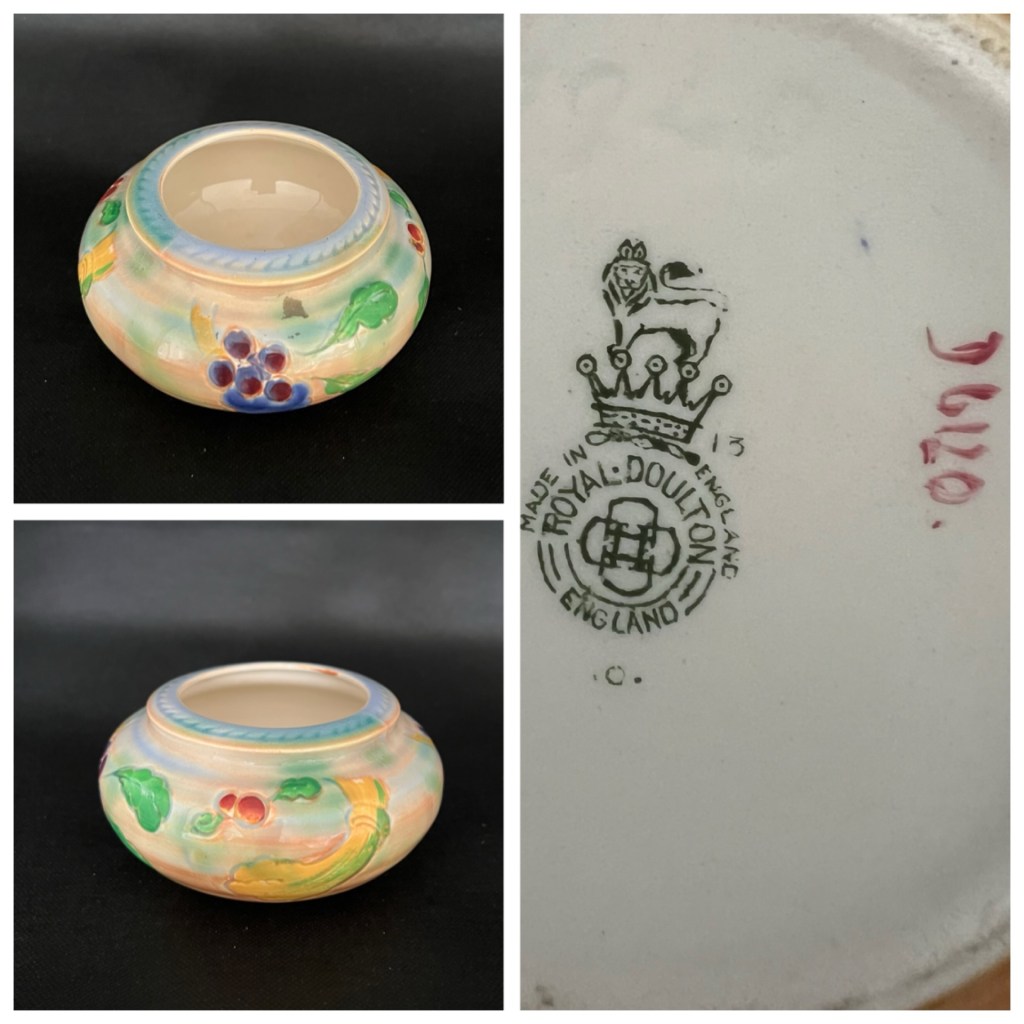
This ware carries one of two backstamps, the first ‘Designed by Frank Brangwyn’ and also ‘Brangwynware’ a Doulton pastiche.
A small squat vase carrying a D number and dated 1940.
In addition, once again Doulton’s in-house designers produced similar designs to the official Brangwyndesigns and these carry a D number.
When it comes to Royal Doulton I always say expect the unexpected. Over the last few years several of these finials have appeared on the market.
My first memory of these most unusual items I recall – a Dragon with wings open – in the hallway for many years peering out from under a table.
These remarkable works of art are so not just due to their size but also what they represent.
Although Doulton had long working relations with many well-known sculptors including Richard Garbe and Frederick Roth, it is the partnership with Gilbert Bayes that would prove the most fruitful and longlasting. Indeed it was the untimely death of Bayes in 1953 that ended their nearly 30 year partnership.
Readers will be familiar with the Bayes plaque ‘Pottery through the Ages’ which once adorned the façade of the former Doulton House on the banks of the Thames and which now resides in the V&A in Kensington.
During the 1930’s, Gilbert Bayes worked on a community art project for the St. Pancras Housing Association Improvement Society as part of a slum clearance scheme at Sidney Street in Somerstown, north of Euston station, and at other sites across London. The aim was the provision of high-quality homes for the poorest tenants. The society’s architect was Ian B. M. Hamilton, and he designed all the new flats to stand on the cleared land. Since Bayes believed that art should be available to all people, this commission was very close to his heart. He produced relief model lunettes of fairy tale characters, as well as ceramic sculptures and post finials for the washing line posts. The finials were inspired by animals and plants, nursery rhymes, Christmas cards, or the lives of the saints.
All the post finials and relief panels were made by Royal Doulton between 1931 and 1938 and as well as at Somerstown the Society commissioned these embellishments by Bayes at their other London projects. Bayes’ duck finials for example were used at the Athlone Estate (1933-7) in Kentish Town and the dragons, rose and thistle finials were made for the York Rise Estate (1937-8) near Highgate Hill. All the original post finials from the project have now been removed, although some original relief plaques and ornaments remain at Sidney Street, which collectors can visit.
With special thanks to Louise Irvine, Lyon & Turnbull and Lion & Unicorn Auctioneers for images and reference materials.
Royal Doulton is famed for the sheer range of its wares produced first of all in London and then in The Potteries.
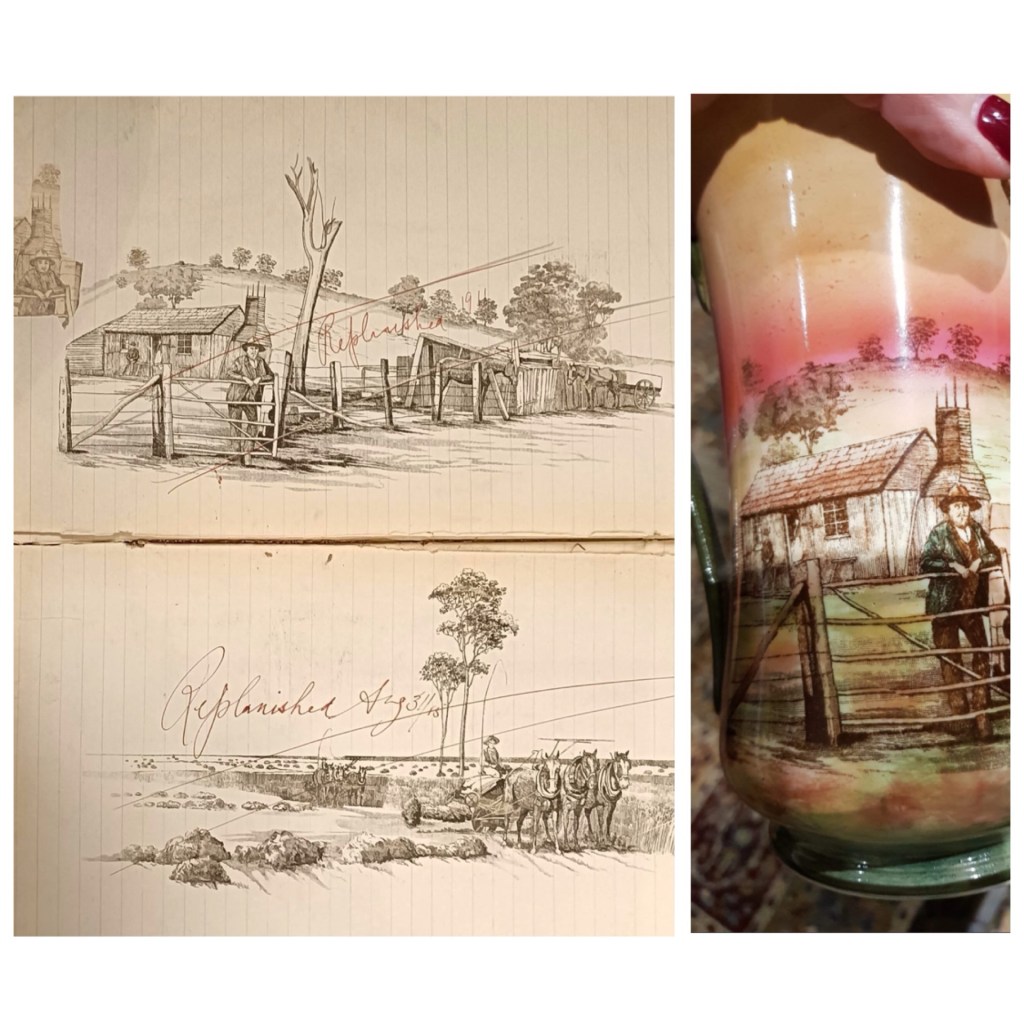
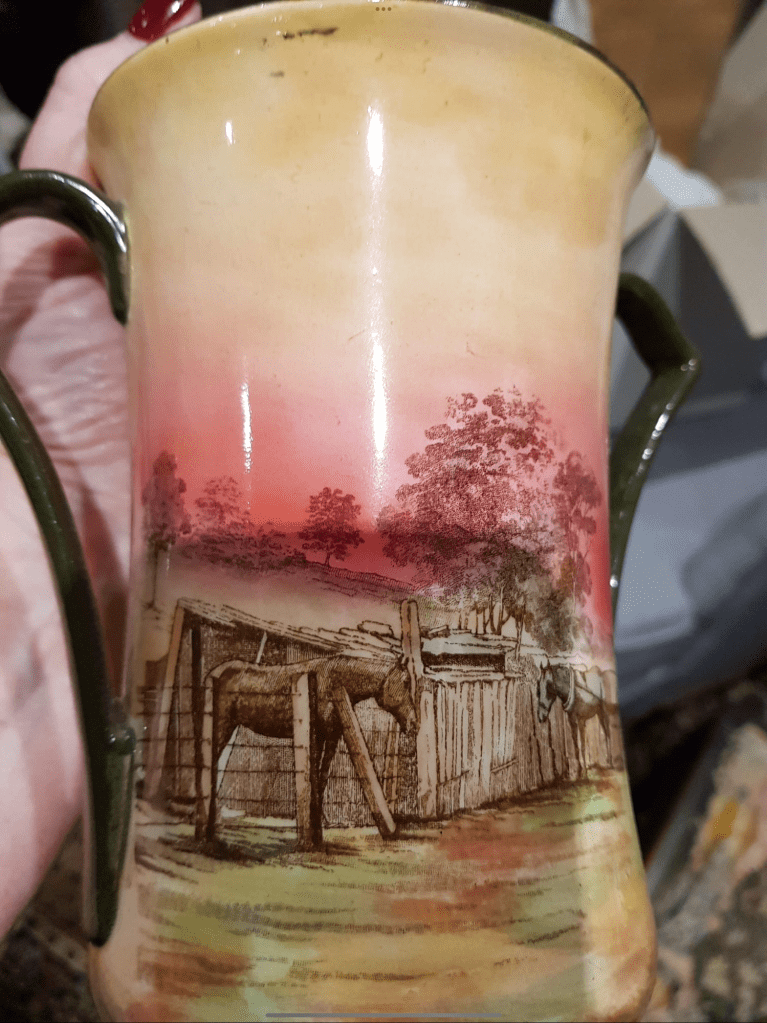
Mirror scenes from a copper plate book and the finished article seen on a vase. The colour palette too suggests Australia.
Of all the wares produced, their seriesware designs still provide a wealth of new discoveries as hitherto unknown designs and variations emerge.
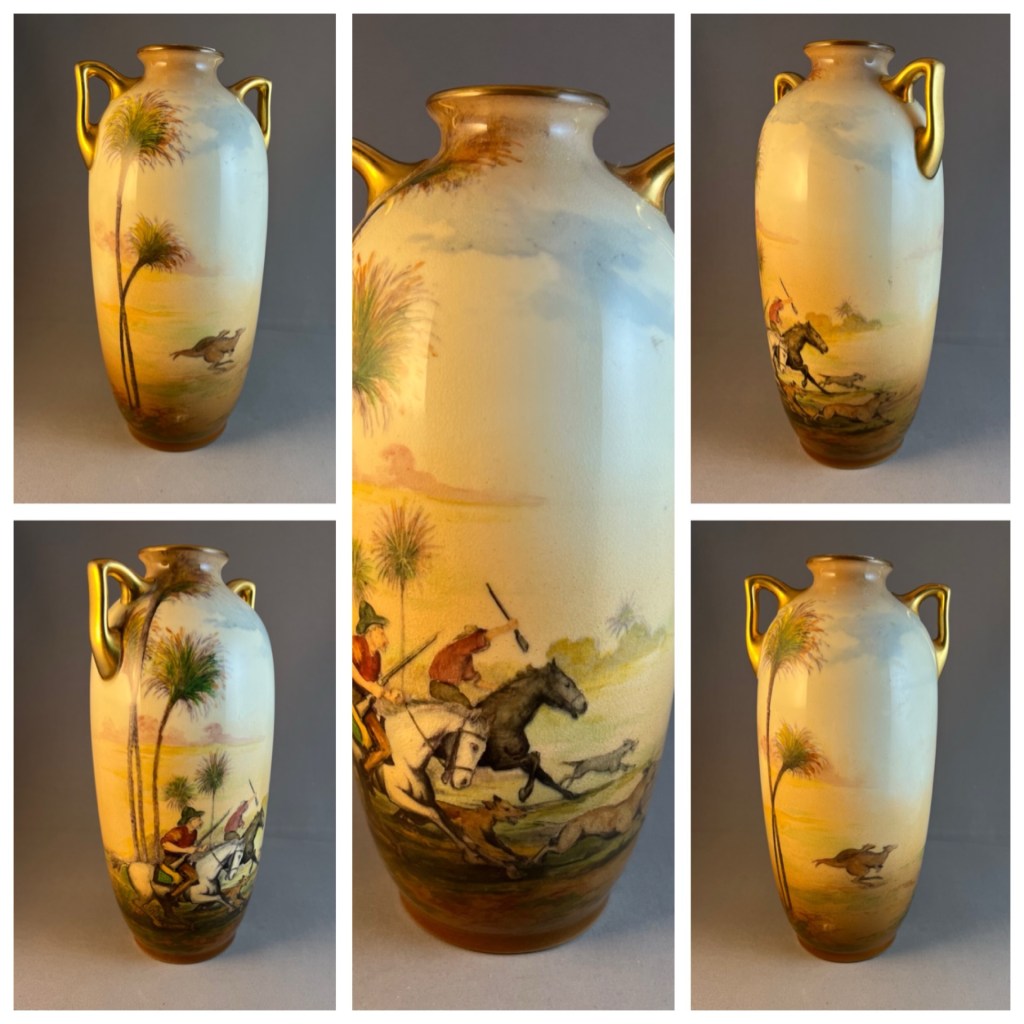
One such design is the New World Series Oceana, introduced in the early 20th century and withdrawn sometime around the end of WWI in 1918.
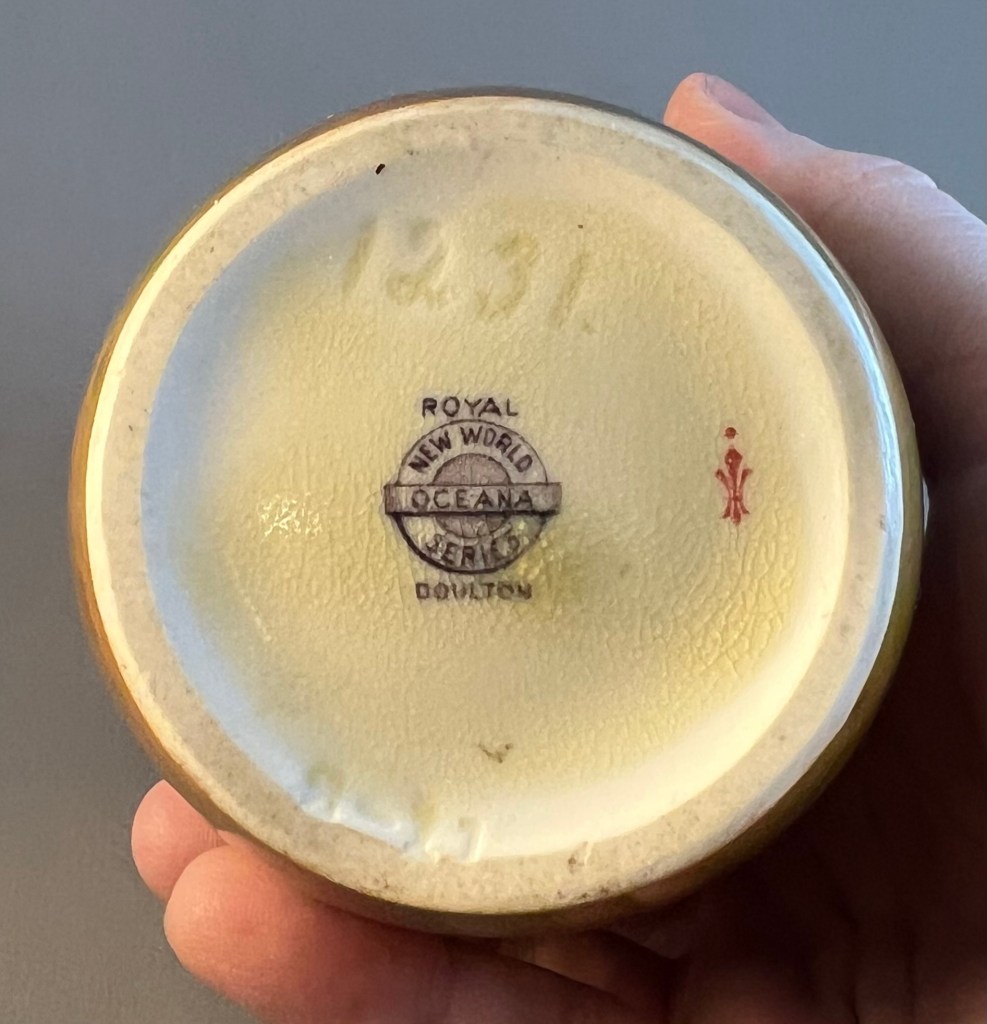
A rare Royal Doulton New World Series vase with gilded decoration. On the base there is a pink cypher differentiation it from more Transfer printed examples. Note the pink cypher at 3 o’clock in the above image. You can clearly also make out the vase shape number 1231 and the impressed date of manufacture for August 1911.
The scarcity of items discovered in this remote outback design is hard to fathom given the popularity of seriesware designs the world over; the sole explanation I can put forward is the subject matters‘ appeal was originally aimed at Australian collectors. Yet, even there so few examples have been discovered this design truly remains a rarity.
Note the typical Royal Doulton green used on the handles, rim and base as opposed to the gilded decoration on the other example illustrated.
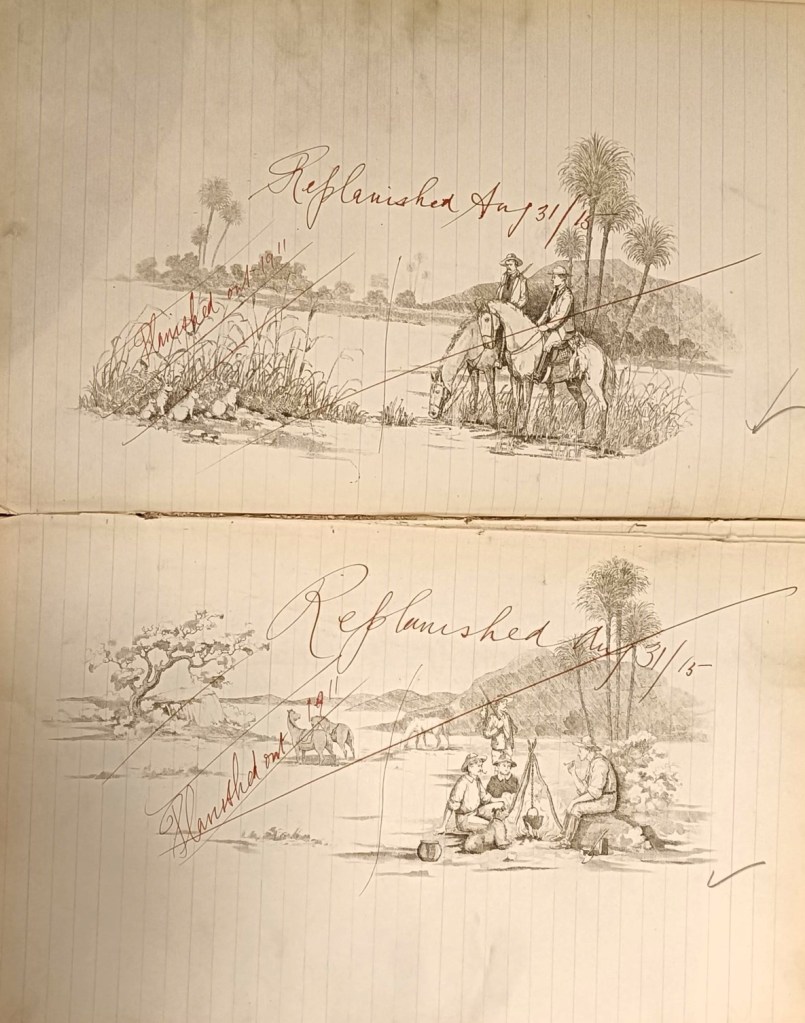
Fortunately the Royal Doulton design books shed much light on the products and ranges produced by the company, although one has to piece together some information as it is recorded in several ways from studio design books to copper plate design books etc… such was the case with the rediscovery of these images belonging to the New World Series Oceana.
A further image from a copper plate book illustrating two further scenes in the series. You can clearly see the comment Replanished (flattened out) and the date August 31 1915.
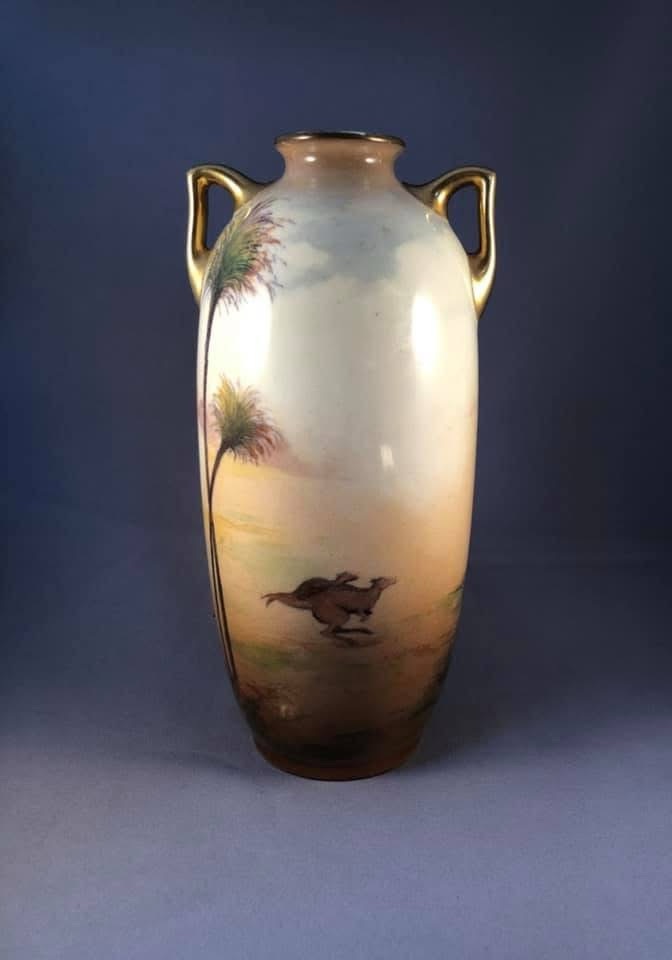
It is indeed strange to associate camels with Australia but if you are unfamiliar with the history of this great country, camels were brought to Australia in 1840 to work in the arid regions. The unexpected subject matter may explain why so few examples in this design have been discovered, as we have simply not recognised the subject matter illustrated. Perhaps a more typical scene is on the other vase that features kangaroos being hunted.
In total there are 11 scenes that appear to belong to the New World Series Oceana and as is typical more that one scene can appear on an item e.g. the front and back of a vase.
As with all such rarities the search continues… what will be discovered next?
Kangaroos fleeing hunters from the New World Series Oceana range.
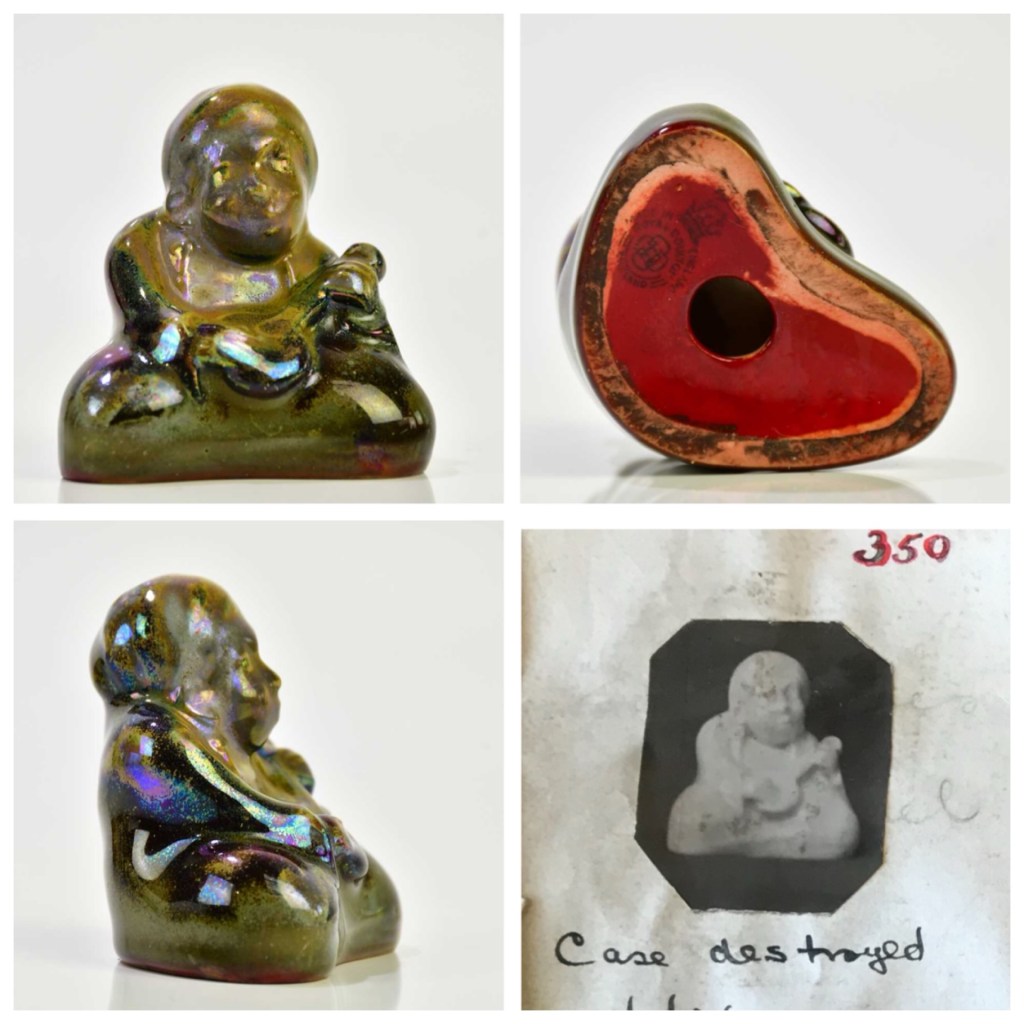
Although there are officially 13 different models for Tittensor‘s group representing the famed 40 thieves from Ali Baba and the 40 Thieves, there are four further diminutive models that were only produced as prototypes, this exciting find being one of them.
What makes this chap stand further out from the crowd is the wonderful Sung and lustre glaze that has been given to him, which just adds to his charm.
For further information please contact the auctioneers.
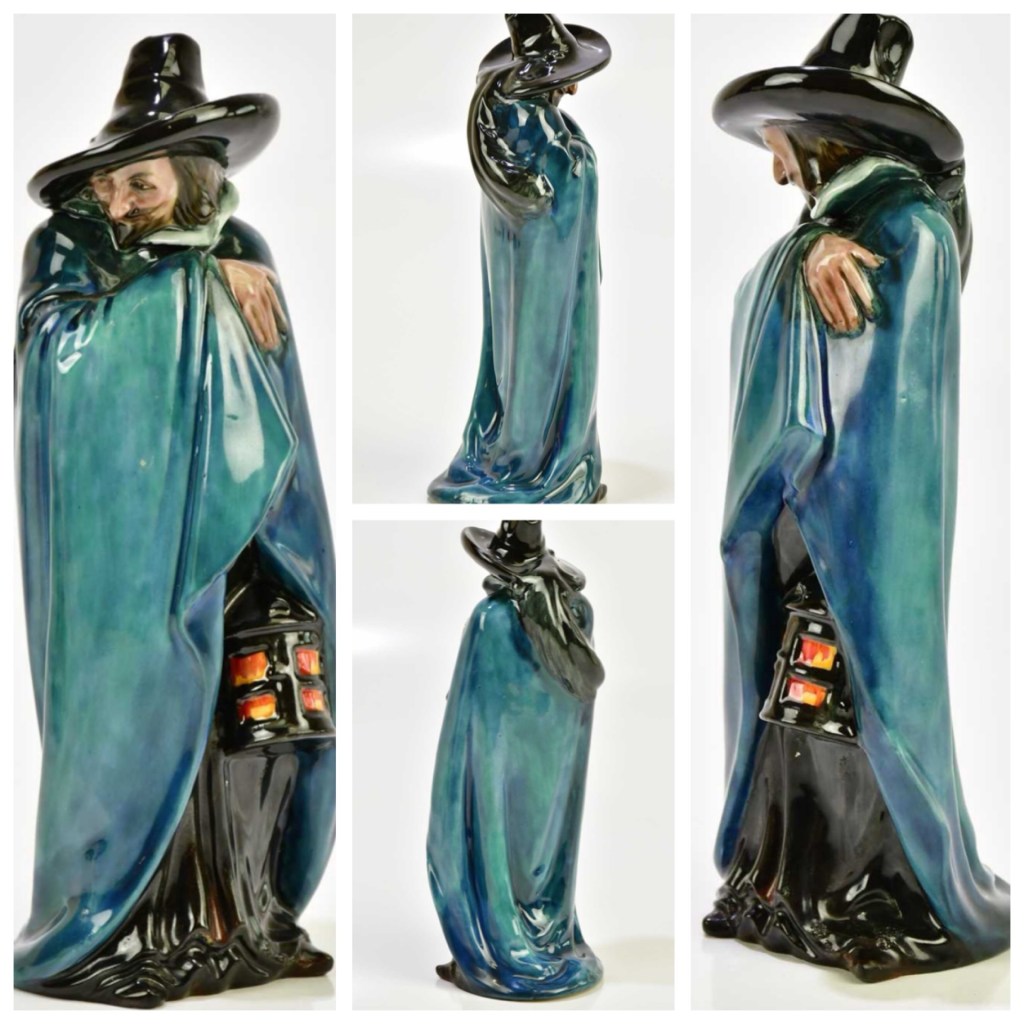
Rarely does such an impressive grouping of early Royal Doulton figures come onto the market, but Adam Partridge Auctioneers have certainly pulled it out the bag this week!
Here is the super rare HN 445 Guy Fawkes not previously illustrated. He is model 226 originally introduced in 1918 as HN 98 in the typical red cloak, this slightly later version from 1921 features a lustrous green cloak and fabulous all round painting!
Famed as we Brits know is famed for his plot to blow up Parliament on Nov 5th 1605.
This large size Harry Tittensor model was produced in three colourways; this being the last introduced in 1921 and available to order until the 1930s, although no other examples in green have turned up. He was later produced in miniature HN 3271 remodelled by Peter Gee in 1989.
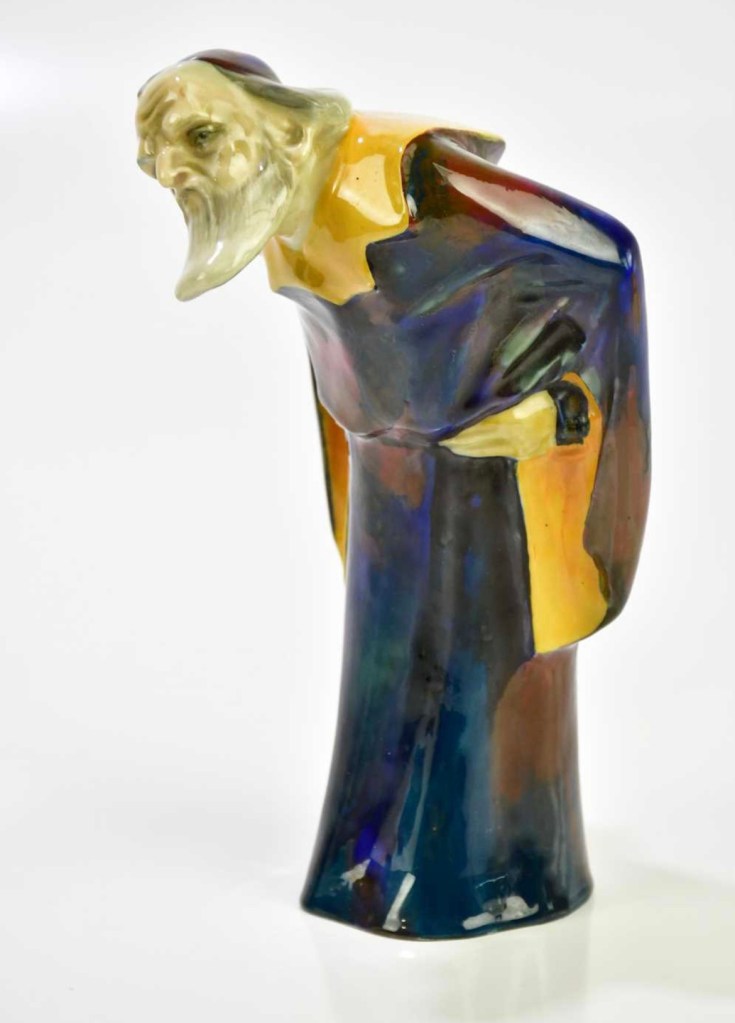
What a collection of Doulton Adam Partridge Auctioneers have coming up this week!
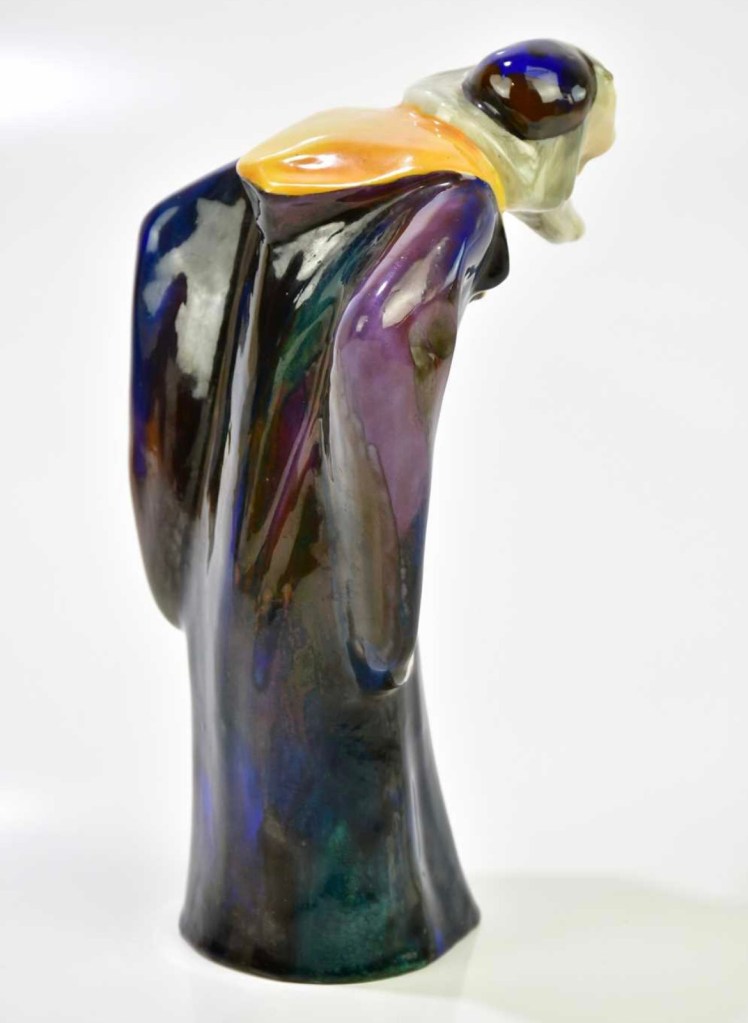
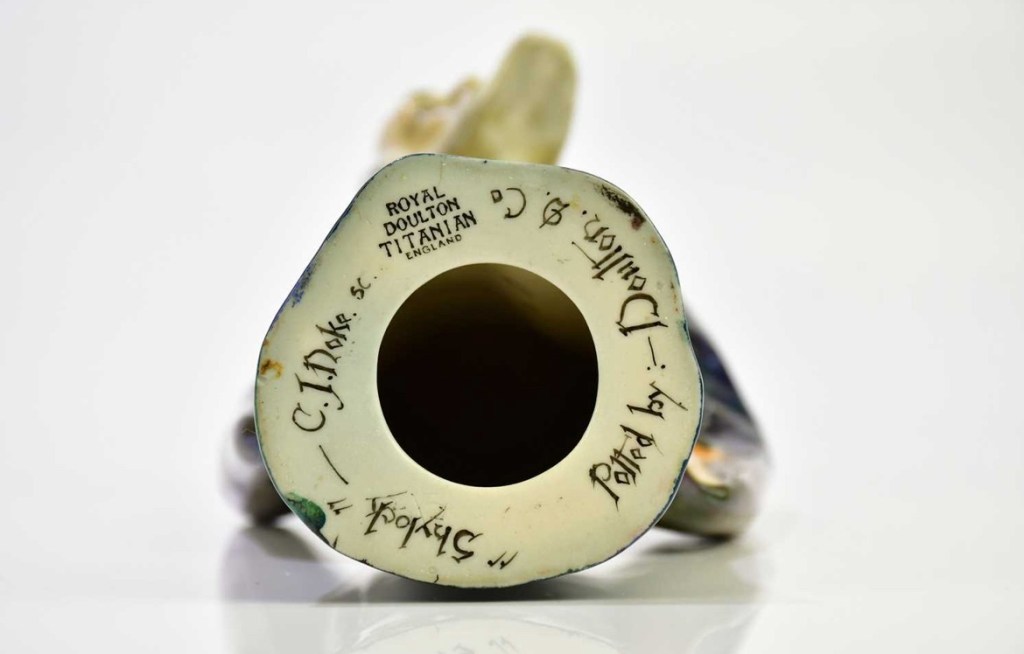
Included in their choice gathering of rare figures is this fabulous example of Charles J. Noke’s Shylock, that most famous of characters from Shakespeare’s Merchant of Venice. in Shakespeare’s play he is outwitted by Portia in his claim for his ‘pound of flesh’. Interestingly the role was played by two theatre greats who inspired Noke and other modellers to create some of the most recognisable Doulton figures produced – Sir Henry Irving and Herbert Beerbohm.
Noke had previously modelled a similar but monumental version of Shylock as part of the Vellum figures range in the late 19th century. this HN example is 19cm.
Returning to our example in hand – you can see that the piece is marked underneath Titanian and that is because this body was used in a selection of early figures from Spook HN50 through to A Mandarin HN382. There is no particular rhyme as to why a Titanian body was used other than the suggestion that the decorating technique may produce a richer result. A further example HN 317 has been discovered and even a completely lustred one.
This wonderful example at Partridges fits the description of HN 79 with his yellow sleeves and multicoloured cloak. He was produced from 1917 until his mild was destroyed in the 1930s, although he cannot have been a popular figure at the time due to his complete scarcity today.
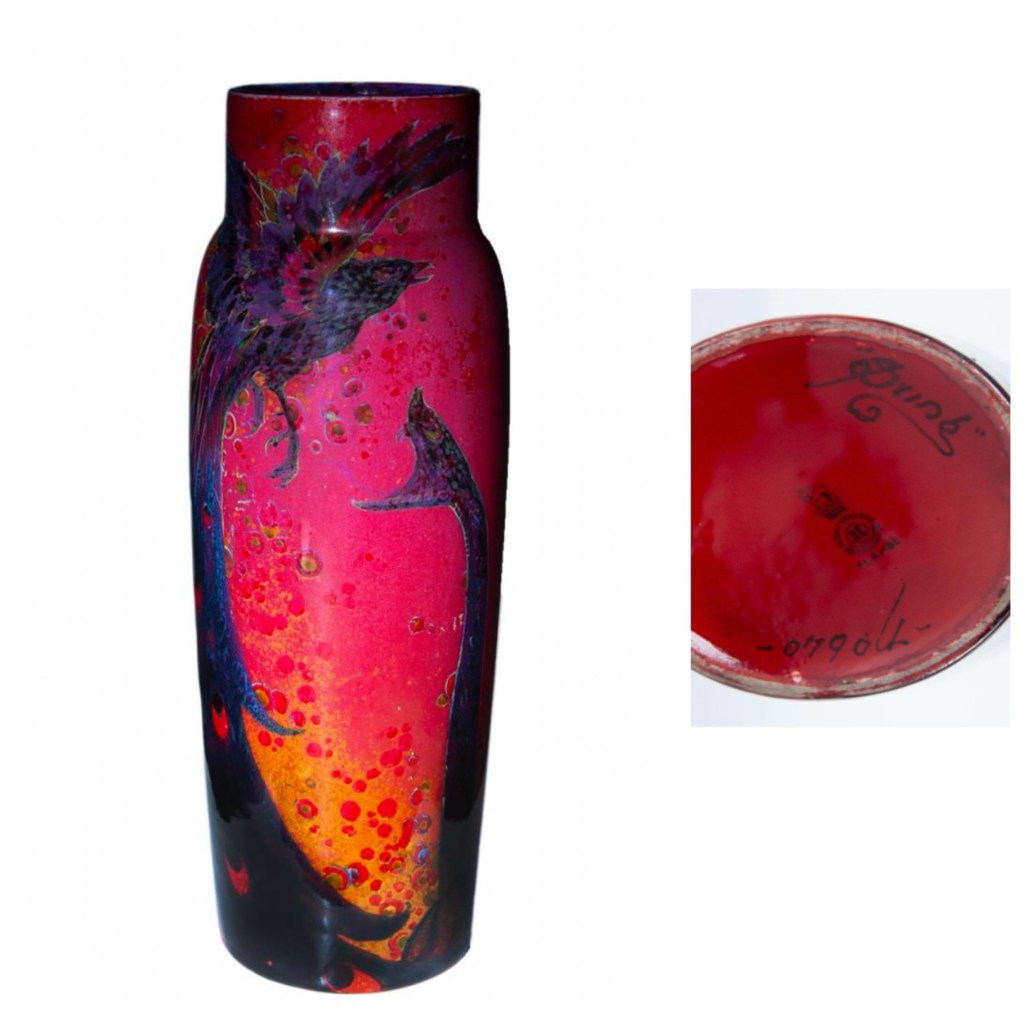
Charles Noke continued to experiment with glazes long after the departure of Cuthbert Bailey with whom he had perfected the Flambé glaze in the early 1900’s. And so in 1920 Sung was introduced, whereby painted decoration, colour and gilt are fused with the flambé glaze. I am sure you will agree that early examples like the one illustrated are magnificent.
However, it is in the flesh that these pieces must be enjoyed to full effect as in this slide.
Vases, large and small were decorated with exotic birds, pixies in woodlands, fish in seascapes along with many other subjects. These pieces were painted principally by Harry Nixon, Arthur Eaton and Fred Moore.
Sung glazes can be found on Buddhas, as seen here in this advert from the 1920’s, a handful of suitable early figures from the HN range such as A Spook, as well as animals, in particular elephants, a favourite of Charles Noke.
Rare Sung vase featuring a bird of paradise and snake in combat!
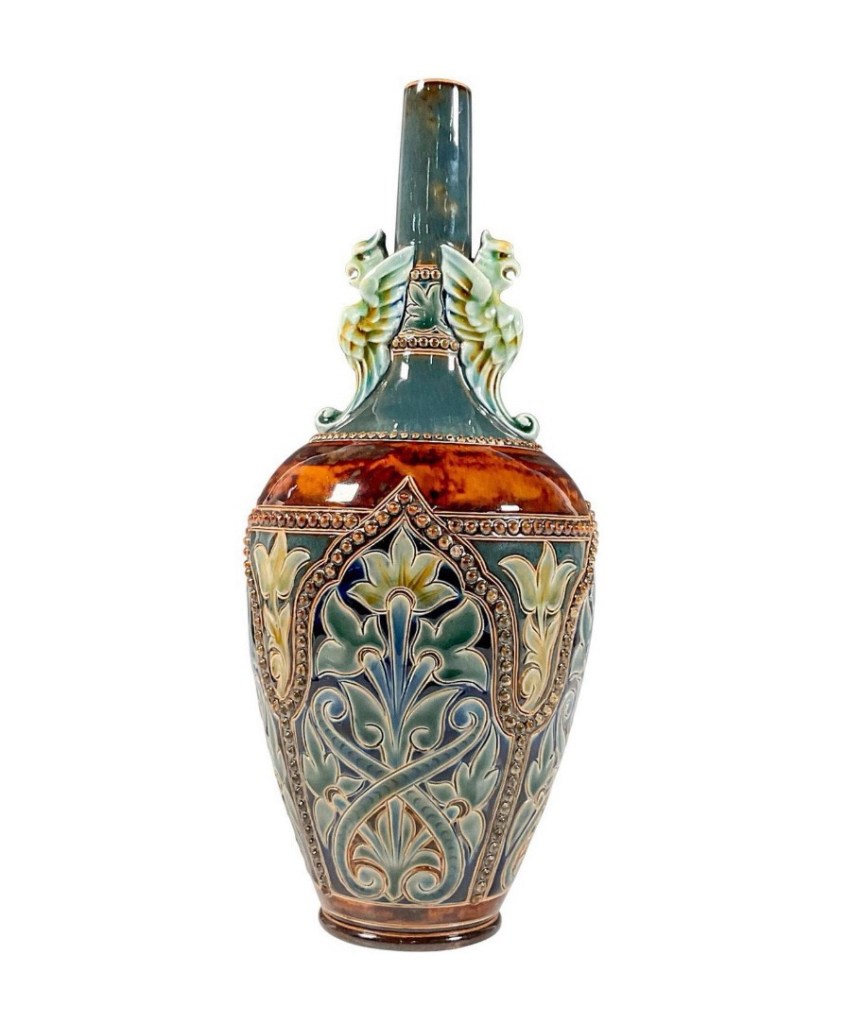
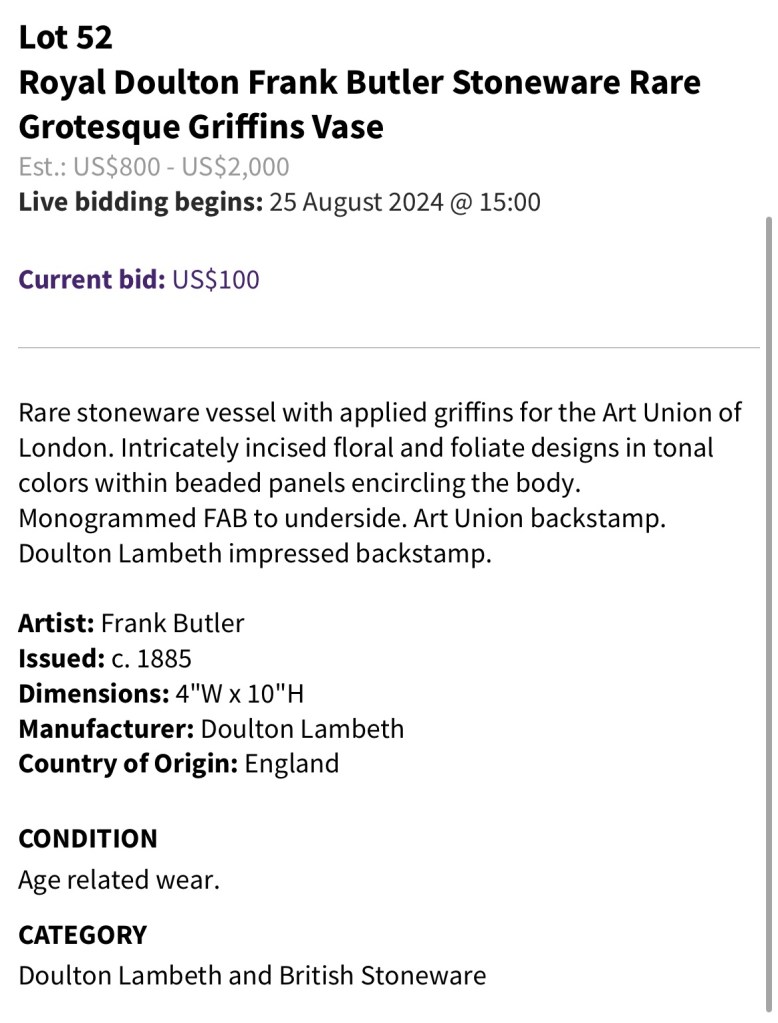
This wonderful example of an Art Union piece is coming up later Lion and Unicorn Auctions this month.
Art Union of London
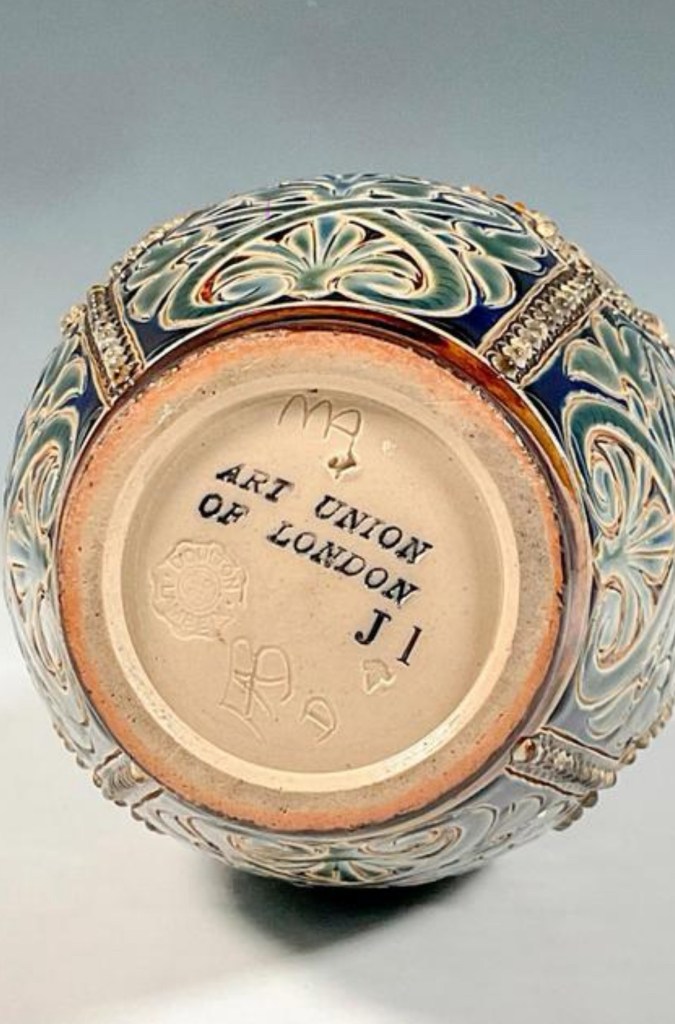
The presence of ‘Art Union of London’ on Doulton ware, indicates that it was produced in a series and specially selected for members of the Art Union, whose subscription brought them access to important art wares from many sources including Doulton. Both Lambeth and Burslem produced wares for the Art Union, although examples of Burslem pieces are much harder to find. Doulton began supplying items in 1885 through to the early 1900’s (approx. 1902) and typically their most celebrated artists such as Mark Marshall and Eliza Simmance provided the original designs. Despite these items not being one off pieces, prices for these marked ‘Art Union of London’ are in line with one off pieces by these major artists.
Inspired by Lion and Unicorn’s latest offerings coming up June 23rd 2024, here is a look into the artist behind the piece!
The name Harry Allen will be familiar to many Doulton collectors because of his association with so many of Doulton’s most famous lines from Flambe, Sung, Titanian, figures and of course to the fantastic hand painted items by this great Doulton artist.
The son of Robert Allen who himself led an art studio at Doulton in Burslem, Harry proved himself a versatile artist but he will be forever associated with his enchanting desert scene images carefully painted onto all manner of items from jugs to plates and everything in between!
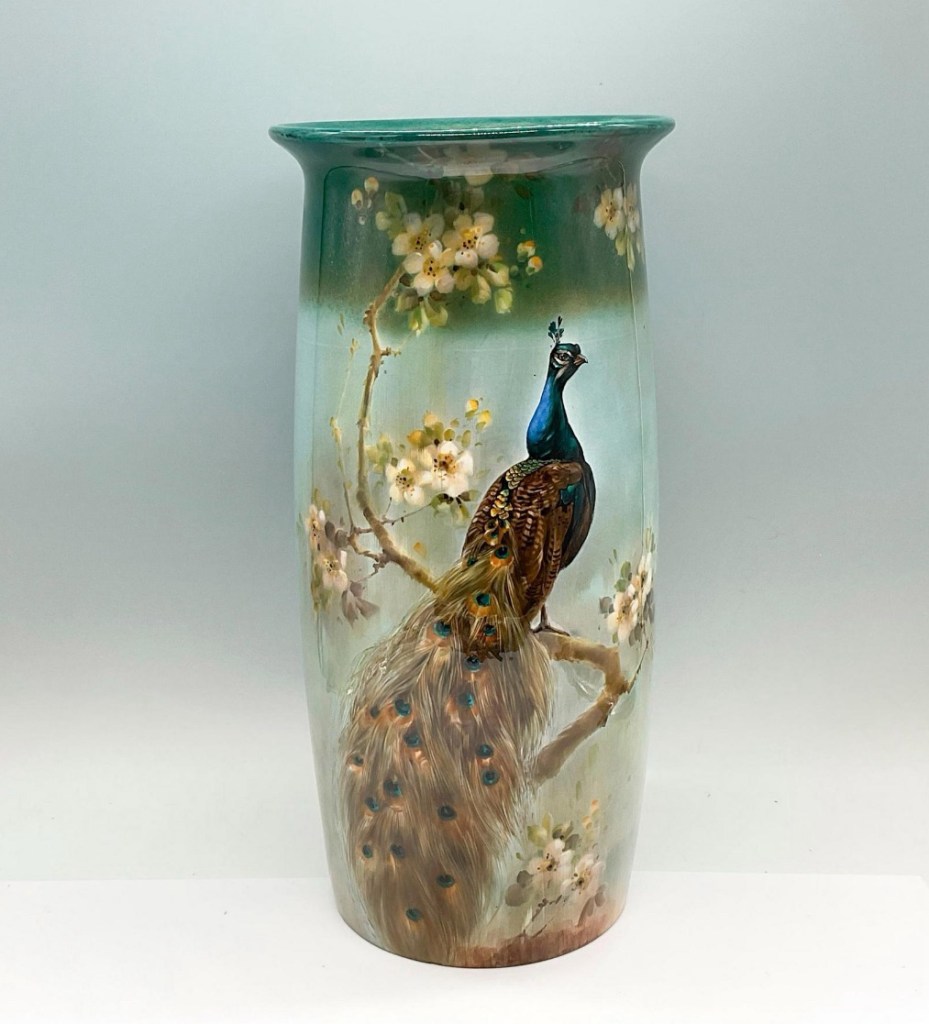
When it comes to Titanian, few items can be a sought after as a peacock vase! Not only magnificent in size but the detail in painting is exceptional!
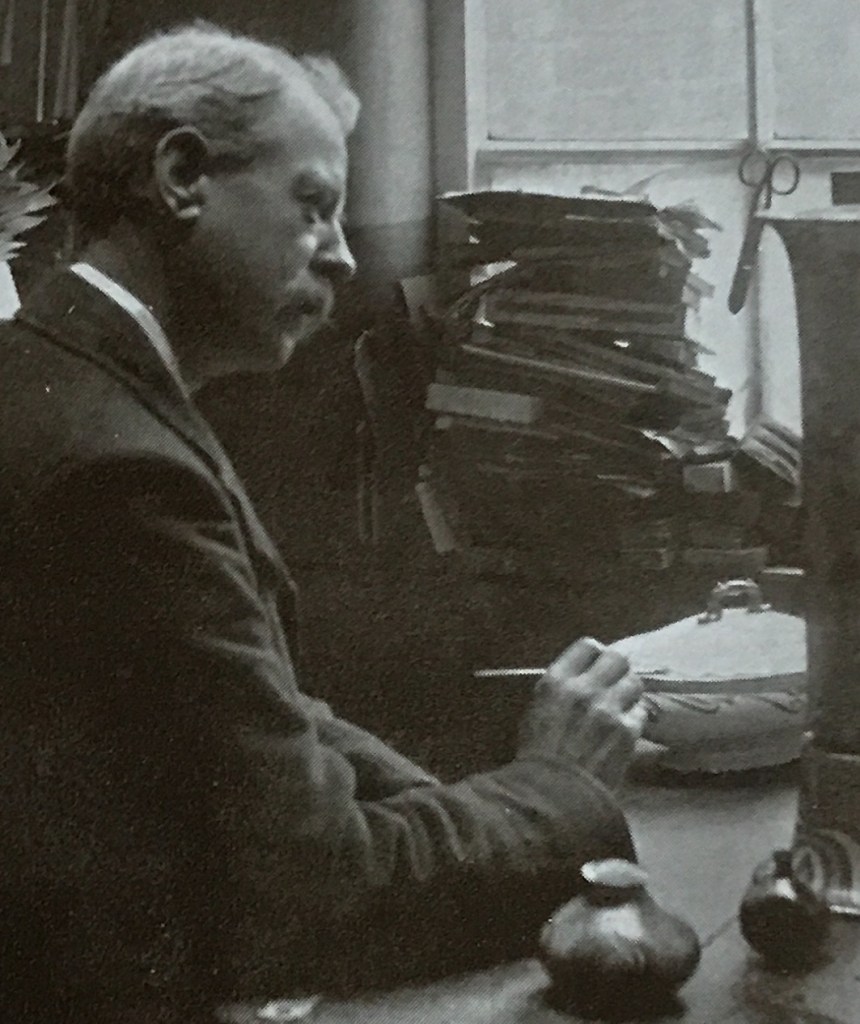
Robert Allen began work at Nile St. when it was still owned by Pinder Bourne, after a brief period at Minton’s as a boy worker. Robert flourished under the guidance of John Slater, then art director, eventually taking over a painting department of his own. Work from his department is denoted by his initials R.A. followed by a number. Robert Allen’s own signed work is however, rare. Yet, he and his department were entrusted with much of the finest and most expensive decoration carried out at Burslem notably for the great exhibitions at which Doulton exhibited from the late 19thcentury. Robert was notably involved in the early development of Titanian ware.
Robert Allen in his studio c1910
The versatility of the RA studio meant that artists there worked on all manner of Doulton wares from early Vellum figures, to tablewares, to exhibition wares and even glaze wares.
 doultoncollectorsclub