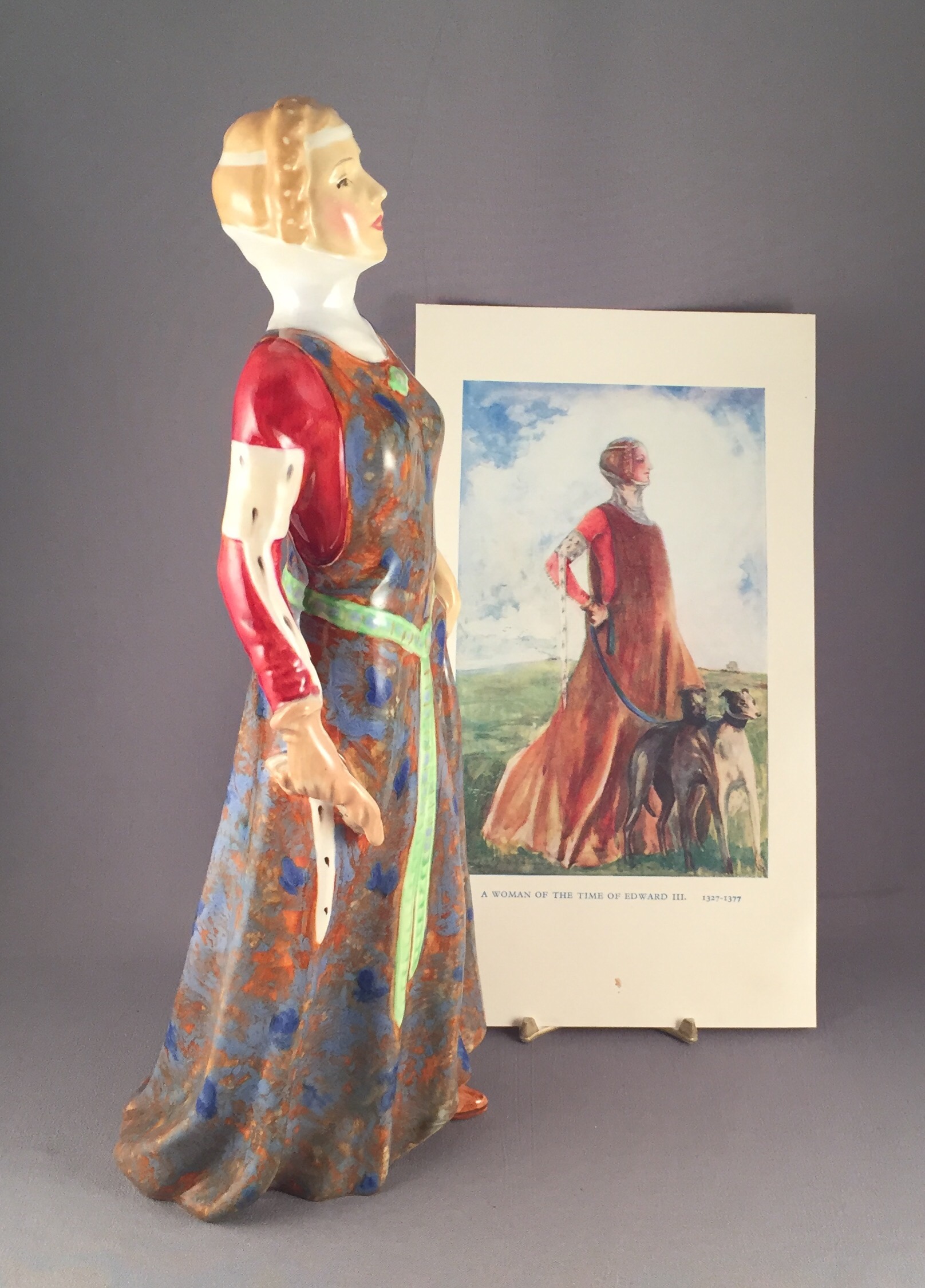
Royal Doulton’s Philippa of Hainault HN 2008

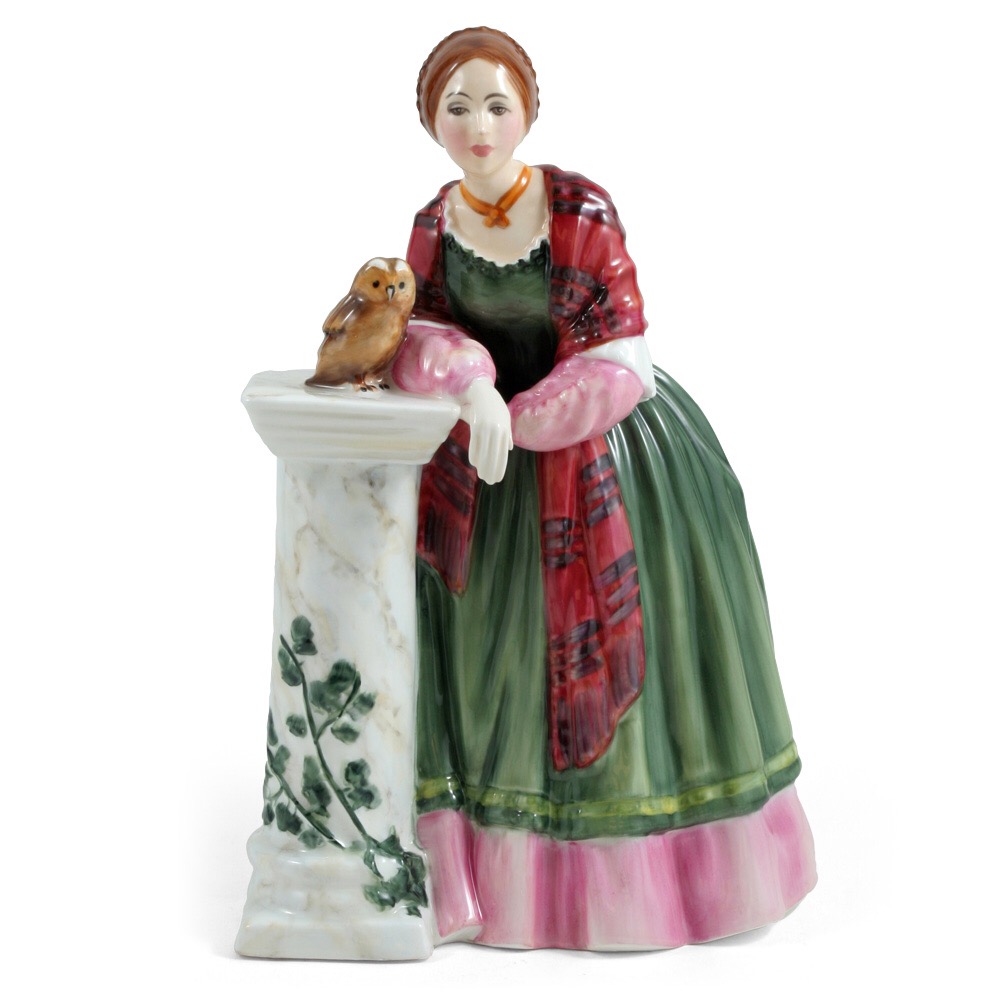
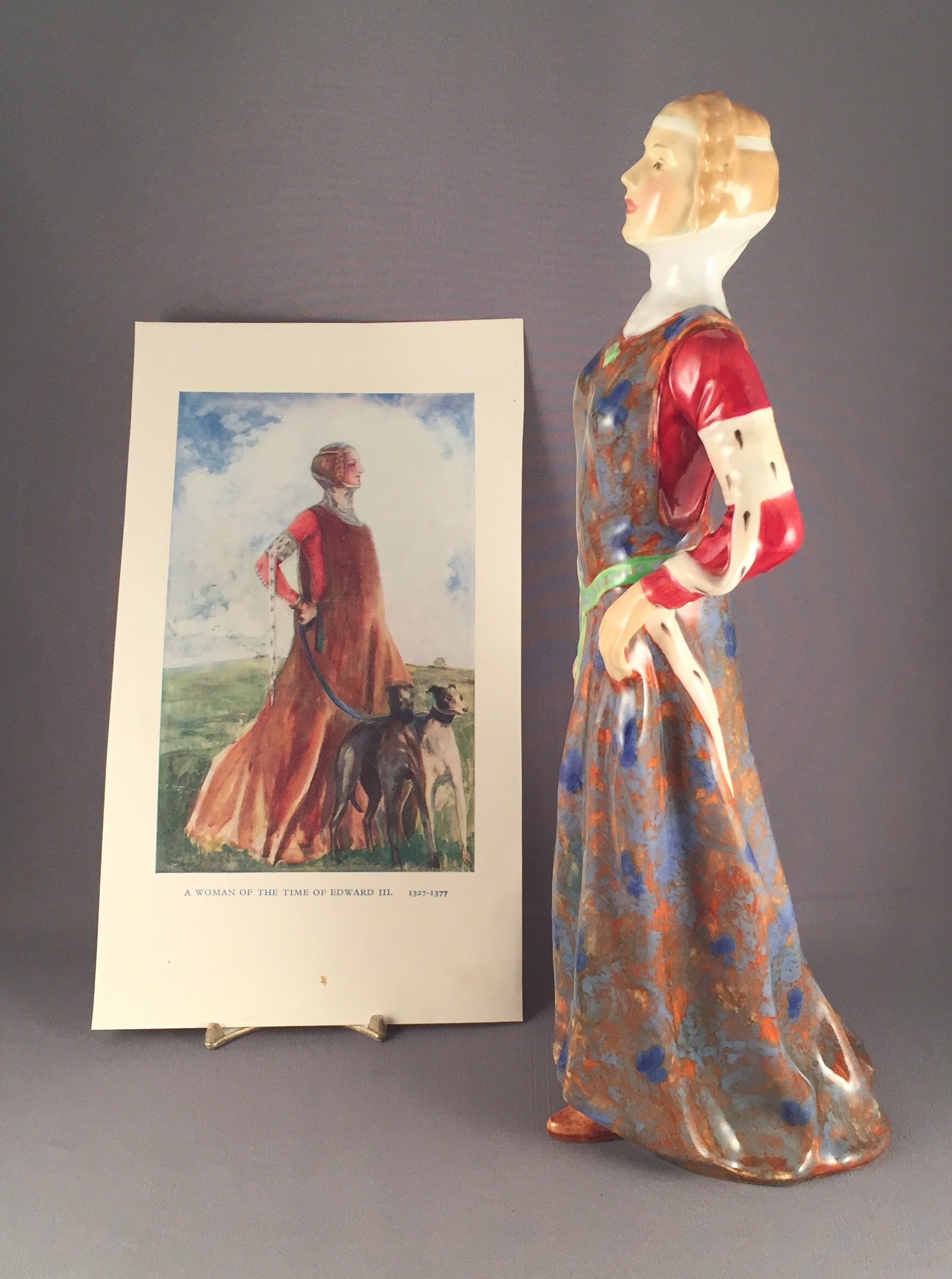
This interpretation of the Queen of Edward III belongs to a wonderful series of Ladies from English History that were among the first of Peggy Davies’ models produced by Rpyal Doulton after WWII.

She ruled at a time when chivalry and pageantry filled the English court. Her husband and son, the Black Prince were men of war. Their captives the Kings of France and of Scotland were treated according to their rank, valour and misfortune – something that was attributed to her influence! 

That she is remembered for her gentleness and clemency is illustrated by the tale of her pleading for the lives of six citizens of Calais when the town fell. 

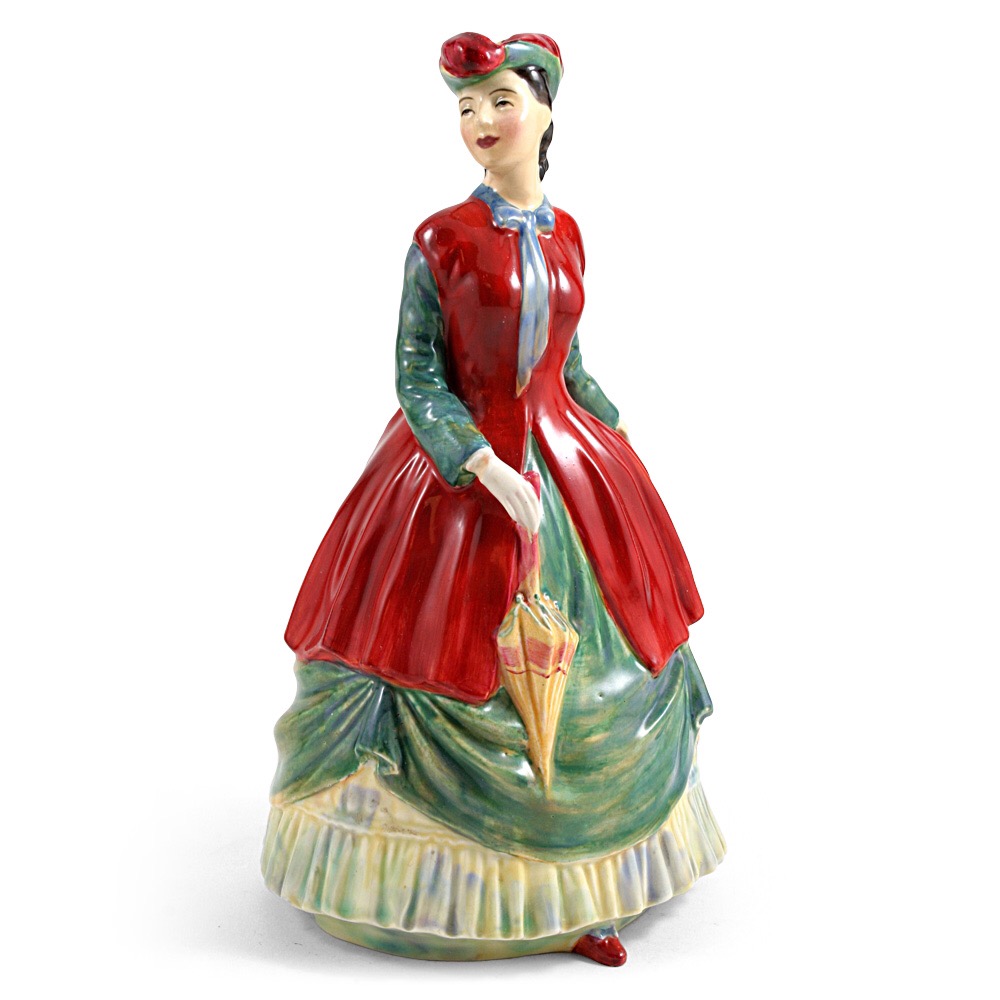
The Royal Doulton series of Period Figures in English History was made up of six personalities and was available for a short period (1948-53) and are all considered rare today! 

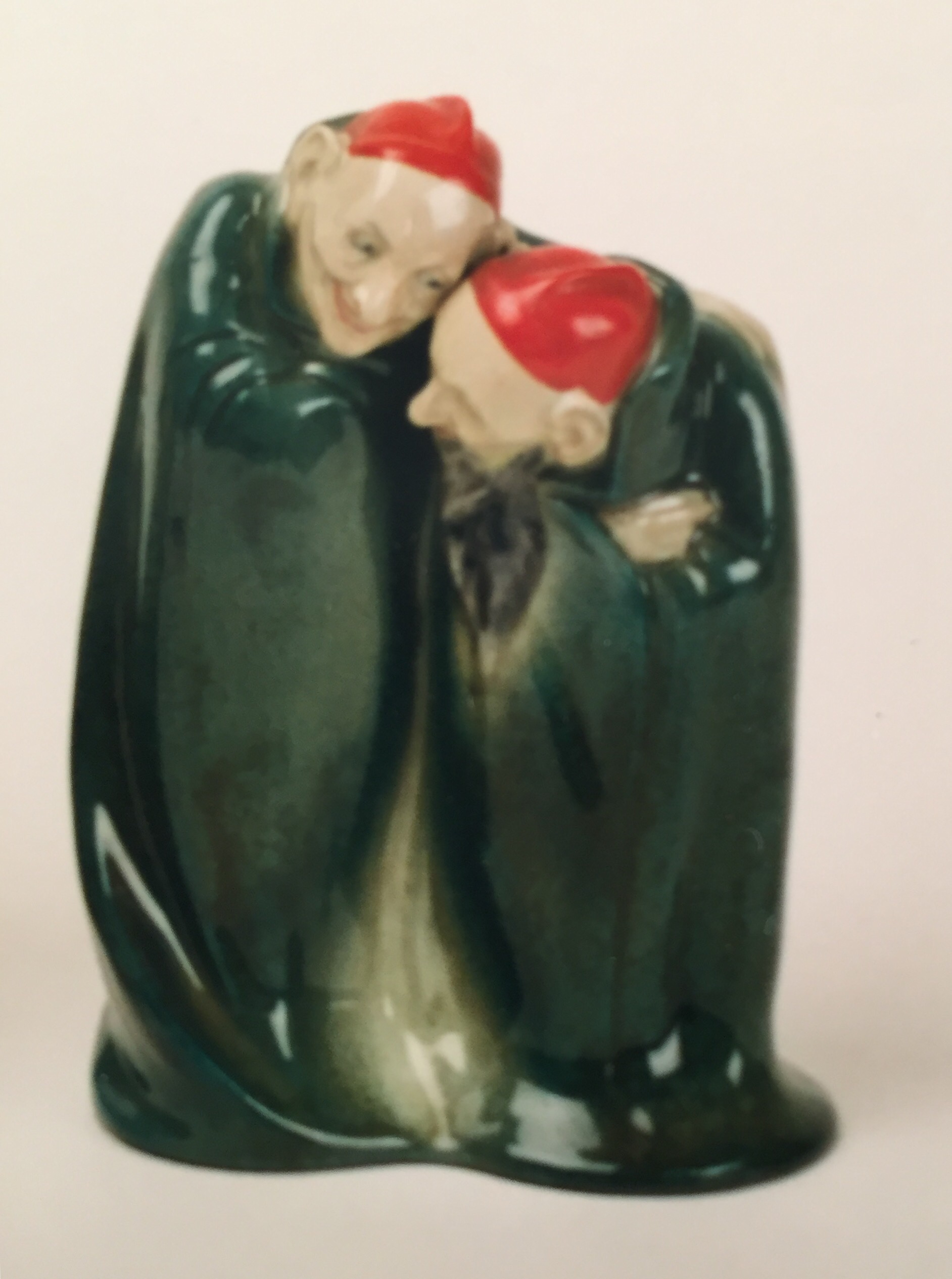
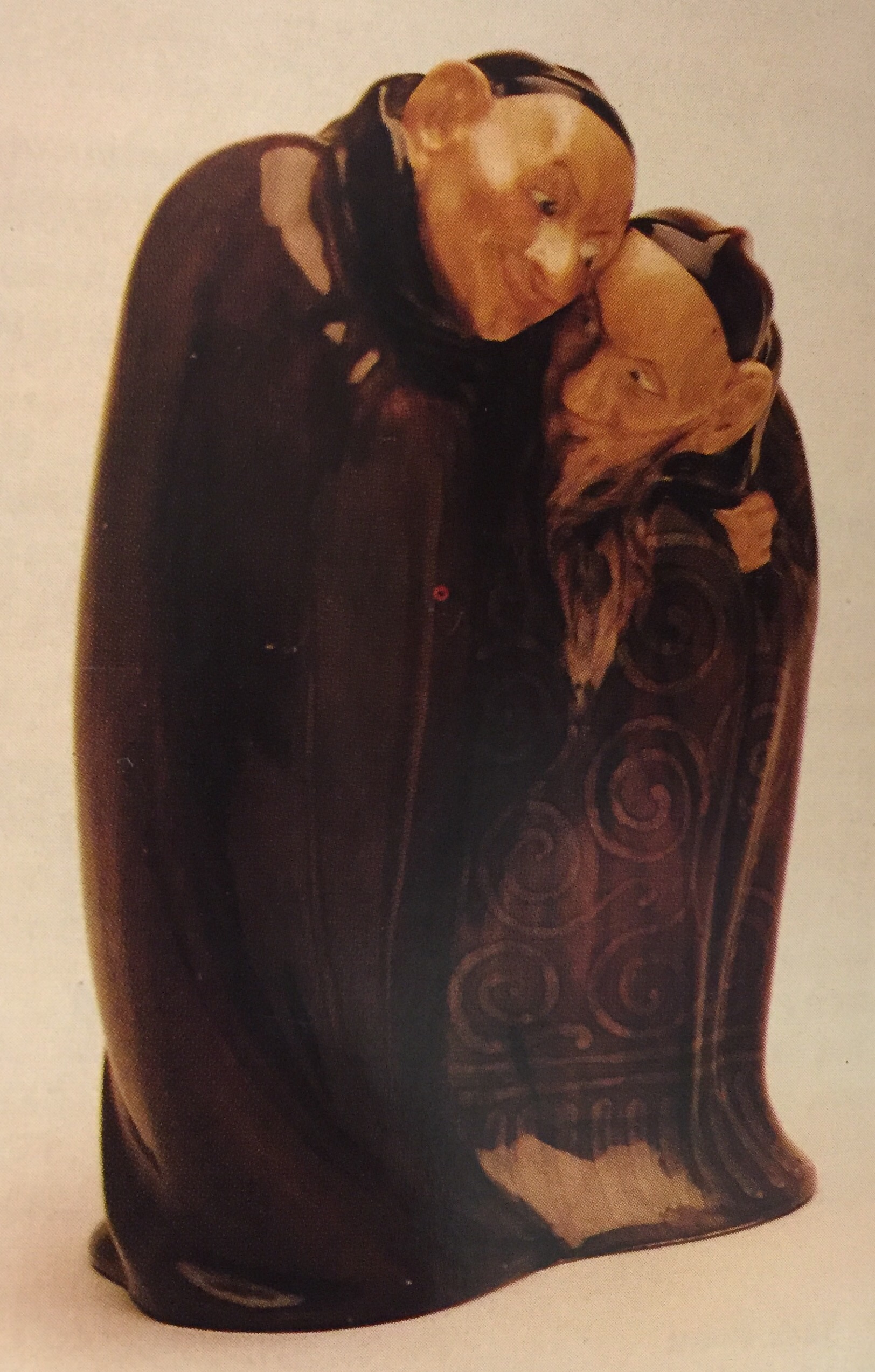
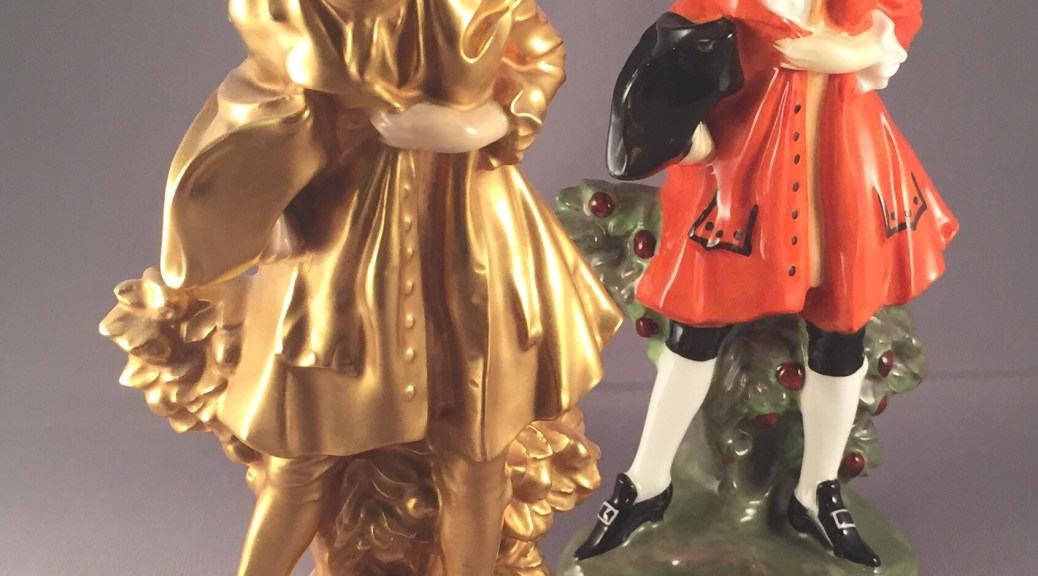
Royal Doulton’s Masquerade pair.

The sheer variety of early figures in Royal Doulton’s HN collection illustrates the lengths that were gone to, to appeal to early collectors as the company tried to discover a popular house style.


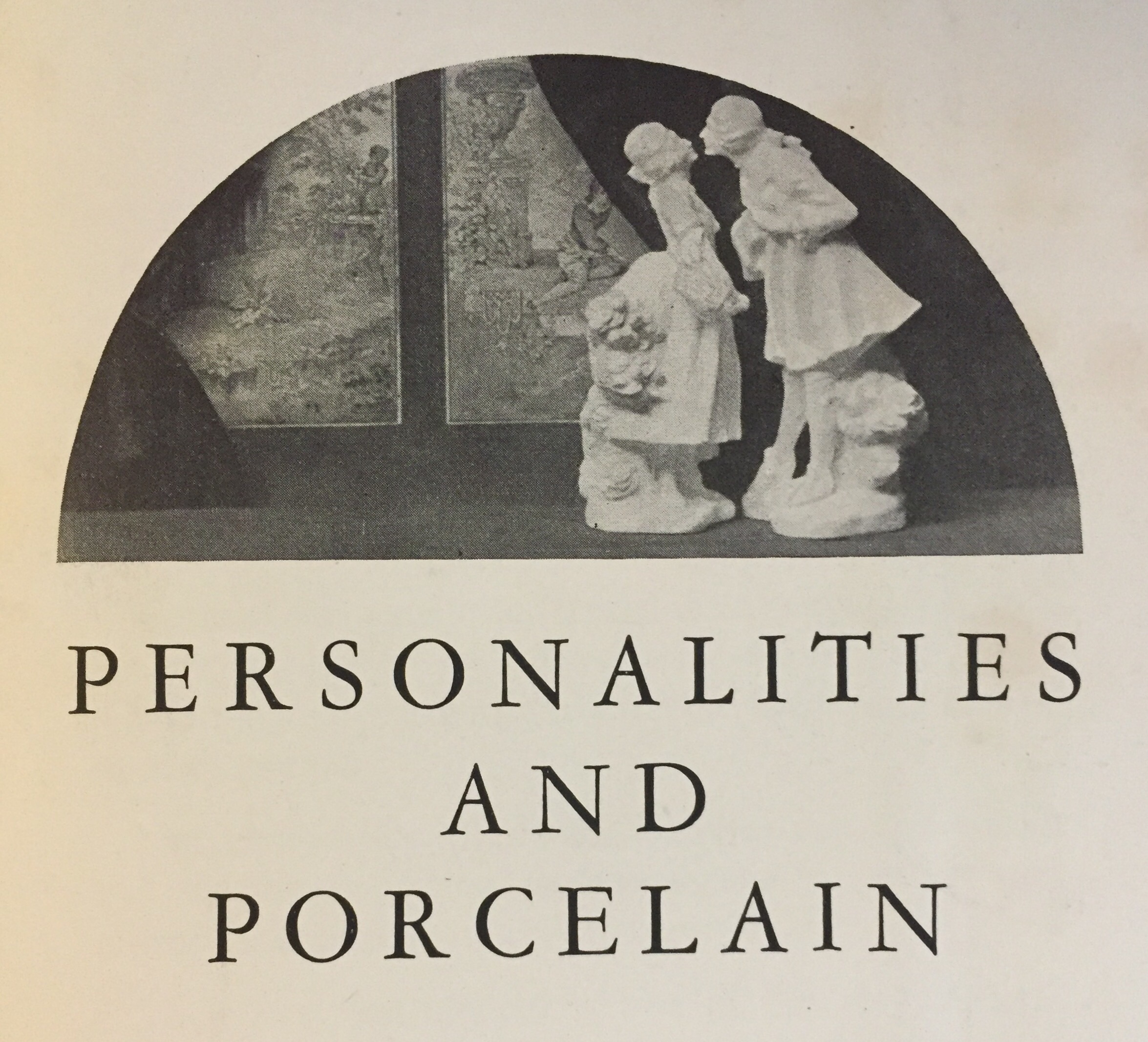
Title page of an early figure catalogue.

Of course by the time the Masquerade pair appeared in 1924, the great Leslie Harradine had already been supplying models to the Burslem art studios for a few years. 


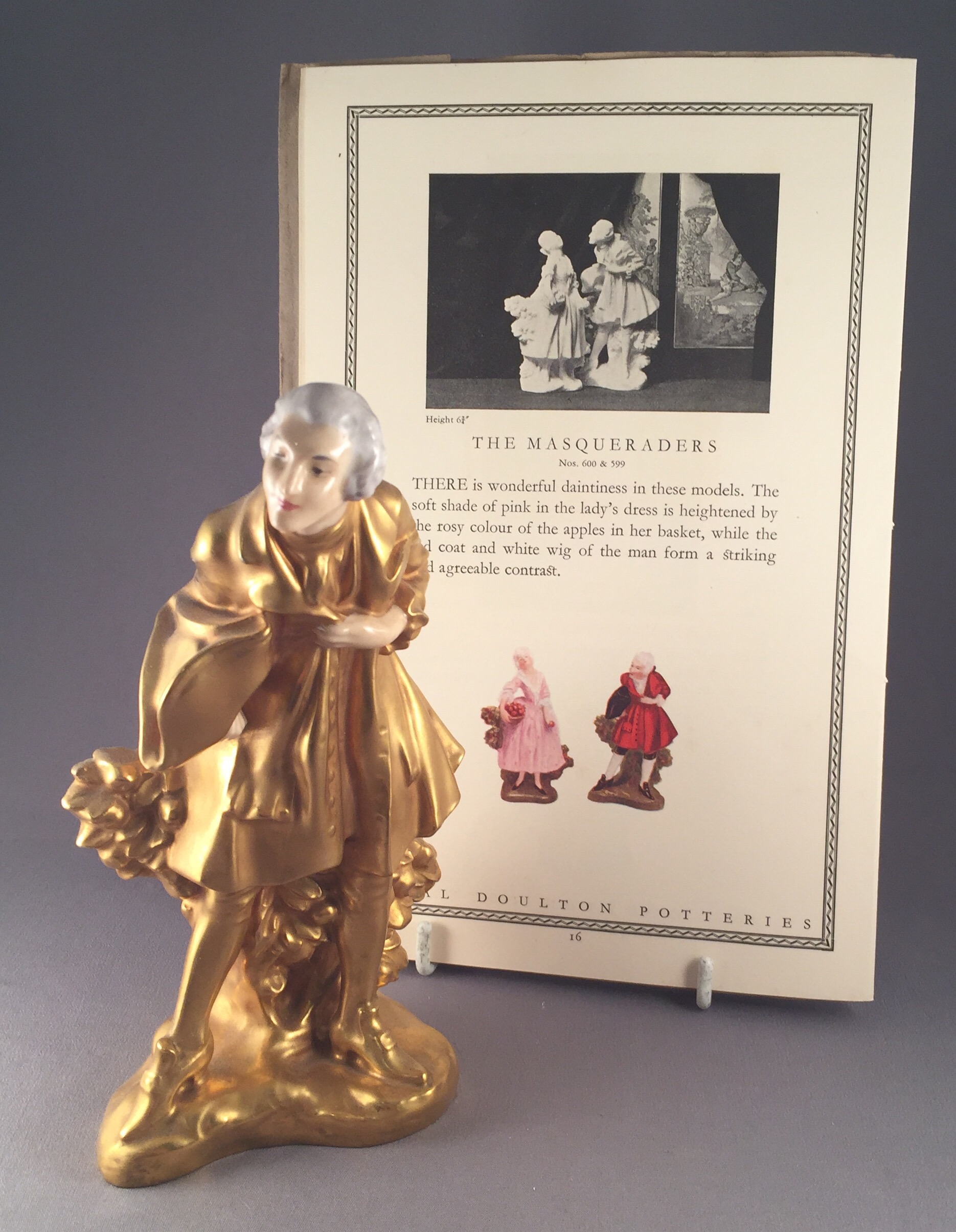
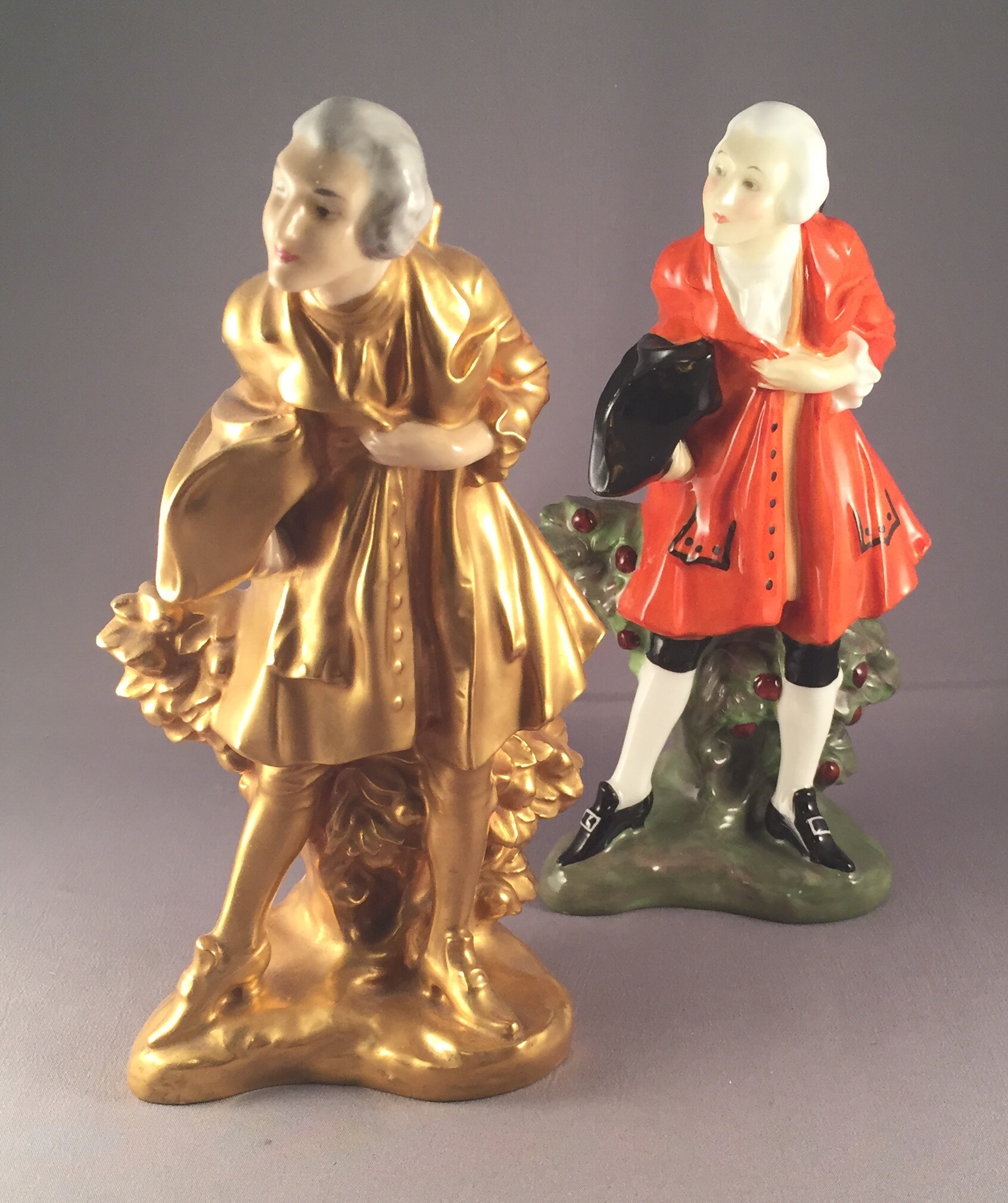
A burnished gold HN636 Masquerade.

During the early 20thC there was huge interest in masked and costume balls and the latter must have inspired this pairing and other Chelsea inspired figures from a bygone age in English china manufacturing. 


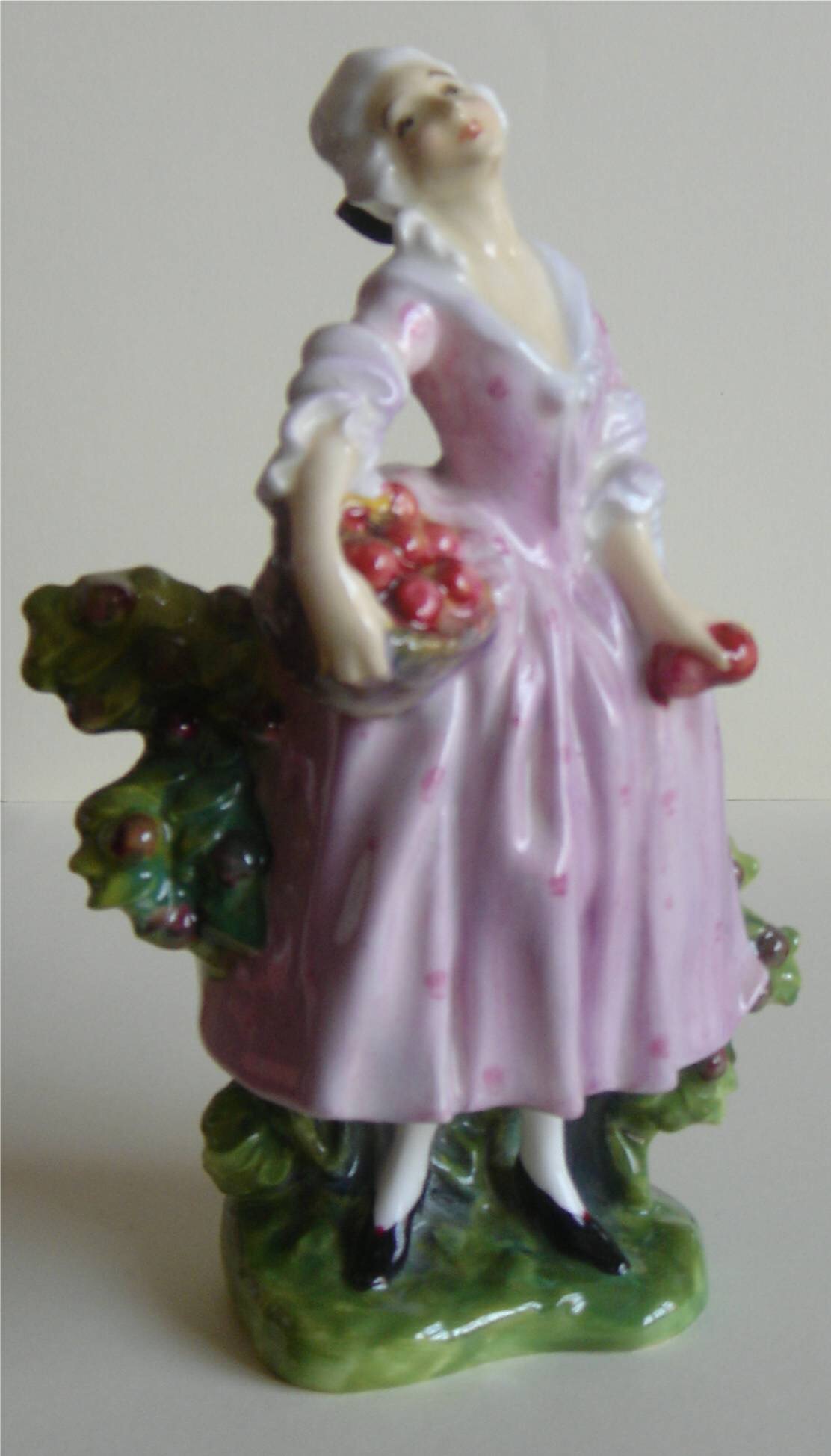
Masquerade (female) HN 600.


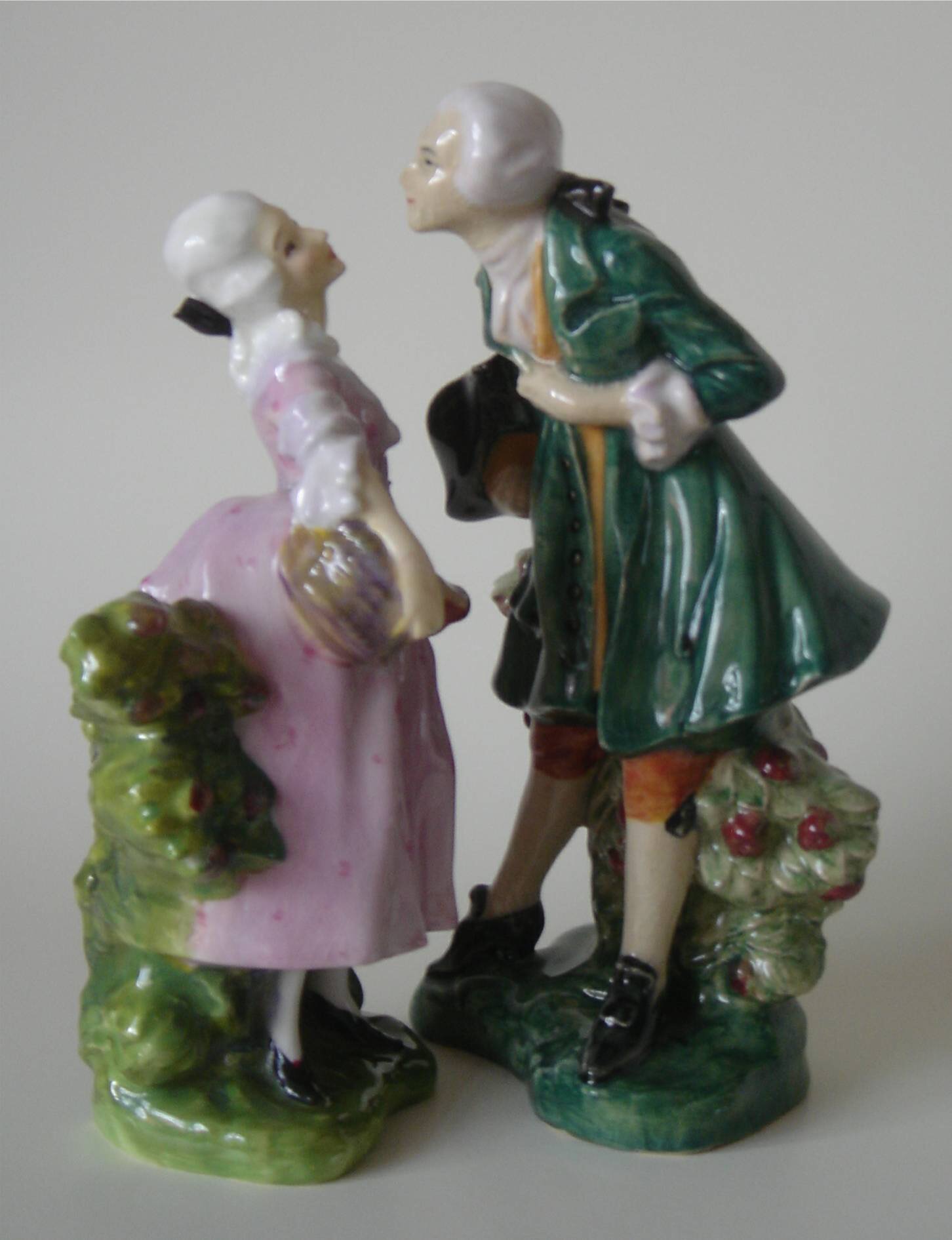
‘Kissing’ Masqueraders HN 600 in china and HN 683 in earthenware.

Interestingly the two Doulton models’ bases fit so that the couple can kiss if the owner so wishes. They appear in this 1920’s figure catalogue titled Personalities and Porcelain along with a group of other early figures. Also of interest to note is that HN683 and HN 637 the last versions of each were actually made in earthenware rather than china like the other versions.


Masquerade HN 599 & 636.

Typical of Doulton’s studios they also experimented with this pair and a handful of other figures, producing examples in burnished gold with ivory face and hand details, imitating gold/bronze and Ivory figurative sculptures from the art nouveau era. 

Doulton’s Photographic Ware

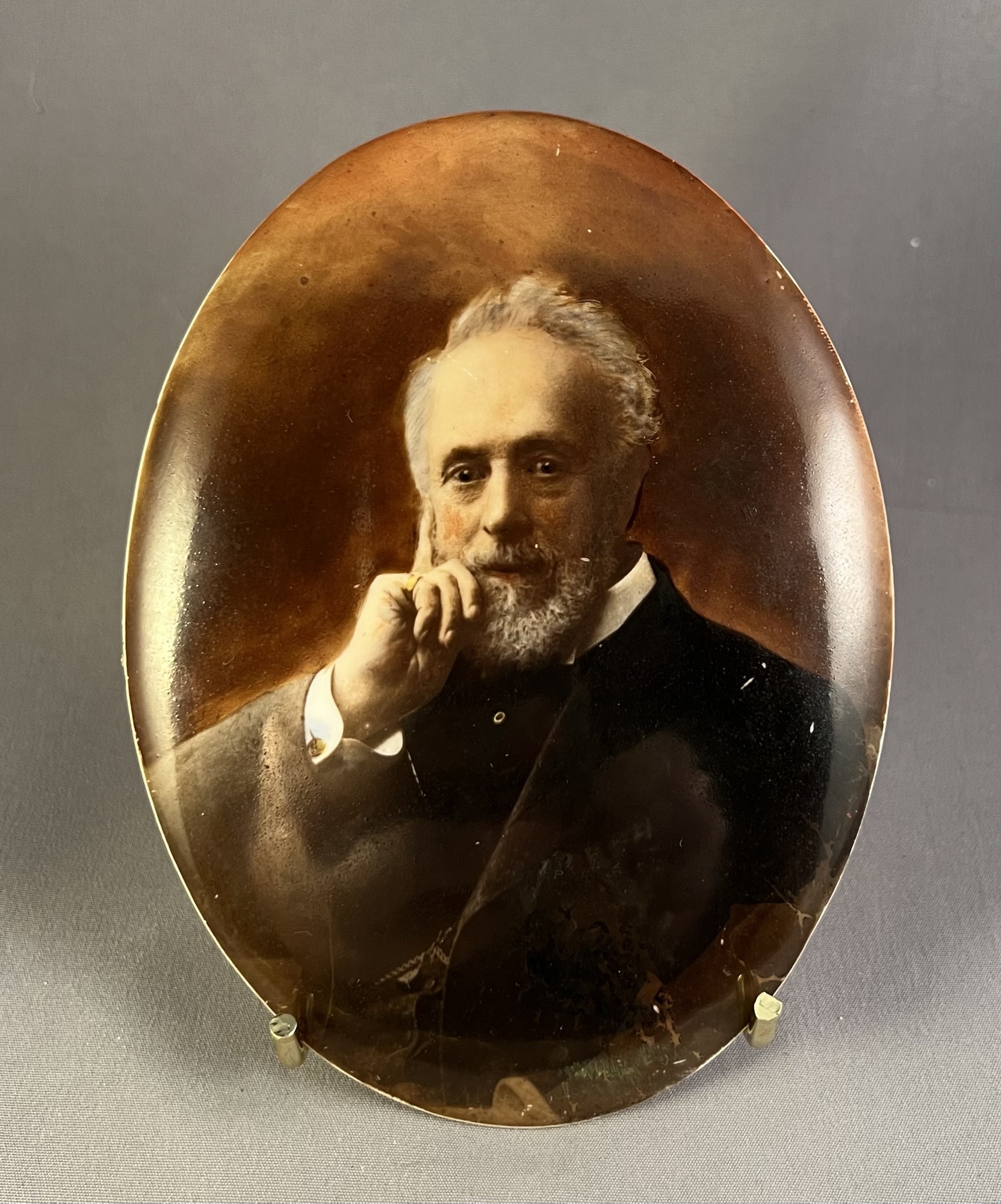
A chance find of a portrait plaque featuring a well known portrait of Sir Henry Doulton has inspired this piece.

Doulton’s Photographic ware is rare with examples dating between 1893-1905 approximately. 

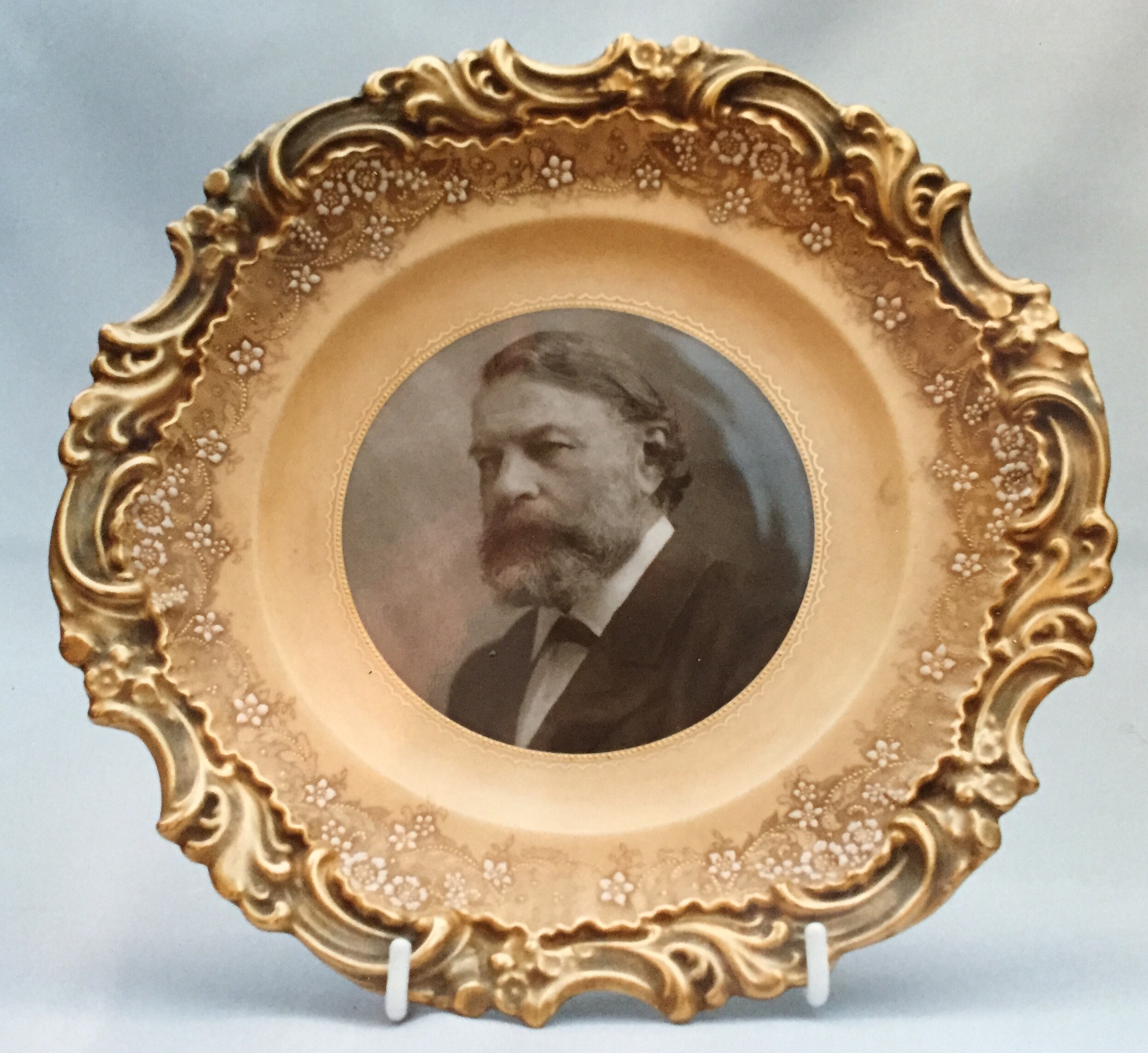
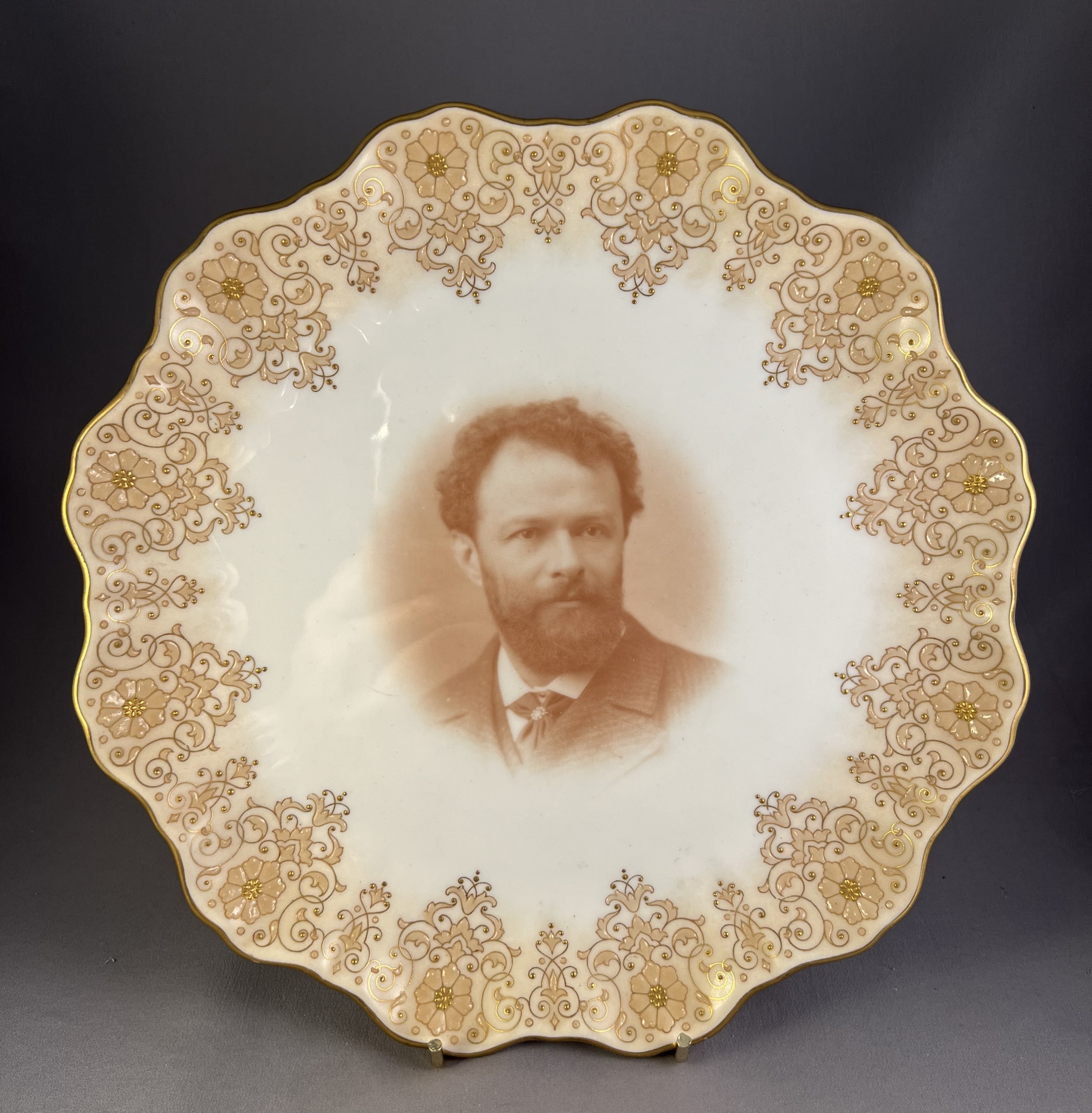
Early plate with a photographic image of Joseph Joachim, a popular violinist.

The method of transferring a photographic image on to transfer paper for application on to a china body was developed by John Slater and examples usually carry a simple Doulton mark and also the predictable “Slater’s Patent” stamp. 

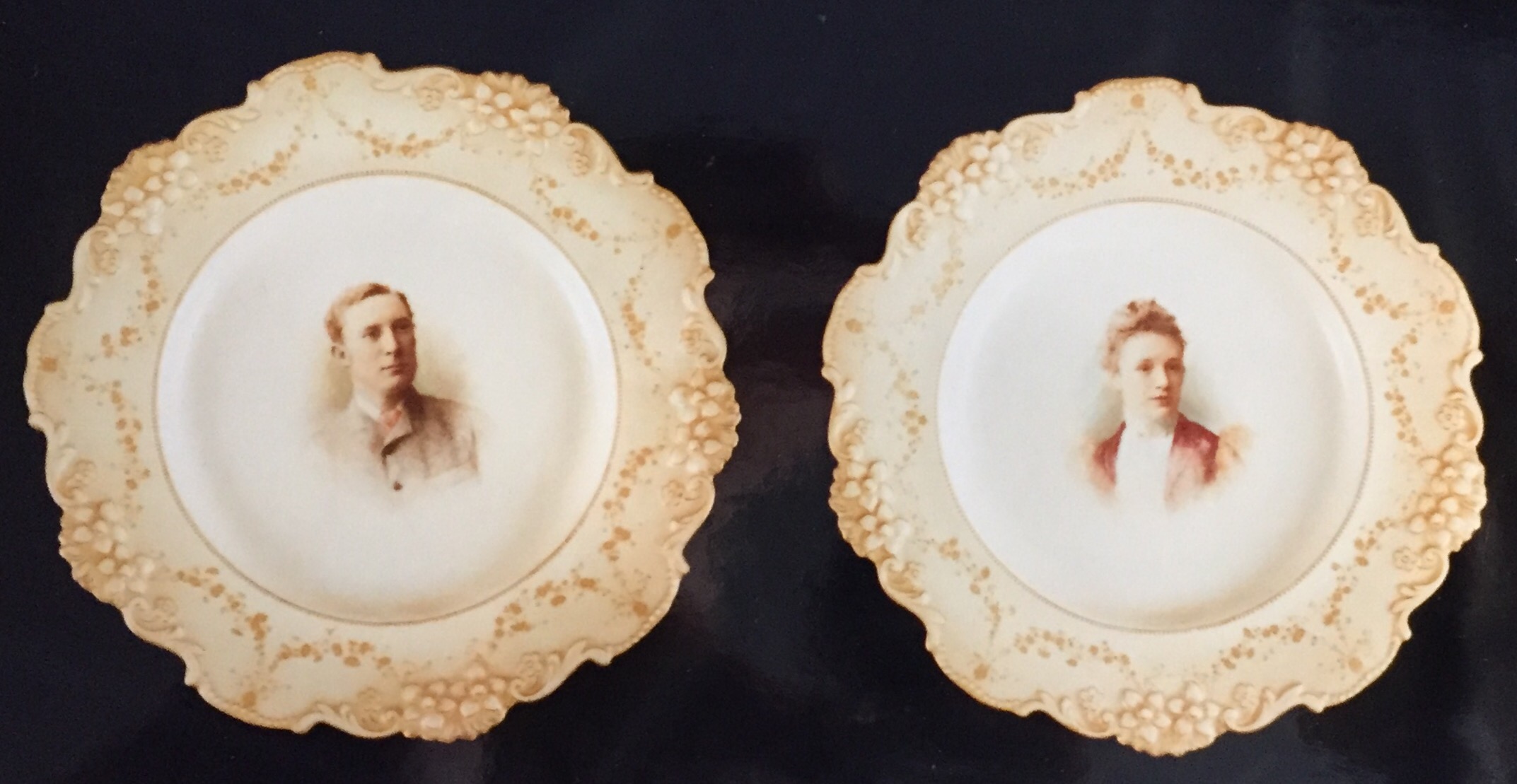
A pair of early Slater’s Patent photographic plates (subjects unknown).

Subjects range from famous stage personalities of the time to other period celebrities.

Here is a further example of an unknown gentleman but with elaborate raised pasted decoration on an almost Vellum body.

And finally the Sir Henry Doulton plaque mentioned above with additional hand tinting. A further example of this plaque is with the Doulton family.

Royal Doulton’s famous, former Headquaters in Lambeth. 

doultonchristopher1's avatardoultoncollectorsclub

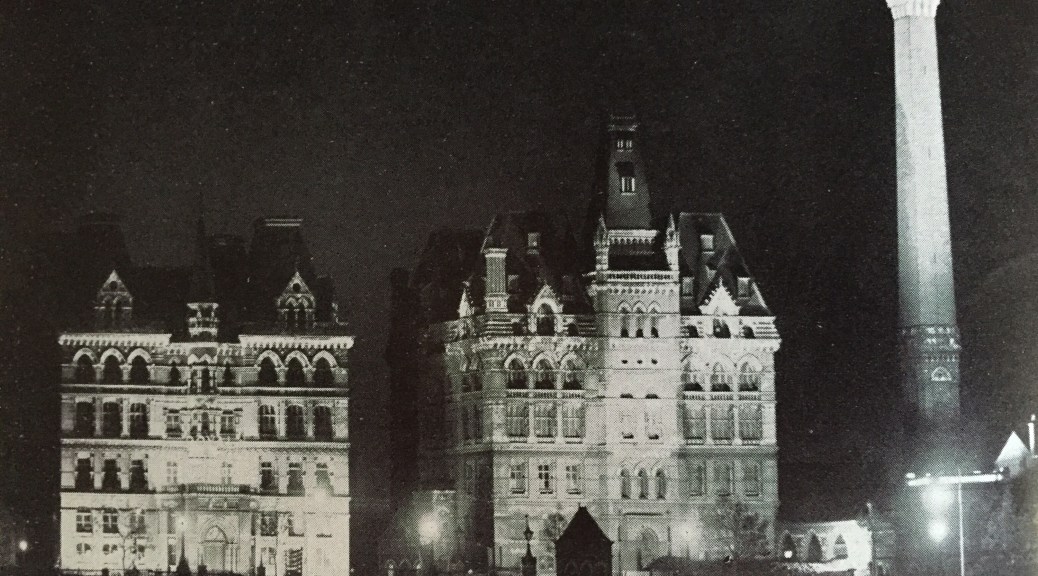
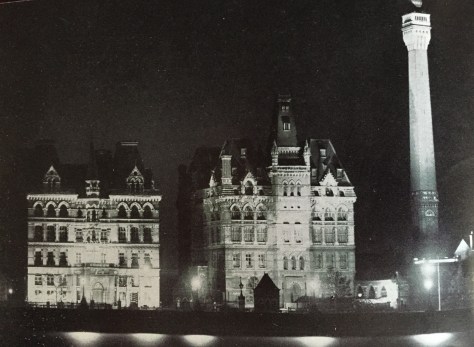
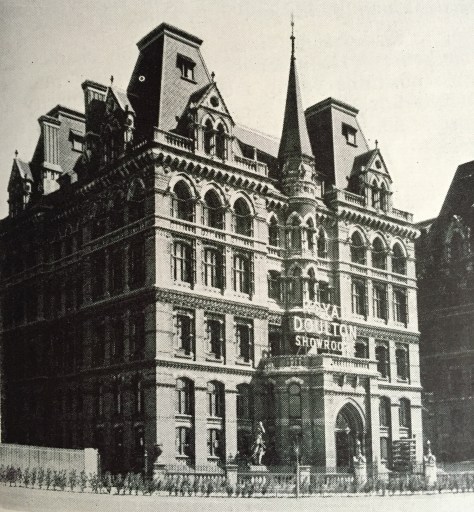
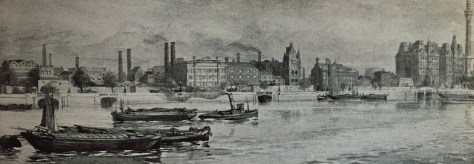
Built in the 1870’s in the gothic style ’A’ and ‘B’ blocks as they were known and the huge chimeney that stood next to them were a London landmark for 75 years and witnessed many of Doulton’s major accomplishments as well as playing host to many famous visitors from Royalty, to politicians, to latter day celebrities.


A floodlit view of blocks A and B from 1935 celebrating a Royal jubilee.

Doulton vacated these impressive buildings in early 1940 to the newly erected Doulton House, then just a few hundred yards along the Albert Embankment. Lying unoccupied and suffering bomb damage during WWII there was little option left than to demolish these impressive buildings in 1951.


A close up of the showroom and main offices block.

On the left is the former main office and showroom building, on the right a factory block and chimeney.


View original post 26 more words

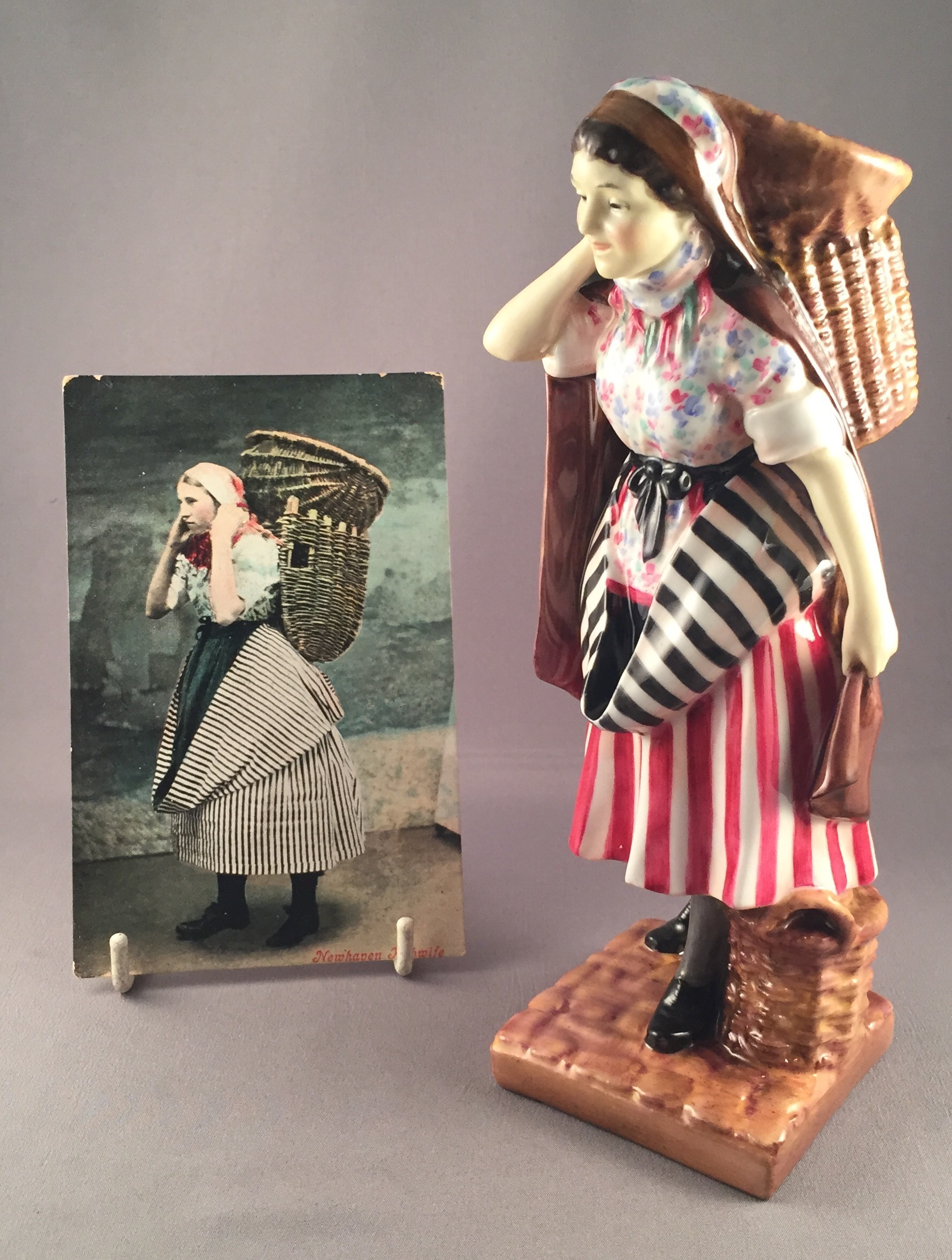
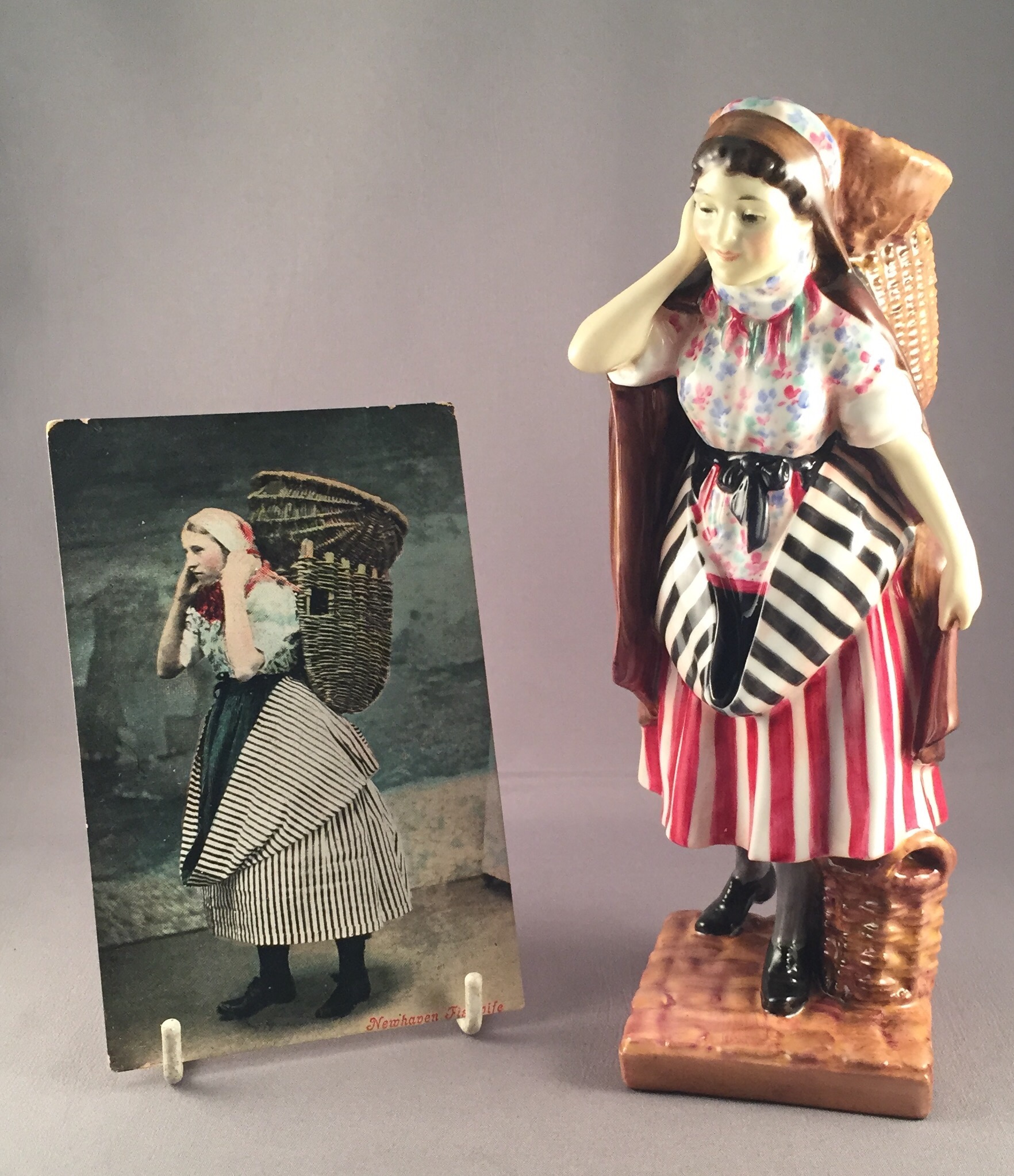
Royal Doulton’s Newhaven Fishwife.

The Royal Doulton figure Newhaven Fishwife HN 1480 is like so many of their period street sellers and character figures, based closely on real life. The Scottish fishwives of Newhaven had a reputation for their beauty and industry. They were hard-bargainers though, and all the fishermen of the Firth of Forth in Edinburgh, Scotland, brought their catches to Newhaven for the fishwives to sell in Edinburgh city. 
  
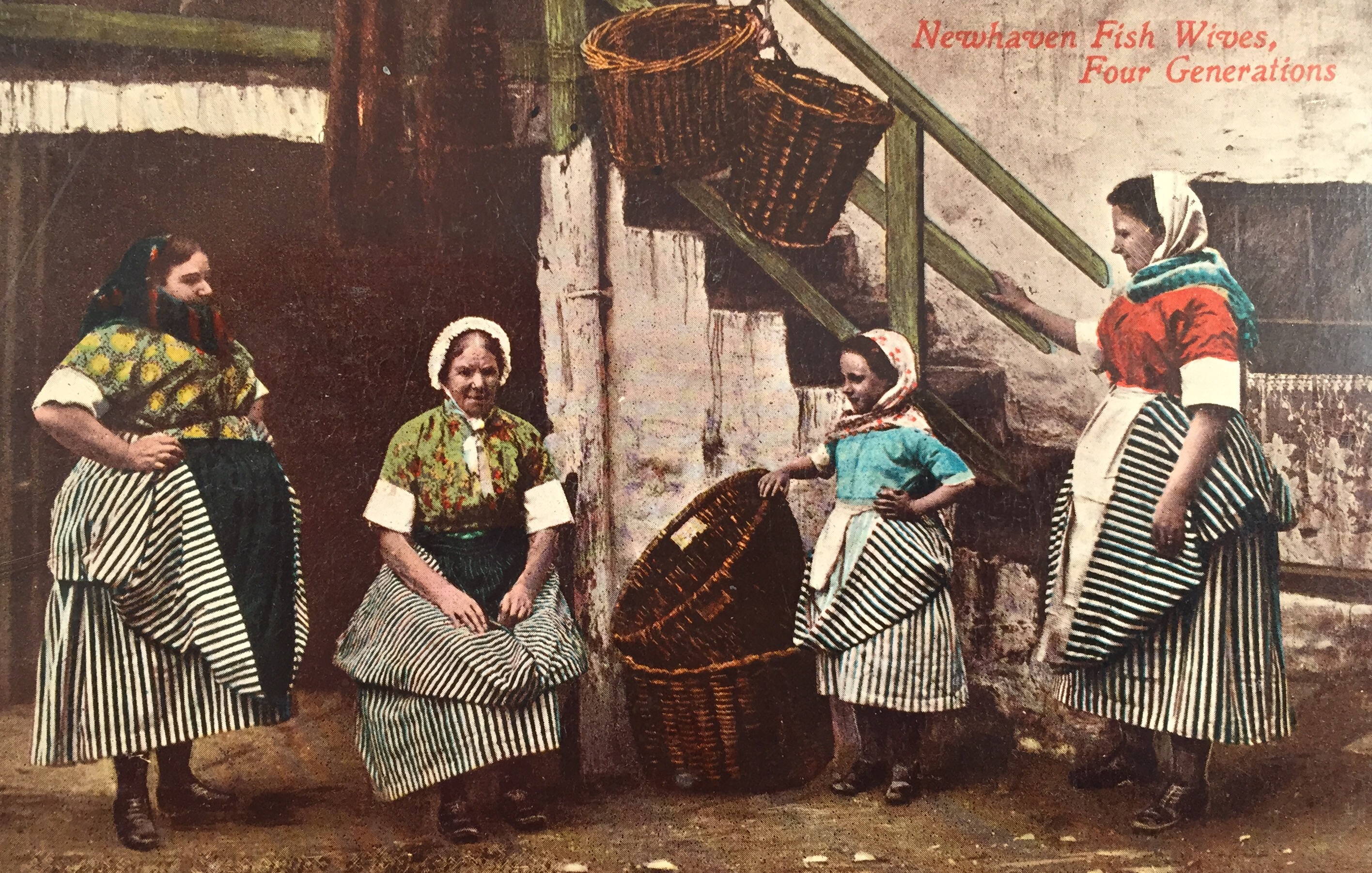
Just like the Doulton figure, the fishwives of Newhaven wore distinctive costumes of layers of colourfully striped petticoats with a muslin cap or other similar headdress, together with a scarf, the tassels of which you can make out in the picture and also around the neck of the figure itself. Their fish, including haddock and herring, were carried on their backs in creels, again just like the figure.  

  
The Newhaven Fishwife although introduced in the 1930s, was not a Leslie Harradine figure, but a model by Harry Fenton, more famously associated today with Doulton’s Character Jugs. She is recorded as having been produced between 1931-37, however, her scarcity reinforces the reality that many figures were made to order rather than being readily available. 


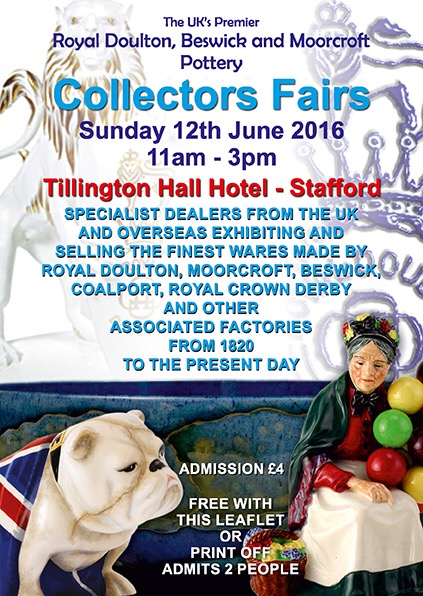
Save the date: the next Royal Doulton, Beswick and Moorcroft Fair is June 12th…

….at Tillington Hall Hotel Stafford.

More, more, more is the strap line for our next collectors fair and first for 2016! 

More exhibitors!

More collectibles!

More space!

Entry is free with a copy or print of of this advert.

With collectibles old and new, plus fair specials what more reason do you need to stop by on the day! 

See you there! 

Questions? Just email them to doultonevents@gmail.com

We look forward to welcoming you there! 


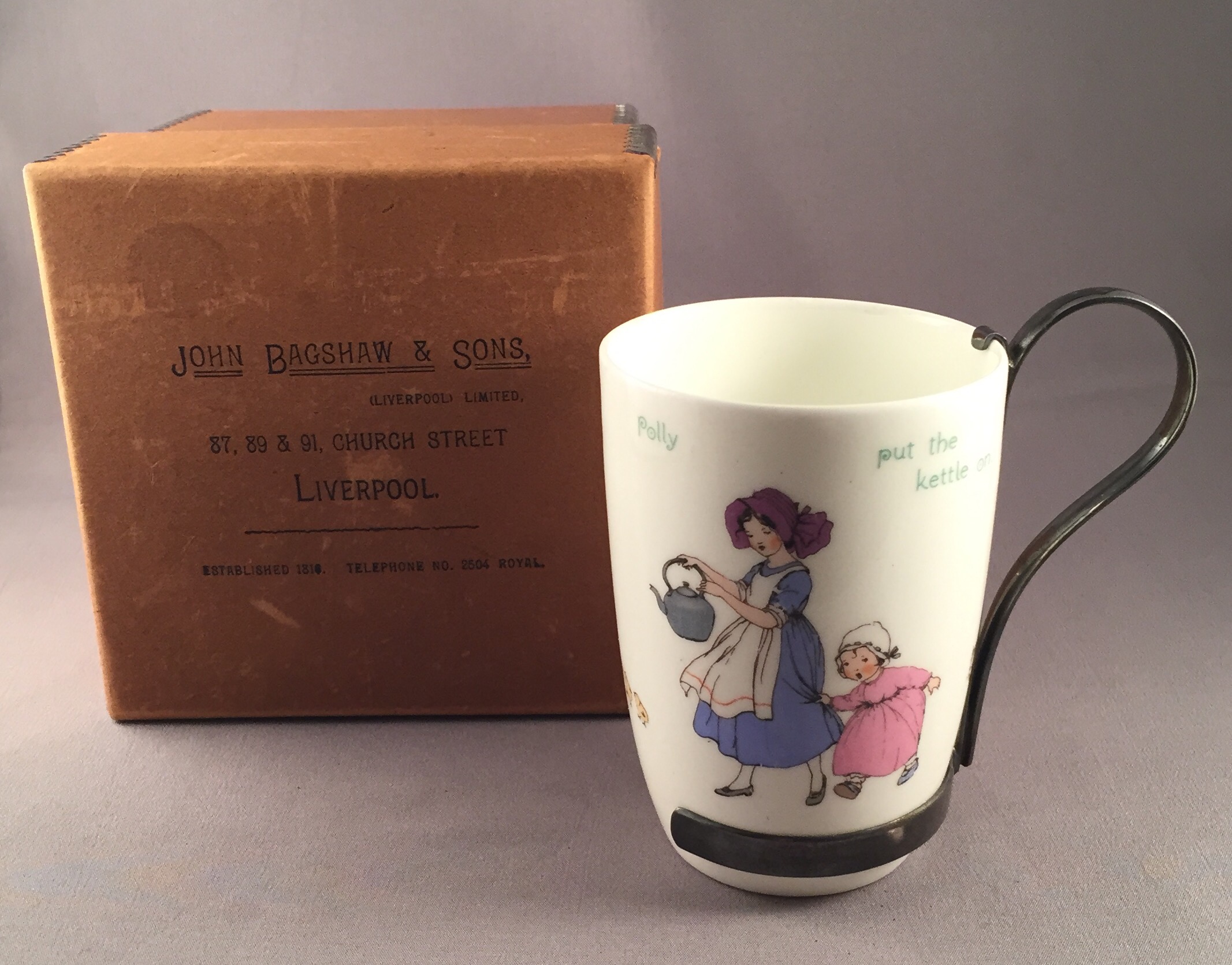
Royal Doulton’s  Nursery Rhymes Series L – a look back…

 
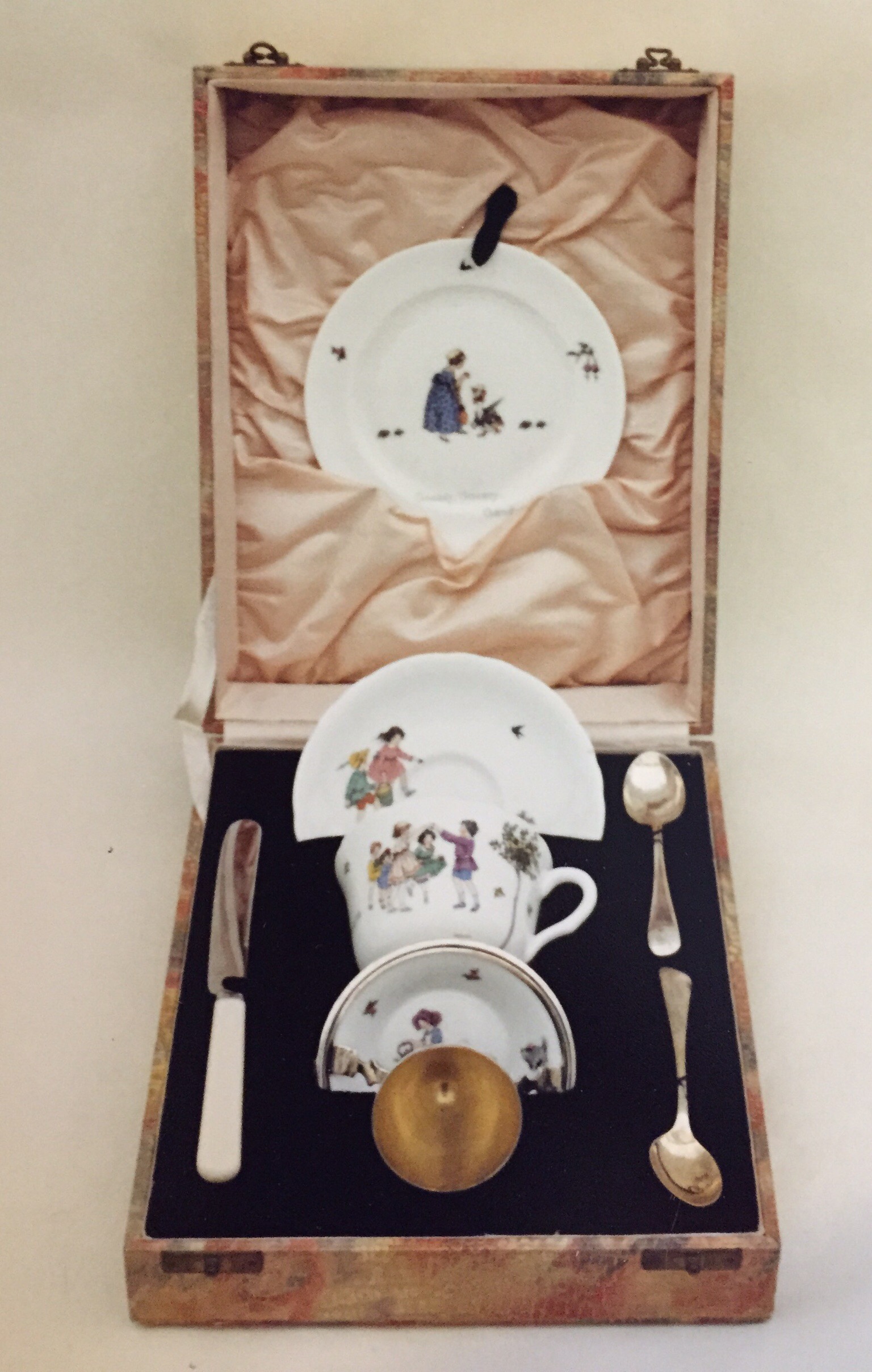
 A smart child’s breakfast set, once popular christening presents. 

Classic nursery rhymes have long provided much inspiration for Doulton’s designers and just like many Seriesware designs the L range was influenced by another artist, Ann Anderson.

  Introduced in 1916 there were 12 different designs produced featuring classic characters such as Little Tommy Tucker, the Queen of Hearts and This Little Pig. 

  
A variation of the boxed set above.

Typically produced in bone china the precise date of withdrawal is unknown, although the outbreak of WWII is given as it is with so many of Doulton’s different lines. The bases of items with these designs can carry H or D numbers for this series ware pattern.

  
Beaker with silver plated handle and original retailer’s box.

As with so many series ware designs hunting down items provides a great challenge and a collection of them makes a great display.

Royal Doulton’s celebration of St George.

  St George HN 2067.

England’s patron saint is celebrated annually with St George’s Day on the 23rd April. Symbolic references to him and the story of his slaying a dragon can be found throughout Bristish life: his cross forms the national flag of England, also it features within the union flag of the United Kingdom and is also contained with other flags containing the Union Flag such as New Zealand’s and Australia’s.


England’s patron saint can be traced back through history to before the Norman Conquest of 1066 and it is recorded that by the 14thC St George had been declared England’s patron saint and protector of Royalty!
 Doulton advert for their Festival of Britain stand 1951.

 Doulton’s first figure model of St George (above) introduced as HN 385 was by Stanley Thorogood and was based on an earlier study by the artist from 1915.

 
 St George by Peggy Davies 1950-85.
Doulton have produced the figures above as well as featured him in other popular lines produced including their Bunnykins range. 

 
Bunnykins St George.


Royal Doulton’s Beggar’s Opera series.

doultonchristopher1's avatardoultoncollectorsclub

20140725-160540-57940025.jpg
Original poster for the opera.

Leslie Harradine as well as establishing a new standard in figure modelling in the early 1920’s, was also responsible for the first set of figures, The Beggar’s Opera Series, inspired by the theatre. Harradine’s figures all closely resemble the costume designs Claude Lovatt Fraser the designer for the revival of this piece at Hammersmith in 1920, as you can see from these pictures in the article.

20140725-160655-58015097.jpg

20140725-160655-58015339.jpg
Harradine’s The Beggar and the original sketch for the stage costume.

Once made up Lovat’s costumes were thrown to the studio floor and walked on, had paint thrown on them, and where necessary as with the Beggar’s costume, were then slashed and dirtied. He reasoned that the characters from the play were from 18th Century London low life and spent much of their time in jail.

Here is the original Captain Macheath figure compared with the original theatre poster…

View original post 137 more words

Collecting Royal Doulton’s seasoned characters! 

Granny’s Heritage HN 1873.
Everyone looks forward to that time in our lives when things slow down a little and we imagine that we will have time to enjoy the finer things in life! This perhaps explains collectors’ fascination with what we might term the ‘older generation’.

The very rare Granny HN 1804.

From the 1920’s Royal Doulton have been producing older characters as part of their famous HN range of figures in recognition of this basic sentiment.


A Gentlewoman HN 1632.

Whether it be the famous impoverished Old Balloon Seller or 1930’s figures such as Darby and Joan, A Gentlewoman or Granny all of whom are portrayed in aged contentment knitting, enjoying some snuff, serving tea or out and about! All the things we imagine that we may have done generations before now.


Gaffer HN 2053.

Respect and affection appear to be the watchwords with these characters with names such as Grandma and Gaffer being used over time. The term Gaffer of course referring to a boss or older man.


Past Glory HN 2484.

This reverence for the older generation also explains figures such as Past Glory HN 2484, Takings Things Easy HN 2677 and Stitch in Time HN 2352.


Taking Things Easy HN 2677.

Displayed as part of a group of elder characters or among more typical figures, each tells a tale of its own and it is perhaps for this reason that even today we fill our homes with these gentle characters!


A Stitch in Time HN 2352.

Thanks to Seaway China for the use of their photos.

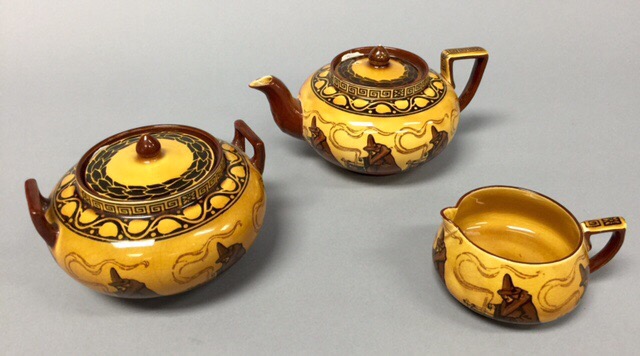
  And finally a rare Kingsware teapot with Darby and Joan to illustrate that it isn’t just figures that feature older characters!

A place to share enthusiasm for all things Royal Doulton! All original content ©Christopher Evans 2014 unless otherwise credited. No unauthorised reproduction permitted.