Collecting Doulton’s identical miniature figures! 

Doulton’s early range of miniature figures or M series as it is known offers collectors an additional element to their collection – for if you have the large figure, why not hunt down the miniature as well, or alternatively if space is at a premium, collect just the miniature!  

 Chloe HN 1765 and M 10.

The most popular figures from the HN collection can be found in a miniature size although as always some are much harder to trace and thus carry a premium; thus a miniature Pierette will always outshine a Victorian Lady for example. 
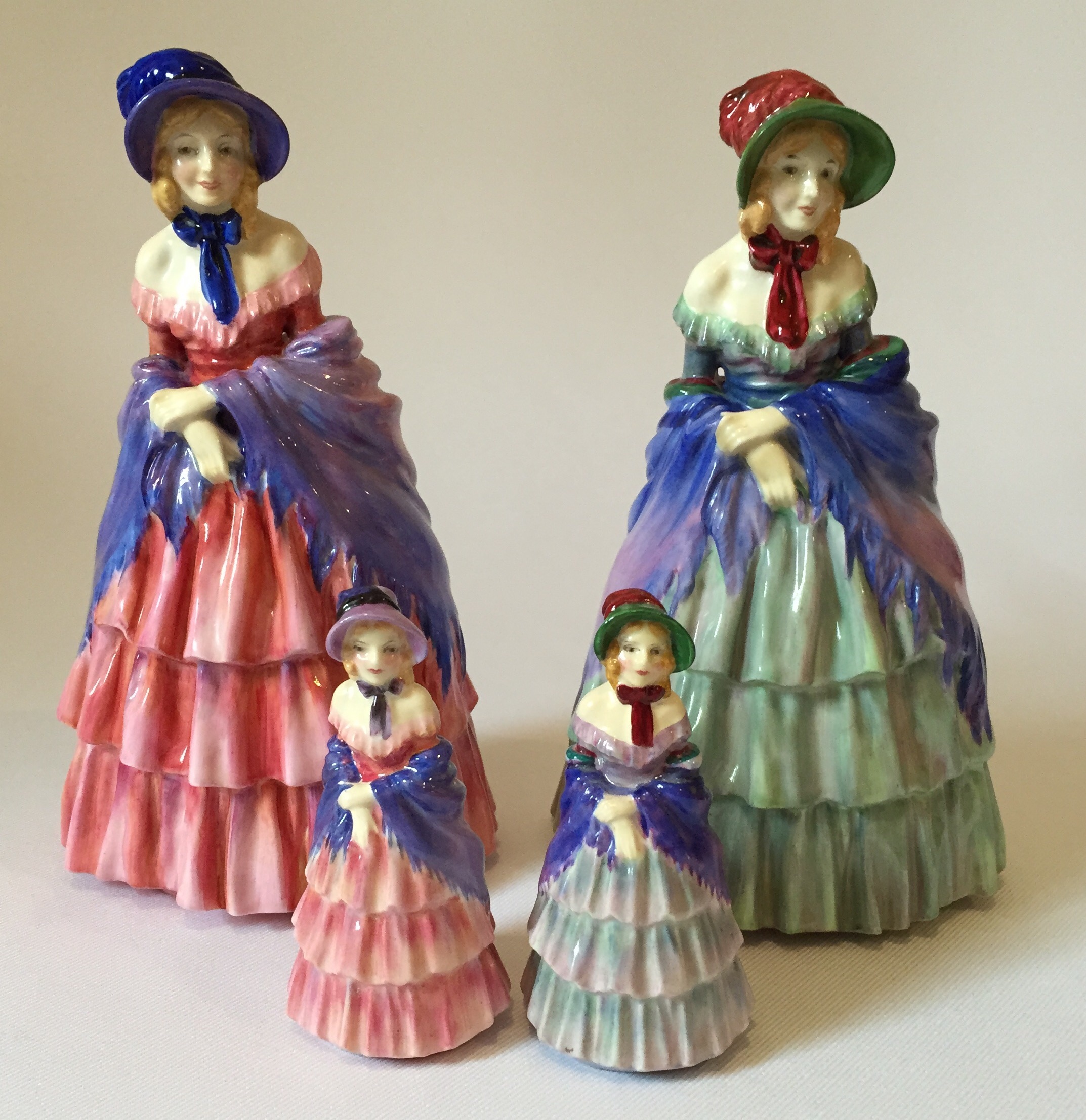
  
Victorian Ladies HN 728 & 1345 with M 25 & M 2.

However, the pleasure of collecting often means that we concentrate on a particular theme – this one being identical colourways to the ‘grown up’ versions of figures. 
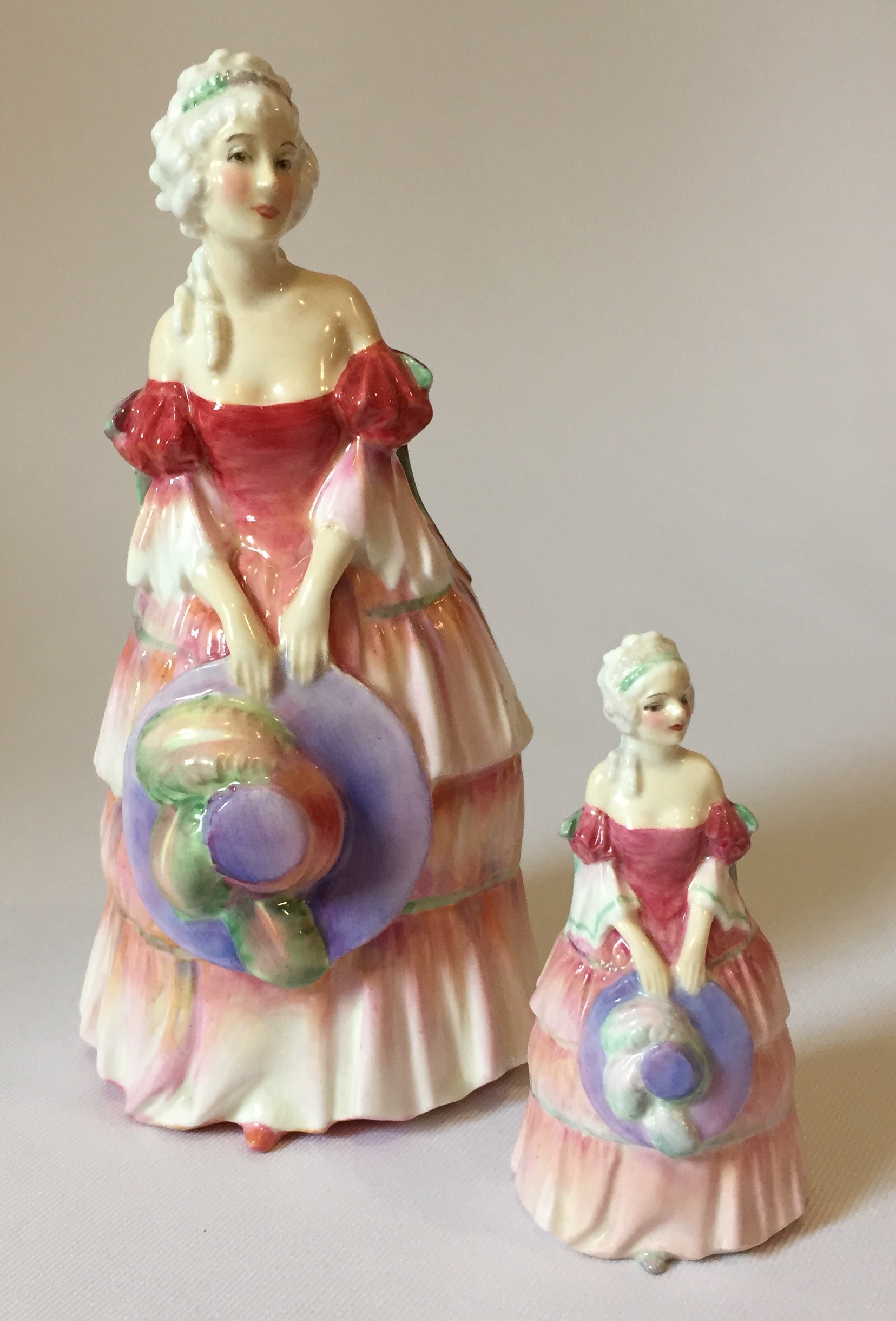
  
Veronica HN 1517 and M 64.

Many we can predict having been produced such as Victorian Lady, Veronica or even Chloe. All of whom were produced in a rainbow of  M series colourways too that had no corresponding large size partner. 
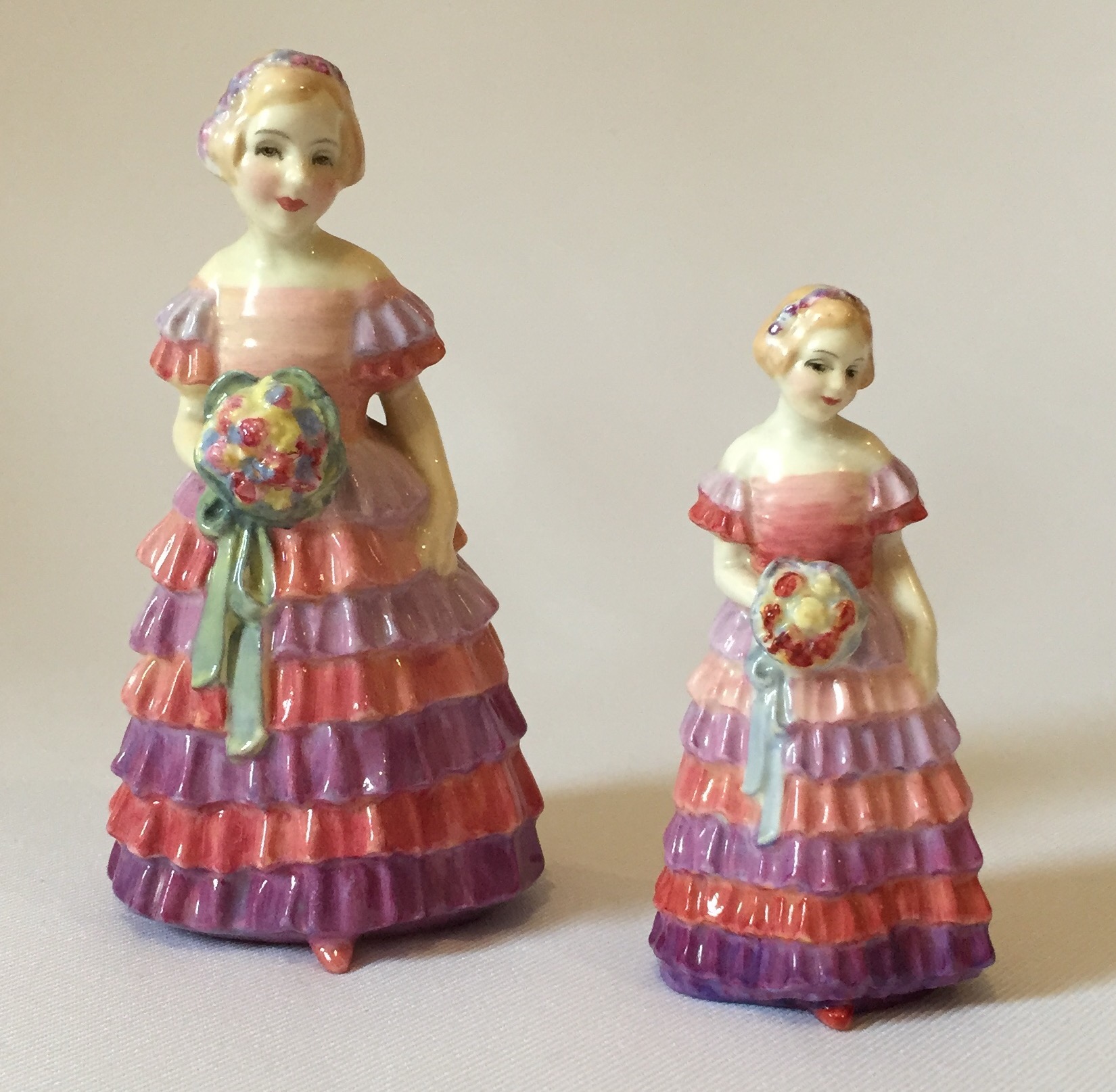
  
Little Bridesmaid HN 1434 and M 30.

The M range began in 1932 although there are several miniature designs pre-dating this date and which were typically given an HN number, yet, four models bear no HN at all (Pierette, Chelsea Pensioner, Spook and Robert Burns). 
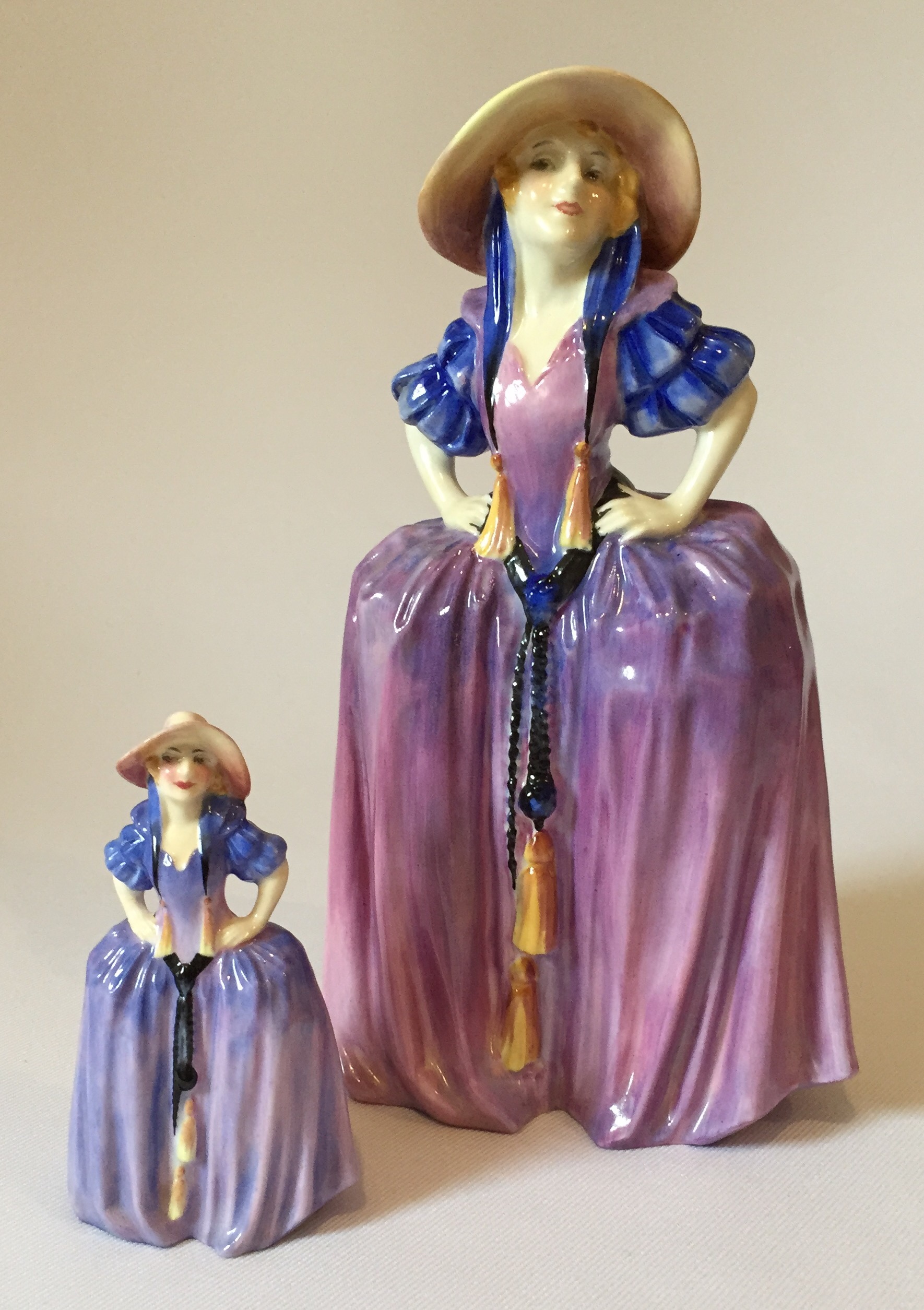
  
Patricia HN 1431 and M 28.

As you would expect there are many versions of M figures that do not have corresponding large size partners and these too make a distinct display when shown all together! 
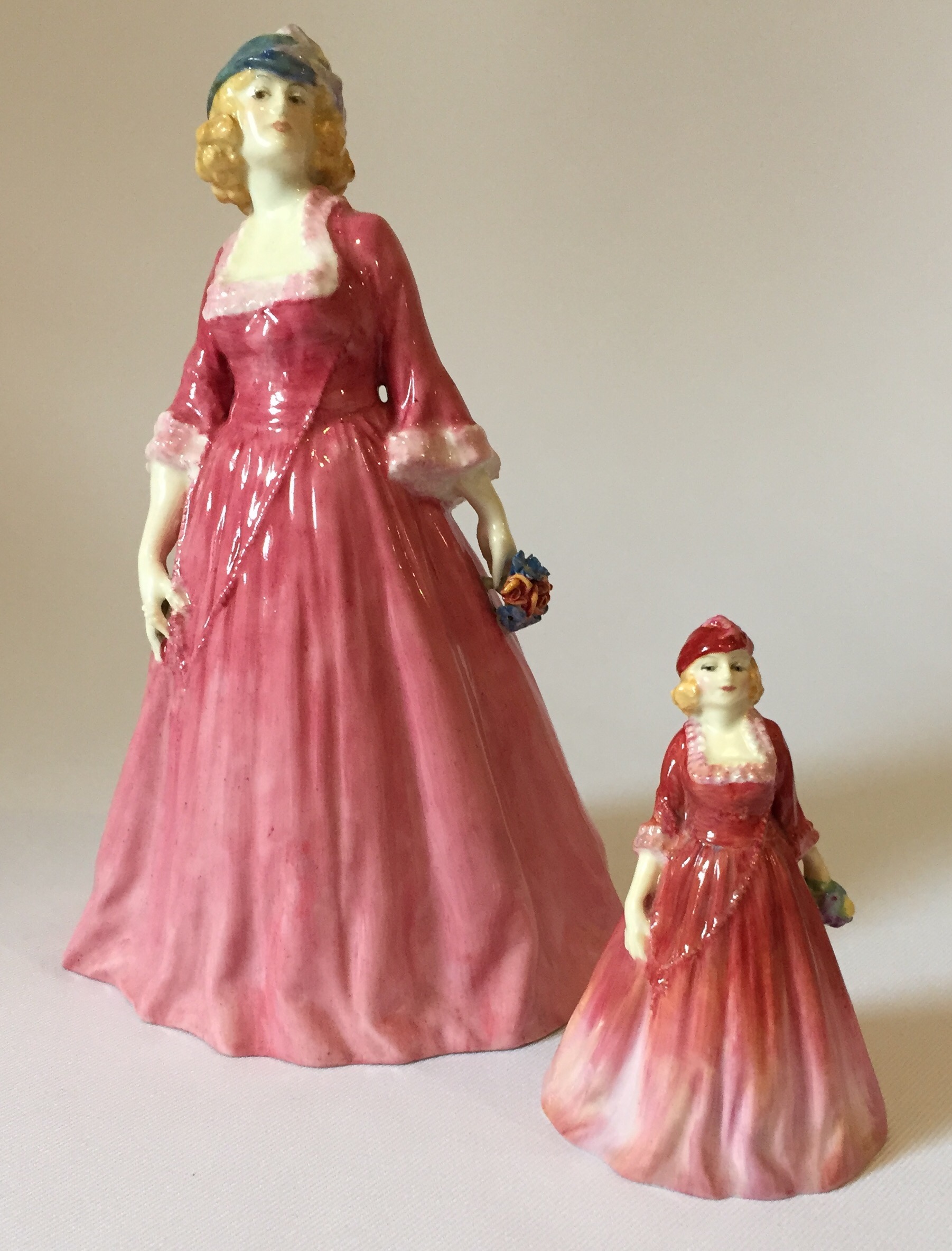
  
Rosamund HN 1497 and M 33.

The M series of miniature lady and child figures ceased around the end of the Second World War, but realistically would have stopped long before that date, save for a handful of the most popular models such as Paisley Shawl M4 that continued briefly after the war. The M series continued in spirit although the M number was omitted with the small size Dickens figures that were made up to the 1980’s. 
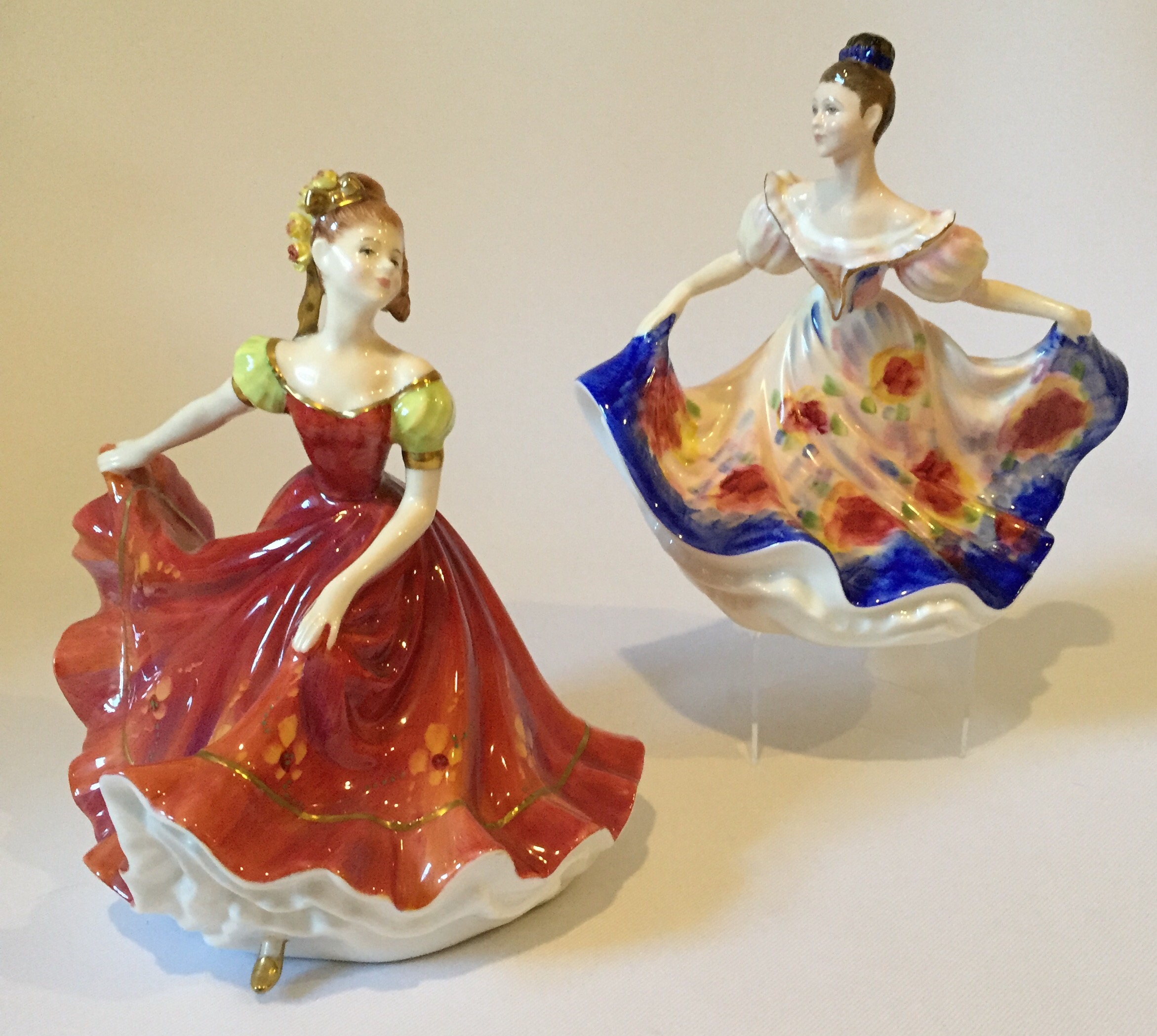
Royal Doulton’s Roadshow figurines.

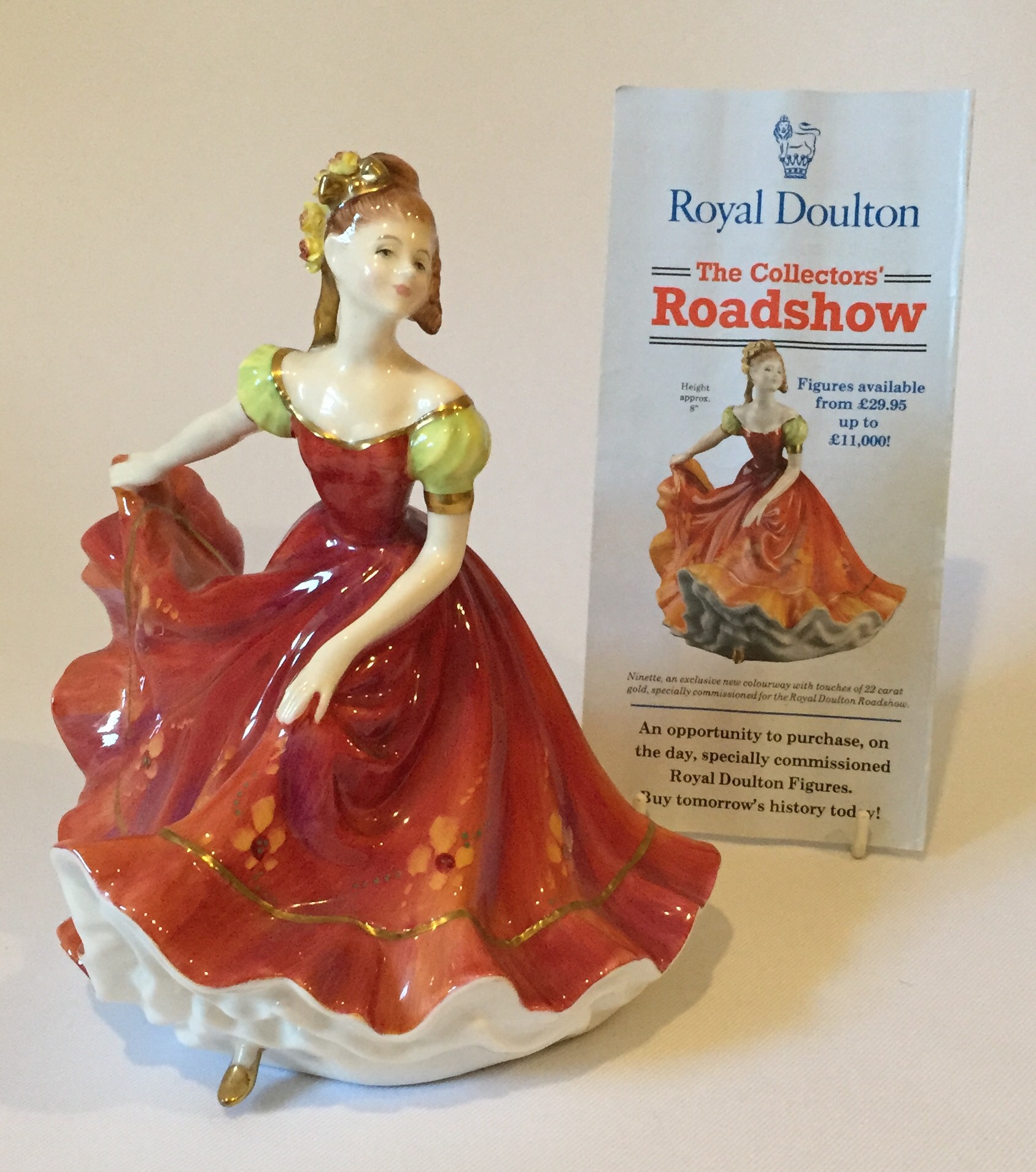
Between 1992 and 2007, 13 special figures were produced for collectors to purchase exclusively at Doulton’s Roadshow events. The choice for the majority of figures certainly came from those most popular among collectors and which had enjoyed many years of popularity among collectors, in particular the dancing ladies so lovingly created by Peggy Davies. 
Ninette HN 3417 and Lynne HN 3740.

As well as special backstamps in gold, these figures were issued with certificates of authenticity but otherwise they were issued in Doulton’s standard blue figure boxes of the time. 
 
The figures in the Roadshow series were:

Ninette HN 3417 (1992)

Victoria HN 3416 (1992)

Maria HN 3381 (1993)

Thinking of you HN 3490 (1993)

Pauline HN 3643 (1994)

Elaine HN 3741 (1995)

Jacqueline HN 3689 (1995)

Lynne HN 3740 (1995)

Stephanie HN 3759 (1996)

First Bloom HN 3913 (1997)

Lauren HN 3872 (1997)

Samantha HN 4043 (1998)

Holly HN 5065 (2007)

As you can see there were often multiple figures each year and there was almost a decade’s gap between the penultimate and the last figure. 

  
 The great thing for collectors about these figures is the added detail in the painting that is so evident in the majority of pieces from Peggy Davies’ classic pretty ladies to the last figure by Valerie Annand and they stand out so well from the crowd in displays! Their time limited production makes them much more unusual than their main HN collection counterparts and some were even limited edition pieces such as Holly who was produced in a tiny number of 100 pieces! 

Collecting Doulton’s “solid colour” animals.

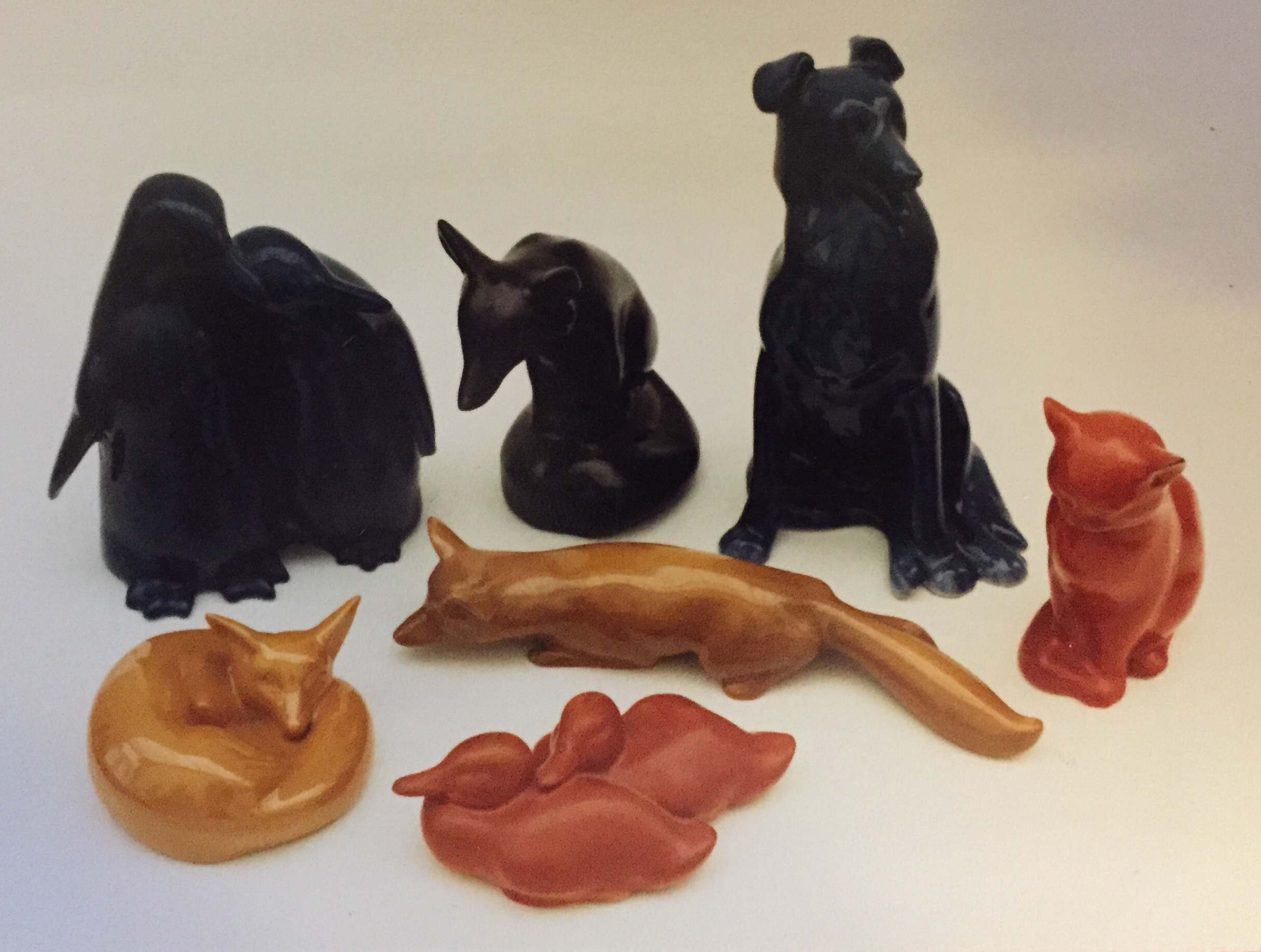
The early years of the 20th century were a time of great experimentation at Doulton’s Burslem studio and these early animal figures in block colours belong to that period.

 A group of popular early animals in single colour glazes.

Only the earliest animals seem to appear in these flat one-colour versions and judging from the backstamps I have seen they ceased being produced like this by 1930.

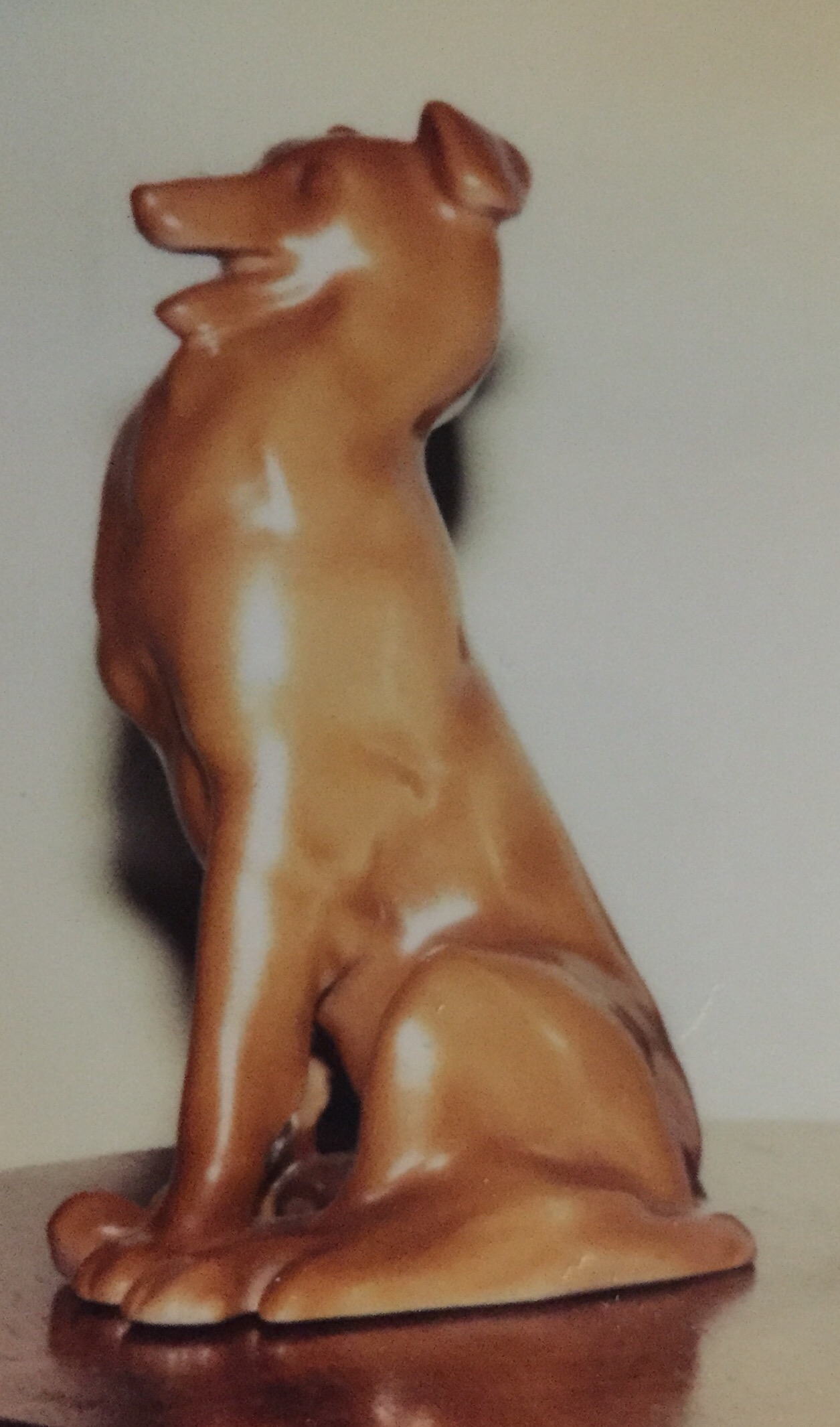
 Collie in a tan colourway. 

Whilst they may not appeal to all collectors the one tone colouring gives them a sculpted feel, no doubt the original intention behind the idea. These unusual animals can be found in either matt or typical glossy glaze and bear no other information but the model number impressed into the base.

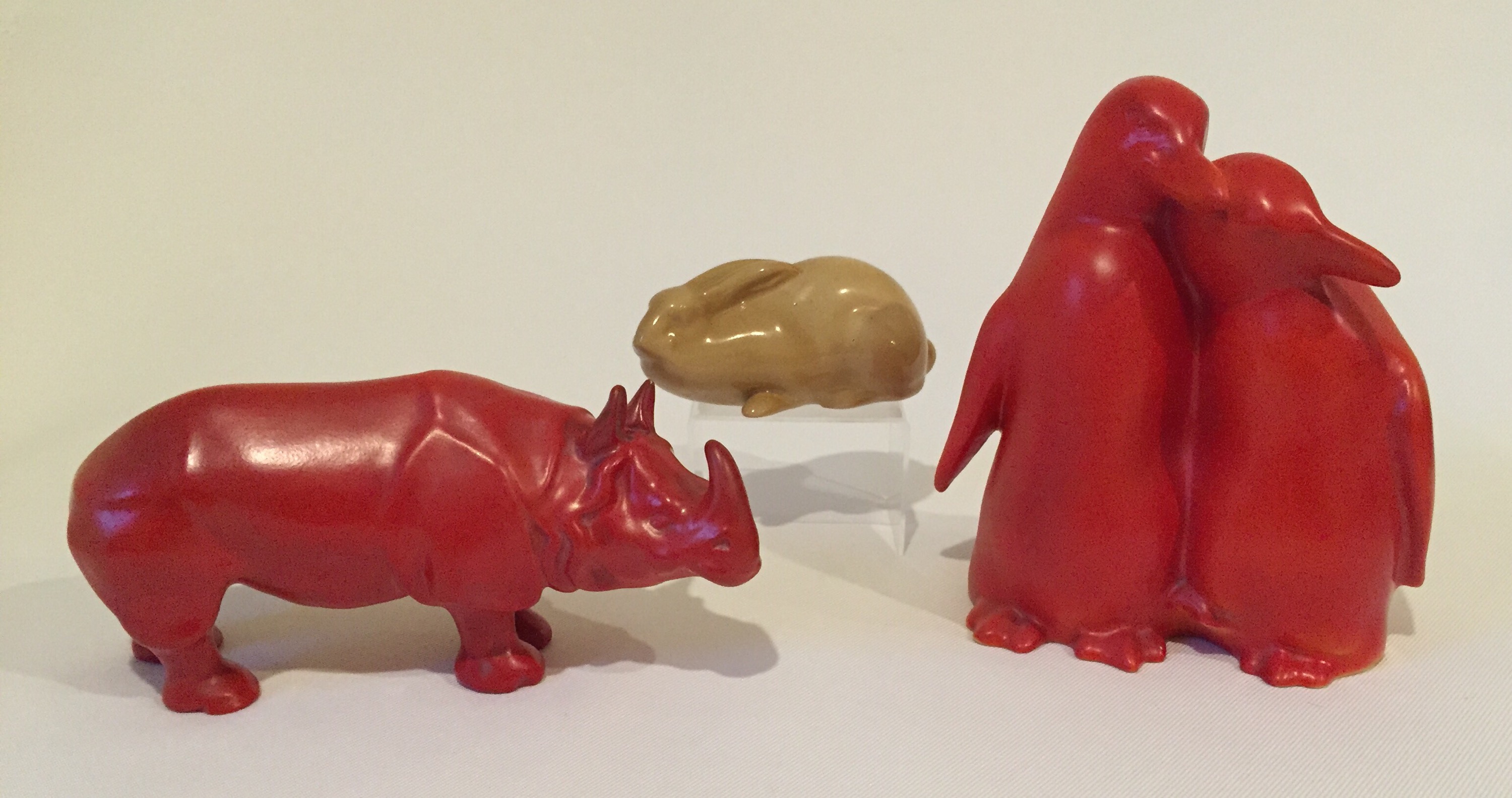
 ‘Tomato red’ penguins and rhino with a tan hare. 

As I repeatedly say with Doulton – expect the unexpected! The rhinoceros illustrated above was a find just the other day and is such an early and rare model to find!

Doulton’s teatime favourites! 

If drainpipes were the mainstay and indeed supporter of Doulton’s famous stoneware art wares at Lambeth, then it was their table and teawares that supported the many art ware productions of their Burslem factory, and without whose success we may not have the many collectible wares so cherished around the globe today.

  
A favourite art nouveau trio.

With such a rich history in tableware and teaware production there is a veritable wealth of patterns, shapes and periods to collect from early Spanishware, to Kingsware, seriesware, Bunnykins as well as period styles from the high Edwardian period to the popular deco styles of the 1920’s and 1930’s – once again Doulton more than provided for their clamouring public! 

  
A 1905 catalogue page showing popular blue and white designs.

A visit to any antiques market or fair today illustrates how this once unfashionable area is once again ‘de rigeur’ with trios in particular to be found on most ceramics stalls at such fairs. Indeed the increasing popularity of cookery shows on TV including the ever popular ‘Bake Off’ has helped drive up the popularity of tea parties once more.  

  
Illustration from a 1930’s tableware brochure titled ‘Grace before meat’.

This modern popularity has left the starchiness of high tea behind and what we have today is an eclectic mix of the old and new to suit the 21st C, which is once again making us dig out grannies favourite tea sets and adding new items to our tea tables! 

  
A selection of Doulton trios illustrating shape, period, target market place and varying Doulton lines including Bunnykins and Kingsware. 

Tea time with Royal Doulton! 

If drainpipes were the mainstay and indeed supporter of Doulton’s famous stoneware art wares at Lambeth, then it was their table and teawares that supported the many art ware productions of their Burslem factory, and without whose success we may not have the many collectible wares so cherished around the globe today.

  
A favourite art nouveau trio.

With such a rich history in tableware and teaware production there is a veritable wealth of patterns, shapes and periods to collect from early Spanishware, to Kingsware, seriesware, Bunnykins as well as period styles from the high Edwardian period to the popular deco styles of the 1920’s and 1930’s – once again Doulton more than provided for their clamouring public! 

  
A 1905 catalogue page showing popular blue and white designs.

A visit to any antiques market or fair today illustrates how this once unfashionable area is once again ‘de rigeur’ with trios in particular to be found on most ceramics stalls at such fairs. Indeed the increasing popularity of cookery shows on TV including the ever popular ‘Bake Off’ has helped drive up the popularity of tea parties once more.  

  
Illustration from a 1930’s tableware brochure titled ‘Grace before meat’.

This modern popularity has left the starchiness of high tea behind and what we have today is an eclectic mix of the old and new to suit the 21st C, which is once again making us dig out grannies favourite tea sets and adding new items to our tea tables! 

  
A selection of Doulton trios illustrating shape, period, target market place and varying Doulton lines including Bunnykins and Kingsware. 

Royal Doulton’s Helen, her origins and her successor! 

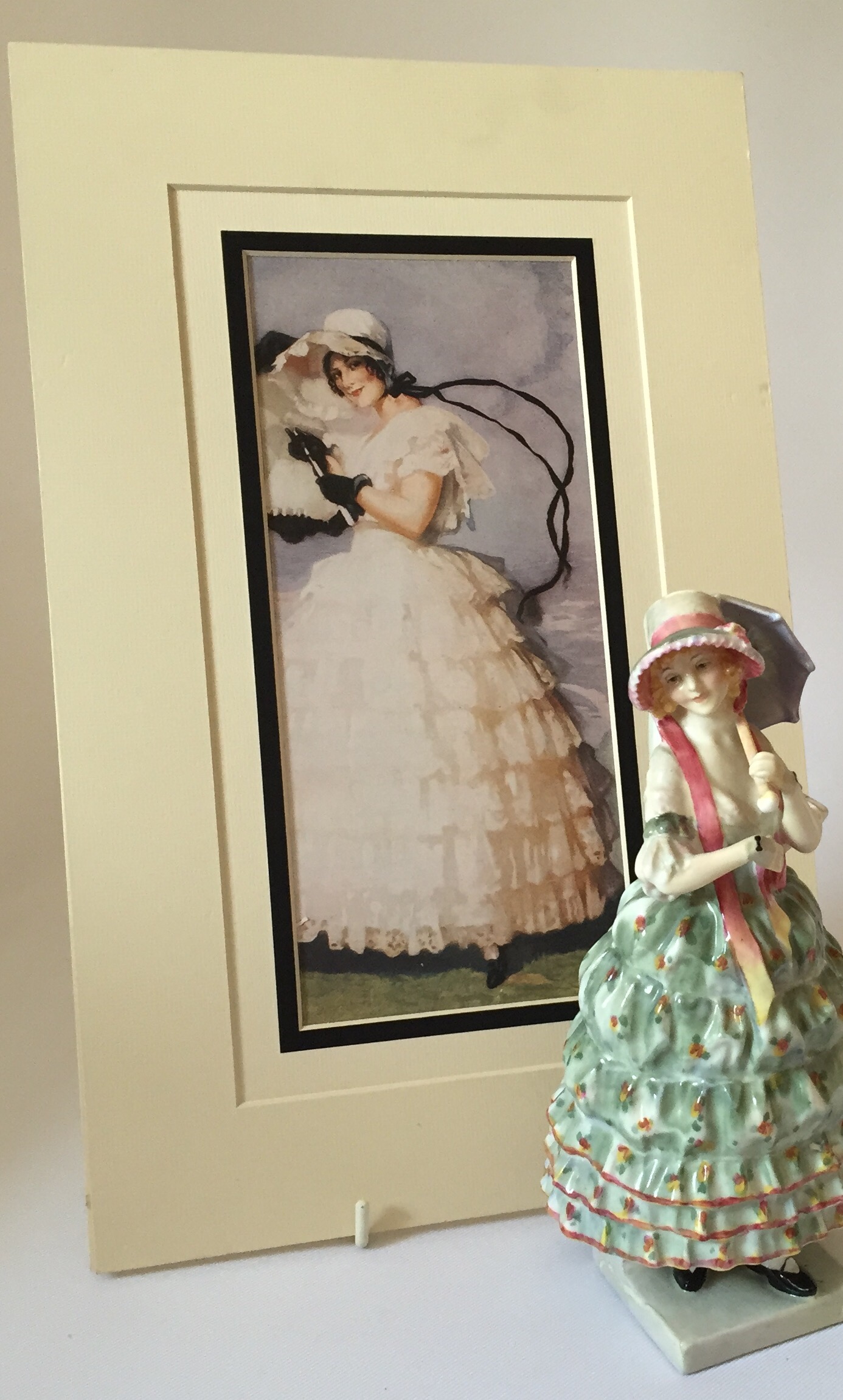
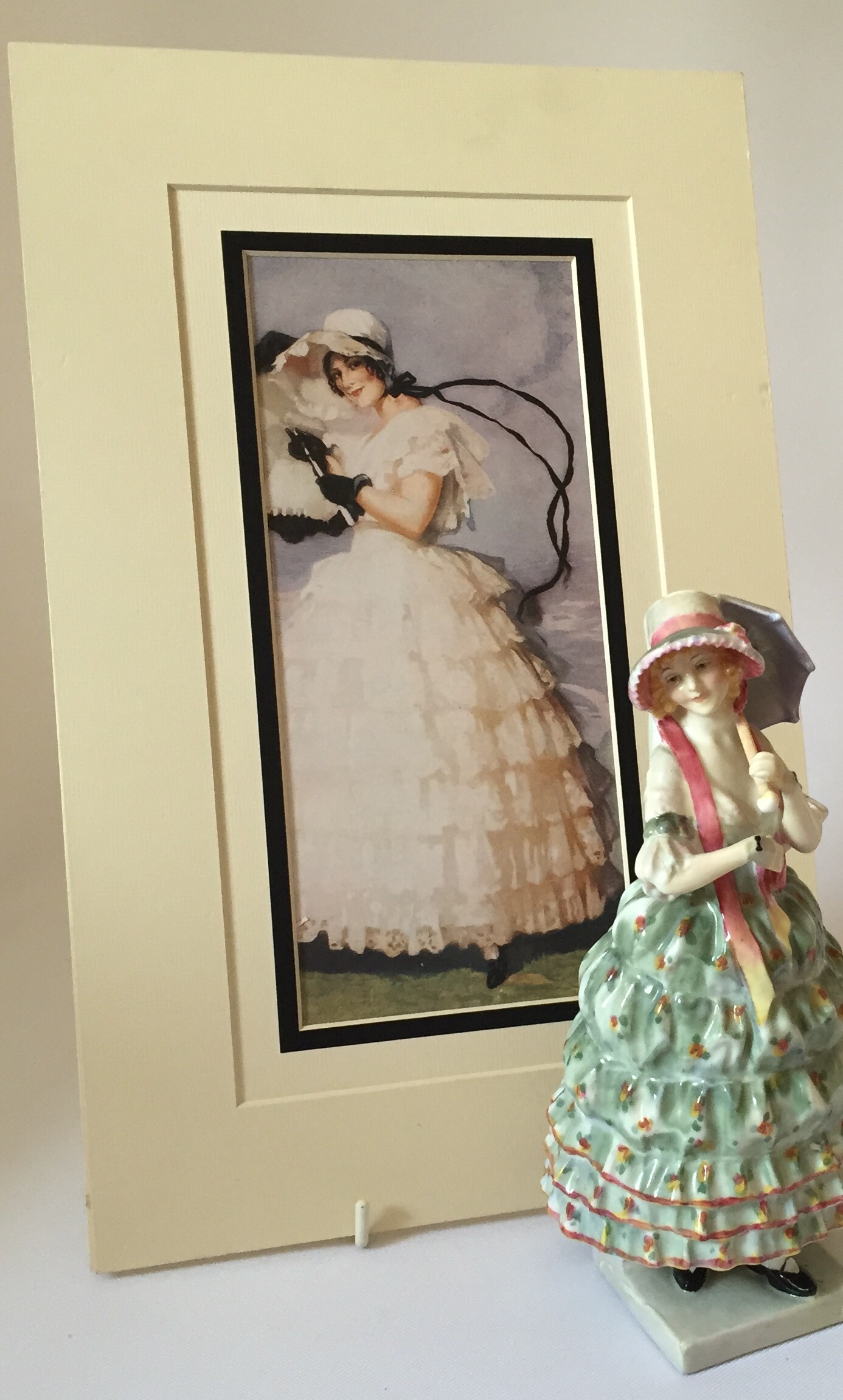
The inspiration behind many of Doulton’s earliest figures comes from contemporary paintings and such is the case with Harradine’s Helen introduced in 1932.

  
Helen HN 1508 with the Webster picture that inspired her.

It was not unusual for complicated figures to be re-modelled after problems arise in their manufacture or because they are too complicated to produced or simply because of market response (Consider Sweet Maid who became Millicent with a fuller skirt). 

  
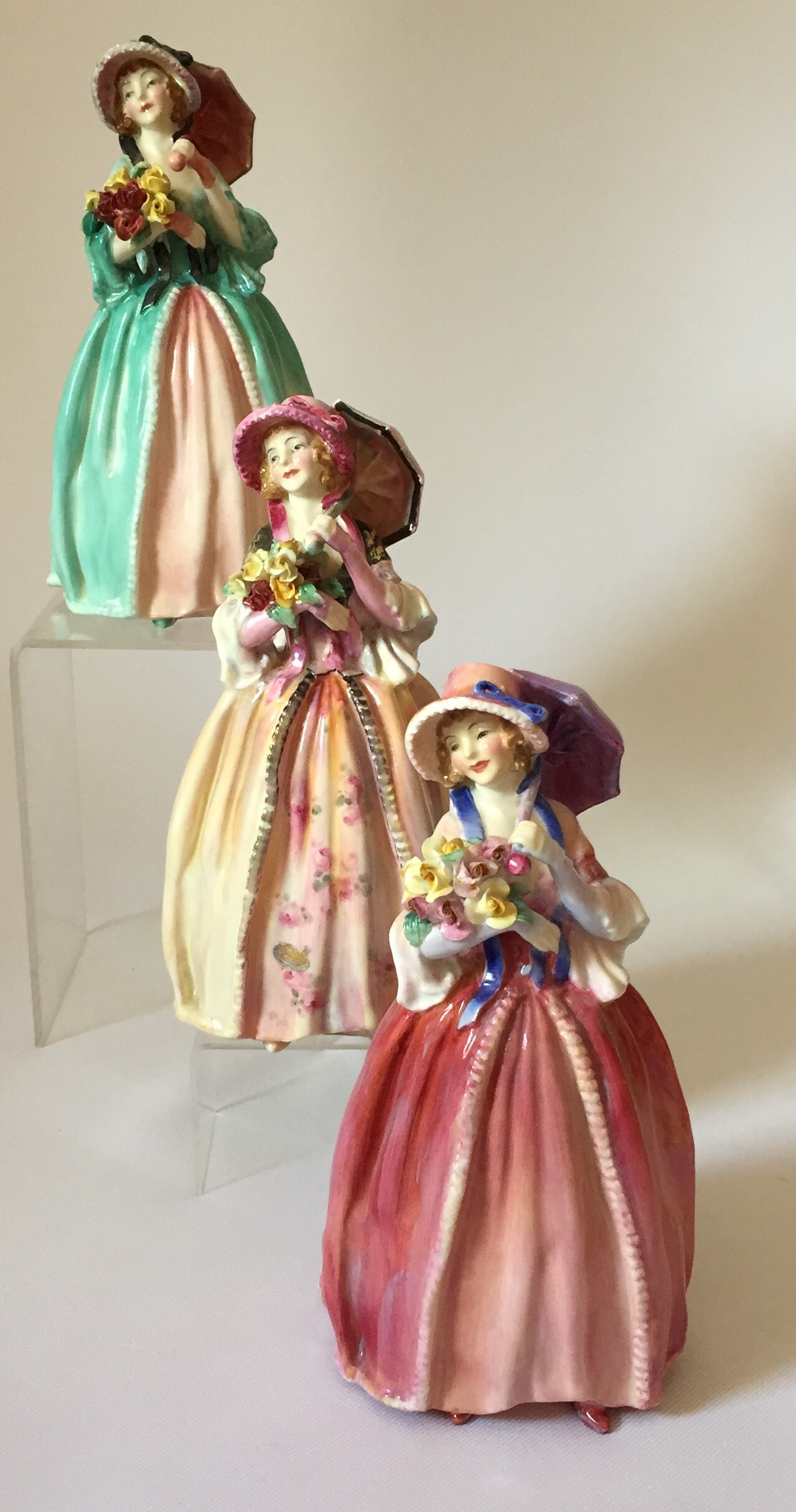
Helen HN 1572 (1933) and June HN 1947 (1940).

Thus Helen became the popular figure June HN 1690 (1935) with an altered skirt and now holding a bouquet of flowers, which was again re-issued after WWII in slightly more muted tones and simplified flowers and detail to the modelling.


The original three: HN 1690, 1691 and 1947.

The withdrawal dates for the figure Helen say ‘by 1938’ but we can presume that the production was actually much shorter based on the fact that June was introduced in 1935 and I certainly haven’t seen any ‘Helens’ dated after 1934 – but perhaps you have? If so, why not share her with us on our facebook page ‘Doulton Collectors Club’! 


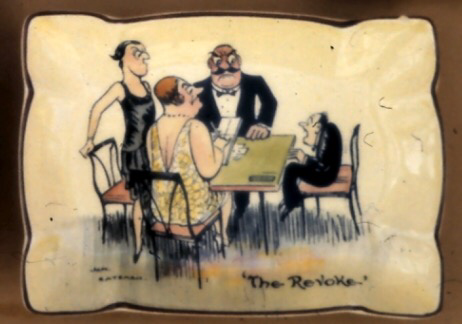
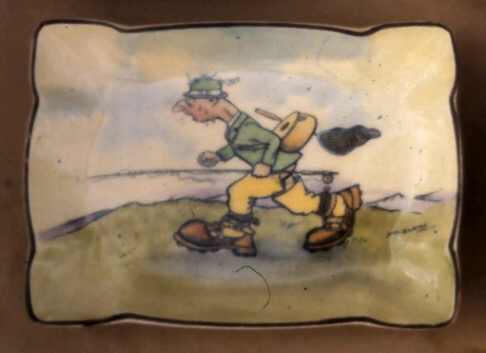
Collecting H. M. Bateman’s illustrations on Doulton seriesware! 

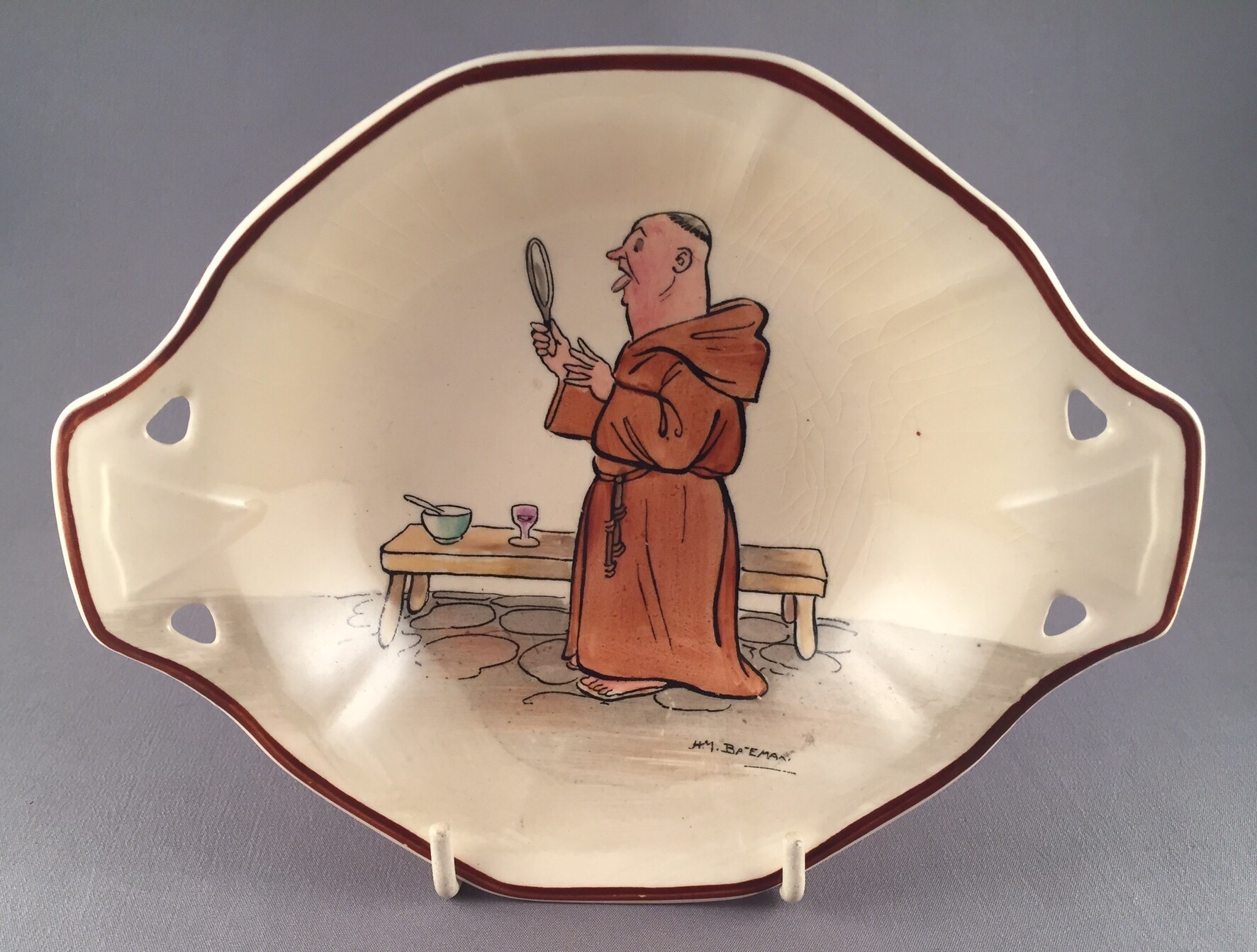
Henry Mayo Bateman was an Australian illustrator, most famous for his cartoons captioned ‘the man who….’. 

 These illustrations featured a haphazard man who continually ‘puts his foot in it’ as we say here in the UK, meaning that he commits the most awkward gaffes! 

  His cartoons were featured in leading magazines of the period including The Tatler and Sketch. 

  Returning to his seriesware illustrations they are termed as rare among collectors who appreciate the humour of his scenes and when they do turn up even on small items they regularly reach three figure sums! His designs on Doultonware feature a facsimile signature and from experience date to 1937-8.

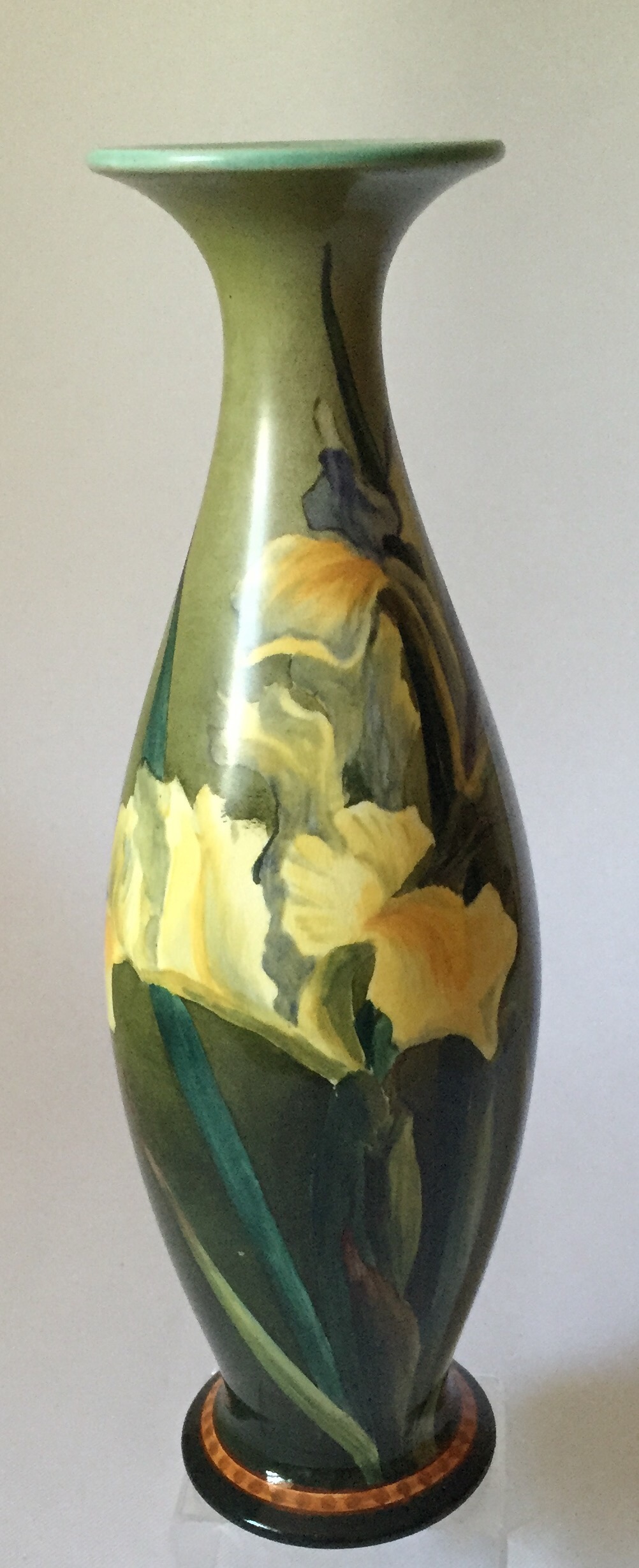
Doulton Artist Profile – Katherine B. Smallfield. 

   
 Katherine B. Smallfield is a typical Doulton artist in that her career literally blossomed during her time at Doulton. She was one of a large number of women artists engaged by Henry Doulton, an uncommon industrial trend for the time. She began her time at Doulton c.1881 and in 1882 was already listed as a senior assistant before being promoted to artist, still in the faience department. 


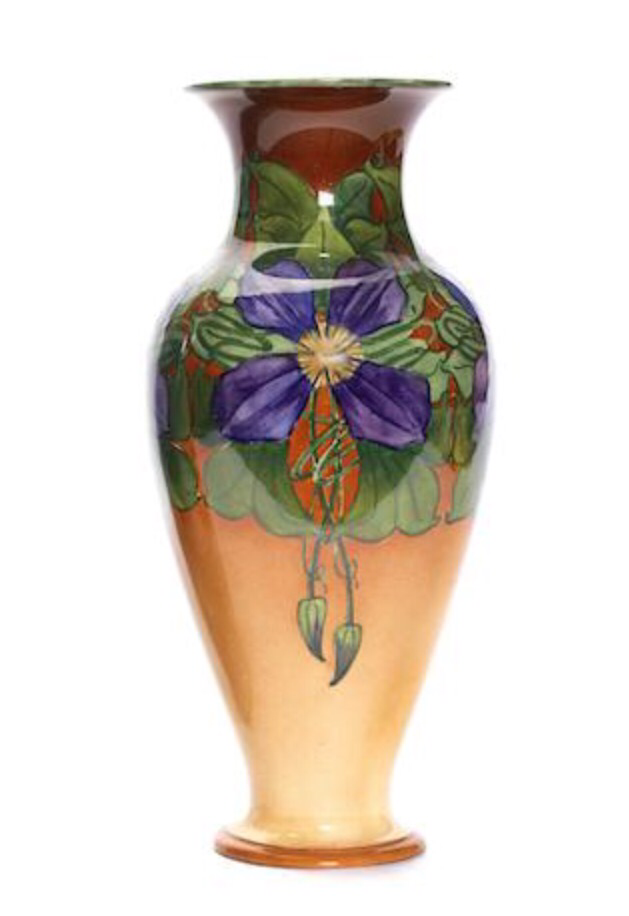
 Museums around the world hold examples of her fine work with floral subjects being a particular forté. She continued working at Doulton until 1912 and examples of art nouveau designs, such as the vase below, confirm her adaptability as an artist. 


Creating your own Doulton aviary! 

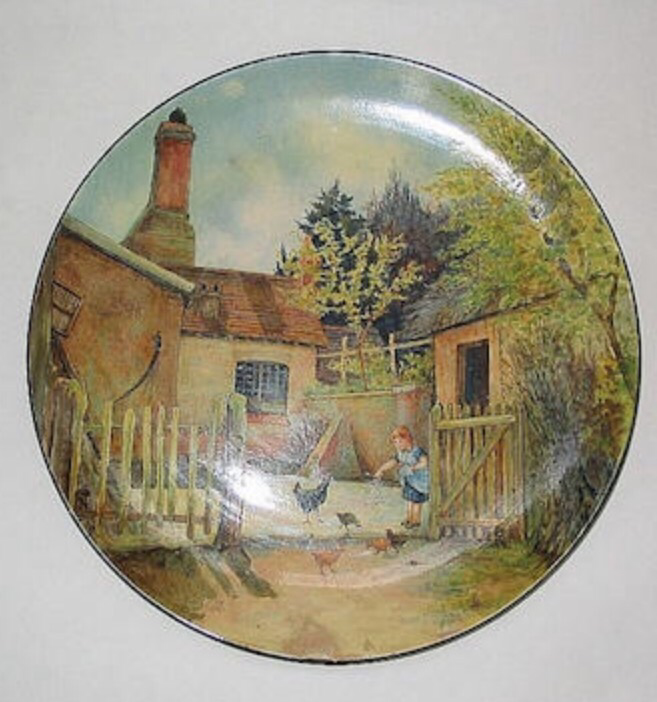
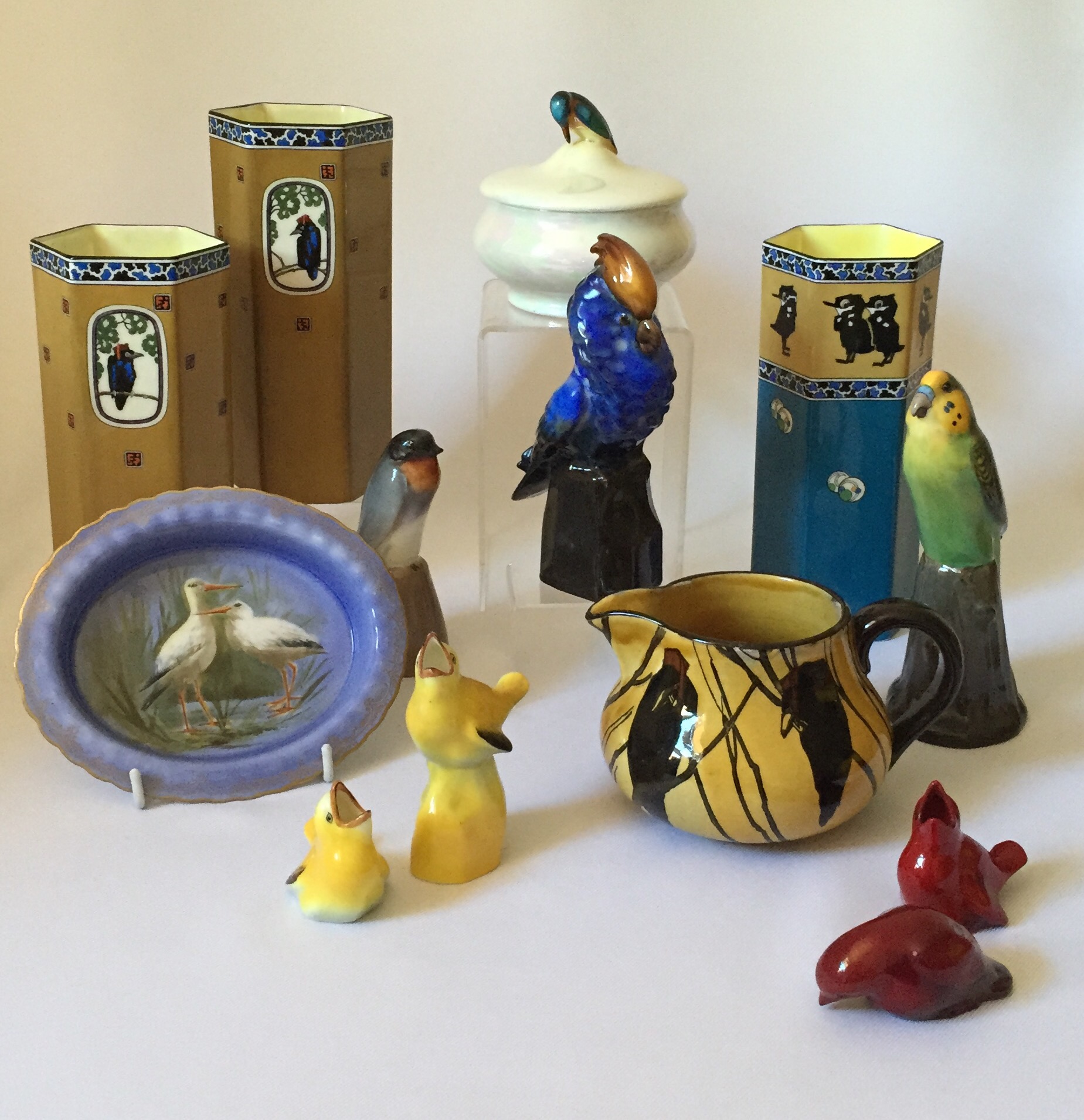
 Birds have always been a popular subject in the ceramics world and if they are your passion then Doulton at Burslem, as always, have many lines for you to collect! Rather than simply collecting actual examples such as the swallow, budgerigar, cockatoo or fledglings like those illustrated, you will find handpainted examples on fine bone china as well as many examples featured on Doulton’s famous seriesware patterns, also illustrated. Birds also feature heavily on Doulton’s exclusive Titanian wares, with hand painted varieties painted by leading artists of the time. Humour was a typical forté of Doultons in the 1920’s and they created many comical animal characters in their ranges; above you can see examples of Harry Rowntree’s comical birds on a vase and also a blackbird wearing a fez from Robert Allen’s studio of artists at Butslem on another pair of vases.  In respect of actual examples of birds they can be found throughout the 100 year history of the HN collection as well as in the miniature animal ‘K’ range more commonly associated with dogs and penguins. We must finish by simply mentioning that birds played an important part in the decoration of many of Doulton’s Lambeth works of art too and artists such as Florence Barlow were the leaders of this movement.

Royal Doulton – all that glitters…

….may not be solid gold, but nevertheless it is gold that is used to decorate many of Doulton’s most extravagant Burslem wares produced during the last two centuries!

  
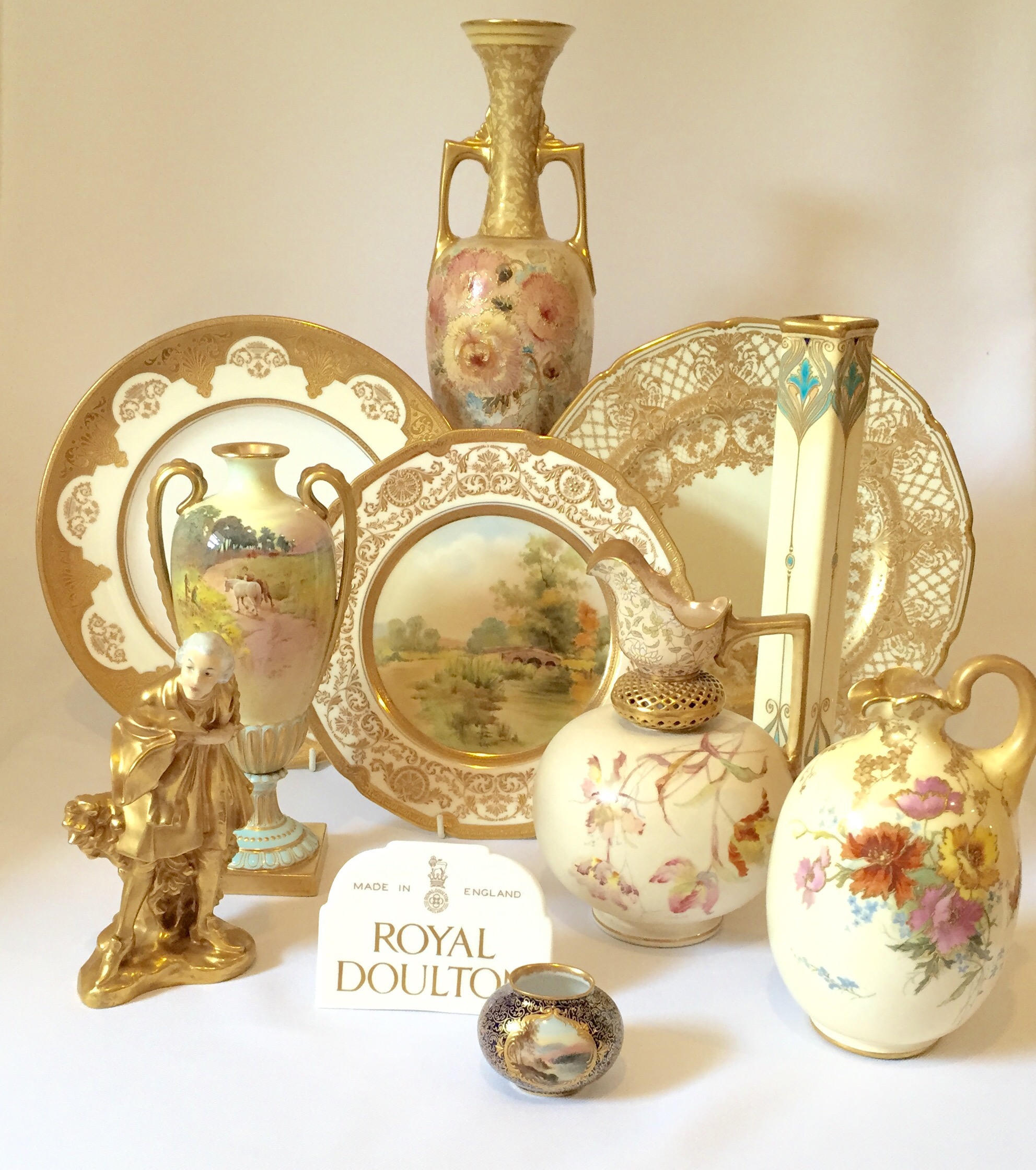
Whether it be wares including Doulton’s famous Spanishware with its gold tracery or the prestigious acid gold etching that is found on quality exhibition items and tea wares (both of which can be seen in the illustration), or else burnished gold to decorate their famous figures, Doulton has always produced something gold to suit every collector. 

Many of the elaborate gilt design of the 20th Century were designed by Robert Allen, who ran an art department at Burslem and who worked closely with Doulton’s art director CJ Noke on many of their famous lines. Allen’s designs were brought to life by a small band of expert gilders such as Thomas Morton or the Williams Massey and Skinner.

The sheer variety of Doulton’s gilded wares really does mean that there is something for every collector and let us not forget that whilst gilding is not typically associated with their Lambeth wares, it was used on chiné and the gold whorl patterns for decades and can be found on some artist pieces most notable in my experience on the work of Francis C. Pope. 

A place to share enthusiasm for all things Royal Doulton! All original content ©Christopher Evans 2014 unless otherwise credited. No unauthorised reproduction permitted.