The sculptor Raoh Schorr’s work for Royal Doulton. 

  
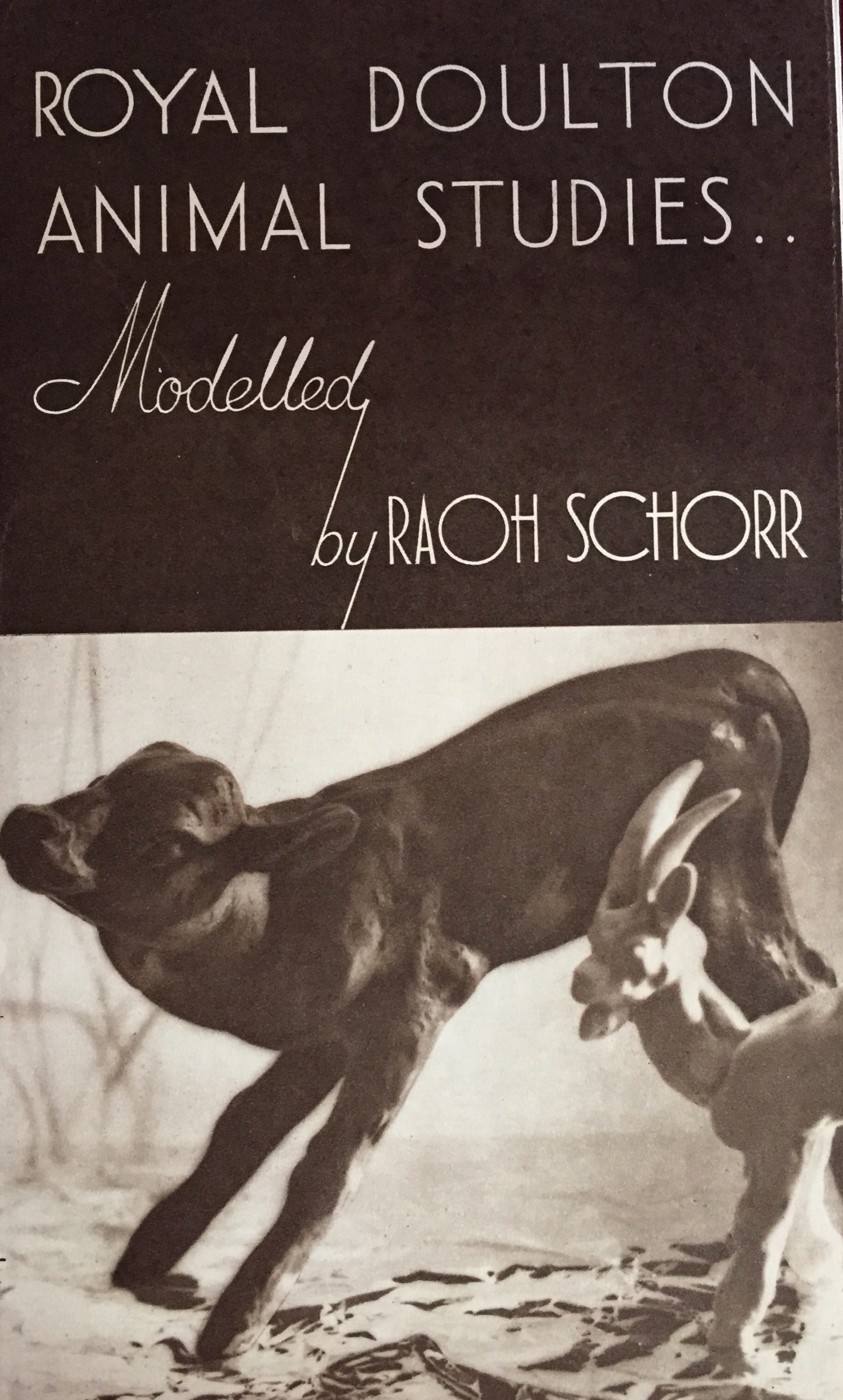
Catalogue cover from 1937.

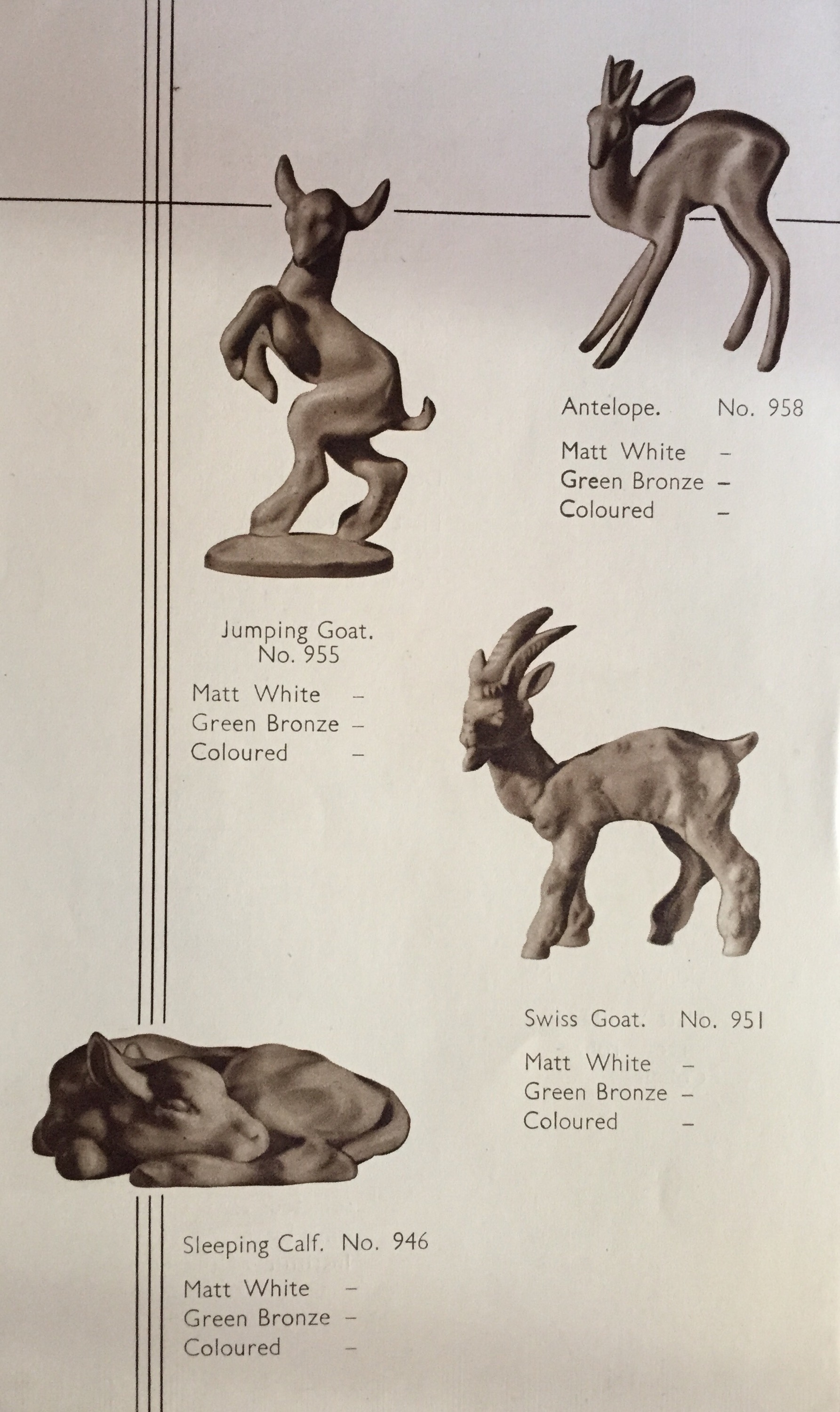
Schorr was a renowned animal sculptor and Doulton always keen to be ahead of the game, commissioned him to produce a range of Art Sculptures for Royal Doulton in 1936. This series of animals are all rare today and the ones that typically turn up tend to be the more sentimental models such as the Sleeping Calf or Moufflon Lying. There were two size groups produced, a small size ranging from 2-6” and a large size of c. 11”. 

  
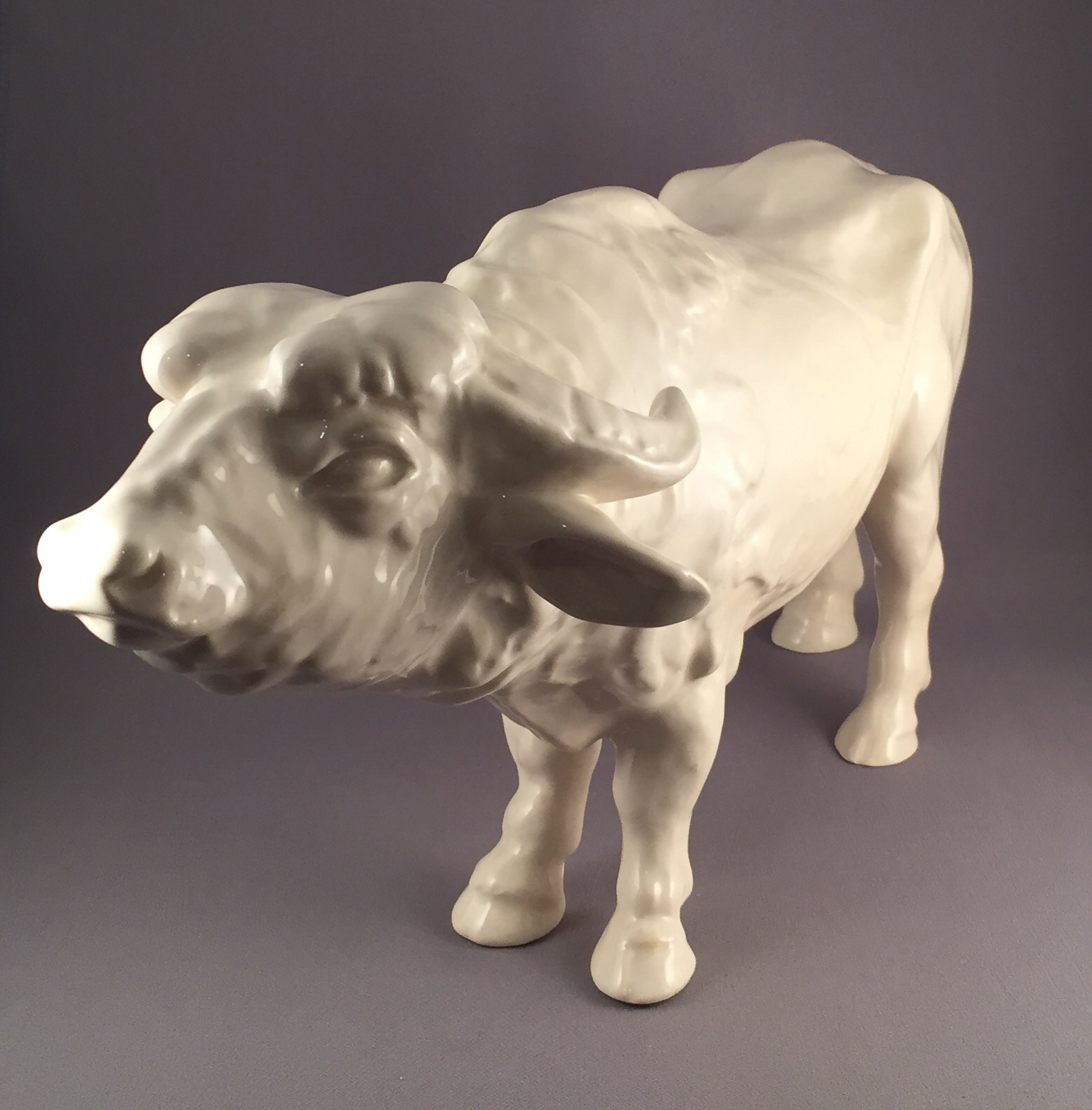
Large size Buffalo.

The majority of models were small and it is these which turn up occasionally. Schorr’s models were available in naturalistic colouring, white matt or a green bronze, although I have read that they were also available in black basalt. I have seen only two examples of the large animals, the fox HN1130 both of which painted naturalistically and only once have I seen the large Asiatic Elephant in a green-bronze glaze. Desmond Eyles wrote in The Doulton Burslem Wares that the range “although highly regarded by art critics they did not meet with much public response” and they were swiftly withdrawn, he says in the war years, but I have only seen animals with impressed dates before 1939.

  
Catalogue page illustrating the three finishes available. 

Doulton’s “Royle’s Patent” wares.

  
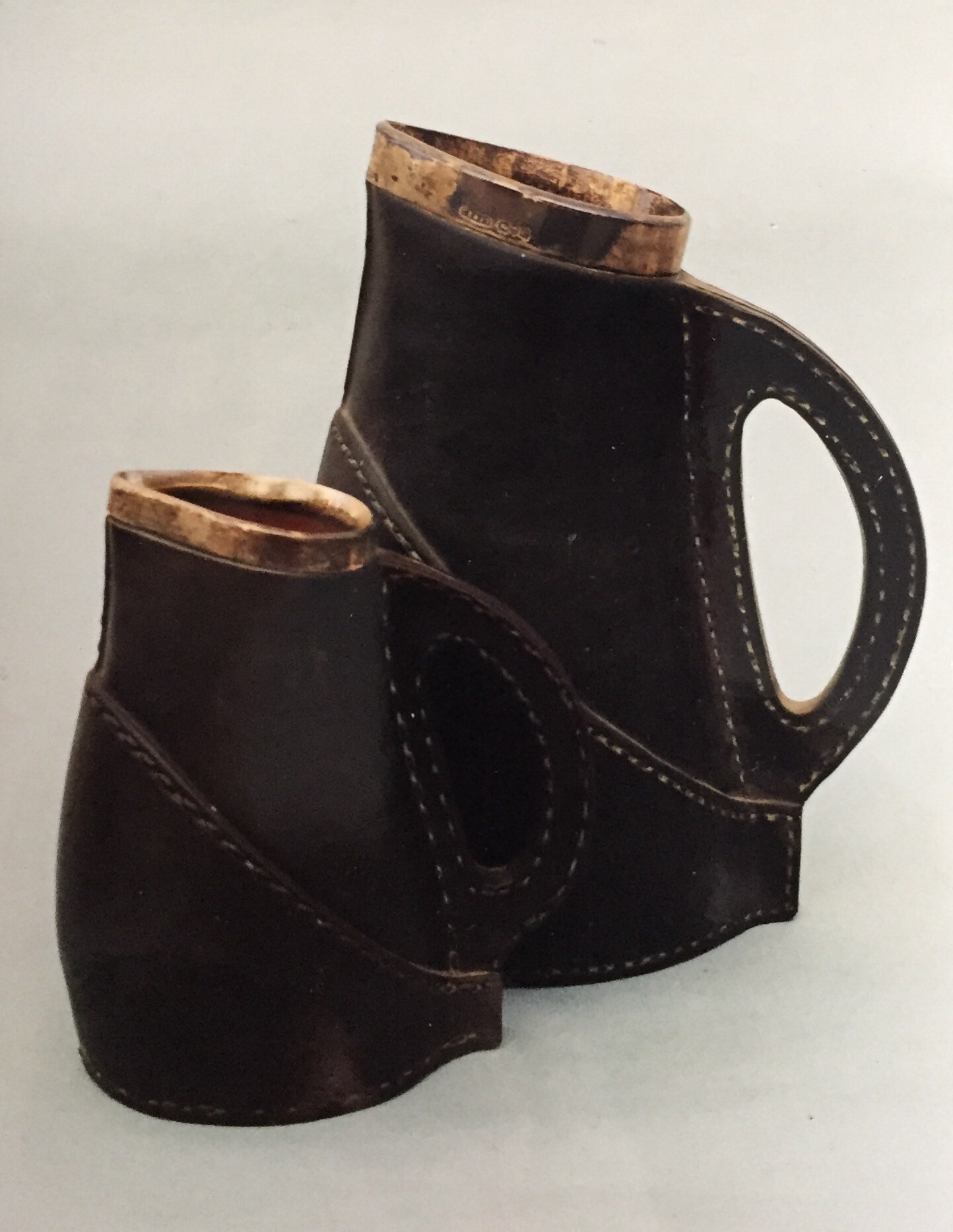
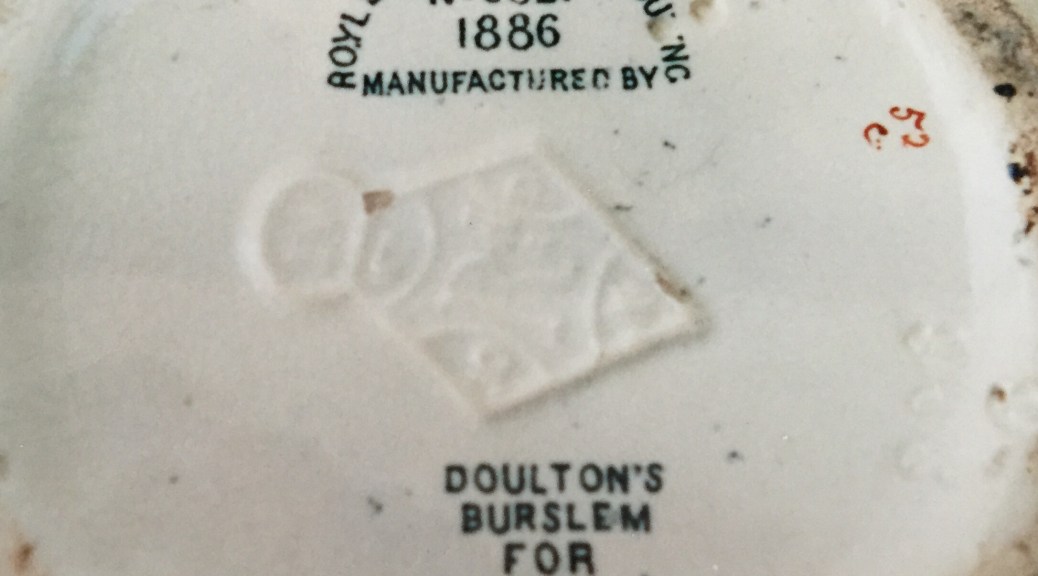
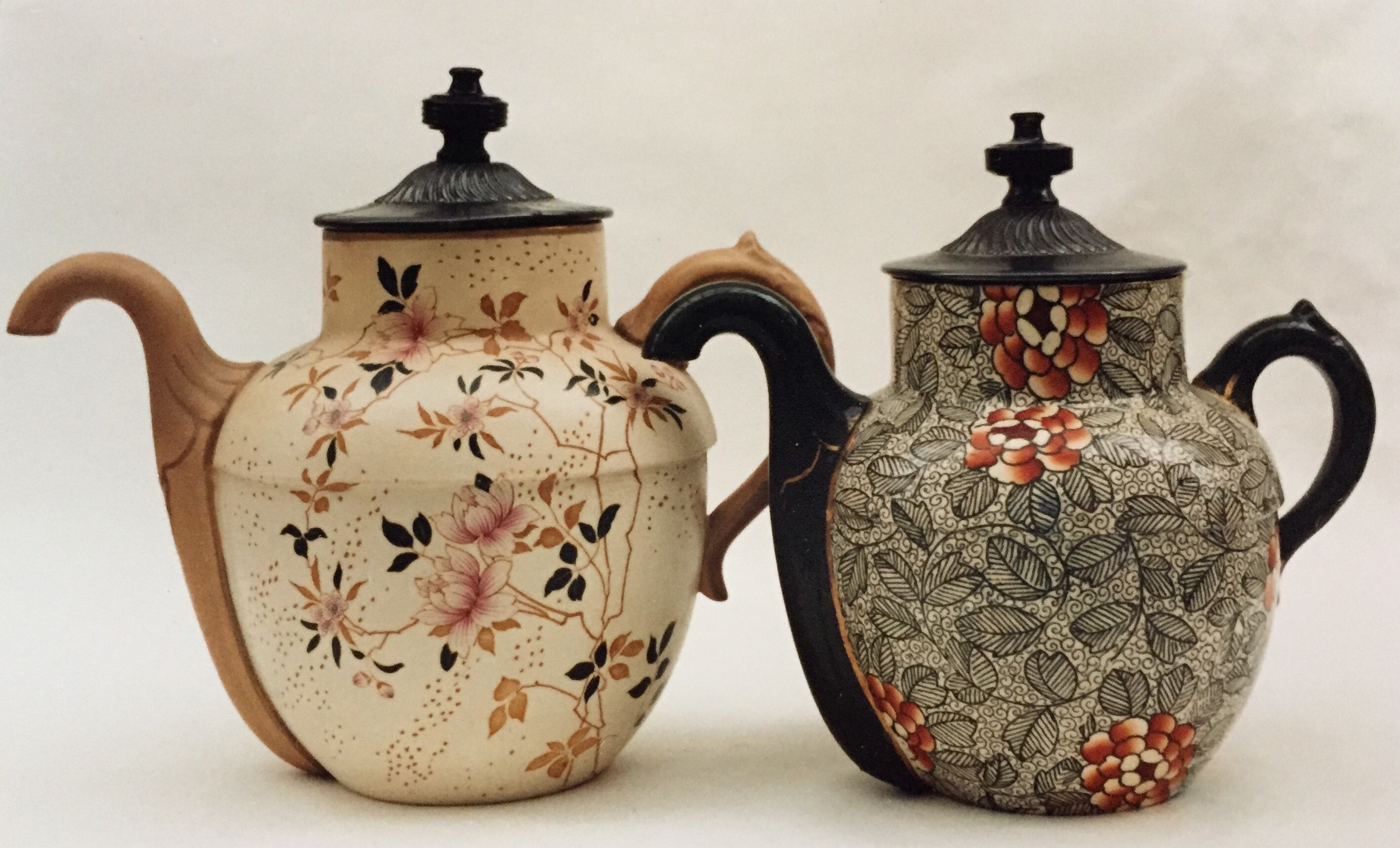
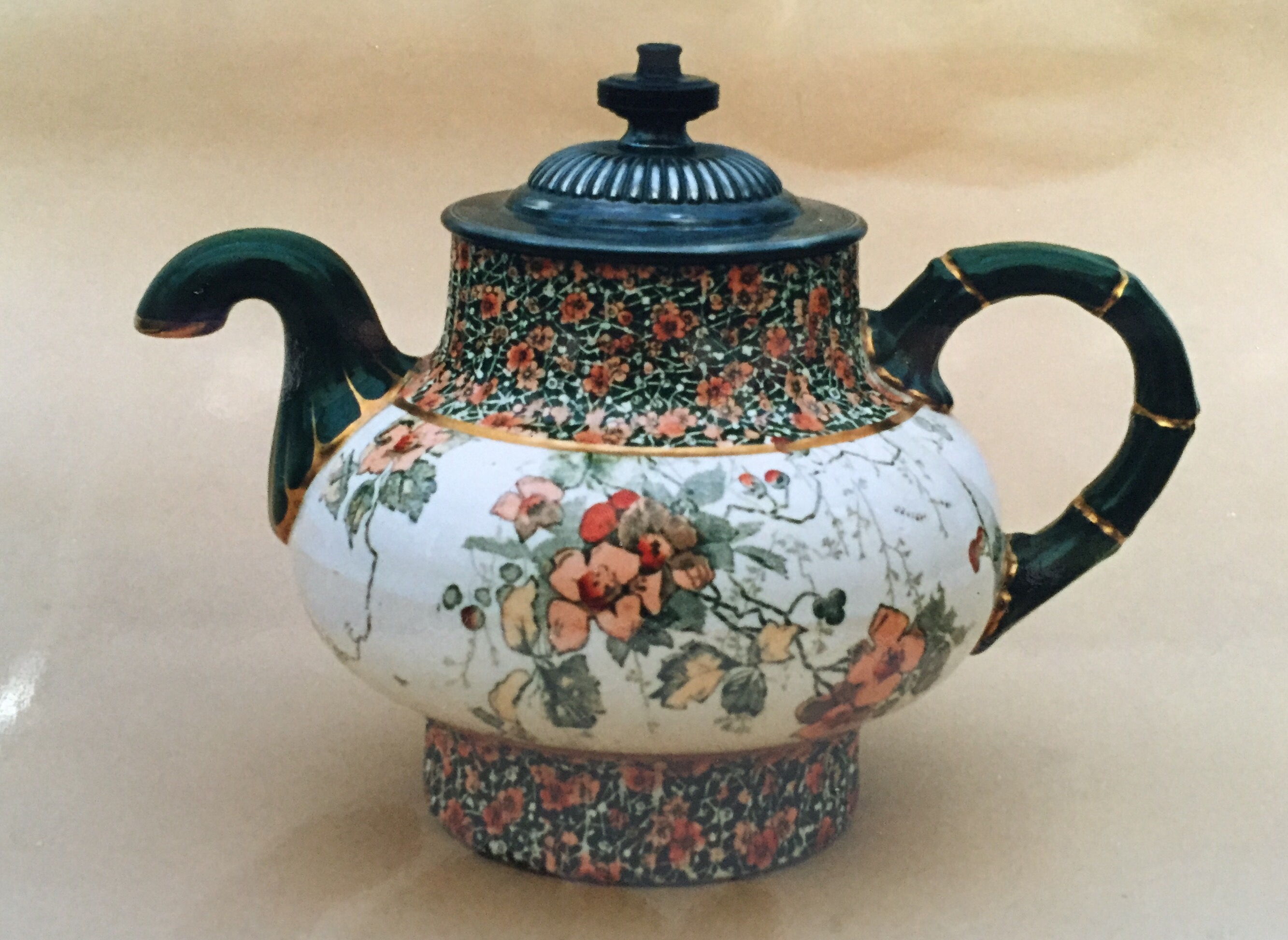
The inventor J. J. Royal developed a handful of patents in the late 19th Century and there are three known Doulton versions of these. 

  
Perhaps the most commonly known is the self pouring teapot, which pours tea when the lid is lifted. 

  
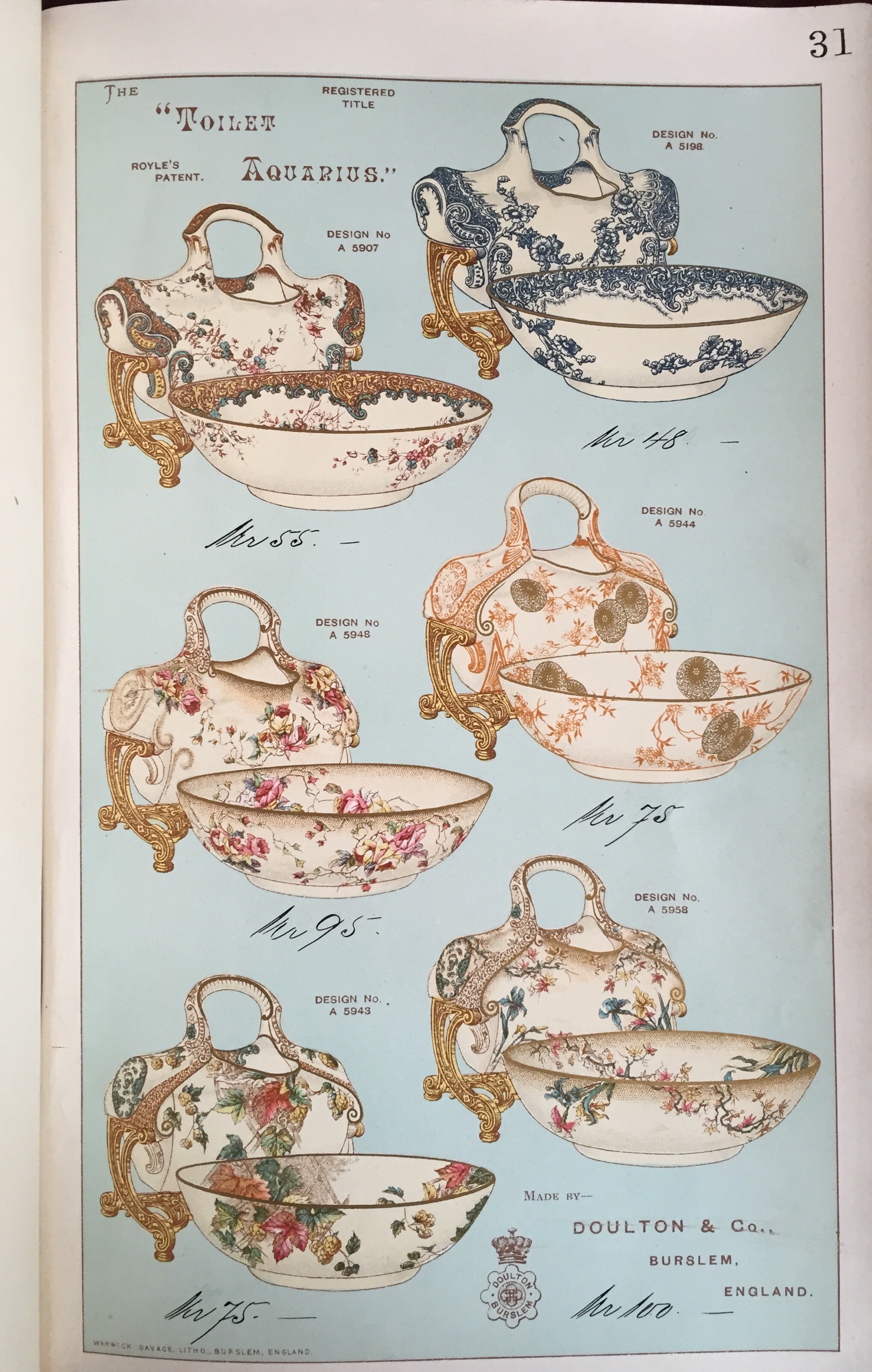
Page from a 1894 catalogue illustrating the toilet aquarius. 

The next is the toilet aquarius which featured a water vessel with lip on a metal stand that would pour water into the basin. 

The final example is a self pouring jug (not illustrated), along the same lines as the tea pots above.

Doulton’s stoneware plaques.

If you are touring the UK this summer, why not try to spot these famous Doulton landmarks? 


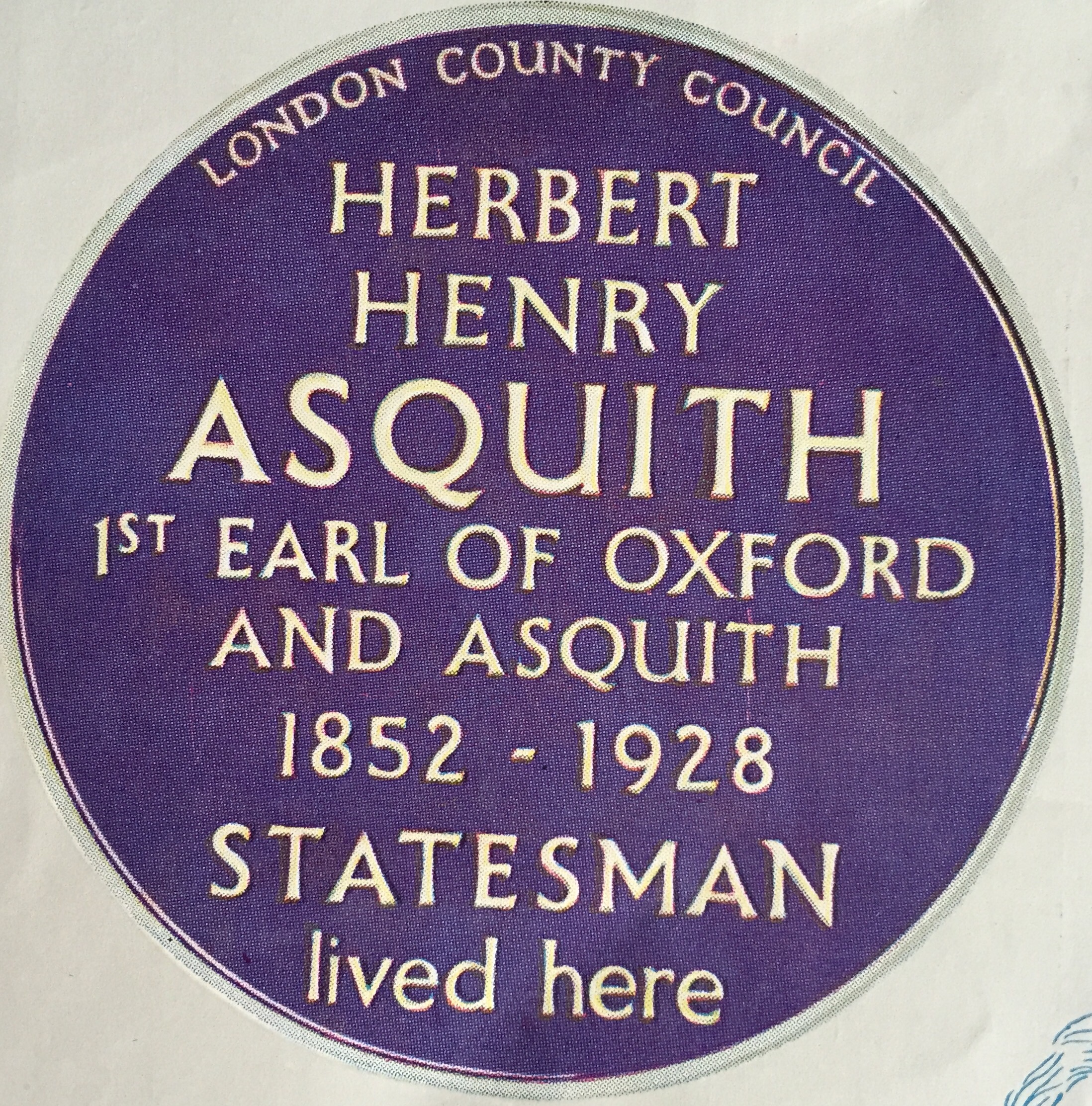
Commemorative or Blue Plaques can be found on many buildings today, a tradition that the Royal Society of Arts inaugurated with the erection of memorial plaques on houses once occupied by celebrities or the sites of famous buildings back in 1867.  


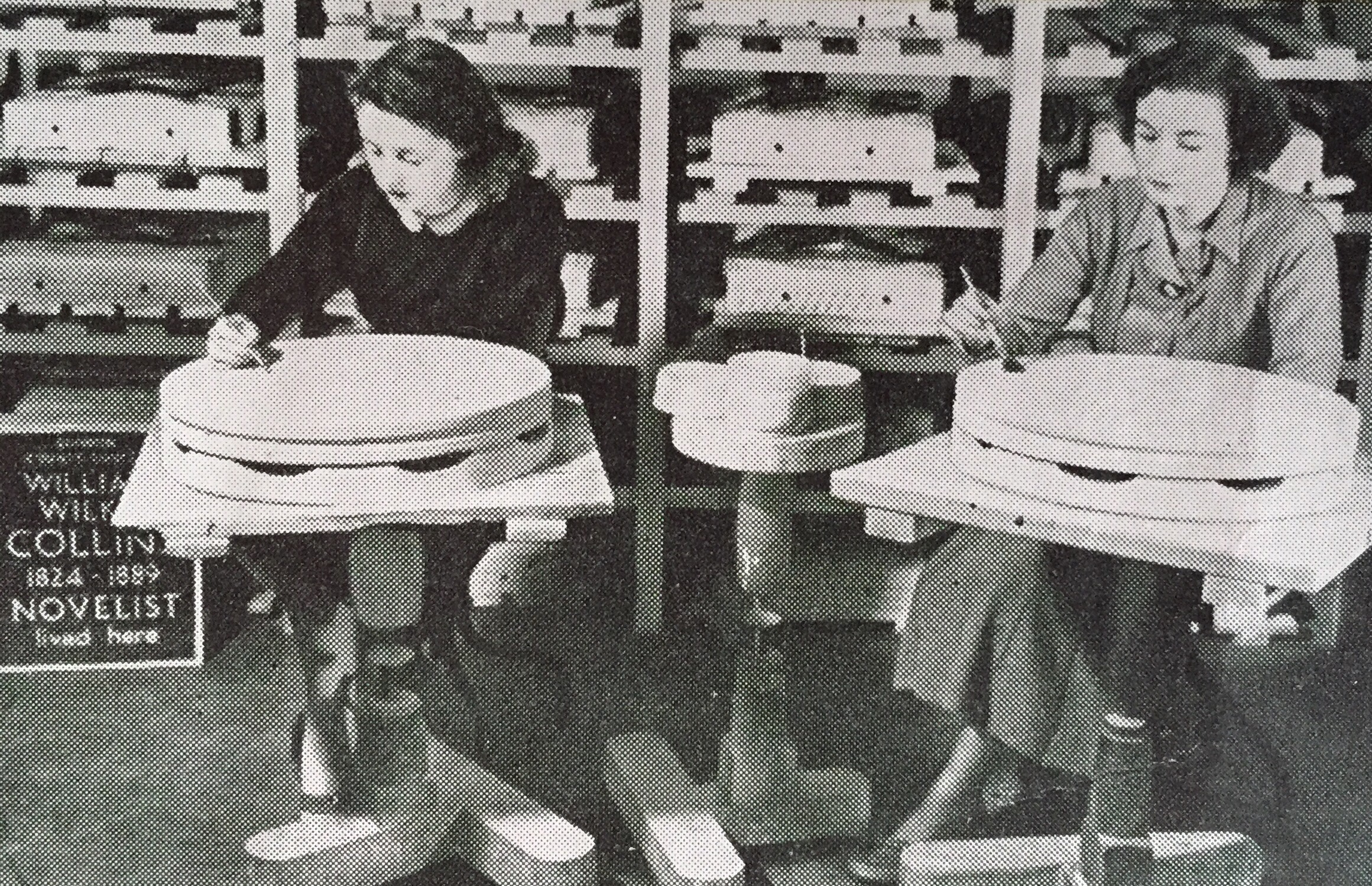
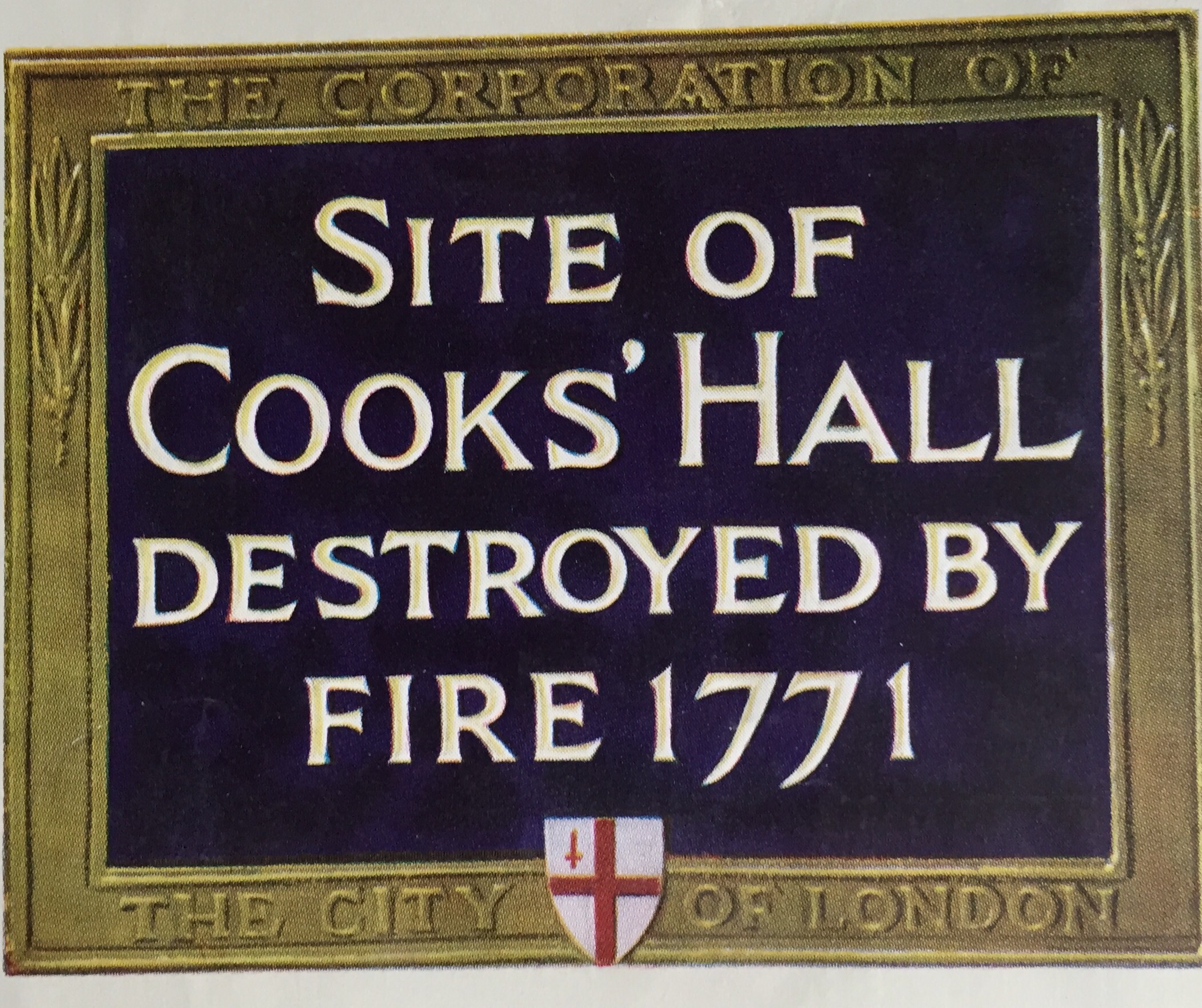
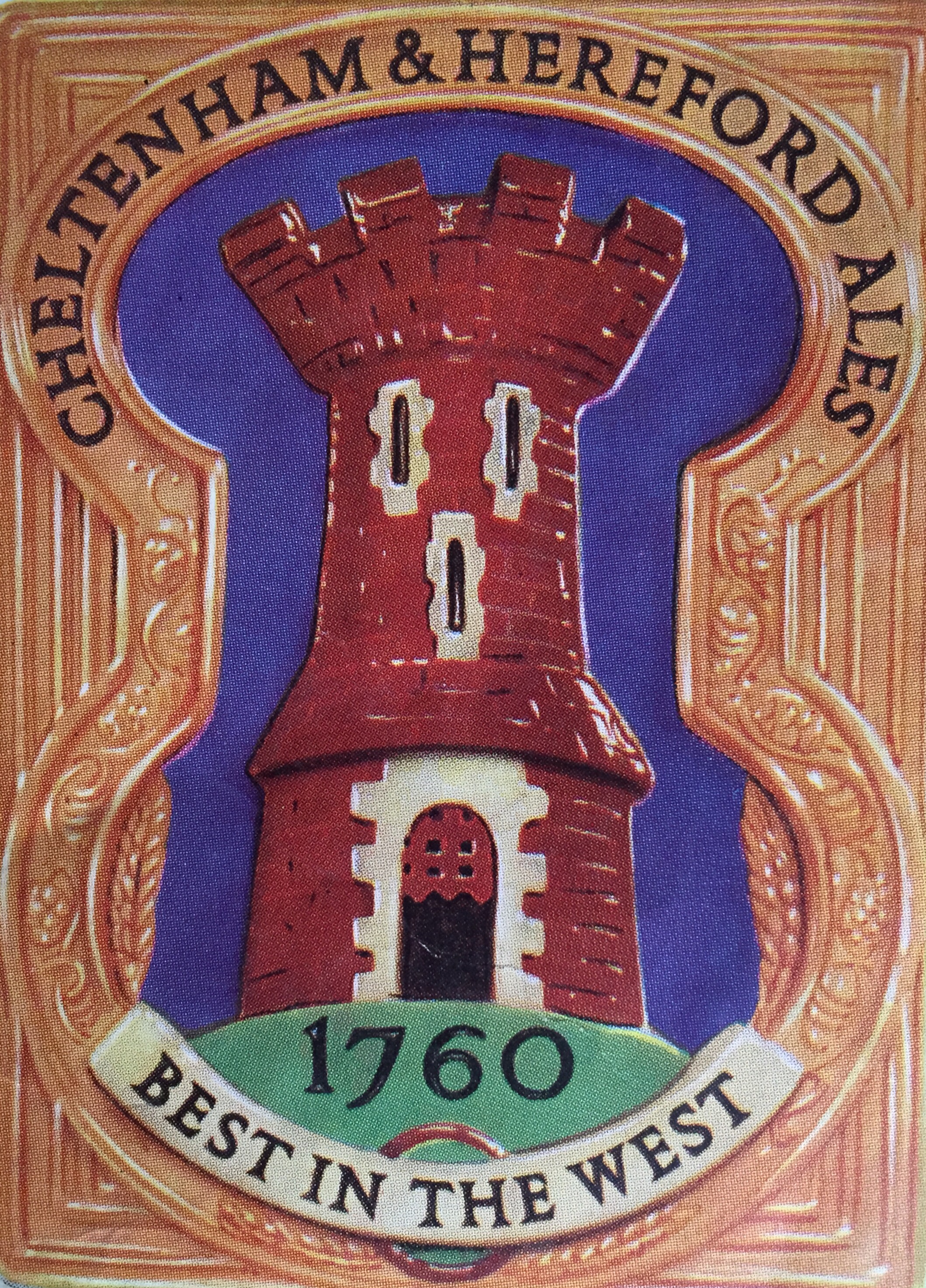
Doulton had a special studio at Lambeth to deal with stoneware plaques and other associated wares including interior and exterior tile panels. Doulton produced stoneware plaques from the 1920’s until the 1950’s commemorating famous people (see below), famous buildings (see above) and also housebrands, including breweries (see the last picture).  


William Rowe designed the lettering for them, with the Blue Roundels as above being produced by Doulton between 1937-55.


Whilst not typical collectors items, these plaques do turn up, especially the brewery related ones. Those attending Bonhams’ last sale will have noticed 4 examples of the rectangular City of London plaques commemorating historical buildings up for sale. 

Collecting Doulton Cottage Pastille Burners.


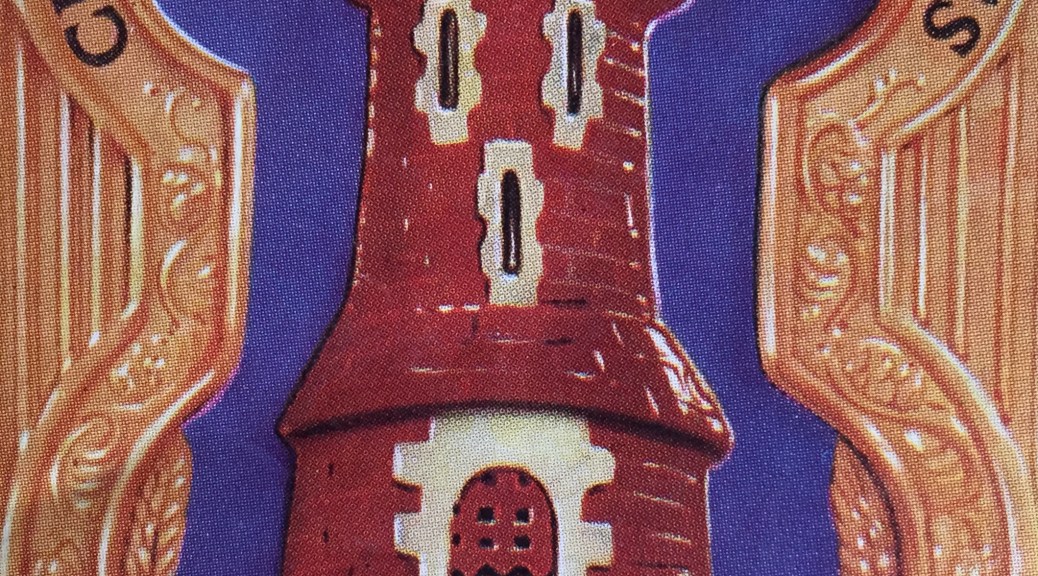
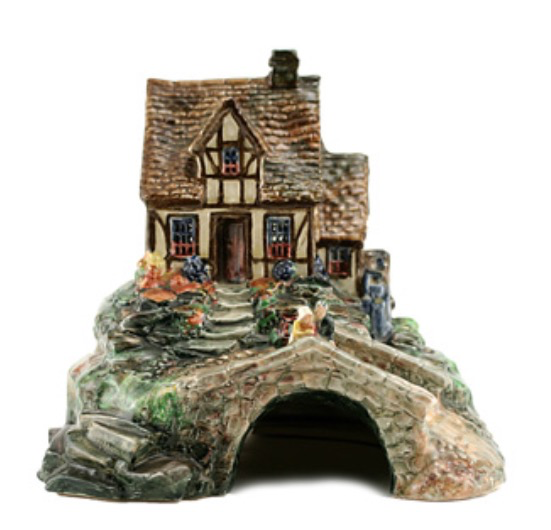
In the 1920’s and early 1930’s there were a handful of cottages produced at Burslem as pastille burners. Examples of these are rare today and whilst we can imagine their use, I have also seen an example mounted as a lamp from the 1930’s with a bulb inside the cottage as well as one above it creating a sentimental image of a typical English cottage. Other cottages include a Tudor style house and a low cottage. A very rare and limited range to collect. 


(Photograph courtesy of Seaway China)

How adverts influenced Harradine’s figures for Royal Doulton.

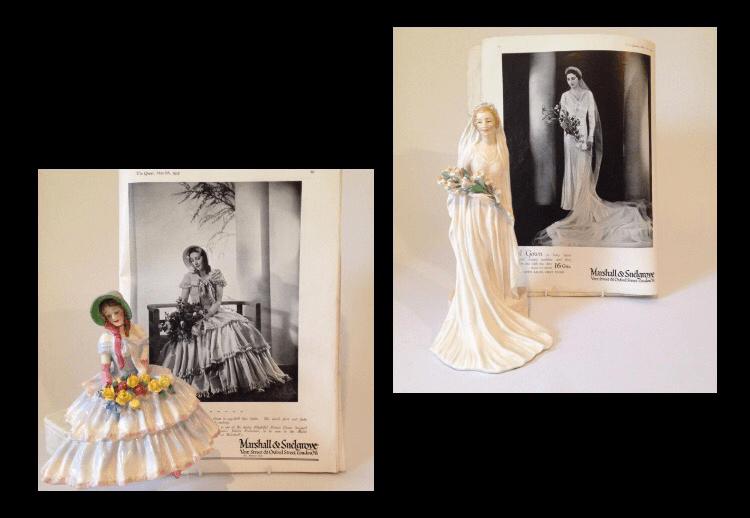
One of the most interesting aspects of collecting Doulton figures is the story behind them. When researching Reflections – a book which discusses this topic – many more illustrations were found than could be published.

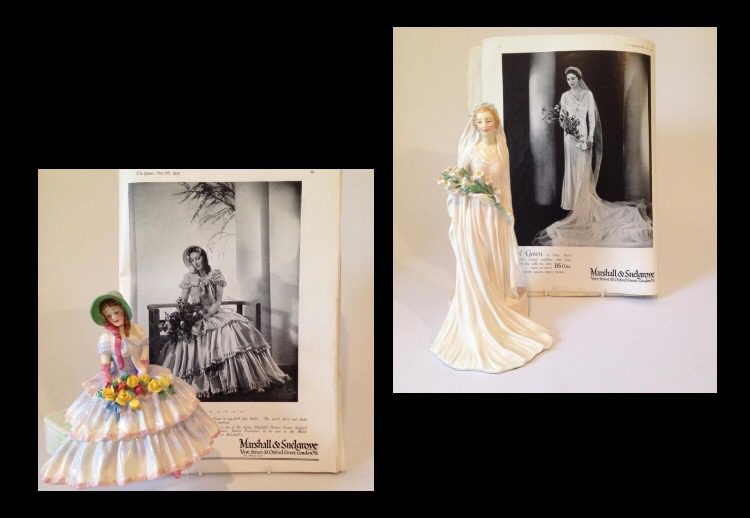
Such examples include the many adverts and publicity shots for the once famous department store Marshall & Snellgrove, which since the 1970’s has been part of the company we here in the UK know as Debenhams.

As you can see two iconic figurines – Day Dreams and Wedding Morn are derived from this source but others include Sweeting, Estelle and a host of fashionable ladies based on fashion photographs from the mid-1930’s.


Doulton’s Dutch Masterpieces.

We have looked at some popular Dutch themes already, but I love a collecting and indeed display theme so it is time to look at it a new!

  
A mixture of the popular and unusual Doulton Dutch Seriesware patterns and shapes. 

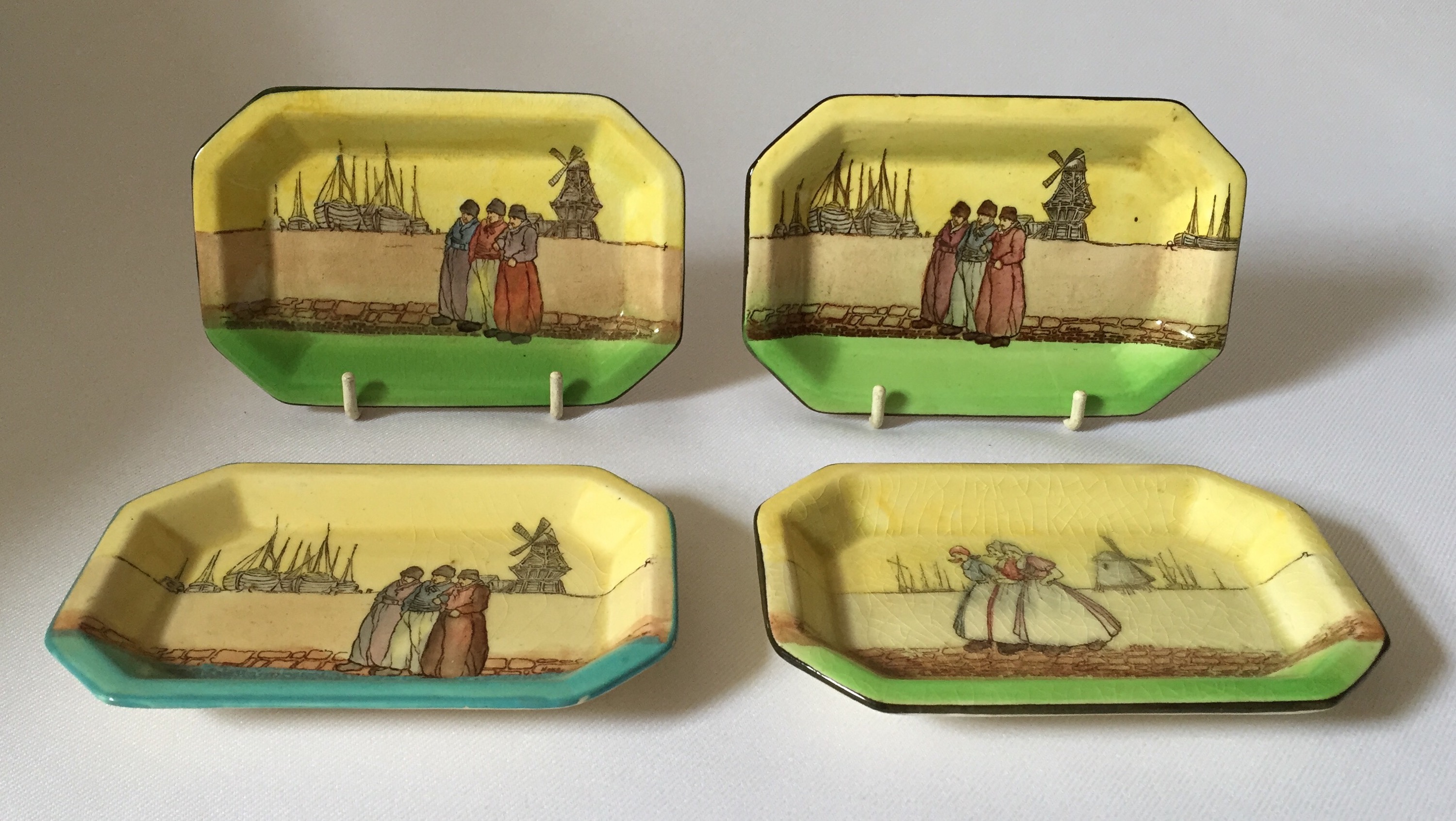
The wonder of Seriesware is that it offers something for every collector – for new collectors there are many familiar faces to collect and for the die hard collector you never quite know what will turn up! 

  
Four pin dishes illustrating the variety of seriesware that can be found! 

There was even a version of this popular theme created specially for Liberty of London with a blue sky. 

  
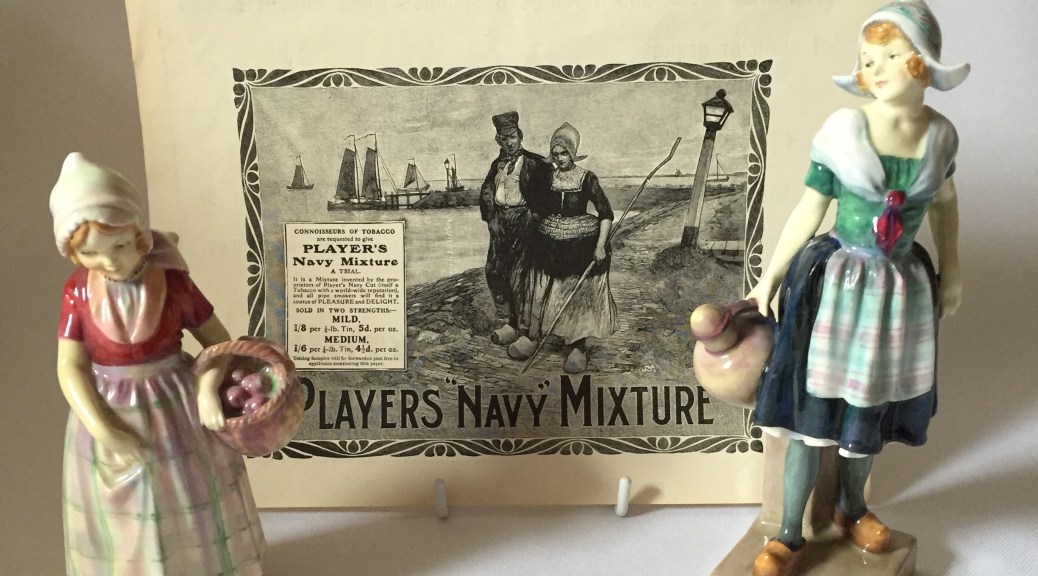
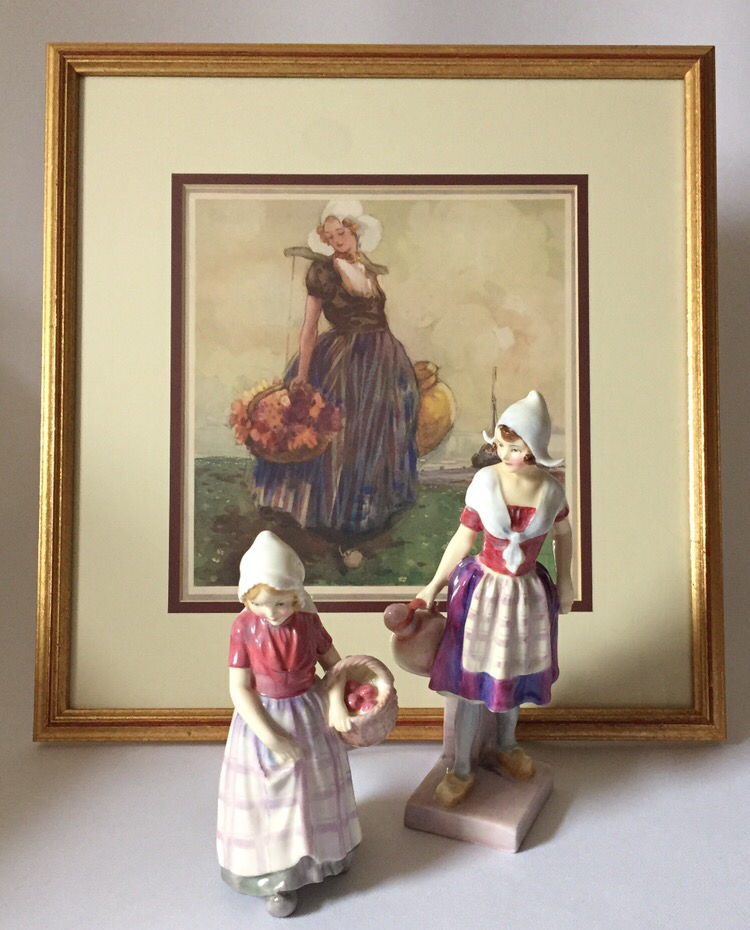
Two colourways of popular 1930’s Dutch figures Annette and Gretchen, and an illustration showing the popularity of all things Dutch in the early 20th Century.

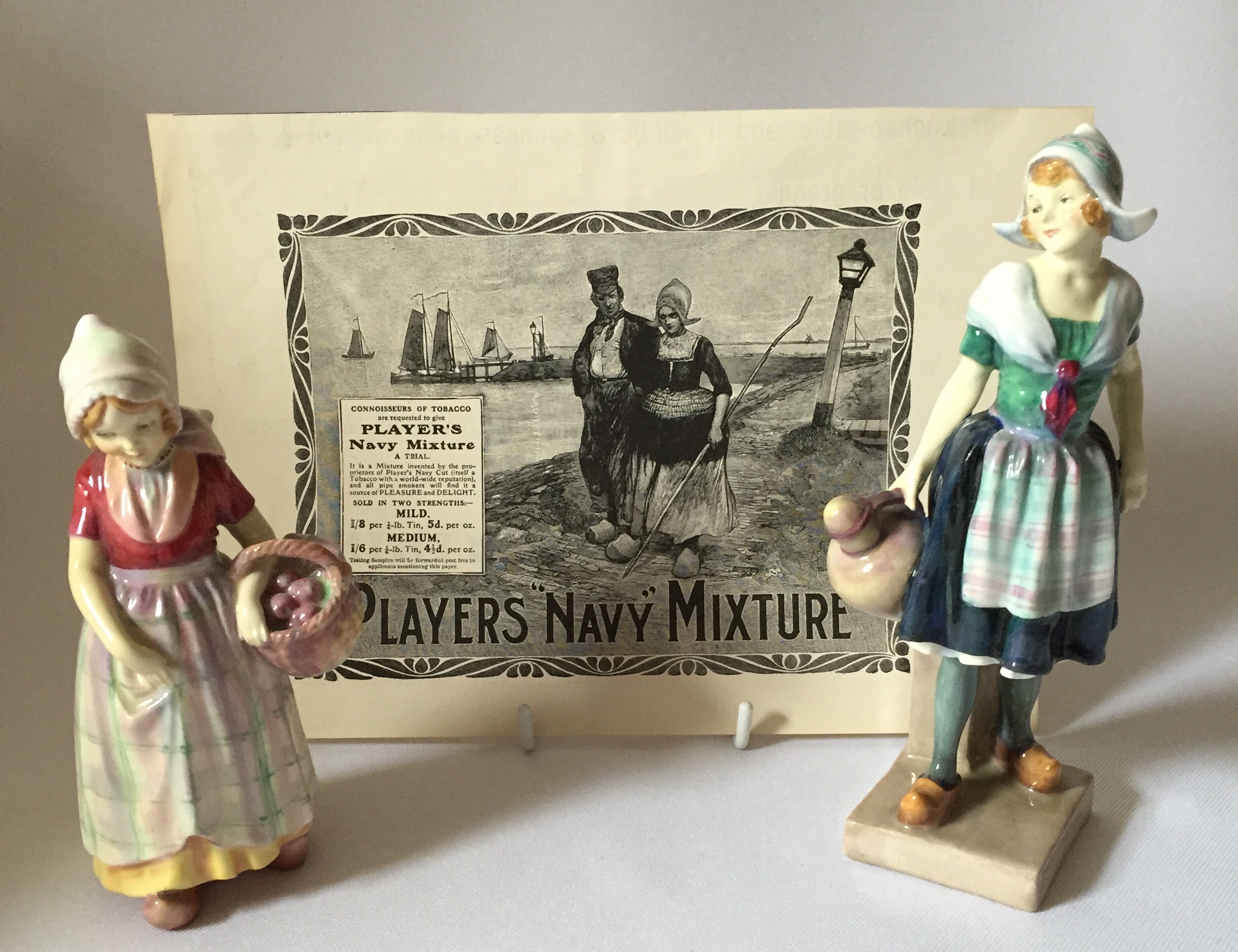
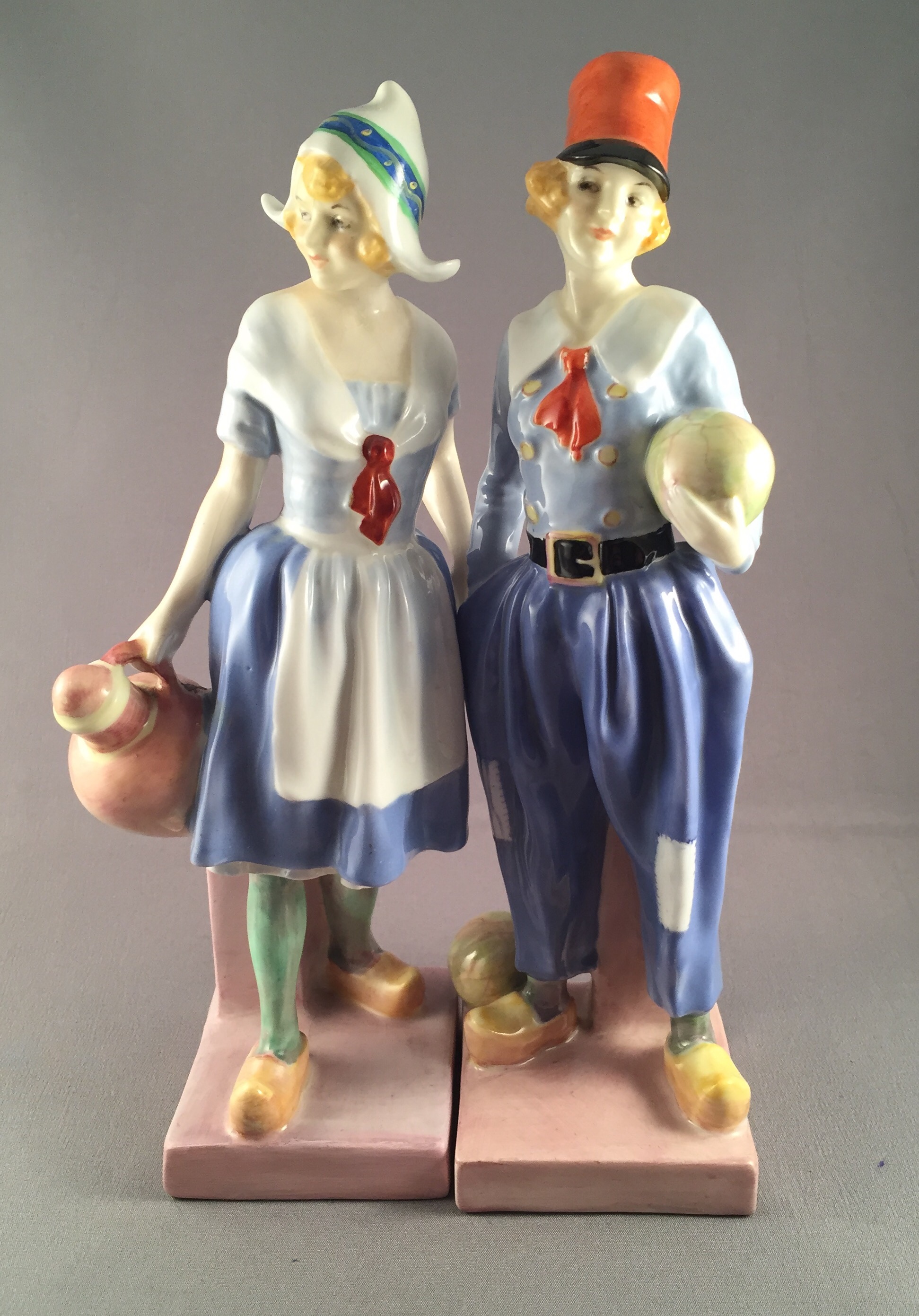
Even well into the 1930’s Doulton were producing their Dutch figures such as Gretchen and Derrick and a glimpse through catalogues and adverts for major stores including Liberty of London, proves the then popularity of all things Dutch with page after page of Dutch inspired decorative items for the home.  


The popular pair Gretchen and Derrick.

Collectors show great invention when displaying their collections and whilst some mix seriesware and figures excellently, others rely on illustrations to emphasise the theme they are creating, such as the picture below by AK Macdonald, who inspired a small group of Leslie Harradine’s figures in the 1930’s. 


Perhaps you arrange your collection in a particular way? If so why not share it with us on our Doulton Collectors Club facebook page! 

Collecting Doulton’s famous Gnomes ‘B’ seriesware.

  
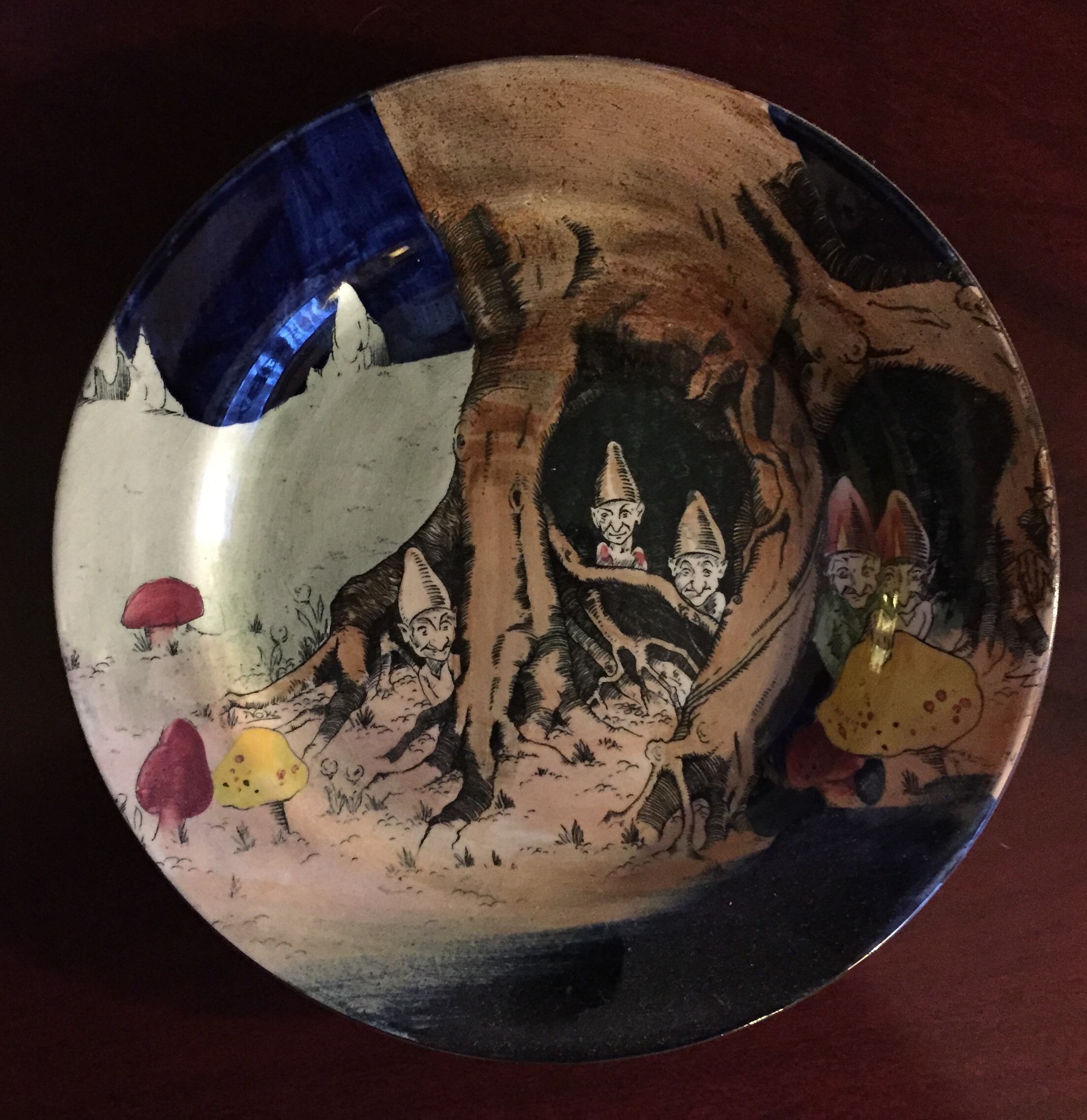
9″ plate D4697.

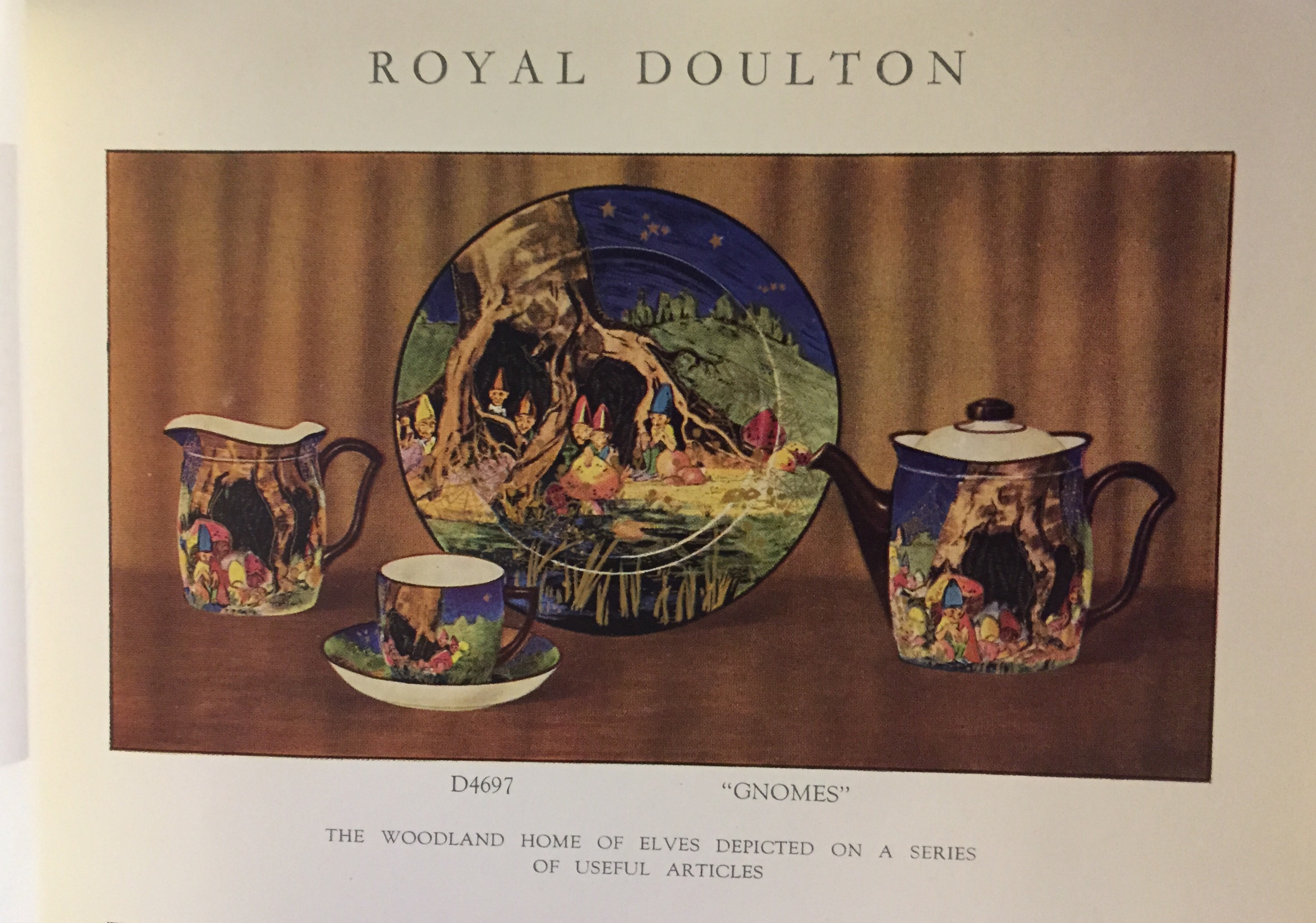
Often referred to as the Doulton version of Wedgwood’s famous Fairyland Lustreware, the Gnomes pattern illustrated is derived from drawings by the great illustrator Arthur Rackham for Peter Pan in Kensington Gardens, which also provided the inspiration for Doulton’s early figurine Pretty Lady who is based on an illustration for Wendy. The designer of this Doulton pattern is of course Charles Noke, then Art Director at Doulton’s Burslem factory.

  
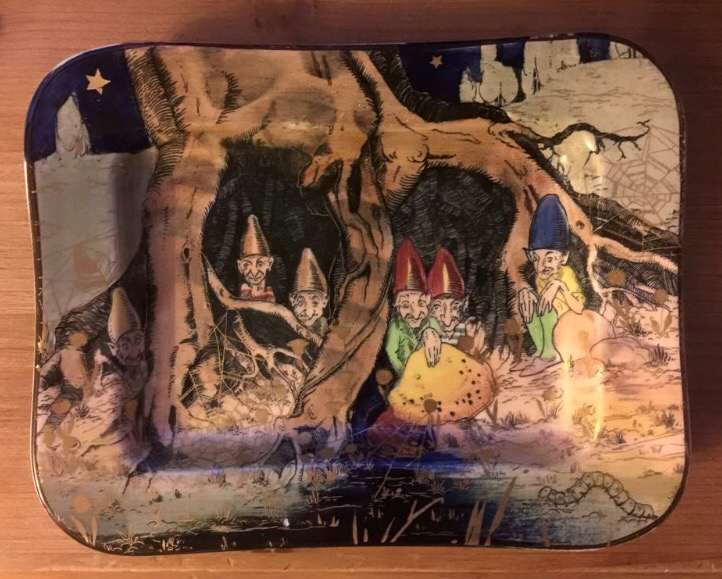
Unusual rectangular plate.

Introduced c.1925 it is a perennially popular pattern that collectors clamour for when it does turn up at auction or through dealers. Although in production until c.1950 examples of it are hard to find and typically teawares are what do turn up in the form of plates and trios.

 
Early catalogue page featuring Gnomes ‘B’. 

There are five recorded scenes as listed by Louise Irvine in her book Series Ware Vol.3, although again it is scene 1 which is the most frequently found, again on plates.

  
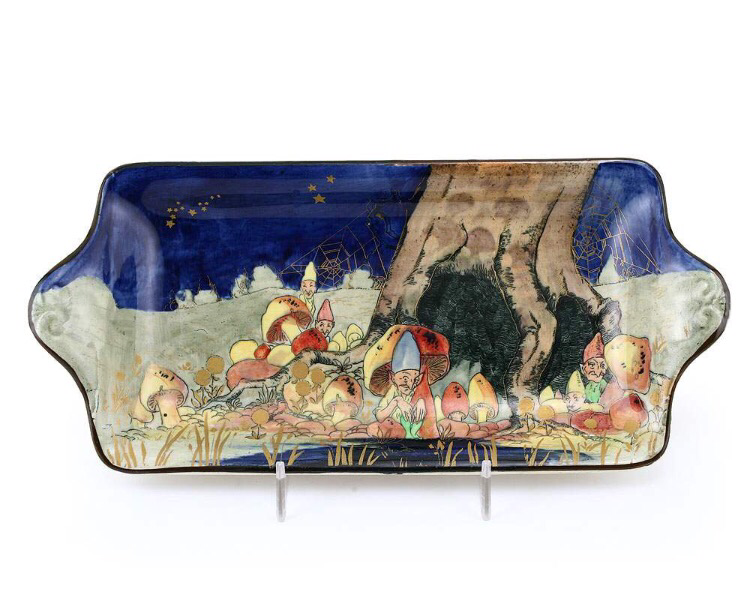
Unusual sandwich tray. 

As with all seriesware patterns, a collection  masterly displayed makes quite a statement in the home! 

  
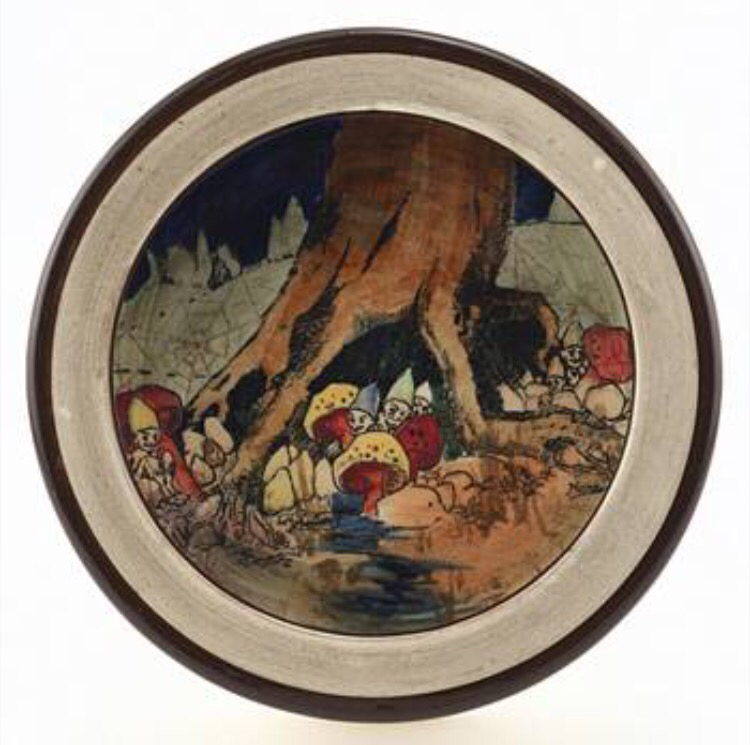
Rare oatmeal bowl with unusual, plain border. 

For reference, there are 3 recorded D numbers for this pattern – D4697, D4899 and D5066 and this ‘B’ pattern is not to be confused with the earlier ‘A’ pattern. Also, in the USA it is referred to as ‘Munchkins’. 

Collecting William Savage Cooper’s nursery rhyme designs for Royal Doulton. 


Introduced in 1903 there are around 20 different nursery rhyme designs based on illustrations by William Savage Cooper to collect and still other designs by others too. The earliest pieces of Savage Cooper’s are found on china with gold accenting, whilst later earthenware examples can be found on Doulton’s Art Deco earthenware shapes.

Typically gifts for children these pieces were no doubt broken and many today show signs of much use along the way, but their popularity ensured that they remained in production for a relatively long period to around 1939, meaning that there are examples in good condition to collect. Unusual boxed sets do turn up occasionally and I know of collectors who solely collect nursery wares and who have amassed great collections.


A catalogue page from the 1920’s. 

Collecting Doulton’s ‘Ladies of the Fan’.


 Eugene HN1521, Fleurette HN1587 and Lisette HN1524.

Whatever you particular interest in Doulton figures you soon realise that themes do occur within collections, such as those ladies with feet popping out under the hems of skirts or those carrying parasols.


Teresa HN1682.

Another theme are the bevy of beauties teasing their admirers with their colourful fans.


Miranda HN1818 and Mariquita HN1837.

With a history stretching back over 3000 years, it is the fans of the 18th and 19th centuries that typically appear on Doulton ladies. First seen here when merchants from Asia returned with them, those appearing on Doulton ladies are the folding type – again a relatively modern adaptation of the traditional fixed type. 


Eleanor HN1754.

Perhaps you collect figures according to a different theme? If so why not share them on our facebook page – Doulton Collectors Club! 

Collecting Doulton Art Union work.


Eliza Simmance vase for the Art Union.

The presence of ‘Art Union of London’ on Doulton ware, indicates that it was produced in a series and specially selected for members of the Art Union, whose subscription brought them access to important art wares from many sources including Doulton. 


Example of the Art Union stamp found on Burslem ware or else an identical mark found impressed on Lambeth items.  

Both Lambeth and Burslem produced wares for the Art Union, although examples of Burslem pieces are much harder to find. Doulton began supplying items in 1885 through to the early 1900’s (approx. 1902) and typically their most celebrated artists such as Mark Marshall and Eliza Simmance provided the original designs. Despite these items not being one off pieces, prices for these marked ‘Art Union of London’ are in line with one off pieces by these major artists.

Rare items of Burslem ware that I have seen have all been in the style of their ‘Spanishware’. Typically their decoration features Australian flora too.

One further variation is that of Doulton’s flambe – I have seen a lidded jar in flambe also carrying an Art Union backstamp.

A place to share enthusiasm for all things Royal Doulton! All original content ©Christopher Evans 2014 unless otherwise credited. No unauthorised reproduction permitted.