Collecting Doulton’s ‘Ladies of the Fan’.


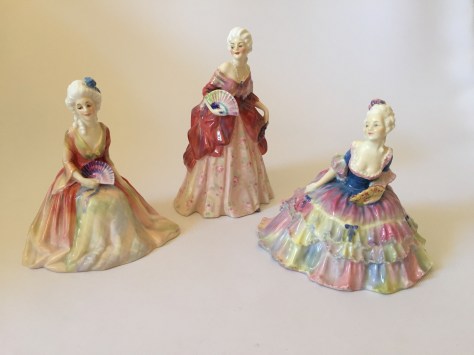
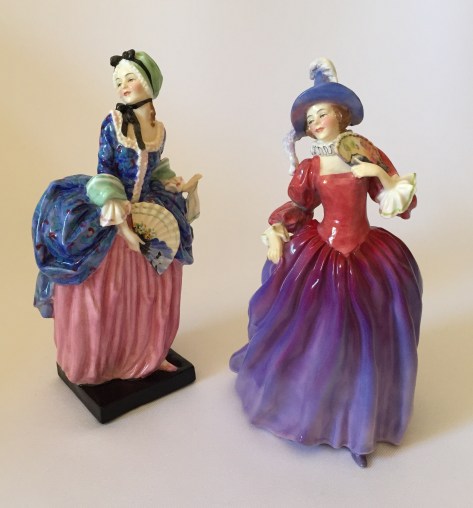
 Eugene HN1521, Fleurette HN1587 and Lisette HN1524.

Whatever you particular interest in Doulton figures you soon realise that themes do occur within collections, such as those ladies with feet popping out under the hems of skirts or those carrying parasols.


Teresa HN1682.

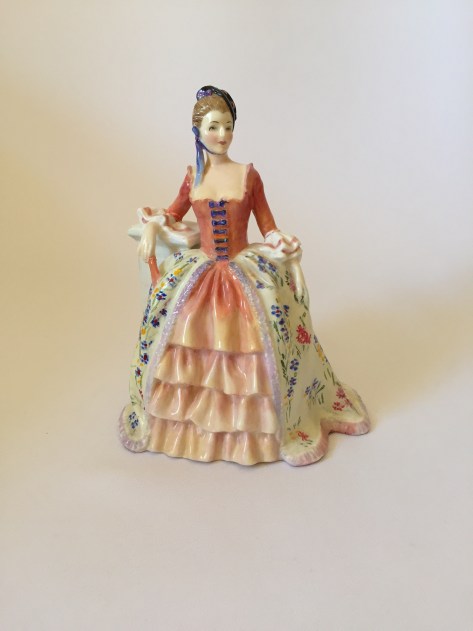
Another theme are the bevy of beauties teasing their admirers with their colourful fans.


Miranda HN1818 and Mariquita HN1837.

With a history stretching back over 3000 years, it is the fans of the 18th and 19th centuries that typically appear on Doulton ladies. First seen here when merchants from Asia returned with them, those appearing on Doulton ladies are the folding type – again a relatively modern adaptation of the traditional fixed type. 


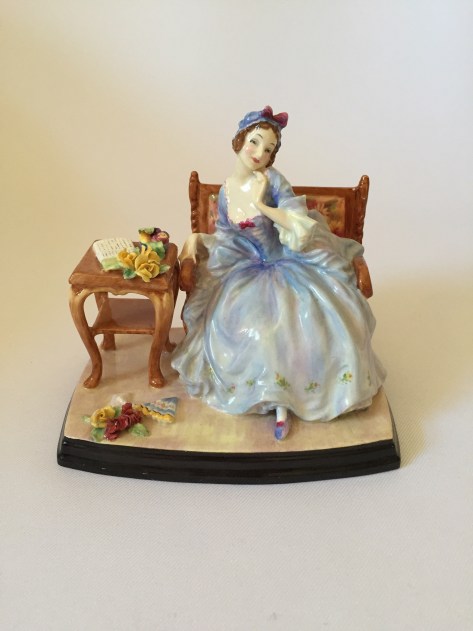
Eleanor HN1754.

Perhaps you collect figures according to a different theme? If so why not share them on our facebook page – Doulton Collectors Club! 

Collecting Doulton Art Union work.


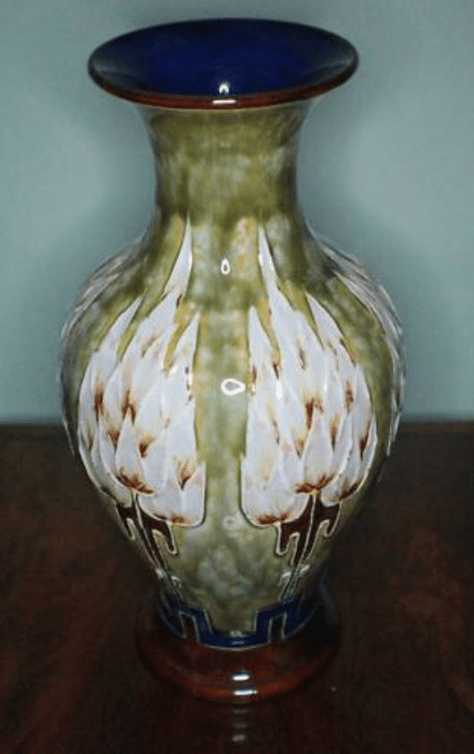
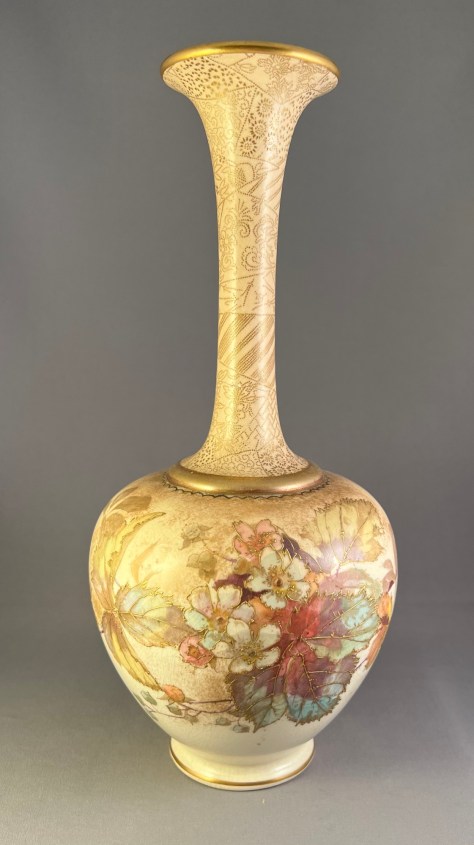
Eliza Simmance vase for the Art Union.

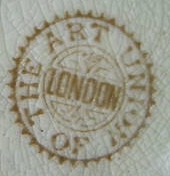
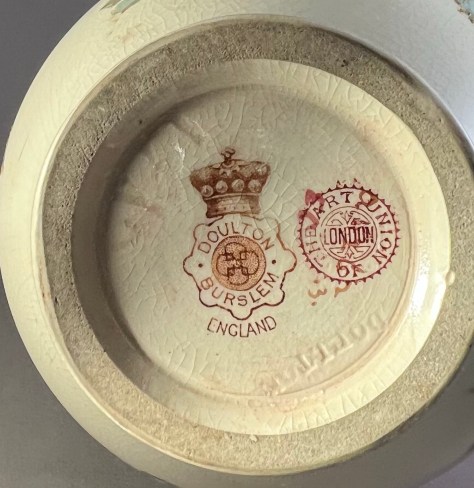
The presence of ‘Art Union of London’ on Doulton ware, indicates that it was produced in a series and specially selected for members of the Art Union, whose subscription brought them access to important art wares from many sources including Doulton. 


Example of the Art Union stamp found on Burslem ware or else an identical mark found impressed on Lambeth items.  

Both Lambeth and Burslem produced wares for the Art Union, although examples of Burslem pieces are much harder to find. Doulton began supplying items in 1885 through to the early 1900’s (approx. 1902) and typically their most celebrated artists such as Mark Marshall and Eliza Simmance provided the original designs. Despite these items not being one off pieces, prices for these marked ‘Art Union of London’ are in line with one off pieces by these major artists.

Rare items of Burslem ware that I have seen have all been in the style of their ‘Spanishware’. Typically their decoration features Australian flora too.

One further variation is that of Doulton’s flambe – I have seen a lidded jar in flambe also carrying an Art Union backstamp.

Collecting Doulton Marqueterie ware.


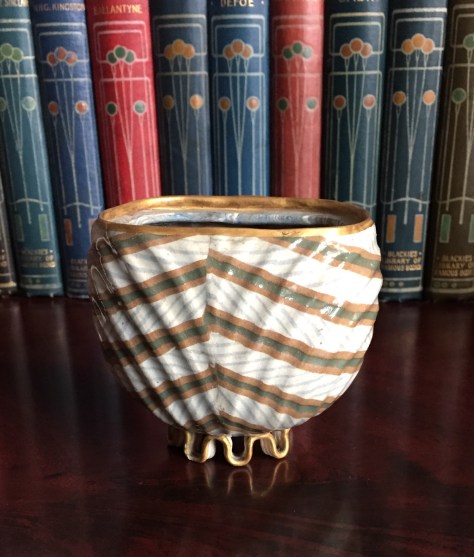
 Marqueterie sugar bowl. 


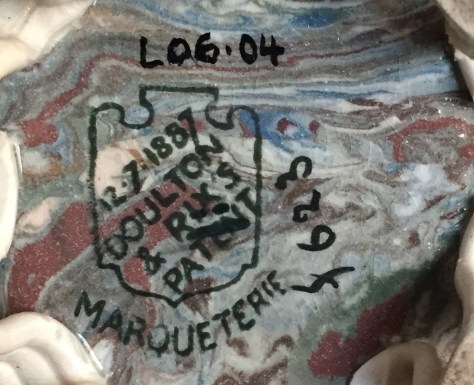
This distinctive Lambeth ware was produced between 1886-1906, although examples are unusual due to its fragile nature. Multi-coloured clay in blue, white and brown were compressed together resulting in a marble effect clay, which would then be moulded into often intricate shapes. This particular ware bears a Doulton & Rix mark to its base,William Rix was art director at Lambeth between 1870-1897. 


Marqueterie backstamp.

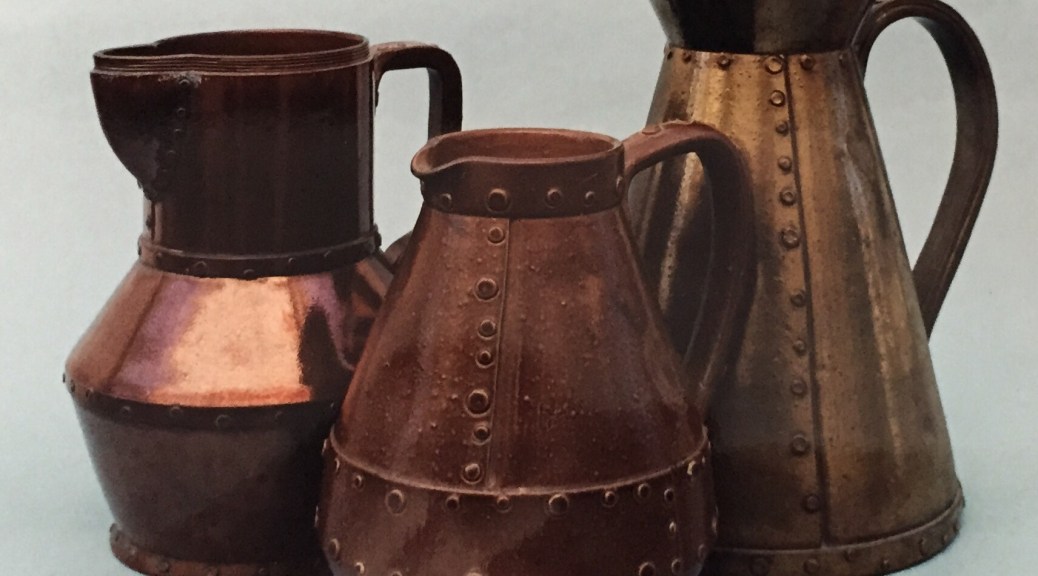
Collecting Doulton Lambeth’s Copperware.

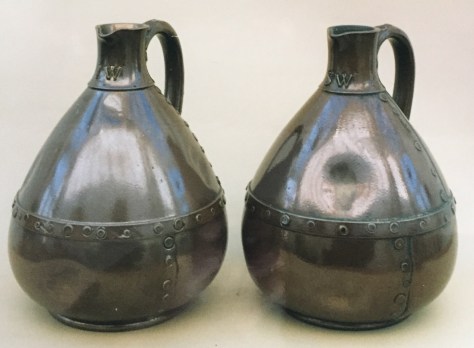
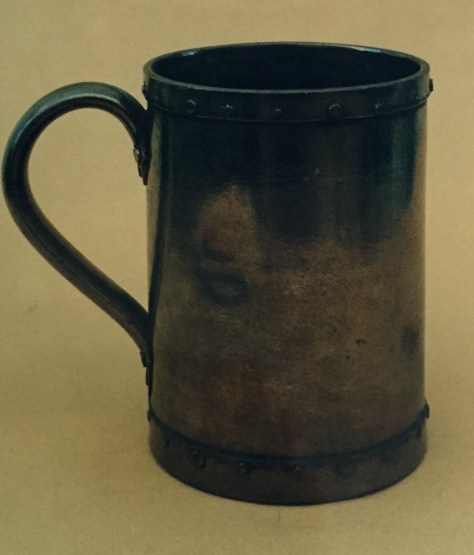
 This technique, which belongs to the group of so-called Simulated wares, involved creating a simulated copper effect on a silicon body. Typically the seams, rivets and dents are recreated very realistically so that to the uneducated they appear to be copper until further inspection. 


Copperware was produced during two periods, 1887-1914 and 1924-6, meaning that examples do turn up but not regularly! 


Rare miniature versions do crop up occasionally as as with most things miniature, command a high price! 


Collecting Royal Doulton’s Royal Commemorative beakers.


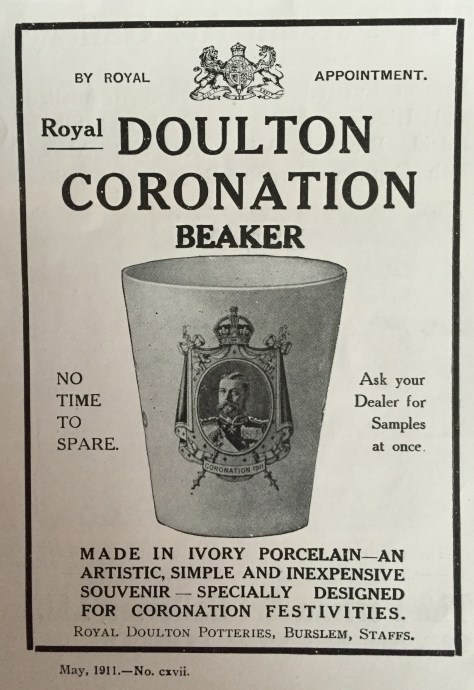
An advert for the 1911 Coronation beaker of King George V and Queen Mary. 


An actual example of the same beaker but with the King’s facsimile signature. 

Royal Doulton have a long history of marking Royal occasions by producing commemorative wares of all types but a field that offers a wide range of items is the many commemorative beakers produced for Royal Coronations. 


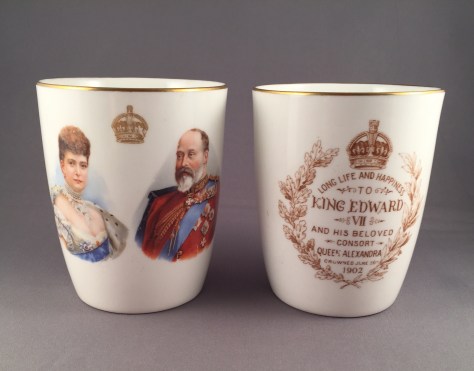
Bone china examples of King Edward VII’s coronation beaker from 1902 – front and reverse.


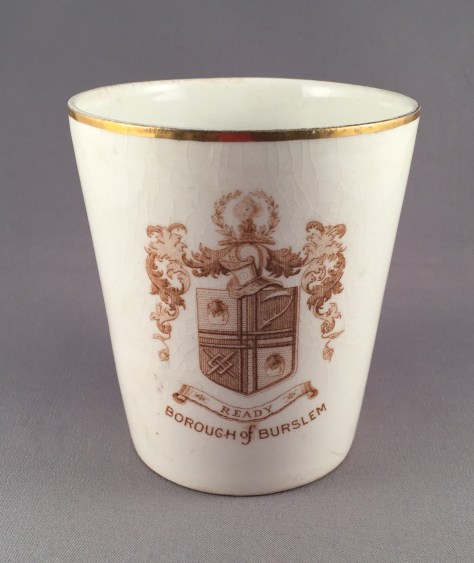
An earthenware example of the same beaker but interestingly bearing the coat of arms for Burslem, the former home of Doulton fine china in the Potteries. 

Since Victorian times each Coronation has resulted in a new commemorative beaker; the most collected of which tend to be the bone china rather than earthenware varieties, although unusual earthenware variations attract much interest too. 


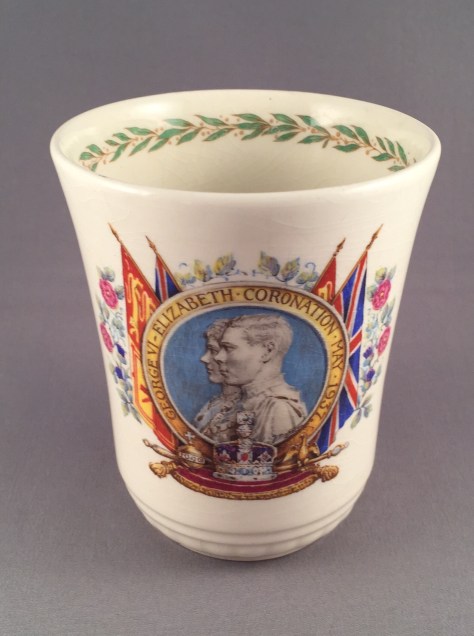
Coronation beaker for the present Queen’s parents, King George VI and his wife Elizabeth in 1937. 

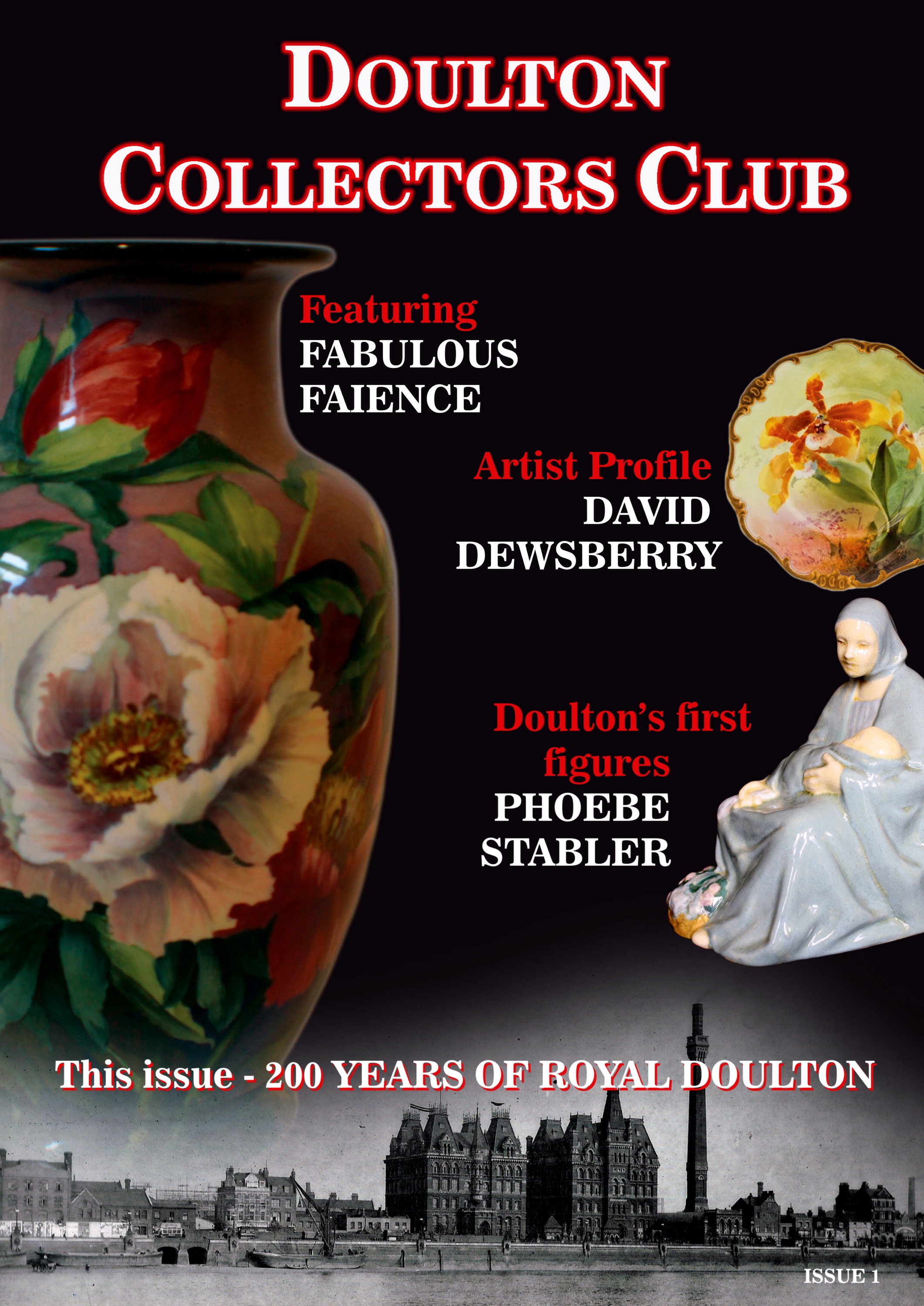
Introducing the Doulton Collectors Club magazine!

doultonchristopher1's avatardoultoncollectorsclub

With subscribers from four continents already, no matter where in the world you live don’t wait to subscribe to the ONLY Doulton magazine available. Subscribe today to ensure you receive Issue 1 this March!

IMG_1793 Packed full of information on all things Doulton – you won’t be disappointed with this full colour, 24 page magazine. Published quarterly, you will be able to build your own up to date Doulton reference library. Covering everything from the many, diverse Doulton wares produced over the last 200 years, to fairs, auctions and events – the Doulton Collectors Club magazine will be essential reading for all Doulton collectors! Subscribe today using the location links below via our

UK agent Paul Webster Antiques’s website. UK Subscriptions  http://paulwebsterantiques.co.uk/index.php?route=product/product&path=114&product_id=310

USA & CANADA Subscriptions http://paulwebsterantiques.co.uk/index.php?route=product/product&path=114&product_id=312

AUSTRALIA, SOUTH AFRICA, RoW Subscriptions http://paulwebsterantiques.co.uk/index.php?route=product/product&path=114&product_id=313

Please be sure to select the subscription for your location.

Any Questions, please ask by emailing Doultoncc@gmail.com

View original post

Doulton artist profile – Robert Allen.


A Robert Allen design carried out by his studio ca.1900.

Robert Allen began work at Nile St. when it was still owned by Pinder Bourne, after a brief period at Minton’s as a boy worker. Robert flourished under the guidance of John Slater, then art director, eventually taking over a painting department of his own. Work from his department is denoted by his initials R.A. followed by a number. Robert Allen’s own signed work is however, rare. Yet, he and his department were entrusted with much of the finest and most expensive decoration carried out at Burslem notably for the great exhibitions at which Doulton exhibited from the late 19th century. Robert was notably involved in the early development of Titanian ware too although it is the work of his son Harry in Titanian that is typical.


A group of miniatures bearing an RA number from the Robert Allen studio.

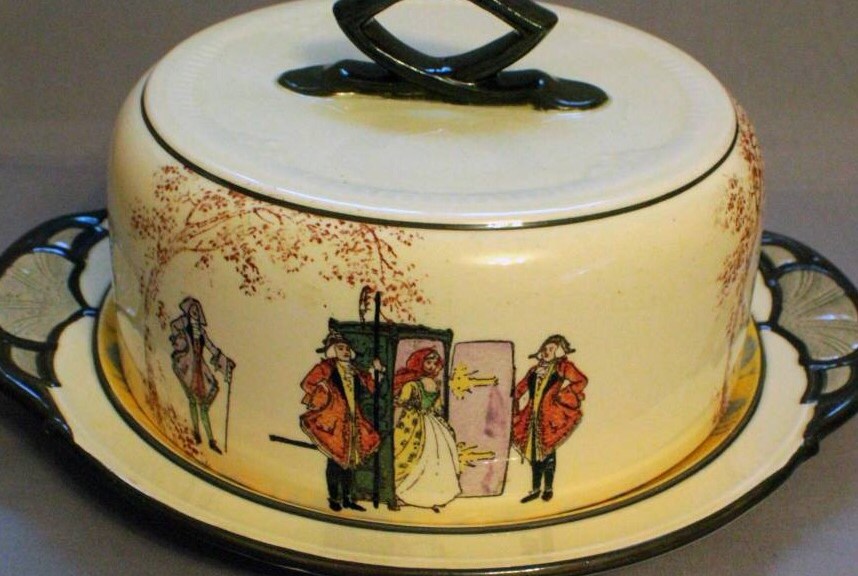
Collecting Doulton seriesware – Sedan Chair.

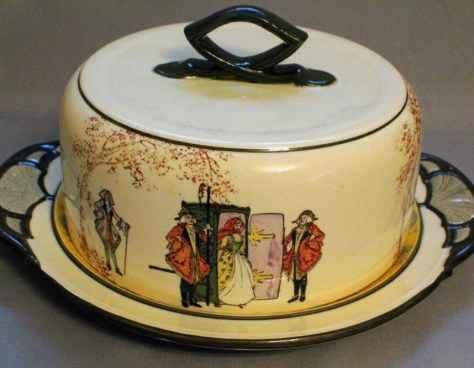
An unusual  Sedan Chair seriesware survival – a Cheese dome. The bases often turn up and are described as bread and butter plates, but here is the full thing! Introduced in 1912 and withdrawn around 1940, examples are not frequently seen suggesting production was much shorter. The art nouveau shape is incongruous to the seriesware pattern but the series is so charming that one doesn’t notice. The scene illustrated is No.2 hitherto not illustrated. 

Seriesware never fails to surprise us even today!

Early Doulton Burslem designs.


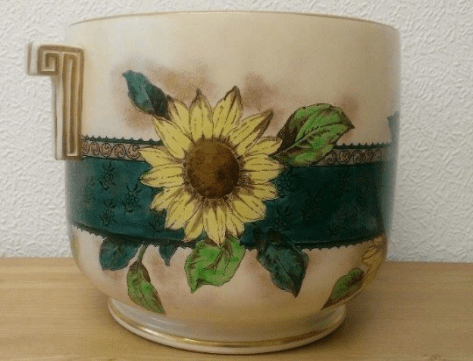
One of our collectors recently asked about the jardinière pictured. It bears a simple, impressed ‘Doulton’ mark that often throws collectors but this method of impressing the Doulton name can be found still in use into the 20th Century too, although later examples are accompanied by the usual lion and crown Doulton mark.

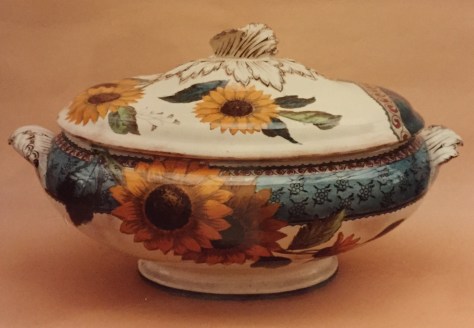
Returning to the pattern of the jardinière, I term it a transitional pattern from the period when Doulton entered into partnership with the Pinder Bourne factory owner in 1877 and the time when Doulton eventually took over the Nile St. enterprise entirely in 1884.  In the aesthetic taste, it is certainly of this period and I have seen plates marked Pinder Bourne but also further examples simply bearing the Doulton brand. Here is a tureen marked thus. 


We would love to hear from other collectors who have examples of this design to compare backstamps. Don’t forget that if you’re interested in Doulton join our facebook page and also visit http://www.paulwebsterantiques.co.uk where you can also subscribe to the brand new Doulton Collectors Club magazine! Isse 1 is out now!   

Royal Doulton’s famous, former Headquaters in Lambeth. 

Built in the 1870’s in the gothic style  ‘A’ and ‘B’ blocks as they were known and the huge chimeney that stood next to them were a London landmark for 75 years and witnessed many of Doulton’s major accomplishments as well as playing host to many famous visitors from Royalty, to politicians, to latter day celebrities.

A floodlit view of blocks A and B from 1935 celebrating a Royal jubilee.

Doulton vacated these impressive buildings in early 1940, moving to the newly erected Doulton House, then just a few hundred yards along the Albert Embankment. Lying unoccupied and suffering bomb damage during WWII there was little option left than to demolish these impressive buildings in 1951.

A close up of the showroom and main offices block.

On the left is the former main office and showroom building, on the right a factory block and chimeney.

A drawing of the Albert Embankment by Arthur Pearce showing the extent of the Doulton works in 1924. Note the corner building that still stands today. 

A place to share enthusiasm for all things Royal Doulton! All original content ©Christopher Evans 2014 unless otherwise credited. No unauthorised reproduction permitted.