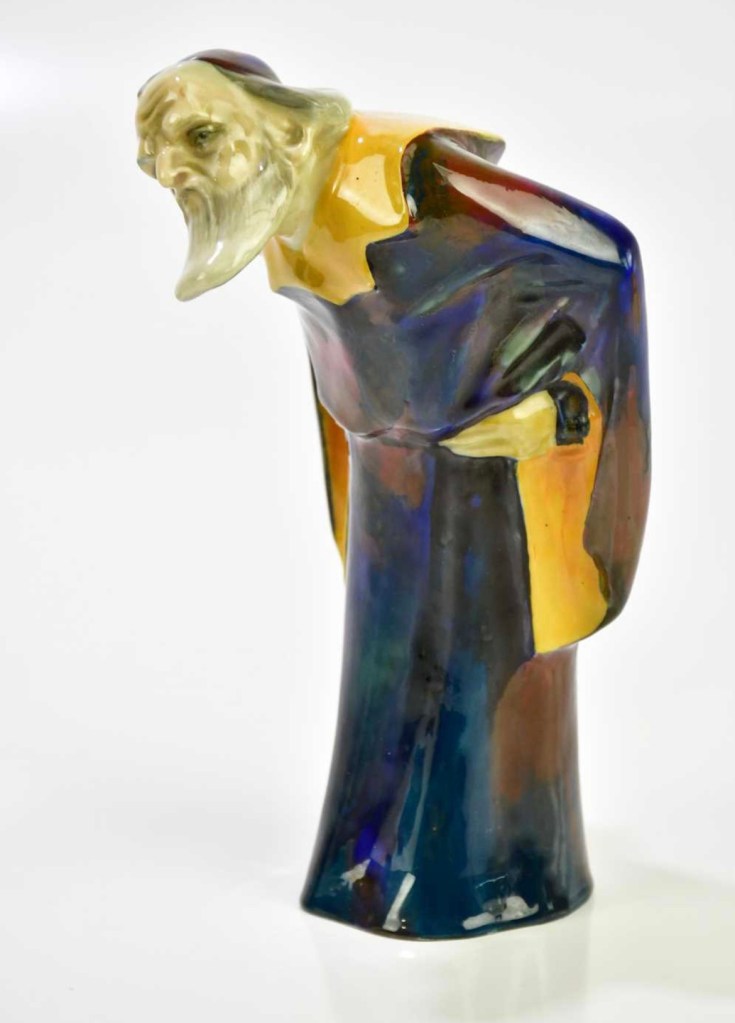
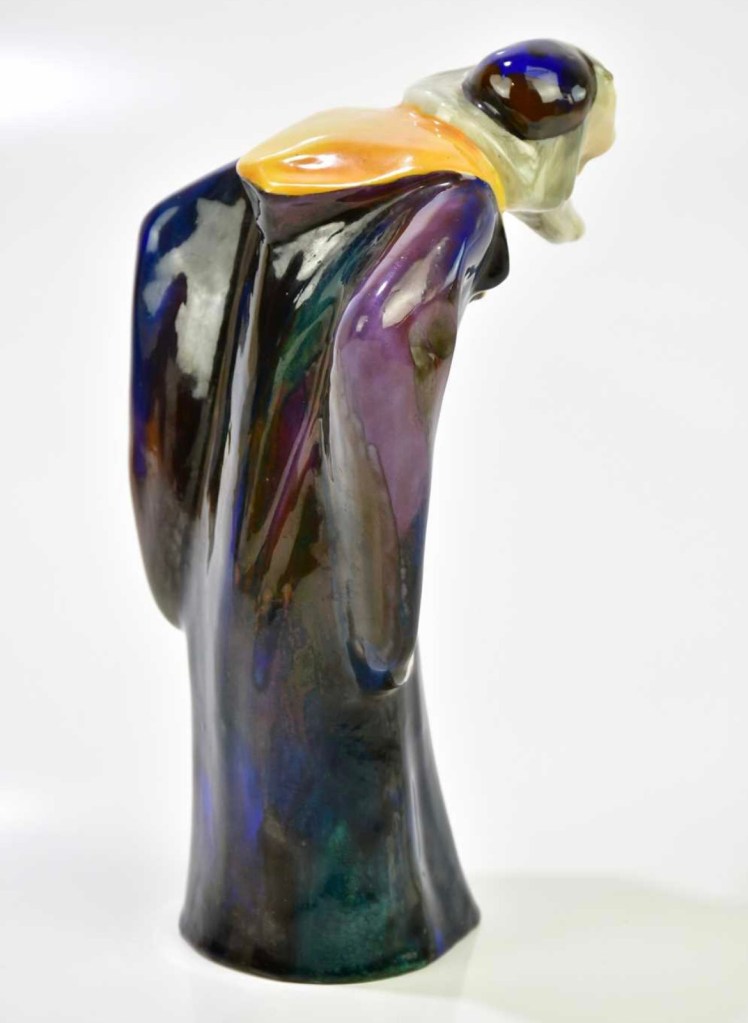
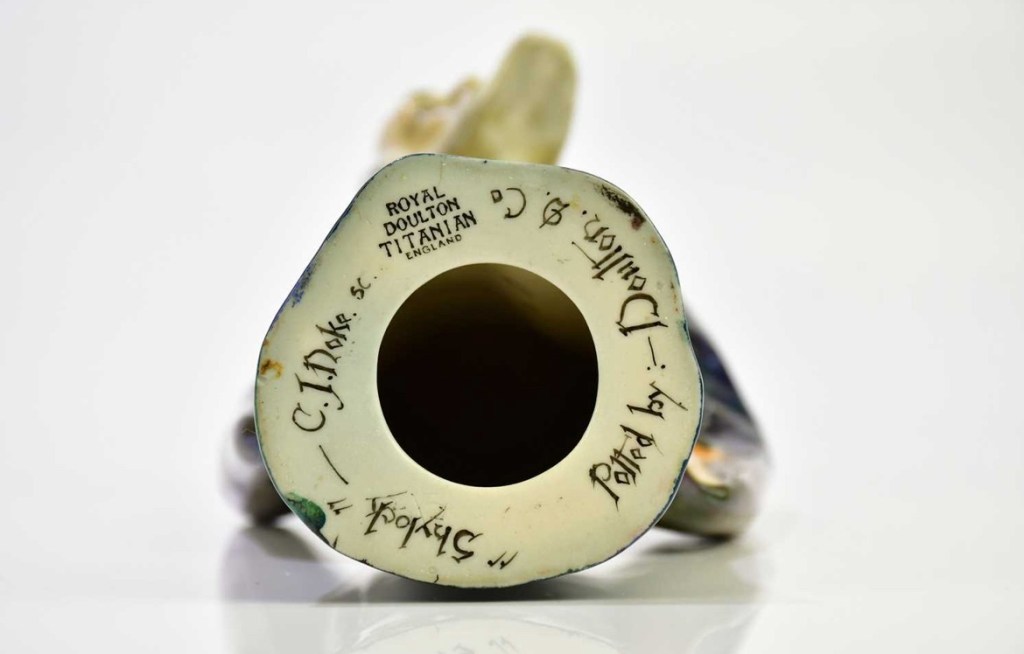
Royal Doulton’s Sung ware and an exceptional vase coming up this Sunday 25 August 2024!

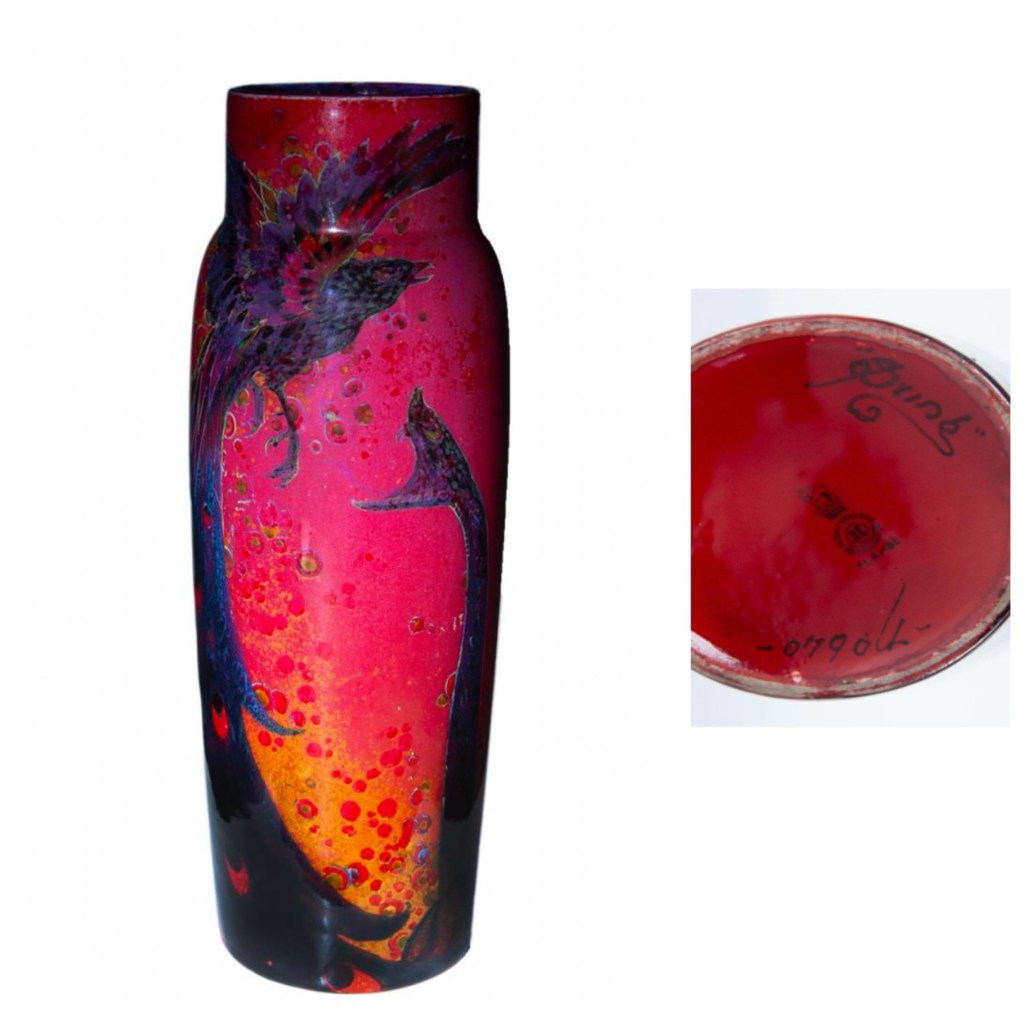
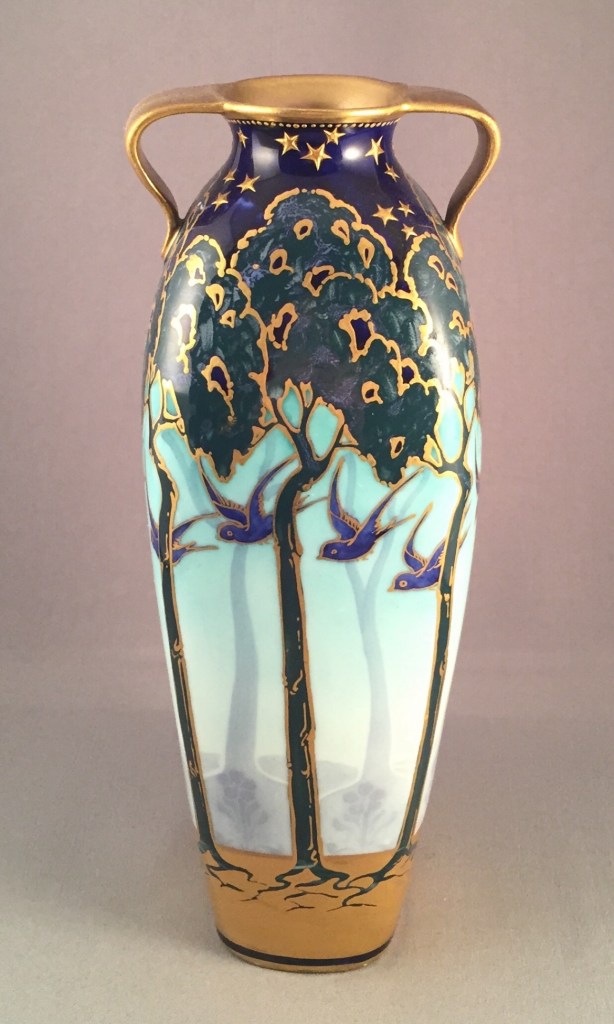
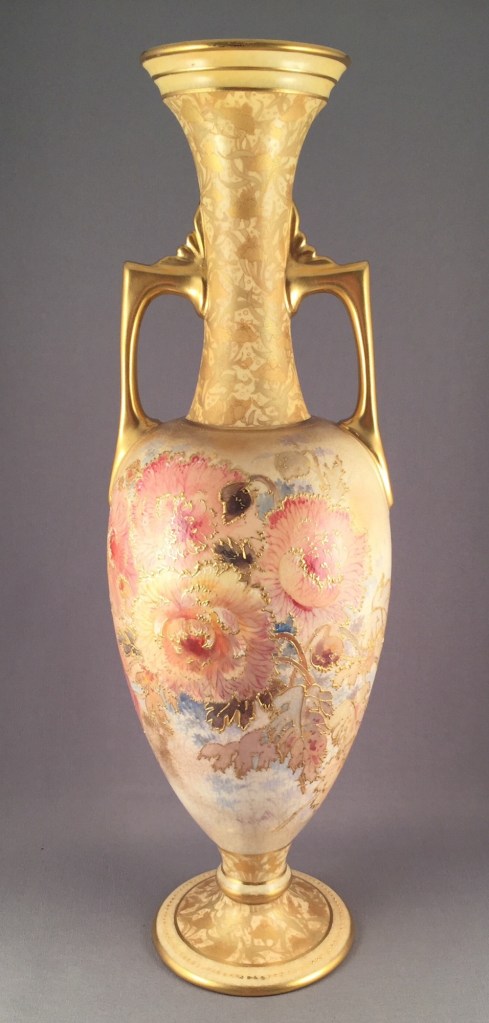
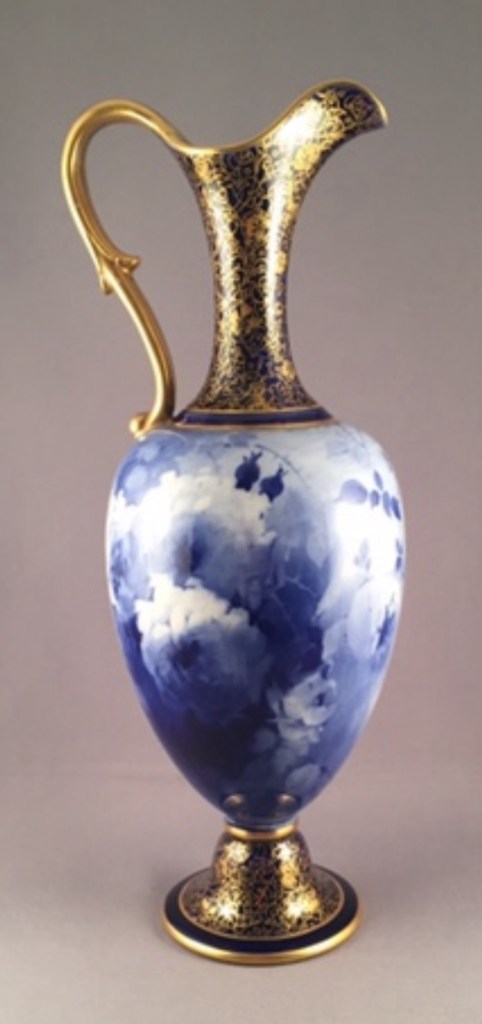
Charles Noke continued to experiment with glazes long after the departure of Cuthbert Bailey with whom he had perfected the Flambé glaze in the early 1900’s. And so in 1920 Sung was introduced, whereby painted decoration, colour and gilt are fused with the  flambé glaze. I am sure you will agree that early examples like the one illustrated are magnificent.

However, it is in the flesh that these pieces must be enjoyed to full effect as in this slide.

Vases, large and small were decorated with exotic birds, pixies in woodlands, fish in seascapes along with many other subjects. These pieces were painted principally by Harry Nixon, Arthur Eaton and Fred Moore.

Sung glazes can be found on Buddhas, as seen here in this advert from the 1920’s, a handful of suitable early figures from the HN range such as A Spook, as well as animals, in particular elephants, a favourite of Charles Noke.

Rare Sung vase featuring a bird of paradise and snake in combat!

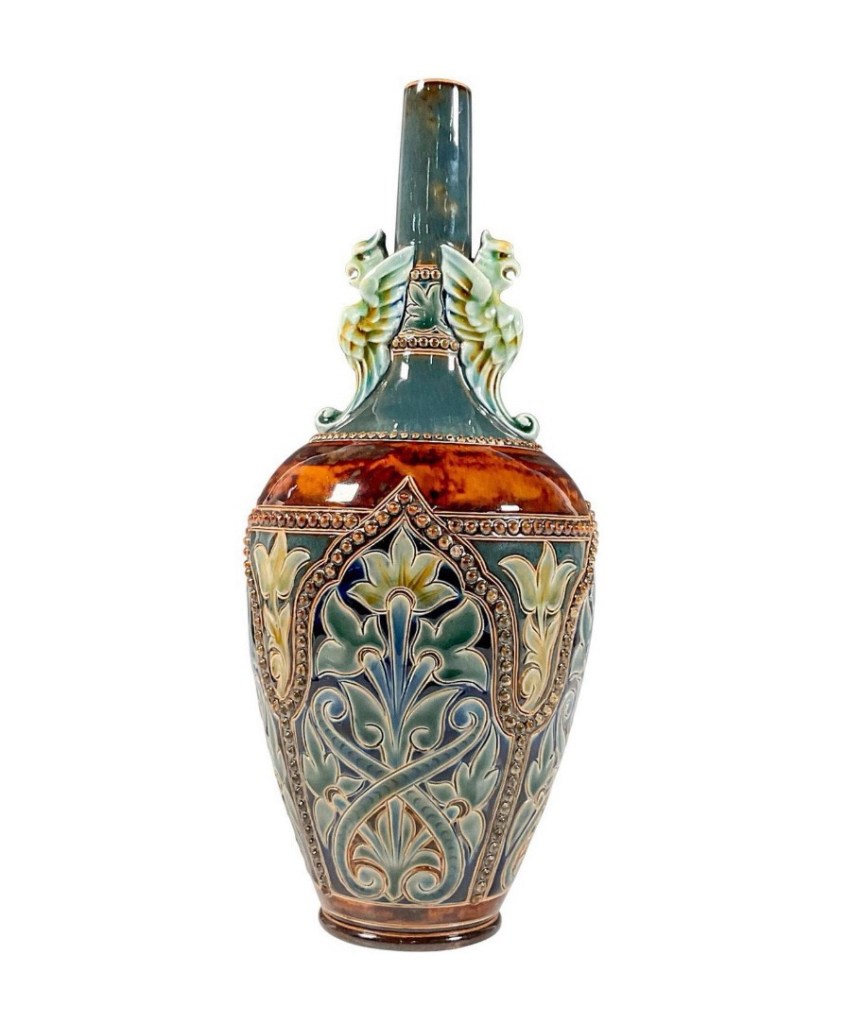
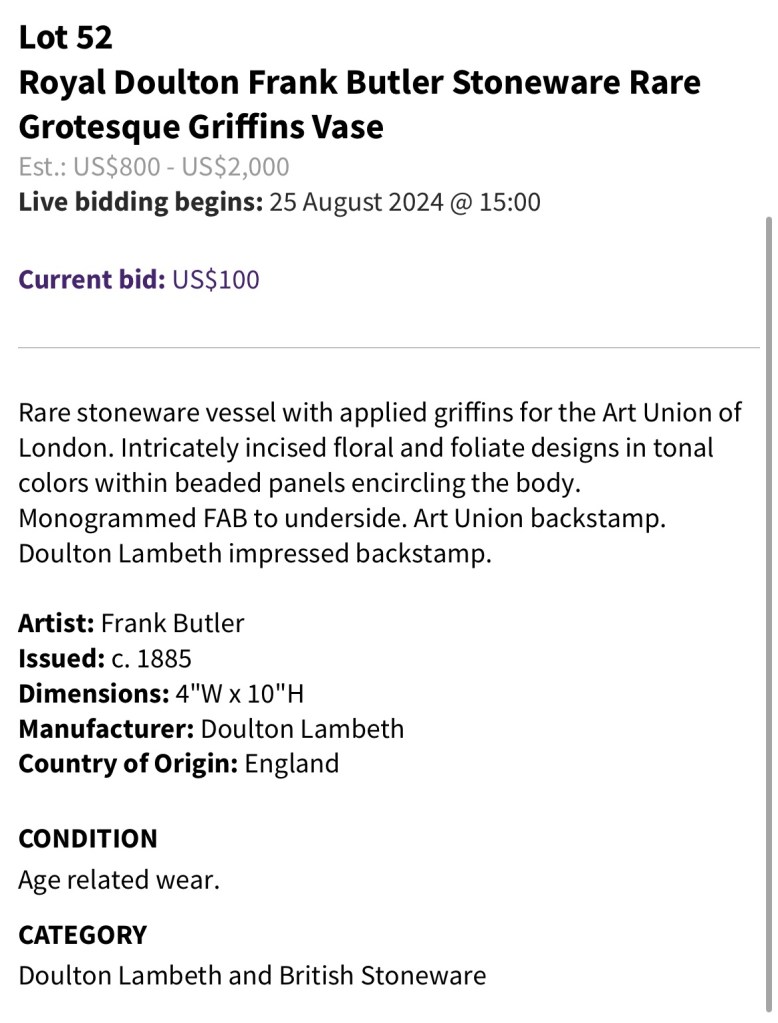
A wonderful Doulton Art Union Lambeth piece by FAB!

This wonderful example of an Art Union piece is coming up later Lion and Unicorn Auctions this month.

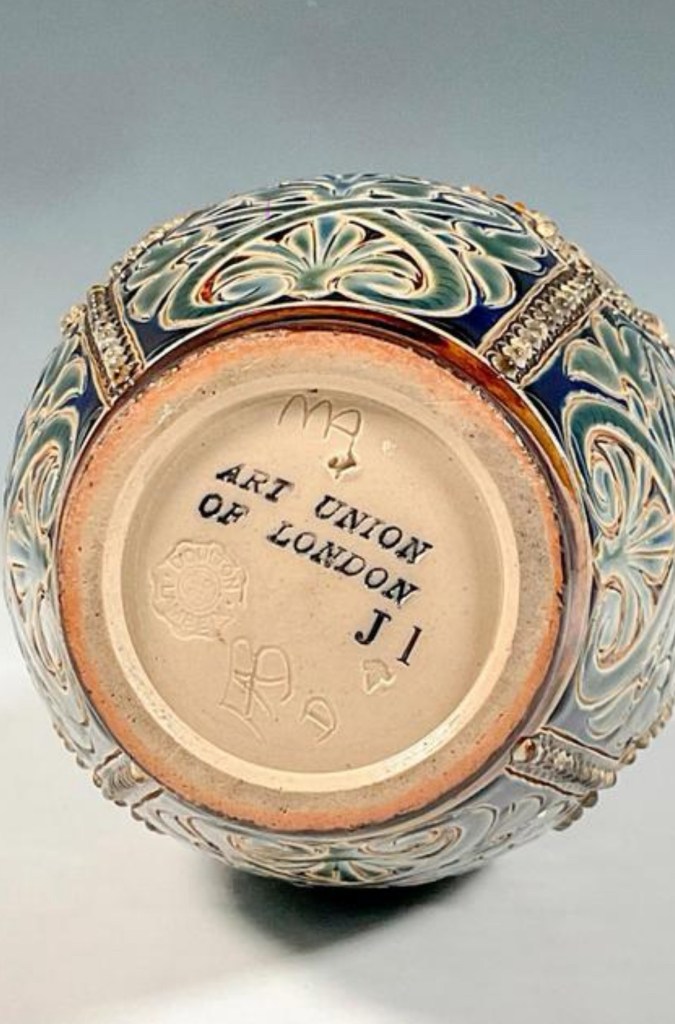
Art Union of London

The presence of ‘Art Union of London’ on Doulton ware, indicates that it was produced in a series and specially selected for members of the Art Union, whose subscription brought them access to important art wares from many sources including Doulton. Both Lambeth and Burslem produced wares for the Art Union, although examples of Burslem pieces are much harder to find. Doulton began supplying items in 1885 through to the early 1900’s (approx. 1902) and typically their most celebrated artists such as Mark Marshall and Eliza Simmance provided the original designs. Despite these items not being one off pieces, prices for these marked ‘Art Union of London’ are in line with one off pieces by these major artists. 

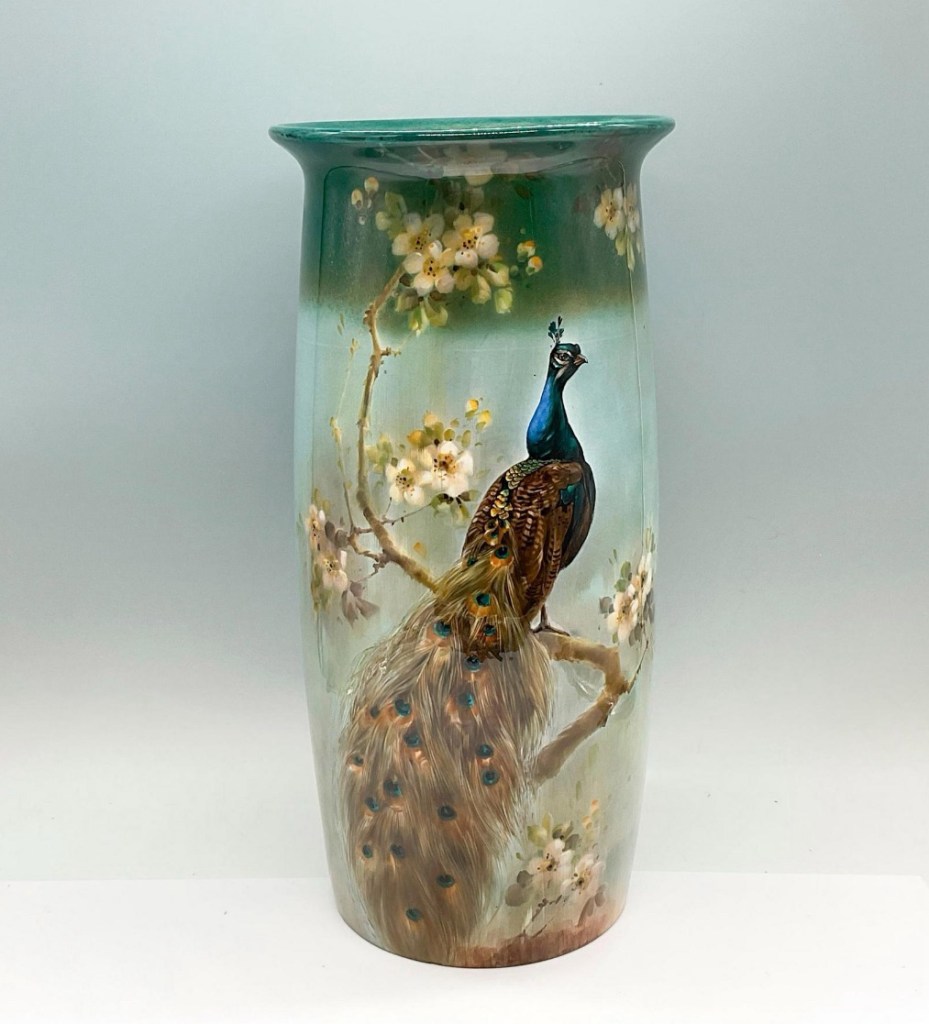
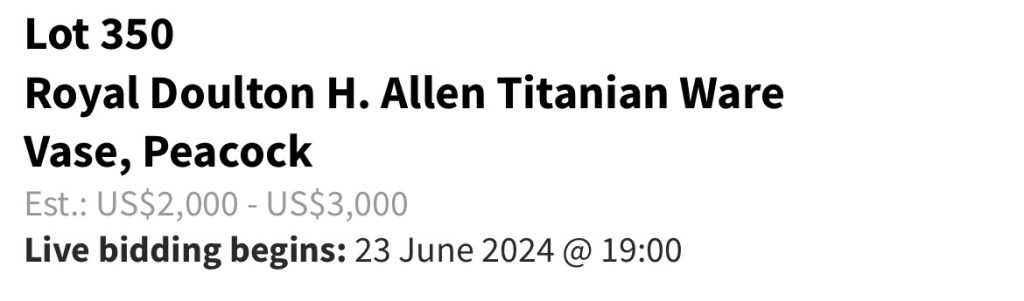
Royal Doulton Titanian Peacock vase hand painted by Harry Allen

Inspired by Lion and Unicorn’s latest offerings coming up June 23rd 2024, here is a look into the artist behind the piece!

The name Harry Allen will be familiar to many Doulton collectors because of his association with so many of Doulton’s most famous lines from Flambe, Sung, Titanian, figures and of course to the fantastic hand painted items by this great Doulton artist. 

The son of Robert Allen who himself led an art studio at Doulton in Burslem, Harry proved himself a versatile artist but he will be forever associated with his enchanting desert scene images carefully painted onto all manner of items from jugs to plates and everything in between!

When it comes to Titanian, few items can be a sought after as a peacock vase! Not only magnificent in size but the detail in painting is exceptional!

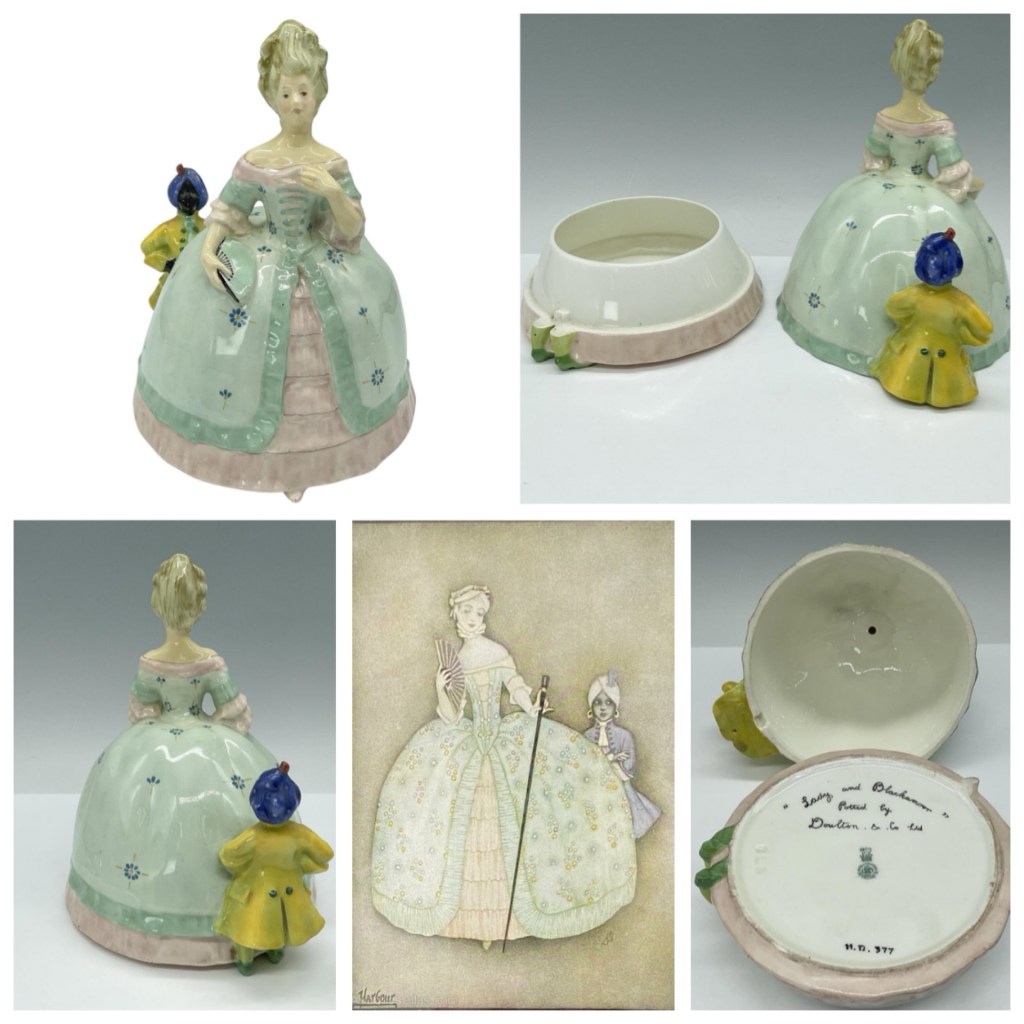
The inspiration behind Royal Doulton’s Lady and Blackamoor!

Jennie Harbour’s influence on Royal Doulton’s HN collection is relatively unknown. Certainly her name does not readily crop up in their company records, which detail when they bought many ‘sole rights for reproduction in china’ images from greetings card manufacturers and even artists directly. However, Harbour I have yet to find reference to….

Nevertheless her influence can be seen throughout the 1930s and Leslie Harradine clearly drew inspiration for many of his classic figures from her work including Miss Fortune, Lady Clare, Modena, Annabella etc….

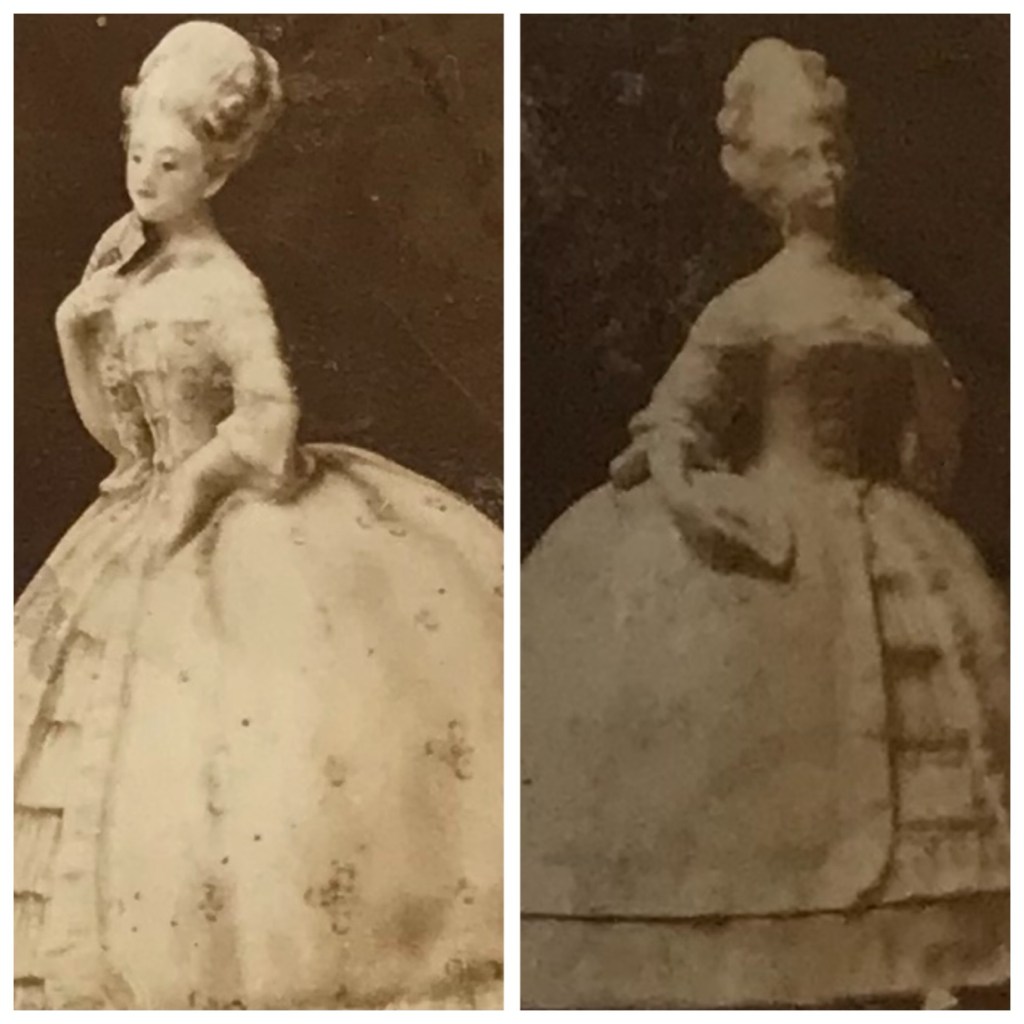
Here we have a very early and rare figure Lady and Blackamoor together with the Harbour picture that inspired the group. Like a handful of bell-shaped figures from the time the model has been adapted as a powder bowl for a lady’s dressing table. Although unattributed here, these powder bowls were typically produced for Dubarry.

It will interest collectors to know that the head on the group illustrated was also remodelled for this bowl. Here is her original head from an early group photograph. The model number also differs model 267 being the original one piece group and the powder bowl model 273. Also note the differing position of the fan and hands.

This wonderfully early figure is coming up @ Lion and Unicorn auctions 21 April 2024. Visit http://www.lionandunicorn.com for further information!

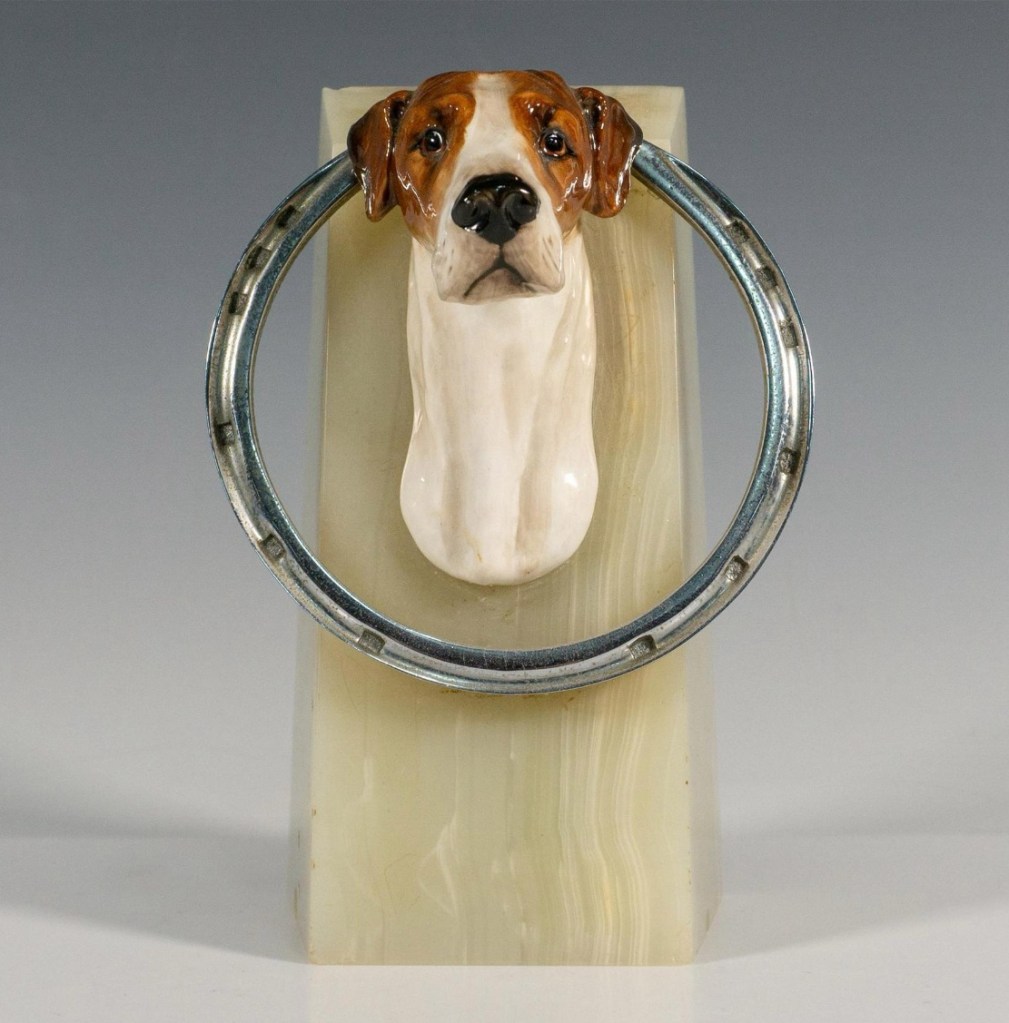
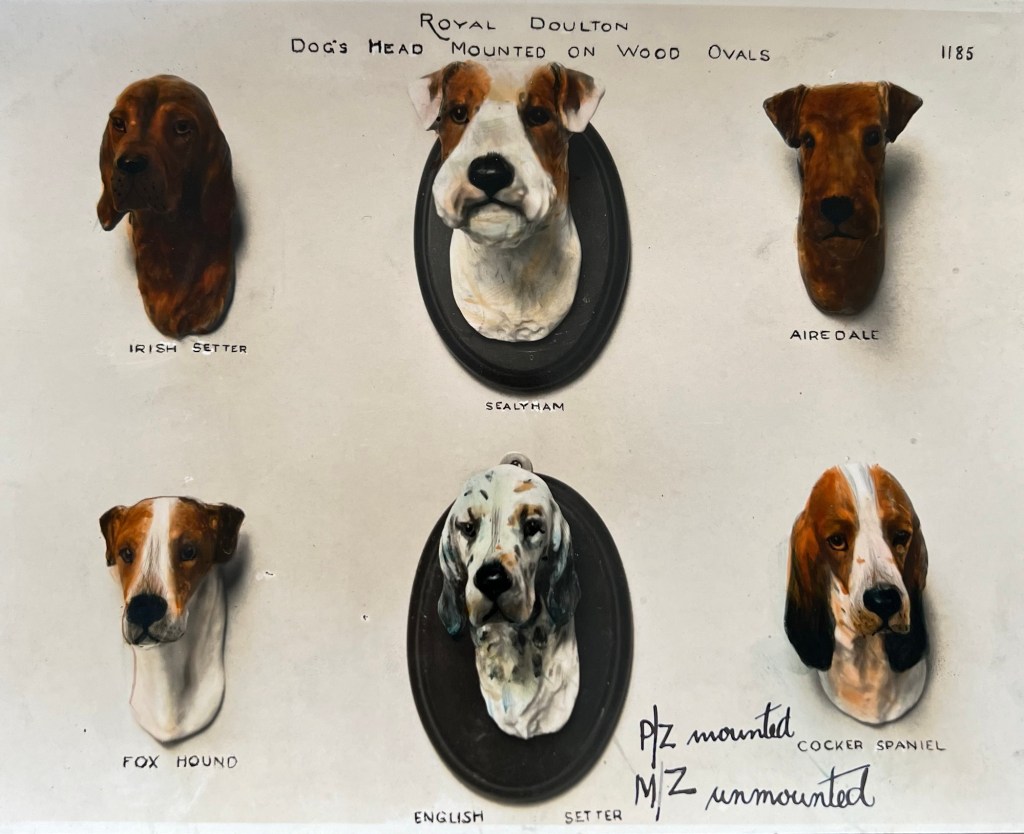
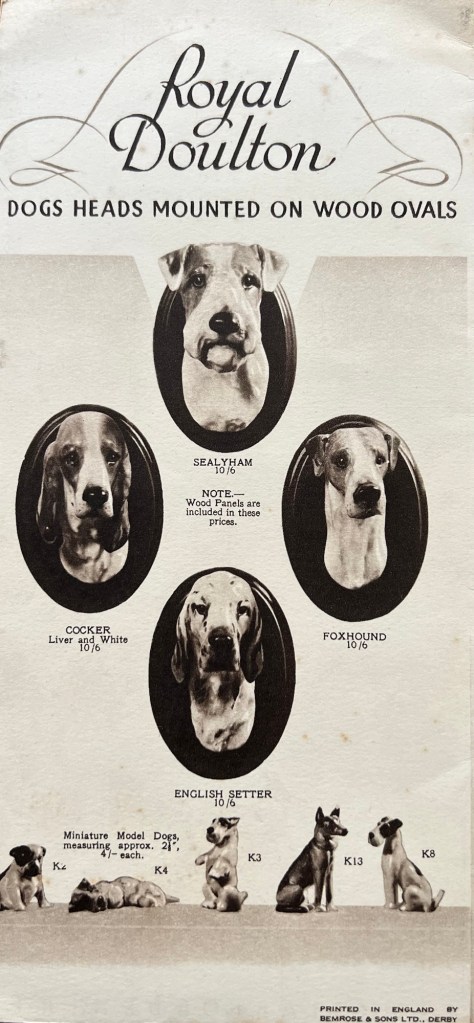
Collecting Royal Doulton dog heads

As we gear up for the next Lion and Unicorn auction on Sunday, what better time to look back at this rather unusual derivative of Doulton’s famous championship dog collection also from the 1930s.

As well as seven different dog models, of which the setter, for example, was produced in a black colourway too, there is also a rare fox head model.

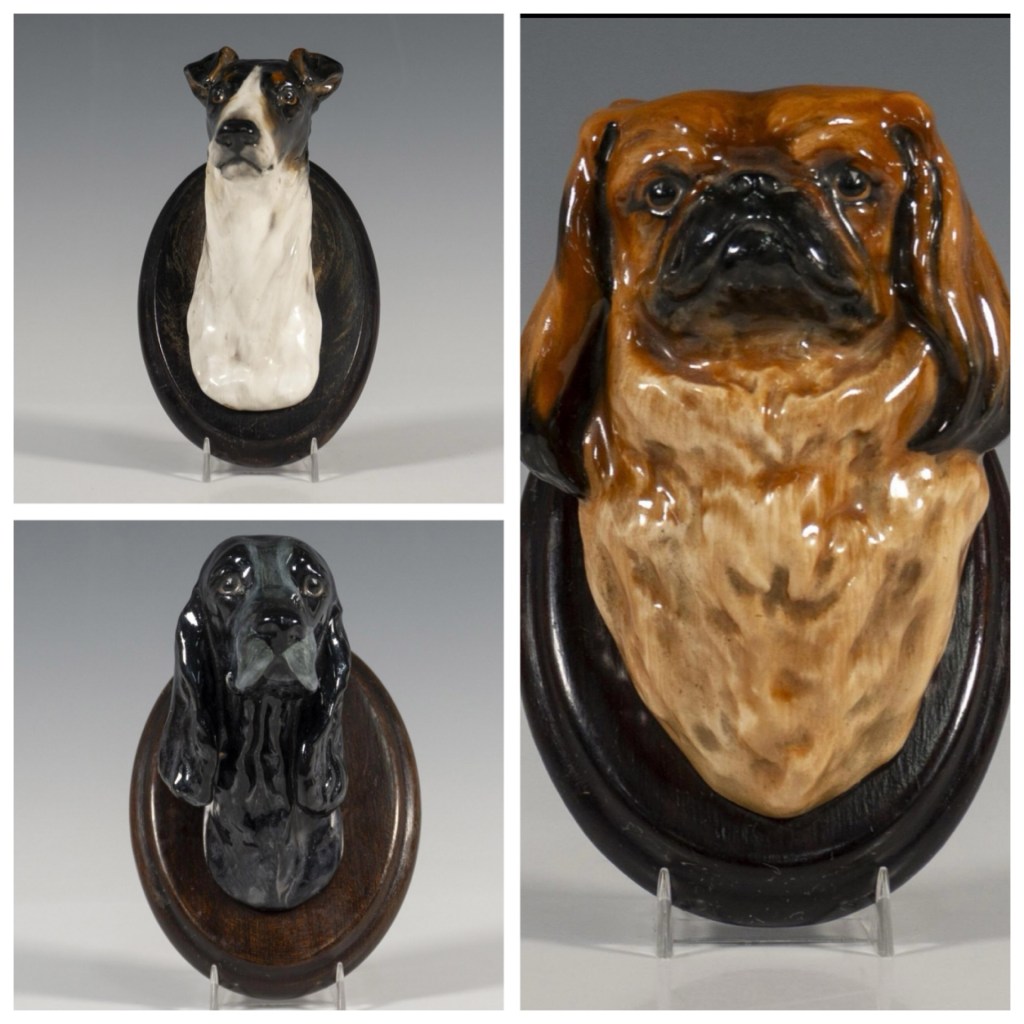
These animal heads are typically found – when they do turn up – mounted on wooden ovals, as illustrated in this original publicity shot from the 1930s.

The heads that appear to have been produced are a fox, a Pekingese, a cocker spaniel, an Airedale, a Sealyham, a foxhound and English setter and an Irish setter.

Lion and Unicorn Auctions have a selection of these rare heads coming up in their Horse and Hound sale 14.04.24!

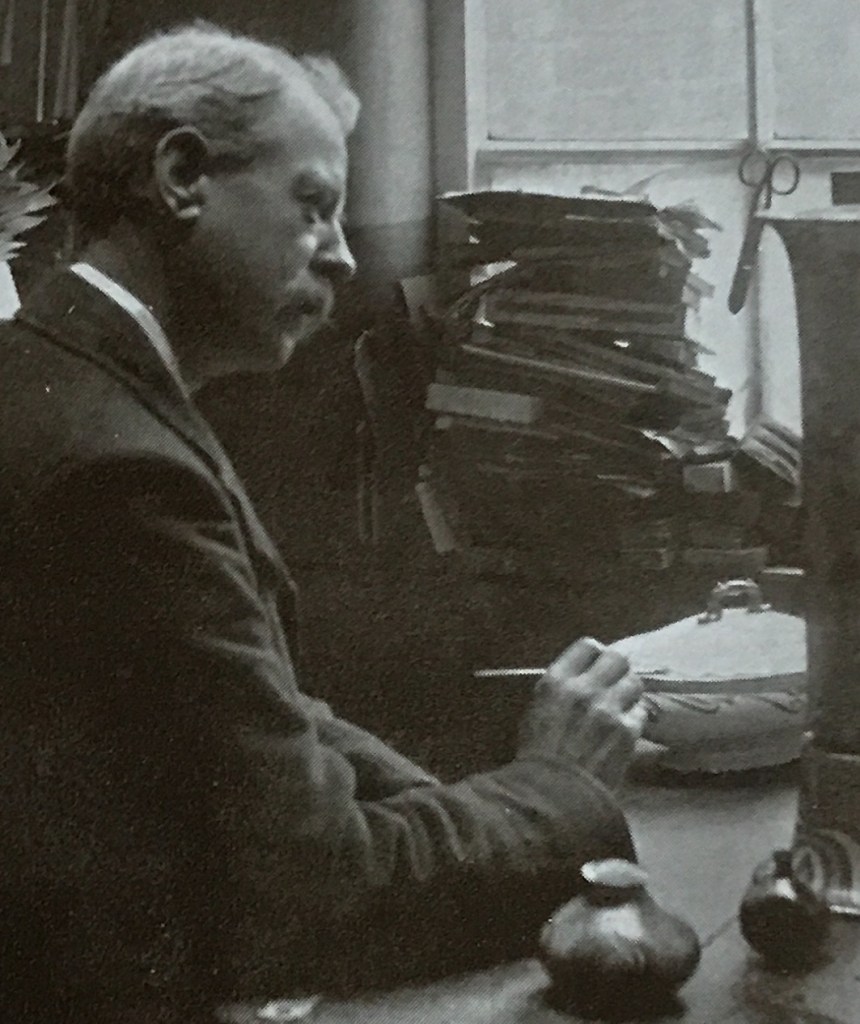
Introducing (Royal) Doulton’s Robert Allen, who ran one of the main studios at Nile Street.

Robert Allen began work at Nile St. when it was still owned by Pinder Bourne, after a brief period at Minton’s as a boy worker. Robert flourished under the guidance of John Slater, then art director, eventually taking over a painting department of his own. Work from his department is denoted by his initials R.A. followed by a number. Robert Allen’s own signed work is however, rare. Yet, he and his department were entrusted with much of the finest and most expensive decoration carried out at Burslem notably for the great exhibitions at which Doulton exhibited from the late 19thcentury. Robert was notably involved in the early development of Titanian ware.

Robert Allen in his studio c1910

The versatility of the RA studio meant that artists there worked on all manner of Doulton wares from early Vellum figures, to tablewares, to exhibition wares and even glaze wares.

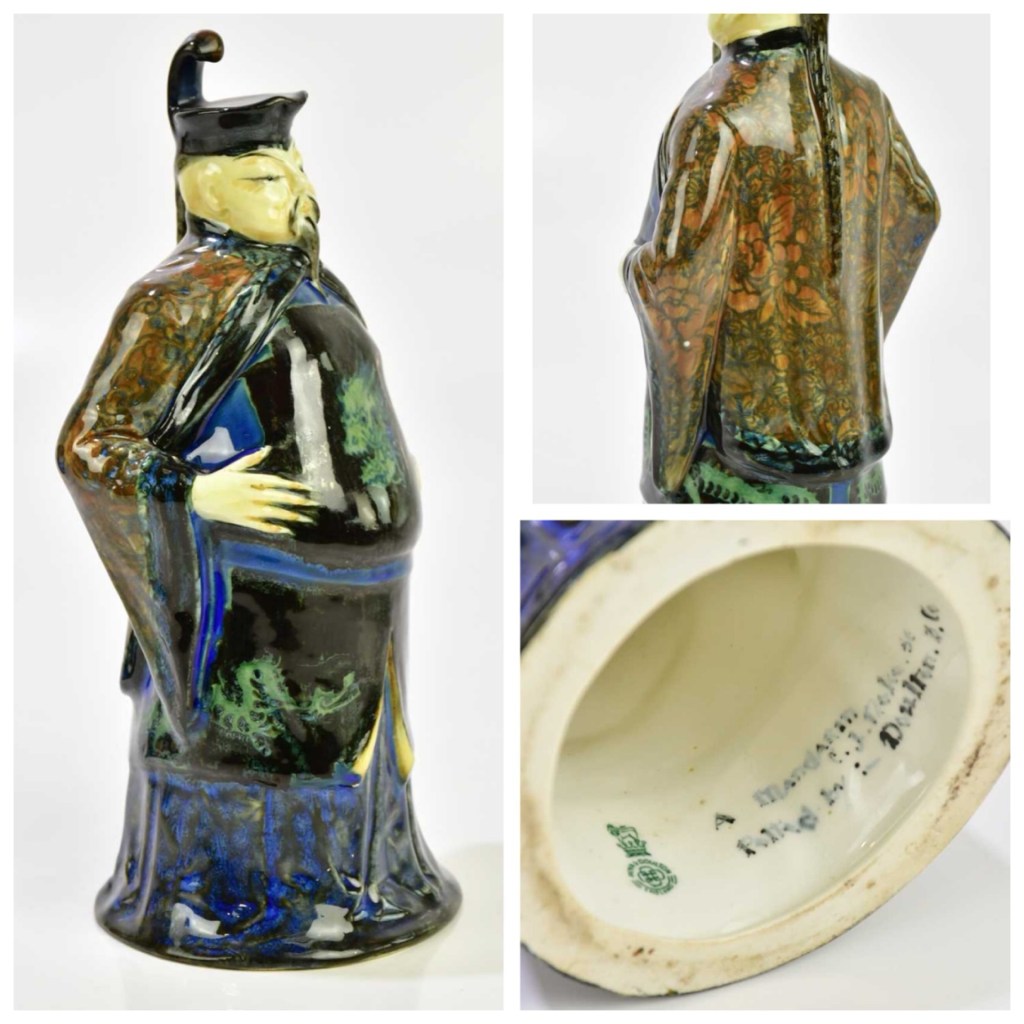
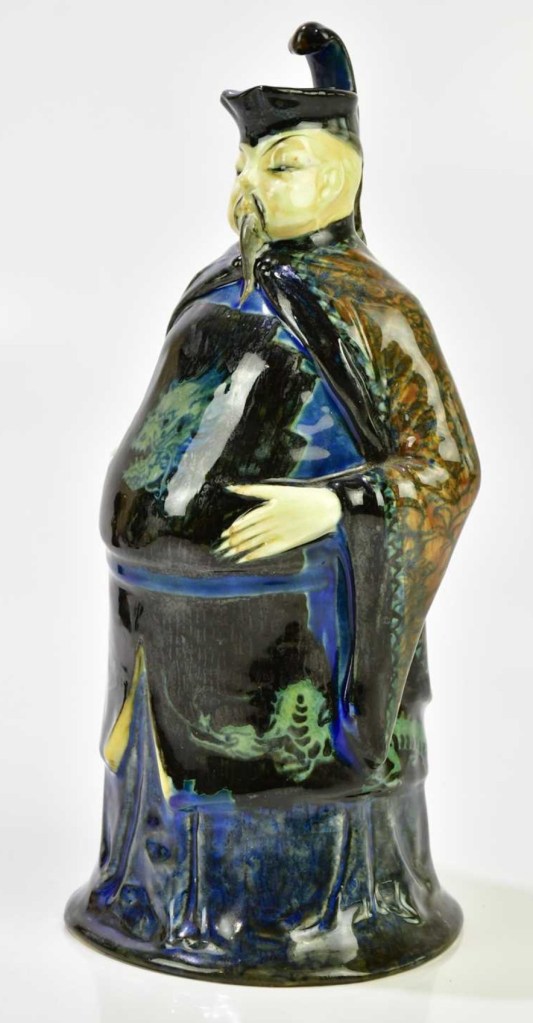
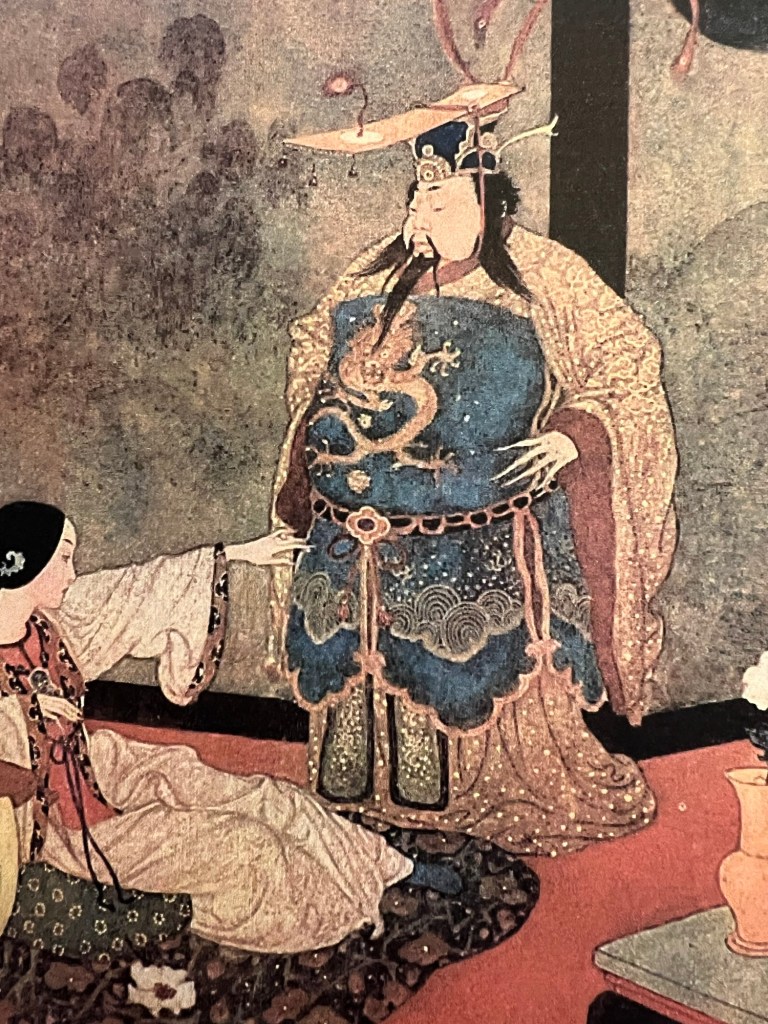
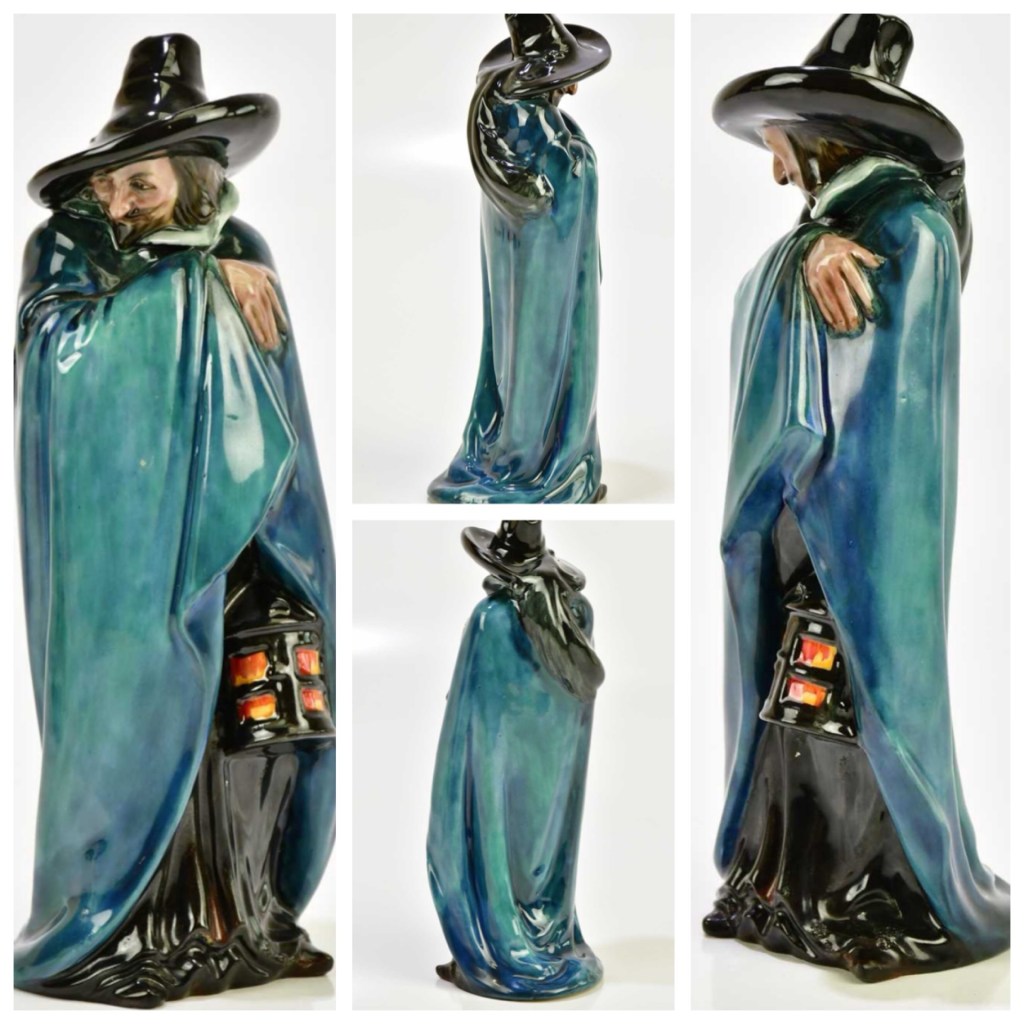
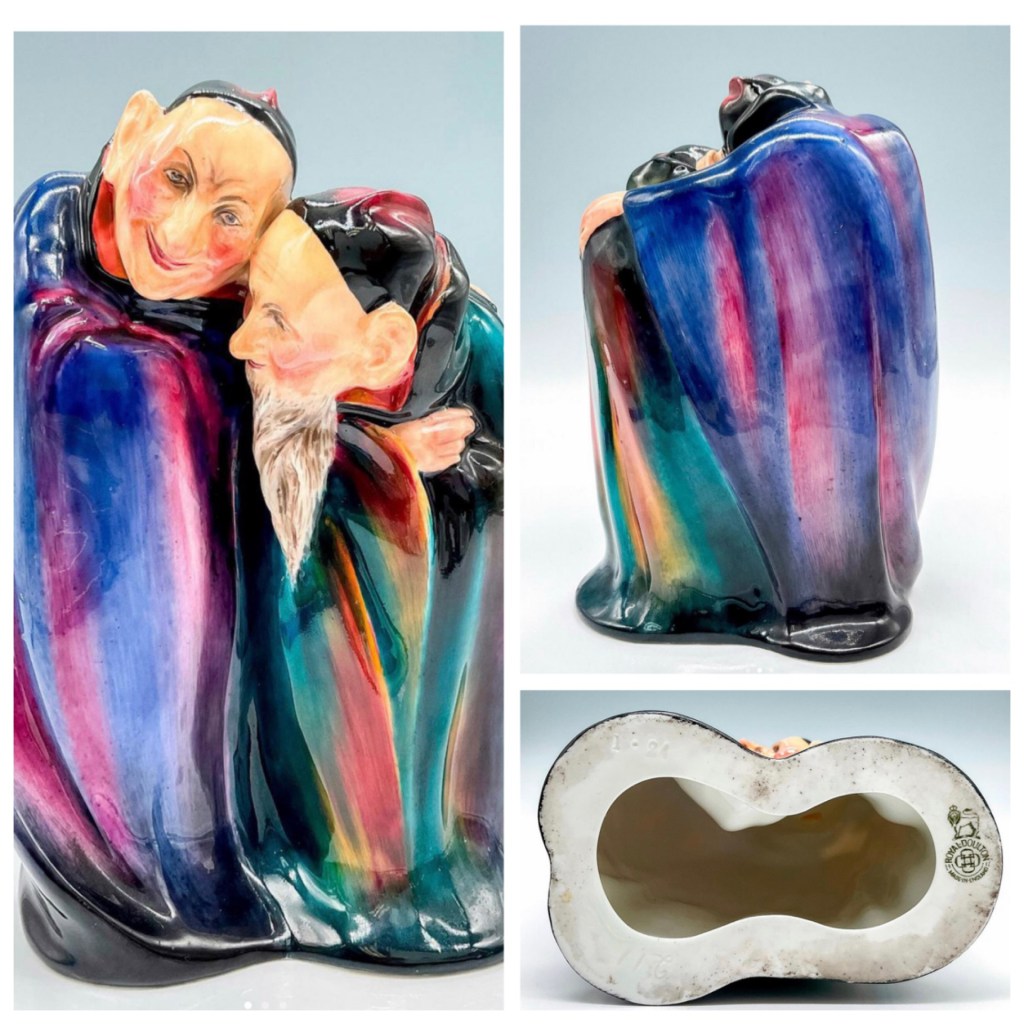
Royal Doulton’s rare Double Spook!

Royal Doulton’s rare Double Spook!

Among the earliest of figures produced as part of the HN series sits Soooks HN 88. Not only do they represent the whimsical but also the often dark humour of the time.

Noke’s Spooks were made as a companion figure to Harry Tittensor’s A Spook HN 50 introduced in 1916. Whilst there were several colourways of the latter, only three official versions of Spooks were produced. Both models were withdrawn by 1936, although in reality any that were made later in this timeframe were likely to be one off special orders, as with all the early figures.

Returning to our star piece today, the colours are typical of other figures in the HN range from the 1920s where multiple firings achieved wonderful effects. The greens, purples, blues and reds are all reminiscent of Harradine’s deco beauties.

The example illustrated is coming up at Lion and Unicorn auctions and the model is clearly dated 1924 with a model number 211.

Royal Doulton’s seriesware design “Into the Land of Dreams“.

Of the many seriesware designs produced from the late 19th and well into the 20th centuries, Into the Land of Dreams certainly counts as being one of the rarest for collectors to build a collection.

Toilet set recently sold at Sworders in the UK.

Produced between 1919 and withdrawn by 1932 few pieces have surfaced over the years and (if one can use the term) typically, it is wash sets that do turn up.

In Louise’s Volume 3 of Royal Doulton Series Ware, she lists 6 scenes for us to watch out for. Items found have been marked with either D4114 or D4484.

Toothbrush holder featuring scenes 5&6 as listed in RD Series Ware Vol.3.

The title for the design is taken from a poem by Stoddard King, which was popularised as a song during WWI.

French Chest with a Certain Je Ne Sais Quoi @Kinghams

French Chest with a Certain Je Ne Sais Quoi By Adrian Rathbone, Associate Director, Kinghams Auctioneers, Moreton-in-Marsh. 2nd July 2021

An item of antique furniture by one of the leading cabinet makers of 18th Century France is coming up for auction on 10th July.
The chest of drawers, or to use the correct term ‘commode’ was made during the third quarter of the 18th Century by German born master cabinet maker (ebeniste) Jean Francois-Oeben.
Oeben is credited with pioneering the ‘commode a la greque’ in question. As the name suggests the cabinet takes its inspiration from ancient Greece and comprises a breakfront white veined marble top over a mahogany base with triple frieze drawers above two long drawers all with internal bright cut engraved gilt locks and standing on elegant cabriole. Ormolu mounts and handles adorn the exterior. J. F. Oeben’s stamp appears on the upper part of the carcass.
This distinctive form of commode was almost exclusively supplied by les freres Oeben to two clients, the duc de Choiseul and Madame de Pompadour, the latter being Oeben’s most important client. In an inventory drawn up following her death in 1764, no less than seventeen commodes a la greque, all supplied by Oeben between 1761-1763 for the Chateaux de Versailles, Auvilliers and Menars. The importance of Madame de Pompadour’s patronage in the creation of this form of furniture is furthermore underlined by the inventory taken following Oeben’s own demise in 1763.
Consigned by a Yorkshire based private client who acquired the piece in the 1980’s, it carries a pre-sale estimate of £20,000-30,000 in Cotswold auctioneers Kinghams on 10th July.
For further information, please contact Adian Rathbone at Kinghams Auctioneers of 01608 695695 or email adrian@kinghamsauctioneers.com

A place to share enthusiasm for all things Royal Doulton! All original content ©Christopher Evans 2014 unless otherwise credited. No unauthorised reproduction permitted.