Tag Archives: Doulton 1950’s

An A-Z of Collecting Royal Doulton – Awards

From the 19c into the 20c Doulton was represented at all the major exhibitions and has been detailed in the great tomes on the Royal Doulton Potteries by Eyles and Irvine, the company itself won many of the major prizes at these exhibitions. The first exhibition Doulton took part in were in 1851, the year of the great Crystal Palace exhibition.
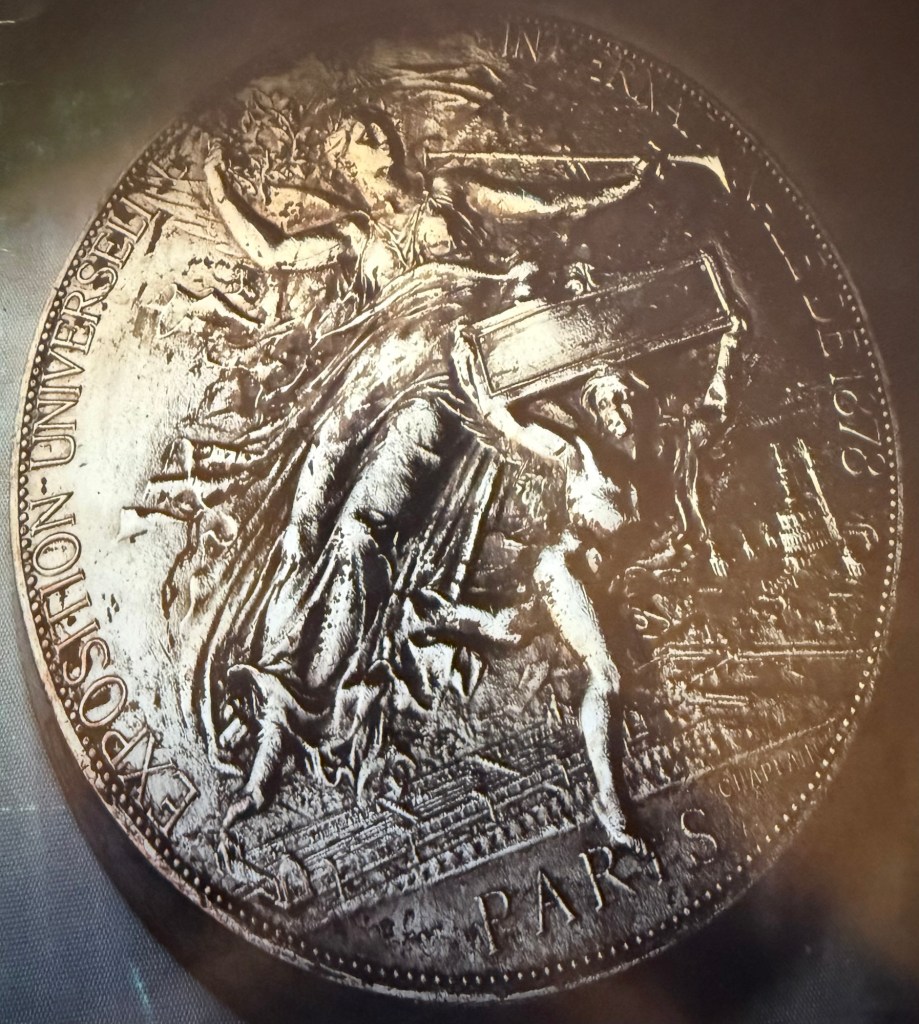
One of 9 awards given to Doulton at the Paris Exhibition of 1878.

The awards mentioned are but a selection from the hundreds the company won over the centuries. The first offerings presented were of utilitarian nature such as drain pipes and sanitary wares as one would expect.

At the South Kensington Exhibition of 1871 Doulton showed their first selection of set pottery, Sir Henry having been persuaded to branch out into art pottery.

A mere five years after this, Doulton presented over 1500 items at the American Centennial Exhibition in Philadelphia. At the Chicago exhibition of 1893, Doulton won more prizes than any other pottery in the world. The success in Chicago brought the award tally then to 94 Gold medals and 1st class awards, plus 101silver medals and second class awards.
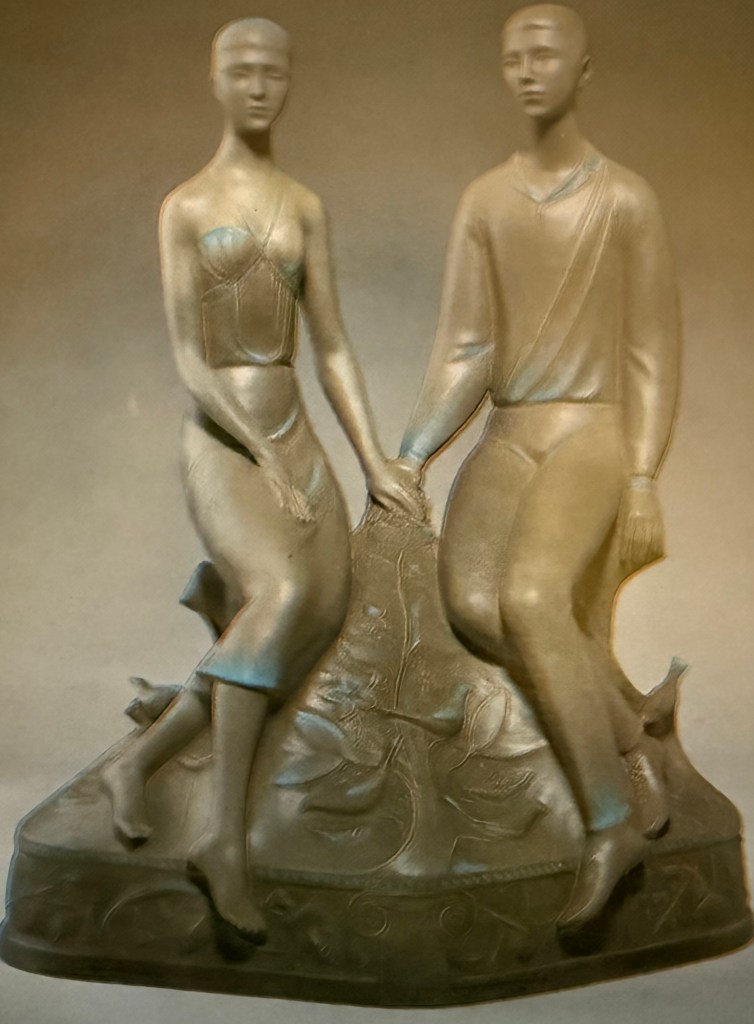
The Peggy Davies study that won the Grand Prix at Brussels in 1958.

The last of the major world exhibitions took place in Brussels in 1958 and befittingly, Doulton won the only Grand Prix awarded to a British pottery firm for the Peggy Davies study ‘Art and Technology’. Manufactures were subsequently not included in world exhibitions.

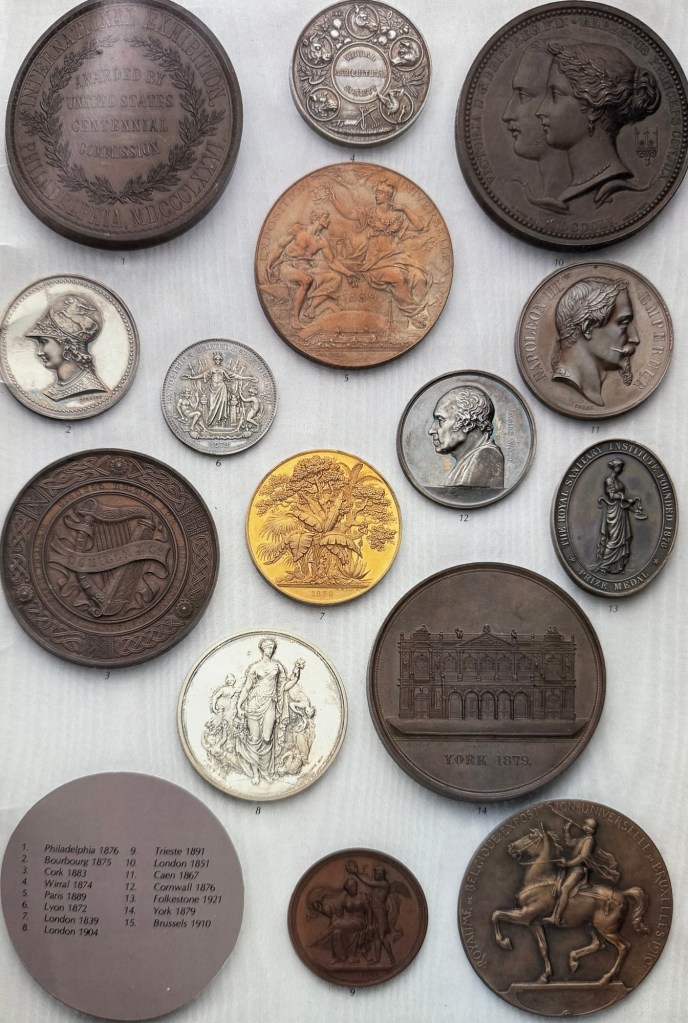
Here is a selection of Doulton’s awards…..

  1. Philadelphia 1876
  2. Cork 1883
  3. Wirral 1874
  4. Paris 1889
  5. Lyon 1872
  6. London 1839
  7. London 1904
  8. Trieste 1891
  9. London 1851
  10. Caen 1867
  11. Cornwall 1876
  12. Folkestone 1921
  13. York 1879
  14. Brussels 1910
  15. St Louis 1904
  16. Melbourne 1880
  17. Chile 1875
  18. Versailles 1873
  19. London 1862
  20. Hamburg 1863
  21. Paris 1878
  22. London 1865
  23. Vienna 1873
  24. Cape Town 1877
  25. Far worth 1876
  26. Tasmania 1891
  27. Chelsea 1905
  28. Birmingham 1872
  29. Columbia 1892

That is not to mention the individual awards won by the company’s artists for their work for the great firm. 
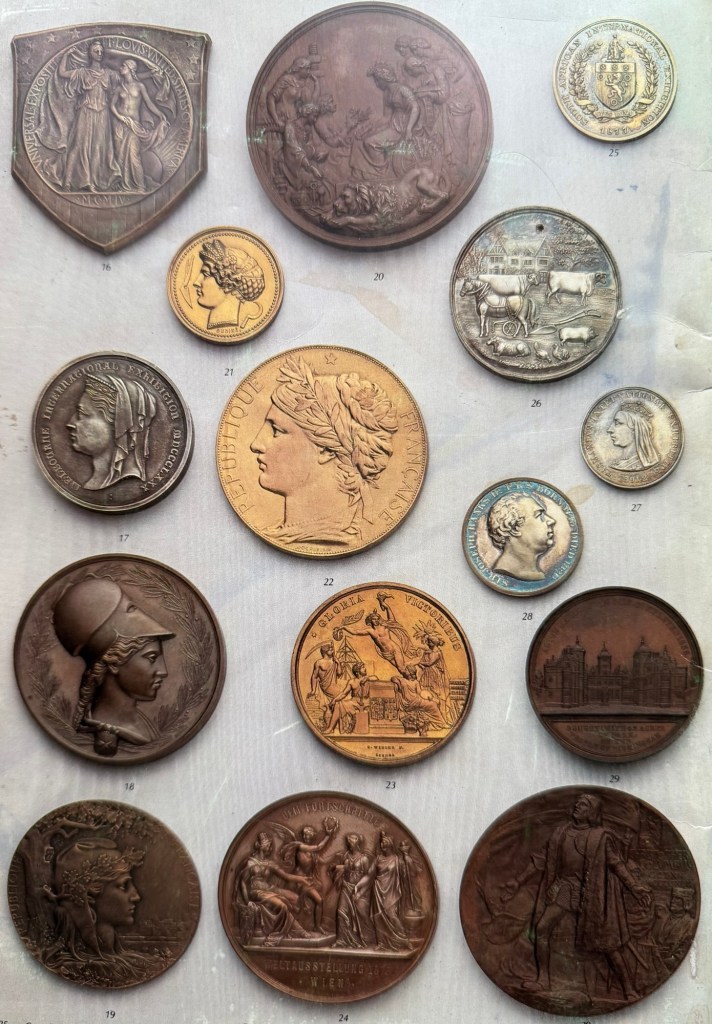
Images from the Royal Doulton Review 1980.

How to recognise a prototype…

One of the most heart stopping moments for any collector is the moment they hope that they have spotted a prototype figure. The hunt for prototypes is, however, a real mine field as there are always unscrupulous people out there wanting to cash in on our desire for that one special piece for our collections. That is why my advice is always to buy from a reputable dealer with a proven track record for discovering and supplying the unusual!

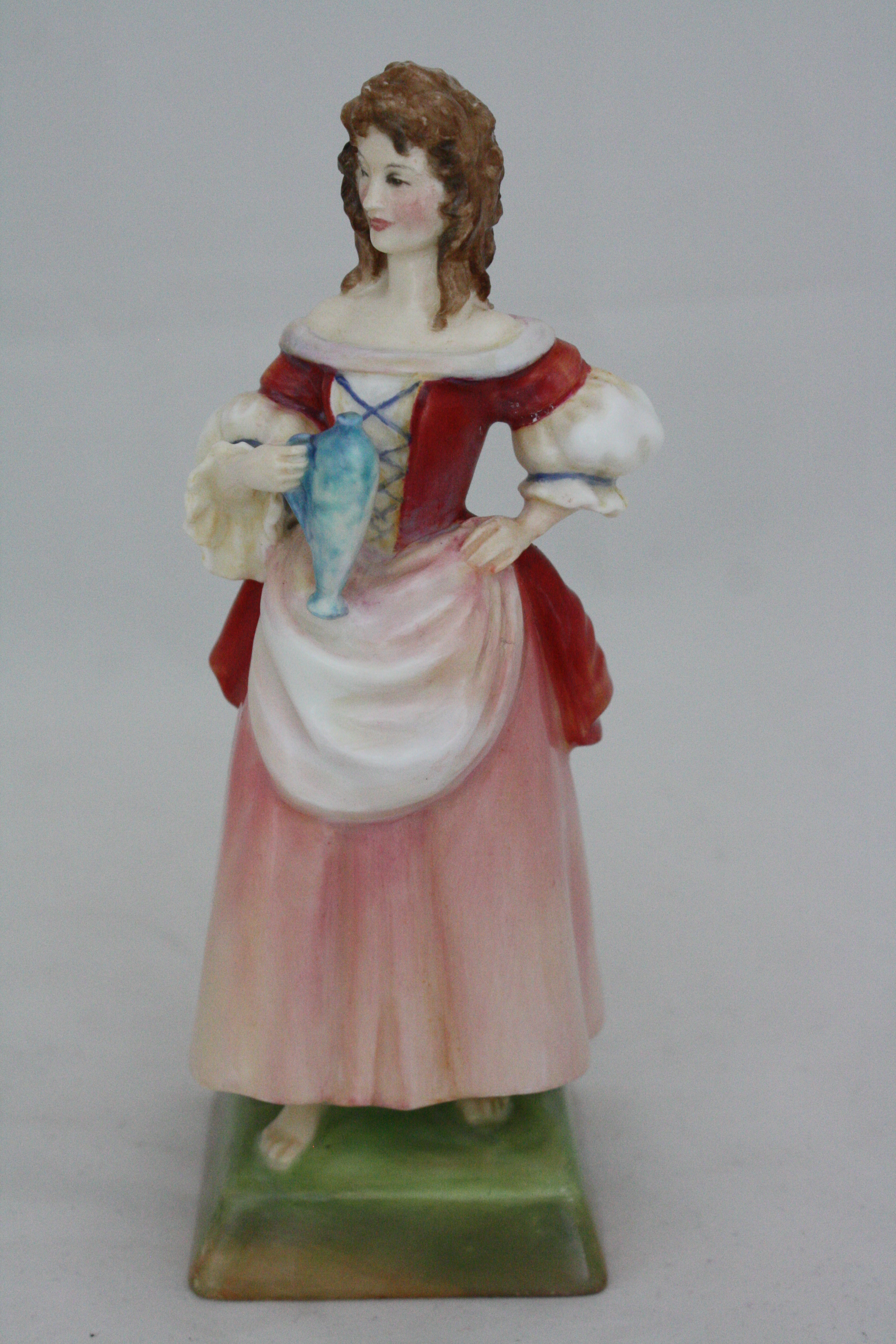
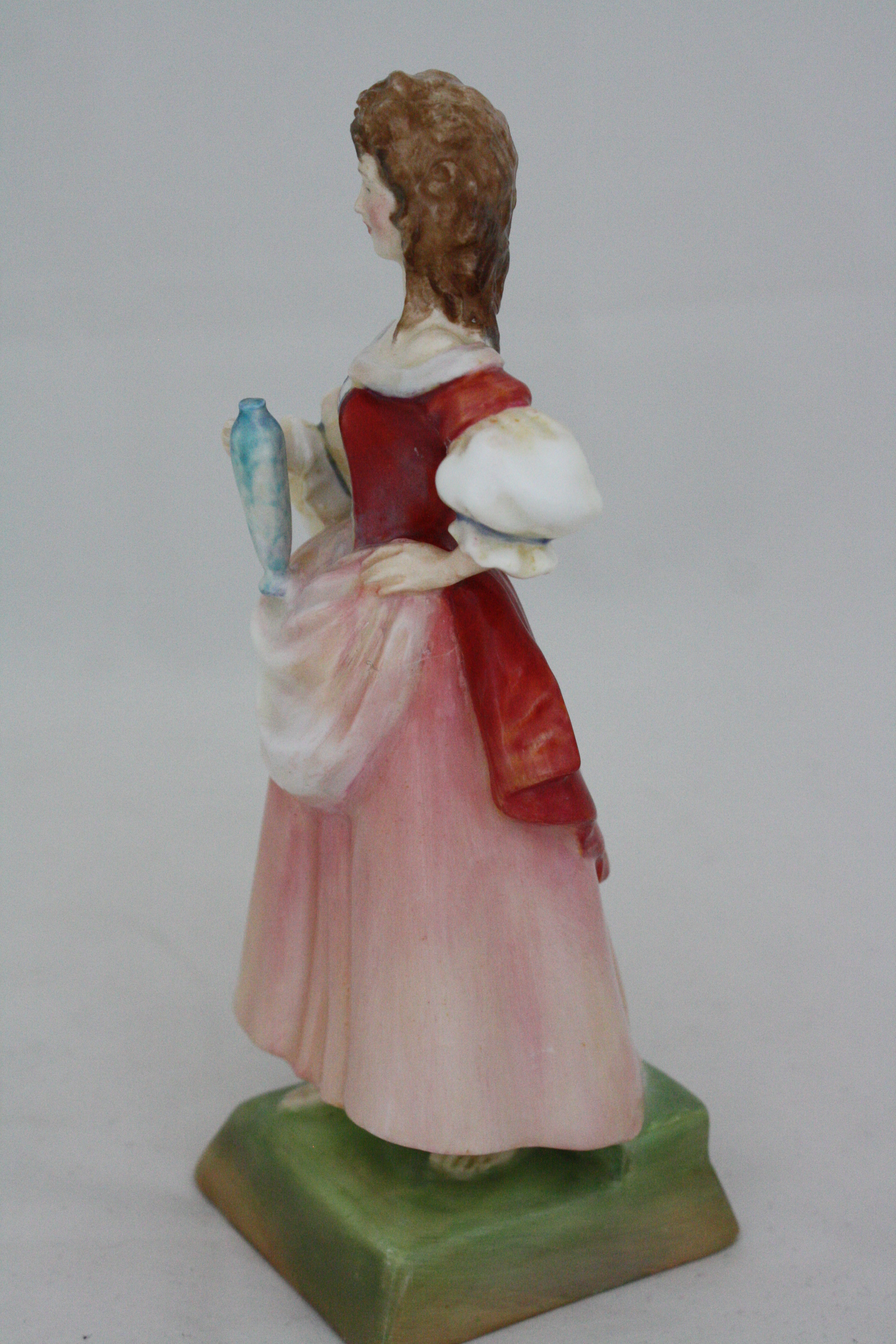
I have recently been asked for advice from Karyn and Gordon Harvey on the figure below from their collection, purchased recently and something they hope is a prototype. Here are the pictures they sent in.

Image

IMG_1323 IMG_1326


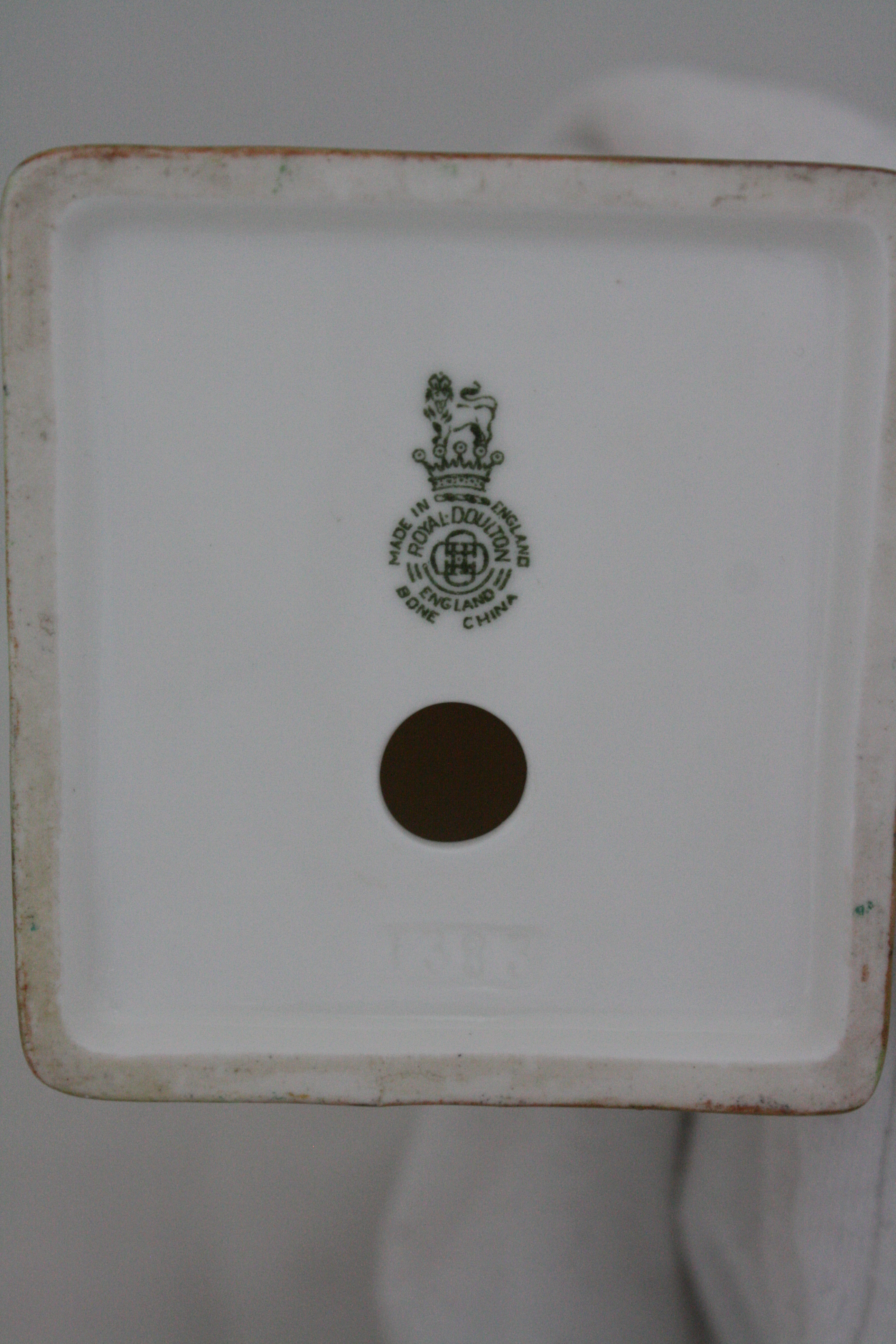
My initial thoughts were that it was clearly a Peggy Davies figure; note the style of the head and the hair and also the detailed modelling. At this time I think she really was trying to imitate Harradine, before developing her own individual style. The head and hair are very reminicent to her figures The Leisure Hour and also Promenade.  One give away to any unknown figure is always the face – I once heard that only after 10 years in the figure department would a painter be allowed to paint faces! Here we can see a very typical Doulton face of the 1950’s. Then we look at the base, and whilst there is a Doulton stamp – this cannot be taken in isolation to say for definite that it is a Doulton figure. However, here you can clearly see an impressed model number. Alas the shape books and design books are no longer available for us to consult, but through my own research I have put together a numbering sequence which leads me to believe that the model dates from the early 1950’s, and specificially to ca. 1953 and I am confident in saying that it is a Doulton piece.

Many prototypes from this time appear to be the work of Peggy Davies, a time when Doulton themselves were trying to rationalise production but also manage the cost effective production of their famous figures. No doubt this particular piece was deemed too expensive to reproduce due to the detailed modelling.

Earlier prototypes and colourways often carry the artist who painted them’s initials. In my experience there are two names which crop up time and again here, and they are RB for Reginald Brown and HA for Harry Allen. This practice seems to have stopped in the 1950’s however when the painter’s initials began to be omitted.

In recent times I have noticed a whole hoard of so-called colourways and prototypes coming on to the market – and all I can do is re-iterate my belief that it is always best to buy from a reputable dealer as we would all hate to loose out on a fake!

My thanks to Karyn and Gordon Harvey for their pictures.