Doulton’s deco nudes

The liberating period of the 1920’s to 1930’s often seems incongruous to non-Doulton figure collectors who associate ladies in ballgowns with Doulton figures, but those in the know, they recall that there are a small group of nude figures produced in the art deco period that encapsulate that movement perfectly. All the figures contained in this small band of lady figures were the brain child of Leslie Harradine, Doulton’s then principal figure modeler.

As if to prove their own artistic credentials, Doulton introduced over a 10 year period several nude studies that confirmed their artistic prowess. The first we must all know was Harradine’s The Bather, modeled on this contemporary advert.
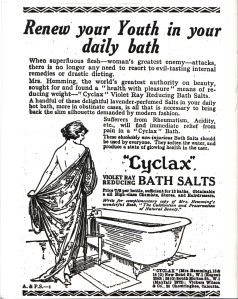
endpapers-cyclax-advert

There were six different versions of this popular model, with this colourway proving to be the most popular.
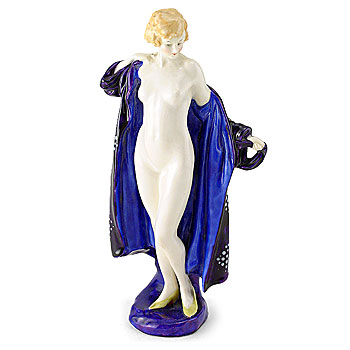
FIG-Bather-HN687

The Bather HN687.

In the succeeding years there was a second version of The Bather introduced, shown here.
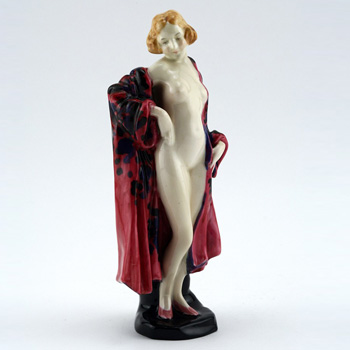
FIG-Bather-HN773


The Bather HN773 (second version).

By the mid to late 1930’s tastes had changed and prudery was once more on the rise, and so a last version of this figure was introduced wearing a bathing suit, so reflecting the continued interest in lidos.
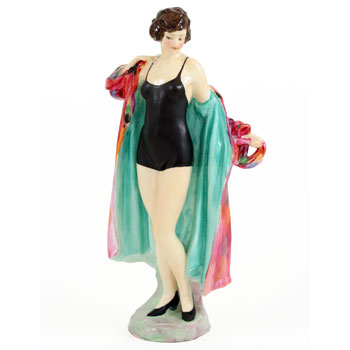
FIG-Bather-HN1708


The Bather HN1708.

However, there were other nude figures introduced at this time including Siesta shown here reclining on her day sofa.
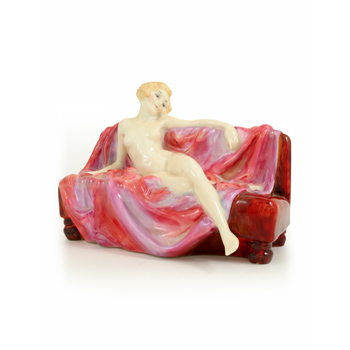
FIG-Siesta-HN1305


Siesta HN1305.

Other partially clad figures also belong to this group of deco delights such as Carnival, Circe and Susanna, a scalled down version of Circe.
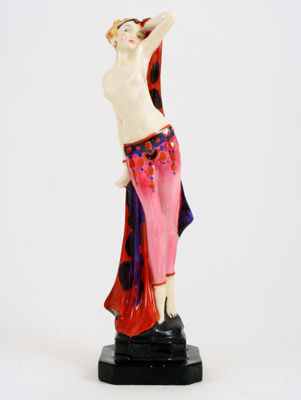
carnival_hn1260

Carnival HN1260.

fig_circe20hn1249

Circe HN1249.

FIG-Susanna-HN1233


Susanna HN1233.

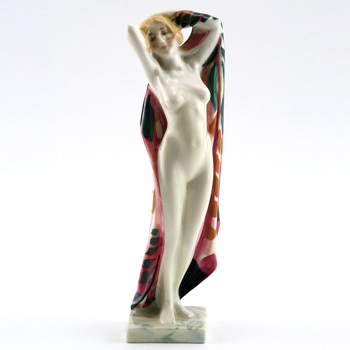
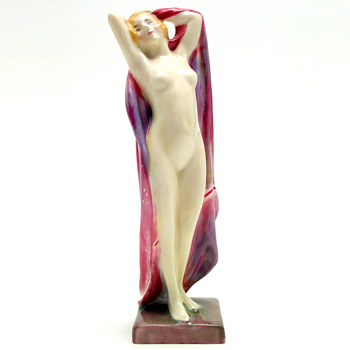
Harradine continued, however, to experiment and push boundaries in figure production. He achieved much acclaim at the British Industries Fair of 1935 for his then two latest productions, The Coming of Spring and Celia. Particular attention was lavished upon the Coming of Spring shown here.
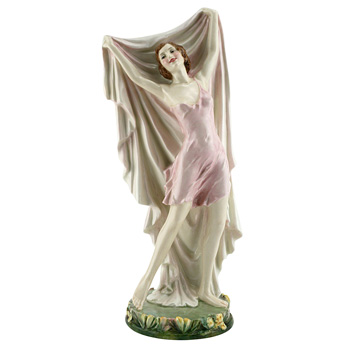
FIG_Coming-of-Spring-HN1722

The Coming of Spring HN1722.

We cannot mention deco nudes without also mentioning that small group of figures commissioned by Noke from Richard Garbe the eminent sculptor. I have in my own collection his Spring HN1774 produced in a limited edition of 100.

Yet, Harradine as Doulton’s leading modeler continued to produce nude figures up until the late 1930’s with figures such as Dawn and The Awakening.
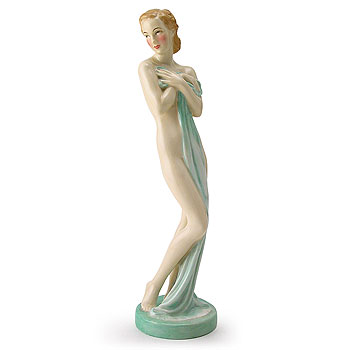
FIG-Dawn-HN1858A

Dawn HN1858 (without headdress)

There were also a slew of scantily clad beauties such as Negligée and Lido Lady as well as a few child studies such as Blue Bird.
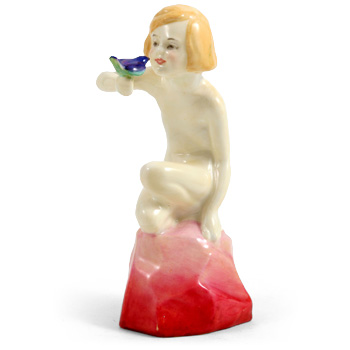
FIG-Blue-Bird-HN1280

The rare Blue Bird HN1280.

In recent decades there have been new nude introductions, not least in 2000 when Doulton themselves re-modelled four of Harradines most popular figures including The Bather (first version).


Doulton goes Dutch!

20140615-124700-46020606.jpg
In the first three decades of the 20th Century there was a real vogue for all things Dutch! No one today can quite explain this phenomenon but it reached all parts of British life with adverts featuring people in Dutch dress to the famous London store Liberty of London selling Dutch inspired gift ware. My own explanation is that it was perhaps that the traditions in a Holland were still so strong whereas they had been lost in many other European countries by this point in time.
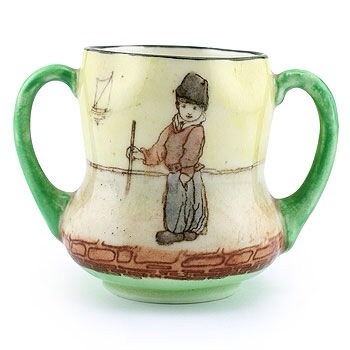
Nevertheless, Doulton were certainly on this band wagon creating their famous seriesware pattern Dutch Harlem, a variation if which was even made specifically for Libertys!

20140615-124627-45987872.jpg
A miniature tyg in Dutch Harlem.

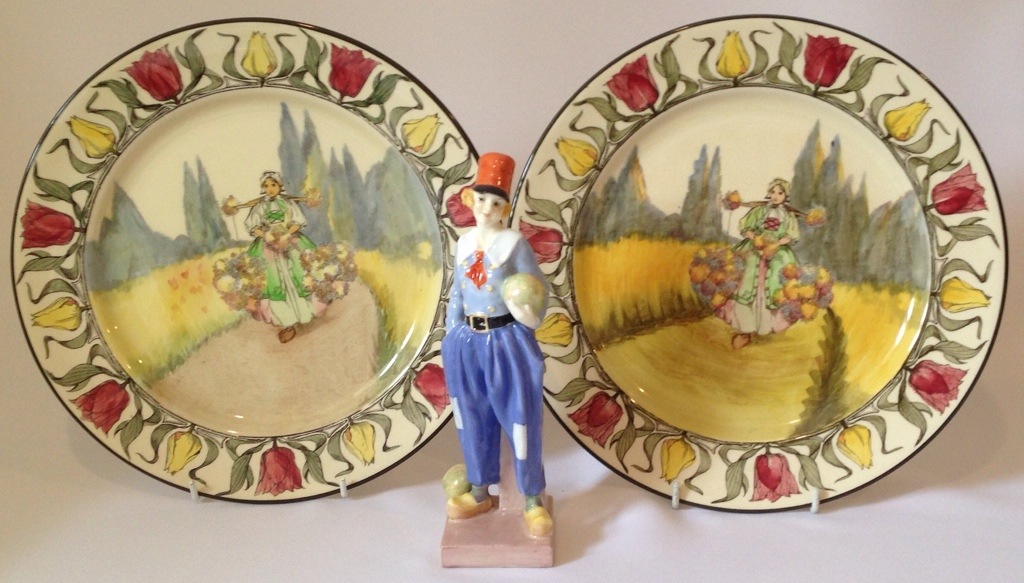
Equally charming are the two seriesware plates at the top of the page, with a deco Doulton figure named Derrick also in Dutch dress.

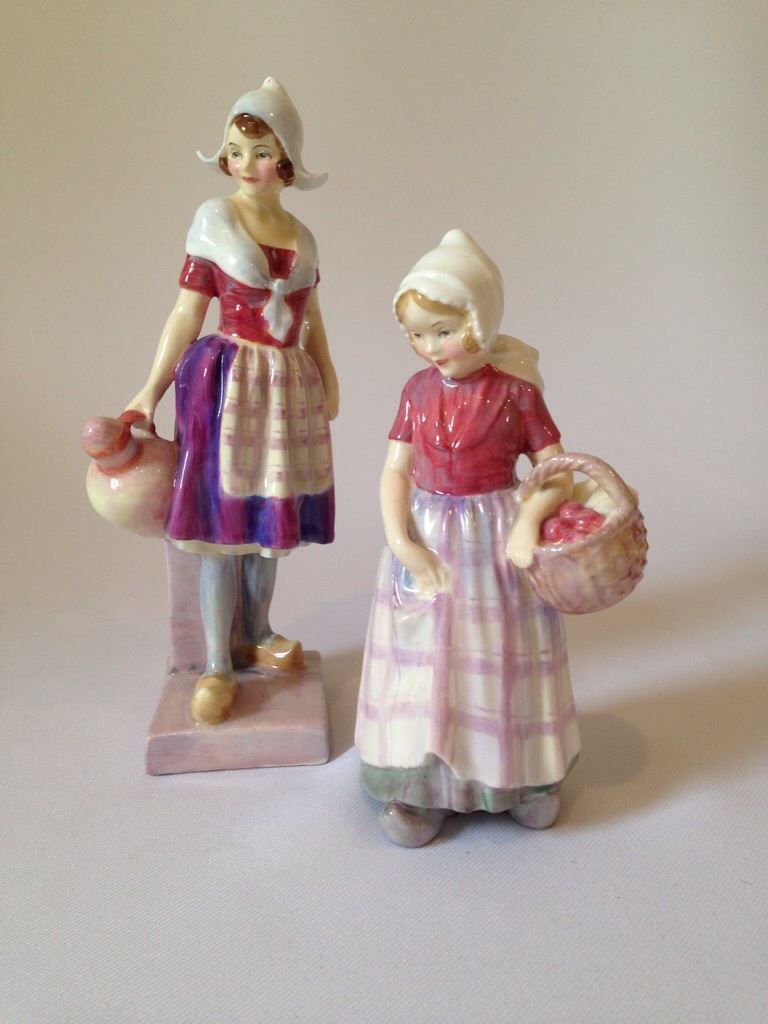
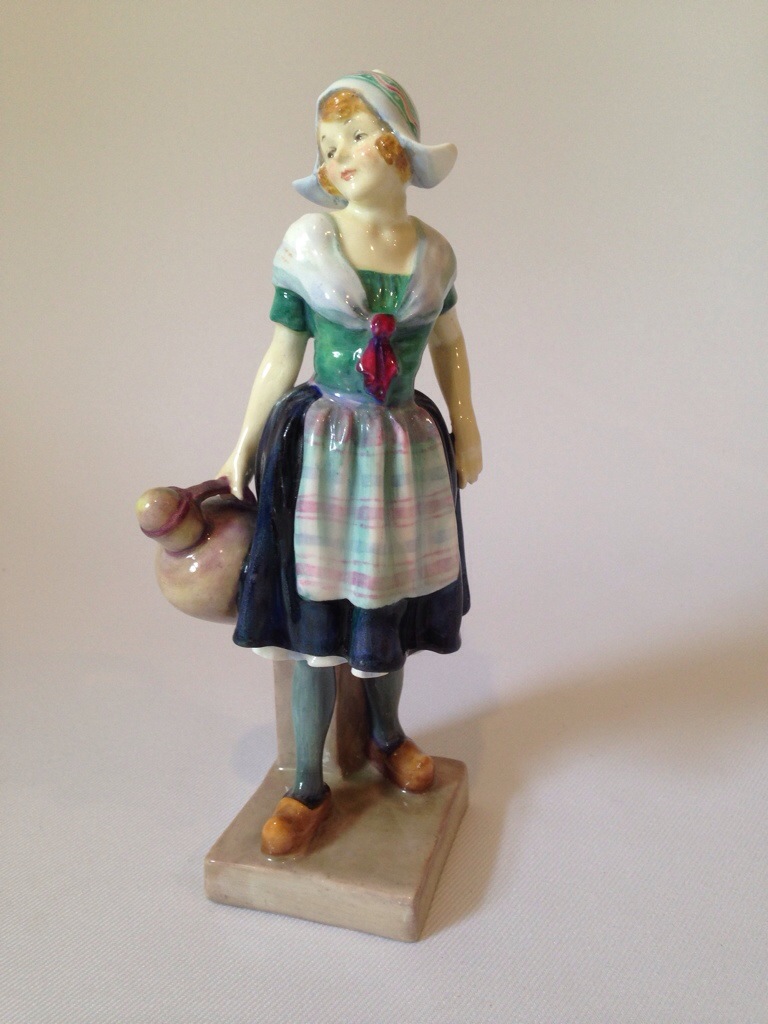
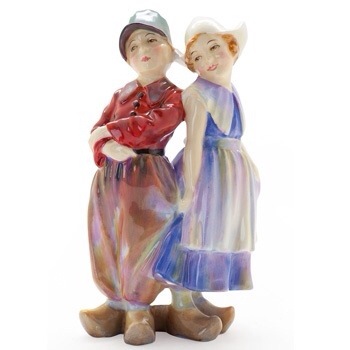
Doulton’s figure range contained a handful of Dutch figures, all the inspiration of Doulton’s famous modeller Leslie Harradine and all dating to the 1930’s.

20140615-124941-46181819.jpg
Here are Gretchen and Annette.

20140615-125108-46268895.jpg
And here is a colourway of Gretchen from 1930.

20140615-125148-46308306.jpg
A child group entitled Willy-Won’t-He was also introduced in 1933.

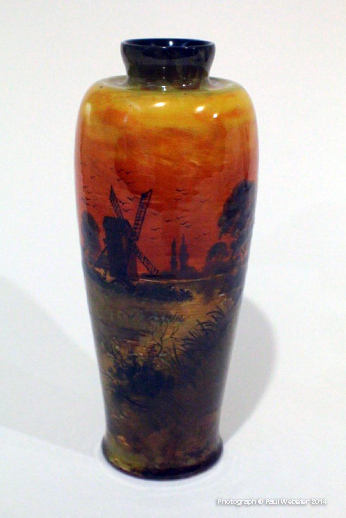
Other Doulton wares featured Dutch scenes such as this rustic Holbein ware vase painted with a windmill scene.

110514 - 22

A rare Holbein vase ca. 1900.

This vogue for all things Dutch seems to have stopped at the end if the 1930’s but these charming pieces serve to remind us of these halcyon days.

Harry Simeon – a unique Lambeth artist

20140614-171602-62162531.jpg

Simeon was the son of a monumental mason, which perhaps explains his everlasting interest in sculpture. Simeon moved from Huddersfield to London in 1896 when he started work at Doulton in Lambeth and also the year he won a scholarship to the Royal College of Art.

20140614-171702-62222287.jpg

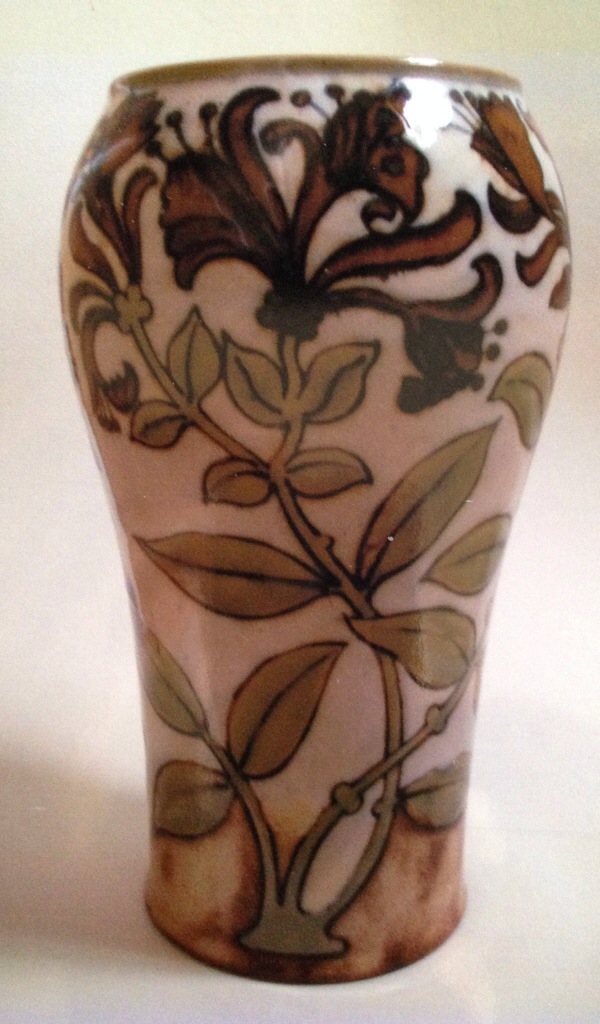
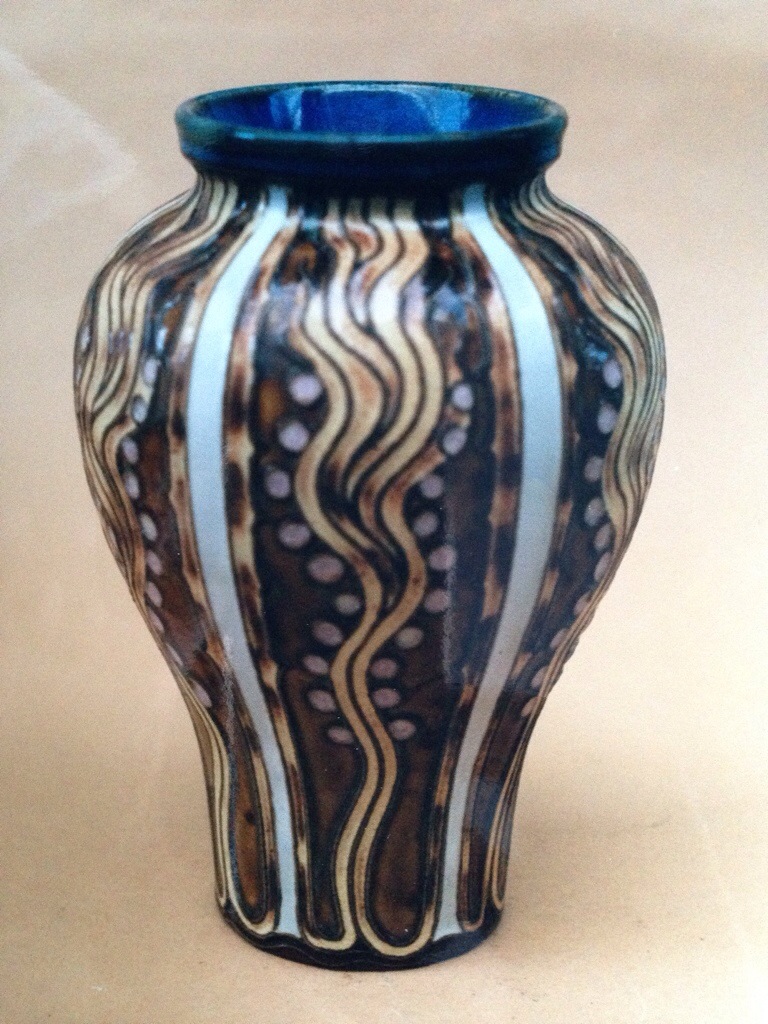
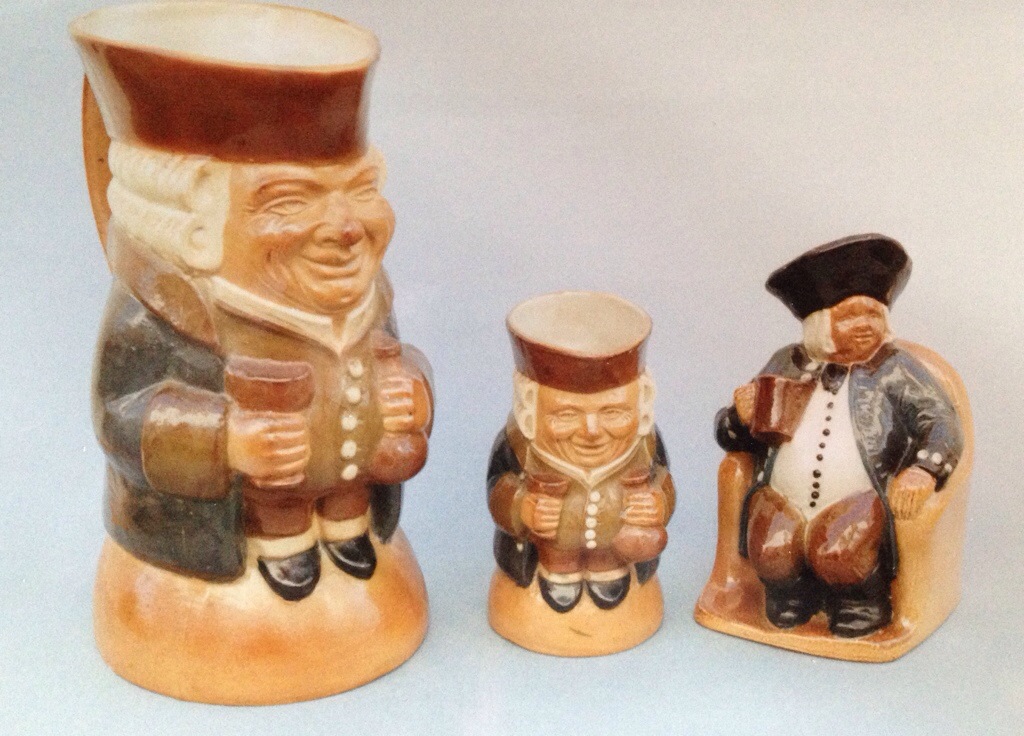
Simeon’s versatility cannot be denied when one looks at the variety of Lambeth wares he produced. Naturally there were many hand designed vases, but there were also late edition vases made between 1910 and 1925, as well as endearing Toby wares that he modelled that we’re introduced in 1925.

20140614-171748-62268340.jpg

When one considers the wares with which his is now associated it is hard to believe that he criticised his own talent, describing it once as overly fussy and preferring the artistry of Mark Marshall’s often simplistic designs.

20140614-172135-62495283.jpg

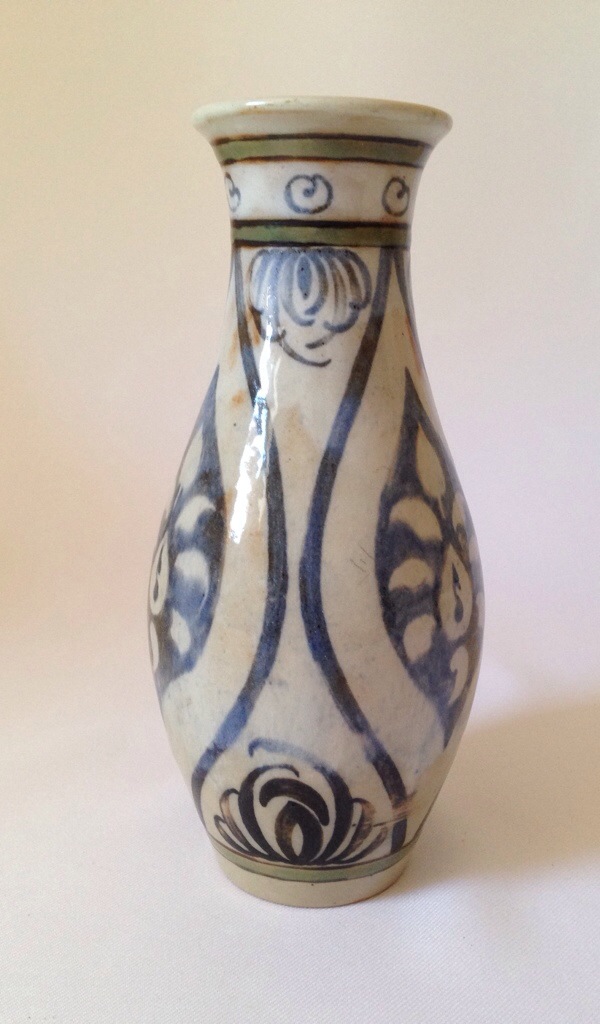
Joseph Mott, Lambeth’s art director in the early 20th Century had a particular interest in pottery of ages gone especially medieval pottery, encouraging Simeon to produce wares in this vein and also pots suitable for the many glaze effects trialled by Mott in the early part of the 20th Century.
Up until the end of Simeon’s association with Doulton in 1936, his style remained versatile, producing in the 1920’s designs for the Persian ware range and also a myriad of slip ware pieces in a colourful pallet.

.

20140614-172221-62541630.jpg
His signature changed early on from a simple H.S. to his usual monogram pictured in the Doulton reference books.

Doulton’s Persianware Pt. 2

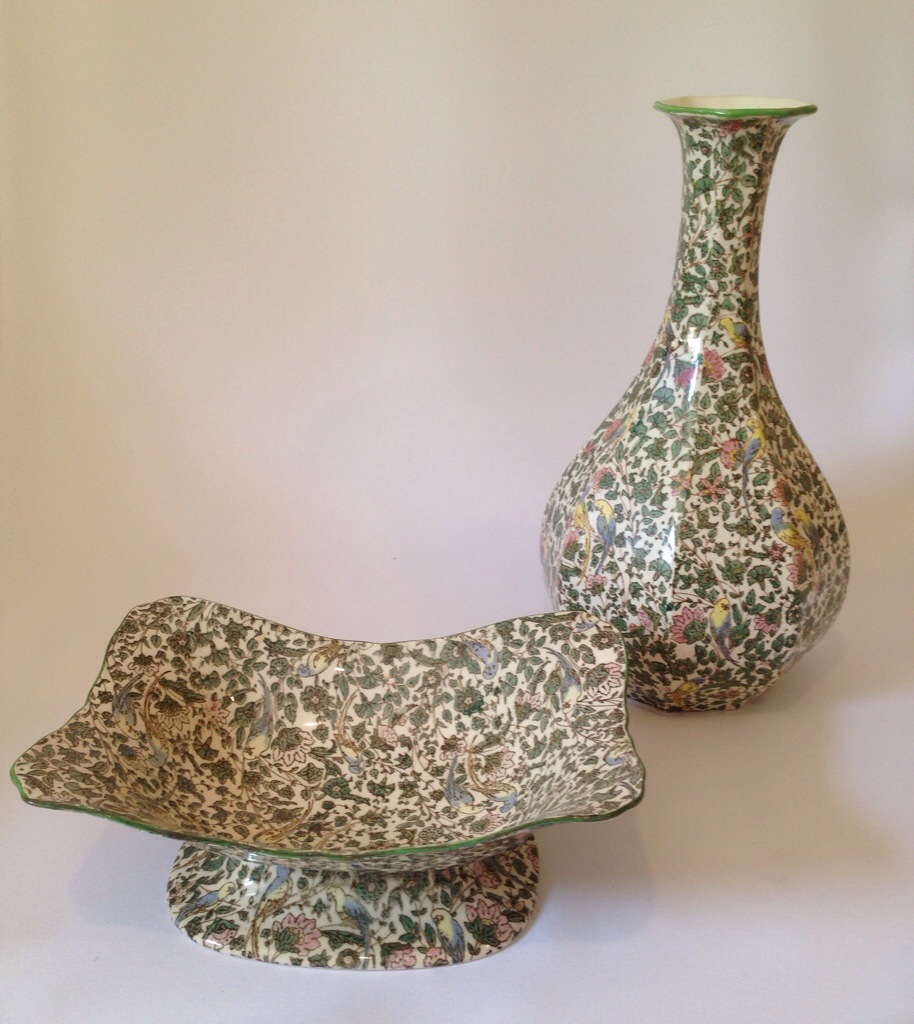
20140614-153859-56339730.jpg

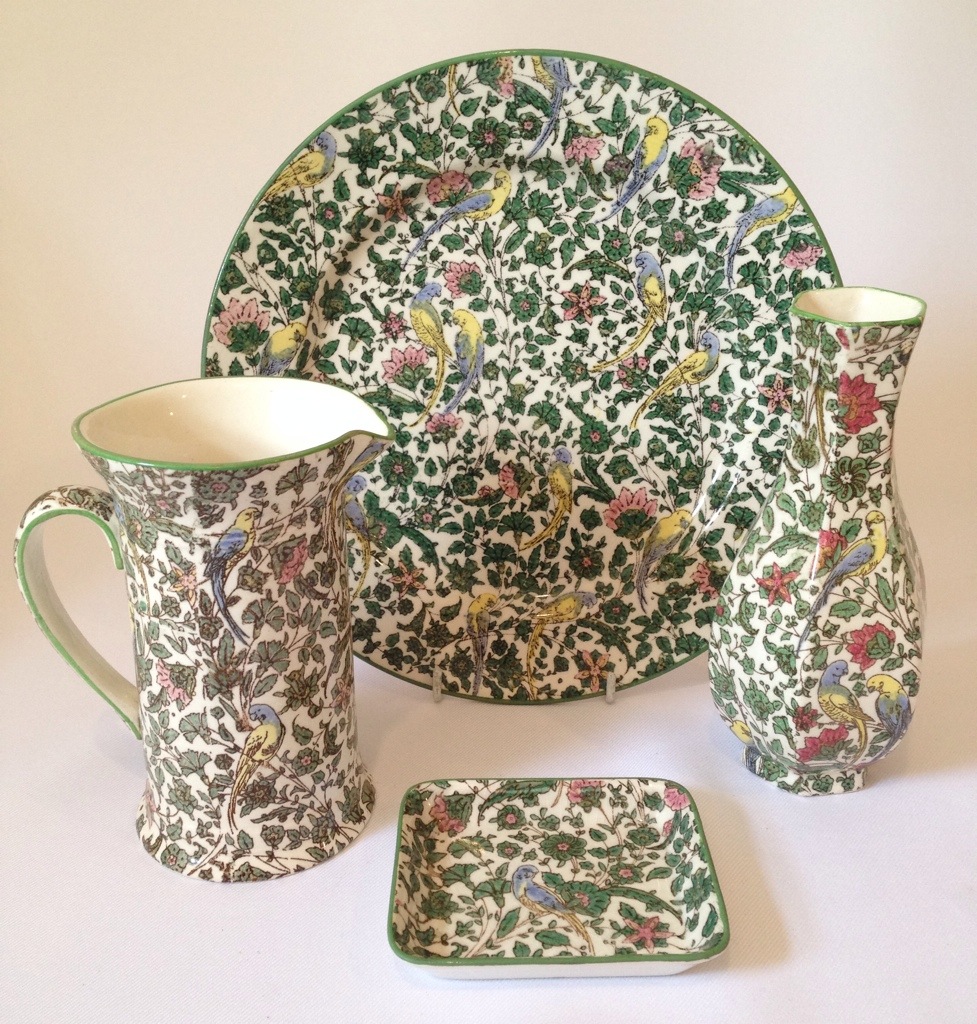
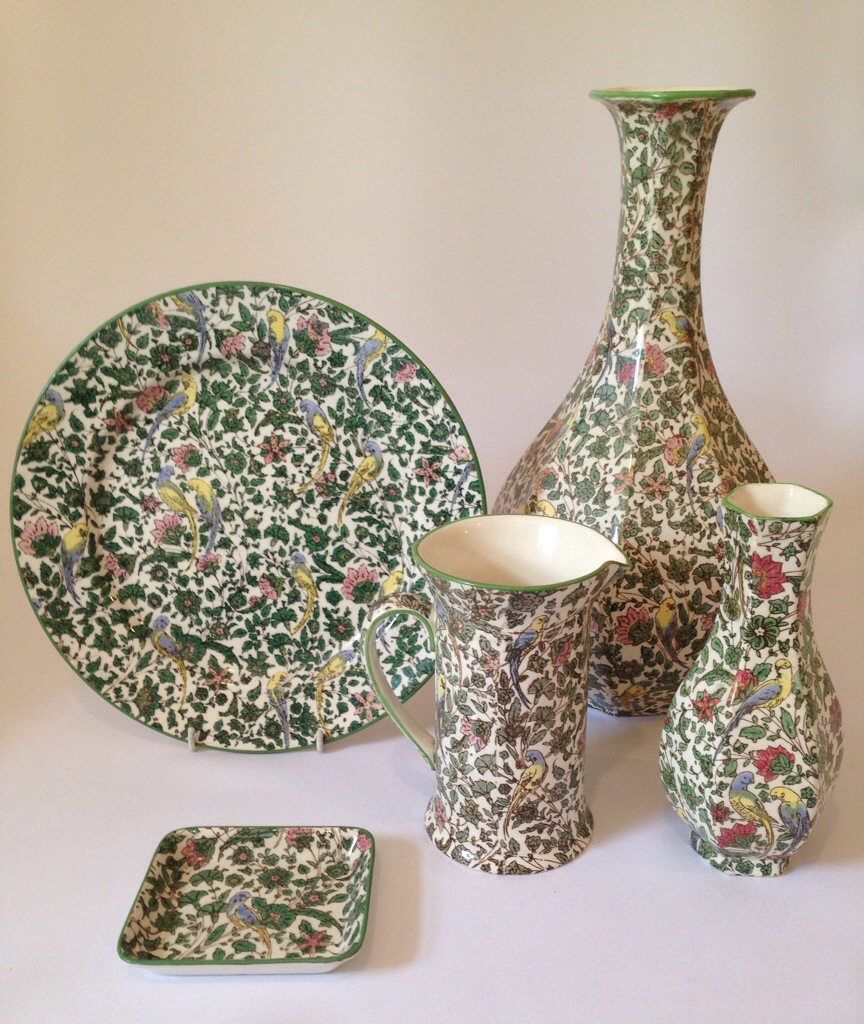
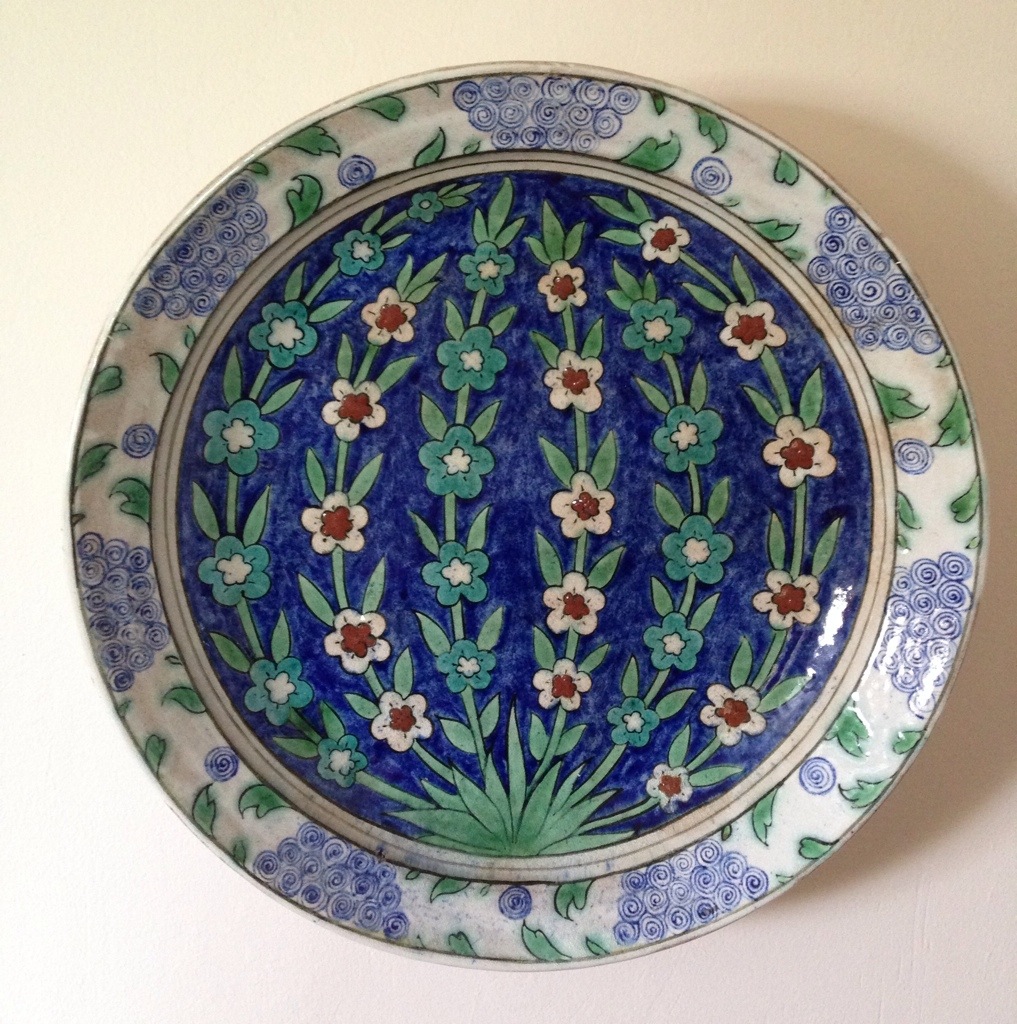
This second look at Doulton’s Persianware is solely focused on seriesware. There are three variations of this ware, A, B and C. The first designs were introduced around 1912 with a white background. This would be replaced in 1917 with a blue background.

20140614-153937-56377367.jpg

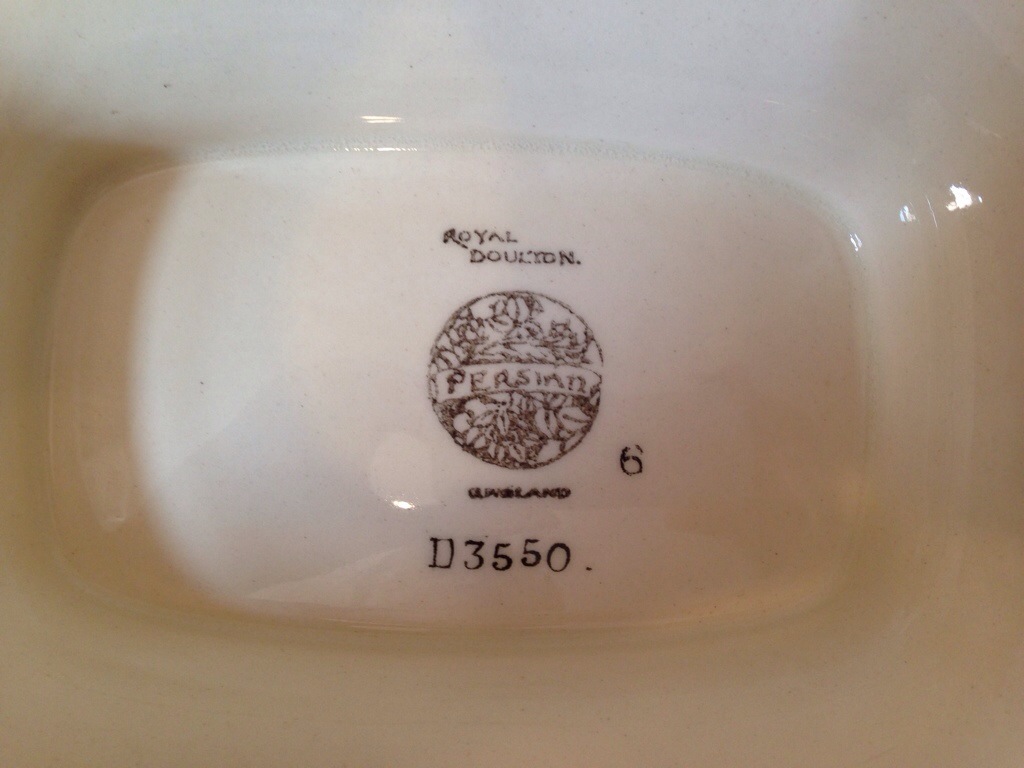
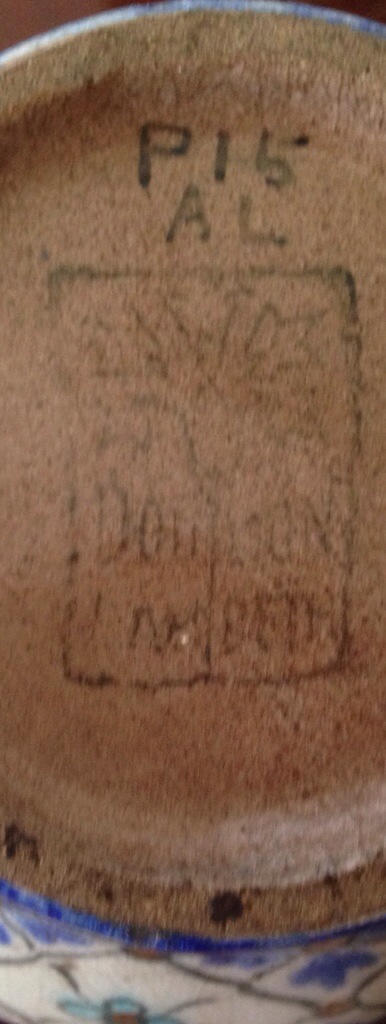
This pattern of course has a special backstamp as shown here.

20140614-154034-56434754.jpg

Typically of Doulton’s seriesware unusual items turn up from time to time. Only yesterday I saw a hat pin stand in this pattern. Other items that have turned up range from usual Doulton style vases to dressing table sets to tea sets.

20140614-154239-56559107.jpg

Doulton’s Persianware Pt.1

20140614-151747-55067702.jpg

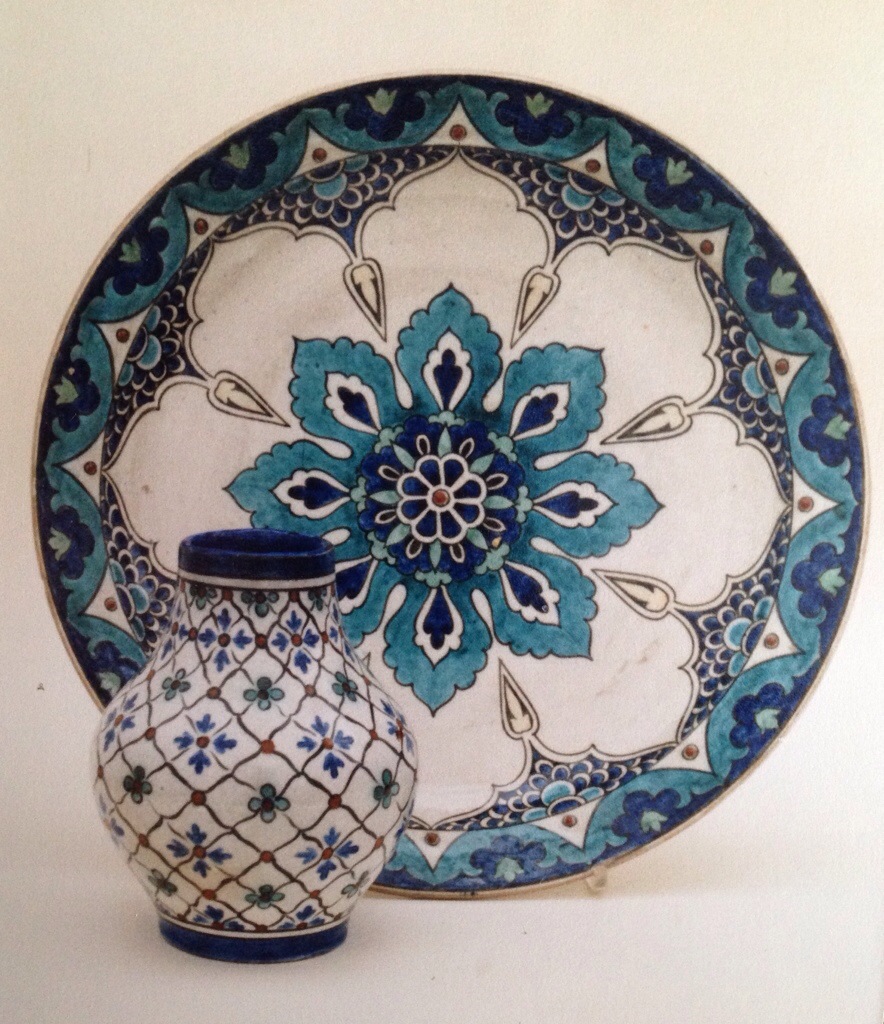
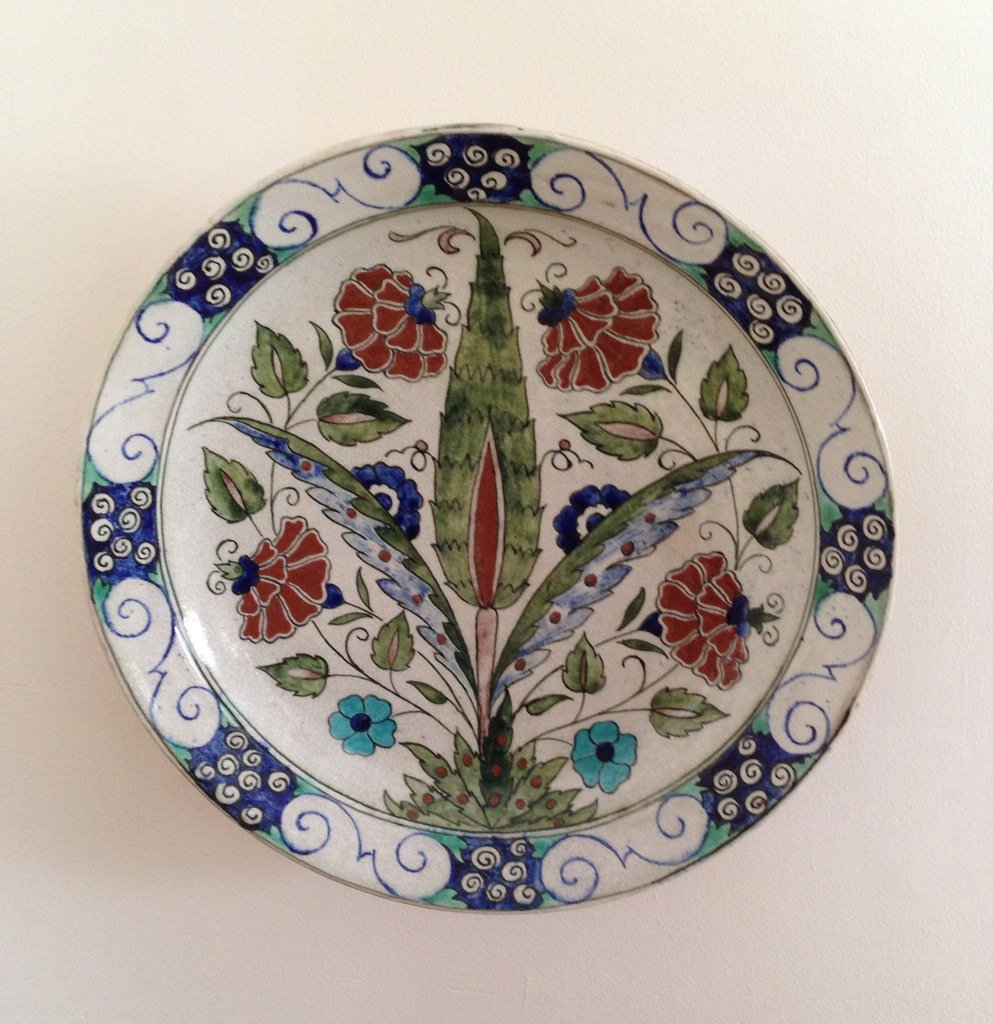
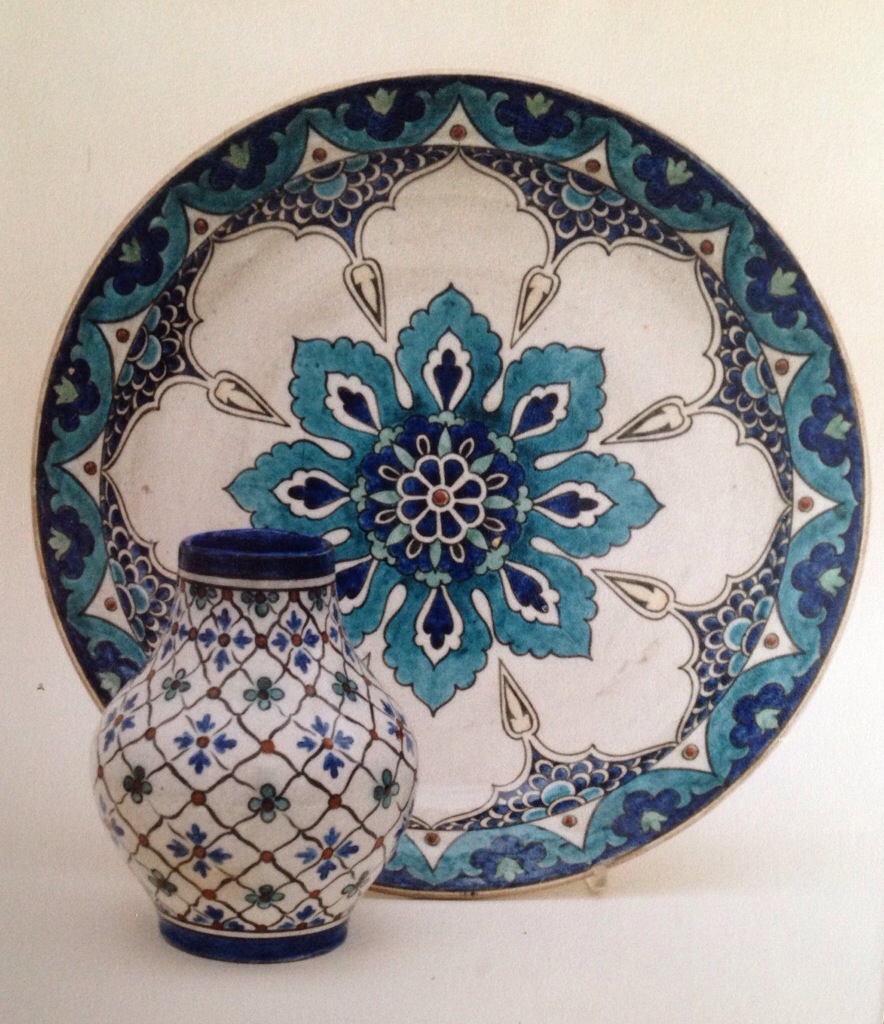
These dramatic designs by William Rowe and Harry Simeon form part of a very limited range of Lambeth wares that fall under the heading Persianware and should not be confused with the seriesware pattern of the same name or earlier Persian style products from Lambeth.

20140614-151916-55156472.jpg

Produced between 1919-22, these items are particularly hard to find and when they do turn up they cost a king’s ransom!

Painted in blue and green on a coarse body, items to be found in this ware are typically plaques measuring 13″ in diameter and vases in 3 or 4 typically Doulton shapes.

20140614-151948-55188036.jpg

This Persianware has a special backstamp too.

20140614-152133-55293078.jpg

Doulton’s dog derivatives…

Just when your cabinets are full to capacity you discover that there is something else to collect – so say all collectors!

Similarly with Doulton’s array of dogs, there is a derivative for everyone be it ….

A pencil holder/pin tray….

20140614-092547-33947280.jpg

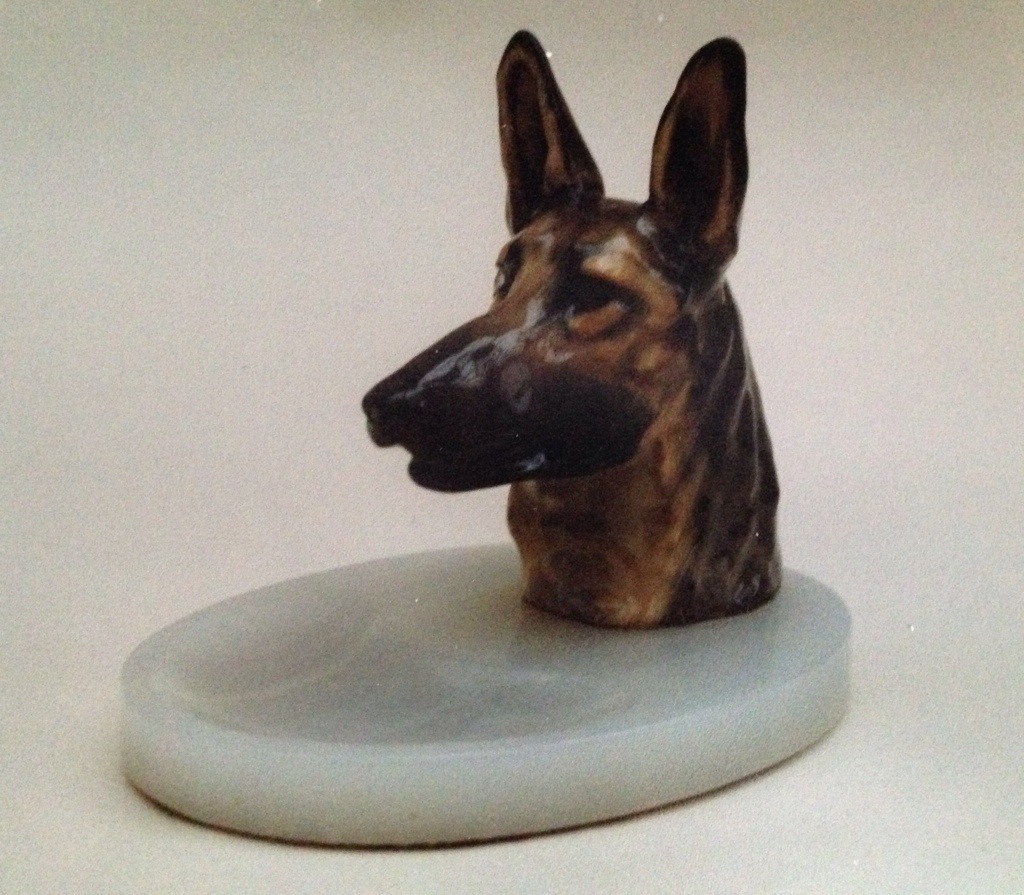
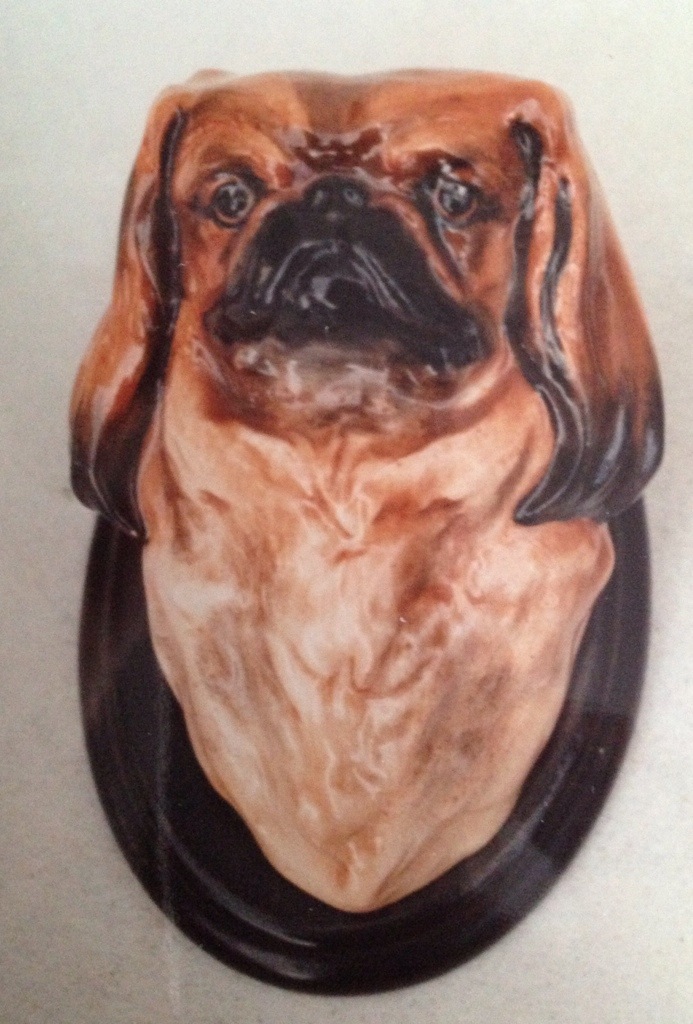
A bust of your favourite breed…

20140614-092643-34003720.jpg

A bookend (shown minus the mahogany mount)…

20140614-092724-34044269.jpg

Ash trays….

20140614-093723-34643139.jpg

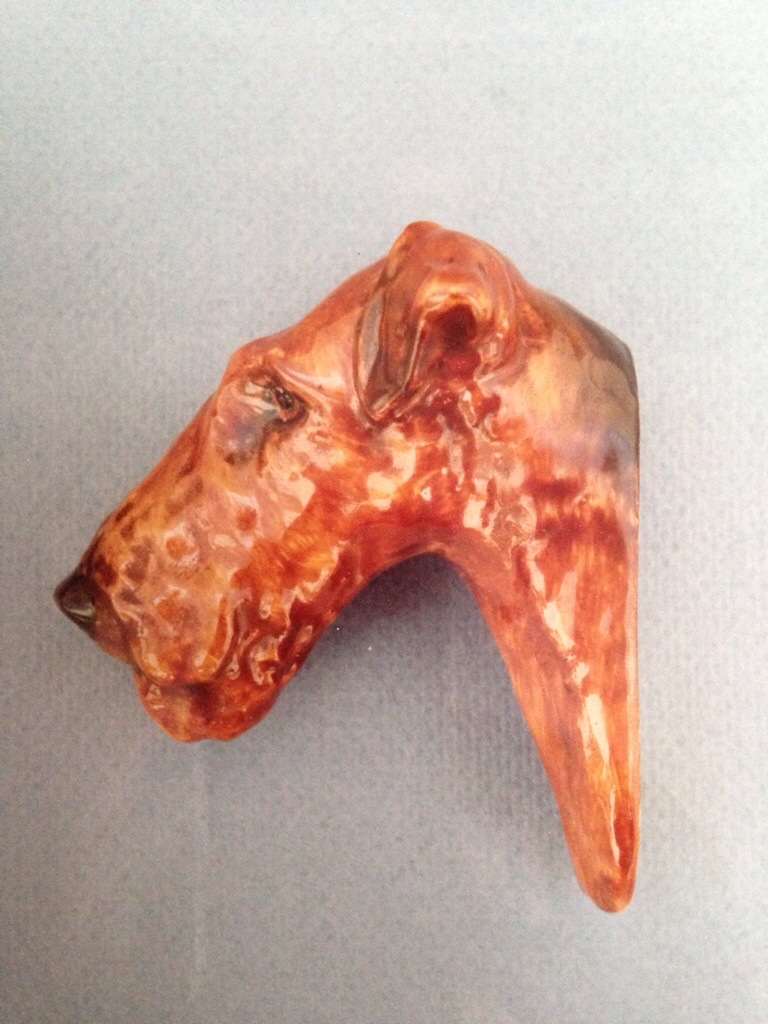
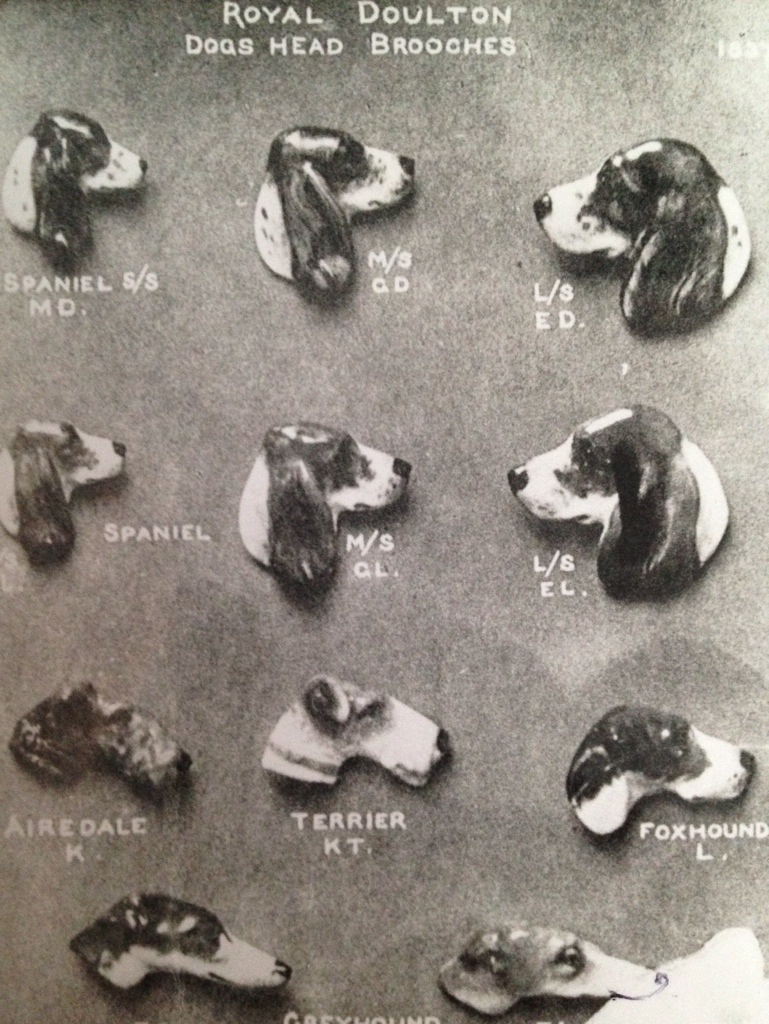
And even brooches…

20140614-093750-34670088.jpg

As with everything Doulton…they aimed to cater for every taste and the variety of objects that can be found is limitless and not restricted to the examples above.

On my own desk I have a calendar with a character Pekingese puppy and a stamp dish with a character fox.

The fun in collecting is not knowing what is around the corner and this field of collecting Doulton certainly offers that variety! Happy collecting!

Kate Greenaway’s influence on Doulton Seriesware

20140612-165019-60619498.jpg

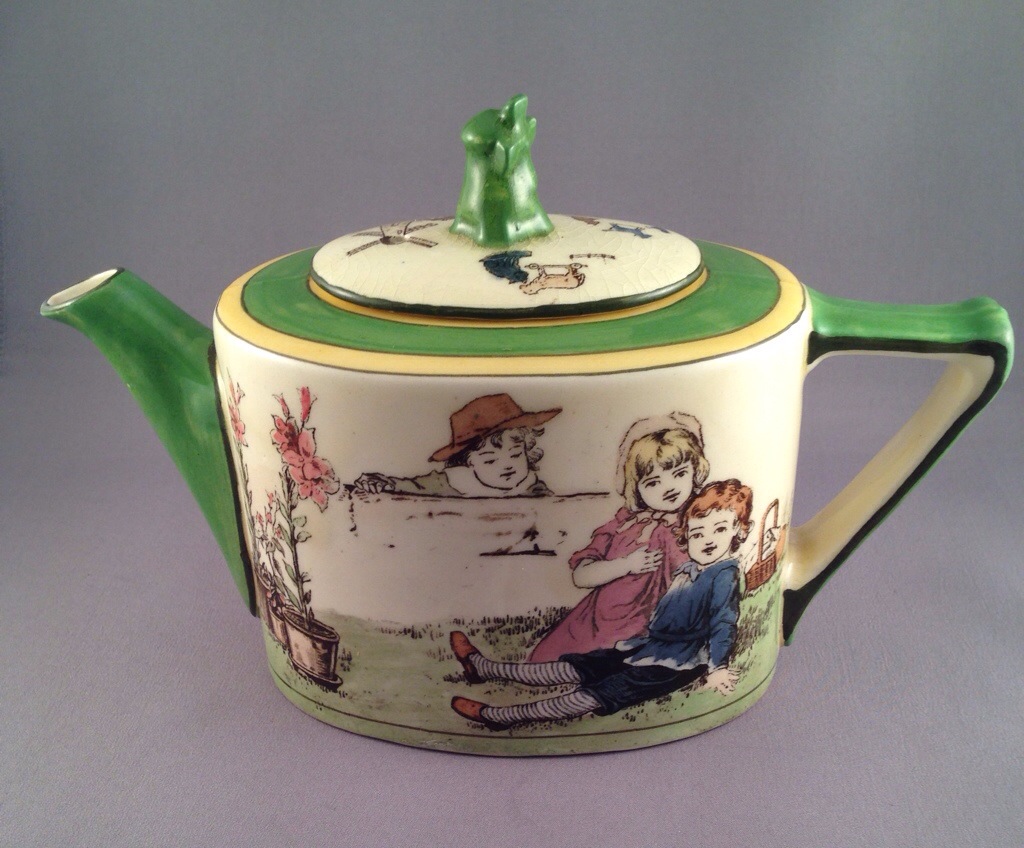
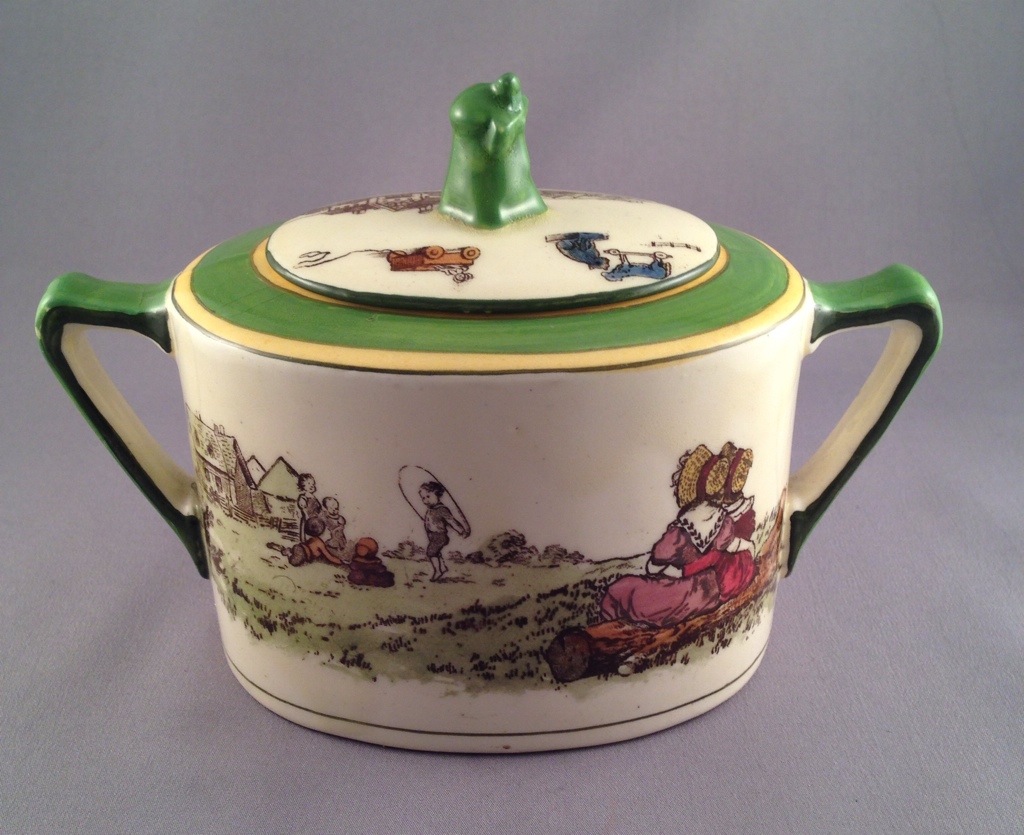
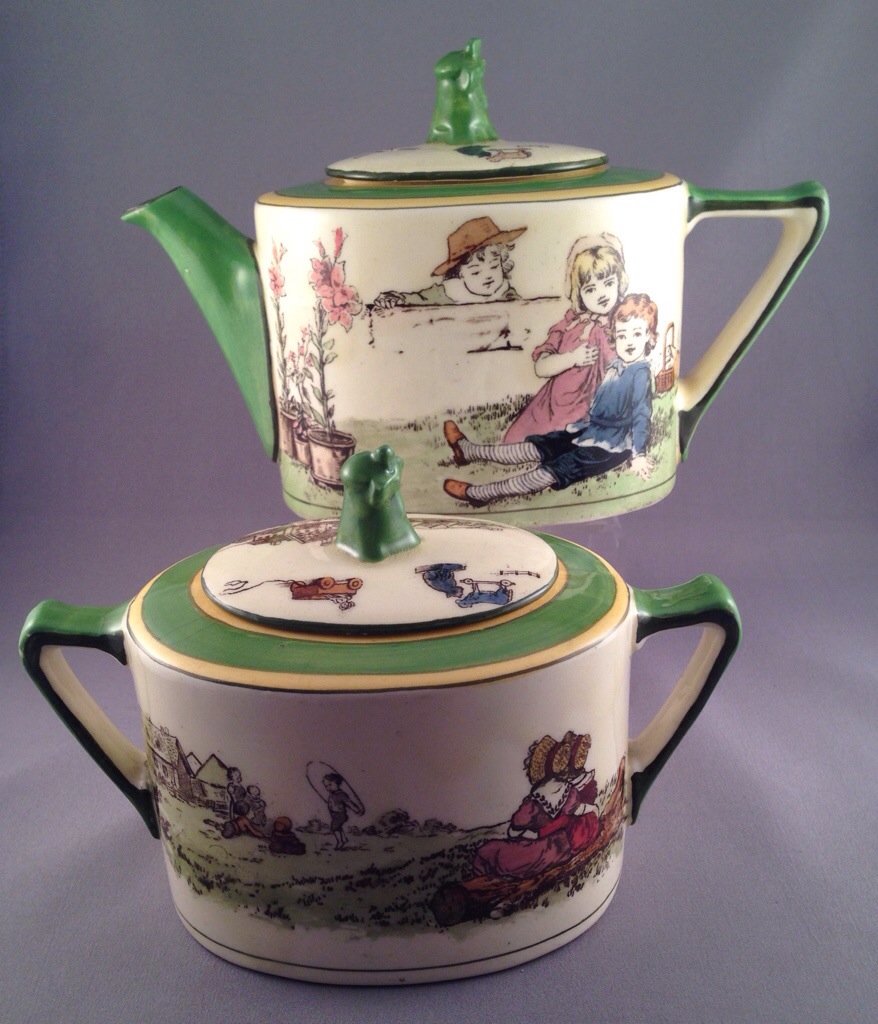
The style of dress on this early teapot is clearly influenced by the illustrations if Kate Greenaway from Victorian times, although the actual designs on this and the sugar basin below are actually by C. Van Brown.

20140612-165213-60733540.jpg

This aesthetic style is so closely influence by Kate Greenaway that it could be one of her illustrations. She undoubtedly started something of a craze in Victorian times for this style of dress and decoration. She certainly revolutionised children’s books and clothes of the late 19th Century.

The designs illustrated actually belong to the Pastimes series produced around 1902.

20140612-165504-60904865.jpg

It wasn’t until 1978 that doulton actually used some of her illustrations on plates from her illustrations for an Almanack from 1884.

Of course there is also the series of 18 figures introduced from 1976 started by Peggy Davies and continued by Pauline Parsons all based on Kate Greenaway’s style.

Dishes, bookends and calendars!

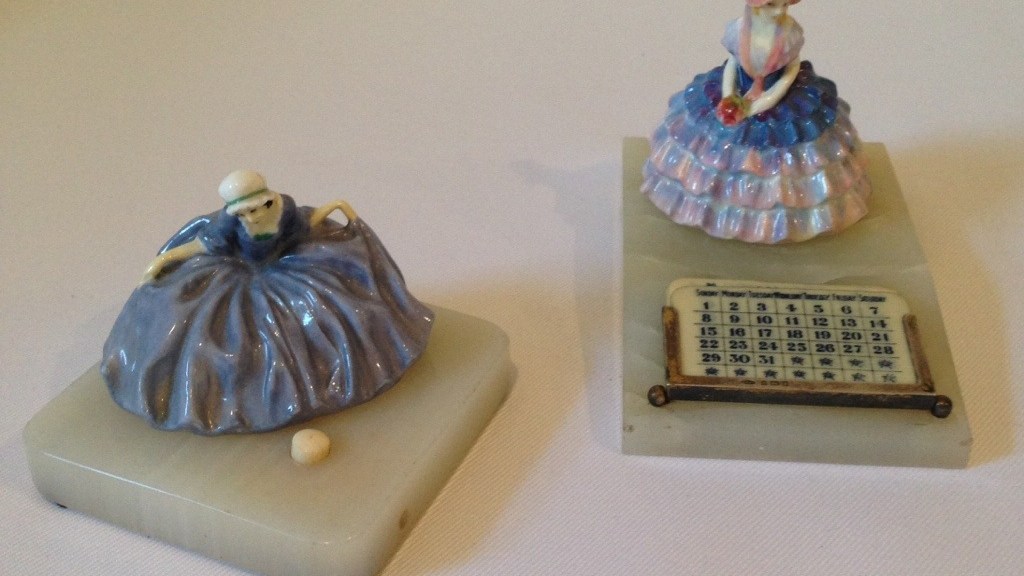
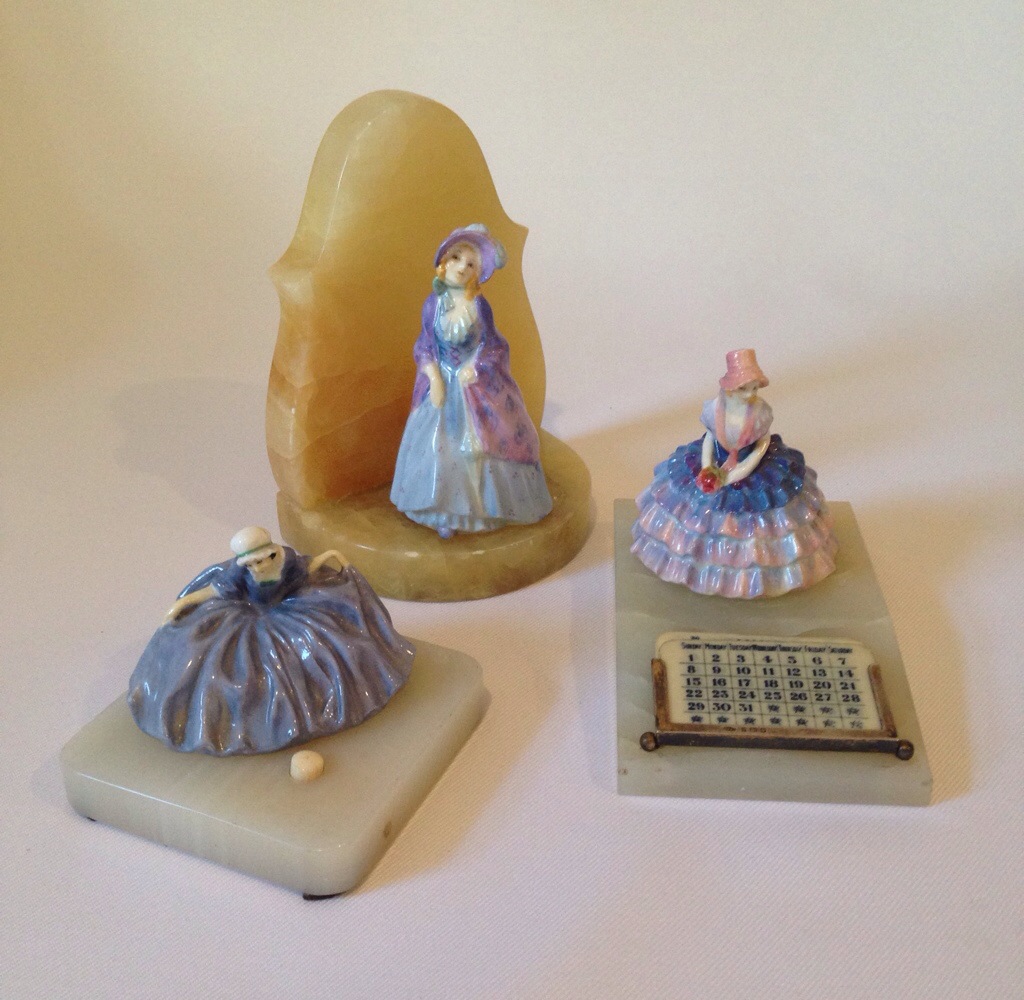
Collectors are often bemused to see their cherished figures mounted on bookends, calendars and dishes! This trend began in the early 1920’s at the same time as the figure lamps were produced.

‘M’ series miniatures are perhaps most often associated with bookends and certain calendars like these below.
20140609-202118-73278144.jpg

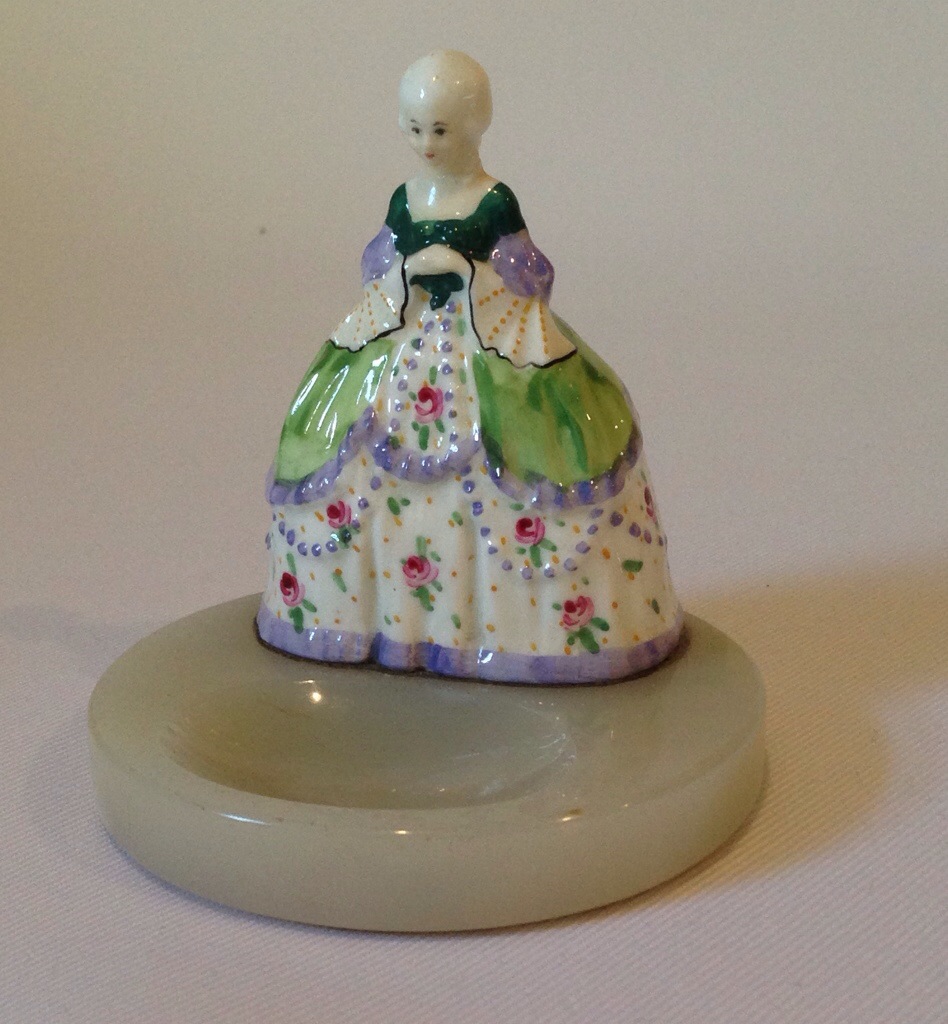
Occasionally very rare figures turn up mounted on bases, such as this Crinoline Lady pin tray.

20140609-202218-73338744.jpg

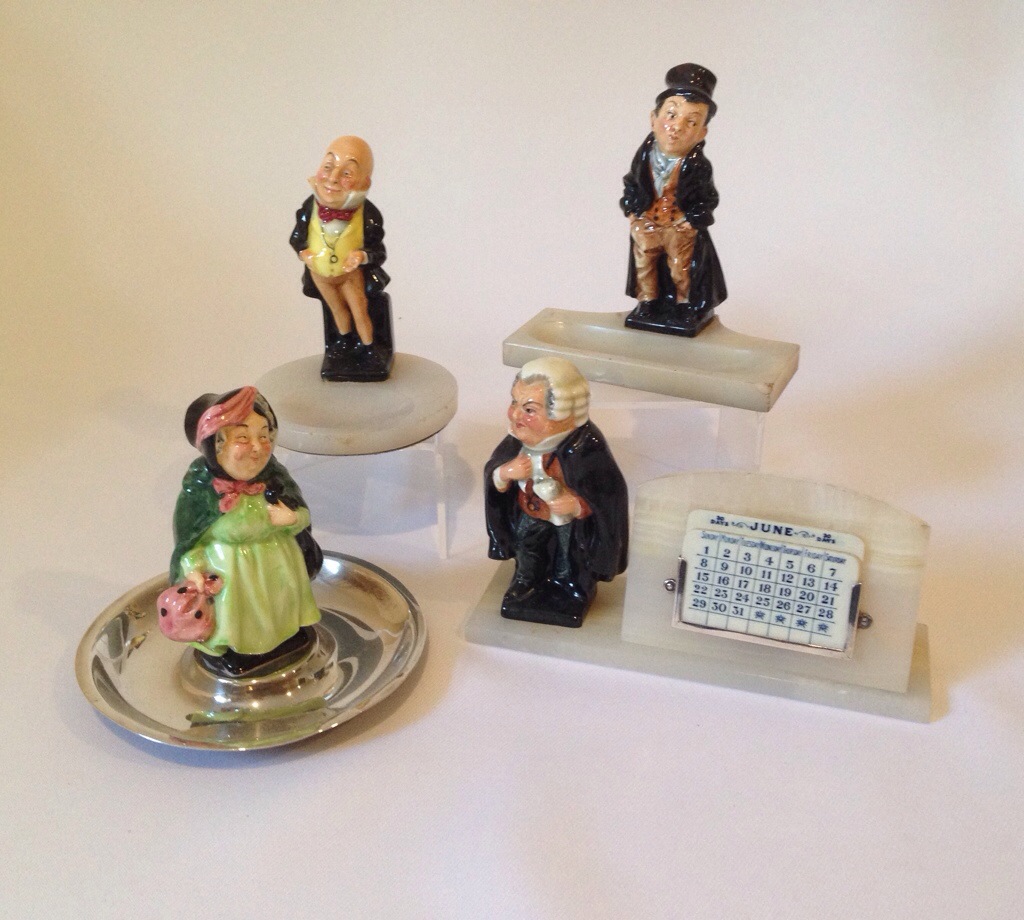
Harradine’s small Dickens figures appear mounted on a variety of bases, like this selection too.

20140609-202320-73400474.jpg

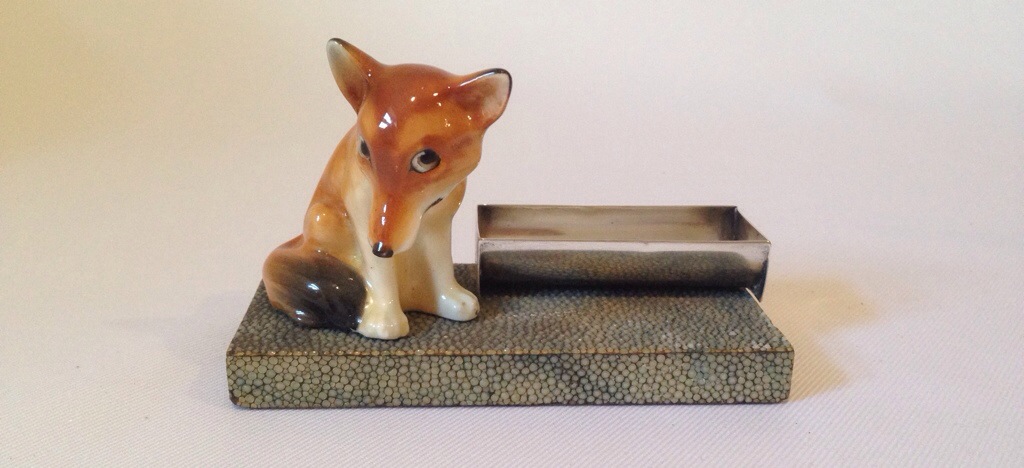
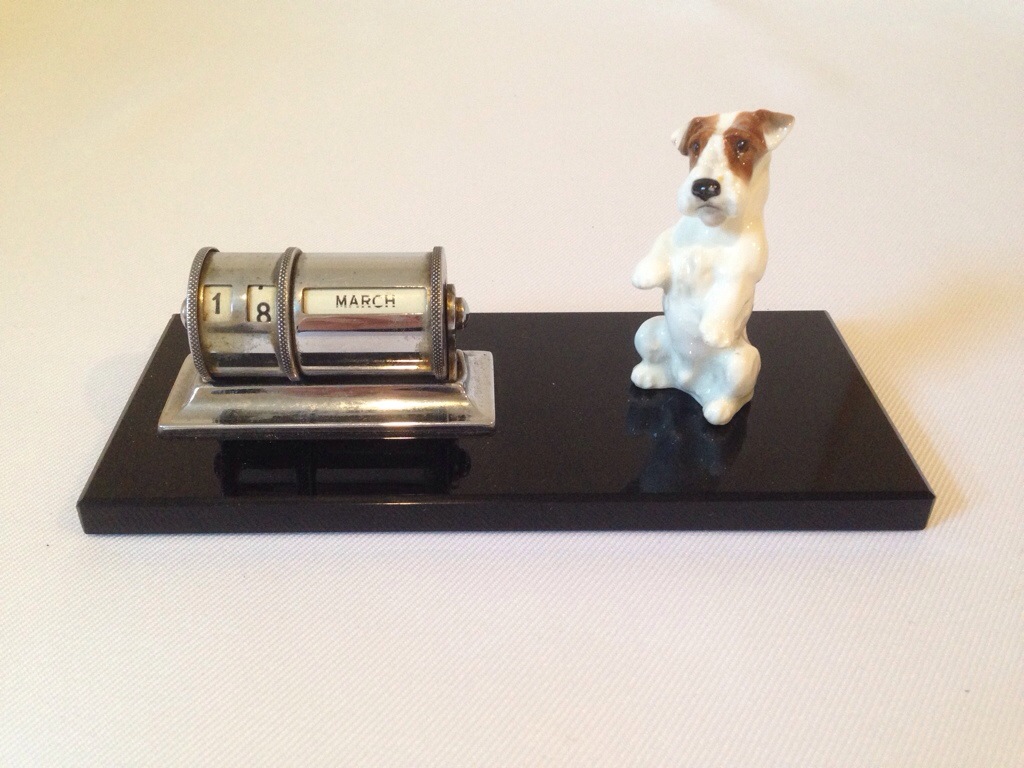
Small Doulton animals are also found mounted as many different objects but particularly desk furniture. Here is a comical fox I found mounted as a stamp tray.

20140609-202543-73543628.jpg

And also a Sealyham begging mounted on this calendar.

20140609-202620-73580712.jpg

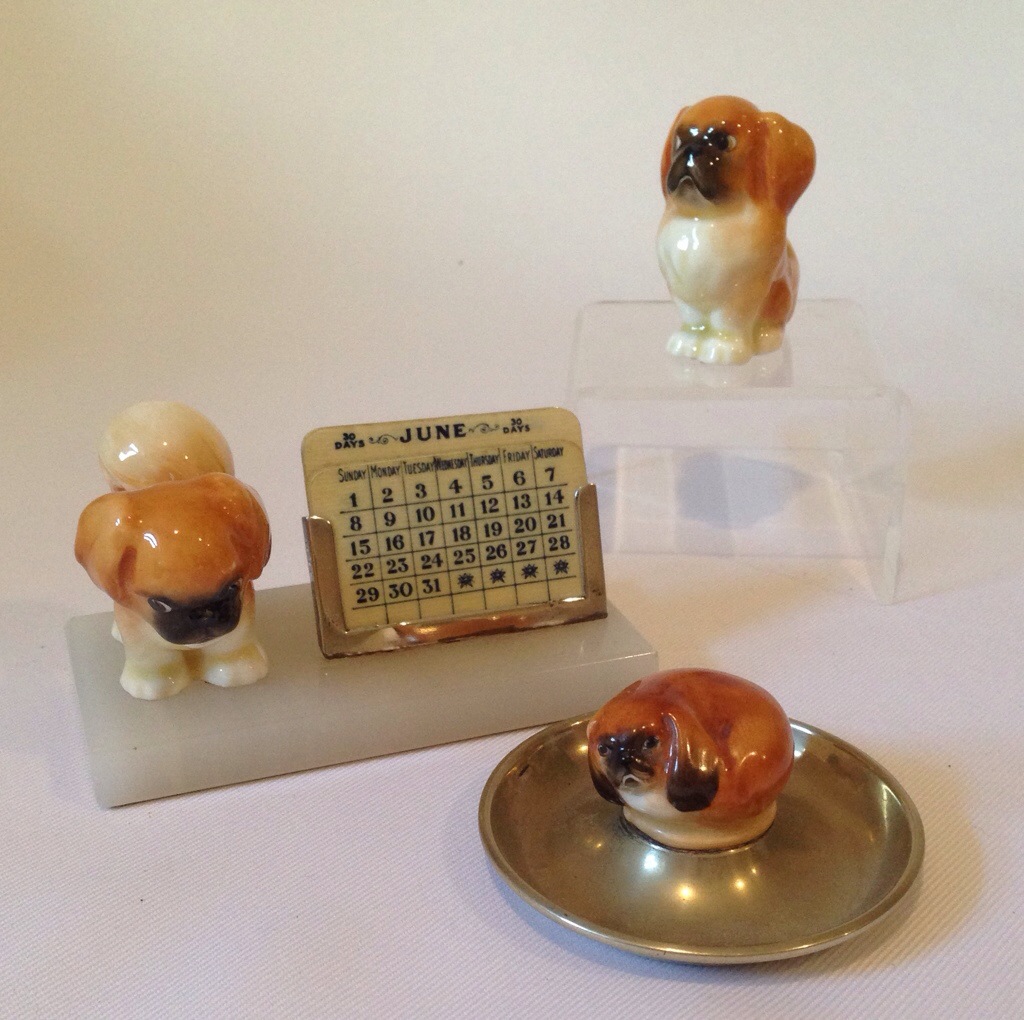
As many of you know Pekingese play an important part of my life and I have managed to assemble this small group of objects all with mounted Pekingese!

20140609-202748-73668591.jpg

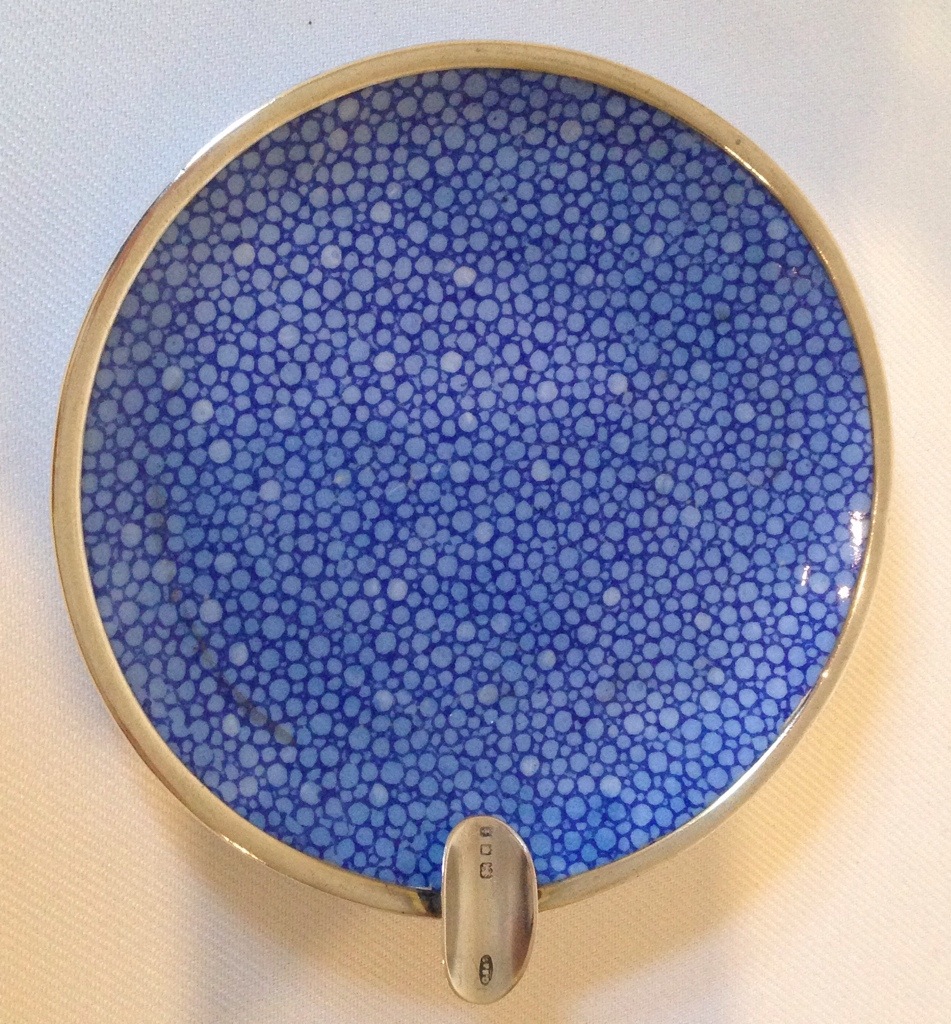
Many of these objects, especially those mounted with sterling fittings would have been retailed by top jewellers of the period including Asprey and Garrards in London. Even more ‘normal’ objects such as pin trays were given sterling mounts so as to make them exclusive objects for top jewellers, such as this Shagreen pin dish (in an unusual blue) which has been given silver mounts to turn it into an an ashtray!

20140609-203147-73907255.jpg

This is only a sample of possible objects, and we would love to hear from you if you have other items mounted with Royal Doulton on our Doulton Collectors Facebook page!

Doulton’s ‘red’ ladies

Red has long been one of the most popular colours amongst figure collectors, but it took almost 20 years for Doulton to cotton on!

The earliest figures were produced in a rainbow of colours but it wasn’t until the late 1920’s that red colourways of figures began to emerge with the introduction of figures such as Kathleen, Priscilla and Rosina.

Thereafter there has been a parade of other red figures culminating in the late 1930’s and the immediate years after the war with the introduction if three of the most famous Doulton ladies ever: Top o’ the hill, Auntumn Breezes and of course Christmas Morn. The lengthy production of these figures not only stands as popular proof of the model but also the popularity of their colourways!

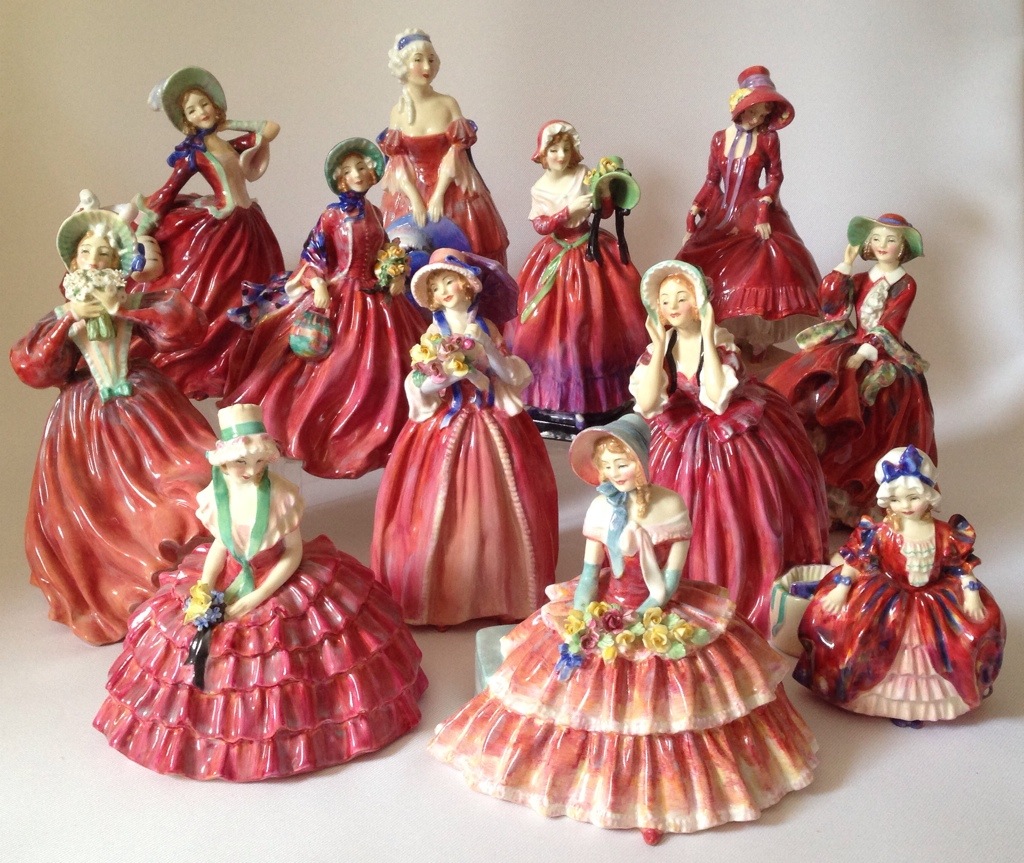
Here are a selection of my favourite ‘red’ ladies!

20140608-165331-60811943.jpg

Since the introduction of Christmas Morn there have been an array of other ladies in red – perhaps you have them in your collections?

Happy collecting and remember we would love to hear from you on our Doulton Collectors Club Facebook page!

Unusual Lambeth Glazes to match Burslem’s Sung and Chang

Just as Doulton in Burslem under the direction of Charles Noke were experimenting with glazes in the early 20th Century, so too was his London counterpart Joseph Mott, art Director at Doulton Lambeth.
Mott can truly be said to have seen it all at Doulton as he began working there in the 1880’s when some of Doulton’s most famous artists were in full swing including the Barlows, Mark Marshall etc…
Just as sales at Burslem were on the rise so too began the steady decline of Lambeth wares. However, under Mott’s direction the art department survived for another half century.
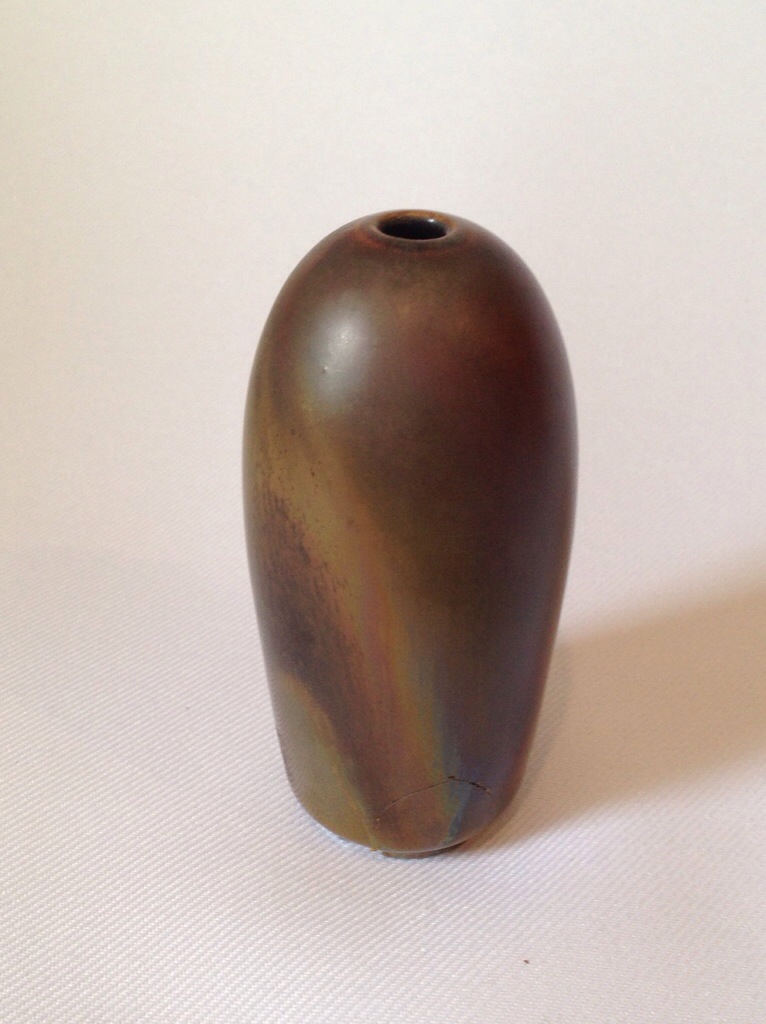
Mott had a chemists background so it is no surprise that the following pieces have turned up, all showing the most wonderful types of glaze and most bearing his initials.

20140608-133202-48722793.jpg
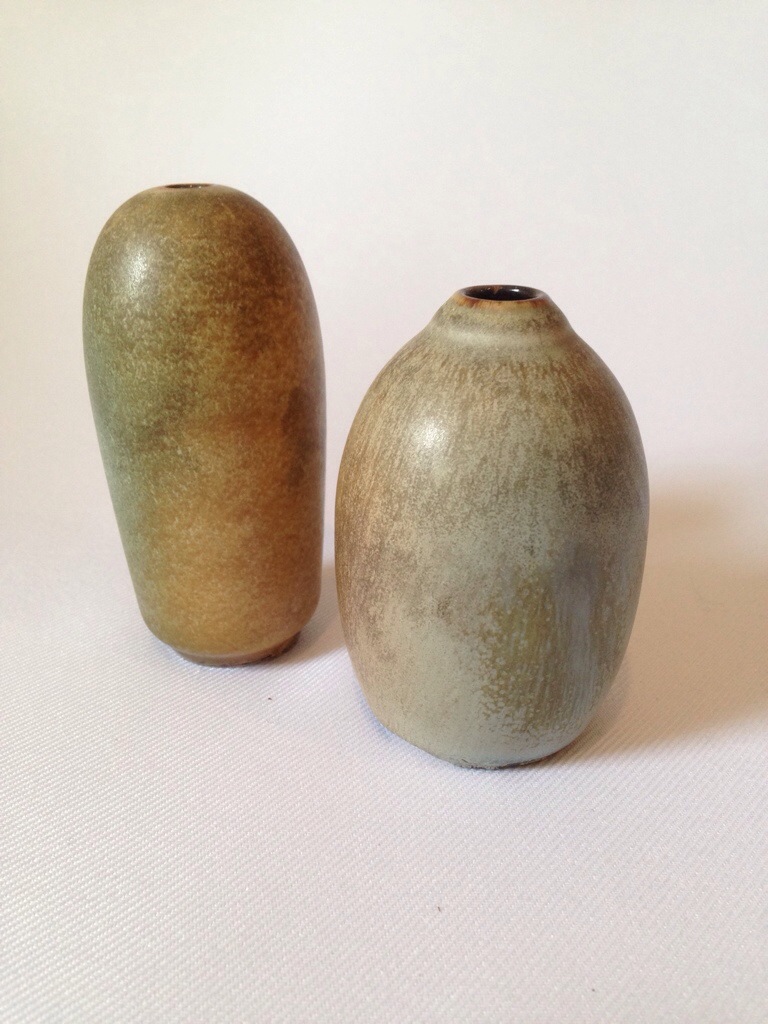
A deep-glazed slender vase.

20140608-133239-48759280.jpg
Two ‘hare’s foot’ glaze vases.

20140608-133319-48799911.jpg
An unusual vase signed by Mott.

20140608-133420-48860390.jpg

20140608-133419-48859216.jpg
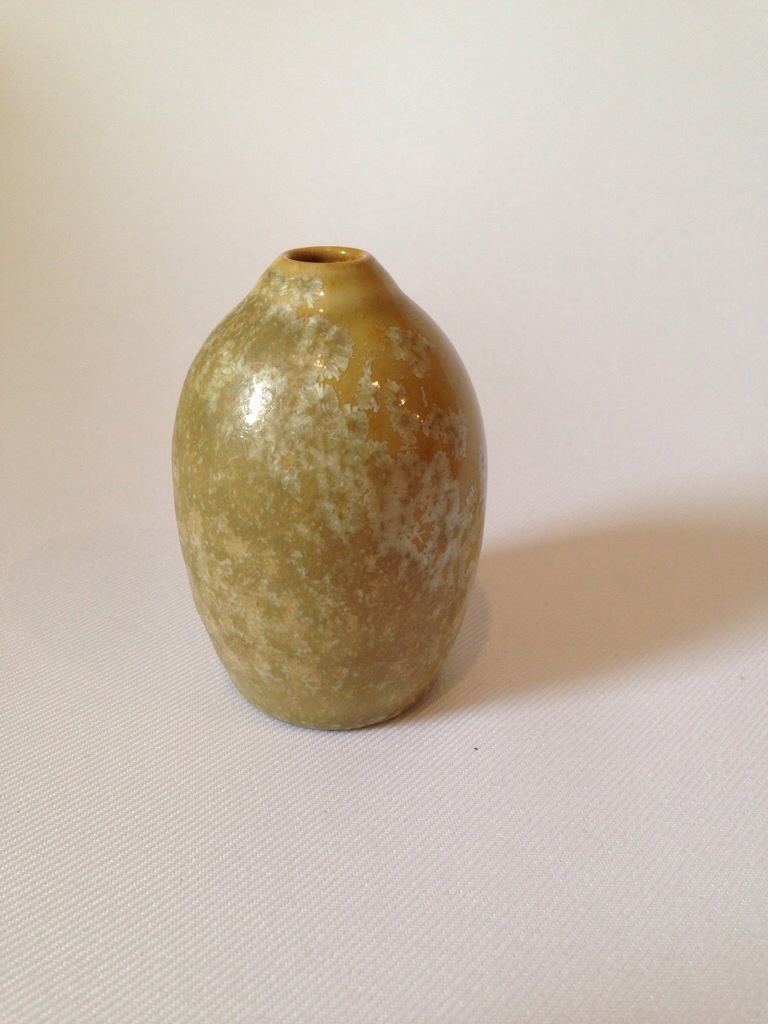
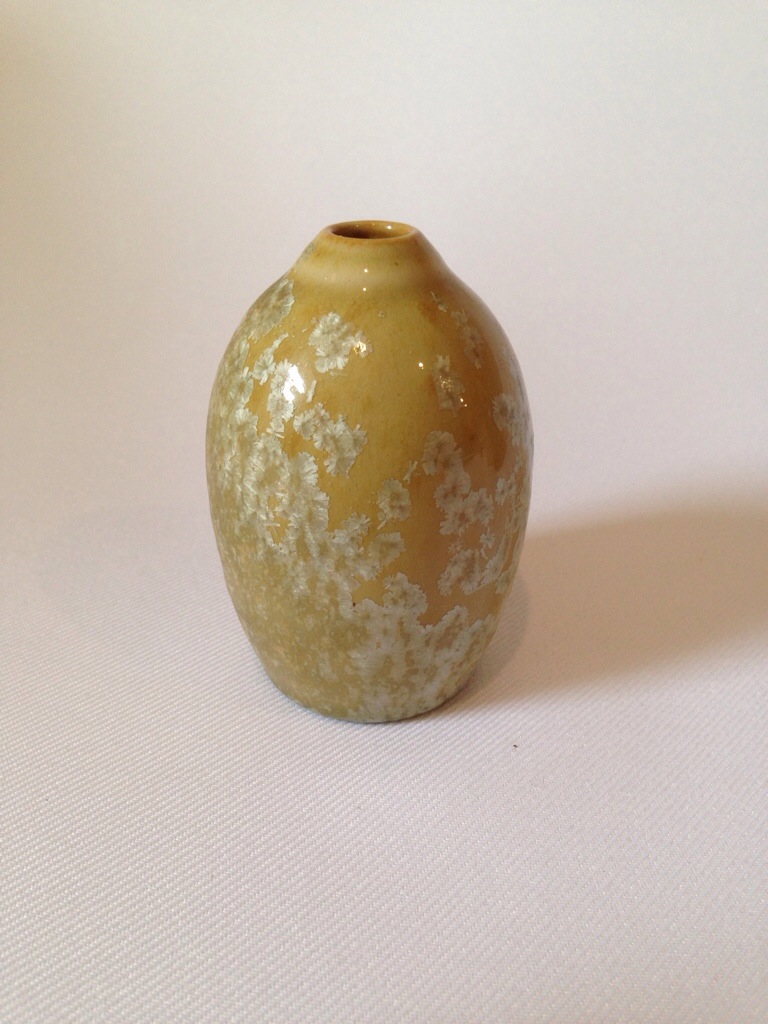
Two views of a striking crystalline vase.

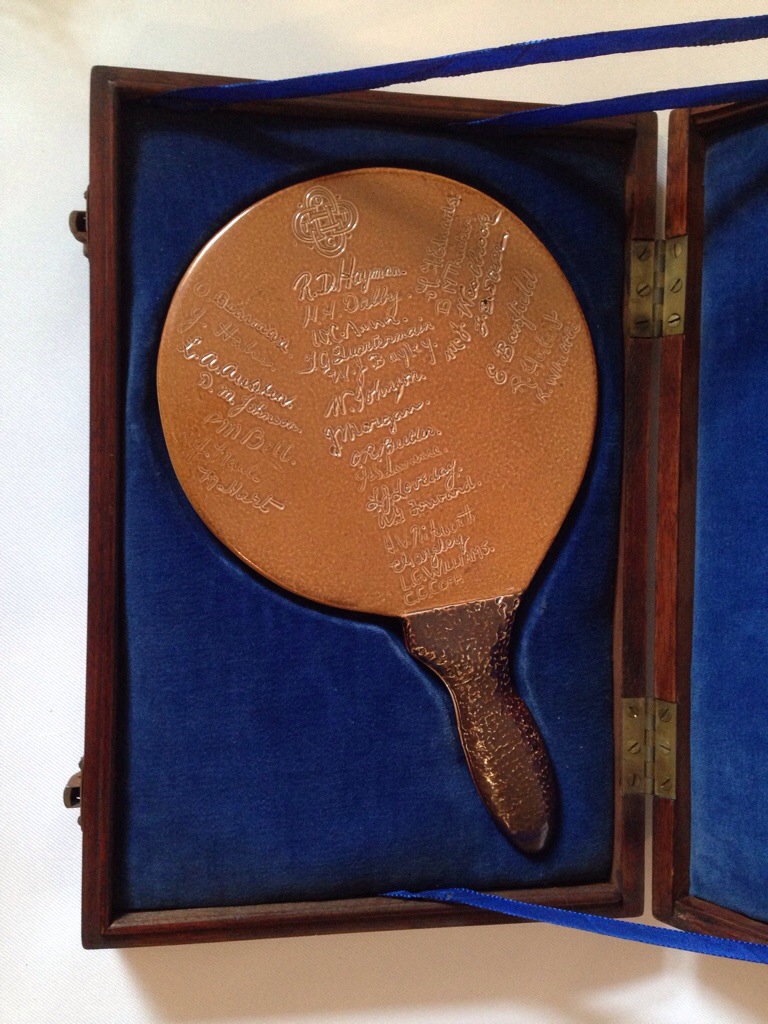
One piece of stoneware I have at home is a fun Doulton stoneware table tennis bat presented by Mott’s fellow players to him in 1935, and signed by them all.

20140608-133515-48915707.jpg

Mott’s contribution to the Lambeth factory goes far beyond glazes but that is the focus of this piece today.