All posts by doultonchristopher1

Collecting Royal Doulton’s Hiawatha seriesware design.

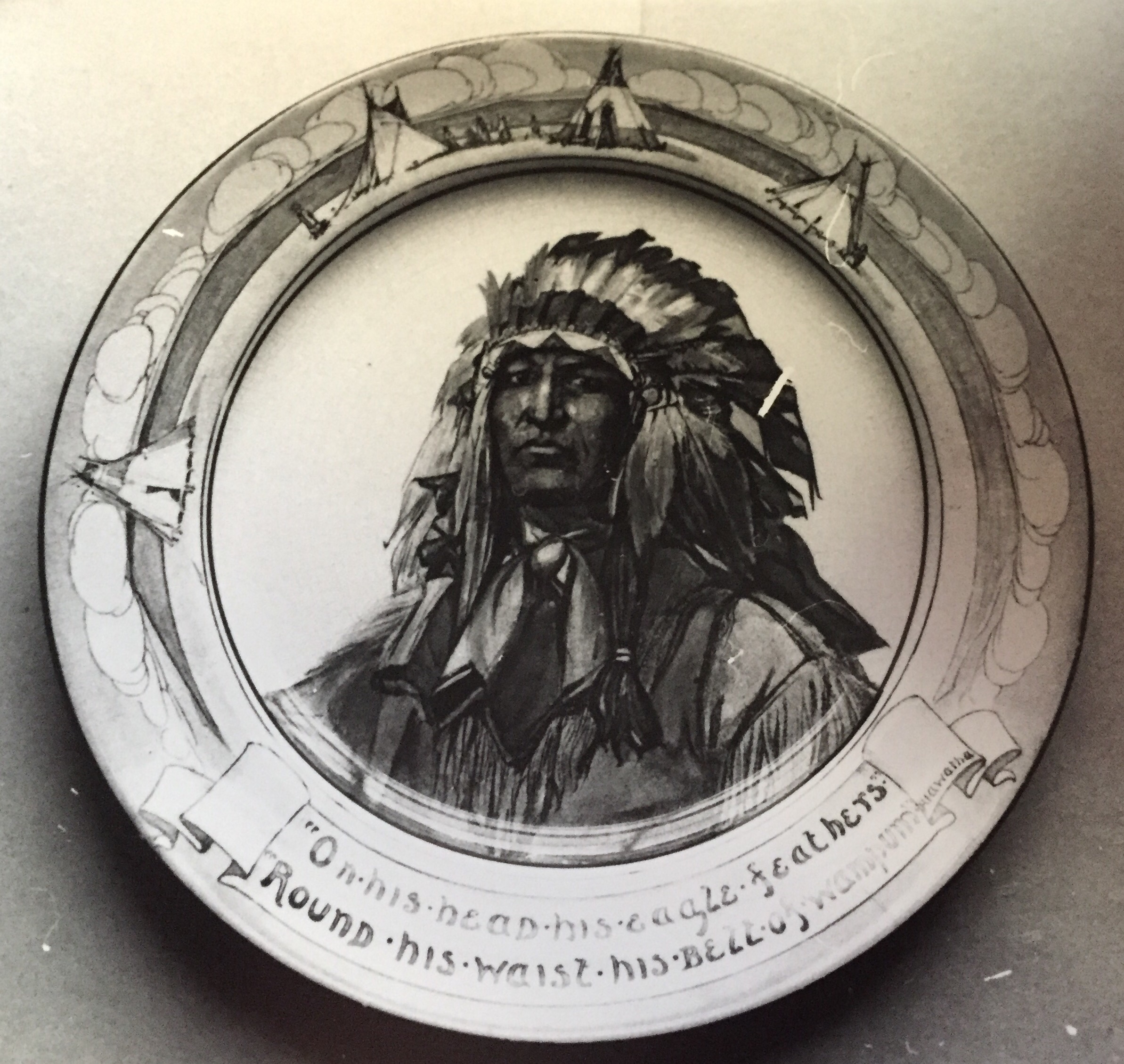
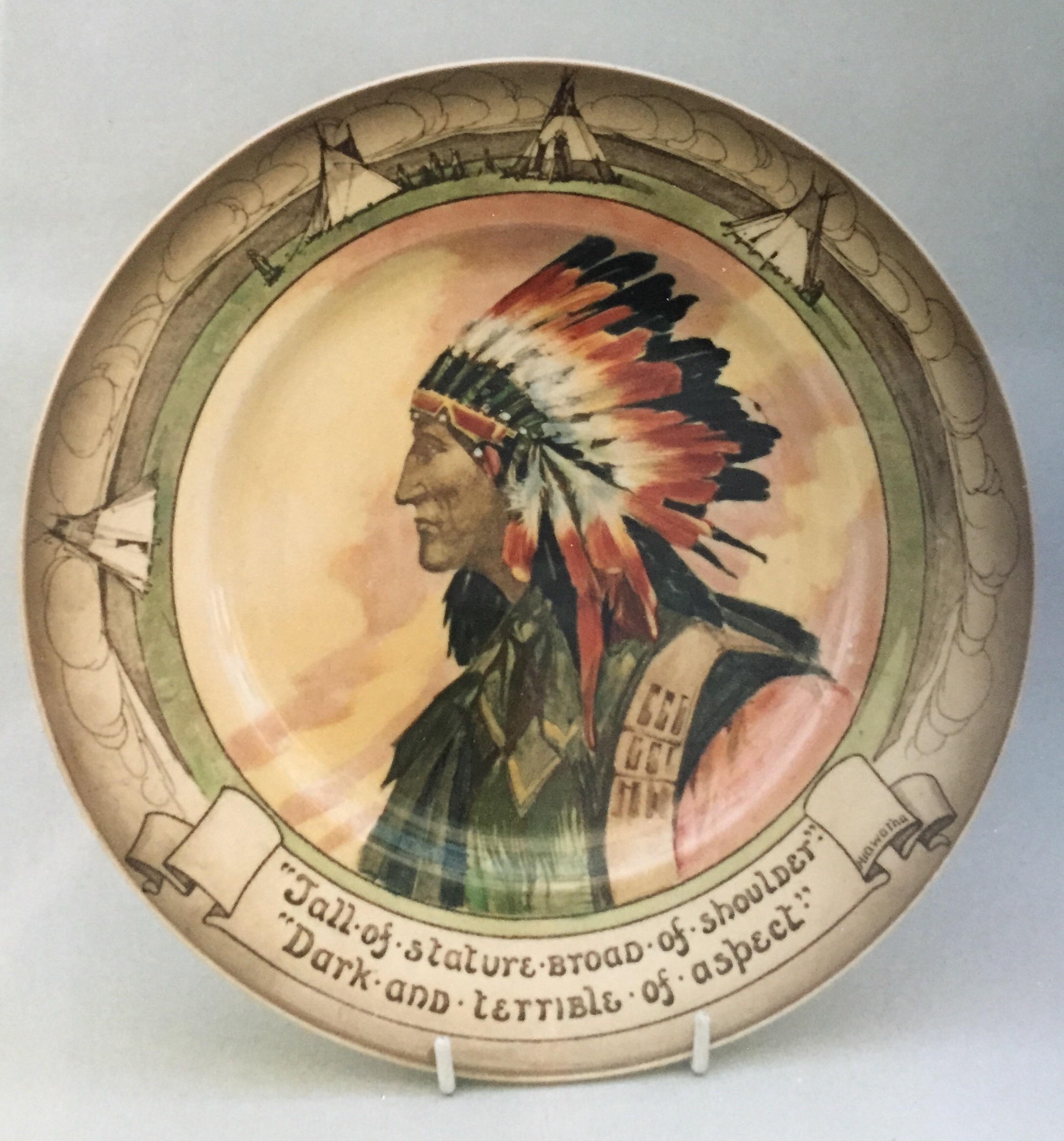
It is not surprising to find this series at the start of the 20th Century as at this time there were tours by Native Americans to Europe and there was much interest in them and their way of life. Doulton’s series was introduced in 1908 and withdrawn in 1949, and whilst it is a long production period examples of this pattern are hard to find today, with rack plates the most easily found. In 1938 the border designs were given additional colouring, thus revamping the series. 

  
The fictional character Hiawatha from Longfellow’s poem The Song of Hiawatha is the tale of a Native American hero, although originally he was to be called Manabozho. Longfellow’s character was a medicine man, defender of and beacon for his people.

The name is taken from Hiawatha (Born: 1525 – Died: 1595) who was an early pre-colonial Native American leader and depending on differing sources, was a leader of the Onondaga, or the Mohawk or perhaps even both. 

  
As well as rack plates, chargers, tankards, tobacco jars and dressing table sets have been found featuring the five recorded designs that make up the range, all with appropriate Longfellow quotations often referring to Haiwatha’s wisdom or else his famous belt. The borders are typically elaborate for early designs and feature wigwams. 

Doulton’s John Hassall ware. 

  
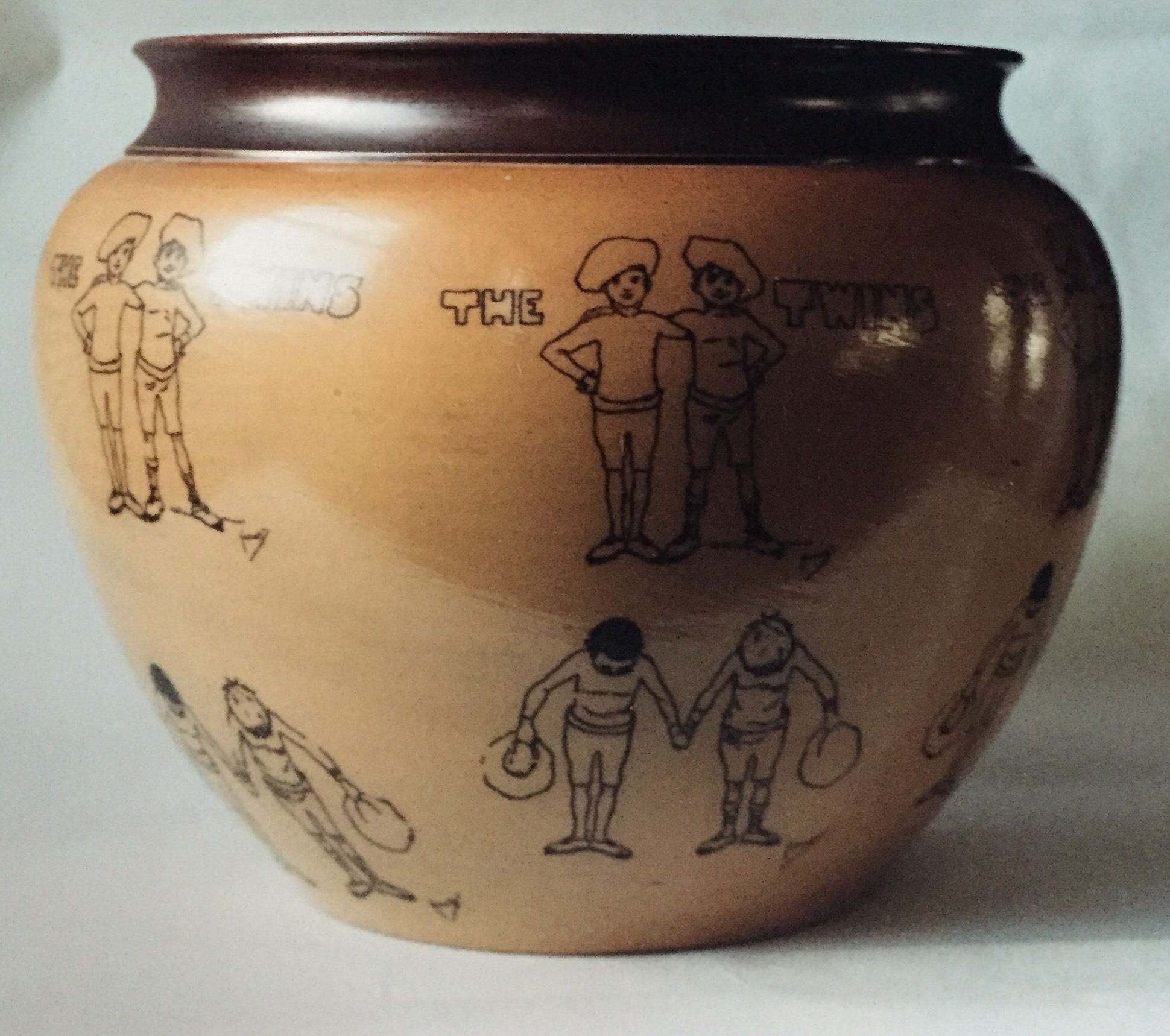
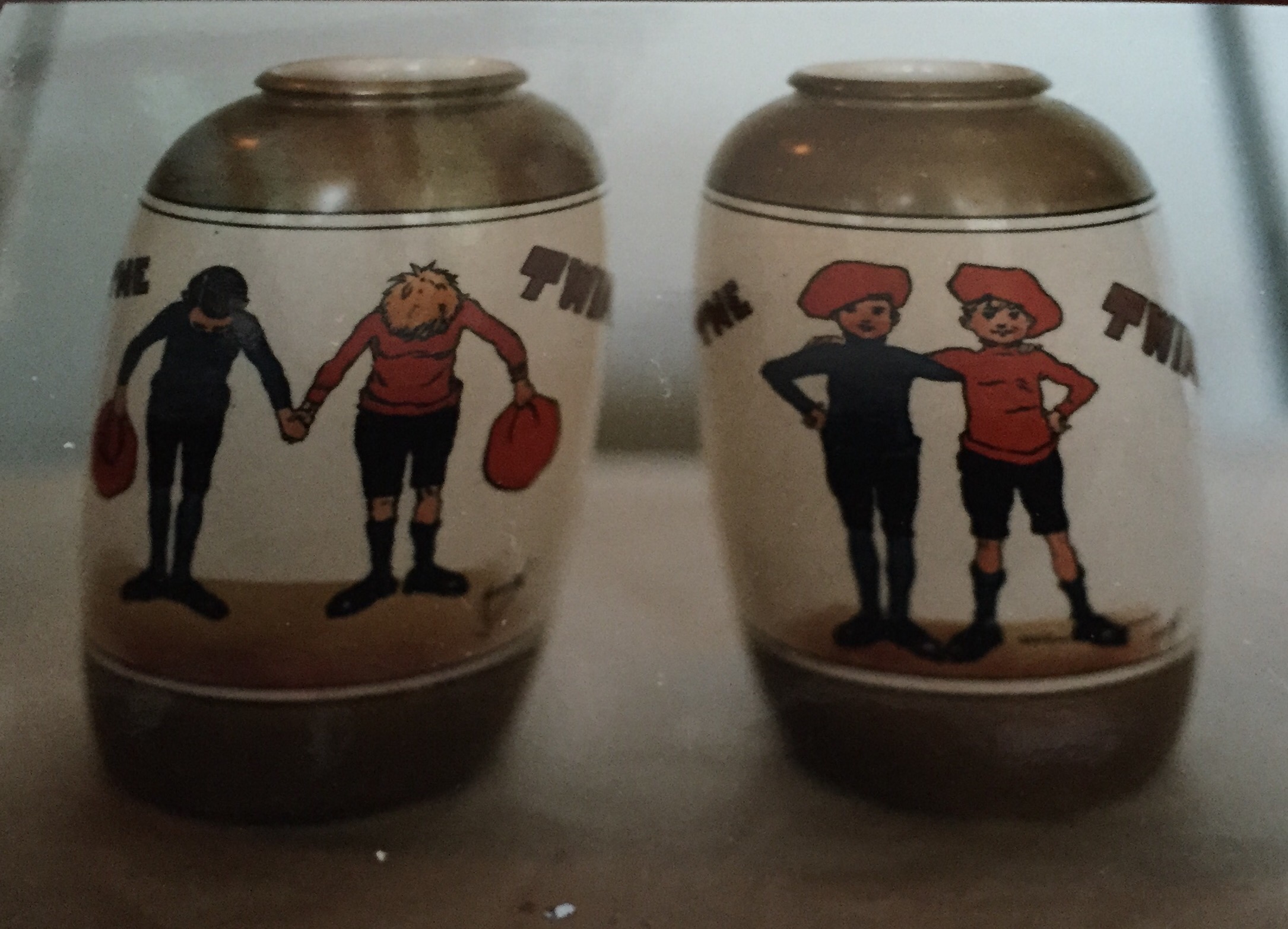
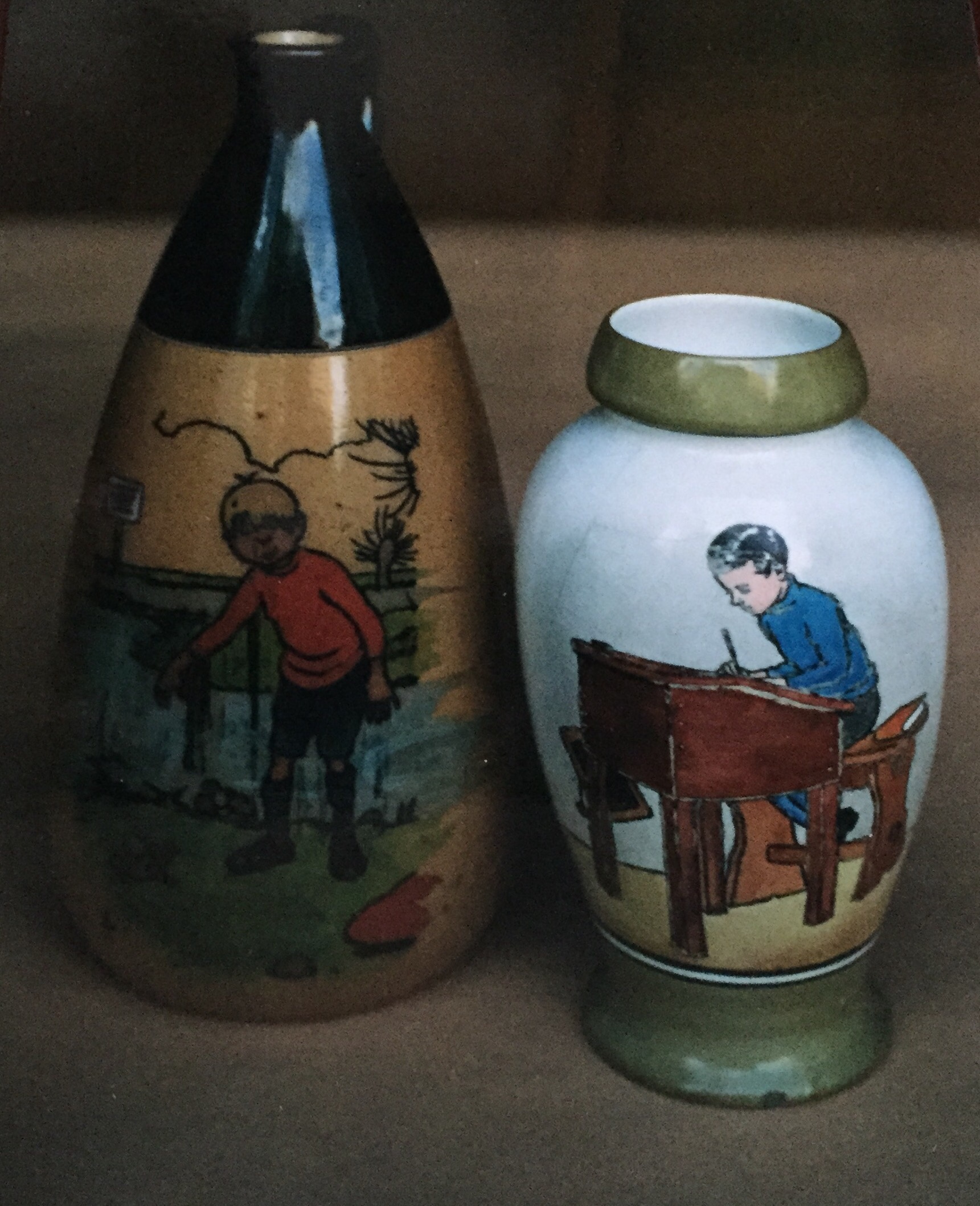
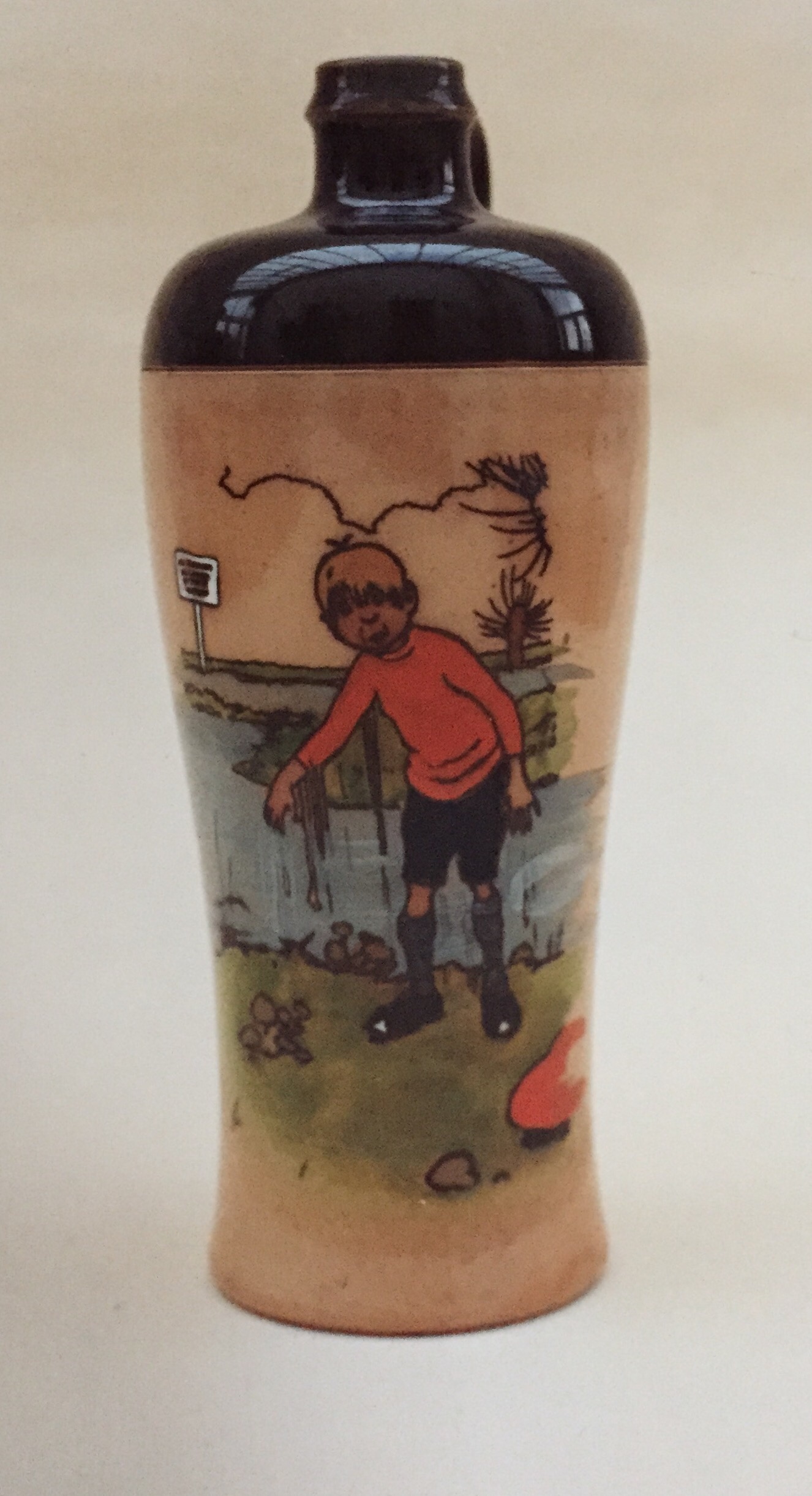
Perhaps most famous for his advertising posters for the likes of Beecham’s Pills and Coleman’s Mustard, however Doulton collectors are perhaps more familiar with John Hassall’s ‘naughty children’ and ‘The Twins’ designs that feature on Lambeth wares such as jardinières, vases and flasks.

  
Doulton ware from Burslem can also be found bearing his designs including the ‘Hooked’ kingsware flask featuring a humorous fisherman and his catch. 

  
Hassall was known as the poster king at one point because of his advertising designs mentioned above, but also posters advertising popular tourist destinations here in the UK.

  
Collaborations between Hassall and Cecil Aldin can also be found, and these two artists were friends with Dudley Hardy, again another famous illustrator from the early 20th Century. 

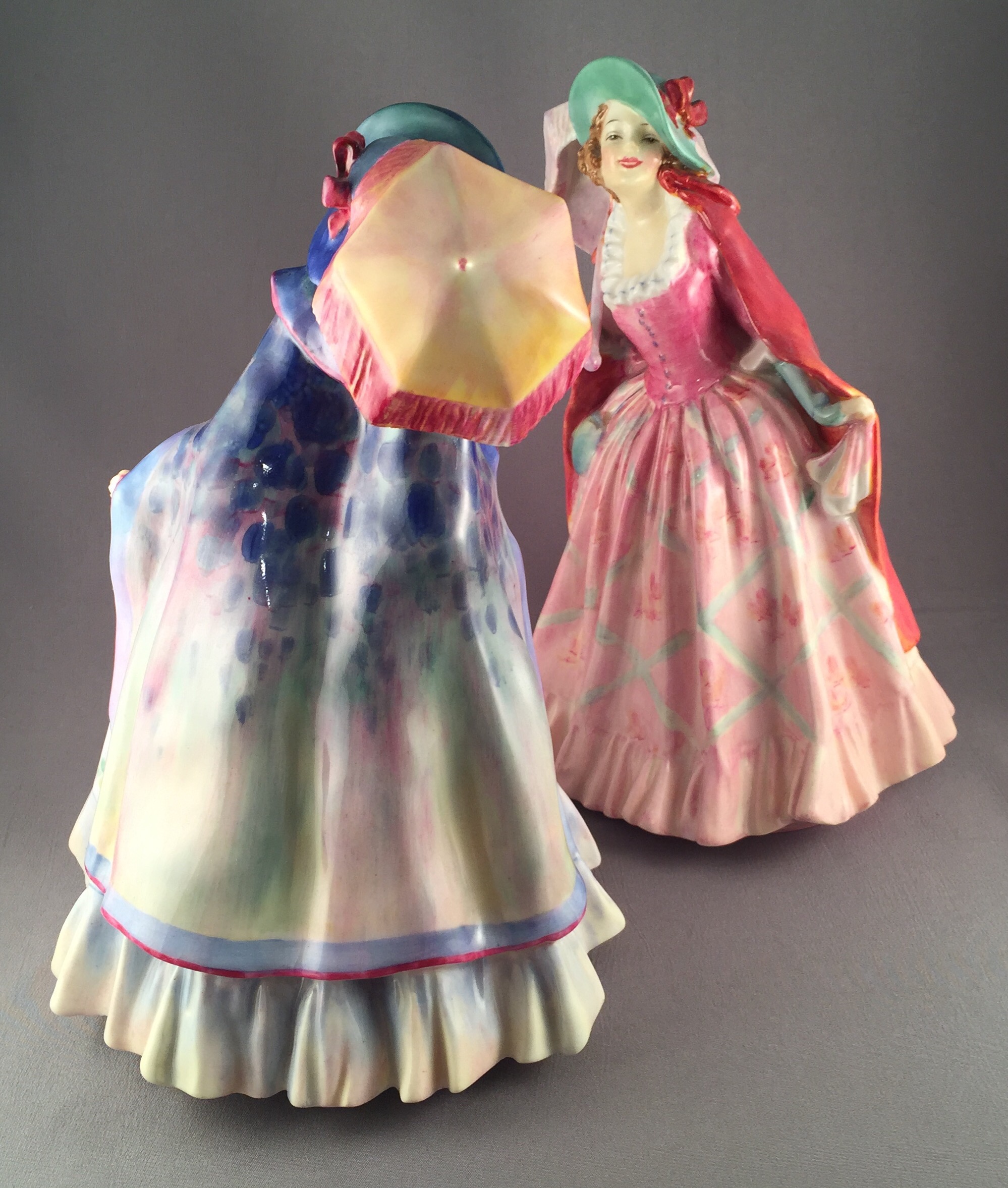
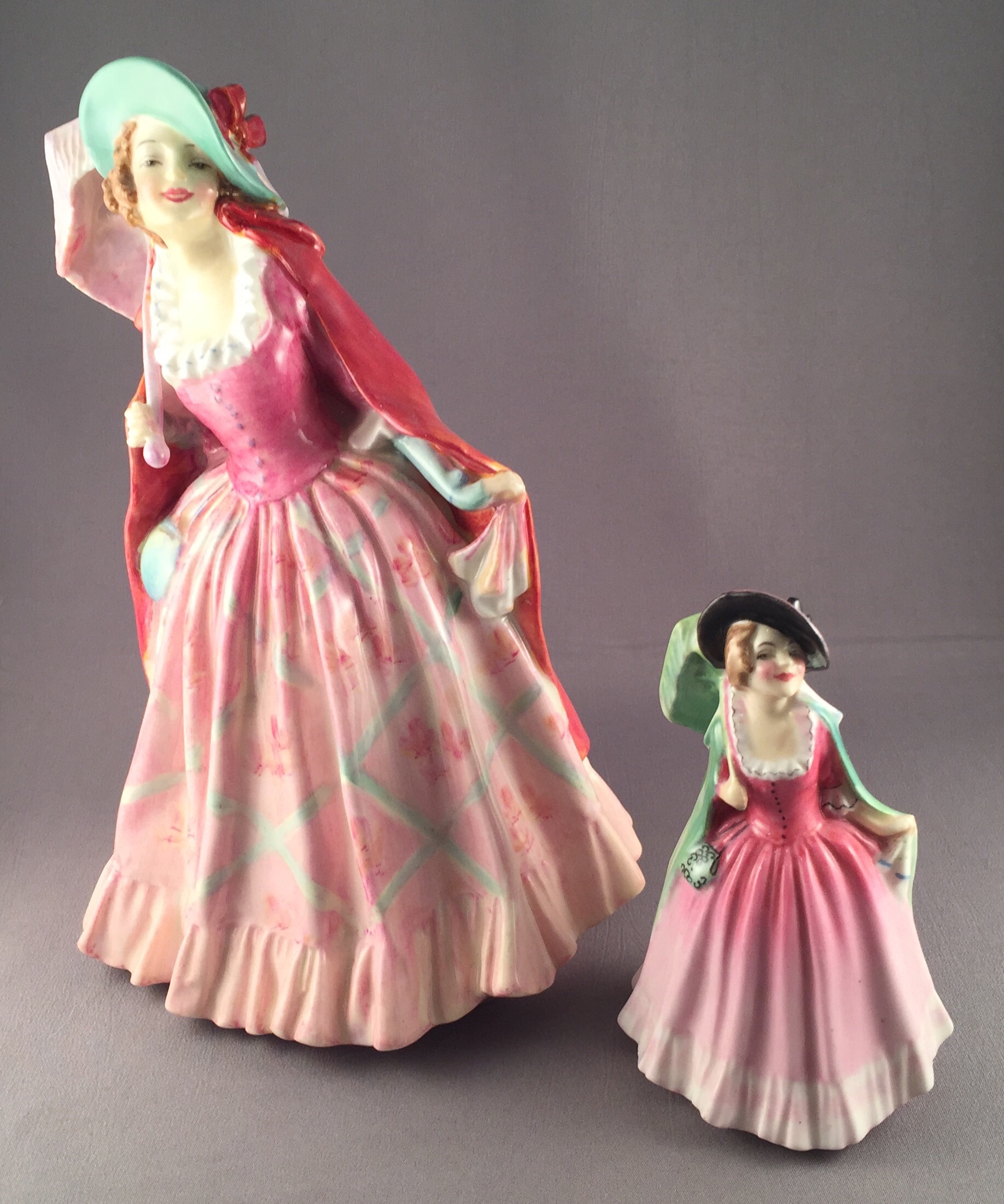
Royal Doulton’s Mirabel figurine – a 1930’s classic! 

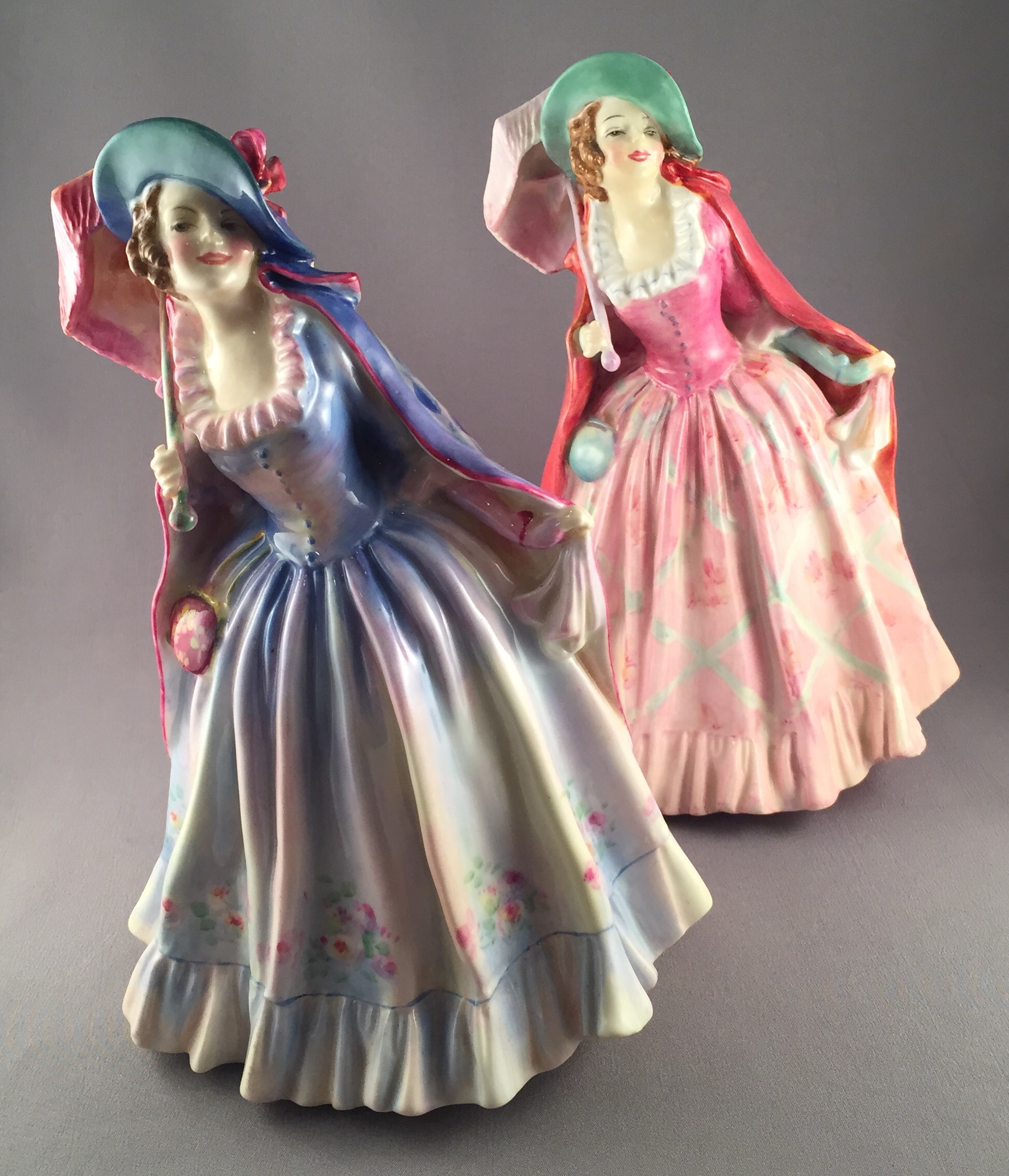
Introduced in 1935 in a large size, Mirabel was not only a popular name of the 30’s but with Doulton’s figurine of the same name she was a popular china figure too!Richly detailed and featuring Doulton’s famous attention to detail – so prevalent in this pre-war period, her success was assured.
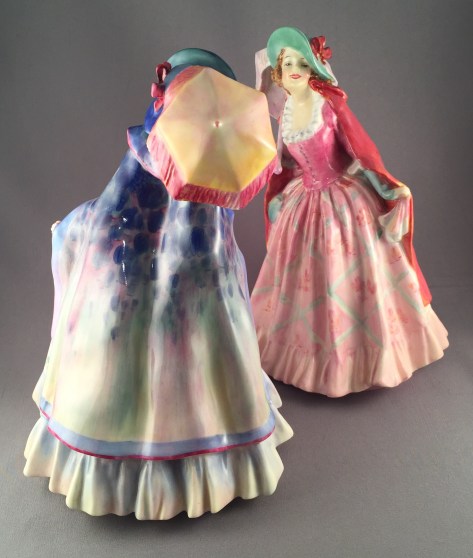
  
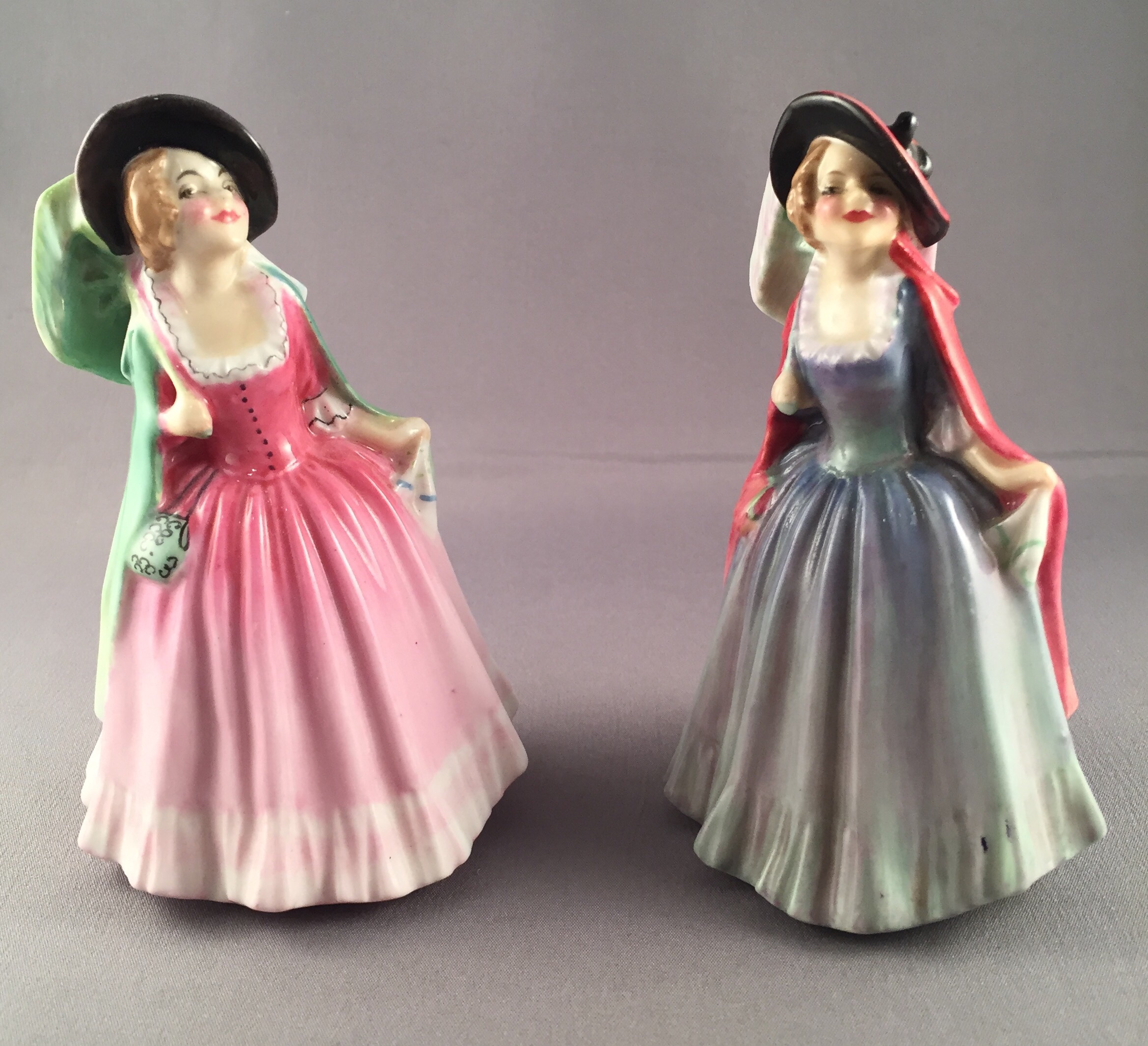
Typical of 1930’s figures Mirabel was issued in a blue colourway as HN 1743 and a pink as HN 1944. Both were in production from 1935 to a withdrawal date recorded as ‘by 1949’. In my experience that ‘by 1949’ was much earlier and a more precise date would be ‘by 1944’ save for a small handful of Doulton’s most popular figurines of the time, which continued to be produced for the export markets. 
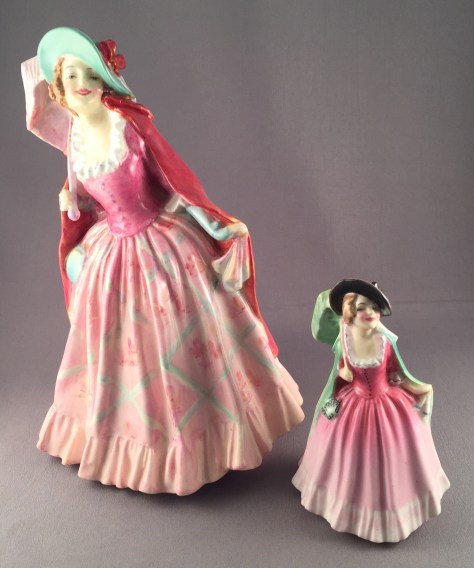
  
Again typical of the time, Mirabel’s popularity meant that a miniature version of her was added to Doulton’s M series one year later in 1936. Once again a withdrawal date of 1949 is given but I have not seen any examples later than 1943, so again ‘by 1944’ would be a fairer withdrawal date.
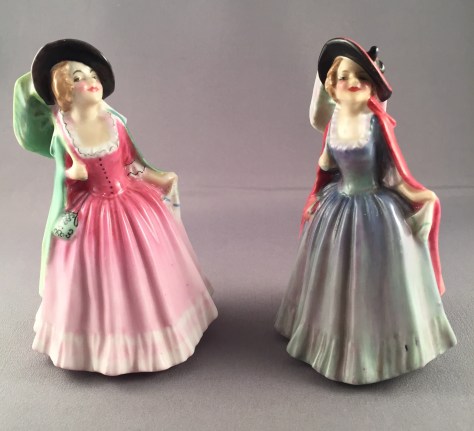
  
As has been illustrated by the secondary market, Doulton’s pink ladies were contemporary favourites with blue colourways much harder to track down and Mirable is no exception to this generalisation, with HN 1743 proving much harder to track down. 
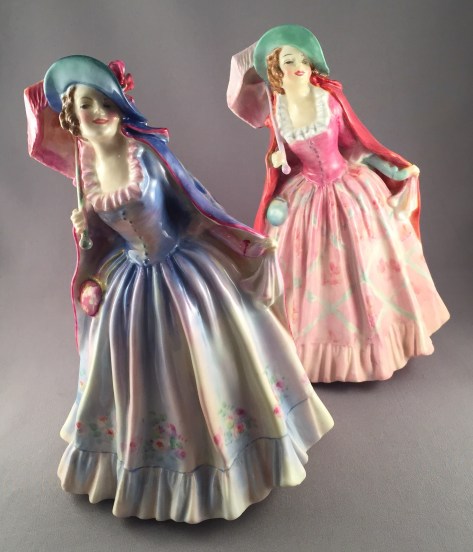
  
No matter what your colour preference, Mirabel is a star personality in any collection due to her impressive size and modelling and displays excellently next to other Harradine favourites such as Sonia, Bonjour and Miss Demure! 
Edmund Dulac’s influence on Royal Doulton’s HN Collection.

EDMUND DULAC 1882 – 1953
Dulac was born in Toulouse, France. His artistic ability showed itself early on and drawings exist from his early teens. He won the 1901 and 1903 Grand Prix for his paintings submitted to annual competitions whilst at the Ecole des Beaux Arts. A scholarship took him to Paris and the Academie Julien where he stayed for three weeks. That same year (1904) he left for London and the start of a meteoric career. 

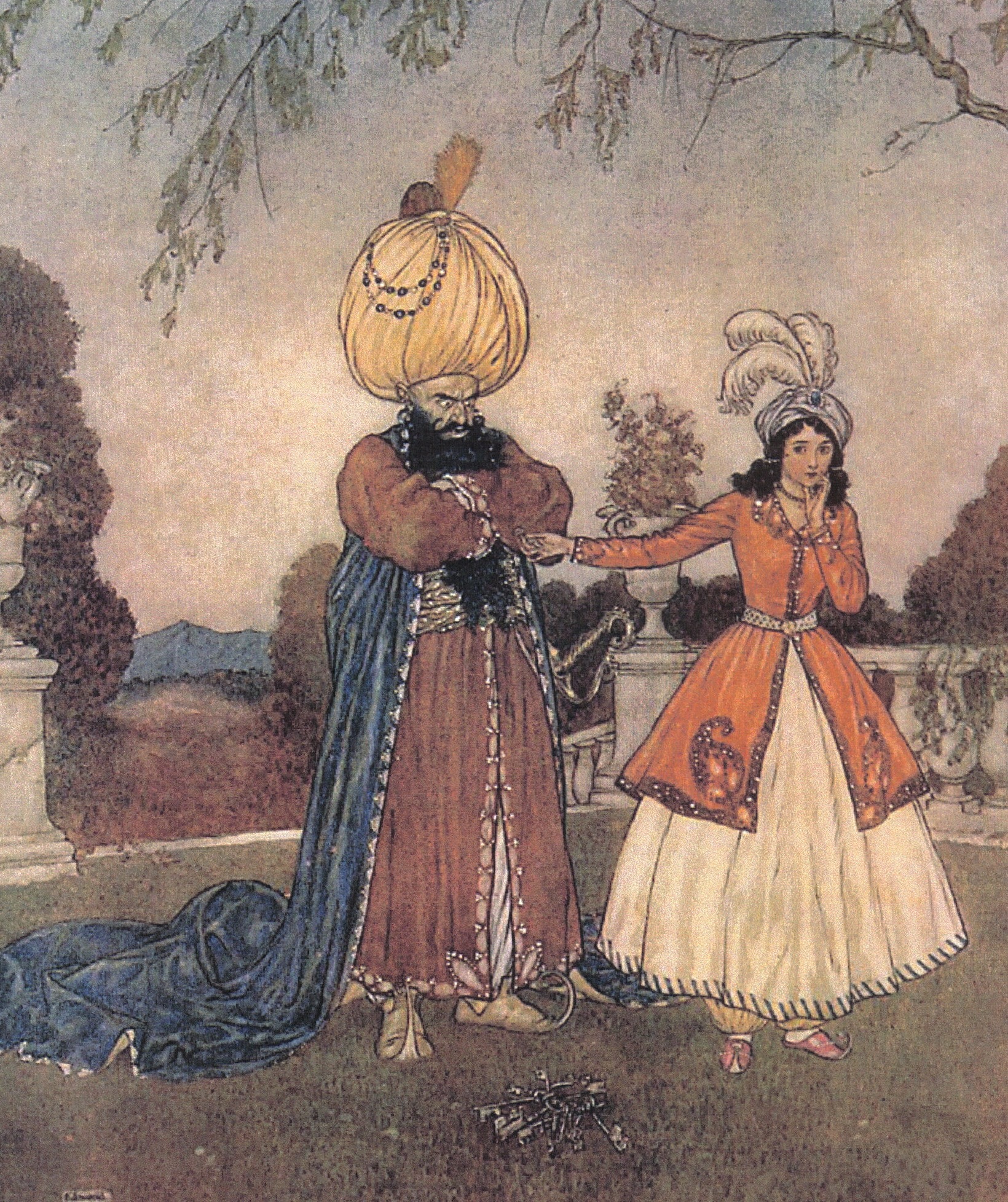
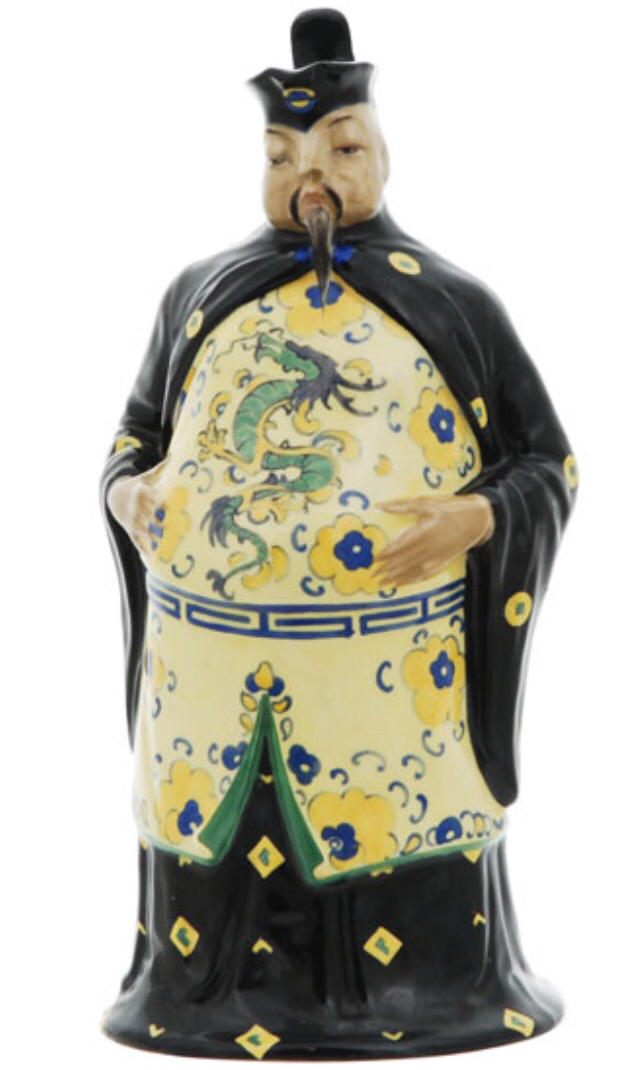
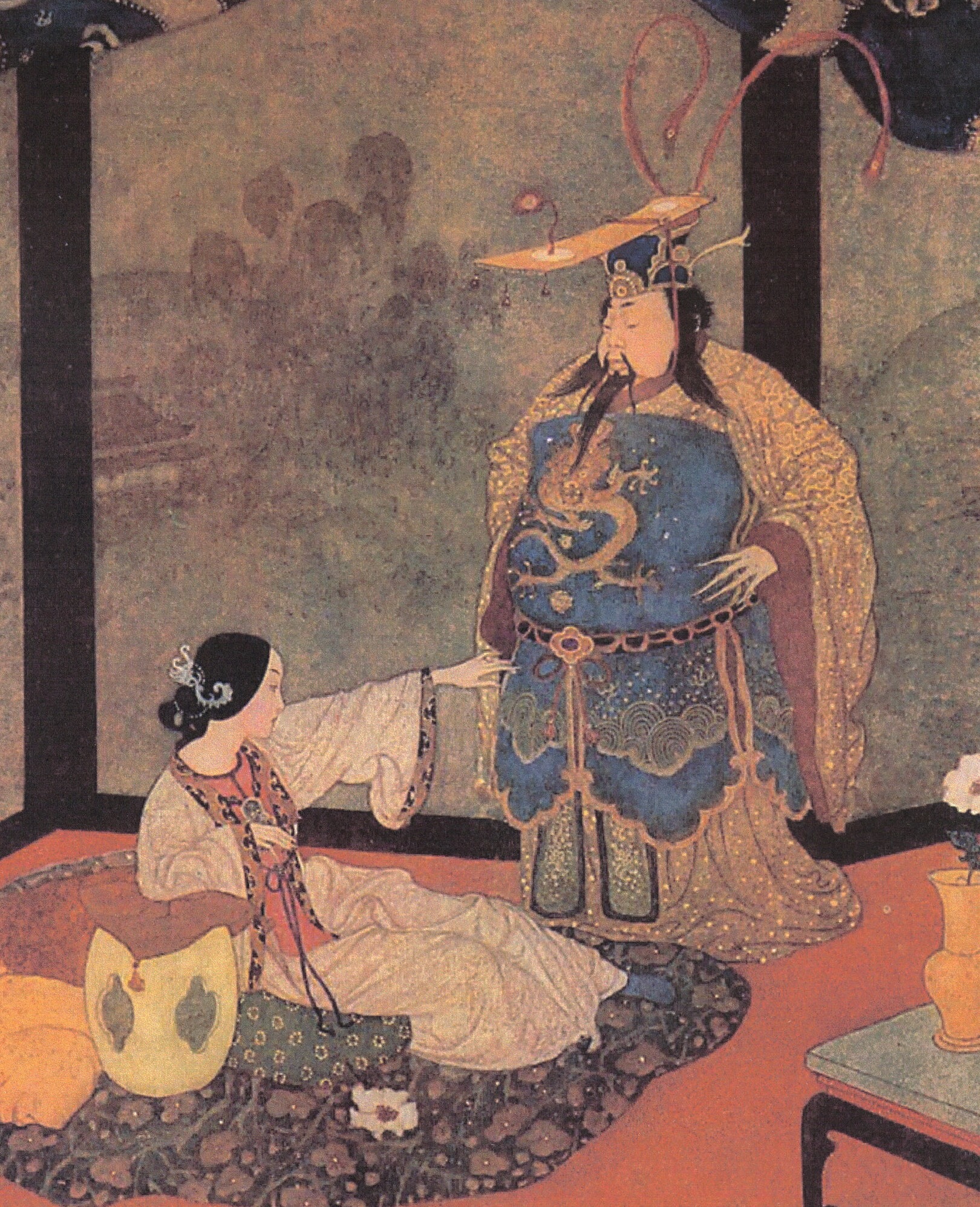
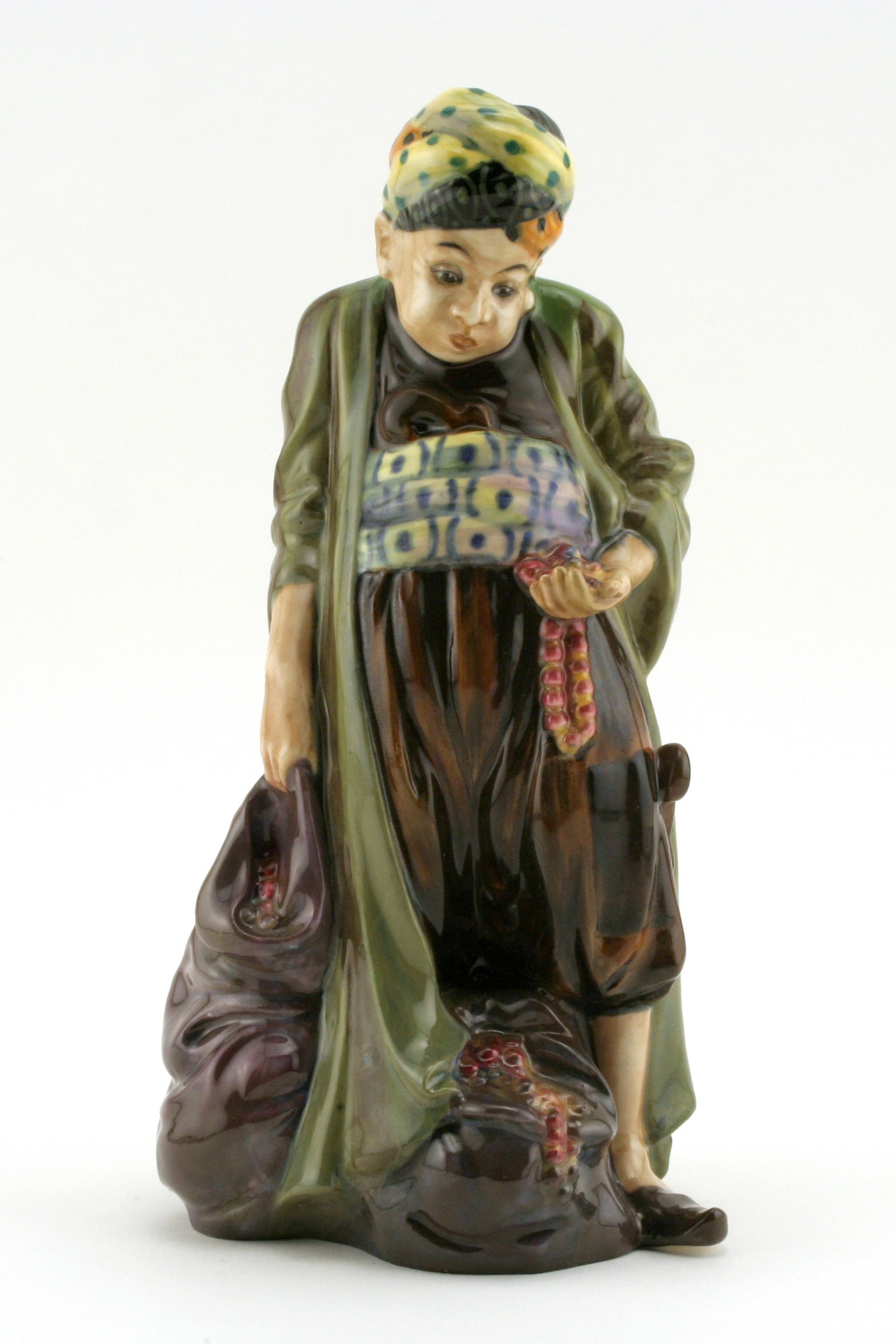
A chance happening across Dulac’s Picture Book for the French Red Cross (1915) led to the following discoveries:

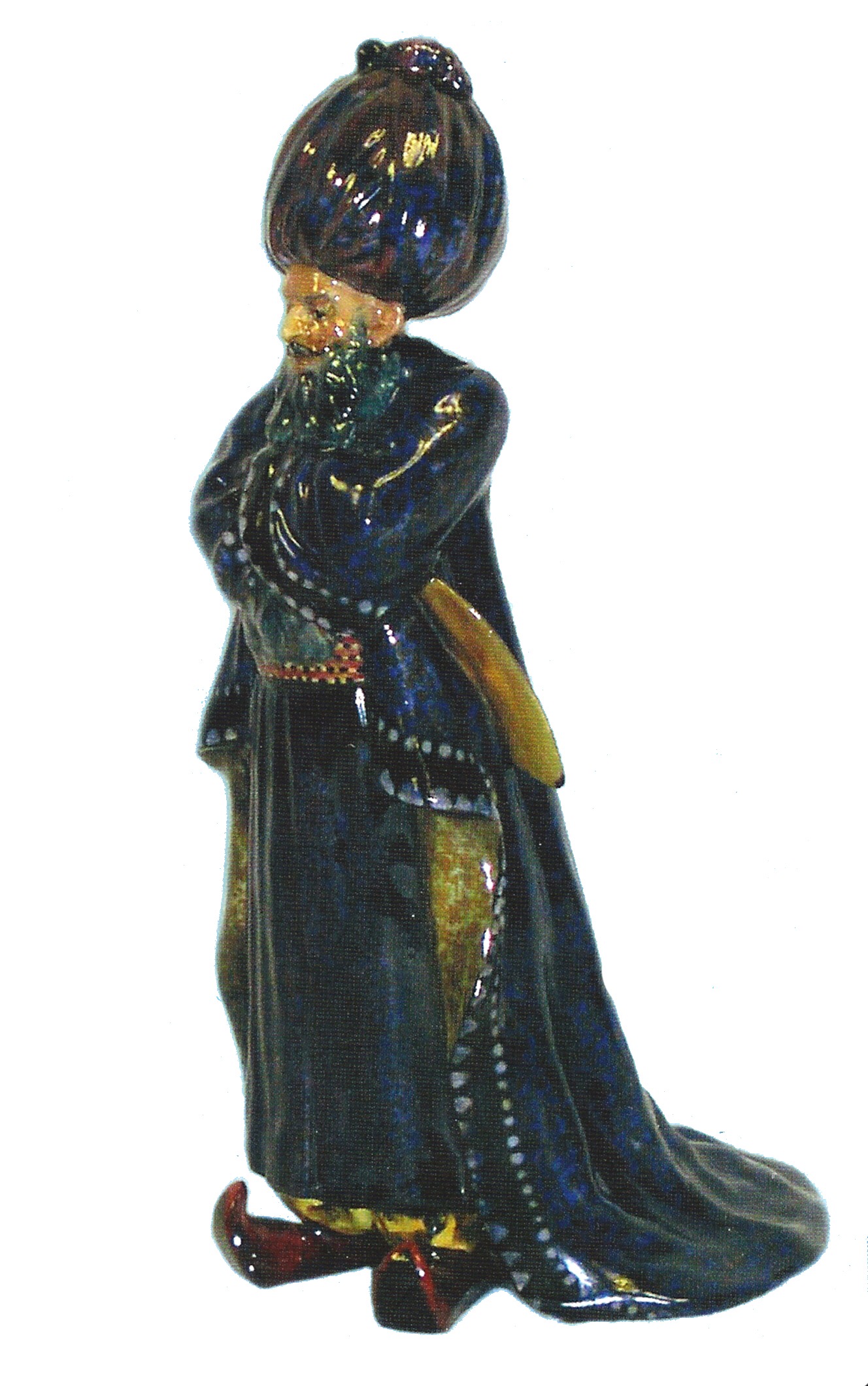
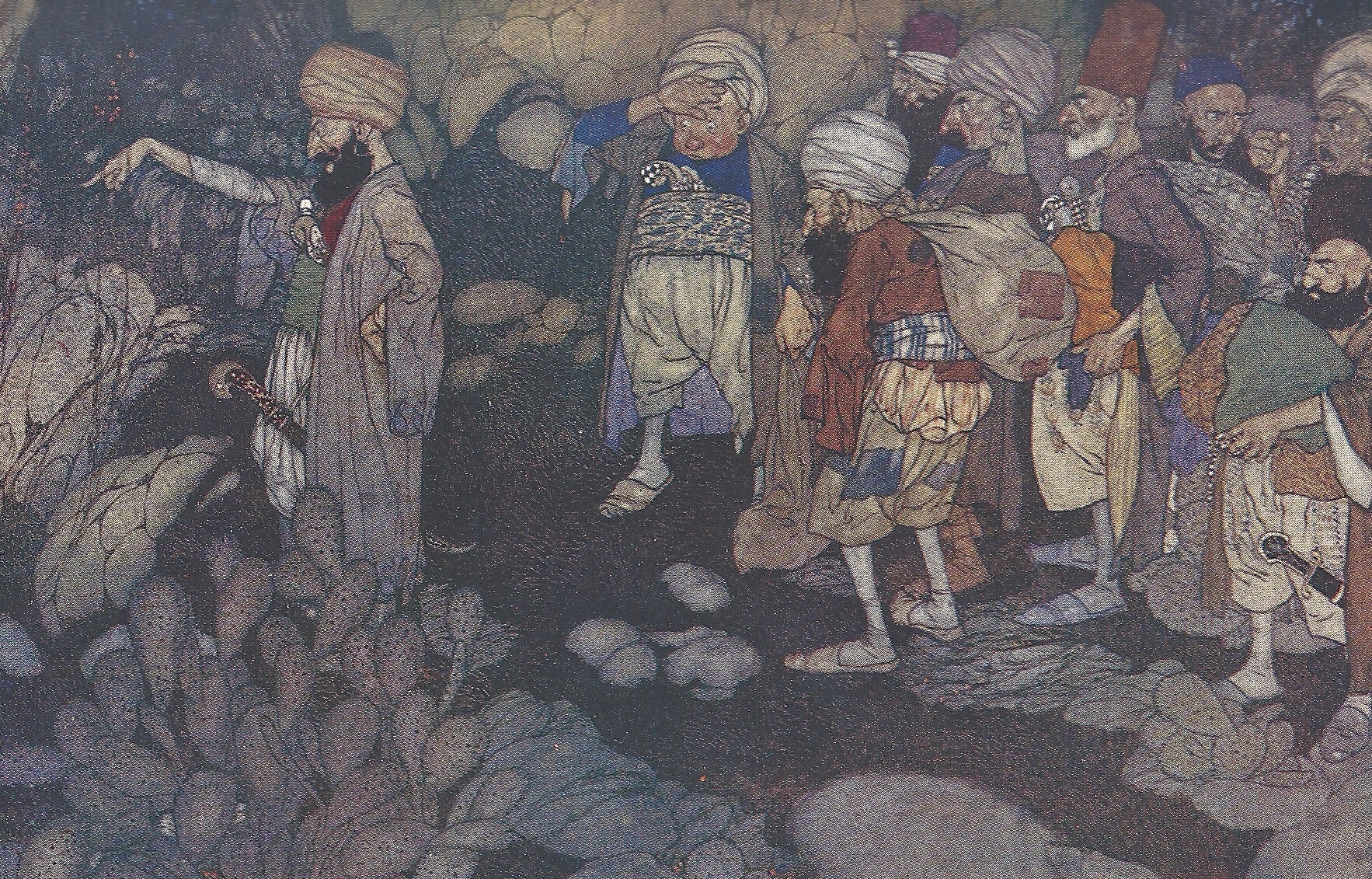
BLUEBEARD HN75 issued in 1917. E W Light.


MANDERIN HN84 issued in 1918 .Charles Noke.


ONE OF THE FORTY HN417 issued in 1920. Harry Tittensor.


Dulac’s illustration above and others by him were used in an early 20th Century version of the popular takes 1001 Arabian Nights.

Also inspired by Dulac illustrations but not shown here is PRINCESS BADOURA HN2081 issued in 1952 again by Harry Tittensor.

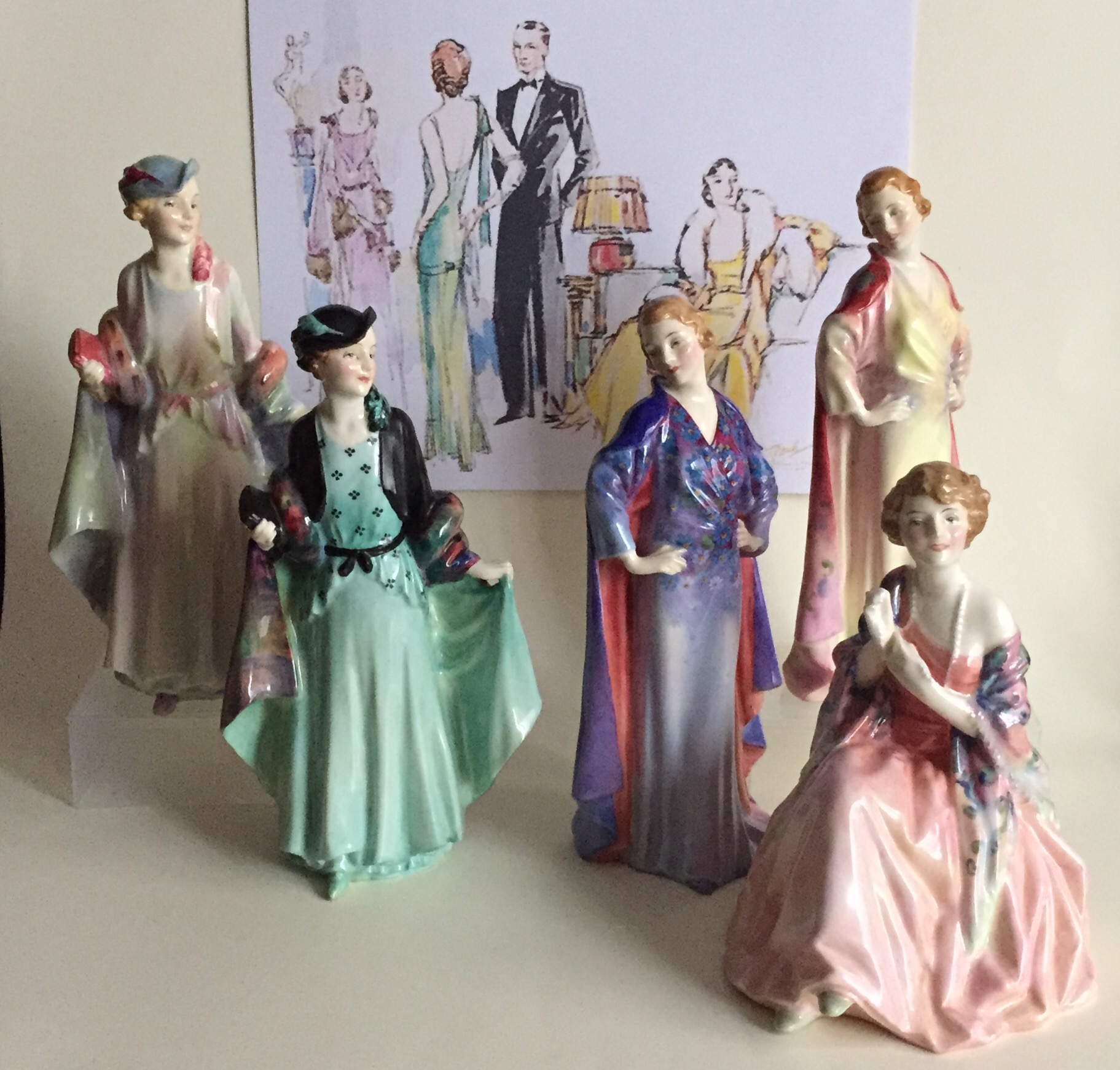
Doulton ladies’ sleek 1930’s style! 

  If the 1920’s were typified by ‘Putting on the ritz’ then the 1930’s were about sleek lines and glamour. 

Typically, Doulton once again responded to the fashion of the times with a handful of designs inspired straight out of early 1930’s fashion magazines. Indeed we know that Mrs Harradine was a fan of a magazine called Britannia & Eve, as her husband based his figure Pamela on a cover girl from 1930. 

Even the names chosen for this select band of ladies represent their time, with stylish names such as Clothilde, Aileen and Gloria. 

Once again Doulton figures can be truly said to have represented their times, just as they had in the 1920’s with perennial favourites such as Pierette and Butterfly in their party costumes and as they would at the end of the 1930’s with Hollywood inspired glamour including The Mirror and Nadine. 

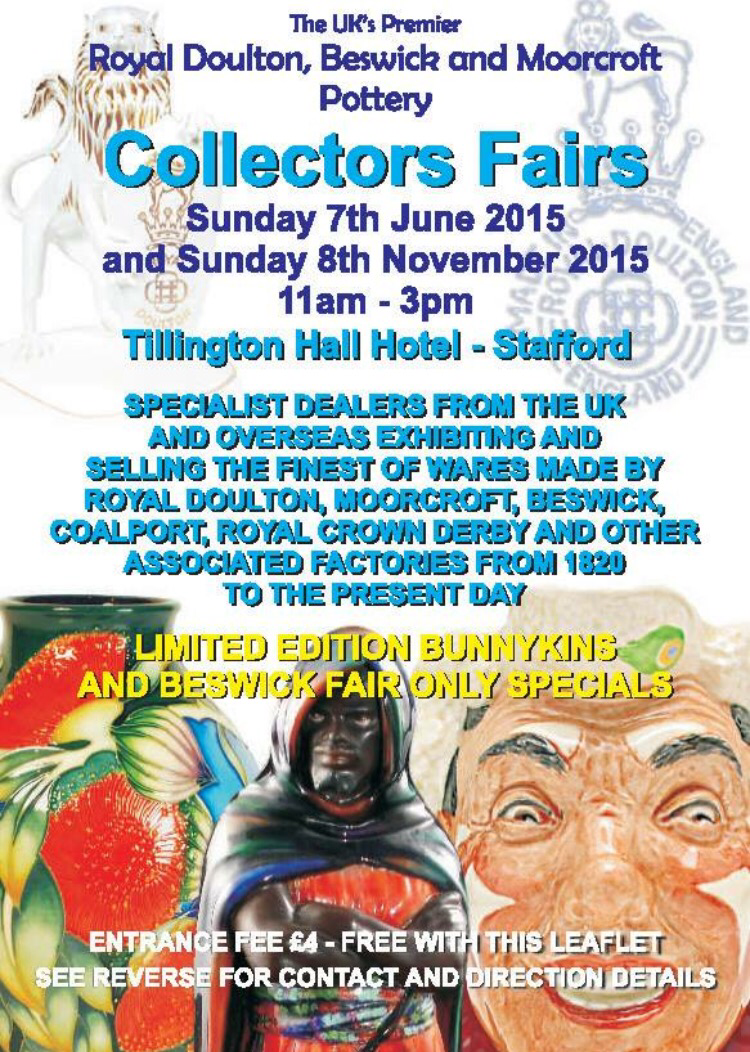
Doulton Fair 8th November 2015 – save the date! 

Don’t forget – Sunday 8th November sees the second of 2015’s Doulton, Beswick and Moorcroft Pottery Fairs. at Tillington Hall Hotel, Stafford. 
Simply print an image of this advert for free entry on Sunday 8th November!

Remember if you are a subscriber to the Doulton Collectors Club magazine that there is a special event offer – if you haven’t received your email about it, please PM or email for further details.

Or, If you are not currently a subscriber, please PM or email for further details on how to subscribe.

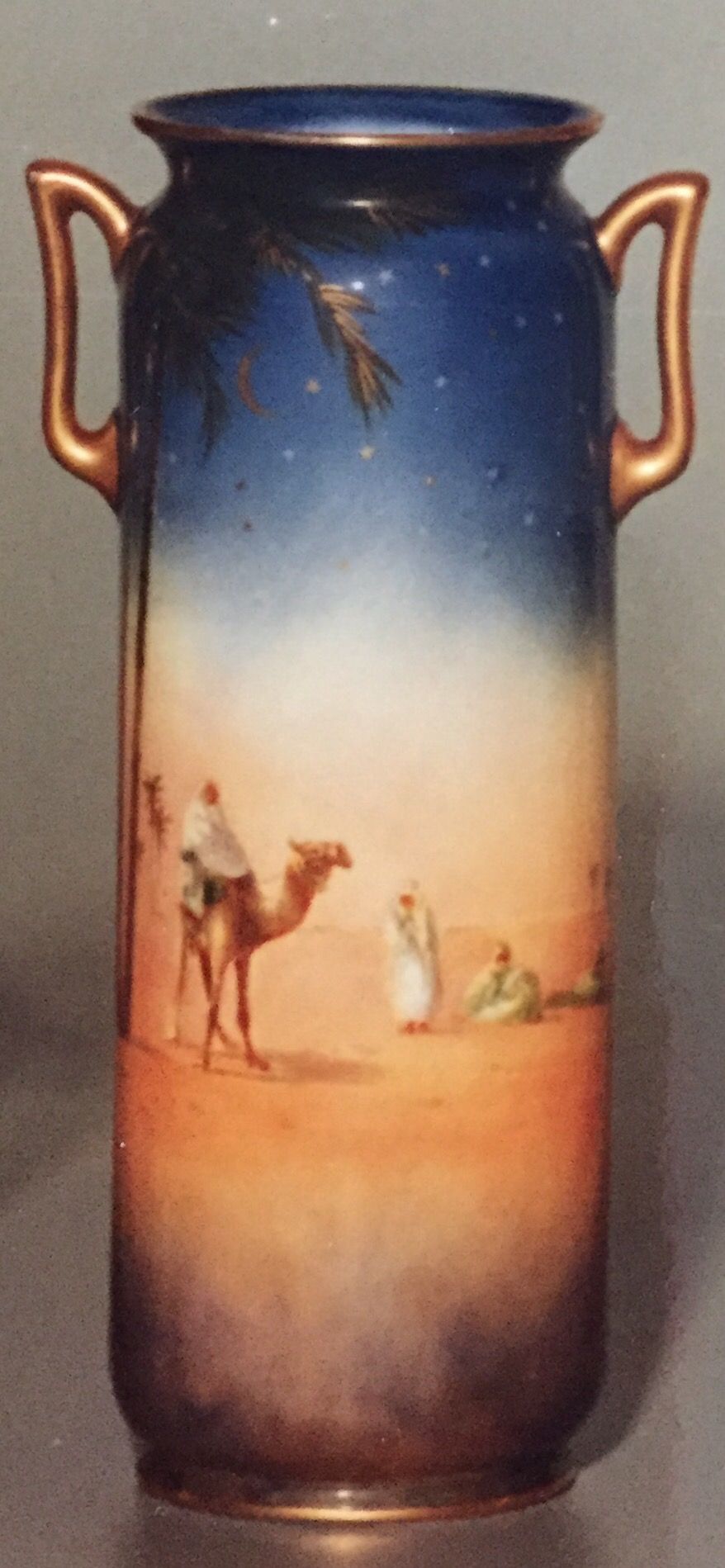
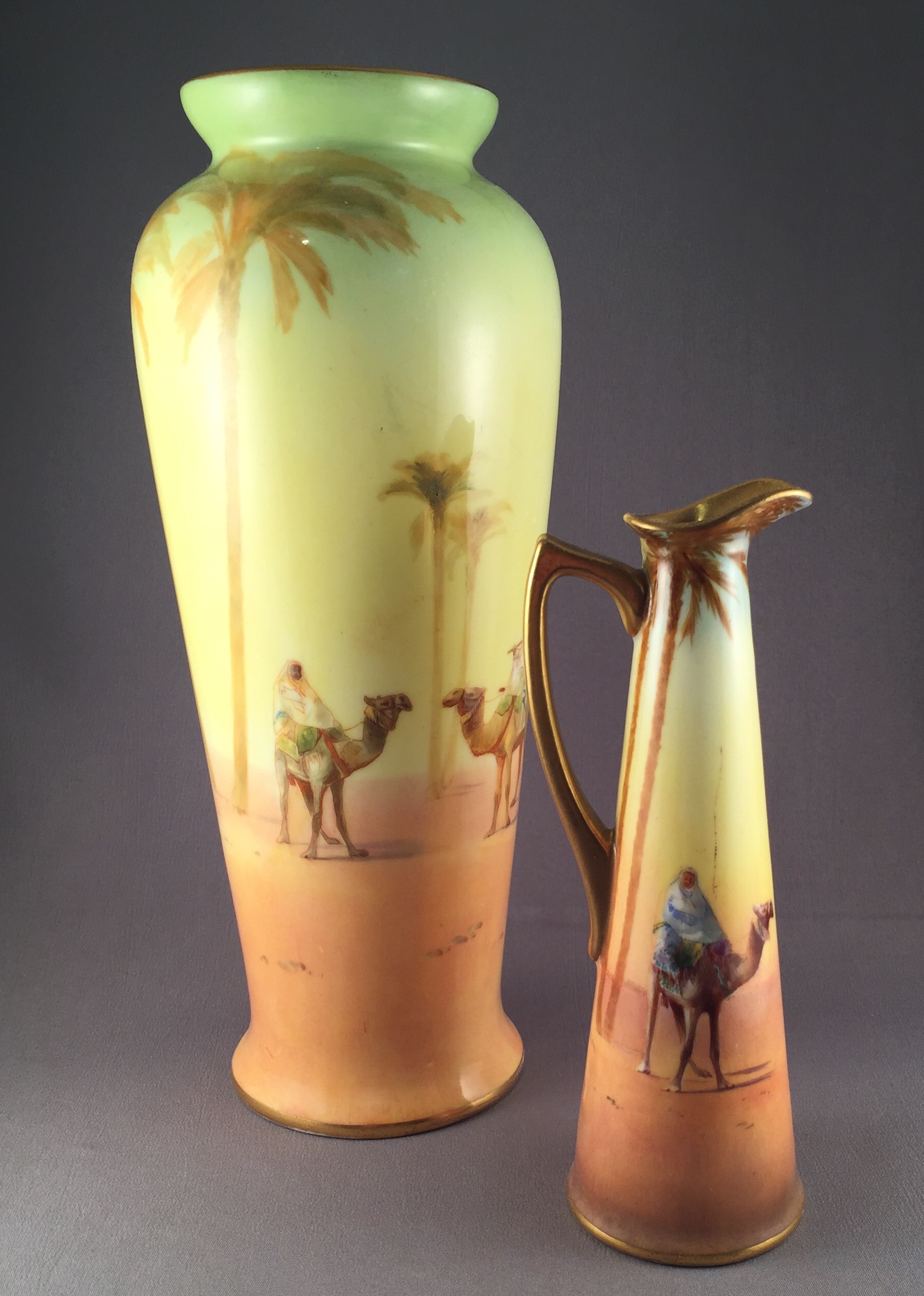
Doulton’s famous desert scenes by Harry Allen. 

The name Harry Allen will be familiar to many Doulton collectors because of his association with so many of Doulton’s most famous lines from Flambe, Sung, Titanian, figures and of course to the fantastic hand painted items by this great Doulton artist. 

  
The son of Robert Allen who himself led an art studio at Doulton in Burslem, Harry proved himself a versatile artist but he will be forever associated with his enchanting desert scene images carefully painted onto all manner of items from jugs to plates and everything in between!

  
Whilst not readily available today, with perseverance it is possible to build a collection of his romantic desert scene work. You will find that Harry signed his work either in full or as H. Allen or else as H. A. 

  
The desert scene items I have come across can be dated to c. 1905, with the yellow desert background being the most usual. 


Collecting Doulton’s ‘New’ Teapots! 

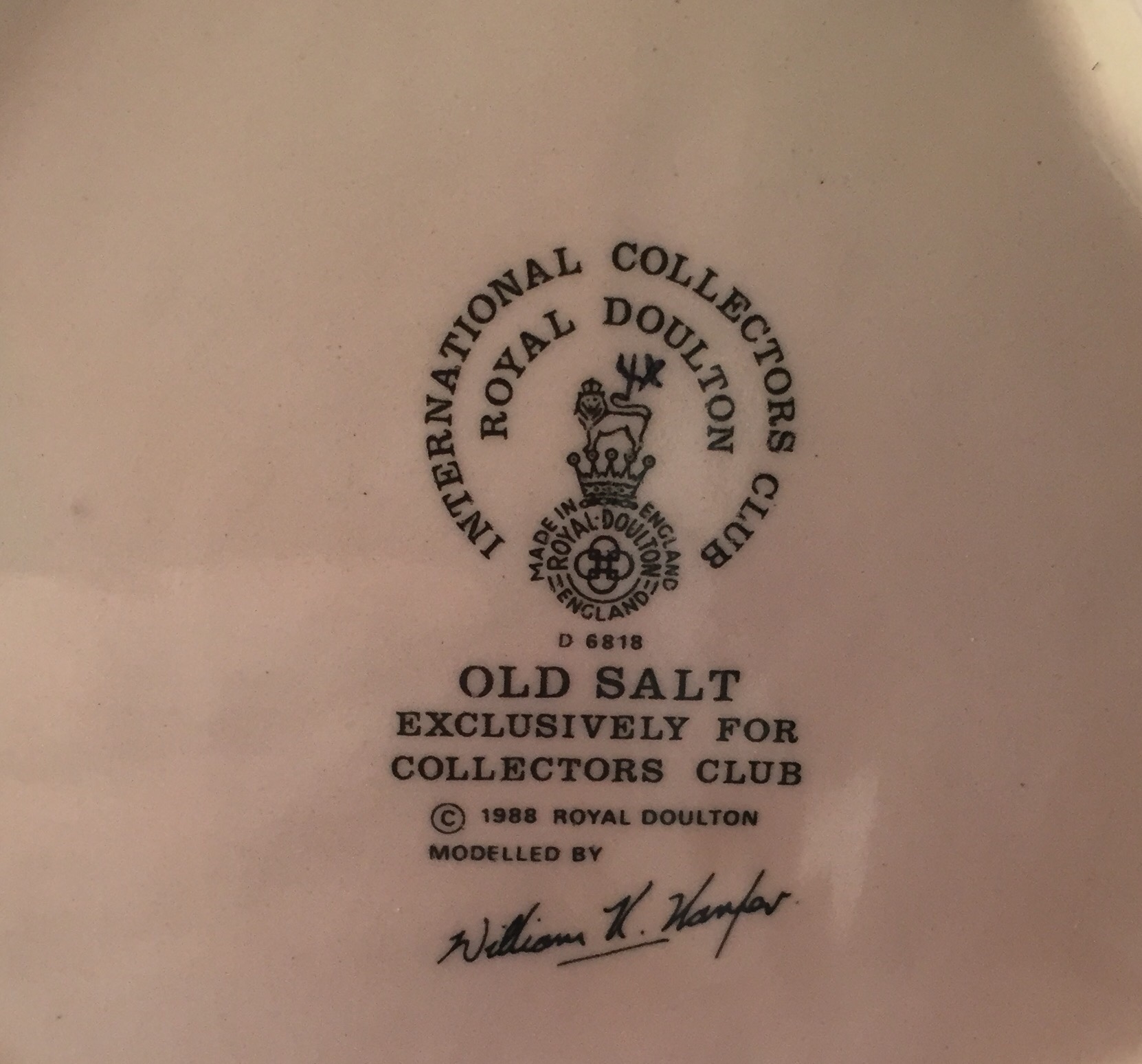
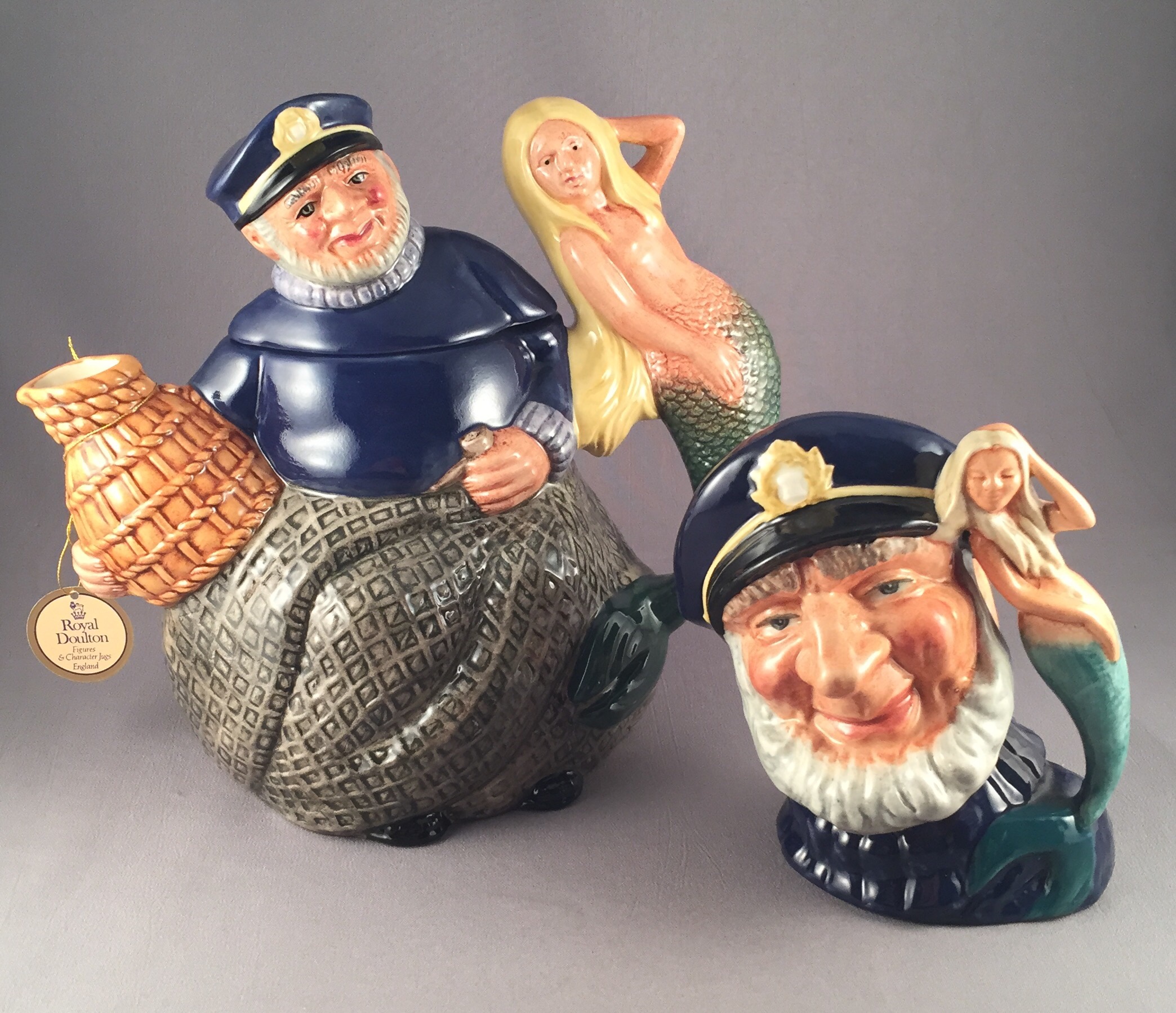
Originally introduced in 1939 for a very brief period, Doulton once again introduced character teapots in 1988 with Old Salt pictured. Once again it was a remodelled character jug personality that provided inspiration for the piece.
 Thereafter other famous Doulton characters appeared including the Balloon Man and Woman Teapot based on those two famous figures. The difference being with these new teapots was that whilst Old Salt was a RDICC exclusive, many of the other new models weren’t but were limited edition pieces.


Old Salt teapot and original character jug that inspired it! 

Whilst many characters were produced to a prototype stage, they never reached full production so the range was originally intended to be quite extensive.

Collecting Doulton roses! 

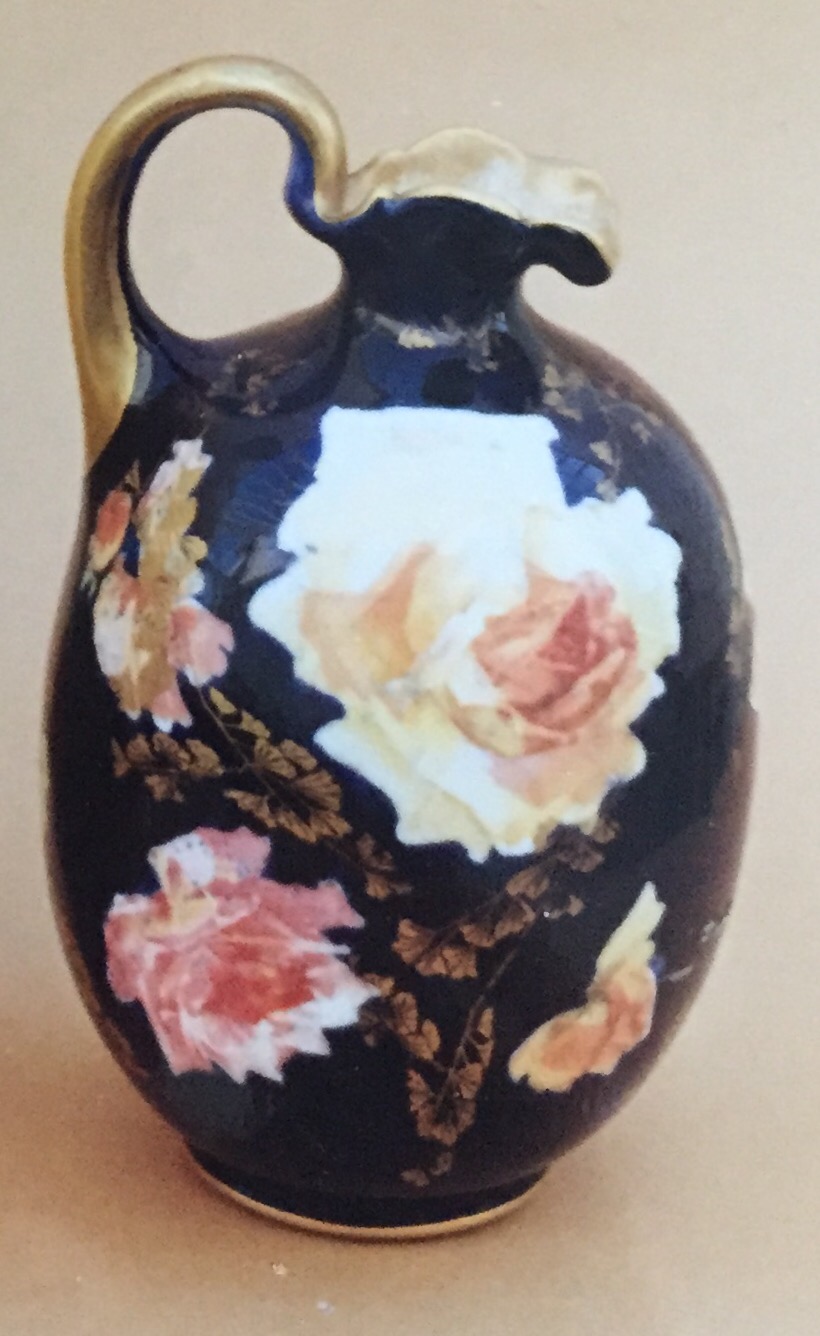
Whenever one thinks of Doulton roses the names Edward Raby and perhaps the successor to his ‘throne’ Percy Curnock spring immediately to mind. However, there was a range of Doulton decorated with ‘print and tint’ roses from the early years of the 20th Century that were intended to be more accessible to collectors. 

 Typically this range of wares were produced on a cobalt blue ground and occasionally they had further gilded embellishment such as in the above illustration.

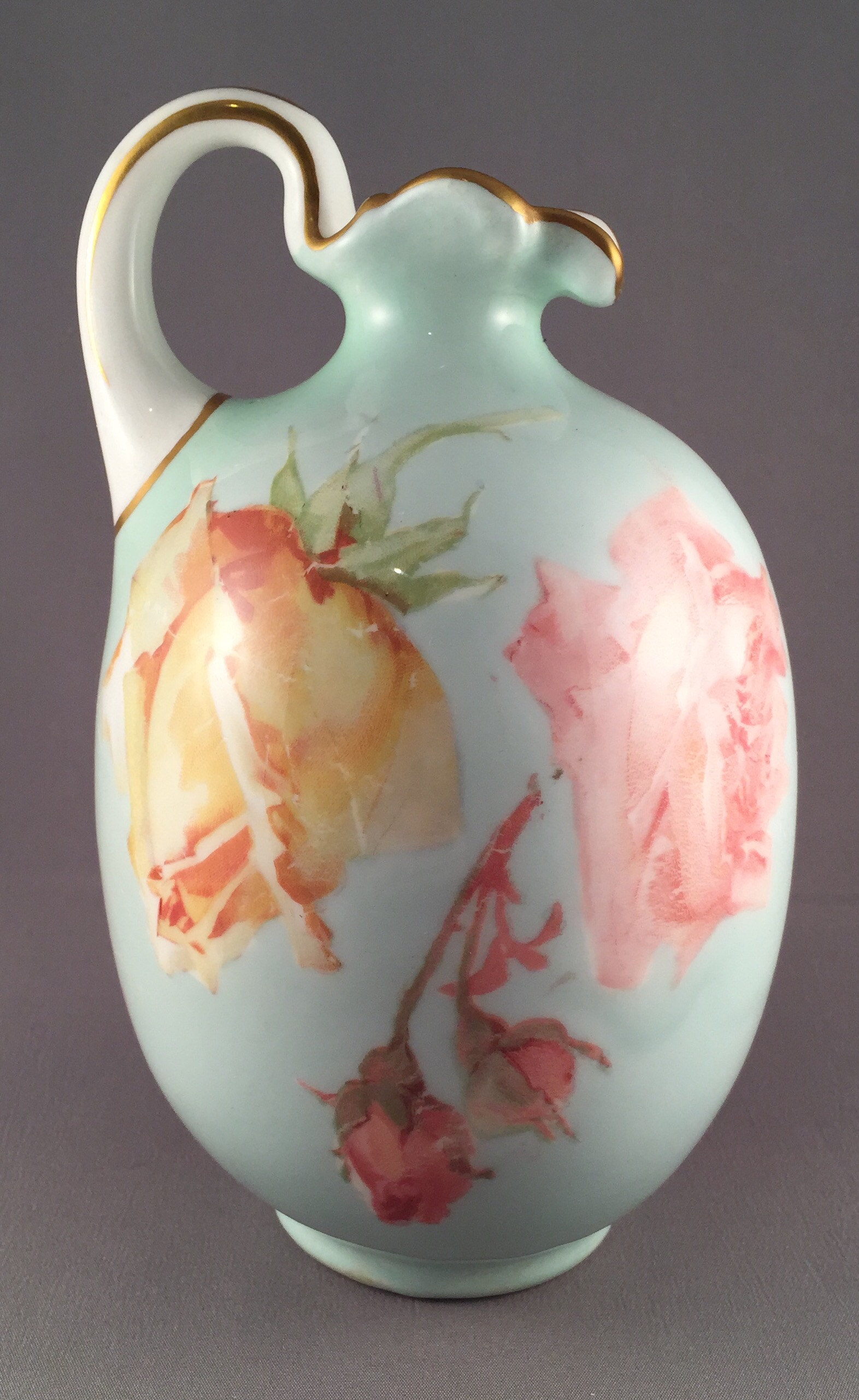
 More recently I came across the turquoise  jug pictured below decorated using the same rose images as were found on the cobalt blue versions. As always, Doulton never fails to throw up surprises to keep us on our toes! 

Collecting Royal Doulton’s Williamsburg characters! 

In 1960 Doulton introduced their popular Williamsburg personalities into the HN collection and they were soon followed by seven character jugs representing characters from colonial Williamsburg. The set of seven jugs remained in production for some 20 years and there was to be a further character, the Cabinet Maker, added in 1981 but the collection was discontinued before he was able to join them!


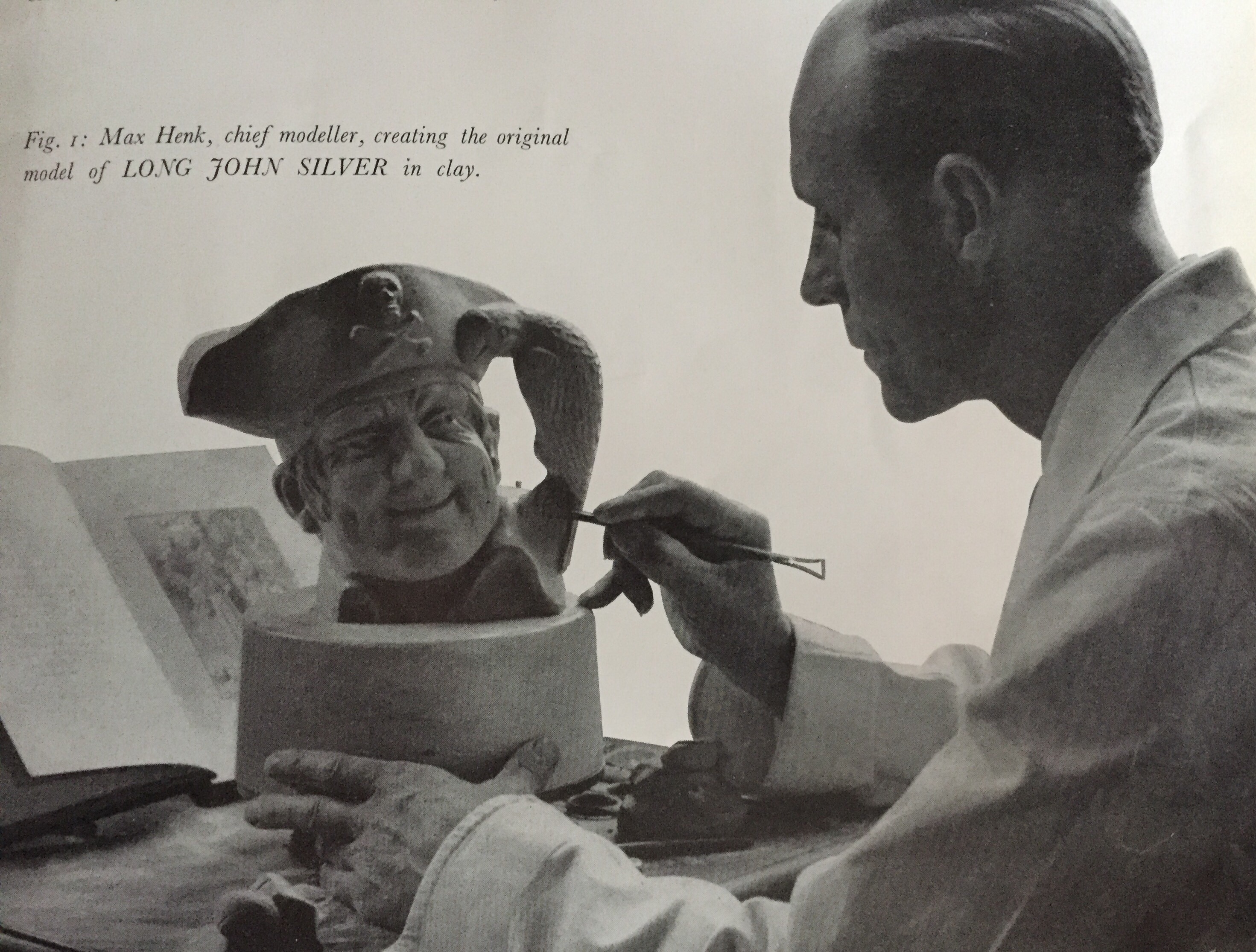
 The set of seven jugs were modelled by either Max Henk or David Biggs and available in large, small or mini sizes during their 20 year production. The seven characters to collect are: the Bootmaker, the Goaler, the Gunsmith, the Guardsman, the Night Watchman, the Apothecary and the Blacksmith. Fortunately the Cabinet Maker would make an appearance as D7010 rather than the original D6659 in 1995 at the RDICC Williamsburg Convention in a limited edition of 1,500 pieces and so did eventually complete this popular set!  


Williamsburg is an ambitious restoration of an 18th Century US town and the capital of Virginia, it began falling into neglect once the seat of government moved in 1780 and the town lost its importance. Williamsburg’s restoration began in 1926 and today it is populated with hundreds of staff who carry on 18th Century life – from their clothing to their traditional trades resp resented by these character jugs!