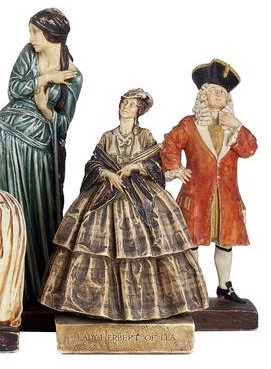
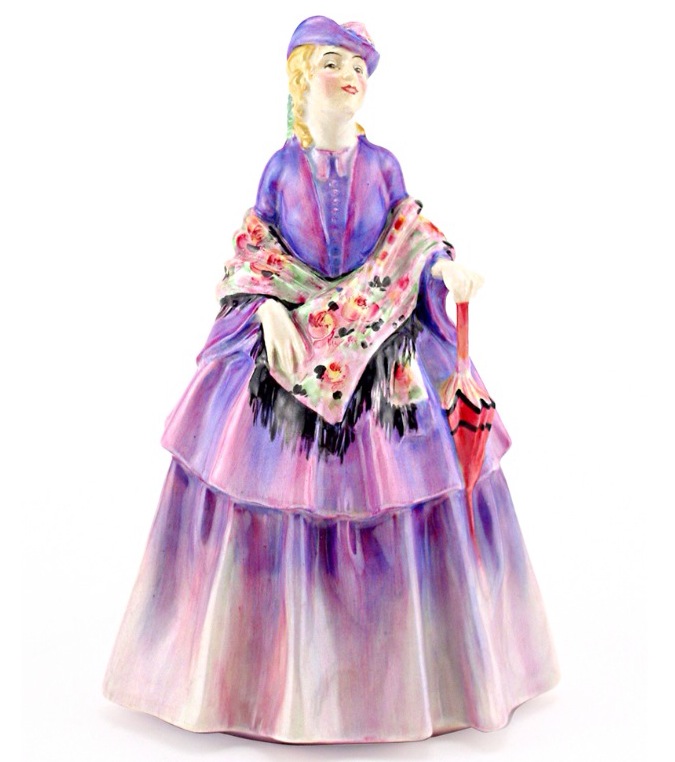
As you know I always love to discover the inspirations for our favourite Doulton figures. Here is another that didn’t make the final cut for Jocelyn’s and my book ‘Reflections’. It is itself a figurine but this time a wax figure by Agatha Walker that she produced as part of her series of figures from the stage in the 1920’s, imitating a popular tradition from the 19th Century. These figures were made of plaster, then coated in wax and finally painted.
Typically Harradine has put his own flourishes to the finished figure including a parasol and changing the direction of Anthea’s head.
Courtesy of Bonhams.
Courtesy of Seaway China.
To date I have found only one other Agatha Walker figure that Harradine used, but that’s for another time!
Whilst pictures and adverts provided much inspiration for Doulton’s modellers, real life and sometimes family life also played a role in inspiring them.
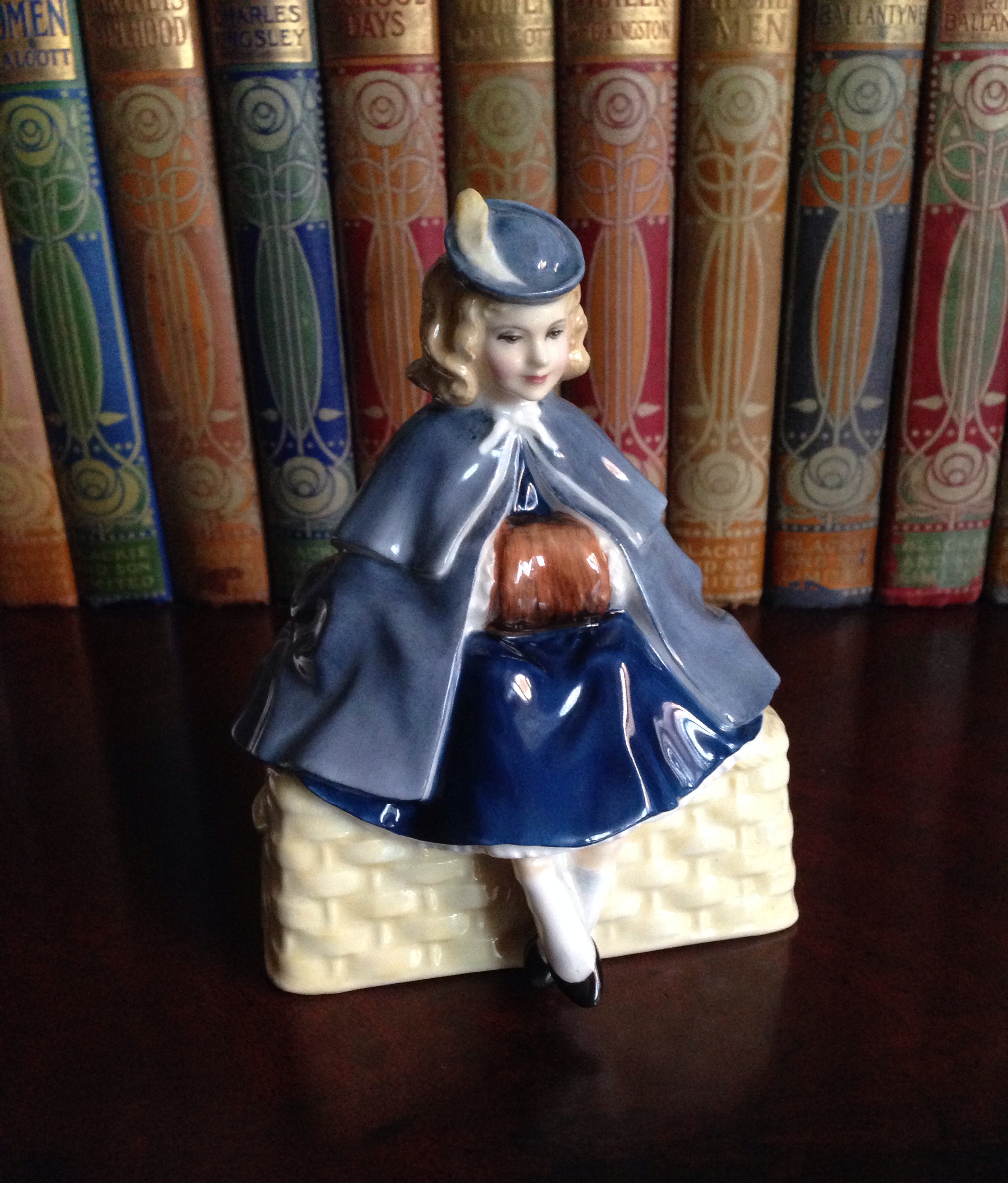
This delightful prototype of a girl by Peggy Davies has cropped up a handful of times and I understand that she is a childhood representation of an aunt who as a child was sent to Canada for adoption, but who was ultimately and happily returned to the family to care for. This is how Peggy saw her waiting to board the boat to Canada, dressed in her best and with her trunk.
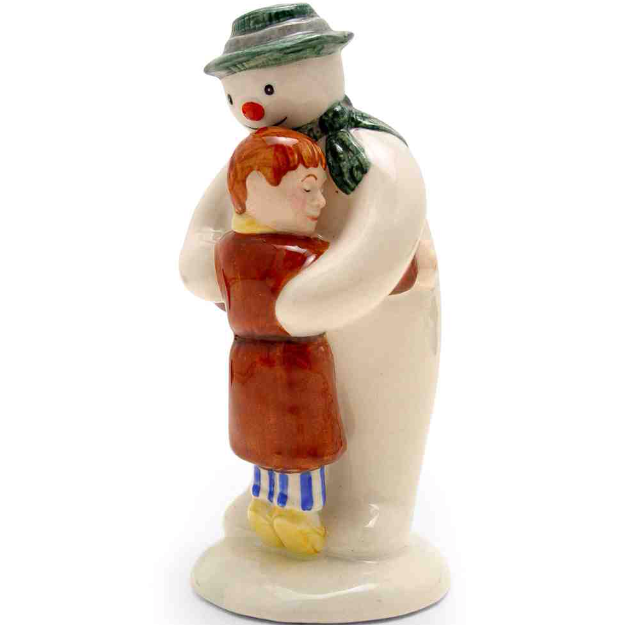
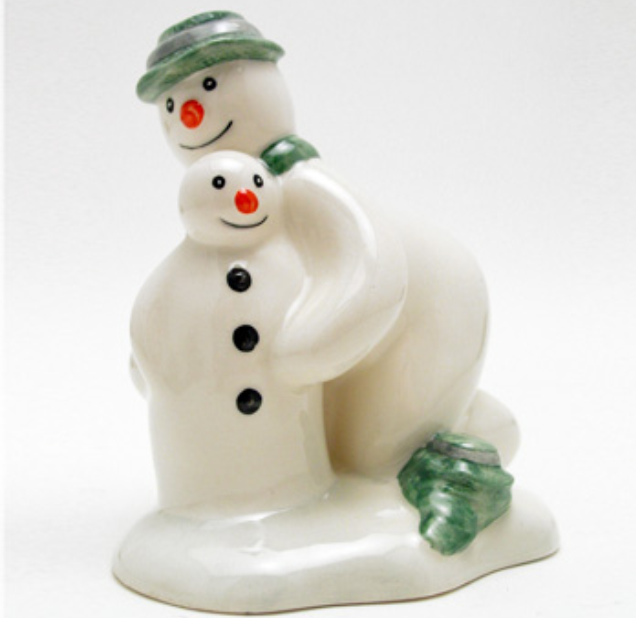
The ever-popular Snowmen figures launched in 1985 and based upon the book and later film by Raymond Briggs provide an obvious theme for decorating the home.
Amongst the many figures produced to celebrate the snowman and his young human friend James, specific Christmas themed pieces have also appeared including Christmas Friends and even Christmas tree ornaments were produced in 1989.
Thanks again to Seaway China for the use of their photo library! 🎄
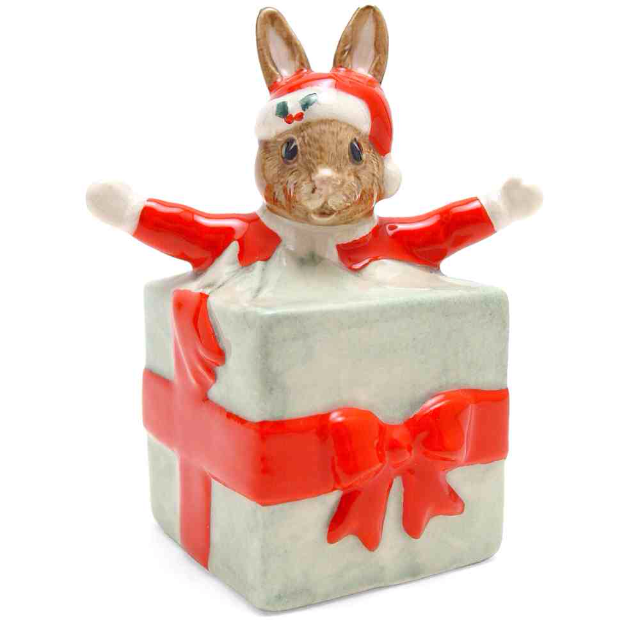
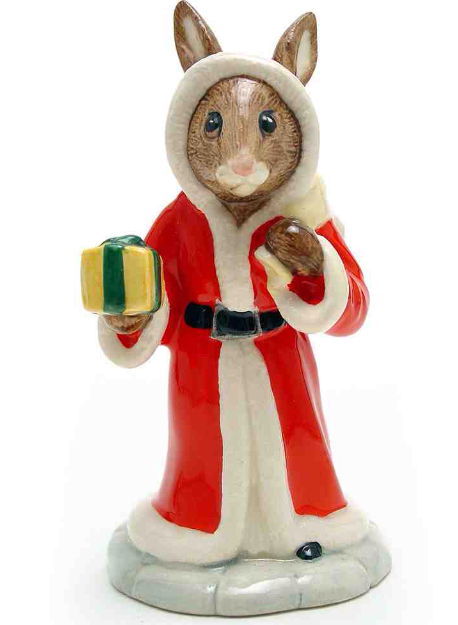
As one would expect with such a universally popular product, Christmas is extensively celebrated in the Bunnykins series. Figures including Winter Lapland Bunnykins, Christmas Morning Bunnykins and even a Bunnykins Carol Singer musical box have been introduced and the series extends to include tree ornaments and even a festive tableau Merry Christmas DB194!
Father Christmas DB237.
Perhaps you have your own Doulton Christmas display? If so, why not share it in the Facebook group Doulton Collectors Club?
Thanks as always to Seaway Chiba for use of their pictures.
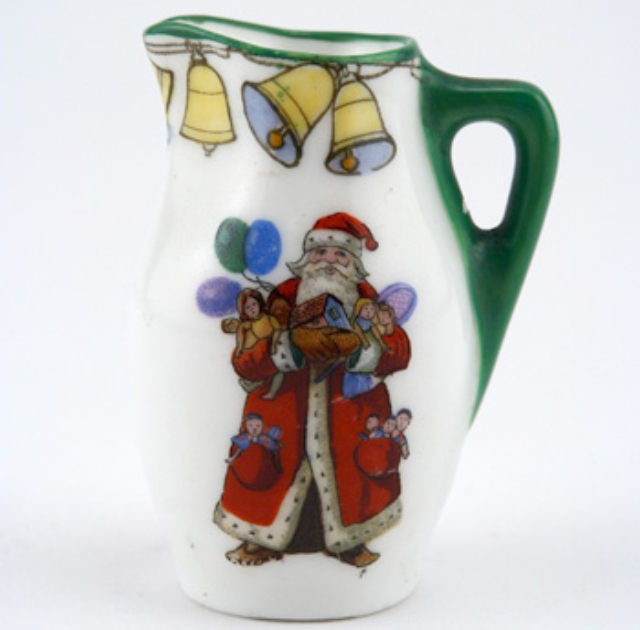
Any seriesware collector will be able to cite immediately the amazingly rare Christmas themed pieces for which they long for.
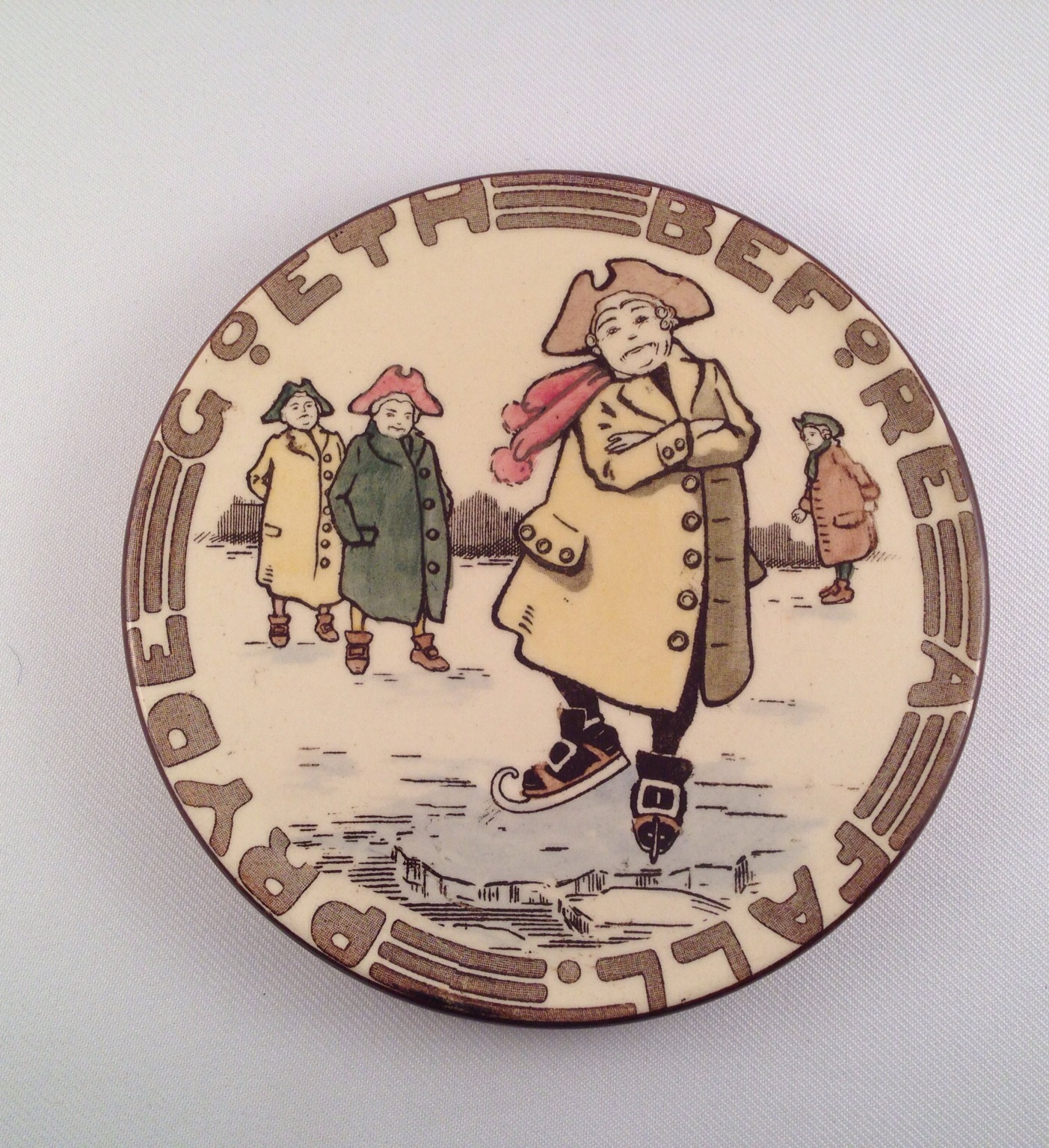
Three particularly sought after patterns found on miniatures are Christmas, Snow Scenes and Ice-Skating and these all command high prices no matter in which season they appear throughout the year.
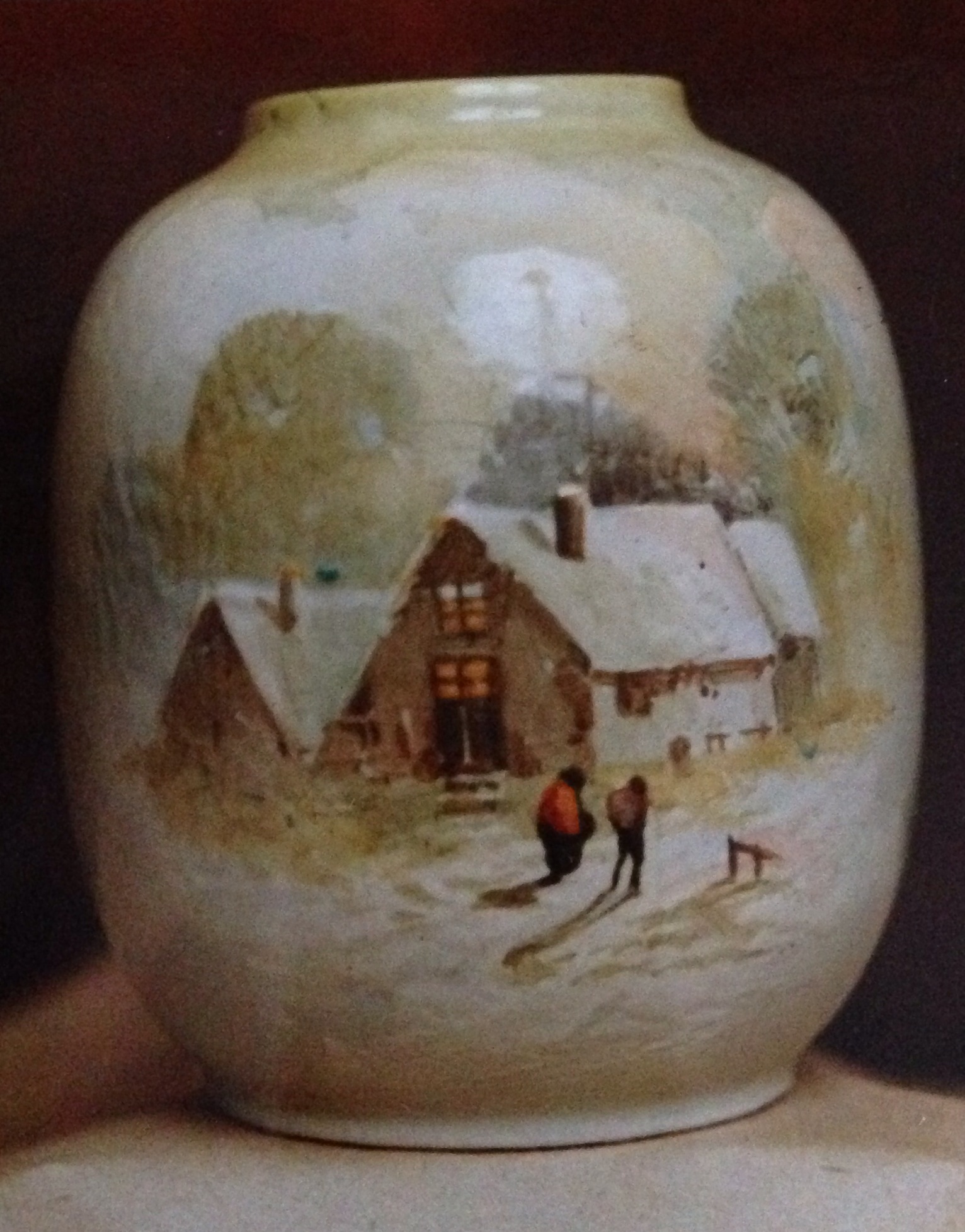
Further patterns to look for include Snowflake, Coaching Days in a winter landscape and the very rare Snowscenes pattern that is decorated in low relief and usually features countryfolk making their way through the snow to their welcoming cottages.
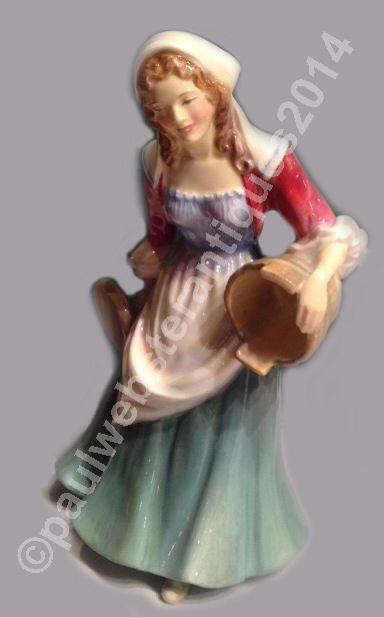
This charming prototype dating to around 1950, I first spotted just a couple of months ago having never seen the model before. At the time I took a picture to add to records, not expecting another version of her to crop up just a week ago!
Although in different colourways, both seem utterly charming and we can only guess as to why the model wasn’t put into production.
The model number dates her quite closely, only the modeller remains unknown. I feel personally that it is a Harradine piece due to the subject and looking at other figures around the same model number they are Harradine’s work. My only doubt is her small waist – a trait of Peggy Davies’.
One day hopefully we will once again be able to access the Doulton records to see if they shed any further light on this interesting figure!
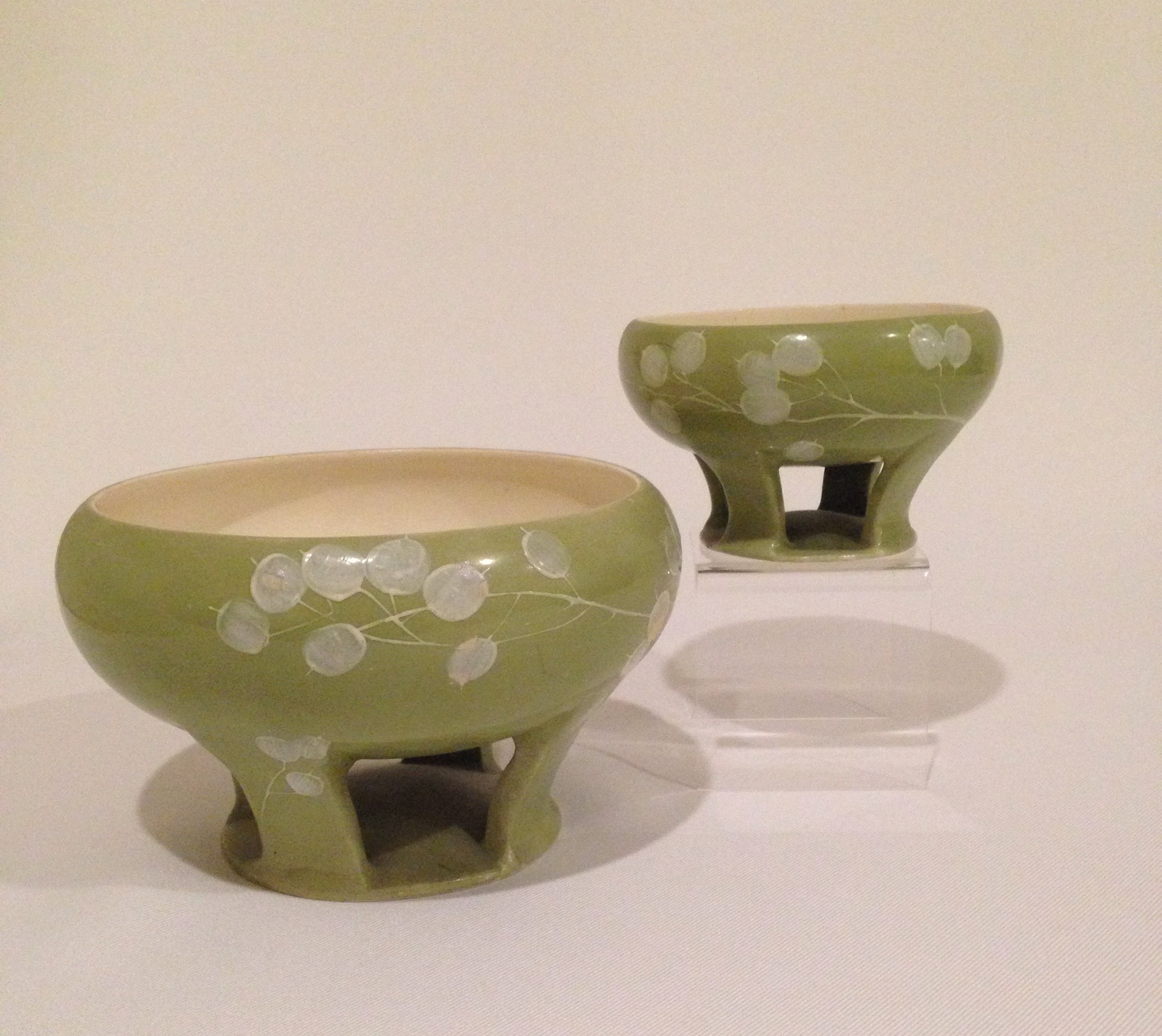
We all know of the short association between Liberty and Doulton that resulted in a few exclusive lines being produced for the prestigious London store including a variation of Doulton’s seriesware pattern Dutch Harlem and also the Burslem art wares featuring honesty and pine cone designs such as the ones below.
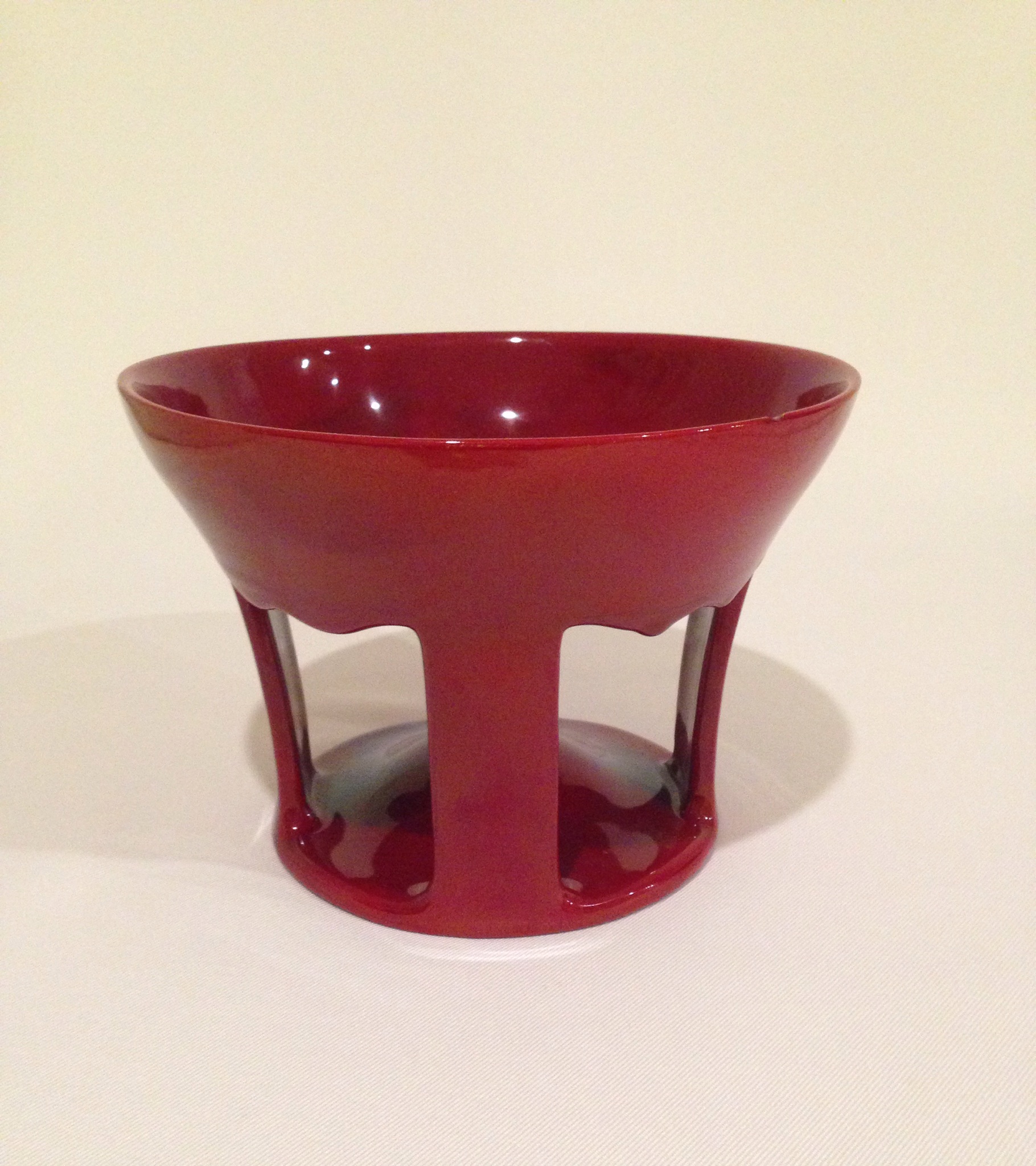
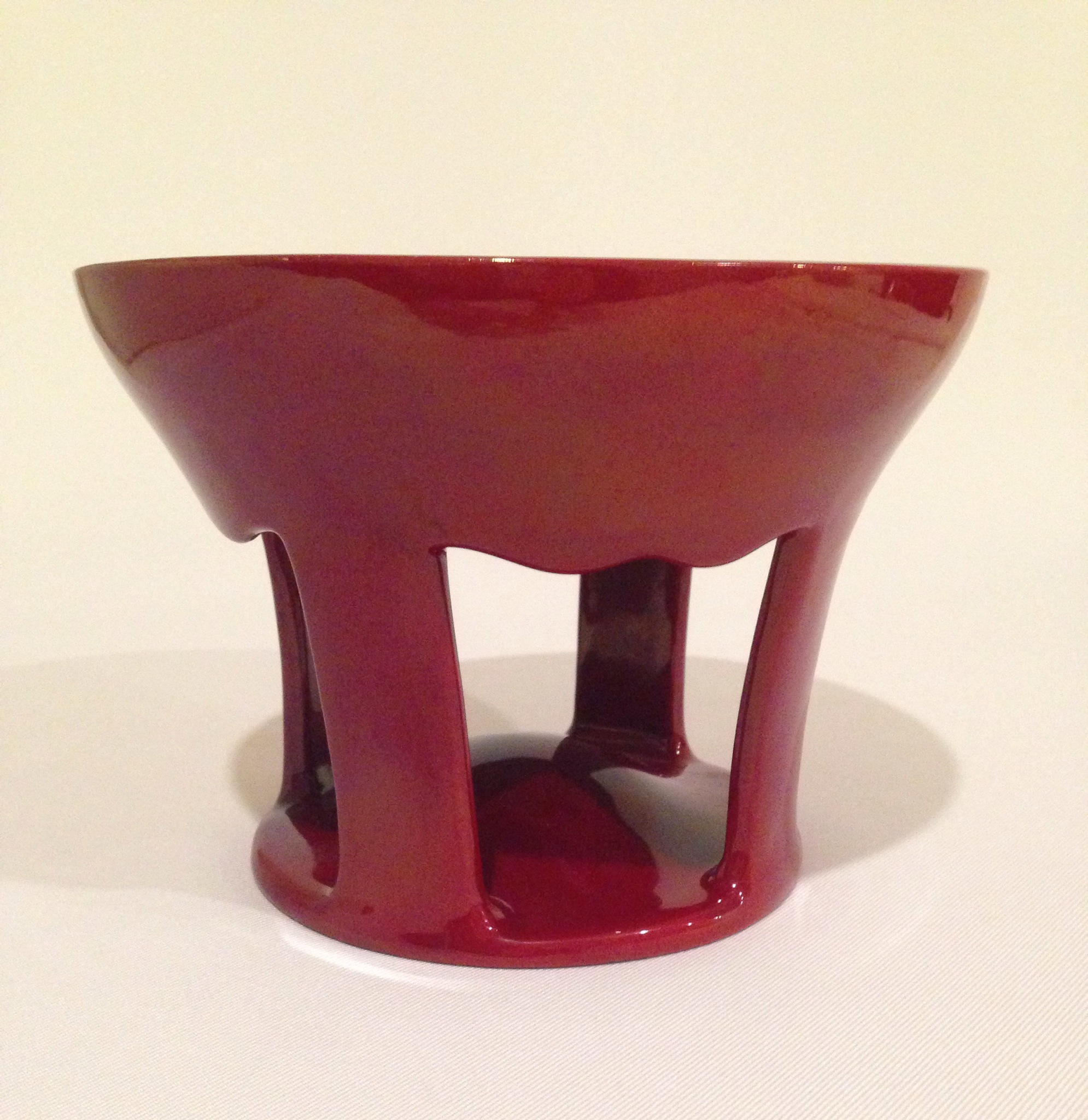
As was typical of Doulton, their in-house artists also recreated their own style of ‘Knox’ inspired designs. Archibald Know will forever be associated with Libertys because of his nouveau designs for them which made him a household name. Here is another such example much in the same vein as the honesty pieces above but in Flambé. This large art nouveau table centre in Knox’s style measures over 6″ high and 8″ in diameter making it a statement piece.
I have seen similar shaped dishes but with the Dutch Harlem seriesware pattern applied and I am sure there are others out there as yet undiscovered or overlooked. Perhaps you own examples? If not why not share a picture with our Facebook group ‘Doulton Collectors Club’!
We all know that figures change subtly during the pre-production phase but a sighting this last summer really shows us how drastic some transformations could be!
Here is a prototype version of Market Day complete with a piglet at the girl’s feet! I can’t help thinking that this is one of the piglets often attributed to Peggy Davies! If not identical it probably provided inspiration for her.
Prototype sold at Louis Taylor.
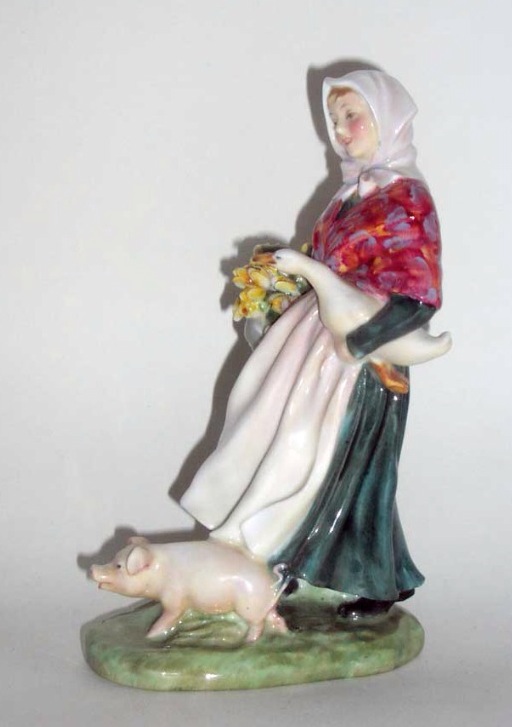
Here is the production model to compare her with.
She was of course re-introduced decades later as Country Lass with the same HN number and with a matte glaze for a short period, along with another contemporary figure the Jersey Milkmaid who became the Milkmaid, also in matte, with the same HN and re-named simply The Milkmaid.
As you’ll be aware a particular interest of mine is tracking down the inspiration of figures, particularly early ones and more particularly those of Leslie Harradine, Royal Doulton’s genius sculptor.
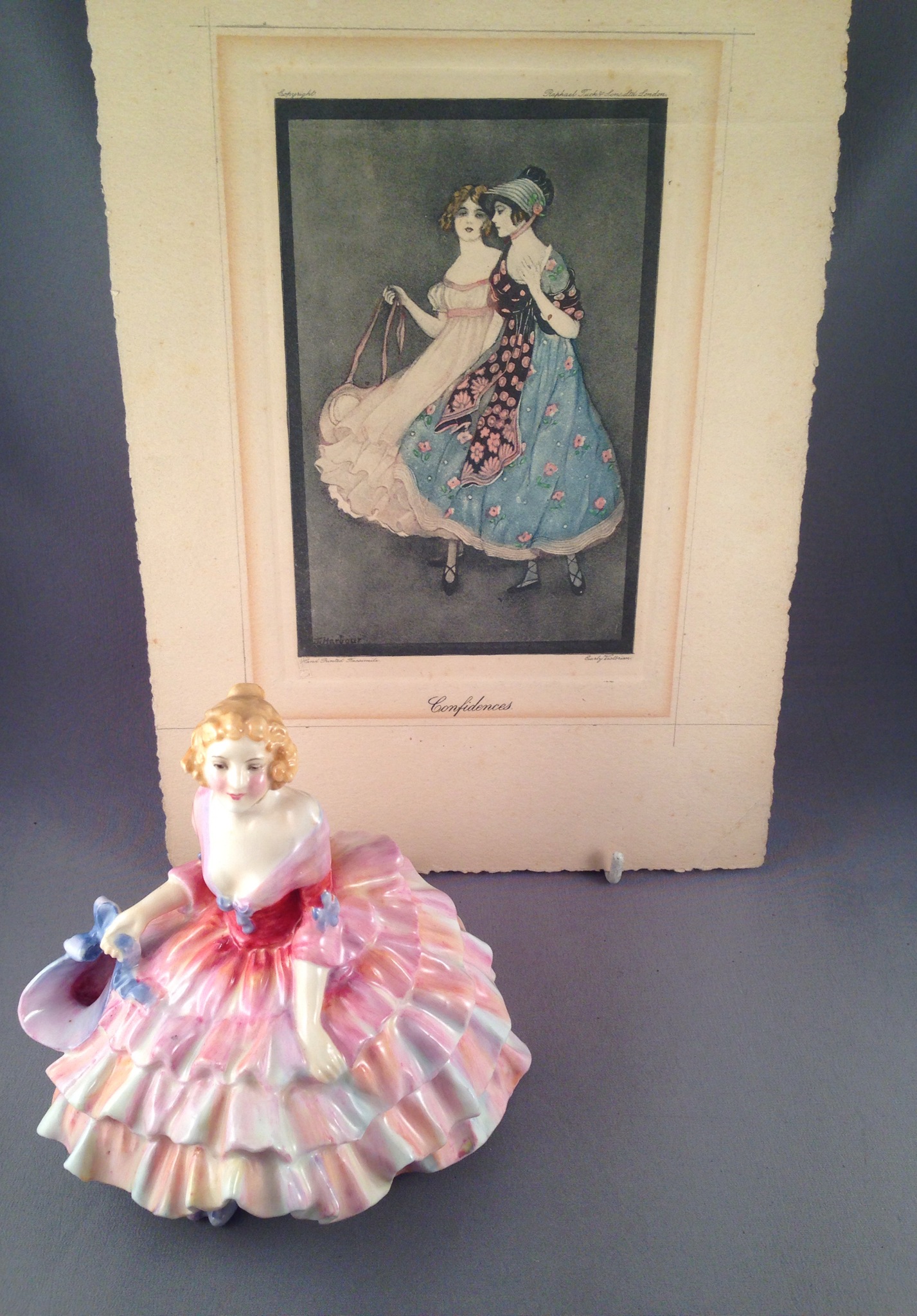
Above you can see Tildy HN1576 together with her inspiration drawn by Jennie Harbour who provided many such ladies for Harradine; whether she was aware of this is unknown. (The Doulton lady is taken from the lady on the left.) Yet, Doulton did have some agreement with Raphael Tuck the publisher of these Jennie Harbour pictures, although correspondence between the two firms that exists only refers to pictures by Stanislaus Longley and Molly Benetar.
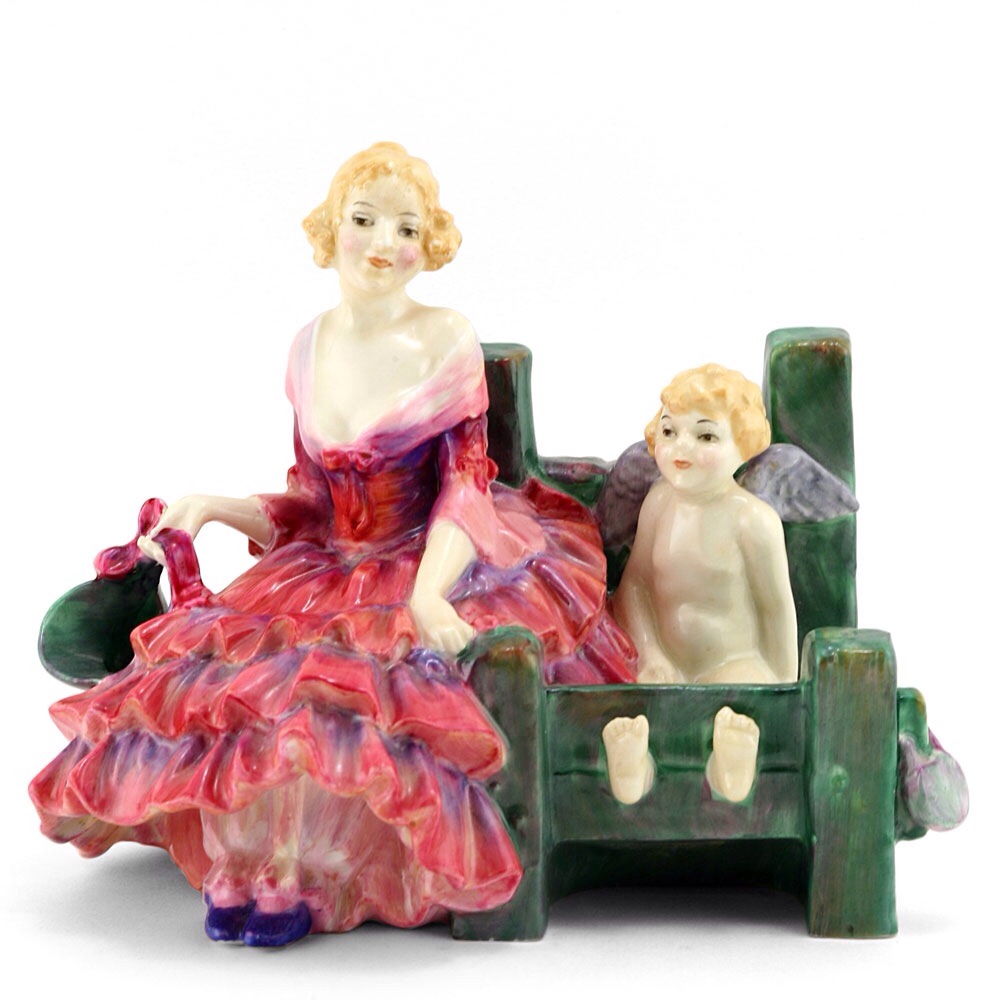
Here you can also see Harradine’s In the Stocks HN1474 who would be adapted to become Tildy.
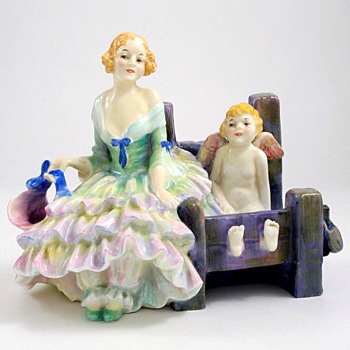
And here is HN1475 the other colourway of In the Stocks. Both versions of this lady taken from the Harbour picture are very rare today and so both had limited production, even more limited than is suggested in the figure book. In the Stocks was introduced in 1931 and Tildy in 1933, suggesting the former had been deleted by then. Tildy it is recorded, was withdrawn in 1939, but by 1939 would be a more accurate description as I have never seen a later 1930’s dated example. Perhaps someone out there has?