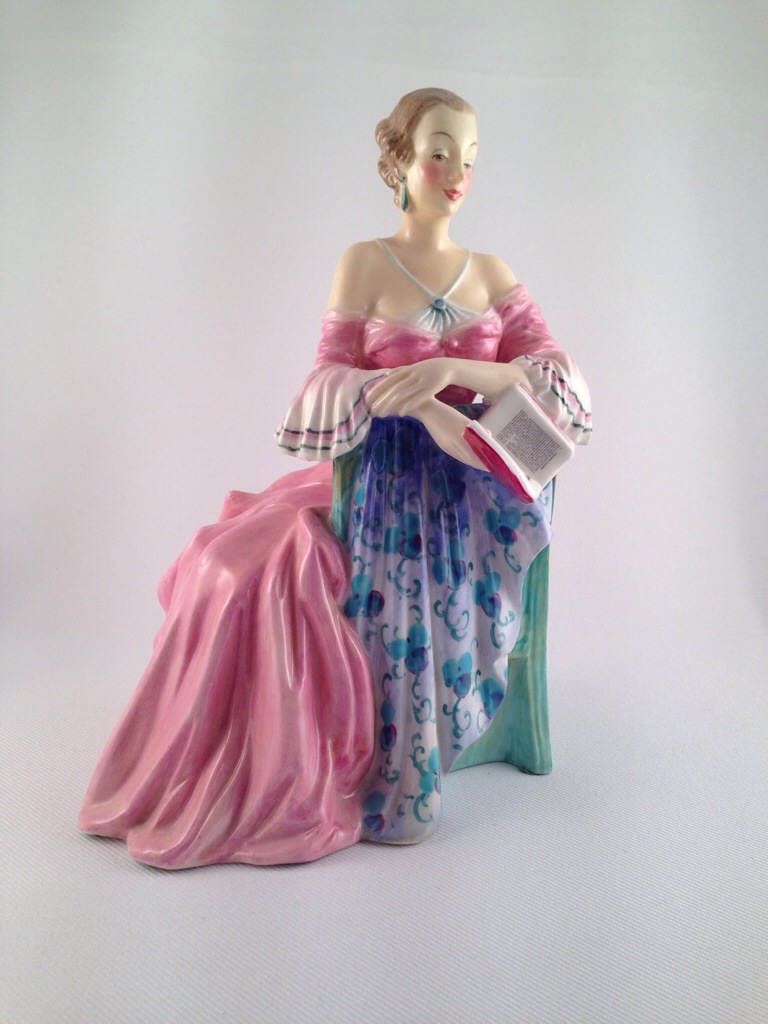
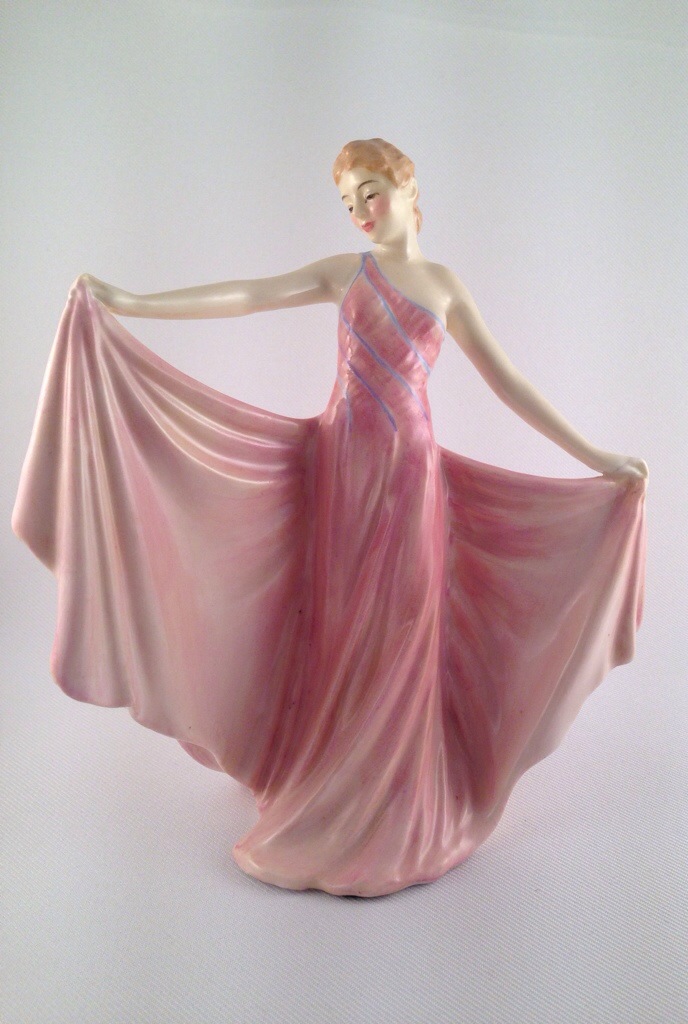
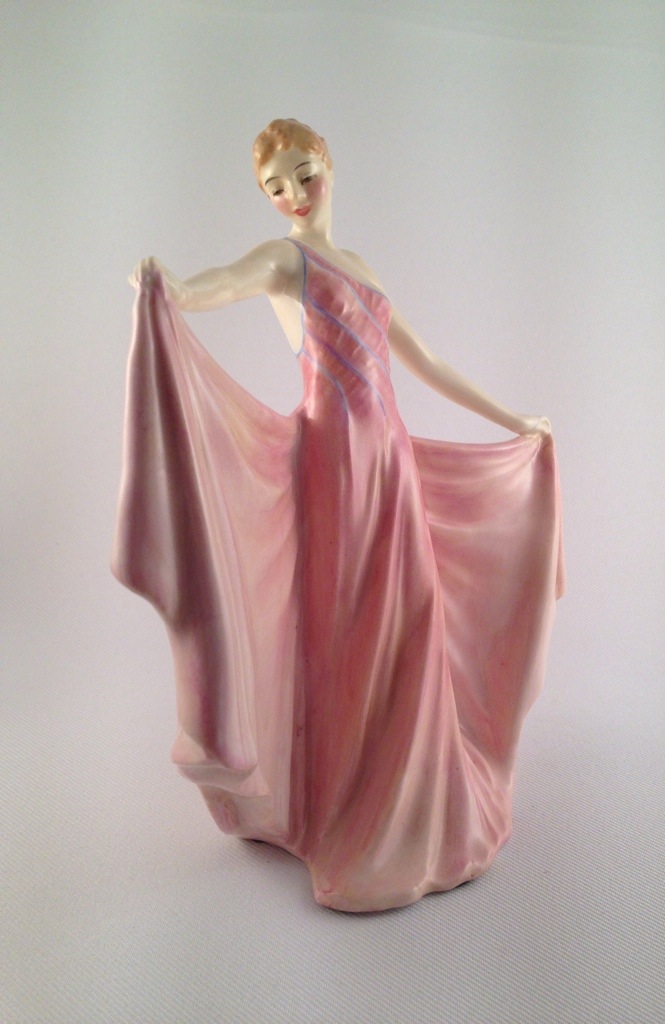
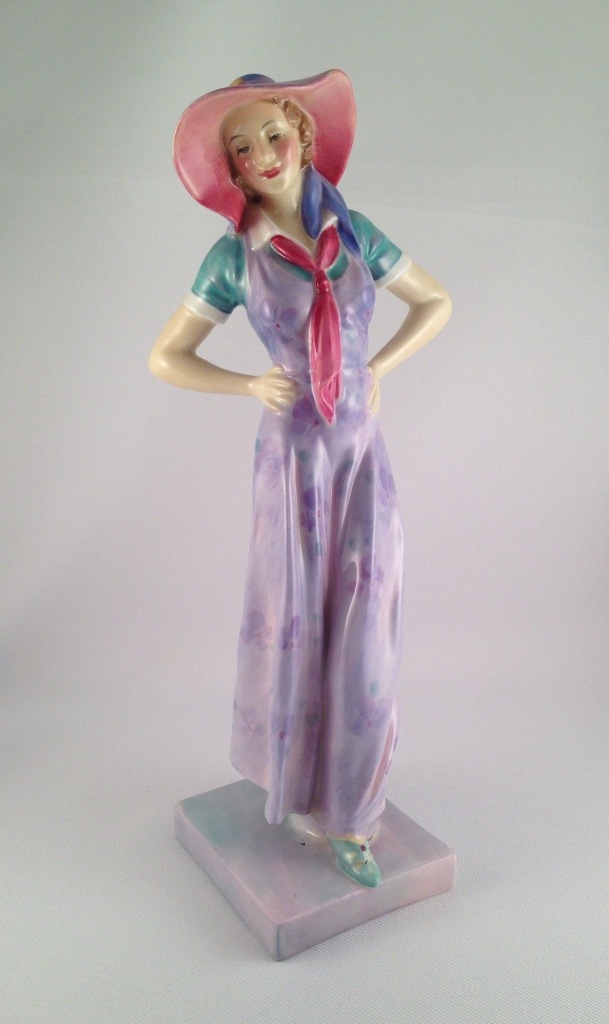
Category Archives: Art deco

Royal Doulton’s Nell Gwynne and her inspiration

Leslie Harradine we all know was prolific in his output of figure models for Royal Doulton and he took inspiration from all corners of the world around him.
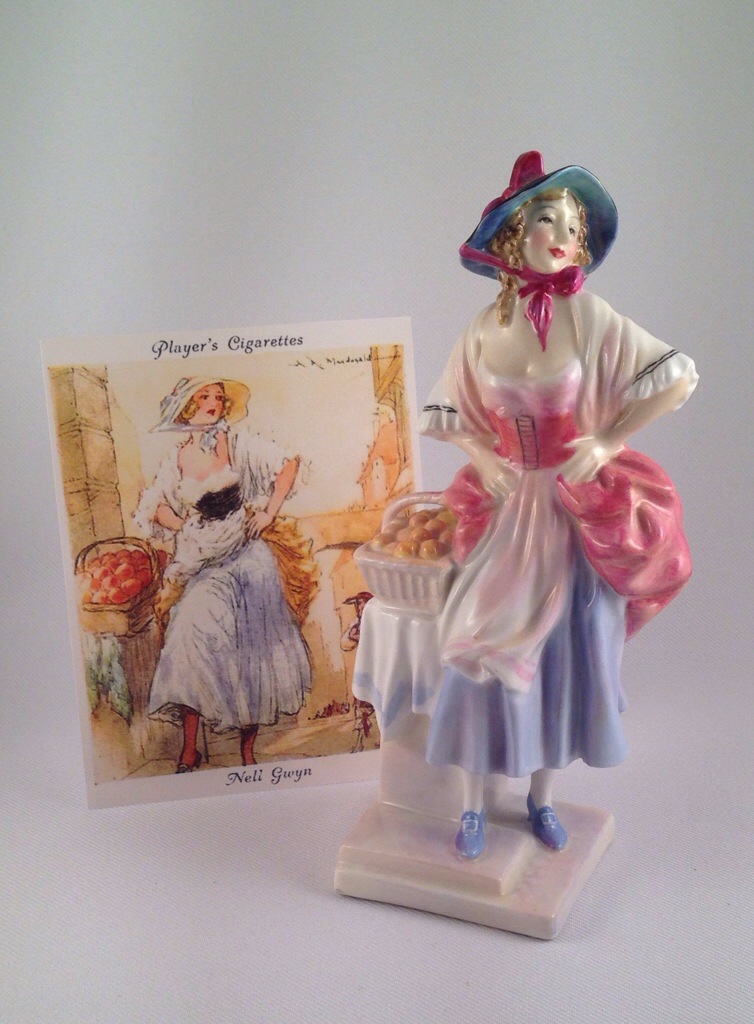
This charming figure of Nell Gwynne is based directly on this Player’s cigarette card from the ‘Famous Beauties’ series dating to the 1930’s.
The card in turn is based on the character of the same name who was the mistress of King Charles II, after she caught his eye selling oranges to the audience at the Drury Lane theatre at a performance he also attended. Nell remained a favourite mistress of the King and bore him two children. On his deathbed he is reputed to have asked “let not poor Nellie starve”.
Royal Doulton’s personification of this character fits in perfectly with the many street sellers they also produced.

20140719-170438-61478404.jpg
Royal Doulton’s Nell Gwynne HN1887 and the illustration that inspired her.

Royal Doulton’s beautiful blues…

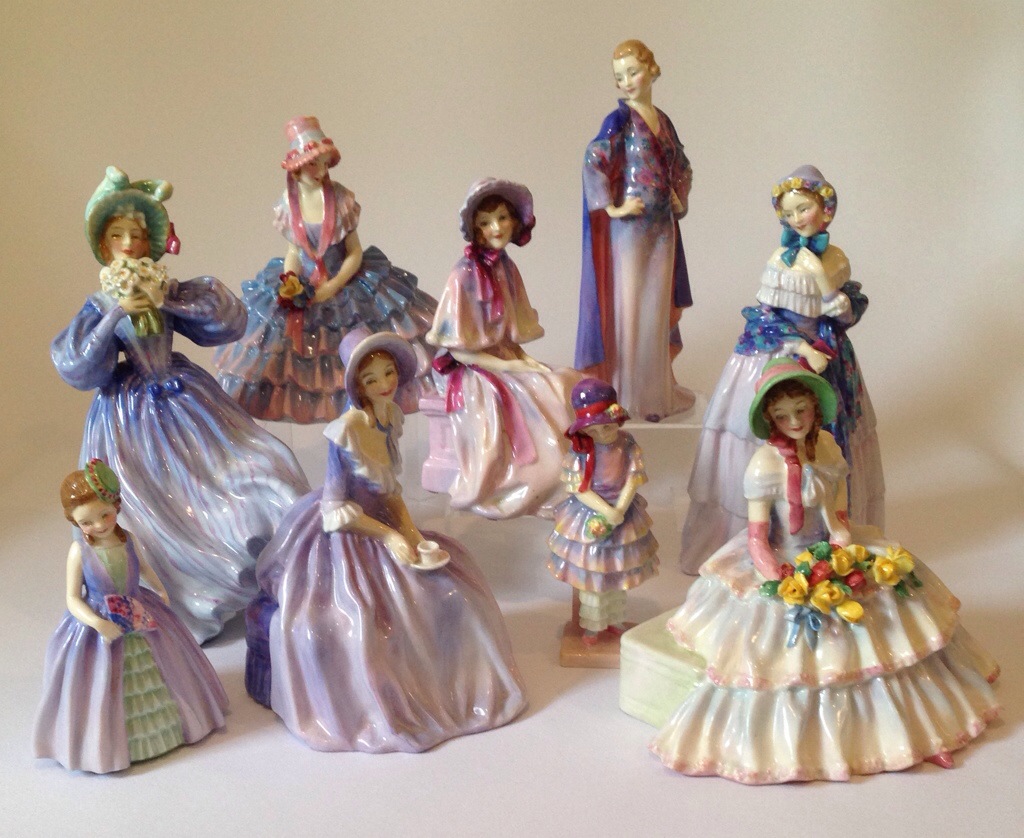
We looked at collecting and assembling a collection of red Royal Doulton figures a few weeks ago, and here is another theme to make a display – heavenly blues and the odd purple too!

20140719-084748-31668672.jpg

In the period before WWII, Doulton experimented greatly with various colourways of their figures, the most popular colours being red, pink, green and of course blue.

Whilst red and pink were clearly the best sellers much like today, collectors nowadays seek out the most unusual colourways for their collections and many of these are these blue figures.
Popular figures such as Maureen, Marguerite, Day Dreams and a handful of others can be tracked down in beautiful bluey hues and a grouping of these unusual ladies makes an eye catching display. Ironically some figures that one would expect to see in blue have never been found, one such figure being Pyjamas HN1942, that I think would be perfect in blue!

20140719-085354-32034922.jpg

Perhaps you have other figures to add to this ‘stream’ of blue ladies or other collecting themes that you follow? If so do share via our Facebook page ‘Doulton Collectors Club’.

Pantalettes and petticoats!

20140715-184709-67629330.jpg
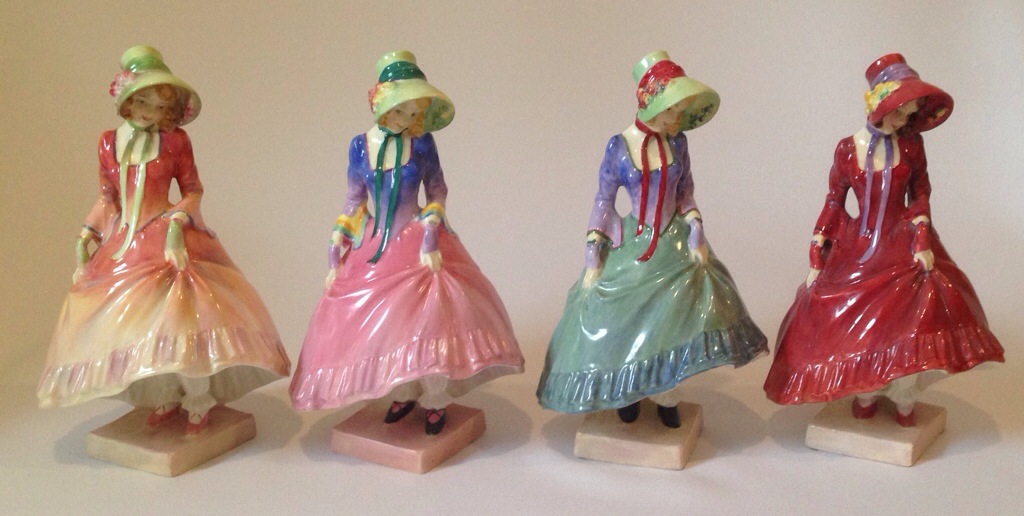
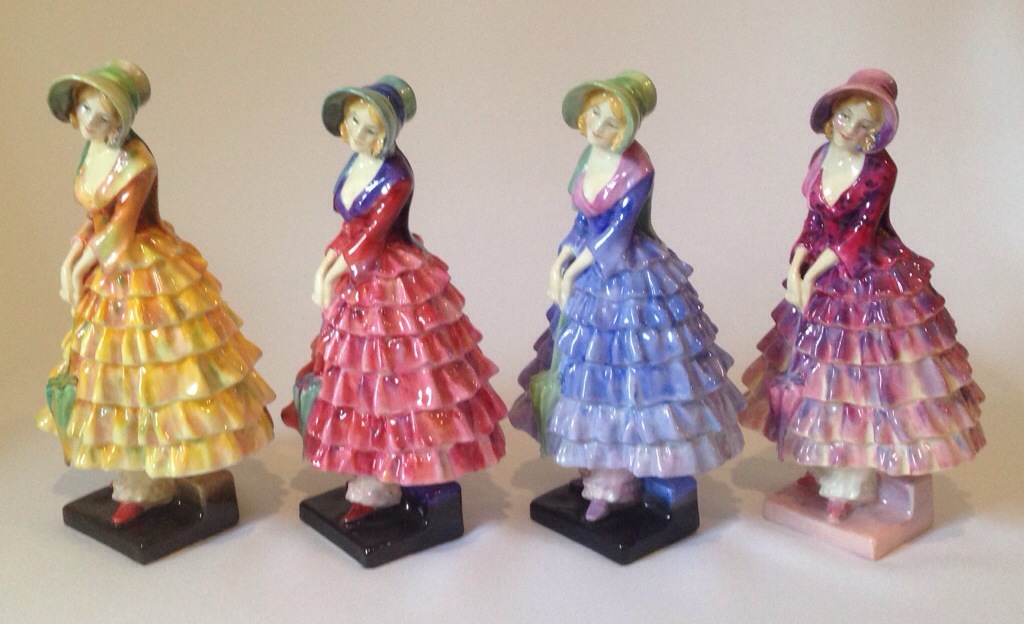
The four available colourways of Pantalettes.

Some of the most popular Royal Doulton figures are those from the early 1930’s that recall those halcyon days of the Victorian era with all of its romanticism and courtship rituals.

This band of coy young ladies demurely pose with their pantalettes and numerous petticoats on show – each supposedly causing a minor sensation! Oh how times have changed.

20140715-184858-67738108.jpg
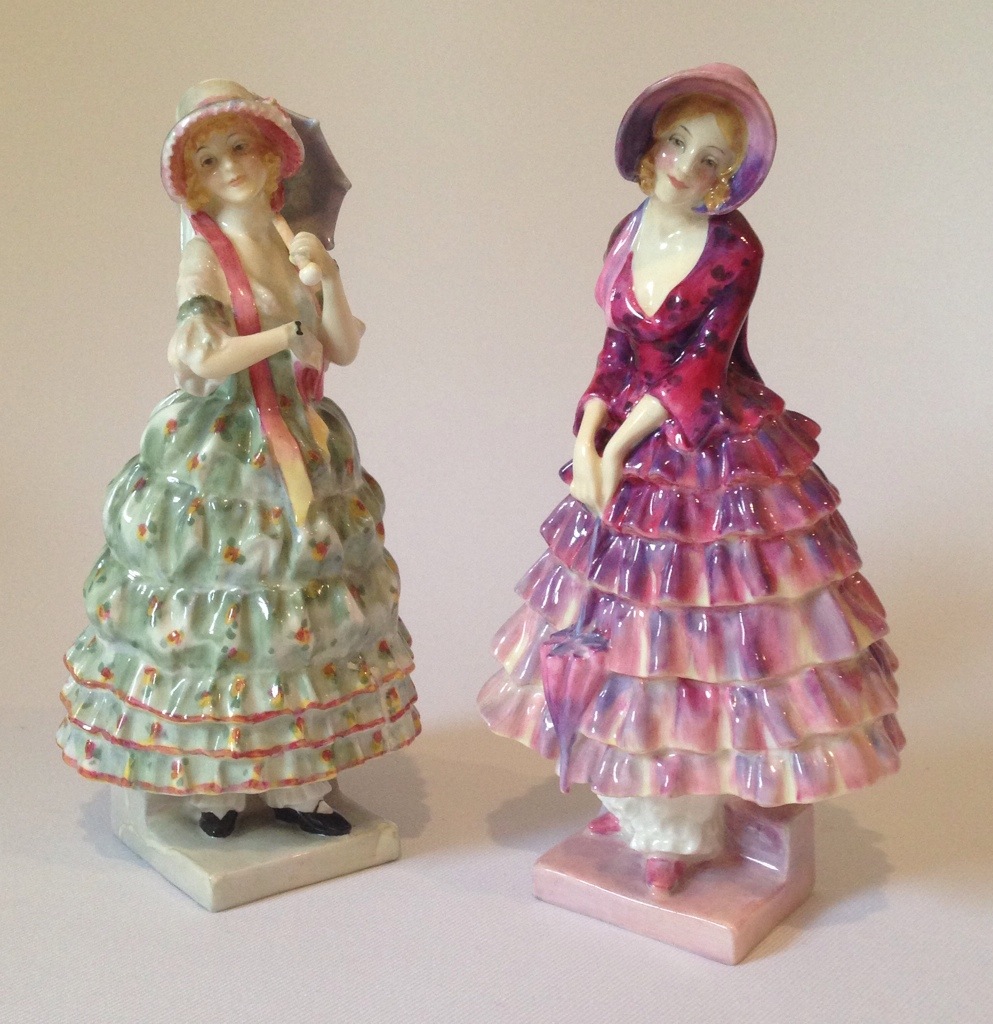
Four of the five available versions of Priscilla.

Of course we must start with the figure Pantalettes HN1362, introduced in 1929 and withdrawn by 1952, not the erroneous date given in the books on the subject of ‘by 1942’. She has three other ‘sisters’ to collect the rarer of the two being HN1507 and the lushious red HN1709. She has always been a favourite of mine and I remember hunting down an early version many years ago!

20140715-185222-67942623.jpg
The rare Helen and a more unusual colouring of Priscilla.

Another favourite among collectors is Priscilla HN1340 introduced in the same year. She is modelled coyly swaying in a soft breeze with her head posed in a coquettish manner!
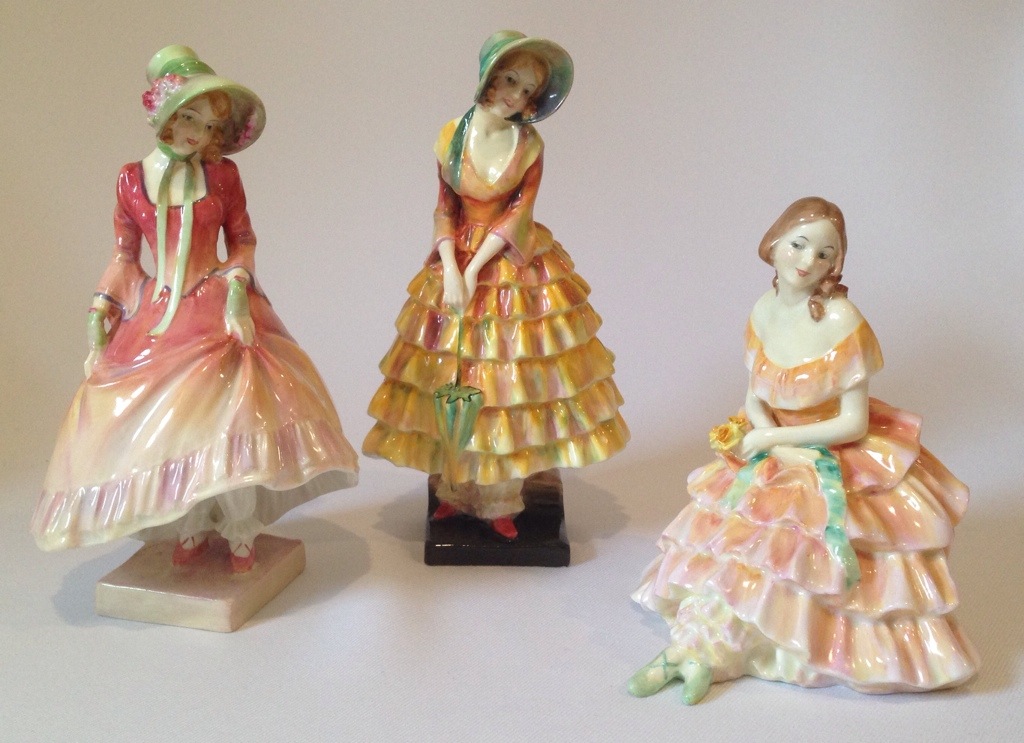
Other rarer figures can be added to this theme including the rare Helen HN1508, who would later be adapted to June HN1690 in 1935, presumably meaning that Helen’s production had ceased by that point… As was always typical of Doulton various figures were produced in complimentary colourways and we can add Gwendolen HN1503 to this group of ‘pantalette and petticoat’ ladies!

20140715-185318-67998866.jpg
A complimentary group of petticoat and pantalettes wearing damsels.

Far from bring a definitive list, perhaps you also collect this theme of ladies? If so why not post a picture to our Doulton Collectors Club page?

Doulton’s lustre wares – Part 2: Reco Capey

20140713-075133-28293083.jpg
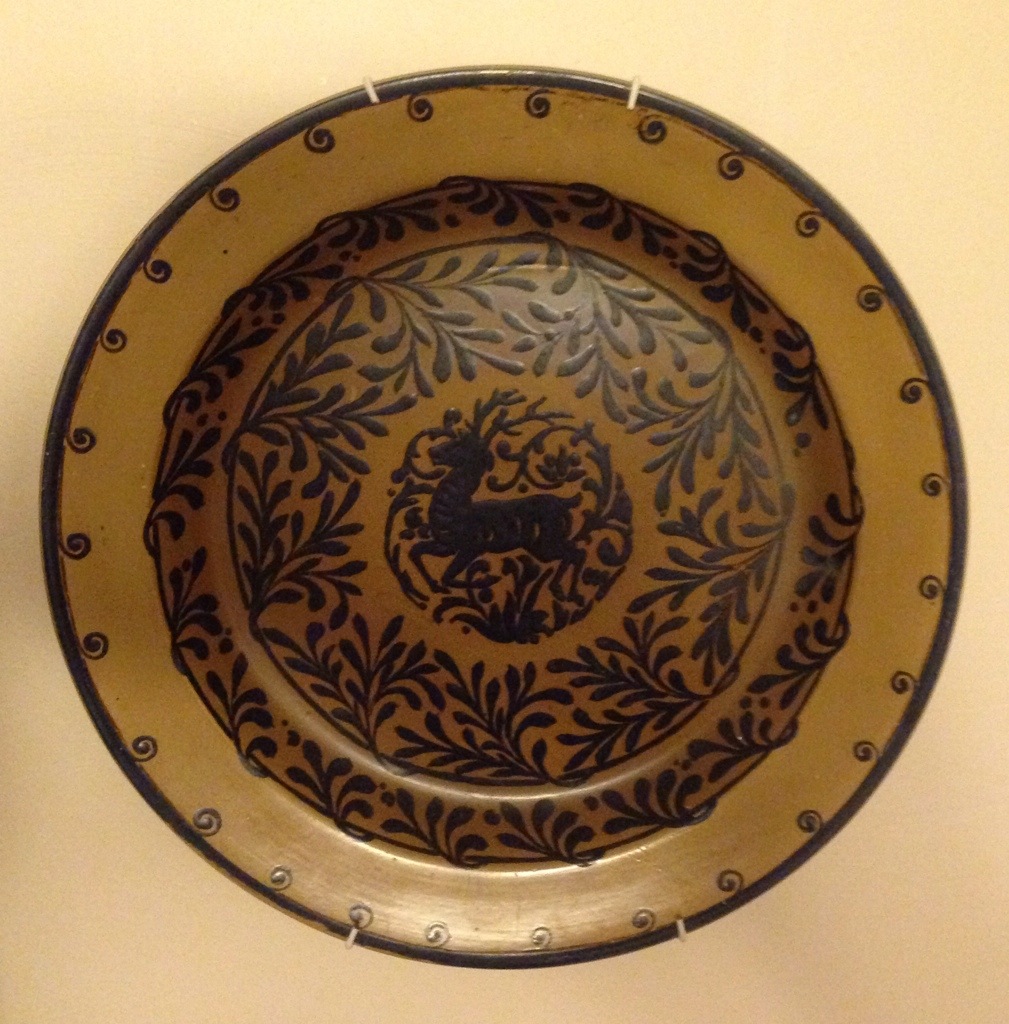
A selection of Reco Capey lustre ware and a stray fox!

Some of you will already be aware of the name Reco Capey and his links to Royal Doulton. Capey it has been discovered designed prestigious flambé wares and also in the late 1930’s pieces for Lambeth too.

However it is his lustre ware designs that are the focus here. It is uncertain when precisely he began his association with Doulton but the date 1914 has been mentioned. Certainly items signed by him and presumably fired at Burslem have been found. Others bearing a Doulton stamp and dating to 1915 have also been found dated around this time. Capey’s designs certainly follow a theme with his designs echoing those of William de Morgan and also William Morris.

20140713-075711-28631830.jpg
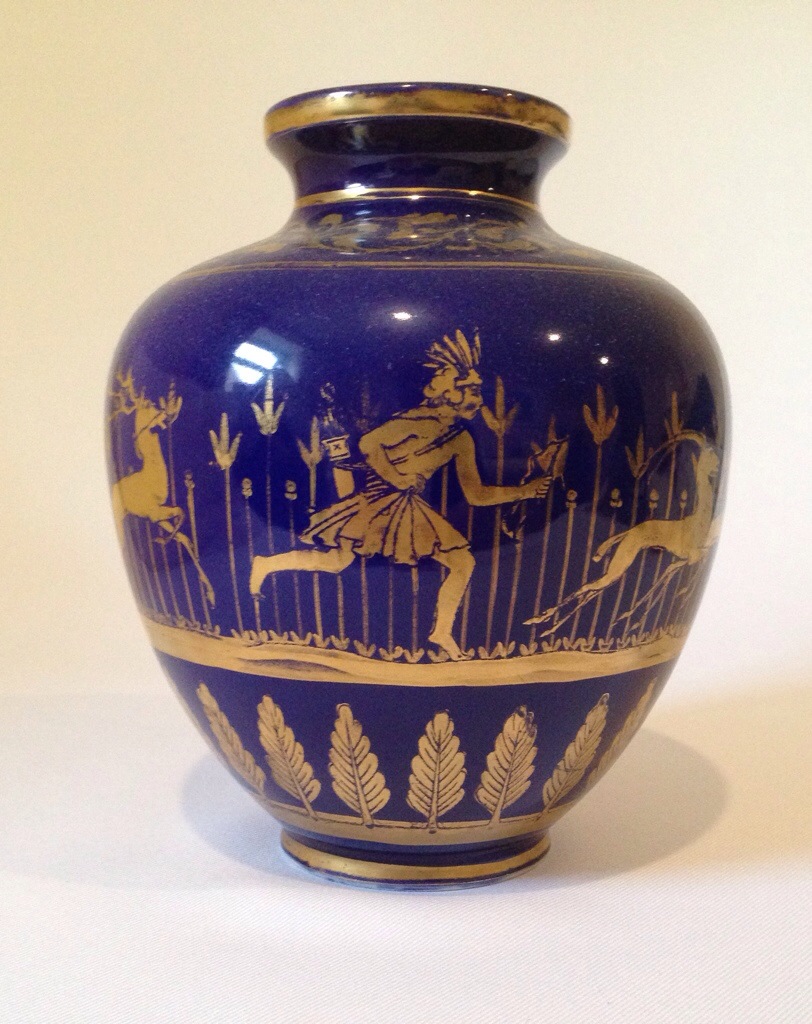
An unusual gilt version of Capey’s design of Indian runner and deer more usually found on an orange lustre background.

20140713-075812-28692485.jpg
A large charger in orange lustre with the deer design dated 1918.

The mythical birds in the picture below are undoubtedly the tile design that Capey would complain to his family that he was not paid enough for. As was typical with Doulton they used their in house artists to adapt the original artists’ designs (just as happened to Frank Brangwyn).

20140713-080119-28879215.jpg
A full tea set bearing a seriesware D number 4080 introduced in 1919. This design was the only one in this colouring that I have found with a D number.

Other interesting pieces of this lustre ware include lidded jars with finials including ‘Old Nod’ and a ‘Chicken’. The actual titles of these finials are unknown.

20140713-080403-29043336.jpg
A large vase, typically used for Capey’s work, bearing Nelson’s motto: PALMAM QUI MERUIT FERAT

These delightful pieces of lustre ware were produced at a time when lustre ware was at its most popular and whilst designs do turn up, particularly the black, white and green designs, there are so many variations and rarities out there still to be found that will hopefully shed more light on his work and time with Doulton’s of Burslem.

20140713-080723-29243132.jpg
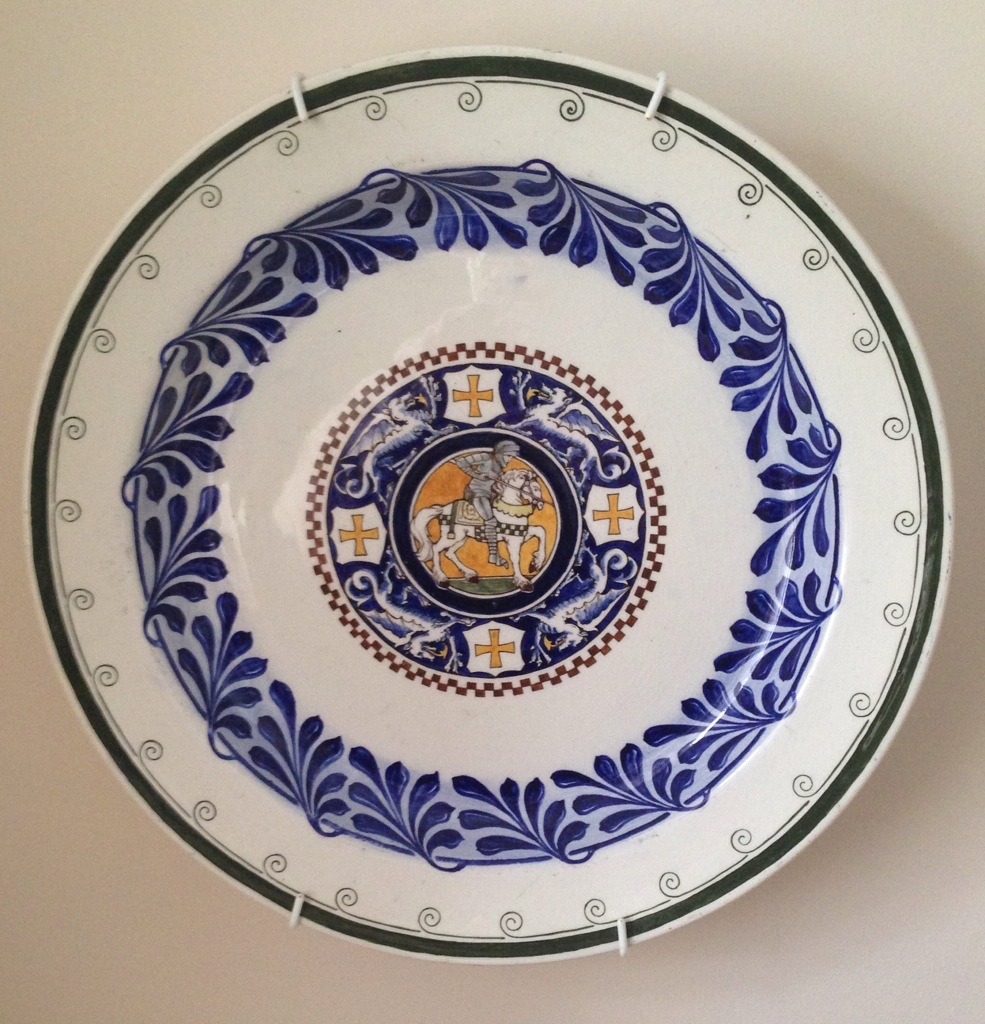
One last charger by Capey featuring St. George, again dated 1919 that I found in Australia.

Doulton’s flair for fashion

Shortly after the Art Deco period there was a time in the 1930’s when Hollywood glamour became ‘the’ look and typically Royal Doulton roze to the challenge of producing a stream of stylish 1930’s ladies.

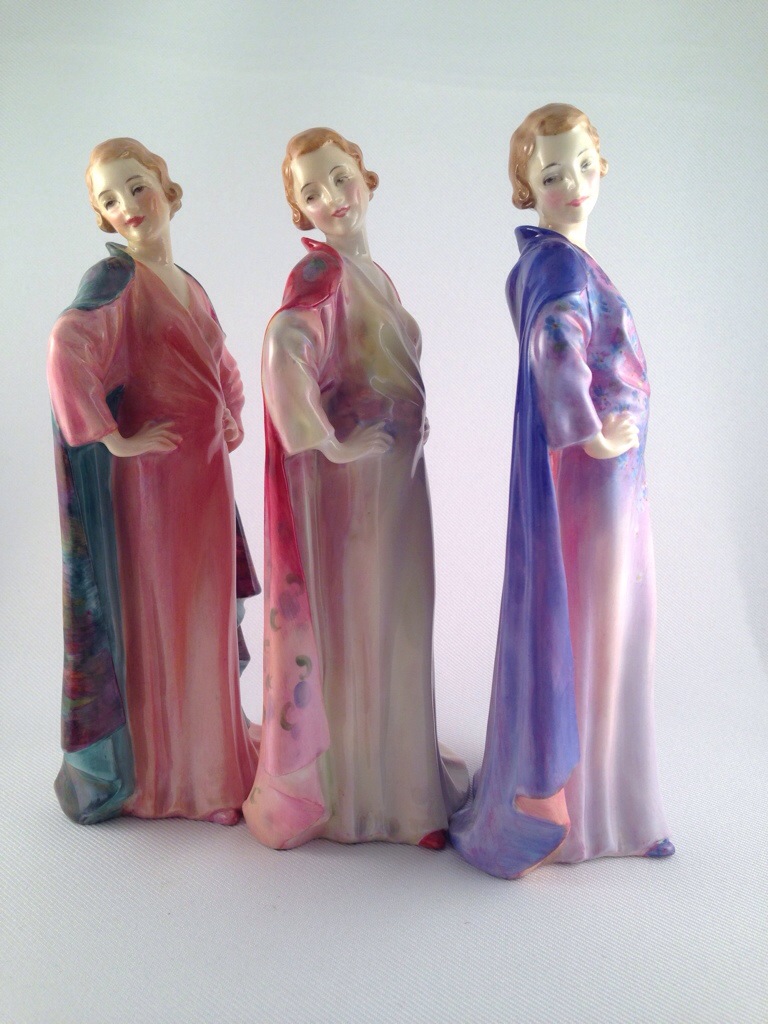
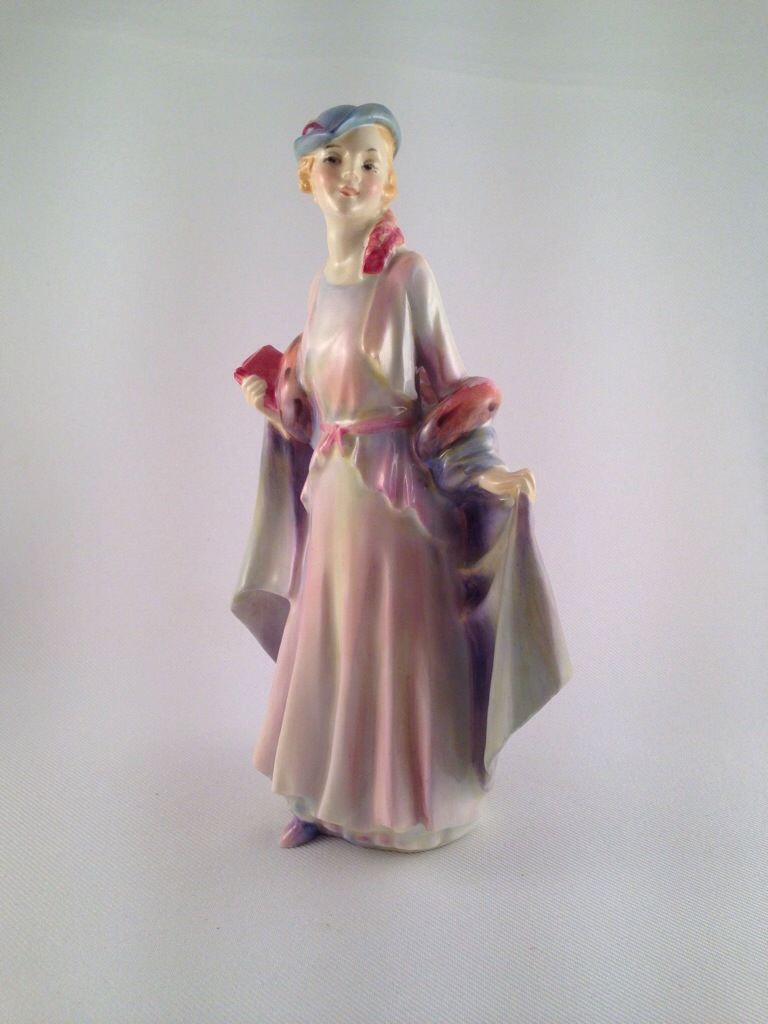
Among the first such figures is undoubtedly Clothilde shown here in three colourings. Her wrap dress and long cape capture the Hollywood style perfectly.
20140624-200714-72434578.jpg
The ever popular Clothilde.

Almost a partner to Clothilde is Gloria in her daytime attire and chic clutch so evocative of this decade.

20140624-200845-72525384.jpg
Gloria HN1488.

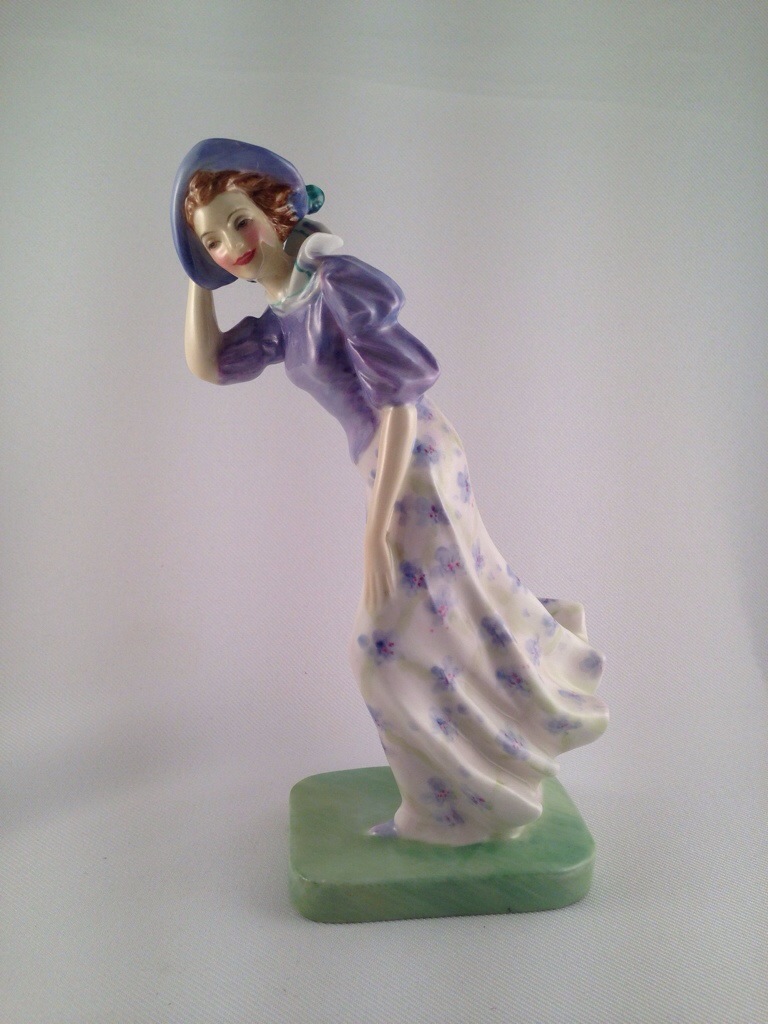
A favourite of mine which fits perfectly into this group is Windflower, a model of a young girl walking into a summer’s breeze, deftly holding her hat in place.

20140624-201120-72680350.jpg
Windflower HN1764.

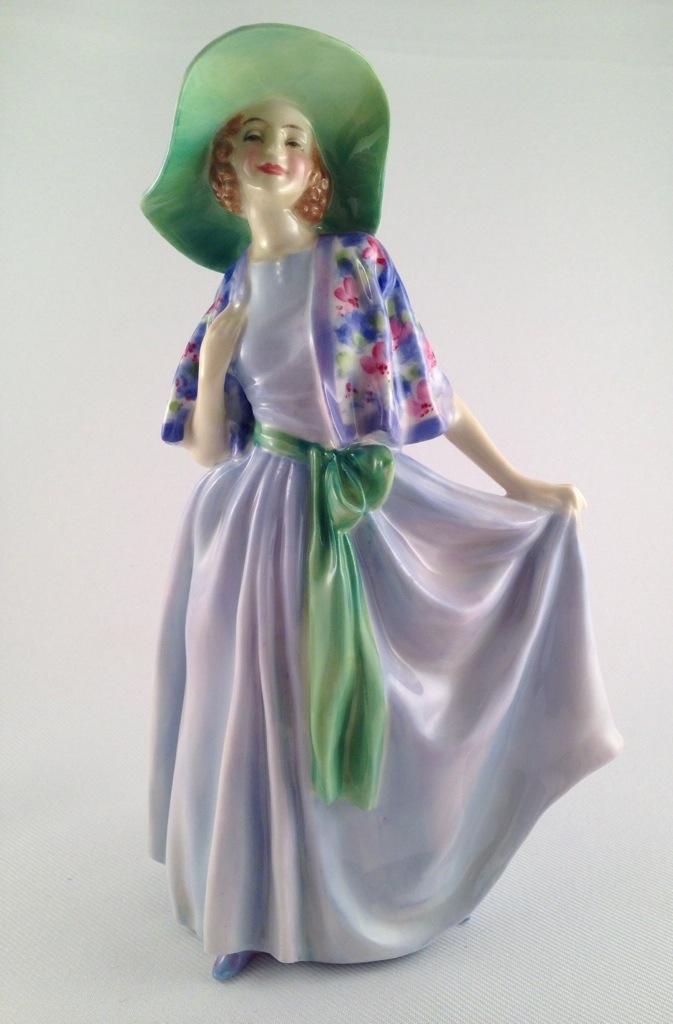
The glamorous Nadine looks as though she has just walked off the screen from a big Hollywood production set on the French Riviera with her cartwheel hat and extravagant sash bow.

20140624-201307-72787853.jpg
Nadine HN1885.

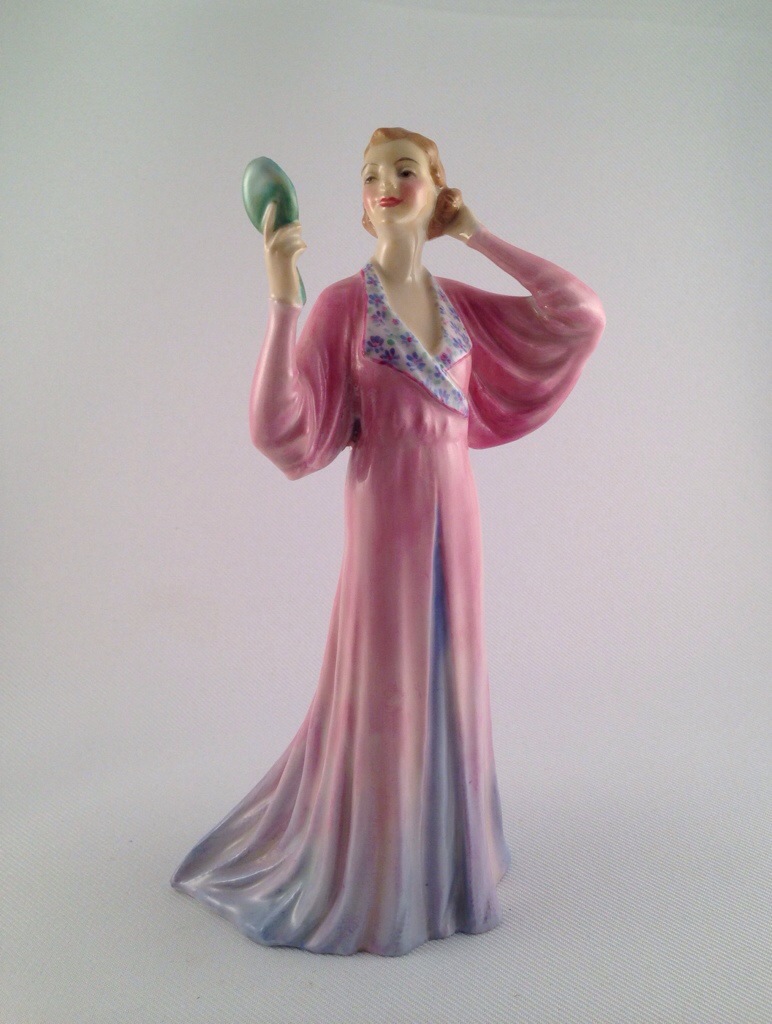
Moving to the boudoir we have the ever stylish and rare figure The Mirror, seen admiring herself in her hand mirror.

20140624-201430-72870534.jpg
The Mirror HN1882.

No doubt engaged in conversation is the unusual figure Sweet & Fair, seen here perched on her elegant chair in her simply stylish ensemble.

20140624-201548-72948503.jpg
Sweet & Fair HN1864.

A final figure which belongs to this typical sized Doulton lady is Rhythm, seen here swaying gently to the music. She is a particularly hard figure to find today and her short production run was no doubt the result of her elongated arms, which are as fragile as they look.

20140624-201821-73101483.jpg


Two views of Rhythm HN1903.

Before we finish there is one more figure to mention, namely the wonderful figure The Lambeth Walk. She is seen carefully taking a step to the tune of the same name from the hit musical Me and My Girl. My reason for leaving her to last is not her insignificance but rather her size – she unlike her counterparts stands a magnificent 25 cms tall and so is instantly distinguishable from this band of glamorous gals!

20140624-203000-73800127.jpg
The Lambeth Walk HN1880.

As you will be able to tell this latter group of Hollywood style figures all date from the same period and their HN numbers are all in the late 1800’s. Together they create something of a wow factor as I am sure you can imagine!

Doulton’s deco nudes

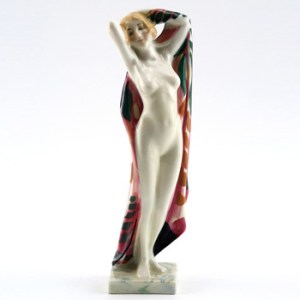
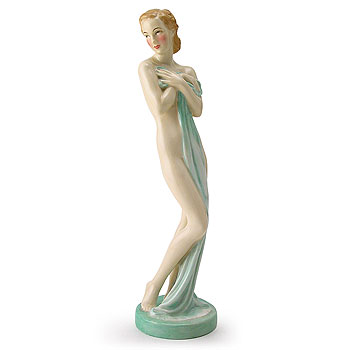
The liberating period of the 1920’s to 1930’s often seems incongruous to non-Doulton figure collectors who associate ladies in ballgowns with Doulton figures, but those in the know, they recall that there are a small group of nude figures produced in the art deco period that encapsulate that movement perfectly. All the figures contained in this small band of lady figures were the brain child of Leslie Harradine, Doulton’s then principal figure modeler.

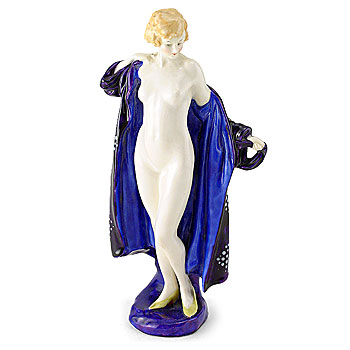
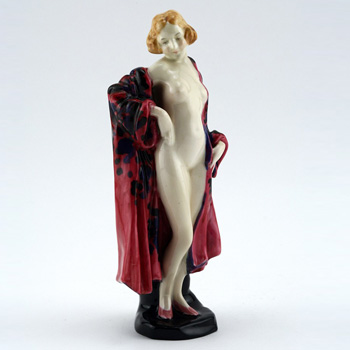
As if to prove their own artistic credentials, Doulton introduced over a 10 year period several nude studies that confirmed their artistic prowess. The first we must all know was Harradine’s The Bather, modeled on this contemporary advert.
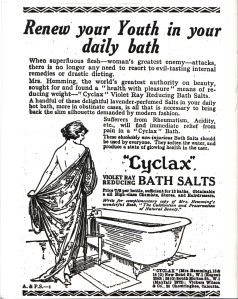
endpapers-cyclax-advert

There were six different versions of this popular model, with this colourway proving to be the most popular.
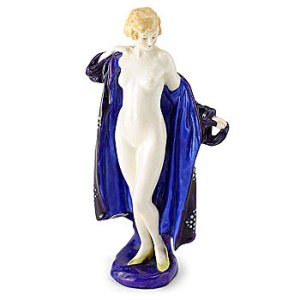
FIG-Bather-HN687

The Bather HN687.

In the succeeding years there was a second version of The Bather introduced, shown here.
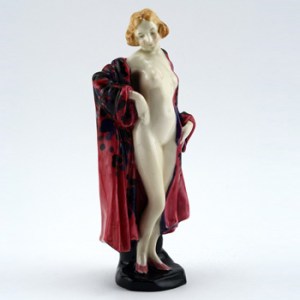
FIG-Bather-HN773


The Bather HN773 (second version).

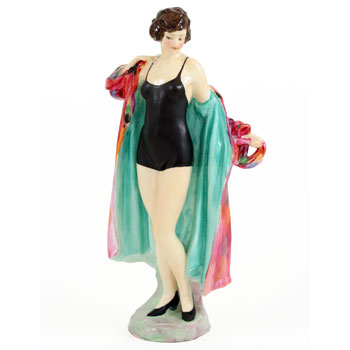
By the mid to late 1930’s tastes had changed and prudery was once more on the rise, and so a last version of this figure was introduced wearing a bathing suit, so reflecting the continued interest in lidos.
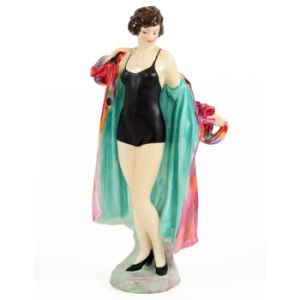
FIG-Bather-HN1708


The Bather HN1708.

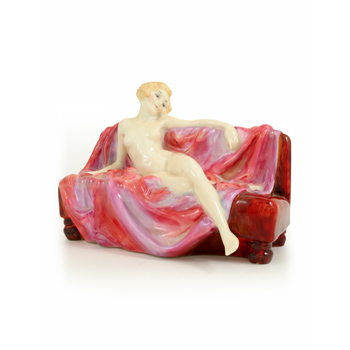
However, there were other nude figures introduced at this time including Siesta shown here reclining on her day sofa.
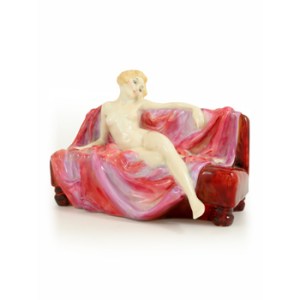
FIG-Siesta-HN1305


Siesta HN1305.

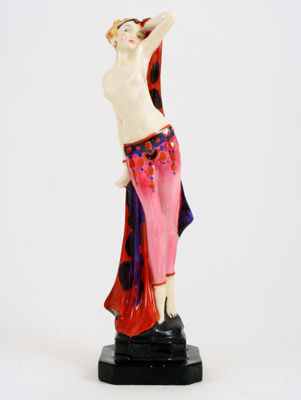
Other partially clad figures also belong to this group of deco delights such as Carnival, Circe and Susanna, a scalled down version of Circe.
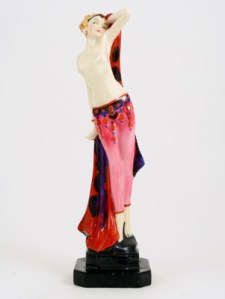
carnival_hn1260

Carnival HN1260.

fig_circe20hn1249

Circe HN1249.

FIG-Susanna-HN1233


Susanna HN1233.

Harradine continued, however, to experiment and push boundaries in figure production. He achieved much acclaim at the British Industries Fair of 1935 for his then two latest productions, The Coming of Spring and Celia. Particular attention was lavished upon the Coming of Spring shown here.
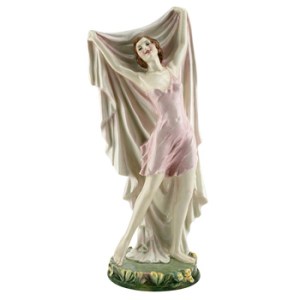
FIG_Coming-of-Spring-HN1722

The Coming of Spring HN1722.

We cannot mention deco nudes without also mentioning that small group of figures commissioned by Noke from Richard Garbe the eminent sculptor. I have in my own collection his Spring HN1774 produced in a limited edition of 100.

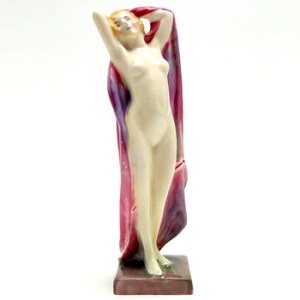
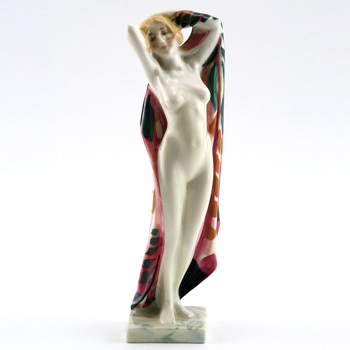
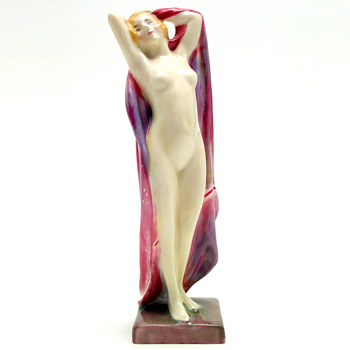
Yet, Harradine as Doulton’s leading modeler continued to produce nude figures up until the late 1930’s with figures such as Dawn and The Awakening.
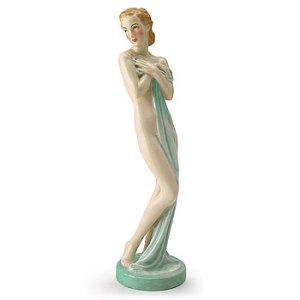
FIG-Dawn-HN1858A

Dawn HN1858 (without headdress)

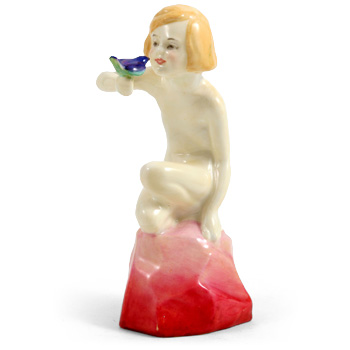
There were also a slew of scantily clad beauties such as Negligée and Lido Lady as well as a few child studies such as Blue Bird.
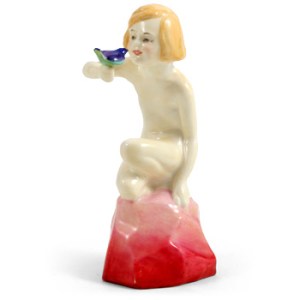
FIG-Blue-Bird-HN1280

The rare Blue Bird HN1280.

In recent decades there have been new nude introductions, not least in 2000 when Doulton themselves re-modelled four of Harradines most popular figures including The Bather (first version).


Doulton’s dog derivatives…

Just when your cabinets are full to capacity you discover that there is something else to collect – so say all collectors!

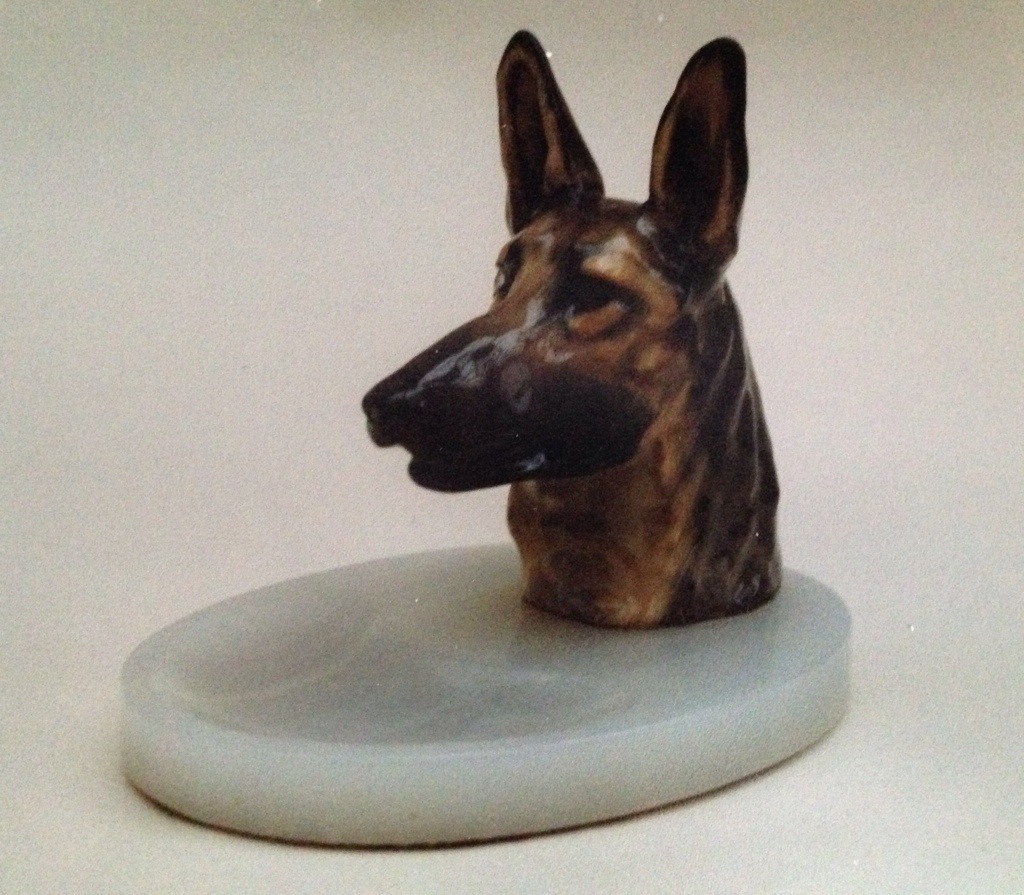
Similarly with Doulton’s array of dogs, there is a derivative for everyone be it ….
A pencil holder/pin tray….

20140614-092547-33947280.jpg

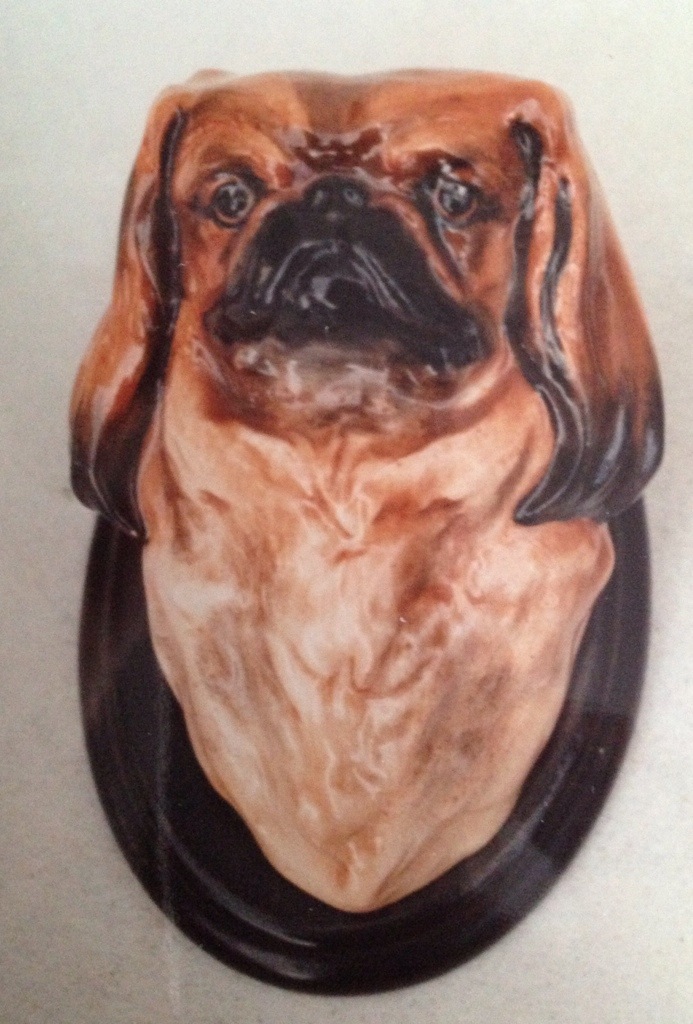
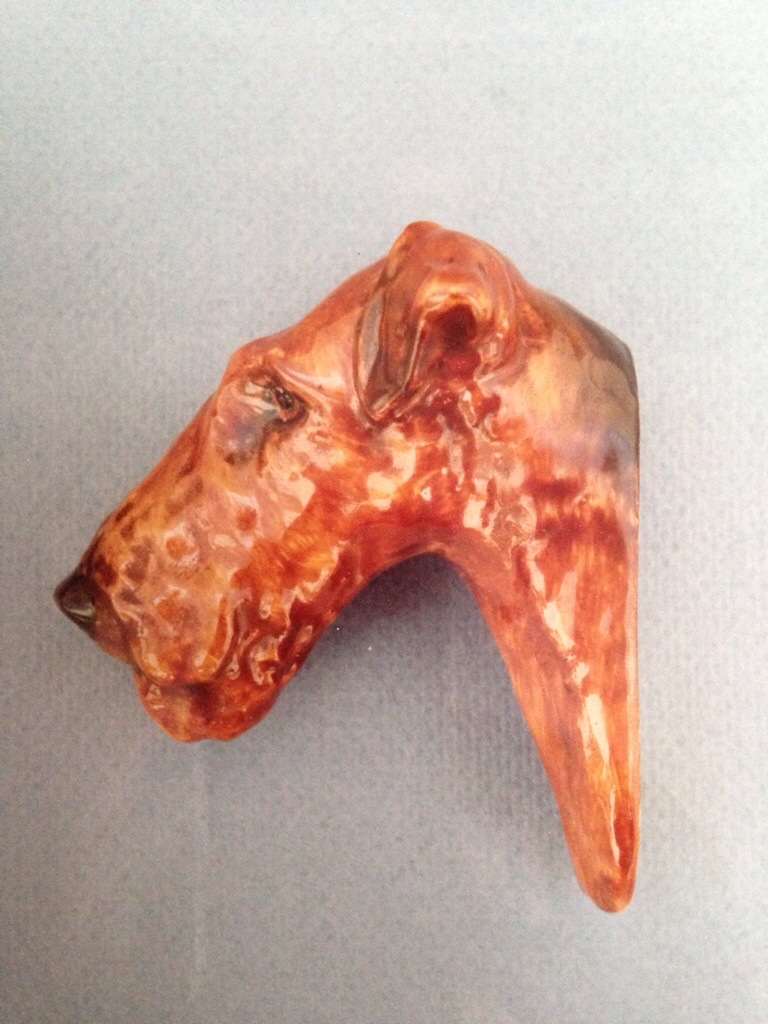
A bust of your favourite breed…

20140614-092643-34003720.jpg

A bookend (shown minus the mahogany mount)…

20140614-092724-34044269.jpg

Ash trays….

20140614-093723-34643139.jpg

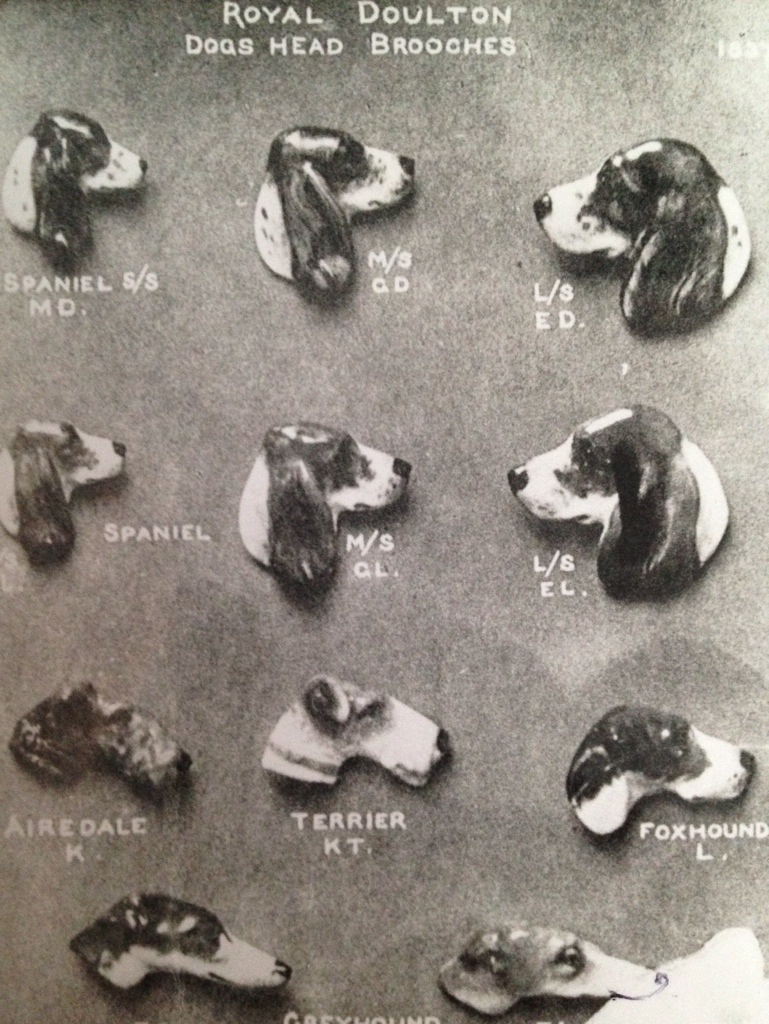
And even brooches…

20140614-093750-34670088.jpg

As with everything Doulton…they aimed to cater for every taste and the variety of objects that can be found is limitless and not restricted to the examples above.

On my own desk I have a calendar with a character Pekingese puppy and a stamp dish with a character fox.

The fun in collecting is not knowing what is around the corner and this field of collecting Doulton certainly offers that variety! Happy collecting!

Dishes, bookends and calendars!

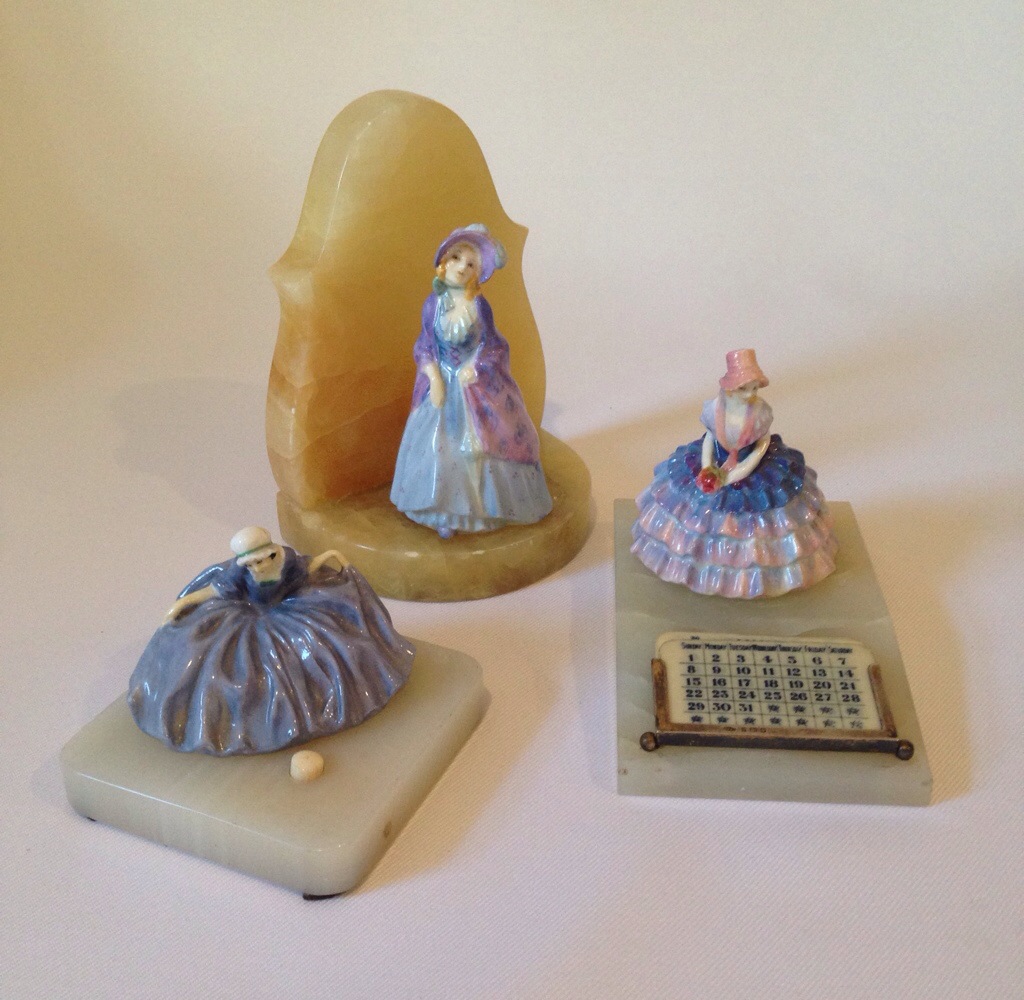
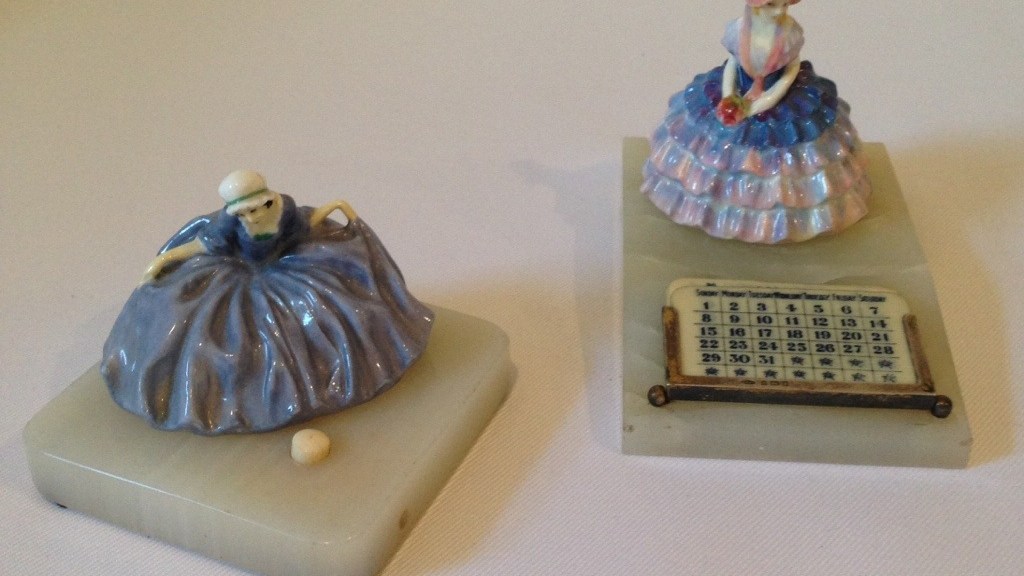
Collectors are often bemused to see their cherished figures mounted on bookends, calendars and dishes! This trend began in the early 1920’s at the same time as the figure lamps were produced.

‘M’ series miniatures are perhaps most often associated with bookends and certain calendars like these below.
20140609-202118-73278144.jpg

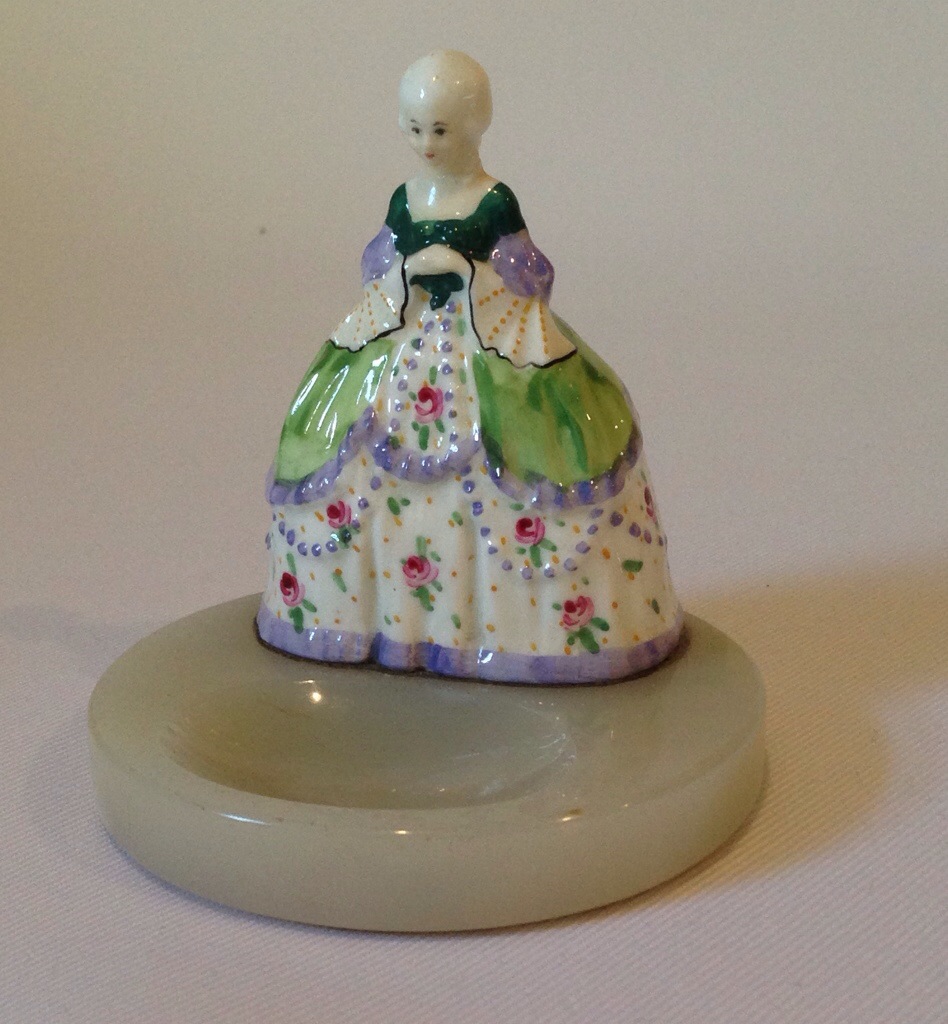
Occasionally very rare figures turn up mounted on bases, such as this Crinoline Lady pin tray.

20140609-202218-73338744.jpg

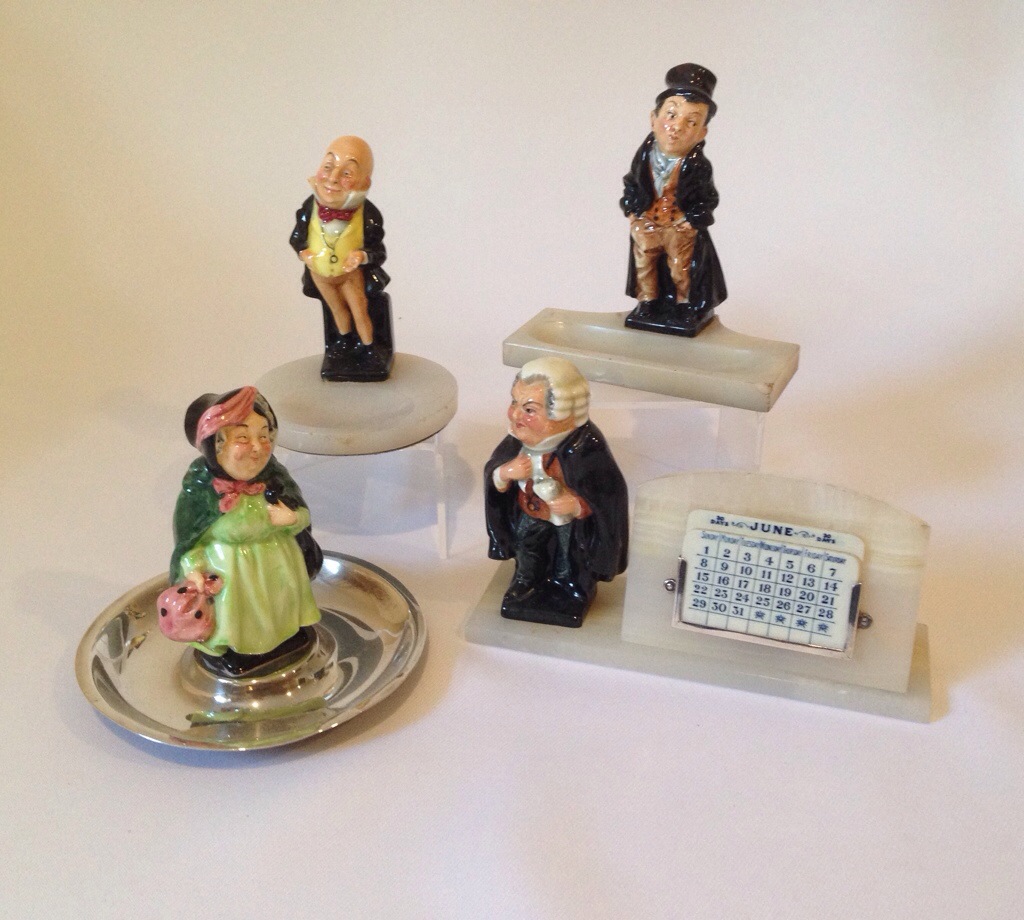
Harradine’s small Dickens figures appear mounted on a variety of bases, like this selection too.

20140609-202320-73400474.jpg

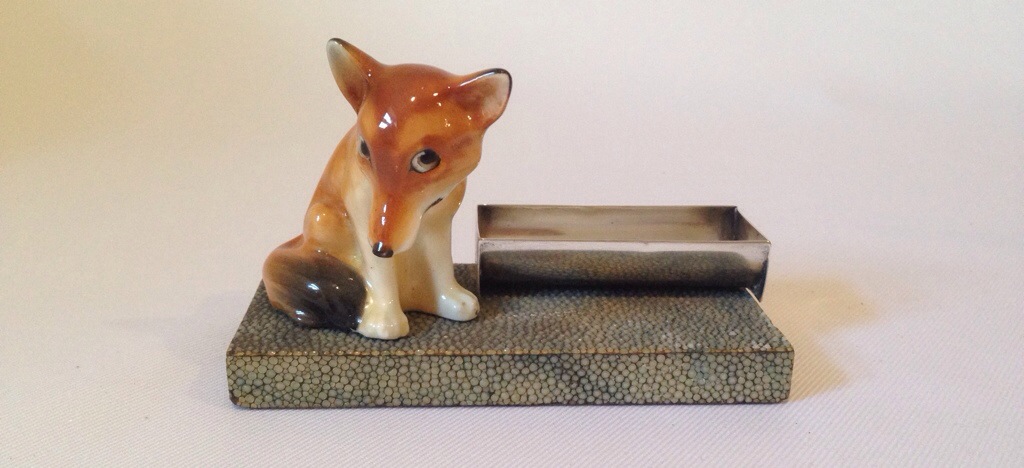
Small Doulton animals are also found mounted as many different objects but particularly desk furniture. Here is a comical fox I found mounted as a stamp tray.

20140609-202543-73543628.jpg

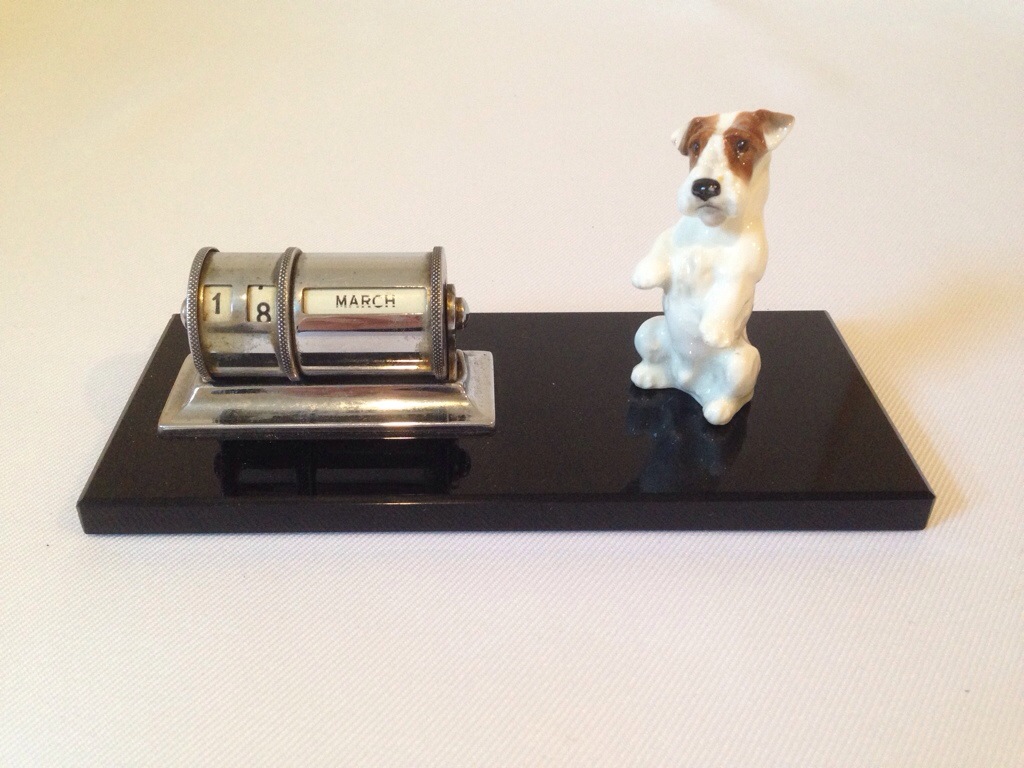
And also a Sealyham begging mounted on this calendar.

20140609-202620-73580712.jpg

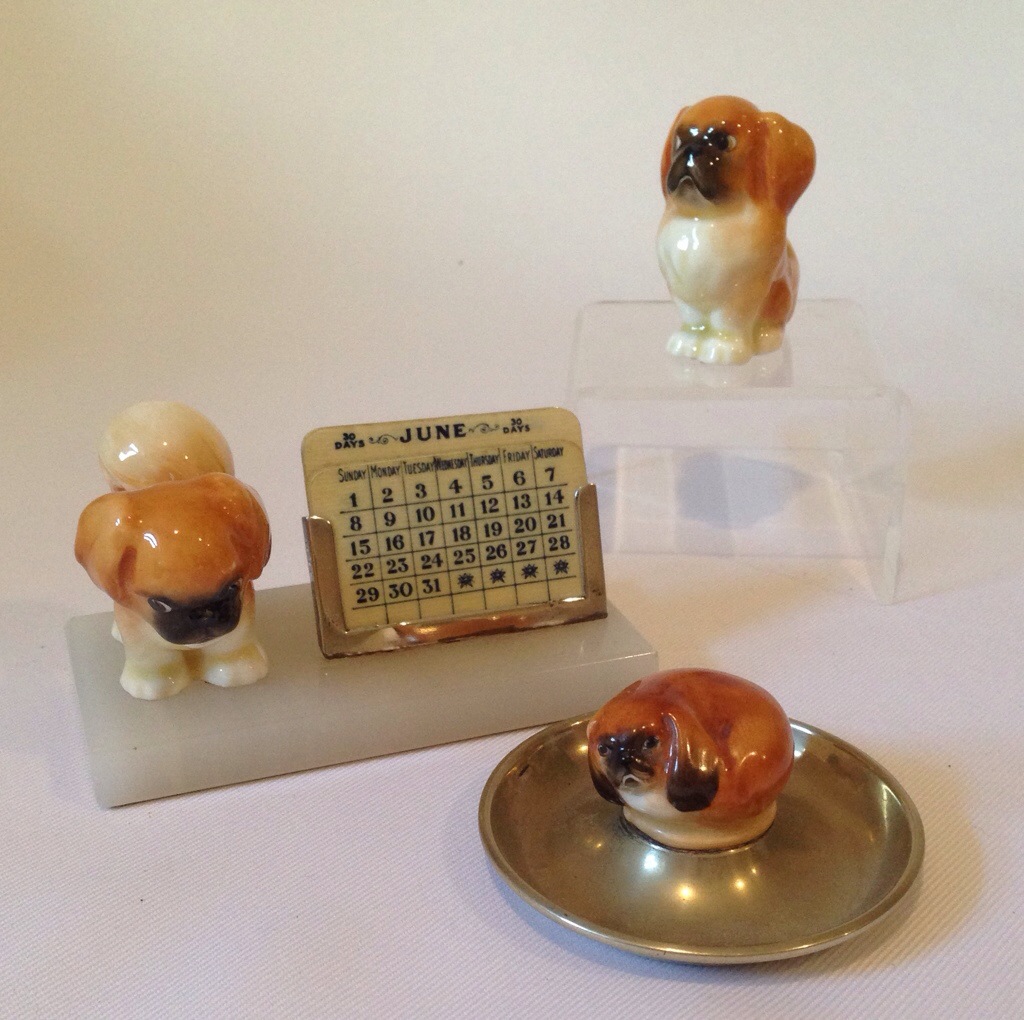
As many of you know Pekingese play an important part of my life and I have managed to assemble this small group of objects all with mounted Pekingese!

20140609-202748-73668591.jpg

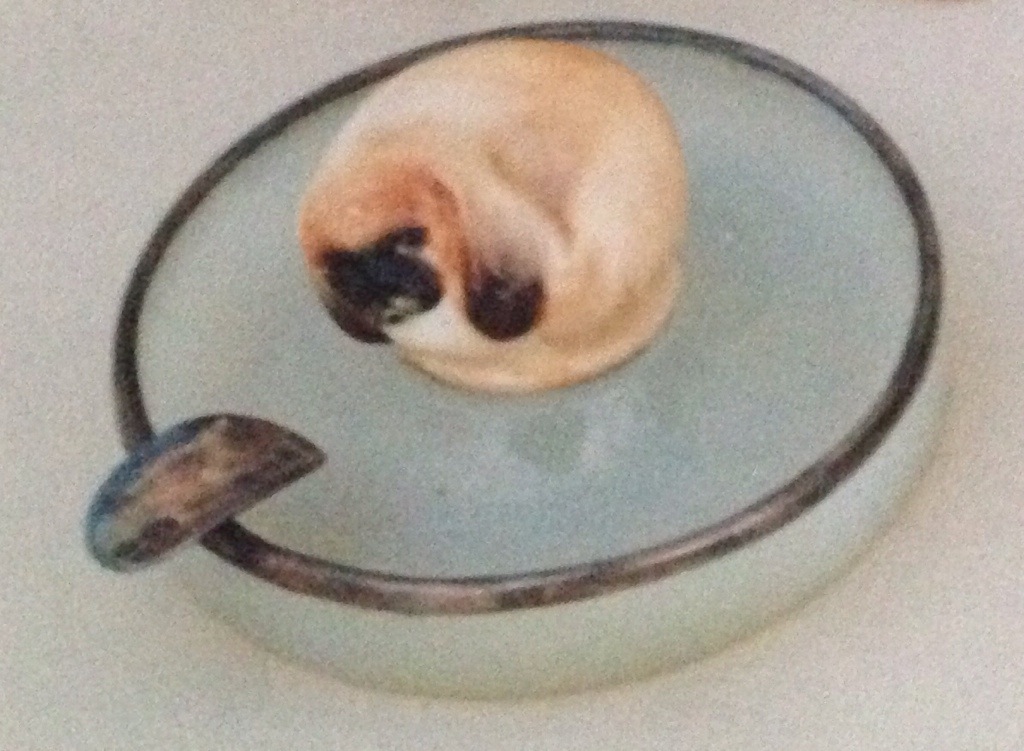
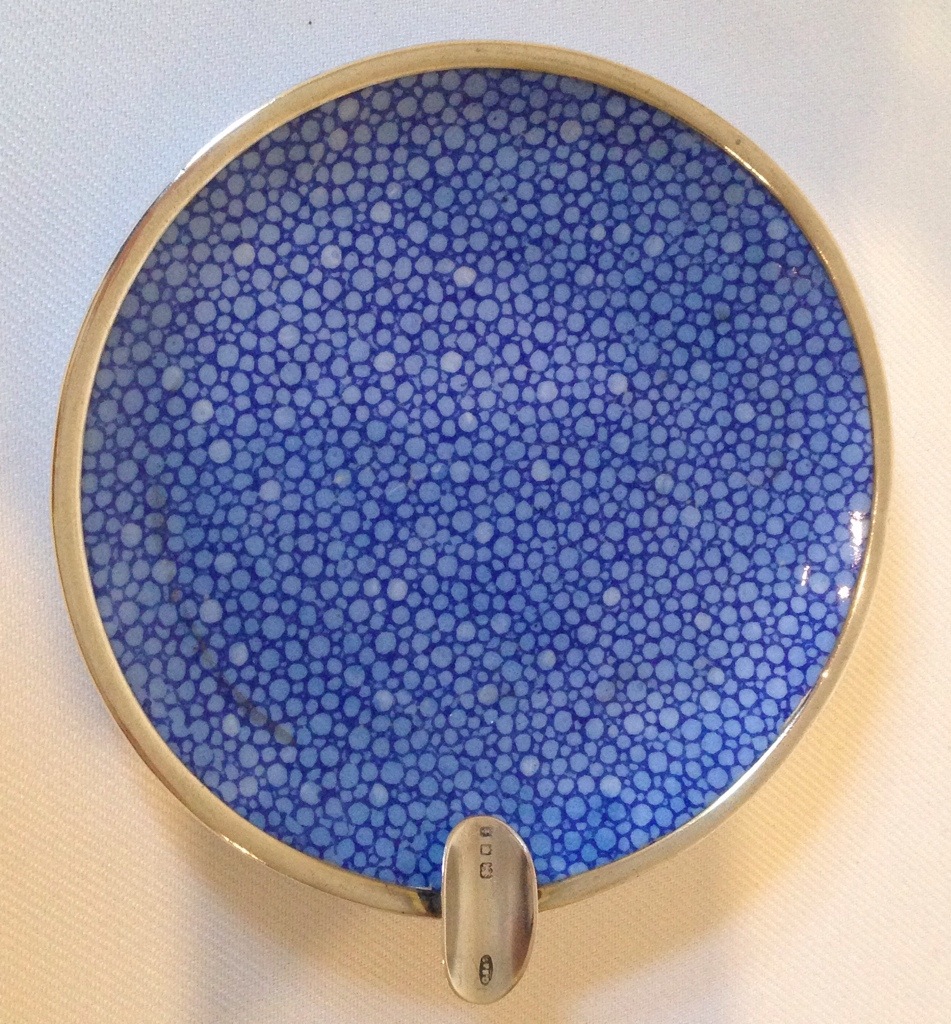
Many of these objects, especially those mounted with sterling fittings would have been retailed by top jewellers of the period including Asprey and Garrards in London. Even more ‘normal’ objects such as pin trays were given sterling mounts so as to make them exclusive objects for top jewellers, such as this Shagreen pin dish (in an unusual blue) which has been given silver mounts to turn it into an an ashtray!

20140609-203147-73907255.jpg

This is only a sample of possible objects, and we would love to hear from you if you have other items mounted with Royal Doulton on our Doulton Collectors Facebook page!

Doulton’s ‘red’ ladies

Red has long been one of the most popular colours amongst figure collectors, but it took almost 20 years for Doulton to cotton on!

The earliest figures were produced in a rainbow of colours but it wasn’t until the late 1920’s that red colourways of figures began to emerge with the introduction of figures such as Kathleen, Priscilla and Rosina.

Thereafter there has been a parade of other red figures culminating in the late 1930’s and the immediate years after the war with the introduction if three of the most famous Doulton ladies ever: Top o’ the hill, Auntumn Breezes and of course Christmas Morn. The lengthy production of these figures not only stands as popular proof of the model but also the popularity of their colourways!

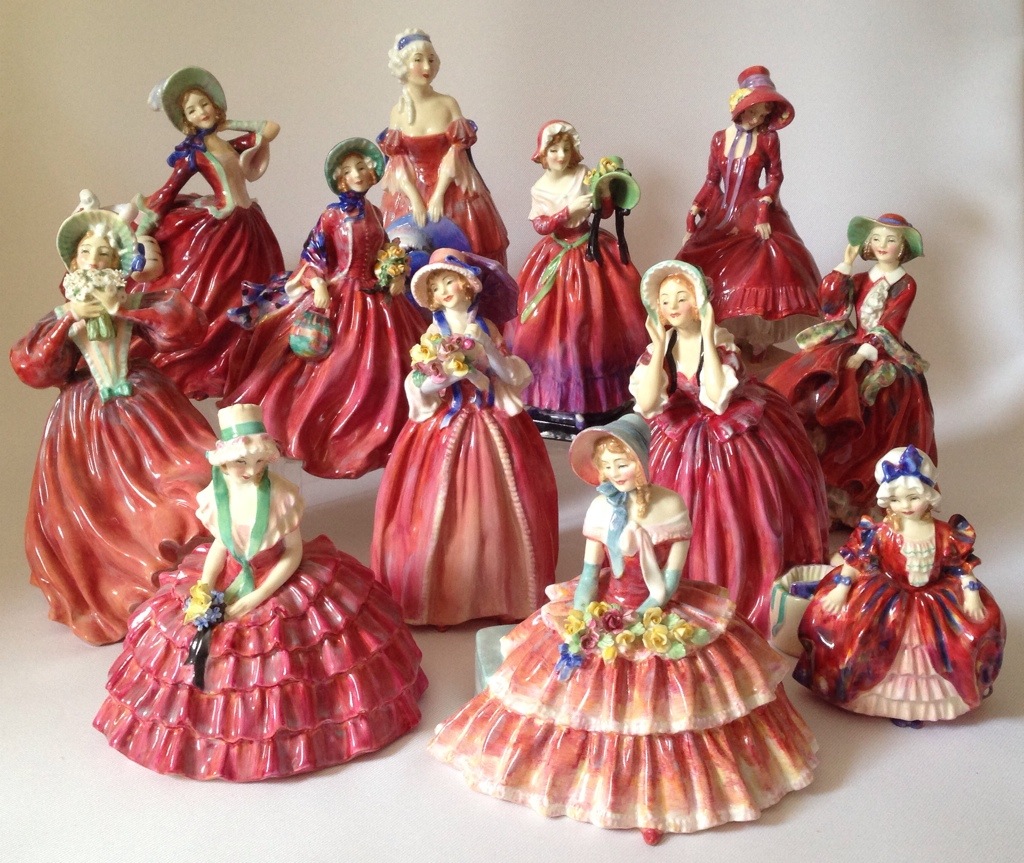
Here are a selection of my favourite ‘red’ ladies!

20140608-165331-60811943.jpg

Since the introduction of Christmas Morn there have been an array of other ladies in red – perhaps you have them in your collections?

Happy collecting and remember we would love to hear from you on our Doulton Collectors Club Facebook page!

Unusual Lambeth Glazes to match Burslem’s Sung and Chang

Just as Doulton in Burslem under the direction of Charles Noke were experimenting with glazes in the early 20th Century, so too was his London counterpart Joseph Mott, art Director at Doulton Lambeth.
Mott can truly be said to have seen it all at Doulton as he began working there in the 1880’s when some of Doulton’s most famous artists were in full swing including the Barlows, Mark Marshall etc…
Just as sales at Burslem were on the rise so too began the steady decline of Lambeth wares. However, under Mott’s direction the art department survived for another half century.
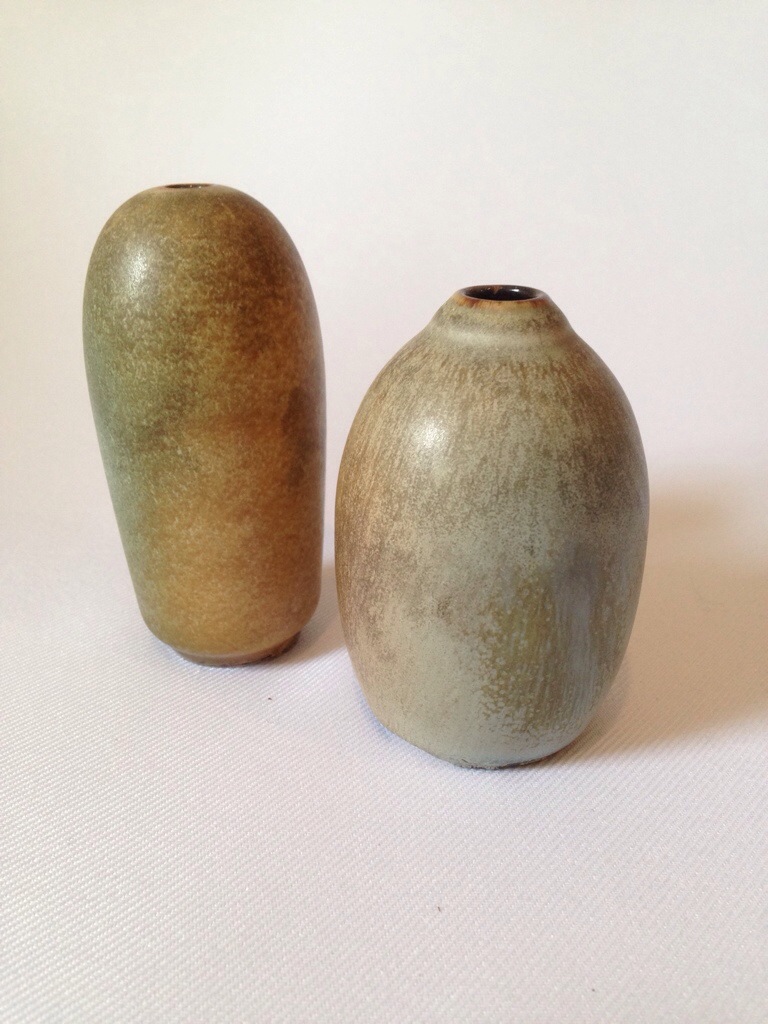
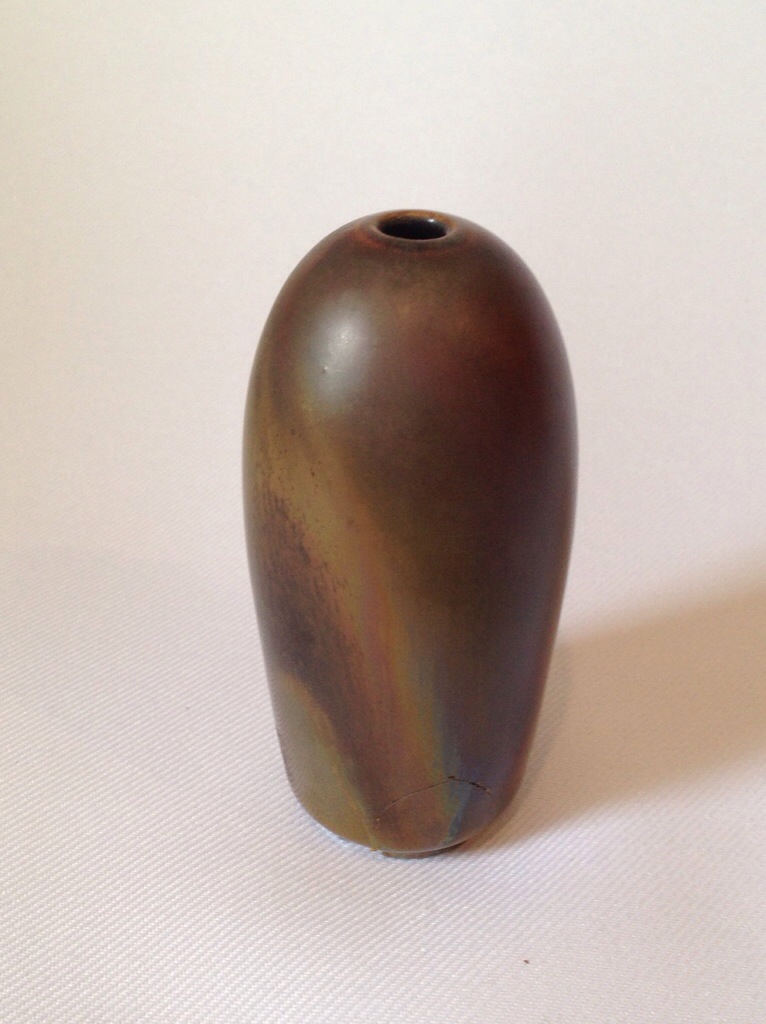
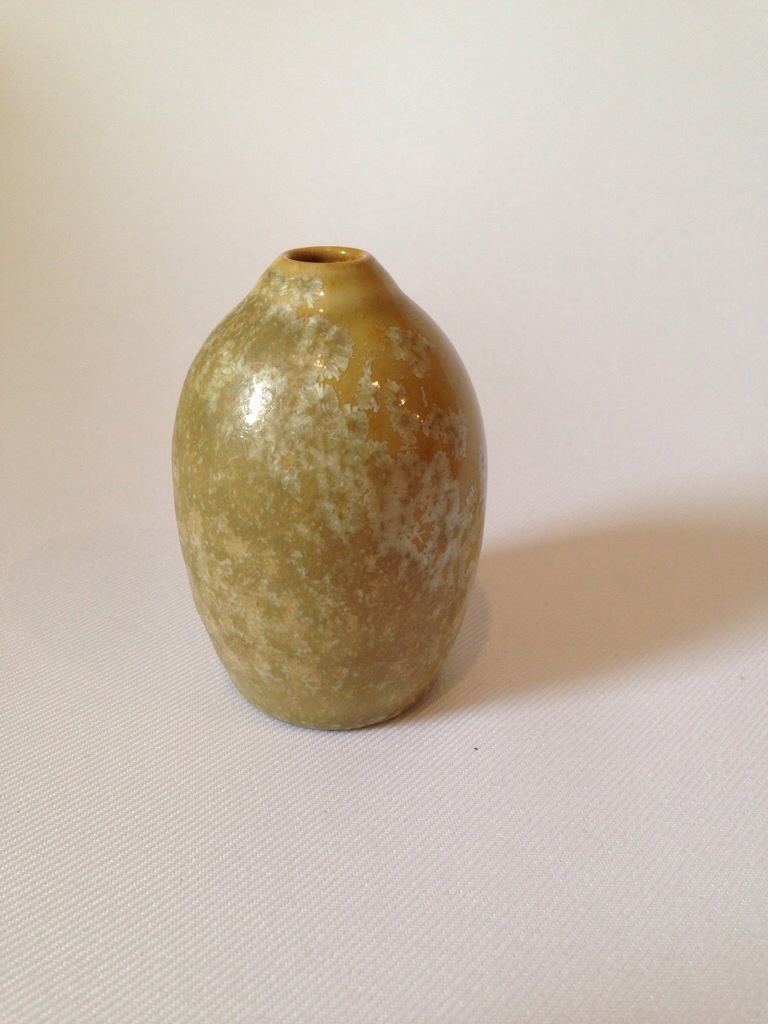
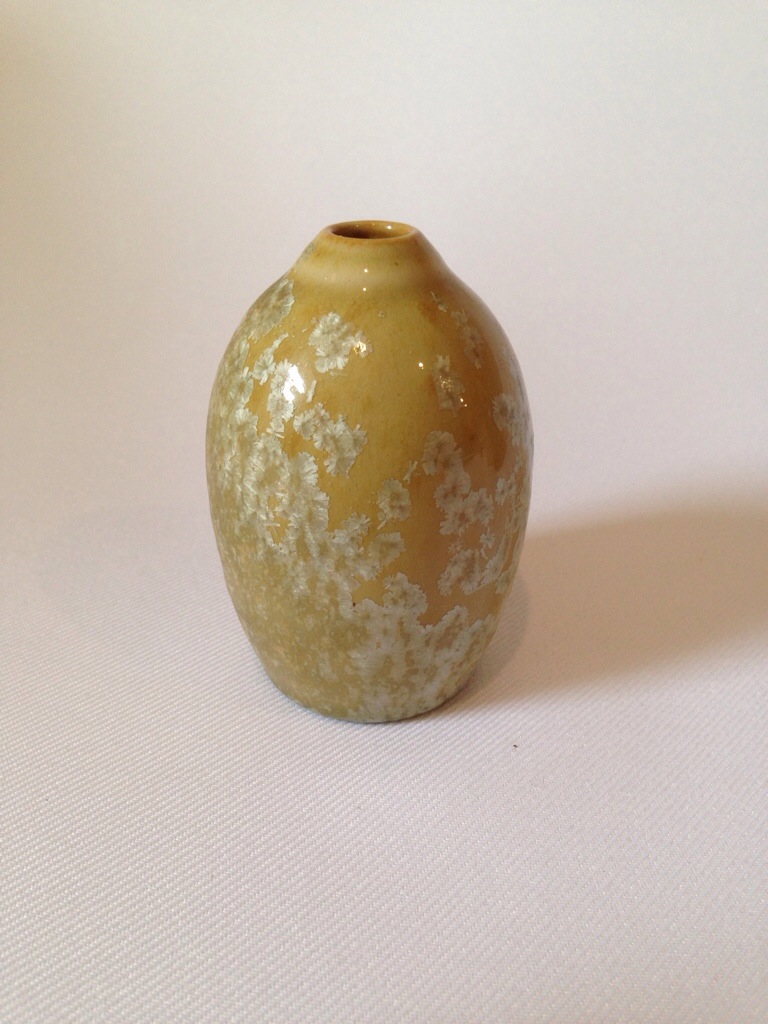
Mott had a chemists background so it is no surprise that the following pieces have turned up, all showing the most wonderful types of glaze and most bearing his initials.

20140608-133202-48722793.jpg
A deep-glazed slender vase.

20140608-133239-48759280.jpg
Two ‘hare’s foot’ glaze vases.

20140608-133319-48799911.jpg
An unusual vase signed by Mott.

20140608-133420-48860390.jpg

20140608-133419-48859216.jpg
Two views of a striking crystalline vase.

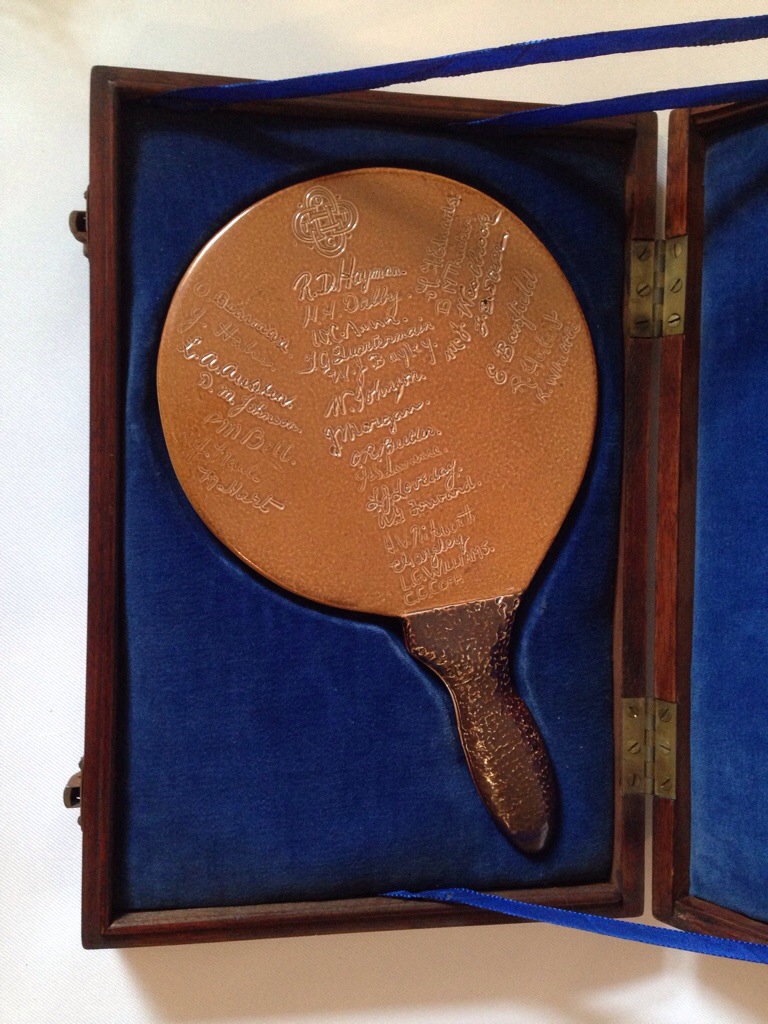
One piece of stoneware I have at home is a fun Doulton stoneware table tennis bat presented by Mott’s fellow players to him in 1935, and signed by them all.

20140608-133515-48915707.jpg

Mott’s contribution to the Lambeth factory goes far beyond glazes but that is the focus of this piece today.