Category Archives: Art deco

Collecting Royal Doulton child studies.

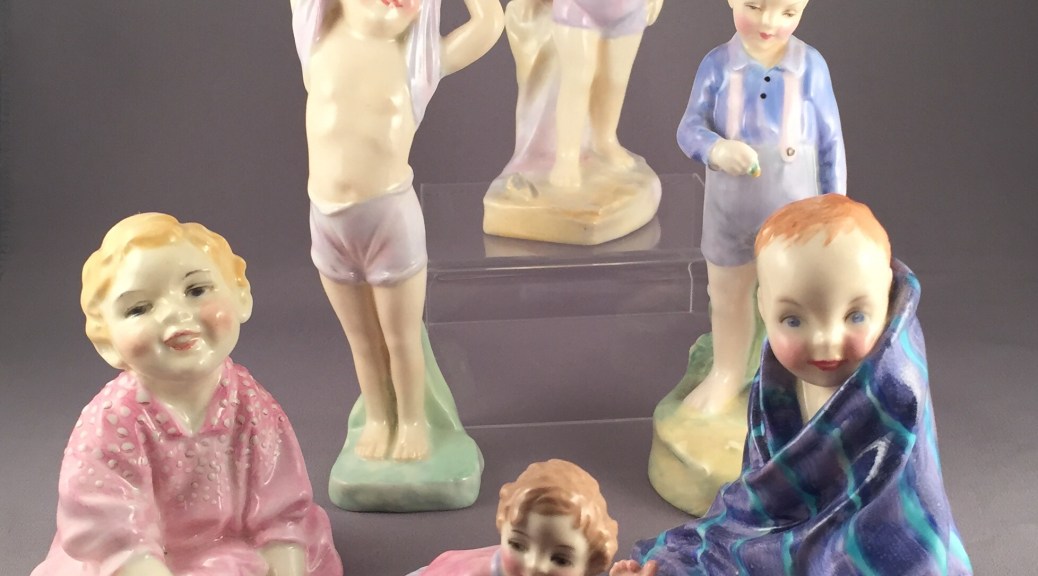
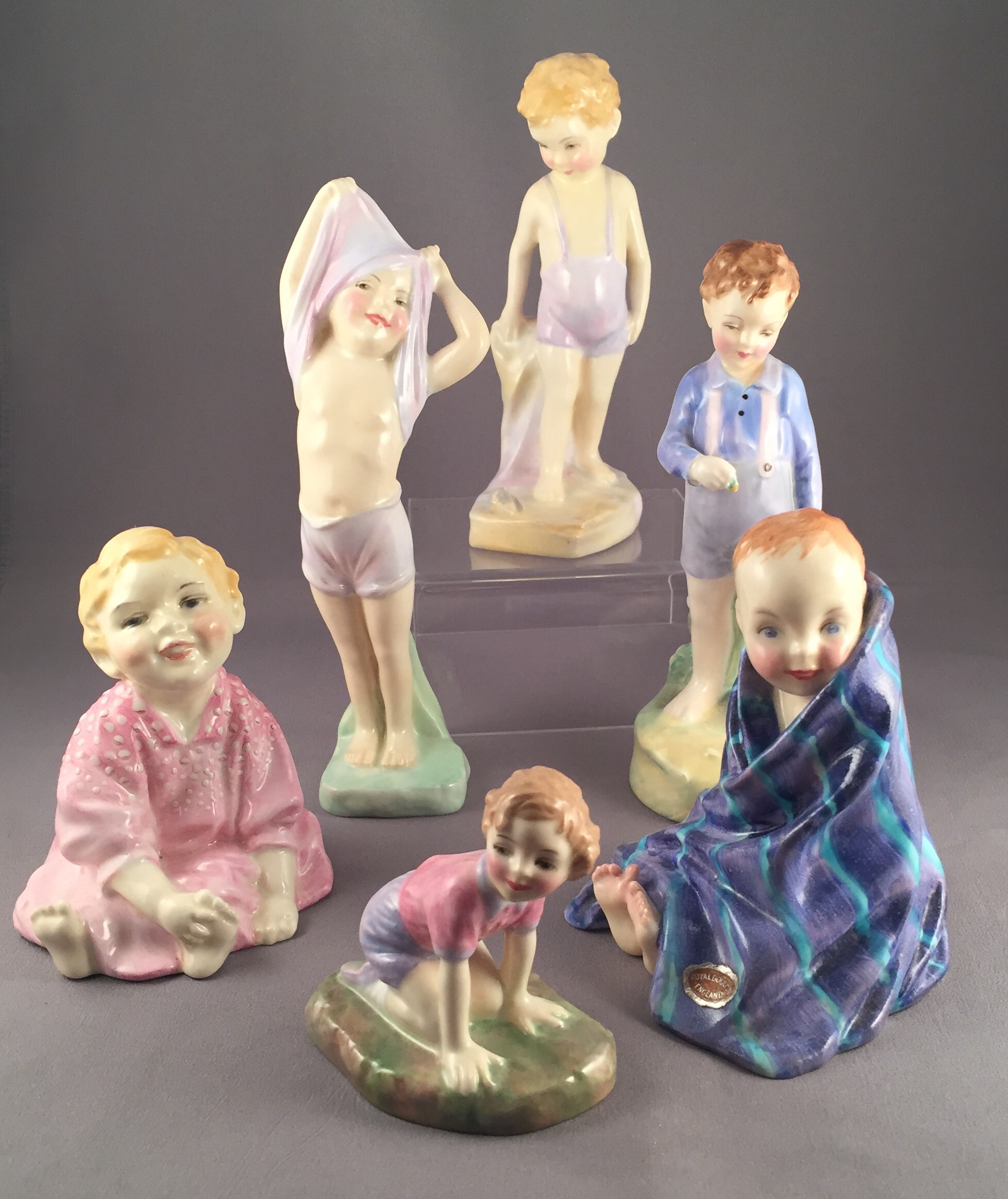
When we think of Doulton many think immediately of pretty ladies and young girls in crinolines, yet here is another collecting theme although generally much harder to track down.  

These studies of boys by Doulton were the work of Leslie Harradine and date to the late 1920’s through to the 1950’s. Although there are only a handful of male figures, if you have the patience to track them down they make a complimentary display to their female counterparts! 

  
The popularity of child studies has long been a favoured collecting field for Doulton enthusiasts, once again bourne out by the enduring popularity of HN1 Darling – a Charles  Vyse study of a boy in his nightgown modelled after his Chelsea original and introduced in his original size in 1913. 

How adverts influenced Harradine’s figures for Royal Doulton.

One of the most interesting aspects of collecting Doulton figures is the story behind them. When researching Reflections – a book which discusses this topic – many more illustrations were found than could be published.

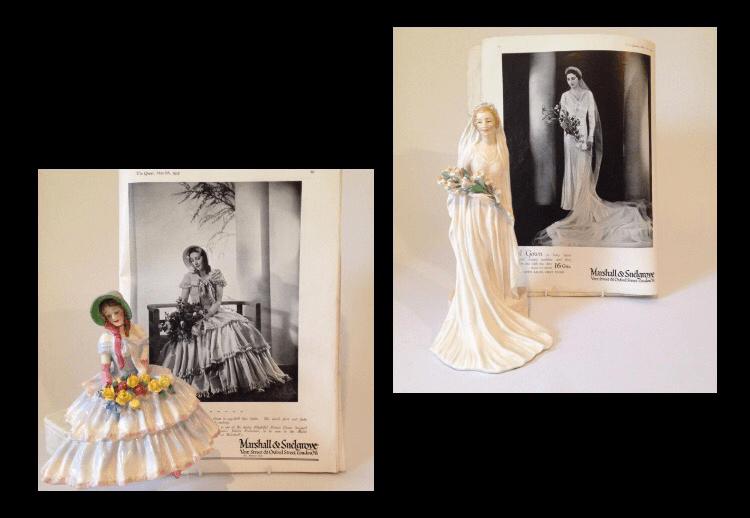
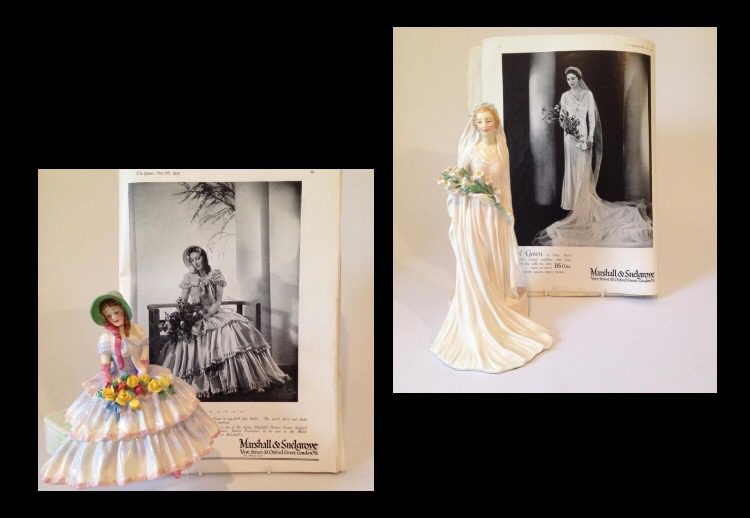
Such examples include the many adverts and publicity shots for the once famous department store Marshall & Snellgrove, which since the 1970’s has been part of the company we here in the UK know as Debenhams.

As you can see two iconic figurines – Day Dreams and Wedding Morn are derived from this source but others include Sweeting, Estelle and a host of fashionable ladies based on fashion photographs from the mid-1930’s.


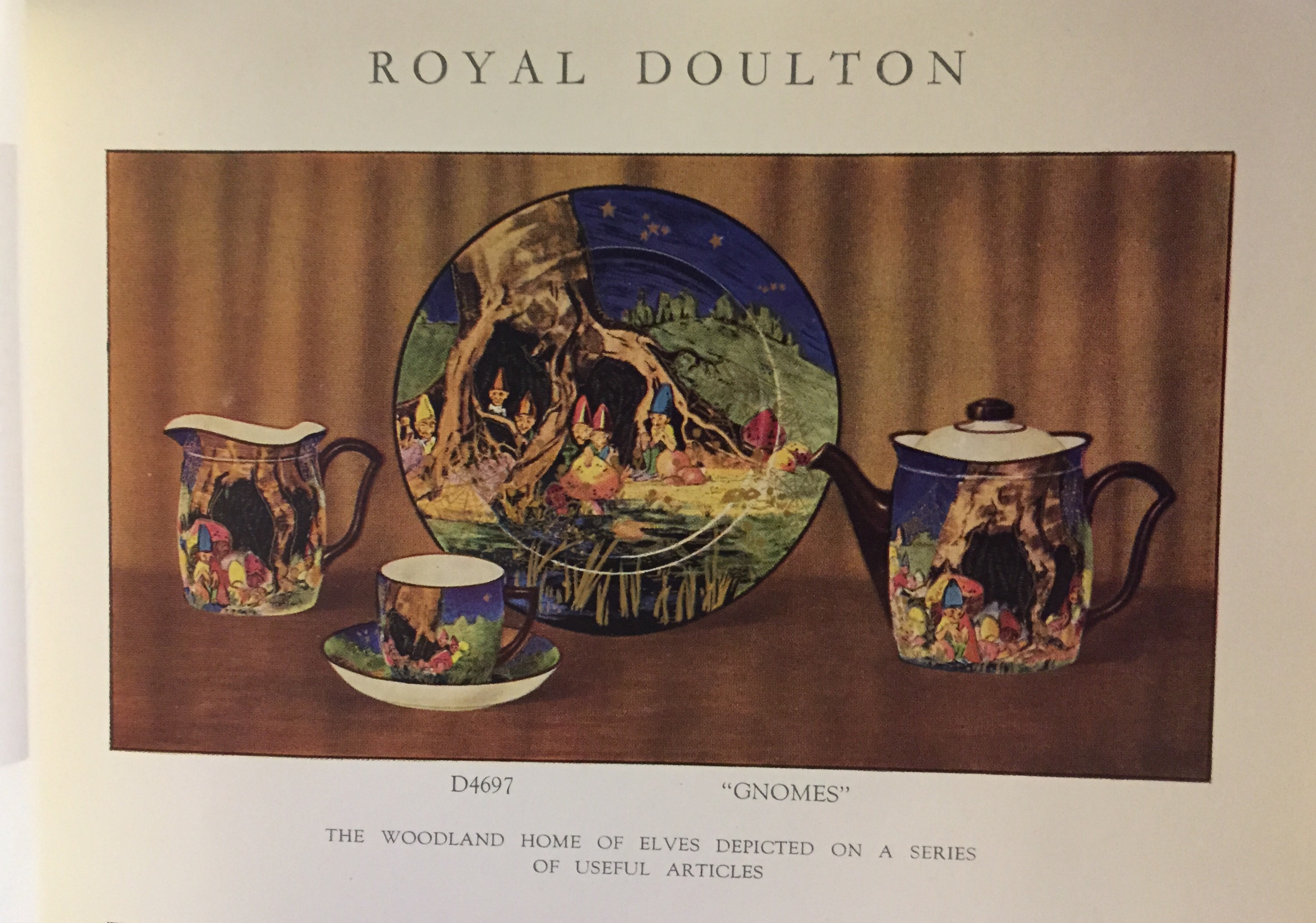
Collecting Doulton’s famous Gnomes ‘B’ seriesware.

  
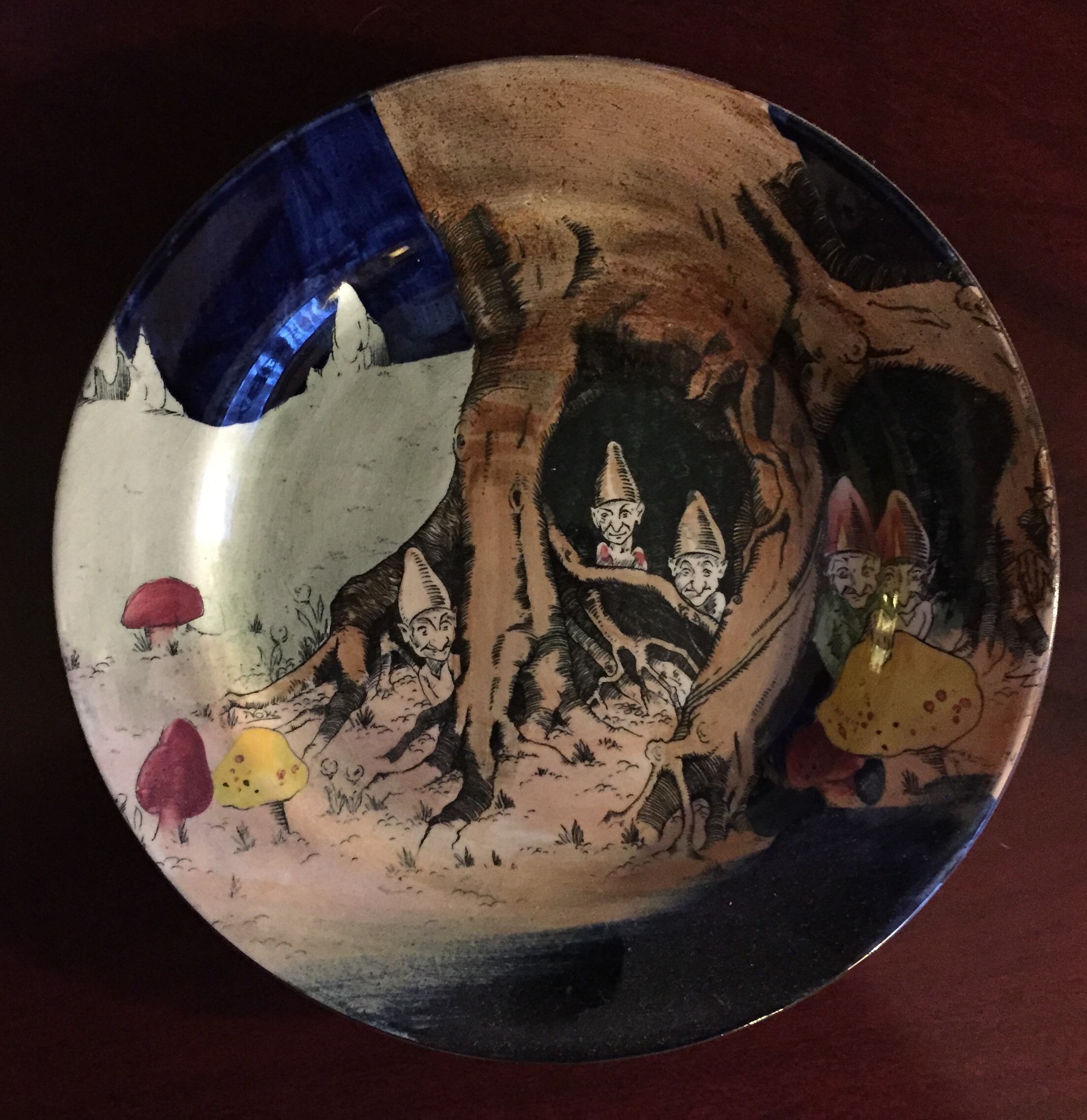
9″ plate D4697.

Often referred to as the Doulton version of Wedgwood’s famous Fairyland Lustreware, the Gnomes pattern illustrated is derived from drawings by the great illustrator Arthur Rackham for Peter Pan in Kensington Gardens, which also provided the inspiration for Doulton’s early figurine Pretty Lady who is based on an illustration for Wendy. The designer of this Doulton pattern is of course Charles Noke, then Art Director at Doulton’s Burslem factory.

  
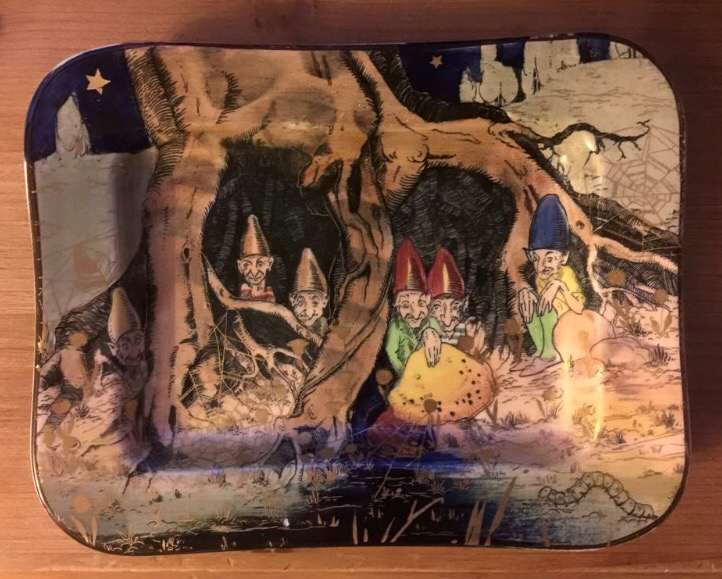
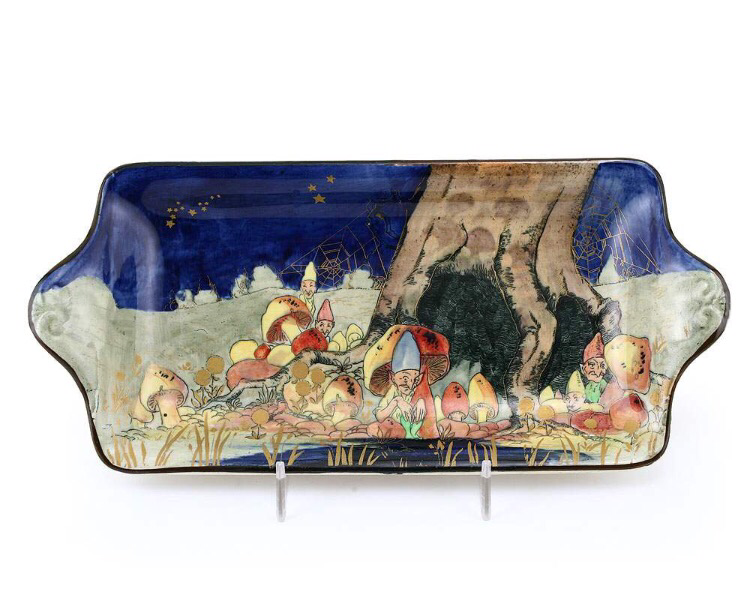
Unusual rectangular plate.

Introduced c.1925 it is a perennially popular pattern that collectors clamour for when it does turn up at auction or through dealers. Although in production until c.1950 examples of it are hard to find and typically teawares are what do turn up in the form of plates and trios.

 
Early catalogue page featuring Gnomes ‘B’. 

There are five recorded scenes as listed by Louise Irvine in her book Series Ware Vol.3, although again it is scene 1 which is the most frequently found, again on plates.

  
Unusual sandwich tray. 

As with all seriesware patterns, a collection  masterly displayed makes quite a statement in the home! 

  
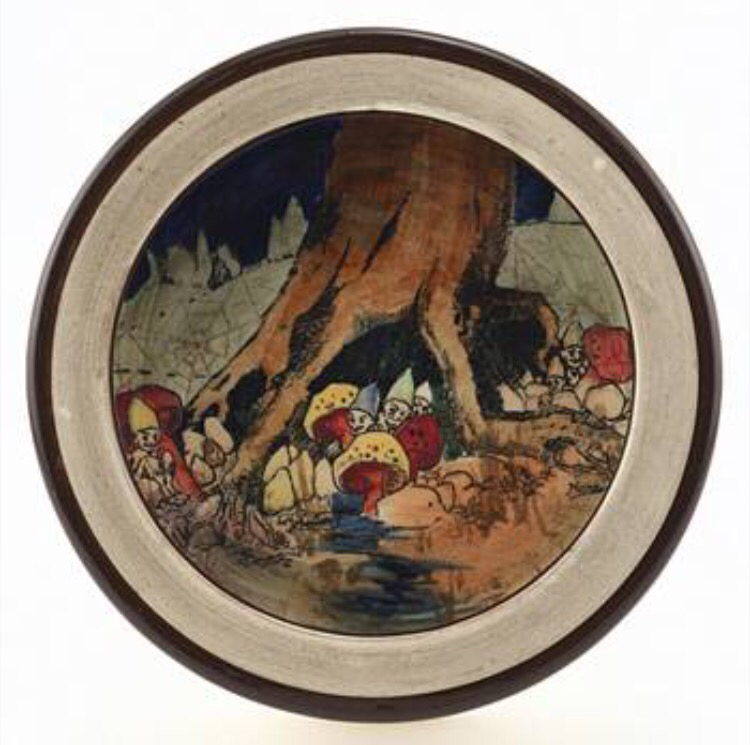
Rare oatmeal bowl with unusual, plain border. 

For reference, there are 3 recorded D numbers for this pattern – D4697, D4899 and D5066 and this ‘B’ pattern is not to be confused with the earlier ‘A’ pattern. Also, in the USA it is referred to as ‘Munchkins’. 

Collecting Doulton’s Prinknash work.

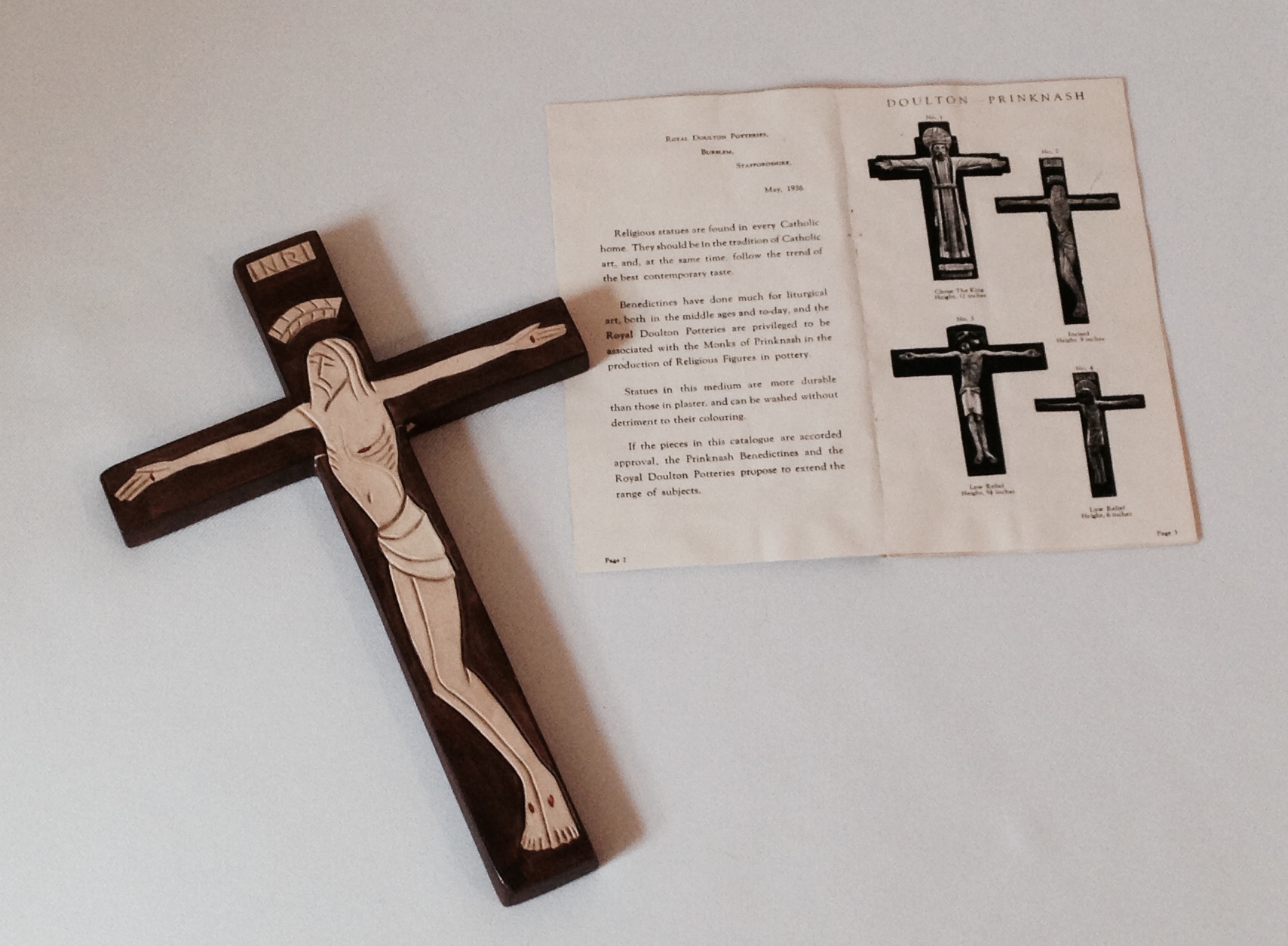
In the mid to late 1930’s Doulton established a link with the Benedictines of Prinknash Priory, whereby Doulton produced a series of religious statues. In a 1936 catalogue from Doulton it states that “Benedictines have done much for liturgical art, in the Middle Ages and today…” And that if the items illustrated meet with approval the two will extend the range of subjects.

IMG_1870
In total 20 pieces are recorded in the catalogue mentioned and I have to say that I have seen only few examples over the years. The most frequent of which are S. Francis and S. Benedict. The cross illustrated and pictured I have only seen this once.
Due to their religious nature and scarcity, they are not widely collected in the Doulton world but pieces still fetch three figure sums when they occasionally do turn up.

A look back at Royal Doulton’s iconic Top o’ the hill!

An unusually detailed colourway from the 1930s. Note the decoration to the skirt.

Without doubt Top o’ the hill remains Doulton’s most instantly recognisable figure. Since her introduction in 1937, Leslie Harradine’s ever popular figure has been used as a demonstration piece at exhibitions and events for decades.
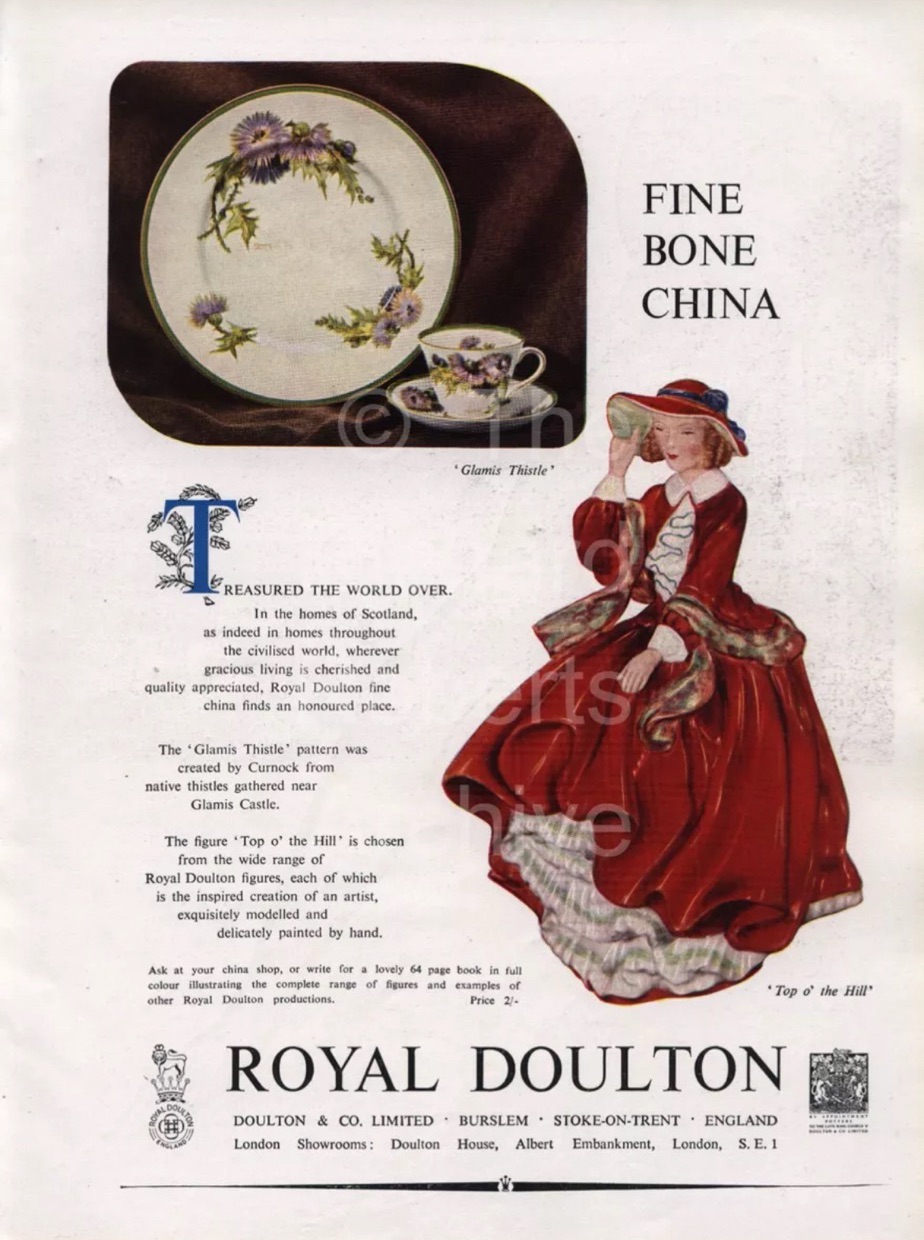
Doulton’s iconic figure was based on a picture by Molly Benatar (illustrated) and the sole rights for reproduction in china were bought exclusively by Doulton from the publisher Raphael Tuck. Not a bad investment on Doulton’s part given her popularity and thus her lengthy production.
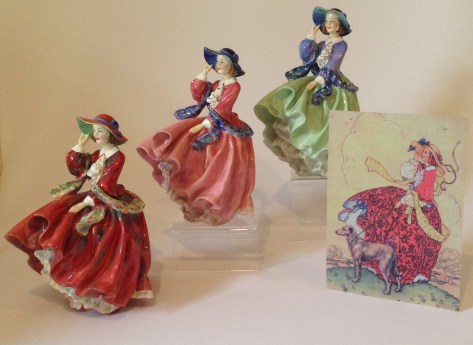
IMG_1815

Interestingly, from a collector’s point of view are the subtle changes to her over the years. The figures illustrated above all date to 1937 and 1938 and are the original 3 colourways. Changes to her have included a deeper base, less detailed, delicate frills to her underskirt and a thicker brim to her hat – all of which were invariably made in response to collectors’ feedback as these early versions are all somewhat fragile.
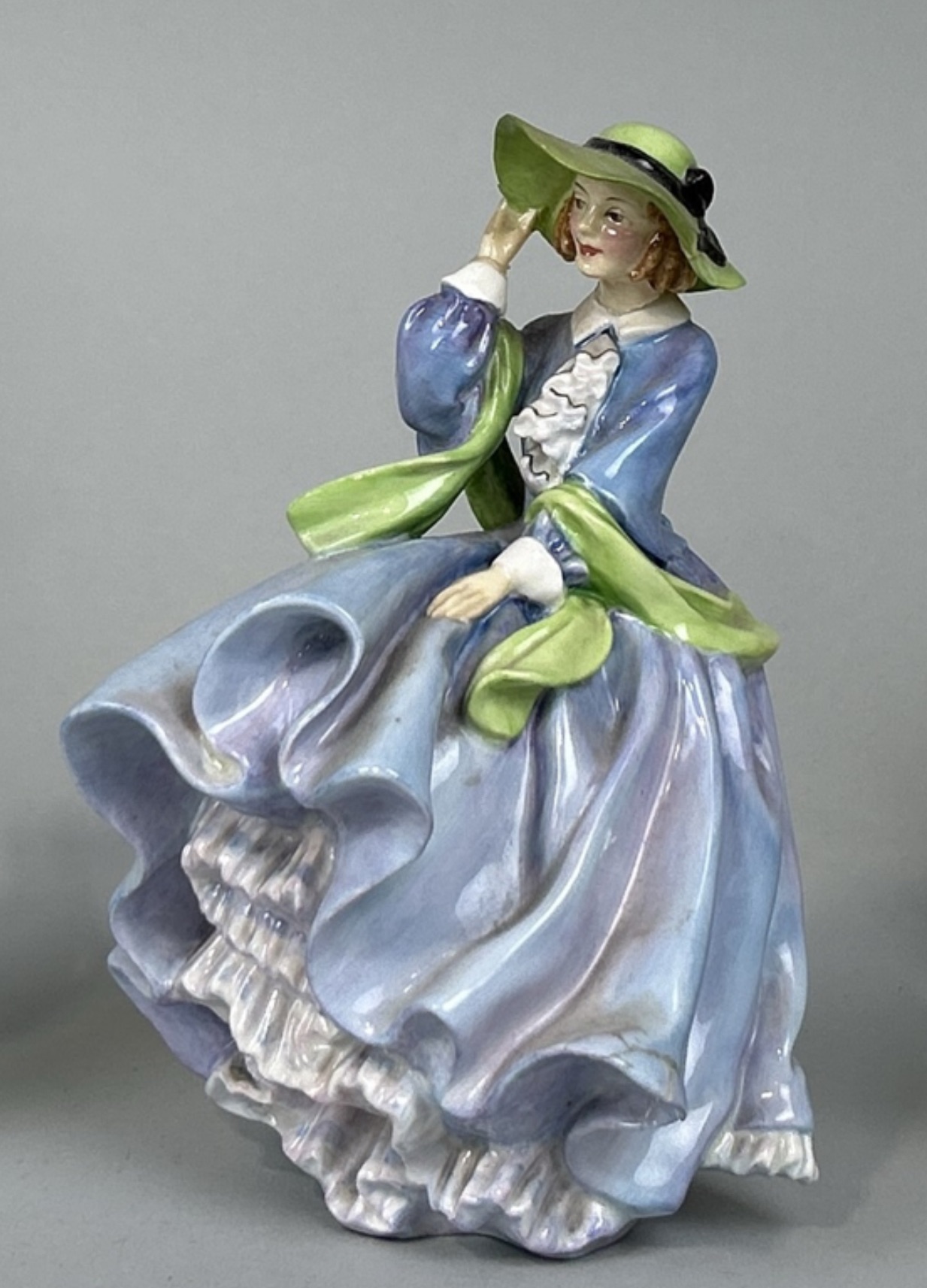
A more recent colourway discovery dated 1938.

Another interesting note is the difference that occured in painting during the war years to the red version. HN1834 originally had blue streaks as many red figures from this time did, but when Doulton began producing figures again after the war, she became a solid red. Another change occurred in the 1950’s when she was modelled with an elongated face, no doubt a change to then fashions. This change was later reversed and I doubt people even realised there had been a change!
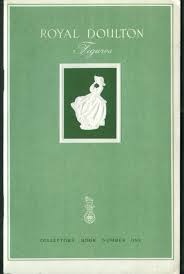
Above is the cover of the 1949 catalogue when the sequence was begun again post WWII.

In more recent times there have been other colourways of this iconic figure introduced, including a yellow and green one HN2127 for Australia’s Bicentenary in 1988 and a deep blue one HN3735 in 1997. A miniature was also made in a few colourways including the popular red in the late 1980’s and early 1990’s. Most recently a petite size has also been introduced.
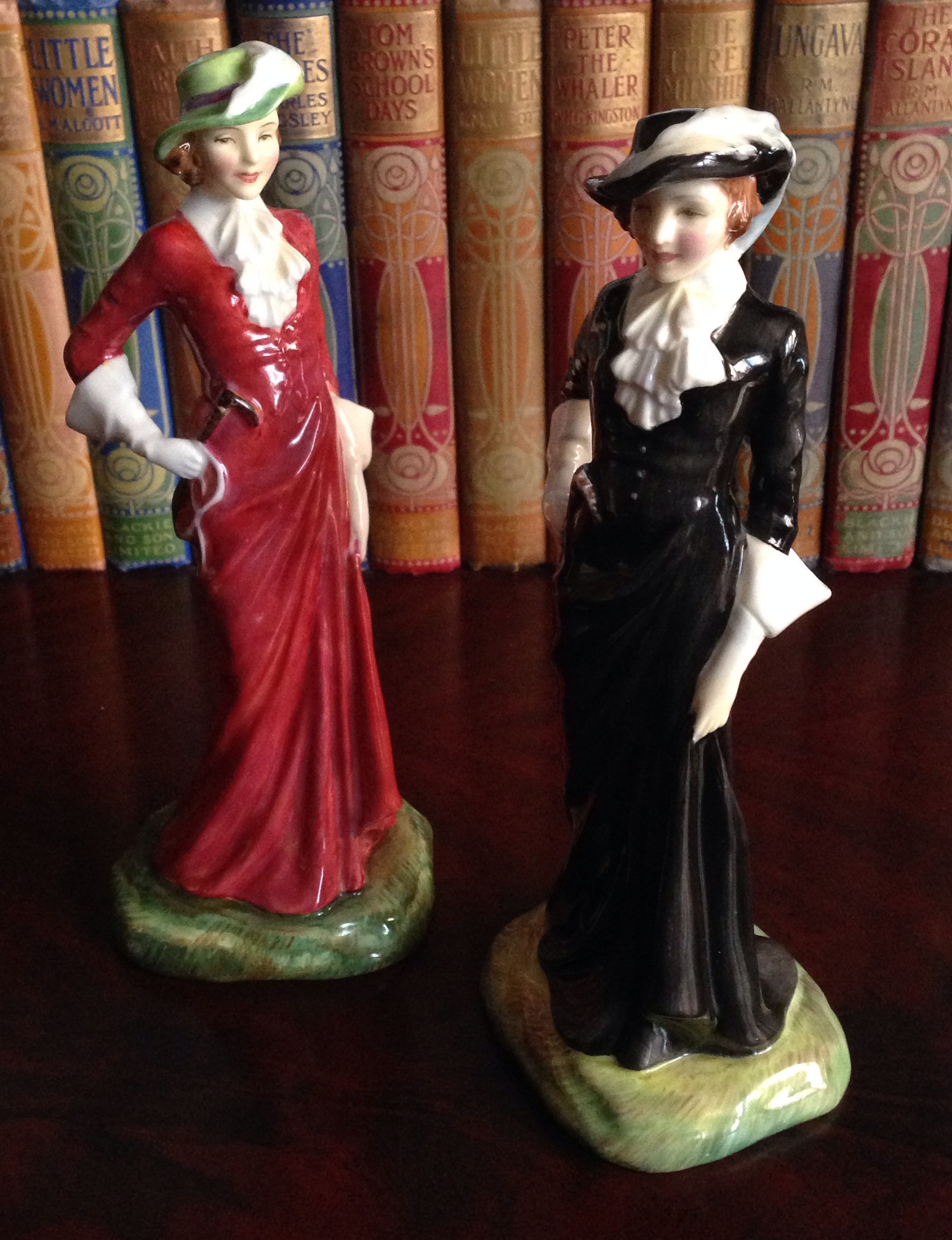
An early colour trial for Harradine’s ‘Karen’.

Always on the look out for the unusual I recently spotted this colour trial for Karen HN1994 that was eventually produced in a red colourway. It is the second time I’ve seen her in black suggesting that this black and white version was a serious consideration and must have done the rounds both sides of the Atlantic to garner her popularity prior to production.

IMG_1459
Like many models introduced just after the war, Doulton held any war time introductions back until the war was over in 1945. The model for Karen (no.1237) dates to ca.1943, whereas the figure produced as HN1994 was introduced in 1947 and withdrawn in 1955.
Another nice feature is the crispness of the modelling in the black and white version, that you can hopefully make out from the picture.

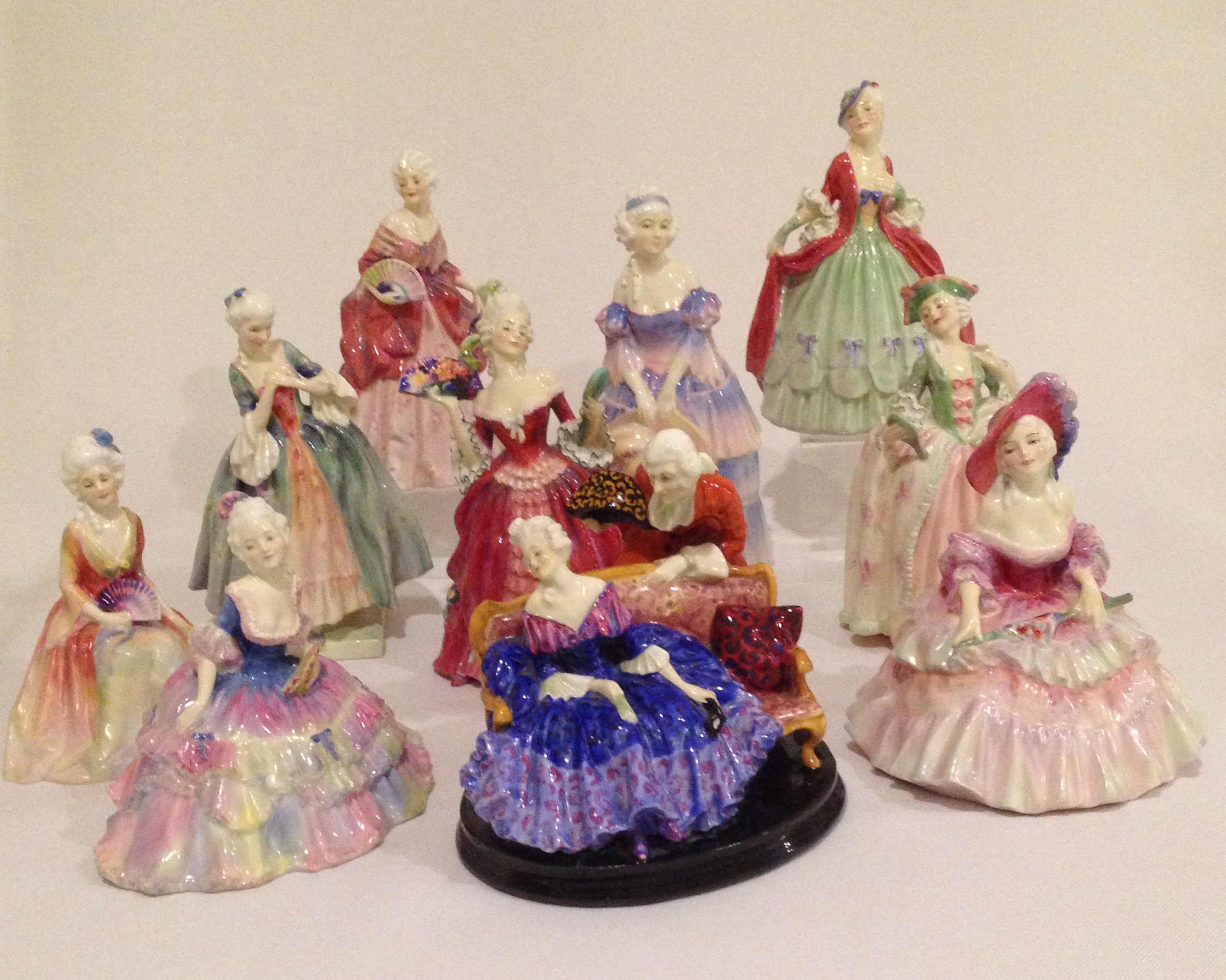
Collecting Doulton’s ‘powder and patch’ ladies!

Another collecting them for Doulton figures is the band of figures in elaborate, powdered wigs.

2015/01/img_1465.jpg
With Doulton’s re-newed association with the modeller Leslie Harradine (who was originally apprenticed to Doulton in Lambeth) from 1920, came the commercial success Doulton had sought for the previous decade. Harradine’s versatile style meant that every possible type of china figure was created – from miniature Dickens characters, to deco beauties, to the archetypal Victorian lady, to child studies – to name but a few themes.

However, during the roaring 1920’s with its synonymous flapper girls there was also a vogue for fancy dress balls, which explains why there are so many of these romantic figures wearing 17th and 18th Century costumes in the HN collection, during the 1920’s and 30’s.
These charming figures sit equally well with their contemporaries as they do with other Doulton figures from the deco period!

2015/01/img_1466.png

Perhaps you display your figures according to themes? If so, join our Facebook page ‘Doulton Collectors Club’ to share them with other collectors around the world!

Collecting Doulton Pansies!

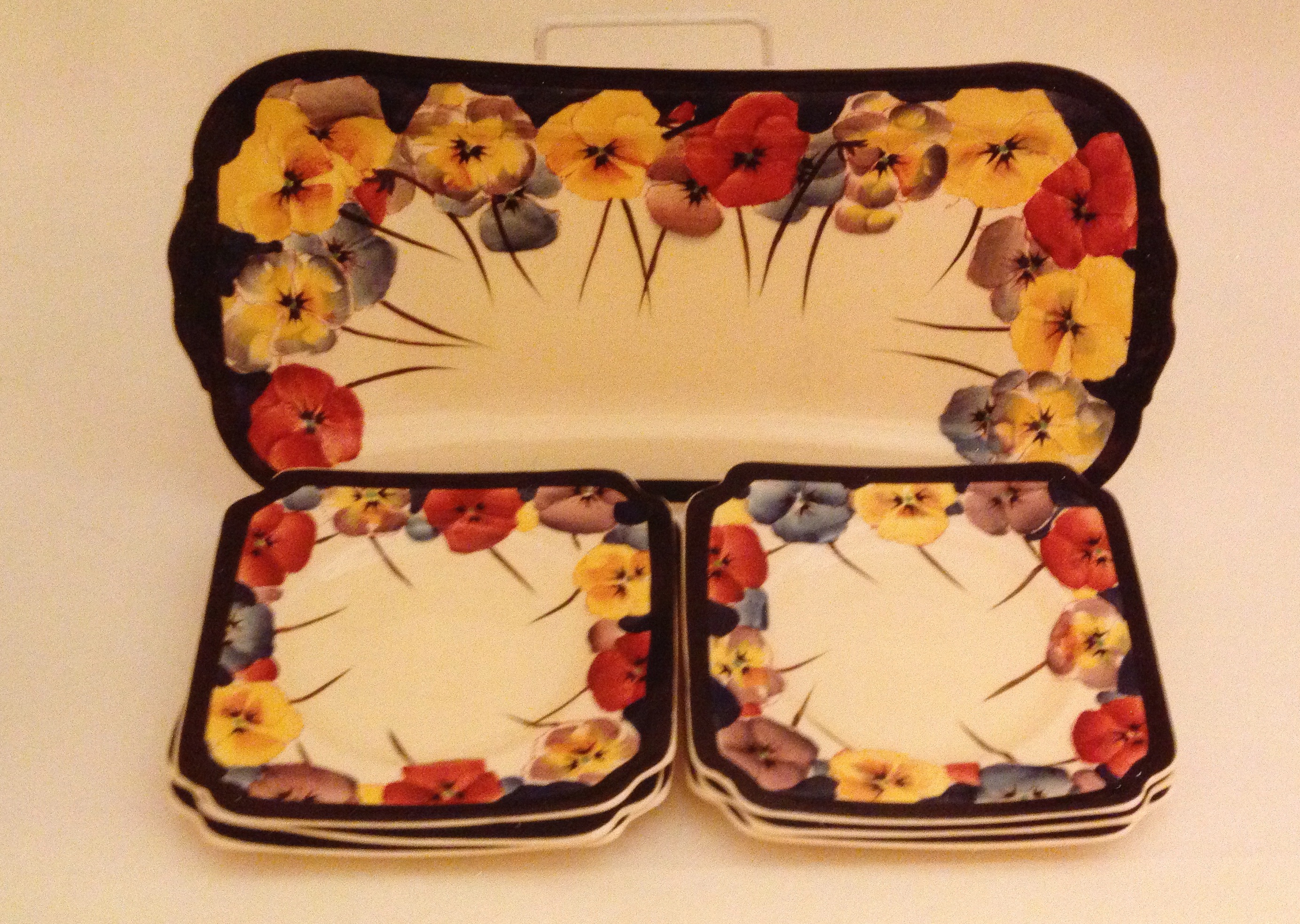
Doulton’s Pansies seriesware pattern remains as popular as ever with prices for unusual items always in three figures!

2015/01/img_1419.jpg
Pansies sandwich set.

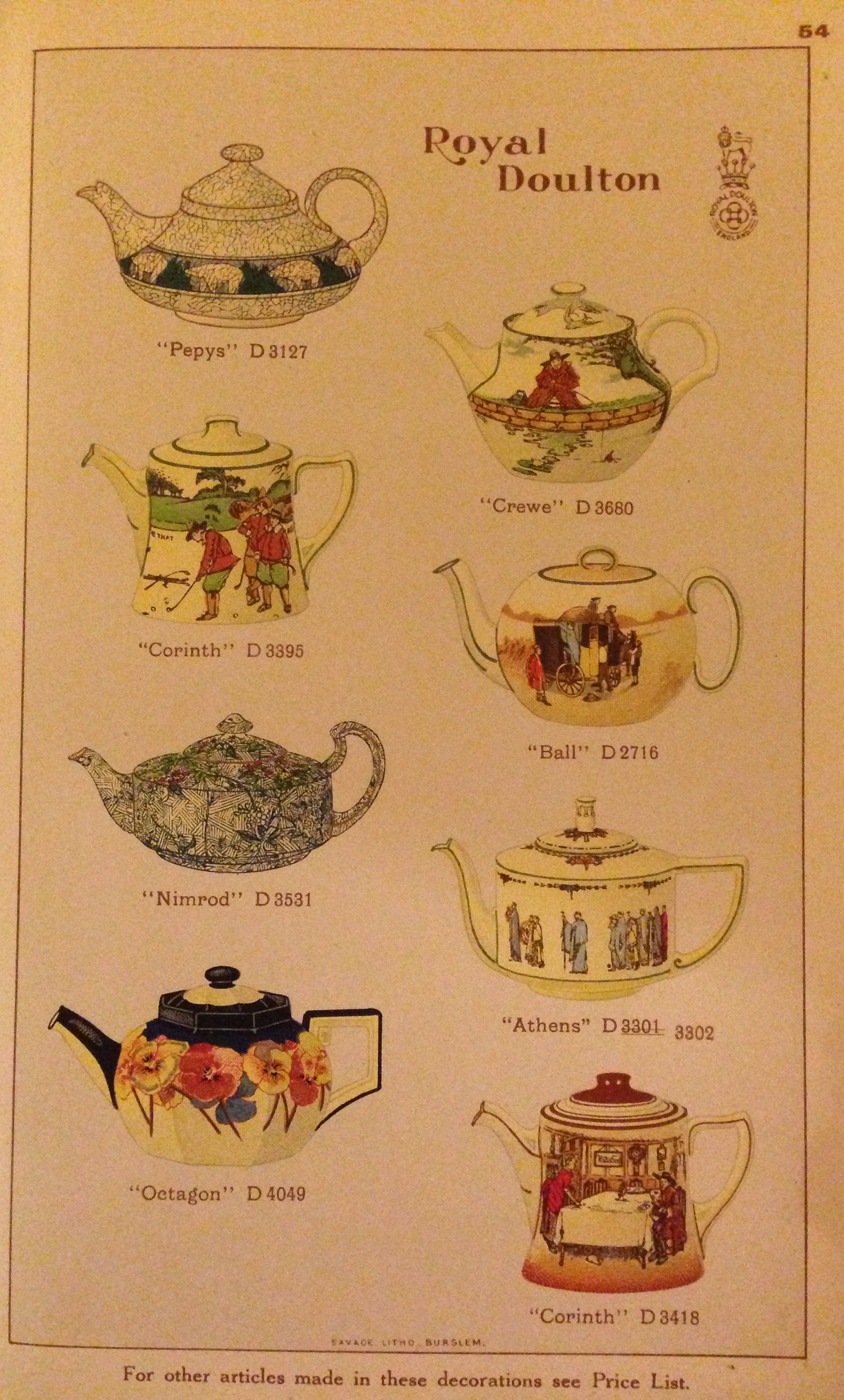
Introduced in 1917, the pattern was withdrawn by 1930. There are two listed ‘D’ numbers for this pattern D4049 and D4264. Items found in this pattern generally revolve around teawares such as plates, jugs, cups and saucers. More unusual items include toilet sets.

2015/01/img_1421.jpg
1920’s catalogue page of teapots featuring Pansies D4049 on the Octagon shape.

There are some fantastic collections of this pattern around and it makes a bright, colourful display!

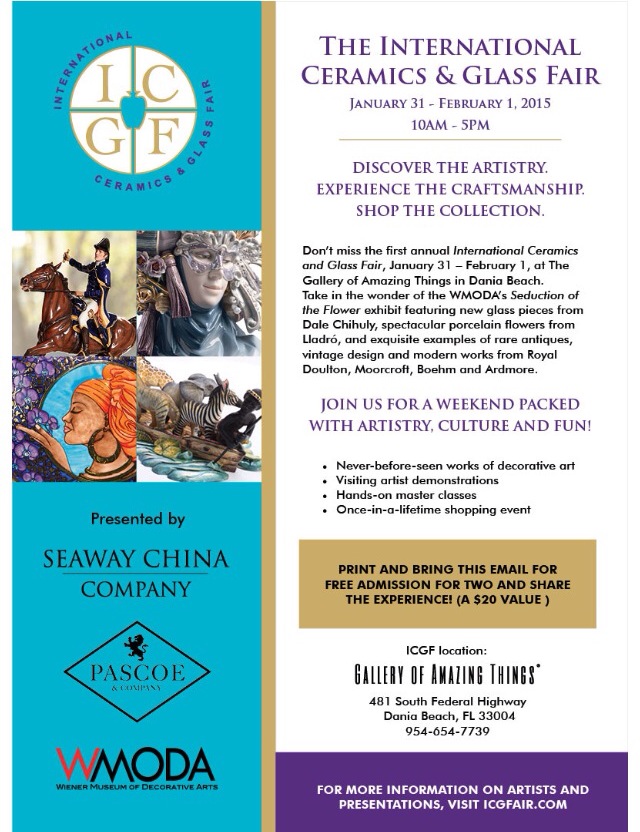
The International Ceramics and Glass Fair and 200 Years of Royal Doulton – an event not to be missed!

Don’t forget the world’s major Doulton extravaganza is just around the corner!

To reserve your tickets visit icgfair.com

And follow this link-
https://www.facebook.com/events/489880474484013/

2015/01/img_1355.jpg

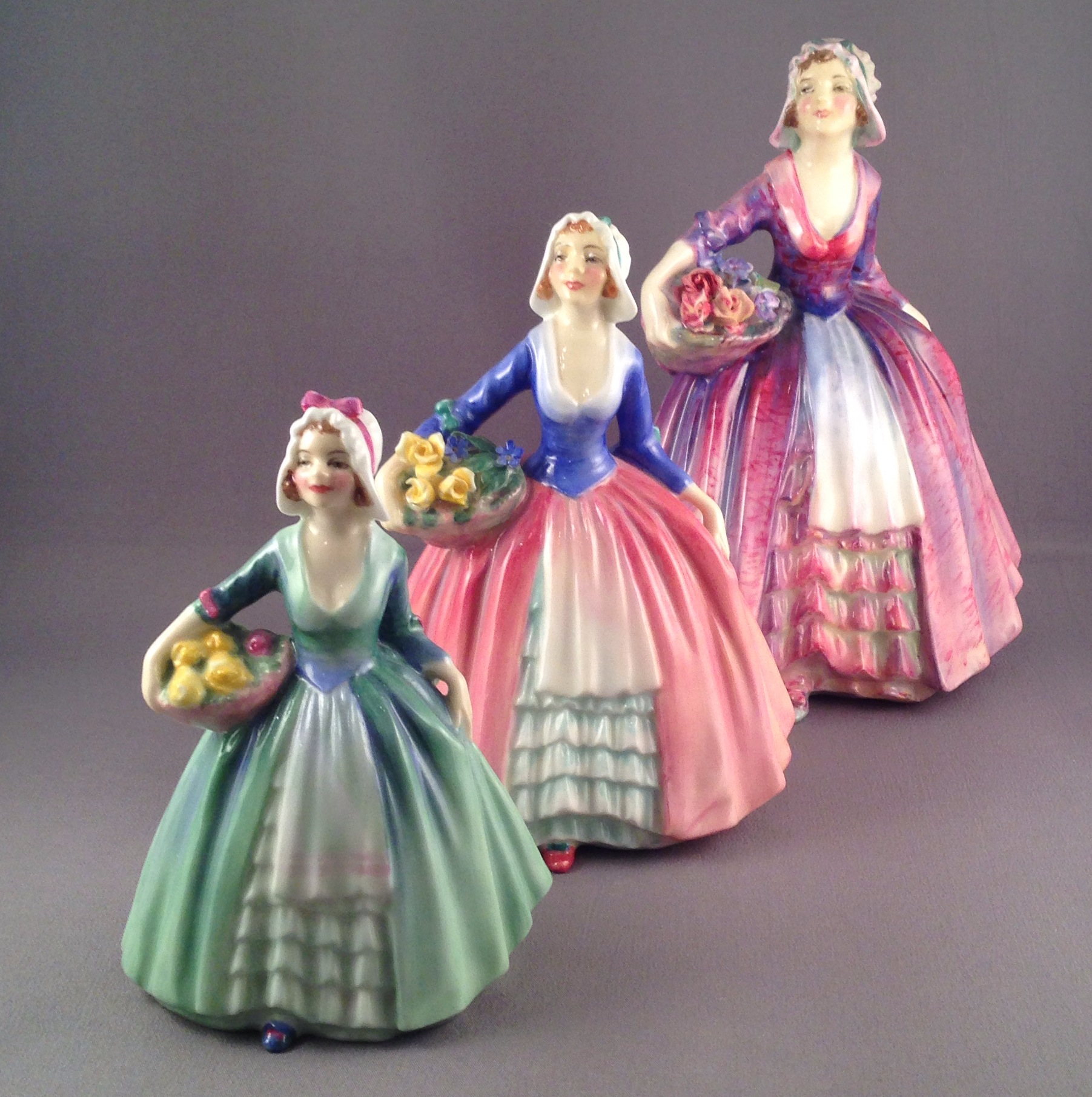
Collecting Doulton figures – the best things come in 3’s!

2015/01/img_1257.jpg
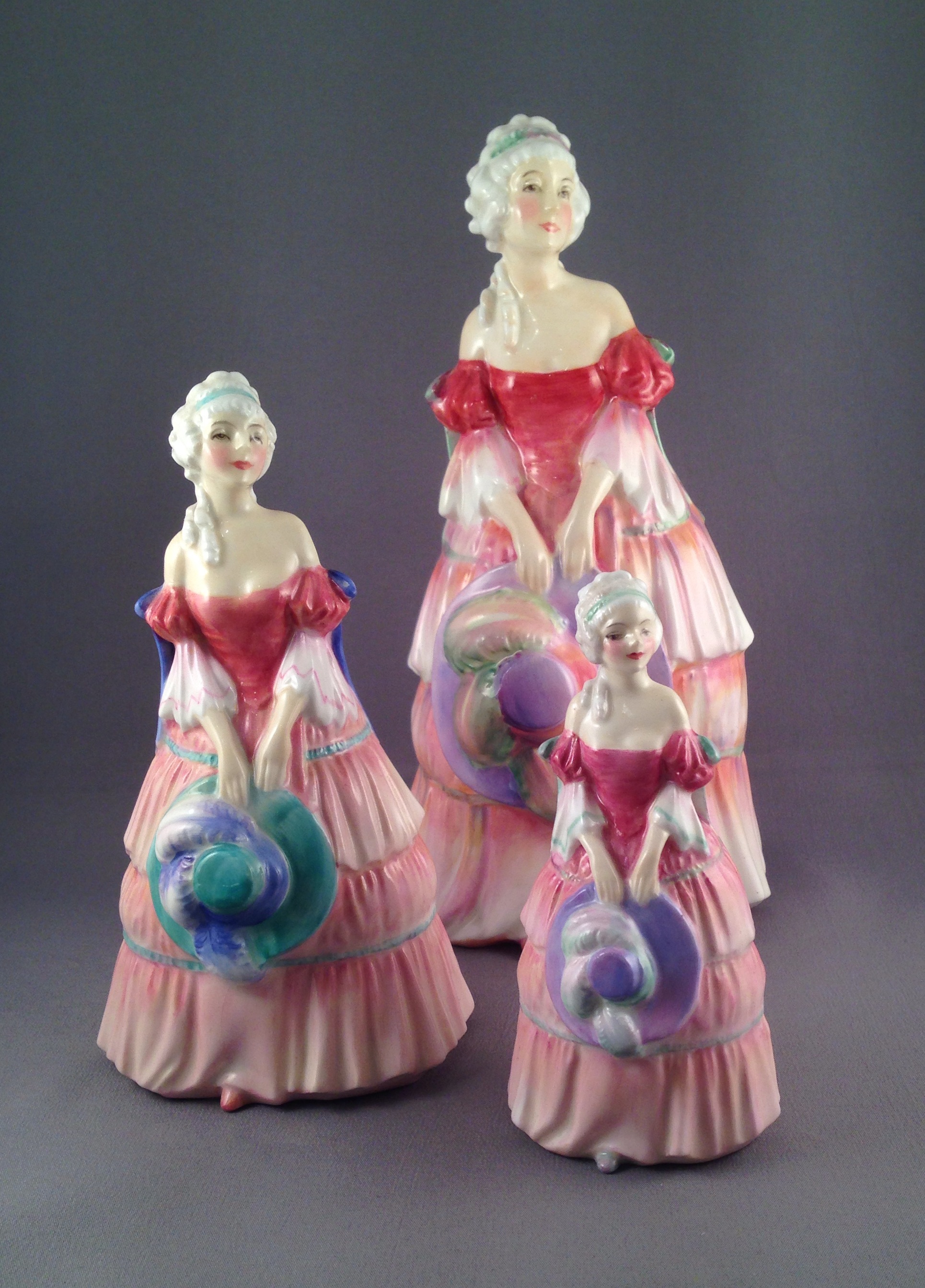
Harradine’s Veronica in all 3 sizes and identical colourways as HN1517, HN1915 and M64.

With Leslie Harradine’s models for the HN Collection, Doulton certainly hit the jackpot! His ‘large’ size figures proved so popular that many were re-modelled for the M Collection when it was introduced in 1932, with further additions to it based on larger figures throughout the 1930’s. Then in the late 1930’s mid size versions of three popular figures were introduced, namely Veronica, the Paisley Shawl and Janet.

2015/01/img_1258.jpg
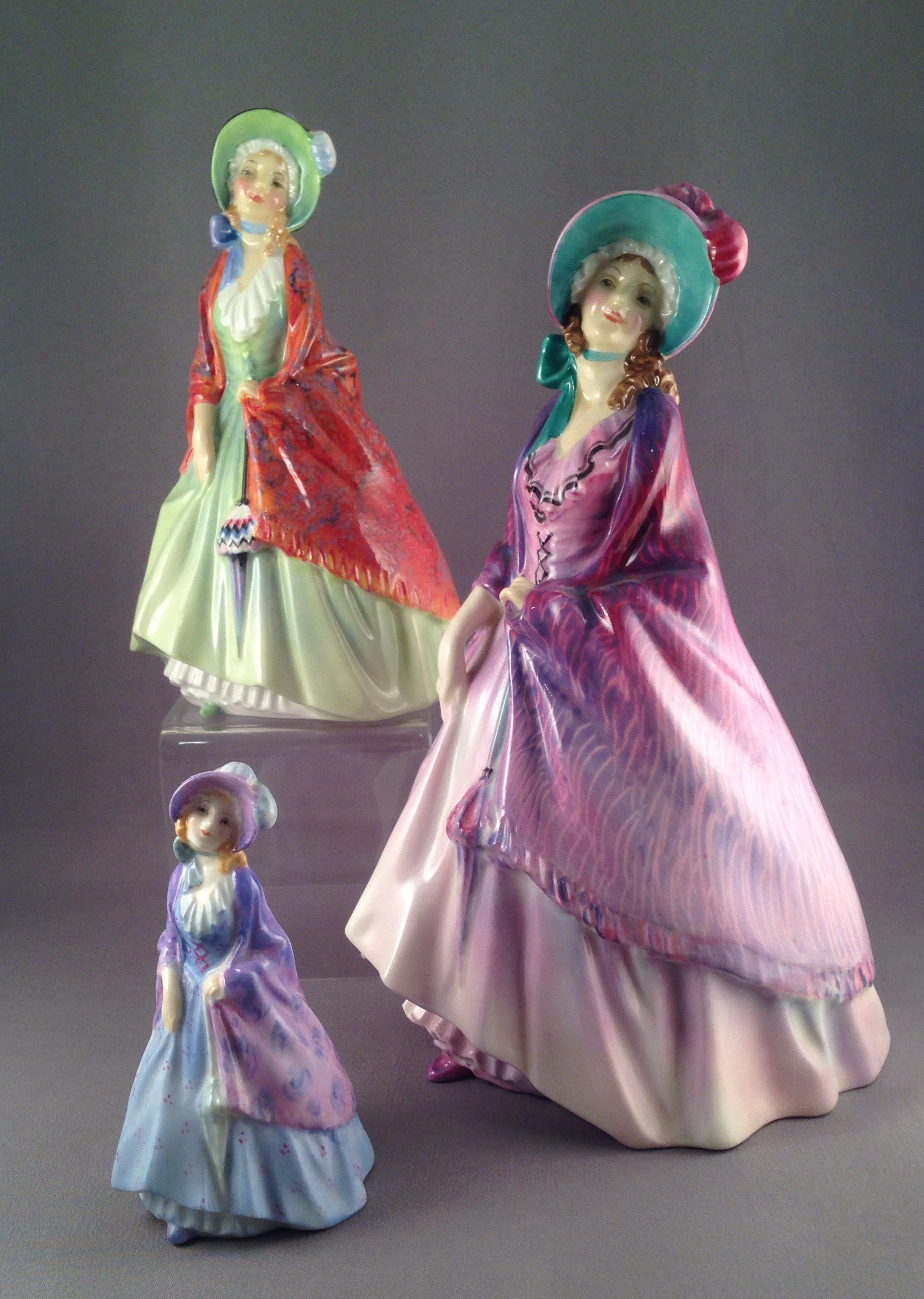
The Paisley Shawl in 3 available sizes HN1707, HN1914 and M3.

Unlike Veronica above, the other two Harradine figures modelled in 3 sizes were not produced in complimentary colourways. The most that can be said is that both the Paisley Shawl HN1392 and HN1988, together with both Janet’s HN1537 and HN1964 are identical in both sizes, but not in the third.

2015/01/img_1259.jpg
Janet in 3 sizes and all different colourways HN1538, HN1916 and M69.

All three figures were produced in many colourways, yet only the three Veronicas can be said to ‘match’. Whether one displays these figures together as a group together or separately, each is regarded as a classic Harradine model today!