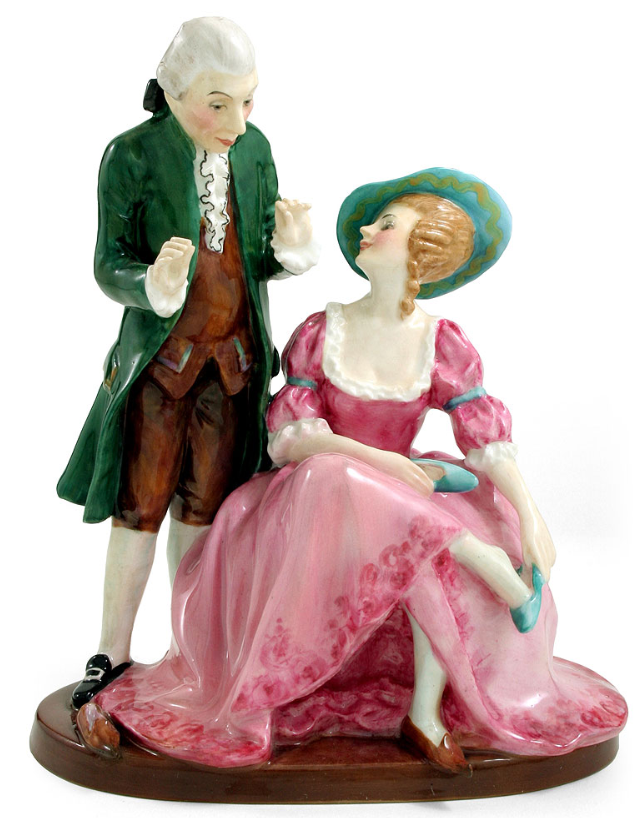
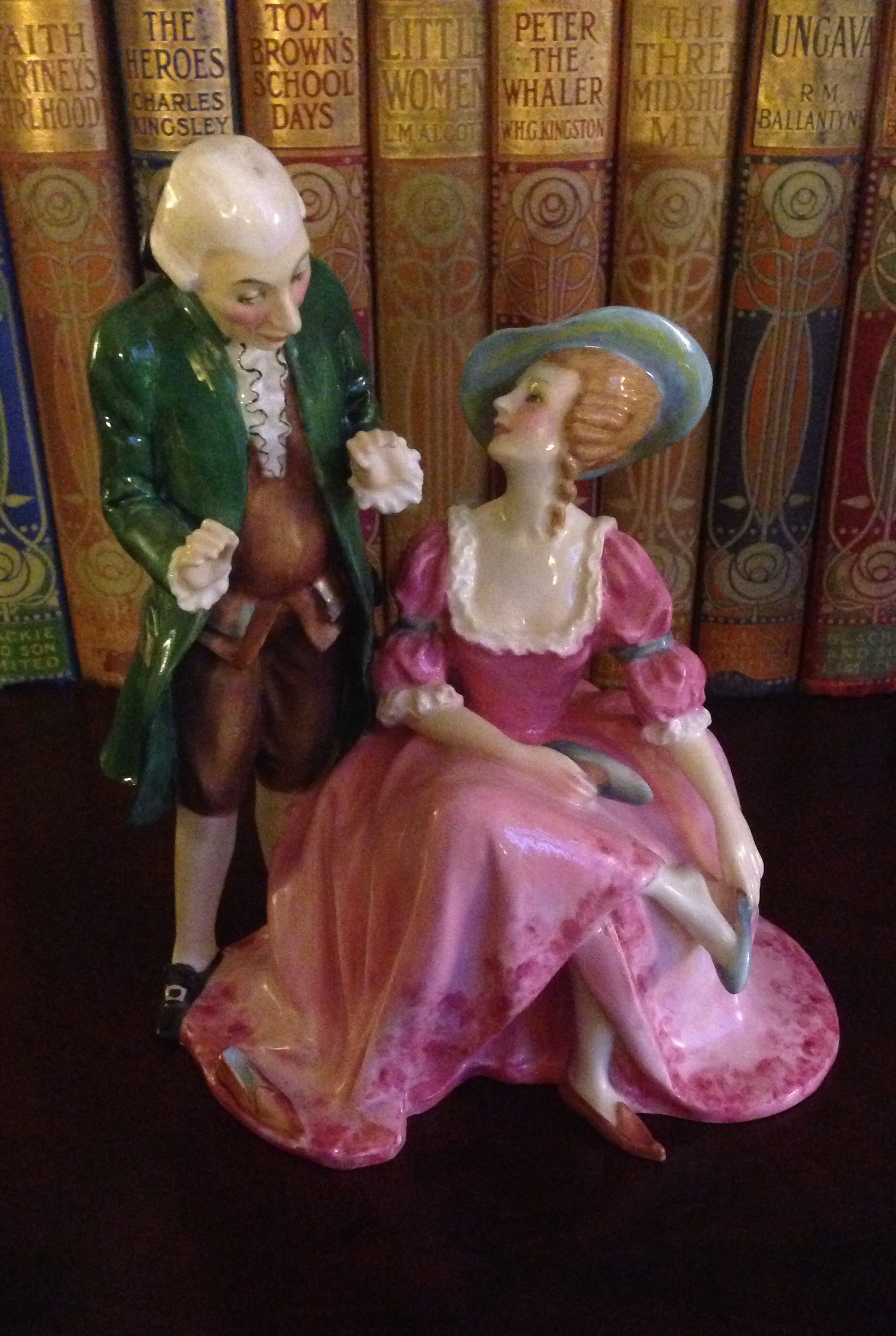
Introduced in 1936, the Court Shoemaker is a typical example of a 1930’s Doulton figure in that the detail in the figure is superb. It is also an example of a double figure popular during this decade. This piece was almost double the price of a standard figure from this period and given the relative scarcity, few can have been made.
An early version of the figure group from 1936.
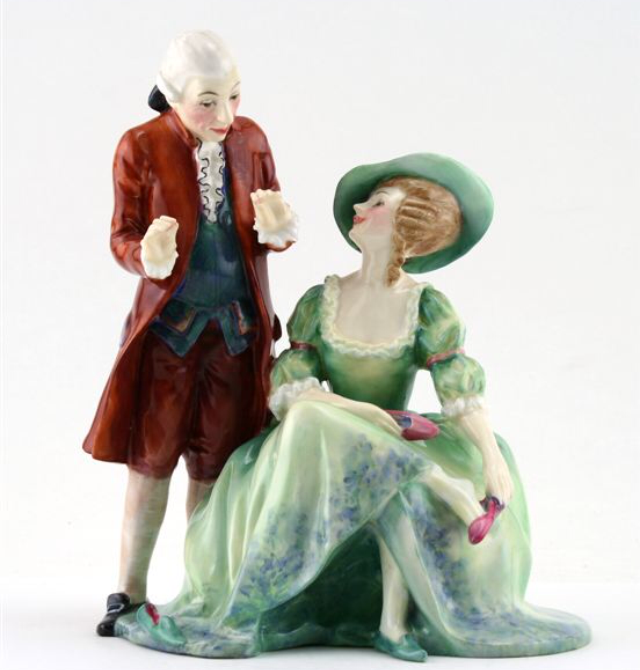
Given this relative scarcity it is always exciting to find slight variations. Directly above is a version I have which must be an example from the original mould due to the impressed date. I am sure you have noticed the absence of the brown base in later models. Clearly the original was just too fragile around the base area without the added base.
Another sighting from a few years ago was this colourway below, from Seaway China, again with no base telling us it was a pre-production trial.
Perhaps you have a further variation of this rare figure? If so why not share a photograph on our Facebook page ‘ Doutlon Collectors Club’!
When researching the book Reflections with Jocelyn it was an interesting side line to investigate how some of the more unusually named figures arrived with their names.
One particularly unusual lady is Frangçon HN1720 and 1721. Both versions were introduced in 1935, but rarely appear suggesting a much shorter production run to the withdrawal date of ‘by 1949’ suggested in Royal Doulton Figures. In my experience a withdrawal date of 1943 would be more accurate for most figures save for a handful of the most popular figures that were available to the US as late as 1944 and production of these resumed soon after the war ended. These include Autumn Breezes, the Orange Lady, Biddy Penny Farthing, Old a Balloon Seller and a few others.
Frangçon HN1721 and 1720.
Returning to the name Frangçon it is certainly named after the once famous theatre actress. Born in 1891, her first performance was in 1911 and she retired only in 1970 after an illustrious career being encouraged by Ellen Terry and supported by Sir a John Gielgud.
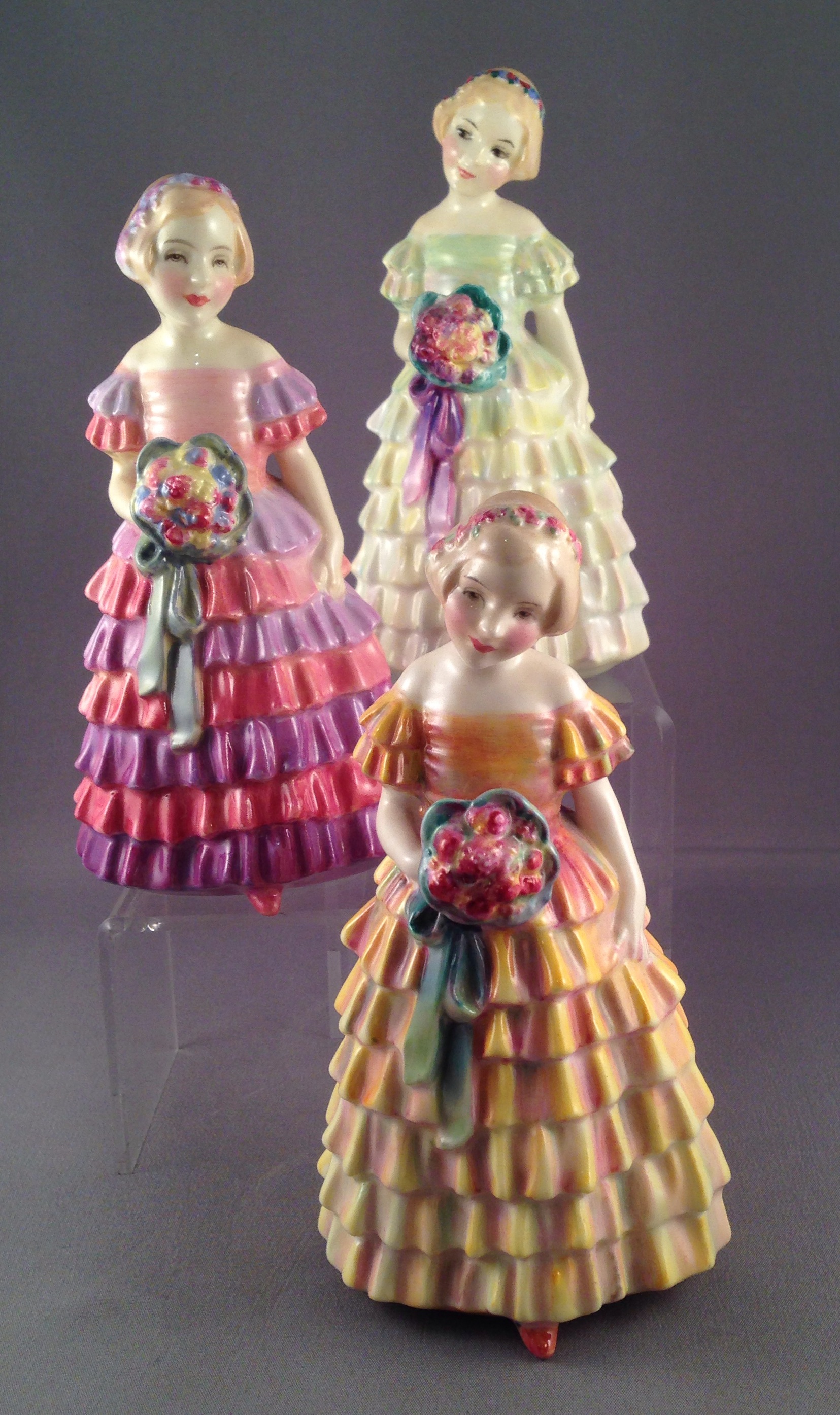
I thought I would share this picture of the three versions of The Little Bridesmaid as the final colourway HN1530 was not available for the last edition of Royal Doulton Figures in 1994. As is typically the case if you wait – sometimes for countless years – that one piece may turn up.
This popular figure remained in production as HN1433 until 1951 and keen eyes can easily distinguish earlier and later versions based on the depth of colour, the backstamp and face.
The elusive HN1530 belongs to a small group of figures with early HN1500 numbers including Pantalettes and Priscilla who were issued once again in complimentary orange colourways just like this Little Bridesmaid.
The yellow HN1434 is the earliest example in the picture above and you can hopefully see how the angle of her head differs to the other two. Alas her head is often prone to being knocked off! Making these three perfect examples all the more unusual!
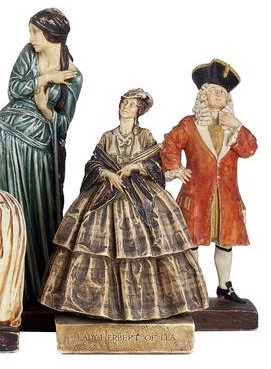
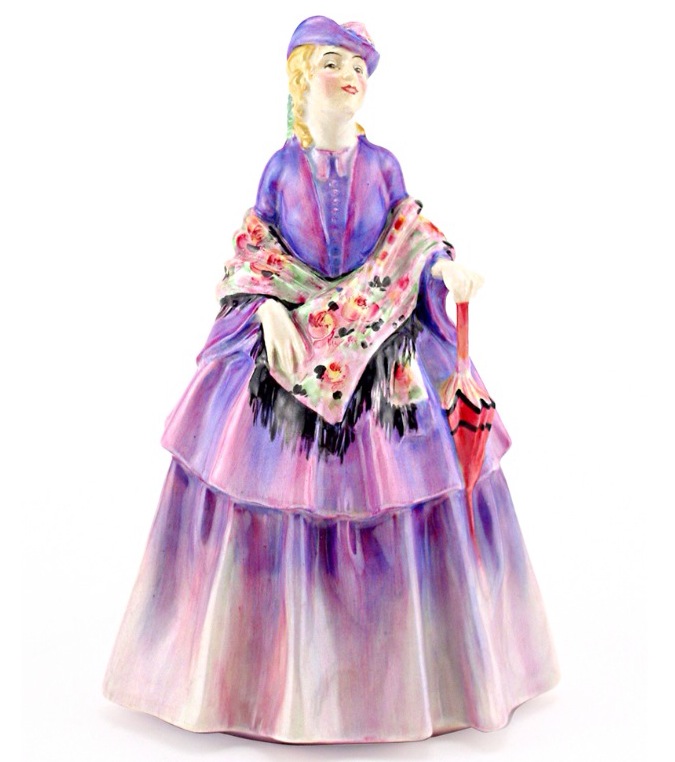
As you know I always love to discover the inspirations for our favourite Doulton figures. Here is another that didn’t make the final cut for Jocelyn’s and my book ‘Reflections’. It is itself a figurine but this time a wax figure by Agatha Walker that she produced as part of her series of figures from the stage in the 1920’s, imitating a popular tradition from the 19th Century. These figures were made of plaster, then coated in wax and finally painted.
Typically Harradine has put his own flourishes to the finished figure including a parasol and changing the direction of Anthea’s head.
Courtesy of Bonhams.
Courtesy of Seaway China.
To date I have found only one other Agatha Walker figure that Harradine used, but that’s for another time!
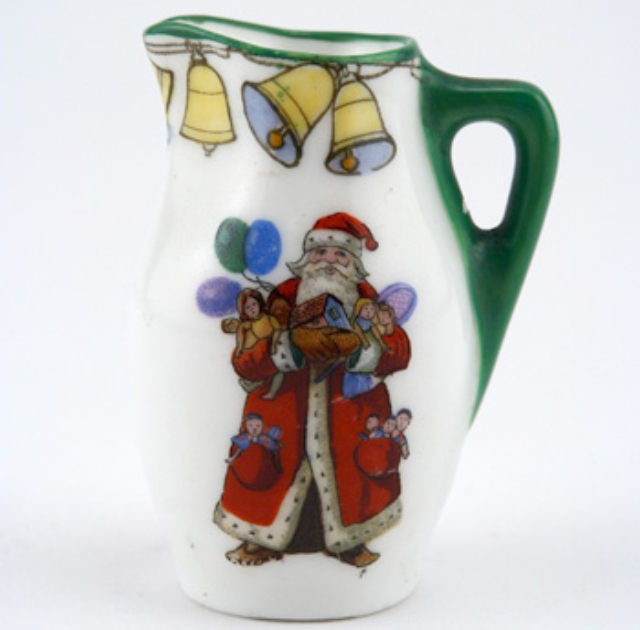
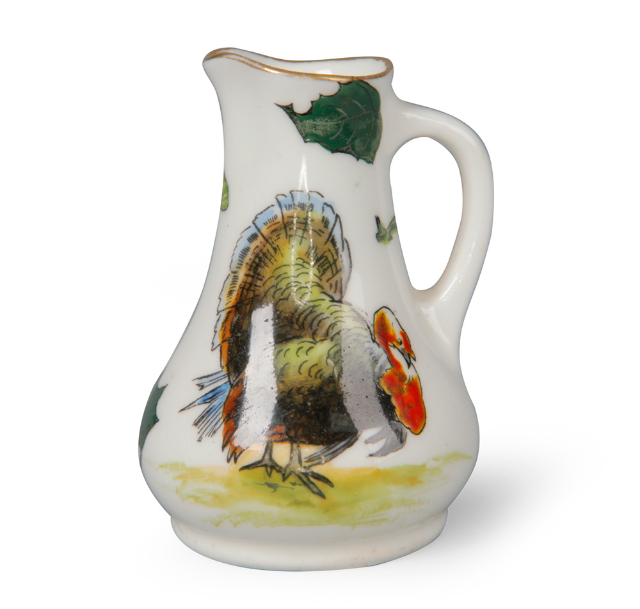
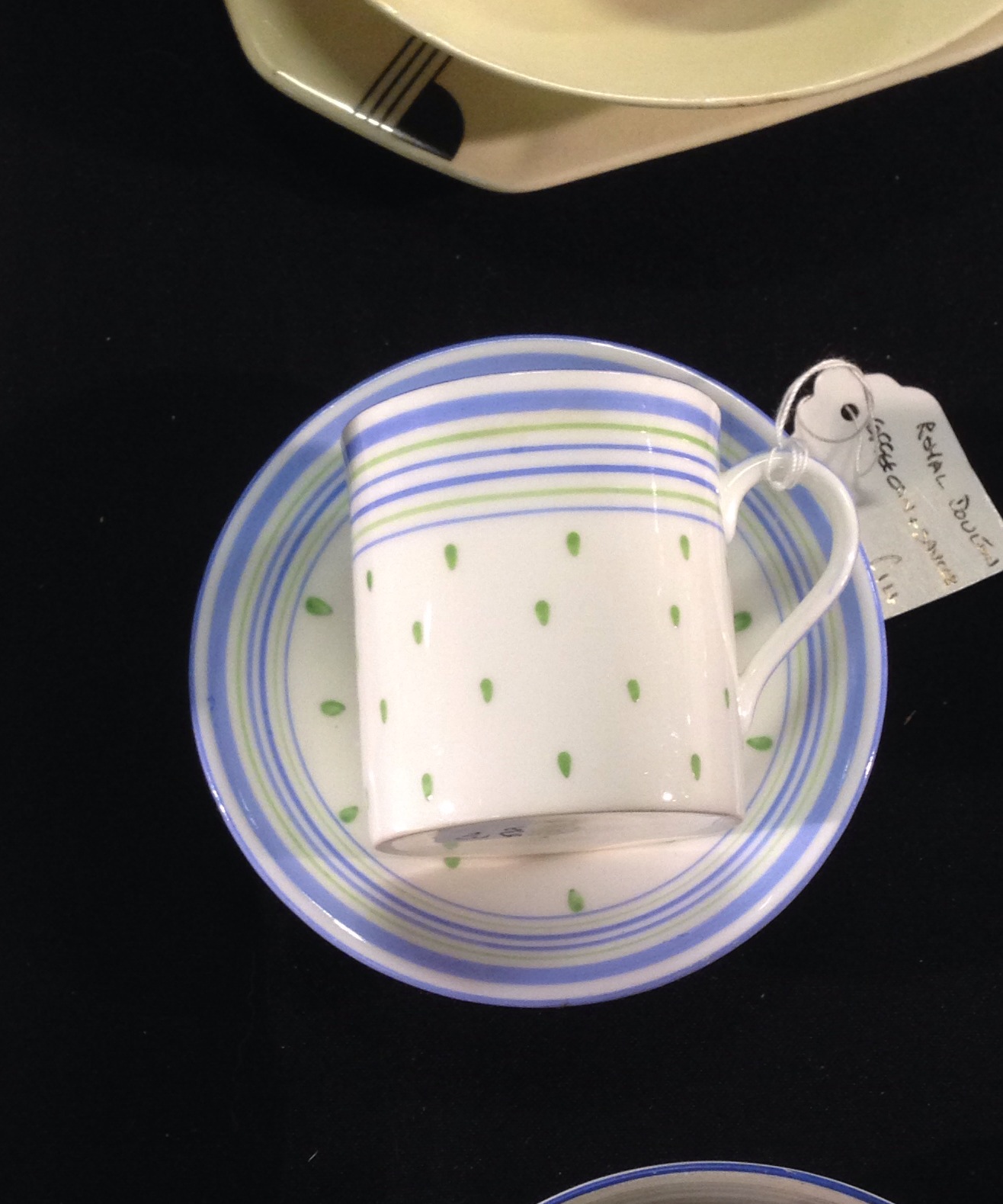
Any seriesware collector will be able to cite immediately the amazingly rare Christmas themed pieces for which they long for.
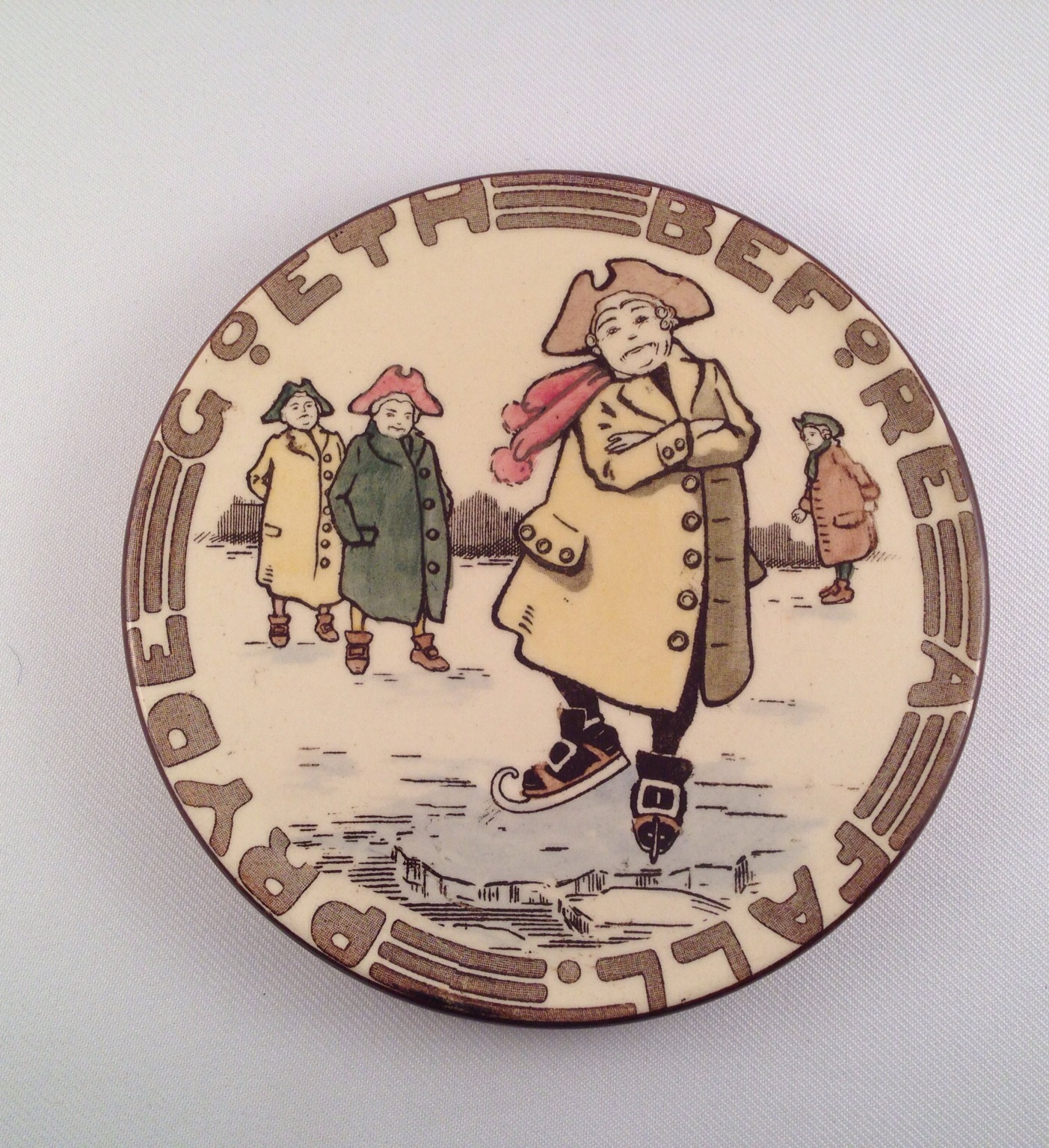
Three particularly sought after patterns found on miniatures are Christmas, Snow Scenes and Ice-Skating and these all command high prices no matter in which season they appear throughout the year.
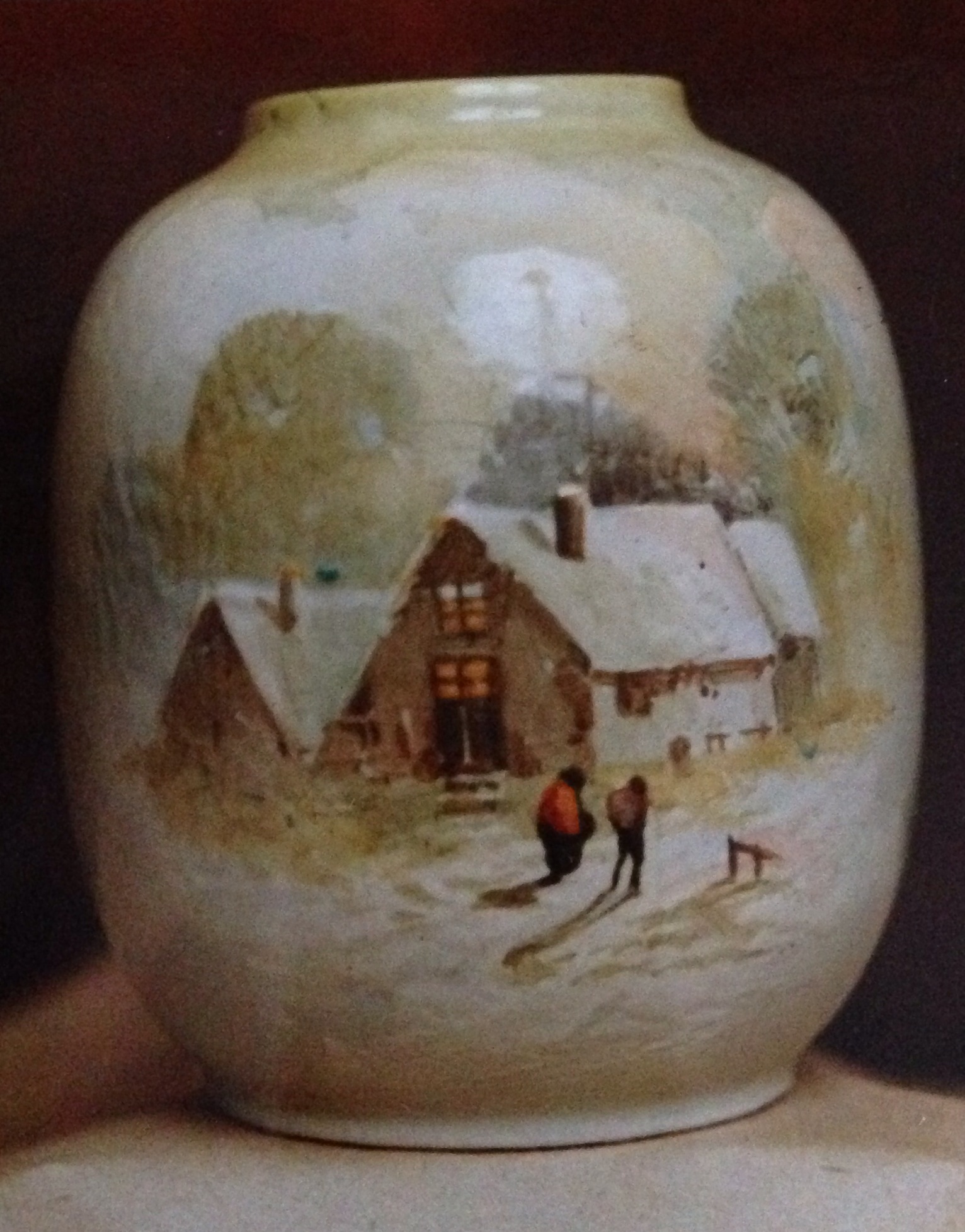
Further patterns to look for include Snowflake, Coaching Days in a winter landscape and the very rare Snowscenes pattern that is decorated in low relief and usually features countryfolk making their way through the snow to their welcoming cottages.
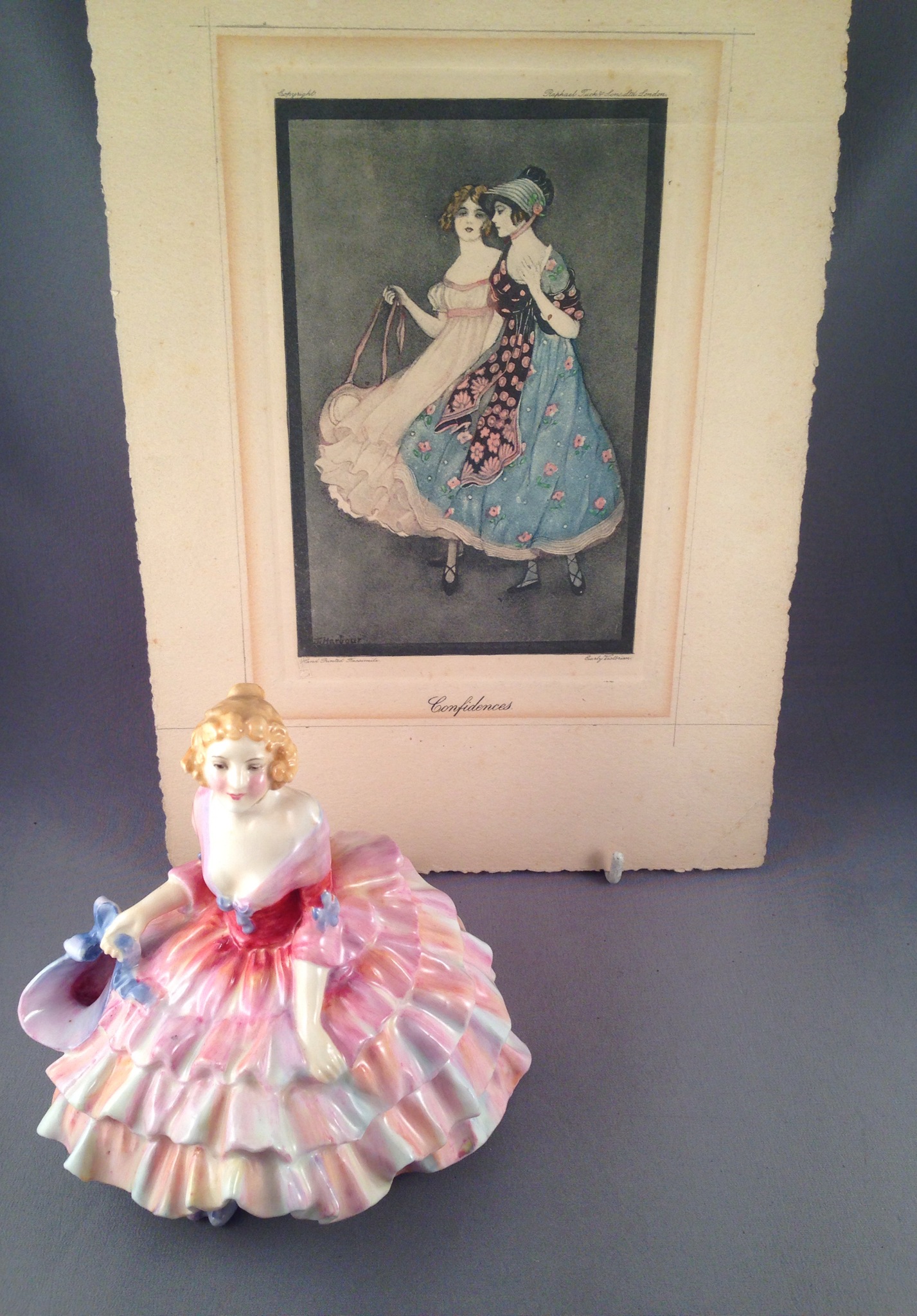
As you’ll be aware a particular interest of mine is tracking down the inspiration of figures, particularly early ones and more particularly those of Leslie Harradine, Royal Doulton’s genius sculptor.
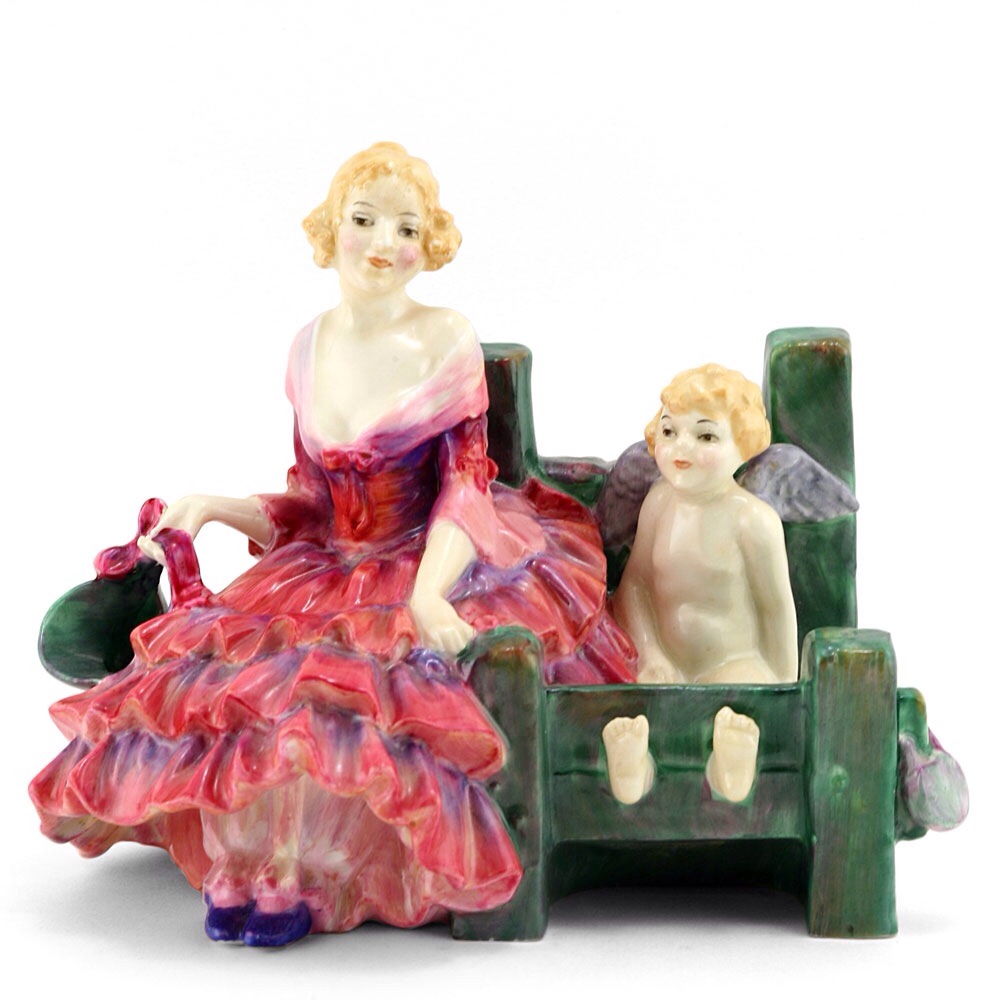
Above you can see Tildy HN1576 together with her inspiration drawn by Jennie Harbour who provided many such ladies for Harradine; whether she was aware of this is unknown. (The Doulton lady is taken from the lady on the left.) Yet, Doulton did have some agreement with Raphael Tuck the publisher of these Jennie Harbour pictures, although correspondence between the two firms that exists only refers to pictures by Stanislaus Longley and Molly Benetar.
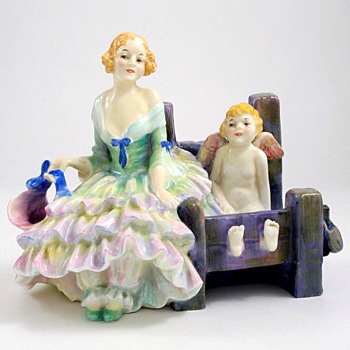
Here you can also see Harradine’s In the Stocks HN1474 who would be adapted to become Tildy.
And here is HN1475 the other colourway of In the Stocks. Both versions of this lady taken from the Harbour picture are very rare today and so both had limited production, even more limited than is suggested in the figure book. In the Stocks was introduced in 1931 and Tildy in 1933, suggesting the former had been deleted by then. Tildy it is recorded, was withdrawn in 1939, but by 1939 would be a more accurate description as I have never seen a later 1930’s dated example. Perhaps someone out there has?
Not exactly a total re-incarnation but as we know from a look at similar figures a while ago, several of Harradine’s early figures were later adapted and re-introduced into the HN range.
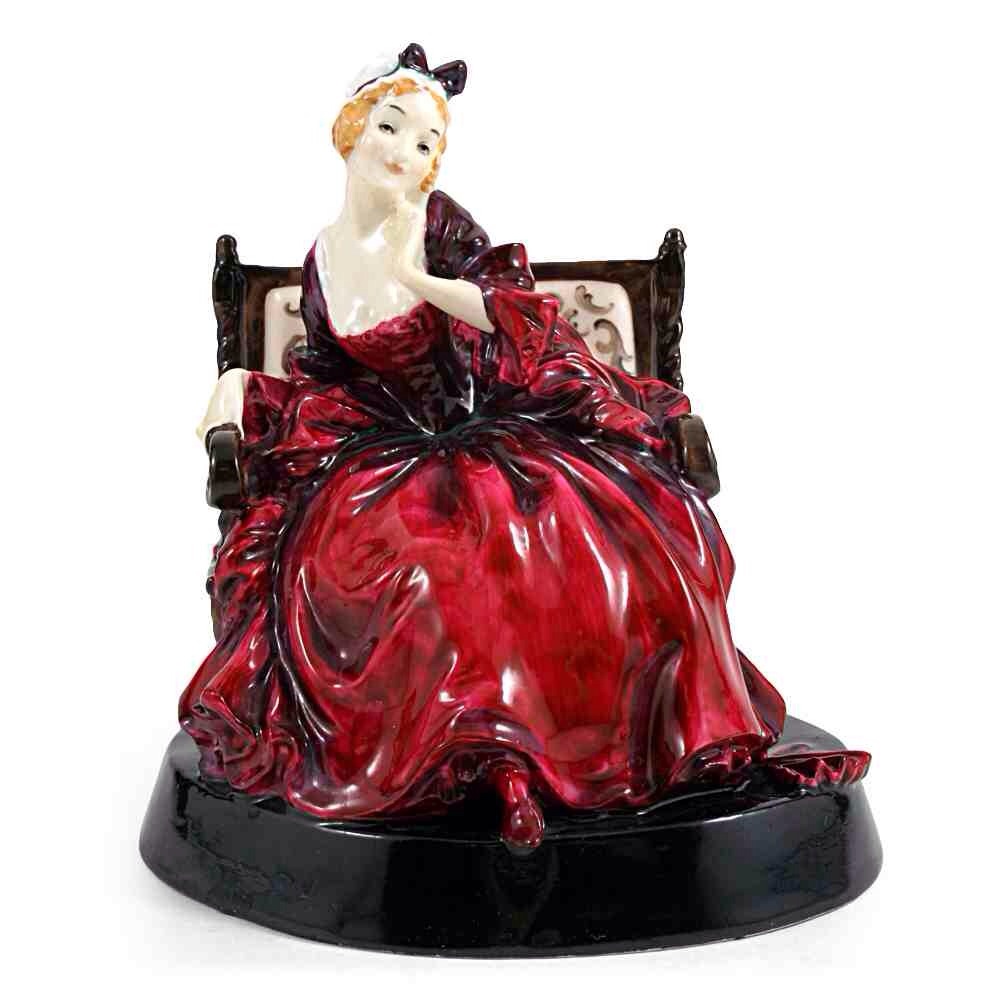
The Proposal HN715 from 1925.
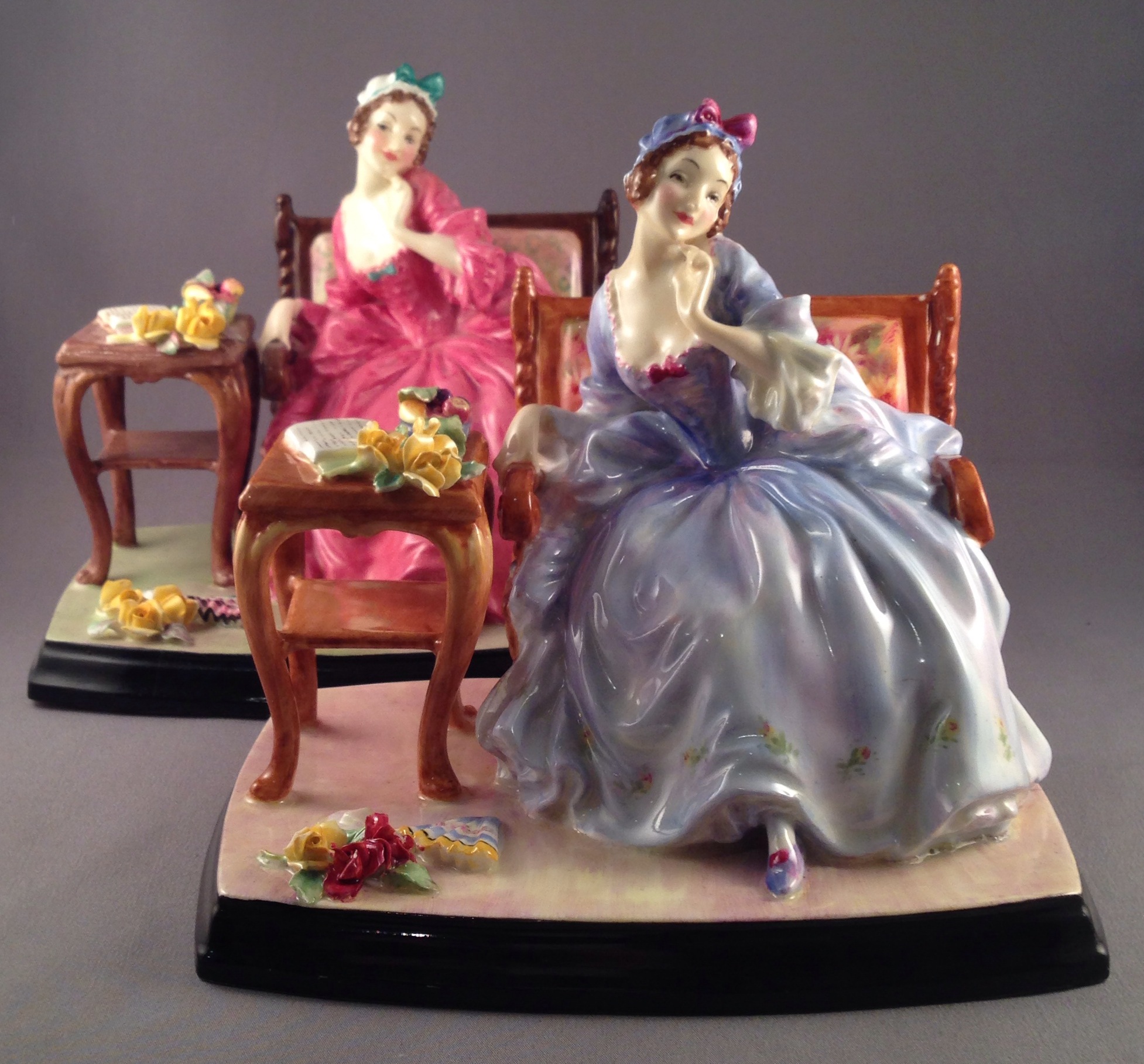
Just like figures including The Windmills Lady who became The Lavender Seller or Sweet Maid who transformed into Millicent, so too did The Proposal HN715 who became this fantastic figurine, Teresa HN1682 and HN1683 in 1935.
Teresa in both colourways.
The addition of a table and some props creates a really different lady!
Perhaps you have noticed other such transformations? Why not share them in our Facebook group ‘Doulton Collectors Club’!
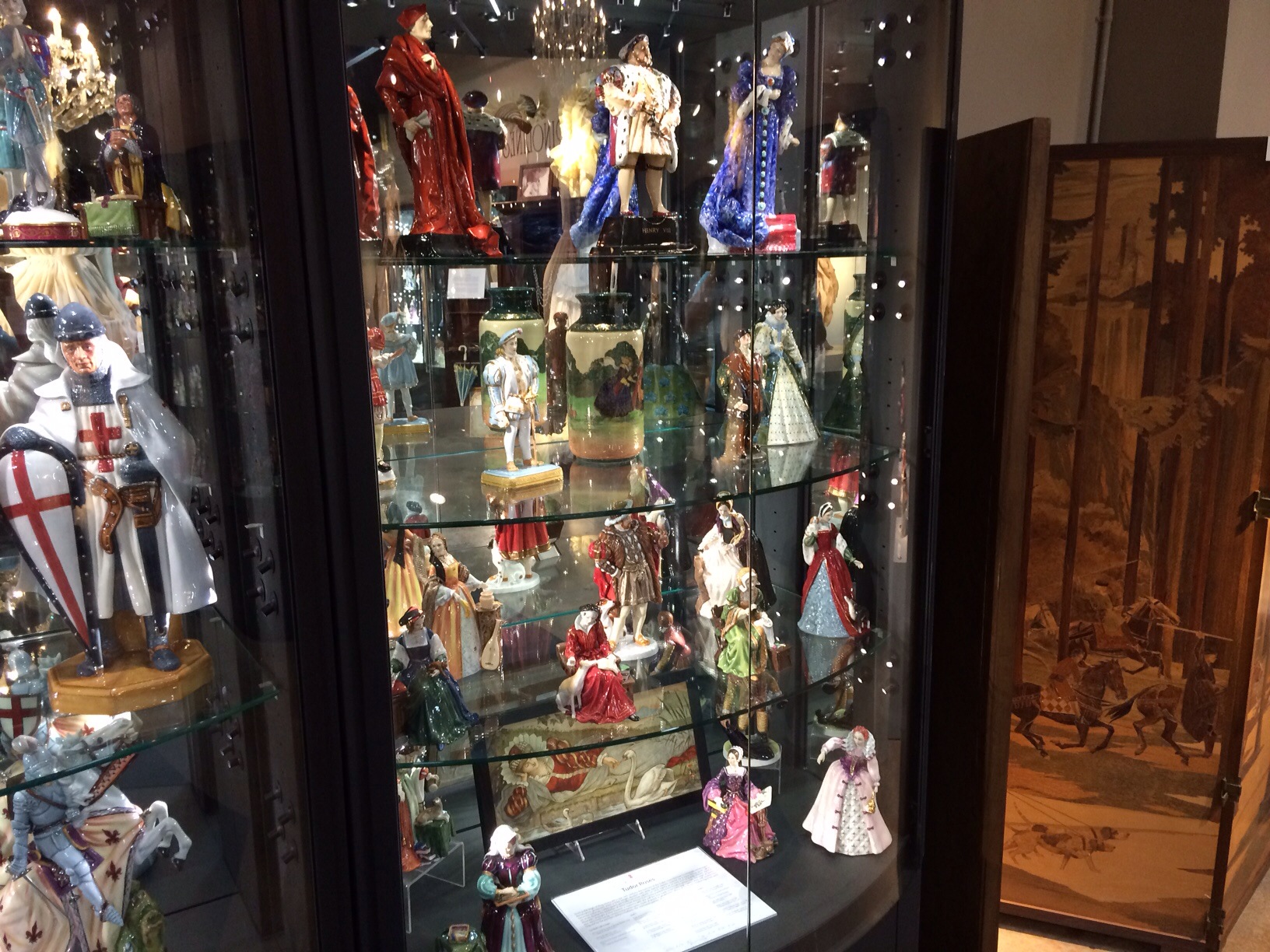
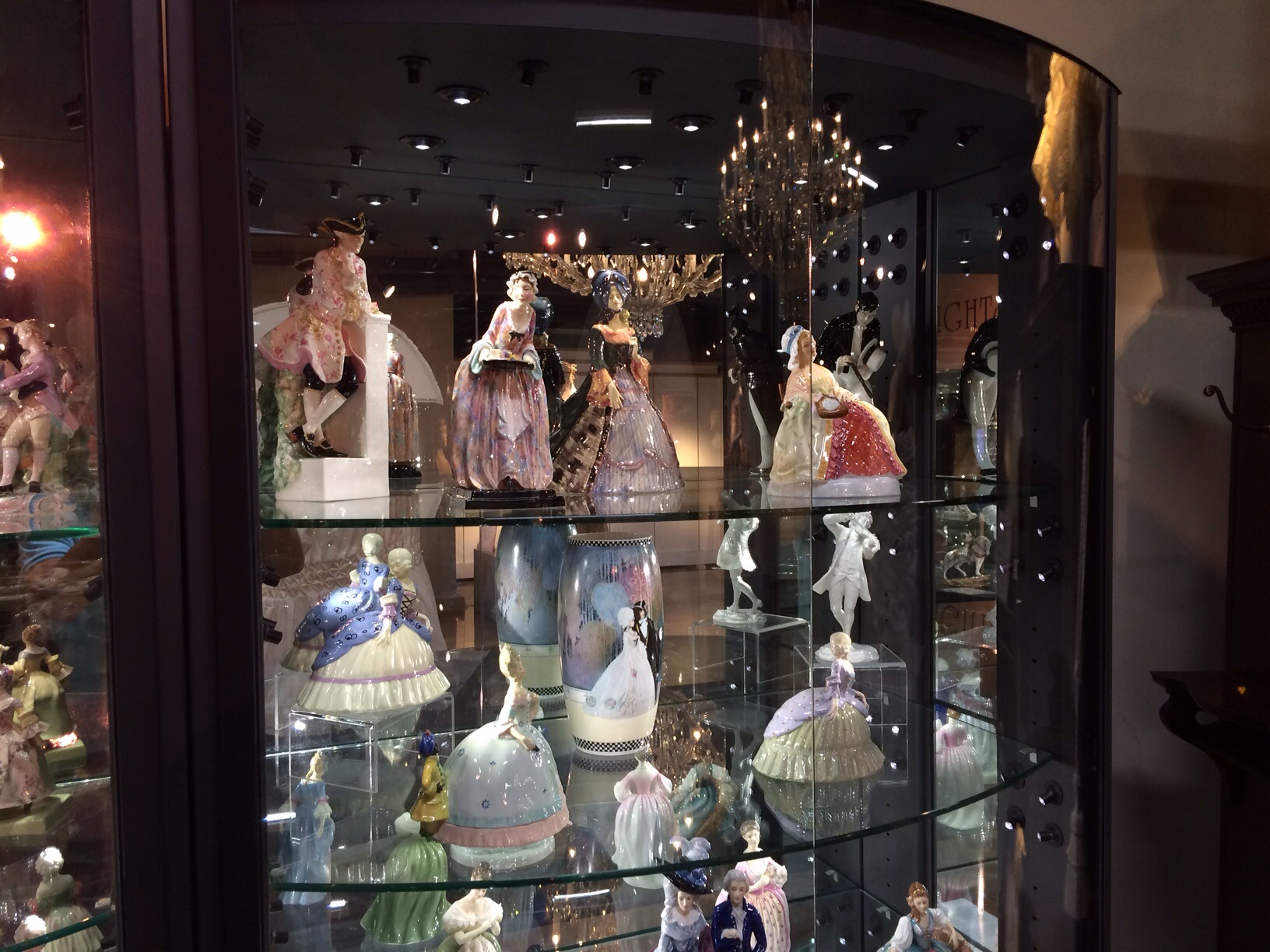
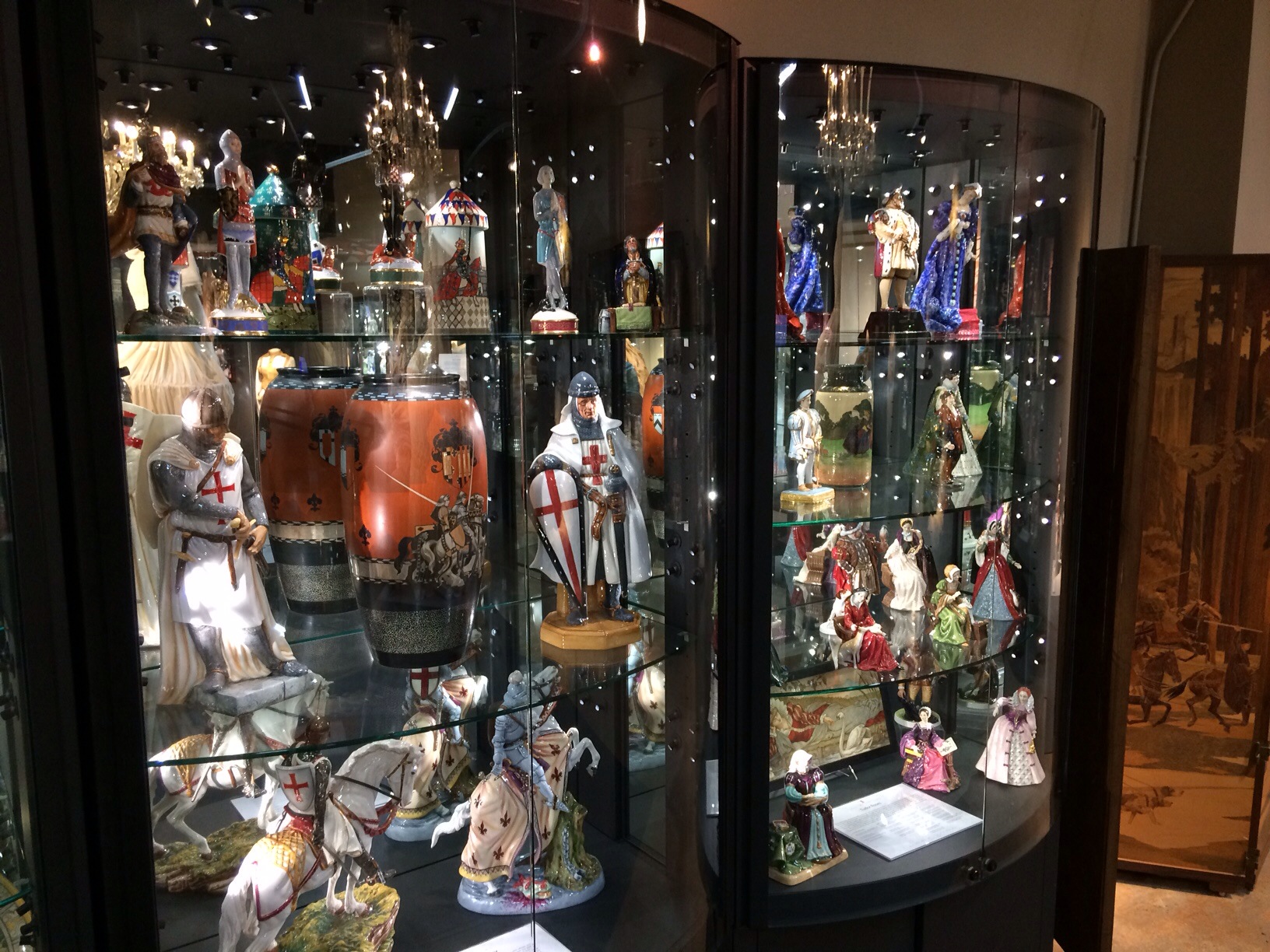
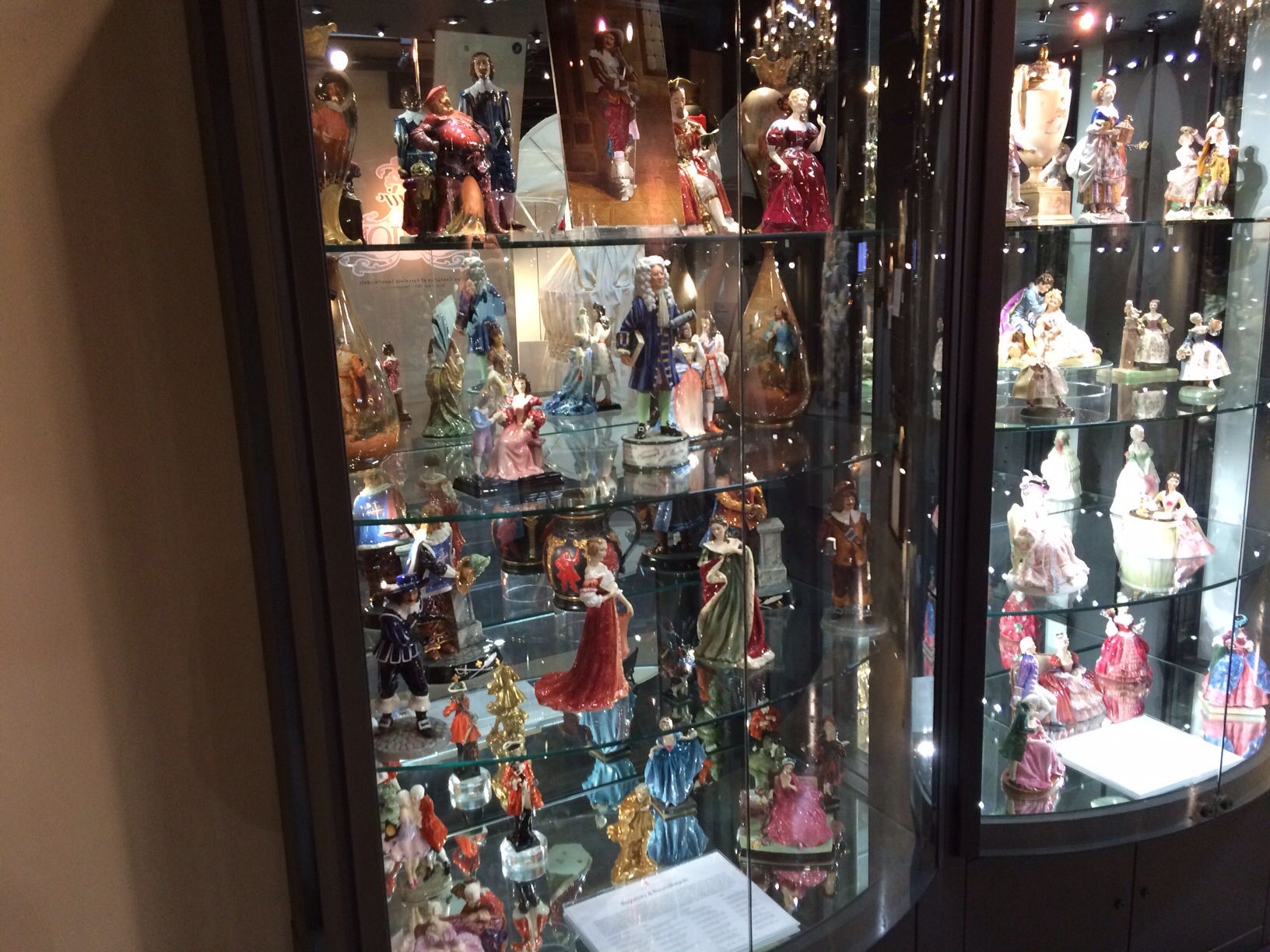
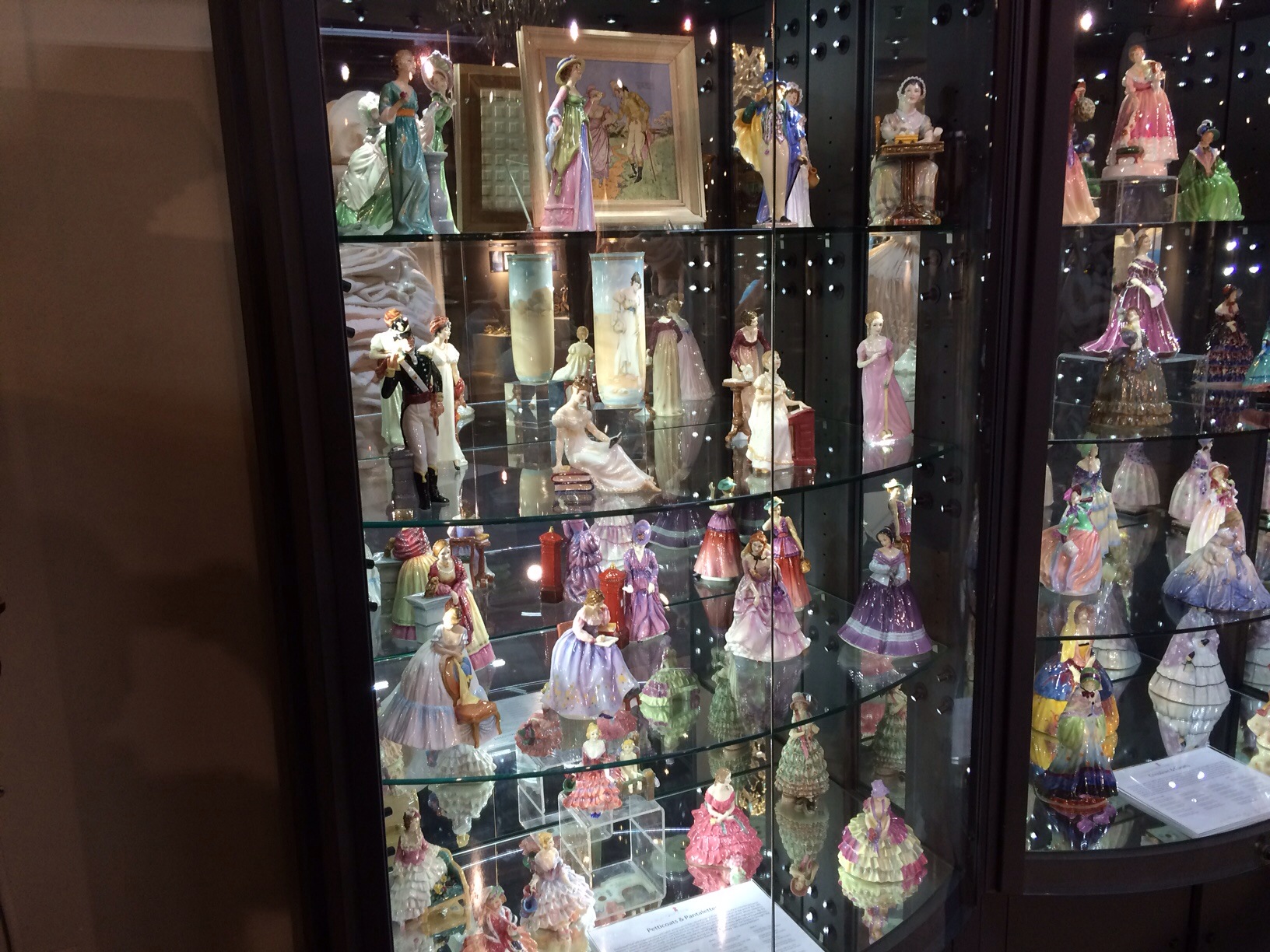
I’ve just had some extra pictures of the current exhibition at the WMODA housed at the Gallery of Amazing Things that I thought would interest us all!
The sheer breadth of exhibits is to be marvelled but for me it is the massive array of Doulton wares that interests me most!
Here are a few pictures of the figures currently on display as part of the Flair for Fashion exhibition! Enjoy!!
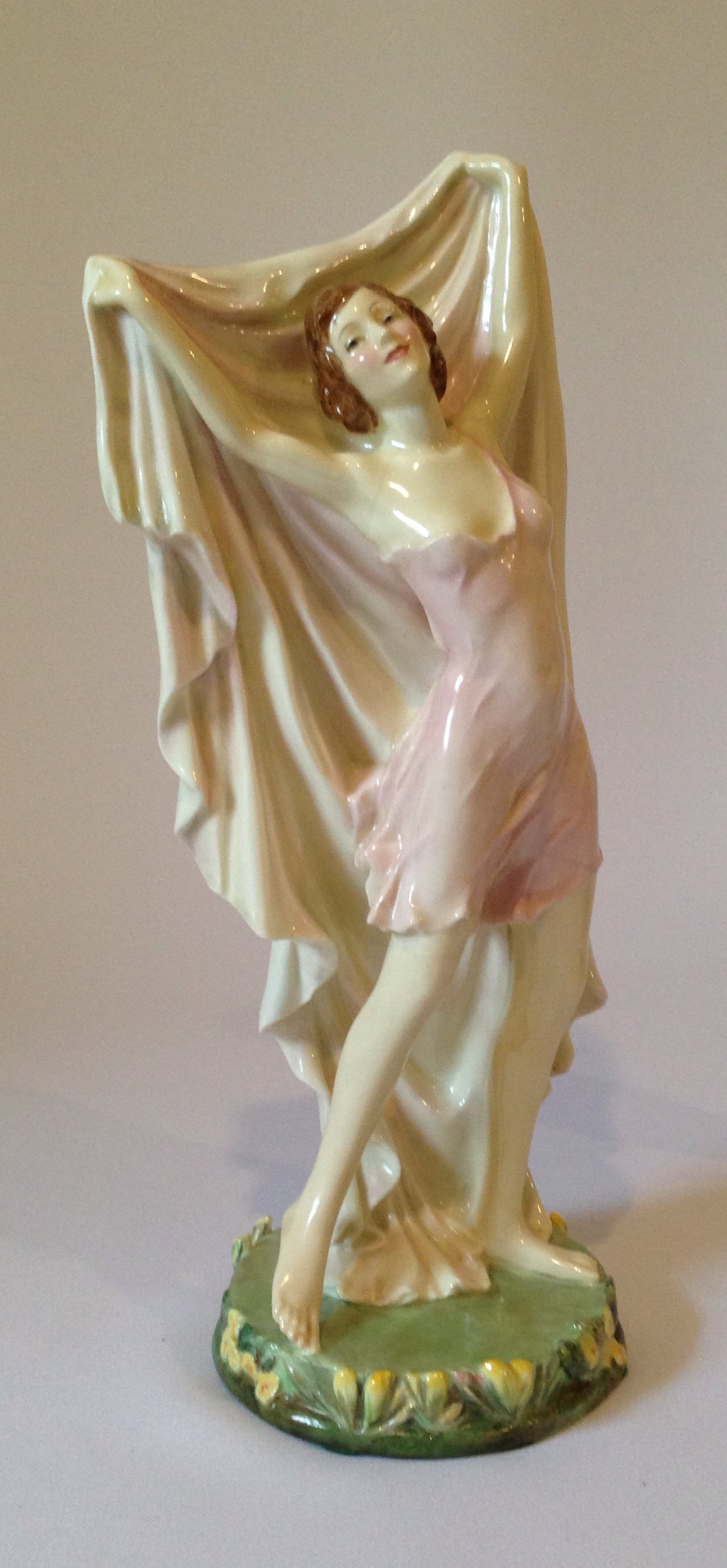
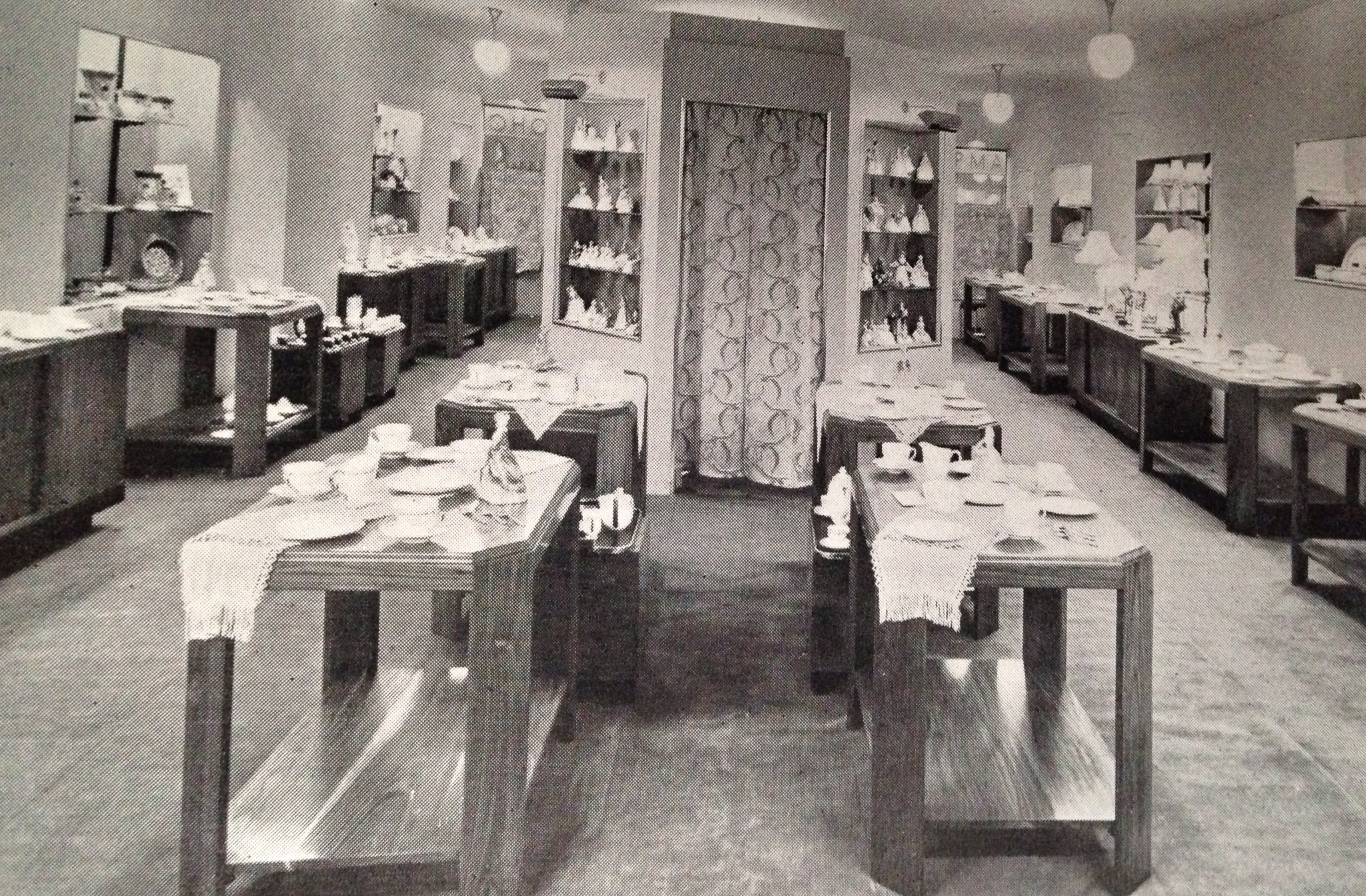
At the British Industries Fair of 1936, Doulton’s exhibit dew favourable reviews from all corners. New lines in tablewares and shapes, new animal studies including a new tiger and also a selection of new figures were introduced to the public.
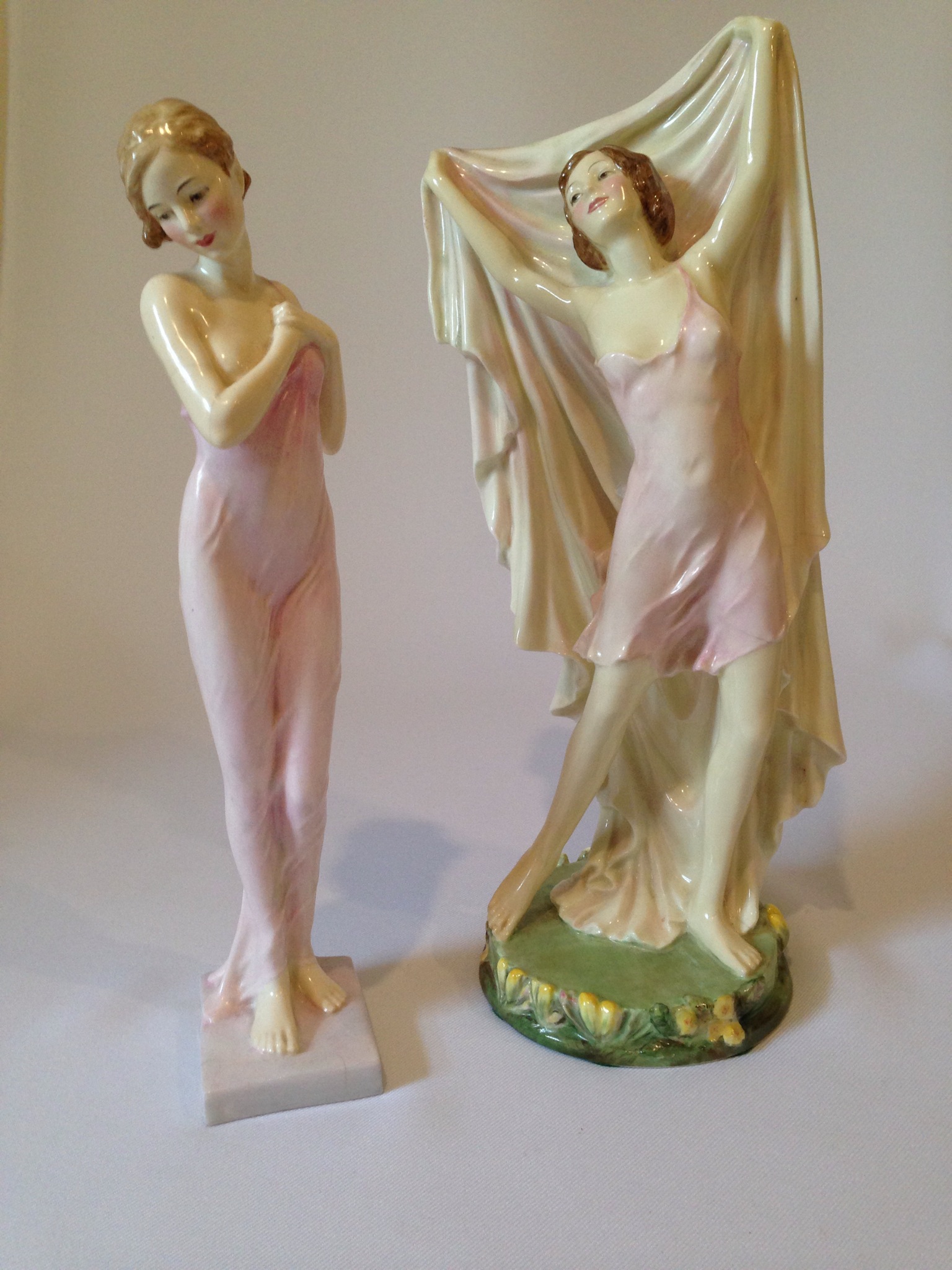
Among these new figures was The Coming of Spring, which was singled out for praise. Indeed this new figure was described as evidence of further development in connection with the range of ‘Royal Doulton Figures’. Moreover it was felt that this large model by Leslie Harradine captured the modern spirit, without conveying ‘the idea of a continental flavour’ and it was heralded as one of the smartest conceptions in figures that has ever emanated from the Doulton factory!
Examples of this large figure are rare today, no doubt due to the costs involved in her production as she would surely be part of what we call the Prestige Range today.
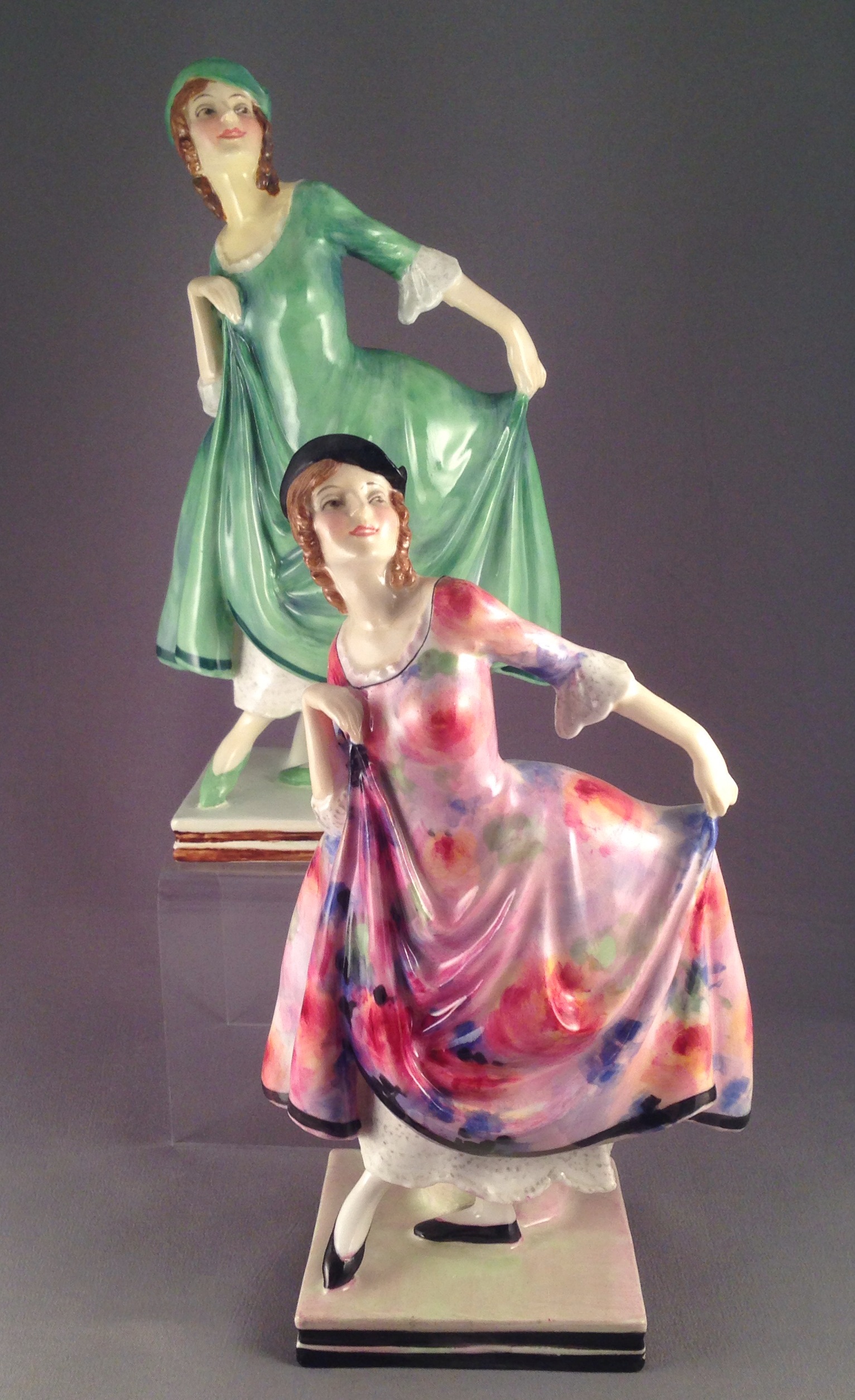
A simplified ‘sister’ figure is Celia, also by Harradine.
 doultoncollectorsclub