Category Archives: Art nouveau

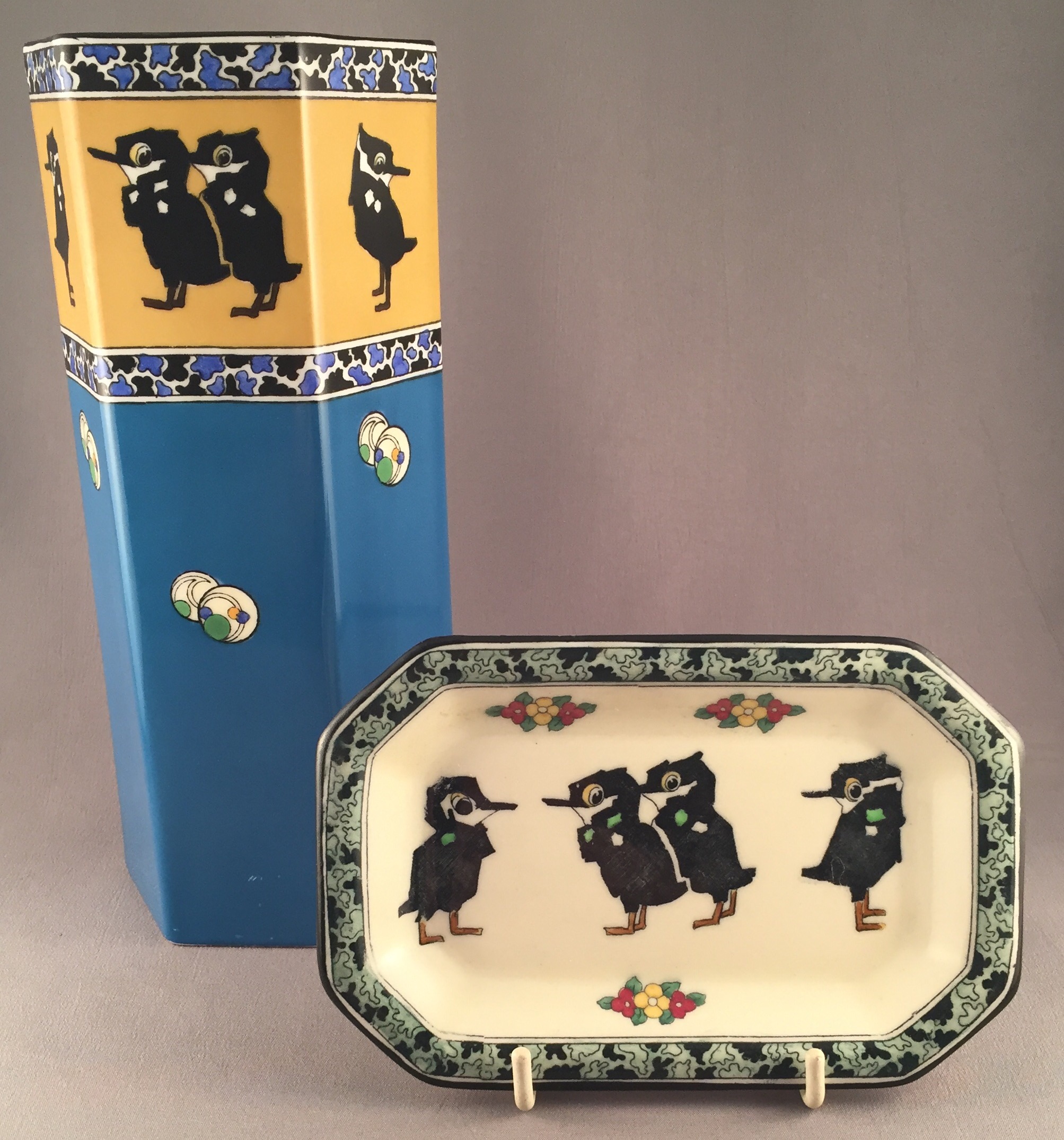
Collecting Harry Rowntree’s rare Doulton designs.

Harry Rowntree,illustrator, hailed from New Zealand where he also trained as a lithographer. Rowntree subsequently moved to England but struggled for a time until commissioned to illustrate a children’s animal book with which he found his forté and of course great success!  


Rowntree’s designs of animals and particularly birds are instantly recognisable and whilst his illustrative work was prolific his Doulton designs are very hard to find! The vase dates to 1921-3 whilst the pin tray is D4430 c.1924. 

Doulton’s craftsmen gilders.

Few Doulton collectors today will be familiar with the names Thomas Morton, William Massey or William Skinner, however, they played an important role in the early 20th Century history of Royal Doulton as its three leading gilders.


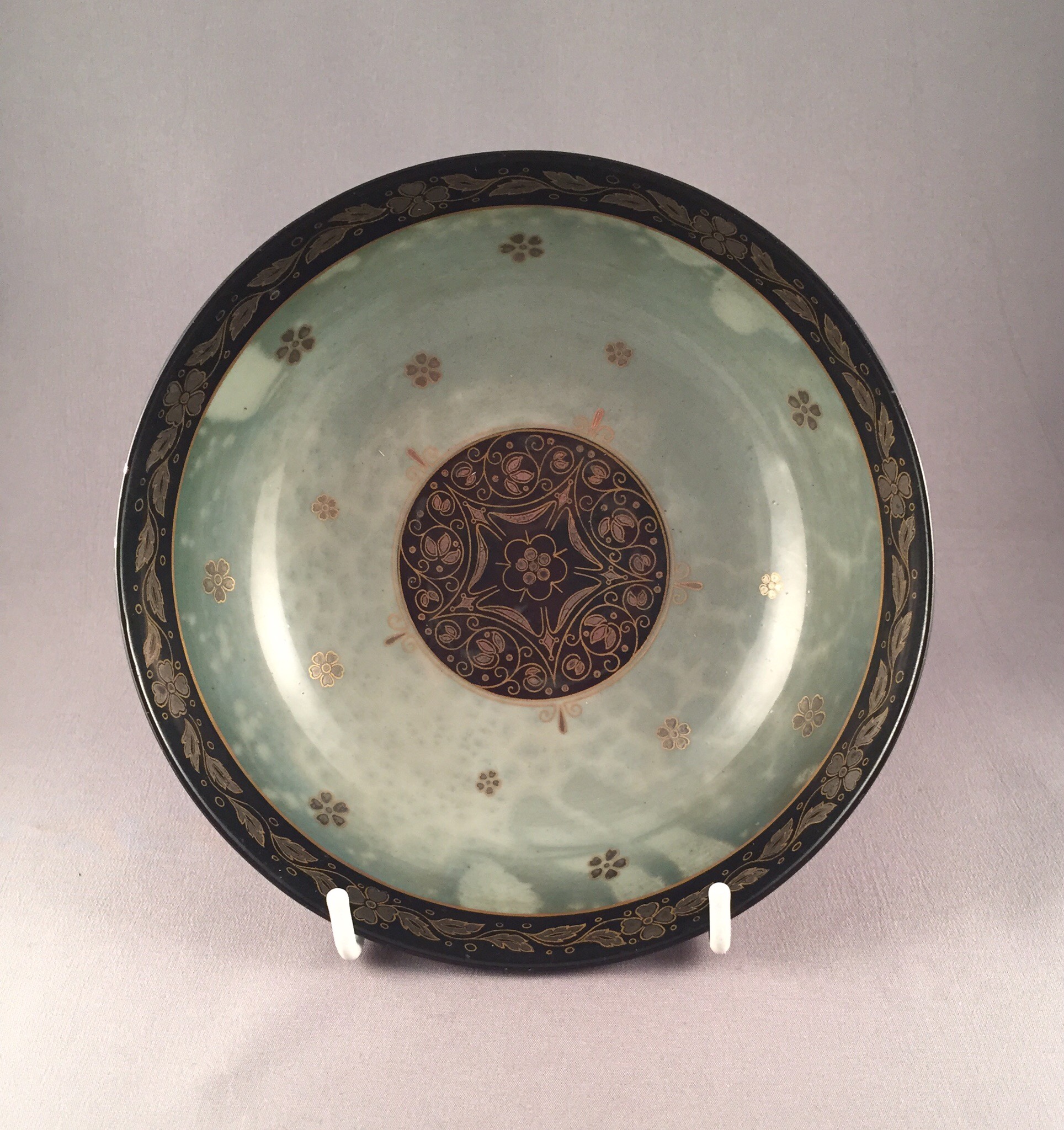
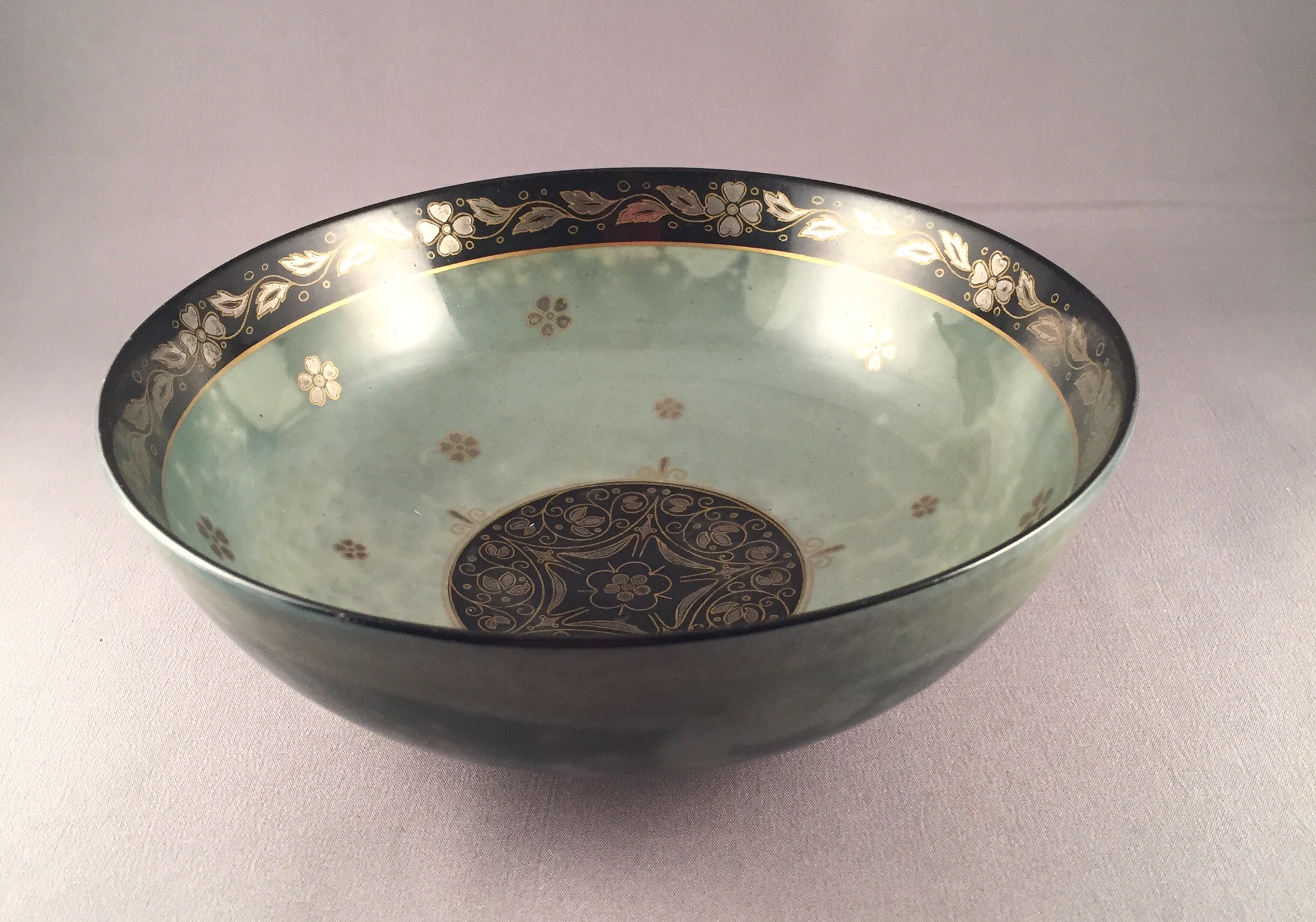
A Titanian bowl with gold and silver gilding.

These three craftsmen worked under the legendary Robert Allen, who led one of Doulton’s Burslem art studios and was father to Harry Allen too. Harry’s name will be forever linked to Titanian wares because of his many finely painted birds and other subjects on this ware.


A view of the interior of the bowl.

The bowl illustrated is most unusual due to the use of gold and silver and alas is not signed by the gilder, but fortunately the RA number on the reverse dates it to the period of WWI, right at the start of Doulton’s short production of fine Titanian ware.

These master gilders would typically re-create on china the elaborate designs by Robert Allen, such as the design on this bowl.

Collecting Doulton’s early fledglings! 

  
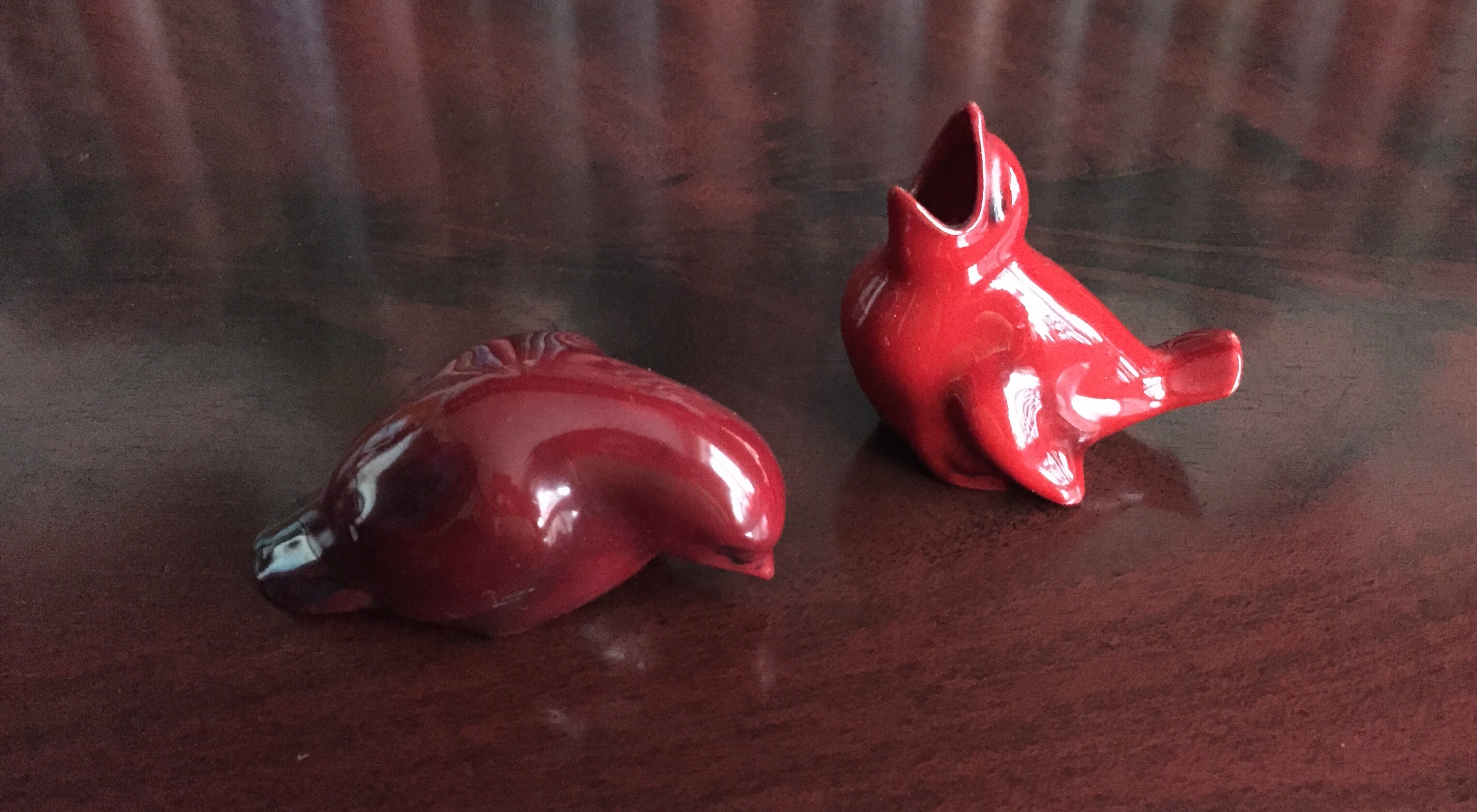
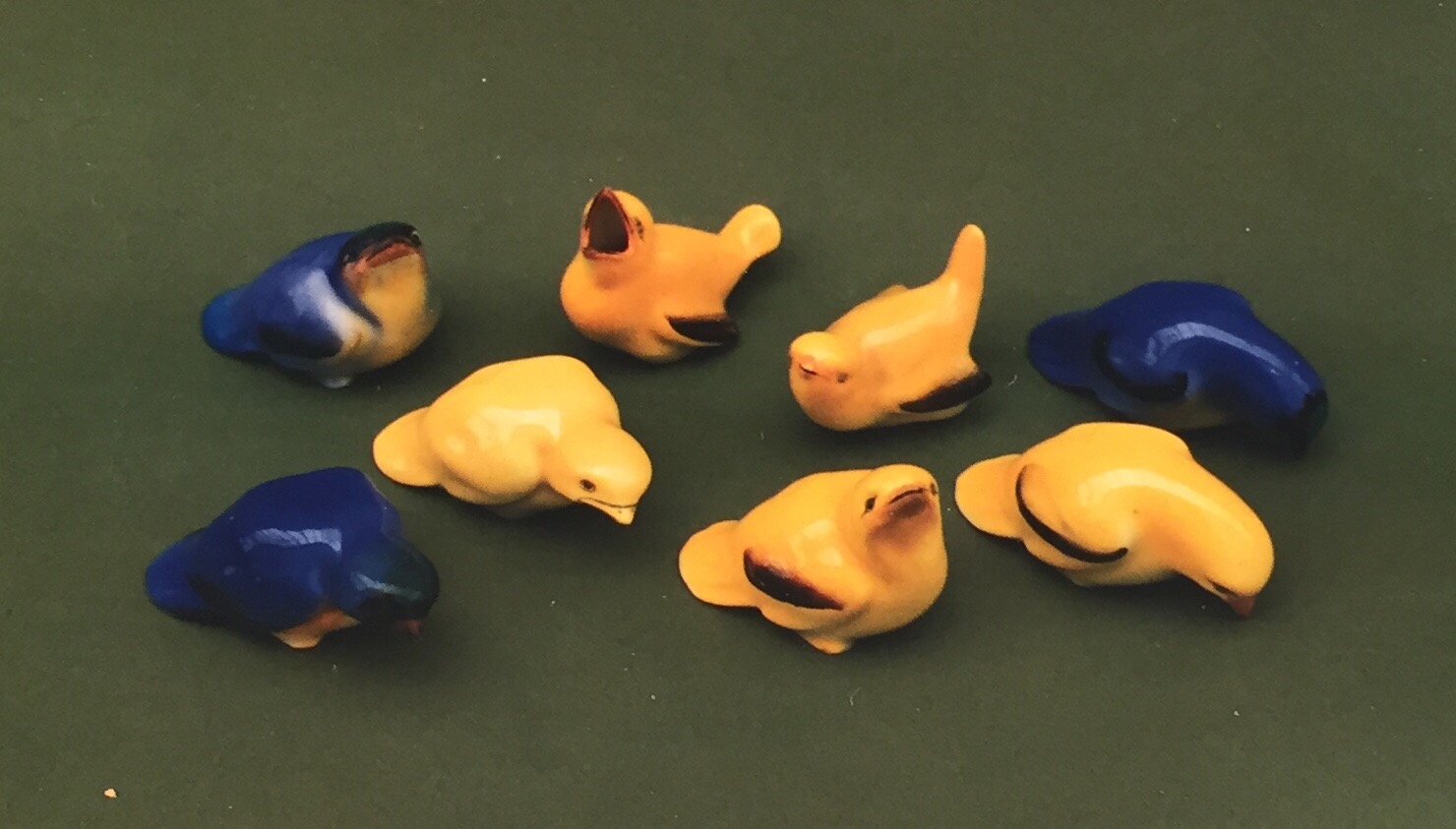
Two flambe fledglings, the darker one on the left dating to c.1913.

Introduced at the start of the HN range apparently just in flambe originally, these sweet baby birds are a super set to collect as variation after variation can be found, creating a colourful collection. 

  
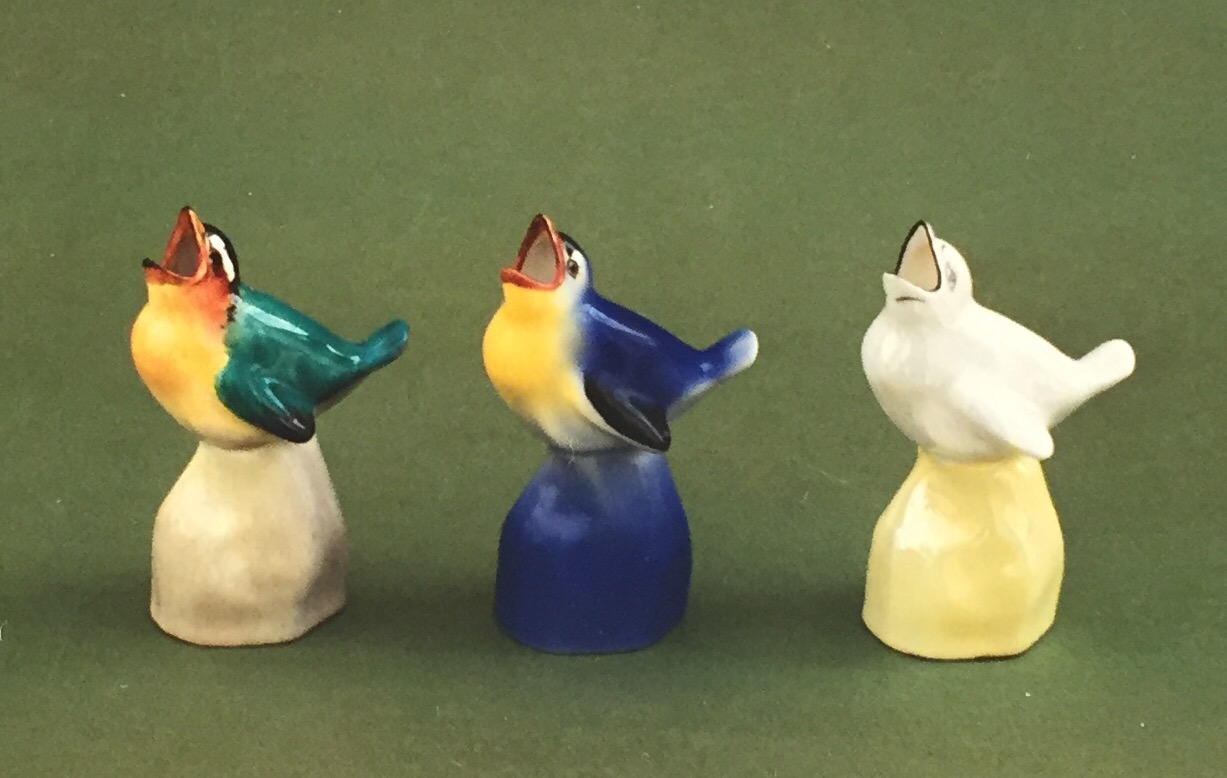
Three characteristically colourful fledglings including the very rare lustre version on the right. 

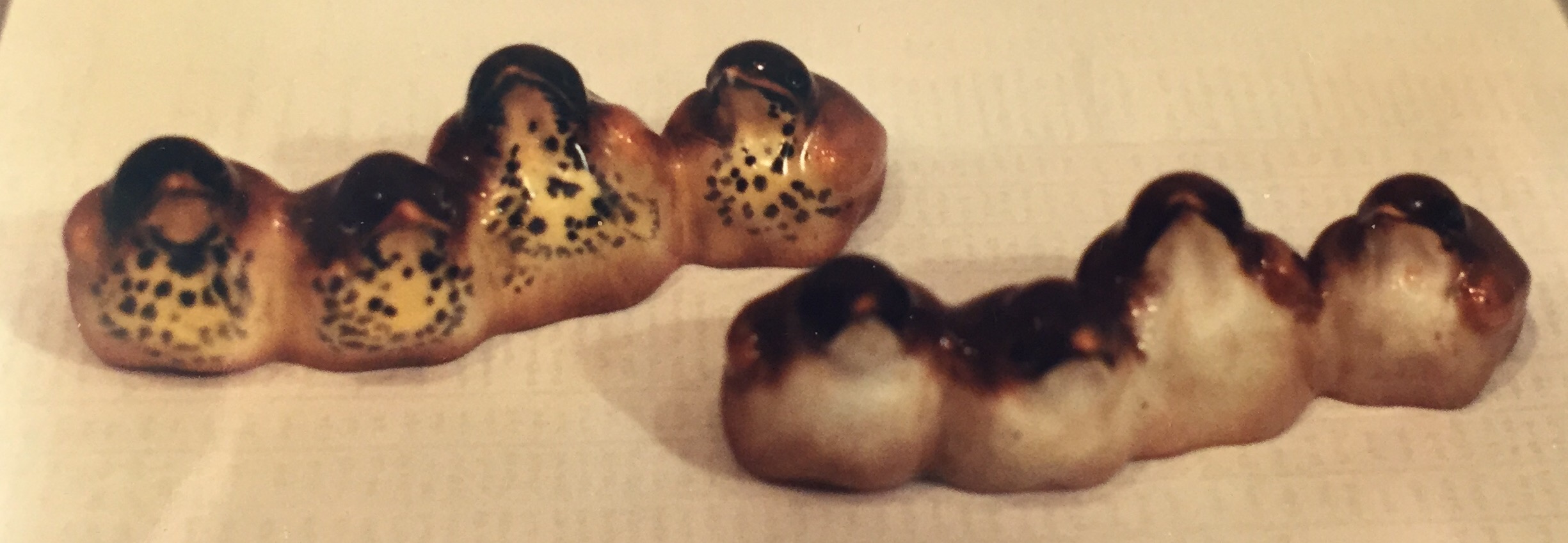
Of course the term fledgling refers to baby birds and here is a group known as Thrushes (on left) and Fledglings on the right.

  
Whilst there are only a handful of models to collect the various colour schemes used mean that you may never finish collecting them all and the hunt could go on and on beyond the recorded versions! 

  
A group illustrating the ‘usual’ colourings : plain yellow, yellow with black highlights and blue and yellow. 

Noke the artist! 

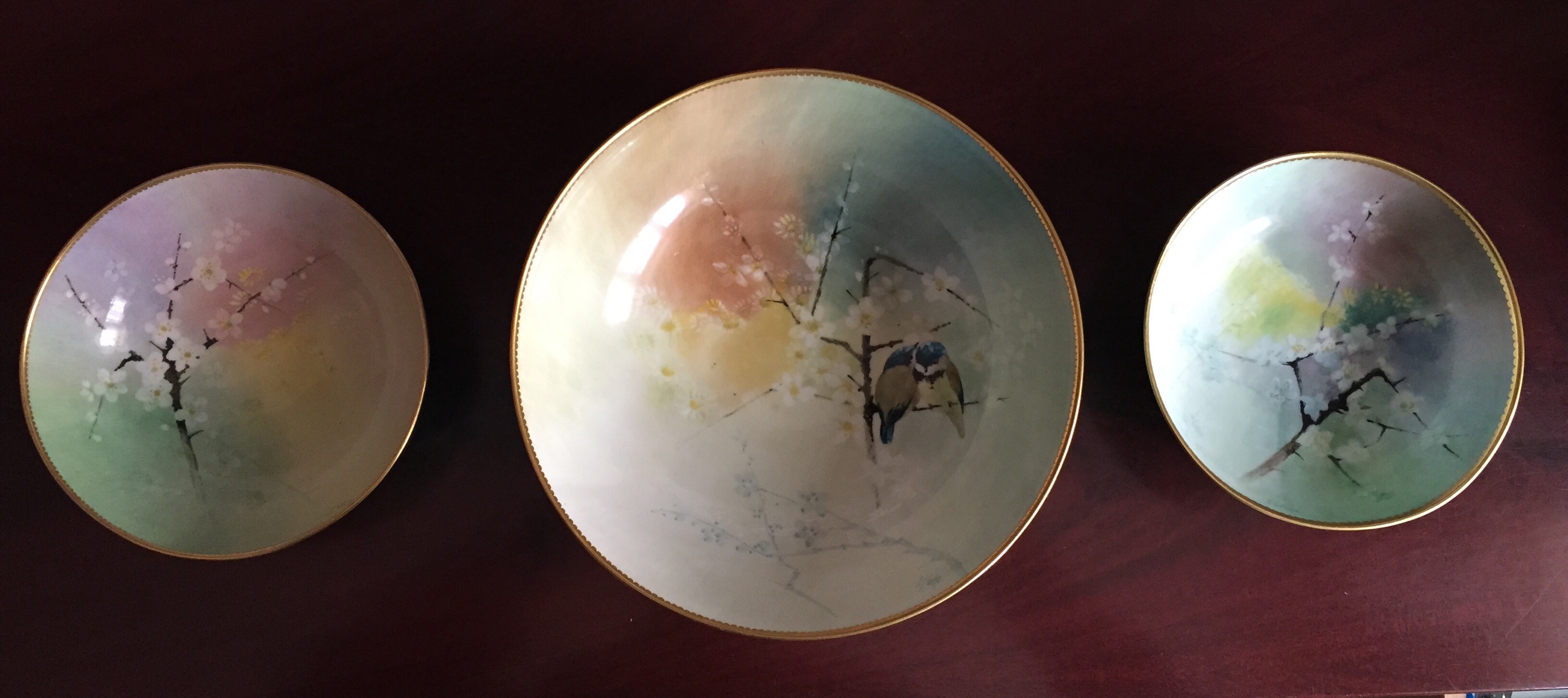
Collectors forget that Noke despite his excellent reputation as a modeller was also an accomplished artist. Signed pieces are hard to come by as is highlighted by the fact that each of these bowls – the largest 23cm diameter – was purchased on separate occasions. 

  
I had previously believed that they could have been the work of Noke junior but the largest piece can be dated to 1918, prior to his commencement and training at Doulton. 

Doulton’s Royal connections! 

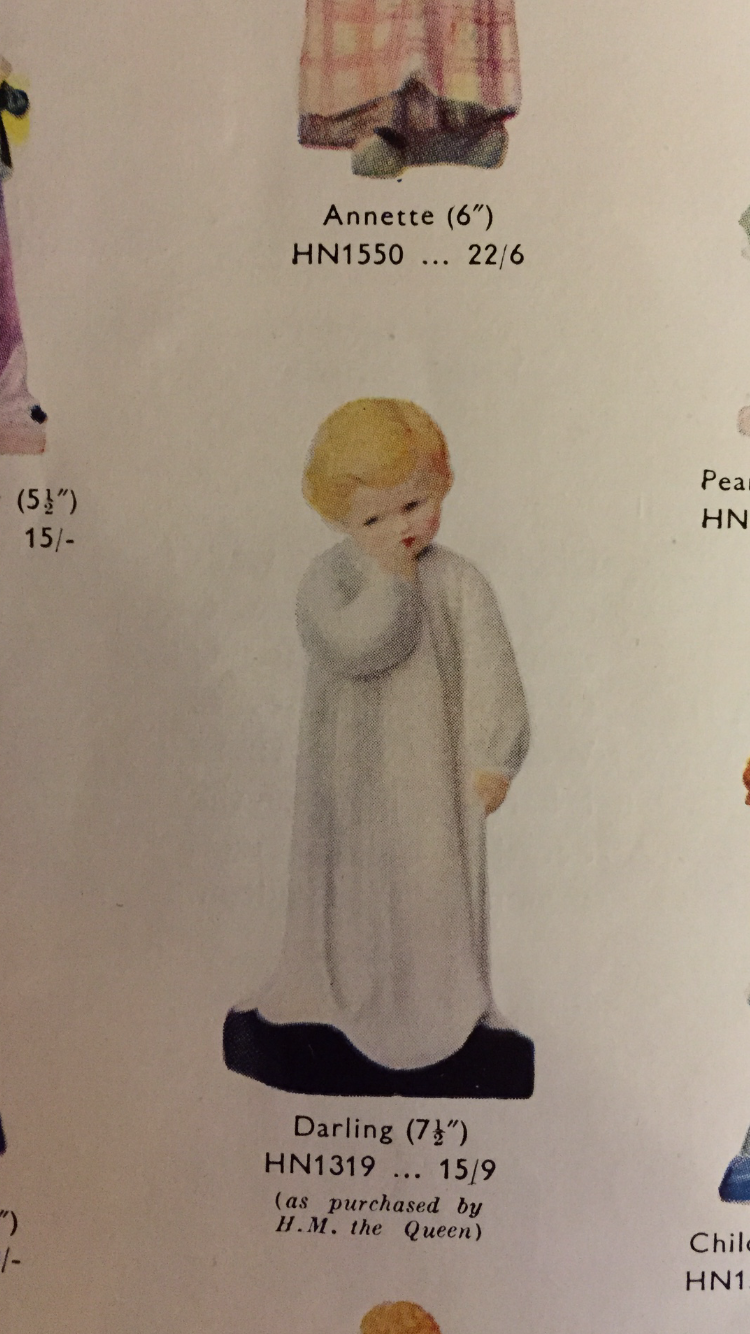
  Collectors are often bemused by early Doulton catalogues which carry the strap line ‘As purchased by HM The Queen’ under their cherished figures.  

  Original catalogue page featuring the design and highlighting the Royal connection.

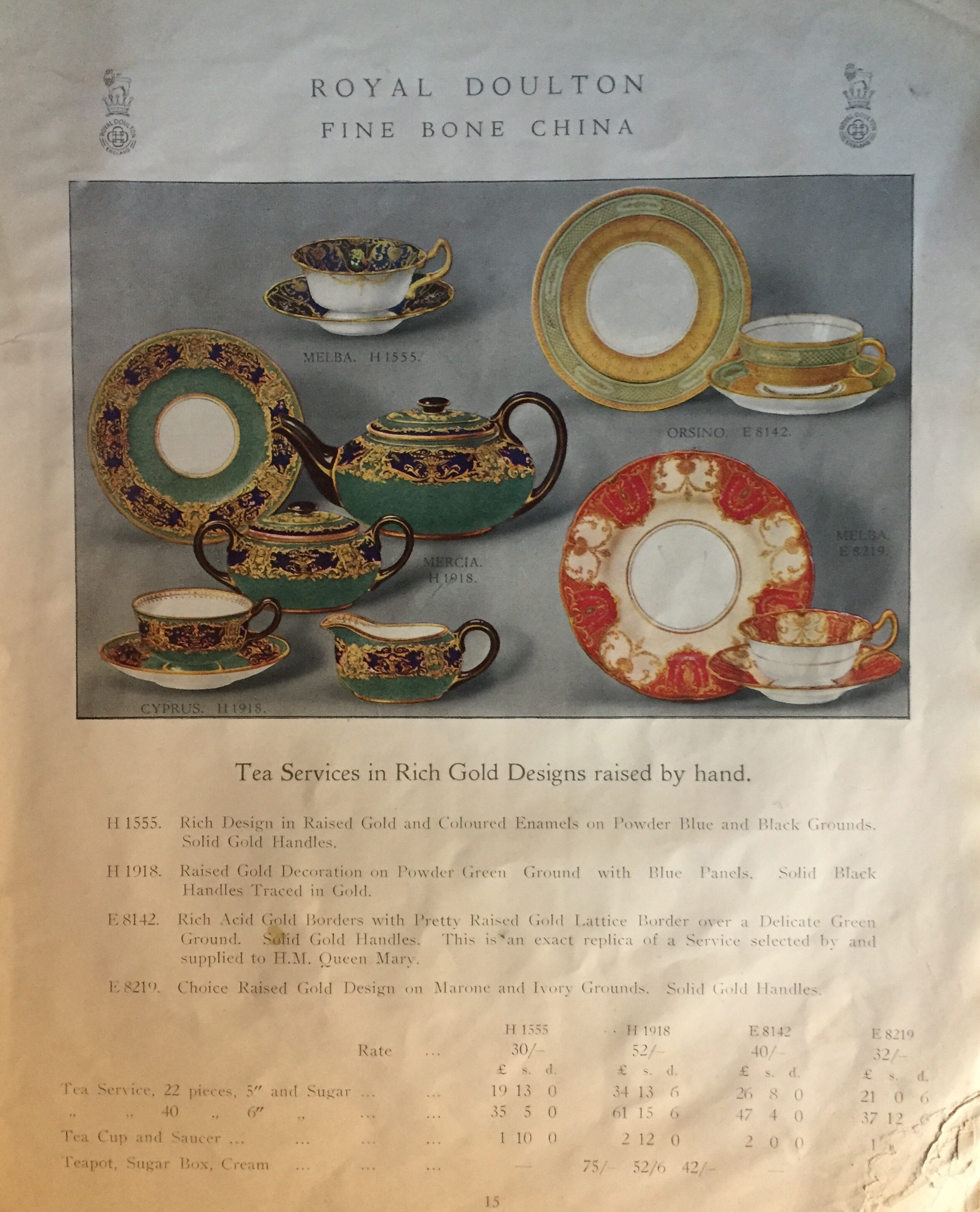
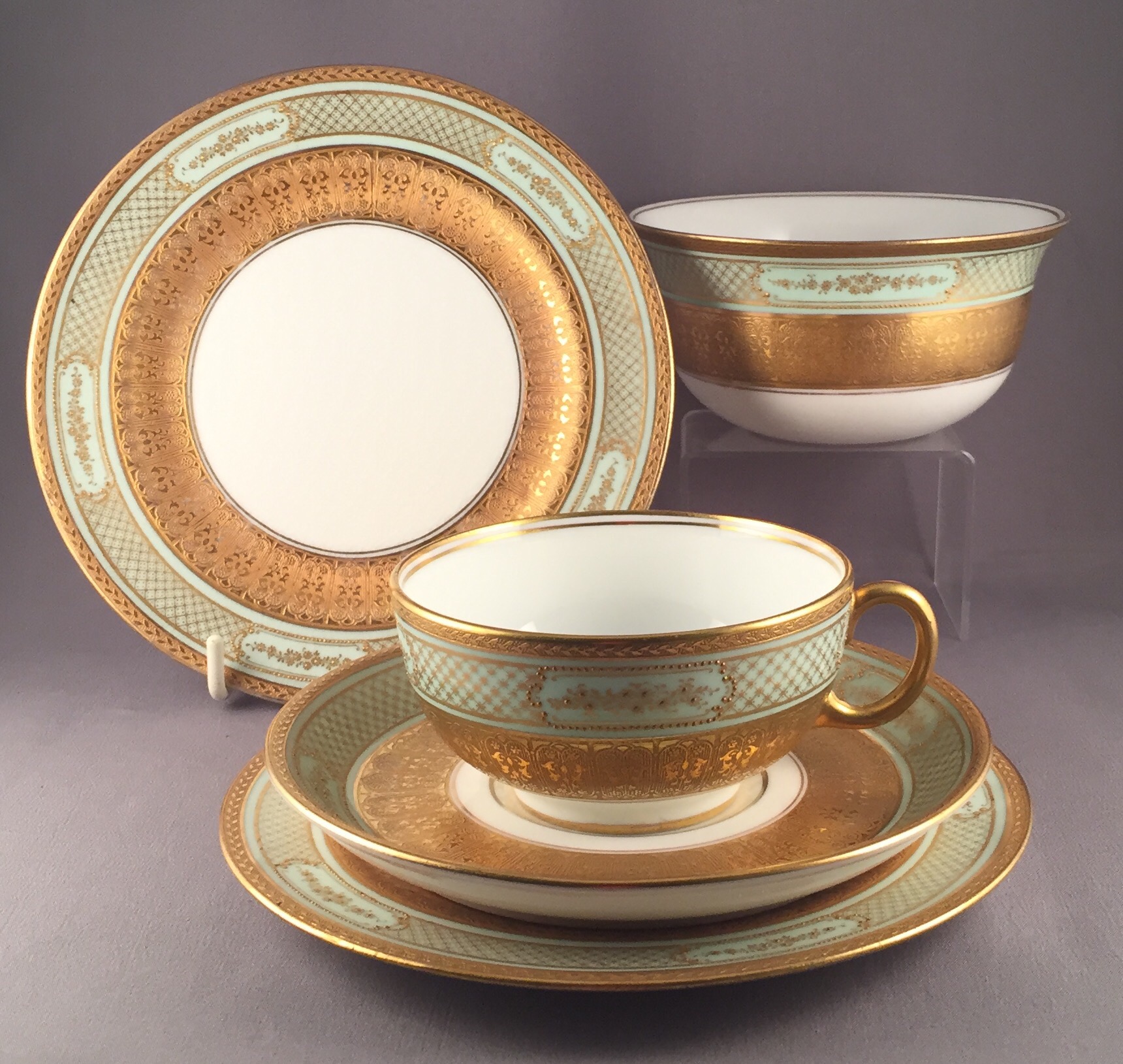
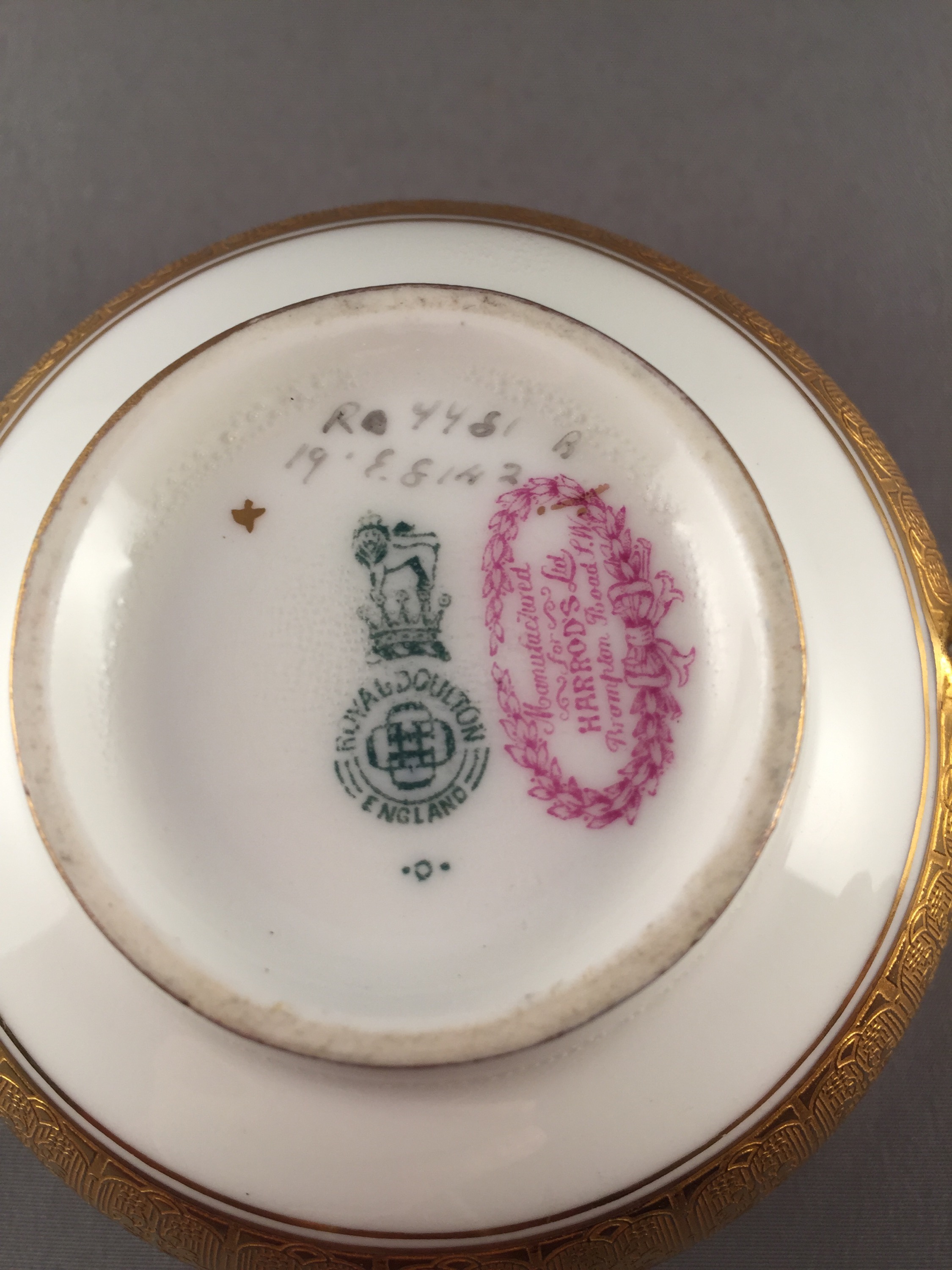
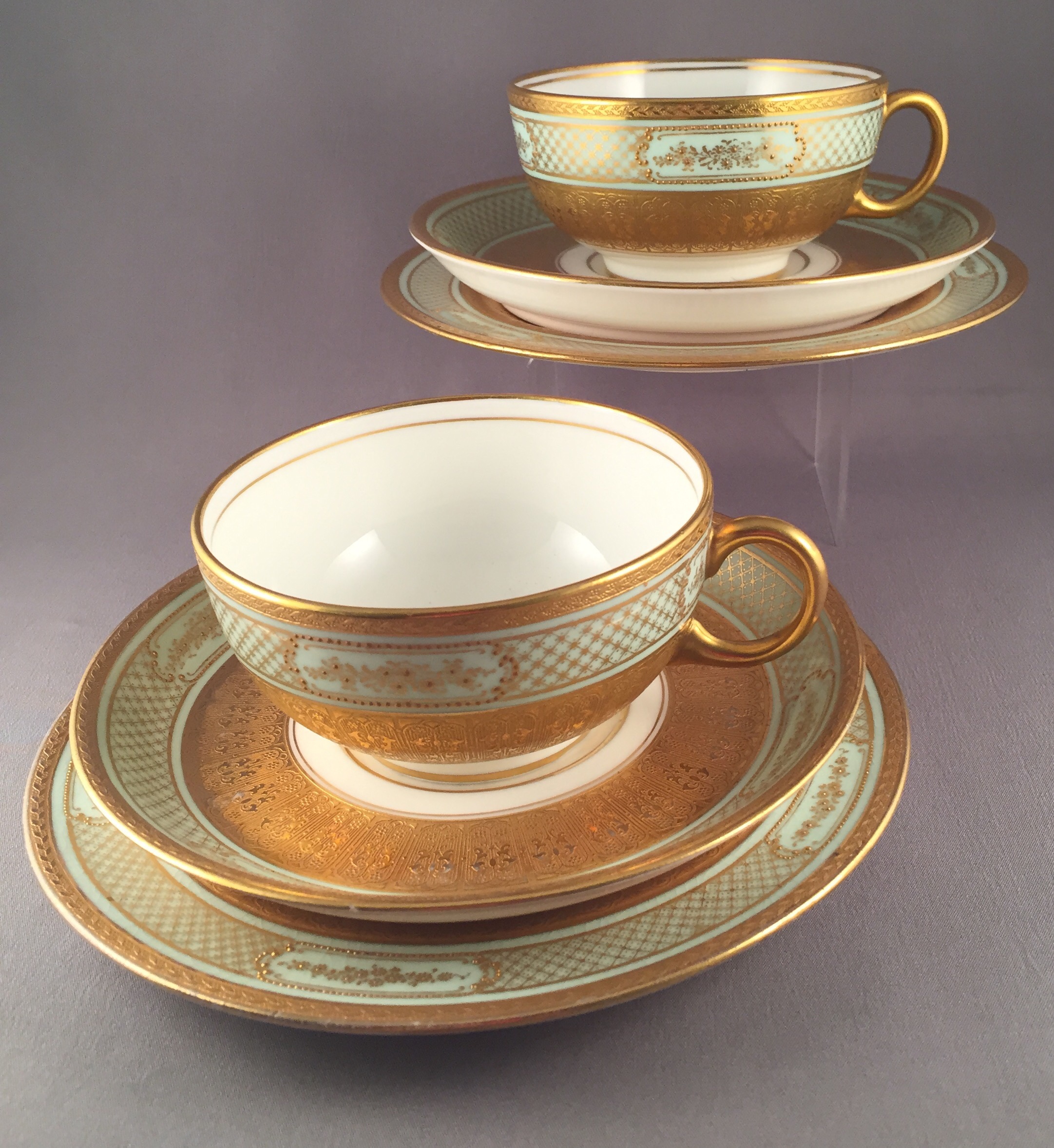
However this sales technique was also used to advertise tablewares such as this heavily gilded tea set, which was supplied to HM Queen Mary in the early 20th Century.   This particular set for 6 people is a replica of the original and was retailed exclusively through Harrods, the exclusive London Department Store which has many famous links to Doulton including its magnificent Doulton terracotta façade and of course the art nouveau tiles in the food halls by Neatby.

 
Once again the set shows that first sight isn’t always the end to a story with Doulton! 


Doulton artist profile – Robert Allen.


A Robert Allen design carried out by his studio ca.1900.

Robert Allen began work at Nile St. when it was still owned by Pinder Bourne, after a brief period at Minton’s as a boy worker. Robert flourished under the guidance of John Slater, then art director, eventually taking over a painting department of his own. Work from his department is denoted by his initials R.A. followed by a number. Robert Allen’s own signed work is however, rare. Yet, he and his department were entrusted with much of the finest and most expensive decoration carried out at Burslem notably for the great exhibitions at which Doulton exhibited from the late 19th century. Robert was notably involved in the early development of Titanian ware too although it is the work of his son Harry in Titanian that is typical.


A group of miniatures bearing an RA number from the Robert Allen studio.

Collecting Doulton seriesware – Sedan Chair.

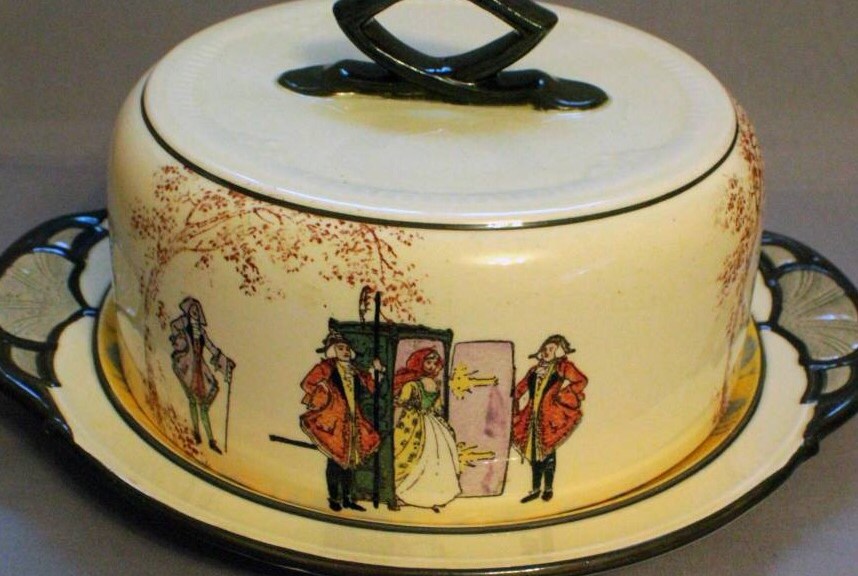
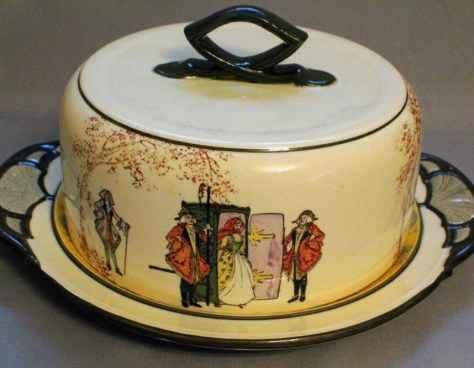
An unusual  Sedan Chair seriesware survival – a Cheese dome. The bases often turn up and are described as bread and butter plates, but here is the full thing! Introduced in 1912 and withdrawn around 1940, examples are not frequently seen suggesting production was much shorter. The art nouveau shape is incongruous to the seriesware pattern but the series is so charming that one doesn’t notice. The scene illustrated is No.2 hitherto not illustrated. 

Seriesware never fails to surprise us even today!

The International Ceramics and Glass Fair and 200 Years of Royal Doulton – an event not to be missed!

Don’t forget the world’s major Doulton extravaganza is just around the corner!

To reserve your tickets visit icgfair.com

And follow this link-
https://www.facebook.com/events/489880474484013/

2015/01/img_1355.jpg

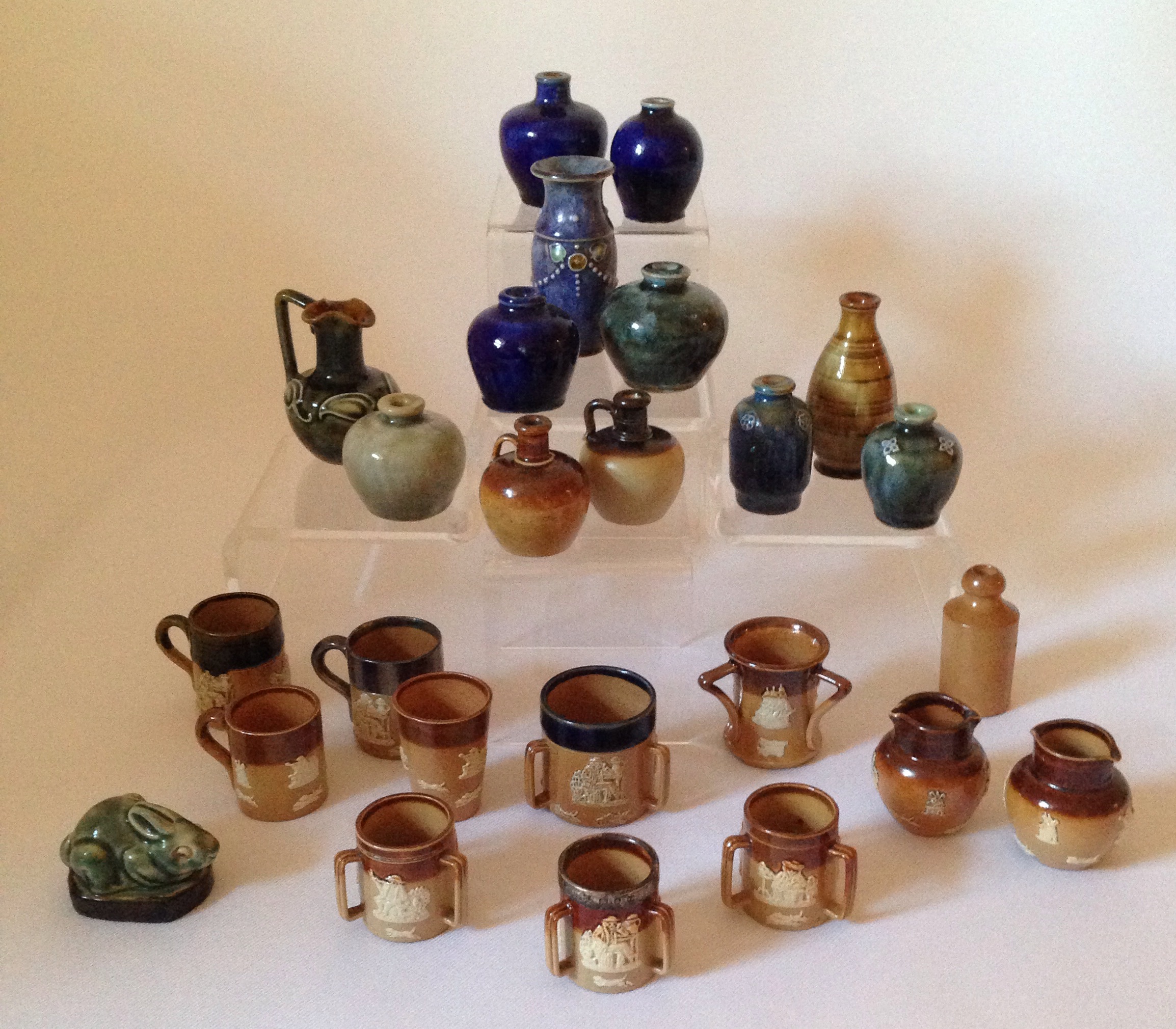
Collecting Doulton Lambeth miniatures.

/home/wpcom/public_html/wp-content/blogs.dir/574/66790219/files/2014/12/img_1085.jpg

No other area of Doulton offers more scope than the collecting of miniatures and Doulton’s Lambeth factory created the lion’s share of these miniatures.
Not including cruets, bird feeders, advertising items, inkwells, teawares and many other lines that were produced in a small scale, as you can see above there are numerous vases, flasks, containers, whimsies and other items that can be found in miniature.

Doulton’s famous Huntingwares, produced over many decades, are perhaps the most easily found but again many subtle variations exist. Brown, green, blue and metallic glazes can be found decorating them as in the picture below.
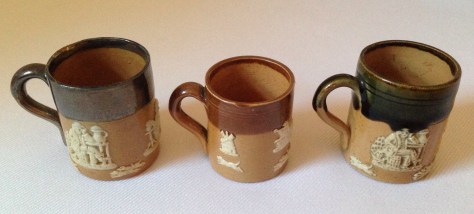
/home/wpcom/public_html/wp-content/blogs.dir/574/66790219/files/2014/12/img_1086.jpg
These items can be found with silver or plated silver mounts in a variety of shapes.
Other such applied patterns can also be found if you have a keen eye including a Willow design and the rare Naval reliefs.
Many of these miniatures were perfume bottles. Here on the left is one such example for the old London department store Jason Shoolbred & Co and these were stamped as such to their bases.
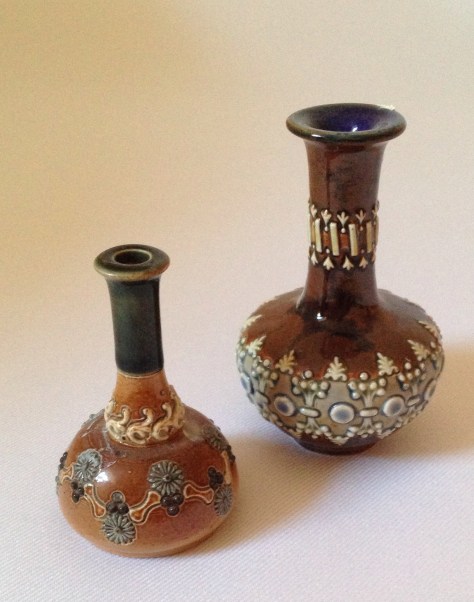
/home/wpcom/public_html/wp-content/blogs.dir/574/66790219/files/2014/12/img_1088.jpg

Naturally many typical art wares can be found in miniature like the vases and ewer above and there are some examples above including the Mark Marshall rabbit paperweight, again pictured above.

Other lines containing miniatures are the simulated wares such as blackjacks and also the many commemorative wares produced to mark events over the years. A particular favourite are the Nelson miniatures!

Perhaps you too collect miniatures, if so why not share a photograph on our Doulton Collectors Group Facebook page!
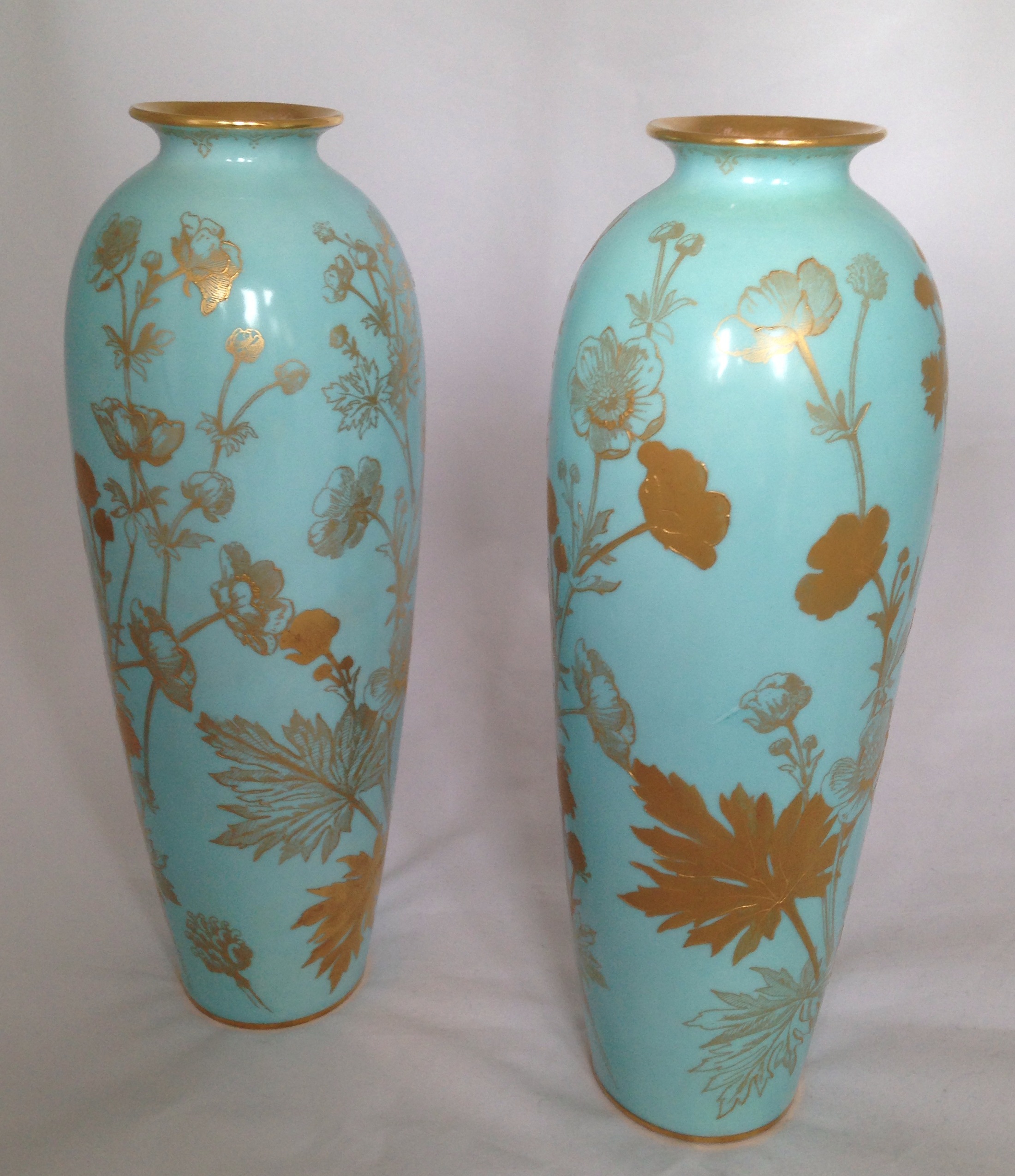
Collecting Doulton’s floral gilt silhouette vases!

/home/wpcom/public_html/wp-content/blogs.dir/574/66790219/files/2014/12/img_9883.jpg

Thanks to Harvey’s Collectibles for the above picture of a pair of vases in their collection. Dating to 1900-02 they are not easy to find and I have seen the same pattern on a pink body only once before.
Interestingly they are from the Robert Allen studio at Burslem as is confirmed by the RA number to each of their bases. The numbers relate to design books and we are able to date items using these RA numbers.

/home/wpcom/public_html/wp-content/blogs.dir/574/66790219/files/2014/12/img_1083.jpg

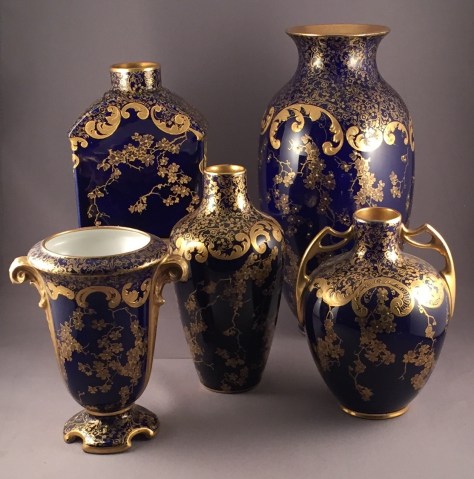
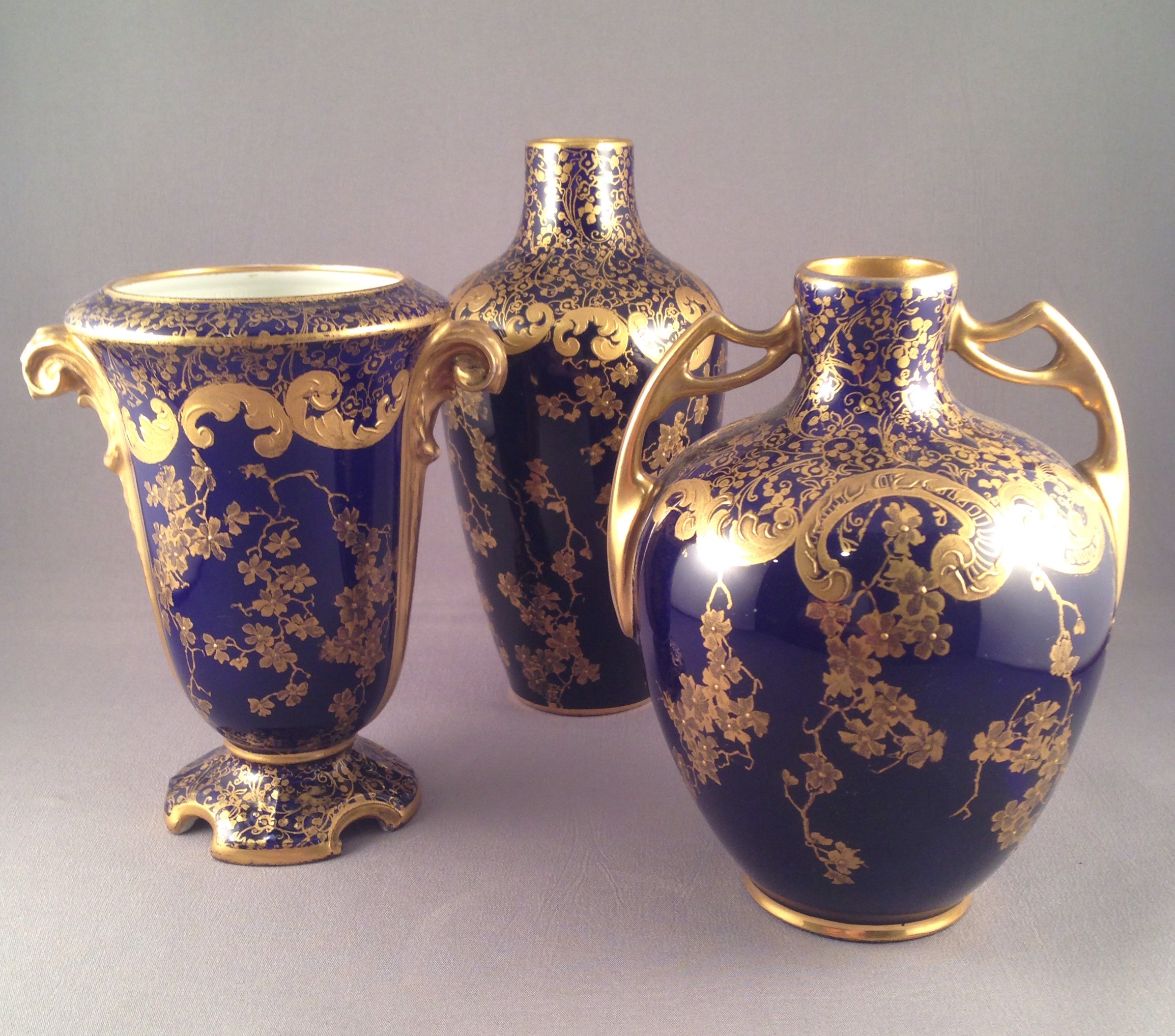
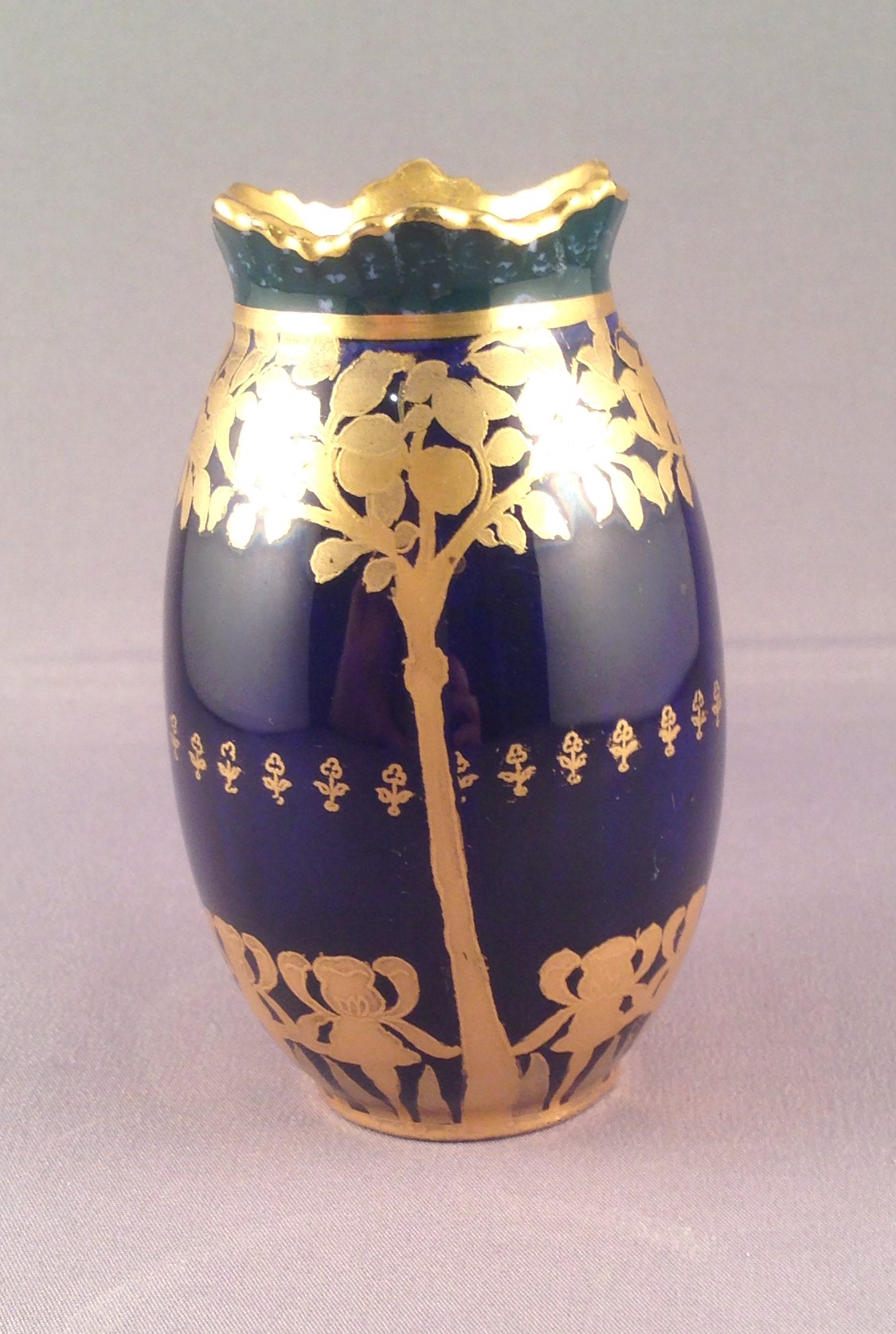
Above and below are further examples of gilt silhouette flowers and foliage from the Robert Allen studio and date slightly earlier to the late 19th Century. The miniature vase below is more typically found in white and light blue rather than cobalt and gilt.

/home/wpcom/public_html/wp-content/blogs.dir/574/66790219/files/2014/12/img_1082-0.jpg

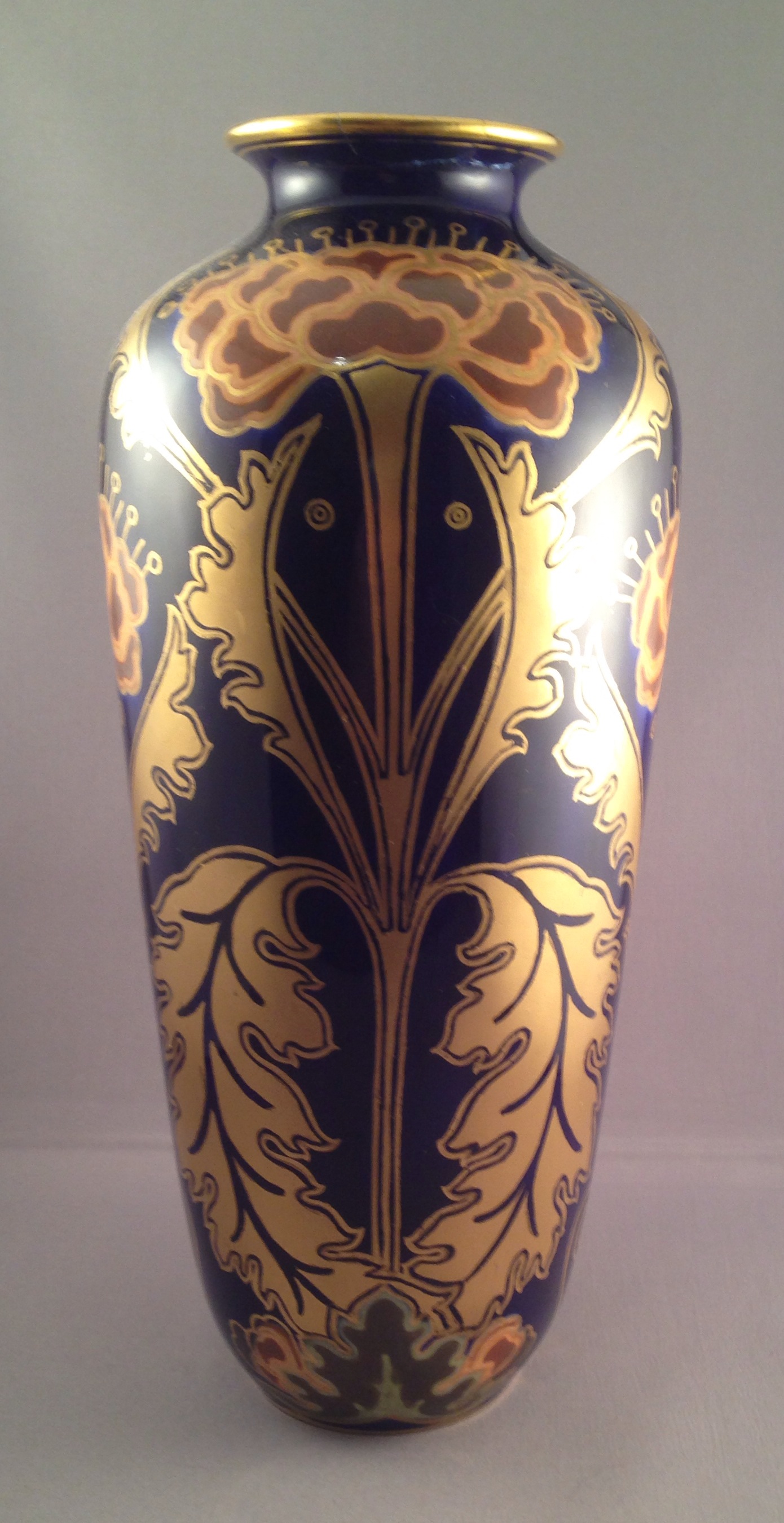
This final vase illustrated Doulton’s ability to change and adapt designs as this is usually found decorating toilet sets rather than gilded cobalt blue vases!

/home/wpcom/public_html/wp-content/blogs.dir/574/66790219/files/2014/12/img_1081.jpg