Category Archives: Artists

Leslie Harradine Part 2 – A change of allegiance

Image

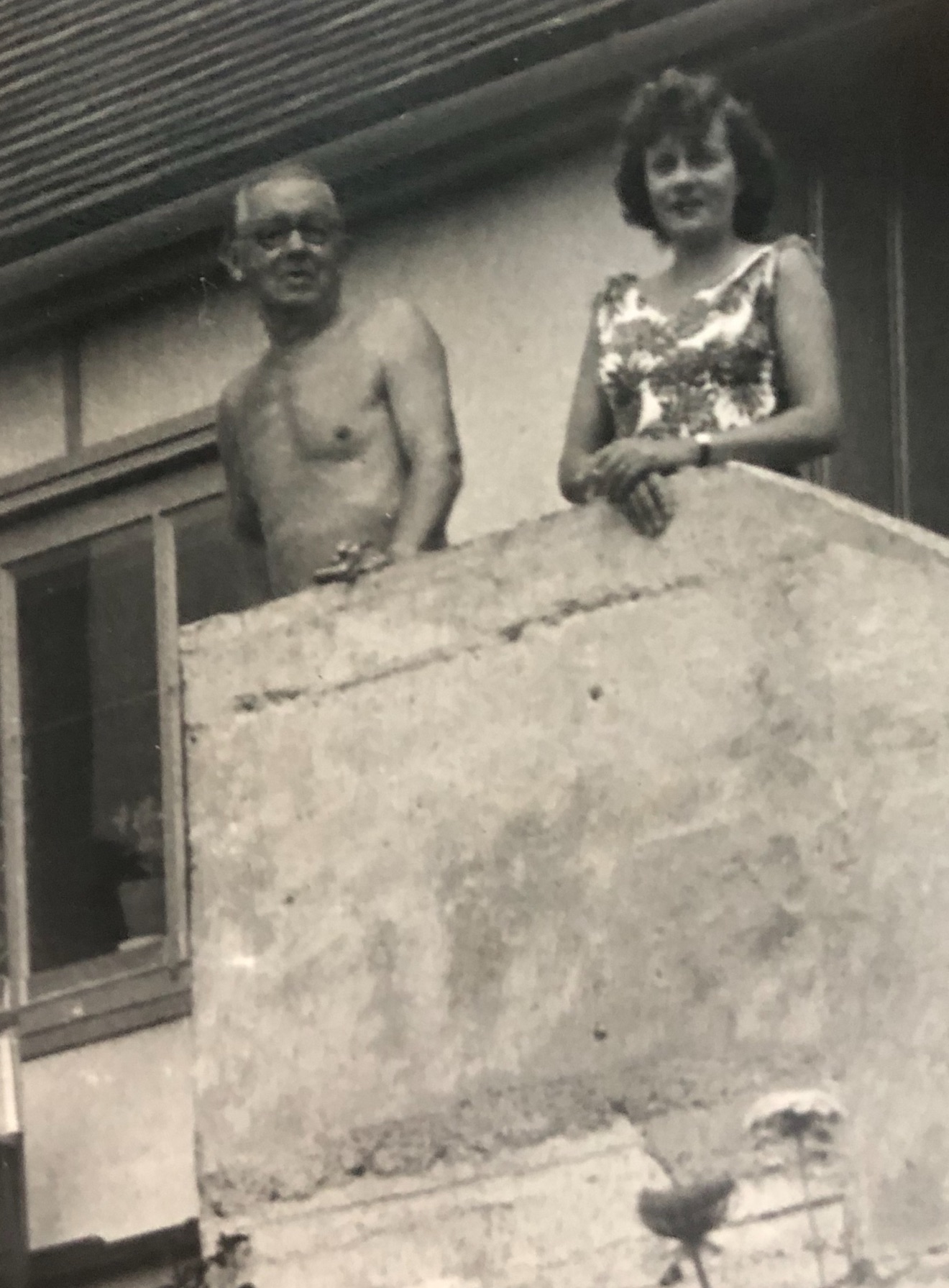
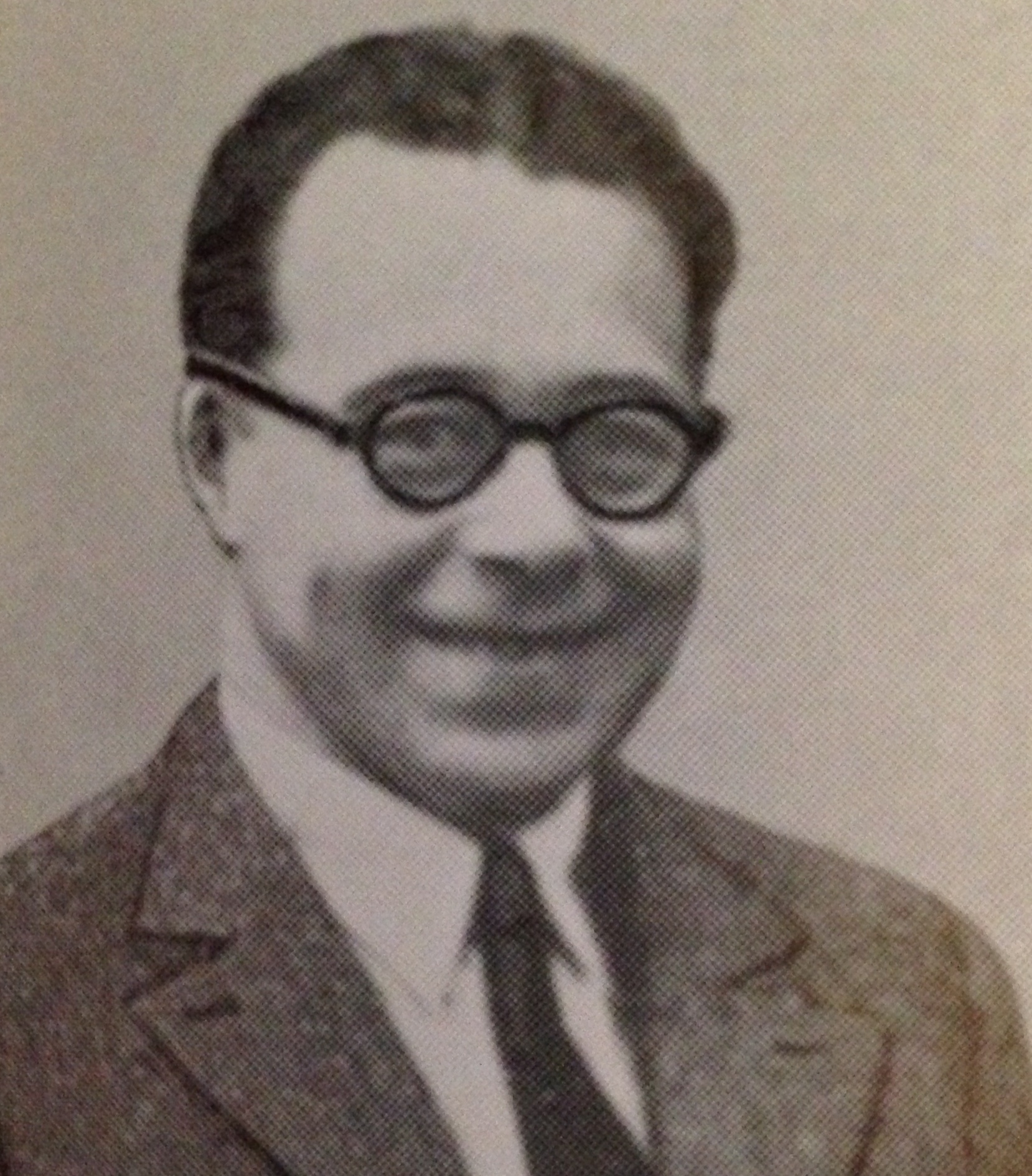
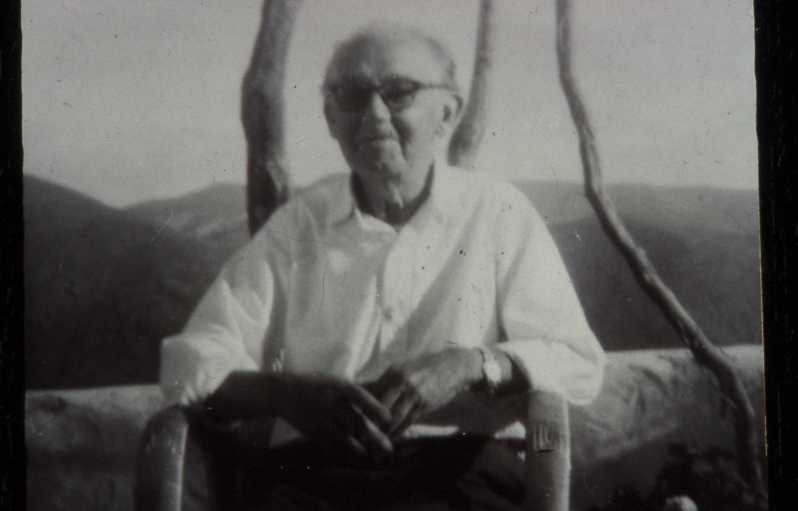
A rare photograph of Leslie Harradine

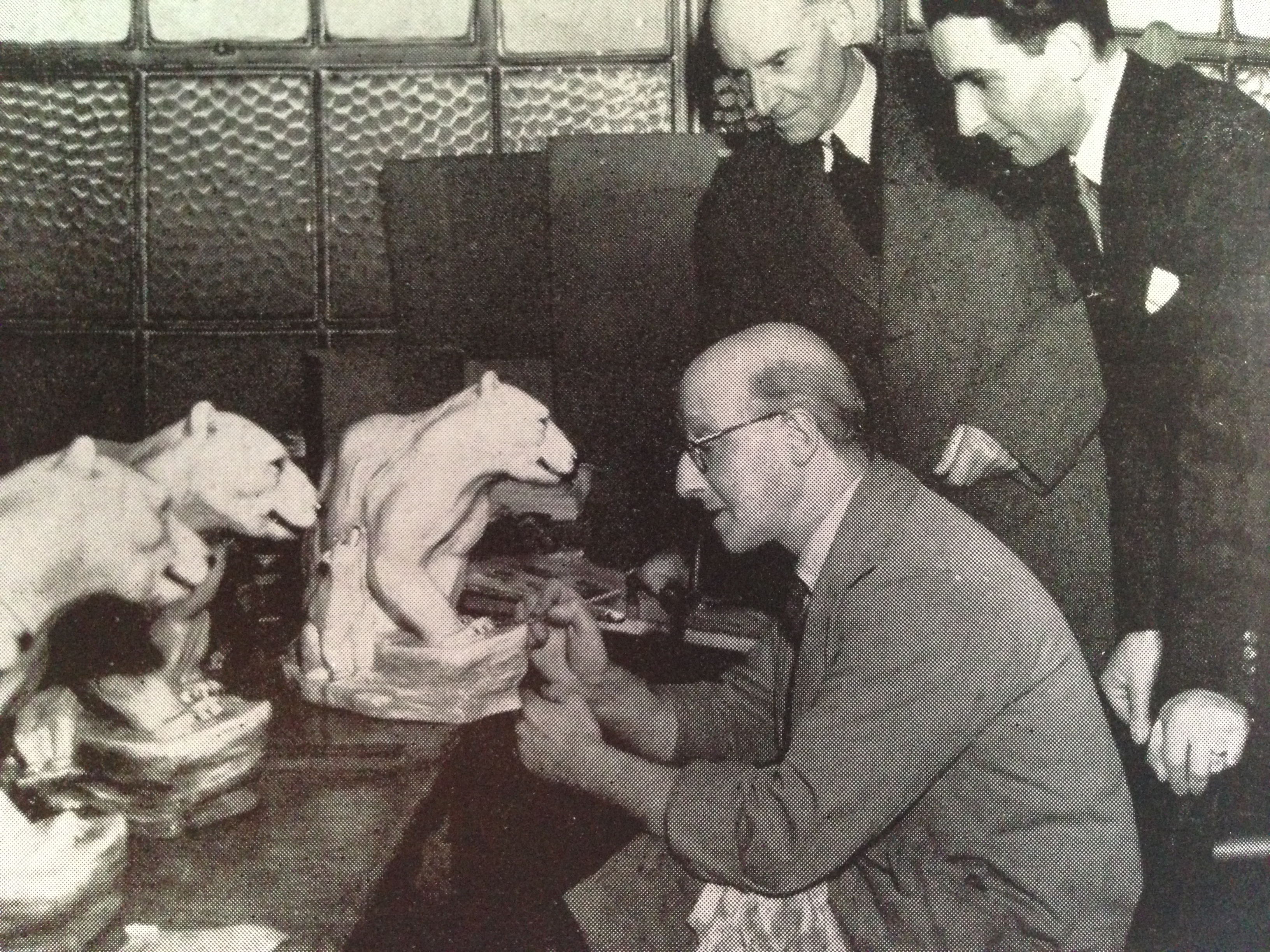
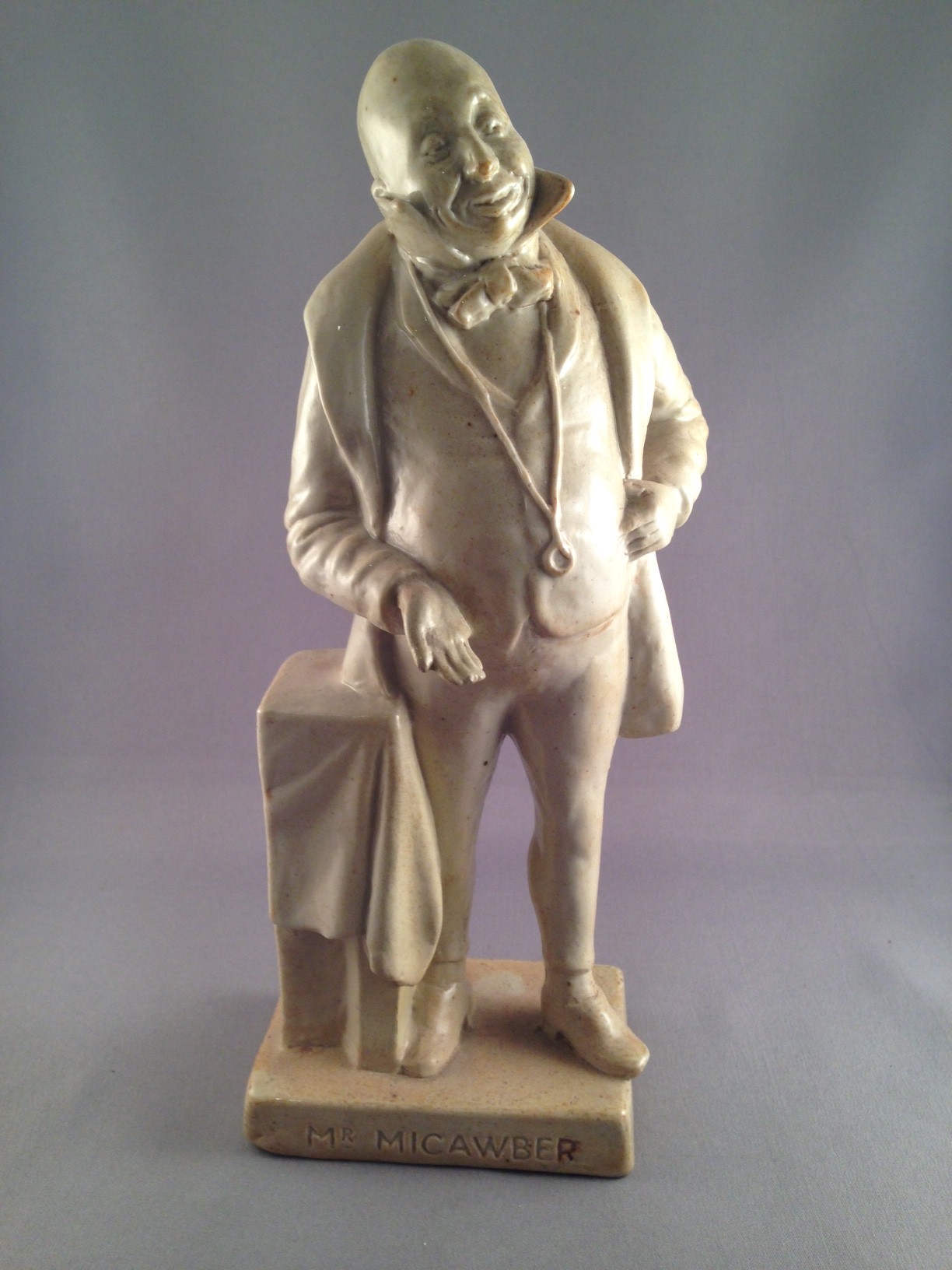
The next chapter of Harradine’s association with Doulton begins in 1919. Noke, Art Director at Doulton’s Burslem factory recognised Harradine’s talent for figure making and attempted to recruit him. Noke had been particularly impressed by the set of six Dickens figures Harradine had modelled for Lambeth.
Image

One of Harradine’s six Dickens figures made for Lambeth – Mr Micawber

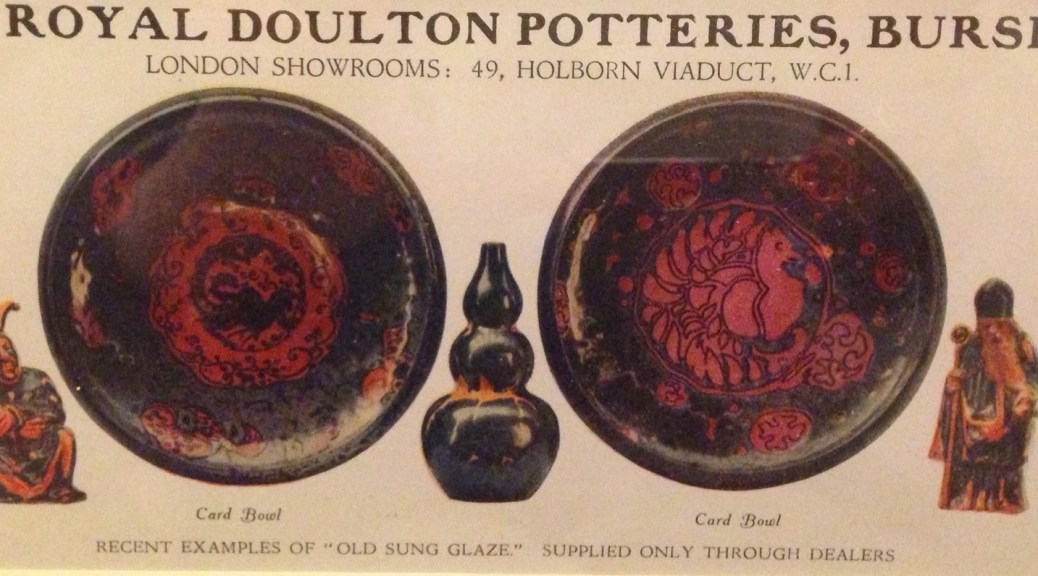
However, not under any circumstances would Harradine consider working at Burslem, but via Lambeth’s Art Director Joseph Mott’s intervention, a meeting between Noke and Harradine was arranged whereby Noke travelled to London to meet with Harradine. The result of this meeting was of course that arrangement that has become legend amongst Doulton figure collectors. Thus Noke and Harradine came to an arrangement, whereby Harradine would send a succession of models to Burslem for Noke’s approval and a change of allegiance to Doulton’s of Burslem. This was an arrangement that lasted almost 40 years and would continue when Noke’s son succeeded him as Art Director in 1936 at Burslem. Harradine modelled in his preferred medium – salt glaze stoneware and sent one or two models per month wrapped in brown paper, and whose arrival would cause something of a stir when they arrived in Burslem.
Image

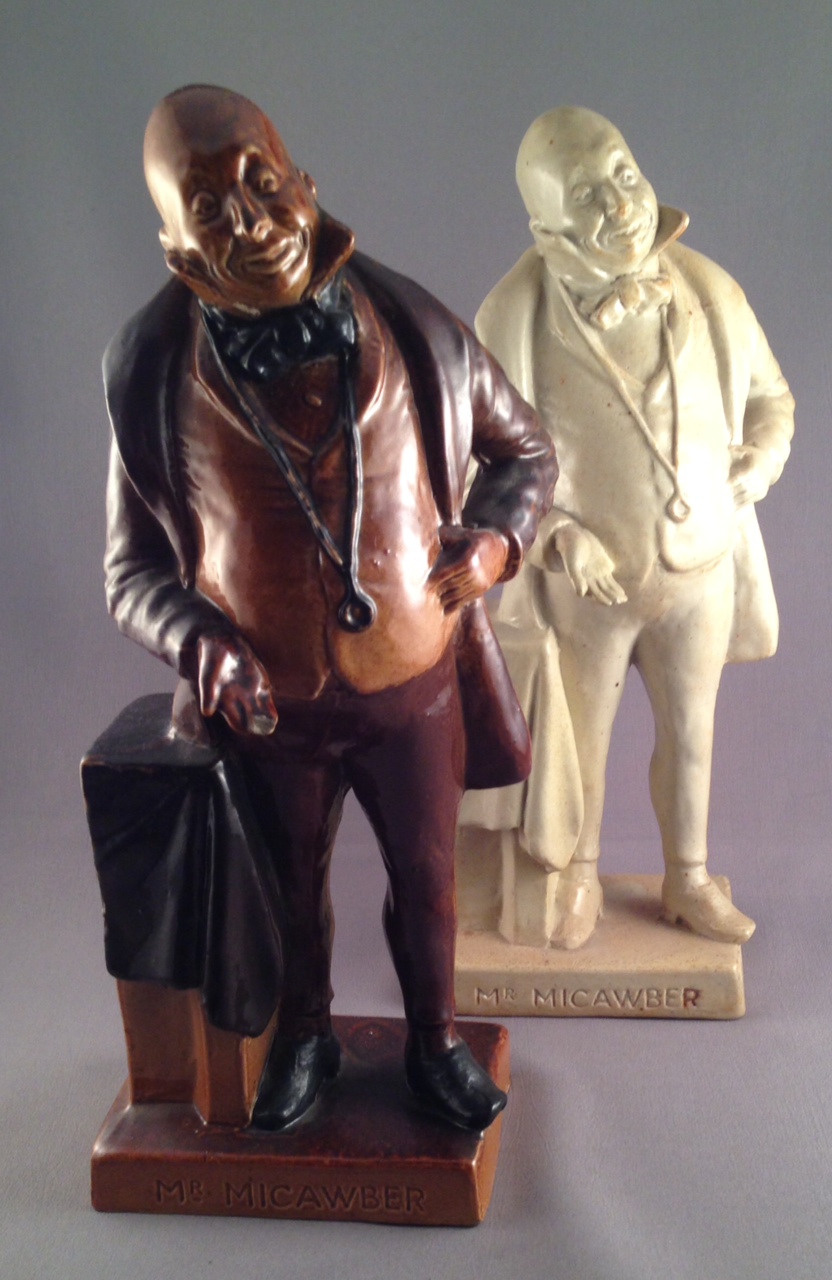
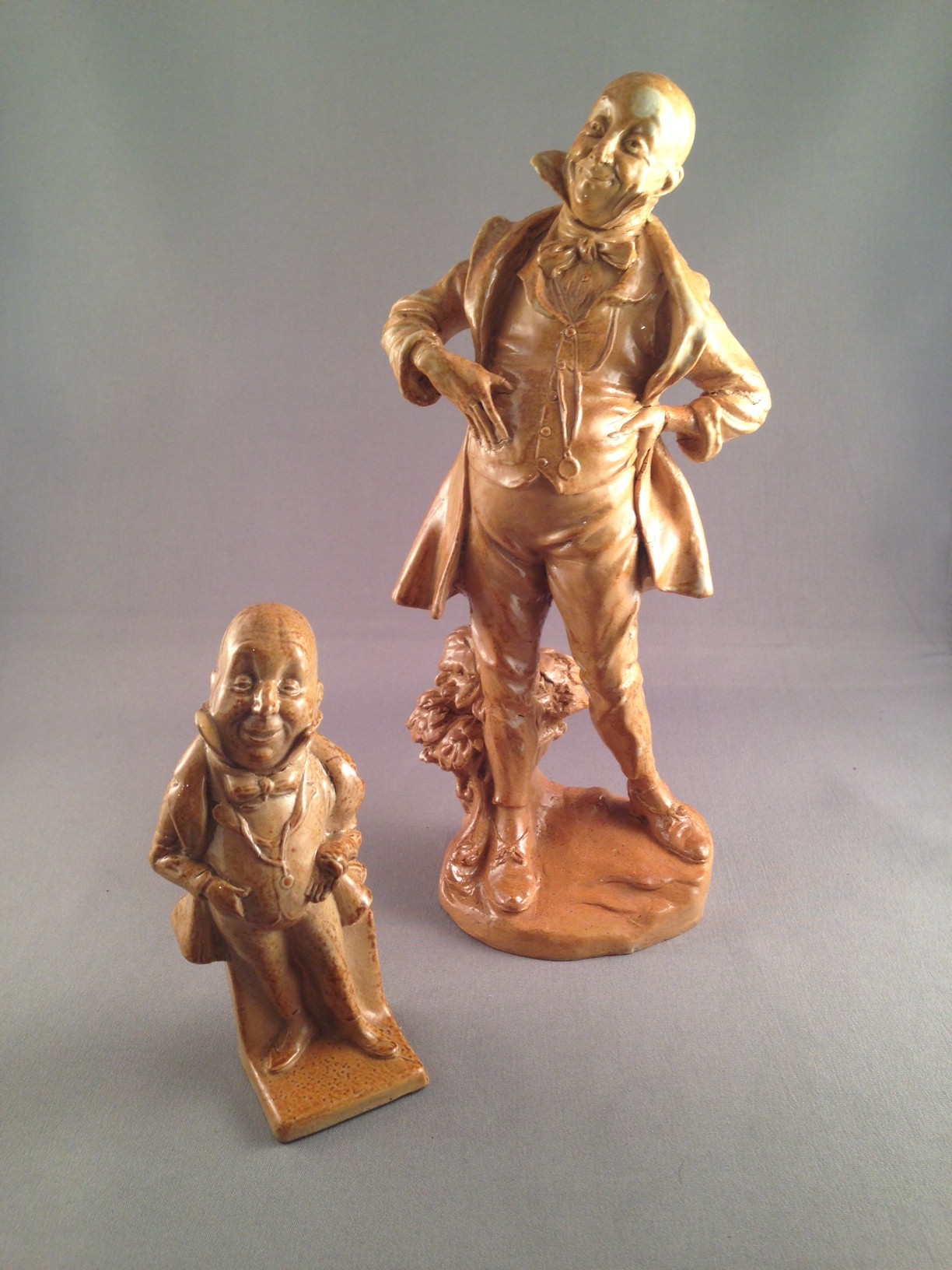
Here are two of Harradine’s original models for Burslem figures, both of Mr Micawber (first and second versions)

His models would deliver the popular success that the HN range had hitherto not achieved, representing fashions and interests from their own era. Harradine modelled women, men and children with equal skill. His figures entered the HN range in 1920 with The Princess HN391 until 1956, when his last ‘new’ model was introduced, Dimity HN2169, although many of his studies remained in production decades after this.
Image

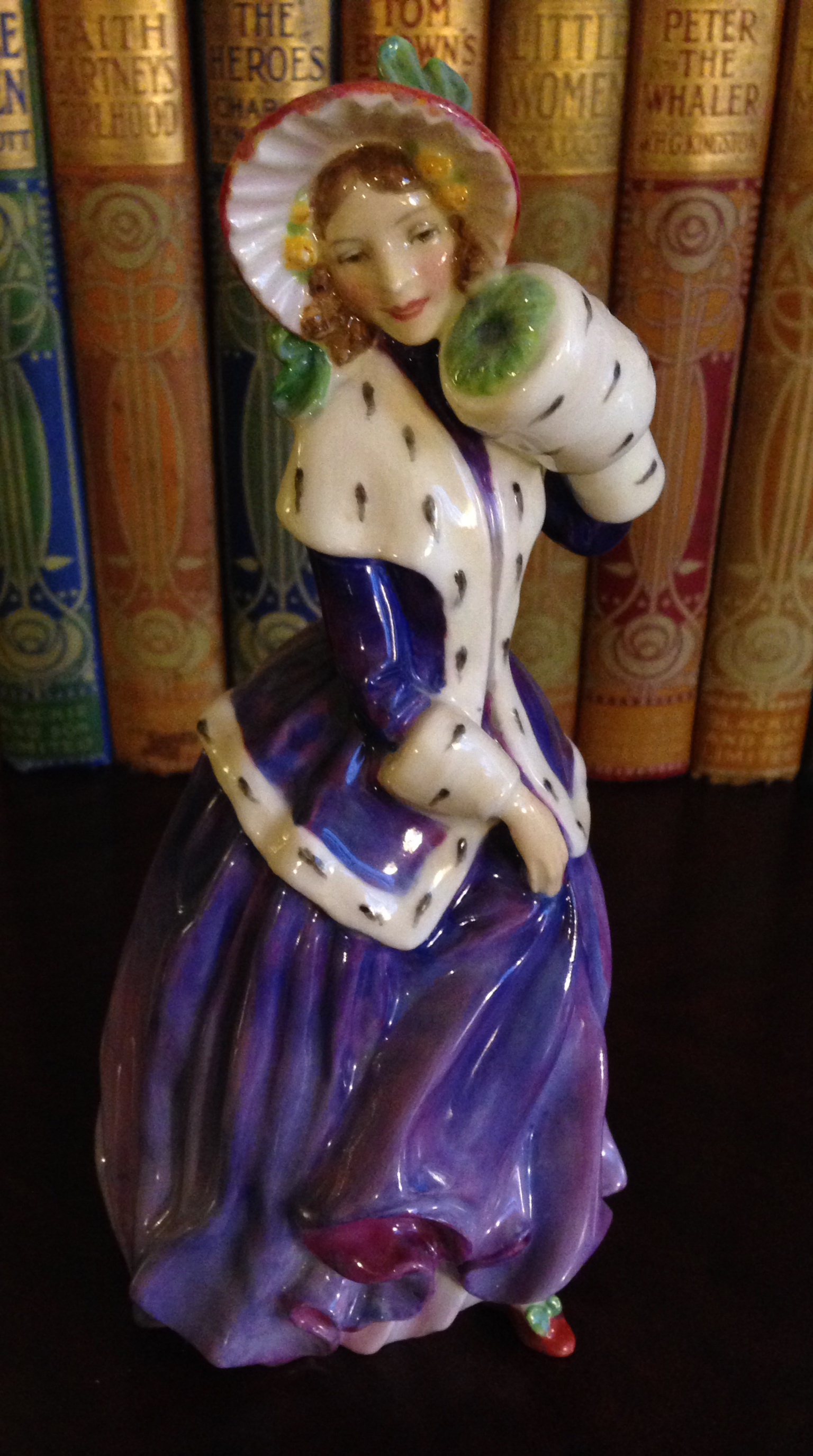
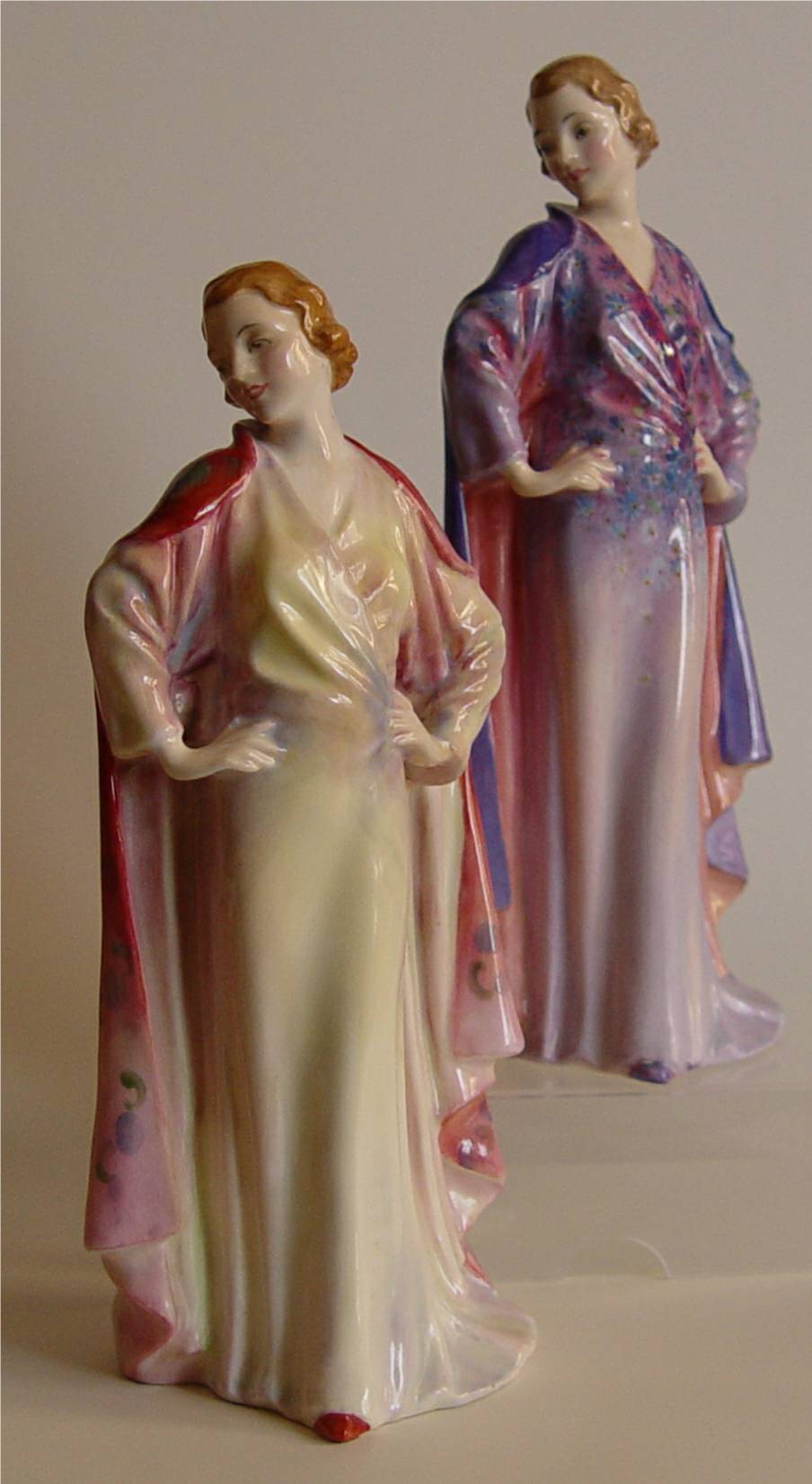
The very stylish Clothilde in two colourways

At last Noke had found a modeller who could tap into the so-called ‘moment’ whatever it was, whether it is flapper girls, Victorian ladies, children or group studies. All were executed with precision and subtle style. Harradine remained something of a nomad yet he continued sending in models from addresses in England, the Channel Islands and Spain until the end of this great partnership.

In our final part to the Harradine story, we will look at Leslie Harradine, the family man.
Another interesting find from Karyn and Gordon

Here we have a colourway of Katharine, one not illustrated in the 1994 figures book and hitherto not recorded.

I believe this to be HN793 given the description in the aforementioned book. The piece has an impressed model number date of ‘9.23’ for September 1923.

The piece was originally introduced in 1916 but any examples of her are hard to find. She was of course modelled by the great C. J. Noke, Art director at Doulton’s Burslem factory.

A great find and thank you for sharing. Another undiscovered colourway can be ticked off the list! Here are some pictures of Katharine for you to see her in all her glory.

20140422-222916.jpg

20140422-222958.jpg

20140422-223013.jpg

20140422-223111.jpg

How to recognise a prototype…

One of the most heart stopping moments for any collector is the moment they hope that they have spotted a prototype figure. The hunt for prototypes is, however, a real mine field as there are always unscrupulous people out there wanting to cash in on our desire for that one special piece for our collections. That is why my advice is always to buy from a reputable dealer with a proven track record for discovering and supplying the unusual!

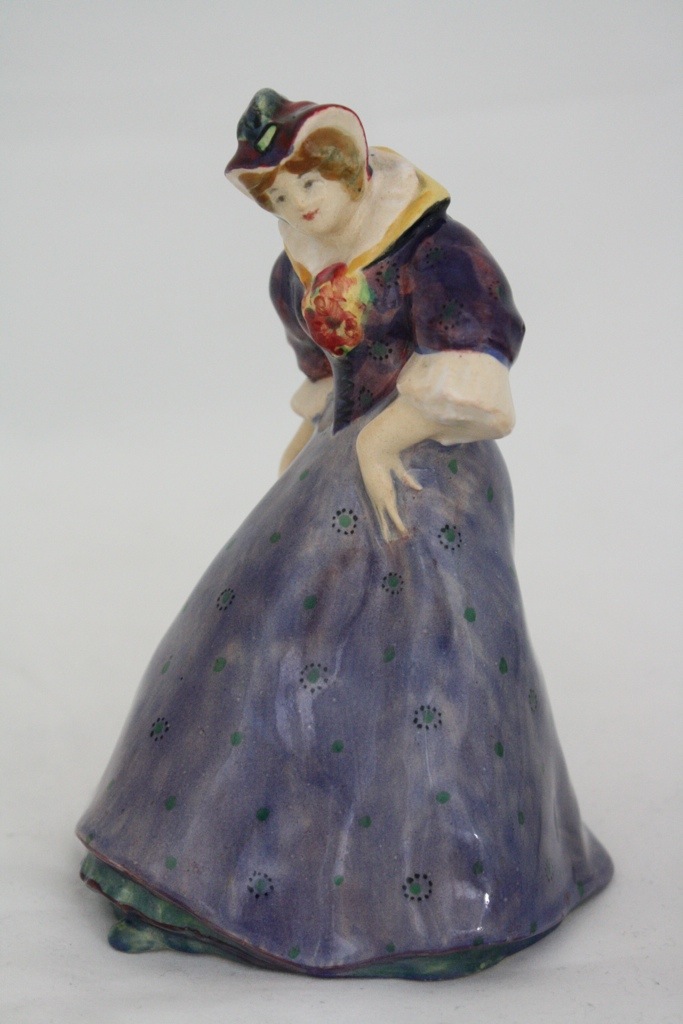
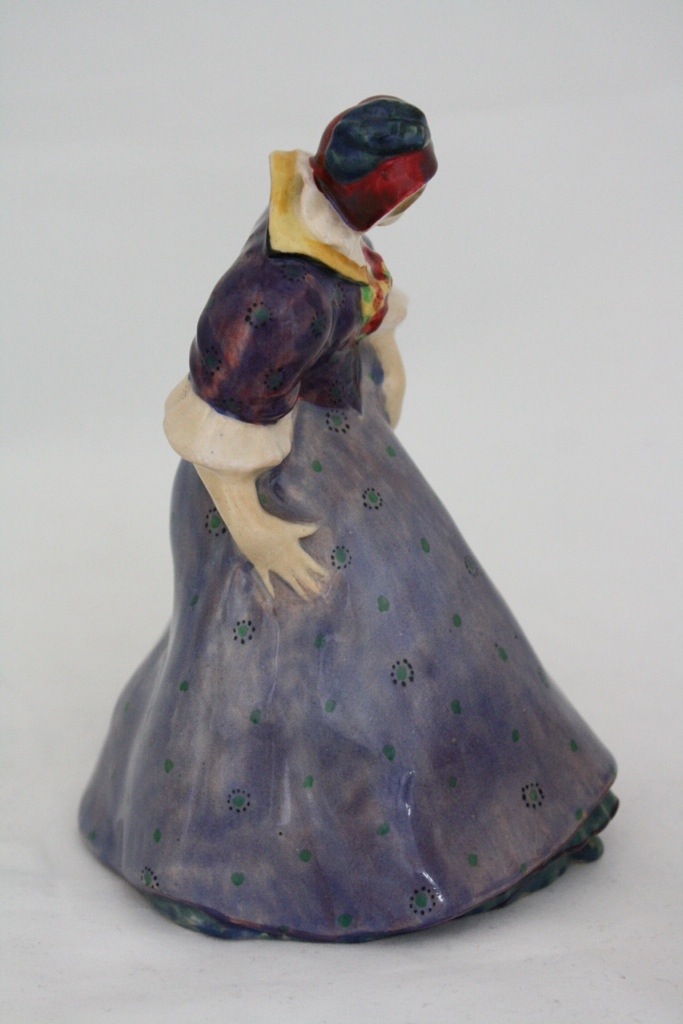
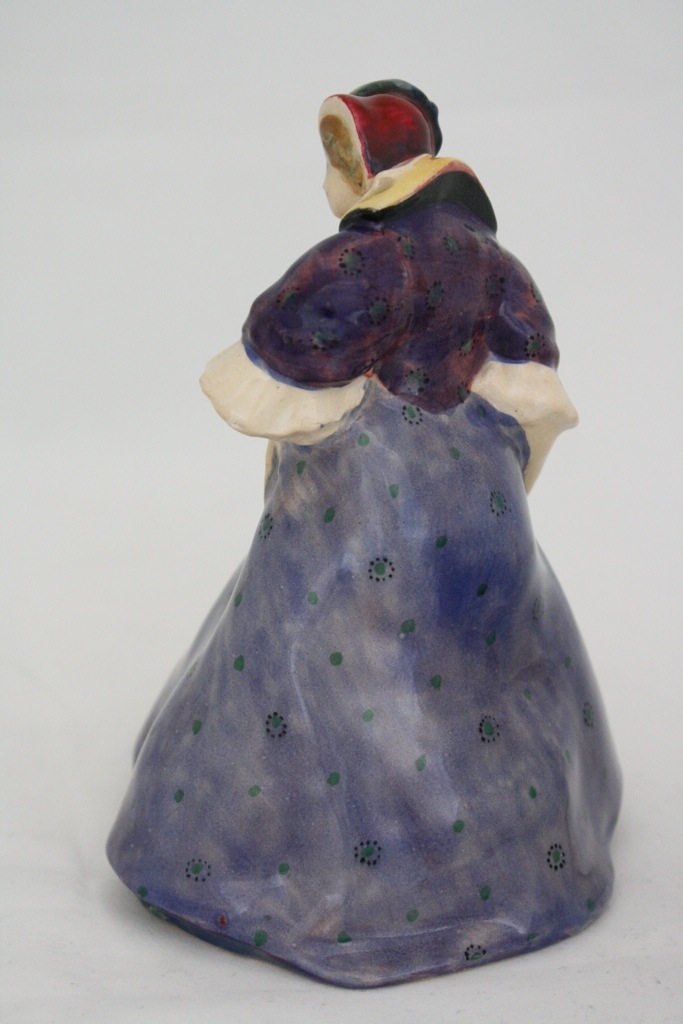
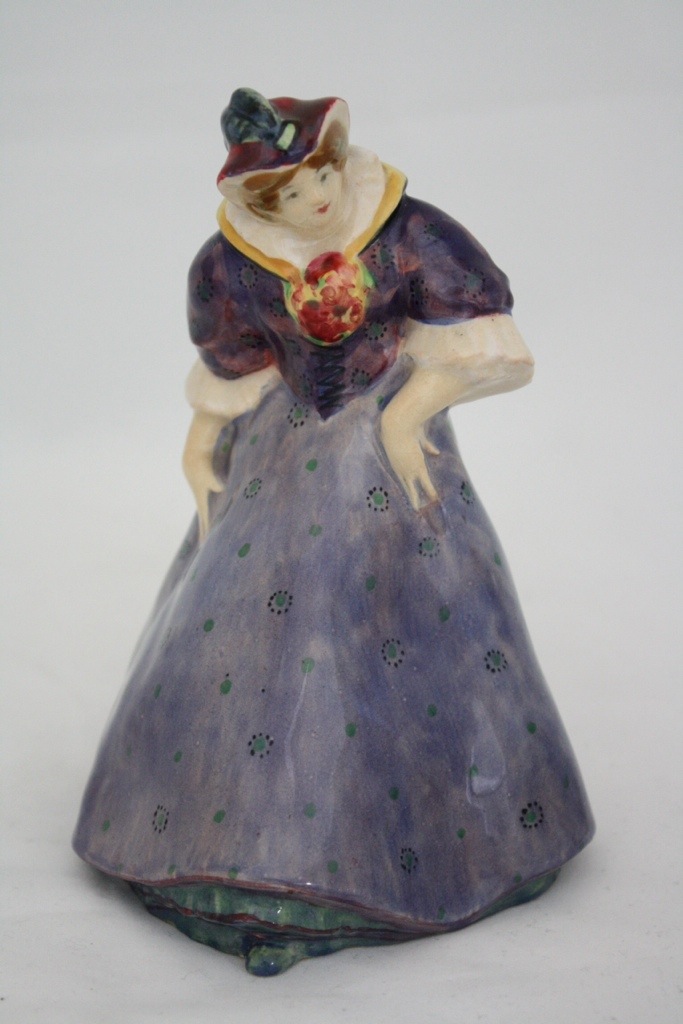
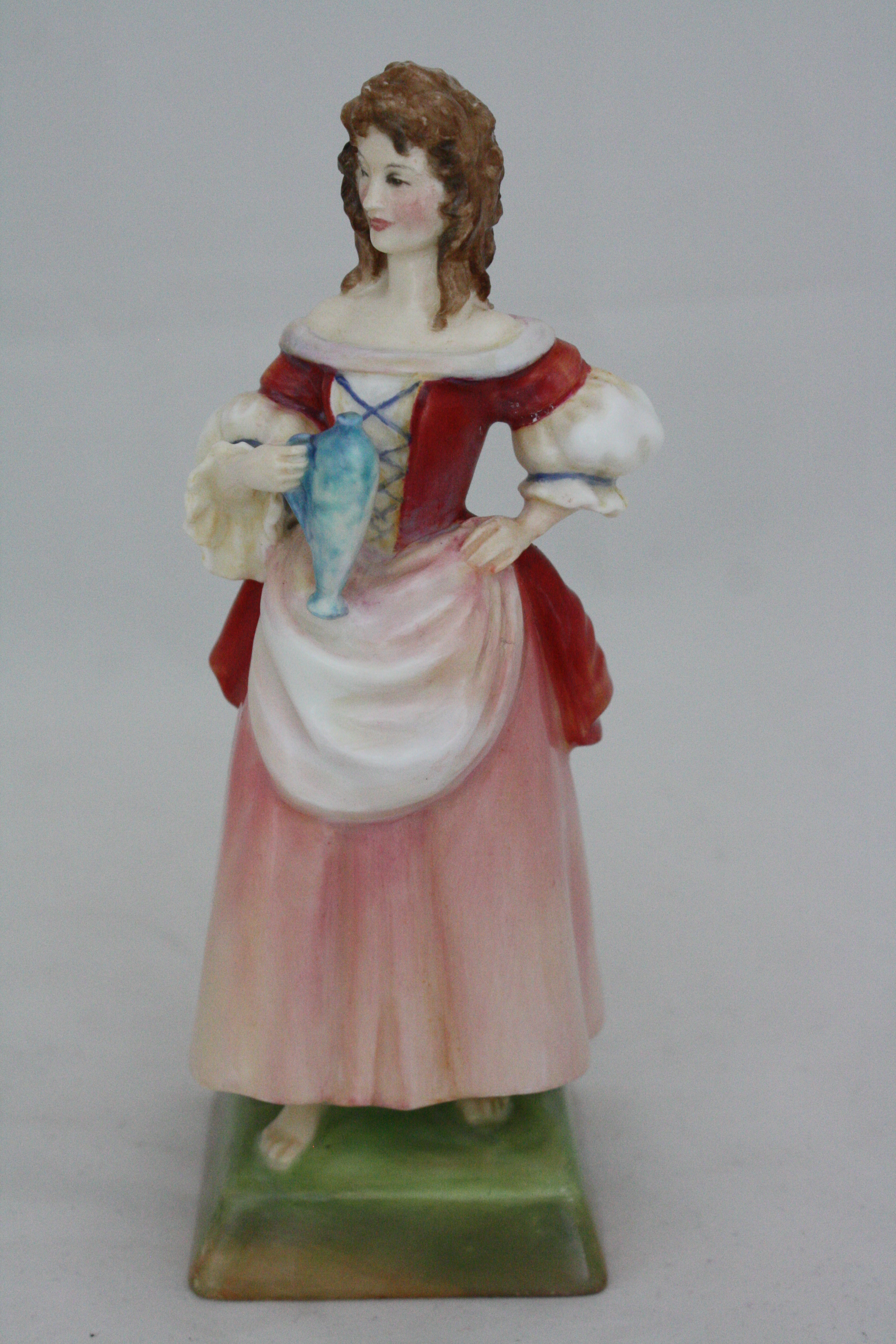
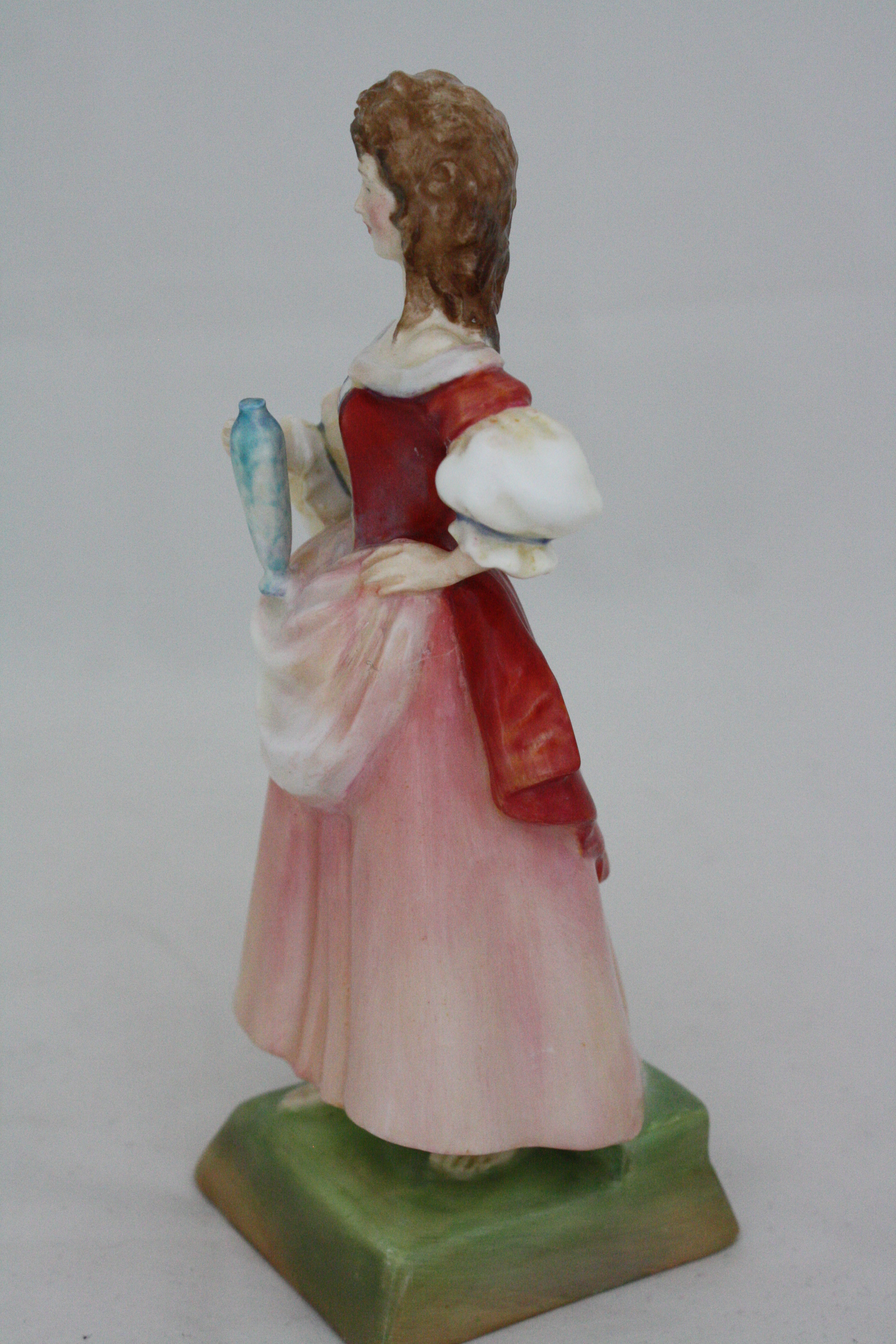
I have recently been asked for advice from Karyn and Gordon Harvey on the figure below from their collection, purchased recently and something they hope is a prototype. Here are the pictures they sent in.

Image

IMG_1323 IMG_1326


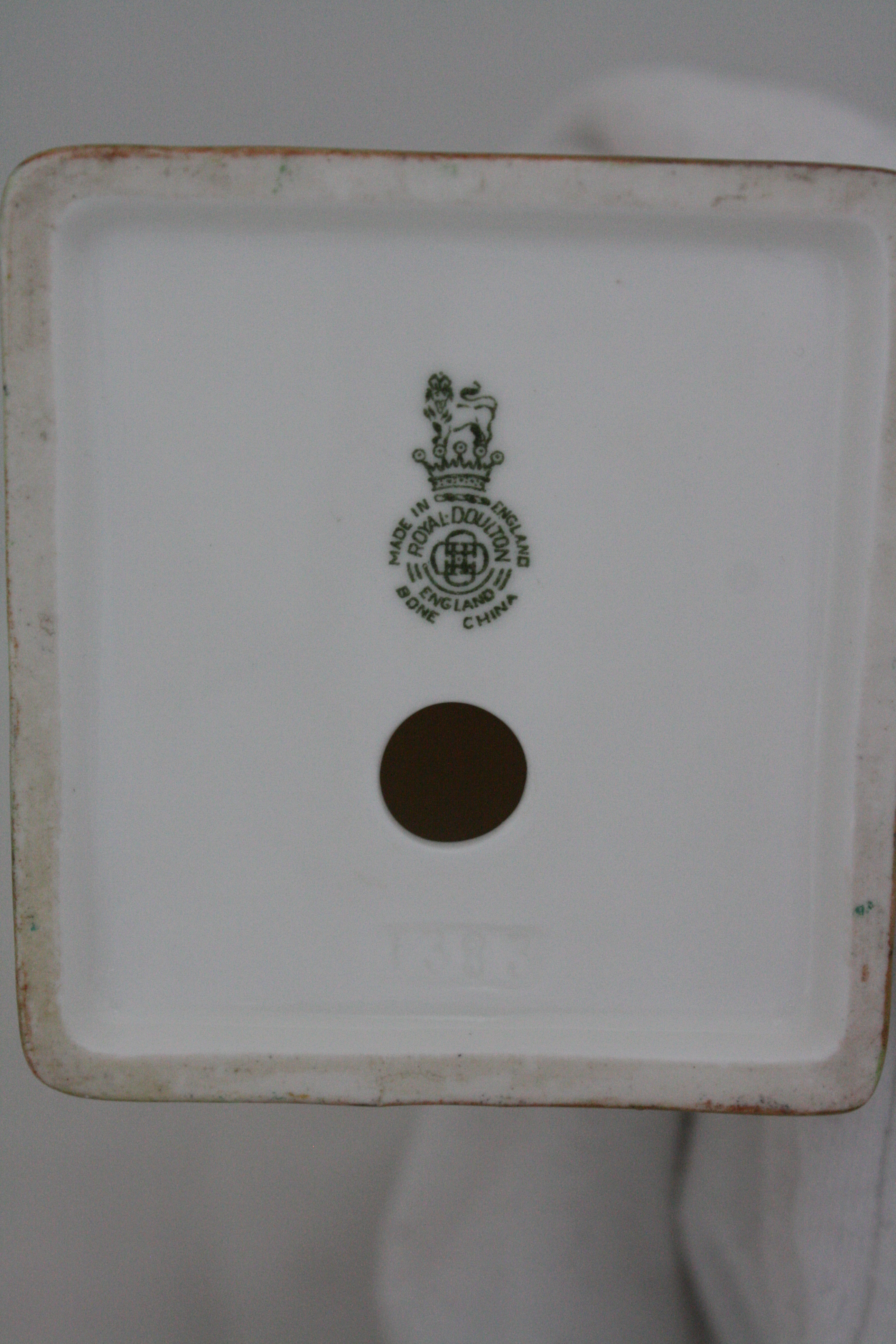
My initial thoughts were that it was clearly a Peggy Davies figure; note the style of the head and the hair and also the detailed modelling. At this time I think she really was trying to imitate Harradine, before developing her own individual style. The head and hair are very reminicent to her figures The Leisure Hour and also Promenade.  One give away to any unknown figure is always the face – I once heard that only after 10 years in the figure department would a painter be allowed to paint faces! Here we can see a very typical Doulton face of the 1950’s. Then we look at the base, and whilst there is a Doulton stamp – this cannot be taken in isolation to say for definite that it is a Doulton figure. However, here you can clearly see an impressed model number. Alas the shape books and design books are no longer available for us to consult, but through my own research I have put together a numbering sequence which leads me to believe that the model dates from the early 1950’s, and specificially to ca. 1953 and I am confident in saying that it is a Doulton piece.

Many prototypes from this time appear to be the work of Peggy Davies, a time when Doulton themselves were trying to rationalise production but also manage the cost effective production of their famous figures. No doubt this particular piece was deemed too expensive to reproduce due to the detailed modelling.

Earlier prototypes and colourways often carry the artist who painted them’s initials. In my experience there are two names which crop up time and again here, and they are RB for Reginald Brown and HA for Harry Allen. This practice seems to have stopped in the 1950’s however when the painter’s initials began to be omitted.

In recent times I have noticed a whole hoard of so-called colourways and prototypes coming on to the market – and all I can do is re-iterate my belief that it is always best to buy from a reputable dealer as we would all hate to loose out on a fake!

My thanks to Karyn and Gordon Harvey for their pictures.

Leslie Harradine – Part 1 The early Lambeth years

Leslie Harradine – Part 1 The early Lambeth years

Much has been written about Leslie Harradine over the decades since the resurgence of interest in Doulton art wares.

Above: A rare glimpse into Harradine’s life with his 3rd wife.

Arthur Leslie Harradine was born in 1887 in Clapham, London, the son of a solicitor. In 1902 at the age of 15 he began an apprenticeship at Doulton as a learner modeller under the tutelage of George Tinworth and John Broad, although he also assisted Mark Marshall and Frank Pope at this time too. He would late remark about his experiences at this point in his life that he wished ‘he (Tinworth) would give up those dreary religious plaques and concentrate on mice and frogs’. Perhaps providing us with a clue not only into his own artistic preferences but also into his personal beliefs too.

During this early training Harradine attended evening classes at Camberwell School of Art under Albert Toft, who ironically would provide the model W. S. Penley as Charley’s Aunt HN35 to what would become the HN collection, that Harradine himself would influence so dramatically only a few years later.

In 1908 suffering from the confines of factory life, Harradine left Doulton at the end of his apprenticeship and unexpectedly set up as a poultry farmer in Hertfordshire with his brother Percy. Naturally he set up a studio there and continued the link with Doulton by sending in over eighty different models for them to reproduce as slip cast art ware. The list of items sent varied from figure groups to vases to child figures. These early piece demonstrated perfectly his ability to interpret people from all walks of life and all cultures.

Image

Three examples of Harradine’s early work for Lambeth

With the outbreak of World War I in 1914 Doulton’s art ware production was curtailed and so Harradine decided to emigrate to Canada with his brother, where they acquired 4000 acres of farming land in Saskatchewan. The open spaces suited both brothers and Harradine continued to model pieces but alas could not fire them. In 1916 the brothers enlisted into a Canadian regiment, Lord Strathcona’s Horse Regiment and saw action in France. Leslie had three horses shot from under him and unfortunately the last fell on him, injuring his leg, resulting in his being ‘invalided out’ after long spells in hospitals convalescing.

Image

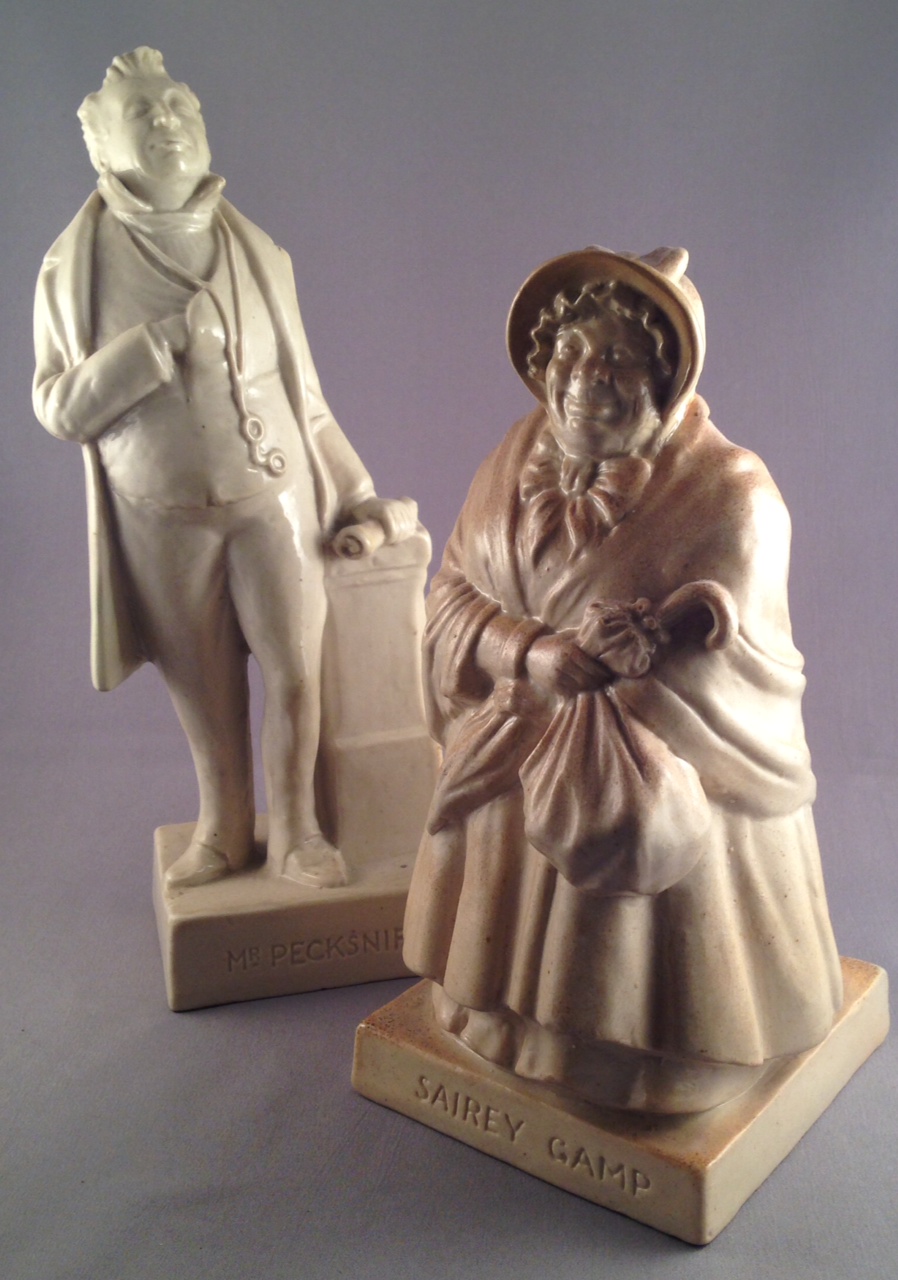
Two of Harradine’s large size Dickens figures made at Lambeth

By the end of the war family life had added a new dimension to his bohemian life. With a wife and a daughter, with two more daughters to follow, Harradine became a freelance artist to support his young family; continuing to do models for Doulton’s Lambeth works.

Image

Mr Micawber made at Lambeth. The brown glazed version is much more unusual, although perhaps less popular than the usual white glazed figure

And so the first chapter of Harradine’s association with Doulton comes to a close. In the next we will look at how new links were established with Doulton at Burselm and the great influence he made on the HN collection for Doulton.


An A-Z of Collecting Royal Doulton – Bunnykins

With so many collectors of Doulton’s famous Bunnykins nursery ware out there, it is hardly a surprise that it reamins a popular line to this day. Originally created by Barbara Vernon (she took her mother’s surname when she became a nun) in 1934 and famous patrons of this ware have helped perpetuate its success.

Image

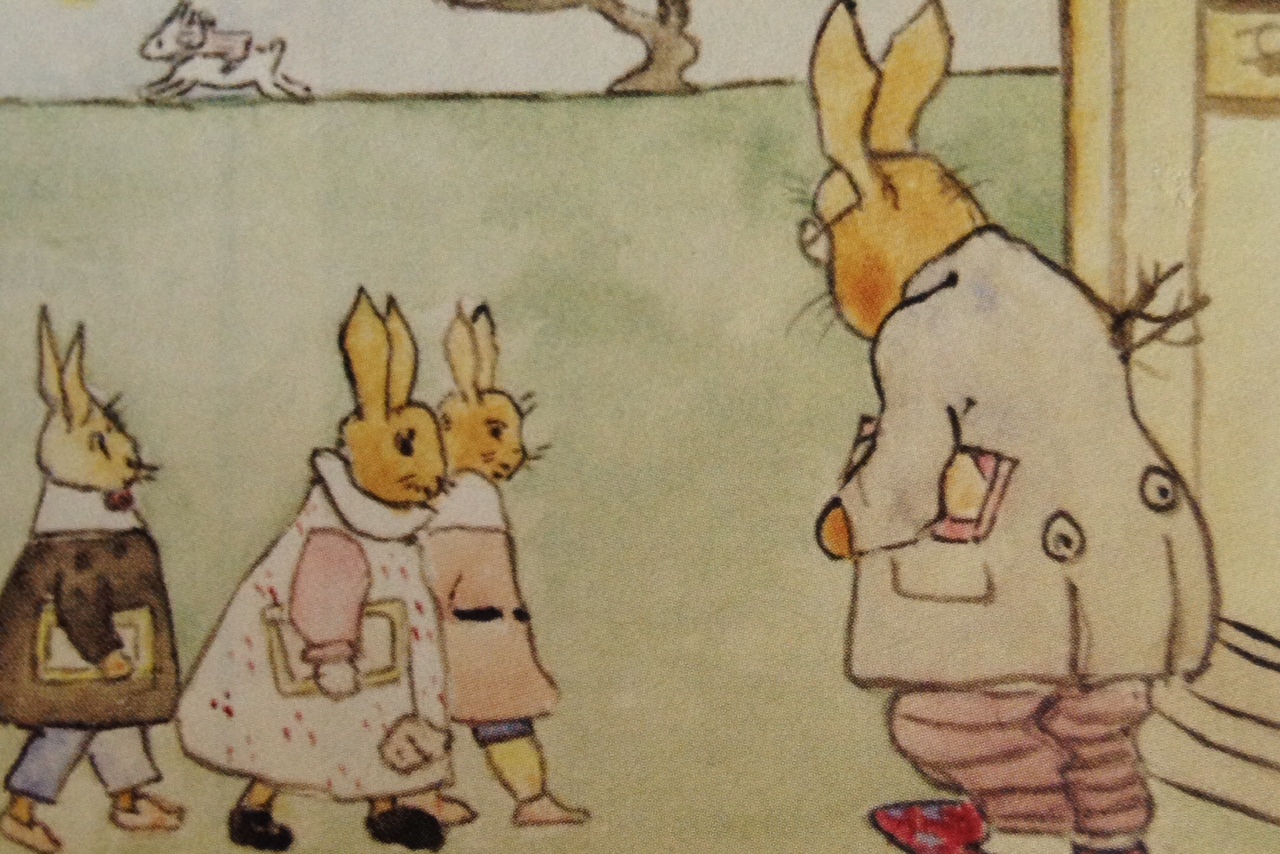
An example of an early pen-and-watercolour illustration by Barbara Vernon (1930)

In 1937, the late Queen Mother first saw examples of Bunnykins and since then it has been a regular in Royal nurseries around the world. Interestingly, Barbara was actually the daughter of Cuthbert Bailey, the manager of Doulton’s Burslem factory and hence the Doulton connection.

Image

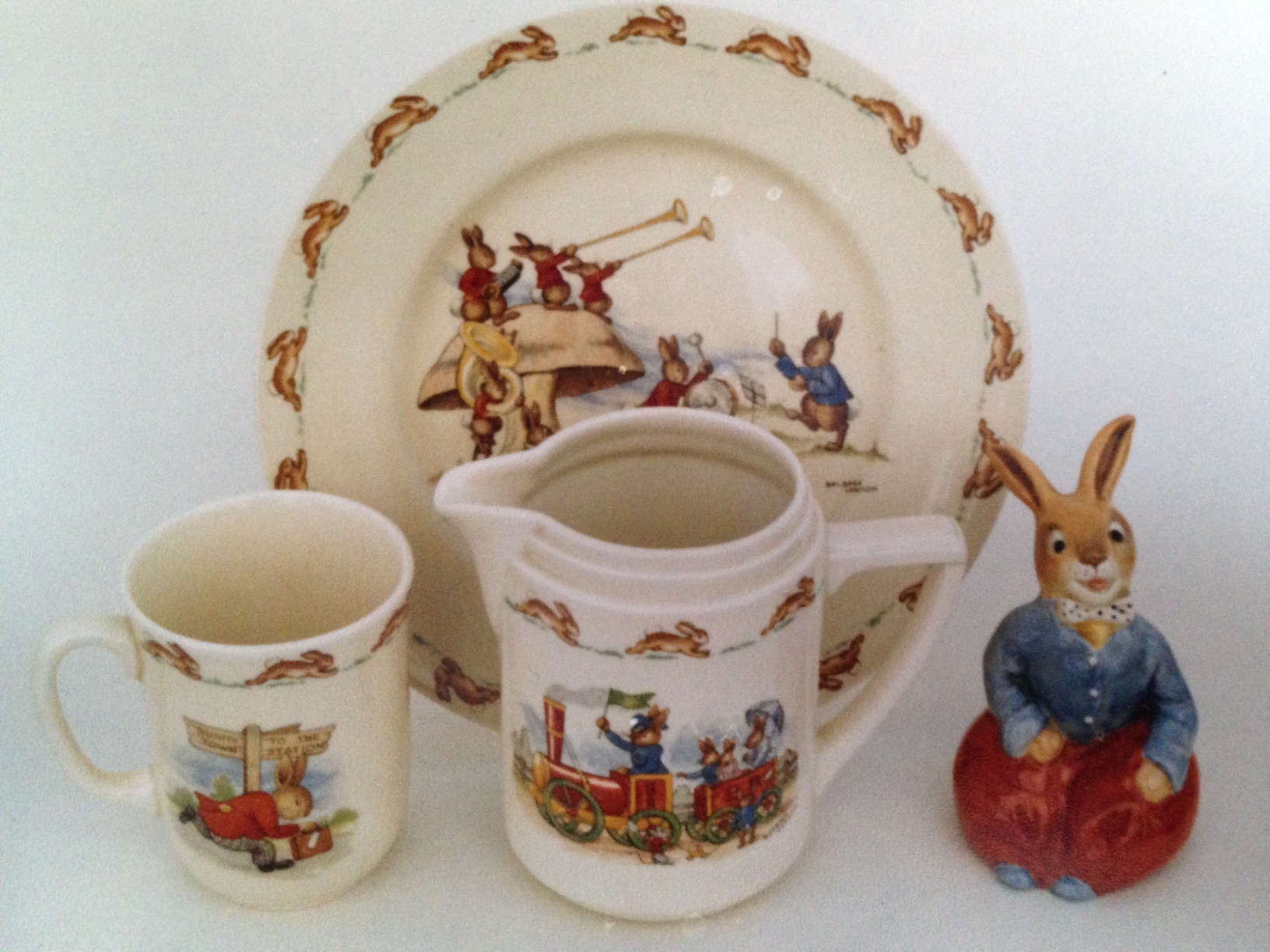
Examples of nurseryware and the rare Billy Bunnyking

Due to failing eyesight Barbara’s creations for Doulton curtailed in the late 1940’s and Walter Hayward took up the reigns and designs of this most famous nuersery ware continue even to this day. At the most recent Doulton fair here in the UK, once again there was a special limited edition piece, a Bunnykins figure commissioned by Ceramics International for the event and of course it was another sell out!

Image

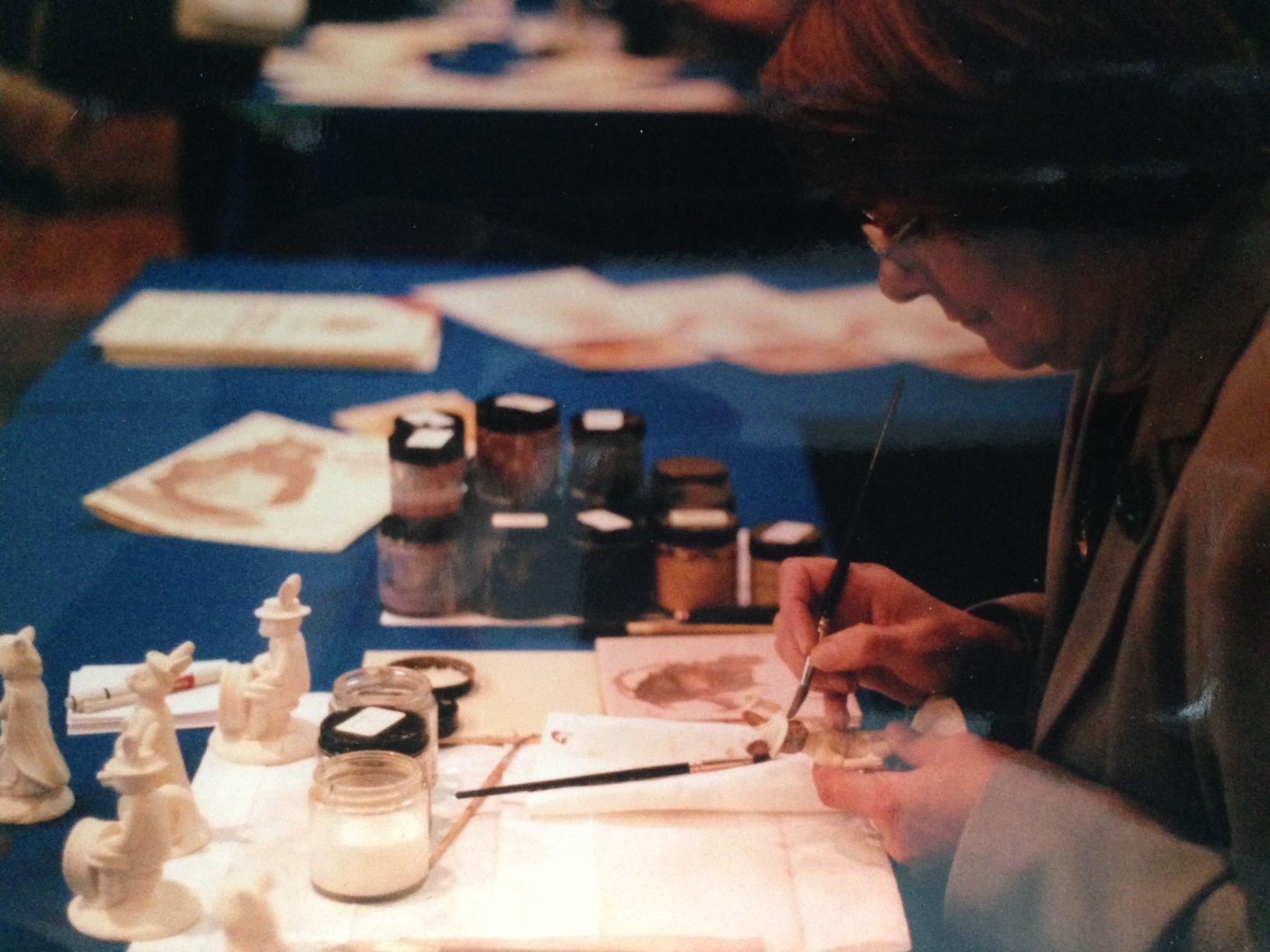
Bunnykins figures being decorated

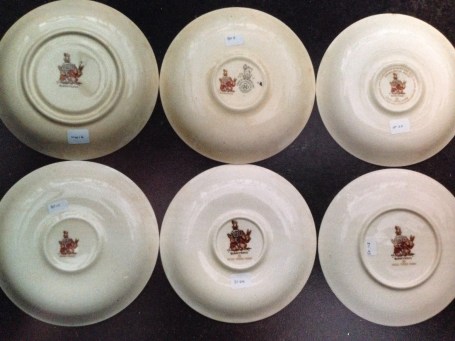
Here you can see a picture of the various backstamps used on Bunnykins over the years. Of interest to collectors of nurseryware itself are the signed pieces by Barbara Vernon. Walter Hayward, rather than use a facsimilie signature used a mouse to indicate his designs.

Image

Examples of Bunnykins nurseryware backstamps

The range of early Bunnykins figures are charming with their doleful eyes and there is an early range of tableware with modelled heads to compliment these figures. These modelled pieces of tableware are extremely rare and very popular with collectors today.

Image

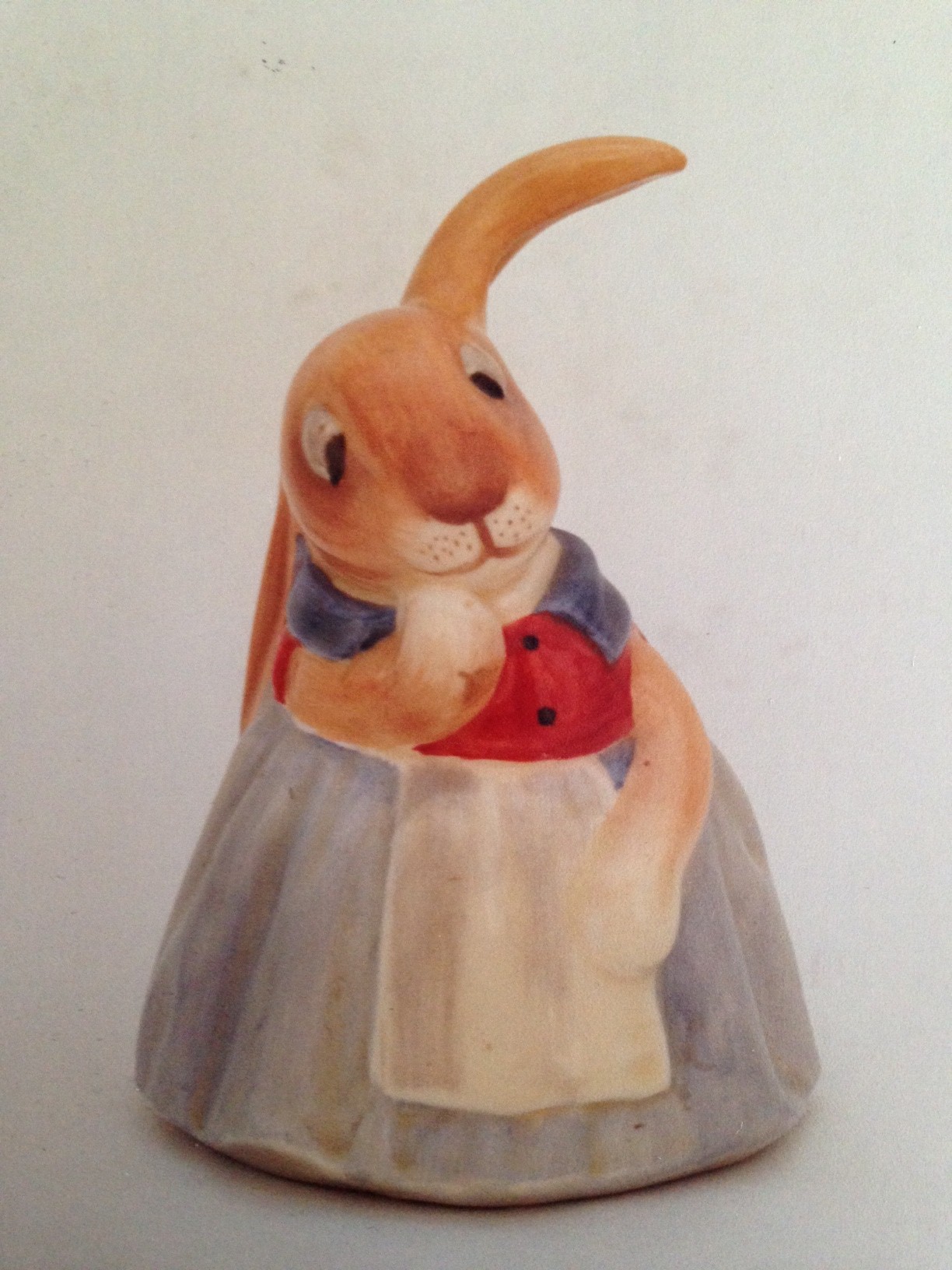
The rare and ever popular Mother Bunnykins

As with all things Doulton colourways and prototypes dominate this field of collecting. Yet, there are many variations to be found more modestly, especially when special limited editions have been and are made as commemoratives and also for fairs around the world. So happy hunting and happy Easter!!


Doulton artist profile – Reginald (Reg) Brown

Reg Brown was destined to play a pivotal role in the field of Doulton’s figure production. Born in 1909, he died at the early age of 53. He spent most of his life living locally to the Burslem factory in Wolstanton. Doulton typically became something of a family affair for the Browns, with his daughter-in-law working in the Character Jug department and his youngest son in the Doulton laboratory.

Image

Reg Brown ca. 1950’s Head of Doulton’s on-glaze Figure Painting Department

Reg was originally a pupil of Herbert Betteley at Doultons and of the same school as Tom Parton, Charles Hart , Bernard Green, Harry Stevenson, Roland Holdcroft, Jack Pierpoint and others. He studied at the Burslem College of Art and from an early stage showed versatitily in painting landscapes and castles amongst many other subjects with prowess. However, he was destined to join Harry Allen, Norman Woodings, Charles Nixon and a handful of other men who formed the nucleus of the original figure painting department.

A founder of the Doulton Art Society, a member of the Doulton Sports Club and the Doulton choir, Reg would eventually become head of the On-glaze figure painting department, a position he would hold until his untimely death.

Collectors I know specifically look for Reg’s figures as they have exquisite faces and are superbly painted. I am fortunate to posess a few colourways also painted by Reg from the 1940’s, no doubt from his time as the head of department and the colourings are just wonderful in real life. One of my favourite figures painted by him is this colourway of Christmas Morn from 1942.

Image

Once again, why not see how many of your pieces are painted by Reg – and what a great theme for collecting figures!

Check out our Facebook Doulton Collectors Club page for more articles, info and pictures!

Simply search Facebook for the ‘Doulton Collectors Club’ and ask to join, then you can ask questions a view a variety of material from around the world!!!
What are you waiting for?

Doulton artist profile – Eric Webster

It is indeed an arduous task to try and re-assemble something long after the event, but for many years I have been trying to find out as much as possible about the early figure painting department at Burslem. The changes these early artists must have witnessed and the speed at which they occurred must have been mind blowing.

One artist whose monogram appears time and again on the bases of figures from the 1920-40’s is Eric Webster, born in 1896. Eric retired from Doultons in December 1962 and the last remaining link to what was known as the ‘Noke’ school of artists was lost. Originally engaged by John Slater, the first Art Director at Burslem, Eric served most of his years under the guidance of Charles J. Noke who succeeded John Slater as Art Director.

Image

Eric at work 14th October 1953

Eric was born and bred in the potteries and attended the Tunstall School of Art. When he arrived at Doultons he was engaged with painting plates and vases, and although a versatile artist – landscapes were a preferred theme. As the Doulton archive itself describes, around the time of the First World War, C. J. Noke began introducing ‘small pieces of sculpture in the shape of Victorian type figures and small animal models.’ This was of course the launch of the now famous HN collection and Eric together with Harry and Charles Nixon were the first three to be engaged in the decoration of the figures and animals. Eric being principally involved in the latter’s decoration. Incidentally the HN numbers we all know originated from the initials for Harry Nixon, just mentioned. However, Eric must have been prolific painter as his monogram is readily found on figures too from the 1930’s.

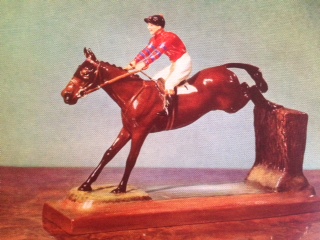
There were many high points to his long career with Doulton. Notably the painting of the first Championship Dog model ‘Lucky Star of Ware’ and later the model of the present Queen’s horse Monaveen, that was produced for her visit to the Doulton premises in Burslem, when still a princess in 1949 (see the video link already posted for actual footage of this famous visit). Eric reportedly visited the stables to take sketches in colour so as to ensure accuracy in the actual painting.

Image

A publicity shot of Monaveen, not available to purchase

Animal painting was clearly a forté of his and it was no surprise in ca. 1925 that he was entrusted to take charge of a newly created department responsible for animal painting.

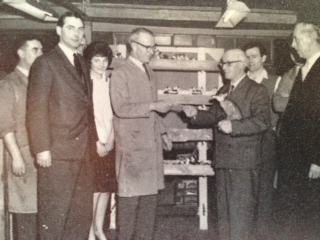
In his later career, Eric was responsible for painting prestige pieces, which were made to order. Here he is seen collecting a cheque and gifts from his friends at Doulton, including a naturalistic fox painted by himself!

Image

Eric at his retirement presentation, holding the large fox model

If you look at the bases of your figures and early animals check for an ‘EW’ or ‘EAW’ and that is our man!