Category Archives: Burslem

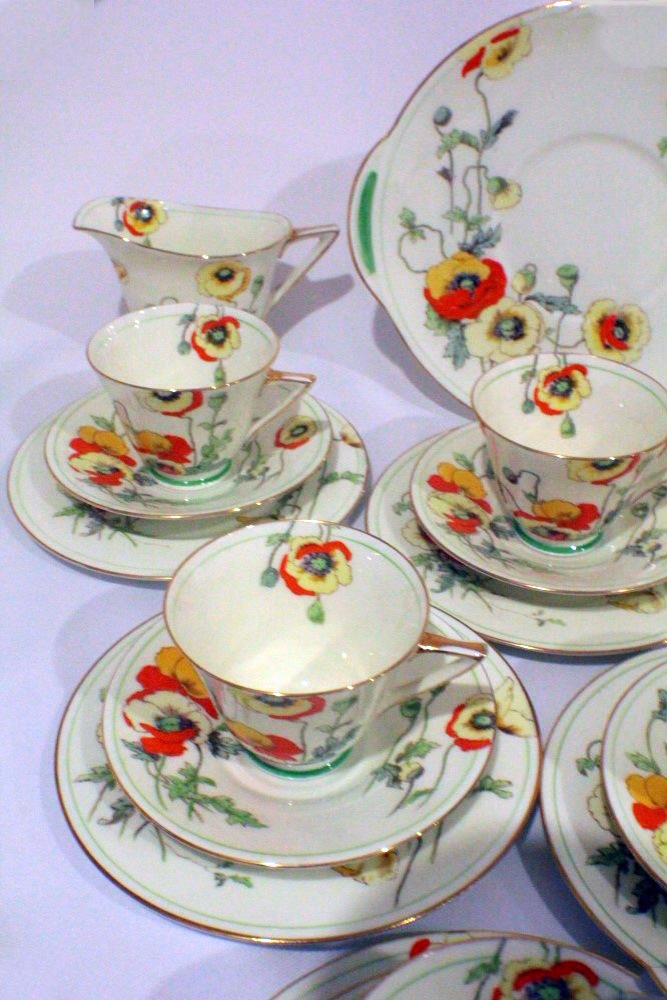
Doulton’s deco tea time delights!

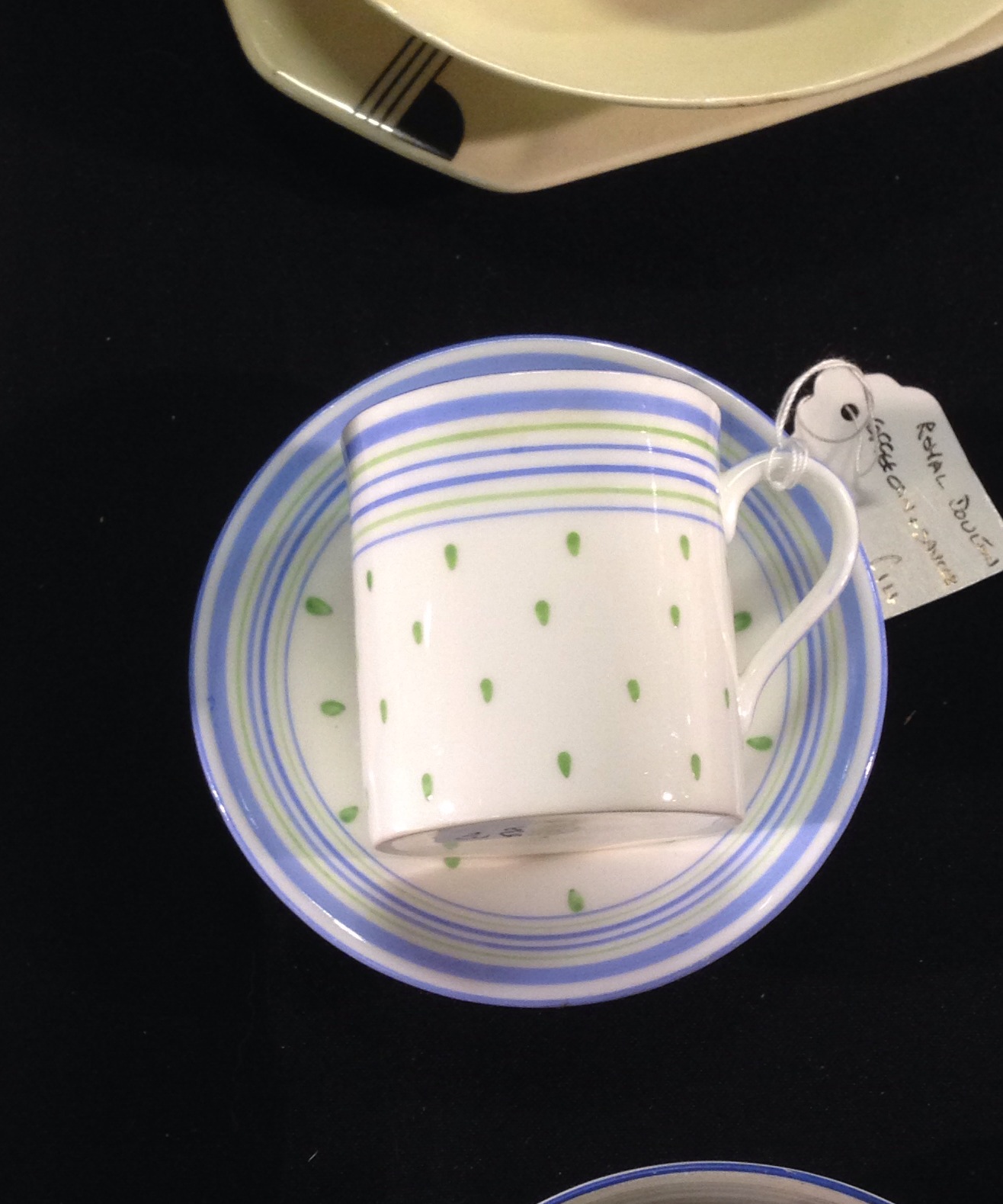
Browsing around a fair today I was amazed to still find unknown deco tableware patters such as the one below.

IMG_0927.JPG

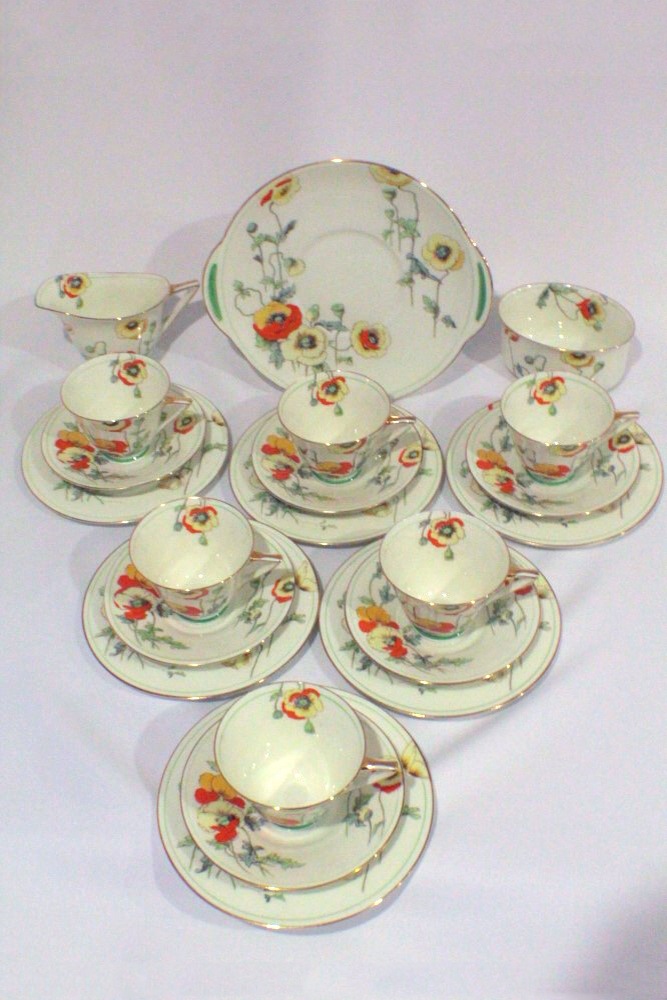
A more amazing find was this Poppy teaset, complete and in immaculate condition, dating to 1934.

IMG_0947.JPG

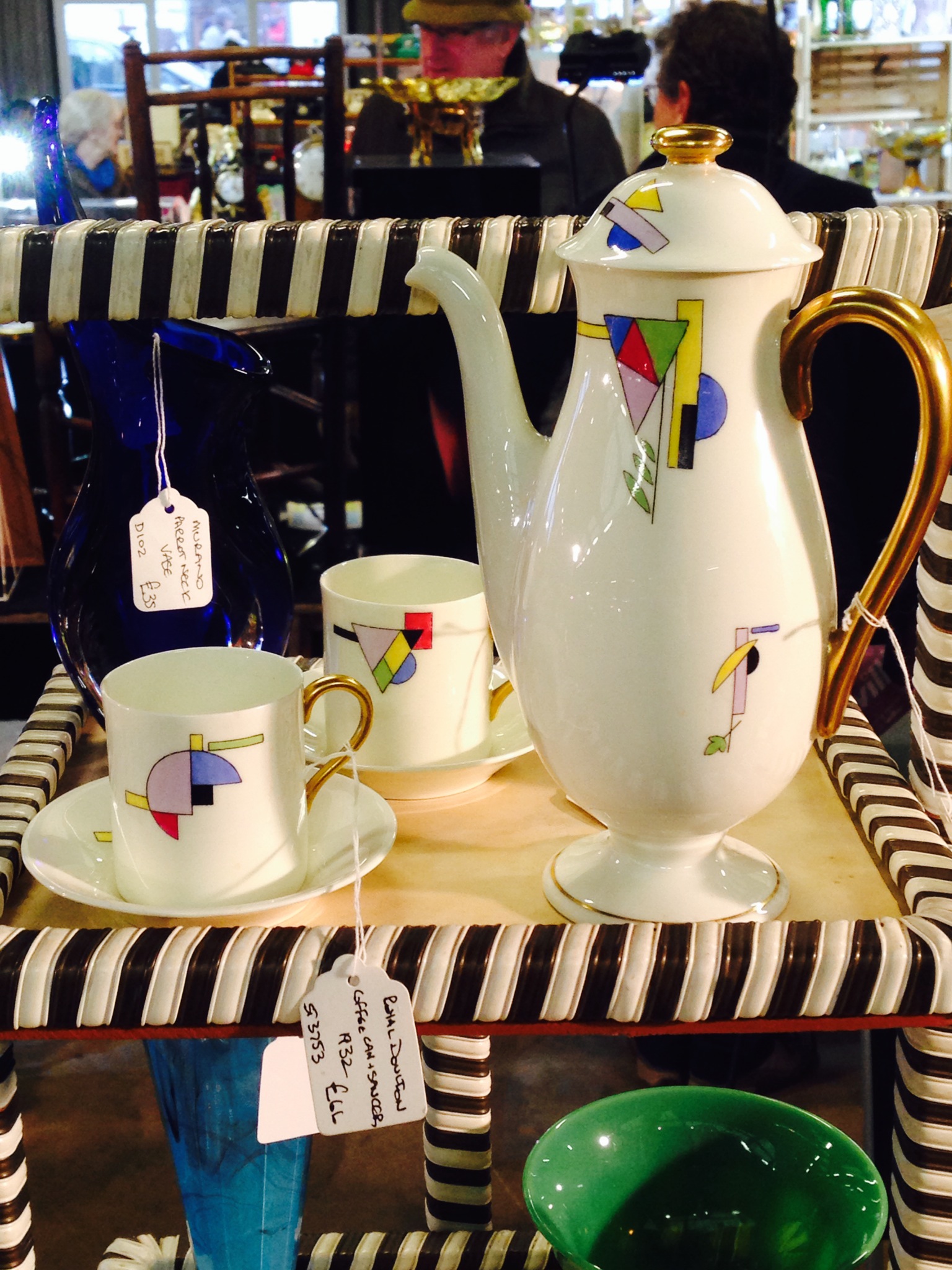
Even the names for some patterns are the epitome of their times! Including Eden, Lido and Syren! This pattern however is unnamed!

IMG_0929.JPG

If only space permitted a collection of these stylish patterns! It is however, great to see that they are still popular!

IMG_0950.JPG

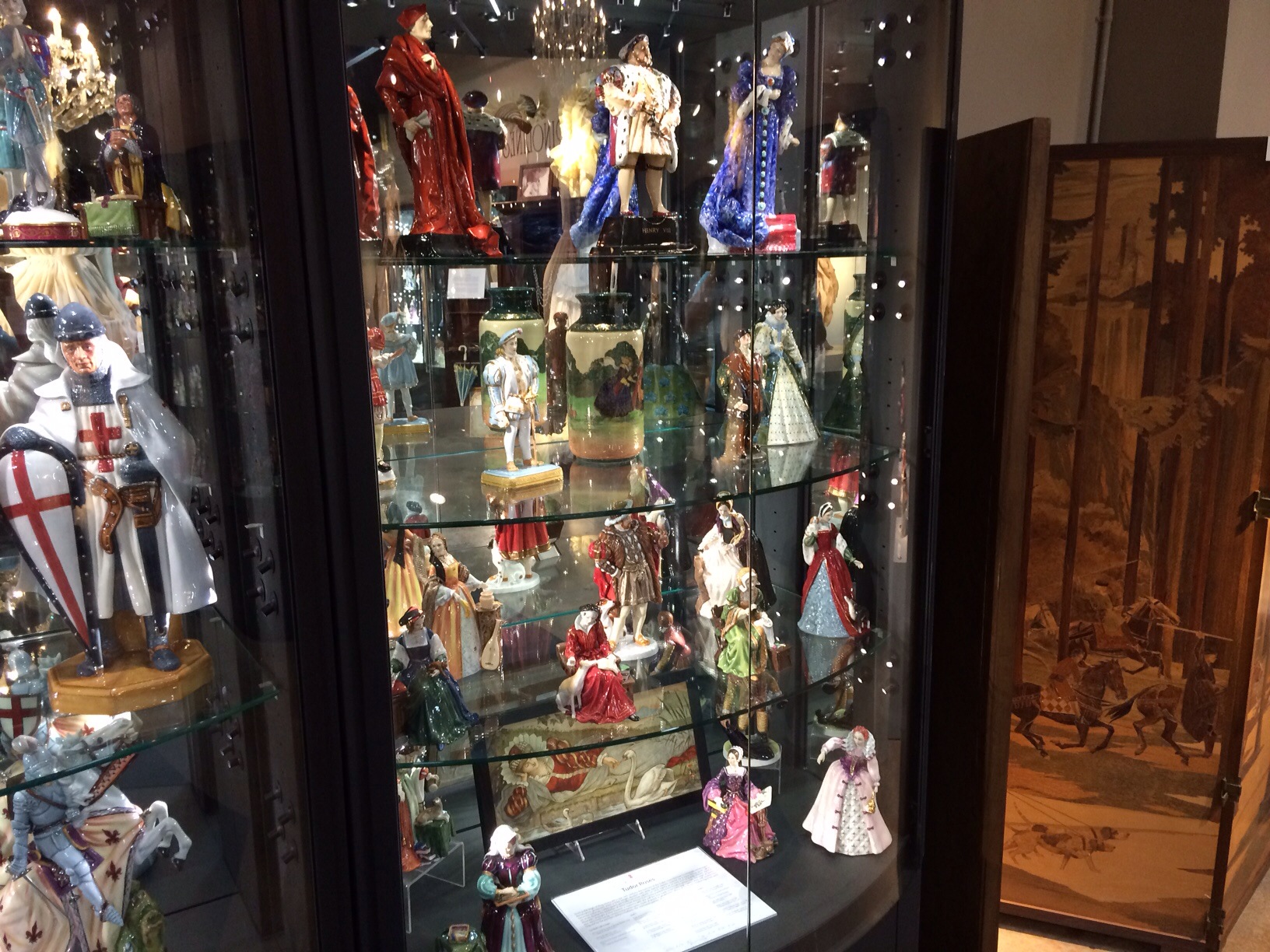
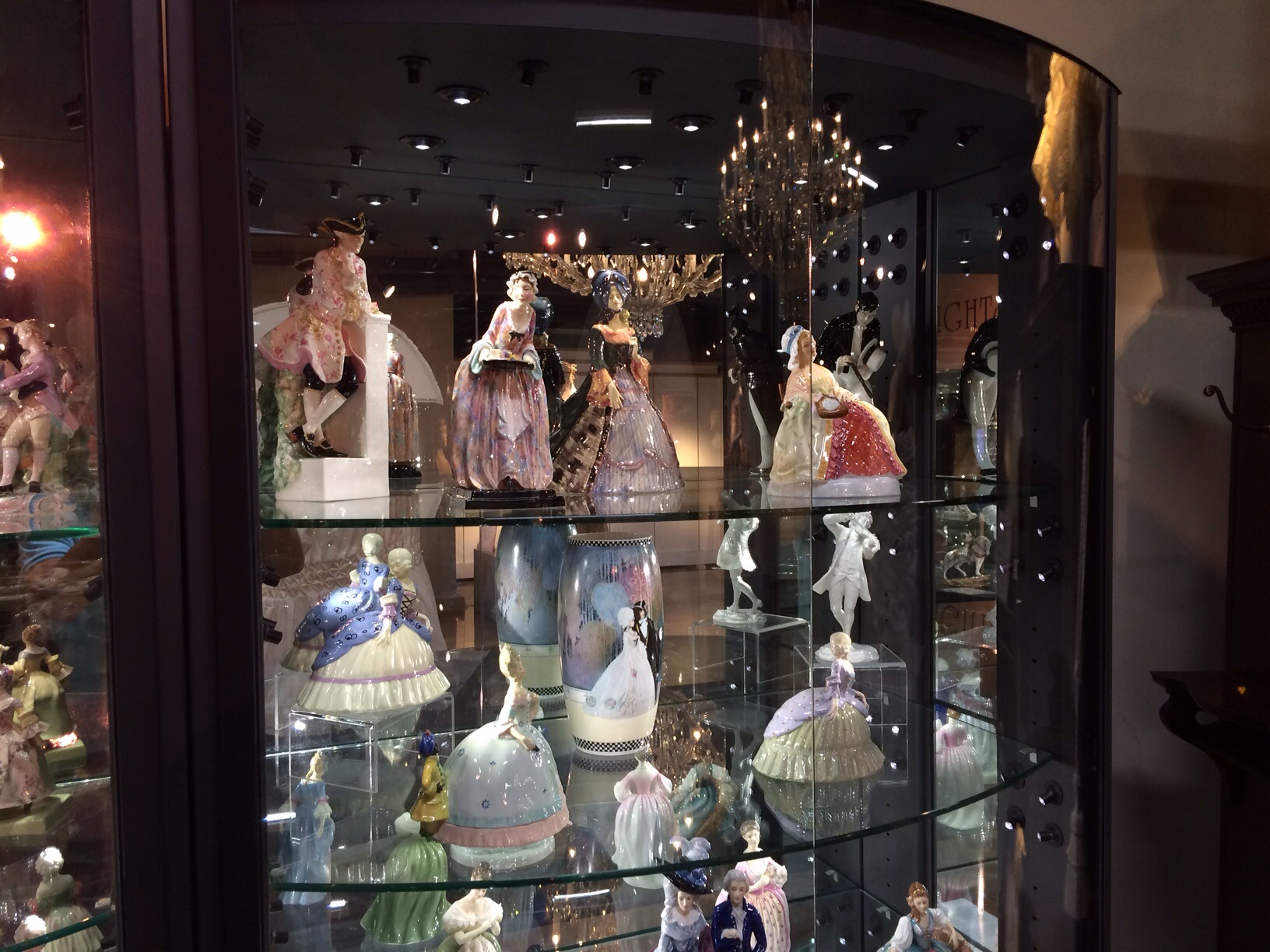
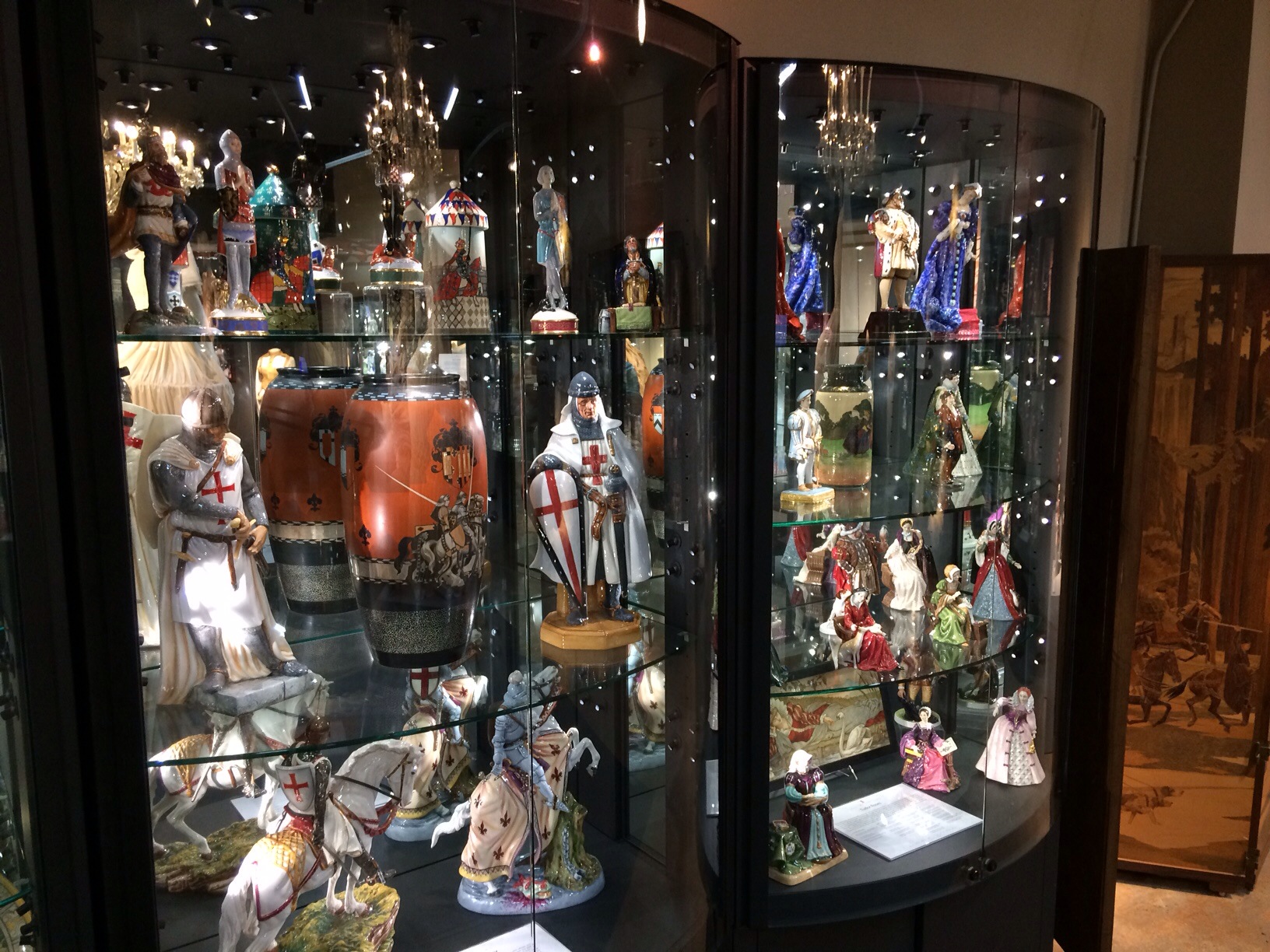
The WMODA exhibition ‘A flair for fashion’.

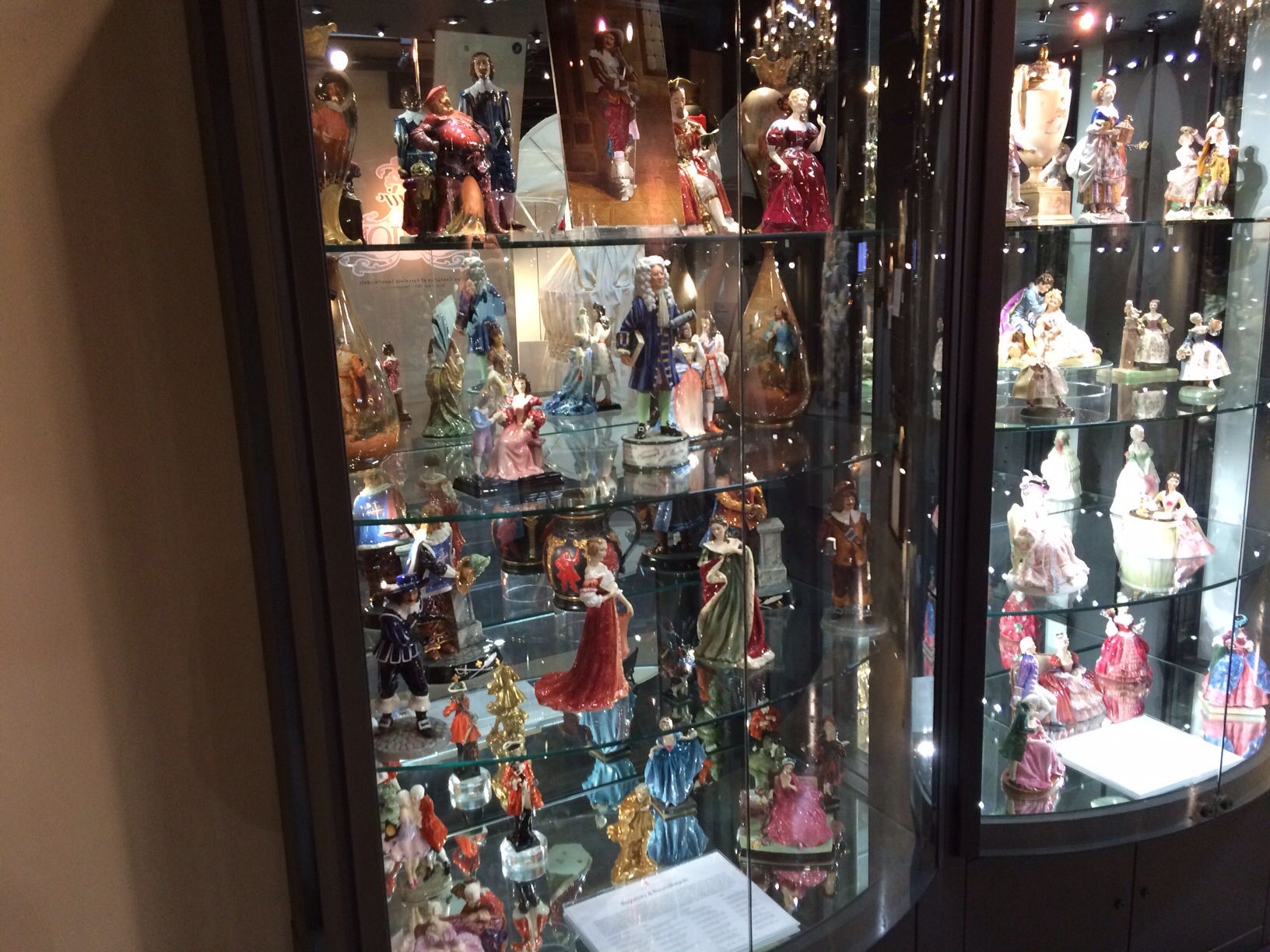
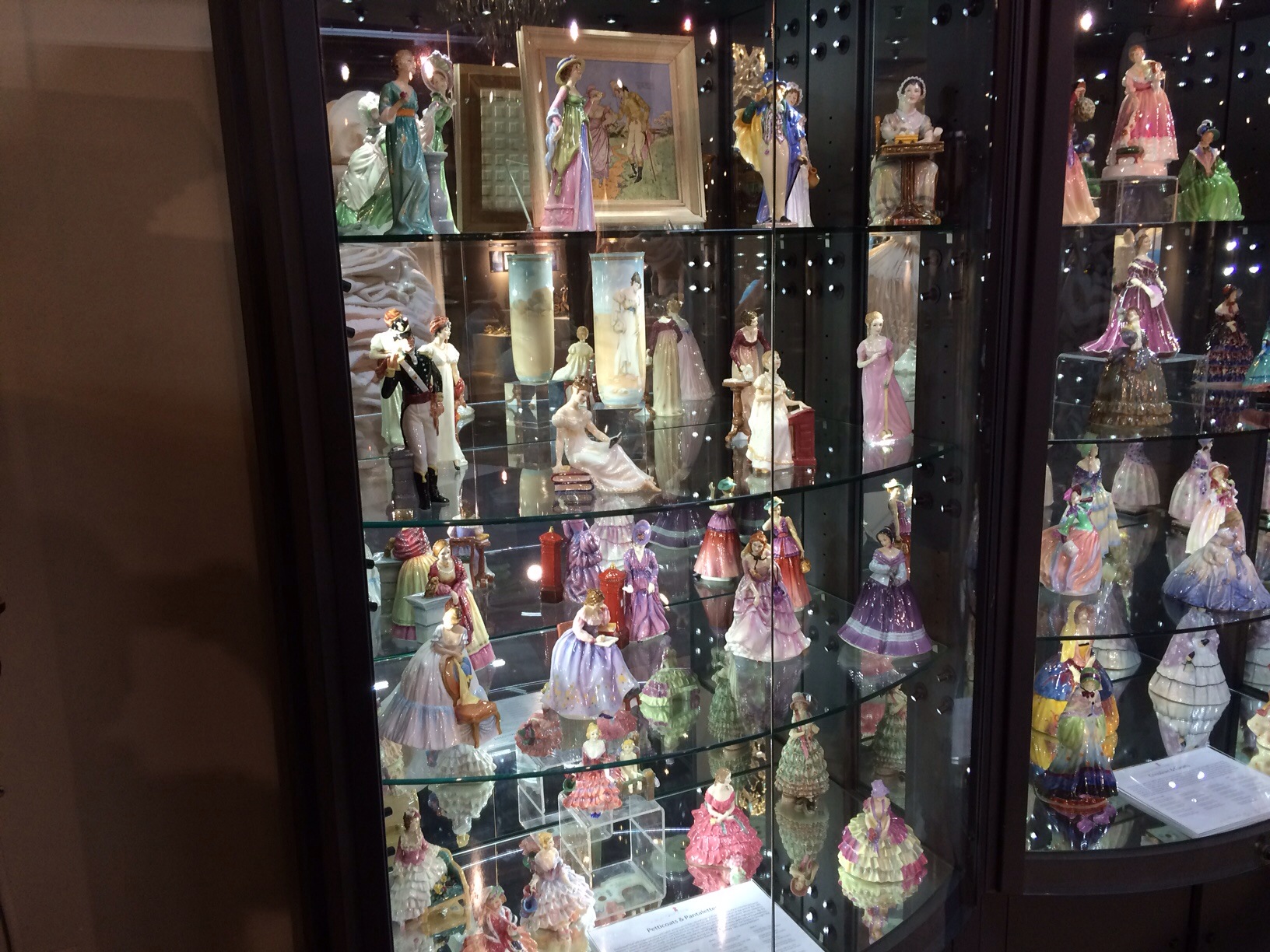
I’ve just had some extra pictures of the current exhibition at the WMODA housed at the Gallery of Amazing Things that I thought would interest us all!
The sheer breadth of exhibits is to be marvelled but for me it is the massive array of Doulton wares that interests me most!
Here are a few pictures of the figures currently on display as part of the Flair for Fashion exhibition! Enjoy!!

For further information visit –

http://galleryamazing.com
and

Home

IMG_5703.JPG

IMG_5699.JPG

IMG_5701.JPG

IMG_5700.JPG

IMG_5702.JPG

An interesting Kingsware Loving Cup.

IMG_0547.JPG

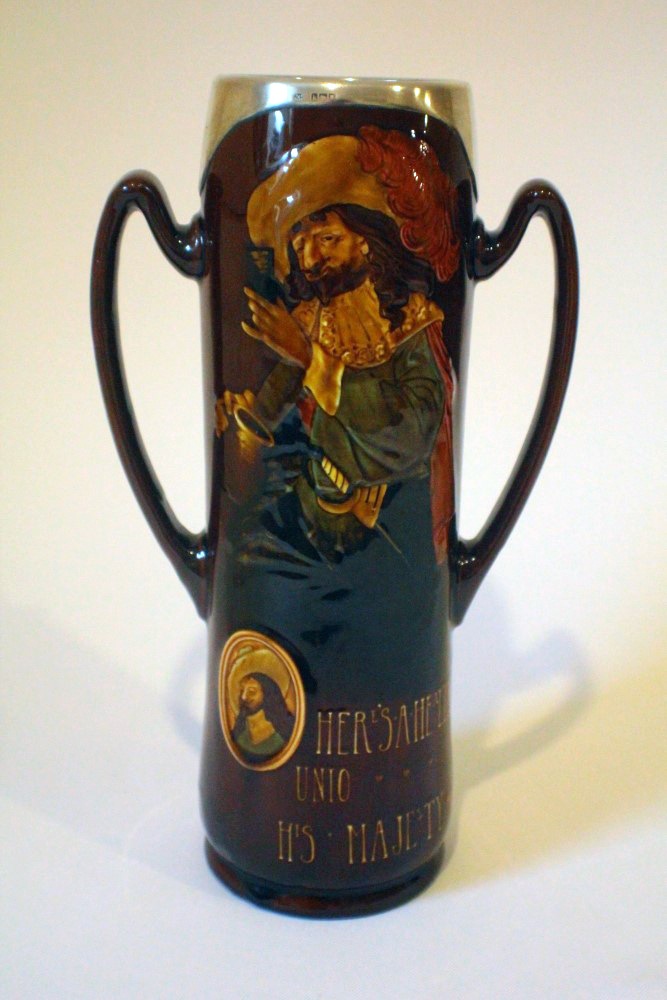
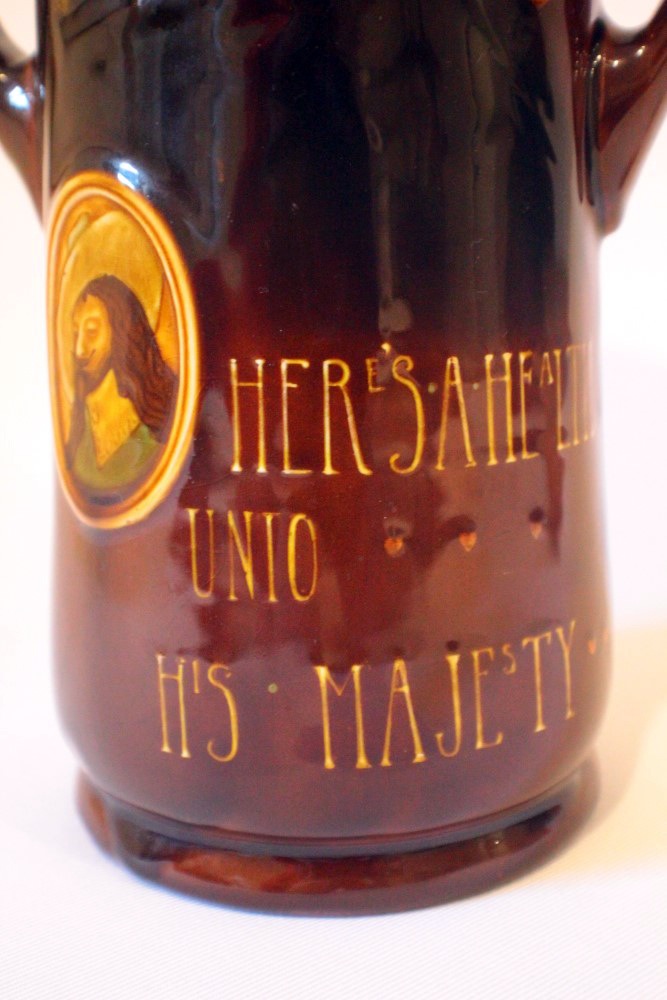
Another chance find- this Kingsware loving cup from 1905 complete with sterling silver mounts and standing an impressive 13″ tall. No doubt made to commemorate England’s new monarch Edward VII, who succeeded his mother Queen Victoria to the throne in 1901. The cup is emblazoned with the motto “Here’s a health unto his Majesty”. The cup was later adapted to a jug in 1936, to commensurate the approaching coronation of Edward VIII, that of course never happened due to his abdication. This flask version was made for Dewars in a limited edition of 600.

IMG_0543.JPG

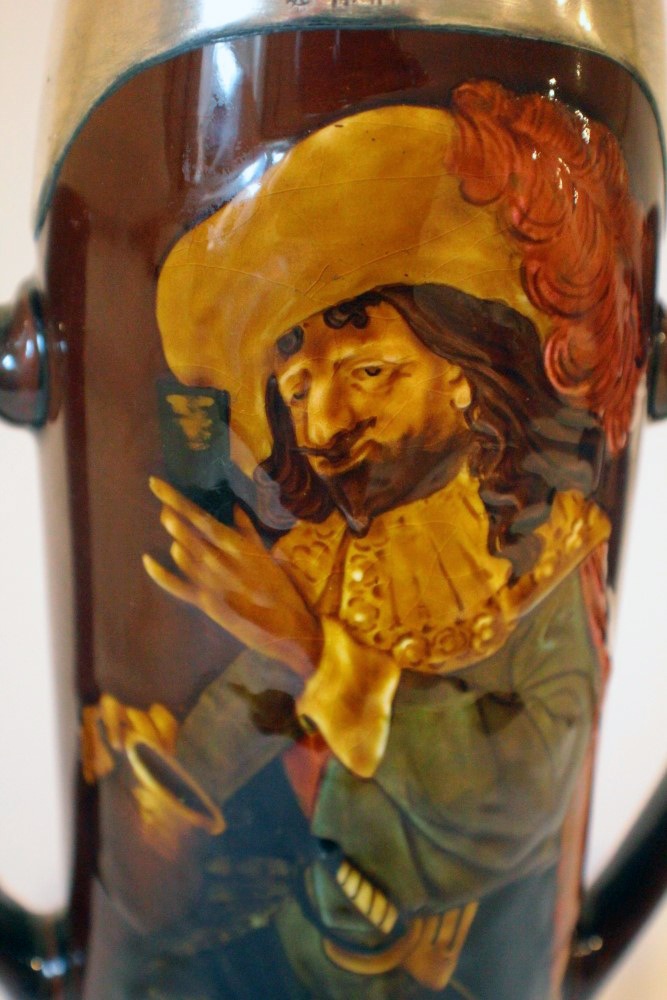
The magnificence of the loving cup has to be seen in the flesh to be appreciated. Certainly the detail is much more vivid than in the later flask, the latter is also missing the cameo image of the Cavalier.

IMG_0545.JPG

Interestingly the sterling silver mounts are stamped G B & S, for George Betjeman & sons, a prestigious London silversmiths, who commissioned many Doulton Burslem pieces including a Kingsware spirit barrel with tavern scene, Kingsware tobacco jars including the large pipe that can be found and smaller Kingsware ash trays – all with sterling silver mounts supplied by them. In addition to Kingsware, they also commissioned Shagreen items from Doulton for their exclusive store too.

Royal Doulton’s Fairies

IMG_9927.JPG
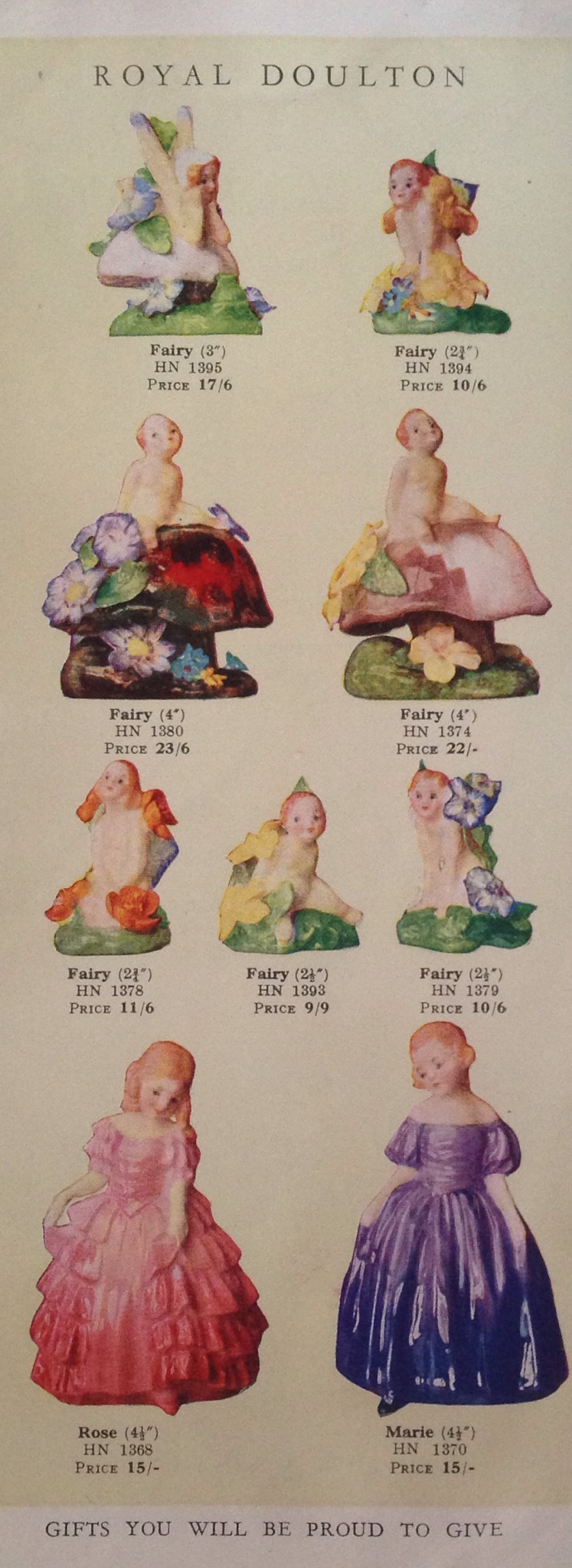
A catalogue page from 1930.

These sprightly, mythical creatures of many a folklore were immortalised by the great Leslie Harradine for the HN collection in 1930, but interest in all things ‘fairy’ had reached a fever pitch a decade before with the so-called Cottingley fairies; a series of 5 photographs of fairies taken by two young cousins and heralded by Arthur Conan Doyle (author of the Sherlock Holmes stories) as evidence of their existence. Alas the cousins would admit eventually that all but the fifth was faked and that, it has been suggested, was probably the result of a double exposure by the young girls.

IMG_4993.JPG
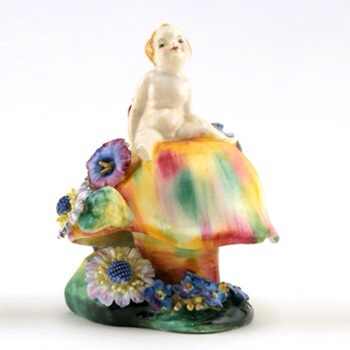
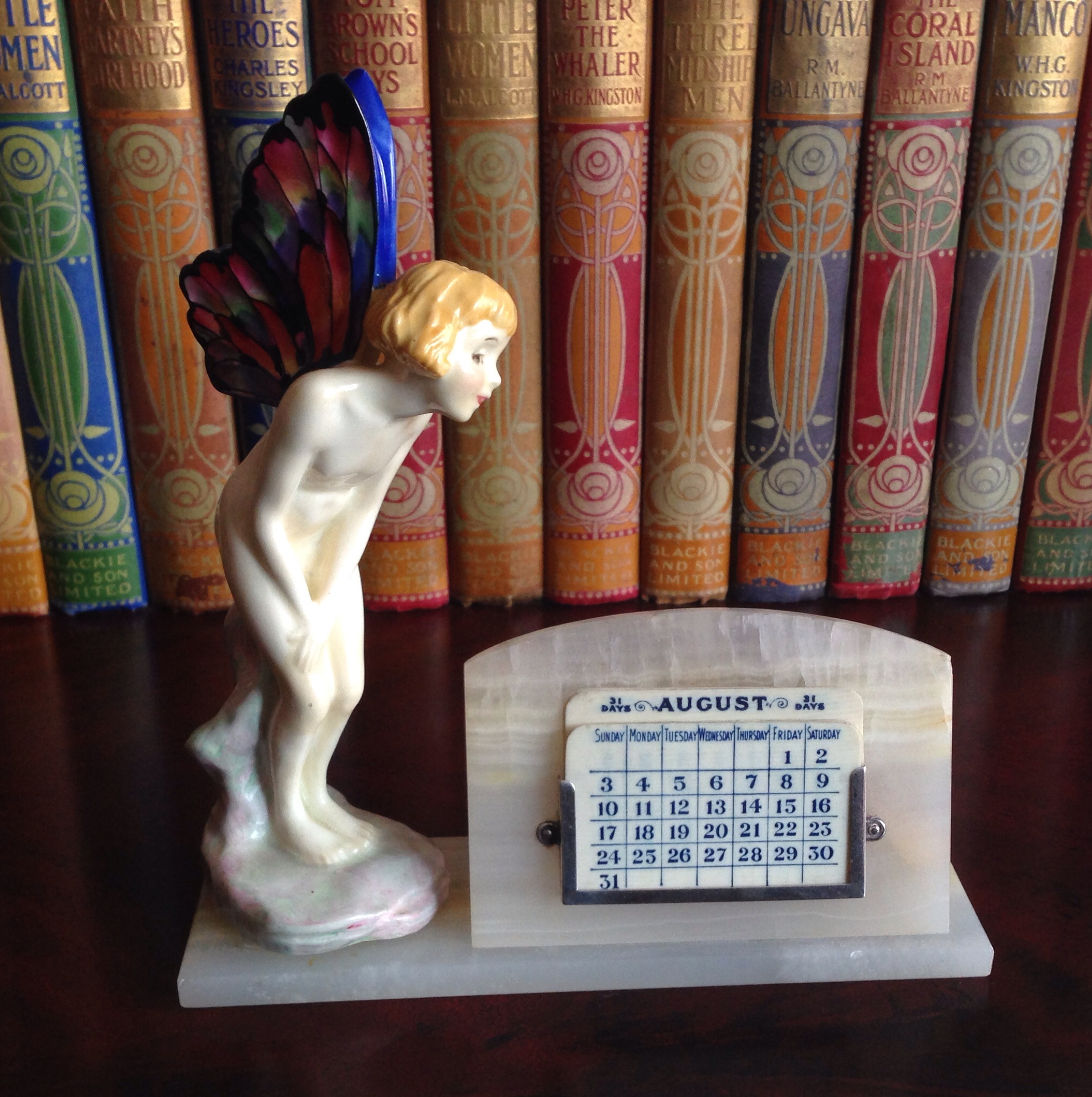
Doulton produced at least 7 different figures of fairies from standing with wings, to perched on toadstools to simply hiding in the undergrowth. Each is a charming study of childhood and many were available with differing flowers and even different colourways during their short production in the 1930’s. Certainly the second and sixth versions are the same child as ‘Boy on Pig’ HN1369 attributed to CJ Noke rather than Harradine. There are a further 6 fairies listed but which did not go into production.

IMG_4992.JPG
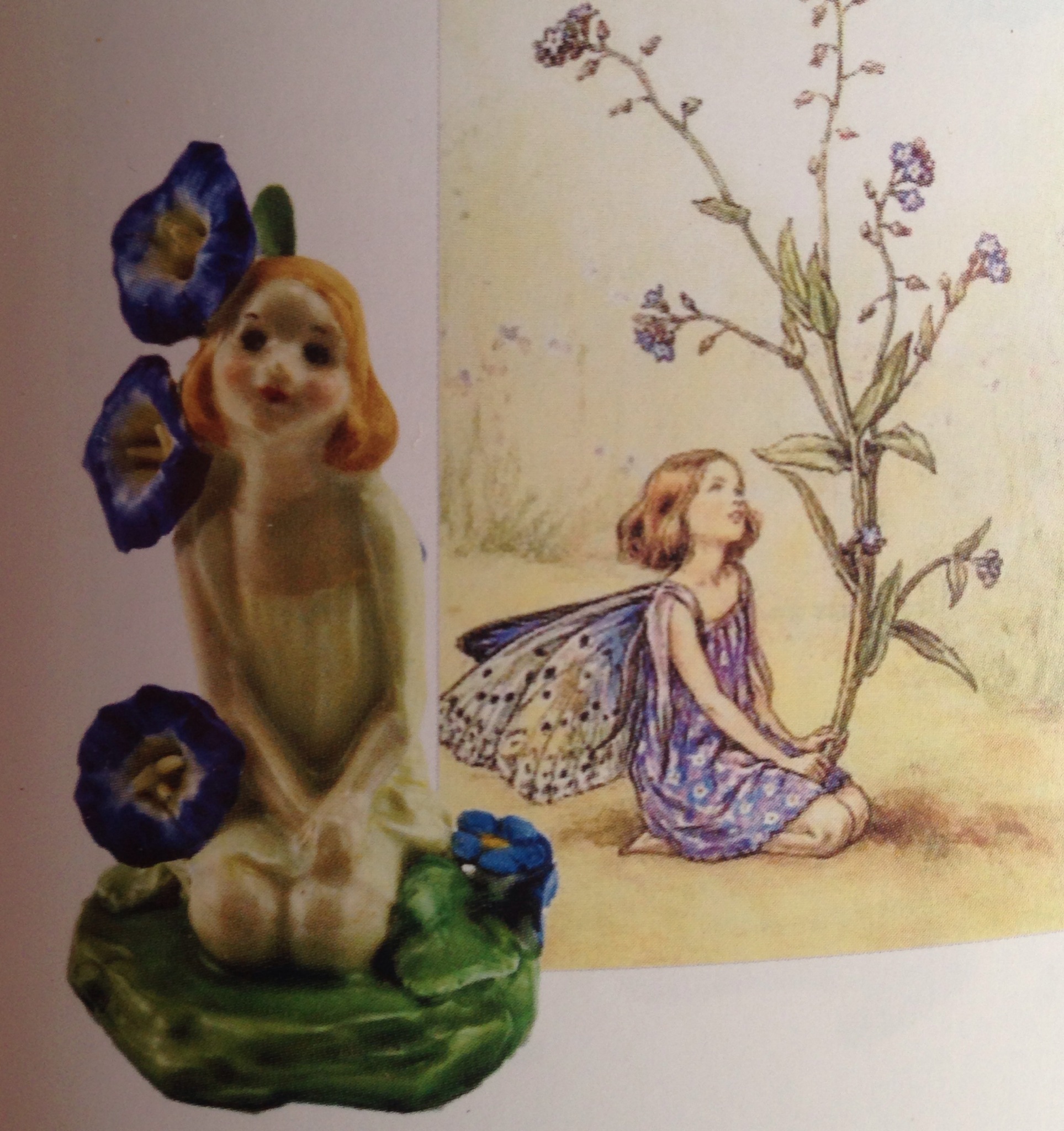
Doulton’s Fairies HN1396 and HN1375 were even modelled after the fairy illustrations of Cicely Mary Barker that remain popular to this day.

IMG_9928.JPG
A display of these figures really is magical, however, tracking them down is just as elusive as finding the real thing…or so it seems!

IMG_9925.JPG
Finally a Fairy that has fluttered down on to my desk….

Collecting Doulton Barbotine ware – Moonlight

20140721-171211-61931976.jpg

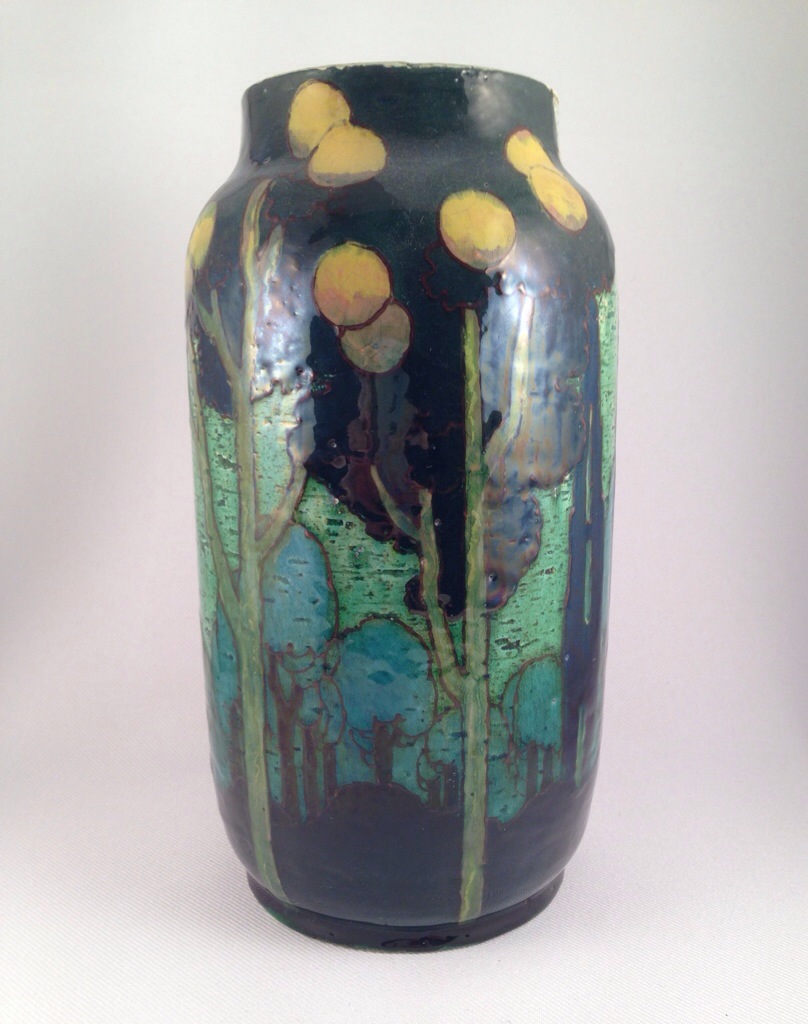
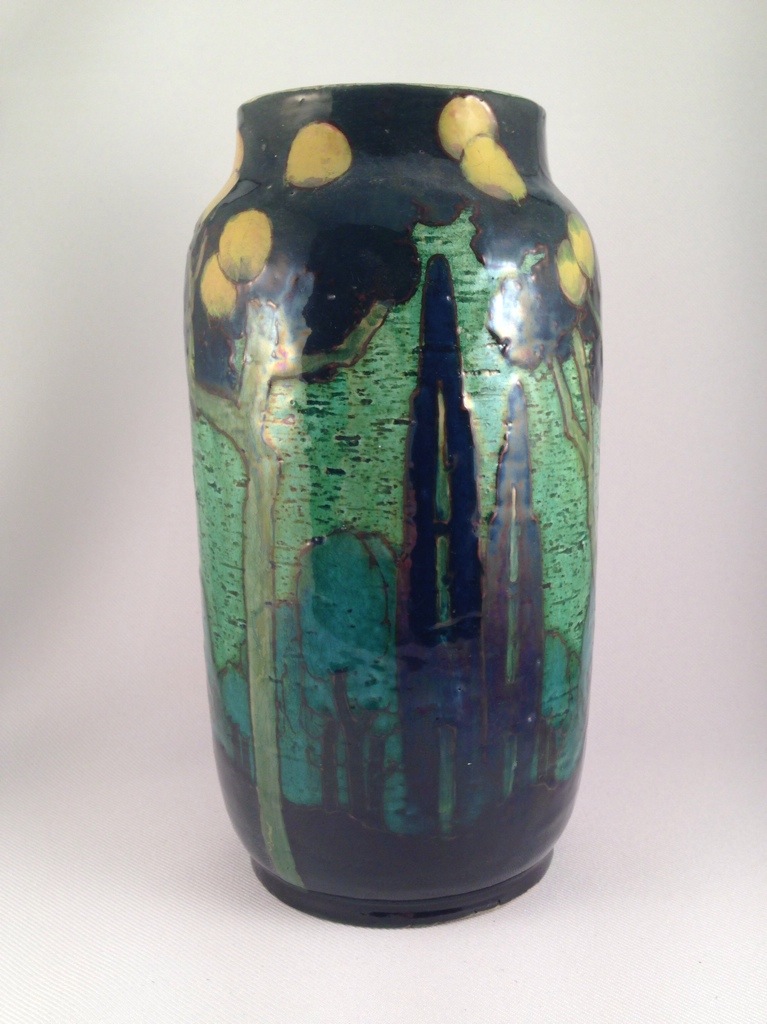
This technique is another unusual ware produced at Burslem in limited quantities around 1930. The particular pattern was actually called ‘Moonlight’ according to Fred Moore who also provided an introduction date of 1927 for this design.

20140721-171356-62036191.jpg
Similar in body to Rembrandt and some Holbein pieces, Barbotine can be found on vases and bowls, plus I have seen a pair of 24″ lamps also in the Moonlight design. Very impressive!
The Moonlight pattern is similar to the drawings of Edmund Dulac, but there are several other designs that have also come to light in the Barbotine technique, yet, they all use the same colour palette of greens and blues with similar stylised designs.
I am sure you’ll agree they are stunning pieces!

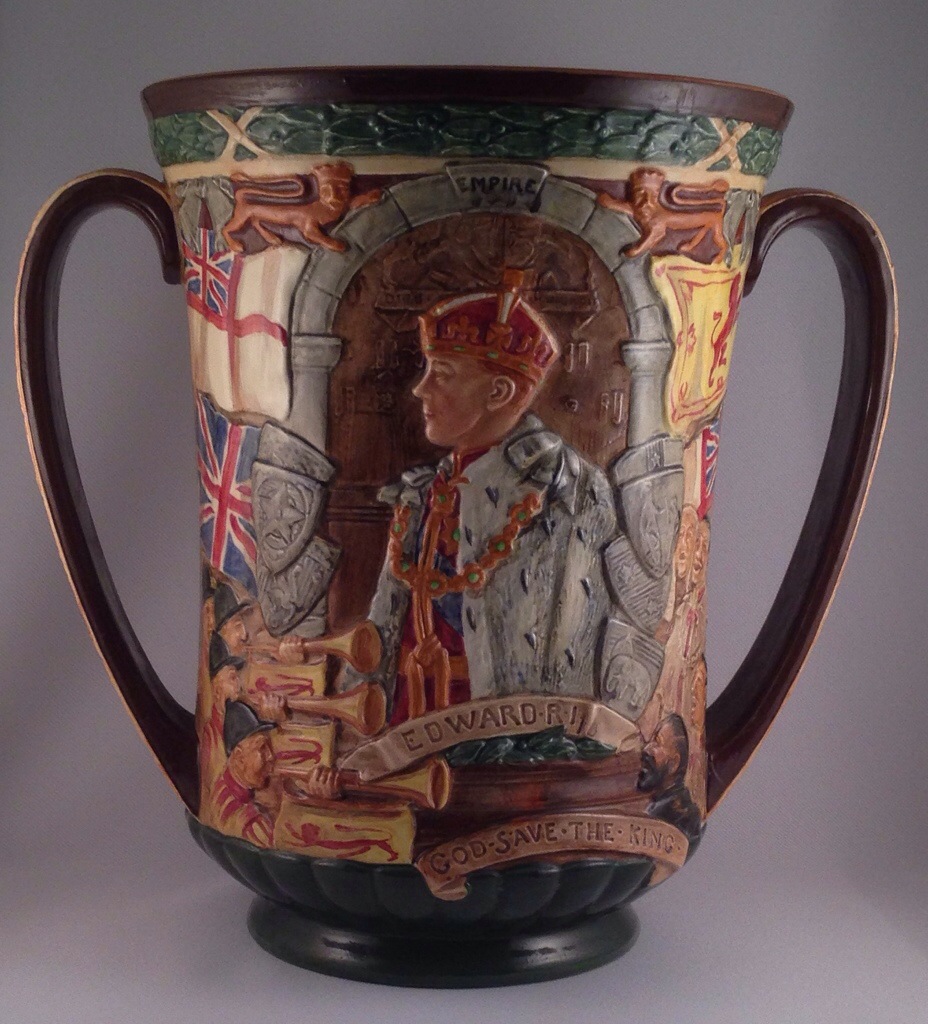
Royal Doulton’s Edward VIII loving cup

20140711-143259-52379030.jpg
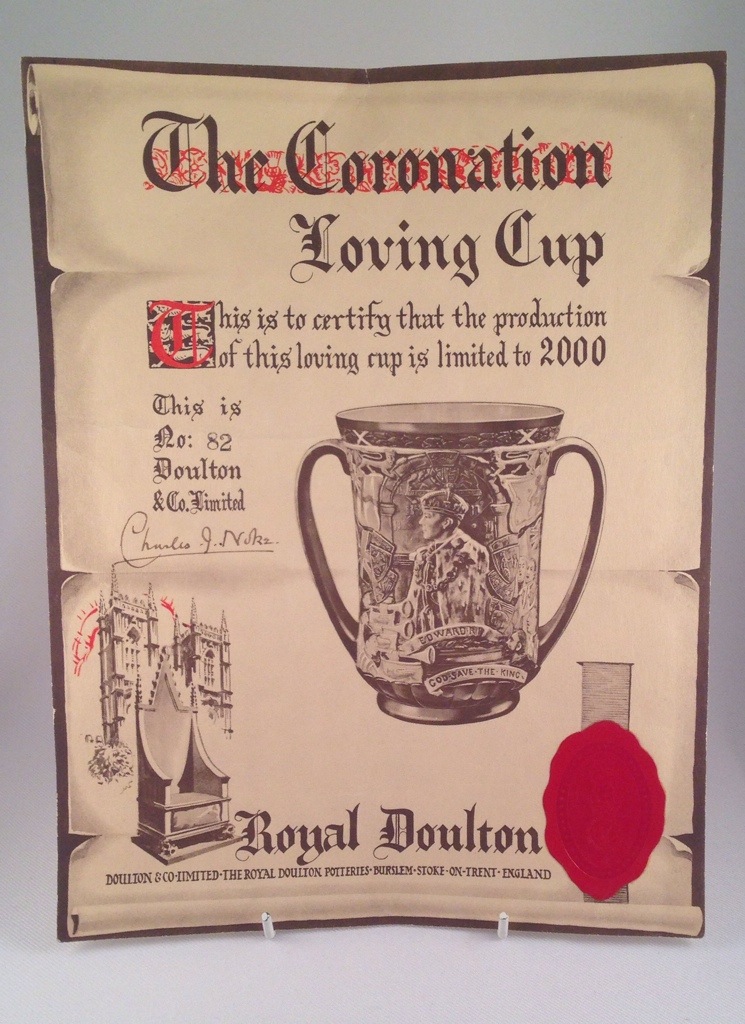
Original Certificate for this cup.

This commemorative loving cup was made to commemorate the coronation that never was. Edward VIII was born in 1894 and succeeded his father as King in 1936. The story of his abdication and the reasons behind it are now romantic legend, yet he did serve as King for 325 days before deciding to abdicate.

20140711-143631-52591645.jpg
The front of the large jug.

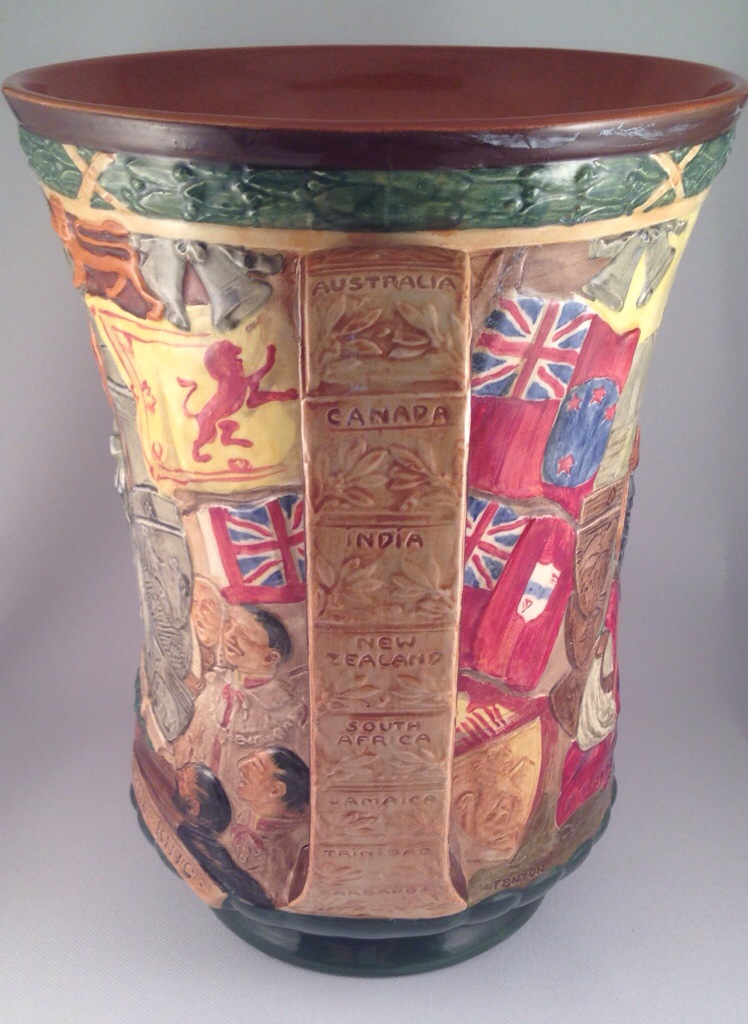
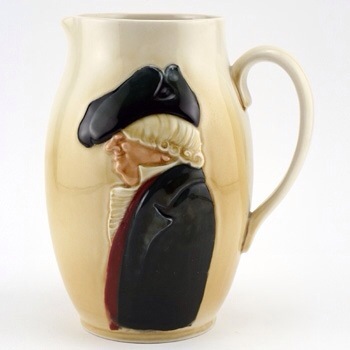
Edward VIII is portrayed in half length on the front if the jug wearing what would have been his coronation regalia, together with the flags for the 4 realms of the UK. The handles bear the names of the countries that now make up the Commonwealth where he was also King.

20140711-143949-52789832.jpg
Detail of one handle.

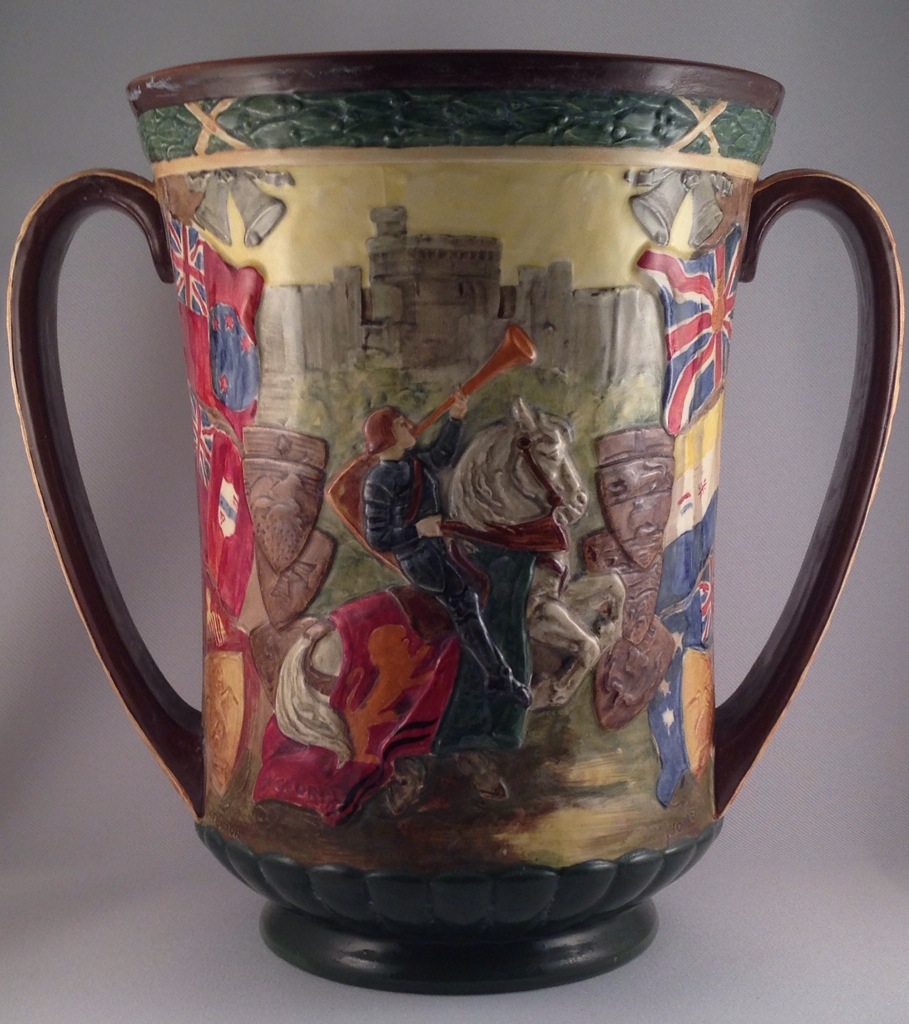
The reverse of the jug shows St. George on horseback infront of Windsor Castle surrounded by Commonwealth flags and other regalia.

20140711-144128-52888520.jpg
The wonderfully detailed reverse of the large jug.

This large jug was issued in 1937 in an addition of 2000, although only 1080 were sold before the abdication crisis. Modelled by the greats- Noke and Fenton who were responsible for do many wares at this time – the cup bears both signatures.

It is possible to build up a collection of all these limited edition loving cups and jugs and it makes a strong statement when they are all together.

For further information on loving cups and jugs, see the article devoted to them on our Doulton Collectors Club Facebook page.

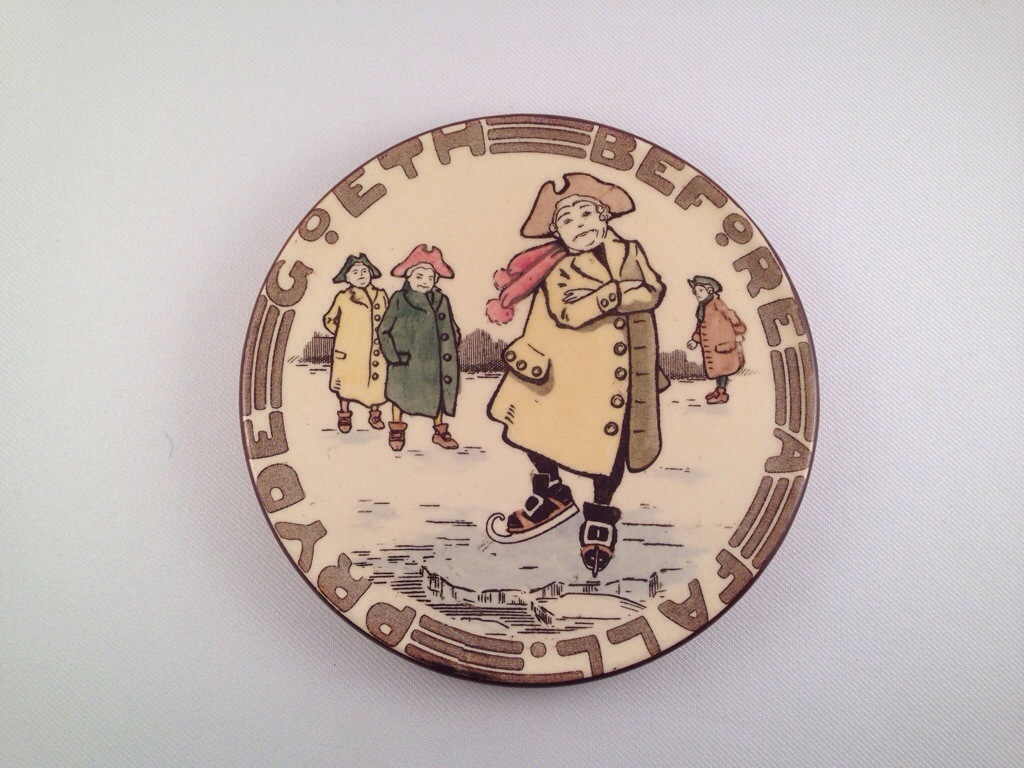
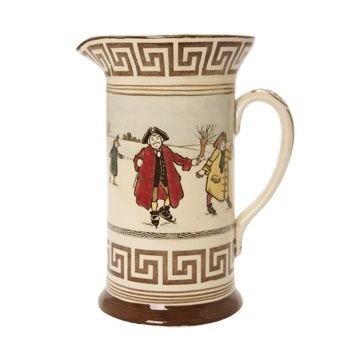
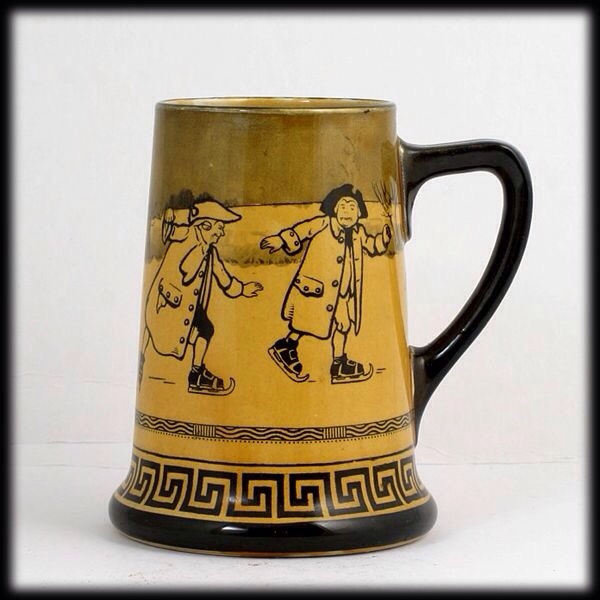
Royal Doulton’s ‘Skating’ seriesware pattern

20140711-111157-40317537.jpg
An early trivet in the Skating pattern dated 1907.

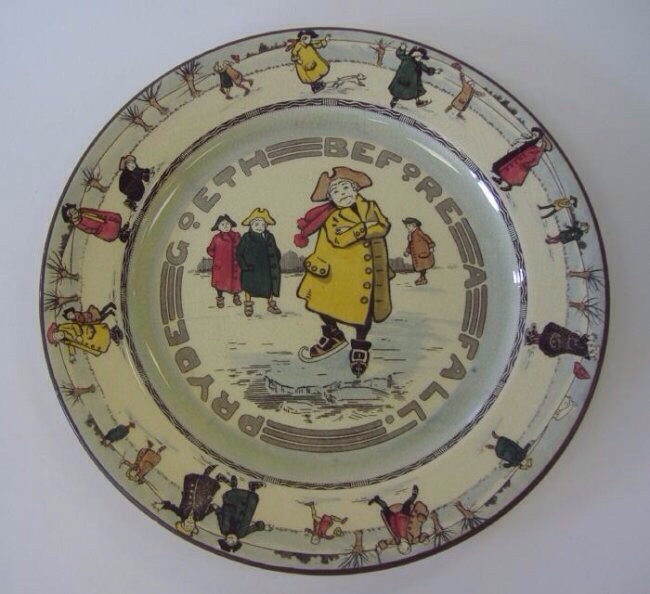
This old world comic scene of skaters with the inscriptions ‘Pryde goeth before a fall’ or ‘Do not worry, do not flurry, nothing good is got by worry’ are particularly hard to find today and always popular with collectors.

20140711-111512-40512307.jpg

A charming jug with the alternate Greek key border.

Introduced in 1907 and certainly withdrawn before the late 1920’s this series offers 14 different scenes for collectors with a handful of subtle variations to borders and also glazes for collectors to seek out.

20140711-112004-40804916.jpg

A jug in a treacle or Holbein glaze as I have occasionally heard it called.

A display makes an eye catching feature at Christmas and I know of several collectors who specialise in collecting particular shapes with all seriesware patterns; trivets being a popular theme and of course I collect pin trays as a few if you know.
Typically rack plates are the most easily found items, and this is also the case with this rare pattern.

20140711-112143-40903055.jpg
A super rack plate with an illustrative border.

Royal Doulton’s Gaffers seriesware

20140711-102116-37276799.jpg
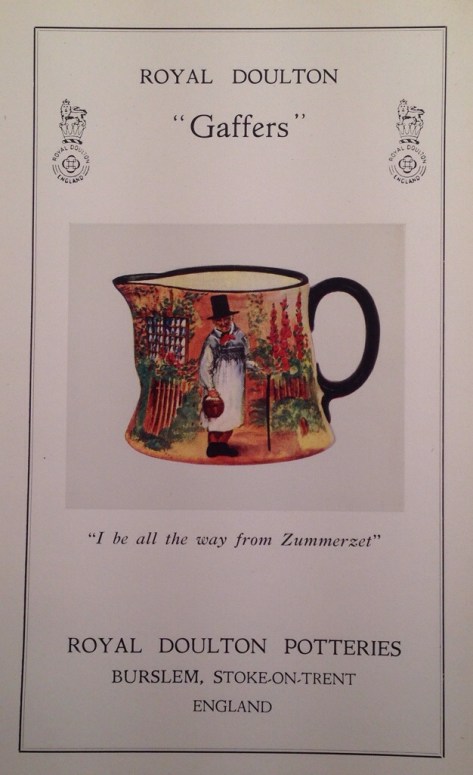
An early publicity booklet for the Gaffers pattern.

This quaint series certainly belongs to a different age although the dialect is still associated with the wonderful people of Somerset.
20140711-101144-36704131.jpg
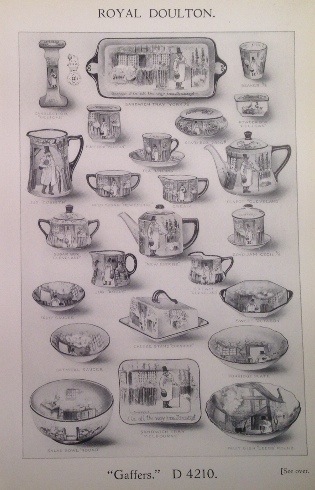
A catalogue page illustrating some if the styles available ca.1924.

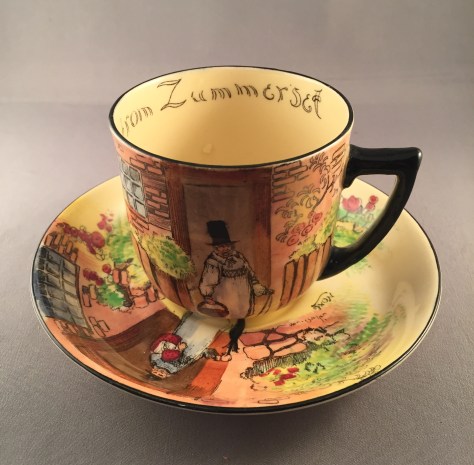
The leaflet pictured above comes with a vivid description of his life and routine, even explaining some of his typically ‘Zummerset’ sayings!

The pattern was introduced in 1921 and being popular remained in production until WWII.
FullSizeRender(13)

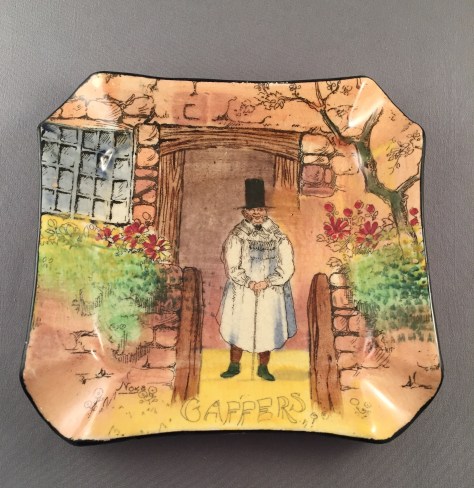
A Gaffers ash tray.

There were some 19 different scenes available, designed by the great C. J. Noke and typically bearing his signature; he  had a particular interest in all things literary and other personalities from English heritage.
20140711-101435-36875271.jpg
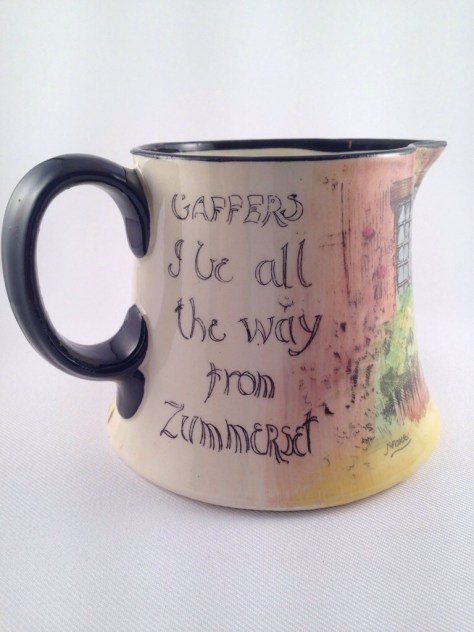
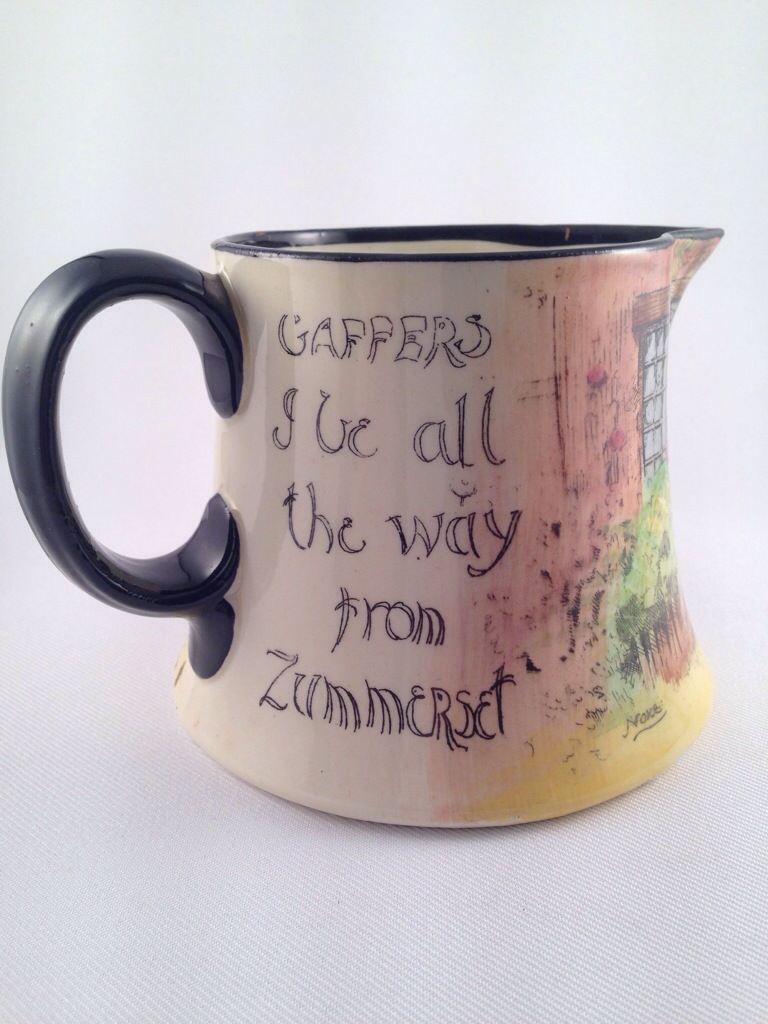
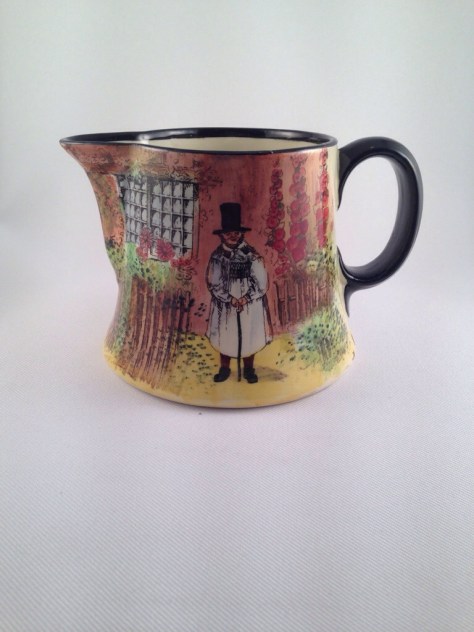
A large milk jug with scene 1 on it.

20140711-101524-36924730.jpg
The reverse of the same jug with the inscription ‘GAFFERS I be all the way from Zummerset’.

The character, the Gaffer, derives his name from respect as it refers to either an older man or master, not the more common term today for a boss.
FullSizeRender(17)

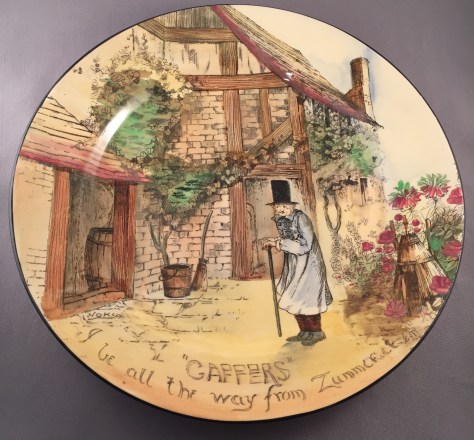
A typical 12″ rack plate.

The Gaffer is seen in his typical smock of brown holland or hand-made linen, with either an umbrella or knobbly stick in his hand.
FullSizeRender(15)

A Gaffers tea cup and saucer.
 

Collecting Doulton Queensware

20140706-115836-43116881.jpg
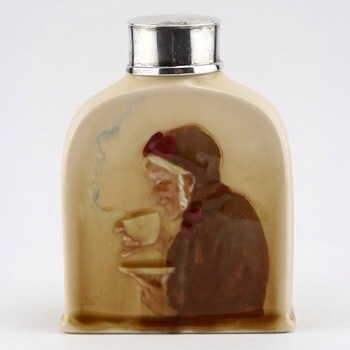
Queensware tea caddy

Queensware has been described as the perfect partner to Doulton’s famous Kingsware. The method if decorating is exactly the same as that for Kingsware, but the body is an ivory colour.

20140706-115916-43156172.jpg
Micawber jug minus stopper.
During it’s production it proved less popular than Kingsware, and as with all rarities is much sought after by collectors, especially those in Australia.
The exact introduction date of Queensware is not known although the first reference to it by Doulton was in 1932, however there is a Hogarth jug D5173 from 1931.

20140706-120008-43208222.jpg
Queensware Parson Brown.

Just as Kingsware, Queensware can be found in whiskey flasks, tablewares and other novelties.

Doulton’s Mandarin ware

20140706-093640-34600985.jpg

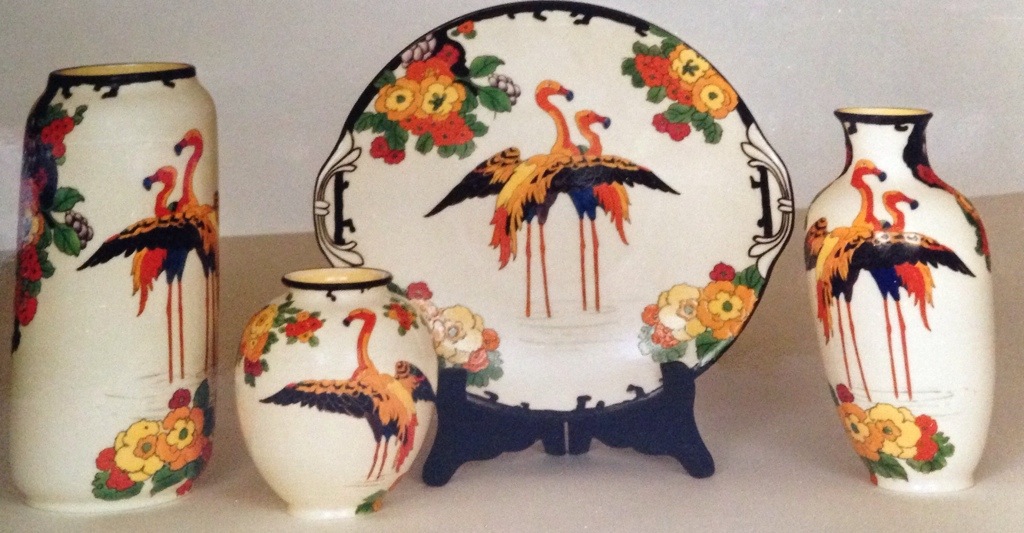
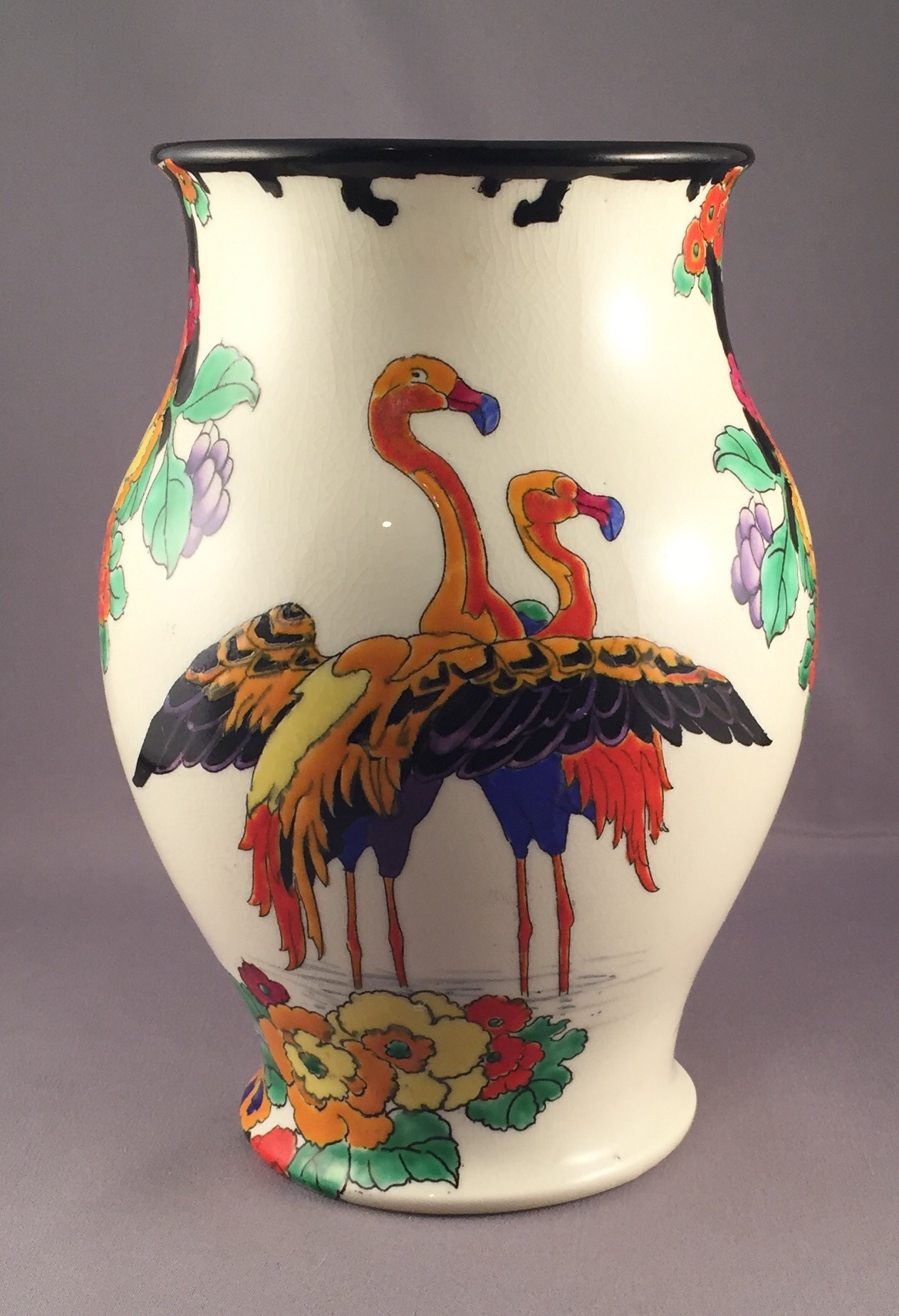
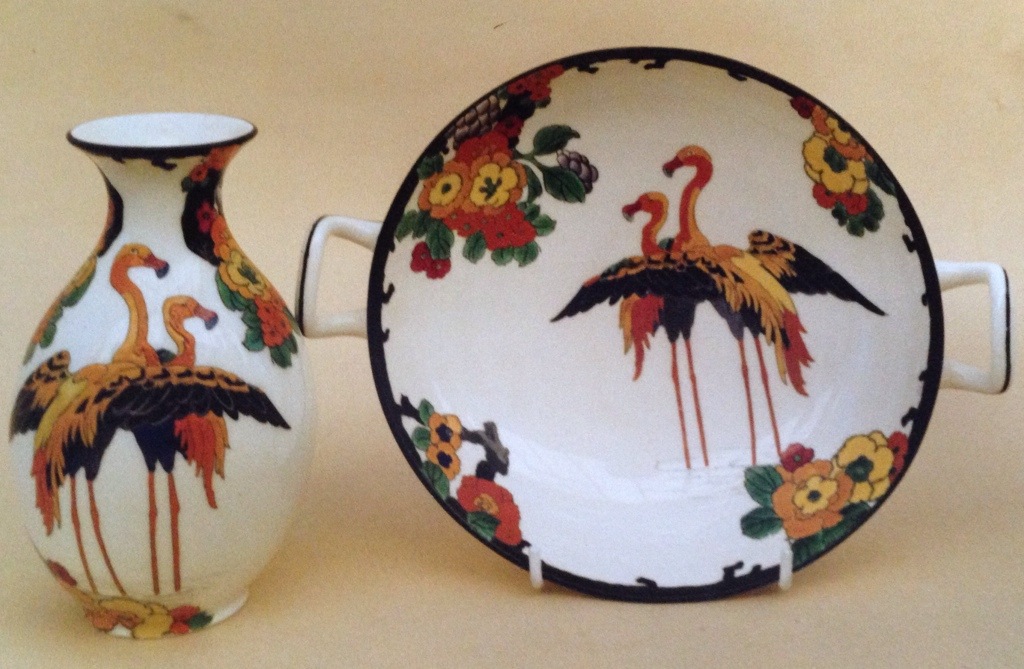
Doulton’s popular Mandarin ware falls into two broad categories. The first like the pictures above and below has an almost seriesware feel but features much painting around a transfer pattern. 

  
Typically prunus and flamingos feature on this first type of mandarin ware.

20140706-094250-34970286.jpg
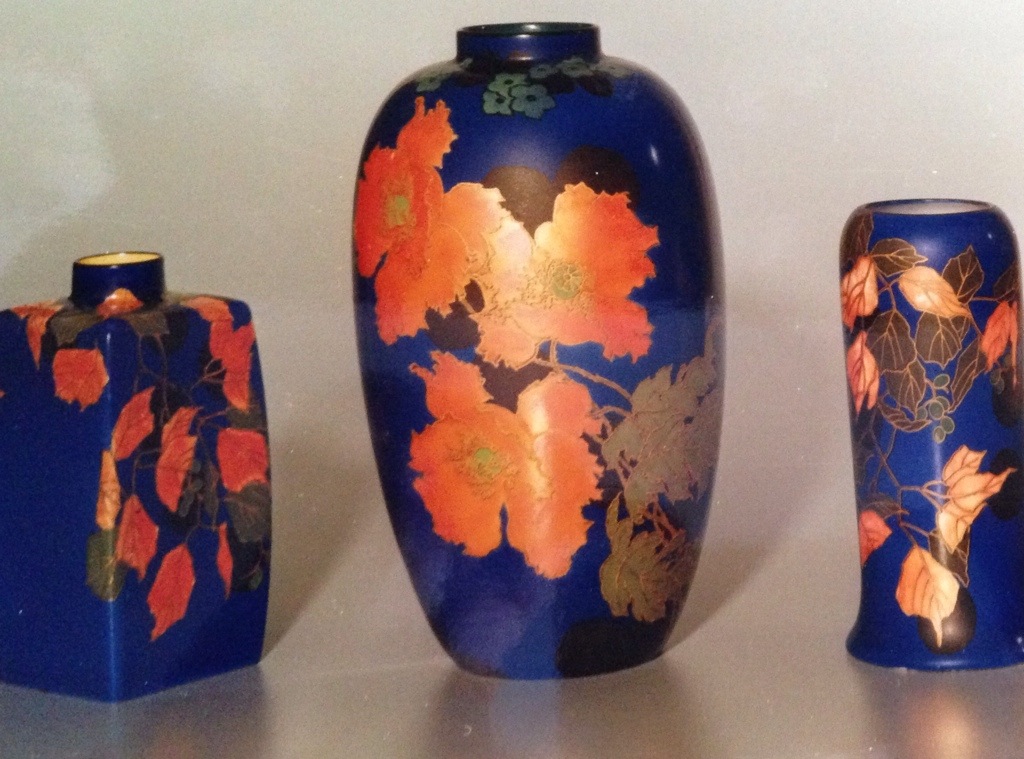
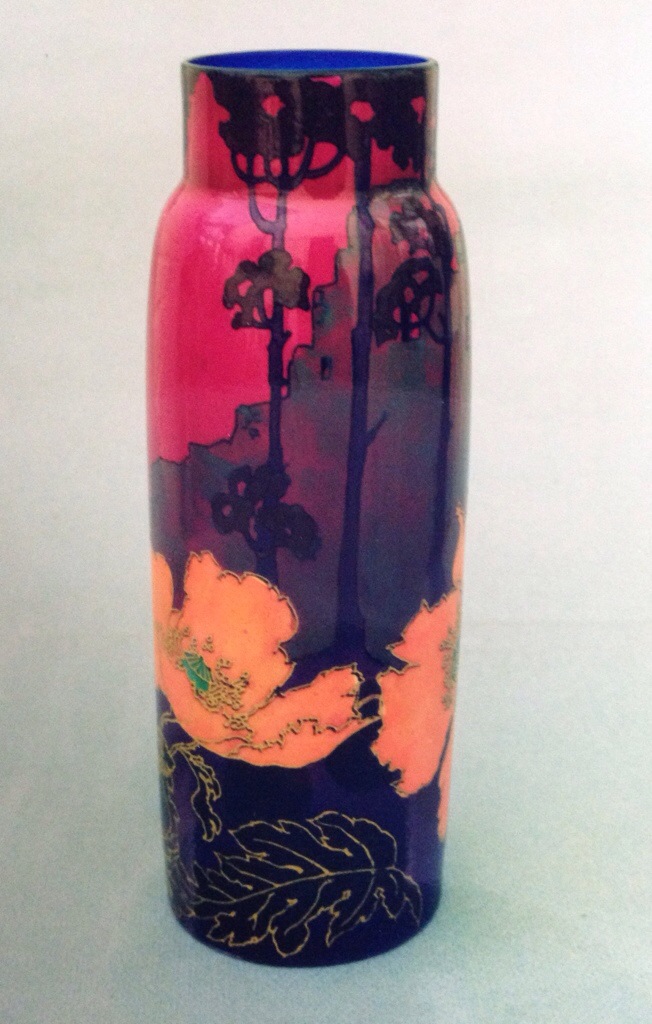
The second is much more delicate and feature lustred poppies generally against a blue background. As with many Doulton wares the shapes of vases used really distinguish this second type of Mandarin ware.

20140706-094038-34838508.jpg

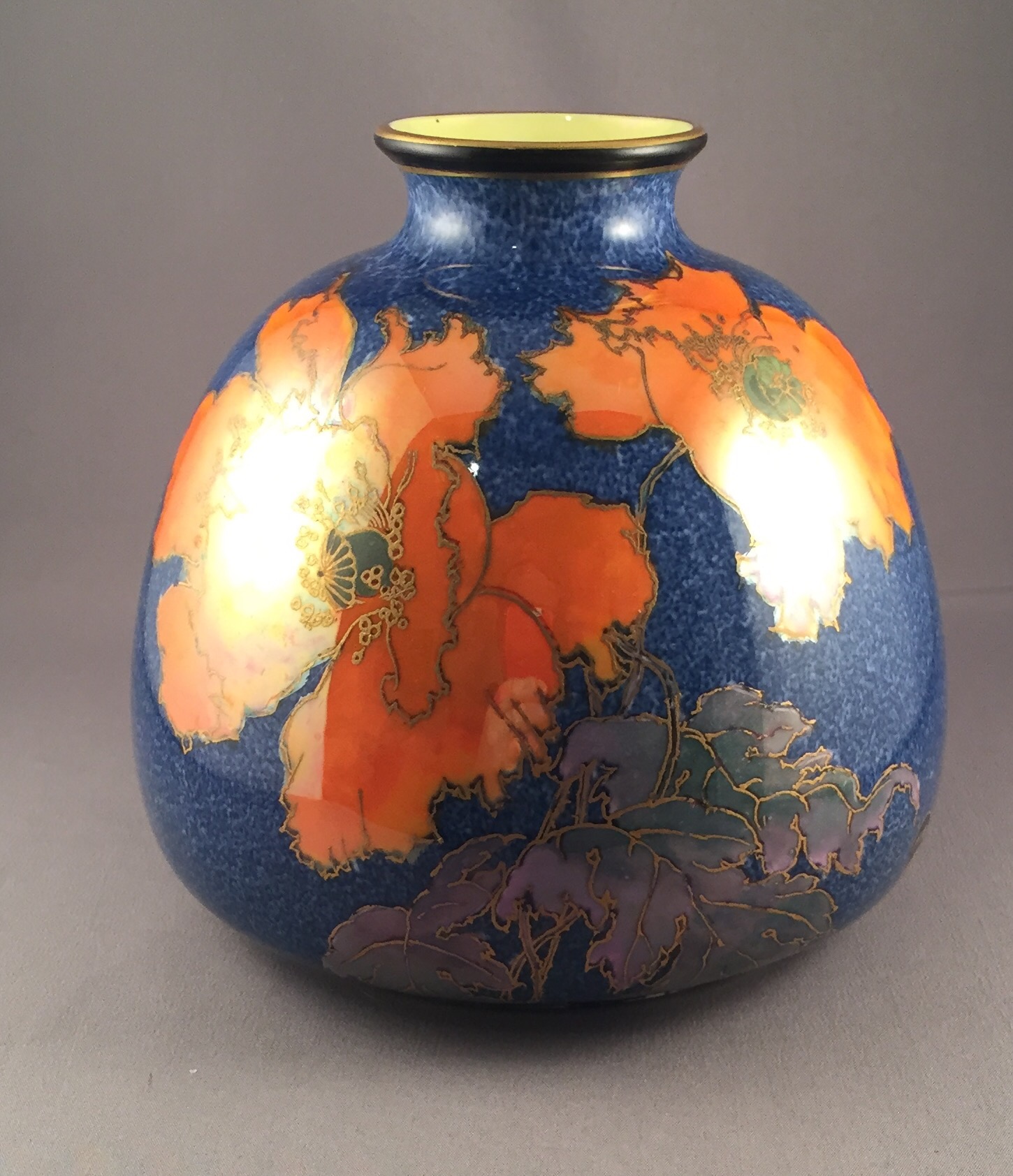
I once came across a Sung version of this type of Mandarin vase and it was exquisite as you can see. Both types of Mandarin ware are much sought after today and pieces are quickly snapped up by collectors.

20140706-094211-34931715.jpg

A rare Sung version of the Mandarin poppy design. 

Both types of Mandarin ware are difficult to find today and production certainly ceased by the 1930’s.

  
A recent find in the poppy design from the 1920’s.