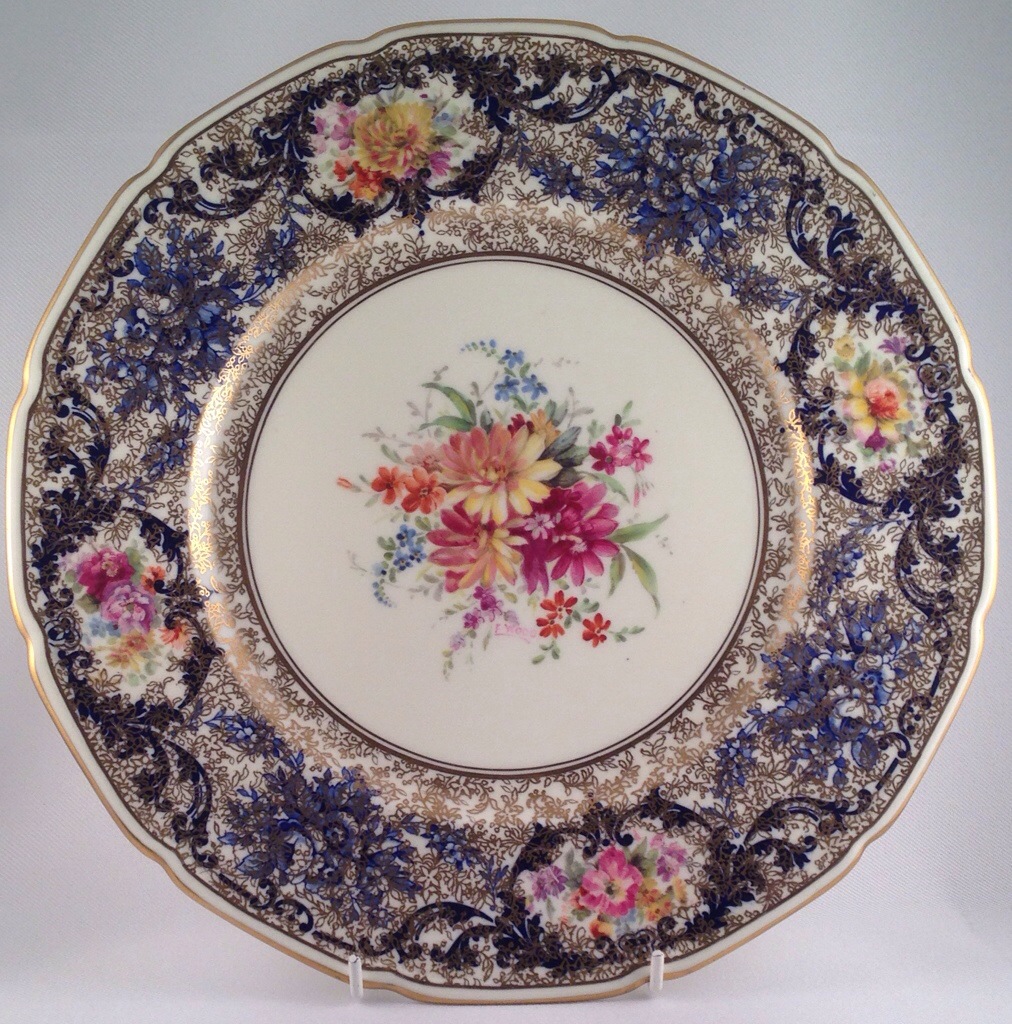
Category Archives: Burslem

Collecting Doulton Holbein ware

Around the turn of the 20th Century there were many exciting introductions at Doulton’s Burslem studios, many the brainchildren of the famous Charles Noke.

20140706-091630-33390006.jpg

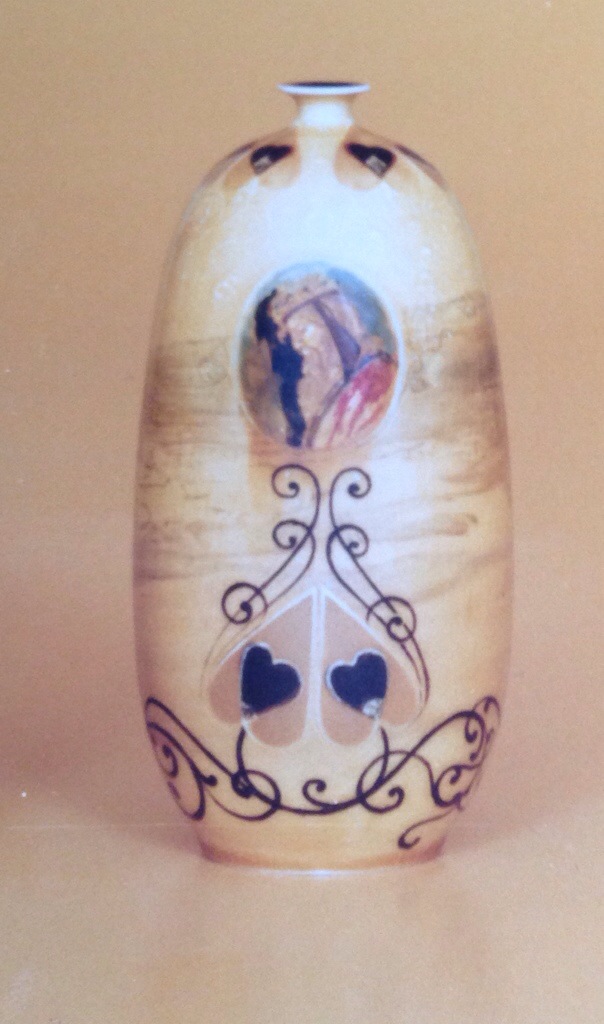
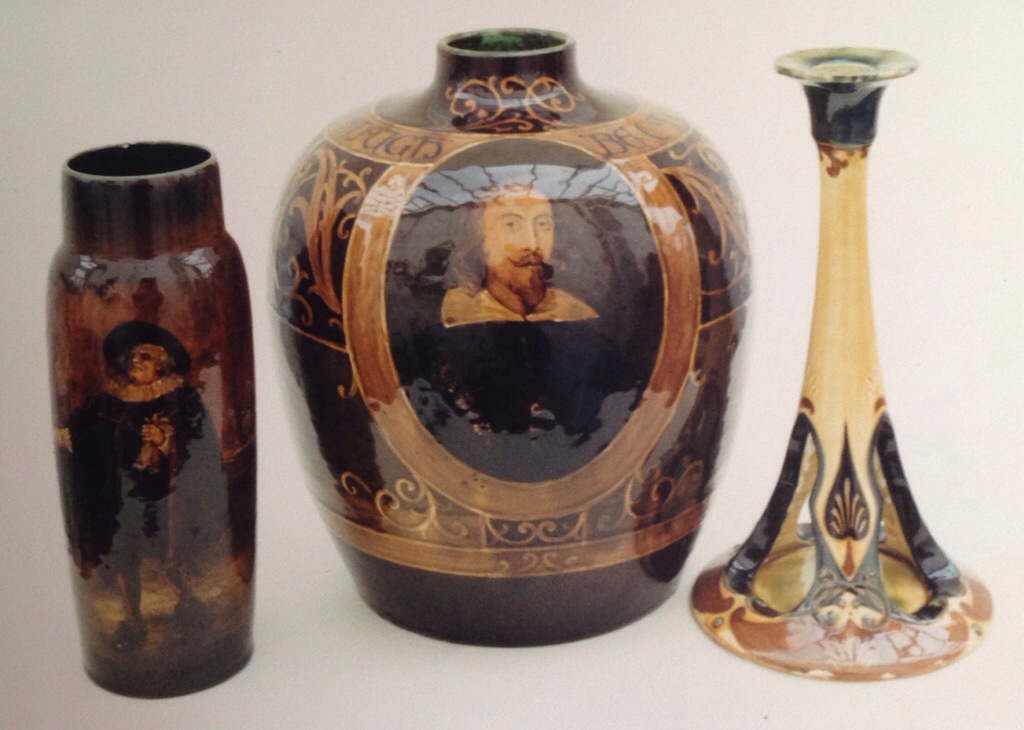
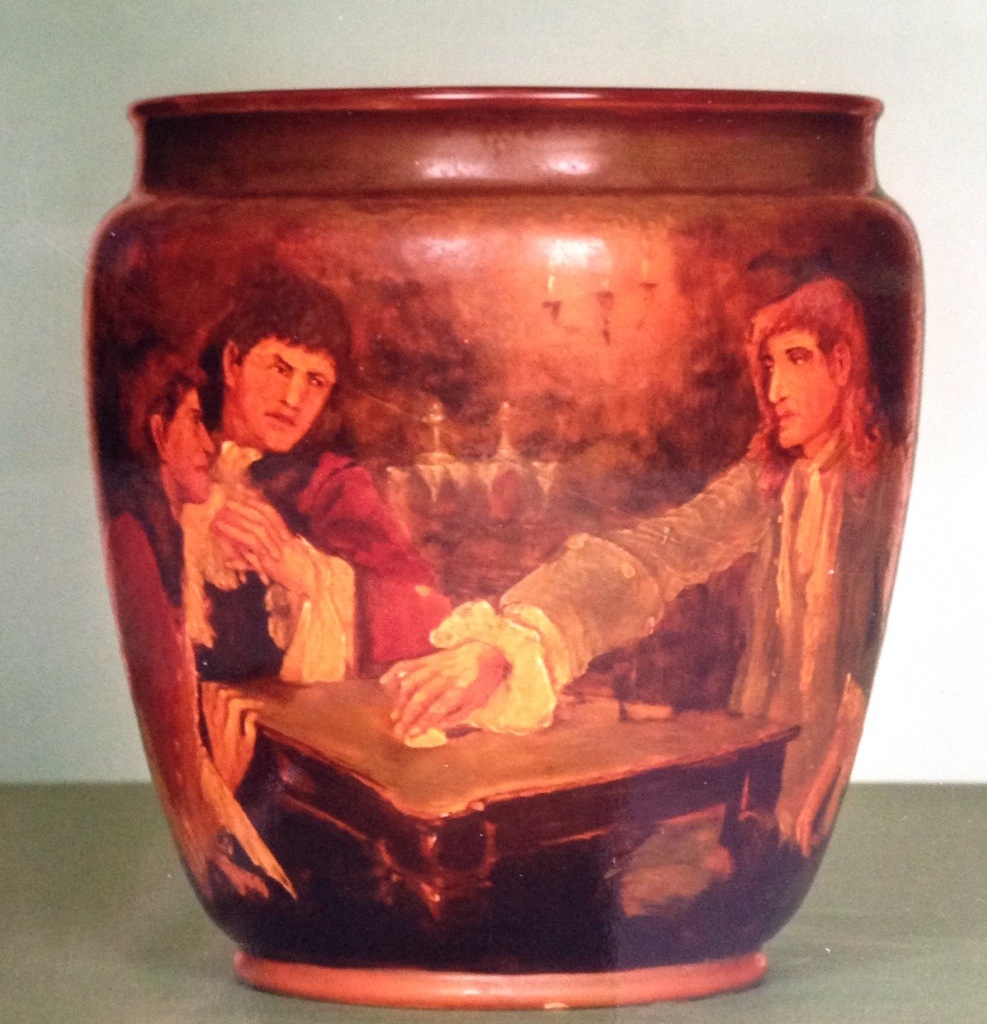
Holbein ware is a typical example of Noke’s experimentation with glazes. Holbein wares give the impression of old masters through the use of yellow, green and brown slip on a cream earthenware body. Portraits on these vases were typically by Harry Tittensor and Walter Nunn among others.

Incidentally this name of ware was also given to a series of items including candlesticks and oil lamp bases modelled in an art nouveau style but not bearing any portrait!

20140706-091737-33457490.jpg

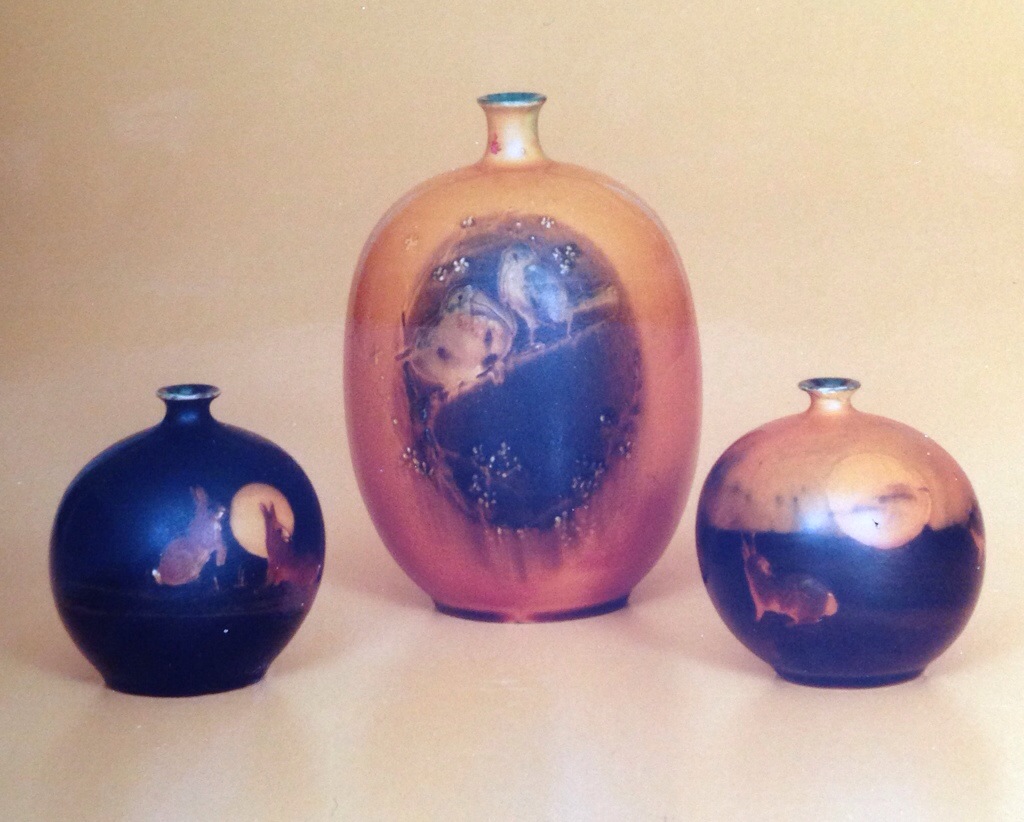
Further Holbein pieces not featuring portraits but rather nocturnal animals including owls also appear.

20140706-091803-33483109.jpg

This ware had a special backstamp but it was not always used, creating certain confusion about this particular ware. This ware should not be confused with Rembrandt ware.

20140706-091821-33501869.jpg
L-R Holbein vase, Rembrandt vase and Holbein

candlestick.

Collecting Doulton Spanish wares

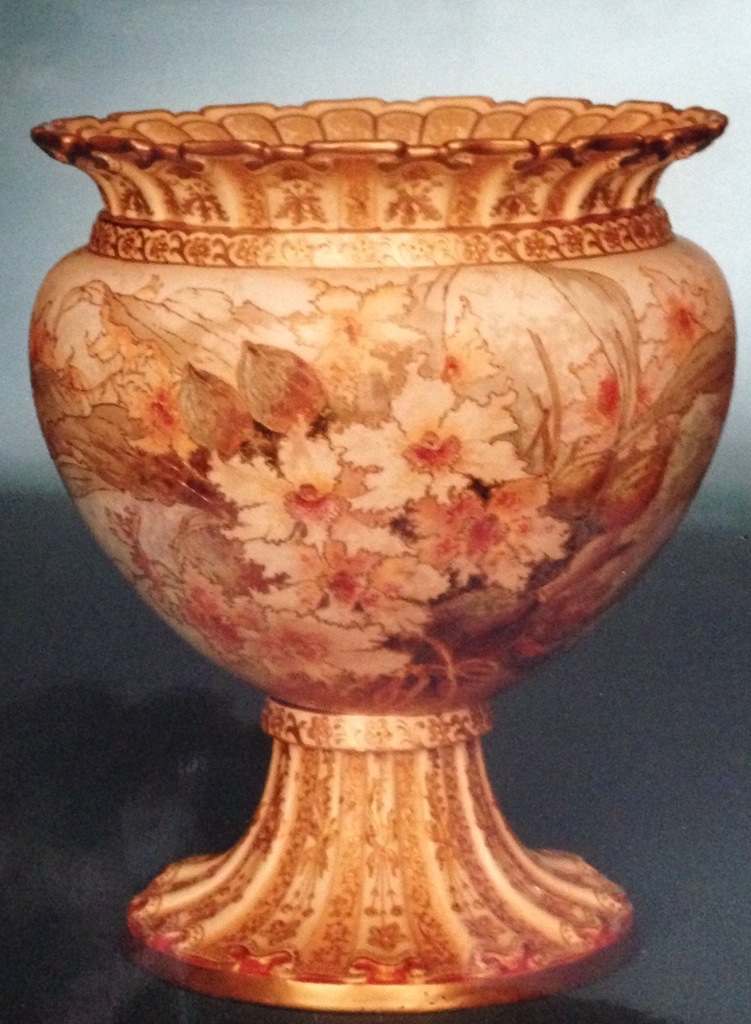
This technique introduced around 1890 offers something for every collector, with simple to elaborate designs and with prices to match!

20140706-084930-31770969.jpg

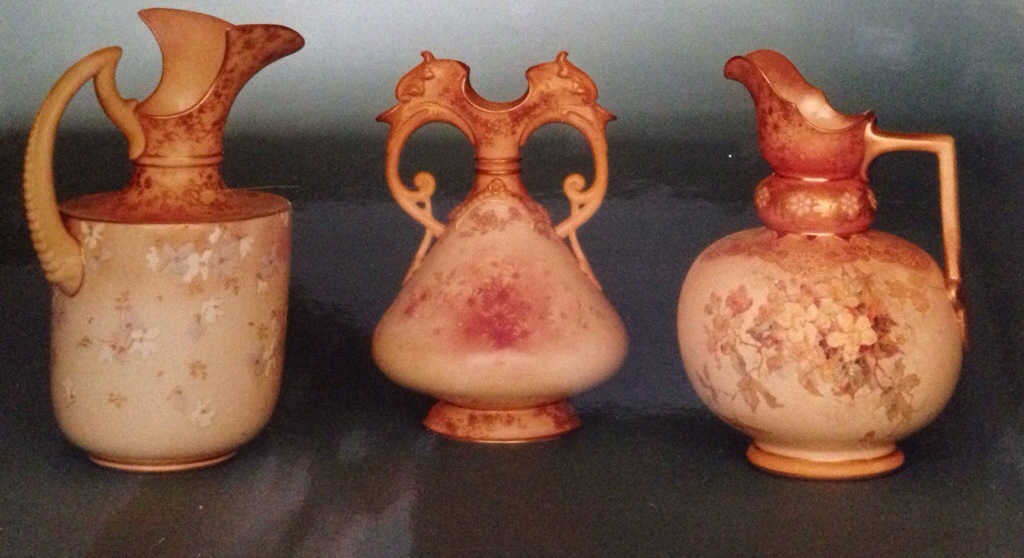
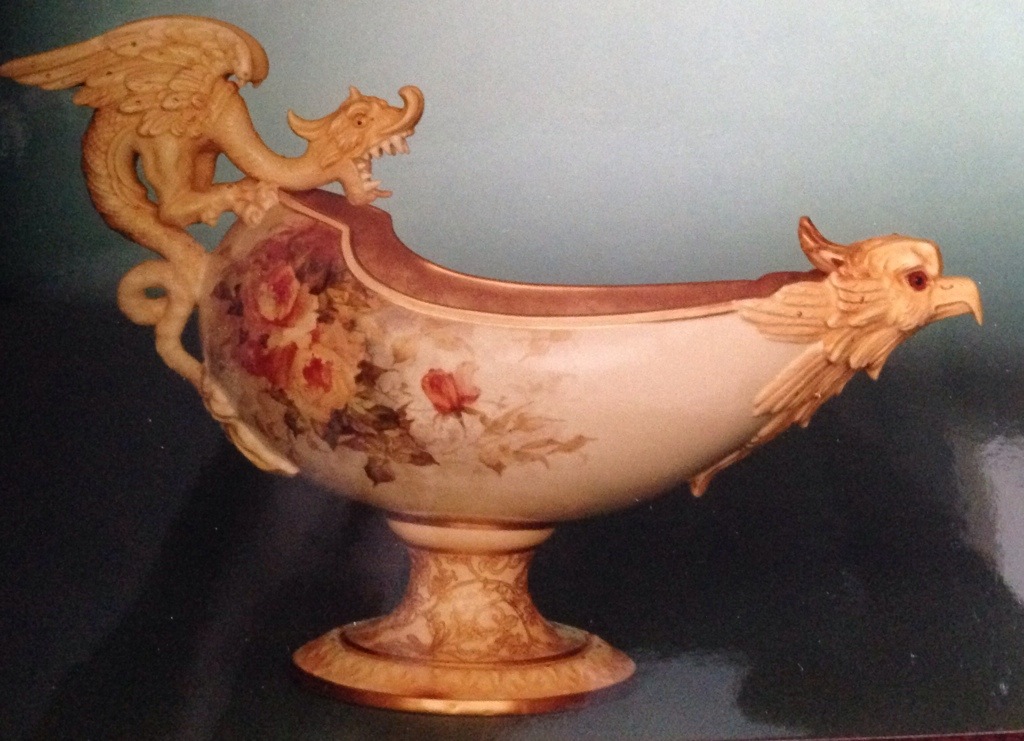
The Spanish ware technique consisted mainly of flowers outlined in raised gilt. Examples of handpainting and transfer printing can be found on this ware, although the general rule of thumb for collectors is the more elaborate the more likely it is that it is an artist piece.

20140706-085257-31977301.jpg

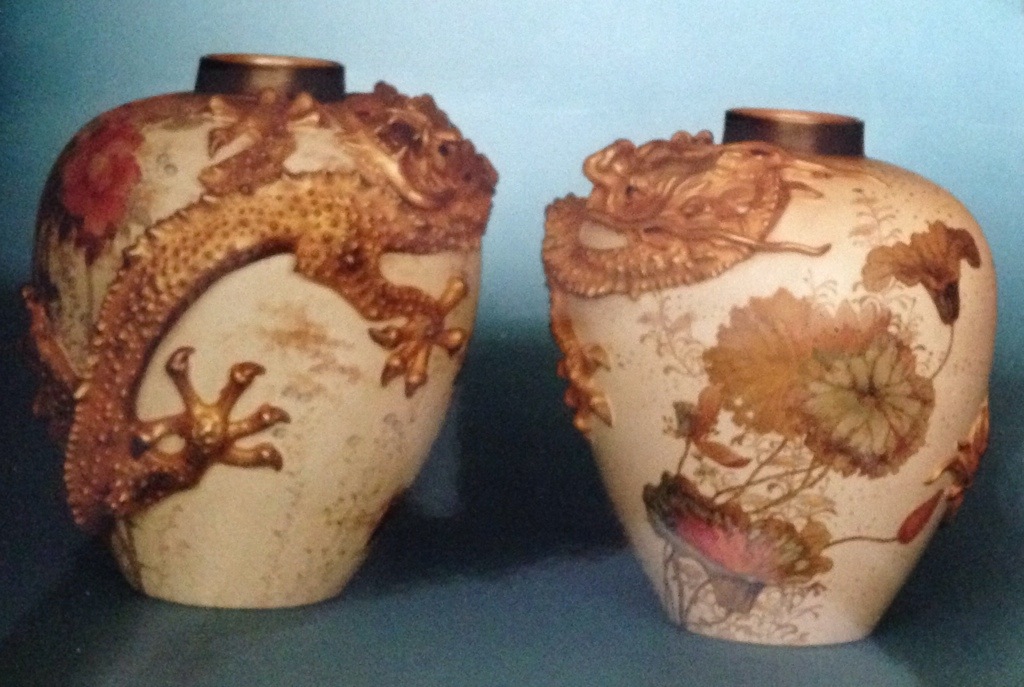
The body used on this ware was often Vellum, just like the small range of figures developed in the late 19th Century. The gilding on this particular ware is exceptional and the styles of vases etc…were equally elaborate and often featured dragons.

20140706-085459-32099479.jpg

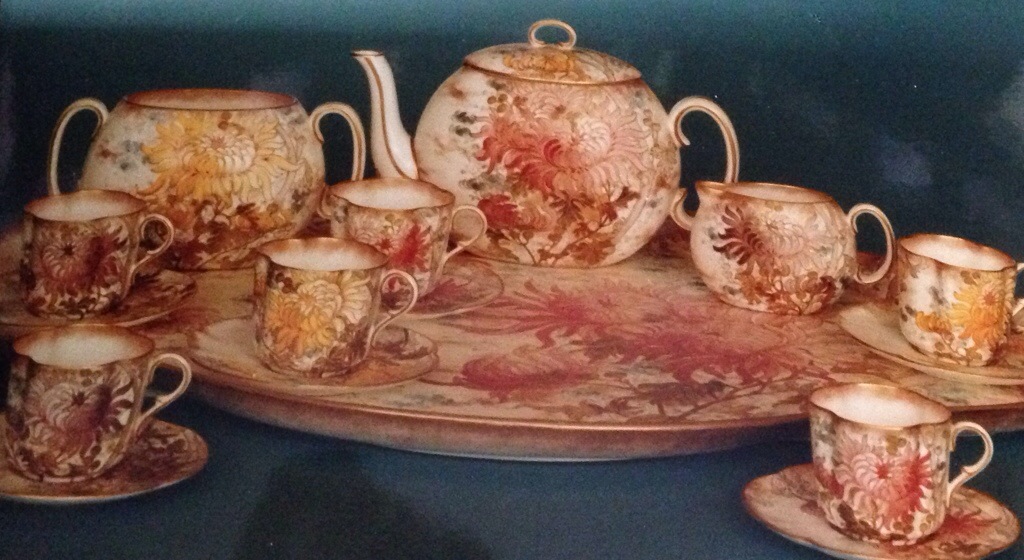
This method of decoration was often used on high end tablewares, and cabinet sets like the one below were particularly popular with this decoration.

20140706-085613-32173238.jpg

Prices for Spanish ware correspond to how elaborate the piece is and there are many avid collectors of this ware around the world.

20140706-085729-32249413.jpg

Spanish ware production ceased sometime around the outbreak of WWI in 1914.

Doulton artist profile – Henri Boullemier

20140704-165242-60762745.jpg

Henri as his name suggests was of French descent and he and his brother followed in their famous fathers’ footsteps with their chosen profession as high end porcelain painters.
All three worked at Minton at one point in the late 1800’s and the two sons’s style was very much influenced by their father who at Minton worked with other of his countrymen including the famous Solon. The father had previously worked for Sèvres.
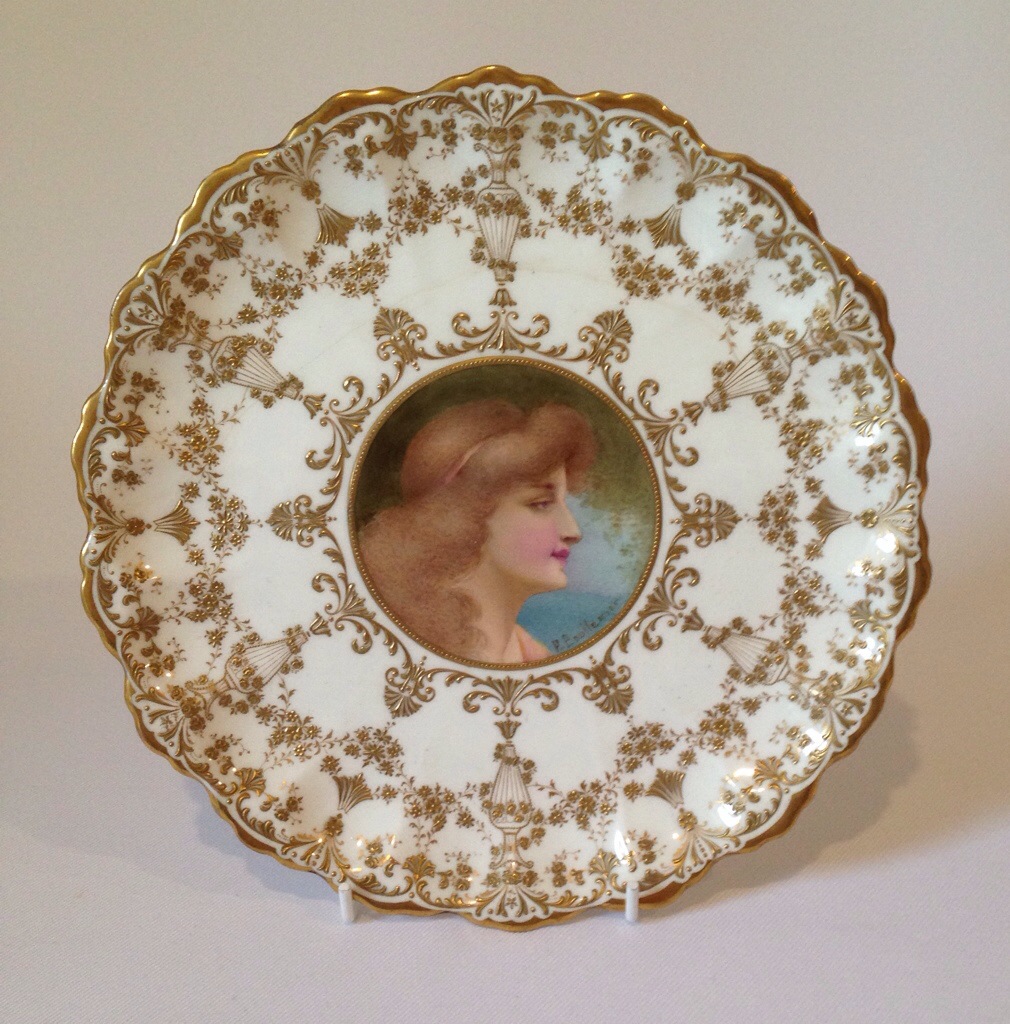
Henri worked for a very short period probably on a freelance basis for Doulton in the first years of the twentieth century and thus examples of his exceptional work are very rare. Typically his work featured on service and dessert plates and featured cherubs, children and classical portrait heads like the example pictured.
Any work by Henri Boullemier is exceptionally rare and pieces seldom appear on the secondary market.

Doulton’s flair for fashion

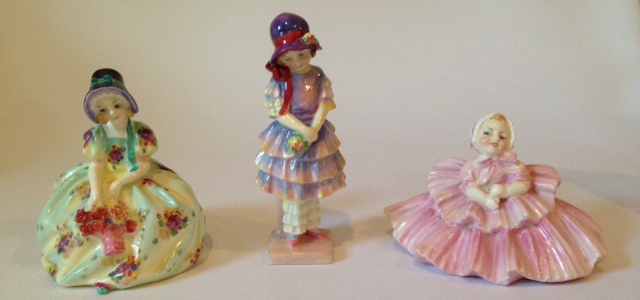
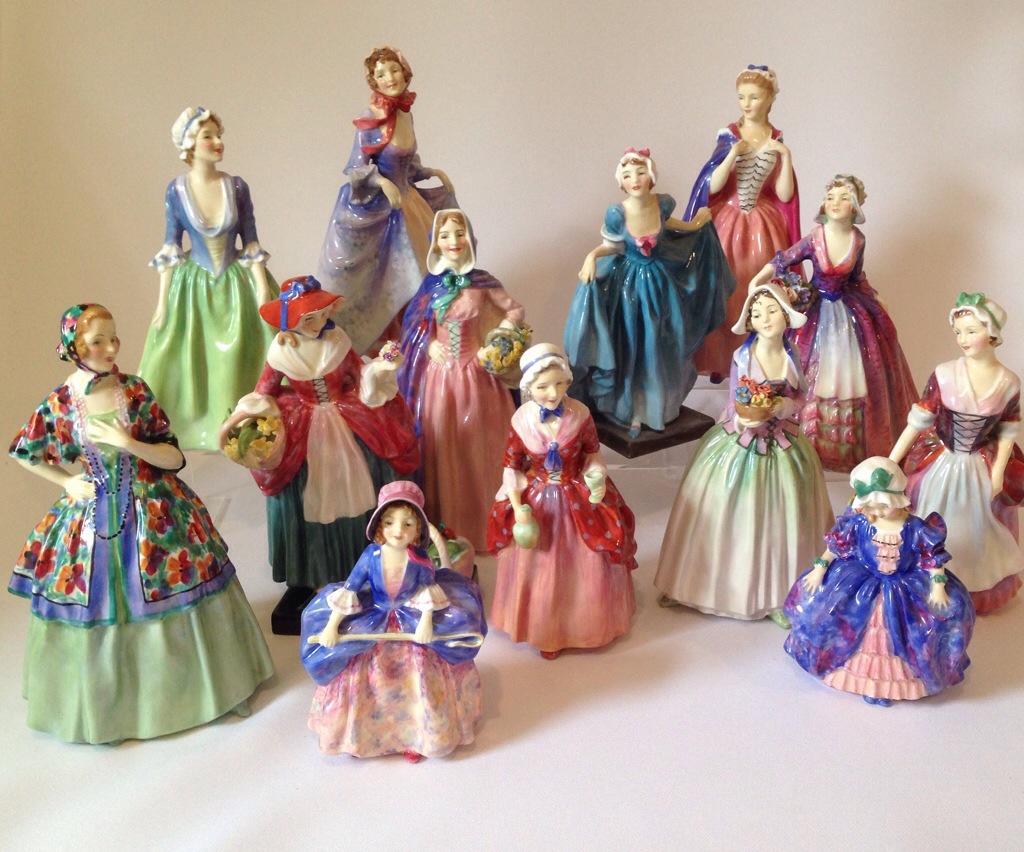
Shortly after the Art Deco period there was a time in the 1930’s when Hollywood glamour became ‘the’ look and typically Royal Doulton roze to the challenge of producing a stream of stylish 1930’s ladies.

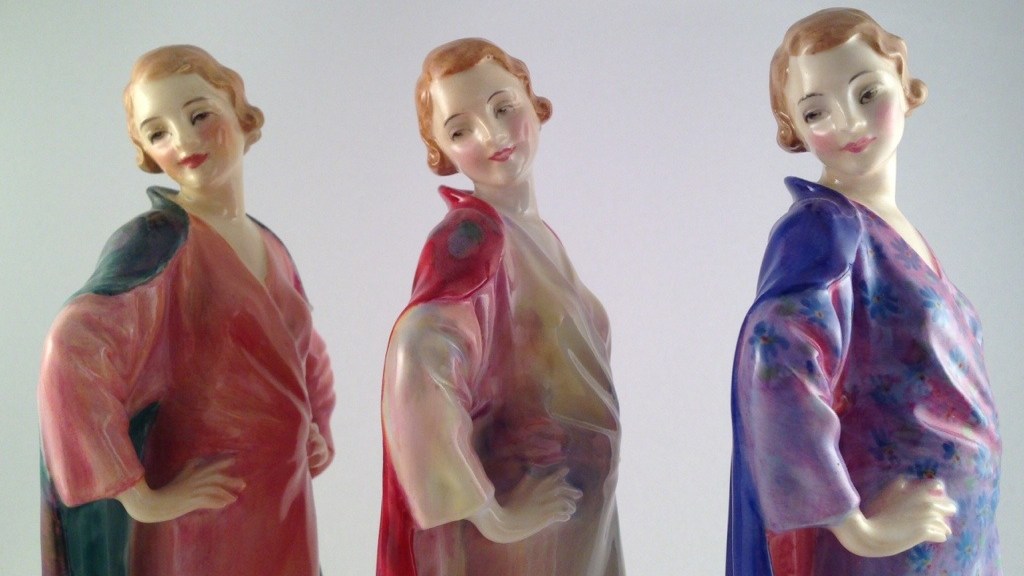
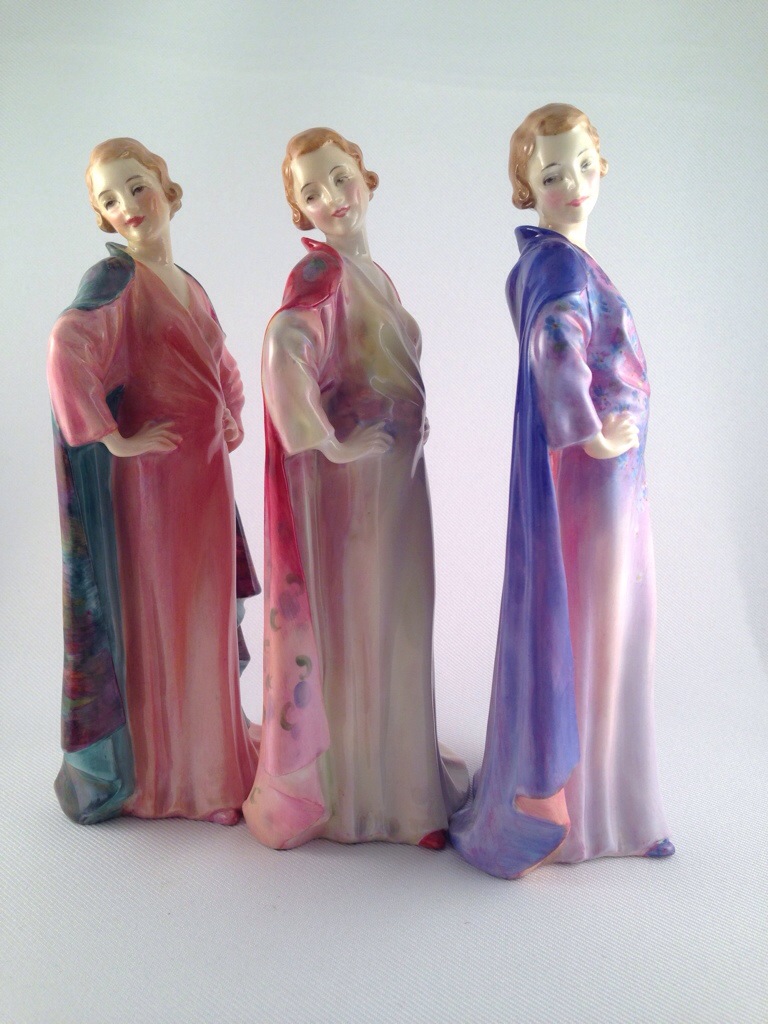
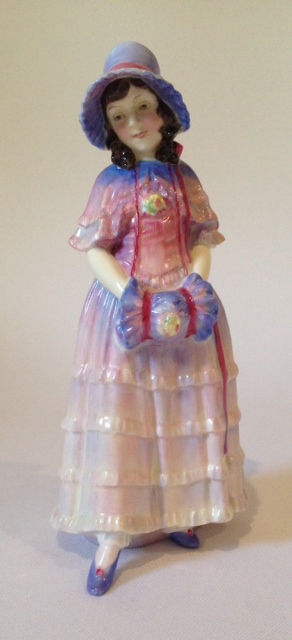
Among the first such figures is undoubtedly Clothilde shown here in three colourings. Her wrap dress and long cape capture the Hollywood style perfectly.
20140624-200714-72434578.jpg
The ever popular Clothilde.

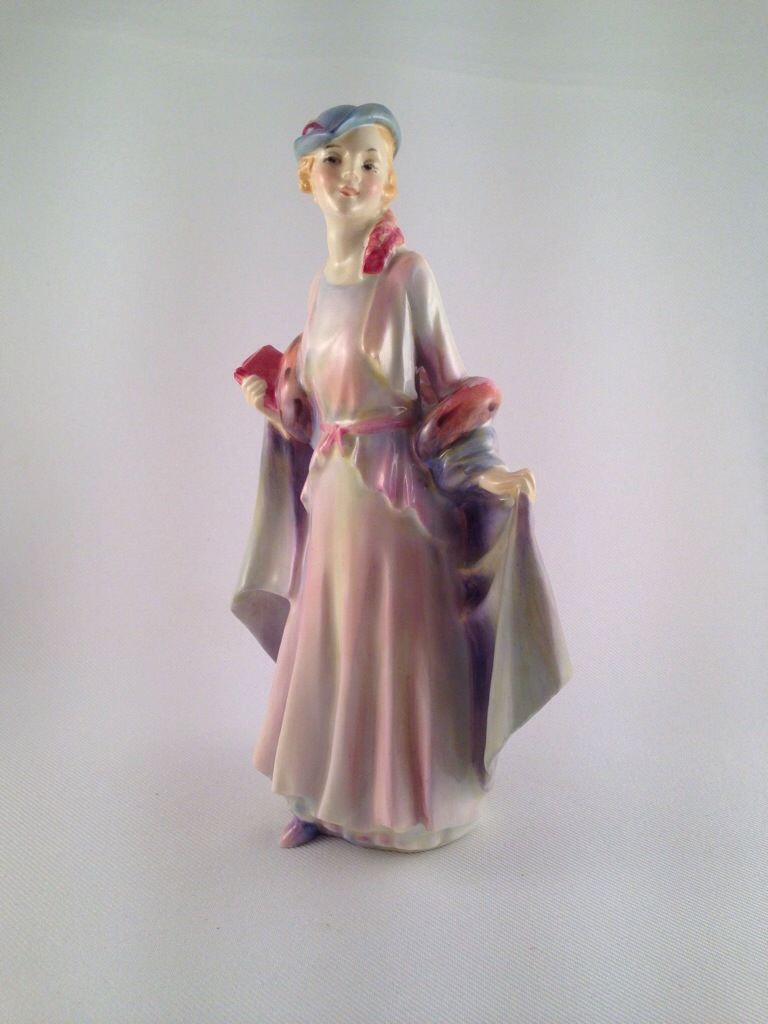
Almost a partner to Clothilde is Gloria in her daytime attire and chic clutch so evocative of this decade.

20140624-200845-72525384.jpg
Gloria HN1488.

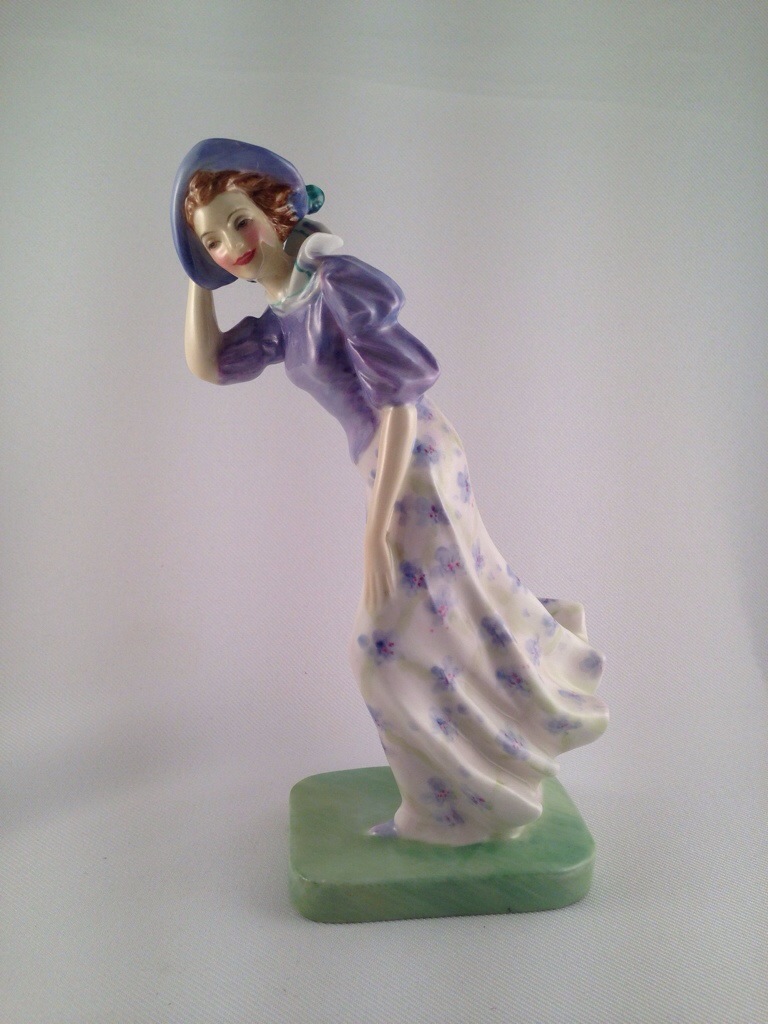
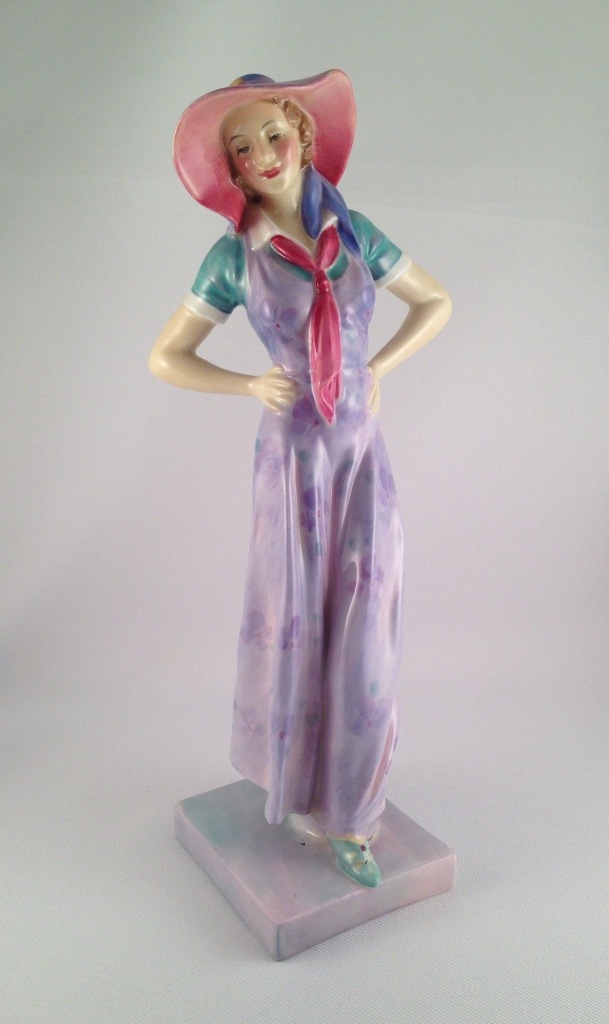
A favourite of mine which fits perfectly into this group is Windflower, a model of a young girl walking into a summer’s breeze, deftly holding her hat in place.

20140624-201120-72680350.jpg
Windflower HN1764.

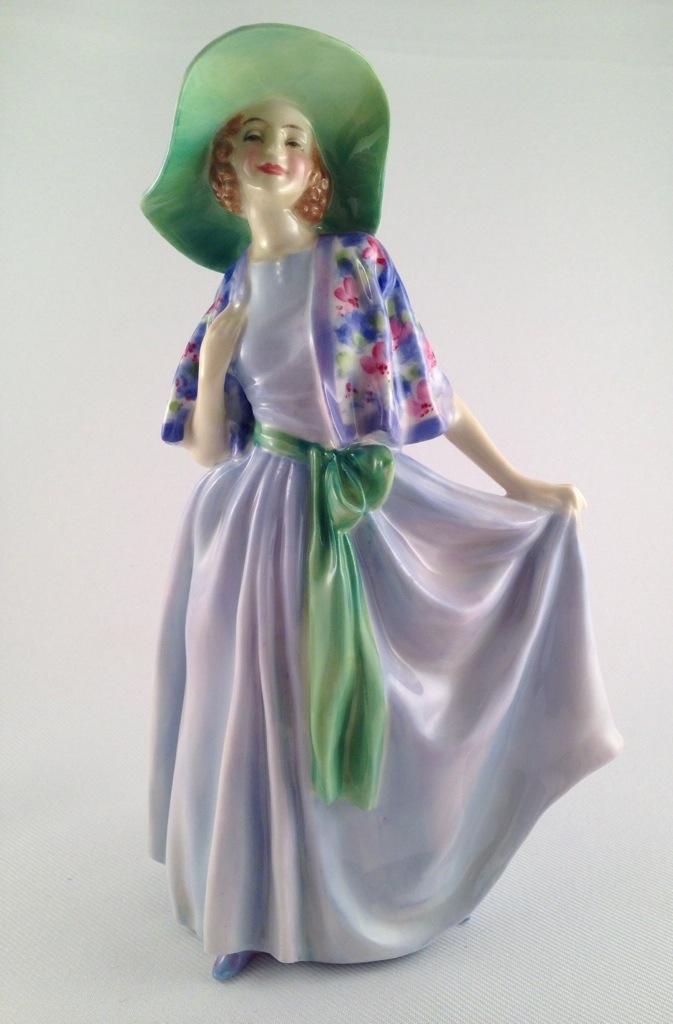
The glamorous Nadine looks as though she has just walked off the screen from a big Hollywood production set on the French Riviera with her cartwheel hat and extravagant sash bow.

20140624-201307-72787853.jpg
Nadine HN1885.

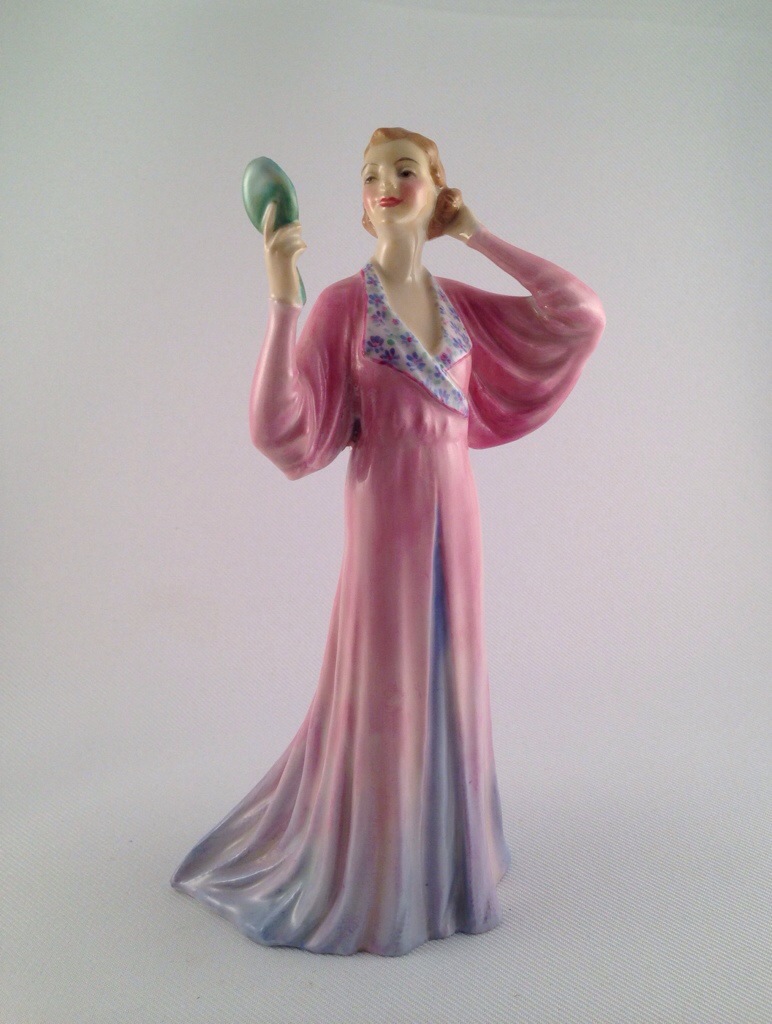
Moving to the boudoir we have the ever stylish and rare figure The Mirror, seen admiring herself in her hand mirror.

20140624-201430-72870534.jpg
The Mirror HN1882.

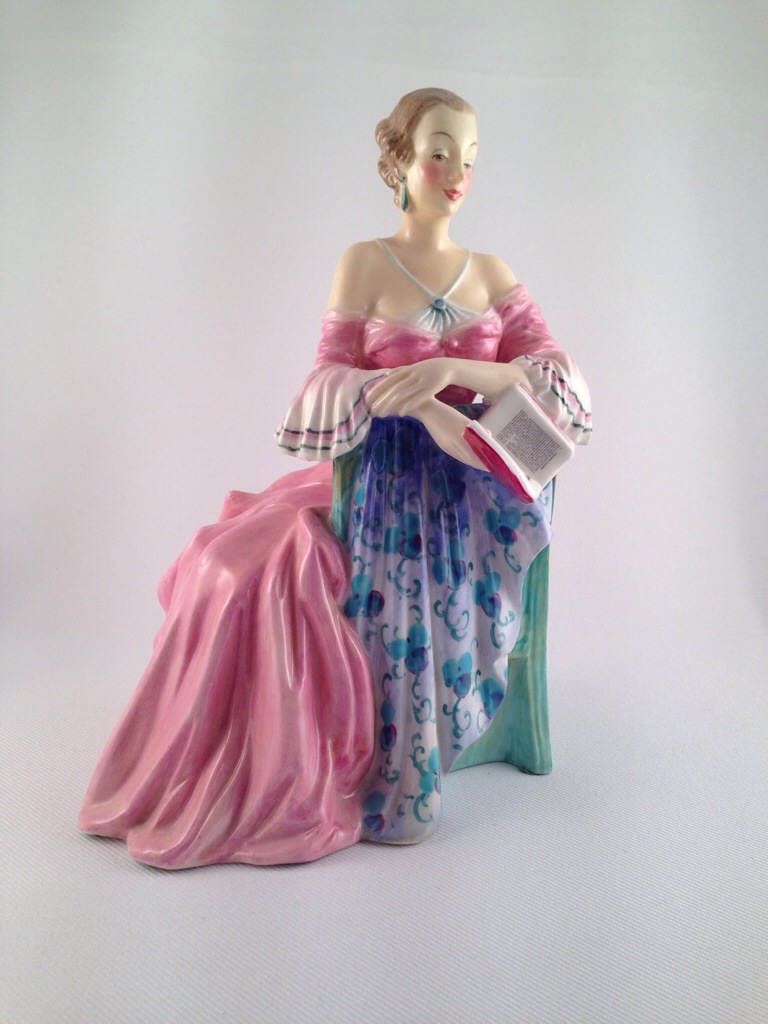
No doubt engaged in conversation is the unusual figure Sweet & Fair, seen here perched on her elegant chair in her simply stylish ensemble.

20140624-201548-72948503.jpg
Sweet & Fair HN1864.

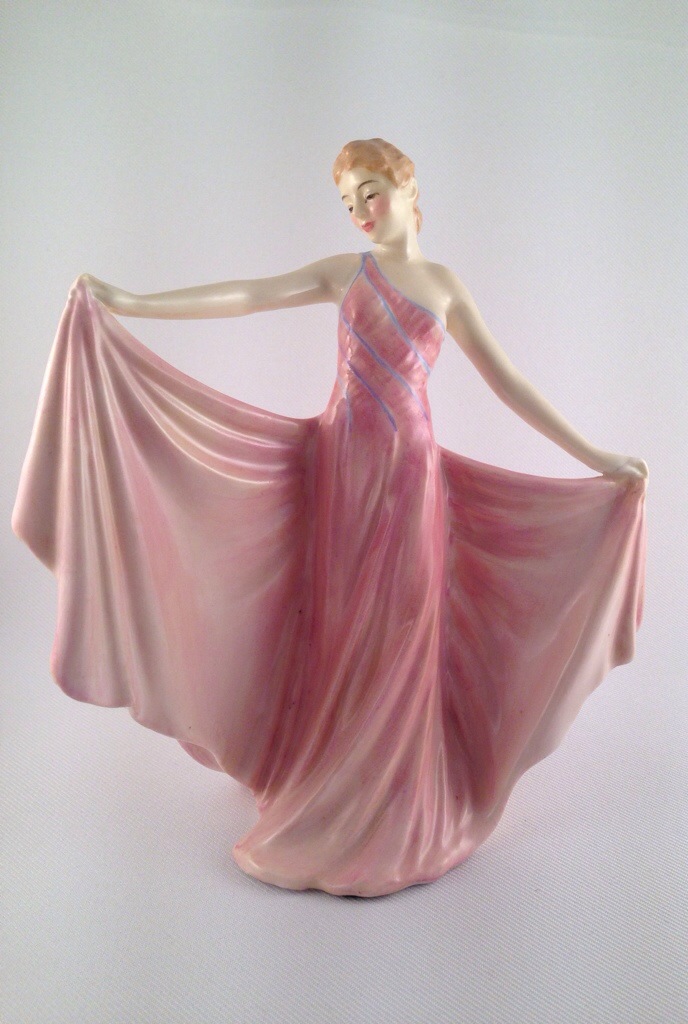
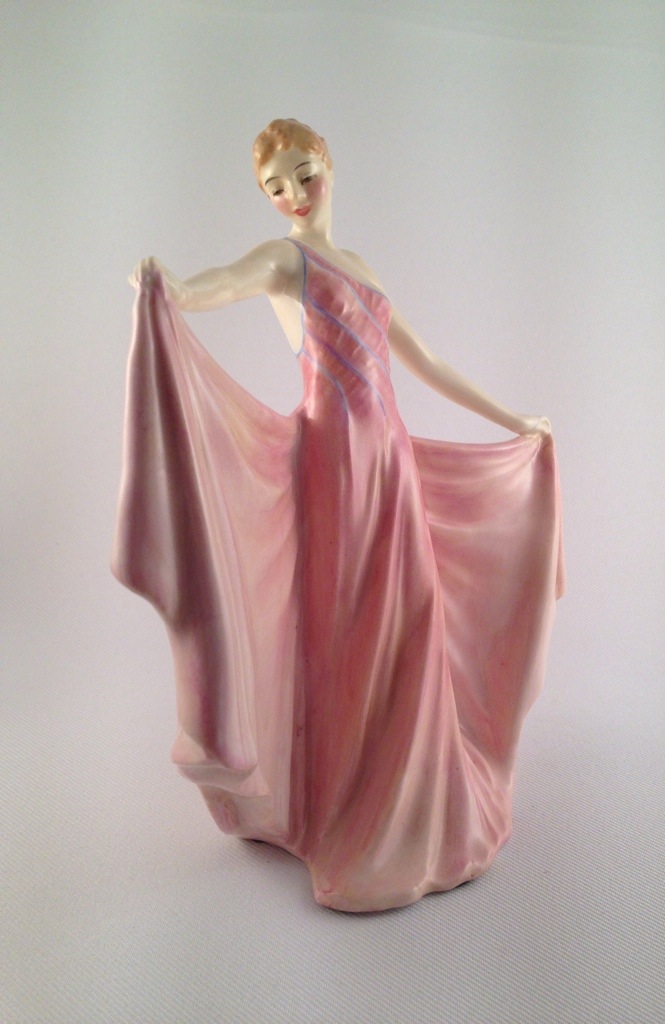
A final figure which belongs to this typical sized Doulton lady is Rhythm, seen here swaying gently to the music. She is a particularly hard figure to find today and her short production run was no doubt the result of her elongated arms, which are as fragile as they look.

20140624-201821-73101483.jpg


Two views of Rhythm HN1903.

Before we finish there is one more figure to mention, namely the wonderful figure The Lambeth Walk. She is seen carefully taking a step to the tune of the same name from the hit musical Me and My Girl. My reason for leaving her to last is not her insignificance but rather her size – she unlike her counterparts stands a magnificent 25 cms tall and so is instantly distinguishable from this band of glamorous gals!

20140624-203000-73800127.jpg
The Lambeth Walk HN1880.

As you will be able to tell this latter group of Hollywood style figures all date from the same period and their HN numbers are all in the late 1800’s. Together they create something of a wow factor as I am sure you can imagine!

Doulton artist profile – Sidney Hall

20140622-174549-63949130.jpg
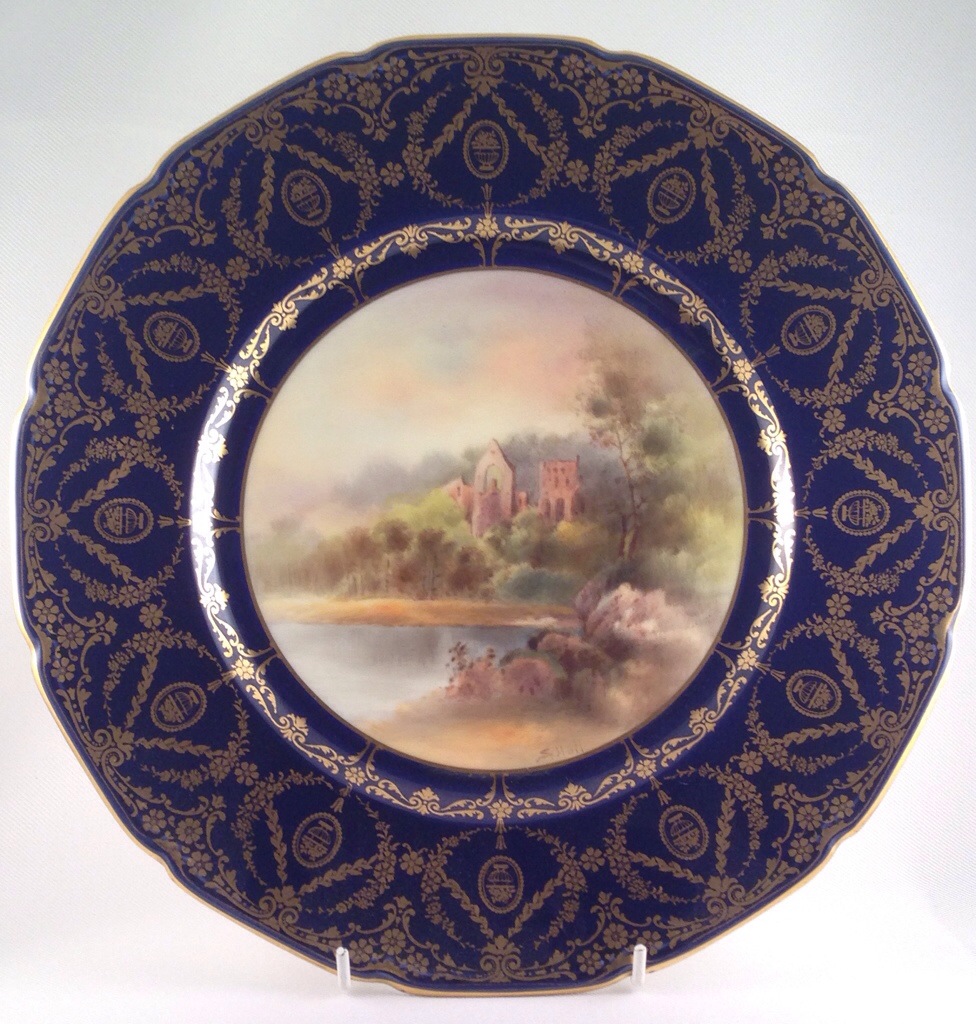
A fine cabinet plate featuring a view by Hall of Dryburgh Abbey in the Scottish Borders.

Hall’s association with Doulton began as a young teenager and would end with him leading a group of young painters and also leading the hand painting Seriesware department. In the intervening years Hall displayed his versatility by painting many important fine china dessert sets and services featuring flowers, fish, game and landscapes. He is recorded as being particularly famed for his floral subjects, but to date I haven’t personally found any! Perhaps someone out there can help?

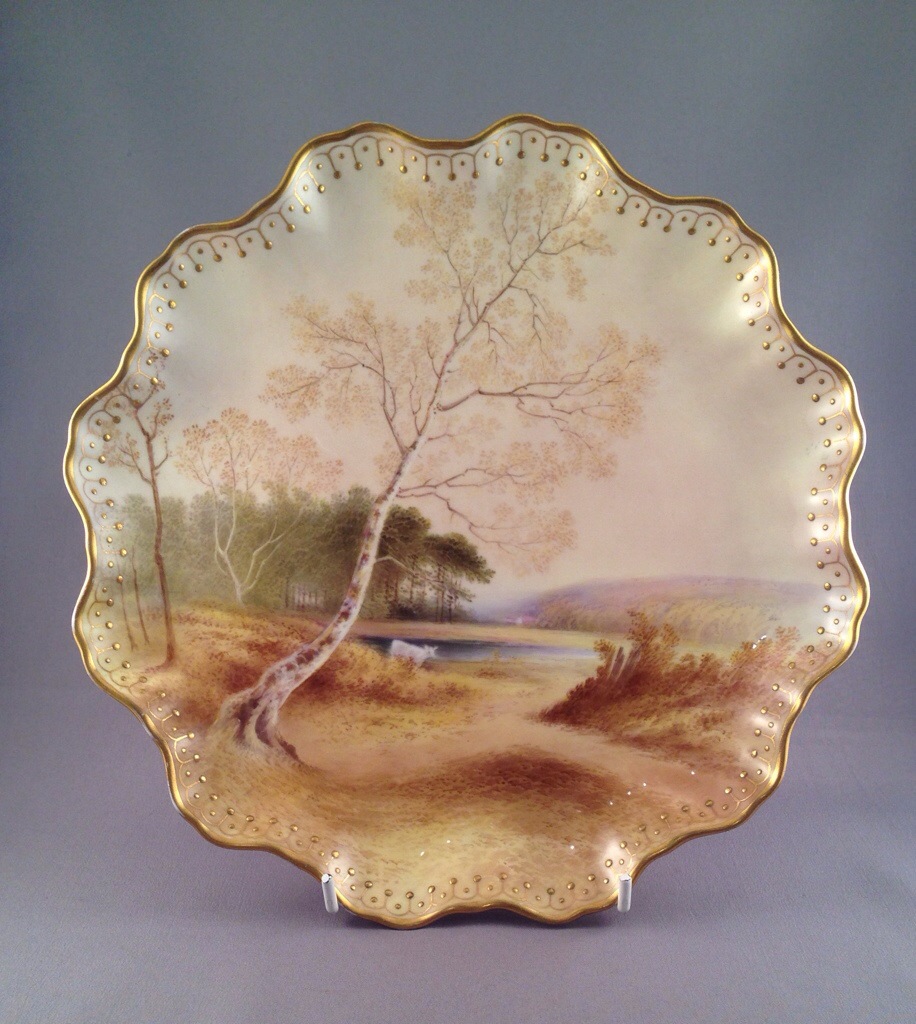
20140622-174706-64026254.jpg
A landscape signed by Hall with fine gilding work.

Doulton artist profile – Edwin Wood

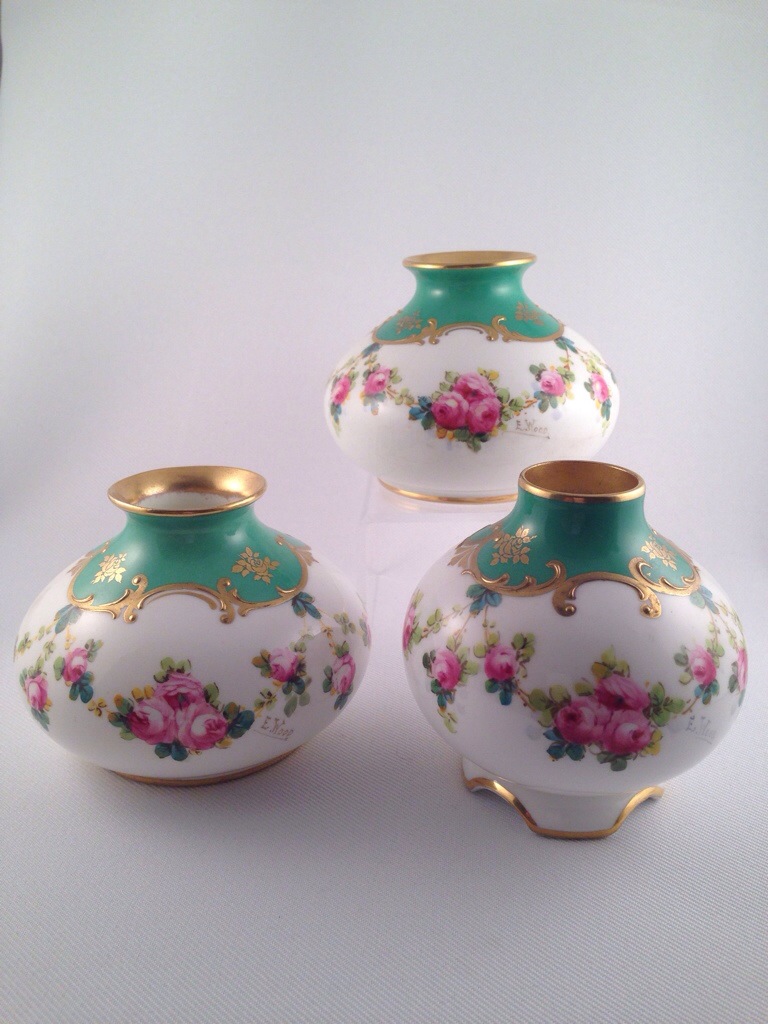
20140622-172828-62908206.jpg
A trio of vases signed E. Wood with typical handpainted decoration.

Wood is famed in Royal Doulton circles for his skilled flower painting, typically groups, and it is pieces with his famous roses that turn up most frequently signed by this artist.

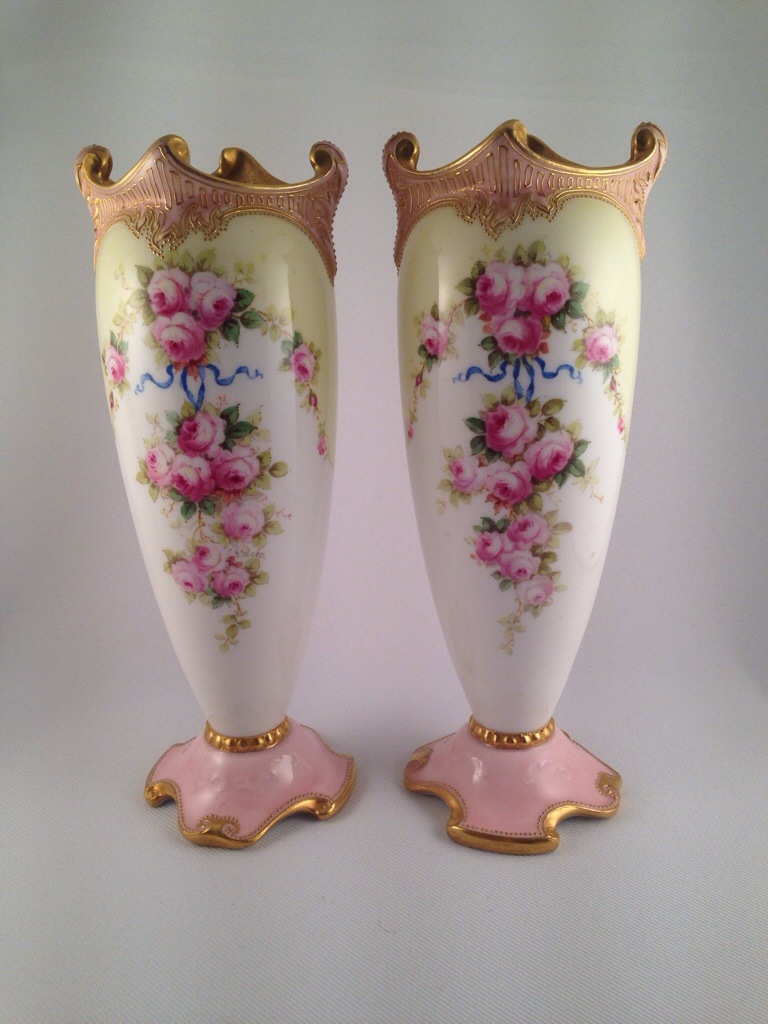
20140622-172926-62966275.jpg
Another pair of vases by Wood with similar rose boughs.

However, Wood began training at Crown Derby and later Wedgwoods. It is recoded that he was 29 when he began at Doulton’s in 1898 until retiring in ca.1938.

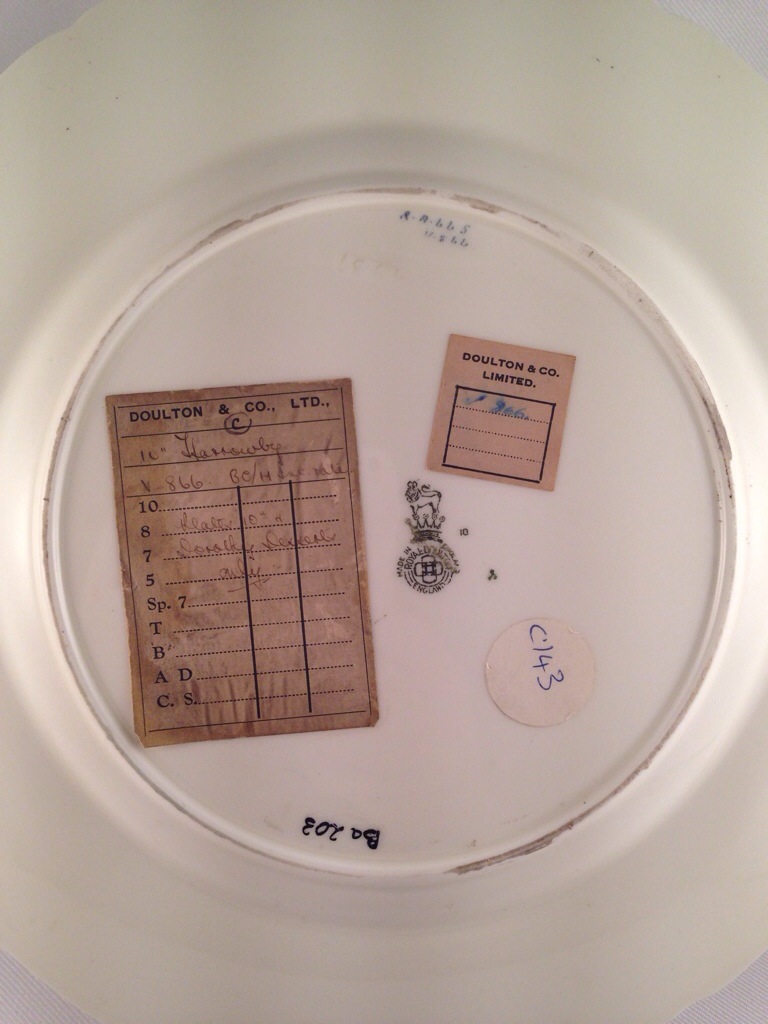
20140622-173036-63036977.jpg

20140622-173035-63035953.jpg
Two views of a hand painted dessert plate by Wood, also showing the original Doulton labels.

Wood is as I say famed for his flower painting but he was equally skilled at game and fish subjects. Pieces of Doulton also turn up signed E. Percy, a pseudonym employed by both Wood and the prolific Percy Curnock on part transfer, part handpainted pieces.

20140622-173310-63190140.jpg
A charming plate signed E.Percy.

Royal Doulton’s early Child figures.

Refelctions 6 00004

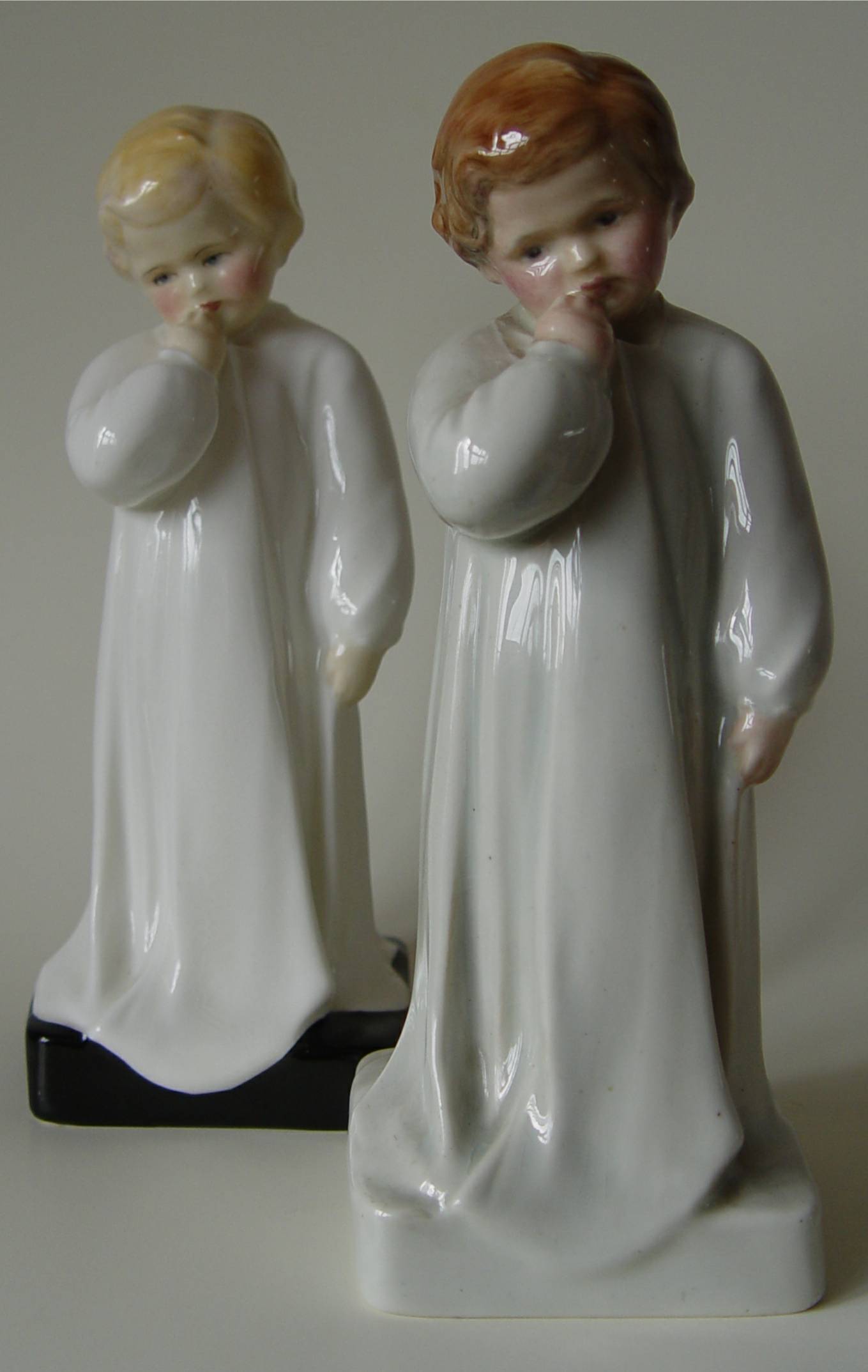
L-R Darling HN1319 and HN1.

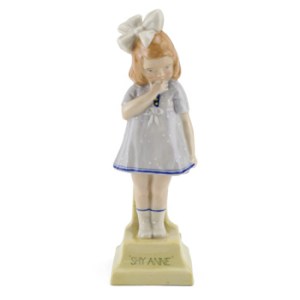
The prominence and popularity of Darling HN1 has proved over the last century that child figures are among the most popular Doulton have produced as part of the HN figure collection. Darling was sculpted by the great Charles Vyse and as was often the case in the first half of the twentieth Century, Charles Noke, Doulton’s art director approached prominent sculptors of the time to provide models for possible inclusion in the collection.  In the first decade of production of the HN collection Darling remained a clear favourite of collectors, it is therefore no surprise to see that many other child studies followed this iconic sculpture. These first studies remained somewhat sculptural, just like Darling, who was succeeded by a line-up of other famous faces including Dolly, Shy Anne HN60, the Coquette HN20 and a handful of Noke’s own studies such as the very rare Boy on Crocodile HN373.
FIG_Shy-Anne-HN65

Shy Anne HN65.

It was not until the 1920’s when a former apprentice modeller from their Lambeth factory, one Leslie Harradine, began to submit models to Doulton in Burslem that the typical figures we all now know as child figures began to emerge.
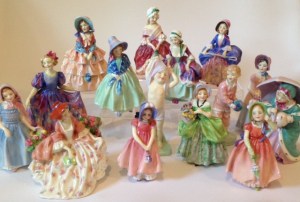
photo 2 (4)

A group of Harradine children.

Harradine revolutionised the collection from the very start, introducing much slicker lines and also a smaller size in figure.
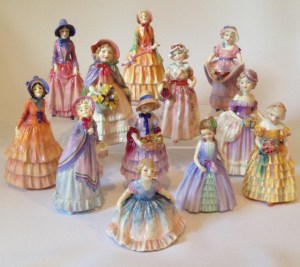
photo 1 (4)

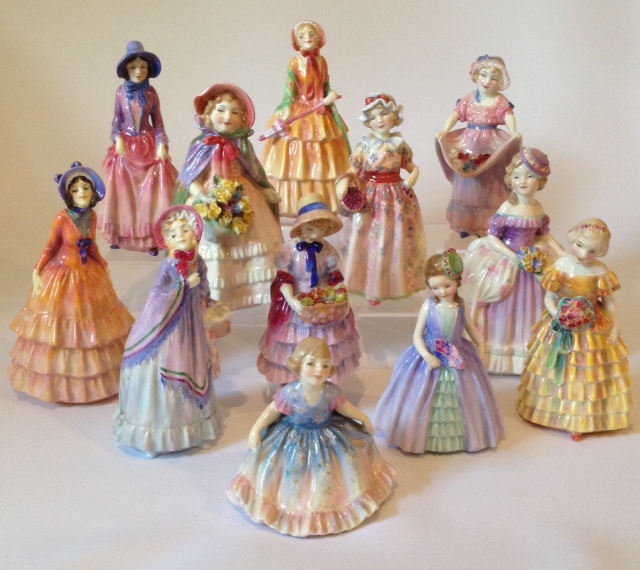
A group of early 1930’s child figures.

Classic Harradine child figures such as Betty HN1404 and Pinkie HN1552 are easily recognisable not only as Doulton but also as the work of Harradine. His ability to interpret moods and trends was unrivalled at the time and I am sure all other factories would have been envious of Doulton’s great in house talent. Ironically no visit by Harradine was ever recorded to Burslem, instead former employees recall the monthly arrival of a parcel from Harradine and the stir it would cause in the factory. It is a tribute to Harradine that so few prototypes from his time as lead figure sculptor have turned up, indicating that the majority of his models actually went into production.
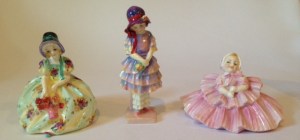
photo 5 (1)

Three deco children: Monica, Pinkie and Rosebud.

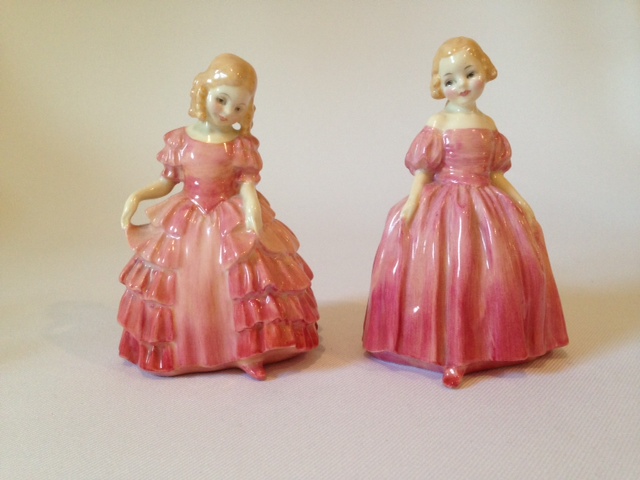
Harradine’s ability and versatility brought us a long line of youthful figures including Rose HN1368 and Marie HN1370, an aptly named pairing available in several complimentary colourings, Bo-Peep HN1810 and Cissie HN1808 another pairing and other popular figures such as Diana HN1716, Lily HN1798 and Nana HN.
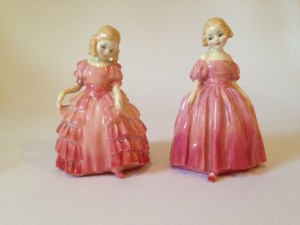
photo 3 (2)

Rose and Marie in complimentary colourways.

Yet, Harradine did not restrain himself to small size figures and his large size Estelle is still highly sought after by collectors the world over.
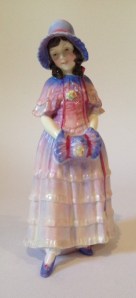
photo (2)

Estelle HN1566.

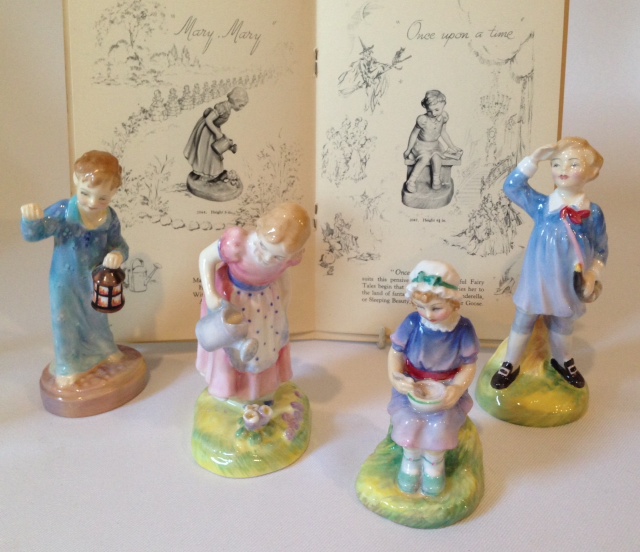
One of the last child study series modelled by Harradine and introduced by Doulton was a set of Nursery Rhyme figures. Harradine, together with a then new but equally talented modeller, Peggy Davies, were set the task of interpreting key figures from popular children’s nursery rhymes for this set. I am sure you will all agree the effectiveness of these models secures both artists reputations as expert modellers as each study is the embodiment of the verse it represents.
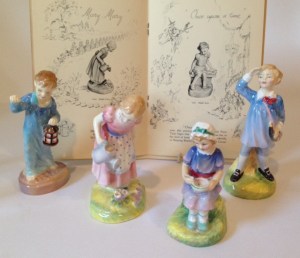
photo 4 (2)

Four nursery rhymes characters including a prototype of Little Miss Muffit.

The fact that several of these key figures within the HN collection remained in production until close to the millennium confirms the popular demand the world over for child studies, something that Doulton to this day continues to ‘feed’ with the introduction of new child studies. As seems to always be the case imitation should be construed as flattery and so to finish, here is a version of Darling made by another Staffordshire pottery next to a Doulton version from 1934 – the quality of the Doulton model leaps out.
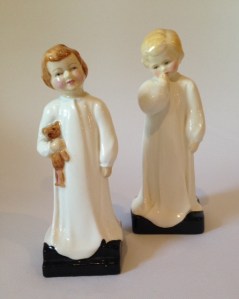
photo (1)

Doulton’s Darling HN1319 together with an inferior copy
 

Royal Doulton’s Blue Children ware

download

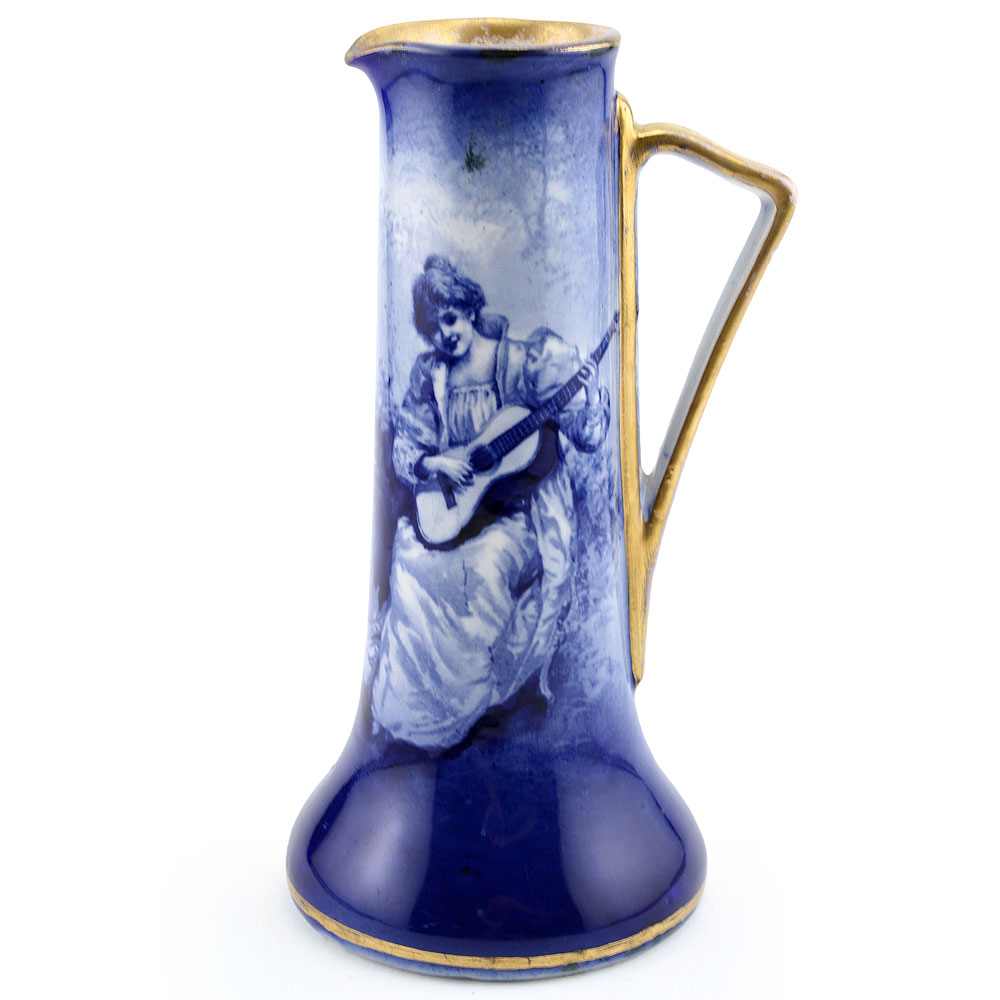
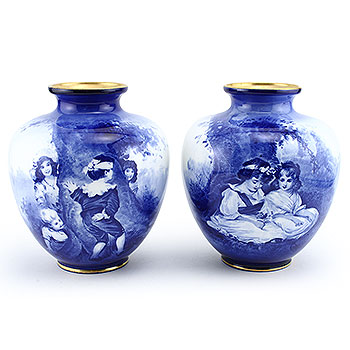
Even as I write this I am aware of the misnomer surrounding the title of this piece, as Doulton never referred to this series as such, but rather ‘Blue Figures’ was the title given. The label Blue Children refers to the popularity among collectors for pieces of this ware featuring children and they re-christened it.
SRW-Blue-Children-Vase-DH-5H

Traditionally blue is the most popular colour for porcelain decoration and follows an ancient Chinese tradition that still pervades today. The scenes featuring children and also young women in various backdrops would have been purchased outside of Doulton and there are examples of what we know as Doulton scenes appearing on other manufacturers items from around this time. One such example is the factory Royal Bayreuth, whose wares bear an uncanny likeness to its Doulton counterparts.

SRW_Blue-Children-Vase-9H

However, what sets the Doulton series apart from its competitors is of course the quality. Doulton’s printing process allowed for finer detail and certainly subtler colour variations, as well as added detail by Doulton artists specifically to the faces of the characters and also the often detailed backgrounds.

SRW-Blue-Children-Vase-Pair-GGCT

A precise date of introduction of this ware is not known, although late Victorian is a time I think correct given the elaborate Victorian shapes of many of the earlier pieces, so ca. 1890. Signatures on these early pieces are also to be expected with J. Hughes being a common one. As was typical when the so-called ‘print and tint’ process was used, Doulton’s major artists used a pseudonym. Thus J. Hughes was in fact John Hugh Plant. Similar examples exist for other artists including E. Percy which is recorded as being either Edwin Wood or Percy Curnock.

SRW-Blue-Children-Pitcher-WGuitar-7

The end of the Victorian age, when Queen Victoria died in 1902 brought a change in popular tastes, which meant that the elaborate rococo shapes used for Blue Children pieces became much more simplified and the gilding too was often reduced to simply a gilded edging. Having said that, the shapes of vases etc…that were used are what I class as typically Doulton, in that they were not limited to this series but were used in seriesware production and also the top-end hand-painted wares.

images

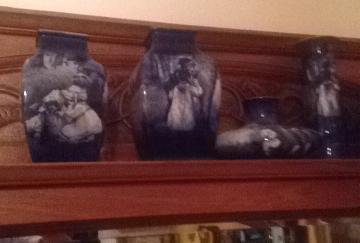
Displays of Blue Children cannot fail to catch the eye and there are some fantastic collections around the world. With a never ending variety of shapes collectors are well catered for! Here is a display made by a friend in South Africa, notice the great shapes, I particularly like the square vases!

10423584_10203131598763550_669012623_n


Collecting Royal Doulton’s Maid figures

20140615-183655-67015610.jpg

Thinking of collecting themes, one which is often overlooked is that of Doulton’s group of maids, be they serving girls and women, or alternatively the name once given to young girls.

Of course there are a handful of figures with ‘maid’ in their names such as Sweet Maid HN1505 a classic, bonneted Doulton lady or Sweet Maid HN2092 a bride on her wedding day.

This group of maid figures, however, do not have ‘maid’ in their names, rather they are named after typical serving girl names such as Jane or the French Suzette.

The figure Dorcas appears to be modelled on an advert for Dorcas towels from the 1930’s and also derives her name thus.

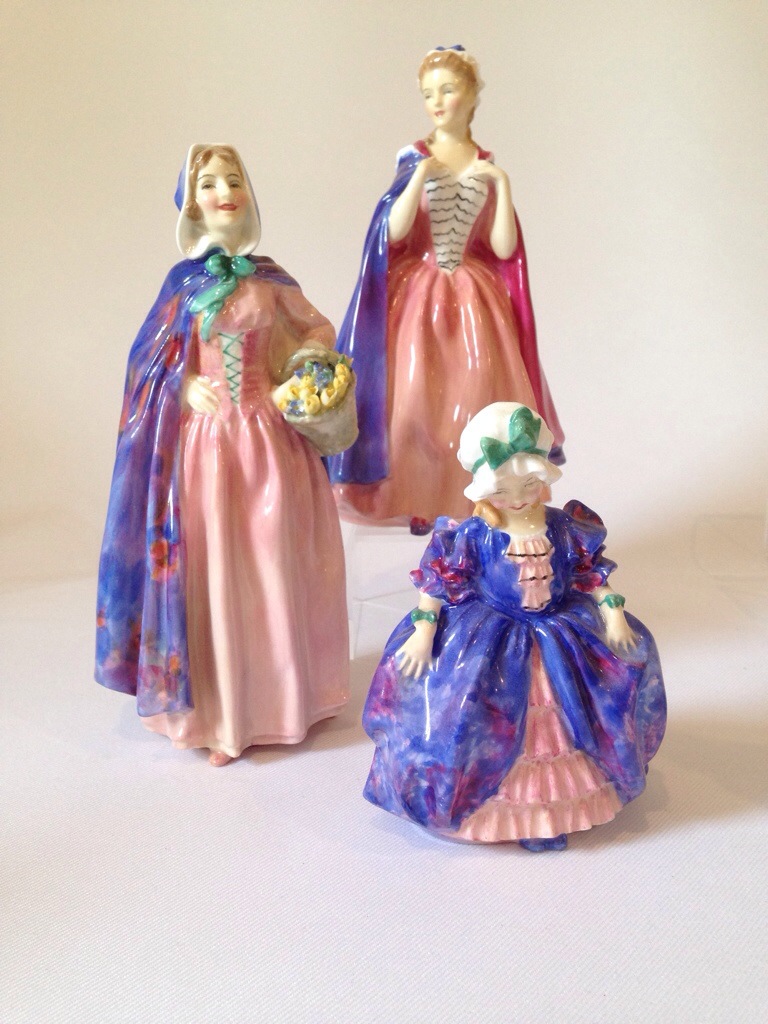
Of course arranging figures by colour is always popular. Here are three figures I think go well together.

20140615-183853-67133663.jpg

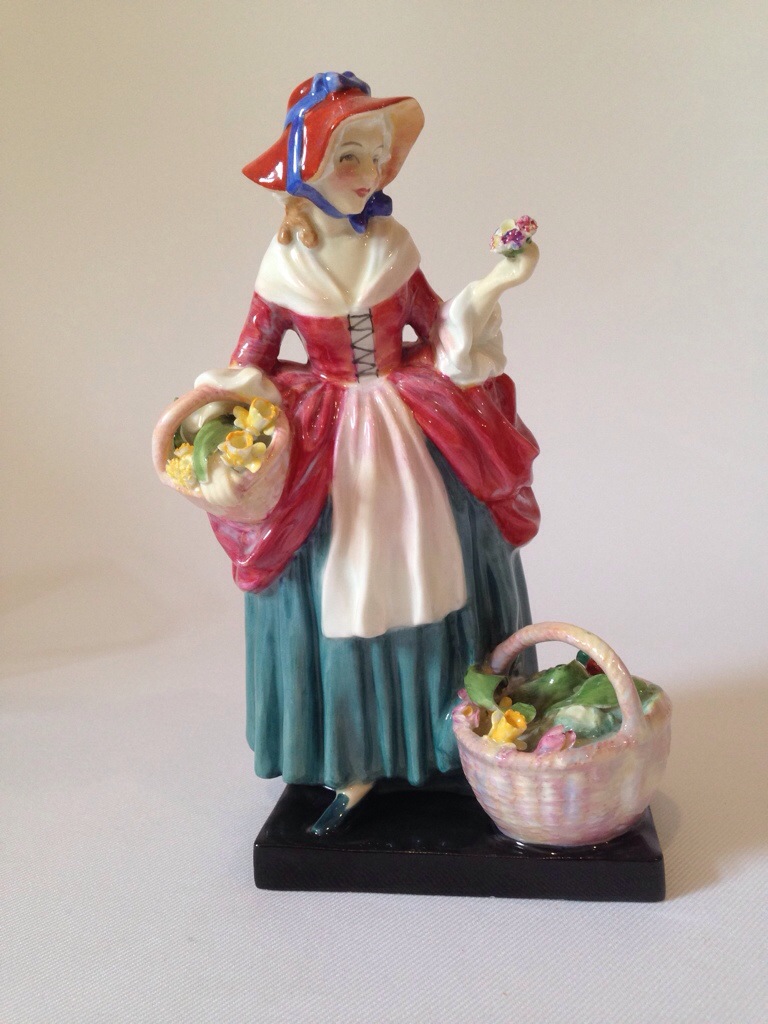
Another figure that is based upon an illustration is this version of Spring Flowers. For some unknown reason this colourway, which is directly based upon a Wheatley ‘Cries of London’ illustration was not introduced until 1940 whereas the original 1937 version is an entirely made up Doulton colourway. Personally I prefer the red and green version.

20140615-183740-67060154.jpg

Perhaps you arrange your collection in a particular way? If so join our Facebook page ‘Doulton Collectors Club’ to share and also see what other collectors collect and cherish!

Doulton’s deco nudes

The liberating period of the 1920’s to 1930’s often seems incongruous to non-Doulton figure collectors who associate ladies in ballgowns with Doulton figures, but those in the know, they recall that there are a small group of nude figures produced in the art deco period that encapsulate that movement perfectly. All the figures contained in this small band of lady figures were the brain child of Leslie Harradine, Doulton’s then principal figure modeler.

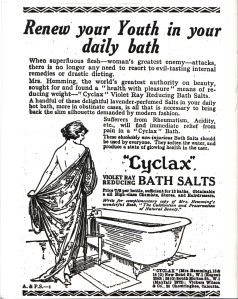
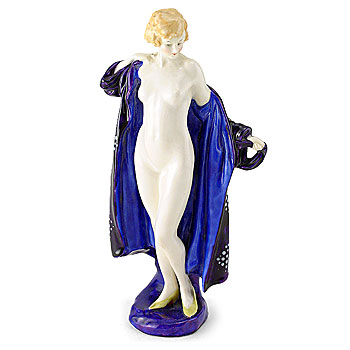
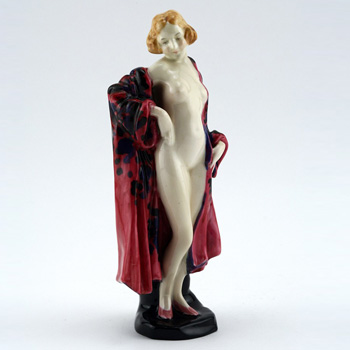
As if to prove their own artistic credentials, Doulton introduced over a 10 year period several nude studies that confirmed their artistic prowess. The first we must all know was Harradine’s The Bather, modeled on this contemporary advert.

endpapers-cyclax-advert

There were six different versions of this popular model, with this colourway proving to be the most popular.

FIG-Bather-HN687

The Bather HN687.

In the succeeding years there was a second version of The Bather introduced, shown here.

FIG-Bather-HN773


The Bather HN773 (second version).

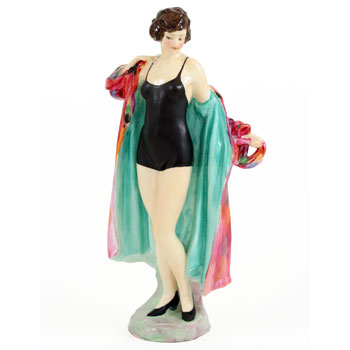
By the mid to late 1930’s tastes had changed and prudery was once more on the rise, and so a last version of this figure was introduced wearing a bathing suit, so reflecting the continued interest in lidos.

FIG-Bather-HN1708


The Bather HN1708.

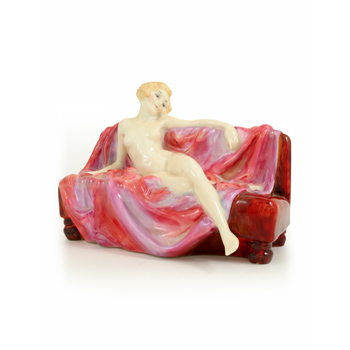
However, there were other nude figures introduced at this time including Siesta shown here reclining on her day sofa.

FIG-Siesta-HN1305


Siesta HN1305.

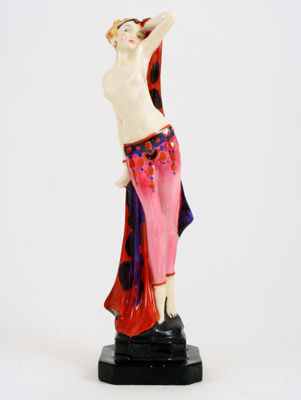
Other partially clad figures also belong to this group of deco delights such as Carnival, Circe and Susanna, a scalled down version of Circe.

carnival_hn1260

Carnival HN1260.

fig_circe20hn1249

Circe HN1249.

FIG-Susanna-HN1233


Susanna HN1233.

Harradine continued, however, to experiment and push boundaries in figure production. He achieved much acclaim at the British Industries Fair of 1935 for his then two latest productions, The Coming of Spring and Celia. Particular attention was lavished upon the Coming of Spring shown here.

FIG_Coming-of-Spring-HN1722

The Coming of Spring HN1722.

We cannot mention deco nudes without also mentioning that small group of figures commissioned by Noke from Richard Garbe the eminent sculptor. I have in my own collection his Spring HN1774 produced in a limited edition of 100.

Yet, Harradine as Doulton’s leading modeler continued to produce nude figures up until the late 1930’s with figures such as Dawn and The Awakening.

FIG-Dawn-HN1858A

Dawn HN1858 (without headdress)

There were also a slew of scantily clad beauties such as Negligée and Lido Lady as well as a few child studies such as Blue Bird.

FIG-Blue-Bird-HN1280

The rare Blue Bird HN1280.

In recent decades there have been new nude introductions, not least in 2000 when Doulton themselves re-modelled four of Harradines most popular figures including The Bather (first version).