Category Archives: Figure Articles

Collecting Royal Doulton’s Maid figures

20140615-183655-67015610.jpg

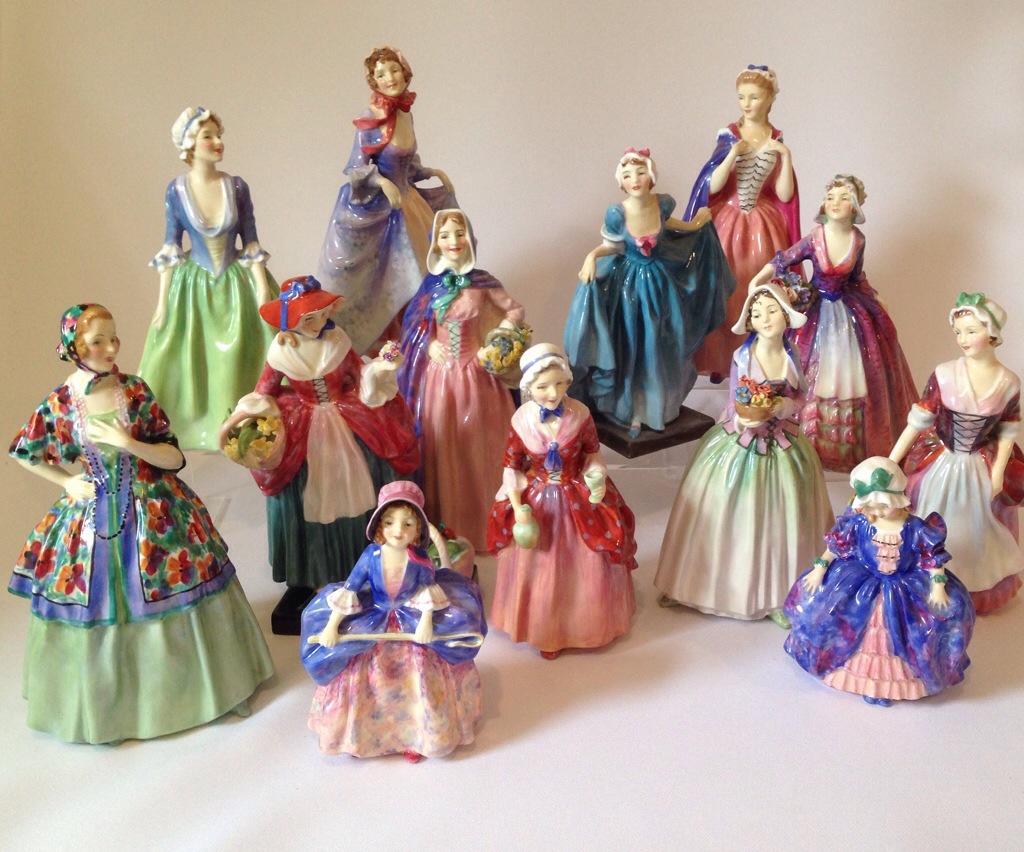
Thinking of collecting themes, one which is often overlooked is that of Doulton’s group of maids, be they serving girls and women, or alternatively the name once given to young girls.

Of course there are a handful of figures with ‘maid’ in their names such as Sweet Maid HN1505 a classic, bonneted Doulton lady or Sweet Maid HN2092 a bride on her wedding day.

This group of maid figures, however, do not have ‘maid’ in their names, rather they are named after typical serving girl names such as Jane or the French Suzette.

The figure Dorcas appears to be modelled on an advert for Dorcas towels from the 1930’s and also derives her name thus.

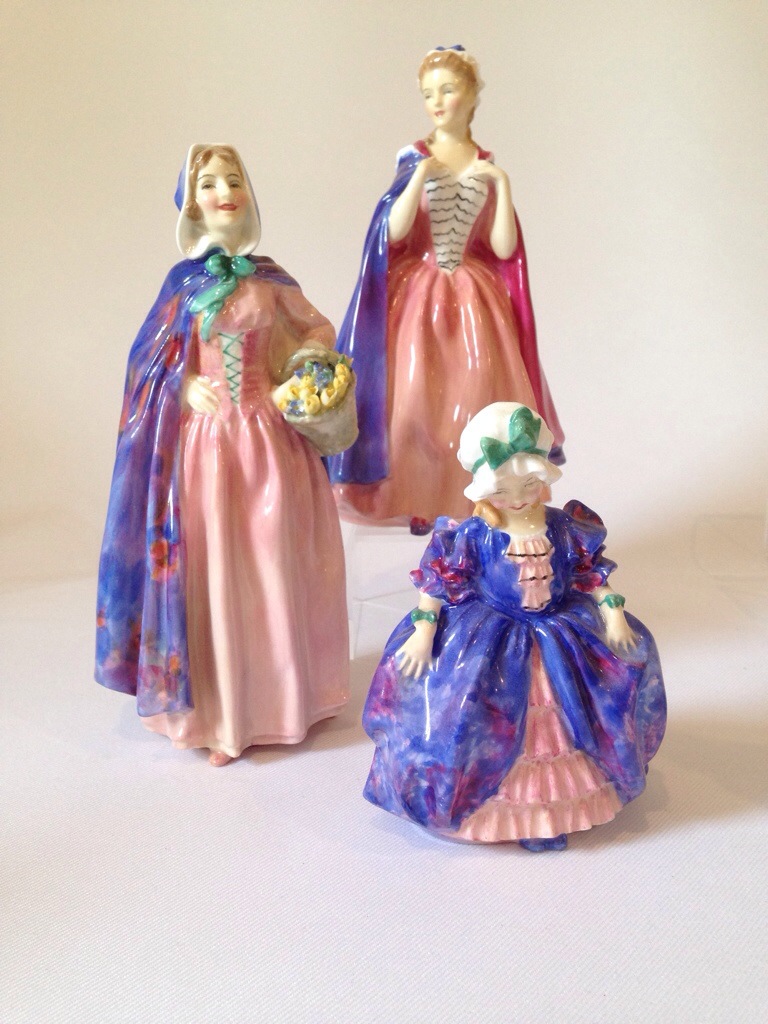
Of course arranging figures by colour is always popular. Here are three figures I think go well together.

20140615-183853-67133663.jpg

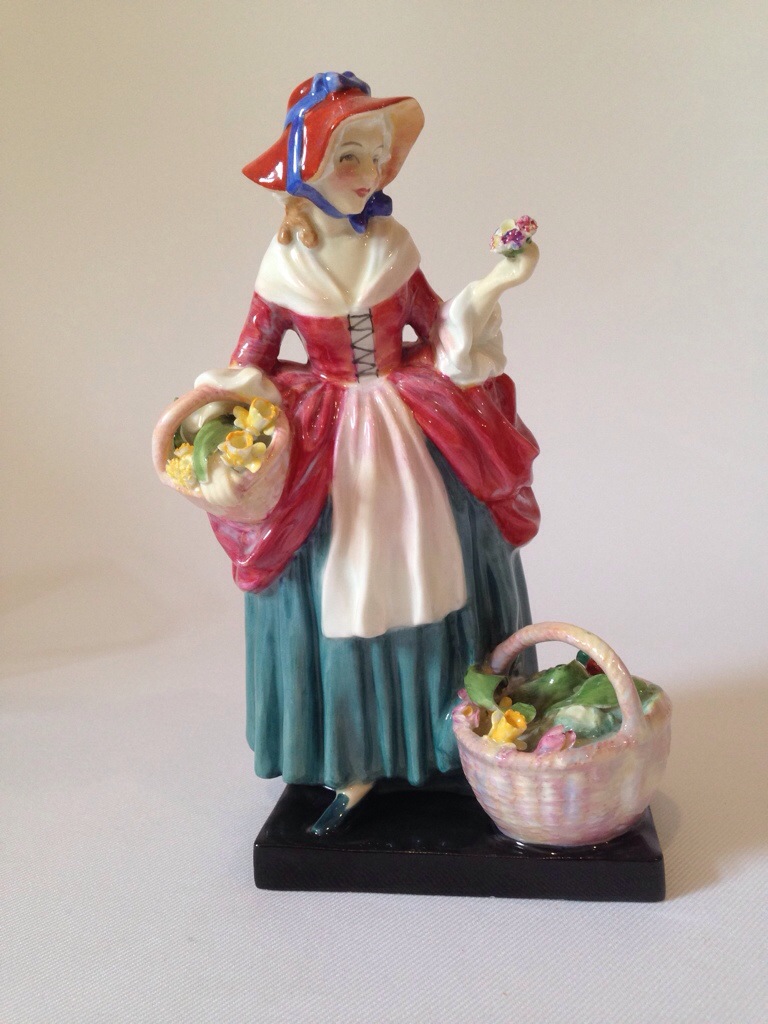
Another figure that is based upon an illustration is this version of Spring Flowers. For some unknown reason this colourway, which is directly based upon a Wheatley ‘Cries of London’ illustration was not introduced until 1940 whereas the original 1937 version is an entirely made up Doulton colourway. Personally I prefer the red and green version.

20140615-183740-67060154.jpg

Perhaps you arrange your collection in a particular way? If so join our Facebook page ‘Doulton Collectors Club’ to share and also see what other collectors collect and cherish!

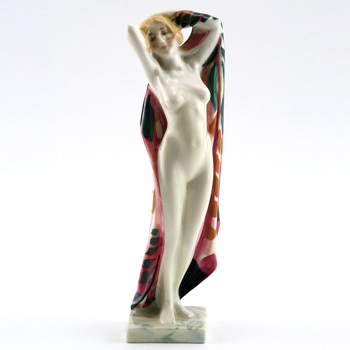
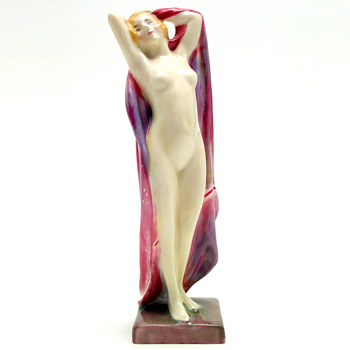
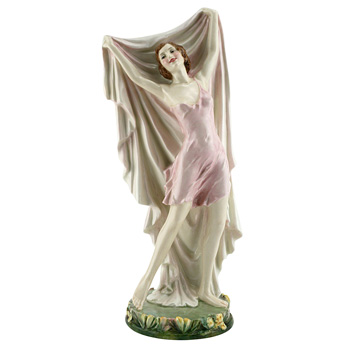
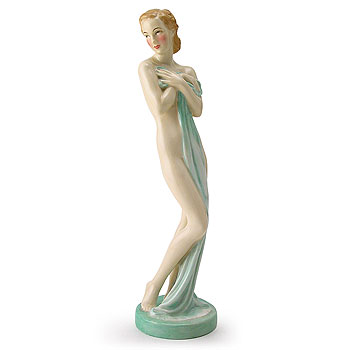
Doulton’s deco nudes

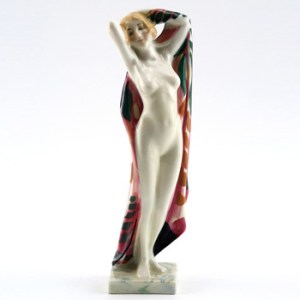
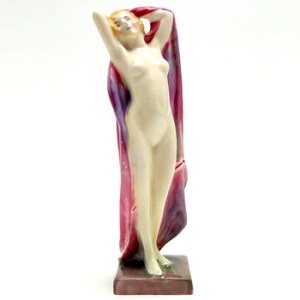
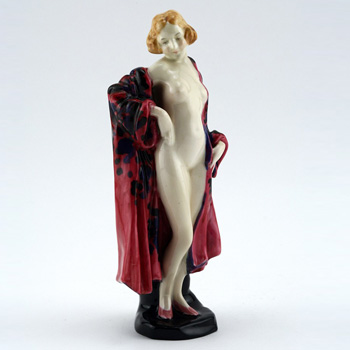
The liberating period of the 1920’s to 1930’s often seems incongruous to non-Doulton figure collectors who associate ladies in ballgowns with Doulton figures, but those in the know, they recall that there are a small group of nude figures produced in the art deco period that encapsulate that movement perfectly. All the figures contained in this small band of lady figures were the brain child of Leslie Harradine, Doulton’s then principal figure modeler.

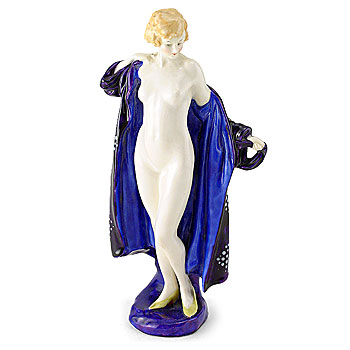
As if to prove their own artistic credentials, Doulton introduced over a 10 year period several nude studies that confirmed their artistic prowess. The first we must all know was Harradine’s The Bather, modeled on this contemporary advert.
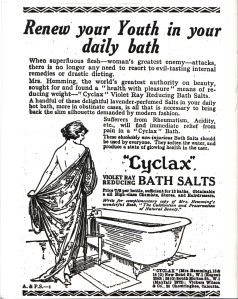
endpapers-cyclax-advert

There were six different versions of this popular model, with this colourway proving to be the most popular.
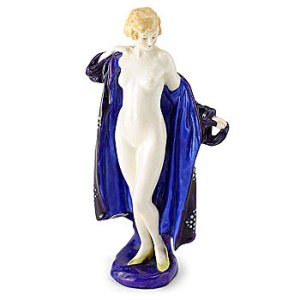
FIG-Bather-HN687

The Bather HN687.

In the succeeding years there was a second version of The Bather introduced, shown here.
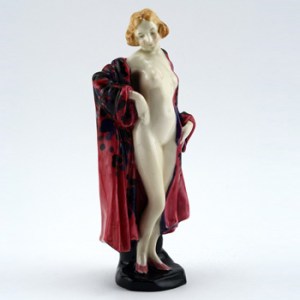
FIG-Bather-HN773


The Bather HN773 (second version).

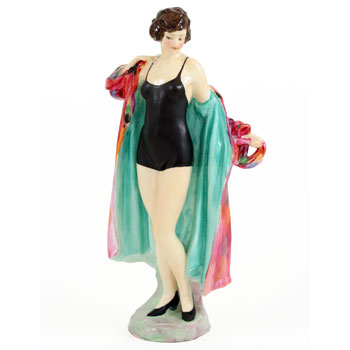
By the mid to late 1930’s tastes had changed and prudery was once more on the rise, and so a last version of this figure was introduced wearing a bathing suit, so reflecting the continued interest in lidos.
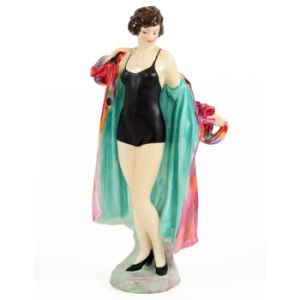
FIG-Bather-HN1708


The Bather HN1708.

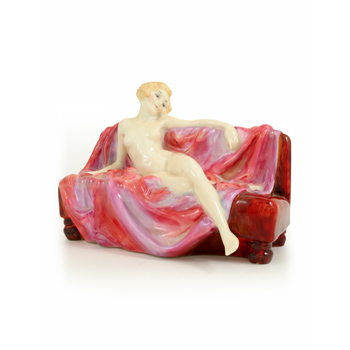
However, there were other nude figures introduced at this time including Siesta shown here reclining on her day sofa.
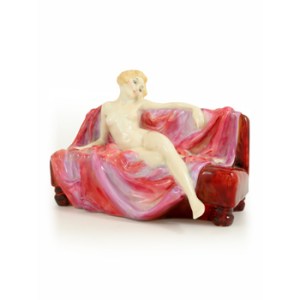
FIG-Siesta-HN1305


Siesta HN1305.

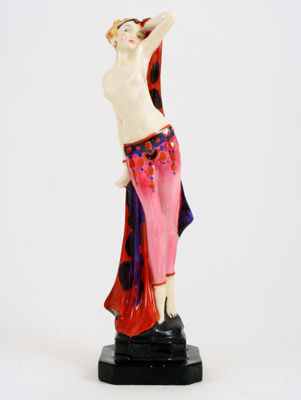
Other partially clad figures also belong to this group of deco delights such as Carnival, Circe and Susanna, a scalled down version of Circe.
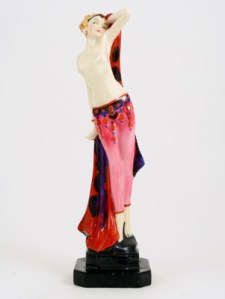
carnival_hn1260

Carnival HN1260.

fig_circe20hn1249

Circe HN1249.

FIG-Susanna-HN1233


Susanna HN1233.

Harradine continued, however, to experiment and push boundaries in figure production. He achieved much acclaim at the British Industries Fair of 1935 for his then two latest productions, The Coming of Spring and Celia. Particular attention was lavished upon the Coming of Spring shown here.
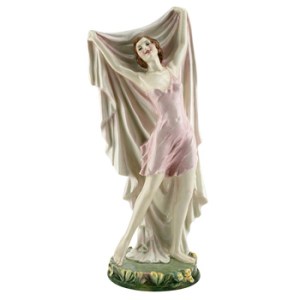
FIG_Coming-of-Spring-HN1722

The Coming of Spring HN1722.

We cannot mention deco nudes without also mentioning that small group of figures commissioned by Noke from Richard Garbe the eminent sculptor. I have in my own collection his Spring HN1774 produced in a limited edition of 100.

Yet, Harradine as Doulton’s leading modeler continued to produce nude figures up until the late 1930’s with figures such as Dawn and The Awakening.
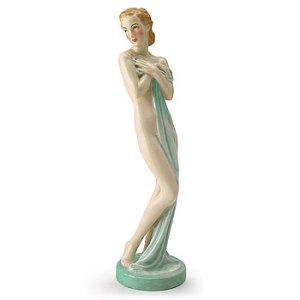
FIG-Dawn-HN1858A

Dawn HN1858 (without headdress)

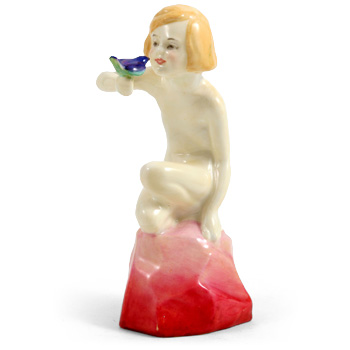
There were also a slew of scantily clad beauties such as Negligée and Lido Lady as well as a few child studies such as Blue Bird.
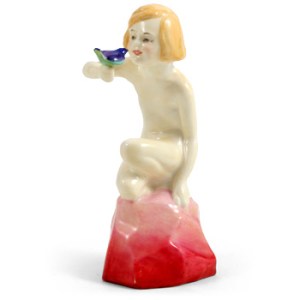
FIG-Blue-Bird-HN1280

The rare Blue Bird HN1280.

In recent decades there have been new nude introductions, not least in 2000 when Doulton themselves re-modelled four of Harradines most popular figures including The Bather (first version).


Dishes, bookends and calendars!

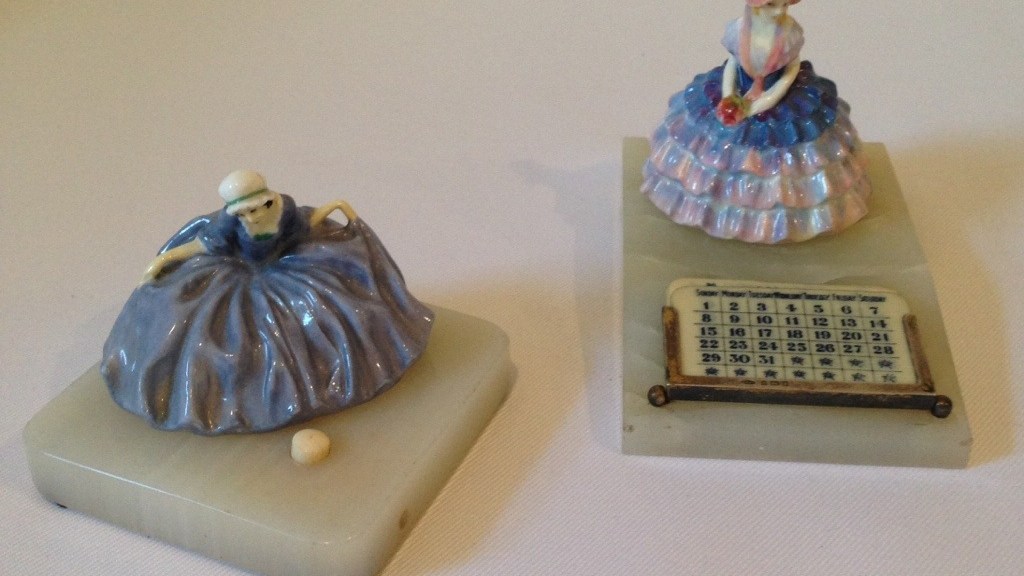
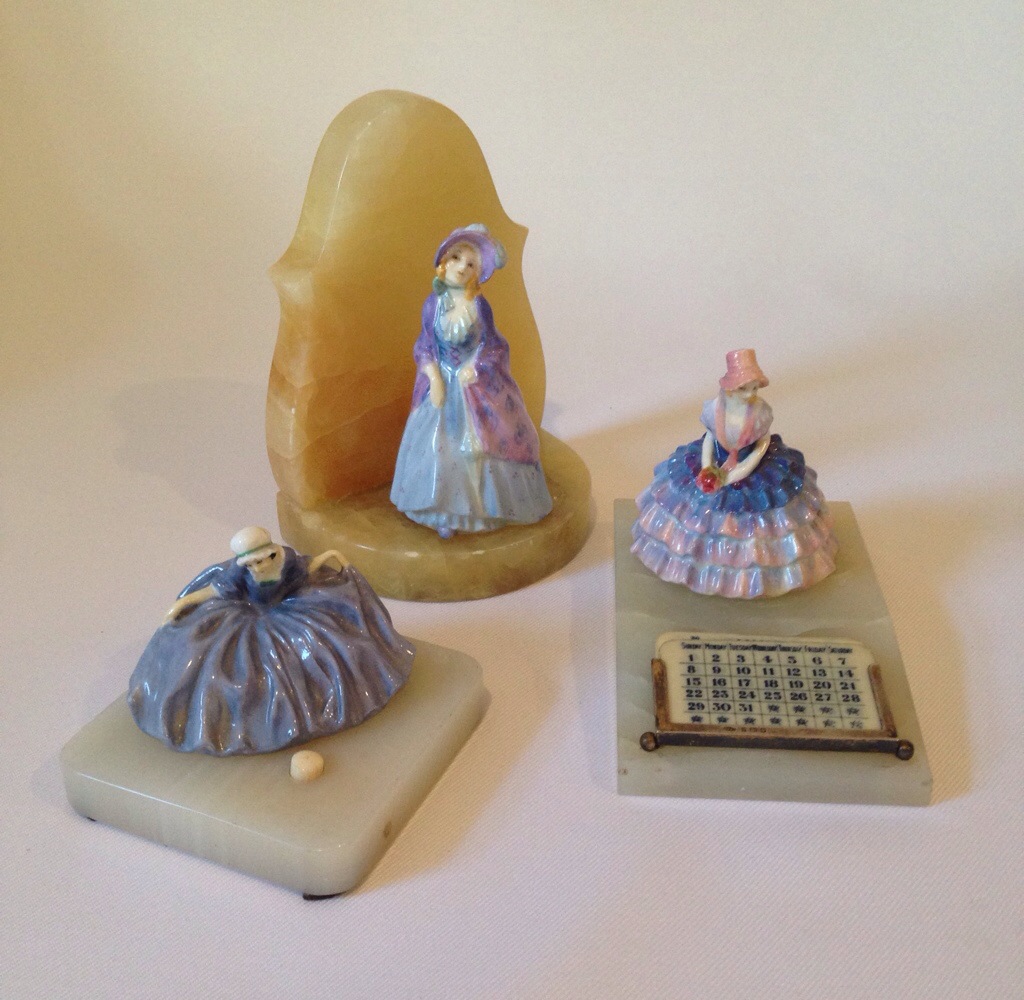
Collectors are often bemused to see their cherished figures mounted on bookends, calendars and dishes! This trend began in the early 1920’s at the same time as the figure lamps were produced.

‘M’ series miniatures are perhaps most often associated with bookends and certain calendars like these below.
20140609-202118-73278144.jpg

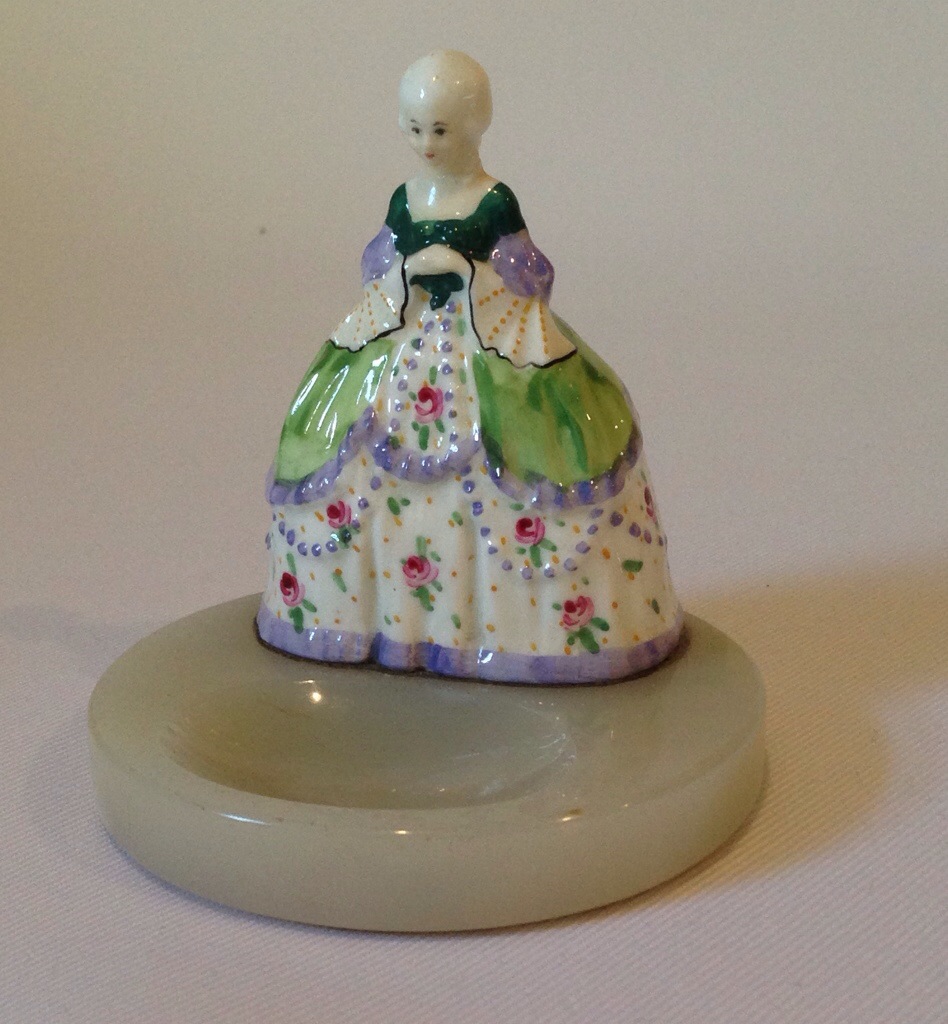
Occasionally very rare figures turn up mounted on bases, such as this Crinoline Lady pin tray.

20140609-202218-73338744.jpg

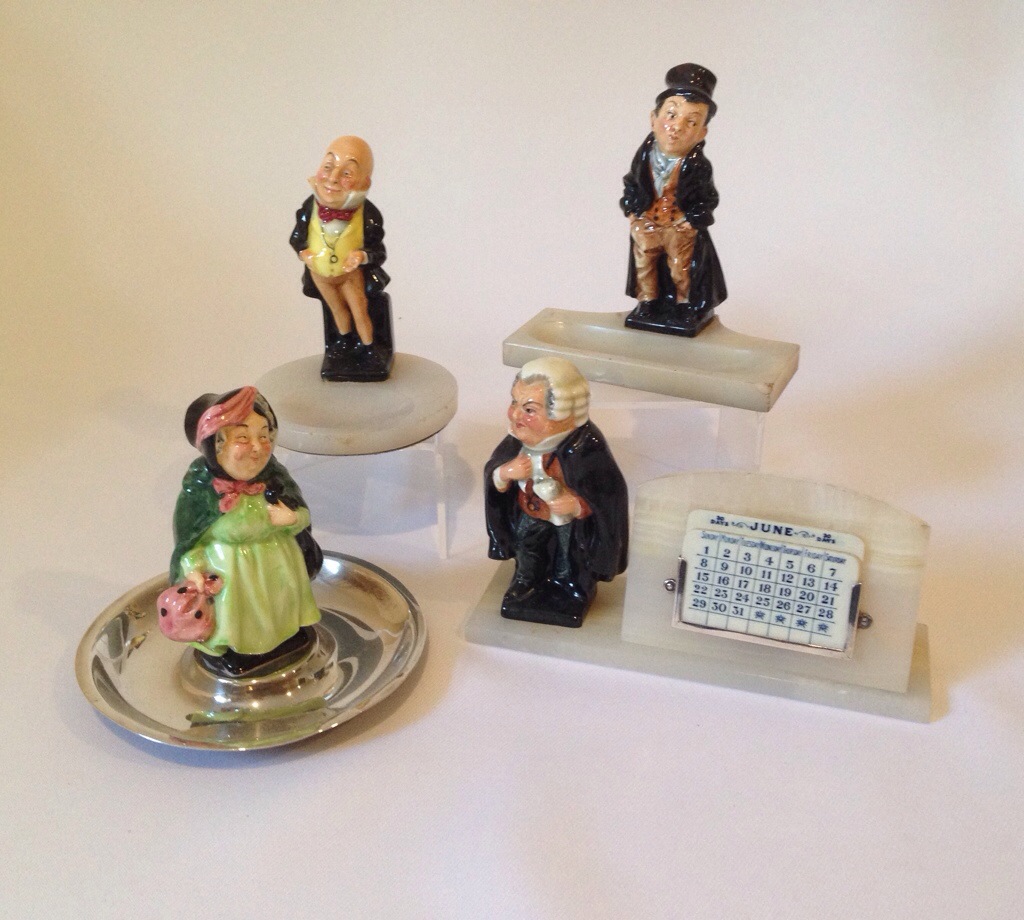
Harradine’s small Dickens figures appear mounted on a variety of bases, like this selection too.

20140609-202320-73400474.jpg

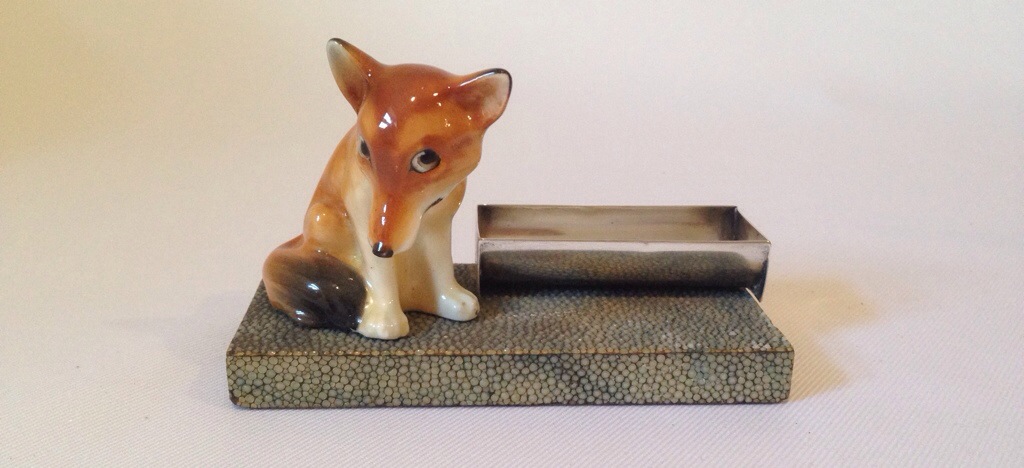
Small Doulton animals are also found mounted as many different objects but particularly desk furniture. Here is a comical fox I found mounted as a stamp tray.

20140609-202543-73543628.jpg

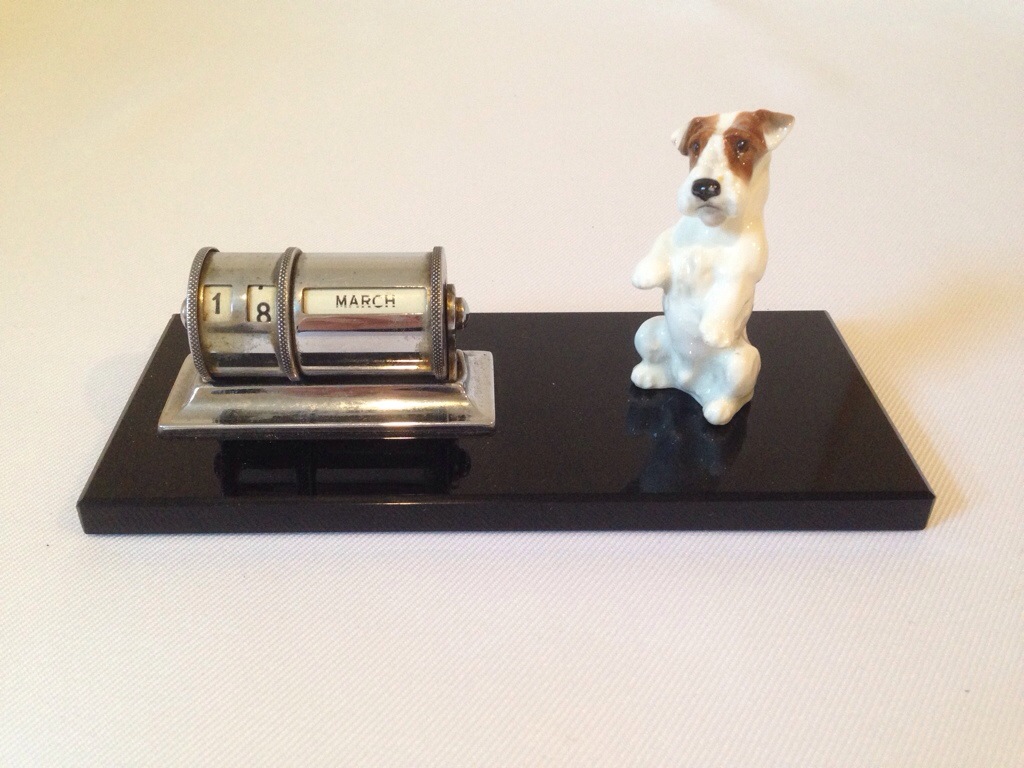
And also a Sealyham begging mounted on this calendar.

20140609-202620-73580712.jpg

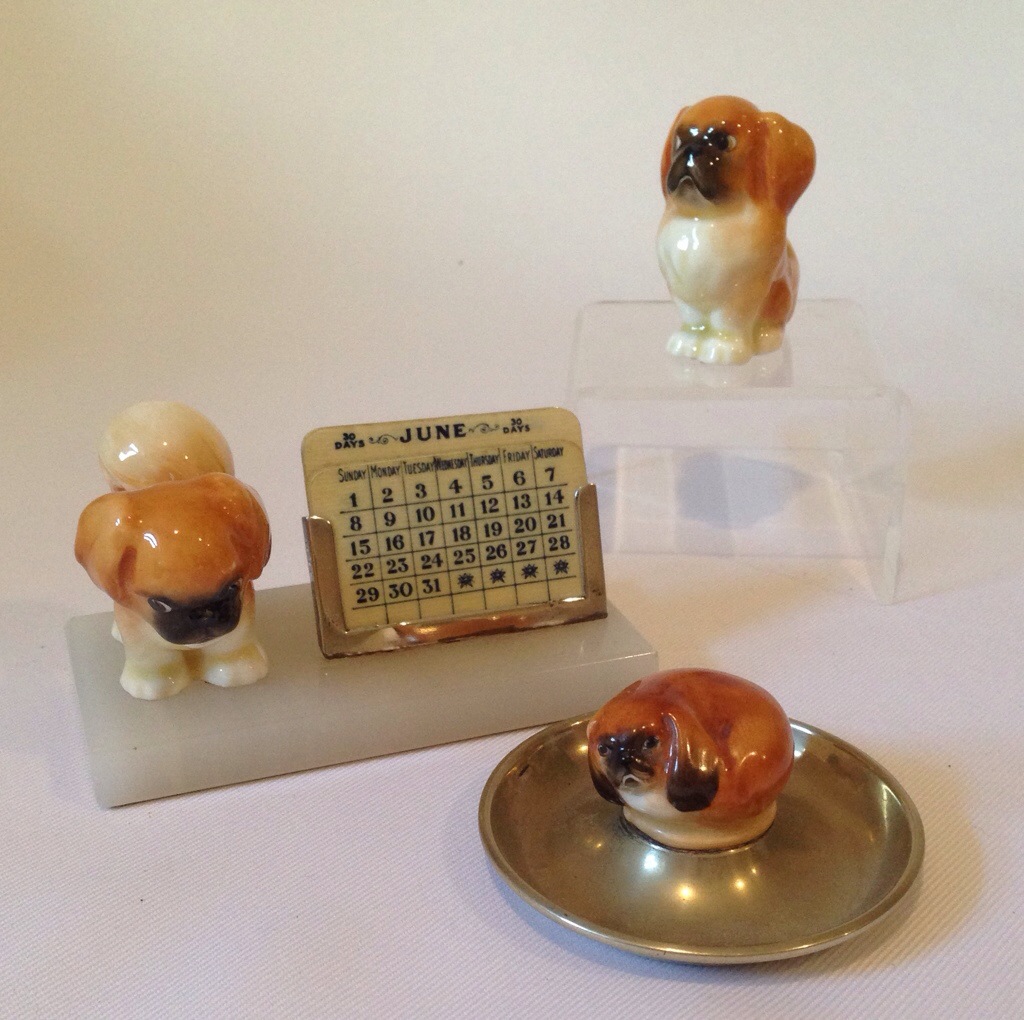
As many of you know Pekingese play an important part of my life and I have managed to assemble this small group of objects all with mounted Pekingese!

20140609-202748-73668591.jpg

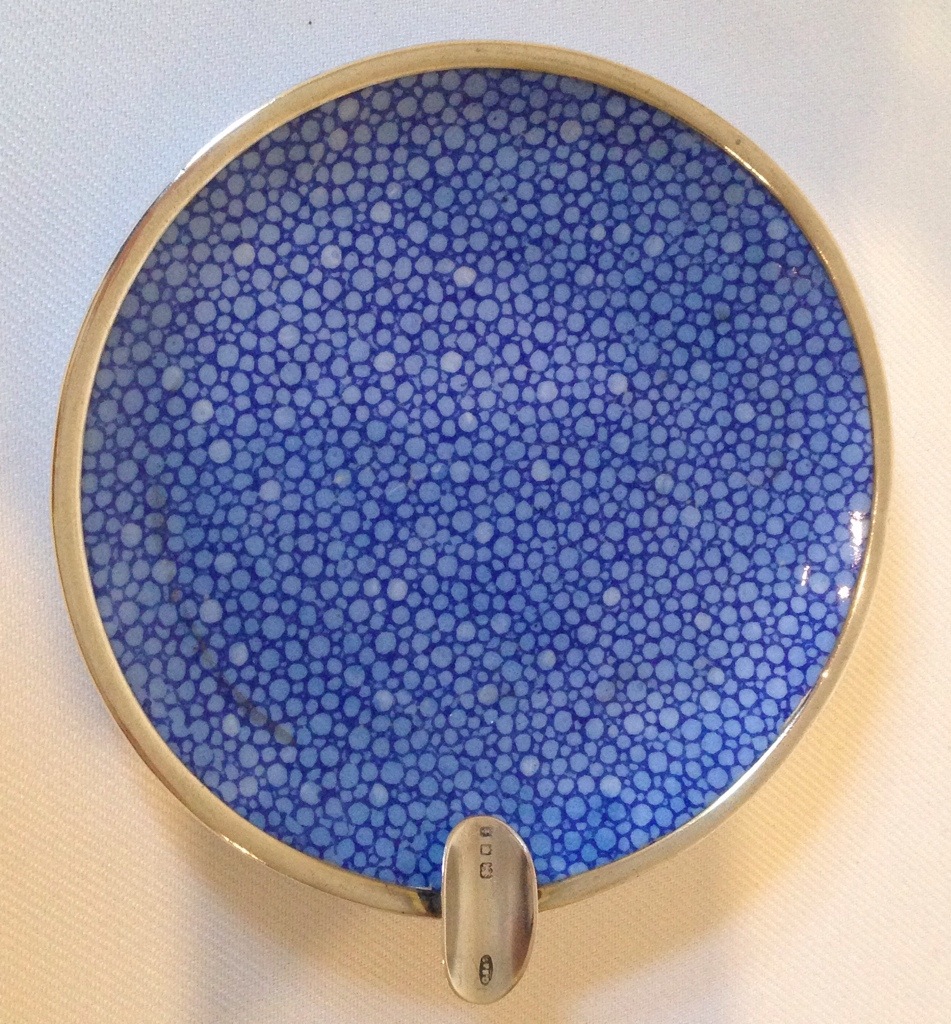
Many of these objects, especially those mounted with sterling fittings would have been retailed by top jewellers of the period including Asprey and Garrards in London. Even more ‘normal’ objects such as pin trays were given sterling mounts so as to make them exclusive objects for top jewellers, such as this Shagreen pin dish (in an unusual blue) which has been given silver mounts to turn it into an an ashtray!

20140609-203147-73907255.jpg

This is only a sample of possible objects, and we would love to hear from you if you have other items mounted with Royal Doulton on our Doulton Collectors Facebook page!

Doulton’s ‘red’ ladies

Red has long been one of the most popular colours amongst figure collectors, but it took almost 20 years for Doulton to cotton on!

The earliest figures were produced in a rainbow of colours but it wasn’t until the late 1920’s that red colourways of figures began to emerge with the introduction of figures such as Kathleen, Priscilla and Rosina.

Thereafter there has been a parade of other red figures culminating in the late 1930’s and the immediate years after the war with the introduction if three of the most famous Doulton ladies ever: Top o’ the hill, Auntumn Breezes and of course Christmas Morn. The lengthy production of these figures not only stands as popular proof of the model but also the popularity of their colourways!

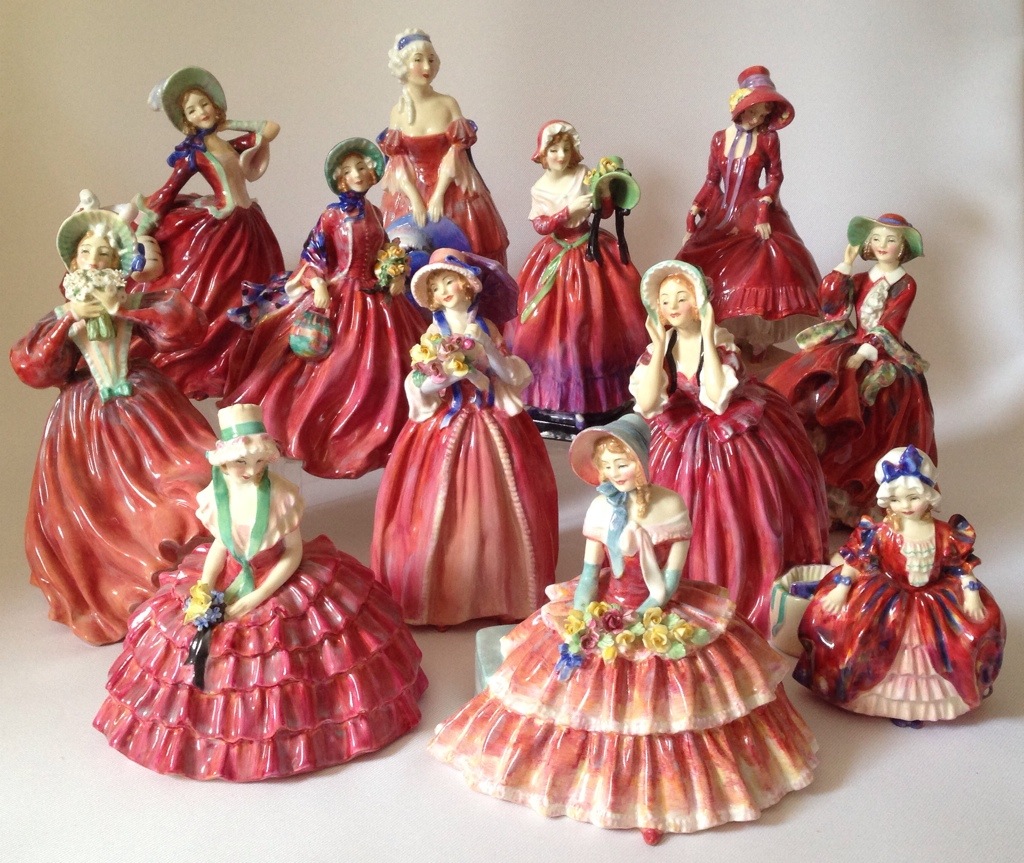
Here are a selection of my favourite ‘red’ ladies!

20140608-165331-60811943.jpg

Since the introduction of Christmas Morn there have been an array of other ladies in red – perhaps you have them in your collections?

Happy collecting and remember we would love to hear from you on our Doulton Collectors Club Facebook page!

The enchanting Lizana – another one not included in Reflections!

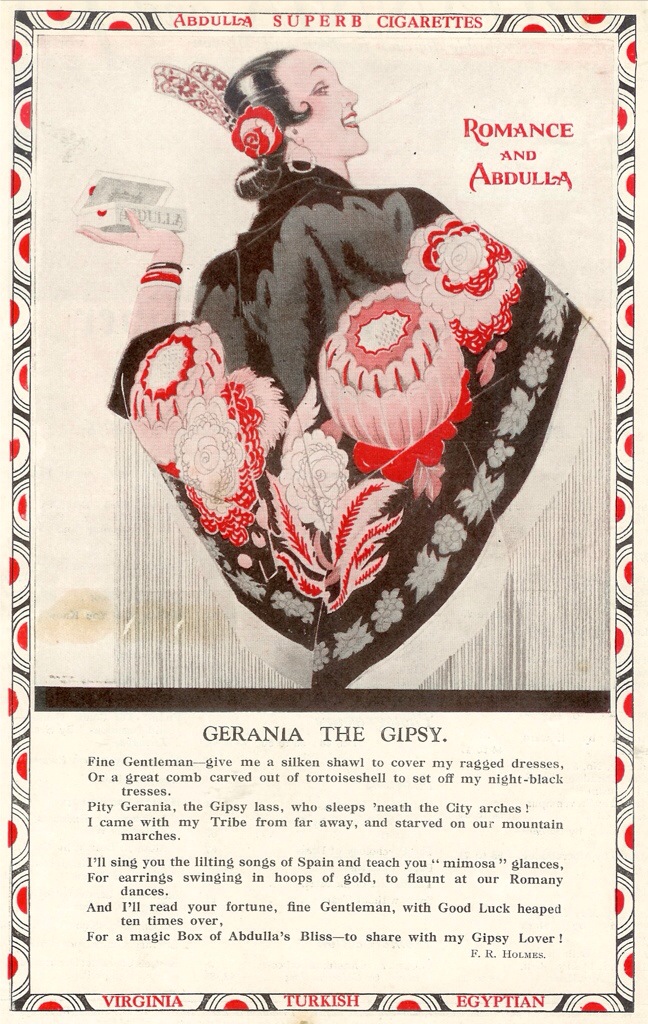
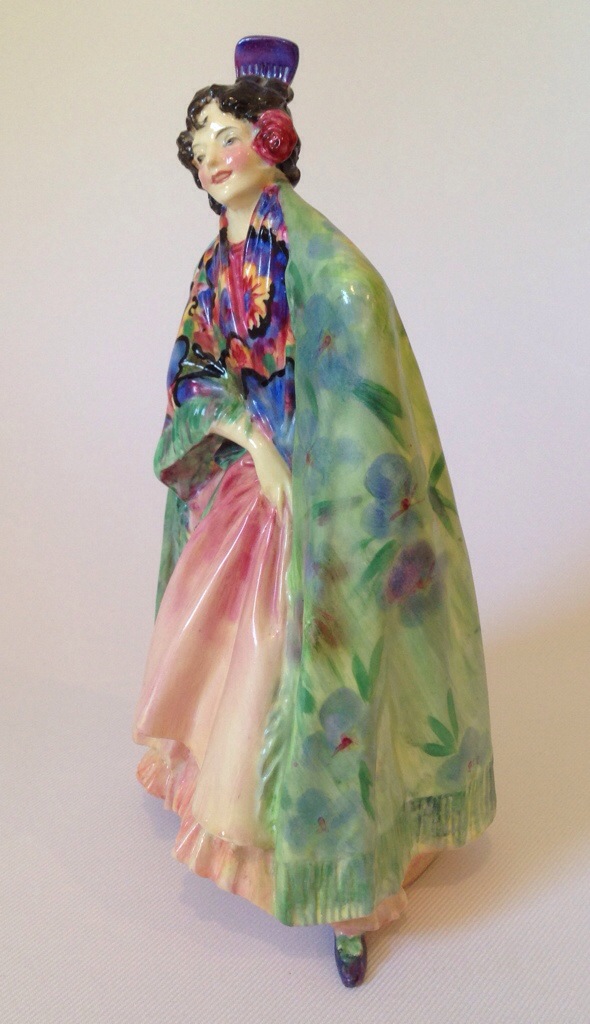
Inspired to share this next piece by a fellow collector who cherishes her Doulton figure Lizana, here is the inspiration behind her – a contemporary cigarette advert! Not quite PC today but the effort and detail put into advertising this brand of Abdulla cigarettes is to be marvelled, especially the rhyme at the bottom!

20140601-113004-41404565.jpg

20140601-113050-41450633.jpg

20140601-113106-41466632.jpg

(C) Christopher Evans 2014

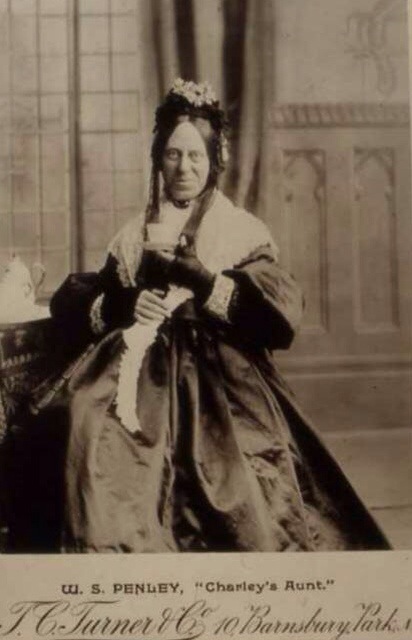
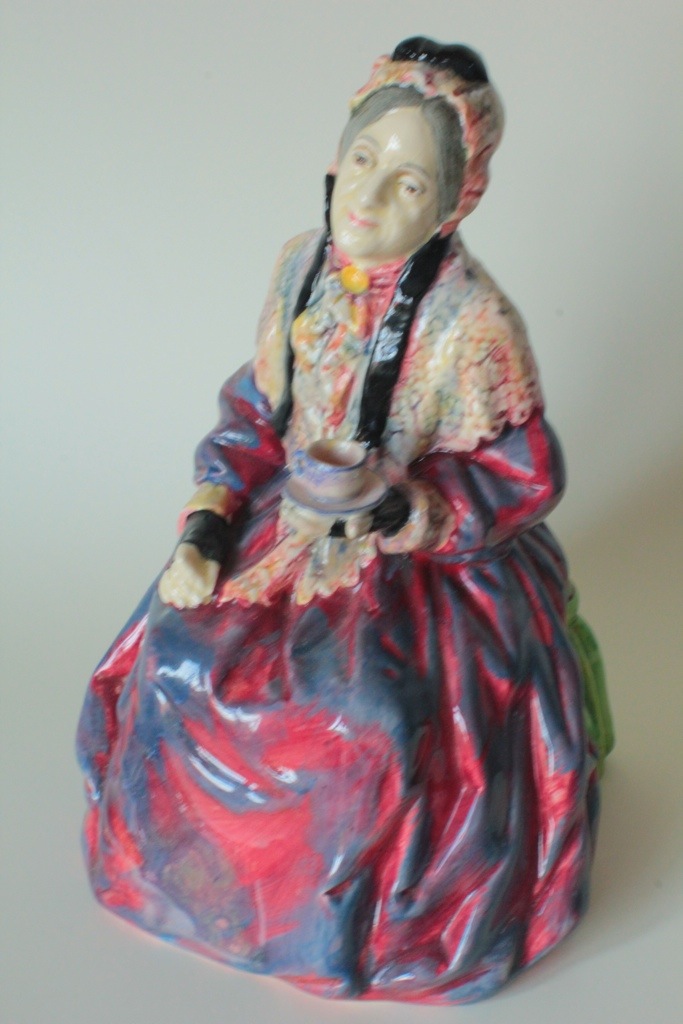
W S Penley as CHARLEY’S AUNT (second version)  Issued in 1930 H. Fenton

20140601-110147-39707794.jpg

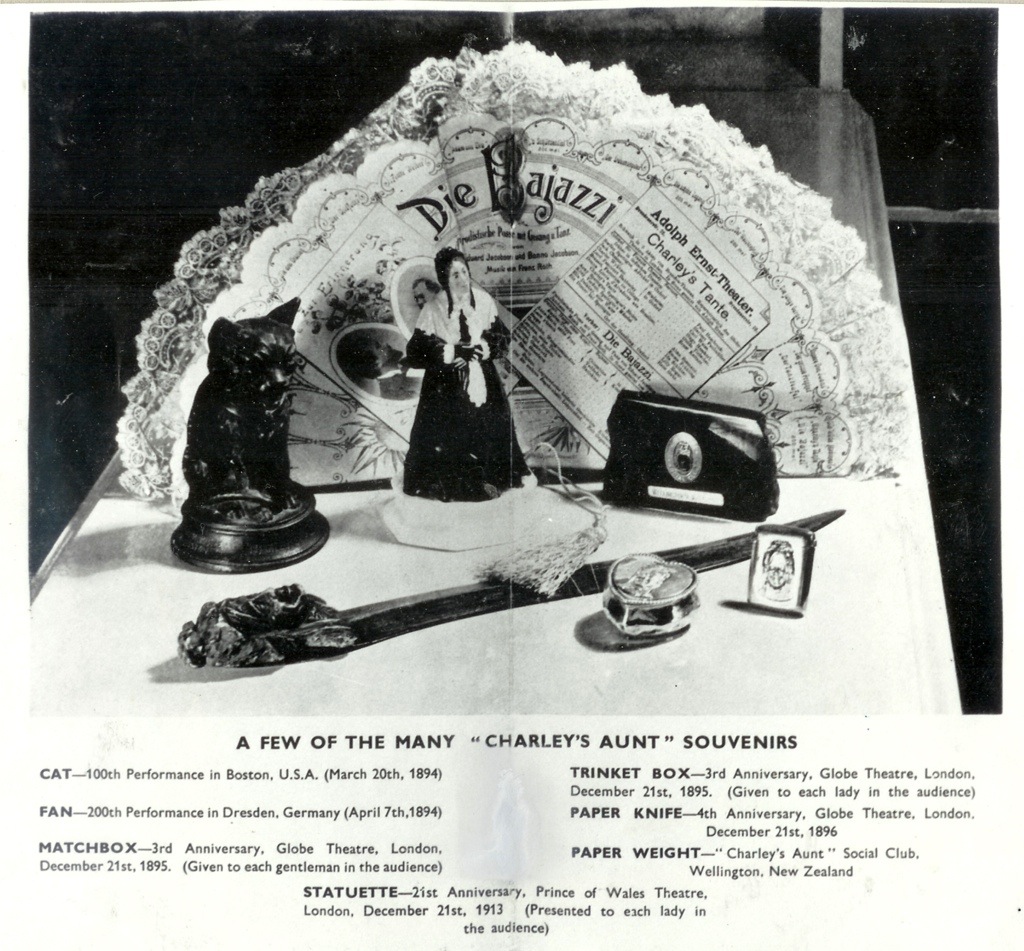
The contempory theatre greatly influence Noke’s figurine range. W S Penley was popular in his role in Charley’s Aunt by Brandon Thomas, where he plays an Oxford undergraduate who impersonates an “Aunt from Brazil” who is to act as chaperone to some young ladies  he and his friends wish to entertain. Charley’s Aunt ran for 1,466 performances after opening in 1913. On various anniversaries ladies in the audience were presented with a Doulton figurine of the main character commissioned by the author Brandon Thomas. About 500 – 600 of this commissioned figure were given away, together with a range of other souvenirs of the performances like those in the advert above. Early in his career in 1916, Noel Coward played the part of Charley.

20140601-110236-39756858.jpg


A contemporary picture and version 2 of this unusual figure, modeled in an identical post and holding a cup of tea.

20140601-110251-39771373.jpg

The figure was modelled by Albert Toft (1862 – 1949 ) who taught Leslie Harradine at Camberwell School of Art at evening classes when he was completing his apprenticeship at Doulton Lambeth. Toft  himself had studied at Stoke on Trent and  later at the Royal College of Art.

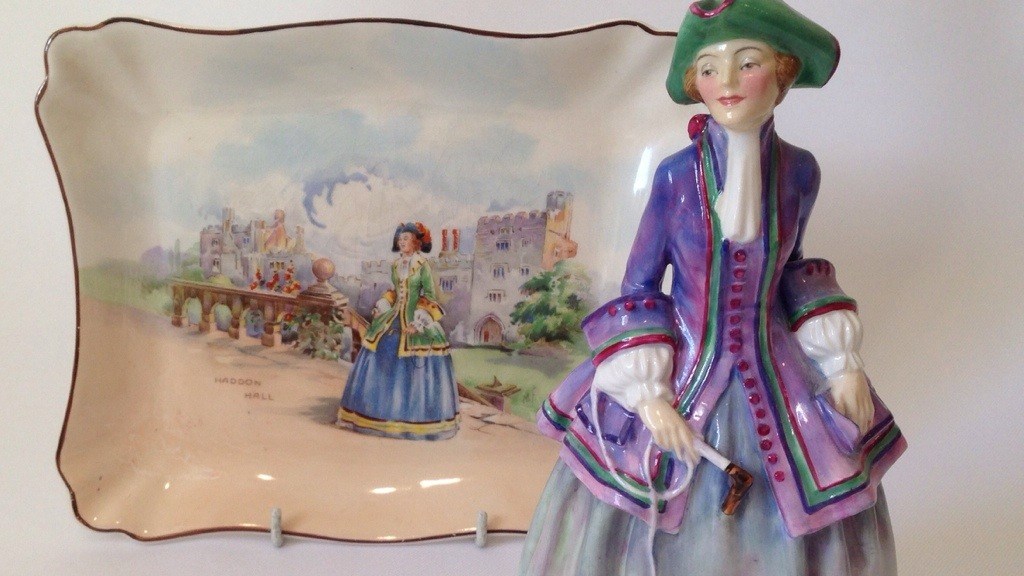
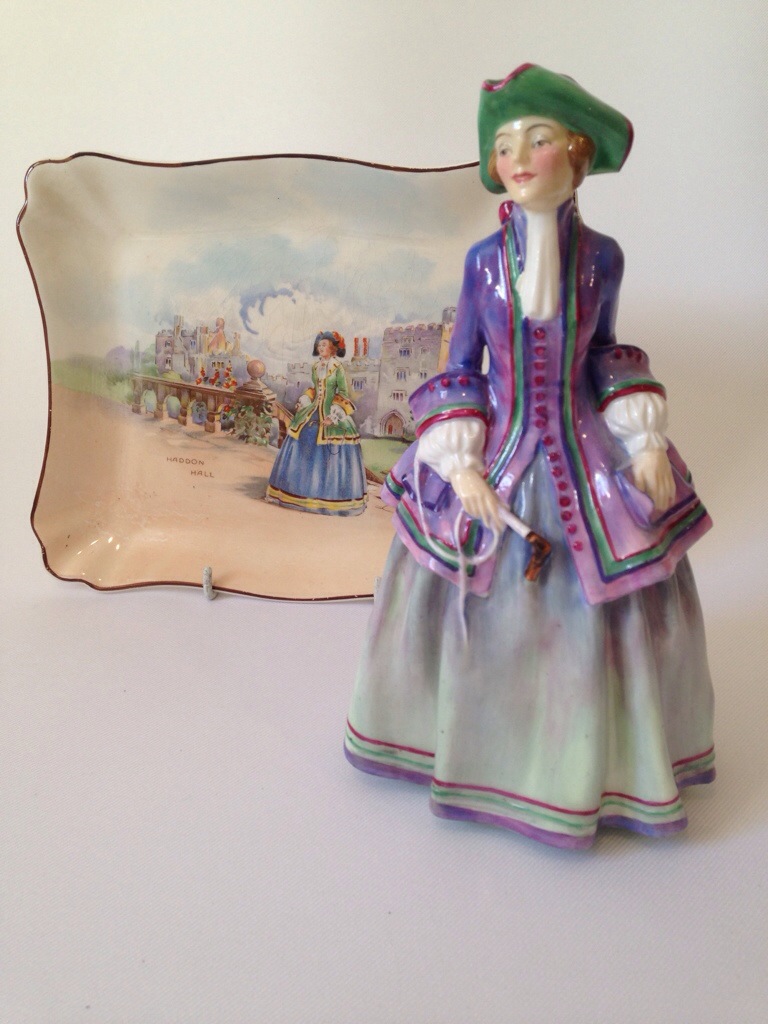
Regency HN1752 finds a home in Doulton’s famous seriesware pattern Historic England!

A few years ago I spotted the tray below and instantly recognised my figure Regency as the character in the scene!

20140601-081825-29905039.jpg

The seriesware picture is faithfully copied from Harradine’s figure, save that the riding crop has changed hands and a feather has been added to the tricorn hat!

The story behind the seriesware pattern is that the lady is Dorothy Vernon, daughter of Sir George Vernon who owned Haddon Hall, who runs off with the son of the Earl of Rutland – a union opposed by the parents probably because of religious differences!

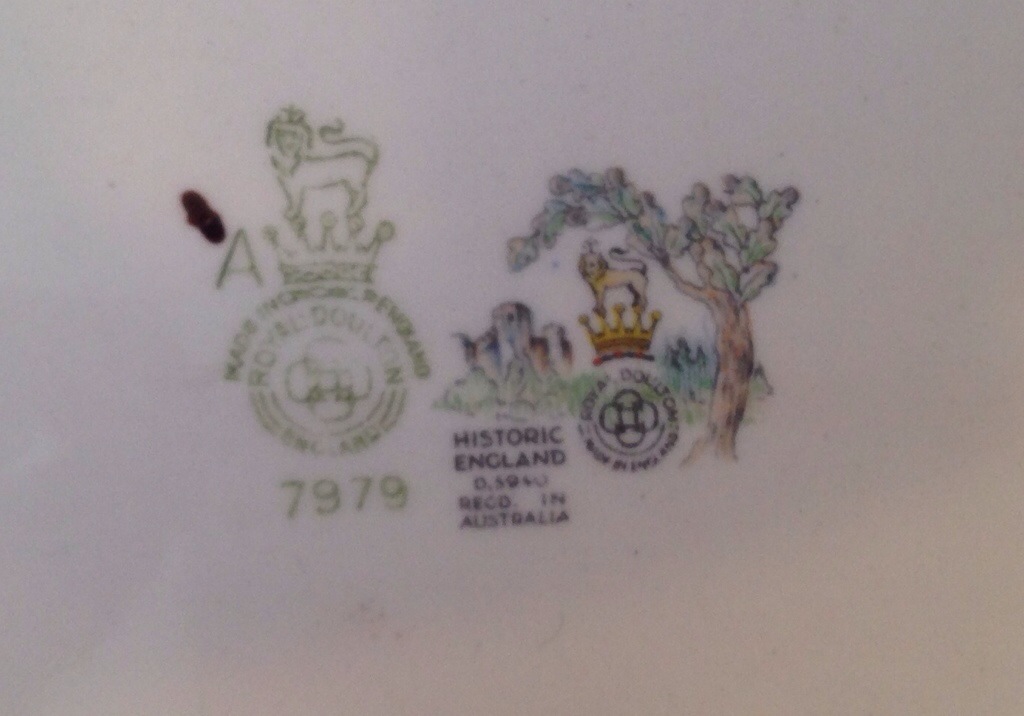
The series was introduced in 1938 and withdrawn by the early 1950’s.

20140601-081913-29953347.jpg

Once again Doulton surprises us with this link between the figure range and seriesware!

Tinkle Bell’s inspiration – another one that didn’t make the final cut…

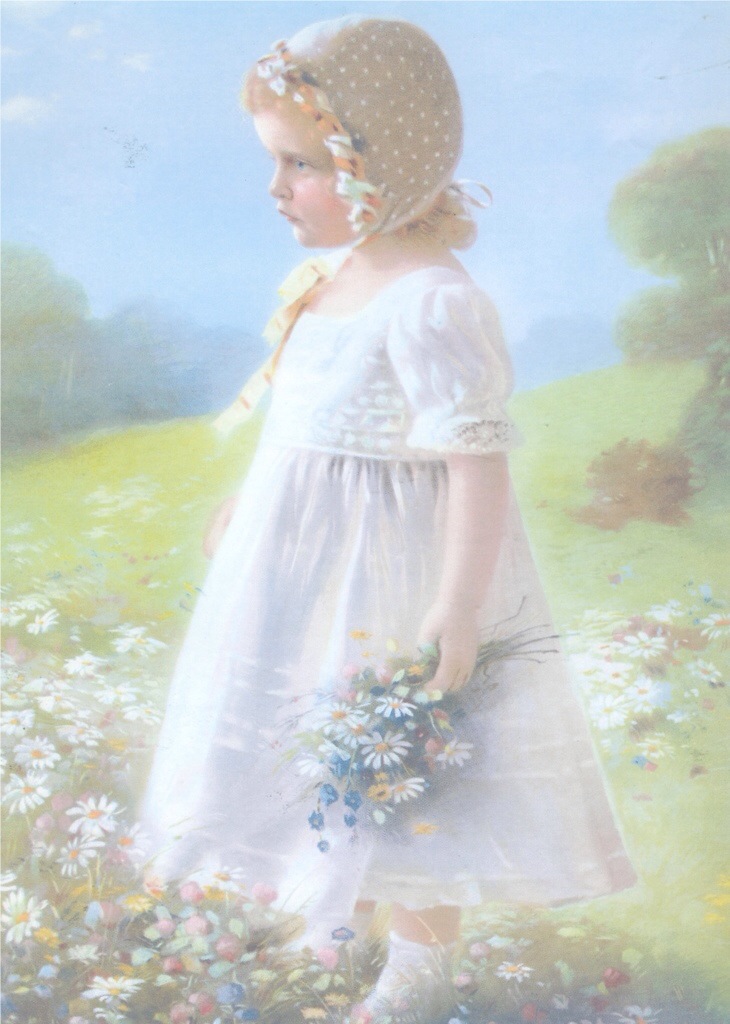
Another picture for you all to add to your lists of pictures that inspired figures is this charming child study by  an unknown artist ‘Pieperhoff’.

As Jocelyn and I were selecting the themes we would include in our book Reflections: Doulton Figures as a Mirror of their Times, it was inevitable that we could not include everything we had found.

Typical of this time, many unknown artists’ work was used for greetings cards, in a similar vein to those published by Raphael Tuck and Valentine & Co. that we have already looked at.

20140601-073522-27322761.jpg


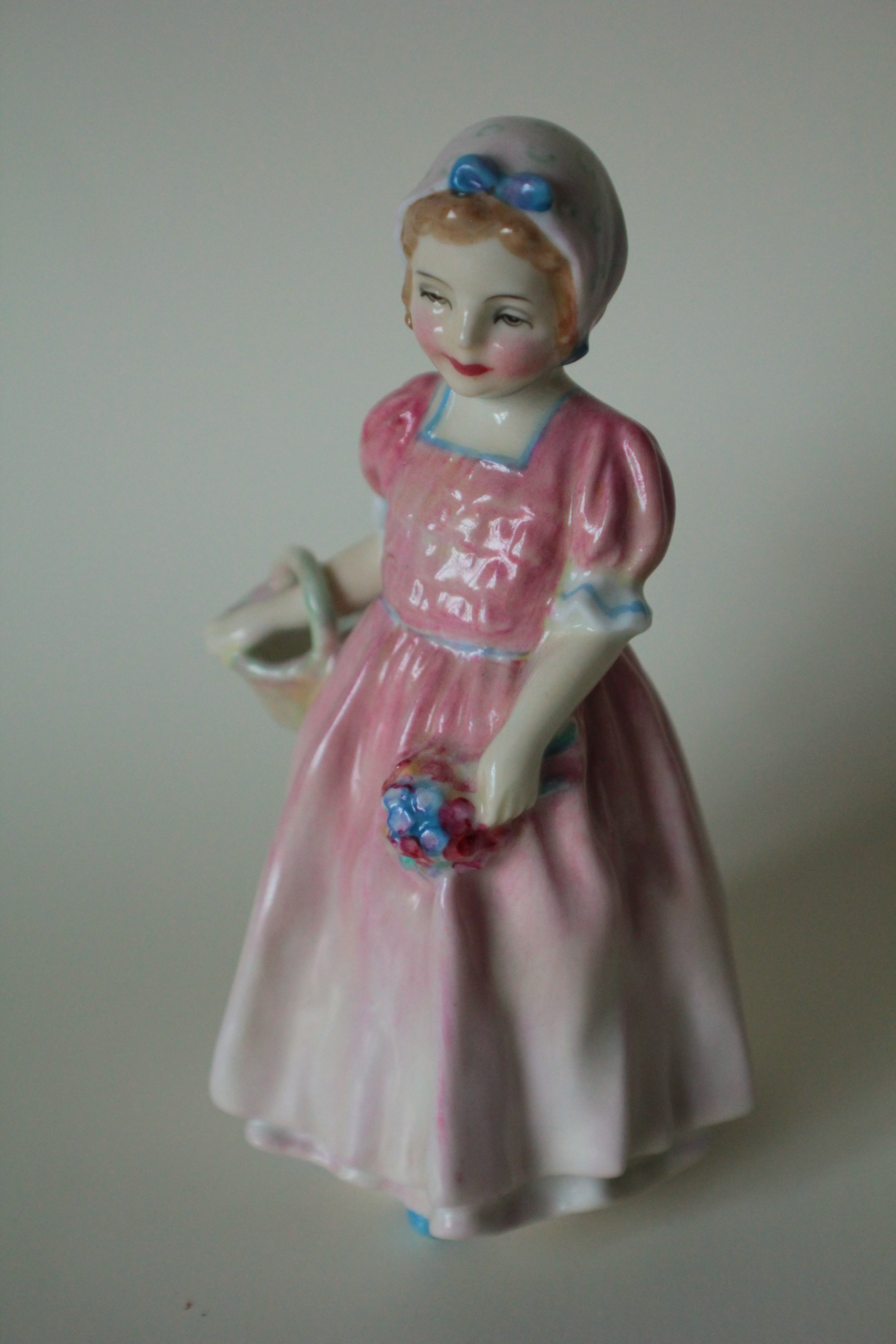
Pieperhoff’s sentimental child study that inspired Tinkle Bell HN1677 below.

IMG_1593

This particular illustration was clearly popular at the time (1930’s) as it can be found relatively readily and I have a miniature and a larger (30cm by 20cm) version.

Doulton’s Williamsburg Figures

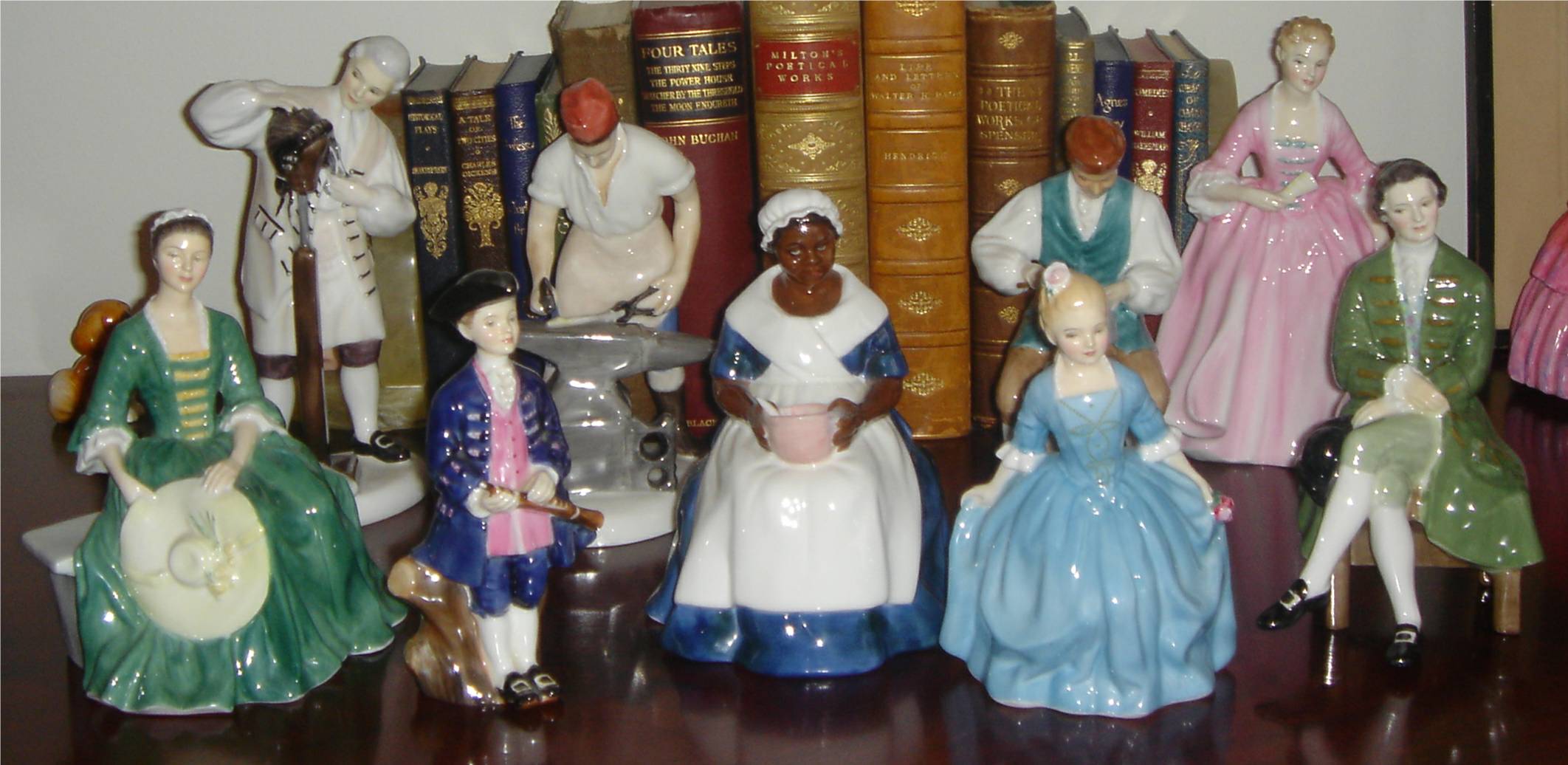
The original Williamsburg figures were introduced in 1960 and of course for this time were the models of the great Peggy Davies. Subsequently other figures were added to the series and also a set of Character Jugs.

These figures represented what would have been the major personalities of 18th Century Williamsburg, once the seat of government. Wherafter Williamsburg fell into decay and it wasn’t until the early 20th Century that the decision was made to restore this shrine of American Character and tradition. Each of the town’s buildings would be reconstructed and refurnished exactly to suit the dignity of its 18th Century heyday.

Today, side by side with the restored town, costumed tradesmen ply the trades of over 2 centuries ago – and this is where the inspiration for the range comes from. So we have a Silversmith, a Wigmaker, the famous Hostess and a lady and gentleman of the town among other characters.

Image

The eight figures in the series.

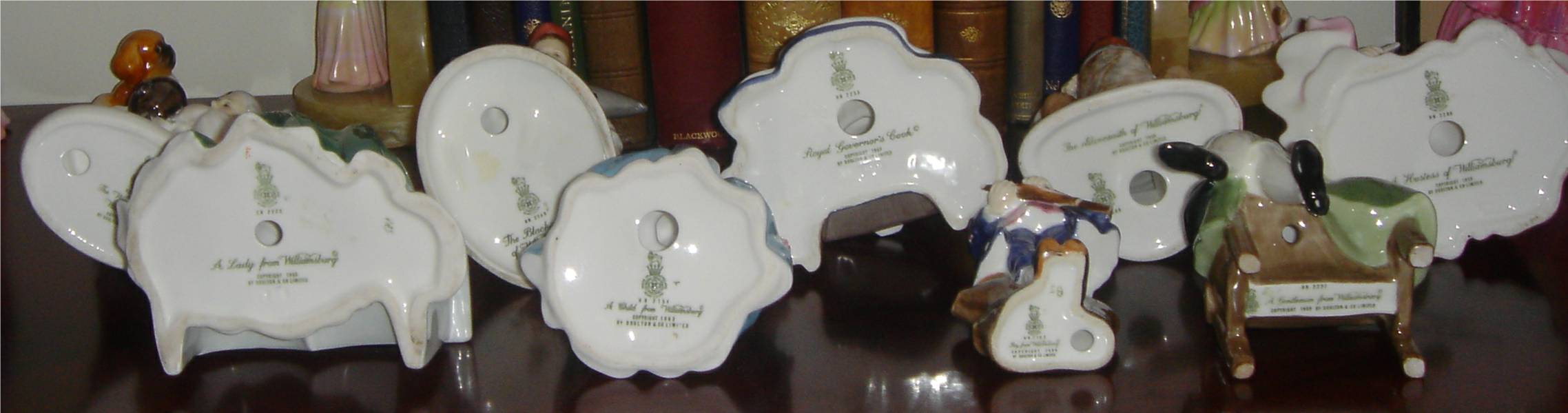
These figures had a special backstamp as shown below.

Image

The bases of the figures showing the special backstamp.

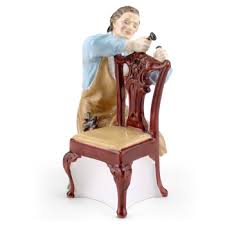
For me the great thing about this series is the opportunity to add other figures to it, for many of Peggy’s ‘Pretty Ladies’ fit ideally into this group of figures, as do Mary Nicoll’s character figures such as The Coachman HN2283, The Clockmaker HN2279 and of course her study of The Craftsman HN2284 (below).


Image

How do you pair your Doulton figures?

With so many collectors sharing views of their collections and enjoying arranging their collections, I thought I would share a few groups and pairings that I think work together. Enjoy!
figs 11 Apr 08 00002

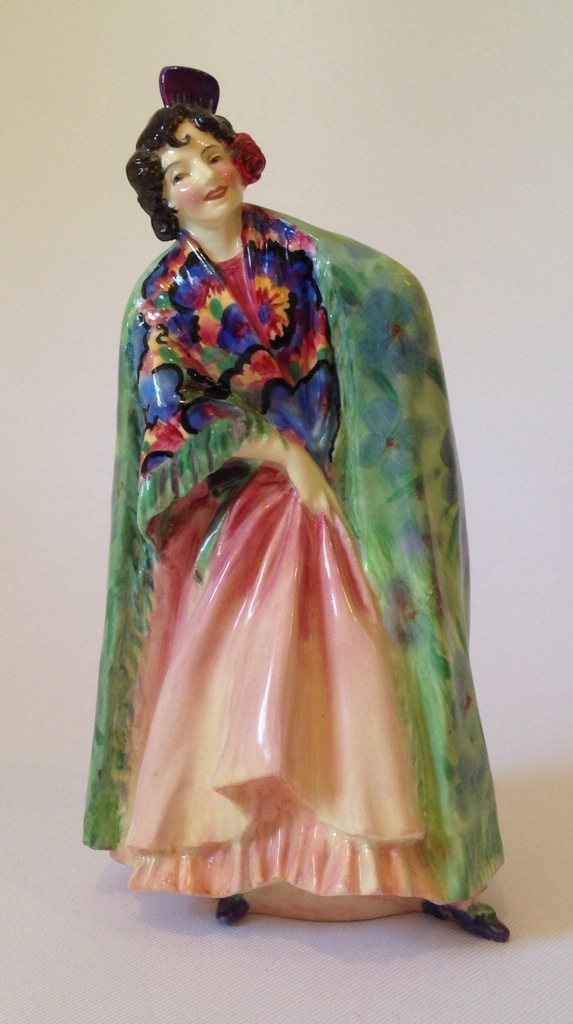
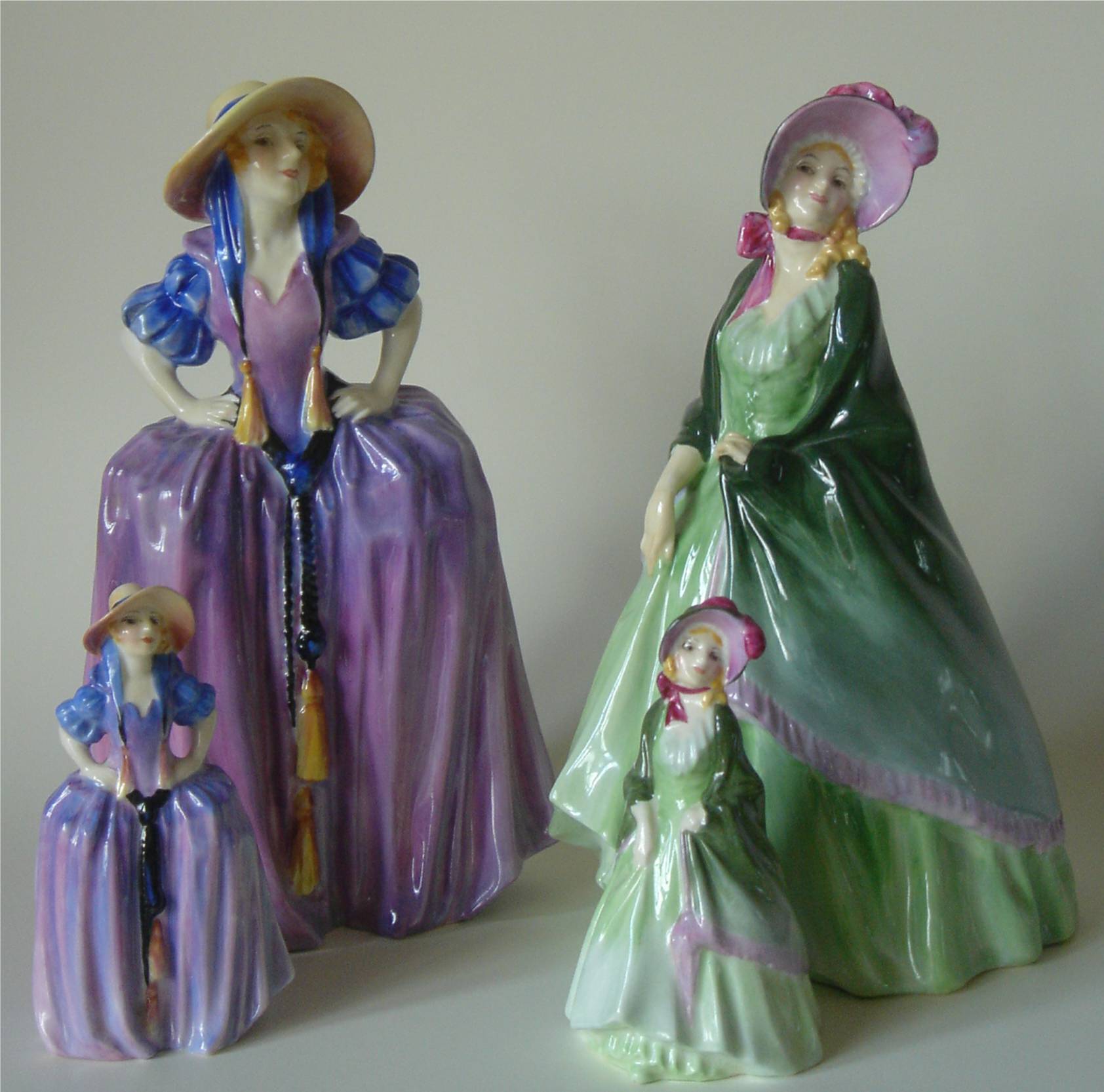
Patricia and The Paisley Shawl in two sizes.

figs 11 Apr 08 00016

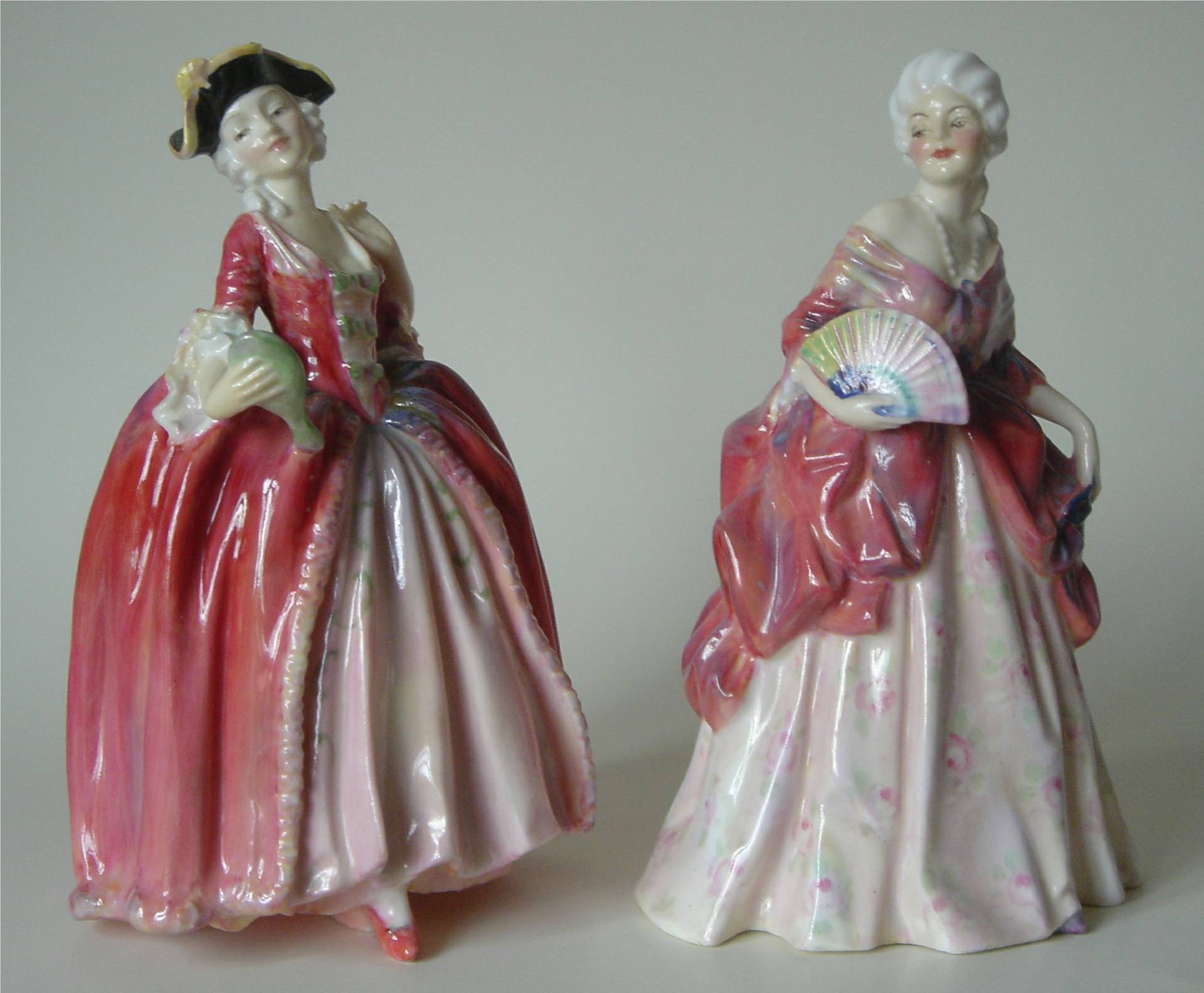
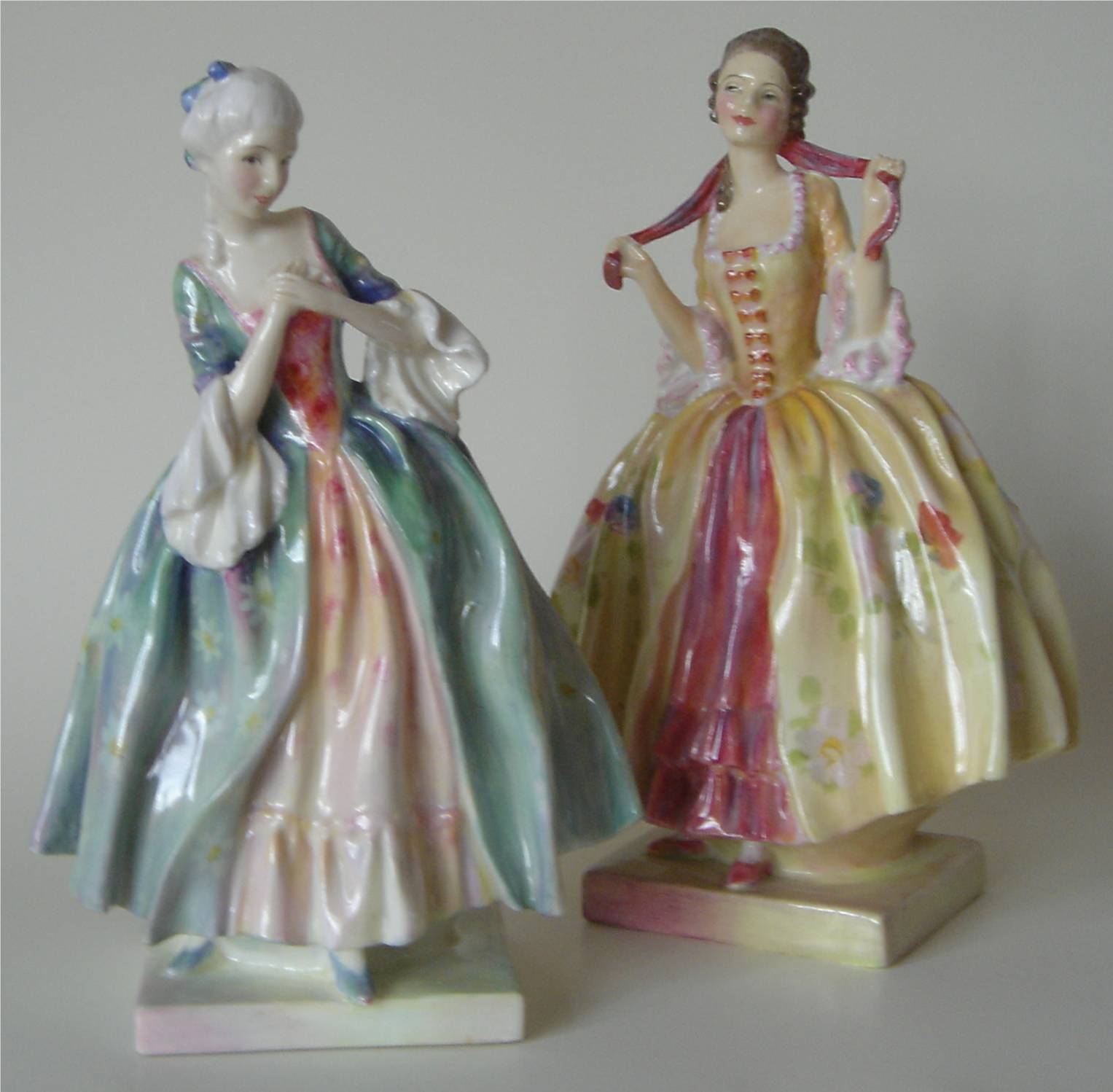
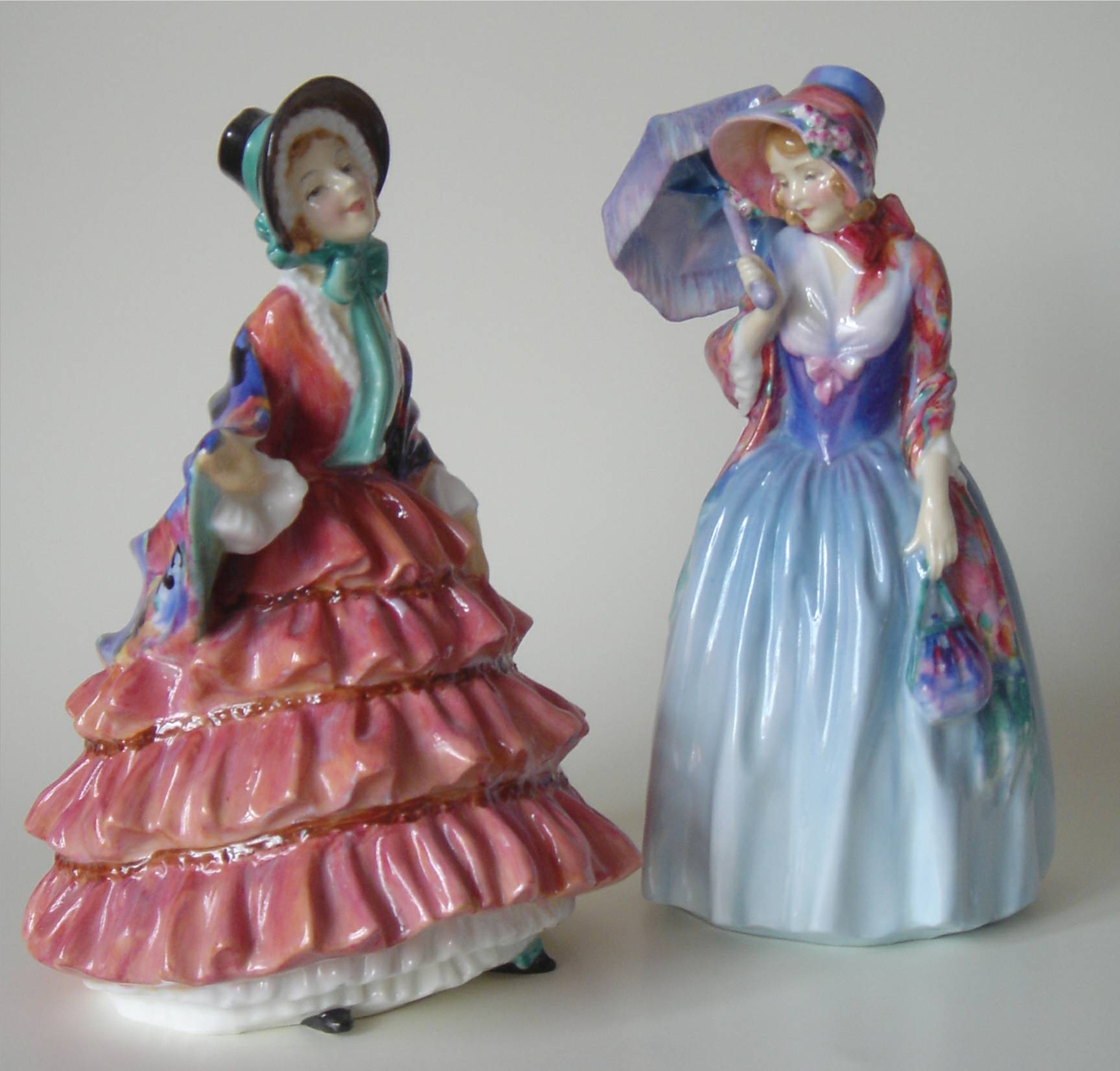
Camille and Fleurette look picture perfect together, as do Camilla and Virginia below.

figs 11 Apr 08 00031

figs 11 Apr 08 00038

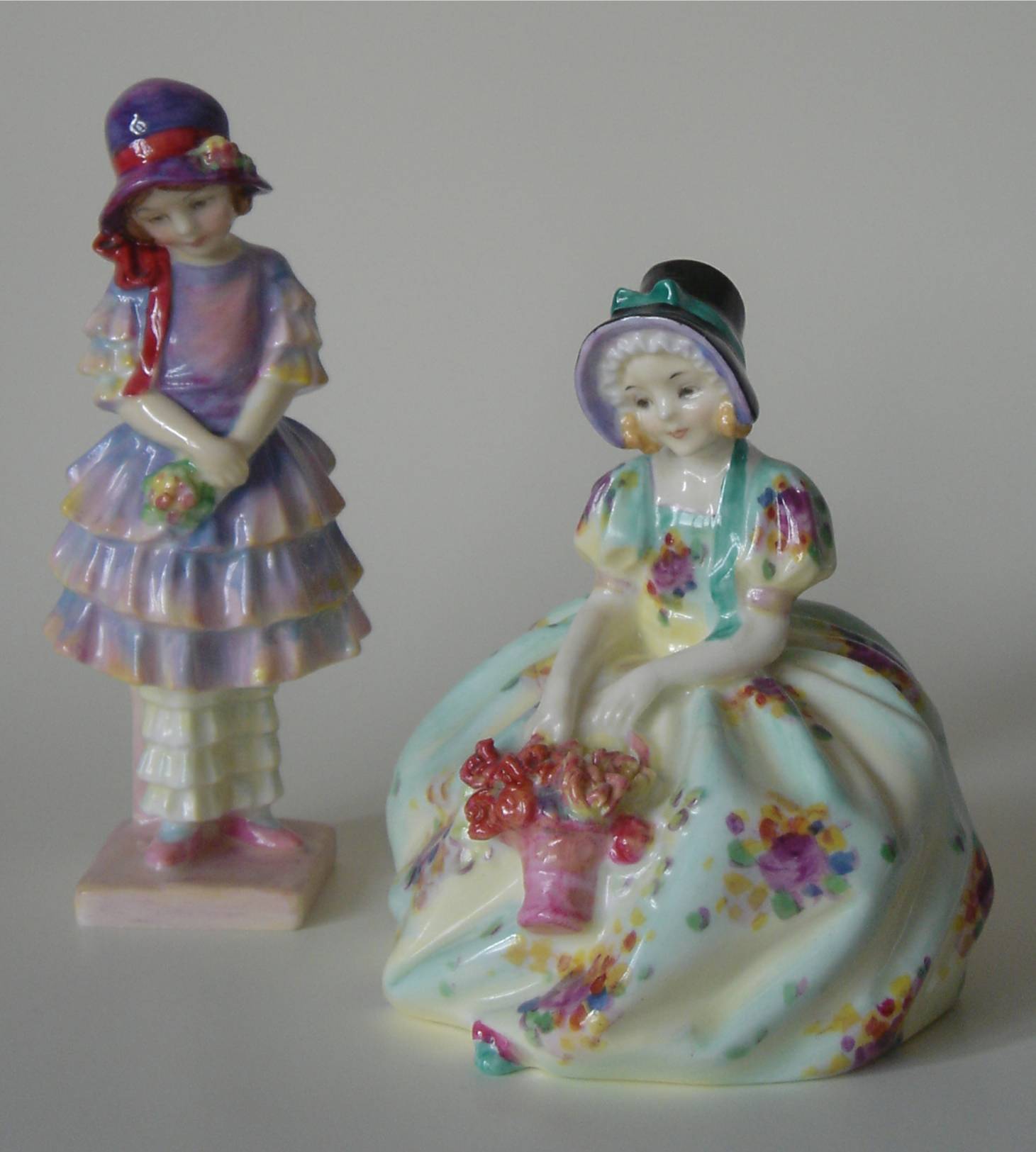
The lovely Pinkie and Monica.

figs 11 Apr 08 00043

Bon Jour and a colourway of Miss Demure.

figs 11 Apr 08 00055

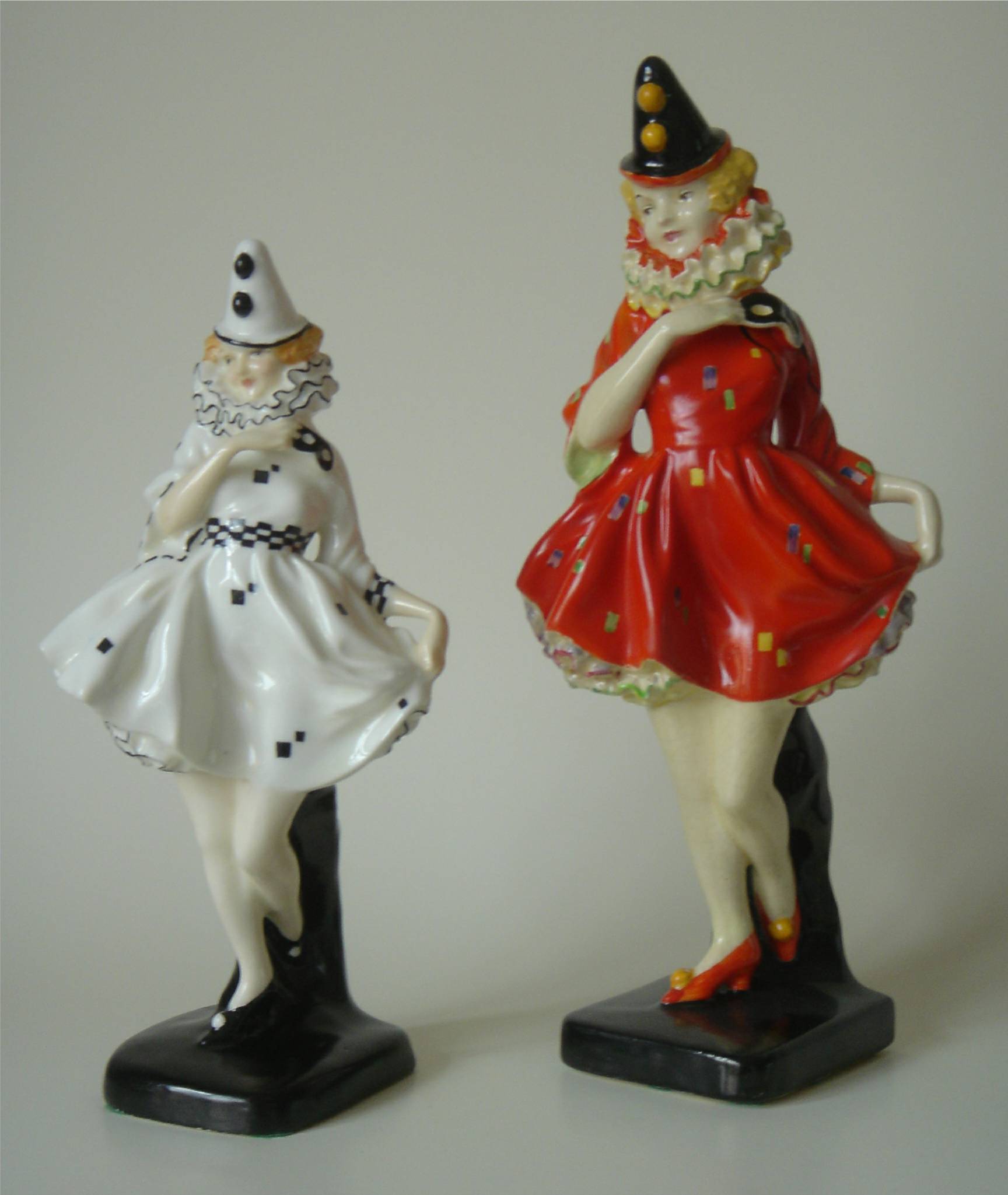
Two sizes of Pierette.

figs 11 Apr 08 00056

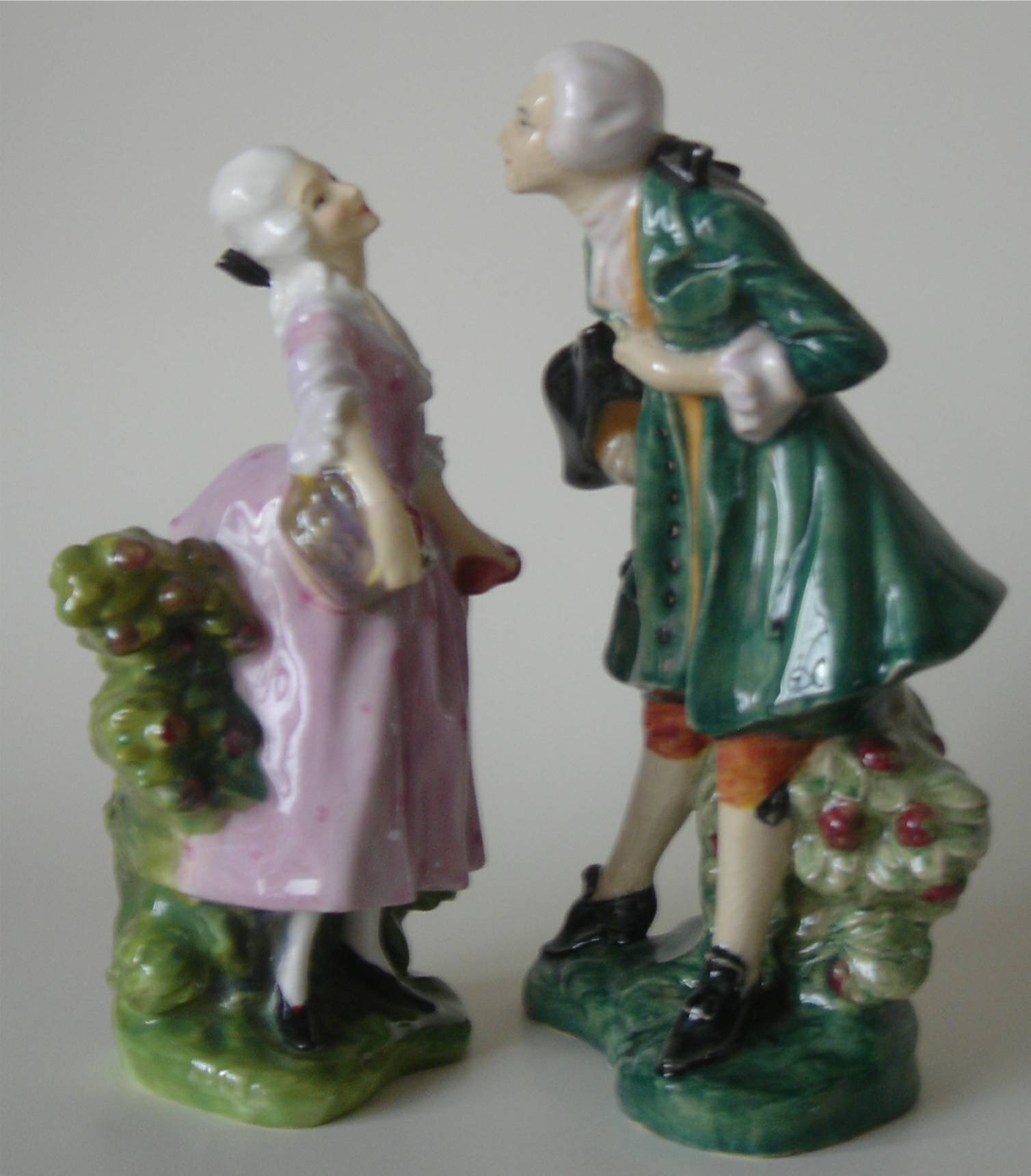
The Masqueraders with their interlocking bases, that allow them to kiss!

Captured 2008-4-11 00421

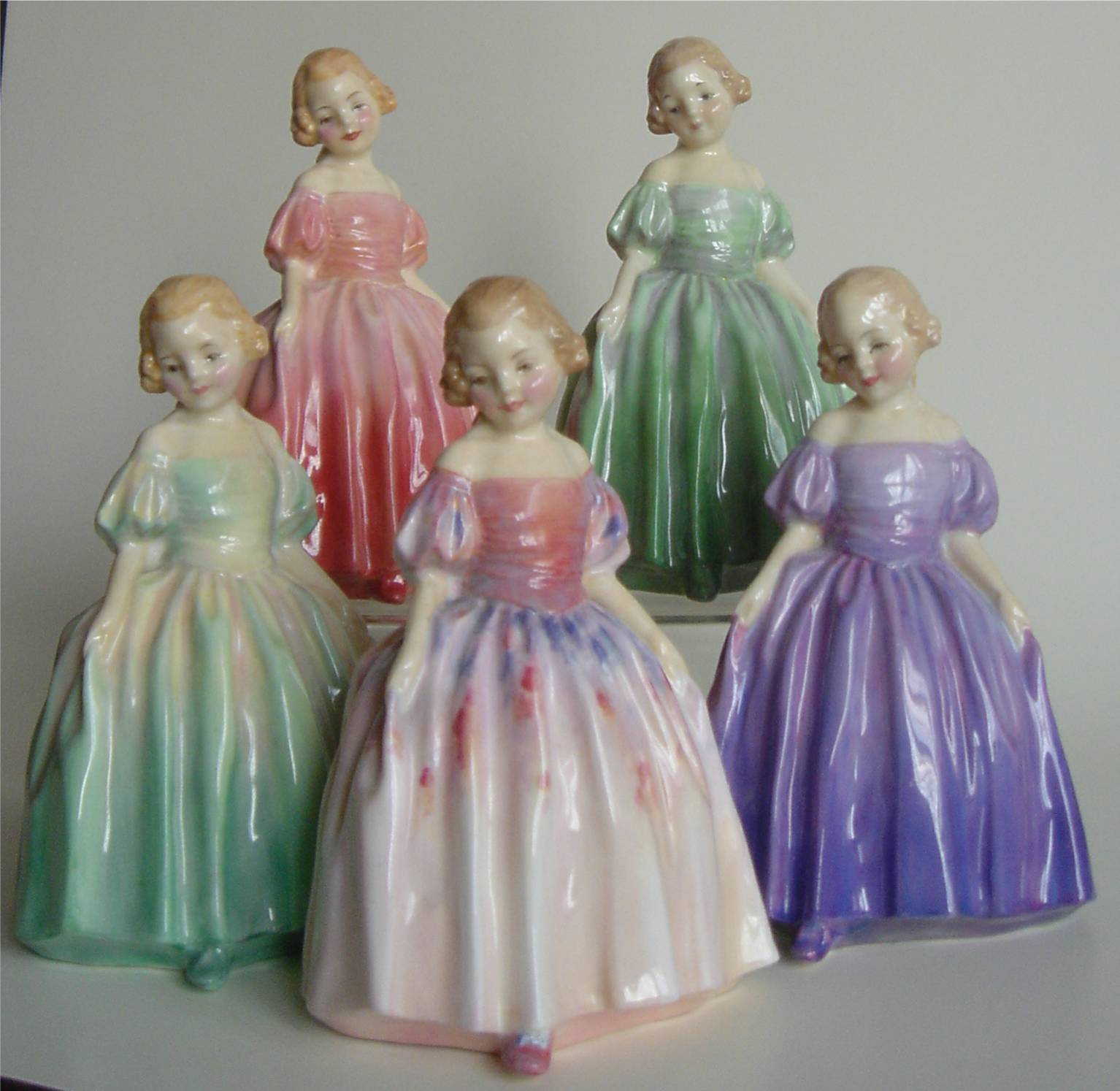
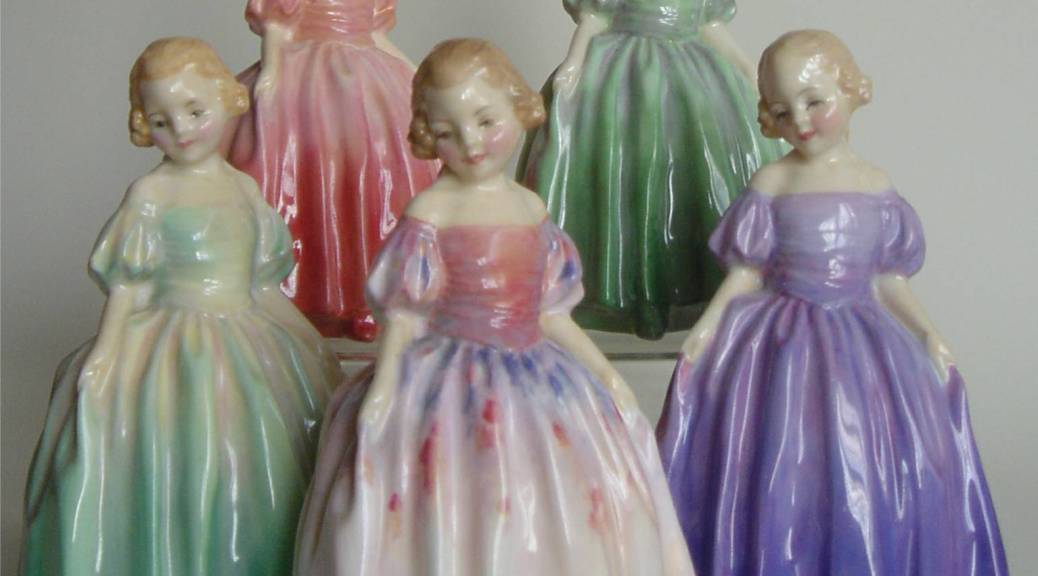
Marie in a variety of colurways.

Captured 2008-4-11 00423

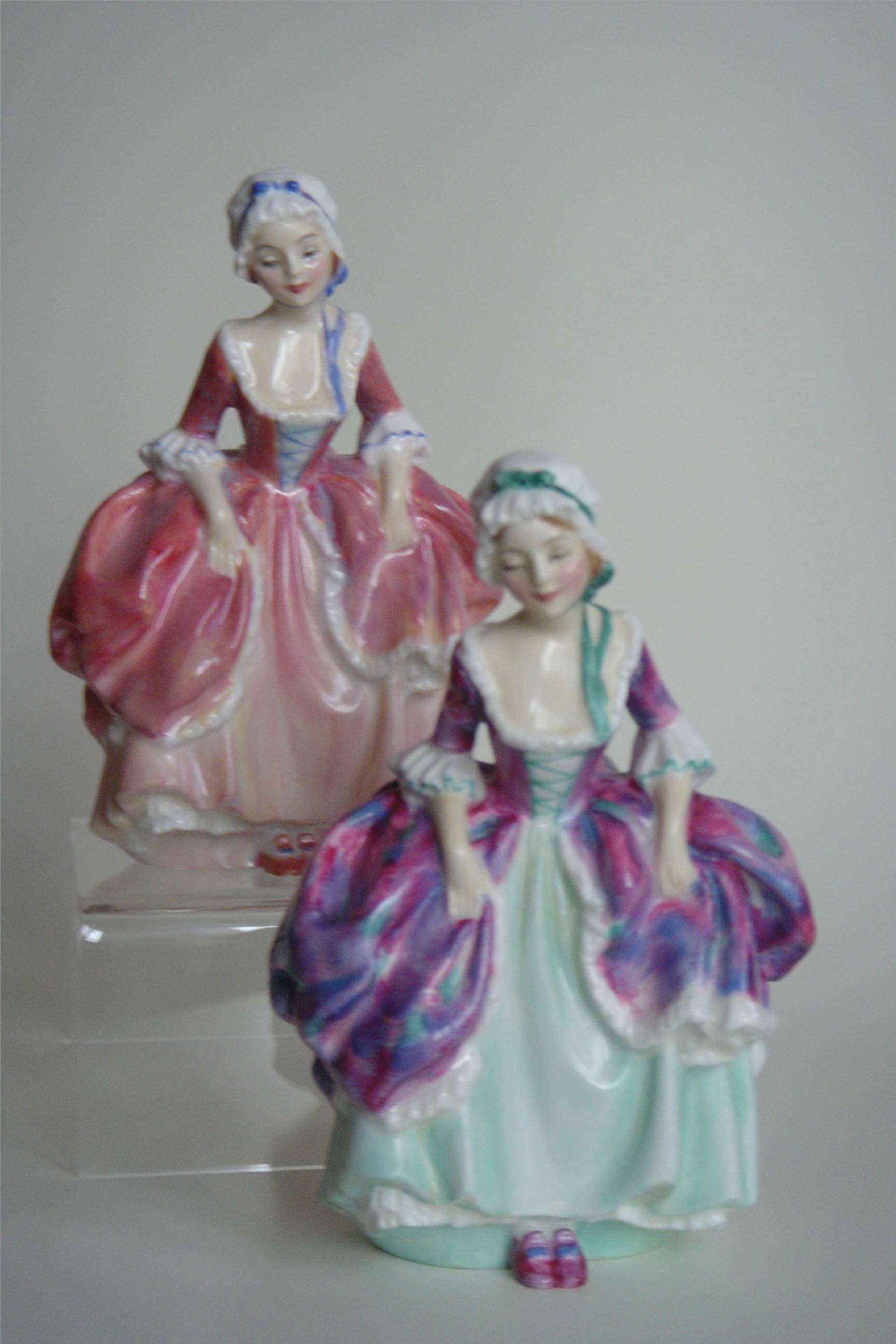
Two versions of Goody Two Shoes.

So how do you choose which pieces to put together? Don’t forget to share your pictures on our facebook page: Doulton Collectors Club

Thanks

CE