Category Archives: Figure Articles

Doulton artist profile – Reginald (Reg) Brown

Reg Brown was destined to play a pivotal role in the field of Doulton’s figure production. Born in 1909, he died at the early age of 53. He spent most of his life living locally to the Burslem factory in Wolstanton. Doulton typically became something of a family affair for the Browns, with his daughter-in-law working in the Character Jug department and his youngest son in the Doulton laboratory.

Image

Reg Brown ca. 1950’s Head of Doulton’s on-glaze Figure Painting Department

Reg was originally a pupil of Herbert Betteley at Doultons and of the same school as Tom Parton, Charles Hart , Bernard Green, Harry Stevenson, Roland Holdcroft, Jack Pierpoint and others. He studied at the Burslem College of Art and from an early stage showed versatitily in painting landscapes and castles amongst many other subjects with prowess. However, he was destined to join Harry Allen, Norman Woodings, Charles Nixon and a handful of other men who formed the nucleus of the original figure painting department.

A founder of the Doulton Art Society, a member of the Doulton Sports Club and the Doulton choir, Reg would eventually become head of the On-glaze figure painting department, a position he would hold until his untimely death.

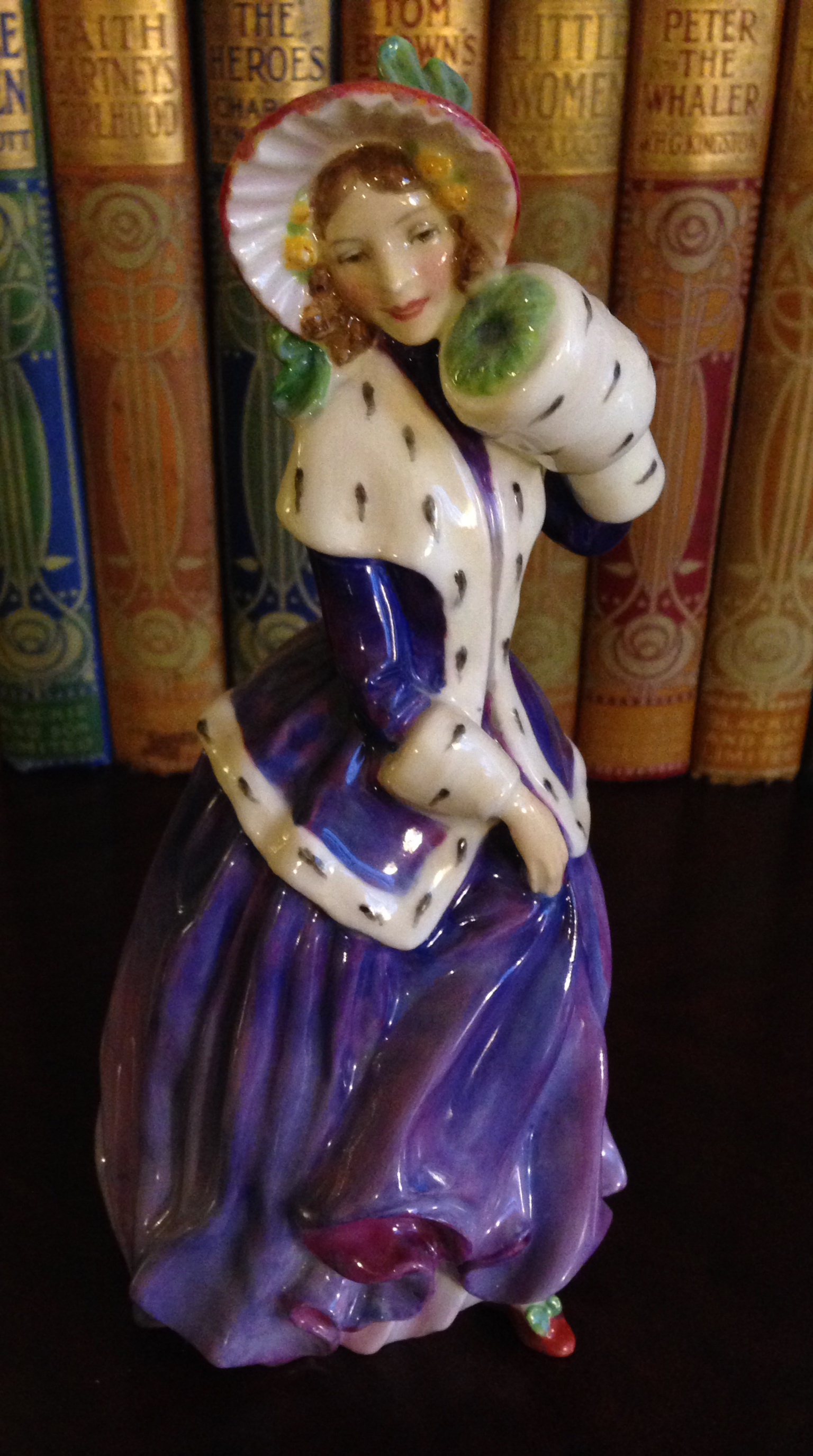
Collectors I know specifically look for Reg’s figures as they have exquisite faces and are superbly painted. I am fortunate to posess a few colourways also painted by Reg from the 1940’s, no doubt from his time as the head of department and the colourings are just wonderful in real life. One of my favourite figures painted by him is this colourway of Christmas Morn from 1942.

Image

Once again, why not see how many of your pieces are painted by Reg – and what a great theme for collecting figures!

Check out our Facebook Doulton Collectors Club page for more articles, info and pictures!

Simply search Facebook for the ‘Doulton Collectors Club’ and ask to join, then you can ask questions a view a variety of material from around the world!!!
What are you waiting for?

Doulton’s Child studies by Leslie Harradine

Child studies have always been popular with Royal Doulton collectors, and from the launch of the HN range child studies have played a key role in the range. We all know of course the famous story behind Darling HN1 modeled by Charles Vyse, but collectors are sometimes surprised to see that Leslie Harradine, perhaps the most collected of all Royal Doulton modellers, also created many charming portraits of children. With six children of his own he certainly had much in real life to base his models on. Unfortunately we do not know if any of the figures he supplied to Royal Doulton were based on any of his own children, but we do know a few of the sources he used.

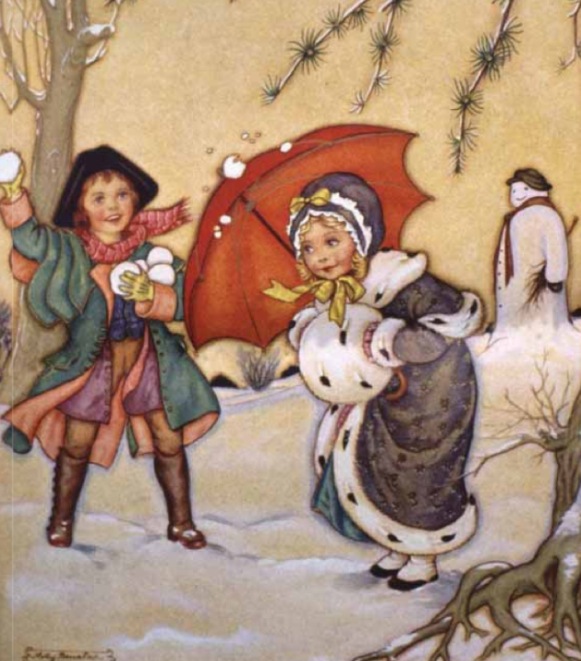
If you look at my book ‘Reflections’ you will see a section dedicated to Molly Benatar and Harradine based his Miss Muffet HN1937 clearly on one of Benatar’s designs for Raphael Tuck, the greetings card specialist. Even the coloring of this figure is copied from the original.

ImageImage

Miss Muffet HN1937 and Molly Benatar’s ‘When hearts are young’ illustration

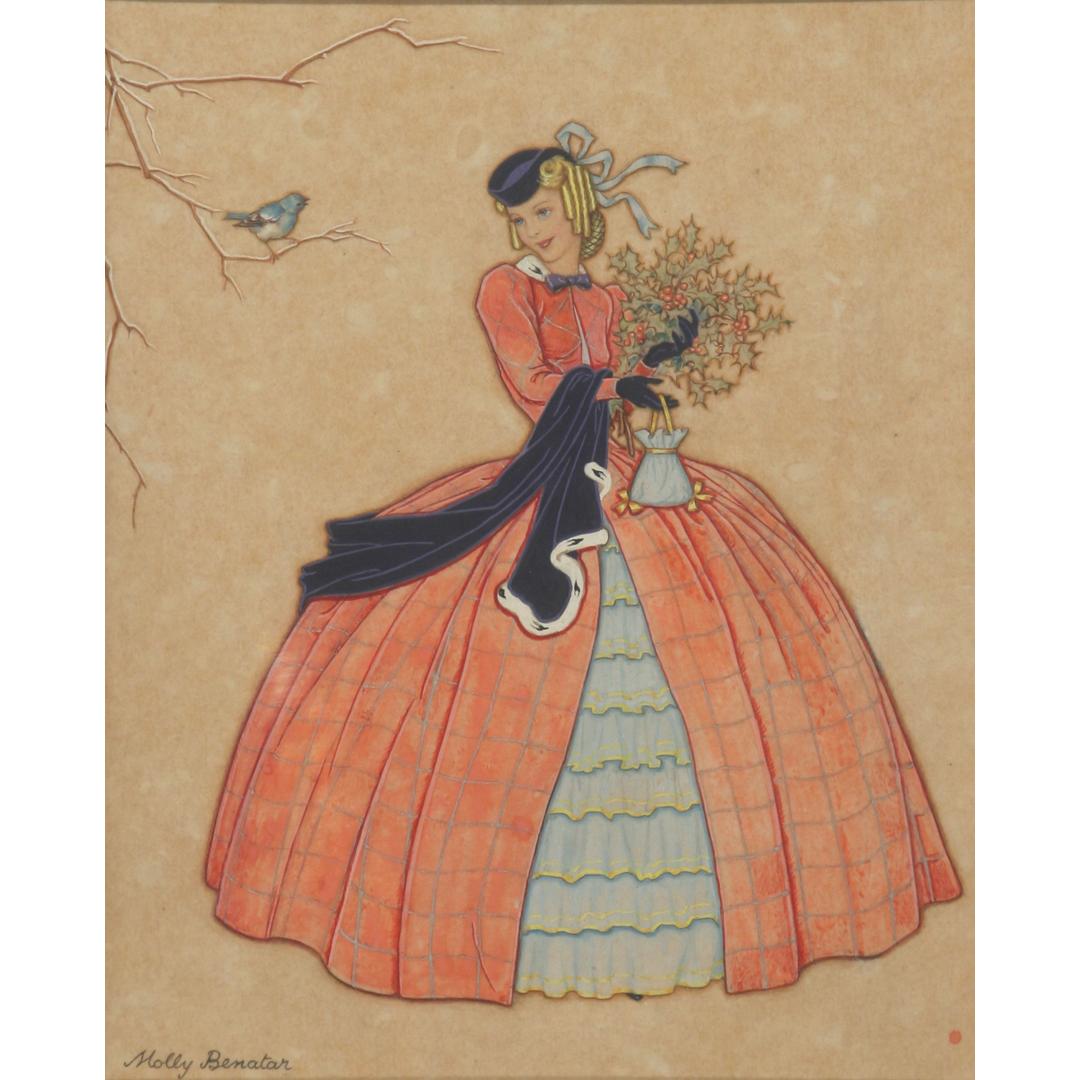
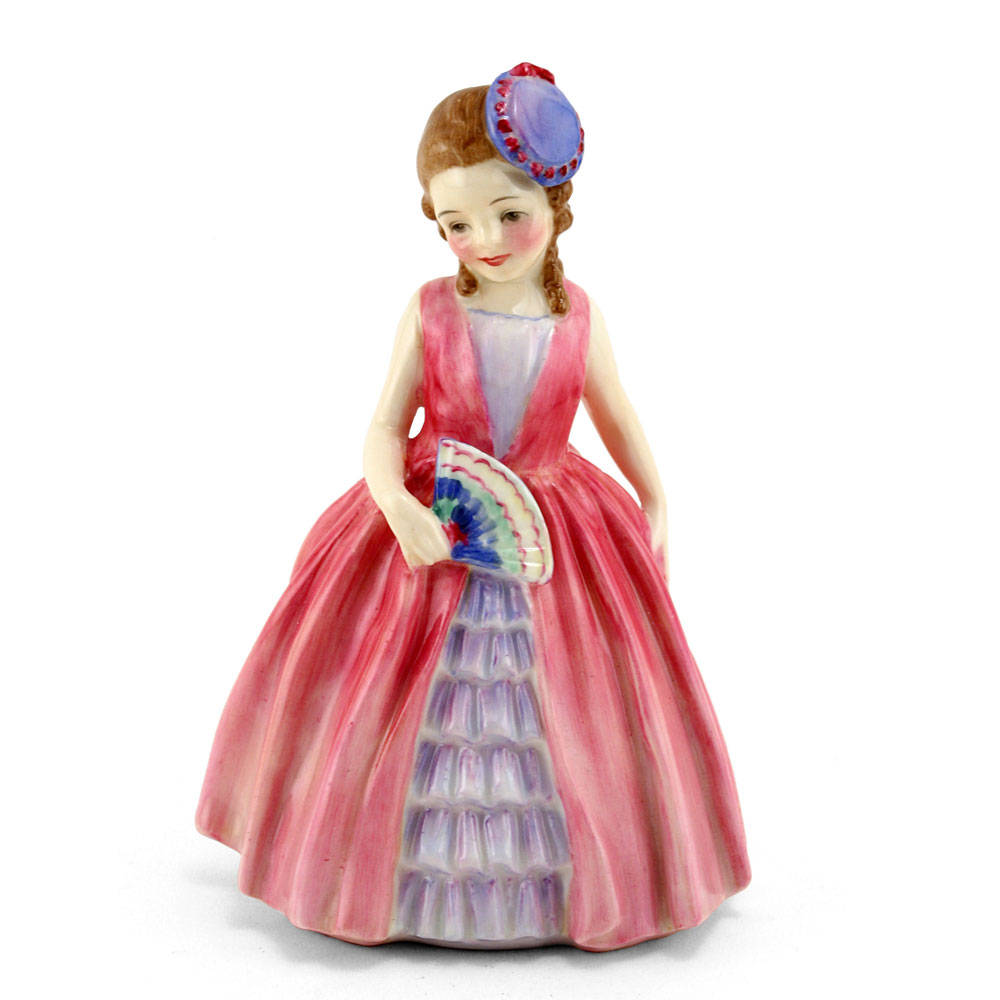
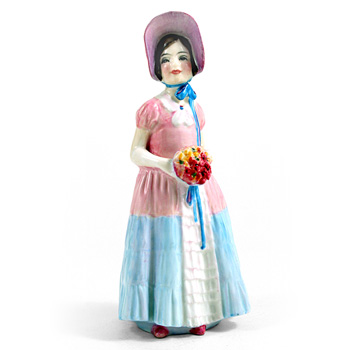
A recent discovery of mine is also that Nana HN1766 is based on another of Benatar’s pictures. The skirt, the hair and the hat worn identify Nana.

ImageImage

Molly Benatar illustration and Nana HN1766

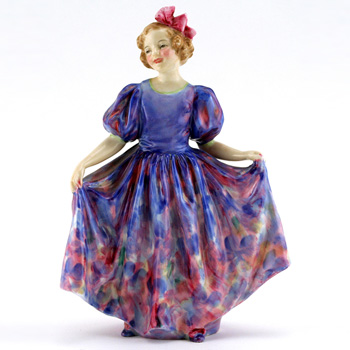
Another of Harradine’s most popular child studies is Sweeting and she , dressed in her party frock, was inspired by an advert for the once eminent London department store Marshall and Snellgrove.

Image

Sweeting HN1938

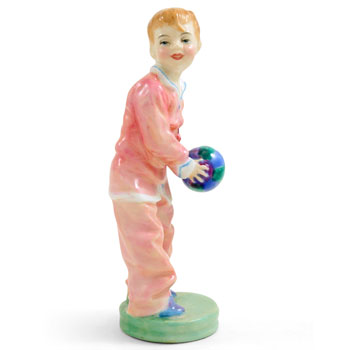
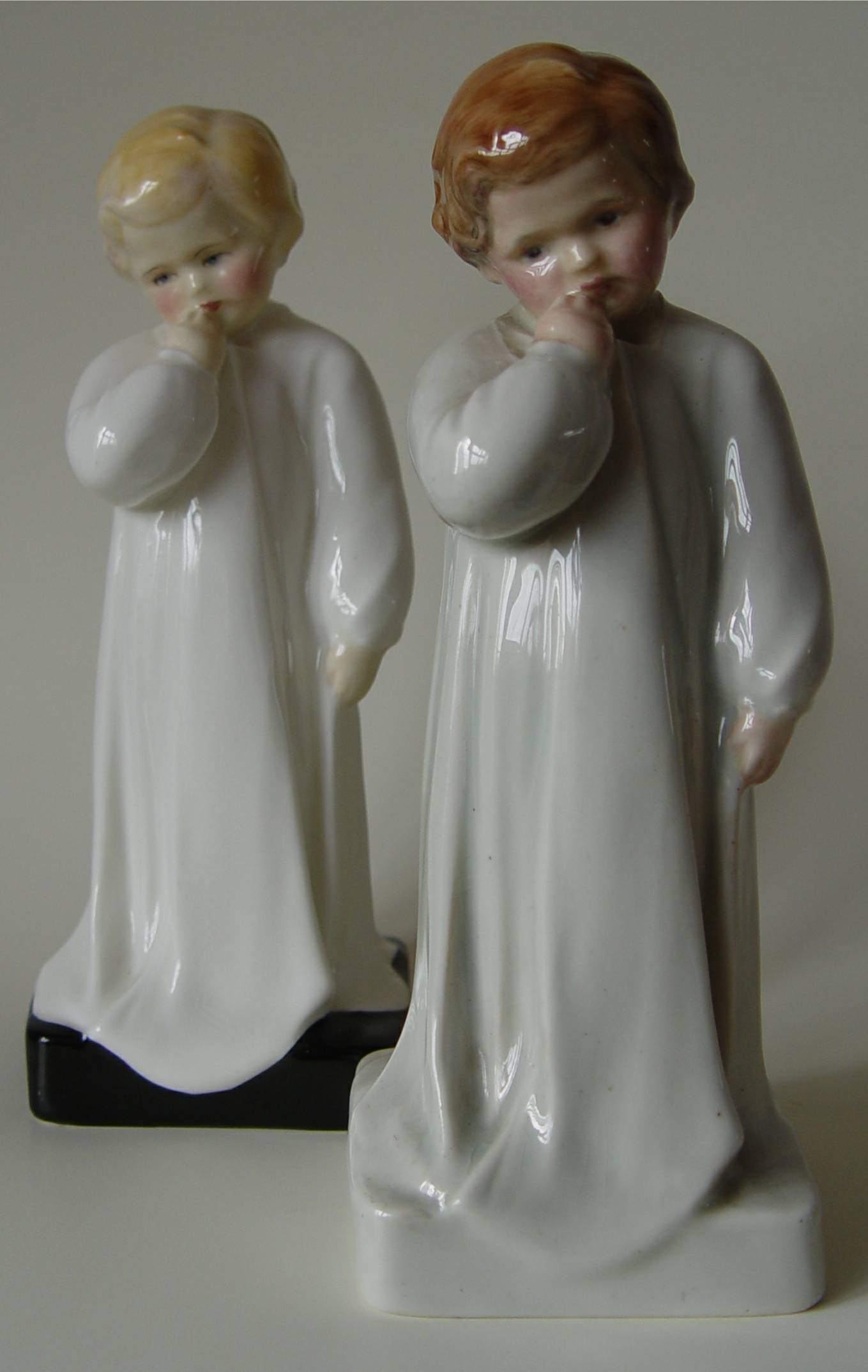
Other child figures by Harradine simply reflect childhood at its most innocent, consider Pyjamas HN1942 or To bed HN1805, either of whom could have been anyone of us in our early years. Harradine was able to capture a certain charm in his child studies, just as his did so perfectly with the bevy of ladies in so many varying guises, that he now is famed for.

Image

Pyjamas HN1942

One particularly popular child figure is Marie HN1417 introduced in 1930. A purple version of this figure was made up until 1988. Originally made as a pair to Rose HN1368, they can both be found in complimentary as well as contrasting colorways, and more unusually you can find them mounted on bookends and other objects. The enduring popularity of Rose meant that a new colorway HN2123 was introduced in 1983.

As with most Harradine figures, his child studies were also issued in several colourings. Particular favourites of mine are Lily HN1789, Ruby HN1724 and Diana HN1716. All three young girls display perfectly with their taller counterparts. Harradine understood precisely Royal Doulton’s requirements and when a popular theme was established he sought to develop it further. The world-famous Royal Doulton street sellers is one such case where a child study, namely Linda HN2106 was introduced to expand that series.

Image

Diana HN1716

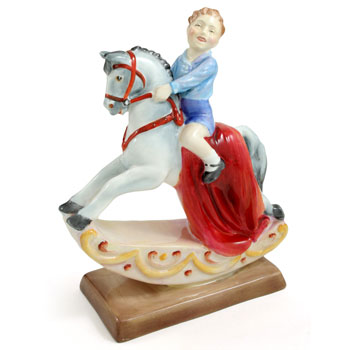
A final figure I would like to bring to your attention is The Rocking Horse HN2072. This particular figure I am sure you will agree is simply charming. The only reason I can summise for its short production (1951-53) is that the figure was too costly to produce. The inspiration for the piece is no doubt the film The Rocking Horse Winner from 1949, where the young hero discovers he can predict race winners by rocking his horse.

Image

The Rocking Horse HN2072

Doulton artist profile – Eric Webster

It is indeed an arduous task to try and re-assemble something long after the event, but for many years I have been trying to find out as much as possible about the early figure painting department at Burslem. The changes these early artists must have witnessed and the speed at which they occurred must have been mind blowing.

One artist whose monogram appears time and again on the bases of figures from the 1920-40’s is Eric Webster, born in 1896. Eric retired from Doultons in December 1962 and the last remaining link to what was known as the ‘Noke’ school of artists was lost. Originally engaged by John Slater, the first Art Director at Burslem, Eric served most of his years under the guidance of Charles J. Noke who succeeded John Slater as Art Director.

Image

Eric at work 14th October 1953

Eric was born and bred in the potteries and attended the Tunstall School of Art. When he arrived at Doultons he was engaged with painting plates and vases, and although a versatile artist – landscapes were a preferred theme. As the Doulton archive itself describes, around the time of the First World War, C. J. Noke began introducing ‘small pieces of sculpture in the shape of Victorian type figures and small animal models.’ This was of course the launch of the now famous HN collection and Eric together with Harry and Charles Nixon were the first three to be engaged in the decoration of the figures and animals. Eric being principally involved in the latter’s decoration. Incidentally the HN numbers we all know originated from the initials for Harry Nixon, just mentioned. However, Eric must have been prolific painter as his monogram is readily found on figures too from the 1930’s.

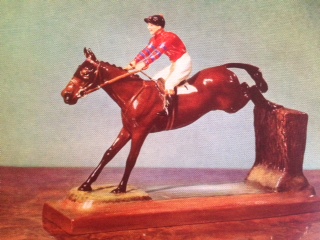
There were many high points to his long career with Doulton. Notably the painting of the first Championship Dog model ‘Lucky Star of Ware’ and later the model of the present Queen’s horse Monaveen, that was produced for her visit to the Doulton premises in Burslem, when still a princess in 1949 (see the video link already posted for actual footage of this famous visit). Eric reportedly visited the stables to take sketches in colour so as to ensure accuracy in the actual painting.

Image

A publicity shot of Monaveen, not available to purchase

Animal painting was clearly a forté of his and it was no surprise in ca. 1925 that he was entrusted to take charge of a newly created department responsible for animal painting.

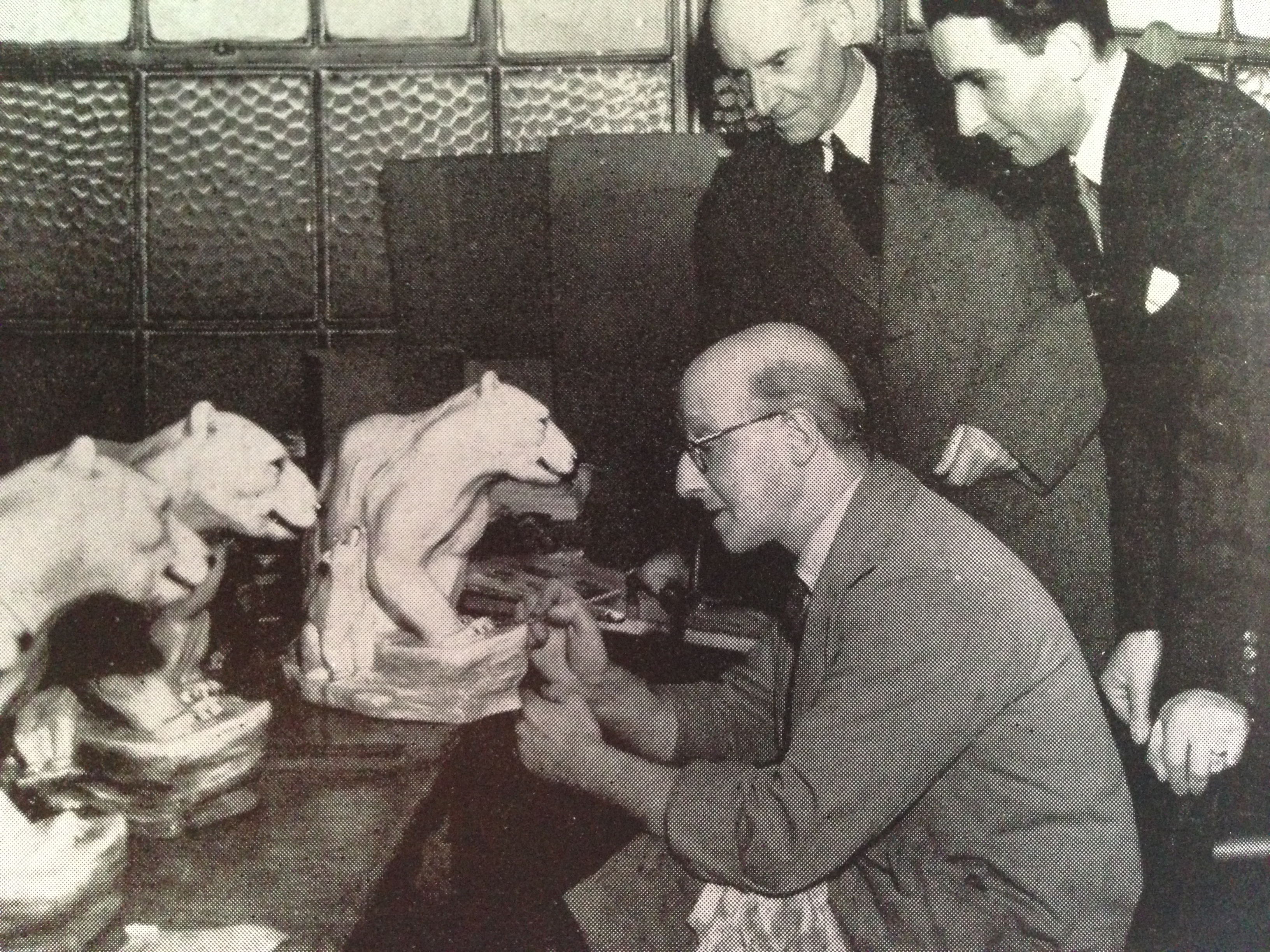
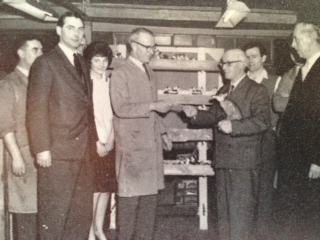
In his later career, Eric was responsible for painting prestige pieces, which were made to order. Here he is seen collecting a cheque and gifts from his friends at Doulton, including a naturalistic fox painted by himself!

Image

Eric at his retirement presentation, holding the large fox model

If you look at the bases of your figures and early animals check for an ‘EW’ or ‘EAW’ and that is our man!

Puttin’ on the ritz – Royal Doulton in the 1920’s and 30’s (Part 1 – Figures)

 Puttin’ on the ritz – Part 1 – Royal Doulton Figures from the deco period
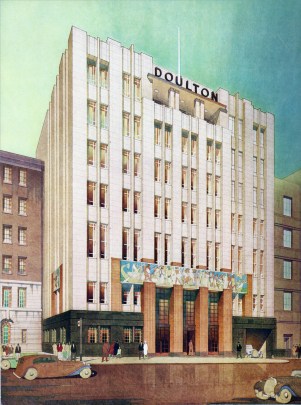
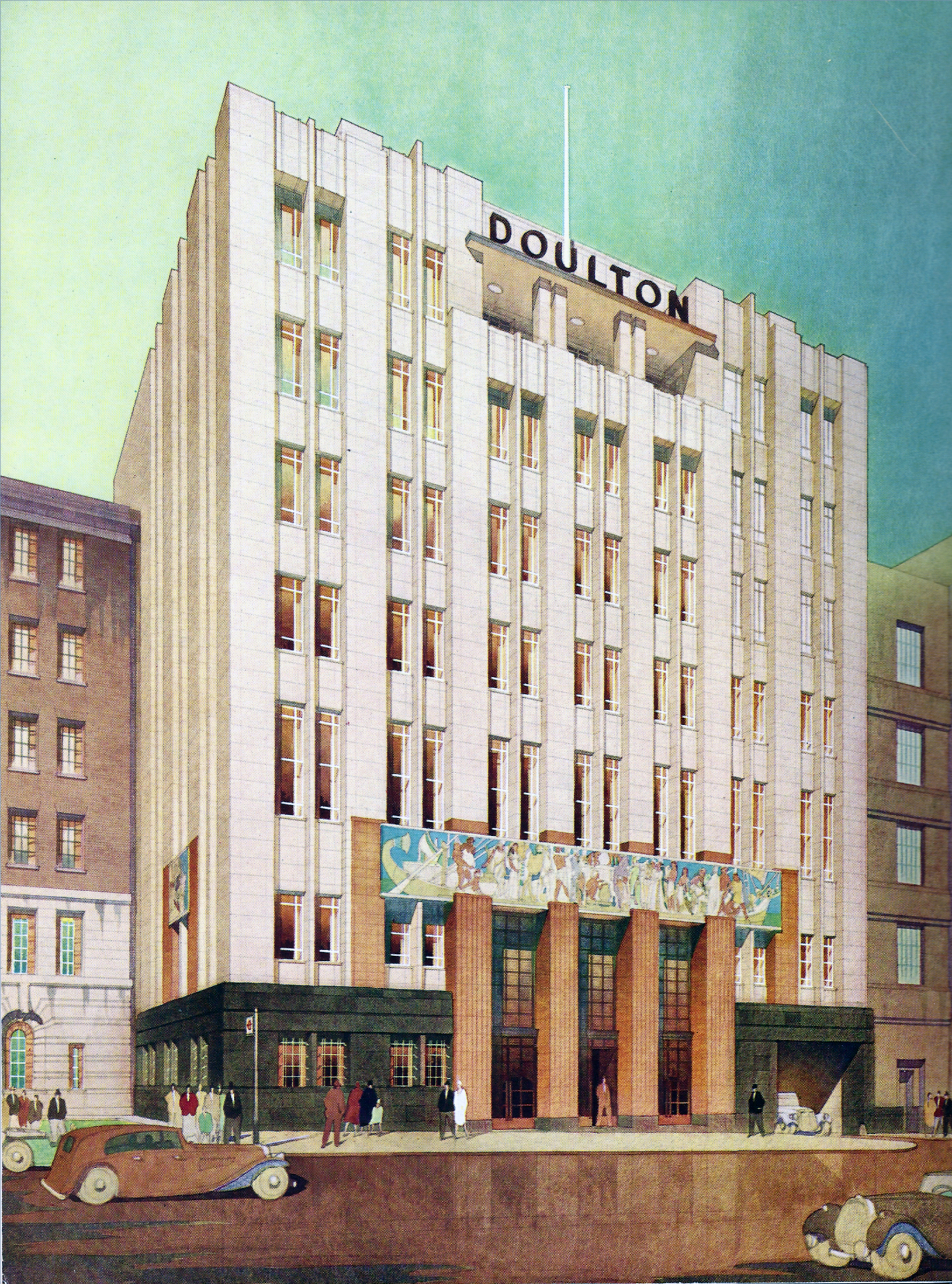
DOULTON HOUSE

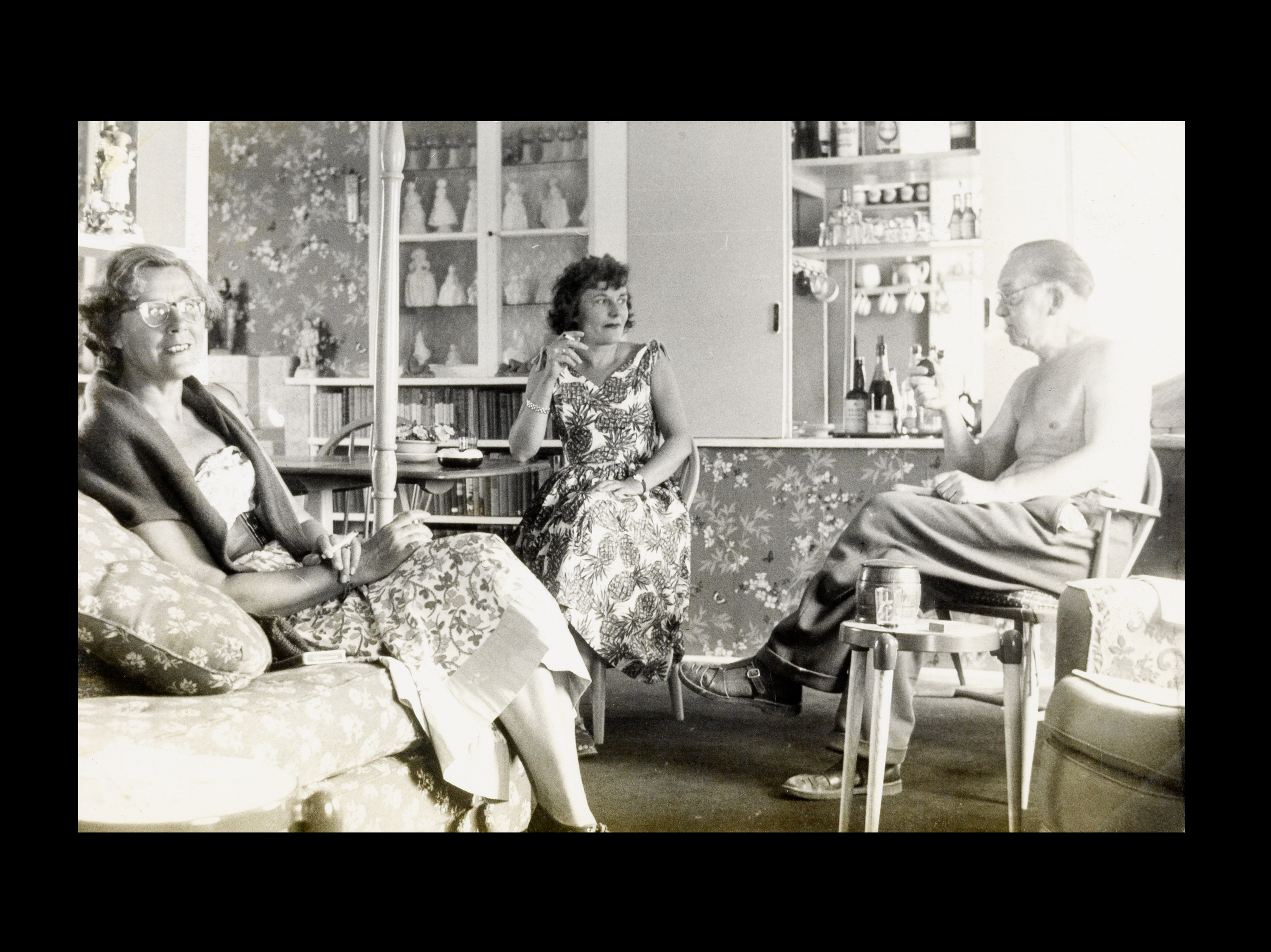
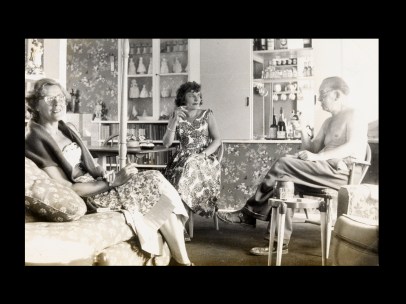
When one thinks of Doulton one automatically pictures Doulton figures in one’s mind’s eye, and that is where I will begin today. Amongst the most popular figures ever produced at Burslem are the creations of Arthur Leslie Harradine (shown here relaxing at home with his wife. Behind her you can see a cabinet of white figures sent to him for approval).
Image

Apprenticed to Doulton at the beginning of the 20th Century, he began working for them once again on a freelance basis after WWI. His first creations for the HN range coincide with the dawn of the 1920’s and also the beginnings of the commercial success of Charles Noke’s revival of the long neglected production of Staffordshire china figures.

Charles Noke, Art Director at Doulton’s Burslem factory, had for the previous decade been determined to revive the production of china figures, and had approached many leading sculptors of the time such as Phoebe Stabler and Ernest Light, but ironically it was with the home-grown talent of Harradine that Noke’s range was to be acclaimed as the pinnacle of china figure production in England and around the world.

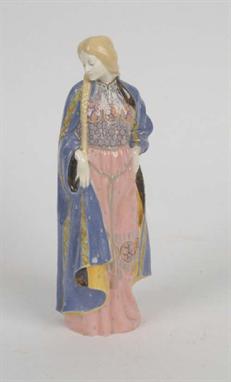
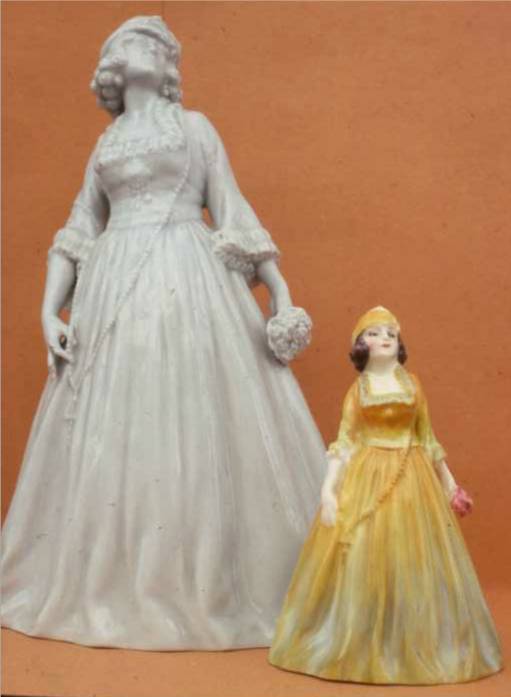
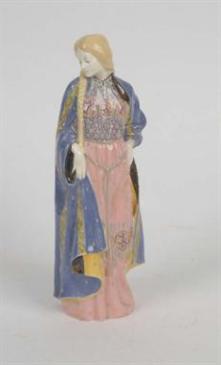
Harradine’s first figure introduced to the HN range is this rather stylish lady titled ‘The Princess’ from 1920.
Image

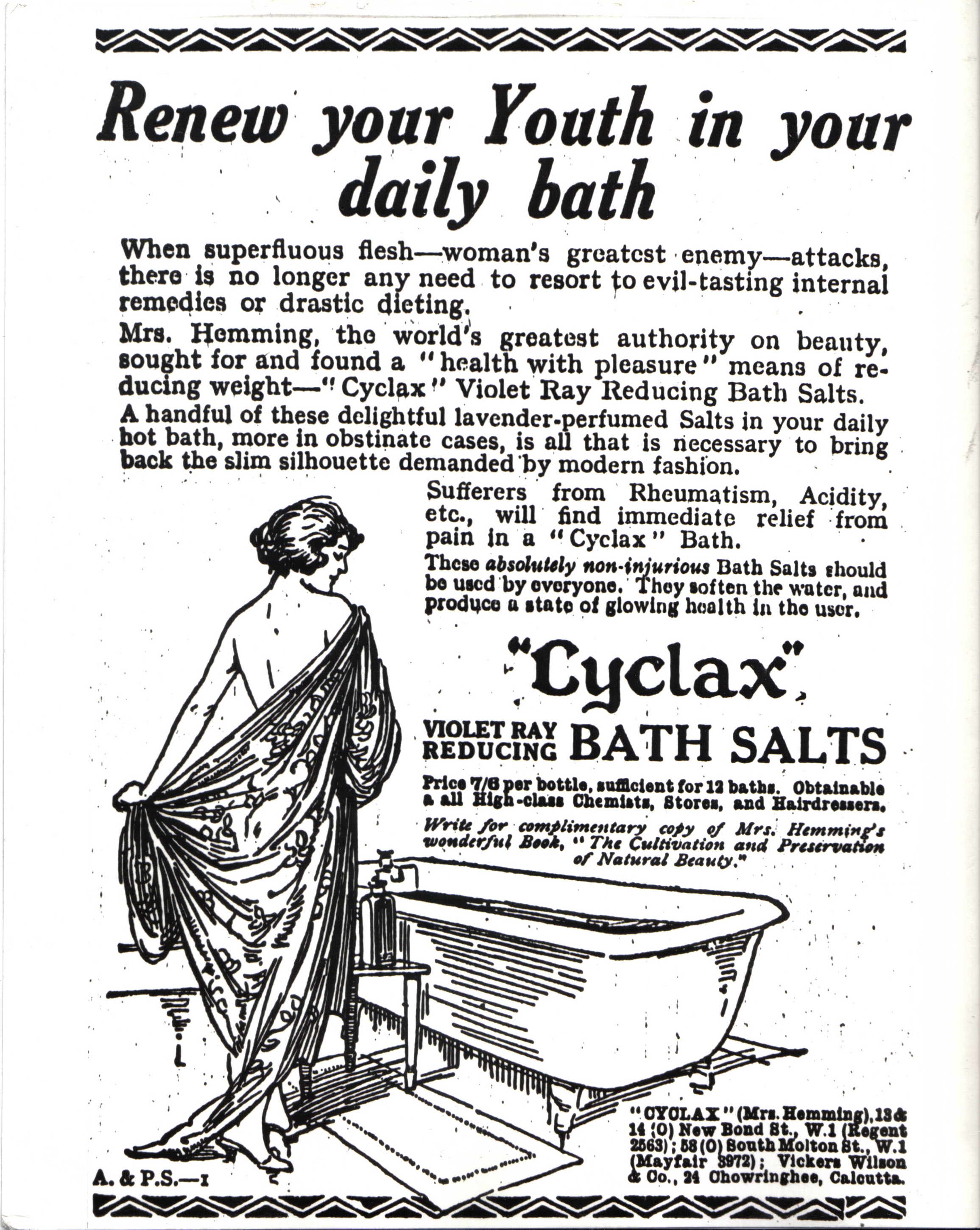
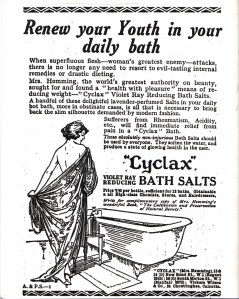
Here at once we have a glimpse into Harradine’s ability to interpret trends of the time,  you can see it closely resembles this illustration by Leon Bakst for a costume for Diaghilev’s Ballet Russe. This tremendous ability to interpret images into pottery also brings us a typical 1920’s Harradine figure, The Bather, taken from this Cyclax advert from the time.
endpapers cyclax advert

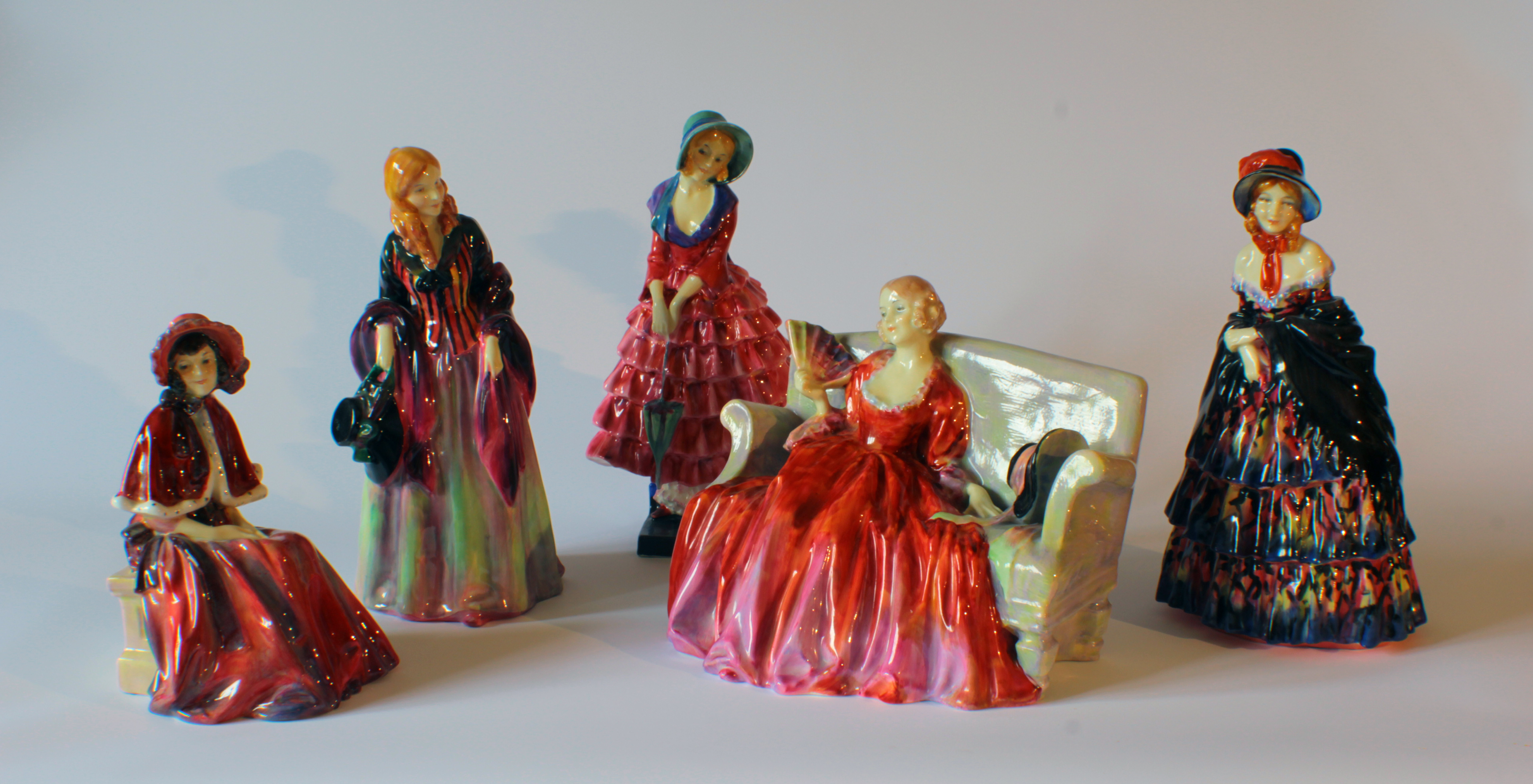
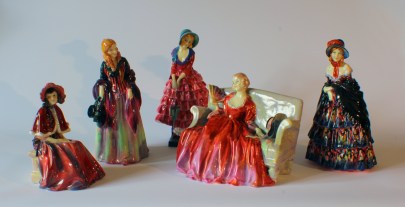
This latter figure really illustrates what Harradine brought to the HN range that differed from his predecessors: a smaller size of figure, with a less sculptural feel and decorated with an array of dazzling colours. Three things that were to shape the future of the HN range up until today. As you can see from these instantly recognisable figures, Harradine achieved what others had failed to do, and so we have here a selection of what we can term typical Harradine figures all introduced during the 1920’s.
Image

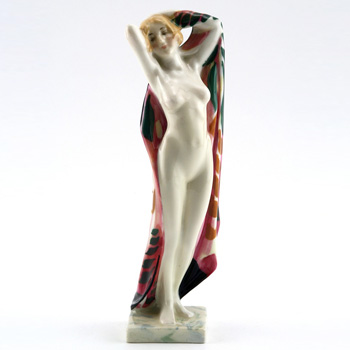
The 20’s saw re-newed freedom for women and this too is reflected in the HN range. Consider Miss 1926 with her Eton crop or nude figures of the time, Carnival and Circe (HN1249 below).
Image

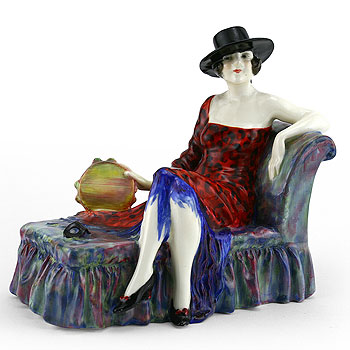
However, it was not so much the social changes that defined the era but the emergence of a new phenomena, the so-called Flapper, a term for girls who were shortening their skirts, bobbing their hair, wearing makeup, smoking and drinking and going out with young men without chaperones. Another such ‘it’  girl to be introduced was Dulcinea shown here in her fantastic fringed dress and her bolero hat.
Image

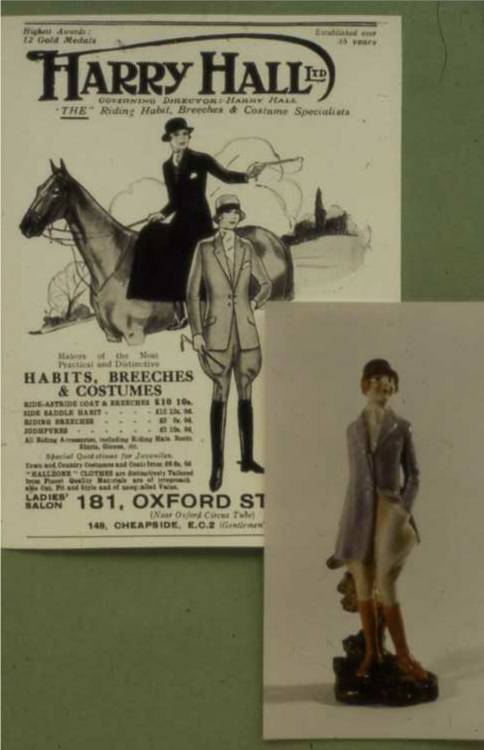
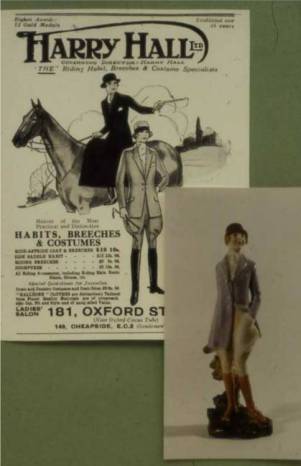
Fashions of the time played a hugely important role in inspiring Harradine’s figures. Here you can see the Hunts Lady in her stylish hunting garb and a contemporary advert for the same.
Image

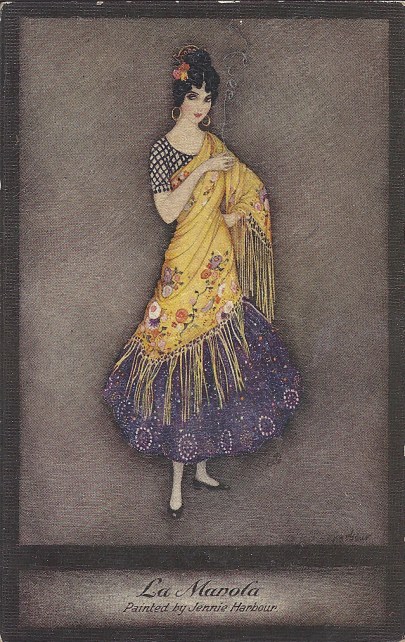
Consider too the figures Gloria and Clothilde , which come straight out of 20’s fashion magazines. A further slide I would like to share here is this one of the inspiration behind Harradine’s figure Carmen.
Image

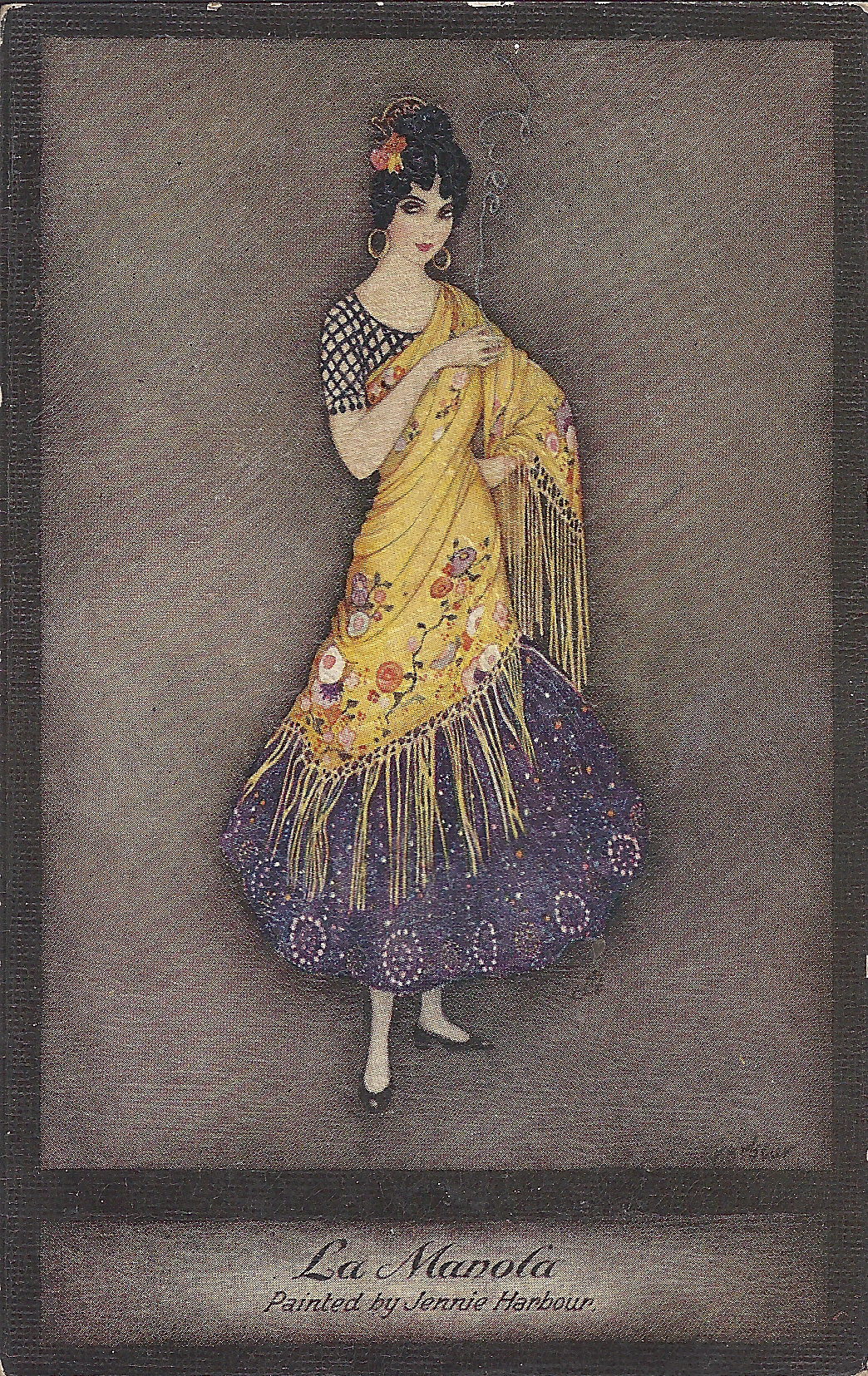
Clearly Harradine had many sources from which to draw and here we also have a glimpse of a figure taken from a contemporary greetings card designed by Jennie Harbour. The use of greetings card illustrations became the norm in the 1930’s.

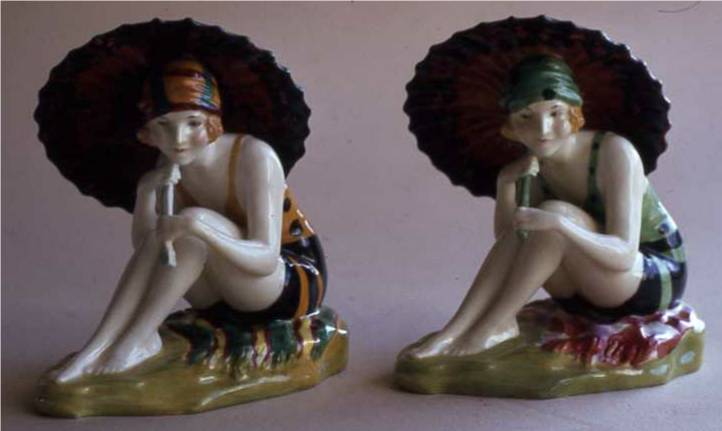
New past times too played a part in influencing the range – take for example Sunshine Girl illustrated here who was doubtless inspired by a contemporary advert for the Dunes Beaches in Chicago. Here are the two original Sunshine Girl colourways.
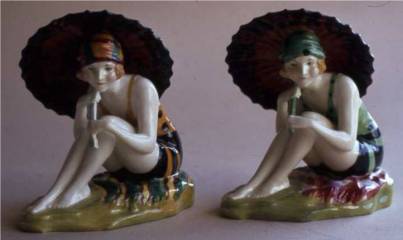
reflections045

Doulton’s group of 1920’s figures really did set them apart from their competitors, such a Worcester, who continued to draw inspiration from traditional subjects for figures such as Water carriers and other Grecian style figures, whilst the Doulton range forged a new path in figure production, creating a bevy of 20’s flappers and ‘It’ girls of the day.

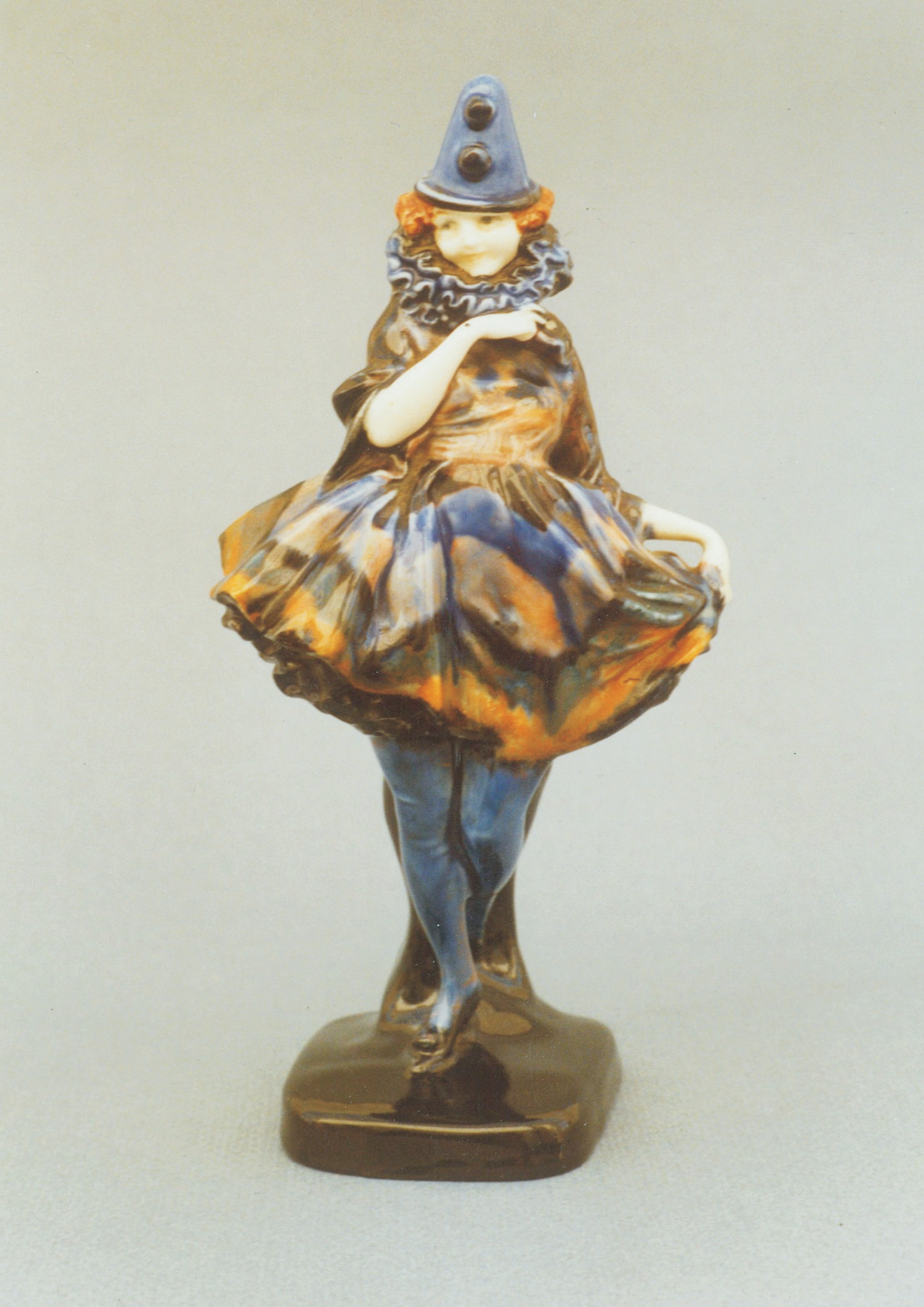
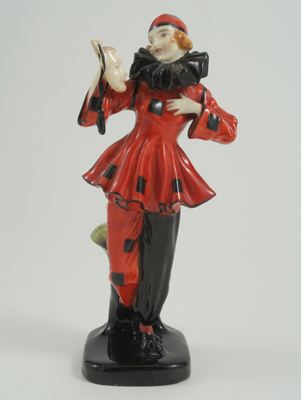
One only has to take a cursory glance at the HN collection from the 1920’s to see from where these draw their inspiration. The theatre clearly played an important role as ‘the’ pastime of the era. Figures with a theatrical background include  Harlequinade, Pierette and Columbine.
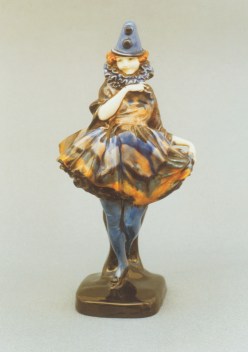
Pierette

All three take their names from the Comedia dell’ Arte where the traditional Pierot character is portrayed as a sad figure pining for the love of Columbine who runs away with Harlequin. Whilst the origins of the names of these figures hark back to an earlier time, nothing about them can be said to do the same. Their costumes reflect the renewed interest in the 1920’s in Masquerade Balls and here is another example!
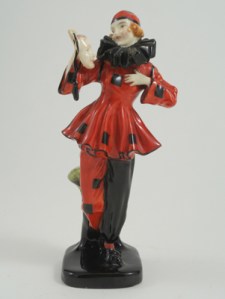
mask_hn729_01

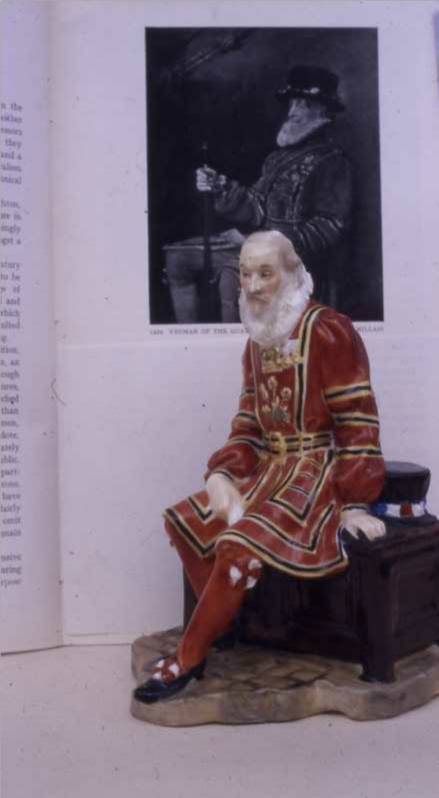
Male characters too were represented in the  art deco HN range, consider this Yeoman of the Guard seen here, who was made as a pair to A Chelsea Pensioner, both introduced in the mid-20’s. Neith of these can be said to be ‘modern’ yet both are clearly modelled on their namesakes!
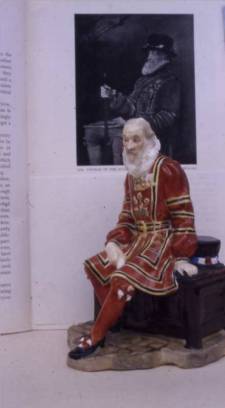
reflections058

Whilst the Yeoman above may simply be represented as a warder of the Tower of London, his appearance may also be explained by the ongoing popularity of the Gilbert and Sullivan operettas from the late 19th Century.

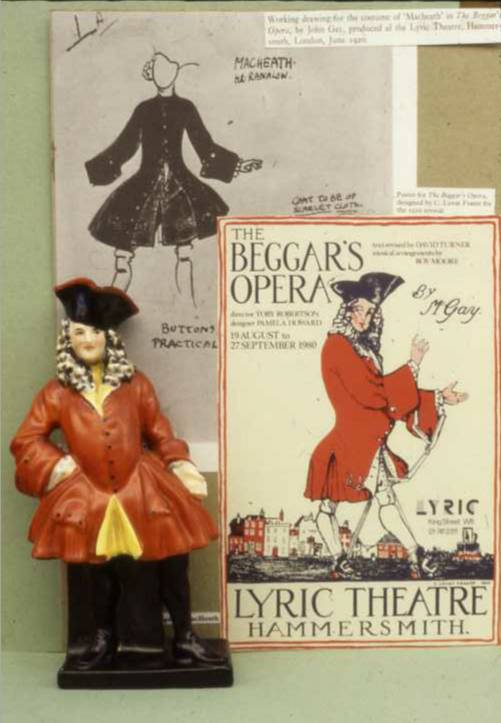
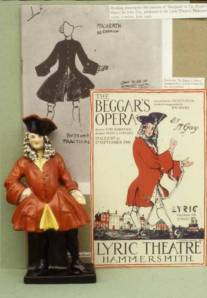
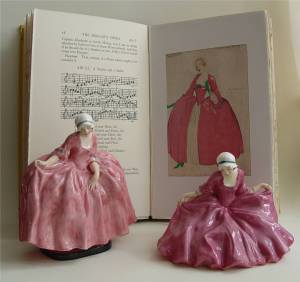
Leslie Harradine was also responsible for the first set of figures to be introduced, The Beggar’s Opera Series, again inspired by the theatre. Harradine’s figures all closely resemble the costume designs of Claude Lovatt Fraser the designer for the revival of this piece at Hammersmith, London in 1920. Once made up the costumes were thrown to the studio floor and walked on, had paint thrown on them, and where necessary as with the Beggar’s costume, were then slashed and dirtied. Lovat Fraser reasoned that the characters from the play were from 18th Century London low life and spent much of their time in jail.
reflections017

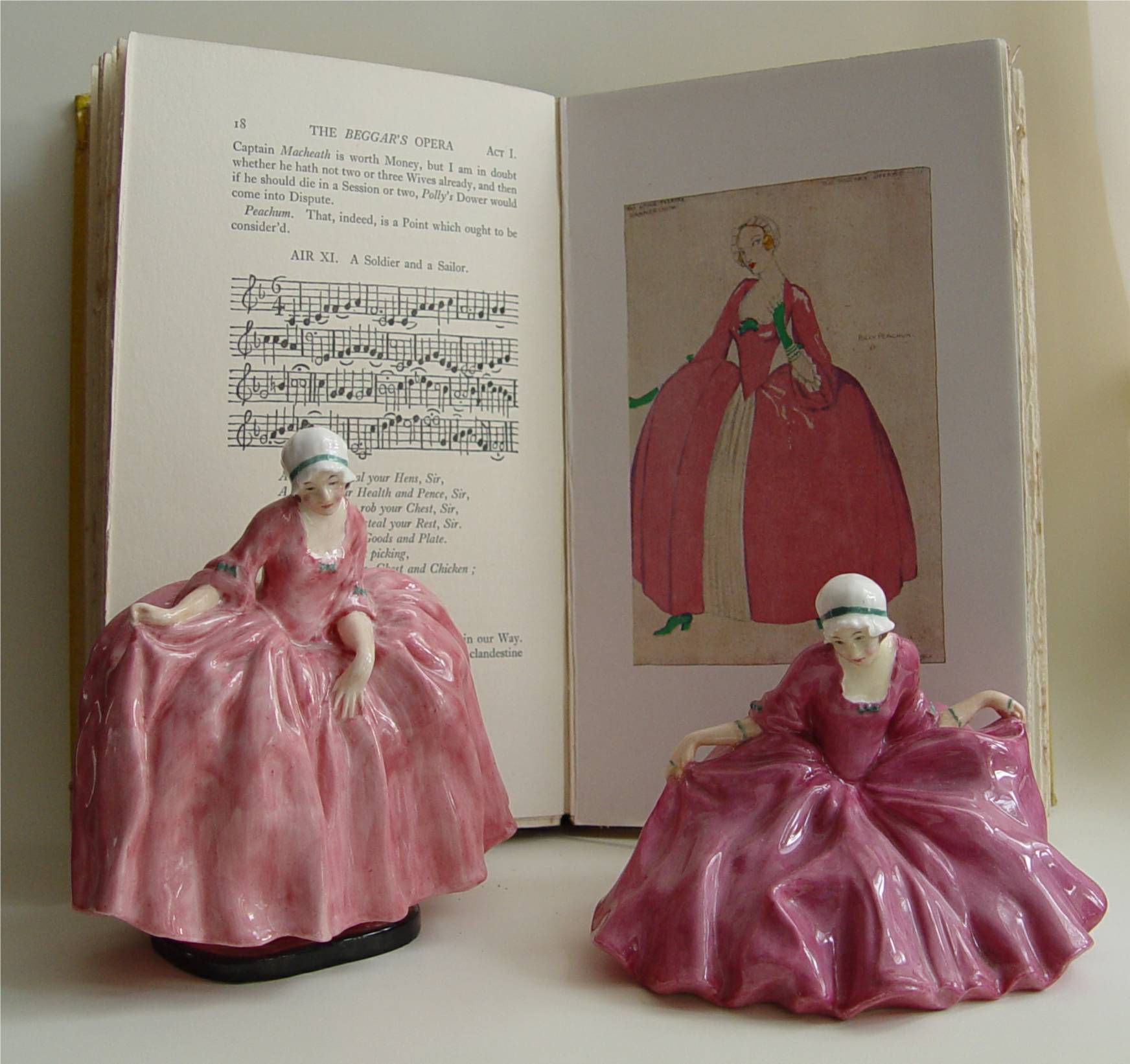
Above is the original Captain  Macheath figure compared with the original theatre poster and Lovat Fraser’s design and here is  Polly Peachum in two versions both by Harradine, shown against Lovat Fraser’s original Design.
reflections 2 00013

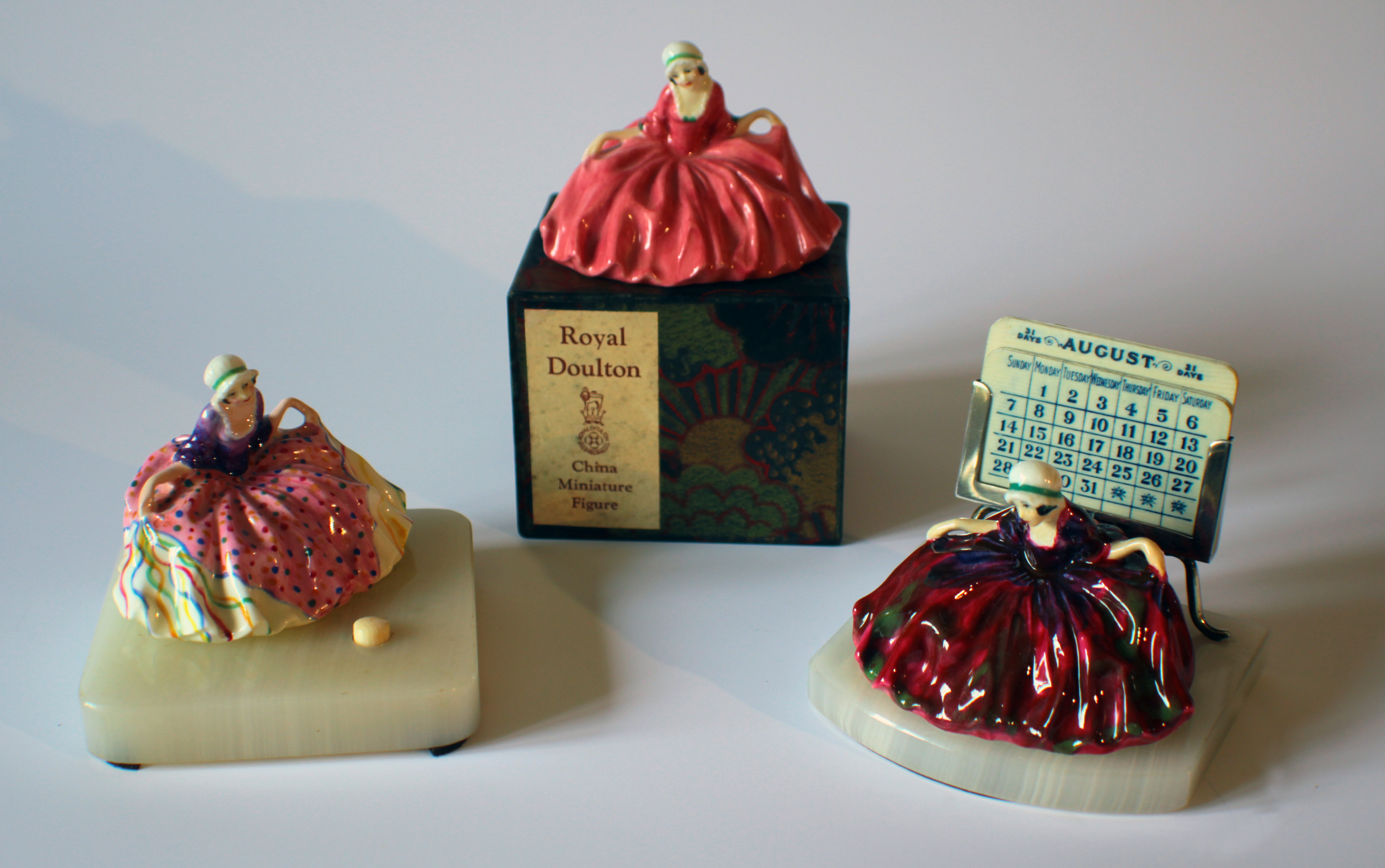
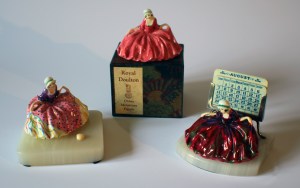
This first series of figures set the tone for future sets by teaming a popular English theme with an emerging Doulton house style. The series proved a huge success and in Doulton’s first official publicity catalogue after WWII, they themselves lament the withdrawal of this popular set! The main female character is also immortalised in a miniature version, and incidentally more colour variations of this one miniature figure exist than any other! Here you can see three miniatures I have come across.
IMG_9244

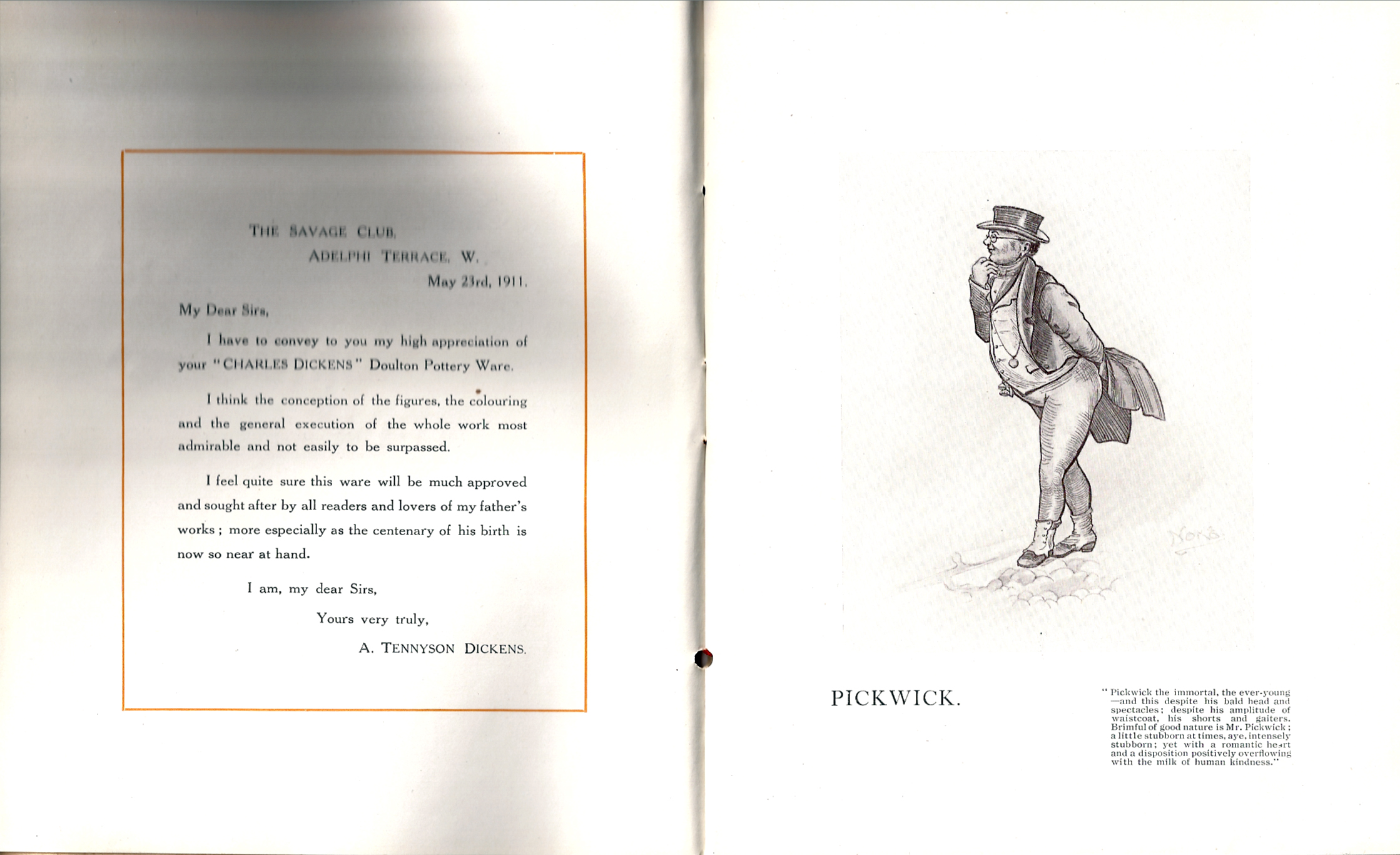
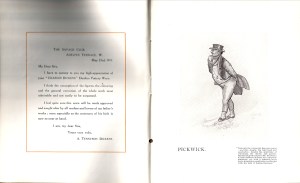
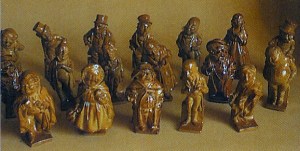
The Beggar’s Opera series was closely followed by six characters from the ever popular work of Charles Dickens . Noke had already introduced the popular Dickens seriesware pattern based upon these same characters and others, which had gained praise from even Dickens’ son Alfred Tennyson Dickens back in 1911. This letter from Dickens’ son was often used in Doulton publicity of the time.
lECTURE pUTTIN ON THE RITZ 00006

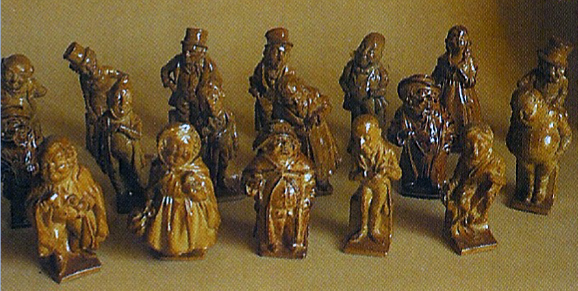
(Interestingly he was named after his godfathers, one of whom was the great Alfred, Lord Tennyson, who was Poet Laureate to England’s Queen Victoria for most of her reign.) Below you can see a slide showing Harradines original stoneware models for the miniature Dickens range that was introduced.
Captured 2009-6-25 00009

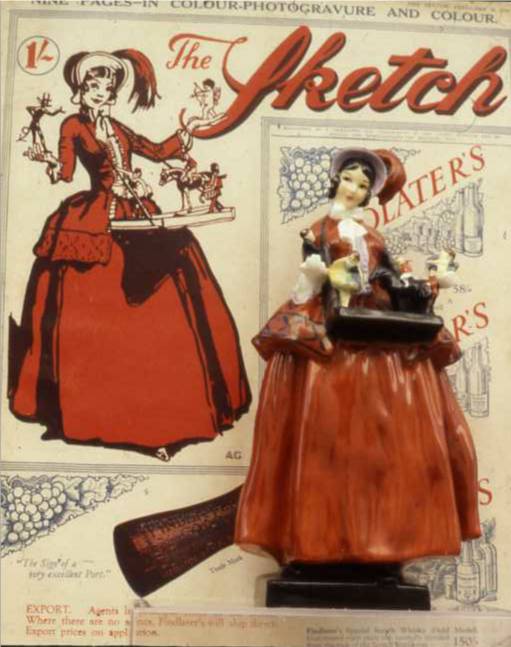
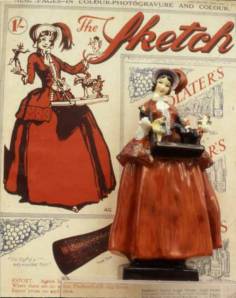
The 1920’s marked the introduction of what we can term the first advertising figures too. Here we have the Sketch Girl pictured against the magazine she is advertising.
reflections060

The figure Miss Sketch appeared on the cover of that popular magazine, a pedlar figure carrying on her tray mini figures representing the varied topics covered by the magazine, a ballerina for the theatre; a jockey for sport; a cupid for love stories; a soldier for current affairs; and the devil well I will leave you to decide upon…..

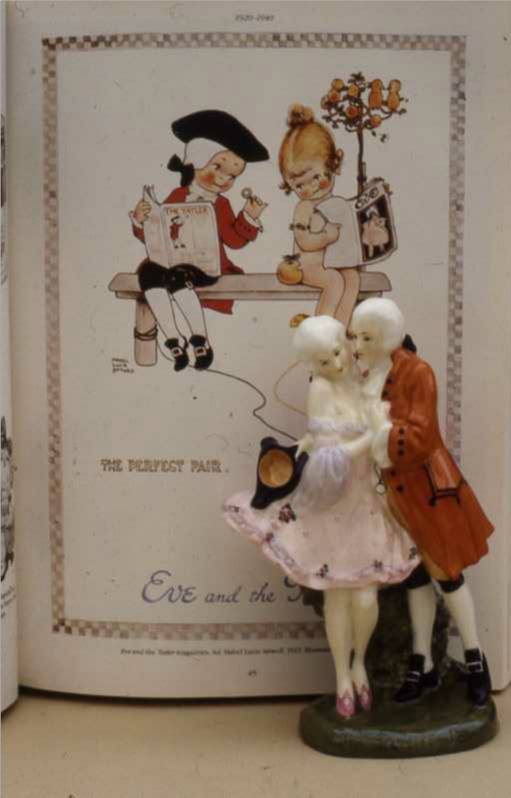
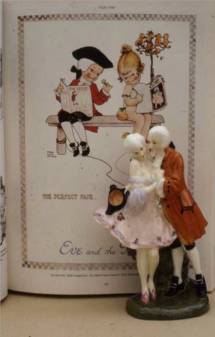
In addition we have The Perfect Pair, a figure that is not widely recognized as an advertising figure, but which in fact represents the union of two great British magazines, Eve and The Tatler in one publishing house. Interestingly this advert was designed by Mabel Lucie Atwell in 1923.
reflections049

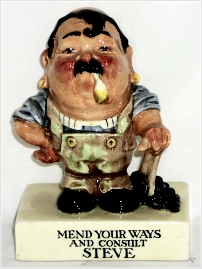
All walks of life were catered for and below you can see a particularly unusual little chap, known to us as Steve. He was created in the likeness of one of the yard men, for Wettern, Beadle and Bristowe Road Builders. Occasionally he does turn up without the added lettering around his base.
125_D8

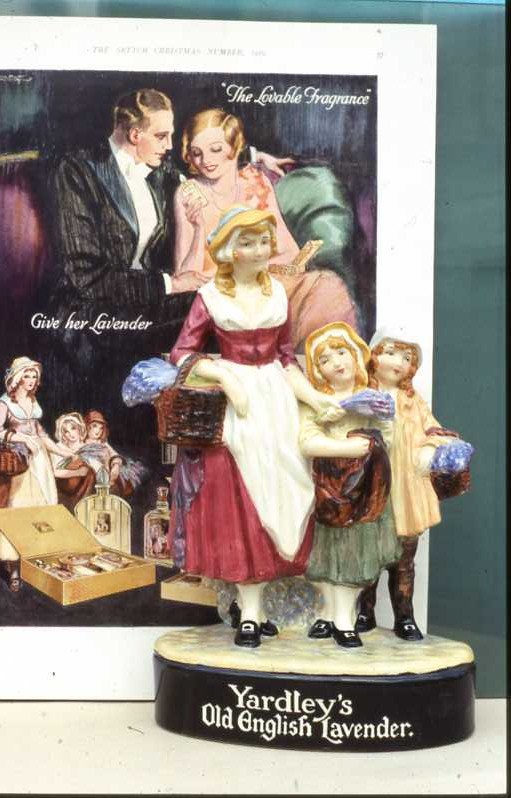
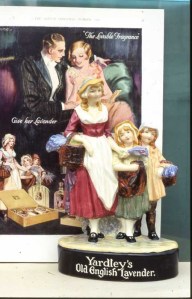
Advertising figures for the perfumiers Grossmiths were also produced. Here you can see The Old English Lavender Figure  , together with a Yardley’s advert.
reflections039

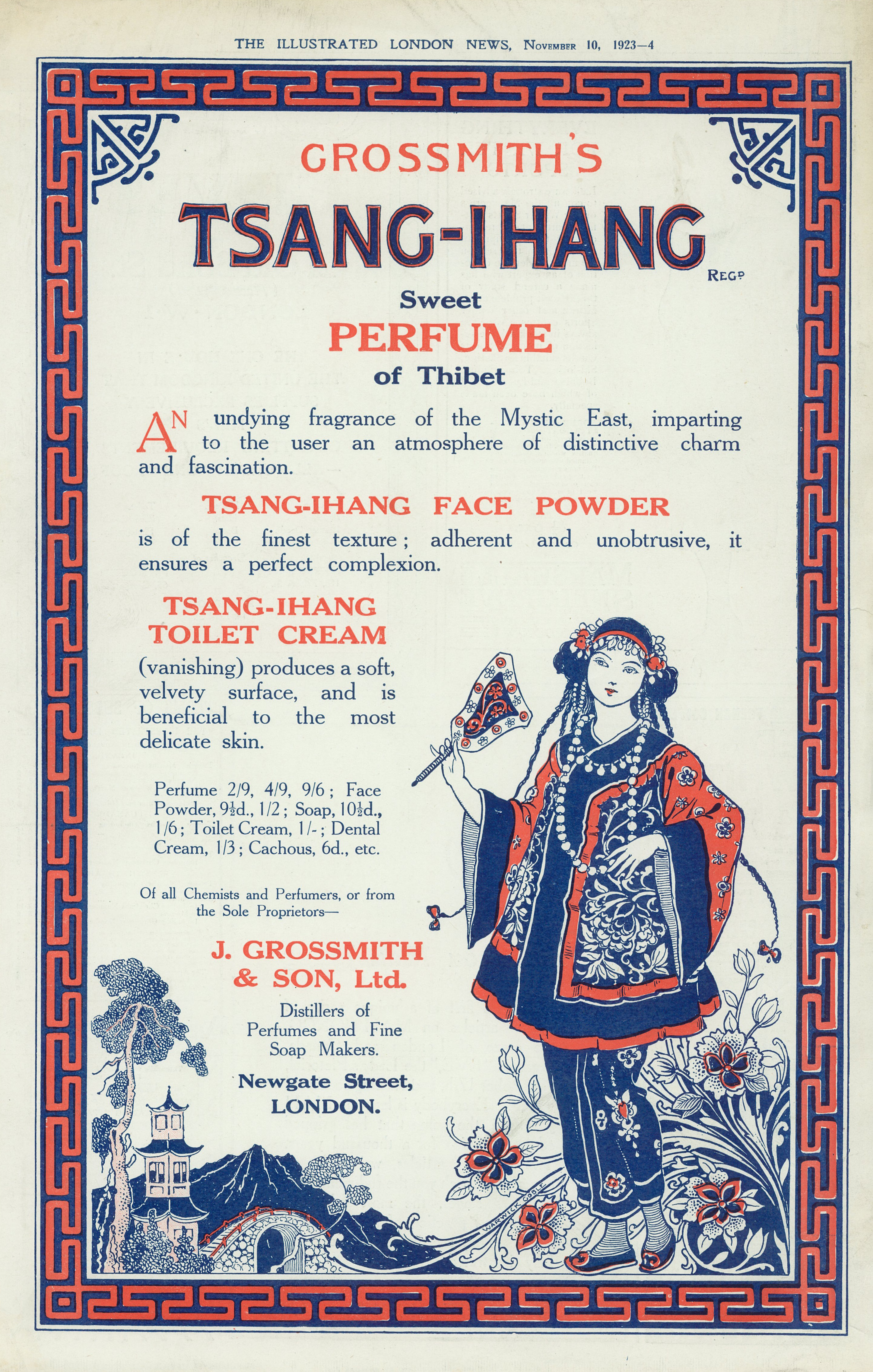
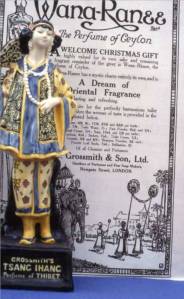
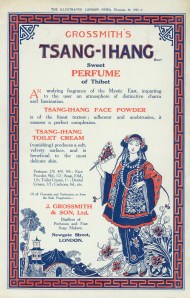
A final advertising figure I would like to draw to your attention is one of my absolute personal favorites,  Tsang Ihang, and an advert for the perfume she is promoting.
reflections062

The ‘inspirational’ advert for the figure remained elusive until very recently and I was thrilled to discover it just a few years ago. As with all things we search for assiduously when you find one, another promptly turns up as happened in this instance to me!
Tsang Ihang Advert

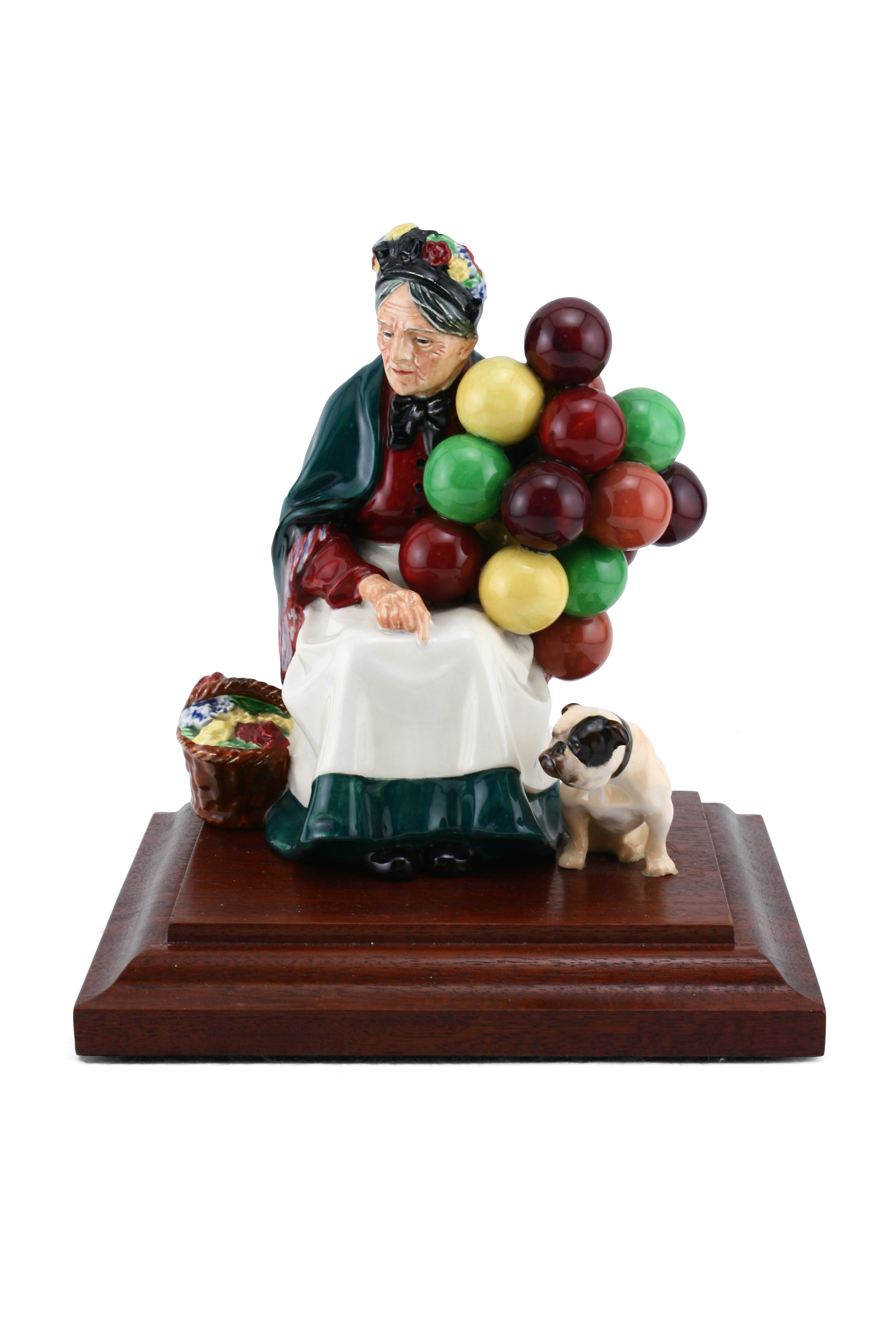
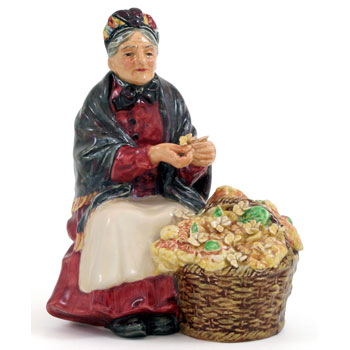
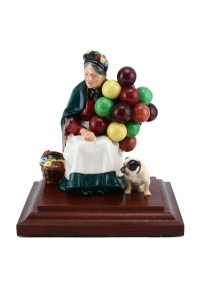
One final figure which must be mentioned here as a child of the 1920’s is this, perhaps the most iconic of all Doulton figures The Old Balloon Seller HN1315 introduced in 1929.
FIG_Old_Balloon_Seller_with_Bulldog

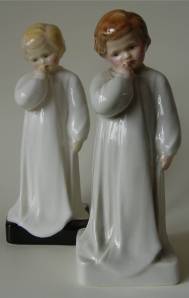
Whilst not the first Street Seller in the HN range her enduring popularity, even now over a decade out of production has ensured her status as possibly the most immediately recognisable of all Doulton figures. Yet she, and her predecessors such as The Flower Seller all owe some thanks to another great sculptor of the time, Charles Vyse. Vyse was of course the creator of this  delightful figure, Darling HN1, and I am sure Harradine took inspiration for his street seller figures from Vyse.
Refelctions 6 00004

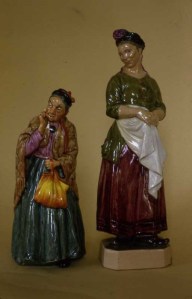
You can see immediately how Vyse’s Balloon Lady morphed into Doulton’s own interpretation by Harradine. And again  with Vyse’s Wild Flowers and Harradine’s Sweet Lavender. A further example illustrated below is this Vyse figure and Harradine’s Bridget.
reflections026

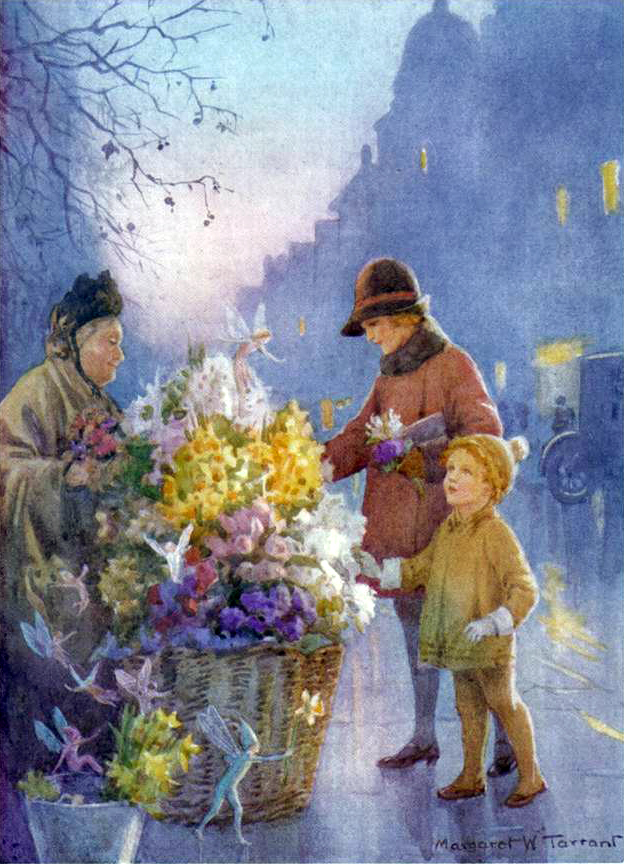
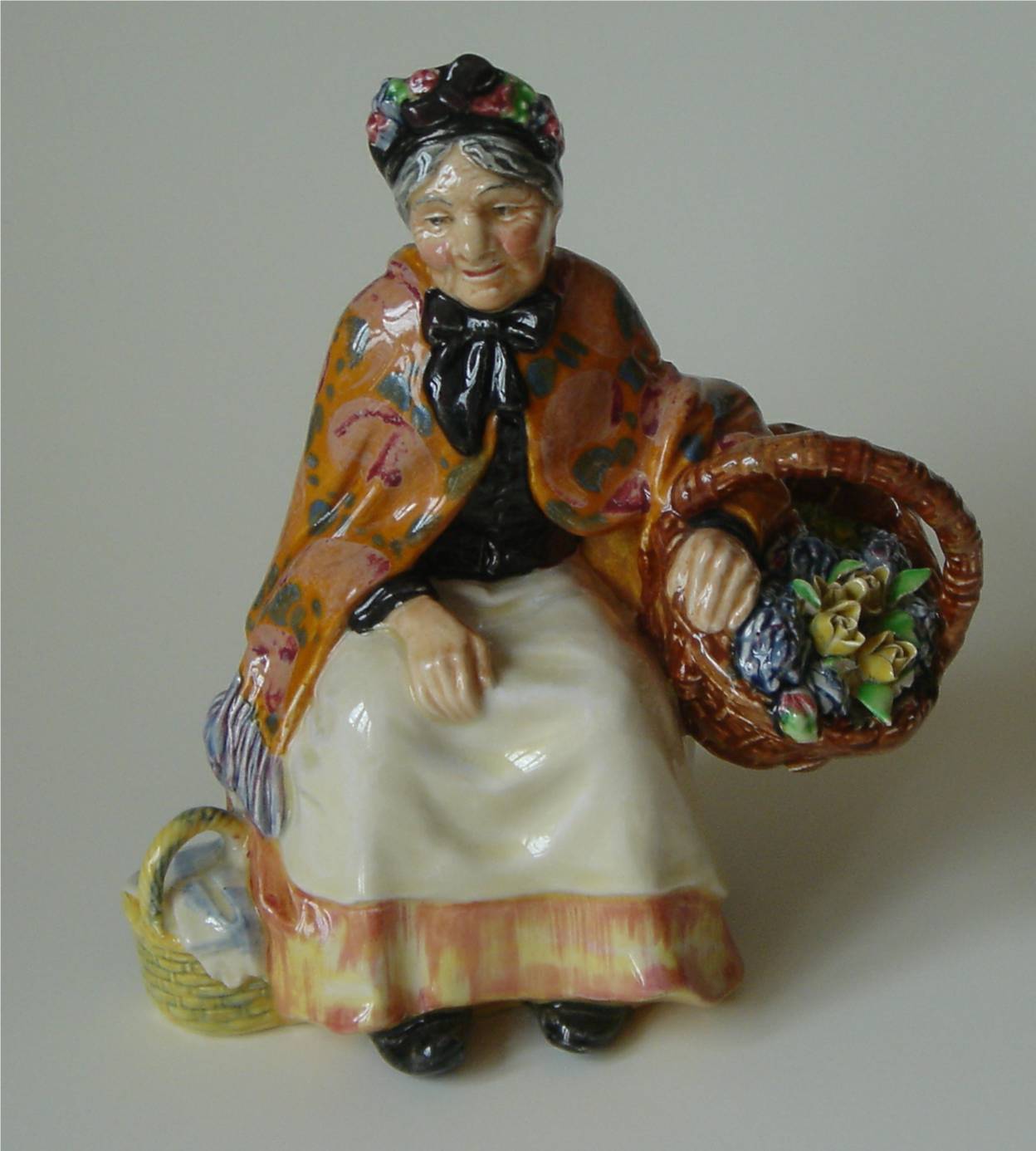
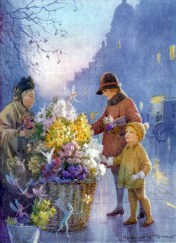
Vyse in turn took inspiration from the many street sellers that were still to be seen in London street life in the early 20th Century, like the lady in the illustration below. The Old Balloon Seller was succeeded by many other street sellers in the 1930’s and another personal favourite of mine is this,  Primroses which closely resembles this Margaret Tarrant illustration.
Picture1 FIG-Primroses-HN1617

And so we come to the end of this section exporing Doulton’s deco  figure delights.

Next time we will look at Doulton’s deco Burslem wares!
Complimentary Colourways – displaying your Doulton

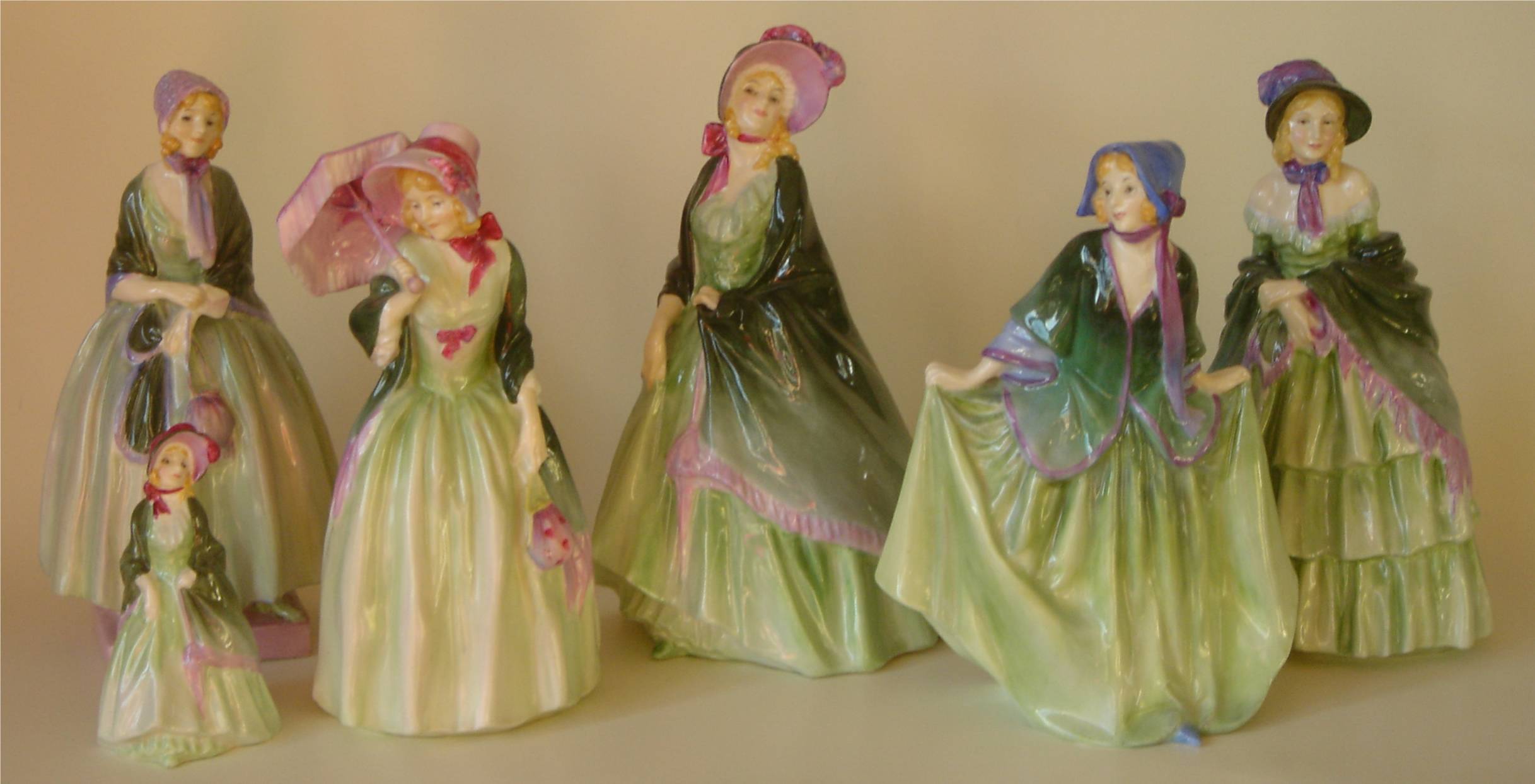
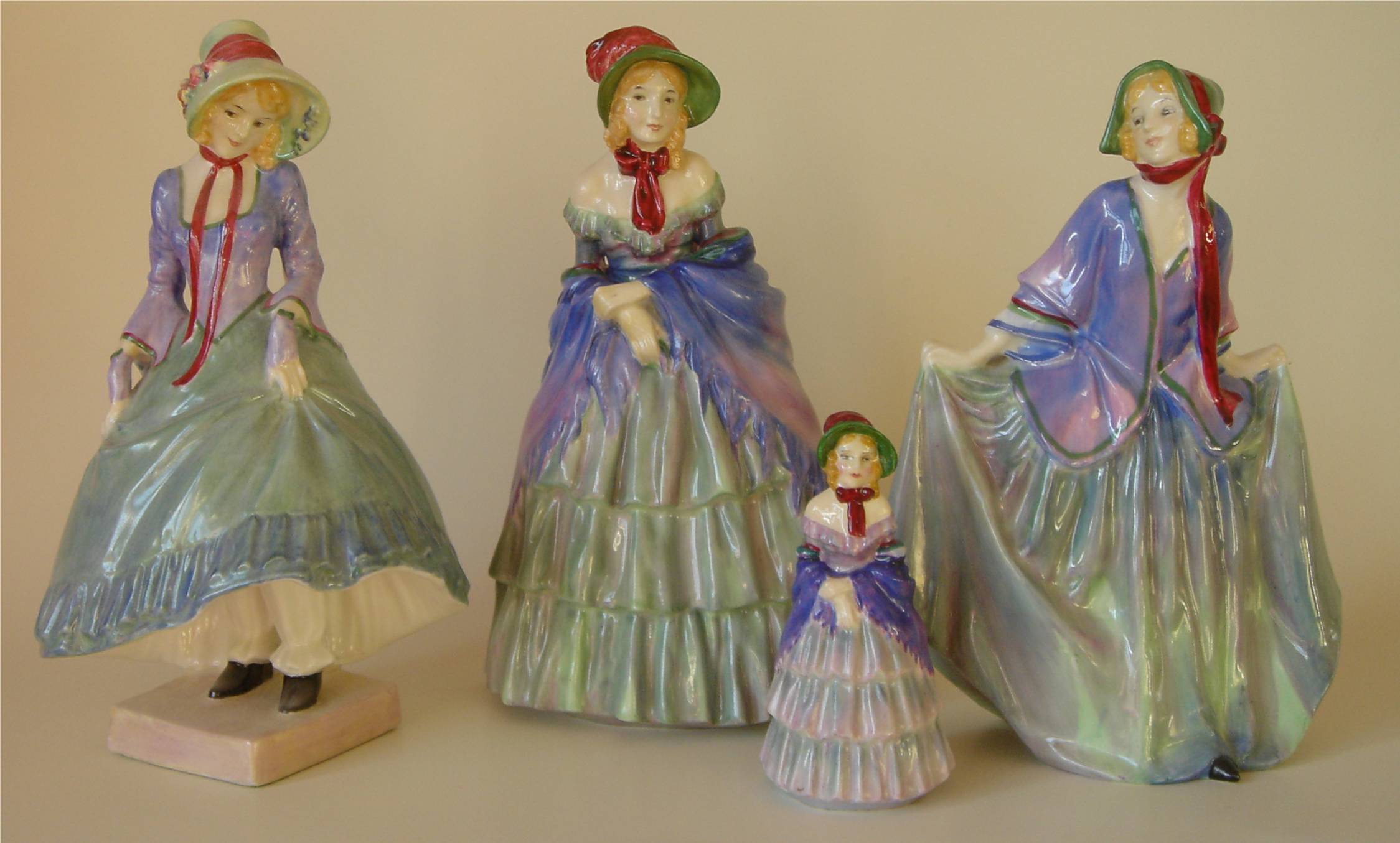
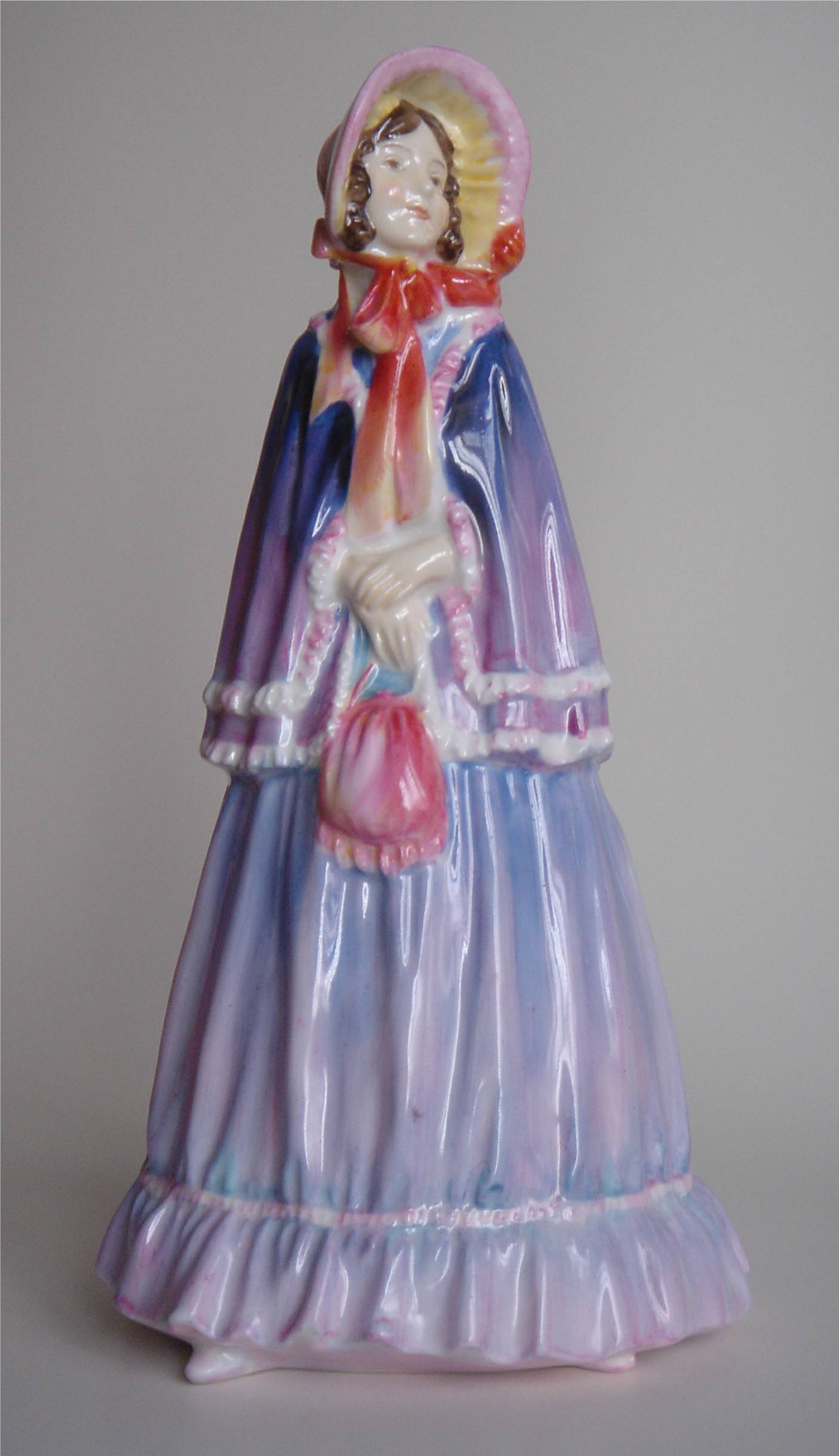
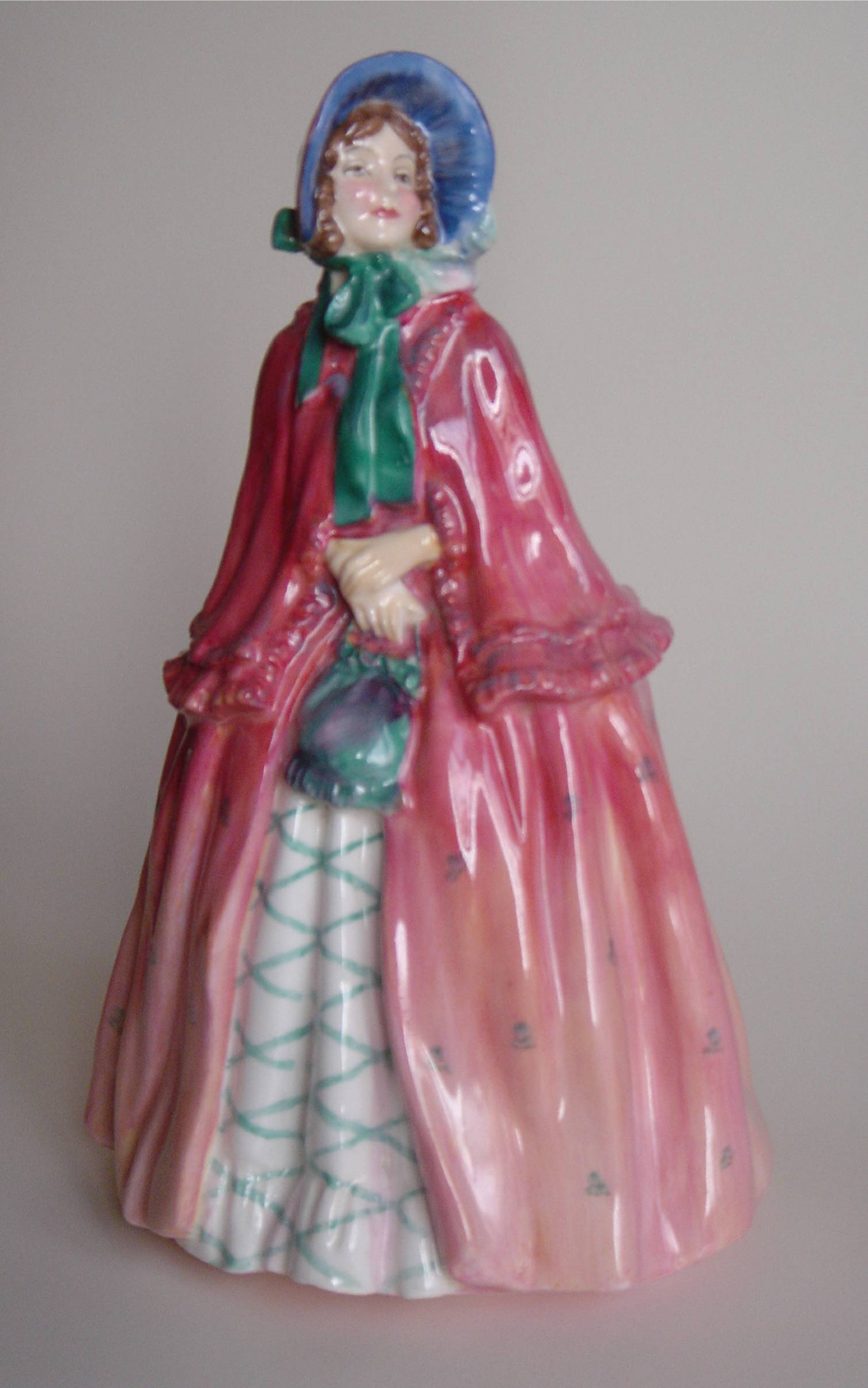
As soon as the term colourway is used, many suddenly think of the unique and unusual. Doulton, however, seem to have had a much wider view of the term. Certainly during the inter-war years of the 1920’s and 1930’s many figures were available in colourways to compliment existing figures in the range. Take for example the selection of two-tone green figure: Barbara (HN1461), Paisley Shawl (HN1460), Patricia (HN1462), Miss Demure (HN1463), Sweet Anne (HN1453) and Victorian Lady (HN1452).

Image

Clearly this set was produced to compliment one another. Other such sets include Sweet Anne(HN1496), Dorcas (HN1558) and Priscilla (HN1559);

Image

Another group is Veronica (HN1650), Sweet and Twenty (HN1649), Janet (HN1652) and Camille (HN1648) (not illustrated); and below you can see Pantalettes (HN1362), Victorian Lady (HN1345) and Sweet Anne (HN1318);

Image

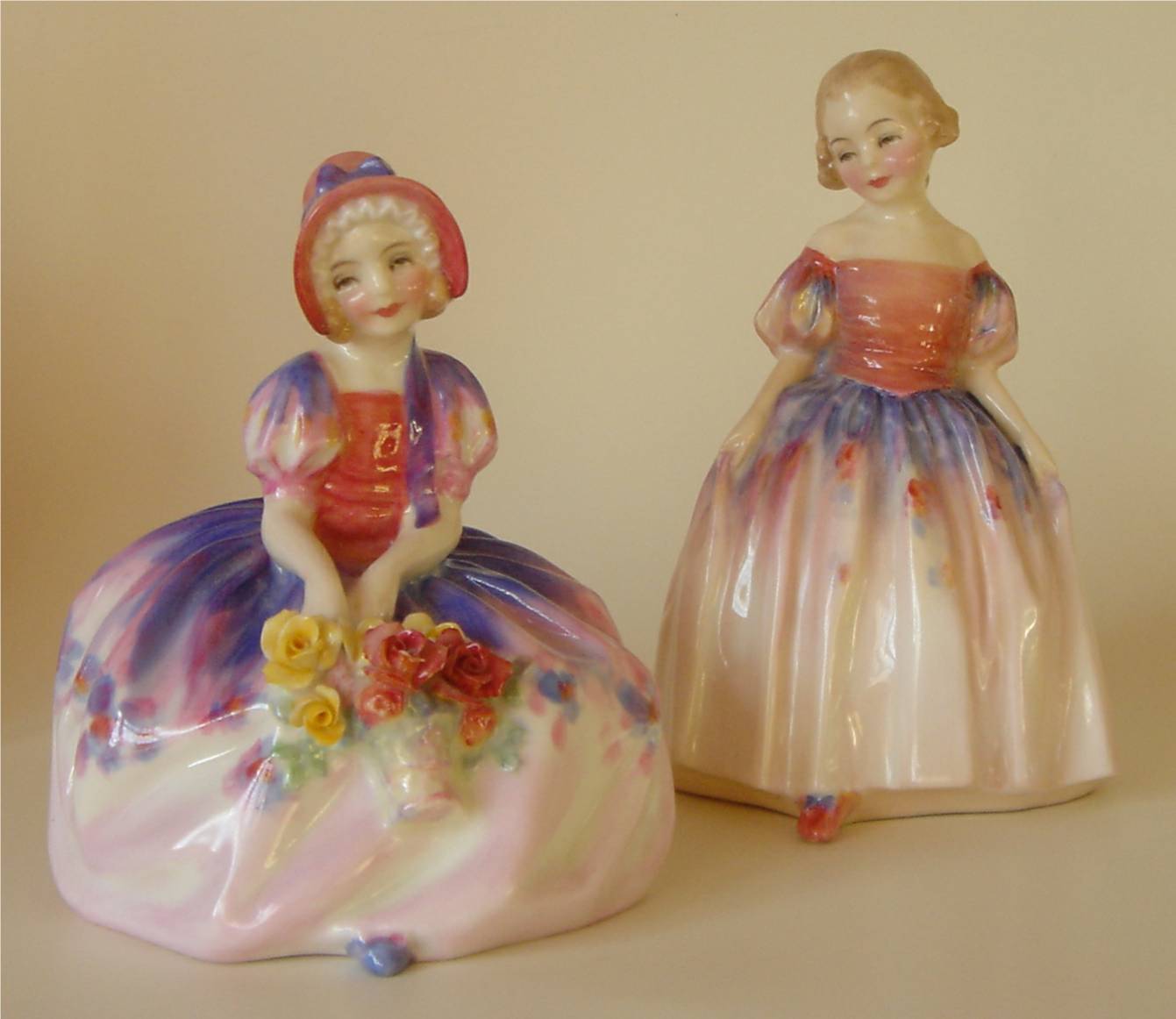
As can be seen from the illustrations here, even the ‘M’ range figures reflect this trend. Child figures too can be group together in complimentary colouring such as Monica (HN1467) and Marie (HN1635) below.

Image


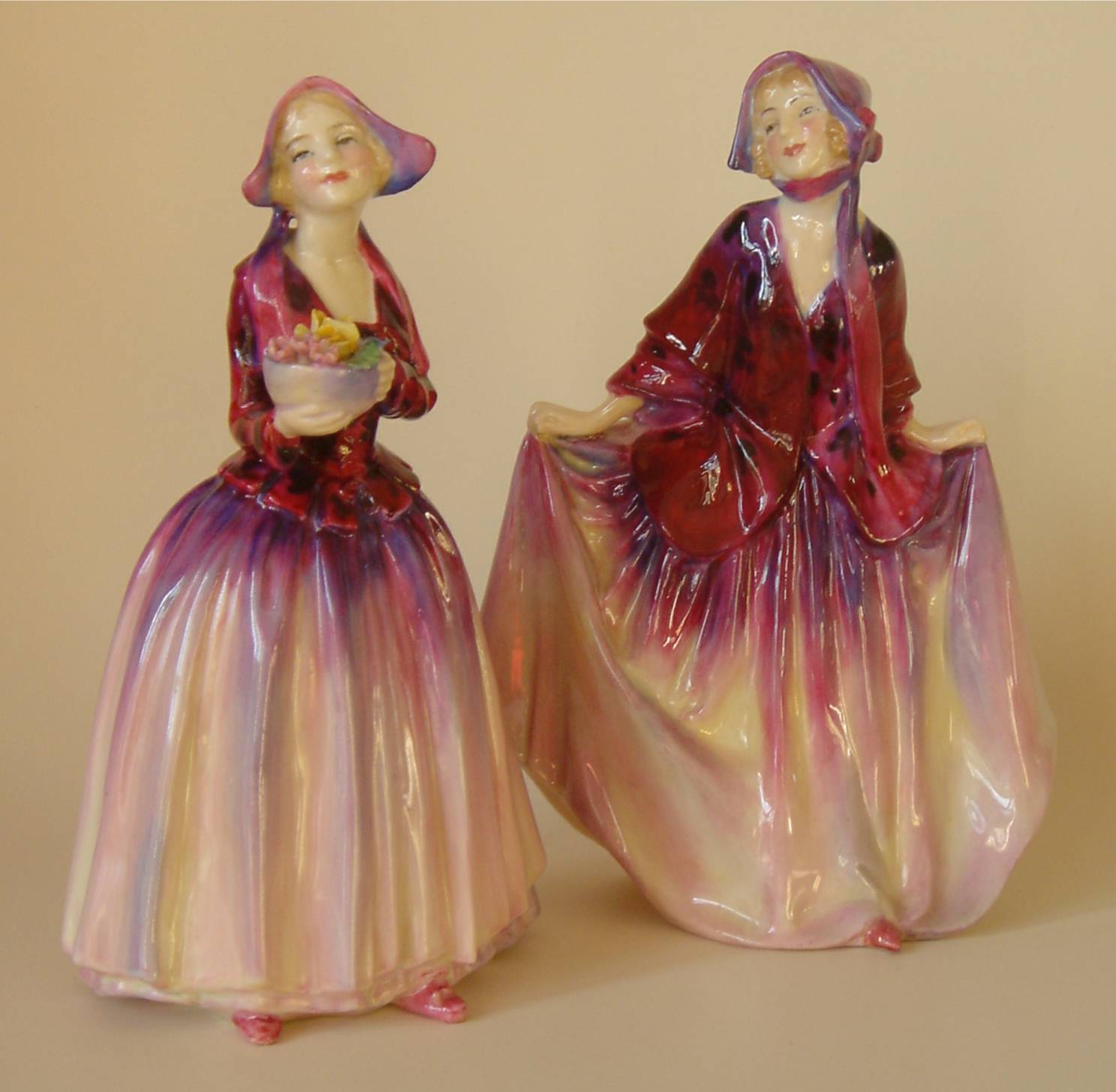
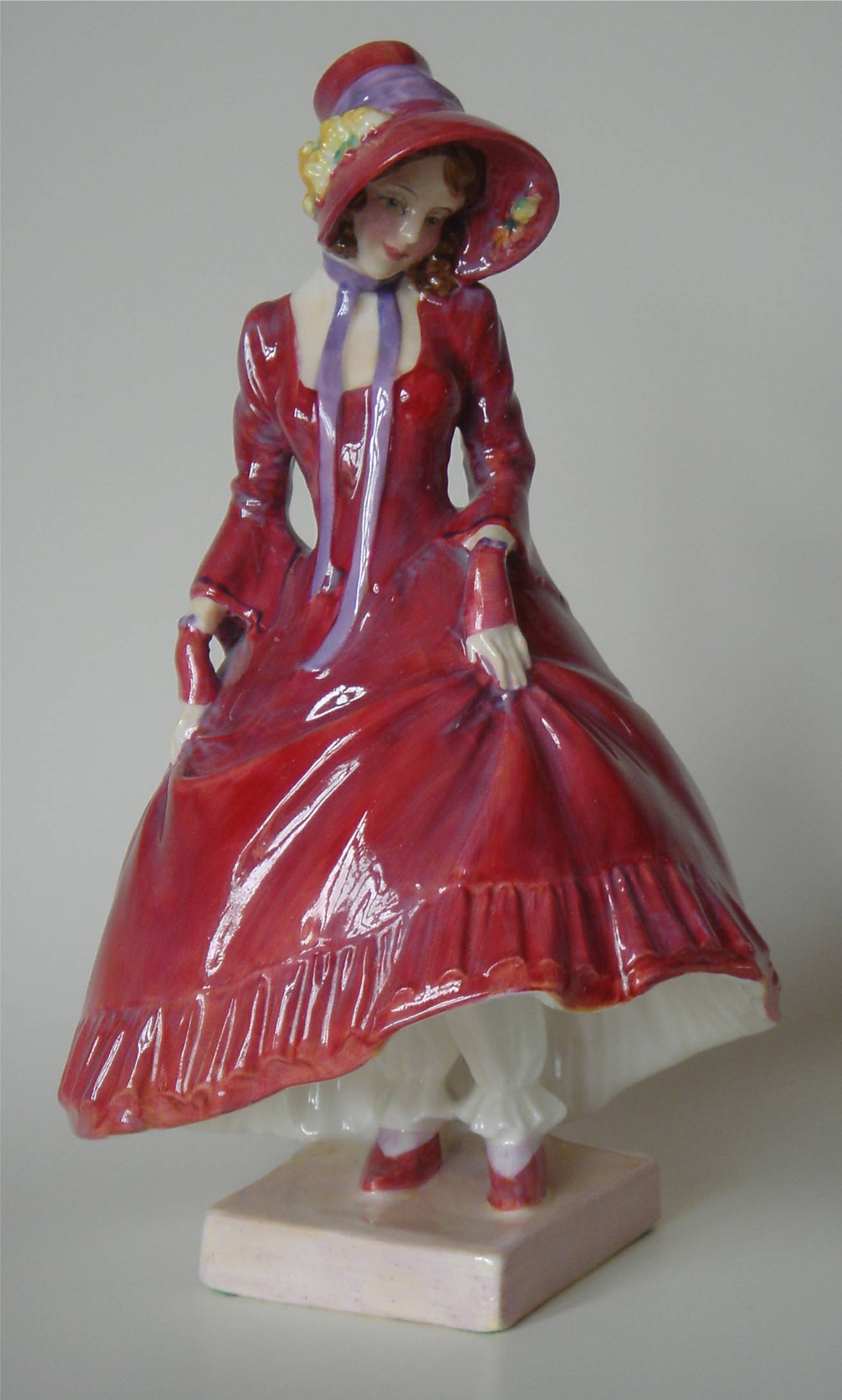
A clear favourite colourway amongst  collectors has of course always been the ‘red’ figures and this began in the 1920’s when figures such as Spanish Lady (HN1294) and then later Marguerite (HN1948) and Christmas Morn (HN1992) began to appear. A paricular favourite of mine has always been Pantalettes (HN1709) seen below.

Image

Whatever your reasons for collecting, once you have a sizable group of figures you are sure to find a theme or group that will help create your perfect display and of course that is part of the fun of collecting – how to display your collection to its best advantage.

If you have any particular groupings that you have put together please write in with a picture for us to all share!
 

When is a figure a finished product?

Figure adaptations by Christopher Evans

As all figure collectors know, during the design process prototypes followed by pilot figures are produced and these models can change in their modelling quite simplistically or quite dramatically at this early stage.

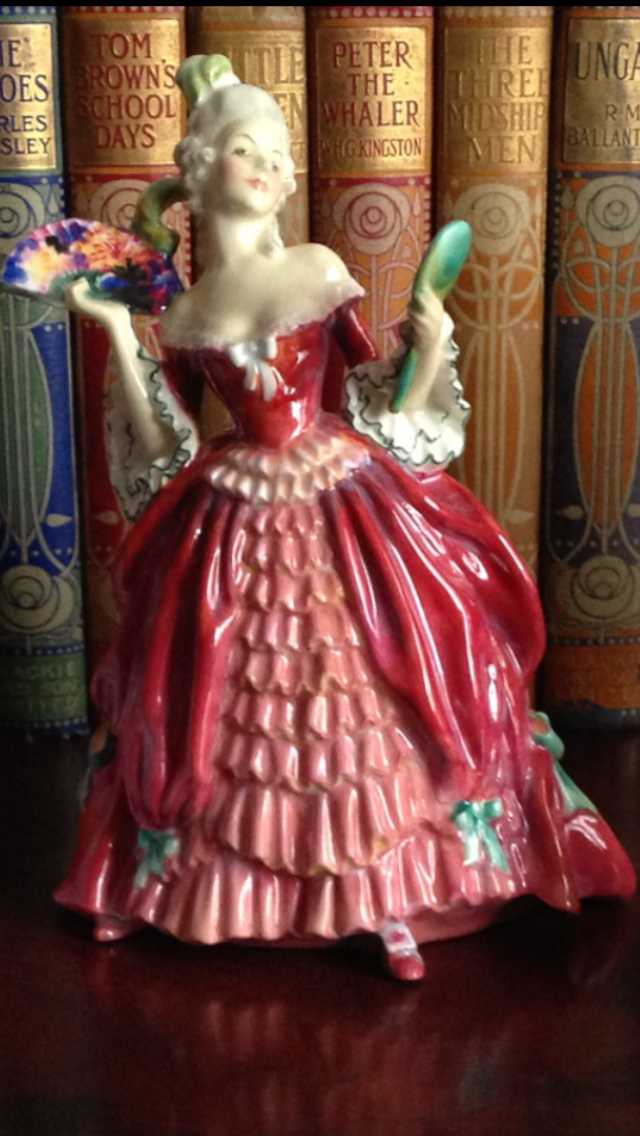
Here is a prototype I once saw and then a few months later saw a version with her holding a mask rather than the mirror you see below.

Image

However, once a figure has gone into production that does not mean that further adaptation and transformation is not possible nor can this be ruled out!

At no other time and to no other group of figures does this more aptly apply than to those of the 1920’s and 1930’s. With production dates for this period being so sketchy one can only attempt to draw conclusions as to the precise dates of withdrawal and sometimes even introduction.

Image

Sweet Maid (above) became Millicent (below)

Image

This is of particular relevance to a group of figures which are clear adaptations of existing figures. Take for example Harradine’s Sweet Maid HN1504 (1932 LH) which became Millicent HN1714 (1935 LH) or his Helen HN1509 (1932 LH) which became June HN1690 (1935 LH).

Image

The Windmills Lady (above) who became Old Lavender Seller (below)

Image

The scarcity of the former in both cases suggests that the latter may have replaced these earlier models. Then again, we have The Windmill Lady HN1400 (1930 LH) and The Old Lavender Seller HN 1492 (1932 LH). Clearly the old lady is the same in both figures with minor adaptation. Both figures were produced simultaneously, as were the Rustic Swain HN 1745 (1935 LH) and Midsummer Noon HN1899 (1939 LH). It was not just Harrading who adapted their own earlier models.

Image

The Rustic Swain (above) which became the solitary Midsummer Noon (below)

Image

However this tendancy to adapt existing figures can be traced back to even the earliest times of Doulton figure production in the early 20th Century and then the introduction of the HN figure range. Consider Noke’s reintroduction of the many Jesters he had produced earlier in Vellum and then Tittensor’s Pretty Lady HN69 (1916 HT) and The Parson’s Daughter HN 337 (1919 HT) which both have clear similarities in the modelling of their skirts.

Existing models were not only adapted but also changed size and renamed, such as Biddy HN1445 (1931 LH) and Rita HN1448 (1931 LH), or Doris Keane HN90 (1918 CJN) and Rosamund HN1497 (1932 LH).

Image

Here we have a hard paste porcelain version of Doris Keane by John Broad made at Doulton’s Lambeth factory in the early 20th Century, together with her miniature self M32 made at their Burslem factory in the 1930’s

It is worth noting a little something about the production dates given to figures and that in my experience the date of ‘by 1949’ is rarely the case, indeed ‘by 1944’ would be much more accurate, with the exception of a handful of the most popular figures of the time such as Paisley Shawl HN1392, Autumn Breezes HN1934, Top o’ the Hill HN1849, The Orange Lady HN 1759 and Biddy Penny Farthing HN1843, whose production continued into 1944 and was resumed soon after the end of WWII principally , if not solely for the export market; more precisely for the USA and Canada.