Category Archives: Figure Articles

Harradine’s first models for the HN collection.

No one today can doubt that Leslie Harradine perfected what needed to be perfected in terms of creating commercially popular figures for Royal Doulton.  Until 1920 few figures hitherto introduced can be said to have had the popularity we associate with Doulton figures to this day. Of course there was the ever popular HN1 Darling – the first figure in the collection and the first of many child studies, but there were no what non-Doulton specialists might term ‘pretty ladies’. The female studies introduced before 1920 tended to be sculptural and their differing sizes hindered their grouping to display them as a collection. In short a house style needed to be developed. 

Harradine’s first introduction for the HN collection was The Princess – a dramatically stylish creation that set the tone for his first models for Charles Noke. Note the clear lines and unfussy detail – this is what set him and his models apart. 
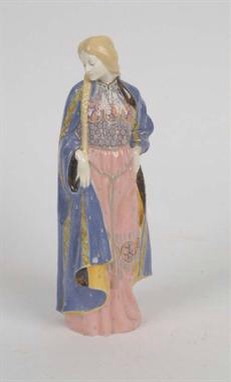


A colourway of The Princess.

A small group of other non typical Doulton figures were introduced in the following year, 1921 illustrating Harradine’s ability to interpret popular tastes and trends. 
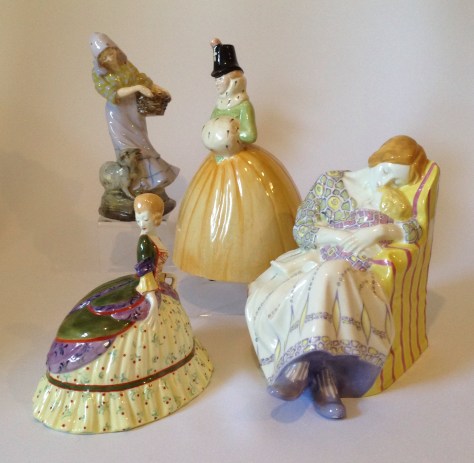


A group of early Harradine models, Fruit Gathering, Puff & Powder, Betty and Contentment.

Size was the most noticeable difference with Harradine’s figures as they diminished in size to what we even today are used to in terms of figure height, and this more standard size allowed collectors to create displays. 
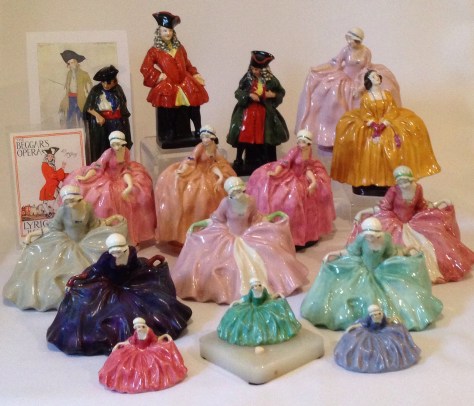


Harradine’s first series of figures from the Beggar’s Opera all illustrate this point and thus a house style was developed –  something that would prove most successful among collectors whose appetite for figures is still going strong over 100 years later.

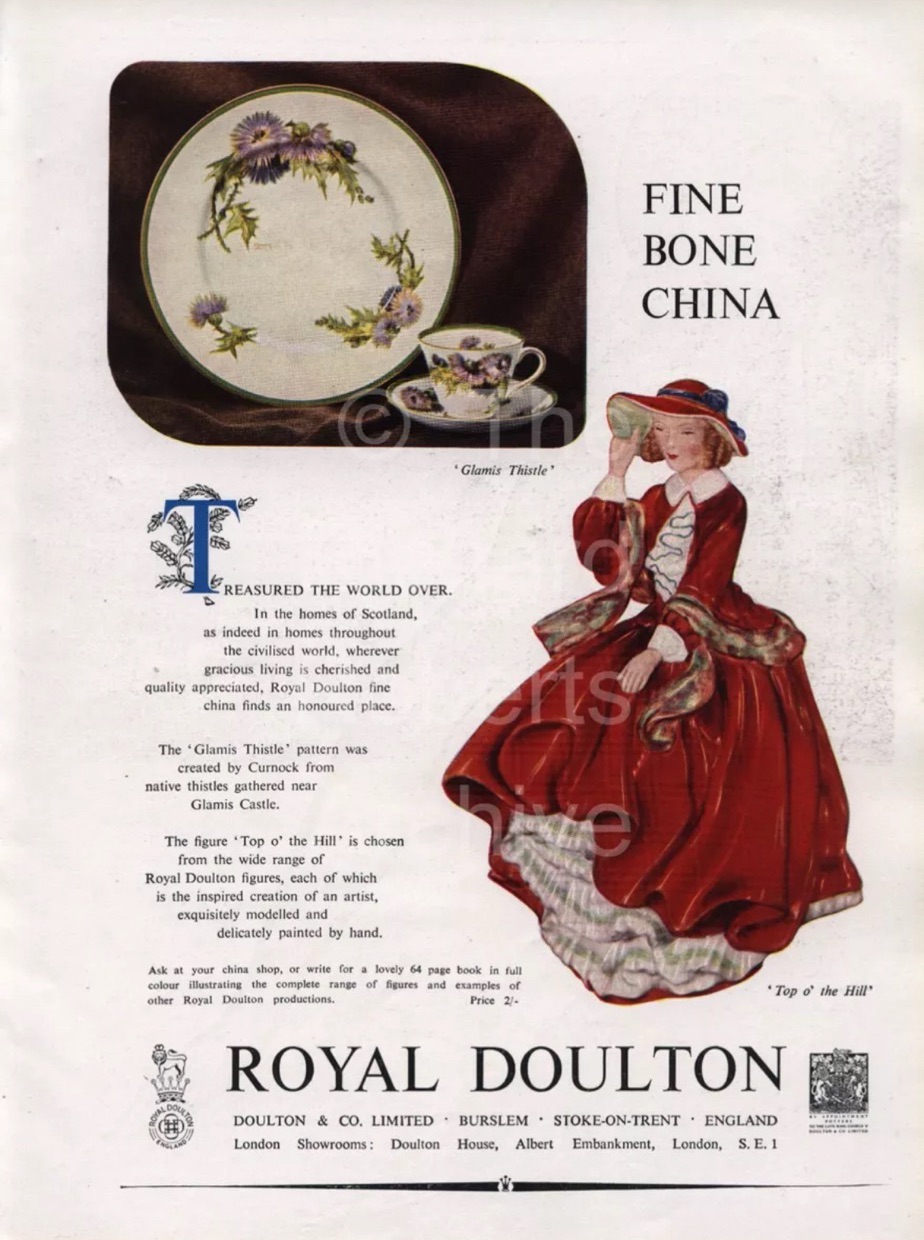
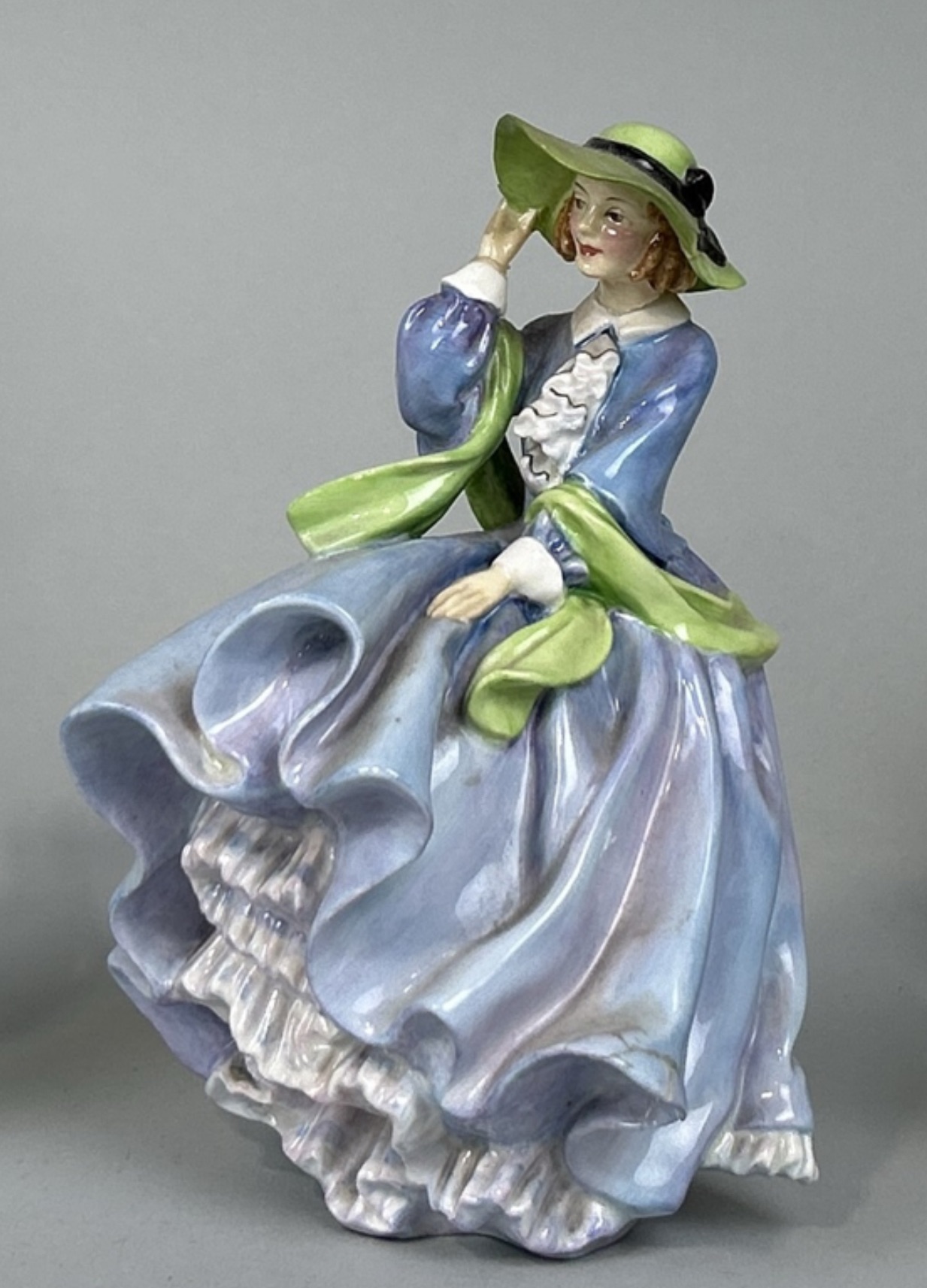
A look back at Royal Doulton’s iconic Top o’ the hill!

An unusually detailed colourway from the 1930s. Note the decoration to the skirt.

Without doubt Top o’ the hill remains Doulton’s most instantly recognisable figure. Since her introduction in 1937, Leslie Harradine’s ever popular figure has been used as a demonstration piece at exhibitions and events for decades.

Doulton’s iconic figure was based on a picture by Molly Benatar (illustrated) and the sole rights for reproduction in china were bought exclusively by Doulton from the publisher Raphael Tuck. Not a bad investment on Doulton’s part given her popularity and thus her lengthy production.

IMG_1815

Interestingly, from a collector’s point of view are the subtle changes to her over the years. The figures illustrated above all date to 1937 and 1938 and are the original 3 colourways. Changes to her have included a deeper base, less detailed, delicate frills to her underskirt and a thicker brim to her hat – all of which were invariably made in response to collectors’ feedback as these early versions are all somewhat fragile.

A more recent colourway discovery dated 1938.

Another interesting note is the difference that occured in painting during the war years to the red version. HN1834 originally had blue streaks as many red figures from this time did, but when Doulton began producing figures again after the war, she became a solid red. Another change occurred in the 1950’s when she was modelled with an elongated face, no doubt a change to then fashions. This change was later reversed and I doubt people even realised there had been a change!

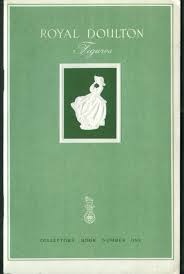
Above is the cover of the 1949 catalogue when the sequence was begun again post WWII.

In more recent times there have been other colourways of this iconic figure introduced, including a yellow and green one HN2127 for Australia’s Bicentenary in 1988 and a deep blue one HN3735 in 1997. A miniature was also made in a few colourways including the popular red in the late 1980’s and early 1990’s. Most recently a petite size has also been introduced.

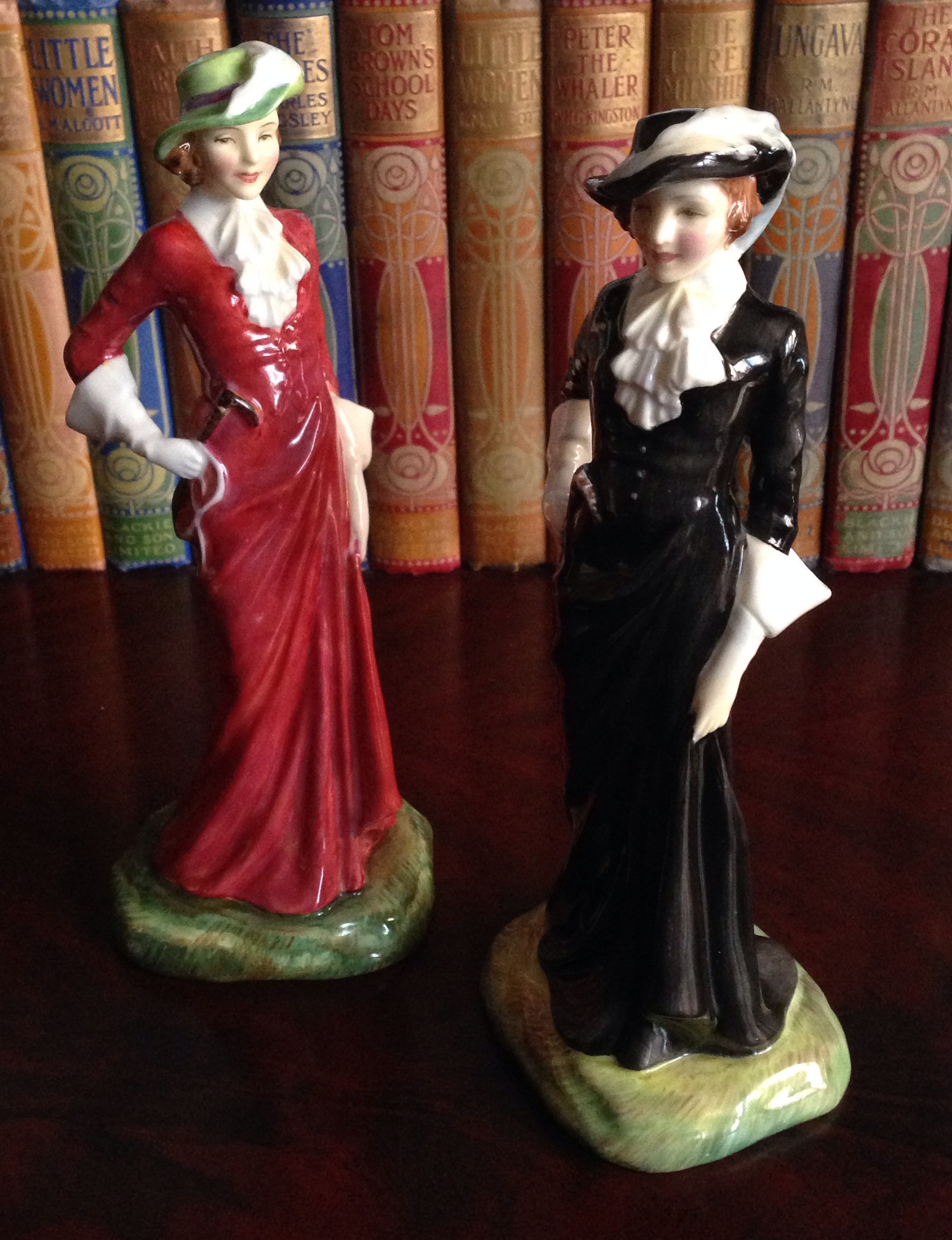
An early colour trial for Harradine’s ‘Karen’.

Always on the look out for the unusual I recently spotted this colour trial for Karen HN1994 that was eventually produced in a red colourway. It is the second time I’ve seen her in black suggesting that this black and white version was a serious consideration and must have done the rounds both sides of the Atlantic to garner her popularity prior to production.

IMG_1459
Like many models introduced just after the war, Doulton held any war time introductions back until the war was over in 1945. The model for Karen (no.1237) dates to ca.1943, whereas the figure produced as HN1994 was introduced in 1947 and withdrawn in 1955.
Another nice feature is the crispness of the modelling in the black and white version, that you can hopefully make out from the picture.

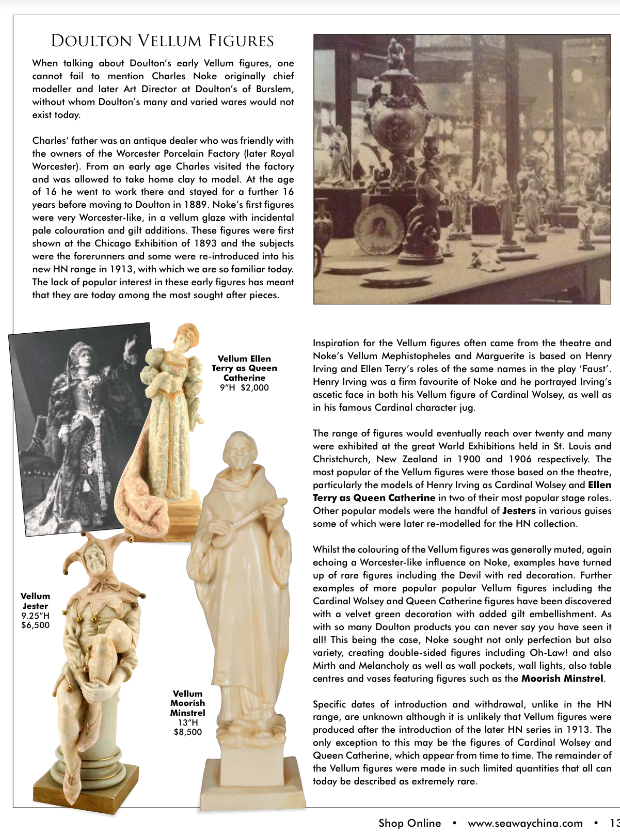
A Treat for all you Doulton Vellum figure collectors!

A while back I wrote this piece for Seaway China and there was a great response to these very rare Vellum figures.

IMG_1488
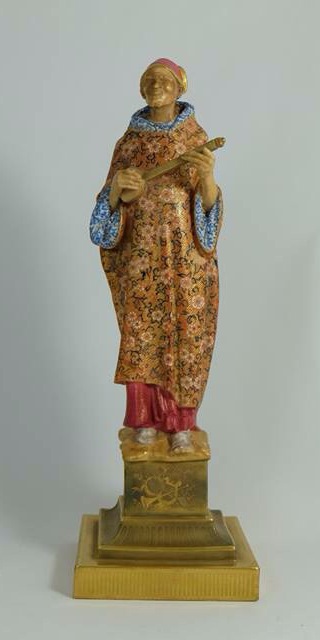
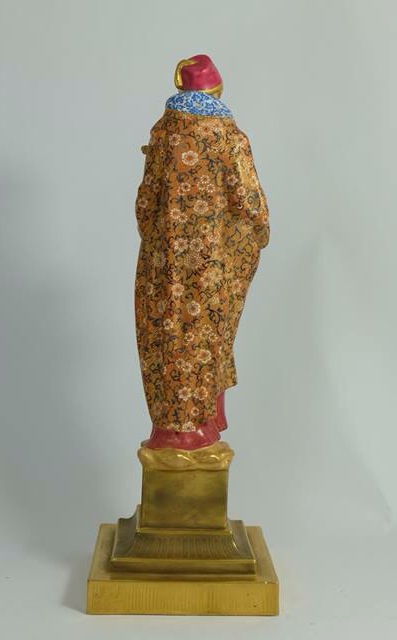
I’ve just been given a sneak peek at this highly decorated version of the Moorish Minstrel that is coming up for auction in April with the Potteries Special Auctions. I don’t recall seeing such a highly decorated example and I’m sure that it will create quite a buzz when it comes up!

IMG_1489

IMG_1490

Collecting Doulton’s ‘powder and patch’ ladies!

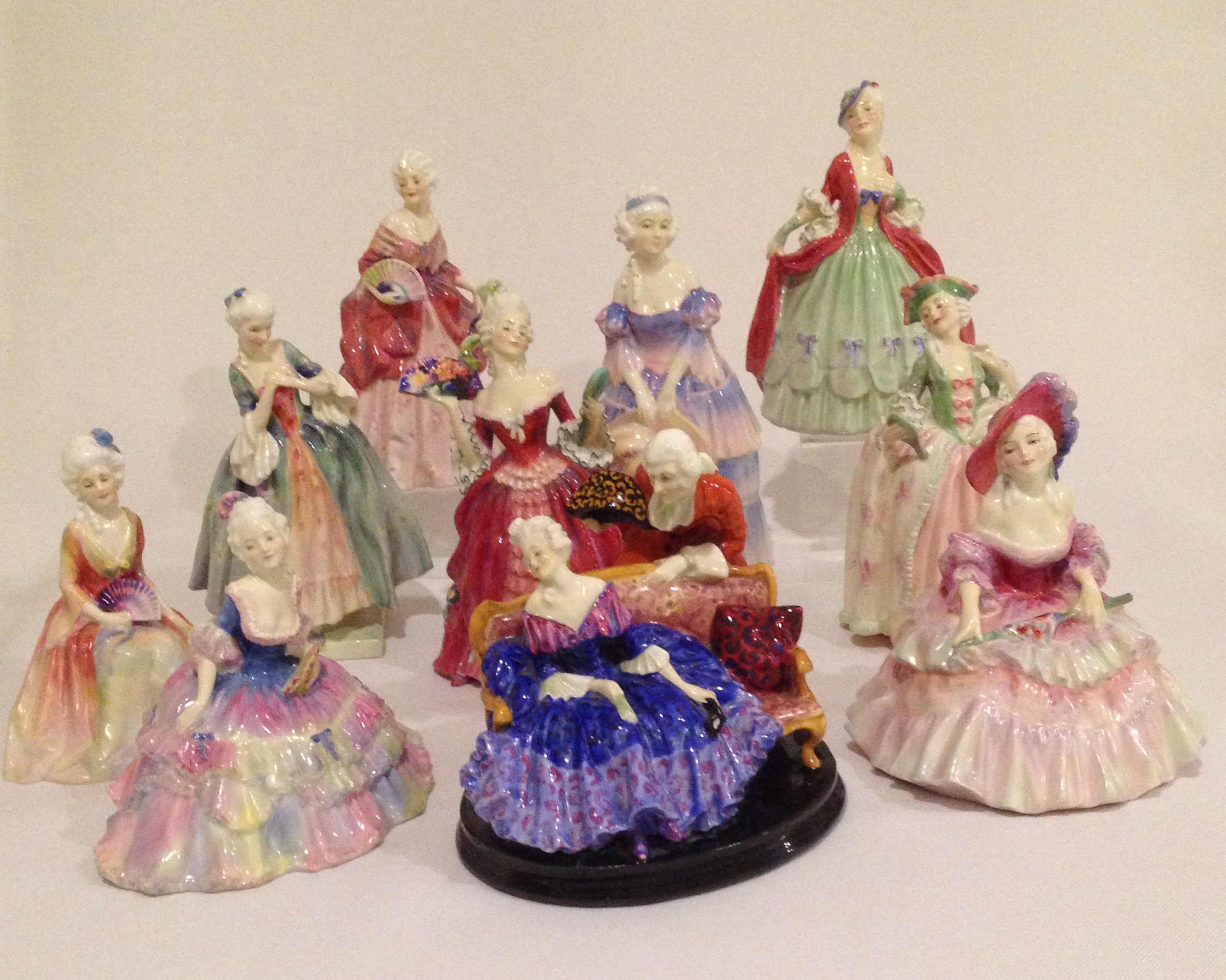
Another collecting them for Doulton figures is the band of figures in elaborate, powdered wigs.

2015/01/img_1465.jpg
With Doulton’s re-newed association with the modeller Leslie Harradine (who was originally apprenticed to Doulton in Lambeth) from 1920, came the commercial success Doulton had sought for the previous decade. Harradine’s versatile style meant that every possible type of china figure was created – from miniature Dickens characters, to deco beauties, to the archetypal Victorian lady, to child studies – to name but a few themes.

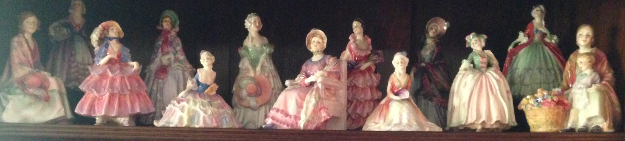
However, during the roaring 1920’s with its synonymous flapper girls there was also a vogue for fancy dress balls, which explains why there are so many of these romantic figures wearing 17th and 18th Century costumes in the HN collection, during the 1920’s and 30’s.
These charming figures sit equally well with their contemporaries as they do with other Doulton figures from the deco period!

2015/01/img_1466.png

Perhaps you display your figures according to themes? If so, join our Facebook page ‘Doulton Collectors Club’ to share them with other collectors around the world!

The International Ceramics and Glass Fair and 200 Years of Royal Doulton – an event not to be missed!

Don’t forget the world’s major Doulton extravaganza is just around the corner!

To reserve your tickets visit icgfair.com

And follow this link-
https://www.facebook.com/events/489880474484013/

2015/01/img_1355.jpg

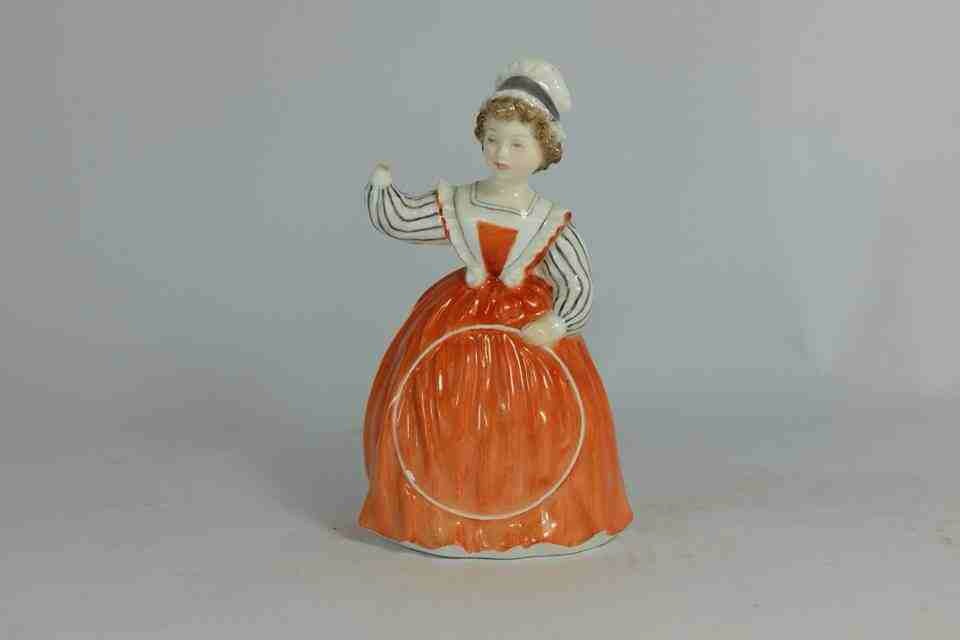
An early prototype by Peggy Davies!

2015/01/img_6219.jpg

I am always amazed at how these prototypes turn up…you don’t see any for an eternity and then two or three turn up!
This charming young girl is ‘hoop rolling’ and is decorated much in the same palette as Noelle HN2179 also by Peggy. She has an HN number already written on her base suggesting that her introduction was imminent but obviously Doulton decided against her introduction at the last minute. She dates to ca.1958 and this HN number was not used until 1979 for Sunday Best. This young girl will be coming up at the Potteries Antique Auctions.

Collecting Doulton figures – the best things come in 3’s!

2015/01/img_1257.jpg
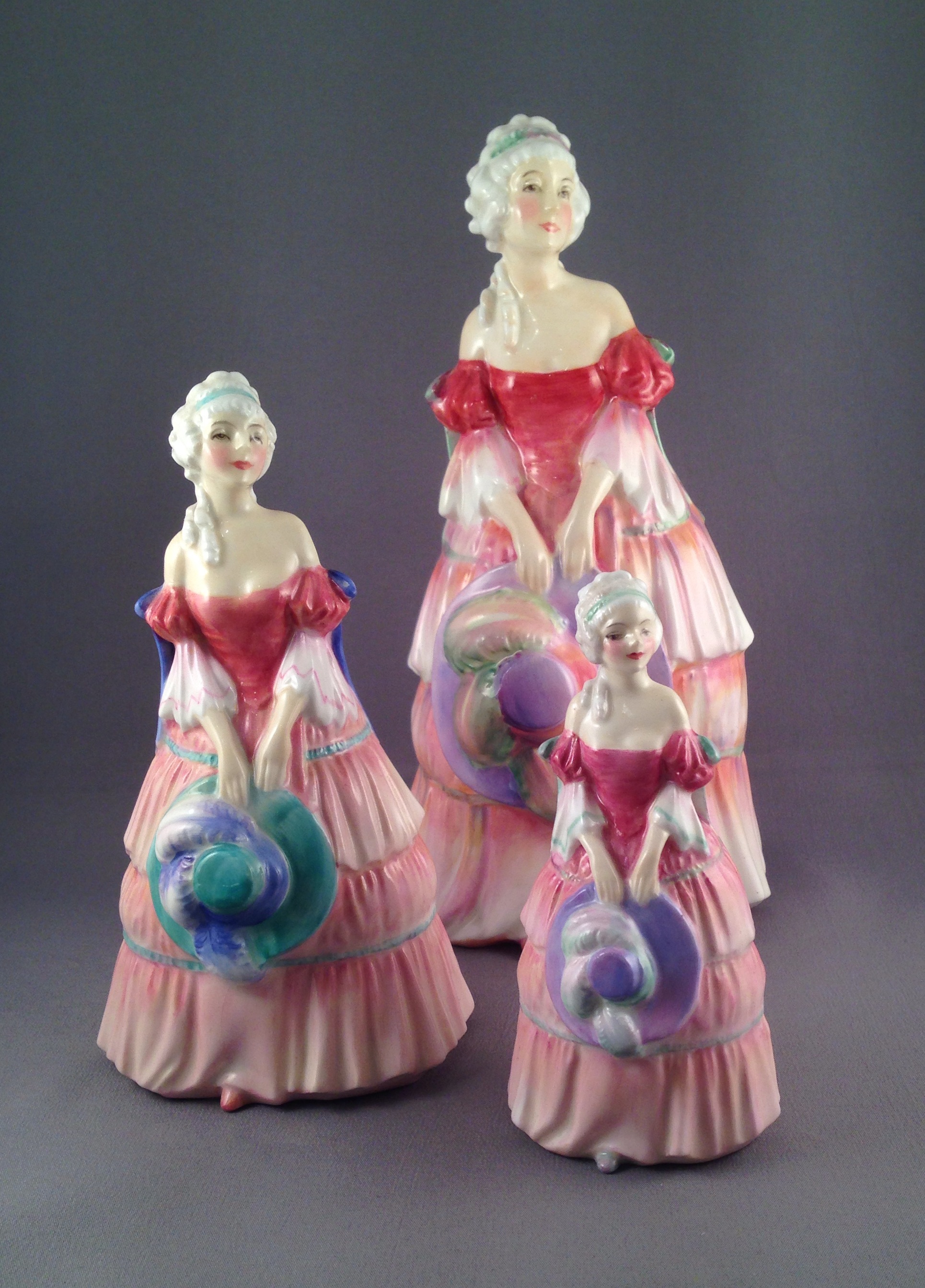
Harradine’s Veronica in all 3 sizes and identical colourways as HN1517, HN1915 and M64.

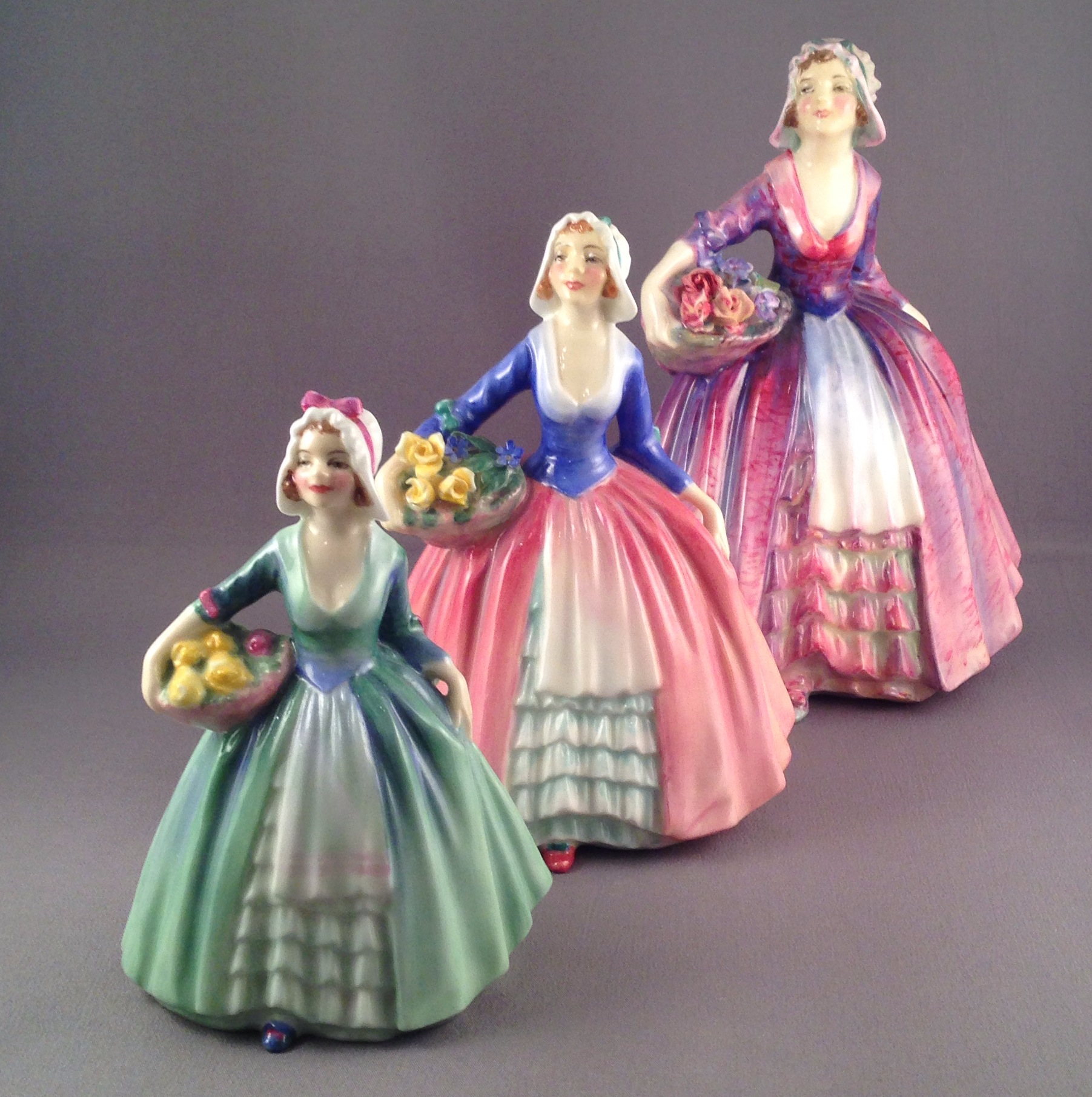
With Leslie Harradine’s models for the HN Collection, Doulton certainly hit the jackpot! His ‘large’ size figures proved so popular that many were re-modelled for the M Collection when it was introduced in 1932, with further additions to it based on larger figures throughout the 1930’s. Then in the late 1930’s mid size versions of three popular figures were introduced, namely Veronica, the Paisley Shawl and Janet.

2015/01/img_1258.jpg
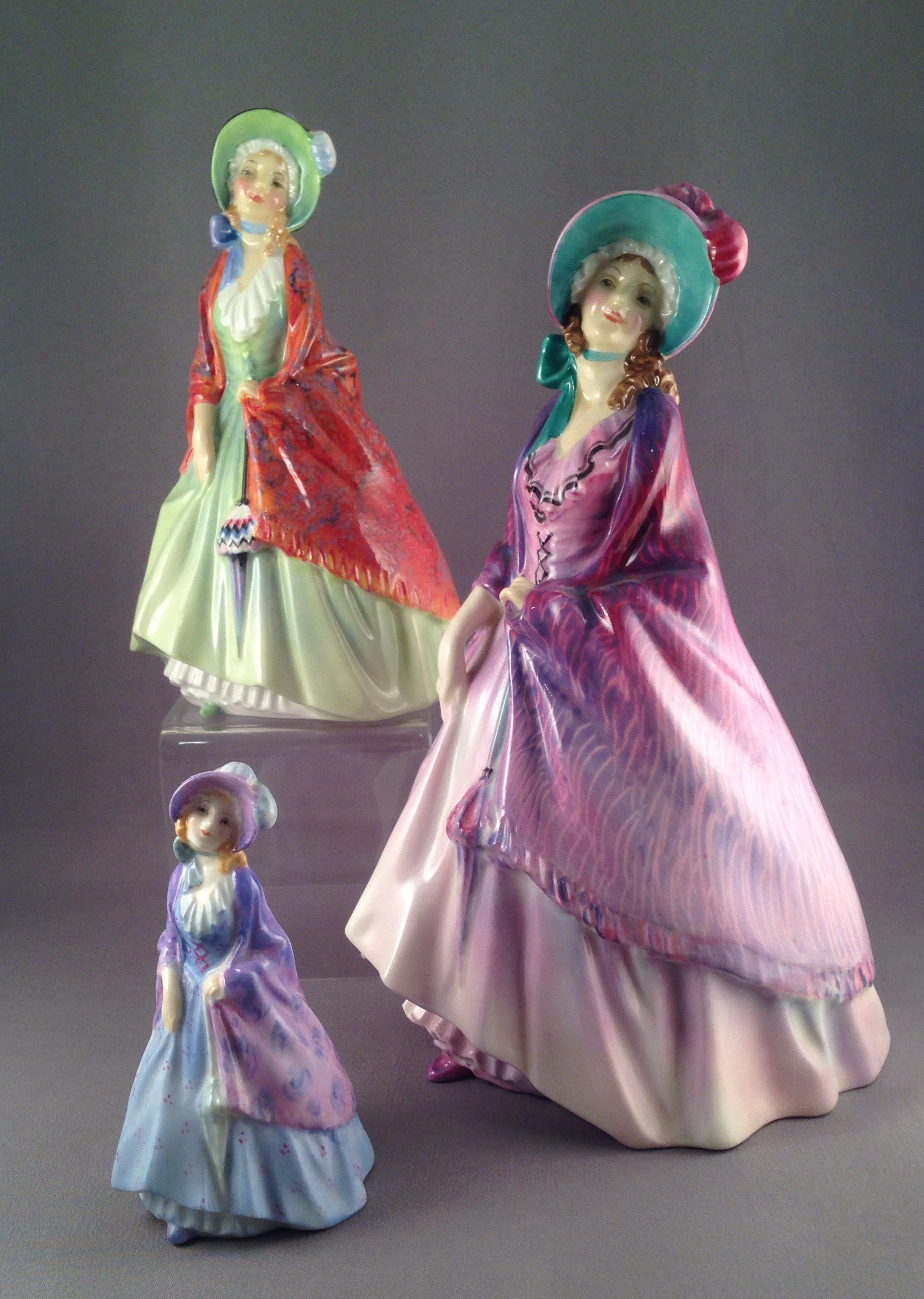
The Paisley Shawl in 3 available sizes HN1707, HN1914 and M3.

Unlike Veronica above, the other two Harradine figures modelled in 3 sizes were not produced in complimentary colourways. The most that can be said is that both the Paisley Shawl HN1392 and HN1988, together with both Janet’s HN1537 and HN1964 are identical in both sizes, but not in the third.

2015/01/img_1259.jpg
Janet in 3 sizes and all different colourways HN1538, HN1916 and M69.

All three figures were produced in many colourways, yet only the three Veronicas can be said to ‘match’. Whether one displays these figures together as a group together or separately, each is regarded as a classic Harradine model today!

Harradine’s delightful Diana!

This the first version of Diana is typical of a handful of pre-war figures that were issued again after the war. The special point about Diana is that she was issued in a totally different colourway, unlike others such as Peggy HN1941/2038 or Jean.

2015/01/img_1210.jpg
Three versions of Diana HN1716, 1717 and 1986.

This model was in production from 1935 to 1975, proving as if it were needed, the popular appeal of Harradine’s figures. The two earlier versions were withdrawn from production by 1944 and the last version HN1986 was introduced with the updated range of figures once production of Doulton’s famous figures re-commenced in 1946 and remained in production until 1975.

2015/01/img_1211.jpg

As you can see from the pictures above the only real change between the earlier and later versions, is the position of Diana’s feet, giving her a totally different direction to face!

The making of Lady Charmian (from 1947).

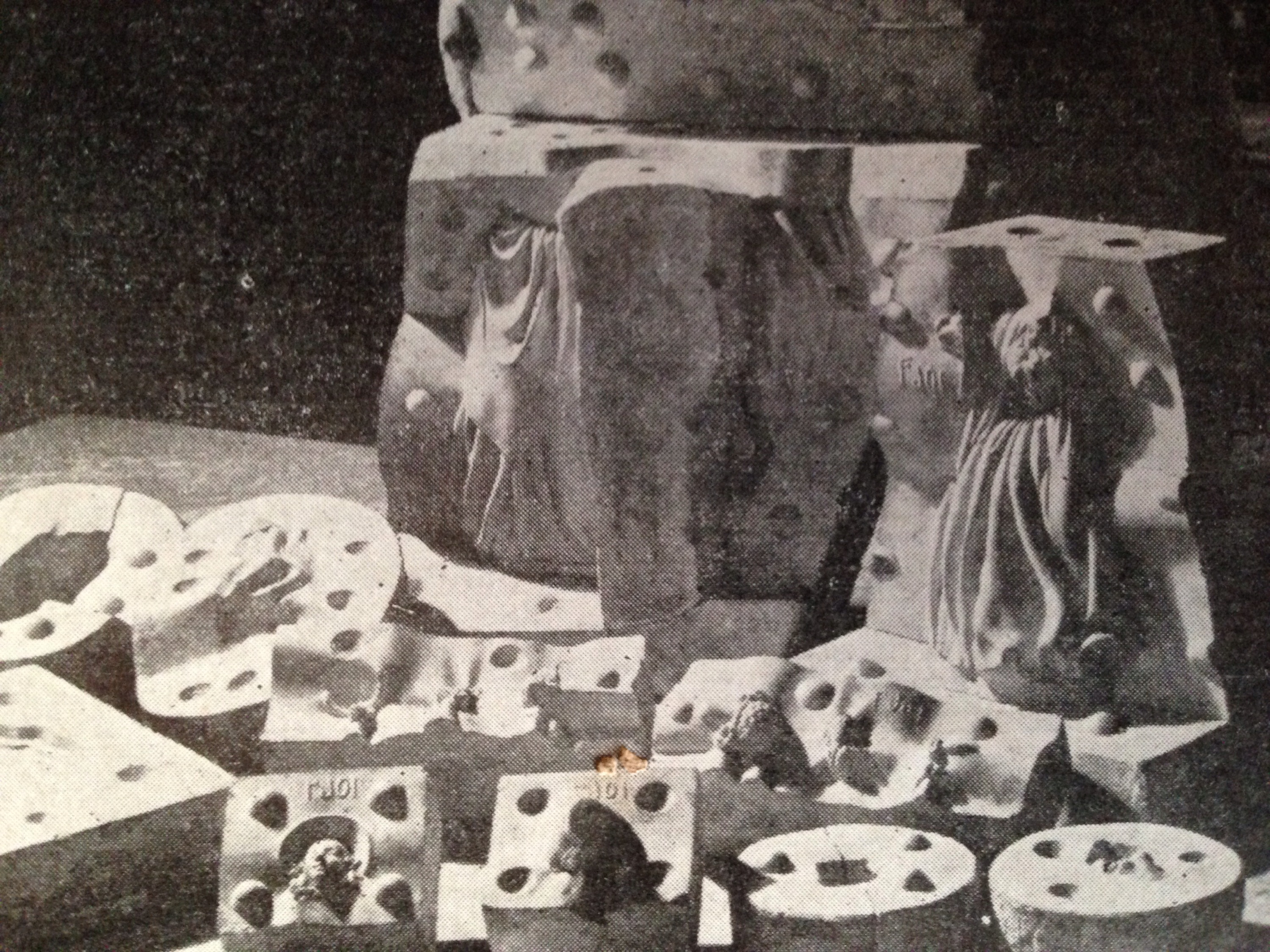
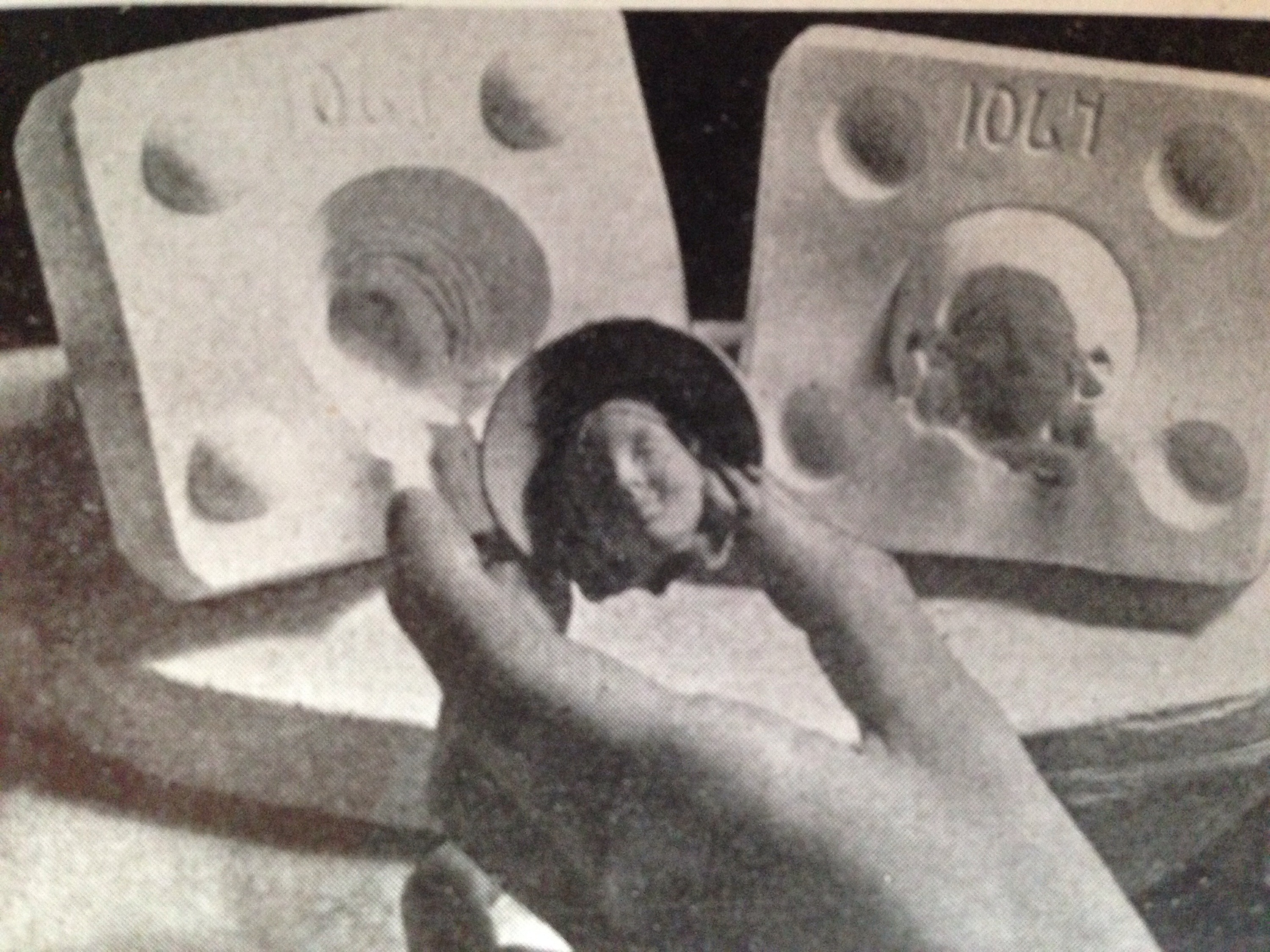
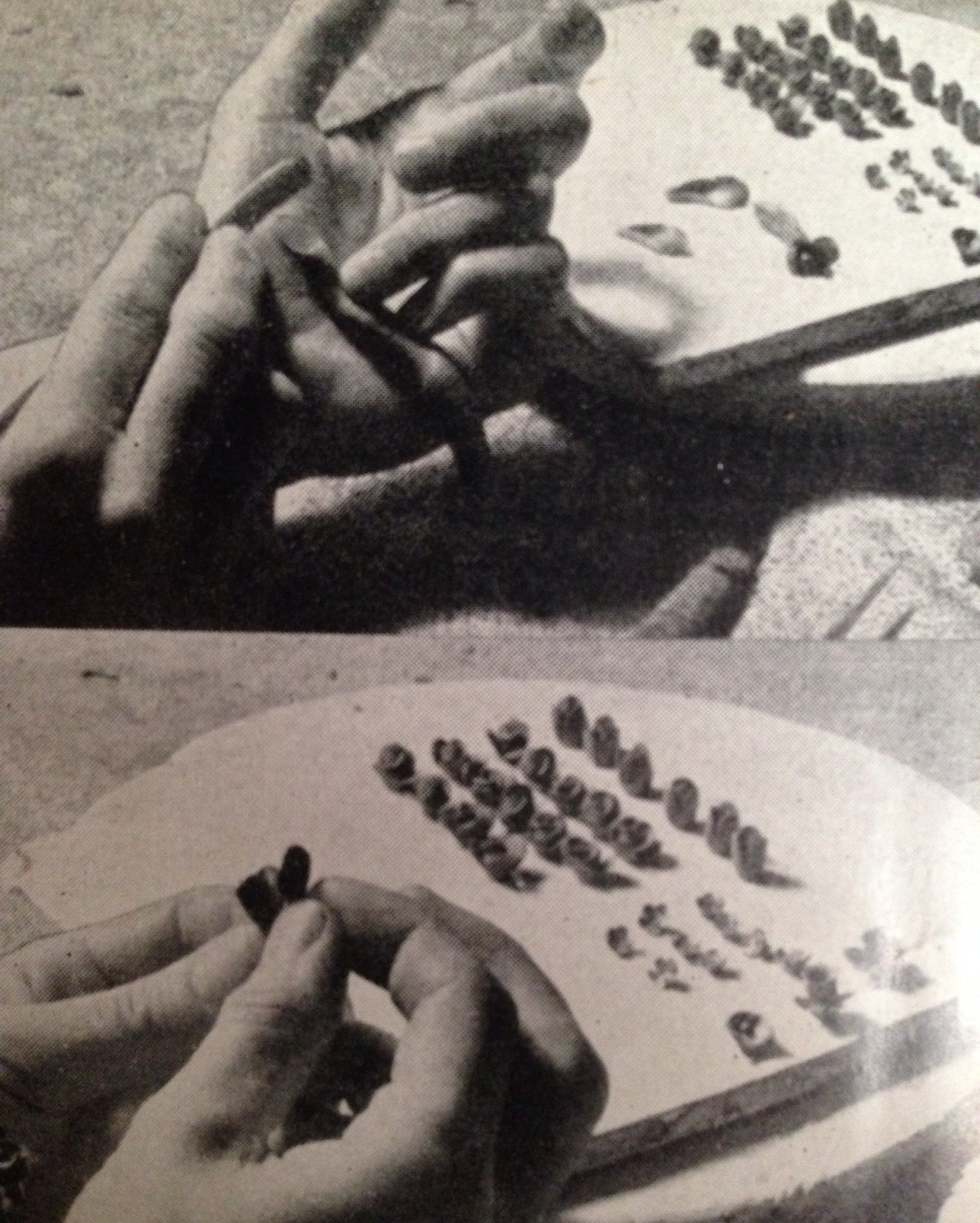
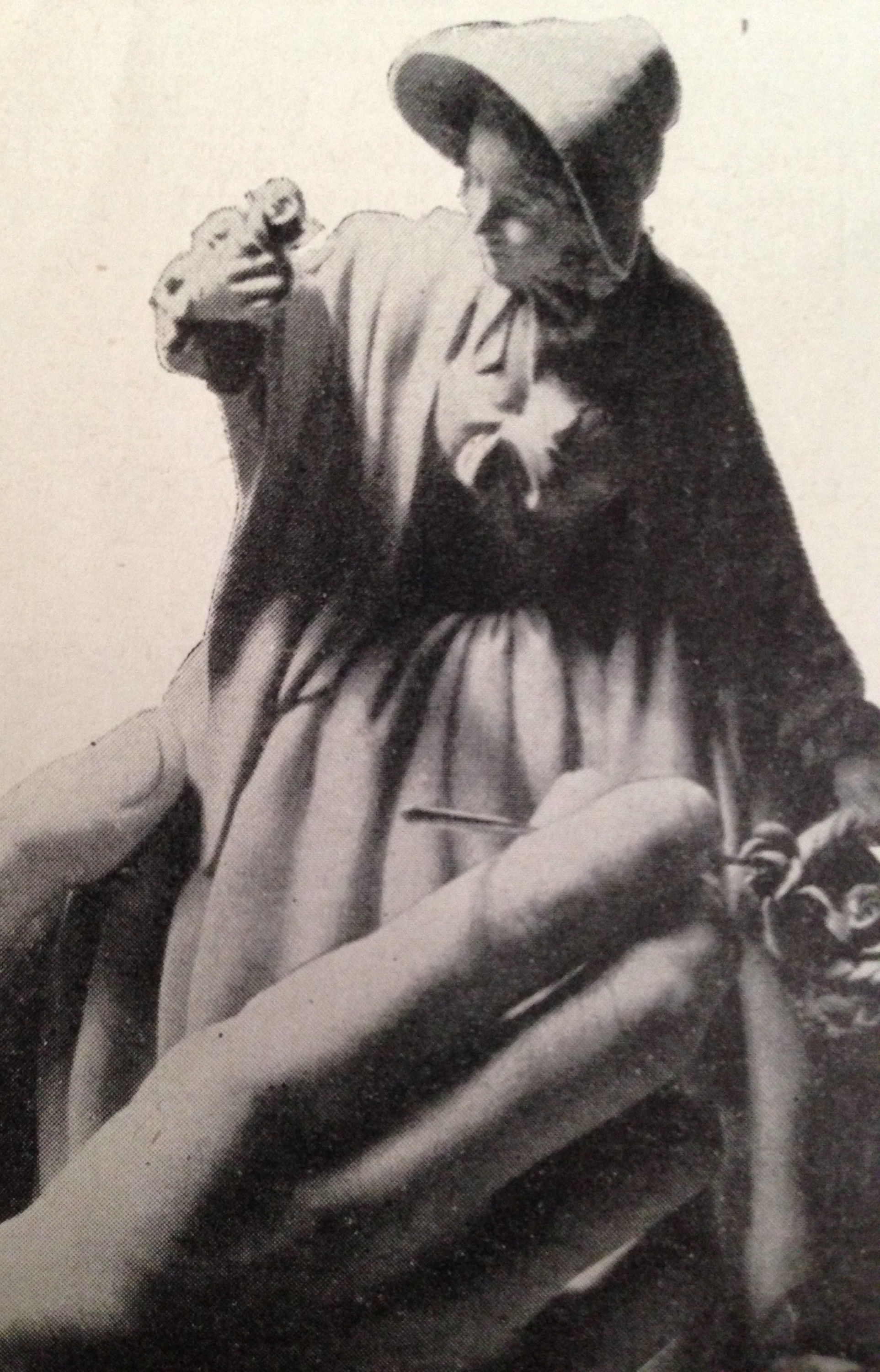
Here are some publicity shots from the late 1940’s explaining the production process for this popular lady.
1. Pouring the liquid clay into the moulds to form the cast models.

2015/01/img_1163.jpg

2. Picture of the moulds for her component parts.

2015/01/img_1164-0.jpg

3. Close up of a moulded face and head.

2015/01/img_1165.jpg

4. Once the figure is assembled any additions are added; in this case hand modelled flowers.

2015/01/img_1167.jpg

2015/01/img_1168.jpg

5. At this point the figure is allowed to dry, then it is fired turning it into biscuit china. The size of the figure reduces dramatically at this stage. The figure is then dipped by hand into a specially prepared glaze.

6. The figure is then placed in a fire-proof saggar to be fired.

2015/01/img_1170.jpg

7. From this stage the figure is decorated by hand.

2015/01/img_1171.jpg

We are no doubt all familiar with the finished product as she has always been popular with collectors.

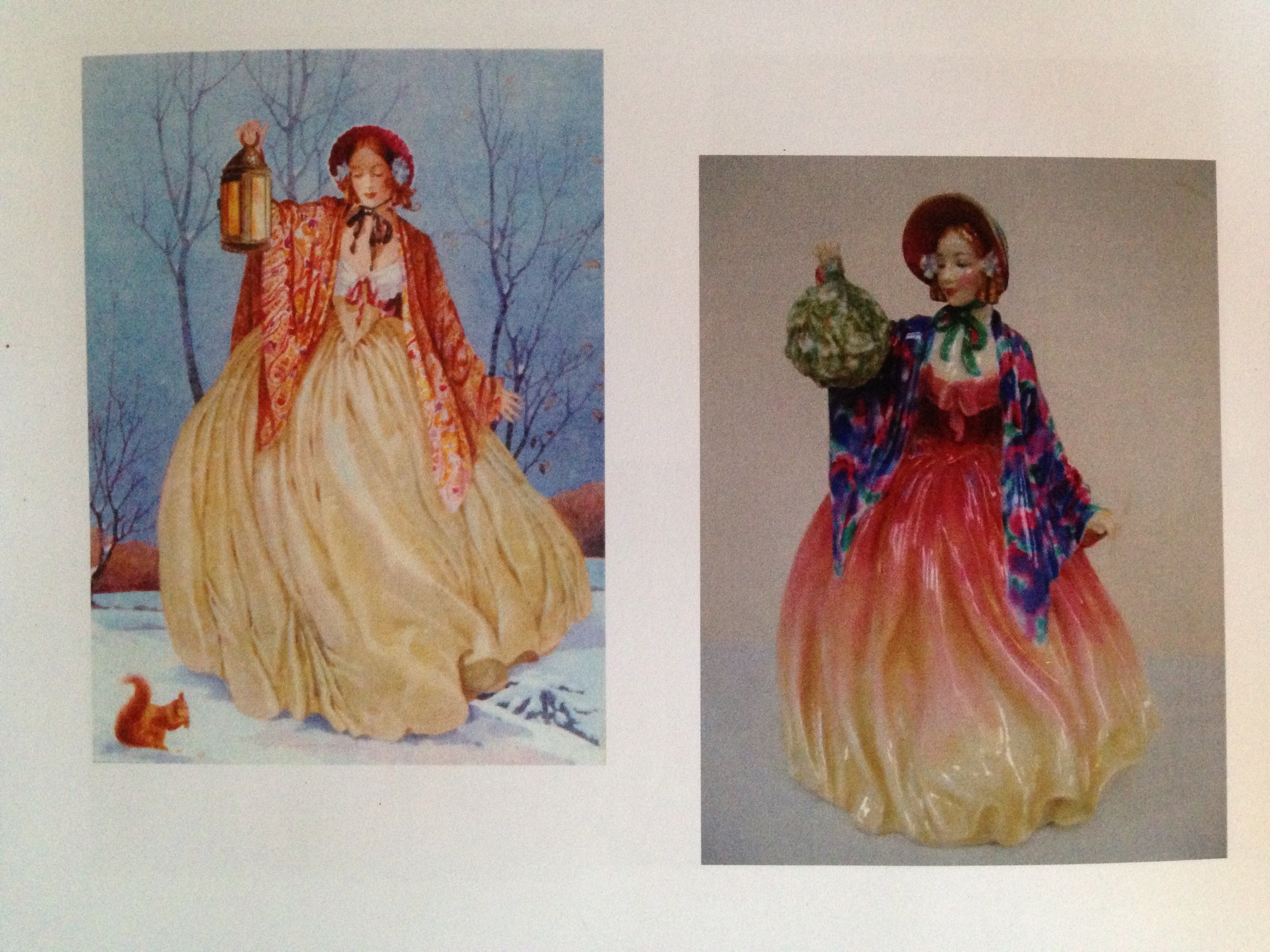
Interestingly Harradine based his model on a painting by Stanislaus Longley and I have seen an early version of the figure without the basket and instead of holding a rose she is holding a ball of mistletoe.

2015/01/img_1176.jpg