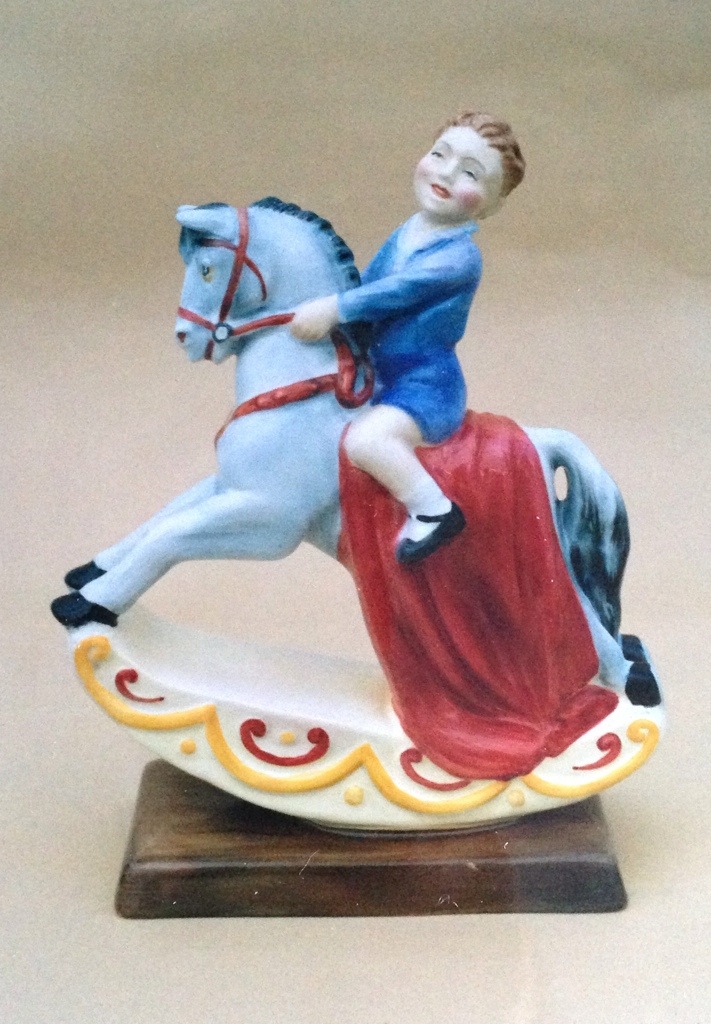
The Rocking Horse HN2072.
This particular figure I am sure you will agree is charming and belongs to a small group of rare Harradine figures produced for a very short period post WWII. The only reason I can see for this figure’s short production (1951-3) is that its production was too costly at a time of rationalisation within the Burslem factory.
The inspiration for this figure is undoubtedly the film ‘The Rocking Horse Winner’ from 1949, where a young boy discovers he can predict race winners by rocking his rocking horse!
Category Archives: Figure inspiration
A look back at Harradine’s Lady Clare.
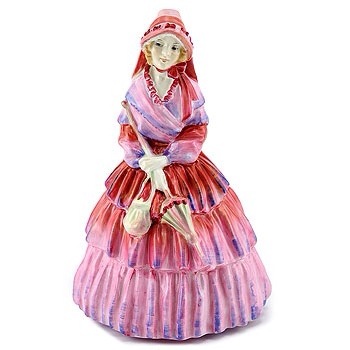
The official Lady Clare HN1465.
This unusual figure had a relatively short production run from 1931-37 and examples rarely turn up. She takes her inspiration from this Jennie Harbour picture titled ‘My Ladye’ from her ‘Victorian’ series for Raphael Tuck the card manufacturers. As you can see the original Harradine model has a base with a foot protruding from under her skirt, just like the original picture. This makes her 1.5cms taller than the production model.
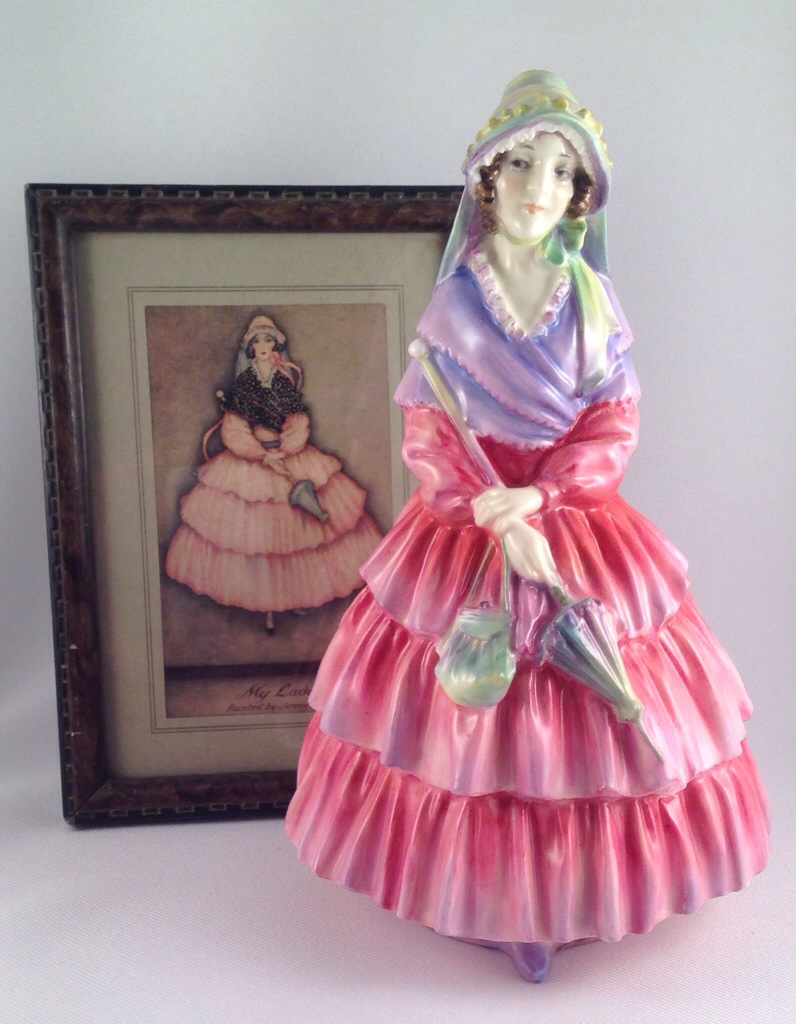
A prototype of Lady Clare pictured with her inspiration.
As well as HN1465 there is another colourway of Lady Clare that has emerged and there appear to be a handful of examples of this colour scheme in collections around the world.
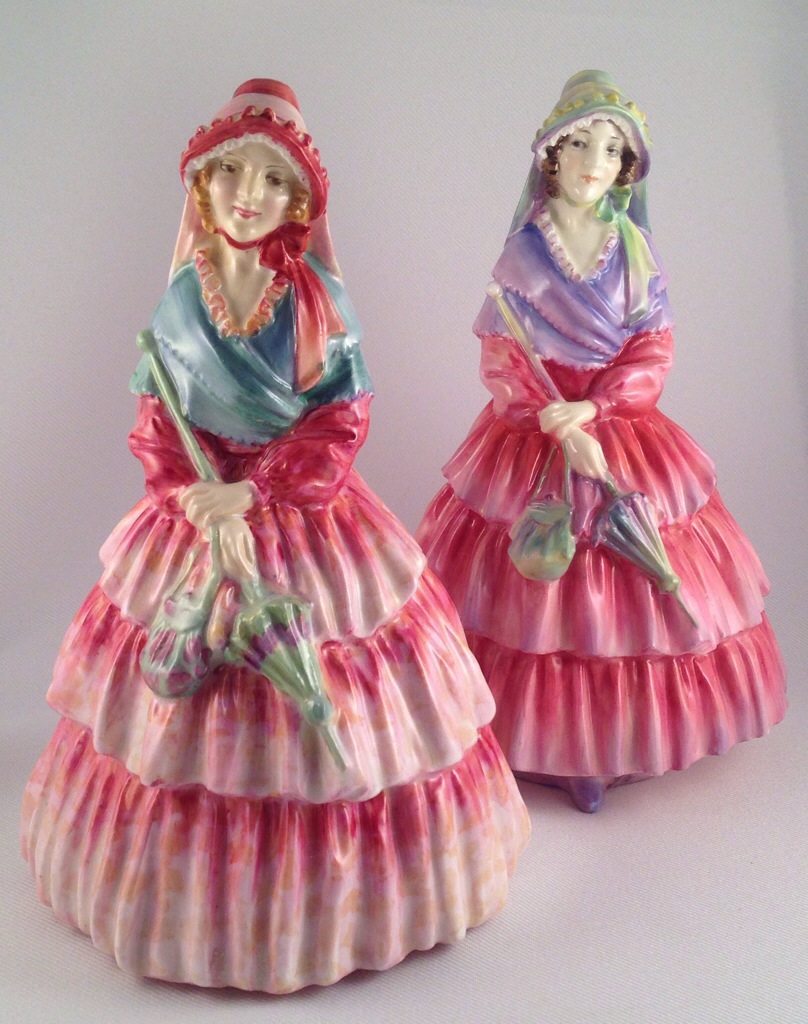
Two versions of Lady Clare; a colourway and a prototype.
Perhaps you also have variations of early figures? If do why not share with our ‘Doulton Collectors Club’ page on Facebook?
An A-Z of Collection Royal Doulton – the Beggar’s Opera series.
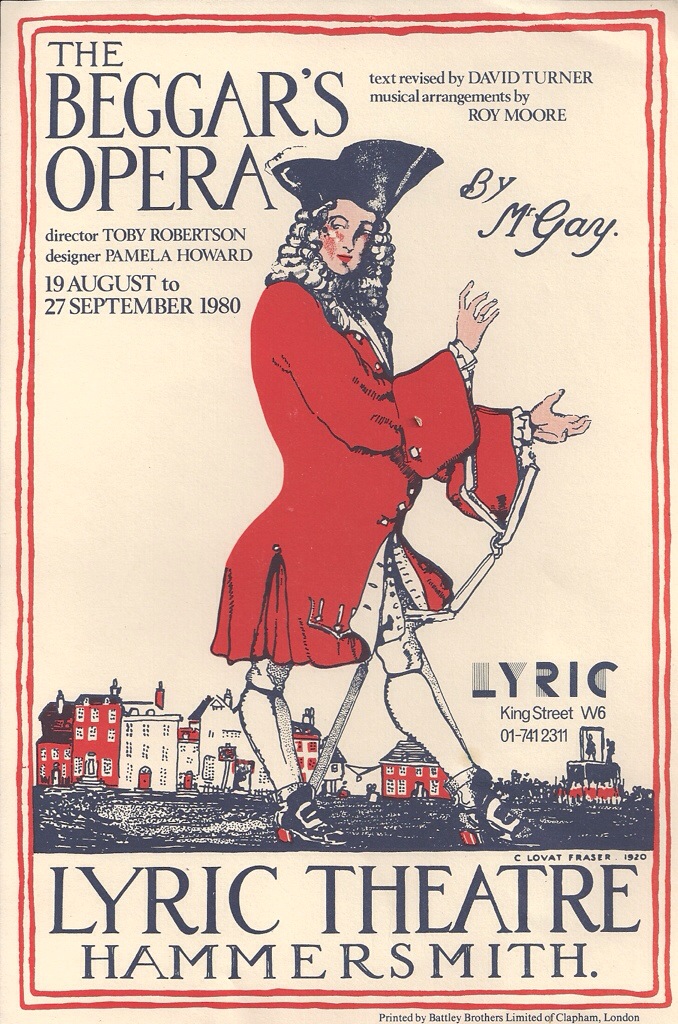
Original poster for the opera.
Leslie Harradine as well as establishing a new standard in figure modelling in the early 1920’s, was also responsible for the first set of figures, The Beggar’s Opera Series, inspired by the theatre. Harradine’s figures all closely resemble the costume designs Claude Lovatt Fraser the designer for the revival of this piece at Hammersmith in 1920, as you can see from these pictures in the article.
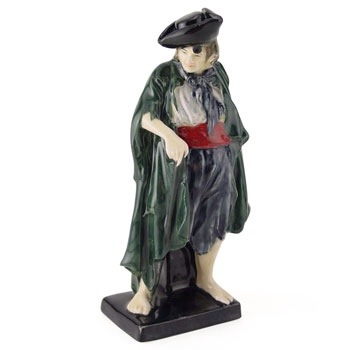
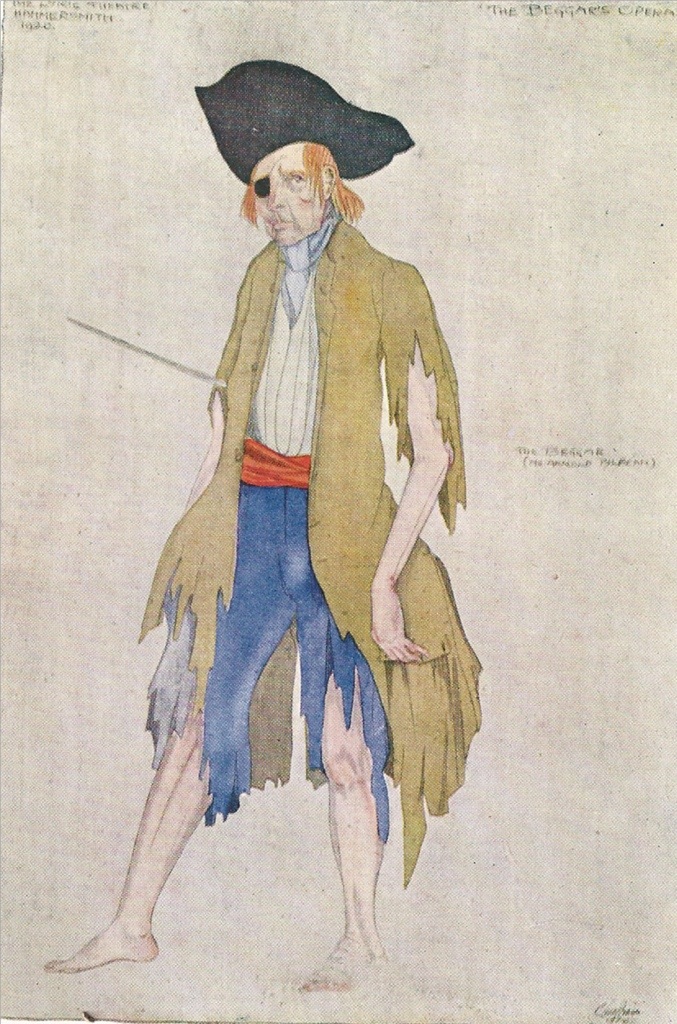
Harradine’s The Beggar and the original sketch for the stage costume.
Once made up Lovat’s costumes were thrown to the studio floor and walked on, had paint thrown on them, and where necessary as with the Beggar’s costume, were then slashed and dirtied. He reasoned that the characters from the play were from 18th Century London low life and spent much of their time in jail.
Here is the original Captain Macheath figure compared with the original theatre poster and Lovat Fraser’s design.
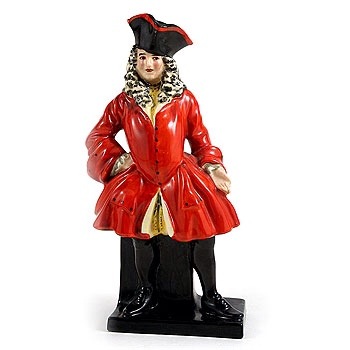
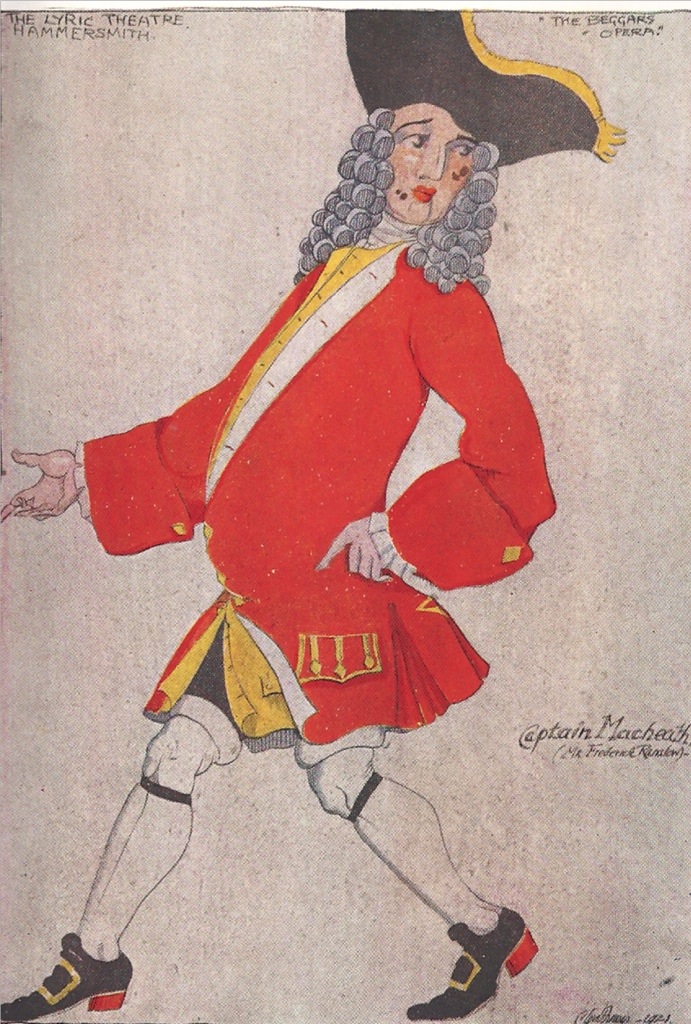
Again the original design and the Doulton figure Captain Macheath.
This first series of figures set the tone for future sets by teaming a popular English theme together with an emerging Doulton house style of decoration.
The series proved a huge success and in Doulton’s first official publicity catalogue after WWII, they themselves lament the withdrawal of this popular set! The main female character Polly Peachum is also immortalised in a miniature version, and incidentally more colour variations of this one miniature figure exist than any other!
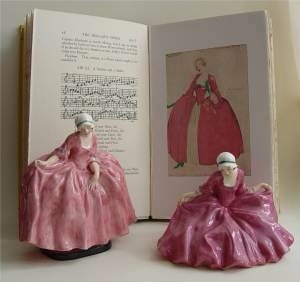
Two versions of Polly Peachum against her original costume design. Incidentally the curtsying Polly was at first called Polly Curtsey.
Whether you collect just individual characters from this series or the whole set, they make an eye-catching display!
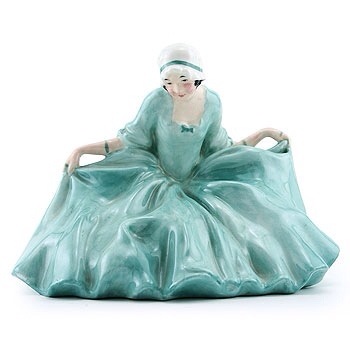
A favourite colourway of mine for Polly Peachum.
Royal Doulton’s Nell Gwynne and her inspiration
Leslie Harradine we all know was prolific in his output of figure models for Royal Doulton and he took inspiration from all corners of the world around him.
This charming figure of Nell Gwynne is based directly on this Player’s cigarette card from the ‘Famous Beauties’ series dating to the 1930’s.
The card in turn is based on the character of the same name who was the mistress of King Charles II, after she caught his eye selling oranges to the audience at the Drury Lane theatre at a performance he also attended. Nell remained a favourite mistress of the King and bore him two children. On his deathbed he is reputed to have asked “let not poor Nellie starve”.
Royal Doulton’s personification of this character fits in perfectly with the many street sellers they also produced.
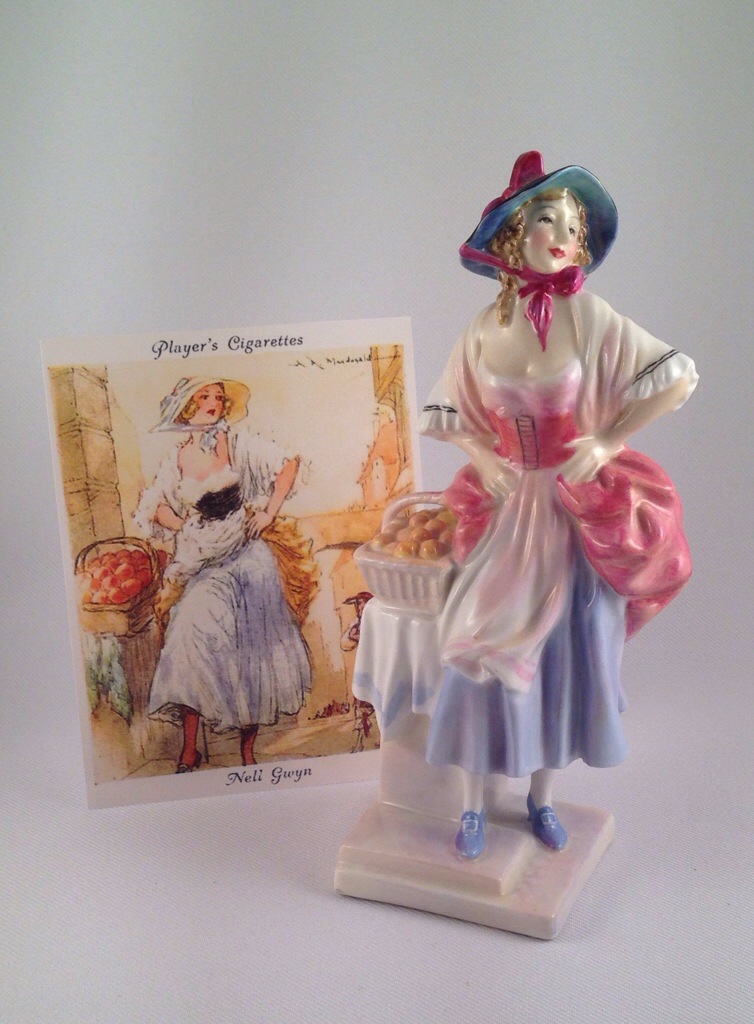
Royal Doulton’s Nell Gwynne HN1887 and the illustration that inspired her.
Pantalettes and petticoats!
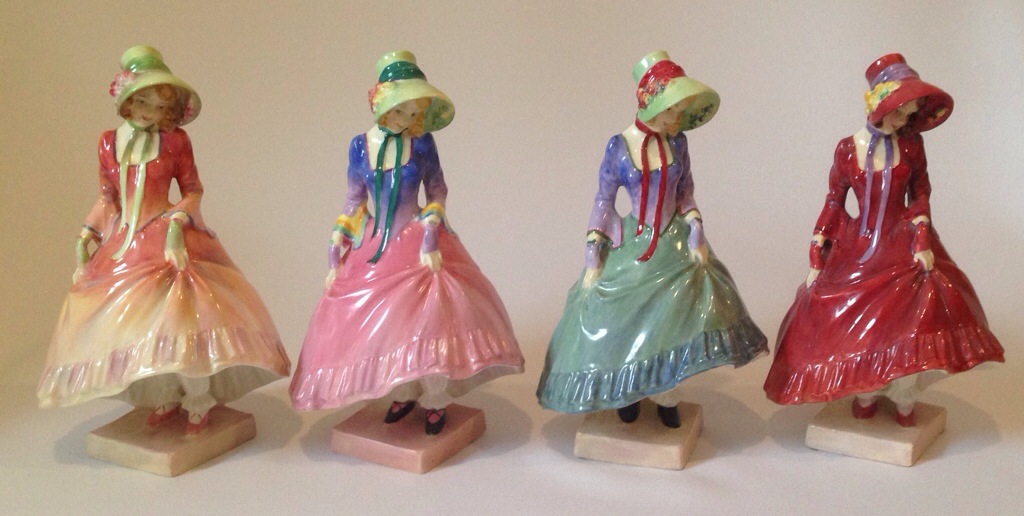
The four available colourways of Pantalettes.
Some of the most popular Royal Doulton figures are those from the early 1930’s that recall those halcyon days of the Victorian era with all of its romanticism and courtship rituals.
This band of coy young ladies demurely pose with their pantalettes and numerous petticoats on show – each supposedly causing a minor sensation! Oh how times have changed.
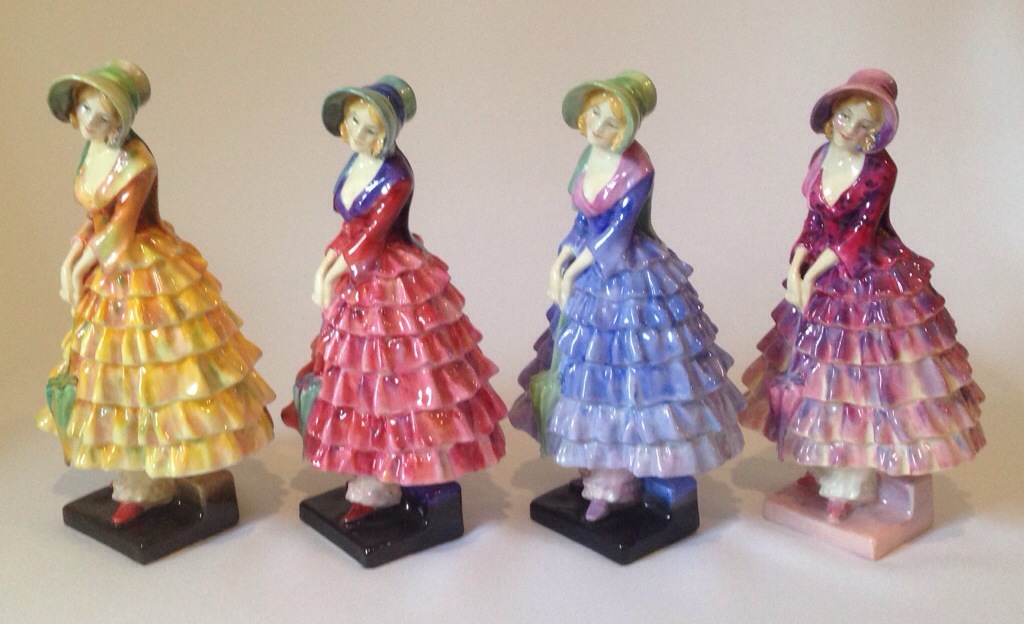
Four of the five available versions of Priscilla.
Of course we must start with the figure Pantalettes HN1362, introduced in 1929 and withdrawn by 1952, not the erroneous date given in the books on the subject of ‘by 1942’. She has three other ‘sisters’ to collect the rarer of the two being HN1507 and the lushious red HN1709. She has always been a favourite of mine and I remember hunting down an early version many years ago!
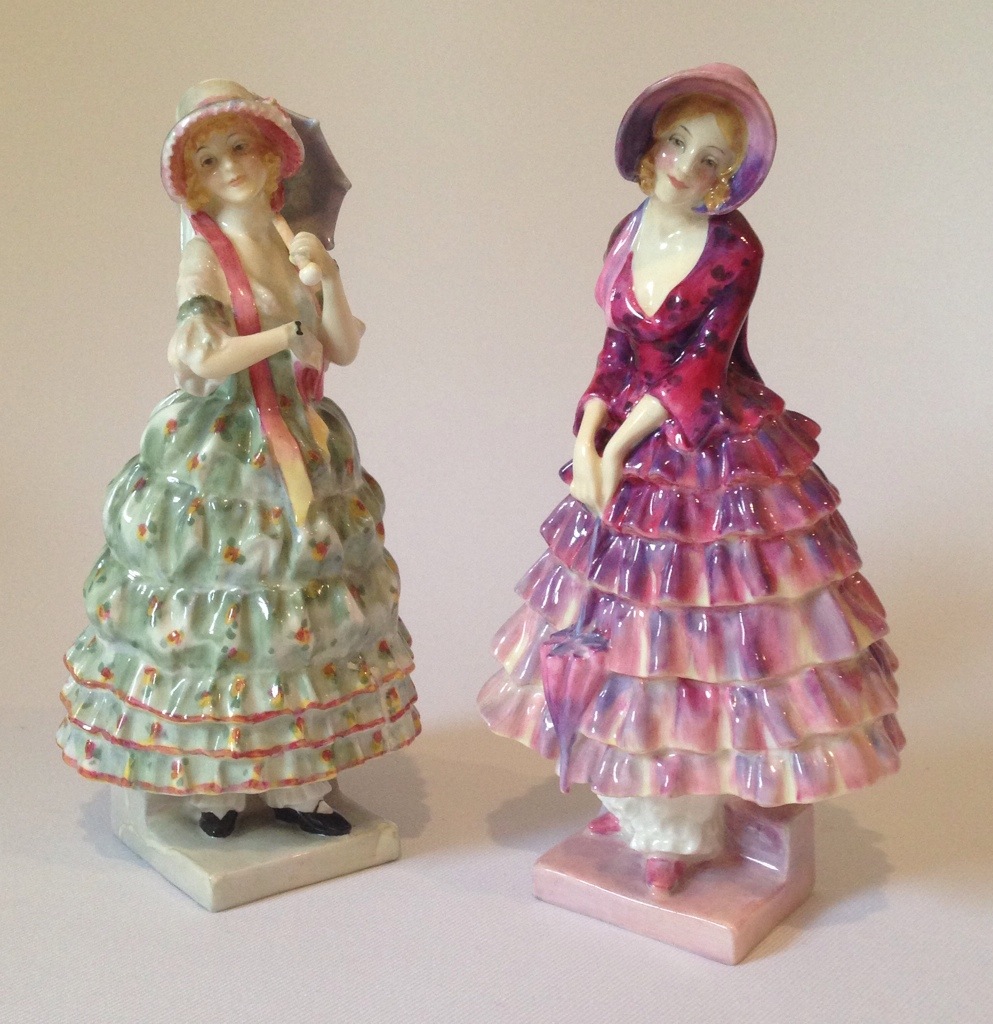
The rare Helen and a more unusual colouring of Priscilla.
Another favourite among collectors is Priscilla HN1340 introduced in the same year. She is modelled coyly swaying in a soft breeze with her head posed in a coquettish manner!
Other rarer figures can be added to this theme including the rare Helen HN1508, who would later be adapted to June HN1690 in 1935, presumably meaning that Helen’s production had ceased by that point… As was always typical of Doulton various figures were produced in complimentary colourways and we can add Gwendolen HN1503 to this group of ‘pantalette and petticoat’ ladies!
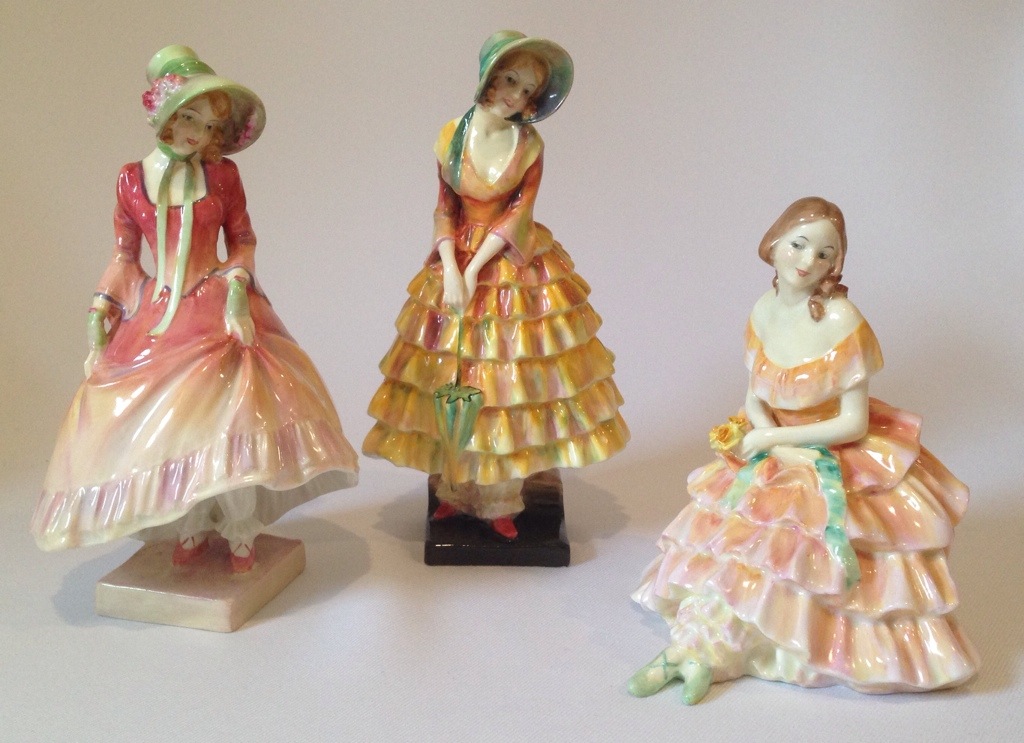
A complimentary group of petticoat and pantalettes wearing damsels.
Far from bring a definitive list, perhaps you also collect this theme of ladies? If so why not post a picture to our Doulton Collectors Club page?
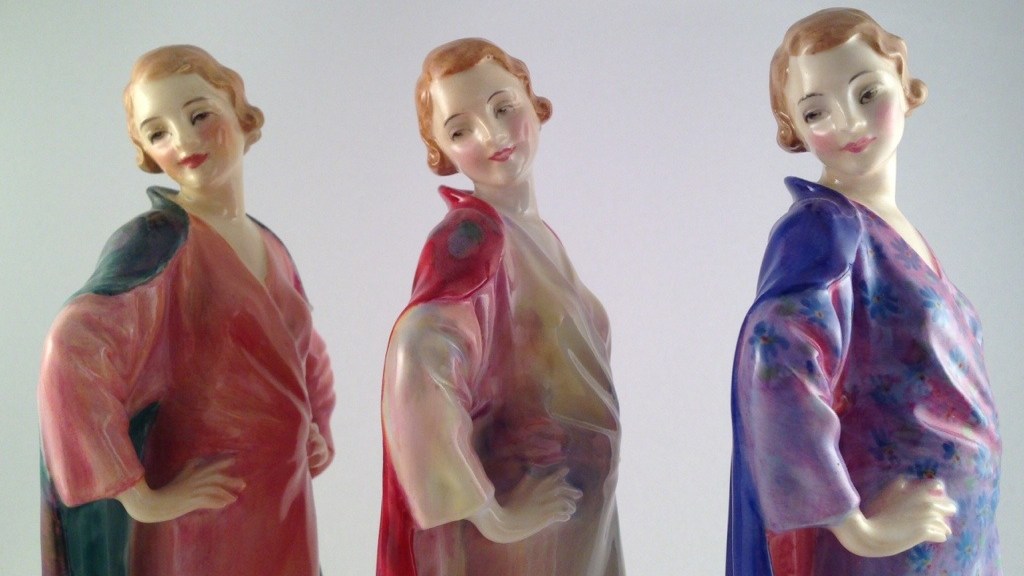
Doulton’s flair for fashion
Shortly after the Art Deco period there was a time in the 1930’s when Hollywood glamour became ‘the’ look and typically Royal Doulton roze to the challenge of producing a stream of stylish 1930’s ladies.
Among the first such figures is undoubtedly Clothilde shown here in three colourings. Her wrap dress and long cape capture the Hollywood style perfectly.
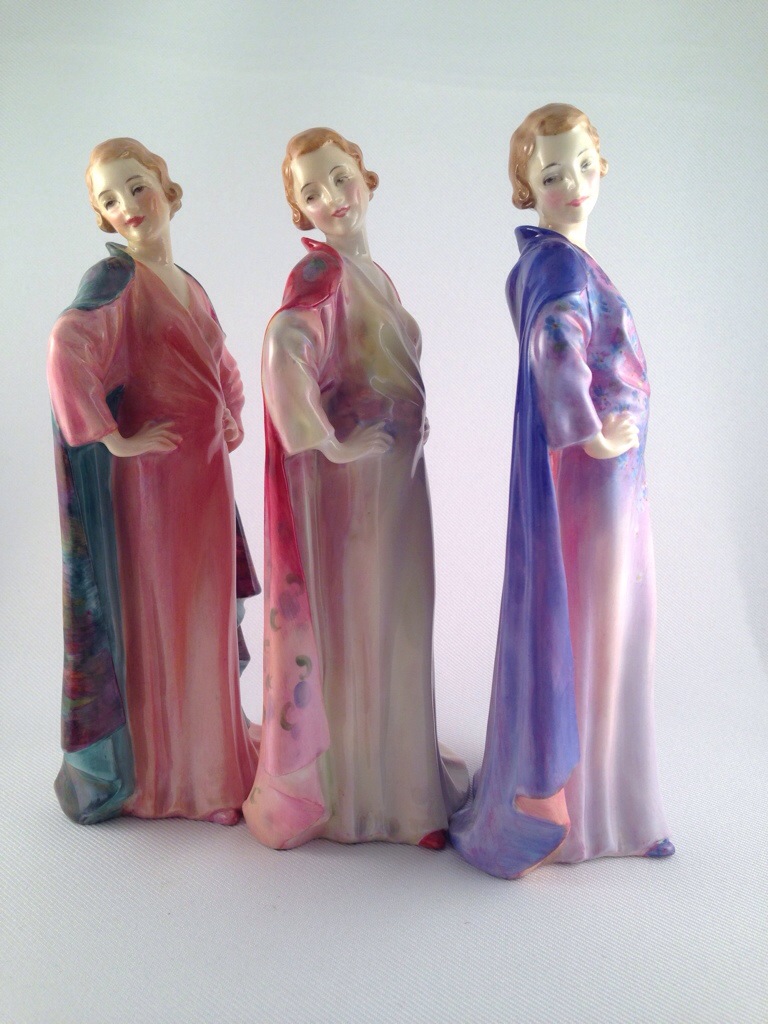
The ever popular Clothilde.
Almost a partner to Clothilde is Gloria in her daytime attire and chic clutch so evocative of this decade.
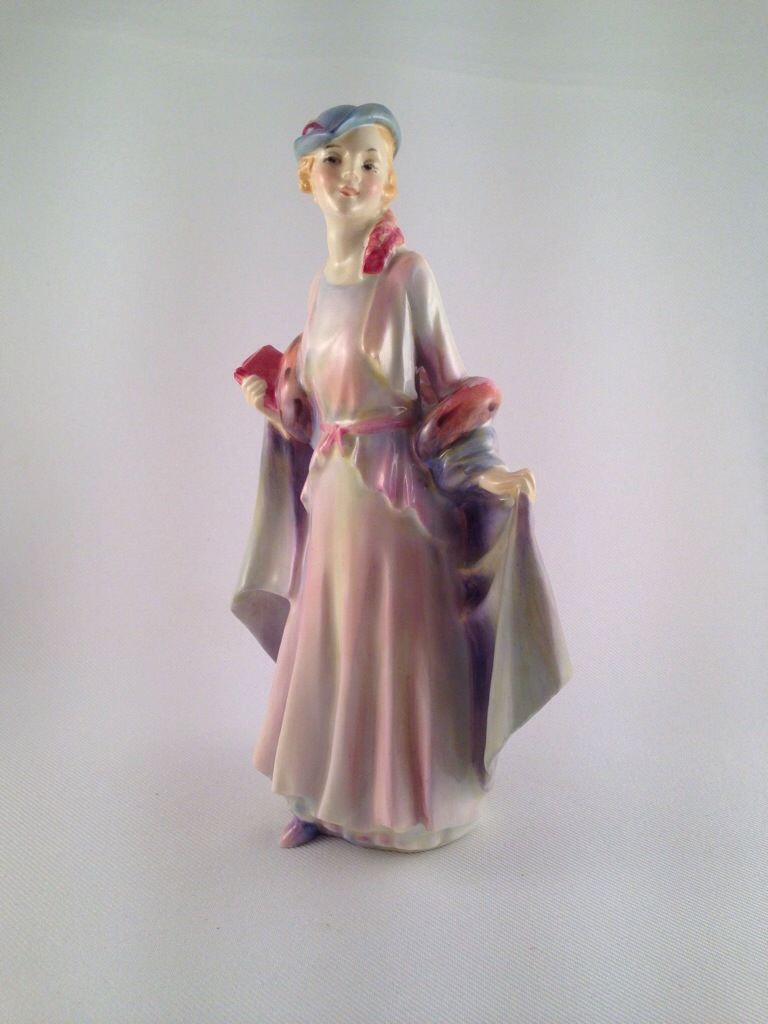
Gloria HN1488.
A favourite of mine which fits perfectly into this group is Windflower, a model of a young girl walking into a summer’s breeze, deftly holding her hat in place.
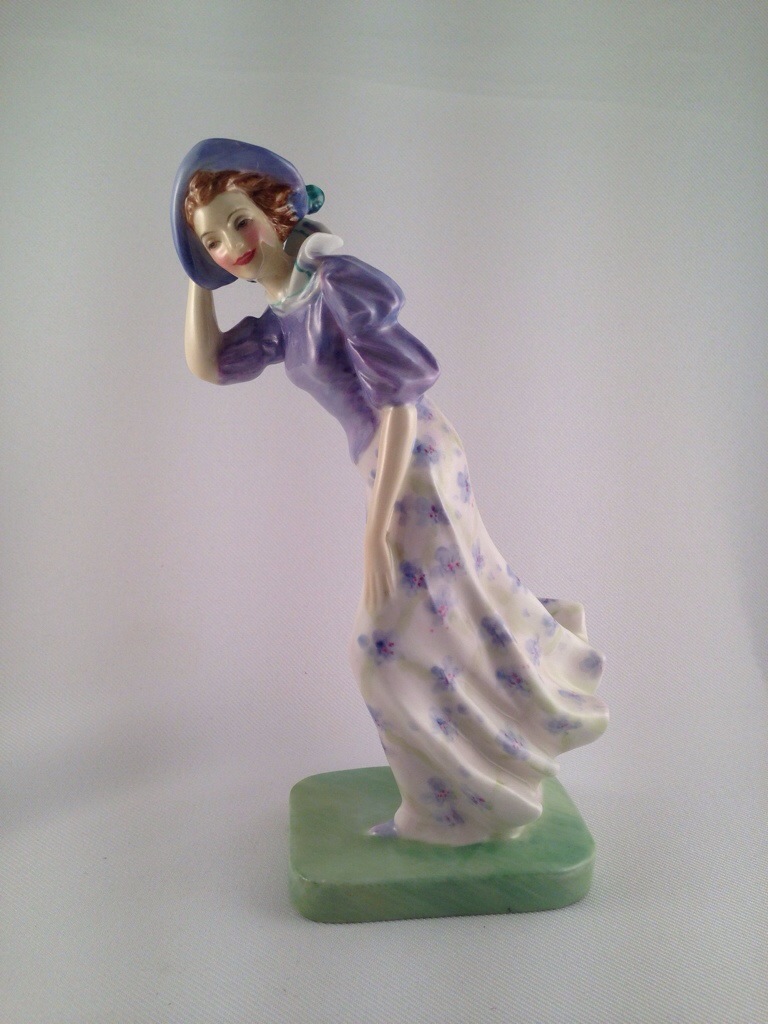
Windflower HN1764.
The glamorous Nadine looks as though she has just walked off the screen from a big Hollywood production set on the French Riviera with her cartwheel hat and extravagant sash bow.
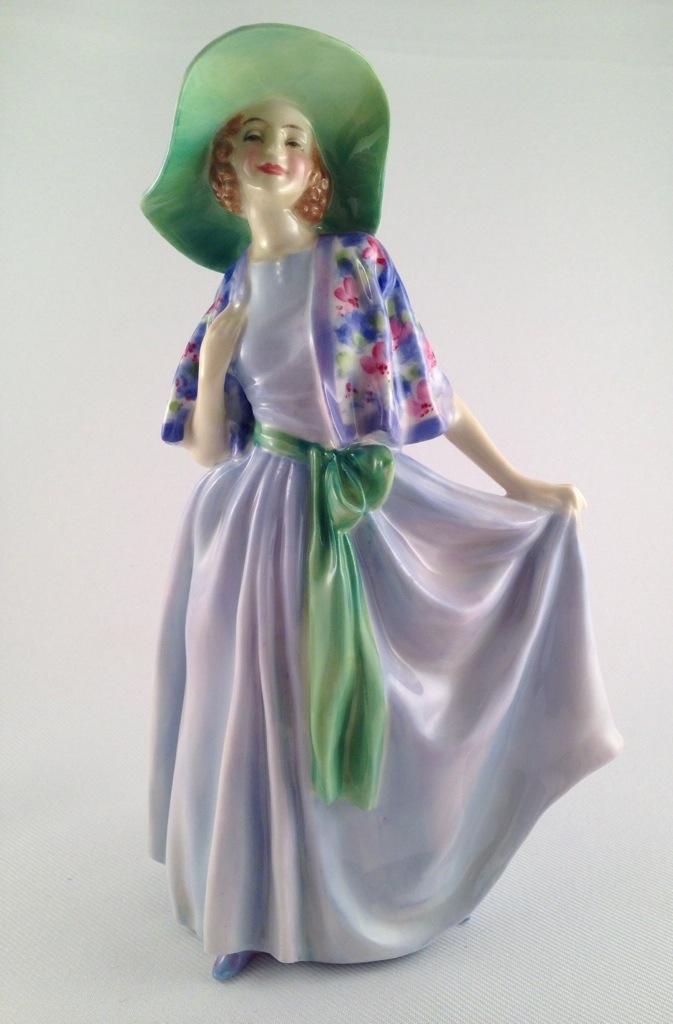
Nadine HN1885.
Moving to the boudoir we have the ever stylish and rare figure The Mirror, seen admiring herself in her hand mirror.
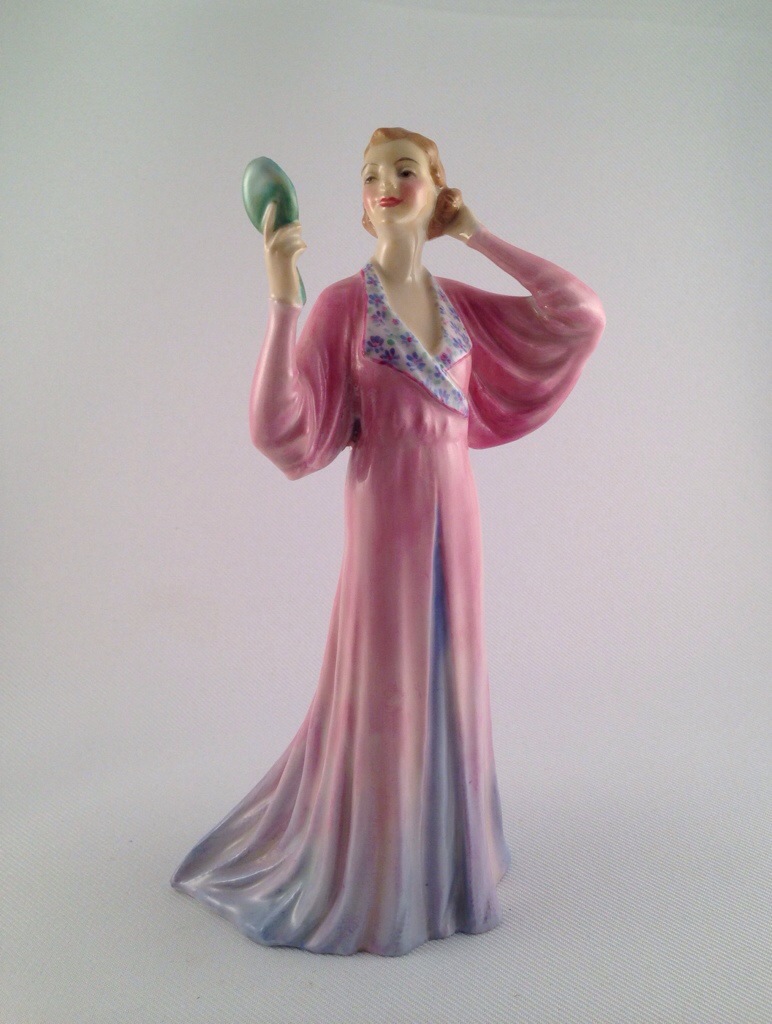
The Mirror HN1882.
No doubt engaged in conversation is the unusual figure Sweet & Fair, seen here perched on her elegant chair in her simply stylish ensemble.
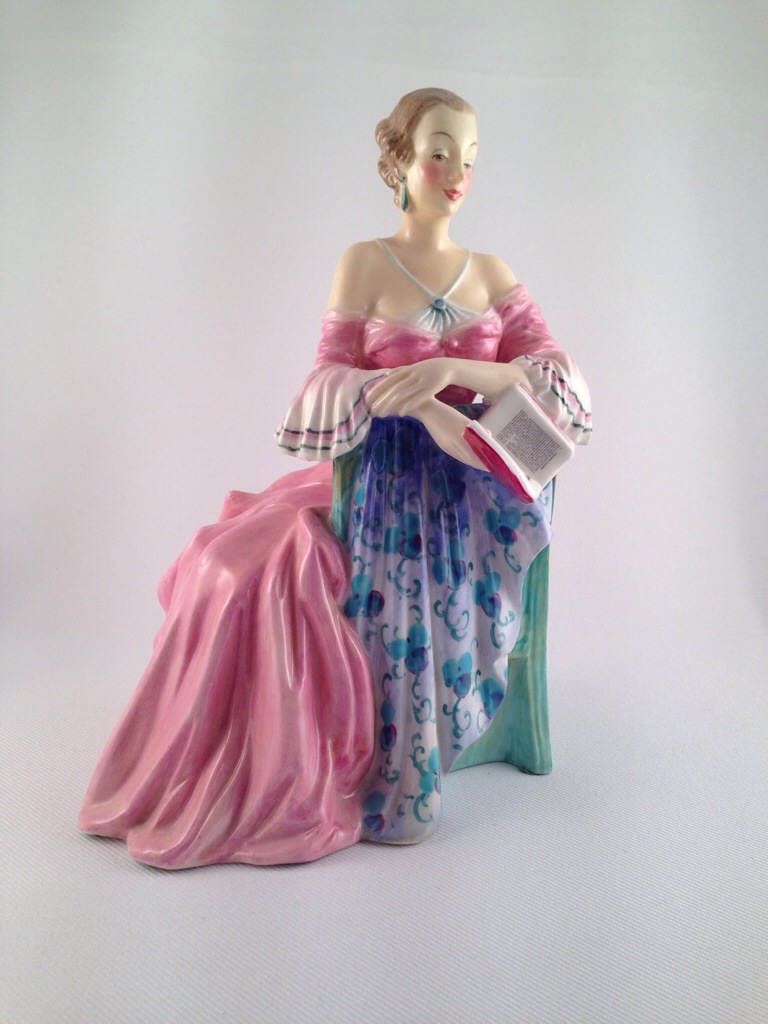
Sweet & Fair HN1864.
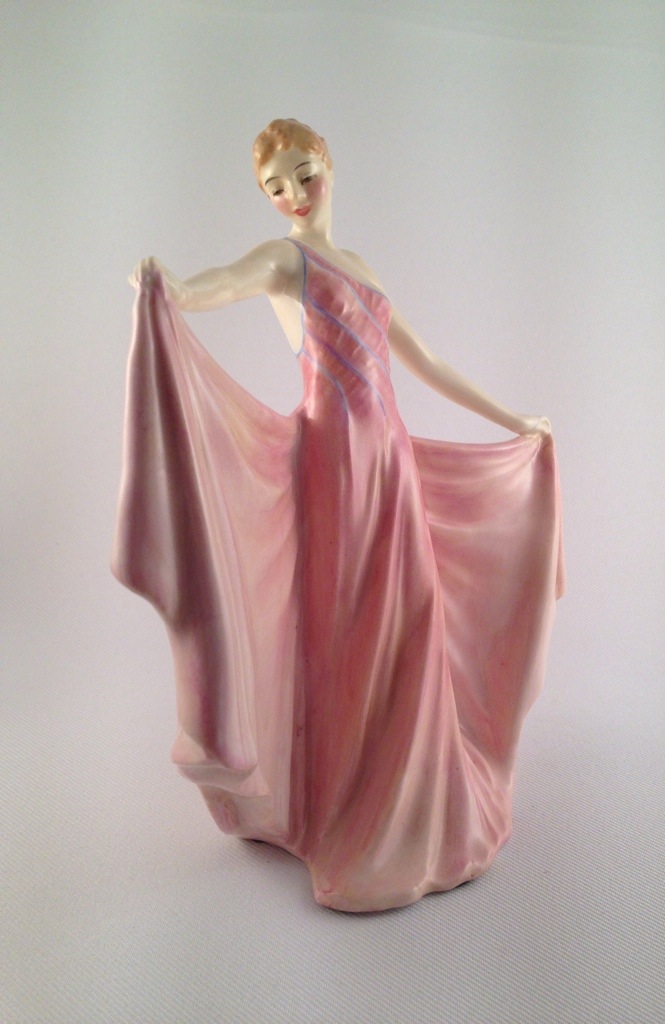
A final figure which belongs to this typical sized Doulton lady is Rhythm, seen here swaying gently to the music. She is a particularly hard figure to find today and her short production run was no doubt the result of her elongated arms, which are as fragile as they look.
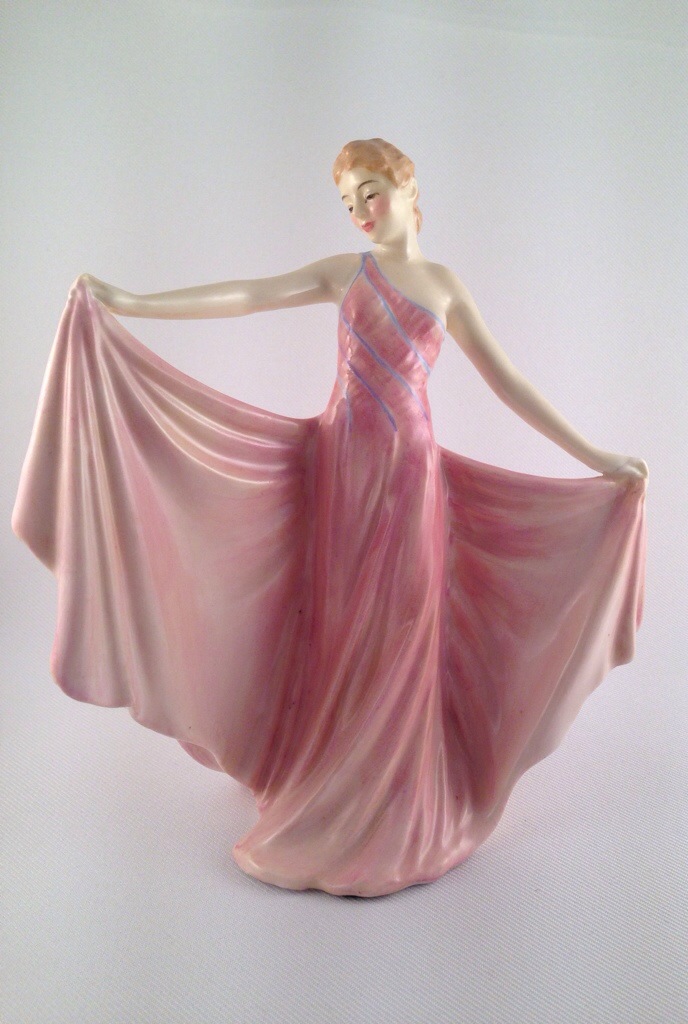
Two views of Rhythm HN1903.
Before we finish there is one more figure to mention, namely the wonderful figure The Lambeth Walk. She is seen carefully taking a step to the tune of the same name from the hit musical Me and My Girl. My reason for leaving her to last is not her insignificance but rather her size – she unlike her counterparts stands a magnificent 25 cms tall and so is instantly distinguishable from this band of glamorous gals!
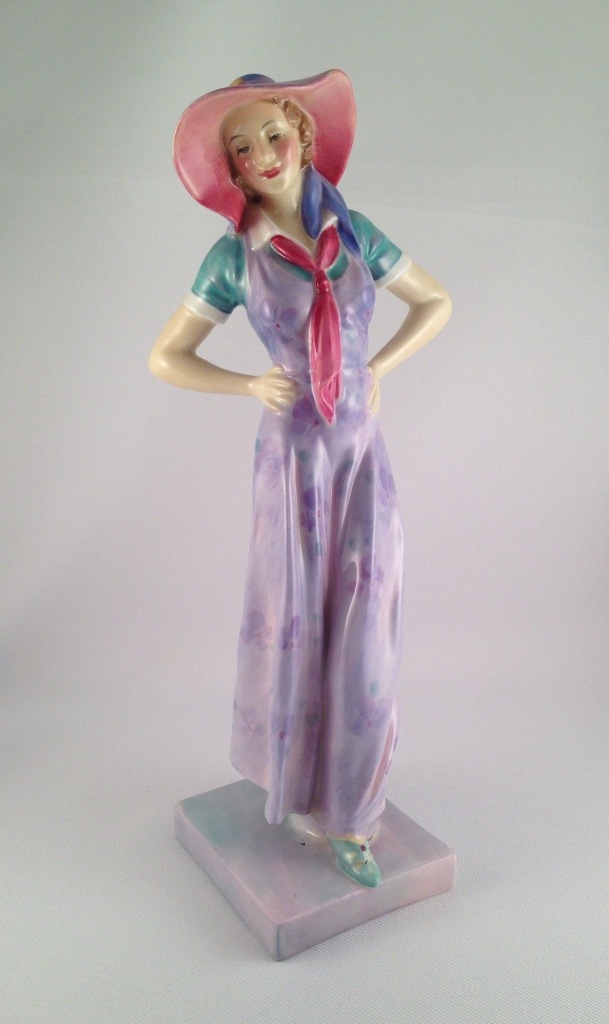
The Lambeth Walk HN1880.
As you will be able to tell this latter group of Hollywood style figures all date from the same period and their HN numbers are all in the late 1800’s. Together they create something of a wow factor as I am sure you can imagine!
Collecting Royal Doulton’s Maid figures
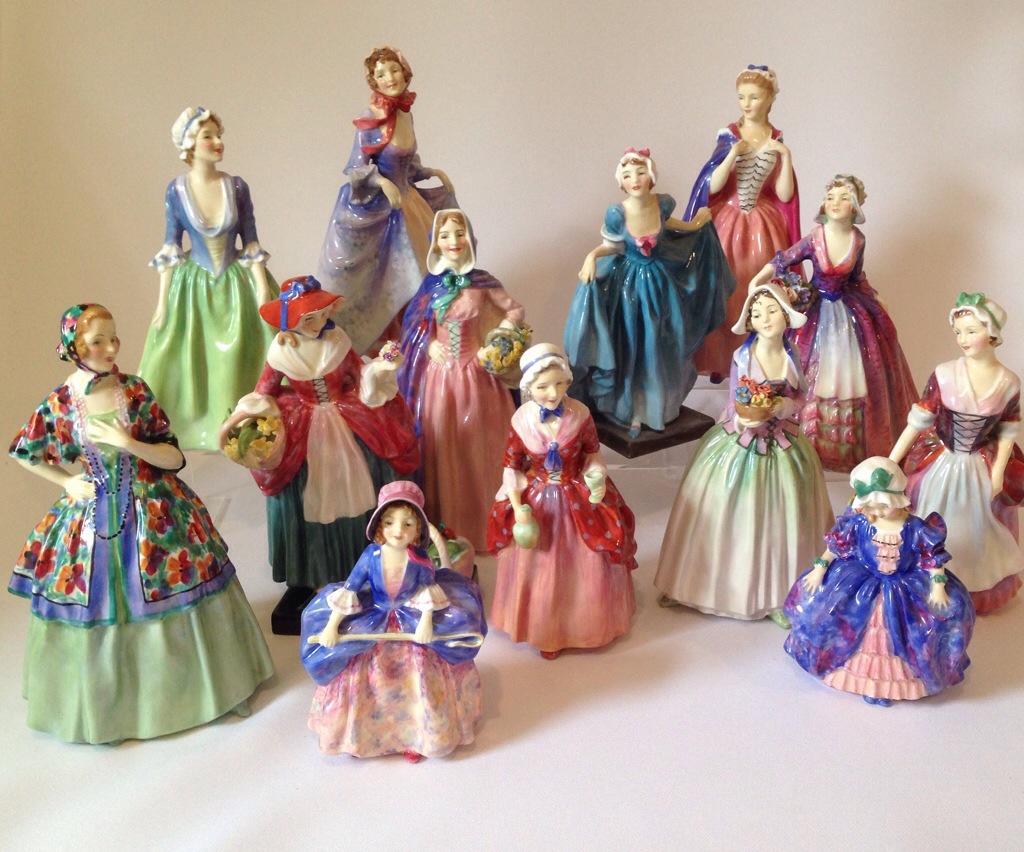
Thinking of collecting themes, one which is often overlooked is that of Doulton’s group of maids, be they serving girls and women, or alternatively the name once given to young girls.
Of course there are a handful of figures with ‘maid’ in their names such as Sweet Maid HN1505 a classic, bonneted Doulton lady or Sweet Maid HN2092 a bride on her wedding day.
This group of maid figures, however, do not have ‘maid’ in their names, rather they are named after typical serving girl names such as Jane or the French Suzette.
The figure Dorcas appears to be modelled on an advert for Dorcas towels from the 1930’s and also derives her name thus.
Of course arranging figures by colour is always popular. Here are three figures I think go well together.
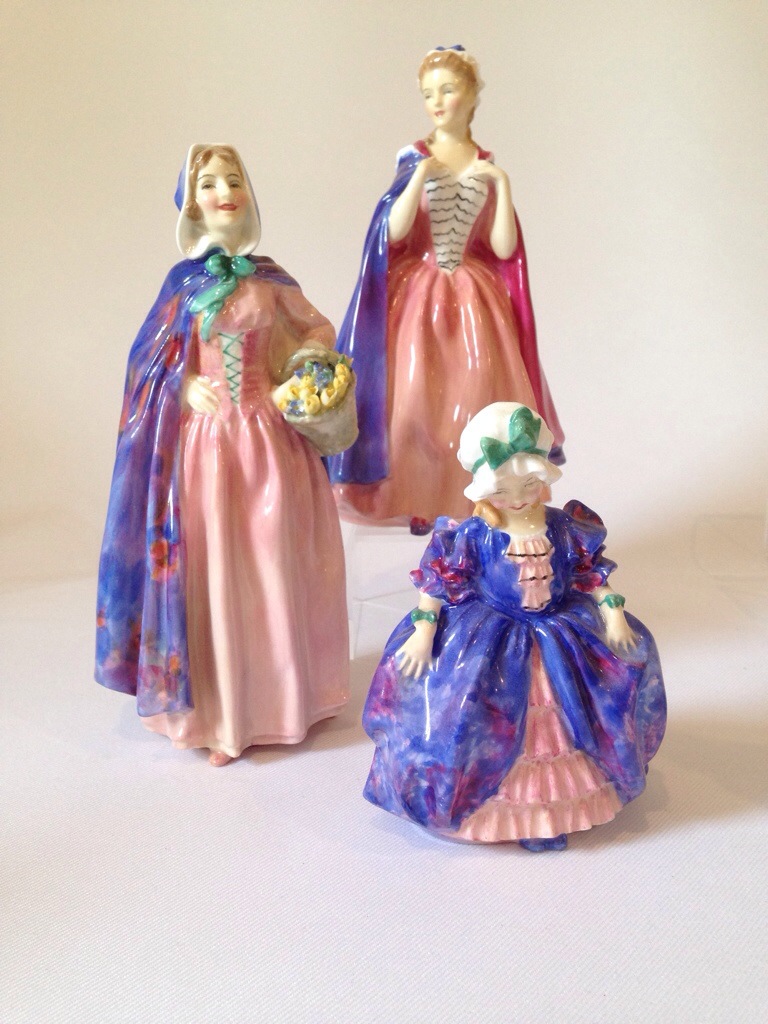
Another figure that is based upon an illustration is this version of Spring Flowers. For some unknown reason this colourway, which is directly based upon a Wheatley ‘Cries of London’ illustration was not introduced until 1940 whereas the original 1937 version is an entirely made up Doulton colourway. Personally I prefer the red and green version.
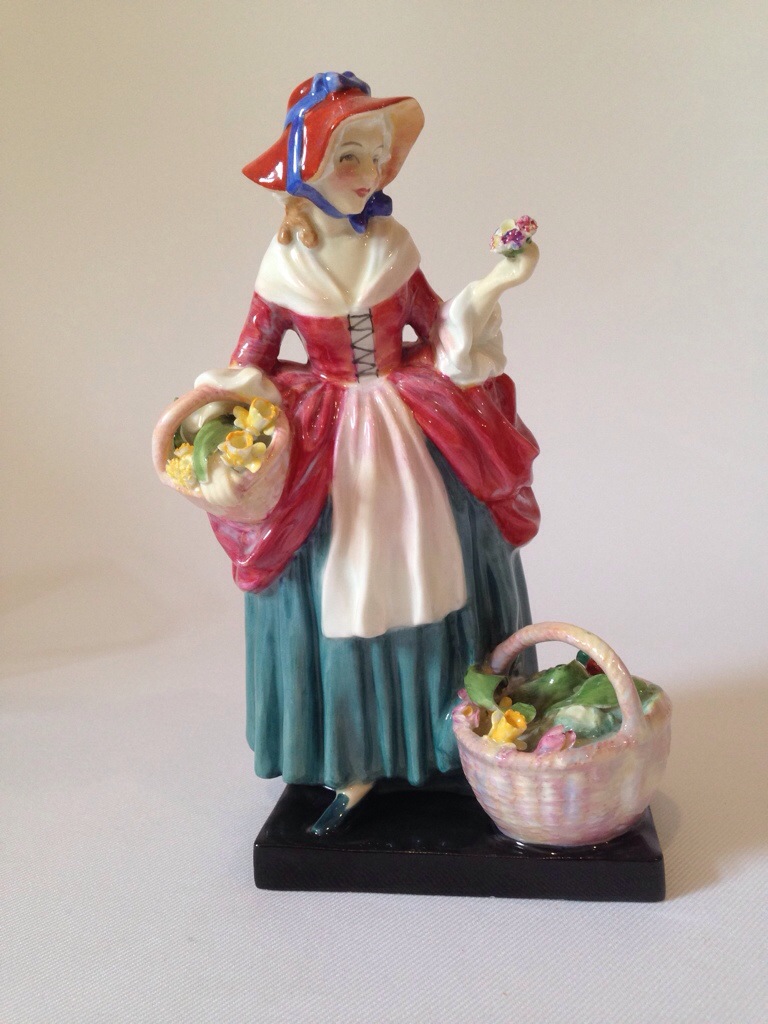
Perhaps you arrange your collection in a particular way? If so join our Facebook page ‘Doulton Collectors Club’ to share and also see what other collectors collect and cherish!
Doulton’s deco nudes
The liberating period of the 1920’s to 1930’s often seems incongruous to non-Doulton figure collectors who associate ladies in ballgowns with Doulton figures, but those in the know, they recall that there are a small group of nude figures produced in the art deco period that encapsulate that movement perfectly. All the figures contained in this small band of lady figures were the brain child of Leslie Harradine, Doulton’s then principal figure modeler.
As if to prove their own artistic credentials, Doulton introduced over a 10 year period several nude studies that confirmed their artistic prowess. The first we must all know was Harradine’s The Bather, modeled on this contemporary advert.
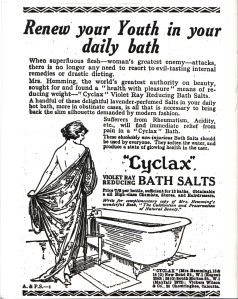
There were six different versions of this popular model, with this colourway proving to be the most popular.
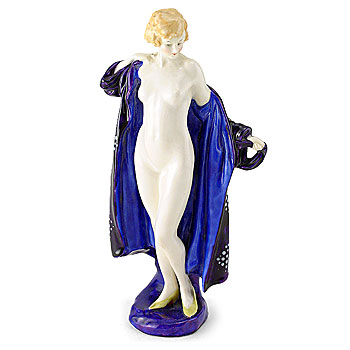
The Bather HN687.
In the succeeding years there was a second version of The Bather introduced, shown here.
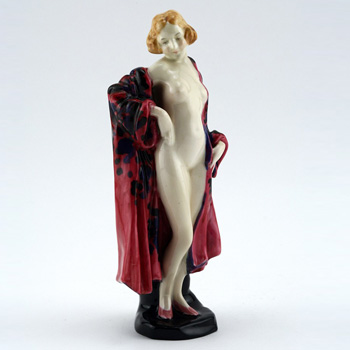
The Bather HN773 (second version).
By the mid to late 1930’s tastes had changed and prudery was once more on the rise, and so a last version of this figure was introduced wearing a bathing suit, so reflecting the continued interest in lidos.
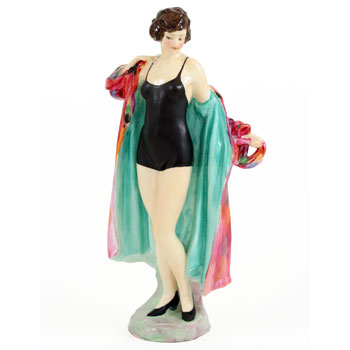
The Bather HN1708.
However, there were other nude figures introduced at this time including Siesta shown here reclining on her day sofa.
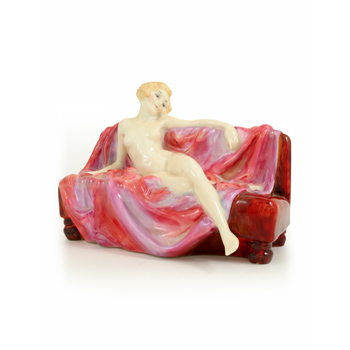
Siesta HN1305.
Other partially clad figures also belong to this group of deco delights such as Carnival, Circe and Susanna, a scalled down version of Circe.
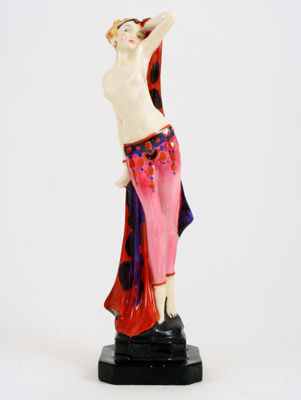
Carnival HN1260.
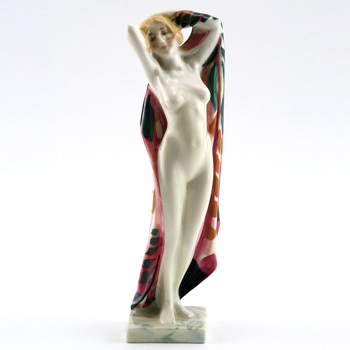
Circe HN1249.
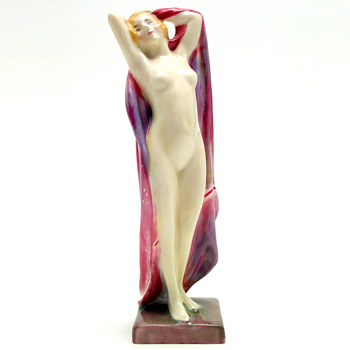
Susanna HN1233.
Harradine continued, however, to experiment and push boundaries in figure production. He achieved much acclaim at the British Industries Fair of 1935 for his then two latest productions, The Coming of Spring and Celia. Particular attention was lavished upon the Coming of Spring shown here.
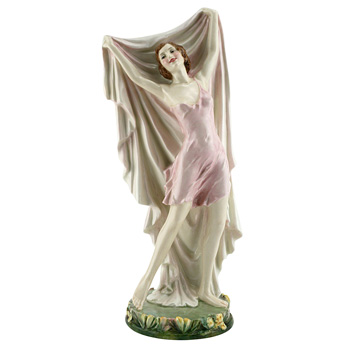
The Coming of Spring HN1722.
We cannot mention deco nudes without also mentioning that small group of figures commissioned by Noke from Richard Garbe the eminent sculptor. I have in my own collection his Spring HN1774 produced in a limited edition of 100.
Yet, Harradine as Doulton’s leading modeler continued to produce nude figures up until the late 1930’s with figures such as Dawn and The Awakening.
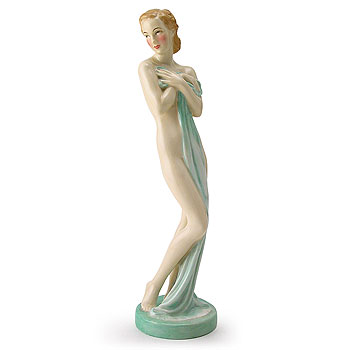
Dawn HN1858 (without headdress)
There were also a slew of scantily clad beauties such as Negligée and Lido Lady as well as a few child studies such as Blue Bird.
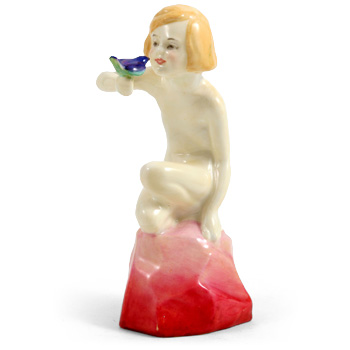
The rare Blue Bird HN1280.
In recent decades there have been new nude introductions, not least in 2000 when Doulton themselves re-modelled four of Harradines most popular figures including The Bather (first version).
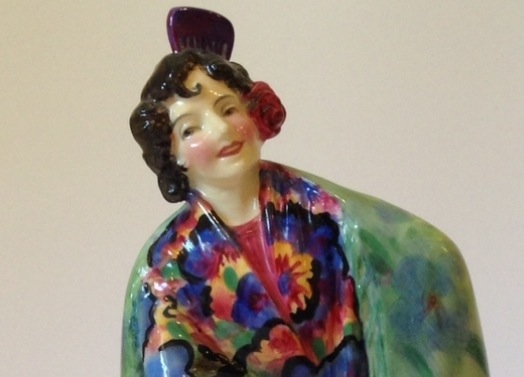
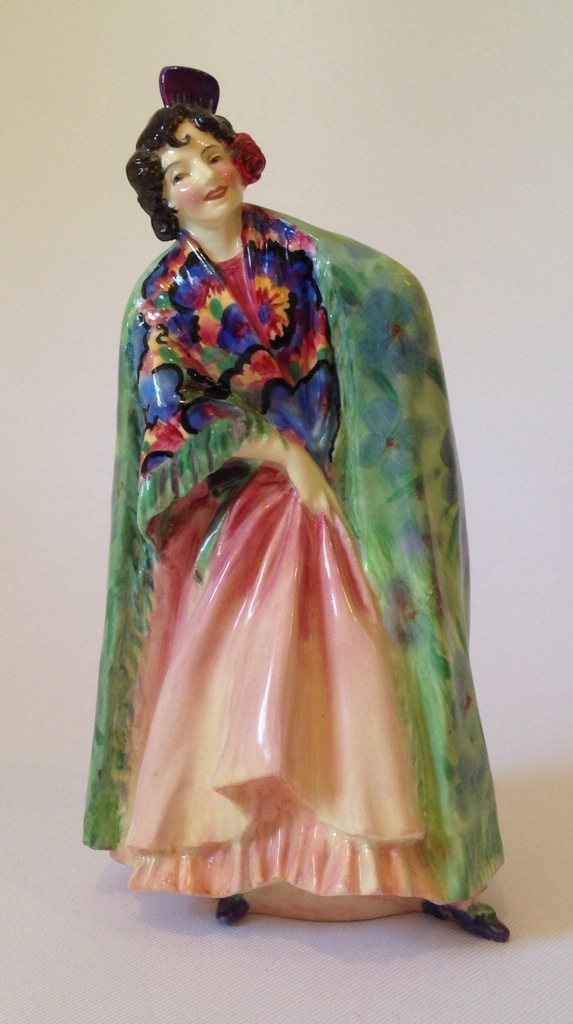
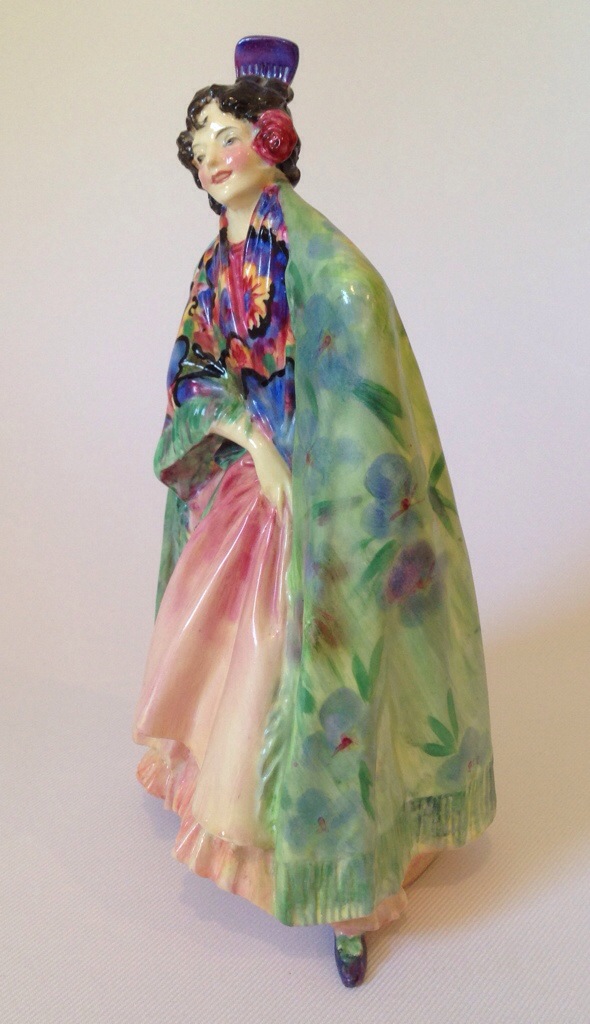
The enchanting Lizana – another one not included in Reflections!
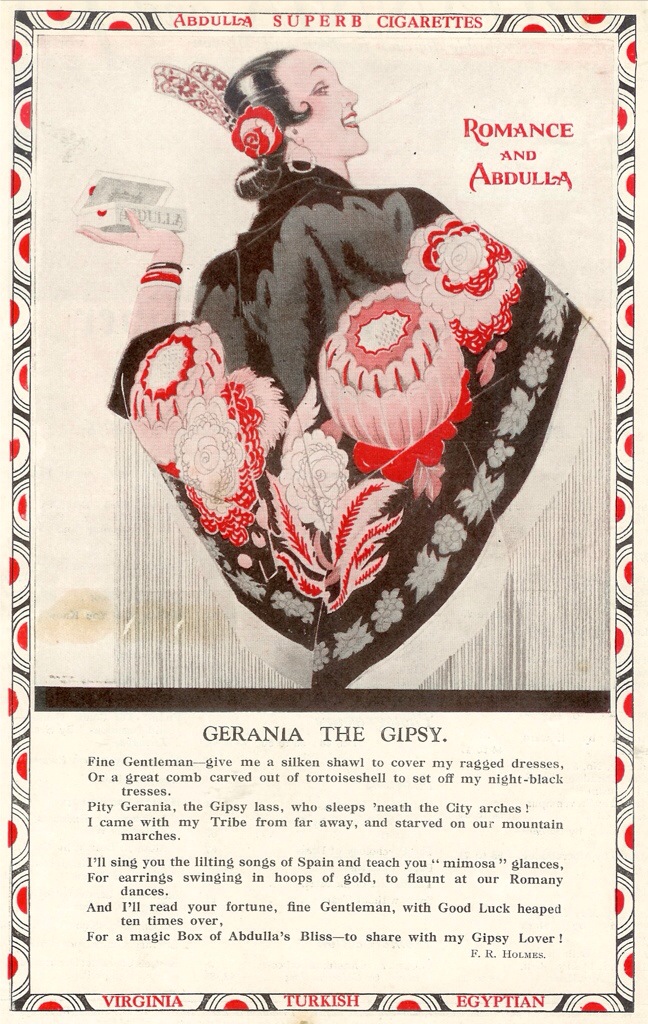
Inspired to share this next piece by a fellow collector who cherishes her Doulton figure Lizana, here is the inspiration behind her – a contemporary cigarette advert! Not quite PC today but the effort and detail put into advertising this brand of Abdulla cigarettes is to be marvelled, especially the rhyme at the bottom!
(C) Christopher Evans 2014
W S Penley as CHARLEY’S AUNT (second version) Issued in 1930 H. Fenton
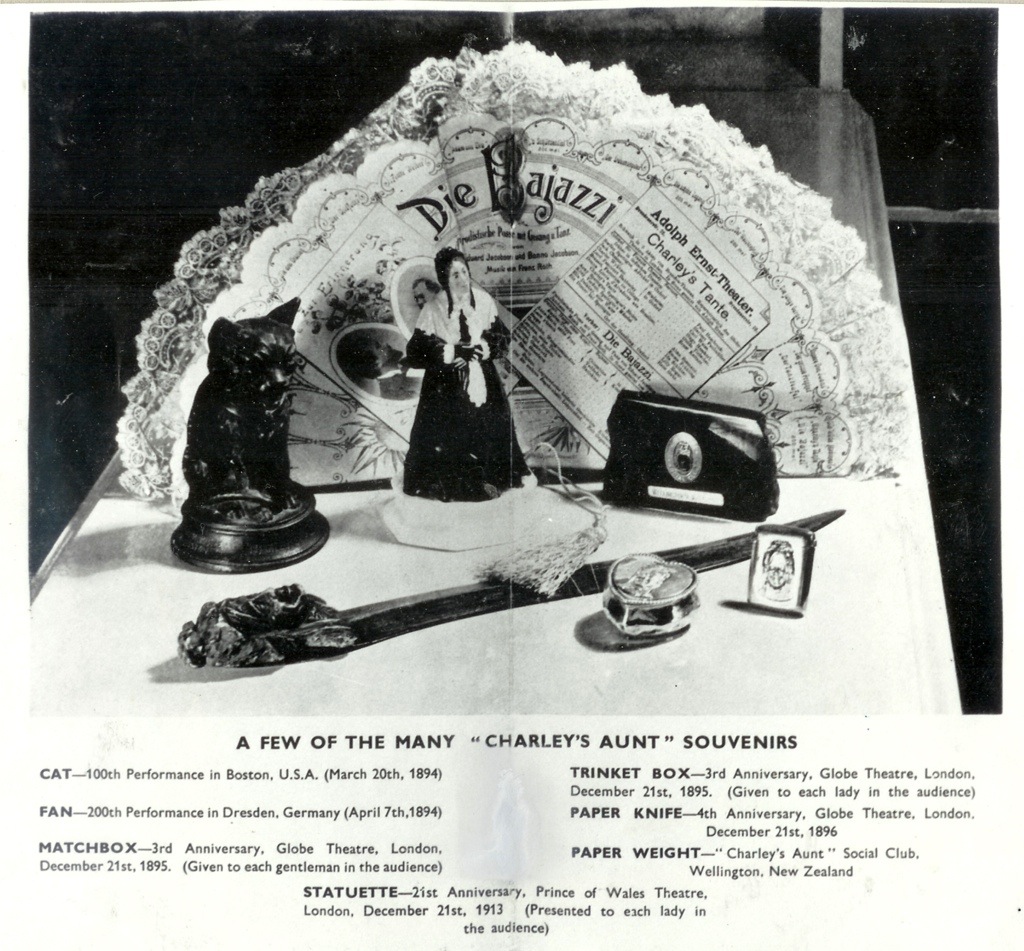
The contempory theatre greatly influence Noke’s figurine range. W S Penley was popular in his role in Charley’s Aunt by Brandon Thomas, where he plays an Oxford undergraduate who impersonates an “Aunt from Brazil” who is to act as chaperone to some young ladies he and his friends wish to entertain. Charley’s Aunt ran for 1,466 performances after opening in 1913. On various anniversaries ladies in the audience were presented with a Doulton figurine of the main character commissioned by the author Brandon Thomas. About 500 – 600 of this commissioned figure were given away, together with a range of other souvenirs of the performances like those in the advert above. Early in his career in 1916, Noel Coward played the part of Charley.
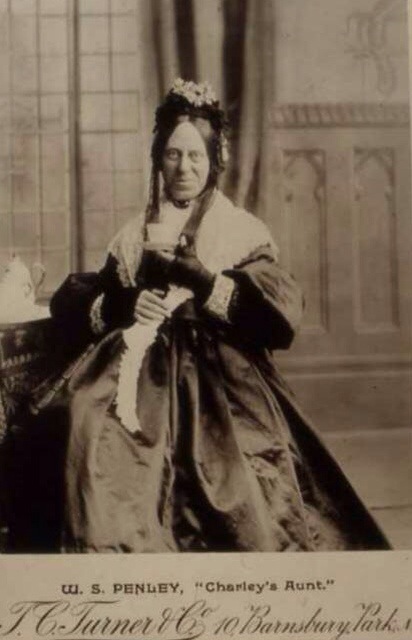
A contemporary picture and version 2 of this unusual figure, modeled in an identical post and holding a cup of tea.
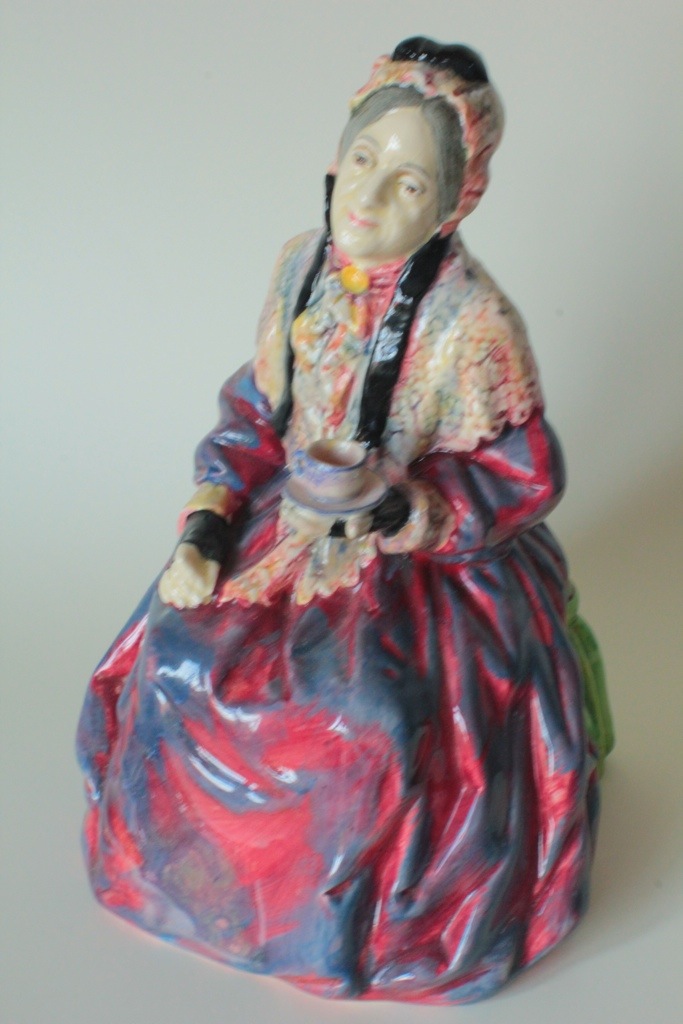
The figure was modelled by Albert Toft (1862 – 1949 ) who taught Leslie Harradine at Camberwell School of Art at evening classes when he was completing his apprenticeship at Doulton Lambeth. Toft himself had studied at Stoke on Trent and later at the Royal College of Art.
 doultoncollectorsclub