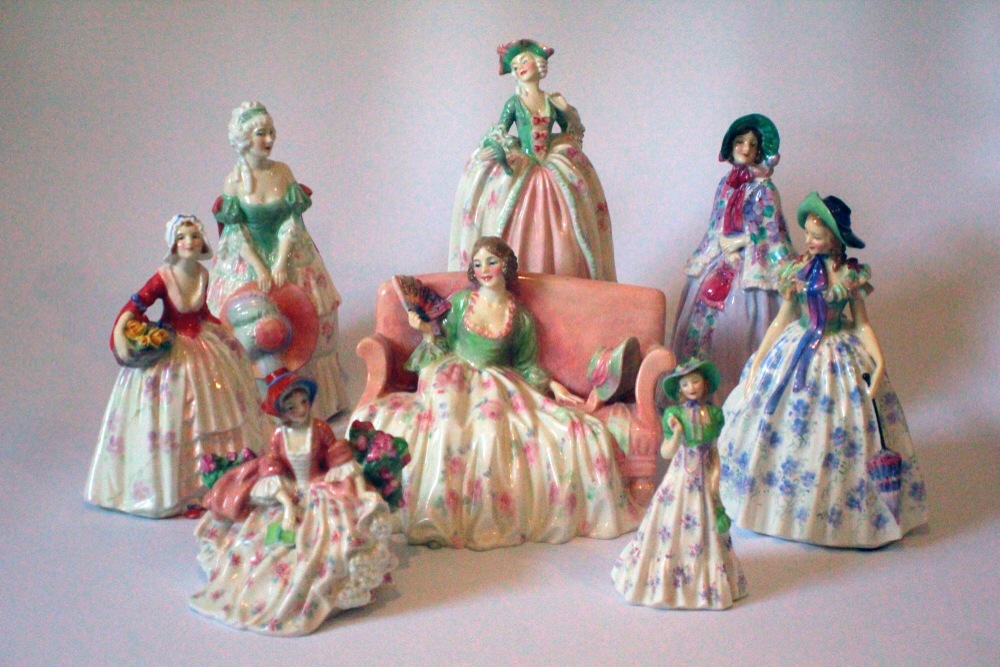
Of the many collecting themes based around colour that are so popular with collectors today, there is a particularly beautiful theme that is not quite as obvious. This being the group of figures with floral decoration to their dresses, cloaks and skirts. Only when looking at our own collections do we often realise that we have several examples in this style in our own collections – perhaps you have others we can add to this picture? I’m sure you’ll agree they make a stunning group! My personal favourites are those on Leslie Harradine’s figures.
Category Archives: Leslie Harradine
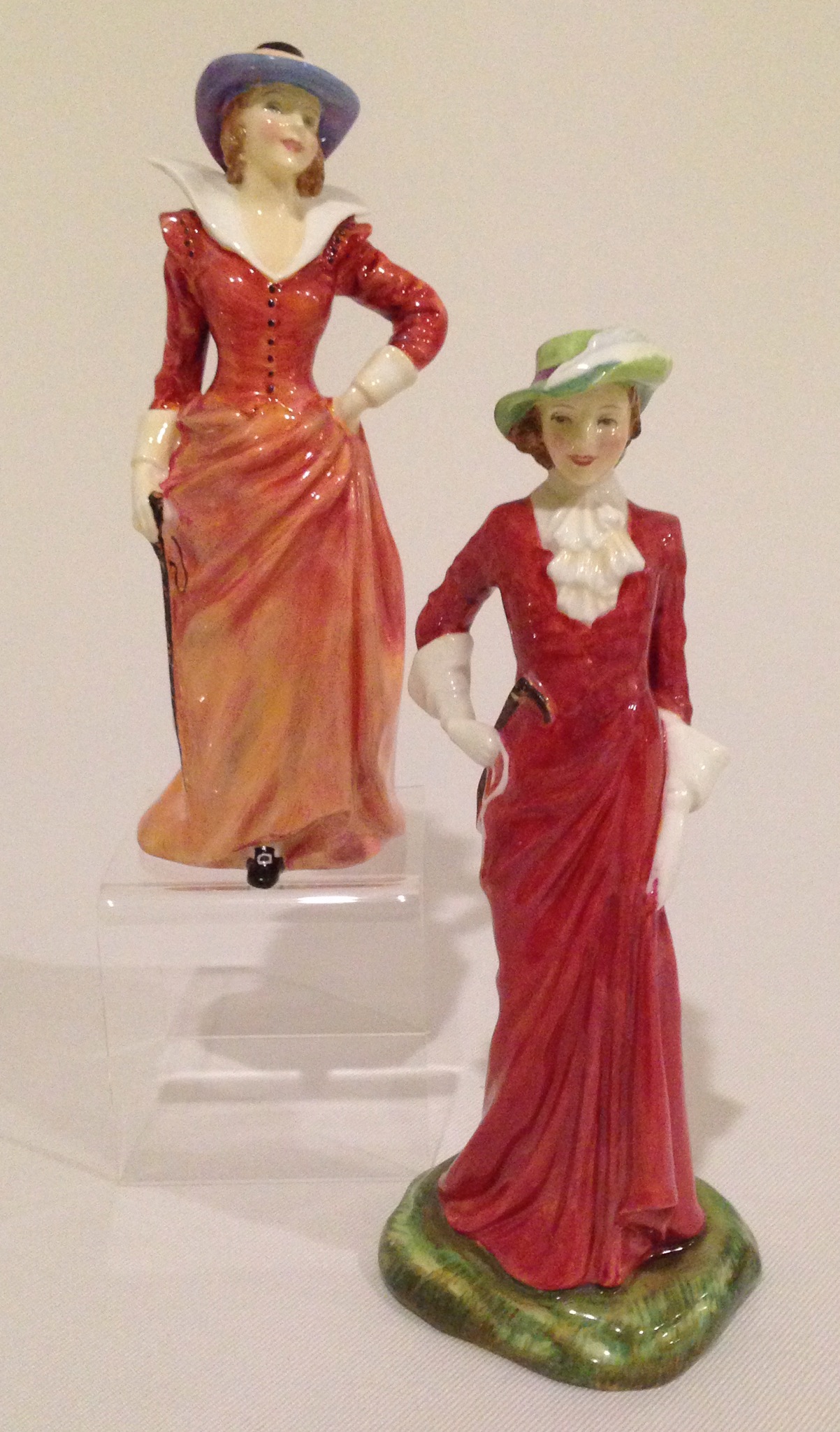
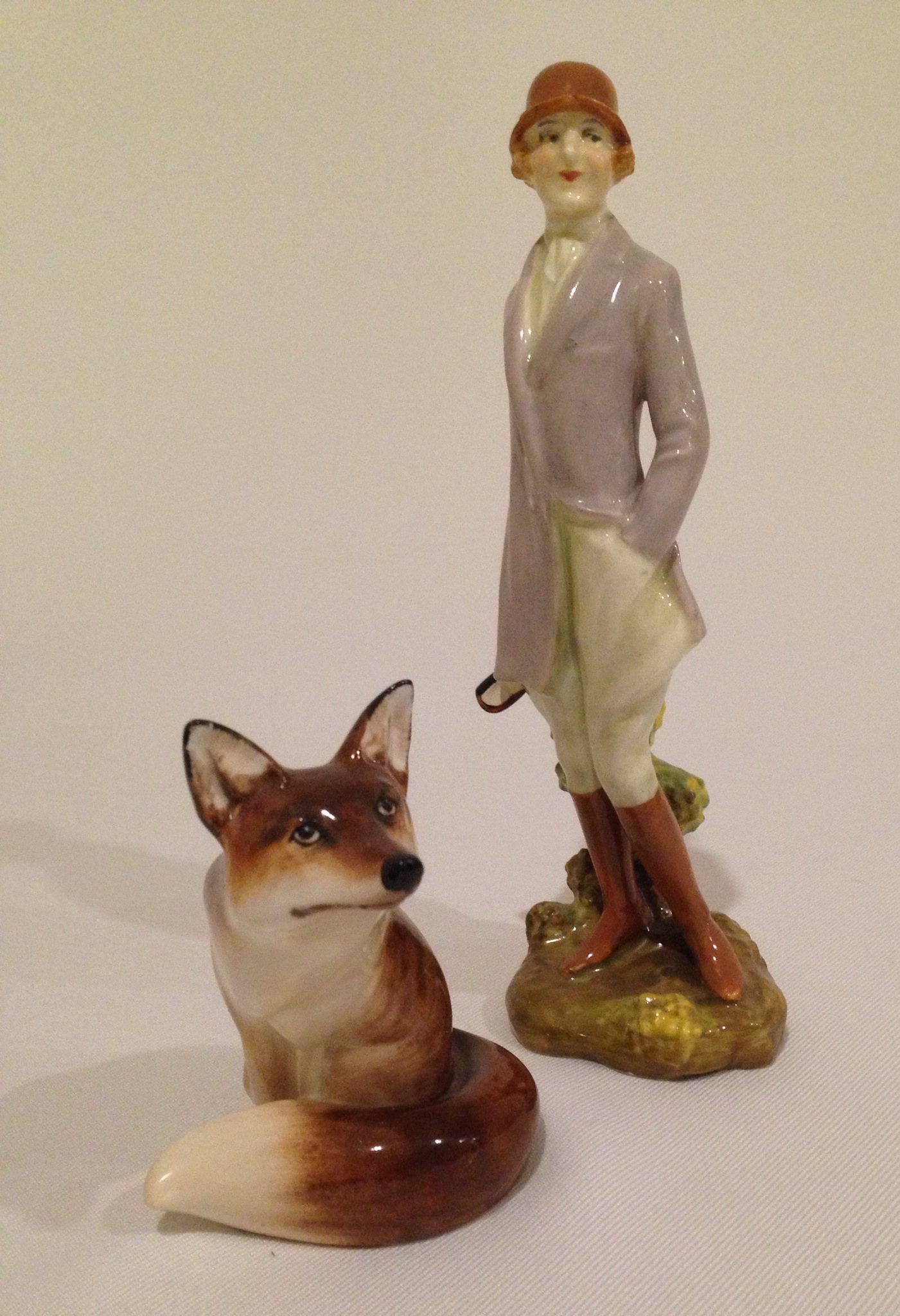
Collecting Doulton’s galloping gals!
Collecting ‘themes’ is something we look at sporadically but often it is only on reflection that we – or should I say I – realise that we already have a sub-theme already in our collections. This was certainly the case with these Doulton ladies in riding costume!
I have to admit that I don’t have them displayed as a group, but that is simply because they have been gathered over time and they’ve ‘slotted’ in as and where I can! However, I did find that I had one of my favourites, the Hunts Lady, standing ironically next to a fox!
Perhaps I’ll find somewhere to have them as a group now, next time I move things around!
An Amazing Adventure – Part 2
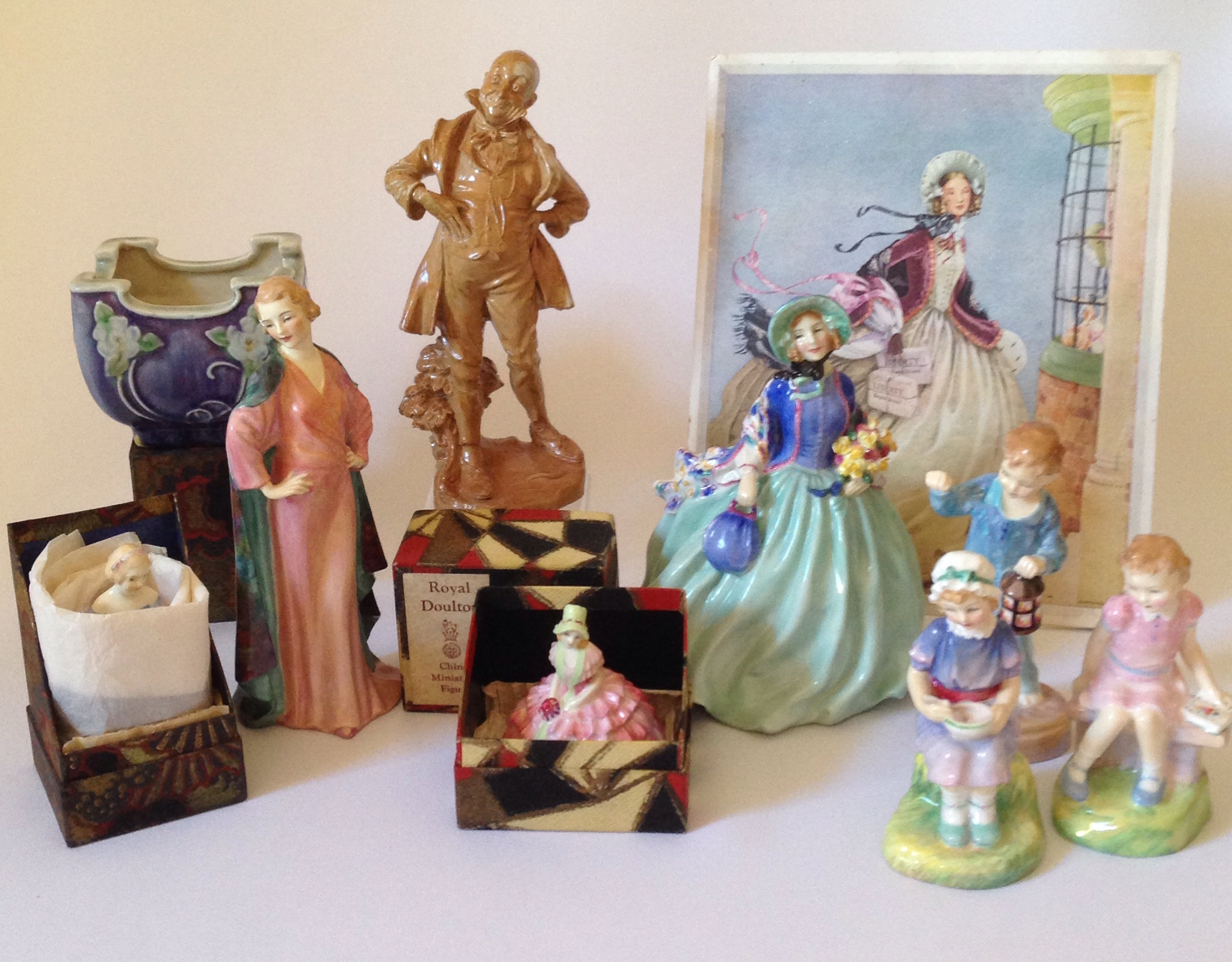
Continuing my look back at last Saturday’s talk, here are a few more choice items from the selection that I took along. The premise of the talk was ‘My Collection’.
In this section the theme was the development of figures, so I took the art nouveau, square Harradine vase along so as to discuss Harradine’s roll but also the links with Doulton from his time as an apprentice modeller, to the period 1910-14 when he supplied models to Lambeth on a freelance basis and finally how the link with Burslem was established with the introduction of his first figure into the HN Collection in 1920.
The first figure we looked at was Harradine’s original model for Micawber and we discussed the process and arrangement he had with Charles Noke.
Next up were the M series and these original boxes for them. Most of these M figures were of course based on Harradine’s larger models.
A popular theme for all figure collectors has always – well since HN1 – been children so I shared a few favourites from the Nursery figures set including a prototype in my collection.
Honey and her inspiration followed, a typical painting by Stanislaus Longley, who Harradine used repeatedly for inspiration. Interestingly this work was also used by the famous London store Liberty for a Christmas catalogue cover in the 1930’s – and that is also pictured.
This section was completed with a discussion on colourways and I shared a version of Clothilde that I have from 1937.
Next time I’ll share some Burslem art wares that we discussed!
Royal Doulton’s perfect ‘pink’ ladies!
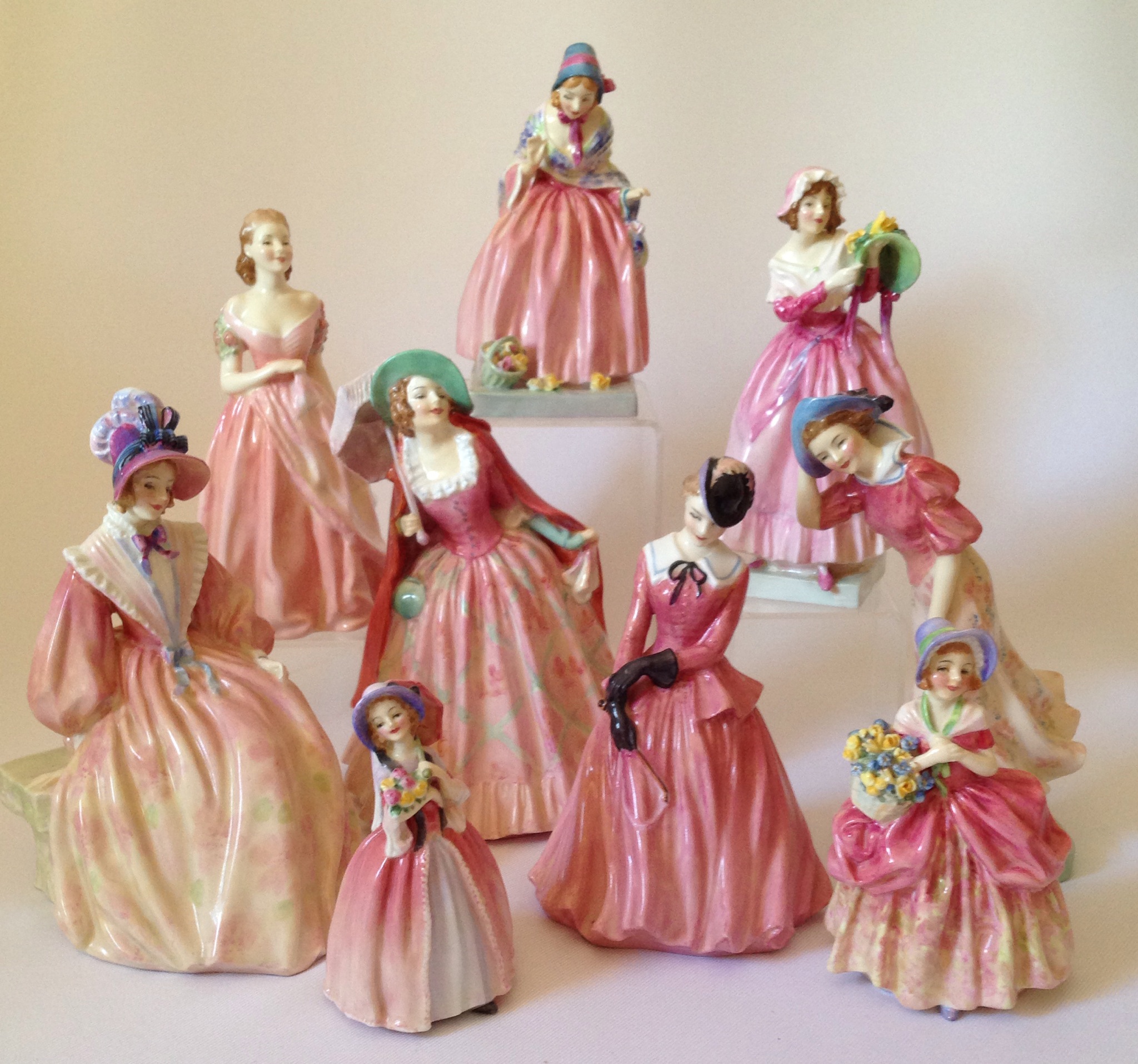
Continuing our look at ideas for arranging or grouping figures, here is a further colour theme – picture perfect pinks!
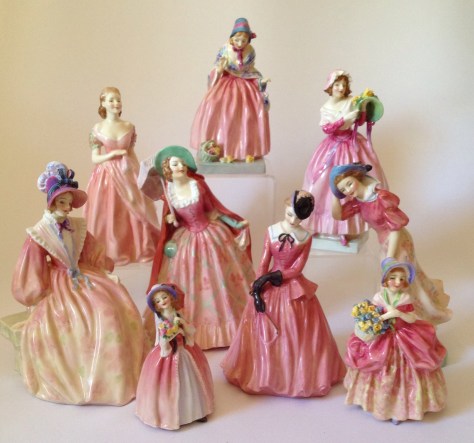
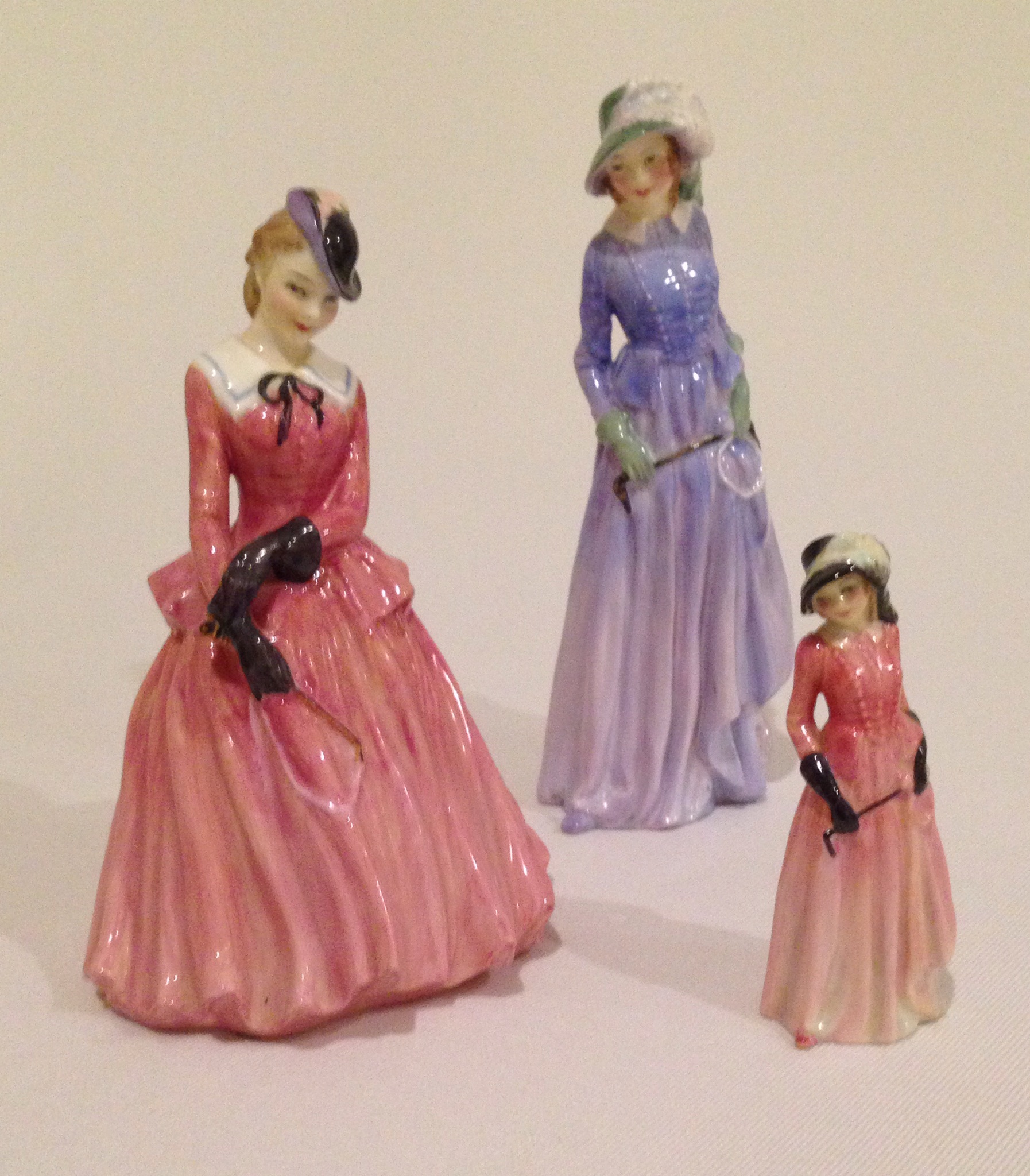
A group of Harradine’s pink ladies.
The popularity of pink figures like many of the other colour themes we have looked at seems to have fluctuated over the years. Even today there are groups of pink figures that are introduced only for there to be a real gap in the issuing of further examples.
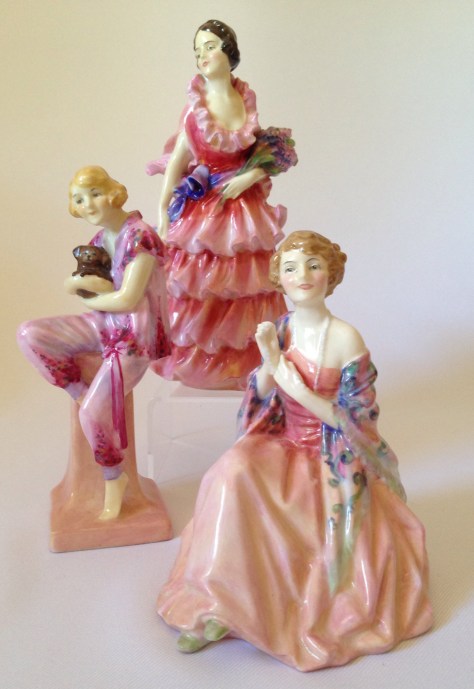
However, some pink ladies remained popular for decades including Harradine’s pink Top o’ the hill HN1849 and many of his child studies including Cissie HN1809 and her partner Bo-Peep HN1811.
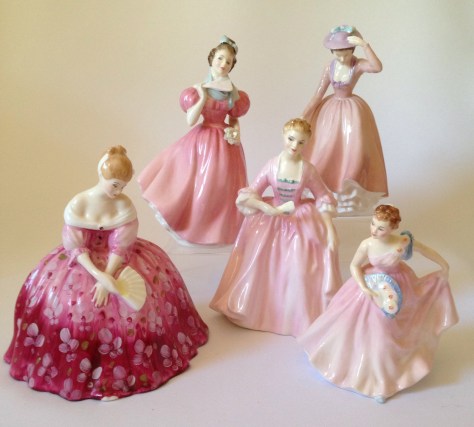
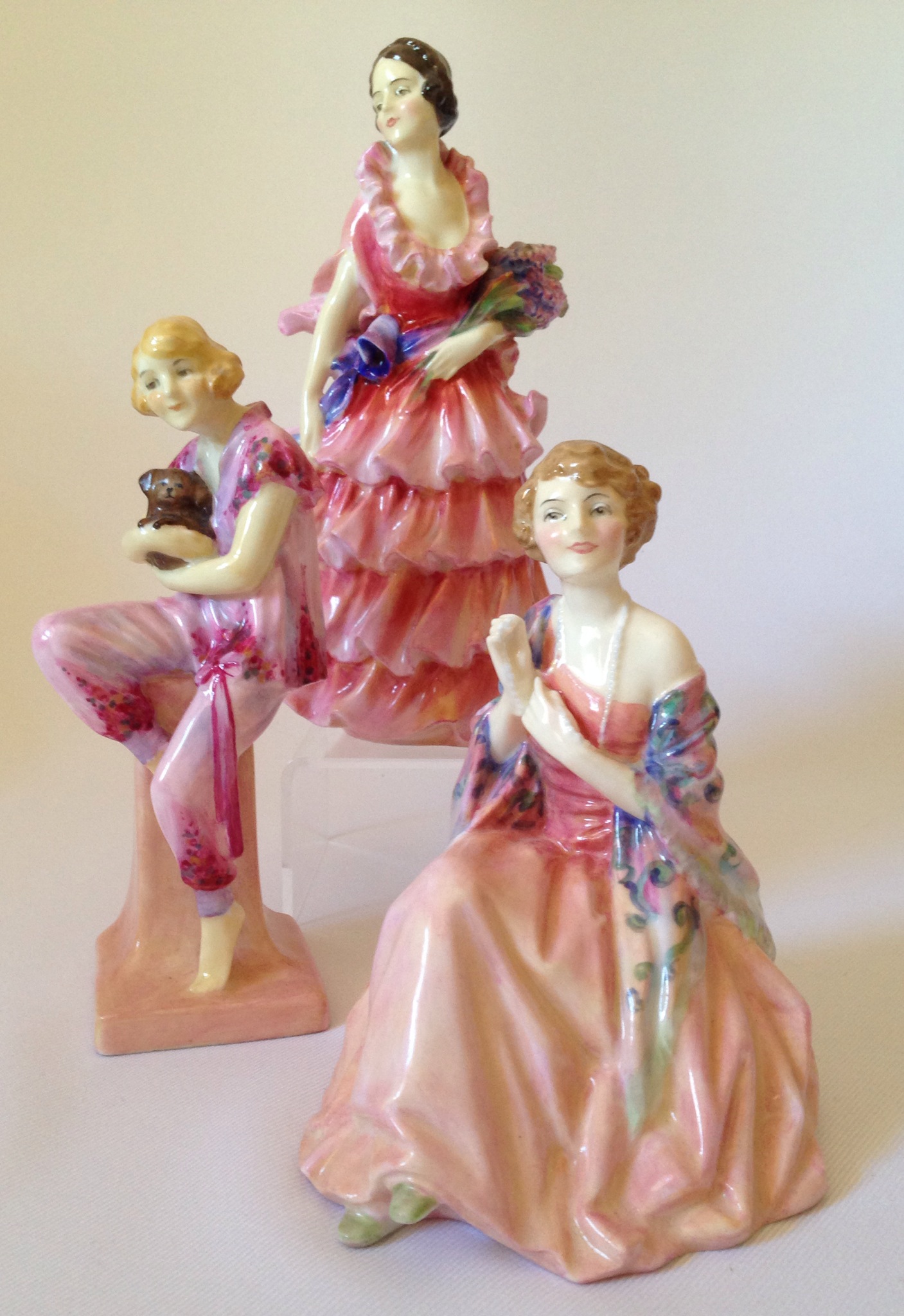
A selection of Peggy’s pink ladies.
Many of Harradine’s figures from the mid to late 1930’s were issued in either a pink or a blue colourway and the pink appears to have generally been preferred, meaning that today collectors really have to search assiduously for the blue versions of figures such as Miss Fortune, The Lambeth Walk, Windflower and Maureen to name but a few.
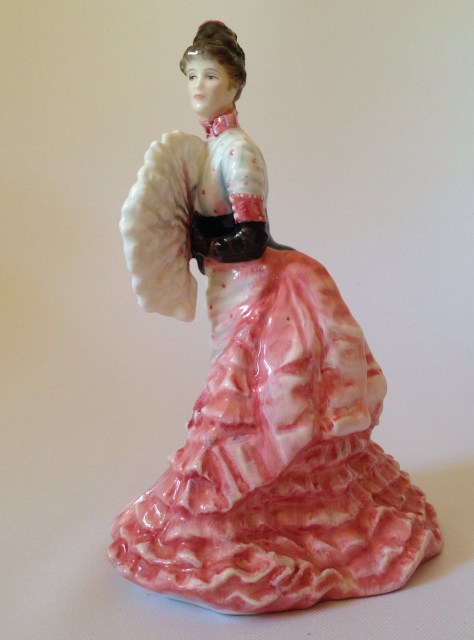
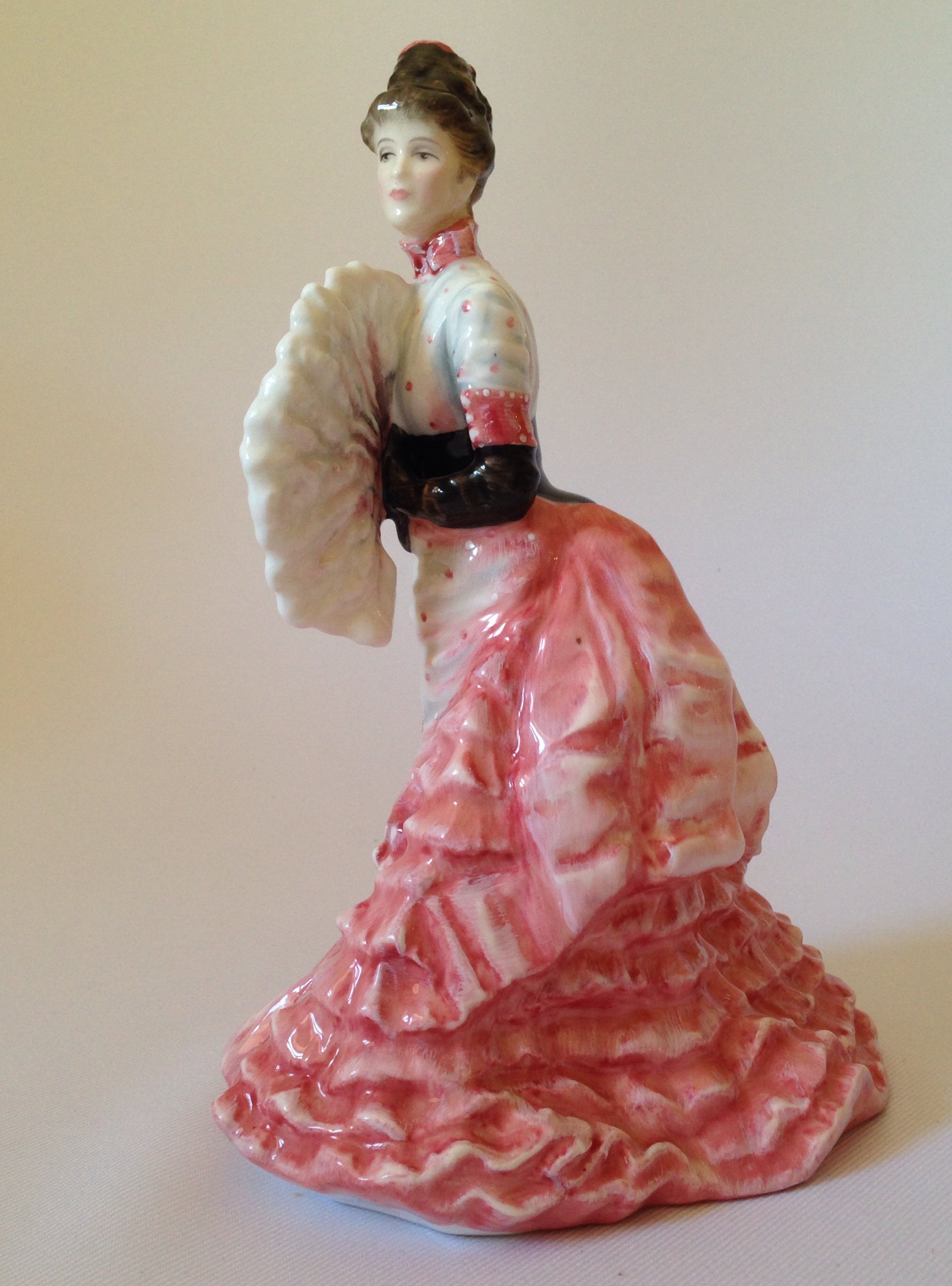
Valerie Annand’s elaborate L’Ambitieuse from more recent times.
As always whatever your tastes a grouping of one colour or many colours makes an eye-catching display.
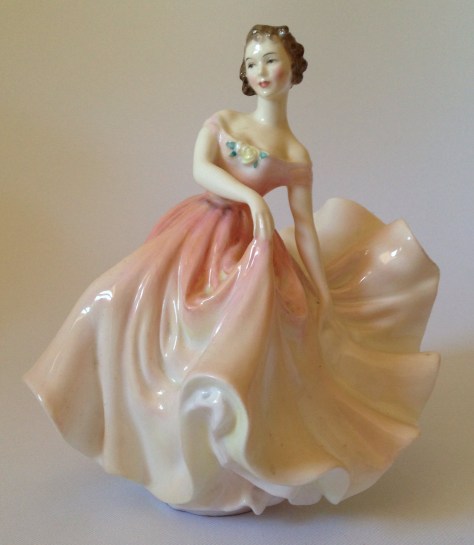
Reflections: the source of Harradine’s popular figure Phyllis.
As you know it is a real interest of mine to research where figures derive their inspiration. Those who have read my book ‘Reflections’ with Jocelyn, will have seen the section on the illustrator Jennie Harbour.
Very little is known about the illustrator but her work can be found on Tuck’s postcards as well as in many editions of deco books from the time. Her illustrations remain popular today around the world and framed, vintage prints can sell for a fair sum.
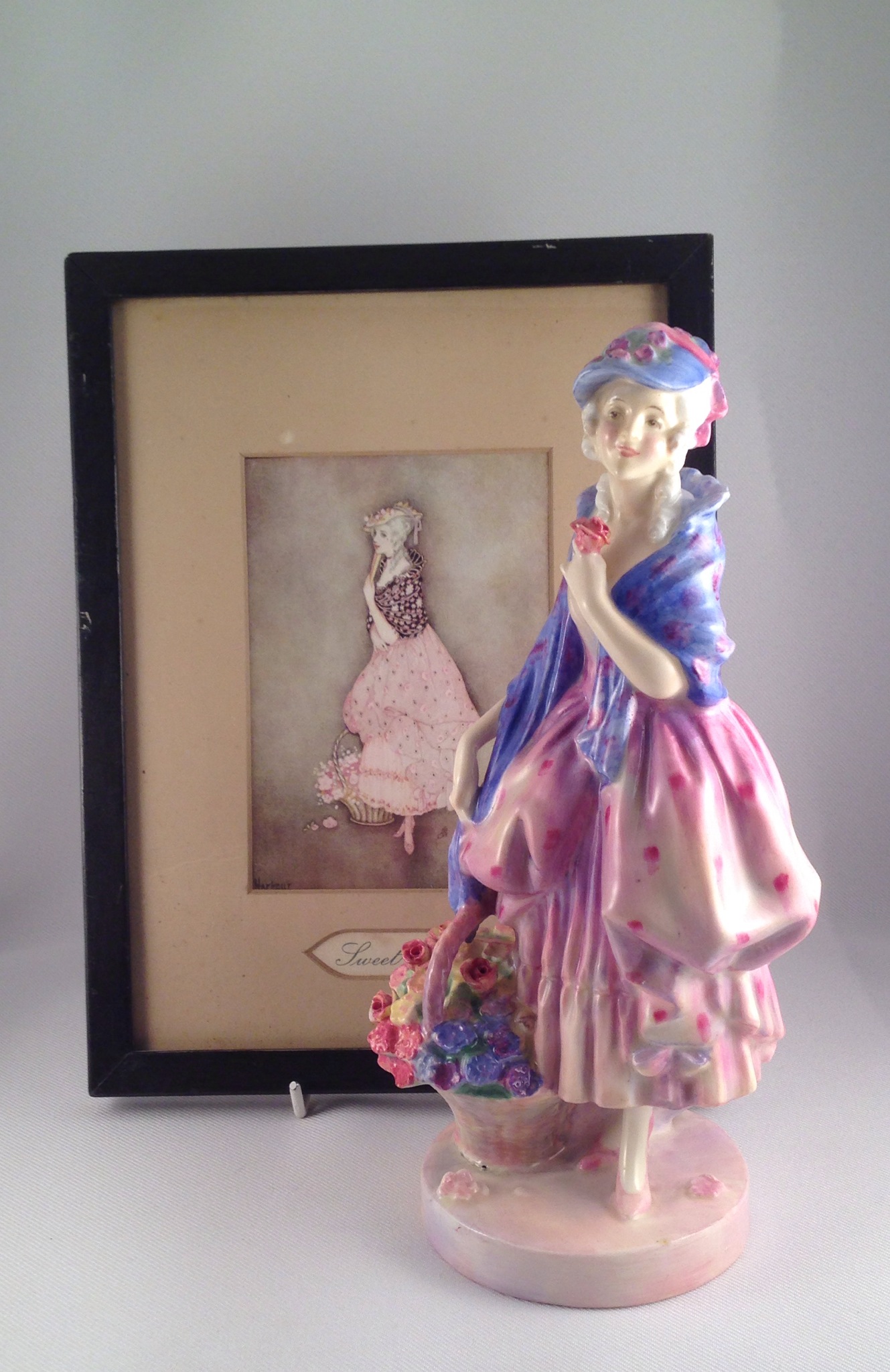
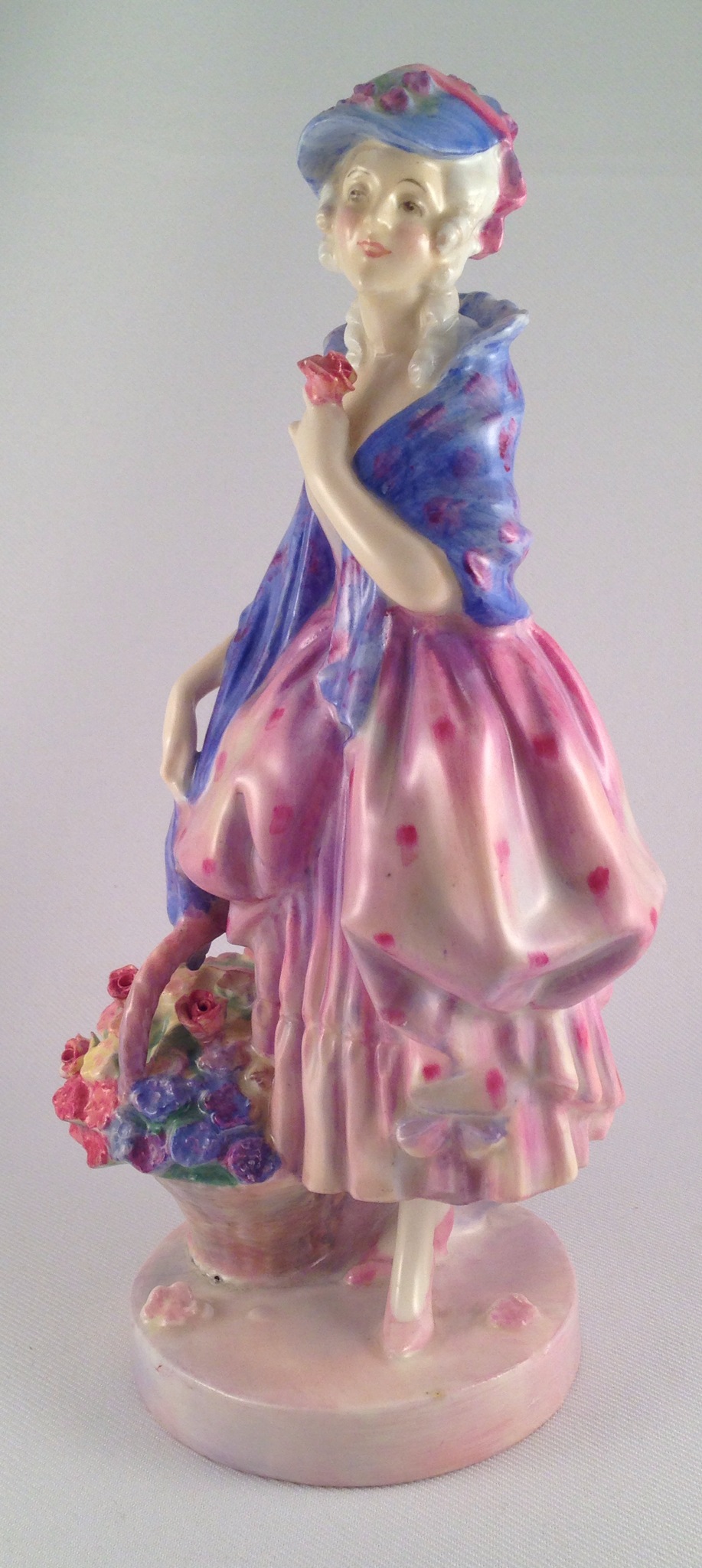
Back to Phyllis, as you can see she has been expertly interpreted from Jennie Harbour’s illustration ‘Sweet Nell’ by Harradine. Here she is as HN1486, although the most readily found version is HN1420 as it was clearly the most popular colourway. I have always felt that she makes the perfect partner to Dolly Vardon save for the base on Phyllis. Perhaps there is a version if Phyllis out there without a base. As we know modifications were frequent on these early figures, and we looked at how a stepped vase was added to Harradine’s Helen some time ago.
Royal Doulton’s dreamy yellow and orange figures.
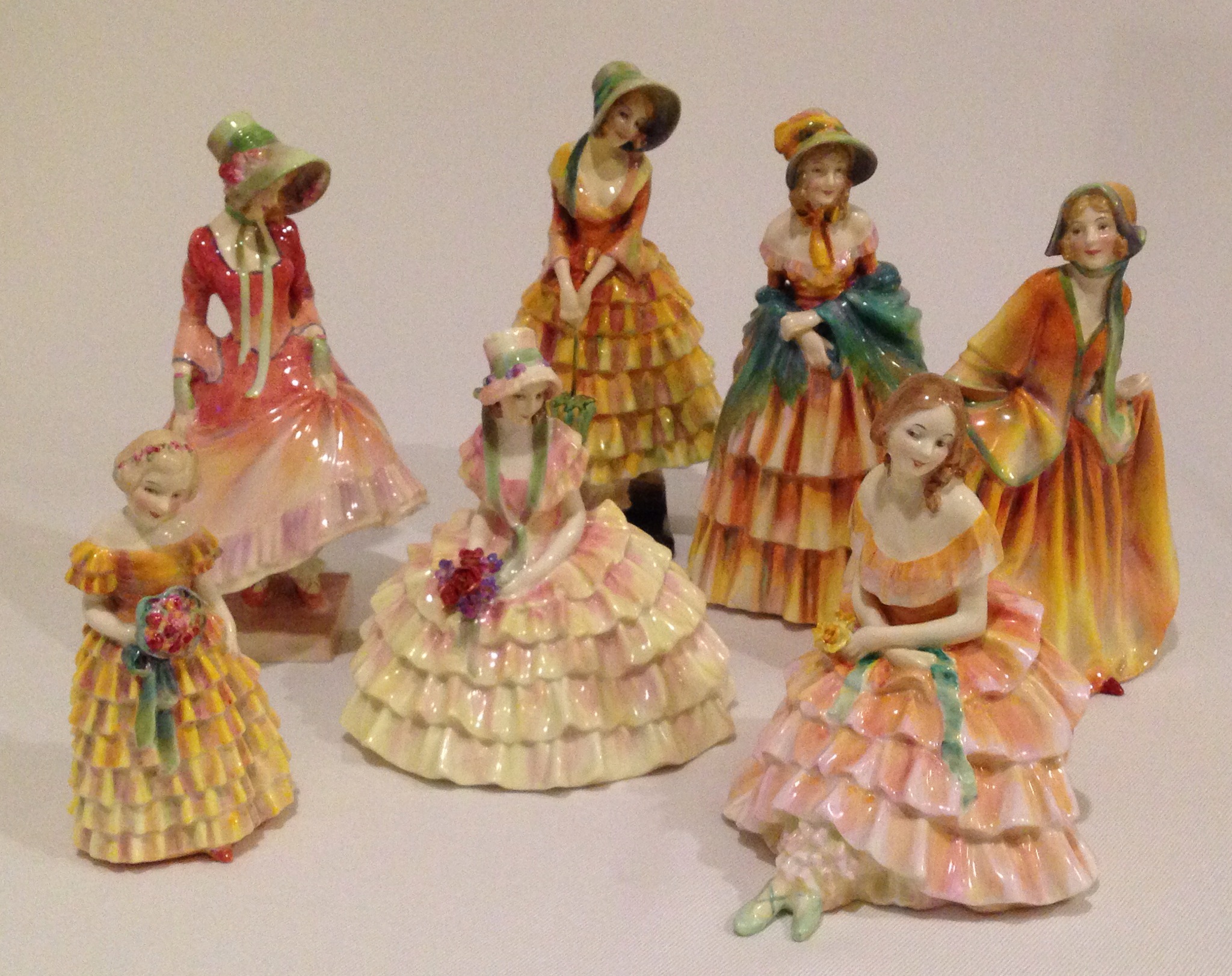
We all normally associate bright reds, blues and greens with Doulton figures, however, there were a small group of early figures that fit into the peachy, yellow-orange bracket as you can see above.
The majority of these figures have HN numbers around 1500, indeed the colourway of Sweet Anne pictured actually carries the HN number 1529, an HN number we associate with the colourway of A Victorian Lady – also pictured above. This group of ladies are typically finished with green accessories; usually a gorgeous hue of green to compliment the yellowy orange colouring. The wonderful thing about these ladies is the depth of the colouring involved – a real forte of the Doulton painters of the time who would re-fire the colours multiple times to achieve the desired effect.
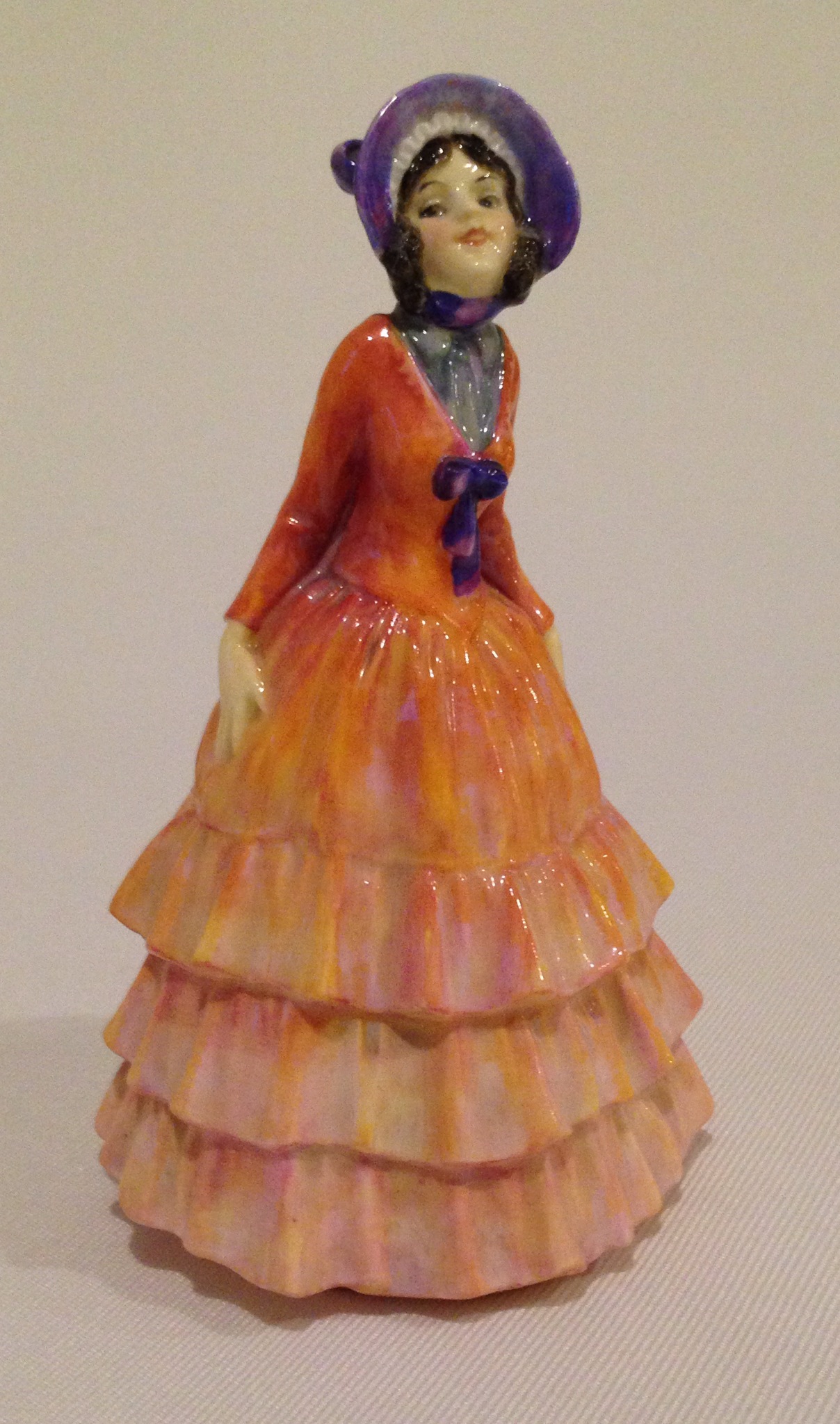
This demure band of ladies are all colour co-ordinated, yet, there are others we can add to this dreamy crowd. Here is a colourway of Pauline in orange.
Perhaps you too own figures that belong to this group. If so why not share them via our facebook page ‘Doulton Collectors Club’. We look forward to welcoming you!
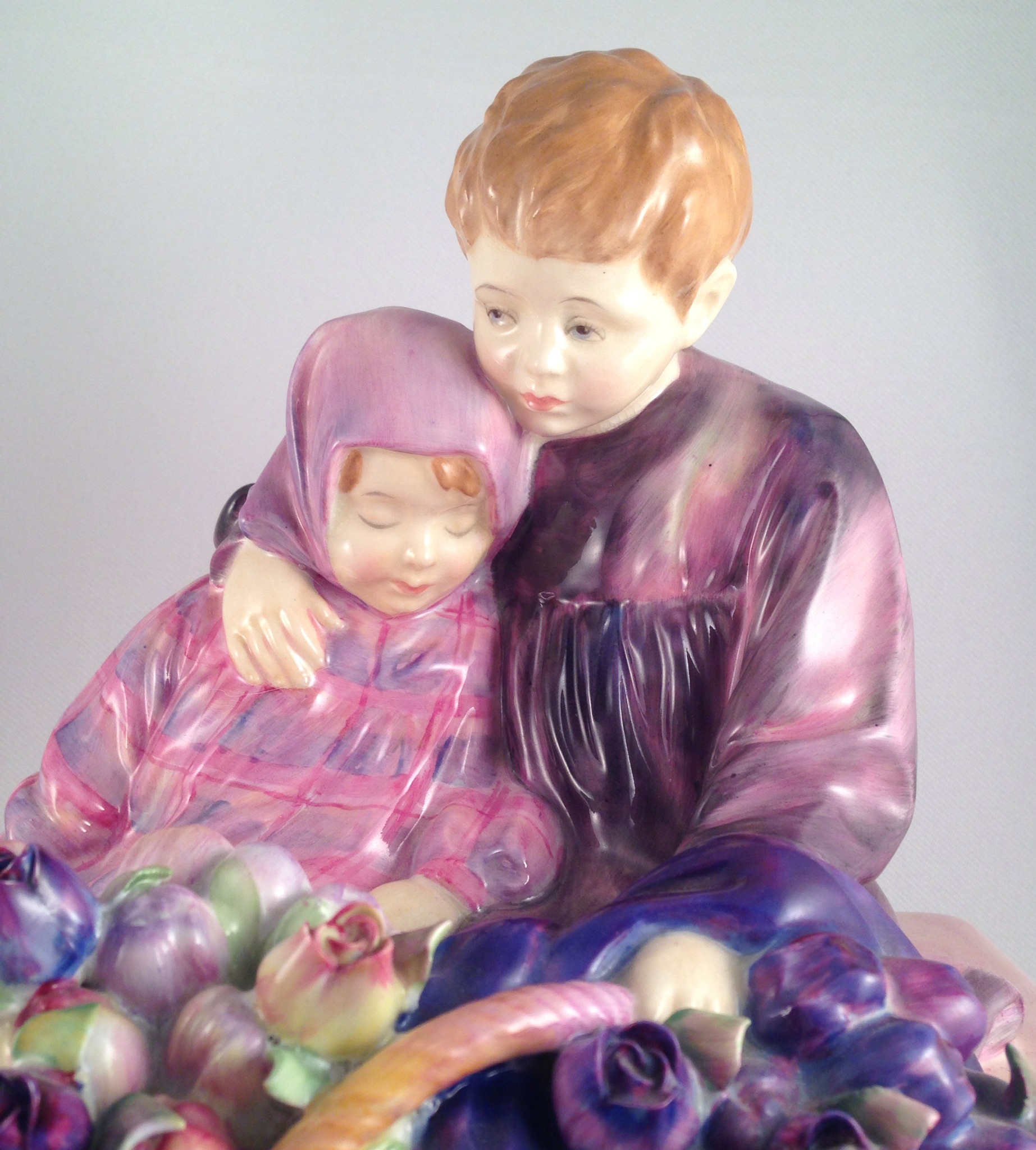
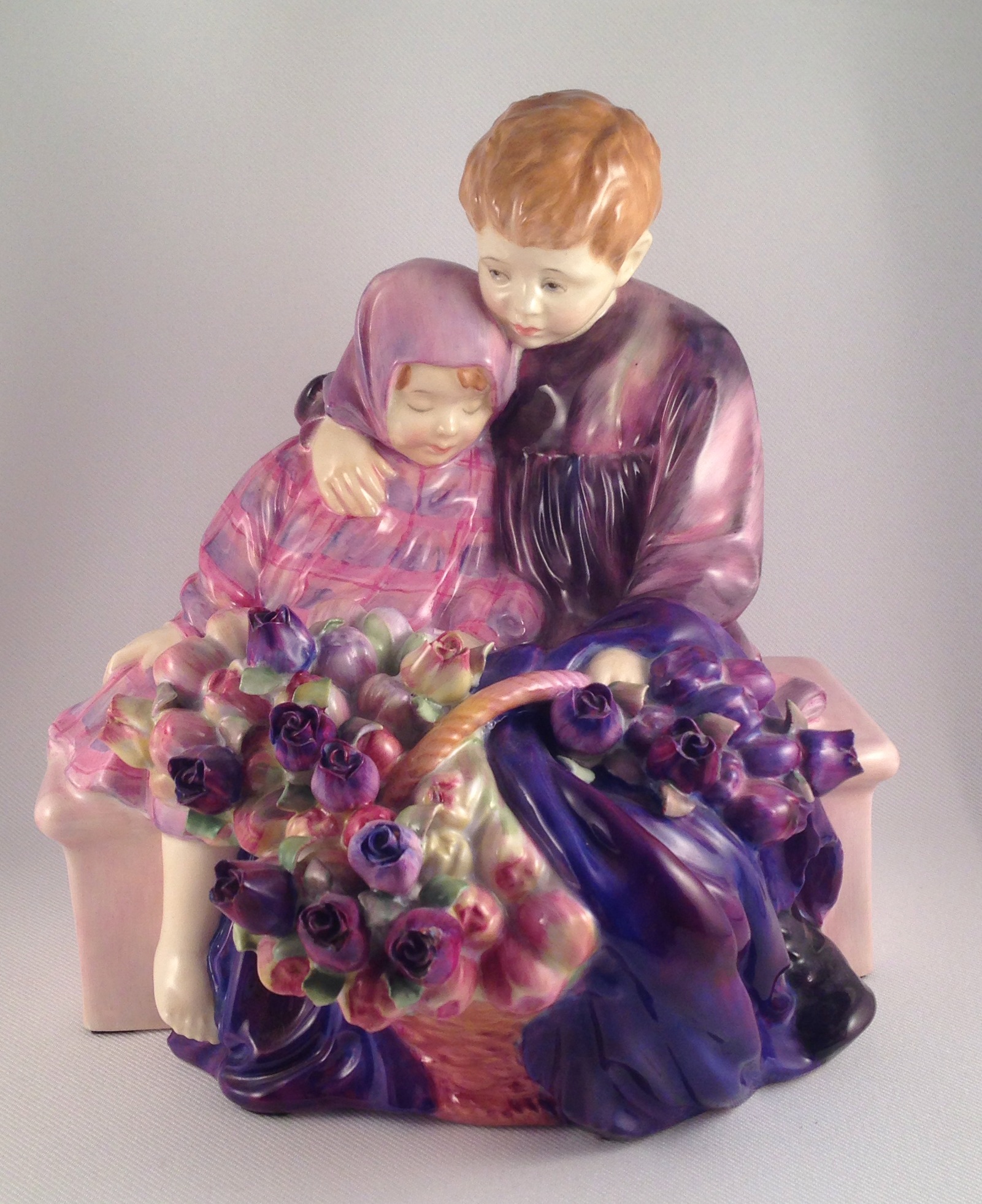
A look back at the enduringly popular Flower Seller’s Children.

A close up of the skilfully painted children’s faces.
This delightful study was the concept of Leslie Harradine in 1921 during his first year of supplying models to Doulton’s studios in Burslem. Harradine had been apprenticed to Doulton in Lambeth in the early years of the 20th Century but factory life he found unbearable and so broke loose from these confines. He continued to supply models to Lambeth’s studios until his departure for Canada. This early time in Harradine’s association with Doulton we have covered already in the three part article on his life.
Upon his return Charles Noke, Burslem’s art director, tried every enticement to attract Harradine to move to the Potteries but to no avail. A compromise was of course reached whereby he would supply models to Burslem, something that continued for many decades.
This early group by Harradine was available in 5 different colourways and one HN1342 was produced until 1993. Whilst not classed as a prestige piece the painting that can be found on these pieces is stunning as I am sure you will agree.
Harradine’s inspiration for this piece apparently came during an evening out in London, whereupon he saw such a scene and sketched it upon his shirt sleeve. A romantic story for a sentimental group.
The enduring charm of this study meant that a collectors plate and more recently a miniature version of this group HN4807 was introduced in 2005.
Royal Doulton’s Fairies
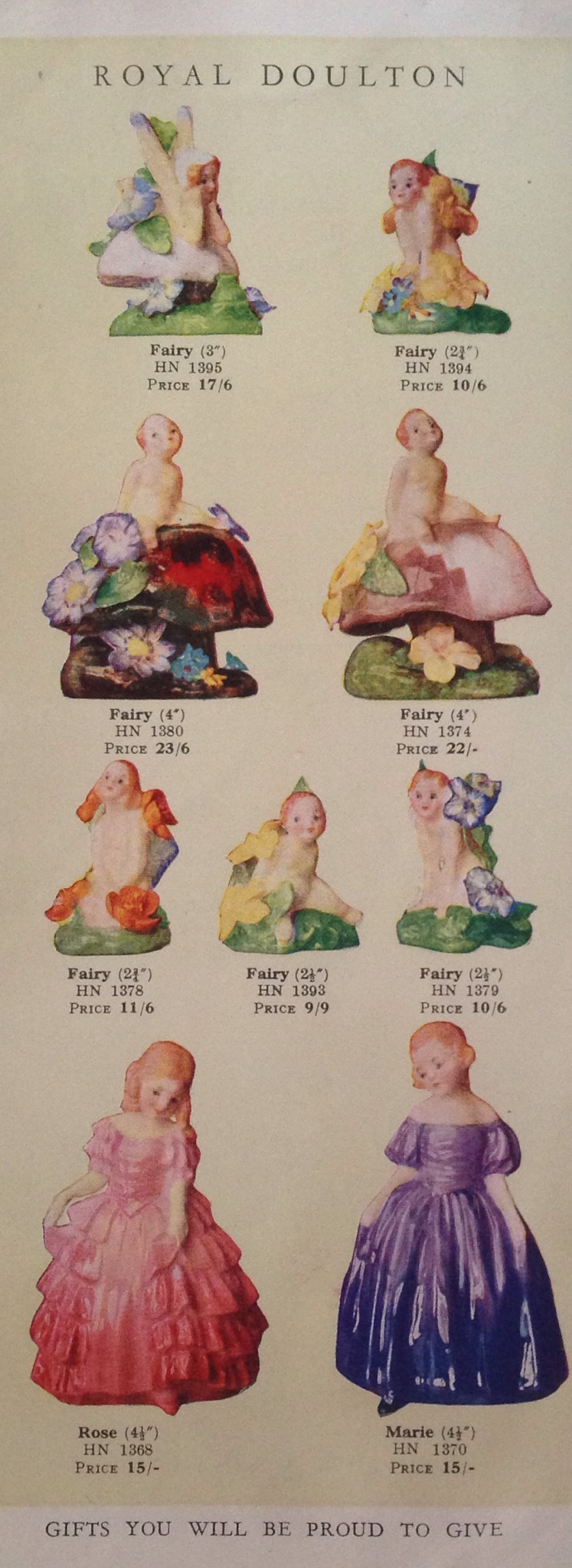
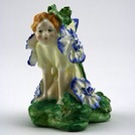
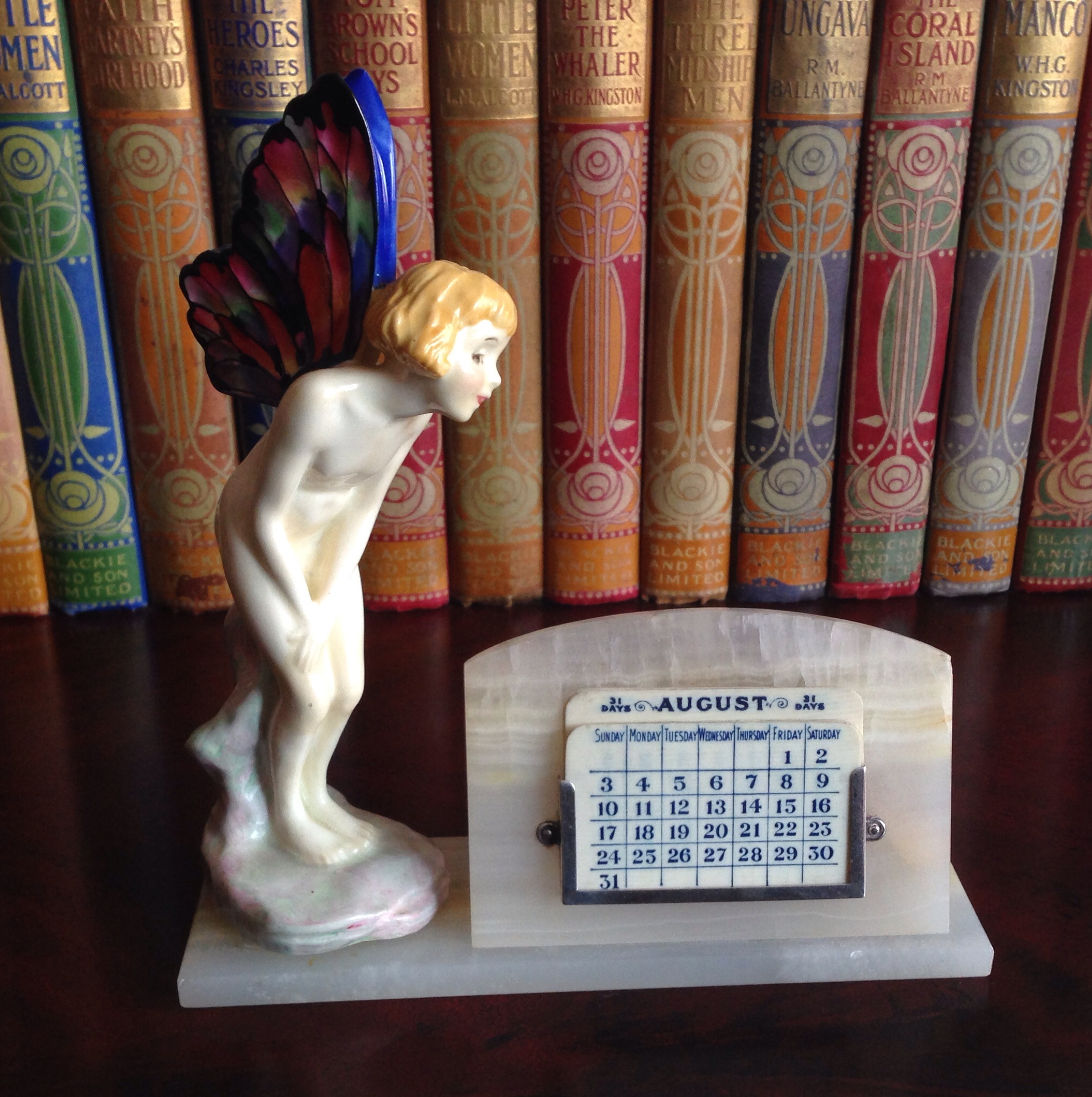
These sprightly, mythical creatures of many a folklore were immortalised by the great Leslie Harradine for the HN collection in 1930, but interest in all things ‘fairy’ had reached a fever pitch a decade before with the so-called Cottingley fairies; a series of 5 photographs of fairies taken by two young cousins and heralded by Arthur Conan Doyle (author of the Sherlock Holmes stories) as evidence of their existence. Alas the cousins would admit eventually that all but the fifth was faked and that, it has been suggested, was probably the result of a double exposure by the young girls.

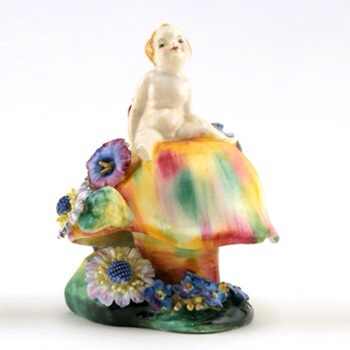
Doulton produced at least 7 different figures of fairies from standing with wings, to perched on toadstools to simply hiding in the undergrowth. Each is a charming study of childhood and many were available with differing flowers and even different colourways during their short production in the 1930’s. Certainly the second and sixth versions are the same child as ‘Boy on Pig’ HN1369 attributed to CJ Noke rather than Harradine. There are a further 6 fairies listed but which did not go into production.

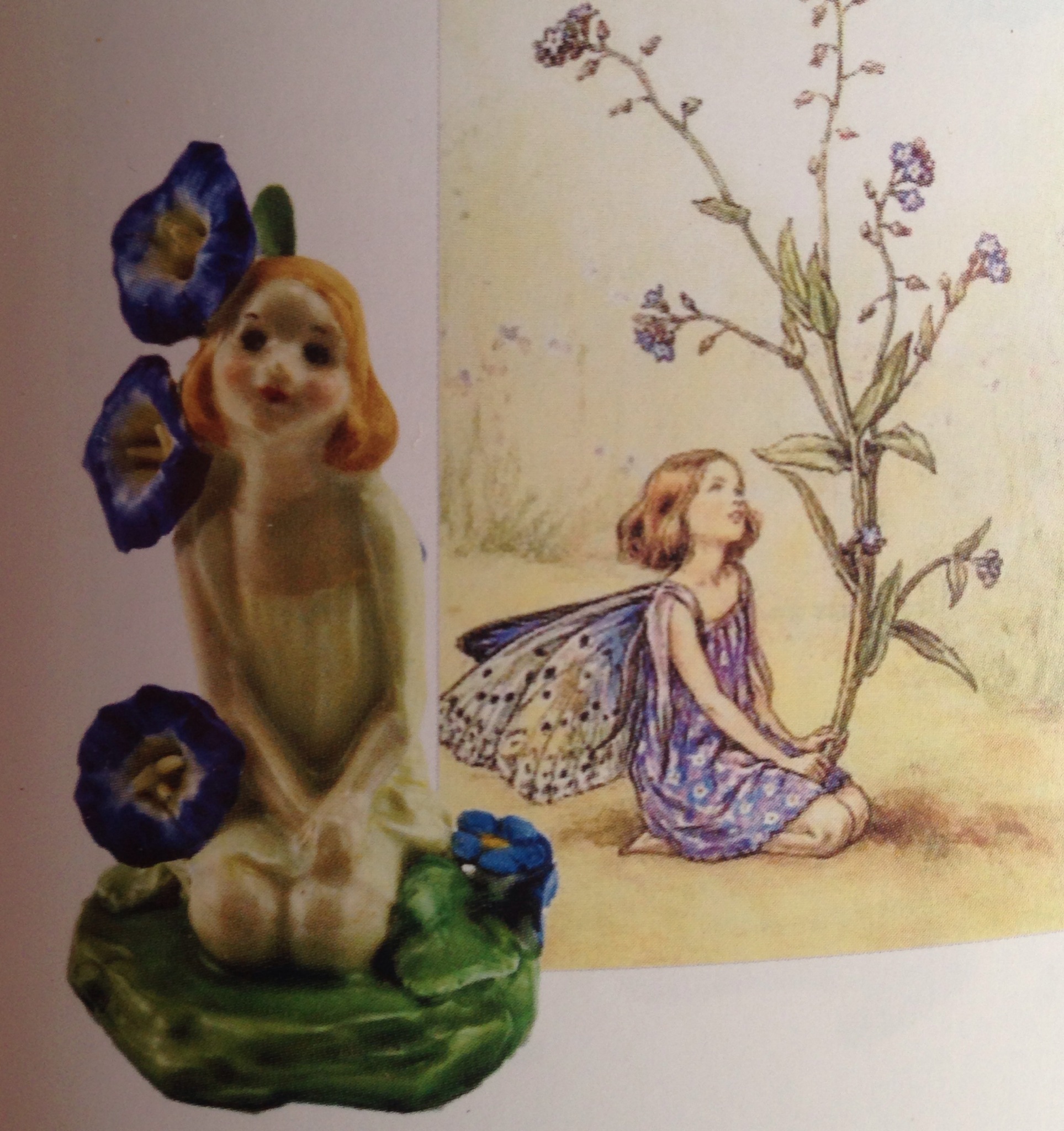
Doulton’s Fairies HN1396 and HN1375 were even modelled after the fairy illustrations of Cicely Mary Barker that remain popular to this day.

A display of these figures really is magical, however, tracking them down is just as elusive as finding the real thing…or so it seems!
What is in a name? Royal Doulton’s ‘The Rocking Horse’.

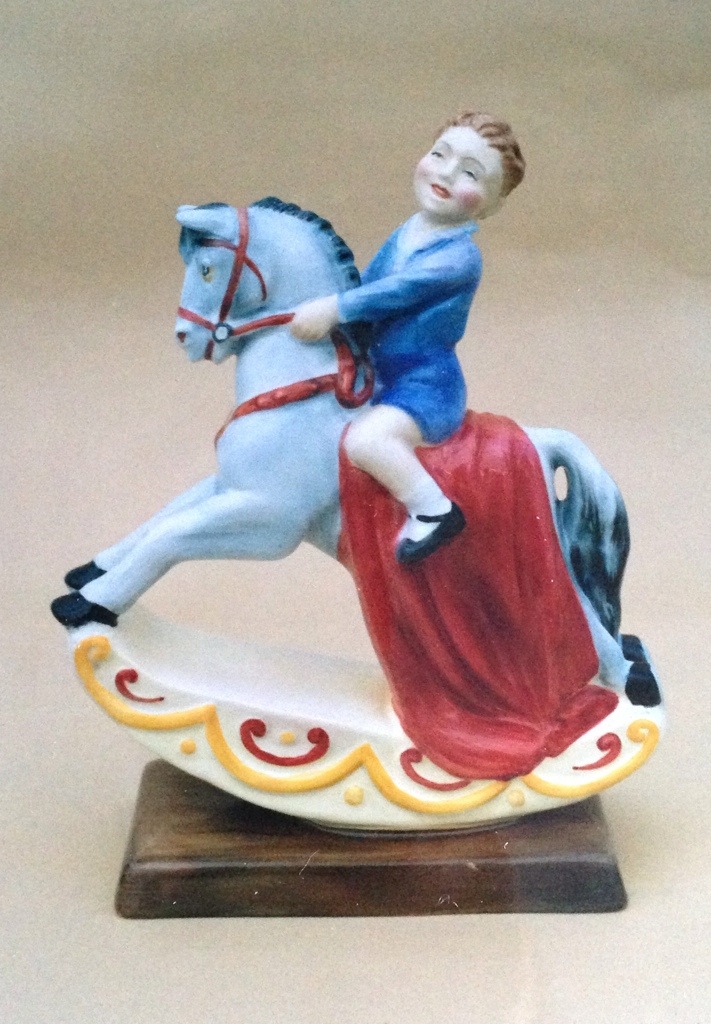
The Rocking Horse HN2072.
This particular figure I am sure you will agree is charming and belongs to a small group of rare Harradine figures produced for a very short period post WWII. The only reason I can see for this figure’s short production (1951-3) is that its production was too costly at a time of rationalisation within the Burslem factory.
The inspiration for this figure is undoubtedly the film ‘The Rocking Horse Winner’ from 1949, where a young boy discovers he can predict race winners by rocking his rocking horse!
A look back at Harradine’s Lady Clare.

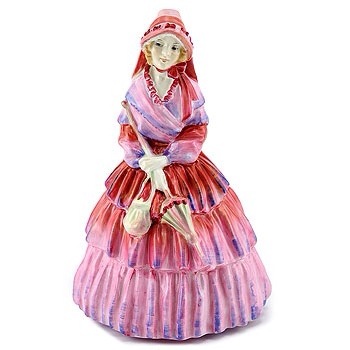
The official Lady Clare HN1465.
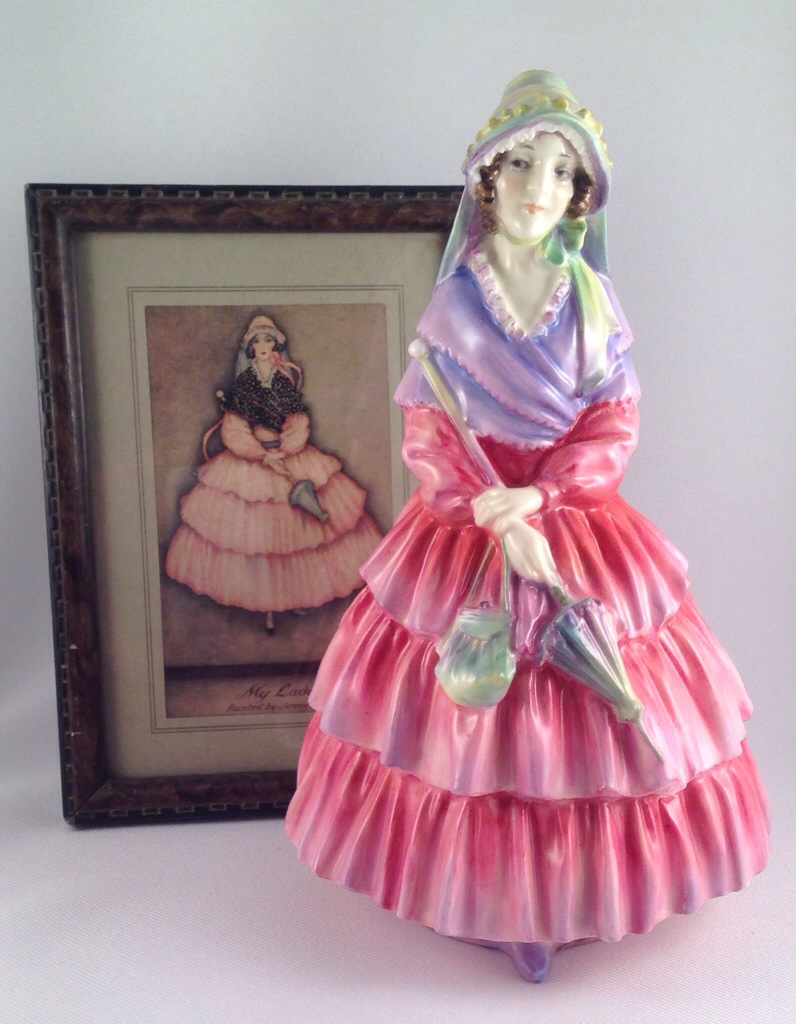
This unusual figure had a relatively short production run from 1931-37 and examples rarely turn up. She takes her inspiration from this Jennie Harbour picture titled ‘My Ladye’ from her ‘Victorian’ series for Raphael Tuck the card manufacturers. As you can see the original Harradine model has a base with a foot protruding from under her skirt, just like the original picture. This makes her 1.5cms taller than the production model.

A prototype of Lady Clare pictured with her inspiration.
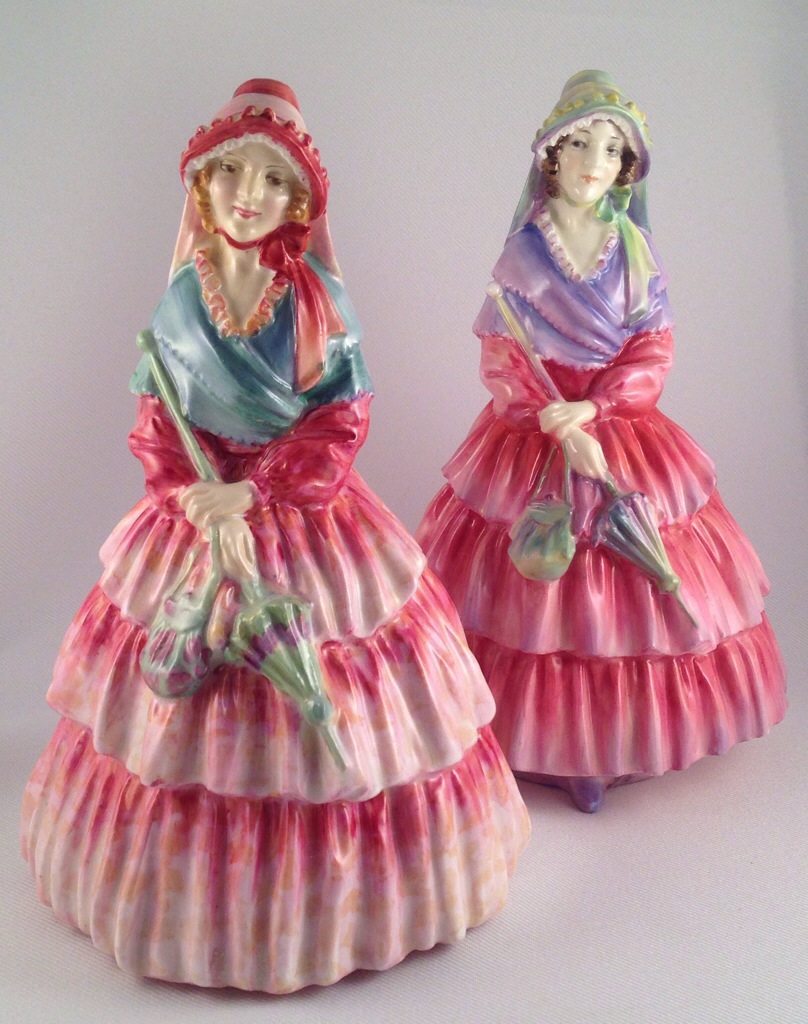
As well as HN1465 there is another colourway of Lady Clare that has emerged and there appear to be a handful of examples of this colour scheme in collections around the world.

Two versions of Lady Clare; a colourway and a prototype.
Perhaps you also have variations of early figures? If do why not share with our ‘Doulton Collectors Club’ page on Facebook?