We seem to have written much over the years about Doulton’s Faience wares, so will try not to dwell on what we have already covered.
As many will remember when Faience first began production at Lambeth they didn’t have their own production facilities for the blank ware so Doulton’s other factory in Burslem was tasked with sending down blanks to be decorated and then fired at others’ factories in Lambeth, prior to Doulton swiftly constructing their own kilns capable of firing faience art wares and production facility for the blank ware
.
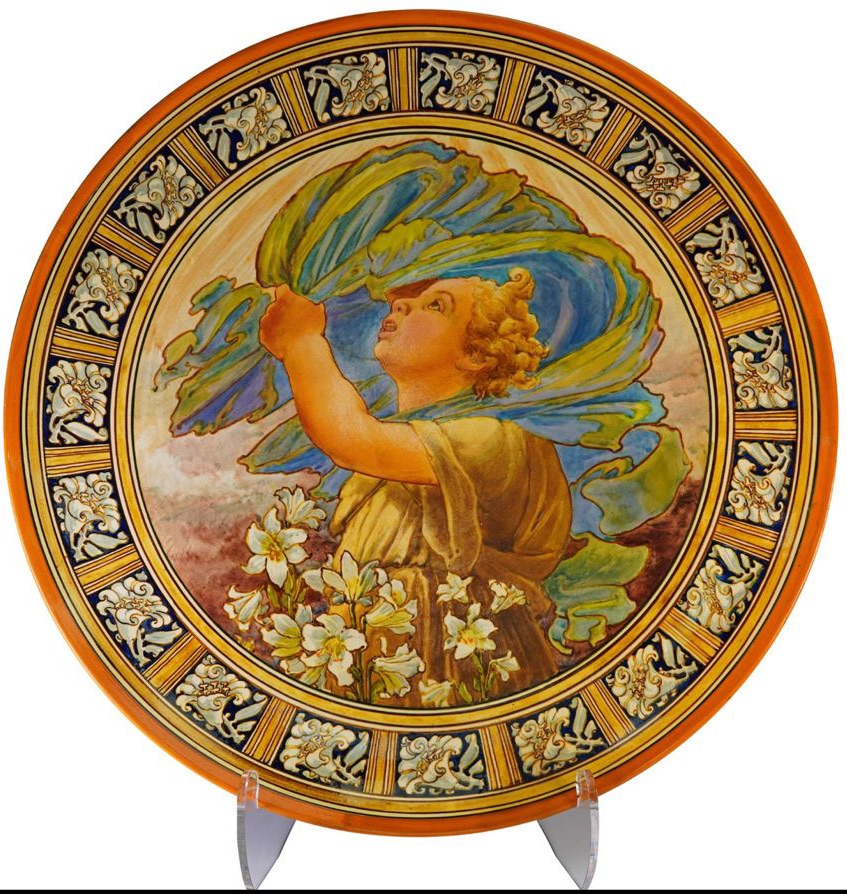
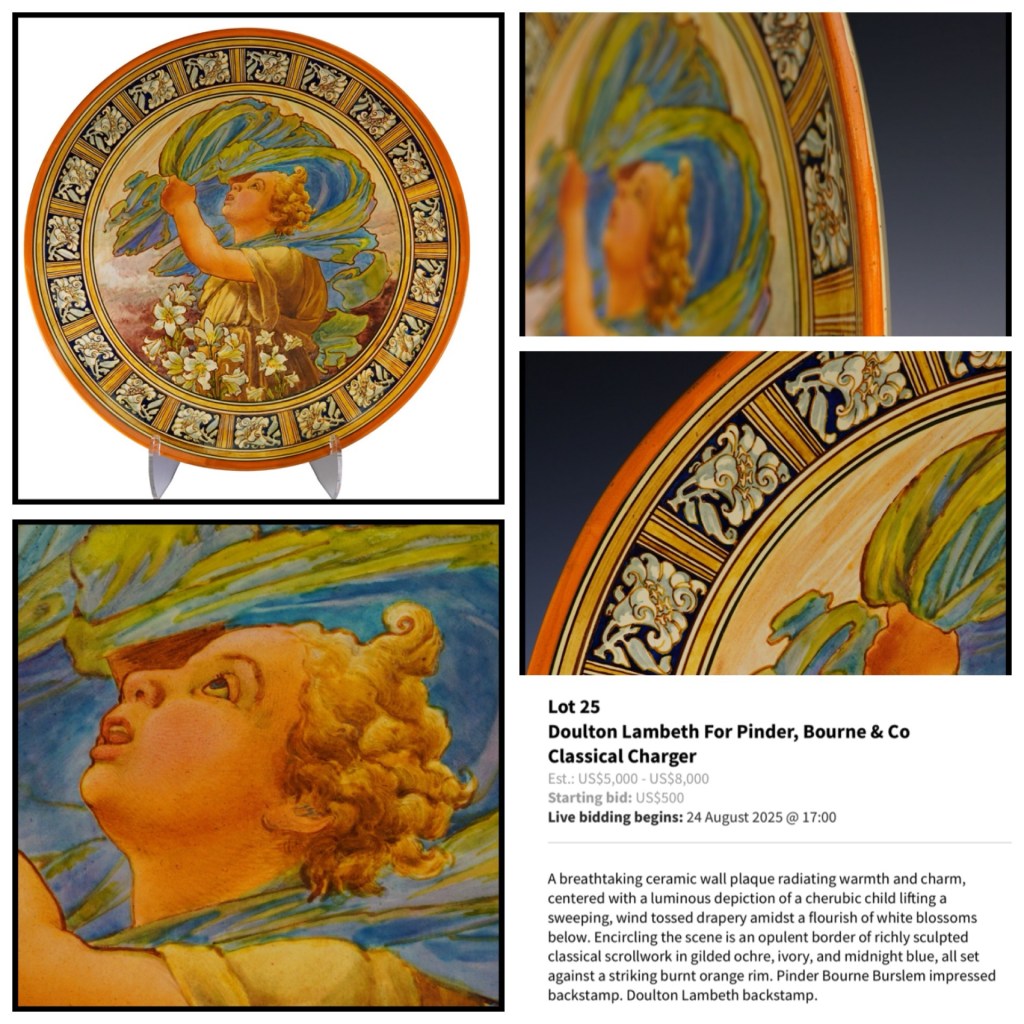
Illustrated is a wonderful faience charger by John H. McLennan, perhaps Doulton’s most famous portrait artist on the faience medium. You will note from the catalogue description by Lion and Unicorn that the blank charger bears a Pinder Bourne mark, which readers will know is the factory in Burslem that Sir Henry Doulton bought into in 1877 before taking it over solely in 1882. It is therefore not surprising given the date of Faience art ware being introduced in 1873, McLennan’s start with the firm in 1877 and the use of a Pinder Bourne blank of 1881 all to marry up within a few years of one another.
McLennan was active between 1877-1910 and his style was heavily influenced by the art nouveau movement. He was a designer and painter of Faience vases, plaques, wall panels and single tiles. His work was presented at many of the great International Exhibitions Doulton exhibited at and his work favoured by Royalty the world over – even the last Russian Tsar had examples of his work.
It will be no surprise that his tile panels exist today and even the legendary Great Ormond Street Children’s Hospital in London has examples of tile panels by this great artist.
For a similar example of his work see Doulton Lambeth Wares by Eyles and Irvine p.13 from the legendary Billings Collection.



 doultoncollectorsclub