George Tinworth, the first Doulton artist, is perhaps the best place to start this short exposé on Doulton’s Church art wares.
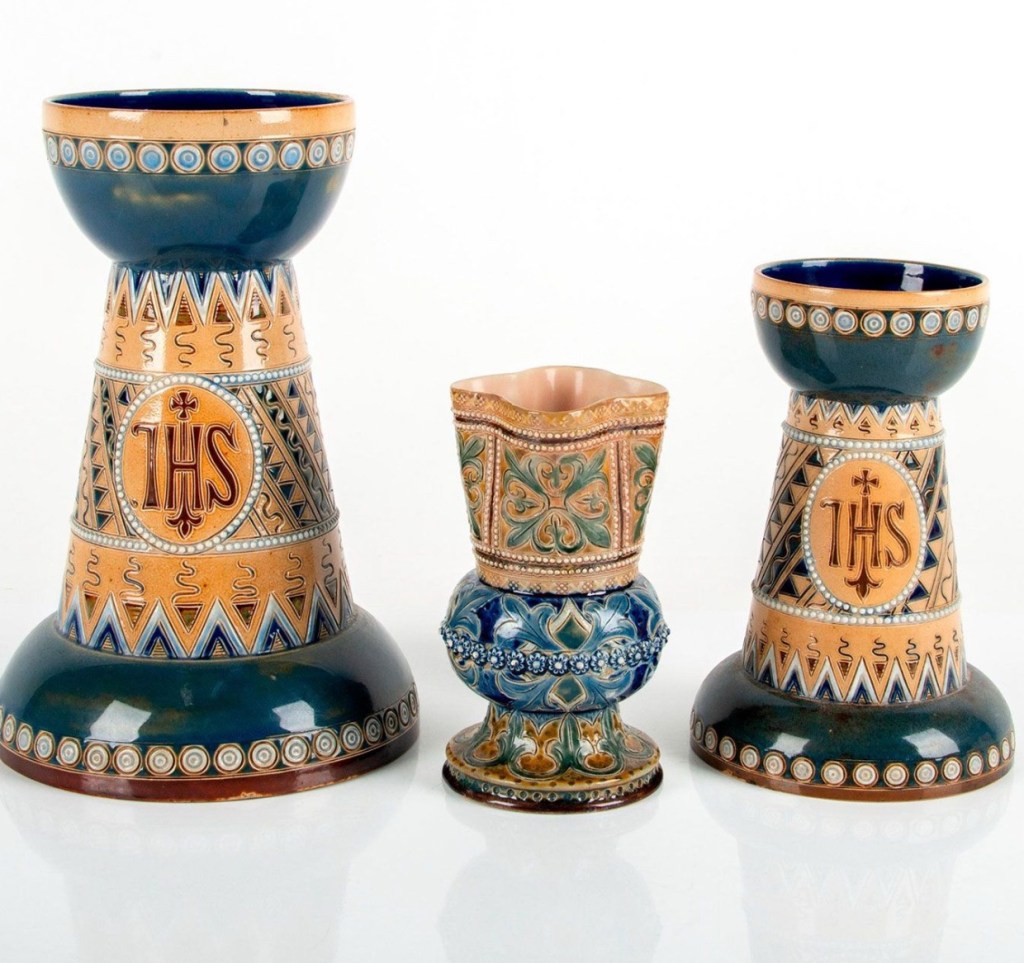
A selection of alter vases produced at Doulton Lambeth, sold by Lion & Unicorn auctions.
An ex student of the Lambeth School of Art, Tinworth worked at Doulton’s Lambeth factory from 1867 to his death in 1913. Most of his work was sculptural and can still be be seen today in parks and churches around the world.
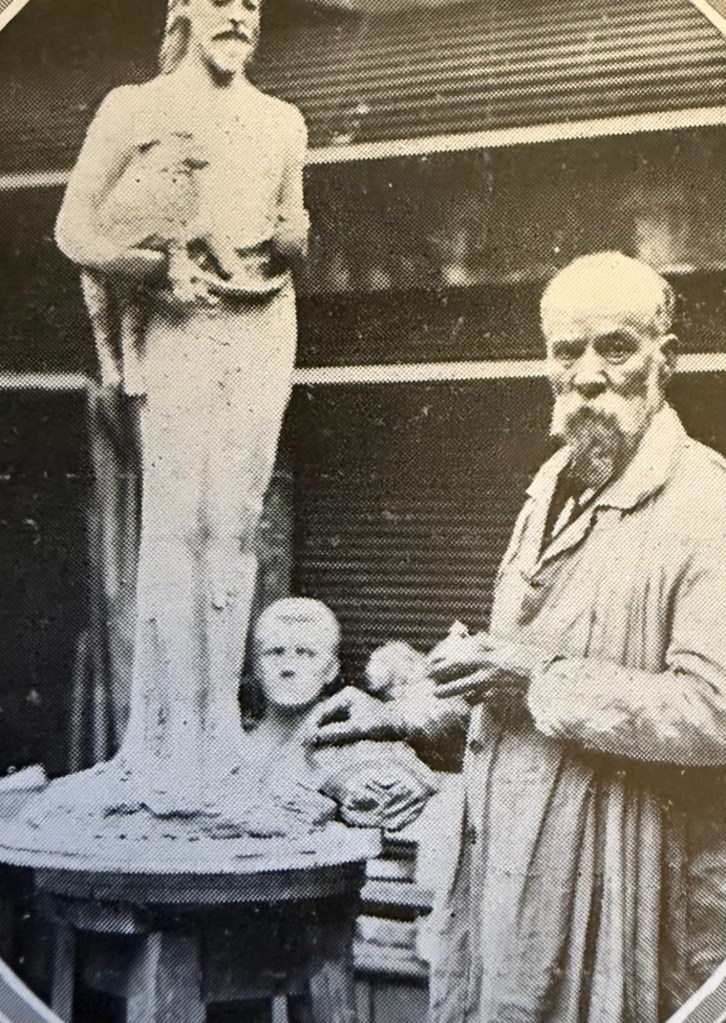
Tinworth in his studio at Lambeth working on a Good Shepherd statue.
In the 19c respectability was especially prized, and Tinworth’s religious work brought great acclaim to the Lambeth factory. Whist it is perhaps his amusing mice and other animal sculptures that are most prized today, this change is a true reflection of changing attitudes in modern times.
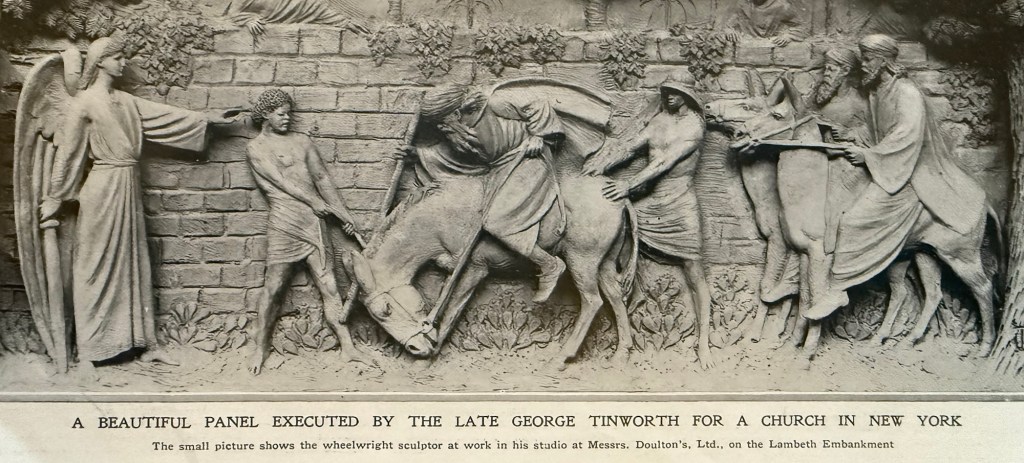
Plaque by Tinworth from a New York church
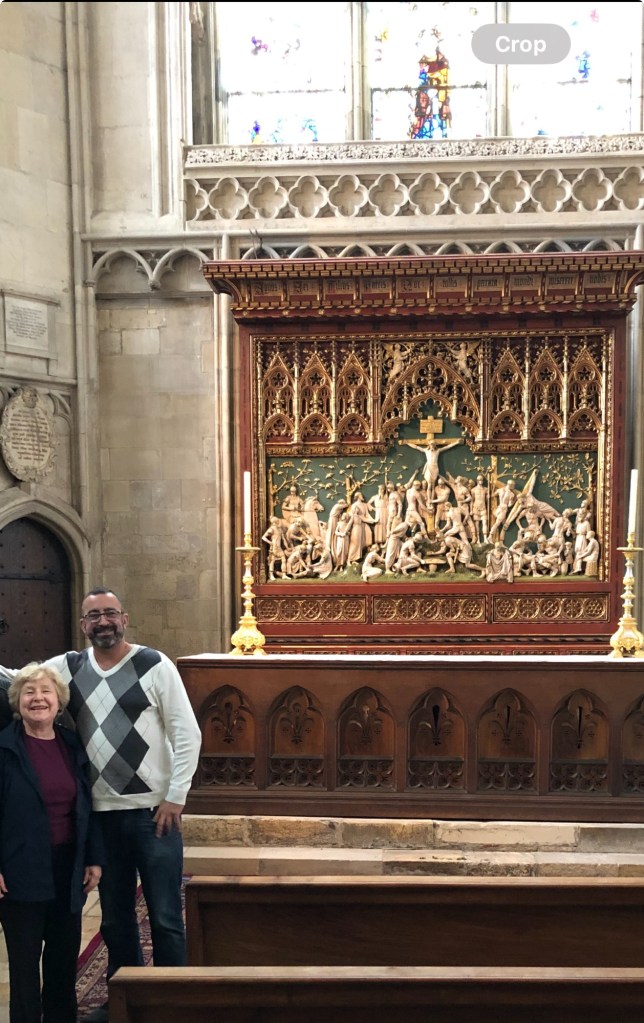
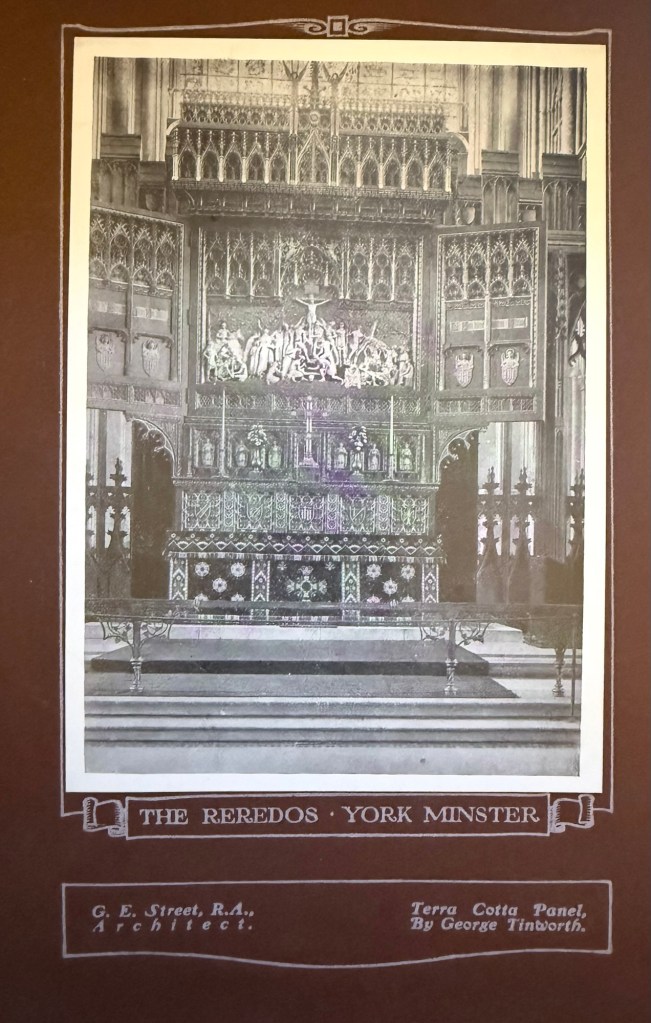
Returning to Tinworth his work can be found today in churches and cathedrals up and down the UK. Above you can see his magnificent reredos located in York Minster.
A contemporary image of the York Minster reredos.
Not forgetting the marvellous Doulton flambé alter piece that resides in Coventry cathedral, after its post WWII reconstruction.
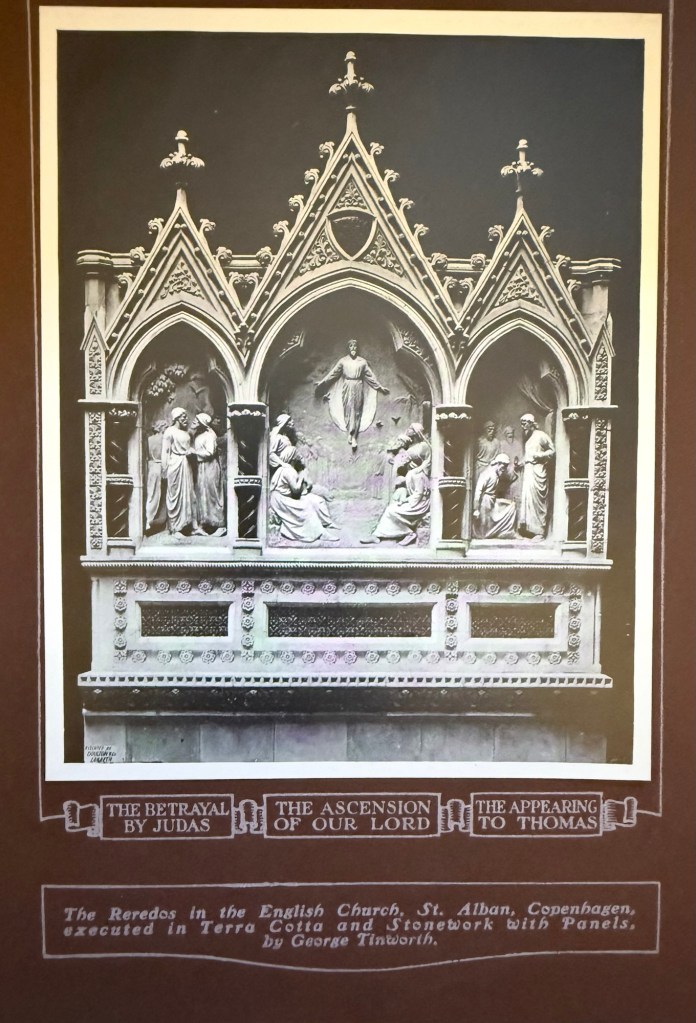
A further Tinworth reredos, this time located in Copenhagen.
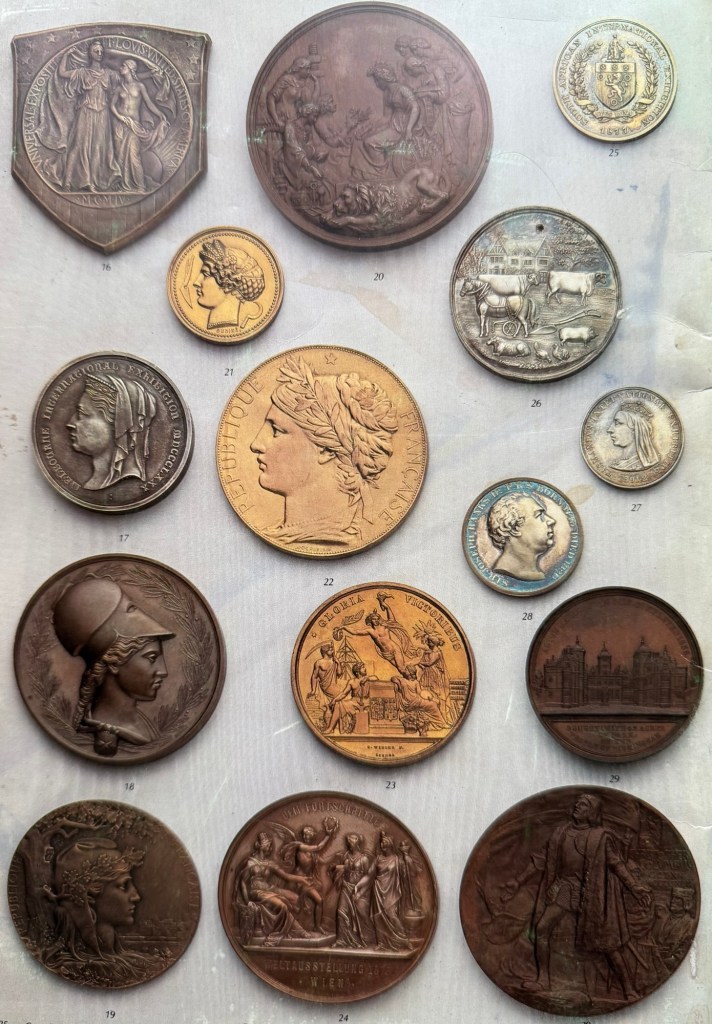
From the 19c into the 20c Doulton was represented at all the major exhibitions and has been detailed in the great tomes on the Royal Doulton Potteries by Eyles and Irvine, the company itself won many of the major prizes at these exhibitions. The first exhibition Doulton took part in were in 1851, the year of the great Crystal Palace exhibition.
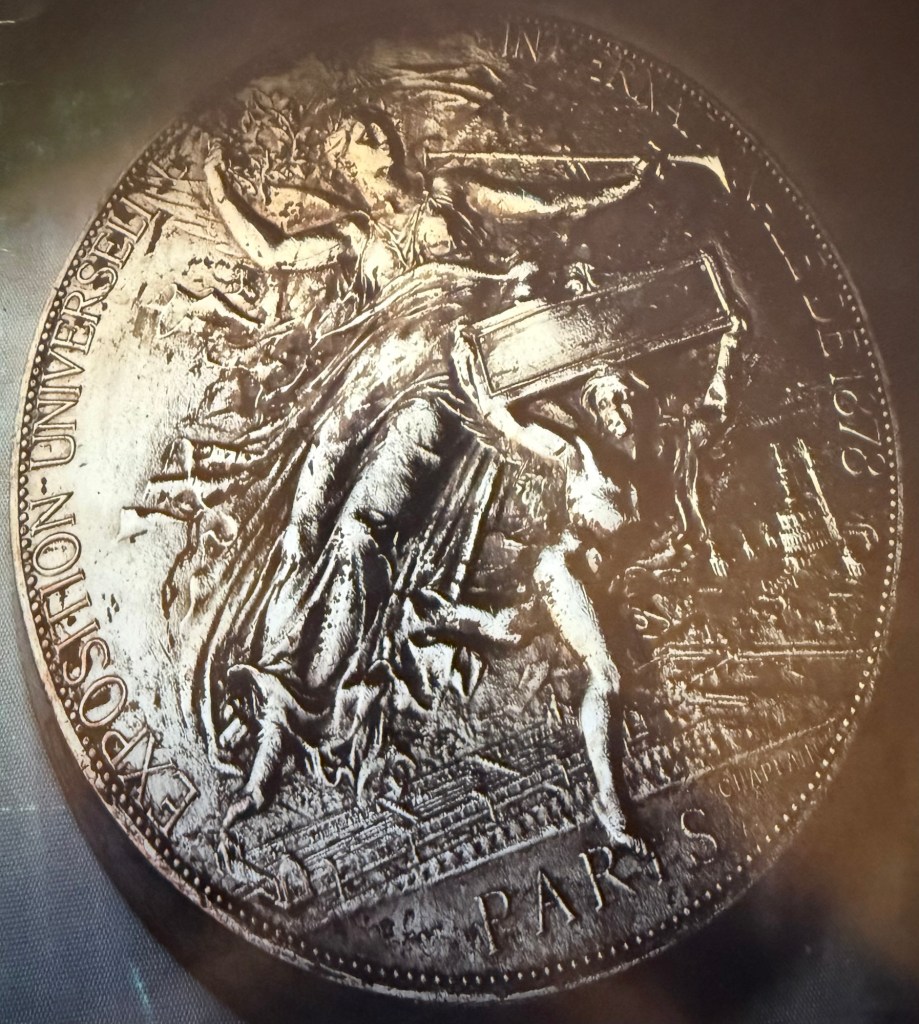
One of 9 awards given to Doulton at the Paris Exhibition of 1878.
The awards mentioned are but a selection from the hundreds the company won over the centuries. The first offerings presented were of utilitarian nature such as drain pipes and sanitary wares as one would expect.
At the South Kensington Exhibition of 1871 Doulton showed their first selection of set pottery, Sir Henry having been persuaded to branch out into art pottery.
A mere five years after this, Doulton presented over 1500 items at the American Centennial Exhibition in Philadelphia. At the Chicago exhibition of 1893, Doulton won more prizes than any other pottery in the world. The success in Chicago brought the award tally then to 94 Gold medals and 1st class awards, plus 101silver medals and second class awards.
The Peggy Davies study that won the Grand Prix at Brussels in 1958.
The last of the major world exhibitions took place in Brussels in 1958 and befittingly, Doulton won the only Grand Prix awarded to a British pottery firm for the Peggy Davies study ‘Art and Technology’. Manufactures were subsequently not included in world exhibitions.
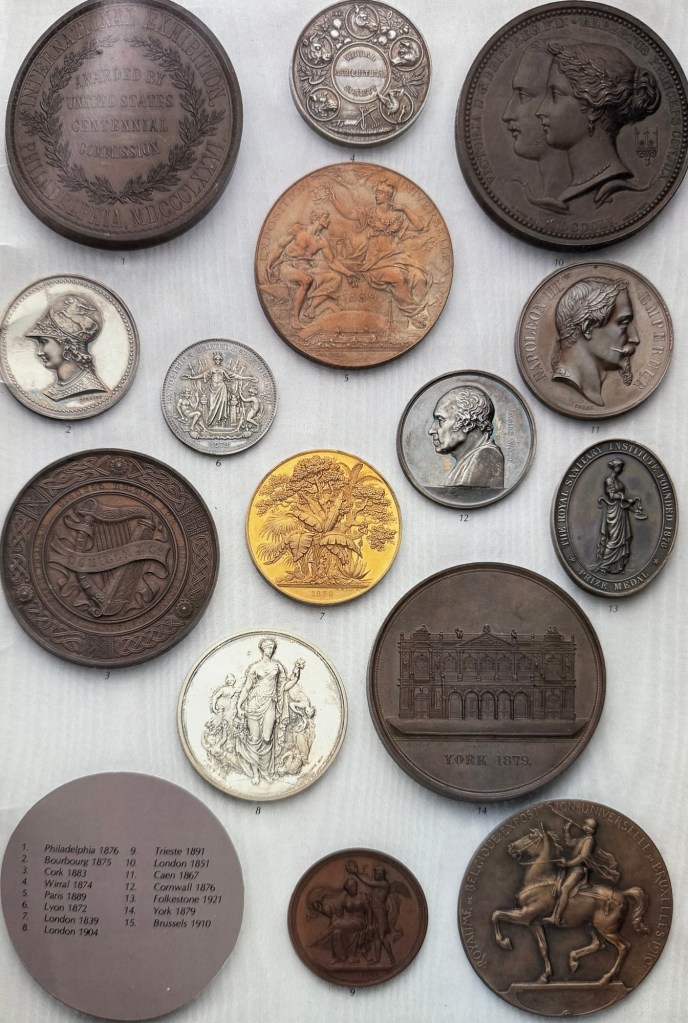
Here is a selection of Doulton’s awards…..
Philadelphia 1876
Cork 1883
Wirral 1874
Paris 1889
Lyon 1872
London 1839
London 1904
Trieste 1891
London 1851
Caen 1867
Cornwall 1876
Folkestone 1921
York 1879
Brussels 1910
St Louis 1904
Melbourne 1880
Chile 1875
Versailles 1873
London 1862
Hamburg 1863
Paris 1878
London 1865
Vienna 1873
Cape Town 1877
Far worth 1876
Tasmania 1891
Chelsea 1905
Birmingham 1872
Columbia 1892
That is not to mention the individual awards won by the company’s artists for their work for the great firm.
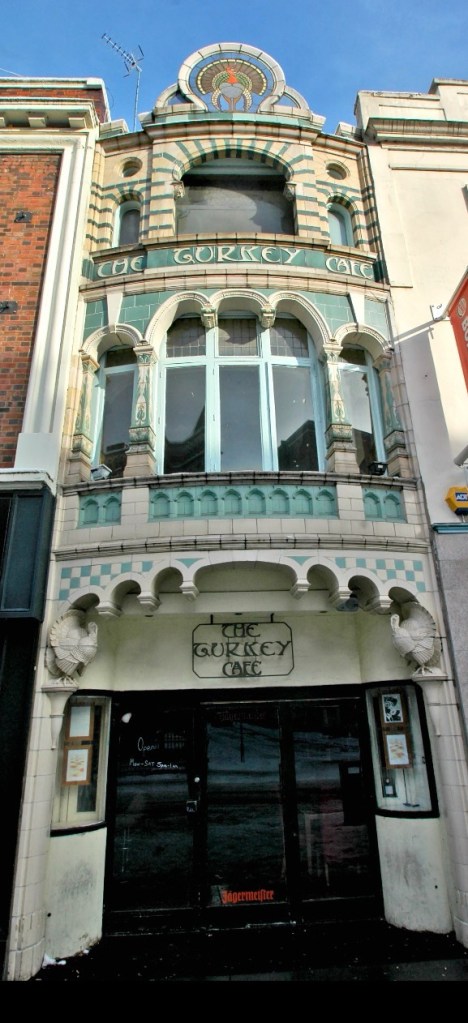
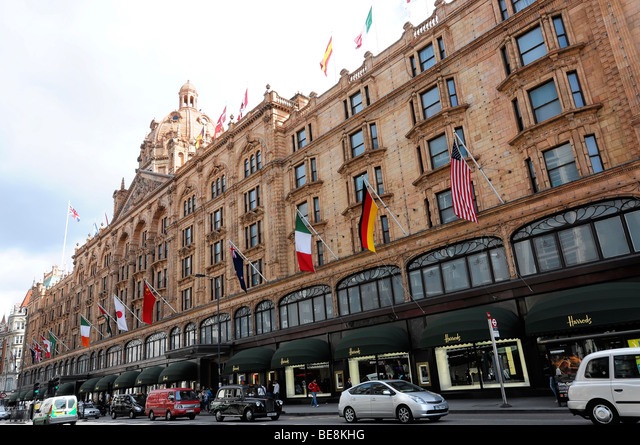
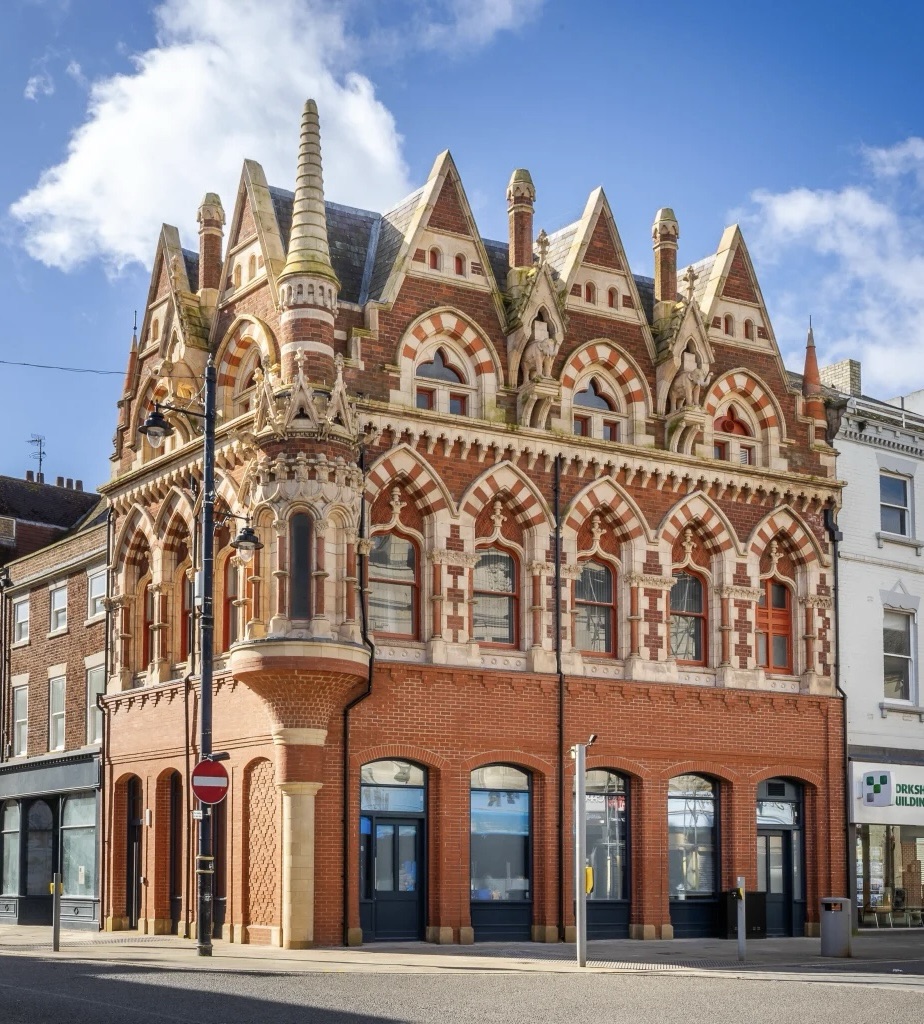
When you visit major cities around the world the chances are that you will come across something Doulton. There are lists published by collectors of all the many places around the world you can visit to see architectural Doulton. Living in London, I am lucky that there are many places to visit on the door step so to speak; from the façade of the great department store Harrods, to the interior tiles of its food halls, to the clock above the main entrance to Selfridges, to the remaining Doulton factory building in Vauxhall that I pass on the train going into Waterloo.
Harrods, London.
These are just the tip of the iceberg as Doulton’s of Lambeth had its own architectural department which flourished in the early 20th Century. Alas many places have inevitably disappeared but there are still plenty to visit.
Even when Doulton was known as Doulton & Watts at the beginning of the 19th Century, advertising items were already being produced in the form of containers with either impressed names of manufacturer, the items they contained or else simply bearing a paper label advertising their contents. These early containers held everything from caviar to ginger beer to ink, and a wide variety of things in between. In the early 20th Century the names of the companies or contents therein would often be simply impressed on the base of the item or else incorporated artistically into the design of the piece. It is recorded that over 100 firms used Doultonstoneware to advertise their whiskey, beer and mineral waters.
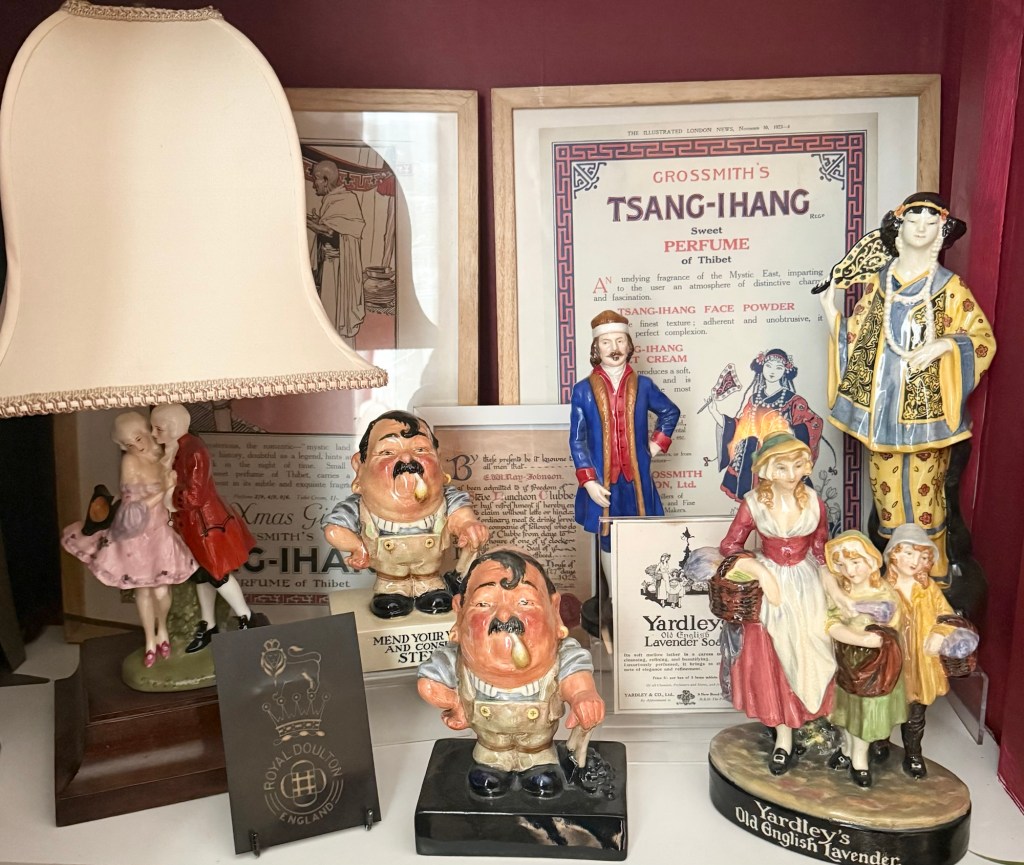
A group of advertising figures from the 20s and 30s.
Some firms such as Dewars favoured Doulton vessels for such a long period that you can find examples of stoneware and also items produced at Doulton’s factory in Burslem, the heart of the Potteries. Doulton’s famous Kingsware was a perennial favourite of Dewars and Doulton created many individual flasks for them, which today are highly collectable.
The advertising wares produced by Doulton in Burslem have an equally interesting history and perhaps chart the last chapters in the production of advertising wares as the fashions for such items evolved further. The Edwardian style biscuit casket for Huntley & Palmer from 1905 looks incongruous next to items produced in the 1930’s and 1940’s that have much simpler lines and decoration reflective of this period.
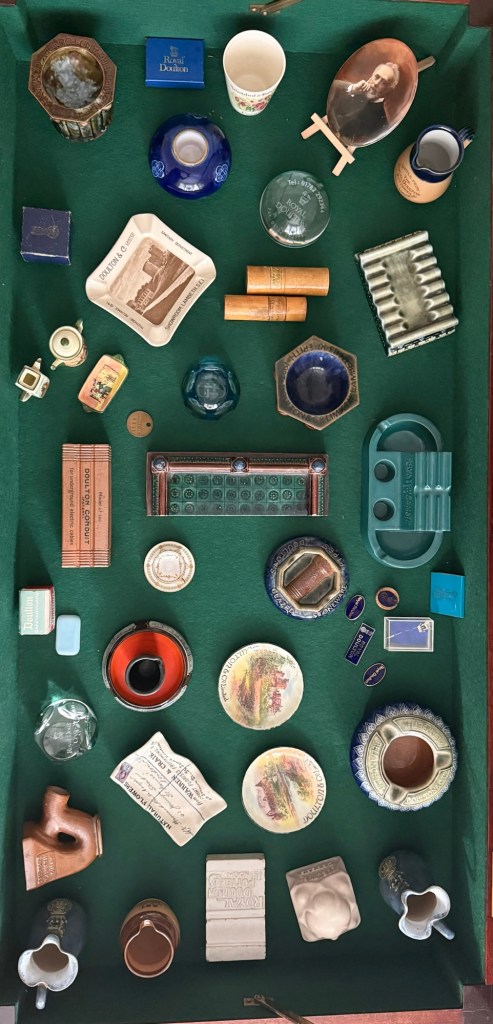
All industries had items produced by Doulton to advertise themselves from ash trays, to jugs, to match strikers, to wall plaques and a whole host of other advertising items. Perhaps one of the most fiercely fought after fields in advertising wares today are those that Doulton produced for themselves! Once again jugs, vases, ash trays and the like can be tracked down featuring the Doulton emblem as its principal feature.
A selection of Doulton on Doulton advertising wares.
The advertising figures produced by Doulton have long captured collectors’ imaginations and famous groups such as the Yardley’s figure is a straight adaptation of the same image featured in their advertising. Other more unusual figures include the Grossmiths’ perfume girl ‘Tsang Ihang’ and ‘Steve’ produced for the road builders Wettern, Beadle & Bristow in the UK in 1923.
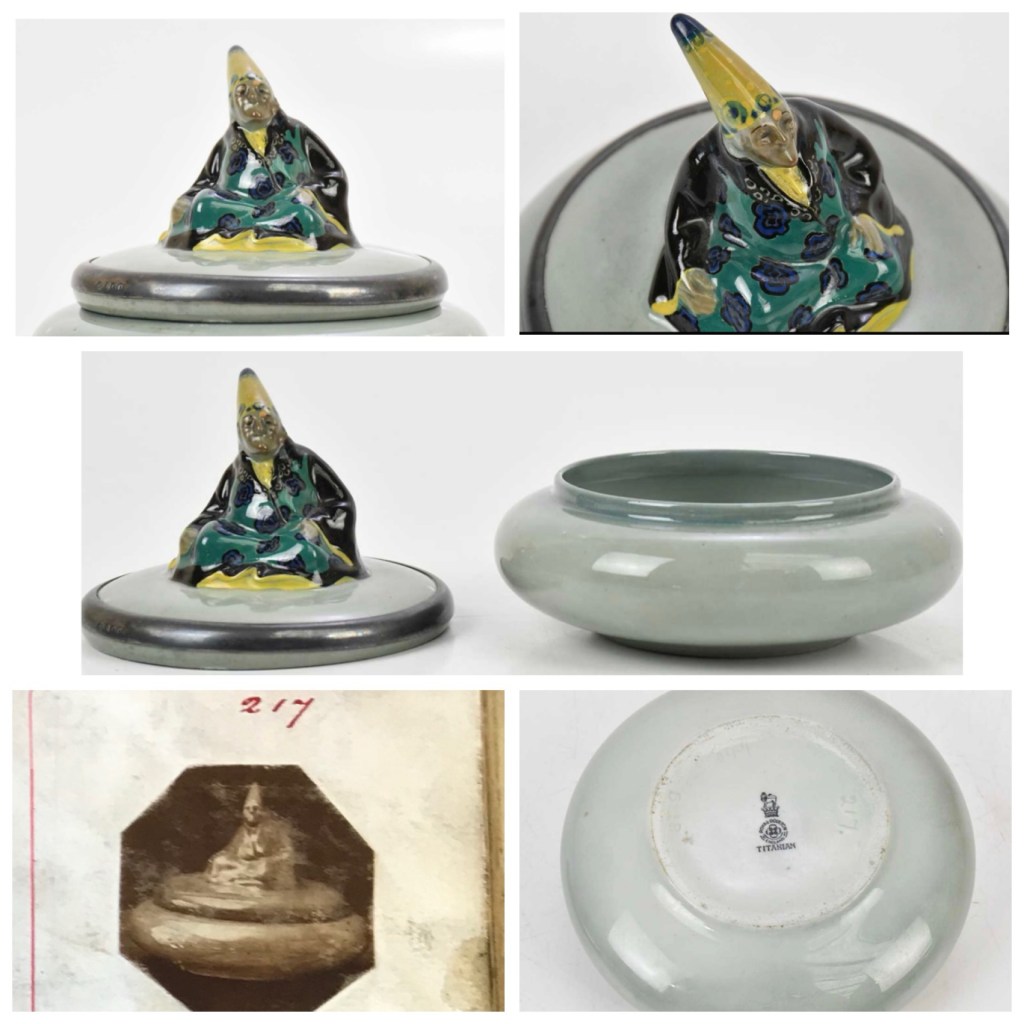
Of the handful of china boxes produced by Doulton in the first decades of the 20c, few can be said to be as rare as this example. Featuring a wizard as the box’s finial and with sterling silver mounts, it is the epitome of frivolity from the deco period.
The box can be traced through the model book and is model 217 and it caries an impressed date of 1918. This model, like a handful from the early HN range was produced on a Titanian body, to enhance the colour of its eventual decoration.
This lot features in Sunday’s auction at Lion and Unicorn and with worldwide postage available, you’d be remiss not to be bidding! Enjoy!
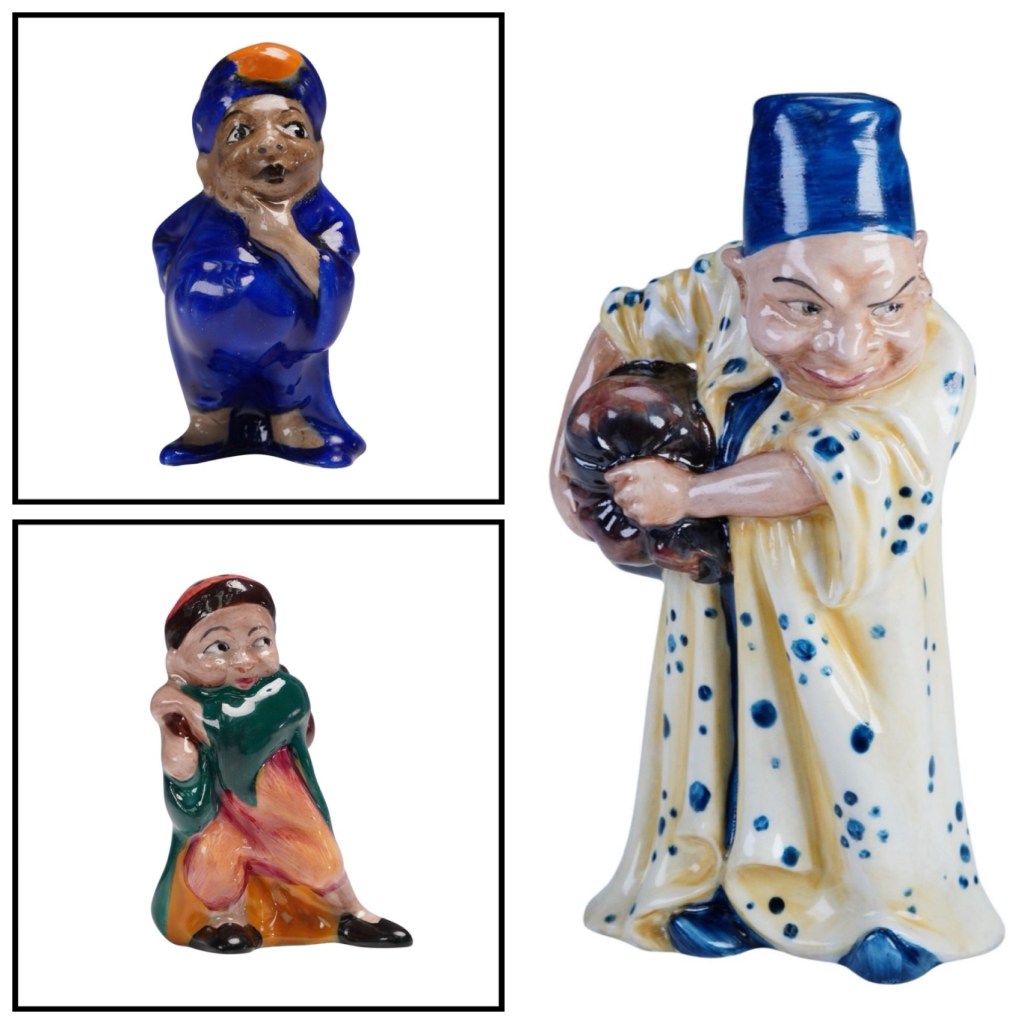
This wonderful trio of characters from the tale of Ali Baba and the Forty Thieves, which was adapted into the operetta achy Chin Chow and which was first performed at His Majesty’s Theatre, London in 1916 and proved a huge success running for more than 2000 performances.
With over thirteen different models by Harry Tittensor, all quite different in size, this series offers something for every collector – rarity, unique colourways and a handful of prototypes that never entered production. Those with HN numbers began appearing from 1920 onwards but their limited production had ceased by 1936, by which time these early models were simply made to order.
The three wonderful examples illustrated above of models from the series in unusual colourways are coming up at Lion and Unicorn Auctions 24 August 2025!
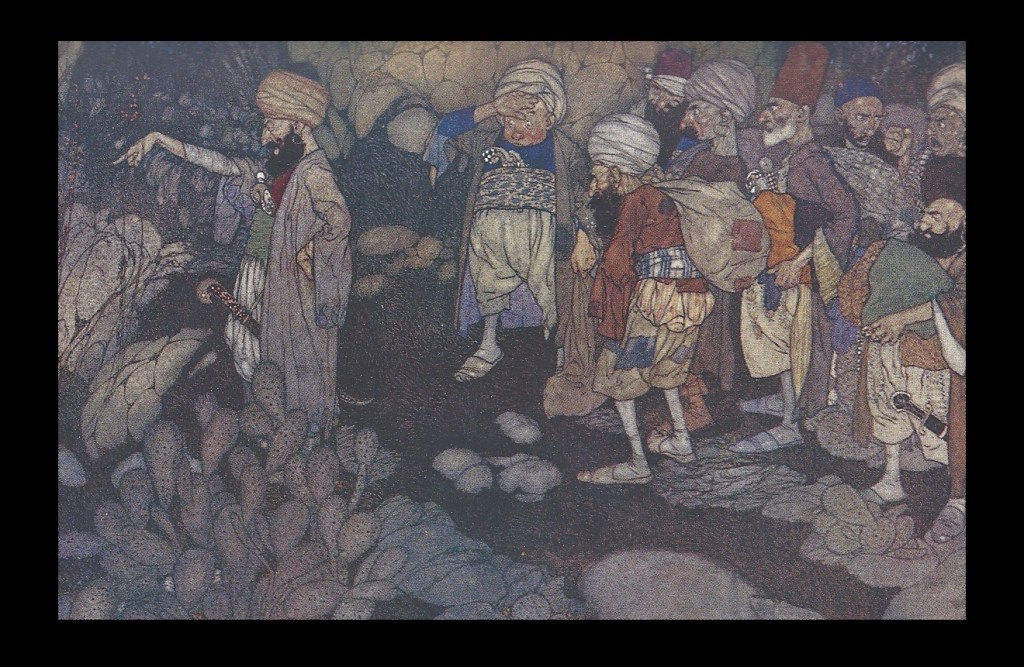
Inspired by the colourful illustrations of Edmund Dulac. Dulac was born in Toulouse, France. His artistic ability showed itself early on and drawings exist from his early teens. He won the 1901 and 1903 Grand Prix for his paintings submitted to annual competitions whilst at the Ecole des Beaux Arts. A scholarship took him to Paris and the Academie Julien where he stayed for three weeks. That same year (1904) he left for London and the start of a meteoric career. Dulac’s Picture Book for the French Red Cross (1915) contains several illustration that inspired Royal Doulton figures, including several models for this series.
We seem to have written much over the years about Doulton’s Faience wares, so will try not to dwell on what we have already covered.
As many will remember when Faience first began production at Lambeth they didn’t have their own production facilities for the blank ware so Doulton’s other factory in Burslem was tasked with sending down blanks to be decorated and then fired at others’ factories in Lambeth, prior to Doulton swiftly constructing their own kilns capable of firing faience art wares and production facility for the blank ware
.
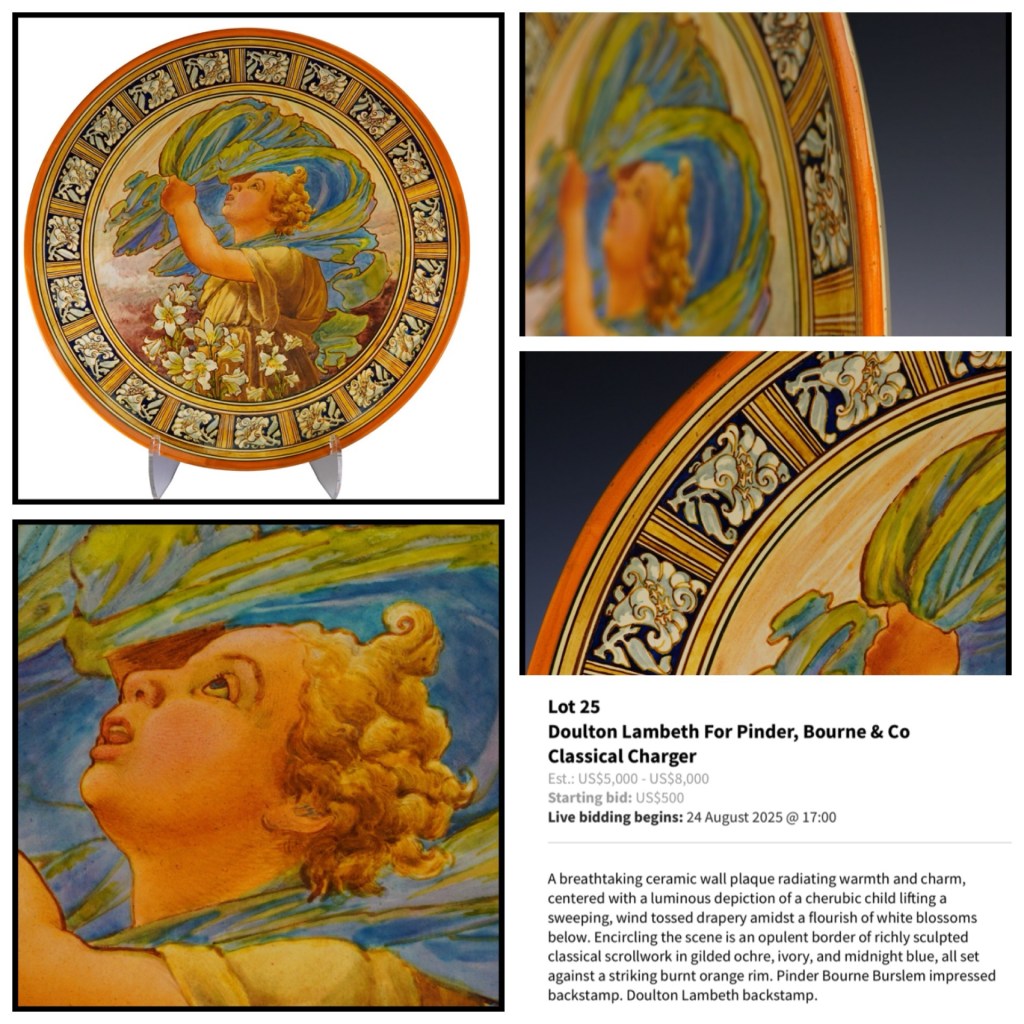
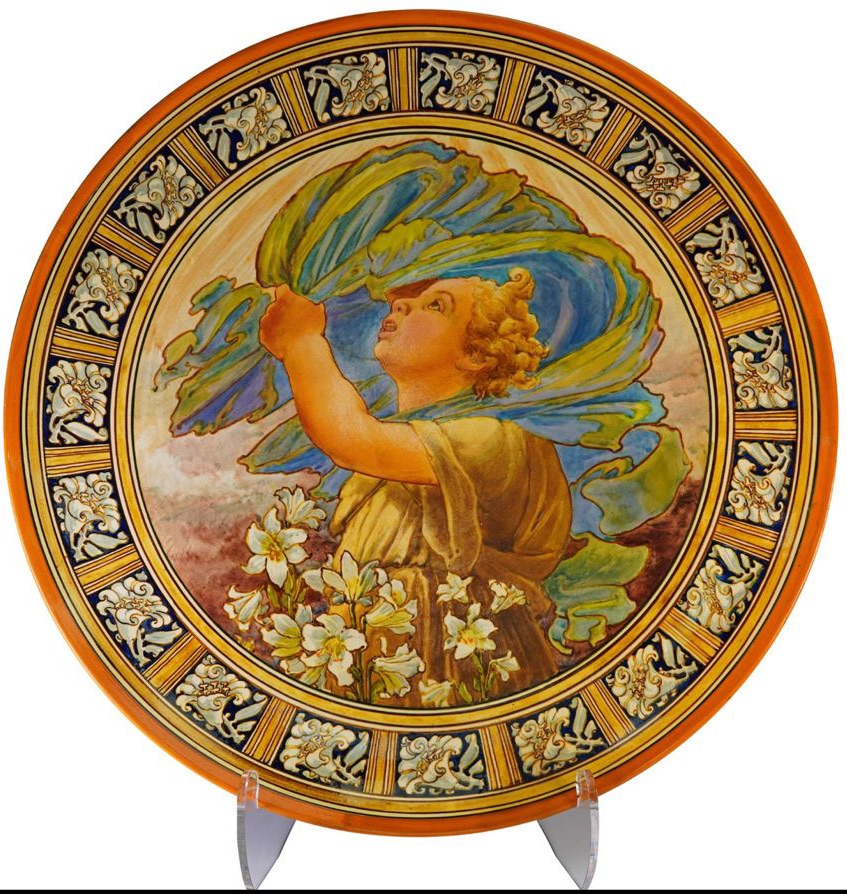
Illustrated is a wonderful faience charger by John H. McLennan, perhaps Doulton’s most famous portrait artist on the faience medium. You will note from the catalogue description by Lion and Unicorn that the blank charger bears a Pinder Bourne mark, which readers will know is the factory in Burslem that Sir Henry Doulton bought into in 1877 before taking it over solely in 1882. It is therefore not surprising given the date of Faience art ware being introduced in 1873, McLennan’s start with the firm in 1877 and the use of a Pinder Bourne blank of 1881 all to marry up within a few years of one another.
McLennan was active between 1877-1910 and his style was heavily influenced by the art nouveau movement. He was a designer and painter of Faience vases, plaques, wall panels and single tiles. His work was presented at many of the great International Exhibitions Doulton exhibited at and his work favoured by Royalty the world over – even the last Russian Tsar had examples of his work.
It will be no surprise that his tile panels exist today and even the legendary Great Ormond Street Children’s Hospital in London has examples of tile panels by this great artist.
For a similar example of his work see Doulton Lambeth Wares by Eyles and Irvine p.13 from the legendary Billings Collection.
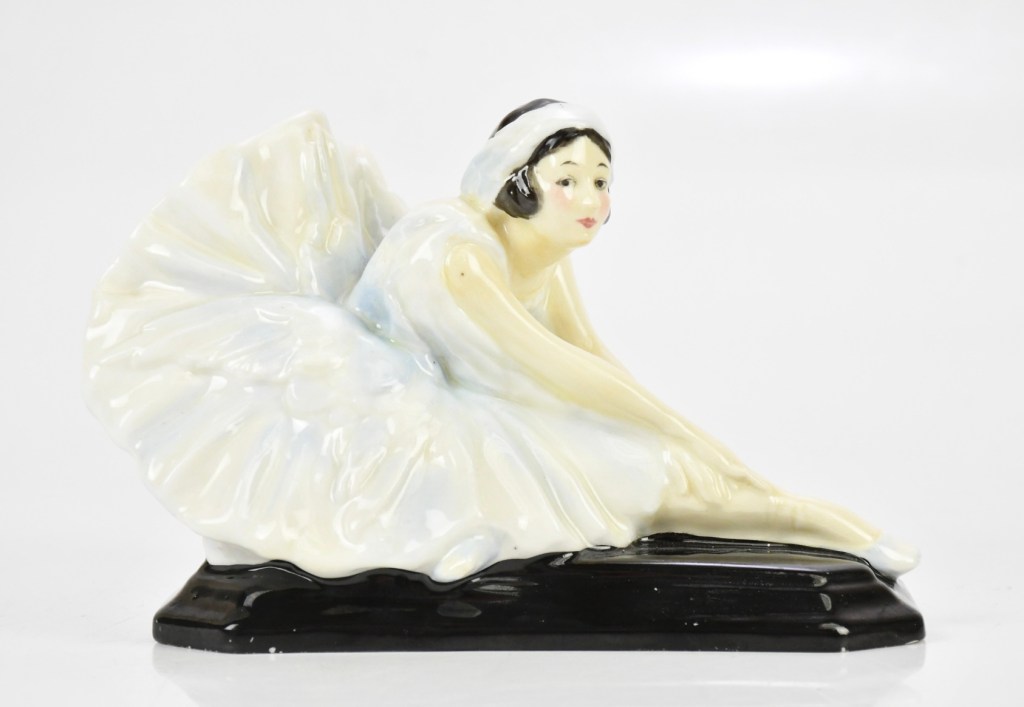
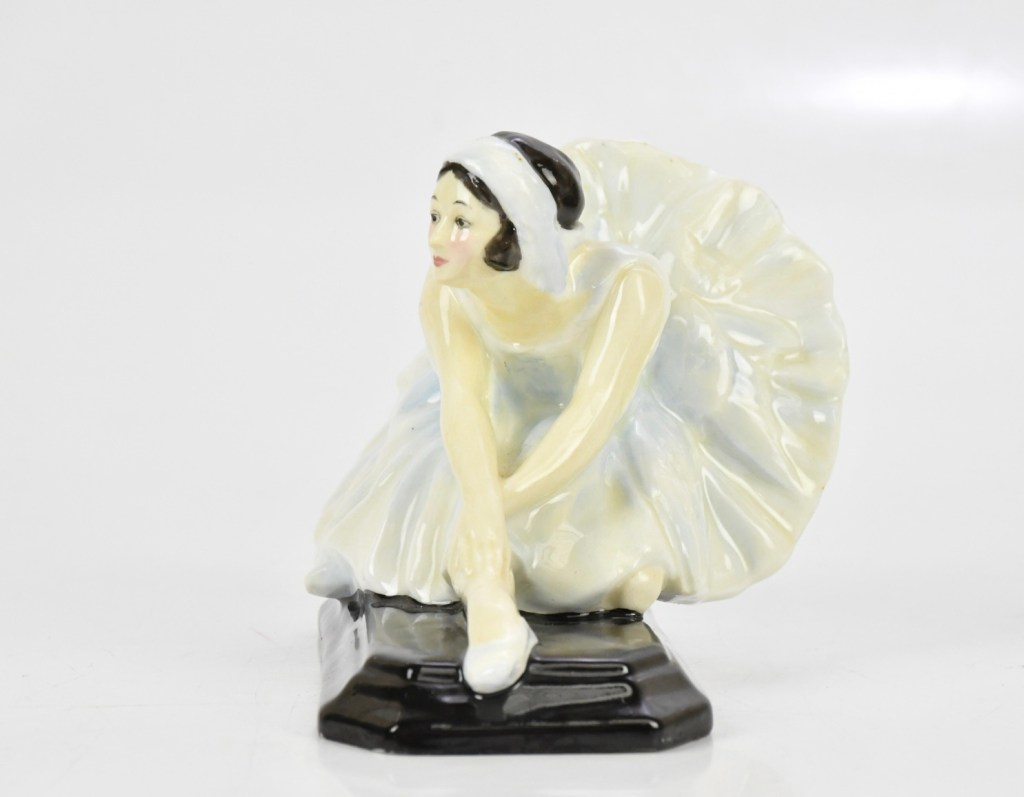
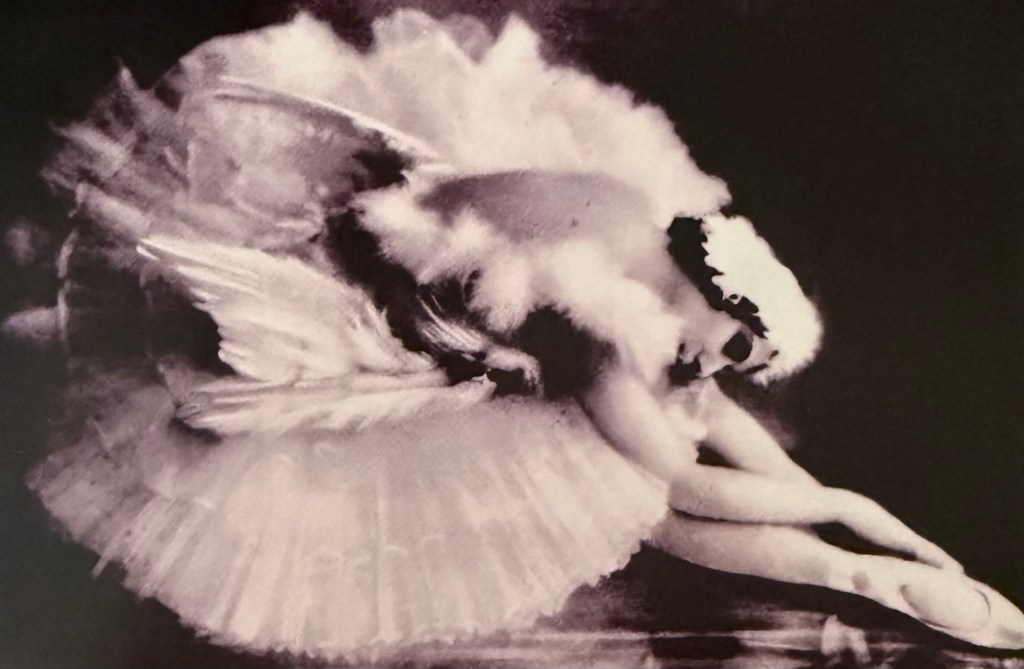
This rare figure is based on the great Russian ballerina Anna Pavlova in her most famous role as the Dying Swan in La Cygne. In the early 20c Pavlova travelled the world popularising classical ballet. Although re-issued after the star’s death in 1931, examples remain extremely hard to find. This particular example is titled The Swan Dance (Pavlova) an interesting alternative to the usual title simply ‘Pavlova’ or the rarer ‘Swan Song’.
Although famed for popularising classical ballet, Pavlova also appeared in music halls as a solo artist, reaching a very wide public at the time. Many of you will have guessed that her popularity reached the southern hemisphere too, where in Australia and New Zealand they created the popular Pavlova desert named after her!
Pavlova in her most famous role as The Dying Swan.
This example will be auctioned by Adam Partridge Auctions at 2pm on Wednesday 10thSeptember at their Macclesfield saleroom, here is a link to the website
CHARLES J NOKE FOR ROYAL DOULTON; an exceptionally rare figurine , “The Swan Dance (Pavlova)” HN487 Potted by Doulton & Co, handwritten in black, green Doulton backstamp, with light blue wash over tutu, exceptionally well painted face (21-38) 4 1/4″, impressed date 6.23.
Born in Worcester where he attended art school and was also trained at the famous Worcester Porcelain works, he followed the great Charles J. Noke from there to Doultons shortly after the latter’s move in 1889. Noke, like Raby and that early band of artists, was attracted to Doultons for the artistic freedom and the promise. That promise was the inspiration, the originality, the invigoration, the challenge and the demand as Noke himself put it, from one man…Sir Henry Doulton.
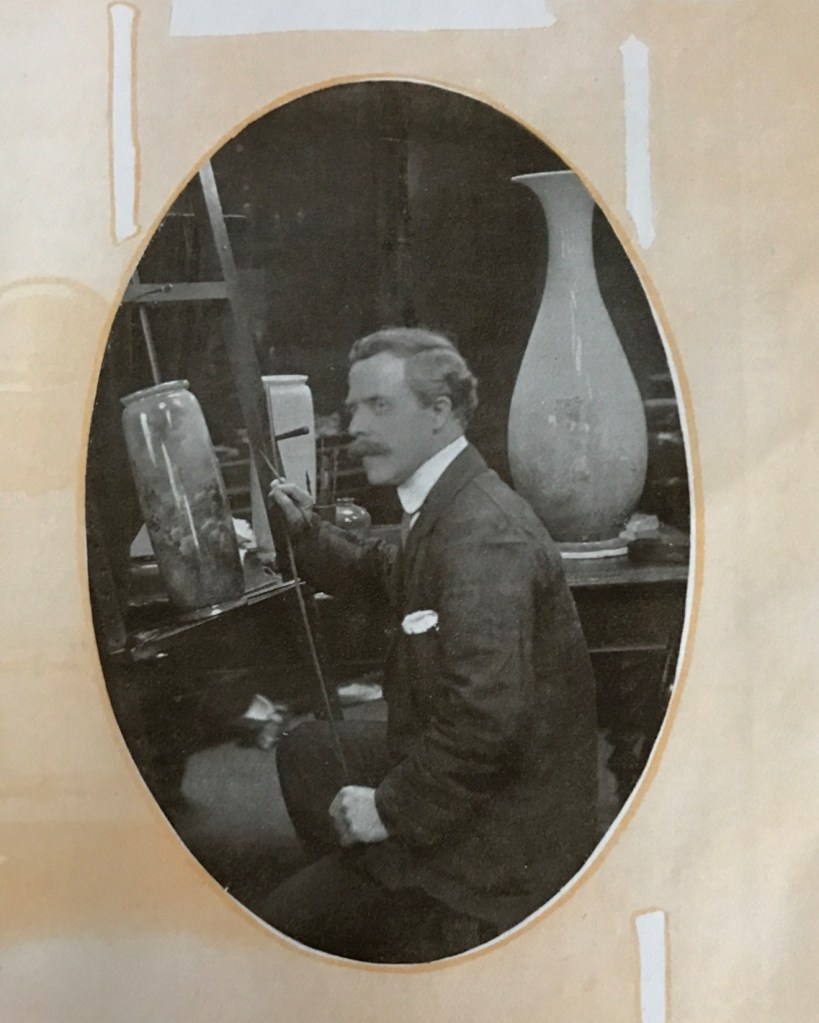
A delightful example of Raby’s work.Raby at work in his studio at the former Nile Street works, Burslem c1910.
Sir Henry Doulton did for the 19th century pottery world what Wedgwood, Spode and others had done in the 18th century. As one American critic at the 1893 Chicago exhibition put it ‘Doultons have completely outstripped their rivals and are today the leaders in English potting.’
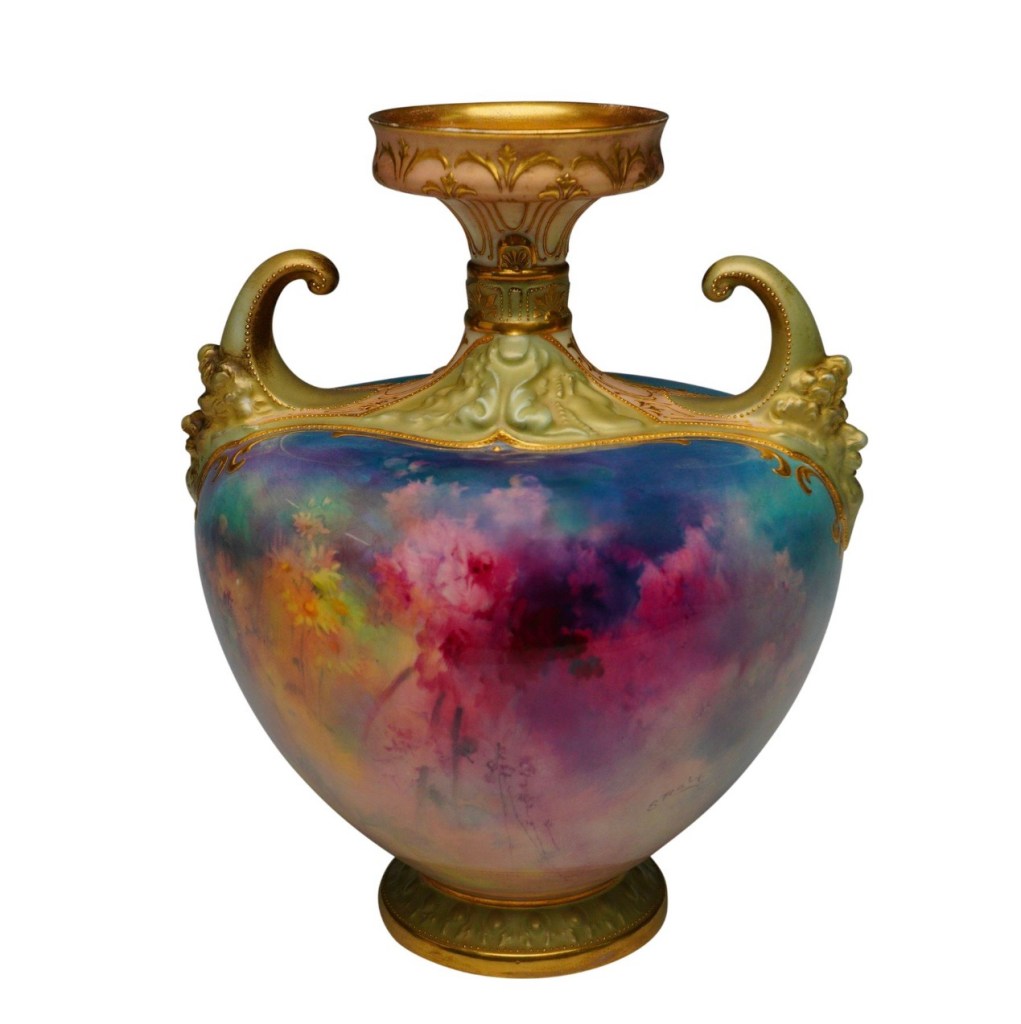
The reverse of an exceptional Raby vase. The shape is undoubtedly one modelled by Noke.
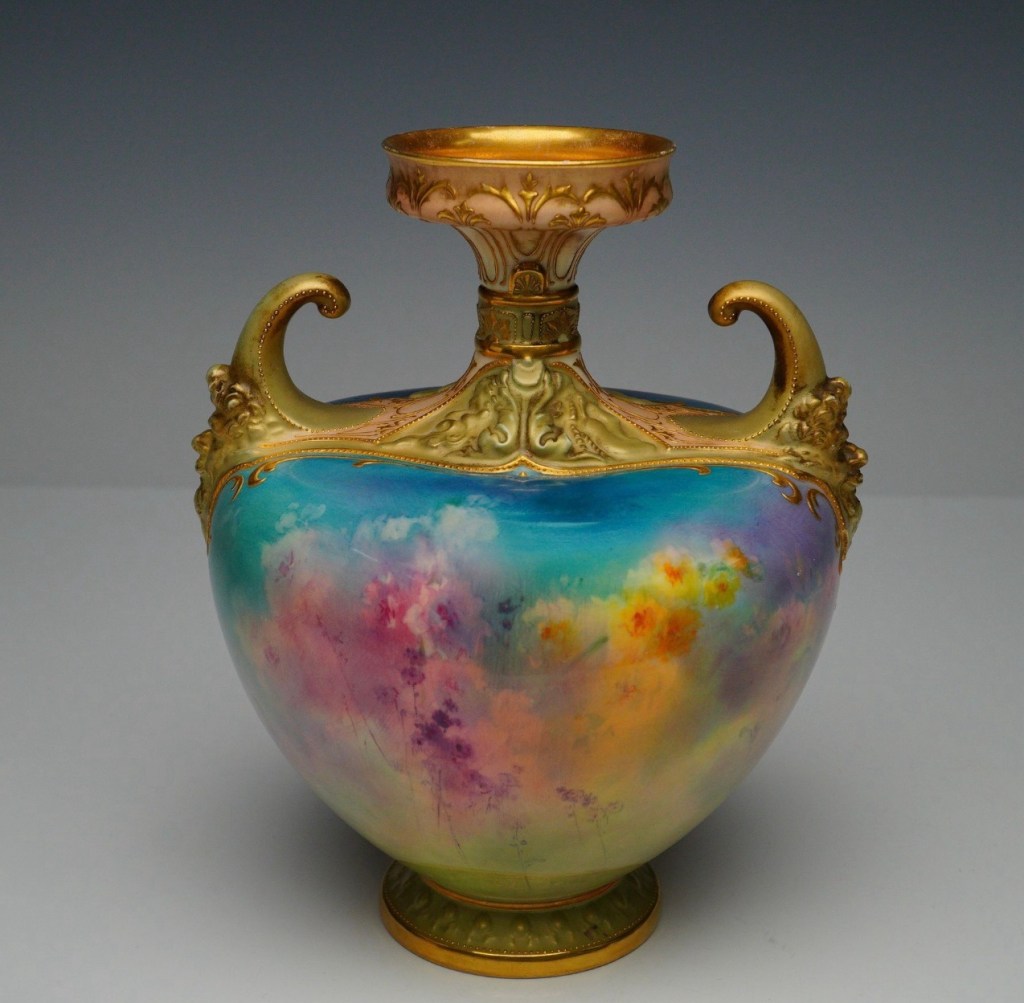
And so we return to Edward Raby. Raby’s pedigree stems back from artistic excellence in his father, a flower modeller at Worcester (Porcelain) and also his grandfather, also a Bristol (Pottery) flower modeller. Raby is famed for the use of a secret ‘Raby mauve’ in his painting and also his exquisite grouping which makes his painting live and glow.
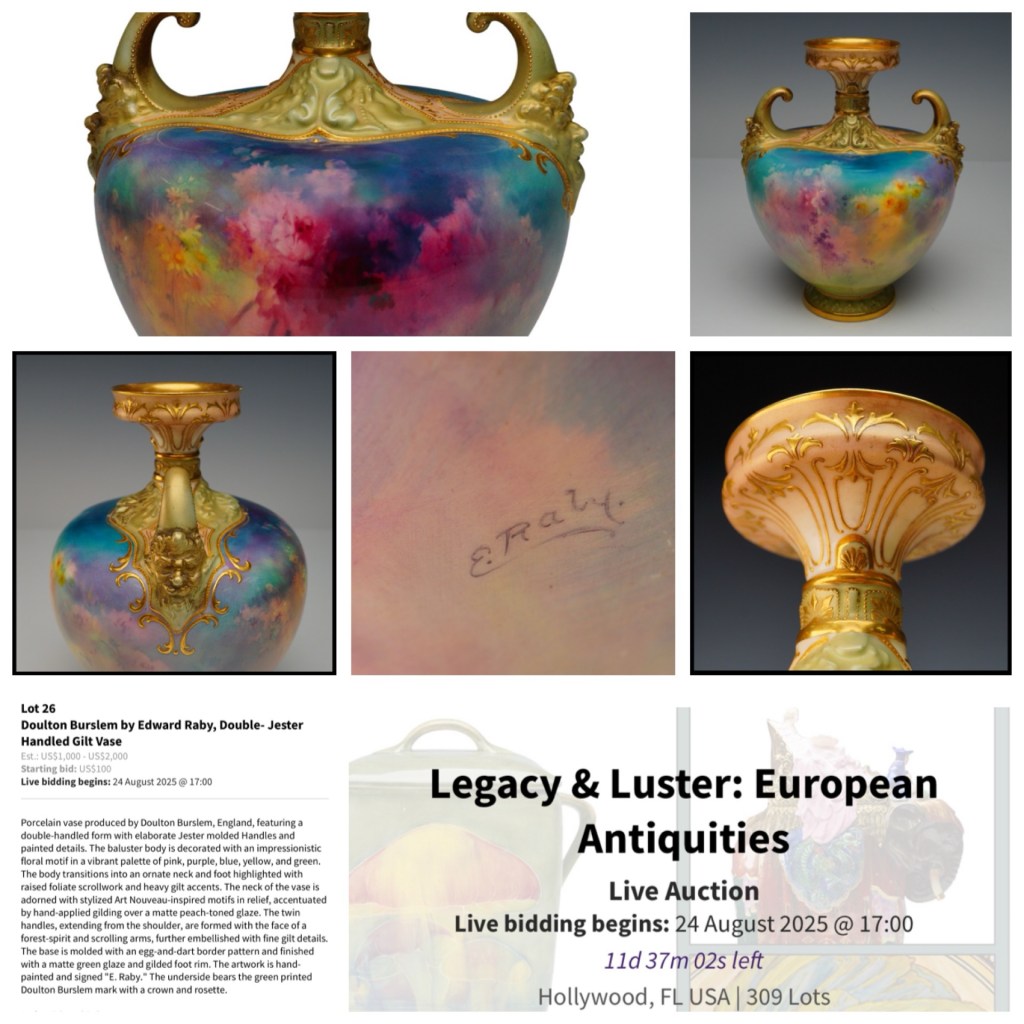
Examples of Raby’s works can be found in the great museums of the world from America to Australia. Illustrated here is an exceptional example of his work coming up at Lion and Unicorn Auctions 24 August 2025.
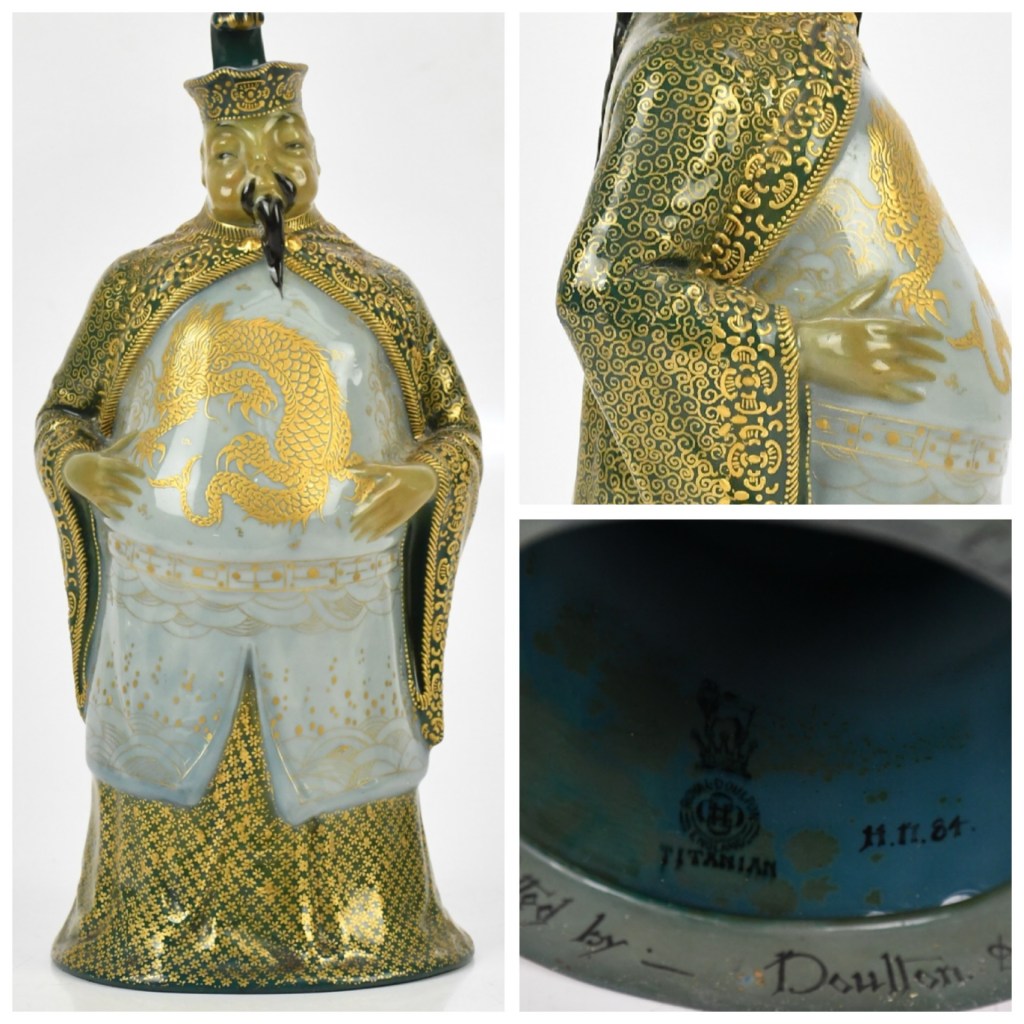
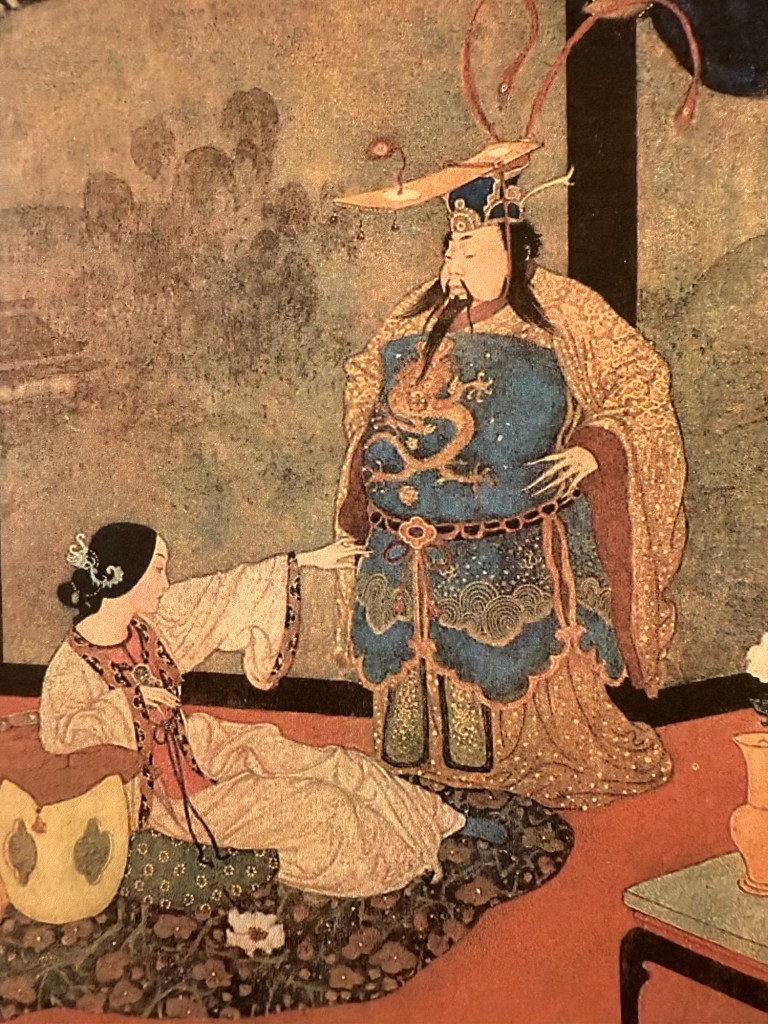
This model is as inspired by an Edmund Dulac illustration in his Picture Book for the French Red Cross from 1915. Also known as A Chinese Mandarin and The Mikado, he was no doubt popularised by the contemporary musical comedy The Mikado by Gilbert and Sullivan.
Collectors will be interested to see that this particular HN colourway is on a Titanian body, like a small group of other figures from this period, the Titanian body offered a richer base to emphasise the particular decoration used for this colourway. Interestingly the double Spooks figure can also be found with a Titanian body in certain colourways.
The Dyulac illustration upon which the figure is based.
Several other important figures can be traced to Dulac’s book including the legendary Princess Badoura and several of the One of the Forty (Thieves) models.
This particularly rare version of A Mandarin is the first HN colourway of him. Modelled by Royal Doulton’s then art director at their Burselm factory, C. J. Noke, he was introduced in 1918 and available to order until around 1936, when the block was destroyed due to not having been used in then recent times, like so many other early model blocks.
The auction for this exceptionally rare model and a selection of other rarities, will take place at 2pm on Wednesday 10thSeptember at Adam Partridge’s Macclesfield saleroom, here is a link to the website