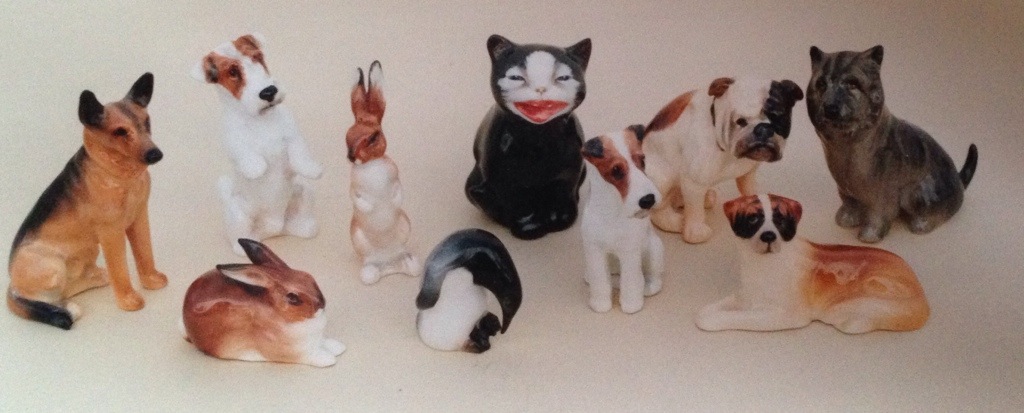
The ‘K’ series began in 1931 with the introduction of 12 dogs and 1 cat. In total there are 39 subjects in this series. There are 18 breeds of dogs, one cat (Lucky K12), penguins, birds and finally a trio of hares!
The penguins are perennial favourites amongst collectors and the 11 birds are all particularly rare as they were introduced in 1940 and withdrawn by 1946.
Whilst the designers if the majority are unknown, the popular penguins can be attributed to Peggy Davies.
The ‘K’ dogs in particular can readily be found mounted on calendars and ashtrays, although pen holders and pipe holders have turned up.
This range offers collectors a real cross section of Doulton animals to collect and the discerning eye will readily distinguish between an early and a late model.
Happy hunting!
Monthly Archives: May 2014
Royal Doulton figures in pictures
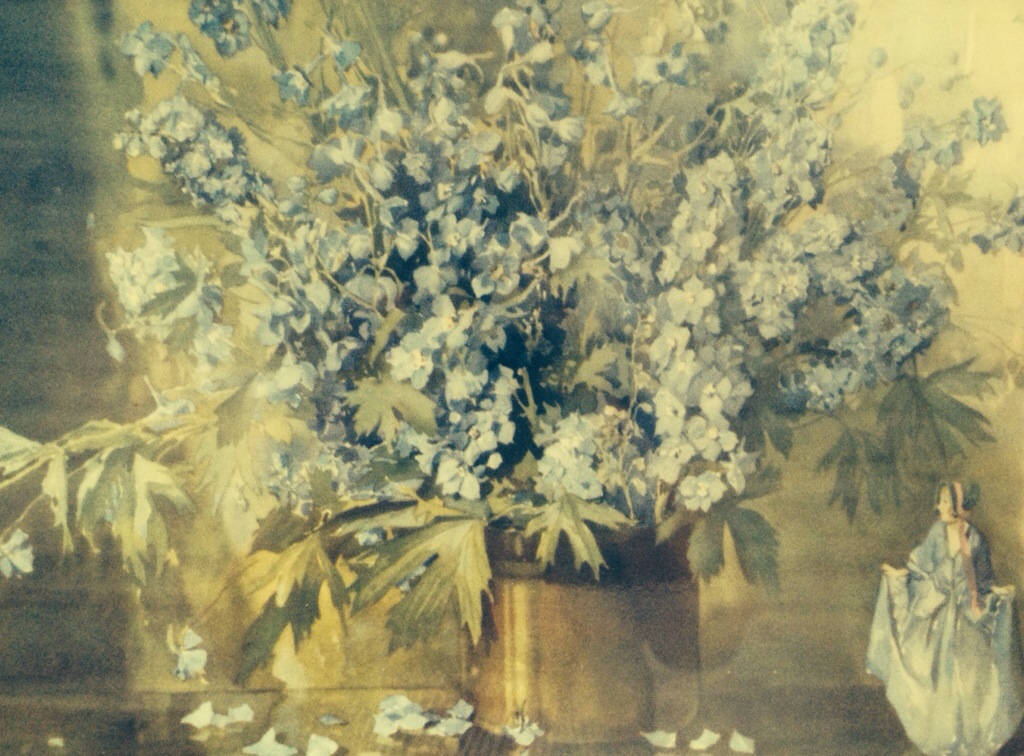
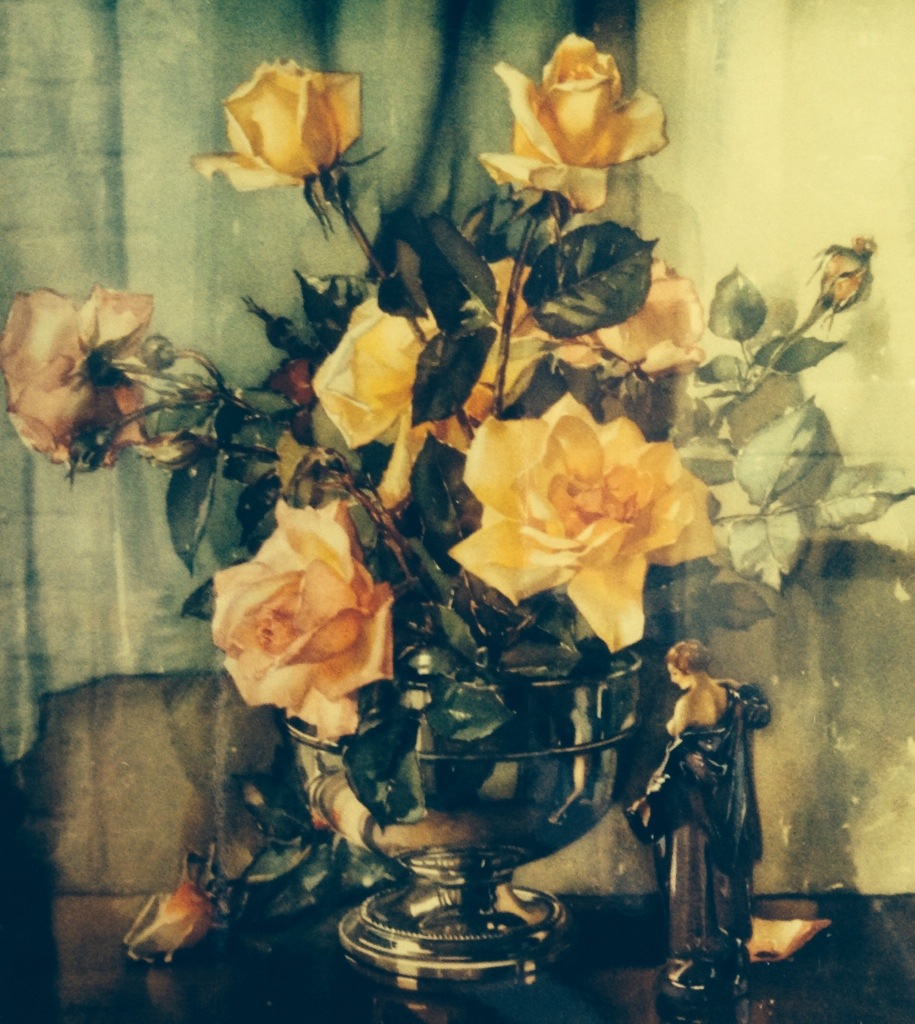
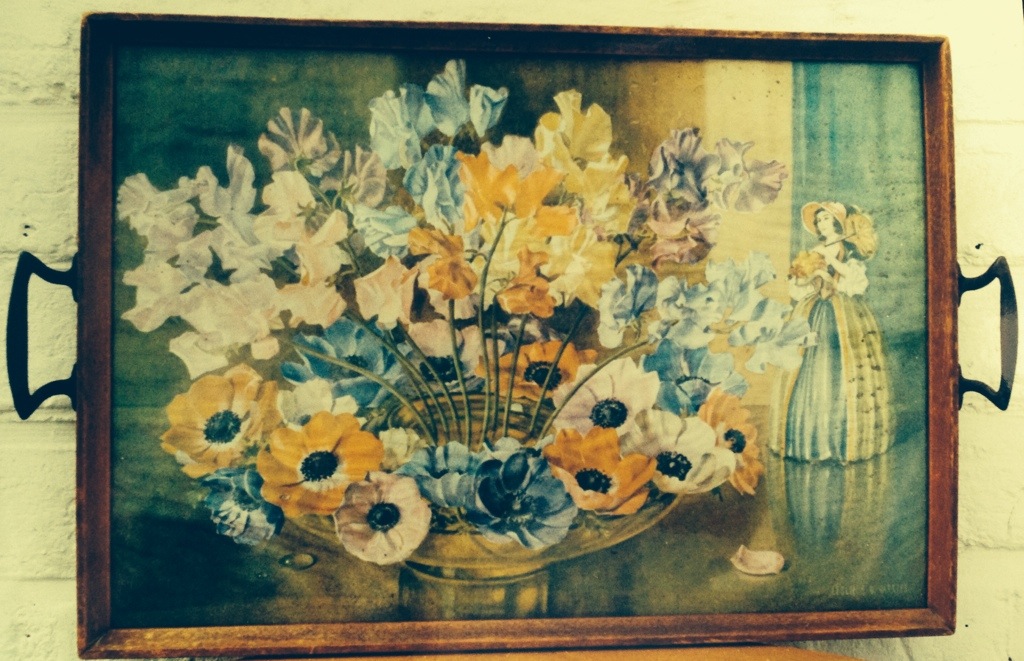
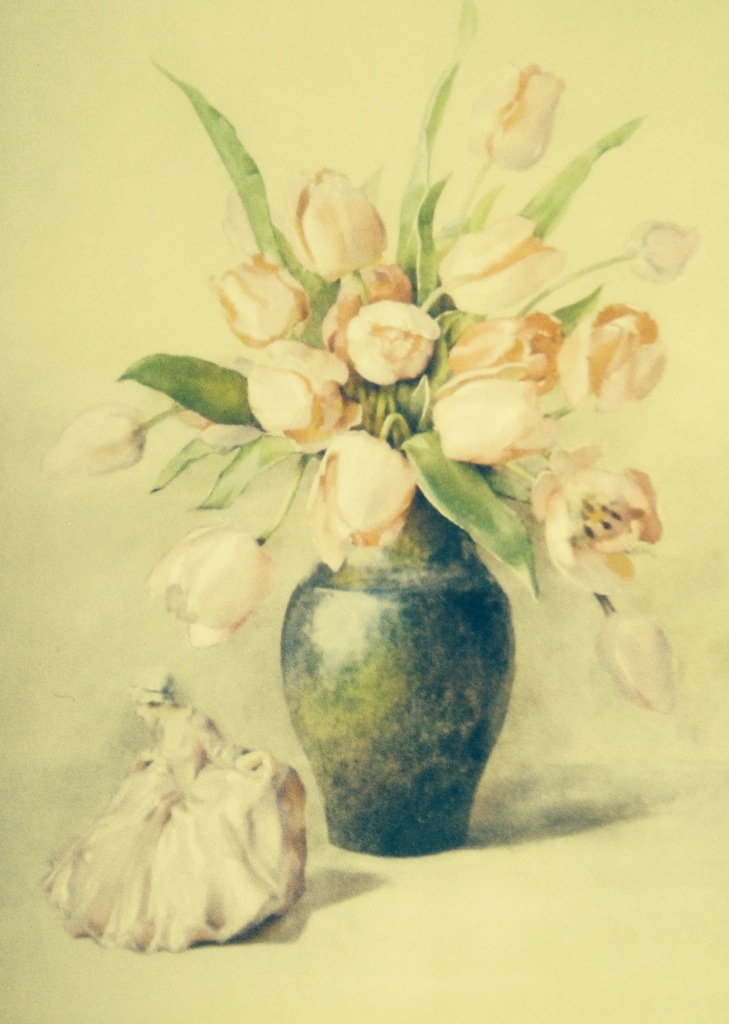
Whilst these pictures below appear a little bizarre or possibly kitsch today, when the originals were painted Doulton’s figures were obviously highly regarded even then to be used in still life pictures. The painters of these pictures remain largely unknown although I have a similar picture with Harradine’s Covent Garden figure with the signature Wood.
There is little left to say other than the majority of these images have turned up as framed prints save the clear exception below that is clearly a tea tray!
Sweet Anne.
The Bather.
June as a tea tray.
Polly Curtsey as she appears to have originally been known.
Perhaps you have other examples you can share with us? If so please go to out Facebook ‘Doulton Collectors Club’ page to do so.
CE.
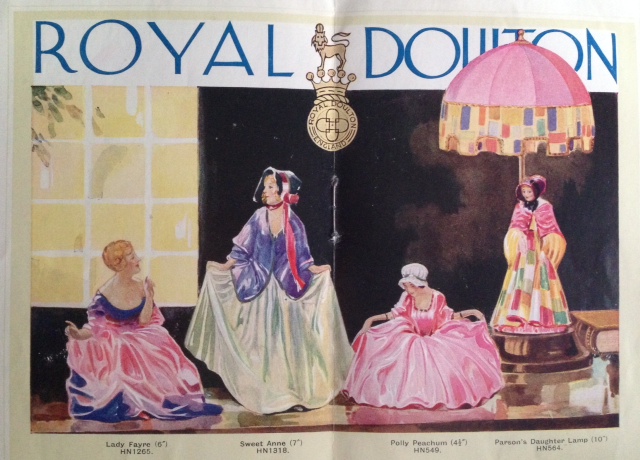
‘New Lamps for Old’ – Royal Doulton’s figure lamps
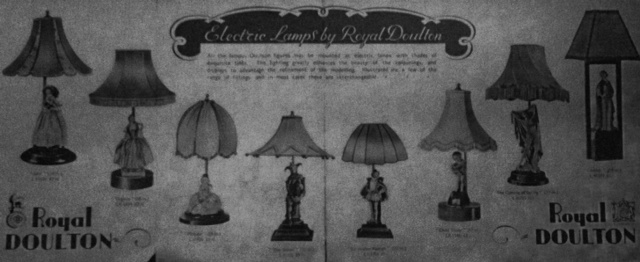
‘New Lamps for Old’ so begins Doulton’s own advertising for these lamps. Particular to the 1920’s, 1930’s and possibly into the 1950’s these lamps often cause a little confusion amongst collectors who come across often long forgotten figures still attached to these charming lamp bases.
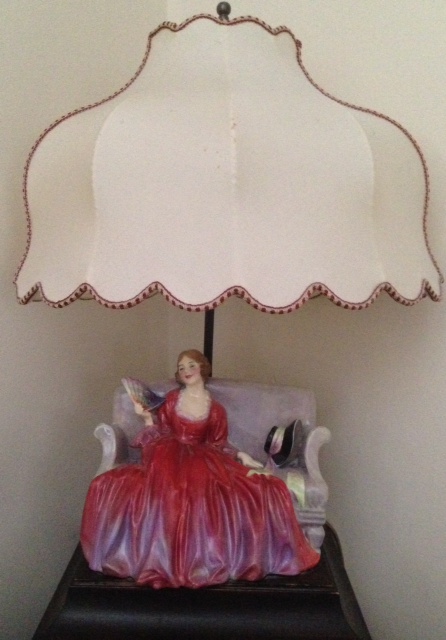
Sweet & Twenty mounted as a lamp and also as she featured in a catalogue from 1935.
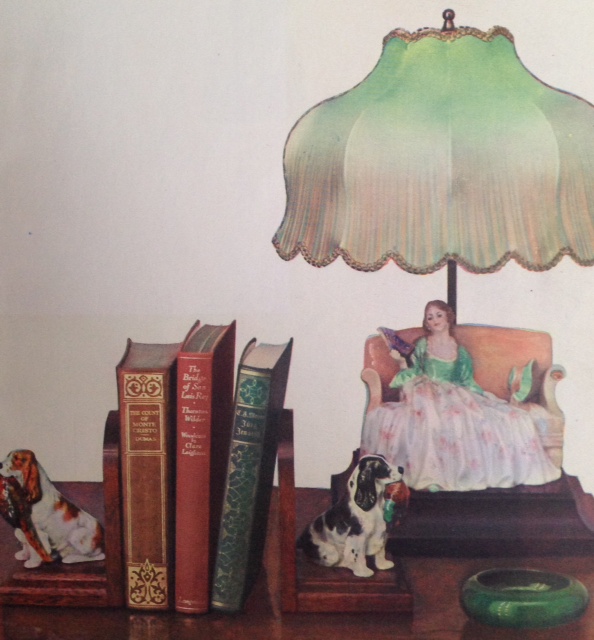
As early as the 1920’s Doulton introduced their by then world famous figures mounted on lamp bases as yet another way to sell this most popular series. Diversity is perhaps the byword for these lamps…no two appear to be the same. The most popular I can find is a lamp with a square base mounted with the ever popular Victorian Lady. If you are lucky enough to find one that has never been removed from the base, you may find one of Doulton’s original paper labels underneath.
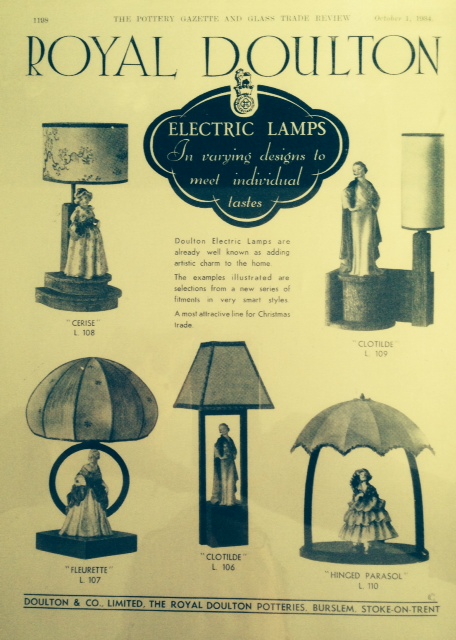
An advert for lamps from 1934.
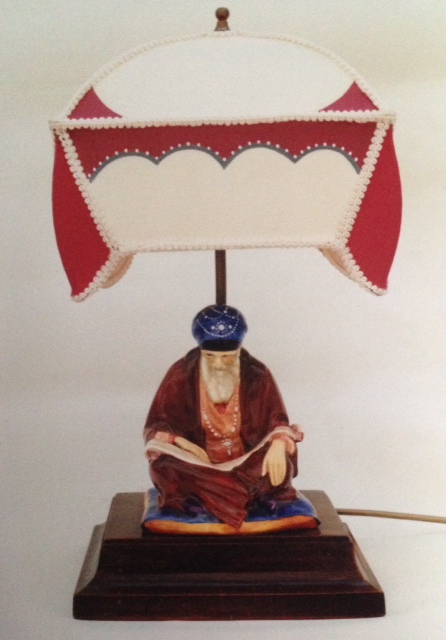
The style of lamp base, just like the figure itself, is given a number preceded with an L for lamp. There were at least 10 different styles of base, some of which appear to have been used for particular figures. Lamp 6 seems to have been used exclusively for Clothilde, whilst number 8 was used for Cerise and number 10 for the Hinged Parasol. The bases were made of wood – with either a mohogany, oak or ebonised finish – or alabaster. I have one base in my collection that is made from wood used to create Westminster brigde.
A catalogue page from 1930 showing the Parson’s Daughter as a lamp with matching shade.
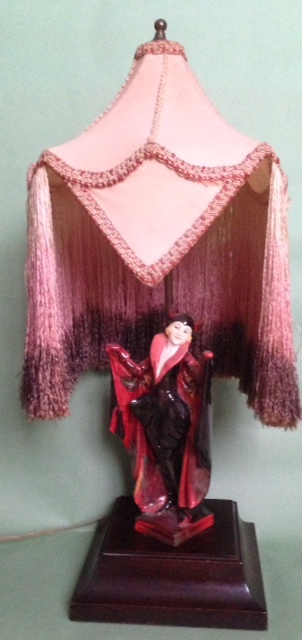
The shades too were a work of art in their own right. Tassles, cascading shades, hand finished detailing….all can be expected when you discover one of these lamps. Of course the shades are perhaps the most fragile part of these lamps and the majority have perished over the years. However, if someone has preserved the frame their are specialist lamp shade coverers out these who will re-vitalise these now sad skeleton shades.
An elaborately refurbished shade.
The prices of these complete lamps were often three times the price of the figure alone, yet they were obviously popular as they do turn up. When they do they often need refurbishing as the electric cables should be replaced. This is a relatively easy practice but you need to know what you are doing.
The enduring popularity of these lamps is perhaps best explained by Doulton themselves who advertised these lamps as “enhancing the beauty of colour and the refinement of the models” and that “nothing could be more suitable for a wedding present, for which they are now in great demand”.
All of the Doulton figure catalogues of this period state that any of the figures advertised could be mouted as lamps with “shades in suitable colours.”
To finish, a personal favourite of mine. Marietta fitted with a shade with tassles to match her costume. Although a little faded it evokes the 1930’s deco style perfectly. This lamp was exhibited at the V&A Doulton Story exhibition in 1978.
Royal Doulton’s fantastic musical character jugs
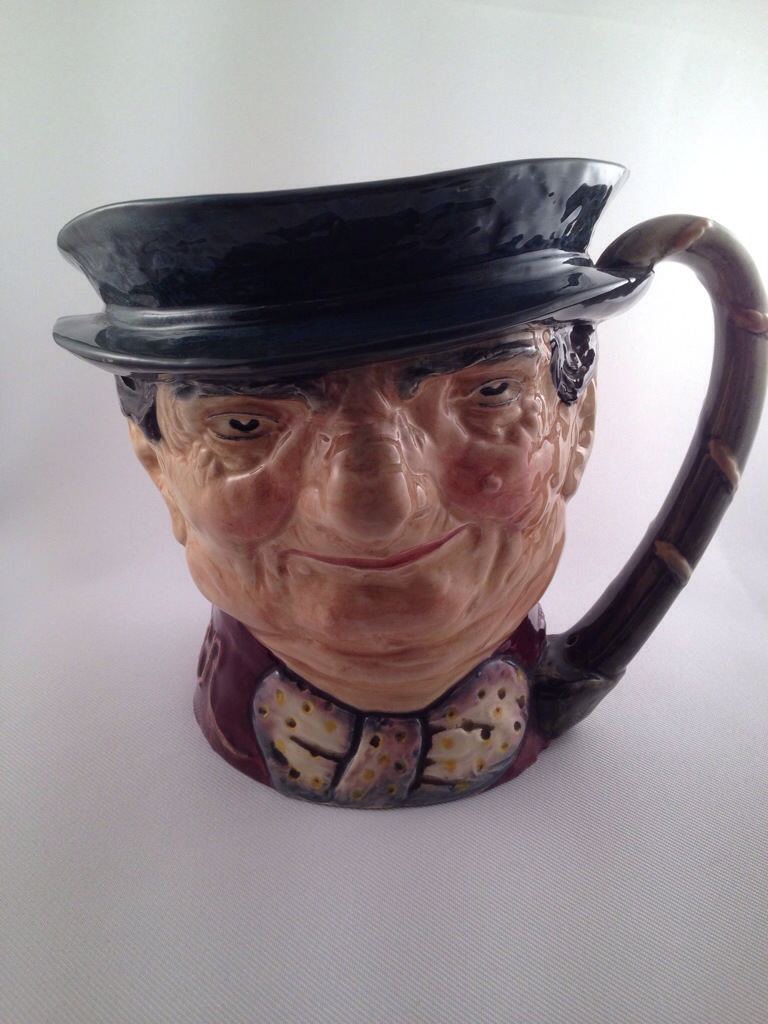
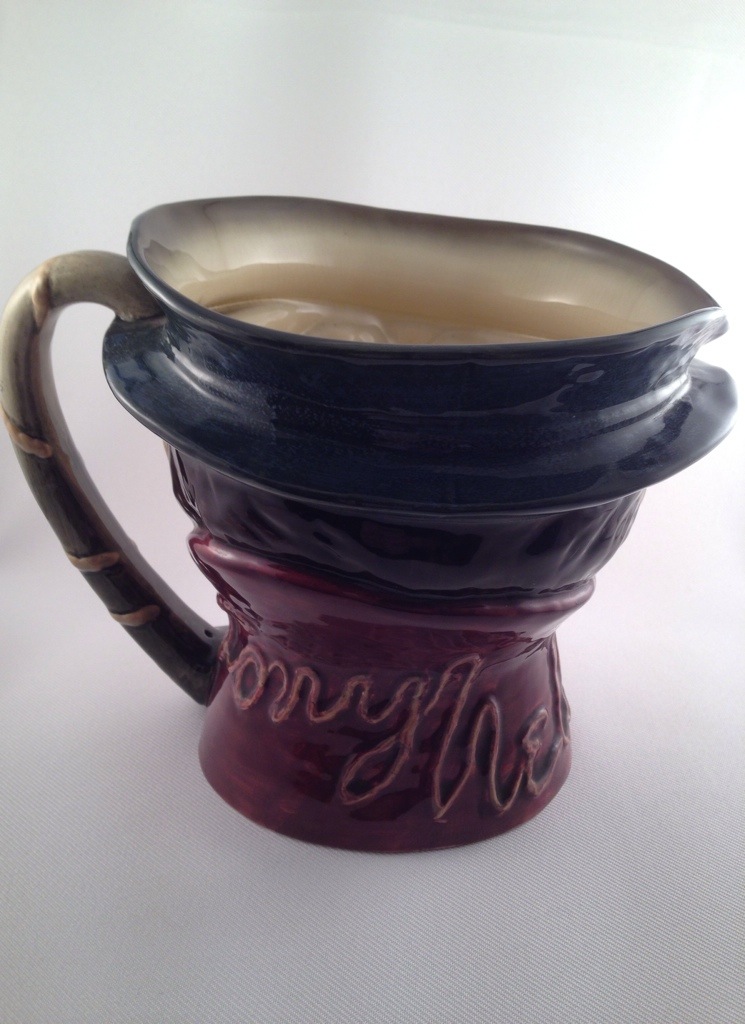
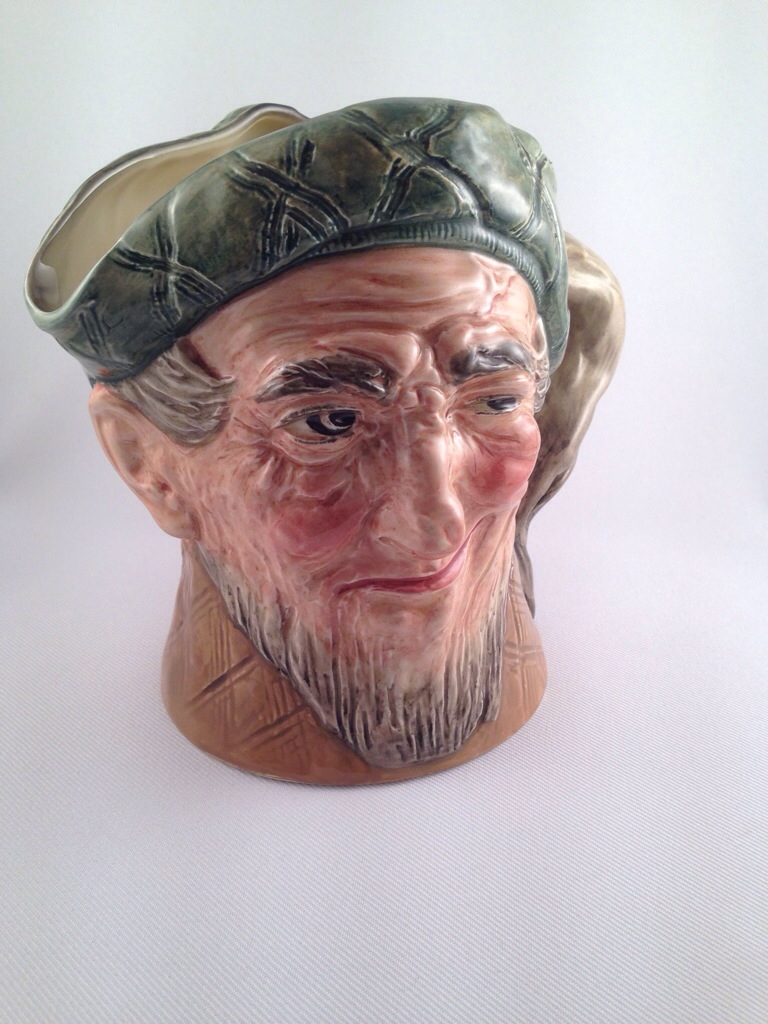
Two views of the Tony weller musical jug.
In the immediate years before the outbreak of WWII, Royal Doulton were avidly addidng to their many successful series of figures, seriesware and of course character jugs. Items from this period are amongst the most sought after of the Doulton wares, simply because the outbreak of war interrupted or halted production completely of many of these lines.
This small group of five musical character jugs, fall into this category. Production of these musical jugs was interrupted by the outbreak of the war and musical jugs were probably not made long after its commencement, given their scarcity in today’s market place. This is borne out particularly by the scarcity of the Old King Cole jug.
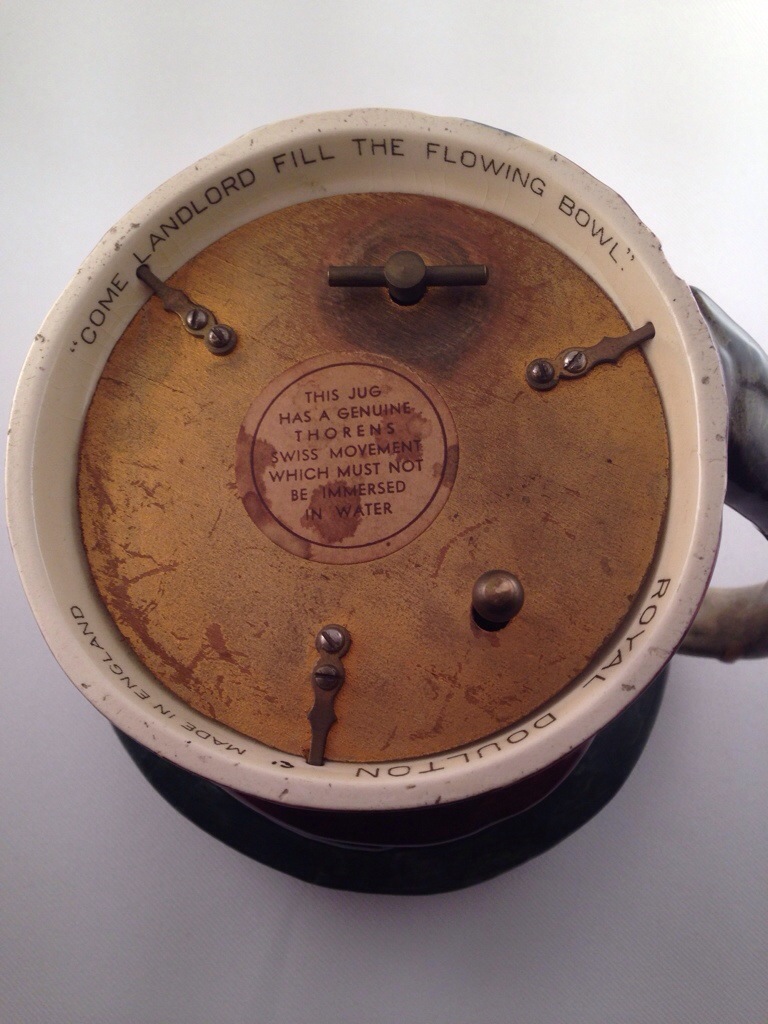
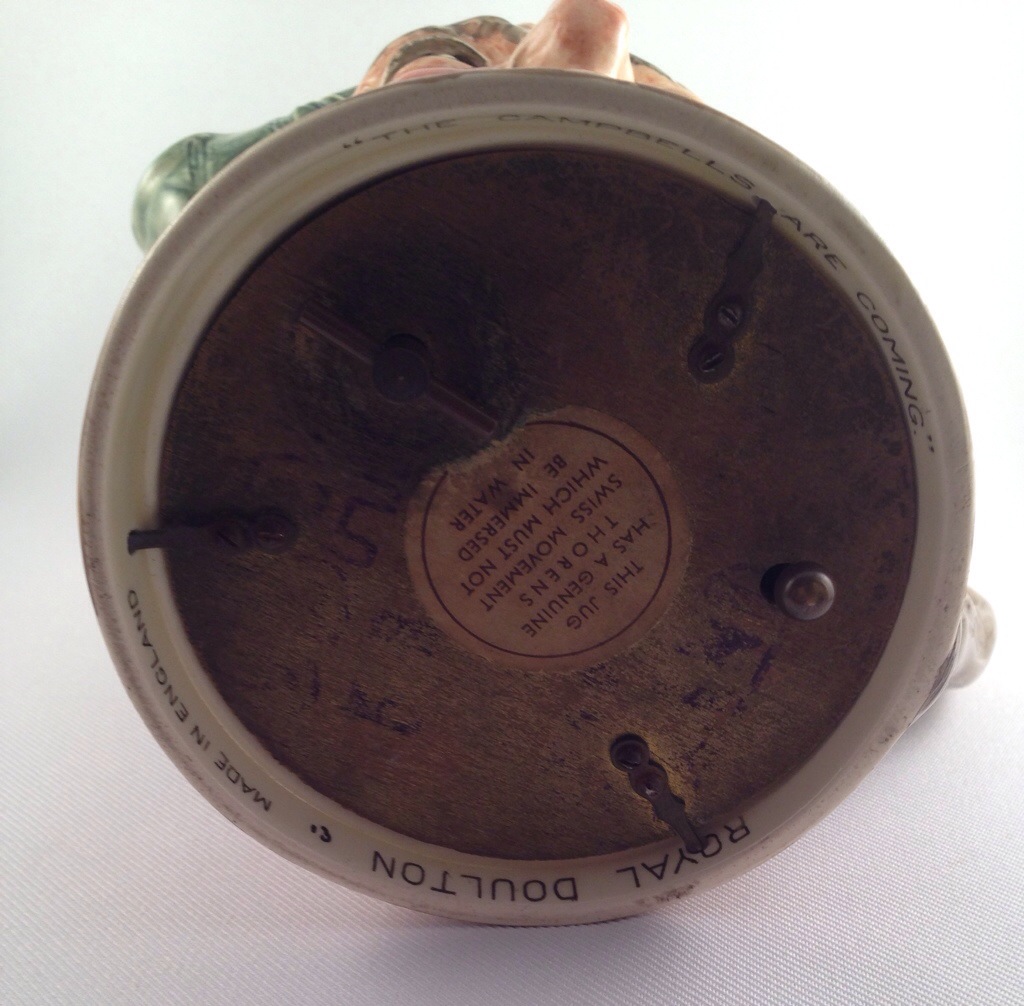
Each of these jugs is fitted with a ‘Thorens’ Swiss movement and the title of the melody it plays is printed around the base of the jug.
Detail to the base of the Tony Weller jug.
The details of these five jugs are as follows:
D5858 Old Charley 1937-42
‘Here’s a Health unto His Majesty’
D5887 Paddy 1938-42
‘An Irish Jig’
D5888 Tony Weller 1938-42
‘Come, Landlord Fill the Flowing Bowl’
D5889 Auld Mac 1938-42
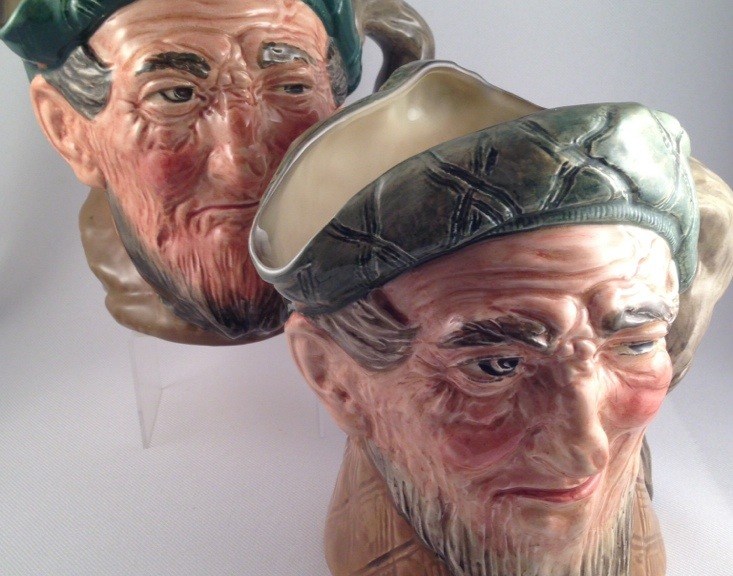
‘The Campbells are Coming’
D6014 Old King Cole 1939-42
‘Old King Cole’
(a yellow version of this last title exists)
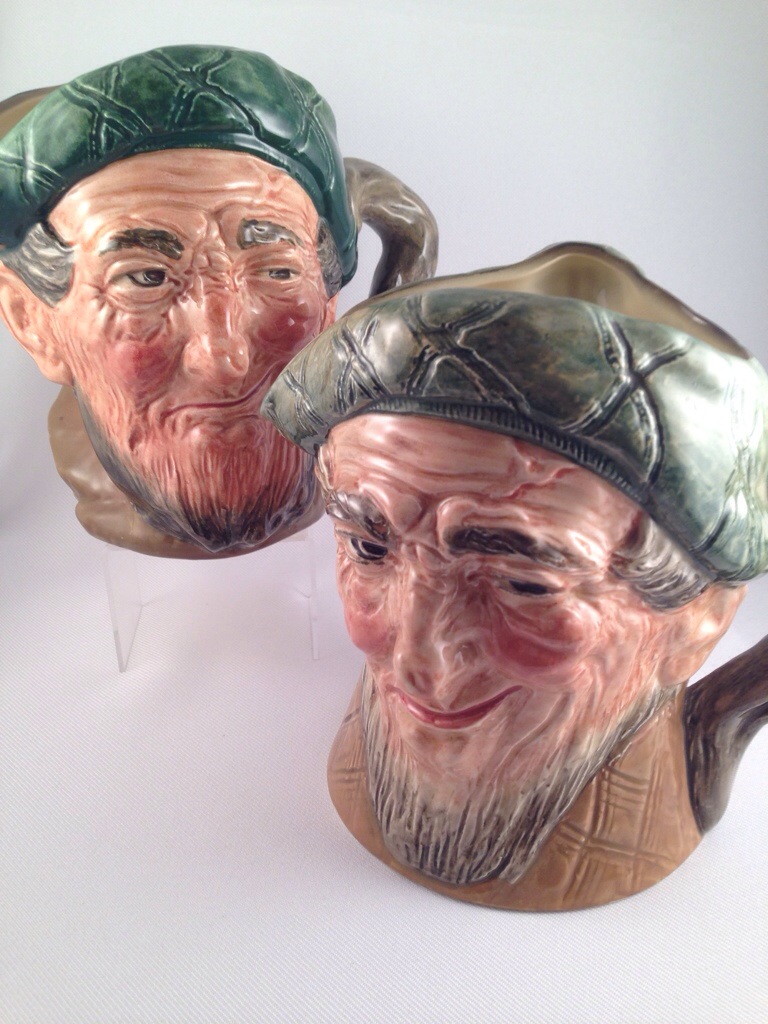
Two versions of Auld Mac. On the left is an ‘A’ mark version ca. 1950’s and on the Right is a musical version.
The musical Auld Mac.
Auld Mac’s base.
Derivatives form an exciting sub-theme for collecting and other derivatives including bookends, busts, teapots, milk jugs and sugar bowls exist.
Happy collecting!
Royal Doulton’s wigged ladies (and gents too!)
We all know that Royal Doulton is famous for it’s bonneted ladies, but there is another theme that is popular amongst collectors, namely ladies with powdered white wigs.
English history is the source of many figures in the HN range and as with all figures so-called artistic license was used in abundance. Figure collectors the world over very often focus on one or two areas to focus their collecting and the Regency period offers collectors some of the best examples of Royal Doulton figures.
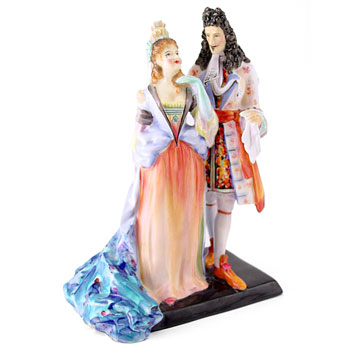
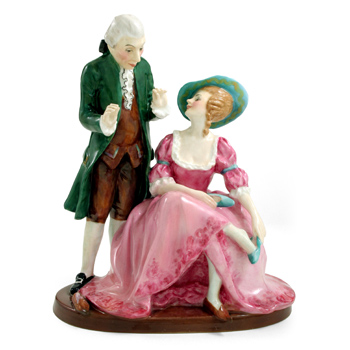
The Regency period in English history is a difficult period to date precisely and when one recalls the towering powdered wigs and cumbersome, elaborate dresses, we are actually thinking of the late Georgian and early Regency Periods. Royal Doulton has paid homage to this period on several occasions since A Lady of Georgian Period HN41 in 1914. Leslie Harradine was one of its greatest champions and his first figure from this period in English History is Tête à Tête HN799 which portrays a gentleman in typically long coat with wide cuffs, powdered wig and heeled shoes. The lady whose attention he is so assiduously seeking is sat wearing a powdered wig and low cut, elaborate dress. The obvious French name of the group, together with the costume, confirm that this and several later pieces were actually based on the French Regency Period.
Tête à Tête.
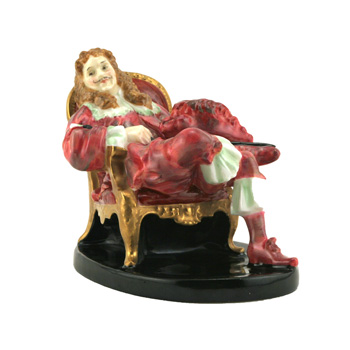
The Courtier HN1338 was the next figure in this style to be introduced and is seen here in his wig and elaborate costume including lace collars, heeled boots and lace tops on his boot hose.
The Courtier.
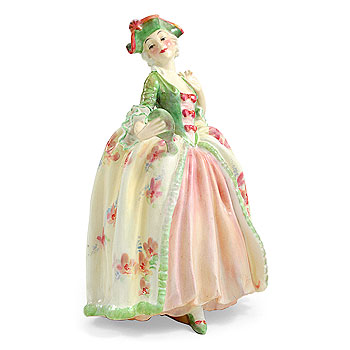
Other figures soon followed including Eugene HN1521 and Lisette HN1524 both seen here in outfits again more reminiscent of the time of Louis XVI of France with their gowns looped up and both holding a fan. Two further French inspired figures followed swiftly as collectors clamoured for this style of figure. Camille HN1586 and Fleurette HN1587 are very much in this style, although Camille is actually based on a Stanislaus Longley picture from the 1930’s.
Camille.
Harradine’s Regency HN1752 is very much true to its name and is a precise reflection of her time, with her stylish riding outfit, riding crop and tricorn hat. In the same year, 1936, The Court Shoemaker HN 1755 was introduced. Whilst the focus of the figure is undoubtedly the lady, we get an accurate glimpse of a servant’s attire in the shoemaker, with his simplified costume.
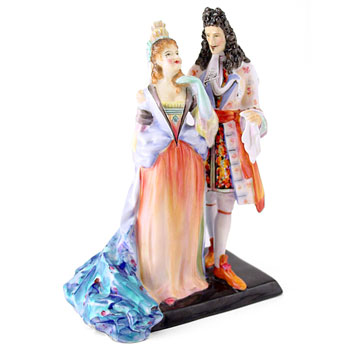
In the immediate post-war years after 1945 Peggy Davies again presented two figures in this style, namely Hermione HN2068 and Georgiana HN2093, both of whom are elaborate in style and expertly researched and executed as all of Peggy’s figures were. A final piece to mention here is Promenade HN2076. The sheer complexity of this figure must have made this piece particularly difficult to produce and this no doubt accounts for its scarcity today. Once more Peggy’s research is second to none and both figures are presented in costumes from ca. 1700 taken directly from fashion illustrations.
Promenade.
On first glance themes amongst the many figures introduced over the last century are not always apparent, but rest assured others do run through the HN collection and they provide an excellent basis on which to form a collection or even a display.
As always, thank you to Seaway China for the use of their pictures!
Don’t forget if you like my Doulton articles, join our facebook page for more discussion, articles and pictures!
What is in a name? Doulton’s love of Patricia!
On the back of a reader’s response on the Doulton Collectors Club Facebook page, I thought it timely to look at how figures are named and also look at one of Doulton’s most famous ladies and how she was produced in a variety of guises over the years!
It is often impossible to determine how a figure came to be named, especially the early ones unless the figure is modelled in the likeness of her namesake such as Pavlova, who if course was named after the famous ballerina Anna Pavlova. The majority we must assume were named because theirs was a popular name, or else after a family member of a Doulton employee or a worker in the factory… today we can but guess. In more recent times Doulton even ran competitions to find appropriate names for figures.
Even after a figure is named, it can be re-named according to tastes, for example The Young a Widow who was swiftly re-named The Young Mother. A further example is the scaled down version of the early figure Doris Keane who became Rosamund. In my own collection I have an Erminie from the M series which is actually titled Christopher to the base, a figure I naturally had to keep.
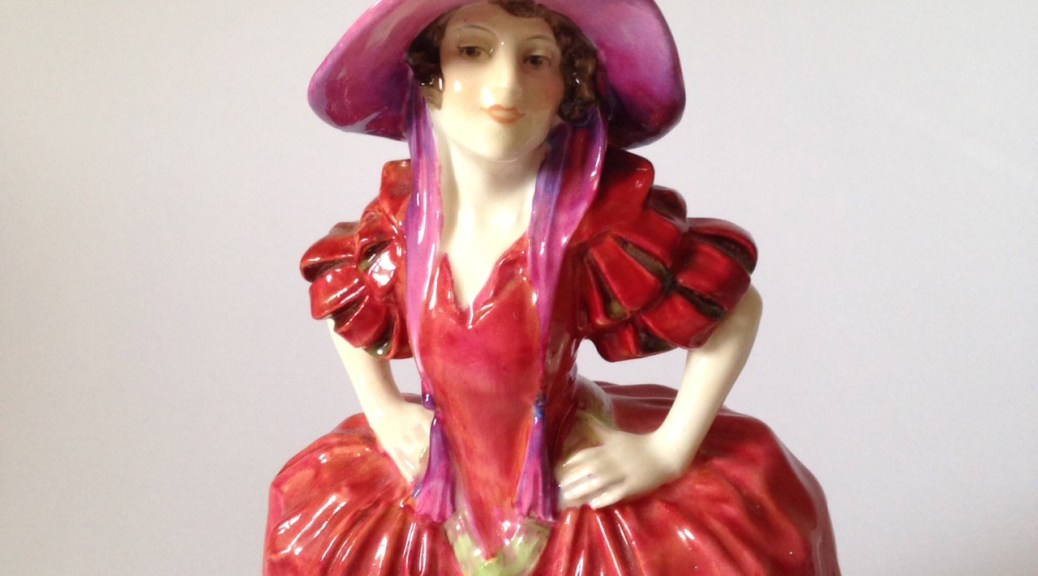
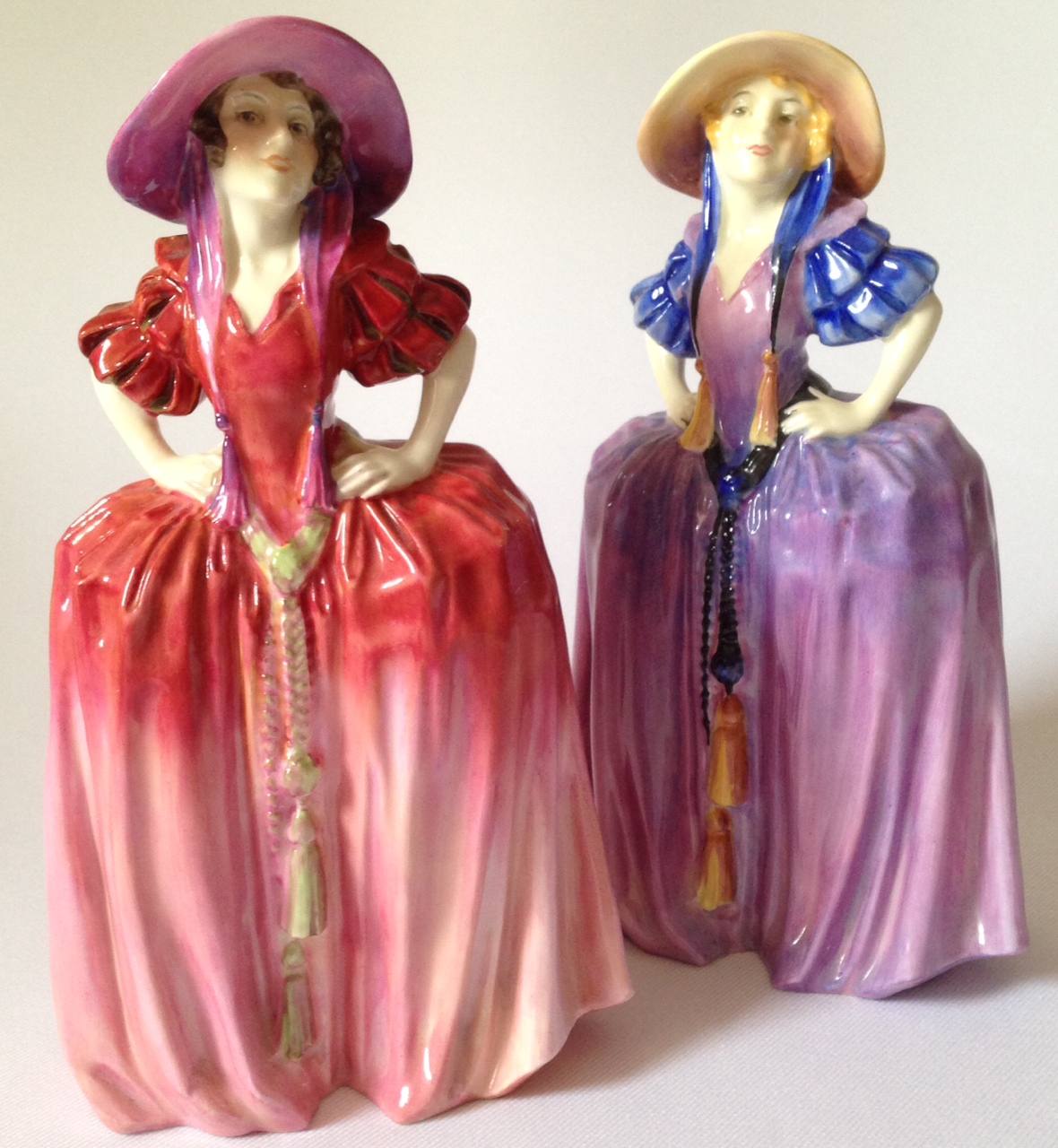
Patricia HN1414 modelled by the legendary Leslie Harradine, was first produced in 1930 and three other colourways were added to the range in 1931 and 1933. Her precise date of withdrawal is unknown but in the ultimate reference book, Royal Doulton Figures, it is given as ‘by1949’. My own personal research leads me to put a date of ‘by 1944’ as a more realistic date.
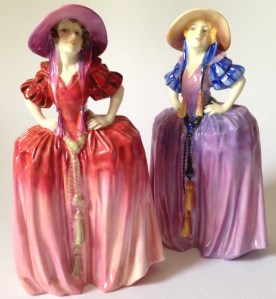
My personal favourite colourways of Patricia!
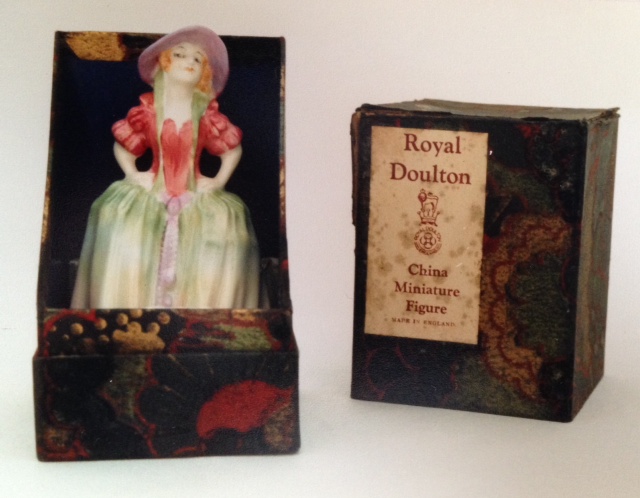
As well as the opportunity to collect this large size, Doulton introduced a miniature version in 1932 with M7 to compliment her larger counterpart. These original M figures were sold in suitably deco boxes like the one here.
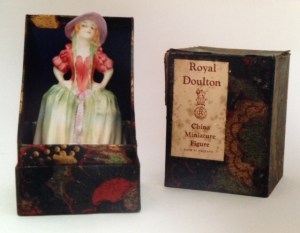
Patricia M7 in her original box.
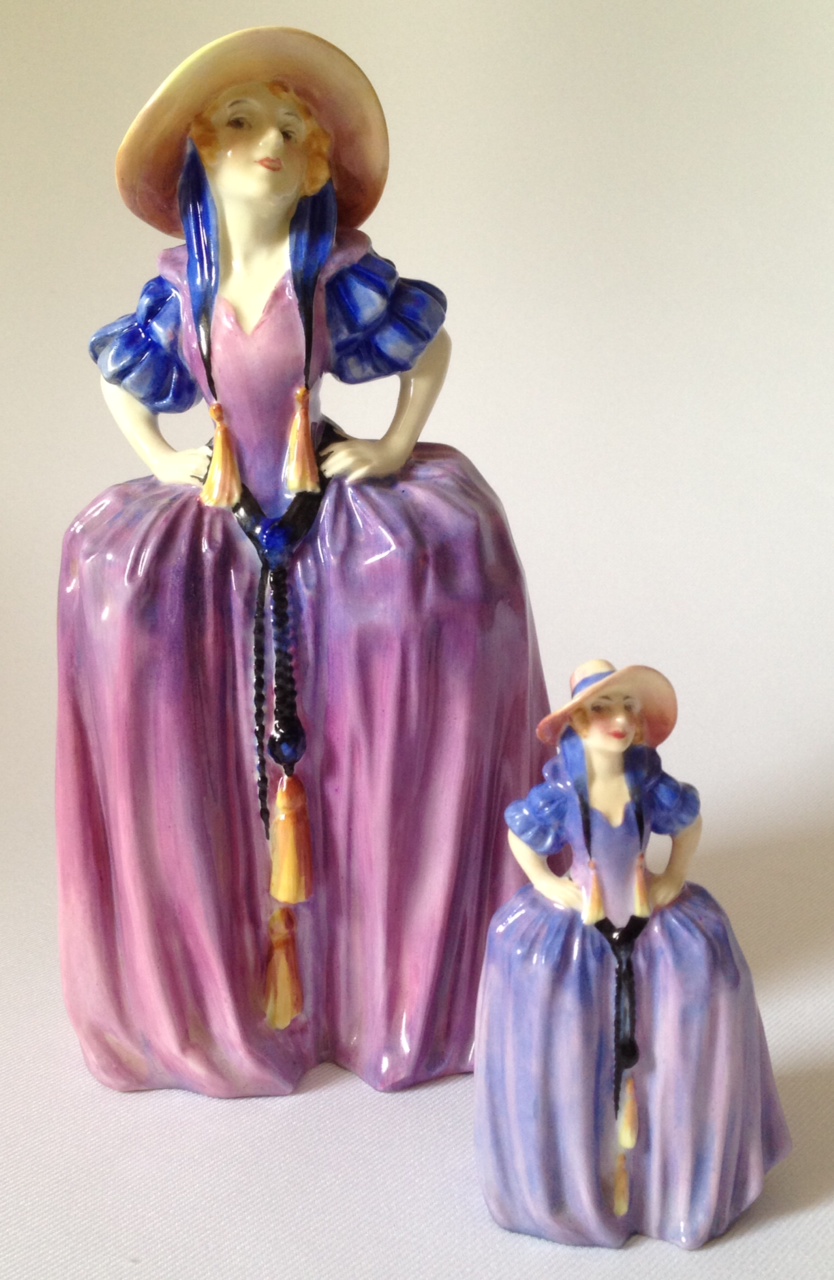
These two sizes were really identical in certain colourways as you can see below.
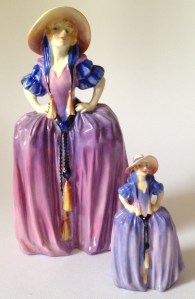
Patricia M28 and HN1431.
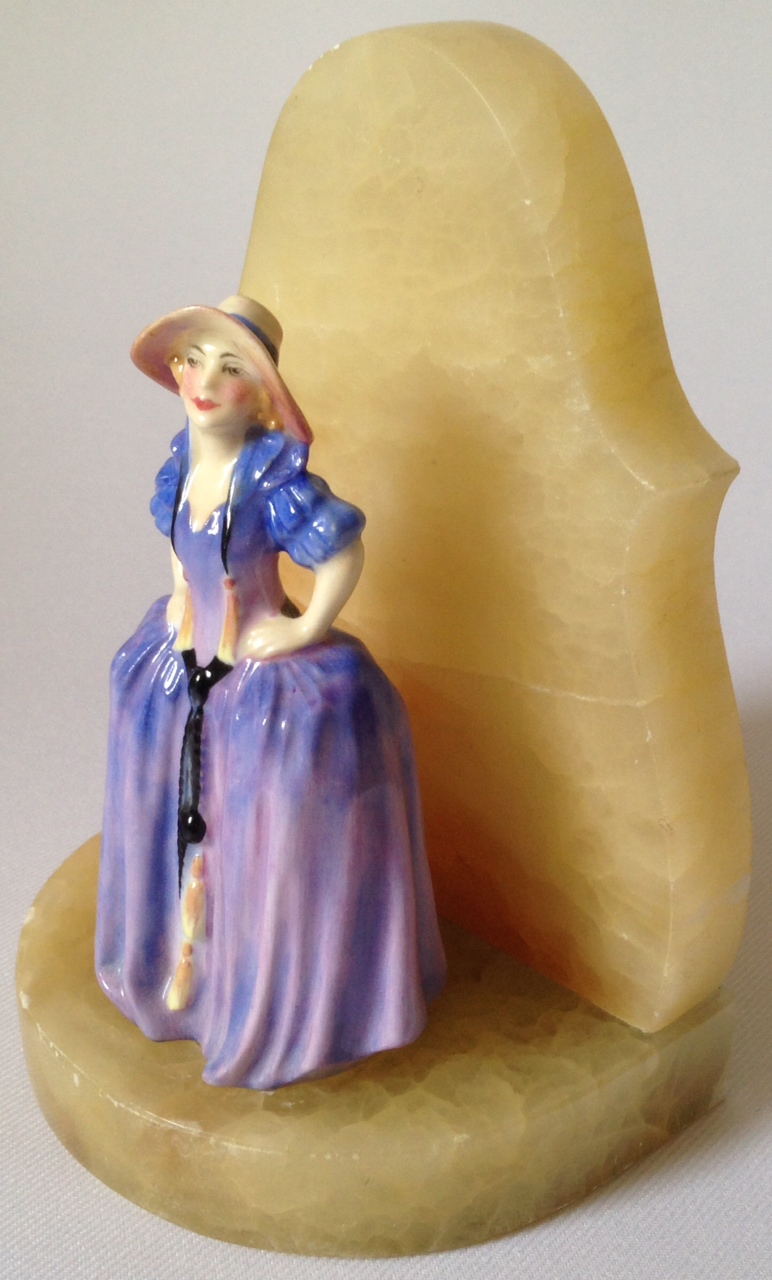
These miniature M Doulton figures can be found mounted on a variety of things from calendars to bookends.
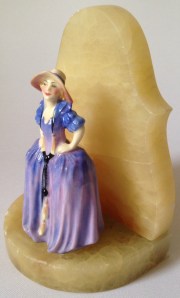
A typical Doulton bookend with Patricia M28.
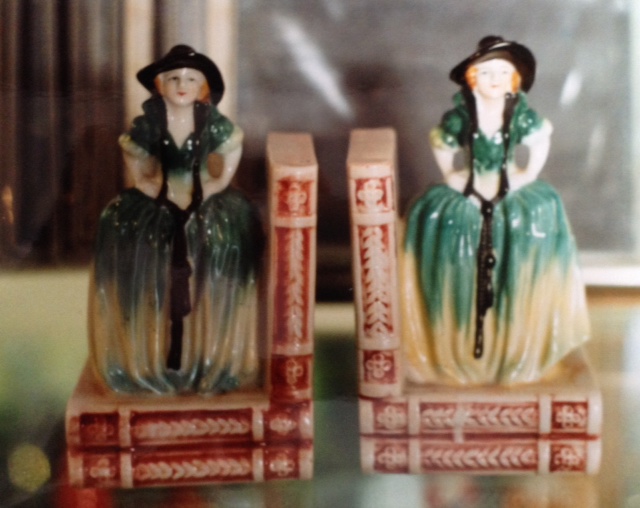
Naturally fakes do appear and Patricia is no exception to the rule.
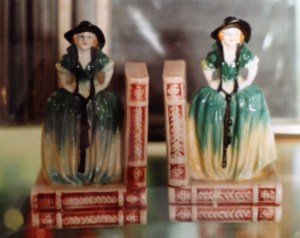
A pair of fake Particia bookends.
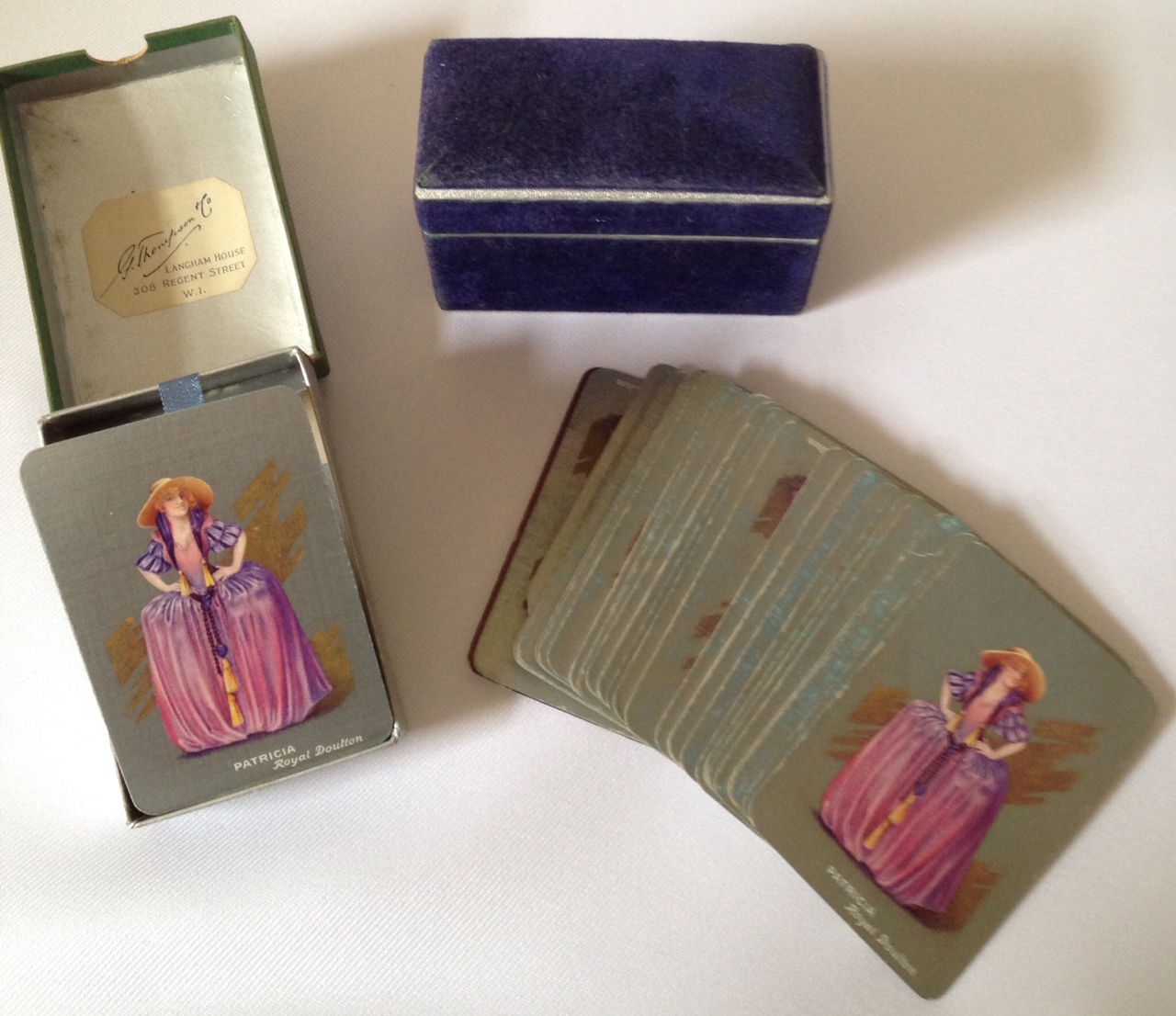
Opportunities to collect Patricia are endless. Here are two contemporary sets of playing cards, both featuring an image of Patricia HN1431. The ones in the blue box were issued by the Financial Times, whilst the other box was retailed in Regent Street, London.
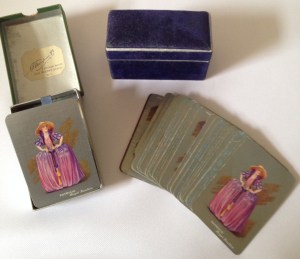
Two sets of playing cards featuring Patricia.
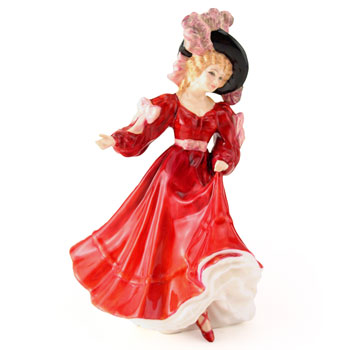
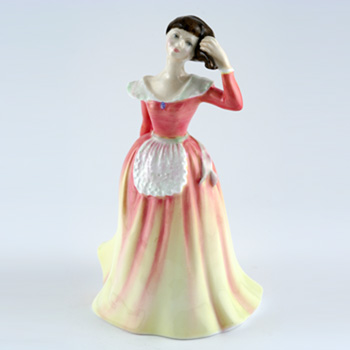
Patricia has remained a popular name for Doulton figures and other versions have been introduced over the succeeding years.
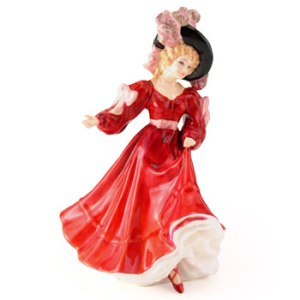
Patricia HN3365
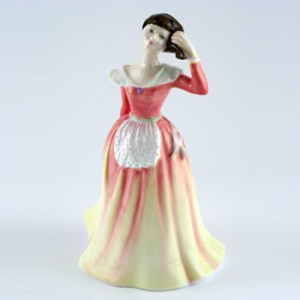
Patricia HN3907
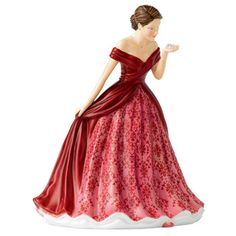
Patricia HN5665
A final thought is that most figure collectors start collecting because of the name of the piece, either to commemorate or celebrate great events in their lives – what a perfect way to collect?
© Christopher Evans 2014
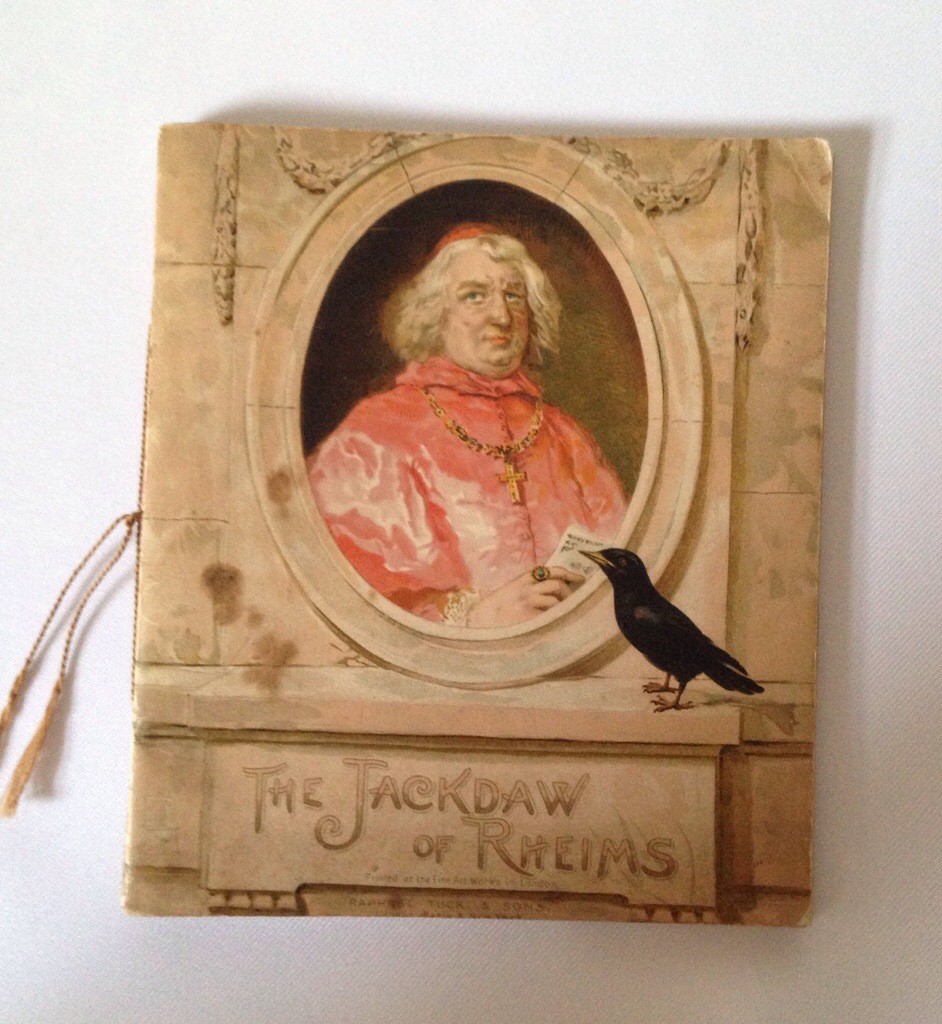
A celebration of Doulton’s Jackdaw of Rheims seriesware pattern
The cover of an early pictoral edition of the poem.
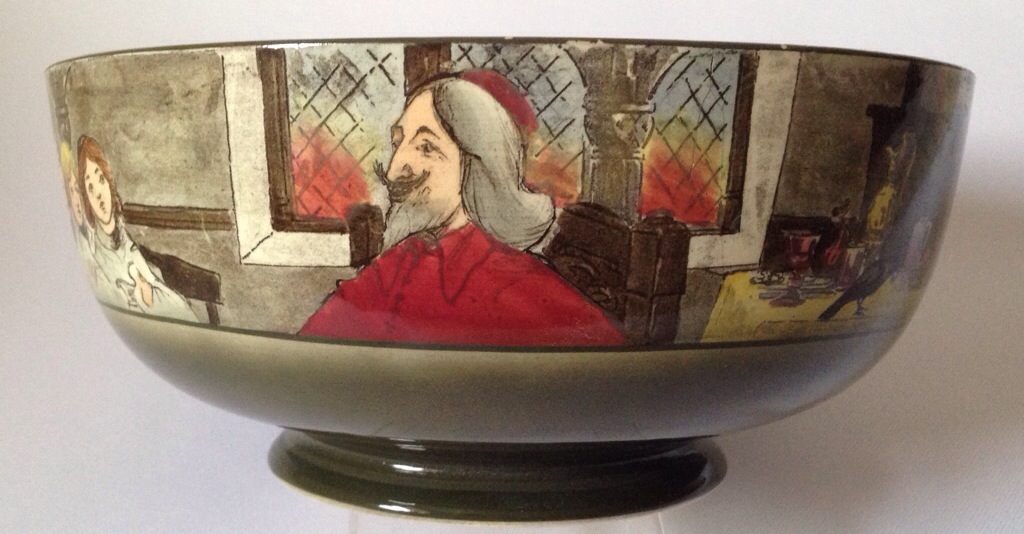
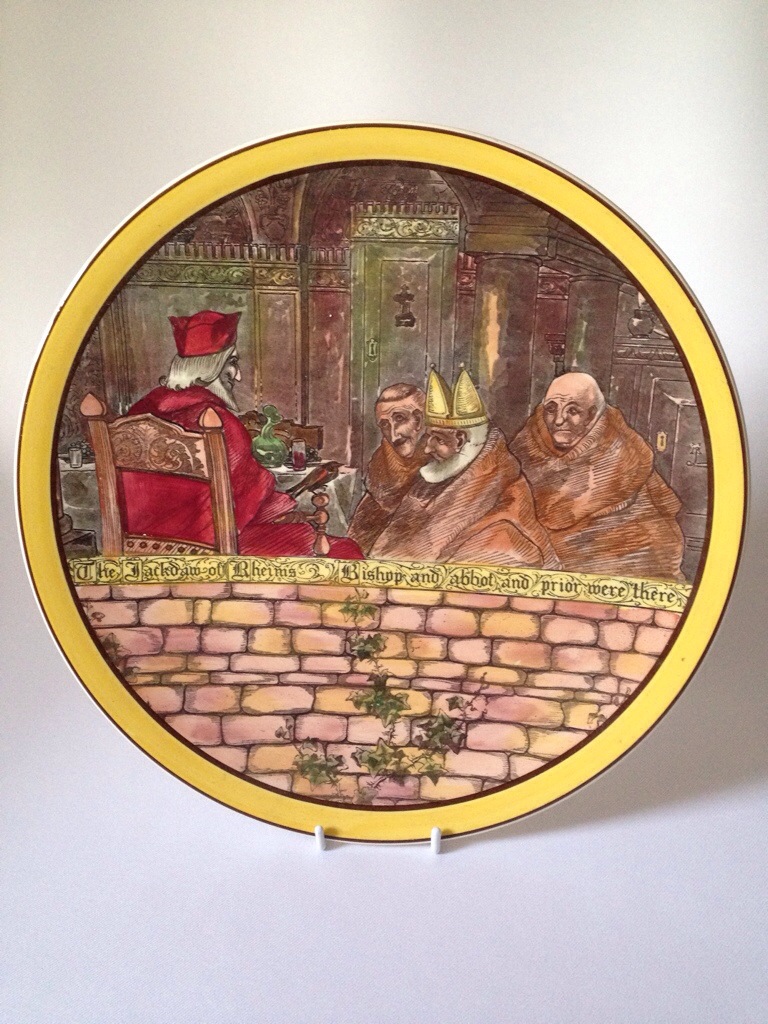
Doulton’s seriesware pattern the Jackdaw of Rheims is of course based on the Victorian poem by Thomas Ingoldsby of Tappington Manor, actually a pen-name of an English clergyman named Richard Harris Barham, and his verse is famous for its wit and heroic tales. Of the many Ingoldsby legends this is perhaps his most popular and so it is no surprise that Doulton chose to base a seriesware pattern upon this story.
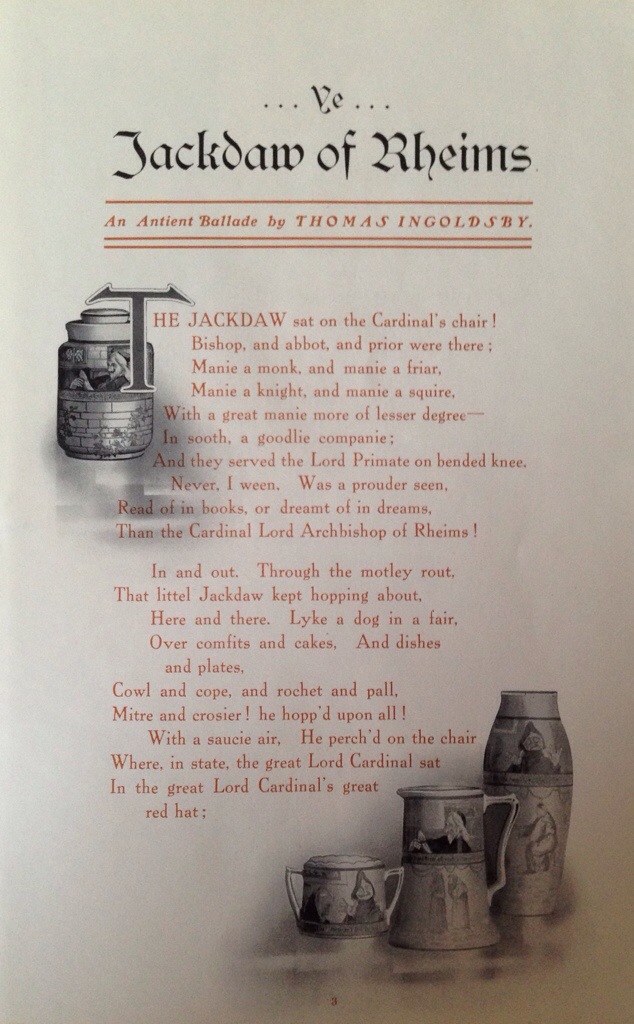
A page from a Doulton catalogue advertising this story ca. 1906.
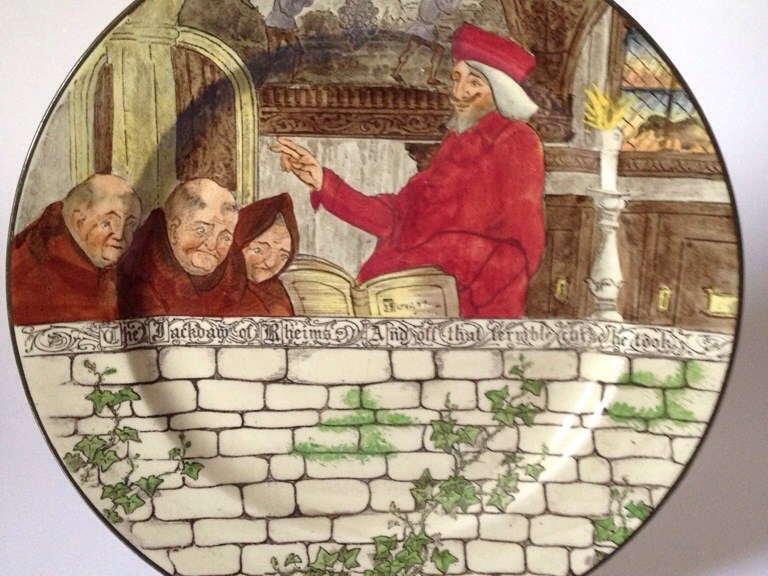
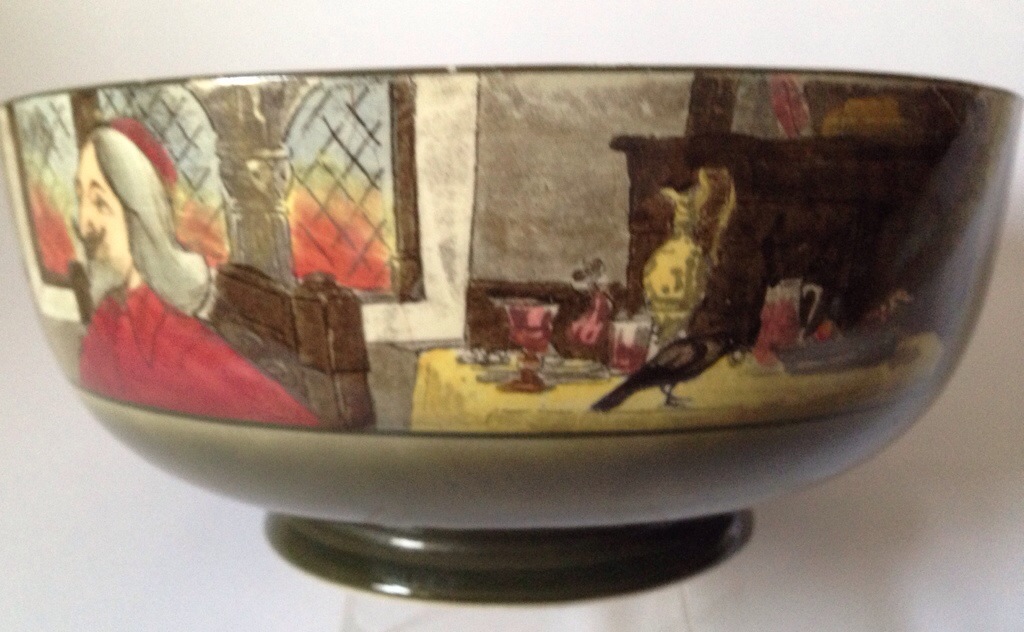
The story starts with a scene at the Cardinal’s Court in Rheims, where a stately feast is taking place, thereafter the cardinal’s ring mysteriously disappears, a fearsome curse is then placed by him on the unknown thief, it’s terrible effect is seen upon the poor jackdaw and finally the jackdaw’s return to favour are vividly described for us.
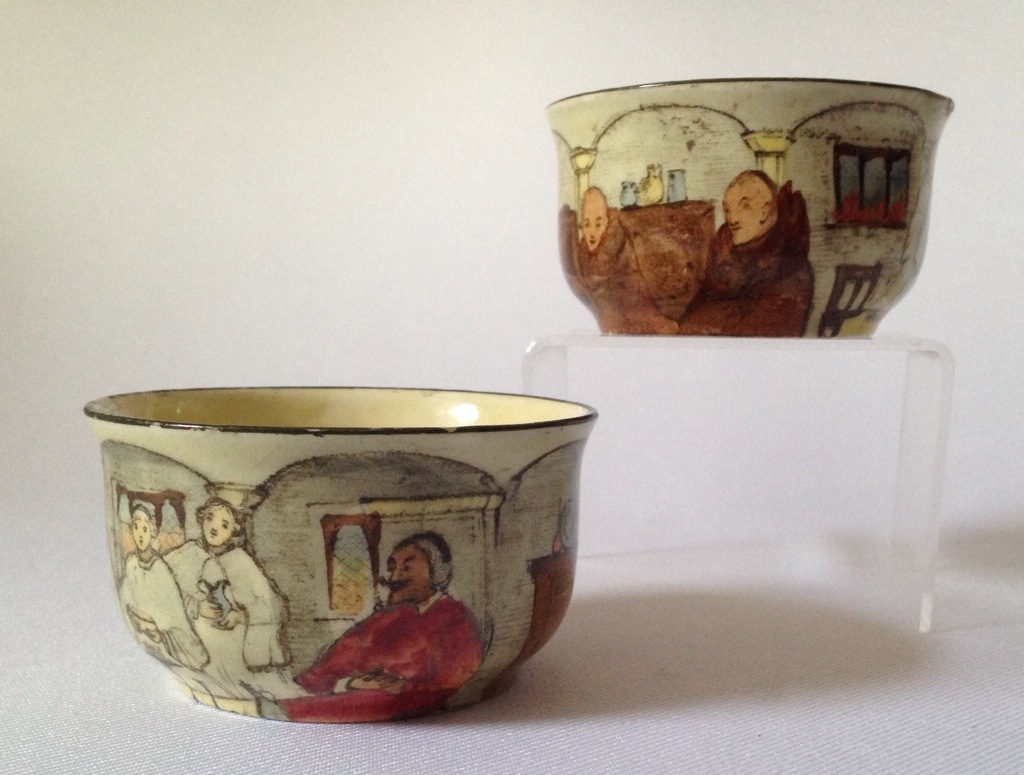
A pair of early sugar bowls.
These colourful incidents provide the inspiration for Doulton’s series and lend themselves so well to pictorial illustration as can be seen. First introduced in 1906 there are typically an array of scenes and shapes to collect.
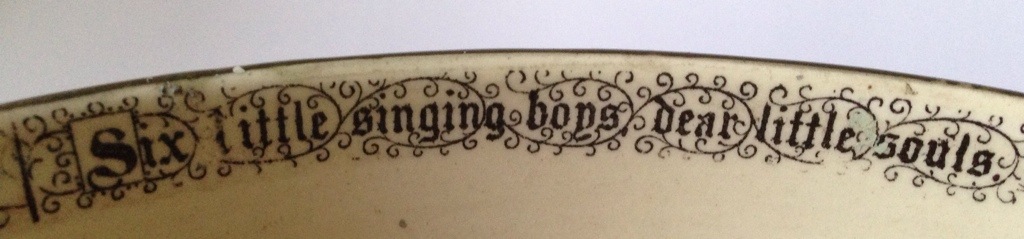
Three views of a large fruit bowl including the inscription around the inside edge of the bowl.
Today this seriesware pattern remains amongst the most sought after and more unusual shapes and scenes can make a considerable dent in the wallet.
Doulton described the series as a”Keramic Edition” of this famous tale and so it is, with sections of the verse used as part if the illustrations.
Don’t forget if you like my Doulton articles, join our facebook page for more discussion, articles and pictures!
Collecting Royal Doulton’s great British bulldogs!
Inspired by a recent post to our facebook page, here is a little something on Doulton’s perennially popular Bulldogs!

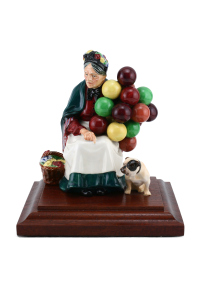
Doulton’s most famous figure, The Old Balloon Seller with her Bulldog ca. 1938.
Royal Doulton’s bulldog models have been on ‘active service’ since 1917 and are collectively the most collected canine model produced by Royal Doulton. When one considers the diversity of bulldog pieces to collect, we quickly understand their popularity. The bulldog was originally kept for bull baiting here in England, but this was abolished in 1838 and since this time, the bulldog has been
bred into a much tamer breed.
The bulldog’s association with all things British and of course lately the world of James Bond, stems from the two world wars of the twentieth century.
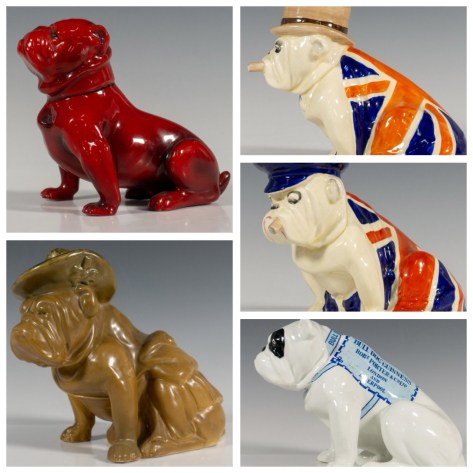
A selection of Bulldogs coming up @Lion and Unicorn Auctions Sunday 14 April 2024!
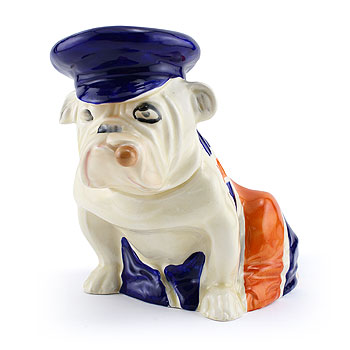
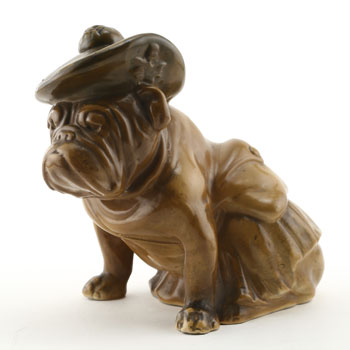
In 1917, Royal Doulton produced a large khaki Bulldog, seated with either a tin hat or a tam o’shanter (cap) representing the uniforms of English and Scottish soldiers during the First World War.
Bulldog in khaki with tam o’shanter.
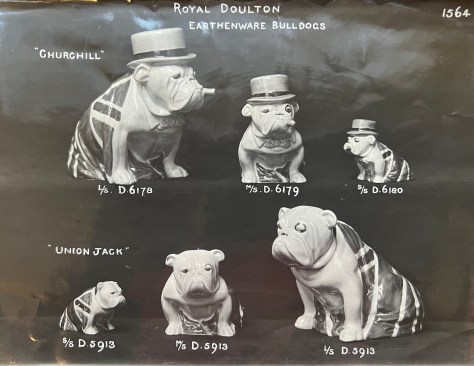
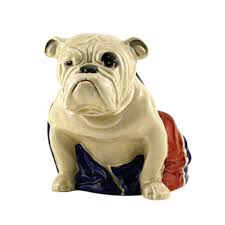
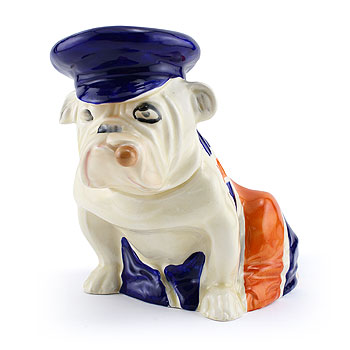
In 1941, Royal Doulton went on to produce a series of seated Bulldogs with union jacks draped on their backs, representing and helping to promote the national feeling during this difficult period in history.
Bulldog with union flag.
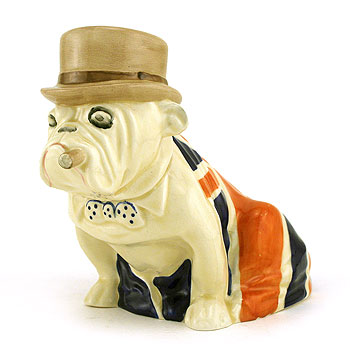
A further two models of Bulldogs were produced at this time representing Winston Churchill, the famous British wartime leader and
national hero, wearing different headgear and smoking his familiar cigar!
Above and below, two more Winston Churchill inspired bulldogs.
Versions of bulldogs draped in union jack flags were actually produced earlier as advertising flasks for alcohol retailers. There are other very rare variations of Doulton bulldogs to be found including one with an eye patch and another in a Khaki glaze with the familiar union jack on its back.
Some of the rarest bulldogs to find include bulldog flasks, a very unusual wall pocket and also bulldogs mounted on pottery boxes. It is thus not surprising to see that this famous Doulton hero has been adopted as the spirit of British survival and given a starring role in the latest James Bond film, Skyfall, where he survives an assassination attempt on ‘M’ in London, England.
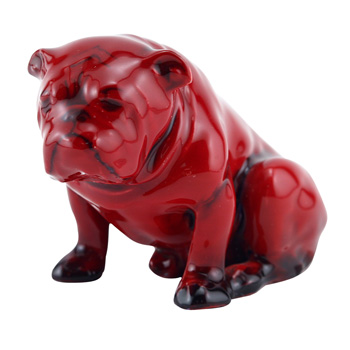
And finally, a wonderful flambé bulldog.
As always many thanks to Seaway China for the use of their photo library. CE.