All posts by doultonchristopher1

Doulton artist profile – Robert Allen.


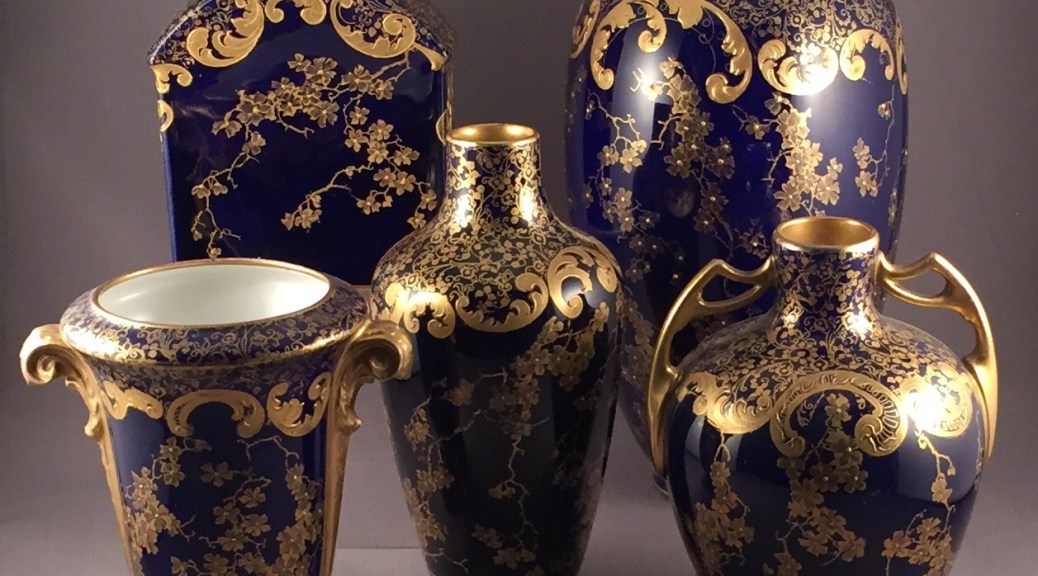
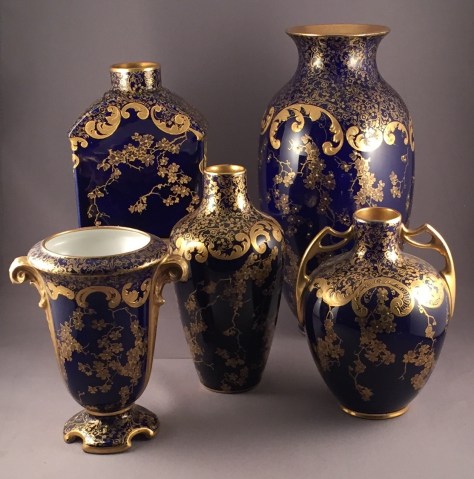
A Robert Allen design carried out by his studio ca.1900.

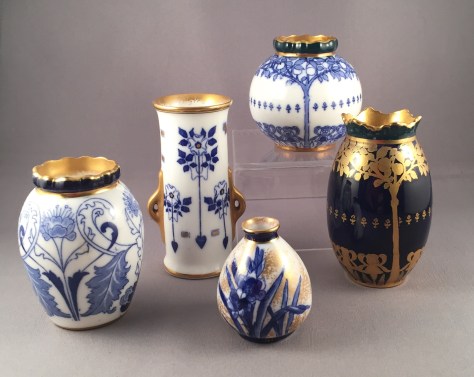
Robert Allen began work at Nile St. when it was still owned by Pinder Bourne, after a brief period at Minton’s as a boy worker. Robert flourished under the guidance of John Slater, then art director, eventually taking over a painting department of his own. Work from his department is denoted by his initials R.A. followed by a number. Robert Allen’s own signed work is however, rare. Yet, he and his department were entrusted with much of the finest and most expensive decoration carried out at Burslem notably for the great exhibitions at which Doulton exhibited from the late 19th century. Robert was notably involved in the early development of Titanian ware too although it is the work of his son Harry in Titanian that is typical.


A group of miniatures bearing an RA number from the Robert Allen studio.

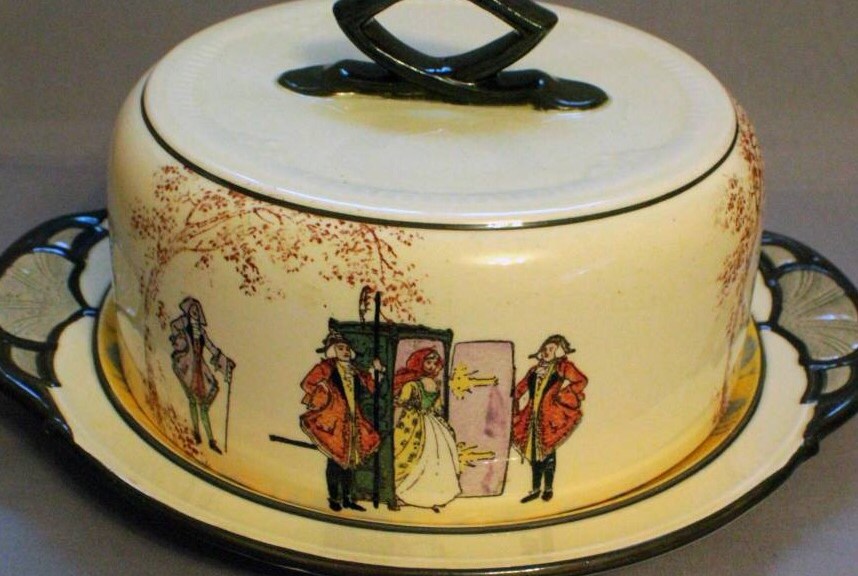
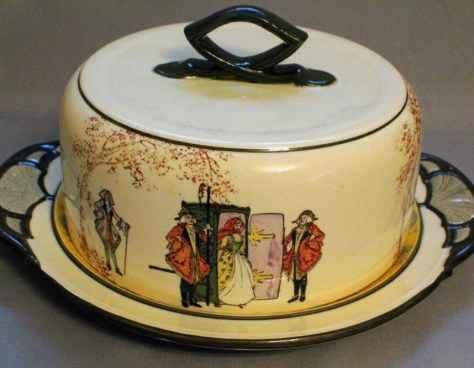
Collecting Doulton seriesware – Sedan Chair.

An unusual  Sedan Chair seriesware survival – a Cheese dome. The bases often turn up and are described as bread and butter plates, but here is the full thing! Introduced in 1912 and withdrawn around 1940, examples are not frequently seen suggesting production was much shorter. The art nouveau shape is incongruous to the seriesware pattern but the series is so charming that one doesn’t notice. The scene illustrated is No.2 hitherto not illustrated. 

Seriesware never fails to surprise us even today!

Early Doulton Burslem designs.


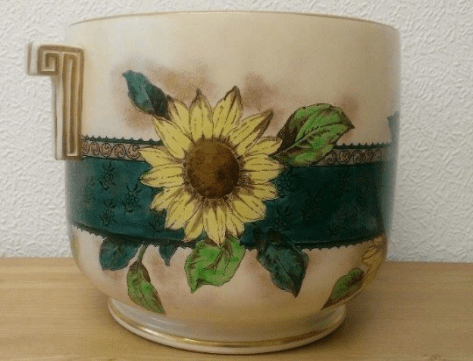
One of our collectors recently asked about the jardinière pictured. It bears a simple, impressed ‘Doulton’ mark that often throws collectors but this method of impressing the Doulton name can be found still in use into the 20th Century too, although later examples are accompanied by the usual lion and crown Doulton mark.

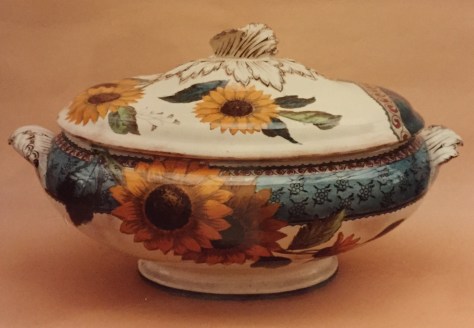
Returning to the pattern of the jardinière, I term it a transitional pattern from the period when Doulton entered into partnership with the Pinder Bourne factory owner in 1877 and the time when Doulton eventually took over the Nile St. enterprise entirely in 1884.  In the aesthetic taste, it is certainly of this period and I have seen plates marked Pinder Bourne but also further examples simply bearing the Doulton brand. Here is a tureen marked thus. 


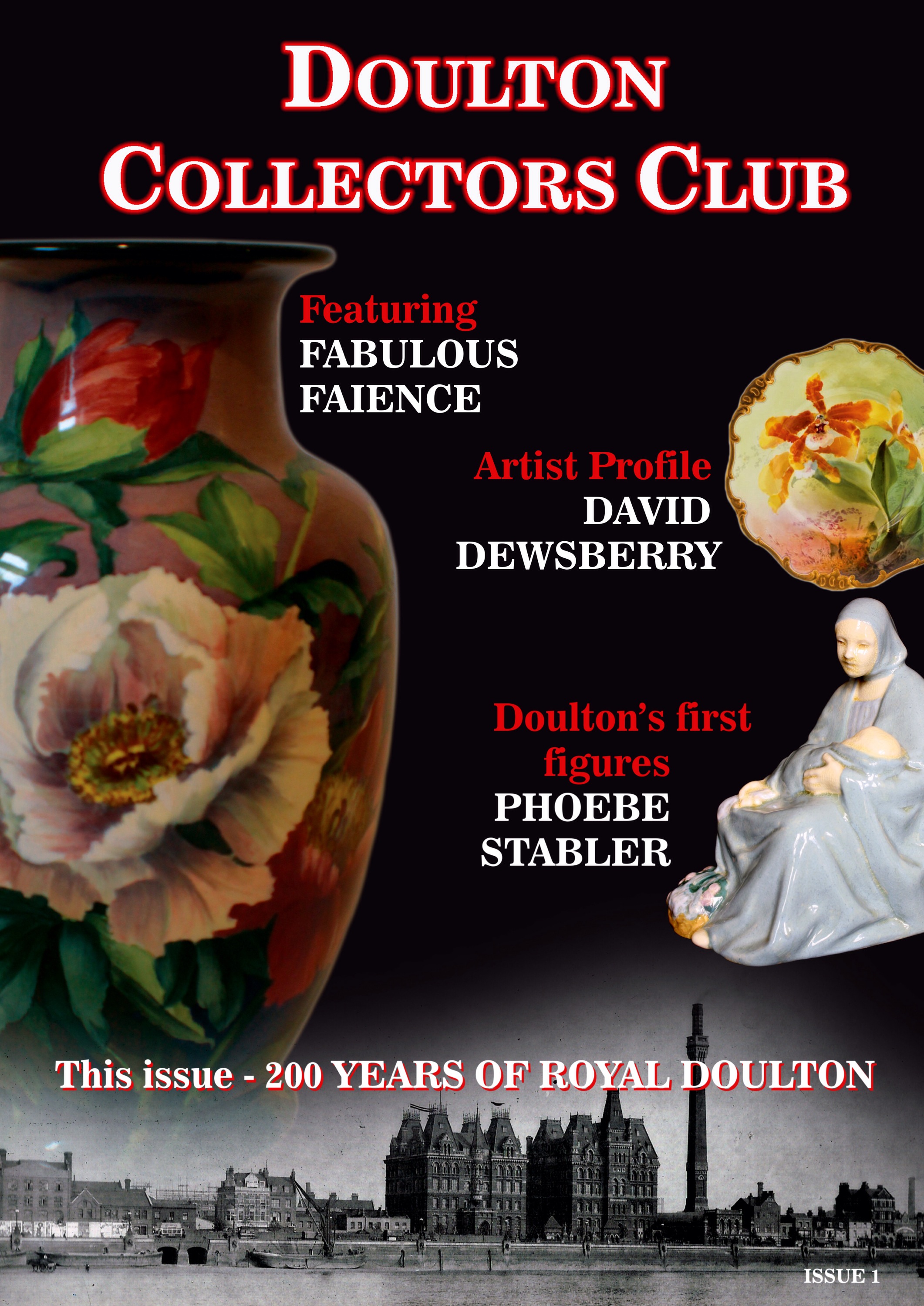
We would love to hear from other collectors who have examples of this design to compare backstamps. Don’t forget that if you’re interested in Doulton join our facebook page and also visit http://www.paulwebsterantiques.co.uk where you can also subscribe to the brand new Doulton Collectors Club magazine! Isse 1 is out now!   

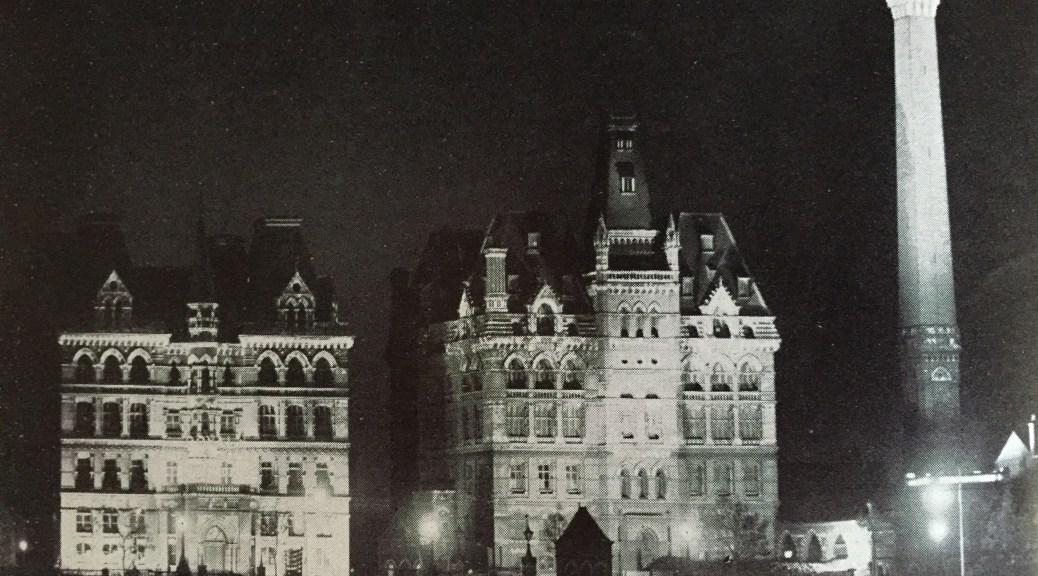
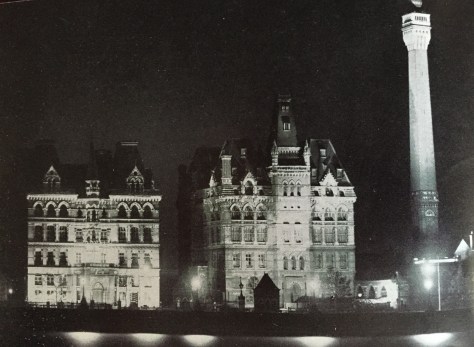
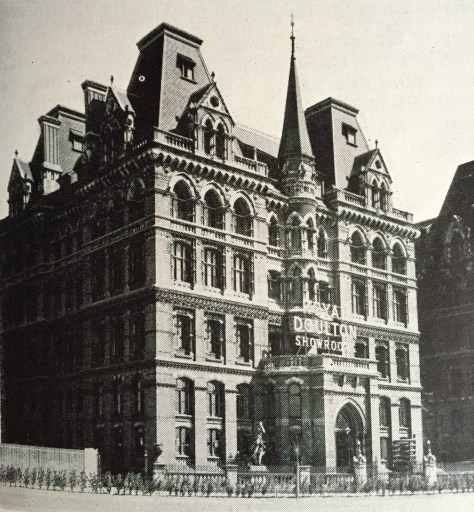
Royal Doulton’s famous, former Headquaters in Lambeth. 

Built in the 1870’s in the gothic style  ‘A’ and ‘B’ blocks as they were known and the huge chimeney that stood next to them were a London landmark for 75 years and witnessed many of Doulton’s major accomplishments as well as playing host to many famous visitors from Royalty, to politicians, to latter day celebrities.

A floodlit view of blocks A and B from 1935 celebrating a Royal jubilee.

Doulton vacated these impressive buildings in early 1940, moving to the newly erected Doulton House, then just a few hundred yards along the Albert Embankment. Lying unoccupied and suffering bomb damage during WWII there was little option left than to demolish these impressive buildings in 1951.

A close up of the showroom and main offices block.

On the left is the former main office and showroom building, on the right a factory block and chimeney.

A drawing of the Albert Embankment by Arthur Pearce showing the extent of the Doulton works in 1924. Note the corner building that still stands today. 

Collecting Doulton water filters.

We are all familiar with Doulton’s many advertising flasks for alcohol producers including Dewars, but Doulton also produced some magnificent dispensers for plain old water too!


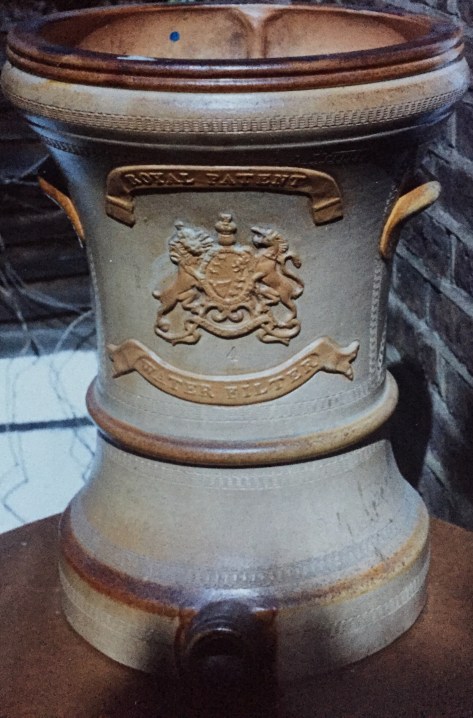
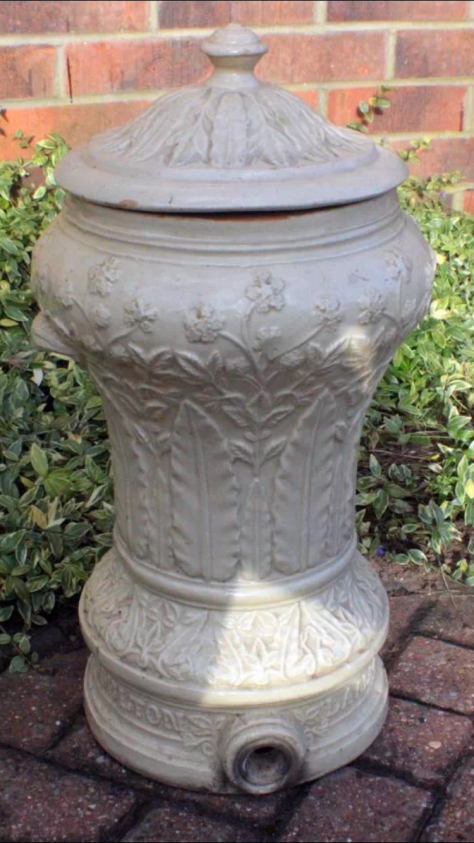
An early filter ca. 1850’s.

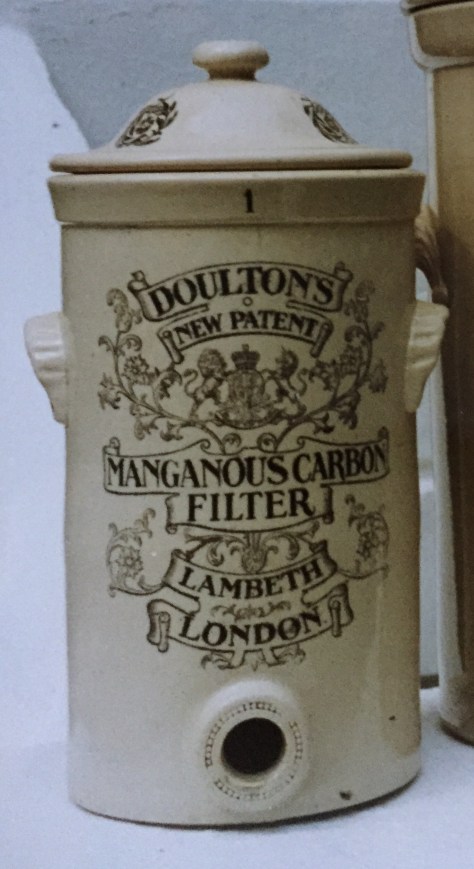
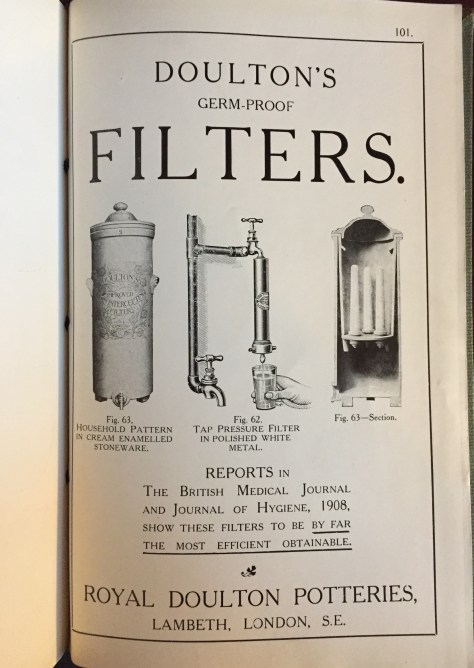
Early Lambeth filters were plainly decorated barrel shapes and can be found with simple coats of arms decoration or lettering. These earliest filters used charcoal and sand to filter the water – a very necessary procedure in 19th Century England. In 1869 a new filtration patent filter was introduced by Doulton and even into the 1950’s water filters were being exported around the world. 


The manganous carbon filter size 1.

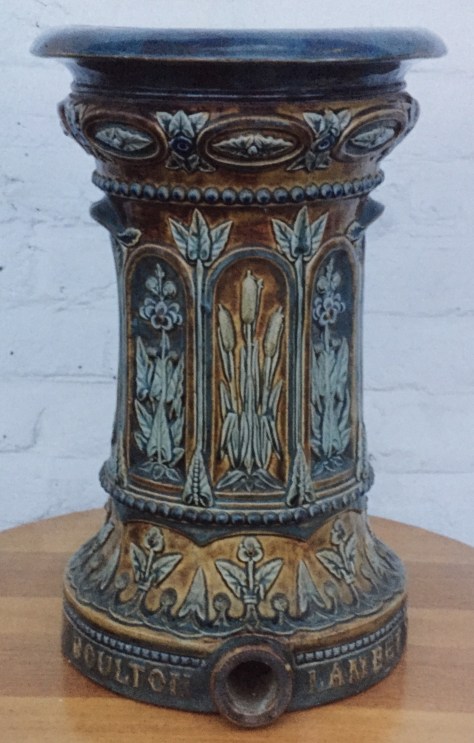
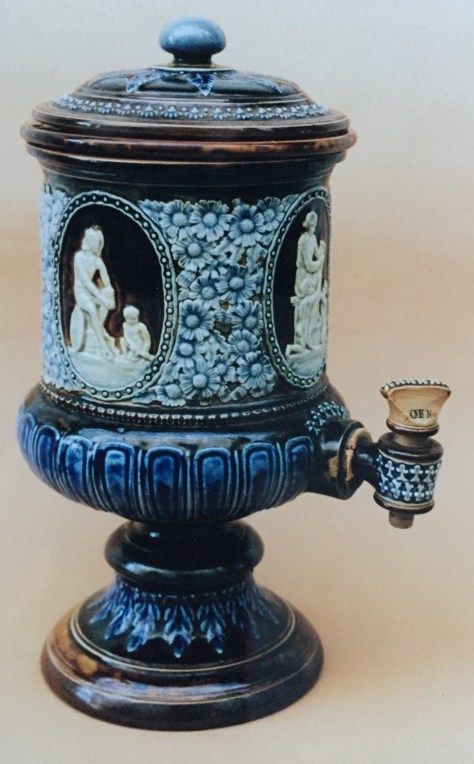
As the popularity of water filters grew in Victorian times, Doulton responded with more elaborately decorated filters by leading artists. Doulton’s first artist George Tinworth provided several designs but most designs found today are simply assistant pieces and often made in Doulton’s Siliconware. 


A recent find – a complete Tiworth designed filter.


A coloured Tinworth design.


An elaborate Victorian/early 20th Century design. 


A catalogue page ca.1908.

Harradine’s first models for the HN collection.

No one today can doubt that Leslie Harradine perfected what needed to be perfected in terms of creating commercially popular figures for Royal Doulton.  Until 1920 few figures hitherto introduced can be said to have had the popularity we associate with Doulton figures to this day. Of course there was the ever popular HN1 Darling – the first figure in the collection and the first of many child studies, but there were no what non-Doulton specialists might term ‘pretty ladies’. The female studies introduced before 1920 tended to be sculptural and their differing sizes hindered their grouping to display them as a collection. In short a house style needed to be developed. 

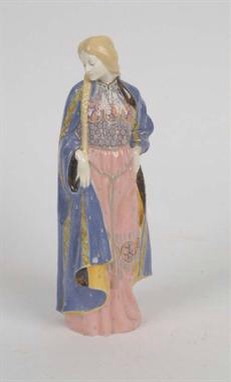
Harradine’s first introduction for the HN collection was The Princess – a dramatically stylish creation that set the tone for his first models for Charles Noke. Note the clear lines and unfussy detail – this is what set him and his models apart. 


A colourway of The Princess.

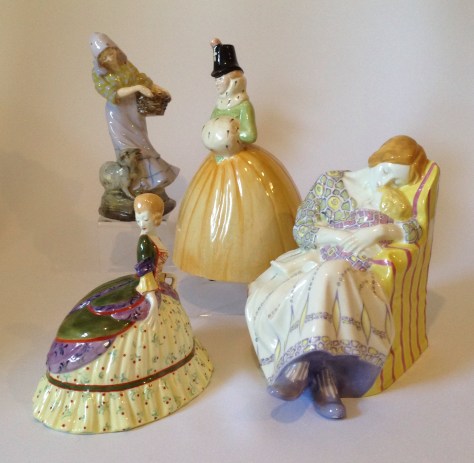
A small group of other non typical Doulton figures were introduced in the following year, 1921 illustrating Harradine’s ability to interpret popular tastes and trends. 


A group of early Harradine models, Fruit Gathering, Puff & Powder, Betty and Contentment.

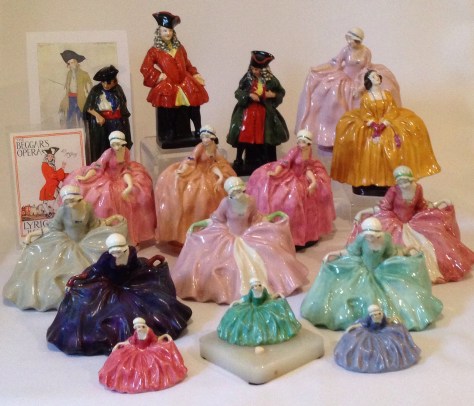
Size was the most noticeable difference with Harradine’s figures as they diminished in size to what we even today are used to in terms of figure height, and this more standard size allowed collectors to create displays. 


Harradine’s first series of figures from the Beggar’s Opera all illustrate this point and thus a house style was developed –  something that would prove most successful among collectors whose appetite for figures is still going strong over 100 years later.

Doulton Artist Profile – Herbert Bettley

<!–


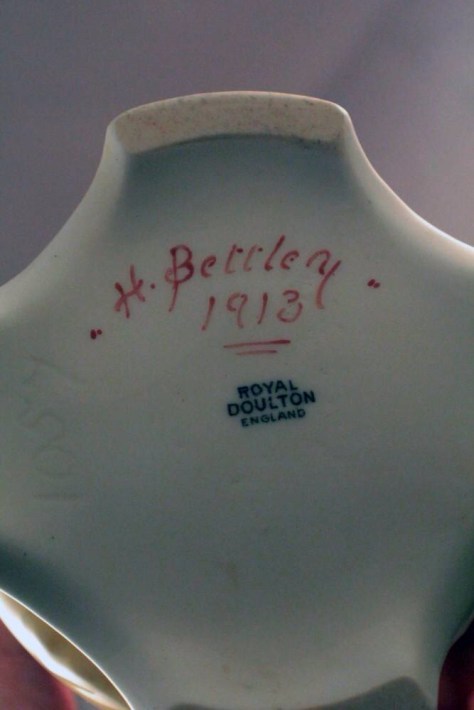
Handpainted vase signed H. Bettley and dated 1913.

The ’HB’ initials gracing early Burslem wares of the 20th Century often bemuse collectors today, but they are in fact the initials of this artist Herbert (Harry) Bettley. Adding to confusion is the actual spelling of his name as it is generally recorded as ‘Betteley’. Actual examples of his work are unusual.


Base of vase a handpainted by H. Bettley.


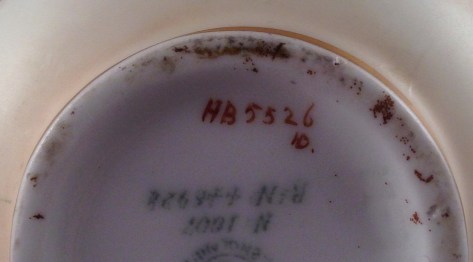
Harry was a former student of the Burslem School of Art before joiningDoulton at the age of 26 in 1886. He was given the responsibility of a ‘studio’ of artists within the Burslem factory, just like Robert Allen and the two studios ran in ‘competition’ to one another. Just like the RA numbers that are well documented there were HB numbers, but alas the records detailing the precise dates for the sequencing of these numbers have been lost over the years. Harry retired from Doulton in 1930.


Base of an early Spanish ware vase with HB number.


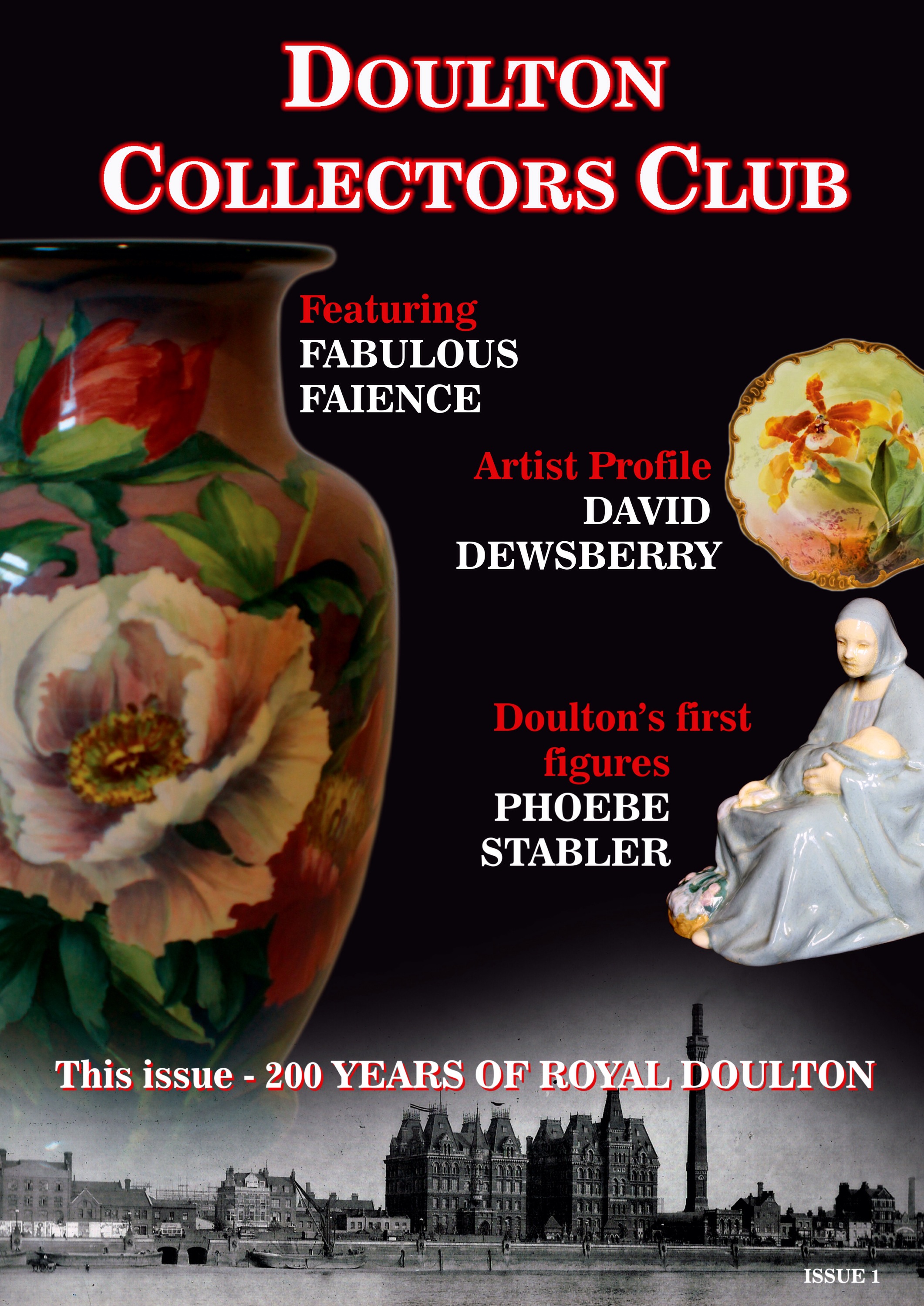
Introducing the Doulton Collectors Club magazine!

With subscribers from four continents already, no matter where in the world you live don’t wait to subscribe to the ONLY Doulton magazine available. Subscribe today to ensure you receive Issue 1 this March!

IMG_1793 Packed full of information on all things Doulton – you won’t be disappointed with this full colour, 24 page magazine. Published quarterly, you will be able to build your own up to date Doulton reference library. Covering everything from the many, diverse Doulton wares produced over the last 200 years, to fairs, auctions and events – the Doulton Collectors Club magazine will be essential reading for all Doulton collectors! Subscribe today using the location links below via our

UK agent Paul Webster Antiques’s website. UK Subscriptions  http://paulwebsterantiques.co.uk/index.php?route=product/product&path=114&product_id=310

USA & CANADA Subscriptions http://paulwebsterantiques.co.uk/index.php?route=product/product&path=114&product_id=312

AUSTRALIA, SOUTH AFRICA, RoW Subscriptions http://paulwebsterantiques.co.uk/index.php?route=product/product&path=114&product_id=313

Please be sure to select the subscription for your location.

Any Questions, please ask by emailing Doultoncc@gmail.com
Collecting Doulton’s Prinknash work.

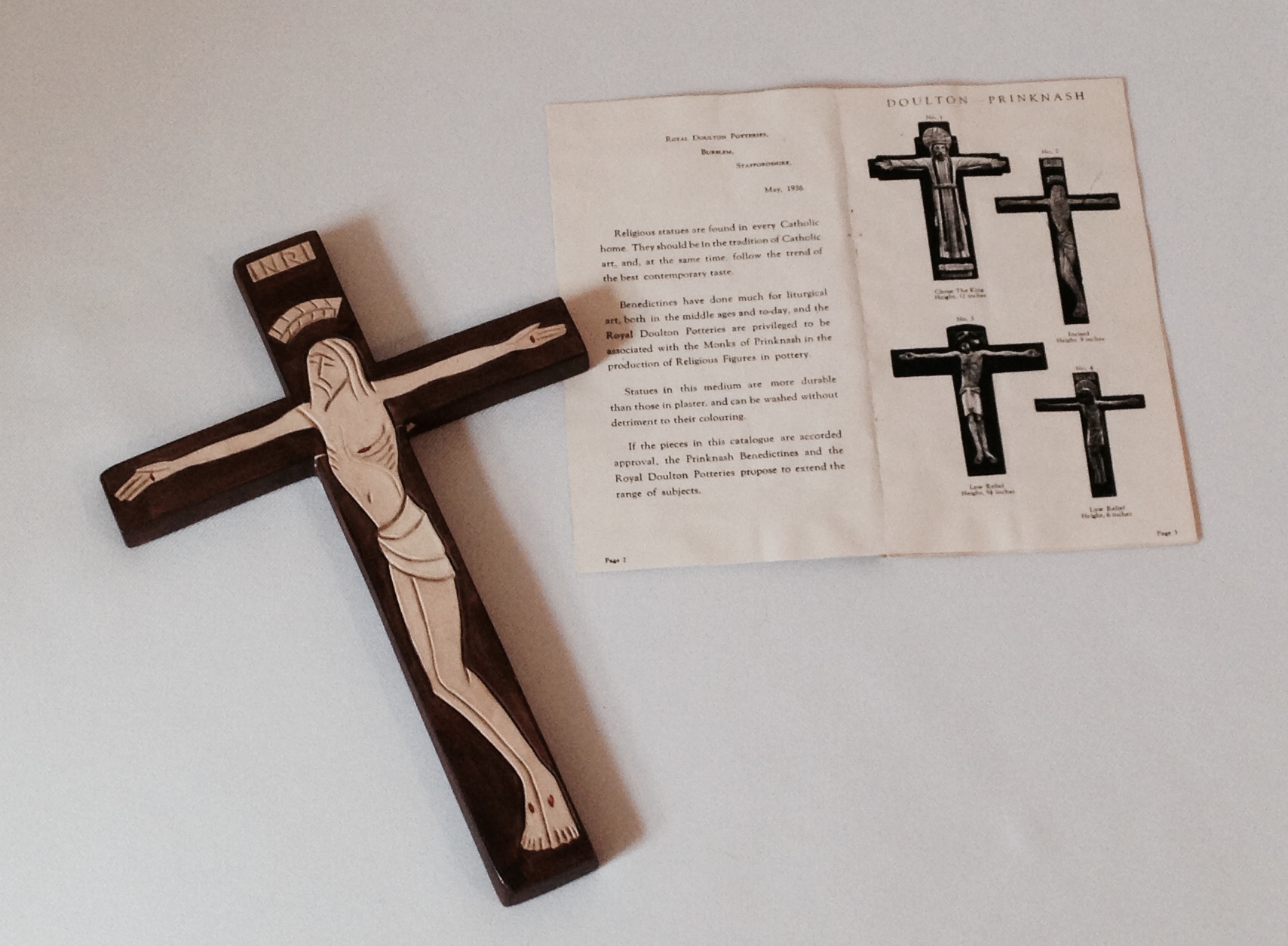
In the mid to late 1930’s Doulton established a link with the Benedictines of Prinknash Priory, whereby Doulton produced a series of religious statues. In a 1936 catalogue from Doulton it states that “Benedictines have done much for liturgical art, in the Middle Ages and today…” And that if the items illustrated meet with approval the two will extend the range of subjects.

IMG_1870
In total 20 pieces are recorded in the catalogue mentioned and I have to say that I have seen only few examples over the years. The most frequent of which are S. Francis and S. Benedict. The cross illustrated and pictured I have only seen this once.
Due to their religious nature and scarcity, they are not widely collected in the Doulton world but pieces still fetch three figure sums when they occasionally do turn up.

Have you heard the great news? Doulton Collectors Club magazine is here!

IMG_1793-0

Have you heard the great news?

This March sees the first issue of the brand new Doulton Collectors Club magazine being published. Available worldwide via the subscription links below, it is published quarterly and covers all aspects of the ever popular Royal Doulton brands as well as news of upcoming events, exclusive special offers and auction news. This quality, full colour publication will be the ONLY reference for collectors and dealers.

Don’t miss the opportunity to subscribe from Issue 1 of this fantastic new publication and build yourself a complete reference library over the coming years!

Each issue will deliver unparalleled insights into the various Doulton wares produced over the last 200 years. The first issue contains informative articles about the legendary orchid painter David Dewsberry, some of the earliest figures by Phoebe Stable in the HN Collection, a look at the unusual art wares produced exclusively by Doulton for Liberty of London in the early 20th Century, Doulton’s early fox models and a special feature on Character Jugs to name but a few topics.

As well as 4 packed issues of the Doulton Collectors Club magazine each year, your subscription also brings you exclusive VIP invitations to fair events, special offers from worldwide dealers, access to the UK Doulton events and even free entry to the Wiener Museum of Decorative Arts in Florida, which houses the most comprehensive collection of Doulton and other art pottery in the world.

Please be sure to select the correct subscription for your location.
UK Subscriptions
http://paulwebsterantiques.co.uk/index.php…

USA & CANADA Subscriptions
http://paulwebsterantiques.co.uk/index.php…

AUSTRALIA, SOUTH AFRICA, RoW Subscriptions
http://paulwebsterantiques.co.uk/index.php…

Please email any queries or subscription enquiries to:- doultoncc@gmail.com