All posts by doultonchristopher1

The evolution of Harradine’s Market Day figure.

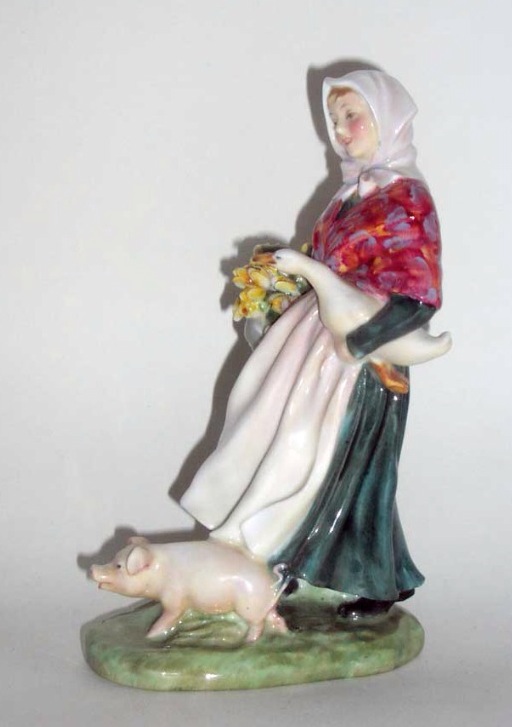
We all know that figures change subtly during the pre-production phase but a sighting this last summer really shows us how drastic some transformations could be!

Here is a prototype version of Market Day complete with a piglet at the girl’s feet! I can’t help thinking that this is one of the piglets often attributed to Peggy Davies! If not identical it probably provided inspiration for her.
IMG_1005.JPG
Prototype sold at Louis Taylor.

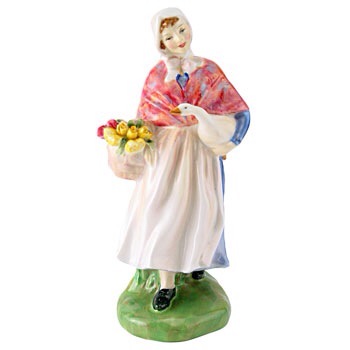
Here is the production model to compare her with.
IMG_1009.JPG

She was of course re-introduced decades later as Country Lass with the same HN number and with a matte glaze for a short period, along with another contemporary figure the Jersey Milkmaid who became the Milkmaid, also in matte, with the same HN and re-named simply The Milkmaid.
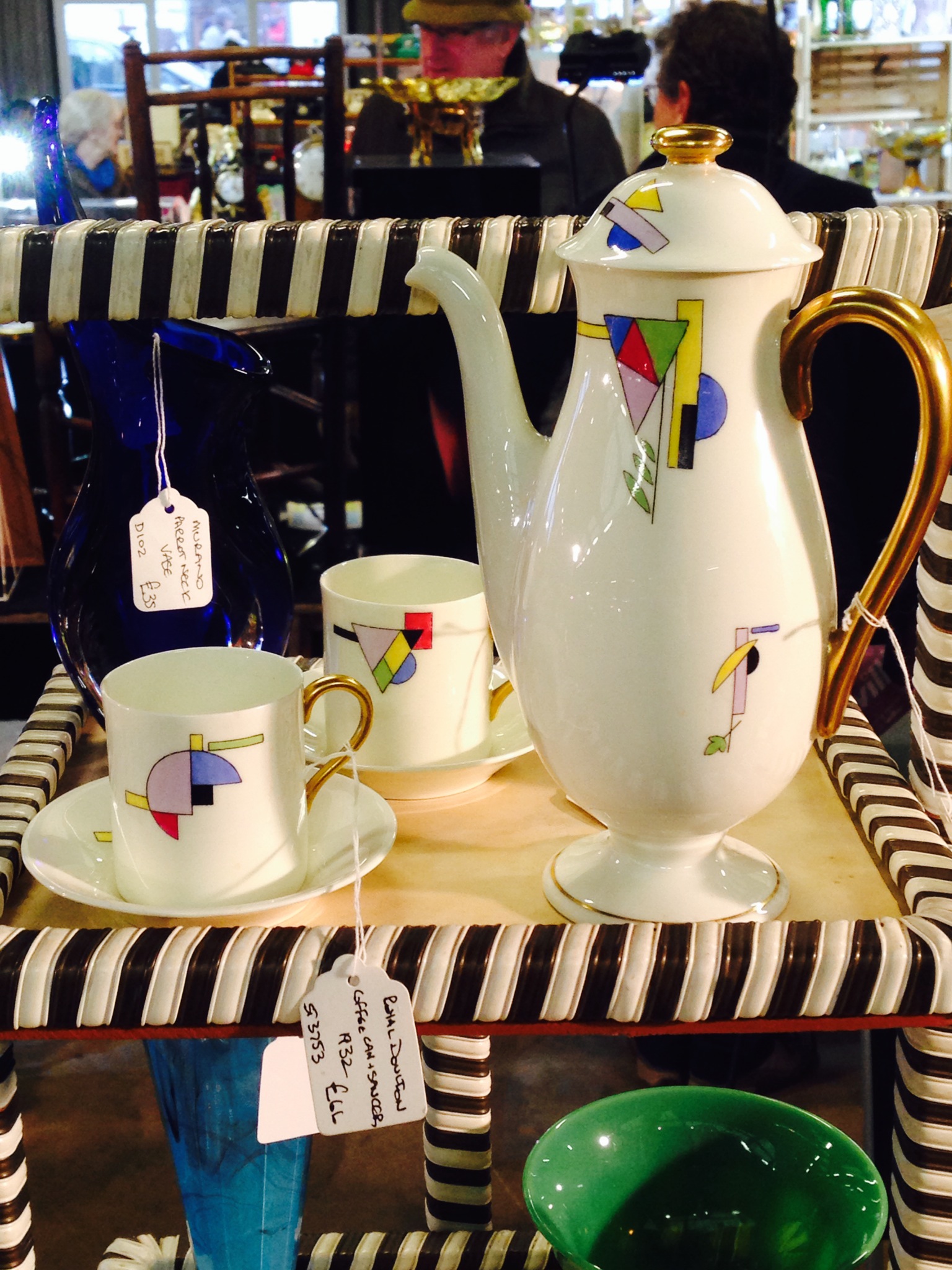
Doulton’s deco tea time delights!

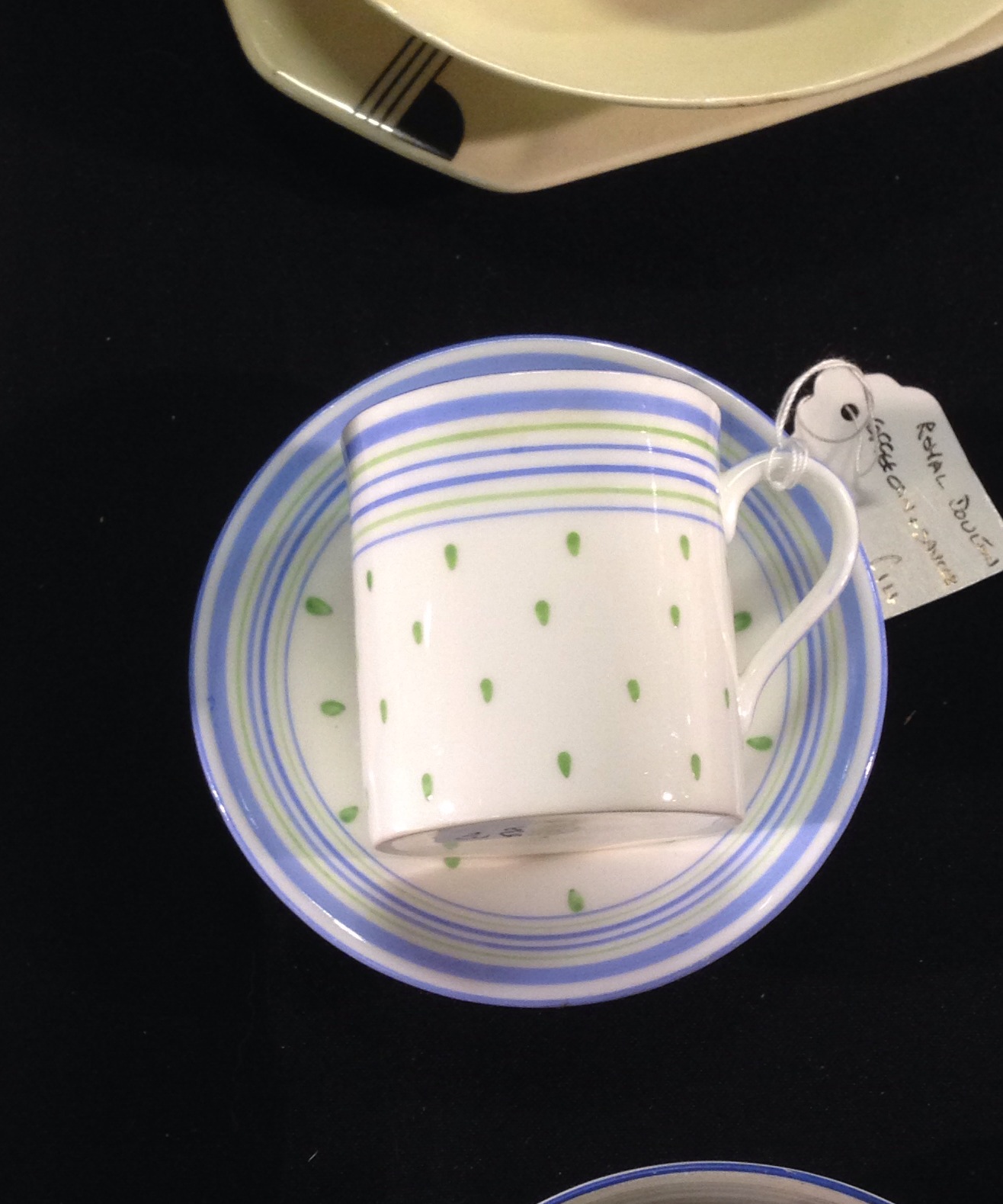
Browsing around a fair today I was amazed to still find unknown deco tableware patters such as the one below.

IMG_0927.JPG

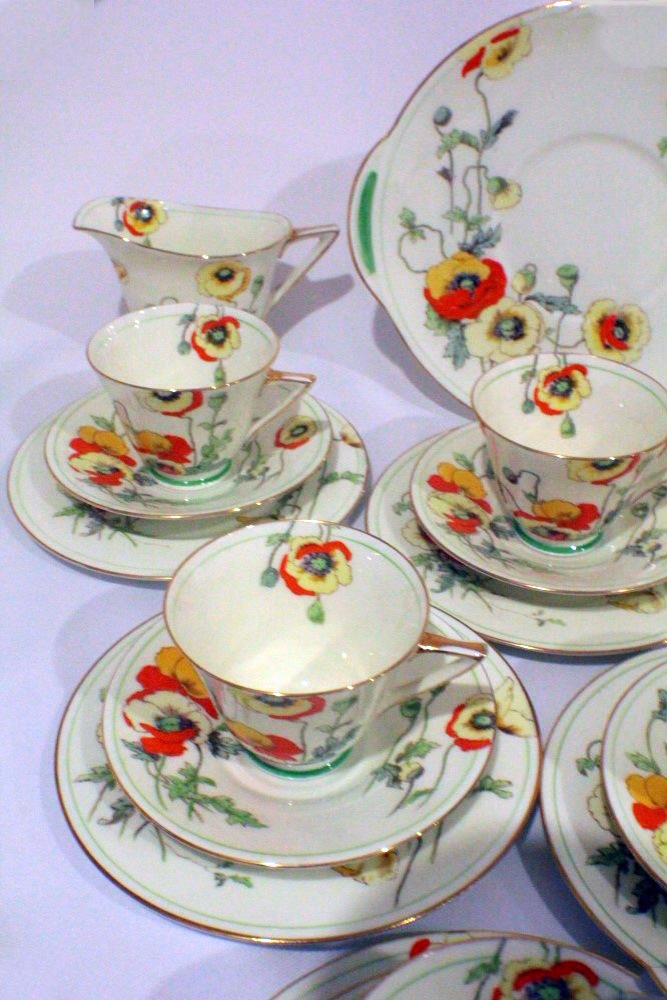
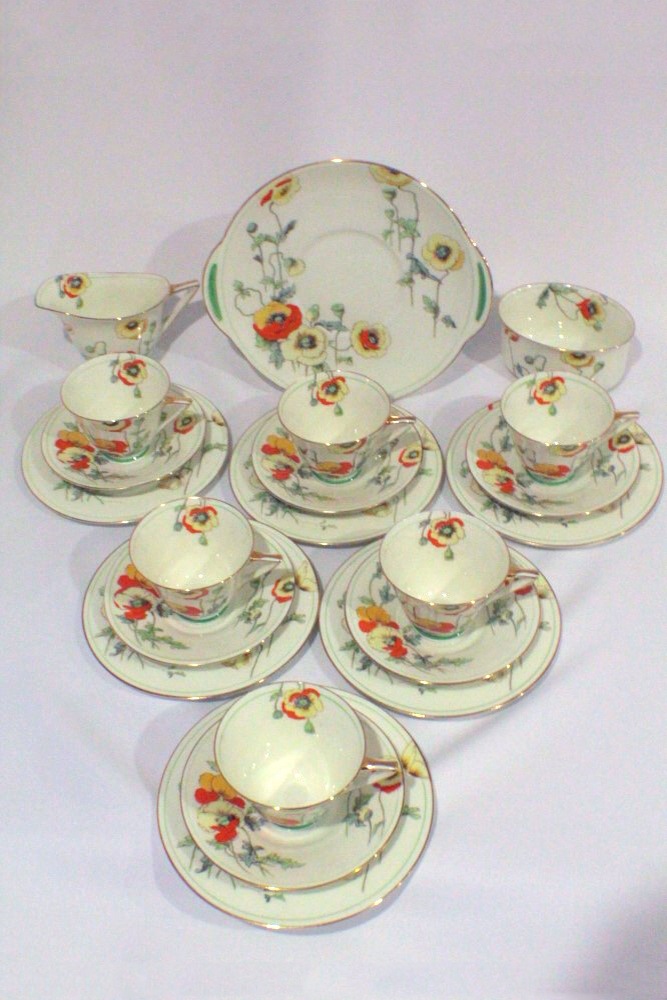
A more amazing find was this Poppy teaset, complete and in immaculate condition, dating to 1934.

IMG_0947.JPG

Even the names for some patterns are the epitome of their times! Including Eden, Lido and Syren! This pattern however is unnamed!

IMG_0929.JPG

If only space permitted a collection of these stylish patterns! It is however, great to see that they are still popular!

IMG_0950.JPG

The inspiration for Harradine’s figures In The Stocks and Tildy!

As you’ll be aware a particular interest of mine is tracking down the inspiration of figures, particularly early ones and more particularly those of Leslie Harradine, Royal Doulton’s genius sculptor.

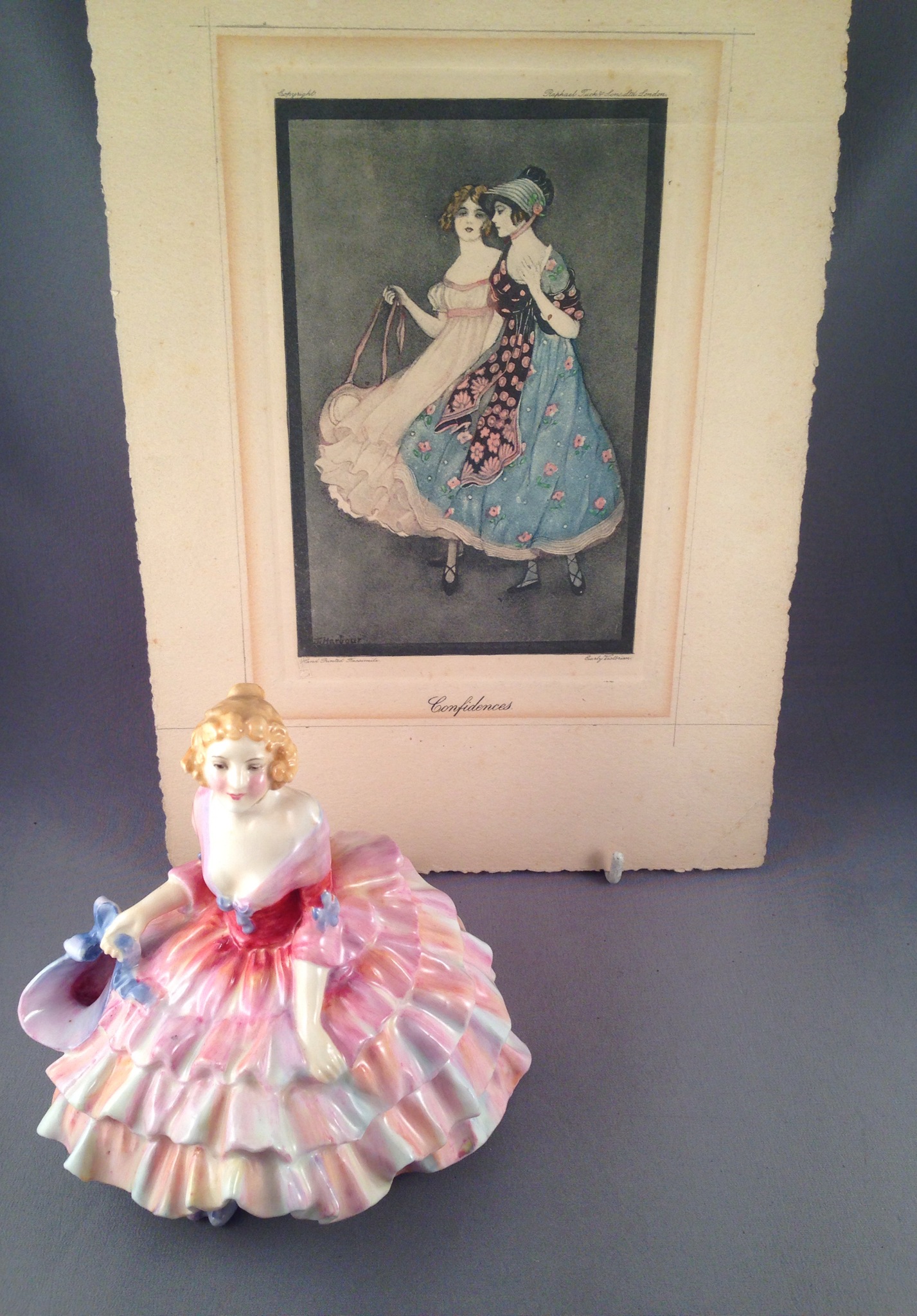
IMG_0936.JPG

Above you can see Tildy HN1576 together with her inspiration drawn by Jennie Harbour who provided many such ladies for Harradine; whether she was aware of this is unknown. (The Doulton lady is taken from the lady on the left.) Yet, Doulton did have some agreement with Raphael Tuck the publisher of these Jennie Harbour pictures, although correspondence between the two firms that exists only refers to pictures by Stanislaus Longley and Molly Benetar.

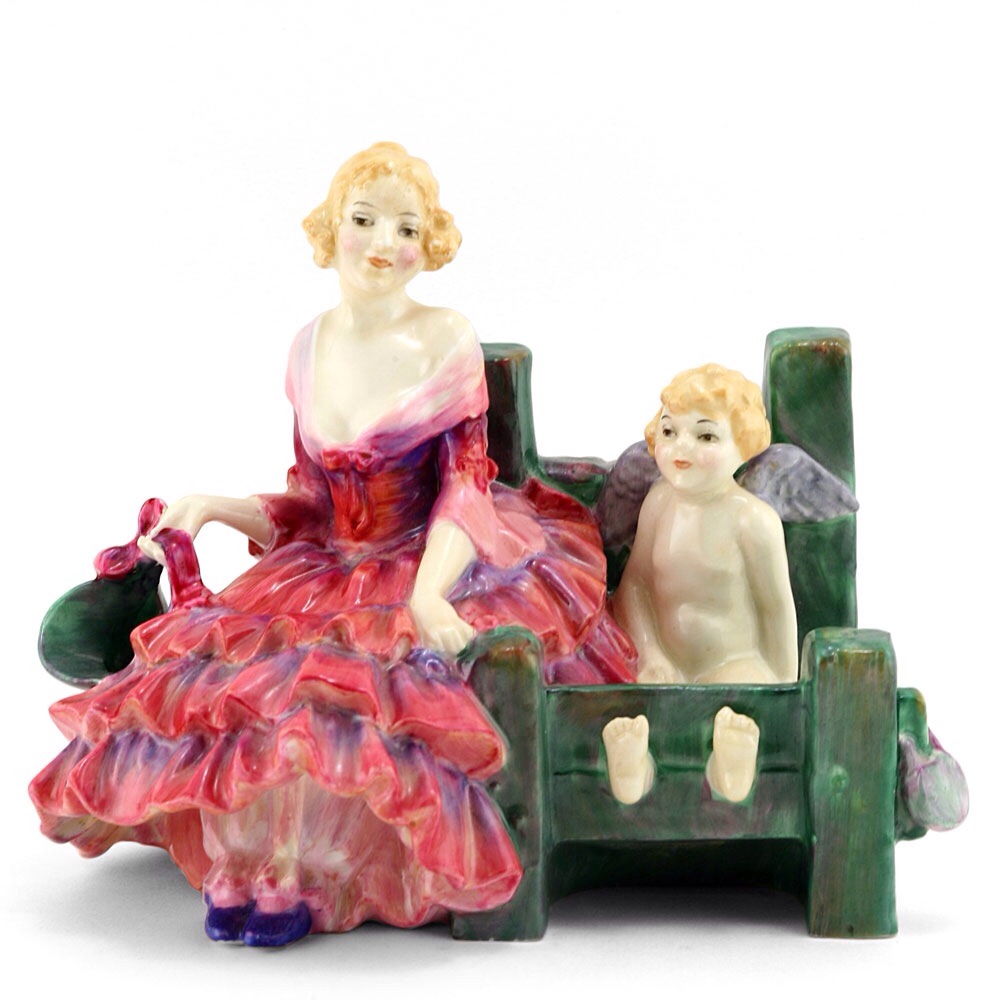
IMG_0938-0.JPG
Here you can also see Harradine’s In the Stocks HN1474 who would be adapted to become Tildy.

IMG_0937.JPG
And here is HN1475 the other colourway of In the Stocks. Both versions of this lady taken from the Harbour picture are very rare today and so both had limited production, even more limited than is suggested in the figure book. In the Stocks was introduced in 1931 and Tildy in 1933, suggesting the former had been deleted by then. Tildy it is recorded, was withdrawn in 1939, but by 1939 would be a more accurate description as I have never seen a later 1930’s dated example. Perhaps someone out there has?

Collecting Doulton’s Kateroo!

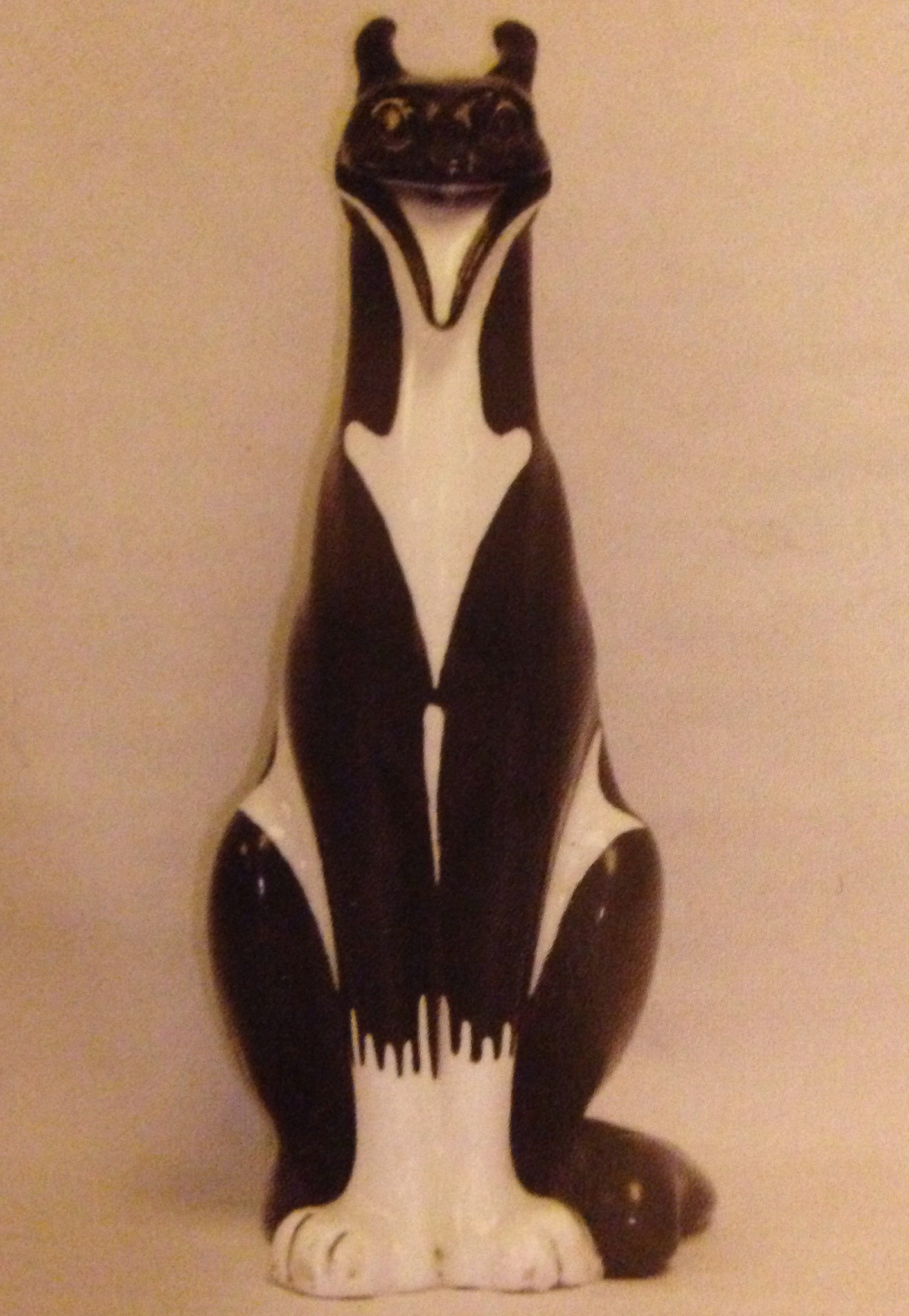
David Henry Souter’s cat Kateroo featured on many Doulton products from the first decades of the 20th Century. There was a large size model of Kateroo HN514 in typical black and white, which was also made in a bright yellow or alternatively a bronze colouring.

IMG_0922.JPG

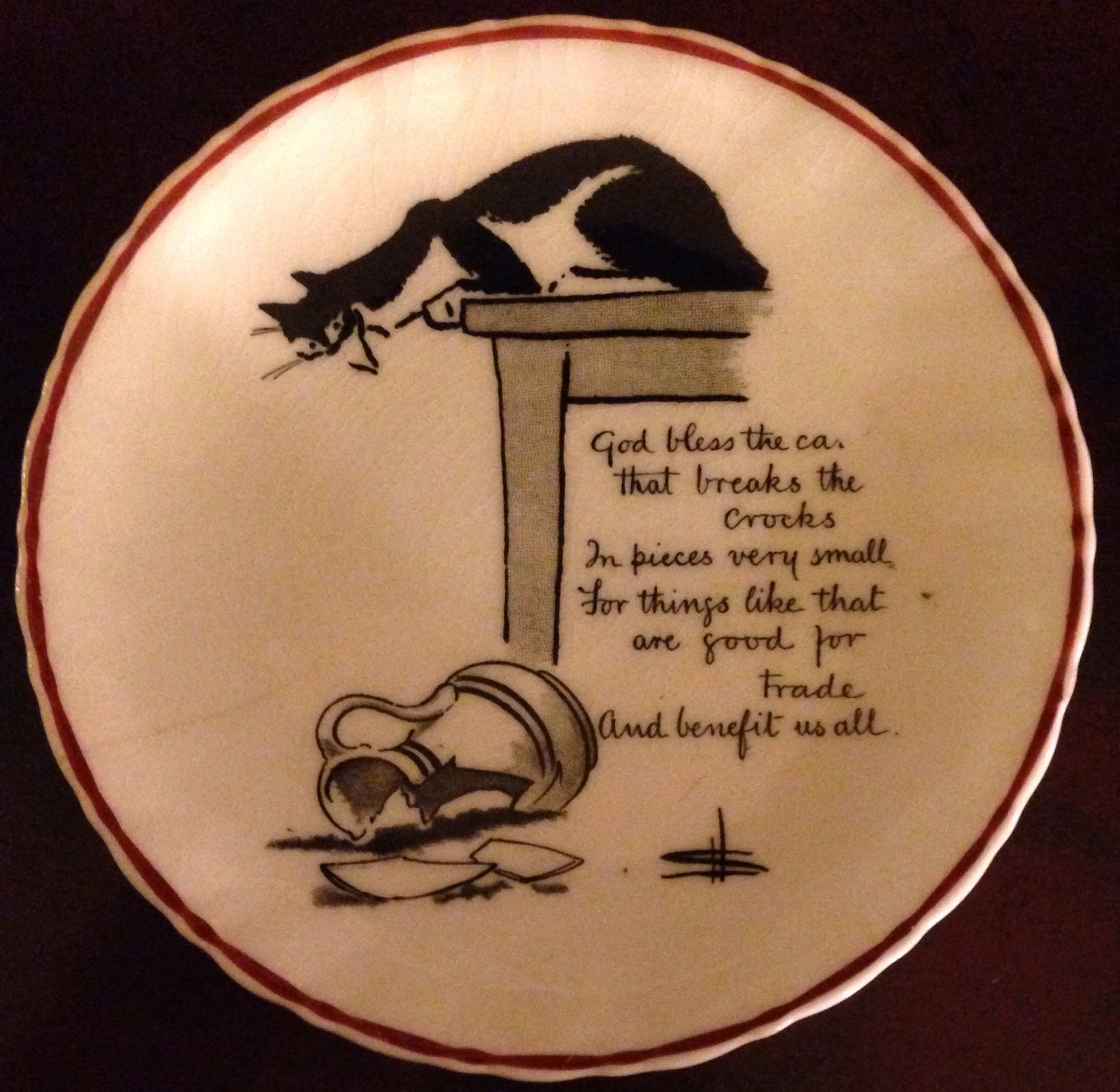
Perhaps the most easily found items featuring this unusual cat are the two pin trays each featuring the saying ‘God bless the cat that breaks the crocks in pieces very small, for things like that are good for trade and benefit us all’. Naturally these pin trays, available in a circular or rectangular shape were produced for the trade and available between 1906 and 1939.

IMG_0923.JPG

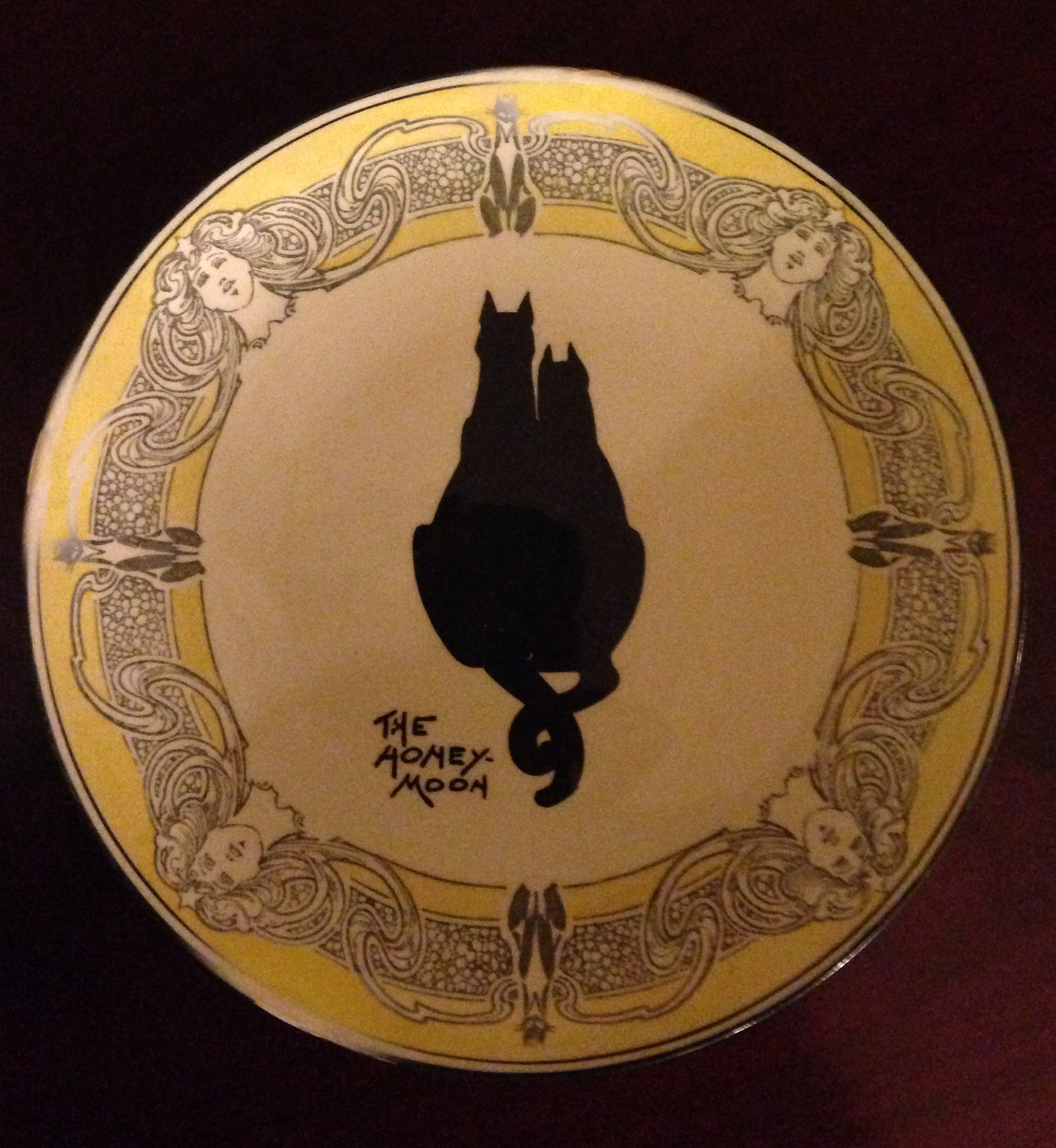
Very popular today are the series of six rack plates featuring Souter’s Kateroo, and reflecting his life as a bachelor, then during courtship, then marriage and finally family life. In 1937 the series re-emerged with different cartoons on various tablewares and there are several variations that occasionally turn up.

IMG_0924.JPG

Vases, jardinières and other objects can also be occasionally found featuring early scenes and some feature dead mice hanging by their tails around the top of the object. This gruesome image remains nevertheless humorous due to Souter’s witty interpretation and often sarcastic titling of the scene.

Souter himself enjoyed a long and varied career. Hailing from Scotland he would move to Australia and his Kateroo was especially popular there.

Collecting Doulton bibelots.

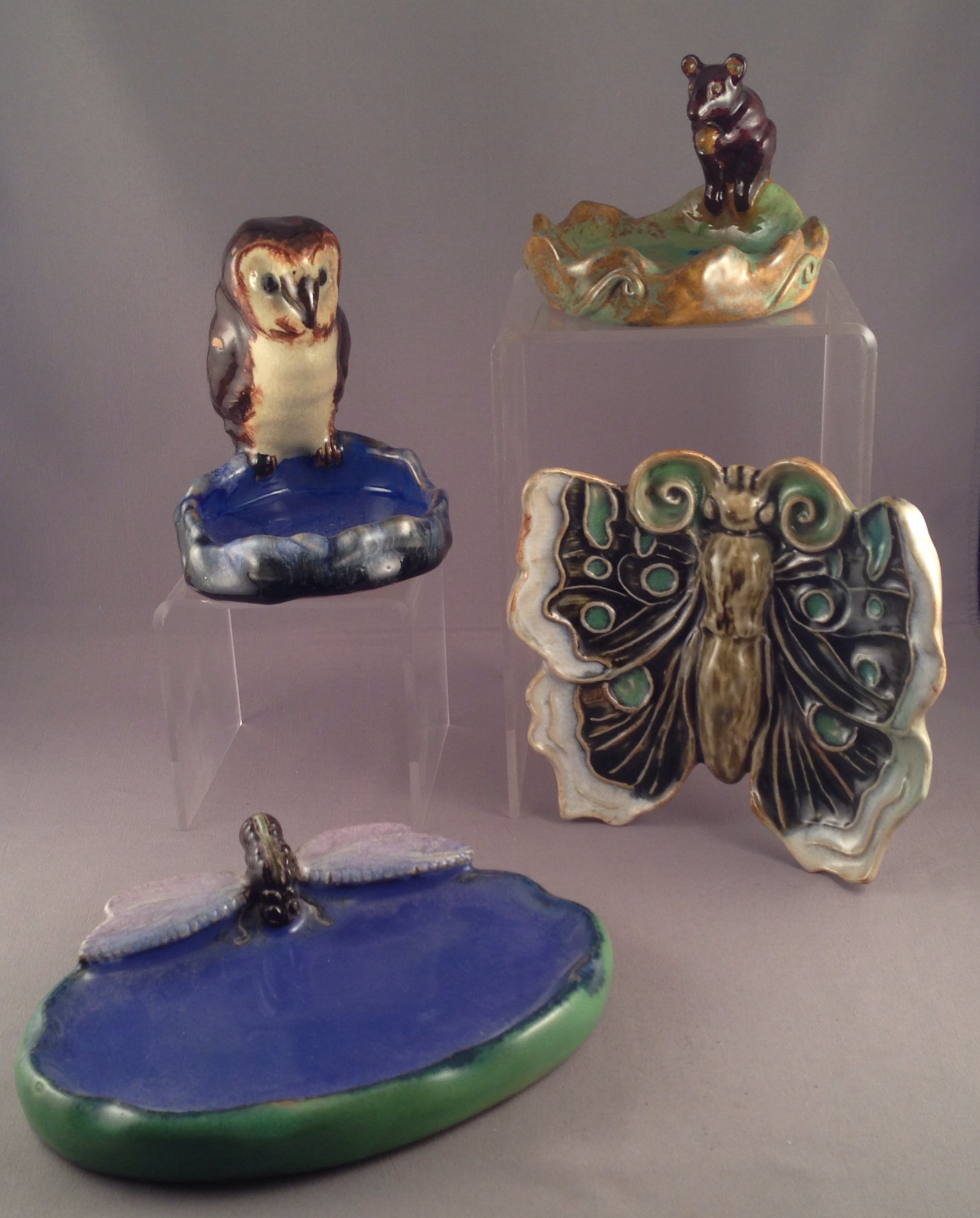
IMG_0906.JPG

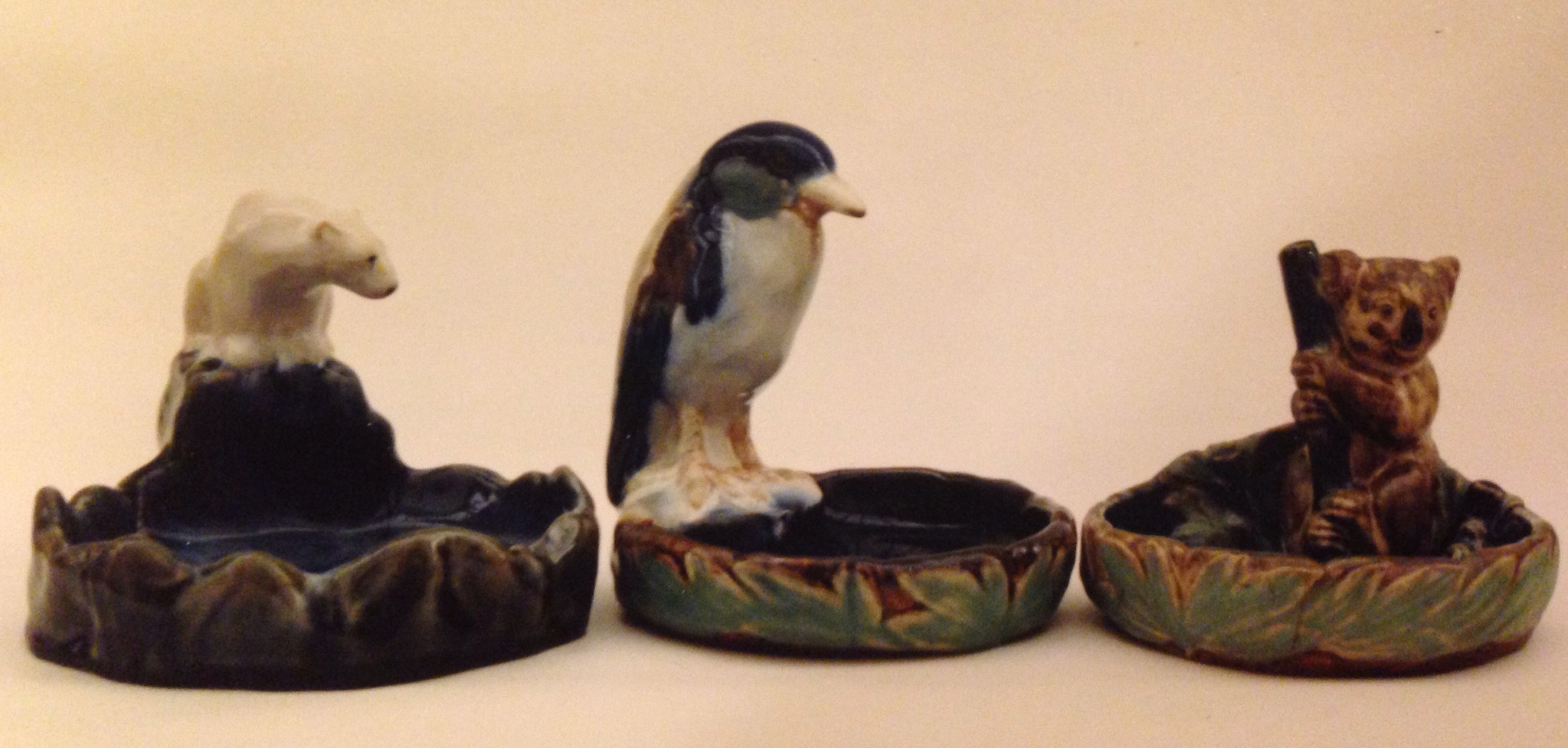
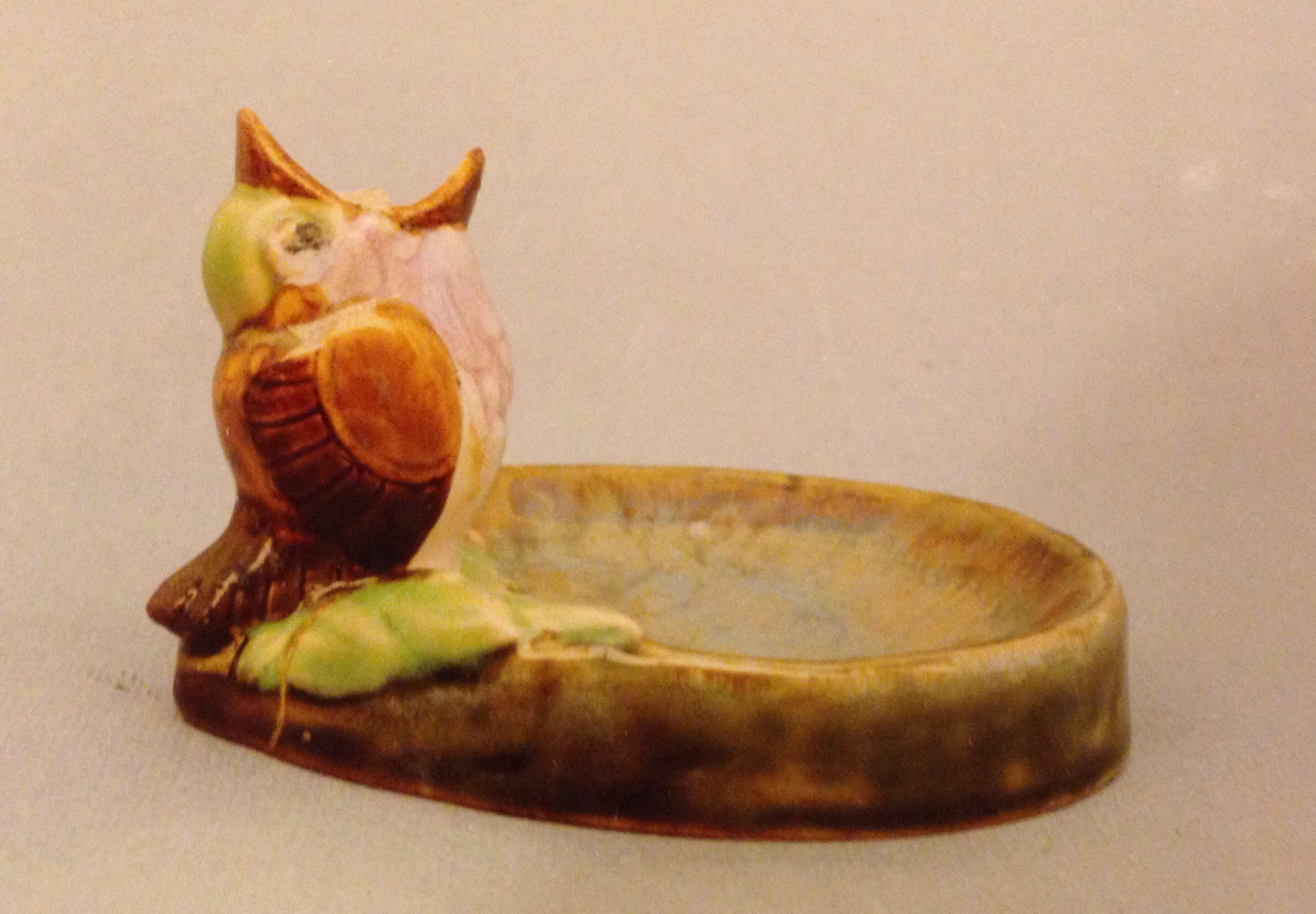
The selection of bibelots or ashtrays as they were commonly known, that were produced at Lambeth, are today some of the most collected items of Lambethware.

IMG_0912.JPG

Naturally their popularity and price depends on their ‘artistic’ value for there were countless such objects produced at Lambeth; some very plain examples, others for events, others for commercial advertising for numerous firms and still others designed by some of Lambeth’s most popular artists including Leslie Harradine, Vera Huggins, Harry Simmeon and no doubt others too that are unrecorded.

IMG_0910.JPG

They date from the 1920’s to 1930’s but it is fair to say that some were made for a longer period and no doubt introduced earlier such as the Wrights Coal Tar Soap dragonfly dish.

IMG_0913.JPG

The term bibelot is a derivative from the French, meaning a trinket or small fanciful object. One only needs to look at the subjects of these fanciful trays to see that this name suits these imps, nymphs, comic birds and other creatures very well.

IMG_0911.JPG

Whatever your budget you can find examples of these trinket dishes to suit! For me this fanciful line of Lambethware displays perfectly alongside the many vases created by Doulton’s greats!

IMG_0915.JPG

Doulton’s Frank Butler – a versatile artist.

IMG_0879.JPG

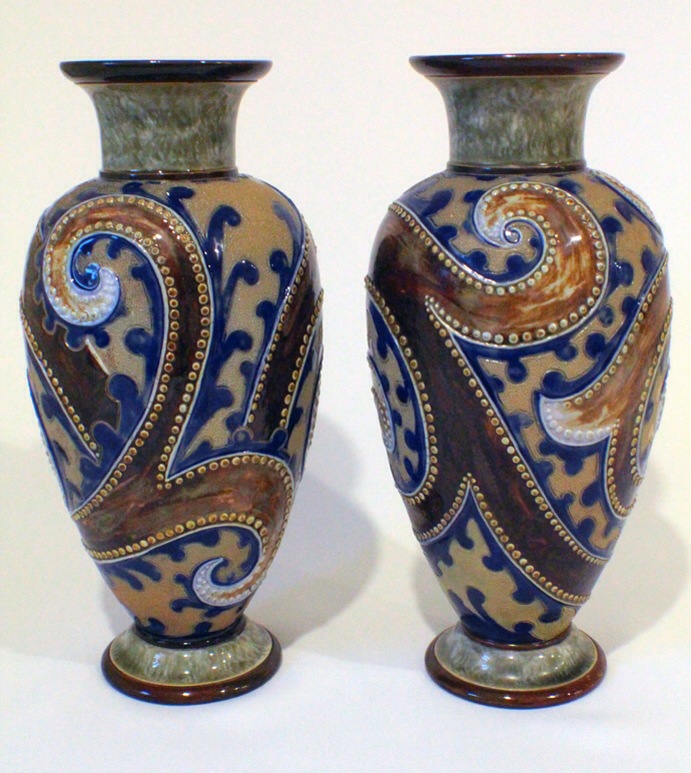
A chance find of this impressive pair of vases by Frank Butler reminded me of what a great talent he was. Never more so than when one considers that he was reported to be practically deaf and almost dumb.

IMG_0881.JPG

Yet, over an almost 40 year period, his output of stoneware certainly changed reflecting a versatile, confident ability.
His particular flair for me is his art nouveau work, in particular his vases where the clay appears ‘pushed out’ as in the example below.

IMG_0883.JPG

Whatever our individual tastes, it is impossible to reject this great talent!

IMG_0880.JPG

Doulton’s watchers of the night.

The watchman was certainly a popular character when it comes to seriesware from the early 20th Century.

IMG_0876.JPG
Watchman seriesware jug.

Interestingly the designs are among the first registered Seriesware D numbers and still more interesting is that some were registered as early as 1882 before D numbers were introduced as a means of labelling patterns for giftware.

IMG_0877.JPG
Wash Set.

These early scenes could vary from the simple jug to the elaborate wash set pictured, with the added wording “Watchmen, what of the night?”

IMG_0875.JPG
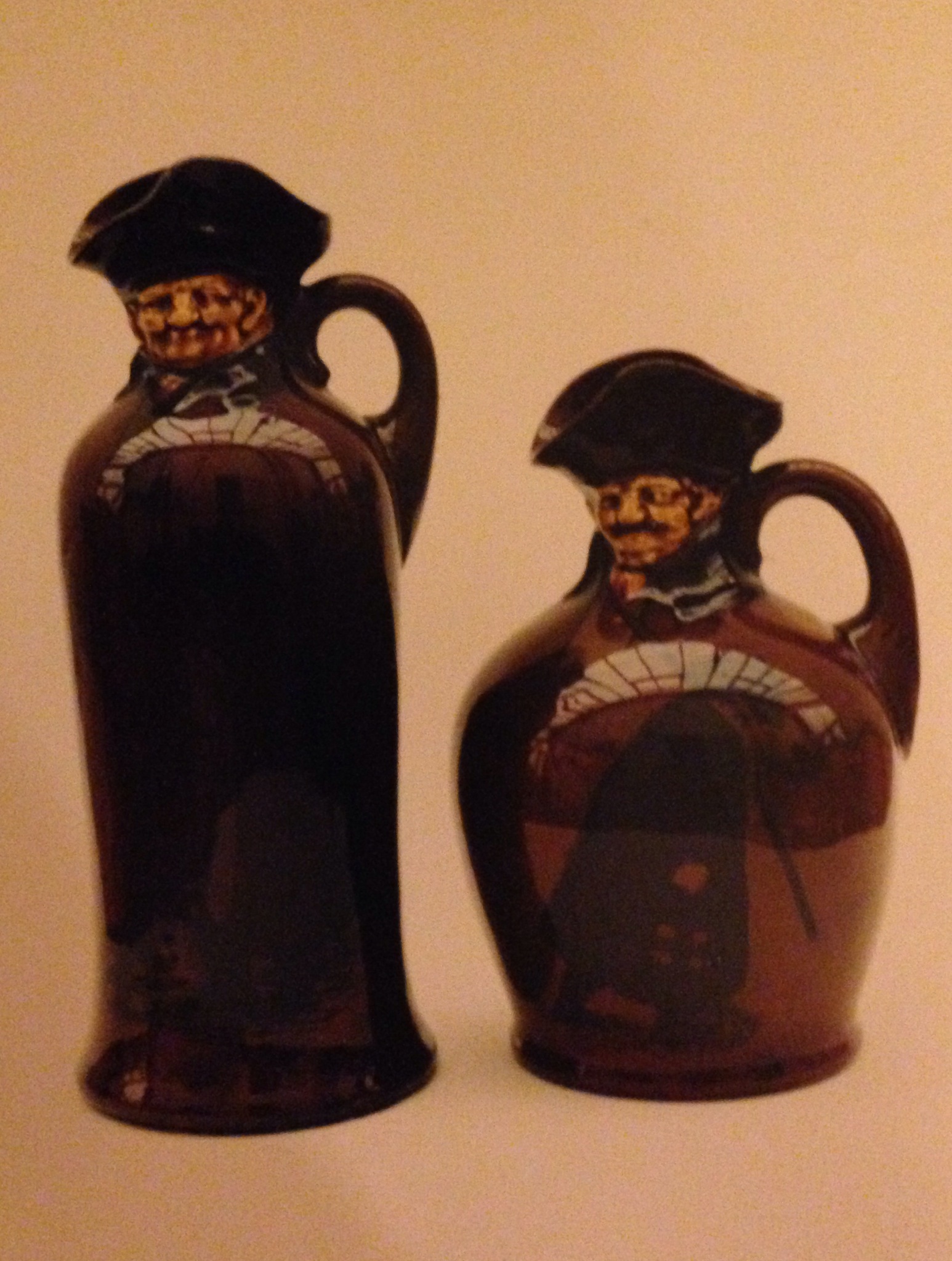
2 sizes of Kingsware flask.

The image of the Watchman appears too on early items of Kingsware from 1902, not just on jugs but also a very rare clock case with art nouveau decoration too. The flasks with his modelled head are particularly good! For further information on Kingsware please see Jocelyn Lukins’ book on the subject.

Also of interest is the history behind the Watchmen, who were precursors to what we know as policemen today. An affectionate nickname for them was ‘Charley’ after the then monarch, Charles II, and of course this is where the name Old Charley comes from in terms of Character Jugs and their derivatives that are do popular today!

IMG_0873.JPG
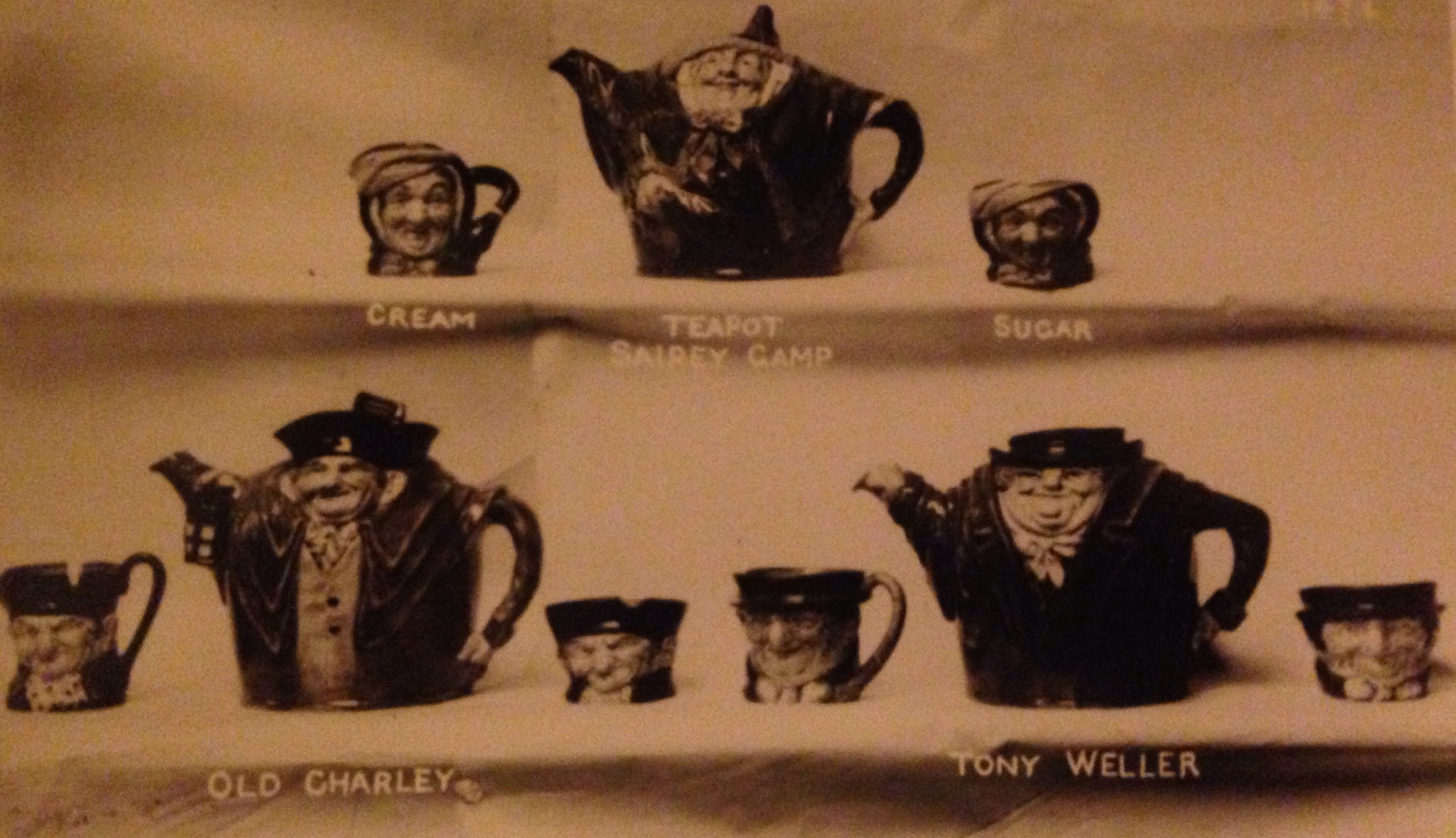
Publicity photograph ca.1939.

Old Charley D5420 was one of the original jugs from 1934 and spawned a range of derivatives from wall pockets, to toby jugs, to ashtrays, ash bowls, teapots and other items!

IMG_0874.JPG
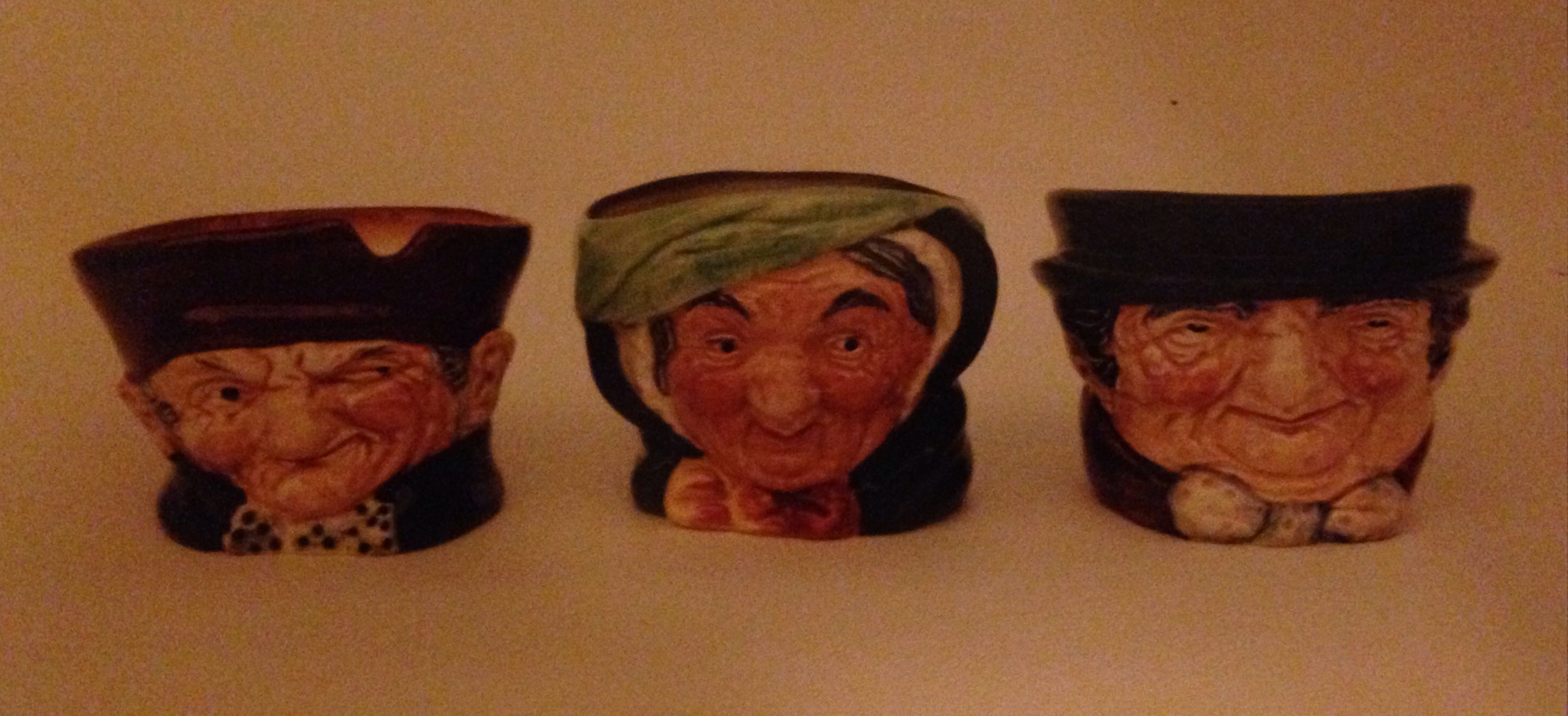
3 derivative sugar bowls.

Whatever your preference a display of Watchmen items makes a great focal point!

Collecting Doulton flambé with silver overlay.

Collectors often have to do a double take when they eventually do come across early Doulton flambé vases and other small objects that have been given a silver overlay, for so little is known of these pieces.

IMG_0600.JPG
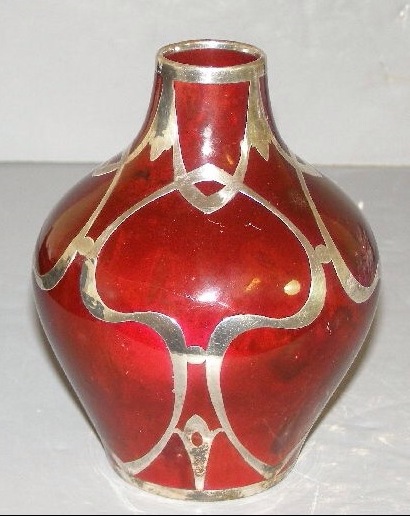
A typical early flambé shaped vase with silver overlay.

From what I have been able to discover, Doulton supplied the American firm Gorham with the ‘bare’ flambé pieces, for their in-house artists to apply a silver overlay to; typically of art nouveau design.
The US firm Gorham, founded in 1831, had strong links with Doulton until 1963 via employees, although the use of silver overlay seems to have been limited to the early 20th Century.
These extravagant art nouveau designs were originally available in the US market alone so rarely turn up here in the UK. However, it is possible to find flambé finished with silver tops and rims, usually tea wares and vases, here in the UK and typically by the prestigious firm George Betjemann.
Perhaps you own examples of this type of flambé? If so why not share a picture on our Facebook page ‘Doulton Collectors Club’?

An unusual Peggy Davies figure.

IMG_0870-0.JPG

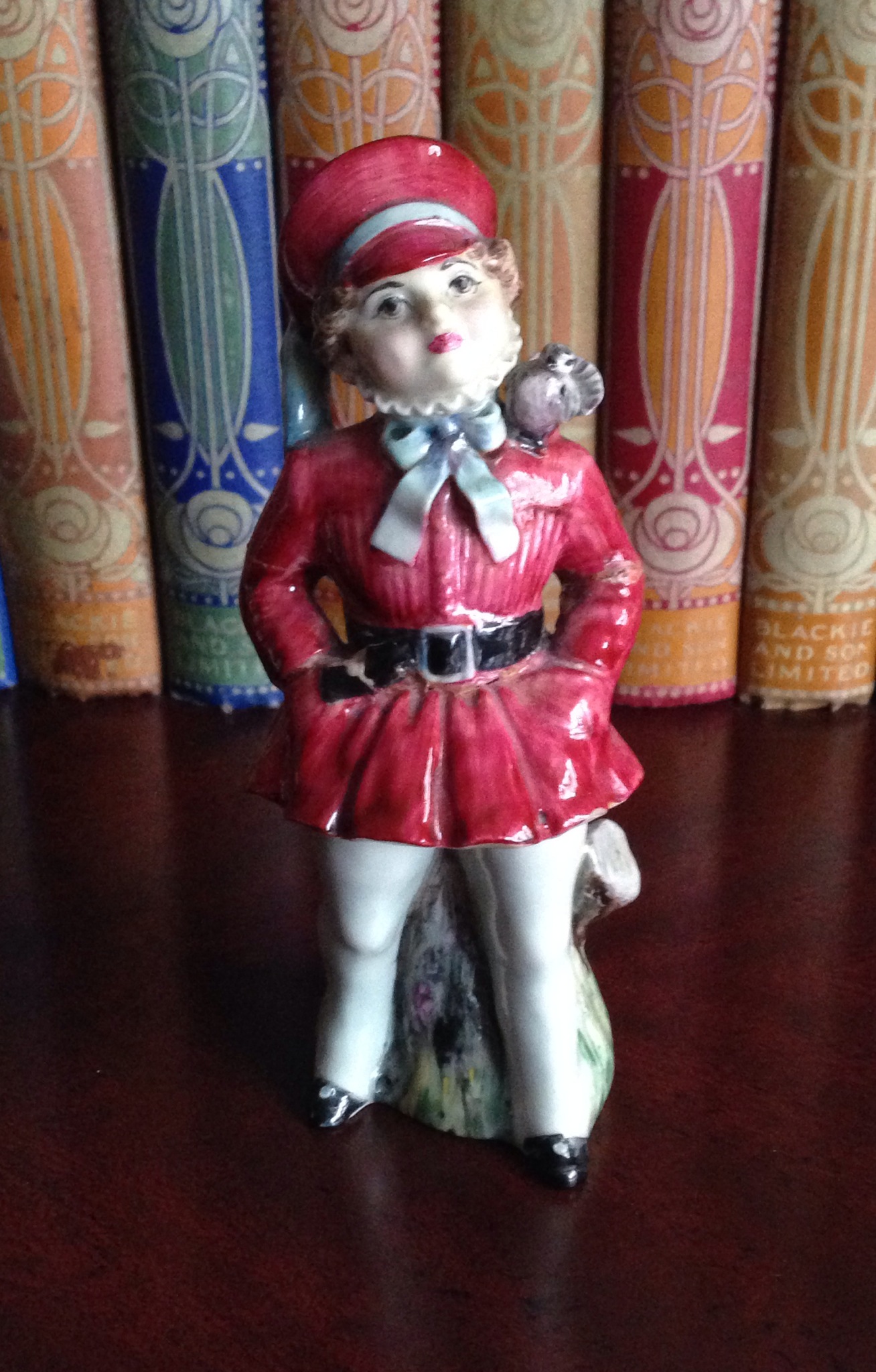
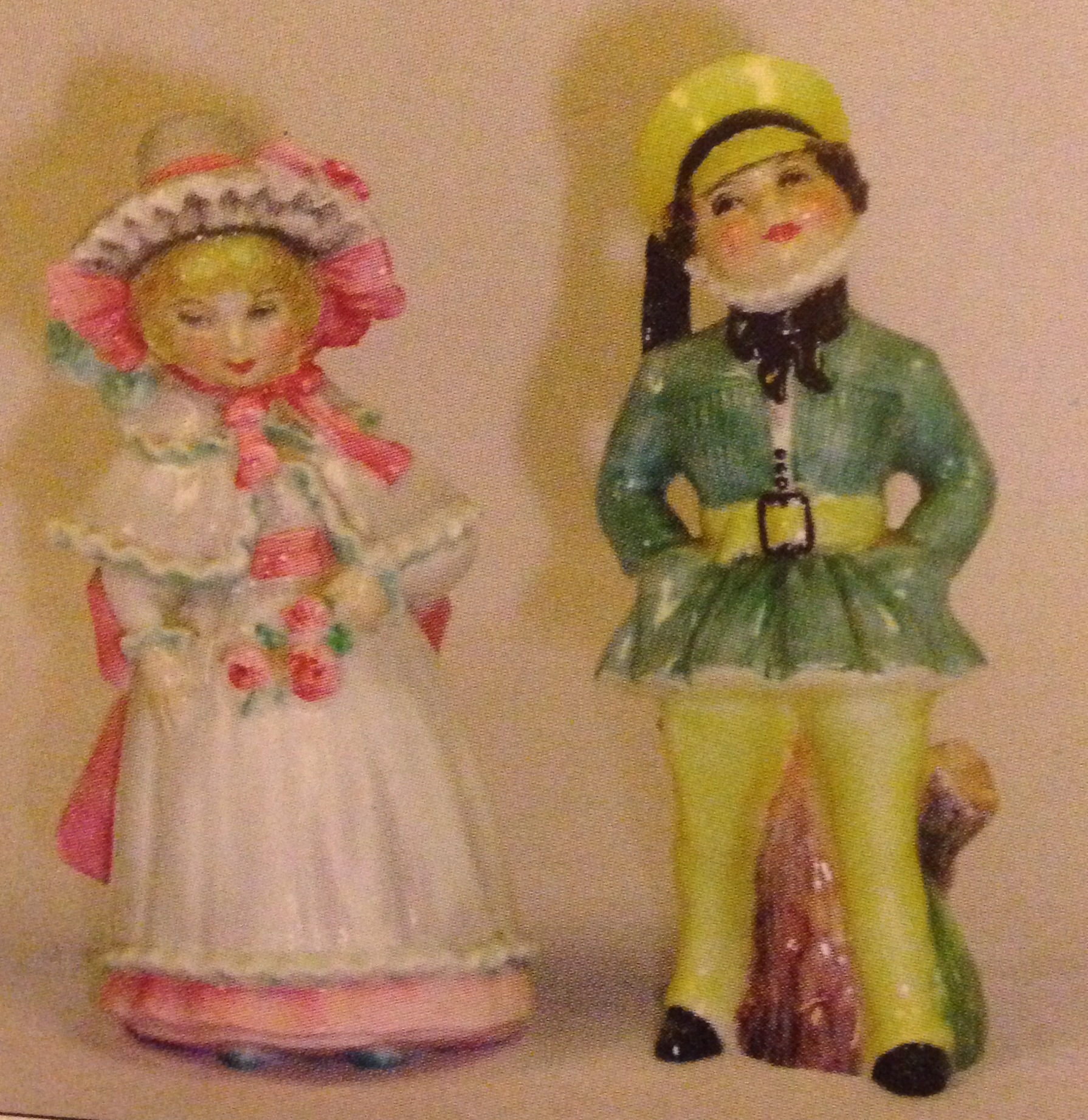
I thought I’d share this little study of a boy by Peggy Davies. It is marked simply ‘Clay Craft’ to the base, a company she ran in the 1940’s-50’s I believe. Interestingly there was a Doulton version of the same figure so I imagine either he was presented to Doulton in the red colourway and prototypes were made or else rejected by Doulton and Peggy used the design herself.

IMG_0867.JPG
The Doulton version and a young girl too, both sold at Louis Taylor in 2005.

An interesting piece anyway and it goes to show you never know what is waiting around the corner!

A closer look at Leslie Harradine’s figure Jacqueline.

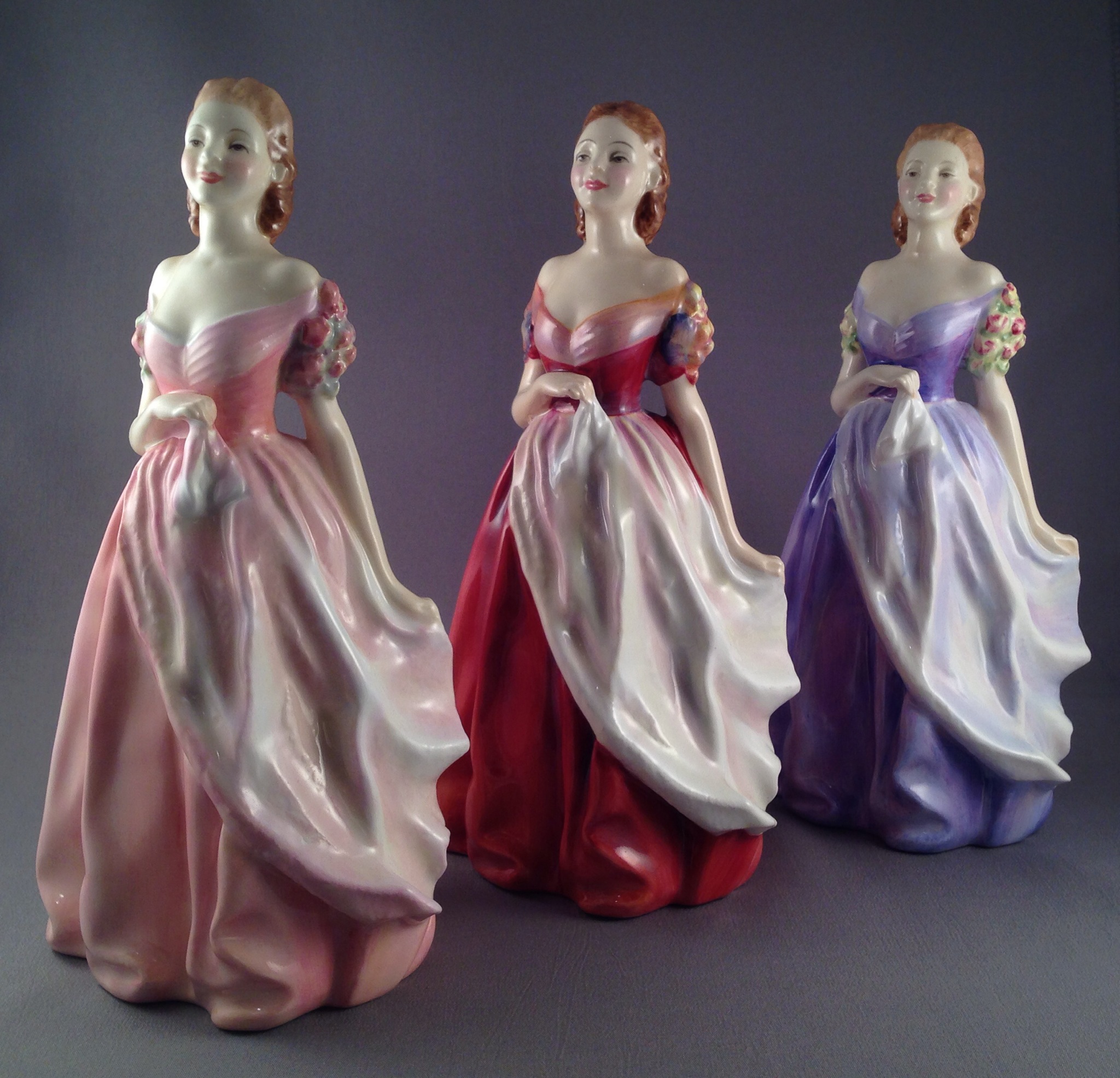
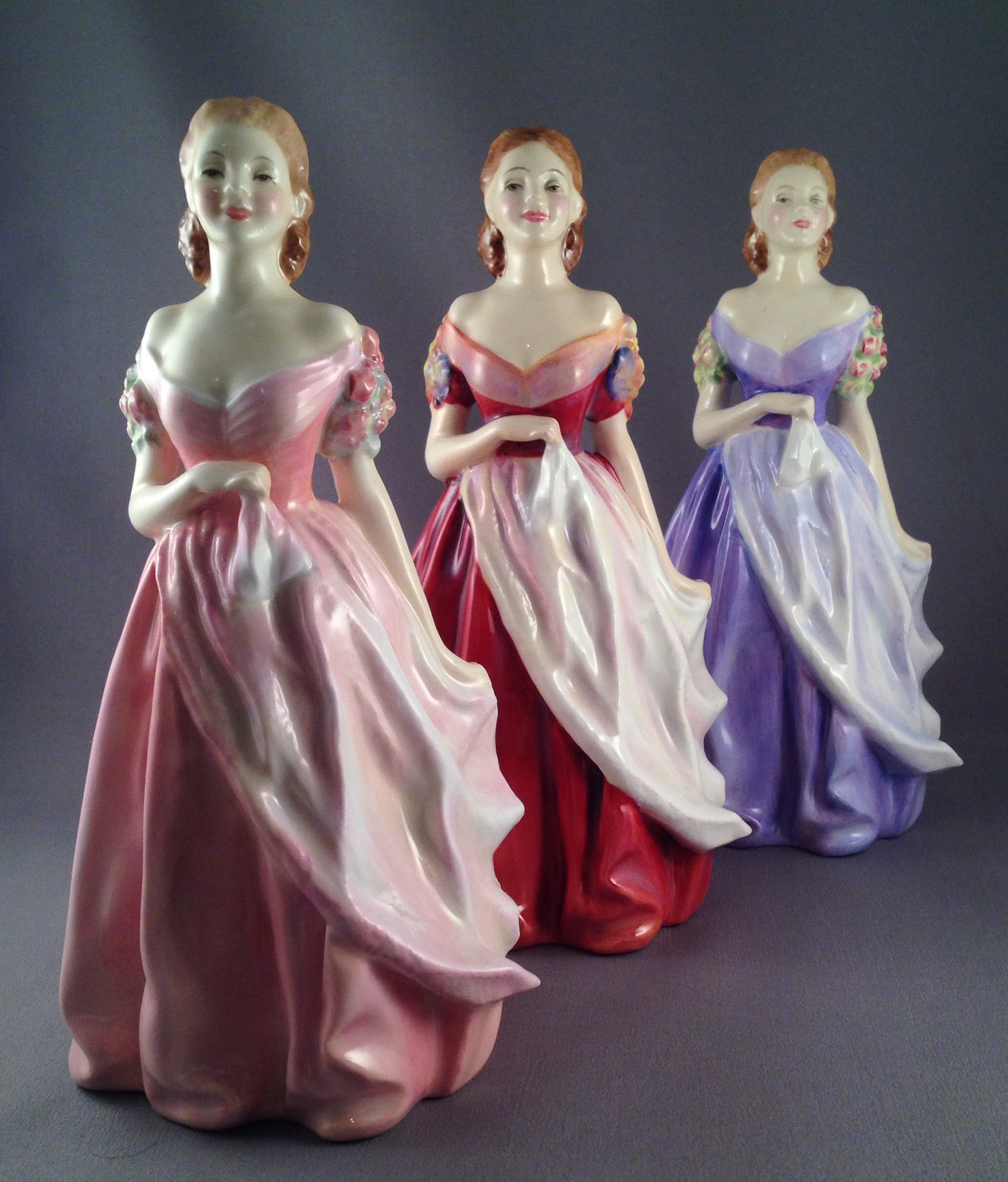
Here are three versions of the hard to find figure Jacqueline. Designed by the great Leslie Harradine, Jacqueline was available as HN2000 and HN2001 between 1947-1951.

IMG_0843.JPG

The red is a new find, a colourway, with ‘HA3’ to it’s base telling us that it was painted by Harry Allen and this is colourway 3. Presumably 1 and 2 were the two colourways produced in pink and blue pictured either side of her.
Jacqueline is model 1234 telling us that whilst she was introduced in 1947, she would have been modelled in ca.1942. I have versions of models 1230 (Christmas Morn) and 1231 (a prototype similar to Easter Day) dated 1942, so we can date the model quite closely.

IMG_0844.JPG

The part of collecting that I find most interesting is often the story behind the piece. Although I have not found a pictorial inspiration for Jacqueline there is still plenty to be researched as you can hopefully see above.