Category Archives: Art deco

Royal Doulton’s early horse models.

Doulton’s first horse models for the HN collection all featured riders, however, their first solo horse models introduced in 1940, were the work of William Chance, commissioned to launch a new range by Doulton.
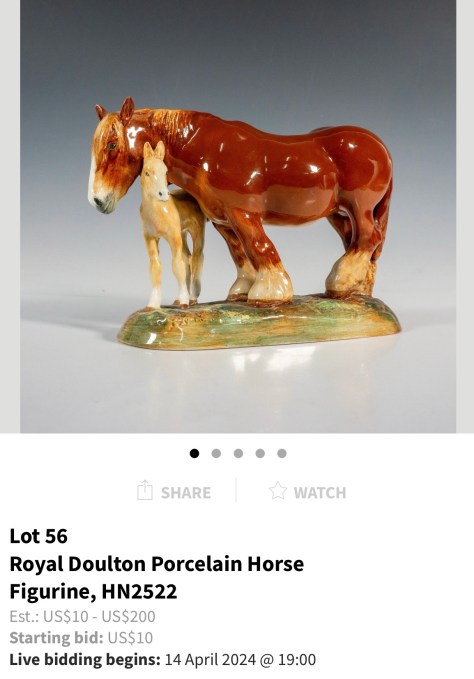
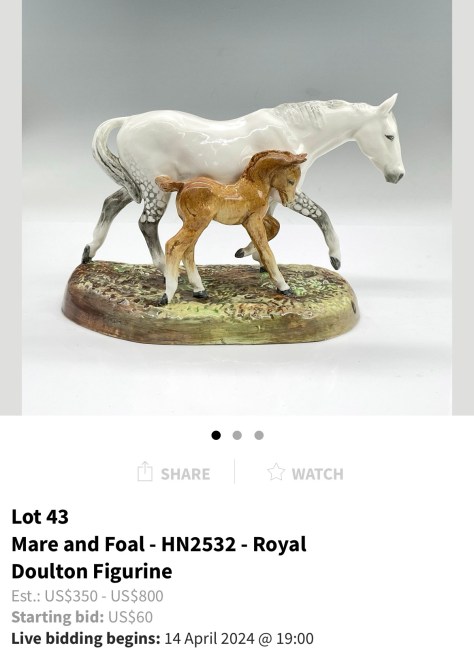
Chance was an established sculptor having exhibited widely including at the Royal Academy. He modelled from real life and his Doulton models proved popular and many were available in large, medium and small sizes, with the last remaining models being deleted in 1966.
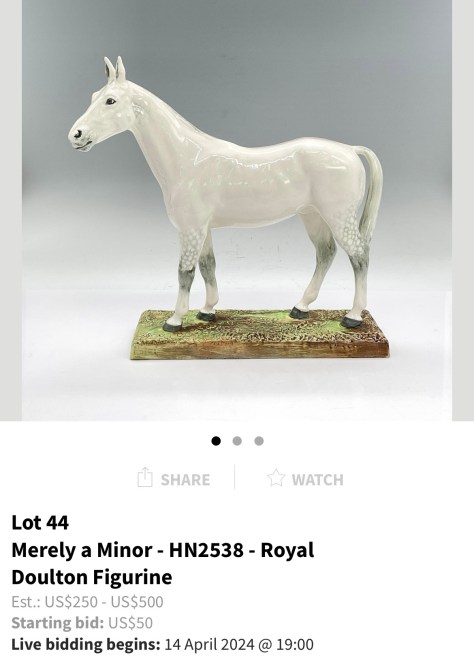
The varying sizes of horses available from this first series make it an interesting field to collect and together they make a great display.

Chance also created the special piece Monaveen for our present Queen, when she visited the Doulton factory in 1949 as the then Princess Elizabeth. Monaveen was a steeplechaser owned jointly by the Queen and the late Queen Mother and not produced by Doulton for sale. The piece was expertly painted by Eric Webster, whose long career at Doulton’s we looked at some time ago.
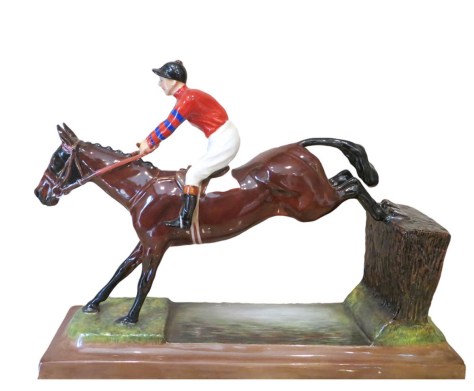
Monaveen (courtesy of WMODA)

Horses continue to be produced by Doulton into recent times with new prestige pieces from Peggy Davies’ The Palio to the more recent Alexander the Great HN4431 as well as those produced in the early 1990’s as part of the DA range of animals.

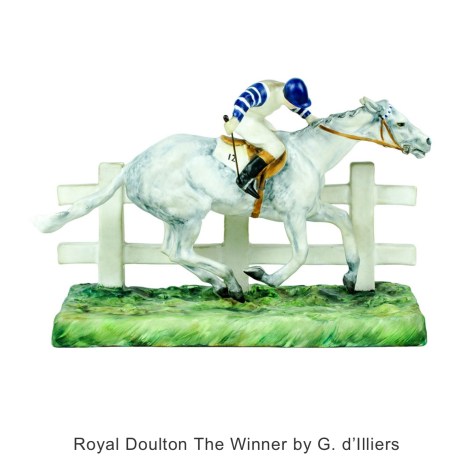
To finish I thought you might all like to see this advert I found many years ago, stating that the famous French sculptor Gaston d’Illiers was responsible for the very rare study The Winner HN1407. This skilfully created model shows the horse in full gallop and straining every muscle. It is reputedly based on the horse Royal Doulton, owned by the Rousten Brothers of Auckland, New Zealand.
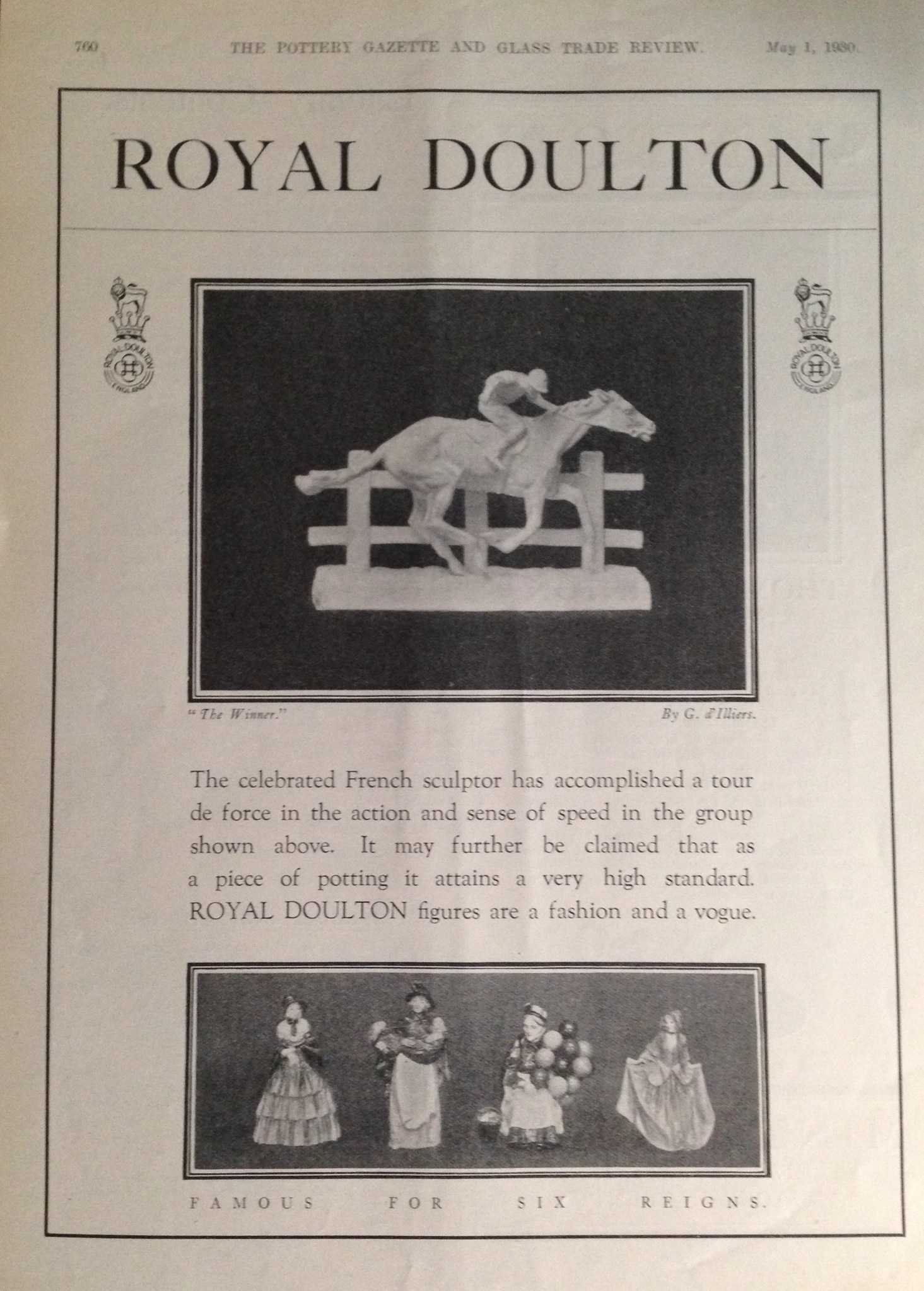
IMG_0410.JPG
The Winner advert from 1930.

Courtesy of WMODA.
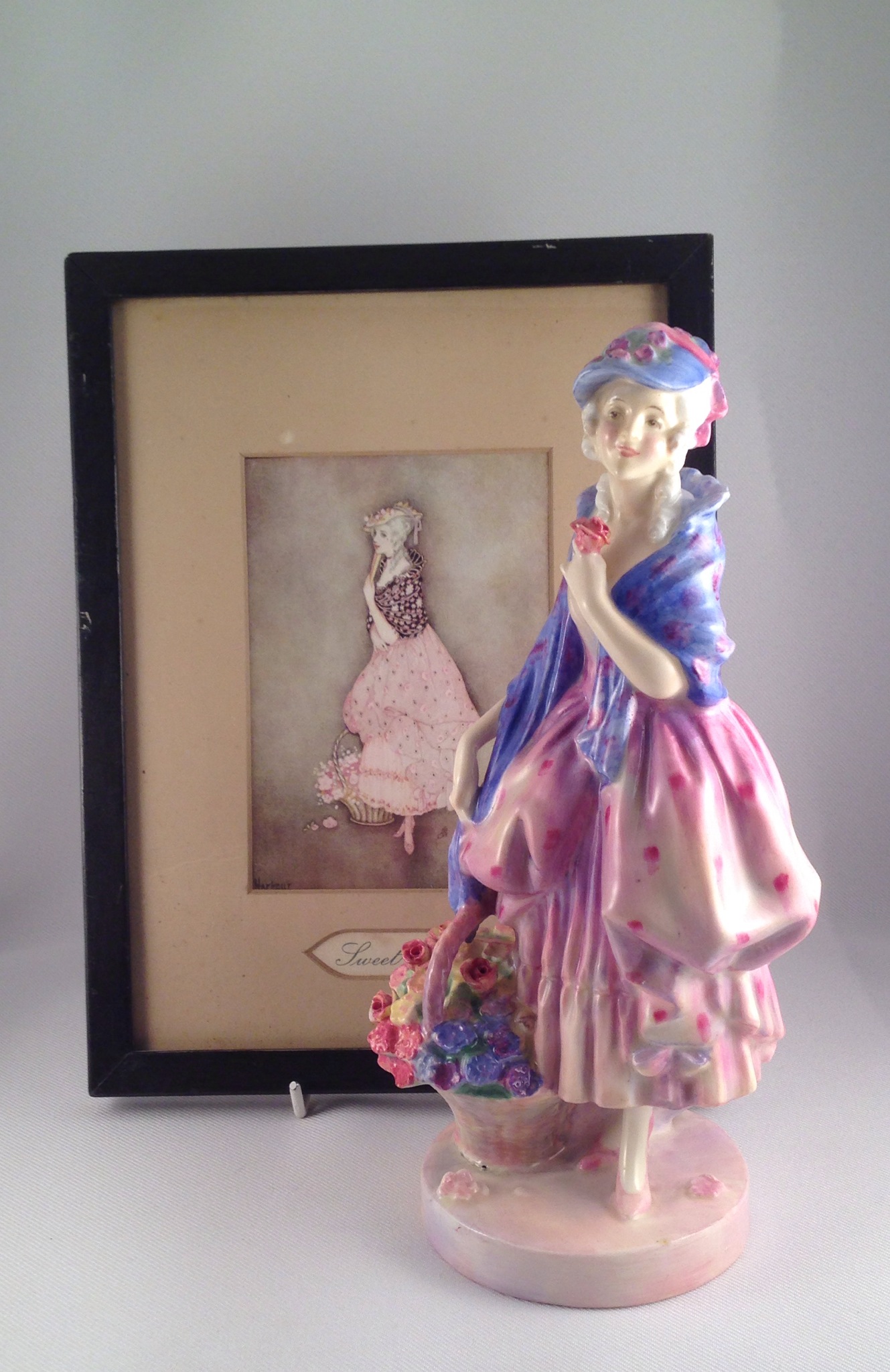
Reflections: the source of Harradine’s popular figure Phyllis.

As you know it is a real interest of mine to research where figures derive their inspiration. Those who have read my book ‘Reflections’ with Jocelyn, will have seen the section on the illustrator Jennie Harbour.

IMG_0161.JPG

Very little is known about the illustrator but her work can be found on Tuck’s postcards as well as in many editions of deco books from the time. Her illustrations remain popular today around the world and framed, vintage prints can sell for a fair sum.

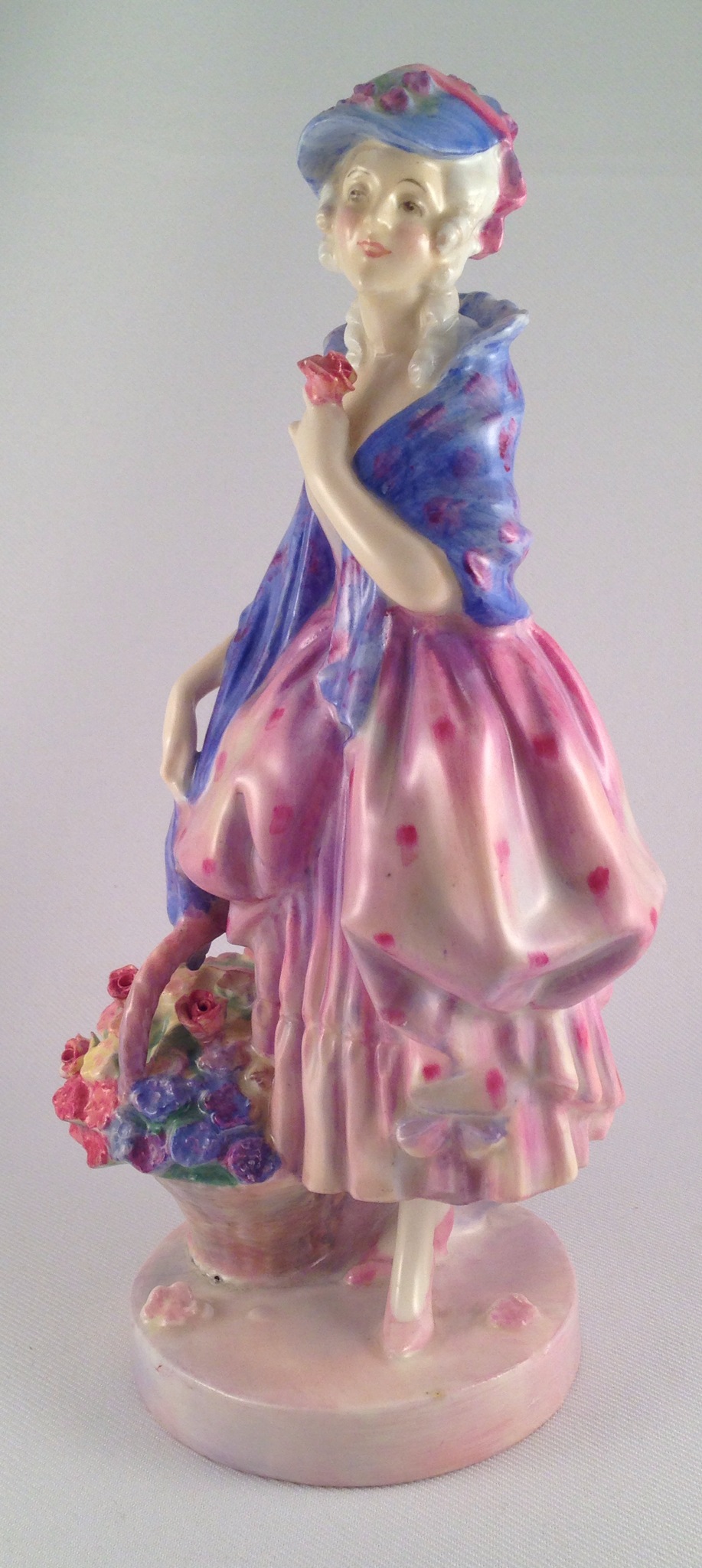
Back to Phyllis, as you can see she has been expertly interpreted from Jennie Harbour’s illustration ‘Sweet Nell’ by Harradine. Here she is as HN1486, although the most readily found version is HN1420 as it was clearly the most popular colourway. I have always felt that she makes the perfect partner to Dolly Vardon save for the base on Phyllis. Perhaps there is a version if Phyllis out there without a base. As we know modifications were frequent on these early figures, and we looked at how a stepped vase was added to Harradine’s Helen some time ago.

IMG_0164.JPG

Royal Doulton’s dreamy yellow and orange figures.

IMG_0141.JPG

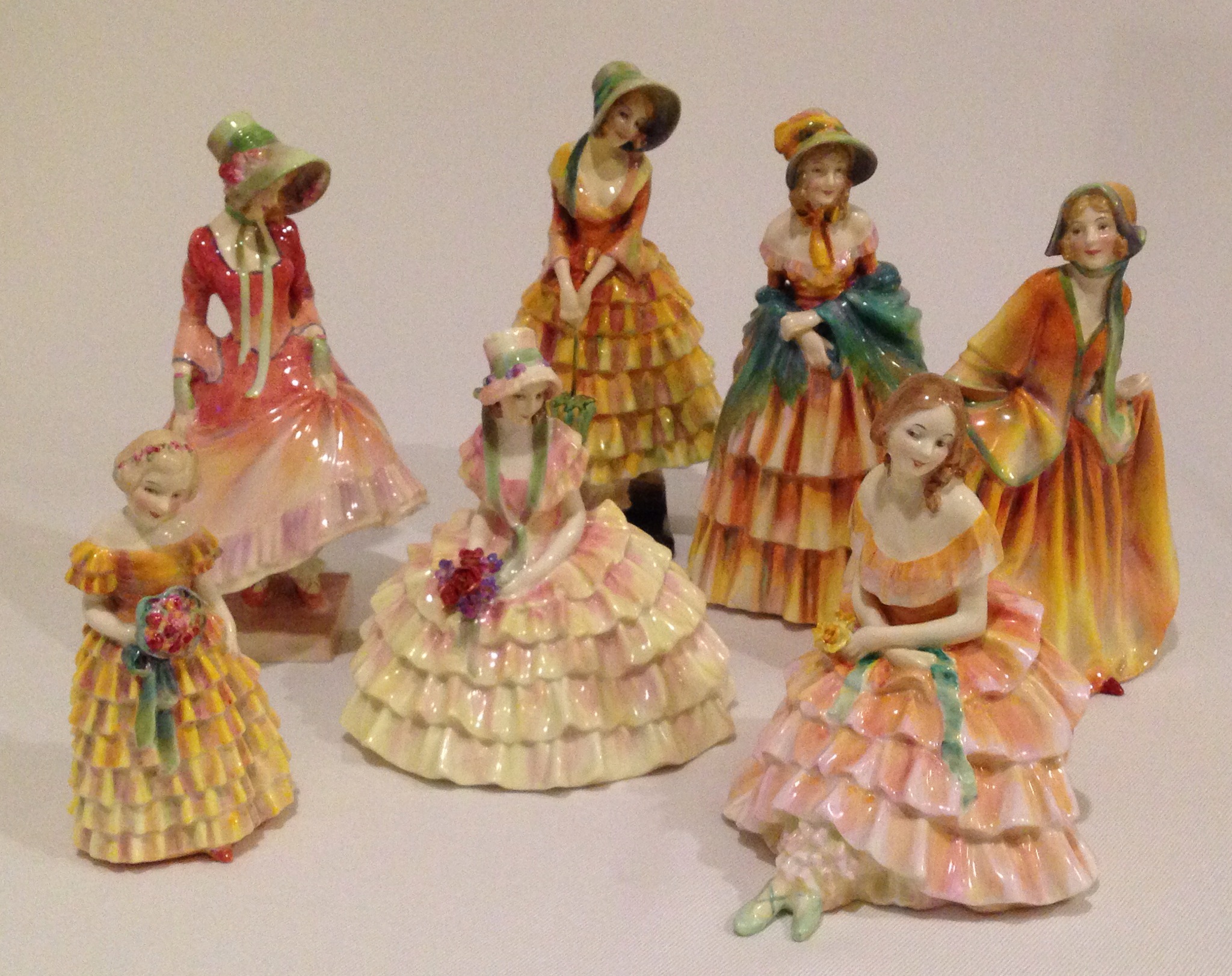
We all normally associate bright reds, blues and greens with Doulton figures, however, there were a small group of early figures that fit into the peachy, yellow-orange bracket as you can see above.

The majority of these figures have HN numbers around 1500, indeed the colourway of Sweet Anne pictured actually carries the HN number 1529, an HN number we associate with the colourway of A Victorian Lady – also pictured above. This group of ladies are typically finished with green accessories; usually a gorgeous hue of green to compliment the yellowy orange colouring. The wonderful thing about these ladies is the depth of the colouring involved – a real forte of the Doulton painters of the time who would re-fire the colours multiple times to achieve the desired effect.

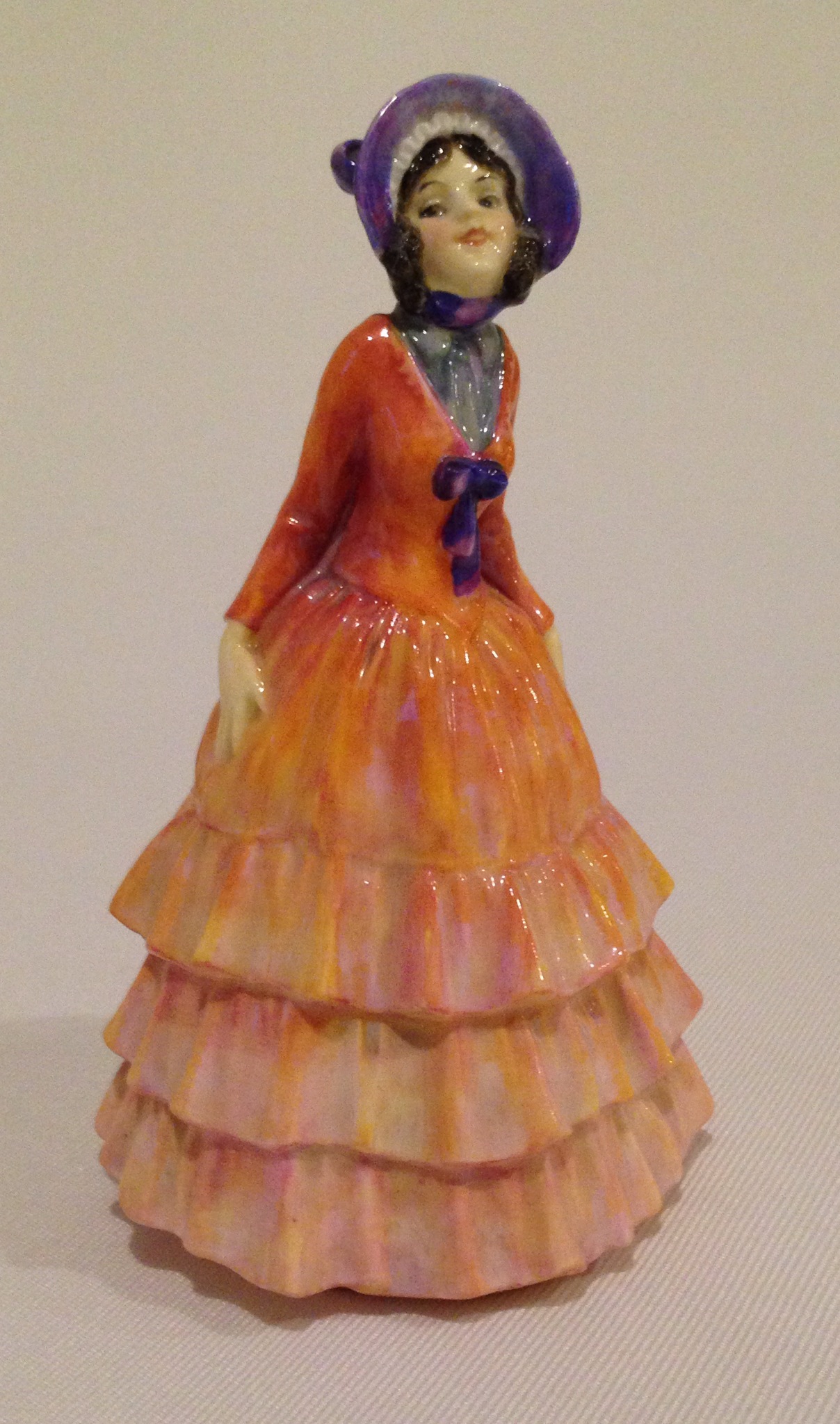
This demure band of ladies are all colour co-ordinated, yet, there are others we can add to this dreamy crowd. Here is a colourway of Pauline in orange.

IMG_0142.JPG

Perhaps you too own figures that belong to this group. If so why not share them via our facebook page ‘Doulton Collectors Club’. We look forward to welcoming you!

What is in a name? Royal Doulton’s ‘The Rocking Horse’.

20140806-182630-66390953.jpg
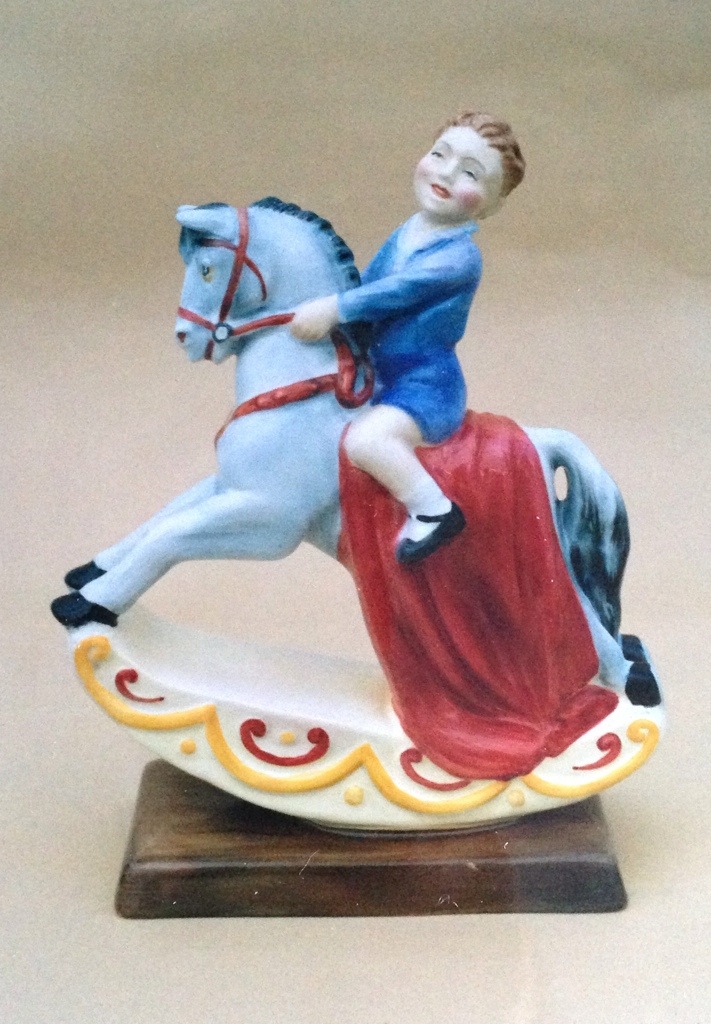
The Rocking Horse HN2072.
This particular figure I am sure you will agree is charming and belongs to a small group of rare Harradine figures produced for a very short period post WWII. The only reason I can see for this figure’s short production (1951-3) is that its production was too costly at a time of rationalisation within the Burslem factory.
The inspiration for this figure is undoubtedly the film ‘The Rocking Horse Winner’ from 1949, where a young boy discovers he can predict race winners by rocking his rocking horse!

Collecting Doulton novelties : jam pots

a href=”https://doultoncollectorsclub.com/wp-content/uploads/2014/08/20140802-121402-44042237.jpg”>20140802-121402-44042237.jpg

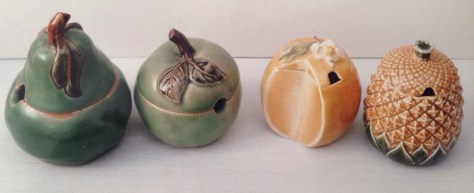
Jam pots are another area that collectors often focus on to build up a collection. Of course there are countless examples produced with seriesware patterns on them and still further numbers with tableware designs decorating them.
There are a small group, however, of moulded fruit examples of jam pots. The apple and pear are the work of Vera Huggins at Doulton’s of Lambeth and date to the 1920-30 period, whilst the designer of the two Burslem pots is unknown but date again to the same period but rather than being stoneware, they were made of earthenware and carry D numbers just like many fancy wares. The pineapple is dated 1933.
I personally have the apple and pear and they fit perfectly in the kitchen!

A look back at Harradine’s Lady Clare.

20140729-154104-56464101.jpg
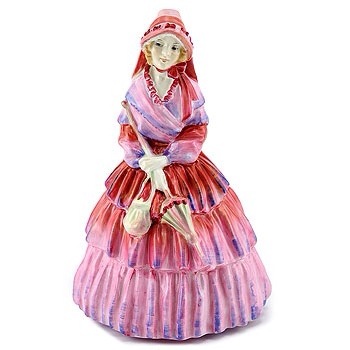
The official Lady Clare HN1465.

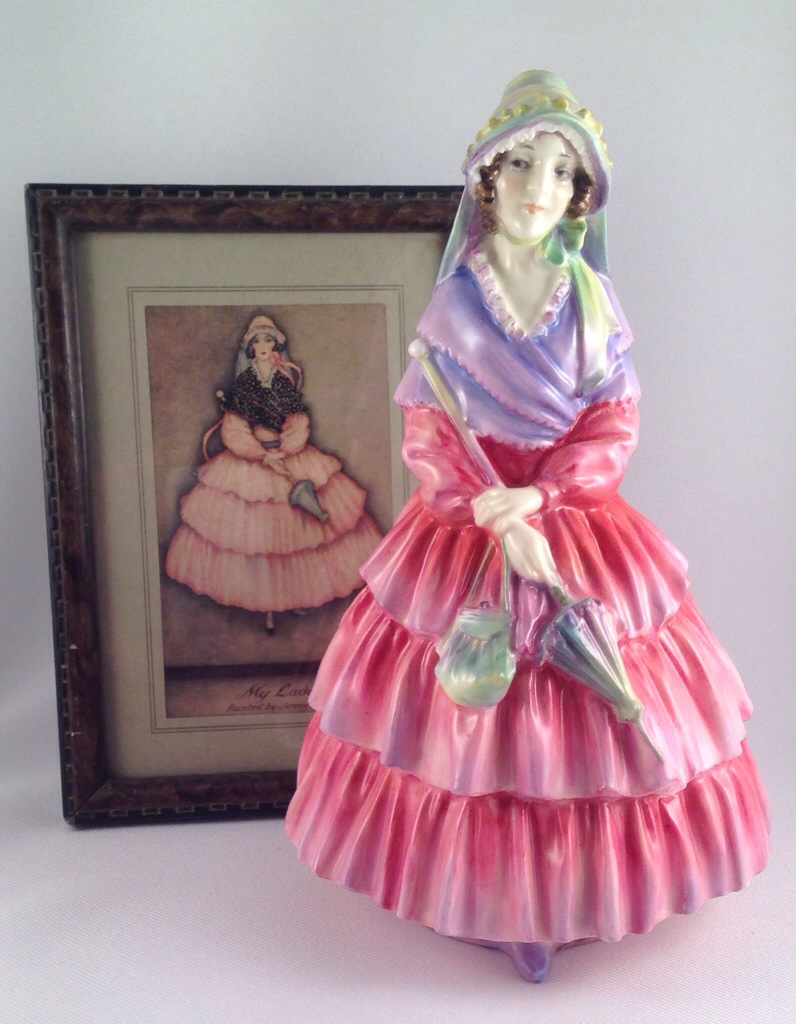
This unusual figure had a relatively short production run from 1931-37 and examples rarely turn up. She takes her inspiration from this Jennie Harbour picture titled ‘My Ladye’ from her ‘Victorian’ series for Raphael Tuck the card manufacturers. As you can see the original Harradine model has a base with a foot protruding from under her skirt, just like the original picture. This makes her 1.5cms taller than the production model.

20140729-154709-56829580.jpg
A prototype of Lady Clare pictured with her inspiration.

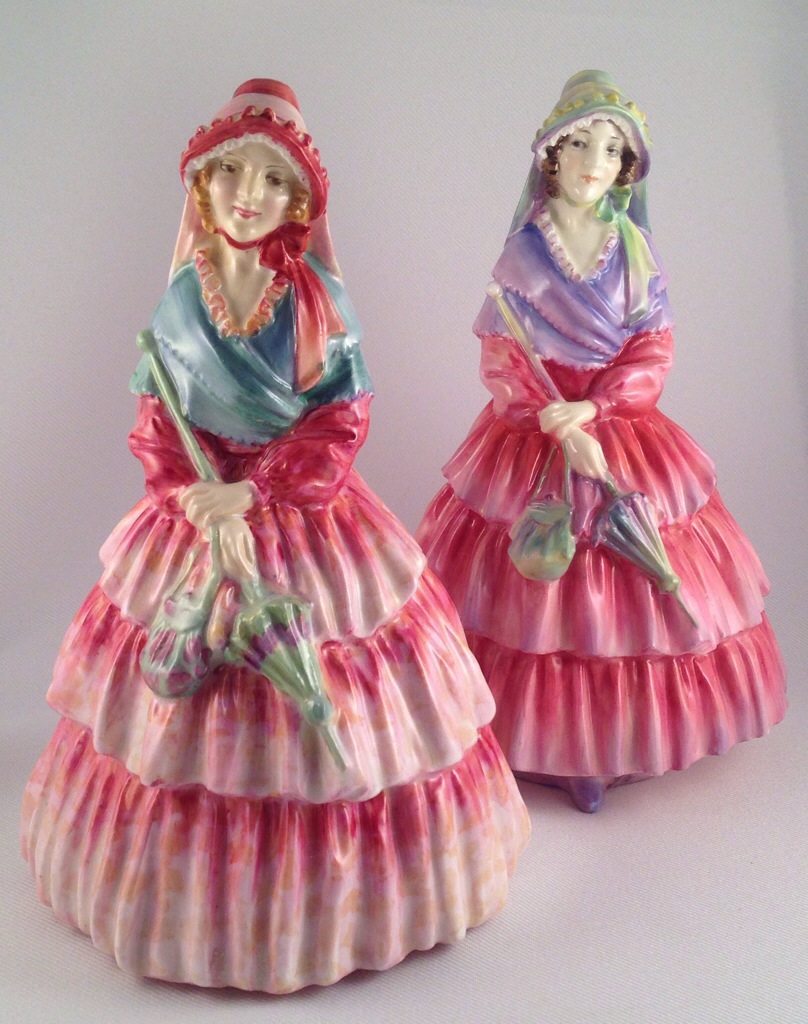
As well as HN1465 there is another colourway of Lady Clare that has emerged and there appear to be a handful of examples of this colour scheme in collections around the world.

20140729-154906-56946782.jpg
Two versions of Lady Clare; a colourway and a prototype.

Perhaps you also have variations of early figures? If do why not share with our ‘Doulton Collectors Club’ page on Facebook?

For the love of Chloe!

20140727-113517-41717977.jpg
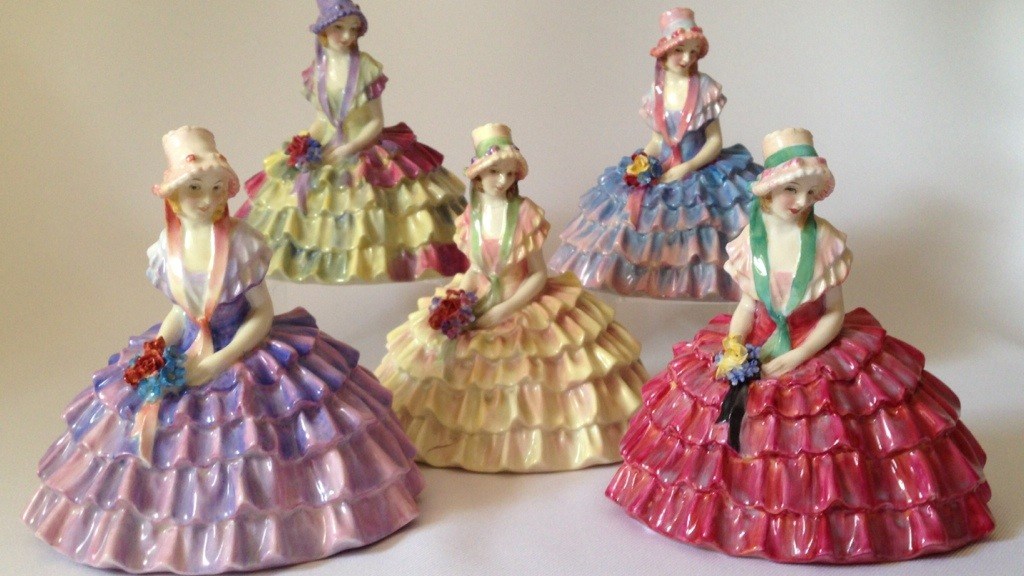
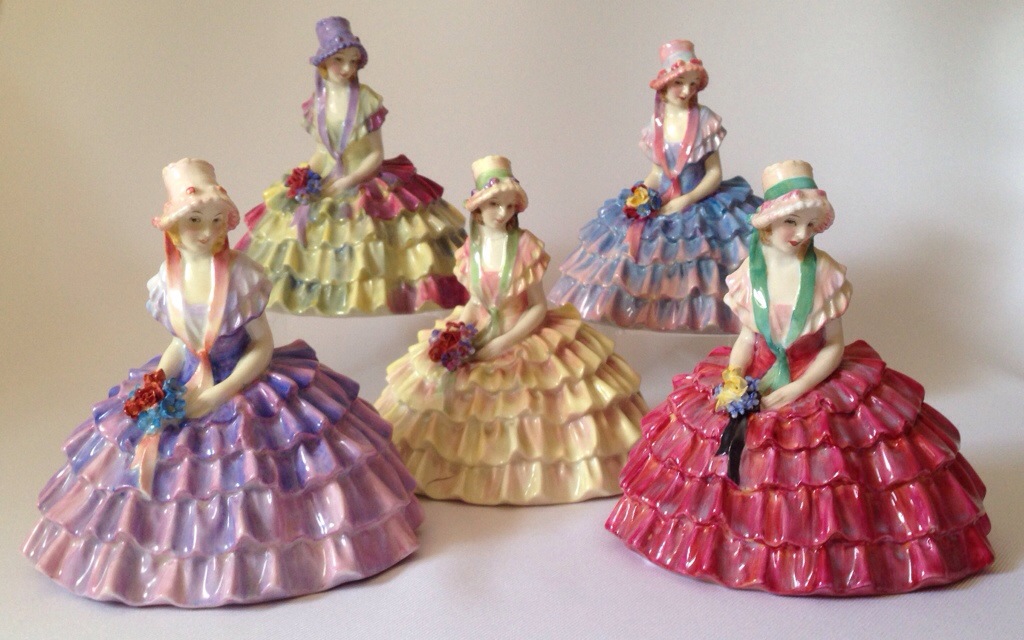
L-R are HN’s 1479, 1470, 1498, 1765 and 1956 (missing HN1476).

Many of you will be familiar with the more frequently found versions of this popular Harradine damsel Chloe, HN1470 and HN1765, but at the time of her production she was such a popular figure that there were 6 different full size versions of her and a further 3 miniature models.

If you refer to the ‘bible’ for figure collectors “Royal Doulton Figures” you will see that 5 of the six are illustrated, the one missing being HN1956, but illustrated here. However, there is another missing colourway. As some of you may have noticed, what is labelled HN1476 in the book is actually a pre-war version of HN1765 – I know this as I bought the figure labelled as 1476 at the first Doulton museum sale.

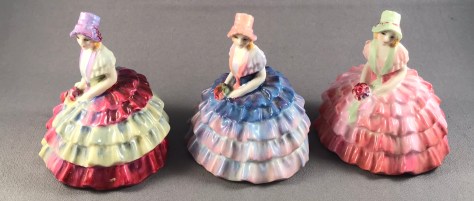
The three M versions of Chloe.

HN1765 was clearly the most popular colourway and production was resumed after WWII. These later models are easily distinguishable as the bouquet is less detailed and indeed smaller, plus the base typically only bares her name as there was no longer a need for her HN number as she was the only Chloe in production at this point. Mistakes do happen and we must remember that the original book was put together using actual figures found at that time.

In my experience and as I have previously mentioned the ‘by 1949’ could really be shortened to ‘by 1944′ as production seems to have been halted for all but the absolutely most popular figures before 1944. This small group includes Paisley Shawl HN1392, the Old Balloon Seller, Biddy Penny Farthing, the Orange Lady and the perennial favourites in red of Autumn Breezes and Top o’ the hill. Production of these appears to have stopped in 1944 before resuming full post war production in 1947.

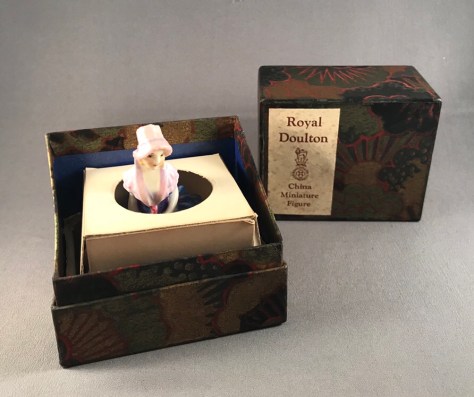
M version of Chloe in her original box and packaging from 1932.

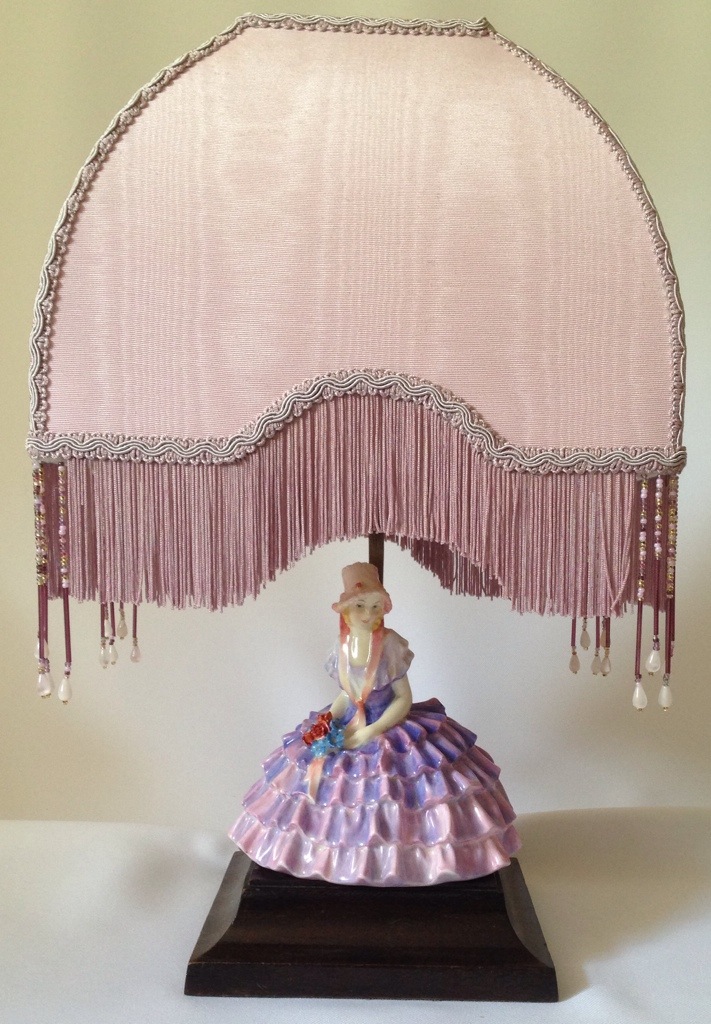
Chloe proved such as popular figure that examples can be found mounted on lamps as below and miniature versions adorn pin trays, calendars and pen holders produced in the 1930’s.
20140727-113641-41801649.jpg

Chloe on original lamp base with replacement shade.

An A-Z of Collection Royal Doulton – the Beggar’s Opera series.

20140725-160540-57940025.jpg
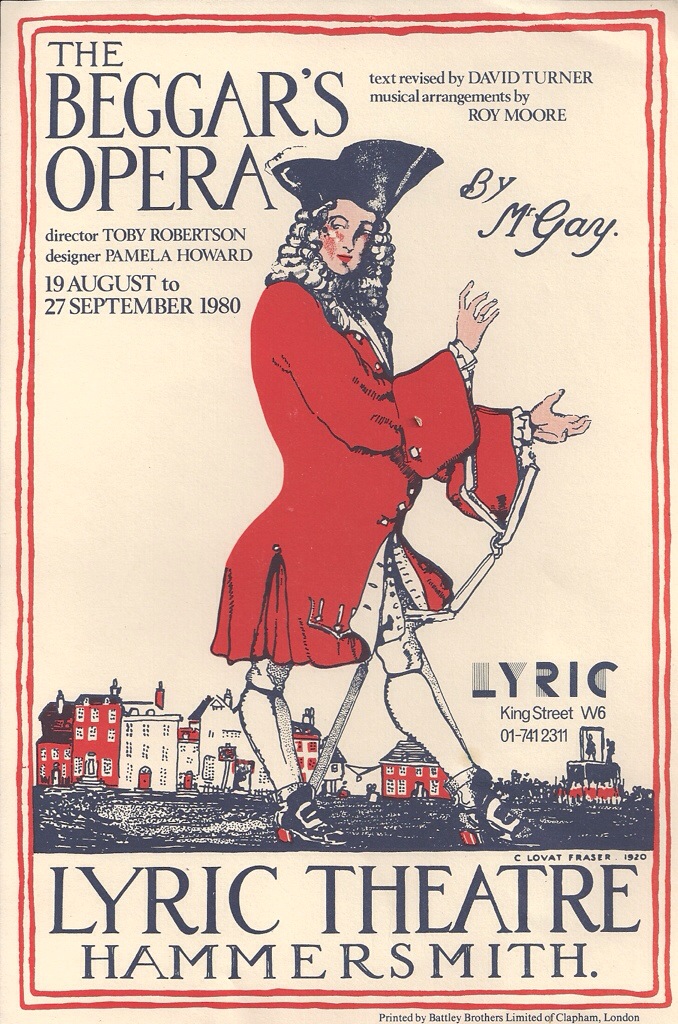
Original poster for the opera.

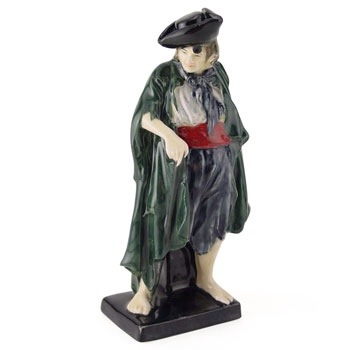
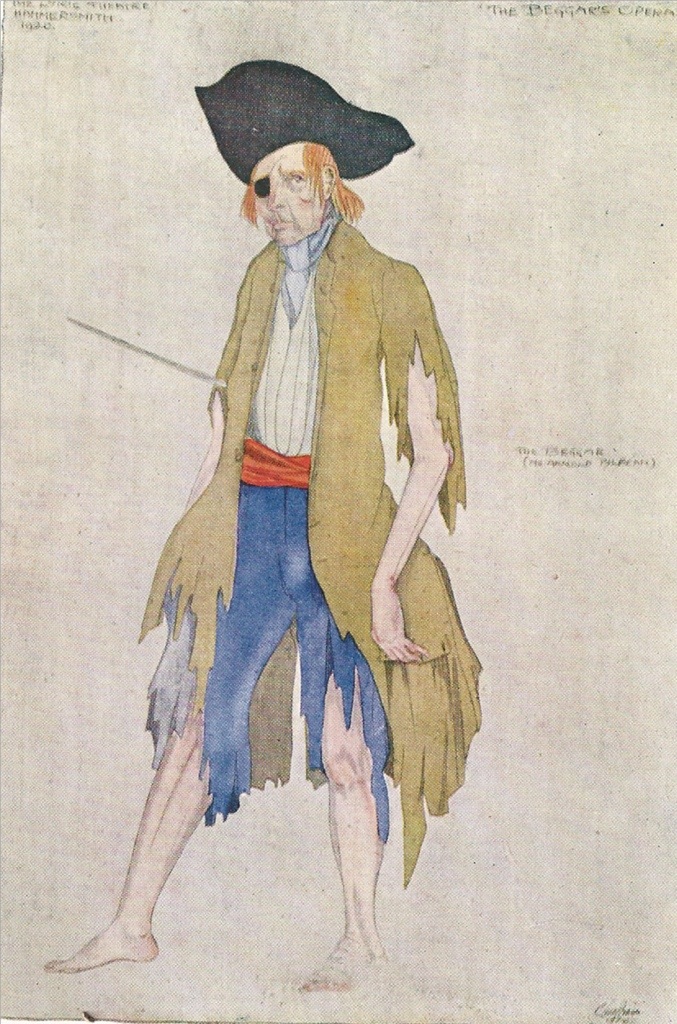
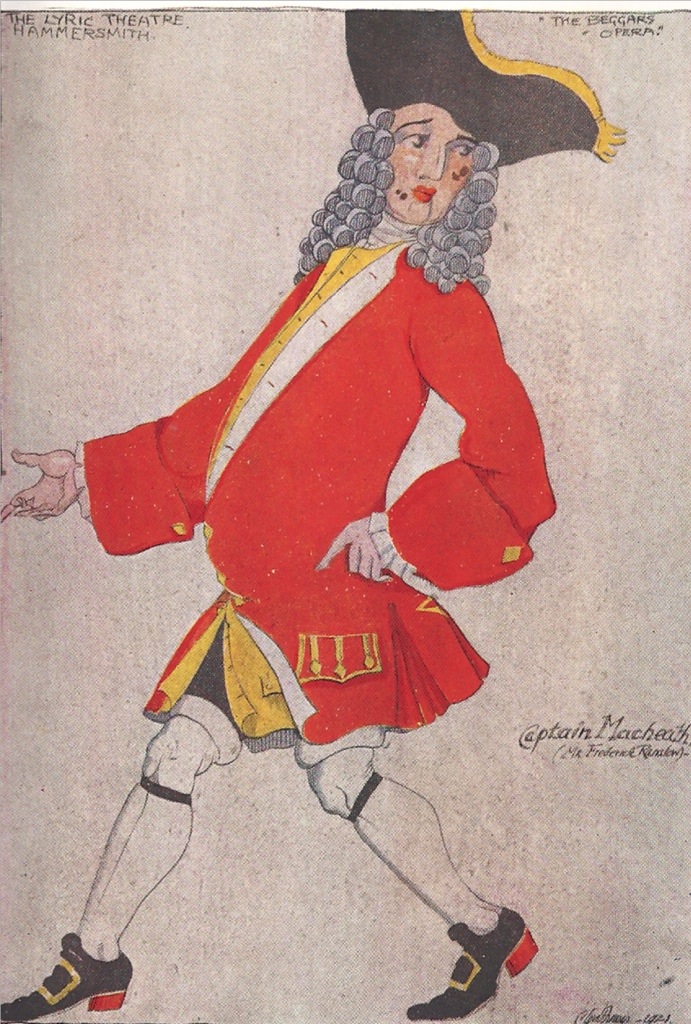
Leslie Harradine as well as establishing a new standard in figure modelling in the early 1920’s, was also responsible for the first set of figures, The Beggar’s Opera Series, inspired by the theatre. Harradine’s figures all closely resemble the costume designs Claude Lovatt Fraser the designer for the revival of this piece at Hammersmith in 1920, as you can see from these pictures in the article.

20140725-160655-58015097.jpg

20140725-160655-58015339.jpg
Harradine’s The Beggar and the original sketch for the stage costume.

Once made up Lovat’s costumes were thrown to the studio floor and walked on, had paint thrown on them, and where necessary as with the Beggar’s costume, were then slashed and dirtied. He reasoned that the characters from the play were from 18th Century London low life and spent much of their time in jail.

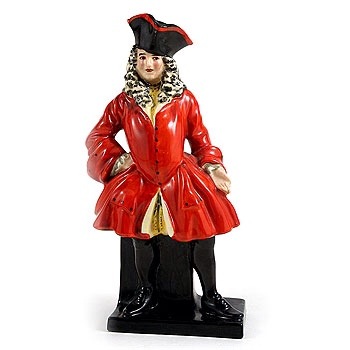
Here is the original Captain Macheath figure compared with the original theatre poster and Lovat Fraser’s design.

20140725-160752-58072942.jpg

20140725-160752-58072829.jpg
Again the original design and the Doulton figure Captain Macheath.

This first series of figures set the tone for future sets by teaming a popular English theme together with an emerging Doulton house style of decoration.

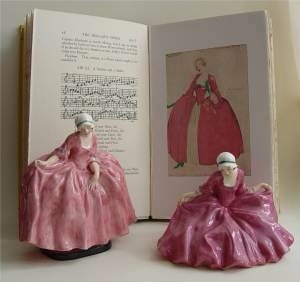
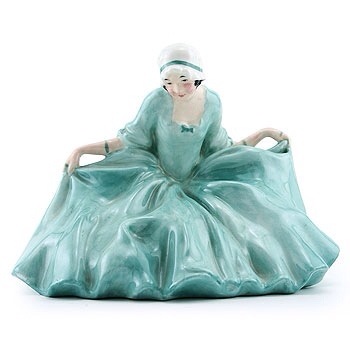
The series proved a huge success and in Doulton’s first official publicity catalogue after WWII, they themselves lament the withdrawal of this popular set! The main female character Polly Peachum is also immortalised in a miniature version, and incidentally more colour variations of this one miniature figure exist than any other!

20140725-161136-58296732.jpg
Two versions of Polly Peachum against her original costume design. Incidentally the curtsying Polly was at first called Polly Curtsey.

Whether you collect just individual characters from this series or the whole set, they make an eye-catching display!

20140725-161252-58372251.jpg
A favourite colourway of mine for Polly Peachum.

Collecting Doulton Barbotine ware – Moonlight

20140721-171211-61931976.jpg

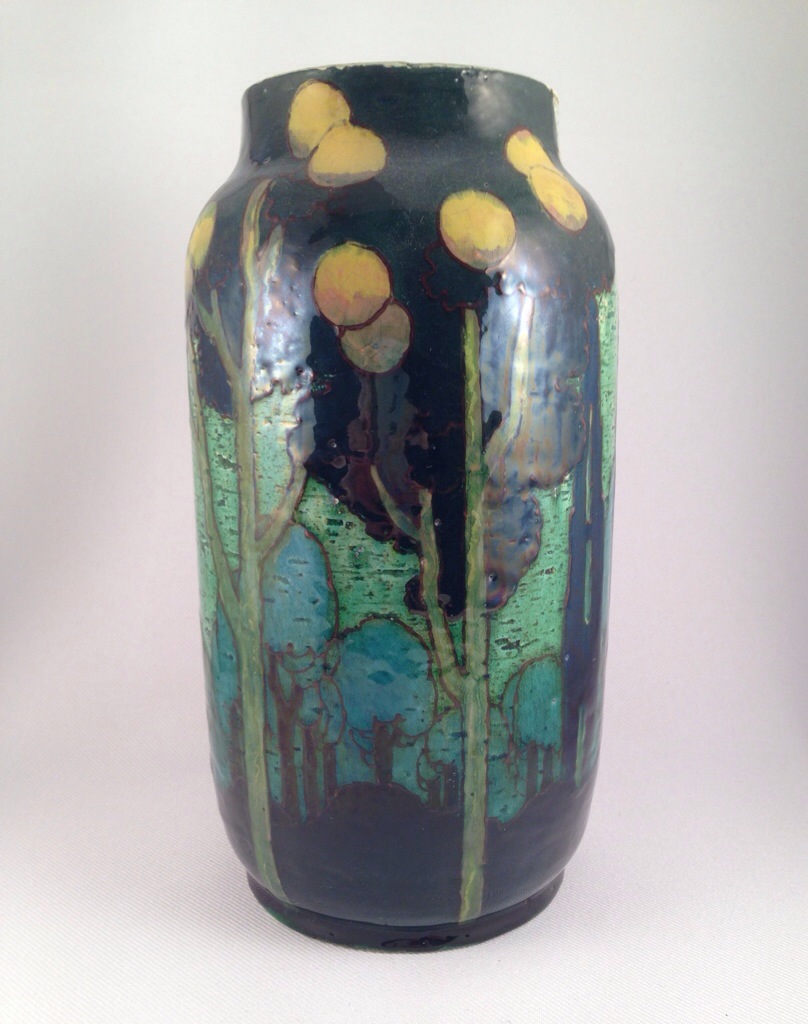
This technique is another unusual ware produced at Burslem in limited quantities around 1930. The particular pattern was actually called ‘Moonlight’ according to Fred Moore who also provided an introduction date of 1927 for this design.

20140721-171356-62036191.jpg
Similar in body to Rembrandt and some Holbein pieces, Barbotine can be found on vases and bowls, plus I have seen a pair of 24″ lamps also in the Moonlight design. Very impressive!
The Moonlight pattern is similar to the drawings of Edmund Dulac, but there are several other designs that have also come to light in the Barbotine technique, yet, they all use the same colour palette of greens and blues with similar stylised designs.
I am sure you’ll agree they are stunning pieces!