Category Archives: Artists

Royal Doulton’s early horse models.

Doulton’s first horse models for the HN collection all featured riders, however, their first solo horse models introduced in 1940, were the work of William Chance, commissioned to launch a new range by Doulton.
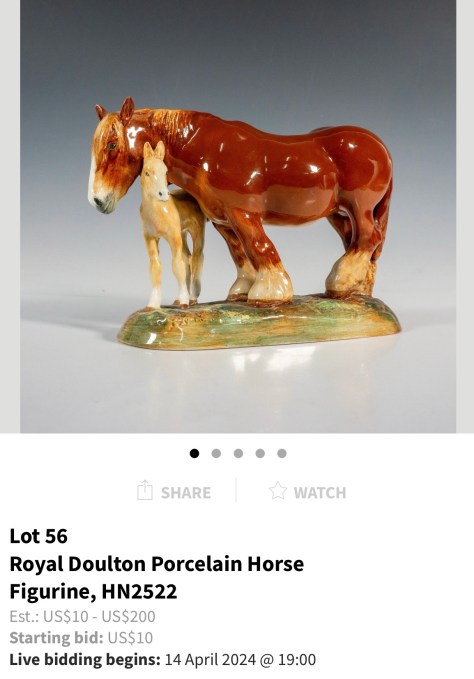
Chance was an established sculptor having exhibited widely including at the Royal Academy. He modelled from real life and his Doulton models proved popular and many were available in large, medium and small sizes, with the last remaining models being deleted in 1966.
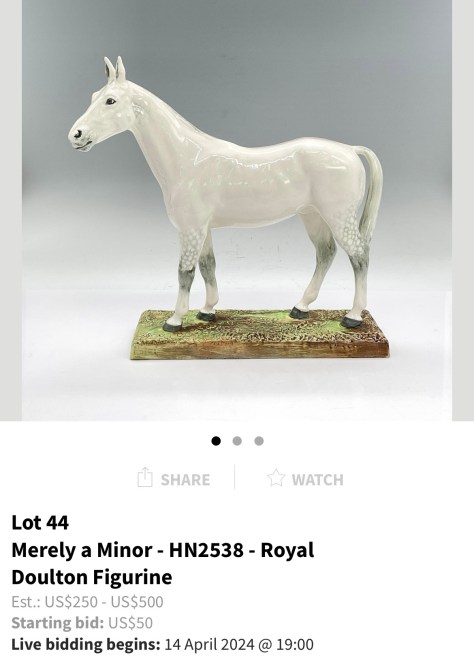
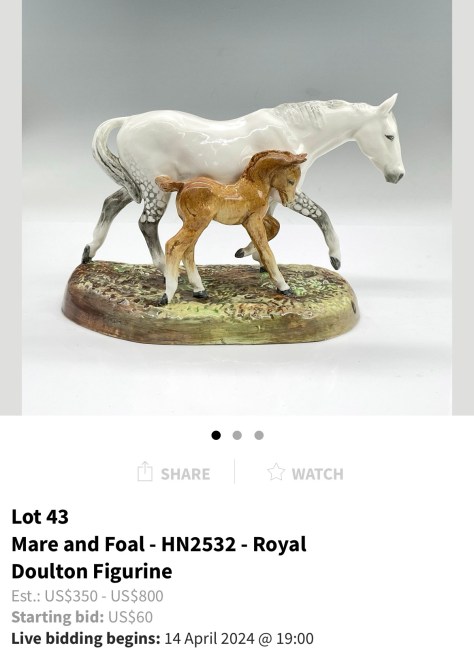
The varying sizes of horses available from this first series make it an interesting field to collect and together they make a great display.

Chance also created the special piece Monaveen for our present Queen, when she visited the Doulton factory in 1949 as the then Princess Elizabeth. Monaveen was a steeplechaser owned jointly by the Queen and the late Queen Mother and not produced by Doulton for sale. The piece was expertly painted by Eric Webster, whose long career at Doulton’s we looked at some time ago.
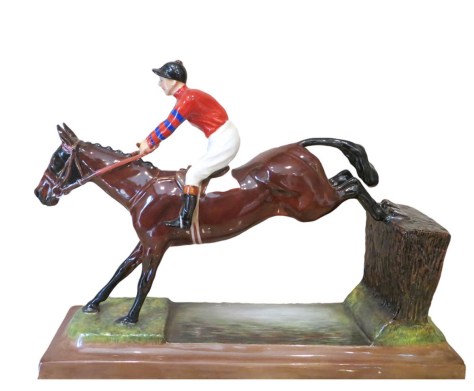
Monaveen (courtesy of WMODA)

Horses continue to be produced by Doulton into recent times with new prestige pieces from Peggy Davies’ The Palio to the more recent Alexander the Great HN4431 as well as those produced in the early 1990’s as part of the DA range of animals.

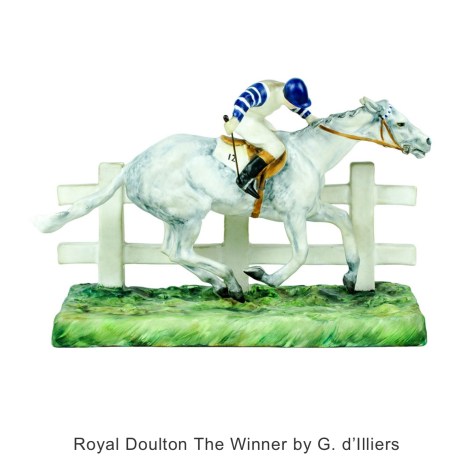
To finish I thought you might all like to see this advert I found many years ago, stating that the famous French sculptor Gaston d’Illiers was responsible for the very rare study The Winner HN1407. This skilfully created model shows the horse in full gallop and straining every muscle. It is reputedly based on the horse Royal Doulton, owned by the Rousten Brothers of Auckland, New Zealand.
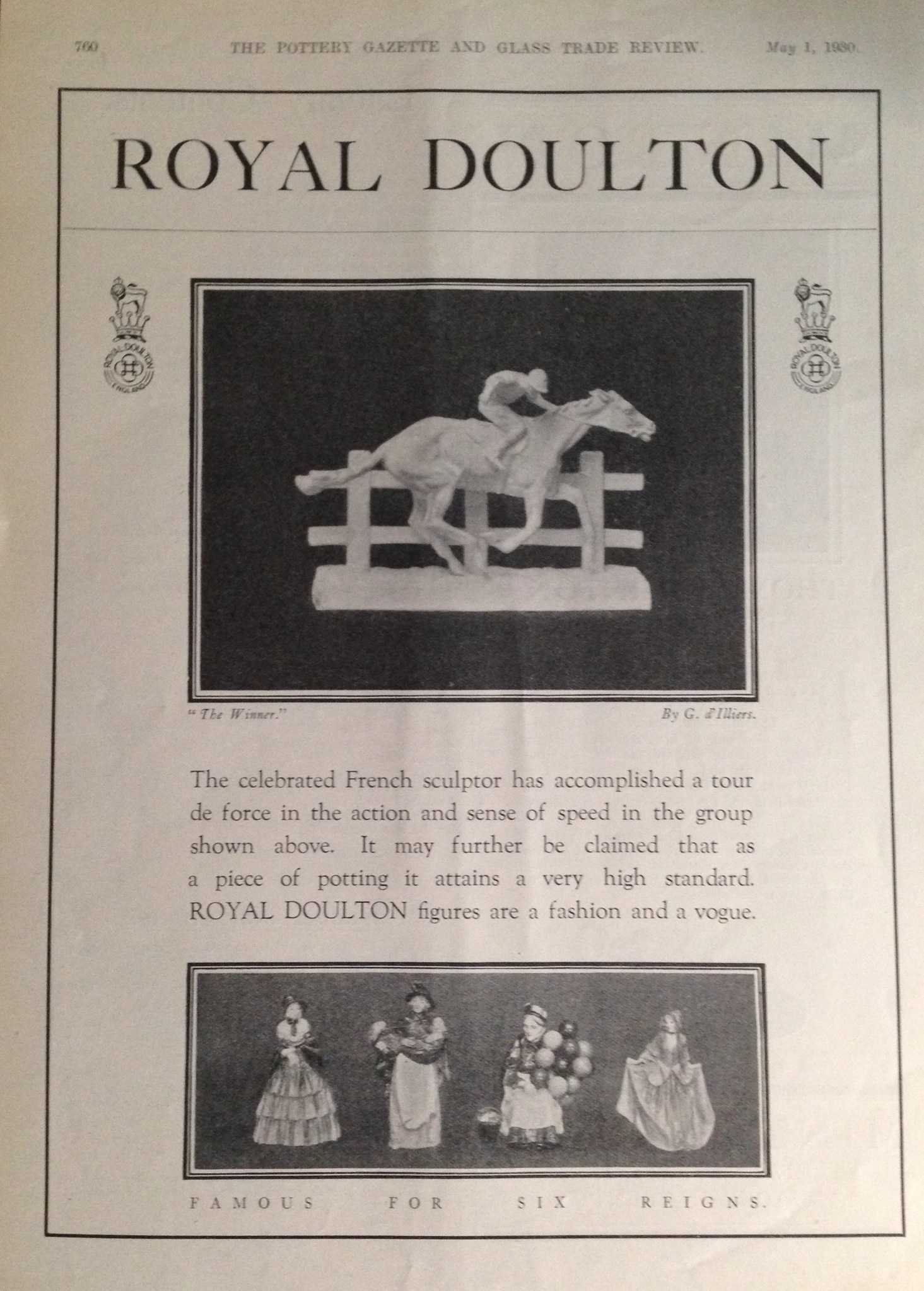
IMG_0410.JPG
The Winner advert from 1930.

Courtesy of WMODA.
Royal Doulton’s tribute to the American actress Doris Keane.

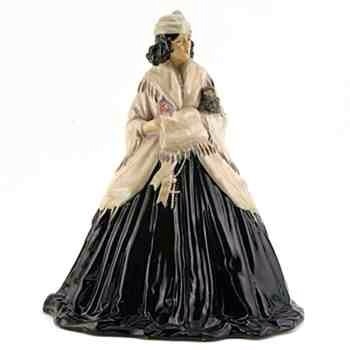
Doulton’s accurate representation of the famous American actress in the risqué play ‘Romance’ first performed in 1913 in the states before travelling to the UK two years later, proved a popular figure as you will see.

IMG_0330.JPG
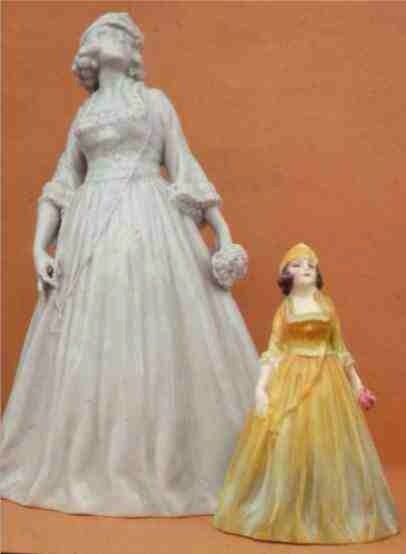
A Lambeth version of Doris Keane together with her later, miniature self.

Doris plays an Italian opera singer, an over the top character who always wears black and carries a pet monkey.

IMG_0329.JPG
HN 96 with her carrying the pet monkey!

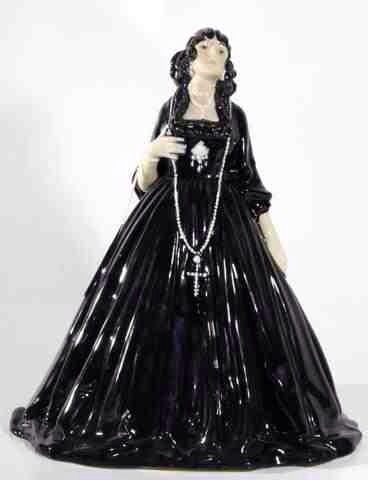
The story follows the ill fated love story of the opera singer and a clergyman. He gives her his mothers pearls and pendant – which can be seen in all versions of this figure – but she realises her past would ruin his career so the two part declaring their undying love.

IMG_0331.JPG
An unusual gloss version of HN 90 sold at Bonhams.

Their love scenes, the role of the clergyman and Doris’ undressing on stage made the play a transatlantic success! When she arrived in England she was mobbed and Romance played for over a thousand performances in London alone!

IMG_0332.JPG
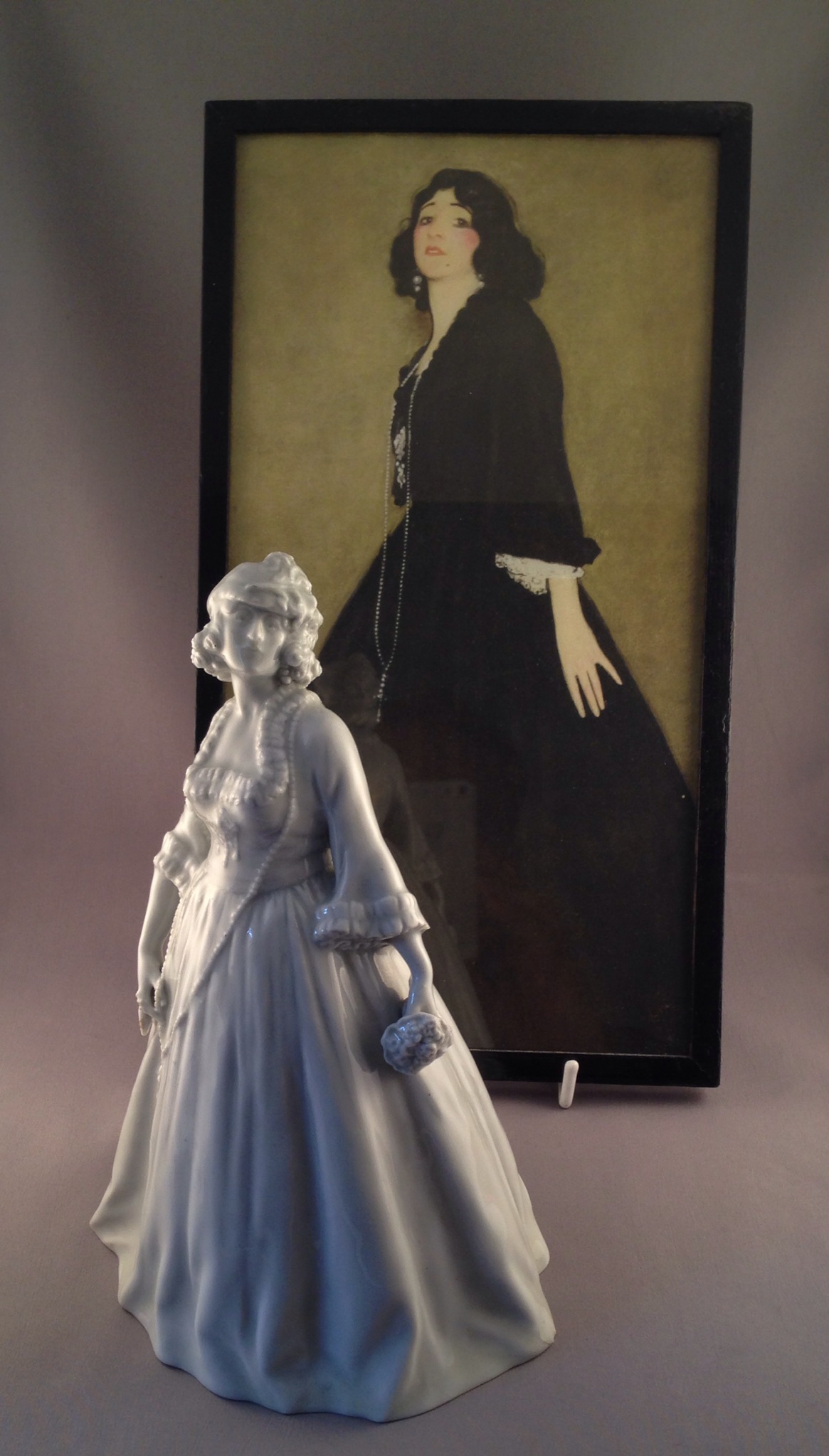
An unusual hard paste porcelain body version of Doris Keane by John Broad ca.1919. The porcelain body was another invention of Lambeth’s art director Joseph Mott.

This Lambeth version of Doris Keane above would eventually be remodelled and produced in china at Burslem under the name Rosamund and as you can see also above a miniature version was also issued. The two earlier Burslem versions of Doris Keane as Cavallini HN90 & 96 were a monumental 26-28 cms tall, typical of early figures in the HN collection.

Royal Doulton’s perfect ‘pink’ ladies!

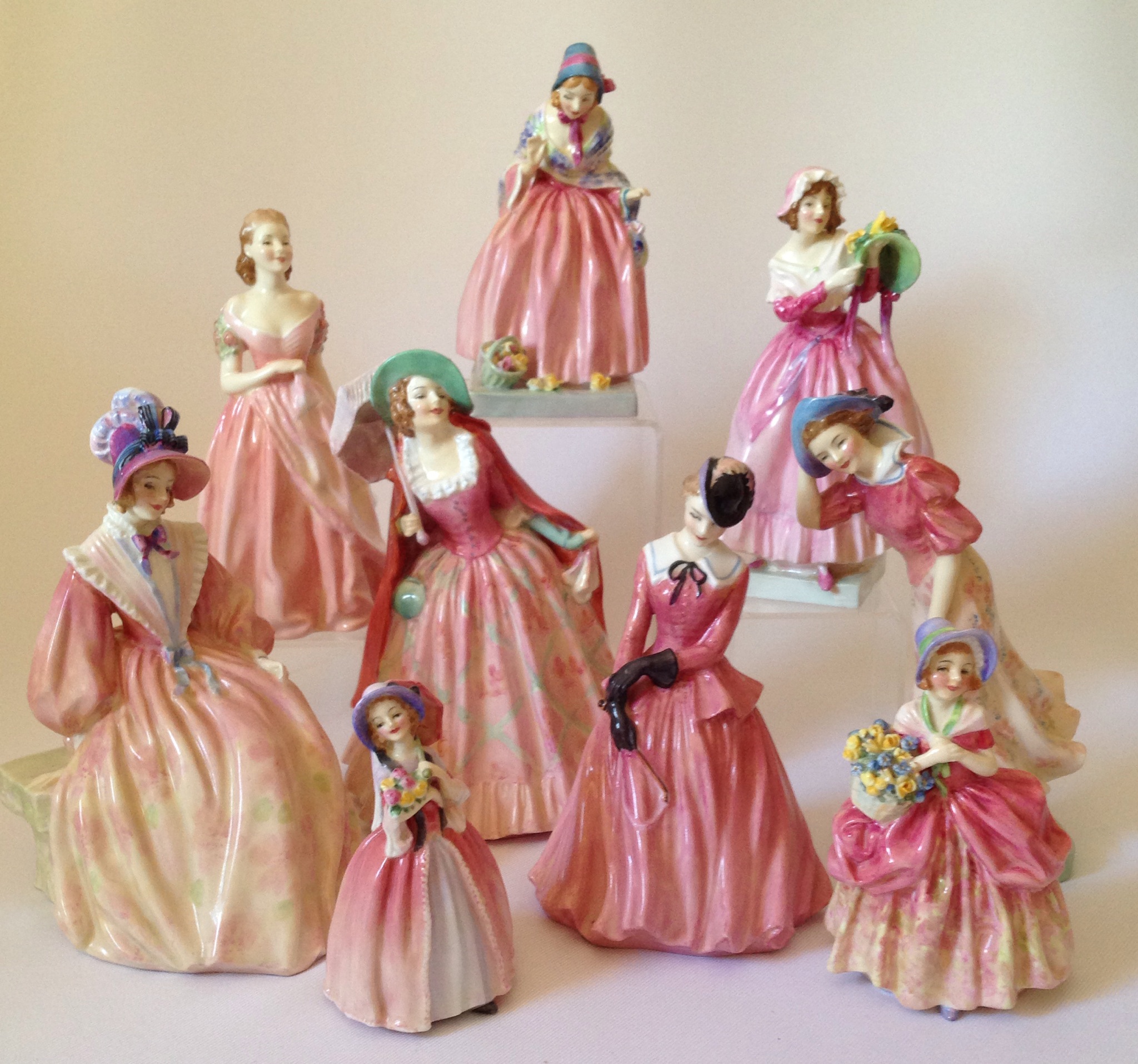
Continuing our look at ideas for arranging or grouping figures, here is a further colour theme – picture perfect pinks!

IMG_0283.JPG
A group of Harradine’s pink ladies.

The popularity of pink figures like many of the other colour themes we have looked at seems to have fluctuated over the years. Even today there are groups of pink figures that are introduced only for there to be a real gap in the issuing of further examples.

IMG_0284.JPG
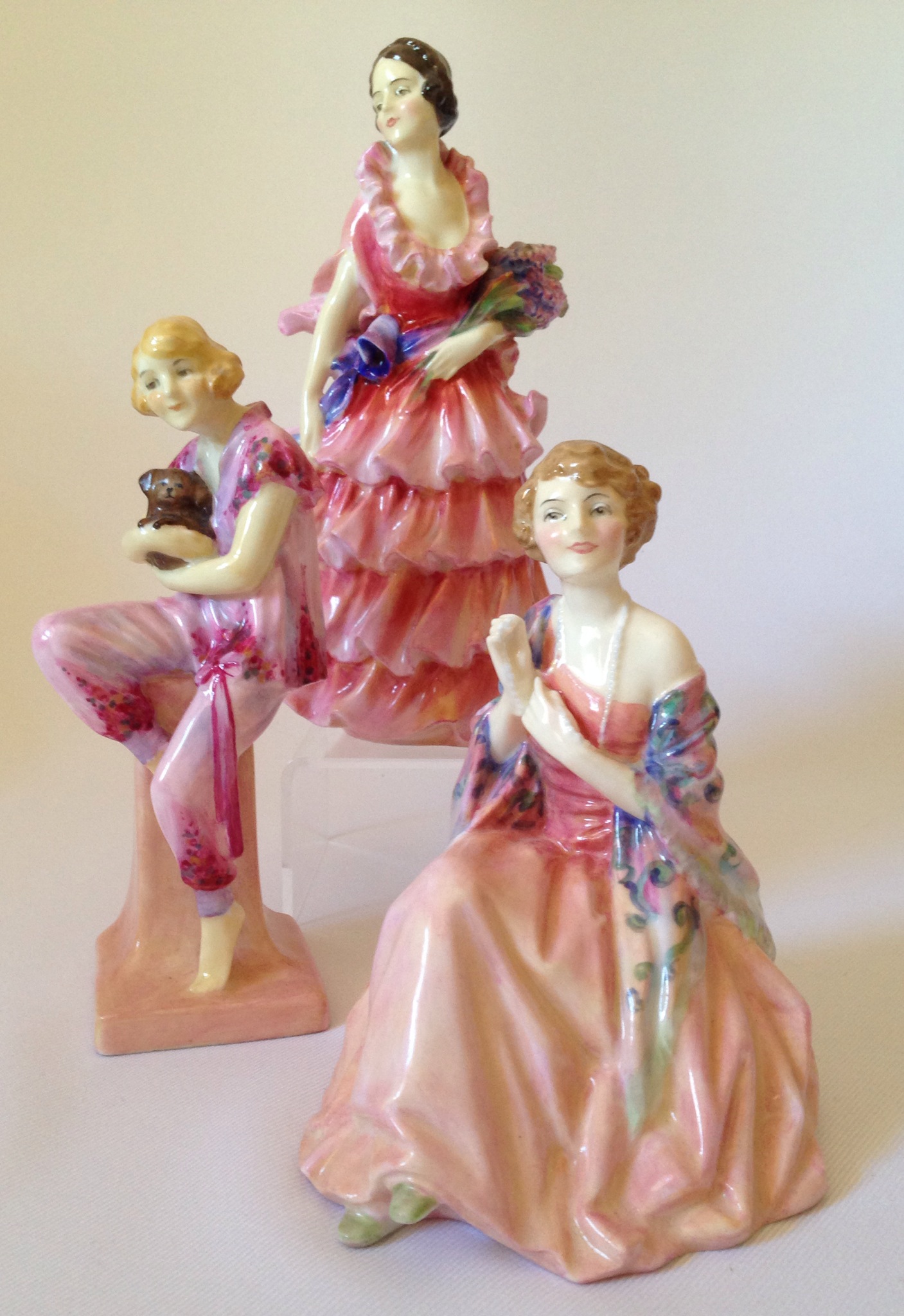
Three early pink ladies.

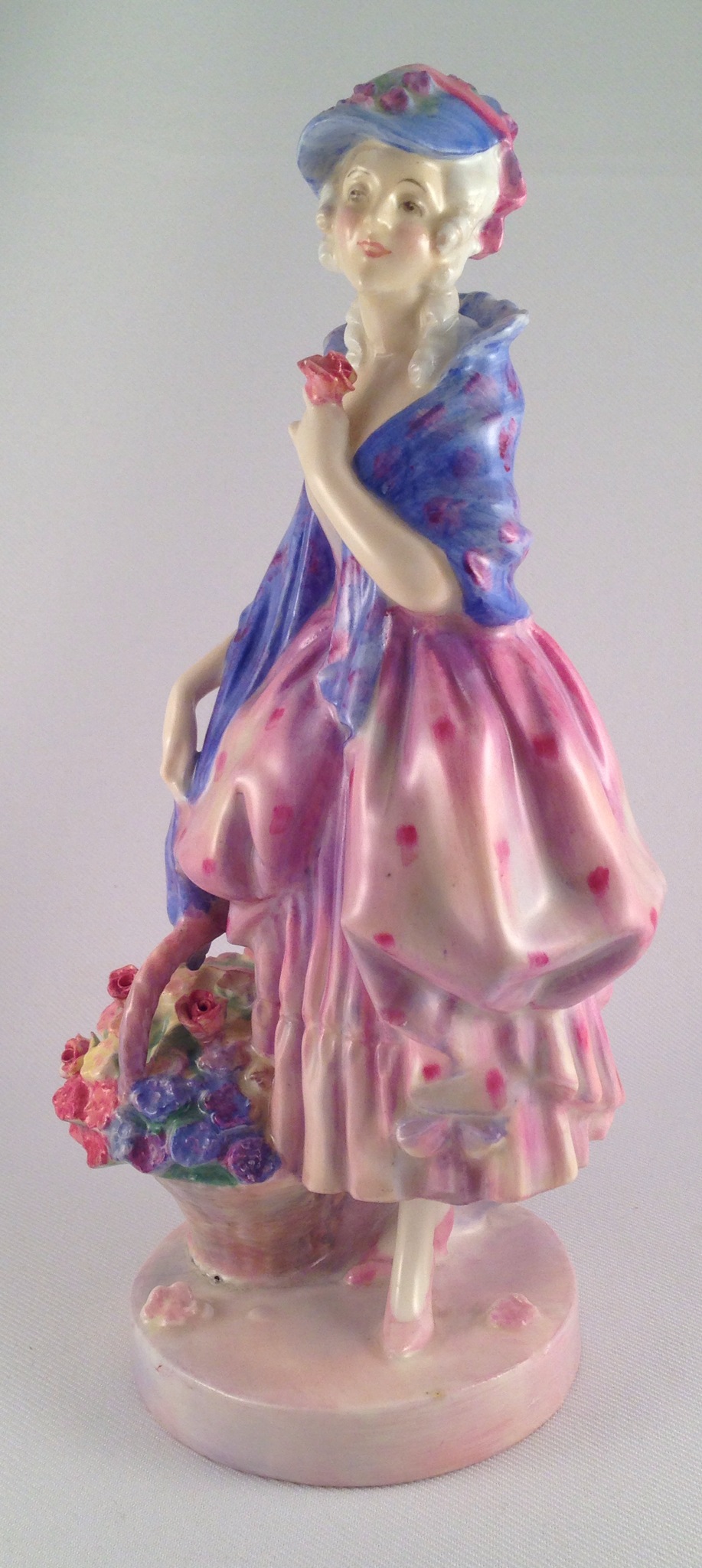
However, some pink ladies remained popular for decades including Harradine’s pink Top o’ the hill HN1849 and many of his child studies including Cissie HN1809 and her partner Bo-Peep HN1811.

IMG_0285.JPG
A selection of Peggy’s pink ladies.

Many of Harradine’s figures from the mid to late 1930’s were issued in either a pink or a blue colourway and the pink appears to have generally been preferred, meaning that today collectors really have to search assiduously for the blue versions of figures such as Miss Fortune, The Lambeth Walk, Windflower and Maureen to name but a few.

IMG_0287-0.JPG
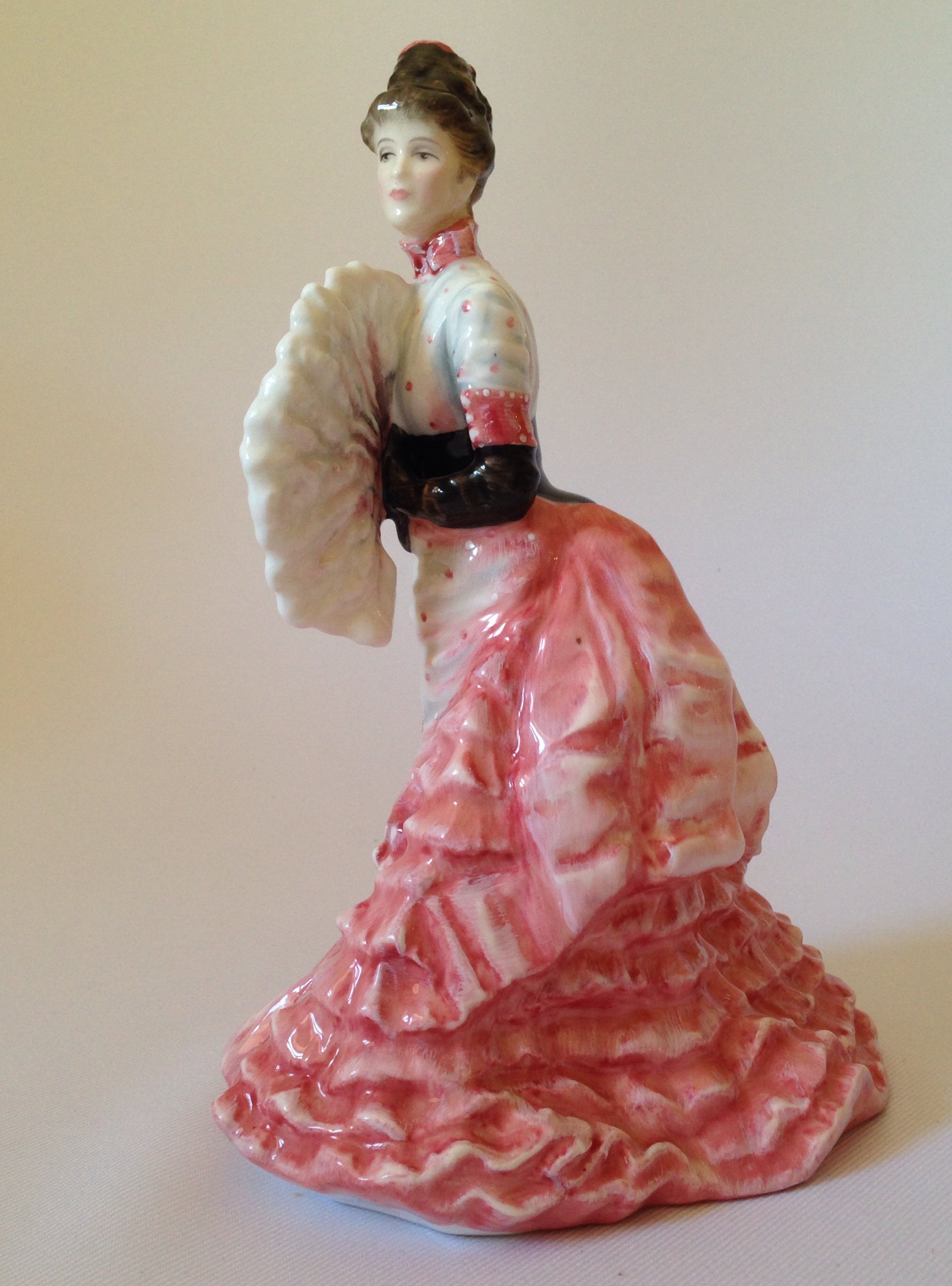
Valerie Annand’s elaborate L’Ambitieuse from more recent times.

As always whatever your tastes a grouping of one colour or many colours makes an eye-catching display.

IMG_0288.JPG
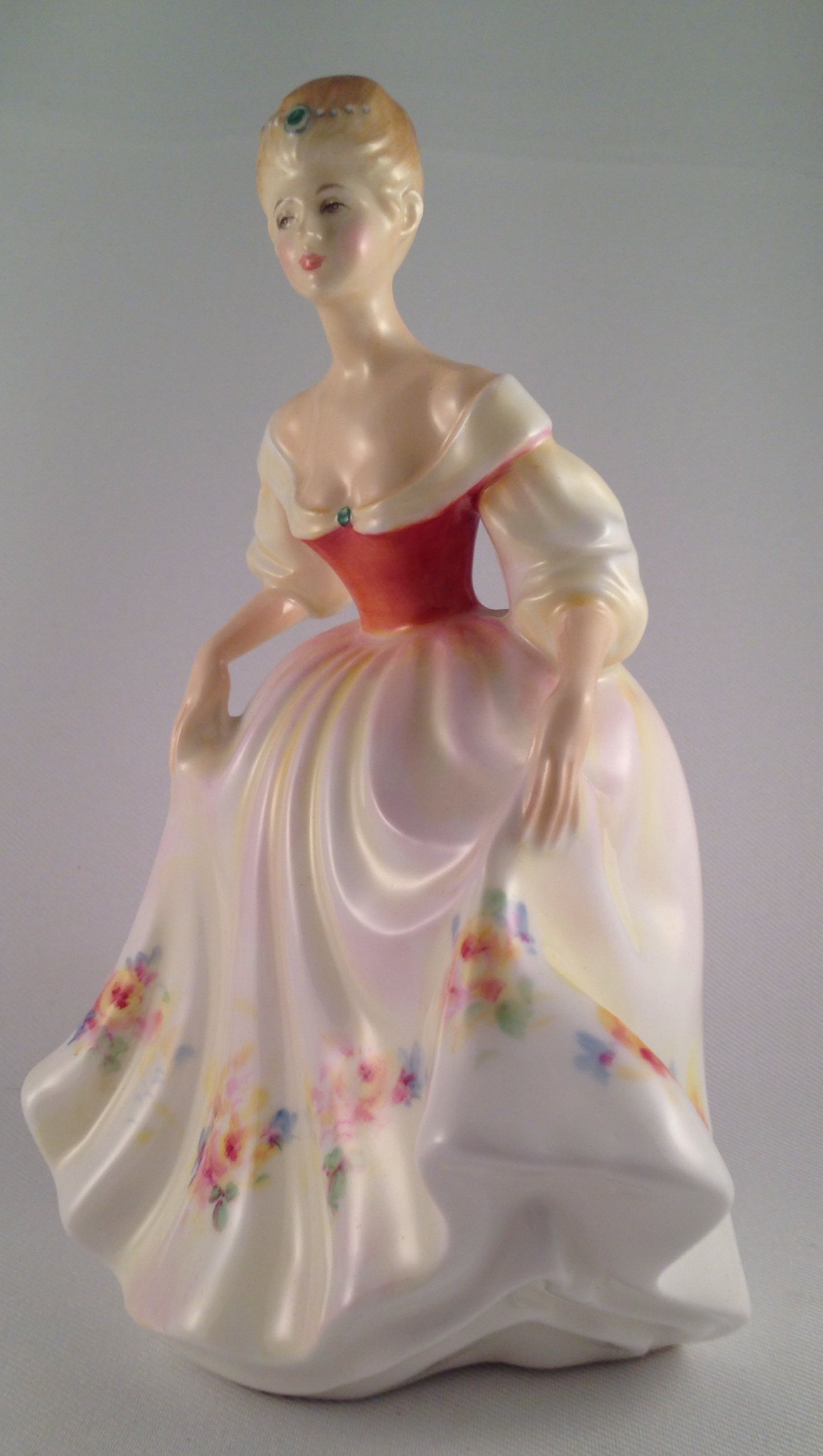
Peggy’s beautiful figurine ‘Polka’.

Doulton artist profile – Edwin (Tim) Leigh.

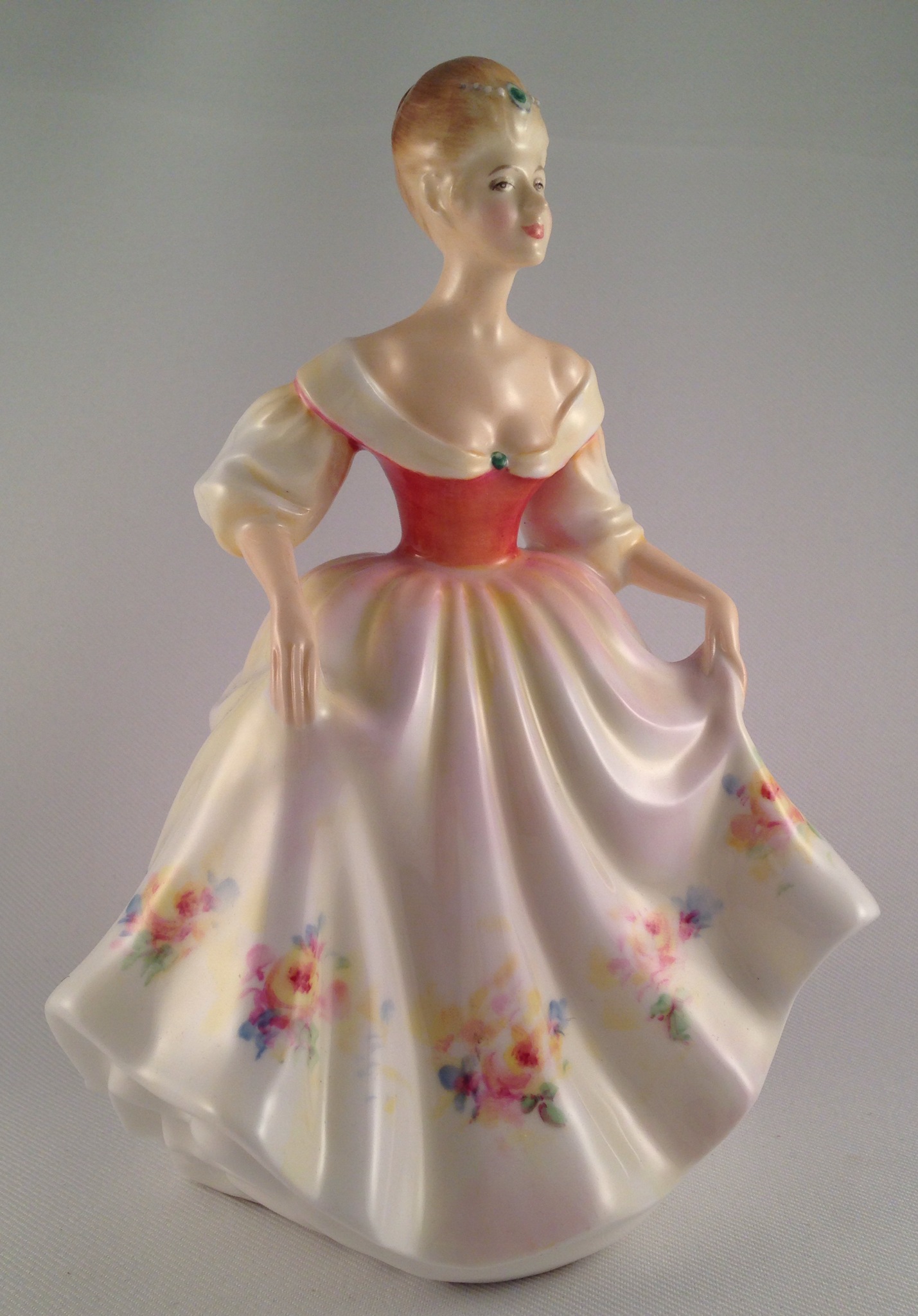
A chance finding of this early colourway from 1968 encouraged me to do a little more research into her painter, Edwin Leigh, more usually known as Tim Leigh. His monogram however, remained EL.

IMG_0177.JPG
Above and below, two views of the colourway.

IMG_0178.JPG
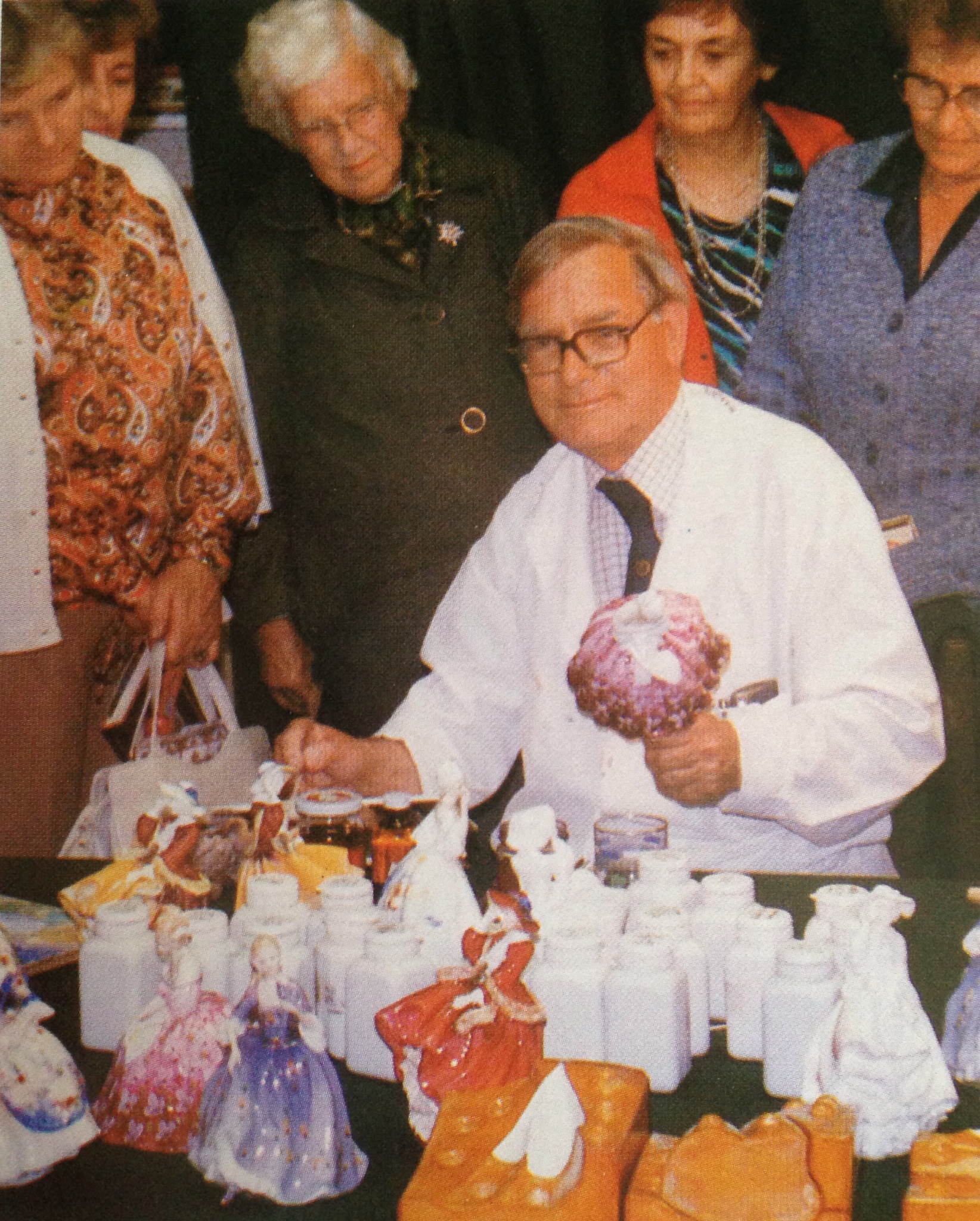
Tim began working at Doultons in 1928 and was still touring the world on their behalf promoting their wares and the artistry and skill of Doulton’s craftsmen and women, when this picture was taken of him during this demonstration in Australia in 1979.

IMG_0184.JPG
During his many decades of service, I found that by 1955 Tim was already in charge of the junior male figure painters.
A quick look through my collection I found several favourites painted by him including Celia, Miss Demure, Fleurette, Clemency and Sweet Anne to name but a few.
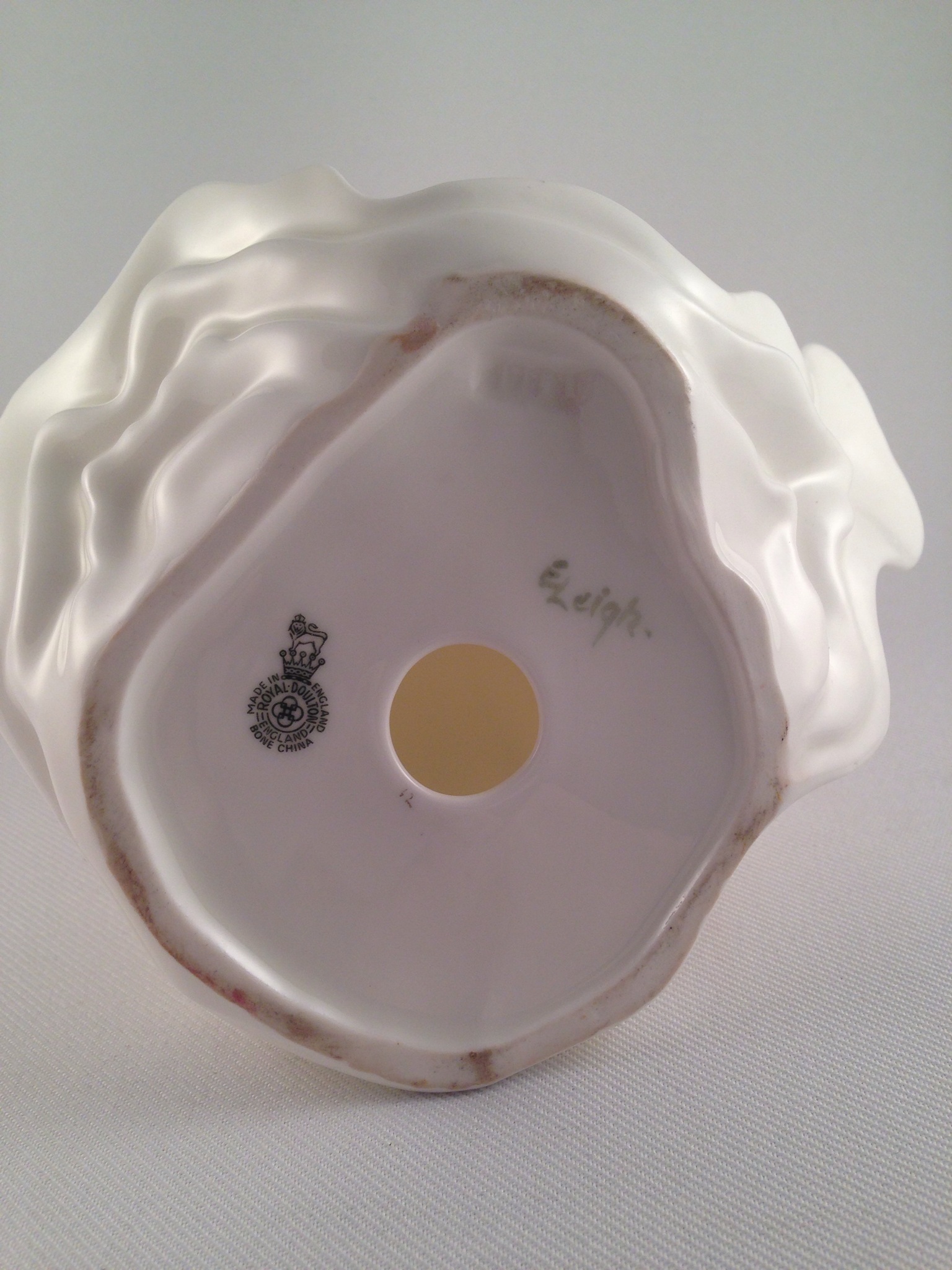
This great talent lives on in the many figures painted by him around the world. To finish here is his full signature on the base of the colourway above, rather than his usual cypher.

IMG_0179.JPG
The base of the above colourway also showing the model number 2063 that helps us date it to the late 1960’s.

Reflections: the source of Harradine’s popular figure Phyllis.

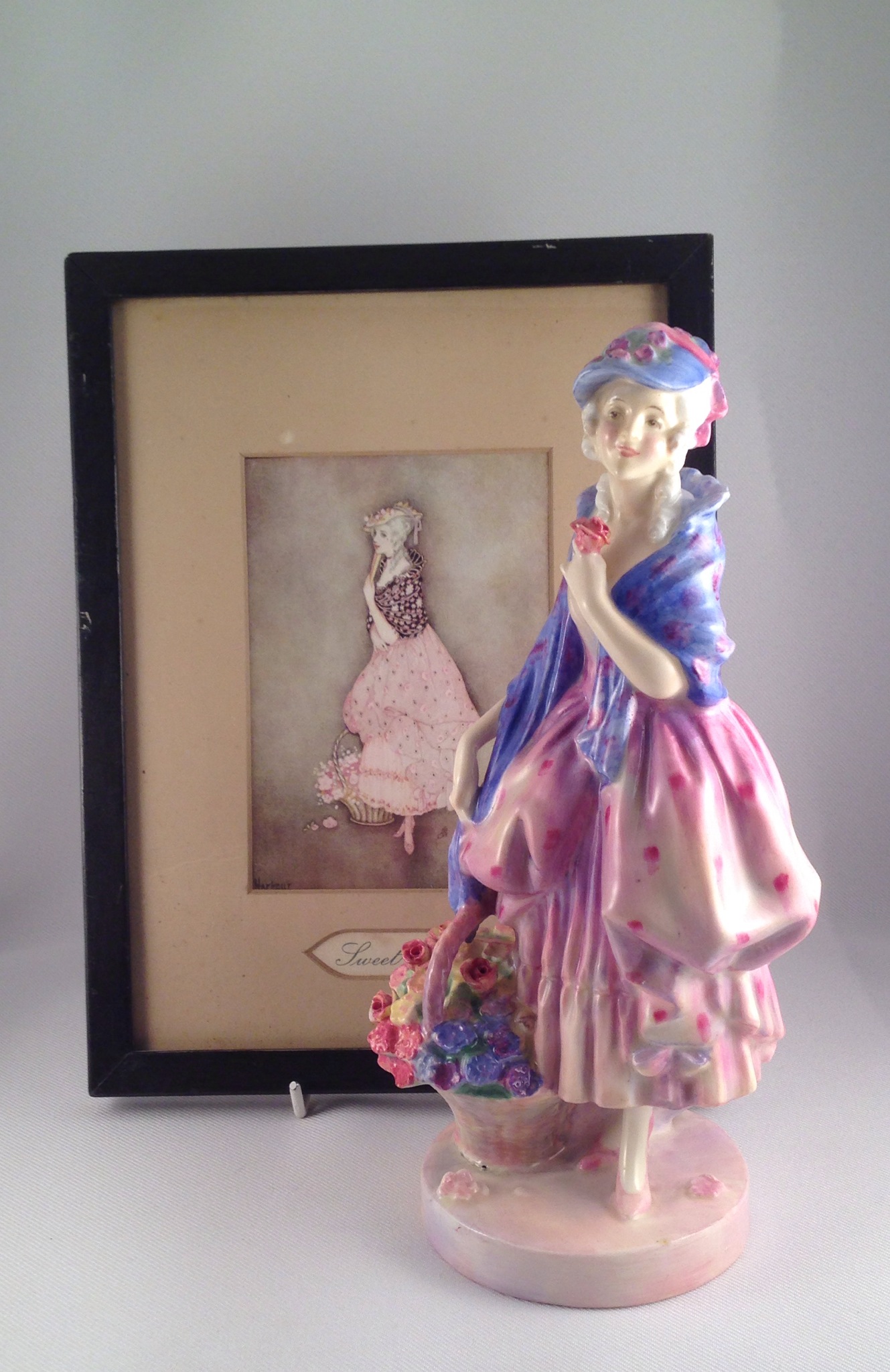
As you know it is a real interest of mine to research where figures derive their inspiration. Those who have read my book ‘Reflections’ with Jocelyn, will have seen the section on the illustrator Jennie Harbour.

IMG_0161.JPG

Very little is known about the illustrator but her work can be found on Tuck’s postcards as well as in many editions of deco books from the time. Her illustrations remain popular today around the world and framed, vintage prints can sell for a fair sum.

Back to Phyllis, as you can see she has been expertly interpreted from Jennie Harbour’s illustration ‘Sweet Nell’ by Harradine. Here she is as HN1486, although the most readily found version is HN1420 as it was clearly the most popular colourway. I have always felt that she makes the perfect partner to Dolly Vardon save for the base on Phyllis. Perhaps there is a version if Phyllis out there without a base. As we know modifications were frequent on these early figures, and we looked at how a stepped vase was added to Harradine’s Helen some time ago.

IMG_0164.JPG

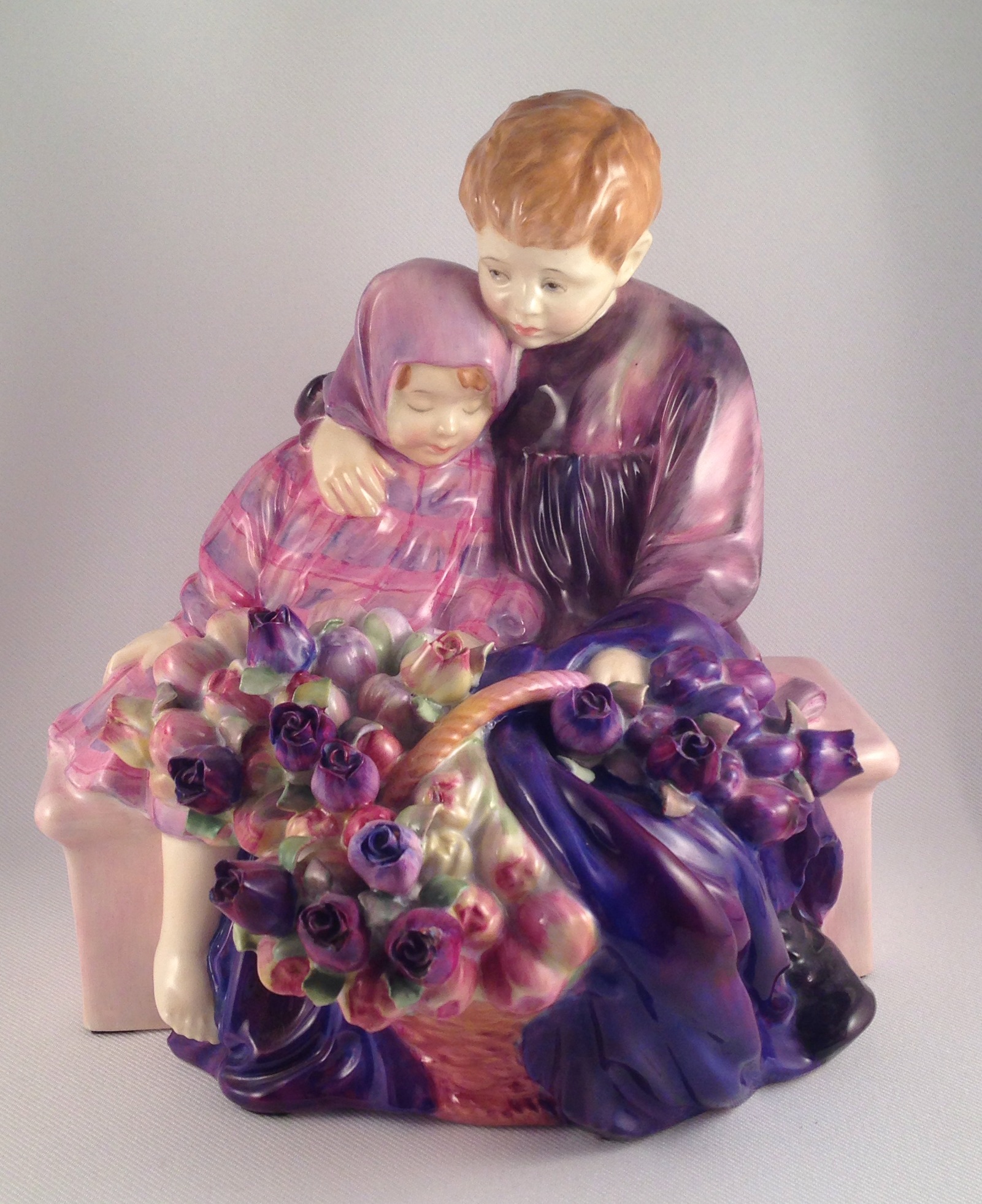
A look back at the enduringly popular Flower Seller’s Children.

IMG_0140.JPG
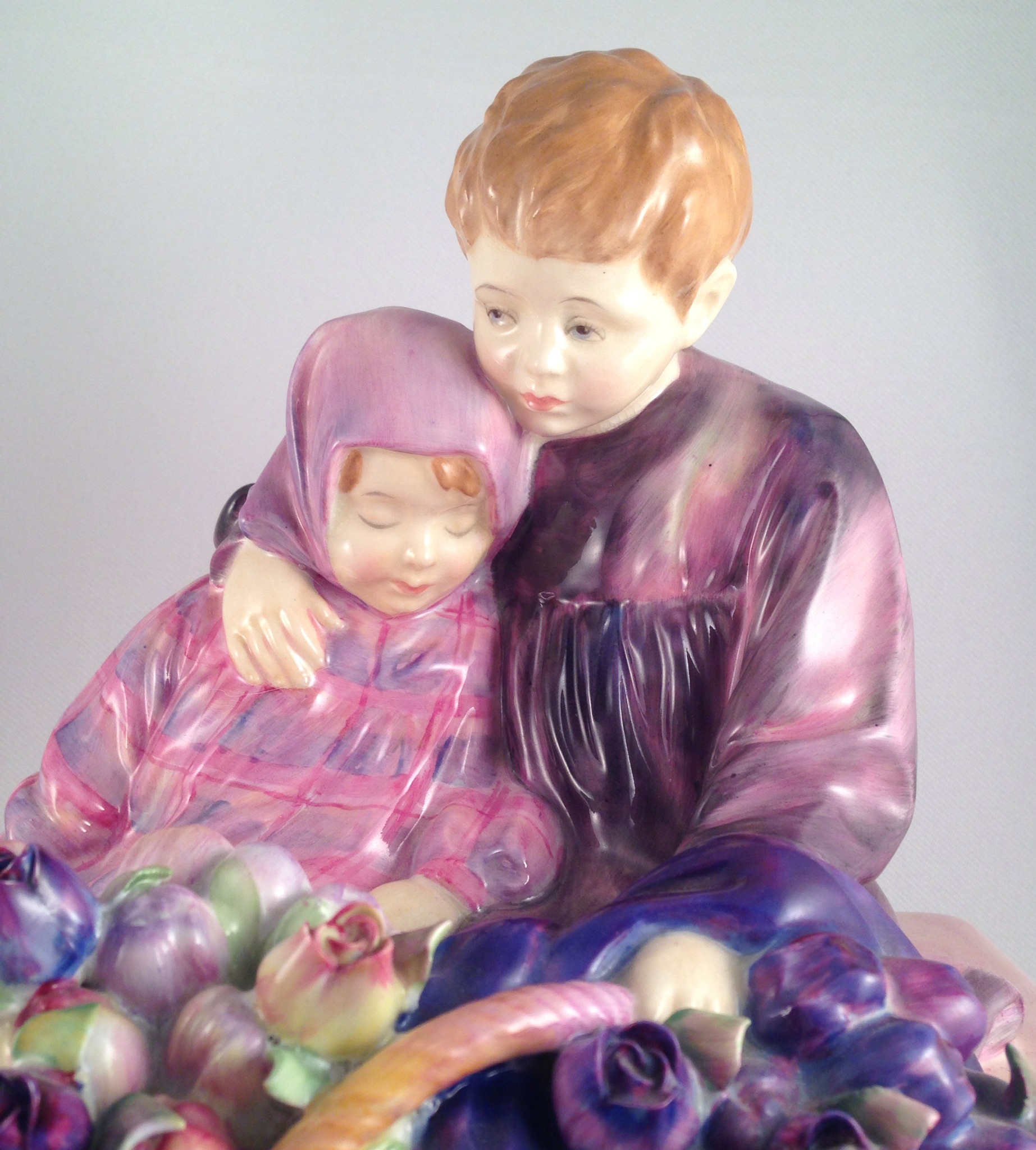
A close up of the skilfully painted children’s faces.

This delightful study was the concept of Leslie Harradine in 1921 during his first year of supplying models to Doulton’s studios in Burslem. Harradine had been apprenticed to Doulton in Lambeth in the early years of the 20th Century but factory life he found unbearable and so broke loose from these confines. He continued to supply models to Lambeth’s studios until his departure for Canada. This early time in Harradine’s association with Doulton we have covered already in the three part article on his life.

IMG_0139.JPG
HN1206 1926-1943

Upon his return Charles Noke, Burslem’s art director, tried every enticement to attract Harradine to move to the Potteries but to no avail. A compromise was of course reached whereby he would supply models to Burslem, something that continued for many decades.
This early group by Harradine was available in 5 different colourways and one HN1342 was produced until 1993. Whilst not classed as a prestige piece the painting that can be found on these pieces is stunning as I am sure you will agree.
Harradine’s inspiration for this piece apparently came during an evening out in London, whereupon he saw such a scene and sketched it upon his shirt sleeve. A romantic story for a sentimental group.
The enduring charm of this study meant that a collectors plate and more recently a miniature version of this group HN4807 was introduced in 2005.

Collecting Doulton Lambeth paperweights

IMG_0118.JPG

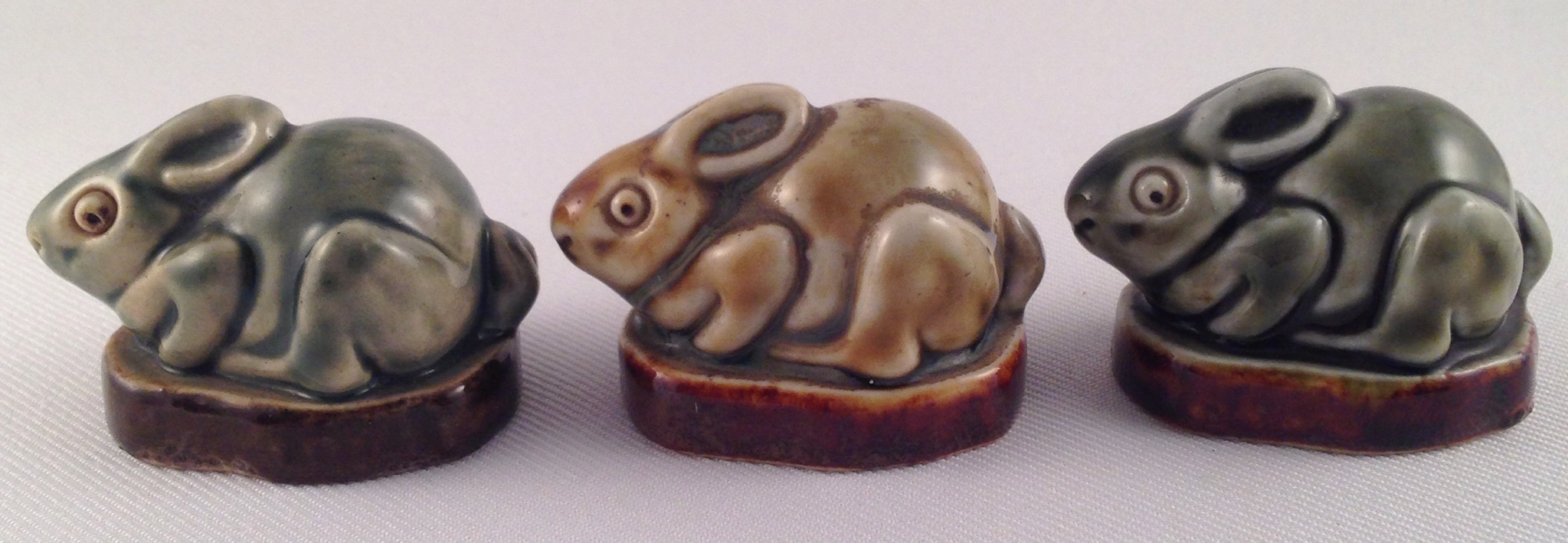
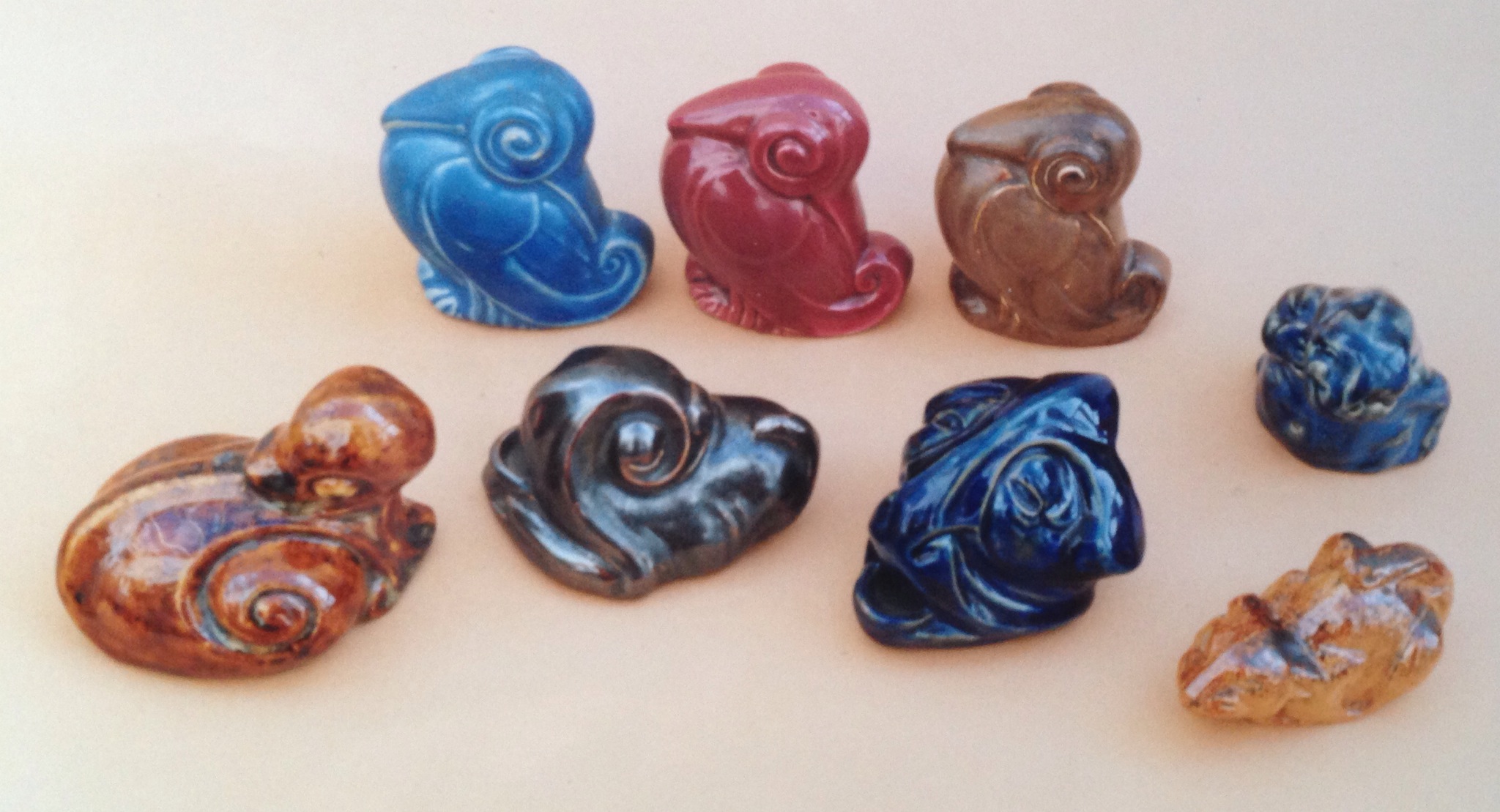
Looking around fairs I am sometimes amused by small curious creations stamped Doulton, the vast majority of which were the creations of Mark V. Marshall. His inspiration for these cannot be put down to one source, but rather he drew from his own imagination and probably Lewis Carroll’s imagination too with his representation of Carroll’s Mock Turtle and Cheshire Cat. In addition to the creations below a more recognisable rabbit can be found together with lizards and other creatures.

IMG_0119.JPG

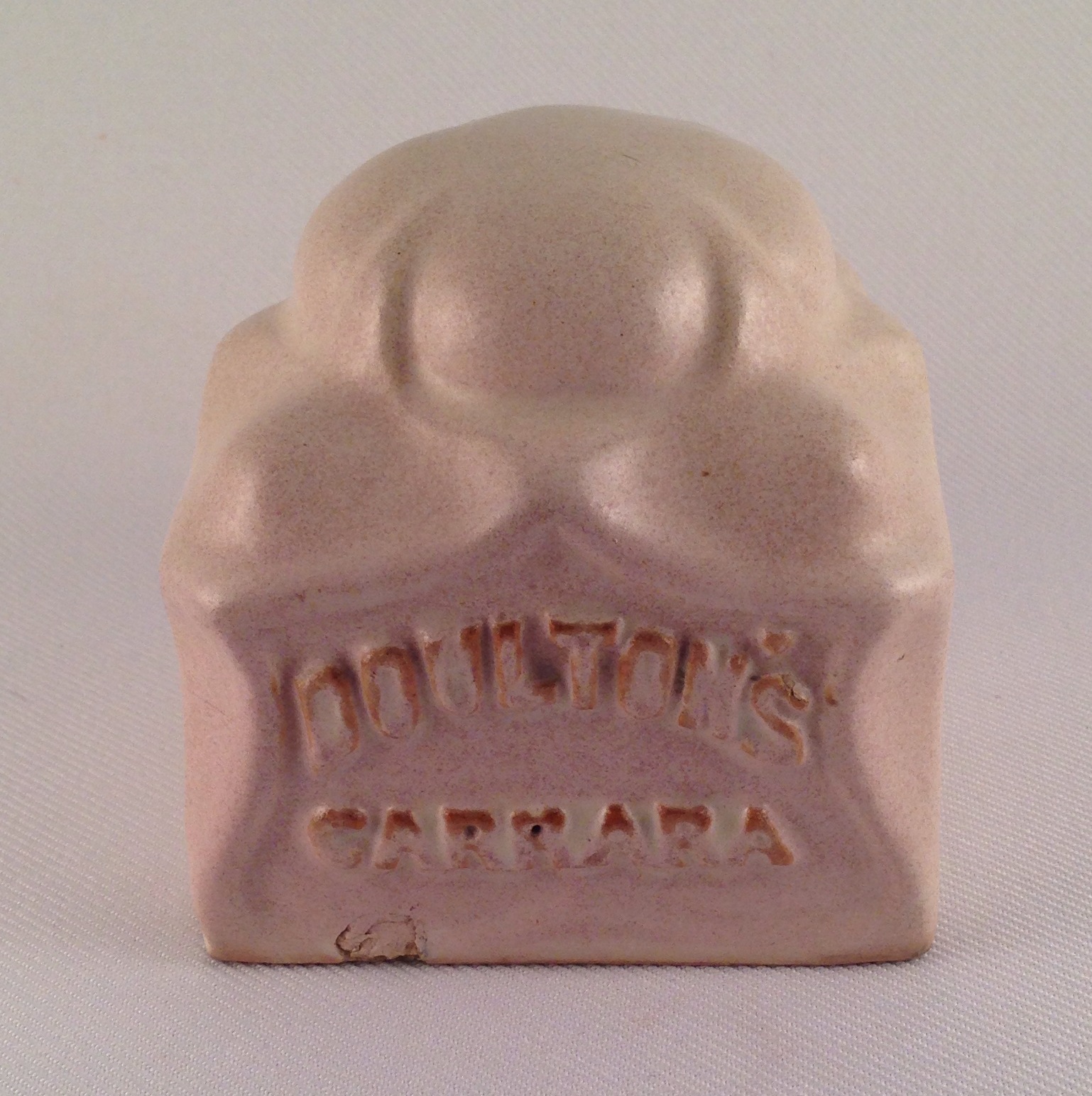
Paperweights and desk accessories were a staple of the Lambeth factory and indeed Tinworth’s mouse on currant bun was so popular it was re-issued in 1913 to mark his death. I have in my own collection a bizarre Cararra advertising paperweight too. The possibilities as we all know with Doulton, are as always endless.

IMG_0117.JPG

Doulton artists profile – Percy Curnock

IMG_0005.JPG
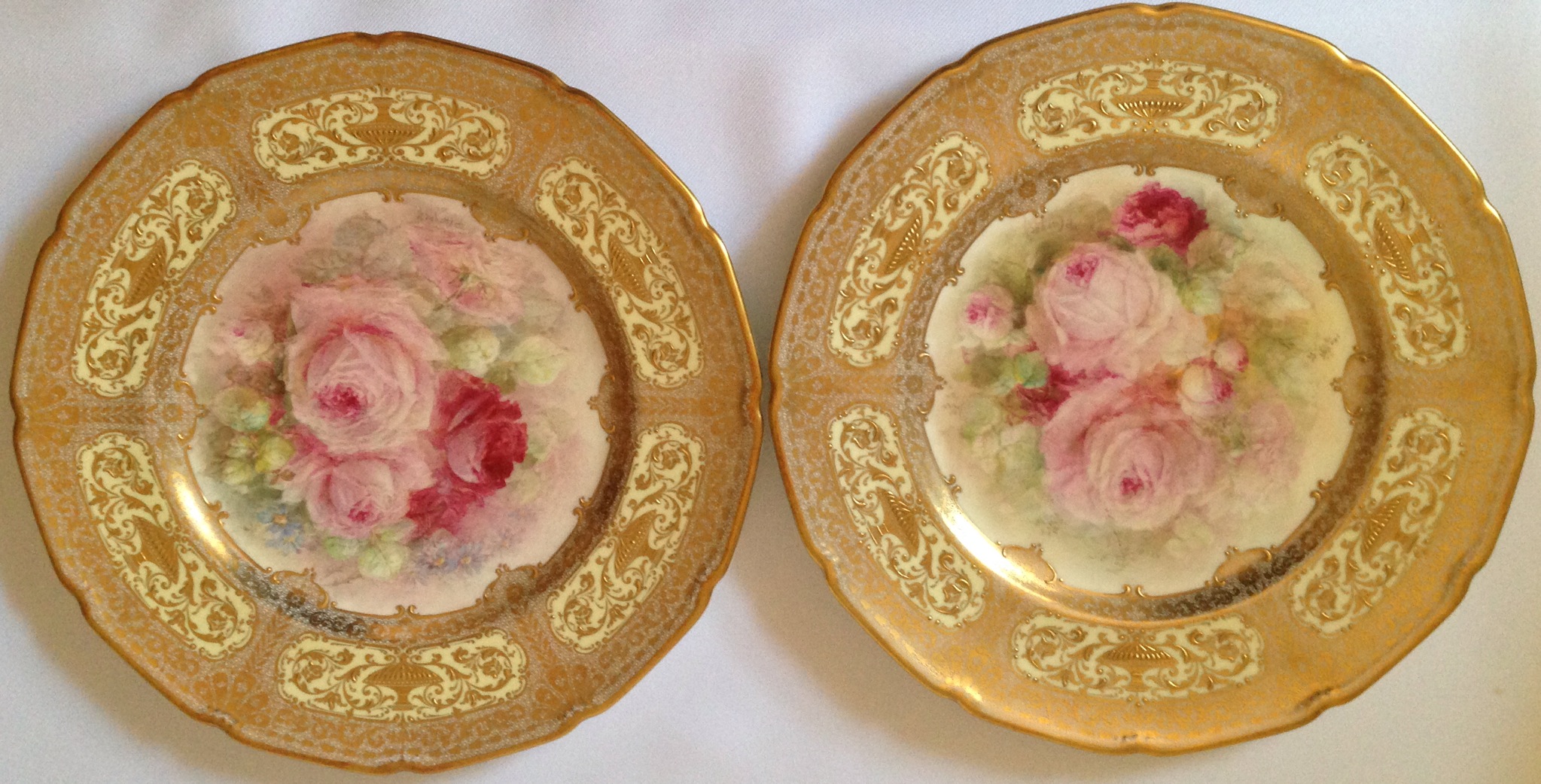
A hand painted plate by Percy Curnock.

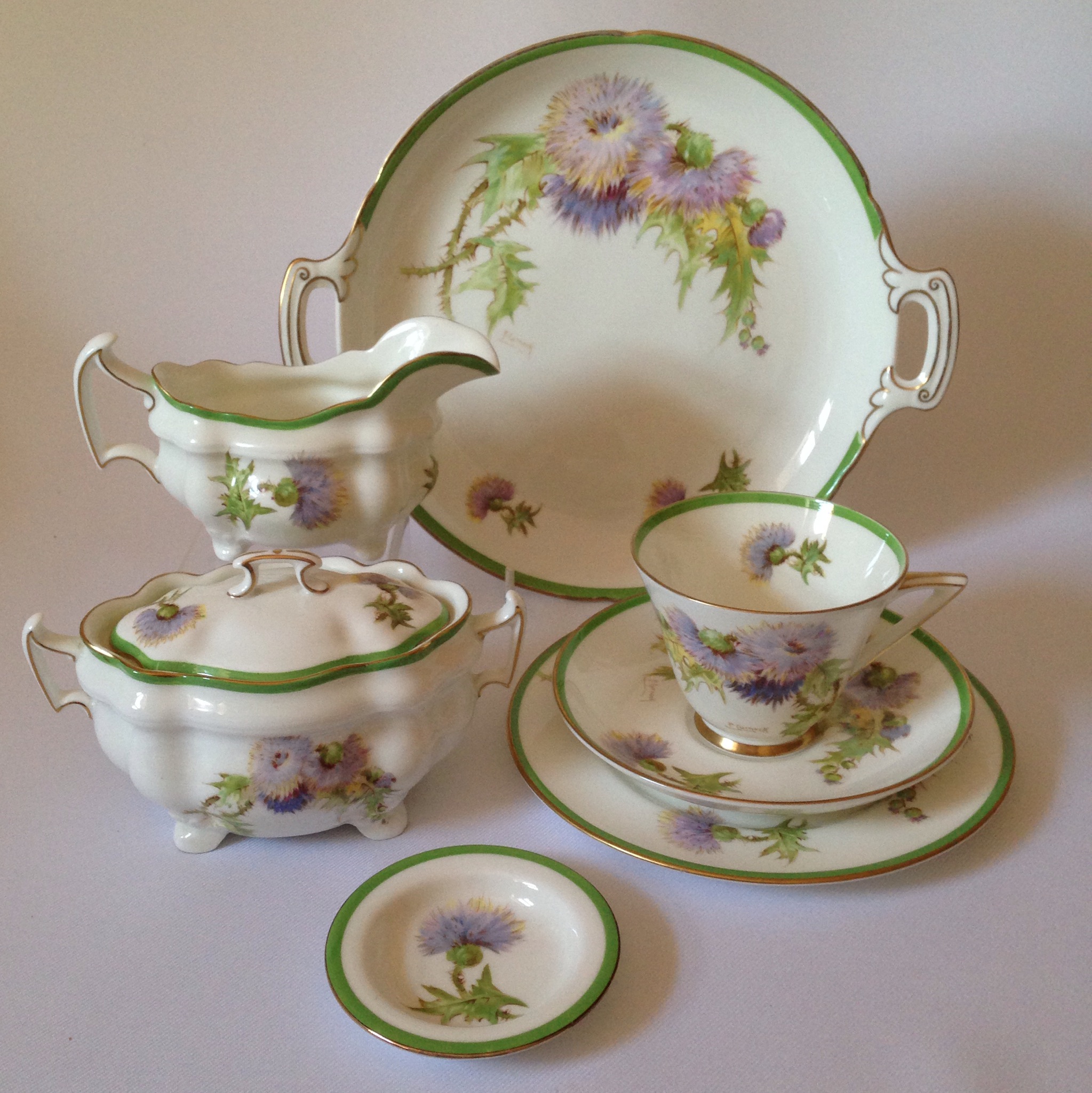
So it was in December 1954 that Doulton lost one of its most prodigious and long serving employees, one Percy Curnock. Percy had worked for Doulton for almost 70 years before finally retiring and during that time had witnessed three Royal visits to the Burslem factory. He was, however, known to thousands around the world not just for his hand painted wares that graced famous homes, but also the best selling tableware designs that he created for Doulton, including Passion Flower, Clovelly, Gleneagles, Curnock Rose and of course Glamis Thistle, the last two of which actually carry a fascimilie signature for him – something that had previously not happened at Doulton.

IMG_0002.JPG
A selection of Glamis Thistle tableware.

Interestingly, Percy did not come from a pottery background, but rather his father was a farmer in Warwickshire. He came to the Potteries as a child and at 13 was taken on by Doulton as an apprentice ceramic modeller. Percy studied during his early days at Doulton at the Burslem School of Art and worked under John Slater and Harry Allen. Doulton themselves commented that few artists ‘can have given greater service to a firm or an industry’. Moreover, he actually returned from retirement during WII to work in the decorating department to replace colleagues who had joined the war effort.

IMG_9999.JPG
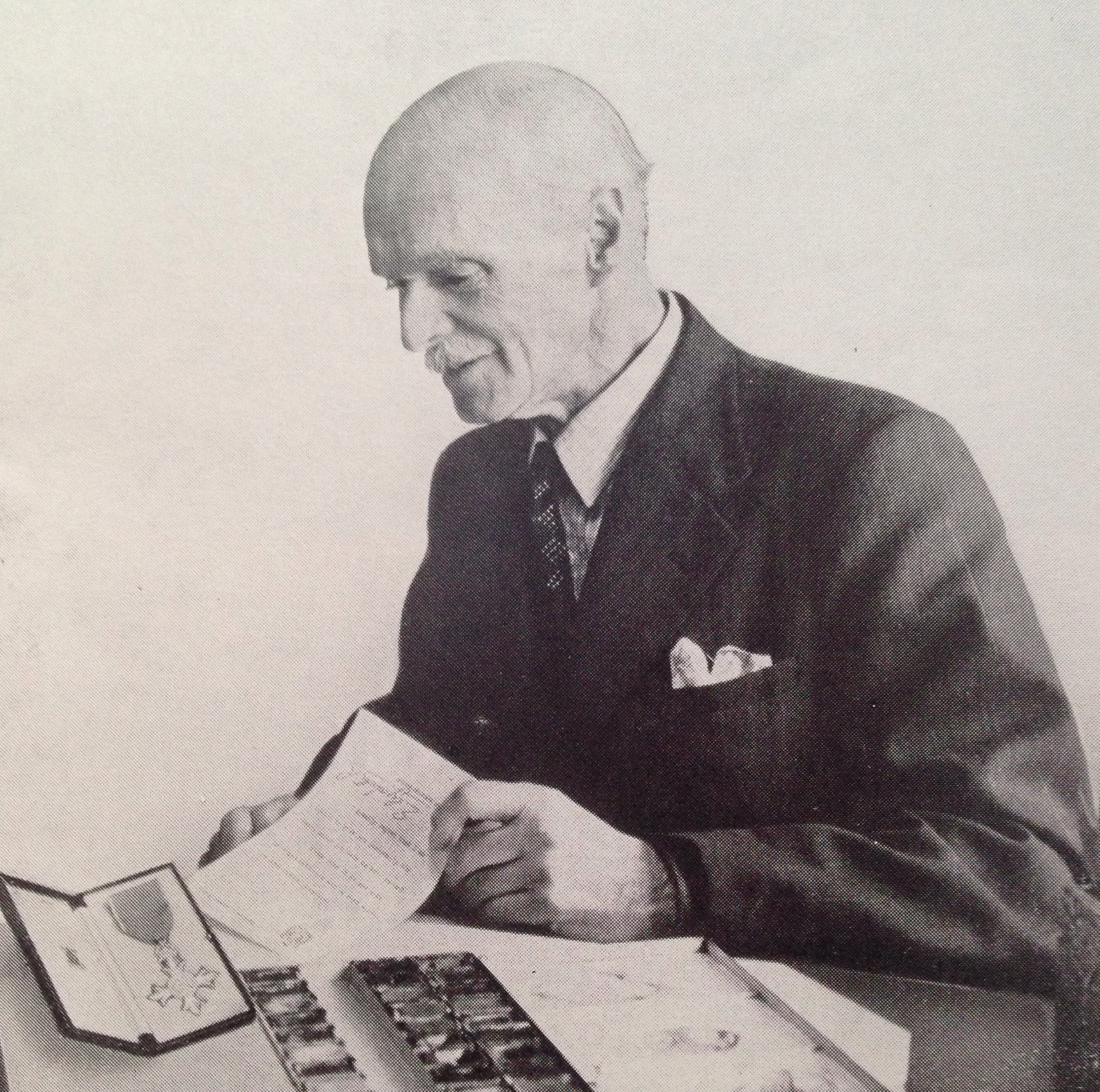
Percy receiving his M. B. E.

Percy was a floral and scenic painter and regarded as one of the outstanding ceramic artists in the country. Flowers were long a speciality of his and his blooms were remarkably real.

IMG_0006.JPG
Two of Percy’s plates from the first Doulton museum sale in 2000.

In the New Year’s Honours list 1954, he received an M.B.E. and typically he is quoted as saying that it was especially an honour for the firm. It is of interest to note that it was the Queen Mother who awarded him this honour and her family home is of course Glamis Castle, after which the famous tableware pattern was named.

IMG_0001.JPG
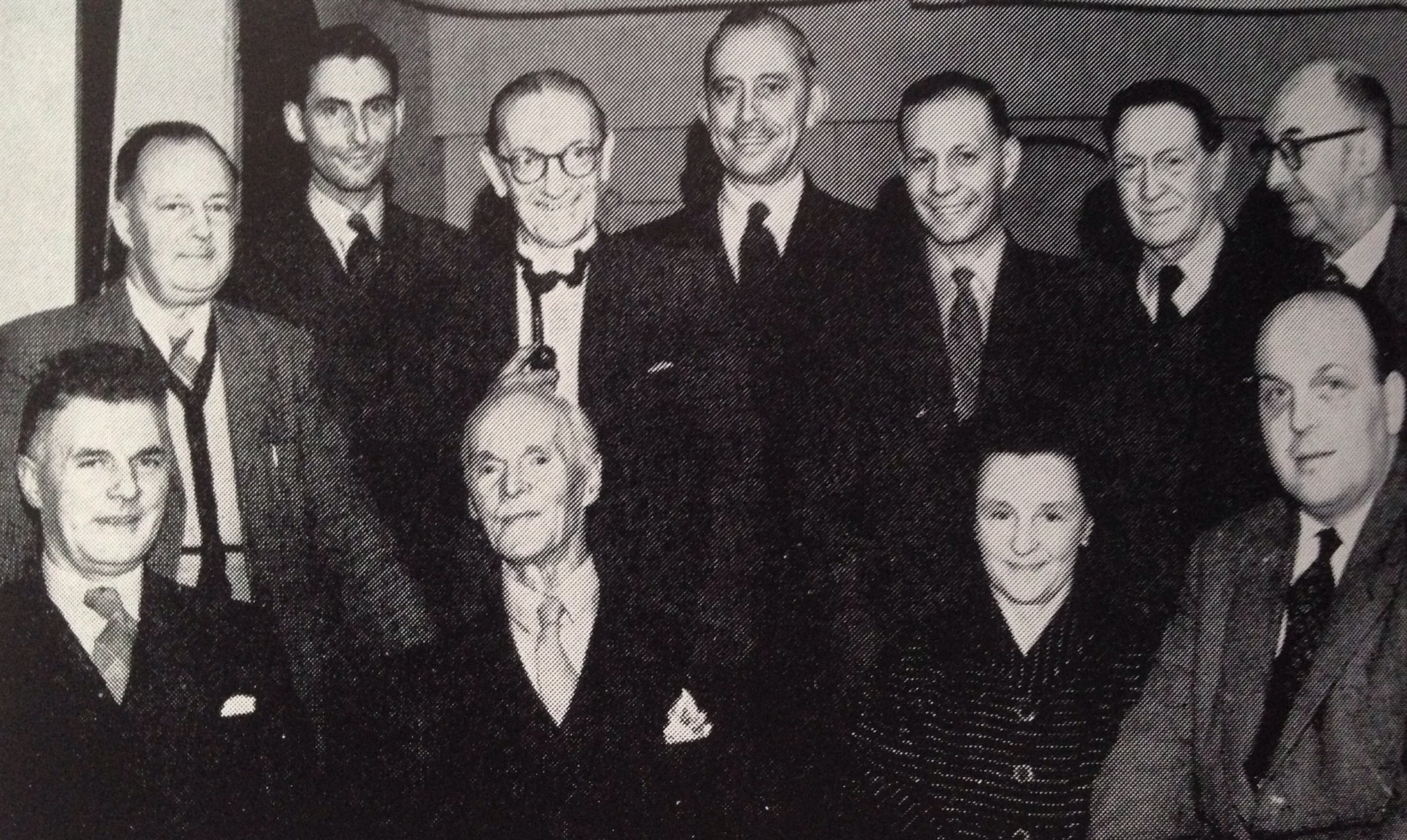
Percy upon his retirement flanked by his son and daughter-in-law, together with J. Warrington works manager on her left and other faces including Reg Brown and William E. Grace amongst others.

As did many of Doulton’s artists, Percy would also turn his hand to painting their most popular lines including figures. I wonder if any of you have a PC monogram to the base of any of your figures?

IMG_0007.JPG
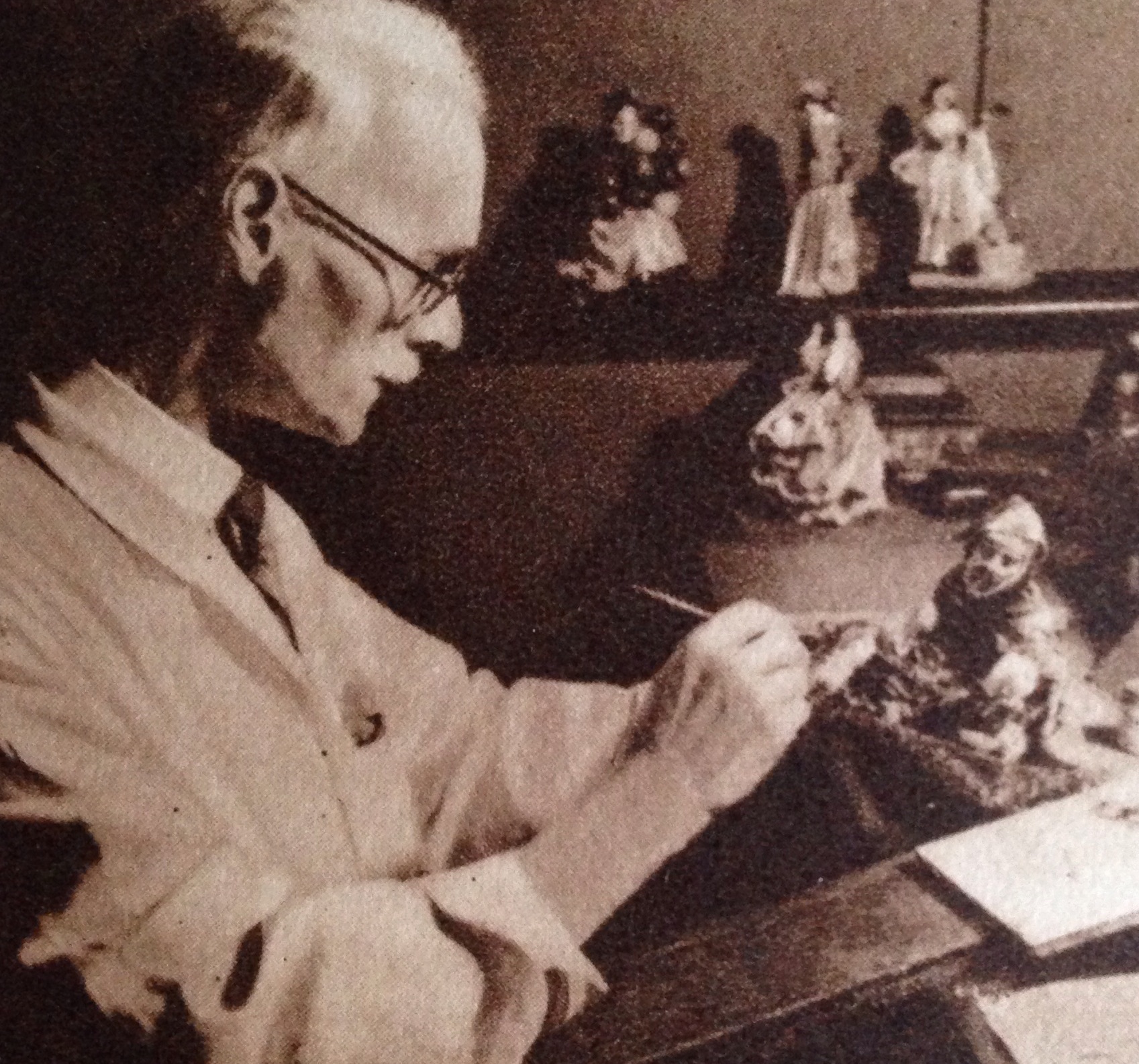
Percy in his studio painting The Potter.

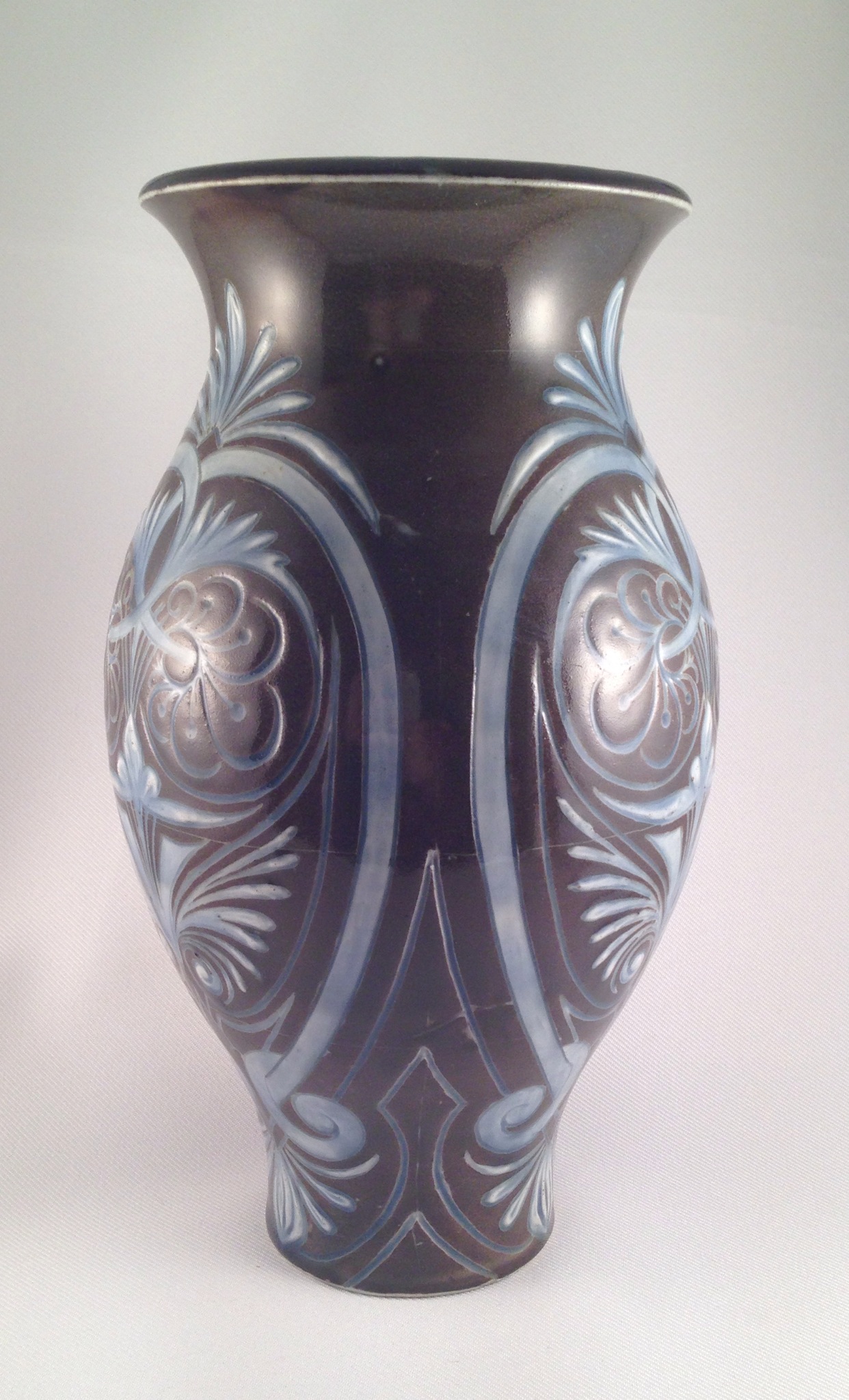
An interesting vase by Edith Lupton that shows how the vase was decorated.

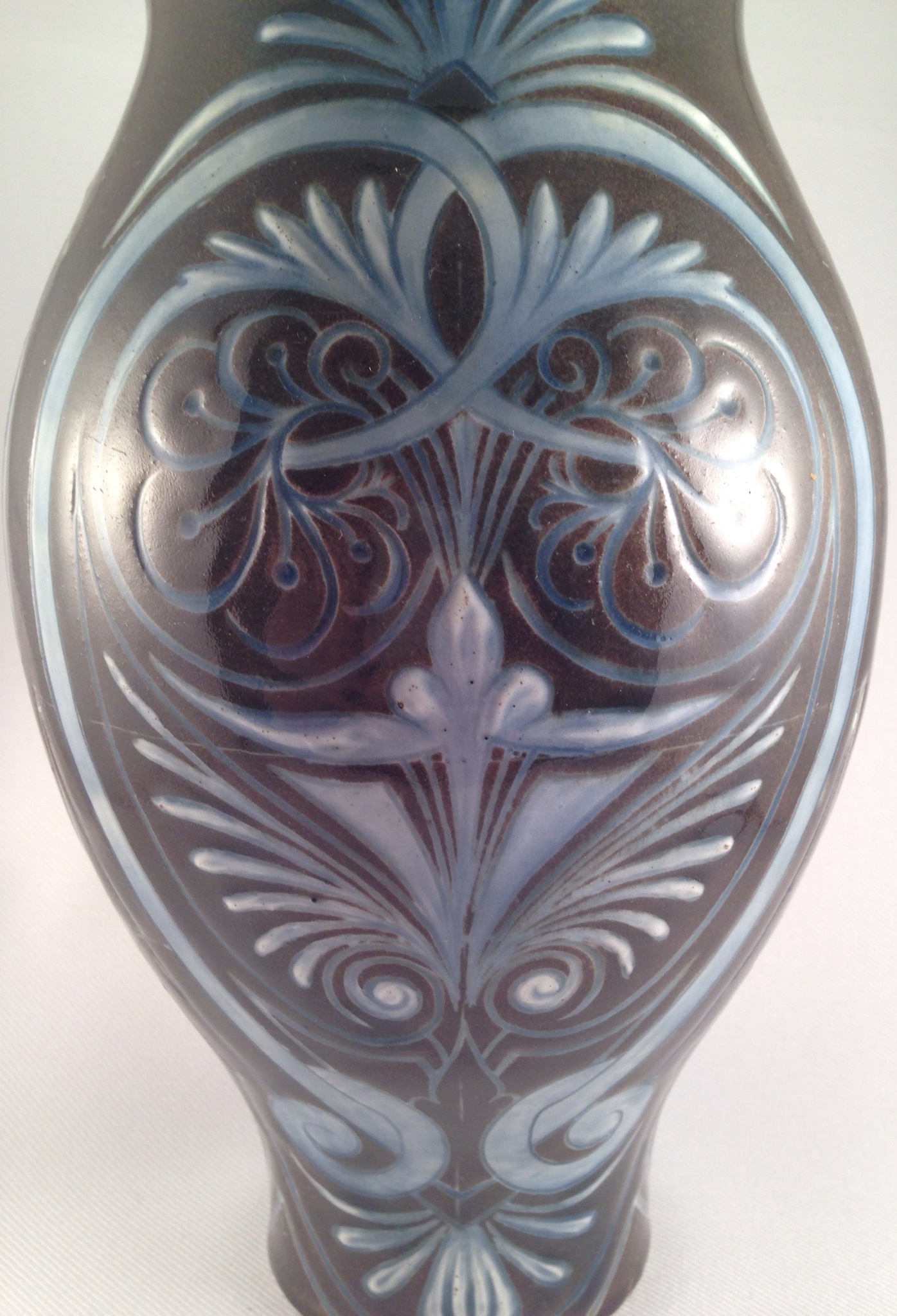
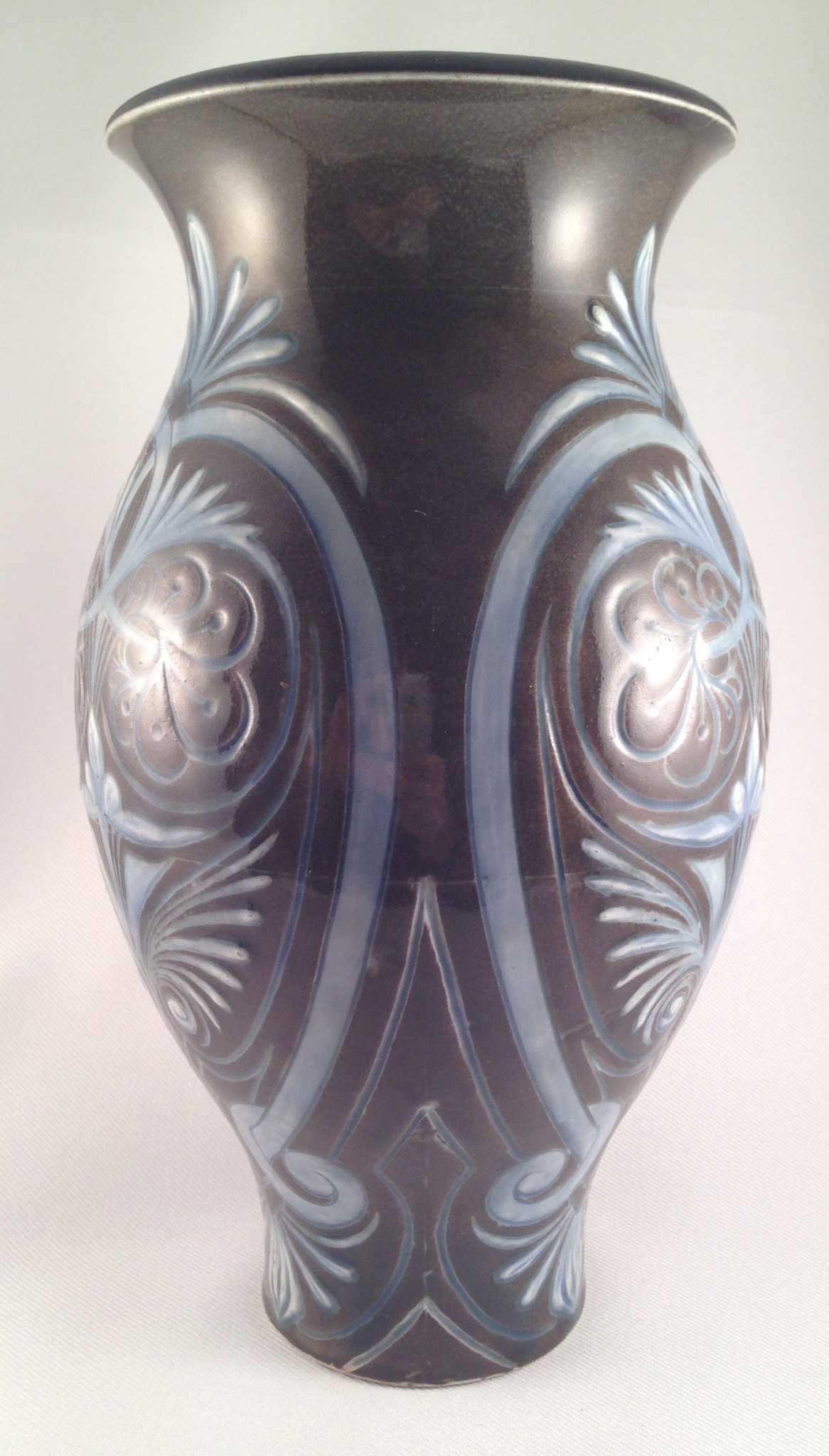
If like me you often look at a piece of stoneware with intricate, repeat decoration and simply marvel at how the artist meticulously recreated a design over the body of the piece, then this Edith Lupton piece that has come my way should illustrate some of her technique perfectly!

IMG_9933.JPG
Lupton’s work is instantly recognisable to her many admirers and collectors and whilst she collaborated with many of the great Lambeth artists, her own pieces are equally praise worthy. I hope you can all make out her feint guide lines showing through the glaze in these pictures of this vase from 1883.

IMG_9934-0.JPG
In addition to Lupton’s monogram there is also the assistant mark for Rosina Brown.

IMG_9935.JPG

The Doulton Chicago Exhibition 1893 Jug

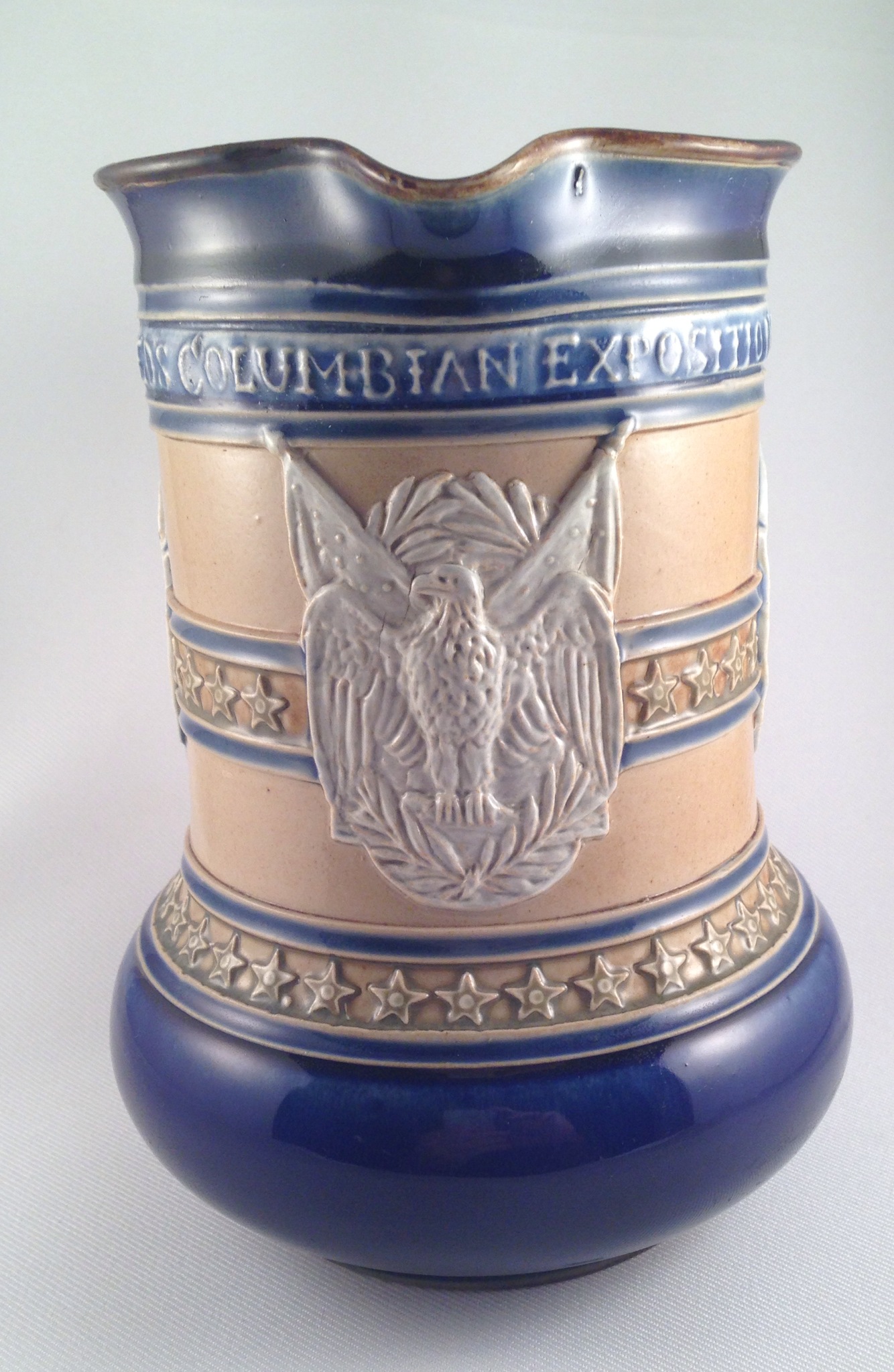
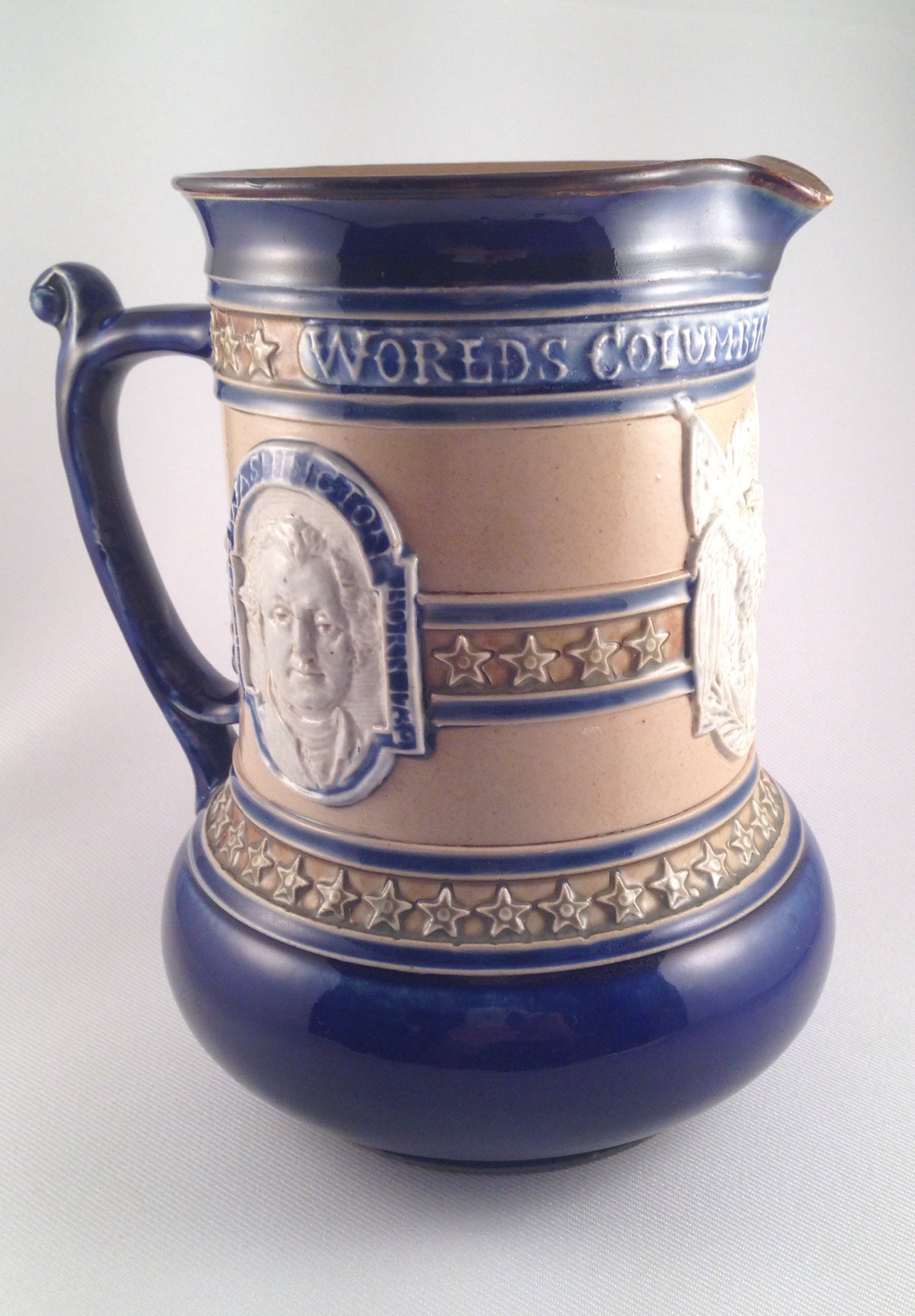
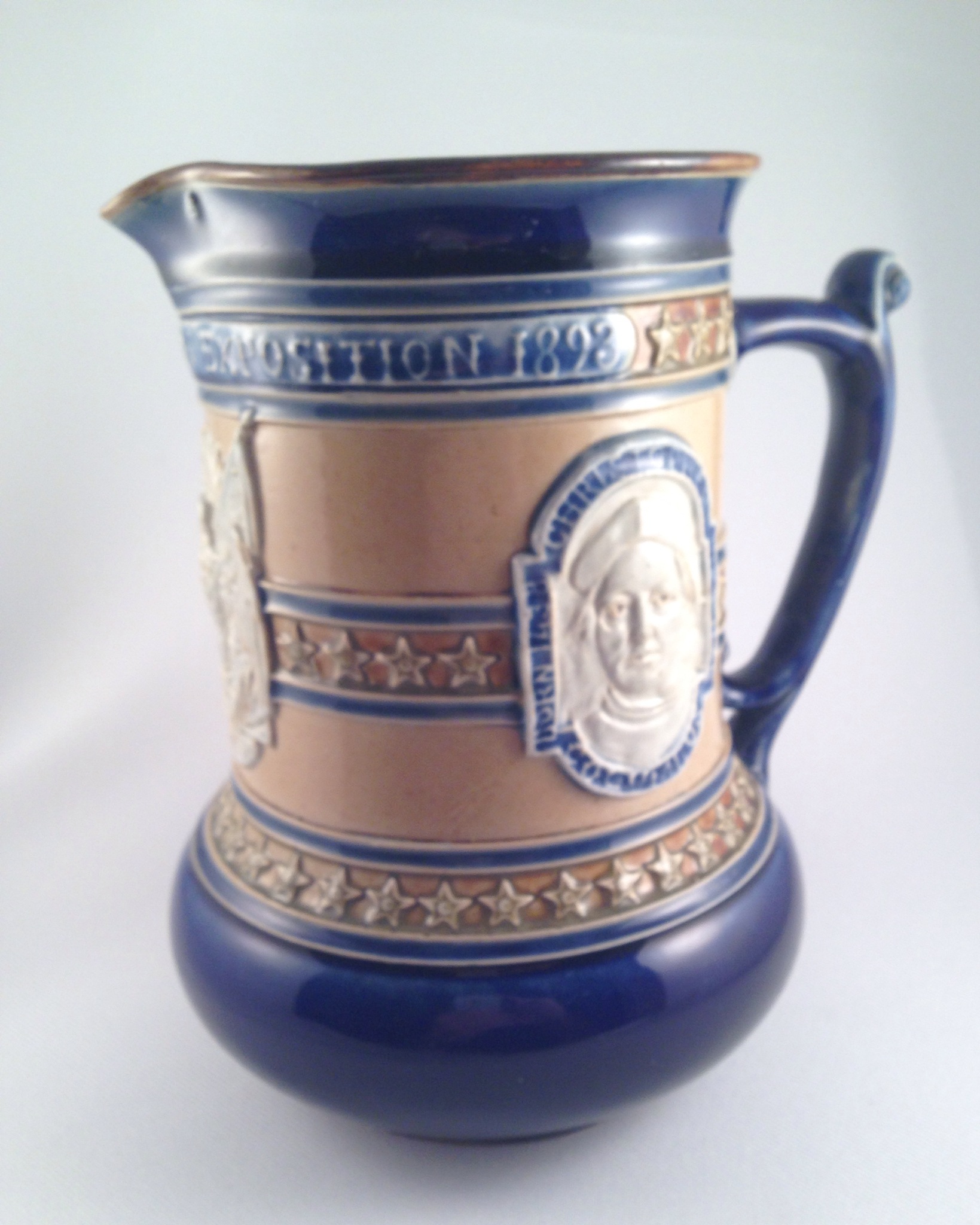
As you will be aware Doulton produced many commemoratives throughout it’s long history. Perhaps one of the most unusual is this jug designed by John Broad in 1893 to commemorate this great exhibition.

IMG_9929-0.JPG

Relief showing the American eagle at the front.

Either side of the American eagle are portraits of Columbus and Washington between bands of stars.

IMG_9930.JPG

Finally above the portraits is the banner proclaiming the “World’s Columbian Exposition” – a real tour de force I am sure you’ll agree!

IMG_9931.JPG