Category Archives: Artists

Royal Doulton’s Fairies

IMG_9927.JPG
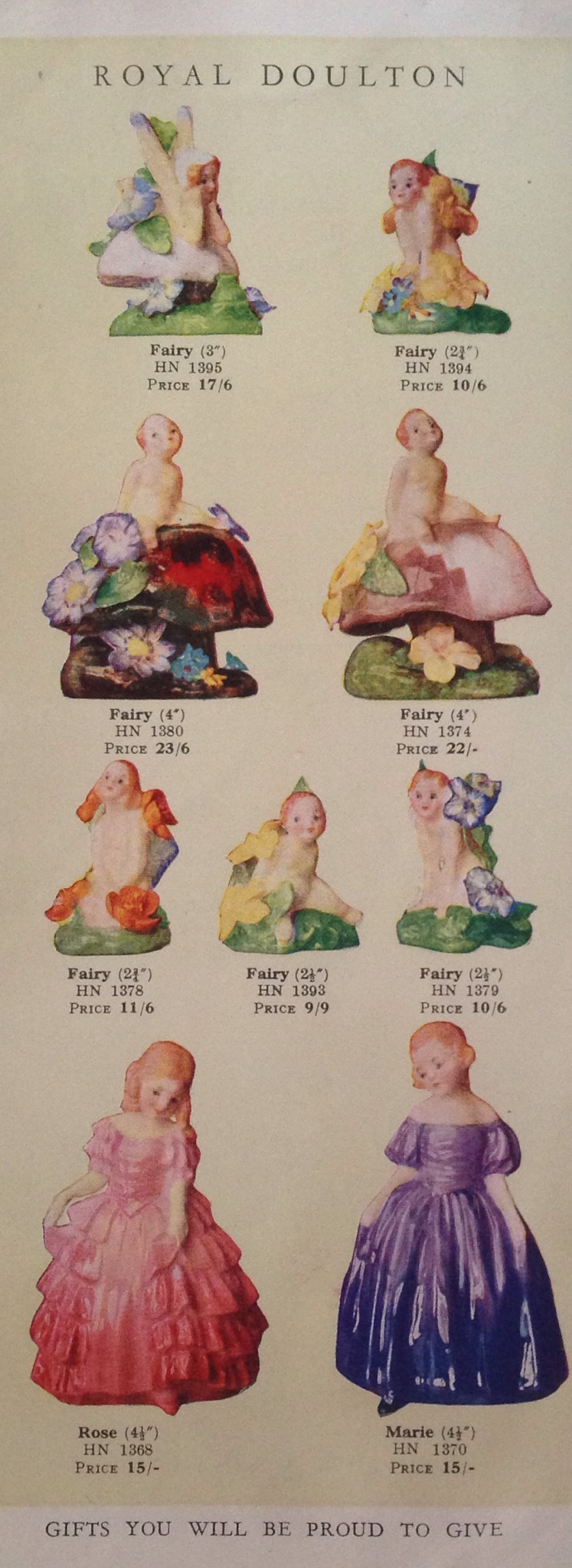
A catalogue page from 1930.

These sprightly, mythical creatures of many a folklore were immortalised by the great Leslie Harradine for the HN collection in 1930, but interest in all things ‘fairy’ had reached a fever pitch a decade before with the so-called Cottingley fairies; a series of 5 photographs of fairies taken by two young cousins and heralded by Arthur Conan Doyle (author of the Sherlock Holmes stories) as evidence of their existence. Alas the cousins would admit eventually that all but the fifth was faked and that, it has been suggested, was probably the result of a double exposure by the young girls.

IMG_4993.JPG
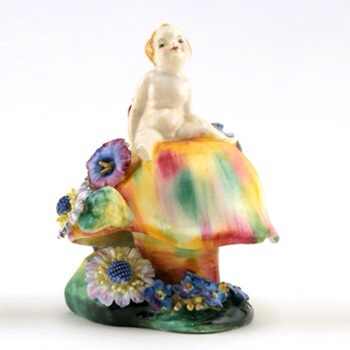
Doulton produced at least 7 different figures of fairies from standing with wings, to perched on toadstools to simply hiding in the undergrowth. Each is a charming study of childhood and many were available with differing flowers and even different colourways during their short production in the 1930’s. Certainly the second and sixth versions are the same child as ‘Boy on Pig’ HN1369 attributed to CJ Noke rather than Harradine. There are a further 6 fairies listed but which did not go into production.

IMG_4992.JPG
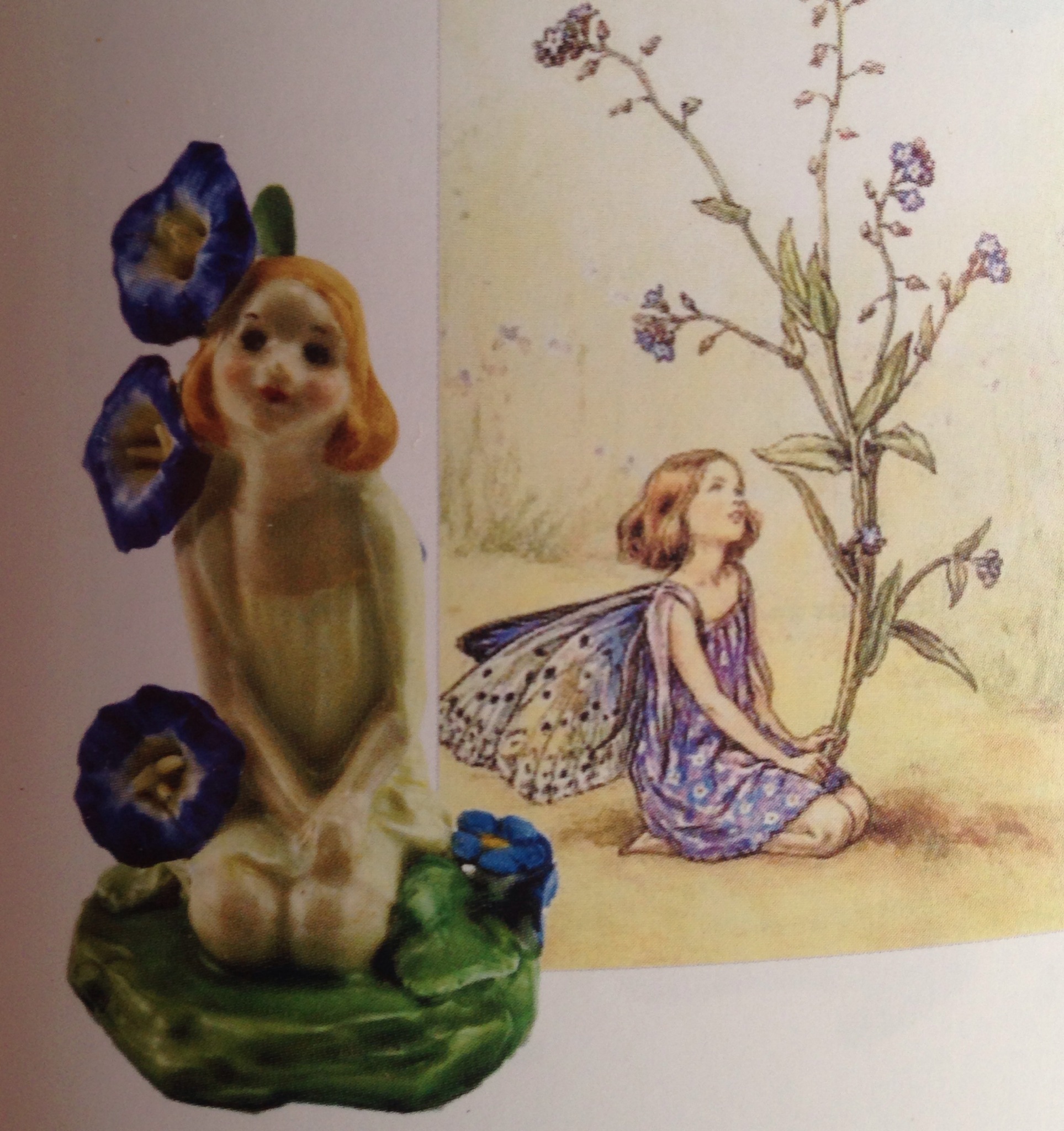
Doulton’s Fairies HN1396 and HN1375 were even modelled after the fairy illustrations of Cicely Mary Barker that remain popular to this day.

IMG_9928.JPG
A display of these figures really is magical, however, tracking them down is just as elusive as finding the real thing…or so it seems!

IMG_9925.JPG
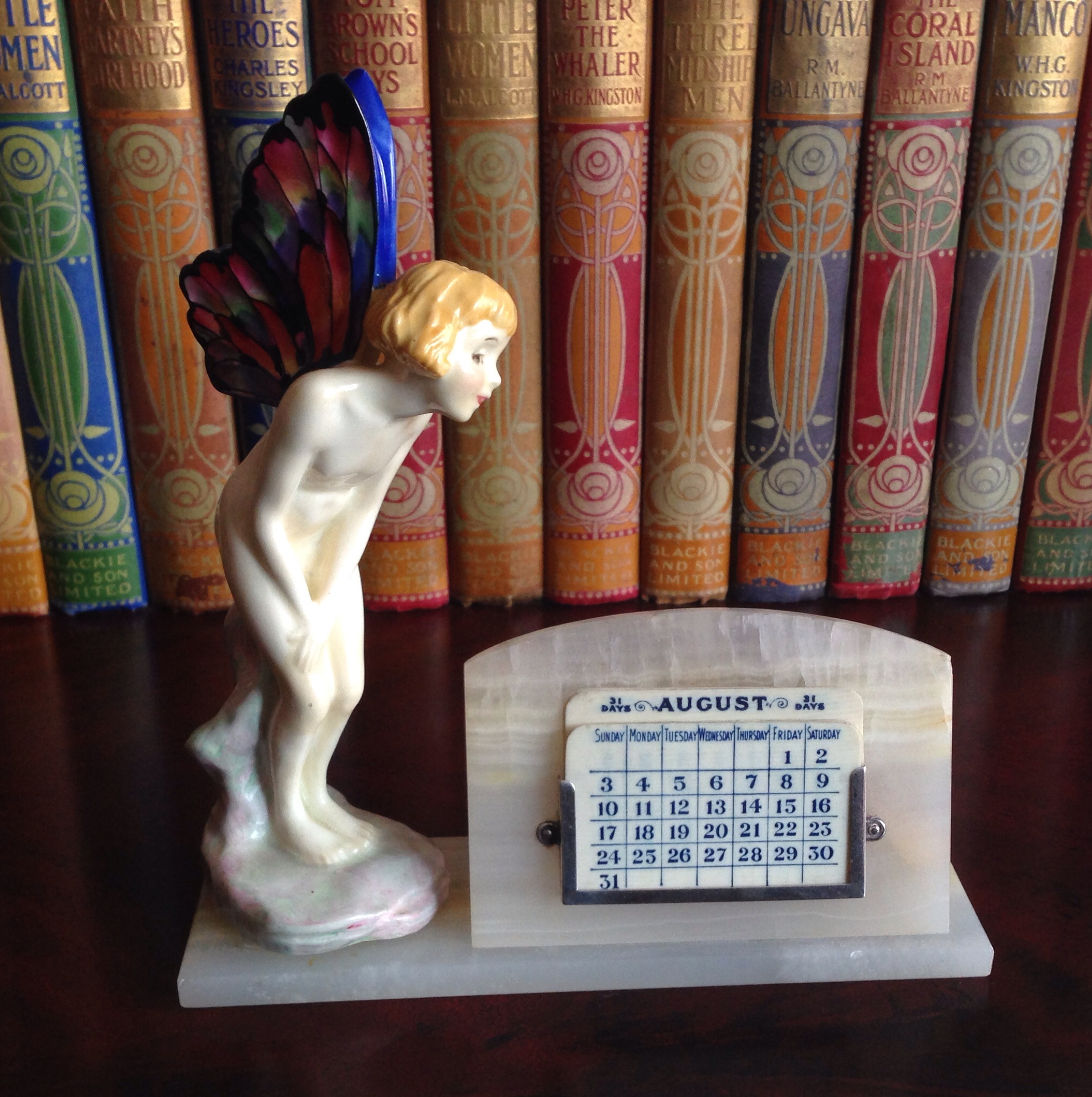
Finally a Fairy that has fluttered down on to my desk….

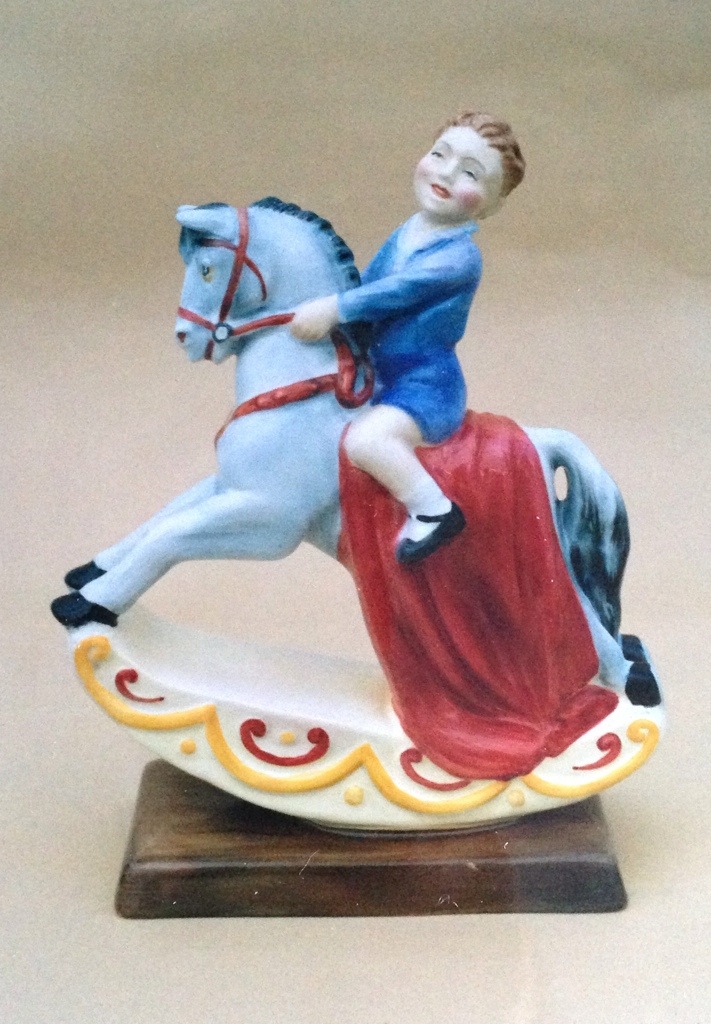
What is in a name? Royal Doulton’s ‘The Rocking Horse’.

20140806-182630-66390953.jpg
The Rocking Horse HN2072.
This particular figure I am sure you will agree is charming and belongs to a small group of rare Harradine figures produced for a very short period post WWII. The only reason I can see for this figure’s short production (1951-3) is that its production was too costly at a time of rationalisation within the Burslem factory.
The inspiration for this figure is undoubtedly the film ‘The Rocking Horse Winner’ from 1949, where a young boy discovers he can predict race winners by rocking his rocking horse!

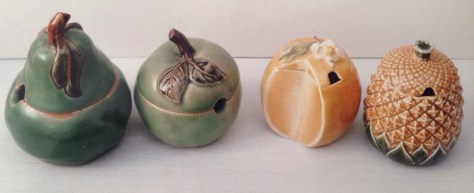
Collecting Doulton novelties : jam pots

a href=”https://doultoncollectorsclub.com/wp-content/uploads/2014/08/20140802-121402-44042237.jpg”>20140802-121402-44042237.jpg

Jam pots are another area that collectors often focus on to build up a collection. Of course there are countless examples produced with seriesware patterns on them and still further numbers with tableware designs decorating them.
There are a small group, however, of moulded fruit examples of jam pots. The apple and pear are the work of Vera Huggins at Doulton’s of Lambeth and date to the 1920-30 period, whilst the designer of the two Burslem pots is unknown but date again to the same period but rather than being stoneware, they were made of earthenware and carry D numbers just like many fancy wares. The pineapple is dated 1933.
I personally have the apple and pear and they fit perfectly in the kitchen!

Australiana – collecting Doulton ware with an Australian link.

20140731-141221-51141557.jpg
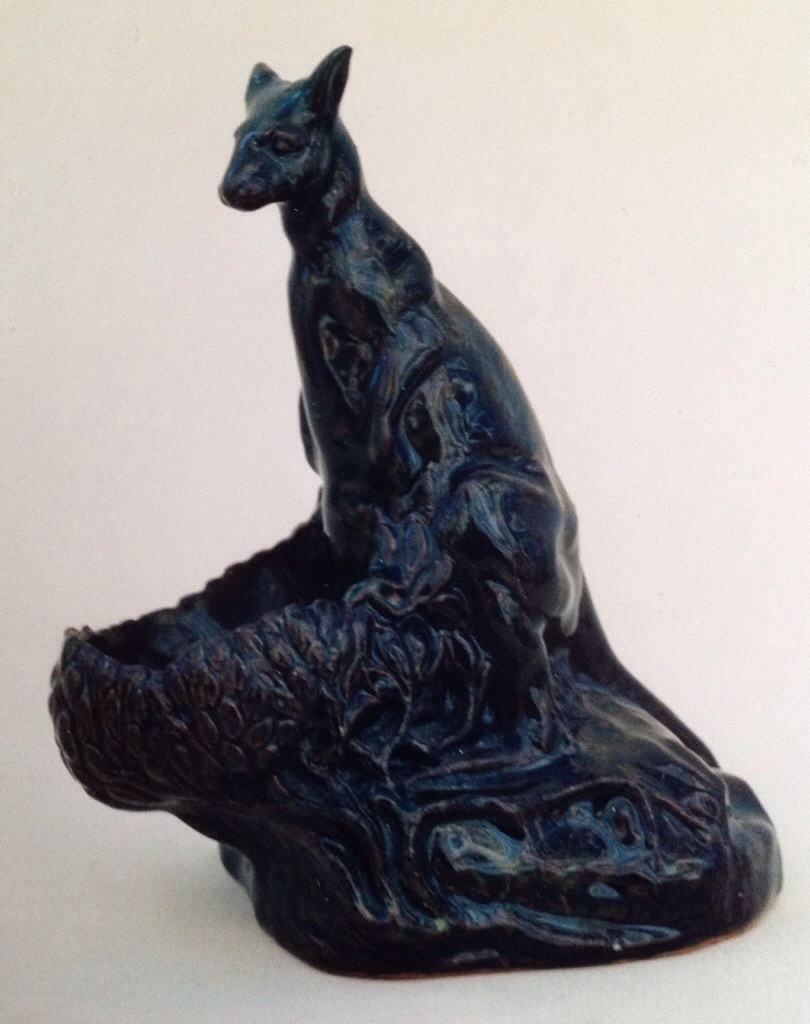
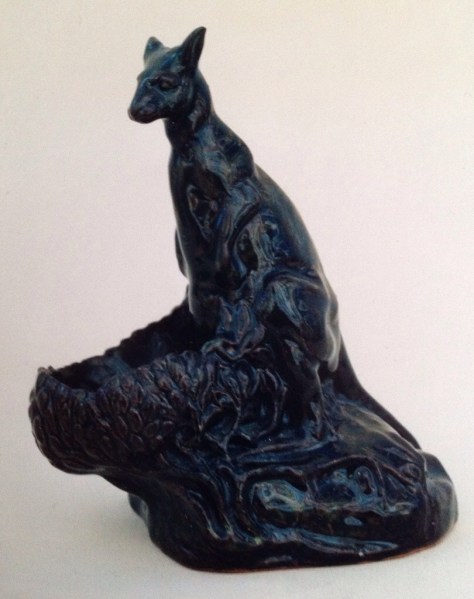
A Lambeth Kangeroo tray by John Broad.

Since the late 19th Century there has been a strong link between Doulton and Australia, fostered no doubt by the links with Doulton’s then representative down under, John Shorter, who was responsible for introducing much Doulton ware to that part of the world. Indeed some of the most magnificent Doulton wares were sent to Australia and are now in many important collections there, some of which we have seen sold off over recent years.
20140731-141331-51211691.jpg
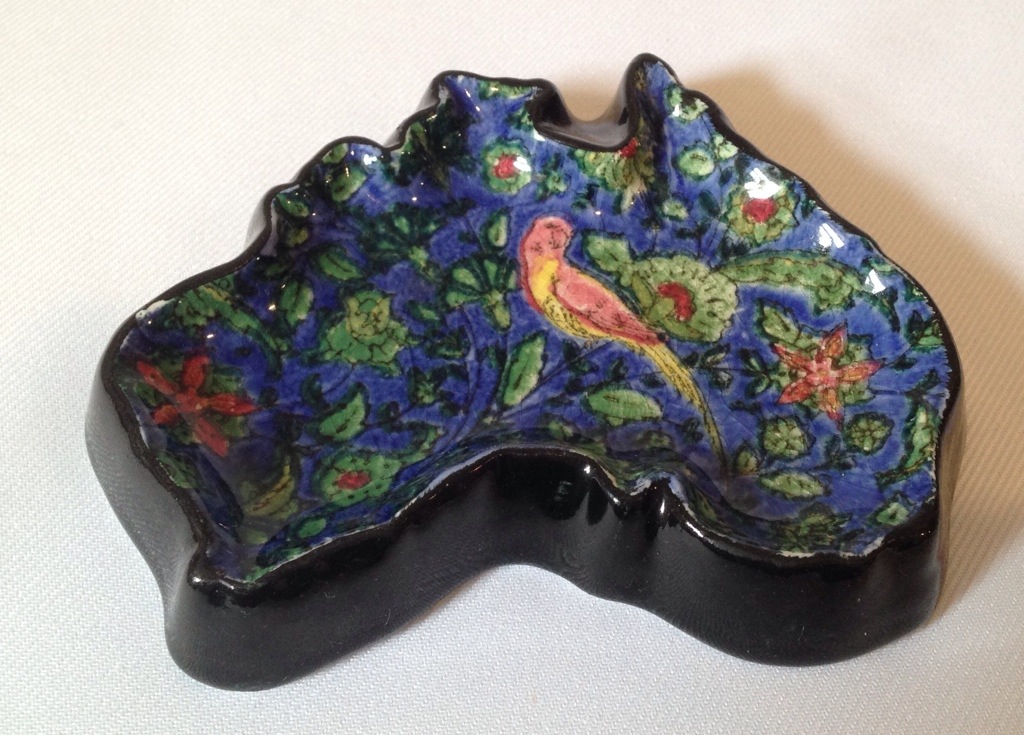
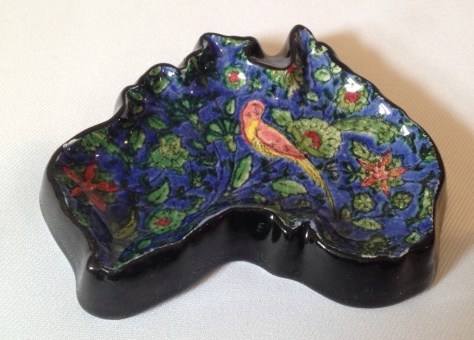
Seriesware tray in the shape of Australia ca.1919.

I am sure many of you are aware of the Shorter collection that resides in the Powerhouse Museum, the nucleus of which was bequeathed in 1936 and has subsequently been added to by the family. I was lucky enough once to come across this catalogue detailing the original bequest, including some pictures. The original collection had been the private collection of John Slater former art director at Burslem until his death in 1918 and bought by John Shorter who had visited the factory in 1919. The collection had thus been built up almost in secret with John Slater selecting examples some dating back to his earliest days at the factory pre-dating even Doulton’s involvement there; examples be they perfect or imperfect, of techniques employed by Doultons in Burselm in the intervening years.
20140731-141442-51282701.jpg
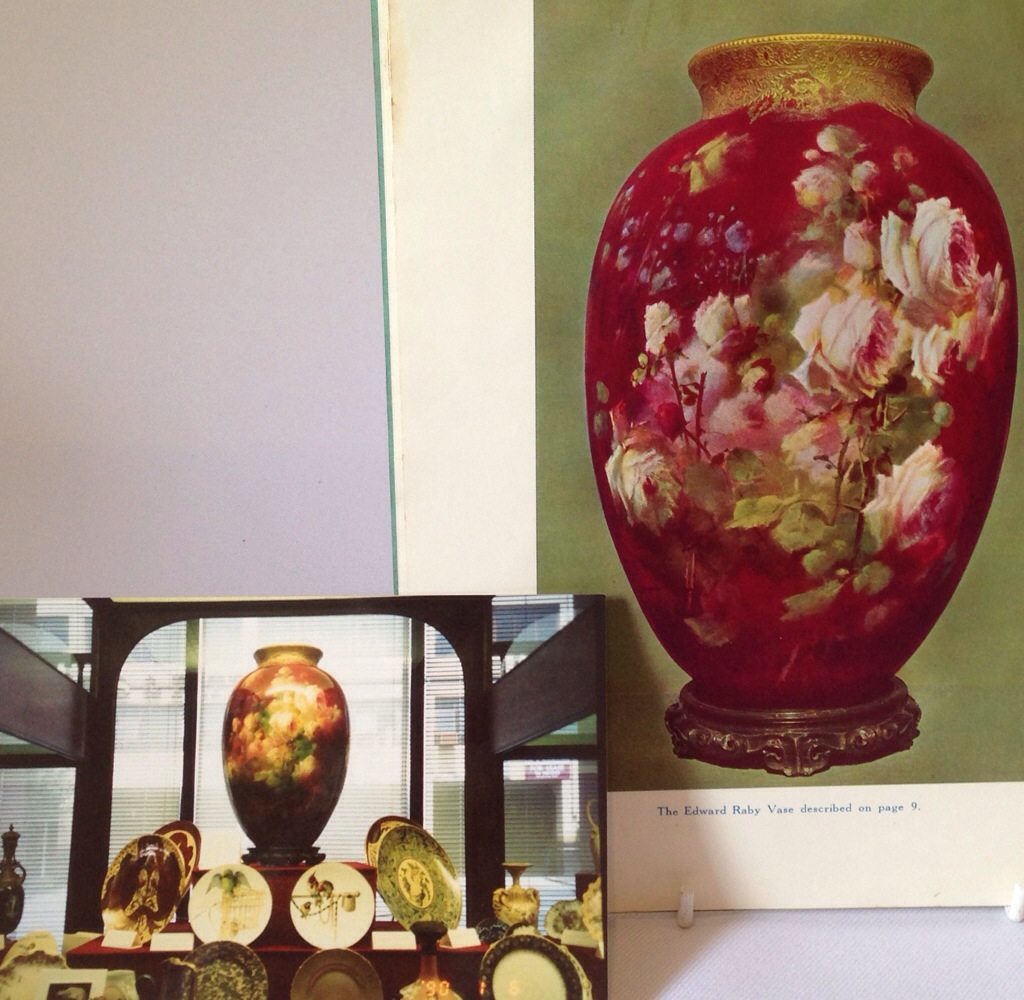
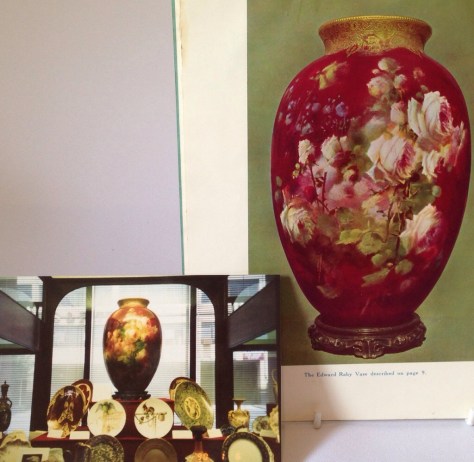
The Edward Raby vase in situe and as pictured in a catalogue. Once described as ‘a gem of gems’ the vase stands an impressive 24″ and dates to 1913.
20140731-141531-51331851.jpg
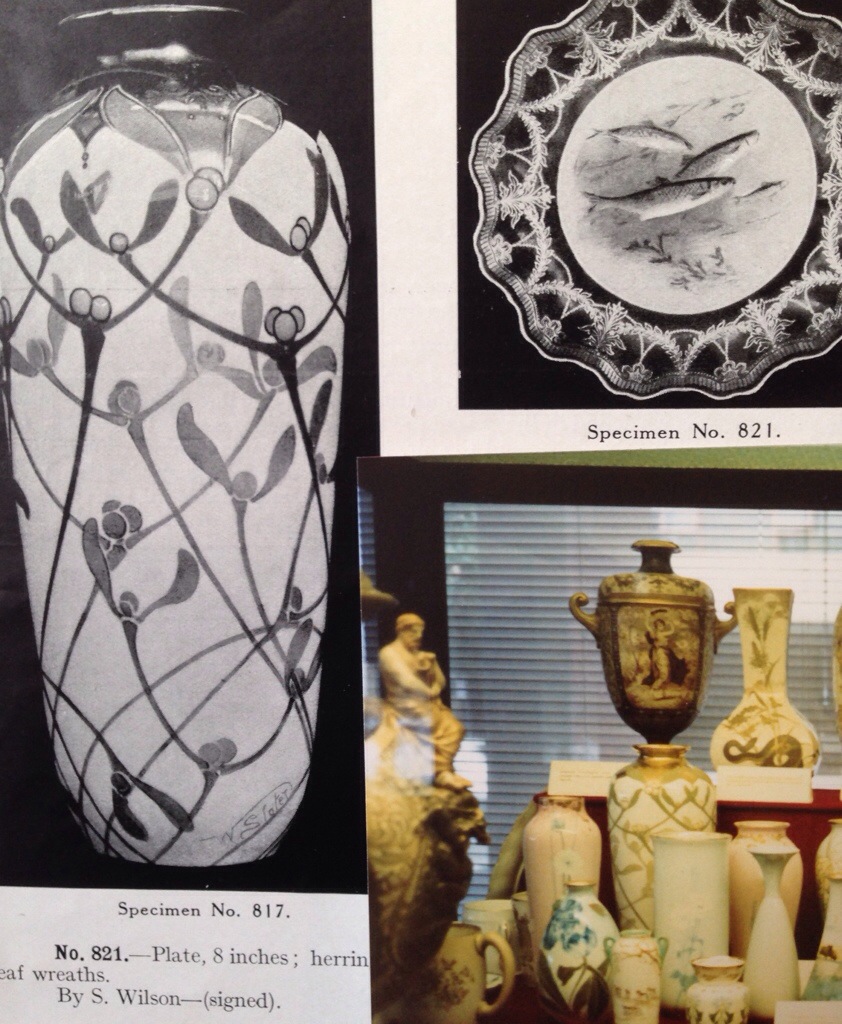
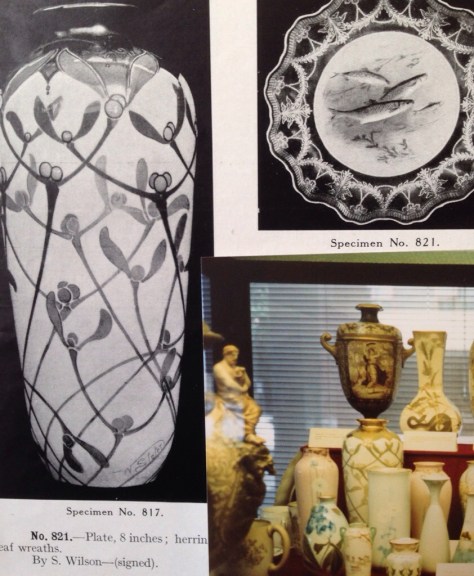
A Lactolian ware vase with mistletoe in the Powerhouse museum display and again shown in the catalogue. The vase was decorated by Walter Slater with gilding by Richard Ridgway. It and other pieces in the collection have been illustrated in many books including ‘The Doulton Burslem wares’ by Desmond Eyles.

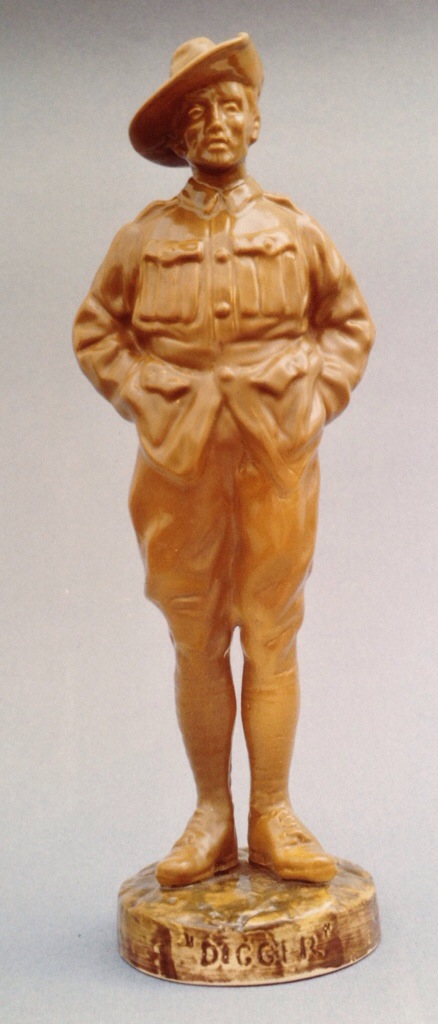
The Shorter family retained stong links with Doulton through the 20th Century, with John’s daughter Lucy ‘Lulu’ Shorter bringing Australian flora to Doulton’s tableware designs, a son, Austin, even had a figure modelled in his likeness (Digger HN322 by E. W. Light), as well as the Shorters remaining Doulton’s distributors down under until 1970 when Doulton bought the Shorter company out.
20140731-141652-51412581.jpg
Australian Digger HN322.

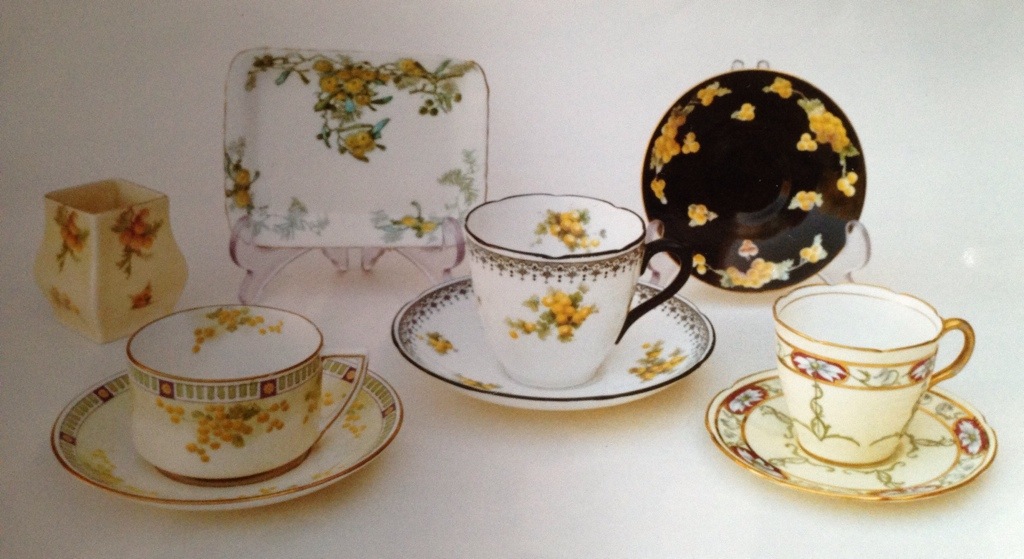
However, the Australian link goes far beyond one family and there are numerous Australian commemoratives and other Doulton Australiana items to collect. As well as tablewares featuring among other designs ‘Wattle’, there are seriesware patterns, Bunnykins, specially commissioned character jugs, figures and handpainted art wares also to collect. There are some wonderful collections in Australia of these items, and perhaps you also have some in your collections that could be posted to our facebook page ‘Doulton Collectors Club’?
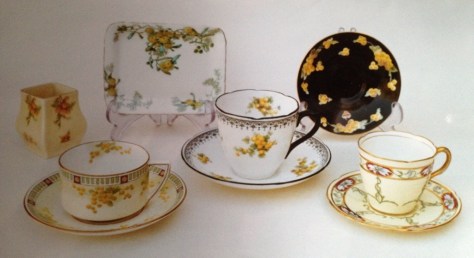
20140731-141744-51464867.jpg
Doulton wares featuring Australian wattle, flannel flowers and other forna.
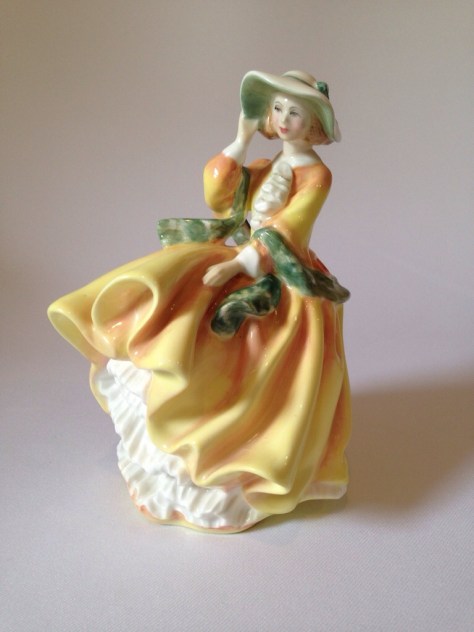
20140731-141915-51555481.jpg
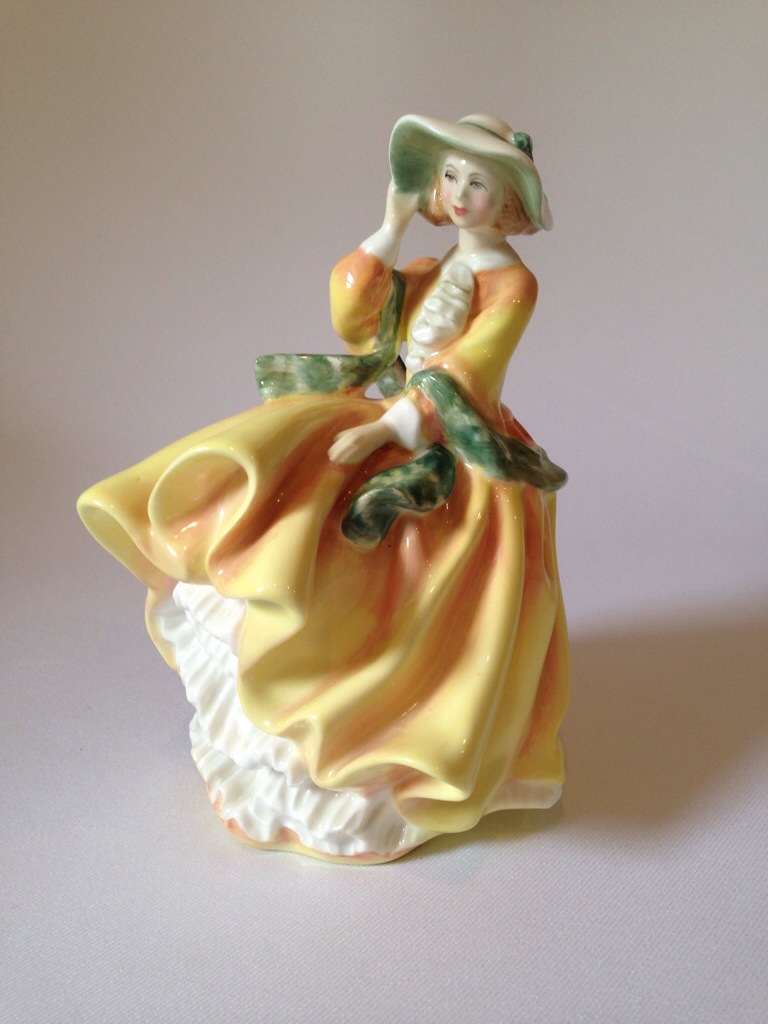
A special Australian commemorative of Top o’ the hill in Australian colours to mark the200th anniversary of the First Fleet’s landing at Botany Bay in1788.
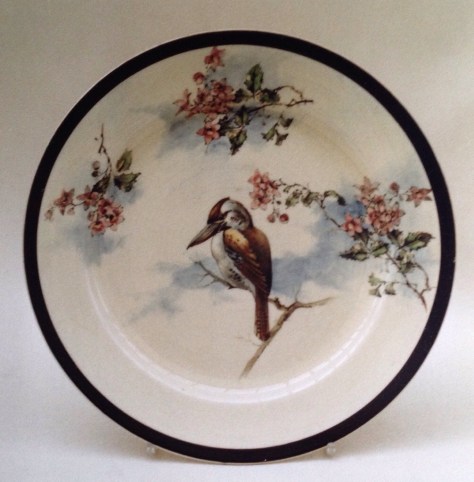
20140731-142056-51656275.jpg
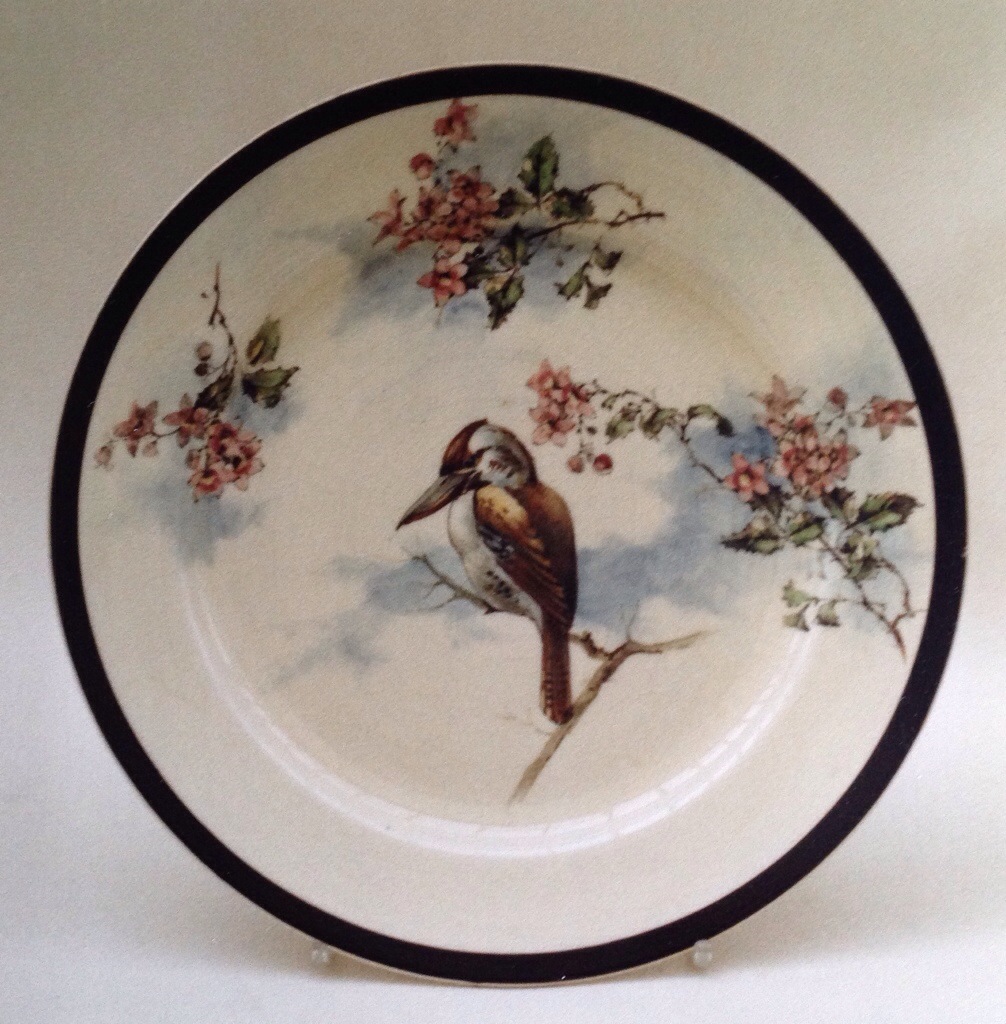
Kookaburra seriesware plate with Christmas Bush.
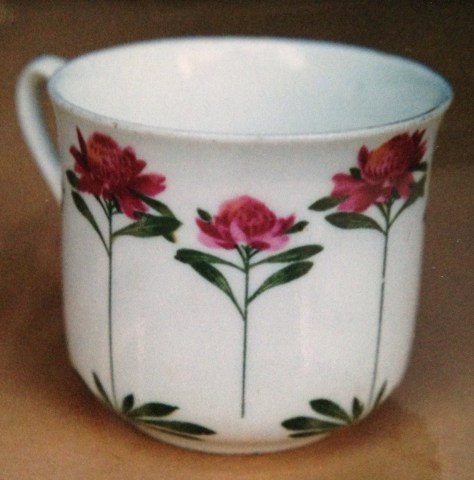
20140731-142147-51707613.jpg
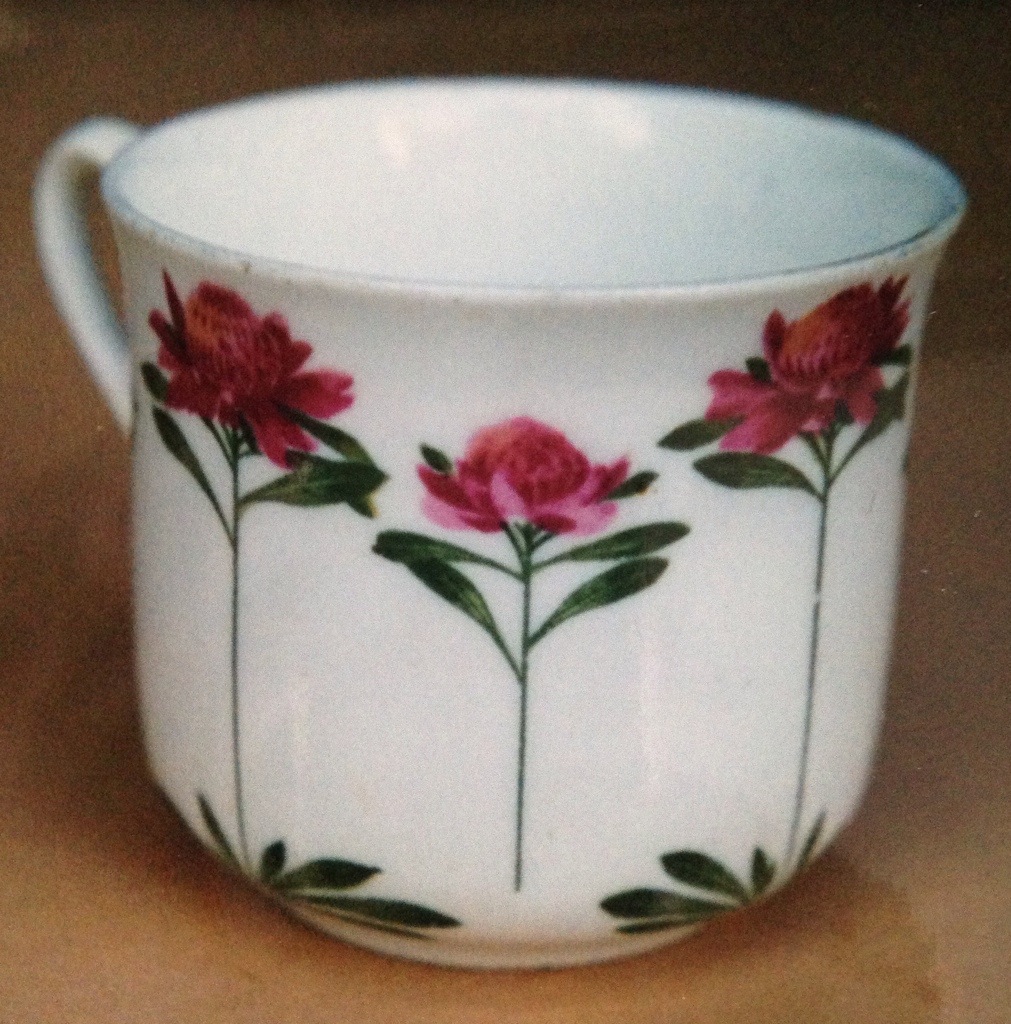
A Lulu Shorter Waratah design cup.

20140731-142332-51812579.jpg
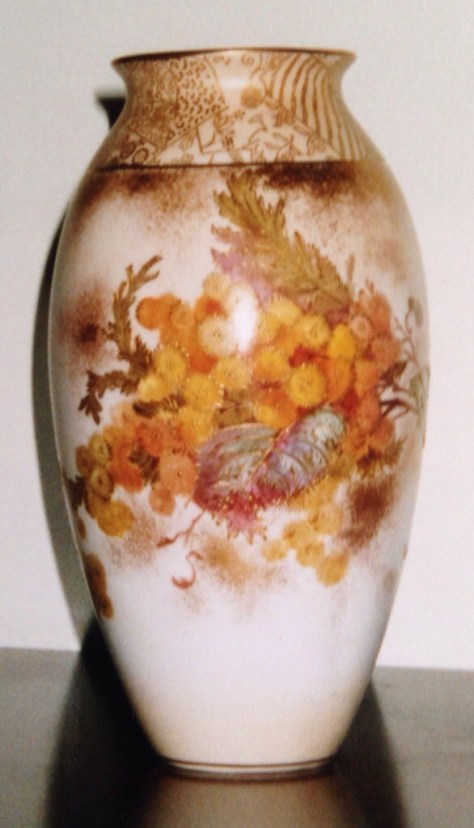
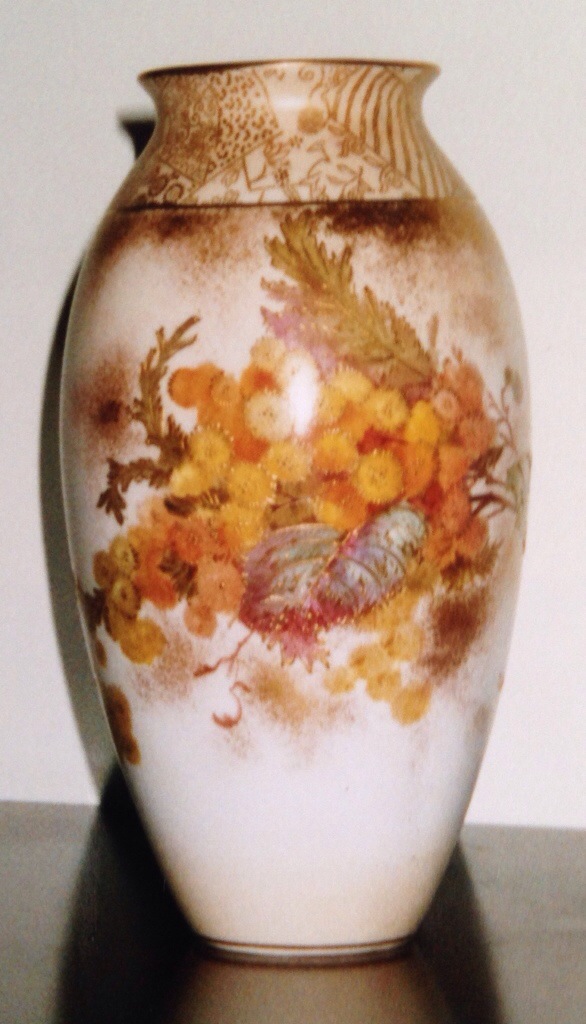
A print and tint wattle vase I found here in England. Interestingly a handful of Doulton’s top artists, including Louis Bilton, also produced hand painted works for the Chicago exhibition in the late 19th Century.
A look back at Harradine’s Lady Clare.

20140729-154104-56464101.jpg
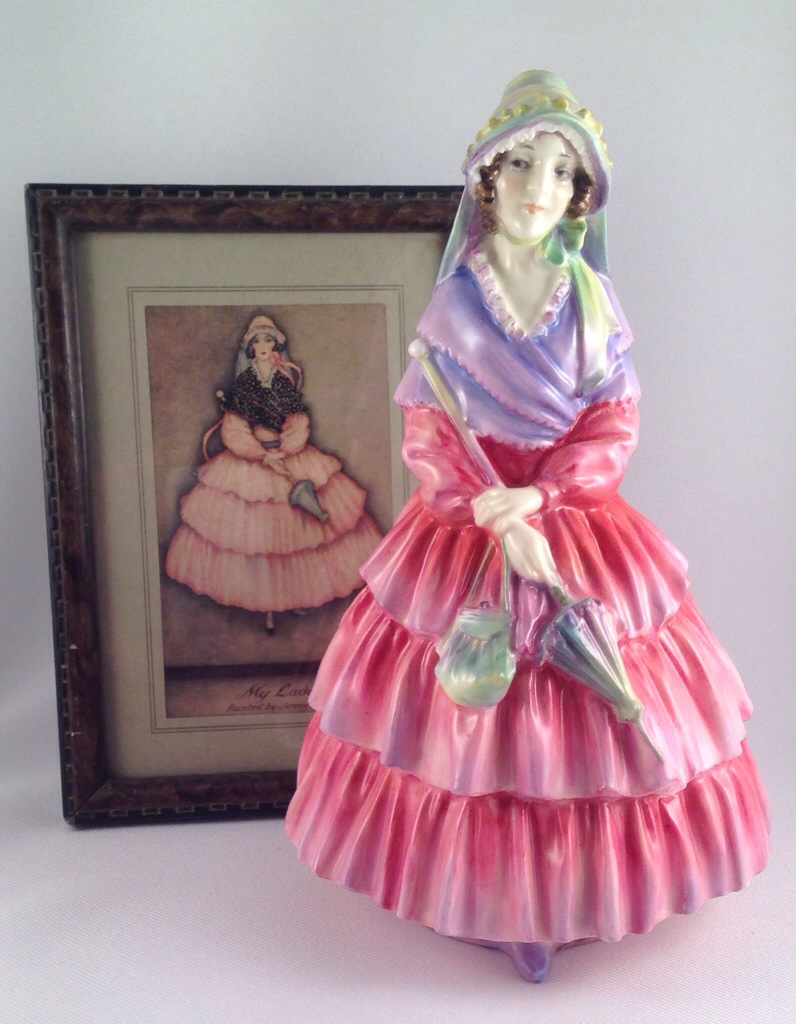
The official Lady Clare HN1465.

This unusual figure had a relatively short production run from 1931-37 and examples rarely turn up. She takes her inspiration from this Jennie Harbour picture titled ‘My Ladye’ from her ‘Victorian’ series for Raphael Tuck the card manufacturers. As you can see the original Harradine model has a base with a foot protruding from under her skirt, just like the original picture. This makes her 1.5cms taller than the production model.

20140729-154709-56829580.jpg
A prototype of Lady Clare pictured with her inspiration.

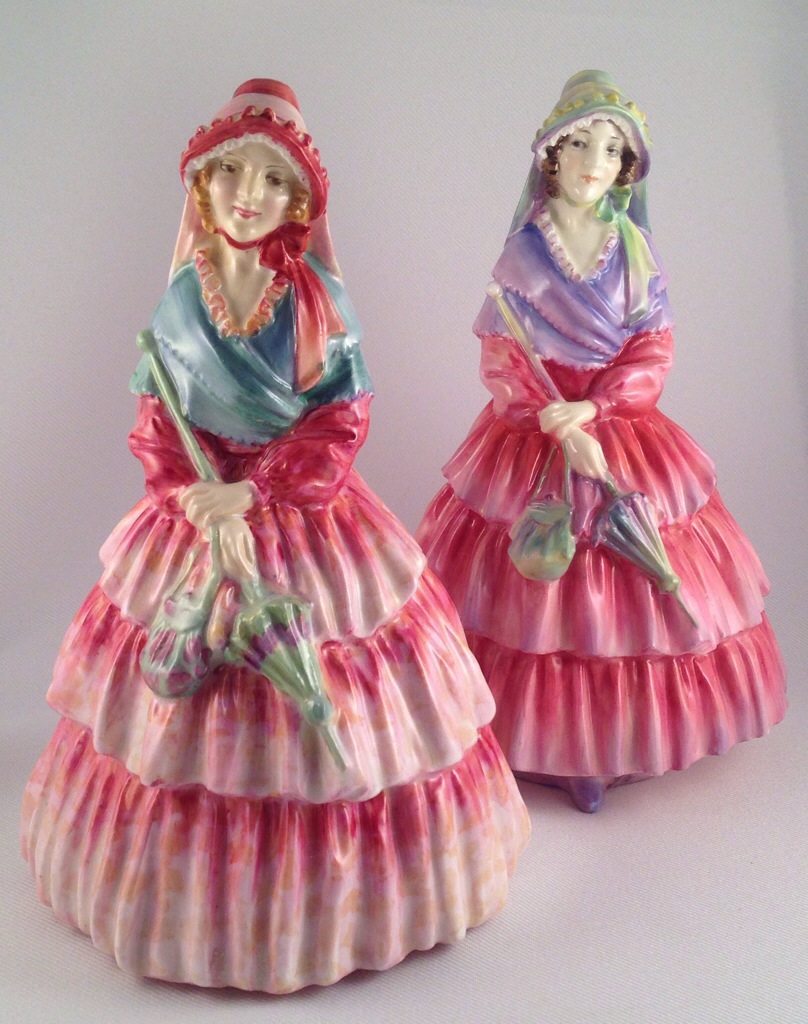
As well as HN1465 there is another colourway of Lady Clare that has emerged and there appear to be a handful of examples of this colour scheme in collections around the world.

20140729-154906-56946782.jpg
Two versions of Lady Clare; a colourway and a prototype.

Perhaps you also have variations of early figures? If do why not share with our ‘Doulton Collectors Club’ page on Facebook?

An A-Z of Collection Royal Doulton – the Beggar’s Opera series.

20140725-160540-57940025.jpg
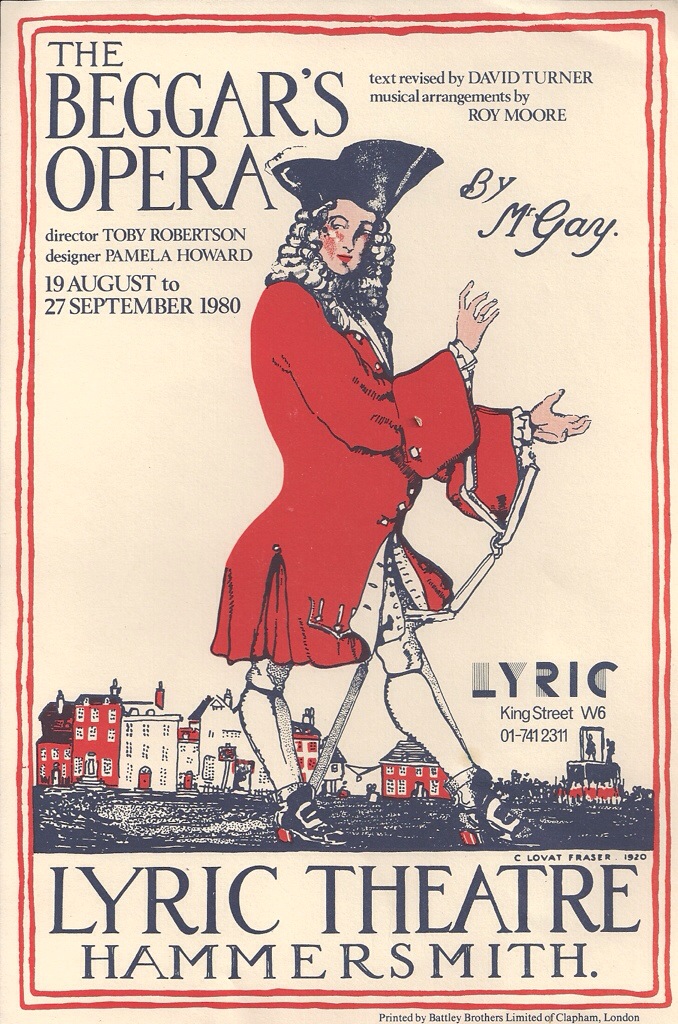
Original poster for the opera.

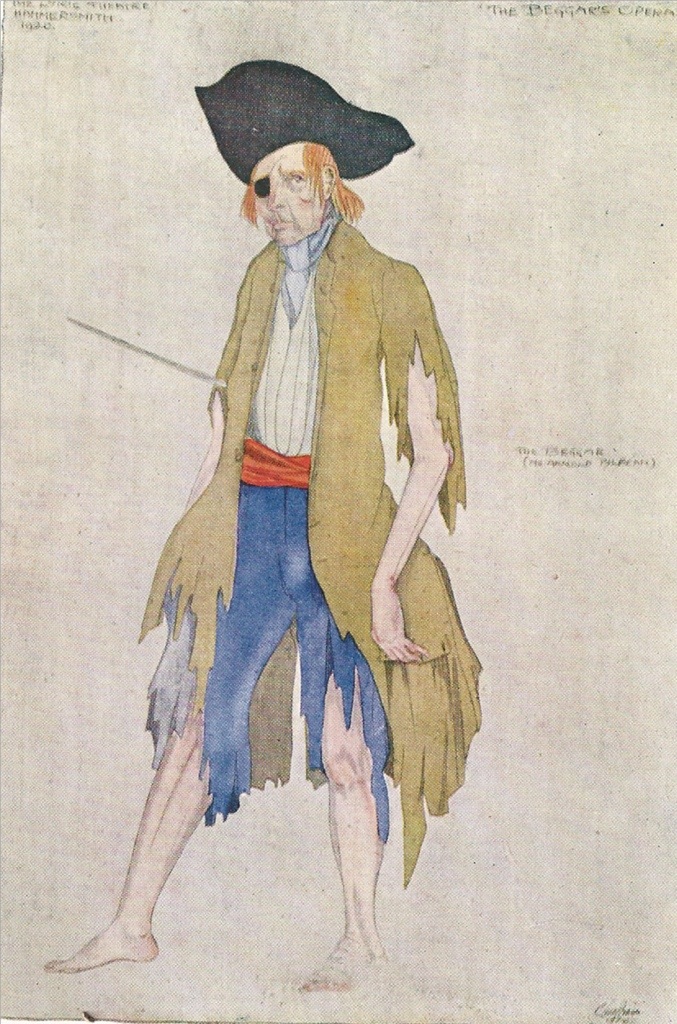
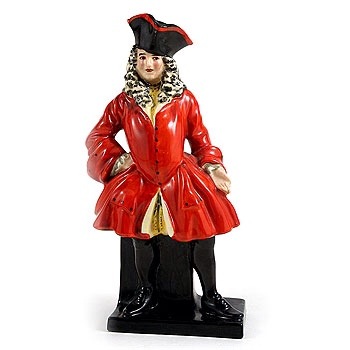
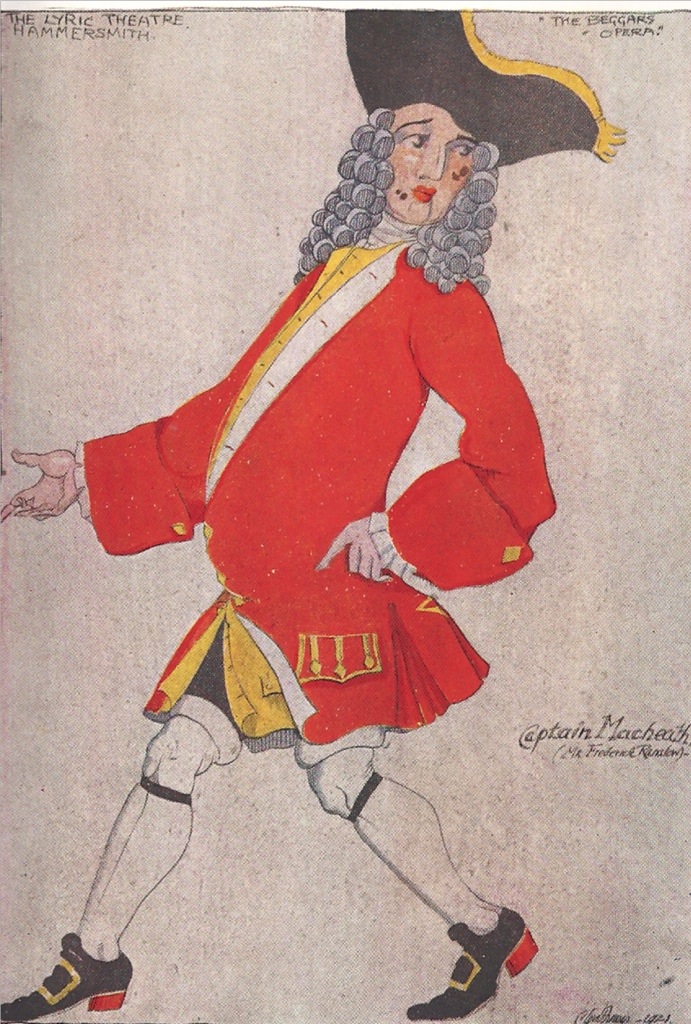
Leslie Harradine as well as establishing a new standard in figure modelling in the early 1920’s, was also responsible for the first set of figures, The Beggar’s Opera Series, inspired by the theatre. Harradine’s figures all closely resemble the costume designs Claude Lovatt Fraser the designer for the revival of this piece at Hammersmith in 1920, as you can see from these pictures in the article.

20140725-160655-58015097.jpg

20140725-160655-58015339.jpg
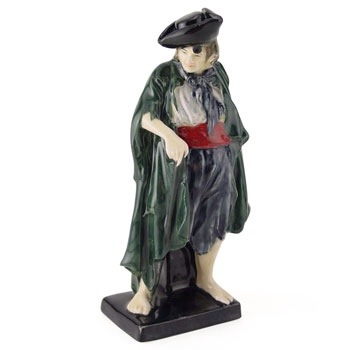
Harradine’s The Beggar and the original sketch for the stage costume.

Once made up Lovat’s costumes were thrown to the studio floor and walked on, had paint thrown on them, and where necessary as with the Beggar’s costume, were then slashed and dirtied. He reasoned that the characters from the play were from 18th Century London low life and spent much of their time in jail.

Here is the original Captain Macheath figure compared with the original theatre poster and Lovat Fraser’s design.

20140725-160752-58072942.jpg

20140725-160752-58072829.jpg
Again the original design and the Doulton figure Captain Macheath.

This first series of figures set the tone for future sets by teaming a popular English theme together with an emerging Doulton house style of decoration.

The series proved a huge success and in Doulton’s first official publicity catalogue after WWII, they themselves lament the withdrawal of this popular set! The main female character Polly Peachum is also immortalised in a miniature version, and incidentally more colour variations of this one miniature figure exist than any other!

20140725-161136-58296732.jpg
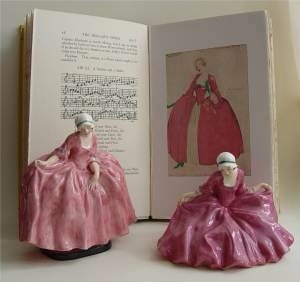
Two versions of Polly Peachum against her original costume design. Incidentally the curtsying Polly was at first called Polly Curtsey.
Whether you collect just individual characters from this series or the whole set, they make an eye-catching display!

20140725-161252-58372251.jpg
A favourite colourway of mine for Polly Peachum.
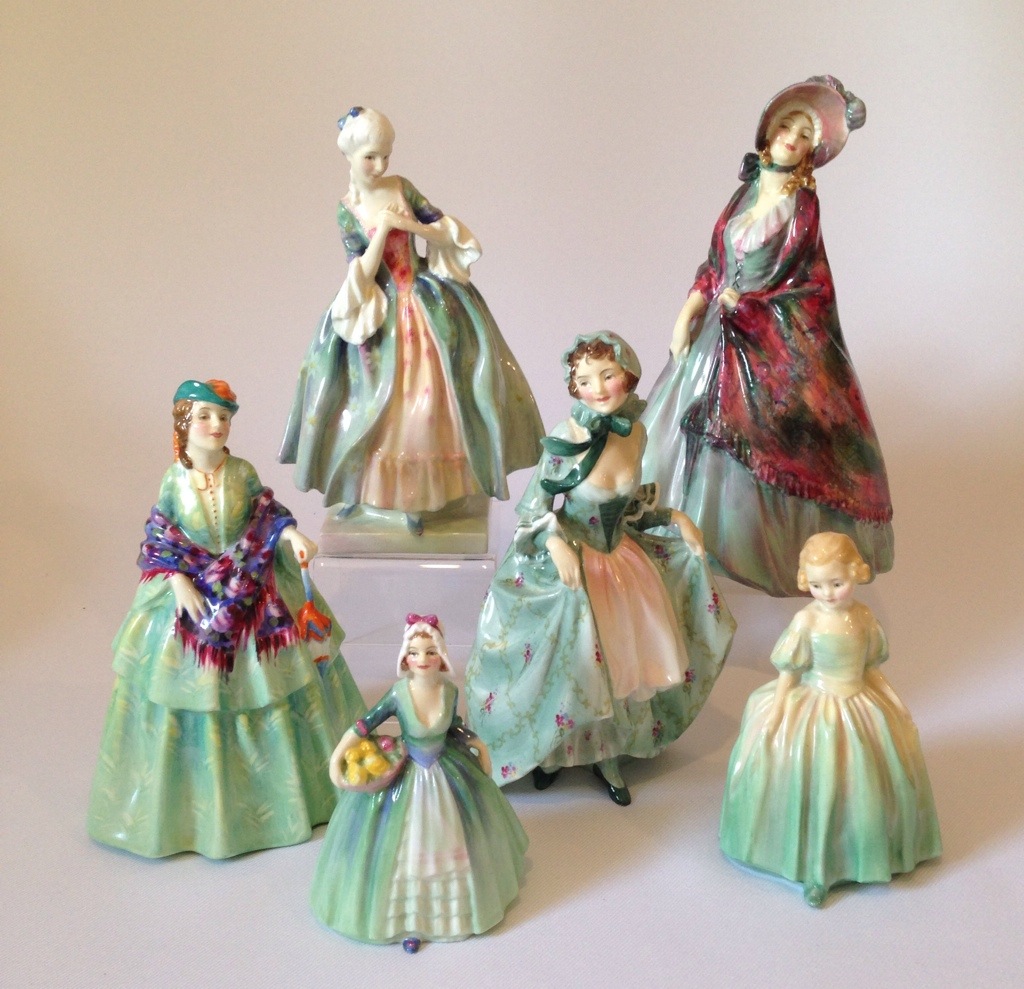
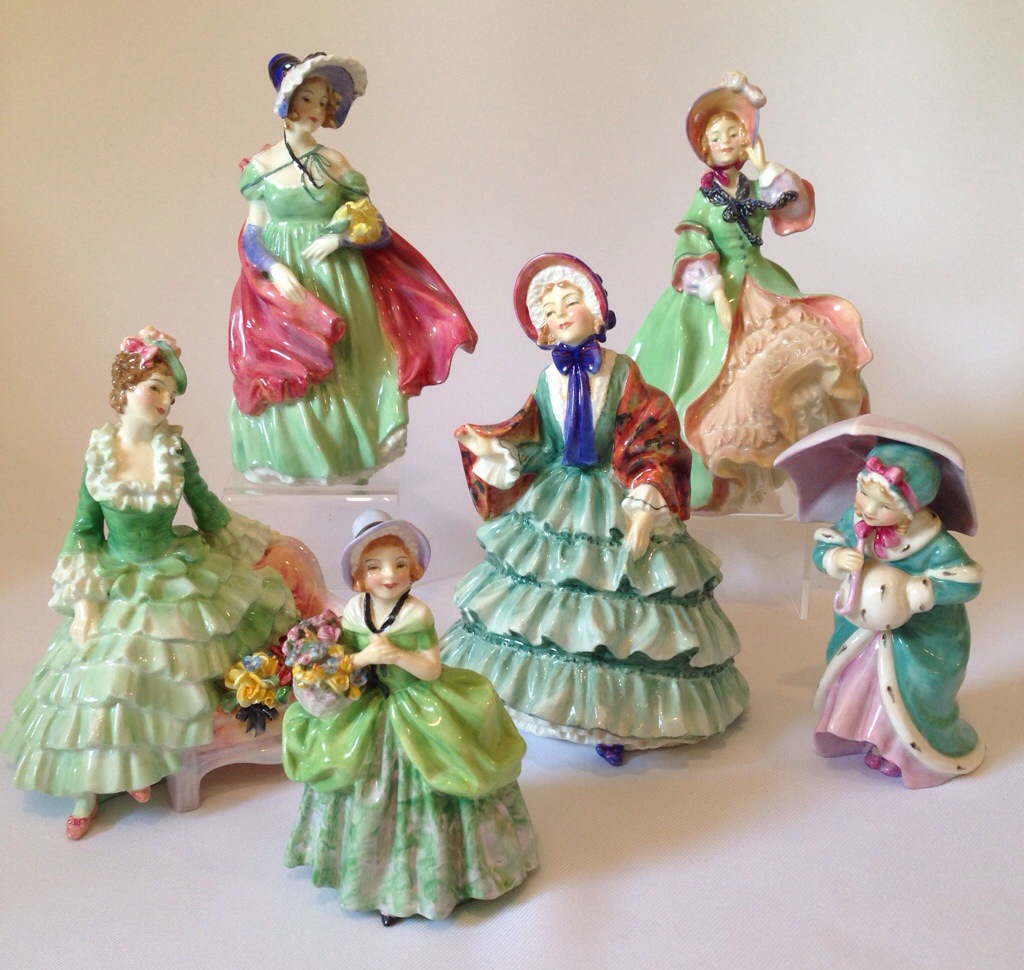
Royal Doulton’s glorious green ladies!

20140720-172222-62542680.jpg
Here again is another display or collecting theme that I suddenly felt compelled to write, sitting in the ‘green’ garden enjoying the sun: Doulton’s green ladies…
Whilst reds and pinks have remained perennial favourites among collectors, the vogue for producing ‘green’ ladies has come and gone and come and gone again. Yet, those from the 1930’s remain, in my opinion some of the most appealing, not least because of the crispness of the modelling but the detail in the painting too.

20140720-172306-62586159.jpg
There are so many familiar faces that are so much harder to find in green such as Cissie, Sonia and one that I would love to have in green, Meriel, who remains probably my favourite figure produced.
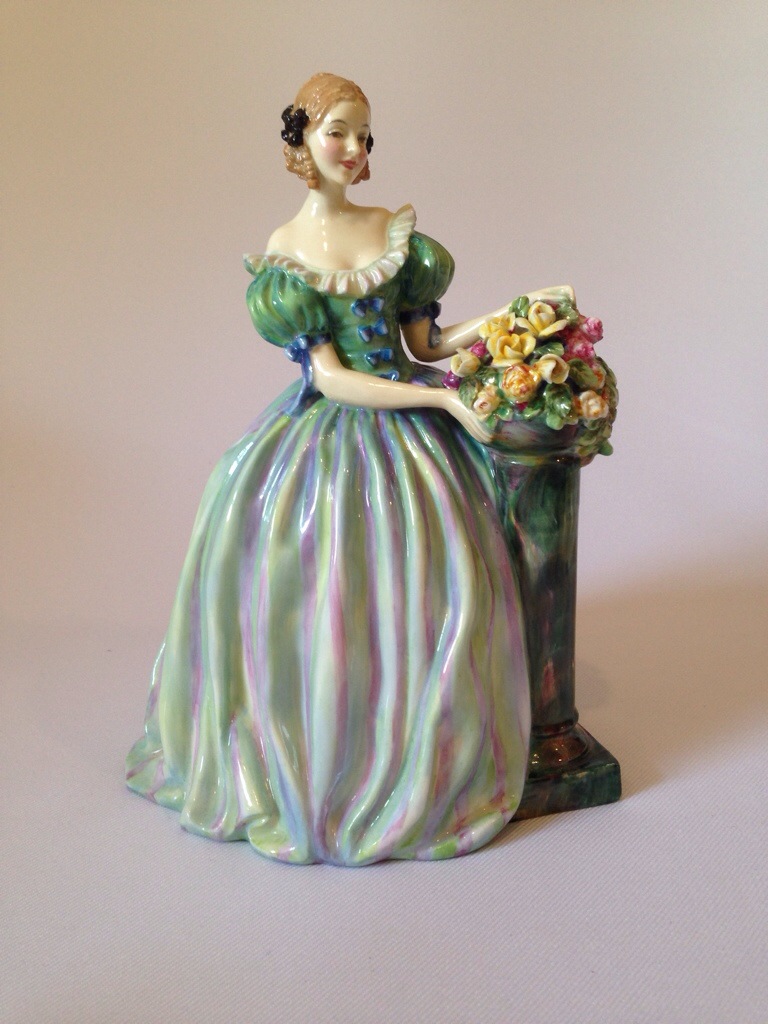
I think part of the reason for the short production runs of these green ladies is the added detail in the colourways, consider Roseanna for example with her stripey skirt.

20140720-172341-62621206.jpg
I have a few green colourways and a favourite I have been lucky enough to find is this version of Gwynneth dated 1942 and pictured here.

20140720-172508-62708123.jpg
Perhaps you also display your figures according to colour? If so why not share a picture on our Facebook page ‘Doulton Collectors Club’!

Royal Doulton’s Nell Gwynne and her inspiration

Leslie Harradine we all know was prolific in his output of figure models for Royal Doulton and he took inspiration from all corners of the world around him.
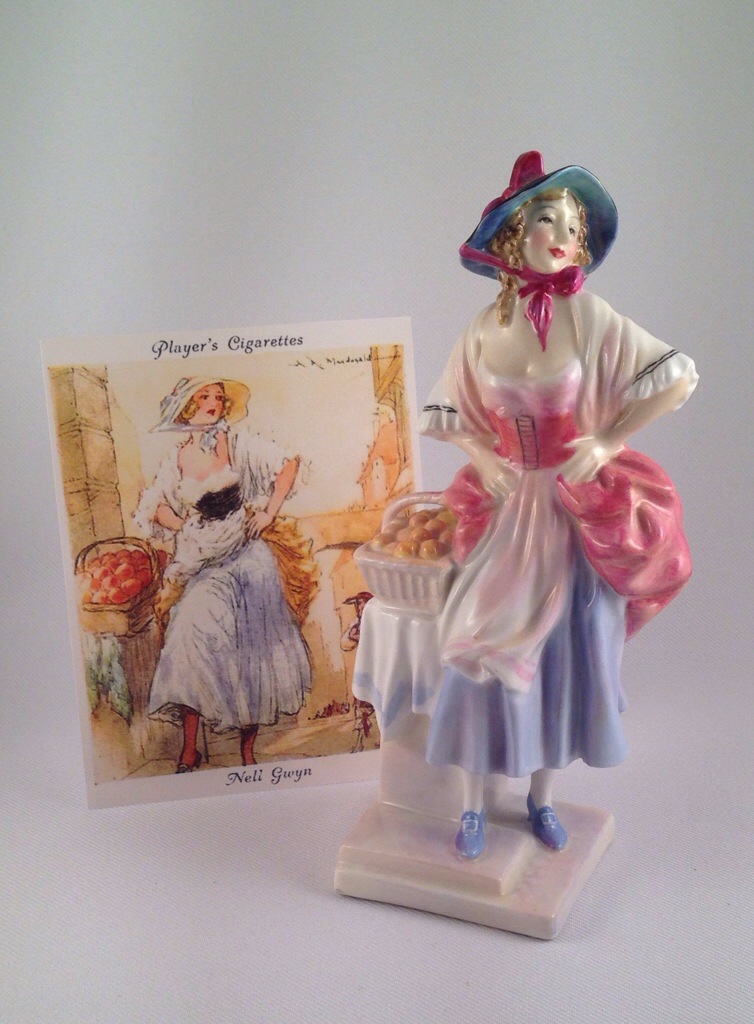
This charming figure of Nell Gwynne is based directly on this Player’s cigarette card from the ‘Famous Beauties’ series dating to the 1930’s.
The card in turn is based on the character of the same name who was the mistress of King Charles II, after she caught his eye selling oranges to the audience at the Drury Lane theatre at a performance he also attended. Nell remained a favourite mistress of the King and bore him two children. On his deathbed he is reputed to have asked “let not poor Nellie starve”.
Royal Doulton’s personification of this character fits in perfectly with the many street sellers they also produced.

20140719-170438-61478404.jpg
Royal Doulton’s Nell Gwynne HN1887 and the illustration that inspired her.

Pantalettes and petticoats!

20140715-184709-67629330.jpg
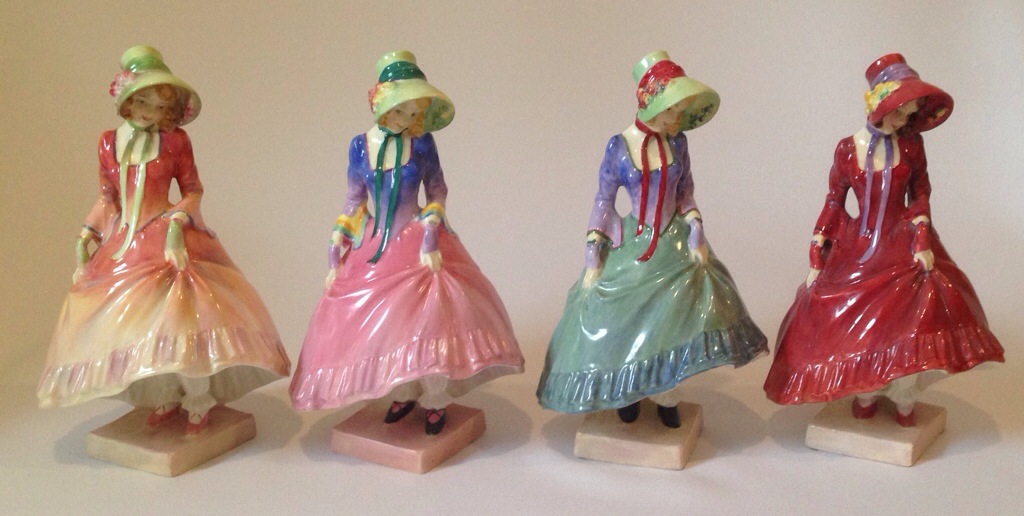
The four available colourways of Pantalettes.

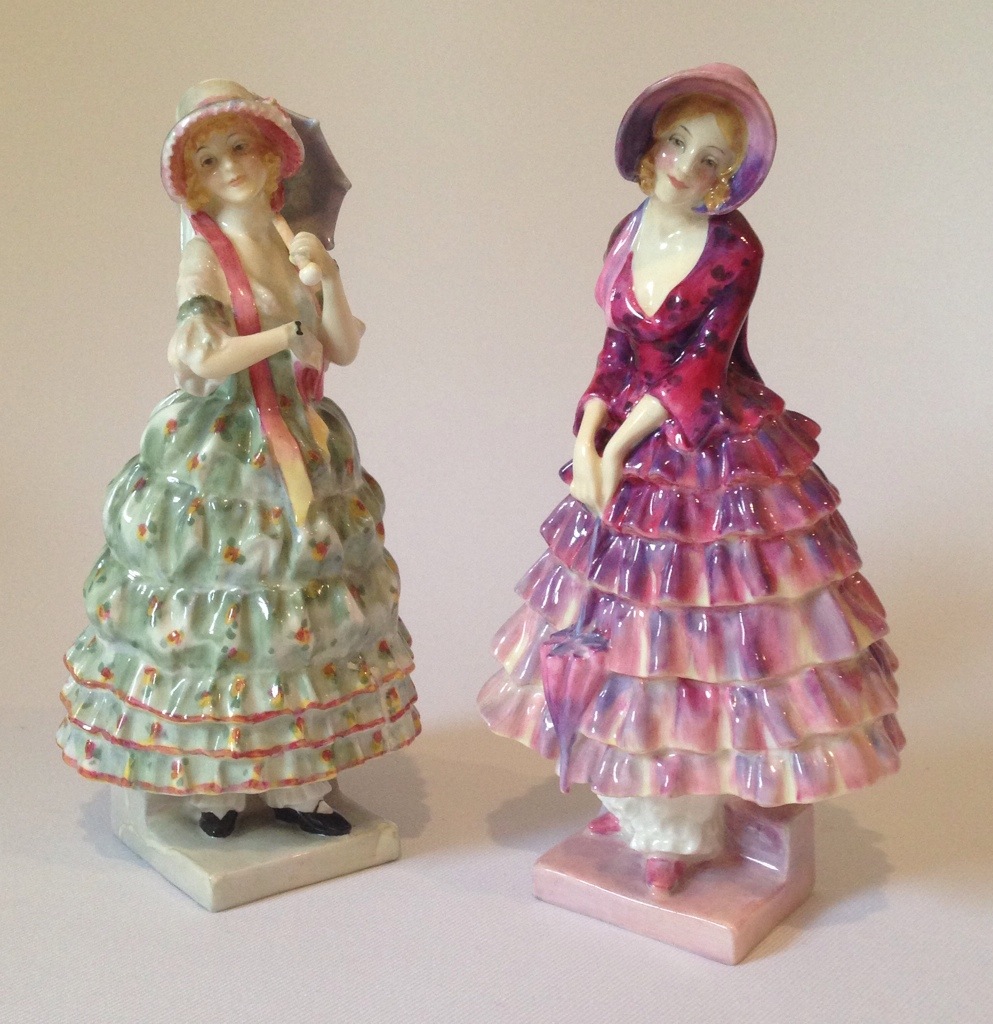
Some of the most popular Royal Doulton figures are those from the early 1930’s that recall those halcyon days of the Victorian era with all of its romanticism and courtship rituals.

This band of coy young ladies demurely pose with their pantalettes and numerous petticoats on show – each supposedly causing a minor sensation! Oh how times have changed.

20140715-184858-67738108.jpg
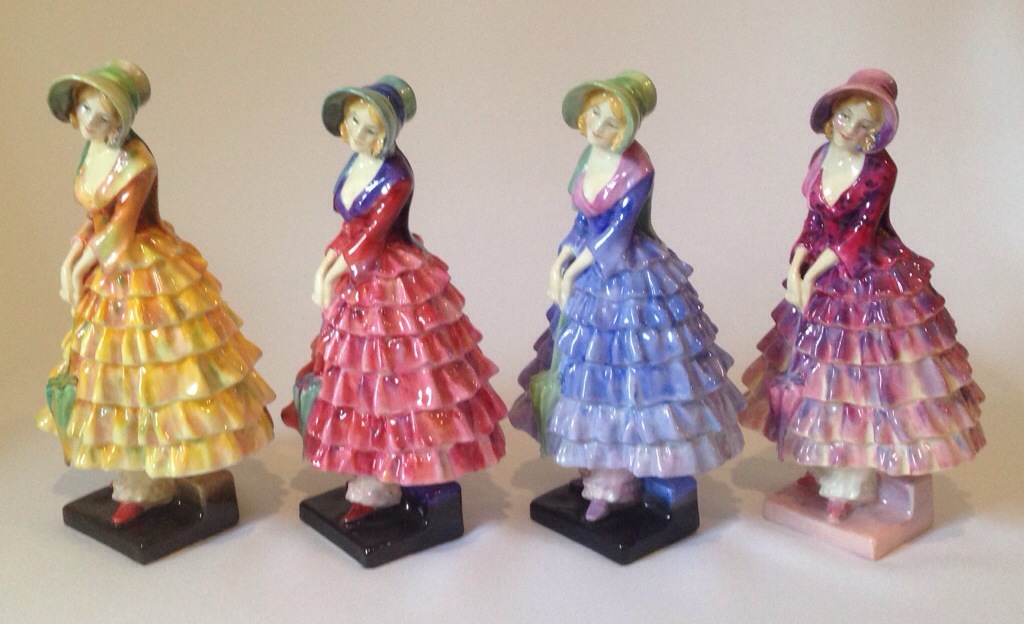
Four of the five available versions of Priscilla.

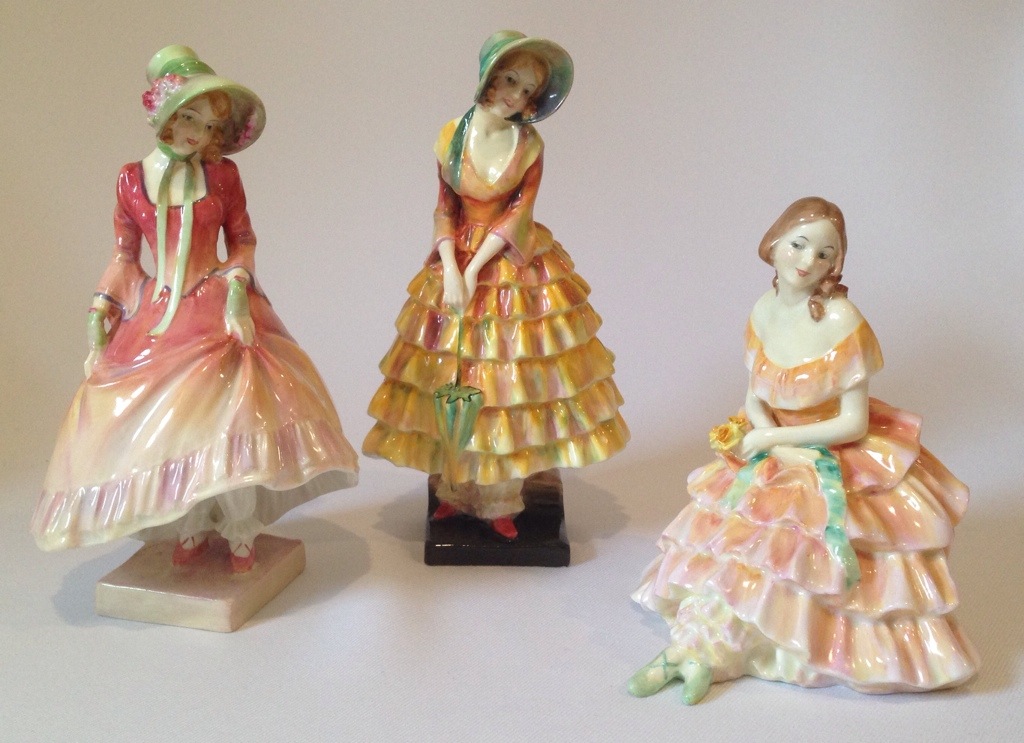
Of course we must start with the figure Pantalettes HN1362, introduced in 1929 and withdrawn by 1952, not the erroneous date given in the books on the subject of ‘by 1942’. She has three other ‘sisters’ to collect the rarer of the two being HN1507 and the lushious red HN1709. She has always been a favourite of mine and I remember hunting down an early version many years ago!

20140715-185222-67942623.jpg
The rare Helen and a more unusual colouring of Priscilla.

Another favourite among collectors is Priscilla HN1340 introduced in the same year. She is modelled coyly swaying in a soft breeze with her head posed in a coquettish manner!
Other rarer figures can be added to this theme including the rare Helen HN1508, who would later be adapted to June HN1690 in 1935, presumably meaning that Helen’s production had ceased by that point… As was always typical of Doulton various figures were produced in complimentary colourways and we can add Gwendolen HN1503 to this group of ‘pantalette and petticoat’ ladies!

20140715-185318-67998866.jpg
A complimentary group of petticoat and pantalettes wearing damsels.

Far from bring a definitive list, perhaps you also collect this theme of ladies? If so why not post a picture to our Doulton Collectors Club page?

Doulton’s lustre wares – Part 2: Reco Capey

20140713-075133-28293083.jpg
A selection of Reco Capey lustre ware and a stray fox!

Some of you will already be aware of the name Reco Capey and his links to Royal Doulton. Capey it has been discovered designed prestigious flambé wares and also in the late 1930’s pieces for Lambeth too.

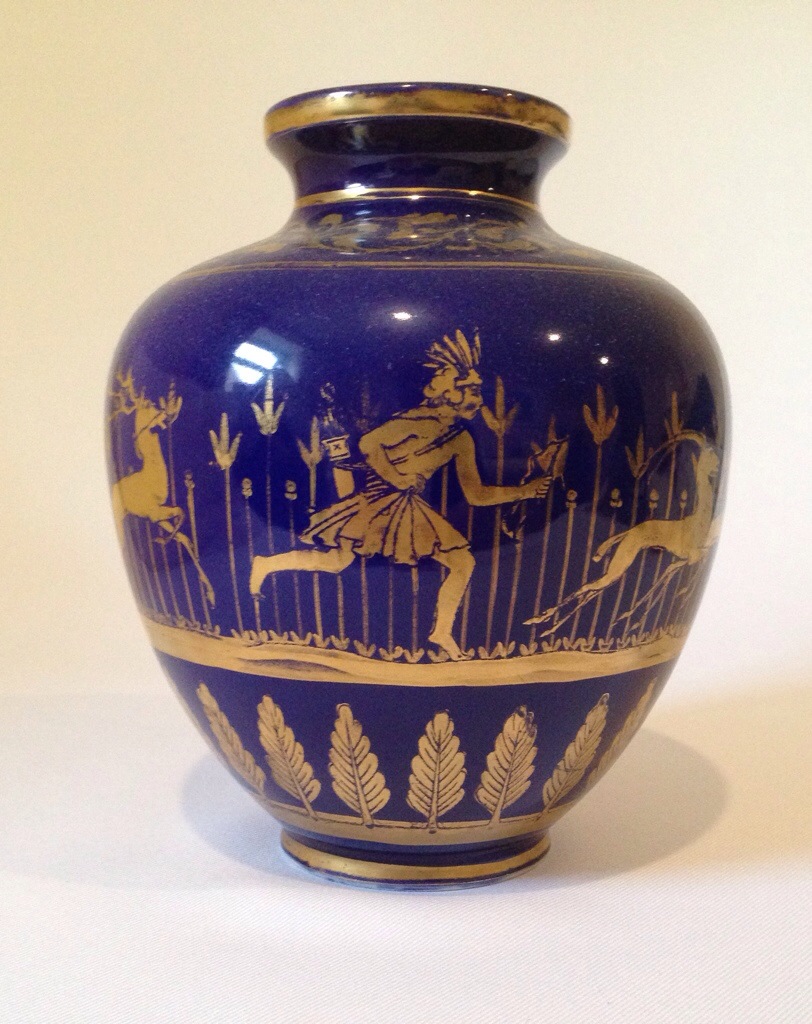
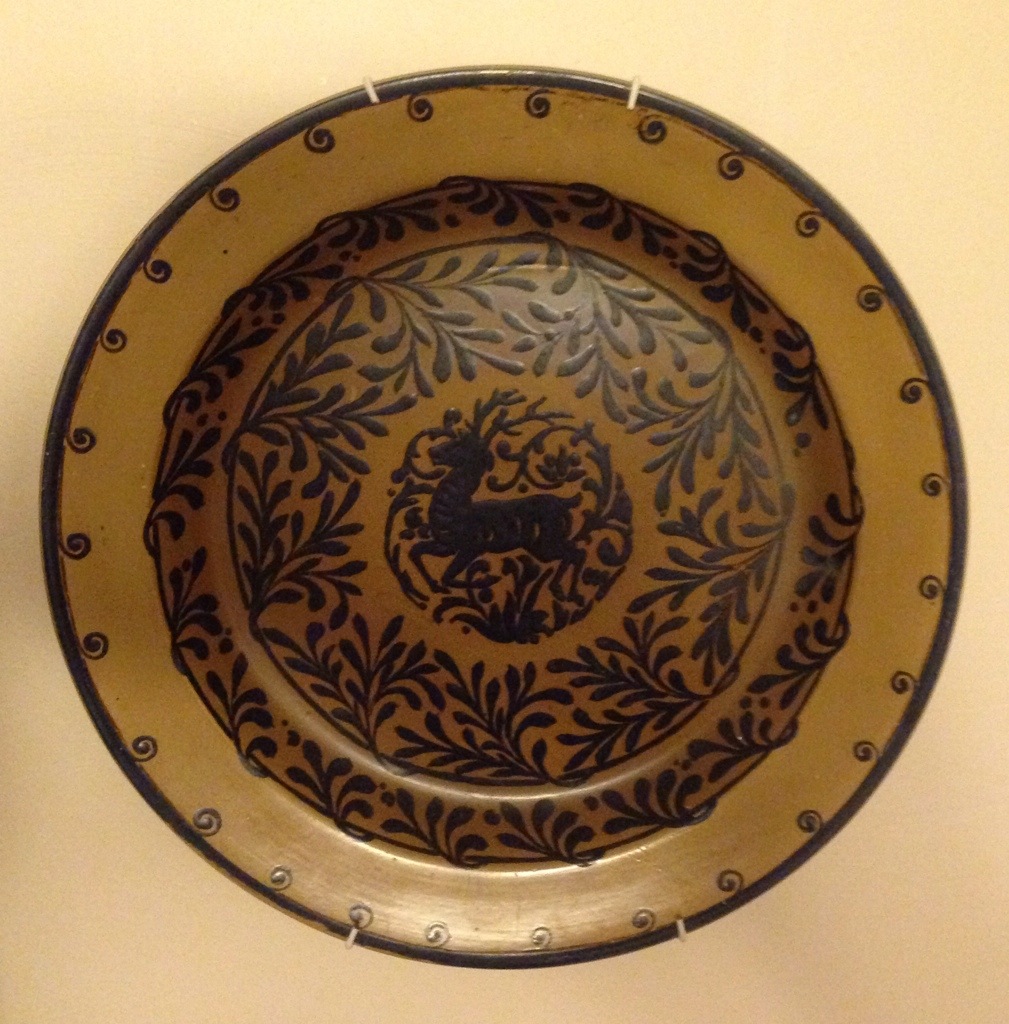
However it is his lustre ware designs that are the focus here. It is uncertain when precisely he began his association with Doulton but the date 1914 has been mentioned. Certainly items signed by him and presumably fired at Burslem have been found. Others bearing a Doulton stamp and dating to 1915 have also been found dated around this time. Capey’s designs certainly follow a theme with his designs echoing those of William de Morgan and also William Morris.

20140713-075711-28631830.jpg
An unusual gilt version of Capey’s design of Indian runner and deer more usually found on an orange lustre background.

20140713-075812-28692485.jpg
A large charger in orange lustre with the deer design dated 1918.

The mythical birds in the picture below are undoubtedly the tile design that Capey would complain to his family that he was not paid enough for. As was typical with Doulton they used their in house artists to adapt the original artists’ designs (just as happened to Frank Brangwyn).

20140713-080119-28879215.jpg
A full tea set bearing a seriesware D number 4080 introduced in 1919. This design was the only one in this colouring that I have found with a D number.

Other interesting pieces of this lustre ware include lidded jars with finials including ‘Old Nod’ and a ‘Chicken’. The actual titles of these finials are unknown.

20140713-080403-29043336.jpg
A large vase, typically used for Capey’s work, bearing Nelson’s motto: PALMAM QUI MERUIT FERAT

These delightful pieces of lustre ware were produced at a time when lustre ware was at its most popular and whilst designs do turn up, particularly the black, white and green designs, there are so many variations and rarities out there still to be found that will hopefully shed more light on his work and time with Doulton’s of Burslem.

20140713-080723-29243132.jpg
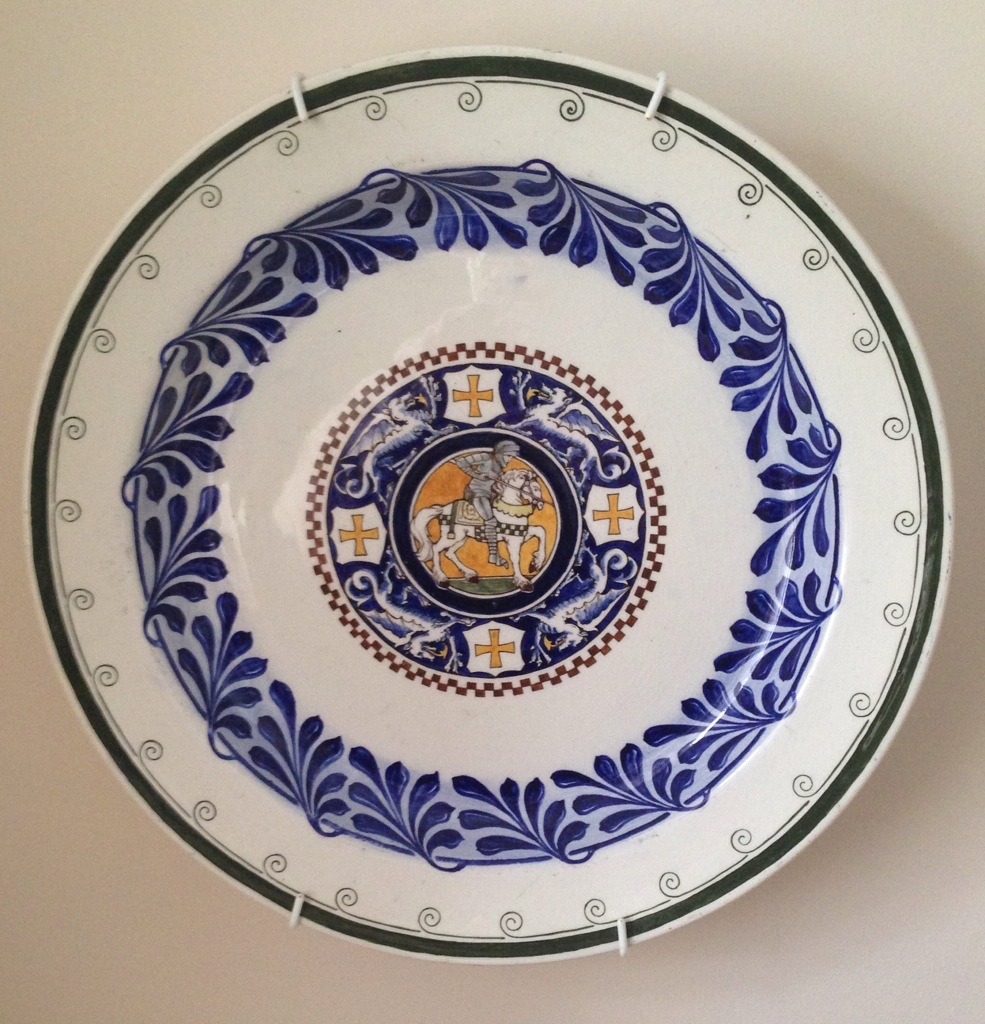
One last charger by Capey featuring St. George, again dated 1919 that I found in Australia.